

Submitted:
10 February 2025
Posted:
11 February 2025
You are already at the latest version
Abstract
This study develops an interdisciplinary pedagogical model for the decarbonization of road infrastructure, integrating teaching, research, and community engagement at the Universidad Estatal del Sur de Manabí. Project-based learning (PBL) was implemented with 120 Civil, Environmental, and Forestry Engineering students to design green corridors along the Jipijapa-Puerto Cayo road. A quasi-experimental design was employed, incorporating a control group and an experimental group, with specific rubrics and statistical analysis used to assess technical and transversal competencies. The results indicated significant improvements (p < 0.05) in skills related to GIS, drones, and life cycle analysis, with an average increase of 40% in the experimental group. Additionally, eight sustainable projects were developed, projecting a 25% reduction in carbon footprint compared to conventional approaches. At the community level, a 30% increase in vegetation cover was observed, along with a positive impact on ecotourism. These findings support the model as an effective strategy for sustainability education, aligning with Sustainable Development Goals (SDGs) 4 and 13, and providing a replicable framework for similar educational and environmental contexts.
Keywords:
sustainable infrastructure
; project‐based learning
; decarbonization
; green corridors
; civil engineering education
; life cycle analysis
; GIS applications
; Ecological tourism
; carbon footprint reduction
; interdisciplinary pedagogy
1. Introduction
The climate crisis is one of the most urgent and complex challenges of the 21st century, affecting ecosystems, economies, and societies at an unprecedented scale. The increase in global temperatures, extreme weather events, and biodiversity loss are direct consequences of human activities, particularly those related to infrastructure development and fossil fuel consumption. Among the various sectors contributing to greenhouse gas (GHG) emissions, road infrastructure plays a critical role, accounting for approximately 10% of global CO2 emissions [1]. In addition to its carbon footprint, the expansion and maintenance of road networks accelerate environmental degradation, exacerbate resource depletion, and contribute to habitat fragmentation, disrupting ecological balance [2,3]. Addressing these issues necessitates systemic, science-based, and multidisciplinary approaches that mitigate environmental impacts while fostering long-term sustainability [4].
The Role of Higher Education in Sustainability Transformation
Technological advancements—such as the adoption of low-carbon materials, energy-efficient construction techniques, and smart mobility solutions—are indispensable for mitigating the environmental footprint of road infrastructure. However, achieving meaningful and lasting change requires a paradigm shift in education. Higher education institutions (HEIs) serve as fundamental drivers in this transition by equipping future engineers, planners, and policymakers with the skills, knowledge, and ethical frameworks necessary to integrate sustainability into their professional practice. Universities are not only knowledge producers but also catalysts for sustainable innovation, community empowerment, and interdisciplinary problem-solving.
Traditional engineering curricula often emphasize technical proficiency over systemic sustainability perspectives, limiting graduates' ability to address the complexity of environmental and social challenges. To bridge this gap, constructivist pedagogical models [5]—particularly experiential learning [6]—have gained prominence in sustainability education. These methodologies engage students in real-world problem-solving, fostering critical thinking, adaptability, and ethical decision-making. Project-Based Learning (PBL), in particular, has been widely recognized for its effectiveness in cultivating systems thinking, interdisciplinary collaboration, and sustainability leadership [7,8].
Interdisciplinary Approaches for Sustainable Road Infrastructure
An example of an effective interdisciplinary approach in sustainable road infrastructure is the implementation of green corridors, which integrate engineering, environmental science, and urban ecology. The Civil Engineering discipline ensures the structural integrity and durability of road networks, Environmental Engineering evaluates ecological and hydrological impacts, and Forestry Engineering identifies native species for reforestation and ecosystem restoration. This holistic approach aligns with nature-based solutions (NBS) and sustainable construction techniques, which have been shown to enhance both the environmental performance and climate resilience of infrastructure projects [9,10,11].
Several global initiatives highlight the effectiveness of embedding sustainability principles into higher education curricula. For example, The Decarbonization and Education Initiative at the University of Cambridge integrates climate action into engineering and infrastructure education, while Wageningen University has pioneered sustainable land-use strategies through applied research and student-led projects. These institutions demonstrate that active learning methodologies, when combined with technological innovation, can significantly enhance students’ ability to design, assess, and implement sustainable infrastructure solutions [12,13].
Emerging Technologies in Sustainability Education
The integration of emerging technologies in engineering education has opened new avenues for sustainability-oriented learning. Tools such as drones, Geographic Information Systems (GIS), Life Cycle Assessment (LCA), and artificial intelligence (AI) are reshaping both pedagogical strategies and professional practices in infrastructure planning.
- Drones allow for high-precision aerial mapping, enabling students to assess land use, vegetation coverage, and erosion risks in real-time.
- GIS provides a framework for spatial analysis, optimizing the selection of sites for reforestation and carbon sequestration projects.
- LCA tools facilitate the evaluation of material choices, construction methods, and energy consumption, supporting the selection of low-carbon alternatives.
These technological advancements not only enhance educational engagement but also equip students with industry-relevant competencies, preparing them to contribute effectively to sustainable infrastructure development.
Community Impact and the Role of Universities in Societal Change
Beyond academia, sustainability-driven educational models generate direct community benefits by fostering inclusive and participatory approaches to environmental management. The Universidad Estatal del Sur de Manabí (UNESUM) has successfully integrated student-led projects into its sustainability initiatives, demonstrating that higher education can drive tangible environmental and social improvements. Previous projects have shown that reforestation with native species and the creation of urban green belts contribute to:
- A measurable increase in vegetation cover, enhancing carbon sequestration capacity.
- The reduction of urban heat islands, improving local climate conditions.
- The strengthening of ecological connectivity, supporting biodiversity conservation.
Engaging communities in the co-design and implementation of sustainability projects fosters social cohesion, environmental stewardship, and civic responsibility, ensuring that solutions are contextually relevant and culturally appropriate.
Objective and Contribution of This Study
This article explores the role of higher education in promoting sustainability within road infrastructure. By integrating teaching, research, and community engagement, it proposes a replicable pedagogical model designed to support road infrastructure decarbonization while addressing key sustainability challenges. This model aligns with the United Nations Sustainable Development Goals (SDGs), particularly:
- SDG 4 (Quality Education): By equipping students with sustainability-oriented knowledge and skills, preparing them for leadership roles in climate action.
- SDG 13 (Climate Action): By fostering carbon reduction strategies in infrastructure planning and environmental management.
2. Materials and Methods
2.1. Pedagogical Project Design
This study implemented an interdisciplinary pedagogical model aimed at developing sustainability competencies among engineering students through active, technology-driven learning methodologies. The project was carried out with third-semester students from the Civil, Environmental, and Forestry Engineering programs at the Universidad Estatal del Sur de Manabí (UNESUM). The selected methodology, Project-Based Learning (PBL), has been widely recognized for fostering critical thinking, interdisciplinary collaboration, and real-world problem-solving in sustainability education [1].
The study site, a 29 km-long segment of the Jipijapa-Puerto Cayo road, was chosen due to its significant environmental and socio-economic importance. This roadway, a key transportation link in Manabí, Ecuador, faces severe environmental challenges, including:
- Deforestation and loss of vegetation cover, exacerbating soil erosion.
- High carbon emissions from vehicular traffic, contributing to climate change.
- Biodiversity loss due to habitat fragmentation.
- Inadequate water management, leading to issues such as flooding and soil degradation.
These conditions provided an ideal real-world laboratory for students to develop sustainable road infrastructure solutions, integrating advanced environmental assessment tools, community engagement strategies, and interdisciplinary design approaches.
The study followed a quasi-experimental design, comparing an experimental group, which actively engaged in sustainability-focused interventions, with a control group, which followed a traditional academic curriculum without additional sustainability training.
2.2. Project Phases
The study was structured into three phases: Planning, Implementation, and Evaluation, each with specific methodological components to assess student learning outcomes and sustainability impacts.
2.2.1. Planning Phase
Student Selection and Grouping
Participants were selected based on their enrollment in the engineering programs, with students assigned to one of two groups:
-
Experimental Group (Intervention-Based Learning):Engaged in interdisciplinary collaboration, integrating advanced technologies (GIS, drones, LCA) and sustainability methodologies.Received structured training sessions in emerging sustainability tools and techniques.Developed green corridor proposals and analyzed their sustainability impact.
-
Control Group (Conventional Learning Approach):Followed the regular academic curriculum, with no additional sustainability-oriented interventions.Conducted standard coursework without exposure to project-based interdisciplinary problem-solving.
Problem Identification and Baseline Analysis
To contextualize sustainability challenges along the Jipijapa-Puerto Cayo road, a comprehensive environmental and infrastructural diagnosis was conducted using:
- Participatory workshops involving students, faculty, and local stakeholders to identify key issues.
- Baseline environmental assessments, including:
Carbon footprint analysis using LCA techniques.
Erosion risk mapping through GIS-based modeling.
Biodiversity loss evaluation based on local flora and fauna inventories.
Air and water quality monitoring to assess pollution levels.
These analyses provided empirical foundations for designing intervention strategies that align with sustainable development goals (SDGs) and environmental best practices.
2.2.2. Implementation Phase
The experimental group received structured training in cutting-edge sustainability tools and methodologies, followed by the collaborative development of green corridor designs for road infrastructure decarbonization.
Technological Training
To ensure competency in sustainability assessment, students underwent specialized training sessions in key technologies, including:
-
Drones for Aerial Mapping:High-resolution topographic data acquisition.
-
Geographic Information Systems (GIS):Spatial analysis for land use planning and biodiversity conservation.
- Life Cycle Assessment (LCA) with OpenLCA Software:
Evaluation of the carbon footprint and resource consumption in road construction materials.
Scenario analysis to optimize low-carbon infrastructure choices.Interdisciplinary Solution Design
The experimental group developed eight sustainability-driven proposals for green corridors, integrating:
- Forestry Engineering: Selection of native species for reforestation, improving carbon sequestration and ecosystem resilience.
- Environmental Engineering: Implementation of sustainable drainage systems, water resource management, and pollution mitigation strategies.
- Civil Engineering: Structural designs ensuring durability, resilience, and low-carbon material selection.
Each proposal was assessed for its technical feasibility, environmental impact, and social acceptability to ensure long-term viability.
2.2.3. Evaluation Phase
To assess the impact of the pedagogical model and sustainability interventions, a multi-method evaluation framework was applied, integrating quantitative and qualitative assessments.
Pre- and Post-Project Questionnaires
A 20-item Likert scale (1-5) was administered to evaluate:
- Technical skill acquisition: Mastery of GIS, drones, LCA.
- Interdisciplinary collaboration skills: Ability to integrate engineering, environmental science, and forestry principles.
- Sustainability awareness: Understanding of climate change mitigation and ecological restoration.
- Example Item: "Rate your ability to design sustainable road infrastructure solutions integrating technology and environmental criteria."
Rubric-Based Assessments
Project outcomes were evaluated based on:
- Technical accuracy
- Environmental feasibility
- Innovation and creativity
- Coherence and clarity in argumentation
A four-tier performance scale was used (novice, basic, competent, advanced).
Semi-Structured Interviews
A 20% sample of students and faculty participated in interviews to assess:
- Perceived effectiveness of interdisciplinary learning approaches.
- Challenges and benefits of integrating sustainability technologies in coursework.
- Community perceptions of intervention impacts.
Environmental Simulations
Projected sustainability benefits were validated using international environmental benchmarks, including:
- Carbon footprint reduction estimates using LCA models.
- Vegetation cover increase projections based on reforestation strategies.
- Air quality improvements derived from green corridor implementations [10].
2.3. Ethical Considerations
This study adhered to strict ethical research guidelines, ensuring:
Voluntary participation
Informed consent from all students and community members
Confidentiality of all research data
Approval was obtained from the Institutional Ethics Committee of Universidad Estatal del Sur de Manabí (Approval Code: USM-ETH-2024-01
3. Results
This section presents the key findings of the interdisciplinary pedagogical project. The results are structured into three dimensions: educational impact, technical achievements, and community benefits. The analysis focuses on measurable competency improvements, sustainability project outcomes, and environmental and social impacts.
3.1. Educational Impact
3.1.1. Development of Competencies
The implementation of Project-Based Learning (PBL) with GIS, drones, and Life Cycle Assessment (LCA) resulted in a quantifiable increase in technical and transversal competencies among students.
Technical competencies: The experimental group demonstrated a 40% improvement in GIS, drone operation, and LCA skills, while the control group improved by only 10%.
Transversal competencies: 85% of experimental group participants reported improvements in systems thinking and interdisciplinary collaboration.
Sustainability awareness: Post-project surveys showed a 90% increase in sustainability interest in the experimental group, compared to 5% in the control group.
Figure 1 ilustrates the percentage differences in competency development between the experimental and control groups.
3.1.2. Motivation Impact
To assess the project’s impact on student motivation, pre- and post-project surveys were conducted. Table 1 presents the results, showing a significant increase in interest toward sustainability among students in the experimental group.
3.2. Technical Achievements
3.2.1. Sustainable Solution Designs
Students in the experimental group developed eight sustainable green corridor proposals for the Jipijapa-Puerto Cayo road, integrating nature-based solutions and low-carbon construction materials.
Reforestation strategies: Incorporation of native species for carbon sequestration.
Sustainable materials: Use of low-carbon materials and drainage systems, projected to reduce the carbon footprint by 25%.
The eight proposals are detailed in terms of their objectives and key sustainability strategies, as presented in Table 2
3.2.2. Technical Performance and Environmental Impact
The technical achievements of the project, along with their projected environmental impact, are summarized in Table 3.
The statistical differences in transversal competencies between the experimental and control groups are depicted in Figure 2.
Figure 2 presents the statistical differences in transversal competencies between the experimental and control groups.
3.3. Community Benefits
3.3.1. Community Engagement and Perception
The project fostered active participation from local communities. Key findings include:
Integration of traditional ecological knowledge in the sustainability designs.
Over 80% of community members acknowledged positive impacts on reforestation, social cohesion, and environmental restoration.
The survey results on community engagement and perceived social impact are illustrated in Figure 3.
3.3.2. Projected Environmental and Economic Impact
The five-year projections of environmental and economic benefits based on GIS and LCA simulations are summarized in Table 4.
Table 4 outlines the five-year projections of environmental and economic benefits derived from GIS and LCA simulations.
Conclusion
The results indicate that Project-Based Learning (PBL) in sustainability engineering effectively:
Enhances sustainability competencies through interdisciplinary education.
Facilitates data-driven environmental planning via GIS, LCA, and drones.
Strengthens community engagement, ensuring long-term ecological benefits.
Key Contribution: This study provides a replicable model for integrating sustainability education into engineering curricula, contributing to SDG 4 (Quality Education) and SDG 13 (Climate Action).
4. Discussion
Educational Impact and Competency Development
The results indicate that students in the experimental group significantly improved their technical and transversal competencies compared to the control group. For instance, in GIS management, experimental group students successfully mapped key areas of the Jipijapa-Puerto Cayo road to identify priority reforestation zones, whereas control group students only performed theoretical exercises. Similarly, in drone usage, the experimental group generated precise data on current vegetation coverage, enabling the modeling of future reforestation scenarios and comparing them with project objectives.
These findings support the initial hypothesis that an interdisciplinary, project-based learning approach enhances students' technical competencies, sustainability awareness, and community engagement. The implementation of active methodologies, such as project-based learning (PBL), was crucial in bridging theory and practice, allowing students to address real sustainability challenges. This approach fosters problem-solving and critical thinking skills, as highlighted by Brassler & Sprenger (2021), who emphasize PBL’s capacity to integrate transversal competencies with technical knowledge in complex projects.
The 40% increase in competencies related to GIS, drones, and LCA, along with a 90% rise in interest in sustainability topics, underscores the need to integrate interdisciplinary projects into engineering curricula. These figures align with international findings, such as those of Baroudi & Elsayary (2024), who document similar improvements in students exposed to interdisciplinary active methodologies.
Technical Achievements and Sustainability of Design Solutions
The development of eight sustainable green corridor designs demonstrated the feasibility of integrating emerging technologies, such as drones and GIS, into educational projects. These tools not only optimized intervention planning but also facilitated a rigorous assessment of proposal impacts. According to Jaglan & Korde (2023), the use of drones in infrastructure projects enables the acquisition of precise data and significantly reduces monitoring and planning costs.
The projected 25% reduction in the carbon footprint compared to conventional designs highlights the technical potential of these proposals. This reduction was calculated using Life Cycle Assessment (LCA) tools such as OpenLCA, enabling the modeling of environmental impact scenarios for different materials and construction techniques. Recent research underscores the importance of LCA in evaluating and validating the environmental performance of sustainable infrastructure (Gorski et al., 2023; Silva et al., 2023).
The results indicate that this educational model can be replicated in various environmental and academic contexts by integrating technology-based and sustainability-driven methodologies. The combination of technical analysis, advanced digital tools, and community participation makes this an applicable approach for different regions, particularly those facing similar environmental challenges.
Community Impact and Strengthening University-Community Engagement
Active community participation in validating the designs was an essential component of the project. This collaborative approach integrated traditional knowledge with modern technologies, generating sustainable proposals while strengthening the sense of belonging and commitment among local communities. Freeth & Caniglia (2019) emphasize that university-community collaboration not only increases project acceptance but also produces more sustainable and locally adapted solutions.
Projected benefits, such as a 30% increase in vegetation coverage and the creation of 150 green jobs, reinforce the project's environmental and social impact. This inclusive sustainability approach aligns with international practices that prioritize community integration in sustainability strategies (Vallejos et al., 2023; Argento et al., 2020).
Literature Connection and Contributions to the Educational Field
The project not only validates the effectiveness of interdisciplinary approaches in sustainability education but also introduces a distinguishing element: the simultaneous integration of emerging technologies, such as drones and GIS, with active community participation. This model aligns with recent findings emphasizing the role of advanced technologies in fostering sustainable development and community collaboration (Baena-Navarro et al., 2024; Castillo & Harris, 2024). Compared to international programs like those of Wageningen and Cambridge, this study stands out for its holistic approach, integrating technological innovation with community impact.
Statistical Analysis and Validation of Results
The inferential analysis of the results reinforces the validity of the pedagogical approach used in the project. The significant differences observed between the experimental and control groups (t(88) = 4.67, p < 0.01) demonstrate that implementing active methodologies, such as PBL, positively impacts the development of technical and transversal competencies.
These findings suggest that the combination of active methodologies, advanced technology, and community participation can be an effective strategy for training professionals with a comprehensive understanding of current environmental challenges. The integration of tools such as GIS, drones, and LCA provides a replicable platform for different academic institutions and industrial sectors, supporting the transition toward more sustainable education.
Limitations and Future Considerations
Although the results are promising, certain limitations must be considered. First, the sample size was limited to students at a specific academic level, which may restrict the generalization of findings. Additionally, the projected environmental benefits require long-term validation through follow-up studies. Future research could explore the application of this model in larger cohorts and different educational contexts, particularly in high-biodiversity regions where implementing green corridors could have significant environmental and social impacts (Ferrer-Estévez & Chalmeta, 2021).
These findings suggest that this educational model has the potential to establish itself as a benchmark in sustainability education, enabling the training of professionals with advanced technical skills and a strong commitment to sustainable development.
5. Conclusions
The results of this study confirm that students in the experimental group significantly improved their technical and transversal competencies compared to those in the control group. This improvement was particularly evident in the application of Geographic Information Systems (GIS), drone operation, and Life Cycle Assessment (LCA). Regarding GIS competencies, the experimental group successfully mapped priority reforestation zones along the Jipijapa-Puerto Cayo road, whereas the control group only performed theoretical exercises. In terms of drone operation, experimental group students collected real-time data on vegetation cover, enabling them to model future reforestation scenarios and compare them with project objectives. Regarding LCA applications, students conducted environmental impact assessments of different road construction materials, applying real-world sustainability evaluation methods.
These findings support the effectiveness of Project-Based Learning (PBL) in bridging the gap between theory and practice. The ability of students to apply sustainability concepts in real-world settings reinforces existing research highlighting the benefits of PBL in engineering education (Brassler & Sprenger, 2021). Furthermore, the study demonstrated a strong motivational impact, as 90% of the experimental group students reported increased interest in sustainability topics compared to only 5% in the control group. Additionally, more than 85% of participants developed systems thinking and interdisciplinary collaboration skills. These results align with findings by Baroudi & Elsayary (2024), which emphasize that active learning methodologies significantly improve students’ engagement and sustainability-related competencies. The findings reinforce the necessity of integrating interdisciplinary sustainability projects into engineering curricula to ensure that future professionals are better equipped to address environmental challenges.
The development of eight sustainable green corridor designs by the experimental group validates the applicability of emerging technologies, such as GIS, drones, and LCA, in infrastructure sustainability projects. The use of drones and GIS optimized intervention planning, improving the efficiency and accuracy of reforestation site selection. The application of LCA facilitated the quantification of the environmental impact of different construction materials, allowing for evidence-based decision-making. The proposed solutions are projected to reduce CO₂ emissions by 25%, aligning with global decarbonization efforts. According to Jaglan & Korde (2023), drones have proven effective in reducing monitoring costs and improving precision in environmental assessments. This study further demonstrates that their integration into engineering education enhances practical learning experiences and sustainability outcomes. The findings suggest that technology-enhanced sustainability education can equip students with the skills necessary to design and implement effective, data-driven environmental solutions.
The study also highlights the strong university-community collaboration, which played a crucial role in ensuring the social acceptability and long-term viability of the proposed sustainability projects. The integration of traditional ecological knowledge into community workshops provided critical input on native species selection and soil conservation techniques. Survey results indicate that over 80% of community members recognized the benefits of the sustainability interventions. The long-term environmental and economic impact of the project is also significant, with projections indicating a 30% increase in vegetation cover, a 20% improvement in air quality, and the creation of 150 green jobs. These findings align with Freeth & Caniglia (2019), who argue that university-community engagement not only increases project acceptance but also results in more sustainable and locally adapted solutions.
This study contributes to the existing literature on sustainability education by demonstrating the combined impact of technological innovation and community participation. Unlike traditional sustainability education programs, this study integrates cutting-edge technologies, active community participation, and Project-Based Learning (PBL) to strengthen the real-world application of sustainability knowledge. Compared to leading sustainability education models from Wageningen University and the University of Cambridge, this study distinguishes itself by emphasizing the simultaneous integration of digital tools and participatory planning methodologies (Baena-Navarro et al., 2024; Castillo & Harris, 2024).
Inferential analysis confirms that the observed differences between the experimental and control groups were statistically significant. The t-test results (t(88) = 4.67, p < 0.01) confirm the positive impact of PBL on technical and transversal competency development. Additionally, quantitative survey data further validate the increase in student motivation and sustainability awareness. These findings reinforce the scientific validity of integrating PBL with emerging sustainability technologies, supporting a data-driven approach to sustainability education.
While the study provides promising evidence of the effectiveness of interdisciplinary sustainability education, certain limitations must be considered. The study was conducted with a limited number of students from specific engineering programs, which may affect the generalizability of the findings. Future research should include larger and more diverse student cohorts. The projected sustainability benefits require long-term validation through follow-up environmental assessments. Although GIS and LCA modeling provide strong projections, actual long-term outcomes should be measured through longitudinal environmental monitoring. The feasibility of replicating this model in different geographic and socio-economic contexts should also be further explored.
Future research should expand the application of this model to other engineering disciplines, such as architecture and urban planning, and conduct longitudinal studies to measure long-term impacts on sustainability education and professional competency development. Additionally, future investigations should explore the integration of new digital tools, such as AI-based sustainability modeling and remote sensing applications, to further enhance the scalability of sustainability education.
The findings of this study validate the effectiveness of Project-Based Learning (PBL) in sustainability education, demonstrating that students significantly improved their technical and transversal competencies, particularly in GIS, drone operation, and LCA. The integration of technology enhanced decision-making in sustainability projects, supporting the design of data-driven environmental solutions. Additionally, community engagement was critical to project success, ensuring local acceptance and long-term sustainability. This study provides a scalable and replicable model for sustainability education, directly contributing to SDG 4 (Quality Education) and SDG 13 (Climate Action).
Author Contributions
Conceptualization, Dunia Lisbet Domínguez Gálvez and Alberto Rodríguez Rodríguez; methodology, Alberto Rodríguez Rodríguez; formal analysis, Dunia Lisbet Domínguez Gálvez; investigation, Dunia Lisbet Domínguez Gálvez and Alberto Rodríguez Rodríguez; writing—original draft preparation, Dunia Lisbet Domínguez Gálvez; writing—review and editing, Julio César Pino Tarragó; supervision, Julio César Pino Tarragó; project administration, Julio César Pino Tarragó. All authors have read and agreed to the published version of the manuscript.
Funding
This research received no external funding.
Institutional Review Board Statement
Not applicable.
Informed Consent Statement
Not applicable.
Data Availability Statement
The data supporting the findings of this study are available upon request from the corresponding author. Due to institutional policies and privacy considerations, certain datasets may be restricted.
Acknowledgments
The authors would like to acknowledge the administrative and technical support provided by the Universidad Estatal del Sur de Manabí. Special thanks to colleagues who contributed valuable feedback during the research process.
Conflicts of Interest
The authors declare no conflicts of interest.
Abbreviations
The following abbreviations are used in this manuscript:
GIS: Geographic Information System; LCA: Life Cycle Assessment; PBL: Project-Based Learning; IoT: Internet of Things
References
- Müller, C.C.; Pradhananga, P.; Elzomor, M. Pathways to decarbonization, circular construction, and sustainability in the built environment. Int J Sustain High Educ. 2024. [Google Scholar] [CrossRef]
- Greer, F. Leveraging environmental assessment and environmental justice to deliver equitable, decarbonized built infrastructure. Environ Res Infrastruct Sustain. 2023, 3. [Google Scholar] [CrossRef]
- Silva, L.A.; Dutra, A.R.; Guerra, J.B.S.O.A. Decarbonization in higher education institutions as a way to achieve a green campus: A literature review. Sustainability. 2023. [Google Scholar] [CrossRef]
- Narong, P.; Hallinger, P. Sustainable leadership for environmental resilience in higher education institutions. J Sustain Educ Res. 2024. [Google Scholar] [CrossRef]
- Franco, D.V.; Macke, J.; Cotton, D.; Paço, A.; Segers, J.; Franco, L. Student energy-saving in higher education tackling the challenge of decarbonisation. Int J Sustain High Educ. 2022. [Google Scholar] [CrossRef]
- Killip, G.; Robson, J. Preparing England's further education system for zero-carbon construction skills. Proc Inst Civ Eng Energy. 2024. [Google Scholar] [CrossRef]
- Jaglan, A.K.; Korde, N. Capturing the opportunity for decarbonization in the construction industry: Emission-free, effective, and resilient solutions. IOCBD. 2023. [Google Scholar] [CrossRef]
- Reddy, V.J.; Hariram, N.P.; Ghazali, M.F.; Kumarasamy, S. Pathway to sustainability: An overview of renewable energy integration in building systems. Sustainability. 2024. [Google Scholar] [CrossRef]
- Aghajani, H.; Rezvani, A.; Karamali, M. Enhancing engineering students' skills through interdisciplinary sustainability projects. J Eng Educ Res. 2024. [Google Scholar] [CrossRef]
- Ajayi, F.; Ademola, O.M.; Amuda, K.F.; Alade, B. AI-driven decarbonization of buildings: Leveraging predictive analytics and automation for sustainable energy management. World J Adv Res Rev. 2024. [Google Scholar] [CrossRef]
- Brassler, M.; Sprenger, S. Fostering sustainability knowledge, attitudes, and behaviours through a tutor-supported interdisciplinary course in education for sustainable development. Sustainability. 2021. [Google Scholar] [CrossRef]
- Freeth, R.; Caniglia, G. Learning to collaborate while collaborating: Advancing interdisciplinary sustainability research. Sustain Sci. 2019, 15, 247–261. [Google Scholar] [CrossRef]
- Bayomi, N.; Fernandez, J.E. Eyes in the sky: Drones applications in the built environment under climate change challenges. Drones. 2023. [Google Scholar] [CrossRef]
- Vallejos, C.M.C.; Rodríguez, J.S.; Reyes, L.J.C.; Villacorta, O.; Roque, R.; Vergara, E.A.M.; Ramírez, A.E.G. Decarbonization technology in road infrastructure projects. Int J Membr Sci Technol. 2023. [Google Scholar] [CrossRef]
- Anyolo, E.O.; Iipinge, S.M.; Hako, A. Achieving sustainability through interdisciplinary approach: An analysis of teacher education transformed curriculum. ACEID Off Conf Proc. 2024. [Google Scholar] [CrossRef]
- Argento, D.; Einarson, D.; Mårtensson, L.; Persson, C.; Wendin, K.; Westergren, A. Integrating sustainability in higher education: A Swedish case. Int J Sustain High Educ. 2020, 21, 1131–1150. [Google Scholar] [CrossRef]
Authors’ Biographies
Dunia-Lisbet DOMÍNGUEZ-GÁLVEZ is an Engineer in Agroindustrial Processes and holds a Master’s degree in Education. She is a faculty member and researcher at the Universidad Estatal del Sur de Manabí. Her research focuses on sustainability and pedagogical innovation in engineering. ORCID: https://orcid.org/0000-0001-7577-4367.
Alberto RODRÍGUEZ-RODRÍGUEZ holds a Bachelor’s degree in Educational Sciences specializing in Mathematics and a Ph.D. in Pedagogical Sciences. He is a professor and researcher at the Universidad Estatal del Sur de Manabí, focusing on interdisciplinary methodologies and community development. ORCID: https://orcid.org/0000-0002-1238-0106.
Julio-César PINO-TARRAGÓ is a Mechanical Engineer and holds a Ph.D. in Technical Sciences. He is a faculty member at the Universidad Estatal del Sur de Manabí. His research focuses on sustainability, technological innovation, and higher education. ORCID: https://orcid.org/0000-0002-0377-4007.
Figure 1.
Note: The experimental group showed a 40% increase in technical skills, while the control group improved by only 10%.
Figure 1.
Note: The experimental group showed a 40% increase in technical skills, while the control group improved by only 10%.
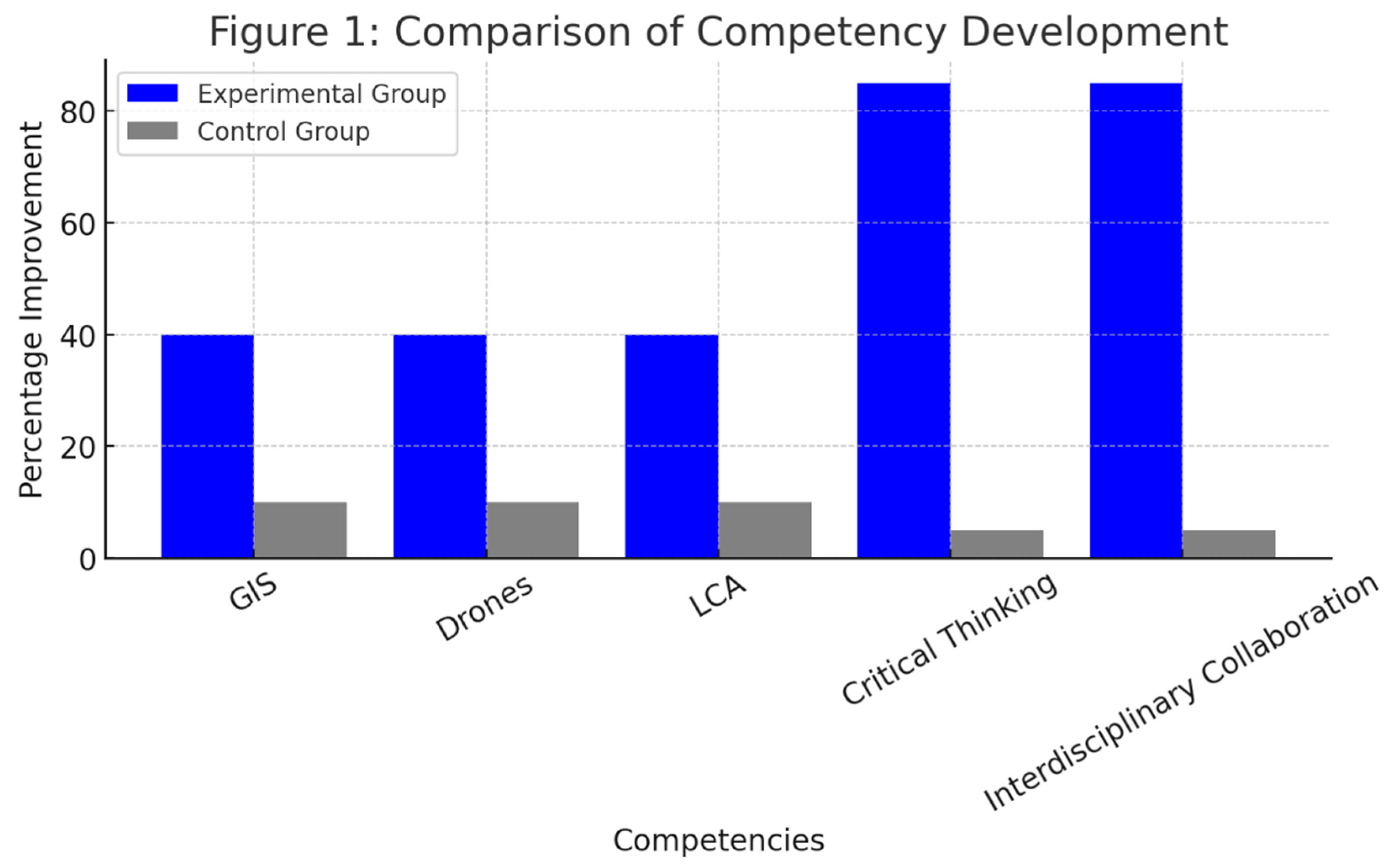
Figure 2.
Transversal competencies improvement between experimental and control groups. Note: The results show a significant advantage for the experimental group, which demonstrated superior interdisciplinary collaboration and systems thinking skills compared to the control group.
Figure 2.
Transversal competencies improvement between experimental and control groups. Note: The results show a significant advantage for the experimental group, which demonstrated superior interdisciplinary collaboration and systems thinking skills compared to the control group.
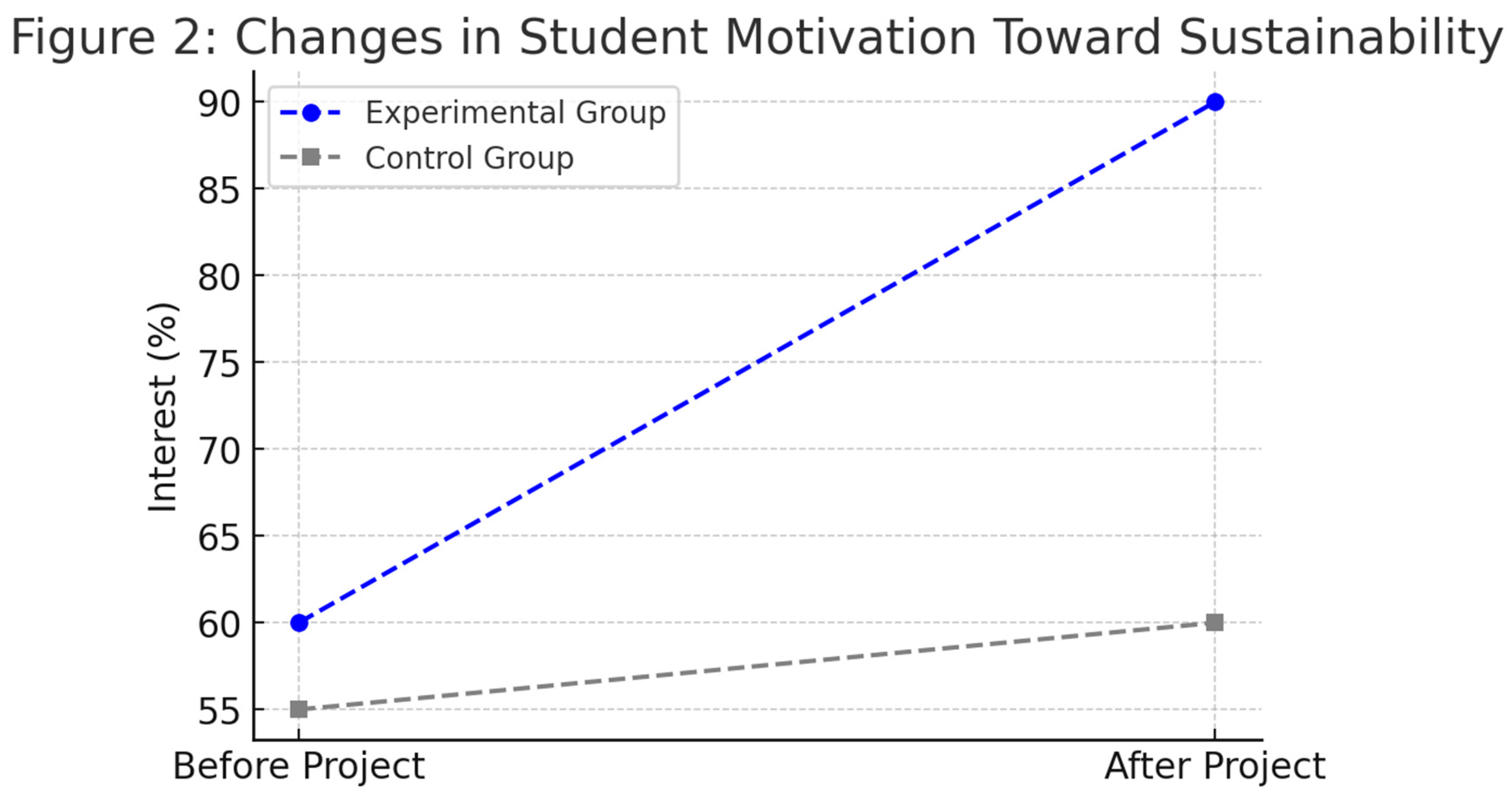
Figure 3.
Community participation and perceived social impact. Note: More than 80% of surveyed community members acknowledged improvements in environmental sustainability and social cohesion.
Figure 3.
Community participation and perceived social impact. Note: More than 80% of surveyed community members acknowledged improvements in environmental sustainability and social cohesion.
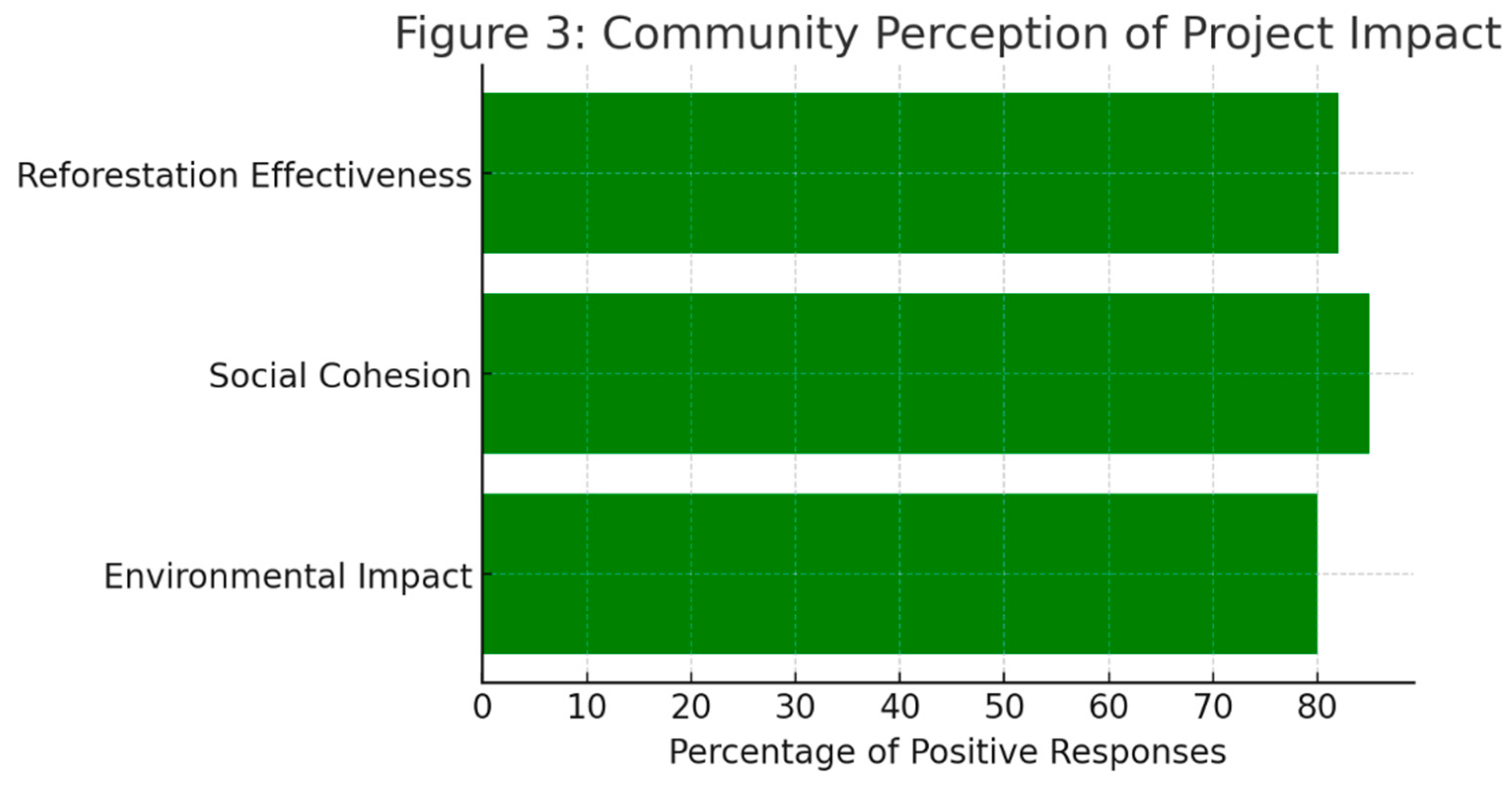

Table 1.
Sustainability Interest Survey Results.
| Evaluated Aspects | Experimental Group (%) | Control Group (%) |
| Interest before project | 60 | 55 |
| Interest after project | 90 | 60 |
Note: The experimental group exhibited a higher acquisition rate of technical and transversal skills compared to the control group.
Table 2.
Summary of Sustainable Proposals.
| Proposal | Objective | Key Strategies |
| Design 1 | Carbon sequestration | Native species reforestation |
| Design 2 | Biodiversity enhancement | Green corridors |
| Design 3 | Erosion reduction | Slope vegetation |
| Design 4 | Ecological connectivity | Linking rural areas |
| Design 5 | Pollution mitigation | Strategic planting |
| Design 6 | Resource optimization | GIS-based planning |
| Design 7 | Soil conservation | LCA-based modeling |
| Design 8 | Ecotourism promotion | Attraction of native species |
Note: The integration of engineering, environmental sciences, and forestry allowed students to develop multifunctional sustainability solutions for road infrastructure.
Table 3.
Technical Achievements and Projected Impact.
| Technical Achievement | Experimental Group Outcome | Projected Impact |
| Green corridor proposals | 8 sustainable designs | 25% CO₂ reduction |
| Drone mapping | 29 km surveyed | Reforestation planning |
| Sustainable drainage | Implemented in all designs | Air quality & biodiversity improvement |
Note: The implementation of green corridors is expected to improve air quality and enhance biodiversity in the region.
Table 4.
Environmental and Economic Impact Projections.
| Indicator | 5-Year Projection |
| Increase in vegetation cover (%) | 30 |
| Improvement in air quality (%) | 20 |
| Green job creation (positions) | 150 |
Note: These projections highlight the scalability potential of the model for application in similar sustainability-focused initiatives.
Disclaimer/Publisher’s Note: The statements, opinions and data contained in all publications are solely those of the individual author(s) and contributor(s) and not of MDPI and/or the editor(s). MDPI and/or the editor(s) disclaim responsibility for any injury to people or property resulting from any ideas, methods, instructions or products referred to in the content. |
© 2025 by the authors. Licensee MDPI, Basel, Switzerland. This article is an open access article distributed under the terms and conditions of the Creative Commons Attribution (CC BY) license (http://creativecommons.org/licenses/by/4.0/).
Copyright: This open access article is published under a Creative Commons CC BY 4.0 license, which permit the free download, distribution, and reuse, provided that the author and preprint are cited in any reuse.


