

Submitted:
10 February 2025
Posted:
11 February 2025
You are already at the latest version
Abstract
Red ginger, a plant widely available in Indonesia, is known for its rich content of bioactive compounds, including flavonoids and phenolics, which are known for their strong antioxidant properties. This study explored the fermentation of red ginger extract with kombucha inoculum (SCOBY), aiming to evaluate its potential as a health-enhancing herb with antioxidant and antidiabetic properties by neutralizing free radicals and inhibiting α-glucosidase activity. This study included laboratory-scale (100 mL) and large-scale (10 L) fermentation using 10% red ginger concentration and 15% red ginger kombucha SCOBY for fermentation periods of 0, 7, and 14 days at room temperature. The analysis included sugar content (glucose, fructose, maltose), organic acids (acetic acid, lactic acid, gluconic acid), pH, total titrated acids, total polyphenols (Folin-Ciocalteu), and total flavonoids (AlCl3). Fermented red ginger kombucha showed high levels of acetic, lactic, and gluconic acids, along with minor components such as phenolic acids, vitamins, and enzymes, indicating its potential health benefits as a natural antioxidant. Red ginger kombucha showed significant antioxidant and antidiabetic activity, indicating its potential in managing conditions such as prediabetes and type 2 diabetes. The results of the fermented ginger study showed potential as a health drink with antioxidant and antidiabetic properties, through its ability to reduce free radicals and inhibit the activity of the enzyme α-glucosidase.
Keywords:
Free radical inhibitory activity
; α-glucosidase inhibitory activity
; red ginger
; SCOBY
1. Introduction
Indonesia is located in the equatorial zone and is rich in diverse plants with health benefits [1]. Among these is red ginger (Zingiber officinale Linn. var. rubrum), a traditional remedy with bioactive compounds such as zingiberin, camphor, shogaol, and gingerol, known for their role in disease prevention and treatment [2,3]. These compounds exhibit anti-inflammatory, antioxidant, and antidiabetic properties, highlighting ginger's pharmaceutical potential, particularly in managing degenerative diseases like diabetes mellitus [4,5,6].
Hyperglycemia, a driver of diabetes, generates free radicals leading to oxidative stress, emphasizing the need for compounds that lower blood sugar and mitigate free radicals [5,6,7,8]. This has spurred research into medicinal compounds from natural sources, including plants and microorganisms [9]. Kombucha is valued for its antioxidant, hypoglycemic, and antibacterial activities [10,11]. Kombucha is produced by fermenting tea with a SCOBY (Symbiotic Culture of Bacteria and Yeast), yielding a beverage rich in organic acids, vitamins, and bioactive compounds [12,13,14].
Innovations in kombucha production have explored alternative substrates rich in flavonoids and polyphenols, including fruits, vegetables, and herbs [15]. However, the potential of ginger rhizomes as a kombucha substrate remains underexplored [16]. Given Indonesia's abundance of rhizome-based herbs, investigating red ginger kombucha could enrich the range of functional beverages available.
Kombucha fermentation produces organic acids such as acetic, glucuronic, and citric acids, alongside compounds like ethyl gluconate, saccharate, and soluble vitamins B1, B6, B12, and C, contributing to its health benefits [14,17,18,19]. While laboratory-scale fermentation provides insights into chemical composition, scaling up fermentation volume can impact the bioactivity and composition of the final product [20].
This study investigates the effects of scaling up red ginger kombucha fermentation from 100 mL to 10 L on its chemical composition and bioactivity. This study focuses on antioxidant activity (DPPH free radical inhibition) and antidiabetic properties (α-glucosidase inhibition), providing insights into the scalability of the fermentation process and its impact on the functional properties of the final product.
2. Materials and Methods
2.1. Materials and Equipment
The materials employed in this study included red ginger (Zingiber officinale Linn. var. rubrum) (Figure 1) sourced from the Research Institute for Medicinal and Aromatic Plants (Balitro, Bogor, Indonesia), sucrose, and SCOBY (symbiotic culture of bacteria and yeast). Additionally, various chemicals were utilized, including PDA from Difco, sodium carbonate (Na2CO3), ethanol, Folin-Ciocalteau reagent, HCl, KH2PO4, potassium ferricyanide, trichloroacetic acid (TCA) (E-Merck), and 2,2-diphenyl-1-picrylhydrazyl (DPPH) from Sigma. The chemical solutions involved Na2CO3, NaH2PO4.H2O, Na2HPO4.2H2O, and Folin-Ciocalteu.
This study necessitated the use of specialized equipment, including a laminar flow system, a water bath (Memmert, Germany), an incubator, a UV-Vis Spectrophotometer (Model RF-550, Shimadzu, Japan), and an HPLC Waters 2998. A pH meter (Eutech Instruments pH 700, Singapore) was used to measure pH. Various glassware such as beakers, Erlenmeyer flasks, reaction tubes, spatulas, burettes, retort stands, clamps, pipettes, and other glass instruments were also utilized throughout the experiment.
2.2. Optimization of Red Ginger Extraction and Development of Kombucha Ginger Inoculants
The red ginger undergoes a cleaning process to remove its skin before being blended. The blended mixture is dissolved in a ratio of 1 part ginger to 8 parts sterile water and boiled for 15 minutes, resulting in a red ginger suspension. Subsequently, the suspension was filtered through an 80-mesh sieve to obtain the red ginger filtrate. The filtrate is then combined with sucrose (10% w/v of red ginger filtrate), 20% SCOBY kombucha culture, and left to ferment for 21 days in a closed container in a dark room. The resulting product is the red ginger kombucha inoculum, which is for further fermentation processes [16].
2.3. Fermentation of Red Ginger Kombucha
The red ginger filtrate, following a procedure similar to that used in creating the red ginger kombucha inoculum, served as a substrate for the fermentation process. This filtrate was combined with a 20% inoculum (v/v red ginger filtrate) and supplemented with sucrose (10% w/v red ginger filtrate). The mixture was placed in an aerated container covered with cloth, stored in a dark room at room temperature, and fermented for 0, 7, and 14 days. All procedures were conducted under aseptic conditions. Post-fermentation, the accumulated biomass yielded red ginger kombucha product [16].
2.4. Analysis of Sugar and Organic Acid Contents by HPLC
The sugar content (glucose, fructose, and maltose) and acid composition (acetic acid, lactic acid, and gluconic acid) of red ginger kombucha obtained from both the 100 mL and 10 L fermentation processes were assessed using the HPLC method [20]. For analysis, ten microliters of the prepared sample or standard solution was injected into a Varian 5000 series liquid chromatograph fitted with a UV 100 spectrophotometric detector (Walnut Creek, CA). An Aminex HPX87-H+ organic acid column (300 mm x 7.8 mm i.d.) with a guard column cartridge (BioRad Laboratories, Richmond, CA) was employed.
When operated at 65°C, the column was eluted with dilute sulfuric acid at a flow rate of 0.8 mL/min. Eluting compounds were detected via UV absorbance at 210 nm, and peak heights were measured using a SpectraPhysics 4270 integrator (Darmstadt, West Germany) [21]. All sample treatments underwent a duplicate analysis for comprehensive evaluation.
2.5. Determination of pH and Total Acidity
The pH analysis used a pH meter (Eutech Instruments pH 700, Singapore) to measure the acidity levels. The total acid content was determined by titrating the sample with a 0.1 M NaOH solution using phenolphthalein as an indicator. The outcomes were quantified and expressed as a percentage equivalent to that of acetic acid [22]. The same pH meter (Eutech Instruments pH 700, Singapore) was used for conducting the pH analysis.
2.6. Analysis of Total Polyphenol Content
The polyphenol content in the red ginger kombucha sample was determined using the Folin-Ciocalteu method [23,24]. Initially, 0.1 mL of the sample solution was dispensed into a test tube, followed by the addition of 0.7 mL of distilled water, 0.5 mL of Folin-Denis reagent, 1 mL of sodium carbonate (Na2CO3) solution, and 1.4 mL of distilled water. The contents were thoroughly mixed using a vortex mixer and then incubated at 30°C for 1 h. Subsequently, the absorbance was measured at a wavelength of 760 nm using a UV-Vis spectrophotometer.
2.7. Analysis of Total Flavonoid Content
The assessment of total flavonoids in red ginger kombucha was conducted using the aluminum chloride colorimetric method [25]. Initially, the test solution was prepared by combining 0.5 mL of the sample solution with 1.5 mL of methanol, followed by the addition of 0.1 mL of 10% aluminum chloride (AlCl3), 0.1 mL of 1 M potassium acetate, and 2.8 mL of distilled water. After thorough vortex mixing for homogenization, the solution was incubated for 30 minutes at 25°C. Subsequently, the absorbance was measured at a wavelength of 760 nm using a UV-Vis spectrophotometer. Quercetin was used as the standard test compound for determining the total flavonoid content.
2.8. Measurement of DPPH Free Radical Scavenging Activity
The assessment of the extract's antioxidant activity against DPPH free radicals was assessed following the methodology described by Sukweenadhi et al. [26]. Initially, an extract solution ranging from 10 to 200 μg in 4 mL of methanol was combined with a solution containing 1 mL of DPPH (1 mM in methanol). The resulting mixture was thoroughly shaken and left at room temperature for 30 min. Subsequently, the absorbance was measured at 515 nm.
The percentage of sample inhibition was calculated based on the variance in the absorption levels between the blanks and samples. Free radical activity was quantified inhibition was quantified using the following equation to assess the extent of inhibition:
% Inhibition = ((C – S)/C) x 100
C = blank absorbance (methanol)
S = sample absorbance
2.9. α-Glucosidase Inhibition Assay
The assessment of α-glucosidase enzyme inhibition activity was assessed following the methodology out-lined by Kim et al. [27], with slight modifications. The reaction mixture comprised 250 µL of 5 mM p-nitrophenyl α-D-glucopyranoside (PNPG) and 495 µL of 100 mM phosphate buffer (pH 7.0). To this mixture, 5 µL of the sample dissolved in DMSO at various concentrations (ranging from 5 to 50 μg/mL) was added in a flask.
The reaction mixture was pre-incubated for 5 min at 37°C. Subsequently, the reaction was initiated by introducing 250 µL of α-Glucosidase (0.065 unit/mL) (EC 3.2.1.20 from Wako Pure Chemical Industry). The incubation continued for 15 min, following which the re-action was halted by adding 1 mL of 0.1 M Na2CO3. The activity of α-glucosidase was quantified by measuring the release of p-nitrophenol at 400 nm.
To account for background absorbance, individual blanks for test samples were prepared where the enzyme was substituted with 250 µL of phosphate buffer. The inhibition activity was determined using the following equation:
C = blank absorbance (DMSO) (differences between absorbance with and without enzymes)
S = sample absorbance (differences between absorbance with and without enzymes).
2.10. Statistical Analysis
Analysis of variance (ANOVA) was performed using XLSTAT version 2023.1.2.1406 (Addinsoft, New York, NY, USA), an add-on for Microsoft Excel. A confidence level of 95% was used for all analyses unless otherwise stated.
3. Result and Discussions
3.1. Analysis of Initial Red Ginger Extract Before Fermentation
The analysis of the initial red ginger extract before fermentation yielded a pH of 7.38 ± 2.32, total polyphenol content of 35.35 ± 0.0354 ppm, and total flavonoid content of 13.55 ± 0.0141 ppm. Antioxidant activity was measured at 49.41 ± 0.0354% inhibition, while α-glucosidase inhibitory activity was found to be inactive.
The GC-MS chromatogram profile (Figure 2) of the unfermented red ginger n-hexane extract shows six distinctive peaks corresponding to phenolic compounds, with similarity values to library data ranging from 95% to 99%. These peaks represent characteristic ginger compounds, including two major compounds—butan-2-one, 4-(3-hydroxy-2-methoxyphenyl) and (6)-shogaol—and three minor compounds: (6)-isoshogaol, 6-paradol, and (4)-gingerdiol 3,5-diacetate (Table 1), which have been proven to have the ability to act as antioxidants [5,7,27,28,29].
3.2. Sugars and Organic Acids Content
As shown in Figure 3, the retention times for maltose glucose, and fructose were observed as 7.555, 8.911, and 9.656, respectively. The objective of measuring the sugar content (maltose, glucose, and fructose) during fermentation is to discern the alterations in sugar utilization by microbes throughout the fermentation process.
The HPLC analysis of red ginger kombucha revealed consistent trends in maltose, glucose, and fructose levels during fermentation. A noticeable decline in these sugar components was observed over time, both in the 100 mL laboratory scale and the 10 L doubling scale (Figure 4). This reduction in sugar levels reflects their use by microbes during the fermentation process.
Statistical analysis of sugar content (glucose, fructose, and maltose) demonstrated significant differences (p < 0.05) between the laboratory scale and the scaled-up fermentation process for all types of sugar. Additionally, the differences in fermentation time (0, 7, and 14 days) and the interaction between process scale and fermentation time also showed significant effects (p < 0.05). These findings highlight the critical role of fermentation scale and duration in influencing the sugar content of red ginger kombucha. Thus, the process conditions and fermentation time must be carefully optimized to achieve the desired sugar content.
Changes in sugar content during fermentation are intricately linked to microbial activity. Initially, sucrose, the primary carbon source in kombucha, is hydrolyzed into glucose and fructose by the invertase enzyme produced by yeast. Glucose levels consistently exceeded those of fructose and maltose throughout the fermentation period. This observation is consistent with prior studies [14], indicating a preference for fructose as the primary carbon source in yeast.
Figure 4 illustrates the steady decline in glucose, fructose, and maltose levels over the 14-day fermentation period observed in both the laboratory and scaled-up fermentations. The rapid consumption of sugars is attributed to their usage in SCOBY culture as a carbon source, providing energy and essential nutrients for microbial growth. This process also facilitates the conversion of sugars into diverse organic acids, as previously noted [13].
Furthermore, ethanol is produced via glycolysis, and fructose is preferred as a substrate for this process [31]. The decrease in sugar levels not only reflects microbial consumption but also emphasizes their metabolic transformation into various fermentation products, including organic acids. These findings reinforce the role of microbial dynamics and metabolic pathways in the fermentation of red ginger kombucha.
Optimal kombucha production is typically achieved through a fermentation period ranging between 5–14 days [32]. The fermentation process begins with the breakdown of sucrose into glucose and fructose facilitated by yeast. When disaccharides like sucrose are utilized, the hydrolysis reaction during fermentation mirrors that of monosaccharides. Consequently, a higher production of glucose over fructose occurs during this process [13].
In the initial stages of fermentation, yeast initiate the breakdown of sucrose into glucose and fructose. Subsequently, the resultant glucose and fructose are metabolized, leading to the production of ethanol. Acetic acid bacteria further transform this ethanol into acetic acid. Simultaneously, the hydrolysis process yields gluconic acid and glucuronic acid, which are subsequently converted by bacteria.
Moreover, acetic acid bacteria use glucose for gluconic acid synthesis and ethanol for the production of acetic acid [14]. Throughout fermentation, sugar is metabolized into a combination of acid and alcohol compounds, with the release of carbon dioxide. Yeast and fermentation bacteria actively secrete amylase and invertase enzymes crucial for sugar hydrolysis. This enzymatic action significantly reduces the total sugar content during red ginger kombucha production [33].
This observation implies that up to the first 7 days of fermentation, glucose is primarily used for microbial growth. However, after this period, it is conjectured that glucose is increasingly used for metabolic processes, contributing to the generation of various other metabolites rather than solely for growth purposes.
Figure 5 presents the HPLC chromatogram of organic acids (acetic acid, lactic acid, and gluconic acid) identified in red ginger kombucha, with respective retention times recorded as 14.761, 12.478, and 17.264 min. The analysis highlights the composition of the organic acids during fermentation. Notably, acetic acid exhibits the highest concentration compared to lactic acid and gluconic acid.
This observation is consistent with the metabolic activity of acetic acid bacteria, which utilize glucose to produce gluconic acid while converting ethanol into acetic acid [14]. The prominent acetic acid content underscores its significant role in kombucha fermentation process and contributes to its characteristic tangy flavor and antimicrobial properties.
Figure 6 presents the statistical analysis of organic acid levels—acetic acid, lactic acid, and gluconic acid—during red ginger kombucha fermentation. The analysis revealed significant differences (p < 0.05) in organic acid levels between the laboratory scale (100 mL) and production scale (10 L) fermentations for all acid types. Additionally, variations in fermentation time (0 days, 7 days, and 14 days) and the interaction between process scale and fermentation time also demonstrated significant differences (p < 0.01).
These findings underscore the critical influence of both process scale and fermentation duration on the organic acid composition of red ginger kombucha. The results highlight the need for precise control of process parameters to achieve desired organic acid levels, which are crucial for the flavor profile and potential health benefits of the final product.
Figure 6 further illustrates the HPLC analysis of acetic acid, lactic acid, and gluconic acid levels, emphasizing that these components vary significantly (p < 0.01) between laboratory- and production-scale fermentation. Acetic acid remains the predominant organic acid, followed by lactic acid and gluconic acid, regardless of the scale, reflecting the metabolic activity of the microbial consortium during fermentation.
The augmentation of these organic acids during fermentation stems from the hydrolysis of glucose, leading to the formation of organic acids [34]. The production of acetic acid specifically arises from the breakdown of sugars like sucrose, glucose, and fructose within red ginger kombucha, facilitated by the glycolysis process. Note that an extended fermentation duration is correlated with greater organic acids formation.
Additionally, the biotransformation of glucose by acetic acid bacteria contributes to the production of gluconic acid, alongside other organic acids [35]. This intricate microbial activity during the fermentation process leads to the accumulation of diverse organic acids, which affect the overall composition of red ginger kombucha.
3.3. pH and Total Acid
Figure 7 and Figure 8 demonstrate a consistent declining pattern in pH and an increasing trend in total acid content across both the 100 mL laboratory scale and the 10 L production scale fermentations. This similarity indicates that scaling up by a factor of 100 does not alter the fundamental trends of decreasing pH and increasing total acid content observed during red ginger kombucha fermentation.
Figure 7 shows the statistical analysis of the data, which showed no significant difference in the pH of red ginger kombucha between the 100 mL laboratory scale fermentation and the 10 L production scale. However, significant differences were observed between different fermentation durations, and the interaction between the two showed significant differences (p < 0.05).
During the fermentation of red ginger kombucha, concurrent elevations in the levels of organic acids (acetic acid, lactic acid, and gluconic acid) (Figure 4) were observed, coinciding with a decline in the pH of the medium, as evidenced in Figure 7 [31]. The observed decrease in pH is a consequence of the accumulation of organic acid compounds generated throughout fermentation. These acids, primarily due to bacterial metabolism, particularly acetic acid, significantly contribute to the acidification of the medium [36].
Interestingly, Figure 7 and Figure 8 reveal a similar declining pattern in pH and an increasing trend in total acid content for both the 100 mL and 10 L scale fermentations. This congruence suggests that scaling up the fermentation proves by a factor of 100 does not alter the trends in decreasing pH and increasing total acid content throughout the fermentation process of red ginger kombucha.
The statistical analysis presented in Figure 8 shows no significant difference in acid content between the 100 mL laboratory-scale fermentation and the scaled-up 10 L production-scale fermentation. However, fermentation time and the interaction between fermentation scale and time exhibited significant differences (p < 0.05). These results indicate that although the fermentation scale does not directly influence total acid content, the duration of fermentation plays a crucial role.
Figure 8 shows the results of the total acid test, which measured the collective acid content in red ginger kombucha on each scale. The test, conducted via titration and expressed as acetic acid equivalents, revealed a consistent increase in total acid levels throughout the fermentation period. This increase reflects the accumulation of organic acids produced during fermentation, emphasizing the impact of fermentation duration on the overall acid profile of red ginger kombucha.
The findings of this research are consistent with those of a study conducted by Pratiwi et al. [37], who investigated the physical and chemical properties of kombucha beverages derived from seaweed Sargassum sp. In that study, similar observations were noted, where acid levels exhibited an increase from day 0 to day 16.
This increase is attributed to the logarithmic growth phase experienced by the bacteria in kombucha, which results in elevated acid production.
Both the 100 mL laboratory scale and the 10 L scale samples exhibited a consistent trend of decreasing pH and increasing total acidity over the course of fermentation, as depicted in Figure 7 and Figure 8. As the fermentation duration for red ginger kombucha was extended, a corresponding elevation in total acid was noted. This phenomenon is attributed to the biotransformation of glucose by acetic acid bacteria, resulting in the generation of gluconic acid and various other organic acids, collectively measured as total acid [35,37].
The increase in the total acid content of red ginger kombucha was concurrent with a decrease in the medium pH, as previously observed [31]. Correspondingly, akin to the pattern of sugar consumption delineated in Figure 4, a marked surge in organic acid content was evident from day 0 to day 7 of fermentation (approximately 3.18 and 1.93 times for the 100 mL and 10 L scales, respectively), compared to the increase from day 7 to day 14 (approximately 1.17 and 1.24 times for the 100 mL and 10 L scales, respectively). This observation indicates heightened total acid production during the logarithmic growth phase of the microbial consortium, indicating the presence of acids beyond acetic acid, lactic acid, and gluconic acid, as depicted in Figure 6, which exhibit distinct production patterns.
3.4. Total Polyphenol Content
Figure 9 illustrates the total polyphenol content in red ginger kombucha, showing no significant difference between the 100 mL laboratory scale and the 10 L production scale. This indicates that scaling up the content by a factor of 100 does not significantly affect the total polyphenols production pattern of red ginger kombucha. However, fermentation time and the interaction between scale and time exhibited significant differences (p < 0.05).
The polyphenol content increased moderately from day 0 to day 7 of fermentation, with approximately 1.09- and 1.03-fold increases observed for the 100 mL and 10 L scales, respectively. A more substantial increase occurred between days 7 and 14, with polyphenol content increasing by approximately 1.51 and 1.49 times for the 100 mL and 10 L scales, respectively. This trend suggests that polyphenol production intensifies after the logarithmic growth phase of the microbial consortium, reflecting the metabolic activities of the fermenting microorganisms during the later stages of fermentation.
The heightened total phenolic content is influenced by fermentation time because the metabolism of microorganisms is presumed to enhance phenolic compounds through enzymatic reactions, thereby influencing the total phenolics in red ginger kombucha products. Enzymes released by bacteria and yeast in kombucha break down complex polyphenols into simpler compounds [38]. During fermentation, microorganisms in kombucha, such as Saccharomyces cerevisiae, decarboxylate cinnamic acid components like ferulic acid (FA) and p-coumaric acid (PCA) to produce phenolic compounds, specifically 4-vinyl guaiacol (4-VG) and 4-vinyl phenol (4-VP) [38]. Additionally, yeast produces the enzymes vinyl phenol reductase and ferulic acid reductase, contributing to phenol formation through decarboxylation processes [39,40]. Cinnamic acid, serving as a phenolic compound, functions as a natural antioxidant, whereas ferulic acid, a derivative of the hydroxy cinnamic acid group, possesses active compound properties and acts as an antioxidant [41]. Polyphenols are known for their high antioxidant properties, which inhibit free radicals and reactive oxygen species [42].
3.5. Total Flavonoid Content
Figure 10 shows the results of statistical analysis, which indicated that there was no significant difference between fermentation on a 100 mL laboratory scale and a 10 L production scale. In addition, the interaction between the scale and duration of fermentation on the flavonoid content in red ginger kombucha was not significant at the p > 0.05 level.
The total flavonoid content of red ginger kombucha is depicted in Figure 10, illustrating a production pattern on a 10 L scale that closely mirrors the pattern observed on a 100 mL scale. This similarity indicates that a 100-fold increase in scale does not significantly alter the production pattern of total flavonoids by the microbial consortium in red ginger kombucha.
In contrast to the total polyphenol production pattern, the rise in total flavonoid content during the 0-14 day fermentation of red ginger kombucha was relatively modest, ranging from 1.01 to 1.06 times compared with the increase in total polyphenols, which ranged from 1.03 to 1.51 times. This distinction highlights a relatively smaller escalation of flavonoid content compared to total polyphenols during the fermentation process.
During the fermentation of kombucha, the primary components generated are acetic acid, ethanol, and glucuronic acid. The secondary components include lactic acid, phenolic acids, and vitamins B, C, as well as various enzymes [43]. The observed increase in flavonoid levels throughout fermentation may be influenced by the activities of lactic acid bacteria. These bacteria actively produce enzymes during fermentation, facilitating the breakdown of sugars and complex phenolic compounds. This enzymatic action liberates phenolic compounds from their substrate. Consequently, this enzymatic breakdown results in the addition of phenol groups, culminating in the formation of flavonoid compounds [16].
3.6. Free Radical Inhibitory Activity
The in vitro antioxidant activity of red ginger kombucha, expressed as the percentage of DPPH inhibition, is presented in Figure 11. The antioxidant activity of the 10 L scale closely resembles that of the 100 mL scale, with statistical analysis revealing no significant difference between the two. This indicates that scaling up by a factor of 100 does not affect the antioxidant activity pattern. However, significant differences (p < 0.05) were observed across fermentation durations, particularly between 0, 7, and 14 days.
Interestingly, the trend in antioxidant activity shows a contrary pattern to that of sugar consumption (Figure 4), yet it is aligned with the increased production of organic acids (Figure 6) and total polyphenols (Figure 9), albeit with relatively smaller increments. The increase in antioxidant activity between 0 days to 7 days (1.09 and 1.07 times for the 100 mL scale and 10 L scale) differs from that between 7 days to 14 days (1.16 and 1.14 times for the 100 mL scale and 10 L scale). This suggests that not all synthesized organic acids and polyphenols equally contribute to the antioxidant activity observed.
Within kombucha microbes, sugar solution conversion results in the formation of diverse nutritious compounds, including various organic acids (such as acetic acid, glucuronic acid, and lactic acid), flavonoids, and polyphenols. Collectively, these compounds exert robust antioxidant effects [33,35,37].
The advantages and characteristics of kombucha stem from its organic acids, which serve as natural antioxidants that combat free radicals within the body [33]. Kombucha fermentation primarily yields acetic acid, ethanol, and glucuronic acid, complemented by minor components like lactic acid, phenolic acid, vitamin B, and various enzymes [44]. Notably, polyphenol compounds recognized as potent antioxidants that effectively inhibit free radicals. The escalation of free radicals observed in fermented red ginger kombucha is likely due to enzymes released by bacteria and yeast during fermentation. These enzymes break down complex polyphenols into smaller molecules, thereby increasing the overall concentration of phenolic compounds [45].
The measurement of antioxidant activity is presented as a percentage of the capacity of antioxidant compounds to capture free radicals. A higher value indicates greater antioxidant potency, indicating the ability to neutralize and counteract free radicals effectively.
3.7. α-Glucosidase Inhibitory Activity
The in vitro antidiabetic potential, expressed as the percentage of α-glucosidase inhibition by red ginger kombucha, is presented in Figure 12. The inhibitory activity at the 10 L scale closely resembles that of the 100 mL scale, with statistical analysis revealing no significant difference between the two. This suggests that a 100-fold increase in scale does not affect the α-glucosidase inhibitory activity pattern. However, significant differences (p < 0.01) were observed across fermentation durations, particularly between the 0-day, 7-day, and 14-day periods.
The trend of increase in α-glucosidase inhibitory activity corresponds to the pattern of sugar consumption (Figure 4) but opposes the increase in organic acids (Figure 6) and total polyphenols (Figure 9). There was a noticeable surge in α-glucosidase inhibitory activity during the initial fermentation period from 0 days to 7 days (2.12 and 2.11 times for the 100 mL scale and 10L scale), which moderates from 7 days to 14 days (1.26 and 1.27 times for the 100 mL scale and 10L scale). This suggests that the compounds contributing to α -glucosidase inhibitory activity are generated in tandem with the progression of the microbial consortium in red ginger kombucha. Ginger kombucha is known for its health benefits in various conditions, such as rheumatism, diabetes mellitus, cancer risk reduction, enhanced bowel movements, and blood pressure reduction [37].
The organic acid gluconic acid found in ginger kombucha has been recognized for its potential in reducing blood glucose levels, fortifying the immune system against infections, and aiding in elimination of toxin from the body via urine [14,46]. Ginger kombucha is a rich source of antioxidants and has shown to suppress pro-inflammatory cytokines and mitigate the risk of type 2 diabetes mellitus by neutralizing free radicals [47]. The progression from prediabetes to diabetes mellitus typically begins with insulin resistance, which is a consequence of the accumulation of reactive oxygen compounds. This imbalance between antioxidant defense and heightened free radical production initiates oxidative stress, which is the starting point for oxidative damage or stress [48,49]. Oxidative stress often prompts the release of pro-inflammatory cytokines, disrupting insulin receptors, leading to insulin resistance and elevated blood glucose levels [49].
Consumption of ginger kombucha, which possesses α-glucosidase inhibition and free radical scavenging activity, may help prevent the progression of diabetes mellitus. Studies have shown that ginger kombucha regulates the immune system [45,49], thereby augmenting the body's antioxidant defense, potentially reducing inflammation and mitigating disorders associated with free radicals. In patients with prediabetes, elevated blood glucose levels can intensify oxidative stress conditions due to the increased depletion of antioxidants in the body's defense system. Research by Bhattacharya et al. [17] demonstrated that administering 150 mg kombucha tea to mice for 14 days led to a 56.4% reduction in blood glucose levels after being injected with streptozotocin (STZ). The study also observed a reduction in blood glucose levels in mice from approximately ± 275 mg/dl to around ± 120 mg/dl. Additionally, administering 1.71 mL of kombucha tea to hyperglycemic mice (equivalent to 75.25 mL in humans) showed a significant reduction in blood glucose levels [47,50].
The fermentation process of red ginger kombucha and its resulting chemical content, including sugars, organic acids, polyphenols, and flavonoids, provides intriguing insights into its potential health benefits. The fermentation of red ginger kombucha at both a 100 mL laboratory scale and a 10 L scale showed consistent patterns in the production of compounds across varying volumes. This suggests that scaling up the fermentation process does not significantly alter the production of these compounds.
The fermentation process primarily yields organic acids such as acetic, lactic, and gluconic acids, along-side minor components like phenolic acids, vitamins, and enzymes. These organic acids enhance the antioxidant potential of red ginger kombucha by combating free radicals, thereby reducing in oxidative stress. Furthermore, the increase in polyphenols, particularly flavonoids, during fermentation demonstrates the potential health benefits of red ginger kombucha, as these compounds possess strong antioxidant properties and may contribute to reducing oxidative damage in the body.
Moreover, in vitro analysis demonstrated that red ginger kombucha exhibits substantial antioxidant and antidiabetic activities. The antioxidative and α-glucosidase inhibitory effects could help manage conditions such as prediabetes and type 2 diabetes by mitigating oxidative stress and modulating blood glucose levels. Ginger kombucha's organic acids, particularly gluconic acid, have been associated with potential health benefits, such as lowering blood glucose levels and reinforcing the immune system against infections.
While these findings illustrate the promising health aspects of red ginger kombucha, more research is warranted to explore its mechanism of action, dosage effects, and its therapeutic potential in human. Nevertheless, the consistent production patterns of beneficial compounds across different fermentation scales underscore the potential of red ginger kombucha as a natural functional beverage with notable health-promoting properties.
4. Conclusions
The fermentation of red ginger kombucha on both small (100 mL) and large (10 L) scales revealed consistent patterns in the production of various compounds, including organic acids, polyphenols, and flavonoids. Scaling up the fermentation process did not significantly alter the generation of these compounds, indicating the robustness of the fermentation process across different volumes. Red ginger kombucha is rich in organic acids such as acetic, lactic, and gluconic acids, along with minor components like phenolic acids, vitamins, and enzymes. These compounds contribute to its potential health benefits, especially as natural antioxidants, combating free radicals and potentially reducing oxidative stress in the body. The increase in polyphenols, particularly flavonoids, during fermentation suggests red ginger kombucha's potential in offering antioxidant properties, potentially aiding in reducing oxidative damage within the body. Moreover, the in vitro analysis demonstrated substantial antioxidant and antidiabetic activities in red ginger kombucha, indicating its potential utility in managing conditions like prediabetes and type 2 diabetes by modulating oxidative stress and influencing blood glucose levels. Specific organic acids found in red ginger kombucha, notably gluconic acid, may play a role in reducing blood glucose levels and bolstering the immune system against infections. While these findings illustrate the promising health benefits of red ginger kombucha, further research is required to comprehensively understand its mechanisms, dosage considerations, and its potential therapeutic applications in human subjects. Nonetheless, the consistent production of beneficial compounds across varying fermentation scales underscores the potential of red ginger kombucha as a natural functional beverage with notable health-enhancing properties.
Funding
This work was supported by the National Agency for Research and Innovation, Indonesia (contract No. 20/III.10/HK/2024).
Ethics information
This research did not involve ethical concerns because it did not use test animals.
Acknowledgements
The authors acknowledge the facilities, scientific and technical support from Research Center for Chemistry, National Research and Innovation Agency (BRIN), Research and Innovation Agency through E- Layanan Sains (ELSA), and The Research Organization for Nanotechnology and Material (Indonesian: Organisasi Riset Nanoteknologi dan Material, ORNAMAT). This research was also funded by Degree by Research DBR-BRIN through the Doctor by Research program.
References
- Pratami, M. P.; Anggraeni, A.; Sujarwo, W. Ethnobotany of medicinal plants in Leuwiliang (Bogor), Indonesia. Ethnobotany Res. Appl. 2024, 27, 1–41. http://dx.doi.org/10.32859/era.27.1.1-41. [CrossRef]
- Ali, K.; Flare, A.; Flinn, G. An Overview of the traditional and modern applications of ginger. JHSciRes. 2024, 4, 10–16. DOI: 10.5281/zenodo.13254798. [CrossRef]
- Zhang, S.; Kou, X.; Zhao, H.; Mak, K.-K.; Bali-jepalli M.K., Pichika, M.R. Zingiber officinale var. rubrum: red ginger’s medicinal uses. Molecules 2022, 27, 775. doi: 10.3390/molecules27030775. [CrossRef]
- Li, K.; Yao, F.; Xue, Q.; Fan, H.; Yang, L.; Li, X.; Sun, L.; Liu, Y. Inhibitory effects against α-glucosidase and α-amylase of the flavonoids-rich extract from Scutellaria baicalensis shoots and interpretation of structure–activity relationship of its eight flavonoids by a refined assign-score method. Chemistry Central Journal 2018, 12, 82. https://doi.org/10.1186/s13065-018-0445-y. [CrossRef]
- Sharma, S.; Shukla, M.K.; Sharma, K.C.; Tirath, T.; Kumar, L.; Anal, J.M.H.; Upadhyay, S.K.; Bhattacharyya, S.; Kumar, D. Revisiting the therapeutic potential of gingerols against different pharmacological activities. Naunyn Schmiedebergs Arch Pharmacol 2022 396, 633–647. doi: 10.1007/s00210-022-02372-7. [CrossRef]
- Nam, Y.H.; Hong, B.N.; Rodriguez, I.; Park, M.S.; Jeong S.Y., Lee, Y.-G.J.; Shim, H.; Yasmin, T.; Kim, N.W.; Koo, Y.T.; Lee, S.H.; Paik, D.-H.; Jeong, Y.J.; Jeon, H.; Kang, S.C.; Baek, N.-I. Kang, T.H. Steamed ginger may enhance insulin secretion through KATP channel closure in pan-creatic β-cells potentially by increasing 1-dehydro-6-gingerdione content. Nutrients 2020, 12, 324. https://doi.org/10.3390/nu12020324. [CrossRef]
- Alharbi, K.S.; Nadeem, M.S.; Afzal, O.; Alzarea, S.; Altamimi, A.S.A.; Almalki, W.H.; Mubeen, B.; Iftikhar, S.; Shah, L.; Kazmi, I. Gingerol, a natural antioxidant, at-tenuates hyperglycemia and downstream complications. Metabolites 2022, 12, 1274. doi: 10.3390/metabo12121274. [CrossRef]
- William, J.; John, P.; Mumtaz, M.W.; Rashid, A.; Adnan, A.; Mukhtar, H.; Sharif, S.; Raza, S.A.; Akhtar M.T. Antioxidant activity, -glucosidase inhibition and phytochemical profiling of Hyophorbe lagenicaulis leaf extracts. PeerJ 2019, 7, e7022. DOI 10.7717/peerj.7022.
- Salehi, B.; Ata, A.; Kumar, N.V.A.; Sharopov, F.; Ramírez-Alarcón, K.; Ruiz-Ortega, A.; Ayatollahi, S.A.; Fokou, P.V.T.; Kobarfard, F.; Zakaria, Z.A.; Iriti, M.; Taheri, Y.; Martorell, M.; Sureda, A.; Setzer, W.N.; Du-razzo, A.; Lucarini, M.; Santini, A.; Capasso, R.; Os-trander, E.A.; Ur-Rahman, A.; Choudhary, M.I.; Cho, W.C.; Sharifi-Rad J. Antidiabetic potential of medicinal plants and their active components. Biomolecules 2019, 9, 551. doi:10.3390/biom9100551. [CrossRef]
- Kapp, J.M.; Sumner, W. Kombucha: A systematic review of the empirical evidence of human health benefit. Ann. Epidemiol. 2019, 30, 66–70. https://doi.org/10.1016/j.annepidem.2018.11.001. [CrossRef]
- Morales, D. Biological activities of kombucha beverages: The need of clinical evidence. Trends in Food Sci Technol 2020, 105, 323–333. https://doi.org/10.1016/j.tifs.2020.09.025. [CrossRef]
- Kitwetcharoen, H.; Phung, L.T.; Klanrit, P.; Thanonkeo, S.; Tippayawat, P.; Yamada, M.; Thanonkeo, P. Kombucha healthy drink—Recent advances in production, chemical composition and health benefits. Fermentation 2023, 9, 48. https://doi.org/10.3390/fermentation9010048. [CrossRef]
- Laureys, D.; Britton, S.J.; De Clippeleer, J. Kombucha tea fermentation: A review. Journal of the American Society of Brewing Chemists 2020, 78, 165–174. https://doi.org/10.1080/03610470.2020.1734150. [CrossRef]
- Selvaraj, S.; Gurumurthy K. An overview of probiotic health booster-kombucha tea. Chin. Herb. Med. 2022, 15, 27–32. doi: 10.1016/j.chmed.2022.06.010. [CrossRef]
- Maryati, Y.; Melanie, H.; Handayani, W.; Yasman Y. Bacterial cellulose production from fermented fruits and vegetables byproducts: A comprehensive study on chemical and morphological properties. Karbala International Journal of Modern Science 2024, 10, 549e563. https://doi.org/10.33640/2405-609X.3376. [CrossRef]
- Mulyani, H.; Artanti, N.; Filailla, E.; Budiari, S.; Maryati, Y.; Melanie, H.; Susilowati, A.; Yuniati, R.; Yasman, Y. Effect of fermented red ginger (Zingiber officinale var. rubrum) using kombucha culture toward free radical scavenging activity. AIP Conf Proc 2023, 2902, 060022. https://doi.org/10.1063/5.0173149. [CrossRef]
- Bhattacharya, S.; Gachhui, R.; Sil, P.C. Effect of kombucha, a fermented black tea in attenuating oxidative stress mediated tissue damage in alloxan induced diabetic rats. Food Chem Toxicol 2013, 60, 328–340. https://doi.org/10.1016/j.fct.2013.07.051. [CrossRef]
- Chakravorty, S.; Bhattacharya, S.; Chatzinotas, A.; Chakraborty, W.; Bhattacharya, D.; Gachhui, R. Kombucha tea fermentation: Microbial and biochemical dynamics. Int J Food Microbiol 2016, 220, 63–72. https://doi.org/10.1016/j.ijfoodmicro.2015.12.015. [CrossRef]
- Martínez-Leal, J.; Ponce-García, N.; Es-calante-Aburto, A. Recent evidence of the beneficial effects associated with glucuronic acid contained in kombucha beverages. Curr Nutr Rep 2020, 9, 163–170. DOI: 10.19080/AIBM.2017.03.555614. [CrossRef]
- Zahn, J.A. Scale-up and optimization of natural product fermentation processes using mass-guided metabolite fingerprinting. Adv Biotech & Micro 2017, 3, 555614 pp 68–75. DOI: 10.19080/AIBM.2017.03.555614. [CrossRef]
- Schneider, A.; Gerbi, V.; Redoglia, M. A rapid HPLC method for separation and determination of major organic acids in grape musts and wines. Am. J. Enol. Vitic. 1987, 38, 151–155.
- Andreson, M.; Kazantseva, J.; Kuldjarv, R.; Malv, E.; Vaikma, H.; Kaleda, A.; Kütt, M.; Vilu, R. Characterisation of chemical, microbial and sensory profiles of commer-cial kombuchas. International Journal of Food Microbiology 2022, 373, 109715. https://doi.org/10.1016/j.ijfoodmicro.2022.109715. [CrossRef]
- Ahmed, R.F.; Hikal, M.S.; Abou-Taleb, K.A. Biological, chemical and antioxidant activities of different types kombucha. Annals of Agricultural Sciences 2020, 65, 35–41. https://doi.org/10.1016/j.aoas.2020.04.001. [CrossRef]
- Singleton, V.L.; Orthofer, R.; Lamuela-Raventós, R.M. Analysis of total phenols and other oxidation substrates and antioxidants by means of Folin-Ciocalteu reagent. Methods in Enzymol. 1999, 299, 152–178. https://doi.org/10.1016/S0076-6879(99)99017-1. [CrossRef]
- Chang, C.-C.; Yang, M.-H.; Wen, H.-M.; Chern, J.-C. Estimation of total flavonoid content in propolis by two complementary colometric methods. Journal of Food and Drug Analysis 2002, 10, 178–182. https://doi.org/10.38212/2224-6614.2748. [CrossRef]
- Sukweenadhi, J.; Yunita, O.; Setiawan, F.; Kartini, K.; Siagian, M.T.; Danduru, A.P.; Avanti, C. Antioxidant activity screening of seven Indonesian herbal extract. Biodiversitas 2020, 21, 2062–2067. DOI:10.13057/biodiv/d210532. [CrossRef]
- Kim, Y.M.; Wang, M.H.; Rhee, H.I. A novel α-glucosidase inhibitor from pine bark. Carbohyd Res 2004, 339, 715–717. https://doi.org/10.1016/j.carres.2003.11.005. [CrossRef]
- Shareef, H.K.; Muhammed, H.J.; Hussein, H.M.; Hameed, I.H. Antibacterial effect of ginger (Zingiber officinale) roscoe and bioactive chemical analysis using gas chromatography mass spectrum. Oriental Journal of Chemistry 2016, 32, 817–837. http://dx.doi.org/10.13005/ojc/320207. [CrossRef]
- Mao, Q.-Q; Xu, X.-Y.; Cao, S.-Y.; Gan, R.-Y.; Corke, H.; Beta, T.; Li, H.-B. Bioactive compounds and bioactivities of ginger (Zingiber officinale Roscoe). Foods 2019, 8, 185. https://doi.org/10.3390/foods8060185. [CrossRef]
- Adriani, L.; Mayasari, N.; Angga, A.; Kartasudjana, R. The effect of feeding fermented kombucha tea on HLD, LDL and total cholesterol levels in the duck bloods. Biotechnology in Animal Husbandry 2011, 27, 1749–1755. https://doi.org/10.2298/BAH1104749A. [CrossRef]
- Wang, S.; Li, C.; Wang, Y.; Wang, S.; Zou, Y.; Sun, Z.; Yuan, L. Changes on physiochemical properties and volatile compounds of Chinese kombucha during fermentation. Food Bioscience 2023, 55, 103029. https://doi.org/10.1016/j.fbio.2023.103029. [CrossRef]
- Aung, T.; Eun, J.B. Production and characterization of a novel beverage from laver (Porphyra dentata) through fermentation with kombucha consortium. Food Chemistry 2021, 350, 129274. https://doi.org/10.1016/j.foodchem.2021.129274. [CrossRef]
- Li, S.; Zhang, Y.; Gao, J.; Li, T.; Li, H.; Mastroyannis, A.; He, S.; Rahaman, A.; Chang, K. Effect of fermentation time on physiochemical properties of kombucha produced from different teas and fruits: Comparative study. Journal of Food Quality 2022, 2022, 2342954. https://doi.org/10.1155/2022/2342954. [CrossRef]
- Yang, L.; Lübeck, M.; Souroullas, K.; Lübeck, P.S. Co-consumption of glucose and xylose for organic acid production by Aspergillus carbonarius cultivated in wheat straw hydrolysate. World J Microbiol Biotechnol 2016, 32, 57. https://doi.org/10.1007/s11274-016-2025-4. [CrossRef]
- Ma, Y.; Li, B.; Zhang, X.; Wang, C.; Chen, W. Production of gluconic acid and its derivatives by microbial fermentation: Process improvement based on integrated routes. Front. Bioeng. Biotechnol. 2022, 10, 864787. doi: 10.3389/fbioe.2022.864787. [CrossRef]
- Ardheniati, M.; Andriani, M.A.M.; Amanto, B.S. Fermentation kinetics in kombucha tea with tea kind variation based on its processing. Jurnal Biofarmasi 2009, 7, 48–55. https://doi.org/10.13057/biofar/f070106. [CrossRef]
- Pratiwi, A.; Elfita, E.; Aryawati, R. Pengaruh waktu fermentasi terhadap sifat fisik dan kimia pada pembuatan minuman kombucha dari rumput laut Sargasssum sp. Maspari Journal: Marine Science Research 2012, 4, 131–136.
- Bhattacharya, S.; Prasenjit, M.; Gachhui, R.; Sil, P.C. Protective effect of kombucha tea against tertiary butyl hydrperoxide induced cytotoxicity and cell death in murine hepatocytes. Indian J Exp Biol 2011, 49, 511–524.
- Santamaría, L.; Reverón, I.; de Felipe, F.L.; de las Rivas, B.; Muñoz, R. Ethylphenol formation by Lactobacillus plantarum: Identification of the enzyme involved in the reduction of vinylphenols. Appl Environ Microbiol 2018, 84, e01064-18. https://doi.org/10.1128/AEM.01064-187. [CrossRef]
- Sinir, G.Ö.; Tamer, C.E.; Suna, S. 10 - Kombucha: A Promising Fermented Functional Beverage, A.M. Grumezescu, A.M. Holban (Eds.), Fermented Beverages, Volume 5: The Science of Beverages, Woodhead Publishing, Sawston UK, 2019: pp 401–432. https://doi.org/10.1016/C2017-0-02379-0. [CrossRef]
- Sova, M.; Saso, L. Natural sources, pharmacokinetics, biological activities and health benefits of hydroxycinnamic acids and their metabolites, Nutrients 2020, 12, 2190. doi:10.3390/nu12082190. [CrossRef]
- Cardoso, R.R.; Neto, R.O.; dos Santos D'Al-meida, C.T.; do Nascimento, T.P.; Pressete, C.G.; Azevedo, L.; Martino, H.S.D.; Cameron, L.C.; Ferreira, M.S.L.; de Barros, F.A.R. Kombuchas from green and black teas have different phenolic profile, which impacts their antioxidant capacities, antibacterial and antiproliferative activities. Food Research International 2020, 128, 108782. https://doi.org/10.1016/j.foodres.2019.108782. [CrossRef]
- Martínez-Leal, J.; Ponce-García, N.; Es-calante-Aburto, A. Recent evidence of the beneficial effects associated with glucuronic acid contained in kombucha beverages. Curr Nutr Rep 2020, 9, 163–170.
- Simanjuntak, D.H.; Herpandi, H.; Lestari, S.D. Chemical characteristics and antioxidant activity of water lettuce (Pistia straiotes) leaves kombucha during fermentation. Jurnal Teknologi Hasil Perikanan 2016, 5, 123–133. https://doi.org/10.36706/fishtech.v5i2.3940. [CrossRef]
- Sahraeian, S.; Rashidinejad, A.; Golmakani, M.-T. Recent advances in the conjugation approaches for enhancing the bioavailability of polyphenols. Food Hydrocolloids 2024, 146, 109221. https://doi.org/10.1016/j.foodhyd.2023.109221. [CrossRef]
- de Oliveira, P.V.; da Silva Júnior, A.H.; de Oliveira, C.R.S.; Assumpção, C.F.; Ogeda, C.H. Kombucha benefits, risks and regulatory frameworks: A review. Food Chemistry Advances 2 (2023) 100288. https://doi.org/10.1016/j.focha.2023.100288. [CrossRef]
- Thummala, S.; Khrisna, M.K.; Natarajan, A. Uppala. S. Antihyperglycaemic efficacy of kombucha in streptozotocin-induced rats. Journal of Functional Foods 2013, 5, 1794–1802. https://doi.org/10.1016/j.jff.2013.08.008. [CrossRef]
- Maryam, G.-D.; Hossein, A.-K.; Zahra, L.; Mahmoud, R.-K. Oxidative stress and antioxidants in diabetes mellitus. Asian Pacific Journal of Tropical Medicine 2020, 13, 431–438. DOI: 10.4103/1995-7645.291036. [CrossRef]
- Rains, J.L.; Jain, S.K. Oxidative stress, insulin signaling, and diabetes. Free Radical Biology and Medicine 2011, 50, 567–575. https://doi.org/10.1016/j.freeradbiomed.2010.12.006. [CrossRef]
- Mendelson, C.; Sparkes, S.; Merenstein, D.J.; Christensen, C.; Sharma, V.; Desale, S.; Auchtung, J.M.; Kok, C.R.; Hallen-Adams, H.E.; Hutkins, R. Kombucha tea as an anti-hyperglycemic agent in humans with diabetes – a randomized controlled pilot investigation. Front Nutr. 2023, 10, 1190248. doi: 10.3389/fnut.2023.1190248. [CrossRef]
Figure 1.
Red ginger. Source: Personal documentation.
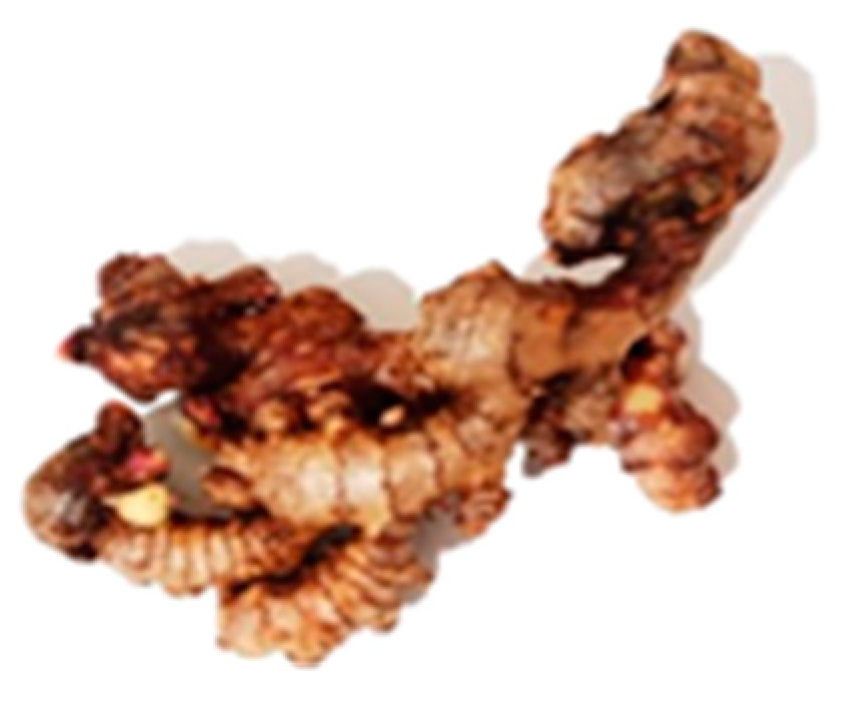
Figure 2.
GC Chromatogram of the n-hexane fraction of red ginger.
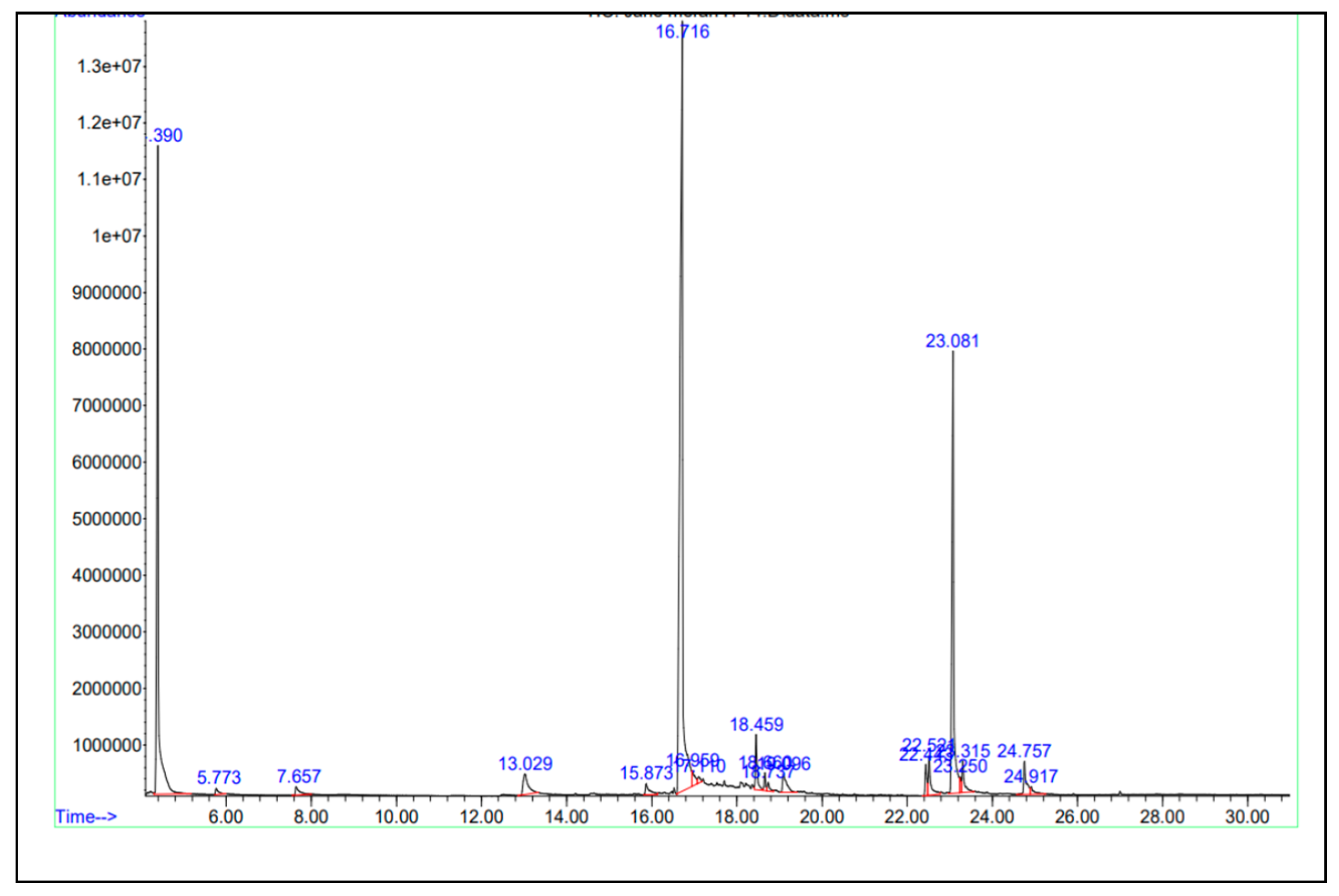
Figure 3.
HPLC chromatogram of sugar content (glucose, fructose and maltose) red ginger kombucha.
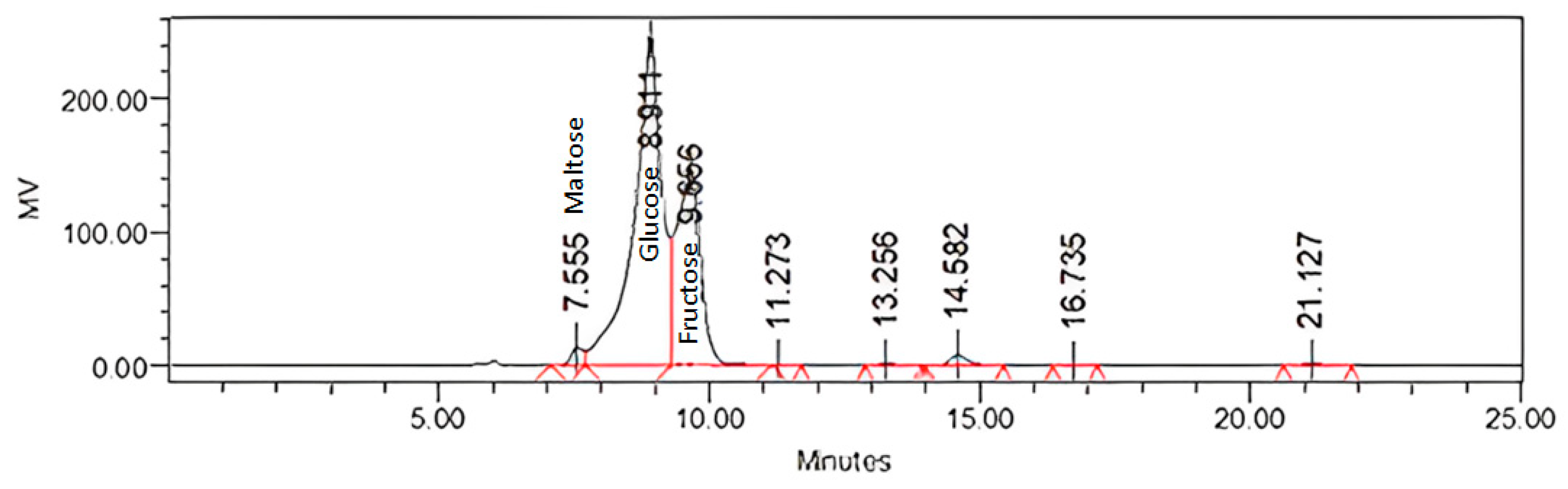
Figure 4.
Effect of process scale and fermentation time on the glucose, fructose, and maltose content of red ginger kombucha. The means on the process scale, fermentation time, and the interaction of both showed significant differences (p < 0.05).
Figure 4.
Effect of process scale and fermentation time on the glucose, fructose, and maltose content of red ginger kombucha. The means on the process scale, fermentation time, and the interaction of both showed significant differences (p < 0.05).
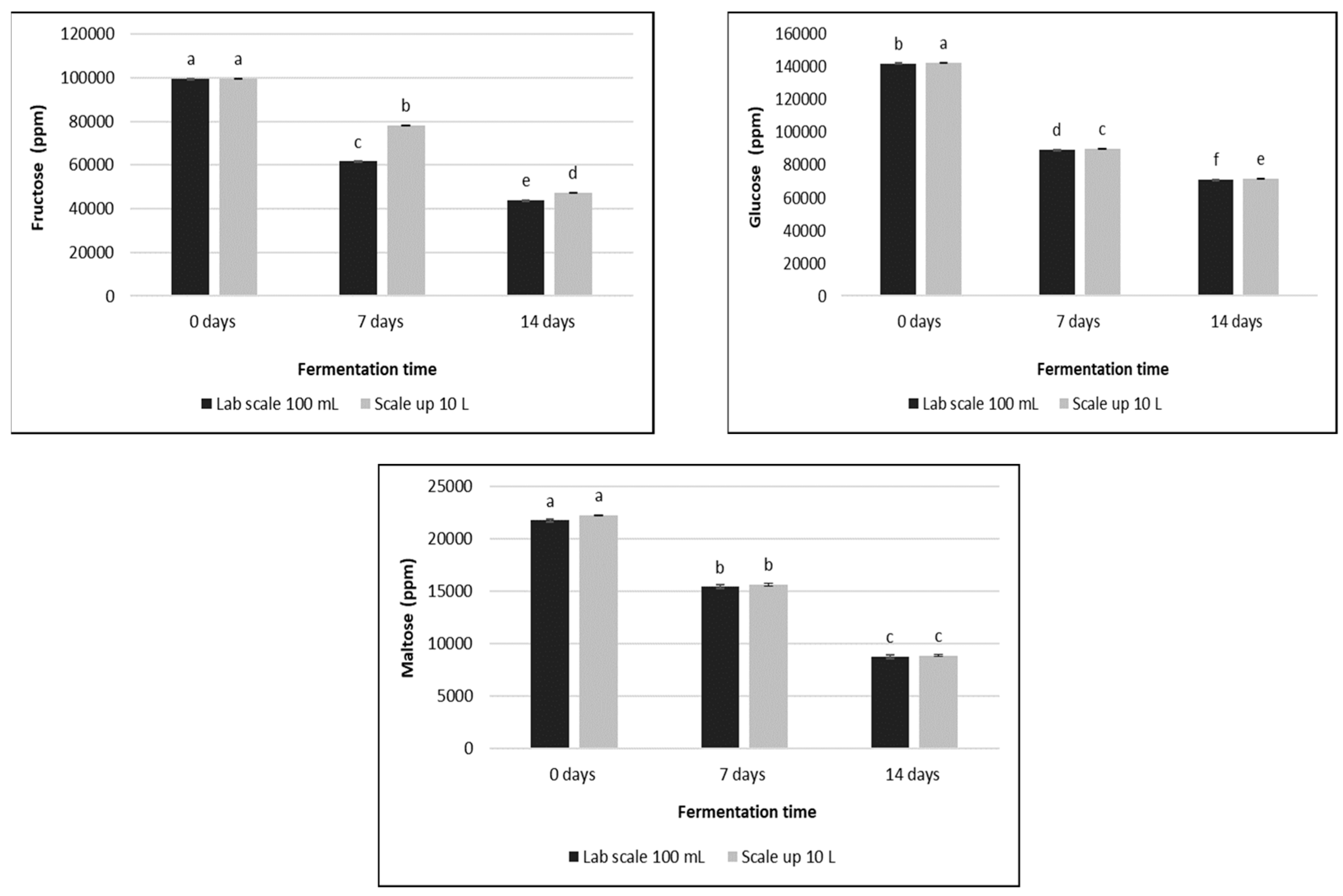
Figure 5.
HPLC chromatogram of organic acid content (acetic acid, lactic acid, and gluconic acid) of red ginger kombucha.
Figure 5.
HPLC chromatogram of organic acid content (acetic acid, lactic acid, and gluconic acid) of red ginger kombucha.
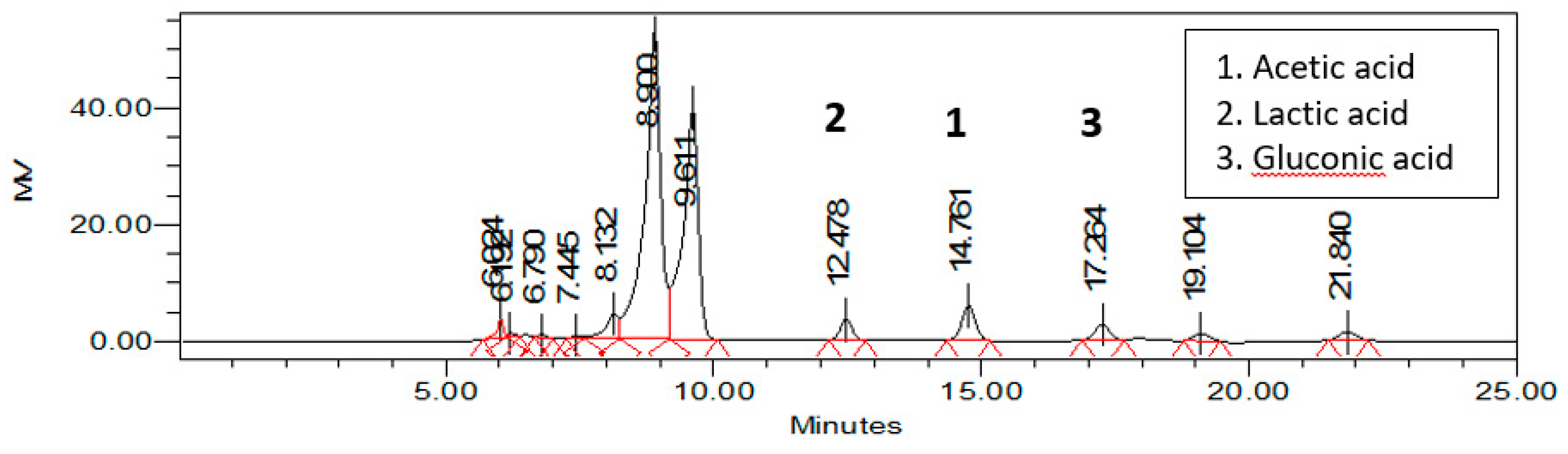
Figure 6.
Effect of process scale and fermentation time on the acetic acid, lactic acid, and gluconic acid contents of red ginger kombucha. The means on the process scale, fermentation time, and the interaction of both showed significant differences (p < 0.01).
Figure 6.
Effect of process scale and fermentation time on the acetic acid, lactic acid, and gluconic acid contents of red ginger kombucha. The means on the process scale, fermentation time, and the interaction of both showed significant differences (p < 0.01).
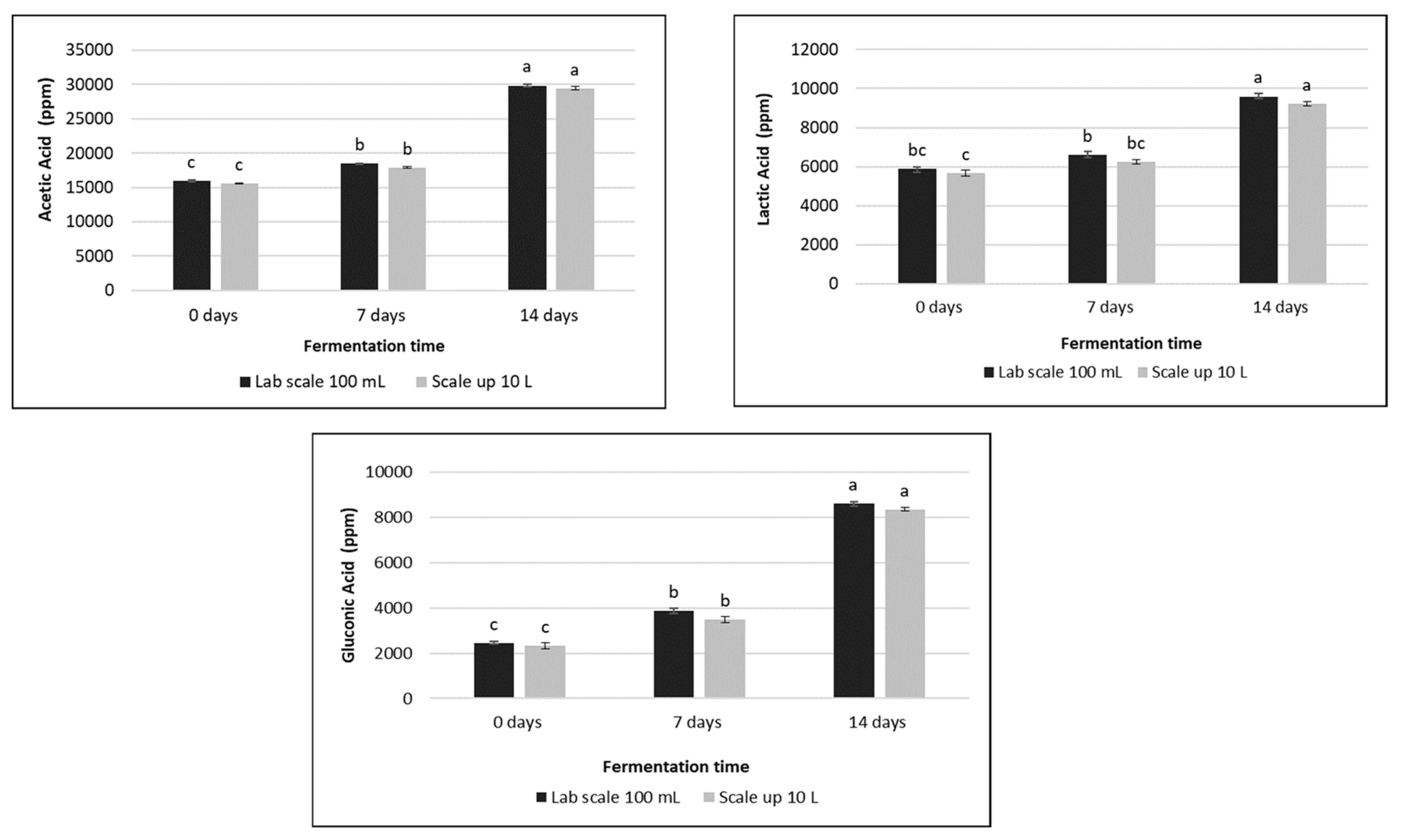
Figure 7.
pH of red ginger kombucha resulting from fermentation time at both laboratory scale and larger production scale are presented. Lowercase letters indicate the interaction between scale and fermentation time (a, b), showing significantly different values at the p < 0.05 level.
Figure 7.
pH of red ginger kombucha resulting from fermentation time at both laboratory scale and larger production scale are presented. Lowercase letters indicate the interaction between scale and fermentation time (a, b), showing significantly different values at the p < 0.05 level.
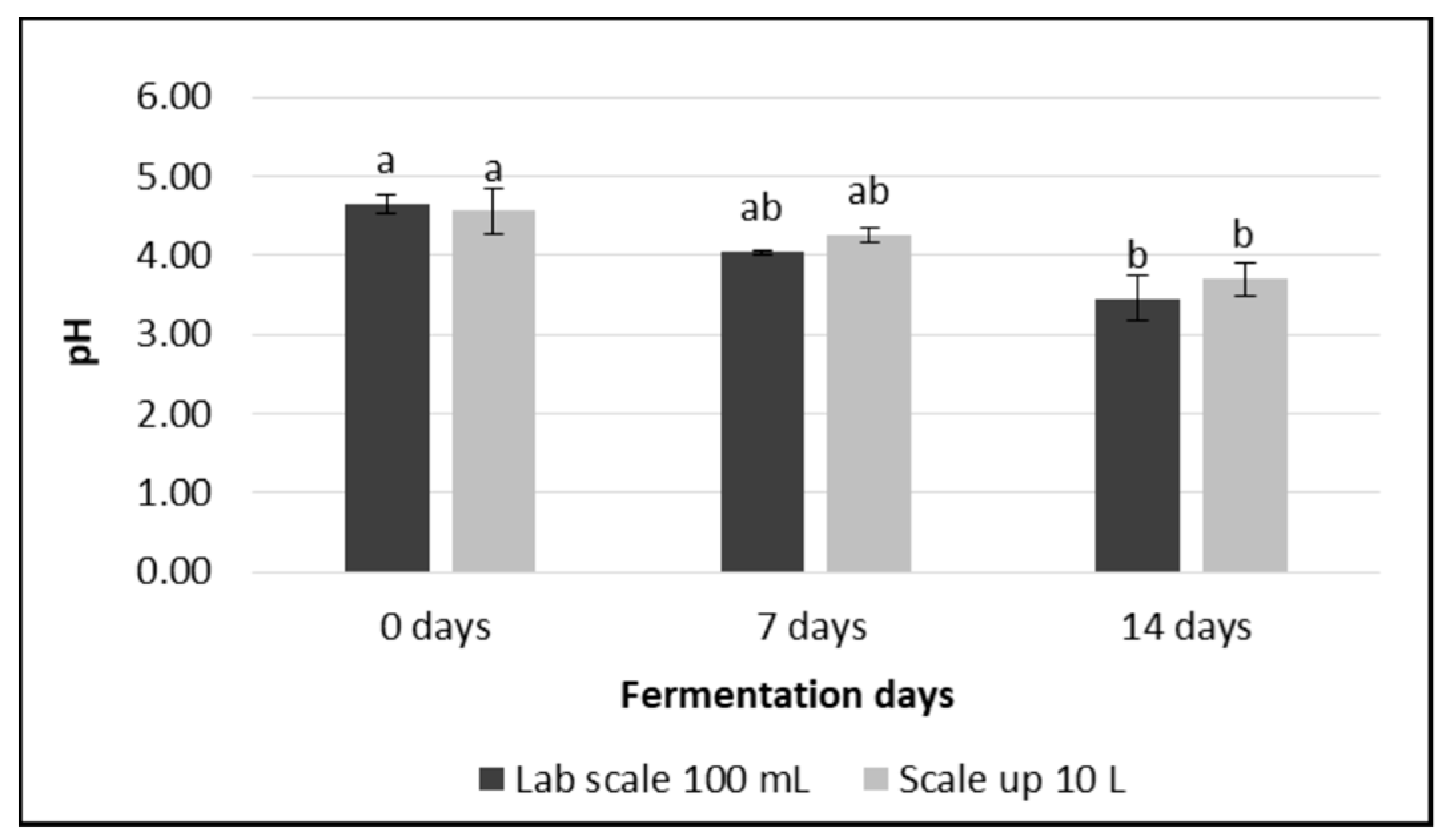
Figure 8.
Total acids content of red ginger kombucha resulting from fermentation time, both at the laboratory scale and larger production scale is presented. Lowercase letters indicate the interaction between scale and fermentation time (a, b), showing significantly different values at the p < 0.05 level.
Figure 8.
Total acids content of red ginger kombucha resulting from fermentation time, both at the laboratory scale and larger production scale is presented. Lowercase letters indicate the interaction between scale and fermentation time (a, b), showing significantly different values at the p < 0.05 level.
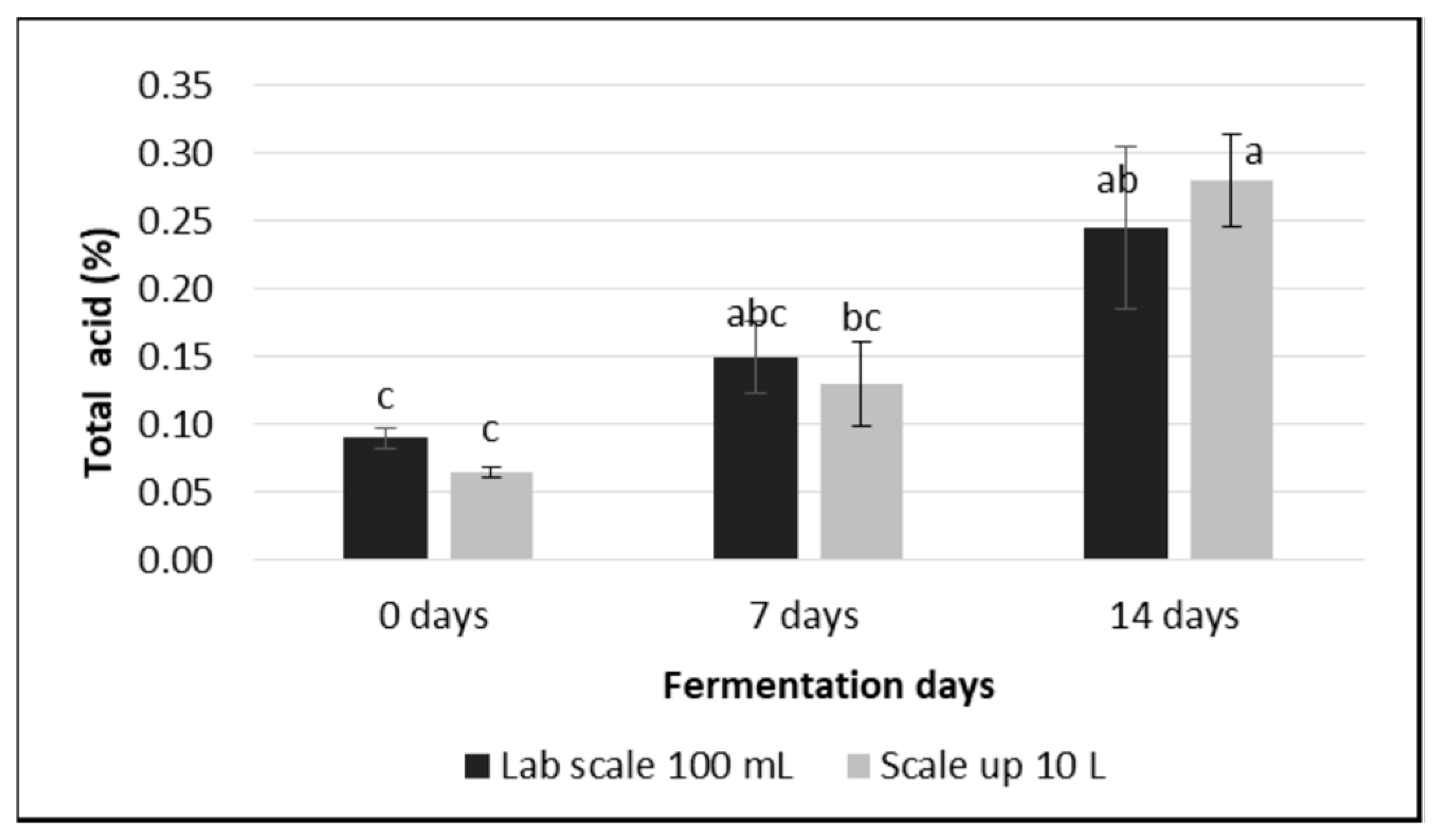
Figure 9.
The total polyphenol content in of red ginger kombucha resulting from fermentation time at both laboratory and production scale is presented. Lowercase letters indicate the interaction between scale and fermentation time (a, b), showing significantly different values at the p < 0.05 level.
Figure 9.
The total polyphenol content in of red ginger kombucha resulting from fermentation time at both laboratory and production scale is presented. Lowercase letters indicate the interaction between scale and fermentation time (a, b), showing significantly different values at the p < 0.05 level.
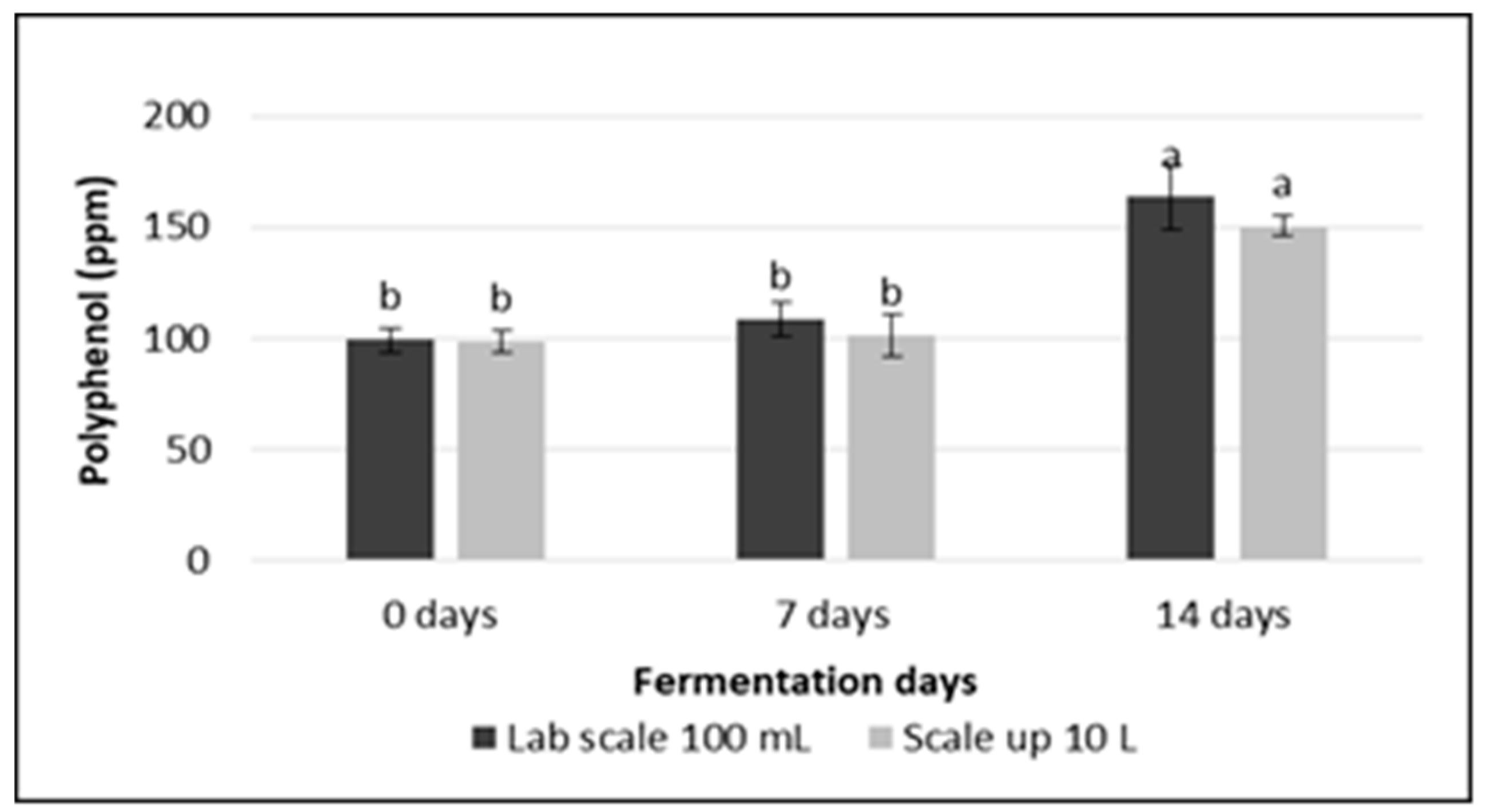
Figure 10.
The total flavonoid content in red ginger kombucha, as a function of fermentation time, at both laboratory and production scale, is presented. Lowercase letters indicate the interaction between scale and fermentation time (a), showing values that are not significant at the p > 0.05 level.
Figure 10.
The total flavonoid content in red ginger kombucha, as a function of fermentation time, at both laboratory and production scale, is presented. Lowercase letters indicate the interaction between scale and fermentation time (a), showing values that are not significant at the p > 0.05 level.

Figure 11.
The free radical DPPH inhibition in red ginger kombucha resulting from fermentation time at both laboratory scales and larger production scales are presented. Lowercase letters indicate the interaction between scale and fermentation time (a, b), showing significantly different values at the p < 0.05 level.
Figure 11.
The free radical DPPH inhibition in red ginger kombucha resulting from fermentation time at both laboratory scales and larger production scales are presented. Lowercase letters indicate the interaction between scale and fermentation time (a, b), showing significantly different values at the p < 0.05 level.
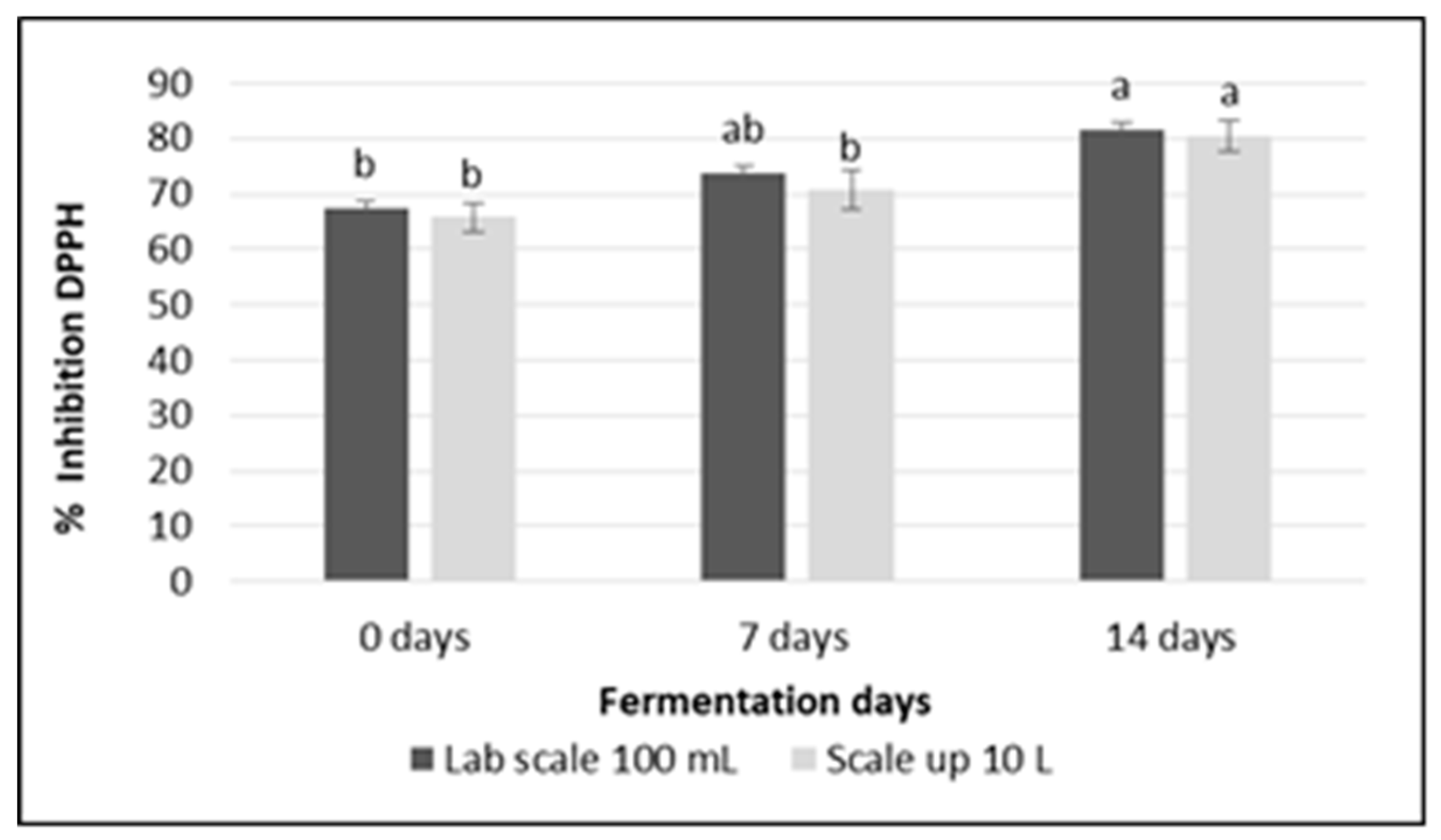
Figure 12.
α-glucosidase inhibition in red ginger kombucha resulting from fermentation time at both the laboratory scale and larger production scale. Lowercase letters indicate the interaction between scale and fermentation time (a, b), showing significantly different values at the p < 0.01 level.
Figure 12.
α-glucosidase inhibition in red ginger kombucha resulting from fermentation time at both the laboratory scale and larger production scale. Lowercase letters indicate the interaction between scale and fermentation time (a, b), showing significantly different values at the p < 0.01 level.


Table 1.
GC-MS Analysis of the n-Hexane Fraction of Red Ginger.
| Peaks | Retention time (minute) |
Area under the peak (%) |
Formula | Molecular weight | compound name | Similarity (%) |
|---|---|---|---|---|---|---|
| 1 | 16.716 | 46.21 | C11H14O3 | 194 | Butan-2-one, 4-(3-hydroxy-2-methoxyphenyl) | 98 |
| 2 | 22.443 | 1.01 | C17H24O3 | 276 | (6)-Isoshogaol | 97 |
| 3 | 22.524 | 1.65 | C17H26O3 | 278 | 6-Paradol | 96 |
| 4 | 23.081 | 18.62 | C17H24O3 | 276 | 6-Shogaol | 99 |
| 5 | 23.315 | 1.60 | C19H28O6 | 352 | (4)-Gingerdiol 3,5-diacetate | 95 |
Disclaimer/Publisher’s Note: The statements, opinions and data contained in all publications are solely those of the individual author(s) and contributor(s) and not of MDPI and/or the editor(s). MDPI and/or the editor(s) disclaim responsibility for any injury to people or property resulting from any ideas, methods, instructions or products referred to in the content. |
© 2025 by the authors. Licensee MDPI, Basel, Switzerland. This article is an open access article distributed under the terms and conditions of the Creative Commons Attribution (CC BY) license (http://creativecommons.org/licenses/by/4.0/).
Copyright: This open access article is published under a Creative Commons CC BY 4.0 license, which permit the free download, distribution, and reuse, provided that the author and preprint are cited in any reuse.


