

Submitted:
10 February 2025
Posted:
11 February 2025
You are already at the latest version
Preprints on COVID-19 and SARS-CoV-2
Abstract
The COVID19 pandemic has been the focus of scientific research since it first appeared. This article treats the pandemic as an everyday problem that required innovative solutions in a short period of time, and so a case study is carried out in this direction. As the focus of 21st century skills and STEM education is on problem solving, the contribution of both skills and STEM disciplines to the way out of the crisis is posited. Skills such as communication, cooperation, adaptability, leadership, critical thinking, etc. have each contributed in their own way to solving the problems that have arisen. On the other hand, STEM professionals have been working in the same direction, both in their individual fields and through an interdisciplinary approach, to gradually de-escalate the crisis. Challenges such as finding vaccines and drugs, caring for patients in a time of social isolation, reducing misinformation and reducing vaccine hesitancy were overcome by using appropriate 21st century skills and an interdisciplinary approach.
Keywords:
COVID19
; crisis management
; 21st century skills
; STEM education
; problem solving
INTRODUCTION
1.1. STEM EDUCATION FOR THE 21ST CENTURY
Globalization has changed the way societies function today [1] and new social, technological and scientific conditions make the future unpredictable, as natural disasters and infections can easily change the balance [2]. Because of these unprecedented conditions, the problems that arise are complex and difficult to manage [3]. Another characteristic of these situations is that they have never happened before, so the conditions are unknown [4]. At the same time, there are not a few cases where the required solutions must be provided in a short time and be efficient [3]. This is the context in which the COVID-19 pandemic is studied in this article, i.e. as an everyday problem to which innovative solutions [5,6,7,8] and integrated strategies [9] had to be provided in a short time [5,6,7,8] .
The COVID-19 pandemic represented a new condition of everyday life, affecting not only health systems around the world, but also other aspects [6,8,9,10,11,12,13] such as international transport, supply chains [8,6], education [8,11,13], the global economy [12,13,14] and social activities in general [13]. The complexity, speed [15,16] and uncertainty that characterised the early stages of the crisis destabilised society and its structures [15]. To manage the crisis, health systems and governments were forced to implement innovative practices that had not been tried before [6,17,18].
21st century skills are defined as the cognitive [3,19,20] and interpersonal [20] abilities that enable individuals to cope and adapt to the demands of the workplace and the global economy [4] κοινωνιών [1]. In the process of problem solving, individuals act responsibly [21], following principles such as ethics, humanism and sustainability [22].
In order to acquire these skills, individuals should have started to cultivate them from their school days through the education system [23], so they should be at the heart of curricula [4].
There is no precise definition of 21st century skills. This article focuses on some of them, namely innovation, critical thinking, collaboration, communication [4,24] , adaptability [4,25] , digital literacy [4,21] and leadership [4].
Innovation is defined as the use of new technologies and technology derivatives that contribute to improving the use of technology [7].
With the acquisition of critical thinking, the individual is able to analyse, synthesise, evaluate and apply the available information [26,27,28,29,30,31,32] in order to decide what to use to solve a problem [33] or what to believe. More specifically, it is the evaluation of information that helps individuals to separate the information they have into correct and incorrect information [26,29,34,35,36], thus reducing the likelihood of falling victim to misinformation [37].
The problems that arise in today's world, precisely because of their complexity, usually require solutions from many different areas of knowledge. It is impossible for any one person to possess all the necessary knowledge, so in order to solve the problem he or she will have to collaborate with professionals from other fields [19]. A prerequisite for achieving the goal is the possibility of cooperation between members of different fields and the possibility of communication [19]. Communication is related to the exchange of opinions, knowledge and the exchange and explanation of the thoughts of each team member [38], while cooperation is related to the complex of those processes related to the team effort to achieve a goal [39]. Communication and cooperation lead to the achievement of the goal [38,40].
The leader of a group is defined as the person who has the knowledge as well as the experience from everyday life [41] to guide his/her group towards the desired outcome [41,42], which is a common goal [42,43,44]. Key characteristics of a leader are the ability to collaborate and communicate [40] . He is also the one who has the vision [42,44,45] and motivates the team [42,45].
Adaptability is the ability to understand, in a short time, the constraints involved in solving a problem and to work on solving it without stress and emotional outbursts [46]. Taking into account new and specific circumstances increases his productivity [20] and helps him to cope with changes that will occur in the future [47].
As the acronym STEM suggests, it is the name given to an education that combines the principles of the natural sciences (physics, chemistry, biology, geology), technology, mathematics and engineering. In this type of education, students approach each problem to be solved in an interdisciplinary way. This allows them to develop multiple skills in the process. The ultimate goal of STEM education is to create multi-skilled professionals who are trained to find innovative solutions by combining knowledge from different fields [48].
At the heart of STEM education is the acquisition of skills that can equip students for successful careers [49]. Key features of STEM education are the ability to address complex problems of everyday life through the use of interdisciplinary methods [25,30,50,51] and outcomes characterised by innovation [30]. It is also associated with the development of the aforementioned 21st century skills of critical thinking, collaboration and innovation [50] and the ability to rise to any challenge [51]. The objectives of STEM education are fully aligned with the acquisition of 21st century skills [25]. It is worth noting that more recent trends include the contribution of non-STEM fields of knowledge to solving a problem, so we move from STEM education to STEAM, so we include the contribution of disciplines such as sociology, psychology, philosophy, etc. [52].
The active citizen has also mastered many of the 21st century skills such as critical thinking [27]. They are also constantly alert to keep themselves informed and to distinguish between authoritative and non-authoritative sources [53]. The skills an individual masters after engaging in STEM contribute to the development of an active citizen personality that can support the development of the global economy [50].
1.1. COVID 19 CRISIS
The most recent public health crisis faced by humanity was that caused by SARS-CoV-2, widely known as COVID-19. It was officially declared a pandemic by the World Health Organization (WHO) on 11 March 2020 [11,54,55,56] and ended on 5 [57] May 2023 [57,58], although this does not mean that the virus no longer poses a threat to global public health [6,57]. Transmission of the virus to the first patient was from an animal [9], which places this virus and viruses of the same family [9] in the category of zoonotic diseases [9,59]. One of the main reasons for the rapid spread and difficulty in containing the virus was the fact that in today's world short and long distance travel is more accessible than in the past, increasing the risk of transmission [54].
In the midst of this crisis, many individual problems arose that required immediate and effective solutions. One of the main and initial difficulties was the fact that this disease has two characteristics that make it difficult to diagnose:
There are asymptomatic patients, i.e. patients who carry and transmit the virus but have no symptoms.
The most common symptoms, such as cough, malaise and fever, are similar to those of influenza [6,59].
Therefore, diagnosis can only be made with specific screening tests, those using a nasal sample are reliable and those using saliva are mainly used in children and people with mild symptoms [59]; such as the polymerase chain reaction (PCR) test [60,61,62], which is time-consuming, expensive [60,62] and requires qualified personnel to perform and interpret the result [62].
The development of a vaccine was the first goal of the scientific community, as this would prevent the virus from entering the host organism. A second issue related to unexpected barriers that arose was the reluctance or refusal of the general population to be vaccinated. The main concerns about whether a person is available for vaccination are related to side effects, long-term effects and, more generally, whether the vaccine is safe [10]. The same concerns were expressed by participants in a survey conducted in Kampala, Uganda [56]. At the same time, the rapid development of the vaccine and its country of origin create barriers to its introduction [10]. In these situations, appropriate information, direct and honest communication, and promotion of vaccine safety data can help to overcome hesitancy [10]. At the same time, educating the general public about the testing process that takes place before a vaccine is available for general use and presenting scientific developments can have a positive effect on reducing vaccine hesitancy [10]. The administration of vaccines to the general population undoubtedly contributed to the emergence from the crisis [14,54,57,58], both in terms of the severity of symptoms and in limiting transmission [57].
During the pandemic, a great deal of information, both accurate and inaccurate, was disseminated to the public [10,12,55,63,64,65,66,67,68,69,70]. This made it more difficult to overcome the health crisis [11,13,55,63,69,71], as misinformation led to mistrust of health authorities, non-cooperation with instructions from health officials and even risky behaviour [11,55,63]. As a result, individuals do not receive valid information and their decisions are influenced by the misinformation they receive, leading to an increase in cases and deaths [72]. It is worth noting that false information about the virus will continue to be spread until the end of 2024. On Twitter, 3% of users are responsible for spreading this information [73]. A fact that confirms the ease with which all kinds of information can be disseminated.
The use of the Internet and social media by a large part of the world's population has contributed to the rapid spread of false information to a large part of the population [7,11,12,13,63,64,67,73,74,75] [76,77,78]. Social media in particular, with their large number of users but easy way of transmitting information, have been an easy channel for the transmission of false information in a short period of time [11,13,67,71,78]. The use of algorithms or bots used by social media to replicate posts, often containing fake news [55,67,75,76], has also contributed to this. They work by creating filters that allow information to reach users only from sources that agree with their views and reject those that do not [75]. Citizens have used information that in many cases comes from the scientific community but has not been peer-reviewed [69]. It was also found that users of social networking sites were strongly influenced by receiving positive feedback from other users for sharing information, rather than whether the information was accurate [68].
Some of the information related to unsubstantiated treatments [63,74,75,76], such as that the use of vitamins can help treat the virus [63], that the virus is transmitted via the 5G network [13,66,77], and the use of inappropriate drugs to treat the disease, such as hydroxychloroquine [12,66,70] or the formulation ivermectin [11,55,66], which is used as a parasiticide in animals [55]. In another case, the misconception was spread that alcohol could cure the virus [7,77]. With regard to hydroxychloroquine, Mutlu et al. reported in [12] on the contribution of Twitter to its use. But also in characterising good practices such as the use of masks [55,63,69], , the use of screening diagnostic tests in case of symptoms, social isolation [69] as incorrect [55,63,69].
As a result, part of the population was influenced by this information and did not follow preventive practices [13,64,70,71], putting public health at risk [71,74,75,77]. People who fell victim to misleading information put their physical [11,13,55,75,78] and mental health at risk [11,13,77,78], and the information caused negative emotions such as fear, sadness and anxiety [74]. Fake news also destabilises society and undermines democracy [78]. At the same time, there is a lack of trust in any preventive measures taken to protect public health [75]. In the same context, Bangladesh warned of an increase in deaths during the monsoon due to the combination of the virus and dengue, a scenario that did not materialise but caused fear among the public [69]. Misinformation has even hampered doctors' ability to care for COVID19 patients [70].
In many cases, prominent figures such as politicians [14,55,71], religious leaders [55,71], carnies [55,77], and even state officials [13] have contributed to disinformation by communicating their personal, unfounded views to their audiences [55,77]. On the other hand, distrust of political figures and political polarisation hindered the implementation of government measures to prevent and respond to the pandemic [75].
Factors influencing how individuals process the information they receive include prejudice [63,78],digital literacy [63,64,79], health education [63,64,79], η παιδεία σχετικά με την υγεία [10,55,63,78,79] and social segregation [63]. Bombarding citizens with scientifically accurate and verified information alone may not produce the desired results [75].
In many cases, misinformation has led to refusal of vaccination [10,13,55,56,57,63,64,66,75,76,77] and to the promotion of poor practices in response to the crisis, which has contributed to its prolongation [63]. A questionnaire distributed in Kampala, Uganda, shows that misinformation had an impact on individuals' willingness to be vaccinated, with 55% of the sample stating that they did not want to be vaccinated, citing misinformation as the reason [56]. It is worth noting that the same study found that individuals' desire to be vaccinated was higher prior to exposure to misinformation [56]. In many cases, misinformation was even associated with anti-vaccine conspiracy theories [7,10,55,64,66,71,75,77], which were believed because in times of crisis it is easier for individuals to believe in such theories due to the frustration they experience [55,66]. Scenarios in which vaccines were used by governments to implant microchips in citizens so that they could be traced [66,71], and the alteration of human genetic material and fertility [71] became credible. The existence of vaccine side effects, although rare, affects the public's willingness to be vaccinated [10,57,58,80], despite the fact that the overall benefits of mass vaccination far outweigh the side effects [58]. Similarly, personal experiences of the vaccine shared by social media users appeared to influence some of the public more than the results of scientific studies [75].
Reducing misinformation can begin with the education of physicians of different specialties, who can help the pro-vaccination campaign by creating a supportive environment in which patients' concerns are allayed and by providing personalised advice [57].
RESEARCH AIM
This unprecedented health crisis was an example of a real-life problem that placed society, health professionals, national leaders and science and technology workers in general in an unprecedented and urgent situation. The solutions to both the pandemic problem and other problems that arose during the pandemic had to be provided in a short time and be efficient.
The main purpose of this paper is to conduct a case study of the pandemic in order to identify the contribution of 21st Century Skills and STEM education fields to the management of the crisis. As the latter focus on solving everyday problems and mastering 21st century skills, the COVID-19 pandemic is a representative example of a complex everyday problem. In this way, the development of 21st century skills is supported so that future professionals will be able to provide solutions to any other everyday problem that may arise.
METHODOLOGY
PRISMA was chosen as the method for the meta-analysis of the data. Literature sources were searched in three databases: PubMED, SCOPUS, GOOGLE SCOLAR. The search was complex, using the operators shown in Table 1, and was carried out on 22/11/2024 in all three databases. The following criteria were set by the authors for the inclusion of sources
- Articles published between 01/11/2024 and the day of the search were selected.
- Articles only, not book chapters or conference proceedings.
- Articles written in English.
- Articles with free access for all.
After the first search, a total of 579 articles were found, 374 in PubMED, 16 in SCOPUS and 189 in GOOGLE SCOLAR. Of these, 122 remained after removing articles that were not relevant to the queries. The titles and DOIs of the 122 articles were kept in a Word file so that they could be retrieved during the study. Of the 122 articles, 8 duplicates were removed, leaving 114 for the study. The inventory is shown in Table 2.
The scholars read the 114 articles one by one and then discussed and argued about which articles to include and which to reject. In the end, 56 articles were included. Table 3 lists the articles that were included and their main conclusions, while Table 4 lists the articles that were rejected and the reason for rejection; it should be noted that an additional rejection criterion was applied, i.e. all articles that referred to the treatment of specific patient groups during the pandemic were rejected.
Figure 1 shows the number and corresponding percentage of articles examined that referred to the contribution of each of the 21st century skills on which the article focused.
Figure 2 shows the number of articles and the corresponding percentage of the total number of articles studied that refer/refer to the contribution of STEM fields and the interdisciplinary approach to crisis management and exit from crisis.
Figure 3 analyses the articles referring to the contribution of technology and identifies the specific technologies mentioned.
Figure 4 analyses the articles examined in terms of the direction taken to emerge from the crisis.
In Figure 5, the articles are analysed by the country of the higher education institution to which the researchers belong.
The articles studied come from 44 different scientific journals and newspapers and 2 platforms whose purpose is to disseminate accurate information. The journals can be divided into eight different categories according to their field of interest; the number of articles per category and the corresponding percentage are shown in Figure 6.
The analysis of the sources leads to the following initial conclusions:
- In terms of 21st century skills, collaboration and critical thinking have been studied more extensively in the literature reviewed.
- In terms of STEM, technology is the most relevant.
- Many of the studies were carried out by teams of researchers whose institutions are located on different continents, which reinforces the need for collaboration and communication between the scientific community in order to carry out research.
- The articles came from newspapers and journals in many different scientific fields, demonstrating that the pandemic was a problem that required an interdisciplinary approach to solve.
THE CONTRIBUTION OF 21ST CENTURY SKILLS TO CRISIS MANAGEMENT
4.1. ADAPTABILITY
The way out of this unprecedented crisis was to identify the points where there were gaps and to find solutions to each new problem that arose [81]. Thus, operational planning of the response to the crisis was central [81], and planning had to be adapted to the new data.
Country leaders [15] and primary health care systems [82] were called upon to adapt to the new conditions. Even pro-vaccination strategies had to be adapted [10,83,84], as vaccine hesitancy is related to socioeconomic, cultural and demographic factors [10,83], which had to be taken into account when designing a strategy.
4.2. COLLABORATION
The emergence from the health crisis was the result of collaboration at many different levels. In each case, the goals achieved were different and the benefits to society were multiple.
The multifaceted and multidimensional problems that emerged during the crisis required collaboration between professionals from many different scientific fields [6,8,12,16,62,81,82,83,85]. The global nature of the crisis also required cooperation between countries [81,86]; common policies, but also the exchange of good practices, brought positive results. At another level, scientists, society, politicians, agencies such as ministries, non-governmental organisations and the WHO worked together at national, regional and international levels to achieve their common goal of overcoming the crisis [81], [7,61,81,83,86]. Collaboration at multiple levels was also required to limit misinformation, with WHO re-opening channels of collaboration with political leaders [71,75], , social media leaders [75] and technology companies [13,70,75,79]. Collaboration between local leaders and the community [10], but also between health professionals and citizens [76], develops a sense of trust [10,15,76,81] that leads to positive outcomes [10] and even limits the phenomenon of misinformation [76].
Some of the positive results of collaboration have been the distribution of vaccines and efforts to be fair [14], the development and implementation of diagnostic tests [81], but also the limitation of misinformation [13,70,71,75,79].
Table 5 lists cases of collaboration from the reviewed bibliography.
4.3. COMMUNICATION
Another 21st century skill that was used and contributed greatly to overcoming the crisis was communication. Communication played an important multidimensional role in managing the crisis.
Communication between those involved in crisis management was essential to make strategic decisions [16] . The dissemination of information about health advice and the vaccination campaign played an important role in crisis management, highlighting the need for communication between leaders and citizens [82,83], between health professionals and citizens [70,83], and between health professionals and governments [81,82].
Communication was also emphasised in relation to access to scientifically valid and up-to-date data on the virus. At the same time, data should be easily accessible and transparent [81,87].
Communication between health professionals and the general public can increase trust between the parties involved [70,83]. Given the reluctance of the population to accept vaccination [10,14,57], it is important to improve the communication skills of health professionals to strengthen their arguments and to provide valid and timely information to patients so that they can receive the necessary vaccinations [10,57]. Such methods also yield better results in ethnic minority communities [70].
In these unprecedented circumstances, health workers needed to be constantly and promptly informed about government policies and guidelines for patient care and to ask questions [81,82].
Table 6 lists cases of communication from the literature review.
4.4. LEADERSHIP
Different decisions taken by policymakers around the world have resulted in different rates of recovery [5], demonstrating that the outcome of crises depends largely on how they are managed.
Governments around the world have implemented measures such as lockdowns, quarantines [8,15,81,83], mandatory masks in public [8,81,83], social distancing and mass vaccination [8,83], COVID-19 clinics, mass vaccination centres and mobile testing stations [82] . The implementation of preventive measures has been shown to be effective in significantly reducing the likelihood of transmission from an infected person to a healthy person [84] . Efforts to increase vaccination coverage have used a variety of tactics. These tactics have included
- making vaccination a condition of employment
- requiring proof of vaccination when entering public places and when travelling
- Providing financial incentives for those who had been vaccinated, either through gift vouchers or raffles of large sums of money [89].
Equally important were the decisions required of those with leadership roles in health care structures, as they influenced policy decisions on resource allocation, treatment protocols, management of health care workers, and communication with citizens [15]. Decision-making required immediate access to valid information and a critical review of the prevailing epidemiological situation [81]. Leadership was also considered critical to the success of the vaccination campaign in each country [14].
Table 7 lists examples of leadership from the literature reviewed.
4.5. CRITICAL THINKING
Misinformation has been one of the main obstacles to overcoming the public health crisis. One of the main methods of managing misinformation is to gather data from many different and valid sources that are consistent with each other [81]. As the search for, dissemination of, and discussion of health-related information among community members increases during a health crisis, information management becomes even more important [79]. It was also important to disseminate information about symptoms and protective measures through many different mechanisms in different languages to increase accessibility [81]. Technology has helped to find innovative solutions to reduce such phenomena.
The term infodemic has been developed to describe the large amount of information that citizens have to deal with during a pandemic, including false, redundant and misleading information [7,13,55,66,70,71,75,76,77,78,79]. The term predates the COVID-19 pandemic, but has received more attention since [70]. The main axes of combating disinformation during the pandemic are listed in Infodemic Management [63,70,79] and are as follows
- Monitoring the transmission of information and the impact of disinformation
- Strengthening the critical thinking of the general population by increasing their digital and scientific literacy.
- Fact-checking and peer-reviewing information.
- Valid and accurate transfer of knowledge to avoid its distortion by commercial or political interests [63].
It is clear that in the fight against disinformation, the existence of critical thinking can help individuals to rely only on valid information. Limiting the spread of disinformation can to a large extent be based on educating the public to distinguish reliable information from non-information [10,63,67,68], i.e. strengthening their critical thinking [67,75]. The large amount of information, but also the easy access to it, has led countries to develop strategies to teach citizens how to distinguish false information [7,11,70].
Table 8 lists cases of leadership from the literature reviewed.
4.6. INNOVATION
Innovation is at the heart of 21st century skills and problem solving. Because of the unprecedented conditions that prevailed during the pandemic, innovation was important, as any solution to unknown conditions is considered innovative when combined with principles such as justice and humanity.
Even the preventive measures implemented and the measures to support the vaccination campaign can be described as innovative, as they had not been implemented on such a scale in the past [8,15,81,82,83,88]. While innovative solutions have also been implemented to combat misinformation [55] , patient care [5,7]. It should be noted that an account of the innovative applications and technologies used to manage the crisis will be analysed in detail in a later section of the article.
Table 9 lists the innovations implemented during the crisis.
5. THE CONTRIBUTION OF STEM PROFESSIONS TO OVERCOMING THE CRISIS
5.1. THE NEED FOR A MULTIDISCIPLINARY APPROACH.
As mentioned above, the crisis was multidimensional and affected many different aspects of daily life. The problems that professionals were called upon to solve required an interdisciplinary approach [6,8,9,12,60,62,72,79,81,83]. The interdisciplinary approach, consistent with collaboration between scientists from different fields, was necessary to solve many individual problems, such as monitoring epidemiological risk [9], mitigating misinformation [55,71,75], , finding diagnostic tools [62], creating applications on mobile devices [60], and even using AI in medicine [72]. In particular, professionals in molecular biology, engineering and data analysis have worked together to improve diagnostic tools. STEM professionals have been asked to work together to limit misinformation [55], and the contribution of the social sciences has been requested in the same direction [71]. Collaboration between scientists, industry and IT specialists is emphasised in [12], and between combat medics and programmers in [54].
Table 10 lists the data from sources related to the interdisciplinary approach.
5.2. THE CONTRIBUTION OF SCIENCE
The contribution of the natural sciences to the management of the crisis was crucial. As the problem was primarily medical, biology contributed to the knowledge gathered on how to deal with the virus [6]. While both biology and chemistry contributed to the identification of those therapeutic methods that were suitable for treating the virus [6]. While physics and chaos theory can contribute to finding a transmission model and thus to designing prevention and public health protection strategies [91].
Table 11 provides data on the contribution of positive sciences to overcoming the crisis.
5.3. CONTRIBUTION OF TECHNOLOGY
The contribution of technology to overcoming the health crisis has been multidimensional, as it has helped to solve problems in many different areas. More specifically, it has helped to
- Making decisions on policy formulation [16]
- Finding treatments [58],
- Production of personal protection equipment [6],
- Gathering citizens' opinions on the burning issues of the time [79].
In order to achieve the above objectives
- Nanotechnology [6],
- Software [16] ,
- Immersive technologies [90],
- Artificial intelligence [72],
- Machine learning [62],
- Electronic Systems [81],
- Software [16],
- Programming languages [87].
Table 12 lists the technologies that were used during the pandemic to help manage the crisis.
The applications developed are associated with a number of innovations, such as personalised advice, daily reminders, notification of COVID-19 test results, recommendation of quarantine in case of symptoms, notifications in case of contact with a sick person, etc. [5]. The contribution of such applications was significant in terms of detecting outbreaks, monitoring the spread of the disease and checking the effectiveness of preventive measures [82]. Their effectiveness during the pandemic [5] highlights the fact that in an uncertain environment, technology, science and creativity can contribute to finding a solution to any problem [5]. Diagnostic applications require the use of interdisciplinary methods, as the analysis of nasal swabs requires the integration of a biosensor and the use of WiFi or Bluetooth for data transfer [60].
Table 13 lists the applications mentioned in the reviewed literature.
In addition to the use of apps, telemedicine was widely used during the pandemic [15,72,81,92,93], which, unlike apps, is an integrated system of care [72,93]. Telemedicine existed before the public health crisis, but during the crisis it was rapidly integrated into care systems [82,92], while in countries such as the United Kingdom its use became universal [93]. Its use helped to contain the disease during the pandemic, as video calls allowed the doctor to examine the patient and assess whether they needed further hospital care or could remain in isolation [72]. In this way, health professionals came into contact with fewer infected people [72]. After the pandemic, citizens continued to use telemedicine, recognising its benefits in terms of saving resources and time, as it does not require travel [92]. It was used in many cases of chronic diseases mentioned in [92] and will not be analysed further as it is beyond the scope of this article.
The digital environment created during the implementation of telemedicine has the potential to promote health while creating strong bonds between health professionals and users [7]. As both applications and telemedicine require the use of the internet, and in order to reduce the gap between those who have access and those who do not, Wi-Fi hotspots have been created so that even more people can access health applications and telemedicine platforms [82].
Artificial intelligence (AI) has contributed to addressing this global crisis through its use in various innovative applications [6,8,54,60,65,72,90,94,95]. Machine learning, deep learning and neural network techniques can use data sets related to critical factors in pandemic response, such as
Systems based on machine learning, deep learning [11,13,67,77,78], artificial intelligence [11] and innovative [77] hybrid models [67,77] have been used against disinformation [11] .
Table 14 lists the use of artificial intelligence, deep learning, machine learning and neural networks in crisis management.
In response to the pandemic and the need for immediate and innovative solutions, immersive technologies such as Virtual Reality (VR), Augmented Reality (AR), Mixed Reality (MR), Extended Reality (XR) [90] were put at the service of healthcare. These technologies attempted to provide solutions to problems that arose during the pandemic; the review in [90] lists 53 platforms, applications, games and smart objects that were used in different areas and contributed in their own way to the management of the pandemic. While [57], mentions the contribution of virtual reality environments combined with motivational interviewing to increase vaccination rates.
Social media have also been used in pandemic management in the following areas
Table 15 reports on the contribution of social media during the pandemic.
5.4. THE CONTRIBUTION OF MATHEMATICS
Mathematics as a positive science contributed to the way out of the crisis through the use of
- deterministic models [16]
While the areas of the crisis to which they contributed were
- Patient care [17],
- Decision making [16],
- Monitoring compliance with preventive measures [76].
- Communicating accurate information [67],
- providing psychological support, limiting negative emotions [67].
Table 16 provides a detailed description of the contribution of mathematics to crisis management.
CONCLUSIONS
The COVID19 pandemic, along with the individual problems that emerged during it, was a problem of everyday life that sought quick and innovative solutions not only regarding the virus but also regarding the other problems that emerged.
Through the method of data meta-analysis, the authors of the article demonstrated that the exit from the crisis was supported by people who possessed the skills of the 21st century. Professionals in all fields collaborated, communicated, used their critical thinking, their leadership skills, but they also had to adapt to the new conditions. From the perspective of scientific fields, the approach was interdisciplinary, a multitude of sciences from different scientific fields collaborated in order to provide solutions to the problems that arose. Professionals from Natural Sciences, Technology, Engineering and Mathematics worked in order to provide solutions.
In more detail, scientists were called upon to collaborate with each other, with local communities, with political leaders, with policymakers, with local-national and international bodies. The collaboration between the parties mentioned also required communication between the two sides. Their leadership skills were used by heads of states, agencies, and health units in order to be able to coordinate the implementation of the required actions and to handle situations. On the other hand, due to the dimensions that the phenomenon of misinformation took during the pandemic, the development of critical thinking among health professionals and citizens was often put in focus. Given that the vaccine was at the heart of the solution to the problem, the reduction of hesitancy or refusal to vaccinate required the development of critical thinking and brought to the surface the need to separate information into valid and invalid. Adaptability was another of the basic skills that helped to emerge from the crisis as those involved in crisis management had to adapt their decisions to the new data and citizens had to adapt in a short period of time to the instructions given to them each time.
The contribution of the STEM fields and the corresponding scientists is obvious. From the field of natural scientists, doctors, biologists, chemists, physicists worked both at the research level and at the industrial level in order to produce vaccines, medicines. They also contributed to the development of models for monitoring the epidemiological situation. Specialists in technology and information technology contributed greatly to the development of applications which in turn helped to monitor the situation, support patient care, and limit misinformation. Engineers contributed to the development of industrial products. While Mathematicians contributed to data analysis and the development of algorithms in order to achieve goals such as finding fake news, patient care, data categorization. While, the contribution of social sciences mainly in issues of psychological support and citizen management has been significant.
Throughout this process, the solutions provided were innovative, as new practices and applications emerged in order to provide solutions.
The COVID19 pandemic was an unprecedented situation, the exit of the global community from this large-scale health crisis was partly the result of the use of 21st century skills but also of the interdisciplinary approach.
References
- Gündüz, A.Y. The Importance of Investigating Students’ Lifelong Learning Levels and Perceptions of 21st-Century Skills. Int. e-Journal Educ. Stud. 2023, 7, 788–796. [Google Scholar] [CrossRef]
- G. Dishon and T. Gilead, "Adaptability and its discontentsQ 21st- century skills and the preparation for an unpredictadle futer," British Journal of Educational Studies, pp. 1-21, 2020.
- T. Oon-Seng, Problem-Based Learning Innovation: Using Problems to Power Learning in the 21st Century, Cengage Learning, 2023.
- E. van Laar,. A. J. A. M. van Deursen, J. A. G. M. van Dijk and J. de Haan, "Determinants of 21st-Century Skills and 21st-Century Digital Skills for Workers: A Systematic Literature Review.," SAGE Open, vol. 10, no. 1, 2020.
- Garavand, A.; Ameri, F.; Salehi, F.; Talebi, A.; Karbasi, Z.; Sabahi, A. A Systematic Review of Health Management Mobile Applications in COVID-19 Pandemic: Features, Advantages, and Disadvantages. Biomed Res Int. 2024. [CrossRef] [PubMed]
- Das, A.; Pathak, S.; Premkumar, M.; Sarpparajan, C.; Balaji, R.; Duttaroy, A.K.; Banerjee, A. A brief overview of SARS-CoV-2 infection and its management strategies: a recent update. Mol Cell Biochem. 2024, 479, 2195–2215. [Google Scholar] [CrossRef] [PubMed]
- Zanchetta, M.S.; de Paula, C.M.; Moraes, K.L.; Santos, W.S.; Linhares, F.M.P.; Oliveira, L.M.d.A.C.; Brasil, V.V.; Viduedo, A.d.F.S. Innovations in the practice of Brazilian community health nursing during the pandemic: a rapid review. Esc. Anna Nery 2024, 28, e20240011. [Google Scholar] [CrossRef]
- Lv, C.; Guo, W.; Yin, X.; Liu, L.; Huang, X.; Li, S.; Zhang, L. Innovative applications of artificial intelligence during the COVID-19 pandemic. Infect. Med. 2024, 3, 100095. [Google Scholar] [CrossRef]
- Huang, C.-Y.; Su, S.-B.; Chen, K.-T. Surveillance strategies for SARS-CoV-2 infections through one health approach. Heliyon 2024, 10. [Google Scholar] [CrossRef]
- Nwachukwu, G.; Rihan, A.; Nwachukwu, E.; Uduma, N.; Elliott, K.S.; Tiruneh, Y.M. Understanding COVID-19 Vaccine Hesitancy in the United States: A Systematic Review. Vaccines 2024, 12, 747. [Google Scholar] [CrossRef]
- Hussna, A.U.; Alam, G.R.; Islam, R.; Alkhamees, B.F.; Hassan, M.M.; Uddin, Z. Dissecting the infodemic: An in-depth analysis of COVID-19 misinformation detection on X (formerly Twitter) utilizing machine learning and deep learning techniques. Heliyon 2024, 10, e37760. [Google Scholar] [CrossRef]
- Afyouni, I.; Hashim, I.; Aghbari, Z.; Elsaka, T.; Almahmoud, M.; Abualigah, L. Insights from the COVID-19 Pandemic: A Survey of Data Mining and Beyond. Appl. Spat. Anal. Policy 2024, 17, 1359–1411. [Google Scholar] [CrossRef]
- Alsmadi, I.; Rice, N.M.; O’brien, M.J. Fake or not? Automated detection of COVID-19 misinformation and disinformation in social networks and digital media. Comput. Math. Organ. Theory 2022, 30, 187–205. [Google Scholar] [CrossRef]
- Agampodi, S.; Mogeni, O.D.; Chandler, R.; Pansuriya, M.; Kim, J.H.; Excler, J.-L. Global pandemic preparedness: learning from the COVID-19 vaccine development and distribution. Expert Rev. Vaccines 2024, 23, 761–772. [Google Scholar] [CrossRef] [PubMed]
- Al Qaf’an, E.; Alford, S.; Porteous, K.; Lim, D. Healthcare Decision-Making in a Crisis: A Qualitative Systemic Review Protocol. Emerg. Med. Int. 2024, 2024, 2038608. [Google Scholar] [CrossRef] [PubMed]
- Lais, R.S.; Fitzner, J.; Lee, Y.-K.; Struckmann, V. Open-sourced modeling and simulating tools for decision-makers during an emerging pandemic or epidemic – Systematic evaluation of utility and usability: A scoping review update. Dialog- Heal. 2024, 5, 100189. [Google Scholar] [CrossRef] [PubMed]
- Pomer, S. Munigala, C. Coles and et al., "he response of the Military Health System (MHS) to the COVID-19 pandemic: a summary of findings from MHS reviews. Health Res Policy Sys 2024, 22.
- H. Nouira, O. Jaoued, I. Ouanes,. M. Jrad, S. Chtioui, R. Gharbi, M. Fekih Hassen, H. Ben Sik Ali and S. Elatrous, "Implementation of simulation training in the Intensive Care Units (ICU) during the COVID-19 pandemic: A scoping review.," La Tunisie medicale 2024, 102, 433–439.
- BAŞAR, F.B.; Teacher, B.P.D.O.N.E.; Ada, Ş. The Relationship between eTwinning Activities and 21st Century Education and Teaching Skills. Int. J. Soc. Sci. Educ. Res. Stud. 2023, 3. [Google Scholar] [CrossRef]
- Levin, H.M. The Importance of Adaptability for the 21st Century. Society 2015, 52, 136–141. [Google Scholar] [CrossRef]
- OECD Skills Strategy 2019, skillas to shape a better future. 2019 OECD Skills Strategy: Greece," OECD, 2019.
- L. Gonzalez-Perez and M. Ramirez-Montoya, "Components of Education 4.0 in 21st Century Skillw Frameworkw: Systematic Reviw," Sustainability 2022, 14, 1493.
- Ab Ghani, S.; Awang, M.M.; Ajit, G.; Rani, M.A.M. Participation in Co-Curriculum Activities and Students’ Leadership Skills. J. Southwest Jiaotong Univ. 2020, 55. [Google Scholar] [CrossRef]
- Partnership for 21st Century Skills. Framework for 21st Century Learning.," 2019.
- Lin, K.-Y.; Yeh, Y.-F.; Hsu, Y.-S.; Wu, J.-Y.; Yang, K.-L.; Wu, H.-K. STEM education goals in the twenty-first century: Teachers’ perceptions and experiences. Int. J. Technol. Des. Educ. 2022, 33, 479–496. [Google Scholar] [CrossRef]
- Meirbekov, A.; Maslova, I.; Gallyamova, Z. Digital education tools for critical thinking development. Think. Ski. Creativity 2022, 44. [Google Scholar] [CrossRef]
- S. Heystek, The implementation of problem-based learning to foster pre-service teachers' critical thinking in education for sustainable development, North-West University, 2021.
- van der Zanden, P.J.A.C.; Denessen, E.; Cillessen, A.H.N.; Meijer, P.C. Fostering critical thinking skills in secondary education to prepare students for university: teacher perceptions and practices. Res. Post-Compulsory Educ. 2020, 25, 394–419. [Google Scholar] [CrossRef]
- Alsaleh, N.J. Teaching Critical Thinking Skills: Literature Review. The Turkish Online Journal of Educational Technology 2020, 19. [Google Scholar]
- P. Ellerton and R. Kelly, "Creativity and Critical Thinking," Education in 21st Century, pp. 7-27, 2021.
- Perera, T. Developing the Critical Thinking Skill of Secondary Science Students in Sri Lanka. Global Comparative EducationQ Journal of the WCCES 2022, 6, 82–88. [Google Scholar]
- Wang, D.; Jia, Q. Twenty years of research development on teachers’ critical thinking: Current status and future implications—A bibliometric analysis of research articles collected in WOS. Think. Ski. Creativity 2023, 48, 101252. [Google Scholar] [CrossRef]
- Parra, Y.J.F.; Barriga, A.M.; Díaz, R.A.L.; Cuesta, J.A.G. Teacher education and critical thinking: Systematizing theoretical perspectives and formative experiences in Latin America. Rie-Revista De Investig. Educ. 2021, 39, 149–167. [Google Scholar] [CrossRef]
- Misbah, M.; Hamidah, I.; Sriyati, S.; Samsudin, A. A bibliometric analysis: research trend of critical thinking in science education. Journal of Engineering Science and Technology 2022, 118–126. [Google Scholar]
- Rubini, B.; Septian, B.; Permana, I. Enhancing critical thinking through the science learning on using interactive problem based module. J. Physics Conf. Ser. 2019, 1157, 022001. [Google Scholar] [CrossRef]
- Orhan, A.; Ay, Ş.Ç. How to teach critical thinking: an experimental study with three different approaches. Learn. Environ. Res. 2022, 26, 199–217. [Google Scholar] [CrossRef]
- Duncan, R.G.; Cavera, V.L.; Chinn, C.A. The Role of Evidence Evaluation in Critical Thinking: Fostering Epistemic Vigilance. In: Puig, B., Jiménez-Aleixandre, M.P. (eds) Critical Thinking in Biology and Environmental Education. Contributions from Biology Education Research.," Springer, Cham., 2022.
- Boyraz, S. A scale development study for one of the 21st centuryskills: Collaboration at secondary schools. African Educational Research Journal 2021, 9, 907–913. [Google Scholar] [CrossRef]
- J. Salmons and L. A. Wilson, Learning to Collaborate, Collaborating to Learn, New York: Routledge, 2019.
- Petre, G.-E. Developing Students’ Leadership Skills Through Cooperative Learning: An Action Research Case Study. International Forum 2020, 23, 143–162. [Google Scholar]
- Channing, J. How Can Leadership Be Taught? Implications for Leadership Educators. International Journal of Educational Leadership Preparation 2020, 15, 134–148. [Google Scholar]
- Warren, L.L. The Importance of Teacher Leadership Skills in the Classroom. Educ. J. 2021, 10, 8. [Google Scholar] [CrossRef]
- Elmuti, D.; Minnis, W.; Abebe, M. Does education have a role in developing leadership skills? Manag. Decis. 2005, 43, 1018–1031. [Google Scholar] [CrossRef]
- Muammar, O. Exploring students’ perceptions of leadership skills in higher education: An impact study of the leadership training program. Gift. Educ. Int. 2021, 38, 295–308. [Google Scholar] [CrossRef]
- Gómez-Leal, R.; Holzer, A.A.; Bradley, C.; Fernández-Berrocal, P.; Patti, J. The relationship between emotional intelligence and leadership in school leaders: a systematic review. Camb. J. Educ. 2021, 52, 1–21. [Google Scholar] [CrossRef]
- Sirotiak, T.; Sharma, A. Problem-Based Learning for Adaptability and Management Skills. J. Prof. Issues Eng. Educ. Pr. 2019, 145. [Google Scholar] [CrossRef]
- Savickas, M.L.; Porfeli, E.J. Career Adapt-Abilities Scale: Construction, reliability, and measurement equivalence across 13 countries. J. Vocat. Behav. 2012, 80, 661–673. [Google Scholar] [CrossRef]
- J. M. Breiner, C. C. J. M. Breiner, C. C. Johnson, S. S. Harkness and C. M. Koehler, "What Is STEM? A Discussion About Conceptions of STEM in Education and Partnerships.," School Science and Mathematics, Jan 2012.
- Bybee, R.W. What Is STEM Education? Science 2010, 329, 996. [Google Scholar] [CrossRef]
- R. Tytler, J. Aderson and Y. Li, "STEM Education for the Twenty-First Century.," in Integrated Approaches to STEM Education: An International Perspective, Cham, Springer International Publishing, 2020, pp. 21-43.
- Maass, K.; Geiger, V.; Ariza, M.R.; Goos, M. The Role of Mathematics in interdisciplinary STEM education. ZDM – Math. Educ. 2019, 51, 869–884. [Google Scholar] [CrossRef]
- G. Yakman and H. Lee, "Exploring the Exemplary STEAM Education in the U.S. as a Practical Educational Framework for Korea," Journal of The Korean Association For Science Education, Aug 2012.
- UNESCO, Embracing a culture of lifelong learning, Germany: UNESCO Institute for Lifelong Learnin, 2020.
- Ankolekar, A.; Eppings, L.; Bottari, F.; Pinho, I.F.; Howard, K.; Baker, R.; Nan, Y.; Xing, X.; Walsh, S.L.; Vos, W.; et al. Using artificial intelligence and predictive modelling to enable learning healthcare systems (LHS) for pandemic preparedness. Comput. Struct. Biotechnol. J. 2024, 24, 412–419. [Google Scholar] [CrossRef] [PubMed]
- C. Chaufan, N. Hemsing, C. Heredia and. J. McDonald, "Trust Us—We Are the (COVID-19 Misinformation) Experts: A Critical Scoping Review of Expert Meanings of “Misinformation” in the Covid Era. COVID 2024, 4, 1413–1439. [Google Scholar] [CrossRef]
- Atuheirwe, M.; Otim, R.; Male, K.J.; Ahimbisibwe, S.; Sackey, J.D.; Sande, O.J. Misinformation, knowledge and COVID-19 vaccine acceptance: a cross-sectional study among health care workers and the general population in Kampala, Uganda. BMC Public Heal. 2024, 24, 1–10. [Google Scholar] [CrossRef]
- See, K.C. Enhancing COVID-19 Vaccination Awareness and Uptake in the Post-PHEIC Era: A Narrative Review of Physician-Level and System-Level Strategies. Vaccines 2024, 12, 1038. [Google Scholar] [CrossRef] [PubMed]
- Arevalo-Romero, J.A.; Chingaté-López, S.M.; Camacho, B.A.; Alméciga-Díaz, C.J.; Ramirez-Segura, C.A. Next-generation treatments: Immunotherapy and advanced therapies for COVID-19. Heliyon 2024, 10, e26423. [Google Scholar] [CrossRef]
- Almulla, N.; Soltane, R.; Alasiri, A.; Allayeh, A.K.; Taha, A.; Alshehri, F.; Alrokban, A.H.; Zaghloo, S.S.; Zayan, A.Z.; Abdalla, K.F.; Sayed, A.M. Advancements in SARS-CoV-2 detection: Navigating the molecular landscape and diagnostic technologies. Heliyon 2024, 10. [Google Scholar] [CrossRef]
- Gheisari, M.; Ghaderzadeh, M.; Li, H.; Taami, T.; Fernández-Campusano, C.; AbbasI, A.A. Mobile Apps for COVID-19 Detection and Diagnosis for Future Pandemic Control: Multidimensional Systematic Review. JMIR Mhealth Uhealth 2024. [Google Scholar]
- Janssen, L. Cuypers, L. Laenen and et al., "Nationwide quality assurance of high-throughput diagnostic molecular testing during the SARS-CoV-2 pandemic: role of the Belgian National Reference Centre. Virol J. 2024, 21.
- Koksaldi, I.C.; Park, D.; Atilla, A.; Kang, H.; Kim, J.; Seker, U.O.S. RNA-Based Sensor Systems for Affordable Diagnostics in the Age of Pandemics. ACS Synth. Biol. 2024, 13, 1026–1037. [Google Scholar] [CrossRef]
- S. Kisa and A. Kisa, "A Comprehensive Analysis of COVID-19 Misinformation, Public Health Impacts, and Communication Strategies: Scoping Review. J Med Internet Res 2024.
- D. Kbaier, A. Kane, M. McJury and I. Kenny, "Prevalence of Health Misinformation on Social Media—Challenges and Mitigation Before, During, and Beyond the COVID-19 Pandemic: Scoping Literature Review,". J Med Internet Res. 2024.
- Yang, L.; Lu, S.; Zhou, L.; Prevention, B.C.C.F.D.C.A. The Implications of Artificial Intelligence on Infection Prevention and Control: Current Progress and Future Perspectives. China CDC Wkly. 2024, 5, 901–904. [Google Scholar] [CrossRef] [PubMed]
- Butterworth, J.; Smerdon, D.; Baumeister, R.; von Hippel, W. Cooperation in the Time of COVID. ," Perspectives on psychological science : a journal of the Association for Psychological Science 2024, 19, 640–651. [Google Scholar] [CrossRef] [PubMed]
- Naeem, J.; Gul, O.M.; Parlak, I.B.; Karpouzis, K.; Salman, Y.B.; Kadry, S.N. Detection of Misinformation Related to Pandemic Diseases using Machine Learning Techniques in Social Media Platforms. EAI Endorsed Trans. Pervasive Heal. Technol. 2024, 10, 6459. [Google Scholar] [CrossRef]
- J. Rasmussen,. L. Lindekilde and M. B. Petersen, "Public Health Communication Reduces COVID-19 Misinformation Sharing and Boosts Self-Efficacy.," Journal of Experimental Political Science 2024, 11, 327–342.
- Lytton, S.; Ghosh, A. SARS-CoV-2 Variants and COVID-19 in Bangladesh—Lessons Learned. Viruses 2024, 16. [Google Scholar] [CrossRef]
- Ishizumi, A.; Kolis, J.; Abad, N.; Prybylski, D.; A Brookmeyer, K.; Voegeli, C.; Wardle, C.; Chiou, H. Beyond misinformation: developing a public health prevention framework for managing information ecosystems. Lancet Public Heal. 2024, 9, e397–e406. [Google Scholar] [CrossRef]
- Barua, Z. COVID-19 Misinformation on Social Media and Public’s Health Behavior: Understanding the Moderating Role of Situational Motivation and Credibility Evaluations. Hum. Arenas 2022, 7, 1–24. [Google Scholar] [CrossRef]
- Hirani, R.; Noruzi, K.; Hussaini, A.; Aifuwa, E.; Ely, K.; Lewis, J.; Gabr, A.; Smiley, A.; Tiwari, R. Artificial Intelligence and Healthcare: A Journey through History, Present Innovations, and Future Possibilities. Life 2024, 14. [Google Scholar] [CrossRef]
- Hussna, A.U.; Islam, R.; Alam, G.R.; Uddin, J.; Ashraf, I.; Samad, A. A graph mining-based approach to analyze the dynamics of the Twitter community of COVID-19 misinformation disseminators. ICT Express 2024, 10, 1280–1287. [Google Scholar] [CrossRef]
- Wakene, A.D.; Cooper, L.N.; Hanna, J.J.; Perl, T.M.; Lehmann, C.U.; Medford, R.J. A pandemic of COVID-19 mis- and disinformation: manual and automatic topic analysis of the literature. Antimicrob. Steward. Heal. Epidemiology 2024, 4, e141. [Google Scholar] [CrossRef]
- Rodrigues, F.; Newell, R.; Babu, G.R.; Chatterjee, T.; Sandhu, N.K.; Gupta, L. The social media Infodemic of health-related misinformation and technical solutions. Heal. Policy Technol. 2024, 13. [Google Scholar] [CrossRef]
- Gardasevic, S.; Jaiswal, A.; Lamba, M.; Funakoshi, J.; Chu, K.-H.; Shah, A.; Sun, Y.; Pokhrel, P.; Washington, P. "Public Health Using Social Network Analysis During the COVID-19 Era: A Systematic Review. Information, 2024; 15. [Google Scholar]
- Zaheer, H.; Bashir, M. Detecting fake news for COVID-19 using deep learning: a review. Multimedia Tools Appl. 2024, 83, 74469–74502. [Google Scholar] [CrossRef]
- Harris, S.; Hadi, H.J.; Ahmad, N.; Alshara, M.A. Fake News Detection Revisited: An Extensive Review of Theoretical Frameworks, Dataset Assessments, Model Constraints, and Forward-Looking Research Agendas. Technologies 2024, 12. [Google Scholar] [CrossRef]
- Abuhaloob, L.; Purnat, T.D.; Tabche, C.; Atwan, Z.; Dubois, E.; Rawaf, S. Management of infodemics in outbreaks or health crises: a systematic review. Front. Public Heal. 2024, 12, 1343902. [Google Scholar] [CrossRef]
- E Chandler, R.; Balakrishnan, M.R.; Brasseur, D.; Bryan, P.; Espie, E.; Hartmann, K.; Jouquelet-Royer, C.; Milligan, J.; Nesbitt, L.; Pal, S.; et al. Collaboration within the global vaccine safety surveillance ecosystem during the COVID-19 pandemic: lessons learnt and key recommendations from the COVAX Vaccine Safety Working Group. BMJ Glob. Heal. 2024, 9, e014544. [Google Scholar] [CrossRef]
- English, R.; Carlson, H.; Geduld, H.; Nyasulu, J.C.Y.; Quinette, L.; Karina, B.; Yvonne, C.M.; Michele, P.; Michael, M.; Conran, J.; Nina, G.; Lucy, B.L.; Emiroglu, N. Defining and identifying the critical elements of operational readiness for public health emergency events: a rapid scoping review. BMJ Global Health, 2024; 9. [Google Scholar]
- Mosadeghrad, A.M.; Afshari, M.; Isfahani, P.; Ezzati, F.; Abbasi, M.; Farahani, S.A.; Zahmatkesh, M.; Eslambolchi, L. Strategies to strengthen the resilience of primary health care in the COVID-19 pandemic: a scoping review. BMC Heal. Serv. Res. 2024, 24, 1–32. [Google Scholar] [CrossRef]
- Muhsen, K.; Cohen, D.; Glatman-Freedman, A.; Husseini, S.; Perlman, S.; McNeil, C. Review of Israel’s action and response during the COVID-19 pandemic and tabletop exercise for the evaluation of readiness and resilience—lessons learned 2020–2021. Front. Public Heal. 2024, 11, 1308267. [Google Scholar] [CrossRef]
- Fenta, E.T.; Bogale, E.K.; Anagaw, T.F. The role of social media on COVID-19 preventive behaviors worldwide, systematic review. PloS one 2024, 19. [Google Scholar]
- Cuadros, D.F.; Chen, X.; Li, J.; Omori, R.; Musuka, G. Advancing Public Health Surveillance: Integrating Modeling and GIS in the Wastewater-Based Epidemiology of Viruses, a Narrative Review. Pathogens 2024, 13, 685. [Google Scholar] [CrossRef]
- Franz, C.; Holzscheiter, A.; Kickbusch, I. Germany's role in global health at a critical juncture. The Lancet 2024, 82–94. [Google Scholar] [CrossRef]
- Herre, B.; Rodés-Guirao, L.; Mathieu, E.; Ritchie, H.; Giattino, C.; Hasell, J.; Dattani, S.; Ortiz-Ospina, E.; Roser, M. Best practices for government agencies to publish data: lessons from COVID-19. Lancet Public Heal. 2024, 9, e407–e410. [Google Scholar] [CrossRef] [PubMed]
- Boylan, S.; Arsenault, C.; Barreto, M.; A Bozza, F.; Fonseca, A.; Forde, E.; Hookham, L.; Humphreys, G.S.; Ichihara, M.Y.; Le Doare, K.; et al. Data challenges for international health emergencies: lessons learned from ten international COVID-19 driver projects. Lancet Digit. Heal. 2024, 6, e354–e366. [Google Scholar] [CrossRef] [PubMed]
- Fayaz-Farkhad, B.; Jung, H. Do COVID-19 Vaccination Policies Backfire? The Effects of Mandates, Vaccination Passports, and Financial Incentives on COVID-19 Vaccination. Perspectives on Psychological Science 2024, 19, 660–674. [Google Scholar] [PubMed]
- Khan, H.U.; Ali, Y.; Khan, F.; Al-Antari, M.A. A comprehensive study on unraveling the advances of immersive technologies (VR/AR/MR/XR) in the healthcare sector during the COVID-19: Challenges and solutions. Heliyon 2024, 10, e35037. [Google Scholar] [CrossRef]
- Calistri, A.; Roggero, P.F.; Palù, G. Chaos theory in the understanding of COVID-19 pandemic dynamics. Gene 2024, 912, 148334. [Google Scholar] [CrossRef]
- Ezeamii, V.C.; E Okobi, O.; Wambai-Sani, H.; Perera, G.S.; Zaynieva, S.; Okonkwo, C.C.; Ohaiba, M.M.; William-Enemali, P.C.; Obodo, O.R.; Obiefuna, N.G. Revolutionizing Healthcare: How Telemedicine Is Improving Patient Outcomes and Expanding Access to Care. Cureus 2024, 16. [Google Scholar] [CrossRef]
- Alashek, W.; Ali, S. Satisfaction with telemedicine use during COVID-19 pandemic in the UK: a systematic review. Libyan J. Med. 2024, 19, 2301829. [Google Scholar] [CrossRef]
- Khosravi, M.; Zare, Z.; Mojtabaeian, S.M.; Izadi, R. Artificial Intelligence and Decision-Making in Healthcare: A Thematic Analysis of a Systematic Review of Reviews. Heal. Serv. Res. Manag. Epidemiology 2024, 11. [Google Scholar] [CrossRef]
- Saarela, M.; Podgorelec, V. Recent Applications of Explainable AI (XAI): A Systematic Literature Review. Appl. Sci. 2024, 14, 8884. [Google Scholar] [CrossRef]
Figure 1.
Dissemination of articles on 21st century skills.
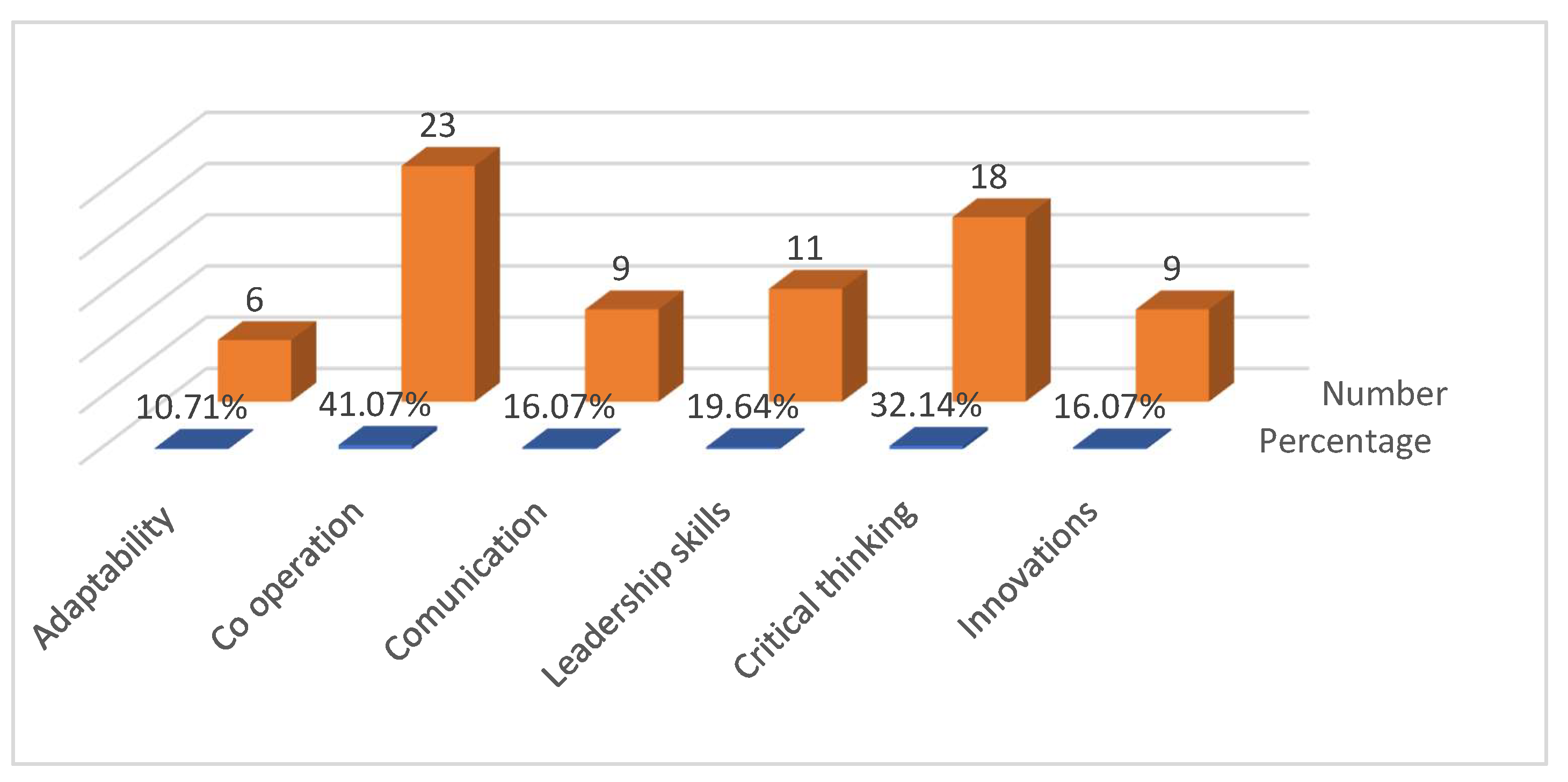
Figure 2.
Analysing the articles, percentages and numbers, distributed according to the STEM field to which they belong.
Figure 2.
Analysing the articles, percentages and numbers, distributed according to the STEM field to which they belong.
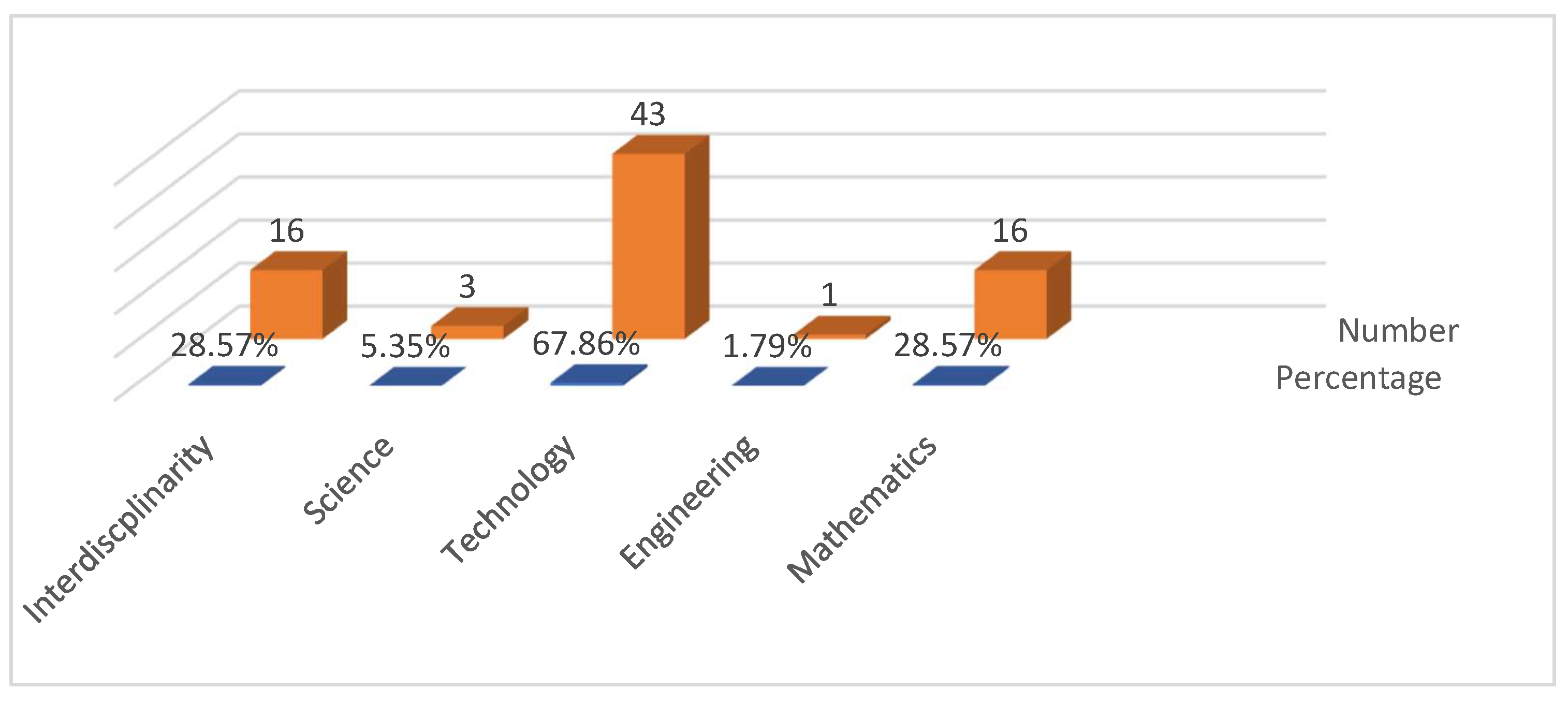
Figure 3.
Analysing the articles, percentages and numbers, distributed according to technology type they belong.
Figure 3.
Analysing the articles, percentages and numbers, distributed according to technology type they belong.
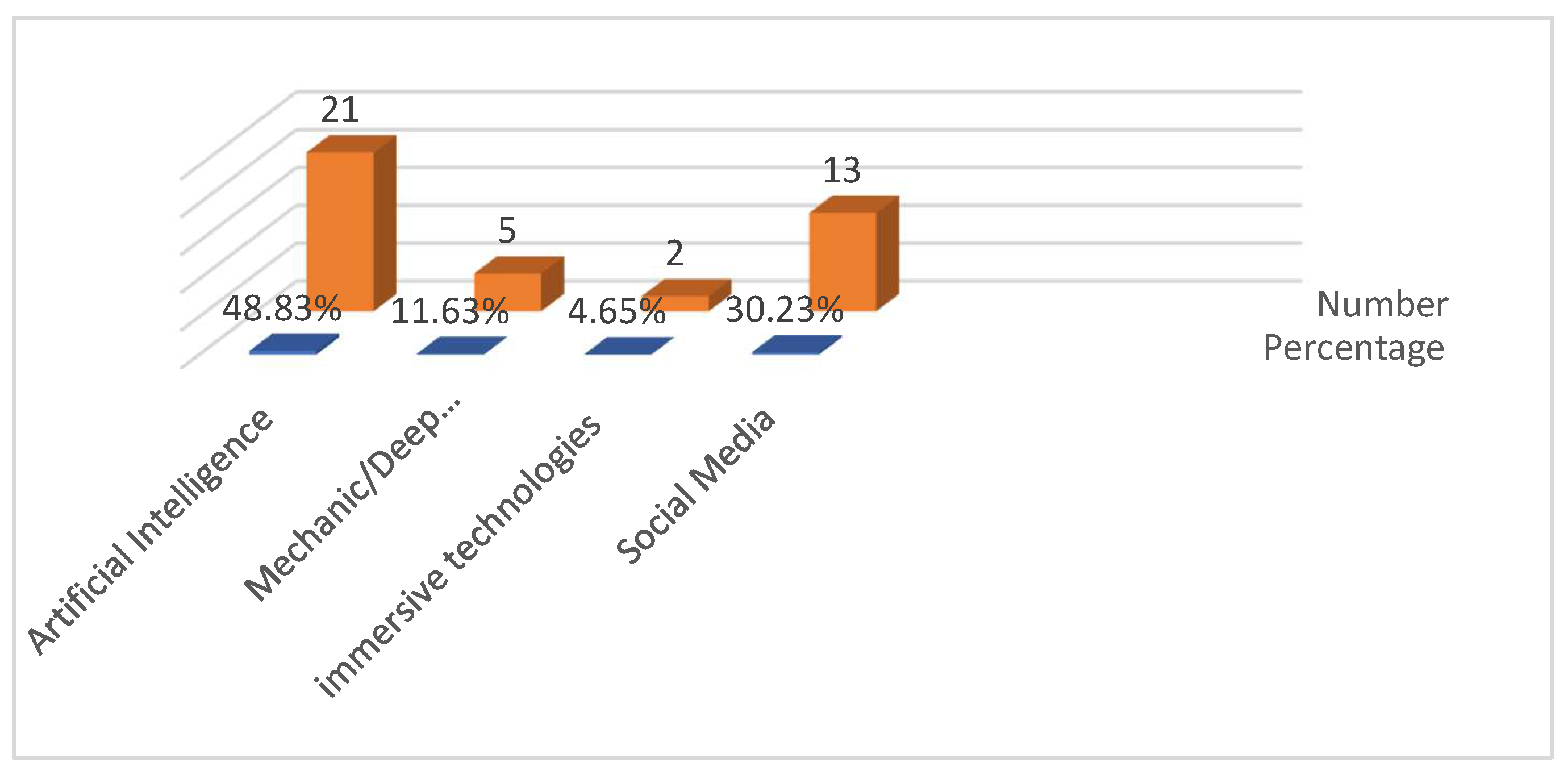
Figure 4.
Analysis of articles, percentage and number, based on the sector of the crisis to which they refer.
Figure 4.
Analysis of articles, percentage and number, based on the sector of the crisis to which they refer.
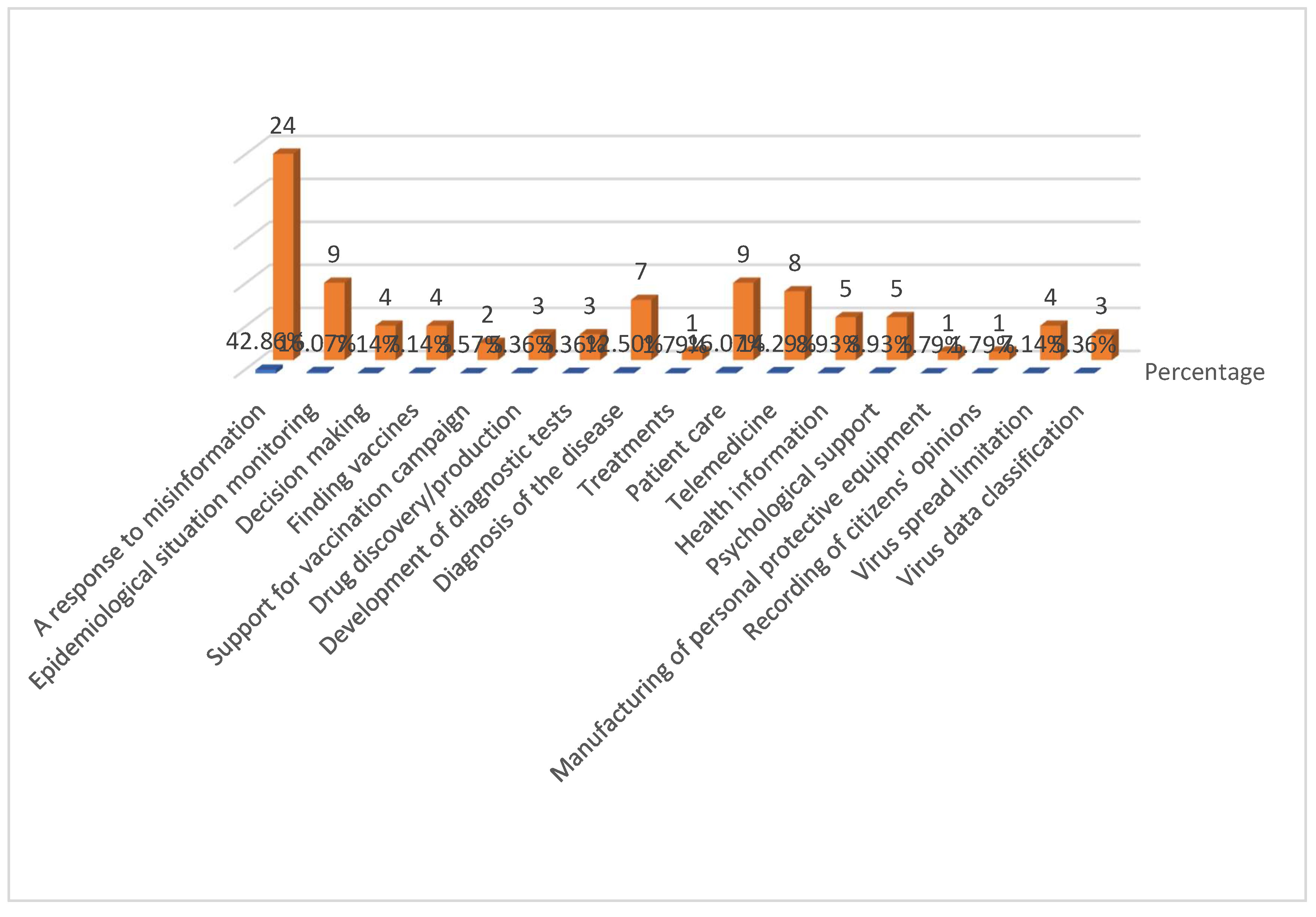
Figure 5.
Analysis of articles, percentage and number, based on the continent of origin of the researchers.
Figure 5.
Analysis of articles, percentage and number, based on the continent of origin of the researchers.
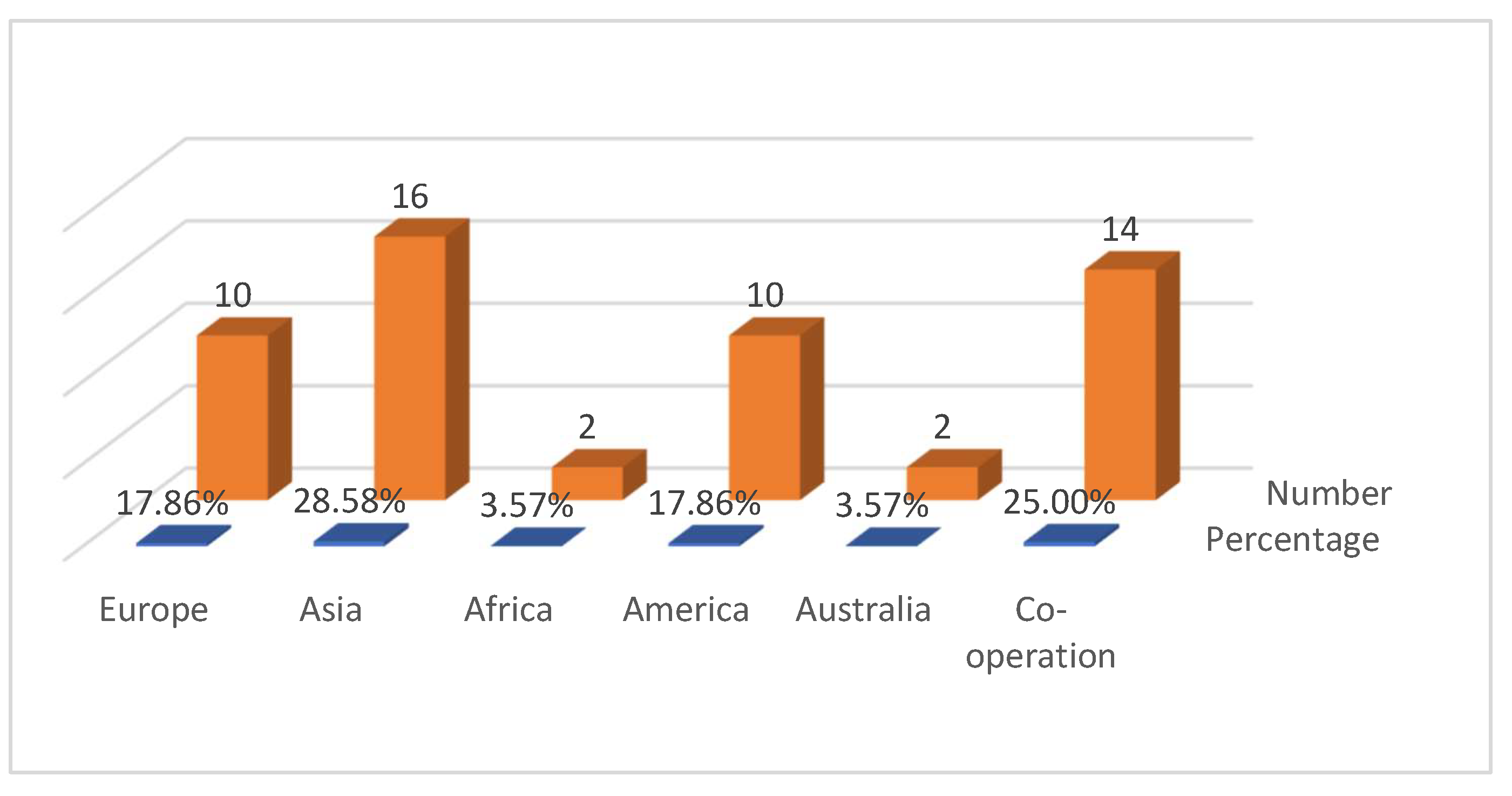
Figure 6.
Analysis of articles, percentages and numbers, in relation to the field of research covered by the journal/newspaper in which each article was published.
Figure 6.
Analysis of articles, percentages and numbers, in relation to the field of research covered by the journal/newspaper in which each article was published.
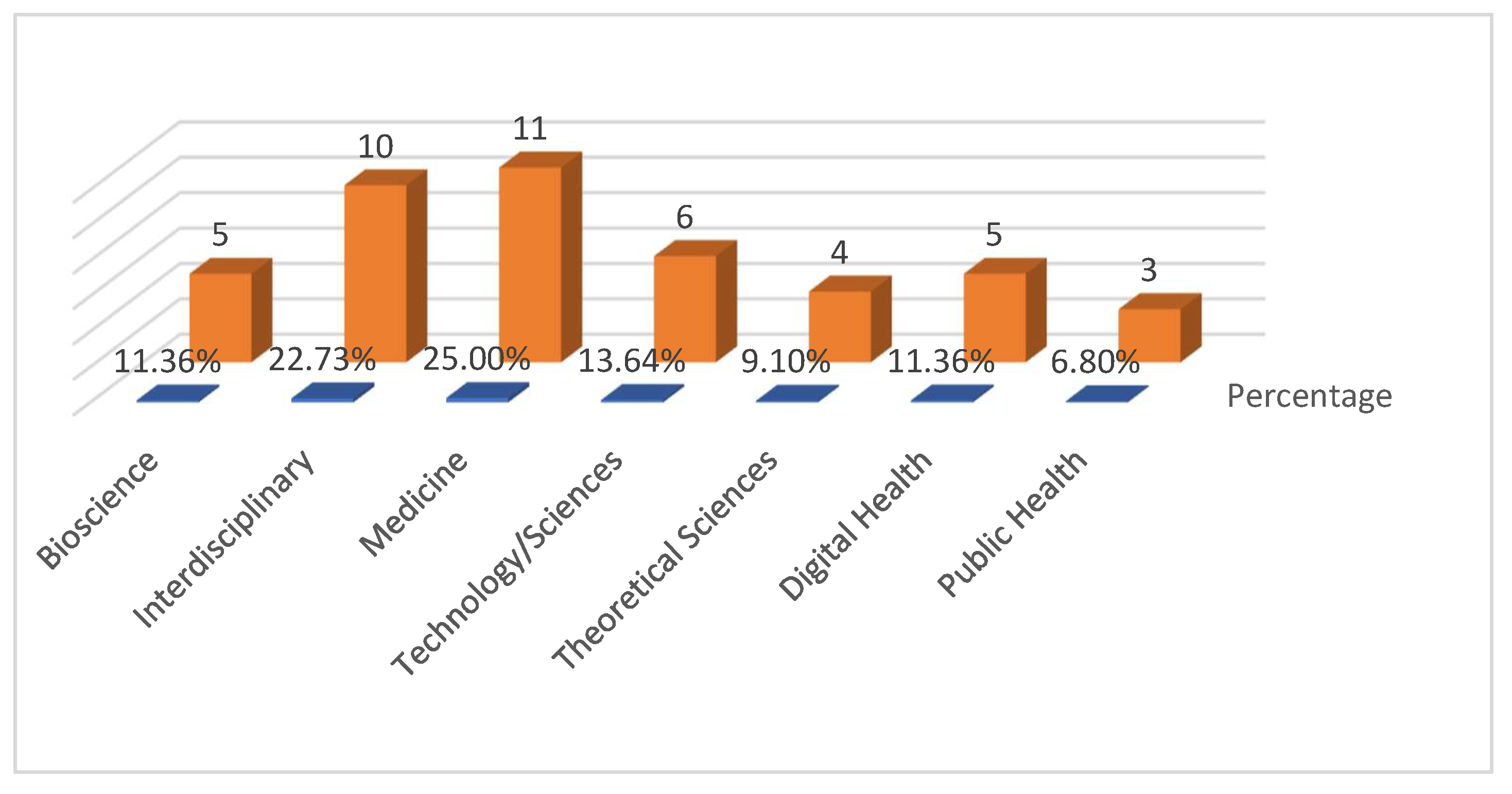

Table 1.
The advanced search that is used in the databases.
| ( “Covid19 crisis” OR “Covid19 pandemic” OR “health crisis”) AND (“management of crisis” OR “COVID management”) OR (“end of pandemic” OR “end of pandemic COVID”) OR (COVID19 misinformation”) OR (“COVID19 solutions”) OR (COVID19 and technology”) |
Table 2.
PRISMA diagram.
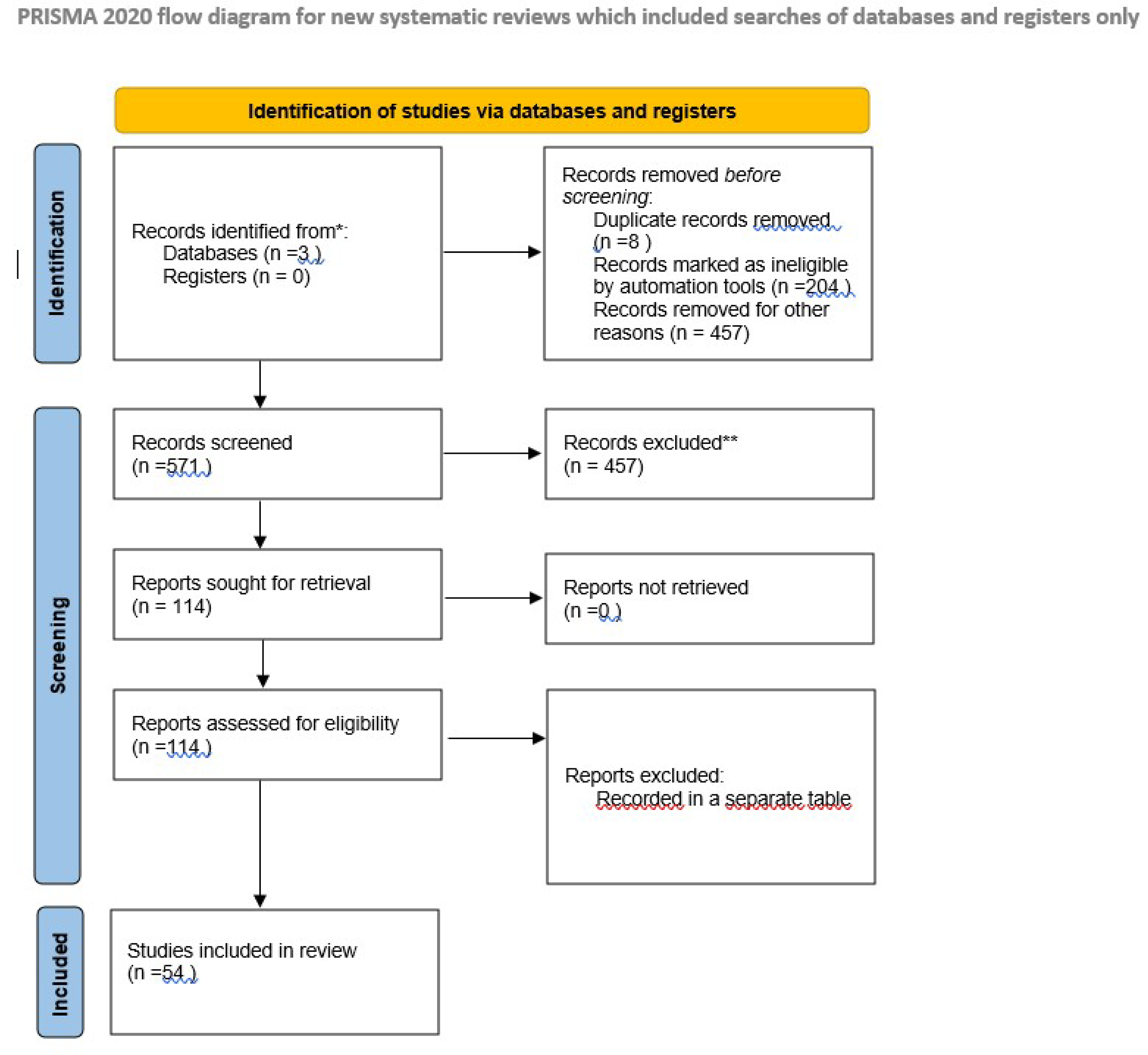 |
Table 3.
Articles that were finally included in the research. The title, year of publication, country of publication, method used and main conclusions are recorded.
Table 3.
Articles that were finally included in the research. The title, year of publication, country of publication, method used and main conclusions are recorded.
| S.N. | TITLE | COUNTRY- YEAR | Type of study | sample | method | Conclusions |
|---|---|---|---|---|---|---|
| 1 | A Comprehensive Analysis of COVID-19 Misinformation, Public Health Impacts, and Communication Strategies: Scoping Review | 2024 Norway |
Scoping Review | 21 articles | PRISMA-ScR | Misinformation had a significant impact on mental health, vaccine hesitancy and health care decisions. Social and traditional media were important channels for the spread of misinformation. |
| 2 | Chaos theory in the understanding of COVID-19 pandemic dynamics | 2024 Italy |
Article | Bibliographic Review |
Insights from Chaos Theory highlight the importance of flexibility and adaptability in responding strategies. | |
| 3 | Systematic Review of Health Management Mobile Applications in COVID-19 Pandemic: Features, Advantages, and Disadvantages. | 2024 Iran |
Systematic Review | 12 articles | PRISMA | The most common advantages of the app were disease management and the ability to record information from users, digital call monitoring and privacy. The most common disadvantages were lower compliance with daily symptom reporting, personal interpretation of questions and bias in results. |
| 4 | Innovative applications of artificial intelligence during the COVID-19 pandemic, | 2024 China |
Systematic Review | Bibliographic Review |
AI enables prediction, diagnosis, decision support for COVID-19 response and control. Intelligent systems support risk analysis and policy making to combat COVID-19. Multidisciplinary collaboration is essential for responsible AI solutions against COVID-19. |
|
| 5 | SARS-CoV-2 Variants and COVID-19 in Bangladesh—Lessons Learned. | 2024 Bangladesh |
Article | Bibliographic Review |
The legacy of COVID-19 pandemic is a multifaceted impact on human life and an unprecedented international response to a shared global predicament. Open access to information fascillitated understanding of SARS-CoV-2 infection and the COVID-19 illness. | |
| 6 | Next-generation treatments: Immunotherapy and advanced therapies for COVID-19 | 2024 Colombia |
Article | Bibliographic Review |
Extensive research and global cooperation have provided a profound understanding of the fundamental biological and molecular characteristics of SARS-CoV-2. This knowledge has proven invaluable in guiding the development of biotechnological approaches and preventive measures, particularly vaccin | |
| 7 | Satisfaction with telemedicine use during COVID-19 pandemic in the UK: a systematic review | 2024 United Kingdom |
Systematic Review | 27 eligible studies | PRISMA | COVID-19 pandemic has transformed healthcare in the UK and promoted a revolution in telemedicine applications. Satisfaction was high among both recipient and provider of healthcare. Telemedicine managed to provide a continued care throughout the pandemic while maintaining social distance. |
| 8 | Mobile Apps for COVID-19 Detection and Diagnosis for Future Pandemic Control: Multidimensional Systematic Review | 2024 China Iran USA Chile Italy |
Multidimensional Systematic Review | 42 studies | PRISMA | Mobile apps could soon play a significant role as a powerful tool for data collection, epidemic health data analysis, and the early identification of suspected cases. These technologies can work with the internet of things, cloud storage, 5th-generation technology, and cloud computing. |
| 9 | Prevalence of Health Misinformation on Social Media—Challenges and Mitigation Before, During, and Beyond the COVID-19 Pandemic: Scoping Literature Review | 2024 UK |
Scoping Literature Review | 70 sources | Arksey and O’Malley’s methodology | It highlights the necessity for a collaborative global interdisciplinary effort to ensure equitable access to accurate health information, thereby empowering health practitioners to effectively combat the impact of online health misinformation. |
| 10 | Strategies to strengthen the resilience of primary health care in the COVID-19 pandemic: a scoping review | 2024 Iran UK |
a scoping review | 167 articles | Arksey and O’Malley’s methodology | The study underscored the need for well-resourced, managed, and adaptable PHC systems, capable of maintaining continuity in health services during emergencies. The identified interventions suggested a roadmap for integrating resilience into PHC, essential for global health security. |
| 11 | Enhancing COVID-19 Vaccination Awareness and Uptake in the Post-PHEIC Era: A Narrative Review of Physician-Level and System-Level Strategies. | 2024 Singapore |
Narrative Review | Vaccination remains crucial in reducing the spread and severity of the disease. To tackle challenges such as incomplete vaccination coverage and vaccine hesitancy, various physician-level and system-level strategies have been implemented. These strategies aim to improve access to vaccines, combat misinformation, and enhance vaccine uptake. | ||
| 12 | Germany's role in global health at a critical juncture |
2024 Germany |
Review | Germany's role in global health has further expanded. It has lived up to many of its earlier promises and claims: it has upheld multilateral solutions to global health challenges, increased its financial contributions significantly, and successfully advocated with others for the EU's stronger engagement on global health. At the same time, Germany remains politically one of the strongest defenders of the present intellectual property rights system. | ||
| 13 | The response of the Military Health System (MHS) to the COVID-19 pandemic: a summary of findings from MHS reviews | 2024 USA |
narrative literature review | 16 internal Department of Defense reports, reviews by the US Congress | narrative review | similar to the US civilian sector, the MHS also experienced delays in care, staffing and materiel challenges, and a rapid switch to telehealth. Lessons regarding the importance of communication and preparation for future public health emergency responses are relevant to civilian healthcare systems responding to COVID-19 and other similar public health crises. |
| 14 | Understanding COVID-19 Vaccine Hesitancy in the United States: A Systematic Review | 2024 USA |
Systematic Review | 544 studies | PRISMA And 5C model of vaccine hesitancy |
By understanding and mitigating the predictors of hesitancy and reinforcing the factors that encourage uptake, we can improve vaccination rates and advance public health objectives. Future research should continue to explore these dynamics and develop tailored strategies that resonate with diverse populations, ultimately fostering a more robust and resilient public health response to COVID-19 and beyond. |
| 15 | Artificial Intelligence and Healthcare: A Journey through History, Present Innovations, and Future Possibilities | 2024 USA |
Review | On the telemedicine front, the text delves into its pivotal role, especially during the COVID-19 pandemic. Telemedicine, encompassing real-time and store-and-forward methodologies, has become a crucial tool, enhancing accessibility, reducing healthcare expenditures, and mitigating unnecessary exposure to infections. | ||
| 16 | Do COVID-19 Vaccination Policies Backfire? The Effects of Mandates, Vaccination Passports, and Financial Incentives on COVID-19 Vaccination | 2024 USA |
Research article | 43 articles | stress the importance of complementing incentive policies with other provaccine policies and/or communication strategies that promote positive attitudes toward vaccination. For example, financial incentives are more effective in increasing intentions to vaccinate when they are coupled with communication strategies that emphasize personal freedom gained from vaccination and other measures that increased access to vaccination (e.g., the ability to get vaccines from local doctors | |
| 17 | Beyond misinformation: developing a public health prevention framework for managing information ecosystems | 2024 USA |
Review article | Addressing infodemics through the preventive lens of public health offers several advantages. This framework expands the scope of infodemic management beyond emergency response, while still recognising its importance, and emphasises the need to develop upstream interventions before public health emergencies occur. Furthermore, this breadth encourages public health professionals to consider developing interventions beyond only responding to misinformation, such as debunking or other communication interventions. | ||
| 18 | A comprehensive study on unraveling the advances of immersive technologies (VR/AR/MR/XR) in the healthcare sector during the COVID-19: Challenges and solutions | 2024 Qatar |
comprehensive study | 220 | PRISMA | Immersive technologies supporting different apps, hardware platforms, tools, devices, platforms, architectures and with other technologocal support helped in overcoming this pandemic. These technologies covered almost every field related to the healthcare industry ranging from medical training to the cognitive rehabilitation. These technologies enabled healthcare professionals to experience immersive, interactive, 3D modeling, simulation, feedback, collaborative, efficient, effective and flexible means to perform different healthcare tasks during current pandemic of COVID-19. |
| 19 | Review of Israel’s action and response during the COVID-19 pandemic and tabletop exercise for the evaluation of readiness and resilience—lessons learned 2020–2021 | 2024 Israil |
Review Article | DART analysis | Our study appraised strengths and weaknesses of the COVID-19 pandemic response in Israel and led to concrete recommendations for adjusting responses and future similar events. An efficient response comprised multi-sectoral collaboration, policy design, infrastructure, care delivery, and mitigation measures, including vaccines, while risk communication, trust issues, and limited cooperation with minority groups were perceived as areas for action and intervention. | |
| 20 | Data challenges for international health emergencies: lessons learned from ten international COVID-19 driver projects |
2024 UK USA Brazil |
Use of pre-provisioned trusted research environments can go a long way to opening up data sharing across national and regional boundaries; expediting this process can be crucial in research areas such as rare diseases, where national datasets might be too small to give rise to significant results. It also provides a good mechanism for reducing the risk involved in data sharing, as the data remains within a secure environment at all times. Use of data curation expertise early on in initiatives can accelerate progress as this step is typically time-consuming and often underestimated. As part of this curation, considering making data findable, accessible, interoperable, and reusable at the same time and considering field labelling and units can reduce the work involved in sharing metadata. |
|||
| 21 | Healthcare Decision-Making in a Crisis: A Qualitative Systemic Review Protocol | 2024 Australia |
Review Article | PRISMA | Although public health crises impose a drastic burden on society and the individual, effective decision-making by healthcare leaders can act to minimize harm, saving the lives and livelihoods of entire communities. | |
| 22 | Nationwide quality assurance of high-throughput diagnostic molecular testing during the SARS-CoV-2 pandemic: role of the Belgian National Reference Centre | 2024 Belgium |
Review Article | Thanks to a nationwide collaboration between the NRC UZ/KU Leuven, Sciensano, the Belgian government, the newly established testing platforms and all clinical laboratories, Belgium effectively responded to the high demand for COVID-19 testing during the ongoing pandemic. Initially, diagnostic testing for SARS-CoV-2 was solely conducted at the NRC. However, clinical laboratories swiftly implemented SARS-CoV-2 diagnostic assays with the support and technical expertise of the NRC. Nonetheless, this proved insufficient to meet the testing demand during Belgium’s initial wave of the epidemic. To facilitate the rapid expansion of testing capacity, the national testing platform was established as an extension of the NRC laboratory. | ||
| 23 | Collaboration within the global vaccine safety surveillance ecosystem during the COVID-19 pandemic: lessons learnt and key recommendations from the COVAX Vaccine Safety Working Group | 2024 Switzerland Belgium France UK South Africa Brazil USA |
Analysis | Vaccine safety data sharing is essential between all stakeholders in the vaccine ecosystem to ensure equitable access to evidence for decision-making. For data to provide relevant insights for risk management, there must be comprehensive mechanisms in place to ensure vaccine safety data and/or knowledge of safety data gaps can be readily shared and used. Information exchange regarding post-licensure safety knowledge gaps could allow for collaborative efforts to generate the necessary data required for local regulatory benefit/risk decision-making. The resources required for efficient generation of high-quality evidence require involvement of the industry. | ||
| 24 | Open-sourced modeling and simulating tools for decision-makers during an emerging pandemic or epidemic – Systematic evaluation of utility and usability: A scoping review update | 2024 Germany |
scoping review | 29 articles | PRISMA | Tool usage can enhance decision-making when adapted to the user's needs and purpose. They should be consulted critically rather than followed blindly. |
| 25 | A brief overview of SARS-CoV-2 infection and its management strategies: a recent update | 2024 India |
Article | In the management of the post-COVID era, strategies such as early public participation, dynamic consent, digital literacy improvements, and the appointment of third-party judicial could be considered to facilitate the co-creation of noticeable, trustworthy, and genuine anti-epidemic technologies with mechanisms for transparency and accountability. Thus, it is essential to be well informed on the most recent updates on COVID-like illnesses and diligently follow public health guidelines. This is crucial in safeguarding individual well-being as well as the overall health of the community. | ||
| 26 | Defining and identifying the critical elements of operational readiness for public health emergency events: a rapid scoping review | 2024 South Africa Switzerland (WHO) |
scoping review | 54 peer-reviewed publications and 24 grey literature sources | PRISMA | OPR is in an early stage of adoption. Establishing a consistent and explicit framework for OPRs within the context of existing global legal and policy frameworks can foster coherence and guide evidence-based policy and practice improvements in health emergency management. |
| 27 | Implementation of simulation training in the Intensive Care Units (ICU) during the COVID-19 pandemic: A scoping review | 2024 Tunisia |
A scoping review | 7 articles | PRISMA | Results supported the impact of simulation, in critical care, as an effective method to enhance knowledge and confidence, and to improve protocol development during pandemics such as COVID-19 |
| 28 | Advancing Public Health Surveillance: Integrating Modeling and GIS in the Wastewater-Based Epidemiology of Viruses, a Narrative Review | 2024 USA China Japan Zimbabwe |
Narrative Review | This review concludes by underscoring the transformative potential of these analytical tools in public health, advocating for continued research and innovation to strengthen preparedness and response strategies for future viral threats. This article aims to provide a foundational understanding for researchers and public health officials, fostering advancements in the field of wastewater-based epidemiology. | ||
| 29 | Artificial Intelligence and Decision-Making in Healthcare: A Thematic Analysis of a Systematic Review of Reviews | 2024 Iran |
Thematic Analysis | 18 articles | PRISMA | This study revealed that AI tools have been applied in various aspects of healthcare decision-making. The use of AI can improve the quality, efficiency, and effectiveness of healthcare services by providing accurate, timely, and personalized information to support decision-making. Further research is needed to explore the best practices and standards for implementing AI in healthcare decision-making |
| 30 | Surveillance strategies for SARS-CoV-2 infections through one health approach | 2024 Taiwan |
Review article | 109 studies | PRISMA | The COVID-19 pandemic highlights the new strategy of the One Health approach for managing zoonotic epidemics. The surveillance program using the One Health approach is an important measure to detect the epidemiology of the disease in animals and humans, and it should be possible to determine the role of the various animal species and humans during the pandemic. Based on this information, holistic strategies can be planned to control and prevent this pandemic |
| 31 | RNA-Based Sensor Systems for Affordable Diagnostics in the Age of Pandemics | 2024 Turkey South Korea |
Review article | As the world grapples with the challenges of pandemics and rapid disease outbreaks, the future lies in collaborative efforts at the intersection of molecular biology, engineering, and data science. This interdisciplinary approach will drive the development of RNA-based sensor systems that offer affordable, rapid, and accurate diagnostic solutions, revolutionizing healthcare strategies and bolstering global preparedness for emergent health crises. Ultimately, as we navigate this new age of pandemics, harnessing the power of RNA-based diagnostics is poised to play a pivotal role in safeguarding public health on a global scale. | ||
| 32 | Best practices for government agencies to publish data: lessons from COVID-19 | 2024 UK |
Article | A lot of the data published by government agencies during the pandemic did not follow these best practices. Often, others—such as teams of university researchers, data journalists, and our team at Our World in Data—had to improve available data to make them easier to access and understand. | ||
| 33 | Advancements in SARS-CoV-2 detection: Navigating the molecular landscape and diagnostic technologies | 2024 Saudi Arabia Egypt Iraq |
Review article | The emergence of SARS-CoV-2 variants, particularly the Delta and Omicron strains, has underscored the critical need for rapid testing technologies. Looking ahead, point-of-care testing (POCT) kits, characterized by their simplicity of use, speed in delivering results, and high specificity and sensitivity, are expected to become standard tools for the screening of infected individuals both at home and within community settings. These kits are poised to play a pivotal role in managing and controlling outbreaks caused by mutant strains. | ||
| 34 | Revolutionizing Healthcare: How Telemedicine Is Improving Patient Outcomes and Expanding Access to Care | 2024 USA Caribbean Nigeria |
systematic review | The findings in this review summarise several key things. First, the rapid expansion of telemedicine, catalyzed by the COVID-19 pandemic, has profoundly reshaped healthcare delivery, notably in chronic disease management and patient access. | ||
| 35 | Using artificial intelligence and predictive modelling to enable learning healthcare systems (LHS) for pandemic preparedness | 2024 Netherlands Belgium USA United Kingdom |
Review article | AI techniques like machine learning (ML) and natural language processing could be instrumental in unlocking knowledge from data. AI can aid in diagnosis, risk stratification, and prediction of outcomes. Effective communication with stakeholders is essential for translating knowledge into action. | ||
| 36 | Management of infodemics in outbreaks or health crises: a systematic review | 2024 United Kingdom United States Iraq |
Review article | 29 studies | PRISMA | Some countries applied different methods of IM to people’s behaviors. These included but were not limited to launching media and TV conservations, using web and scientific database searches, posting science-based COVID-19 information, implementing online surveys, and creating an innovative ecosystem of digital tools, and an Early AI-supported response with Social Listening (EARS) platform. Most of the interventions were effective in containing the harmful effects of COVID-19 infodemic. However, the quality of the evidence was not robust. |
| 37 | Dissecting the infodemic: An in-depth analysis of COVID-19 misinformation detection on X (formerly Twitter) utilizing machine learning and deep learning techniques | 2024 Bangladesh USA Saudi Arabia Norway |
Research article | 87 | PRISMA | In the domains of community analysis and the detection of fake news, deep learning algorithms and graph mining techniques have proven to be extraordinarily effective and are positioned to bring about a paradigm shift. The ecosystem responsible for propagating fake news connected to COVID-19 is significant and highly collaborative, and its dynamics continue to expand even after the pandemic period. |
| 38 | Trust Us—We Are the (COVID-19 Misinformation) Experts: A Critical Scoping Review of Expert Meanings of “Misinformation” in the Covid Era | 2024 Canada UK |
Review article | 68 references | Arksey και O'Malley | We conclude that, at a minimum, continuing efforts to identify, manage, or suppress MDM blunt much-needed democratic and open debate about matters of major social relevance in public health matters and beyond. |
| 39 | Insights from the COVID-19 Pandemic: A Survey of Data Mining and Beyond | 2024 UAE Saudi Arabia Jordan |
In conclusion, although it is very hard to find any positive impact of the COVID-19 pandemic on most of the sectors that touched our lives, from sociological and health perspectives to the economic crash, and at personal and community levels, one can appraise the huge effort made by the scientific community in an attempt to alleviate such disastrous impact. This survey covered the main technical contributions from data mining perspectives, focusing on social data, contact tracing, medical imaging, and health-related time-series data. We presented the challenges, techniques, and open problems with opportunities that can be tackled soon. | |||
| 40 | The Implications of Artificial Intelligence on Infection Prevention and Control: Current Progress and Future Perspectives | 2024 China |
During the pandemic, AI techniques can be utilized for epidemic forecasting, resource management, and information dissemination to alleviate pressure on hospitals. Furthermore, AI has significantly contributed to the effective dissemination of disease prevention and control information. A notable example is the AI-powered chatbot developed by the World Health Organization, which provided reliable information and helped alleviate public anxiety during the pandemic. | |||
| 41 | A pandemic of COVID-19 mis- and disinformation: manual and automatic topic analysis of the literature | 2024 USA |
868 References |
PRISMA | Our comprehensive analysis reveals a significant proliferation of dis- and misinformation research during the COVID-19 pandemic. Our study illustrates the pivotal role of social media in amplifying false information. Research into the infodemic was characterized by negative sentiments. | |
| 42 | Global pandemic preparedness: learning from the COVID-19 vaccine development and distribution | 2024 USA Republic of Korea Sweden |
Perspective | Urgent challenges necessitate advances in vaccine technology and production scale-up, and success relies on global collaboration and strategic investment. Equitable access to vaccines demands global cooperation to overcome distribution challenges and a reformation of intellectual property laws to facilitate agile medical knowledge sharing while still protecting innovators’ rights. Effective vaccination campaigns are contingent on combating misinformation and rigorously assessing the vaccines and vaccination impact on public health |
||
| 43 | The social media Infodemic of health-related misinformation and technical solutions | 2024 India UK Qatar USA |
The COVID-19 Infodemic and associated misinformation may misguide individuals and impact health-related decision-making. The social media algorithms play a key role in determining the propagation of misinformation and future efforts should focus on these attributes of SMPs to combat misinformation. |
|||
| 44 | Public Health Using Social Network Analysis During the COVID-19 Era: A Systematic Review | 2024 USA |
Systematic Review | 51 | PRISMA | Accurate data are crucial for epidemiologists and public health practitioners to understand disease patterns, identify specific risk factors, and develop effective public health interventions. The use of social media data without proper ethical considerations may skew epidemiological findings as the usage of various social media platforms may be more active in certain communities/populations, leading to conclusions that do not accurately represent the broader population |
| 45 | The role of social media on COVID-19 preventive behaviors worldwide, systematic review | 2024 Ethiopia |
Research Article | 32 studies | PRISMA | Social media helps people to seek and share knowledge, connect with others, and find enjoyment and amusement to support preventive behaviors. When searching for information on COVID-19 pandemic prevention, social media exhibited a better predictive capacity. In these urgent times, social media could even help with quick information availability; misinformation or inadequate understanding can cause misunderstandings within the community. |
| 46 | Cooperation in the Time of COVID | 2024 Australia |
Research article | In this brief review, we explored how to leverage understanding of the nature of cooperation to facilitate public health during crises such as pandemics. In service of that goal, we conclude by highlighting three areas in which policies enhanced (or could have enhanced) cooperation by addressing key issues raised in this review, following which we highlight important questions for future research. | ||
| 47 | Detecting fake news for COVID-19 using deep learning: a review | 2024 Pakistan |
Review article | Datasets are explored, various studies are discovered and reviewed multiple approaches which deal with fake news detection using machine learning and deep learning techniques. Although, transformer based models are being widely used and provide state of the art results, hybrid ensembles surpass them. The review has unearthed the fact that people are generally unaware of the steps taken to minimize COVID-19 spread. | ||
| 48 | Innovations in the practice of Brazilian community health nursing during the pandemic: a rapid review | 2024 Canada Brazil |
Review article | 11 articles | PRISMA | Conclusions and implication to the practice the connection between primary health care, academia, and organizations produced simple solutions to unknown, complex, and unpredictable situations. However, the idea of innovation as something unprecedented, untested, and structurally revolutionary, was not extensively identified by this rapid review, due to the conceptual and theoretical fragility of the interventions and projects reported. |
| 49 | Recent Applications of Explainable AI (XAI): A Systematic Literature Review | 2024 Finland Slovenia |
Review article | 512 articles | PRISMA | The findings indicate a dominant trend in health-related applications, particularly in cancer prediction and diagnosis, COVID-19 management, and various other medical imaging and diagnostic uses. |
| 50 | Misinformation, knowledge and COVID-19 vaccine acceptance: a cross-sectional study among health care workers and the general population in Kampala, Uganda | 2024 Uganda USA |
cross-sectional quantitative | 564 study participants | The study showed a negative impact of misinformation on vaccine uptake and could be the most significant contributor to vaccine hesitancy in future vaccine programs. | |
| 51 | Fake News Detection Revisited: An Extensive Review of Theoretical Frameworks, Dataset Assessments, Model Constraints, and Forward-Looking Research Agendas | 2024 China Saudi Arabia |
Review article | 355 studies | he comprehensive analysis of existing FND approaches and techniques have inferred that the literature provides limited automated insights for FND. The proposed methods and techniques in the existing literature undermine the effectiveness of interdisciplinary theories on FN and OSN users. These theories highlight the incitement of intentional and unintentional FND propagation. Thus, designing the FND systems in light of the proposed recommendations that expose FN-related biases and motives is significant. The constant development of publicly available datasets is remarkable. | |
| 52 | COVID-19 Misinformation on Social Media and Public’s Health Behavior: Understanding the Moderating Role of Situational Motivation and Credibility Evaluations | 2024 Bangladesh |
cross-sectional quantitative | 373 study participants | The findings of the study suggest that participants are prone to believe in conspiracy and religious misinformation which ultimately influence them to show COVID-19-negative behavioral responses about maintaining the guidelines proposed by the WHO, CDC, and others. | |
| 53 | Fake or not? Automated detection of COVID-19 misinformation and disinformation in social networks and digital media | 2024 USA |
Given that previous studies have demonstrated a direct link between COVID-19 misinformation and an unwillingness to follow public-health measures, effective application of machine-learning techniques to detect misinformation and disinformation in social and digital platforms is becoming an increasingly important tool in the global fight against the deadly disease. | |||
| 54 | Detection of Misinformation Related to PandemicDiseases using Machine Learning Techniques in Social Media Platforms | 2024 Turkey Greece Norway United Arab Emirates Lebanon |
Research Article | During the COVID-19 pandemic, this study analyzed sentiment on Instagram and Facebook using conventional machine learning methods and employed deep learning techniques for Twitter and YouTube due to their unstructured content. The research introduced stacking ensemble learning to enhance sentiment analysis accuracy by combining machine and deep learning models; this method proved to be the best method for improving the accuracy for Facebook, Twitter, Instagram and YouTube content, improving detection accuracy | ||
| 55 | A graph mining-based approach to analyze the dynamics of the Twitter community of COVID-19 misinformation disseminators | 2024 Bangladesh USA Republic of Korea |
Our effort leads to the following key findings: (a) COVID-19-related misinformation still persists; (b) misinformation is primarily disseminated through retweets; (c) a small group of individuals (3%) are responsible for a significant portion of the spread; (d) these individuals tend to form distinct communities, and we have identified five major ones. | |||
| 56 | Public Health Communication Reduces COVID-19 Misinformation Sharing and Boosts Self-Efficacy | 2024 Denmark |
2.232 | accuracy nudges |
he analyses showed that while the accuracy nudge and a 15-second capability-oriented intervention significantly increased sharing discernment – that is, the relative sharing of real vs. false headlines – they did not have a significant effect on neither false or real headline sharing compared to the control condition. The 3-minute capability-oriented intervention significantly increased sharing discernment and self-efficacy and reduced false headline sharing. In sum, we found mixed support for effectiveness of short capability-oriented messages and accuracy nudges against misinformation. |
Table 4.
Articles not included in the search. Their title, doi and reason for rejection are given.
| SN | Title | DOI | reason for rejection |
|---|---|---|---|
| 1 | The Adaptation of Digital Health Solutions During the COVID-19 Pandemic in Hungary: A Scoping Review | https://doi.org/10.34172/ijhpm.7940 | It looks at the legislative interventions that have facilitated telemedicine. |
| 2 | COVID-19 Pandemic Risk Assessment: Systematic Review | 10.2147/RMHP.S444494 | Addresses the level of risk control - regional, global, etc. |
| 3 | Global impact of COVID-19 on food safety and environmental sustainability: Pathways to face the pandemic crisis | 10.1016/j.heliyon.2024.e35154 | Impact of COVID-19 on agriculture and food security. |
| 4 | Preclinical and Clinical Investigations of Potential Drugs and Vaccines for COVID-19 Therapy: A Comprehensive Review With Recent Update | 10.1177/2632010X241263054 | Mention of current drugs to combat the virus, no mention of the contribution of technology. |
| 5 | Mental health care measures and innovations to cope with COVID-19: an integrative review | 10.1590/1413-81232024298.06532023 | Main article in Portuguese, only the abstract in English |
| 6 | 13. Innovative Applications of Telemedicine and Other Digital Health Solutions in Pain Management: A Literature Review | 10.1007/s40122-024-00620-7 | It refers to pain management in general and not to the contribution of telemedicine during the pandemic. |
| 7 | The Ambivalence of Post COVID-19 Vaccination Responses in Humans | 10.3390/biom14101320 | It only mentions the types of vaccines, not the technologies used or any innovations. |
| 8 | Effectiveness of telehealth versus in-person care during the COVID-19 pandemic: a systematic review | 10.1038/s41746-024-01152-2 | There are no references to the use of telemedicine or innovative applications of telemedicine. |
| 9 | Pivoting school health and nutrition programmes during COVID-19 in low- and middle-income countries: A scoping review | 10.7189/jogh.14.05006 | It relates to school feeding programmes and how they have been affected by school closures. |
| 10 | Innovations produced in Primary Health Care during the COVID-19 pandemic: an integrative literature review | 10.1590/1413-81232024296.07022023 | Main article in Portuguese. |
| 11 | Application of telemedicine technology for cardiovascular diseases management during the COVID-19 pandemic: a scoping review | 10.3389/fcvm.2024.1397566 | Relates only to the treatment of cardiovascular disease |
| 12 | Acceptability and Satisfaction of Patients and Providers With Telemedicine During the COVID-19 Pandemic: A Systematic Review | 10.7759/cureus.56308 | Only analyses the results of a questionnaire, nowhere mentions innovative uses of telemedicine |
| 13 | Thoughts on and Proposal for the Education, Training, and Recruitment of Infectious Disease Specialists | 10.18926/AMO/67195 | It refers only to the training of qualified doctors. |
| 14 | A global scoping review of adaptations in nurturing care interventions during the COVID-19 pandemic | 10.3389/fpubh.2024.1365763 | It addresses issues of nutrition and its management during the pandemic. |
| 15 | A narrative review of telemedicine and its adoption across specialties | 10.21037/mhealth-23-28 | General reference to advantages and disadvantages of telemedicine, no explicit reference to pandemic. |
| 16 | Role of new vaccinators/pharmacists in life-course vaccination | 10.1080/07853890.2024.2411603 | General reference to the campaign against adult vaccination, no reference to the use of innovative artificial or technological devices. |
| 17 | The laboratory parameters in predicting the severity and death of COVID-19 patients: Future pandemic readiness strategies | 10.17305/bb.2023.9540 | Investigated the relationship between baseline clinical characteristics, initial laboratory parameters at hospital admission and disease severity and mortality in patients with COVID-19. |
| 18 | Consequences of COVID-19 Vaccine Hesitancy Among Healthcare Providers During the First 10 Months of Vaccine Availability: Scoping Review | 10.1177/08445621241251711 | It mentions the consequences of vaccine hesitancy among nurses, but not innovative solutions. |
| 19 | Strengthening resilience and patient safety in healthcare institutions during the COVID-19 pandemic: Experience from a quasi-medical center | 10.1016/j.jfma.2024.09.035 | It refers to questionnaires on health system resilience distributed to staff during COVID19 and interviews with health facility managers. |
| 20 | Navigating the Challenges and Resilience in the Aftermath of the COVID-19 Pandemic in Adolescents with Chronic Diseases: A Scoping Review | 10.3390/children11091047 | This study aims to investigate the impact of the COVID-19 pandemic on the daily lives of adolescents with chronic diseases. |
| 21 | COVID-19 Infection Percentage Estimation from Computed Tomography Scans: Results and Insights from the International Per-COVID-19 Challenge | 10.3390/s24051557 | It mentions the use of new technologies in MRI to diagnose COVID19 , but after the crisis, so it is not included in the technologies that helped exit the crisis. |
| 22 | Interdisciplinary managerial interventions for healthcare workers' mental health - a review with COVID-19 emphasis | 10.13075/mp.5893.01448 | The aim of the review is to summarise the types of management interventions available to protect the mental health of healthcare workers, including an assessment of their prevalence, determinants of effectiveness and limitations from the perspective of healthcare managers. |
| 23 | Telepharmacy Implementation to Support Pharmaceutical Care Services during the COVID-19 Pandemic: A Scoping Review | 10.4212/cjhp.3430 | Magazine subscription required. |
| 24 | Exploring the Interplay of Food Security, Safety, and Psychological Wellness in the COVID-19 Era: Managing Strategies for Resilience and Adaptation | 10.3390/foods13111610 | This study examines the impact of the pandemic on mental health, food consumption habits and food safety protocols. Through a comprehensive analysis, it aims to clarify the nuanced relationship between food, food safety and mental wellbeing in the midst of the COVID-19 pandemic, highlighting synergistic effects and dynamics that underpin holistic human wellbeing. |
| 25 | Impact of infection prevention and control practices, including personal protective equipment, on the prevalence of hospital-acquired infections in acute care hospitals during COVID-19: a systematic review and meta-analysis | 10.1016/j.jhin.2024.02.010 | Review the effectiveness of the use of personal security measures, there is no innovation or use of technology. |
| 26 | Engaging communities as partners in health crisis response: a realist-informed scoping review for research and policy | 10.1186/s12961-024-01139-1 | There is a general reference to responding to health crises at Community level, but no specific reference to COVID. |
| 27 | Japan's healthcare delivery system: From its historical evolution to the challenges of a super-aged society | 10.35772/ghm.2023.01121 | It identifies the weaknesses in Japan's health system that emerged in the aftermath of the pandemic and ways to address them. |
| 28 | Conducting a health technology assessment in the West Bank, occupied Palestinian territory: lessons from a feasibility project | 10.1017/S0266462324000084 | Health technology assessment for the Occupied Palestinian Territories and breast cancer patients. |
| 29 | Prepared for the polycrisis? The need for complexity science and systems thinking to address global and national evidence gaps | 10.1136/bmjgh-2023-014887 | In this article, we argue that multi-criteria requires greater use of complexity in science and systems thinking. The interdependence of global threats needs to be viewed through the lens of systemic risk: risk embedded in broader contexts of systemic processes, global in nature, highly interconnected with complex, non-linear, causal structures. |
| 30 | Approaches to Design an Efficient, Predictable Global Post-approval Change Management System that Facilitates Continual Improvement and Drug Product Availability | 10.1007/s43441-024-00614-9 | They recommend a set of 8 approaches to enable a holistic transformation of the global PAC management system. This article presents their view of the problem of global regulatory complexity for PAC management, its impact on continuous improvement and risk to the supply of medicines, and approaches that can help mitigate the problem.PAC = Changes made to medicines and vaccines by companies after they have been launched and approved. |
| 31 | Effectiveness of digital health interventions against COVID-19 misinformation: a systematic realist review of intervention trials | https://doi.org/10.1101/2024.08.07.24311635 | Published in 2023 |
| 32 | Understanding the features and effectiveness of randomized controlled trials in reducing COVID-19 misinformation: a systematic review Get access Arrow | https://doi.org/10.1093/her/cyae036 | No free access |
| 33 | Tackling medicine shortages during and after the COVID-19 pandemic: Compilation of governmental policy measures and developments in 38 countries | https://doi.org/10.1016/j.healthpol.2024.105030 | No free access |
| 34 | Have we found a solution for health misinformation? A ten-year systematic review of health misinformation literature 2013–2022 | https://doi.org/10.1016/j.ijmedinf.2024.105478 | It relates to a more general context than the pandemic, and offers more general solutions. |
| 35 | Examining the influence of information-related factors on vaccination intentions via confidence: Insights from adult samples in Italy and Serbia during the COVID-19 pandemic | https://doi.org/10.1111/spc3.12929 | Published in 2023 |
| 36 | COVID-19 and Health Information-Seeking Behavior: A Scoping Review | 10.30491/ijmr.2024.479731.1295 | Mentions how users search for information, no reference to technology and innovation. |
| 37 | Automatic detection of health misinformation: a systematic revie | https://doi.org/10.1007/s12652-023-04619-4 | In general, in terms of misinformation, it is not clear what techniques were used during the pandemic. |
| 38 | The power of artificial intelligence for managing pandemics: A primer for public health professionals | https://doi.org/10.1002/hpm.3864 | Reference to AI applications in future pandemics, no specific reference to COVID. |
| 39 | Beyond COVID: towards a transdisciplinary synthesis for understanding responses and developing pandemic preparedness in Alaska | https://doi.org/10.1080/22423982.2024.2404273 | We focus specifically on the research generated during the COVID-19 pandemic in Alaska in order to: (1) identify potential areas for further health and pandemic-related research from a social science perspective; (2) outline areas for theoretical and conceptual synergy in future research to generate new research questions; and (3) offer concluding remarks on future research and preparedness applications for future infectious disease outbreaks. |
| 40 | Confronting misinformation related to health and the environment: a systematic review | https://doi.org/10.22323/2.23010901 | General health misinformation not during the pandemic |
| 41 | Evaluating Sources Influencing Vaccine Hesitancy: A Systematic Review. | https://cjni.net/journal/?p=13118 | Examines the factors that influence vaccine hesitancy in general. |
| 42 | Misinformation, disinformation, and fake news: lessons from an interdisciplinary, systematic literature review | https://doi.org/10.1080/23808985.2024.2323736 | It does not refer to misinformation during the pandemic. |
| 43 | Enlightened change agents with leadership skills’: A scoping review of competency-based curricula in public health PhD education | https://doi.org/10.1080/2331186X.2023.2293475 | The aims of this study were to identify the key drivers for the adoption of competency-based curricula in doctoral education and to articulate the core competencies to be developed as part of the curriculum for doctoral education in public health. |
| 44 | Current landscape of long COVID clinical trials | https://doi.org/10.1016/j.intimp.2024.111930 | No free access |
| 45 | Issues and Challenges of Artificial Intelligence Implementation in Healthcare: A Review Study | 10.4018/979-8-3693-5976-1.ch004 | Chapter in a book |
| 46 | Detecting Urdu COVID-19 misinformation using transfer learning | https://doi.org/10.1007/s13278-024-01300-2 | Our contribution to the field is twofold: first, we have collected a large and diverse dataset of Urdu tweets. Second, we have introduced a novel approach that incorporates feature extraction and ensemble learning techniques, complemented by high-performance filtering and voting classifiers explicitly designed for the COVID-19 Urdu dataset. |
| 47 | How new pharmacists handled COVID-19 misinformation: A qualitative study | https://doi.org/10.1016/j.japh.2024.102226 | No free access |
| 48 | Leveraging the ability of the online health information seekers to find credible online sources | http://dx.doi.org/10.21608/EJCM.2024.249600.1276 | Published in 2023 |
| 49 | COVID-19 in Polish-language social media - misinformation vs government information: COVID-19 misinformation in polish social media | https://doi.org/10.1016/j.hlpt.2024.100871 | Does not mention ways of coping with technology or innovation |
| 50 | ACOVMD: Automatic COVID-19 misinformation detection in Twitter using self-trained semi-supervised hybrid deep learning model | https://doi.org/10.1111/issj.12475 | No free access |
| 51 | The Social Contract at Risk: COVID-19 Misinformation in South Africa | https://doi.org/10.4102/jamba.v16i1.1630 | Exploration of the complex social implications of misinformation. |
| 52 | Information Disorder Amidst Crisis: A Case Study of COVID-19 in India | https://doi.org/10.1109/TCSS.2024.3450788 | No free access |
| 53 | The Relationship Between News Coverage of COVID-19 Misinformation and Online Search Behavior | https://doi.org/10.1080/10410236.2024.2395155 | No free access |
| 54 | Unmasking an infodemic: what characteristics are fuelling misinformation on social media? | https://dx.doi.org/10.1504/IJAMC.2024.140646 | No free access |
| 55 | Are you vaccinated? Yeah, I’m immunized': a risk orders theory analysis of celebrity COVID-19 misinformation | https://doi.org/10.1080/17538068.2024.2320984 | No free access |
| 56 | Enhancing COVID-19 misinformation detection through novel attention mechanisms in NLP | https://doi.org/10.1111/exsy.13571 | No free access |
| 57 | Endorsement of COVID-19 misinformation among criminal legal involved individuals in the United States: Prevalence and relationship with information sources | 0.1371/journal.pone.0296752. | This study examined the prevalence of COVID-19-related misinformation and its relationship to the sources of COVID-19 information used among Americans with criminal justice involvement (CLI). |
| 58 | Telemedicine and Pediatric Care in Rural and Remote Areas of Middle-and-Low-Income Countries: Narrative Review | 10.1007/s44197-024-00214-8 | It does not focus on the COVID era and its contribution to overcoming the crisis, but only on paediatrics. |
Table 5.
The following table details the references to the contribution of cooperation skills in managing crises.
Table 5.
The following table details the references to the contribution of cooperation skills in managing crises.
| Reference | Collaboration |
|---|---|
| [86] | Germany's participation in the Access to COVID-19 Tools Accelerator (ACT-A) collaboration, which aims to ensure the rapid development and equitable distribution of vaccines and experimental treatments. |
| In Germany, to speed up the exit from the crisis, cooperation between different ministries has been encouraged. | |
| [83] | In Israel, cooperation was seen as necessary between many different bodies, from the Ministry of Health, the government, citizens, academics, the military and even private organisations. |
| [61] | In Belgium, crisis management at this level was considered to require cooperation between various bodies such as the Public Health Institute (Sciensano), the government and various groups set up on an emergency basis to help manage the crisis. |
| Collaboration was required to enable the widespread use of diagnostic tests, and at this level the National Reference Centre, pharmaceutical companies, academics, government and the Federal Agency for Medicines and Health Products (FAMHP) worked together. | |
| [71] | The “Stop The Spread” campaign, aimed at reducing misinformation, is an example of collaboration between WHO and the UK government. |
| [10,14] | A shining example of unprecedented global collaboration is the rapid development and distribution of vaccines. |
| [81] | Collaboration between local industries and construction companies to produce as many goods as possible, mainly medical equipment, needed during the pandemic. |
| [14] | The way out of the crisis was largely based on vaccines, so their equitable distribution was a prerequisite, leading to the creation of CONVEX, whose members include the World Health Organization, the United Nations Children's Fund (UNICEF), Gavi's Coalition for Epidemic Preparedness Innovations (CEPI), the Vaccine Alliance, and the Gavi Foundation. |
| [7] | In Brazil, a platform to help students and teachers cope with feelings of fear and anxiety was created by two university institutions. |
| [83] | Cooperation took place on a multidisciplinary level, with the Israeli Ministry of Health maintaining the lead role in crisis management. |
Table 6.
The table below provides a detailed description of how communication skills contribute to managing a crisis.
Table 6.
The table below provides a detailed description of how communication skills contribute to managing a crisis.
| Reference | Country | |
|---|---|---|
| [87] | Malaysia | The Ministry of Health, in order to contribute to the ability of experts to analyse data in order to draw safe conclusions on the appropriate ways to deal with the crisis, published detailed data that could be analysed at a second level. |
| Argentina | Daily data publication. | |
| Nigeria | ||
| Chile | The collection and publication of data related to the rates of disease, the rates of those vaccinated, and the rates of deaths between vaccinated and unvaccinated people, contributed to strengthening the vaccination campaign. | |
| [80] | African Union(Ghana, Nigeria, Ethiopia, South Africa) | To provide valid information, adverse reactions to vaccines were recorded and reported on a weekly basis. |
| [88] | United Kingdom | Programme (International COVID-19 Data Alliance - ICODA). The aim of the programme was to make research data on health and the virus available to the global scientific and research community so that it could be used to improve health in low- and middle-income countries. In this context, the value of collaboration in addressing the crisis was highlighted as 135 researchers from 19 different countries worked together to analyse the data at a second level and find solutions to the problems that had arisen. |
| [66] | United Kingdom | The collaboration has led to the creation of the Open Access Scholarly Publishing Association, an agreement between publishers of scientific journals to prioritise the immediate publication of articles containing data on the virus so that the information can be disseminated to the wider scientific community. |
| [79] | Kingdom of Saudi Arabia | Information management in the context of the pandemic and future challenges of the same nature were the focus of the World Digital Health Summit in Riyadh. The summit focused on information management, dissemination of scientific data and support for digital health. |
| [79] | U.S.A | IMPACT was created by health professionals in Illinois to promote interdisciplinary communication, debunk misinformation, and limit the impact of misinformation on social media. |
| [66] | Social media users with large followings agreed to use their accounts to help publish valid information, using their communication skills and visibility to help limit misinformation. |
Table 7.
The table below provides a detailed breakdown of the references to the contribution of leadership skills in crisis management.
Table 7.
The table below provides a detailed breakdown of the references to the contribution of leadership skills in crisis management.
| Reference | Country | Role |
|---|---|---|
| [86] | Germany | Recognising the need for leadership in critical global circumstances, the country took a leading role in managing the crisis at the global level. |
| [61] | Belgium | The National Reference Centre (NRC) played a leading role in managing diagnostic testing in the country. |
| [17] | USA | The extraordinary circumstances created by the pandemic required individuals with leadership skills to go to the front lines, make decisions, but also report back to superiors so that the US Military Health System (MHS) could respond. |
Table 8.
The following table details the references to the contribution of critical thinking in managing crises.
Table 8.
The following table details the references to the contribution of critical thinking in managing crises.
| Reference | Country | Strategy |
|---|---|---|
| [70] | USASouth Korea | Online courses for seniors on using search engines and choosing reliable sources. |
| [11] | USA | Students have had access to free online asynchronous courses and syllabuses on source evaluation. |
| [7] | Brazil | Teaching older people to use social media in the state of Paraná. |
| Audiovisual and written materials have been made available on how to use social media and smart phones for older people. | ||
| [90] | AR technology was used to create games that presented information about the disease in an entertaining way, with the ultimate goal of informing older people about ways to combat the pandemic. | |
| [70] | Educational game that allows the user to create hypothetical posts, giving them the opportunity to understand how easy it is to spread false information. |
Table 9.
The table below provides a detailed breakdown of references to innovation contributing to crisis management.
Table 9.
The table below provides a detailed breakdown of references to innovation contributing to crisis management.
| Reference | |
|---|---|
| [6,14] | New drugs, new vaccines, the use of new technologies and innovative products have contributed to the treatment of infectious diseases. |
| [6] | Innovative vaccine solutions are still being sought. One possibility is a nasal vaccine that would prevent the virus from entering the body. |
| [83] | Israel has been a pioneer in mass vaccination. This has been achieved mainly through pioneering tactics in disseminating information to the general public. |
| [88] | While the ICODA DP-PRIEST team has developed an innovative tool to help doctors in low- and middle-income countries decide whether a patient should be admitted to an intensive care unit |
| Also innovative was the action of the DP-IDS-COVID19 group, which launched an index in Brazil to identify social inequalities and vulnerable groups, and to implement interventions based on this data. |
Table 10.
Points in the literature that emphasise the need for an interdisciplinary approach to the crisis in order to find a solution to the problems that have arisen.
Table 10.
Points in the literature that emphasise the need for an interdisciplinary approach to the crisis in order to find a solution to the problems that have arisen.
| Refere- nce |
|
|---|---|
| [83] | In Israel, the exit from the crisis was based on interdisciplinary cooperation. |
| [12] | The way out of the crisis was facilitated by the collaboration of scientists from different fields, industries and I |
| [5] | In the uncertain environment created by the pandemic, the collaboration of science and technology professionals was able to provide creative solutions. |
| [60] | Diagnostic applications require the use of interdisciplinary methods, as nasal swab analysis requires the integration of a biosensor and the use of WiFi or Bluetooth for data transfer. |
| [9] | The One Health approach monitors the transmission of viruses between animals and between animals and humans through intelligent applications, with the aim of observing the interaction between humans, the environment and animals in order to predict a future pandemic. This type of approach is interdisciplinary and requires the collaboration of experts from different fields. |
| [72] | The use of AI in medicine has been based on an interdisciplinary approach. |
| [54] | Researchers, frontline clinicians, programmers and patients worked together to provide solutions to the new health data that the pandemic presented. They also worked together to develop cheap, fast and easy-to-use diagnostic tools. |
| [71] | Dr Mike Ryan, WHO Director-General, called on the scientific community to contribute to the fight against misinformation, emphasizing the value of collaboration between different scientific disciplines, but also the need for a multidisciplinary approach to the crisis. |
| [55,75] | The containment of misinformation was based on an interdisciplinary approach, i.e. collaboration between scientists from different fields. |
| [55] | Experts in computer science, social sciences, technology, engineering, natural sciences and mathematics worked together to limit the phenomena of misinformation. |
| [79] | IMPACT was created by health professionals in Illinois to support interdisciplinary communication, debunk misinformation, and limit the impact of misinformation on social media. |
Table 11.
Points in the literature that mention the contribution of natural sciences to overcoming the crisis.
Table 11.
Points in the literature that mention the contribution of natural sciences to overcoming the crisis.
| ΠHΓH | |
|---|---|
| [6] | The contribution of biology and chemistry has been crucial in tackling the health crisis. |
| [14] | The Coalition for Epidemic Preparedness Innovations (CEPI), in its "100 days mission" report, sets out the scientific and technological conditions for finding a way out of the crisis. |
| [91] | A model based on chaos theory is proposed which, by identifying patterns of virus transmission, can help to predict virus transmission and provide information for successful strategy formulation. |
Table 12.
References in the literature to the contribution of the natural sciences to overcoming the crisis.
Table 12.
References in the literature to the contribution of the natural sciences to overcoming the crisis.
| Reference | Kind of Tech | ||
|---|---|---|---|
| [16] | Software | Contributed to decision making by providing an overview of the epidemiological situation. | |
| Technology | Contributed to faster diagnosis and control of infected patients | ||
| [79] | Online surveys | They provided data on vaccination intentions, citizens' opinions on preventive measures and data on the health literacy of participants. | |
| digital tool EpidemiXs |
In Spain, it was used by 30 different institutions to collect valid information about the virus that was accessible to scientists and citizens. On this platform, translated scientific articles made valid information more accessible to the average citizen. | ||
| Informatics | It was used by the WHO to disseminate information and understand the public's concerns about the virus. | ||
| [14] | Innovative technologies | Contributed to the development of vaccines |
|
| [72] | immunization information system- IIS | Helped to monitor the immunisation of the general population. | |
| AI | Case tracking systems contributed to a more equitable distribution of vaccines, but also to the readiness to monitor new outbreaks. | ||
| Digital board | Created by Johns Hopkins University in early 2020, using open source software, it recorded the number of cases per country, allowing the general population to understand the spread of the disease. | ||
| Informatics | Helped support telemedicine. | ||
| Telecommunications | |||
| [90] | immersive Technologies, VR | Contributing to the production of new drugs and understanding the impact of mutations on the virus. | |
| Psychological support for the general population | |||
| Systems Bravemind, Infinadeck |
|||
| Πρωτόκολλο MIND-VR | |||
| [7] | Internet | Publishing a handbook with valid information. | |
| In Brazil, a team from the State University of Tocantins (UNITINS) published a student-edited podcast on supporting the mental health of citizens. | |||
| digital tool | Infographics, Google forms and decision trees were used to assess the mental health of pregnant women. | ||
| Google Earth geographic maps and location systems | It was used to identify vulnerable groups so that they could be prioritised for care. | ||
| Applications | Helped to monitor suspicious cases and highlight areas where more cases were recorded. | ||
| Tailoring messages to the language, preferences and social background of recipients can have a positive impact on the spread of false information. | |||
| [87] | Data gateway Our World in Data | Developed in the United Kingdom following an initiative by Oxford University to collect valid data on current issues, including the pandemic. | |
| [82] | Digital infrastructures | Supports primary health care systems. | |
| WhatsApp teleconferences |
Helped to keep healthcare professionals up to date with developments related to the virus. | ||
| Online pharmacies | Provided a solution for providing patients with the necessary medical resources without coming into contact with other people. But also to healthy people without violating movement restrictions. | ||
| digital tool | Improved remote patient care | ||
| Electrocardiograms and stethoscopes | Introduced in Germany and Nigeria specifically for remote use. | ||
| [18] | E-learning Teleconferencing, Distance seminars |
Contributed to the training of doctors in current conditions. | |
| Simulations | Contributed to the development of self-confidence and critical thinking in trainees. | ||
| [81] | digital tool | Identified people who had been in contact with the sick. | |
| Provided information on the expected demand for diagnostic tests, contributing to laboratory preparedness. | |||
| Electronic systems | Contributed to reducing the time taken to obtain laboratory results. | ||
| [57] | Digital systems | They send vaccination reminders and are linked to messages promoting vaccination. It seemed to help increase uptake. | |
| [88] | Digital systems ICODA Workbanch | It was used by the ICODA programme to ensure the validity of the information, but also the possibility of global access. Scientists in more than 70 countries had access to accurate information. | |
| [80] | Databases | The US and EU used databases that provided information on vaccine safety studies. | |
| New technologies | They contributed to the production of vaccines. | ||
| [85] | Wastewater- based epidemiology -WBE | This involves collecting biological and chemical human material and then analysing it for the presence of the virus. It is a collective diagnostic tool, and the resulting data can be used to estimate the number of cases in the next period, when preventive measures to protect public health, such as lockdown, can be activated. This method requires the use of mathematical models, GIS, mapping techniques, interpolation, spatial clustering, spatial models, spatio-temporal analysis. | |
| [62] | Machine learning | The use of the FARFAR2 and ARES tools made it possible to find diagnostic tests that did not require laboratory analysis. | |
| [61] | New technologies | They contributed to the industrial mass production of diagnostic tests, but also to the ability to process a large number of samples simultaneously. | |
| [6] | Nanomaterials | Contributed to the detection of the virus. | |
| biosensors | |||
| nanosensors | They have been used to make protective face masks. These masks limit the transmission of the virus. | ||
| Nanotechnology | It has contributed to the development of drugs using inexpensive raw materials. | ||
| [58] | Technology | The medical community has moved forward with the development of advanced treatments. | |
| [13] | Automated disinformation detection is described as a technique that is gaining ground. | ||
| [67] | Websites Polifact, Snopes, Boomlive |
To help combat misinformation, they gather valid, verified information on both the pandemic and other burning issues. | |
| [17] | digital tool | Electronic health record (EHR) applications. | |
| [54,65,67,78]. | NLP (Natural Language Processing) | They identify, process and analyse data to help limit misinformation. | |
| [87] | Programming languages | JavaScript has been used to read text directly in order to disseminate correct information. | |
| [68] | New technologies - video | In an experiment conducted in Denmark, exposing participants to 15'' videos affected their ability to distinguish between truth and lies, but had no significant effect on their subsequent sharing of article titles circulating on the Internet. On the contrary, 3'' interventions seem to have an effect on discriminating between false and true news and limiting their sharing with other users. | |
| [12] | digital tool | A predictive model for the spread of false information on social media by Apuke and Omar, applied in Nigeria. | |
| [71] | Platform | The CoVerifi platform helped to limit misinformation by publishing information that was consistent with WHO-supported information. | |
| [70] | Friction-type interventions help prevent the spread of misinformation by making it harder to spread invalid information and to detect the presence of conspiratorial content. |
Table 13.
Identification of endpoint applications in the literature we reviewed in relation to different areas of crisis management.
Table 13.
Identification of endpoint applications in the literature we reviewed in relation to different areas of crisis management.
| Reference | Application | Country | Purpose |
|---|---|---|---|
| [82] | WellnessHub | USA | Psychological support for healthcare professionals, who showed high levels of anxiety during the crisis. |
| Aroha chatbot | New Zealand | Psychological support for those who needed it, using artificial intelligence. | |
| [5] [65] | TraceTogether | Singapore | It identifies the user's contacts and, if they have been in contact with an infected person, notifies them so that they can take the appropriate preventive measures. |
| [60] | Model Berquedich et al | ||
| [65] | LeaveHomeSafe | China | |
| [12] | Attach applications | ||
| [5] | Immuni | ||
| COVID- Watch | |||
| PathCheck | |||
| [16] | Covidscreen | It identifies the number of sick people in a specific area and the risk of the user being infected. | |
| [90] | Sodar | The user of the application is informed if they come into contact with an infected person. They are also informed on how to maintain a safe distance. | |
| AR AroundMe | |||
| [88] | Brazil | The DP-EFFECT team participating in the ICODA programme used new technologies and provided access to virus detection tests and vaccination results in the country through mobile phone applications. | |
| [67] | WashKaro | [15,72,81,92,93 | Using AI, it provided users with valid information from the WHO. |
Table 14.
To record applications and strategies that have made use of artificial intelligence, deep learning, machine learning or neural networks.
Table 14.
To record applications and strategies that have made use of artificial intelligence, deep learning, machine learning or neural networks.
| Reference | Use |
|---|---|
| [95] | Predicting the need for a patient to be admitted to the ICU. |
| Classify data related to the virus. | |
| Assessing the level of anxiety among healthcare workers. | |
| [8], [12] | Monitor patients to collect and analyse clinical data. |
| [8] | Predicting the patient's length of hospital stay. |
| The α-Satellite system has been used in the USA. It helps to select the appropriate protective measures to prevent the spread of the virus. | |
| The DDC19 system uses questionnaires to cross-reference data and make risk predictions for different scenarios. | |
| The Rezaei and Azarmi model, which can identify areas where there is a greater likelihood of the virus spreading, thus helping to guide measures in public places. | |
| [8], [65] | Classify existing virus mutations and predict future ones. |
| [8], [54] | Predicting a patient's risk of death |
| [8,54] [95] | Predicting a patient's risk of death. |
| [54] | An open source predictive model is covid19risk.ai, whose purpose is to diagnose, assess the risk to the patient, the need for hospitalisation, etc. |
| [8,60,65,95] | Diagnosis of the disease. |
| [8,60,64,65]. | Remote patient monitoring via IoT |
| [54,72] | Delivering medicines to patients and limiting their spread. |
| [54,65,72,95] | Deep learning systems, such as the Residual Encoder-Decoder Convolutional Neural Network (RED-CNN), help to improve the image by removing noise from CT scans, thereby enabling valid and early diagnosis and treatment planning. In general, it contributes to better patient management. |
| [54] | The DRAGON team's CAD4COVID-CT tool identifies the importance of the patient's condition by analysing CT scans. |
| Machine learning models combined with GIS technologies can help identify an area's vulnerability to disease transmission by combining data on population density, the number of elderly people in the population and prevailing environmental conditions. | |
| [65] | Systems such as BlueDot, first used in Canada, can predict the spread of infection by monitoring data on air travel, cases, etc. |
| Use of artificial intelligence in vaccine development | |
| Disseminating correct information on patient care. | |
| The WHO has been using chatbots and virtual assistants to distribute correct information and reduce anxiety among citizens. | |
| [57] | The use of AI and chatbots can also contribute to the dissemination of correct information about the benefits of vaccination. |
| [72] | Through virtual assistants, chatbots can provide immediate access to psychological support and personalised advice based on the principles of behavioural theory. |
| In nine countries, the AI digital assistant Watson Assistant provided millions of answers to COVID-19 patients. | |
| [63] | Machine learning-enhanced graph analytics (MEGA), which uses machine learning and graph analysis to help manage information |
| [77] | HAN Defend: misinformation defence system |
| [13,67,77] | CNN: anti-misinformation system |
| [67,77] | SVM: system against misinformation |
| [11,67] | Detection of fake news on Instagram, Facebook, Twitter, Youtube. |
| [11,63] | Detection of messages with false content distributed on social media by highly influential users. |
| [57,67,75] | Fighting misinformation against the virus and vaccination. |
| [67] | The TicTec artificial intelligence model was used on TicToc to identify videos containing false information about the virus. |
Table 15.
Points in the literature that refer to the contribution of the social media to the management of the crisis.
Table 15.
Points in the literature that refer to the contribution of the social media to the management of the crisis.
| Reference | Contribution |
|---|---|
| [84] | Texts, voicemails and videos were used to disseminate accurate information about prevention and the virus to the general public in a short time and at low cost. |
| Health professionals, hospitals and health structures, recognising the influence of social media, set up accounts on You Tube, Twitter and Facebook to disseminate accurate information. | |
| [12] | Commitment by social media leaders to limit misinformation. |
| Apuke and Omar's model for predicting the spread of misinformation on social media, applied in Nigeria. | |
| [66,67,75] | Removal of invalid information. |
| [66] | Removing the accounts of users who were spreading false or inaccurate information that made it difficult to manage the crisis. |
| [66,75] | Priority was given to sharing valid information. |
| [75,79] | WHO worked with social media to share authoritative information with the public. |
| [73] | The authors follow a series of steps to categorize fake news about the virus on Twitter. Each step involved the use of digital tools |
| [64] | The UK National Health Service (NHS) used Zhao et al.'s Python-based technique to display differentiated tweets with the NHS logo when Twitter users searched for the COVID-19 vaccine to distinguish the authoritative source. |
| [83] | In Israel, pro-vaccination messages were tailored for social media, which are more widely used by younger audiences, and were mostly humorous. |
Table 16.
Record the mathematical models, algorithms and datasets used.
| Reference | Kind | Name | Use | |
|---|---|---|---|---|
| [16] | Mathematical models | They contribute to decision making in patient care and at a policy level. | ||
| They contribute to the knowledge of important scientific data. | ||||
| Deterministic models | CovidSim | Controlling the spread of the epidemic. | ||
| [60,91] | Mathematical models | Predict the number of people who will be infected | ||
| [91] | By taking into account social contacts and interactions, they try to reproduce real-world conditions. | |||
| [60,72] | Algorithms | Contribute to correct diagnosis, for example by recognising the sound of a cough. | ||
| [76]. | SNA | Information collected from social media provides insight into whether preventive measures are being followed. | ||
| [70] | Mathematical models | They were implemented by Scales et al. to manage the information disseminated in real time, but also to react to this information in a short time in order to limit misinformation. | ||
| [70] | Algorithms | Prebunking Messages |
They are used to warn users that the content of the messages they are reading may be the result of misinformation. | |
| Narrow-spectrum inoculation | Warns about specific misinformation; during the pandemic, it focused on issues related to the safety of the mRNA vaccine, the rapid production of vaccines. | |||
| [64] | content similarity measure (CSM) | Detecting fake news. | ||
| [11] [13,77] | Decision Tree | |||
|
Naïve Bayes (NB) |
||||
| [67,77] | ||||
| [67]. | In an application designed to limit the negative feelings of Twitter users about the virus by providing them with accurate information. | |||
| [76] | ForceAtlas 2 | Social Network Analysis (SAN), a set of algorithms that focus on analysing the relationships and interactions between users to provide information about the spread of false information. | ||
| Fruchterman Reingold | ||||
| Harel–Koren Fast Multiscale | ||||
| Yifan Hu Multileve | ||||
| OpenOrd | ||||
| ForceAtlas | ||||
| Louvain | ||||
| Clauset–Newman–Moore | ||||
| Unfolding | ||||
| Newman | ||||
| [73] [76] | Louvain | |||
| [73] | Graph Transformer Network (GTN) | |||
| TwitterRank | ||||
| DistilBERT | Detecting fake news | |||
| [67,73,77] | BERT | |||
| [77] | RoBERTa | |||
| XLNET | ||||
| GRU | ||||
| Logistic Regression | ||||
| ELMO | ||||
| [67,77] | XLNET | |||
| RNN | ||||
| [13,67,77] | LSTM | |||
| [13,77] | GloVe | |||
| [13] | W2V | |||
| Paragram | ||||
| Wiki | ||||
| [67]. | ALBER | |||
| Maximum Entropy | ||||
| Bi-LSTM | ||||
| BernoulliNB | ||||
| Random Forest | Sentiment analysis techniques such as TextBlob, Azure Machine Learning and VADER, supported by programming languages such as Python in the background, were used in combination with the algorithms mentioned above. Categorises news circulating on Twitter as true or false. | |||
| Naïve Bayes | ||||
| Logistic regression | ||||
| LinearSVC | ||||
| Decision tree | ||||
| [13] | Data sets | Divide-and-Conquer | ||
| FakeCOVID | Detect fake news | |||
| COVIDLIES1 | ||||
| COVIEWED | ||||
| [13,78], | CoAID | |||
| [78] | MULTI | |||
| COVID-HeRA | ||||
| COVID-19-rumor-data | ||||
| COVID 19-fake-news-detection | ||||
| CHECKED | ||||
| MM-COVID dataset | ||||
| Indic-covid | ||||
| ArCOV-19 dataset | ||||
| ArCOV19-Rumors dataset | ||||
| COVID-Alam dataset | ||||
| COVID-19-FAKES |
Disclaimer/Publisher’s Note: The statements, opinions and data contained in all publications are solely those of the individual author(s) and contributor(s) and not of MDPI and/or the editor(s). MDPI and/or the editor(s) disclaim responsibility for any injury to people or property resulting from any ideas, methods, instructions or products referred to in the content. |
© 2025 by the authors. Licensee MDPI, Basel, Switzerland. This article is an open access article distributed under the terms and conditions of the Creative Commons Attribution (CC BY) license (http://creativecommons.org/licenses/by/4.0/).
Copyright: This open access article is published under a Creative Commons CC BY 4.0 license, which permit the free download, distribution, and reuse, provided that the author and preprint are cited in any reuse.


