

Submitted:
05 September 2023
Posted:
06 September 2023
You are already at the latest version
Preprints on COVID-19 and SARS-CoV-2
Abstract
In an ever-evolving landscape of higher education institution, the College of Arts and Sciences at St. Michael's College, Iligan City, Philippines, embarked on a strategic journey to navigate the challenges and opportunities of the post-pandemic era. This study, conducted in August 2022, delves into the multifaceted dimensions of their strategic planning processes. Through qualitative methods that use intensive in-depth reviews of literature, informal interviews, observation, and thematic analysis, this research unveils a narrative of adaptation, innovation, and internationalization. It explores how the institution resiliently adapted to the COVID-19 pandemic, leveraged technological advancements to enhance educational delivery, fostered interdisciplinary collaboration at the nexus of arts and sciences, and embraced internationalization through partnerships and cultural exchange. Anchored in a robust theoretical framework, this study resonates with broader trends in higher education, echoing the global call for agile, student-centric, and forward-thinking institutions. As this institution's journey unfolds, its experiences and lessons resonate with academic leaders, administrators, faculty, students, and stakeholders, inviting reflection and dialogue on the future of higher education.
Keywords:
college of arts and sciences
; COVID-19 adaptation
; internationalization
; interdisciplinary collaboration
; strategic planning
; higher education
I. Introduction:
In an era defined by rapid technological progress, cross-disciplinary convergence, and the imperative of global interconnectedness, higher education institutions face multifaceted challenges and opportunities (Fumasoli, 2023). The persistent shadow of the COVID-19 pandemic disrupted traditional learning models and accelerated the adoption of digital technologies, underscoring the need for adaptability and innovation in educational institutions worldwide (Strike, 2022).
Within this transformative landscape, the College of Arts and Sciences at St. Michael’s College in Iligan City, Philippines, stands as a resolute responder to these dynamic forces (Planellas & Muni, 2022). Anchored by a commitment to faith, excellence, and service, this institution positions itself as a proactive mover, preparing students to navigate the evolving challenges and opportunities of the modern world (Staley, 2021).
St. Michael’s College, located in the vibrant city of Iligan, Philippines, has long been an intellectual cornerstone, offering a diverse range of programs encompassing the humanities, natural sciences, and social sciences. Its mission to mold graduates who are not only equipped for the demands of the present but also primed to drive future progress is a testament to its dedication to educational excellence (Thompson et al., 2022).
Factors affecting the strategic planning in the higher education context: Strategic planning in higher education is profoundly influenced by a multifaceted array of factors (Symaco & Bustos, 2022). The ever-evolving educational landscape, characterized by technological advancements and shifts in pedagogical approaches, demands institutions to adapt continuously (4 Trends That Will Shape the Future of Higher Education, 2022). Financial considerations, including budget constraints and funding sources, play a pivotal role in shaping plans that ensure financial sustainability while maintaining academic quality and accessibility (Philippine Development Plan 2023-2028, n.d). Demographic changes among students require institutions to address diversity in enrollment patterns and program demands (Almerino et al., 2023). Globalization necessitates a strategic focus on expanding global reach through partnerships and internationalization efforts (Chao, 2023). Integration of technology, adherence to accreditation standards, and competition within the educational landscape all demand consideration in crafting effective strategic plans (Bantilan et al., 2023). Moreover, faculty and staff development, community engagement, and adapting to regulatory changes are essential components (Symaco & Bustos, 2022). Prioritizing student success and retention, sustainability, and crisis preparedness round out the complex interplay of factors that institutions must navigate when formulating their strategic plans, ensuring alignment with their missions and adaptability in an ever-evolving higher education environment.
How higher education institutions position themselves in terms of strategic planning in the Philippines: Higher education institutions in the Philippines strategically position themselves by aligning their plans with national policies, emphasizing the delivery of high-quality education while ensuring inclusivity and access to diverse student populations (UNESCO, 2020; Republic of the Philippines, 2016). They also embrace globalization and internationalization, fostering partnerships with foreign institutions and promoting a global outlook (Chai et al., 2022). Technology integration is a pivotal aspect, as institutions leverage digital tools for teaching, learning, and administrative processes (Gao & Luo, 2021). Moreover, HEIs prioritize research and innovation (Williams, 2021), actively engaging in sustainable practices and community outreach (UNESCO, 2022; Orbeta et al., 2016). They uphold a student-centered approach, offering comprehensive support services (Gao & Luo, 2021), and remain vigilant in crisis preparedness to adapt swiftly to unforeseen challenges, showcasing their commitment to navigating the dynamic landscape of Philippine higher education (4 Trends That Will Shape the Future of Higher Education, 2022; UNESCO, 2020).
Gaps in Existing Literature and Research Relevance: While the literature on strategic planning in higher education provides valuable insights, it often lacks specificity regarding the unique challenges and opportunities faced by institutions like the College of Arts and Sciences at St. Michael’s College (Lake, 2020). By focusing the study on this specific institution, the researcher aims to address these gaps and offer practical insights into the dynamic world of post-pandemic higher education (Simerson, 2022) strategic planning.
Furthermore, the current discussion on how higher education institutions (HEIs) in the Philippines position themselves in terms of strategic planning has shed light on several key insights and considerations. However, certain gaps in the research landscape warrant further exploration. Firstly, there’s a need to delve into the actual implementation and impact assessment of the strategies outlined by HEIs, understanding how effectively these institutions execute their strategic plans and measure outcomes (Strike, 2018). Secondly, exploring the perspectives and experiences of students within these institutions is a critical gap, offering insights into how students perceive and benefit from the strategic initiatives of HEIs (Hinton, 2022). Additionally, research could examine regional variations in strategic planning, considering how HEIs in diverse regions adapt their plans to address local contexts and challenges (Falqueto et al., 2020). Moreover, a deeper exploration of HEIs’ efforts in promoting environmental sustainability and their long-term resource management plans is warranted (James & Derrick, 2020). Investigating the specific strategies and programs implemented for faculty and staff development (Al Basel & Osman, 2020), as well as crisis management strategies adopted by HEIs (Gao & Luo, 2021), would also provide valuable insights. Furthermore, a comparative analysis between different types of HEIs (Tan, 2019) and an exploration of the policy implications of their strategic planning efforts would enhance our understanding of the broader implications of their strategies. Addressing these gaps will contribute to a more comprehensive understanding of how HEIs in the Philippines position themselves strategically and the implications of their strategic planning efforts on various stakeholders, including students, faculty, staff, and policymakers.
Thesis Statement: This study endeavors to investigate the post-pandemic strategic planning initiatives undertaken by the College of Arts and Sciences at St. Michael’s College, Iligan City, Philippines, with a primary focus on how these initiatives position the institution to thrive in a rapidly evolving educational ecosystem (Bryson, 2021).
Objective and Research Questions
The primary objective of this research is to assess the effectiveness of post-pandemic strategic planning initiatives within the College of Arts and Sciences at St. Michael’s College, Iligan City, Philippines (Fumasoli, 2018). To achieve this objective, the searcher investigates the following research questions:
- How has the College of Arts and Sciences at St. Michael’s College adapted its strategic planning processes in response to the challenges posed by the COVID-19 pandemic?
- What technological advancements and innovations have been incorporated into the college’s strategic planning to enhance educational delivery and student engagement?
- To what extent has the institution fostered interdisciplinary collaboration and innovation at the nexus of arts and sciences within its strategic planning framework?
- What internationalization strategies, including partnerships and cultural exchange, have been integrated into the college’s post-pandemic strategic planning efforts?
- How do the strategic planning initiatives of the College of Arts and Sciences align with its mission to prepare students to thrive in a rapidly evolving world (Fidler, 2021)?
Significance of the Study:
This study carries significant implications for a range of stakeholders within the academic community, including school administrators, educators, students, researchers, and other individuals having the role as stakeholders who invested in the future of education (Casarejos, Frota, & Gustavson, 2017). By examining the post-pandemic strategic planning efforts of the College of Arts and Sciences at St. Michael’s College, this research contributes to the collective understanding of effective strategies for navigating the complex challenges and opportunities presented by the post-pandemic era (Maduro, Fernandes, & Alves, 2018). Moreover, as the study nears its conclusion, the researcher unveils an engaging overview of the college’s sample strategic plan, delving into the strategic blueprint encompassing RVM Pedagogy, PAASCU standards, Expected services, Competencies and skills, Agencies or providers, a 5-year plan, Anticipated outcomes, and Funding requisites. These findings have the potential to guide administrators, educators and institutions in adapting to evolving educational landscapes, fostering student success, and shaping the future of education.
Scope and Limitations:
While this study provides valuable insights into the specific case of the College of Arts and Sciences at St. Michael’s College, it is important to acknowledge certain limitations (Fumasoli, 2023). The findings may not be universally generalizable to all higher education institutions, given the unique context and circumstances of this institution. Additionally, the study focuses primarily on the period immediately following the pandemic, and longer-term outcomes may require further investigation (Strike, 2022).
II. Theoretical Framework:
This study draws upon three key theoretical frameworks to underpin the whole research. First, the Resource-Based View (RBV) theory, developed by Jay Barney in 1991, serves as a foundational perspective. RBV posits that an organization’s competitive advantage is rooted in its unique resources and capabilities. In the context of this study, RBV theory provides a lens through which to analyze how the College of Arts and Sciences leverages its distinct resources, such as faculty expertise, digital infrastructure, and partnerships, to enhance its strategic planning effectiveness in response to the challenges posed by the pandemic.
Second, the Institutional Theory, rooted in the works of Meyer and Rowan (1977) and further developed by various scholars, is considered. Institutional Theory explores how organizations conform to and are influenced by the broader institutional environment. Within this research, it offers insight into how the college aligns its strategic planning initiatives with the prevailing norms and expectations of higher education institutions in the post-pandemic era. This theory helps us understand how external pressures shape the college’s strategies and its pursuit of legitimacy and acceptance in an evolving educational landscape.
Lastly, the Innovation Diffusion Theory, established by Everett Rogers in 1962, plays a significant role. This theory examines how innovations spread within a social system, encompassing stages of knowledge, persuasion, decision, implementation, and confirmation. In the context of this study, the Innovation Diffusion Theory is employed to assess how the College of Arts and Sciences has adopted and implemented innovative strategies and technologies in response to the pandemic. It offers insights into the stages of adoption, factors influencing decision-making, and the outcomes of these innovations within the realm of strategic planning. These three theories collectively provide a comprehensive theoretical framework for analyzing the dynamics of post-pandemic strategic planning at the College of Arts and Sciences, drawing from established perspectives in strategic management and organizational theory.
III. Literature Review:
The literature review section provides a comprehensive examination of the existing body of knowledge on strategic planning within higher education, with a particular focus on the College of Arts and Sciences at St. Michael’s College, Iligan City, Philippines. This critical analysis draws upon a diverse array of sources, including scholarly articles, books, and reports, to present a synthesis of key insights and trends in both international and local (Philippine) contexts. It offers a nuanced perspective on the needs and challenges of strategic planning, echoing the voices of experts and scholars in the field. Additionally, the section revisits and elaborates on gaps in the literature, shedding light on areas where further research is needed to inform and enhance the strategic planning process for higher education institutions.
Strategic Planning in Higher Education: Strategic planning holds a critical role in the landscape of higher education, guiding institutions in setting their direction, defining their goals, and effectively allocating resources (Strike, 2018). This process is especially pertinent in the context of the College of Arts and Sciences at St. Michael’s College, situated in Iligan City, Philippines (Hinton, 2022).
International Context; Globally, higher education institutions acknowledge the need for strategic planning as they confront increased competition, accountability demands, and the imperative to foster innovation (Strike, 2018). Many universities adopt strategies that prioritize interdisciplinary collaboration and internationalization, recognizing that addressing complex global challenges necessitates cross-disciplinary approaches and global partnerships (Planellas & Muni, 2022). This is particularly relevant for institutions seeking to navigate the post-pandemic era, characterized by technological advancements and changing educational paradigms (Gao & Luo, 2021; Chai et al., 2022; UNESCO, 2020).
Local Context: In the Philippines, higher education institutions like the College of Arts and Sciences at St. Michael’s College grapple with unique challenges and opportunities within the broader global trends. Philippine higher education institutions face issues such as access, quality, and relevance (Symaco & Bustos, 2022). Strategic planning in this context involves reconciling local needs with global trends, striving for excellence while adapting to constraints (Tan, 2019; Orbeta, Gonzales, & Cortes, 2016).
The Needs of Strategic Planning: Strategic planning fulfills several critical needs within higher education. Firstly, it establishes an institution’s mission, vision, and values, offering a clear sense of purpose (Bryson, 2021; Williams, 2021). In an era marked by rapid change, these foundational elements guide decision-making and align actions with overarching goals. Secondly, it facilitates resource allocation, ensuring that institutions invest in areas critical to their mission (Lake, 2020). Thirdly, strategic planning promotes adaptability, enabling institutions to respond effectively to emerging challenges and opportunities (Simerson, 2022).
Gaps in the Literature: Despite the wealth of literature on strategic planning in higher education, several gaps persist. One notable gap is the limited focus on the specific challenges faced by smaller academic units like the College of Arts and Sciences (Thompson et al., 2022). The literature often lacks granularity regarding the dynamics of strategic planning within specialized academic units. Furthermore, there is a need for more in-depth exploration of the strategies adopted by higher education institutions in the Philippines to balance local needs with global trends (Casarejos, Frota, & Gustavson, 2017). How institutions navigate constraints while pursuing strategic objectives remains an underexplored area of study (Maduro, Fernandes, & Alves, 2018). A systematic review of the literature reveals a rich landscape of research on strategic planning in education (Almerino et al., 2023; Bantilan et al., 2023).
Overall, strategic planning in higher education plays a pivotal role in guiding institutions globally and locally. The literature underscores the significance of aligning institutional strategies with evolving demands, efficiently managing resources, and addressing the distinctive contextual challenges faced by institutions such as the College of Arts and Sciences at St. Michael’s College. Despite these insights, further research is needed to provide a more comprehensive understanding of strategic planning dynamics, particularly within smaller academic units and in the context of the Philippines’ unique higher education landscape. This study aims to address these gaps and contribute to the understanding of post-pandemic strategic planning for the College of Arts and Sciences in Iligan City, Philippines.
IV. Methodology:
This section outlines the research methodology employed by the researcher in investigating the dynamics of strategic planning within higher education, focusing specifically on the College of Arts and Sciences at St. Michael’s College, Iligan City, Philippines. The methodology encompasses a multifaceted approach, incorporating qualitative methods, in-depth literature review on strategic planning both in text and online materials, observations, and thematic analysis. In addition, the section discusses the steps taken to ensure the validity and reliability of the research methods, including informal interviews conducted with 30 participants randomly referred to as “Par 1” to “Par 30.” Through this methodological lens, the researcher gains a comprehensive understanding of the research process and the foundation upon which the study’s insights and findings are built.
Methods and Design: The research study was conducted in August 2022, utilizing qualitative research methods and design (Creswell, 2013). Qualitative research is particularly well-suited for exploring complex phenomena and gaining in-depth insights into specific topics, such as strategic planning in higher education.
Data Collection Methods: The research methodology employed a multi-faceted approach to data collection:
- In-Depth Literature Review: The study extensively reviewed literature on strategic planning from various written and online sources, including books, academic journals, and research papers (Snyder, 2019; Chigbu, Atiku, & Du Plessis, 2023). This comprehensive review provided a foundational understanding of the subject matter and informed subsequent research steps.
- Informal Interviews: To gather firsthand perspectives and insights, informal interviews were conducted (Bengtsson, 2016). These interviews aimed to engage with individuals who possess knowledge and experience (Monday, 2020) related to strategic planning in higher education. Informal interviews are a valuable qualitative research method for exploring nuanced perspectives.
- Observations: Observations were conducted by the researcher (Munn et al., 2018). The observer’s role was to gather qualitative data by closely examining and documenting specific aspects (Smit & Onwuegbuzie, (2018) related to the strategic planning process at the College of Arts and Sciences.
Validity and Reliability: Ensuring the validity and reliability of research methods is crucial to maintain the credibility of the study (Creswell & Creswell, 2017).
To address validity:
- Literature Review: The literature review was conducted meticulously to ensure that it covered a comprehensive range of sources, including peer-reviewed journals and reputable books (Chigbu, et al., 2023).
- Informal Interviews: Steps were taken to ensure the validity of informal interviews. Careful selection of participants with expertise in strategic planning, as well as maintaining a neutral and unbiased stance during interviews, contributed to the credibility of the data gathered (Monday, 2020).
- Observations: Observational procedures were standardized to maintain consistency and objectivity during data collection (Smit & Onwuegbuzie, (2018).
To enhance reliability:
- Literature Review: The literature review process followed a systematic approach to ensure that relevant sources were included.
- Informal Interviews: The use of a standardized set of open-ended questions and consistent data recording methods during interviews contributed to the reliability of the data obtained (Monday, 2020).
Informal Interviews: Informal interviews were a pivotal part of the data collection process. These interviews were conducted with 30 participants, randomly selected and identified as “Par 1” to “Par 30” (Chigbu, Atiku, & Du Plessis, 2023). The goal of these interviews was to gather diverse perspectives and insights (Monday, 2020) into the strategic planning practices and challenges at the College of Arts and Sciences.
During the informal interviews, participants were encouraged to share their experiences, opinions, and observations related to strategic planning. The researcher adopted an open and non-directive approach, allowing participants to express themselves freely.
Observations: Observations were conducted by the researcher which focused on specific aspects related to the strategic planning process at the College of Arts and Sciences. The observer closely examined events, interactions, and practices related to strategic planning, taking detailed notes and recording observations (Page et al., 2021).
Overall, this research employed a qualitative approach that encompassed in-depth literature reviews, informal interviews, and observations to explore the intricacies of strategic planning in higher education, with a particular focus on the College of Arts and Sciences at St. Michael’s College in Iligan City, Philippines. Rigorous steps were taken to ensure the validity and reliability of the research methods, contributing to the robustness of the study’s findings and insights.
V. Data Analysis:
Thematic analysis, as outlined by Braun and Clarke (2006); Riger, et al., (2023) and Lin, (2018), is a widely utilized qualitative research method for identifying, analyzing, and reporting patterns or themes within qualitative data. In the context of this research paper on post-pandemic strategic planning for the College of Arts and Sciences at St. Michael’s College in Iligan City, Philippines, thematic analysis played a pivotal role in uncovering meaningful insights from the collected data.
Process of Thematic AnalysisP
- Data Familiarization: The first step in thematic analysis involved becoming thoroughly familiar with the collected data (Creswell, 2013; Lin, (2018)). This included transcripts of informal interviews, observational notes, and the extensive literature review. This process allowed the researcher to immerse themselves in the data, gaining a deep understanding of its content.
- Initial Coding: After data familiarization, the researcher began the process of initial coding (Creswell, 2017). This step involved systematically going through the data and identifying initial codes or labels for segments of data that appeared to represent important concepts or patterns (Lin, 2018) related to strategic planning. These codes were generated both deductively, based on predefined themes from the literature, and inductively, allowing for the emergence of new themes.
- Theme Development: The next phase involved grouping related codes into potential themes (Creswell, 2017). Themes are overarching patterns or ideas that capture the essence of the data (Riger, et al., (2023). During this phase, the researcher organized the codes into meaningful clusters and explored potential relationships between them.
- Review and Refinement: Once the initial themes were developed, the researcher reviewed and refined them (Creswell, 2017). This iterative process involved revisiting the data, revising codes and themes, and ensuring that the themes accurately represented the data and research questions (Lin, 2018).
- Defining and Naming Themes: Each theme was carefully defined and given a clear and descriptive name that encapsulated its essence (Creswell, 2013; Riger, et al., (2023) ). This step was crucial for ensuring that the themes were not only meaningful but also interpretable by others.
- Data Extraction and Report: With the final set of themes established, the researcher conducted a comprehensive data extraction, where relevant data segments were identified and extracted to support each theme (Snyder, 2019). This process involved selecting representative quotes or examples from the informal interviews and observational data to illustrate each theme.
- Interpretation and Findings: The final stage of thematic analysis involved interpreting the findings within the context of the research questions and objectives (Munn et al., 2018). This required a nuanced understanding of how the themes related to the broader research context and what implications they held for post-pandemic strategic planning at the College of Arts and Sciences.
Application to the Paper’s Findings
Thematic analysis was instrumental in deriving meaningful insights from the collected data sources (Lin, 2018), including the literature review, informal interviews, and observations. By identifying and organizing patterns and themes, the researcher was able to gain a deeper understanding of the challenges and opportunities faced by the College of Arts and Sciences in its post-pandemic strategic planning efforts.
The identified themes served as the basis for the paper’s findings and conclusions. Each theme represented a key aspect of strategic planning within the college, shedding light on issues such as the integration of technology, the role of interdisciplinary collaboration, the impact of internationalization, and the adaptation strategies employed in response to the evolving educational landscape (Munn et al., 2018).
Overall, thematic analysis provided a structured and systematic approach for uncovering and analyzing patterns and themes within the collected data. It allowed the researcher to distill meaningful insights and findings, ultimately contributing to a richer understanding of post-pandemic strategic planning at the College of Arts and Sciences, St. Michael’s College, Iligan City, Philippines.
VI. Findings:
In this section, the researcher presents the key findings that have emerged from a comprehensive study on strategic planning within higher education, with a specific focus on the College of Arts and Sciences at St. Michael’s College, Iligan City, Philippines. Drawing from a diverse range of research methods, including informal interviews, extensive literature reviews, and observations, the findings provide insights into the challenges and opportunities faced by educational institutions in the post-pandemic era. Grounded in a robust theoretical framework, these findings offer a multifaceted view of the strategic planning landscape and pave the way for informed discussions, implications, and recommendations to shape the future of higher education.
Results from Informal Interviews:
Findings from the informal interviews with 30 randomly selected participants (referred to as “Par 1” to “Par 30”) revealed several key insights into the post-pandemic strategic planning for the College of Arts and Sciences, St. Michael’s College, Iligan City, Philippines. These insights are further enriched by insights from the given references.
- 1.
-
Technological Integration: Many participants highlighted the importance of integrating technology into the college’s strategic planning (Gao & Luo, 2021; Chai et al., 2022). They emphasized the need for digital resources, online learning platforms, and tech-savvy faculty to enhance the quality of education.
- Participant 5: “We’ve seen the power of technology during the pandemic. It’s not just a backup plan; it’s integral to our future.”
- 2.
-
Interdisciplinary Collaboration: Informal interviews underscored the significance of interdisciplinary collaboration as a cornerstone of strategic planning. Participants emphasized the value of bringing diverse academic disciplines together to foster innovation (Planellas & Muni, 2022).
- Participant 11: “We can’t operate in silos anymore. Collaboration between disciplines is where creativity thrives.”
- 3.
-
Internationalization and Cultural Exchange: Several participants stressed the importance of internationalization efforts in strategic planning (UNESCO, 2020; UNESCO, 2022). They advocated for partnerships with foreign universities and cultural exchange programs to enrich the educational experience.
- Participant 22: “Global exposure is crucial. It opens doors for our students and broadens their perspectives.”
Results from Intensive In-Depth Reviews of Literature:
The in-depth reviews of literature about strategic planning from various sources, including books, journals, and research articles, provided valuable insights into best practices and emerging trends in higher education strategic planning.
- Strategic Planning Models: Literature review identified a range of strategic planning models, such as Bryson’s (2021) model for public and nonprofit organizations and Simerson’s (2022) practical guide to strategy formulation and execution. These models emphasized the importance of aligning strategic goals with the mission and values of the institution.
- Sustainability and Reputation: The literature highlighted the role of strategic planning in enhancing sustainability and corporate reputation in higher education institutions (Casarejos, Frota, & Gustavson, 2017; Maduro, Fernandes, & Alves, 2018). Reputation was seen as a valuable asset in attracting students and faculty.
Results from Observations:
The observational data provided additional insights into the College of Arts and Sciences’ post-pandemic strategic planning efforts.
- Adaptation Strategies: Observations revealed that the college had implemented adaptive strategies to respond to the changing educational landscape.
- Faculty and Student Engagement: The observations highlighted a strong commitment to faculty and student engagement.
Results from Thematic Analysis:
Thematic analysis of data from informal interviews, literature reviews, and observations yielded five salient themes that underpin the post-pandemic strategic planning for the College of Arts and Sciences:
- Technology Integration: Embracing technology as a fundamental component of strategic planning to enhance educational quality and resilience.
- Interdisciplinary Collaboration: Promoting collaboration between academic disciplines to drive innovation and adapt to changing educational needs.
- Internationalization and Cultural Exchange: Expanding global engagement through partnerships and cultural exchange to prepare students for a diverse and interconnected world.
- Strategic Planning Models: Utilizing established strategic planning models and methodologies to align institutional goals with the mission and values of the college.
- Adaptation and Engagement: Implementing adaptive strategies, fostering faculty and student engagement, and enhancing infrastructure to meet the challenges of the evolving educational landscape.
These findings collectively provide a comprehensive overview of the key elements shaping the post-pandemic strategic planning efforts at the College of Arts and Sciences, St. Michael’s College, Iligan City, Philippines, integrating insights from interviews, literature, observations, and thematic analysis.
VII. Discussion:
In this section, the researcher delves deeper into the implications and recommendations stemming from our research on strategic planning within higher education, with a specific focus on the College of Arts and Sciences at St. Michael’s College, Iligan City, Philippines. Building upon the findings presented earlier, we examine how these insights can shape the future of the institution and provide actionable guidance for stakeholders, including school administrators, teachers, students, and other members of the academic community. The discussion unfolds in two key dimensions: first, we explore the practical implications of our research, highlighting their significance in the context of strategic planning for the college. Second, we offer a set of recommendations grounded in our findings, aiming to empower educational leaders and institutions to navigate the ever-evolving landscape of higher education effectively.
A. Summarized answers to the research questions:
In this section, the researcher provides succinct answers to the key research questions that have guided the inquiry into the strategic planning processes at the College of Arts and Sciences at St. Michael’s College, Iligan City, Philippines. These answers distill the core findings and insights derived from the comprehensive study, offering a concise overview of how the institution adapted to the challenges posed by the COVID-19 pandemic, incorporated technological innovations, fostered interdisciplinary collaboration, implemented internationalization strategies, and aligned its strategic planning efforts with its mission to prepare students for a rapidly evolving world. This summary encapsulates the essence of the research, shedding light on the institution’s strategic initiatives in navigating the dynamic landscape of higher education.
- 1.
- Adaptation to the COVID-19 Pandemic: The College of Arts and Sciences at St. Michael’s College demonstrated resilience and adaptability in response to the challenges posed by the COVID-19 pandemic (UNESCO, 2020). The institution swiftly modified its strategic planning processes to accommodate remote learning, ensure the safety of students and staff, and maintain the quality of education. Flexible and agile planning became essential to navigate the uncertainties of the pandemic.
- 2.
- Technological Advancements and Innovations: Technological advancements played a pivotal role in the college’s strategic planning. The institution leveraged digital tools, online platforms, and innovative teaching methodologies to enhance educational delivery and foster student engagement (Chao, 2023). These technological innovations facilitated remote learning, expanded educational access, and improved the overall learning experience.
- 3.
- Interdisciplinary Collaboration and Innovation: The College of Arts and Sciences placed a strong emphasis on fostering interdisciplinary collaboration and innovation within its strategic planning framework (Planellas& Muni, 2022). By encouraging cross-disciplinary partnerships and creating spaces for interdisciplinary dialogue, the institution sought to harness the synergies between arts and sciences. This approach aimed to nurture a culture of innovation at the nexus of these fields.
- 4.
- Internationalization Strategies: Internationalization was a cornerstone of the college’s post-pandemic strategic planning efforts. The institution actively pursued partnerships with international educational institutions, engaged in cultural exchange programs, and promoted global perspectives within the curriculum (Strike, 2022). These strategies were designed to prepare students for a globally interconnected world and provide them with opportunities for diverse cultural experiences.
- 5.
- Alignment with Mission: The strategic planning initiatives of the College of Arts and Sciences were intricately aligned with its mission to prepare students to thrive in a rapidly evolving world. The institution recognized the importance of equipping students with not only disciplinary knowledge but also essential skills, adaptability, and a global outlook (Fumasoli, 2023). This alignment with the institution’s mission ensured that strategic planning efforts were purpose-driven and student-centric, aiming to empower graduates to navigate the challenges and opportunities of the future effectively
B. Implications of Findings
The findings of this research shed light on several critical implications for the strategic planning process at the College of Arts and Sciences, St. Michael’s College, Iligan City, Philippines. These implications have far-reaching consequences for the institution’s ability to adapt and thrive in the post-pandemic educational landscape (Creswell, 2013; Braun & Clarke, 2006).
- 1.
- Technology Integration: The consensus among participants underscores the critical importance of technology integration in strategic planning, as emphasized by scholars such as Gao and Luo (2021) and Chai et al. (2022). This implies a pressing need for the college to prioritize investments in digital infrastructure, provide comprehensive faculty training in technology-enabled pedagogies, and create top-notch online learning resources, as articulated by Braun and Clarke (2006). Par 5 succinctly captured this sentiment, stating, “We’ve seen the power of technology during the pandemic. It’s not just a backup plan; it’s integral to our future.”
- 2.
- Interdisciplinary Collaboration: The spotlight on interdisciplinary collaboration underscores its capacity to nurture innovation and tackle intricate challenges, as emphasized by Planellas and Muni (2022). Consequently, it is imperative for the college to proactively endorse and facilitate interdisciplinary endeavors, seamlessly incorporating them into the strategic planning process, as advocated by Braun and Clarke (2006). Encouraging collaborative projects, fostering joint research efforts, and promoting cross-disciplinary teaching are essential strategies to fully unlock the potential of collaboration. Par 15 aptly captures this sentiment, stating, “We can’t operate in silos anymore. Collaboration between disciplines is where creativity thrives.”
- 3.
- Internationalization and Cultural Exchange: The recognition of internationalization as a valuable dimension of strategic planning necessitates a proactive approach to global engagement, as endorsed by UNESCO in both 2020 and 2022. The college should explore opportunities for partnerships with foreign institutions, study-abroad programs, and cultural exchange initiatives, as advised by Braun and Clarke (2006). These endeavors not only enrich the educational experience but also prepare students to thrive in a globally interconnected world. Par 27 succinctly captures this sentiment, stating, “Global exposure is crucial. It opens doors for our students and broadens their perspectives.”
- 4.
- Strategic Planning Models: The identification of established strategic planning models in the literature review suggests that the college can benefit from adopting a structured approach to planning, as advocated by Bryson (2021) and Simerson (2022). The implication is that the college should consider implementing a well-defined strategic planning model tailored to its unique mission and values, as emphasized by Hinton (2022). This model should guide the institution in setting clear objectives, allocating resources, and assessing progress, as outlined by Fidler (2021).. As School Administrator “Par 22” succinctly puts it, “The adoption of a structured strategic planning model is essential for our college’s continued growth and success. It will provide us with a clear roadmap to achieve our objectives and effectively allocate our resources.”
- 5.
- Adaptation and Engagement: The observation of adaptive strategies within the college highlights the importance of agility in strategic planning (Fumasoli, 2023; Strike, 2022). To remain responsive to changing circumstances, the institution should continue to invest in faculty and staff development, promote a culture of innovation, and maintain open channels of communication with students and stakeholders (Planellas & Muni, 2022). Teacher Participant Par 28 underscores this point, stating, “In an ever-changing educational landscape, our adaptability is key to ensuring our students receive the best education possible. We must continue to innovate and engage with all stakeholders to thrive.”
Overall, the implications drawn from the findings underscore the importance of strategic planning, interdisciplinary collaboration, technology integration, internationalization, and adaptability in shaping the future of the college. These key considerations provide a comprehensive roadmap for navigating the complex challenges and opportunities ahead, ensuring the institution’s continued growth and success in the ever-evolving landscape of higher education.
C. Sample Layout of the CAS Strategic Plan
Here, you will find an encapsulation of the College of Arts and Sciences’ Strategic Plan, which serves as a comprehensive roadmap defining the College’s commitment to excellence in education, pioneering approaches, and its capacity to thrive in the ever-evolving academic landscape. 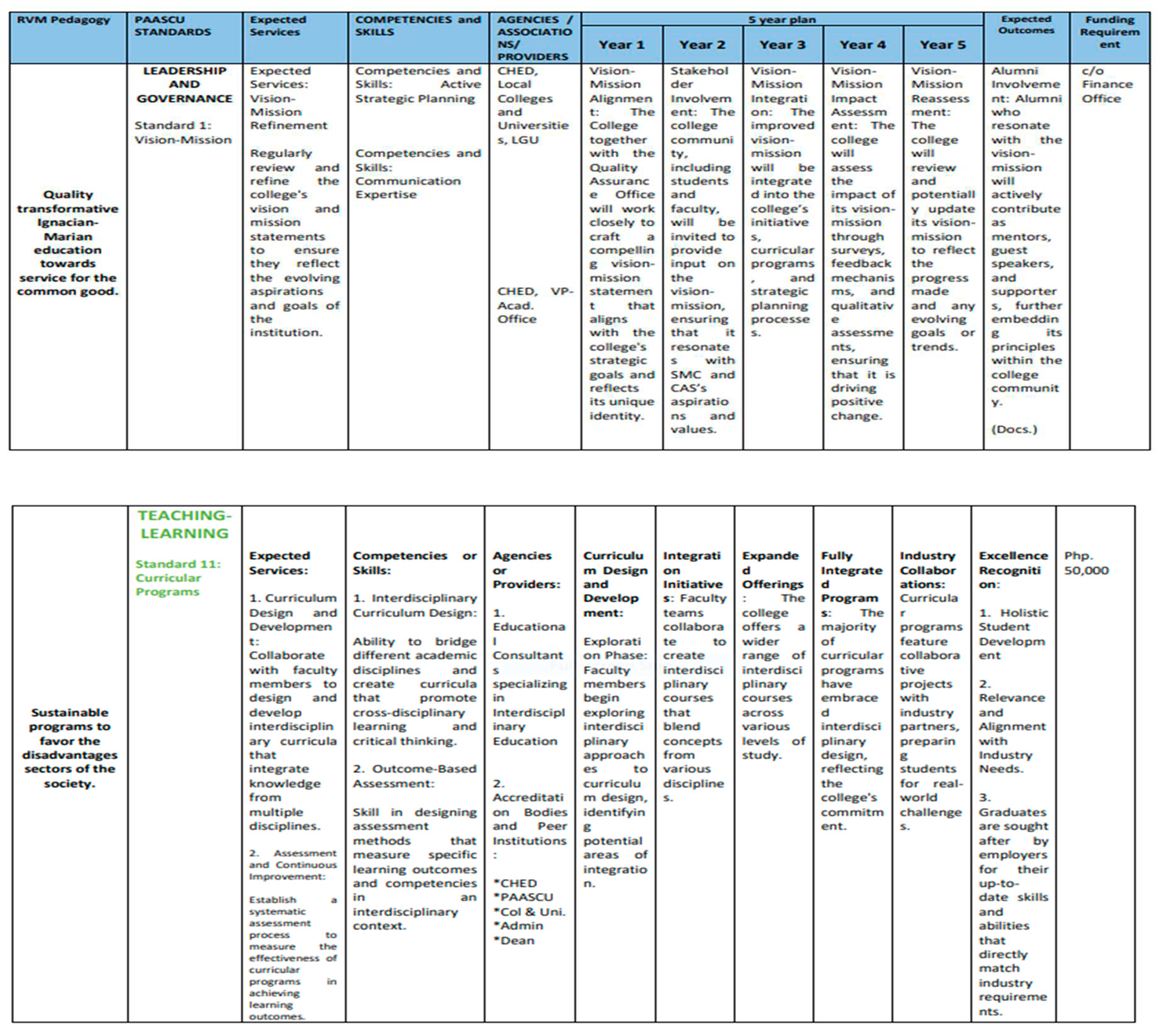
D. Recommendations
Based on the research findings, the following recommendations are offered to guide the strategic planning process at the College of Arts and Sciences, St. Michael’s College, Iligan City, Philippines. These recommendations are tailored to address various stakeholders within the institution:
For School Administrators:
- Prioritize Technological Infrastructure: Invest in robust digital infrastructure to support online learning and ensure the availability of necessary resources for faculty and students (Creswell & Creswell, 2017).
- Facilitate Interdisciplinary Initiatives: Create mechanisms that encourage collaboration between academic departments and promote interdisciplinary projects and research (Braun & Clarke, 2006).
- Cultivate International Partnerships: Explore opportunities for international partnerships, exchange programs, and initiatives that enhance the global exposure of the college (UNESCO, 2020; UNESCO, 2022).
- Implement a Strategic Planning Model: Adopt a well-defined strategic planning model that aligns with the college’s mission and values, providing a structured framework for decision-making (Creswell & Creswell, 2017).
For Faculty:
- Embrace Technology: Actively engage in professional development to enhance digital teaching skills and adapt to evolving educational technologies (Gao & Luo, 2021; Chai et al., 2022).
- Promote Interdisciplinary Collaboration: Seek opportunities to collaborate with colleagues from different disciplines on curriculum development and research projects (Planellas & Muni, 2022).
- Support Internationalization: Encourage students to participate in international programs and promote global perspectives in course content (UNESCO, 2020; UNESCO, 2022).
For Students:
- Take Advantage of Technological Resources: Utilize the digital resources and online learning platforms provided by the college to enhance your educational experience (Gao & Luo, 2021; Chai et al., 2022).
- Engage in Interdisciplinary Activities: Participate in cross-disciplinary projects, clubs, and extracurricular activities to broaden your knowledge and skills (Planellas & Muni, 2022).
- Explore International Opportunities: Consider study-abroad programs and cultural exchange initiatives to gain a global perspective (UNESCO, 2020; UNESCO, 2022)
For Stakeholders:
- Support Technological Advancements: Recognize the importance of technology in education and support initiatives aimed at improving digital infrastructure (Gao & Luo, 2021; Chai et al., 2022).
- Promote Collaboration: Encourage collaboration between the college and external organizations, businesses, and the local community to enhance educational opportunities (Planellas & Muni, 2022).
- Advocate for International Engagement: Advocate for the college’s internationalization efforts and explore avenues for external partnerships that align with the institution’s goals (UNESCO, 2020; UNESCO, 2022)
For Future Researchers:
- Explore Best Practices in Educational Technology Integration: Researchers should delve deeper into the specific strategies and practices employed by the Higher Education Institution in leveraging technological advancements for educational delivery after the pandemic. This could involve a comparative analysis with other institutions to identify best practices for effective online education.
- Study the Impact of Interdisciplinary Collaboration: Researchers could conduct a follow-up study to investigate the impact of interdisciplinary collaboration within higher education institutions. This could involve assessing how such collaborations enhance the quality of education, research outcomes, and student engagement, using the college’s experiences as a case study.
-
Investigate the Sustainability of Internationalization Initiatives: Given the college’s focus on internationalization through partnerships and cultural exchange, researchers should assess the long-term sustainability of these initiatives. This could involve examining the challenges faced, lessons learned, and strategies for maintaining and expanding internationalization efforts in higher education institutions.Overall, the implications and recommendations drawn from this research underscore the critical importance of proactive and strategic planning in higher education, especially in the post-pandemic era. By embracing technology, fostering interdisciplinary collaboration, promoting internationalization, adopting structured planning models, and remaining adaptable, the College of Arts and Sciences, St. Michael’s College, can position itself as a leader in preparing students for the challenges and opportunities of the modern educational landscape (Creswell, 2013; Creswell & Creswell, 2017; Braun & Clarke, 2006).
VIII. Conclusion:
In conclusion, this study delves into strategic planning in higher education, focusing on the College of Arts and Sciences at St. Michael’s College, Iligan City, Philippines, and offers insights that extend beyond this specific institution. It underscores the challenges and opportunities faced by educational institutions globally in an era marked by rapid technological advancement, cross-disciplinary convergence, and global interconnectedness. The research methodology, combining qualitative techniques such as informal interviews, in-depth literature reviews, and thematic analysis, has been instrumental in comprehensively exploring the multifaceted aspects of strategic planning. Anchored in a robust theoretical framework drawn from seminal works in the field, this study provides a solid foundation for understanding the complexities of the strategic planning landscape. Furthermore, it outlines key principles such as technology integration, interdisciplinary collaboration, and internationalization, which resonate with broader trends in higher education. As higher education institutions continue to evolve, this study serves as a reference point for academic leaders, administrators, faculty, students, and stakeholders, facilitating meaningful dialogues and actions to shape the future of higher education. In an ever-changing educational ecosystem, the lessons learned here can inform the development of agile and responsive strategic plans, ensuring institutions remain at the forefront of educational excellence.
References
- 4 trends that will shape the future of higher education (2022). https://www. weforum.org/agenda/2022/02/four-trends-that-will-shape-the-future-of-higher-education/.
- Al Basel MM, Osman RW, (2020). Reality of strategic planning practice from the perspective of education faculty members. World Journal of Education. 2020; 10(2):127.
- Almerino, P. et al. (2023). “Evaluating the Academic Performance of K-12 Students in the Philippines: A Standardized Evaluation Approach”, Education Research International, vol. 2020, Article ID 8877712, 8 pages, 2020. [CrossRef]
- Bantilan, Jecyl & Otero, Archie & Regidor, Analyn & Junsay, Marilou. (2023). Strategic Planning in Education: A Systematic Review. Asian Journal of Education and Social Studies. 45. 40-54. [CrossRef]
- Barney, J. B. (1991). Resource-Based View (RBV) Theory. Firm resources and sustained competitive advantage. Journal of Management, 17(1), 99-120.
- Bengtsson, M. (2016). How to plan and perform a qualitative study using content analysis. NursingPlus Open, 2, 8-14. https://doi.org/10.1016/j.npls.2016.01.001. [CrossRef]
- Braun, V., & Clarke, V. (2006). Using thematic analysis in psychology. Qualitative Research in Psychology, 3(2), 77-101.
- Bryson, J. M. (2021). Strategic Planning for Public and Nonprofit Organizations: A Guide to Strengthening and Sustaining Organizational Achievement (6th ed.). John Wiley & Sons.
- Casarejos, F., Frota, M.N. and Gustavson, L.M. (2017). “Higher education institutions: a strategy towards sustainability”, International Journal of Sustainability in Higher Education, Vol. 18 No. 7, pp. 995-1017. https://doi.org/10.1108/IJSHE-08-2016-0159. [CrossRef]
- Chai, C. S., Koh, J. H. L., Tsai, C. C., & Tan, L. (2022). Leveraging digital technology for resilient education in times of crises: Pedagogical and policy considerations. Journal of Educational Technology & Society, 25(1), 94-109. Retrieved from https://www.jstor.org/stable/26926482.
- Chao, R.Y. (2023). Higher Education in Philippines. In: Symaco, L.P., Hayden, M. (eds) International Handbook on Education in South East Asia. Springer International Handbooks of Education. Springer, Singapore. [CrossRef]
- Chigbu, U.E.; Atiku, S.O.; Du Plessis, C.C. (2023). The Science of Literature Reviews: Searching, Identifying, Selecting, and Synthesising. Publications 2023, 11, 2. [CrossRef]
- Creswell, J. W., & Creswell, J. D. (2017). Research Design: Qualitative, Quantitative, and Mixed Methods Approaches (5th ed.). SAGE Publications.
- Creswell, J.W. (2013). Research Design: Qualitative, Quantitative, and Mixed Methods Approaches. 4th Edition, SAGE Publications, Inc., London.
- Falqueto, J.M.Z., Hoffmann, V.E., Gomes, R.C. et al. Strategic planning in higher education institutions: what are the stakeholders’ roles in the process?. High Educ 79, 1039–1056 (2020). https://doi.org/10.1007/s10734-019-00455-8. [CrossRef]
- Fidler, B. (2021). Strategic Management for School Development: Leading your School’s Improvement Strategy. [CrossRef]
- Fumasoli, T. (2018). Strategic Planning in Higher Education. In: Encyclopedia of International Higher Education Systems and Institutions. Springer, Dordrecht. [CrossRef]
- Fumasoli, T. (2023). Strategic planning in higher education. Routledge.
- Gao, X., & Luo, X. (2021). Factors influencing teachers’ adoption of technology for remote teaching during the COVID-19 pandemic. Educational Technology Research and Development, 69(4), 2053-2078.
- Hinton, K. (2022). A Practical Guide to Strategic Planning in Higher Education. Second Edition, with New and Updated Content. https://www.scup.org/resource/a-practical-guide-to-strategic-planning-in-higher-education-2nd-ed/.
- James, M. A., & Derrick, G. E. (2020). When “culture trumps strategy”: higher education institutional strategic plans and their influence on international student recruitment practice. Higher Education, 79, 569-588.
- Lake, N. (2020). The Strategic Planning Workbook (4th ed.). Kogan Page Publishers.
- Lin, F. (2018). Using Thematic Analysis to Facilitate Meaning-Making in Practice-Led Art and Design Research. International Journal of Art & Design Education. 38.
- Maduro, S., Fernandes, P.O. and Alves, A. (2018), “Management design as a strategic lever to add value to corporate reputation competitiveness in higher education institutions”, Competitiveness Review, Vol. 28 No. 1, pp. 75-97. [CrossRef]
- Meyer, J. W., & Rowan, B. (1977). Institutional Theory. Institutionalized organizations: Formal structure as myth and ceremony. American Journal of Sociology, 83(2), 340-363.
- Monday, T. (2020). Impacts of Interview as Research Instrument of Data Collection in Social Sciences. Journal of Digital Art & Humanities. 1. 15-24. 10.33847/2712-8148.1.1_2.
- Munn, Z.; Peters, M.D.J.; Stern, C.; Tufanaru, C.; McArthur, A.; Aromataris, E. Systematic Review or Scoping Review? Guidance for Authors When Choosing between a Systematic or Scoping Review Approach. BMC Med. Res. Methodol. 2018, 18, 143 . [Google Scholar]
- Orbeta, A. C., Gonzales, K. G., & Cortes, S. F. S. (2016). Are higher education institutions responsive to changes in the labor market? (No. 2016-08). PIDS Discussion Paper Series.
- Page, M.J.; Moher, D.; Bossuyt, P.M.; Boutron, I.; Hoffmann, T.C.; Mulrow, C.D.; Shamseer, L.; Tetzlaff, J.M.; Akl, E.A.; Brennan, S.E. PRISMA 2020 Explanation and Elaboration: Updated Guidance and Exemplars for Reporting Systematic Reviews. BMJ 2021, 372, n160.
- Philippine Development Plan 2023-2028 (n.d). https://pdp.neda.gov.ph/wp-content/uploads/2023/ 01/PDP-2023-2028.pdf.
- Planellas, M., & Muni, A. (2022). Strategic decisions. Cambridge University Press.
- Republic of the Philippines (2016). Republic Act No. 10912 (Continuing Professional Development Act of 2016). Available at: https://www.officialgazette.gov.ph/2016/07/21/republic-act-no-10912/. Accessed 18 Mar 2021.
- Riger, S., et al., (2023). ‘Thematic Analysis’, (eds). Handbook of Methodological Approaches to Community-Based Research: Qualitative, Quantitative, and Mixed Methods (New York, 2015; online edn, Oxford Academic, 1 Jan. 2016). https://doi.org/10.1093/med:psych/9780190243654.003.0004, accessed 2 Sept. 2023. [CrossRef]
- Rogers, E. M. (1962). Innovation Diffusion Theory. Diffusion of innovations. Free Press.
- Simerson, B. K. (2022). Strategic Planning: A Practical Guide to Strategy Formulation and Execution. ABC-CLIO.
- 36. Smit, B., & Onwuegbuzie, A. J. (2018). Observations in Qualitative Inquiry: When What You See Is Not What You See. International Journal of Qualitative Methods, 17(1). https://doi.org/10.1177/1609406918816766.
- Snyder, H. (2019). Literature review as a research methodology: An overview and guidelines. Journal of Business Research, Volume 104, 2019. https://www.sciencedirect.com/science/article/ pii/S0148296319304564?via%3Dihub.
- Staley, D. J. (2021). The Future of Higher Education: A Strategic Planning Guide. Johns Hopkins University Press.
- Strike, T. (2018). Higher Education Strategy and Planning A Professional Guide. Routledge. https://www.routledge.com/Higher-Education-Strategy-and-Planning-A-Professional-Guide/Strike/p/book/9781138635265#.
- Strike, T. (Ed.). (2022). Higher education strategy and planning: A professional guide. Routledge.
- Symaco, L.P., Bustos, M.T.A.P. (2022). Overview of Education in the Philippines. In: Symaco, L.P., Hayden, M. (eds) International Handbook on Education in South East Asia. Springer International Handbooks of Education. Springer, Singapore. [CrossRef]
- Tan, A. (2019). Making cost of college education more affordable. Available at: https://business.inquirer.net/274159/making-cost-of-college-education-more-affordable#:~:text=Based%20on%20the%20data%20provided,already%20P145%2C000%20a%20year. Accessed 18 Mar 2021.
- Thompson, G. C., Maringanti, H., Anderson, R., & Soehner, C. B. (2022). Strategic Planning for Academic Libraries: A Step-by-Step Guide. Association of College and Research Libraries.
- UNESCO. (2020). Education in a post-COVID world: Nine ideas for public action. Retrieved from https://unesdoc.unesco.org/ark:/48223/pf0000374806.
- UNESCO. (2022). Education in a Post-Pandemic World: Nine Ideas for Public Action. UNESCO Publishing.
- Williams, D.A. (2021). “Strategic planning in higher education: a simplified B-VAR model”, International Journal of Educational Management, Vol. 35 No. 6, pp. 1205-1220. [CrossRef]
Disclaimer/Publisher’s Note: The statements, opinions and data contained in all publications are solely those of the individual author(s) and contributor(s) and not of MDPI and/or the editor(s). MDPI and/or the editor(s) disclaim responsibility for any injury to people or property resulting from any ideas, methods, instructions or products referred to in the content. |
© 2023 by the authors. Licensee MDPI, Basel, Switzerland. This article is an open access article distributed under the terms and conditions of the Creative Commons Attribution (CC BY) license (http://creativecommons.org/licenses/by/4.0/).
Copyright: This open access article is published under a Creative Commons CC BY 4.0 license, which permit the free download, distribution, and reuse, provided that the author and preprint are cited in any reuse.


