

Submitted:
07 February 2025
Posted:
08 February 2025
You are already at the latest version
Abstract
Organic fertilizers are a revolutionary concept in coconut farming as they provide a pack-age for sustainable coconut production. This chapter looks at the multiple advantages of organic fertilization methods and types of organic fertilizers which include compost, ver-micompost, livestock manure, green manure, crop residues, and biofertilizers. Chapter fo-cuses on the best practices, application methods, time of application, frequency and rate of application of nutrients for coconut palm at various developmental stages. The chapter provides a detailed and systematic review of the environmental, economic and social im-pacts of organic fertilization. Benefits include enhanced soil health, biodiversity promo-tion, carbon sequestration, cost effectiveness, quality improvement of the yield, food secu-rity and possibilities of creating rural income. Issues including resource accessibility difficulties, nutrient deficiencies, and intensive labor requirement are explored in detail, as well as future trends that focus on advanced technologies, new research areas, and policy approaches. Thus, the chapter on organic fertilization as a coherent concept that can be applied to coconut production and other goals of environmental protection, food security, and sustainable development of agriculture.
Keywords:
coconut production
; carbon sequestration
; environmental protection
; food security
; sustainable agriculture
1. Introduction
Organic fertilizers are a more comprehensive concept of nutrient supply for plants than the mere provision of nutrients [1]. These natural amendments, unlike synthetic chemical fertilizers, not only supply nutrients but also modify the structure of the soil, stimulate microbial populations, increase water-holding capacity, and support biotic diversity. To coconut growers, knowledge on good organic fertilization practices can go a long way in increasing yield, vigor, and sustainability of the coconut plantations [2]. Organic fertilizers are important in coconut farming because of the special nutritional demands of the crop and the intricate production environments of coconut palms [3]. Coconut palms are established as perennial crops that require well-planned and adequate nutrient supply throughout their growth period, which may extend to several years. The conventional chemical fertilization practices cause decline in soil health, less of microbial population and deterioration of the environment [4]. However, there are natural sources of fertilizers which can be used to supply these nutrients in a more environmentally friendly way. There are a number of organic fertilizers that are especially ideal for coconut production. These are compost, vermicompost, green manure, livestock manure, bio-fertilizer, and crop residues [5]. All of these sources present different nutritional values for the plants and the soil they are applied on.
Several significant factors more need to be understood in the use of organic fertilizers in coconut agriculture. These include nutrient content, rate of decay, type of soil, climatic conditions and the growth stage of the coconut palm in influencing the most appropriate fertilization regime. Farmers need to adopt an integrated strategy that takes into account these variables, if the use of organic amendments is to yield the maximum benefits [6].
Evaluation of the soil health therefore serves as the basis for organic fertilization. Any fertilization program should be preceded by a proper soil analysis in order to determine the current nutrient status, pH, organic matter and microbial populations [7]. These assessments assist in developing strategies for fertilization of coconuts that are specific to each site depending on the nature of the coconut plantation. The most effective method in the use of organic coconut farming is the use of multiple sources of organic fertilizers [8]. This approach is also known as integrated nutrient management where different organic materials are added to the soil in a package to balance nutrient needs.
The timing and method of applying organic fertilizer are as important as the type of fertilizer to be used. Coconut palms have different nutrient needs at different stages of their growth from the young plant development to the mature stage of production [9,10]. Weather conditions such as seasonal changes, rainy period and local climate also affect the efficiency of fertilization measures. Since these are environmental factors, farmers have to come up with strategies that counter them. The use of organic fertilization in coconut farming is one of the progressive methods that are being adopted in the current world trends of sustainable agriculture that enhance productivity, environmental conservation, and sustainable agriculture production [2]. Through the implementation of holistic, systems-oriented organic nutrient management approaches, coconut farmers are better positioned to create more sustainable, productive, and profitable production systems[11]. This chapter aims to provide a detailed insight into the use of organic fertilizers in coconut farming, including types, advantages, best practices of application, limitations and prospects of the technology for sustainable coconut farming.
2. Types of Organic Fertilizers in Coconut Farming
2.1. Compost
Compost is therefore a complex organic fertilizer solution for coconut production that turns a wide range of organic inputs into soil amendments of high nutrient value through the management of biological processes [12]. Composting is the controlled decomposition of organic matter by microorganisms in a systematic way under conditions of temperature, moisture and aeration [13]. The compost that can be made for coconut plantations include, crop residues, livestock manure, kitchen wastes, and perennial weeds [14]. Compost of high quality has several advantages in addition to the supply of nutrients such as increased porosity, water holding capacity, microbial population, and slow-release nutrient [15]. Composting is usually a stepwise process that involves the addition of different organic materials in correct carbon and nitrogen proportions and an occasional turning of the pile [16]. Farmers can make compost from locally available materials to fertilize coconut hence adopting a cheap and sustainable practice (Figure 1). There are other more developed methods of composting such as the vermicomposting which involves using earthworms to speed up the rate of decomposition and come up with better quality organic fertilizers [17]. Compost management is critical in maintaining a constant nutrient supply, soil health and sustainable agriculture.
2.2. Vermicompost
Vermicompost is a complex, biologically alive organic manure that is made through the controlled biological process using earthworms [18]. These remarkable organisms feed on organic waste materials and convert it into nutrient fine textured compost of high agricultural value (Figure 2). In coconut farming, vermicompost plays a role of a better soil conditioner that has several nutritional and ecological values. It also encompasses certain earthworm species as well as Eisenia fetida that has the ability to decompose organic matter like agriculture residuals, livestock manure and plant waste with greater efficiency [19]. In the process of decomposition, earthworms have the ability to size reduce organic inputs, introduce microbes and improve the chemical nature of the nutrient through their grinding enzymes. The end product of vermicompost has been noted to contain higher nutrient content than that of compost, such as nitrogen, phosphorus, potassium and micro nutrients [20]. To coconut plantations, therefore, vermicompost has a number of remarkable benefits. It has a fine texture, which makes it allow for quick nutrient uptake, it also has a high microbial population, which shall encourage root growth and strengthen the plant against diseases [21]. In this technique of slow-release nutrients, nutrients do not leach and steadily cover the requirements of the plants for many days.
2.3. Livestock Manure
Livestock manure is a rich source of organic manure obtained from different livestock sources and each has its own nutrient value and organic matter for coconut production [11,22]. The provided Table 1 presents the macro and micronutrient contents in major livestock manures. It includes organic sources such as goat manure, cattle manure, boiler litter, layer litter, and pig dung, and lists the percentages or values of various nutrients like nitrogen, phosphorus, potassium, magnesium, calcium, iron, manganese, copper, zinc, and boron present in these organic sources. Before applying livestock manure to coconut plantations, there are some important factors that farmers need to take into consideration [2,22]. The manure should be well decomposed to avoid nitrogen lockout and to avoid spreading of potential pathogens. Appropriate composting processes prevent the emission of bad smells and also fix the nutrients and make it easier to have a standard compost [23]. The application rates are usually recommended to be between 10-25 kg per coconut palm per year depending on the soil type, age of palm and initial soil fertility (Figure 3) [10]. Apart from nutrient supply, the incorporation of livestock manure has many other agronomic benefits. It increases the microbial population in the soil, stimulates the growth of the nutrient-friendly microorganisms, helps in improving the aeration and water retention capacity of the soil and releases the nutrients slowly and continuously in order to feed the plant [24]. Also, livestock manure enhances carbon storage, increases soil organic matter content, and decreases the use of chemical fertilizers [25].
2.4. Green Manure
Green manure fertilizers as a practice in coconut production is one of the most sustainable practices that improve the fertility of the soil. Among the tree or creep legumes gliricidia, sunn hemp, pureria, and mucuna are very effective because they are nitrogen fixing [26,27,28,29]. Wild sunflower is used as a source of potassium and as green manure enhancing nutrient uptake and growth of coconut palms [30]. According to the data, gliricidia leaves contain 3.5% nitrogen, 0.2% phosphorus, and 1.7% potassium, while wild sunflower has 2.39% nitrogen, 0.42% phosphorus, and 4.18% potassium [30]. These plants can be planted and grown as cover crops or as intercrop with coconut palms before being tilled back into the soil before they come into maturity. It enhances soil organic content as well as the structure of the soils and has capability of providing nitrogen through biological nitrogen fixation [31]. Some of the plants include wild sunflower and gliricidia among others since they have fast growth rates and high biomass production rates [32,33,34,35]. Another way is that such aquatic vegetation as water hyacinth or water lettuce can be used as needed as green manure in addition to providing additional organic matter and nutrients [36]. When burying or applying into the top soil, these plants breakdown and release slowly, nutrients which help nourish the coconut palms for a long-term other than fertilization that usually imparts a short-term gain at the expenses of the plant’s health (Figure 4). Farmers can choose and change the green manure crops in a way that would benefit the soil fertility and the ecosystems [1].
2.5. Crop Residue
Coconut plantations can benefit from crop residues in the form of an easily accessible and effective organic fertilizer. Such materials include plant residues from prior harvests, for example, the fronds, empty bunches, husk residues, and other plant residues [37]. The residues from coconut crops can also be recycled effectively, coconut husk residue, and fronds are good organic matter (Figure 5). Crop residues if well utilized as a resource provide one of the most important sources of soil organic matter, determine the soil structure, increase water holding capacity and release nutrients slowly [38]. The decomposition process is a function of microbial activities that work to break down residual plant matter into useful organic products. Farmers can use different methods such as mulching, composting or direct application into the soil to optimize nutrient value of crop residues [39]. The carbon to nitrogen ratio of various residues determines the rate of decomposition and the rate of nutrient liberation. Through such dynamics, coconut farmers can enhance crop residue management and minimize the use of external fertilizers, which should enhance sustainable coconut farming practices that will support soil health and fertility in the long run [11].
2.6. Biofertilizers
Biofertilizers are one of the most promising, environmentally friendly technologies for the use of nutrients in coconut production [2]. These living microorganism preparations improve the fertility of the soil through mutualism with the roots of plants, which in turn improves the uptake of nutrients and general growth of the plant [40]. Each type of biofertilizer is composed of different strains that have unique capability to transform nutrients including nitrogen fixing, phosphorus solubilizing, and production of plant growth hormones. The microorganisms used in the preparation of biofertilizers are Rhizobium spp., Azospirillum spp., Azotobacter spp. and Trichoderma spp. (Figure 6) [41]. These beneficial microbes inhabit the rhizosphere, enhancing nutrient uptake and utilization and enhancing plant tolerance to biotic and abiotic stresses. When it comes to coconut plantations, biofertilizers can be applied in seed treatment technique, soil treatment technique or root treatment technique [22]. It has been ascertained that they have immense benefits over chemical fertilizers such as; environmentally friendly, cheaper to produce and improve soil microbial population. Biofertilizers are rich in various microbial populations that enhance the overall nutrient cycling, structure of the soil and make the agricultural system sustainable [42].
3. Application Techniques and Best Practices
3.1. Correct Application Time and Frequency
While best time for application of organic fertilizers were found to affect the growth and productivity of coconut palm significantly, so also the correct application frequency [19]. It is therefore important to understand the ecological interactions of tropical regions in order to determine the appropriate application strategies of the proposed seasonal application strategies for coconuts taking into consideration rainfall and temperature as well as the growth cycle of coconut palms [43]. Fertilization of coconut in the growth stage needs a special consideration because the nutrient needs of the palm changes greatly from the seedling stage to the fruit bearing tree [22]. Suggested application frequency varies from different times per lifespan with great consideration given to climatic conditions as well as the type of soil. Timing is critical in most applications; as a result, farmers must decide when best to apply fertilizers as well as control factors that enhance effective nutrient uptake and reduce situations where nutrients might be washed away by rains or other natural occurrences [44]. Sophisticated methods such as, soil moisture control and climatic characteristics determination are useful in enhancing even more detailed and appropriate nourishing management to minimize the pollution impacts of fertilizers [45].
3.2. Dosage and Nutrient Management
Formulating elaborate dosage and nutrient management plans requires a systems approach and a dynamic perspective to the nutrition of coconut palms[46]. Fertilization needs vary with the age of the coconut palms hence the need to have dynamic nutrient delivery systems that meet the dynamic nutrient needs of the coconut palms at every stage in their development (Table 2). Soil condition adaptation measures include soil analysis, nutrient mapping, and soil specific fertilization that takes into consideration micronutrient and macronutrient deficiencies[47]. The nutrient concentration calculation methods should be able to include complex analysis such as; soil testing, plant tissue analysis and nutrient uptake and utilization models[48]. Sustainable and comprehensive application systems focus on the nutrient management where the biological activity, soil microorganisms and the health of the soil in the long run are not left out when determining the chemical composition[49]. This approach needs constant supervision, evaluation, and frequent changes in fertilization methods to sustain the coconuts palm’s nutritional needs and productivity.
3.3. Efficient Application Methods
The use of accurate methods in applying organic fertilizer to coconut plants is a refined method of improving nutrient utilization in coconut production [2]. Trench and surface application methods include establishment of nutrient delivery areas around the palm root system so as to allow direct nutrient access (Figure 7). Broadcasting methods are more extensive in nutrient coverage and are best suited for young palms or during early stages of soil modification [50]. The use of an advanced fertigation system is identified as a state-of-the-art technology that focuses on the integration of irrigation and fertilization to develop efficient fertilization technologies [51]. These methods need proper standardization depending on the soil type, age of palms, nutrient status of the soil and the prevailing climatic conditions. Advanced application methods apply modern technology tools such as GPS equipped application equipment, sensors and nutrient management software to enhance efficiency of fertilizer usage and to reduce losses [52].
3.4. Monitoring and Aftercare Operations
Monitoring and aftercare activities are important in the use of organic fertilizer in coconut farming. When using organic fertilizer, it is important for moisture conservation and nutrient retention that is why mulching is an important process [53]. After applying organic fertilizers, check the mulch layer frequently and keep it at 10-15 cm thickness surrounding the coconut palms. It should also be evenly distributed and replaced because it breaks down over time. watering is important especially when there is dry season or drought. Check the availability of moisture in the soil and ensure to supply moisture content at fixed intervals preferably by drip or other irrigation methods [54]. Weed control is important in order to avoid competition for nutrients. Farmers can use manual weeding or use of organic mulch to prevent weed growth in the garden [55]. Coconut palms should be weeded around the base, but the weeds should not be removed in a manner that affects the root system. Pest and disease management is something that needs keen observation. Follow methods such as biological control measures; implementing beneficial insects, treating pests with neem and rotating crops [56]. Remove those parts of the plant that are affected by pests or diseases, apply organic fungicides for pest and diseases control and ensure good field hygiene.
4. Benefits of Organic Fertilizers in Coconut Farming
4.1. Environmental Benefits
4.1.1. Soil Health Improvement
Organic fertilizers are thus a revolution in improving soil health in coconut plantations and are a good solution to sustainable agriculture [57,58]. These fertilizers added in the soil alters the soil structure in such a way that additional natural organic matter to improve it by making it porous and well aerated required for the growth of coconut palms. The improvement of the internal structure of the soil also increases the porosity and capacities for water retention and thus increases out the uptake of water for periods of drought [59,60]. This improvement is especially important for tropical climates where coconut production takes place because it reduces the susceptibility to moisture changes. However, not only it supports and enhances the beneficial microbial growth in the soil but also makes a population of a living soil ecosystem [61]. These microorganisms decompose the organic matter, make the required nutrients soluble and form mutually beneficial interactions with the coconut palm roots. Sustained use of organic fertilizers gradually accumulates organic matter over time and gradually over time alters the soil structure and productivity of the agricultural land [62].
4.1.2. Biodiversity Promotion
Organic fertilizers act as a stimulus for the development of the biological structure of the coconut plantations’ ecosystems, which are complex and diverse [63]. Because these fertilizers do not contain synthetic chemicals, known to suppress the soil microbiome, they promote complex soil communities that include bacteria, fungi and other beneficial microorganisms that result from natural inclusion of natural organic matter [64]. These diverse microorganisms are also involved in biogeochemical cycling, soil aggregation, and plant health. Converted soil environment to a microhabitat which may improve the population of useful insects, pollinators and natural enemies of pests [65]. These microorganisms and insects help to maintain a better and healthier ecosystem in the agricultural field, and have less requirement of external pest control. The diversity also goes beyond the soil which could again help form a more connected ecosystem able to fight out environmental factors [66]. Organic fertilizers also make the coconut growing environment to be more dynamic and self-controlling as it supports the lives of many other forms of life in the soil.
4.1.3. Carbon Sequestration
Organic fertilizers in coconut cultivation are shown to be a significant contributor to carbon sequestration and therefore a valuable input to fighting climate change. These fertilizers include organic matter, which facilitates sequestration of carbon in the soil as it reduces the chances of the gas being released into the atmosphere [67]. Over time as the organic matter and carbon breaks down, it assimilates itself into the land and creates very stable carbon which can stay locked up in the ground for relatively long periods. Coconut plantations using organic fertilizers can thus change agricultural landscapes into carbon sinks and thus decrease greenhouse gases [68]. An increase of these types of carbon performs the ‘soil health service’ to increase the organic matter which helps in improving the structure of the soil, as well as improves the ability of the soil to store more carbon forming a virtuous cycle [69]. Besides, this approach helps not only in coconut palm nutrition but also in the natural solution of climate change problems worldwide [70]. The proposed modes of organic nutrients are effective not only to promote agriculture and food production, but also to enhance the efforts in capturing carbon all at the same time, meaning farmers can support both environmental conservation and agriculture production in the long run.
4.2. Economic Benefits
4.2.1. Cost-Effectiveness
The use of organic fertilizers is economically viable for coconut farmers and provides a more economically sustainable way to feed the plants. These fertilizers are made on the farm through composting, crop residues and other organic wastes, hence greatly reducing the cost of purchasing costly chemical fertilizers [71]. The use of locally available materials to produce fertilizers makes waste management a value-added agricultural practice which brings down input costs significantly [72]. Farmers can use locally available organic materials such as plant residue, livestock manure and green waste to formulate quality nutrient blends at a relatively low cost. This approach also helps to minimize the reliance on the external markets for agricultural inputs, which is normally volatile and unpredictable. When farmers reduce the number of inputs they have to purchase, they are able to control their own economic destinies more effectively [73]. The positive impacts of the organic fertilizers on the long-term soil health also adds to the economic sustainability since the farmer may not have to spend a lot of money to rehabilitate the soil, control pests and diseases and recover the crop [74]. This comprehensive economic approach helps farmers to produce more sustainable and less dependent on external support agricultural systems.
4.2.2. Increase the Yield Quality
Organic fertilizers provide a good hope for increasing coconut production and better-quality yield that are of immense economic importance to the farmers. Due to the slow released nutrient that is available in the natural fertilizers, plant growth is steady and vigorous, which may enhance the overall coconut yield [75]. The comprehensive nutrition leads to a healthier palm growth and thus, produces bigger and better coconuts that can be sold in the market at higher prices [76]. The status of organic cultivation itself becomes a desirable characteristic in marketing the produce, given the growing consumer concern for sustainably produced agricultural products [77]. Fresh coconuts grown organically are usually sold at a premium because of perceived health and environmental benefits hence an added economic advantage for farmers. The enhanced soil health from organic fertilization also enhances long-term production potential and thereby decreases the variability of yields and the corresponding variability of farm income [78]. This approach turns organic fertilization from a simple nutritional concept into an elaborate economic one that solves production, quality, and market positioning at once.
4.2.3. Income Diversification
Organic fertilizer production can be viewed as the promising sector for diversification of the coconut farming economy [79]. It is possible for farmers to turn waste management into an opportunity for income generation through producing high quality organic fertilizers for the local and regional markets [80]. Through the production of surplus organic fertilizer products, farmers can develop other market outlets apart from the usual coconut sales. This approach promotes the generation of small-scale circular economy systems in which agricultural and organic waste is turned into valuable farming inputs. The farmers can also have an opportunity to create market opportunities other than the agricultural products through branding of organic fertilizer lines [81]. There is increasing market demand for organic and sustainable agricultural inputs, which is the right environment for such endeavors. Furthermore, this diversification strategy helps in the economic diversification since the agricultural businesses are developed to be more economically robust with many sources of income [82]. Those involved in organic fertilizer production can also benefit from consulting and training services, which are other economic possibilities for innovative farmers.
4.3. Social Benefits
4.3.1. Health and Safety Benifits
Organic fertilizers provide deep health and safety benefits to farmers, farm workers and consumers, providing a new social context to coconut farming [83]. These natural alternatives eliminate use of synthetic chemical fertilizer, which when used in agriculture exposes human being to many harmful agricultural chemicals that pose severe health consequences. Farmers and agricultural workers do not have direct contact with toxic substances that cause acute or chronic diseases, dermatitis, respiratory diseases, and other diseases in the long term [84]. Consumers enjoy the coconuts that are grown from organic fertilizers that reduce the chances of chemical contaminants. The lowered chemical content means that the food products are less toxicologically hazardous [85]. This approach is a human health centered approach that is implemented along the agricultural value chain from the growers to the consumers. The holistic health protection includes not only the safety from the aggressors but also the health protection and, therefore, potentially contributes to overcoming the modern tendencies in agriculture [86]. Which are based on hardly sustainable to the human health priority, and potentially can enhance and rescue the healthcare sphere by avoiding increasing costs and providing better and more human-oriented priorities to agriculture.
4.3.2. Food Security
Organic fertilizers are a vital input in sustaining food production stability and improving food security in coconut growing areas [11]. Therefore, the natural fertilization ways of restoring and equally enhancing the quality of the soil results in more reliable and long-lasting production methods for agriculture. The slow-release of nutrients and enhancements of the structural of the soil known with the organic fertilizer are conducive to stable growth condition that will enhance organisms to endure the challenges of the natural conditions such as climate volatilities, water, and changing agriculture terrains [87]. Appropriate farming practices involving use of organic fertilizers also contribute to conservation of agriculture productive land resource for future generation food production. These approaches are less dependent on external inputs and also on chemical intervention as they encourage increased organic production. Organic fertilization thus helps to enhance the health of ecosystems hence a better and more sustainable environment for agriculture that will deliver food production as needed [1]. The long-term view inherent in organic farming practices is a clear response to the most acute problems of food security of agricultural populations.
4.3.3. Rural Development
Organic fertilizers are a revolution in the development of rural areas, providing full-spectrum solutions for economic and social development of agricultural regions [88]. These natural fertilization methods therefore help to advance more sustainable forms of rural economy that go beyond conventional farming. Organic farming opens up niches for value added agricultural produce that could attract high end markets and contribute to the development of the regional economy [89]. These practices support knowledge intensive agricultural systems, skills, technology and entrepreneurship among the rural people. Such focus can draw external investment, technical workshop and educational programs that are interested in the responsible agriculture models [90]. Organic fertilizer production can thus act as a trigger for wider rural economic diversification and the generation of employment, local industries and the evolution of more robust community economic structures [91]. Organic fertilization embraces the principles of respecting local resources, indigenous knowledge, and sustainable practices, which makes it a part of a more holistic approach to rural development as compared to the conventional, purely economic approach.
5. Challenges of Organic Fertilizers in Coconut Farming
5.1. Difficulties of Accessibility and Resources Availability
Organic fertilizer is a major challenge for coconut farmers especially in the remote and less developed areas to source the commodity. The scarcity of organic inputs as well as the restricted access to the processing facilities poses a major challenge to the adoption of sustainable fertilization [92]. Rural farmers face problems of inadequate supply of organic wastes, poor or no means of transport, and lack of expertise in the production of organic fertilizers. Small and isolated farming areas can limit the availability of a wide variety of organic matters and thus limit the development of effective fertilization plans [93]. These challenges can be effectively tackled by the government and agricultural development organizations by setting up community composting centers, extending requisite infrastructural facilities and developing micro-organic waste collection systems. Cooperative farming techniques, municipal waste recycling, and extension services can go a long way in filling the resource gap so that farmers can come up with sustainable and locally driven solutions to organic fertilization [94].
5.2. Nutrient Deficiencies and Imbalances
Nutrient management is one of the most complicated issues in coconut farming when it comes to the change in organic fertilization. Organic fertilizers are generally characterized by slow nutrient liberation rate and this may lead to temporary nutrient depletion during the initial stages of conversion from synthetic fertilizers [95]. Coconut palms are highly sensitive to macronutrient and micronutrient ratios, and as such, nutrient management is very important [96]. Some of the common deficiencies are nitrogen, phosphorus, potassium and micro nutrients such as magnesium and zinc which affect coconut production and tree health. Like any other crop, farmers need to apply complex nutrient management plans that include detailed soil analysis, application of organic matter, and use of fertilizers [49]. Some of the suggested possibilities include the formulation of the site-specific organic fertilizers, application of multiple sources of organic nutrients and the application of other techniques such as intercropping and green manuring.
5.3. Intensive Labor and Knowledge Requirements
The production and use of organic fertilizers require significantly more time and effort from workers and more expertise than chemical fertilization [97]. Farmers should be able to master all forms of composting methods, organic waste management, nutrient recycling and complex soil fertility management. Organic fertilizer preparation is a labor-intensive process requiring collection of wastes, composting, processing, and application methods [98]. Most of the farmers especially those in the developing countries’ traditional agricultural sectors do not possess the technical know how to properly apply organic fertilization. This is where education interventions come in handy thus requiring a lot of farmer training, educational extension services, and practical skills development [99]. Government agencies, agricultural research institutions and NGOs can thus have significant roles in the development of complete training packages, showing examples of practical organic fertilization, and offering technical back up [100]. Extension models such as those based on community learning, farmer-to-farmer knowledge transfer, and online learning might be useful in the more effective transfer of the critical knowledge in organic farming.
6. Future Perspectives Are Organic Fertilizers in Coconut Farming
6.1. Advanced Technological Innovations
Advanced technologies are already changing the ways of using organic fertilizers in coconut production. Precision agriculture will be used to feed nutrients to the crops using GPS drones and satellite imagery [101]. Genetically modified microbiological inoculants will be created to increase nutrient uptake and improve plant tolerance. Soil nutrient sensors will be nano sensors that will help farmers to monitor nutrient content in the soil in real time and make adjustments to fertilization accordingly [102]. The recommended fertilization schedule will be predicted by machine learning algorithms depending on the analysis of the coconut soil microbiome, climate, and coconut variety. Advances in biotechnology will enable the creation of targeted microbial communities that enhance nutrient access and plant growth [103]. By incorporating IoT devices in smart fertilization, the rate at which nutrients are absorbed, the health of the soil, and the performance of crops will be immediately determined [104]. These technological developments will go a long way in increasing the efficiency of organic fertilization, decreasing the effects of the environment and increasing the productivity and sustainability of coconut plantations.
6.2. Research and Development Focus
Subsequent research on the use of organic fertilizers in coconut production will focus on extensive genomic analysis to determine the coconut varieties that benefit most from organic nutrient application[105]. Molecular biology tools will assist in identifying specific microbes that can form a microbial consortium that will benefit given coconut varieties and the ecological conditions of a particular region[106]. Organic fertilizer formulation will be a key area of emphasis in climate change adaptation research because of the fluctuations in weather conditions that may affect the effectiveness of the fertilizer[107]. Multi-disciplinary approaches will be used in the identification of new and sustainable approaches to recycling organic waste for nutrient production. Coconut root systems genetics will be mapped, enhancing the knowledge of nutrient uptake processes, and hence, better fertilization. Coconut plant physiologists will study the relationships between the soil microbial communities, organic fertilizers, and coconut plant to design nutrient management strategies[105].
6.3. Policy and Institutional Support
The governmental policies will further consolidate the sustainable agricultural practices via entire support framework. Farmers are likely to adopt the organic fertilization methods due to the incentives that will be offered such as subsidies and tax holidays [108]. The funding for research institutions will be raised to create protocols for organic fertilization for specific locations. To ensure that the best practices in the production of organic coconut are put in place, more extensive certification programs will be developed [109]. Agricultural extension services will initiate appropriate training for farmers with a view of enhancing their abilities in organic fertilization [110]. Local partnerships will enhance exchange of knowledge and technology in sustainable agriculture practice among nations. There will be policy harmonization between climate change mitigation measures and policies supporting organic farming [111]. Measures will be put in place to regulate the quality of the organic fertilizers so that there is no act of green wash. Institutional support will therefore aim at developing sound impacts assessment mechanisms for monitoring the effects of intervening in organic farming on the environment and the overall economy.
7. Conclusions
The use of organic fertilizers in coconut production is a major turning point towards sustainable production that has both ecological, economic, and social impacts. This approach does not only feed coconut palms while meeting their requirements but also improves the soil condition, encourages other plants and trees growth, and helps store carbon, making coconut production systems more adaptive to climate change. More desirable and effective for this case are organic fertilizers since they release the nutrients slowly into the soil allowing for improved and healthier crop yield, without polluting the environment. Farmers financially are benefited through organically being relieved from expensive and synthetic inputs and creating awareness to use locally available resources. This practice also creates opportunities for the higher value markets that appreciate coconuts produced through sustainable means and give farmers better income prospects and more sources of income. Economically and environmentally, the use of organic fertilizers make food more secure for human consumption by promoting soil health that will support productivity in the future and would contribute a lot to the improvement of the livelihoods of farmers in the rural setting. It also protects the health of the farmer, the worker, and the consumer from toxic chemicals and reinforcing the organic farming in a healthier society. From the above-discussed challenges, it is clear that various barriers exist including labor intensity, and a general difficulty in resource accessibility. However, through enhancements in technology, research, together with mainly enforced supportive policies, it is possible to conquer the aforementioned barriers. The use of organic fertilization in coconut farming is one way of making the activity more productive, sustainable and friendly to the environment in order to sustain the coconut farming in the future.
Acknowledgments
We would like to express our appreciation to the technical staff of the Agronomy Division of the Coconut Research Institute.
Conflicts of Interest
The authors declare no conflict of interest.
References
- Timsina, J. Can Organic Sources of Nutrients Increase Crop Yields to Meet Global Food Demand? Agronomy. 2018, 8, 214. [Google Scholar] [CrossRef]
- Thomas G, V. , Krishnakumar V, Dhanapal R, Srinivasa Reddy D V. Agro-management Practices for Sustainable Coconut Production. In: The Coconut Palm (Cocos nucifera L) - Research and Development Perspectives. Singapore: Springer Singapore; 2018. p. 227–322.
- Dissanayaka DMNS, Dissanayake DKRPL, Udumann SS, Nuwarapaksha TD, Atapattu AJ. Agroforestry a key tool in the climate-smart agriculture context: a review on coconut cultivation in Sri Lanka. Frontiers in Agronomy 2023, 5, 1162750. [Google Scholar] [CrossRef]
- Sheoran HS, Kakar R, Kumar N, Seema. Impact of organic and conventional farming practices on soil quality: a global review. Appl Ecol Environ Res. 2019, 17, 951–968. [Google Scholar] [CrossRef]
- Singh TB, Ali A, Prasad M, Yadav A, Shrivastav P, Goyal D, et al. Role of Organic Fertilizers in Improving Soil Fertility. In: Contaminants in Agriculture. Cham: Springer International Publishing; 2020. p. 61–77.
- Case SDC, Oelofse M, Hou Y, Oenema O, Jensen LS. Farmer perceptions and use of organic waste products as fertilisers – A survey study of potential benefits and barriers. Agric Syst. 2017, 151, 84–95. [Google Scholar] [CrossRef]
- Osman, KT. Plant Nutrients and Soil Fertility Management. In: Soils. Dordrecht: Springer Netherlands; 2013. p. 129–59.
- Moyin-Jesu, E. Comparative Evaluation of Different Organic Fertilizer Effects on Soil Fertility, Leaf Chemical Composition and Growth Performance of Coconut (Cocos nucifera L.) Seedlings. Int J Plant Soil Sci. 2014, 3, 737–750. [Google Scholar] [CrossRef]
- Hameed Khan H, Krishnakumar V. Soil Productivity and Nutrition. In: The Coconut Palm (Cocos nucifera L) - Research and Development Perspectives. Singapore: Springer Singapore; 2018. p. 323–442.
- Coconut Research Institute. Series “A” Advisory circulars: Use of organic manure for coconut. Lunuwila, Sri Lanka: CRI; 2018.
- Nuwarapaksha TD, Udumann SS, Dissanayaka NS, Atapattu AJ. Coconut-Based Livestock Farming: A Sustainable Approach to Enhancing Food Security in Sri Lanka. In: Kiba DI (ed) Transitioning to Zero Hunger. MDPI Books, Basel, Switzerland, 2023. pp 197-213.
- Balda A, Giri A. Compost Formulation from Different Wastes to Enhance the Soil and Plant Productivity A Review. Def Life Sci J. 2023, 8, 183–191. [Google Scholar] [CrossRef]
- Amuah EEY, Fei-Baffoe B, Sackey LNA, Douti NB, Kazapoe RW. A review of the principles of composting: understanding the processes, methods, merits, and demerits. Organic Agriculture. 2022, 12, 547–562. [Google Scholar] [CrossRef]
- Udumann SS, Dissanayaka DMNS, Nuwarapaksha TD, Dissanayake DKRPL, Atapattu AJ. Megathyrsus maximus as a raw material for organic fertilizer production: A feasibility study. Technology in Horticulture. 2023, 3, 0–0.
- Sayara T, Basheer-Salimia R, Hawamde F, Sánchez A. Recycling of Organic Wastes through Composting: Process Performance and Compost Application in Agriculture. Agronomy. 2020, 10, 1838. [Google Scholar] [CrossRef]
- Arvanitoyannis IS, Ladas D, Mavromatis A. Wine waste treatment methodology. Int J Food Sci Technol. 2006, 41, 1117–1151. [Google Scholar] [CrossRef]
- Ali U, Sajid N, Khalid A, Riaz L, Rabbani MM, Syed JH, et al. A review on vermicomposting of organic wastes. Environ Prog Sustain Energy. 2015, 34, 1050–1062. [Google Scholar] [CrossRef]
- Domínguez J, Aira M, Gómez-Brandón M. Vermicomposting: Earthworms Enhance the Work of Microbes. In: Microbes at Work. Berlin, Heidelberg: Springer Berlin Heidelberg; 2010. p. 93–114.
- Bhunia S, Bhowmik A, Mallick R, Mukherjee J. Agronomic Efficiency of Animal-Derived Organic Fertilizers and Their Effects on Biology and Fertility of Soil: A Review. Agronomy. 2021, 11, 823. [Google Scholar] [CrossRef]
- Darthiya M, Malathi P. Organic Coconut Cultivation in India-Problems & Prospects Article in [Internet]. International Journal of Scientific Research. 2014, 3, 14–15. Available online: https://www.researchgate.net/publication/272508945.
- S KK, Ibrahim MH, Quaik S, Ismail SA. Vermicompost, Its Applications and Derivatives. In: Prospects of Organic Waste Management and the Significance of Earthworms. Cham: Springer International Publishing; 2016. p. 201–30.
- Malhotra SK, Maheswarappa HP, Selvamani V, Chowdappa P. Diagnosis and management of soil fertility constraints in coconut (Cocos nucifera) : A review. Vol. 87, Indian Journal of Agricultural Sciences. Indian Council of Agricultural Research; 2017. p. 711–26.
- Ayilara M, Olanrewaju O, Babalola O, Odeyemi O. Waste Management through Composting: Challenges and Potentials. Sustainability. 2020, 12, 4456. [Google Scholar] [CrossRef]
- Assefa, S. The Principal Role of Organic Fertilizer on Soil Properties and Agricultural Productivity -A Review. Agric Res Technol. 2019, 22, 1–5. [Google Scholar] [CrossRef]
- Gross A, Glaser B. Meta-analysis on how manure application changes soil organic carbon storage. Sci Rep. 2021, 11, 5516. [Google Scholar] [CrossRef]
- Nuwarapaksha T, Udumann S, Dissanayaka D, Dissanayake D, Atapattu AJ. Coconut based multiple cropping systems: An analytical review in Sri Lankan coconut cultivations. Circular Agricultural Systems. 2022, 2, 1–7. [Google Scholar] [CrossRef]
- Dissanayaka D, Nuwarapaksha T, Udumann S, Dissanayake D, Atapattu AJ. A sustainable way of increasing productivity of coconut cultivation using cover crops: A review. Circular Agricultural Systems. 2022, 2, 1–9. [Google Scholar] [CrossRef]
- Raveendra SAST, Nissanka SP, Somasundaram D, Atapattu AJ, Mensah S. Coconut-gliricidia mixed cropping systems improve soil nutrients in dry and wet regions of Sri Lanka. Agroforestry Systems. 2021, 95, 307–319. [Google Scholar] [CrossRef]
- Atapattu AAAJ, Raveendra SAST, Pushpakumara DKNG, Rupasinghe WMD. Regeneration Potential of Gliricidia Sepium (Jacq.) Kunth Ex Walp. As a Fuelwood Species. Indian Journal of Plant Sciences [Internet]. 2017, 6, 32–39. Available online: http://www.cibtech.org/jps.htm.
- Nuwarapaksha TD, Dissanayake WK, Gunathilaka WS, Udumann SS, Dissanayaka NS, Atapattu AJ. Assessing the Optimum Harvesting Stage of Tithonia diversifolia as Climate Smart Soil Amendment for Coconut Plantations. Biol. Life Sci. Forum 2024, 30, 1. [Google Scholar] [CrossRef]
- Udumann SS, Dissanayaka NS, Nuwarapaksha TD, Thelwadana EP, Atapattu AJ. Assessing the growth potential of Sunn hemp (Crotalaria juncea L.) as a cover crop for major coconut-growing soils. Trends in Horticulture. 2023, 6, 3579. [Google Scholar] [CrossRef]
- Dissanayaka DMNS, Udumann SS, Nuwarapaksha TD, Atapattu AJ. Harnessing the potential of Mucuna cover cropping: a comprehensive review of its agronomic and environmental benefits. Circular Agricultural Systems. 2024, 4, 0–0. [Google Scholar]
- Nuwarapaksha TD, Dissanayaka DMNS, Udumann SS, Anjana J. Gliricidia as a beneficial crop in resource-limiting agroforestry systems in Sri Lanka. Indian Journal of Agroforestry 2023, 25, 12–18. [Google Scholar]
- Atapattu AJ, Ranasinghe CS, Nuwarapaksha TD, Udumann SS, Dissanayaka NS. Sustainable Agriculture and Sustainable Development Goals (SDGs). In 2024. p. 1–27.
- Nuwarapaksha TD, Udumann SS, Atapattu AJ. Fostering Food and Nutritional Security Through Agroforestry Practices. In: Agroforestry. Wiley; 2024. p. 285–318.
- Dissanayaka DMNS, Udumann SS, Dissanayake DKRPL, Nuwarapaksha TD, Atapattu AJ. Review on Aquatic Weeds as Potential Source for Compost Production to Meet Sustainable Plant Nutrient Management Needs. Waste. 2023, 1, 264–280. [Google Scholar] [CrossRef]
- Sadasivuni S, Bhat R, Pallem C. Recycling potential of organic wastes of arecanut and cocoa in India: a short review. Environmental Technology Reviews. 2015, 4, 91–102. [Google Scholar] [CrossRef]
- Fageria, NK. Role of Soil Organic Matter in Maintaining Sustainability of Cropping Systems. Commun Soil Sci Plant Anal. 2012, 43, 2063–2113. [Google Scholar] [CrossRef]
- Sarkar S, Skalicky M, Hossain A, Brestic M, Saha S, Garai S, et al. Management of Crop Residues for Improving Input Use Efficiency and Agricultural Sustainability. Sustainability. 2020, 12, 9808. [Google Scholar] [CrossRef]
- Harman GE, Uphoff N. Symbiotic Root-Endophytic Soil Microbes Improve Crop Productivity and Provide Environmental Benefits. Scientifica (Cairo). 2019, 2019, 1–25. [Google Scholar]
- Thomas L, Singh I. Microbial biofertilizers: types and applications. Biofertilizers for sustainable agriculture and environment. 2019:1-9. [CrossRef]
- Bhardwaj D, Ansari MW, Sahoo RK, Tuteja N. Biofertilizers function as key player in sustainable agriculture by improving soil fertility, plant tolerance and crop productivity. Microb Cell Fact. 2014, 13, 66. [Google Scholar] [CrossRef]
- Hebbar KB, Abhin PS, Sanjo Jose V, Neethu P, Santhosh A, Shil S, et al. Predicting the Potential Suitable Climate for Coconut (Cocos nucifera L.) Cultivation in India under Climate Change Scenarios Using the MaxEnt Model. Plants. 2022, 11, 731. [Google Scholar] [CrossRef]
- Nkebiwe PM, Weinmann M, Bar-Tal A, Müller T. Fertilizer placement to improve crop nutrient acquisition and yield: A review and meta-analysis. Field Crops Res. 2016, 196, 389–401. [Google Scholar] [CrossRef]
- Fageria, NK. Soil quality vs. environmentally-based agricultural management practices. Commun Soil Sci Plant Anal. 2002, 33, 2301–2329. [Google Scholar] [CrossRef]
- Srivastava AK, Malhotra SK. Nutrient use efficiency in perennial fruit crops—A review. J Plant Nutr. 2017, 40, 1928–1953. [Google Scholar] [CrossRef]
- Noulas C, Torabian S, Qin R. Crop Nutrient Requirements and Advanced Fertilizer Management Strategies. Agronomy. 2023, 13, 2017. [Google Scholar] [CrossRef]
- Marschner P, Rengel Z. Nutrient availability in soils. In: Marschner’s Mineral Nutrition of Plants. Elsevier; 2023. p. 499–522.
- Selim, MM. Introduction to the Integrated Nutrient Management Strategies and Their Contribution to Yield and Soil Properties. International Journal of Agronomy. 2020, 2020, 1–14. [Google Scholar] [CrossRef]
- Sundram, S. Integrated balanced fertilizer management in soil health rejuvenation for a sustainable oil palm cultivation: A Review. J Oil Palm Res. 2019, 31, 348–363. [Google Scholar]
- Abioye EA, Abidin MSZ, Mahmud MSA, Buyamin S, Ishak MHI, Rahman MKIA, et al. A review on monitoring and advanced control strategies for precision irrigation. Comput Electron Agric. 2020, 173, 105441. [Google Scholar] [CrossRef]
- Getahun S, Kefale H, Gelaye Y. Application of Precision Agriculture Technologies for Sustainable Crop Production and Environmental Sustainability: A Systematic Review. The Scientific World Journal. 2024, 2024, 2126734. [Google Scholar] [CrossRef]
- El-Beltagi HS, Basit A, Mohamed HI, Ali I, Ullah S, Kamel EAR, et al. Mulching as a Sustainable Water and Soil Saving Practice in Agriculture: A Review. Agronomy. 2022, 12, 1881. [Google Scholar] [CrossRef]
- Thomas SL, Bindhu JS, Pillai SP, Beena R, Biju J, Sarada S. Nutrient Dynamics and Moisture Distribution under Drip Irrigation System. Journal of Experimental Agriculture International. 2024, 46, 485–493. [Google Scholar] [CrossRef]
- Pupalienė R, Sinkevičienė A, Jodaugienė D, Bajorienė K. Weed Control by Organic Mulch in Organic Farming System. In: Weed Biology and Control. InTech; 2015.
- Haldhar, SM. Insect Pest and Disease Management in Organic Farming ICAR-NCIPM New Delhi [Internet]. 2018. Available online: https://www.researchgate.net/publication/320125788.
- Thomas G, V. , Krishnakumar V, Prabhu SR. New Paradigms in Soil Health Management for Sustainable Production of Plantation Crops. In: Soil Health Management for Plantation Crops. Singapore: Springer Nature Singapore; 2024. p. 487–533.
- Dissanayake DKRPL, Dissanayaka DMNS, Udumann SS, Nuwarapaksha TD, Atapattu AJ. Is biochar a promising soil amendment to enhance perennial crop yield and soil quality in the tropics? Technology in Agronomy. 2023, 3, 0–0. [Google Scholar]
- Hansen V, Hauggaard-Nielsen H, Petersen CT, Mikkelsen TN, Müller-Stöver D. Effects of gasification biochar on plant-available water capacity and plant growth in two contrasting soil types. Soil Tillage Res. 2016, 161, 1–9. [Google Scholar] [CrossRef]
- Dissanayaka DMNS, Udumann SS, Nuwarapaksha TD, Atapattu AJ. Effects of pyrolysis temperature on chemical composition of coconut-husk biochar for agricultural applications: a characterization study. Technology in Agronomy. 2023, 3, 0–0. [Google Scholar]
- Welbaum GE, Sturz A V. , Dong Z, Nowak J. Managing Soil Microorganisms to Improve Productivity of Agro-Ecosystems. CRC Crit Rev Plant Sci. 2004, 23, 175–193. [Google Scholar] [CrossRef]
- Wei W, Yan Y, Cao J, Christie P, Zhang F, Fan M. Effects of combined application of organic amendments and fertilizers on crop yield and soil organic matter: An integrated analysis of long-term experiments. Agric Ecosyst Environ. 2016, 225, 86–92. [Google Scholar] [CrossRef]
- Malézieux, E. Designing cropping systems from nature. Agron Sustain Dev. 2012, 32, 15–29. [Google Scholar] [CrossRef]
- Dincă LC, Grenni P, Onet C, Onet A. Fertilization and Soil Microbial Community: A Review. Applied Sciences. 2022, 12, 1198. [Google Scholar] [CrossRef]
- Neher D, Barbercheck M. Soil Microarthropods and Soil Health: Intersection of Decomposition and Pest Suppression in Agroecosystems. Insects. 2019, 10, 414. [Google Scholar] [CrossRef]
- Bardgett RD, van der Putten WH. Belowground biodiversity and ecosystem functioning. Nature. 2014, 515, 505–511. [Google Scholar] [CrossRef]
- Verma BC, Pramanik P, Bhaduri D. Organic Fertilizers for Sustainable Soil and Environmental Management. In: Nutrient Dynamics for Sustainable Crop Production. Singapore: Springer Singapore; 2020. p. 289–313.
- Nair PKR, Mohan Kumar B, Naresh Kumar S. Climate Change, Carbon Sequestration, and Coconut-Based Ecosystems. In: The Coconut Palm (Cocos nucifera L) - Research and Development Perspectives. Singapore: Springer Singapore; 2018. p. 779–99.
- Hatano R, Mukumbuta I, Shimizu M. Soil Health Intensification through Strengthening Soil Structure Improves Soil Carbon Sequestration. Agriculture. 2024, 14, 1290. [Google Scholar] [CrossRef]
- Kumar BM, Kunhamu TK. Nature-based solutions in agriculture: A review of the coconut (Cocos nucifera L.)-based farming systems in Kerala, “the Land of Coconut Trees.” Nature-Based Solutions. 2022, 2, 100012.
- Islam MA, Talukder MSU, Islam MS, Hossian MS, Mostofa M. Recycling of Organic Wastes through the Vermicomposting Process of Cow Dung and Crop Residues. Journal of Bangladesh Academy of Sciences. 2018, 42, 1–9. [Google Scholar] [CrossRef]
- Ashokkumar V, Flora G, Venkatkarthick R, SenthilKannan K, Kuppam C, Mary Stephy G, et al. Advanced technologies on the sustainable approaches for conversion of organic waste to valuable bioproducts: Emerging circular bioeconomy perspective. Fuel. 2022, 324, 124313. [Google Scholar] [CrossRef]
- Pretty, J. Agricultural sustainability: concepts, principles and evidence. Philosophical Transactions of the Royal Society B: Biological Sciences. 2008, 363, 447–465. [Google Scholar] [CrossRef]
- Badagliacca G, Testa G, La Malfa SG, Cafaro V, Lo Presti E, Monti M. Organic Fertilizers and Bio-Waste for Sustainable Soil Management to Support Crops and Control Greenhouse Gas Emissions in Mediterranean Agroecosystems: A Review. Horticulturae. 2024, 10, 427. [Google Scholar] [CrossRef]
- Bhat R, Rajkumar S, Satyaseelan N, Subramanian P. Management Practices for Coconut Production. In 2024. p. 31–45.
- Ghosh DK. Postharvest, Product Diversification and Value Addition in Coconut. In: Value Addition of Horticultural Crops: Recent Trends and Future Directions. New Delhi: Springer India; 2015. p. 125–65.
- Schleenbecker R, Hamm U. Consumers’ perception of organic product characteristics. A review. Appetite. 2013, 71, 420–429. [Google Scholar] [CrossRef]
- Reeve JR, Hoagland LA, Villalba JJ, Carr PM, Atucha A, Cambardella C, et al. Organic Farming, Soil Health, and Food Quality: Considering Possible Links. In 2016. p. 319–67.
- Sudha B, John J, Meera A V. , Sajeena A, Jacob D, Bindhu JS. Coconut based integrated farming: A climate-smart model for food security and economic prosperity. Journal of Plantation Crops. 2021, 49, 104–110. [Google Scholar]
- Jouzi Z, Azadi H, Taheri F, Zarafshani K, Gebrehiwot K, Van Passel S, et al. Organic Farming and Small-Scale Farmers: Main Opportunities and Challenges. Ecological Economics. 2017, 132, 144–154. [Google Scholar] [CrossRef]
- Aceleanu, M. Sustainability and Competitiveness of Romanian Farms through Organic Agriculture. Sustainability. 2016, 8, 245. [Google Scholar] [CrossRef]
- Peters GH, Braun J von. Food Security, Diversification and Resource Management: Refocusing the Role of Agriculture? Peters GH, von Braun J, editors. Routledge; 2018.
- Das S, Chatterjee A, Pal TK. Organic farming in India: a vision towards a healthy nation. Food Quality and Safety. 2020, 4, 69–76. [Google Scholar] [CrossRef]
- Langley, R. Health and Safety of Agricultural Workers. Lab Med. 1998, 29, 623–627. [Google Scholar] [CrossRef]
- Eisenbrand G, Pool-Zobel B, Baker V, Balls M, Blaauboer BJ, Boobis A, et al. Methods of in vitro toxicology. Food and Chemical Toxicology. 2002, 40, 193–236. [Google Scholar] [CrossRef] [PubMed]
- Bouri M, Arslan KS, Şahin F. Climate-Smart Pest Management in Sustainable Agriculture: Promises and Challenges. Sustainability. 2023, 15, 4592. [Google Scholar] [CrossRef]
- Chen Z shan, Liu T, Dong J fu, Chen G, Li Z, Zhou J lin, et al. Sustainable Application for Agriculture Using Biochar-Based Slow-Release Fertilizers: A Review. ACS Sustain Chem Eng. 2023, 11, 1–12. [Google Scholar] [CrossRef]
- Tiwari, AK. The Role of Organic Farming in Achieving Agricultural Sustainability: Environmental and Socio-economic Impacts. Acta Biology Forum. 2023, 2, 29–32. [Google Scholar] [CrossRef]
- Darnhofer, I. Organic Farming and Rural Development: Some Evidence from Austria. Sociol Ruralis. 2005, 45, 308–323. [Google Scholar] [CrossRef]
- Ewell, P. Links between on-farm research and extension in nine countries. In Making the Link 2019 Apr 11 (pp. 151-196). CRC Press.
- Dethier JJ, Effenberger A. Agriculture and development: A brief review of the literature. Economic Systems. 2012, 36, 175–205. [Google Scholar] [CrossRef]
- Panday D, Bhusal N, Das S, Ghalehgolabbehbahani A. Rooted in Nature: The Rise, Challenges, and Potential of Organic Farming and Fertilizers in Agroecosystems. Sustainability. 2024, 16, 1530. [Google Scholar] [CrossRef]
- Gamage A, Gangahagedara R, Gamage J, Jayasinghe N, Kodikara N, Suraweera P, et al. Role of organic farming for achieving sustainability in agriculture. Farming System. 2023, 1, 100005. [Google Scholar] [CrossRef]
- Pajura, R. Composting municipal solid waste and animal manure in response to the current fertilizer crisis - a recent review. Science of The Total Environment. 2024, 912, 169221. [Google Scholar] [CrossRef] [PubMed]
- Govil S, Van Duc Long N, Escribà-Gelonch M, Hessel V. Controlled-release fertiliser: Recent developments and perspectives. Ind Crops Prod. 2024, 219, 119160. [Google Scholar] [CrossRef]
- Dissanayake DKRPL, Udumann SS, Dissanayaka DMNS, Nuwarapaksha TD, Atapattu AJ. Effect of biochar application rate on macronutrient retention and leaching in two coconut growing soils. Technology in Agronomy. 2023, 3, 0–0. [Google Scholar]
- Suparwata DO, Jamin FS. Analysis of Organic Fertilizer Use in Improving Soil Quality and Agricultural Yields in Indonesia. West Science Agro. 2024, 2, 17–27. [Google Scholar] [CrossRef]
- Chen T, Zhang S, Yuan Z. Adoption of solid organic waste composting products: A critical review. J Clean Prod. 2020, 272, 122712. [Google Scholar] [CrossRef]
- Eyitayo Raji, Tochukwu Ignatius Ijomah, Osemeike Gloria Eyieyien. Improving agricultural practices and productivity through extension services and innovative training programs. International Journal of Applied Research in Social Sciences. 2024, 6, 1297–1309. [Google Scholar] [CrossRef]
- Goldberger, JR. Non-governmental organizations, strategic bridge building, and the “scientization” of organic agriculture in Kenya. Agric Human Values. 2008, 25, 271–289. [Google Scholar] [CrossRef]
- Gorai T, Yadav PK, Choudhary GL, Kumar A. Site-specific Crop Nutrient Management for Precision Agriculture – A Review. Current Journal of Applied Science and Technology. 2021, 40, 37–52. [Google Scholar]
- Atapattu AJ, Perera LK, Nuwarapaksha TD, Udumann SS, Dissanayaka NS. Challenges in Achieving Artificial Intelligence in Agriculture. In: Artificial Intelligence Techniques in Smart Agriculture. Singapore: Springer Nature Singapore; 2024. p. 7–34.
- Umesha S, K. Singh P, P. Singh R. Microbial Biotechnology and Sustainable Agriculture. In: Biotechnology for Sustainable Agriculture. Elsevier; 2018. p. 185–205.
- Toselli M, Baldi E, Ferro F, Rossi S, Cillis D. Smart Farming Tool for Monitoring Nutrients in Soil and Plants for Precise Fertilization. Horticulturae. 2023, 9, 1011. [Google Scholar] [CrossRef]
- Subramanian P, Gupta A, Gopal M, Selvamani V, Mathew J, Surekha, et al. Coconut (Cocos nucifera L.). In: Soil Health Management for Plantation Crops. Singapore: Springer Nature Singapore; 2024. p. 37–109.
- Pandey S, Gupta S. Diversity analysis of ACC deaminase producing bacteria associated with rhizosphere of coconut tree (Cocos nucifera L.) grown in Lakshadweep islands of India and their ability to promote plant growth under saline conditions. J Biotechnol. 2020, 324, 183–197. [Google Scholar] [CrossRef] [PubMed]
- Scialabba NEH, Müller-Lindenlauf M. Organic agriculture and climate change. Renewable Agriculture and Food Systems. 2010, 25, 158–169. [Google Scholar] [CrossRef]
- Chen X, Zeng D, Xu Y, Fan X. Perceptions, Risk Attitude and Organic Fertilizer Investment: Evidence from Rice and Banana Farmers in Guangxi, China. Sustainability. 2018, 10, 3715. [Google Scholar] [CrossRef]
- Rodrigues GS, Martins CR, de Barros I. Sustainability assessment of ecological intensification practices in coconut production. Agric Syst. 2018, 165, 71–84. [Google Scholar] [CrossRef]
- Fisher M, Holden ST, Thierfelder C, Katengeza SP. Awareness and adoption of conservation agriculture in Malawi: what difference can farmer-to-farmer extension make? Int J Agric Sustain. 2018, 16, 310–325. [Google Scholar] [CrossRef]
- Seufert V, Ramankutty N, Mayerhofer T. What is this thing called organic? – How organic farming is codified in regulations. Food Policy. 2017, 68, 10–20. [Google Scholar] [CrossRef]
Figure 1.
Heap method compost production in coconut lands. (Source: Figures by authors).
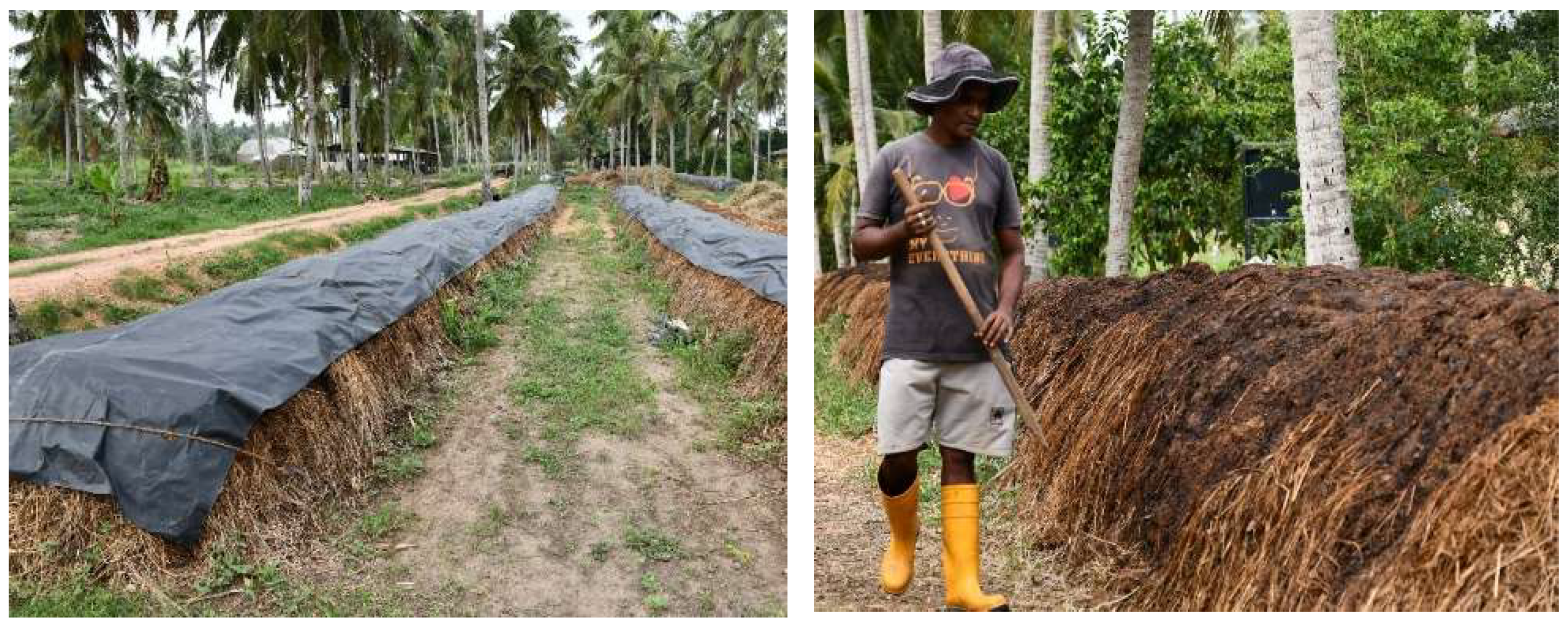
Figure 2.
Vermicompost production in coconut lands. (Source: Figures by authors).
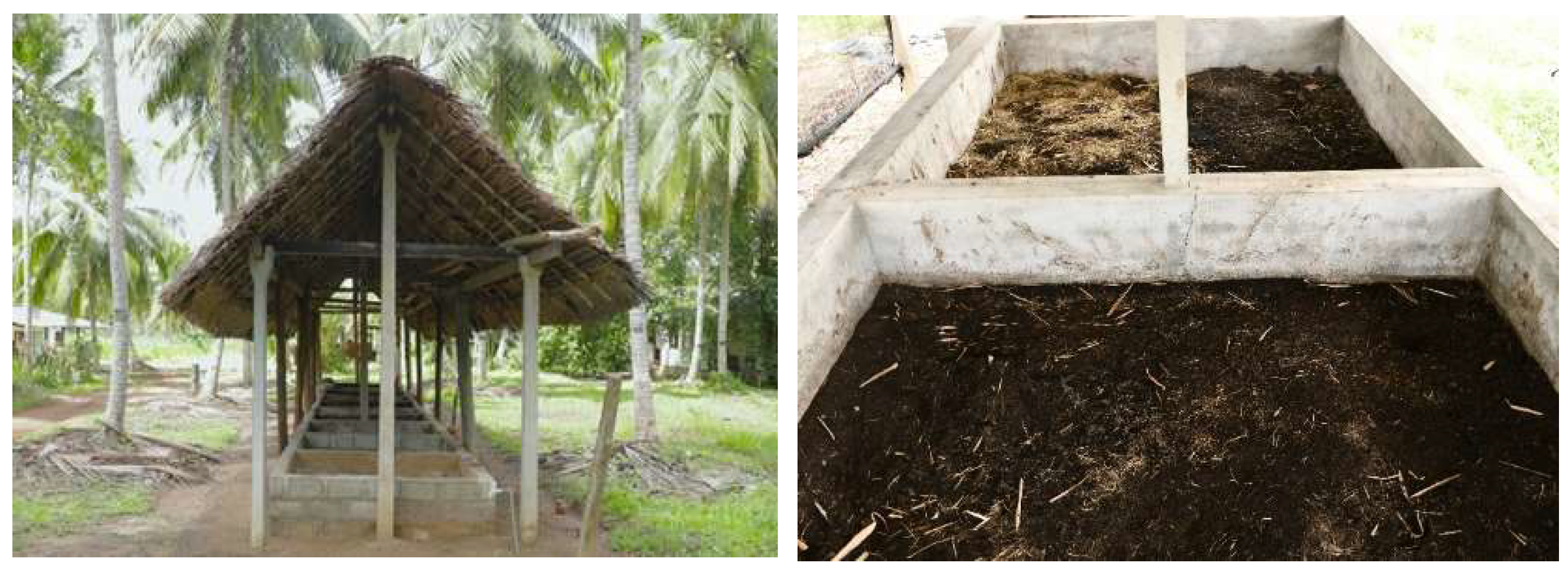
Figure 3.
Application of goat manure to coconut palms. (Source: Figures by authors).
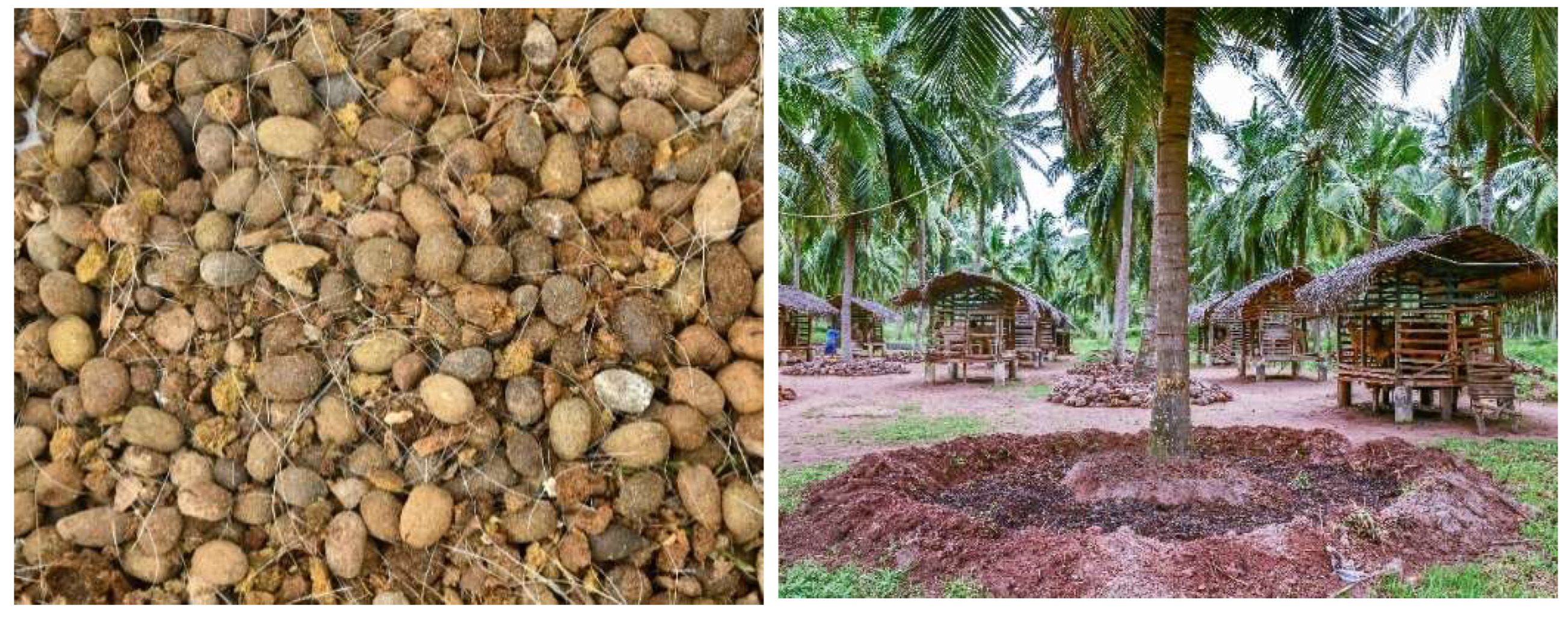
Figure 4.
Gliricidia green manure as an organic fertilizer. (Source: Figures by authors).
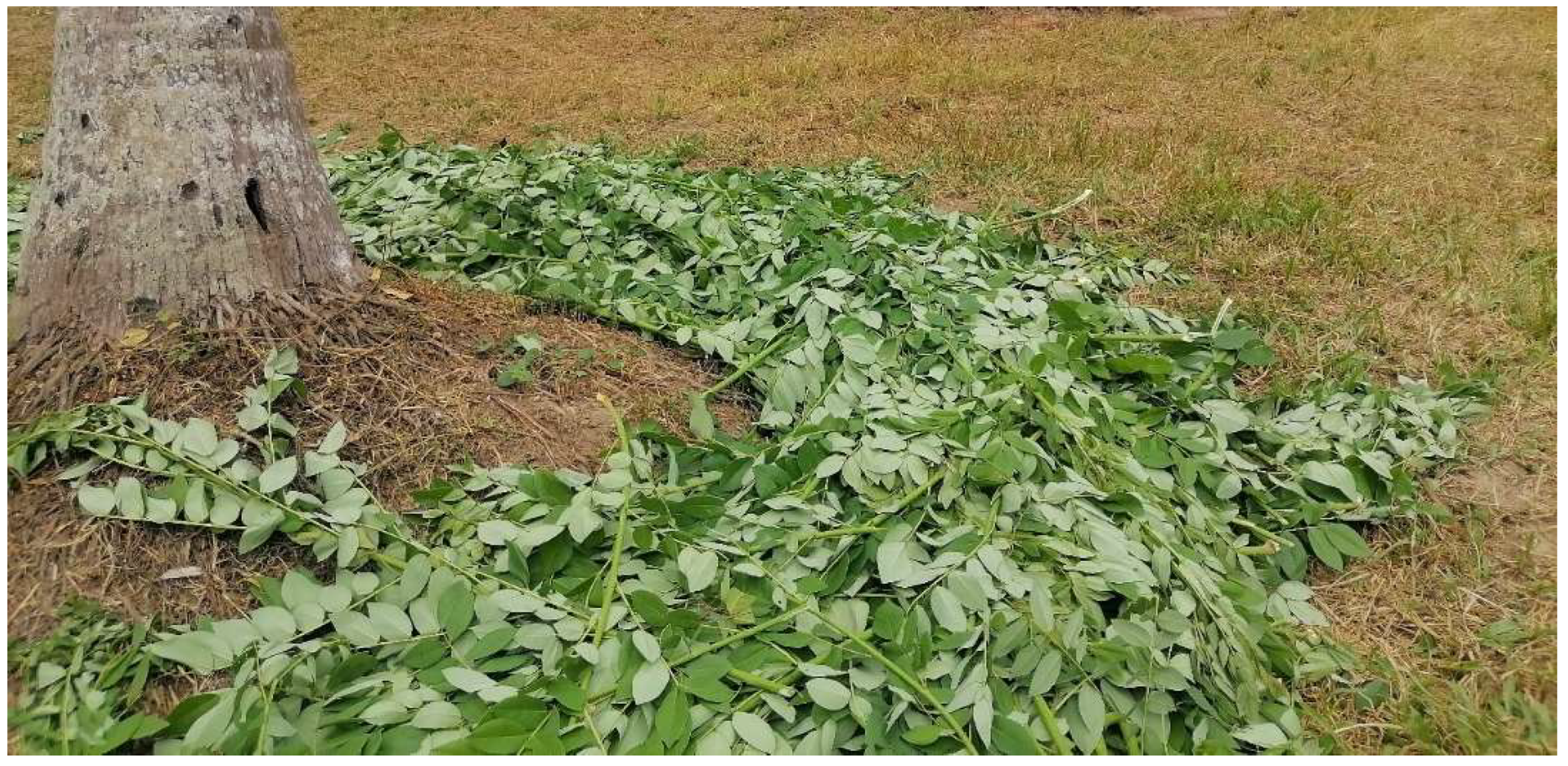
Figure 5.
Coconut petiole residue as an organic fertilizer. (Source: Figures by authors).
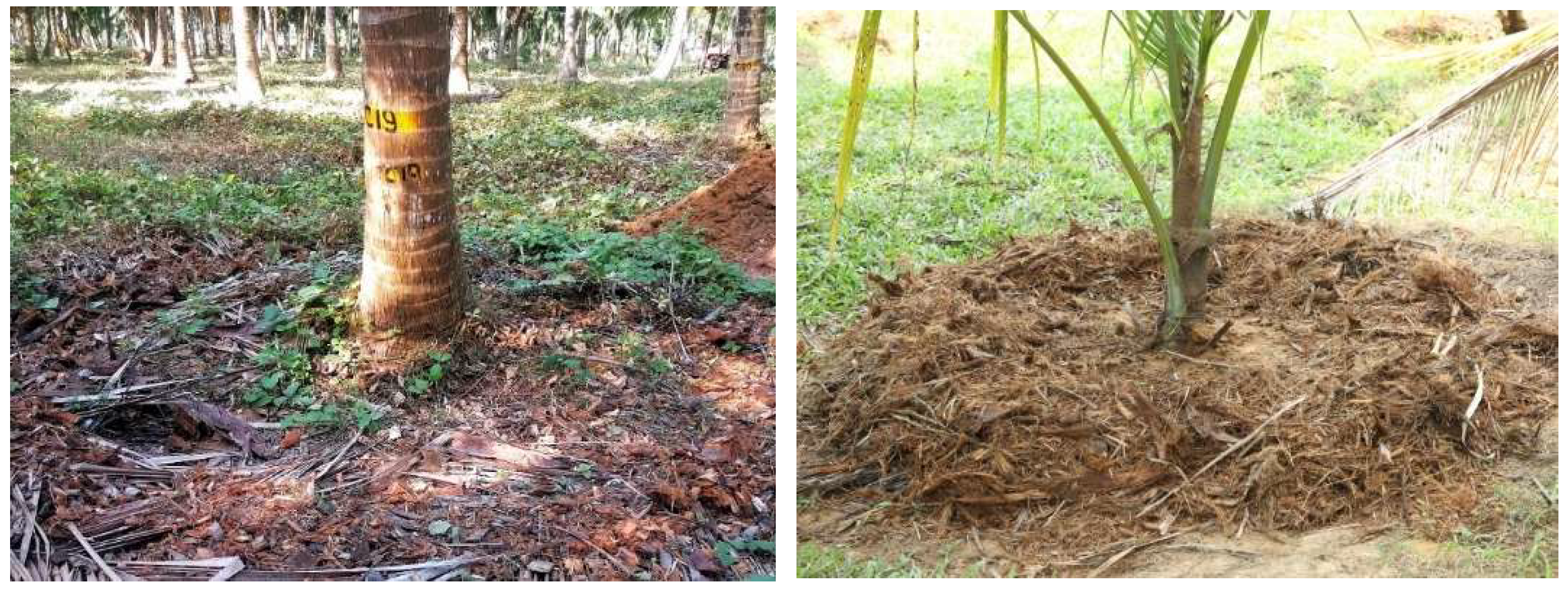
Figure 6.
Trichoderma enriched biofertilizer. (Source: Figures by authors).
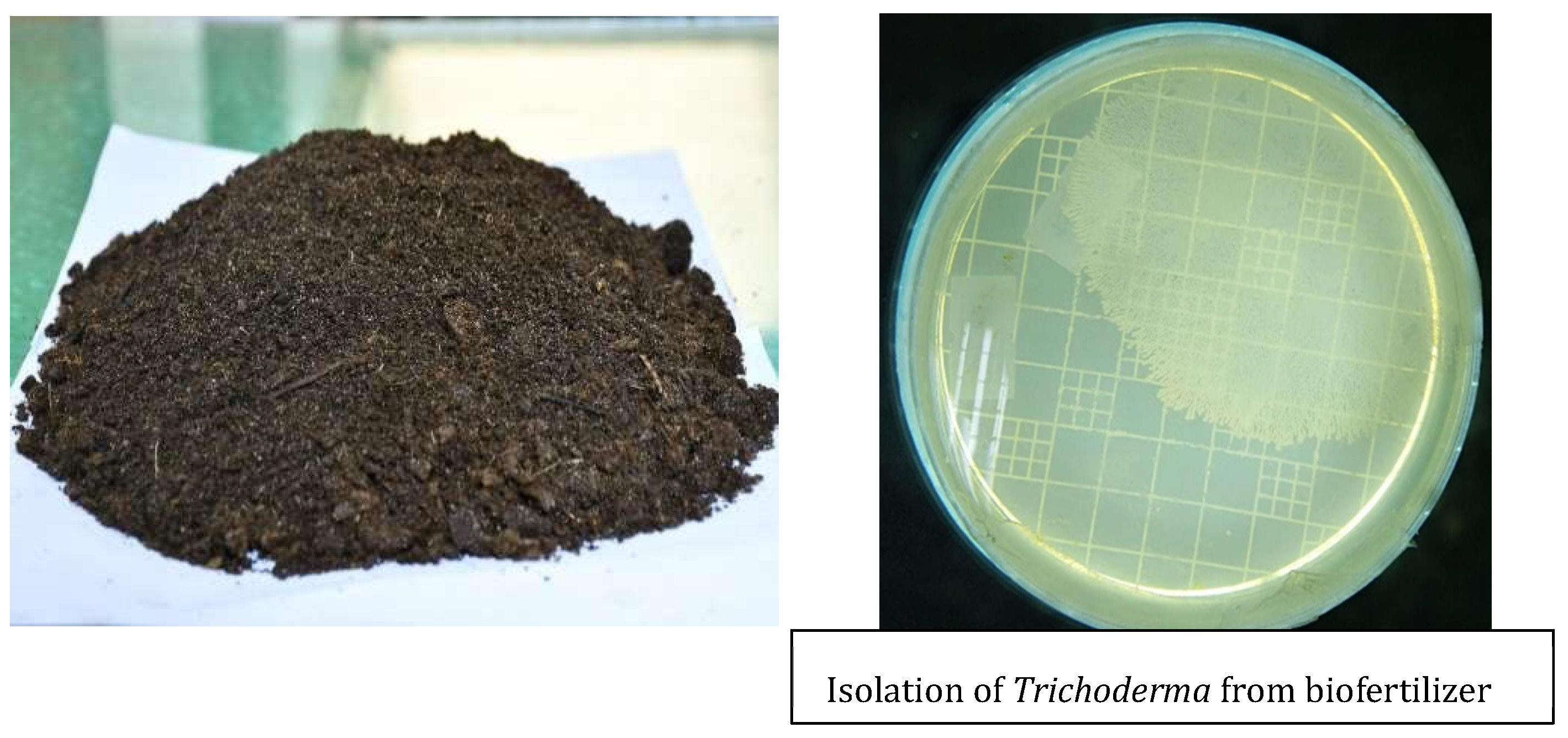
Figure 7.
Organic fertilizer application by (a) Trench method, (b) Surface method. (Source: Figures by authors).
Figure 7.
Organic fertilizer application by (a) Trench method, (b) Surface method. (Source: Figures by authors).
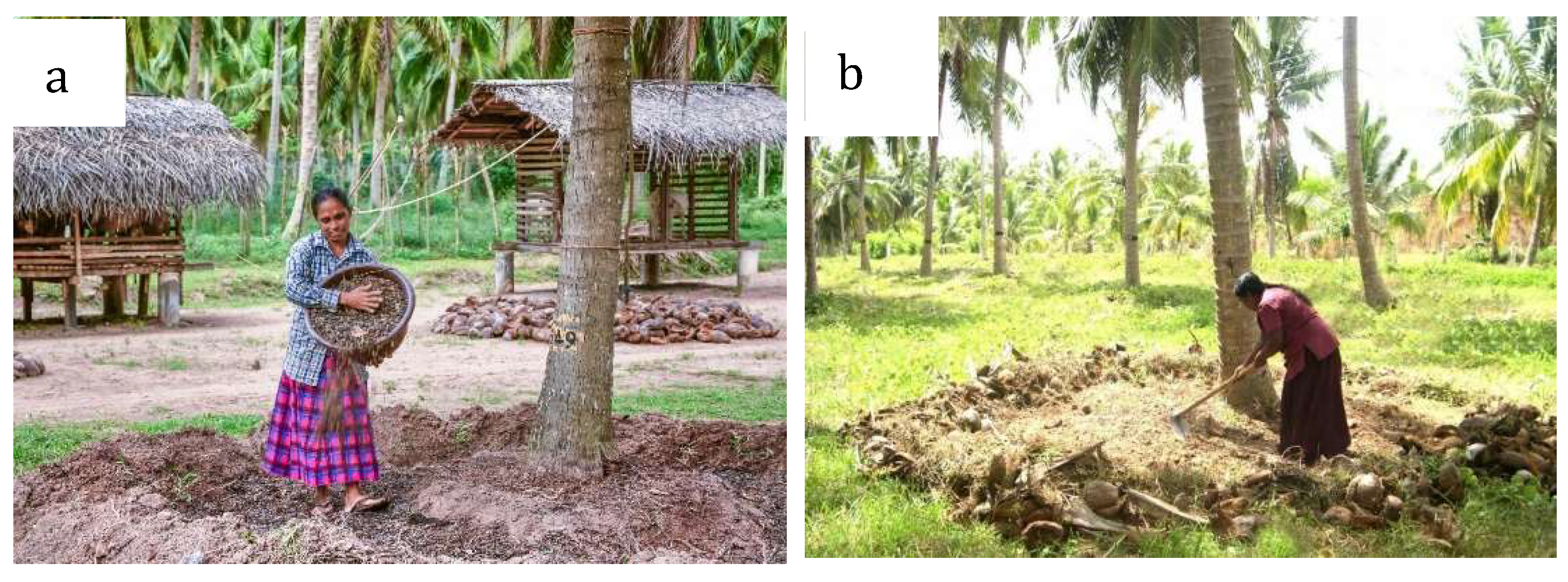

Table 1.
Macro and Micronutrient contents in major livestock manures. Adapted from [10].
Table 1.
Macro and Micronutrient contents in major livestock manures. Adapted from [10].
|
Macronutrient % |
Organic Source |
Nitrogen (N)% |
Phosphorus (P)% |
Potassium (K)% |
Magnesium (Mg)% |
Calcium (Ca)% |
| Goat manure | 2.2-3.4 | 0.3-0.7 | 1.5-2.5 | 0.4-0.8 | 1.5-2.4 | |
| Cattle manure | 1.2-1.9 | 0.2-0.5 | 0.5-1.1 | 0.5-0.6 | 1.3-1.8 | |
| Boiler litter | 2.0-2.3 | 0.6-1.0 | 1.7-2.0 | 0.5-0.6 | 1.0-4.9 | |
| Layer litter | 1.8-2.4 | 0.6-1.2 | 0.6-2.0 | 0.4-0.7 | 2.7-5.3 | |
| Pig dung | 1.0-2.0 | 0.6-0.9 | 0.4-0.9 | 0.4-0.6 | 1.0-1.5 | |
|
Micronutrient ppm (mg/kg) |
Organic Source |
Iron (Fe) |
Manganese (Mn) |
Copper (Cu) |
Zinc (Zn) |
Boron (B) |
| Goat manure | 1449-2174 | 246-505 | 20-38 | 112-184 | 29-66 | |
| Cattle manure | 690-1518 | 167-389 | 24-40 | 128-183 | 13-30 | |
| Boiler litter | 723-1565 | 213-421 | 27-40 | 166-271 | 15-27 | |
| Layer litter | 1144-2215 | 287-450 | 22-38 | 182-329 | 12-2 | |
| Pig dung | 1020-1990 | 180-207 | 45-48 | 186-575 | 34-13 |
Table 2.
Recommended organic fertilizers applications rates in different coconut age categories. Adapted from [10].
Table 2.
Recommended organic fertilizers applications rates in different coconut age categories. Adapted from [10].
| Source | Time after transplanting | ||||
|---|---|---|---|---|---|
| 6 months | 1 years | 2 years | 3 years | 4 years up to bearing (every year) | |
| Goat manure | 3kg | 7kg | 9kg | 11kg | 13kg |
| (Moisture 20 - 30 %) | |||||
| + | |||||
| Eppawala Rock Phosphate (in wet and intermediate zones) | 200g | 450g | 600g | 750g | 100g |
| or | |||||
| Triple Super Phosphate | 85g | 200g | 270g | 340g | 420g |
| (in dry zone) | |||||
| + | |||||
| Muriate of Potash | 50g | 120g | 150g | 190g | 225g |
| + | |||||
| Dolamite | 250g | 250g | 250g | 250g | 250g |
| Cattle manure | 5kg | 12kg | 16kg | 20kg | 25kg |
| (Moisture 20 - 30 %) | |||||
| + | |||||
| Eppawala Rock Phosphate (in wet and intermediate zones) | 200g | 450g | 600g | 750g | 1000g |
| or | |||||
| Triple Super Phosphate | 85g | 200g | 270g | 340g | 420g |
| (in dry zone) | |||||
| + | |||||
| Muriate of Potash | 30g | 200g | 250g | 325g | 400g |
| + | |||||
| Dolamite | 250g | 250g | 250g | 250g | 250g |
| Poultry manure (20 - 30 %) | 5kg | 12kg | 16kg | 20kg | 25kg |
| + | |||||
| Dolamite | 250g | 250g | 250g | 250g | 250g |
| Gliricidia leaves | 5kg | 12kg | 16kg | 20kg | 25kg |
| (Moisture 20 - 30 %) | |||||
| + | |||||
| Eppawala Rock Phosphate (in wet and intermediate zones) | 275g | 650g | 825g | 1100g | 1350g |
| or | |||||
| Triple Super Phosphate | 120g | 285g | 370g | 470g | 580g |
| (in dry zone) | |||||
| + | |||||
| Muriate of Potash | 60g | 150g | 200g | 250g | 250g |
| + | |||||
| Dolamite | 250g | 250g | 250g | 250g | 250g |
Disclaimer/Publisher’s Note: The statements, opinions and data contained in all publications are solely those of the individual author(s) and contributor(s) and not of MDPI and/or the editor(s). MDPI and/or the editor(s) disclaim responsibility for any injury to people or property resulting from any ideas, methods, instructions or products referred to in the content. |
© 2025 by the authors. Licensee MDPI, Basel, Switzerland. This article is an open access article distributed under the terms and conditions of the Creative Commons Attribution (CC BY) license (http://creativecommons.org/licenses/by/4.0/).
Copyright: This open access article is published under a Creative Commons CC BY 4.0 license, which permit the free download, distribution, and reuse, provided that the author and preprint are cited in any reuse.


