Preprint
Article

This version is not peer-reviewed.

From Grammont to a New 135° Short-Stem Design: Intraoperative 2-Hand-Lever-Test & Early Superior-Lateral Dislocations Reveal Critical Role of Liner Stability Ratio and Stem Alignment

A peer-reviewed article of this preprint also exists.

Submitted:

05 February 2025

Posted:

06 February 2025

You are already at the latest version

Abstract

Background: In reverse shoulder arthroplasty (RSA), the neck-shaft angle (NSA) has trended downward from 155° to 135° to reduce scapular notching, but concerns about instability persist. To assess superior-lateral stability, we developed the intra-operative 2-hand-lever-test (2HLT). This study evaluates the 2HLT's effectiveness, the learning curve with a new implant, and compares liner characteristics of 155° and 135° systems. Methods: In a single-surgeon learning curve study, 81 RSA procedures with the new Perform stem (Stryker) were included. Outcomes included the 2HLT test applied in 65 cases, early dislocations, stem alignment, stem length, liner type/thickness, and complications. The early dislocation rate was compared to 167 prior Ascend Flex RSA procedures (Stryker). Liner characteristics of three 135° systems (Perform/Stryker; Univers/Arthrex; Altivate/Enovis) were compared to traditional 155° Grammont systems (Delta Xtend/DePuy; Affinis Metal/Mathys; SMR 150/Lima, Aequalis Reversed/Stryker), focusing on jump height (JH) and liner stability ratio (LSR). Results: In 75% (49/65) of cases, the 2HLT detected superior-lateral instability, influencing implant selection. The early dislocation rate in the Perform cohort was 4.9% (0% with retentive liners, 8% with standard liners) versus 0% in the Ascend Flex cohort. The mean effective NSA was 133° (127°-144°) for short Perform stems and 135° (129°-143°) for long stems. Long Perform stems significantly reduced varus outlier density below 132° and 130° (p=0.006, p=0.002). The 36mm Perform 135° standard liner has a JH of 8.1mm and LSR of 152%, markedly lower than the Altivate (10.0mm/202%) and Univers (9.7mm/193%) and similar to traditional 155° Grammont liners (8.1-8.9mm/ 147%-152%). Perform retentive liners have LSR values of 185%-219%, comparable to established 135° design standard liners (195%-202%). In the Perform cohort, early complications included 4 superior-lateral dislocations (all standard liners, LSR 147%-152%) requiring 4 revisions. Conclusions: The 2HLT effectively identified superior-lateral instability and guided implant selection. Perform standard liners have a lower LSR and JH than established 135° designs, contributing to superior-lateral instability, particularly with an effective NSA < 135°. Retentive Perform liners with an LSR > 184% have a similar LSR compared to standard liners of established 135° designs and effectively mitigated instability. We recommend discontinuing the use of non-retentive Perform RSA liners (LSR <158%).

Keywords: 
;  ;  ;  ;  ;  ;  ;  ;  ;  

1. Introduction

In recent years, reverse shoulder arthroplasty (RSA) has undergone significant advancements in implant design [1]. There has been a transition from the traditional Grammont neck-shaft-angle (NSA) of 155° to 145°, now widely adopted in clinical practice. Further reduction to 135° offers potential benefits, including enhanced range of motion (ROM) and reduced scapular notching, as supported by early clinical reports and computer modeling studies [2,3,4,5,6,7,8]. However, these benefits are accompanied by concerns about implant stability, and there is a need for a critical evaluation of lower NSA [6]. Systematic reviews indicate that the traditional medialized Grammont design has a dislocation rate of 4%, compared to 1.3% in non-Grammont implants [9]. Despite these findings, several series of bony-increased-offset (BIO) RSA with NSAs of 155° or 145° report no events of dislocations requiring revision [10,11,12]. Initial studies suggested that lowering the NSA to 135° would not compromise anterior stability [13,14]. However, recent data from a BIO-RSA series utilizing a 135° NSA with a semi-inlay platform stem and eccentric glenosphere revealed a dislocation rate of 3.8%, raising concerns about stability associated with the low NSA [6]. These findings highlight the need to explore the mechanisms of instability associated with a lower NSA. Dislocation patterns may have shifted with the adoption of 135° NSA designs. While anterior and anterior-superior instability were predominant with a higher NSA, superior-lateral dislocations may now be more prevalent, particularly in cases of varus alignment.
Frankle proposed a classification system for RSA instability requiring revision, identifying factors such as loss of compression, containment, and impingement [15]. However, this framework does not address the influence of a lower NSA or varus alignment on dislocation direction, leaving a critical gap in understanding this etiology. Moroder et al. were the first to show the large variability in liner constraint across implant systems [16], however, to date, liner constraint has not been calssified according to implant design groups, and it may adversely affect RSA stability according to Frankle’s classification through insufficient containment in superior-lateral direction [15].
The introduction of the Stryker Perform humeral short stem, featuring a 135° NSA and reduced distal canal filling ratio, has highlighted these concerns as its susceptibility to varus alignment may be linked to superior-lateral dislocations (Figure 1 and 5). These challenges emphasize the importance of intra-operative testing to comprehensively assess RSA stability.
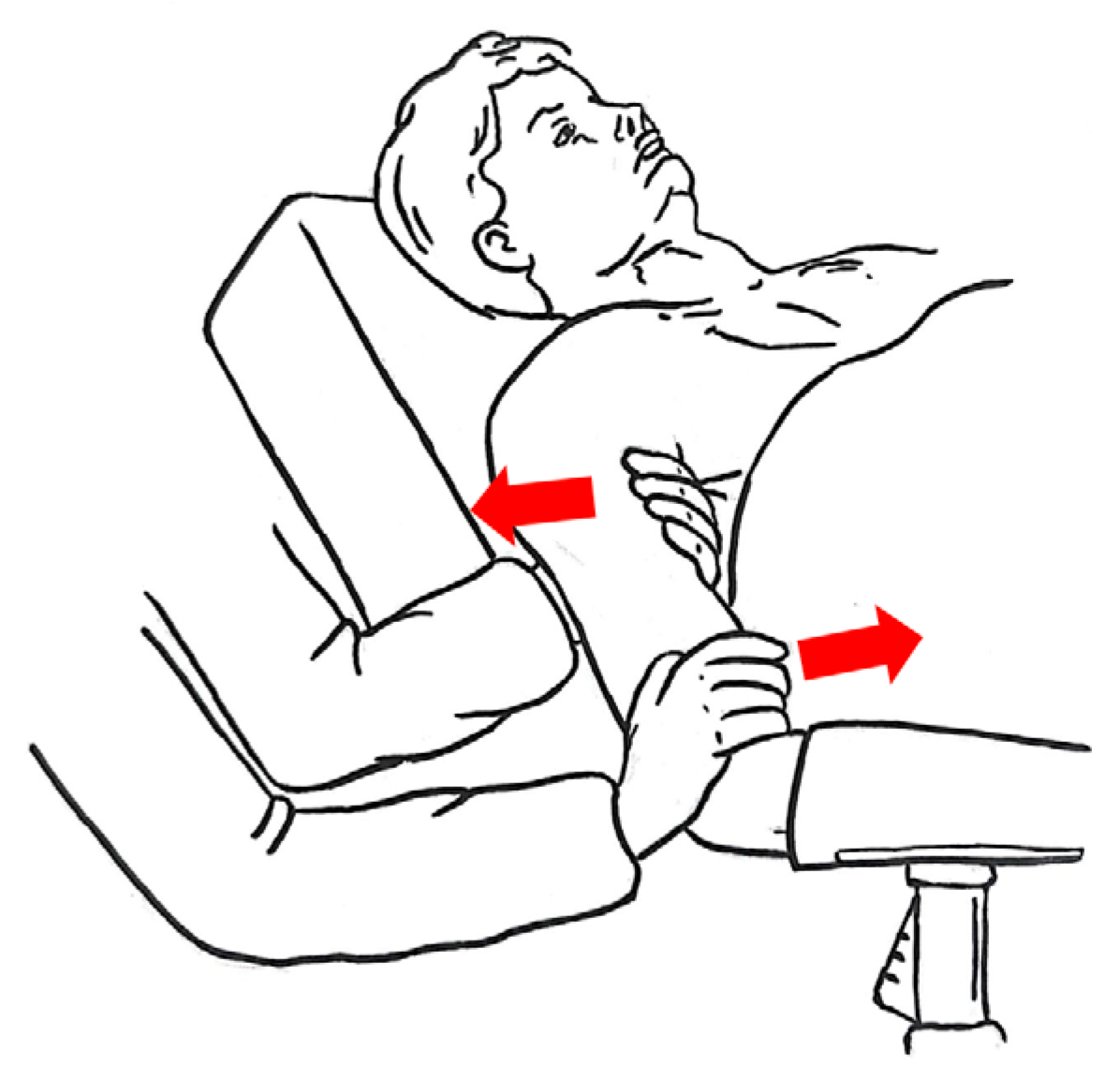
Currently, intra-operative methods for evaluating joint-reaction forces and detecting instability are limited [1]. Tests such as external rotation in neutral position, abduction/external rotation, and adduction/internal rotation are used to address anterior, posterior, and anterior-superior instability. However, they do not specifically target superior-lateral stability. Other described tests include the “shuck test” (pistoning), “bed shuffle test” (antero-superior instability), and “lateral thrust test” (lateral instability via a non-physiological intra-articular thrust test) [17]. To address this gap, we propose the 2-Hand-Lever Test (2HLT), a novel intra-operative method designed to detect superior-lateral instability in RSA with a 135° NSA. This test evaluates stability by simulating superior-lateral forces and by challenging the liner’s jump height through an indirect lever mechanism mimicking physiological upper arm impingement, such as during compression of the arm against the thorax in some flexion (Figure 2). The 2HLT provides a practical tool for surgeons to identify instability and optimize liner thickness and constraint selection intra-operatively.
This study aims to evaluate the effectiveness of the 2HLT in identifying superior-lateral instability, thus guiding liner type and thickness selection. Secondary objectives include analyzing early radiographic stem alignment to assess the learning curve for the 135° short stem, and comparing liner constraint characteristics between common 155° and 135° systems.

2. Materials and Methods

In this learning curve study on consecutive patients, a total of 81 RSA procedures in 55 females and 26 males (mean age: 74, 54-89, demographics are shown in Table 1) were carried out by the senior author (SB) a shoulder arthroplasty surgeon with 10 years of surgical experience. The new Perform humeral stem (Stryker, Kalamazoo, USA) was combined with either a lateralized Perform baseplate (Stryker, Kalamazoo, USA) as a MIO-RSA (metal-increased offset) or with a Reversed II baseplate (Stryker, Kalamazoo, USA) as a BIO-RSA (bony-increased offset) procedure with a baseplate lateralization of 5-12mm. As a comparative series, 168 consecutive preceding RSA in 118 females and 49 males (mean age: 75, 57-91, Table 1), treated with an Ascend Flex stem (Stryker, Kalamazoo, USA) combined with either a lateralized Perform baseplate as a MIO-RSA or with a Reversed II baseplate as a BIO-RSA were analyzed for the effective NSA and early instability within 90 days after surgery. These operations were all carried out by the same surgeon (SB). All cases were planned with 3-D planning software (Blueprint 4.0.1, Imascap, Brest, France), targeting an anatomic humeral lateralization of +0 to +2mm as recommended in previous studies [18]. For the Perform stem, an intra-medullary alignment rod-guide assembly was used in all cases aiming for a 135° humeral osteotomy in 20°-30° of retrotorsion. The Ascend Flex short stem was implanted in semi-inlay technique with a 145° NSA (stem B, inlay B) without repair of the subscapularis tendon in 136 of 167 cases (81%). A subscapularis repair was performed in 31 cases (19%) [19].
2.1. 2-Hand Lever Test
As an adverse event, the 9th Perform case dislocated 5 weeks after surgery, which was initially managed with a closed reduction. However, a second dislocation within 72 hours, required open revision surgery. The implants used were a short size 2+ stem with a recommended osteotomy height of +0 to +4mm above the anatomical neck of the humerus, a symmetric insert of +3mm height as generally recommended as an optimized insert for the Perform stem to achieve balance and a 39+3mm eccentric glenosphere on a 25+2+6mm lateralized base plate as shown in Figure 5D. Postoperative stem alignment of 6° varus was measured as seen in Figure 5D and F. During revision surgery, the subscapularis tendon repair was found to be intact and there was no anterior instability in external rotation (ER). After reduction of the humeral component of the RSA, the arm was removed from the armholder and held by the assistant. The prosthesis was detected to be unstable in superior-lateral direction by placing 4 fingers of the flat hand of the surgeon medial to the proximal humerus close to the axilla applying a lateral force, while the second hand applied a medially directed force on the distal humerus (supplementary video file). We have named this 2 handed, intra-operative test without intra-articular manipulation the 2-Hand-Lever-Test (2HLT, Figure 2), described as a novel test to detect superior-lateral instability or “disengagement” of an RSA with a 135° NSA or even lower effective NSA in case of unnoticed varus alignment of the stem leading to a verticalized joint line (Figure 1, 125° in red). The 2-HLT simulates an indirect lever-mechanism patients may encounter during adduction of the flexed arm against the thorax. This intra-operative test was performed by both the surgeon (SB) and the shoulder fellow in all subsequent Perform stem cases. Both observers performed the test twice. If the RSA was not dislocating laterally after 2 testing maneuvers by both examiners, the 2HLT was recorded to be negative. It was recorded positive after occurrence of a superior-lateral dislocation with a +0mm standard liner. Testing for the observer was discontinued with each specific liner thickness after occurrence of a superior-lateral dislocation with the 2HLT. Under complete muscle relaxation, the first liner tested was always a +0mm standard liner prior to testing with a +3mm standard liner.
A consecutive series of 65 Perform stem RSA were examined by the senior surgeon (SB) and shoulder fellow using the 2HLT. The consensus results of the 2HLT were recorded as well as the final implant choice in terms of insert thickness (+0, +3, +6, +/- additional spacer), liner angle (symmetric or +10° angle) and whether a retentive or standard liner was used.

2.2. Stem Alignment and Relationship to Stem Length

Standard true ap radiographs of the proximal humerus were obtained post-operatively during admission, at 6 weeks and 90 days. The stem alignment was measured by the surgeon (SB) and the fellow. Stem alignment and effective NSA were recorded as follows. If the measurements differed by less than 3°, their mean was recorded. For discrepancies greater than 3°, the senior investigator (SB) performed a second measurement and the median of three measurements was recorded to eliminate potential outliers.
The density distribution of effective neck-shaft angles (NSA) was analyzed for both short and long Perform stems.

2.3. Review of Liner Stability

Having identified a new direction of superior-lateral instability with the 2HLT in association with the 135° Perform short stem design (Stryker, Kalamazoo, USA), we aimed to review the RSA liner stability ratios across a variety of implant systems. These included traditional Grammont RSA systems such as the Delta-Xtend (Depuy, Warsaw, USA), Aequalis Reversed II (Stryker/Tornier, Montbonnot, France), Affinis Metal 147° (Mathys, Bettlach, Switzerland), and SMR (Sistema Modulare Randelli) 150° (Lima, San Daniele, Italy). Additionally, we analyzed established 135° systems that have been in clinical use for more than five years, including the Altivate (Enovis, Austin, USA) and Univers system (Arthrex, Naples, USA).
The liners of the new Perform stem design were also compared alongside three generations of Stryker/Tornier RSA implants spanning over 30 years of development: the 155° Aequalis Reversed design from the 1990s, the Aequalis Ascend Flex 145° design launched in 2014, and the Perform 135° design introduced in 2021.
The liner jump height (JH), which is identical to liner depth (d), as illustrated in Figure 1 and Table 2 and Table 3, was used to calculate the liner stability ratio (LSR) and angle of coverage (AOC) using the formulae which were first published and applied to RSA by Moroder et al. [LSR = (square root (1-(r-d/r)2)) / (r-d/r); Angle of Coverage = 2arccos(1−d/r)×180/π] [16].
The Altivate system, introduced by Frankle in the early 2000s, served as the most established reference for the 135° design. This implant is predominantly used with 32mm and 36mm glenosphere sizes. To ensure a meaningful comparison, we graphically analyzed similar-sized Stryker/Tornier implant generations, and 135° designs as well as traditional Grammont 155° systems.

2.4. Statistics

Descriptive statistics were used for the data analysis of clinical and radiographic data.
A chi-square test of independence was performed to compare the prevalence of varus outliers (effective NSA < 132° and < 130°) between long and short Perform stems. This test was selected due to its suitability for categorical data, assessing whether the observed distribution deviates from expected proportions. The observed frequencies of varus outliers in each group were determined using effective NSA thresholds, ensuring a robust comparison of stem performance. The chi-square test was deemed appropriate as it evaluates the independence between categorical variables and is suited for comparing frequency distributions across independent groups. Statistical significance was determined using a p-value threshold of p < 0.05.

3. Results

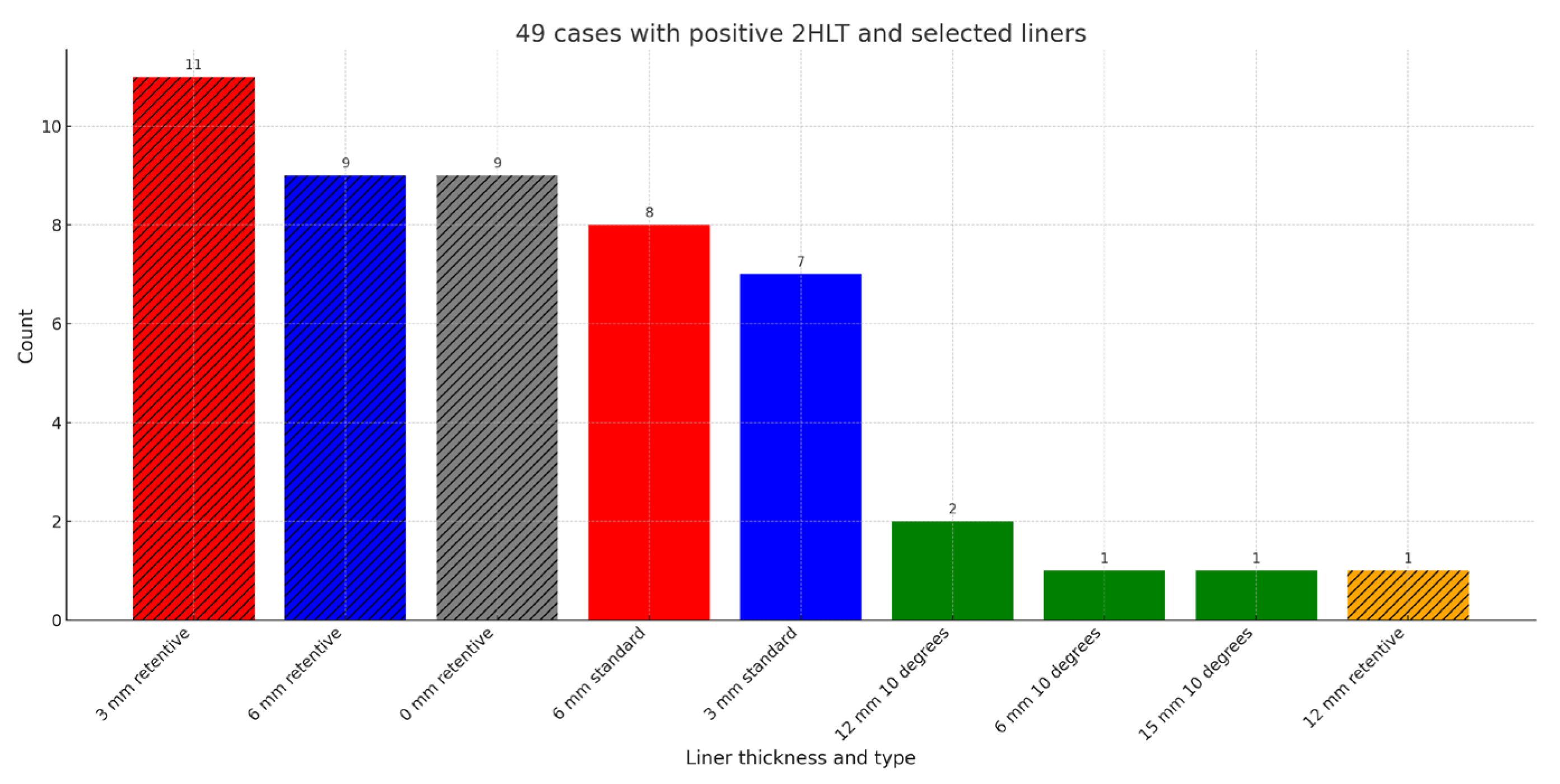
In 65 RSA cases with the new Perform stem combined with glenoid lateralization, the 2HLT was positive in 49 cases (75%), defined as a positive test with a +0mm standard liner. The 2HLT influenced implant selection in these cases. Testing with the 2HLT commenced after the detection of superior-lateral instability in the 9th case of the series, following the implantation of 16 cases. Figure 3 illustrates the liner types used after a positive 2HLT. The most frequently used liners were retentive liners (30 out of 49 cases, 61%).
Prior to the commencement of 2HLT testing, a retentive liner was used in 1/16 cases (6%), which increased to 30/65 cases (46%). A long stem was used in the first cohort in 2/16 cases (13%), which increased to 47/65 cases (72%) in consecutive patients.
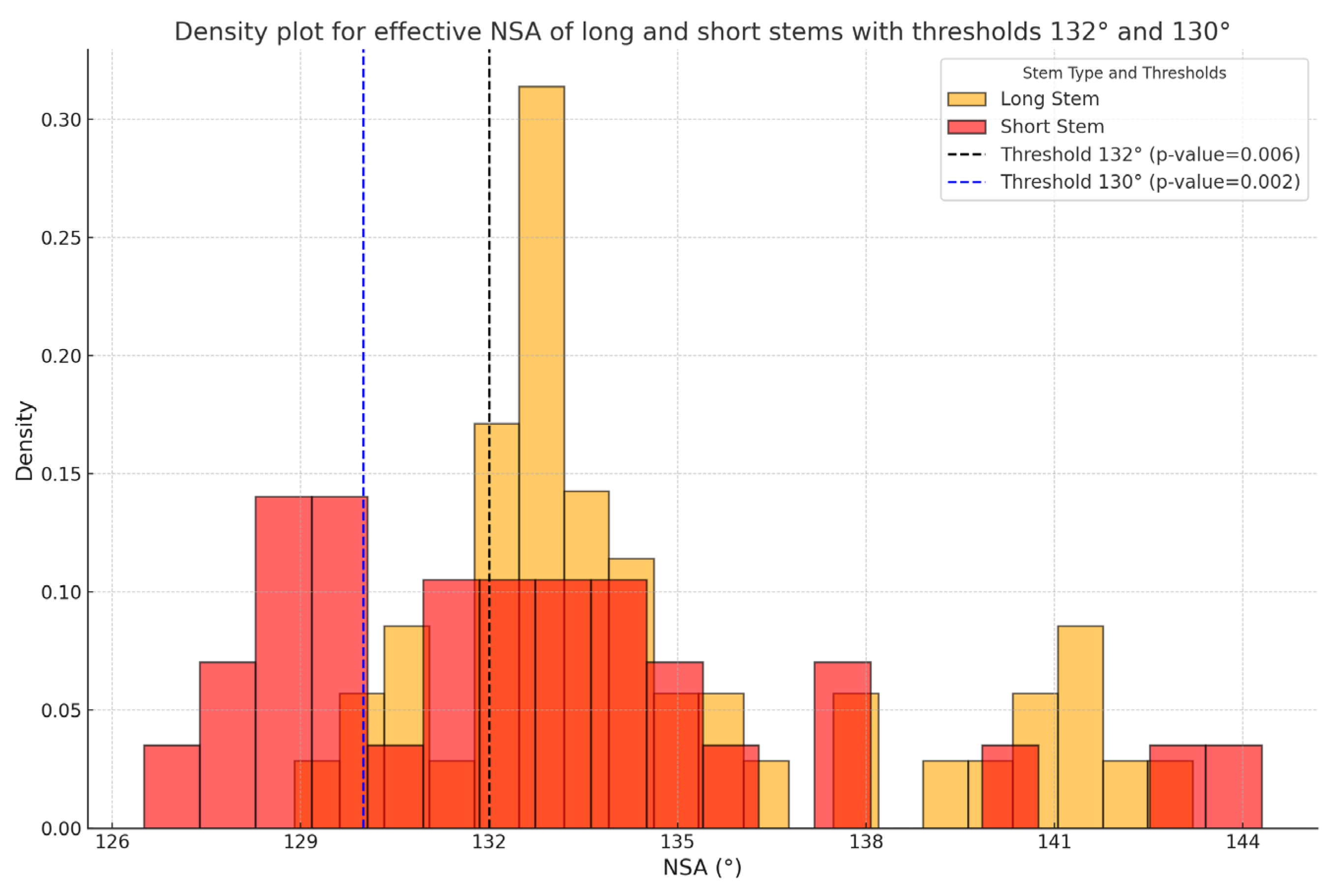
Of 35 short Perform stems, 10 (29%) had varus outliers below 130°, and an additional 5 (14%) had varus outliers below 132°, making a total of 15 (43%) below 132°.
Of 49 long Perform stems, 2 (4%) had varus outliers below 130 degrees, and an additional 5 (10%) had varus outliers below 132 degrees, making a total of 7 (14%) below 132 degrees. The mean effective NSA was 133° (127°–144°) for short stems and 135° (129°–143°) for long stems. Long stems showed significantly reduced varus outlier density below the thresholds of 132° (14%, 7/47 vs 43%, 15/35) and 130° (4%, 2/35 vs 29%, 10/35) with p = 0.006 and p = 0.002, respectively, as shown in Figure 4. The Ascend Flex short stems had a mean effective NSA of 154° (139°-160°) with 92% of stems showing valgus alignment.

3.1. Early Superior-Lateral Instability and Complications

Major early complications in the Perform cohort (minimum follow-up of 90 days) included four superior-lateral dislocations in three patients (Table 4).
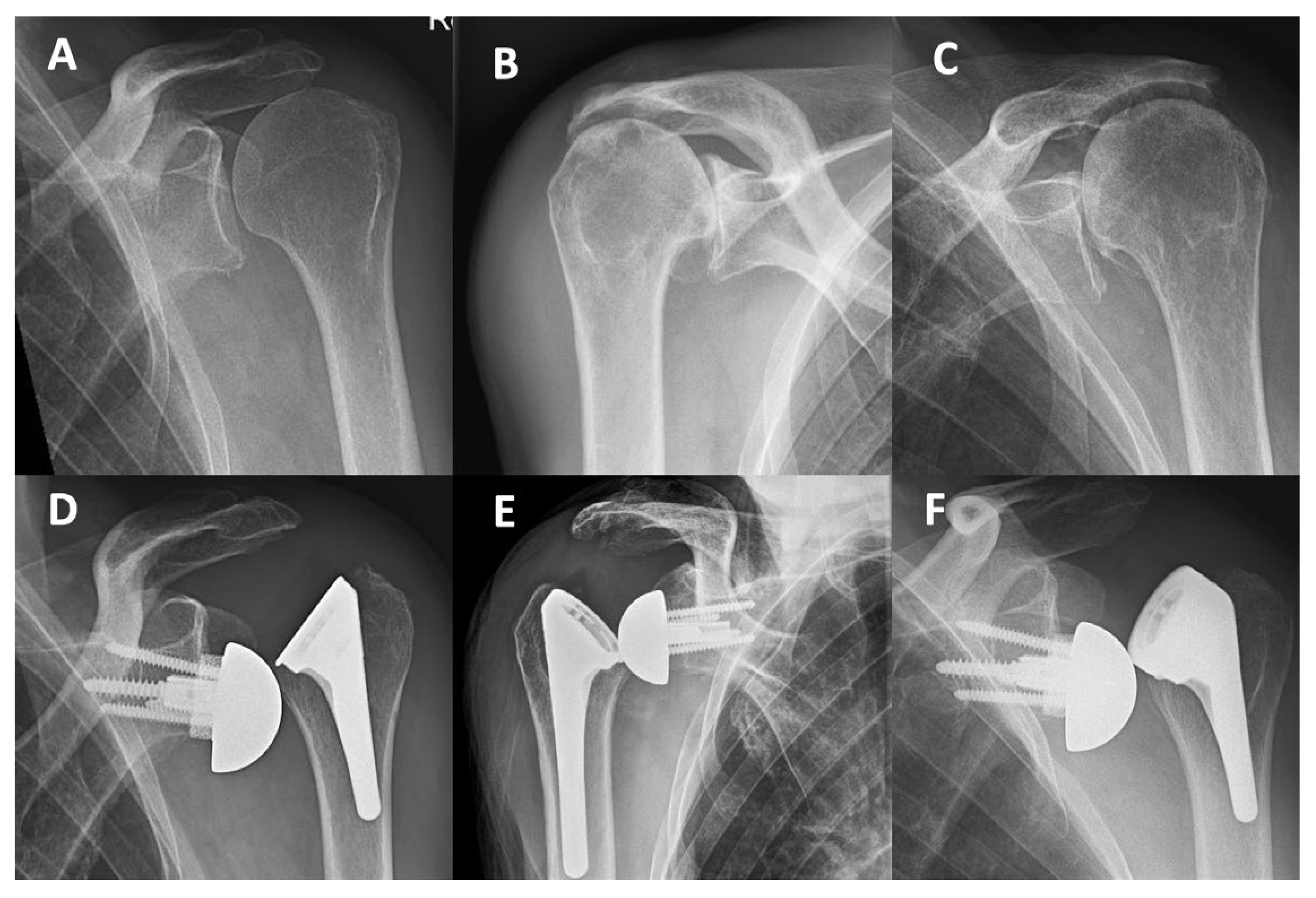
Indication for RSA was CTA in two of these patients, and one had a massive cuff tear (Figure 5). In one of the four cases, the subscapularis had been repaired, was still intact at revision and did not prevent superior-lateral instability. This first dislocation (case 1, Table 4) was revised to a +9mm spacer with a +3mm standard 10° 39mm insert (LSR 147%), and dislocated again requiring a second revision (case 2, Table 4). Varus alignment of 6° (effective NSA 129°) was considered to contribute to the superior-lateral instability (Figure 5 D and F) and corrected (stem revision of case 2) and combined with +6mm 10° standard liner +9mm spacer (+15mm in total). The glenosphere was changed from a 39mm eccentric to a centered 42mm implant. In summary, superior-lateral instability occurred in 8% of cases with a standard non-retentive liner (4/50), LSR < 158%). Three liner-change revisions and a major revision involving both a liner change and stem exchange to correct the varus alignment (129°) were necessary to achieve stability. Additionally, two cases of temporary axillary nerve paresis (3.1%) were reported. Notably, no cases of early instability were observed in the Perform cohort when a retentive liner (LSR > 184%) was implanted, nor in the Ascend Flex cohort. In the Ascend Flex cohort, four patients sustained a scapular spine fracture and three were treated with open reduction and internal fixation as previously published [20,21].

3.2. Review of 155° Grammont and 135° Design Liners

The liner characteristics of three 135° systems—Perform (Stryker), Univers (Arthrex), and Altivate (Enovis)—were compared with those of traditional 155° Grammont systems, including Delta Xtend (DePuy), Aequalis Reversed (Stryker / Wright / Tornier), Affinis Metal 147 (Mathys), and SMR 150 (Lima). The analysis focused on two key biomechanical parameters: jump height (JH), a measure of resistance to dislocation, and liner stability ratio (LSR), which quantifies the mechanical retention capabilities of the liner [16].
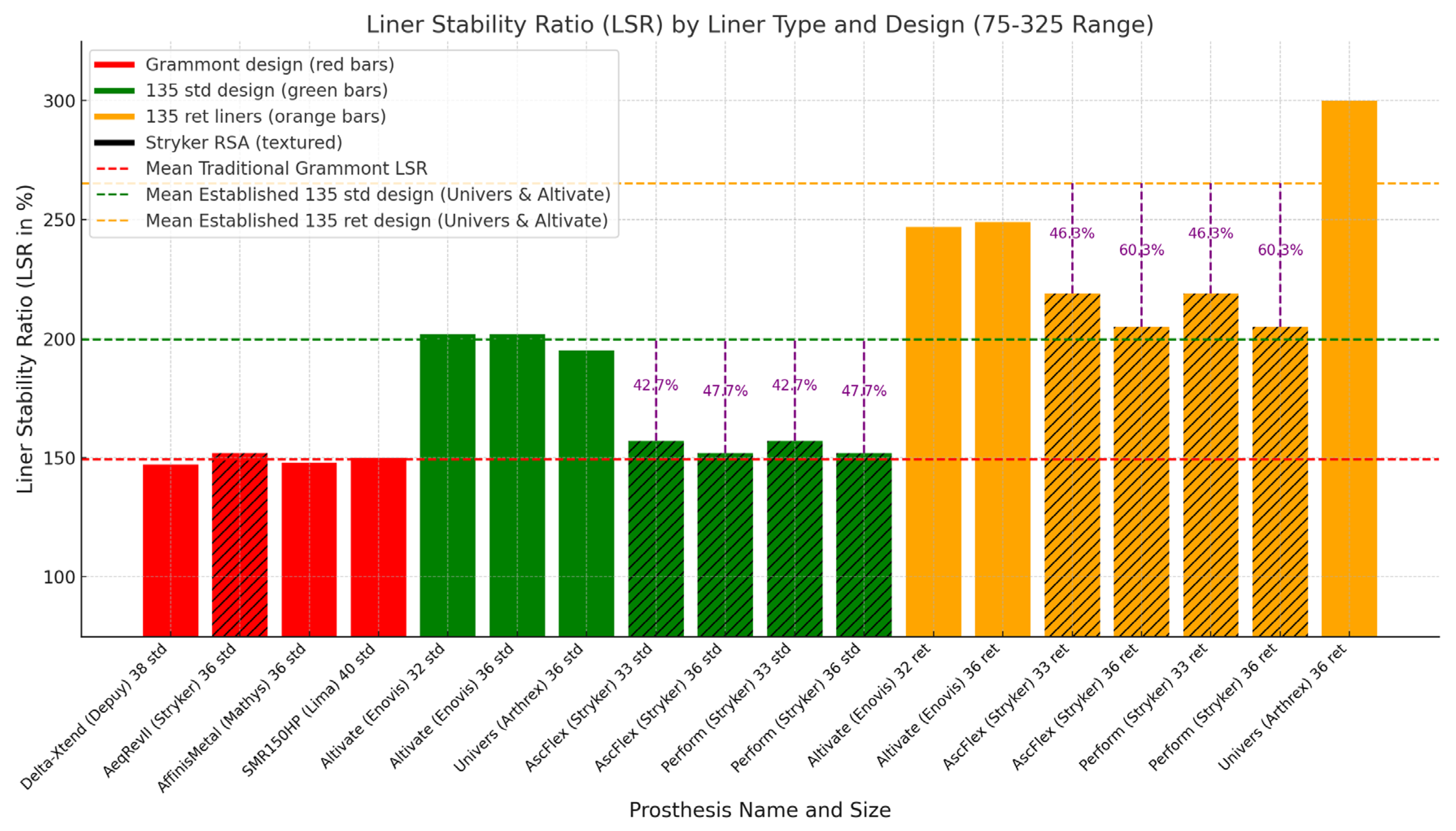
Figures 6 along with Table 2 and Table 3, illustrate the differences in JH and LSR across these systems. Standard liners of established 135° designs demonstrated superior JH and increased LSR compared to both the new Perform 135° design standard liners and the 155° Grammont systems. Notably, the LSR of the new Perform 135° design standard liners (36 mm glenosphere) matched that of the 145° Ascend Flex and the 155° Aequalis Reversed Grammont systems (all Stryker / Wright / Tornier), indicating that no significant changes were made to liner characteristics across three generations of implants, transitioning from the 155° Grammont design to a lateralizing short-stem 145° platform design and, subsequently, to the 135° Perform inlay design.
When comparing the new Perform 135° design standard liners with the standard liners of established 135° designs (Altivate and Univers), a notable performance gap was observed. The mean JH gap was 1.7 mm (range: 1.47–1.92 mm), while the mean LSR gap was 46% (range: 43%–48%). The mismatch of the Perform standard liner LSR with the 135° Perform design is illustrated in Figure 6. These findings underscore measurable differences in the biomechanical properties of the new 135° Perform design relative to established 135° systems. Perform retentive liners, however, demonstrated LSR values ranging from 185% to 219%, comparable to those of established 135° design standard liners (195%–202%), effectively mitigating the observed JH and LSR gaps and mismatch of Perform standard liners.

4. Discussion

The key findings of this learning curve study, combined with an in-depth review and new classification of RSA liners, indicate that the clinically investigated new 135° design is prone to a previously undescribed type of RSA instability termed “superior-lateral instability”. This phenomenon was identified and assessed using a novel intraoperative test, the two-hand-lever test (2HLT). The 2HLT proved to be a valuable intraoperative tool, yielding positive results in 75% of consecutive cases where it was applied. Its implementation followed the first observed occurrence of superior-lateral dislocation and significantly influenced implant selection. Specifically, retentive liners (LSR 185%-219%) were utilized in 61% (31/49) of cases with a positive 2HLT result. Early superior-lateral dislocations requiring revision surgery were observed in 8% of cases in the Perform cohort with standard liners (LSR < 158%), whereas no early instability events were reported in the 167 Ascend Flex control cohort. Notably, no instances of instability occurred when Perform retentive liners (LSR 185%-219%) were employed.
Perform standard liners, with an LSR < 158%, exhibit a measurable gap in both jump height (JH) and LSR compared to established 135° designs that have been in clinical use for over 10 years, such as the Altivate and Univers systems. The standard liners of the 135° Perform design demonstrated an equivalent LSR range (144%-157%) to traditional 155° Grammont systems (133%-175%) as illustrated in Figure 6. This is the first study to classify and differentiate LSR and JH by design groups (155° Grammont design vs. established 135° designs). The findings highlight the critical role of LSR and JH in mitigating superior-lateral instability in 135° designs. Furthermore, they underscore the protective effect of retentive liners (LSR 185%-219%) in the 135° Perform design, achieving biomechanical equivalence with established 135° design systems (LSR 195%-202%).
Varus alignment outliers were not infrequently associated with short Perform stems (29% < 130°, and 14% <132°) after intramedullary-guided osteotomies. One patient required a stem revision for varus malalignment with instability.
There is a paucity of literature describing intraoperative stability testing and the evaluation of joint reaction forces during RSA trialling. Javed et al. proposed multiple intraoperative tests, including external rotation in neutral arm position (hinged opening), abduction and external rotation (anterior dislocation), adduction and internal rotation (posterior dislocation), conjoint tendon tension (evaluating excessive or insufficient tension), the “shuck test” (excessive pistoning), “bed shuffle test” (anterior-superior dislocation), and “lateral thrust test” (lateral dislocation) [17]. The “lateral thrust test” applies a laterally directed force with a finger or hook directly on the humeral calcar. While it may be sensitive for detecting dislocations in lateral direction, its intra-articular force transmission on the humeral calcar may limit its clinical relevance. In contrast, the 2HLT applies a lateral force to the flexed proximal humerus, simulating physiological conditions during forced adduction against the thorax. This challenges the RSA liners’ JH and compressive joint reaction forces, both of which are crucial biomechanical variables for RSA stability [22]. In our cohort, 75% of cases (49/65) had a positive 2HLT, and 63% (31/49) were subsequently treated with a retentive liner (LSR 185%-219%).
There have been studies investigating compressive forces in different arm positions with trial sensors integrated in RSA trial liners, but to date no values of load in different arm positions have been defined for different RSA designs and trial insert sensors are currently not available for clinical practice [23,24].
Instability is among the most commonly reported complications following RSA [25,26,27,28] with a pooled dislocation rate of 4% [28]. Early RSA dislocations within 90 days of implantation are uncommon, occuring in 2.9% of RSA without baseplate lateralization [29]. However, in the presented cohort, the early dislocation rate of 8% in cases with standard liners (LSR < 158%) and the prevalence of superior-lateral instability in 75% of cases (positive 2HLT) with a standard liner are concerning.
Patient factors associated with an increased RSA dislocation risk are male gender, BMI > 30 kg/m2, subscapularis deficiency, soft-tissue pathologies (e.g., Ehler-Danlos), Parkinson’s disease, severe proximal humerus fractures, and previous surgery [25,29,30,31,32,33,34,35]. Apart from male gender and subscapularis deficiency in 75% of the dislocations of the presented cohort, no other factors were recorded for these adverse dislocation events.
Biomechanical factors were analyzed in a benchmark study including compressive glenohumeral joint reaction force, jump height (socket depth) and glenosphere size. The study examined the hierarchy of mechanical stability factors, which was led by compressive forces followed by jump height of the liner. Glenosphere size played a much lesser role [22].
There are several series of bony-increased-offset RSA with an NSA > 135° using the Aequalis Reversed and Ascend Flex design (both Stryker) without any reported dislocations [10,11,12]. This can be explained by the increased baseplate offset [10,11,12] as well as lateralizing curved onlay stem design both increasing the compressive joint reaction forces [12]. These results are in keeping with the results of our increased offset Ascend Flex cohort which did not show any early dislocations within 90 days. The Ascend Flex implant with increased baseplate offset has been known to be associated with increased compressive joint reaction forces often requiring reduction with a “shoehorn” prosthesis reducer in clinical practice and has been associated with a higher rate of scapular spine fractures. The design combination has been classified by Werthel et al. as one of the most lateralizing implant configurations [36]. Lowering the NSA to 135° with the same Ascend Flex configuration has been reported with a dislocation rate of 3.8% which raises concerns about instability associated with a 135° NSA [6].
Investigating the Perform design evolution by evaluating previous implant generations of the same company (Stryker, Wright and Tornier), we found that RSA liner characteristics have been kept almost identical over more than 20 years, from Grammont to a new 135° short-stem design. The Aequalis Reversed shoulder prosthesis received FDA (Food and drug administration, USA) clearance in 2005 and is one of the first classic 155° Grammont design prostheses alongside the Delta-Xtend (Depuy) with a medialized centre of rotation (COR). The COR was subsequently lateralized as a bony-increased-offset RSA [10]. The Ascend Flex was FDA approved in 2014 and is characterized as one of the most lateralized RSA implant configurations when combined with a metal- or bony-increased offset of the baseplate [36]. The Perform humeral stem was launched in the USA in 2021 and in Europe in 2022. Taking the Ascend Flex design with combined lateralization into account, the implant design of the Perform has undergone a metarmophosis. The curved onlay Ascend Flex short stem was mainly a 145° design with the option to decrease the NSA to 135°. Undersizing this stem to prevent stress shielding has been shown to be associated with valgus alignment [37]. Our data confirms a tendency toward valgus alignment in the Ascend Flex. Introducing the Perform stem, the design was transformed to a 135° short-stem inlay design with the option to increase the NSA to 145° with a 10° liner. This new Perform inlay short-stem was designed to reduce humeral lengthening, distalization and to subsequently decrease tension whilst simultaneously launching a new 135° design with desired benefits for impingement-free ROM. The standard liner JH and LSR are either identical (36mm) or decreased (42mm) compared to the early 155° Aequalis Reversed Grammont design, identical to the Aequalis Ascend Flex 145° design (Table 2,3; Figure 6) and not adapted to match the LSR of established 135° designs which are reported to have 5-year dislocation rates of 0% and 4% [38,39]. Our study indicates a tendency toward varus alignment in the short Perform stem.
In summary, the new Perform short stem design was designed to decrease distalization and stem-related lateralization reducing compression across the joint without adapting the JH and LSR which were kept at the level of traditional Grammont designs. The biomechanical implant variables, compression and JH are crucial for RSA stability [22]. As an additional factor, Perform 135° short-stems are susceptible to varus outliers below 132° and 130° as shown in our study in contrast to the Ascend Flex stem. Varus outliers may verticalize the joint line further increasing the risk of superior-lateral instability (Figure 1). The new Perform stem has not been monitored in the Australian and Scandinavian joint registries as yet. All the dislocations had a positive 2HLT. This was adressed intraoperatively by using a thicker liner to increase stability, but not a retentive liner. Based on the early dislocation rate, intraoperative findings of superior-lateral instability and the liner stability ratio gap presented in this study, we have reported standard Perform liners to the national regulatory authority of therapeutic products (Swissmedic, final report number to add) with the recommendation to discontinue the use of standard liners of the investigated implant system with an LSR of 144%-157% (Table 2) and not to use them at all. With the implant investigated in this study, the use of a retentive liner (LSR 185%-219%) has not been associated with any dislocations in our series. It has been shown to provide equivalent impingement-free motion compared to standard 10° valgus liners [40] as long as implant positioning and glenosphere overhang are optimized [41].
This study has several strengths. It reports early clinical and intraoperative findings using a novel test for a new 135° implant, offering valuable insights into design-related instability. Furthermore, the classification of LSR and JH by design groups provides a new framework for evaluating RSA liners. However, there are limitations. Firstly, the single-surgeon study design ensures procedural consistency but may limit generalizability. Secondly, we were unable to blind the 2HLT for reliability testing in the intra-operative setting. However, without available objective systems to measure compressive forces across the joint, the 2HLT was a useful test to assess the susceptibility for superior-lateral instability challenging the JH, LSR and compressive forces in superior-lateral direction. Combining this clinical test with measurements of compressive forces (sensors in liners) may shed light on the required combination of compressive forces and liner constraint in the future. Finally, the minimum follow-up was short and restricted to 90 days. The exact same follow period had previously been investigated and this previous study serves as a reference for early RSA instability [29].

5. Conclusions

The 2HLT effectively identified superior-lateral instability and guided implant selection. This is the first study to classify liner JH and LSR by design groups (155° Grammont vs. established 135° designs). Perform standard liners (LSR<158%) demonstrated a design mismatch, contributing to instability, particularly with an effective NSA < 135°. Retentive Perform liners (LSR > 184%) successfully mitigated instability, achieving biomechanical equivalence with established 135° designs. We recommend discontinuing the use of non-retentive Perform liners (LSR < 158%) to prevent early dislocations and ensure stability.

Supplementary Materials

The following supporting information can be downloaded at the website of this paper posted on Preprints.org. Video S1: 2HLT

Author Contributions

Conceptualization, S.B., methodology, S.B., W.G.B.; validation, W.G.B.; formal analysis, S.B., W.S.; investigation, S.B., L.T., W.S.; writing—original draft preparation, S.B.; writing—review and editing, J.M., W.G.B.; visualization, J.M., S.B. All authors have read and agreed to the published version of the manuscript.

Funding

This research received no external funding

Ethics

Study conducted in accordance with the Declaration of Helsinki. Ethics Committee approval: CER-VD 2023-01051

Informed Consent Statement

Informed consent was obtained from all subjects involved in the study.

Acknowledgements

The main author (S.B.) sincerely thanks the University of Western Australia and the Australian Government for their support of this work through a Research Training Program PhD scholarship.

Conflicts of Interest

S.B.: Consultant for Stryker, WGB: Consultant for Enovis/Lima. The other authors declare no conflicts of interest.

References

  1. Bauer, S.; Blakeney, W.G.; Wang, A.W.; Ernstbrunner, L.; Corbaz, J.; Werthel, J.-D. Challenges for Optimization of Reverse Shoulder Arthroplasty Part II: Subacromial Space, Scapular Posture, Moment Arms and Muscle Tensioning. J. Clin. Med. 2023, 12, 1616. [Google Scholar] [CrossRef]
  2. Hochreiter, B.; Meisterhans, M.; Zindel, C.; Calek, A.-K.; Gerber, C. Computer-Assisted Analysis of Functional Internal Rotation after Reverse Total Shoulder Arthroplasty: Implications for Component Choice and Orientation. J. Exp. Orthop. 2023, 10, 23. [Google Scholar] [CrossRef] [PubMed]
  3. Werner, B.S.; Chaoui, J.; Walch, G. The Influence of Humeral Neck Shaft Angle and Glenoid Lateralization on Range of Motion in Reverse Shoulder Arthroplasty. J. Shoulder Elbow Surg. 2017, 26, 1726–1731. [Google Scholar] [CrossRef]
  4. Bauer, S.; Blakeney, W.G.; Meylan, A.; Mahlouly, J.; Wang, A.W.; Walch, A.; Tolosano, L. Humeral Head Size Predicts Baseplate Lateralization in Reverse Shoulder Arthroplasty: A Comparative Computer Model Study. JSES Int. 2024, 8, 335–342. [Google Scholar] [CrossRef] [PubMed]
  5. Bauer, S.; Meylan, A.; Mahlouly, J.; Shao, W.; Blakeney, W.G. Dialing the Glenosphere Eccentricity Posteriorly to Optimize Range of Motion in Reverse Shoulder Arthroplasty. JSES Int. 2024, 0. [Google Scholar] [CrossRef]
  6. Collotte, P.; Gauci, M.-O.; Vieira, T.D.; Walch, G. Bony Increased-Offset Reverse Total Shoulder Arthroplasty (BIO-RSA) Associated with an Eccentric Glenosphere and an Onlay 135° Humeral Component: Clinical and Radiological Outcomes at a Minimum 2-Year Follow-Up. JSES Int. 2022, 6, 434–441. [Google Scholar] [CrossRef] [PubMed]
  7. Neyton, L.; Nigues, A.; McBride, A.P.; Giovannetti de Sanctis, E. Neck Shaft Angle in Reverse Shoulder Arthroplasty: 135 vs. 145 Degrees at Minimum 2-Year Follow-Up. J. Shoulder Elbow Surg. 2023, 32, 1486–1493. [Google Scholar] [CrossRef]
  8. Bauer, S.; Blakeney, W.G.; Wang, A.W.; Ernstbrunner, L.; Werthel, J.-D.; Corbaz, J. Challenges for Optimization of Reverse Shoulder Arthroplasty Part I: External Rotation, Extension and Internal Rotation. J. Clin. Med. 2023, 12, 1814. [Google Scholar] [CrossRef]
  9. Shah, S.S.; Roche, A.M.; Sullivan, S.W.; Gaal, B.T.; Dalton, S.; Sharma, A.; King, J.J.; Grawe, B.M.; Namdari, S.; Lawler, M.; et al. The Modern Reverse Shoulder Arthroplasty and an Updated Systematic Review for Each Complication: Part II. JSES Int. 2020, 5, 121–137. [Google Scholar] [CrossRef]
  10. Boileau, P.; Morin-Salvo, N.; Bessière, C.; Chelli, M.; Gauci, M.-O.; Lemmex, D.B. Bony Increased-Offset-Reverse Shoulder Arthroplasty: 5 to 10 Years’ Follow-Up. J. Shoulder Elbow Surg. 2020, 29, 2111–2122. [Google Scholar] [CrossRef]
  11. Boileau, P.; Morin-Salvo, N.; Gauci, M.-O.; Seeto, B.L.; Chalmers, P.N.; Holzer, N.; Walch, G. Angled BIO-RSA (Bony-Increased Offset-Reverse Shoulder Arthroplasty): A Solution for the Management of Glenoid Bone Loss and Erosion. J. Shoulder Elbow Surg. 2017, 26, 2133–2142. [Google Scholar] [CrossRef]
  12. Franceschetti, E.; Ranieri, R.; Giovanetti de Sanctis, E.; Palumbo, A.; Franceschi, F. Clinical Results of Bony Increased-Offset Reverse Shoulder Arthroplasty (BIO-RSA) Associated with an Onlay 145° Curved Stem in Patients with Cuff Tear Arthropathy: A Comparative Study. J. Shoulder Elbow Surg. 2020, 29, 58–67. [Google Scholar] [CrossRef] [PubMed]
  13. Chae, J.; Siljander, M.; Wiater, J.M. Instability in Reverse Total Shoulder Arthroplasty. J. Am. Acad. Orthop. Surg. 2018, 26, 587–596. [Google Scholar] [CrossRef] [PubMed]
  14. Oh, J.H.; Shin, S.-J.; McGarry, M.H.; Scott, J.H.; Heckmann, N.; Lee, T.Q. Biomechanical Effects of Humeral Neck-Shaft Angle and Subscapularis Integrity in Reverse Total Shoulder Arthroplasty. J. Shoulder Elbow Surg. 2014, 23, 1091–1098. [Google Scholar] [CrossRef] [PubMed]
  15. Melbourne, C.; Munassi, S.D.; Ayala, G.; Christmas, K.N.; Diaz, M.; Simon, P.; Mighell, M.A.; Frankle, M.A. Revision for Instability Following Reverse Total Shoulder Arthroplasty: Outcomes and Risk Factors for Failure. J. Shoulder Elbow Surg. 2023, 32, S46–S52. [Google Scholar] [CrossRef]
  16. Moroder, P.; Herbst, E.; Pawelke, J.; Lappen, S.; Schulz, E. Large Variability in Degree of Constraint of Reverse Total Shoulder Arthroplasty Liners between Different Implant Systems. Bone Jt. Open 2024, 5, 818–824. [Google Scholar] [CrossRef]
  17. Javed, S.; Imam, M.A.; Monga, P. Intraoperative Stability Assessment in Reverse Shoulder Arthroplasty. J. Clin. Orthop. Trauma 2019, 10, 617–619. [Google Scholar] [CrossRef]
  18. Werthel, J.-D.; Walch, G.; Vegehan, E.; Deransart, P.; Sanchez-Sotelo, J.; Valenti, P. Lateralization in Reverse Shoulder Arthroplasty: A Descriptive Analysis of Different Implants in Current Practice. Int. Orthop. 2019, 43, 2349–2360. [Google Scholar] [CrossRef]
  19. Bauer, S.; Corbaz, J.; Athwal, G.S.; Walch, G.; Blakeney, W.G. Lateralization in Reverse Shoulder Arthroplasty. J. Clin. Med. 2021, 10, 5380. [Google Scholar] [CrossRef]
  20. Bauer, S.; Walch, A.; Kremer, D. Cuff Arthropathy, Scapular Spine Fracture Non-Union, and Instability: Open Reduction, Internal Fixation & Simultaneous Reversed Shoulder Arthroplasty - A Case Report. J. Orthop. Case Rep. 2024, 14, 162–168. [Google Scholar] [CrossRef]
  21. Bauer, S.; Traverso, A.; Walch, G. Locked 90°-Double Plating of Scapular Spine Fracture after Reverse Shoulder Arthroplasty with Union and Good Outcome despite Plate Adjacent Acromion Fracture. BMJ Case Rep. 2020, 13, e234727. [Google Scholar] [CrossRef]
  22. Gutiérrez, S.; Keller, T.S.; Levy, J.C.; Lee, W.E.; Luo, Z.-P. Hierarchy of Stability Factors in Reverse Shoulder Arthroplasty. Clin. Orthop. 2008, 466, 670–676. [Google Scholar] [CrossRef] [PubMed]
  23. Wang, A.; Goebel, S.; Wang, K.; Raubenheimer, K.; Greene, A.; Verstraete, M. Intraoperative Joint Load Evaluation of Shoulder Postures after Reverse Total Shoulder Arthroplasty: A Cadaveric Study Using a Humeral Trial Sensor. Semin. Arthroplasty JSES 2022, 32, 36–44. [Google Scholar] [CrossRef]
  24. Wang, A.W.; May, A.; Blakeney, W.; Bauer, S.; Ebert, J. Clinical Significance of Intraoperative Glenohumeral Joint Load Evaluation Using a Novel Humeral Sensor in Navigated Reverse Total Shoulder Arthroplasty. Semin. Arthroplasty JSES 2024, 34, 364–370. [Google Scholar] [CrossRef]
  25. Cheung, E.V.; Sarkissian, E.J.; Sox-Harris, A.; Comer, G.C.; Saleh, J.R.; Diaz, R.; Costouros, J.G. Instability after Reverse Total Shoulder Arthroplasty. J. Shoulder Elbow Surg. 2018, 27, 1946–1952. [Google Scholar] [CrossRef]
  26. Guarrella, V.; Chelli, M.; Domos, P.; Ascione, F.; Boileau, P.; Walch, G. Risk Factors for Instability after Reverse Shoulder Arthroplasty. Shoulder Elb. 2021, 13, 51–57. [Google Scholar] [CrossRef]
  27. Kozak, T.; Bauer, S.; Walch, G.; Al-Karawi, S.; Blakeney, W. An Update on Reverse Total Shoulder Arthroplasty: Current Indications, New Designs, Same Old Problems. EFORT Open Rev. 2021, 6, 189–201. [Google Scholar] [CrossRef]
  28. Loucas, M.; Borbas, P.; Vetter, M.; Loucas, R.; Ernstbrunner, L.; Wieser, K. Risk Factors for Dislocation After Reverse Total Shoulder Arthroplasty: A Systematic Review and Meta-Analysis. Orthopedics 2022, 45, e303–e308. [Google Scholar] [CrossRef]
  29. Chalmers, P.N.; Rahman, Z.; Romeo, A.A.; Nicholson, G.P. Early Dislocation after Reverse Total Shoulder Arthroplasty. J. Shoulder Elbow Surg. 2014, 23, 737–744. [Google Scholar] [CrossRef] [PubMed]
  30. ASES Complications of RSA Research Group; Lohre, R. ; Swanson, D.P.; Mahendraraj, K.A.; Elmallah, R.; Glass, E.A.; Dunn, W.R.; Cannon, D.J.; Friedman, L.G.M.; Gaudette, J.A.; et al. Predictors of Dislocations after Reverse Shoulder Arthroplasty: A Study by the ASES Complications of RSA Multicenter Research Group. J. Shoulder Elbow Surg. 2024, 33, 73–81. [Google Scholar] [CrossRef]
  31. Chae, J.; Siljander, M.; Wiater, J.M. Instability in Reverse Total Shoulder Arthroplasty. J. Am. Acad. Orthop. Surg. 2018, 26, 587–596. [Google Scholar] [CrossRef]
  32. Galvin, J.W.; Kim, R.; Ment, A.; Durso, J.; Joslin, P.M.N.; Lemos, J.L.; Novikov, D.; Curry, E.J.; Alley, M.C.; Parada, S.A.; et al. Outcomes and Complications of Primary Reverse Shoulder Arthroplasty with Minimum of 2 Years’ Follow-up: A Systematic Review and Meta-Analysis. J. Shoulder Elbow Surg. 2022, 31, e534–e544. [Google Scholar] [CrossRef] [PubMed]
  33. Reddy, C.; Venishetty, N.; Jones, H.; Mounasamy, V.; Sambandam, S. Factors That Increase the Rate of Periprosthetic Dislocation after Reverse Shoulder Arthroplasty. Arthroplasty Lond. Engl. 2023, 5, 57. [Google Scholar] [CrossRef] [PubMed]
  34. Rogers, T.; Werthel, J.-D.; Crowe, M.M.; Ortiguera, C.J.; Elhassan, B.; Sperling, J.W.; Sanchez-Sotelo, J.; Schoch, B.S. Shoulder Arthroplasty Is a Viable Option in Patients with Ehlers-Danlos Syndrome. J. Shoulder Elbow Surg. 2021, 30, 2484–2490. [Google Scholar] [CrossRef]
  35. Zumstein, M.A.; Pinedo, M.; Old, J.; Boileau, P. Problems, Complications, Reoperations, and Revisions in Reverse Total Shoulder Arthroplasty: A Systematic Review. J. Shoulder Elbow Surg. 2011, 20, 146–157. [Google Scholar] [CrossRef] [PubMed]
  36. Werthel, J.-D.; Walch, G.; Vegehan, E.; Deransart, P.; Sanchez-Sotelo, J.; Valenti, P. Lateralization in Reverse Shoulder Arthroplasty: A Descriptive Analysis of Different Implants in Current Practice. Int. Orthop. 2019, 43, 2349–2360. [Google Scholar] [CrossRef]
  37. Abdic, S.; Athwal, G.S.; Wittmann, T.; Walch, G.; Raiss, P. Short Stem Humeral Components in Reverse Shoulder Arthroplasty: Stem Alignment Influences the Neck-Shaft Angle. Arch. Orthop. Trauma Surg. 2021, 141, 183–188. [Google Scholar] [CrossRef]
  38. Ameziane, Y.; Audigé, L.; Schoch, C.; Flury, M.; Schwyzer, H.-K.; Scaini, A.; Maggini, E.; Moroder, P. Mid-Term Outcomes of a Rectangular Stem Design with Metadiaphyseal Fixation and a 135° Neck-Shaft Angle in Reverse Total Shoulder Arthroplasty. J. Clin. Med. 2025, 14, 546. [Google Scholar] [CrossRef]
  39. Cuff, D.J.; Pupello, D.R.; Santoni, B.G.; Clark, R.E.; Frankle, M.A. Reverse Shoulder Arthroplasty for the Treatment of Rotator Cuff Deficiency: A Concise Follow-up, at a Minimum of 10 Years, of Previous Reports. J. Bone Joint Surg. Am. 2017, 99, 1895–1899. [Google Scholar] [CrossRef]
  40. Bauer, S.; Blakeney, W.G.; Lannes, X.; Wang, A.W.; Shao, W. Optimizing Stability and Motion in Reverse Shoulder Arthroplasty with a 135° Neck-Shaft-Angle: A Computer Model Study of Standard versus Retentive Humeral Inserts. JSES Int. 2024, 8, 1087–1094. [Google Scholar] [CrossRef]
  41. Bauer, S.; Blakeney, W.G.; Goyal, N.; Flayac, H.; Wang, A.; Corbaz, J. Posteroinferior Relevant Scapular Neck Offset (pRSNO) in Reverse Shoulder Arthroplasty: Key Player for Motion and Friction-Type Impingement in a Computer Model. J. Shoulder Elbow Surg. 2022, 0. [Google Scholar] [CrossRef] [PubMed]
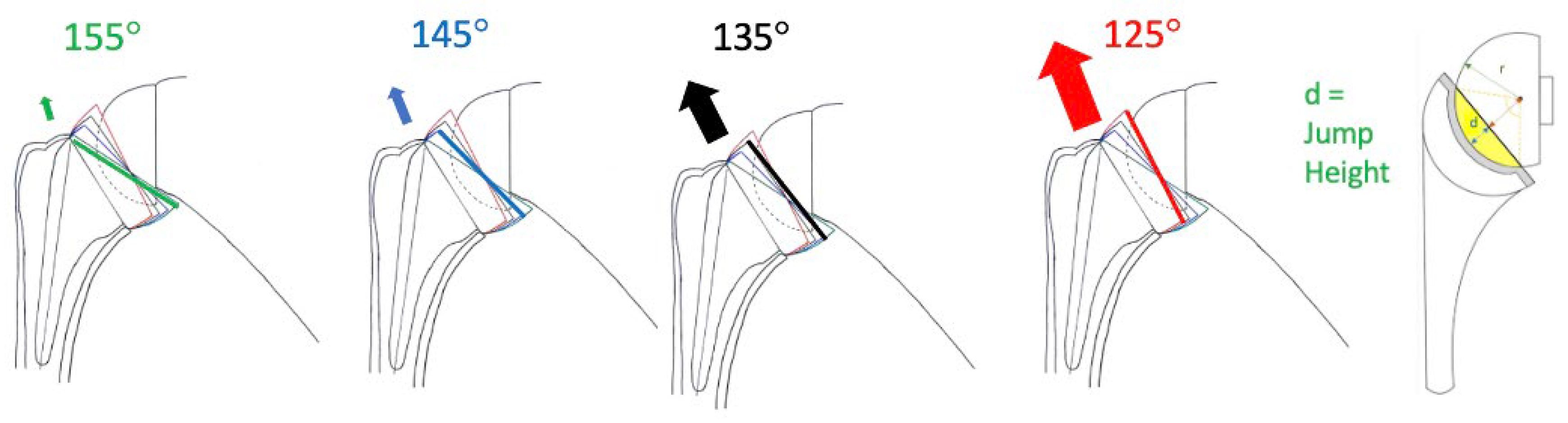
Figure 1. Thickness of arrows indicate susceptibility to superior-lateral instabilty with increasing effective NSA. Illustration of jump height (d) and radius of the glenosphere (r) on the right.
Preprints 148371 g001
Figure 2. 2-Hand-Lever-Test.
Preprints 148371 g002
Figure 3. Selected liners after positive 2HLT-testing.
Preprints 148371 g003
Figure 4. Density plot for effective NSA of long and short Perform stems with thresholds below 132° and 130° showing a significantly higher number of varus outliers with short stems.
Preprints 148371 g004
Figure 5. Preoperative radiographs of three patients (A-C) and examples of superior-lateral dislocation of short Perform stems combined with standard non-retentive liners (D-F).
Preprints 148371 g005
Figure 6. Liner Stability Ratio (LSR) for Grammont 155° std liners (red), 135° std liners (green), 135° ret liners (orange) and Stryker RSA (textured). Dashed mean trendlines for mean traditional Grammont design (red), established 135° standard (green) and ret design ( orange), std = standard, ret = retentive, liner size in mm.
Preprints 148371 g006
Table 1. Patient demographics of the Perform and Ascend Flex cohorts. Cuff Tear Arthropathy (CTA), Massive Rotator Cuff Tear (MRCT), Osteoarthritis (OA), Reverse Shoulder Arthroplasty (RSA).
81 Perform stem RSA 167 Ascend Flex stem RSA
Mean age in years (range) 74 (54-89) 75 (57-91)
Gender
Female
Male

55 (68%)
26 (32%)

118 (71%)
49 (29%)
Diagnosis
CTA
MRCT
OA
Others

35
22
24
0

56
31
69
11
Table 2. Standard and retentive liner characteristics for 135° implant designs, std = standard, ret = retentive, *exact liner depth communicated by the companies, **measured liner depth from planning software [16].
Liner Type Jump Height d (mm) Liner Stability Ratio (%) Angle of Coverage (°)
Altivate (Enovis) 32 std* 8.90 202 127
Altivate (Enovis) 32 ret* 10.00 247 138
Altivate (Enovis) 36 std * 10.00 202 127
Altivate (Enovis) 36 ret* 11.30 249 136
Aequalis Ascend Flex (Stryker/Tornier) 33 std* 7.65 157 115
Aequalis Ascend Flex (Stryker/Tornier) 33 ret* 9.65 219 131
Aequalis Ascend Flex (Stryker/Tornier) 36 std* 8.10 152 113
Aequalis Ascend Flex (Stryker/Tornier) 39 ret* 10.10 205 128
Aequalis Ascend Flex (Stryker/Tornier) 39 std* 8.55 147 112
Aequalis Ascend Flex (Stryker/Tornier) 39 ret* 10.55 194 125
Aequalis Ascend Flex (Stryker/Tornier) 42 std* 9.00 144 110
Aequalis Ascend Flex (Stryker/Tornier) 42 ret* 11.00 185 123
Perform (Stryker/Tornier) 33 std* 7.65 157 115
Perform (Stryker/Tornier) 33 ret* 9.65 219 131
Perform (Stryker/Tornier) 36 std* 8.10 152 113
Perform (Stryker/Tornier) 36 ret* 10.10 205 128
Perform (Stryker/Tornier) 39 std* 8.55 147 112
Perform (Stryker/Tornier) 39 ret* 10.55 194 125
Perform (Stryker/Tornier) 42 std* 9.00 144 110
Perform (Stryker/Tornier) 42 ret* 11.00 185 123
Univers (Arthrex) 36 std* 9.80 195 126
Univers (Arthrex) 36 ret* 12.30 300 143
Univers (Arthrex) 42 std* 11.40 195 126
Univers (Arthrex) 42 ret* 13.90 278 140
Table 3. Standard liners for established Grammont 155° implants and related designs, std = standard,*exact liner depth communicated by the companies, **measured liner depth from planning software [16].
Liner Type Jump Height (mm) Liner Stability Ratio (%) Angle of Coverage (°)
Delta-Xtend (Depuy) 38 std** 8.30 147 112
Delta-Xtend (Depuy) 42 std** 9.40 151 123
Aequalis Reversed II (Stryker/Tornier) 36 std* 8.10 152 113
Aequalis Reversed II (Stryker/Tornier) 42 std* 10.60 175 121
Affinis Metal 147 (Mathys) 36 std** 7.90 148 112
Affinis Metal 147 (Mathys) 42 std** 10.4 171 119
SMR 150 (Lima) 40 std** 8.90 150 113
SMR 150 (Lima) 44 std** 8.80 133 106
Table 4. Patient characteristics, implant configuration, and stem alignment of four dislocations requiring four revision procedures.
No Age Sex
Diagnosis Baseplate size and offset
Glenosphere size and
eccentricity
Stem size,
length
Liner type
and
thickness
before
dislocation
LSR Effective NSA Frankle
Classification [15]
1. Compression
2. Containment
3. Impingement
4. Loosening
2HLT Revised to
1 79 M MRCT 25mm
+8mm
39mm
+3mm
2+
short
Standard +3mm 147% 129° 1. Normal/low
2.LSR: 147%
3. None
4. None
+ Standard 10°
+12mm
(spacer)
2 79 M MRCT 25mm
+8mm
39mm
+3mm
2+
short
Standard 10°
+12mm
(spacer)
147% 139° 1. High
2.LSR: 147%
3. None
4. None
+ Standard 10°
Effective NSA 145°
42mm
+15mm
(spacer)
3 84 M CTA 25mm
+10mm
36mm
+2mm
3+
long
Standard +6mm 152% 134° 1. Normal
2.LSR: 152%
3. None
4. None
+ Standard
+12mm
4 77 F CTA 25mm
+10mm
36mm
+2mm
2+
long
Standard +6mm 152% 134° 1. Normal
2. LSR: 152%
3. None
4. None
+ Retentive
+12mm
Disclaimer/Publisher’s Note: The statements, opinions and data contained in all publications are solely those of the individual author(s) and contributor(s) and not of MDPI and/or the editor(s). MDPI and/or the editor(s) disclaim responsibility for any injury to people or property resulting from any ideas, methods, instructions or products referred to in the content.
Copyright: This open access article is published under a Creative Commons CC BY 4.0 license, which permit the free download, distribution, and reuse, provided that the author and preprint are cited in any reuse.
Prerpints.org logo

Preprints.org is a free preprint server supported by MDPI in Basel, Switzerland.

Subscribe

Disclaimer

Terms of Use

Privacy Policy

Privacy Settings

© 2025 MDPI (Basel, Switzerland) unless otherwise stated