1. Introduction to Drug Delivery Systems
Demand for novel delivery technology comes forth due to traditional methods which lack precision to address their intent or target in various ways through failed delivery due to variable and out-of-control dosing or sometimes because these deliverance techniques present side effects reducing bioavailability at times while on other instances this causes patients' resistance. This was succeeded by the rapidly growing demand for new DDS, innovative and advanced to have a more efficient treatment to reduce toxicity and increase patient compliance [
1].
Drug delivery systems are engineered to optimize therapeutic efficacy of drugs by controlling the release and distribution of drugs. Such systems apply different technologies, including nanoparticles, liposomes, and nanocarriers, which enhance stability, solubility, and the bioavailability of pharmaceutical agents. Advanced systems can help overcome the long-standing problems in drug therapy by supporting good drug solubility, tissue-specific targeting, and reduced side effects [
1].
Table 1.
Advanced Drug Delivery Technologies and Their Advantages[
1]
.
Table 1.
Advanced Drug Delivery Technologies and Their Advantages[
1]
.
| Sr. No. |
Drug Delivery Technology |
Key Features |
Advantages |
Applications |
| 1 |
Nanoparticles |
Biocompatible, controlled release |
Enhanced targeting, reduced toxicity |
Cancer, cardiovascular diseases, respiratory diseases |
| 2 |
Liposomes |
Encapsulation of drugs, biocompatible |
Improved drug stability, reduced side effects |
Cancer therapy, gene delivery |
| 3 |
Traditional Drug Delivery |
Nonspecific distribution, systemic circulation |
Limited targeting, increased adverse effects |
General medicine, pain management |
Table 2.
Targeting Methods in Drug Delivery[
1]
.
Table 2.
Targeting Methods in Drug Delivery[
1]
.
| No. |
Targeting Method |
Mechanism |
Advantages |
Applications |
| 1 |
Passive Targeting |
Utilizes physiological factors like the EPR effect |
Enhanced drug accumulation in tumor tissues without modification |
Cancer therapy, inflammatory diseases |
| 2 |
Active Targeting |
Uses ligands or antibodies to bind to specific receptors |
Increased precision and efficiency in drug delivery |
Cancer, autoimmune diseases, gene therapy |
2. Nanocarriers in Drug Delivery
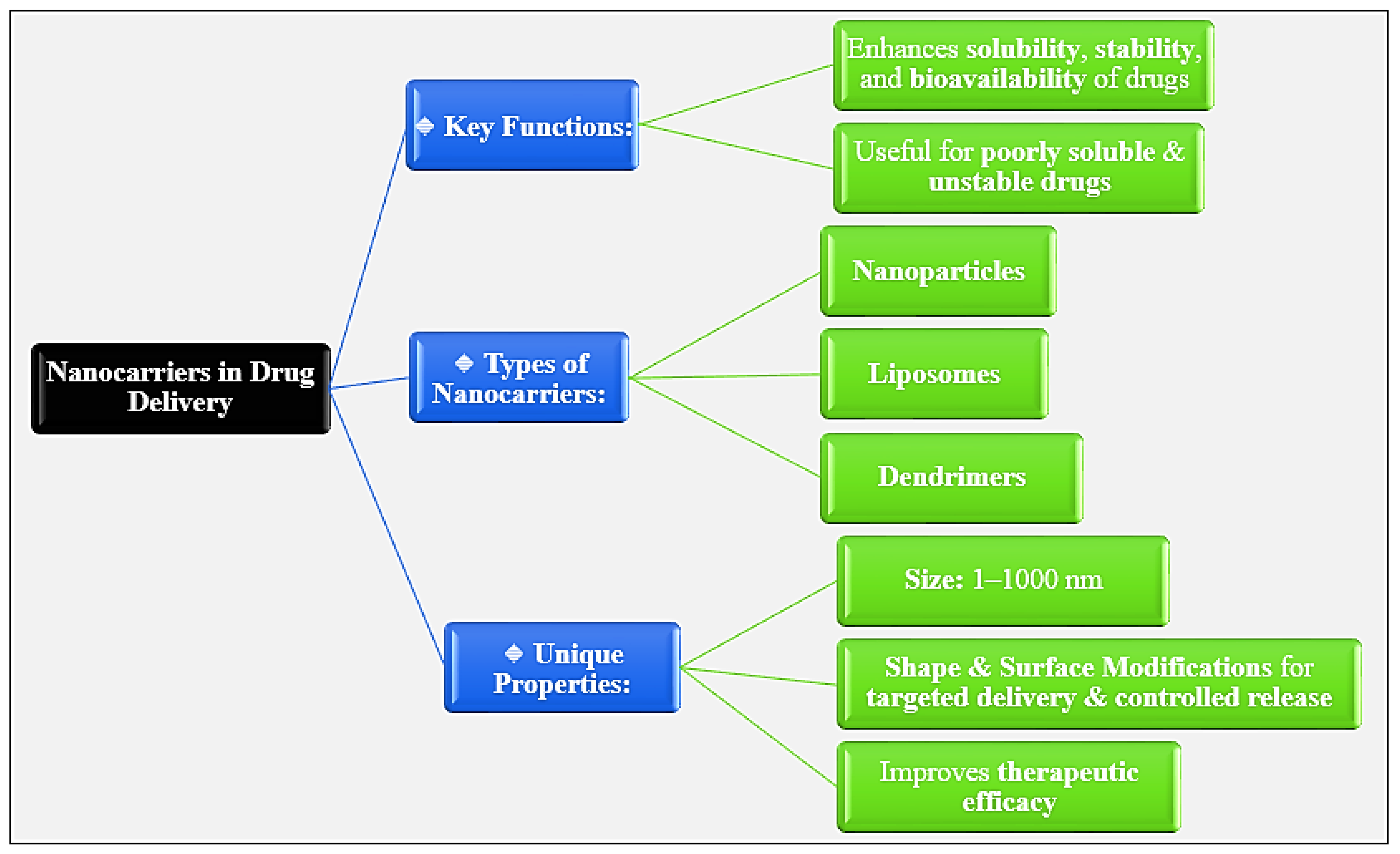
Nanocarriers play an important role in modern drug delivery systems by enhancing the solubility, stability, and bioavailability of drugs, especially those with poor or marginal solubility or unstable in their conventional formulations [
2].
Figure 1.
Nanocarriers in Drug Delivery: Functions, Types, and Properties.
Figure 1.
Nanocarriers in Drug Delivery: Functions, Types, and Properties.
These nanocarriers, which include nanoparticles, liposomes, and dendrimers, are prepared at the nanoscale usually between 1nm to 1000nm for the purpose of taking advantage of their specific properties in targeted drug delivery and controlled drug release. The versatility of nanocarriers with respect to size, shape, and surface characterization has made them versatile tools towards enhancing the therapeutic efficacy of drugs [
2].
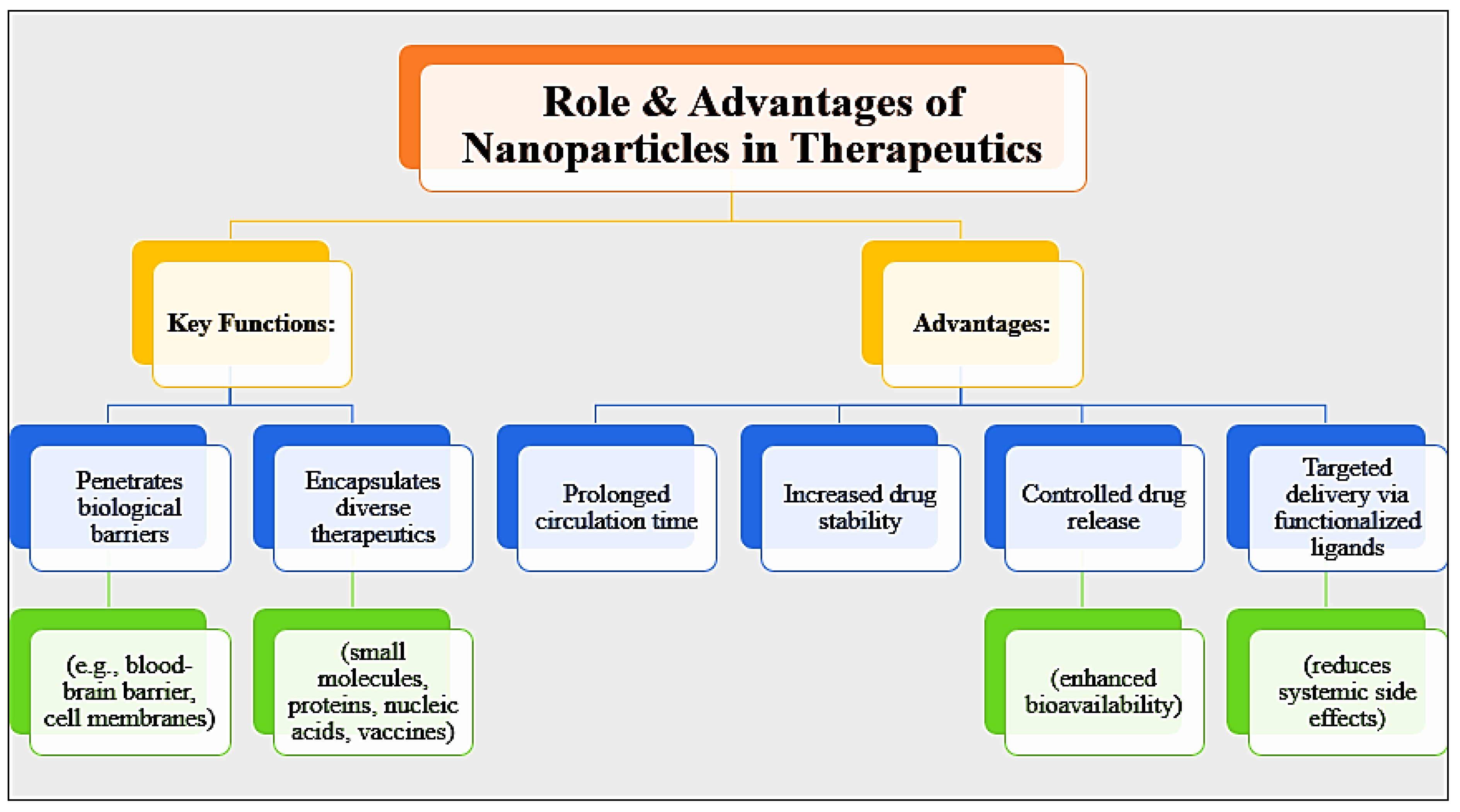
Figure 2.
Role & Advantages of Nanoparticles in Therapeutics.
Figure 2.
Role & Advantages of Nanoparticles in Therapeutics.
2.1. Liposomal Vesicular Systems: A Specialized Nanocarrier
These nanoparticle systems, known as liposomal vesicular systems, have been studied intensively because of their capability to deliver drugs in a controlled and targeted manner. Because they are formed of lipid bilayers, liposomes can encapsulate hydrophobic as well as hydrophilic drugs, therefore making them versatile carriers for a wide range of therapeutic agents. These systems are very helpful in the application of oncology because they enable the targeted delivery of chemotherapeutic drugs, which reduce damage to normal tissues and will enhance the efficacy of treatment [
3]. Furthermore, liposomes can be functionalized at the surface to enhance biocompatibility and decrease immune system recognition. A very common modification is PEGylation, attaching chains of polyethylene glycol, for example, to the surface of the liposome; this increases circulation time and reduces opsonization by the immune system. These "stealth" liposomes allow for prolonged systemic circulation, which subsequently improves the therapeutic window of the delivered drugs [
3].
Table 3.
Liposomal Vesicular Systems and Their Characteristics[
3]
.
Table 3.
Liposomal Vesicular Systems and Their Characteristics[
3]
.
| No. |
Feature |
Description |
Advantages |
Applications |
| 1 |
Liposomal Structure |
Composed of lipid bilayers encapsulating hydrophilic and hydrophobic drugs |
Versatile drug carrier, enhanced solubility |
Oncology, gene therapy, vaccine delivery |
| 2 |
PEGylation ("Stealth" Liposomes) |
Attachment of PEG chains to the liposome surface |
Increased circulation time, reduced immune recognition |
Cancer treatment, prolonged drug delivery |
Table 4.
Liposomal Drug Delivery: Mechanisms, Composition, and Applications.
Table 4.
Liposomal Drug Delivery: Mechanisms, Composition, and Applications.
| No. |
Aspect |
Details |
Advantages |
Applications |
| 1 |
Core Structure & Composition |
Liposomes consist of lipid bilayers forming spherical vesicles; can encapsulate hydrophilic or lipophilic drugs. Types: SUVs, LUVs, MLVs. |
Stable structure, versatile drug carrier |
Drug delivery in cancer, gene therapy, vaccines |
| 2 |
Liposomal Types |
SUVs (Small Unilamellar Vesicles), LUVs (Large Unilamellar Vesicles), MLVs (Multilamellar Vesicles). |
Tailored drug release kinetics and targeting |
Targeted drug delivery based on liposome size |
| 3 |
Drug Encapsulation & Release |
Hydrophilic drugs encapsulated in aqueous core; lipophilic drugs embedded in lipid bilayer. Release triggered by pH, temperature, or enzymes. |
Controlled, sustained release; targeted release |
Oncology, controlled drug release, gene delivery |
| 4 |
Stealth Liposomes (PEGylation) |
Surface modification with polyethylene glycol (PEG) reduces immune recognition, prolonging circulation time. |
Increased circulation time, reduced immune detection |
Cancer treatment, targeted therapy, reducing systemic toxicity |
| 5 |
Targeting Efficiency |
Exploits the EPR effect for passive targeting; surface modification allows active targeting via receptors. |
Precise drug delivery to target tissues |
Cancer therapy, targeted drug delivery to tumors |
Nomenclature
SUVs: Small Unilamellar Vesicles, liposomes with a single lipid bilayer and small size (20–100 nm) [ 3].
LUVs: Large Unilamellar Vesicles, liposomes with a single lipid bilayer but larger in size (100–500 nm) [ 3].
MLVs: Multilamellar Vesicles, multiple lipid bilayers encapsulating drug molecules [ 3].
PEGylation: Modification of liposomes with polyethylene glycol (PEG) to extend circulation time and evade immune detection [ 4].
EPR Effect: Enhanced Permeability and Retention effect, allowing nanoparticles to accumulate in tumor tissues due to leaky vasculature [ 3]. |
4. Naso-Pulmonary and Oral Drug Delivery Systems
The delivery route of medications into the respiratory is especially naso-pulmonary drug delivery as compared to other conventional oral or injectable. This is advantageous in the cure of pulmonary disease locally. Since liposomes along with other nanocarriers can encapsulate drugs and eventually release them directly into the lung, thus resulting in less system exposure and enhancement of local efficiency, they are under investigation in inhalation therapy [
4].
4.1. Naso-Pulmonary Drug Delivery and Liposomal Inhalation Therapy
Liposomal inhalation therapy has been applied very successfully in the treatment of respiratory diseases like asthma and COPD. This is because it encapsulates bronchodilators or corticosteroids in liposomes and, thus, directly delivers the drug into the lungs, reducing the systemic dose needed for its administration at high levels with minimal side effects. Liposomal formulations have also been used for the delivery of antibiotics in the treatment of respiratory infections and is associated with an enhanced bioavailability at the site of infection [
4].
4.2. Chewable Tablets and Effervescent Drug Delivery
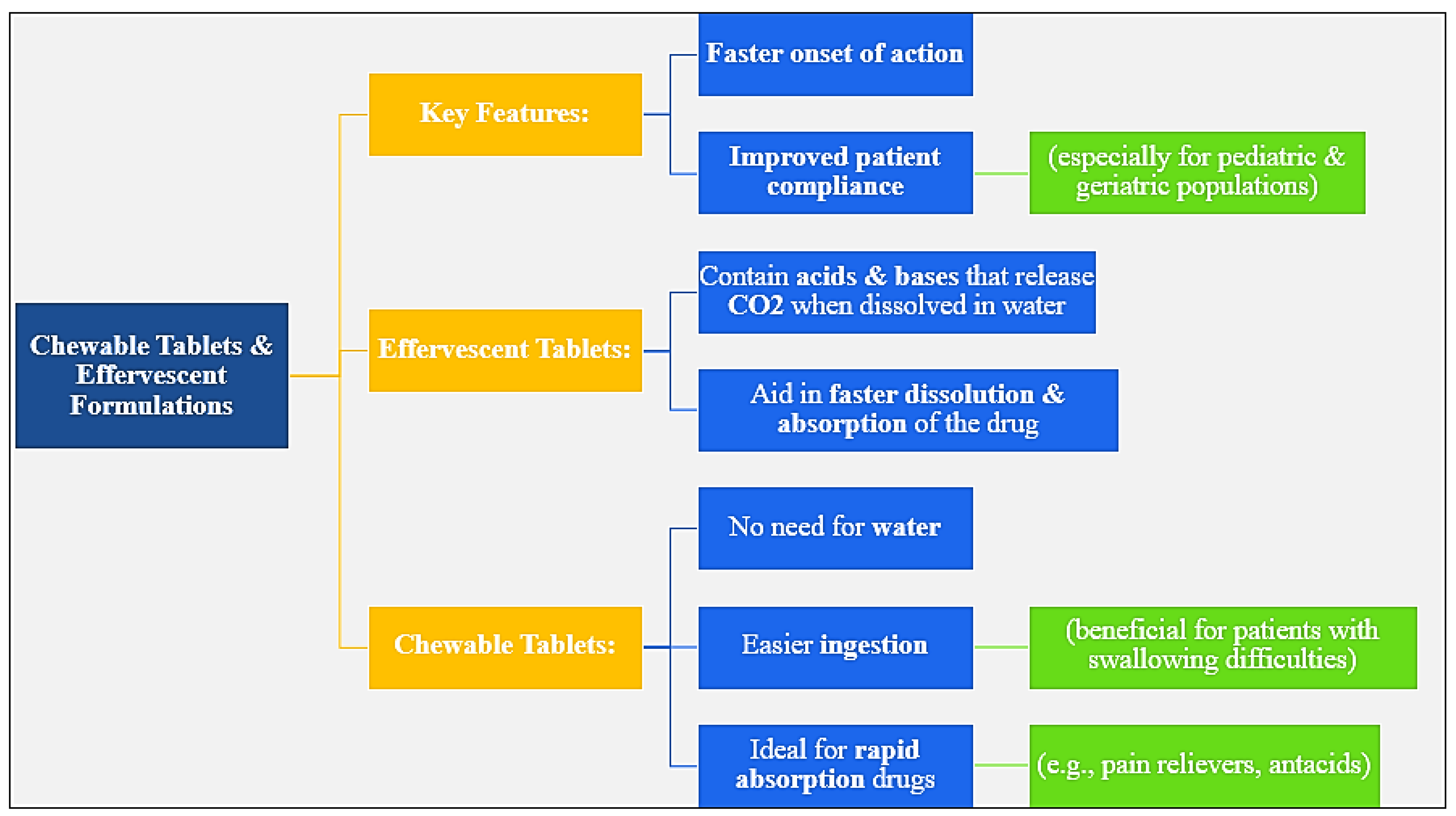
Figure 3.
Comparative representation B/W Chewable Tablets & Effervescent Formulations.
Figure 3.
Comparative representation B/W Chewable Tablets & Effervescent Formulations.
4.3. Mouth-Dissolving Films for Enhanced Bioavailability
The other exciting oral dosage form is mouth-dissolving films that give the speedy drug release along with increased bioavailability. From the time they come in contact with saliva, they rapidly dissolve in the oral cavity and immediately allow the drug to be released for quick absorption. They are very useful drugs whose bioavailability is low or whose first pass metabolism is great. They can even be administered orally even when the pill or the capsules are hard to take by a patient [
6].
5. Proniosomes: An Emerging Alternative to Liposomes
Proniosomes can be thought to be an interesting alternative to the liposomes where this system may prove to be another potential drug delivery system. This proniosomes is a sort of dry and free flowing powder that demonstrates an instantaneous transformation into the niosome vesicles following hydration and is considered much advantageous for entrapment by being a far more stable one as compared with liposomes specially concerning shelf life and handling characteristics [
8].
5.1. Fundamentals, Structure and Composition
Proniosomes are made using non-ionic surfactants, cholesterol, and co-surfactants. As with liposomes, these also envelop drugs within their bilayer. The old conventional synthetic aerosol forming system consisted of non-ionic surfactants, such as polysorbates, that could even form a stable bilayer for the entrapment of any type of drugs either hydrophilic or hydrophobic. These vesicles can, hence, be optimized further with the help of some modifications, which include targeted ligands and specific combinations of surfactants; these may possibly improve their performance in therapies [
8].
The structure of proniosomes presents improved drug stability and controlled release properties, hence placing them very well within a number of usage alternatives from anti-cancer therapies to infectious diseases. When proniosomes hydrate, they give niosomes, which can encapsulate hydrophilic drugs along with lipophilic drugs together in a single formulation, an advantage not obtainable using traditional liposomes, which are restricted to a number of drug types [
8].
5.2. Comparative Analysis: Proniosomes vs. Liposomes
Some parameters which are different from liposomes to proniosomes are stability, loading capacity to the drug and ease of preparation. In general, liposomes are made from phospholipid layers. They are prone to fragility and are relatively unstable in storing, and it may not quite be handy for management. Contrarily, the proniosome, consisting of a solid powder before hydration is relatively stable in storage.
The reconstitution of proniosomes into niosomes may occur very rapidly upon contact with water, thus making them ideal for long-term storage and transportation [
8,
9].
Proniosomes can have regulated drug delivery from them than in the case of liposomes and further optimization could be made specific surfactants and co-surfactants for drug encapsulation.
Despite their efficient use in the targeting and delivery of drugs, their formulation must therefore be very careful not to cause premature release or leakage of drugs.
Thus, despite a broad clinical use of liposomes, proniosomes may become more flexible and stable for drugs which require protracted release [
8,
9].
Table 5.
Comparative Analysis of Proniosomes vs. Liposomes[
8,
9]
.
Table 5.
Comparative Analysis of Proniosomes vs. Liposomes[
8,
9]
.
| No. |
Aspect |
Proniosomes |
Liposomes |
Advantages |
Applications |
| 1 |
Stability |
Solid powders before hydration, better stability, easier to store |
Phospholipids that can be unstable during storage |
Better storage and transport stability for proniosomes |
Long-term storage, transportation, controlled drug delivery |
| 2 |
Ease of Preparation |
Simple reconstitution into niosomes upon contact with water |
Requires careful preparation and handling |
Proniosomes are more versatile and easier to handle |
Drug delivery systems requiring flexibility and stability |
| 3 |
Drug Loading Capacity |
Can be tailored with specific surfactants and co-surfactants for better drug loading and controlled release |
Can be limited by bilayer composition and stability during storage |
Enhanced drug release control with proniosomes |
Drugs requiring high drug loading or controlled release |
| 4 |
Drug Release Profile |
More controlled release, enhanced by selecting surfactants and co-surfactants |
Risk of premature drug release or leakage without proper formulation |
Controlled release profile for proniosomes |
Prolonged-release drug delivery, cancer therapies |
| 5 |
Storage & Transport |
Easier to store and transport as solid powders, reconstituted as needed |
Liposomal formulations may require refrigeration or special storage conditions |
Easier storage and transport with proniosomes |
Long-term storage, transportation, clinical trials |
6. Targeted Therapeutics and Personalized Care
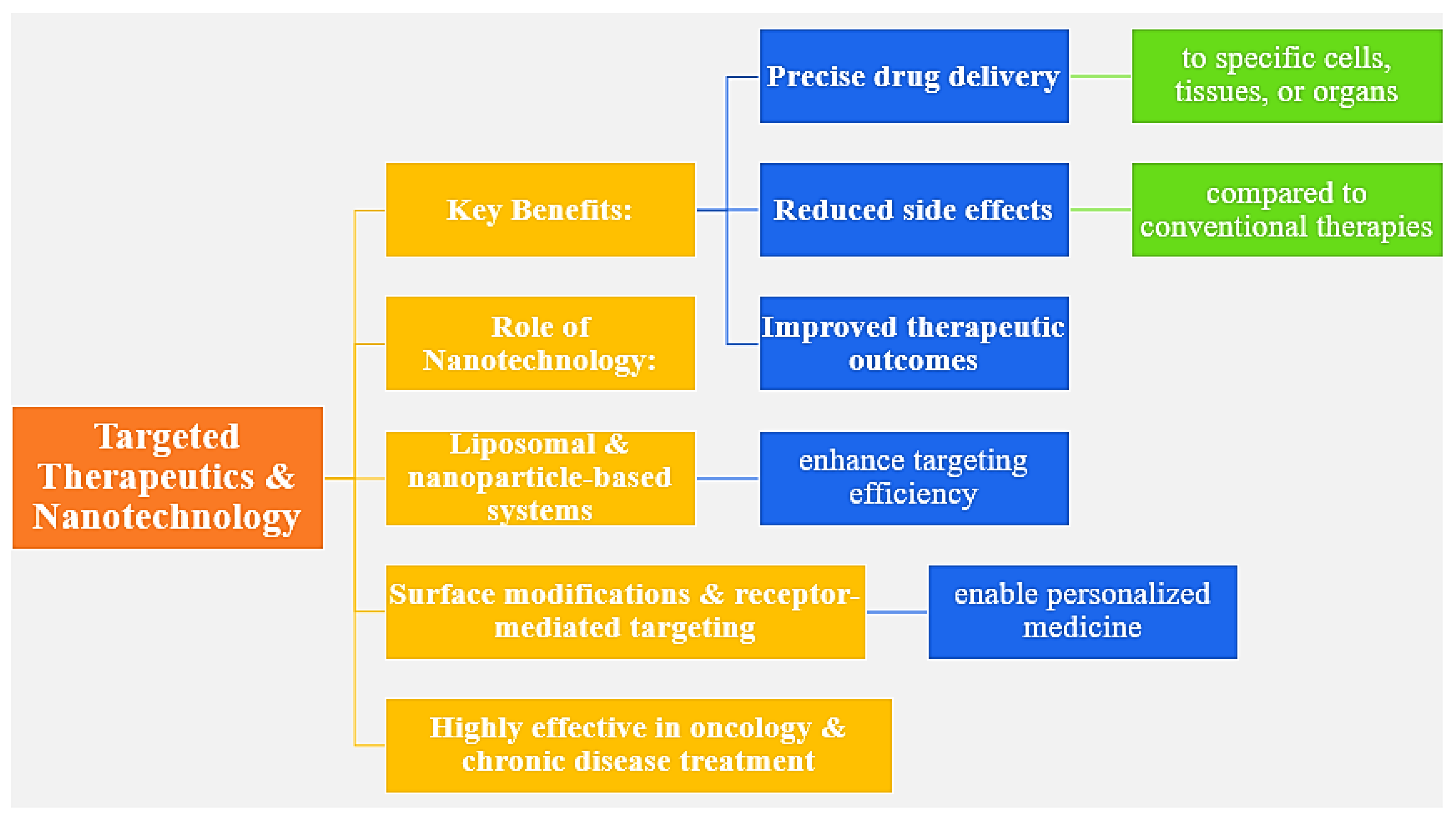
Figure 3.
Targeted Therapeutics and Personalized Care.
Figure 3.
Targeted Therapeutics and Personalized Care.
6.1. Surface Modifications for Selective Targeting
Surface modifications of the drug delivery carrier such as the liposomes and nanoparticles are also of extreme relevance in making it specific and avid to targets. Some may include conjugating ligands such as antibodies, peptides, or even aptamers to the nanocarrier surface. In this regard, it helps create selective binding to the drug delivery system by means of over-expressed receptors located on target cells, including tumor or infected ones [
10]. These modifications raise the concentration of the drug at the site of action, reducing side effects and enhancing effectiveness.
Additional PEG forming "stealth" liposomes improves the immune system evasive ability of the carrier, meaning longer circulation times and greater bioavailability. The importance of these surface modifications will be especially vital in targeted therapy development, mainly in cancer: where precision as well as an effort to keep off-target side effects low would be important issues [
10].
6.2. Nanotechnology in Precision Medicine
Nanotechnology is also one of the precision medicine top-tier treatments aimed to individual patients with genetic makeup or other characteristics that define a disease. It ensures drugs highly targeted and spatial selectivity in which only the disease site could make sure of drugs released, bringing a better safety profile overall from a treatment approach [
9]. Nanoparticles and liposomes can also be engineered to deliver diagnostic agents. This, of course, integrates drug delivery and monitoring disease progress and further amplifies personalized therapeutic strategies.
Nanocarriers allow the customization that makes precision medicine possible. Thus, it permits more appropriate planning of treatment and is especially suitable for diseases such as cancer where therapies are initiated by specific molecular markers. Among the opportunities is overcoming many of the challenges conventionally encountered because of low drug solubility, reduced bioavailability, and off-target toxicities of drugs [
9].
6.3. Active Targeting via Receptor-Mediated Delivery
Active targeting involves the use of receptor-mediated delivery systems wherein drug delivery systems are engineered specifically to target cell surface receptors overexpressed in disease tissues. It has been found most advantageous in targeting cancer therapy since tumor cells express specific markers or receptors, such as folate receptors or epidermal growth factor receptors (EGFR), against which conjugated drug-loaded nanocarriers can be targeted [
10].
Since specific ligands, such as antibodies or small molecules, may be attached onto the surface of nanoparticles or liposomes, targeted therapy can easily be delivered for tumor cells; at the same time, any effect on nearby normal tissues might be minimized as much as possible. Targeted therapy holds huge potential in yielding higher specificity as well as an increased efficacy to treatments with low side effects attached to traditional chemotherapy [
10].
7. Liposomal Antibiotics and Herbal Drug Delivery
New drug delivery systems are created to strengthen the antibiotics through developing antibiotic resistance. In this therapy, nanocarriers including liposomes and proniosomes are utilized, which can easily permeate the barriers to facilitate the enhanced bioavailability of the antimicrobial agent.
7.1. Nanocarriers Against Antibiotic Resistance
Perhaps one of the most pressing public health concerns is antibiotic resistance, and certainly, there has never been a greater need for innovative drug delivery systems. Liposomes and nanoparticles can encapsulate antibiotics to provide stability, solubility, and targeted delivery to infected sites. Moreover, these carriers may bypass bacterial resistance mechanisms, such as efflux pumps, since the antibiotic remains concentrated in the target area [
11,
12].
These nanocarriers using liposomal or proniosomal carriers avoid degradation in the body and could remain active for a long period. Furthermore, nanocarriers can give a higher concentration of the drug to the infection site without the systemic high dose, thus otherwise increasing toxicity [
11,
12].
7.2. Herbal Drug Delivery with Liposomal and Proniosomal Carriers
Herbs have been in use for many years in treating various diseases. However, the bioavailability of herbal drugs is always hindered by poor solubility and rapid metabolism. Liposomes and proniosomes are hence emerging as effective tools that can encapsulate herbal drugs, shielding them from degradation, enhancing their absorption, and, consequently, amplifying their therapeutic effects [
13], [
14].
Liposomes have lately emerged as potential carriers for active principles from Tribulus terrestris, as it is now established to hold therapeutic value against urolithiasis [
13]. The proniosome system can encapsulate a large number of herbal extracts so that these can reach the target locations more effectively to enhance the pharmacological properties of herbal drugs [
14].
8. Future Perspectives and Clinical Integration
8.1. Future of Liposomal Formulations Next Generation
Research is still evolving, and with time, new generations of liposomal formulations are designed for better encapsulation efficiency of the drug, targeted precision, and release control. These will likely help fill in many of these unmet clinical needs, mostly in complicated diseases such as cancer, neurological disorders, and infectious diseases [
15].
Other types of systems are stimulus-sensitive liposomes. These will release their cargo once exposed to a specific environmental stimuli. This will transform the concept of drug delivery, whereby drugs are released locally, hence excluding systemic drug effects. Therapy will become effective in this manner [
15].
8.2. Hybrid Drug Delivery Platforms: Vesicular and Non-Vesicular Systems
Hybrid drug delivery systems that include the vesicular system, like liposomes and proniosomes, and the non-vesicular system containing nanoparticles and micelles, are regarded as the recent exciting area. Hybrid systems might offer a route for combining the strengths of two types of carriers, thus leading to the possibility of a more stable preparation, an optimized drug release profile, and selective targeting of certain sites within the body [
16].
For very complex diseases, especially those in which various therapeutic drugs need admixing or successive administrations, these systems hybridized should realize great usage. Hybrid carriers based on combinations of any of these different types could bring in multifaceted possibilities with better enhanced efficiencies for processes of delivery [
16].
8.3. Research on Clinic Applications:
Although much effort has been demonstrated in the improvement of advanced drug delivery systems, the challenge still remains to be overcome by bridging research gaps to clinics. Real-world clinical applications of laboratory-based findings require team efforts from both researchers and clinicians as well as pharmaceutical companies toward ensuring that promising drug delivery systems reach the clinics and benefit the patients [
17,
18].
It will revolutionize the approach towards disease treatment, particularly in oncology, infectious diseases, and personalized medicine by breaking barriers in effective drug delivery. It is likely to result in better patient outcomes and more efficient treatments [
17,
18,
19].
Conclusion
It addresses the potential of nanocarriers in drug delivery by highlighting the use of liposomes, proniosomes, and nanoparticles with advanced targeting strategies and personalized care. It shall overcome the shortcomings of traditional drugs and serve as the cornerstone for increased demands on more accurate, efficient, and customized drug delivery technologies. Nanocarriers like liposomes can also be used in a versatile format for enhancement of bioavailability and stability with a controlled release process. Moreover, proniosomes are more valuable than liposomes due to its easiness and stability in storage.
We also covered the area of targeted therapeutics, which has come of age and deals with the surface modification of drug carriers for selective delivery to disease sites with minimal off-target effects and hence better clinical outcomes. Advances in these areas have already been very impactful in precision medicine, where nanocarriers can be specifically tailored to the needs of individual patients for maximal efficacy with minimal systemic toxicity. Moreover, the liposomal and proniosomal systems open up new hopes of access of antibiotics without creating any resistance in nature and also with the improvement in the bioavailability of herbal drugs.
Most probably, the approach hybridizing the potential of vesicular and non-vesicular systems shall make these drug delivery platforms more targeted and efficient. There is much to be left behind for many things still remain to be achieved, which will finally bring this scientific knowledge closer to the clinics. However, further innovations in such advanced drug delivery systems indeed promise great improvement in the future of patient care and therapy.
References
- Sengar, A. (2023). Targeting methods: A short review including rationale, goal, causes, strategies for targeting. International Journal of Research Publication and Reviews, 4(8), 1379-1384.
- Jagrati, K. M., & Sengar, A. (2024). Liposomal vesicular delivery system: An innovative nano carrier. World Journal of Pharmaceutical Research, 13(13), 1155-1169.
- Prajapati, R. N., Jagrati, K., Sengar, A., & Prajapati, S. K. (2024). Nanoparticles: Pioneering the future of drug delivery and beyond. World Journal of Pharmaceutical Research, 13(13), 1243-1262.
- Sengar, A., Jagrati, K., & Khatri, S. (2024). Enhancing therapeutics: A comprehensive review on naso-pulmonary drug delivery systems for respiratory health management. World Journal of Pharmaceutical Research, 13(13), 1112-1140.
- Sengar, A., Vashisth, H., Chatekar, V. K., Gupta, B., Thange, A. R., & Jillella, M. S. R. S. N. (2024). From concept to consumption: A comprehensive review of chewable tablets. World Journal of Pharmaceutical Research, 13(16), 176-189.
- Sengar, A., Yadav, S., & Niranjan, S. K. (2024). Formulation and evaluation of mouth-dissolving films of propranolol hydrochloride. World Journal of Pharmaceutical Research, 13(16), 850-861.
- Sengar, A., Tile, S. A., Sen, A., Malunjkar, S. P., Bhagat, D. T., & Thete, A. K. (2024). Effervescent tablets explored: Dosage form benefits, formulation strategies, and methodological insights. World Journal of Pharmaceutical Research, 13(18), 1424-1435.
- Sengar, A., Saha, S., Sharma, L., Hemlata, Saindane, P. S., & Sagar, S. D. (2024). Fundamentals of proniosomes: Structure & composition, and core principles. World Journal of Pharmaceutical Research, 13(21), 1063-1071.
- Sengar, A. (2024). Liposomes and Beyond: Pioneering Vesicular Systems for Drug Delivery. Preprints. https://doi.org/10.20944/preprints202412.2230.v1. [CrossRef]
- Sengar, A. (2024). Precision in Practice: Nanotechnology and Targeted Therapies for Personalized Care. International Journal of Advanced Nano Computing and Analytics, 3(2), 56-67. [CrossRef]
- Sengar, A. (2025). "Liposomal Drug Delivery Systems: An Intro as a Primer for Advanced Therapeutics." Preprints. https://doi.org/10.20944/preprints202501.0398.v1. [CrossRef]
- Sengar, A. (2025). Innovations and Mechanisms in Liposomal Drug Delivery: A Comprehensive Introduction. Preprints. https://doi.org/10.20944/preprints202501.0206.v1. [CrossRef]
- Sengar, A., Chatekar, V. K., Andhare, S. B., & Sharma, L. (2025). Clinical pharmacology of antibiotics: Mechanisms, therapeutic uses, and resistance patterns. World Journal of Pharmaceutical Research, 14(1), 1531–1545. https://doi.org/10.20959/wjpr20251-35216. [CrossRef]
- Sengar, A. (2025). Targeting Strategies in Liposomal Drug Delivery. Preprints. https://doi.org/10.20944/preprints202501.0866.v1. [CrossRef]
- Sengar, A. et al. (2025). Advancing urolithiasis treatment through herbal medicine: A focus on Tribulus terrestris fruits. World Journal of Pharmaceutical Research, 14(2), 91–105.
- Sengar, A. (2025). Next-Generation Liposomal Drug Delivery Systems: Core Principles, Innovations, and Targeting Strategies. Preprints. https://doi.org/10.20944/preprints202501.1875.v1. [CrossRef]
- Sengar, A. (2025). Advanced Targeting Strategies and Applications of Liposomal Drug Delivery Systems. Preprints. https://doi.org/10.20944/preprints202501.2091.v1. [CrossRef]
- Sengar, A. (2025). Innovations and Mechanisms in Liposomal Drug Delivery: A Comprehensive Introduction. J Emerg Med OA, 3(1), 01-05.
- Sengar, A. (2025). Historical Evolution and Modern Advances in Vesicular Nanocarriers. Preprints. https://doi.org/10.20944/preprints202501.2323.v1. [CrossRef]
|
Disclaimer/Publisher’s Note: The statements, opinions and data contained in all publications are solely those of the individual author(s) and contributor(s) and not of MDPI and/or the editor(s). MDPI and/or the editor(s) disclaim responsibility for any injury to people or property resulting from any ideas, methods, instructions or products referred to in the content. |
© 2025 by the authors. Licensee MDPI, Basel, Switzerland. This article is an open access article distributed under the terms and conditions of the Creative Commons Attribution (CC BY) license (http://creativecommons.org/licenses/by/4.0/).