Preprint
Review

This version is not peer-reviewed.

EFR3A, an Intriguing Gene, and Protein with a Scaffolding Function

A peer-reviewed article of this preprint also exists.

Submitted:

30 January 2025

Posted:

30 January 2025

You are already at the latest version

Abstract

EFR3 (Eighty-Five Requiring 3) protein and its homologs are rather poorly understood eukaryotic plasma membrane peripheral proteins. They belong to the armadillo-like family of superhelical proteins. In higher vertebrates two paralog genes, A and B were found, each expressing at least 2-3 protein isoforms. EFR3s are involved in several physiological functions, mostly including phosphatidyl inositide phosphates, e.g. phototransduction (insects), GPCRs, and insulin receptors regulated processes (mammals). Mutations in the EFR3A were linked to several types of human disorders, i.e. neurological, cardiovascular, and several tumors. Structural data on the atomic level indicate the extended superhelical rod-like structure of the first two-thirds of the molecule with a typical armadillo repeat motif (ARM) in the N-terminal part and a triple helical motif in its C-terminal part. EFR3s' best-known molecular function is anchoring the giant phosphatidylinositol 4-kinase A complex to the plasma membrane crucial for cell signaling, also linked directly to the KRAS mutant oncogenic function. Another function connected to the newly uncovered interaction of EFR3A with flotillin-2 may be the participation of the former in the organization and regulation of the membrane raft domain. This review presents EFR3A as an intriguing subject of future studies.

Keywords: 
;  ;  ;  ;  

1. Introduction

EFR3A (Eighty-Five Requiring, homolog A) protein and its paralogs and orthologs are rather poorly understood eukaryotic plasma membrane (PM) peripheral proteins. In eukaryotic organisms, the genes encoding yeast EFR3 homologs belong to a group of genes called armadillo-like superfamily ARMH, also called ARM-like, encoding highly helical and super helical proteins. This superfamily is characterized by a domain consisting of a multi-helical motif composed of two curved layers of α-helices arranged in a right-handed superhelix, in which the repeats forming this structure are arranged around a common axis. (see below, par.4).
The yeast EFR3 (YMR212C) gene ortholog was originally discovered and named, as one of seven Pho 85 (nonessential CDK) Requiring (efr) loci, efr1-3 and 5-8 [1]. It appeared orthologous to D. melanogaster the rolling blackout (rbo, stmA-PF; stambhA; cmp 44E) involved in phototransduction and synaptic vesicular traffic [2,3]. Moreover, EFR3 ortholog genes can be found in lower metazoan organisms such as Cnidaria, e.g. coral Stylophora pistillata, and Nematoda, e.g. Caenorhabditis elegans [4]. In Chordata including Urochordata (tunicates) and Cephalochordata (Lancelets) and Cyclostomata (Lampreys) orthologs resembling homolog B in all remaining vertebrates can be found [5].
In all vertebrates (excluding Cyclostomata), two homolog genes and proteins, A and B were found, each expressing at least 2-3 experimentally confirmed protein isoforms as well as several predicted ones (Figure 1A) that may mean that the first two paralogs might have appeared in cartilagous fish around 400 mya. In humans, two homolog genes located in chromosomes 8 and 2 encode proteins EFR3A and EFR3B, respectively. Overall homology between these two gene products is rather moderate and reaches, for example, for isoforms 1 of each protein 64% identity and 78% overall similarity. As can be seen, isoforms 2 of either homolog lack an N-terminal sequence containing 3-4 cysteine residues which are the target of palmitoylation (see Figure 1B and the text below). It is interesting that in yeast EFR3 small hydrophobic three methionine and one phenylalanine residue cluster (5-MRMMF-9) can be observed (see Figure 1C). Constituting a permanent hydrophobic patch, it might participate in the interaction with the plasma membrane.
Moreover, Noack et al., while looking for possible EFR3 homologs in Arabidopsis via sequence alignments found four potential proteins that they called EFR of plants (EFOP) 1-4 which belong to the class of ARMH superfamily. They found several structural and functional similarities between fungal and animal EFR3 and plant proteins [6].
EFR3A gene in Homo sapiens is located on chromosome 8 (8q24.22) and spans 109550 nt. The gene comprises up to 40 exons with 11 transcription variants, including 8 alternatively spliced [7]. According to this source, the EFR3A gene was found to be expressed to rather high levels, i.e. exceeding 4.3 times the average gene expression in normal and pathological human tissues. In turn, the gene encoding EFR3B is located on the short arm of chromosome 2, spans 117036 nt, and contains up to 33 exons, the product of which is eight different mRNA molecules, including four representing alternatively spliced transcripts. Two isoforms of 817 and 787 amino acid residues long (isoform 1 and 2, respectively) have been listed in humans [8]. This homolog is expressed at the average level in various organs, tissues, and cells of primates and humans [7].

2. Physiological Roles of EFR3A

2.1. Drosophila Melanogaster Phototransduction

Phospholipase C (PLC)-dependent opening of transient receptor potential (TRP) and TRP-like (TRPL) channels mediate phototransduction in flies [9,10]. PLCβ cleaves PI(4,5)P2 into inositol 1,4,5-trisphosphate (IP3) and diacylglycerol (DAG) which results in the activation of the channels mentioned above and triggers an electrical signal in response to light stimulus [11]. As the PLC activity is very high, a feedback inhibition mechanism involving Ca2+ and PKC maintaining the levels of PI(4)P and PI(4,5)P2 is suggested [12].
Reducing phosphatidylinositol 4-kinase PI4KIIIα (PI4KA) levels by knock-down or using PI4KA mutants results in decreased levels of PM PI(4)P and PI(4,5)P2 and altered light responses of Drosophila photoreceptors. Depletion of the Drosophila Efr3 (rbo) and tetratricopeptide repeat domain 7 (TTC7), which attach PI4KAα to the PM, also results in reduced PM PI(4)P and PI(4,5)P2 levels, and an impaired light response [13,14].
Phosphoinositides are implied in the vesicular traffic. Data on Drosophila rbo mutants may confirm this hypothesis, although they indicate some differences between neuronal and non-neuronal vesicular traffic [15].

2.2. EFR3 Proteins Affect GPCR Responsiveness by Regulating Receptor Phosphorylation

A and B paralogs of EFR3 were found to be involved in the GPCR receptor signaling cascades [16]. The AT1R (angiotensin II receptor type 1) belongs to seven transmembrane helical G-protein-coupled receptors (GPCRs). Activation of the AT1R regulates various physiological events in different tissues, namely, vasoconstriction, aldosterone release, renal sodium reabsorption, facilitation of adrenergic transmission, vascular smooth muscle cells (VSMC) hypertrophy, and cardiac myocyte hyperplasia (for a review see e.g. [17,18,19]). One of several, and best-known signaling pathways of the AT1R is the activation of phospholipase C via heterotrimeric Gq/11 protein (human Gα11 encoded by the GNA11 gene) leading to the generation of two second messengers: DAG and IP3. The first one activates the calcium-dependent protein kinase C (PKC), which phosphorylates several proteins, among them myosin light chain kinase or PP2Ac (a protein phosphatase), which dephosphorylates AKT and inactivates it leading to the death-receptor-independent apoptosis [20]. The second product of PI(4,5)P2 hydrolysis binds to IP3 receptors in the endoplasmic reticulum, ligand-gated Ca2+ channels responsible for this ion release from this organelle functioning as intracellular calcium stores [21].
EFR3 proteins are thought to localize phosphatidylinositol 4-kinase (PI4KA) to the PM (see below). Bojjireddy et al. [16] while silencing EFR3A and/or EFR3B gene expression found that after AngII stimulation in knockdown (KnD) cells, no reduction in PI(4)P and PI(4,5)P2 pools were observed, which suggests that EFR3s do not directly affect the phosphoinositide pool in the PM since PI4K still can provide sufficient amounts of these phosphoinositides in the PM. However, they observed a decreased plateau phase of Ca2+ levels following stimulation of AT1 with angiotensin II, opposite to control cells. It appeared that in the EFR3 KnD cells the AT1 receptor is hyperphosphorylated, which the authors consider responsible for its uncoupling from the Gq11 alpha subunit after stimulation. However, it still maintains its ability to be internalized. In their opinion, in EFR3-KnD cells a defect in returning the receptors from their desensitized state occurred [16]. The same authors found a similar, although less pronounced effect on the endogenous adrenergic β-receptors after stimulating EFR3 KnD HEK cells with isoproterenol, measuring cAMP production. However, there is no detailed data on the molecular mechanism governing the regulation of phosphorylation of GPCRs in which EFR3 proteins are involved.

2.3. EFR3A and Insulin-Mediated Dispersal of GLUT4

Vital for glucose homeostasis in animal organisms is insulin-regulated glucose transport into muscle and adipose cells. It depends on GLUT4 (glucose transporter type 4), an integral, 12-transmembrane domain protein responsible for the facilitated diffusion of glucose into cells. Insulin binding to its receptor triggers a phosphorylation cascade involving PI3K, AKT, and m-TORC2 that results in several vesicular traffic events leading to delivery of GLUT4 to the PM (recent review see [22]). Failure to the targeting of GLUT4 in the PM results in insulin resistance and type 2 diabetes [23]. In unstimulated adipocytes, most of the GLUT4 pool resides in the intracellular vesicular compartment including TGN (trans Golgi network), endosomal compartment, and insulin-responding vesicles (IRV) [24]. The latter fuse with the PM in a Rab13-dependent manner [25]. Apart from insulin-regulated delivery of GLUT4-bearing vesicles to the PM, insulin plays a role in the regulation of GLUT4 dynamics in the PM. Stenkula et al. [26] suggest that in the PM GLUT4 occurs as freely diffusing monomers and stable domains containing GLUT4 clusters which result from fusion with ”selective retention”. According to their model, insulin causes exocytosis of GLUT4-bearing vesicles leading to monomeric GLUT4 in the PM which transports glucose into the cell and above-mentioned domains containing GLUT4 clusters. The generation of monomeric GLUT4 outweighs selective retention by 30 times. Retrograde clathrin-mediated endocytosis takes place also from the preexisting clusters. Therefore, the above-mentioned clusters are the hub between functional monomers and re-internalization of GLUT4.
Ectopically expressed human GLUT4, although distributed to the plasma membrane, did not support the growth of a yeast strain lacking hexose transporters, unless this strain had a mutation in the EFR3 gene (fgy1-1) [27,28,29]. These results pointed the researchers’ attention to the role of EFR3 protein and PI4KA in regulating insulin-stimulated glucose transport and GLUT4 dispersal in 3T3-L1 adipocytes. EFR3A which is a dominant paralog expressed in these cells (500-fold higher mRNA level when compared to EFR3B) [30] is suggested to function as a key regulator of GLUT4 dispersal in the PM. Knockdown of EFR3A or PI4KA impairs insulin-stimulated glucose transport in adipocytes. Knockdown of EFR3A expression reduces insulin-mediated spreading of GLUT4 in the PM. This data may shed light on the participation of the EFR3A-PI4KA axis in the regulation of GLUT4 function and the role of genes encoding this multiprotein complex in the regulation of GLUT4 function and possibly type 2 diabetes [31].

2.4. Brain-Specific EFR3A Knock-Out Promotes Hippocampal Neurogenesis in Mice

Brain-specific deletion of Efr3A revealed enhanced hippocampal neurogenesis in adult mice. It appeared that in Efr3a KO mice hippocampus newborn neurons were characterized by extended survival and decreased levels of apoptosis. The probable mechanism is connected with the increased levels of the expression of brain-derived neurotrophic factor (BDNF) and tropomyosin-related kinase B TrkB (TrkB)-encoding genes that govern signaling pathways controlling survival, first of all, AKT pathway [32].
Other reports suggest that the Efr3a protein may also play a key role in the irreversible spiral ganglion (SGCs) degeneration in the cochlea. Observation of expression of mouse Efr3a gene during drug (kanamycin and furosemide)-induced hair cell loss and spiral ganglion degeneration indicated a temporal increase of Efr3a expression [33]. Further studies using Efr3a knock-down mice and mice overexpressing this gene led to the conclusion that loss of Efr3a expression may lead to a delay in hair cell loss and spiral ganglion degeneration. The molecular mechanism underlying this effect relates to the abovementioned increased expression of BDNF signaling pathway genes [34,35].

3. Association of EFR3A Protein with Disease States

Data concerning the involvement of the EFR3A gene and/or protein in human pathology are scarce. However, the literature indicates the involvement of this gene in several types of human disorders, i.e. neurological, cardiovascular, and several tumors.
Neurological disorders include autism spectrum disorders (ASD), in which six somatic, nonsynonymous mutations in the EFR3A coding sequence were observed twice more frequently in patients than in control, as was found in a large cohort exome and Sanger sequencing-based study. The fact that the EFR3A expression pattern is shared with ASD-associated genes i.e. synaptic genes and PI(4,5)P2 phosphatase substantiates the correlation between EFR3A and ASD [36]. EFR3A was found among the fourteen genes as the features of primary glioma, allowing the stratification of these patients into low- and high-risk groups [37]. EFR3A was also found to be engaged in essential tremor (ET), a common neurological disorder. Analysis of publicly available and authors’ own RNAseq data indicated EFR3A among seven genes whose expression pattern was abnormally changed, i.e. EFR3A was up-regulated [19]. Other reports suggest that the EFR3 protein may also play a key role in spiral ganglion cells (SGCs) degeneration in the cochlea [34,35]. Irreversible sensorineural hearing loss is caused by irreversible damage of cochlear hair cells and subsequent progressive degeneration of spiral ganglion neurons (SGNs).
Interestingly Efr3a is associated with the development of Alzheimer’s disease. Conditional knock-out of Efr3a in the mice CA3 area of the hippocampus led to Aβ (Amyloid β) induced depletion of PI(4,5)P2. Moreover, selectively deleting Efr3a at the presynaptic site in CA1 pyramidal neurons leads to improved cognitive function and memory in the APP/PS1 mice model of Alzheimer's disease [38]. On the other hand, the depletion of highly enriched isoform Efr3b in the CA2/CA3 hippocampal area of pyramidal neurons (PN) results in excitability and social novelty recognition deficits in mice [39].
There are also reports linking EFR3A with cardiovascular diseases, in particular with coronary artery disease (CAD), as EFR3A was found to be one of three genes regulated by miR-367. EFR3A and CD69 were significantly upregulated while FBXW7 was downregulated in the sera of these patients. CD69 encodes the transmembrane Ca2+-dependent lectin-type receptor and FBXW7 encodes the F-box protein (containing the F-box, an approximately 40 amino acid residue motif) which constitutes one of the four subunits of SCFs (SKP1-cullin-F-box), the ubiquitin ligase complex. Further experiments on human aortic endothelial cells led to the conclusion that EFR3A and FBXW7 may participate in the regulation of NF-κB-activated inflammatory pathways, possibly via modulation of mTOR/AKT pathways [40].
Whole exome and targeted sequencing study in patients with acute coronary syndromes (ACS) subjected to antiplatelet therapy (after artery opening) revealed that a single nucleotide polymorphism (SNP) in the EFR3A loci (rs4736529) was among SNPs in eight genes showing strong associations with 18-month major adverse cardiovascular events (MACE) [41].
Data on the importance of EFR3A and its product in neoplastic diseases concern colorectal, pancreatic ductal, nasopharyngeal carcinomas, and brain tumors. In the adenoma case, a novel missense variant in the EFR3A gene (chr8: 133057465; p.G390E) was found. However, this was not validated in the cohort of 288 colorectal cancer (CRC) cases. It was not determined whether this variant was a rare nonsignificant mutation in adenoma or was a low-frequency change overlooked by Sanger sequencing [42].
Analysis of the genetic alterations in EFR3A in human neoplasms (cBioportal cancer genomics datasets), revealed that pancreatic ductal adenocarcinoma (PDAC) exhibits the highest EFR3A amplification frequency (almost 12% of cases) compared to e. g. nonsmall cells lung cancer (NSCLC) and colorectal cancer (∼5%). Patients with EFR3A gene alterations (mainly amplifications) presented lower overall survival (~26%) and reduced by ~53% disease-free period compared to subjects with near-normal EFR3A expression levels [43]. The increased expression level of EFR3A was observed mainly in subjects with mutations in the KRAS gene, which is observed in 85% of PDAC patients [44,45]. When EFR3A gene HEK-HT cells harboring KRASG12V was disrupted, a drastic decrease in PI(4)P, phosphatidylserine, and KRAS levels at the PM was observed, which resulted in reduced RAS signaling. The effect was even stronger after both EFR3A and EFR3B genes were targeted with sgRNA [45]. The authors suggested the PI4KA pathway as a possible drug target in KRAS mutation-positive PDAC cases and proposed using e.g. simeprevir, a known antiviral drug or C7, PI4KA inhibitors, [43,45].
circEFR3A (hsa_circ_0135761) was detected among the top dysregulated circRNAs in nasopharyngeal carcinoma (NPC) cases [46]. Further studies confirmed the overexpression of circEFR3A in human NPC cell lines and indicated that circEFR3A promotes the expression of EFR3A. Silencing of circEFR3A had an anti-oncogenic effect, which was manifested in increased apoptosis and decreased cell proliferation [47]. The putative role of the oncogenic circEFR3A in the EFR3A expression regulation may become a drug target for NPC. However, the limitations concerning circRNA research are still valid [48]. As was mentioned above, EFR3A may also be involved in brain tumors. The study which utilized the data from the CRISPR-Cas9 lethality screens [49] performed on patients-derived glioma stem cells indicated dependency on EFR3A at least in a single mesenchymal GSC-0131 line. Moreover, further analysis of these cell lines suggested a strong genetic redundancy between EFR3A and EFR3B in these tumors [50].

4. EFR3 Structural Features—Atomic Structure and Domain Organization

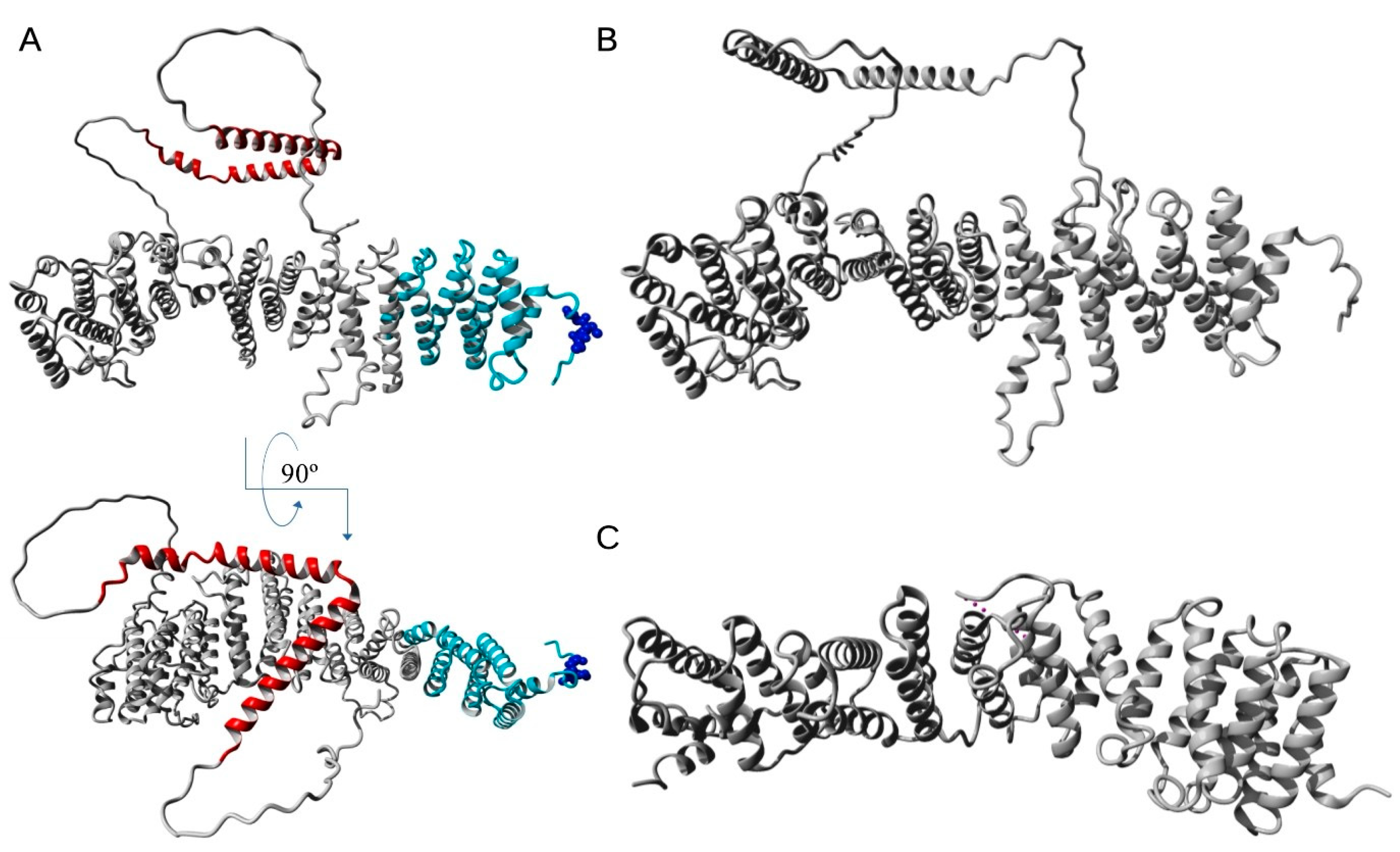
Examples of detailed model and experimental atomic structures of EFR3 proteins available in the Protein Data Bank are shown in Figure 2 (A-C). The crystal structure of the Efr3 protein was first proposed by Wu et al. in 2014 that were performed on the yeast, Saccharomyces cerevisiae protein, more precisely on the N-terminal fragment of the Efr3 protein (Efr3-N8–562) [51] except for the disordered loop containing residues 217–232 at 3.2 Å resolution (Figure 2 A, PDB ID: 4N5A) by using SAD (Single-wavelength Anomalous Dispersion method) with selenomethionine-substituted crystals for phasing. From their studies, it is known that the N-terminal fragment Efr3-N8-562 is predominantly α-helical, in which the first ~150 residues are folded in 8 helices (H1–H8) being similar ARM or HEAT motifs, and forming a superhelical VHS (Vps-27, Hrs and STAM) domain [52,53,54,55,56,57]. Residues 48-144 form an ARM (armadillo) motif [58] which consists of a right-handed superhelix formed of several α-helices, a characteristic feature of the EFR3 protein family. In contrast, the remaining part of the molecule comprises 19 alpha-helices being HEAT motifs. The entire molecule of Efr3-N8–562 forms an extended 120 nm rod stabilized via hydrophobic interactions of the helices of one repeat making contact with their counterparts in the neighboring repeats, which results in forming a continuous α-α-superhelix [59]. A conserved, basic patch at an N-terminal part of the molecule (VHS domain) was proven to be responsible for interactions with phosphatidyl inositols [51]. The authors suggest that these interactions are responsible for the attachment of Efr3 and its complexes with other proteins to the PM. Another basic patch occurs near the middle part of the studied molecule, by the loops joining helices 11-18. The abovementioned studies allowed the application of a sophisticated Alpha-Fold software to propose structural models of vertebrate EFR3 molecules (for example, the human EFR3A structural model is shown in Figure 2B (AlphaFold DB: AF-Q14156-F1) and EFR3B structure is shown in Figure 2C (AlphaFold DB: AF-Q9Y2G0-F1). As can be seen, the obtained models are remarkably similar to the original template molecule. From the first structural studies, it was proposed that the C-terminal part of the Efr3 molecule and its metazoan orthologs form mostly random coil structures [60,61]. However, cryo-EM, HDX-MS, and recent mutational studies of Suresh et al. [62,63] showed that the conserved middle C-terminal region of the EFR3A molecule (residues 724-787) forms a V-shaped structure composed of three α-helices which allows interaction with its partner proteins that allows PI4K interaction with the PM (see below par. 6.1. and Figure 4).

5. Post-Translational Modifications

5.1. S-Palmitoylation

S-palmitoylation is a well-known posttranslational modification catalyzed mainly by enzymes representing zinc-finger DHHC motif-containing protein family that is supposed to be responsible for numerous proteins' interaction with a membrane bilayer therefore subcellular localization of proteins in eukaryotic cells. S-palmitoylation could also be responsible for the stabilization of protein conformation permitting protein-protein interactions. It is also thought to play a role in several crucial signaling pathways [64,65]. The palmitoylation process of some proteins was found to be engaged in human pathologies, therefore palmitoylation inhibitors are considered potential therapeutics [66].
Vertebrate EFR3A is known to be palmitoylated. In the N-terminal region, it is easily detected a cluster of 3-4 cysteine residues (see Figure 1C) that are strong candidates for palmitoylation according to several in silico predicting tools, e.g. CSS-PALM [67] or found in the proteomic palmitoylation database [68]. EFR3B also has a triple cysteine motif (C5, C7, and C8), a target of palmitoylation. An identical/similar motif is present in C. elegans and D. melanogaster orthologs of EFR3. Both proteins were found to be metabolically radiolabeled with [3H]palmitate [16]. The arrangement of palmitoylated groups in EFR3B affects the interactions between EFR3B and transmembrane protein, TMEM150A [69]. Interestingly, the same authors found that this posttranslational modification in contrast to the other palmitoylated proteins is stable, i.e. in the case of EFR3B it was stable over several hours. Similarly, our attempt to pharmacologically inhibit EFR3A palmitoylation with 2-bromo-palmitate (2-BrP) in HeLa cells even for 48-hour treatment was unsuccessful (Trybus et al. – unpublished data). Data from mutational experiments indicate that the PM localization of both EFR3A and EFR3B depends on the presence of a palmitoylation motif at the N-terminal region of the proteins [16,70]. The latter authors also reported that a short 37 N-terminal amino acid residue fragment of EFR3A can target GFP protein to the membrane. This construct is retained in the Golgi network suggesting that other regions of this protein are responsible for further transport to the PM [16]. On the other hand, data on yeast Efr3 protein suggest stable PM localization despite the absence of an N-terminal ~140 amino acid residue segment containing 3-4 cysteine palmitoylation motif. We have to keep in mind that there are isoforms of EFR3A and EFR3B (isoforms 2) that do not have this cysteine motif (see Fig.1B). So far, we are unaware of existing experimental data on the localization of these isoforms in the PM.

5.2. Phosphorylation

According to the data reported in the PhosphoSitePlus database, 19 phosphorylation sites can be found in the EFR3A, including 3 tyrosine residues. At least 6 S/T residues are present within the short region between S680 and S738, including S694 detected as phosphorylated in numerous reports [71] and S738 in the helical region interacting with TTC7B and FAM126A (see above and [62]). In yeast, phosphorylation was found to inhibit the binding of Ypp-1 (ortholog of TTC7) and as a consequence recruitment of yeast PI4K homolog, Stt4 to the PM [51]. It should be mentioned that EFR3 orthologs and homologs differ in phosphorylation sites at the C-terminal region. Namely, although the number of annotated phosphorylation sites in the EFR3B homolog is similar, the particular positions in the sequence are not conserved except for the region between residues 688-738 [71]. In yeast Efr3 phosphorylation sites are located mostly within the C-terminal region, i.e. 23 of 25 S/T/Y residues are located downstream of position 580 and the phospho-cluster seems much wider than in vertebrates as 19 S/T/Y residues are located between residue 611 and 771.

5.3. Other Post-Translational Modifications

Both EFR3A and EFR3B are subject to post-translational modifications such as ubiquitination at K residues. In the PhosphoSitePlus database [71] the number of sites for this modification varies, from 9 out of 11 K residues in EFR3A to 3 out of 8 K residues in EFR3B. There are no available experimental data concerning the particular function of this modification. Also, there is no experimental data on the function of acetylation of 3 out of 8 K residues that were found to be a target of acetylation in EFR3B and a single K residue detected in EFR3A [71].

6. Functional Complexes

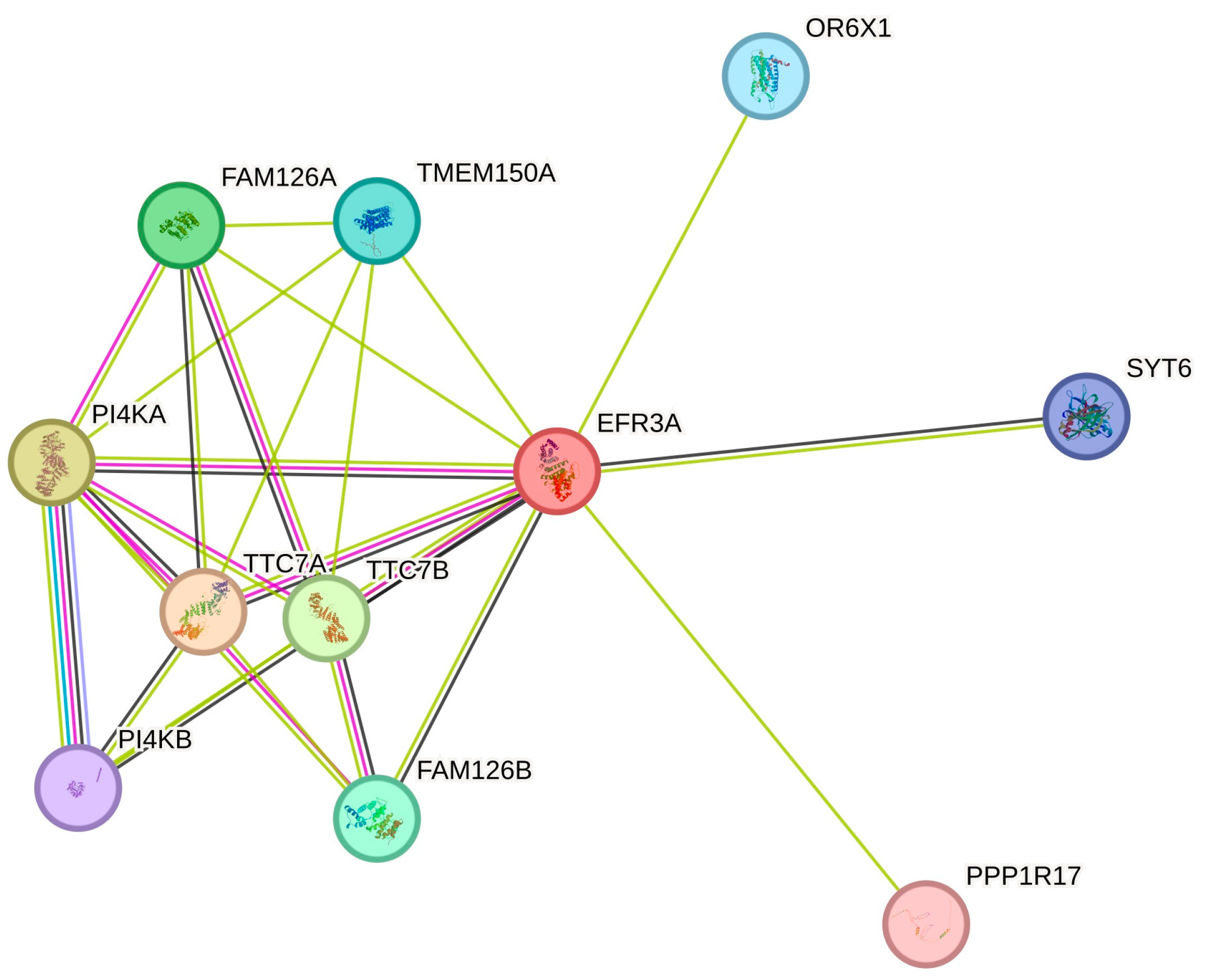
The interaction network of human EFR3 proteins has not been explored in great detail. STRING database shows only several experimentally confirmed partner proteins (Figure 3) for EFR3A. There are indications of numerous other interactions, but they still wait for further confirmation [72]. Interesting results were obtained using BioID proximity assay technology (review [73]). Using this technique on osteosarcoma cell line U2OS to study the proteome of focal adhesions Dong et al. found EFR3A as a new partner for kindlin-2, stress fiber and focal adhesion integrin regulating protein [74]. Using a similar approach Counter’s team discovered EFR3A as a partner of the KRAS oncogenic (G12V) mutant protein. Their further experiments documented the in vitro interaction of these proteins and that KO of EFR3A and EFR3B or PI4KA reduced cell proliferation signaling and colony formation of cultured cancer cells accompanied by reduced oncogenic KRAS localization at the PM due to the reduced content of PI(4)P and phosphatidylserine (PS). Moreover, they showed the reduction of KRAS-dependent cancer cell proliferation via PI4KA inhibition as Compound 7 (C7, PMID: 24366037) or Sineprevir, anti-Hepatitis C virus (known as PI4KA inhibitors) mislocalized KRAS from the PM indicating the potentiality of these compounds to be repurposed towards anti-cancer drugs [45].

6.1. PI4K Anchoring in the Plasma Membrane
The best known and the most important function of the yeast Efr3 protein (or EFR3A/B in humans) is the PM anchorage of phosphatidylinositol-4 kinase (PI4KA in humans or Stt4 in yeast), the key enzyme of the PM phosphoinositide metabolism [75,76,77]. It was found that EFR3A together with other proteins (see below) forms a PI4KA/Stt4 membrane-anchoring complex [16]. Thus, one of the best-known roles of EFR3 proteins is participation in the metabolism of phosphatidylinositol phosphates, in particular phosphatidylinositol 4-phosphate (PI(4)P), which is one of the most important membrane regulatory phospholipids.
Phosphatidyl inositol phosphates play a fundamental role in cellular signaling, being involved in the regulation of growth, and proliferation. migration, and survival (for recent review see e.g. [78]). Examples of known signaling pathways are numerous, starting from phosphatidyl inositol (3,4,5)-trisphosphate (PI(3,4,5)P3) and phosphatidyl inositol (4,5)-bisphosphate (PI(4,5P)2) that are the sources of diacylglycerol DAG and inositol trisphosphate IP3 through PI(3,4)P2 engaged in growth factor, mTOR, and AKT signaling to various PIP derivatives engaged in endocytosis. Phosphatidyl inositol phosphates are most abundant in the PM but are also present in the Golgi complex, the endosomal, and the lysosomal system [79,80]. As mentioned above, one of the key enzymes in the phosphatidyl inositol metabolism is the phosphatidylinositol 4-kinase (PI4KA in mammals or Stt4 in yeast) an enzyme that converts PI (phosphatidyl inositol) into PI4P. Both yeast and higher eukaryotic PI4Kinases are large proteins with a subunit molecular weight of 214 kDa (1900 amino acid residues in yeast) [81] and 240 kDa (2102 amino acid residues in humans)[82]. This enzyme was found essential for yeast cell survival but its deletion was rescuable at 1 M sorbitol according to its discoverer group [83]. However, other researchers working with different strain backgrounds found this enzyme essential under all conditions [84]. On the other hand, in C. albicans PI(4)P and thus PI4Kinase were found not necessary for survival but appeared indispensable for cell wall synthesis and infectivity [85].
The tetratricopeptide repeat domain 7 (TTC7A/B, [86,87]) are 858 and 848 amino acid residue proteins encoded by two paralog genes, located in chromosomes 2 and 14, respectively. Tetratricopeptide (TPR) domains are 34 amino acid residue repeating units forming two antiparallel α-helices separated by a turn that forms a structure resembling a spiraling staircase [86,87]. TTC7 (similar to yeast equivalent, Ypp1) is responsible for maintaining the integrity of the complex and is thought to be responsible for the correct folding of the complex [60,88]. Mutations in TTC7A, have been associated with the rare hereditary human disease, combined immunodeficiency with multiple intestinal atresias (CID-MIA) [89,90,91,92,93]. Mutations in TTC7B have also been inferred in the molecular basis of several disorders, e.g. hypomyelinating leukoencephalopathy [94],
Proteomic analysis of TCC7 protein partners showed that FAM126A/B, also known as hyccin, or HYCC1 (hyccin PI4KA lipid kinase complex subunit 1) belongs to the complex [60]. FAM 126A, a 521 amino acid residue protein is present only in higher eukaryotes and there is no ortholog protein/gene in S. cerevisiae. Mutations in the gene encoding this protein resulting in the absence or dysfunctional HYCC1 were reported to be connected with hypomyelination and congenital cataracts. Patients lacking the FAM126A protein and with L53P and C57R substitutions showed a reduction in the levels of PI4KA and its adapter proteins TTC7A/B and EFR3A. This suggests disorganization of the complex in the absence of FAM126A. A decrease in PI(4)P was also observed in fibroblasts from hypomyelination and congenital cataract patients [60,95,96]. It should be noted that the homologous gene, FAM126B/HYCC2 encodes the other member of the PI4 kinase complex paralog protein but there are no experimental details apart from the expression profile. However, a recent study on colorectal cancer indicates loss of expression of FAM126A in 7% of cases due to promoter hypermethylation. These cancer cells become dependent on FAM126B expression [97].
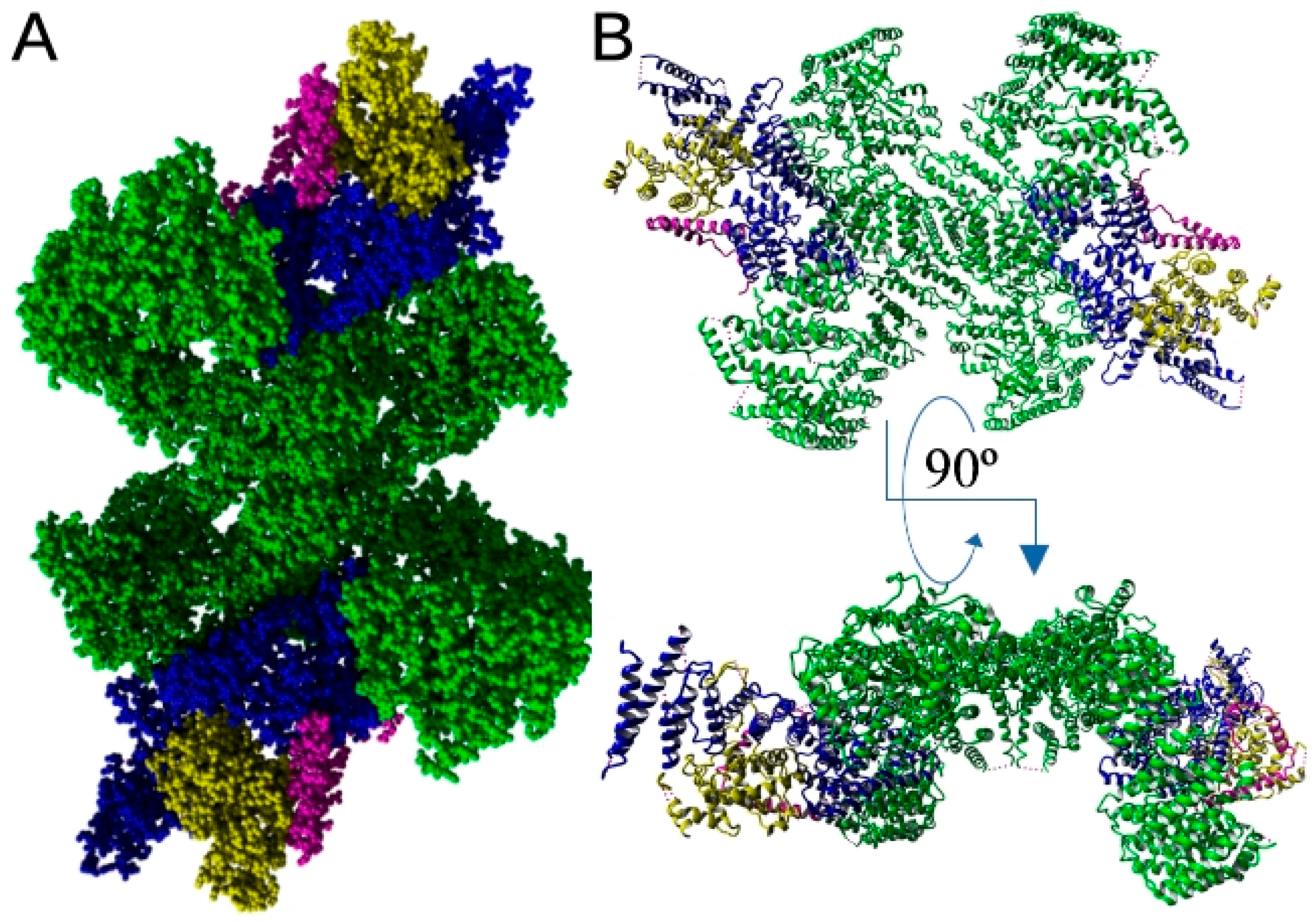
As was mentioned, PI4KA/Stt4 in eukaryotic cells is anchored to the PM by the evolutionarily conserved giant protein complex containing TTC7A/B (or Ypp1), FAM126A [60], and EFR3A/B (Efr3 in yeast) [88]. Data from cryo-EM analysis of the structure (at 3.6Å resolution) showed that 700 kDa super-assembly is formed of heterotrimers assembled from PI4KA, TTC7, and FAM126 [60,98]. The complex (also called complex I) has a flat surface perfectly adapted to the PM bilayer interface. Catalytic sites of the kinase are directed towards PM-localized PI [61]. It is suggested that interaction between PI4KA and TTC7/FAM126 helps to stabilize the conformation of the PI4KA and to enable the formation of an interaction surface with the membrane, including the kinase active sites. The conserved common surface in TTC7/FAM126 parallel to the PI4KA membrane interaction surface serves as a docking site for the abovementioned C-terminally located, V-shaped domain of EFR3 which is responsible for PM attachment of the complex [61,62,88] (Figure 4).
Figure 4. Full atom or (C) secondary structure representation PI4KA complex bound to C-terminus of EFR3A as determined via electron microscopy with 3,65 A resolution (PDB ID: 9BAX). Green - two molecules of PI4Kalpha that form central tandem; blue - TTC7B; yellow - FAM126; magenta - C-terminus of EFR3A. Structures rendered with YASARA [134].
Preprints 147776 g004
There is also an alternative way to connect PI4KA to PM via complex II. Namely, this is mediated by TMEM150, a conserved mammalian ortholog of the yeast Sfk1 protein belonging to the TMEM150/FRAG1/DRAM family, which was found to substitute TTC7 without changing the localization of PI4KA or EFR3A in the PM [99]. However, attachment to TMEM150, at least in the case of EFR3B homolog, depends on its palmitoylation pattern. More specifically, the form of EFR3B triple palmitoylated on residues C5, C7, and C8 or double palmitoylated on residues C5 and C7 or C8 forms complex I occurring in the lo region and is responsible for the synthesis of PI(4)P and PI(4,5)P2 in these domains. Double palmitoylation of EFR3B at residues C7 and C8 enables its interaction with TMEM150A and the formation of complex II and the associated relocation of TMEM150A from lo to ld and the synthesis of PI(4)P and PI(4,5)P2 in the ld PM regions [69]. It is very likely that a similar mechanism governs switching between alternative protein complexes and therefore PM domains by EFR3A but it remains to be discovered.

6.2. EFRA Possibly Plays a Role as Membrane Raft Organizer—Interaction with Flotillin-2

PMs of living cells are characterized by several physicochemical parameters, e.g. phase state, mobility of component molecules, and mechanical properties. Phase state behavior of the PM is characterized by lateral heterogeneity as was demonstrated via a variety of biophysical and biochemical methods. The existence of membrane (lipid) rafts is one of the best-known forms of this heterogeneity first proposed by Simons and Ikonen in 1997 [100]. The basic assemblies, called resting-state rafts are cholesterol-enriched, more ordered domains, that are small (~20 nm in diameter), dynamic (Ʈ1/2 ~1 sec), and contain a set of characteristic proteins (for reviews see e.g. [101,102,103]).
Specific set of membrane proteins, including membrane proteins belonging to the SPFH family (stomatin/prohibitin/flotillin/HflK), such as raft scaffold proteins flotillin-1 and -2, stomatin or stomatin-like protein seem to be permanent components of membrane rafts [104]. These proteins share a common feature: they associate with raft domains, possibly through cholesterol-binding and/or oligomerization [105,106]. Besides the mentioned proteins, rafts include also other palmitoylated and transmembrane proteins and GPI-anchored proteins (for a review see [107,108]). In general, raft domain(s) are engaged in many physiological processes underlying various functions of organisms, such as numerous signal transduction pathways [109,110], several innate and adaptive immune responses, and well-known host-pathogen interactions (e.g. [111,112]), neoplasia (e.g. [113,114,115,116]), and other pathologies, in particular neuropathologies such as atherosclerosis and Alzheimer’s disease [117,118].
Our team is interested in the molecular mechanism(s) of resting state raft organization and its regulation. The idea is that these mechanisms are to a large extent, related to protein-protein interactions [101,119], particularly those involving flotillins and other palmitoylated proteins. We have previously found that MPP1 (membrane palmitoylated protein 1, for review, see [120]) is involved in erythroid cells’ membrane raft organization and regulation in a palmitoylation-dependent manner. Based on experiments on erythroid cell line HEL with MPP1 KnD, on erythrocyte membranes and recombinant proteins, and using a variety of biochemical and biophysical methods we discovered that MPP1 may play a key role in resting state membrane raft organization and regulation in erythroid cells. This conclusion was based on three major sets of observations. Firstly, pharmacological inhibition of palmitoylation or KnD of the MPP1 gene led to the decreased membrane order and changed membrane probe mobility [121,122,123]. Secondly, MPP1-knockdown affected the activation of MAP-kinase signaling via raft-dependent tyrosine kinase receptors, particularly, from insulin receptor [121,124]. The signal inhibition occurred at the level of H-Ras, as GDP-to-GTP exchange upon insulin treatment was not observed. Moreover, FLIM-FRET microscopy revealed impaired interaction of H-Ras with Raf (effector) in insulin-treated MPP1 KnD cells [117]. Thirdly, MPP1 in the erythrocyte membrane was found to bind the raft-marker proteins, flotillin-1 and flotillin-2 [125]. These proteins are found in high molecular-weight complexes obtained after chemical cross-linking in native erythrocyte membranes and their presence was shown to be independent of the well-known protein 4.1-spectrin-actin-based complexes of MPP1. These interactions were confirmed via co-immunoprecipitation, pull-down, overlay, and proximity assays. Moreover, our kinetics studies by using the surface plasmon resonance (SPR) method indicate high affinity binding to flotillin-1 (KD = 18.1 + 2.4 nM) and flotillin-2 (KD = 24.8 + 6 nM). Further studies on recombinant domains of MPP1 binding to flotillins indicate that a short sequence of ~40 amino acid residues between domains D5 and SH3 may be responsible for these interactions [126].
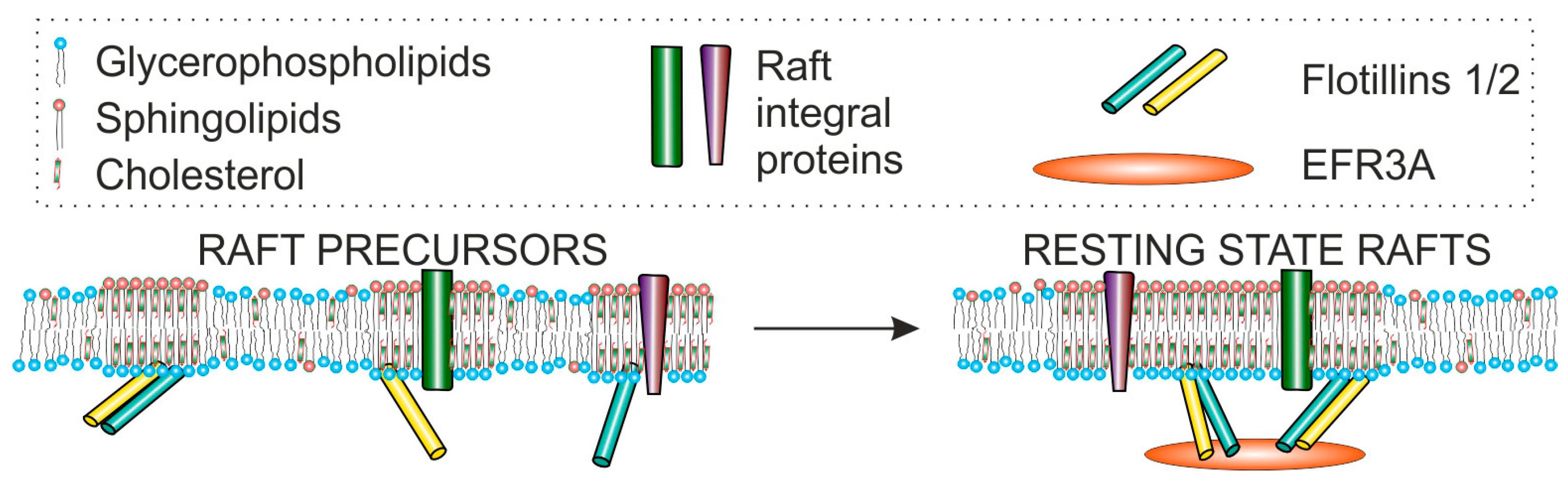
On the other hand, MPP1 is not expressed at high levels in most of the cell lines of mammalian origin we examined [119]. Our recent studies on HeLa cells were inspired by the idea that other protein(s) may play a role in resting state raft organization and regulation via interaction with raft scaffolding proteins, which are flotillins [127]. We first used a pull-down approach in which flotillin-2 was immobilized on a Sepharose resin and identified bound DRM (detergent-resistant membrane) fraction proteins via MS/MS technique. DRMs are considered a biochemical representation of membrane rafts, a kind of “read-out of whether a protein is likely to associate with rafts” [128]. Among several proteins bound to the resin, EFR3A appeared as a strong putative flotillin-2 partner. This result was confirmed via immunodetection of EFR3A and co-immunoprecipitation. The same pull-down results were obtained on several other cells, e.g. LNCaP and PC-3. EFR3A was present in the DRM fraction and this presence was cholesterol dependent. Further experiments indicated a substantial decrease in PM order and change in membrane raft probe mobility as revealed via FLIM and svFCS of living HeLa cells with an EFR3A KnD. Moreover, changes in membrane fluidity were observed also in the case of giant PM vesicles (GPMVs) which are supposed to be membrane skeleton and cytoskeleton proteins-free [129]. Moreover, a role of raft-associated EFR3A in cell signaling could be expected, as EGF receptor (EGFR) function is known to depend on raft association [130] and it depends on EFR3A cellular status. Indeed, cells with a decreased level of that protein showed disturbed phosphorylation of EGFR and PLCγ1 (phospholipase Cγ1) upon stimulation with EGF. A similar effect was observed upon cholesterol depletion via treatment of wild-type HeLa cells with MβCD [127]. In light of the above-referred study, we may suggest that another role of EFR3A was uncovered. Namely, EFR3A may induce flotillin(s) and other protein and lipid components oligomerization and, as a result resting state raft formation (Figure 5). However, we should note, that further studies should be carried out to build a complete picture, also in the light of current discovery of flotillin structure in the membrane environment [131]. The interaction of flotillins with EFR3A in vitro should be characterized and reconstitution studies to confirm the effect of the protein complex on the physical properties of the membrane should provide more evidence to support our model.

7. Concluding Remarks and Prospects

This review summarizes the information regarding the still poorly understood EFR3A protein and its encoding gene. Most data relate to the role of this protein as an element of the PI4K complex responsible for its anchoring to the plasma membrane. However, it is interesting what is the role of isoform 2 of both EFR3 paralog proteins which neither have hydrophobic cluster residues nor are palmitoylated. Data from studies using the BioID technique encourage hypothesizing on diverse physiological roles, especially those related to the role of EFR3A interactions with the mutated KRAS protein. It seems that the data from our laboratory regarding the role of this protein in the organization and regulation of membrane rafts opens a new field of research. When it comes to the major functions of this protein in the cell, many questions arise, and the main one seems to be whether the formation of the PI4KA docking complex in the plasmalemma is related to the function of the "raft organizer". However, we need to wait for further research as the experimental data are still a bit incomplete.

Author Contributions

All authors contributed to this manuscript and accepted its final shape.

Funding

This work was supported by the National Science Centre, Poland, projects No. 2020/37/B/NZ1/01106 (AFS).

Institutional Review Board Statement

Not applicable

Informed Consent Statement

Not applicable.

Conflicts of Interest

The authors declare no conflicts of interest..

Abbreviations

The following abbreviations are used in this manuscript:
ACS acute coronary syndromes
ARM armadillo
ASD autism spectrum disorders
AT1R angiotensin II receptor type 1
BDNF brain-derived neurotrophic factor
CAD coronary artery disease
CID-MIA combined immunodeficiency with multiple intestinal atresias
CRC colorectal cancer
DAG diacylglycerol
DRM detergent-resistant membrane
EFR3A eighty five requiring 3
GPMVs giant PM vesicles
IRV insulin-responding vesicles
NPC nasopharyngeal carcinoma
PDAC pancreatic ductal adenocarcinoma
PI(3,4,5)P3 phosphatidyl inositol (3,4,5)-trisphosphate
PI(4,5P)2 phosphatidyl inositol (4,5)-bisphosphate
PI4KA phosphatidylinositol 4-kinase alpha
PLCγ1 phospholipase Cγ1
PM plasma membrane
SAD Single-wavelength Anomalous Dispersion
SNP single nucleotide polymorphism
TRP transient receptor potential
TTC7 tetratricopeptide repeat domain 7

References

  1. Lenburg, ME,O'Shea, EK, Genetic evidence for a morphogenetic function of the Saccharomyces cerevisiae Pho85 cyclin-dependent kinase. Genetics. 2001. 157(1): p. 39-51. [CrossRef]
  2. Faulkner, DL, Dockendorff, TC,Jongens, TA, Clonal analysis of cmp44E, which encodes a conserved putative transmembrane protein, indicates a requirement for cell viability in Drosophila. Dev Genet. 1998. 23(4): p. 264-274. [CrossRef]
  3. Huang, FD, Woodruff, E, Mohrmann, R,Broadie, K, Rolling blackout is required for synaptic vesicle exocytosis. J Neurosci. 2006. 26(9): p. 2369-2379. [CrossRef]
  4. https://www.ncbi.nlm.nih.gov/protein/.
  5. https://www.ebi.ac.uk/interpro/protein/UniProt/Q14156/entry/pfam/#table.
  6. Noack, LC, Bayle, V, Armengot, L, Rozier, F, Mamode-Cassim, A, Stevens, FD, Caillaud, MC, Munnik, T, Mongrand, S, Pleskot, RJaillais, Y, A nanodomain-anchored scaffolding complex is required for the function and localization of phosphatidylinositol 4-kinase alpha in plants. Plant Cell. 2022. 34(1): p. 302-332. [CrossRef]
  7. AceView: a comprehensive cDNA-supported gene and transcripts annotation, GB, 7(Suppl 1):S12.
  8. https://www.ncbi.nlm.nih.gov/gene/22979.
  9. Liu, CH, Bollepalli, MK, Long, SV, Asteriti, S, Tan, J, Brill, JA,Hardie, RC, Genetic dissection of the phosphoinositide cycle in Drosophila photoreceptors. J Cell Sci. 2018. 131(8). [CrossRef]
  10. Hardie, RC,Juusola, M, Phototransduction in Drosophila. Curr Opin Neurobiol. 2015. 34: p. 37-45. [CrossRef]
  11. Montell, C, Drosophila visual transduction. Trends Neurosci. 2012. 35(6): p. 356-363. [CrossRef]
  12. Hardie, RC, Liu, CH, Randall, AS,Sengupta, S, In vivo tracking of phosphoinositides in Drosophila photoreceptors. J Cell Sci. 2015. 128(23): p. 4328-4340. [CrossRef]
  13. Balakrishnan, SS, Basu, U, Shinde, D, Thakur, R, Jaiswal, M,Raghu, P, Regulation of PI4P levels by PI4KIIIalpha during G-protein-coupled PLC signaling in Drosophila photoreceptors. J Cell Sci. 2018. 131(15).
  14.   https://www.ncbi.nlm.nih.gov/datasets/gene/id/23167.
  15. Vijayakrishnan, N, Phillips, SE,Broadie, K, Drosophila rolling blackout displays lipase domain-dependent and -independent endocytic functions downstream of dynamin. Traffic. 2010. 11(12): p. 1567-1578. [CrossRef]
  16. Bojjireddy, N, Guzman-Hernandez, ML, Reinhard, NR, Jovic, M,Balla, T, EFR3s are palmitoylated plasma membrane proteins that control responsiveness to G-protein-coupled receptors. J Cell Sci. 2015. 128(1): p. 118-128. [CrossRef]
  17. Gironacci, MM,Bruna-Haupt, E, Unraveling the crosstalk between renin-angiotensin system receptors. Acta Physiol (Oxf). 2024. 240(5): p. e14134. [CrossRef]
  18. Forrester, SJ, Booz, GW, Sigmund, CD, Coffman, TM, Kawai, T, Rizzo, V, Scalia, R,Eguchi, S, Angiotensin II Signal Transduction: An Update on Mechanisms of Physiology and Pathophysiology. Physiol Rev. 2018. 98(3): p. 1627-1738. [CrossRef]
  19. Guo, DF, Sun, YL, Hamet, P,Inagami, T, The angiotensin II type 1 receptor and receptor-associated proteins. Cell Res. 2001. 11(3): p. 165-180. [CrossRef]
  20. Nadel, G, Yao, Z, Hacohen-Lev-Ran, A, Wainstein, E, Maik-Rachline, G, Ziv, T, Naor, Z, Admon, A,Seger, R, Phosphorylation of PP2Ac by PKC is a key regulatory step in the PP2A-switch-dependent AKT dephosphorylation that leads to apoptosis. Cell Commun Signal. 2024. 22(1): p. 154. [CrossRef]
  21. Streb, H, Irvine, RF, Berridge, MJ,Schulz, I, Release of Ca2+ from a nonmitochondrial intracellular store in pancreatic acinar cells by inositol-1,4,5-trisphosphate. Nature. 1983. 306(5938): p. 67-69. [CrossRef]
  22. van Gerwen, J, Shun-Shion, AS,Fazakerley, DJ, Insulin signalling and GLUT4 trafficking in insulin resistance. Biochem Soc Trans. 2023. 51(3): p. 1057-1069. [CrossRef]
  23. Bogan, JS, Regulation of glucose transporter translocation in health and diabetes. Annu Rev Biochem. 2012. 81: p. 507-532. [CrossRef]
  24. Geiser, A, Foylan, S, Tinning, PW, Bryant, NJ,Gould, GW, GLUT4 dispersal at the plasma membrane of adipocytes: a super-resolved journey. Biosci Rep. 2023. 43(10). [CrossRef]
  25. Sun, Y, Jaldin-Fincati, J, Liu, Z, Bilan, PJ,Klip, A, A complex of Rab13 with MICAL-L2 and alpha-actinin-4 is essential for insulin-dependent GLUT4 exocytosis. Mol Biol Cell. 2016. 27(1): p. 75-89. [CrossRef]
  26. Stenkula, KG, Lizunov, VA, Cushman, SW,Zimmerberg, J, Insulin controls the spatial distribution of GLUT4 on the cell surface through regulation of its postfusion dispersal. Cell Metab. 2010. 12(3): p. 250-259. [CrossRef]
  27. Wieczorke, R, Dlugai, S, Krampe, S,Boles, E, Characterisation of mammalian GLUT glucose transporters in a heterologous yeast expression system. Cell Physiol Biochem. 2003. 13(3): p. 123-134. [CrossRef]
  28. Boles, E,Oreb, M, A Growth-Based Screening System for Hexose Transporters in Yeast. Methods Mol Biol. 2018. 1713: p. 123-135.
  29. Schmidl, S, Tamayo Rojas, SA, Iancu, CV, Choe, JY,Oreb, M, Functional Expression of the Human Glucose Transporters GLUT2 and GLUT3 in Yeast Offers Novel Screening Systems for GLUT-Targeting Drugs. Front Mol Biosci. 2020. 7: p. 598419. [CrossRef]
  30. Koester, AM, Geiser, A, Laidlaw, KME, Morris, S, Cutiongco, MFA, Stirrat, L, Gadegaard, N, Boles, E, Black, HL, Bryant, NJGould, GW, EFR3 and phosphatidylinositol 4-kinase IIIalpha regulate insulin-stimulated glucose transport and GLUT4 dispersal in 3T3-L1 adipocytes. Biosci Rep. 2022. 42(7).
  31. Koester, AM, Geiser, A, Bowman, PRT, van de Linde, S, Gadegaard, N, Bryant, NJ,Gould, GW, GLUT4 translocation and dispersal operate in multiple cell types and are negatively correlated with cell size in adipocytes. Sci Rep. 2022. 12(1): p. 20535. [CrossRef]
  32. Qian, Q, Liu, Q, Zhou, D, Pan, H, Liu, Z, He, F, Ji, S, Wang, D, Bao, W, Liu, X et al., Brain-specific ablation of Efr3a promotes adult hippocampal neurogenesis via the brain-derived neurotrophic factor pathway. FASEB J. 2017. 31(5): p. 2104-2113. [CrossRef]
  33. Nie, C, Hu, H, Shen, C, Ye, B, Wu, H,Xiang, M, Expression of EFR3A in the mouse cochlea during degeneration of spiral ganglion following hair cell loss. PLoS One. 2015. 10(1): p. e0117345. [CrossRef]
  34. Hu, H, Ma, Y, Ye, B, Wang, Q, Yang, T, Lv, J, Shi, J, Wu, H,Xiang, M, The role of Efr3a in age-related hearing loss. Neuroscience. 2017. 341: p. 1-8. [CrossRef]
  35. Hu, H, Ye, B, Zhang, L, Wang, Q, Liu, Z, Ji, S, Liu, Q, Lv, J, Ma, Y, Xu, Y et al., Efr3a Insufficiency Attenuates the Degeneration of Spiral Ganglion Neurons after Hair Cell Loss. Front Mol Neurosci. 2017. 10: p. 86. [CrossRef]
  36. Gupta, AR, Pirruccello, M, Cheng, F, Kang, HJ, Fernandez, TV, Baskin, JM, Choi, M, Liu, L, Ercan-Sencicek, AG, Murdoch, JD et al., Rare deleterious mutations of the gene EFR3A in autism spectrum disorders. Mol Autism. 2014. 5: p. 31. [CrossRef]
  37. Zhao, K, Bai, X, Wang, X, Cao, Y, Zhang, L, Li, W,Wang, S, Insight on the hub gene associated signatures and potential therapeutic agents in epilepsy and glioma. Brain Res Bull. 2023. 199: p. 110666. [CrossRef]
  38. He, Y, Wei, M, Wu, Y, Qin, H, Li, W, Ma, X, Cheng, J, Ren, J, Shen, Y, Chen, Z et al., Amyloid beta oligomers suppress excitatory transmitter release via presynaptic depletion of phosphatidylinositol-4,5-bisphosphate. Nat Commun. 2019. 10(1): p. 1193.
  39. Wei, X, Wang, J, Yang, E, Zhang, Y, Qian, Q, Li, X, Huang, F,Sun, B, Efr3b is essential for social recognition by modulating the excitability of CA2 pyramidal neurons. Proc Natl Acad Sci U S A. 2024. 121(3): p. e2314557121. [CrossRef]
  40. Sun, J, Shen, C, Jin, X, Li, X, and Wu, D. , Mir-367 is downregulated in coronary artery disaese and its overexpression exerts anti-inflammatory effect via inhibition of the NF- κB-activated inflammatory pathway. . International Journal of Clinical and Experimental Patholology 2017. 10(4): p. 4047-4057.
  41. Liu X, XH, Xu H, Geng Q, Mak W-H, Ling F, Su Z, Yang F, Zhang T, Chen J, Yang H, Wang J, Zhang X, Xu X, Jia H, Zhang Z, Liu X, and Zhong S. , New genetic variants associated with major adverse cardiovascular events in patients with acute coronary syndromes and treated with clopidogrel and aspirin. Pharmacogen. J. 2021. 21(6): p. 664-672.
  42. Zhou, D, Yang, L, Zheng, L, Ge, W, Li, D, Zhang, Y, Hu, X, Gao, Z, Xu, J, Huang, Y et al., Exome capture sequencing of adenoma reveals genetic alterations in multiple cellular pathways at the early stage of colorectal tumorigenesis. PLoS One. 2013. 8(1): p. e53310. [CrossRef]
  43. Adhikari, H, Kattan, WE, Kumar, S, Zhou, P, Hancock, JF,Counter, CM, Oncogenic KRAS is dependent upon an EFR3A-PI4KA signaling axis for potent tumorigenic activity. Nat Commun. 2021. 12(1): p. 5248. [CrossRef]
  44. Luo, J, KRAS mutation in pancreatic cancer. Semin Oncol. 2021. 48(1): p. 10-18. [CrossRef]
  45. Kattan, WE, Liu, J, Montufar-Solis, D, Liang, H, Brahmendra Barathi, B, van der Hoeven, R, Zhou, Y,Hancock, JF, Components of the phosphatidylserine endoplasmic reticulum to plasma membrane transport mechanism as targets for KRAS inhibition in pancreatic cancer. Proc Natl Acad Sci U S A. 2021. 118(51). [CrossRef]
  46. Yang, J, Gong, Y, Jiang, Q, Liu, L, Li, S, Zhou, Q, Huang, F,Liu, Z, Circular RNA Expression Profiles in Nasopharyngeal Carcinoma by Sequence Analysis. Front Oncol. 2020. 10: p. 601. [CrossRef]
  47. Jiang, P,Xia, B, Circular RNA EFR3A promotes nasopharyngeal carcinoma progression through modulating the miR-654-3p/EFR3A axis. Cell Mol Biol (Noisy-le-grand). 2023. 69(12): p. 111-117. [CrossRef]
  48. Conn, VM, Chinnaiyan, AM,Conn, SJ, Circular RNA in cancer. Nat Rev Cancer. 2024. Online ahead of print.
  49. Toledo, CM, Ding, Y, Hoellerbauer, P, Davis, RJ, Basom, R, Girard, EJ, Lee, E, Corrin, P, Hart, T, Bolouri, H et al., Genome-wide CRISPR-Cas9 Screens Reveal Loss of Redundancy between PKMYT1 and WEE1 in Glioblastoma Stem-like Cells. Cell Rep. 2015. 13(11): p. 2425-2439. [CrossRef]
  50. Hoellerbauer, P, Biery, MC, Arora, S, Rao, Y, Girard, EJ, Mitchell, K, Dighe, P, Kufeld, M, Kuppers, DA, Herman, JA et al., Functional genomic analysis of adult and pediatric brain tumor isolates. bioRxiv. 2023.
  51. Wu, X, Chi, RJ, Baskin, JM, Lucast, L, Burd, CG, De Camilli, P,Reinisch, KM, Structural insights into assembly and regulation of the plasma membrane phosphatidylinositol 4-kinase complex. Dev Cell. 2014. 28(1): p. 19-29. [CrossRef]
  52. Misra, S, Beach, BM,Hurley, JH, Structure of the VHS domain of human Tom1 (target of myb 1): insights into interactions with proteins and membranes. Biochemistry. 2000. 39(37): p. 11282-11290. [CrossRef]
  53. Boal, F, Mansour, R, Gayral, M, Saland, E, Chicanne, G, Xuereb, JM, Marcellin, M, Burlet-Schiltz, O, Sansonetti, PJ, Payrastre, BTronchere, H, TOM1 is a PI5P effector involved in the regulation of endosomal maturation. J Cell Sci. 2015. 128(4): p. 815-827. [CrossRef]
  54. Mao, Y, Nickitenko, A, Duan, X, Lloyd, TE, Wu, MN, Bellen, H,Quiocho, FA, Crystal structure of the VHS and FYVE tandem domains of Hrs, a protein involved in membrane trafficking and signal transduction. Cell. 2000. 100(4): p. 447-456. [CrossRef]
  55. https://doi.org/10.2210/pdb1ELK/pdb.
  56. Lohi, O, Poussu, A, Mao, Y, Quiocho, F,Lehto, VP, VHS domain -- a longshoreman of vesicle lines. FEBS Lett. 2002. 513(1): p. 19-23.
  57. Andrade, MA, Petosa, C, O'Donoghue, SI, Muller, CW,Bork, P, Comparison of ARM and HEAT protein repeats. J Mol Biol. 2001. 309(1): p. 1-18. [CrossRef]
  58. (http://pfam.xfam.org/).
  59. Kippert, F,Gerloff, DL, Highly sensitive detection of individual HEAT and ARM repeats with HHpred and COACH. PLoS One. 2009. 4(9): p. e7148. [CrossRef]
  60. Baskin, JM, Wu, X, Christiano, R, Oh, MS, Schauder, CM, Gazzerro, E, Messa, M, Baldassari, S, Assereto, S, Biancheri, R et al., The leukodystrophy protein FAM126A (hyccin) regulates PtdIns(4)P synthesis at the plasma membrane. Nat Cell Biol. 2016. 18(1): p. 132-138. [CrossRef]
  61. Lees, JA, Zhang, Y, Oh, MS, Schauder, CM, Yu, X, Baskin, JM, Dobbs, K, Notarangelo, LD, De Camilli, P, Walz, TReinisch, KM, Architecture of the human PI4KIIIalpha lipid kinase complex. Proc Natl Acad Sci U S A. 2017. 114(52): p. 13720-13725.
  62. Suresh, S, Shaw, AL, Pemberton, JG, Scott, MK, Harris, NJ, Parson, MA, Jenkins, ML, Rohilla, P, Alejandro Alvarez, P, Balla, T et al., Molecular basis for plasma membrane recruitment of PI4KA by EFR3. bioRxiv. 2024. [CrossRef]
  63. Suresh, S, Shaw, AL, Pemberton, JG, Scott, MK, Harris, NJ, Parson, MAH, Jenkins, ML, Rohilla, P, Alvarez-Prats, A, Balla, T et al., Molecular basis for plasma membrane recruitment of PI4KA by EFR3. Sci Adv. 2024. 10(51): p. eadp6660. [CrossRef]
  64. Korycka, J, Lach, A, Heger, E, Boguslawska, DM, Wolny, M, Toporkiewicz, M, Augoff, K, Korzeniewski, J,Sikorski, AF, Human DHHC proteins: a spotlight on the hidden player of palmitoylation. Eur J Cell Biol. 2012. 91(2): p. 107-117. [CrossRef]
  65. Tabaczar, S, Czogalla, A, Podkalicka, J, Biernatowska, A,Sikorski, AF, Protein palmitoylation: Palmitoyltransferases and their specificity. Exp Biol Med (Maywood). 2017. 242(11): p. 1150-1157. [CrossRef]
  66. Pei, S,Piao, HL, Exploring Protein S-Palmitoylation: Mechanisms, Detection, and Strategies for Inhibitor Discovery. ACS Chem Biol. 2024. 19(9): p. 1868-1882.
  67. Ren, J, Wen, L, Gao, X, Jin, C, Xue, Y,Yao, X, CSS-Palm 2.0: an updated software for palmitoylation sites prediction. Protein Eng Des Sel. 2008. 21(11): p. 639-644. [CrossRef]
  68. Blanc, M, David, FPA,van der Goot, FG, SwissPalm 2: Protein S-Palmitoylation Database. Methods Mol Biol. 2019. 2009: p. 203-214.
  69. Batrouni, AG, Bag, N, Phan, HT, Baird, BA,Baskin, JM, A palmitoylation code controls PI4KIIIalpha complex formation and PI(4,5)P2 homeostasis at the plasma membrane. J Cell Sci. 2022. 135(5).
  70. Nakatsu, F, Baskin, JM, Chung, J, Tanner, LB, Shui, G, Lee, SY, Pirruccello, M, Hao, M, Ingolia, NT, Wenk, MRDe Camilli, P, PtdIns4P synthesis by PI4KIIIalpha at the plasma membrane and its impact on plasma membrane identity. J Cell Biol. 2012. 199(6): p. 1003-1016.
  71. Hornbeck, PV, Zhang, B, Murray, B, Kornhauser, JM, Latham, V,Skrzypek, E, PhosphoSitePlus, 2014: mutations, PTMs and recalibrations. Nucleic Acids Res. 2015. 43(Database issue): p. D512-520. [CrossRef]
  72. https://string-db.org/.
  73. Roux, KJ, Kim, DI, Burke, B,May, DG, BioID: A Screen for Protein-Protein Interactions. Curr Protoc Protein Sci. 2018. 91: p. 19 23 11-19 23 15. [CrossRef]
  74. Dong, JM, Tay, FP, Swa, HL, Gunaratne, J, Leung, T, Burke, B,Manser, E, Proximity biotinylation provides insight into the molecular composition of focal adhesions at the nanometer scale. Sci Signal. 2016. 9(432): p. rs4. [CrossRef]
  75. Falkenburger, BH, Jensen, JB, Dickson, EJ, Suh, BC,Hille, B, Phosphoinositides: lipid regulators of membrane proteins. J Physiol. 2010. 588(Pt 17): p. 3179-3185. [CrossRef]
  76. Katan, M,Cockcroft, S, Phosphatidylinositol(4,5)bisphosphate: diverse functions at the plasma membrane. Essays Biochem. 2020. 64(3): p. 513-531. [CrossRef]
  77. Audhya, A,Emr, SD, Stt4 PI 4-kinase localizes to the plasma membrane and functions in the Pkc1-mediated MAP kinase cascade. Dev Cell. 2002. 2(5): p. 593-605. [CrossRef]
  78. Posor, Y, Jang, W,Haucke, V, Phosphoinositides as membrane organizers. Nat Rev Mol Cell Biol. 2022. 23(12): p. 797-816. [CrossRef]
  79. Ray, J, Sapp, DG,Fairn, GD, Phosphatidylinositol 3,4-bisphosphate: Out of the shadows and into the spotlight. Curr Opin Cell Biol. 2024. 88: p. 102372. [CrossRef]
  80. Hammond, GR, Machner, MP,Balla, T, A novel probe for phosphatidylinositol 4-phosphate reveals multiple pools beyond the Golgi. J Cell Biol. 2014. 205(1): p. 113-126. [CrossRef]
  81. Salazar, AN, Gorter de Vries, AR, van den Broek, M, Wijsman, M, de la Torre Cortes, P, Brickwedde, A, Brouwers, N, Daran, JG,Abeel, T, Nanopore sequencing enables near-complete de novo assembly of Saccharomyces cerevisiae reference strain CEN.PK113-7D. FEMS Yeast Res. 2017. 17(7). [CrossRef]
  82. Wong, K,Cantley, LC, Cloning and characterization of a human phosphatidylinositol 4-kinase. J Biol Chem. 1994. 269(46): p. 28878-28884. [CrossRef]
  83. Yoshida, S, Ohya, Y, Goebl, M, Nakano, A,Anraku, Y, A novel gene, STT4, encodes a phosphatidylinositol 4-kinase in the PKC1 protein kinase pathway of Saccharomyces cerevisiae. J Biol Chem. 1994. 269(2): p. 1166-1172. [CrossRef]
  84. Cutler, NS, Heitman, J,Cardenas, ME, STT4 is an essential phosphatidylinositol 4-kinase that is a target of wortmannin in Saccharomyces cerevisiae. J Biol Chem. 1997. 272(44): p. 27671-27677. [CrossRef]
  85. Garcia-Rodas, R, Labbaoui, H, Orange, F, Solis, N, Zaragoza, O, Filler, SG, Bassilana, M,Arkowitz, RA, Plasma Membrane Phosphatidylinositol-4-Phosphate Is Not Necessary for Candida albicans Viability yet Is Key for Cell Wall Integrity and Systemic Infection. mBio. 2021. 13(1): p. e0387321.
  86. Scheufler, C, Brinker, A, Bourenkov, G, Pegoraro, S, Moroder, L, Bartunik, H, Hartl, FU,Moarefi, I, Structure of TPR domain-peptide complexes: critical elements in the assembly of the Hsp70-Hsp90 multichaperone machine. Cell. 2000. 101(2): p. 199-210.
  87. Izert, MA, Szybowska, PE, Gorna, MW,Merski, M, The Effect of Mutations in the TPR and Ankyrin Families of Alpha Solenoid Repeat Proteins. Front Bioinform. 2021. 1: p. 696368. [CrossRef]
  88. Baird, D, Stefan, C, Audhya, A, Weys, S,Emr, SD, Assembly of the PtdIns 4-kinase Stt4 complex at the plasma membrane requires Ypp1 and Efr3. J Cell Biol. 2008. 183(6): p. 1061-1074. [CrossRef]
  89. Agarwal, NS, Northrop, L, Anyane-Yeboa, K, Aggarwal, VS, Nagy, PL,Demirdag, YY, Tetratricopeptide repeat domain 7A (TTC7A) mutation in a newborn with multiple intestinal atresia and combined immunodeficiency. J Clin Immunol. 2014. 34(6): p. 607-610. [CrossRef]
  90. Jardine, S, Dhingani, N,Muise, AM, TTC7A: Steward of Intestinal Health. Cell Mol Gastroenterol Hepatol. 2019. 7(3): p. 555-570. [CrossRef]
  91. Sharafian, S, Alimadadi, H, Shahrooei, M, Gharagozlou, M, Aghamohammadi, A,Parvaneh, N, A Novel TTC7A Deficiency Presenting With Combined Immunodeficiency and Chronic Gastrointestinal Problems. J Investig Allergol Clin Immunol. 2018. 28(5): p. 358-360. [CrossRef]
  92. Mou, W, Yang, S, Guo, R, Fu, L, Zhang, L, Guo, W, Du, J, He, J, Ren, Q, Hao, C et al., A Novel Homozygous TTC7A Missense Mutation Results in Familial Multiple Intestinal Atresia and Combined Immunodeficiency. Front Immunol. 2021. 12: p. 759308. [CrossRef]
  93. Dannheim, K, Ouahed, J, Field, M, Snapper, S, Raphael, BP, Glover, SC, Bishop, PR, Bhesania, N, Kamin, D, Thiagarajah, JGoldsmith, JD, Pediatric Gastrointestinal Histopathology in Patients With Tetratricopeptide Repeat Domain 7A (TTC7A) Germline Mutations: A Rare Condition Leading to Multiple Intestinal Atresias, Severe Combined Immunodeficiency, and Congenital Enteropathy. Am J Surg Pathol. 2022. 46(6): p. 846-853.
  94. https://www.malacards.org/card/hypomyelinating_leukoencephalopathy.
  95. Gazzerro, E, Baldassari, S, Giacomini, C, Musante, V, Fruscione, F, La Padula, V, Biancheri, R, Scarfi, S, Prada, V, Sotgia, F et al., Hyccin, the molecule mutated in the leukodystrophy hypomyelination and congenital cataract (HCC), is a neuronal protein. PLoS One. 2012. 7(3): p. e32180. [CrossRef]
  96. Traverso, M, Yuregir, OO, Mimouni-Bloch, A, Rossi, A, Aslan, H, Gazzerro, E, Baldassari, S, Fruscione, F, Minetti, C, Zara, FBiancheri, R, Hypomyelination and congenital cataract: identification of novel mutations in two unrelated families. Eur J Paediatr Neurol. 2013. 17(1): p. 108-111. [CrossRef]
  97. Li, S,Han, T, Frequent loss of FAM126A expression in colorectal cancer results in selective FAM126B dependency. iScience. 2024. 27(5): p. 109646. [CrossRef]
  98. Dornan, GL, Dalwadi, U, Hamelin, DJ, Hoffmann, RM, Yip, CK,Burke, JE, Probing the Architecture, Dynamics, and Inhibition of the PI4KIIIalpha/TTC7/FAM126 Complex. J Mol Biol. 2018. 430(18 Pt B): p. 3129-3142.
  99. Chung, J, Nakatsu, F, Baskin, JM,De Camilli, P, Plasticity of PI4KIIIalpha interactions at the plasma membrane. EMBO Rep. 2015. 16(3): p. 312-320.
  100. Simons, K,Ikonen, E, Functional rafts in cell membranes. Nature. 1997. 387(6633): p. 569-572. [CrossRef]
  101. Sezgin, E, Levental, I, Mayor, S,Eggeling, C, The mystery of membrane organization: composition, regulation and roles of lipid rafts. Nat Rev Mol Cell Biol. 2017. 18(6): p. 361-374. [CrossRef]
  102. Yuan, Z,Hansen, SB, Cholesterol Regulation of Membrane Proteins Revealed by Two-Color Super-Resolution Imaging. Membranes (Basel). 2023. 13(2). [CrossRef]
  103. Suzuki, KGN,Kusumi, A, Refinement of Singer-Nicolson fluid-mosaic model by microscopy imaging: Lipid rafts and actin-induced membrane compartmentalization. Biochim Biophys Acta Biomembr. 2023. 1865(2): p. 184093. [CrossRef]
  104. Saldana-Villa, AK,Lara-Lemus, R, The Structural Proteins of Membrane Rafts, Caveolins and Flotillins, in Lung Cancer: More Than Just Scaffold Elements. Int J Med Sci. 2023. 20(13): p. 1662-1670. [CrossRef]
  105. Neumann-Giesen, C, Falkenbach, B, Beicht, P, Claasen, S, Luers, G, Stuermer, CA, Herzog, V,Tikkanen, R, Membrane and raft association of reggie-1/flotillin-2: role of myristoylation, palmitoylation and oligomerization and induction of filopodia by overexpression. Biochem J. 2004. 378(Pt 2): p. 509-518. [CrossRef]
  106. Fantini, J,Barrantes, FJ, How cholesterol interacts with membrane proteins: an exploration of cholesterol-binding sites including CRAC, CARC, and tilted domains. Front Physiol. 2013. 4: p. 31. [CrossRef]
  107. Suzuki, KGN, Single-Molecule Imaging of Ganglioside Probes in Living Cell Plasma Membranes. Methods Mol Biol. 2023. 2613: p. 215-227.
  108. Komatsuya, K, Kikuchi, N, Hirabayashi, T,Kasahara, K, The Regulatory Roles of Cerebellar Glycosphingolipid Microdomains/Lipid Rafts. Int J Mol Sci. 2023. 24(6). [CrossRef]
  109. Ruzzi, F, Cappello, C, Semprini, MS, Scalambra, L, Angelicola, S, Pittino, OM, Landuzzi, L, Palladini, A, Nanni, P,Lollini, PL, Lipid rafts, caveolae, and epidermal growth factor receptor family: friends or foes? Cell Commun Signal. 2024. 22(1): p. 489.
  110. Isik, OA,Cizmecioglu, O, Rafting on the Plasma Membrane: Lipid Rafts in Signaling and Disease. Adv Exp Med Biol. 2023. 1436: p. 87-108.
  111. Shouman, S, El-Kholy, N, Hussien, AE, El-Derby, AM, Magdy, S, Abou-Shanab, AM, Elmehrath, AO, Abdelwaly, A, Helal, M,El-Badri, N, SARS-CoV-2-associated lymphopenia: possible mechanisms and the role of CD147. Cell Commun Signal. 2024. 22(1): p. 349.
  112. Teixeira, L, Temerozo, JR, Pereira-Dutra, FS, Ferreira, AC, Mattos, M, Goncalves, BS, Sacramento, CQ, Palhinha, L, Cunha-Fernandes, T, Dias, SSG et al., Simvastatin Downregulates the SARS-CoV-2-Induced Inflammatory Response and Impairs Viral Infection Through Disruption of Lipid Rafts. Front Immunol. 2022. 13: p. 820131.
  113. Zhang, S, Zhu, N, Li, HF, Gu, J, Zhang, CJ, Liao, DF,Qin, L, The lipid rafts in cancer stem cell: a target to eradicate cancer. Stem Cell Res Ther. 2022. 13(1): p. 432. [CrossRef]
  114. Erazo-Oliveras, A, Munoz-Vega, M, Salinas, ML, Wang, X,Chapkin, RS, Dysregulation of cellular membrane homeostasis as a crucial modulator of cancer risk. FEBS J. 2024. 291(7): p. 1299-1352. [CrossRef]
  115. Mollinedo, F,Gajate, C, Lipid rafts as signaling hubs in cancer cell survival/death and invasion: implications in tumor progression and therapy: Thematic Review Series: Biology of Lipid Rafts. J Lipid Res. 2020. 61(5): p. 611-635.
  116. Hryniewicz-Jankowska, A, Augoff, K, Biernatowska, A, Podkalicka, J,Sikorski, AF, Membrane rafts as a novel target in cancer therapy. Biochim Biophys Acta. 2014. 1845(2): p. 155-165. [CrossRef]
  117. Ferrer, I, Amyloid-beta Pathology Is the Common Nominator Proteinopathy of the Primate Brain Aging. J Alzheimers Dis. 2024. 100(s1): p. S153-S164.
  118. Kwiatkowska, K, Matveichuk, OV, Fronk, J,Ciesielska, A, Flotillins: At the Intersection of Protein S-Palmitoylation and Lipid-Mediated Signaling. Int J Mol Sci. 2020. 21(7). [CrossRef]
  119. Trybus, M, Niemiec, L, Biernatowska, A, Hryniewicz-Jankowska, A,Sikorski, AF, MPP1-based mechanism of resting state raft organization in the plasma membrane. Is it a general or specialized mechanism in erythroid cells? Folia Histochem Cytobiol. 2019. 57(2): p. 43-55.
  120. Chytla, A, Gajdzik-Nowak, W, Olszewska, P, Biernatowska, A, Sikorski, AF,Czogalla, A, Not Just Another Scaffolding Protein Family: The Multifaceted MPPs. Molecules. 2020. 25(21). [CrossRef]
  121. Biernatowska, A, Podkalicka, J, Majkowski, M, Hryniewicz-Jankowska, A, Augoff, K, Kozak, K, Korzeniewski, J,Sikorski, AF, The role of MPP1/p55 and its palmitoylation in resting state raft organization in HEL cells. Biochim Biophys Acta. 2013. 1833(8): p. 1876-1884.
  122. Podkalicka, J, Biernatowska, A, Majkowski, M, Grzybek, M,Sikorski, AF, MPP1 as a Factor Regulating Phase Separation in Giant Plasma Membrane-Derived Vesicles. Biophys J. 2015. 108(9): p. 2201-2211. [CrossRef]
  123. Biernatowska, A, Wojtowicz, K, Trombik, T, Sikorski, AF,Czogalla, A, MPP1 Determines the Mobility of Flotillins and Controls the Confinement of Raft-Associated Molecules. Cells. 2022. 11(3). [CrossRef]
  124. Podkalicka, J, Biernatowska, A, Olszewska, P, Tabaczar, S,Sikorski, AF, The microdomain-organizing protein MPP1 is required for insulin-stimulated activation of H-Ras. Oncotarget. 2018. 9(26): p. 18410-18421. [CrossRef]
  125. Biernatowska, A, Augoff, K, Podkalicka, J, Tabaczar, S, Gajdzik-Nowak, W, Czogalla, A,Sikorski, AF, MPP1 directly interacts with flotillins in erythrocyte membrane - Possible mechanism of raft domain formation. Biochim Biophys Acta Biomembr. 2017. 1859(11): p. 2203-2212. [CrossRef]
  126. Biernatowska, A, Olszewska, P, Grzymajlo, K, Drabik, D, Kraszewski, S, Sikorski, AF,Czogalla, A, Molecular characterization of direct interactions between MPP1 and flotillins. Sci Rep. 2021. 11(1): p. 14751. [CrossRef]
  127. Trybus, M, Hryniewicz-Jankowska, A, Wojtowicz, K, Trombik, T, Czogalla, A,Sikorski, AF, EFR3A: a new raft domain organizing protein? Cell Mol Biol Lett. 2023. 28(1): p. 86.
  128. Brown, DA, Analysis of raft affinity of membrane proteins by detergent-insolubility. Methods Mol Biol. 2007. 398: p. 9-20.
  129. Sezgin, E, Kaiser, HJ, Baumgart, T, Schwille, P, Simons, K,Levental, I, Elucidating membrane structure and protein behavior using giant plasma membrane vesicles. Nat Protoc. 2012. 7(6): p. 1042-1051. [CrossRef]
  130. Simons, K,Toomre, D, Lipid rafts and signal transduction. Nat Rev Mol Cell Biol. 2000. 1(1): p. 31-39. [CrossRef]
  131. Fu, Z,MacKinnon, R, Structure of the flotillin complex in a native membrane environment. Proc Natl Acad Sci U S A. 2024. 121(29): p. e2409334121. [CrossRef]
  132. https://www.ebi.ac.uk/jdispatcher/msa/clustalo, The EMBL-EBI Job Dispatcher sequence analysis tools framework in 2024. accessed November 4th, 2024.
  133. https://www.rcsb.org/ank, RCSB Protein Data. accessed November 2024.
  134. Krieger, E,Vriend, G, YASARA View - molecular graphics for all devices - from smartphones to workstations. Bioinformatics. 2014. 30(20): p. 2981-2982.
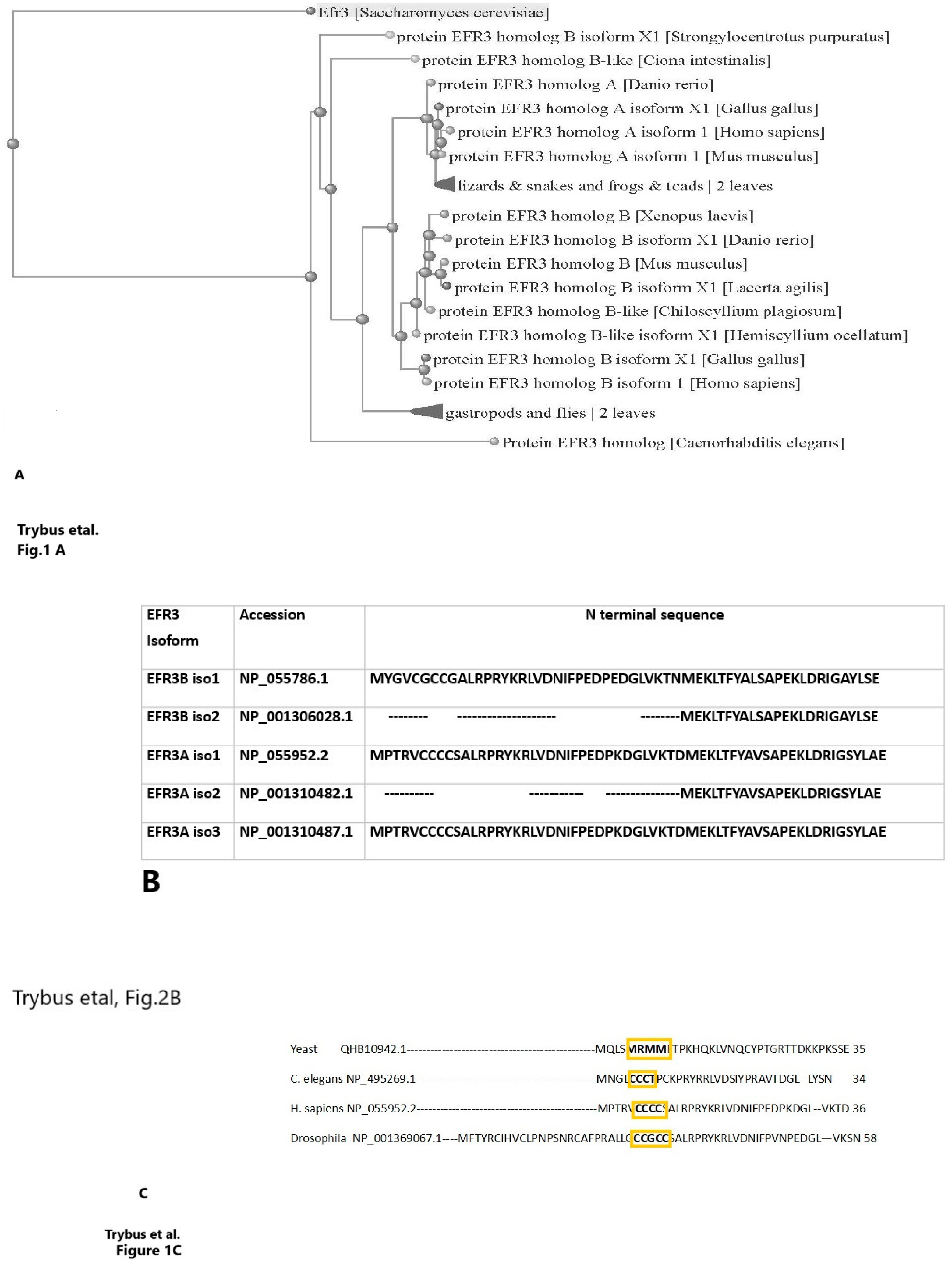
Figure 1. Evolution of EFR3 proteins. A. Simplified phylogenic tree of EFR3 prepared with an NIH BLASTp software. More detailed phylogenic tree can be found under (Ensemble GeneTree ENSGT00390000002143) [50]. B. Sequence comparison of EFR3A isoforms. Isoforms 2 of both EFR3A and EFR3B lack an N-terminal sequence containing C-cluster, C. Three methionine residues in yeast EFR3 may have preceded N-terminal cysteine cluster (3-4 residues) in metazoan orthologs starting from Nematodes. Analyses performed by using Clustal Omega web software [132].
Preprints 147776 g001
Figure 2. Structural models of EFR3 proteins. Computed structure model of (A) human EFR3A (AlphaFold DB: AF-Q14156-F1, cysteine residues marked with blue, fragment comprising first 150 amino acid residues at N-terminus marked with cyan, C-terminal part of the protein in red) and (B) EFR3B (AlphaFold DB: AF-Q9Y2G0-F1) [133]. Experimental structure (C) of Saccharomyces cerevisiae (PDB ID: 4N5A) [51]. Structures rendered with YASARA [134].
Preprints 147776 g002
Figure 3. EFR3A known interactions – simplified interactome from String database [72].
Preprints 147776 g003
Figure 5. The interaction of EFR3A with flotillins may play a key role in the organization and regulation of resting state rafts. Reprinted from ref. [127].
Preprints 147776 g005
Disclaimer/Publisher’s Note: The statements, opinions and data contained in all publications are solely those of the individual author(s) and contributor(s) and not of MDPI and/or the editor(s). MDPI and/or the editor(s) disclaim responsibility for any injury to people or property resulting from any ideas, methods, instructions or products referred to in the content.
Copyright: This open access article is published under a Creative Commons CC BY 4.0 license, which permit the free download, distribution, and reuse, provided that the author and preprint are cited in any reuse.
Prerpints.org logo

Preprints.org is a free preprint server supported by MDPI in Basel, Switzerland.

Subscribe

Disclaimer

Terms of Use

Privacy Policy

Privacy Settings

© 2025 MDPI (Basel, Switzerland) unless otherwise stated