

Submitted:
28 January 2025
Posted:
28 January 2025
You are already at the latest version
Abstract
Digitalisation in logistics transcended in the search for continuous improvement of good process optimisation. This study aims to determine the effectiveness of the digitalisation implemented by companies to improve the automated logistics of cross-border trade in the agricultural sector. The research methodology was generated through a bibliometric analysis, exploring the evolution of the state of the art through the Scopus, WOS and Dimensions databases, in order to select relevant empirical studies on digitalisation and automated logistics, using quality criteria and the application of the Prisma flowchart. The results highlighted that since 2017 there have been signs of increased interest from researchers, with authors such as Zoubek, Kumar and Ghobakhloo standing out. This review revealed how digitalisation contributes to the optimisation of costs and time in the logistics chain. Designing public policies allows for a better integration of technology, such as IoT and AI. Three important blocks were identified that have contributed to the effectiveness of digitalisation in automated logistics: ‘Impact of digitalisation on logistics efficiency and the supply chain’, ‘Technological integration and automation in cross-border logistics’ and ‘Governance, policies and social considerations in logistics digitalisation’. The conclusions reached were that digitalisation has been a fundamental element in improving logistics and making it autonomous within cross-border trade, allowing technology to become involved, integrating digital technologies such as artificial intelligence (AI), which reduced obstacles affecting the supply chain.
Keywords:
digitalization
; logistics
; agro-export
; international trade
; automation
; bibliometric analysis
1. Introduction
In recent times, the field of logistics has encountered various issues, including the well-known bottlenecks that have been observed in logistics processes. These bottlenecks have been attributed to either a low digital density or a lack of integration between the various actors involved in the supply chain (Juan, 2022). Digitalisation has been identified as a pivotal factor in addressing these challenges (Tiwari et al., 2024). Consequently, contemporary processes have evolved to the 'Industry 4.0' paradigm, which is characterised by intelligent digitalisation and the automation of products and processes within the value chain (Elhusseiny & Crispim, 2023). This has entailed the convergence of the real and virtual domains of manufacturing, wherein products, factories, human beings and objects have been amalgamated through the integration of software into intelligent and distributed systems (Hamdi & Abouabdellah, 2022).
In this context, it is imperative to assess the efficacy of digitisation to gain a more profound understanding of the manner in which the implementation of these novel technologies has enhanced cross-border logistics over time (ECLAC, 2022). The evolution of digitisation was identified as a key factor in the enhancement of automated logistics processes within cross-border trade in the agricultural sector (Valdés & Pérez, 2020). The comprehensive adoption of digital technologies by all actors in the supply chain has optimised efficiency, transparency, sustainability and access to new markets, thereby significantly boosting the competitiveness and development of the agri-food sector at a global level (ECLAC, 2021; Shikur, 2022).
In order to achieve a more comprehensive, lucid and profound understanding, it is imperative to delineate the progression of digitalisation, thereby elucidating its significance within corporate entities. Evolution represents a pivotal step in the development of human beings, driving the continuous refinement and adaptation of technologies that seamlessly integrate into our daily lives, thereby enhancing efficiency and generating economic benefits (Almeman, 2024). Technologies such as artificial intelligence, blockchain and online platforms have thus been instrumental in reshaping the contemporary workplace. Significant technological advancements have been witnessed across various sectors, particularly during the pandemic, when the most rapid transformations were observed. Human beings were compelled to make decisions, initiating ventures with considerable ramifications for various industries. These decisions have contributed to the accumulation of substantial technological expertise (Marquardt & Harima, 2024).
In the context of theories that have emerged to explain how digitalisation causes an evolution in logistics and makes it more automated, Ye et al. (2024) have highlighted the theory of digital transformation. In certain theories that were particularly noteworthy with respect to the impact of digitalisation on logistics automation, Ye et al. (2024) highlighted the theory of digital transformation. This theory posits that the integration of information technology has precipitated significant alterations and the emergence of novel work environments, thereby giving rise to both solutions and new challenges. A salient example of such a challenge pertains to the reluctance of certain employees to embrace new technologies. Consequently, when contemplating the implementation of digital transformation, it is imperative to assess its potential impact on staff and to explore strategies that could enhance job satisfaction in the face of technological pressures. As Chen et al. (2024) also observe, digital transformation has become a significant form of sustainable development for companies. Utilising automatic learning methodologies, they analyse the multifaceted characteristics that influence digital transformation. The authors further emphasise the pivotal role of organisational forces in digital transformation and the optimisation thereof by companies.
In this regard, it is imperative to acknowledge the seminal contributions of Galindo et al. (2012), who elucidated that innovation is predicated on a perpetual cycle of learning and adaptation to the prevailing environment. The efficacy of this process is contingent upon the dynamic interplay among diverse actors, encompassing individuals, enterprises, and institutions. The concept of innovation has evolved over time. Initially, the concept centred on product innovations; subsequently, it expanded to encompass services, and finally, processes and organisations. This progression reflects a discernible shift towards acknowledging the pivotal role of interaction between companies and their environment in nurturing innovation (Rojo et al., 2019).
Torres (2023), in their study of the agro-export company Agricola Alpamayo S.A., demonstrated that the adoption of ICTs within an agro-export company confers numerous advantages, thereby enhancing the competitiveness of enterprises. These advantages include efficiency, effectiveness, optimisation of resources, and productivity in export operations, thereby maximising the potential of an agro-export company.
The rationale for the article is rooted in the necessity to adapt to both global and local shifts in trade, which have been further catalysed by the pandemic (Rondón et al., 2023). Digitalisation has engendered greater fluidity in the supply chain, reducing export times by 44% and costs by up to 31%. The present study aims to identify how the evolution of digitalisation can improve the automated logistics of cross-border trade in the agricultural sector, and to identify the technological and strategic solutions that can be implemented to optimise processes and reduce the logistical challenges associated with cross-border trade. This bibliometric analysis seeks to explore how this digital transformation influences the efficiency and optimisation of logistical processes.
To facilitate a comprehensive understanding of the subject, Martinez and Núñez (2022) expound on the manner in which technological integration within the production and export of agricultural products has yielded favourable outcomes, notwithstanding the adverse ramifications of the pandemic. Companies within the Piura region have exhibited a capacity for adaptation, thereby ensuring the maintenance of robust export performance, as substantiated by the substantial correlations observed between production and export dimensions. This finding underscores the resilience and adaptability of companies in navigating adversity and capitalising on emerging opportunities.
Based on the information gathered, the following general problem arises, the question being, How effective has the digitalisation implemented by companies been in improving the automated logistics of cross-border trade in the agricultural sector? The following specific questions are also posed: a) What is the state of the art of the relationship between the digitalisation implemented by companies in the automated logistics of cross-border trade in the agricultural sector , b) What is the relationship between the digitalisation of automated logistics and cross-border trade in the agricultural sector? c) Is there convergence in the empirical findings of the researchers?
In this sense, in order to respond to the problems considered, the general objective was defined as knowing the effectiveness of the digitalisation implemented by companies to improve the automated logistics of cross-border trade in the agricultural sector, according to the scientific literature. Likewise, the specific objectives are specifically set out: a) To identify the state of the art of the relationship between the digitalisation implemented by companies in the automated logistics of cross-border trade in the of the agro-sector, b) To understand the relationship between the digitalisation of automated logistics and cross-border trade in the agro-sector, c) To describe convergences in the empirical findings of the researchers.
2. Materials and Methods
The approach to be adopted is quantitative in nature, with a focus on the collection, analysis and interpretation of numerical data to subsequently describe, explain, predict or control different phenomena (Hernandez et al., 2014). The methodology employed in this article was informed by a systematic literature review of the phenomenon, wherein the extant knowledge on the subject of study was systematically studied and systematised, thus enabling the process of analysis and synthesis to summarise the evidence found, in accordance with a search protocol (Page et al., 2021).
The objective of this research was to explore the effectiveness of digitalisation in improving the automated logistics of cross-border trade in the agricultural sector. This approach enabled the observation of the degree of importance of trade and the agricultural sector for international logistics.
To address the research question, the PRISMA (Preferred Reporting Items for Systematic Reviews and Meta-Analyses) model was employed, whose guidelines are designed to enhance the quality and transparency of the writing of systematic reviews and meta-analyses, ensuring that the methods and results of their studies are reported appropriately (Yepes et al., 2021).
The eligibility criteria were established by conducting a comprehensive review of relevant databases, including Scopus, Web of Science (WOS) and Dimensions, adhering to the established protocol concerning the subject matter, and ensuring the relevance and representativeness of scientific articles, books, conferences, and other relevant sources.It is noteworthy that one of the criteria for inclusion was the requirement that articles must possess an IMRD structure, comprising an introduction, method, results and discussion, and conclusions, in addition to encompassing the designated study categories. It should be noted that the search strategies employed initially did not incorporate any search restrictions, and the Boolean operators utilised are delineated in Table 1.The selection process yielded 32 pieces of research, the majority of which were scientific articles. To achieve this, a series of filters were generated, encompassing criteria such as years, authors, keywords, and topics, among others. The selection of data focuses on understanding the evolution of the digitalisation of logistics processes, especially in agro-export companies (Cortez et al., 2024).
The present article is characterised by an in-depth commitment to the quality of research objectives and study design, as well as the discussion of results. It should be emphasised that the selected sources are compiled from the main databases, such as Scopus, Web of Science and Dimensions, taking the evolution of digitalisation and automated logistics as well as main terms.
The diverse sources were collated through open access, documentary review, and the utilisation of the Excel platform, which facilitates the categorisation of the obtained data according to the PRISMA 2020 scheme.The data was collected by implementing the pertinent criteria and employing the Boolean operators delineated in Table 1, with the objective of ascertaining how the progression of digitalisation enhances the automated logistics of cross-border trade in the agricultural sector. As Pérez (2017) observes, PRISMA is a set of guidelines designed to optimise the quality and clarity in the development of systematic reviews and meta-analyses.The PRISMA diagram utilised for the selection process is presented in Figure 1.
The risk assessment was subjected to a critical analysis employing the traffic light model, utilising the tools Bibliometrix and VOSviewer (Cortez et al., 2024). Bibliometrix, a software developed in R by the R Core Team and the R Foundation for Statistical Computing, requires the use of R and Rstudio for the analysis of scientific literature and the measurement of subject development. VOSviewer, a freely available piece of software developed at the University of Leiden, is able to create and visualise bibliometric networks and also offers text mining in order to construct co-occurrence networks of key terms.
The principles of intellectual honesty, rigour, objectivity and impartiality, transparency, respect for intellectual property and responsibility, in compliance with the 'Code of Research Ethics of the César Vallejo University, version 02; by Resolution of the University Council, guide the authors' ethical use of the research and the data collected. N° 0659-2024-UCV', a code of ethics that was used throughout the development of the scientific article, since as the main author and co-authors, we carried out all the scientific activity in accordance with the code of ethics of the César Vallejo University (UCV).
3. Results
A theoretical contribution and the validity of knowledge were carried out for the results, which led to the use of bibliometrics as part of the inquiry and discovery to find solutions or answers to the problem in a non-systematic way (Palomares et al., 2019).
The database utilised for this analysis includes Scopus, WoS, and Dimensions, facilitating the identification of trends and associations between automated logistics and its evolution. The analysis reveals a notable surge in research interest since 2017, reaching a peak in 2023 and a subsequent decline the following year. This finding underscores the profound interest among the research community, business entities, and other stakeholders in comprehending the evolution of logistics in the realm of digitalisation and subsequent automation (see Figure 2).
In the Scopus database, the most relevant authors were Zoubek M and Klumpp M, who obtained the top positions with the same number of articles. In contrast, in the WoS database, Kumar S and Wang Y are ahead in publications with 4 each respectively. A similar trend is observed in Dimensions, where authors such as Ghobakhloo M and Iranmanesh M have the greatest relevance with 2 publications each.
Figure 3.
Main authors contributing to the collection, obtained from the Scopus database.
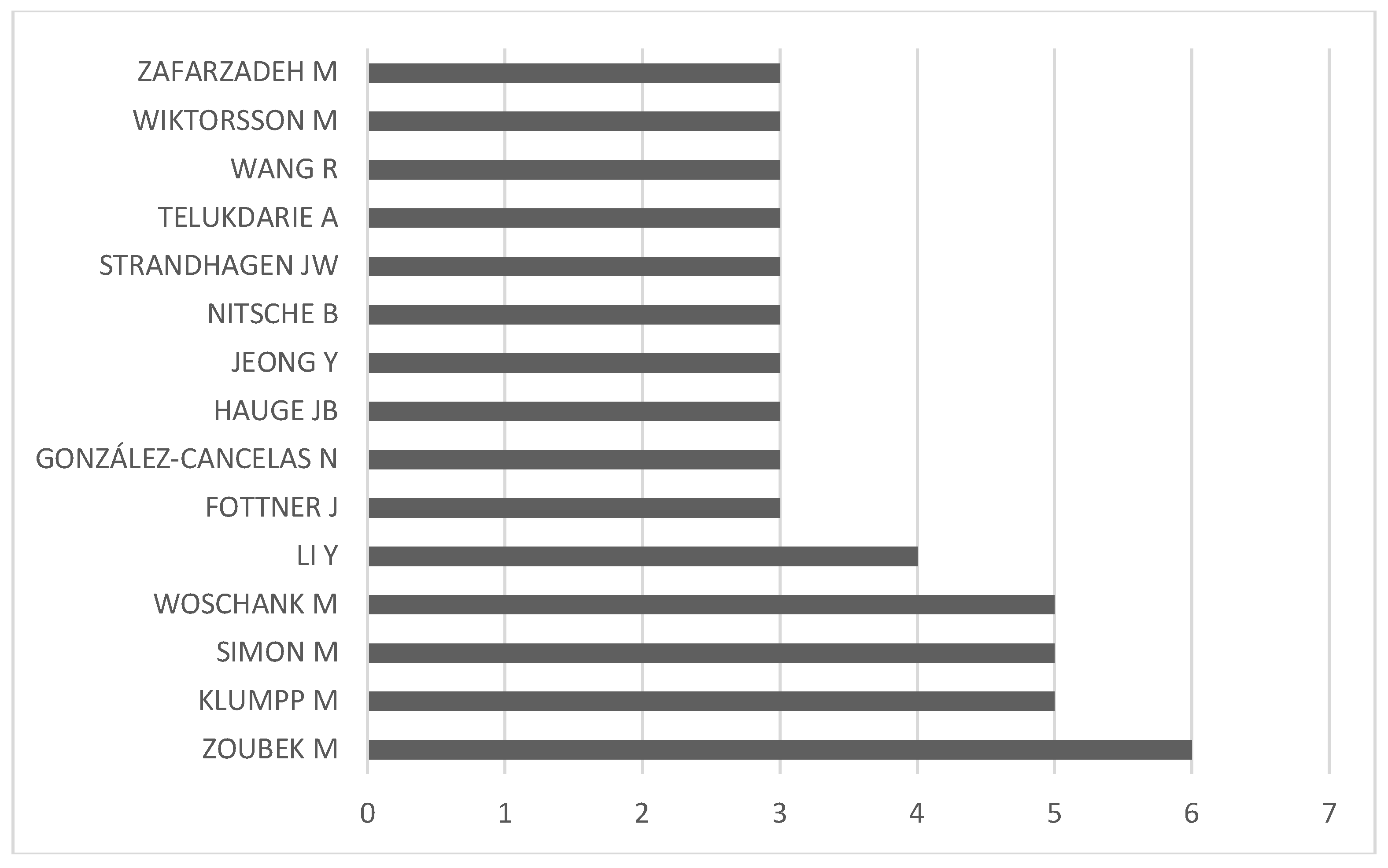
Figure 4.
Main authors contributing to the collection, obtained from the WOS database.
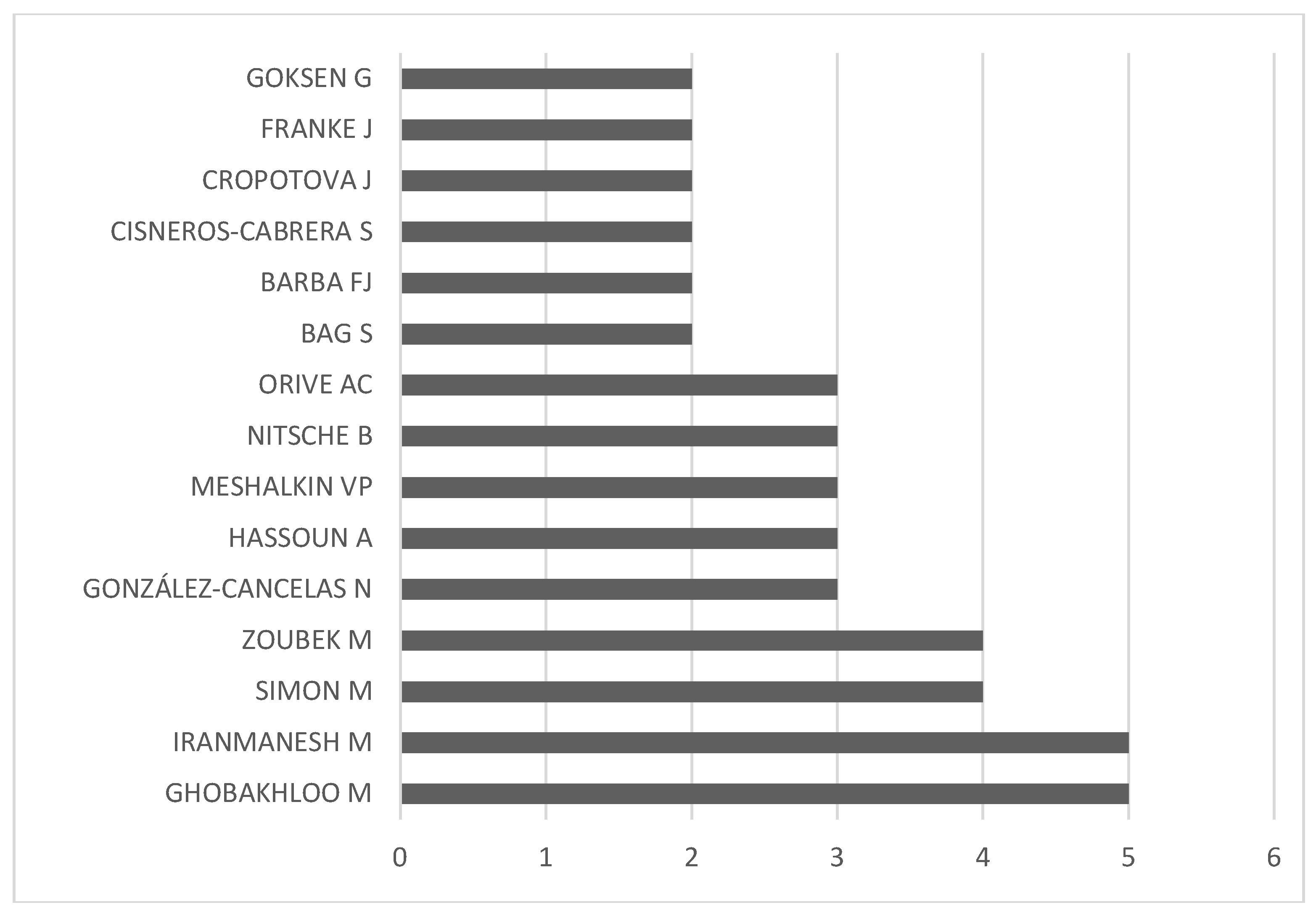
Figure 5.
Main authors contributing to the collection, obtained from the Dimensions database.
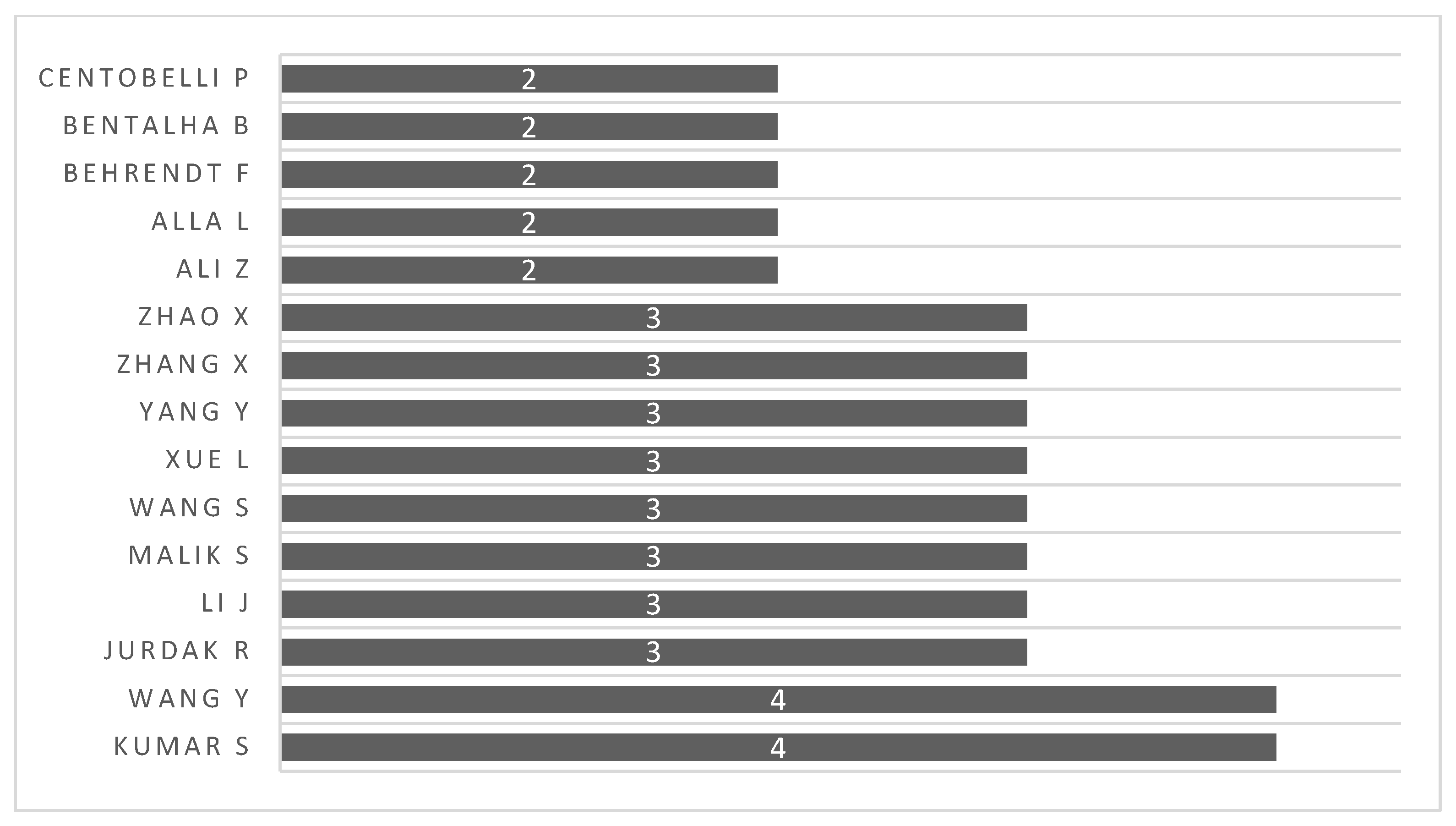
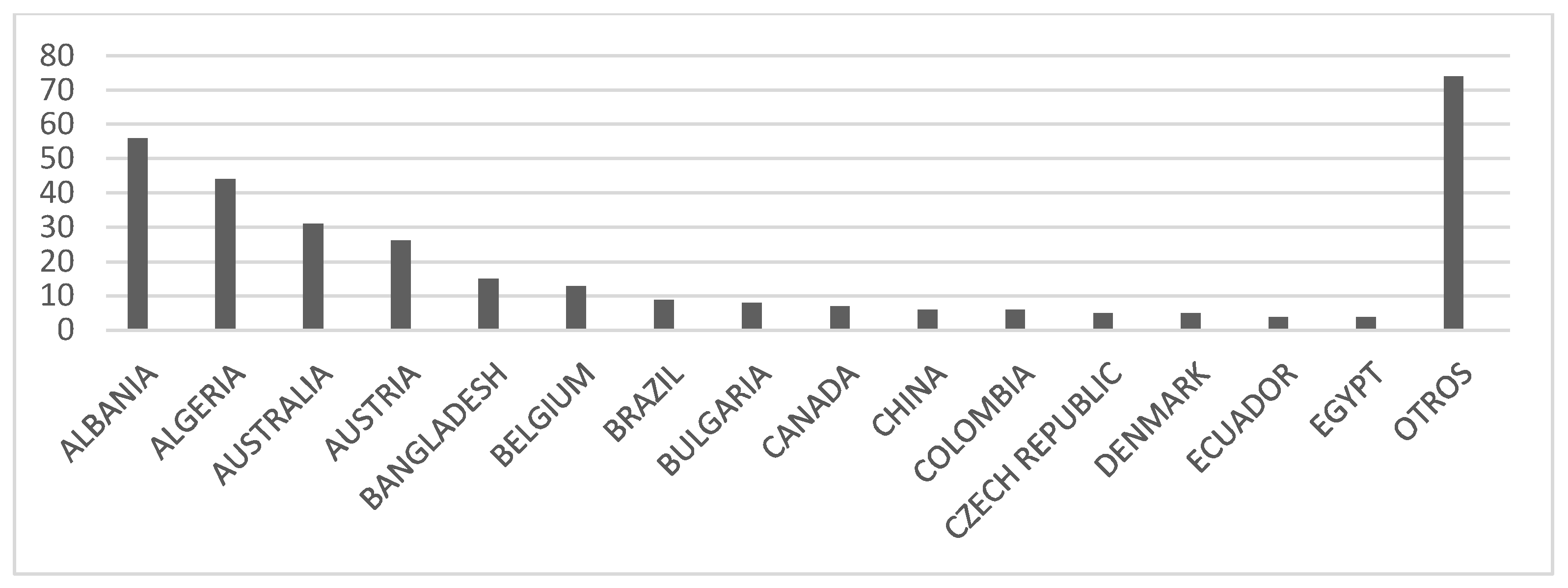
A global analysis of the importance of our chosen topics provides a comprehensive overview of the evolution of logistics in logistics processes. For instance, in the SCOPUS and WOS databases, Australia is a significant country in terms of the interest surrounding the aforementioned topics, with a 18% and 11% representation, respectively. Meanwhile, in the Dimensions database, Albania emerges as a notable entity with an 8% presence. The dimensions of interest on different platforms indicate that interest in this topic is relevant in the academic sphere.
Figure 6.
Publications by country on the evolution of digitalisation in logistics, obtained from the Scopus database.
Figure 6.
Publications by country on the evolution of digitalisation in logistics, obtained from the Scopus database.
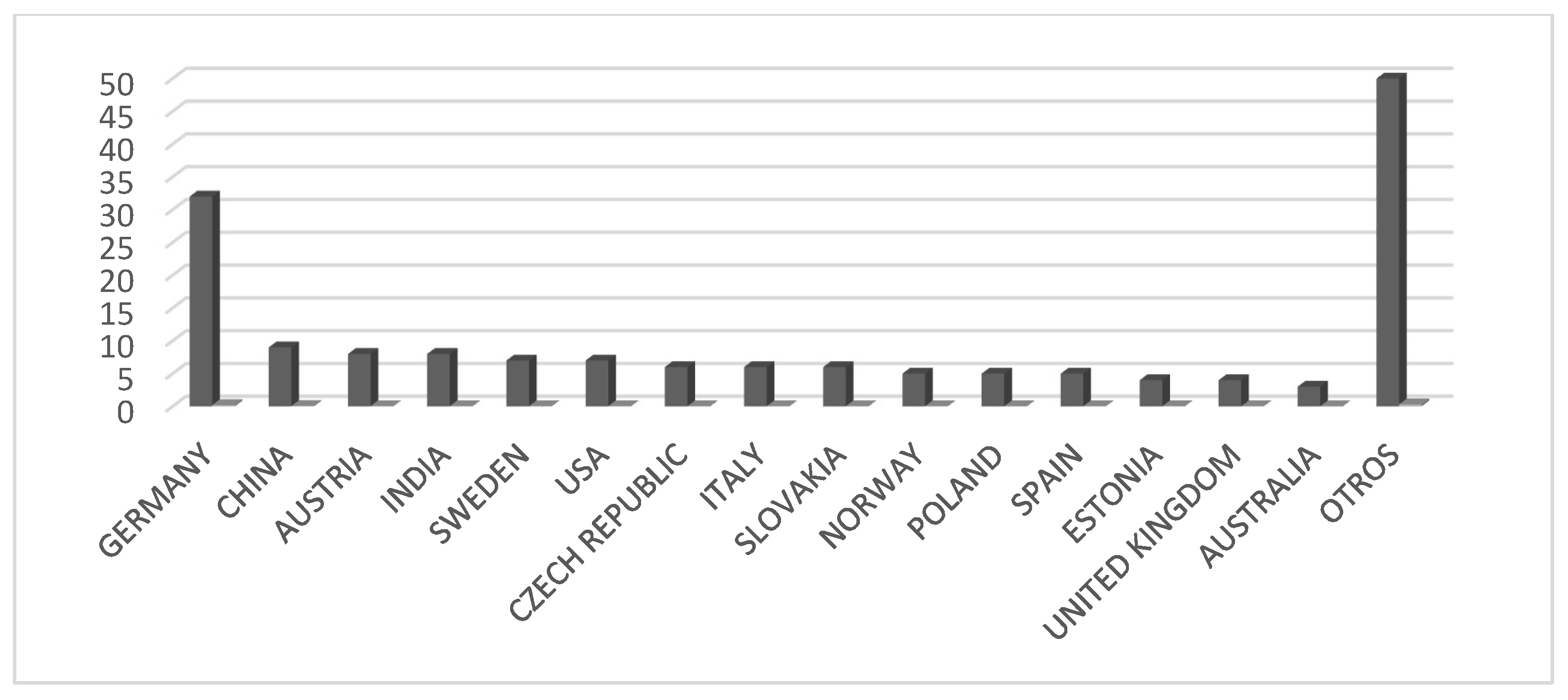
Figure 7.
Publications by country on the evolution of digitalisation in logistics, obtained from the WOS database.
Figure 7.
Publications by country on the evolution of digitalisation in logistics, obtained from the WOS database.
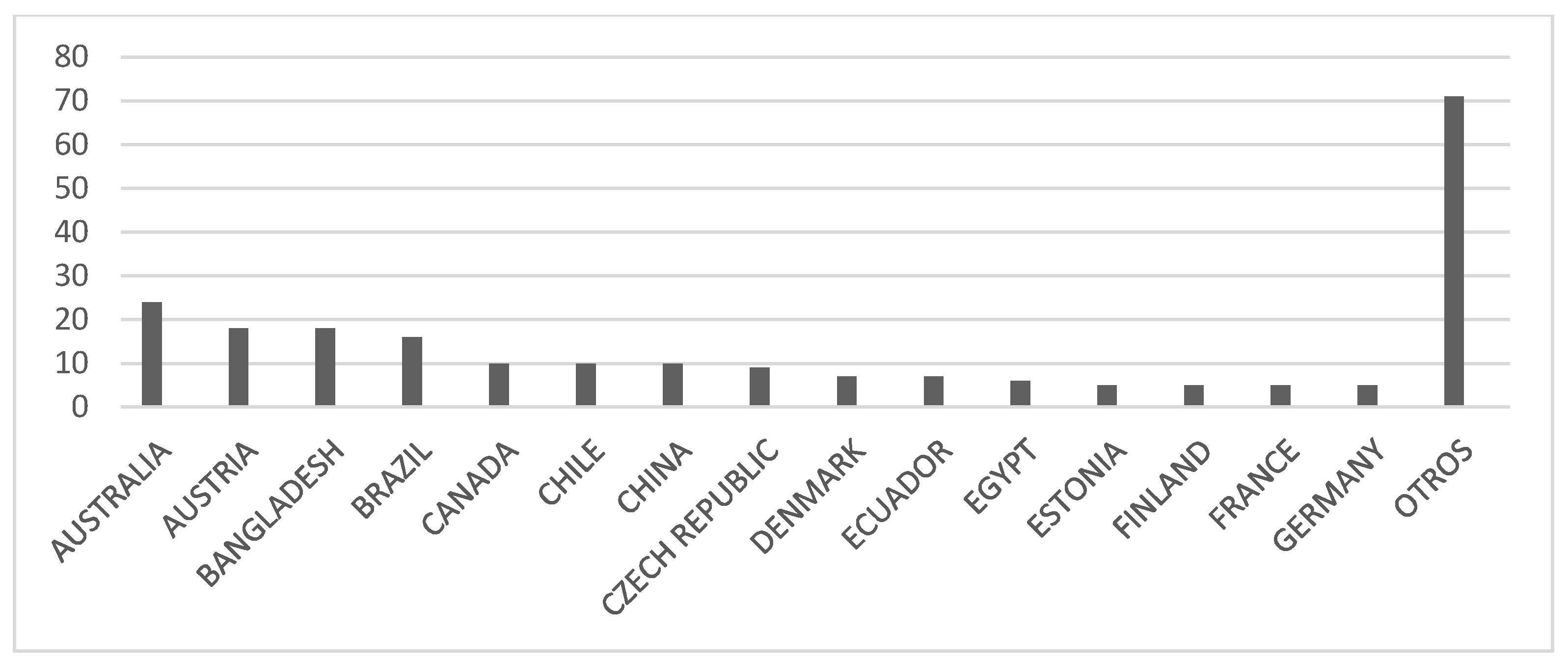
Figure 8.
Publications by country on the evolution of digitalisation in logistics, obtained from the Dimensions database.
Figure 8.
Publications by country on the evolution of digitalisation in logistics, obtained from the Dimensions database.
In the context of Bradford's Law, it is imperative to emphasise its application in determining the number of journals that must be searched to identify a specific number of relevant articles. In general, journals are organised into 'zones' according to the volume of articles they publish. According to this law, as an additional group of articles is searched for, an increasing number of journals need to be consulted. To obtain a more precise estimation, an analysis was conducted utilising the three aforementioned databases.

Table 2.
Bradford law with information obtained from the Scopus database in Bibliometrix.
| Magazine | Ranking | Frequency | Cumulative frequency | Zone |
|---|---|---|---|---|
| LECTURE NOTES IN NETWORKS AND SYSTEMS | 1 | 15 | 15 | Zone 1 |
| SUSTAINABILITY (SWITZERLAND) | 2 | 7 | 22 | Zone 1 |
| ACM INTERNATIONAL CONFERENCE PROCEEDING SERIES | 3 | 5 | 27 | Zone 1 |
| APPLIED SCIENCES (SWITZERLAND) | 4 | 5 | 32 | Zone 1 |
| IFIP ADVANCES IN INFORMATION AND COMMUNICATION TECHNOLOGY | 5 | 5 | 37 | Zone 1 |
| LECTURE NOTES IN LOGISTICS | 6 | 5 | 42 | Zone 1 |
| E3S WEB OF CONFERENCES | 7 | 4 | 46 | Zone 1 |
| IEEE ACCESS | 8 | 4 | 50 | Zone 1 |
| LECTURE NOTES IN COMPUTER SCIENCE (INCLUDING SUBSERIES LECTURE NOTES IN ARTIFICIAL INTELLIGENCE AND LECTURE NOTES IN BIOINFORMATICS) | 9 | 4 | 54 | Zone 1 |
| LOGISTICS | 10 | 4 | 58 | Zone 1 |
| LOGISTICS ACT | 11 | 3 | 61 | Zone 1 |
| IOP CONFERENCE SERIES: MATERIALS SCIENCE AND ENGINEERING | 12 | 3 | 64 | Zone 1 |
Table 3.
Bradford law with information obtained from the WOS database in Bibliometrix.
| Magazine | Ranking | Frequency | Cumulative frequency | Zone |
|---|---|---|---|---|
| SUSTAINABILITY | 1 | 13 | 13 | Zone 1 |
| APPLIED SCIENCES-BASEL | 2 | 8 | 21 | Zone 1 |
| IEEE ACCESS | 3 | 6 | 27 | Zone 1 |
| COMPUTERS IN INDUSTRY | 4 | 5 | 32 | Zone 1 |
| INTERNATIONAL JOURNAL OF PRODUCTION RESEARCH | 5 | 5 | 37 | Zone 1 |
| LOGISTICS-BASEL | 6 | 5 | 42 | Zone 1 |
| TECHNOLOGICAL FORECASTING AND SOCIAL CHANGE | 7 | 5 | 47 | Zone 1 |
| JOURNAL OF CLEANER PRODUCTION | 8 | 4 | 51 | Zone 1 |
| CLEANER LOGISTICS AND SUPPLY CHAIN | 9 | 3 | 54 | Zone 1 |
| INFORMATION SYSTEMS FRONTIERS | 10 | 3 | 57 | Zone 1 |
| JOURNAL OF MANUFACTURING TECHNOLOGY MANAGEMENT | 11 | 3 | 60 | Zone 1 |
| PRODUCTION PLANNING & CONTROL | 12 | 3 | 63 | Zone 1 |
Table 4.
Bradford law with information obtained from the Dimensions database in Bibliometrix.
| Magazine | Ranking | Frequency | Cumulative frequency | Zone |
|---|---|---|---|---|
| SPRINGER SERIES IN SUPPLY CHAIN MANAGEMENT | 1 | 23 | 23 | Zone 1 |
| SUSTAINABILITY | 2 | 16 | 39 | Zone 1 |
| NA | 3 | 14 | 53 | Zone 1 |
| LECTURE NOTES IN NETWORKS AND SYSTEMS | 4 | 10 | 63 | Zone 1 |
| ADVANCES IN LOGISTICS, OPERATIONS, AND MANAGEMENT SCIENCE | 5 | 8 | 71 | Zone 1 |
| SSRN ELECTRONIC JOURNAL | 6 | 8 | 79 | Zone 1 |
| LECTURE NOTES IN LOGISTICS | 7 | 5 | 84 | Zone 1 |
| LECTURE NOTES IN MECHANICAL ENGINEERING | 8 | 4 | 88 | Zone 1 |
| OPERATIONS MANAGEMENT RESEARCH | 9 | 4 | 92 | Zone 1 |
| ADVANCED STUDIES IN SUPPLY MANAGEMENT | 10 | 3 | 95 | Zone 1 |
| ADVANCES IN ECONOMICS MANAGEMENT AND POLITICAL SCIENCES | 11 | 3 | 98 | Zone 1 |
| ADVANCES IN ECONOMICS, BUSINESS AND MANAGEMENT RESEARCH | 12 | 3 | 101 | Zone 1 |
In order to comprehend Lotka's law, it is imperative to recognise that this bibliometric law examines the distribution of productivity among authors within a scientific domain. The law indicates that there is a disparity in the generation of articles: a small group of authors is responsible for the majority of publications, while the majority of authors contribute only a limited number of works. To facilitate a more comprehensive understanding of this phenomenon, a comparative analysis of three distinct databases has been conducted, as outlined in our article.
Table 5.
Lotka's law, produced using the Scopus, Web of Science and Dimensions databases in Bibliometrix.
Table 5.
Lotka's law, produced using the Scopus, Web of Science and Dimensions databases in Bibliometrix.
| SCOPUS | WOS | DIMENSIONS | ||||
|---|---|---|---|---|---|---|
| N. Articles | N.Authors | Freq | N.Authors | Freq | N. Authors | Freq |
| 1 | 790 | 92.3% | 765 | 94.7% | 1152 | 94% |
| 2 | 51 | 6.0% | 34 | 4.2% | 58 | 4.8% |
| 3 | 10 | 1.2% | 5 | 0.6% | 8 | 0.7% |
| 4 | 1 | 0.1% | 2 | 0.2% | 2 | 0.2% |
| 5 | 3 | 0.4% | 2 | 0% | 0 | 0% |
| 6 | 1 | 0.00116822 | 0 | 0% | 0 | 0% |
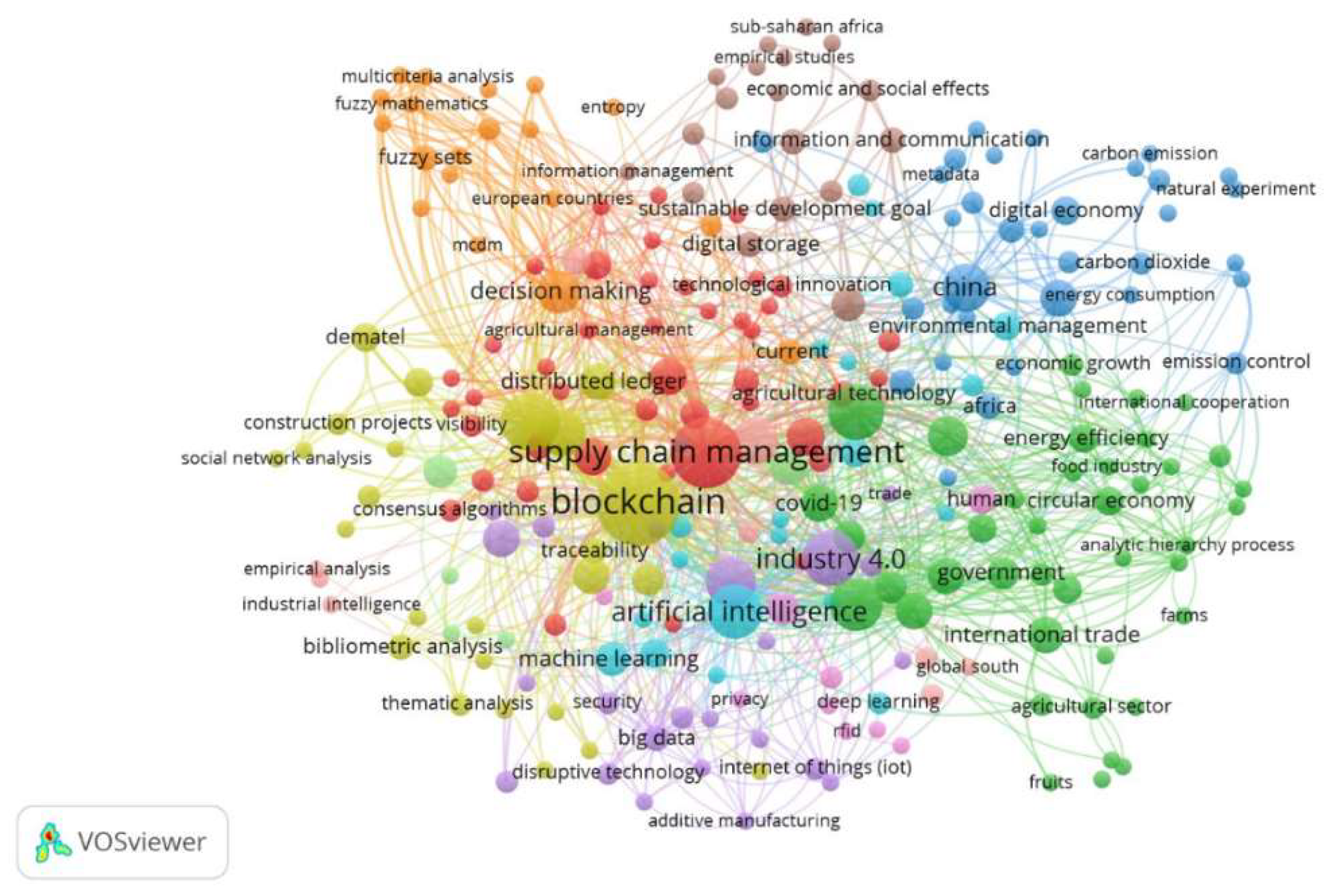
By using the semantic map in our research, we needed to be able to confirm the closeness or relationship that our study categories had with the graph, so we observed the key terms used in the research and the relationships between their authors, journals, sponsors, institutional affiliations and other metadata. This figure was generated using the VOSviewer software, which showed that there is a relationship between our topics of interest, such as digitisation, Industry 4.0, logistics, technology, among others; now these terms are also generally related in two databases (Scopus and WOS).
Figure 9.
Semantic map of the relationship between the evolution of the digitalisation of logistics processes, obtained from the open source programme VOSviewer, with metadata from Scopus.
Figure 9.
Semantic map of the relationship between the evolution of the digitalisation of logistics processes, obtained from the open source programme VOSviewer, with metadata from Scopus.
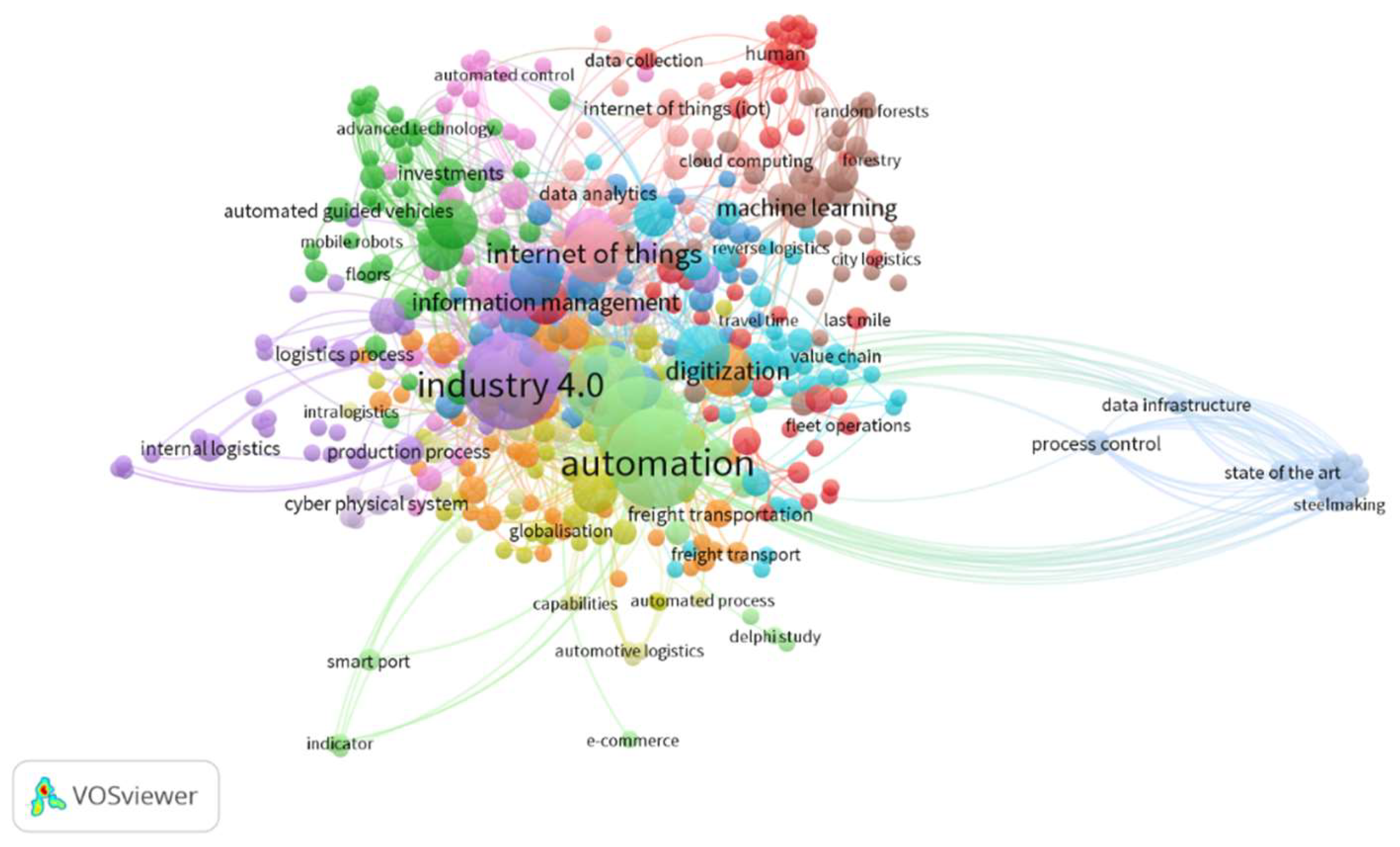
Figure 10.
Semantic map of the evolving relationship between the digitisation of logistical processes, obtained from the open source programme VOSviewer, with metadata from WOS.
Figure 10.
Semantic map of the evolving relationship between the digitisation of logistical processes, obtained from the open source programme VOSviewer, with metadata from WOS.
The systematic review of the literature has identified three important blocks that have contributed to the evolution of digitalisation in logistics, highlighting their importance in providing deeper knowledge for future research on this topic, which includes digitalisation as an important point for logistics in the future, as can be seen in the table.
In block 1, entitled "Governance, policies and social considerations in the digitalisation of logistics", it analyses how governance, public policies and the digitalisation of the logistics sector are involved, together with their social impact. It emphasises that it is of the utmost importance to consider the formulation of policies that promote the integration of digital technologies in the logistics sector and to establish regulatory frameworks that guarantee security and privacy in data management (Butollo, 2021; Cancelas et al, 2020; Gizetdinov, 2024; Guseva et al., 2021; Huliahina, 2022; Marchenko, 2023; Mishrif & Khan, 2023; Osetskyi et al., 2024; Raamets et al., 2024; Saddique et al., 2023; Supriadi et al., 2024).
In block 2, entitled 'Technological integration and automation in cross-border logistics', it will be shown that the integration of advanced technologies such as the Internet of Things (IoT) can transform cross-border logistics and how these technologies improve the connectivity and automation of freight transport, as well as how artificial intelligence introduces an automatic form of real-time monitoring and efficiency is seen as beneficial (Beaulieu & Bentahar, 2021; El ock & Breka, 2023; Garg et al., 2024; Ghobakhloo et al., 2023; Ghobakhloo et al., 2024; Gourlis & Kovacic, 2022; Nzama & Telukdarie, 2020; Rösch et al., 2022).
In the third block, "Impact of digitalisation on logistics efficiency and the supply chain", they agree that digitalisation is an important factor in logistics as it improves efficiency and allows for a more optimal process within the supply chain, as well as how digital technologies optimise response times, reduce costs and improve interaction between the different actors in logistics (Al-Ababneh et al, 2023; Albarracín, 2023; Alherimi et al., 2024; Barba et al., 2023; El Hamdi & Abouabdellah, 2022; Escherle et al., 2023; Krstić et al., 2022; Malhotra et al., 2024; Rokicki et al., 2022; Wilsky et al., 2022; Yontar, 2023; Zoubek & Simon, 2021).
Table 6.
Results of the individual studies.
| Authors | Contribution block | Digitalisation guidelines for improving logistics |
|---|---|---|
| Butollo, (2021); Cancelas et al., (2020); Gizetdinov, (2024); Guseva et al., (2021); Huliahina, (2022); Marchenko, (2023); Mishrif & Khan, (2023); Osetskyi et al., (2024); Raamets et al., (2024); Saddique et al., (2023); Supriadi et al., (2024) | Governance, policies and social considerations in logistics digitisation: Examines the implications of digitisation from a governance and policy perspective, as well as its social impact on logistics, highlighting the need to design public policies that favour the implementation of digital technologies in logistics, including automation to improve efficiency and sustainability in the supply chain, as well as the importance of establishing regulations that guarantee the security and proper handling of data in a sector, company, etc. It also analyses how digitalisation can contribute to sustainable development and to the well-being of communities involved in cross-border trade. . | Development of policy and social considerations in the digitisation of logistics and Implementation of digital technologies to optimise logistics processes in the port sector by assessing the geographical implications of digitisation and its impact on the supply chain. |
| Beaulieu & Bentahar, (2021); Elock & Breka, (2023); Garg et al., (2024); Ghobakhloo et al., (2023); Ghobakhloo et al., (2024); Gourlis & Kovacic, (2022); Nzama & Telukdarie, 2020; Rösch et al., (2022) | Technological integration and automation in cross-border logistics: Addresses the importance of integrating advanced technologies such as the Internet of Things (IoT), automation and artificial intelligence to transform cross-border logistics. It looks at studies that explore how these technologies enhance connectivity and automation in the transport of goods, improving traceability, real-time monitoring and operational efficiency in the movement of goods across borders. It considers the adoption of innovations to optimise logistics operations such as the use of routing to improve the supply chain by focusing on maximising performance by identifying factors such as real-time monitoring and resilience. |
Integrate advanced technologies and automation in cross-border logistics and develop systematic strategies for companies to assess current capacity and prioritise efforts to digitise and strategically align with digital capabilities to enable better supply chain management. |
| Al-Ababneh et al., (2023); Albarracín, (2023); Alherimi et al., (2024); Barba et al., (2023); El Hamdi & Abouabdellah, (2022); Escherle et al, (2023); Krstić et al., (2022); Malhotra et al., (2024); Rokicki et al., (2022); Wilsky et al., (2022); Yontar, (2023); Zoubek & Simon, (2021) | Impact of digitalisation on logistics efficiency and the supply chain: Focusing on how digitisation has a direct impact on logistics efficiency by improving processes within the supply chain, these included studies analyse the implementation of digital technologies to optimise response times, reduce operational costs and improve coordination between different logistics actors. Emphasis is placed on leveraging digital systems to streamline the transport and distribution of products, highlighting improvements in the overall efficiency of the chain and thus also improving efficiency and sustainability in the agri-food sector. |
Application of 4.0 technologies to optimise logistics processes and promote sustainable practices to improve logistics efficiency through digitisation in the supply chain by integrating digital marketing and logistics strategies to optimise business performance. |
4. Discussion
A review of the extant literature reveals a discernible trend of escalating research and applications of digital technologies in the automated logistics of cross-border trade. The implementation of bibliometric analysis has demonstrated that digitalisation has significantly transformed the supply chain, optimising both efficiency and transparency at every stage of the logistics process. The study identified three distinct categories within the generated data: The first is entitled 'Governance and digitalisation policies', the second 'Technological integration and automation in cross-border logistics' and the third 'Impact of digitalisation on logistics efficiency'. These three blocks corroborate the growing digital transformation and its multidimensional implications.
The initial block, which concentrates on governance and policies, establishes a regulatory framework that not only facilitates the adoption of digitalisation but also ensures the protection and privacy of crucial logistical data. Given the centrality of digital technologies to global logistics, it is essential to promote inclusive and adaptable public policies that drive technological innovation. The bibliometric analysis conducted in conjunction with Bradford's law underscores the significance of implementing regulations around digitalisation, as highlighted in studies such as those by Mishrif & Khan (2023). These regulations are instrumental in preserving the competitiveness and sustainability of the sector, thereby fostering responsible practices and contributing to its advancement.
The integration of advanced technologies, such as the Internet of Things (IoT) and artificial intelligence (AI), has been identified as a major driving force behind progress and growth in the realm of autonomous international logistics. The increasing level of interconnection facilitated by these technologies enables real-time monitoring of products, thereby enhancing tracking capabilities. The repercussions of these technologies have various effects, which translate into greater integration between logistics participants and also more agile automation of processes. This assertion is further substantiated by extant research, including the works of Butollo (2021) and El Hamdi & Abouabdellah (2022), which underscore the pivotal function of technology as the propellant behind digitalisation. This, in turn, has the potential to expedite responsiveness to global demand and mitigate pressing challenges, such as border delays and operational management within the agro-export sector.
In the third block, it is highlighted that digital technologies allow for improved efficiency in the legal field of logistics. This demonstrates that digitisation allows for easy control over the desired times and responses, and also reduces costs, which are essential factors for maintaining competitiveness within the agricultural sector. This finding aligns with the conclusions of previous studies, notably those by Cancelas et al. (2020), who explored the impact of system implementation, digital platforms and analytical tools on the effective management of inventories.
In summary, the findings demonstrate that digitalisation not only modifies logistics operations, but also highlights the importance of digital evolution in cross-border logistics and the capacity it has had to modify the agricultural sector and redefine fundamental management within the agricultural export sector, promoting its competitiveness and sustainability in the global market. However, it is crucial to emphasise the accelerating pace of logistics automation, which necessitates the resolution of significant challenges, including organisational resistance and economic and political impediments. These challenges may warrant further investigation in future research. Furthermore, future research should investigate the environmental effects of automation and its contribution to more sustainable trade, which are essential elements in the context of the 2030 Sustainable Development Goals.
5. Conclusions
Digitalisation has been instrumental in enhancing the efficiency of logistics processes, thereby ensuring autonomy in cross-border trade within the agricultural sector. This development has paved the way for the integration of technology, particularly the implementation of digital technologies such as Artificial Intelligence (AI), which has enabled the evolution and optimisation of logistics processes. This, in turn, has led to a substantial reduction in the impediments that have historically hindered the agricultural supply chain. Digitalisation has facilitated more effective integration between the various actors involved, enhancing data management and facilitating more seamless communication within the chain. Furthermore, it has enabled agro-exporting companies to access new markets, thereby enhancing their competitiveness in a globalised world that is increasingly demanding. This is achieved by adapting to new international demand requirements through digital solutions. Consequently, digitalisation emerges as a pivotal factor in the pursuit of success within the agri-food sector.
The ability to make informed decisions is critical for the growth of companies in this sector, and digital technologies have been instrumental in simplifying the processes of data collection, storage, and analysis, leading to enhanced decision-making capabilities. A notable illustration of this is the utilisation of data management platforms, which enable companies to trace the provenance of products, monitor the status of goods during transportation, and anticipate market demands. This, in turn, facilitates the implementation of smart warehouses, contributing to enhanced order and efficiency. The capacity to analyse data volumes using algorithms leads to a reduction in losses and waste in production and logistics, as well as the identification of new trends and patterns that can be used to improve business strategies. Digitalisation, therefore, has the potential to enhance operational efficiency and provide a competitive advantage to agricultural enterprises by enabling them to adapt to changing market conditions.
However, it is important to acknowledge the challenges associated with the integration of digital technologies in the agricultural sector. These challenges include employee resistance to change, inadequate training, and a lack of resources, particularly among small and medium-sized enterprises, which hinders their ability to adopt advanced technologies and maintain competitiveness in the market. To overcome these challenges, it is crucial that strategies such as training and awareness-raising can be developed to promote a culture of innovation and adaptation. The collaboration between the public and private sectors is instrumental in facilitating access to funding resources, thereby enabling the positive adoption of digital technologies.
Funding
The scientific product is an article resulting from voluntary research by the authors, who are experienced academic researchers. Its aim is to generate and disseminate knowledge to the academic and business community. The authors declare that they have no financial interests or personal relationships that may have influenced the article. Finally, the authors express their gratitude for the funding provided by Cesar Vallejo University, Peru, for the accepted publication through the journal.
Conflicts of Interest
The authors declare no conflicts of interest.
Free access to RSL data:
Zenodo: Digitalisation RSL Data to improve the automated logistics of agricultural exports: Comprehensive bibliometric analysis. Version 2. https://doi.org/10.5281/zenodo.14586064 (Cortez et al., 2025).The data is available under the terms of the Creative Commons Zero v1.0 Universal (CC0 1.0) licence.
References
- Al-Ababneh, H. A., Dalbouh, M. A. A., Alrhaimi, S. A. S., Siam, I. M., & Ibragimkhalilova, Т. (2023). Digitalization, innovation and marketing in logistics. Acta Logistica, 10(4), 615–624. [CrossRef]
- Albarracín Vanoy, R. J. (2023). Logistics 4.0: Exploring Artificial Intelligence Trends in Efficient Supply Chain Management. Data and Metadata, 2, 2023145. [CrossRef]
- Alherimi, N., Saihi, A., & Ben-Daya, M. (2024). A Systematic Review of Optimization Approaches Employed in Digital Warehousing Transformation. IEEE Access, 12, 145809–145831. [CrossRef]
- Almeman, A. (2024). The digital transformation in pharmacy: embracing online platforms and the cosmeceutical paradigm shift. Journal of Health, Population and Nutrition, 43(1), 41043. [CrossRef]
- Barba, J. D. L. M., González-Cancelas, N., & Orive, A. C. (2023). BOT methodology for the inclusion of Spanish ports into the international logistics market as Ports 4.0. Proceedings of the Institution of Civil Engineers: Smart Infrastructure and Construction, 176(3), 148–162. [CrossRef]
- Beaulieu, M., & Bentahar, O. (2021). Digitalization of the healthcare supply chain: A roadmap to generate benefits and effectively support healthcare delivery. Technological Forecasting and Social Change, 167. [CrossRef]
- Bibliometrix. (2023). Bibliometrix is an open source tool for quantitative research in scientometrics and bibliometrics. https://www.bibliometrix.org/home/.
- Butollo, F. (2021). Digitalization and the geographies of production: Towards reshoring or global fragmentation? Competition and Change, 25(2), 259–278. [CrossRef]
- Bhowmik, O., Chowdhury, S., Ashik, J. H., Mahmud, G. I., Khan, M. M., & Hossain, N. U. I. (2024). Application of artificial intelligence in reverse logistics: A bibliometric and network analysis. Supply Chain Analytics, 7, 100076. [CrossRef]
- Boulton, T. J., & Ellram, L. M. (2024). The intersection of supply chain operations and finance: Logistics uncertainty and International IPO underpricing. Transportation Research Part E: Logistics and Transportation Review, 189, 103641. [CrossRef]
- Cancelas, N. G., Serrano, B. M., Infantes, M. E., Flores, F. S., & Orive, A. C. (2020). Escenario de digitalización para el sistema portuario español. Revista Transporte y Territorio, 22. [CrossRef]
- Castro, H., Camara, E., Avila, P., Cruz-Cunha, M., & Ferreira, L. (2024). Artificial Intelligence Models: A literature review addressing Industry 4.0 approach. Procedia Computer Science, 239, 2369–2376. [CrossRef]
- Gani, A. (2017). The Logistics Performance Effect in International Trade. The Asian Journal of Shipping and Logistics, 33(4), 279–288. [CrossRef]
- CEPAL. (2021). Digitalización de la logística del comercio en países sin litoral de América del Sur. Comisión Económica Para América Latina y El Caribe, ISSN: 1564-4227. https://repositorio.cepal.org/bitstream/handle/11362/46788/1/S2100110_es.pdf.
- CEPAL. (2022). Tecnologías digitales para el nuevo futuro. Educitec - Revista de Estudos e Pesquisas Sobre Ensino Tecnológico, 8(jan./dez.), e198522.
- Chen, Q. A., Zhao, X., Zhang, X., Jiang, Z., & Wang, Y. (2024). Driving forces of digital transformation in chinese enterprises based on machine learning. Scientific Reports, 14(1), 56448. [CrossRef]
- Cortez Clavo, L. K., Salazar Muñoz, M. I., & Morán Santamaría, R. O. (2025). Digitalisation to improve automated agro-export logistics: Comprehensive bibliometric analysis [Data set]. Zenodo. [CrossRef]
- El Hamdi, S., & Abouabdellah, A. (2022). Logistics: Impact of Industry 4.0. Applied Sciences (Switzerland), 12(9). [CrossRef]
- Elhusseiny, H. M., & Crispim, J. (2023). A Review of Industry 4.0 Maturity Models: Adoption of SMEs in the Manufacturing and Logistics Sectors. Procedia Computer Science, 219, 236–243. [CrossRef]
- ELOCK SON, C., & BREKA, J. N. (2023). Digitalization and industry 4.0 within the supply chain: a review of contributions and barriers. Revue Française de Gestion Industrielle, 37(2), 55–70. [CrossRef]
- Escherle, S., Darlagiannis, E., & Sprung, A. (2023). Automated Trucks and the Future of Logistics – A Delphi-Based Scenario Study. Logistics Research, 16(1).
- Galindo, M. A., Ribeiro, D., & Mendez, M. T. (2012). Innovación y crecimiento económico_ Factores que estimulan la innovación, 12 (2012), 51-58. https://www.redalyc.org/articulo.oa?id=274323552002.
- Garg, P., Gupta, B., Sar, A., Graham, G., & Shore, A. P. (2024). Development and Validation of an Instrument to Measure the Perceived Benefits of Digitalization in Manufacturing. IEEE Transactions on Engineering Management, 71, 8288–8306. [CrossRef]
- Ghobakhloo, M., Iranmanesh, M., Foroughi, B., Tseng, M. L., Nikbin, D., & Khanfar, A. A. A. (2023). Industry 4.0 digital transformation and opportunities for supply chain resilience: a comprehensive review and a strategic roadmap. Production Planning and Control. [CrossRef]
- Ghobakhloo, M., Iranmanesh, M., Mubarik, M. S., Mubarak, M. F., Amran, A., & Khanfar, A. A. A. (2024). Blockchain technology as an enabler for sustainable business ecosystems: A comprehensive roadmap for socioenvironmental and economic sustainability. Business Strategy and Development, 7(1). [CrossRef]
- Gizetdinov, R. (2024). Automation and digitalisation of transport forwarding services or logistics. Infrastructure Asset Management, 11(2), 100–107. [CrossRef]
- Gourlis, G., & Kovacic, I. (2022). A holistic digital twin simulation framework for industrial facilities: BIM-based data acquisition for building energy modeling. Frontiers in Built Environment, 8, 918821. [CrossRef]
- Guseva, E. A., Konstantinova, M. V., Olentsevich, V. A., Konyukhov, V. Y., & Olentsevich, A. A. (2021). Automation of individual operations of the transport process to create sufficient conditions for the efficient functioning of digital transport and logistics. IOP Conference Series: Materials Science and Engineering, 1064(1). [CrossRef]
- Haddaway, N. R., Page, M. J., Pritchard, C. C., & McGuinness, L. A. (2022). PRISMA2020: An R package and Shiny app for producing PRISMA 2020-compliant flow diagrams, with interactivity for optimised digital transparency and Open Synthesis. Campbell Systematic Reviews, 18(2), e1230. [CrossRef]
- Hamdi, S. El, & Abouabdellah, A. (2022). Logistics : Impact of Industry. Applied Sciences, 12(9), 4209. [CrossRef]
- Hamidi, S. M. M., Hoseini, S. F., Gholami, H., & Kananizadeh-Bahmani, M. (2024). A three-stage digital maturity model to assess readiness for blockchain implementation in the maritime logistics industry. Journal of Industrial Information Integration, 41, 100643. [CrossRef]
- Hernandez Sampieri, R., Fernandez Collado, C., & Baptisa Lucio, P. (2014). Metodología de la Investigación (6th ed.). INTERAMERICANA EDITORES, S.A. DE C.V. https://www.esup.edu.pe/wp-content/uploads/2020/12/2. Hernandez, Fernandez y Baptista-Metodología Investigacion Cientifica 6ta ed.pdf.
- HULIAHINA, O. (2022). DIGITAL TRANSFORMATION OF SUPPLY CHAINS IN THE MODERN CONDITIONS OF A CHANGING ENVIRONMENT. Vestnik of Polotsk State University Part D Economic and Legal Sciences, 62(12), 16–19. [CrossRef]
- Idrissi, Z. K., Lachgar, M., & Hrimech, H. (2024). Blockchain, IoT and AI in logistics and transportation: A systematic review. Transport Economics and Management, 2, 275–285. [CrossRef]
- Krstić, M., Agnusdei, G. P., Miglietta, P. P., & Tadić, S. (2022). Logistics 4.0 toward circular economy in the agri-food sector. Sustainable Futures, 4. [CrossRef]
- Liu, Y., Pan, S., & Ballot, E. (2024). Unveiling the potential of digital twins in logistics and supply chain management: Services, capabilities, and research opportunities. Digital Engineering, 3, 100025. [CrossRef]
- Malhotra, S., Singh, S., & Hussaini, T. (2024). TECHNOLOGICAL FORECASTING & SOCIAL CHANGE IMPACT OF DIGITALISATION ON SERVICE DELIVERY IN DUBAI’S RETAIL INDUSTRY. Proceedings on Engineering Sciences, 6(3), 959–966. [CrossRef]
- Marchenko, M. (2023). Digitalization of business management processes of agricultural enterprises. Galic’kij Ekonomičnij Visnik, 81(2), 133–139. [CrossRef]
- Marquardt, L., & Harima, A. (2024). Digital boundary spanning in the evolution of entrepreneurial ecosystems: A dynamic capabilities perspective. Journal of Business Research, 182, 114762. [CrossRef]
- Martinez Negron, Mercedes del Pilar (orcid.org/0000-0001-9289-8476); Núñez Pardo, V. M. (orcid. org/000.-0001-9062-4172). (2022). Producción y exportación de mango fresco por las principales exportadoras de la región Piura en épocas de pandemia , 2020. Universidad Cesar Vallejo.
- Mishrif, A., & Khan, A. (2023). Digitization policy design and implementation in the logistics and supply chain sector during the time of Covid-19. Journal of International Logistics and Trade, 21(3), 135–158. [CrossRef]
- Mishra, R., Kr Singh, R., Daim, T. U., Fosso Wamba, S., & Song, M. (2024). Integrated usage of artificial intelligence, blockchain and the internet of things in logistics for decarbonization through paradox lens. Transportation Research Part E: Logistics and Transportation Review, 189, 103684. [CrossRef]
- Nzama, S., & Telukdarie, A. (2020). Digitalization of interlocking system to optimize logistics in railway transportation. International Journal of Business Analytics, 7(1), 24–36. [CrossRef]
- Osetskyi, V., Umantsiv, Y., Klymenko, V., Lozova, G., & Yeshchenko, E. (2024). Digitization of Macro-Logistics Systems in Ukraine. Advances in Politics and Economics, 7(1), p9. [CrossRef]
- Page, M. J., McKenzie, J. E., Bossuyt, P. M., Boutron, I., Hoffmann, T. C., Mulrow, C. D., Shamseer, L., Tetzlaff, J. M., Akl, E. A., Brennan, S. E., Chou, R., Glanville, J., Grimshaw, J. M., Hróbjartsson, A., Lalu, M. M., Li, T., Loder, E. W., Mayo-Wilson, E., McDonald, S., … Moher, D. (2021, March 29). The PRISMA 2020 statement: an updated guideline for reporting systematic reviews. BMJ, 372. [CrossRef]
- Palomares-Montero, D., Chisvert-Tarazona, M. J., & Suárez-Ortega, M. (2019). Training and guidance for entrepreneurship. What bibliometrics and novice entrepreneurs say. Revista Espanola de Orientacion y Psicopedagogia, 30(1), 131–149. [CrossRef]
- Pérez, M. (2017). The scientific production on social innovation for local development: A bibliometric review the structure and evolution of the field of scientific domain. Prisma Social. http://www.scopus.com/inward/record.url?eid=2-s2.0-85041131552&partnerID=MN8TOARS.
- Raamets, T., Majak, J., Karjust, K., Mahmood, K., & Hermaste, A. (2024). Autonomous mobile robots for production logistics: a process optimization model modification[Autonoomsed mobiilsed robotid tootmislogistikas: protsessi optimeerimismudeli muutmine]. Proceedings of the Estonian Academy of Sciences, 73(2), 134–141. [CrossRef]
- Rojo Gutiérrez, M. A., Padilla-Oviedo, A., & Riojas, R. M. (2019). La innovación y su importancia. Revista Científica UISRAEL, 6(1), 9–22. [CrossRef]
- Rokicki, T., Bórawski, P., Bełdycka-Bórawska, A., Szeberényi, A., & Perkowska, A. (2022). Changes in Logistics Activities in Poland as a Result of the COVID-19 Pandemic. Sustainability (Switzerland), 14(16), 10303. [CrossRef]
- Rondón-Aquino, V., Reategui-Jauregui, T. T. A., Olórtegui-Alcalde, L. M., Bernia-León, W. C., & Vargas-Merino, J. A. (2023). Digitalization and customer acquisition in companies in Latin America. A systematic review of the literature 2013-2023 | Digitalización y captación de clientes en empresas a nivel Latinoamérica. Una revisión sistemática de la literatura 2013-2023. Proceedings of the LACCEI International Multi-Conference for Engineering, Education and Technology, 2023-July(May), 71612.
- Rösch, A. L., Härting, R. C., & Gakharia, S. (2022). The transformation of global value chains in the age of Covid-19 and Digitization. Procedia Computer Science, 207, 2474–2482. [CrossRef]
- Saddique, F., Rameshbhai Patel, K., Niaz, M., Chukwu, M. U., & Nwagwu, U. (2023). Impact of Supply Chain Transformation on Supply Chain Performance: The Empirical Study that bases on Mediating Role of Supply Chain Resilience on Construction Organization on Pakistan. Asian Journal of Engineering, Social and Health, 2(9), 1072–1086. [CrossRef]
- Sardarabady, N. J., & Durst, S. (2024). A systematic literature review on the economic impact of digitalization technologies in transport logistics. Transport Economics and Management, 2, 76–89. [CrossRef]
- Shikur, Z. H. (2022). Logistics Performance, Export, Agricultural, Manufacturing, and Aggregate Economic Growth: a Focus on Sectoral Perspectives *. Journal of Economic Development, 47(3), 107–123. [CrossRef]
- Supriadi, I., Maghfiroh, R. U., & Abadi, R. (2024). DIGITAL REVOLUTION IN SUPPLY CHAIN FINANCE: OVERCOMING CHALLENGES AND BUILDING INNOVATIVE STRATEGIES. Klabat Accounting Review, 5(1), 47. [CrossRef]
- Torres, M. L. (2023). Beneficios de las TICs en una empresa agroexportadora en el año 2020 [Tesis de licenciatura, Universidad Privada del Norte]. Repositorio de la Universidad Privada del Nort. https://repositorio.upn.edu.pe/handle/11537/36160?locale-attribute=es.
- Tiwari, M. K., Bidanda, B., Geunes, J., Fernandes, K., & Dolgui, A. (2024). Supply chain digitisation and management. International Journal of Production Research, 62(8), 2918–2926. [CrossRef]
- Valdés Figueroa, L., & Pérez, G. (2020). Transformación digital en la logística de América Latina y el Caribe. Boletín 381, 1–18. https://www.cepal.org/es/publicaciones/46018-transformacion-digital-la-logistica-america-latina-caribe%0Ahttps://repositorio.cepal.org/handle/11362/46018.
- VOSviewer. (2023). VOSviewer, software tool for building and visualizing bibliometric networks. https://www.vosviewer.com/.
- Vorona, A., Istomin, L., & Kalmykov, S. (2022). Peculiarities of international postal items logistics. Transportation Research Procedia, 63, 1872–1880. [CrossRef]
- Wilsky, P., Franke, F., Fischer, D., Gassenbauer, F., & Riedel, R. (2022). Technology Combinations for Identification and Localization in Production The use cases of digital technologies in production are experiencing continuous growth[Technologiekombinationen zur Identifikation und Lokalisierung in der Produktion]. ZWF Zeitschrift Fuer Wirtschaftlichen Fabrikbetrieb, 117(11), 768–772. [CrossRef]
- Ye, D., Xu, B., Wei, B., Zheng, L., & Wu, Y. J. (2024). Employee work engagement in the digital transformation of enterprises: a fuzzy-set qualitative comparative analysis. Humanities and Social Sciences Communications, 11(1), 41599. [CrossRef]
- Yepes-Nuñez, J. J., Urrútia, G., Romero-García, M., & Alonso-Fernández, S. (2021). The PRISMA 2020 statement: an updated guideline for reporting systematic reviews. Revista Espanola de Cardiologia, 74(9), 790–799. [CrossRef]
- Yontar, E. (2023). The role of blockchain technology in the sustainability of supply chain management: Grey based dematel implementation. Cleaner Logistics and Supply Chain, 8. [CrossRef]
- Zoubek, M., & Simon, M. (2021). A framework for a logistics 4.0 maturity model with a specification for internal logistics. MM Science Journal, 2021(March), 4264–4274. [CrossRef]
- Zhao, Y., Wang, S., Liu, X., & Tang, X. (2023). Effect of the logistics industry on the promotion of China’s position in the global value chain: An international trade perspective. International Review of Economics & Finance, 86, 834–847. [CrossRef]
- Zhu, Y., Cheng, J., Liu, Z., Cheng, Q., Zou, X., Xu, H., Wang, Y., & Tao, F. (2023). Production logistics digital twins: Research profiling, application, challenges and opportunities. Robotics and Computer-Integrated Manufacturing, 84, 102592. [CrossRef]
Figure 1.
Prisma 2020 flow chart for selecting and including systematic review documents.(Haddaway et al., 2022).
Figure 1.
Prisma 2020 flow chart for selecting and including systematic review documents.(Haddaway et al., 2022).
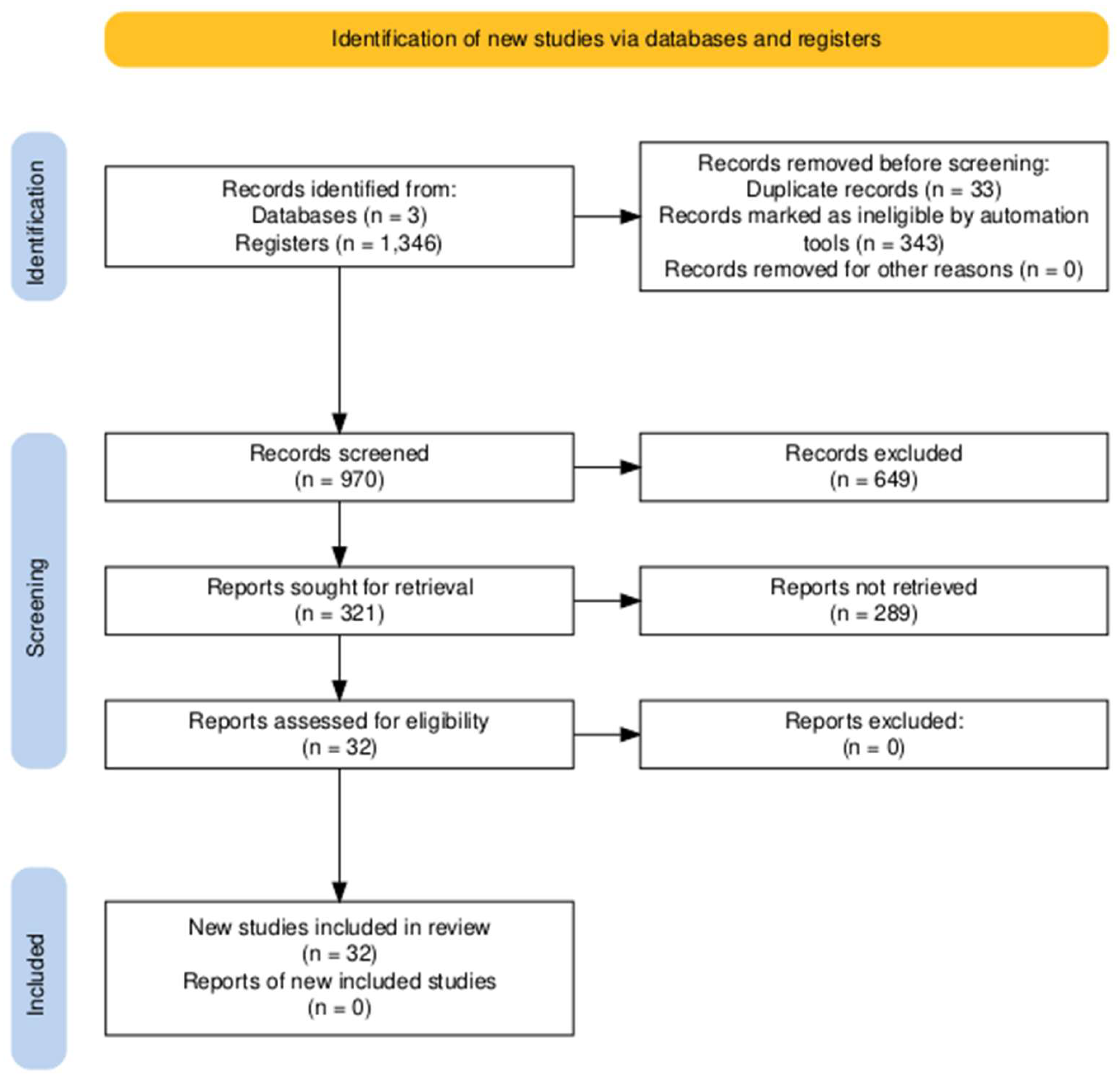
Figure 2.
Evolution of publications on the evolution of the digitalisation of logistics processes.
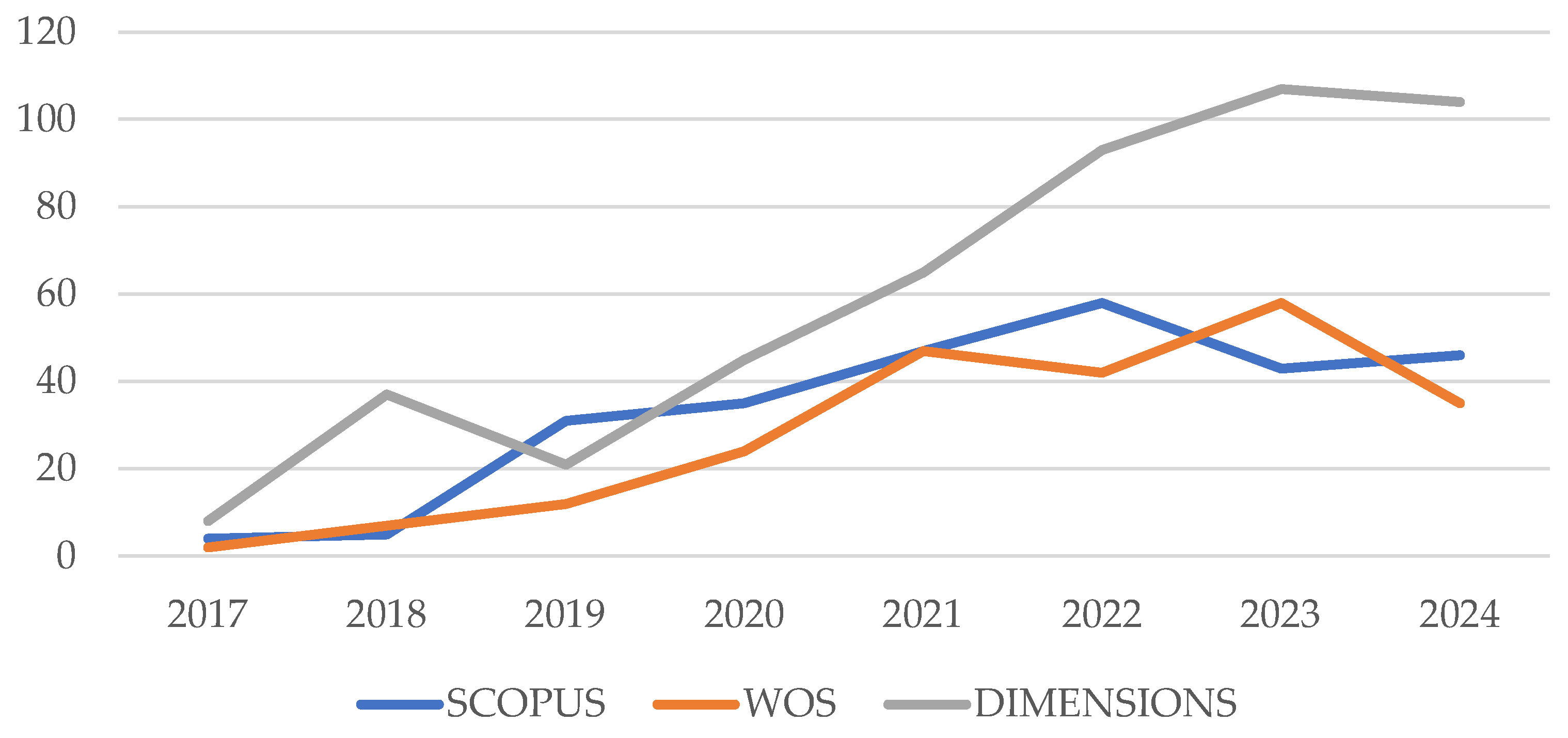
Table 1.
Bases de datos para la revisión sistemática de la literatura.
| Database | Search protocol | Documents |
|---|---|---|
| Scopus | (TITLE-ABS-KEY (digitisation OR digitisation) AND TITLE-ABS-KEY (automation OR automated) AND TITLE- ABS-KEY (logistic) AND ALL (international)) | 281 |
| WOS | TS=("digitalization" OR "digitization") AND TS=("automation" OR "automated") AND TS=("logistics" OR "supply chain") | 230 |
| Dimensions | "digitalization" OR "digitization" AND "logistics" OR "supply chain" AND "automation" OR "automated". | 835 |
| Total, documents | 1346 | |
Disclaimer/Publisher’s Note: The statements, opinions and data contained in all publications are solely those of the individual author(s) and contributor(s) and not of MDPI and/or the editor(s). MDPI and/or the editor(s) disclaim responsibility for any injury to people or property resulting from any ideas, methods, instructions or products referred to in the content. |
© 2025 by the authors. Licensee MDPI, Basel, Switzerland. This article is an open access article distributed under the terms and conditions of the Creative Commons Attribution (CC BY) license (http://creativecommons.org/licenses/by/4.0/).
Copyright: This open access article is published under a Creative Commons CC BY 4.0 license, which permit the free download, distribution, and reuse, provided that the author and preprint are cited in any reuse.


