Preprint
Article

This version is not peer-reviewed.

Kidney Disease Patients on Hemodialysis Who Present Anemia

A peer-reviewed article of this preprint also exists.

Submitted:

27 January 2025

Posted:

29 January 2025

You are already at the latest version

Abstract

Anemia in advanced chronic kidney disease on hemodialysis patients is a very prevalent problem , and it is well known that the treatment of this type of anemia is through the use of erythropoiesis-stimulating agents (erythropoietin). However, there are factors that determine a low response to erythropoietin (hyporesponse), which is defined as the need for doses greater than 200 IU/KG/week of erythropoietin to maintain objective hemoglobin levels in patients on hemodialysis, which are between 10 g/ dl to 12 g/dl.(22) In this observational study, analytical, multicenter case-control study, which included 784 patients, the prevalence of hyporesponse was 15.69%. It was found that female sex, age less than 50 years, a BMI less than 23 kg/m² and the use of Renin Angiotensin system blockers presented a higher prevalence of hyporesponse to treatment with EPO. Regarding laboratory parameters, it was found that low albumin levels, high ferritin levels, transferrin saturation less than 20% and high parathormone levels are risk factors associated with hyporesponsiveness to EPO.

Keywords: 
;  ;  

Introduction

Anemia is one of the main causes of morbidity in individuals with advanced Chronic Kidney Disease (CKD) (3), caused mainly by the decreased ability of renal parenchymal cells to produce erythropoietin (EPO). The main treatment for anemia in patients with CKD on hemodialysis are erythropoiesis-stimulating agents (ESAs) such as erythropoietin; however, the response to these agents is affected by factors such as iron deficiency, secondary hyperparathyroidism, parameters related to hemodialysis (adequacy), systemic inflammation, malnutrition and some medications used in the treatment of comorbidities in these patients (3). These factors can determine hyporesponsiveness to erythropoietin, which is defined as the need for a dose greater than 200 IU/kg/week to maintain target hemoglobin and hematocrit values.
Erythropoietin (EPO) at doses greater than 6,000 units per week has been associated with a 1.2- to 1.5-fold increased risk of mortality (6). Treatment aimed at normalizing hemoglobin values in the general population can clearly have negative effects, and it is imperative to weigh the benefits and risks of interventions rationally (5).

Materials and Methods

Study Design and Inclusion Criteria
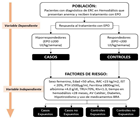
The study was observational, analytical, multicenter, case-control, in which anonymized medical records of patients were analyzed. The inclusion criteria were patients over 18 years of age, diagnosed with Chronic Kidney Disease stage 5, on hemodialysis (5D) for the last 3 months and who used erythropoietin; within these patients it was determined which required a dose equal to or greater than 200 IU/kg/week of erythropoietin alfa for a period greater than or equal to 3 consecutive months, which were defined as the group of hyporesponse to erythropoietin or 'cases' group (based on previous studies by Sibbel et al(48)), giving a total of 123 cases. Patients who required lower doses of erythropoietin were defined as responders or 'control' group, giving a total of 661 controls.
Records of patients who had been hospitalized in the last 3 months, who were not receiving erythropoietin, or who had incomplete information in the records were excluded.
Preprints 147402 i001

Data Collection

Data were collected from anonymized documentary records of patients treated at 6 dialysis centers to be physically tabulated in an information collection form. 883 cases of care lasting more than 3 months were reported during the period from January to December 2019, of which 784 patients met the inclusion criteria.

Statistical Analysis

The digital database was analyzed using the SPSS statistical program, version 25. A total of 3 controls were taken for each case. The normality of the distribution of each quantitative variable was determined using the Kolmogorov-Smirnov normality test, since there were more than 50 cases. Quantitative variables with normal distribution were expressed as mean and standard deviation; on the other hand, quantitative variables with non-normal distribution are expressed as median and 10-90 percentiles; qualitative variables are expressed as number and percentage.
The bivariate analysis based on the groups compared the dependent variable corresponding to the “Response to EPO treatment” with the different study variables (age, sex, BMI, time on dialysis, ferritin, IST, KTV, hours of dialysis treatment, urea reduction rate (TRU), hypothyroidism, parathyroid hormone, albumin, use of renin-angiotensin system blockers); using the χ2 test for the comparison of qualitative variables and the student T test for the comparison of quantitative variables. 2x2 tables were made to obtain the Odds Ratio (OR) value, considering a result >1 as a positive association to determine an exposure as a risk factor. The values of each calculated OR were presented with their respective 95% Confidence Interval.
For the multivariate analysis, a binary logistic regression was performed, the quantitative variables: age, time on hemodialysis, ferritin, BMI, IST, albumin, TRU and KTV were recategorized to convert them into dichotomous variables, finally using the variable "Response to treatment with EPO" as the dependent variable and the independent variables that were significant in the bivariate analysis were included in the analysis. The cut-off values for these variables are based on the results of previous studies and on the comparison of the means of the case and control groups as summarized in Table 4. For all statistical analyses, the significance level was used at an alpha error of 5% (p ꞊ 0.05).

Results

Of the 784 hemodialysis patients who received treatment with EPO, 123 presented hyporesponse during the study period and 661 were classified as responders. The prevalence of hyporesponse was 15.69%.
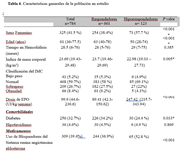
Regarding sex, 59% were men and 41% were women, and within the group of hypo-responders the majority were women (57.7%). Regarding age, 50% of the population was 61 years or older, with a higher median age in the responder group (63 years) than in the hypo-responders (50 years); both variables had a statistically significant difference (P<0.001). The highest body mass index (BMI) showed a tendency to be lower for the hypo-responders group (22.9 kg/m2) compared to the responders (23.7 kg/m2), with a statistically significant difference (P=0.005). In the variable time on dialysis, a median of 28.5 months was found, with similar distribution values for both groups (P=0.385). The mean dose of EPO for responders was 99.9 IU/kg/week and for hyporesponders 247.42 IU/kg/week (p<0.001). Regarding the comorbidities of interest in the study, Diabetes was present in 32.7% of the population studied, with a slightly higher tendency for the responder group in contrast to the hyporesponder group (34.2% and 24.4% respectively) (p=0.033). 39.4% of the individuals used renin-angiotensin system blockers as antihypertensive treatment, a proportion mostly distributed between the hyporesponder group with respect to the responders (52.8% and 36.9%) (P=<0.001). The general characteristics of the population are detailed in Table 6.
Preprints 147402 i002
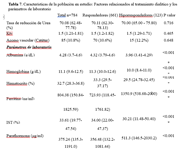
There was no statistically significant difference in TRU values between the responder and hyporesponder groups (p=0.716). Within the laboratory parameters: albumin, hemoglobin, hematocrit and TSI tended to present higher values in the responder group (p<0.001); and PTH and ferritin tended to present higher values in the hyporesponder group. All laboratory parameters showed a statistically significant difference (P=<0.001). table 7.
Preprints 147402 i003
In the bivariate analysis of general characteristics associated with the presence of hyporesponse to EPO (Cases), the following results are described:
Regarding sex, 57.7% of the cases were women, while 42.3% were men. The comparison between the two groups shows that women have a higher proportion of hyporesponsiveness to EPO compared to men, with an OR of 2.188 (95% CI: 1.480-3.233). Two age groups were analyzed, those under 50 years and those over 50 years. In this case, it was observed that younger people have a higher proportion of hyporesponsiveness to EPO compared to older people. The comparison between the two groups shows significant ORs of 3.846 (95% CI: 2.560-5.778) for the age group <50 years.
Individuals with a BMI less than 23 kg/m² have a higher proportion of hyporesponsiveness to EPO compared to people with a BMI equal to or greater than 23 kg/m². The comparison between the two groups shows a significant OR of 1.598 (95% CI: 1.086-2.352).
Two comorbidities, diabetes and hypothyroidism, are also analyzed; for diabetes, a significant OR of 0.621 (95% CI: 0.399-0.966) is found, indicating that people with diabetes are less likely to have hyporesponsiveness to EPO compared to people without diabetes. For hypothyroidism, no significant association was found, as the P value was 0.869.
Among cases (people with hyporesponsiveness to EPO), 52.8% used RAS blockers, while 47.2% did not use them, i.e. people who used RAS blockers had a higher proportion of hyporesponsiveness to EPO. The OR calculated for the use of blockers is 1.915 (95% CI: 1.300-2.822).
In the bivariate analysis of the factors related to dialysis treatment and the laboratory parameters associated with the presence of hyporesponse to EPO (Cases), the following results are described:
No significant association was found between urea reduction rate, Ktv value and vascular access type with hyporesponsiveness to EPO in the study population. The OR for the calculated urea reduction rate was 1.080 (95% CI: 0.493-2.367) with a p value of 0.848. Hemodialysis effectiveness parameters such as URR and Ktve do not determine significant differences in the presence of hyporesponsiveness to erythropoietin.
Subsequent analysis of laboratory parameters showed a significant association between low albumin levels and hyporesponsiveness to EPO. The OR value was 5.286 (95%CI: 3.523-7.930) for albumin value <4.0, with p value <0.001. Ferritin for a value greater than or equal to 800 ng/ml showed a calculated OR of 4.775 (95%CI: 2.999-7.603) with p value <0.001.
For parathyroid hormone levels equal to or greater than 500 μg/ml and hyporesponse to EPO, the calculated OR was 2.183 (95% CI: 1.479-3.223) with a p value < 0.001, demonstrating a higher probability of presenting hyporesponse to EPO in this group.
In summary, several dialysis adequacy parameters and laboratory parameters, such as albumin, ferritin, transferrin saturation and parathyroid hormone levels, were found to be significantly associated with hyporesponsiveness to EPO. However, urea reduction rate, Ktv value and type of vascular access did not show a significant association.
For the multivariate analysis, a logistic regression model was performed, with which the variables that were significant in the bivariate analysis were analyzed, with which the following results were obtained:
The R2 value of 0.564 indicates that the multivariate analysis model used explains approximately 56.4% of the variability observed in the presence of hyporesponse to EPO. The variables included in the model (sex, age, BMI, albumin, ferritin, transferrin saturation, parathyroid hormone, diabetes and use of renin-angiotensin system blockers) have a good predictive power in relation to hyporesponse to EPO, and explain a significant proportion of the variation observed in the data.
Female sex is positively associated with the presence of hyporesponsiveness to EPO. The calculated OR is 1.959. The 95% confidence interval for the OR ranges from 1.199 to 3.201.
Patients aged less than 50 years are positively associated with the presence of hyporesponsiveness to EPO. The calculated OR is 4.249. The 95% confidence interval for the OR ranges from 2.419 to 7.465.
For laboratory parameters, having albumin levels less than 4.0 g/dl, ferritin levels equal to or greater than 800 ng/ml, transferrin saturation less than 20% and parathyroid hormone levels equal to or greater than 500 μg/ml are positively associated with the presence of hyporesponsiveness to EPO (OR=10.533, OR=7.284, OR=9.265, OR=1.889 respectively). All these parameters present a statistically significant value (P=<0.05).
The use of Renin Angiotensin System Blockers is positively associated with the presence of hyporesponse to EPO with an OR=2.246, and gives patients a higher probability of presenting hyporesponse compared to those who do not use them.
In the multivariate model for both Diabetes and BMI there is insufficient evidence to establish a significant association (P=0.405 and P=0.963)

Discussion

In the present study, the risk factors associated with hyporesponse to treatment with erythropoietin in chronic kidney disease patients receiving hemodialysis and presenting anemia were investigated. The risk factors were found to be female sex, age under 50 years, an albumin level less than 4.0 g/dl, a ferritin value greater than or equal to 800 ng/ml, a transferrin saturation less than 20%, a Parathyroid hormone level greater than or equal to 500 μg/ml and the use of Renin Angiotensin system Blockers.
The prevalence of hyporesponsiveness was 15.69% for our study population. In the study conducted by Luo et al, patients with hyporesponsiveness to ESAs resulted in 12.5% (81), on the other hand this frequency increased up to 30.3% in the study conducted by Ingrasciotta et al (49).
Female sex as a risk factor for hyporesponse presented in our study population an OR of 2.188 in the bivariate analysis and 1.959 in the multivariate model. This condition gives the female sex almost double the probability of presenting inadequate response to treatment with EPO. This is probably related to the effect of testosterone as an adjuvant to the stimulation of erythropoiesis and nutritional factors (64). Likewise, in our study, female patients were younger and many of them present menstrual iron loss, which determines a risk factor for hyporesponse to erythropoietin.
Patients under 50 years of age have approximately 4 times more likely to present hyporesponse (OR=3.846 and OR=4.249). Similar results were described by Cizman et al. Regarding nutritional parameters, body mass index and serum albumin levels were evaluated. Bivariate analysis showed that patients with a BMI less than 23 kg/m² have almost 1.6 times more likely to present hyporesponse, contrasting with the results of the studies by Locatelli et al. Where a greater response was evidenced with higher BMI (4) and the study conducted by González-Ortiz et al., (4) which did not show significant differences between BMI and the incidence of hyporesponse to erythropoietin.
To analyze the results obtained in terms of BMI and albumin levels, current literature shows a paradoxical association between obesity and mortality, with an increase in mortality rates in dialysis patients who had a BMI less than 25 kg/m² (93). With the above mentioned, it is interesting to mention that within the definitions of malnutrition and protein-energy wasting issued by the panel of experts of the International Society of Renal Nutrition and Metabolism (ISRNM), they consider albumin values below 3.8 g/dl and a BMI less than 23 kg/m2, criteria that are used in nutritional assessment studies for patients with CKD on hemodialysis (62). The identification of BMI <23 kg/m2 and Albumin <4.0 g/dL as risk factors for hyporesponse to EPO treatment can be explained by the diagnosis of protein-energy wasting, beyond the traditional cut-offs of malnutrition such as low weight based on BMI according to the WHO (<18.5 kg/m2) or hypoalbuminemia (<3.5 g/dL). In addition, adipose tissue secretes leptin, which has been shown to stimulate human erythroid development in vitro (34).
Likewise, patients with a blood ferritin level greater than or equal to 800 ng/ml are approximately 5 to 7 times more likely to present hyporesponsiveness to EPO, in agreement with the study by Gillespie et al. who showed that ferritin values between 500 and 799 present twice the probabilities (OR = 3.46 and OR = 2.21, respectively) (59). Serum ferritin levels present a positive correlation with inflammatory markers (CRP and IL-6) (58). Proinflammatory cytokines such as tumor necrosis factor alpha (TNF-α) and interleukins 1, 6 and 10 (IL-1, IL-6 and IL-10) can induce ferritin expression and stimulate iron storage within macrophages, thereby reducing the level of circulating iron and its availability to be used by erythroid cells (8).
Another finding of this study is the transferrin saturation of less than 20% that patients presented prior to developing a period of hyporesponse, and that triggered an increase of between 5 and 9 times more risk within patients who are treated with EPO. In agreement with the studies of Cizman et al., (21), taking into account that low transferrin saturation can occur in the context of iron deficiency or inflammatory processes (this can be called functional iron deficiency whose pathophysiology is associated with an increase in the concentration of hepcidin that decreases the capacity of using iron reserves of reticuloendothelial cells and hepatocytes) (3)(31). Absolute iron deficiency is defined by severely reduced or absent iron reserves in the bone marrow, liver and spleen. This may be due to the combination of a lower absorption of iron and an increase in iron losses (1-3 g/year). This iron loss is due to gastrointestinal bleeding from the combination of gastritis and platelet dysfunction and, in addition, an increased rate of blood loss during dialysis.(31) Excessive iron loading may induce hepcidin and suppress erythropoiesis, so judicious and accurate regulation of iron status and serum ferritin appears to be necessary.(3)
The use of renin-angiotensin system inhibitors, including angiotensin converting enzyme inhibitors (ACEI) and angiotensin II receptor blockers (ARBs), have been associated with hyporesponse to EPO treatment (94). In this study, it was observed that 52.8% of hyporesponsive patients used these drugs as antihypertensive therapy, a condition that gives patients approximately 2 times more probability of presenting this condition in both the bivariate and multivariate models (OR=1.9 and OR=2.2). These drugs promote hyporesponse to ESA treatment through numerous mechanisms, including the inhibition of angiotensin II-induced EPO release and the increase in plasma levels of N-acetyl-seryl-aspartyl-lysyl-proline (Ac-SDKP), which prevents the recruitment of pluripotent hematopoietic stem cells (94).
In this study, patients with parathyroid hormone levels equal to or greater than 500 μg/ml were approximately twice as likely to present hyporesponsiveness in both bivariate and multivariate analysis (OR=2.18 and OR=1.8, respectively).
The mechanisms by which excess parathyroid hormone (PTH) can slow down the response to EPO are: direct inhibition of erythropoiesis, induction of bone marrow fibrosis with the consequent cancellation of erythropoietic tissue and inhibition of erythropoietin synthesis (19). Epidemiological studies have suggested that women undergoing dialysis have higher serum levels of PTH than men, which is interesting taking into account that the population of hyporesponders in our study had a higher proportion of women, however, this association between female sex and higher PTH levels could not be demonstrated by Bures et al, in their study (95).
Regarding the parameters associated with hemodialysis treatment, the Urea reduction rate, Kt/V and the type of vascular access were not significant in this study (OR=1.08, OR=1.06 and OR=1.17 respectively) with p>0.05. These results agree with those shown in the study by Santos et al, in which the mean Kt/V did not show a significant difference between the responder and hyporesponder groups (1.5±0.1 versus 1.5±0.3; p=0.495) nor the mean TRU (68.5%±7.4 versus 69.8%±7.1; p=0.391)(35).
Regarding the time on hemodialysis, no significant difference was found in this study (OR=1.145; p=0.492). Likewise, Santos et al. did not find a significant difference between the length of time on hemodialysis for the group of hyporesponders and responders (49 months versus 47 months) with p=0.989(35).
Anemia tends to be more severe in patients with diabetes mellitus than in patients without diabetes and develops in earlier stages of chronic kidney disease than in non-diabetic patients.(23) In fact, this severity is present regardless of the stage of CKD.(96). In our study for diabetes, a significant OR of 0.621 is found, indicating that people with diabetes have approximately half the chances of having hyporesponsiveness to EPO compared to people without diabetes as an independent factor. These findings agree with the study by Nafar et al in which a higher percentage of diabetics was evidenced among the group of patients who achieved improvement in their hemoglobin levels (>10 g/dl) concluding that the achievement of the target hemoglobin was significantly and directly associated with diabetes mellitus (33.9% vs. 38.0%; p< 0.05).(3)
Diabetic patients on dialysis tend to have a higher BMI, and yet multiple studies suggest that they are at a higher risk of malnutrition at the same time. (98) This higher adiposity with its consequent higher production of Leptin could justify a better response to Erythropoietin.

LIMITATIONS

Our study has important limitations, the laboratory tests were carried out in different laboratories, however, these laboratories comply with standardization standards.

Conclusions

The analysis of the study population determined a prevalence of 15.69% for hyporesponse to treatment with erythropoietin.
In addition, the risk factors present in patients with chronic kidney disease on hemodialysis that are related to hyporesponse to treatment with erythropoietin were identified. Thus, female sex, age under 50 years, BMI less than 23 kg/m² and the use of Renin Angiotensin system blockers showed a greater propensity to hyporesponse to treatment with EPO. Regarding laboratory parameters, low albumin levels, high ferritin levels, transferrin saturation less than 20% and high parathyroid hormone levels are risk factors associated with hyporesponse to EPO.
Diabetes is a comorbidity widely associated with anemia severity and hyporesponsiveness to erythropoiesis-stimulating agents in patients with CKD, including those in pre-dialysis stages. However, studies that include only patients on hemodialysis claim that its presence acts as a protective factor in this group of patients. These results, which are consistent with those presented in this study, still lack sufficient evidence to clarify the mechanisms responsible for this phenomenon.
Taken together, the results obtained in this study and the identification of these risk factors contribute to a better understanding of the mechanisms underlying hyporesponsiveness and to the implementation of additional interventions or therapeutic adjustments, allowing for significant clinical implications and contributing to improving the quality of life and health outcomes of this population.

References

  1. Lv JC, Zhang LX. Prevalence and Disease Burden of Chronic Kidney Disease. Adv Exp.
  2. Med Biol. 2019;1165:3-15.
  3. Huertas J, Osorio W, Loachamin F. Prevention, Diagnosis and Treatment of Chronic Kidney Disease. 2018. ed. National Directorate of Standardization; 111 p.
  4. Nafar M, Samavat S, Khoshdel A, Alipour-Abedi B. Anemia Evaluation and Erythropoietin Dose Requirement Among Hemodialysis Patients: a Multicenter Study. Iran J Kidney Dis. 2017 Jan;11(1):56-65.
  5. Gonzalez-Ortiz A, Correa-Rotter R, Vazquez-Rangel A, Vega-Vega O, Espinosa-Cuevas A.
  6. Relationship between protein-energy wasting in adults with chronic hemodialysis and the response to treatment with erythropoietin. BMC Nephrol. 2019 Aug 14;20(1):316.
  7. Feehally J, Floege J, Tonelli M, Johnson R. Comprehensive Clinical Nephrology. Sixth edition. Vol. 1. Philadelphia: Elsevier; 2019. 958-965 p.
  8. Suttorp MM, Hoekstra T, Mittelman M, Ott I, Krediet RT, Dekker FW, et al. Treatment with high dose of erythropoiesis-stimulating agents and mortality: analysis with a sequential Cox approach and a marginal structural model. Pharmacoepidemiol Drug Saf. 2015 Oct;24(10):1068-75.
  9. Kato H, Nangaku M, Hirakata H, Wada T, Hayashi T, Sato H, et al. Rationale and design of observational clinical Research In chronic kidney disease patients with renal anemia: renal proGnosis in patients with Hyporesponsive anemia To Erythropoiesis-stimulating agents, darbepoetiN alfa (BRIGHTEN Trial). Clin Exp Nephrol. 2018 Feb;22(1):78-84.
  10. de Oliveira Júnior WV, Sabino A de P, Figueiredo RC, Rios DRA. Inflammation and poor response to treatment with erythropoietin in chronic kidney disease. J Bras Nefrol Orgao Of Soc Bras E Lat-Am Nefrol. Jun 2015;37(2):255-63.
  11. Pillajo Sanchez BL, Guacho Guacho JS, Moya Guerrero IR, Pillajo Sanchez BL, Guacho Guacho JS, Moya Guerrero IR. Chronic kidney disease. Literature review and local experience in a city in Ecuador. Rev Colomb Nefrol [Internet] . December.
  12. 2021 http://www.scielo.org.co/scielo.php?script=sci_abstract&pid=S2500 50062021000300301&lng=en&nrm=iso&tlng=es.
  13. S. García de Vinuesa. FACTORS OF PROGRESSION OF CHRONIC RENAL DISEASE. SECONDARY PREVENTION. Nephrology. June 1, 2008;28:17-21.
  14. 11. Gorostidi M, Santamaría R, Alcázar R, Fernández-Fresnedo G, Galcerán JM, Goicoechea M, et al. Document of the Spanish Society of Nephrology on the KDIGO guidelines for the evaluation and treatment of chronic kidney disease. Nephrology. May 1, 2011.2014;34(3):302-16.
  15. Chen TK, Knicely DH, Grams ME. Chronic Kidney Disease Diagnosis and Management: A Review. JAMA. October 1, 2019;322(13):1294-313. Evans M, Lewis RD, Morgan AR, Whyte MB, Hanif W, Bain SC, et al. A Narrative Review of Chronic Kidney Disease in Clinical Practice: Current Challenges and Future Perspectives. Adv Ther. January 2022;39(1):33-43.
  16. Romagnani P, Remuzzi G, Glassock R, Levin A, Jager KJ, Tonelli M, et al. Chronic kidney disease. Nat Rev Dis Primer. 2017 Nov 23;3:17088.
  17. Cases A, Egocheaga MI, Tranche S, Pallarés V, Ojeda R, Górriz JL, et al. Anemia of chronic kidney disease: Protocol of study, management and referral to Nephrology. Nefrol Engl Ed.January 1, 2018;38(1):8-12.
  18. Pagani A, Nai A, Silvestri L, Camaschella C. Hepcidin and Anemia: A Tight Relationship.Front Physiol. 2019;10:1294.
  19. Amnuay K, Srisawat N, Wudhikarn K, Assanasen T, Polprasert C. Factors associated with erythropoiesis-stimulating agent hyporesponsiveness anemia in chronic kidney disease patients. Hematol Rep. 2019 Sep 18;11(3):8183.
  20. Santos EJF, Dias RSC, Lima JF de B, Salgado Filho N, Miranda Dos Santos A.Erythropoietin Resistance in Patients with Chronic Kidney Disease: Current Perspectives. Int J Nephrol Renov Dis. 2020;13:231-7.
  21. Rodriguez y Rodriguez MB, Castro D'Franchis LJ, Reyes Jiménez AE, López Urtiz CA.
  22. Anemia and inflammation with the administration of erythropoiesis-stimulating agents and their resistance in hemodialysis. Med Interna Mexico. 2015;31(2):156-63.
  23. Rosati A, Ravaglia F, Panichi V. Improving Erythropoiesis Stimulating Agent Hyporesponsiveness in Hemodialysis Patients: The Role of Hepcidin and Hemodiafiltration Online. Blood Purif. 2018;45(1-3):139-46.
  24. Cizman B, Smith HT, Camejo RR, Casillas L, Dhillon H, Mu F, et al. Clinical and Economic Outcomes of Erythropoiesis-Stimulating Agent Hyporesponsiveness in the Post-Bundling Era. Kidney Med. Oct 2020;2(5):589-599.e1.
  25. Nair S, Trivedi M. Anemia management in dialysis patients: a PIVOT and a new path? Curr Opin Nephrol Hypertens. May 2020;29(3):351-5.
  26. Skorecki K, Chertow G, Marsden P, Taal M, Yu A. Brenner and Rector's The Kidney. Tenth edition. Boston: Elsevier; 2016.
  27. Pertuz A, Garcia CI, Munoz Gomez C, Rico Fontalvo JE, Daza Arnedo R, Pájaro N, et al. Anemia in chronic kidney disease. Arch Med. 2021;17(2):1.
  28. Hazin MAA. Anemia in chronic kidney disease. Rev Assoc Medica Bras 1992. January 13, 2020;66Suppl 1(Suppl 1):s55-8.
  29. S. Anemia in kidney patients | Nephrology Today [Internet]. [cited May 8, 2023]. Available at: http://www.nefrologiaaldia.org/es-articulo-anemia -the-kidney-patient-178.
  30. Amato L, Addis A, Saulle R, Trotta F, Mitrova Z, Davoli M. Comparative efficacy and safety in ESA biosimilars vs. originators in adults with chronic kidney disease: a systematic review and meta-analysis. J Nephrol. Jun 2018;31(3):321-32.
  31. Badve SV, Beller EM, Cass A, Francis DP, Hawley C, Macdougall IC, et al. Interventions for erythropoietin-resistant anemia in dialysis patients. Cochrane Database Syst Rev. August 26, 2013;(8):CD006861.
  32. Sakaguchi Y, Hamano T, Wada A, Masakane I. Types of Erythropoietin-Stimulating Agents and Mortality among Patients Undergoing Hemodialysis. J Am Soc Nephrol JASN. Jun 2019;30(6):1037-48.
  33. Minutolo R, Garofalo C, Chiodini P, Aucella F, Del Vecchio L, Locatelli F, et al. Types of erythropoiesis-stimulating agents and risk of end-stage kidney disease and death in patients with non-dialysis chronic kidney disease. Nephrol Dial Transplant Off Publ Eur Dial Transpl Assoc - Eur Ren Assoc. 2021 Jan 25;36(2):267-74.
  34. Gafter-Gvili A, Schechter A, Rozen-Zvi B. Iron Deficiency Anemia in Chronic Kidney. Disease. Acta Haematol. 2019;142(1):44-50.
  35. Gupta N, Wish JB. Hypoxia-Inducible Factor Prolyl Hydroxylase Inhibitors: A Potential New Treatment for Anemia in Patients With CKD. Am J Kidney Dis Off J Natl Kidney Found. Jun 2017;69(6):815-26.
  36. Weir MR. Managing Anemia across the Stages of Kidney Disease in Those Hyporesponsive to Erythropoiesis-Stimulating Agents. Am J Nephrol. 2021;52(6):450-66.
  37. Kanbay M, Perazella MA, Kasapoglu B, Koroglu M, Covic A. Erythropoiesis stimulatory agent-resistant anemia in dialysis patients: review of causes and management. Blood Purif. 2010;29(1):1-14.
  38. Santos EJF, Hortegal EV, Serra HO, Lages JS, Salgado-Filho N, Dos Santos AM. Epoetin alfa resistance in hemodialysis patients with chronic kidney disease: a longitudinal study. Braz J Med Biol Res Rev Bras Pesqui Medicas E Biol. 2018;51(7):e7288.
  39. Yu L, Song J, Lu X, Zu Y, Li H, Wang S. Association between Serum Magnesium and Erythropoietin Responsiveness in Hemodialysis Patients: A Cross-Sectional Study. Kidney Blood Press Res. 2019;44(3):354-61.
  40. Bamgbola OF, Kaskel FJ, Coco M. Analyzes of age, gender and other risk factors of erythropoietin resistance in pediatric and adult dialysis cohorts. Pediatr Nephrol Berl Ger. 2009 Mar;24(3):571-9.
  41. Bae MN, Kim SH, Kim YO, Jin DC, Song HC, Choi EJ, et al. Association of Erythropoietin-Stimulating Agent Responsiveness with Mortality in Hemodialysis and Peritoneal Dialysis Patients. PLOS ONE. Nov 20, 2015;10(11):e0143348.
  42. Lu Mediators Inflamm. Nov 26, 2020;2020:e1027230.
  43. Yajima T, Yajima K, Takahashi H. Association of the erythropoiesis-stimulating agent resistance index and the geriatric nutritional risk index with cardiovascular mortality in maintenance hemodialysis patients. PloS One. 2021;16(1):e0245625.
  44. Panichi V, Rosati A, Bigazzi R, Paoletti S, Mantuano E, Beati S, et al. Anaemia and resistance to erythropoiesis-stimulating agents as prognostic factors in haemodialysis patients: results from the RISCAVID study. Nephrol Dial Transplant Off Publ Eur Dial Transpl Assoc - Eur Ren Assoc. 2011 Aug;26(8):2641-8.
  45. Okazaki M, Komatsu M, Kawaguchi H, Tsuchiya K, Nitta K. Erythropoietin resistance index and the all-cause mortality of chronic hemodialysis patients. Blood Purif.2014;37(2):106-12.
  46. López-Gómez JM, Portolés JM, Aljama P. Factors that condition the response to erythropoietin in patients on hemodialysis and their relationship to mortality. Kidney Int Suppl. December 2008;(111):S75-81.
  47. Guerrero Riscos MÁ, Guerrero-Riscos MÁ, Montes Delgado R, Montes-Delgado R, Seda Guzmán M, Seda-Guzmán M, et al. Erythropoietin resistance and survival in non-dialysis patients with stage 4-5 chronic kidney disease and heart disease. Nefrol Engl Ed. May 1, 2012;32(3):343-52.
  48. Chait Y, Kalim S, Horowitz J, Hollot C, Ankers E, Germain M, et al. The Greatly Misunderstood Erythropoietin Resistance Index and the Case for a New Responsiveness Measure. Hemodial Int Int Symp Home Hemodial. 2016 Jul;20(3):392-8.
  49. Mafla M. Resistance to erythropoietin in patients with anemia on hemodialysis, therapeutic algorithm. [Internet] [Thesis]. [Guayaquil]: University of Guayaquil; 2016. Available at : http://repositorio.ug.edu. ec/handle/redug/38246.
  50. Gunnell J, Yeun JY, Depner TA, Kaysen GA. Acute-phase response predicts erythropoietin resistance in hemodialysis and peritoneal dialysis patients. Am J Kidney Dis Off J Natl Kidney Found. January 1999;33(1):63-72.
  51. Sibbel SP, Koro CE, Brunelli SM, Cobitz AR. Characterization of chronic and acute ESA hyporesponse: a retrospective cohort study of hemodialysis patients. BMC Nephrol. August 18, 2015;16:144.
  52. Ingrasciotta Y, Lacava V, Marcianò I, Giorgianni F, Tripepi G, Arrigo GD, et al. Correction to: In search of potential predictors of erythropoiesis-stimulating agents (ESAs) hyporesponsiveness: a population-based study. BMC Nephrol. 2020 Jul 9;21(1):262.
  53. Coad J, Pedley K. Iron deficiency and iron deficiency anemia in women. Scand J Clin Lab Research Suppl. 2014;244:82-9; discussion 89.
  54. Kassebaum NJ, Jasrasaria R, Naghavi M, Wulf SK, Johns N, Lozano R, et al. A systematic analysis of global anemia burden from 1990 to 2010. Blood. 2014 Jan 30;123(5):615-24.
  55. Lehtihet M, Bonde Y, Beckman L, Berinder K, Hoybye C, Rudling M, et al. Circulating Hepcidin-25 Is Reduced by Endogenous Estrogen in Humans. PloS One.2016;11(2):e0148802.
  56. XL, Dk R, RM, CM, La H, EA, et al. Progesterone receptor membrane component-1 regulates hepcidin biosynthesis. J Clin Invest [Internet]. January 2016 [cited 12 June 2023];126( 1). Available at: https://pubmed.ncbi.nlm.nih.gov/26657863/.
  57. Babitt JL, Lin HY. Molecular mechanisms of hepcidin regulation: implications for the anemia of CKD. Am J Kidney Dis Off J Natl Kidney Found. Apr 2010;55(4):726-41.
  58. Babitt JL, Eisenga MF, Haase VH, Kshirsagar AV, Levin A, Locatelli F, et al. Controversies in optimal anemia management: conclusions from a Kidney Disease: Improving Global Outcomes (KDIGO) Conference. Kidney Int. Jun 2021;99(6):1280-95.
  59. Karaboyas A, Morgenstern H, Fleischer NL, Vanholder RC, Dhalwani NN, Schaeffner E, et al. Inflammation and Erythropoiesis-Stimulating Agent Response in Hemodialysis Patients: A Self-matched Longitudinal Study of Anemia Management in the Dialysis Outcomes and Practice Patterns Study (DOPPS). Kidney Med. Jun 2020;2(3):286-96.
  60. Won HS, Kim HG, Yun YS, Jeon EK, Ko YH, Kim YS, et al. IL-6 is an independent risk factor for resistance to erythropoiesis-stimulating agents in hemodialysis patients without iron deficiency. Hemodial Int Int Symp Home Hemodial. 2012 Jan;16(1):31-7.
  61. Ueda N, Takasawa K. Impact of Inflammation on Ferritin, Hepcidin and the Management of Iron Deficiency Anemia in Chronic Kidney Disease. Nutrients. 2018 Aug 27;10(9):1173.
  62. Gillespie IA, Macdougall IC, Richards S, Jones V, Marcelli D, Froissart M, et al. Factors precipitating erythropoiesis-stimulating agent responsiveness in a European haemodialysis cohort: case-crossover study. Pharmacoepidemiol Drug Saf. 2015 Apr;24(4):414-26.
  63. Carrillo Esper R, Peña Pérez C, Zepeda Mendoza AD, Meza Márquez JM, Neri Maldonado R, Meza Ayala CM, et al. Ferritin and hyperferritinemic syndrome: Its impact on the critically ill; current concepts. Rev Asoc Mex Med Critica Ter. Intensive. September 2015;29(3):157-66.
  64. Khan A, Khan WM, Ayub M, Humayun M, Haroon M. Ferritin Is a Marker of Inflammation rather than Iron Deficiency in Overweight and Obese People. J Obes. 2016;2016:1937320.
  65. Fraile E, Gottschalk M, Zelechower H, Linari MA. Nutritional assessment in patients with.
  66. Chronic Kidney Disease, stage 5D, who undergo Hemodiafiltration and Hemodialysis. 26 November 2022. 2023;(11):7-15.
  67. Marcelli D, Bayh I, Merello JI, Ponce P, Heaton A, Kircelli F, et al. Dynamics of the erythropoiesis stimulating agent resistance index in incident hemodiafiltration and high-flux hemodialysis patients. Kidney Int. Jul 2016;90(1):192-202.
  68. Ryta A, Chmielewski M, Debska-Slizien A, Jagodzinski P, Sikorska-Wisniewska M, Lichodziejewska-Niemierko M. Impact of gender and dialysis adequacy on anemia in peritoneal dialysis. Int Urol Nephrol. 2017;49(5):903-8.
  69. Hemodialysis dose | Nephrology Today [Internet]. [cited May 6, 2023]. Available at : http://www.nefrologiaaldia.org/es-articulo-dosis-hemodialisis-270.
  70. Daugirdas, JT. Hemodialysis Treatment Time: As Important as it Seems? Semin Dial. 2017 Mar;30(2):93-8.
  71. Varlotto J, Stevenson MA. Anemia, tumor hypoxemia, and the cancer patient. Int J Radiat Oncol Biol Phys. 2005 Sep 1;63(1):25-36.
  72. Bohlius J, Bohlke K, Castelli R, Djulbegovic B, Lustberg MB, Martino M, et al.Management of Cancer-Associated Anemia With Erythropoiesis-Stimulating Agents ASCO/ASH Clinical Practice Guideline Update. J Clin Oncol Off J Am Soc Clin Oncol. 2019 May 20;37(15):1336-51.
  73. Pappa M, Dounousi E, Duni A, Katopodis K. Less known pathophysiological mechanisms of anemia in patients with diabetic nephropathy. Int Urol Nephrol. 2015 Aug;47(8):1365-72.
  74. Gilbertson DT, Peng Y, Arneson TJ, Dunning S, Collins AJ. Comparison of methodologies to define hemodialysis patients hyporesponsive to epoetin and impact on counts and characteristics. BMC Nephrol. February 20, 2013;2:44 p.m.
  75. Drüeke TB, Eckardt KU. Role of secondary hyperparathyroidism in erythropoietin resistance of chronic renal failure patients. Nephrol Dial Transplant Off Publ Eur Dial Transpl Assoc - Eur Ren Assoc. 2002;17 Suppl 5:28-31.
  76. Chen L, Ling YS, Lin CH, He JX, Guan TJ. High Dose ESAs Are Associated with High iPTH Levels in Hemodialysis Patients with End-Stage Kidney Disease: A Retrospective Analysis. Front Public Health. 2015;3:258.
  77. Warady BA, Ng E, Bloss L, Mo M, Schaefer F, Bacchetta J. Cinacalcet studies in pediatric subjects with secondary hyperparathyroidism receiving dialysis. Pediatr Nephrol Berl Ger. 2020 Sep;35(9):1679-97.
  78. Tanaka M, Komaba H, Fukagawa M. Emerging Association Between Parathyroid Hormone and Anemia in Hemodialysis Patients. Ther Apher Dial Off Peer-Rev J Int Soc Apher Jpn Soc Apher Jpn Soc Dial Ther. June 2018;22(3):242-5.
  79. Meytes D, Bogin E, Ma A, Dukes PP, Massry SG. Effect of parathyroid hormone on erythropoiesis. J Clin Invest. 1981 May;67(5):1263-9.
  80. Bogin E, Massry SG, Levi J, Djaldeti M, Bristol G, Smith J. Effect of parathyroid hormone on osmotic fragility of human erythrocytes. J Clin Invest. 1982 Apr;69(4):1017-25.
  81. Coe LM, Madathil SV, Casu C, Lanske B, Rivella S, Sitara D. FGF-23 is a negative regulation of prenatal and postnatal erythropoiesis. J Biol Chem. 2014 Apr 4;289(14):9795-810.
  82. Singh S, Grabner A, Yanucil C, Schramm K, Czaya B, Krick S, et al. Fibroblast growth factor 23 directly targets hepatocytes to promote inflammation in chronic kidney disease. Kidney Int. Nov 2016;90(5):985-96.
  83. Montero D, Haider T, Flammer AJ. Erythropoietin response to anemia in heart failure. Eur J Prev Cardiol. 2019 Jan;26(1):7-17.
  84. Samavat S, Nafar M, Khoshdel A, Abedi BA. Factors Contributing to Erythropoietin Hyporesponsiveness Among Hemodialysis Patients: A Cross-Sectional Multicenter Study. Nephro-Urol Mon [Internet]. 2017 [cited May 6, 2023];9(3). Available at: https://brieflands.com/articles/num-55534.html#abstract.
  85. Luo J, Jensen DE, Maroni BJ, Brunelli SM. Spectrum and Burden of Erythropoiesis- Stimulating Agent Hyporesponsiveness Among Contemporary Hemodialysis Patients. Am J Kidney Dis Off J Natl Kidney Found. Nov 2016;68(5):763-71.
  86. Luxardo R, Ceretta L, González-Bedat M, Ferreiro A, Rosa-Diez G. The Latin American Dialysis and Renal Transplantation Registry: report 2019. Clin Kidney J. Mar 2022;15(3):425-31.
  87. Charles C, Ferris AH. Chronic Kidney Disease. Prim Care. December 2020;47(4):585-95.
  88. Gluba-Brzózka A, Franczyk B, Olszewski R, Rysz J. The Influence of Inflammation on Anemia in CKD Patients. Int J Mol Sci. 2020 Jan 22;21(3):725.
  89. P MC, M PR, S FC. Treatment of anemia with erythropoietin and iron in Crohn's disease. Chronic Kidney Disease. Rev Chil Pediatrics. July 20, 2008;79(2):131-45.
  90. Del Vecchio L, Minutolo R. ESA, Iron Therapy and New Drugs: Are There New Perspectives in the Treatment of Anaemia? J Clin Med. 2021 Feb 18;10(4):839.
  91. Weiss, G.; Ganz, T.; Goodnough, L.T. Anemia of inflammation. Blood. 2019 Jan 3;133(1):40-50.
  92. Robinson, B.M.; Akizawa, T.; Jager, K.J.; Kerr, P.G.; Saran, R.; Pisoni, R.L. Factors affecting outcomes in patients reaching end-stage kidney disease worldwide: differences in access to renal replacement therapy, modality use, and haemodialysis practices. Lancet London Engl. July 16, 2016;388(10041):294-306.
  93. Locatelli, F.; Hannedouche, T.; Fishbane, S.; Morgan, Z.; Oguey, D.; White, W.B. Cardiovascular Safety and All-Cause Mortality of Methoxy Polyethylene Glycol-Epoetin Beta and Other Erythropoiesis-Stimulating Agents in Anemia of CKD: A Randomized Noninferiority Trial. Clin J Am Soc Nephrol CJASN. 2019 Dec 6;14(12):1701-10.
  94. van Haalen, H.; Jackson, J.; Spinowitz, B.; Milligan, G.; Moon, R. Impact of chronic kidney disease and anemia on health-related quality of life and work productivity: analysis of multinational real-world data. BMC Nephrol. 2020 Mar 7;21(1):88.
  95. Hoshino, J.; Muenz, D.; Zee, J.; Sukul, N.; Speyer, E.; Guedes, M.; et al. Associations of Hemoglobin Levels With Health-Related Quality of Life, Physical Activity, and Clinical Outcomes in Persons With Stage 3-5 Nondialysis CKD. J Ren Nutr Off J Counc Ren Nutr Natl Kidney Found. 2020 Sep;30(5):404-14.
  96. Spinowitz, B.; Pecoits-Filho, R.; Winkelmayer, W.C.; Pergola, P.E.; Rochette, S.; Thompson-Leduc, P.; et al. Economic and quality of life burden of anemia on patients with CKD on dialysis: a systematic review. J Med Econ. Jun 2019;22(6):593-604.
  97. Obesity and Kidney Disease Progression | Nephrology Today [Internet]. [cited May 25, 2023]. Available at : http://www.nefrologiaaldia.org/es-articulo-obesidad-progresion-enfermedad- renal-210.
  98. Ogawa, T.; Shimizu, H.; Kyono, A.; Sato, M.; Yamashita, T.; Otsuka, K.; et al. Relationship between responsiveness to erythropoiesis-stimulating agent and long-term outcomes in chronic hemodialysis patients: a single-center cohort study. Int Urol Nephrol. January 2014;46(1):151-1.
  99. Bures, C.; Skachko, T.; Dobrindt, E.M.; Pratschke, J.; Uluk, D.; Mogl, M.T. Is There a Gender Difference in Clinical Presentation of Renal Hyperparathyroidism and Outcome after Parathyroidectomy? Visc Med. February 2020;36(1):34-40.
  100. Bajaj, S.; Makkar, B.M.; Abichandani, V.K.; Talwalkar, P.G.; Saboo, B.; Srikanta, S.S.; et al. Management of anemia in patients with diabetic kidney disease: A consensus statement. Indian J Endocrinol Metab. 2016;20(2):268-81.
  101. Alalawi, F.; Bashier, A. Management of diabetes mellitus in dialysis patients: Obstacles and challenges. Diabetes Metab Syndr. 2021;15(3):1025-36.
  102. Eldehni, M.T.; Crowley, L.E.; Selby, N.M. Challenges in Management of Diabetic Patients on Dialysis. Kidney Dial. December 2022;2(4):553-64.
  103. Zeng, Y.; Xu, Y.; Zhang, B.; Xu, C.; Cao, J.; Deng, Q.; et al. Clinical prognostic role of bioimpedance phase angle in diabetic and non-diabetic hemodialysis patients. Asia Pac J Clin Nutr. 2022;31(4):619-25.
Disclaimer/Publisher’s Note: The statements, opinions and data contained in all publications are solely those of the individual author(s) and contributor(s) and not of MDPI and/or the editor(s). MDPI and/or the editor(s) disclaim responsibility for any injury to people or property resulting from any ideas, methods, instructions or products referred to in the content.
Copyright: This open access article is published under a Creative Commons CC BY 4.0 license, which permit the free download, distribution, and reuse, provided that the author and preprint are cited in any reuse.
Prerpints.org logo

Preprints.org is a free preprint server supported by MDPI in Basel, Switzerland.

Subscribe

Disclaimer

Terms of Use

Privacy Policy

Privacy Settings

© 2025 MDPI (Basel, Switzerland) unless otherwise stated