Preprint
Article

This version is not peer-reviewed.

Is a Perioperative Opioid-Sparing Anesthesia-Analgesia Strategy Feasible in Open Thoracotomies? Findings from a Retrospective Matched Cohort Study

A peer-reviewed article of this preprint also exists.

Submitted:

26 January 2025

Posted:

27 January 2025

You are already at the latest version

Abstract

Background/Objectives: To assess the feasibility and effectiveness of a perioperative opioid-sparing anesthesia-analgesia (OSA-A) technique without regional nerve blocks compared to standard opi-oid-based technique (OBA-A) in open thoracotomies. Methods: This retrospective, propensi-ty-matched, case-control study was conducted at a university hospital from January 2017 to Feb-ruary 2021, including adult patients undergoing open thoracotomy for lung or pleura pathology. Sixty patients in the OSA-A group were matched with 40 in the OBA-A group. Outcomes included postoperative pain scores on days 0, 1, and 2; 24-hour postoperative morphine consumption; PACU and hospital length of stay; time to bowel movement; and rates of nausea and vomiting. Results: Of 120 eligible patients, 100 had complete records (60 OSA-A, 40 OBA-A). Demographics were similar, but ASA status scores were higher in the OBA-A group. The OSA-A group reported significantly lower pain levels at rest, during cough, and on movement on the first two postoperative days, shorter PACU stay, and required fewer opioids. They also had better gastrointestinal motility (p<0.0001) and lower rates of nausea and vomiting on postoperative days 1 and 2. A follow-up study with 68 patients (46 OSA-A, 22 OBA-A) assessing chronic pain prevalence found no signif-icant differences between the groups. Conclusions: OSA-A without regional nerve blocks for open thoracotomies is feasible and safe, improving postoperative pain management, reducing opioid consumption, shortening PACU stay, and enhancing early gastrointestinal recovery compared to OBA-A.

Keywords: 
;  ;  ;  ;  ;  ;  

1. Introduction

Post-thoracotomy pain is severe, multifactorial, and attributed to both nociceptive and neuropathic mechanisms [1,2,3]. The contributing factors include surgical incision, muscular, ligamentous, and neural manipulation, rib retraction or fracture, pleural irritation and thoracostomy tube placement. Failure to control this pain has been linked to increased postoperative pulmonary complications, as it negatively affects deep breathing, coughing, and mobilization [1,2]. Furthermore, thoracic surgical procedures frequently result in persistent pain and increased pain sensitivity, with the reported prevalence of post-thoracotomy pain syndrome (PTPS) ranging from 33% to 91% [1,4,5]. Notably, recent research has identified acute pain following thoracic surgery as a robust predictor for the development of PTPS [6].
Post-thoracotomy pain is commonly addressed by thoracic epidural analgesia, paravertebral blocks, or the administration of opioids intravenously. Thoracic epidural analgesia, the gold standard for post-thoracotomy pain has been associated with significant complications, such as hypotension and epidural hematoma, and with a paradoxical increase in length of stay in hospital [3,7]. Paravertebral blocks are considered equivalent to thoracic epidural analgesia, but they carry the risk of vascular puncture, bleeding, and hematoma formation [8]. Furthermore, while epidural and paravertebral blocks effectively block neurotransmission of intercostal and sympathetic nerves, they do not block the vagus and phrenic nerves [7]. As a result, it is often necessary to add non-steroidal anti-inflammatory drugs or opioids. On the other hand, perioperative use of opioids has been associated with multiple side effects, as well as acute tolerance and hyperalgesia [1,9,10]. At the same time, recent publications have raised concerns regarding the impact of opioids on immunomodulation, immunosuppression, and lung cancer progression [1,11].
Current research indicates a significant gap in conclusive evidence regarding the effects of Opioid Free (OFA-A) and Opioid Sparing (OSA-A) Anesthesia-Analgesia on postoperative outcomes following thoracic surgery. A recent retrospective study on thoracic surgery patients showed a decrease in postoperative pain scores and a concomitant reduction in epidural ropivacaine consumption following the implementation of OFA-A [2].
However, to our knowledge, there is currently no study specifically addressing post-thoracotomy pain management using a perioperative opioid-sparing anesthesia-analgesia strategy (OSA-A) that does not involve a central or peripheral nerve block. The goal of the present study was to examine whether patients receiving perioperative OSA-A or an opioid-based anesthesia-analgesia strategy (OBA-A) for open thoracotomy differed in their postoperative outcomes. Besides pain scores, post-anesthesia unit (PACU) and hospital stay, nausea/vomiting, opioid consumption postoperatively, intestinal mobilization, and persistent postoperative pain were included as study outcomes. Based on comparable studies [10,12], it is hypothesized that OSA-A and OBA-A groups will not have significantly different pain scores, but the OSA-A group will have a shorter PACU duration and a lower morphine equivalent dose (MED) in the immediate postoperative period.

2. Materials and Methods

2.1. Study Design

For a long time in our department the standard practice for patients undergoing open thoracotomies had been the combination of general and epidural anesthesia. However, due to an increasing prevalence of anticoagulant use among patients, the option of epidural analgesia had been precluded for several individuals. Consequently, a standard OBA-A technique was performed in these cases, without a regional nerve block. Notably, in February 2016, three consultant anesthesiologists introduced OFA-A/OSA-A for open thoracotomies related to lung or pleural pathology as part of a meticulously audited quality improvement initiative.
This retrospective matched cohort study focused on individuals aged 18 years, American Society of Anesthesiology (ASA) physical status 1-3, who underwent elective open thoracotomy for lung or pleural pathology between February 2015 and February 2021. As the OBA-A technique was used in patients with contraindications to regional nerve blocks (mainly patient refusal or anticoagulation), we decided to implement perioperative OSA-A without the use of any central or regional nerve block; thus, such technique implementation was excluded from the study. Exclusion criteria also included cognitive decline making effective postoperative communication difficult, and incomplete data registration on the patient’s medical record.
All patients who underwent thoracic surgery via open thoracotomy from 2015 to 2021 were evaluated for eligibility. Patient matching criteria encompassed demographic characteristics, type of operation, surgeon, and comorbidities.

2.2. Anesthesia-Analgesia Management

The perioperative management protocols for OBA-A and OSA-A group are summarized in Table 1.
Table 1. Perioperative protocols in OBA-A and OSA-A groups.
OBA-A Group OSA-A Group Comments
Premedication
Night before surgery
Anxiolysis Bromazepam 1.5 mg orally (po) Pregabalin 25-150 mg po
Amitriptyline 10 mg po
Pregabalin tailored to patients’ needs / status
Low-dose Amitriptyline for its antinociceptive and anti-salivary actions, if not contraindicated due to patients’ comorbidities
Premedication
Day of surgery
Midazolam 0.05 mg/kg
intramuscularly (im)
Pregabalin 25-150 mg po
Amitriptyline 10 mg po
Anesthesia Induction intravenously (iv)
iv Fentanyl 150-200 mcg
iv Dexmedetomidine loading dose 1 mcg/kg administrated over 15 minutes
iv Propofol 2-2.5 mg/kg iv Midazolam 2-5 mg
iv Rocuronium 0.6 mg/kg (1.2 mg/kg if RSI) iv Ketamine 0.5-1.0 mg/kg
Or iv Propofol 1-2 mg/kg
iv Cis-Atracurium 0.2 mg/kg iv Lidocaine 1mg/kg
*Surgical site infiltration prior to incision with Ropivacaine (10-15 ml Ropivacaine 0.75%) iv Rocuronium 0.6 mg/kg (1.2 mg/kg if RSI)
iv Magnesium Sulphate 30-40 mg/kg as bolus over 15 minutes
iv Dexamethasone 8-16 mg
*Surgical site infiltration prior to incision with Ropivacaine (10-15 ml Ropivacaine 0.75%)
Prior to incision iv Fentanyl 50-100mcg iv Dexmedetomidine infusion 0.6-1.2 mcg/kg/h
Or iv Lidocaine infusion 1mg/kg/h
iv Remifentanil infusion 0.05-0.25 mcg/kg/h iv Paracetamol 1gr
iv NSAID (Parecoxib 40 mg or Dexketoprofen 50 mg)
Anesthesia maintenance Volatile anesthesia Volatile anesthesia
Intraoperative antinociception iv Remifentanil infusion 0.05-0.25 mcg/kg/h iv Lidocaine infusion 0.5-1mg/kg/h
Or iv Dexmedetomidine 0.4-1mcg/kg/h
iv boluses of Fentanyl 50-100 mcg as required iv boluses of 20-30 mg of Ketamine as required
iv bolus of 2.5 g Magnesium sulphate
20 minutes prior to surgical closure iv NSAID if no contraindication
(Parecoxib 40 mg or Dexketoprofen 50 mg)
iv bolus of 20-30 mg of Ketamine
iv Paracetamol 1 g iv Tramadol 100 mg
iv Morphine 0.05-0.15 mg/kg
PACU iv bolus of morphine 2 mg iv Ketamine 30-50 mg If patient’s pain score at rest ≥6 in the numerical rating scale score 0-10
± iv Magnesium sulphate 2.5 g
± iv Midazolam 1-2 mg
iv Pethidine 20-30 mg iv Pethidine 20-30 mg If shivering
iv Tramadol 100 mg Rescue therapy
Surgical Ward
48 hours after surgery
iv Paracetamol 1gr every 8 hours iv Paracetamol 1gr every 8 hours
iv PCA morphine morphine (solution 0.5 mg/ml) with an infusion rate 0.5-1mg/h and possibility of bolus 1 mg every 10 minutes, if no contraindication, under continuous monitoring with pulse oximetry iv Tramadol (max daily dose 300 mg)
po Pregabalin 25-150 mg daily dose, given in titrated doses
Rescue therapy: im Pethidine 50-75mg
In the OBA-A group, the option of wound infiltration with ropivacaine was available prior to incision, according to surgeon preference, as per our department’s protocol. Thus, the same option was also available for subsequent patients in the OSA-A group. To compare analgesic requirements in the postoperative period, the total amount of morphine (mg) equivalents delivered in the period 0-48 hours was recorded. This included PCA morphine (iv), morphine administered in PACU) and any other opioid administered in PACU, on the first (POD1) and second (POD2) postoperative days. All administrated opioids were converted to iv MED according to Table 2 (from iv Morphine equivalents for commonly used drugs – ENCORE study) [13].
Table 2. Opioid conversion table used to equate equivalent iv morphine values [13].
Total Daily Dose (IV) Morphine Equivalent Dose (mg)
1 mcg fentanyl iv 0.066 mg morphine iv
1 mg oxycodone iv 1.5 mg morphine iv
1 mg tramadol 0.1 mg morphine iv
1 mg pethidine iv 0.13 mg morphine iv

2.3. Study Outcomes

2.3.1. Pain and Opioid Consumption

Patient pain scores were systematically recorded in a Numerical Rating Scale (NRS) ranging from 0 to 10 in PACU (Postoperative Day 0, designated as POD0), and postoperative days 1 and 2 (POD1, POD2 respectively). Cumulative opioid consumption was assessed in terms of intravenous MED over the initial 48 postoperative hours. Opioids were administered under three distinct circumstances: (1) supplemental opioids provided in PACU, (2) patient-controlled analgesia (PCA), and (3) any additional opioids given on ward on POD1 and POD2.

2.3.2. Other Outcomes

In our comparative analysis of patient cohorts, several additional factors were identified as essential: the duration of stay in PACU, the time of bowel function recovery, and the prevalence of nausea/vomiting on POD1 and POD2.
A comprehensive evaluation of persistent pain at the thoracotomy site was conducted during follow-up assessments occurring more than six months postoperatively. To identify the presence of chronic pain, patients were assessed via structured telephone interviews. We ensured that all interviews took place after a minimum of six months following the surgical intervention. All participants provided informed consent for these interviews, which were conducted by a qualified anesthetist. Pain intensity was quantitatively assessed using the Numerical Rate Scale (0-10). Patients were classified as experiencing chronic pain if they reported a score exceeding 0 in response to any of these questions:
  • How would you assess your pain now, at this moment? (0-10)
  • How severe was the worst pain during the past 4 weeks (0-10)
  • How severe was the pain during the past 4 weeks on average? (0-10)
Chronic pain was classified as moderate, if the patients reported NRS of 4-6 in any of the above questions and as severe if they reported a score ≥7 to any of the above questions. Neuropathic pain characteristics were detected by using the PainDETECT questionnaire [14].

2.4. Statistical Analysis

Categorical data were analysed using two-sided Fisher’s exact test, due to small sample size. Q-Q plots and Kolmogorov-Smirnov normality tests were used to determine numerical data normality. Normally distributed numerical data were analysed using unpaired two-tailed t tests. Non-normally distributed numerical data were analysed using Mann-Whitney U tests. For numerical data with multiple time-points of measurement, such as morphine consumption and pain data, if data were found to be normally distributed, two-way ANOVA was used, and adjustments for multiple comparisons were made using the Tukey test. If data were found to be non-normally distributed, multiple Mann-Whitney U tests were used and adjustments for multiple comparisons were made using the False Discovery Rate (FDR) method (Q=1%). Numerical data were reported as x̄ ± SD, and the reported p-values were corrected using the FDR method as mentioned. Data were analyzed using GraphPad Prism 10 (edition 10.3.1 (509)) (GraphPad Software, Boston, MA, USA).

3. Results

3.1. Patients’ Characteristics

We have conducted a retrospective analysis of the acute postoperative pain service records in our hospital from 01/02/2015 to 01/02/2021. Among 380 thoracic surgeries for lung and pleura pathology, we identified 120 eligible patients for the study through 1:1 propensity matching for OBA-A and OSA-A groups. However, due to incomplete records, only 100 of these 120 patients had comprehensive data, including demographic information, intraoperative pharmacological agents’ administration, PACU data, and details regarding the first 2 postoperative days (60 patients in the OSA-A group and 40 patients in the OBA-A group). As indicated in Table 3, patients did not differ in basic demographic characteristics such as age, sex, weight, height and BMI. The only identified difference pertained to the fact that patients in the OBA-A group had higher ASA status scores.
Table 3. Patients’ characteristics.
Characteristic OSA-A(x̅ ± SD) OBA-A(x̅ ± SD) P-Value Statistical Test
Age (y) 62.55 ± 11.29 63.73 ± 12.55 0.3249 Mann-Whitney U test
Weight (kg) 79.50 ± 15.33 77.43 ± 13.28 0.4864 Unpaired two-tailed t test
Height (m) 1.698 ± 0.07095 1.678 ± 0.08057 0.1996 Unpaired two-tailed t test
BMI (kg *m-2) 27.56 ± 5.050 27.40 ± 3.751 0.9511 Mann-Whitney U test
Sex Male 48 28 0.3394 Fisher’s exact test two-sided
Female 12 12
ASA status 1 0 1 0.0208 Fisher’s exact test two-sided
2 39 16
3 21 22
4 0 1
Type of surgery Lobectomy 39 23 0.3728 Fisher’s exact test two-sided
Segmentectomy 14 12
Pneumonectomy 3 0
Other (biopsy, talc pleurodesis e.t.c.) 4 5
Depression Yes 7 7 0.5576 Fisher’s exact test two-sided
No 53 33
Anxiety Yes 20 11 0.6599 Fisher’s exact test two-sided
No 40 29
Alcohol Use Disorder Yes 6 1 0.2375 Fisher’s exact test two-sided
No 54 39
Preoperative chronic pain medication use Yes 13 3 0.0930 Fisher’s exact test two-sided
No 47 37
Preoperative chronic opioid use Yes 3 1 0.6479 Fisher’s exact test two-sided
No 57 39
Preoperative Steroid use (6 months) Yes 5 0 0.0813 Fisher’s exact test two-sided
No 55 40

3.2. Primary Outcome

3.2.1. Pain Assessment

The patients’ pain levels were assessed on NRS at three different time points: POD0 (during stay in PACU), POD1 and POD2. Data from both groups showed a non-normal distribution and thus two-tailed multiple Mann-Whitney U tests were used.

3.2.2. Pain Score at Rest

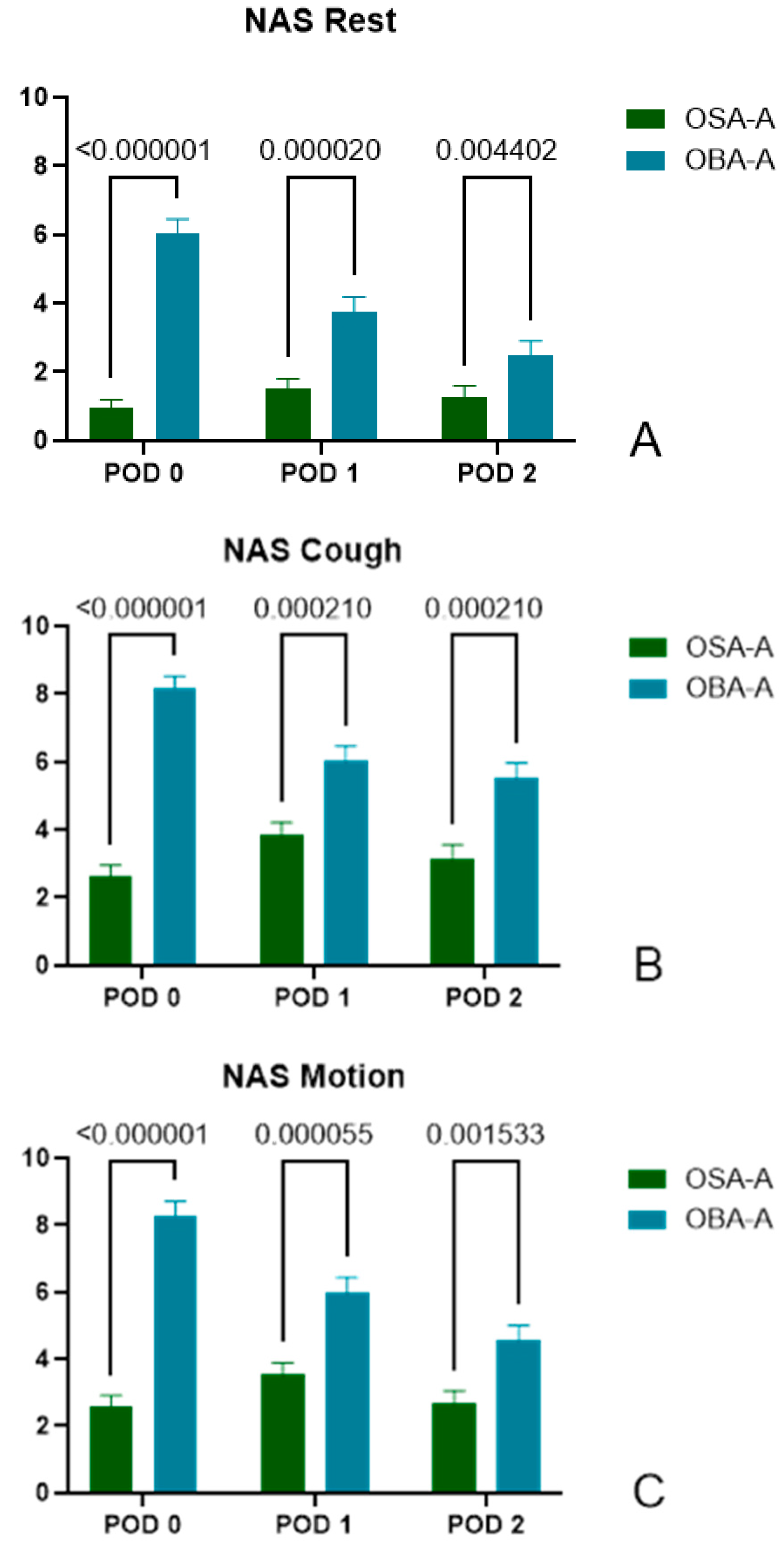
As shown in Figure 1A, patients in the OSA-A group reported significantly lower pain levels during rest at all time points, POD0, POD1, and POD2.
Figure 1. Pain scores during rest (1A, NRS rest), cough (1B, NRS cough) and motion (1C, NRS motion) in PACU (POD0), POD1 and POD2. Note that the OSA-A group reported significantly lower levels of pain at all-time points.
Preprints 147363 g001
  • POD0: (OSA-A) 0.95±1.92, n=60 vs (OBA-A) 6.05±2.56, n=40, p<0.000001
  • POD1: (OSA-A) 1.53±2.12, n=57 vs (OBA-A) 3.78±2.66, n=40, p=0.000020
  • POD2: (OSA-A) 1.28±2.34, n=54 vs (OBA-A) 2.47±2.57, n=34, p=0.004402

3.2.3. Pain Score During Cough

Notably, patients in the OSA-A group reported significantly lower levels of pain during cough on POD0, POD1 and POD2.
  • POD0: (OSA-A) 2.62±2.67, n=60 vs (OBA-A) 8.18±2.14, n=39, p<0.000001
  • POD1: (OSA-A) 3.84±2.83, n=57 vs (OBA-A) 6.03±2.78, n=40, p=0.000210
  • POD2: (OSA-A) 3.15±2.99, n=54 vs (OBA-A) 5.51±2.65, n=35, p=0.000210

3.2.4. Pain Score During Motion

Patients in the OSA-A group reported significantly lower levels of pain during motion, on POD0, POD1 and POD2.
  • POD0: (OSA-A) 2.58±2.49, n=60 vs (OBA-A) 8.29±2.65, n=38, p<0.000001
  • POD1: (OSA-A) 3.54±2.61, n=57 vs (OBA-A) 5.98±2.92, n=40, p=0.000055
  • POD2: (OSA-A) 2.69±2.70, n=54 vs (OBA-A) 4.54±2.76, n=35, p=0.001533

3.3. Secondary Outcomes

3.3.1. PACU and Hospital Length of Stay

Patients in the OSA-A group had a significantly shorter PACU stay, measured in hours (OSA-A group 2.030 ± 1.022 vs OBA-A group 3.125 ± 1.036 (p<0.0001) (see Table 4). No difference in hospital length of stay, measured in days, was observed between the two groups (OSA-A group 5.77 ± 3.45 vs OBA-A group 5.73 ± 2.05, p: 0.2669).
Table 4. Secondary outcomes in OSA-A and OBA-A groups.
Secondary Outcome OSA-A
(x̅ ± SD)
OBA-A
(x̅ ± SD)
P-value Statistical test
Length of stay PACU (h) 2.030 ± 1.022 3.125 ± 1.036 <0.0001 Mann-Whitney U test
Length of stay Hospital (d) 5.767 ± 3.451 5.725 ± 2.050 0.2669 Mann-Whitney U test
Analgesics Requested PACU
(POD 0)
Yes 21 27 0.0021 Fisher’s exact test
No 39 13
Analgesics Requested POD 1 Yes 3 2 >0.9999 Fisher’s exact test
No 57 38
Analgesics Requested POD 2 Yes 1 0 >0.9999 Fisher’s exact test
No 59 40
Morphine (mg) Equivalents Delivered PACU 1.177 ± 2.929 5.031 ± 5.705 0.000005 Multiple Mann-Whitney U tests correcting for multiple comparisons by using the FDR method
POD1 22.863 ± 12.760 21.878 ± 14.288 0.362445
POD2 16.542 ± 14.723 16.234 ± 16.661 0.631847
Intestinal Mobilization POD 1 Yes 51 8 <0.0001 Fisher’s exact test
No 9 32
Intestinal Mobilization POD 2 Yes 58 22 <0.0001 Fisher’s exact test
No 2 18
Nausea & Vomiting POD 1 Yes 1 5 0.0363 Fisher’s exact test
No 59 35
Nausea & Vomiting POD 2 Yes 0 4 0.0204 Fisher’s exact test
No 60 34

3.3.2. Rescue Analgesia and Morphine Consumption in PACU and on POD1 and POD2
Patients in the OBA-A group requested analgesic interventions in PACU frequently, including both opioids and non-opioids. Specifically, a total of 27 patients in the OBA-A group required analgesic administration, whereas 21 patients in the OSA-A group required such intervention, resulting in a statistically significant difference (p=0.0021).
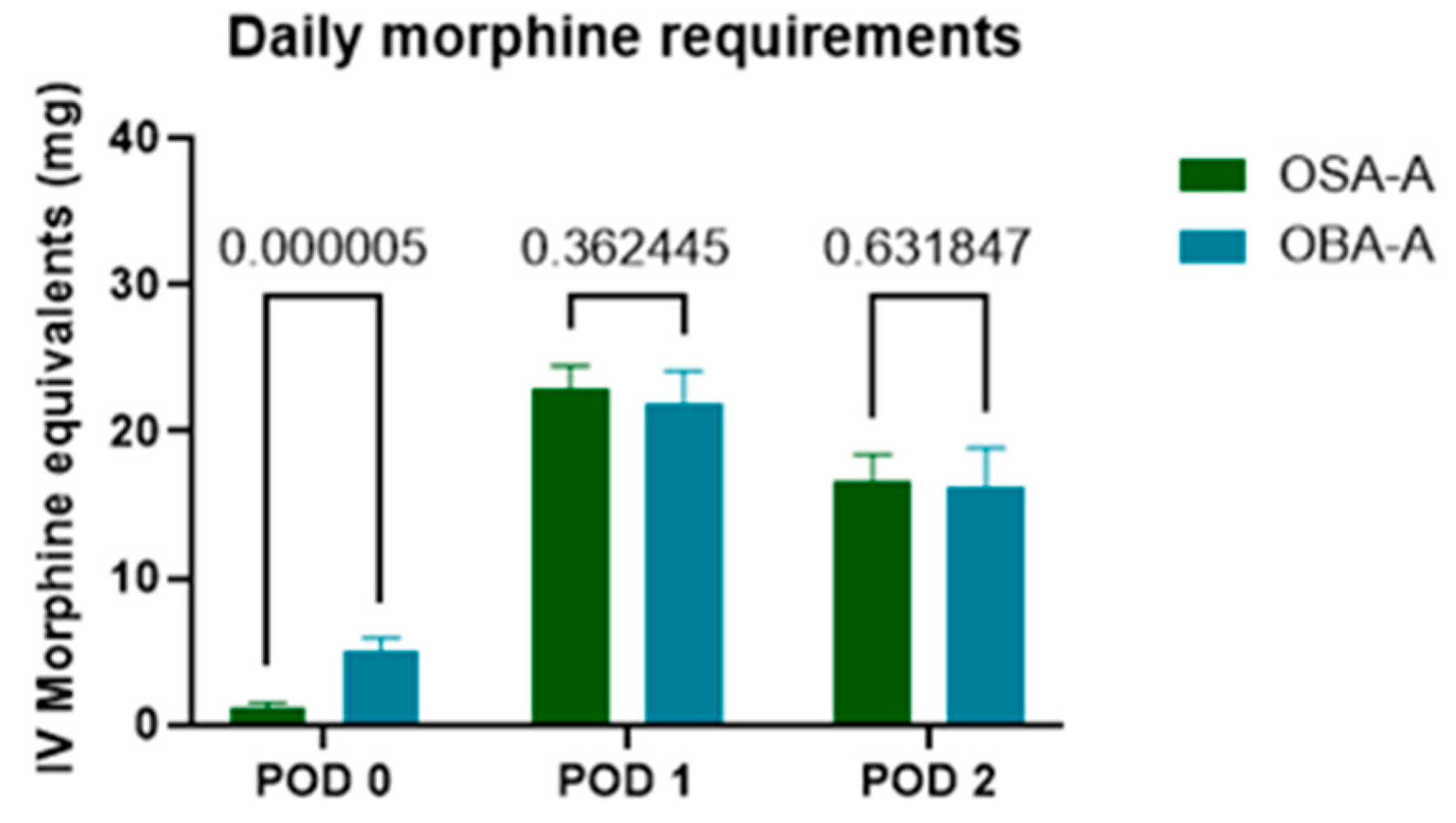
During their stay in PACU (POD 0), OSA-A patients were administered tramadol for rescue analgesia, in an average dosage of 1.177 ± 2.929 mg of MED. In comparison, the OBA-A group received an average of 5.031 ± 5.705 mg of MED (p=0.000005). This significant reduction in opioid consumption was not sustained in the subsequent postoperative days. On POD1 the OSA-A group demonstrated an average consumption of 22.86 ± 12.76 mg of MED while the OBA-A group reported an average of 21.88 ± 14.29 mg (p=0.362445 two-tailed). On POD 2, the OSA-A group required an average of 16.54 ± 14.72 mg of MED, in contrast to the OBA-A group's average of 16.23 ± 16.66 mg (p=0.631847) (see Figure 2, Table 4).
Figure 2. Comparison of analgesic requirements between the OSA-A and OBA-A groups, measured in MED, in PACU (POD 0) and on POD 1 and POD 2. Notably, a significant reduction in analgesic requirement was observed only during the PACU stay.
Preprints 147363 g002

3.3.3. Gastrointestinal Motility

Our findings indicate that patients within the OSA-A group exhibited a substantially higher incidence of intestinal motility on POD1 and POD2. Intestinal mobility (defined as occurrence of flatus, successful bowel movements or presence of bowel sounds) returned in more patients in OSA-A group in POD1 (51vs 8, <0.0001) and POD2 (58 vs 22, p<0.0001) in comparison to OBA-A patients (see Table 4).

3.3.4. Nausea-Vomiting

Patients in the OSA-A group reported significantly lower rates of postoperative nausea and vomiting in the first two postoperative days (see Table 4).

3.3.5. Chronic Pain

We successfully communicated with 68 patients to assess chronic pain following thoracotomy. Among them, 46 participants were in the OSA-A group, while 22 were in the OBA-A group. Participants in the OSA-A group were evaluated significantly earlier than those in the OBA-A group, with a mean assessment timespan of 2.52 ± 0.69 years for the OSA-A group compared to 4.41 ± 0.85 years for the OBA-A group (p<0.0001).
27 patients reported chronic pain in varying intensity, 18 in the OSA-A group and 9 in OBA-A group. No statistically significant differences were observed between the two groups regarding prevalence or severity of chronic pain. Neuropathic pain was not confirmed in any patient. Only 5 were categorized as “uncertain” based on the pain detection questionnaire: 3 in the OSA-A group and 2 in the OBA-A group. Again, no significant differences were observed between the 2 groups.

4. Discussion

Open thoracic surgery is often recognized as one of the most painful surgical procedures [2,3]. This retrospective study aimed to evaluate the effectiveness of an opioid-sparing analgesic strategy in comparison to a standardized opioid-based approach for patients undergoing conventional open thoracotomy due to lung or pleural pathology, when regional blocks were not performed. Our findings revealed that patients in the OSA-A group reported significantly lower pain levels during rest, coughing, and movement on the day following surgery and throughout the first two postoperative days, shorter PACU stay, less nausea and vomiting and earlier recovery of gastrointestinal motility.
Acute postoperative pain presents a complex and multifaceted challenge, characterized by significant variability among patients [15]. The perception of pain arises from the interplay of various factors, including noxious stimuli, peripheral nerve transmission, and central processing of pain signals. Furthermore, the effectiveness of both pharmacological and non-pharmacological interventions is significantly influenced by individuals’ cognitive interpretations of their pain experiences.
In this context, the optimal pain management protocol following thoracic surgery has yet to be established. It is critical to consider both the specific type of surgery performed—such as Video-Assisted Thoracoscopic Surgery (VATS) or open thoracotomy—and the individual characteristics of each patient, including pulmonary function, chronic pain history, and any additional comorbidities. Thoracic surgery can impair pulmonary function, and this impairment may be exacerbated by pain [1,2,16]. For these reasons, it is imperative to implement an analgesic protocol that incorporates multimodal and regional analgesia, tailored to meet each patient’s unique needs and preferences.
Multimodal analgesia is recognized as the standard of care for pain management in thoracic surgery and integrates regional anesthetic techniques, including epidural anesthesia and fascial plane blocks, with oral regimens that either utilize opioids or prioritize opioid-sparing options [17,18].The PROSPECT thoracotomy subgroup advocates for the perioperative application of regional analgesia, specifically paravertebral block or thoracic epidural, based on robust evidence derived from randomized controlled trials (presented in the Procedure Specific Postoperative Pain Management, www.postoppain.org). Additionally, the PROSPECT recommendations do not support the perioperative use of gabapentinoids, ketamine, or dexmedetomidine in open thoracotomies, due to inconsistent evidence. If a paravertebral block or thoracic epidural is not feasible due to anticoagulation or patient preference, the use of strong systemic opioids alongside non-opioid analgesia is recommended as a rescue measure.
However, this raises the question: does the inability to use regional techniques mean that opioid-free (OFA) or opioid-sparing (OSA) anesthesia is not feasible in open thoracotomies? Thoracic surgery is a significantly challenging field associated with a higher rate of pain and pulmonary complications compared to other types of surgery. Experience in OFA/OSA techniques gained in other surgical fields probably cannot be directly applied to thoracic surgery. In the first systematic review and meta-analysis of opioid-free anesthesia in thoracic surgery by D'Amico et al, where the primary outcome was the occurrence of any postoperative complication, six studies were included as relevant [19]. In reviewing the OFA/OSA protocols all studies incorporated either paravertebral block (PVB), serratus anterior plane block (SAPB) or erector spinae plane block (ESPB). Patients in the OFA group exhibited a significant reduction in the postoperative complication rate compared to OBA. PACU length of stay was similar between the two groups and better analgesia with less opioid consumption at 48h after surgery was observed in the OFA group.
The significance of a perioperative strategy that minimizes or eliminates opioid use in thoracic surgery on patient outcomes is emphasized in a recent retrospective study by J. Xiao et al. In their study, the authors conclude that the amount of opioid medication received during hospitalization was an independent risk factor for postoperative complications [20]. Additionally, several studies have demonstrated a correlation between intraoperative and postoperative opioid administration, the development of chronic pain, opioid addiction, and patient survival [11,21,21,23]
In our study, the lower levels of reported pain within the OSA-A group may be attributed to the perioperative use of agents affecting both nociceptive and neuropathic elements of pain, such as pregabalin, dexmedetomidine, ketamine, lidocaine, tramadol and magnesium sulphate [24,25,26,27]. It is essential to recognize that pain after thoracotomy may arise from both nociceptive and neuropathic mechanisms, with opioids frequently demonstrating limited efficacy in the alleviation of neuropathic pain [24,25]. In the study by Homma et al, the preoperative use of hypnotics, thoracotomy, and a duration of surgery ≥ 2.5 hours were associated with an increased risk of neuropathic pain post-thoracic surgery [28]. If neuropathic pain is left untreated, it interferes with sleep and is associated with depression and anxiety that will negatively influence the responses to analgesic drugs [24].
First-line drugs for neuropathic pain include antidepressants (tricyclic antidepressants and serotonin–noradrenaline reuptake inhibitors) and anticonvulsants acting at calcium channels (pregabalin and gabapentin). Second- and third-line drugs for neuropathic pain include topical lidocaine and opioids [24]. Opioids are not considered as first choice agents, because of adverse drug reactions and, more recently, because of concerns about abuse, diversion, and addiction [26,30]. Furthermore, the use of intraoperative opioids may be linked to postoperative hyperalgesia and tolerance, resulting in elevated pain scores and increased opioid consumption [10,29,30].
Our results do not agree with those of a recent retrospective study by Devine et al, where no significant differences in referred pain scores were found within the first 24 hours after surgery, when comparing an OFA to a standard opioid-based (OBA) technique [31]. It is important to note that their protocols differed from ours, as regional blocks were utilized in both groups. Their OFA technique included intravenous lidocaine (0.75-1 mg/kg) and magnesium sulfate (0.05-0.1 mmol/kg) with propofol and a paravertebral block. Their OBA technique involved intraoperative fentanyl, remifentanil, and/or morphine for analgesia, plus paracetamol and parecoxib when appropriate. All patients received morphine patient-controlled analgesia (PCA) for the first 24 hours.
Our protocol incorporates the perioperative use of pregabalin in a dose tailored to patient needs and assessment. Pregabalin is an analogue of γ-aminobutyric acid that binds to the α2-δ subunits of voltage-gated calcium channels in the central nervous system. When used in a perioperative setting, pregabalin can help prevent the development of pain by inhibiting presynaptic voltage-gated calcium channels, which are involved in central sensitization [32]. Pregabalin was preferred to gabapentin due to its more established anxiolytic and analgesic effects and safer profile [33]. Pregabalin has linear pharmacokinetics, dose adjustment is easier, analgesic effects occur faster than gabapentin and exhibits positive effects on anxiety and sleep [34].
Pregabalin was administered preoperatively, on the evening prior to surgery and again on the morning of the procedure, in a dosage ranging from 25 mg to 150 mg. Postoperatively, the administration of pregabalin continued throughout the duration of hospitalization and was extended for the first month after surgery. A study conducted by Homma et al reported a significant preventive effect on postoperative neuropathic pain in patients who received 25 mg of oral pregabalin twice daily from postoperative day 2 (POD 2) through three months following lung resection [35]. Additional studies have demonstrated the efficacy of perioperative administration of pregabalin for pain management after thoracic surgery [36,37,38]; however, the results have yet to achieve a consistent level of acceptance across the literature. In a very recent meta-analysis by Zhang and Zhang, data from five RCTs and 329 patients undergoing thoracic surgery confirmed that pregabalin was effective to significantly reduce pain at 24 h and the incidence of persistent neuropathic pain [39]. The authors comment that the doses and use of pregabalin in the various studies were not completely the same, which may have caused some heterogeneity.
The analgesic efficacy of ketamine has been well established in various surgical contexts [40,41,42]. In addition to its well-known analgesic effects, primarily mediated by NMDA receptor antagonism, ketamine exhibits several other beneficial effects, including anti-inflammatory and anti-hyperalgesic properties [41]. Administering an initial bolus of ketamine at the onset of anesthesia, followed by an intraoperative infusion or additional boluses, has been shown to significantly improve postoperative pain control, while it also reduced the need for opioids by 30–40% [41]. It can be administered through several routes, including oral, intravenous, epidural, and wound infiltration. The dosing of ketamine also varies, ranging from single-dose boluses of up to 1 mg/kg to continuous iv infusions of up to 0.18 mg/kg/h for 48 hours postoperatively [40]. In our protocol, we routinely administered ketamine in two boluses: the first during anesthesia induction at a dose of 0.5-1 mg/kg, and the second 20 minutes before surgical closure at a dose of 20-30 mg. These doses are considered low for postoperative pain management (defined as no more than 1.2 mg/kg/h when used as a continuous infusion and no more than 1 mg/kg when given as a bolus) [43].
Magnesium sulphate (MgSO4) has been shown to produce an antinociceptive effect on animal models of neuropathic and inflammatory pain [44]. It possesses opioid-sparing effects by blocking the NMDA receptor and central sensitization, similarly to ketamine [44,45]. A recent metanalysis of randomized trials supported the perioperative use of magnesium as an analgesic adjuvant at 24 hours following thoracic surgery, but no opioid-sparing effect at 48 hours post-surgery was exhibited [46]. In the study of Abdelgalil et al the combined preoperative single dose of pregabalin and magnesium sulfate was associated with reduced postoperative pain and total morphine consumption in patients undergoing thoracotomy [47].
Dexmedetomidine is a highly selective α2-adrenergic agonist known for its ability to inhibit norepinephrine release, thereby suppressing sympathetic activity within the central nervous system [48,49]. It exhibits analgesic and sedation properties that have increasingly been used to reduce postoperative opioid consumption [50,51,52]. In the context of thoracic surgery, propensity-matched studies examining intraoperative dexmedetomidine infusions have demonstrated no significant differences in pain scores or opioid consumption throughout the hospital stay [55,56]. These varying outcomes indicate that discrepancies in the effectiveness of dexmedetomidine-based opioid-sparing analgesia may arise from differences in administration protocols, including the use of adjunct medications, dosing strategies, timing of infusions, and the characteristics of patient populations.
Post thoracotomy pain syndrome (PTPS) is characterized by an aching sensation in the distribution of the incision, and it usually resolves within 2 months postoperatively [57]. Pain that persists or recurs for longer than 3 months after thoracic surgery is defined as chronic post-thoracotomy pain (CPTP). Its reported prevalence rates range from 27% to 47% and many survivors of lung cancer experience a substantial decline in their functional capacity and overall quality of life because of CPTP [57,58,59,60,61,62,63,64,65,66].The World Health Organization included detailed diagnostic criteria in the 11th revision of the International Classification of Disease (ICD-11), where CPTP was defined as any unpleasant or painful sensation persisting or recurring more than three months after surgery in relation to the operation area [67]. +
Open thoracotomy is associated with higher risk of CPTP [68]. Compared with nociceptive pain, neuropathic pain is claimed to be the major cause of PPSP after breast and thoracic surgeries [69,70]. In our study 68 patients (46 belonging to the OSA-A group and 22 to the OBA-A group) were assessed for CPTP. Ιn accordance with the literature, 27 patients reported chronic pain (39.7%). Noteworthy, no patient in both cohorts was diagnosed with neuropathic pain, using the PainDETECT questionnaire.

5. Limitations

This study has several potential limitations, primarily due to its retrospective nature and the characteristics of the data sources used. As a case-control study, it was affected by the lack of blinding of the anesthesiologists in both groups, which introduces the possibility of bias. To ensure that the two studied populations had similar baseline characteristics, we employed propensity score matching. However, this initial 1:1 matching was not feasible due to incomplete data in the medical records. Although propensity matching may have helped addressing some observed differences between the two groups, it cannot account for unobserved differences, which means there is still potential for residual confounding. However, the retrospective design reflects real-life clinical practice, which can be a limitation in randomized controlled trials (RCTs) that typically involve highly selected patient populations enrolled under strict eligibility criteria.

6. Conclusions

Our findings support the use of a multimodal, opioid-sparing perioperative anesthesia and analgesia strategy for patients undergoing open thoracotomies, which could be considered in situations where a regional nerve block or thoracic epidural are not feasible due to anticoagulation or patient refusal. Implementing this protocol in our patients resulted not only in improved pain control but also in a better quality of recovery. Further well-designed prospective randomized studies are necessary to clarify specific opioid-free or opioid-sparing perioperative protocols that will enhance pain management and improve patient outcomes.

Supplementary Materials

The following supporting information can be downloaded at: Preprints.org, Table-1 S1: Perioperative protocols in OBA-A and OSA-A groups; Table-2 S2: Opioid conversion table used to equate equivalent iv morphine values; Table-3 S3 Patients’ characteristics; Table-4 S4: Secondary outcomes in OSA-A and OBA-A groups.; Figure-1 S5: Pain scores during rest (1A, NRS rest), cough (1B, NRS cough) and motion (1C, NRS motion) in PACU (POD0), POD1 and POD2. Note that the OSA-A group reported significantly lower levels of pain at all-time points. Figure-2 S6: Comparison of analgesic requirements between the OSA-A and OBA-A groups, measured in MED, in PACU (POD 0) and on POD 1 and POD 2. Notably, a significant reduction in analgesic requirement was observed only during the PACU stay.

Author Contributions

Conceptualization, VN and GS; Data curation, VN, GS, GP, HD, EK, PB; Formal analysis, GS, GP, GG, AP; Investigation, VN, GS, HD, EK, PV; Methodology, VN, GS, GP; Software, GP, GG; Supervision, VN; Writing – original draft, VN; Writing – review & editing, VN, GS, GG, MB, AP. All authors have read and agreed to the published version of the manuscript.

Funding

This research received no external funding.

Institutional Review Board Statement

The study was conducted in accordance with the Declaration of Helsinki, and approved by the Research Ethics Review Board (or Ethics Committee) of the University Hospital of Heraklion (Registration number 14/18-09-2019).

Informed Consent Statement

As this investigation is retrospective in nature, authorization was granted to waive the requirement for written informed consent.

Data Availability Statement

The data on which this retrospective study is based can be obtained from the corresponding author upon reasonable request, provided that the copyrights of the respective authors are respected.

Acknowledgments

We have no acknowledgments

Conflicts of Interest

The authors declare no conflicts of interest

Abbreviations

The following abbreviations are used in this manuscript:
OSA-A Opioid-Sparing Anesthesia-Analgesia
OBA-A Opioid-Based Anesthesia-Analgesia
PACU Post Anesthesia Care Unit
PTPS Post-Thoracotomy Pain Syndrome
MED Morphine Equivalent Dose
ASA American Society of Anesthesiology
RSI Rapid Sequence Induction
NSAID Non-Steroidal Anti-Inflammatory Drug
PCA Patient Controlled Analgesia
POD Post-Operative Day
NRS Numerical Rate Scale
ANOVA ANalysis Of VAriance
FDR False Discovery Rate
BMI Body Mass Index
VATS Video-Assisted Thoracoscopic Surgery
OFA Opioid-Free Anesthesia
OSA Opioid-Sparing Anesthesia
OBA Opioid-Based Anesthesia
PVB ParaVertebral Block
SAPB Serratus Anterior Plane Block
ESPB Erector Spinae Plane Block
RCT Randomized Controlled Trial
NMDA N-Methyl-D-aspartic Acid
CPTP chronic post-thoracotomy pain
ICD International Classification of Disease

References

  1. Schwarzova, K.; Whitman, G.; Cha, S. Developments in Postoperative Analgesia in Open and Minimally Invasive Thoracic Surgery Over the Past Decade. Semin Thorac Cardiovasc Surg. 2024, 36, 378–385. [Google Scholar] [CrossRef]
  2. Bello, M.; Oger, S.; Bedon-Carte, S.; Vielstadte, C.; Leo, F.; Zaouter, C.; Ouattara, A. Effect of Opioid-Free Anaesthesia on Postoperative Epidural Ropivacaine Requirement After Thoracic Surgery: A Retrospective Unmatched Case-Control Study. Anaesth Crit Care Pain Med. 2019, 38, 499–505. [Google Scholar] [CrossRef]
  3. Mesbah, A.; Yeung, J.; Gao, F. Pain after Thoracotomy. BJA Education. 2016, 16, 1–7. [Google Scholar] [CrossRef]
  4. Arends, S.; Böhmer, A.B.; Poels, M.; Schieren, M.; Koryllos, A.; Wappler, F.; Joppich, R. Post-thoracotomy pain syndrome: Seldom severe, often neuropathic, treated unspecific, and insufficient. Pain Rep. 2020, 5, e810. [Google Scholar] [CrossRef]
  5. Bayman, E.O.; Brennan, T.J. Incidence and severity of chronic pain at 3 and 6 months after thoracotomy: Meta-analysis. J Pain. 2014, 15, 887–897. [Google Scholar] [CrossRef] [PubMed]
  6. Andersen, C.; Ørding, H.; Licht, P.B.; Toft, P. From acute to chronic pain after thoracic surgery: The significance of different components of the acute pain response. J Pain Res. 2018, 11, 1541–1548. [Google Scholar]
  7. Goto, T. What Is the Best Pain Control after Thoracic Surgery? J Thorac Dis. 2018, 10, 1335–1338. [Google Scholar] [CrossRef]
  8. D’Ercole, F.; Arora, H.; Kumar, P.A. for Thoracic Surgery. Cardiothorac Vasc Anesth. 2018, 32, 915–927. [Google Scholar] [CrossRef]
  9. Lee, L.A.; Caplan, R.A.; Stephens, L.S.; et al. Postoperative opioid-induced respiratory depression: A closed claims analysis. Anesthesiology 2015, 122, 659–665. [Google Scholar] [CrossRef]
  10. Xiao, J.; Nguyen, D.T.; Lichtenberg, Z.K.; Rizk, E.; Meisenbach, L.M.; Chihara, R.; Graviss, E.A.; Kim, M.P. Opioid use in thoracic surgery: A retrospective study on postoperative complications. J Thorac Dis. 2024, 16, 6827–6834. [Google Scholar] [CrossRef]
  11. Huh, J.; Hwang, W. The Role of Anesthetic Management in Lung Cancer Recurrence and Metastasis: A Comprehensive Review. J Clin Med. 2024, 13, 6681. [Google Scholar] [CrossRef]
  12. Mauermann, E.; Ruppen, W.; Bandschapp, O. Different protocols used today to achieve total opioid-free general anesthesia without locoregional blocks. Best Pract Res Clin Anaesthesiol. 2017, 31, 533–545. [Google Scholar] [CrossRef]
  13. Available online: https://esaic.org/wp-content/uploads/2023/12/conversion-tables-for-iv-and-oral-analgesics.pdf.
  14. Freynhagen, R.; Baron, R.; Gockel, U.; Tölle, T.R. painDETECT: A new screening questionnaire to identify neuropathic components in patients with back pain. Curr Med Res Opin. 2006, 22, 1911–1920. [Google Scholar] [CrossRef] [PubMed]
  15. Ross, J.D.W.; Cole, C.M.W.; Lo, W.; Ura, M. Postoperative Pain in Thoracic Surgical Patients: An Analysis of Factors Associated With Acute and Chronic Pain. Heart Lung Circ. 2021, 30, 1244–1250. [Google Scholar] [CrossRef]
  16. Sengupta, S. Post-operative pulmonary complications after thoracotomy. Indian J Anaesth. 2015, 59, 618–626. [Google Scholar] [CrossRef]
  17. Patvardhan, C.; Ferrante, M. Opiate free anaesthesia and future of thoracic surgery anaesthesia. Journal of Visualized Surgery 2018, 4. [Google Scholar] [CrossRef]
  18. Schwarzova, K.; Whitman, G.; Cha, S. Developments in Postoperative Analgesia in Open and Minimally Invasive Thoracic Surgery Over the Past Decade. Semin Thorac Cardiovasc Surg. 2024, 36, 378–385. [Google Scholar] [CrossRef]
  19. D’Amico, F.; Barucco, G.; Licheri, M.; Valsecchi, G.; Zaraca, L.; Mucchetti, M.; Zangrillo, A.; Monaco, F. Opioid Free Anesthesia in Thoracic Surgery: A Systematic Review and Meta Analysis. J Clin Med. 2022, 11, 6955. [Google Scholar] [CrossRef]
  20. Xiao, J.; Nguyen, D.T.; Lichtenberg, Z.K.; Rizk, E.; Meisenbach, L.M.; Chihara, R.; Graviss, E.A.; Kim, M.P. Opioid use in thoracic surgery: A retrospective study on postoperative complications. J Thorac Dis. 2024, 16, 6827–6834. [Google Scholar] [CrossRef]
  21. Hah, J.M.; Bateman, B.T.; Ratliff, J.; Curtin, C.; Sun, E. Chronic Opioid Use After Surgery: Implications for Perioperative Management in the Face of the Opioid Epidemic. Anesth Analg. 2017, 125, 1733–1740. [Google Scholar] [CrossRef]
  22. Wiltse Nicely, K.L.; Friend, R.; Robichaux, C.; Edwards, J.A.; Cimiotti, J.P.; Dupree Jones, K. Association Between Intra- and Postoperative Opioids in Opioid-Naïve Patients in Thoracic Surgery. Ann Thorac Surg Short Rep. 2024, 2, 865–870. [Google Scholar] [CrossRef] [PubMed]
  23. Chancellor, W.Z.; Mehaffey, J.H.; Desai, R.P.; Beller, J.; Balkrishnan, R.; Walters, D.M.; Martin, L.W. Prolonged Opioid Use Associated With Reduced Survival After Lung Cancer Resection. Ann Thorac Surg. 2021, 111, 1791–1798. [Google Scholar] [CrossRef] [PubMed]
  24. Fornasari, D. Pharmacotherapy for Neuropathic Pain: A Review. Pain Ther. 2017, 6 Suppl. 1, 25–33. [Google Scholar] [CrossRef] [PubMed]
  25. Moisset, X. Neuropathic pain: Evidence based recommendations. Presse Med. 2024, 53, 104232. [Google Scholar] [CrossRef] [PubMed]
  26. Forget, P. Opioid-free anaesthesia. Why and how? A contextual analysis. Anaesth Crit Care Pain Med. 2019, 38, 169–172. [Google Scholar]
  27. Guastella, V.; Mick, G.; Soriano, C.; Vallet, L.; Escande, G.; Dubray, C.; Eschalier, A. A prospective study of neuropathic pain induced by thoracotomy: Incidence, clinical description, and diagnosis. Pain. 2011, 152, 74–81. [Google Scholar] [CrossRef] [PubMed]
  28. Homma, T.; Doki, Y.; Yamamoto, Y.; et al. Risk factors of neuropathic pain after thoracic surgery. J Thorac Dis 2018, 10, 2898–2907. [Google Scholar] [CrossRef] [PubMed]
  29. Humble, S.R.; Dalton, A.J.; Li, L. Interventions to reduce acute and chronic post-surgical pain. EJP 2015, 19, 451–465. [Google Scholar] [CrossRef] [PubMed]
  30. Colvin, L.A.; Bull, F.; Hales, T.G. Perioperative opioid analgesia-when is enough too much? A review of opioid-induced tolerance and hyperalgesia. Lancet. 2019, 393, 1558–1568. [Google Scholar]
  31. Devine, G.; Cheng, M.; Martinez, G.; Patvardhan, C.; Aresu, G.; Peryt, A.; Coonar, A.S.; Roscoe, A. Opioid-Free Anesthesia for Lung Cancer Resection: A Case-Control Study. J Cardiothorac Vasc Anesth. 2020, 34, 3036–3040. [Google Scholar] [CrossRef] [PubMed]
  32. Brulotte, V.; Ruel, M.M.; Lafontaine, E.; Chouinard, P.; Girard, F. Impact of Pregabalin on the occurrence of postthoracotomy pain syndrome: A randomized trial. Reg Anesth Pain Med. 2015, 40, 262–269. [Google Scholar] [CrossRef]
  33. Fabritius, M.L.; Geisler, A.; Petersen, P.L.; Nikolajsen, L.; Hansen, M.S.; Kontinen, V.; Hamunen, K.; Dahl, J.B.; Wetterslev, J.; Mathiesen, O. Gabapentin for post-operative pain management - a systematic review with meta-analyses and trial sequential analyses. Acta Anaesthesiol Scand. 2016, 60, 1188–1208; Erratum in: Acta Anaesthesiol Scand. 2017, 61, 357–359. [Google Scholar] [CrossRef] [PubMed]
  34. Yalşi, E.; Yakşi, O. Current treatment options for post-thoracotomy pain syndrome: A review. Curr Thorac Surg 2017, 2, 103–110. [Google Scholar]
  35. Homma, T.; Doki, Y.; Yamamoto, Y.; Ojima, T.; Shimada, Y.; Kitamura, N.; Akemoto, Y.; Hida, Y.; Yoshimura, N. Efficacy of 50 mg pregabalin for prevention of postoperative neuropathic pain after video-assisted thoracoscopic surgery and thoracotomy: A 3-month prospective randomized controlled trial. J Thorac Dis. 2019, 11, 694–701. [Google Scholar] [CrossRef] [PubMed]
  36. Matsutani, N.; Kawamura, M. Successful management of postoperative pain with pregabalin after thoracotomy. Surg Today. 2014, 44, 712–715. [Google Scholar] [CrossRef]
  37. Matsutani, N.; Dejima, H.; Takahashi, Y.; Kawamura, M. Pregabalin reduces post-surgical pain after thoracotomy: A prospective, randomized, controlled trial. Surg Today. 2015, 45, 1411–1416. [Google Scholar] [CrossRef]
  38. Kim, J.C.; Byun, S.; Kim, S.; Lee, S.Y.; Lee, J.H.; Ahn, S. Effect of preoperative pregabalin as an adjunct to a multimodal analgesic regimen in video-assisted thoracoscopic surgery: A randomized controlled trial. Medicine (Baltimore). 2017, 96, e8644. [Google Scholar] [CrossRef] [PubMed]
  39. Zhang, L.; Zhang, H. The efficacy of pregabalin for pain control after thoracic surgery: A meta-analysis. J Cardiothorac Surg 2024, 19, 4. [Google Scholar] [CrossRef]
  40. Jouguelet-Lacoste, J.; La Colla, L.; Schilling, D.; Chelly, J.E. The use of intravenous infusion or single dose of low-dose ketamine for postoperative analgesia: A review of the current literature. Pain Med. 2015, 16, 383–403. [Google Scholar] [CrossRef]
  41. Gharaei, B.; Jafari, A.; Aghamohammadi, H.; et al. Opioid-sparing effect of preemptive bolus low-dose ketamine for moderate sedation in opioid abusers undergoing extracorporeal shock wave lithotripsy: A randomized clinical trial. Anesth Analg 2013 116, 75–80.
  42. Moyse, D.W.; Kaye, A.D.; Diaz, J.H.; Qadri, M.Y.; Lindsay, D.; Pyati, S. Perioperative Ketamine Administration for Thoracotomy Pain. Pain Physician. 2017, 20, 173–184. [Google Scholar] [PubMed]
  43. Schmid, R.L.; Sandler, A.N.; Katz, J. Use and efficacy of low-dose ketamine in the management of acute postoperative pain: A review of current techniques and outcomes. Pain. 1999, 82, 111–125. [Google Scholar] [CrossRef] [PubMed]
  44. Srebro, D.; Vuckovic, S.; Milovanovic, A.; Kosutic, J.; Vujovic, K.S.; Prostran, M. Magnesium in Pain Research: State of the Art. Curr Med Chem. 2017, 24, 424–434. [Google Scholar]
  45. Vanstone, R.J.; Rockett, M. Use of atypical analgesics by intravenous infusion (IV) for acute pain: Evidence base for lidocaine, ketamine and magnesium. Anesthesia and Intensive Care Med 2016, 17, 460–463. [Google Scholar] [CrossRef]
  46. Hung, K.C.; Yang, S.H.; Liao, S.W.; Yu, C.H.; Liu, M.Y.; Chen, J.Y. Effects of perioperative magnesium on postoperative analgesia following thoracic surgery: A meta-analysis of randomised controlled trials. Magnes Res. 2024, 36, 54–68. [Google Scholar] [CrossRef] [PubMed]
  47. Salah Abdelgalil, A.; Shoukry, A.; Kamel, M.; Heikal, A.; Ahmed, N. Analgesic Potentials of Preoperative Oral Pregabalin, Intravenous Magnesium Sulfate, and their Combination in Acute Postthoracotomy Pain. The Clinical Journal of Pain 2019, 35, 247–251. [Google Scholar] [CrossRef]
  48. Lee, S. Dexmedetomidine: Present and future directions. Korean J. Anesthesiol. 2019, 72, 323–330. [Google Scholar] [CrossRef]
  49. Weerink, M.A.S.; Struys, M.; Hannivoort, L.N.; Barends, C.R.M.; Absalom, A.R.; Colin, P. Clinical Pharmacokinetics and Pharmacodynamics of Dexmedetomidine. Clin. Pharmacokinet. 2017, 56, 893–913. [Google Scholar] [CrossRef] [PubMed]
  50. Beloeil, H.; Garot, M.; Lebuffe, G.; Gerbaud, A.; Bila, J.; Cuvillon, P.; Dubout, E.; Oger, S.; Nadaud, J.; Becret, A.; et al. Balanced Opioid-free Anesthesia with Dexmedetomidine versus Balanced Anesthesia with Remifentanil for Major or Intermediate Noncardiac Surgery. Anesthesiology. 2021, 134, 541–551. [Google Scholar] [CrossRef] [PubMed]
  51. Zhao, Y.; He, J.; Yu, N.; Jia, C.; Wang, S. Mechanisms of Dexmedetomidine in Neuropathic Pain. Front. Neurosci. 2020, 14, 330. [Google Scholar] [CrossRef]
  52. Wang, K.; Wu, M.; Xu, J.; Wu, C.; Zhang, B.; Wang, G.; Ma, D. Effects of dexmedetomidine on perioperative stress, inflammation, and immune function: Systematic review and meta-analysis. Br. J. Anaesth. 2019, 123, 777–794. [Google Scholar] [CrossRef] [PubMed]
  53. Peng, K.; Li, D.; Applegate RL 2nd Lubarsky, D.A.; Ji, F.H.; Liu, H. Effect of Dexmedetomidine on Cardiac Surgery-Associated Acute Kidney Injury: A Meta-Analysis With Trial Sequential Analysis of Randomized Controlled Trials. J Cardiothorac Vasc Anesth. 2020, 34, 603–613. [Google Scholar] [CrossRef] [PubMed]
  54. Sanders, R.D.; Wehrman, J.; Irons, J.; Dieleman, J.; Scott, D.; Shehabi, Y. Meta-analysis of randomised controlled trials of perioperative dexmedetomidine to reduce delirium and mortality after cardiac surgery. Br J Anaesth. 2021, 127, e168–e170. [Google Scholar] [CrossRef]
  55. Mena, G.E.; Zorrilla-Vaca, A.; Vaporciyan, A.; Mehran, R.; Lasala, J.D.; Williams, W.; Patel, C.; Woodward, T.; Kruse, B.; Joshi, G.; et al. Intraoperative Dexmedetomidine and Ketamine Infusions in an Enhanced Recovery After Thoracic Surgery Program: A Propensity Score Matched Analysis. J. Cardiothorac. Vasc. Anesth. 2022, 36, 1064–1072. [Google Scholar] [CrossRef] [PubMed]
  56. Larue, A.; Jacquet-Lagreze, M.; Ruste, M.; Tronc, F.; Fellahi, J.L. Opioid-free anaesthesia for video-assisted thoracoscopic surgery: A retrospective cohort study with propensity score analysis. Anaesth. Crit. Care Pain Med. 2022, 41, 101089. [Google Scholar] [CrossRef] [PubMed]
  57. Miyazaki, T.; Doi, R.; Matsumoto, K. Post-thoracotomy pain syndrome in the era of minimally invasive thoracic surgery. J Thorac Dis. 2024, 16, 3422–3430. [Google Scholar] [CrossRef] [PubMed]
  58. Gerner, P. Postthoracotomy pain management problems. Anesthesiol Clin. 2008, 26, 355–367, vii. [Google Scholar] [CrossRef]
  59. Bayman, E.O.; Brennan, T.J. Incidence and severity of chronic pain at 3 and 6 months after thoracotomy: Meta-analysis. J Pain 2014, 15, 887–897. [Google Scholar] [CrossRef]
  60. Hersini, K.J.; Andreasen, J.J.; Birthe Dinesen, P.G.; Arendt-Nielsen, L. Prevalence, characteristics and impact of the post-thoracotomy pain syndrome on quality of life: A cross-sectional study. J Pain Reli 2015, 4, 1000201. [Google Scholar] [CrossRef]
  61. Bayman, E.O.; Parekh, K.R.; Keech, J.; Selte, A.; Brennan, T.J. A prospective study of chronic pain after thoracic surgery. Anesthesiology 2017, 126, 938–951. [Google Scholar] [CrossRef]
  62. Kampe, S.; Geismann, B.; Weinreich, G.; Stamatis, G.; Ebmeyer, U.; Gerbershagen, H.J. The influence of type of anesthesia, perioperative pain, and preoperative health status on chronic pain six months after thoracotomy—A prospective cohort study. Pain Med 2016, 18, pnw230. [Google Scholar] [CrossRef] [PubMed]
  63. Hetmann, F.; Kongsgaard, U.E.; Sandvik, L.; Schou-Bredal, I. Prevalence and predictors of persistent post-surgical pain 12 months after thoracotomy. Acta Anaesthesiol Scand 2015, 59, 740–748. [Google Scholar] [CrossRef] [PubMed]
  64. Hetmann, F.; Kongsgaard, U.E.; Sandvik, L.; Schou-Bredal, I. Post-thoracotomy pain syndrome and sensory disturbances following thoracotomy at 6- and 12-month follow-ups. J Pain Res 2017, 10, 663–668. [Google Scholar] [CrossRef] [PubMed]
  65. Bayman, E.O.; Lennertz, R.; Brennan, T.J. Pain-related limitations in daily activities following thoracic surgery in a United States population. Pain Physician 2017, 20, E367–E378. [Google Scholar] [CrossRef] [PubMed]
  66. Perttunen, K.; Tasmuth, T.; Kalso, E. Chronic pain after thoracic surgery: A follow-up study. Acta Anaesthesiol Scand 1999, 43, 563–567. [Google Scholar] [CrossRef]
  67. Schug, S.A.; Lavand’homme, P.; Barke, A.; Korwisi, B.; Rief, W.; Treede, R.D. The IASP classification of chronic pain for ICD-11: Chronic postsurgical or posttraumatic pain. Pain 2019, 160, 45–52. [Google Scholar] [CrossRef]
  68. Lim, J.; Chen, D.; McNicol, E.; Sharma, L.; Varaday, G.; Sharma, A.; et al. Risk factors for persistent pain after breast and thoracic surgeries: A systematic literature review and meta-analysis. Pain 2022, 163, 3–20. [Google Scholar] [CrossRef] [PubMed]
  69. Compared with nociceptive pain, neuropathic pain is claimed to be the major cause of PPSP after breast and thoracic surgeries.
  70. Kehlet, H.; Jensen, T.S.; Woolf, C.J. Persistent postsurgical pain: Risk factors and prevention. Lancet 2006, 367, 1618–1625. [Google Scholar] [CrossRef]
Disclaimer/Publisher’s Note: The statements, opinions and data contained in all publications are solely those of the individual author(s) and contributor(s) and not of MDPI and/or the editor(s). MDPI and/or the editor(s) disclaim responsibility for any injury to people or property resulting from any ideas, methods, instructions or products referred to in the content.
Copyright: This open access article is published under a Creative Commons CC BY 4.0 license, which permit the free download, distribution, and reuse, provided that the author and preprint are cited in any reuse.
Prerpints.org logo

Preprints.org is a free preprint server supported by MDPI in Basel, Switzerland.

Subscribe

Disclaimer

Terms of Use

Privacy Policy

Privacy Settings

© 2025 MDPI (Basel, Switzerland) unless otherwise stated