

Submitted:
25 January 2025
Posted:
26 January 2025
You are already at the latest version
Abstract
Background and Objectives: The growing prevalence of e-cigarette use presents new challenges for oral health care. This study aimed to evaluate dentists’ knowledge and perceptions regarding e-cigarettes, focusing on their health effects, regulatory status, and potential risks to oral health. Materials and Methods: A cross-sectional survey was conducted among 189 dentists in Kosovo, comprising both general dentists and specialists. The questionnaire assessed participants’ awareness of e-cigarettes’ FDA approval status, their perceptions of health impacts, and their understanding of e-cigarettes’ association with oral conditions such as caries, periodontal disease, and oral cancer. Data were analyzed using SPSS 22, with significance set at P < 0.05. Results: The findings revealed significant knowledge gaps, with 74.1% of respondents uncertain about the FDA approval status of e-cigarettes and 82.0% recognizing their harmful effects on general and oral health. Nearly half (49.7%) of the participants identified e-cigarettes as a potential risk factor for caries, while 66.1% and 64.6% associated their use with oral cancer and periodontal disease, respectively. Gender and professional specialization did not significantly influence these perceptions. Conclusions: Dentists need better education on the risks of e-cigarette use, including their harmful effects on oral health. Incorporating this knowledge into dental curricula and professional training is essential to give dentists the information needed to advise patients effectively. Raising public awareness through dental health professionals can help mitigate the oral health risks associated with e-cigarettes.
Keywords:
Dentists' knowledge
; e-cigarettes
; vaping
; oral health
; nicotine
; periodontal disease
; dental education
; public health
; smoking cessation
; oral microbiome
1. Introduction
Electronic cigarettes (e-cigarettes) were first invented in 1965 and introduced in North America in 2007. Since then, the market has grown including over 400 brands and more than 7,000 e-liquid flavors, some targeting younger users [1,2].
Initially branded as a healthier alternative to traditional tobacco products, e-cigarettes have become increasingly popular. These devices, also known as vaping devices or vape pens, deliver nicotine to users in the form of aerosol vapor. When the liquid inside is heated, it turns into vapor, which can be inhaled, mimicking the sensation of smoking regular tobacco cigarettes but without the burning of tobacco [3,4]. E-cigarettes have gained significant traction among young people, drawn to the novelty, sensations, and recreational appeal they offer [5,6].
The World Health Organization (WHO) Study Group on Tobacco Product Regulation has recommended that e-cigarettes include proper labeling and health warnings due to concerns about their potential impact on health [7]. While e-cigarettes are a relatively new product, their long-term health effects are not yet fully understood, raising significant concerns about their safety and possible risks. Dentists are increasingly aware of the potential oral health problems linked to e-cigarette use. Similar to traditional smoking, e-cigarettes can contribute to periodontal issues because nicotine reduces blood flow to the gums [8]. This can lead to various oral health problems, including tooth decay (caries), gum disease (gingivitis and periodontal inflammation), tooth staining, premature tooth loss, dry mouth (xerostomia), oral tumors and softening of tooth enamel (Figure 1). These findings emphasize the potential short-term risks of e-cigarette use on oral health and highlight the need for greater awareness among healthcare professionals and the public [8,9,10,11].
As the popularity of e-cigarettes continues to grow, many users are still unaware of the potential health risks associated with their use. Therefore, health professionals need to stay informed about the latest research on e-cigarettes. This includes understanding their components, the ingredients in refill liquids, and the health risks associated with their use [12,13].
Dentists play a crucial role in raising awareness about e-cigarettes to promote better oral health. Training for healthcare professionals should ideally include a comprehensive understanding of e-cigarettes and their components, the chemical composition of e-liquids, associated health risks, and their effectiveness as a smoking cessation tool. With this knowledge, dentists and other providers can offer informed guidance, address patient concerns, and contribute to health promotion and disease prevention [14,15].
This study aimed to evaluate dentists' level of knowledge regarding the use of e-cigarettes and their effects on oral health. The objectives were to assess the importance of this knowledge for dental practice and to examine dentists' self-perception of their preparedness to guide patients about e-cigarette use. The study highlights the need for continuing education, recommending that dental professionals participate in workshops and seminars focused on tobacco cessation and the impacts of vaping on both oral and general health.
2. Materials and Methods
2.1. Study Design and Participants
This study collected data from 189 dentists licensed by the Kosovo Dental Chamber. Participants included both general dentists and specialists working in public and private healthcare institutions across Kosovo. The study was conducted between July and August 2024.
2.2. Ethical Considerations
The study objectives were explained to all participants, and informed consent was obtained. Participation was voluntary, and respondents were instructed to complete the survey only once. No personal identifiers were collected to ensure anonymity. Ethical approval for this study was granted by the Research Ethics Committee of the Dental Chamber of Kosovo under approval number No: 48-1-30.05.2024.
2.3. Survey Instrument
A structured questionnaire was used to gather data. The questionnaire consisted of four sections:
2.3.1. Participant Demographics
The first section collected basic demographic and professional information, such as participants' gender, professional background, and level of education. This data was used to categorize respondents and analyze findings based on these factors.
2.3.2. Knowledge of E-Cigarette Usage
The second section assessed participants' knowledge of e-cigarette usage. Key aspects included:
- Identifying the percentage of dentists who use e-cigarettes or tobacco.
- Determining the frequency and duration of e-cigarette use among dentists.
- Comparing usage patterns based on gender, specialization, and years of practice.
2.3.3. Knowledge of the Health Effects of E-Cigarettes
The third section evaluated participants' understanding of the general health implications of e-cigarette use. Key points included:
- Assessing knowledge of the overall health risks and benefits associated with e-cigarettes.
- Evaluating awareness of regulatory approval, such as FDA certification, and perceptions of their safety.
This section contained 10 statements with three response options: "YES", "NO", and "DO NOT KNOW".
2.3.4. Knowledge of Oral Health Impacts of E-Cigarettes
The fourth section focused on participants' knowledge of how e-cigarettes impact oral health. Key points included:
- Understanding the association between e-cigarettes and oral health issues, such as caries, periodontal disease, xerostomia, and mucosal lesions.
- Assessing the impact of e-cigarettes on the oral microbiome and related disorders.
- Comparing the long-term effects of e-cigarettes on oral health to those of traditional tobacco products.
2.4. Data Analysis
The data collected from the questionnaires were analyzed using the Statistical Package for the Social Sciences (SPSS) version 22.0. Fisher's exact test or Chi-square (X²) test was used depending on the nature of the data. Results were considered statistically significant if the p-value was less than 0.05.
3. Results
3.1. General Characteristics of Participants
The study included a total of 189 dentists, comprising 103 general dentists (54.5%) and 86 specialists (45.5%). Among the participants, 108 (57.1%) were female, and 81 (42.9%) were male. These general characteristics are summarized in Table 1.
3.2. Use of E-Cigarettes by Gender
The use of e-cigarettes and tobacco was analyzed by gender, as shown in Table 2. Among the 189 participants, 46.0% reported using either e-cigarettes or tobacco, with a significantly higher prevalence among males (59.3%) compared to females (36.1%) (P=0.003). Additionally, 43.9% of participants reported that a family member used e-cigarettes, with no significant difference between genders (P=0.783).
Exclusive e-cigarette use was reported by 9.5% of participants (10.2% females vs. 8.6% males), while males were more likely to use only tobacco (33.3% vs. 14.8% in females; P=0.026). Among e-cigarette users, 14.3% reported using them for more than two years.
3.3. Use of E-Cigarettes by Professional Training
The study analyzed e-cigarette and tobacco use according to professional training, comparing general dentists and specialists. As shown in Table 3, 45.6% of general dentists and 46.5% of specialists reported having used either e-cigarettes or tobacco, with no statistically significant difference (P=0.904).
Among general dentists, 78.6% reported never using e-cigarettes, compared to 73.3% of specialists. A slightly higher proportion of specialists (17.4%) reported using e-cigarettes for more than two years compared to general dentists (11.7%), though this difference was not statistically significant (P=0.690).
3.4. Knowledge and Perceptions of E-Cigarette Safety, Health Effects, and Usage Implications
The study assessed participants' knowledge and perceptions regarding the safety, health effects, and implications of e-cigarette use, as summarized in Table 4. A majority of participants (74.1%) were unsure whether e-cigarettes are FDA-approved for safe consumption, with only 3.7% affirming that they are approved. A significantly higher percentage of males (7.4%) compared to females (0.9%) believed in FDA approval (P=0.047). Regarding the perception of harm, 82.0% of participants agreed that e-cigarettes are harmful to general and oral health, while only 1.6% believed otherwise and 16.4% remained uncertain. No significant gender differences were observed (P=0.373).
Opinions were divided on whether e-cigarettes do not affect passive smoking, with 22.2% of participants agreeing, 22.8% disagreeing, and 55.0% being unsure. Similarly, when comparing e-cigarettes to traditional tobacco products, 19.6% believed that e-cigarettes are less harmful, 37.6% disagreed, and 42.9% expressed uncertainty. In both cases, no significant gender differences were identified (P=0.485 and P=0.253, respectively).
When asked if e-cigarettes help relieve daily stress, 17.5% of participants agreed, 32.8% disagreed, and 49.7% were uncertain, with no significant differences between genders (P=0.944). Nearly half of the participants (48.7%) agreed that e-cigarettes create addiction, 10.6% disagreed, and 40.7% were unsure, with no significant gender differences observed (P=0.487). In terms of carcinogenic effects, 16.4% of participants believed that e-cigarettes are less carcinogenic than tobacco cigarettes, 32.8% disagreed, and 50.8% were unsure, with no significant gender differences (P=0.398).
The perspectives on whether e-cigarettes aid in smoking cessation varied, with 22.2% of participants agreeing, 42.9% disagreeing, and 34.9% expressing uncertainty, with no significant gender differences observed (P=0.197). Finally, regarding knowledge of the composition of e-cigarettes, 31.7% of participants reported being aware of the composition, 30.2% were not, and 38.1% were unsure, with no significant gender differences observed (P=0.737).
3.5. Knowledge and Perceptions of E-Cigarettes by Professional Training
The study examined the knowledge and perceptions of e-cigarettes among general dentists and specialists, as presented in Table 5. A large majority of both general dentists (77.7%) and specialists (69.8%) were unsure whether e-cigarettes are FDA-approved for safe consumption, while only 2.9% and 4.7%, respectively, affirmed FDA approval. No statistically significant difference was found between the groups (P=0.454).
Regarding the harmfulness of e-cigarettes, 81.6% of general dentists and 82.6% of specialists agreed that they are harmful to general and oral health, with no significant difference (P=0.702). Similarly, uncertainty was evident in participants’ perceptions of e-cigarettes' effects on passive smoking, with 60.2% of general dentists and 48.8% of specialists reporting they did not know, and no significant difference between the groups (P=0.078).
When comparing the harm of e-cigarettes to traditional tobacco, 19.4% of general dentists and 19.8% of specialists believed e-cigarettes were less harmful, while a comparable proportion (36.9% and 38.4%, respectively) disagreed. The majority remained uncertain, with no significant difference observed (P=0.967).
About stress relief, 13.6% of general dentists and 22.1% of specialists agreed that e-cigarettes help relieve daily stress, while the majority were unsure (P=0.228). Regarding the addictive potential of e-cigarettes, 53.4% of general dentists and 43.0% of specialists agreed they are addictive, while 12.6% and 8.1%, respectively, disagreed (P=0.107).
In terms of carcinogenicity, 16.5% of general dentists and 16.3% of specialists believed e-cigarettes were less carcinogenic than traditional tobacco, while 29.1% and 37.2%, respectively, disagreed. Most participants remained uncertain, with no significant differences (P=0.471).
When asked whether e-cigarettes help with smoking cessation, 27.2% of general dentists and 16.3% of specialists agreed, while 42.7% and 43.0%, respectively, disagreed, with the remainder being unsure (P=0.134). Knowledge of the composition of e-cigarettes was slightly higher among specialists (36.0%) than general dentists (28.2%), though the difference was not significant (P=0.458).
Overall, the findings reveal similar levels of knowledge and perceptions between general dentists and specialists, with significant uncertainty across both groups about e-cigarettes’ safety, health effects, and their role in smoking cessation.
3.6. Perceptions of the Oral Health Effects of E-Cigarettes by Gender
The study examined participants' perceptions of how e-cigarettes affect oral health, with results presented in Table 6. Regarding the impact of e-cigarettes on caries incidence, 49.7% of participants agreed that e-cigarettes increase the risk of caries, with slightly more females (50.9%) than males (48.1%) affirming this. However, 11.1% believed there was no effect, and 39.2% were uncertain, with no significant gender difference (P=0.166).
When asked whether e-cigarettes affect the oral cavity, 75.1% of participants agreed, with nearly identical responses from females (75.0%) and males (75.3%). A small percentage (2.6%) believed there was no effect, while 22.2% were unsure (P=0.991). Similar responses were observed for xerostomia, mouth burning, and halitosis, with 70.4% agreeing that e-cigarettes had an impact, 1.6% disagreeing, and 28.0% being unsure (P=0.629).
In terms of cancer risk, 66.1% of participants believed that e-cigarettes increase the risk of oral cancer through cytotoxic, genotoxic, and oncogenic effects. Only 0.5% disagreed, and 33.3% were unsure, with no significant gender difference (P=0.773). Regarding the prevalence of periodontal lesions, 64.6% of participants agreed that e-cigarettes have an impact, 7.9% disagreed, and 27.5% were unsure, again with no significant gender difference (P=0.403).
For other oral conditions such as lingua nigra villosa, nicotinic stomatitis, and tongue discolorations, 61.4% of participants agreed that e-cigarettes could cause these effects, 3.2% disagreed, and 35.4% were uncertain (P=0.812). When asked about the impact on teeth, including discoloration, fractures, pain, and increased cariogenic bacteria, 64.0% of participants agreed, 6.9% disagreed, and 29.1% were uncertain (P=0.720).
Lastly, perceptions of e-cigarettes’ impact on the oral microbiome showed that 65.1% agreed, 4.2% disagreed, and 30.7% were uncertain (P=0.793). Across all these areas, no significant gender differences were identified.
3.7. Perceptions of the Oral Health Effects of E-Cigarettes by Professional Training
The study assessed participants’ perceptions of the oral health effects of e-cigarettes based on their professional training as general dentists or specialists, as shown in Table 7. Regarding the effect of e-cigarettes on caries incidence, 54.4% of general dentists and 44.2% of specialists agreed that e-cigarettes increase caries risk, while 10.7% of general dentists and 11.6% of specialists believed there was no effect. The remaining participants were uncertain, with no significant difference observed between the two groups (P=0.361).
When asked if e-cigarettes affect the oral cavity, 76.7% of general dentists and 73.3% of specialists agreed, while a very small proportion (1.0% and 4.7%, respectively) disagreed. Approximately 22% of both groups were uncertain, and no significant difference was found (P=0.290). A similar trend was observed for the effect of e-cigarettes on xerostomia, mouth burning, and halitosis, with 71.8% of general dentists and 68.6% of specialists agreeing, 3.5% of specialists disagreeing, and the remaining participants unsure (P=0.745).
In terms of the potential for e-cigarettes to increase the risk of oral cancer, 68.0% of general dentists and 64.0% of specialists agreed, while only 1.2% of specialists disagreed. A notable proportion of participants were uncertain (32.0% of general dentists and 34.9% of specialists), but no significant difference was observed (P=0.670).
Regarding the prevalence of periodontal lesions, 64.1% of general dentists and 65.1% of specialists believed e-cigarettes have an effect, while 9.7% of general dentists and 5.8% of specialists disagreed. Approximately 26%–29% of participants were unsure, with no significant difference between the groups (P=0.594). For other conditions such as lingua nigra villosa, nicotinic stomatitis, and tongue discolorations, 65.0% of general dentists and 57.0% of specialists agreed, while a small proportion (1.9% and 4.7%, respectively) disagreed. Uncertainty remained high, with 33.0% of general dentists and 38.4% of specialists expressing doubts (P=0.375).
When asked whether e-cigarettes affect teeth (e.g., discoloration, pain, fractures, and increased cariogenic bacteria), 67.0% of general dentists and 60.5% of specialists agreed, while 6.8% and 7.0%, respectively, disagreed, and the remainder were unsure (P=0.618). Finally, regarding the impact of e-cigarettes on disorders of the oral microbiome, 69.9% of general dentists and 59.3% of specialists agreed, while 2.9% and 5.8%, respectively, disagreed. A substantial proportion of both groups were uncertain, with no significant difference between them (P=0.266).
4. Discussion
The increasing prevalence of e-cigarette use highlights the need for dental professionals to understand their potential impact on oral health and provide informed guidance to patients [20]. This study explored dentists' knowledge and perceptions of e-cigarettes, focusing on their associated risks, regulatory status, and dentists' ability to communicate this information effectively.
The survey revealed significant trends in e-cigarette and tobacco use among participants, with notable gender differences. Approximately 46.0% of respondents reported using e-cigarettes or tobacco, with a higher prevalence among males (59.3%) compared to females (36.1%). Additionally, 43.9% of participants reported having family members who use e-cigarettes, emphasizing the role of social acceptance and peer influence in normalizing their use [21]. Exclusive e-cigarette use was low (9.5%), with females more likely to use both e-cigarettes and tobacco, while males predominantly used tobacco alone (P<0.05). These findings underscore the influence of social and cultural factors on e-cigarette use.
Among e-cigarette users, 14.3% had been using them for more than two years, often multiple times daily. This aligns with findings that e-cigarettes are perceived as addictive, comparable to alcohol, and more so than marijuana [22,23]. The relatively recent adoption of e-cigarettes highlights the importance of monitoring their long-term effects and patterns of use [23].
The study uncovered significant knowledge gaps regarding FDA approval, with 74.1% of respondents uncertain about whether e-cigarettes are FDA-approved for safe consumption. Female dentists (25.0%) were more likely than males (18.5%) to believe e-cigarettes are not FDA-approved (P<0.05). Public health strategies should focus on promoting FDA-approved smoking cessation methods, which remain the most reliable option for quitting smoking [24,25]. E-cigarettes, which lack robust evidence supporting their safety and effectiveness, should not be promoted as an alternative to approved treatments. The introduction of FDA regulations in 2016 requiring ingredient labeling has improved consumer awareness, but further oversight is necessary to ensure safety [26].
Health impacts were another significant concern, with 82.0% of respondents acknowledging the harmful effects of e-cigarettes on general and oral health. Female respondents expressed slightly higher concern (85.2%) than males (77.8%), though this difference was not statistically significant. These findings align with research suggesting that e-cigarettes contribute to oral health issues such as xerostomia, halitosis, and increased caries risk. For example, Irusa et al. [27] linked vaping to an increased risk of tooth decay, exacerbated by dry mouth.
Concerns about oral cancer risk and periodontal disease were also prominent, with 66.1% and 64.6% of respondents, respectively, acknowledging potential impacts. Studies by Jeong et al. [28] and Xu et al. [29] support these findings, linking vaping to periodontal damage and adverse effects on oral biofilms. Additionally, Ramenzoni et al. [30] highlighted the cytotoxic and inflammatory effects of vaping on oral tissues, further underscoring the risks.
Uncertainty persists regarding the relative safety of e-cigarettes compared to traditional tobacco. While 19.6% of respondents believed e-cigarettes are less harmful than tobacco, 37.6% disagreed, and 42.9% were unsure. Similarly, only 22.2% of participants considered e-cigarettes effective for smoking cessation, with 42.9% disagreeing and 34.9% uncertain. results align with prior studies indicating that the long-term safety and efficacy of e-cigarettes remain poorly understood [31,32]. The lack of conclusive evidence warrants a cautious approach, emphasizing the need for further research to fully understand the implications of e-cigarette use [32,33].
The study also revealed low awareness of the composition of e-cigarettes, with 38.1% of respondents unsure about their contents. This lack of knowledge is concerning, as flavored vaping liquids have been shown to negatively impact biofilm formation and bacterial proliferation in the oral microbiome [32]. Over 60% of respondents expressed concern about conditions such as black hairy tongue, tooth discoloration, and oral microbiome disorders, reflecting growing awareness of these risks.
Emerging research highlights the potential of salivary biomarkers, such as microRNAs, in detecting oral health issues associated with tobacco and alternative smoking devices. Another study [34] demonstrated that salivary microRNAs could serve as innovative biomarkers for the early diagnosis of oral diseases, comparing conventional cigarette smokers with users of tobacco heating systems. Their findings revealed significant differences in the expression of salivary microRNAs between the two groups, indicating that alternative smoking devices, such as tobacco heating systems, also pose risks to oral health. These results align with our study’s findings, which emphasize the adverse effects of e-cigarette use on oral health, including increased risks of periodontal disease, xerostomia, and disruption of the oral microbiome. Incorporating salivary biomarkers as diagnostic tools in future research could provide valuable insights into the biological impact of e-cigarettes and similar products, enabling earlier detection and intervention for vaping-related oral conditions.
This study has several limitations. The sample size, while sufficient for an exploratory study, may not fully capture the diversity of opinions among dental professionals. Self-reported data may also be subject to recall or social desirability bias, potentially affecting accuracy. Furthermore, the study's geographic focus on Kosovo may limit generalizability to other regions with differing regulatory and cultural contexts. The cross-sectional design precludes assessment of changes in knowledge and perceptions over time.
Future research should include larger, more diverse samples and longitudinal designs to track changes in perceptions and knowledge over time. Additionally, targeted educational interventions should be developed to address gaps in knowledge about FDA approval, health risks, and the role of e-cigarettes in smoking cessation. Collaborative efforts with dental associations and regulatory bodies can support the dissemination of evidence-based information. Expanding research on the long-term effects of e-cigarette use, particularly on oral and general health, is crucial to inform clinical practice and public health policies.
In conclusion, this study highlights significant knowledge gaps and mixed perceptions among dental professionals regarding e-cigarettes. Addressing these gaps through targeted education and evidence-based guidance will enable dental practitioners to play a vital role in mitigating the risks associated with e-cigarette use and promoting better oral health outcomes.
5. Conclusions
This study highlights the critical need for increased awareness and education among dental professionals regarding the use of e-cigarettes and their potential impact on oral and general health. While most participants recognized the harmful effects of e-cigarettes, significant gaps in knowledge were evident, particularly concerning FDA approval, the composition of e-cigarettes, and their role in smoking cessation. The findings emphasize the importance of equipping dental professionals with evidence-based knowledge to address patient inquiries and promote informed decision-making.
The study also revealed substantial uncertainty among participants about the long-term safety and efficacy of e-cigarettes compared to traditional tobacco products. Although e-cigarettes are often perceived as a safer alternative, their effects on oral health, including increased risks of caries, xerostomia, periodontal disease, and potential carcinogenic impacts, warrant cautious consideration.
To bridge these knowledge gaps, targeted educational initiatives, including workshops, seminars, and collaborations with dental associations, are essential. These efforts should focus on providing up-to-date information about e-cigarettes' health risks, regulatory status, and best practices for patient counseling.
Author Contributions
Conceptualization, D.B.Sh., and Z.S.D.; methodology, D.B.Sh., and L.J.D.; software, L.J.D.; validation, L.J.D., Z.S.D., and M.S.K.; formal analysis, L.J.D., Z.S.D., and A.M.; investigation, L.J.D., and M.S.K.; resources, Z.S.D.; data curation, A.M.; writing—original draft preparation, D.B.Sh.; writing—review and editing, Z.S.D.; visualization, M.S.K.; supervision, A.M.; project administration, D.B.Sh., and Z.S.D. All authors have read and agreed to the published version of the manuscript.
Funding
This research received no external funding.
Institutional Review Board Statement
The study was conducted following the Declaration of Helsinki and approved by the Research Ethics Committee of the Dental Chamber of Kosovo (protocol code No: 48-1-30.05.2024, approved on 30 May 2024).
Informed Consent Statement
Informed consent was obtained from all subjects involved in the study. No identifiable information about participants is included in this publication.
Data Availability Statement
The data presented in this study are available on request from the corresponding authors.
Acknowledgments
We sincerely thank the Dental Chamber of Kosovo for their support in helping us include dentists in our survey. Their cooperation was essential for completing this study, and we truly appreciate their dedication to advancing dental research and care.
Conflicts of Interest
The authors declare no conflicts of interest.
References
- Bhatnagar, A.; Whitsel, L.P.; Ribisl, K.M.; Bullen, C.; Chaloupka, F.; Piano, M.R.; Robertson, R.M.; McAuley, T.; Goff, D.; Benowitz, N. American Heart Association Advocacy Coordinating Committee, Council on Cardiovascular and Stroke Nursing, Council on Clinical Cardiology, and Council on Quality of Care and Outcomes Research. Electronic cigarettes: a policy statement from the American Heart Association. Circulation. 2014, 130, 1418–36. [Google Scholar] [CrossRef]
- Smith, L.; Brar, K.; Srinivasan, K.; Enja, M.; Lippmann, S. E-cigarettes: How "safe" are they? J Fam Pract. 2016, 65, 380–5. [Google Scholar] [PubMed]
- Grana, R.; Benowitz, N.; Glantz, S.A. E-cigarettes: a scientific review. Circulation. 2014, 129, 1972–86. [Google Scholar] [CrossRef] [PubMed]
- Jenssen, B.P.; Wilson, K.M. What is new in electronic-cigarettes research? Curr Opin Pediatr. 2019, 31, 262–266. [Google Scholar] [CrossRef] [PubMed]
- Walley, S.C.; Wilson, K.M.; Winickoff, J.P.; Groner, J. A Public Health Crisis: Electronic Cigarettes, Vape, and JUUL. Pediatrics. 2019, 143, e20182741. [Google Scholar] [CrossRef]
- Krishnan-Sarin, S.; Jackson, A.; Morean, M.; Kong, G.; Bold, K.W.; Camenga, D.R.; Cavallo, D.A.; Simon, P.; Wu, R. E-cigarette devices used by high-school youth. Drug Alcohol Depend. 2019, 194, 395–400. [Google Scholar] [CrossRef]
- World Health Organization. Report on the scientific basis of tobacco product regulation—TRS 1015:WHO Technical Report Series, no. 1015. From: https://www.who.int/publications/i/item/who-studygroup-on-tobacco-product-regulation-report-on-the-scientific-basis-of-tobacco-product-regulationseventh-report-of-a-who-study-group. [Access date: 10-Jan-2021].
- Almeida-da-Silva, C.L.C.; Matshik Dakafay, H.; O'Brien, K.; Montierth, D.; Xiao, N.; Ojcius, D.M. Effects of electronic cigarette aerosol exposure on oral and systemic health. Biomed J. 2021, 44, 252–259. [Google Scholar] [CrossRef] [PubMed]
- Dekhou, A.; Oska, N.; Partiali, B.; Johnson, J.; Chung, M.T.; Folbe, A. E-Cigarette Burns and Explosions: What are the Patterns of Oromaxillofacial Injury? J Oral Maxillofac Surg. 2021, 79, 1723–1730. [Google Scholar] [CrossRef] [PubMed]
- Cho, J.H. The association between electronic-cigarette use and self-reported oral symptoms including cracked or broken teeth and tongue and/or inside-cheek pain among adolescents: A cross-sectional study. PLoS One. 2017, 12, e0180506. [Google Scholar] [CrossRef]
- The Global Center for Good Governance in Tobacco Control. E-Cigarette Ban & Regulation: Global Status as of February 2020. From: https://ggtc.world/2020/02/24/e-cigarette-ban-regulation-global-statusas- of-February-2020/. [Access date: 10-Jan-2021].
- Caponnetto, P.; Campagna, D.; Cibella, F.; Morjaria, J.B.; Caruso, M.; Russo, C.; Polosa, R. EffiCiency and Safety of an eLectronic cigAreTte (ECLAT) as tobacco cigarettes substitute: a prospective 12-month randomized control design study. PLoS One. 2013, 8, e66317. [Google Scholar] [CrossRef]
- Yang, I.; Sandeep, S.; Rodriguez, J. The oral health impact of electronic cigarette use: a systematic review. Crit Rev Toxicol. 2020, 50, 97–127. [Google Scholar] [CrossRef]
- Perrine, C.G.; Pickens, C.M.; Boehmer, T.K.; King, B.A.; Jones, C.M.; DeSisto, C.L.; Duca, L.M.; Lekiachvili, A.; Kenemer, B.; Shamout, M.; Landen, M.G.; Lynfield, R.; Ghinai, I.; Heinzerling, A.; Lewis, N.; Pray, I.W.; Tanz, L.J.; Patel, A.; Briss, P.A. Lung Injury Response Epidemiology/Surveillance Group. Characteristics of a Multistate Outbreak of Lung Injury Associated with E-cigarette Use, or Vaping - United States, 2019. MMWR Morb Mortal Wkly Rep. 2019, 68, 860–864. [Google Scholar] [CrossRef] [PubMed]
- Vaught, B.; Spellman, J.; Shah, A.; Stewart, A.; Mullin, D. Facial trauma caused by electronic cigarette explosion. Ear Nose Throat J. 2017, 96, 139–142. [Google Scholar] [CrossRef]
- Gallagher, J.E.; Alajbeg, I.; Büchler, S.; Carrassi, A.; Hovius, M.; Jacobs, A.; Jenner, M.; Kinnunen, T.; Ulbricht, S.; Zoitopoulos, L. Public health aspects of tobacco control revisited. Int Dent J. 2010, 60, 31–49. [Google Scholar] [PubMed]
- Zee, K.Y. Smoking and periodontal disease. Aust Dent J. 2009, 54, S44–50. [Google Scholar] [CrossRef]
- Vellappally, S.; Fiala, Z.; Smejkalová, J.; Jacob, V.; Shriharsha, P. Influence of tobacco use in dental caries development. Cent Eur J Public Health. 2007, 15, 116–21. [Google Scholar] [CrossRef] [PubMed]
- Neville, B.W.; Day, T.A. Oral cancer and precancerous lesions. CA Cancer J Clin. 2002, 52, 195–215. [Google Scholar] [CrossRef]
- Holliday, R.; Chaffee, B.W.; Jakubovics, N.S.; Kist, R.; Preshaw, P.M. Electronic Cigarettes and Oral Health. J Dent Res. 2021, 100, 906–913. [Google Scholar] [CrossRef] [PubMed]
- Martínez, C.; Baena, A.; Castellano, Y.; Fu, M.; Margalef, M.; Tigova, O.; Feliu, A.; Laroussy, K.; Galimany, J.; Puig, M.; Bueno, A.; López, A.; Fernández, E. Prevalence and determinants of tobacco, e-cigarettes, and cannabis use among nursing students: A multicenter cross-sectional study. Nurse Educ Today. 2019, 74, 61–68. [Google Scholar] [CrossRef]
- Reinhold, B.; Fischbein, R.; Bhamidipalli, S.S.; Bryant, J.; Kenne, D.R. Associations of attitudes towards electronic cigarettes with advertisement exposure and social determinants: a cross-sectional study. Tob Induc Dis. 2017, 15, 13. [Google Scholar] [CrossRef] [PubMed]
- Alhajj, M.N.; Al-Maweri, S.A.; Folayan, M.O.; Halboub, E.; Khader, Y.; Omar, R.; Amran, A.G.; Al-Batayneh, O.B.; Celebić, A.; Persic, S.; Kocaelli, H.; Suleyman, F.; Alkheraif, A.A.; Divakar, D.D.; Mufadhal, A.A.; Al-Wesabi, M.A.; Alhajj, W.A.; Aldumaini, M.A.; Khan, S.; Al-Dhelai, T.A.; Alqahtani, A.S.; Murad, A.H.; Makzoumé, J.E.; Kohli, S.; Ziyad, T.A. Knowledge, beliefs, attitude, and practices of E-cigarette use among dental students: A multinational survey. PLoS One. 2022, 17, e0276191. [Google Scholar] [CrossRef]
- Bui, Q. Electronic Cigarettes for Smoking Cessation. Am Fam Physician. 2016, 93, 178–9. [Google Scholar] [PubMed]
- Patnode, C.D.; Henderson, J.T.; Thompson, J.H.; Senger, C.A.; Fortmann, S.P.; Whitlock, E.P. Behavioral Counseling and Pharmacotherapy Interventions for Tobacco Cessation in Adults, Including Pregnant Women: A Review of Reviews for the U.S. Preventive Services Task Force. Ann Intern Med. 2015, 163, 608–21. [Google Scholar] [CrossRef] [PubMed]
- Zhu, S.H.; Sun, J.Y.; Bonnevie, E.; Cummins, S.E.; Gamst, A.; Yin, L.; Lee, M. Four hundred and sixty brands of e-cigarettes and counting: implications for product regulation. Tob Control. 2014, 23, iii3–9. [Google Scholar] [CrossRef] [PubMed]
- Irusa, K.F.; Finkelman, M.; Magnuson, B.; Donovan, T.; Eisen, S.E. A comparison of the caries risk between patients who use vapes or electronic cigarettes and those who do not: A cross-sectional study. J. Am. Dent. Assoc. 2022, 153, 1179–1183. [Google Scholar] [CrossRef] [PubMed]
- Jeong, W.; Choi, D.W.; Kim, Y.K.; Lee, H.J.; Lee, S.A.; Park, E.C.; Jang, S.I. Associations of electronic and conventional cigarette usewith periodontal disease in South Korean adults. J. Periodontol. 2020, 91, 55–64. [Google Scholar] [CrossRef] [PubMed]
- Xu, C.P.; Palazzolo, D.L.; Cuadra, G.A. Mechanistic Effects of E-Liquids on Biofilm Formation and Growth of Oral Commensal Streptococcal Communities: Effect of Flavoring Agents. Dent. J. 2022, 10, 85. [Google Scholar] [CrossRef] [PubMed]
- Ramenzoni, L.L.; Schneider, A.; Fox, S.C.; Meyer, M.; Meboldt, M.; Attin, T.; Schmidlin, P.R. Cytotoxic and Inflammatory Effects of Electronic and Traditional Cigarettes on Oral Gingival Cells Using a Novel Automated Smoking Instrument: An In Vitro Study. Toxics 2022, 10, 179. [Google Scholar] [CrossRef]
- Hajek, P.; Phillips-Waller, A.; Przulj, D.; Pesola, F.; Myers Smith, K.; Bisal, N.; Li, J.; Parrott, S.; Sasieni, P.; Dawkins, L.; Ross, L.; Goniewicz, M.; Wu, Q.; McRobbie, H.J. A Randomized Trial of E-Cigarettes versus Nicotine-Replacement Therapy. N Engl J Med. 2019, 380, 629–637. [Google Scholar] [CrossRef] [PubMed]
- MacDonald, A.; Middlekauff, H.R. Electronic cigarettes and cardiovascular health: what do we know so far? Vasc Health Risk Manag. 2019, 15, 159–174. [Google Scholar] [CrossRef]
- Tomar, S.L.; Fox, C.H.; Connolly, G.N. Electronic cigarettes: the tobacco industry's latest threat to oral health? J Am Dent Assoc. 2015, 146, 651–3. [Google Scholar] [CrossRef] [PubMed]
- Minervini. G.; Meto, A.; Fiorillo, L.; Franco, R.; Francesco, F.D.; Cicciù, M.; Cervino, G. Salivary microRNAs as innovative biomarkers for early diagnosis of oral diseases: a comparison of conventional cigarette smokers and tobacco heating system 2.2 users. Minerva Dent Oral Sci. 2023, 72, 247–254. [CrossRef]
Figure 1.
The image depicts the effects of smoking and tobacco heating systems on oral health. It highlights potential issues such as tooth decay, gum disease, staining, enamel damage, dry mouth, and risk of oral tumors. Illustration by Nensi Kallfani.
Figure 1.
The image depicts the effects of smoking and tobacco heating systems on oral health. It highlights potential issues such as tooth decay, gum disease, staining, enamel damage, dry mouth, and risk of oral tumors. Illustration by Nensi Kallfani.
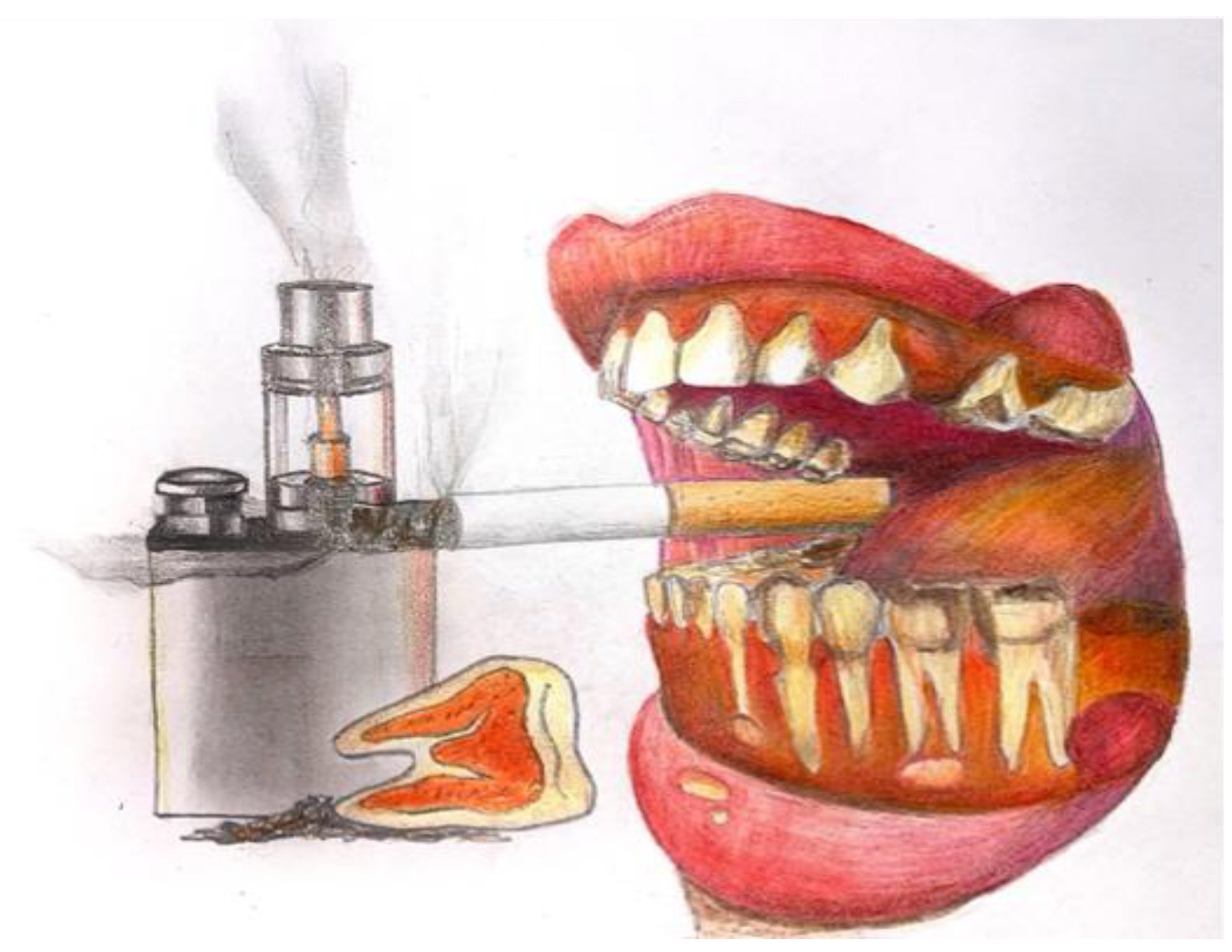

Table 1.
General Characteristics of the Participants.
| Parameters | N | % |
|---|---|---|
| Total | 189 | 100.0 |
| Gender | ||
| F | 108 | 57.1 |
| M | 81 | 42.9 |
| Education | ||
| Dentist | 103 | 54.5 |
| Specialist | 86 | 45.5 |
Table 2.
Use of E-Cigarettes by Gender.
| Female | Male | Total | P-value | ||||
|---|---|---|---|---|---|---|---|
| N | % | N | % | N | % | ||
| Total | 108 | 100.0 | 81 | 100.0 | 189 | 100.0 | |
| Have you ever used e-cigarettes or tobacco? | |||||||
| Yes | 39 | 36.1 | 48 | 59.3 | 87 | 46.0 | P=0.003 |
| No | 69 | 63.9 | 33 | 40.7 | 102 | 54.0 | |
| Does any member of your family use e-cigarettes? | |||||||
| Yes | 46 | 42.6 | 37 | 45.7 | 83 | 43.9 | P=0.783 |
| No | 62 | 57.4 | 44 | 54.3 | 106 | 56.1 | |
| Do you use tobacco or e-cigarettes? | |||||||
| E-cigarettes | 11 | 10.2 | 7 | 8.6 | 18 | 9.5 | P=0.026 |
| Not anyone | 74 | 68.5 | 44 | 54.3 | 118 | 62.4 | |
| Both | 7 | 6.5 | 3 | 3.7 | 10 | 5.3 | |
| Only tobacco | 16 | 14.8 | 27 | 33.3 | 43 | 22.8 | |
| How long have you been using e-cigarettes? | |||||||
| Did not use it | 84 | 77.8 | 60 | 74.1 | 144 | 76.2 | P=0.814 |
| 1–2 months ago | 3 | 2.8 | - | - | 3 | 1.6 | |
| 1 - 2 years | 7 | 6.5 | 8 | 9.9 | 15 | 7.9 | |
| > 2 years | 14 | 13.0 | 13 | 16.0 | 27 | 14.3 | |
| Approximately, how much do you consume e-cigarettes during the day? | |||||||
| < 20 times a day | 4 | 3.7 | 6 | 7.4 | 10 | 5.3 | P=0.267 |
| ≥ 20 times a day | 2 | 1.9 | 4 | 4.9 | 6 | 3.2 | |
| Did not use it | 88 | 81.5 | 65 | 80.2 | 153 | 81.0 | |
| A few times a day | 14 | 13.0 | 6 | 7.4 | 20 | 10.6 | |
Table 3.
Use of e-cigarettes according to education/professional training.
| Dentist | Specialist | P-value | |||
|---|---|---|---|---|---|
| N | % | N | % | ||
| Total | 103 | 100.0 | 86 | 100.0 | |
| Gender | |||||
| F | 53 | 51.5 | 55 | 64.0 | P=0.114 |
| M | 50 | 48.5 | 31 | 36.0 | |
| Have you ever used e-cigarettes or tobacco? | |||||
| Yes | 47 | 45.6 | 40 | 46.5 | P=0.904 |
| No | 56 | 54.4 | 46 | 53.5 | |
| Does any members of your family use e-cigarettes? | |||||
| Yes | 47 | 45.6 | 36 | 41.9 | P=0.709 |
| No | 56 | 54.4 | 50 | 58.1 | |
| Do you use tobacco or e-cigarettes? | |||||
| E- cigarettes | 8 | 7.8 | 10 | 11.6 | P=0.629 |
| Not anyone | 64 | 62.1 | 54 | 62.8 | |
| Both | 7 | 6.8 | 3 | 3.5 | |
| Only tobacco | 24 | 23.3 | 19 | 22.1 | |
| How long have you been using e-cigarettes? | |||||
| Did not use it | 81 | 78.6 | 63 | 73.3 | P=0.690 |
| 1–2 months ago | 2 | 1.9 | 1 | 1.2 | |
| 1 - 2 years | 8 | 7.8 | 7 | 8.1 | |
| > 2 years | 12 | 11.7 | 15 | 17.4 | |
| Approximately, how many e-cigarettes do you consume during the day? | |||||
| Did not use it | 84 | 81.6 | 69 | 80.2 | P=0.217 |
| A few a day | 11 | 10.7 | 9 | 10.5 | |
| < 20 times a day | 3 | 2.9 | 7 | 8.1 | |
| ≥ 20 times a day | 5 | 4.9 | 1 | 1.2 | |
Table 4.
Knowledge and perceptions of e-cigarette safety, health effects, and usage implications.
| Female | Male | Total | P-value | ||||
|---|---|---|---|---|---|---|---|
| N | % | N | % | N | % | ||
| Total | 108 | 100.0 | 81 | 100.0 | 189 | 100.0 | |
| Are e-cigarettes FDA-approved as safe for consumption? | |||||||
| Yes | 1 | 0.9 | 6 | 7.4 | 7 | 3.7 | P=0.047 |
| No | 27 | 25.0 | 15 | 18.5 | 42 | 22.2 | |
| I don't know | 80 | 74.1 | 60 | 74.1 | 140 | 74.1 | |
| Are e-cigarettes harmful to general and oral health? | |||||||
| Yes | 92 | 85.2 | 63 | 77.8 | 155 | 82.0 | P=0.373 |
| No | 1 | 0.9 | 2 | 2.5 | 3 | 1.6 | |
| I don't know | 15 | 13.9 | 16 | 19.8 | 31 | 16.4 | |
| Does the use of e-cigarettes have no effect on passive smoking? | |||||||
| Yes | 23 | 21.3 | 19 | 23.5 | 42 | 22.2 | P=0.485 |
| No | 28 | 25.9 | 15 | 18.5 | 43 | 22.8 | |
| I don't know | 57 | 52.8 | 47 | 58.0 | 104 | 55.0 | |
| Are e-cigarettes less harmful than tobacco cigarettes? | |||||||
| Yes | 19 | 17.6 | 18 | 22.2 | 37 | 19.6 | P=0.253 |
| No | 46 | 42.6 | 25 | 30.9 | 71 | 37.6 | |
| I don't know | 43 | 39.8 | 38 | 46.9 | 81 | 42.9 | |
| Do E-cigarettes help to relieve daily stress? | |||||||
| Yes | 18 | 16.7 | 15 | 18.5 | 33 | 17.5 | P=0.944 |
| No | 36 | 33.3 | 26 | 32.1 | 62 | 32.8 | |
| I don't know | 54 | 50.0 | 40 | 49.4 | 94 | 49.7 | |
| Although there are not many long-term studies on the effects of e-cigarettes, they have fewer side effects on patients than tobacco cigarettes? | |||||||
| Yes | 21 | 19.4 | 21 | 25.9 | 42 | 22.2 | P=0.325 |
| No | 32 | 29.6 | 17 | 21.0 | 49 | 25.9 | |
| I don't know | 55 | 50.9 | 43 | 53.1 | 98 | 51.9 | |
| E-cigarettes create addiction? | |||||||
| Yes | 56 | 51.9 | 36 | 44.4 | 92 | 48.7 | P=0.487 |
| No | 12 | 11.1 | 8 | 9.9 | 20 | 10.6 | |
| I don't know | 40 | 37.0 | 37 | 45.7 | 77 | 40.7 | |
| Are e-cigarettes less carcinogenic than tobacco cigarettes? | |||||||
| Yes | 15 | 13.9 | 16 | 19.8 | 31 | 16.4 | P=0.398 |
| No | 39 | 36.1 | 23 | 28.4 | 62 | 32.8 | |
| I don't know | 54 | 50.0 | 42 | 51.9 | 96 | 50.8 | |
| Do you believe that e-cigarettes help to stop or reduce smoking? | |||||||
| Yes | 19 | 17.6 | 23 | 28.4 | 42 | 22.2 | P=0.197 |
| No | 48 | 44.4 | 33 | 40.7 | 81 | 42.9 | |
| I don't know | 41 | 38.0 | 25 | 30.9 | 66 | 34.9 | |
| Do you know the composition of electronic cigarettes? | |||||||
| Yes | 33 | 30.6 | 27 | 33.3 | 60 | 31.7 | P=0.737 |
| No | 35 | 32.4 | 22 | 27.2 | 57 | 30.2 | |
| I don't know | 40 | 37.0 | 32 | 39.5 | 72 | 38.1 | |
Table 5.
Level of knowledge of dentists about cigarettes according to professional education/training. .
Table 5.
Level of knowledge of dentists about cigarettes according to professional education/training. .
| Dentist | Specialist | P-value | |||
|---|---|---|---|---|---|
| N | % | N | % | ||
| Total | 103 | 100.0 | 86 | 100.0 | |
| Are e-cigarettes FDA-approved as safe for consumption? | |||||
| Yes | 3 | 2.9 | 4 | 4.7 | P=0.454 |
| No | 20 | 19.4 | 22 | 25.6 | |
| I don't know | 80 | 77.7 | 60 | 69.8 | |
| Are e-cigarettes harmful to general and oral health? | |||||
| Yes | 84 | 81.6 | 71 | 82.6 | P=0.702 |
| No | 1 | 1.0 | 2 | 2.3 | |
| I don't know | 18 | 17.5 | 13 | 15.1 | |
| Does the use of e-cigarettes have no effect on passive smoking? | |||||
| Yes | 24 | 23.3 | 18 | 20.9 | P=0.078 |
| No | 17 | 16.5 | 26 | 30.2 | |
| I don't know | 62 | 60.2 | 42 | 48.8 | |
| Are e-cigarettes less harmful than tobacco cigarettes? | |||||
| Yes | 20 | 19.4 | 17 | 19.8 | P=0.967 |
| No | 38 | 36.9 | 33 | 38.4 | |
| I don't know | 45 | 43.7 | 36 | 41.9 | |
| Do E-cigarettes help to relieve daily stress? | |||||
| Yes | 14 | 13.6 | 19 | 22.1 | P=0.228 |
| No | 33 | 32.0 | 29 | 33.7 | |
| I don't know | 56 | 54.4 | 38 | 44.2 | |
| Although there are not many long-term studies on the effects of e-cigarettes, they have fewer side effects on patients than tobacco cigarettes? | |||||
| Yes | 24 | 23.3 | 18 | 20.9 | P=0.078 |
| No | 20 | 19.4 | 29 | 33.7 | |
| I don't know | 59 | 57.3 | 39 | 45.3 | |
| E-cigarettes create addiction? | |||||
| Yes | 55 | 53.4 | 37 | 43.0 | P=0.107 |
| No | 13 | 12.6 | 7 | 8.1 | |
| I don't know | 35 | 34.0 | 42 | 48.8 | |
| Are e-cigarettes less carcinogenic than tobacco cigarettes? | |||||
| Yes | 17 | 16.5 | 14 | 16.3 | P=0.471 |
| No | 30 | 29.1 | 32 | 37.2 | |
| I don't know | 56 | 54.4 | 40 | 46.5 | |
| Do you believe that e-cigarettes help to stop or reduce smoking? | |||||
| Yes | 28 | 27.2 | 14 | 16.3 | P=0.134 |
| No | 44 | 42.7 | 37 | 43.0 | |
| I don't know | 31 | 30.1 | 35 | 40.7 | |
| Do you know the composition of electronic cigarettes? | |||||
| Yes | 29 | 28.2 | 31 | 36.0 | P=0.458 |
| No | 34 | 33.0 | 23 | 26.7 | |
| I don't know | 40 | 38.8 | 32 | 37.2 | |
Table 6.
Level of knowledge about the impact of e-cigarettes on oral health by gender.
| Female | Male | Total | P-value | ||||
|---|---|---|---|---|---|---|---|
| N | % | N | % | N | % | ||
| Total | 108 | 100.0 | 81 | 100.0 | 189 | 100.0 | |
| Do e-cigarettes affect the increase in the incidence of caries? | |||||||
| Yes | 55 | 50.9 | 39 | 48.1 | 94 | 49.7 | P=0.166 |
| No | 8 | 7.4 | 13 | 16.0 | 21 | 11.1 | |
| I don't know | 45 | 41.7 | 29 | 35.8 | 74 | 39.2 | |
| Does the use of e-cigarettes affect the oral cavity? | |||||||
| Yes | 81 | 75.0 | 61 | 75.3 | 142 | 75.1 | P=0.991 |
| No | 3 | 2.8 | 2 | 2.5 | 5 | 2.6 | |
| I don't know | 24 | 22.2 | 18 | 22.2 | 42 | 22.2 | |
| Do e-cigarettes affect Xerostomia, mouth burning, Halitosis? | |||||||
| Yes | 74 | 68.5 | 59 | 72.8 | 133 | 70.4 | P=0.629 |
| No | 3 | 2.8 | - | - | 3 | 1.6 | |
| I don't know | 31 | 28.7 | 22 | 27.2 | 53 | 28.0 | |
| Do e-cigarettes increase the risk of oral cancer (cytotoxic, genotoxic, oncogenic effect)? | |||||||
| Yes | 70 | 64.8 | 55 | 67.9 | 125 | 66.1 | P=0.773 |
| No | 1 | 0.9 | - | - | 1 | 0.5 | |
| I don't know | 37 | 34.3 | 26 | 32.1 | 63 | 33.3 | |
| Do e-cigarettes affect the prevalence of periodontal lesions? | |||||||
| Yes | 72 | 66.7 | 50 | 61.7 | 122 | 64.6 | P=0.403 |
| No | 10 | 9.3 | 5 | 6.2 | 15 | 7.9 | |
| I don't know | 26 | 24.1 | 26 | 32.1 | 52 | 27.5 | |
| Do e-cigarettes affect lingua nigra villosa, nicotinic stomatitis, and other tongue discolorations? | |||||||
| Yes | 65 | 60.2 | 51 | 63.0 | 116 | 61.4 | P=0.812 |
| No | 6 | 5.6 | - | - | 6 | 3.2 | |
| I don't know | 37 | 34.3 | 30 | 37.0 | 67 | 35.4 | |
| Do e-cigarettes affect teeth (tooth discoloration, pain, fractures, and increase in cariogenic bacteria)? | |||||||
| Yes | 71 | 65.7 | 50 | 61.7 | 121 | 64.0 | P=0.720 |
| No | 8 | 7.4 | 5 | 6.2 | 13 | 6.9 | |
| I don't know | 29 | 26.9 | 26 | 32.1 | 55 | 29.1 | |
| Do e-cigarettes affect disorders of the oral microbiome? | |||||||
| Yes | 69 | 63.9 | 54 | 66.7 | 123 | 65.1 | P=0.793 |
| No | 4 | 3.7 | 4 | 4.9 | 8 | 4.2 | |
| I don't know | 35 | 32.4 | 23 | 28.4 | 58 | 30.7 | |
Table 7.
Level of knowledge about the impact of e-cigarettes on oral health according to education/professional training.
Table 7.
Level of knowledge about the impact of e-cigarettes on oral health according to education/professional training.
| Dentist | Specialist | P-value | |||
|---|---|---|---|---|---|
| N | % | N | % | ||
| Total | 103 | 100.0 | 86 | 100.0 | |
| Do e-cigarettes affect the increase in the incidence of caries? | |||||
| Yes | 56 | 54.4 | 38 | 44.2 | P=0.361 |
| No | 11 | 10.7 | 10 | 11.6 | |
| I don't know | 36 | 35.0 | 38 | 44.2 | |
| Does the use of e-cigarettes affect the oral cavity? | |||||
| Yes | 79 | 76.7 | 63 | 73.3 | P=0.290 |
| No | 1 | 1.0 | 4 | 4.7 | |
| I don't know | 23 | 22.3 | 19 | 22.1 | |
| Do e-cigarettes affect Xerostomia, mouth burning, Halitosis? | |||||
| Yes | 74 | 71.8 | 59 | 68.6 | P=0.745 |
| No | 0.0 | 3 | 3.5 | ||
| I don't know | 29 | 28.2 | 24 | 27.9 | |
| Do e-cigarettes increase the risk of oral cancer (cytotoxic, genotoxic, oncogenic effect)? | |||||
| Yes | 70 | 68.0 | 55 | 64.0 | P=0.670 |
| No | 0.0 | 1 | 1.2 | ||
| I don't know | 33 | 32.0 | 30 | 34.9 | |
| Do e-cigarettes affect the prevalence of periodontal lesions? | |||||
| Yes | 66 | 64.1 | 56 | 65.1 | P=0.594 |
| No | 10 | 9.7 | 5 | 5.8 | |
| I don't know | 27 | 26.2 | 25 | 29.1 | |
| Do e-cigarettes affect lingua nigra villosa, nicotinic stomatitis, and other tongue discolorations? | |||||
| Yes | 67 | 65.0 | 49 | 57.0 | P=0.375 |
| No | 2 | 1.9 | 4 | 4.7 | |
| I don't know | 34 | 33.0 | 33 | 38.4 | |
| Do e-cigarettes affect teeth (tooth discoloration, pain, fractures, and increase in cariogenic bacteria)? | |||||
| Yes | 69 | 67.0 | 52 | 60.5 | P=0.618 |
| No | 7 | 6.8 | 6 | 7.0 | |
| I don't know | 27 | 26.2 | 28 | 32.6 | |
| Do e-cigarettes affect disorders of the oral microbiome? | |||||
| Yes | 72 | 69.9 | 51 | 59.3 | P=0.266 |
| No | 3 | 2.9 | 5 | 5.8 | |
| I don't know | 28 | 27.2 | 30 | 34.9 | |
Disclaimer/Publisher’s Note: The statements, opinions and data contained in all publications are solely those of the individual author(s) and contributor(s) and not of MDPI and/or the editor(s). MDPI and/or the editor(s) disclaim responsibility for any injury to people or property resulting from any ideas, methods, instructions or products referred to in the content. |
© 2025 by the authors. Licensee MDPI, Basel, Switzerland. This article is an open access article distributed under the terms and conditions of the Creative Commons Attribution (CC BY) license (http://creativecommons.org/licenses/by/4.0/).
Copyright: This open access article is published under a Creative Commons CC BY 4.0 license, which permit the free download, distribution, and reuse, provided that the author and preprint are cited in any reuse.


