

Submitted:
22 January 2025
Posted:
24 January 2025
You are already at the latest version
Abstract
OCD is a prevalent mental disorder, particularly amongst adolescents, with prevalence rates between 1 and 3 percent globally. This study aimed to explore experiences and perceptions of adolescents with obsessive-compulsive disorder (OCD) amongst a sample of teachers living in Ireland. Interviews were conducted with 15 secondary school (middle school/high school) teachers (4 male, 11 female). The data were analysed using Constant Comparison Analysis. In total, 35 themes emerged, from which 10 overarching themes were identified: Manifestations of OCD; portrayal of OCD in the media; comorbidity; prevalence and impact; OCD in the classroom; teacher training; role as teachers; perceived ability to identify and support; barriers to identification and support; and importance of awareness and education. Further research on teachers’ understanding of OCD is recommended to inform the design of teacher training programmes to support students affected by OCD.
Keywords:
Obsessive compulsive disorder
; OCD
; secondary school
; middle school
; high school
; teachers
; qualitative study
1. Introduction
1.1. OCD: Definition, Diagnostic Criteria, and Prevalence
Obsessive-compulsive disorder (OCD) is a chronic mental disorder characterised by recurring intrusive thoughts, impulses or images known as obsessions and repetitive or ritualistic behaviours known as compulsions (American Psychiatric Association (APA), 2013). Compulsions can be physical or mental acts that an individual feels compelled to carry out to alleviate anxiety induced by unwanted obsessions (APA, 2013). Although the nature of such obsessions varies in individuals, there are some common themes that often arise in cases of OCD, including contamination, symmetry, inappropriate or unacceptable thoughts (often sexual or aggressive), and harm (to oneself or to others) (APA, 2013). The diagnostic criteria, as set out in the Diagnostic and Statistical Manual of Mental Illnesses (DSM-5), include the display of either obsessions or compulsions, or both, which cause significant impairment or distress (or take more than one hour per day) and may not be attributed to the effects of another medical condition or substance (APA, 2013).
One of the earliest studies on OCD was carried out by Lewis in 1936, which highlighted the need for a more systemic approach to studying ‘obsessional illness’ (Lewis, 1936). Until recently, OCD has been identified as an anxiety disorder, and it was not until 2013 that this changed when the DSM-5 introduced obsessive-compulsive and related disorders as a new section (Mahjani et al., 2021). This section also includes body dysmorphic disorder, skin picking disorder, hoarding disorder, and trichotillomania (APA, 2013).
An early study on the prevalence of OCD, involving a survey of five U.S. communities, identified OCD as one of the most prevalent mental health problems (Karno et al., 1988). In 2014, OCD was also estimated to contribute significantly to the global burden of disease (Baxter et al., 2014). This condition, once thought to be a rare condition, may now be identified as one of the more prevalent disorders, with prevalence rates falling between 1 and 3 percent across countries (Fawcett et al., 2020; Ruscio et al., 2010). Recent nationally representative studies have supported this finding and confirmed that the lifetime prevalence of OCD is 2-3% (Blanco-Vieira et al., 2023; Horwath & Weissman, 2022; Fontenelle et al., 2006). However, estimates of the prevalence of this disorder vary, potentially due to variance in populations studied and/or the instruments of measurements employed (Horwath & Weissman, 2022; Fontenelle et al., 2006).
Studies have suggested that the typical age of onset for OCD is between 18-29 years, with significant differences found between males and females (Stein et al., 2019). According to the National Comorbidity Survey Replication (NCS-R), onset was found to be earlier in males (before age 10), whereas onset for females typically occurred during adolescence (Stein et al., 2019). Most recently the World Health Organisation has stated the age of onset typically falls between age 8 and 12 (WHO, 2023). Some studies have suggested that the age of onset may be associated with different causal factors. For example, Nicolini et al. (2009) highlighted the role of genetic factors in early-onset OCD. An association was also found between age of onset and symptom severity, with more severe symptoms presenting in those whose symptoms had an early onset (Taylor, 2011; Stewart et al., 2004). This is a long-lasting disorder in which symptoms may last for decades, as demonstrated by longitudinal studies in both community and clinical settings (Sharma et al., 2014).
One of the most robust findings in OCD research is its comorbidity with other disorders (Aymerich et al., 2024; Sharma et al., 2021; Quarantini et al., 2011). A meta-analysis conducted by Sharma et al. (2021) found that more than 75% of individuals with OCD present with comorbid disorders. Mood disorders were found to be more prevalent in adults with OCD and anxiety disorders were more prevalent in children with OCD, while the prevalence of neurodevelopmental disorders was equal between both adults and children with OCD (Sharma et al., 2021). A relationship has also been found between OCD and eating disorders, with approximately 18% of all individuals with an eating disorder reporting previous experience of OCD (Mandelli et al., 2020).
It is important to note that while this condition is classified as a ‘disorder’ in clinical contexts, many have argued against this categorisation and have suggested that its symptoms fall along a spectrum of normal human experiences (Frances, 2013). Research has shown that symptoms such as intrusive thoughts are not exclusive to OCD and that individuals without OCD may experience them from time to time with little to no feelings of distress (Abramowitz, 2009). However, it is essential to further investigate perceptions and experiences of challenging compulsions and obsessions to understand how to improve individual well-being and to provide supports where necessary.
1.2. Treatment
The treatment of this disorder can be approached in numerous ways, including therapeutic or pharmacological methods and combined approaches (Singh et al., 2023). Cognitive-behavioural therapy (CBT) is an effective approach to OCD treatment, with exposure-response prevention (ERP) yielding empirical support (Roh et al., 2023; Ferrando & Selai, 2021). This approach involves gradual exposure to obsessional triggers while refraining from carrying out compulsive behaviours (Reid et al., 2021). The goal of this method is to gradually reduce the anxiety that these triggers induce by allowing the individual to see that their fears do not manifest when they do not perform their compulsions (Reid et al., 2021). Research demonstrates that ERP is one of the most effective therapies for the treatment of OCD across all ages (Ferrando & Selai, 2021; Rosa-Alcazar et al. 2008).
Other studies have found success in other approaches including the use of medication, including clomipramine (Foa et al., 2005), fluvoxamine (Brar et al., 2022), fluoxetine (Tollefson et al., 2022) and sertraline (Tini et al., 2022). However, pharmacotherapeutic methods are not found to be more effective on their own relative to CBT (Adam et al., 2022; Fineberg et al., 2012). Studies on the efficacy of combined-methods approaches involving both therapeutic and pharmacological methods have yielded mixed findings. However, a meta-analysis conducted by Skapinakis et al. (2020) found that the combination of both methods may be more effective than psychotherapy alone. A meta-analysis by Mao et al. (2022) reported that while combined approaches to treatment significantly improve outcomes, it is not enough to suggest that medication enhances the efficacy of ERP.
The World Health Organisation identifies OCD as one of the top 20 causes of disability experienced by individuals aged between 15 and 44 (Murphy et al., 2010), and studies have consistently shown a significantly low quality of life in those suffering from the disorder (Coluccia et al., 2016). Approximately two-thirds of individuals with OCD have reported severe impairments in their lives (Fontenelle et al., 2022). Research has also highlighted how this disorder may often go untreated, with one study finding the average length of time from symptom onset to intervention being approximately 8 years (Fontenelle et al., 2022). In addition, recent evidence suggests that individuals with this disorder may experience inapparent obsessive-compulsive symptoms (typically occurring in adolescence) before presenting with the full disorder (Thompson et al., 2020). For such reasons, early intervention is crucial for OCD recovery, given the fact that if left untreated this disorder can have a severe impact on functioning (Remmerswaal et al., 2020).
1.3. OCD In Childhood and Adolescence
OCD is amongst the more common disorders in childhood and adolescence, with studies consistently reporting a prevalence rate of 1-3%, across countries (Nazeer et al., 2020; Walitza et al., 2011). Furthermore, between one-third and two-thirds of adults with this disorder first experience symptoms in childhood (Nakatani et al., 2011; Barrett & Healy, 2003; Shafran, 2001; Henin & Kendall, 1997). Its presentation may vary slightly in children and adolescents. It has been suggested that compulsions are more easily diagnosed in children than obsessions (APA, 2013). Moreover, the nature of obsessions may correspond with a child’s stage of development, with adolescents being more likely for example to experience religious and sexual obsessions in comparison with children (APA, 2013).
While this is a relatively common disorder in childhood and adolescence, it is regularly misdiagnosed or undiagnosed (Stahnke, 2021; Presta et al., 2003). This may be due to multiple factors. A study by Presta et al. (2003) highlighted that it may partly be due to an absence of ego-dystonia in childhood and adolescence, meaning that these obsessions or compulsions may not cause significant distress in a young person, as in an adult, and therefore may not be recognised as a problem. However, there have been no recent studies that support this theory. In the case that the child does recognise these thoughts or behaviours as problematic, there are other factors that may prevent help-seeking. A study by Storch et al. (2006) found that bullying was a major issue for children suffering with OCD. As a result of misconceptions and negative attitudes towards their disabilities, students with OCD are more likely to be excluded and bullied, which may induce a sense of shame, causing them to hide or suppress their symptoms (Chaturvedi et al., 2014; Helbing & Ficca, 2009; Storch et al., 2006).
Studies have indicated that OCD can cause serious academic and psychosocial impairment for young people (Negreiros et al., 2023; Dyches et al., 2010). Indeed, individuals diagnosed with OCD are 55-62% less likely to progress beyond compulsory education, according to a study based in Canada (Negreiros et al., 2023). There is limited research on the ways in which this disorder may impact children in educational settings. However, a study by Pérez-Vigil et al. (2018) found that impairment was most significant at later stages of secondary level education. Some areas affected by OCD in educational settings include school avoidance, school refusal and decreased academic performance (Negreiros et al., 2023).
1.4. The Role of the Teacher
Most children and adolescents spend a substantial portion of their formative years in school or another educational setting (Oliveira et al., 2019). Teachers therefore have great involvement in a child’s life and may play a significant role in their development and overall well-being (Kratt, 2018; Sabol & Pianta, 2012). In terms of mental health, it may be argued that the parents or guardians of children play a more important role in identifying problematic behaviours or patterns. However, research indicates that teachers play a crucial role in recognizing and supporting students with mental health difficulties (Negreiros et al., 2023; Froese-Germain & Riel, 2012; Vickers, 2001). More specifically, in relation to OCD, a disorder known for its complexity and heterogeneity, it is possible that these behaviours might only manifest in a school environment and therefore go unnoticed by caregivers. Research has shown that early detection is crucial for OCD recovery and teachers. Factors that enhance or impede the ability of teachers to identify symptoms of OCD therefore warrant exploration (Chaves et al., 2021; Woolcock & Campbell, 2005).
1.5. Barriers to Early Detection
OCD is one of the most misunderstood disorders, as its symptoms are often stigmatized and mischaracterized in society (Chaves et al., 2021). In the past, it has been viewed as a “joke condition” (Fennell & Liberato, 2007). This may partly be due to its misrepresentation in the media, with the stereotypical person with OCD being painted as a “neat-freak” (Kim, 2021; Martin, 2017). While often it is only the organisational- and hygiene-related aspects of OCD that people are aware of (Fennel & Boyd, 2014), and these can indeed be symptoms of the disorder, they do not fully represent the potential depth and impact of this disorder.
As highlighted by Vickers (2001), misconceptions and lack of awareness about OCD may hinder accurate identification and access to appropriate support. It may be possible that such misconceptions and lack of awareness impede teachers’ abilities to identify OCD in students. Studies have highlighted the importance of educating teachers on mental health problems and have outlined the role of teachers in symptom identification (Negreiros et al., 2023; Woolcock & Campbell, 2005). A lack of training in mental health, however, may lead to missed opportunities for early intervention. By strengthening mental health literacy amongst teachers, they can encourage acceptance and understanding among students, aiming to reduce the likelihood of the peer exclusion and mistreatment of students with OCD (Chaturvedi, 2014). Education is therefore needed for teachers to equip them with the skills of detecting this disorder (Woolcock & Campbell, 2005).
1.6. Are Teachers Educated About OCD?
In a survey study conducted in Canada by Froese-Germain et al. (2012), it was found that over two-thirds of teachers had not received any form of training or guidance on how to support students with mental health problems. In addition, 97% of participants expressed a need for further training in this area. This study, however, examined mental health problems generally and did not specifically target teachers’ knowledge of OCD. Research on teachers’ understanding of OCD and their ability to recognise it in their students is extremely limited. However, in a study conducted by McGrath et al. (2023) with a sample of 274 teachers in Canada, findings indicated that teachers received limited training or information in supporting students with OCD, and participants reported low ability to detect the disorder. Although some participants had received training on OCD, in these cases it was found that the training focused on medical details of OCD rather than more applicable aspects such as its presentation in educational settings. However, as this study utilised quantitative methods, it was limited in gaining in-depth insight into the specific aspects of OCD in which teachers lack knowledge or understanding. Nonetheless, these findings suggest the need for more comprehensive training programmes and strategies for teachers in relation to OCD.
1.7. Research Aim
Studies exploring teachers’ understanding of and ability to recognise OCD are limited. This study aims to bridge this gap in the literature by exploring experiences and perceptions of adolescents with OCD amongst a sample of secondary school (middle school/high school) teachers living in Ireland. The findings of this study aim to inform the development and design of future training programs to equip teachers with skills to accurately identify and support students with OCD.
2. Method
2.1. Participants and Procedures
A qualitative, cross-sectional study was conducted, in which data were gathered through semi-structured interviews. Participants in this study were recruited through convenience and snowballing methods (Flick, 2022; Parker et al., 2019). An advertisement was posted on Instagram, where individuals could register their interest to be interviewed. All participants were required to be above the age of 18 and currently working as a secondary school teacher in Ireland. There were 15 interviews in total, in accordance with qualitative research guidelines for small sample sizes (Guest et al., 2006). Ethical approval for this study was granted by the Departmental Research Committee of the Department of Psychology, Maynooth University, Ireland.
2.2. Materials
An 18-item interview schedule was designed by the primary researcher, based on the research aim and a review of the literature (see Appendix A). The interview schedule explores participants’ perceptions and experiences of OCD among students. Two interviews were conducted in-person, and the remaining interviews were conducted through MS Teams.
2.3. Data Analysis
Data analysis was conducted using Constant Comparison Analysis (CCA), a qualitative methodology that facilitates the iterative comparison of data to develop grounded theories (Elliot & Timulak, 2005). This approach enabled a systematic examination of participant interviews, allowing identification of key themes and patterns. Initial open coding was employed in which meaning units (extracts) were identified from the qualitative data to label significant concepts. These meaning units were then grouped into categories (themes) reflective of shared characteristics. As new data emerged, continuous comparisons were made with existing codes, leading to the refinement and integration of categories. Domains’ (superordinate themes) were then used to organise the categories (Elliot & Timulak, 2005). Note-taking provided a critical space for reflection, ensuring that the findings were firmly rooted in the data (Charmaz, 2006). The rigorous application of CCA deepened the understanding of participants’ experiences and contributed to the formulation of a theoretical framework that addresses the complexities of the subject matter.
2.3.1. Reflexivity
Reflexivity plays a vital role in ensuring credible and insightful findings. It requires researchers to critically examine their own biases, experiences, and social positions, which can influence data interpretation. As Van Manen (2023) suggests, engaging in reflexive practices allows researchers to connect their lived experiences with the participants’ realities, enhancing the depth of understanding. Lincoln and Guba (1985) advocate for reflexivity to establish trustworthiness in qualitative research, reinforcing the idea that self-awareness is crucial for ethical inquiry. The researcher in this study, as a white Irish, female third-level student with experience of teachers at second level, incorporated reflexive approaches throughout the research to provide a nuanced perspective on teachers’ understanding of OCD.
3. Results
Illustrated schematically below are the domains and categories that emerged from this analysis (See Figure 1). Participants revealed their perceptions and understandings of OCD in relation to ten domains: Manifestations of OCD; portrayal of OCD in the media; comorbidity; prevalence and impact; OCD in the classroom; teacher training; role as teachers; perceived ability to identify and support; barriers to identification and support; and importance of awareness and education. The domains and categories identified are not listed in order of importance or any hierarchy.
3.1. Manifestations of OCD
3.1.1. OCD is Characterised by Compulsions
Ten participants described OCD as being characterised by compulsions and discussed how individuals with OCD may feel compelled to carry out a certain action, as exemplified by a participant’s definition of the disorder: “I would say it’s where somebody has a compulsion to do certain things” (P12 [participant 12]). Compulsions were commonly seen as out of the individual’s control: “You can’t really control the impulses” (P1) and which typically occur in response to an anxiety or fear: “The impulse to do something that’s kind of driven by…the anxiety behind if we don’t do it” (P5).
3.1.2. OCD is Characterised by the Need for Cleanliness
Ten participants identified hypervigilance towards hygiene and cleanliness as being a symptom of OCD. For example, a participant stated: “maybe people are obsessed with cleaning” (P2). Seven of these participants specifically mentioned handwashing as a common behaviour amongst individuals with OCD, as illustrated by a participant’s comment: “I think the handwashing and the hygiene thing is I think it’s a big one” (P5). Other behaviours identified include wiping feet, washing the body, and having a clean home. As asserted by a participant: “Somebody who needs to have their house spick and span” (P9).
3.1.3. Affinity for Organisation and Structure in OCD
Eight participants described individuals with OCD as having an affinity for organisation and structure. Different manifestations of this organisation were identified by participants. For example, three participants discussed how individuals may like to order their things: “You might like to have everything in alphabetical order” (P10). Another participant detailed how individuals with OCD may like to organise and have a structure to their day: “preparing for things or whether it’s just having the structure to their day” (P2). One participant stated that this tendency for organisation may present itself “anywhere in their life in general” (P9).
3.1.4. Repetitive Behaviours are Characteristics of OCD
Twelve participants identified the repetition of tasks as a common behaviour in individuals with OCD. Multiple manifestations of this repetitive behaviour were identified such as light switching, repeating sentences, going in and out of doors, hand washing, rewriting words and closing doors, as illustrated by one participant: “If you see somebody where they have to repeat something… crossing the doorstep…switching a light on and off” (P7). Two of these participants stated that these were assurance-seeking behaviours, carried out to make the individual “feel maybe like less anxious or comfortable in a situation (P13).
3.1.5. Checking Behaviours are Characteristics of OCD
Five participants discussed how individuals with OCD may commonly partake in checking behaviours, as alluded to by one participant: “the constant checking of things” (P4). All participants gave examples of this behaviour. For example, one participant specified: “It’s things like making sure the door is locked” (P6). The most common manifestation of these behaviours that was identified was the checking of windows and doors, as demonstrated by a participant’s comment: “You check windows, you check sockets, you check the door” (P8).
3.1.6. People with OCD have a Difficulty with Change
Six participants identified individuals with OCD as having a difficulty with change. Half of these participants detailed how change may induce stress or anxiety for an individual with OCD: “If you go outside the routine, you get very anxious and stressed” (P11). Multiple examples of change were identified as being difficult such as changing plans or changing the placement of objects in a room: “even if you change cups into a different press or something” (P8).
3.1.7. Perfectionism and Particularity are Characteristics of OCD
Thirteen participants described individuals with OCD as being “very particular” (P2) about how they do things, and discussed their need for perfection in all that they do: “having to have everything perfect” (P14). Individuals with OCD were identified as having “perfectionistic tendencies” (P12) by six of these participants.
3.1.8. Low Self-Esteem in Individuals with OCD
Five participants commented on how individuals with OCD may suffer from a lack of confidence, low self-esteem, and overall self-doubt. This is exemplified in a statement from one participant: “Very self-critical…towards oneself when they do something wrong” (P1). Notably, two of these participants spoke from experience of students diagnosed with OCD, who presented as such: “No-one that I’ve ever encountered with OCD has been overconfident or loud” (P4).
3.1.9. OCD is Complex and Manifests in Various Ways
Eight participants communicated that they understood this disorder to be complex in its manifestation, in the sense that it may differ from person to person: “it’s very complex and manifests very differently” (P1). Multiple participants expressed that two people with OCD may experience different symptoms, and something that bothers one person may not bother the other. This is exemplified by one participant: “Certain ones that they have that maybe other people with OCD don’t. Everybody is different…it depends on the individual” (P4).
3.2. Portrayal of OCD in the Media
3.2.1. The Media Only Portrays Stereotypical Symptoms of OCD
Six participants commented on the portrayal of OCD in popular culture and media. Participants identified cleanliness and organisation as being “stereotypical” symptoms of OCD (P2) or ones that may be more commonly known: “That is the one that is most commonly portrayed in the media” (P1). Three of these participants expressed that this portrayal was not a comprehensive representation of the disorder, as stated by one participant: “It’s not…like what you see on the television, it’s not that at all” (P6).
3.3. Comorbidity
3.3.1. OCD is Associated with Anxiety
Eleven participants identified OCD to be associated with anxiety. When asked if they could name any symptoms of OCD, nine of these participants named anxiety as one of them: “I would imagine anxiety might be a symptom” (P7). Whereas the other two participants identified OCD and anxiety as two co-occurring disorders. For example, one participant asserted: “I think again anyone with anxiety…they’re co-occurring conditions” (P11).
3.3.2. OCD is Linked with Autism Spectrum Disorder
Seven participants identified a similarity in symptoms of OCD and Autism Spectrum Disorder (ASD). As stated by one participant: “some of the symptoms you’re talking about there can overlap with autism” (P12). Three of the participants identified the two conditions as “co-occurring” (P11) and stated that many individuals who are diagnosed with ASD are also diagnosed with OCD. As alluded to by one participant: “having taught three students that have been autistic, they have been diagnosed to OCD as well” (P4). Two of the participants also stated that due to the overlap in symptoms, they may confuse OCD for ASD in a student: “I feel like there’s a crossover in some of the symptoms that I’ve seen with ASD as well, so I might incorrectly identify it” (P1).
3.4. Prevalence and Impact
3.4.1. Increase in Prevalence of Mental Health Difficulties
Eleven participants communicated that they noticed a dramatic increase in the number of students presenting with a mental health difficulty. As contended by one participant: “The figures are so high, it’s more prominent than ever before” (P4). Participants described this increase as an urgent matter that needs to be addressed, as exemplified by one participant: “Nobody's talking about it but there's a mental health crisis, like serious crisis” (P12). Five of these participants also felt that due to this increase, it is important now more than ever to support students’ mental health: “We need to come back to…focusing on now more than ever we’re such a diverse classroom with children with like a variety of needs” (P5).
3.4.2. OCD is More Common than we Think
When asked about the prevalence of OCD, twelve participants believed this disorder to be more common than people may think. For example, one participant stated: “I would say it probably is quite common…I’d say it’s definitely there more than we realize” (P2). Participants expressed how they felt this disorder may commonly go unrecognised or undiagnosed: “I would say it’s quite common but just not recognised” (P1). Multiple participants gave potential explanations for this. The most common explanation given by four participants was that students may mask or hide their symptoms: “I think especially girls, they mask” (P11).
3.4.3. Lack of Awareness of the Impact of OCD
Upon hearing a statement of some general figures and information on OCD, thirteen participants expressed how they were unaware of the potential impact that this disorder may have on an individual. For example, one participant revealed, “I didn’t actually realise that it could impact in so many different ways” (P8). Five of these participants expressed shock that this disorder could have such a detrimental effect on a person’s life: “The 50%, and 62% don't go on to, or it impairs them going on to higher education, that's, that's kind of startling that you know, nearly half of people with this, that's quite…that's…that's startling to me” (P2).
3.4.4. Lack of Awareness of the Prevalence of OCD
Upon being given some information relating to the prevalence of OCD, seven participants expressed shock at the commonality of the disorder, stating that they were unaware that it affected so many people. This is demonstrated by one participant’s remark: “It’s interesting that it’s one of the most common, like that’s mad” (P3). Four of these participants explained that their shock was due to the fact that they had limited exposure to OCD in the school setting: “I’m actually shocked when you think there’s 1200 students where I am…out of my experience of 15 years there I can only remember one, but you can be guaranteed there was probably a hundred” (P6). Conversely, two participants were surprised as they thought the disorder was more prevalent than the figures suggest: “I don’t know why it was I thought it to be more” (P11).
3.5. OCD in the Classroom
3.5.1. Lack of Experience with OCD in Class
Ten participants declared that they had no experience with any students with OCD, as alluded to by one participant: “I actually don’t have any, I haven’t had any since I’ve been in school” (P13). Three of these participants voiced that there were a few occasions in which they suspected a student may have been struggling with the disorder. For example, one participant shared: “I just kind of suspected a little bit… One particular student…I probably needed to be more direct in my teaching…more concise instructions…not vary too much…clear manageable goals.” However, all of them stated that they were unable to say for sure that it was OCD. For example, one participant observed: “she definitely has tendencies, like you could see that a mile away, but I couldn’t say that she was actually diagnosed with this” (P9).
3.5.2. OCD Impacts Students’ Academic Performance
Five participants communicated that they had previous experience with students diagnosed with OCD. Each participant detailed how the disorder impacted the student’s academic performance. For example, one participant shared how the student “wasn’t able to complete the exam without his notes… If he wasn’t able to use his notes he’d get really upset” (P1). The participants identified multiple ways in which their student was affected by this disorder in school, including taking longer to write notes, being nervous around other students, having difficulty with changes in the classroom environment, and putting themselves under pressure to perform well. For example, one participant shared: “She would have put herself under massive pressure, like, with regard to learning, exams, work” (P15).
3.6. Teacher Training
3.6.1. Limited Training Received on Mental Health Support
Ten participants reported that over the course of their career they had received some form of mandatory training or information on supporting students with mental health issues. Half of these participants described this training as too broad, with no information given on specific mental health problems: “It was very like general kind of how to support a student who’s like going through a difficult time but not necessarily who was like struggling with like maybe a certain condition” (P1). The other half reported that they had received more in-depth training and information either in college or as Continual Professional Development (CPD) training: “mental health we would have had kind of seminars in college and we‘ve definitely had a few CPD hours here” (P2).
3.6.2. Teachers Seek Voluntary Training
Nine participants expressed that they had educated themselves on how to support students with mental health issues either through voluntary training resources or through informal methods such as the internet. Six of these participants stated that they proactively sought out voluntary training courses in areas that they were interested in: “I would have done a bit myself…on autism and ADHD, anxiety, depression” (P13). The other three participants stated that they had used various websites to educate themselves on mental health: “I will log onto the aware.ie and you know I’ll kind of try and upskill myself…educate myself a little bit better for them” (P8).
3.6.3. No Training Received on OCD
Fourteen participants stated that they had never received any form of training or information on OCD throughout the entirety of their educational career: “never had any in-school training related to OCD” (P10). It was also stated by two participants that they had never seen any voluntary courses advertised for OCD either: “I don’t even recall a course in it being advertised” (P5). One participant, who had previously taught a student with OCD, stated that he was never given any guidance on how to support that student in class: “I have taught students with OCD before; we were never given information to support that student at the time. Like, what you’re working off is your understanding of it” (P12). Notably, the one participant who did report having previous training in OCD, stated that it was as part of a general course on neurodivergence: “the one on…neurodivergency really zoomed in on… OCD and how heavily it can be linked to autism” (P4).
3.6.4. Current Training Procedures are Ineffective
Seven participants expressed that current training procedures are not sufficient methods of educating teachers on how best to support their students with mental health problems. Three participants stated that the recommendations and guidelines for supporting the mental health of students are constantly being updated and therefore the training that they previously received may now be less applicable: “you do something ten years ago, it’s changing all the time" (P6). They expressed that training needs to be continuous so that teachers can remain informed on how best to approach mental health problems in the classroom: “Follow-up training and so on needs to be because it changes every year something that you know something new has come up new statistics new ways of dealing with things” (P11). Two participants also discussed how most training is voluntary and that teachers aren’t always available for it: “You’re not always available and how many teachers that actually take that up as well?” (P9). The final two participants felt that the training they had received in relation to mental health was not applicable to the classroom environment: “Definitely the training but it has to be relatable to us” (P3).
3.7. Teachers’ Role
3.7.1. Teachers Have More than an Educational Role
In relation to supporting students with mental health problems, 13 participants described their role as being one that goes beyond academic and educational duties. They each expressed belief that they played an important part in safeguarding student mental health, as exemplified by one participant: “Our role would be, you know, it would be to reduce any anxiety that the young person might have and … to reassure them and to offer whatever assistance they might need” (P7).
Nine of these participants outlined that they had a responsibility to make their students feel comfortable in school and ease any anxieties that they may have: “It’s our responsibility…Certainly if we can make a day go a little bit easier” (P6). Nine participants also expressed the importance of creating a safe environment in which students feel able to approach them with any issues or worries that they have: “I think it’s very important for teachers just to provide a really safe space for students to be able to talk to them openly” (P1).
3.7.2. Teachers Need to Be Aware
It was communicated by eight participants that teachers have a responsibility to be aware of the diverse needs of students in their classroom, as illustrated by one participant: “It’s up to us obviously to first of all be informed and to know who’s sitting in front of you” (P6). Each of them stated that in order to be able to support students with a mental health problem, they first need to educate themselves on how the issue affects their student and what they can to do help: “Getting to know your students and knowing these things really helps in planning and helping them be more comfortable in my class” (P9).
3.7.3. Role of Flagging Concerns
Eight participants felt that they had a responsibility to identify when a student may be struggling and to flag any concerns they may have, as illustrated by one participant: “I would often have my concerns and if I have any concerns I’d go to a counsellor or I’d go to a Year Head and I’d often discuss it then” (P9). Half of these participants also detailed how they may play a significant role in initiating the process towards getting the necessary diagnosis. For example, one participant asserted: “So if I noticed that, I would flag it with our special needs coordinator and say like ‘is there a possibility for an assessment?’” (P4).
3.8. Perceived Ability to Identify and Support
3.8.1. OCD is Difficult to Identify in Students
When asked if they thought that they would be able to identify OCD in their students, twelve participants expressed that they would find it difficult. As explained by one participant: “I think that could be quite hard” (P12). Nine of these participants stated that they might notice symptoms of the disorder if it were a very severe case: “Like a severe case I would imagine I’d be able to see…but a mild case I don’t know if I would” (P9). The other three participants stated outright that they would not be able to identify the disorder. As communicated by one participant: “no, definitely not” (P15).
3.8.2. Teachers are Unsure How to Support Students with OCD
When asked about their role in supporting students with OCD, six participants articulated that they were unsure how to support these students: “I don’t know, it’s a very hard question to answer” (P7). The two participants who had previous experience with a student diagnosed with OCD, voiced that they were unaware of how they could support that student and felt unequipped to handle it: “This was my first time actually experiencing it in a class. I wasn’t fully sure how to deal with that” (P1).
3.8.3. Limited Knowledge on OCD
Seven participants expressed that they had limited knowledge surrounding OCD: “I actually haven’t a clue… I probably actually know nothing.” Three participants felt that this disorder is not commonly discussed, particularly in a school setting. As stated by one participant: “We’ve never heard of this before” (P3). Participants felt that their understanding of the disorder was not comprehensive. As alluded to by one participant: “It’s definitely not the full understanding and I will admit to that” (P2).
3.9. Barriers to Identification and Support
3.9.1. Teachers Are Not Made Aware
Six teachers felt that they were not always made aware of students’ diagnoses and were therefore unaware that they may need extra support. As contended by a participant: “In some schools, that’s not actually the case that the guidance counsellors might know and maybe the Year Head or whoever, but that actually doesn’t filter down to the teachers of exactly what the issue is” (P3). Two of these participants identified a probable reason for this. One participant stated that this may be because when students are being treated by external mental health services, teachers are not always told: “when they’re treated by CAMHS (Child and Adolescent Mental Health Services), we’re not necessarily given their diagnosis” (P3). Another participant stated that it depends on what parents are comfortable sharing with the school: “it depends on what the parents are comfortable with communicating to the school and…to the teacher…the parent might not want the teachers to know” (P12).
3.9.2. Not with Students Long Enough to Identify OCD
Six participants expressed that it was too difficult to identify OCD in the classroom as classes are short and teachers do not get to see their students for long enough. As stated by one participant: “I don’t think I’m around kids all day long to maybe see the symptoms” (P2). They felt that if they were with students for a longer amount of time, they may be able to recognise some symptoms of the disorder. As communicated by one participant: “If I only have them an hour a week I don’t know if I’m going to see them… If obviously I have them more…then maybe” (P9).
3.9.3. Harder to Identify OCD in Large Classes
Ten participants stated that the size of their classes may limit their ability to recognise symptoms of OCD in their students. For example, one participant explained: “If I have 30 kids in front of me, I don’t know if I’m going to know one from the other” (P9). Four of these participants discussed how they might be able to notice symptoms if they were with a student on a one-to-one basis, as exemplified by one participant: “Maybe on a one-to-one basis you might kind of pick something up” (P15).
3.10. Importance of Awareness and Education
3.10.1. Training in OCD Would be Beneficial for Teachers
When asked if they felt training in OCD would be beneficial for teachers, all fifteen participants responded that it would be beneficial. One participant stated: “Oh yeah absolutely… if any of the education bodies were to be able to provide a workshop or even if there were webinars provided by the education centres that teachers could attend, that would be great” (P10). During various stages of the interview, without being prompted by the researchers’ question, six of these participants also expressed how they felt more information on this disorder would be beneficial for their teaching. For example, one participant stated: “I really would love to get a bit more like just education and be more informed on how it can come out” (P2). Participants expressed an eagerness to learn more, with one participant stating: “I’m going to go on and do all the research” (P5).
3.10.2. Teachers Need to be Made Aware of Students’ Diagnoses
Seven participants stated that to be able to help and support students with OCD, they first must be told about students’ diagnoses. Participants felt that once they were given the necessary information, they would be able to plan accordingly and make accommodations where necessary. As communicated by a participant: “It’s good to be pre-warned. I think it’s very helpful if you know, important so that you can check in with them” (P11). Three of these participants expressed that it is the responsibility of management and post holders to make the teachers aware of these students: “It’s down to the SEN (special educational needs) coordinators there to kind of break that down to us as teachers on the ground” (P3).
3.10.3. More Schools Should Provide Resources and Training for Mental Health
Seven participants communicated that not a lot of schools have a great support system in place in relation to student mental health. Participants expressed how more schools should provide mental health resources for students: “I’d say that every school in the country needs at least one fully qualified counsellor, if not two” (P12), and provide their teachers with training in mental health: “It would be brilliant to get training across the whole country” (P4).
3.10.4. Students’ Well-Being is Important for Learning
Six participants highlighted the importance of students’ overall well-being and how it may impact their learning. A students’ ability to learn was described as something that goes hand in hand with well-being. As alluded to by one participant: “Without well-being, you don’t have teaching and learning” (P3). All six of these participants opined that good mental health was necessary for students to reach their full academic potential. For example, one participant observed:
“Mental health and the holistic side of students is actually …more important than the academic. If they’re holistically supported and assisted, they actually will reach their potential…If we don’t have that, I think we’re missing out on a hell of a lot” (P9).
4. Discussion
The primary aim of this study was to explore experiences and perceptions of adolescents with OCD amongst a sample of secondary school teachers in Ireland. This study’s findings can be centred around two critical themes: Limited understanding of OCD and the need for targeted education and training in relation to OCD.
4.1. Limited Understanding of OCD
The participants in this study demonstrated an overall superficial understanding of OCD, with the majority recognising a limited spectrum of symptoms including cleanliness, repetitive behaviours, organisation, perfectionism, and checking behaviours. Interestingly, participants’ understanding of the symptomology of this disorder reflects their observation of the incomplete portrayal of OCD in the media. While participants acknowledged that the symptoms that they were naming were the ones that were most represented, they were unable to name any others. This supports the observation, as expressed in the DSM-5, that compulsions are more easily recognised in children than obsessions (APA, 2013). The DSM-5 notes that this is likely due to the fact that compulsions are more outwardly presenting than obsessions and are therefore more noticeable to parents and/or teachers.
Three participants were sufficiently aware to recognise that this disorder may be more complex than is commonly known and acknowledged the impact that it can have on individuals in terms of their mental health and well-being. Some examples of its impact that these participants provided included a lack of confidence and experience of anxiety. Those participants who understood the disorder to be more complex, still demonstrated a superficial understanding.
Almost half of the participants revealed that they had only ever recognised or observed OCD in students who also had a diagnosis of ASD, thus drawing parallels between autism and OCD. While there may be symptom overlap, as supported by previous studies on the comorbidity of OCD such as that by Sharma et al. (2021), OCD is not exclusive to people on the spectrum and may exist on its own. The participants reported a feeling of confusion about symptoms of both disorders and that they were unable to discern between the two.
Only one participant in this study discussed experiences of a student with OCD (who did not have any other diagnosis), which is notable given the prevalence of this disorder, which is suggested to be between 1% and 3% worldwide (Blanco-Vieira et al., 2023). This suggests that students with OCD may be going unnoticed in schools, as the numbers of students recognised by the sample of teachers in this study do not align with estimated prevalence rates. One participant commented on this by saying: “I’m actually shocked when you think there’s 1200 students where I am…out of my experience of 15 years there I can only remember one, but you can be guaranteed there was probably a hundred” (P6).
4.2. Need for Targeted Education and Training
Participants identified a need for further training in identifying and supporting students with OCD and identified gaps in their understanding of the disorder. Although the participants referred to pre-service training and CPD, they stated that all education and training were related to mental health in general and not specific disorders such as OCD. Indeed, the majority of participants (93%) reported that they had never received any form of training or information about OCD. This finding in relation to the lack of education and training regarding OCD aligns with McGrath et al.’s findings (2023), which reported that teachers only received general training in mental health, but nothing that related specifically to OCD. It is important to note however that many students with OCD may be hesitant to open up about their struggles due to a fear of stigma, misunderstanding or unwanted attention, which creates challenges for teachers trying to support them.
It is imperative that this topic is approached with sensitivity and that a safe and non-judgmental environment is provided for students to freely communicate. Teachers should be educated on how they can simultaneously fulfil their role of identifying potential symptoms of OCD while respecting students’ privacy and autonomy. Each individual with OCD is different and therefore the most beneficial role that a teacher can play varies depending on the student’s needs.
Some participants identified issues with available courses, which may not be easily accessible for all teachers, stating that they are often at inconvenient times or are cost-prohibitive. Participants mentioned that some teachers are not motivated to upskill in mental health. There is a need for relevant mandated training in mental health and OCD, given that the teachers’ role extends beyond subject content delivery, as the findings of this study suggest. According to participants, teachers are tasked with providing a safe classroom environment for all students.
Considering approximately two-thirds of individuals with OCD report severe impairments in daily life (Fontenelle et al., 2022) and the issue of bullying for children with OCD (Storch et al., 2006), there is a moral imperative to provide appropriate training for teachers. Participants identified themselves as the first point of contact for students who may be going through a difficult time, which further endorses the need for upskilling of teachers. As previous literature has demonstrated, teachers are pivotal in enabling students to access support, when necessary, no matter the issue (Froese-Germain & Riel, 2012; Negreiros et al., 2023; Vickers, 2001). However, if teachers cannot identify OCD in students, they cannot refer to or provide support.
Notably, the results of this study suggest other factors exist that cause frustration within the system. Some teachers expressed a lack of communication whereby relevant information was not brought to their attention. Others mentioned that the short amount of time spent with students in class, coupled with large class sizes, limited their ability to identify OCD.
4.3. Limitations
Qualitative research can provide valuable insights, but it is not without its limitations. There are several limitations in this study, and those that may have impacted the findings are outlined here. The researcher attempted to navigate the challenges in the study design, data collection, and interpretation to mitigate the limitations and ensure the reliability and applicability of the findings. However, one significant issue with all qualitative research is the potential for researcher bias, where the researcher’s subjective interpretations can influence data collection and analysis (Lincoln & Guba, 1985). To mitigate the potential for bias in this study, the researcher used reflexive practice by questioning personal assumptions, judgements, and belief systems throughout the data collection and analysis process.
Additionally, the researcher relied on a small sample size of participants who were easily accessible. Teachers opted into the interviews, which resulted in responses from teachers from a small selection of schools within a particular geographical location. It transpired that most identified as female, and while the range of experience of teachers in the study was sufficiently broad, the school settings were similar. As such, the participants were not a representative sample and the findings cannot be generalised.
Moreover, conducting interviews virtually introduced additional challenges. Participants were offered a choice between in-person and virtual interviews and most opted for virtual. The occasional technical issues with the online interviews such as poor connectivity may have caused misunderstandings, as did the lack of non-verbal cues. These factors may have hindered the depth of interaction and rapport that can enhance in-person interviews, potentially limiting the richness of the data collected. Participants may also have felt less comfortable sharing intimate or sensitive experiences in a virtual setting, impacting the authenticity of their responses.
Furthermore, although outside the control of the researcher, there is a dearth of literature on this research topic. It is hoped, therefore, that this study will contribute to the body of literature in this area and prompt future research on teachers’ understanding of OCD. A mixed-methods approach using quantitative and qualitative approaches with a larger sample size is recommended. Care should be taken to ensure a diverse population of teachers from as many different school contexts as possible.
4.4. Recommendations
Based on the findings of this study, recommendations can be made to schools and policymakers to provide more targeted training and education for teachers around mental health and well-being, with a specific focus on mental health problems that students commonly experience, such as OCD. Additionally, given that the onset of OCD is most common between the ages of 13-18 (Albert et al., 2015), further research into the impact of the disorder on students’ mental health and academic performance is recommended.
Studies on students’ experiences of teacher and school support would offer insights into the challenges that students face. Such research would also contribute to a richer understanding of the specific supports needed to effectively assist students with OCD in the school environment. It would also inform the design of education and training programs for teachers.
5. Conclusion
This study explored second-level teachers’ understanding of OCD and how the disorder impacts students in their care. Given the prevalence of OCD in children and adolescents (Nazeer et al., 2020; Walitza et al., 2011) and peak onset at 13-18 years of age (Albert et al., 2015), secondary school teachers will likely encounter students with OCD. Their ability to identify the disorder is critical for early detection and referral for treatment. This study reveals that teachers do not fully understand OCD and are not confident in their ability to recognise it in their classrooms, findings that are consistent with previous research (Woolcock & Campbell, 2005; McGrath et al., 2023).
This study demonstrates teachers’ awareness of the gaps in their knowledge and that this may adversely impact students’ mental health and well-being. The participants’ call for improved education and training chimes with previous recommendations (Woolcock & Campbell, 2005; McGrath et al., 2023) and is justified given that studies indicate that OCD can cause serious academic and psychosocial impairment for young people (Negreiros et al., 2023; Dyches et al., 2010). School avoidance, school refusal, and decreased academic performance are the outcomes for some students with OCD (Negreiros et al., 2023).
While this small-scale research is limited, and generalisations cannot be made, the study offers valuable insights and adds to the literature in what is an under-researched area. It is hoped that this paper will prompt more in-depth investigations into teachers’ and adolescents’ understanding of OCD. Such research would mitigate the dearth of literature on the topic and contribute to a richer understanding of how this disorder impacts young people. It would also help to identify the specific supports needed to effectively assist students with OCD in the school environment. As studies have shown that OCD may impact quality of life (Coluccia et al., 2016; Murphy et al., 2010), it is imperative that every effort is made to help young people.
Author Contributions
DELETED FOR REVIEW. All authors have read and agreed to the published version of the manuscript.
Funding
This research received no external funding.
Institutional Review Board Statement
Ethical approval for this study was granted by DELETED FOR REVIEW.
Informed Consent Statement
Informed consent was obtained from all subjects involved in the study.
Data Availability Statement
To obtain further details on the analysis reported in this study, please contact the authors.
Conflicts of Interest
The authors declare no conflicts of interest.
Appendix A. Interview Schedule
- Opening Questions:
- 1.
- How long have you been a secondary school teacher?
- 2.
- Which county do you currently work in?
- 3.
- What is your age?
- 4.
- What gender do you identify with?
- Understanding of OCD:
- 5.
- What is your understanding of OCD?
- 6.
- If you have heard of OCD before, how would you define it in your own words?
- 7.
- Can you name some symptoms of OCD? Please name as many as you know.
- Identifying OCD in Students:
- 8.
- What do you see as the role of teachers in relation to students with mental health problems?
- 9.
- What do you see as the role of teachers in relation to students with OCD?
- 10.
- As a secondary school teacher, have you ever received any training or information regarding how to support students with any form of mental health problem? If yes, please provide some detail on the nature of this training or information (the source of the training/information, the duration of the training, the content etc.)
- 11.
- As a secondary school teacher, have you ever received any training or information regarding how to support students with obsessive-compulsive disorder? If yes, please provide some detail on the nature of this training (the source of the training/information, the duration, the content etc.)
- 12.
- Do you feel that you could identify obsessive-compulsive disorder in your students?
- 13.
- Can you share any experiences you’ve had regarding OCD among your students?
- 14.
- In your opinion, how common do you think OCD is among students in the secondary school system in Ireland?
- Closing Questions:
- I am now going to read you a short paragraph which details the ways in which obsessive-compulsive disorder may affect students’ lives and their academic performance. Please identify any information that you were unaware of, prior to hearing this segment.
- Research in the area of mental health has identified OCD as one of the most common disorders in childhood and adolescence (Helbig & Ficca, 2009) and studies have indicated that it can cause serious academic and psychosocial impairment (Dyches et al., 2010). It has been suggested that individuals diagnosed with OCD are 55-62% less likely to progress beyond compulsory education (Negreiros et al., 2023). Studies have identified some of the ways in which students’ academic performance may be affected by OCD. For example; students may spend long periods of time in the bathroom washing their hands and missing class. They may avoid touching sports equipment or books used by other students, causing them to miss out on certain aspects of their learning. They may avoid certain people and/or socially isolate themselves. They may have a fear of bringing home “contaminated” schoolbooks, making it difficult for them to complete their homework (Ledley & Pasapuleti, 2007).
- 15.
- What information is new to you in this paragraph or is there anything in this paragraph that you maybe had not realised or thought about before in relation to the potential effect of OCD on academic performance?
- 16.
- Do you feel that it would be beneficial for teachers to receive more information or training on how to support students with obsessive-compulsive disorder or that teachers already have a sufficient level of training and information in this area?
- 17.
- Are there events that have happened in the last 3 months that have influenced your thinking or understanding about students with mental health problems including OCD and how they are supported in schools? If yes, please explain your answer.
- 18.
- Is there anything else that you’d like to say or wish that I had asked?
References
- Abramowitz, J. S., Tolin, D. F., & Diefenbach, G. J. (2005). Measuring change in OCD: sensitivity of the Obsessive-Compulsive Inventory-Revised. Journal of Psychopathology and Behavioral Assessment, 27, 317-324. [CrossRef]
- Adam, J., Goletz, H., Dengs, S., Klingenberger, N., Könnecke, S., Vonderbank, C.,... & Döpfner, M. (2022). Extended treatment of multimodal cognitive behavioral therapy in children and adolescents with obsessive–compulsive disorder improves symptom reduction: a within-subject design. Child and adolescent psychiatry and mental health, 16(1), 99. [CrossRef]
- Akkerman, S., Admiraal, W., Brekelmans, M., & Oost, H. (2008). Auditing quality of research in social sciences. Quality & quantity, 42, 257-274. [CrossRef]
- Albert, U., Manchia, M., Tortorella, A., Volpe, U., Rosso, G., Carpiniello, B., & Maina, G. (2015). Admixture analysis of age at symptom onset and age at disorder onset in a large sample of patients with obsessive–compulsive disorder. Journal of affective disorders, 187, 188-196. [CrossRef]
- American Psychiatric Association, D. S. M. T. F., & American Psychiatric Association, D. S. (2013). Diagnostic and statistical manual of mental disorders: DSM-5 (Vol. 5, No. 5). Washington, DC: American psychiatric association.
- Aymerich, C., Pacho, M., Catalan, A., Yousaf, N., Pérez-Rodríguez, V., Hollocks, M. J.,... & Salazar de Pablo, G. (2024). Prevalence and Correlates of the Concurrence of Autism Spectrum Disorder and Obsessive Compulsive Disorder in Children and Adolescents: A Systematic Review and Meta-Analysis. Brain Sciences, 14(4), 379. [CrossRef]
- Barrett, P. M., & Healy, L. J. (2003). An examination of the cognitive processes involved inchildhood obsessive–compulsive disorder. Behaviour Research and Therapy, 41(3), 285-299. [CrossRef]
- Baxter, A. J., Vos, T., Scott, K. M., Ferrari, A. J., & Whiteford, H. A. (2014). The global burden of anxiety disorders in 2010. Psychological medicine, 44(11), 2363-2374. [CrossRef]
- Blanco-Vieira, T., Radua, J., Marcelino, L., Bloch, M., Mataix-Cols, D., & do Rosário, M. C. (2023). The genetic epidemiology of obsessive-compulsive disorder: a systematic review and meta-analysis. Translational psychiatry, 13(1), 230. [CrossRef]
- Brar, J., Sidana, A., Chauhan, N., & Bajaj, M. K. (2022). Early improvement as a predictor oftreatment response in patients with obsessive-compulsive disorder: A 12-week randomized trial of sertraline and fluvoxamine. The Primary Care Companion for CNS Disorders, 24(2), 40361.
- Carcary, M. (2009). The research audit trial—enhancing trustworthiness in qualitative inquiry. Electronic journal of business research methods, 7(1), pp11-24.
- Charmaz, K. (2006). Constructing grounded theory: A practical guide through qualitative analysis. sage.
- Chaturvedi, A., Murdick, N. L., & Gartin, B. C. (2014). Obsessive Compulsive Disorder: What an Educator Needs to Know. Physical Disabilities: Education and Related Services, 33(2), 71-83. [CrossRef]
- Chaves, A., Arnáez, S., Roncero, M., & García-Soriano, G. (2021). Teachers' knowledge and stigmatizing attitudes associated with obsessive-compulsive disorder: effectiveness ofa brief educational intervention. Frontiers in psychiatry, 12, 677567. [CrossRef]
- Coluccia, A., Fagiolini, A., Ferretti, F., Pozza, A., Costoloni, G., Bolognesi, S., & Goracci, A. (2016). Adult obsessive–compulsive disorder and quality of life outcomes: a systematic review and meta-analysis. Asian Journal of Psychiatry, 22, 41-52. [CrossRef]
- Crino, R., Slade, T., & Andrews, G. (2005). The changing prevalence and severity of obsessive-compulsive disorder criteria from DSM-III to DSM-IV. American Journal of Psychiatry, 162(5), 876-882. [CrossRef]
- Dyches, T. T., Leininger, M., Heath, M. A., & Prater, M. A. (2010). Understanding obsessive-compulsive disorder in students: symptoms and school-based interventions.School Social Work Journal, 34(2), 35-55.
- Elliott, R., & Timulak, L. (2005). Descriptive and interpretive approaches to qualitative research. A handbook of research methods for clinical and health psychology, 1(7), 147-159.
- Fawcett, E. J., Power, H., & Fawcett, J. M. (2020). Women are at greater risk of OCD than men: a meta-analytic review of OCD prevalence worldwide. The Journal of clinical psychiatry, 81(4), 13075.
- Fennell, D., & Boyd, M. (2014). Obsessive-compulsive disorder in the media. Deviant Behavior, 35(9), 669-686. [CrossRef]
- Fennell, D., & Liberato, A. S. (2007). Learning to live with OCD: Labeling, the self, and stigma. Deviant Behavior, 28(4), 305-331. [CrossRef]
- Ferrando, C., & Selai, C. (2021). A systematic review and meta-analysis on the effectiveness of exposure and response prevention therapy in the treatment of obsessive-compulsivedisorder. Journal of Obsessive-Compulsive and Related Disorders, 31, 100684. [CrossRef]
- Fineberg, N. A., Brown, A., Reghunandanan, S., & Pampaloni, I. (2012). Evidence-based pharmacotherapy of obsessive-compulsive disorder. International Journal of Neuropsychopharmacology, 15(8), 1173-1191. [CrossRef]
- Flick, U. (2022). The SAGE handbook of qualitative research design. [CrossRef]
- Foa, E. B., Liebowitz, M. R., Kozak, M. J., Davies, S., Campeas, R., Franklin, M. E.,... & Tu, X. (2005). Randomized, placebo-controlled trial of exposure and ritual prevention, clomipramine, and their combination in the treatment of obsessive-compulsive disorder. American Journal of psychiatry, 162(1), 151-161.
- Fontenelle, L. F., Mendlowicz, M. V., & Versiani, M. (2006). The descriptive epidemiology of obsessive–compulsive disorder. Progress in Neuro-Psychopharmacology andBiological Psychiatry, 30(3), 327-337. [CrossRef]
- Fontenelle, L. F., Nicolini, H., & Brakoulias, V. (2022). Early intervention in obsessive-compulsive disorder: From theory to practice. Comprehensive Psychiatry, 119, 152353. [CrossRef]
- Frances, A. (2013). The past, present and future of psychiatric diagnosis. World Psychiatry, 12(2), 111. [CrossRef]
- Franklin, M. E., Sapyta, J., Freeman, J. B., Khanna, M., Compton, S., Almirall, D.,... & March, J. S. (2011). Cognitive behavior therapy augmentation of pharmacotherapy inpediatric obsessive-compulsive disorder: the Pediatric OCD Treatment Study II (POTS II) randomized controlled trial. Jama, 306(11), 1224-1232.
- Froese-Germain, B., & Riel, R. (2012). Understanding Teachers' Perspectives on Student Mental Health: Findings from a National Survey. Canadian Teachers' Federation. 2490 Don Reid Drive, Ottawa, ON K1H 1E1, Canada.
- Guest, G., Bunce, A., & Johnson, L. (2006). How many interviews are enough? An experiment with data saturation and variability. Field methods, 18(1), 59-82.
- Helbing, M. L. C., & Ficca, M. (2009). Obsessive-compulsive disorder in school-age children. The Journal of school nursing, 25(1), 15-26. [CrossRef]
- Henin, A., & Kendall, P. C. (1997). Obsessive—Compulsive Disorder in Childhood and Adolescence. In Advances in clinical child psychology (pp. 75-131). Boston, MA: Springer US.
- Horwath, E., & Weissman, M. M. (2022). The epidemiology and cross-national presentation of obsessive-compulsive disorder. Obsessive-Compulsive Disorder and Tourette's Syndrome, 35-49.
- Karno, M., Golding, J. M., Sorenson, S. B., & Burnam, M. A. (1988). The epidemiology of obsessive-compulsive disorder in five US communities. Archives of general psychiatry, 45(12), 1094-1099. [CrossRef]
- Kim, A. J. (2021). The metanarrative of OCD: Deconstructing positive stereotypes in mediaand popular nomenclature. In Metanarratives of Disability (pp. 61-76). Routledge.
- Koch, T. (1994). Establishing rigour in qualitative research: the decision trail. Journal of advanced nursing, 19(5), 976-986. [CrossRef]
- Kratt, D. (2018). Teachers’ perspectives on educator mental health competencies: A qualitative case study. American Journal of Qualitative Research, 2(1), 22-40. [CrossRef]
- Lewis, A. (1936). Problems of obsessional illness. [CrossRef]
- Lincoln, Y. S., & Guba, E. G. (1985). Naturalistic inquiry. Sage.
- Mahjani, B., Bey, K., Boberg, J., & Burton, C. (2021). Genetics of obsessive-compulsive disorder. Psychological Medicine, 51(13), 2247-2259. [CrossRef]
- Mandelli, L., Draghetti, S., Albert, U., De Ronchi, D., & Atti, A. R. (2020). Rates of comorbid obsessive-compulsive disorder in eating disorders: a meta-analysis of the literature. Journal of affective disorders, 277, 927-939. [CrossRef]
- Mao, L., Hu, M., Luo, L., Wu, Y., Lu, Z., & Zou, J. (2022). The effectiveness of exposure and response prevention combined with pharmacotherapy for obsessive-compulsive disorder: A systematic review and meta-analysis. Frontiers in psychiatry, 13, 973838. [CrossRef]
- Martin, S. (2017). Madness in the Media: Demystifying the Emergence of an OCD Trope in Television.
- Mcgrath, K., Riegel, C., & Mete, R. (2023). Teacher Perceptions of Obsessive-Compulsive Disorder. AILACTE Journal, 20, 1-29.
- Murphy, D. L., Timpano, K. R., Wheaton, M. G., Greenberg, B. D., & Miguel, E. C. (2010). Obsessive-compulsive disorder and its related disorders: a reappraisal of obsessive-compulsive spectrum concepts. Dialogues in clinical neuroscience, 12(2), 131-148. [CrossRef]
- Nakatani, E., Krebs, G., Micali, N., Turner, C., Heyman, I., & Mataix-Cols, D. (2011). Children with very early onset obsessive-compulsive disorder: Clinical features and treatment outcome. Journal of Child Psychology and Psychiatry, 52(12), 1261-1268. [CrossRef]
- Nazeer, A., Latif, F., Mondal, A., Azeem, M. W., & Greydanus, D. E. (2020). Obsessive-compulsive disorder in children and adolescents: epidemiology, diagnosis, and management. Translational pediatrics, 9(Suppl 1), S76.
- Negreiros, J., Best, J. R., Vallani, T., Belschner, L., Szymanski, J., & Stewart, S. E. (2023). Obsessive-compulsive disorder (OCD) in the school: Parental experiences regarding impacts and disclosure. Journal of Child and Family Studies, 32(9), 2848-2857. [CrossRef]
- Nicolini, H., Arnold, P., Nestadt, G., Lanzagorta, N., & Kennedy, J. L. (2009). Overview of genetics and obsessive–compulsive disorder. Psychiatry research, 170(1), 7-14. [CrossRef]
- Oliveira, M., Slezakova, K., Delerue-Matos, C., Pereira, M. C., & Morais, S. (2019). Children environmental exposure to particulate matter and polycyclic aromatic hydrocarbons and biomonitoring in school environments: A review on indoor and outdoor exposure levels, major sources and health impacts. Environment international, 124, 180-204. [CrossRef]
- Parker, C., Scott, S., & Geddes, A. (2019). Snowball sampling. SAGE research methods foundations.
- Pérez-Vigil, A., de la Cruz, L. F., Brander, G., Isomura, K., Jangmo, A., Feldman, I.,... & Mataix-Cols, D. (2018). Association of obsessive-compulsive disorder with objective indicators of educational attainment: a nationwide register-based sibling control study. JAMA psychiatry, 75(1), 47-55. [CrossRef]
- Presta, S., Marazziti, D., Dell’Osso, L., Pfanner, C., Pfanner, P., Marcheschi, M.,... & Cassano, G. B. (2003). Obsessive-compulsive disorder in childhood and adolescence. Psychopathology, 36(2), 55-64. [CrossRef]
- Quarantini, L. C., Torres, A. R., Sampaio, A. S., Fossaluza, V., de Mathis, M. A., Do Rosário, M. C.,... & Koenen, K. C. (2011). Comorbid major depression in obsessive-compulsive disorder patients. Comprehensive psychiatry, 52(4), 386-393. [CrossRef]
- Reid, J. E., Laws, K. R., Drummond, L., Vismara, M., Grancini, B., Mpavaenda, D., & Fineberg, N. A. (2021). Cognitive behavioural therapy with exposure and response prevention in the treatment of obsessive-compulsive disorder: A systematic review and meta-analysis of randomised controlled trials. Comprehensive psychiatry, 106, 152223. [CrossRef]
- Remmerswaal, K. C., Batelaan, N. M., Hoogendoorn, A. W., van der Wee, N. J., van Oppen, P., & van Balkom, A. J. (2020). Four-year course of quality of life and obsessive–compulsive disorder. Social Psychiatry and Psychiatric Epidemiology, 55, 989-1000.
- Roh, D., Jang, K. W., & Kim, C. H. (2023). Clinical Advances in Treatment Strategies for Obsessive-compulsive Disorder in Adults. Clinical Psychopharmacology and Neuroscience, 21(4), 676. [CrossRef]
- Rosa-Alcázar, A. I., Sánchez-Meca, J., Gómez-Conesa, A., & Marín-Martínez, F. (2008). Psychological treatment of obsessive–compulsive disorder: A meta-analysis. Clinical psychology review, 28(8), 1310-1325.
- Ruscio, A. M., Stein, D. J., Chiu, W. T., & Kessler, R. C. (2010). The epidemiology of obsessive-compulsive disorder in the National Comorbidity Survey Replication. Molecular psychiatry, 15(1), 53-63. [CrossRef]
- Sabol, T. J., & Pianta, R. C. (2012). Recent trends in research on teacher–child relationships. Attachment & human development, 14(3), 213-231. [CrossRef]
- Shafran, R. (2001). Obsessive-compulsive disorder in children and adolescents. Child Psychology and Psychiatry Review, 6(2), 50-58.
- Sharma, E., Sharma, L. P., Balachander, S., Lin, B., Manohar, H., Khanna, P.,... & Stewart, S. E. (2021). Comorbidities in obsessive-compulsive disorder across the lifespan: a systematic review and meta-analysis. Frontiers in psychiatry, 12, 703701. [CrossRef]
- Sharma, E., Thennarasu, K., & Reddy, Y. J. (2014). Long-term outcome of obsessive-compulsive disorder in adults: a meta-analysis. The Journal of clinical psychiatry, 75(9), 10746.
- Singh, A., Anjankar, V. P., & Sapkale, B. (2023). Obsessive-compulsive disorder (OCD): a comprehensive review of diagnosis, comorbidities, and treatment approaches. Cureus, 15(11).
- Skapinakis, P., Caldwell, D. M., Hollingworth, W., Bryden, P., Fineberg, N. A., Salkovskis, P.,... & Lewis, G. (2020). Pharmacological and psychotherapeutic interventions for management of obsessive-compulsive disorder in adults: A systematic review and network meta-analysis. Focus, 19(4), 457-467. [CrossRef]
- Stahnke, B. (2021). A systematic review of misdiagnosis in those with obsessive-compulsive disorder. Journal of affective disorders reports, 6, 100231. [CrossRef]
- Stein, D. J., Costa, D. L., Lochner, C., Miguel, E. C., Reddy, Y. J., Shavitt, R. G.,... & Simpson, H. B. (2019). Obsessive–compulsive disorder. Nature reviews Disease primers, 5(1), 52.
- Stewart, S. E., Geller, D. A., Jenike, M., Pauls, D., Shaw, D., Mullin, B., & Faraone, S. V. (2004). Long-term outcome of pediatric obsessive–compulsive disorder: a meta-analysis and qualitative review of the literature. Acta Psychiatrica Scandinavica, 110(1), 4-13.
- Storch, E. A., Ledley, D. R., Lewin, A. B., Murphy, T. K., Johns, N. B., Goodman, W. K., & Geffken, G. R. (2006). Peer victimization in children with obsessive–compulsive disorder: relations with symptoms of psychopathology. Journal of Clinical Child and Adolescent Psychology, 35(3), 446-455. [CrossRef]
- Taylor, S. (2011). Early versus late onset obsessive–compulsive disorder: evidence for distinct subtypes. Clinical psychology review, 31(7), 1083-1100. [CrossRef]
- Thompson, E. M., Torres, A. R., Albertella, L., Ferrão, Y. A., Tiego, J., Shavitt, R. G.,... & Fontenelle, L. F. (2020). The speed of progression towards obsessive-compulsive disorder. Journal of affective disorders, 264, 181-186. [CrossRef]
- Tini, E., Smigielski, L., Romanos, M., Wewetzer, C., Karwautz, A., Reitzle, K.,... & Walitza, S. (2022). Therapeutic drug monitoring of sertraline in children and adolescents: A naturalistic study with insights into the clinical response and treatment of obsessive-compulsive disorder. Comprehensive psychiatry, 115, 152301. [CrossRef]
- Tolin, D. F., & Worden, B. L. (2012). Combining pharmacotherapy and psychological treatments for OCD. Oxford handbook of obsessive compulsive and spectrum disorders, 365-375.
- Tollefson, G. D., Rampey, A. H., Potvin, J. H., Jenike, M. A., Rush, A. J., Dominguez, R. A.,... & Genduso, L. A. (2022). A multicenter investigation of fixed-dose fluoxetine in the treatment of obsessive-compulsive disorder. In Obsessive-Compulsive Disorder and Tourette's Syndrome (pp. 237-245). Routledge.
- Van Manen, M. (2023). Phenomenology of practice: Meaning-giving methods in phenomenological research and writing. Routledge.
- Vickers, A. J., & Altman, D. G. (2001). Analysing controlled trials with baseline and follow up measurements. Bmj, 323(7321), 1123-1124.
- Walitza, S., Melfsen, S., Jans, T., Zellmann, H., Wewetzer, C., & Warnke, A. (2011). Obsessive-compulsive disorder in children and adolescents. Deutsches Ärzteblatt International, 108(11), 173.
- World Health Organisation. (2023). Obsessive- compulsive disorder (OCD). https://applications.emro.who.int/docs/WHOEMMNH232E-eng.pdf?ua=1.
- Woolcock, E., & Campbell, M. A. (2005). The role of teachers in the support of students with obsessive-compulsive disorder. The Australian Educational and Developmental Psychologist, 22(1), 54-64. [CrossRef]
Figure 1.
List of Domains and Categories.
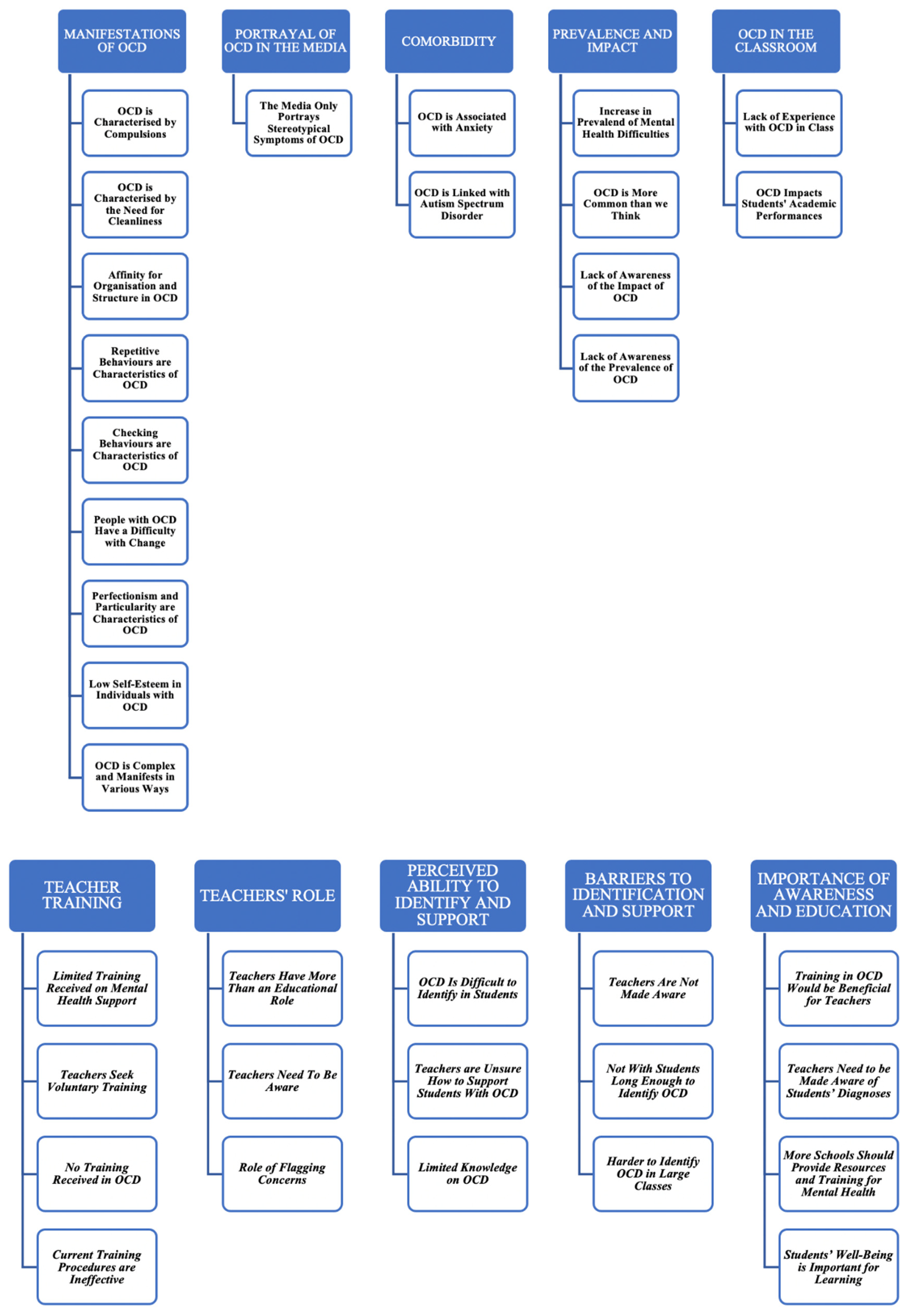
Disclaimer/Publisher’s Note: The statements, opinions and data contained in all publications are solely those of the individual author(s) and contributor(s) and not of MDPI and/or the editor(s). MDPI and/or the editor(s) disclaim responsibility for any injury to people or property resulting from any ideas, methods, instructions or products referred to in the content. |
© 2025 by the authors. Licensee MDPI, Basel, Switzerland. This article is an open access article distributed under the terms and conditions of the Creative Commons Attribution (CC BY) license (http://creativecommons.org/licenses/by/4.0/).
Copyright: This open access article is published under a Creative Commons CC BY 4.0 license, which permit the free download, distribution, and reuse, provided that the author and preprint are cited in any reuse.


