

Submitted:
22 January 2025
Posted:
23 January 2025
You are already at the latest version
Abstract
Community engagement has been revealed as a significant approach to heritage sites’ sustainable urban developments. The heritage of a community or city is part of a 'sense of ground' and influences well-being more than tangible goods. At the city level, heritage becomes a source of urban life quality, contributes to the attraction and awareness of people in the city, and constructs cohesiveness. Historic Cairo is one of the most important sites on the world heritage list. In 2011, UNESCO moved towards a new approach to sustainable urban development in historic areas for their great value in the history of any city's culture. This paper aims to review two (Frameworks for two projects in Historic Cairo) at the same heritage site. By examining the community engagement tool that was used toward sustainable urban development. It also seeks to identify the importance of community engagement in sustainable development in historical sites and provides an overview that reviews and discusses the similarities and differences between two frameworks. The methodology followed a qualitative research method, composed of two parts: The first: theoretical part through literature review and the second: analytical part through Documentation of the procedures of the two Case studies. Results obtained from the analysis indicated the level of community engagement in developing heritage sites was low and led to some recommendations for a framework that can be used in the sustainable urban development of historic Cairo. The research findings emphasize the need for stronger engagement strategies that effectively involve and empower the residents in decision-making and planning processes.
Keywords:
Community Engagement
; Historical Urban Landscape
; Cultural Heritage
; Public Participation
; Sustainable Development
; Decision Making
1. Introduction
Community engagement is one of the most important tools needed for the urban development of any area, especially heritage sites. (Ronchi, 2020) Every historical site has an important story to tell, and these stories have inspired many people. Heritage sites are living monuments and records of certain happenings; this is our real connection to our past.
The research aims to review two (Frameworks for two projects in Historic Cairo) on the same heritage site Al-Darb Al-Amar (Souq El-Silah & Azhar Park). By examining the community engagement tool toward sustainable urban development.
Research objectives were clear: 1) Identifying the importance of community engagement in sustainable development in heritage sites. 2) Explore the various frameworks for Sustainable Urban Development in heritage sites with community engagement tools. 3) Provide an overview that compares and discusses the similarities and differences between the two case studies.4) Provide recommendations for an effective framework for the sustainable use of heritage sites through community engagement tools. Based on research questions, the focus was on two questions, 1) Does the government consider residents’ opinions in decision-making for community development? 2)What are the program stages for (Souq al-Silah & The Azhar Park) projects that used to achieve community Engagement in sustainable urban development?
This research adopts a case study and uses a qualitative approach, the paper followed a qualitative research method, composed of two parts: First theoretical part through literature review and second analytical part through Documenting the procedures of the two frameworks (JSPS procedures in the Souq El-Silah) and (the AKTC procedure in Azhar Park). And analyzing the data collected and outcomes from residents through the community engagement process for the two projects. Additionally, the study examined the program stages of the two projects and identified shortcomings in the community engagement process. The research findings emphasize the need for stronger engagement strategies that effectively involve and empower the residents in decision-making and planning processes. Based on these findings, the paper provides some recommendations to enhance the framework for sustainable development. These recommendations aim to address and emphasize the importance of considering residents' opinions and perspectives in decision-making.
2. Literature Review
2.1. Sustainable Urban Development
The definition of sustainable urban development emerged in response to the problem of economic and industrial growth, as opposed to the human side of development together. (Q Jia, 2023)The most widely accepted concept for sustainable urban development includes two aspects: ecology, which promotes biodiversity and the improvement of natural values, and socio-economic benefits to ensure long-term environmental quality and health. In short, a sustainable city is an effort to find a balance between society, environment, and economics with the concept of one planet and three capitals. Urban culture is a way of life for citizens who contribute to high civilization and develop positive values in the form of customs, traditions, languages, and cultural art that reflect the life and identity of that community. The quality of life and the needs of future generations require good and sustainable living spaces (Ramkissoon, 2023). This proximity and integration of relations cause the urban growth system to have problems in one dimension, which will also occur in other dimensions of a city (UNESCO, 2020). The development of a sustainable urban society reflects the community's orientation. The problems of cities in developed countries are no less advanced than those in developing societies, so city problems seem to be universal and common to all civilizations. (M Chahardowli, 2020) Cities in developing countries face challenges such as poverty, population growth, urbanization, environmental pollution, lack of infrastructure, social inequality, inefficient institutions and governance, and local, national, and international civil society.
The special importance of heritage sites in the planning of urban areas became clearer after meetings where the maintenance and protection of urban identity by managing and using old buildings is a concern in a cultural tradition and individual cases of historic quarters are re-explored through an appropriate mixture of functions, including residential. (Wiktor-Mach, 2020)The historical city is the center of tourism and local economic activities. Cities have already proven that old cities can be developed by protecting their unique character. In India, the planning of temple building development has shown that the proposed development plans are based on the concepts explained in developing the management plan for the proposed nominated urban history site of the city (H Jie, 2023).
The concept behind community and stakeholder engagement for effective urban development strategies and practices is based on the close linkages between sustainability and urban development, as well as the necessity for sustainable development to be rooted in the social, economic, and environmental needs and priorities of an area. Social, environmental, and economic sustainability depend on informed community members who can identify and advocate for their own priorities and needs, as well as the benefits the community derives from those. (E Bruley, 2021) Meaningful engagement can facilitate the empowerment of local people to build their capacity for collective action and develop local leadership to address the needs of the affected community members. (Ramkissoon, 2023) Such engagement has been proven to be powerful in participative and consultative urban development planning, where the input of a poor community on development priorities helps avoid the damages incurred to their interests. (UNESCO, 2020).
Sustainable urban development allows cities to accommodate the needs of the current generation without jeopardizing any generation's ability to cater to their needs in time to come. This practice involves a holistic approach of integrating social, environmental, and economic considerations. Next, some key tools allow for sustainable urban development of them focusing on effective community engagement.
2.2. Community Engagement in Sustainable Urban Development
Furthermore, linking community members with their surrounding heritage sites allows them to develop a sense of place within their city and also benefit from the social and economic advantages that it provides. Involving communities in a management system aids in creating shared ownership of heritage sites, empowerment in its management, and also fosters stewardship and sustainability. Hence, due to these reasons, community engagement has become an essential cog in the wheel of heritage site and sustainable urban development. (A Bjørgen, K Fossheim, C Macharis, 2021)
Community engagement involves incorporating the views of the community in the decision-making process on a subject matter that concerns them. In urban settings, one of the most important themes is the sustainable urban development process. Active community engagement in the urban development process also provides mutual benefits to the stakeholders, enabling the extraction of great ideas and concerns. (X Chu, Z Shi, L Yang, S Guo, 2020) In the end, it helps in creating a better and positive project or plan, leading to implementation effectiveness. The value of the work conducted manifests in the realization of an environment that takes into account its heritage values (C Rendon, KK Osman, KM Faust, 2021).
Community engagement is an integral part of heritage management. Without engaging local communities, responsible heritage management or development cannot occur. There are many instances where communities have initiated their heritage conservation and participated in initiatives for preserving and sustaining their heritage. (A Egusquiza, 2021)They have volunteered for local sites of historical or local importance. They have contributed greatly to rural and urban heritage conservation. Moreover, the indigenous communities have preserved their cultural and historical heritage and become renowned destinations for tourism, which has endowed them with economic returns. (Pappalardo, 2020)Yet, there are certain challenges in community involvement, and several of them arise from the inherent diversity among communities. Differences between communities can divide them and affect their potential to contribute to the decision-making process. It is difficult to convince all ethnic groups that preserving heritage and developing it will enrich and not deplete their own cultural, historical, and emotional values (J Li, 2020).
Community-led heritage initiatives have brought about sustainable outcomes of heritage-led regeneration. They help to exercise good governance practices, celebrate cultural diversity, and enhance a sense of place. A sense of place can be said to be humanistic in essence; thus, a necessary condition for developing ownership and attachment to a place cannot spontaneously develop unless the community members' expectations and needs are discerned and their role and contribution in heritage projects are well regarded. (Z Aripin, 2023)Recently, successful examples have demonstrated how to utilize heritage as a catalyst for social, economic, and cultural nourishment of communities through sustainable development by involving them within the heritage inventories for heritage development. Encompassing local community participation in launching and implementing a variety of heritage-related activities can cultivate a sense of pride and responsibility among community members. (A Mandić, 2021)It can also serve as a cushioning measure to defend and conserve the sites from disasters and rebuild foundations for the construction of vibrant and resilient events. Taking some participatory mechanisms, the processes are designed to engage the community in dialogue about their values, leading to heritage-oriented conservation areas (A Piperno, 2023).
2.2.1. Importance of Community Engagement and Community Attachment Theory and Sense of Ownership
Background Heritage management is increasingly recognized as being more effective and sustainable when previously excluded people are engaged directly in the process of decision-making. There is much to be said, normatively and empirically, for broadening the concept of community engagement in urban heritage management, commensurate with the understanding of heritage as dynamic, contested, and networked, rather than as something that can be determined by an elite few. Inspirational and pragmatic arguments demonstrate that large groups of people interested in heritage conservation and management are more effective in monitoring change and adapting policy on the ground to suit local needs. Moreover, decisions taken in the public interest require values beyond mere economic materialism. (Labadi, 2021) Heritage, however, commodified it has become in the modern world, is part of what makes us all human, and global cooperation centered on the conservation of cultural diversity is an explicitly stated aim.
Stakeholders that have been engaged as part of urban heritage consultation processes are more likely to feel a strong sense of stewardship for their locality. At a purely practical level for site authorities and heritage managers, focused workshops at which local opinion is distilled and hard-fought consensual decisions taken as a result help to provide insulation against the charge of heritage elitism. The needed turn toward community engagement at World Heritage properties was stipulated by guidelines that call for conservation and management based on a balanced dialogue between key stakeholders, including local communities, local and state authorities, NGOs, IGOs, and the private sector. It describes and examines cases of community involvement in natural and cultural heritage at the design, implementation, and evaluation levels. (DM Zocchi, 2021 )
The power of the average person to effect significant change is limited. Furthermore, practical management directly linked to increasing the need, borne of conditioned social values, fosters a sense of ownership in all members of the community, living in and actively supporting the greater heritage site. Empirical studies have elaborated on and quantified the essential ingredients that allow for place attachment. Here, a brief overview of the adaptation of a conceptual framework is provided. Attachment behavior, in theory, is an essential aspect of relationships. It promotes mutual care, responsibility, and a need to protect the part where the attachment is invested (D Brodzinsky, 2022). From a theoretical point of view, these findings have obvious implications for management’s need to promote heritage-based nurturing activities. (K Bernard, 2022) These activities encourage individuals and communities to form 'attachments' and thus extend incumbent responsibilities towards heritage management, as was mentioned before.
2.2.2. Frameworks for Understanding Community Values and Empowering Community Values.
Community values are socially and culturally constructed and may change over time. This diversity of community perspectives is now fairly addressed in approaches to heritage management planning that draw on a range of models and frameworks for assessing the range of community values held towards heritage, the theoretical underpinnings of each frame, and its utility in guiding community engagement practice for the management of historic urban environments. We also consider new and exploratory approaches that could inform better heritage management practices. Current models and methodologies in use for assessing and managing diverse community values towards heritage have their roots in the field of heritage management research and are derived from frameworks for value assessment and typologies of heritage values. (Vuong, 2021)
In the realm of heritage management and urban development, there is an increasing realization of the need to engage with local, community-based values.
Tools of Community Engagement
A number of tools can be used in community engagement in heritage sites. Each tool has its specific aim and best use: -
Workshops: Workshops bring residents, policymakers, and experts together in collaboration to co-design development strategies that are culturally sensitive and inclusive.By involving a group, the workshops often benefit from a wealth of knowledge. (L Somerwill, 2022) Workshops also provide modules for participants who are able to interact regularly with knowledge, active participation, and research.
Questionnaires and Surveys: These tools provide data on citizens' opinions, needs, and challenges and help in aligning development initiatives with community priorities. Questionnaires are used when the goal of a project is to gather data that is quantitative in nature. Most often, questionnaires are written with closed-ended questions, meaning that participants rate the answers to questions in a scale format, with categories such as "strongly agree," "agree," "disagree," or "strongly disagree," as one familiar example (EK Elbes, 2022).
Interviews: Semi-structured interviews draw out in-depth insights from the community members, artisans, and local leaders to provide qualitative heritage conservation data. This method fosters openness and trust between the researcher ('outsider') and the community, as it focuses on personal connection. (NA Bizami, 2023).
Public Meetings: Open forums engage the community members in voicing their concerns, giving their feedback, and taking part in decision-making processes.
Strategies for enhancing participation (capacity building, co-designing activities, policy integration, and inclusive governance models).
The strategic plan reflects inclusive management and has the potential to empower communities. In engaging the community, the effective techniques not only aim to provide more knowledge, but also to share the management responsibility and build capacity to recognize and analyze their own values. Approaches in heritage management are documented with practical tools for community empowerment and have been widely accepted in some countries. Furthermore, they also pursue participative processes and build capacity for a better understanding of heritage and the local culture specific to that heritage. This will encourage the community to continue to promote and maintain the real important values of that heritage (Labadi, 2021).
Enhancing Participation
Engagement can take place at all stages of a heritage project cycle, from strategic planning and policy through the operational management of the heritage itself to the direct involvement in projects. The involvement of stakeholders, and by extension a wider audience, is encouraged. This can include the construction of relevant museum exhibitions, priority setting for management plans, improving access to the site, and many other areas. (J Li, 2020)
Enhancing participation is complex, requiring a number of strategies to enhance the involvement of communities throughout. Capacity building is necessary to enable indigenous and local communities to participate effectively in order to support a whole-of-community approach to sustainable outcomes. (Beiming Hu, 2022)
Capacity Building
Capacity building is the process by which good practice is identified and developed, to either help new skills and/or knowledge, or strengthen workers’ abilities in transforming opportunities from the political top into comprehensive benefits. Establishing people with the necessary technical, economic, social, and environmental skills, knowledge, and abilities enables them to participate productively in community decision-making by preparing a capacity-building program from a strategic analysis of existing capacities and known gaps. (Asadullah, 2023)
Co-Designing Activities
co-design activities will be a mechanism for extremely local context facilitation, including a variation of workshops and table-top or on-the-ground community projects complemented by studies of documentary evidence, the capture of local, national, and international knowledge, heritage audit findings, and an understanding of varied and complex interconnections between structures, organisms, and systems in a variety of specific socio-spatial settings. The collaborative approach to co-design enables extensive engagement with multiple benefits. It allows the integration of insights, know-how, narratives, and social inclusion viewpoints and concerns so that the narratives developed for the heritage initiative can deeply resonate with the communities it is seeking to protect or enhance. (D Zhu, 2024) Participation in such processes has raised power relations and community participation trans disciplinarity for historic environment and cultural heritage management issues and has resulted in procedurally and substantively valued enhancement in relationships between communities, professional stakeholders, and public bodies, trust, access, and inclusion, thereby being reflective of social values and human well-being (Beiming Hu, 2022).
Policy Integration
Policy integration can be seen as a core factor for ensuring that the participatory planning processes discussed above at the local level are not just empty rhetoric but finally result in development initiatives that are based on a community’s values and local peculiarities. More traditional top-down policy approaches have been inclined to disregard those aspects, and many times it is noted that neglect to build management of cultural and natural values into the options they offer to development planners. . (Torabi, 2021) Only if legislation is in tune with local values will it be effective in reconciling conservation and development; conversely, effective local community participation in management can sometimes prompt changes to regulations that can help a site that was previously out of step with new legislation to meet regulations with respect to heritage listing. There is also an underscoring of the need for partnerships, cooperation, coalitions, and information exchanges that underpin such forms of governance and policy implementation. (H Pineo, 2020)
Inclusive Governance Models
Several scholars have argued for governance models such as inclusive governance to be used as a framework for enhancing community participation or inclusion in heritage management. (Devindi Geekiyanage, 2021). Inclusive governance is defined as a participatory process designed to create an inclusive representation of a range of perspectives in decision-making, especially that of the less well represented, concerning urban heritage and its conservation, development, and management. (UNESCO, 2020) The objective of inclusive governance is to build a sense of collective urban identity and to provide for social and economic improvement based on the enhancement of urban heritage in its multiplicity of forms. Inclusive governance cannot be achieved without the active political and social involvement of the state authorities to ensure that all groups have a voice, irrespective of their gender, age, ethnicity, social class, ability, religion, or any of the other factors that may influence their identity and value system.
Importance of Raising Awareness and Public Outreach
Raising awareness about heritage conservation and its significance among local communities, practitioners, and policymakers is the starting point to incentivize the involvement of community members in the collective handling and management of their heritage. (H Solman, 2021).The targeted empowerment of community members involves being equipped with the necessary information and knowledge about the heritage for them to effectively understand its asset value, historical importance as a symbol of identity, and social, economic, and environmental benefits. (C Rendon, KK Osman, KM Faust, 2021) Informed communities are then better equipped to partake in the governance processes, be actively involved in initiating heritage strategies, and play a key role as an asset in the development of heritage management (AJ Miller-Rushing, 2021). They are likely to have a stronger sense of trust and value their stakeholders and leadership that facilitate heritage engagement, and in return, are more prominent in the imperatives of preserving our local experience and heritage and are more likely to follow the rules. Gaining the local insight that a sense of ownership creates a stronger commitment and sense of accountability towards the sustenance of the heritage. (A Eyisi, 2021)
Active public outreach is the essence of public involvement in heritage management. It is shaped by the very vital interests, preferences, and values of the local community. (K Nordberg, 2020) Public influence is constructive when the information about historic places comes in the form of stories and legends relevant to the inhabitants' ethnic identity, when it is related to the everyday concerns of the community, and when it is coupled with specific recommendations about how the community can integrate cultural and natural heritage values into future development planning. Public outreach involves partnerships on how and what to communicate and to broaden community consultation and participation in the management of heritage values. (AJ Miller-Rushing, 2021)
• Create engaging, evocative content. Start with a strong, relatable story that communicates the event or activity—and the heritage it hopes to illustrate. Bring it to life in simple, everyday terms. • Amplify engagement through social and digital platforms and in as many forms of engagement as possible. • Use interactive activities provided in workshops, community events, exhibitions, or other events to pull citizens into dynamic participation in the planned heritage makeover. • Provide a range of information on sustainable urban development and cultural heritage concepts, tools, technical terms, and practices to ensure that collaborators bring their traditions of research, ethics, and action to the community engagement process. • Develop feedback mechanisms to provide evidence-based assessments of how effective a given community engagement approach or tool may be: use this information to modify the project courses. (H Solman, 2021).
Effective community engagement can be considered the process that leads to social cohesion. Its fundamental concern is the relationships among community members manifested through their behavior and through their interactions with other stakeholders. (Asadullah, 2023).
Monitoring and feedback mechanisms are critical in any community engagement process. Communities, like any group dynamic, require ongoing monitoring to determine if the strategies are working, and also feedback that will enable any future actions or strategies to be adjusted effectively. (Haigen Xu , 2021) Open and inclusive processes of project development will not work unless stakeholders, who give up their time, see tangible outcomes upon which they have input. This requires ongoing evaluation to be built into the process. (RT Buxton, 2020) To effectively monitor community involvement, feedback can be collected using a range of methods and evaluated. These might include participant observation, participant reporting, surveys of community members, focus groups, and public forums. (J Sharp, 2020)
2.3. Case Studies for Community Engagement Tool
2.3.1. Case Study 1:
The Georgian city of Ekamra Kshetra, now known as Old Town and Pilgrimage Centre of Bhubaneswar, has a visible and vibrant heritage and culture, including 700 ancient places of worship. The Old Town area has a municipal population of about 45,000. One-third of the structures in the municipal area are heritage buildings. The community engagement in the coastline heritage site has been organized to explicate the community engagement strategy of the project. (P Camangian, 2022) Inaugurated as the Ekamrawka Kshetra Project, the Old Town Project transitioned under community leadership to the current Ekamra Kshetra. The name was chosen following consultation with the people of Old Town, who felt that the historically and spiritually significant title would increase positive spiritual significance. This new name aims to evoke a sense of belonging among citizens to their heritage, culture, and ancient civilization. The name Ekamra eventually gained prominence, leading to the town becoming known as Ekamra Kshetra. The Ekamra Kshetra project is mutually funded by the State Government of Odisha and the Government of India. The project is mandated to bring about conservation and urban development, thereby striking a balance between heritage, environment, culture, and society. The crucial role of the local community in every objective and project intervention was elucidated during the design and strategy workshop for this project. (Bose, 2021)
2.3.2. Case Study 2:
This project presents an innovative, small-scale, one-day community engagement project completed within the setting of a heritage site in the UK. The project investigated the feasibility of engaging local people ethically, respectfully, and effectively. A literature review of successful public engagement projects and academic literature helped to shape the engagement process. Piloted on the day, the process was evaluated using methods including face-to-face testimonials from local people about their experience of the day, and feedback questionnaires distributed to both local volunteer "stewards" involved in the event and local "visitors" who attended through. Evaluation results are presented quantitatively and qualitatively. They show that local people felt that important aspects of their heritage had been unlocked at the workshops and that they agreed that local voice can, and should, play a more active part in the future of the site. (Jagtap, 2022)
The case study presents a cut-down and summarized version of the full day, of which more than 50 local people were welcomed through a program of social activities, convivial storytelling, and participatory craft workshops. Local people co-designed the day and took key decisions about how things happened while delivering it. The chapter reviews some of the theoretical and practice-based literature we drew on when initially designing the project and experiential community consultations. (Sendra, 2024) Much goodwill was generated by the consultation day, and powerful testimonials highlight the potential for active heritage work of this kind as a possible strategy for community engagement. We argue that such consultations can prove transformative, but that they need to take place flexibly and be generated according to a project’s specific needs. The benefits and criticisms of working inclusively are acknowledged. The objectives of the day are outlined and the chapter provides a walk-through of the activities and structure of the day as they unfolded.
2.3.3. Case Study 3:
the Myola Feed 2 Site on the south coast of New South Wales – a sacred and socially significant shell midden site managed by the Dhurga-speaking Indigenous community, who continue to reside in the area. A sacred and socially significant shell midden accessed by the public, but managed by the Yuin community, the Myola Feed 2 Site is an important place on all scales. This section not only outlines the sacred, anthropological, and historic importance, it also details the techniques the Murrin Bridge Elders and Learning on Country team utilized during a series of community engagements in 2021 to gauge visitor activity at this site and opinions on the northern section of the National Park. The building timeframe reports of story poles and signs mark out the phased layers of engagement with the local population, community stakeholders, and ENGOs. The results of the Myola engagement process have been overwhelmingly encouraging, even with the large amount of diverse opinions that we are currently working through. The resounding feedback from the community has consistently congratulated the Murrin Bridge Elders and the team for going into the community, for prioritizing native people over any other group, and, most especially, for seeking out the public for the reevaluation of the northern section of the National Park. Lessons learned from Myola have allowed us to apply a number of responses and refinements to the engagement strategies outlined below – and to ensure a customized tourism guiding service that aligns with national accreditation standards, informed by the local community and fitting the needs of that particular community. Engaging is also about seeing – and acting on – the need to respond effectively to opinions and images as identified during the community engagements – this is part of the coming stage of on-ground requirements analysis and infrastructure planning.
2.3.4. Case Study 4 :
The revitalization of Bhaktapur, a UNESCO World Heritage site in Nepal, is an exemplary case of community engagement in sustainable urban development. After the 2015 earthquake that badly damaged this historic area, locals were involved in the planning and implementation of restoration works. Multiple tools were utilized to engage the community, including questionnaires, which were distributed to residents and business owners to identify their priorities and challenges, ensuring that interventions aligned with community needs (Joshi, 2017). Collaborative workshops brought together residents, artisans, conservationists, and municipal authorities to co-design solutions for restoring cultural landmarks, fostering a sense of ownership and ensuring culturally appropriate outcomes (Sharma, 2019). Additionally, interviews with local stakeholders, such as traditional artisans and community leaders, offered in-depth insights into balancing heritage conservation with modern safety requirements, informing restoration guidelines (Thapa, 2018). This inclusive approach not only restored Bhaktapur’s historic identity but also strengthened trust between residents and authorities, ensuring the sustainable development of the heritage site while preserving its cultural essence (Thapa, 2018).
3. Methodology
This research adopts a case study and uses a qualitative approach, the paper followed a qualitative research method, composed of two parts: First theoretical part through literature review and second analytical part through Documenting the procedures of the two frameworks (JSPS procedures in the Souq El-Silah) and (the AKTC procedure in Azhar Park). And analyzing the data collected and outcomes from residents through the community engagement process for the two projects.
According to the papers talking about the topic found that there is a lot of missing data and a lack of resources in project one GHA KHAN project.
Project 1 process and (Community Engagement) framework:
3.1. GHA KHAN Project (The Aga Khan Trust for Culture)
3.1.1. Al-Darb Al-Ahmar Housing Rehabilitation Program ,Cairo , Egypt (ADAA HRP) March 2004-2009
The Aga Khan Trust for Culture (AKTC) is a private philanthropic foundation that was founded by His Highness the Aga Khan in 1988. The Trust's mission is to improve the built environment and promote cultural heritage in the Muslim world. One of its most significant projects is the Gha Khan Historic Cities Program. One of the most notable projects undertaken by AKTC is the El-Darb al-Ahmar Housing Rehabilitation Program in Cairo, Egypt. This program was propelled in 2001 and is considered one of the foremost successful community improvement activities within the Center East that Examine the significance and subtle elements of the community engagement instrument handle that was utilized to guarantee the victory of the venture. The objective of the Al-Darb Al-Ahmar lodging redesign program is to reestablish the noteworthy lodging stock of the Al-Darb Al-Ahmar area, with the point of moving forward the living conditions of inhabitants whereas protecting social legacy of the locale. This comprehensive program incorporates a run of intercessions counting building repairs, foundation enhancements and community advancement activities, all planned to progress financial well-being. socio-economic status of nearby individuals.
3.1.2. Al-Darb Al-Ahmar Housing Rehabilitation Program Community Engagement Framework:
Step 1: Survey and Evaluation.
Initially, AKTC conducted research among local inhabitants with an intention of figuring out their wants and needs. Then a number of community gatherings were held where locals would give their feedback on proposed plans and ensure they are in line with the community’s vision for the place.
Step 2: Identification of Stakeholders.
Identification of stakeholders. This involved identifying groups and individuals who were affected by the project such as residents, local businesses, NGOs and government agencies.
Step 3: Community Mobilization.
The aim was to get people actively involved in supporting this initiative . To achieve this, AKTC organized community meetings/workshops/events etc which helped raise awareness about the program & its objectives within communities where it operates. Also worked hand in hand with media houses both print & electronic so that they can help create publicity around the same thus generating interest among members from different parts of the country/worldwide too if possible.
Step 4: The community’s participation
The decision-making process of the program was inclusive to the community by the AKTC. In other words, they sought the opinion of people regarding their preference for designs among other things like which business should operate from those buildings that were being reconstructed. Additionally, it opened up chances where locals could take part in renovating works such as teaching them traditional building skills.
Step 5: Capacity Building.
The AKTC recognized that community participation was not enough on its own and that the community needed to be empowered to take ownership of the program. To this end, the AKTC provided capacity-building programs for residents, including training in entrepreneurship and small business management.
Figure 1.
Map Showing project of Al-Darb Al-Ahmar Housing Rehabilitation Program.
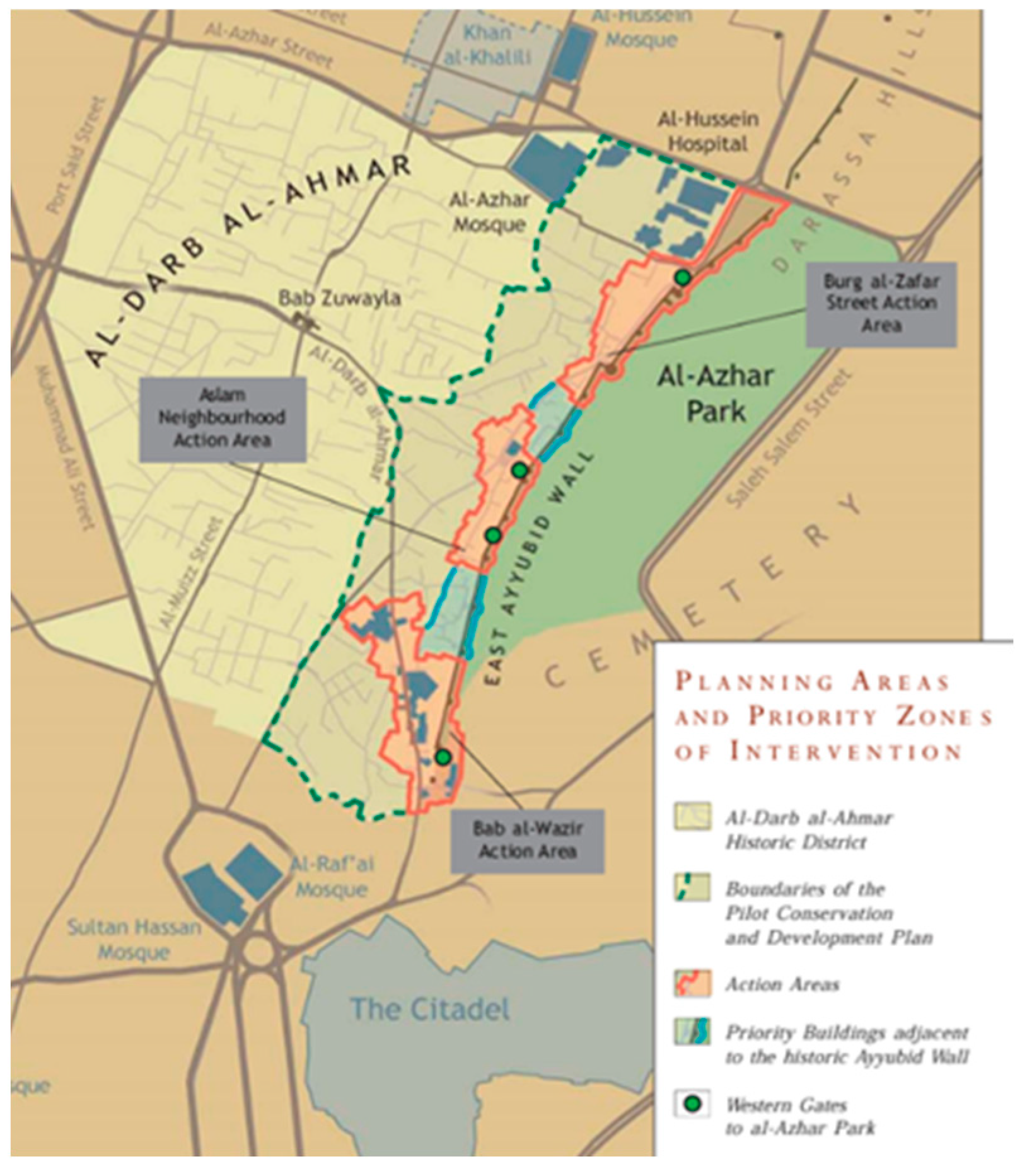
Figure 2.
Diagram Showing AKTC process for development.
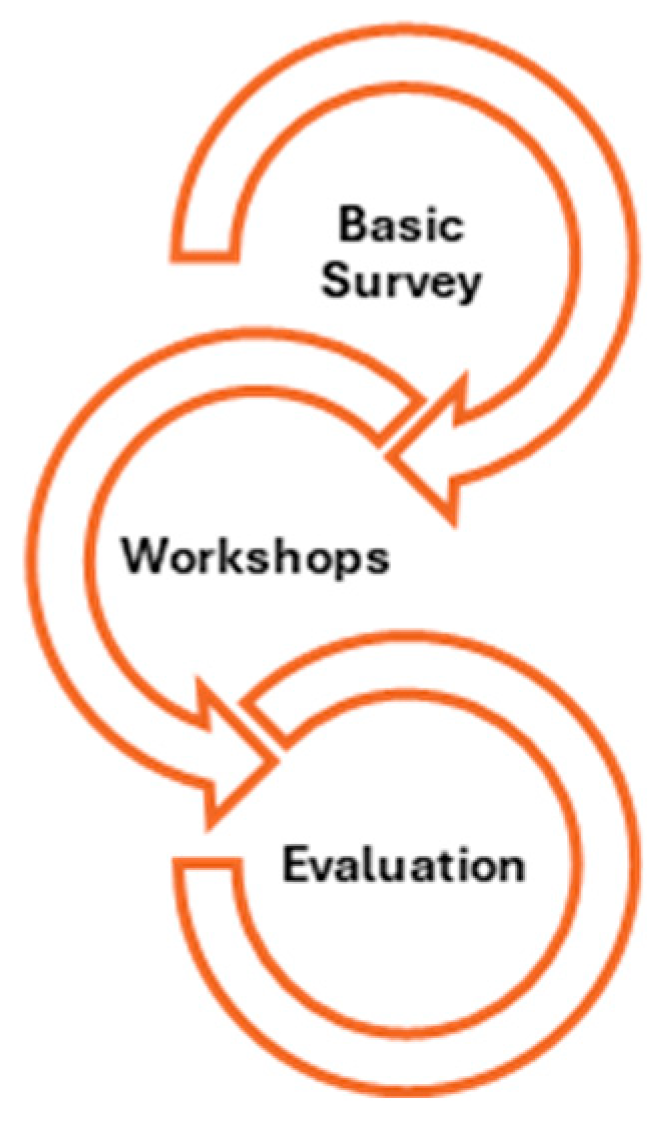
Step 6: Monitoring and Evaluation.
The final step in the community engagement tool process was implementation and monitoring. This involved implementing the project based on the feedback and suggestions of the stakeholders and monitoring the project closely to ensure that it achieved its objectives. The AKTC team also held regular meetings with the residents to update them on the progress of the project and gather their feedback.
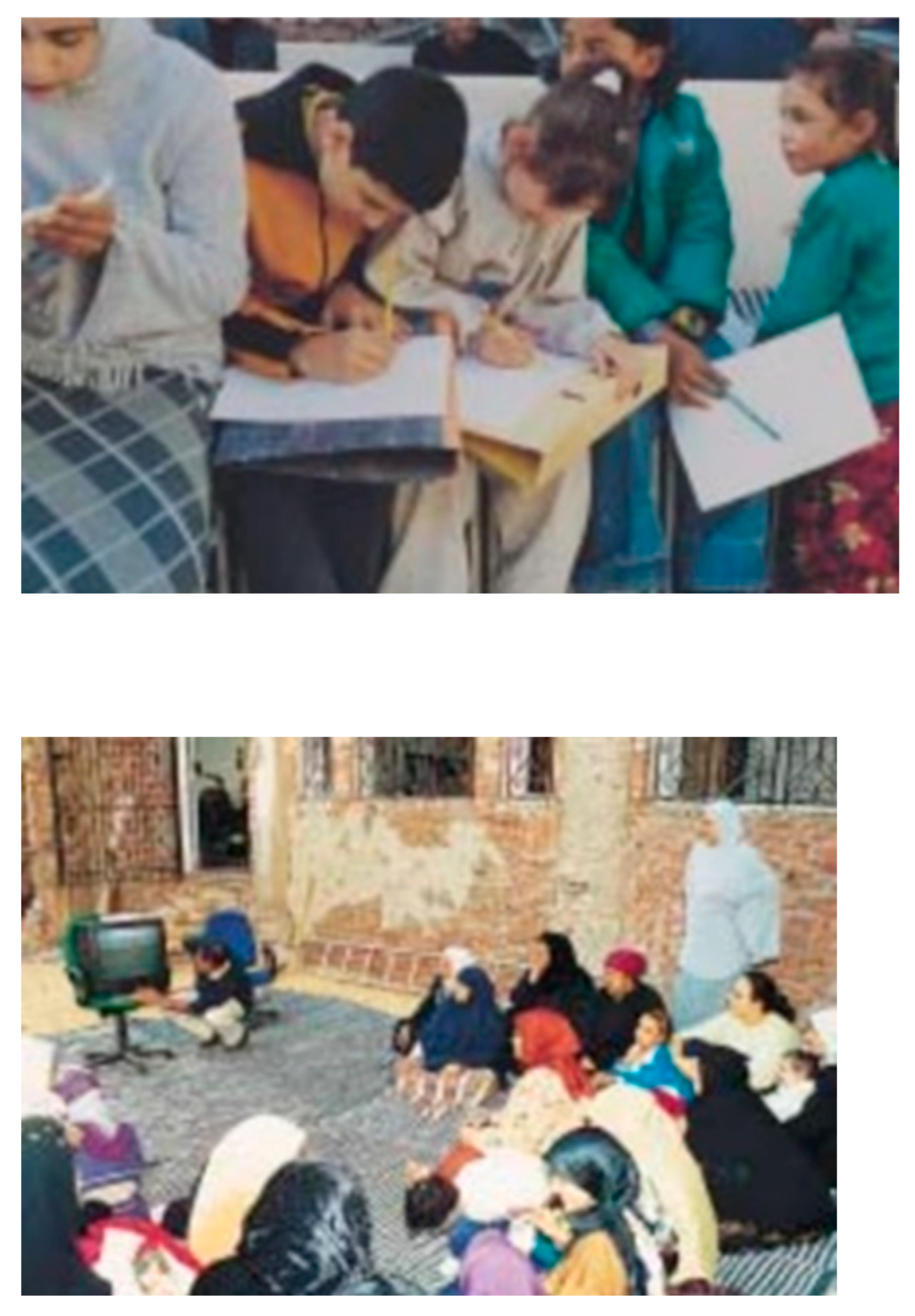
Figure 3.
one of the workshops in the program (children’s and women’s) work together.
In that case, the GHA Khan Project in Cairo sets the right model on how community participation remains cardinal in the success of twin heritage conservation and social development projects. The reviewed literature expresses that effective involvement is marked by active involvement in decision-making processes by communities with continual feedback mechanisms in place. Here, prior to the restoration process, the AKTC undertook an intensive survey to understand the needs and aspirations of the local residents to ensure that the goals of the conservation were in tandem with their priorities. That the local stakeholders were also involved in the identification of the businesses and their participation in renovation efforts through skill-enhancing workshops is a very good example of the principles so far discussed in the literature. By providing capacity-building opportunities in the form of training in entrepreneurship and traditional building techniques, the project made sure that this community would not only be living a better life but also be able to take ownership of their environment. In the GHA Khan Project, a participatory approach was adopted and proves the literature through on-site implementation that a project driven by the community for the preservation of cultural heritage and socio-economic improvement will be able to achieve a sustainable model of urban revitalization.
3.1.3. Benefits of the Community Engagement Tool in the Outcomes:
The community engagement framework put in place for the GHA Khan Project paid off considerably, not only for its residents but for its overall success. It meant that the undertaking interventions were to correspond to local needs and wants, among other things. Regular community consultations and workshops involved in the participatory design process gave residents the avenue to raise their concerns and provide input into decisions, particularly on sensitive areas such as house design and the type of businesses that would occupy the revitalized buildings. It was this ownership aspect that encouraged residents to be more involved in the rehabilitation process, thus maintaining and preserving the neighborhood better. Besides, the capacity-building activities-like training in traditional construction skills and entrepreneurship-transferred concrete competencies to residents, thus enabling them to take active responsibility for their economic futures.
Project 2 process and (Community Engagement) framework:
3.2. JSPS PROJECT (Japan Society for the Promotion of Science.)
3.2.1. Project for Sustainable Conservation in the Historic Cairo/Community Development with the Participation of Local Residents” June 2022 to January 2023.
The Japan Society for the Promotion of Science (JSPS) is an organization that promotes scientific research and exchange programs between Japan and other countries.
The project aims to promote sustainable conservation practices in the historic neighborhoods of Cairo while engaging local residents in community development. The site selected for this project is the Darb al-Ahmar neighborhood, which is one of the oldest areas in Cairo and is home to many historic sites, including mosques, palaces, and houses. The neighborhood is in the heart of the city and is a hub for cultural activities, traditional crafts, and tourism. The project's objectives are 1)To promote sustainable conservation practices that are compatible with the unique heritage and history of the area.2)To improve the living conditions of local residents through community engagement and participation in the development process. 3)To enhance economic opportunities for local residents through cultural tourism and the revitalization of traditional crafts (Alaa el-Habashy, 2022).
3.2.2. Details of the Project:
The workshops in Al-Darb Al-Ahmar focused on various community issues and solutions. Key topics included improving traffic management, waste collection, risk management, and building maintenance. Discussions emphasized the importance of preserving historical monuments and promoting intangible heritage, like traditional crafts and performing arts. Other solutions included enhancing infrastructure, promoting sustainability, and encouraging community involvement in tourism and crafts. The workshops also highlighted the need for educational initiatives, raising awareness, and fostering local engagement to address challenges in the area.
3.2.3. Project for Sustainable Conservation in the Historic Cairo /Community Development with the Participation of Local Residents Community Engagement Framework:
Step 1: Survey and Assessment:
By (listing of historic monuments; carried out in depth by a team of Japanese and Egyptians in Cairo, with architects and translators.), (Writing construction standards for extensions, renovations and new constructions; on The basis of Nouh's decision) and (consideration of the method of participation of residents.
Step 2: Needs Assessment:
Evaluation of the need for evaluation to identify the needs and tastes of residents. This is due to participation Work with community leaders, elders, women and youth to ensure everyone's voice is heard.
Step 3: Conservation Plan:
Based on the findings of the survey and assessment, the project team developed a conservation plan that addressed the cultural, social and economic needs of the community. The plan was designed to promote sustainable conservation practices and prioritize local community participation in the conservation process.

Table 1.
Showing the first four months workshop for a project of the Al-Darb Al-Ahmar Housing Rehabilitation Program.
Table 1.
Showing the first four months workshop for a project of the Al-Darb Al-Ahmar Housing Rehabilitation Program.
| Date | workshop Num | workshop Topic | Number of Facilitators | Number of Men | Ages Range of men | Numbers of women | Ages Range of women | conclusion |
| 26/6/2022 | 1 | Traffic in Al-darb Al-Ahmar,its problems and solutions | 6 | 8 | 35-50 | 13 | 30-45 | 1. Improve traffic management and infrastructure. 2. Enhance street safety and cleanliness. 3. Beautify the area with trees and lighting. 4. Utilize resources like empty lands and shopping carts. 5. Create a pedestrian-friendly and organized environment. |
| 24/7/2022 | 2 | Garbage collection for waste management inAl-Darb Al-Ahmar | 9 | 14 | 35-50 | 5 | 30-45 | 1. Promote community involvement in recycling and waste management. 2. Sort garbage at home and reuse materials creatively. 3. Use waste for fertilizer and surplus food to aid the poor. 4. Educate children on sustainability. 5. Create platforms for sharing used items. |
| 21/8/2022 | 3 | Risk management in Al-Darb Al-Ahmar,Historic Cairo | 8 | 13 | 35-50 | 16 | 30-45 | 1. Upgrade infrastructure for safety and fire prevention. 2. Convert vacant lands into gardens and . improve waste management. 3. Renovate streets and public spaces for emergencies. 4. Use schools and mosques as refuge points. 5. Raise awareness and reduce risks from utilities and factories. |
| 18/9/2022 | 4 | Reusing Historic Monuments For Residents in Al-Darb Al-Ahmar, Historic Cairo | 8 | 13 | 35-50 | 10 | 30-45 | 1. Restore historic buildings and address concerns about local businesses. 2. Repurpose Sabil Kokalian for community activities and exhibitions. 3. Use Sabil water in emergencies and improve facilities. 4. Open a restaurant and rehabilitate public spaces. 5. Operate the fire station and consider residents' opinions. |
Table 2.
Showing the Second four months workshop for a project of Al-Darb Al-Ahmar Housing Rehabilitation Program.
Table 2.
Showing the Second four months workshop for a project of Al-Darb Al-Ahmar Housing Rehabilitation Program.
| Date | workshop Num | Workshop topic | Number of Facilitators | Number of Men | Ages Range of men | Numbers of women | Ages Range of women | conclusion |
| 23/10/2022 | 5 | Intangible HeritageSouq Al-Silah, how to connect it with historical architecture | 7 | 8 | 35-50 | 9 | 30-45 | 1. Oral Traditions: Proverbs, stories, superstitions, and transportation signs. 2. Performing Arts: Traditional dances, instruments, and Mawlid shows. 3. Social Practices: Popular foods, cultural habits, and rituals. 4. Nature Customs: Practices linked to nature for good fortune. 5. Craft Skills: Traditional arts like Khayamiya, arabesques, and copperwork. |
| 26/11/2022 | 6 | Building Maintenance | 7 | 9 | 35-50 | 6 | 30-45 | 1. Promote cleaning campaigns and improve infrastructure. 2. Enhance fire safety and electrical systems. 3. Utilize groundwater for firefighting and set up waste sorting areas. 4. Encourage skill development through summer workshops. 5. Create community spaces for entertainment. |
| 18/12/2022 | 7 | Traditional crafts in the Al-Darb Al-Ahmar area | 6 | 18 | 35-50 | 10 | 30-45 | 1. Challenges: High costs, loss of crafts, and lack of support. 2. Solutions: Provide training, create exhibitions, and establish a trade union. 3. Awareness & Education: Promote crafts via media and schools. 4. Monitoring: Track artisans through a craft record. |
| 18/1/2023 | 8 | Tourism Settlement in Al-Darb Al-Ahmar area | 5 | 8 | 35-50 | 11 | 30-45 | 1. Challenges: Narrow streets, waste, and lack of accommodations. 2. Heritage & Crafts: Raise awareness, display crafts, and attract tourists. 3. Community Involvement: Engage locals in tourism, offering traditional drinks. 4. Promotion & Safety: Use social media for promotion and ensure tourist safety. |
Figure 4.
Showing June workshop.
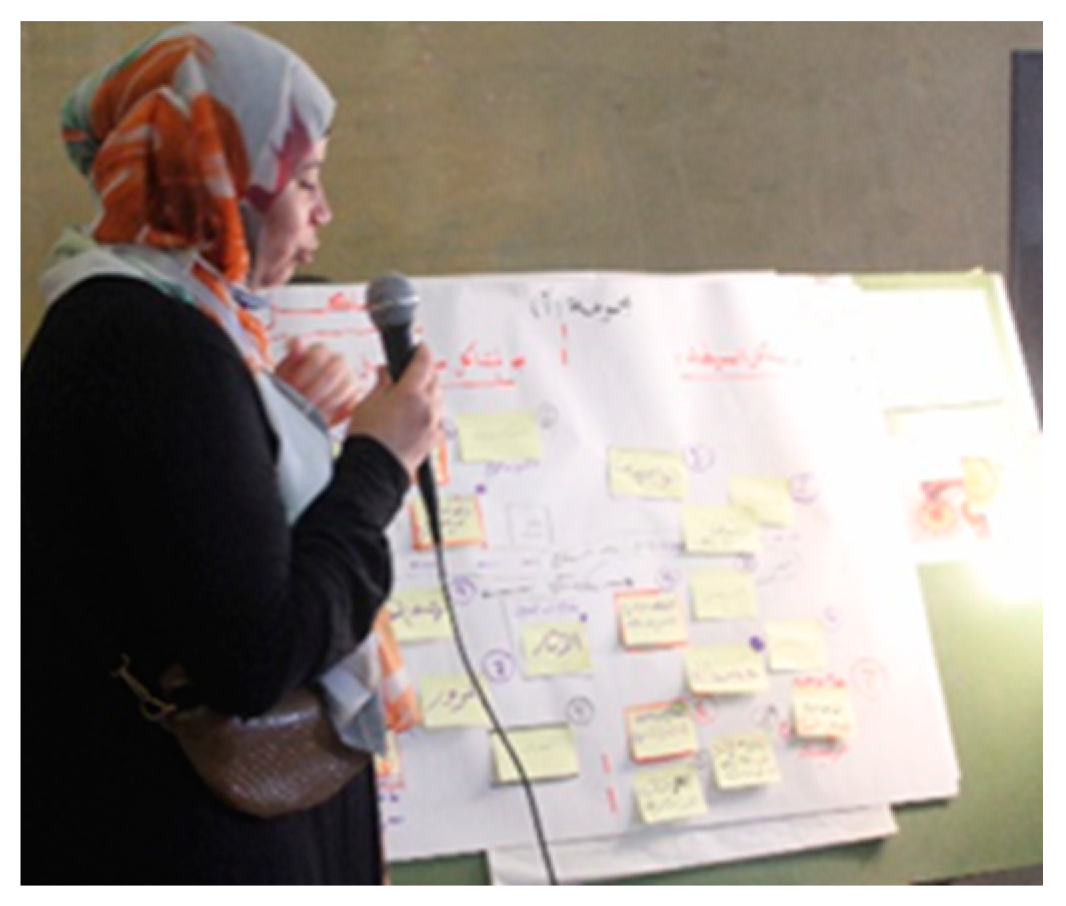
Figure 5.
Showing July workshop.
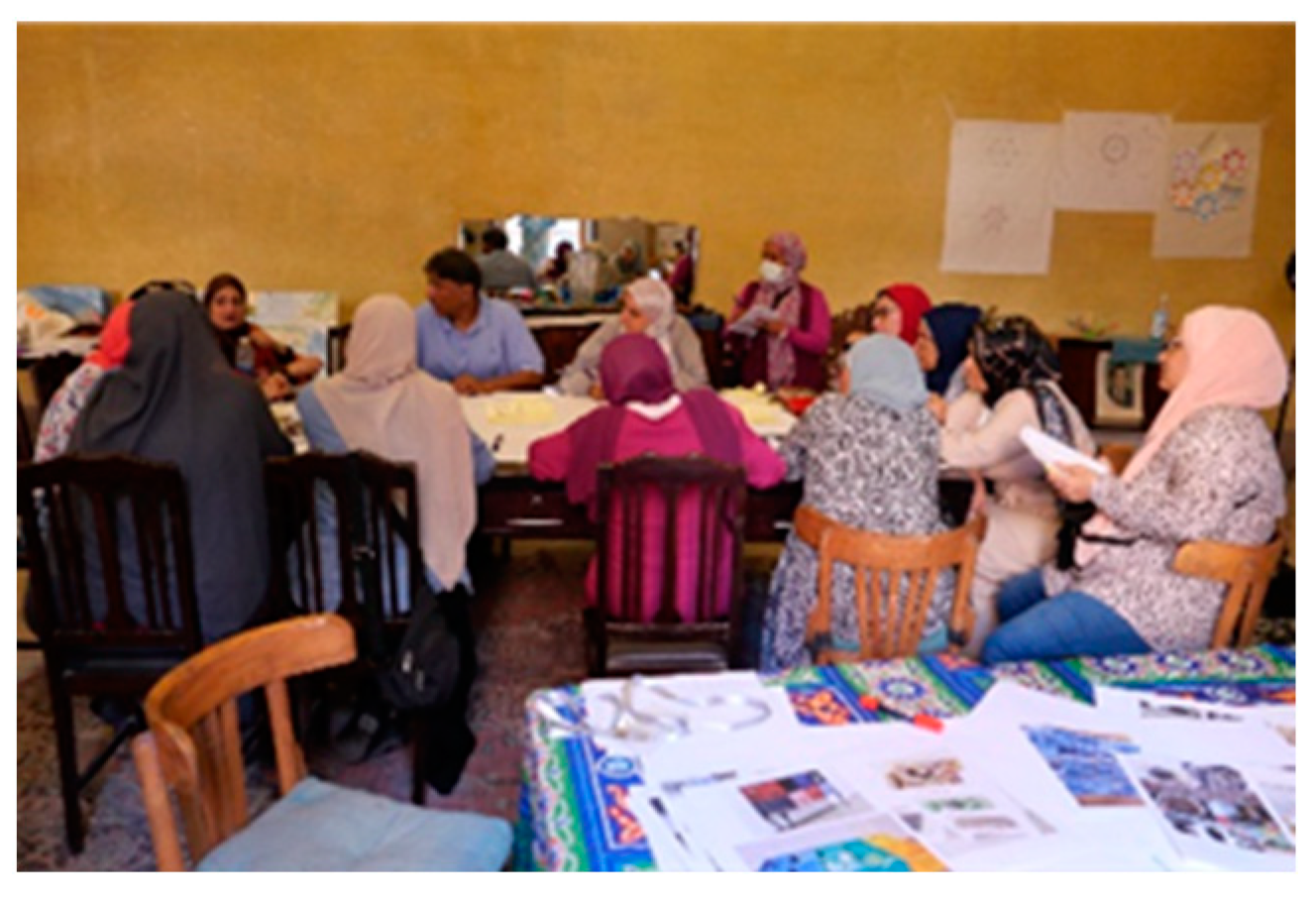
Figure 6.
Showing August workshop.
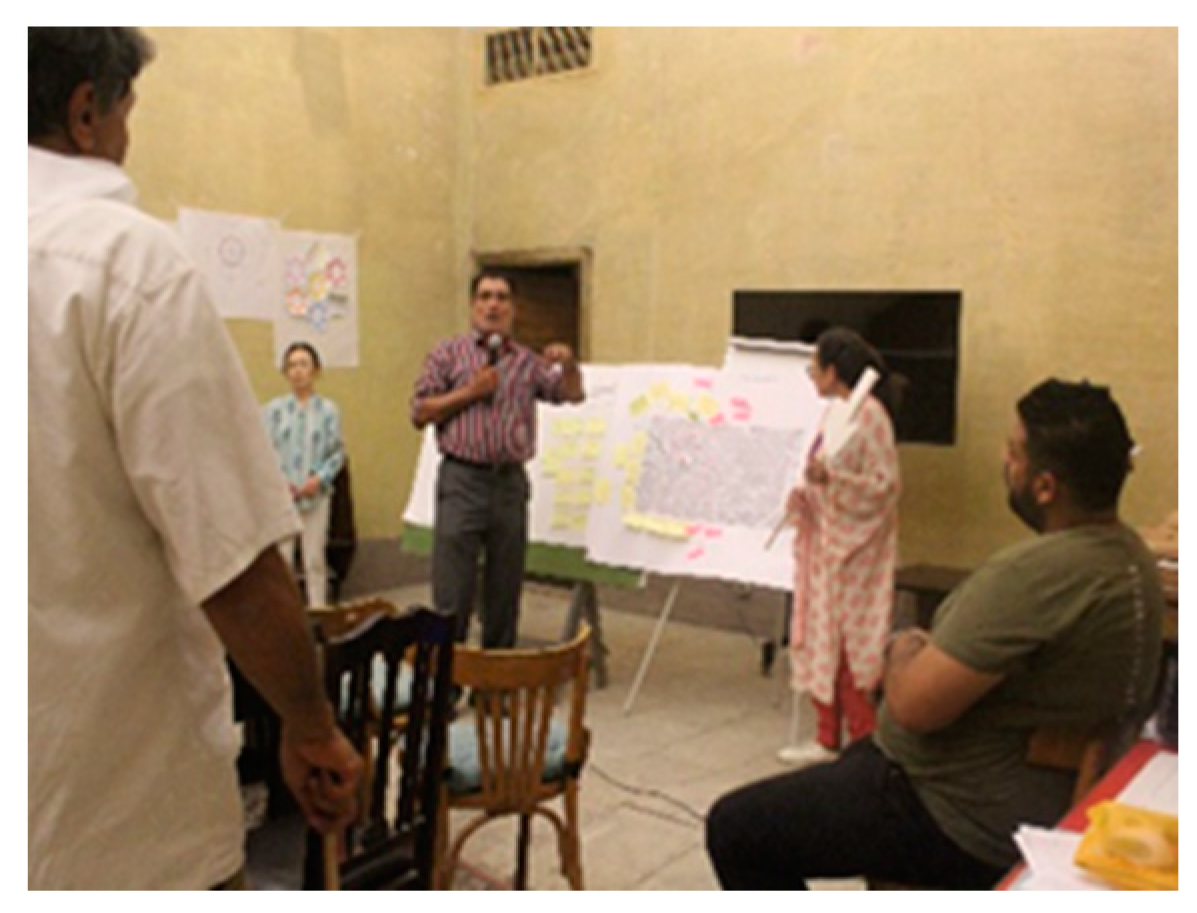
Figure 7.
Showing September workshop.
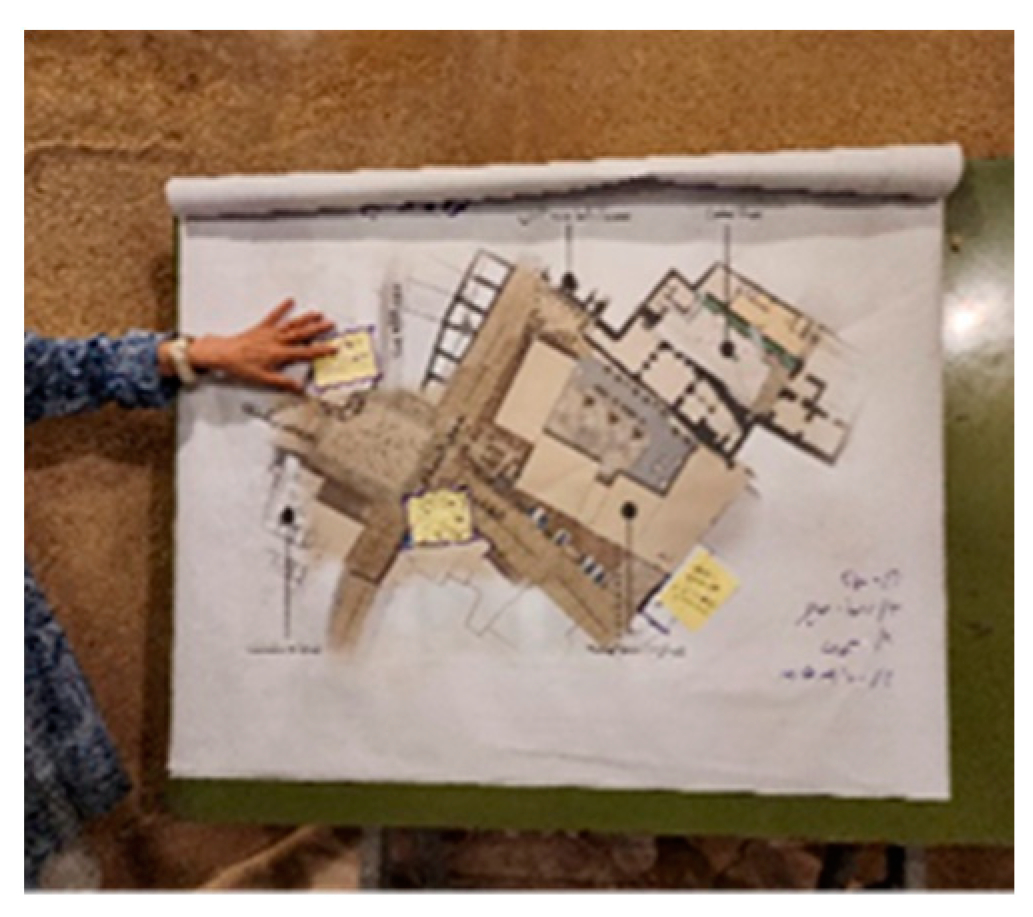
Figure 8.
Showing October workshop.
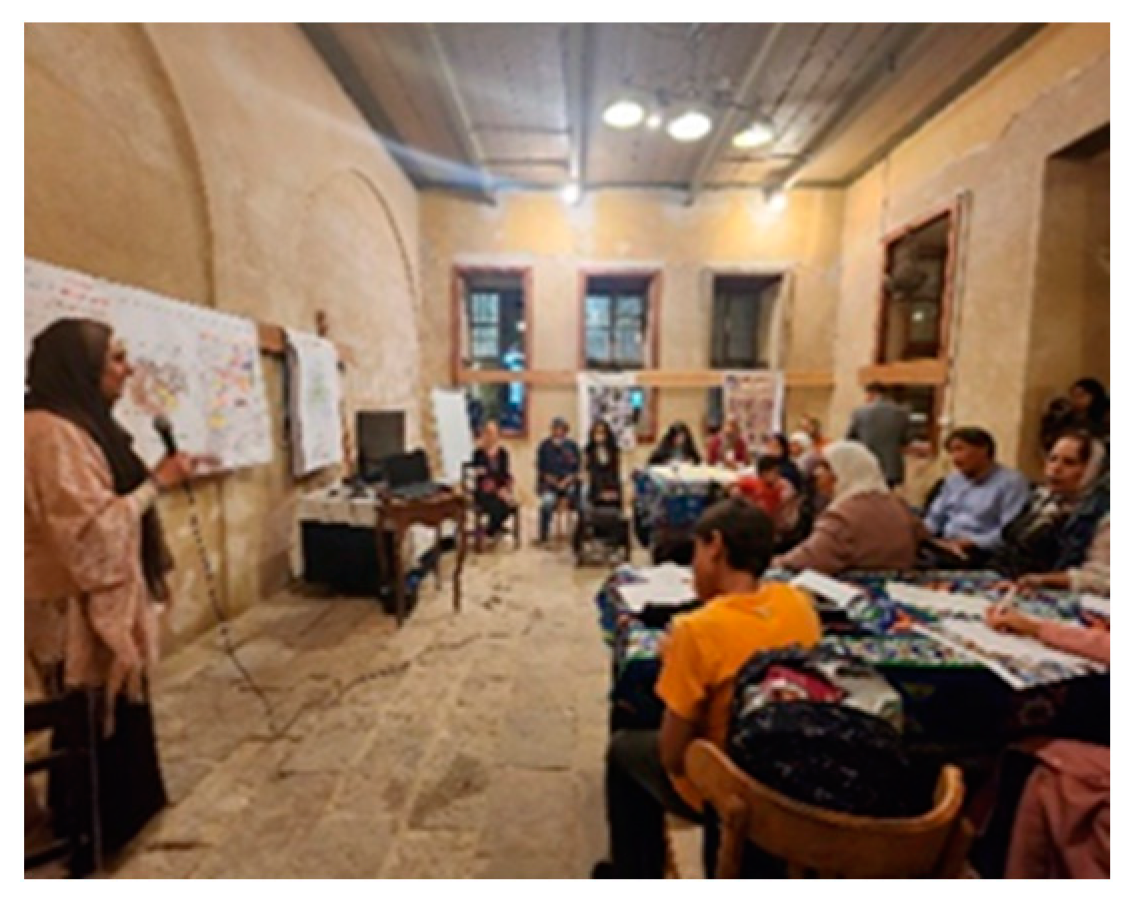
Figure 9.
Showing November workshop.
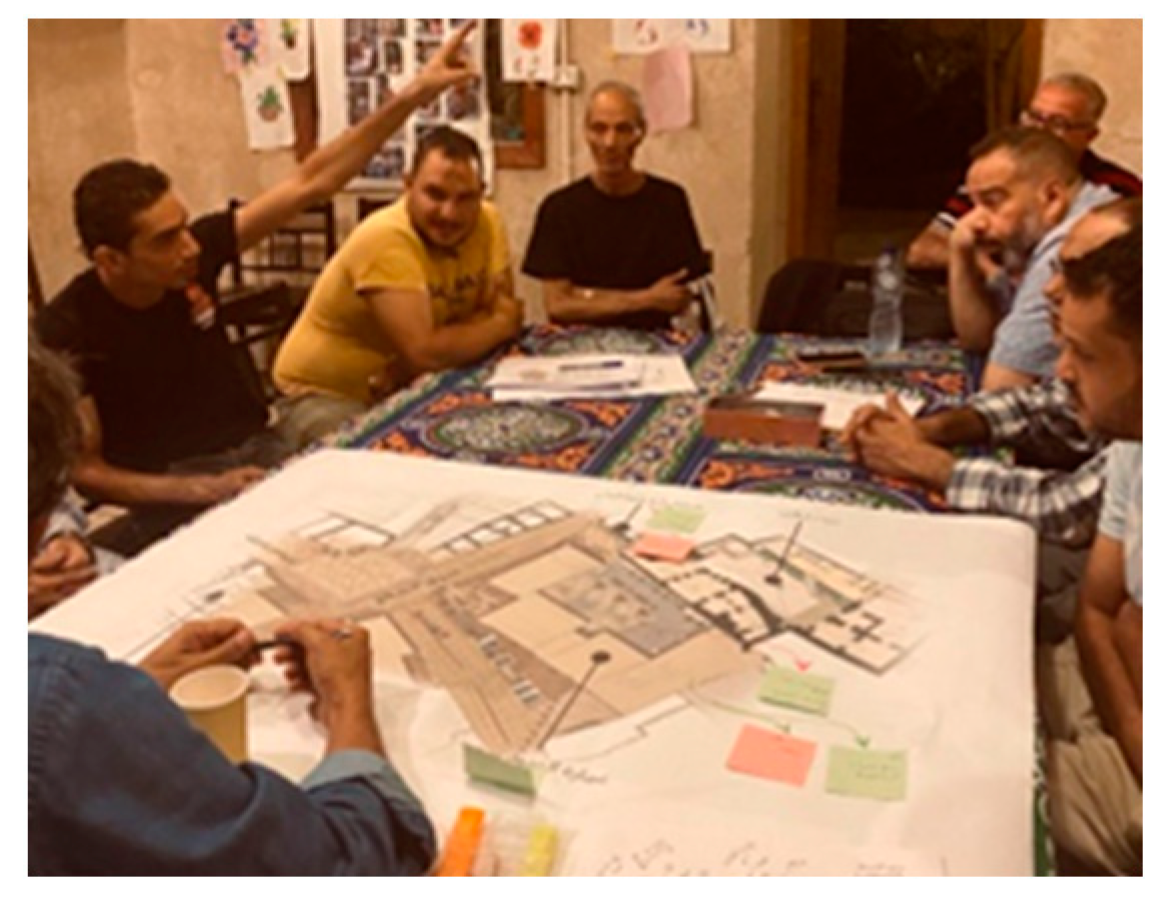
Figure 10.
Showing December workshop.
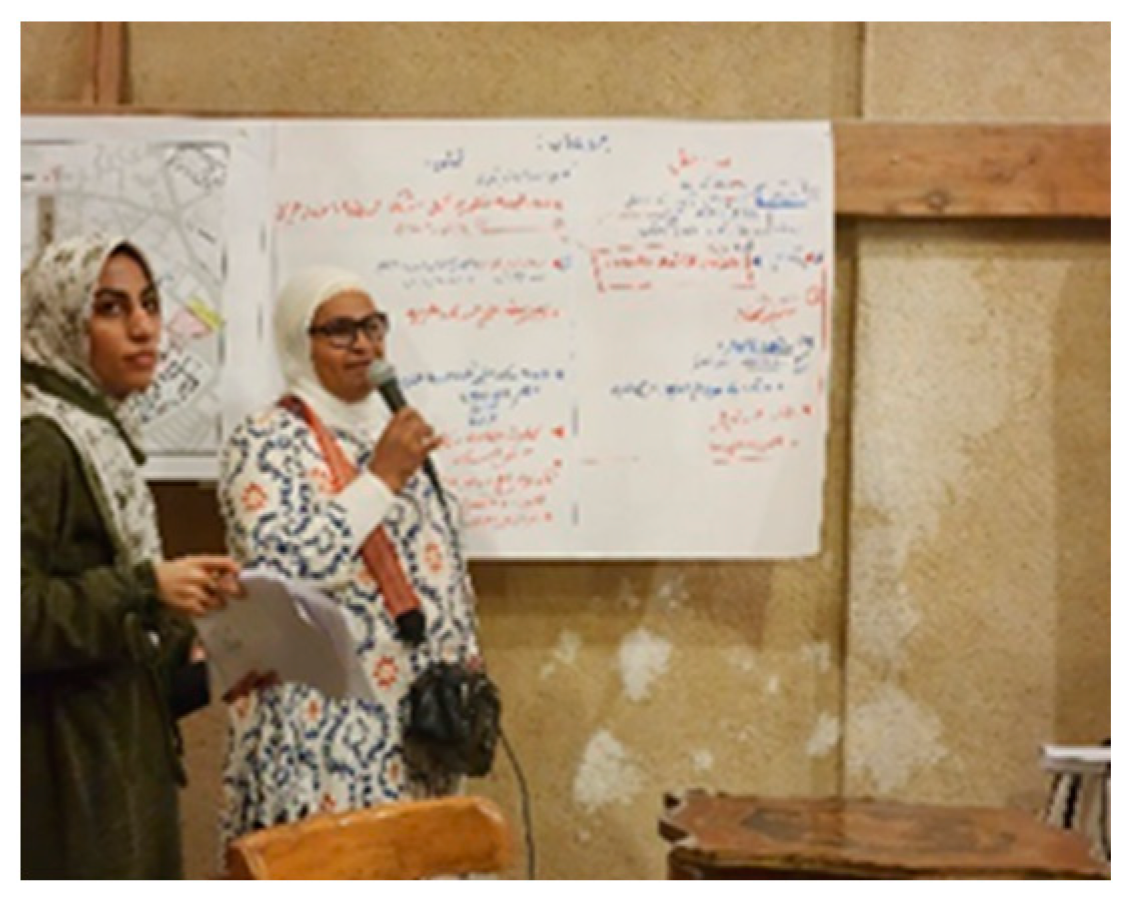
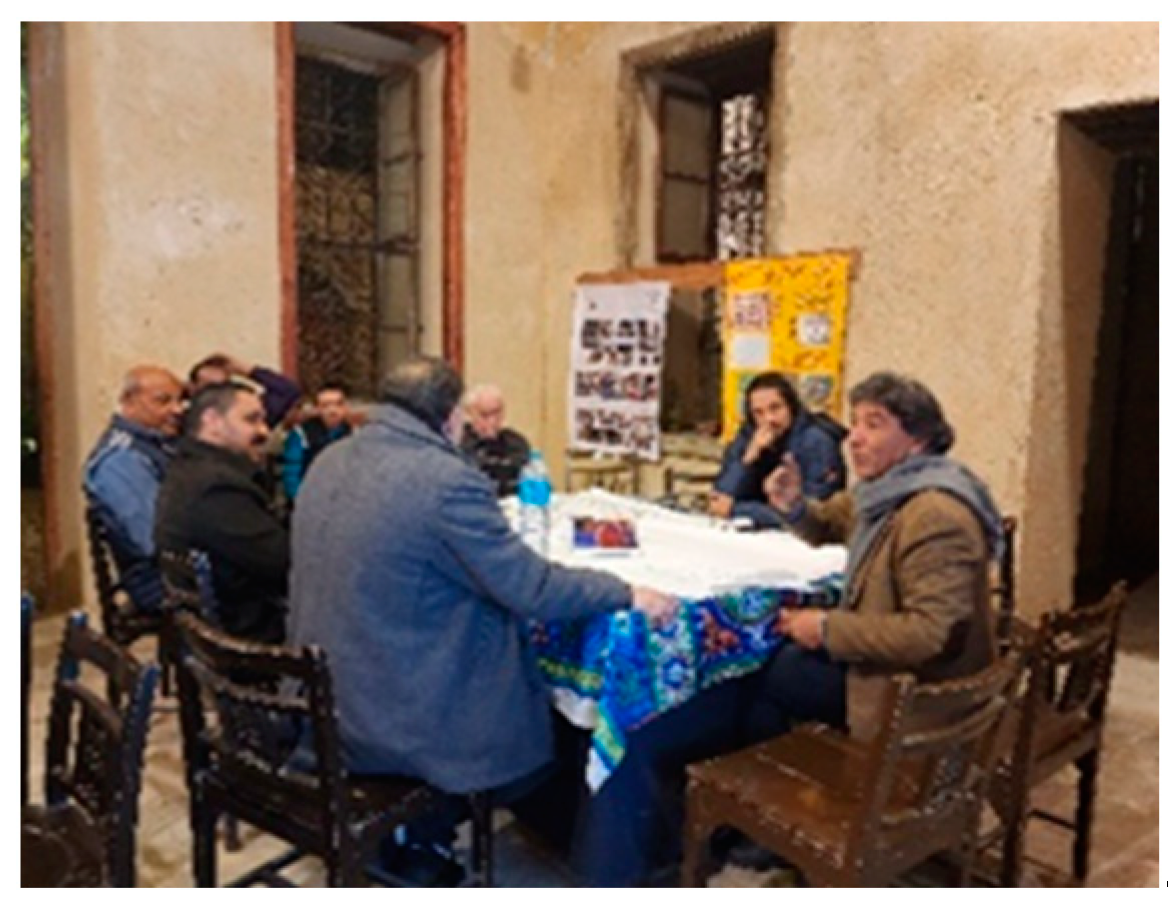
Figure 11.
Showing January workshop.
Step 4: Development Planning:
In parallel with the maintenance plan, a development plan was also developed. The plan is to improve the living conditions of local residents through community involvement and participation in the development process.
Step 5: Capacity Building Workshops:
Capacity-building workshops were conducted to train local people in skills such as tourism, marketing and cultural heritage protection. These workshops helped local people to effectively participate in the project and benefit from the economic opportunities it created.
Step 6: Implementation.
During the implementation phase of the project, the conservation plan was implemented in collaboration with local NGOs and government agencies. The project team worked closely with local people to ensure that the conservation plan met their needs and priorities.
Step 7: Monitoring and Evaluation:
The final step in the JSPS Community Engagement Tool process was to create a monitoring and evaluation system to assess the impact of the project on the local community. This included monitoring key indicators such as the number of jobs created, the number of tourists visiting the area and the satisfaction level of local residents.
Figure 12.
Showing residents workshops with facilitators and maps’ results for their own opinions and discussion processes.
Figure 12.
Showing residents workshops with facilitators and maps’ results for their own opinions and discussion processes.
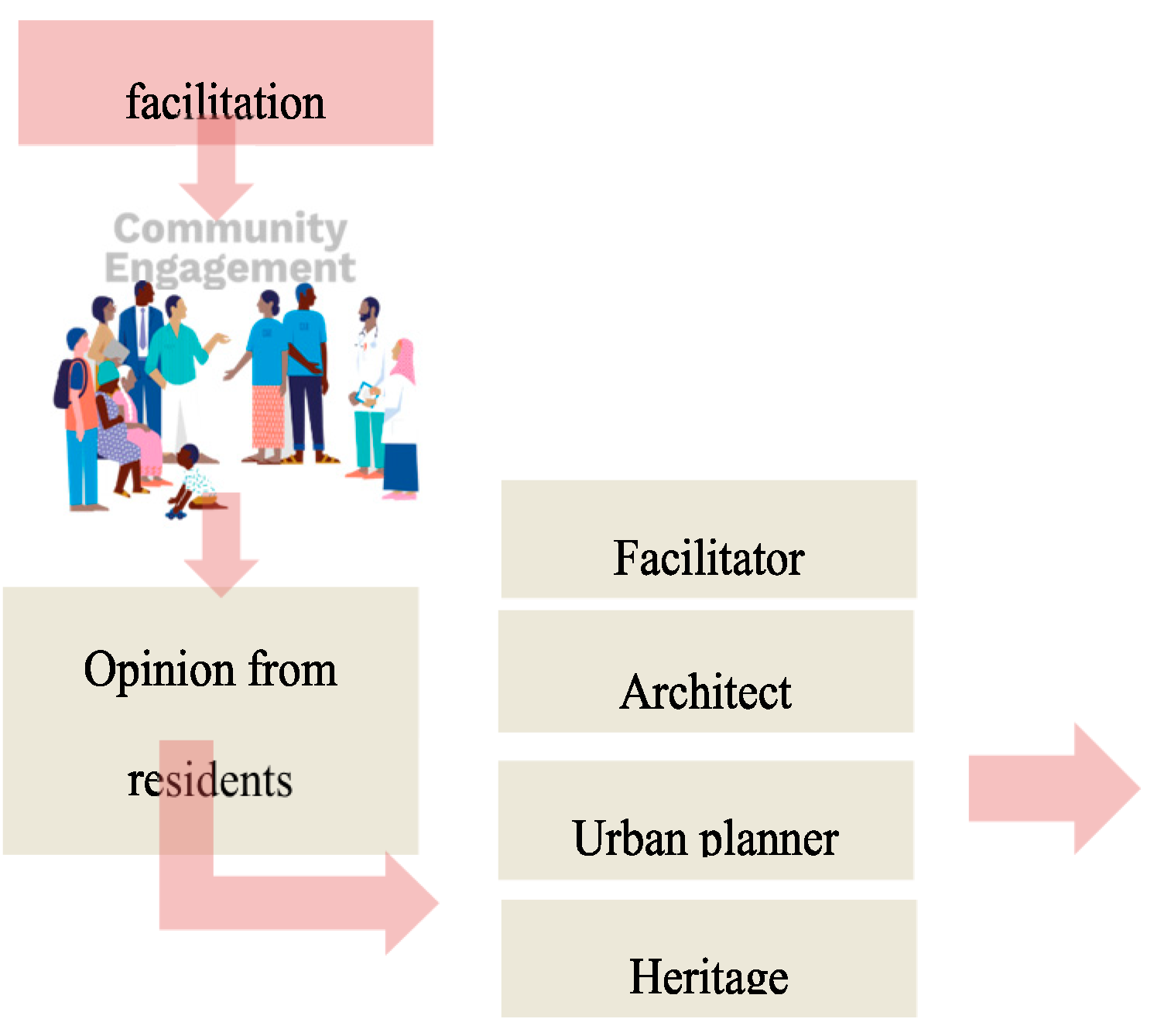
Figure 13.
Diagram Showing JSPS process for development.
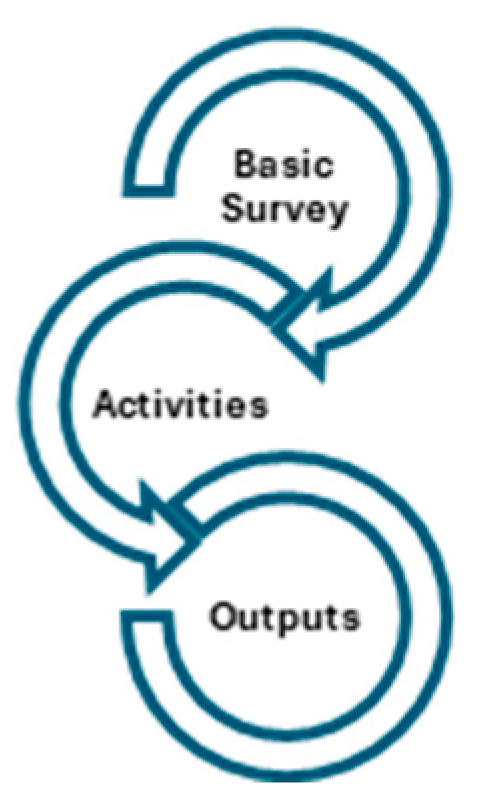
The JSPS project emphasized sustainable conservation practices and capacity building local residents. Both projects have made a significant contribution to the sustainable development of Al Darb Al Ahmar, demonstrating the transformative power of community participation in heritage conservation and urban development.
The JSPS Project in Al-Darb Al-Ahmar strengthens the findings in the literature that active community participation relies on joint effort, involvement, and continuous consultation. In similar process detail, the literature also described how the project carried out needs assessments through workshops that involved the community on vital issues such as waste management, traffic, and the preservation of cultural heritage. Besides pure collection of local input, the workshops also developed quite practical solutions for the revitalization of the area. This approach of stimulating community involvement through direct involvement with residents corresponds to the place of feedback mechanisms argued in the literature because continuous evaluation ensures the sustainability and relevance of any project. Moreover, the capacity-building aspect of the JSPS Project-through training in tourism and management of cultural heritage-comes to meet the call of the literature for the long-term empowerment of the communities for them to benefit directly from the arising economic opportunities of the project. Both case studies show how active community involvement in urban sustainability can effectively be combined to achieve heritage conservation with socio-economic improvements using a participatory approach.
3.2.4. Benefits of Community Engagement Tool in the Outcomes:
Community involvement has made the difference in project success and achievement of sustainable conservation and local development, especially in the JSPS Project. It had various advantages, particularly the involvement of residents themselves in bringing out solutions to problems directly affecting their everyday life, for example, traffic management, waste disposal, and maintenance of buildings. A series of workshops allowed the community to work with experts and local stakeholders in the design of solutions that were practical and culturally sensitive. the approach helped in the creation of a sense of shared responsibility and collective action where residents felt more invested in the preservation of their cultural heritage and the improvement of their living conditions. Workshops on capacity building , marketing, and the protection of cultural heritage helped the locals equip themselves with new skills, increasing their employability and, in turn, contributing to economic growth within the community. In fact, in embedding feedback mechanisms within this process of engagement, at every turn, continuous adjustments regarding the project were allowed in step with the needs that began to evolve in the community for its sustainability and full impact on heritage and socioeconomic fabric.
4. Discussion
The research has demonstrated the complicated and critical role that community involvement plays in the development and preservation of heritage sites, especially within the context of Al-Darb Al-Ahmar in Cairo. In this respect, both projects by GHA Khan and JSPS present insightful case studies on how community involvement can influence the outcomes of heritage conservation and urban development efforts. These projects demonstrate that sustainable urban development is not merely about physical improvements but must also incorporate the perspectives, needs, and aspirations of local communities.
The frameworks adopted in both projects reflect different approaches to community engagement. The GHA Khan project focused on comprehensive community mobilization, stakeholder identification, and capacity building as key elements of its success. The process made sure that the locals were involved not only in being consulted but also in decision-making processes, thus contributing to the restoration of the Al-Darb Al-Ahmar neighborhood while preserving its socio-cultural heritage. This is supported by scholars like (Labadi, 2021)who noted that community involvement is crucial in order for heritage conservation to be culturally and socially sustainable. Furthermore, the emphasis on social cohesion in the GHA Khan project resonates with the work of (A Piperno, 2023)who argues that community engagement enhances residents' attachment to their environment and fosters a sense of ownership.
By contrast, the JSPS project, implemented more recently, adopted a more integrated approach that aimed not only at the preservation of tangible elements of heritage but also at the revitalization of intangible cultural practices through traditional crafts and local tourism. This approach is in line with the ideas of (Alaa el-Habashy, 2022)who supports the role of local traditions and crafts in the economic and social revitalization of heritage sites. The workshops held under this project, on issues such as waste management, building maintenance, and sustainable tourism, further underscore the need to balance immediate needs at the community level with long-term conservation concerns.
Both projects emphasize how important it is to involve the community at all levels of heritage conservation and urban development. This integration is vital in overcoming the challenges identified, which relate to a lack of resources and training, as well as historic distrust between authorities and local communities. The literature review indicates that capacity building, effective communication, and mechanisms for feedback are essential strategies to overcome these barriers. This has been noted by (Ronchi, 2020). Despite these positive examples, there are gaps identified in the application of such strategies. For example, the absence of regular monitoring and evaluation in certain periods of the GHA Khan project might suggest that when continuous feedback is not occurring, community engagement can very well fall apart.
International perspectives, such as the IAP2, reinforce these results by emphasizing the importance not only of informing or simply consulting with communities but actively involving them in decision-making and problem-solving. At the same time, there are examples within the case studies where the complete fulfillment of these stages is constrained in real situations by bureaucratic hurdles, cultural sensitivities, and the previously indicated resource constraints.
Finally, it is a reminder that any form of community engagement needs to be tailored to the specific local context and should incorporate all levels of participation, from consultation and empowerment. The findings from this research add to the wider debate concerning sustainable heritage management, strengthening the view that without effective community participation, no real integration between the aims of conservation and development is possible.
5. Conclusions
This research has shed light on the important role that community involvement plays in the sustainable urban development of heritage sites, focusing on Al-Darb Al-Ahmar in Cairo. The study of the GHA Khan and JSPS projects provides valuable lessons to be learnt from the challenges and opportunities inherent in the integration of community participation into heritage conservation efforts. The findings highlight that even as both projects made some strides toward engaging local communities, critical gaps remain in ensuring full hearing and incorporation of voices into the decision-making process.
The results of this research align with existing literature that advocates for a holistic and inclusive approach to heritage conservation, where community participation is central. The study contributes to the expanding knowledge base that proves how strong frameworks for community involvement ensure sustainability in urban development processes, especially at sites with heritage value. The study also supports other research in earlier studies on social and economic benefits from active local involvement of populations in conservation processes, thereby reinforcing the argument that conservation has to go along hand-in-hand with community development.
The study, accordingly, goes on to give practical recommendations for strengthening frameworks of community engagement in heritage sites in Egypt, which include full stakeholder involvement, integration into policy, and the creation of mechanisms of adaptive feedback that would ensure long-term community participation and empowerment. The research also makes mention of the potential held by these frameworks in contributing toward preserving the cultural heritage of Egypt while concomitantly fostering social and economic development within local communities.
This study, therefore, has far-reaching implications for suggesting that robust community engagement frameworks might play a key role in the sustainable development of heritage sites not only in Egypt but also in other regions with similar challenges. Future research could further explore the application of international best practices in community engagement, particularly in post-colonial contexts where issues of power dynamics, trust, and representation remain at the forefront of development efforts.
In the end, community involvement is not just a heritage conservation tool but a bottom-line requirement for ensuring that the urban development process is socially inclusive, culturally relevant, and economically viable. It is only with the cooperation of all parties-government organizations, development agencies, and the local community-that success will indeed be achieved with these models, and their goals safeguard both the past and the future of heritage sites.
References
- A Bjørgen, K Fossheim, C Macharis. How to build stakeholder participation in collaborative urban freight planning. Cities 2021, 112, 103149.
- A Egusquiza, M. Z. Systemic innovation areas for heritage-led rural regeneration: A multilevel repository of best practices. Sustainability 2021, 13, 5069. [Google Scholar] [CrossRef]
- A Eyisi, D. L. (2021). Facilitating collaboration and community participation in tourism development: The case of South-Eastern Nigeria. Tourism and Hospitality Research, 5-10.
- A Mandić, J. K. (2021). governance for heritage tourism destinations: Contextual factors and destination management organization perspectives. Tourism Management Perspectives.
- A Piperno, C. I. (2023). Institutional Collective Actions for Culture and Heritage-Led Urban Regeneration: A Qualitative Comparative Analysis. Sustainability.
- AJ Miller-Rushing, N. A. (2021). COVID-19 pandemic impacts on conservation research, management, and public engagement in US national parks. Biological journal.
- Alaa el-Habashy, N. F. (2022). Community Development with the Participation of Local Residents. Egypt : JSPS cairo research station.
- Alam, A. (2022). Mapping a Sustainable Future Through Conceptualization of Transformative Learning Framework, Education for Sustainable Development, Critical Reflection, and Responsible Citizenship: An Exploration of Pedagogies for Twenty-First Century Learning. ECS Transactions.
- Asadullah, Q. B. (2023). Impact of tourism development upon environmental sustainability: a suggested framework for sustainable ecotourism. Environmental Science and Pollution Research, 6-9.
- Beiming Hu, F. H. (2022). Community Empowerment Under Powerful Government: A Sustainable Tourism Development Path for Cultural Heritage Sites. Frontiers in Psychology, 1-4.
- Bose, B. (2021). The Terracotta temple of Antpur: An Attempt to Study the Importance of Heritage Management. Society for Heritage, Archaeology & Management, 5-8.
- C Rendon, KK Osman, KM Faust. (2021). Path towards community resilience: Examining stakeholders' coordination at the intersection of the built, natural, and social systems. Sustainable cities and society, 10.
- D Brodzinsky, M. G. (2022). Adoption and trauma: Risks, recovery, and the lived experience of adoption. Child Abuse & Neglect.
- D Zhu, A. A.-J. (2024). Digital Storytelling Intervention for Enhancing the Social Participation of People With Mild Cognitive Impairment: Co-Design and Usability Study. Jmir Publications.
- Devindi Geekiyanage, T. F. (2021). Assessing the state of the art in community engagement for participatory decision-making in disaster risk-sensitive urban development. International journal of cultural heritage.
- DM Zocchi, M. F. (2021 ). Recognising, safeguarding, and promoting food heritage: challenges and prospects for the future of sustainable food systems. Sustainability.
- E Bruley, B. L. (2021). Nature's contributions to people: Coproducing quality of life from multifunctional landscapes. Ecology and Society.
- Eduardo, S. Brondízio1, 2. Y.-T.-L.-G. (2021). Locally Based, Regionally Manifested, and Globally Relevant: Indigenous and Local Knowledge, Values, and Practices for Nature. Annual Review of Environment and Resources, 485-487.
- EG Martín, R. G. Using a system thinking approach to assess the contribution of nature based solutions to sustainable development goals. Science of The Total Environment 2020, 738, 139693. [Google Scholar] [CrossRef] [PubMed]
- EK Elbes, L. O. (2022). Character building in English for daily conversation class materials for English education freshmen students. Journal of English Language Teaching, 12.
- Ferreira, A. T. (2020). Towards a Historic Urban Landscape approach: community engagement through local population’s perception on heritage. ERDF).
- H Jie, I. K. (2023). energy policy, socio-economic development, and ecological footprint: The economic significance of natural resources, population growth, and industrial development. Utilities Policy, 6-10.
- H Pineo, N. Z. (2020). Integrating health into the complex urban planning policy and decision-making context: A systems thinking analysis. Palgrave Communications, 3-6.
- H Solman, M. S. (2021). Co-production in the wind energy sector: A systematic literature review of public engagement beyond invited stakeholder participation. eEnergy Research & social Science.
- Haigen Xu , Y. C. (2021). Ensuring effective implementation of the post-2020 global biodiversity targets. Nature Ecology & Evolution, 2-3.
- J Li, S Krishnamurthy. (2020). Informing or consulting? Exploring community participation within urban heritage management in China. Habitat International, 21:22.
- J Li, S. K. (2020). Community participation in cultural heritage management: A systematic literature review comparing Chinese and international practices. Cities, Elsevier.
- J Ocloo, S. G. (2021). Exploring the theory, barriers and enablers for patient and public involvement across health, social care and patient safety: a systematic review of reviews. Health research policy and systems, 4-5.
- J Sharp, V. P. (2020). Just art for a just city: Public art and social inclusion in urban regeneration. Culture-Led Urban Regeneration.
- Jagtap, S. (2022). Co-design with marginalised people: designers' perceptions of barriers and enablers. CoDesign, 15-20.
- Joshi, L. R. (2017). Community Engagement in Post-Earthquake Nepal: Lessons from Bhaktapur. International Journal of Heritage Studies., 12-18.
- K Bernard, C. C. (2022). Attachment goes to court: Child protection and custody issues. Attachment & Human Development.
- K Nordberg, Å. M. (2020). Community-driven social innovation and quadruple helix coordination in rural development. Case study on LEADER group Aktion Österbotten. Journal of Rural Studies.
- L Somerwill, U. W. (2022). How to measure the impact of citizen science on environmental attitudes, behaviour and knowledge? A review of state-of-the-art approaches. Environmental Sciences Europe, 8-11.
- Labadi, S. G. (2021). Heritage and the Sustainable Development Goals: Policy Guidance for Heritage and Development Actors."ICOMOS". Kent Academic Repository.
- Li, J. K. (2020). Community participation in cultural heritage management: A systematic literature review comparing Chinese and international practices. Cities, 1-4.
- M Chahardowli, H. S. Survey of sustainable regeneration of historic and cultural cores of cities. Energies 2020, 13, 2708. [Google Scholar] [CrossRef]
- M Ghobakhloo, M. I. (2022). Identifying industry 5.0 contributions to sustainable development: A strategy roadmap for delivering sustainability values. Sustainable Production and Consumption, 716-737.
- MA Habib, F. D. (2021). Knowledge, attitude and practice survey of COVID-19 pandemic in Northern Nigeria. PloS one, 10-15.
- NA Bizami, Z. T. (2023). Innovative pedagogical principles and technological tools capabilities for immersive blended learning: a systematic literature review. Education and Information Technologies, 7-10.
- NH Tien, N. N. Sustainable Development of Higher Education Institutions in Developing Countries: Comparative Analysis of Poland and Vietnam. Contemporary economics 2022, 16, 195. [Google Scholar] [CrossRef]
- P Camangian, S. C. (2022). Social and emotional learning is hegemonic miseducation: Students deserve humanization instead. Race Ethnicity and Education, 18-21.
- Pappalardo, G. (2020). Community-Based processes for revitalizing heritage: Questioning justice in the experimental practice of ecomuseums. Sustainability.
- Q Jia, L. J. (2023). Linking supply-demand balance of ecosystem services to identify ecological security patterns in urban agglomerations. Sustainable Cities and Society.
- Ramkissoon, H. (2023). Perceived social impacts of tourism and quality-of-life: A new conceptual model. Journal of Sustainable Tourism, 445-447.
- Ronchi, A. T. (2020). Community involvement in built heritage conservation. UCL press, 66-77.
- RT Buxton, E. N. (2020). Avoiding wasted research resources in conservation science. Conservation Science and Practice, 3-5.
- Sendra, P. (2024). The ethics of co-design. Journal of Urban Design, 17-18.
- Sharma, S. T. (2019). Sustainable Restoration Practices in Heritage Sites: Bhaktapur as a Case Study. Kathmandu University Press., 11-14.
- Thapa, R. K. (2018). Integrating Traditional Building Techniques in Urban Development: A Bhaktapur Perspective.. Journal of Urban Heritage, 10-15.
- Torabi, F. S. H. (2021). Can public awareness, knowledge and engagement improve climate change adaptation policies? Discover Sustainability, 5-7.
- UNESCO. (2020). World Heritage City lab. Paris.
- Usmaedi Usmaedi, M. A. (2024). Cultural heritage preservation through community engagement a new paradigm for social sustainability. sustainabilty, pp 50-59.
- Vuong, Q.-H. (2021). The Semiconducting Principle of Monetary and Environmental Values Exchange. Economics and Business Letters, 286-287.
- Walter Leal Filho, F. F. (2021). A Framework for the Implementation of the Sustainable Development Goals in University programmes. Journal of Cleaner Production, Volume 299.
- Wiktor-Mach, D. (2020). What role for culture in the age of sustainable development? UNESCO's advocacy in the 2030 Agenda negotiations. International Journal of Cultural Policy.
- WM Seyoum, A. Y. (2022). STUDENTS'ATTITUDES AND PROBLEMS ON QUESTION-BASED ARGUMENTATIVE ESSAY WRITING INSTRUCTION. Journal of English.
- X Chu, Z Shi, L Yang. Evolutionary game analysis on improving collaboration in sustainable urban regeneration: A multiple-stakeholder perspective. urban planning and development 2020, 17, 19. [Google Scholar] [CrossRef]
- Xiaoxu Liang, Y. L. (2021). A review of the role of social media for the cultural heritage sustainability. Sustainability, 7-10.
- Z Aripin, S. M. (2023). SUSTAINABILITY MANAGEMENT EFFORTS IN EXTRACTIVE INDUSTRIES: BUILDING A RECIPROCITY FRAMEWORK FOR COMMUNITY ENGAGEMENT. development and community.
- Z Mthembu, M. C. (2023). Community engagement: health research through informing, consultation, involving and empowerment in Ingwavuma community. Frontiers in Public Health, 4-7.
Disclaimer/Publisher’s Note: The statements, opinions and data contained in all publications are solely those of the individual author(s) and contributor(s) and not of MDPI and/or the editor(s). MDPI and/or the editor(s) disclaim responsibility for any injury to people or property resulting from any ideas, methods, instructions or products referred to in the content. |
© 2025 by the authors. Licensee MDPI, Basel, Switzerland. This article is an open access article distributed under the terms and conditions of the Creative Commons Attribution (CC BY) license (http://creativecommons.org/licenses/by/4.0/).
Copyright: This open access article is published under a Creative Commons CC BY 4.0 license, which permit the free download, distribution, and reuse, provided that the author and preprint are cited in any reuse.


