Preprint
Article

This version is not peer-reviewed.

Electrografting of Aryl Diazonium Monolayers onto ITO to Generate Hybrid and Structural Silica/Polypyrrole Coatings

Submitted:

22 January 2025

Posted:

22 January 2025

You are already at the latest version

Abstract

Compositing and hybridizing compounds is a generally accepted route to making new materials that perform better than the individual components taken separately. Herein, we describe a new electrochemical route for constructing hybrid materials from Polypyrrole (PPy). In this context, thin films of silica layer (Si) deposited by electro-assisted on a flexible ITO (f-ITO) surface modified by diazonium salt (f-ITO-NH2) were covered with an adhesive layer of polypyrroles. Deposition periods ranging from 20 to 45 seconds produce more electroactive silica layers. The electrochemical method confirmed the growth of a silica layer on the surface of the f-ITO-NH2 electrode. The different flexible electrodes were characterized by XPS, by electrochemical and scanning electron microscopy (SEM), which showed the central role of the diazonium chemical interface in the development of PPy on the silica layer. According to cyclic voltammetric studies, altering the f-ITO surface with diazonium salts produces PPy-Si polymers with more conductivity than a comparable coating without integrated treatment. This work demonstrates the power of a subtle combination of diazonium coupling agents on f-ITO, silica layer, and conductive polymers (f-ITO-NH2-Si-PPy) to design high-performance electrochemical materials.

Keywords: 
;  ;  ;  ;  

1. Introduction

Silica-based materials are generally recognized as ideal for structuring polymers due to their large surface area and adjustable pore structure [1,2,3,4]. Moreover, conducting organic polymers, including polypyrrole (PPy), have been extensively researched because of their functionalization, high polarizability, and tunable conductivity [5]. Therefore, silica/polypyrrole composites and films raised immense interest in designing HPLC stationary phases [6], smart molecularly imprinted sensors [7], magnetic hybrid support of nanocatalysts [8], and electrorheological material [9], to name but these hybrid systems.
At this level, a lot of work has focused on the use of mesoporous silica for the design of structured polypyrrole [10,11,12,13]. To this end, several silica layer synthesis routes have been reported in the literature for initiating polypyrrole layers, namely co-precipitation [14], the sonochemical method [8], the solvothermal route[4], and the electrochemical method [15]. These procedures are based on the method of preparing highly ordered mesoporous silica films in nanorods deposited on the substrate, then fibrous polypyrrole will be prepared by polymerization in silica particles using dopants [16]. Other researchers have developed mesoporous composites by oxidative polymerization. The preparation of mesoporous silica initiates this method and then the monomer is chemically oxidized to prepare the composite [17]. However, these materials exhibit a decrease in their electrical properties compared to unmodified polymers, which limits their applications in certain areas [10]. For example, the conductivity of polypyrrole (PPy) confined in ordered mesoporous silica is less than 4.109 S.cm-1 compared to that of naked PPy at the same conditions [9]. This is due to the encapsulation of the conductive polymer in the mesoporous silica channels leading to a significant reduction in electrical conductivity. [18,19,20]. Sometimes, the reason is the use of the silica layer causes passivity of the polymer layer during its formation. This fact indicates that most of the PPy is located inside the silica channels rather than on the outer surface (scheme 1).
Nowadays little work is focused on resolving the efficiency and increasing the formation of polymers on a silica layer. This specific objective is of importance effective improvement of the silica layer [21,22]. Specifically, electrochemistry has shown itself to be a practical method for producing silica layers with regulated sizes, strong electroactivity, and good stability [23]. This technique can be used to create silica/polymer composite films whose conductivity varies based on the silica layer deposition [23]. To the best of our knowledge, no research has been conducted on creating hybrid silica/polypyrrole composites that are more conductive than bare polypyrrole [15]. This motivated us to study diazonium modification of a flexible ITO electrode before the sequential electrochemical deposition of silica layers followed by pyrrole electropolymerization. At the same time, the interface chemistry of diazonium salts offers the possibility of obtaining highly ordered and oriented structures of the silica layers which leads to the reduction of pore size and a reactive surface [24].
Therefore, this work aims to electrochemically prepare polypyrrole hybrid materials adhering to a silica layer deposited on a flexible ITO surface modified by aryl diazonium monolayers [25,26]. Thanks to the chemical interface of diazonium, this hybrid material is more conductive than unmodified polypyrrole under the same conditions. After the electrodeposition of silica, electropolymerization was performed for the deposition of polypyrrole doped with benzene sulfonic acid, an organic acid molecule. XPS, SEM, and electrochemical techniques were used to characterize the resulting flexible electrode materials.

2. Experimental

2.1. Chemicals

Tetraethylorthosilicate (TEOS, 99.0%), cetyltrimethylammonium bromide (CTAB, 99.0%), sodium nitrate (NaNO3, 99.0%), potassium ferricyanide (K3Fe(CN)6, 99%), and pyrrole (Py, purity 99%) were purchased from Aldrich (Seoul, Korea). Hydrochloric acid (min 35%, Junsei), absolute ethanol (Merck), and ultrapure water (> 18 M, Millipore system) were used. Indium tin oxide (ITO, 0.7 mm, 50 Ω) glass was purchased from JMI Korea. Potassium chloride (KCl), benzene sulfonic acid (Aldrich, 97%), and p-phenylenediamine (PA) were refrigerated before synthesis.

2.2. Preparation of the Electrode f-ITO-NH2-Si(t)

Silica films were deposited on flexible ITO under the same conditions as described in [29]. Briefly, the solution used for the deposition of thin silica films was prepared from a solution containing ethanol and 0.1 M aqueous NaNO3 in a 1/1 v/v ratio. Then, TEOS (100 mM) and CTAB (32 mM) were added to the previous solution and the final pH was adjusted to 3 with HCl. The solution was stirred for 2.5 hours for TEOS hydrolysis. Then it is transferred to an electrochemical cell in which part of the surface of the flexible ITO electrode modified by diazonium (A = 0.5 cm2) has been brought into contact with the solution. The formation of the silica layer on the f-ITO electrode modified by diazonium salts [27] as a function of time (f-ITO-NH2-Si(t)) was carried out using the electro-assisted self-assembly method. (EASA) [28] by potentiostatic E= -1.1 V/ECS. Deposition times ranging from 5 to 120 s have been used for this. All the ITO-NH2(45)-Si(t) electrodes were placed in an oven for 12 hours at a constant temperature of 130 °C. The surfactant was extracted using 0.1 M HCl in ethanol with gentle stirring for 20 min [29].

2.3. Electropolymerization and Characterization of Polypyrrole on f-ITO-NH2-Si

we carried out the electrochemical measurements using a fra2 µAUTOLAB potentiostat/galvanostat. Electrodeposition of polypyrrole (PPy) films on f-ITO-NH2-Si electrode materials was carried out in 20 mL of an aqueous solution containing benzene sulfonic acid (0.1M) and pyrrole (0.1M). The curves are obtained by cyclic voltammetry between -1 and 1.2V/Ag/AgCl at a scanning rate of 100 mV/s for 10 cycles. An electrolyte solution containing 1 mM K3Fe(CN)6 + 0.1 M KCl solution was used to study the electrochemical characteristics of electrode materials. The study of X-ray photoelectron spectra (XPS) and SEM images were respectively recorded using Thermo Scientific K-Alpha X-ray photoelectron spectrometer (XPS) and JEOL JSM-7500F microscope.
In addition, the electrochemical active surface area (ECAs) of the ITO bare, ITO-Si(30), and ITO-NH2-Si(30) electrodes was calculated using the Randles-Sevcik equation [30]
Ip = (2.69 × 10⁵) n3/2AD1/2v1/2 CO
where Ip is the anode peak current, A is the electrode surface area, D is the diffusion coefficient of the species involved in the redox reactions (D = 7.60×10⁻⁶ cm2/s), Co is the concentration of the redox probe (Co=10×10-6 mol/cm3) of K3[Fe(CN)6], v is the sweep rate and n is the number of electrons transferred in the redox reaction (n=1).

3. Results and discussions

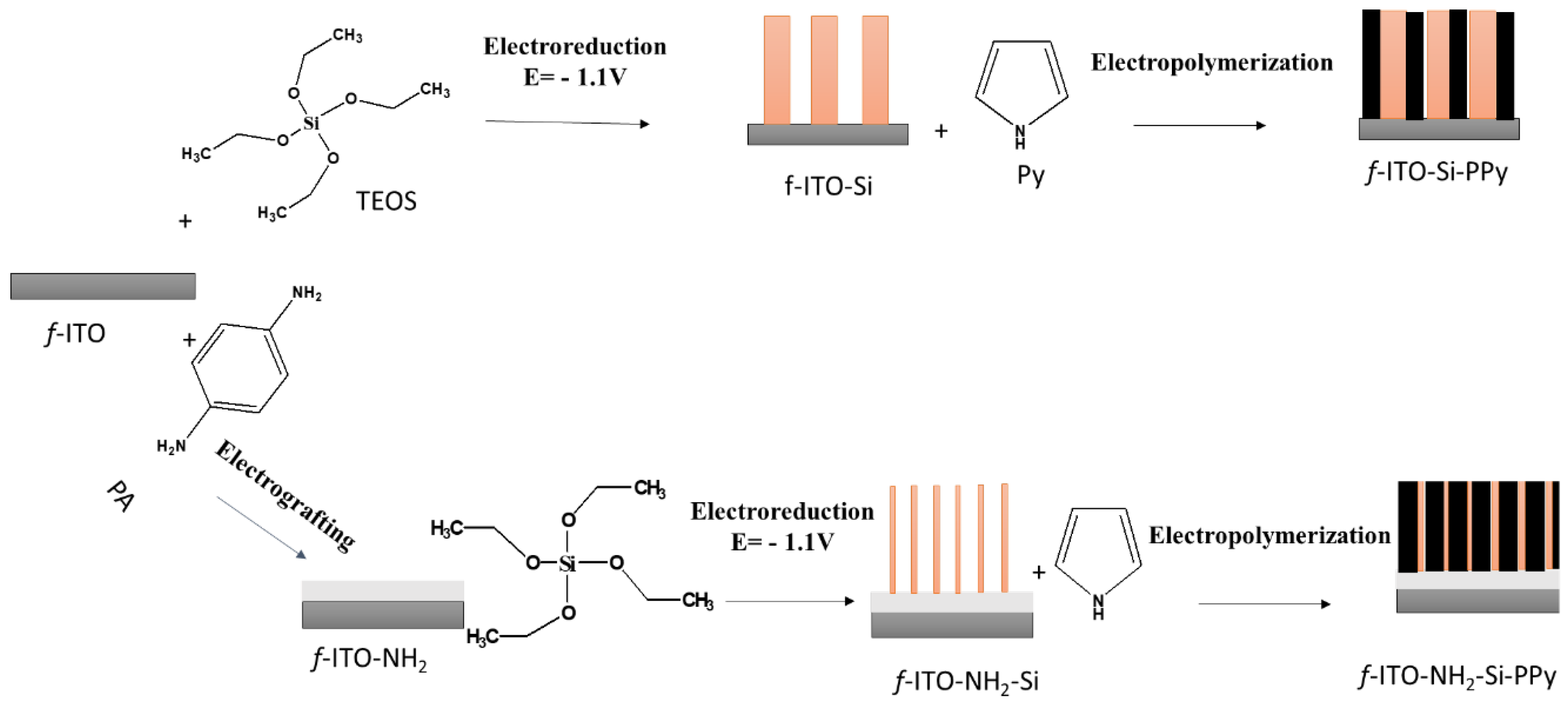
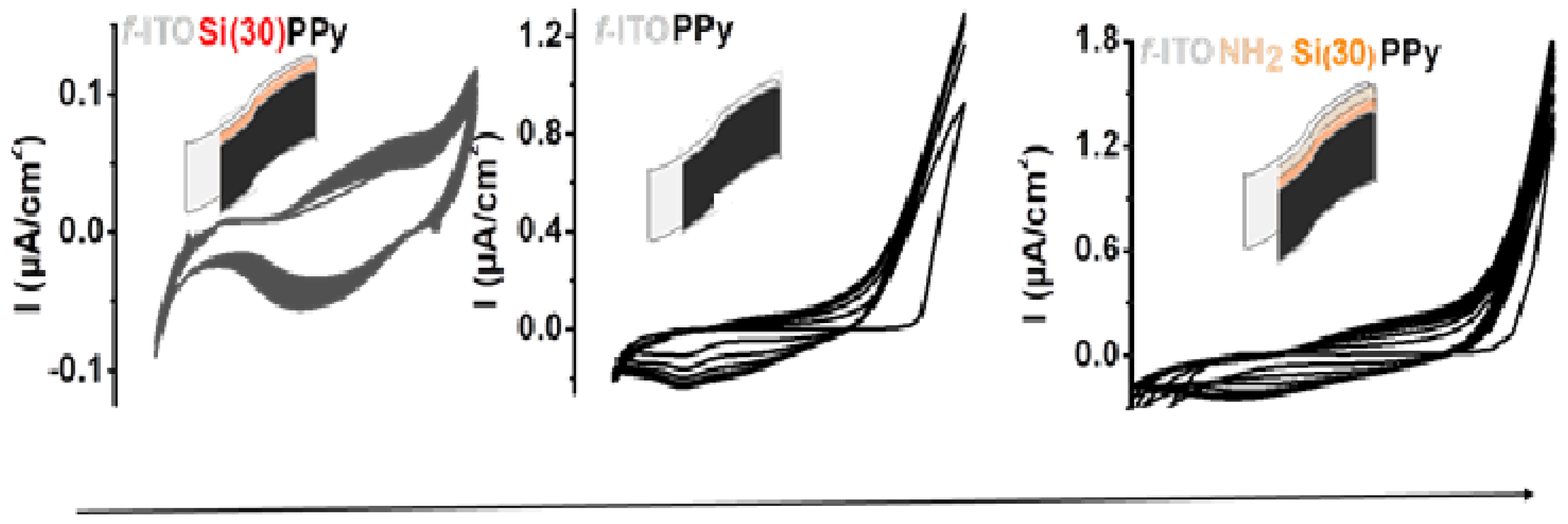
Scheme 2 illustrates the design procedures for PPy films in silica layers deposited by electrochemically assisted self-assembly (EASA) on bare ITO and diazonium-modified ITO. This procedure enabled for the first time the strategy for improving the electrochemical properties of conductive PPy films with a silica layer on f-ITO (Scheme 3). This scheme displays the central role of the chemical interface of diazonium salts in PPy construction with a silica layer on flexible ITO. It shows that the modification of the f-ITO surface by diazonium salts gives the PPy associated with the silica layer a higher conductivity compared to that deposited in similar conditions on bare f-ITO.

3.1. Electro la Chemical Assisted Self-Assisted of Silica Layer on f-ITO-NH2

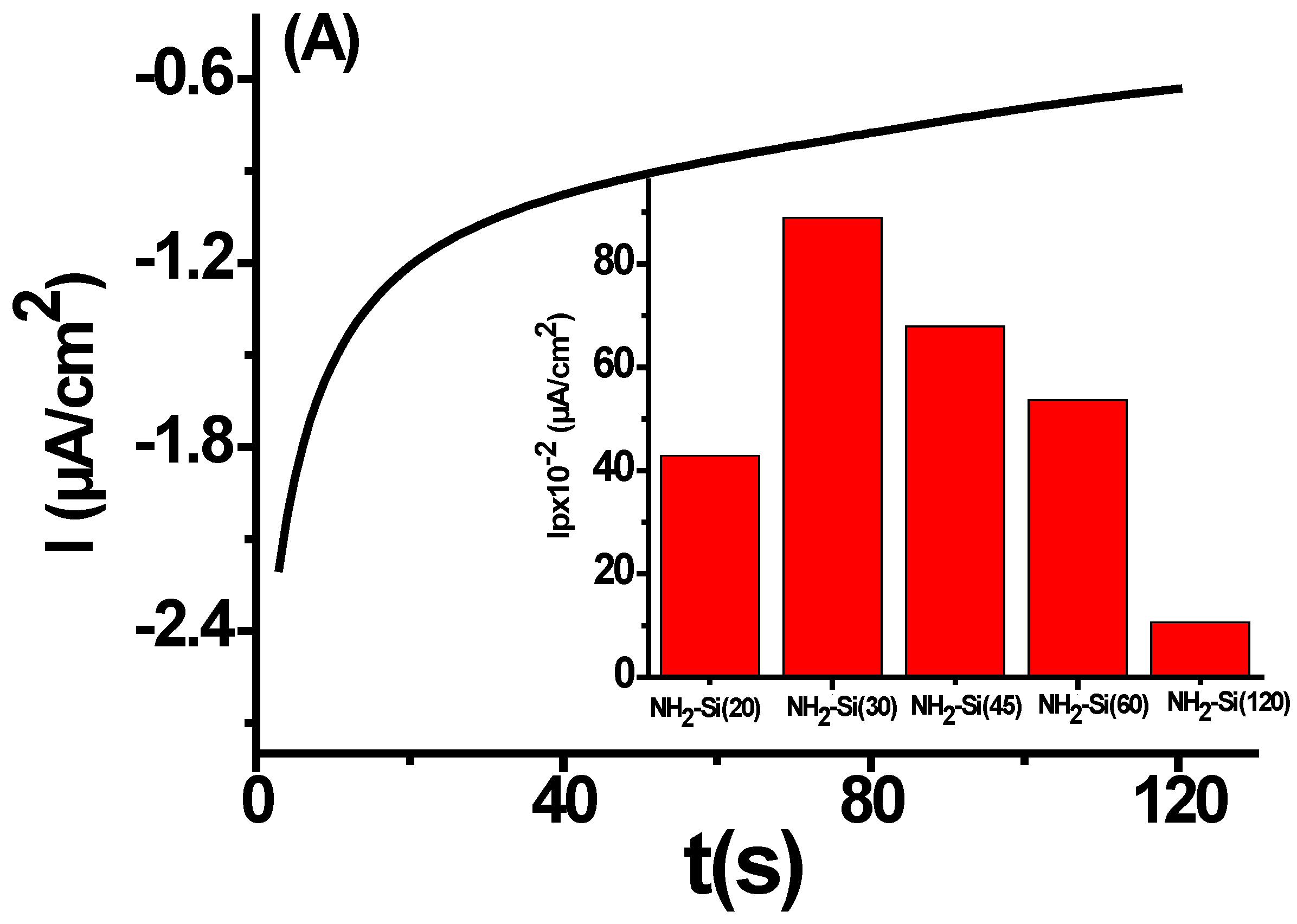
In Table 1, the intensity of the currents of the f-ITO-NH2 electrodes modified by layers of silica are described in this order f-ITO- NH2-Si(30) >f-ITO-NH2-Si(45) > f-ITO-NH2-Si(60) > f-ITO-NH2-Si(20) > f-ITO-NH2-Si(120). These results are due to an increase in the size of the silica layer causing a blockage of electron movement and unequivocally proving the formation of the vertically oriented silica template [11]. Figure 1A shows an example of 120s CA electrodiffusion of silica layer on the f-ITO-NH2 surface. The curve shows no signs of passivation during the growth of the silica layer on the f-ITO-NH2 electrode for the indicated times.
In addition, we observe that 30s corresponds to the optimal time for electrodiffusion of silica by chronoamperometry (CA) corresponds to the highest Ip value (Insert Figure 1A). It has a relatively low ΔE value and a current intensity ratio near unity, thus corresponding to a more reversible and more electroactive electrochemical process [31].
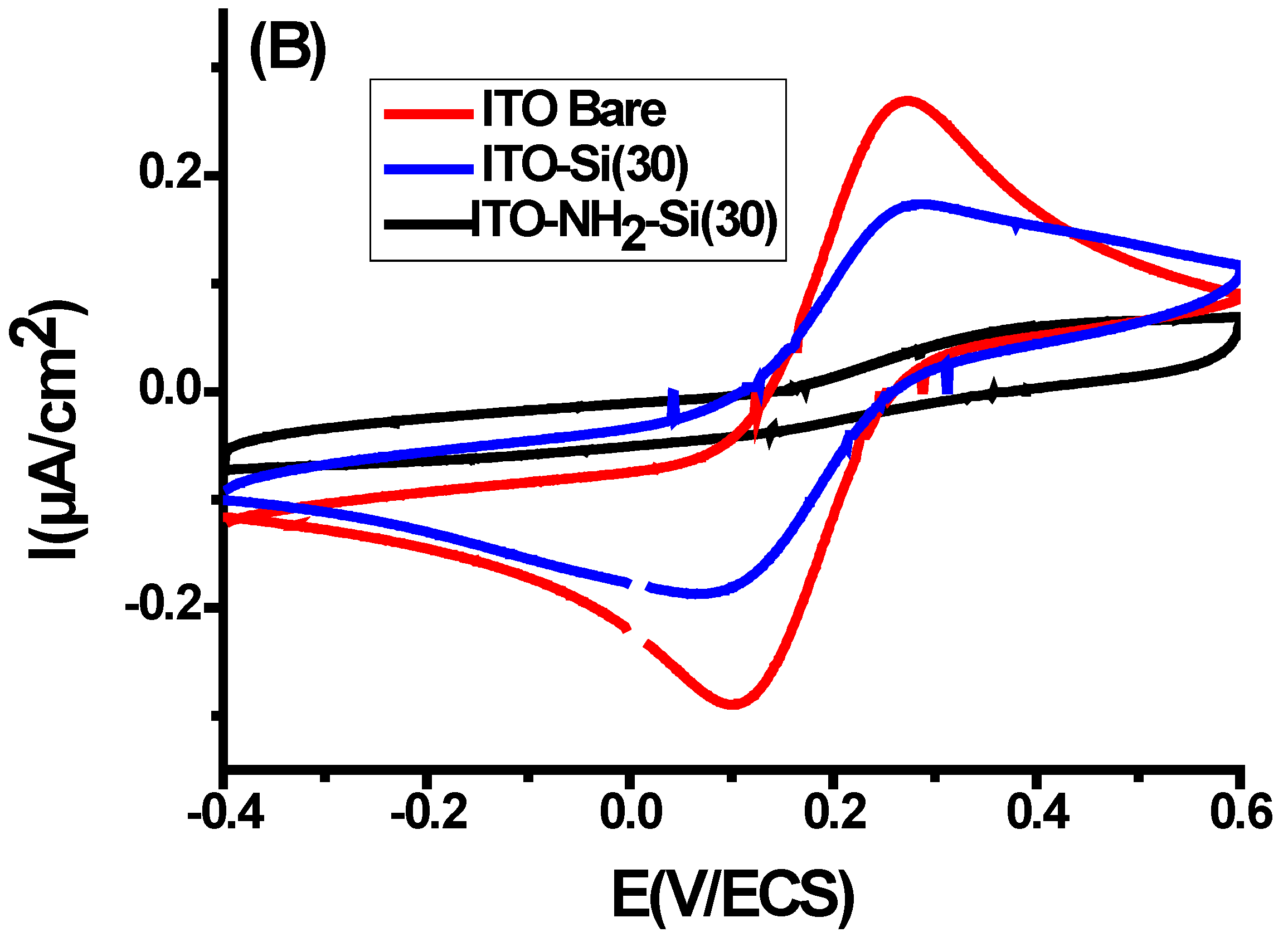
The sensing platform’s electrochemical active surface area (ECA) was calculated using the Randles–Sevcik equation [31]. The experimental results showed that the ECAs of f-ITO-Si(30) and f-ITO-NH2-Si(30) were 0.087 and 0.25 cm2, respectively. It demonstrates how the diazonium chemical contact expands the electrode’s surface and contributes to the charge transfer between the silicate layer and the electrolyte media. These results confirm an interaction between the silica layer and the diazonium salts. Figure 1B shows the cyclic voltammetry (CV) of the electrode materials of f-ITO bare, f-ITO-Si(30), and f-ITO-NH2-Si(30). The redox couple voltammograms [Fe(CN)6]3-/4- show an almost reversible electrochemical response presenting a single oxidation and reduction peak. The CV demonstrates that the f-ITO-Si(30) oxidation and reduction faradic currents are extremely low, indicating that the electrode has been passivated. However, a significant improvement in redox processes is observed in the case of the f-ITO-NH2-Si(30) electrode. According to the findings, the electroactive surface coating causes the aryl layer to reduce the pore volume of the silica. [24].

3.2. Electropolymerization of PPy of Flexible ITO Sheets

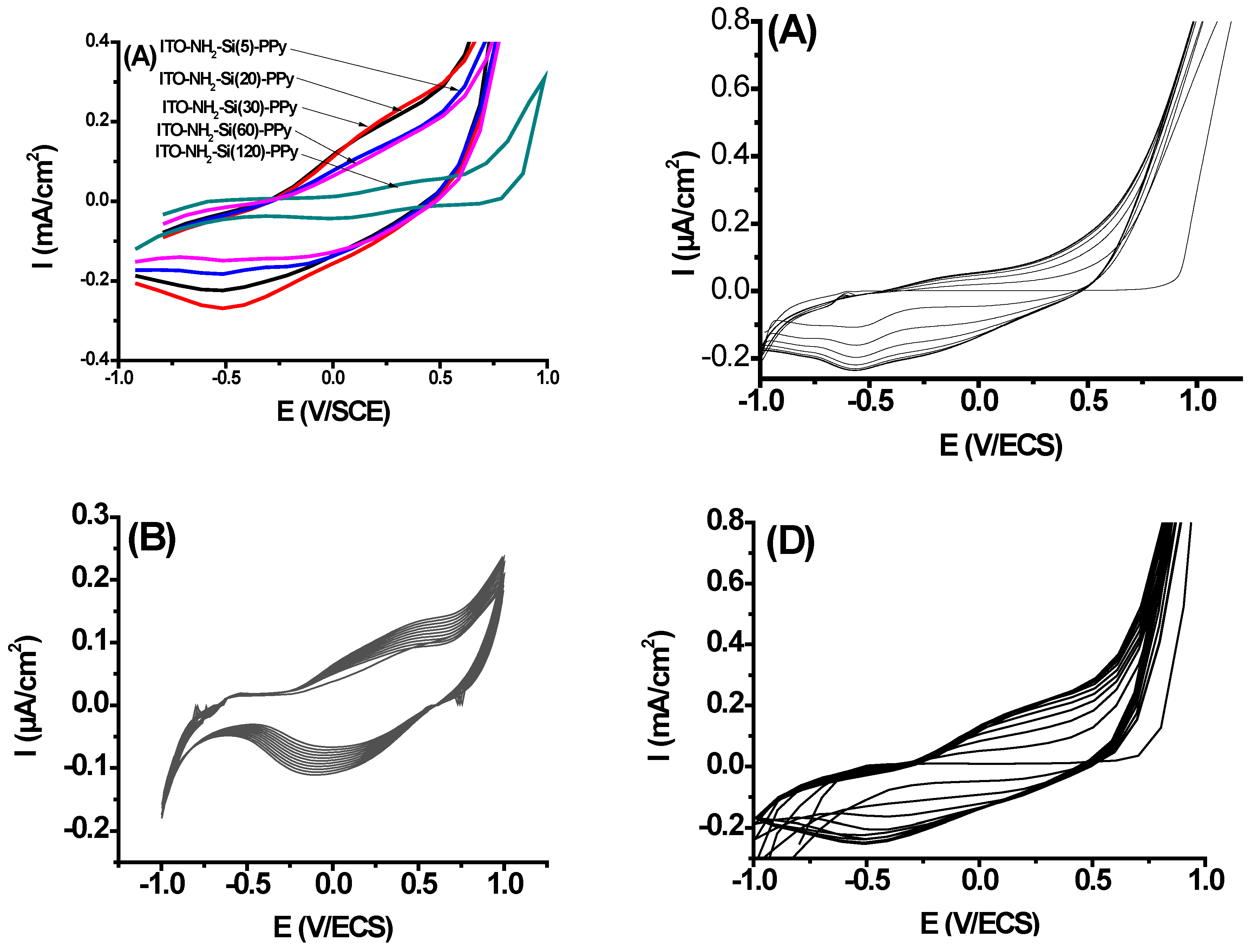
Electropolymerization of pyrrole on f-ITO bare (f-ITO-PPy), f-ITO-Si(30) (f-ITO-Si-PPy), and f-ITO-NH2-Si(30) (ITO-NH2-Si(t)-PPy) electrodes is followed by CV for 10 cycles (Figure 2). We examined the EASA time for silica layers to initiate a conductive polypyrrole on diazonium-modified ITO (Figure 2A). These results show the regular growth of PPy films on thin silica layers consisting of mesoporous channels oriented vertically on diazonium-modified ITO. We also note the 30 s electrodeposition time of the silica layer provided uniform thickness and optimal pore size leading to better polypyrrole. These results confirm the work carried out by Walcarius on the deposition of mesoporous silica layers on bare glass ITO [29]. In parallel, we compared the polypyrrole films electrodeposited on the surfaces f-ITO, f-ITO-Si(30), and f-ITO-NH2-Si(30) (Figure 2B, C, D).
The voltammograms show the presence of an oxidation peak and a reduction peak which increase in intensity depending on the number of cycles, thus reflecting the formation and regular growth of an adherent polypyrrole film on the surfaces indicated.
The electropolymerisation curves for PPy films electrosynthesised on bare ITO show an oxidation wave and a reduction peak at around 0.57 (Figure 2B). On the other hand, those for PPy on f-ITO-Si(30) (Figure 2C) and f-ITO-Si(30)-NH2 (Figure 2D) show oxidation/reduction peaks at around (0.47/-0.12) and (0.23/-0.5) respectively. These results confirm the deposition of PPy films on different surface interfaces. In addition, the intensity of the oxidation and reduction peaks are in this f-ITO-Si(30)-PPy> f-ITO-PPy> f-ITO-NH2-Si(30)-PPy. These results therefore confirm the possibility of growing PPy films on silica layer matrices supported on f-ITO bare and on f-ITO modified by a diazonium salt. The PPy film electrosynthesized on f-ITO-Si(30) (Figure 2C) decreases in anodic current intensity of the order of 63.0% compared to bare f-ITO (Figure 2B). On the other hand, thanks to the coupling of the diazonium agent on ITO then leads to the formation of new electroactive sites of the microchannels thus increasing the intensity of the anodic current of the PPy obtained on f-ITO-NH2-Si(30) (Figure D) of order 43.32%. This shows that the induction period is longer in the presence of silica matrix on bare f-ITO surface than f-ITO-NH2, which can be explained by the fact that the diazonium chemical interface improves the mass/charge transfer phenomena. In the confined environment of microchannels [32].

3.3. SEM Analysis

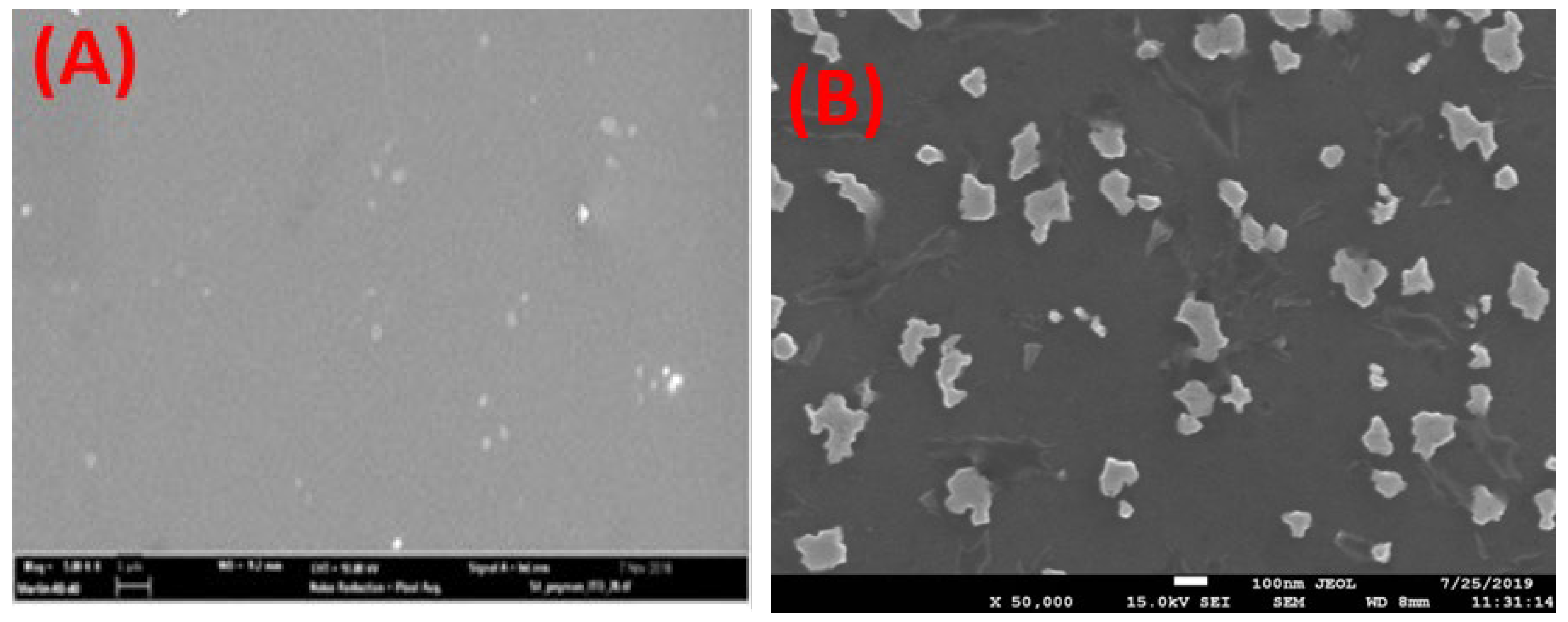
The surface morphology of f-ITO, bare silica films on flexible f-ITO deposited by electrochemically assisted self-assembly (EASA), PPy electrodeposited on f-ITO-Si and f-ITO-NH2-Si(30), was analyzed by electron microscopy scanning (Figure 3). In Figure 3A, SEM analysis of f-ITO bare clearly shows a rough surface with some scattered aggregates. Figure 3a, produced on an f-ITO surface modified by a layer of mesoporous silica, highlights a nanostructured network on the f-ITO surface.
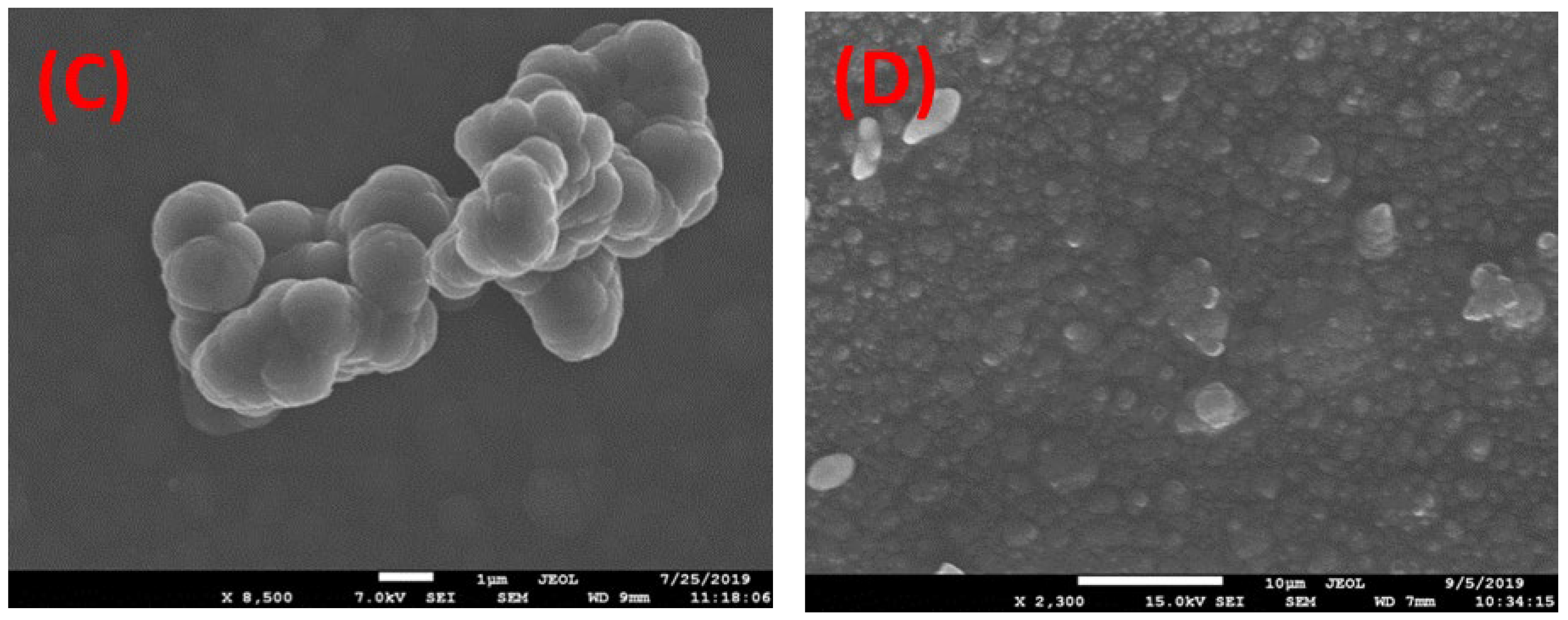
Figure 3C, one can observe that the PPy layer electrodeposited on f-ITO-Si(30) is in the form of microspheres. The PPy on f-ITO-NH2-Si(30) shows high roughness, and continuous surface and compact structure confirming a polypyrrole conductor (Figure D).

3.4. Surface Chemical Composition (XPS)

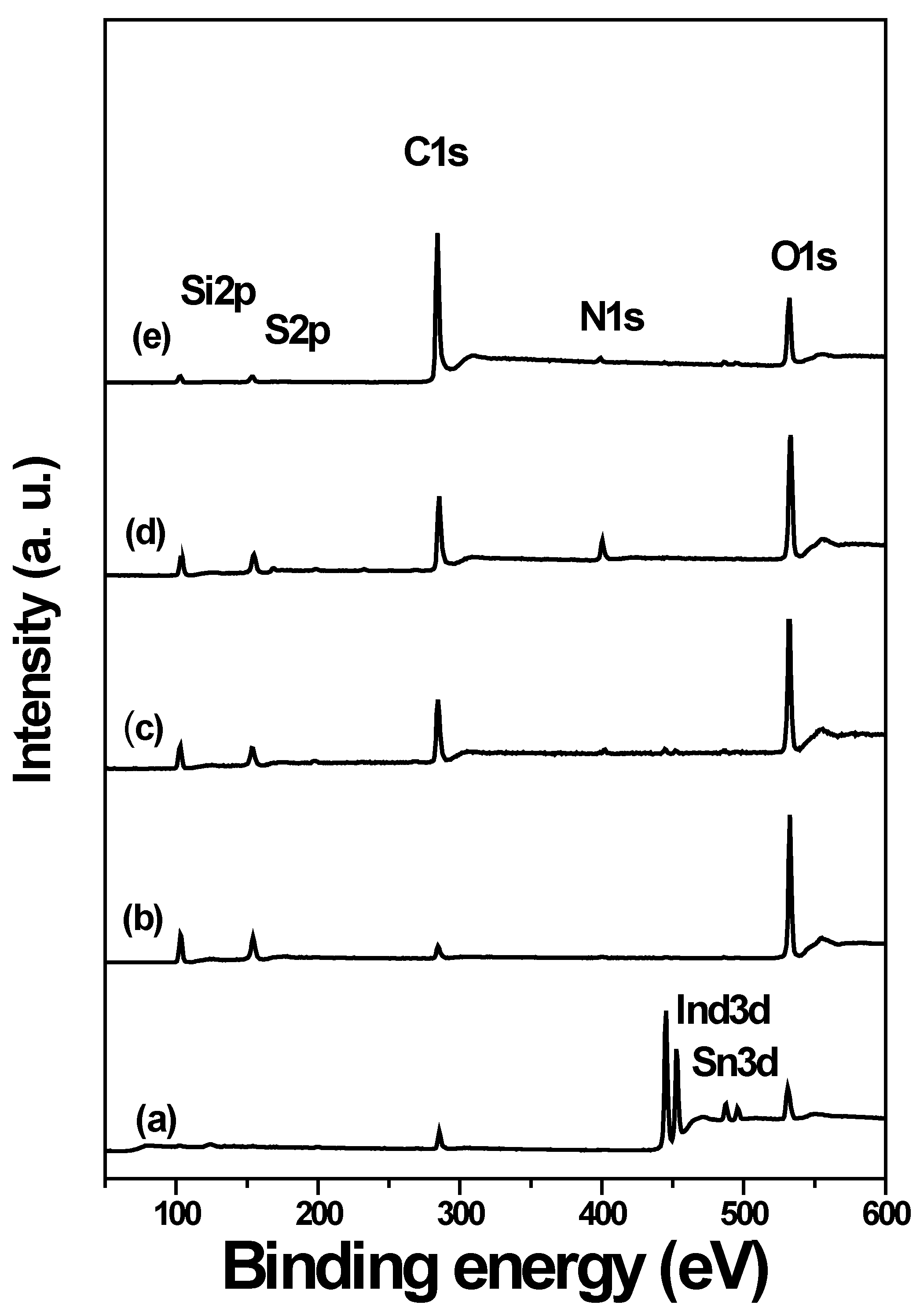
Figure 4 shows the survey XPS spectram of the electrode materials f-ITO-Si(30), f-ITO-NH2-Si(30), f-ITO-Si(30)-PPy, and f-ITO-NH2-Si(30)-PPy. in Figure 4a, a distinct In3d doublet with Sn3d peaks emerges between 450 and 560 eV, and bare ITO displays a quasi-horizontal background in the spectral range between 100 and 250 eV. The f-ITO-Si(30) XPS spectrum shows the presence of O 1s (532.1 eV), Si 2p (104 eV), and C 1s (283.8 eV) (Figure 4b). It can be seen in Figure 4c of ITO-NH2-Si(30) that N 1s (399.1 eV) appears and the ITO peaks In3d and Sn3d sharply attenuated, indicating that the silica layer was successfully charged on the surface f-ITO-NH2.
The spectrum of f-ITO-Si(30)-PPy (Figure 4d) exhibits an intense N1s peak from PPy, relatively more intense than N1s from f-ITO-NH2-Si(30)-PPy (Figure 4e). This could be due to the implementation of PPy in the mesoporous silica. Table 2 reports the surface elemental composition of the f-ITO-NH2-Si(30)-PPy and its precursors.
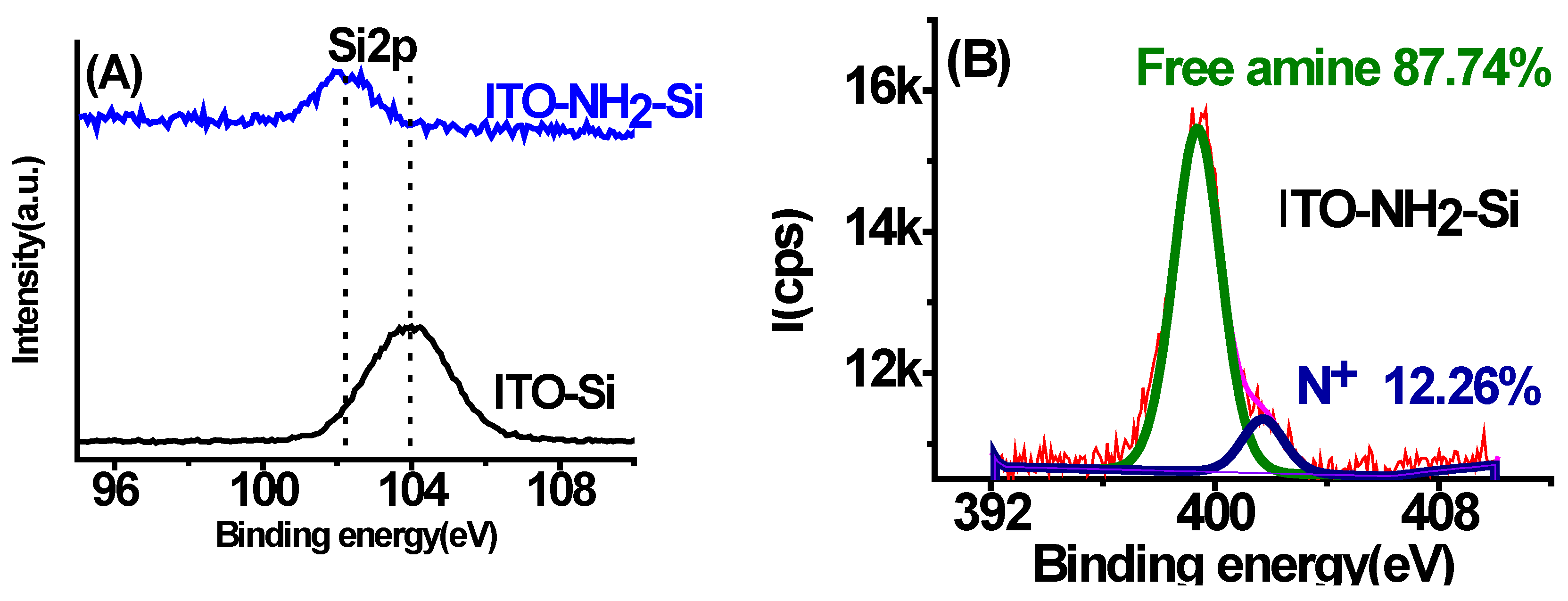
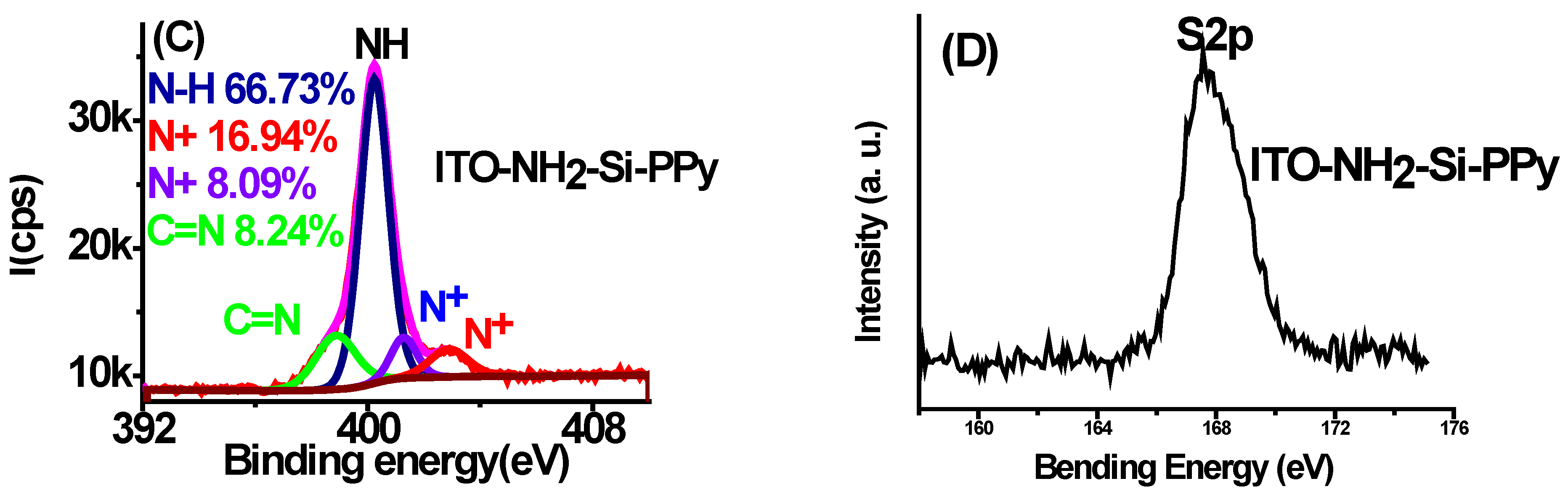
The successful coupling of diazonium on the f-ITO surface and silica layer is confirmed by Figure 5 A which shows an energy shift of Si2p during the interaction between diazonium and silica layer. Additionally, in Figure 5B, the high-resolution spectra of N1s in the f-ITO-NH2-Si(30) region feature two components assigned to the free and quaternized diazonium amine obtained from para-phenylenediamine [33]. The N1s region of the polypyrrole electrodeposited on f-ITO-NH2-Si(30) shown in Figure 5C is consistent with four components described in the literature [8]. The main PPy peak is centered at ~400 eV, the two nitrogen atoms of the N+ type account for ~25% doping, and imine C=N type due to partial deprotonation and finally electronically doped imine (−NH+ −) which confirms the design of PPy on f-ITO-NH2-Si(30) [33]. The XPS analysis of the f-ITO-Si(30)-PPy and ITO-NH2-Si(30)-PPy electrodes give a fairly low doping rate of 7 and 18.01% respectively due to the competition of the free amine of the silica mesoporous [33]. The weakly intense S2p centered at ~168 eV (Figure 5D) accounts for ABS dopant [34].

4. Conclusion

In this study, the silica layer on bare f-ITO and f-ITO modified with diazonium salts was prepared by the electro-assisted self-assembly (EASA) method. The deposition of these layers was controlled by chronoamperometry and the flexible ITO further served as a platform for electropolymerization of pyrrole thus enabling the fabrication of a conductive polypyrrole composite film. The electrochemical properties show that the polypyrrole films electrodeposited on the silica layer on f-ITO modified by diazonium salts exhibit better conductivity. In addition, the use of diazonium salts on the f-ITO surface results in a more electroactive silica layer serving to initiate a hybrid polypyrrole with very attractive characteristics. These results were supported by the SEM imaging method showing that PPy on f-ITO-NH2-Si(30) presents a compact structure with nanoshells. The method indicates a substantial 25% doping of polypyrrole offering potential electrochemical applications.

References

  1. Ngo, T.T.T.; Besson, E.; Bloch, E.; Bourrelly, S.; Llewellyn, R.; Gastaldi, S.; Llewellyn, P.L.; Gigmes, D.; Phan, T.N.T. T. One-pot synthesis of organic polymer functionalized mesoporous silicas. Microporous and Mesoporous Mater. 2021, 319, 111036. [Google Scholar] [CrossRef]
  2. Ghattavi, S.; Homaei, A. Synthesis and characterization of ZnO-SiO2 hybrid nanoparticles as an effective inhibitor for marine biofilm and biofouling. J. Mol. Liq. 2024, 396, 123974. [Google Scholar] [CrossRef]
  3. Al-Gharram, M.; AlZoubi, T. Electrochemical synthesis of a novel hybrid nanocomposite based on Co3O4 nanoparticles embedded in PANI- camphor sulfonic Acid matrix for optoelectronic applications. Ceram. Int. 2024, 50, 5473. [Google Scholar] [CrossRef]
  4. Saad, A.; Cabet, E.; Lilienbaum, A.; Hamadi, S.; Abderrabba, M.; Chehimi, M.M. Polypyrrole/Ag/mesoporous silica nanocomposite particles: Design by photopolymerization in aqueous medium and antibacterial activity. Journal Taiwan Inst. Chem. Eng. 2017, 80, 1022. [Google Scholar] [CrossRef]
  5. Diop, M.G.; Gueye, M.; Lo, M.; Faye, D.; Cisse, M.; Guene, M. Development of a hybrid material based on Zn-Mg spinel ferrites covered with polypyrrole: structural, morphological, and electrical characteristics. Digest, J. Nanomater. Biostruct. 2024, 3, 1215. [Google Scholar] [CrossRef]
  6. Perruchot, C.; Chehimi, M.M.; Delamar, M.; Dardoize, F. Characterisation of the chromatographic properties of a silica–polypyrrole composite stationary phase by inverse liquid chromatography. J. Chromatogr. A 2002, 969, 167. [Google Scholar] [CrossRef]
  7. Gan, T.; Li, J.; Zhao, A.; Xu, J.; Zheng, D.; Wang, H.; Liu, Y. Detection of theophylline using molecularly imprinted mesoporous silica spheres. Food Chemistry 2018, 268, 1. [Google Scholar] [CrossRef]
  8. Snoussi, Y.; Bastide, S.; Abderrabba, M.; Chehimi, M.M. Sonochemical synthesis of Fe3O4@NH2-mesoporous silica@Polypyrrole/Pd: a core/double shell nanocomposite for catalytic application. Ultrason. Sonochem. 2018, 41, 551. [Google Scholar] [CrossRef] [PubMed]
  9. Cheng, Q.; Pavlinek, V.; Li, C.; Lengalova, A.; He; Ying; Saha, P. Synthesis and characterization of new mesoporous material with conducting polypyrrole confined in mesoporous silica Materials. Chem. and Phys. 2006, 98, 504. [Google Scholar] [CrossRef]
  10. Richard, J.; Vashishtha, A.; Phimphachanh, A.; Rydzek, G.; Lacroix-Desmazes, P.; Marcotte, N.; Gérardin, C. Mesoporous silica for sustainable dye removal: fast and reversible adsorption from ordered mesopores densely functionalized with polymers. Microporous Mesoporous Mater. 2024, 379, 113254. [Google Scholar] [CrossRef]
  11. Humelnicu, D.; Ghiorghita, C.A.; Humelnicu, I.; Dragan, E.S. Experimental and theoretical investigations on Hg(II) removal by recyclable composite sorbents comprised of polymers bearing thiourea or amidoxime functional groups and mesoporous silica. Chem. Eng. J. 2024, 479, 147690. [Google Scholar] [CrossRef]
  12. Venkatachalam, D.; Govindaraj, Y.; Prabhakar, M.; Ganapathi, A.; Sakairi, M.; Rohwerder, M.; Neelakantan, L. ; Smart release of turmeric as a potential corrosion inhibitor from a pH-responsive polymer encapsulated highly ordered mesoporous silica containers. Surf. Interfaces. 2024, 45, 103883. [Google Scholar] [CrossRef]
  13. Kovačević, M.; Pobirk, A.Z.; Ilić, I.G. ; The effect of polymeric binder type and concentration on flow and dissolution properties of SMEDDS loaded mesoporous silica-based granules. Eur. J. Pharm. Sci. 2024, 193, 78. [Google Scholar] [CrossRef] [PubMed]
  14. Pirsa, S.; Asadzadeh, F. ; Synthesis of Fe3O4/SiO2/Polypyrrole magnetic nanocomposite polymer powder: Investigation of structural properties and ability to purify of edible sea salts. Adv. Powder Technol 2021, 32, 1233. [Google Scholar] [CrossRef]
  15. Kang, H.; Lee, H.; Kwak, J. ; Electrodeposition of Polypyrrole Nanowires within Vertically Oriented Mesoporous Silica Template. J. Korean Electrochem. Soc. 2011, 14, 22. [Google Scholar] [CrossRef]
  16. Li, Z.; Zhang, S.; Tao, J.; Zhang, H.; Hu, S.; Liu, Q.; Jiao, J. Mesoporous silica@polypyrrole and its epoxy composites with ultra-broadband electromagnetic wave absorption properties. Chemical Engineering Journal 2024, 491, 152051. [Google Scholar] [CrossRef]
  17. Wysocka-Zolopa, M., Zablocka, I., Basa, A. Formation and characterization of mesoporous silica MCM-48 and polypyrrole composite. Chem. Heterocycl. Comp.
  18. Wysocka-Żołopa, M.; Zabłocka, I.; Grądzka, E.; Goclon, J.; Winkler, K. Synthesis and characterization of polypyrrole@MCM-41 nanocomposites, Microporous Mesoporous Mater. 2021, 317, 1387.
  19. Cho, M.S.; Choi, H.J.; Kim, K.Y.; Ahn, W.S. Synthesis and Characterization of Polyaniline/Mesoporous SBA-15 Nanocomposite. Macromol. Rapid. Commun. 2002, 23, 713. [Google Scholar] [CrossRef]
  20. Coutinho, D.; Yang, Z.; Ferraris, J.P.; Balkus, K.J. ; Proton conducting polyaniline molecular sieve composites. Microporous Mesoporous Mater. 2005, 81, 321. [Google Scholar] [CrossRef]
  21. Kuliček, J.; Gemeiner, Pavol. ; Omastová, M.; Mičušík, M. Preparation of polypyrrole/multi-walled carbon nanotube hybrids by electropolymerization combined with a coating method for counter electrodes in dye-sensitized solar cells. Chem. Pap. 2018, 72, 1651. [Google Scholar] [CrossRef]
  22. Elayappan, V.; Murugadoss, V.; Fei, Z.; Dyson, P.J.; Angaiah, S. Influence of Polypyrrole Incorporated Electrospun Poly (vinylidene fluoride-co-hexafluoropropylene) Nanofibrous Composite Membrane Electrolyte on the Photovoltaic Performance of Dye Sensitized Solar Cell. Eng. Sci. 2020, 10, 78–84. [Google Scholar] [CrossRef]
  23. Angélica del Valle, M.; Gacitúa, M.; Díaz, F.R.; Armijo, F.; del Río, R. Electrosynthesis of polythiophene nanowires via mesoporous silica thin film templates. Electrochem. Commun 2009, 11, 2117. [Google Scholar] [CrossRef]
  24. Sandomierski, M.; Poniedziałek, K.; Bielicka-Daszkiewicz, K.; Voelkel, A. Infuence of diazonium and surfactant modification of the mesoporous material on its adsorption properties. Chem. Pap. 2020, 74, 929. [Google Scholar] [CrossRef]
  25. Lo, M.; Diaw, A.K.D.; Gningue-Sall, D.; Aaron, J.-J.; Oturan, M.A.; Chehimi, M.M. Diazonium Salts: Versatile Molecular Glues for Sticking Conductive Polymers to Flexible Electrodes. Surface 2018, 1, 43. [Google Scholar] [CrossRef]
  26. Lo, M.; Diaw, A.K.D.; Gningue-Sall, D.; Aaron, J.-J.; Oturan, M.A.; Chehimi, M.M. The role of diazonium interface chemistry in the design of high performance polypyrrole-coated flexible ITO sensing electrodes. Electrochem. Commun. 2017, 77, 14. [Google Scholar] [CrossRef]
  27. Datson, Z.; Darwish, N. Electrochemical grafting of diazonium salts on silica-terminated versus H-terminated silicon. Electrochim. Acta. 2024, 507, 145183. [Google Scholar] [CrossRef]
  28. Giordano, G.; Vilà, N.; Aubert, E.; Ghanbaja, J.; Walcariusa, A. Multi-layered, vertically-aligned and functionalized mesoporous silica films generated by sequential electrochemically assisted self-assembly. Electrochim. Acta. 2017, 237, 227. [Google Scholar] [CrossRef]
  29. Walcarius, A.; Sibottier, E.; Etienne, M.; Ghanbaja, J. Electrochemically assisted self-assembly of mesoporous silica thin films. nature mater. 2007, 6, 602. [Google Scholar] [CrossRef]
  30. Xie, Z.; Qu, Wei. ; Fisher, E.A.; Fahlman, J.; Asazawa, K.; Hayashi, T.; Shirataki, H.; Murase, H. Hideaki Murase Capacitance Determination for the Evaluation of Electrochemically Active Surface Area in a Catalyst Layer of NiFe-Layered Double Hydroxides for Anion Exchange Membrane Water Electrolyser. Mater. 2024, 17, 556. [Google Scholar]
  31. Fall, B.; Diaw, A.K.D.; Fall, M.; Sall, M.L.; Lo, M.; Gningue-Sall, D.; Thotiyl, M.O.; Maria, H.J.; Kalarikkal, N.; Thomas, S. Synthesis of highly sensitive rGO@CNT@Fe2O3/polypyrrole nanocomposite for the electrochemical detection of Pb2+. Mater. Today Commun. 2021, 26, 102005. [Google Scholar] [CrossRef]
  32. Mariusz Sandomierski, Beata Strzemiecka, Mohamed, M. Chehimi, and Adam Voelkel, Reactive Diazonium-Modified Silica Fillers for High-Performance Polymers. Langmuir 2016, 32, 44–11646. [Google Scholar]
  33. Shen, J.; Zhang, S.; Zeng, Z.; Huang, J.; Shen, Y.; Guo, Y. ; Synthesis of Magnetic Short-Channel Mesoporous Silica SBA-15 Modified with a Polypyrrole/Polyaniline Copolymer for the Removal of Mercury Ions from Aqueous Solution. ACS Omega 2021, 6, 25791. [Google Scholar] [CrossRef] [PubMed]
  34. Lo, M.; Pires, R.; Diaw, A.K.D.; Gningue-Sall, D.; Oturan, M.A.; Aaron, J.-J.; Chehimi, M.M. Diazonium Salts: Versatile Molecular Glues for Sticking Conductive Polymers to Flexible Electrodes. Surfaces 2018, 1, 43. [Google Scholar] [CrossRef]
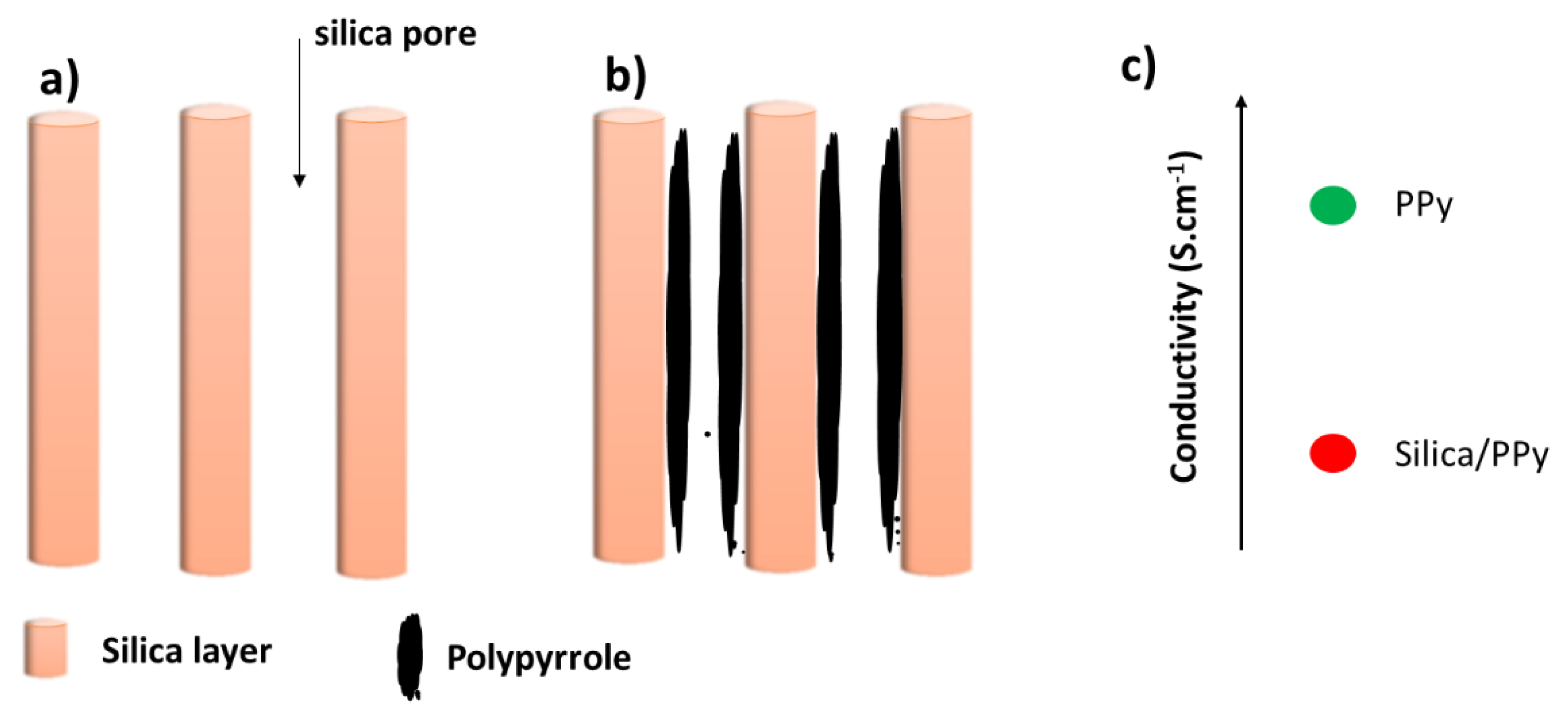
Scheme 1. Schematic representation of a) the silica layer and b) the Silica surface with pores filled with polypyrrole.c) Conductivity variation from PPy to silica/PPy.
Preprints 146874 sch001
Scheme 2. Design strategy for PPy conductor on a silica layer on bare ITO (top) and ITO-modified by diazonium (bottom).
Preprints 146874 sch002
Scheme 3. Upper panel: Cyclic voltammetry of the electropolymerization of polypyrrole films on the bare and modified flexible ITO electrode. Low panel: Evolution of the conductivity of PPy associated with silica layer from f-ITO bare to f-ITO-modified by diazonium.
Preprints 146874 sch003
Figure 1. (A) Electroreduction by CA at E=-1.1 V for 120 s. In insert Comparison of the oxidation currents (Ip) presented in the cyclic voltammetry, with the different ITO electrodes modified by NH2-Si(t) with the indicated times. (B) Cyclic voltammograms obtained for 1 mM Fe(CN)6 3-/4- and 0.1 M KCl with a scanning rate of 50mV/s.
Preprints 146874 g001aPreprints 146874 g001b
Figure 2. Cyclic voltammetry of the electropolymerization of pyrrole in an aqueous solution containing 0.1 M pyrrole and 0.1 M benzenesulfonic acid (ABS) at a scan rate of 100 mV.s-1 for 10 cycles. on an A) f-ITO electrode bare B) f-ITO-Si(30) C) f-ITO-NH2-Si(30).
Preprints 146874 g002
Figure 3. SEM images of f-ITO bare (A), f-ITO-Si(30) (B), f-ITO-Si-PPy (C), and f-ITO-NH2-Si(30)-PPy (D).
Preprints 146874 g003aPreprints 146874 g003b
Figure 4. XPS survey regions of (a) ITO, (b) ITO-Si(30), (c) ITO-NH2-Si(30), (d) ITO-Si(30)-PPy (e) ITO-NH2-Si(30)-PPy.
Preprints 146874 g004
Figure 5. High resolution of Si2p from f-ITO-Si(30) to f-ITO- NH2-Si(30) (A), and peak-fitted N1s regions f-ITO-NH2-Si(30) (B) and polypyrrole on f-ITO-NH2-Si(30) (C), High resolution of S2p of f-ITO- NH2-Si(30)-PPy (D).
Preprints 146874 g005aPreprints 146874 g005b
Table 1. Comparison of electrochemical performances of f-ITO-NH2-Si(t) electrodes.
Electrodes I p a × 10 2 (µA/cm2) I p c 10 2 (µA/cm2) I p a I p c E p a (mV) E p c (mV) Δ E p
ITO-NH2-Si(20) 42.86 33.96 1.26 322.73 133.43 189.3
ITO-NH2-Si(30) 88.92 95.63 0.92 278.22 84.12 194.1
ITO-NH2-Si(45) 67.91 58.9 5.43 365.36 6.81 340.51
ITO-NH2-Si(60) 53.65 81.47 0.65 368.28 -30.58 398.86
ITO-NH2-Si(120) 10.67 - - - - -
Table 2. XPS determined surface elemental composition.
Materials Si O C N S In Sn
f-ITO - 39.1 32.5 - - 25.4 3.06
f-ITO-Si(30) 27.90 56.41 14.16 - - - -
f-ITO-NH2-Si(30) 8.9 42.44 30.16 3.6 - 11.28 5.31
f-ITO-Si(30)-PPy 12.54 30.40 41.98 7.26 7.81 - -
f-ITO-NH2-Si(30)-PPy 3.82 15.33 77.22 12.21 2.22 - -
Disclaimer/Publisher’s Note: The statements, opinions and data contained in all publications are solely those of the individual author(s) and contributor(s) and not of MDPI and/or the editor(s). MDPI and/or the editor(s) disclaim responsibility for any injury to people or property resulting from any ideas, methods, instructions or products referred to in the content.
Copyright: This open access article is published under a Creative Commons CC BY 4.0 license, which permit the free download, distribution, and reuse, provided that the author and preprint are cited in any reuse.
Prerpints.org logo

Preprints.org is a free preprint server supported by MDPI in Basel, Switzerland.

Subscribe

Disclaimer

Terms of Use

Privacy Policy

Privacy Settings

© 2025 MDPI (Basel, Switzerland) unless otherwise stated