Preprint
Article

This version is not peer-reviewed.

High Propagule Pressure and Patchy Biotic Resistance Control the Local Invasion Process of the Tree Ligustrum lucidum in a Subtropical Forest of Uruguay

A peer-reviewed article of this preprint also exists.

Submitted:

21 January 2025

Posted:

22 January 2025

You are already at the latest version

Abstract

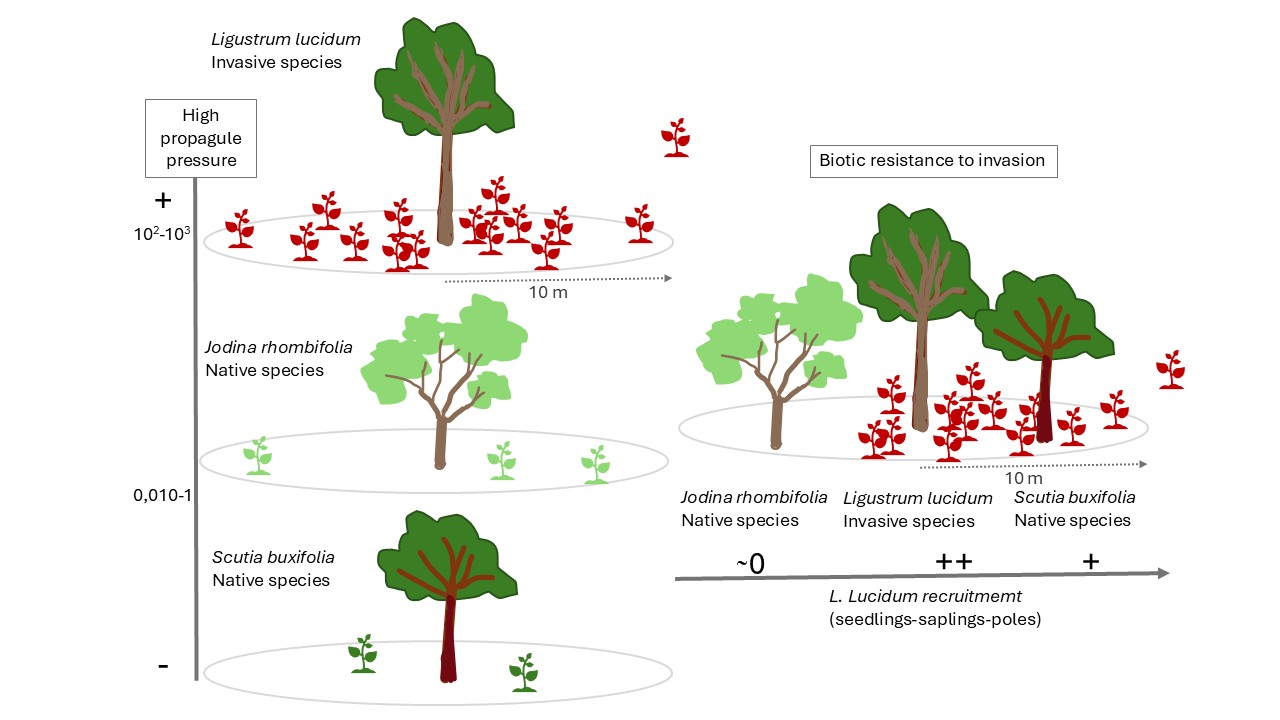
The tree Ligustrum lucidum (W. T. Aiton, Oleaceae), native to East Asia (China), has become an aggressive invader of subtropical and temperate forests around the world. To understand how its local small-scale spread is controlled, we studied in a subtropical forest of Uruguay the distribution of seedlings, saplings and poles in relation to distance to mother trees and forest stand (48 plots of 4 m-2). The propagule pressure of L. lucidum, estimated through seedlings density, was between 100 and 1000 times higher than that of other species of the community and was concentrated around mother trees (<10m). Spatial variability of seedlings, saplings and poles densities were explained by the interaction between distance to mother trees and forest stand. Significative lower densities were observed in stands dominated by Jodina rhombifolia, and a field survival experiment confirmed lower survival of poles at Jodina stands, demonstrating that some resistance mechanism is operating there. We propose two biotic mechanisms of resistance: herbaceous competition and roots hemiparasitism by J. rhombifolia. We concluded that a high propagule pressure, small-scale dispersal from mother trees and patchy biotic resistance at Jodina stands control the local spread and domination process of the tree L. lucidum in the studied forest.
Keywords: 
;  ;  ;  ;  

1. Introduction

The invasion of ecosystems by exotic plant species is a global phenomenon that generates serious impacts on ecological, economic and social systems [1,2,3,4]. Understanding what factors, processes and mechanisms regulate invasive processes and their effects on ecosystems is crucial to designing effective control and restoration programs.
The tree Ligustrum lucidum (W. T. Aiton, Oleaceae) –glossy privet–, is native to East Asia (China), became an aggressive invader of subtropical and temperate forests around the world [5,6]. It is currently present on all continents except Antarctica [5], has expanded its invasion range into humid tropical areas [7], and its potential global distribution could reach 14,201,846 km2, an area slightly smaller than the size of South America [6].
Ligustrum lucidum has several life history traits that explain its high invasiveness [8], such as its high seed production [9], its fleshy fruits, attractive to birds, that favor the dispersal of its seeds [10], and its rapid growth in height, both in the shade and in direct sunlight, which allows it to dominate the forest canopy [11]. In advanced stages of invasion, this evergreen species forms almost monospecific patches, dominates the canopy and generates low light conditions in the understory, hindering the establishment and growth of most species of trees, shrubs, lianas and epiphytes, ultimately resulting in the reduction and even exclusion of several native plant species [12,13,14,15,16]. Privet invasion has also consequences for animal diversity (e.g., soil invertebrates, birds) and ecosystem services (e.g., water provision) [5,17,18].
In Uruguay, privet is one of the main threats for forest conservation, since it has become established in 13.4% of the forest lands, however, for the moment it has only come to dominate the forest canopy, displacing native trees, in the 1.2% [19]. The invasion of Uruguayan forests by L. lucidum is in the spread and impact stages, currently in expansion from the original focus localized in the S-SW region of the country [19]. In our opinion, the strategy for managing the invasion of privet in Uruguayan forests should focus on the one hand, on preventing the invasion in those forests not colonized by privet, through monitoring and early warning. On the other hand, the strategy should promote the control or containment of the invasion in forests not yet dominated, especially in those that are relevant for conservation, and that have human resources to carry out management measures. Our research aims to contribute to this last type of management recommendation, that could apply to about 10 % of the Uruguayan forests, invaded but no dominated yet.
Seedling recruitment represents a major filter to the spread of a species in a new habitat and is often limited by seed rain and microsite availability, but also by biotic interactions both negatives and positives [20]. The success of an invasive process depends on the balance between two opposite forces that vary in space and time, the propagule pressure that promotes invasion, and ecosystem resistance that tends to limit or reduce it. “Propagule pressure” is defined as the number of individuals (or any organism parts capable to become an individual, like plant seeds or animal eggs) introduced into a new site and is calculated as the number of introduction events by the number of individuals per event [21,22]. The concept of “ecosystem resistance” was early introduced in the ecological literature, to describe the forces, abiotic and biotic, that hinder the establishment of alien species in a new site, by affecting its growth, survivorship or reproduction [23]. Ecosystem resistance represents the other side of the coin of what we call “invasibility”, defined as the susceptibility of a given local ecosystem to being invaded by a certain exotic species [23]. To understand how the local small-scale spread of L. lucidum is controlled, we studied here its recruitment in an invaded but not yet dominated forest in Uruguay, with the aim of evaluating its propagule pressure, its dispersal and detecting possible factors that generate ecosystem resistance. Three main questions are addressed: (1) How important is the propagule pressure of L. lucidum with respect to the native trees? (2) How does the L. lucidum recruitment vary in space with respect to mother trees? (3) Does forest invasibility to L. lucidum vary with forest stands?
We first describe the overall seedlings, saplings and poles densities of L. lucidum and other exotic and native trees in the forest. Second, we assess the effects of forest stand and distance to mother trees on L. lucidum regeneration (seedlings, saplings and poles). Third, we analyze the effect of forest stands on the survival of L. lucidum poles. Finally, the effect of previous control activities (tree felling, 10 years ago) on current recruitment was analyzed.
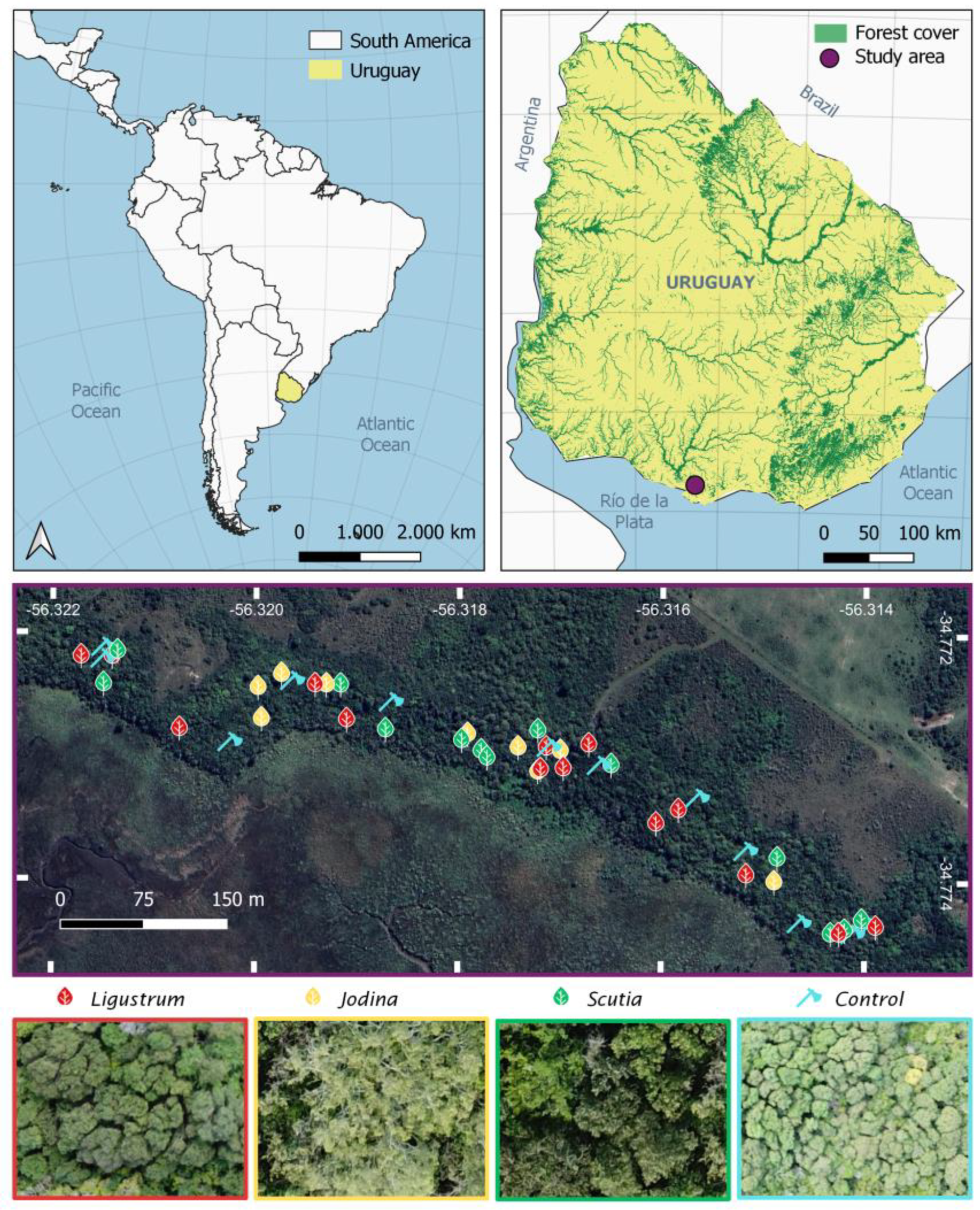
Figure 1. Study area and field sampling plots distribution. Upper panel: Uruguay location and Uruguayan forest cover. Mid panel: Distribution of 48 sampling plots (2x2 m) randomly allocated into four stand types, depending on the canopy dominant tree species: Ligustrum lucidum, Jodina rhombifolia, Scutia buxifolia and Control sites (L. lucidum adult trees felled 10 years ago). Lower panel: Canopy photographs of each type of stand: Ligustrum, Jodina, Scutia and Control.
Preprints 146748 g001

2. Results

2.1. Regenerating Species Assemblage and L. lucidum Propagule Pressure

We identified 16 tree species in the regenerating assemblage of Melilla´s forest, half of them being exotic (Table 1). L. lucidum had the highest densities, which at the seedling stage were between 100 and 1000 times higher than the other species, both exotic and native. Among native species, Blepharocalyx salicifolius had the highest densities, but this was more than 200 times lower than the L. lucidum at the seedling stage, and about 10 times lower at the sapling and poles stages.
These results clearly indicate that L. lucidum propagule pressure is in Melilla´s forest between one and two orders of magnitude higher than the other species, both exotic and native (Figure 2). According to our sampling, L. lucidum represented 99% of the seedling assemblage, and approximately 88% of the saplings and poles assemblages, including all native trees and the rest of exotics.
The survival of L. lucidum described a typical type III survival curve, with maximum mortality during the early stages (seedlings to saplings), that decreases in more mature stages (saplings to poles) (Figure 2). Assuming stability in recruitment and mortality rates, we estimated that only 6.1% of seedlings survive until become a sapling, and only 2.2 % survive to the stage of pole. Despite the high mortality experienced by seedlings, the density of L. lucidum individuals reaching the pole stage exceeds the density of all other plants combined, both native and exotic (Figure 2).
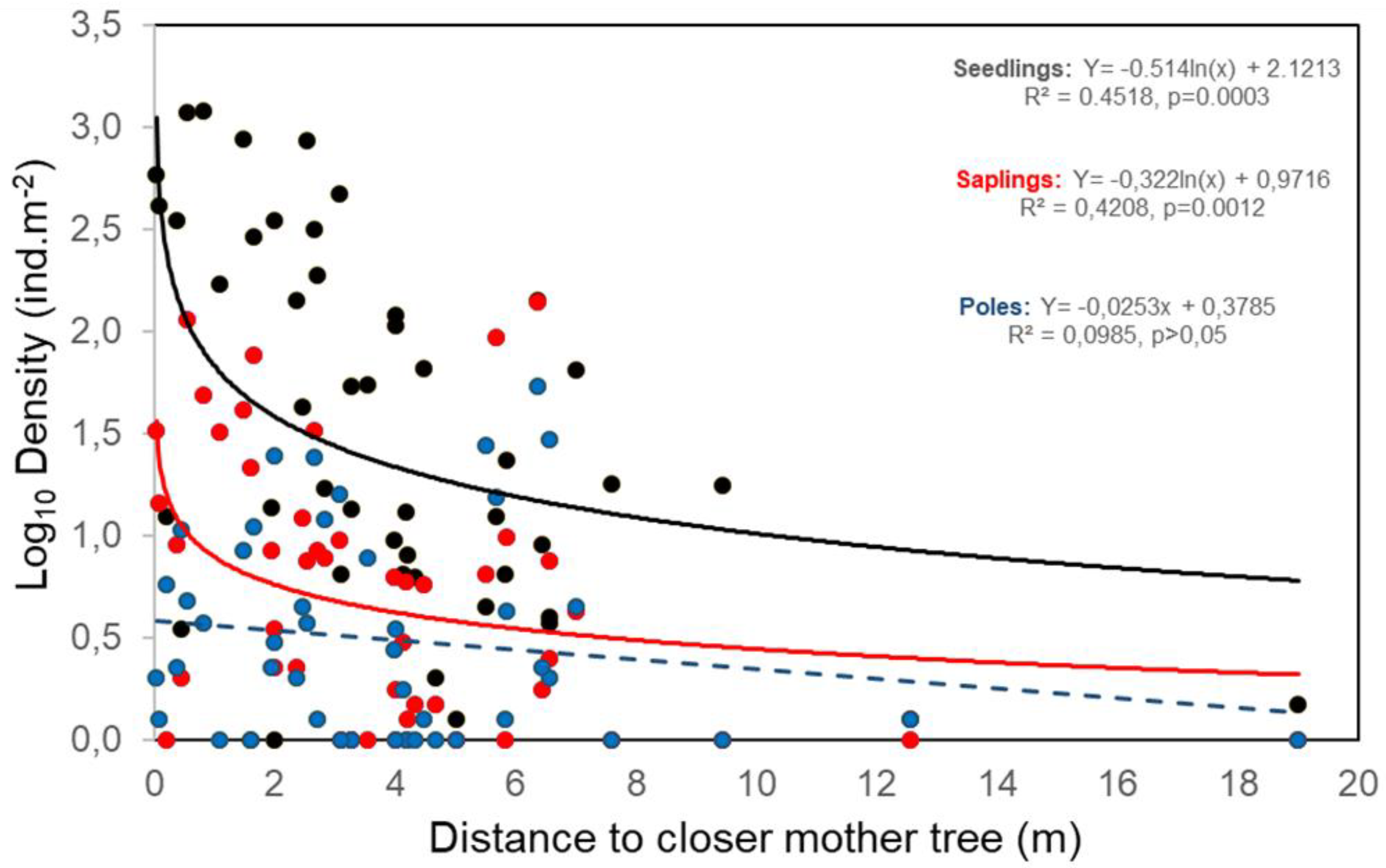
The seedling dispersal of L. lucidum presented a very localized pattern around closer mother trees, fitting a logarithmic decay with increasing distance (Figure 3). Most seedlings were recruited within 10m of the nearest mother trees, whereas the occurrence of seedlings at largest distances was relatively rare. The effect of seed source was also evident at the stage of sapling, since a logarithmic decay with distance to closer mother tree was observed (Figure 3). At the pole stage the effect of the seed source faded, since the linear trend of density reduction with distance was not statistically significant (Figure 3). However, this effect became significative when forest stand was incorporated in the model (see below Section 2.2).

2.2. Exploring Determinant of L. lucidum Recruitment

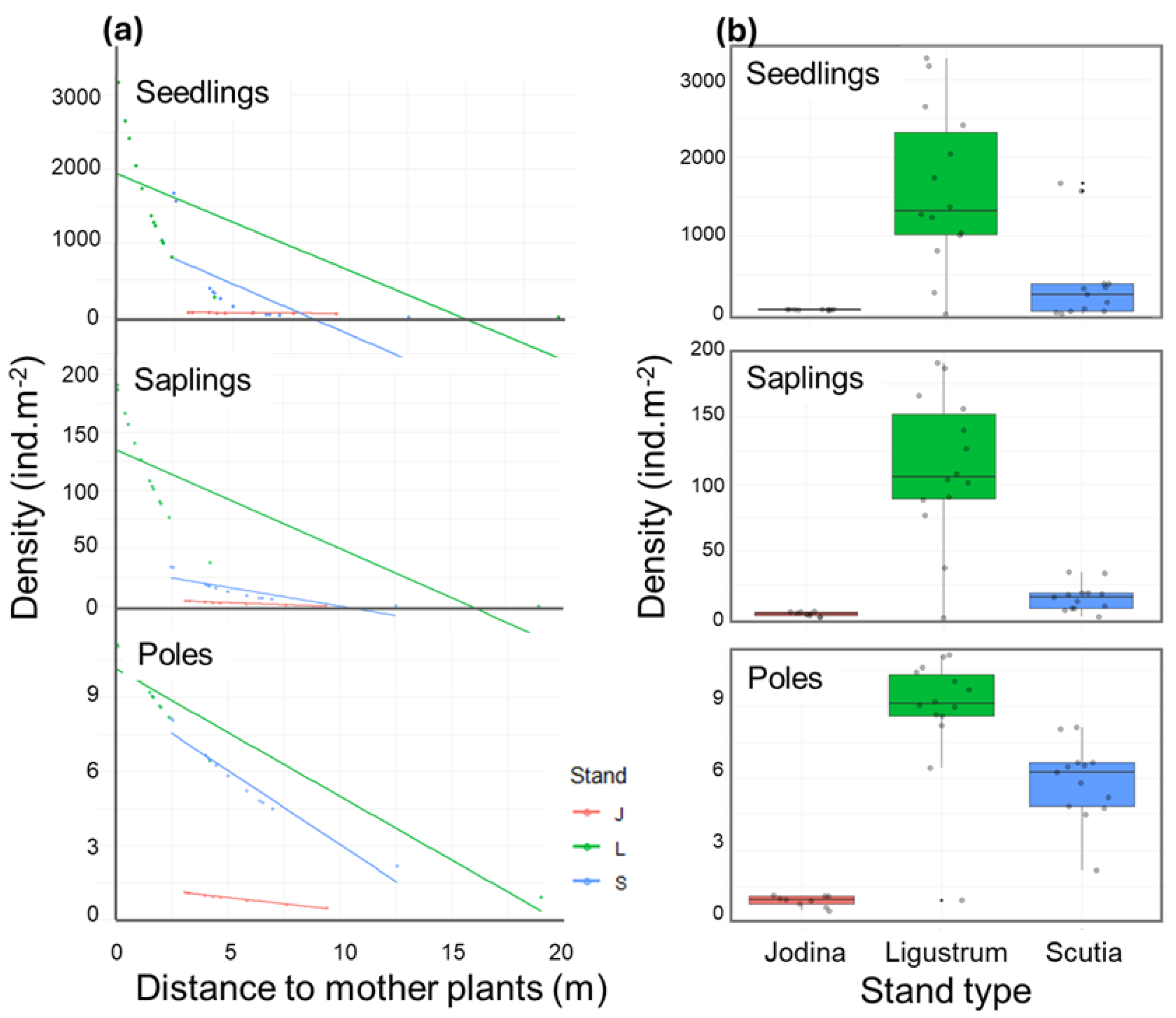
The spatial variability observed in the densities of seedlings (coefficient of variability: CV=245%), saplings (CV=196%) and poles (CV=182%) of L. lucidum was very high. The seedling´s variability was explained by the effects of stand type and primary by the distance to closer mother tree in interaction with stand type (Table 2). Seedling density decreased rapidly with distance to mother tree under Ligustrum and Scutia stands, up to 2-3 m from mother trees, the density is in the order of hundreds to thousands of individuals per square meter, between 3 and 10 m distance, the density drops from hundreds to tens, and at greater distances the density becomes almost constant with few individuals per square meter (Figure 4). However, in Jodina stands the density of seedlings was one or two orders of magnitude lower than in Ligustrum and Scutia stand and was relatively independent from the distance to mother tree (Figure 4).
In the case of saplings, the spatial variability was explained by stand type and distance to closer mother trees, and no significant interactions between these variables were detected (Table 2). Saplings density showed a similar pattern to that of seedlings, but an order of magnitude lower. Density decreased rapidly with distance, and was highest in Ligustrum stands, intermediate under Scutia and lower under Jodina stands (Figure 4).
Finally, poles density was also affected by distance to mother trees and stand type (Table 2), showing a density pattern comparable to the previous stages, with values ​​one order of magnitude lower (tens of individuals) than the seedlings (Figure 4). Density of poles decreased with distance to mother tree, with higher values in Ligustrum and Scutia stands, than in Jodina’s (Figure 4).

2.3. Survival Experiment: Assessing Stand Type Effects

In addition to the expected pattern of offsprings dispersion around mother trees, we detected a clear spatial pattern of reduced L. lucidum regeneration in Jodina stands (Figure 4b). Regardless of proximity to mother trees, the density of seedlings, saplings and poles was much lower in Jodina stands than in Ligustrum stands but was also lower than in Scutia´s. This pattern suggests that L. lucidum regenerants recruited in Jodina stands have lower survival. To test this hypothesis, we conducted a natural experiment to track the survival of nearly a thousand poles naturally recruited in different stand types over 1-3 years.
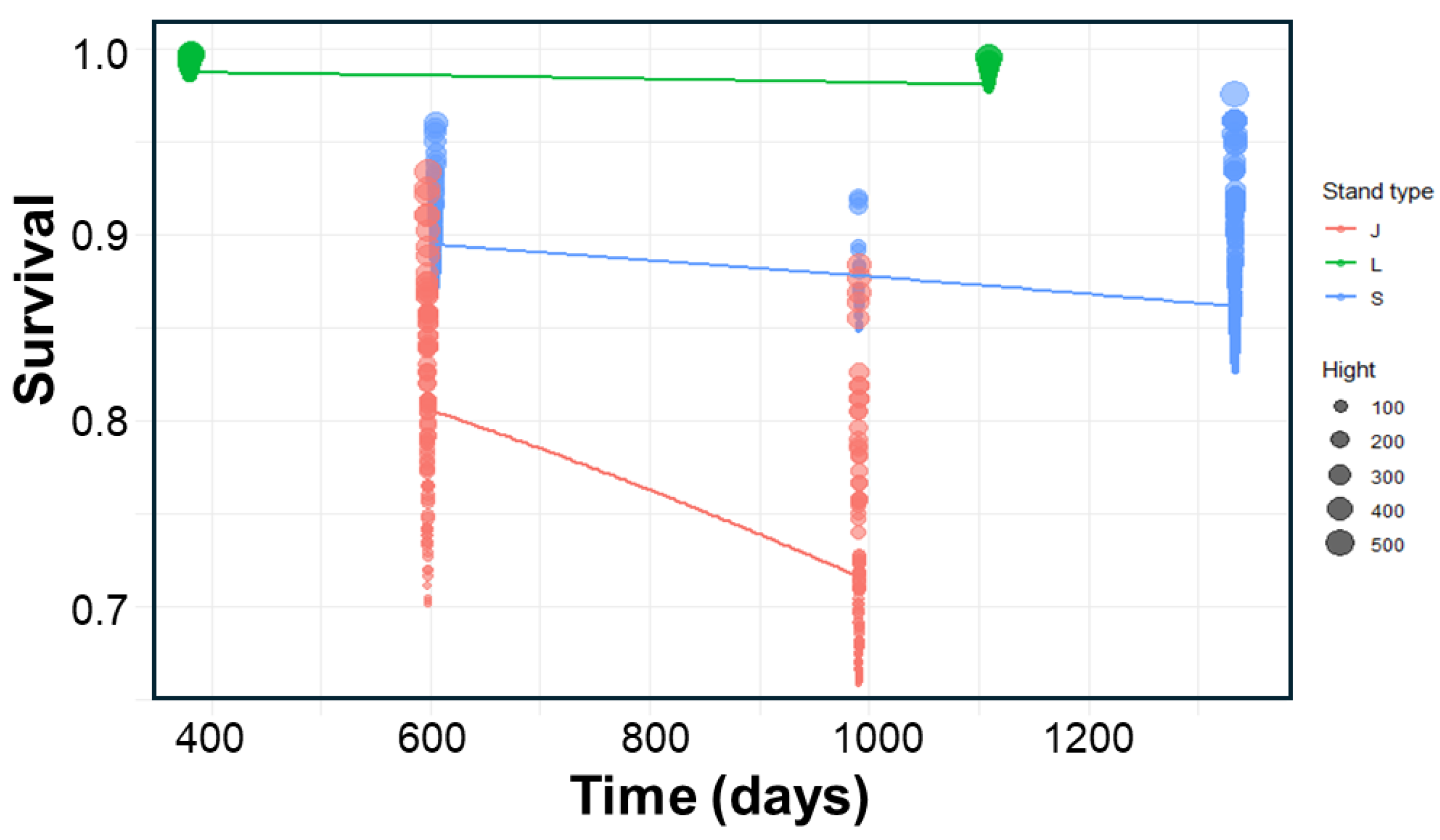
The best logistic model fitted included significant effects of stand type and poles height, while time did not have significant effect (Table 3). Survival was highest in Ligustrum stand (Mean: 0.98, IC95%:0.96-1.0), intermediate in Scutia´s (Mean: 0.86, IC95%:0.80-0.92), and lowest in Jodin´s (Mean: 0.75, IC95%: 0.66-0.84), and tended to increase slightly with the height of poles (Table 3, Figure 5).

2.4. Possible Underlying Factors Behind Stand Type Effects

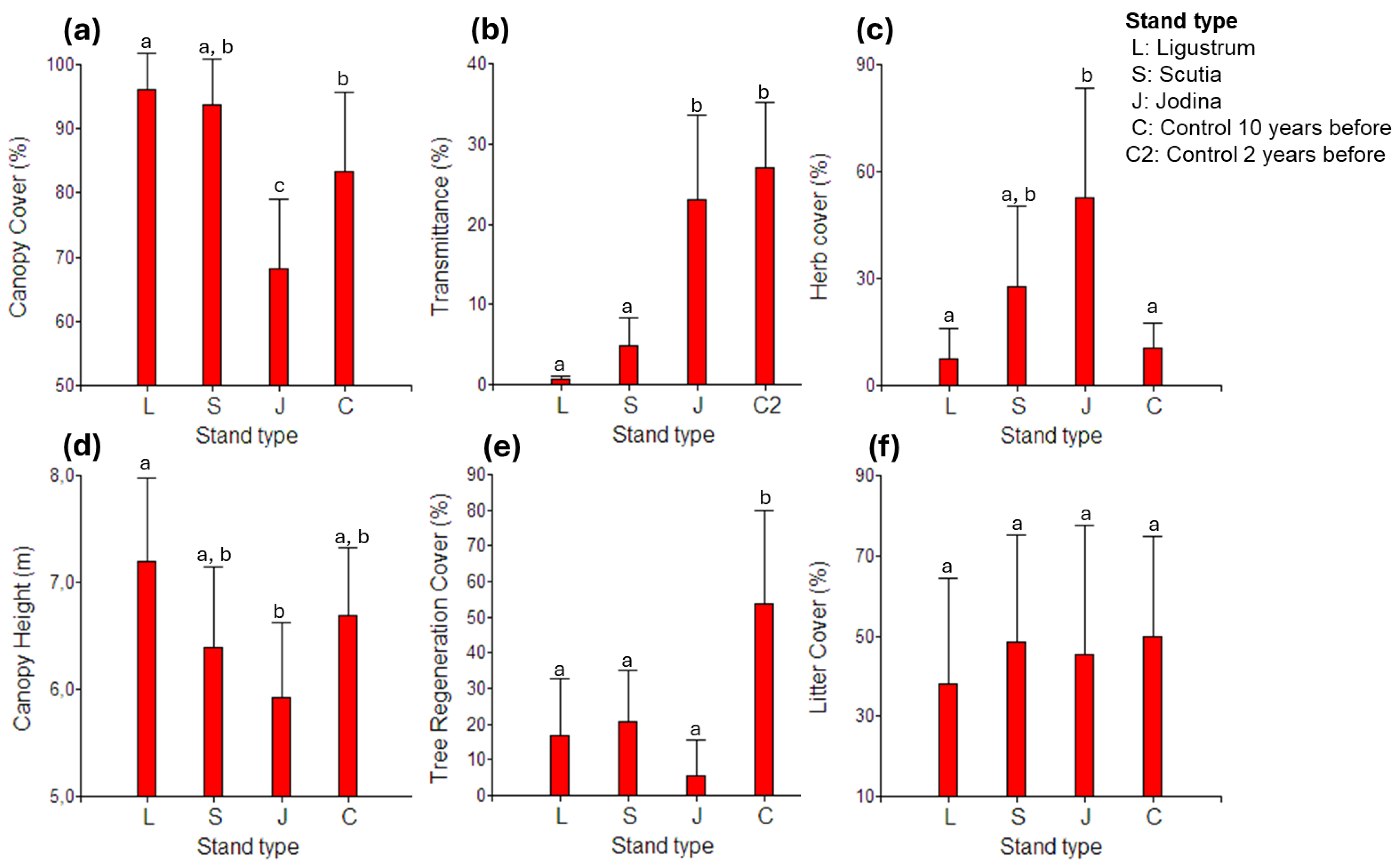
Several physiognomic and environmental differences were detected among the stand types we studied here (Figure 6). The stands of Ligustrum, Scutia and Control (ten years before) presented closed canopy, with covers of 85-95%, contrasting with the relative open Jodina´s stands (60-70% cover) (Figure 6a). This difference was reflected in the proportion of light reaching the understory, with very low transmittance in the stands of Ligustrum (mean±SD: 0.6±0.4%) and Scutia (4,9±3.8%), and higher in Jodina´s stands (23.0±11.6%), with similar values to relative open sites where L. lucidum had been recently (2 years before) controlled (Figure 6b). The shrub covers were in general low, around 1-2% in all stand types, except in Scutia´s stands, where was about 5% (not presented data). However, herb cover showed an important variability among stand types, with high values in Jodina´s stand (˜60%) and low (10-25%) in the rest of the stands (Figure 6c). In Jodina´s stand, the herb layer was always dominated by Melica sarmentosa Ness, a native perennial herbaceous of the Poaceae family. Forest height was low in general, slightly higher in Ligustrum stands (7 m) than in Jodina´s (6 m) (Figure 6d). Tree regeneration cover (from seedlings to poles) was high (50%) in the controlled stands (i.e., tree fell 10 years ago), and relatively low (5-10%) in the rest of the stands (Figure 6e), while litter cover was similar in all stands, varying around 40-50% (Figure 6f).

2.5. Effects of Previous Control Activities on Current Recruitmet of L. lucidum

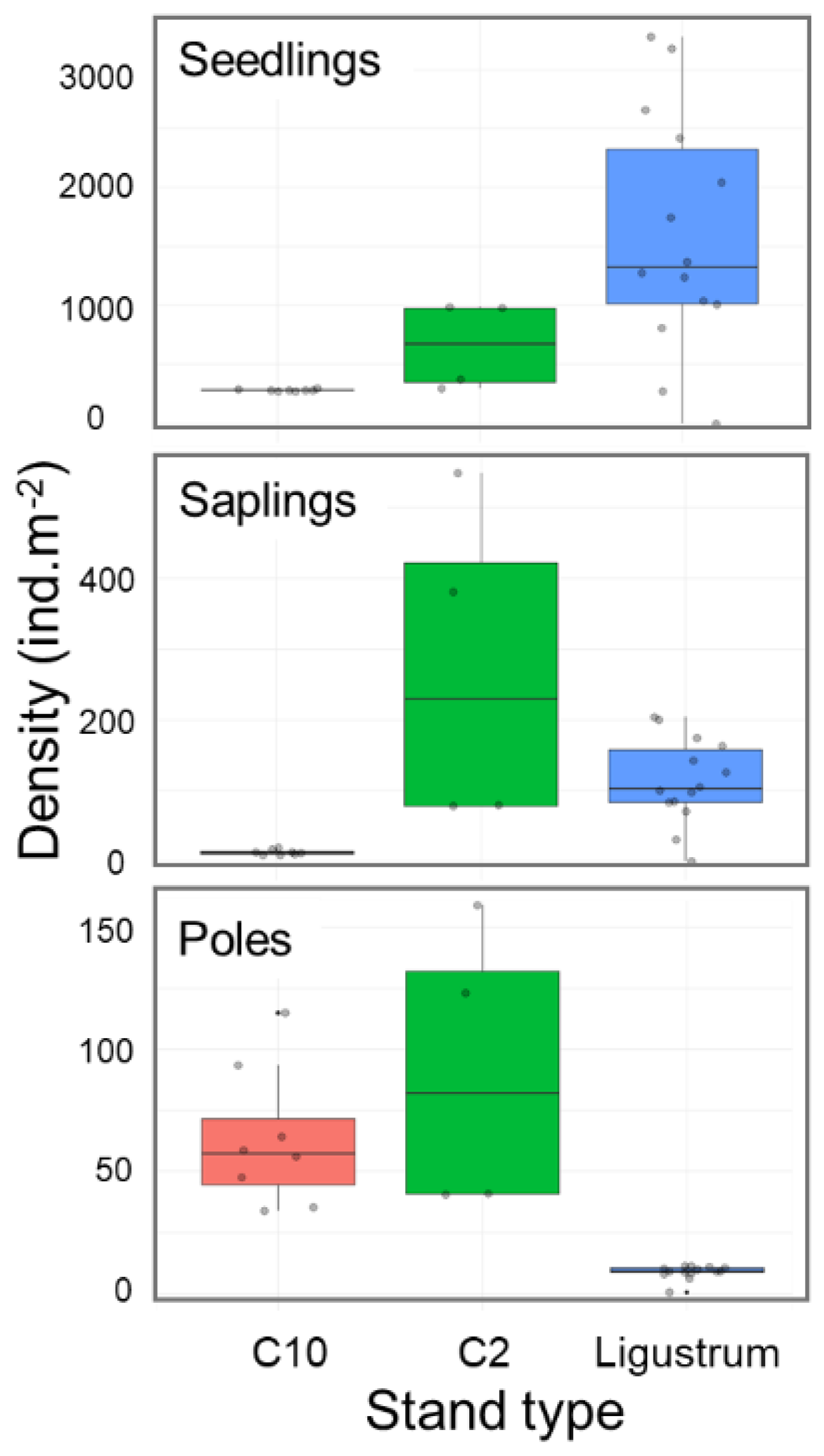
We compared the regeneration density of L. lucidum (seedlings, saplings and poles) in Ligustrum stands (i.e., invasion without control) with controlled stands, both 2 and 10 years before our sampling, to assess the effects of adult tree control on posterior regeneration success. The best models fitted for seedlings, saplings and poles included the effects of control type (C2, C10, Ligustrum) and distance to closer mother tree in interaction with control type (Table S1). We found that seedling density was strongly reduced (80-90% on average) in controlled stands, in comparison with uncontrolled stands, especially in old controls (10 years old) (Figure 7). Saplings density was also strongly reduced (89% on average) in stands controlled 10 years ago, with respect to Ligustrum stands, but in stands controlled 2 years ago the pattern was reversed, with a density that on average was more than twice that observed in unmanaged stands (Figure 7). At the stage of poles, the highest density was registered in the controlled stands, seven to ten times greater than in Ligustrum stands (Figure 7).

3. Discussion

3.1. High Propagule Pressure of L. lucidum

Propagule pressure is a key factor of plant invasion [22], and it has been quantitatively recognized as a significant characteristic of invasion in trees [24,25]. Indeed, it is currently recognized that propagule pressure needs to be integrated as a basis of a null model when studying the process of tree invasion [26].
How important is the propagule pressure of L. lucidum with respect to the native trees? We used here the density of seedlings as proxy for the propagule pressure of L. lucidum in Melilla´s forest. The estimated mean seedling density was 253.7 ind.m-2, with a maximum of 1200 ind.m-2, which agree with global antecedents of 200 to >600 per m2 in the invaded areas [5]. Sixteen regenerating tree species were identified in the Melilla´s forest, of which half were exotic. Ligustrum lucidum had by far the highest seedling density, which was between 2 and 3 orders of magnitude higher than the other species, whether natives or exotics. The second most important species in the seedling community was B. salicifolius, a very common native tree, which had a density 250 times lower than L. lucidum. This result clearly shows the very high propagule pressure of L. lucidum within the seedling community of the Melilla´s forest, which undoubtedly plays a central role in the success of its invasion. The predominance of L. lucidum propagule pressure over the native tree flora has been previously documented, both at the stages of seedling [10] (e.g., Aragón & Groom 2003) and seeds, produced by trees and stored in soils [11,27].
The high seed production, that could be as high as 100.000–10.000.000 seeds per tree and per year, the high germination rate (70-95%) and wide environmental tolerance [5], explain the high propagule pressure of L. lucidum. However, experimental evidence produced in Brazil indicates that germination rate is high when seeds are released at short stage after fruit abscission, but low rates of germination were observed in all stored seeds, indicating low vigor related to loss and possibly to consumption of reserve material for embryo support during the 20 days of storage [28]. Thus, the propagule pressure and therefore the invasive potential of L. lucidum seems to be more associated to the great number of seeds produced, than to their germination potential (rusticity).

3.2. Small-Scale Dispersal from Parental Trees

How does the L. lucidum recruitment vary in space with respect to the mother trees? We found that most seedling dispersal exhibited a highly localized pattern around mother trees, fitting a decreasing logarithmic pattern with increasing distance. Most seedlings were recruited within 10m of the nearest mother plants, whereas the occurrence of seedlings at largest distances was relatively rare. Surely, most of the seedlings recruited within 10m radius from mother trees come from seeds directly fallen from trees (i.e., seed rain).
However, birds mediated dispersal of seeds can also be of short distance inside dense forests. Powel and Aráoz [29] analyzed bird-mediated dispersal of L. lucidum seeds in a secondary forest and surrounding crop-fields, at the Yungas biome (northeastern Argentina), and found that seeds are transported shorter distances in dense forest than in less dense areas. They concluded that L. lucidum seeds are dispersed low distances inside the forest, because tree density reduces dispersal distances by birds, suggesting that the invasion that occurs within the forest can be delayed in dense forests.
While long-distance dispersal mediated by bird frugivory is a relevant regional process for the invasion (colonization) of new localities [10,11,29], at a local scale, nearby dispersal mainly by seed rain seems to play a central role in the process of local spread and domination. This implies that within a certain temporal frame, some type of dispersal limitation may occur, even for invasive trees such as L. lucidum, providing some opportunities for the management of the invasion process.
The signal of the seed source effect on seedlings density was also evident at the stage of saplings (on average 1-2 years old), since their density also exhibited a logarithmic decrease with distance to closed mother trees. In poles (on average 2-5 years old), the signal of the seed source effect was not clear when the data of all stand types were analyzed together, but it was evident when Ligustrum and Scutia stands were considered separately.
These results are consistent with the relative low spread velocity observed in the field in Cordoba (Argentina), with values ranged between 11 and 12.5 m.yr-1, slightly lower than the 13.69 m.yr-1 predicted by a model [30]. Discrepancies between simulation and field values are due to the effects of habitat and biotic interactions [30].

3.3. Biotic Resistance in Jodina´s Stands to L. lucidum Invasion

We asked whether ecosystem resistance to L. lucidum invasion varies among different forest stands? We found dramatic differences between the very high and high densities of seedlings, saplings and poles observed in Ligustrum and Scutia stands, compared to the low densities registered in Jodina stand. At the same distance to nearest mother trees, and therefore probably receiving comparable seed-rains, seedling recruitment is drastically lower in Jodina stands. The same pattern was observed at the stages of saplings and poles, suggesting the survival of L. lucidum is reduced by the ecological conditions of Jodina stands. By tracking the survival of almost a thousand poles naturally recruited in different stand types over 1-3 years, we demonstrated that survival at Jodina stands (75%) is lower than the estimated in the Scutia and Ligustrum stands (86-98%). These results show that some process of ecosystem resistance operates in the Jodina stands, which translates into a reduction in the seedling recruitment rate and a higher mortality rate of saplings and poles.
We propose two non-exclusive hypotheses to explain the ecosystem resistance at Jodina stands, the first one proposes the interference from herbaceous vegetation as the mechanism. Mazia et al. [31] carried out field experiments sowing seeds of exotics trees in grasslands and found a strong limitation in seedlings emergence in the case of L. lucidum, and important seedling mortality in other three woody exotic species. In fact, the addition of seed to grassland did not produce any seedlings of L. lucidum in their assays. Finally, they suggested that the spread of exotic woody plants, including L. lucidum, into remnants of mesic pampean grassland can be strongly reduced by interference from resident vegetation. Based on these antecedents, generated in the same region and biome of our study area, we propose that herbaceous vegetation, which reaches high coverage in Jodina stands, via competition reduce seedling recruitment and the survival of saplings and poles. The herbaceous cover in Jodina stands (60%) is twice that in Scutia´s, and it is six times greater than in Ligustrum´s. This is explained because the foliage architecture of J. rhombifolia trees generate relatively open canopies, allowing greater entry of light into the understory. The native grass Melica sarmentosa, typical pioneer species of forest gaps, dominates the herbaceous layer in Jodina stands. This species is therefore the main candidate to further evaluate the competition hypothesis between herbaceous plants and L. lucidum.
Our second hypothesis proposes the mechanism of roots hemiparasitism by J. rhombifolia. An interesting feature of J. rhombifolia is that it is a hemiparasite tree, capable of removing water and mineral nutrients from host plants through haustorial connections with roots, as was documented in the case of C. tala and S. buxifolia in Argentina [32]. Root hemiparasitic plants both compete with and extract resources from host plants, they are generalists and attach to and parasitize a wide variety of hosts simultaneously, mainly the dominant hosts [33]. It was suggested that generalist native adversaries, such as hemiparasitic plants, may impede the success of invaders due to the lack of defense or tolerance mechanisms of the host plants against parasitism [34]. In this context, using cultivation experiments it was demonstrated that native root hemiparasites can effectively decrease alien clonal plants’ biomass production and shoot density [35]. Based on this evidence, although mostly associated with herbaceous plants, we propose that through root competition and parasitism, J. rhombifolia reduce the survival of seedlings, saplings and poles of L. lucidum.

3.4. Isolated Control of Adult Trees Is Not Sufficient to Restore Forests Invaded by L. lucidum

The previous control of L. lucidum adult trees (i.e., cutting and application of herbicide on stumps) carried out in the area 2 and 10 years before our sampling have generated undesirable changes in the forest. Although the control strongly reduced the present-day density of seedlings, due to the reduction of seed source, it generated higher densities of saplings (2 times) and mainly of poles (7-10 times). The cutting of adult trees generated at that moment an opening of the canopy, which surely allowed more light to reach the forest floor, stimulating the survival and growth of L. lucidum seedlings. Currently, the stands controlled 10 years before our sampling are severely invaded by poles and adult trees of L. lucidum, the species dominating the canopy. Therefore, the control activity carried out, focused exclusively on the removal of adult trees, clearly failed to restore the invaded stands.
This experience shows the importance of assessing the successful of control methods of tree invasions not only in the short-term with respect to the mortality of adult trees, nevertheless the medium-term probability of re-invasion should also be evaluated, with respect to the survival and growth of saplings. The experience also demonstrates that seedlings and saplings must also be considered in the control strategy of this invasive tree. After killing adult trees, saplings and poles should be removed annually until the seed bank is depleted, which would take about 3 years, according to the viability of seeds. Otherwise, the management could generate counterproductive results.

4. Materials and Methods

4.1. Study Area

The Melilla Forest is included in the national protected area "Humedales del Santa Lucía", at the department of Montevideo, in southern Uruguay (Figure 1). It is a subtropical mesophilic forest, distributed along a sedimentary ravine separating high-dry areas (10 m-isobath) with grasslands, shrublands and woodlands, from low-humid areas (2 m-isobath) dominated by wetlands. The average temperature in the area is 17.3 °C, varying between a minimum of 11 °C in July (winter) and a maximum of 23 °C in January (summer). Annual rainfall is 1142 mm, which is evenly distributed throughout the year, but with strong interannual variability [36].
We studied a forest area of ​​about 12 ha, with variable width (80-150 m) and approximately one kilometer in length (Figure 1). It is a dense (canopy cover>75%), relatively low (6-9 m) and diverse forest (26 native tree species). It has been closed to livestock since 2000. In 1983, a floristic study was carried out in this forest area, which did not report any exotic tree species [37], but 21 years later, a thesis documented the presence of L. lucidum and other exotic woody plants [38]. Nowadays, the forest canopy is dominated by three native species, in decreasing order, Scutia buxifolia Reiss, Celtis tala Planch and Jodina rhombifolia Hook. et Arn., but the fourth position is occupied by the exotic tree L. lucidum.

4.2. Field Sampling

To assess the effects of forest physiognomy on the recruitment of L. lucidum, and other exotic and native trees, in 2016-2017 we surveyed 48 plots (2x2 m) randomly assigned to four stand types (Figure 1): (1) Scutia stand: closed canopy dominated by Scutia buxiflora and understory with low herbaceous cover, (2) Jodina stand: relative open canopy dominated by Jodina rhombifolia and understory with high herbaceous cover, (3) Ligustrum stand: very closed canopy dominated by L. lucidum and understory without herbaceous, and (4) control stand: areas where adult trees of L. lucidum were felled in 2007-2008, ten years before our survey.
Seedlings (height: <10 cm), saplings (height: 10-50 cm) and poles (height: >50 cm and diameter at breast high: DBH ≤ 2,5 cm) of exotic (privet and others) and native tree species were identified and quantified at each plot. In our experience with L. lucidum in Uruguay, on average seedlings are less than 1 year old, saplings are 1- 2 years old, and poles 2-5 years old, or older in some cases. The distances from the center of each plot to the three closest mother trees (i.e., flowering plants with DBH≥10cm) were measured to calculate the mean distance.
We also characterized the physiognomy at every sampling plot by assessing the cover of bare soil, litter, woody debris, and vegetal layers (herbs, shrubs, tree regeneration, canopy trees and emergent trees). We visually estimated vegetation cover by layer. The mean height of each vegetal layer was also measured. Seven plots per stand type (28 in total) were randomly selected to assess the light level in the understory using a multiple-point light sensor (ACCUPAR LP-80). At midday (13-14:30 h) we measured the Photosynthetically Active Range (PAR) (wavelengths between 400 and 700 nm) at each plot (three measures were made at different directions, to obtain a mean value), and in close open-areas, to estimate the transmittance (i.e., the ratio of PAR reaching the sample point to PAR measured in the open).
Between 2017 and 2018, fifteen circular plots of 5 m radius were delimited, three for each stand type, i.e. Ligustrum, Scutia and Jodina, and all poles (height: >50 cm and DBH ≤ 2.5 cm) of L. lucidum were marked and measured (maximum height). The survival (survivor=1, dead=0) of marked individuals was registered in two or three opportunities between 2019 and 2021. A total of 999 individuals were followed between one year (379 days) to more than three years (1333 days).

4.3. Data Analysis

The spatial variability of the density of L. lucidum seedlings, saplings and poles, was modeled using Generalized Linear Models (GLM) with Poisson distribution and log link function. The models assessed the effects of two variables, distance to mother trees (continuous variable) and stand type (categorical variable with three levels: Scutia, Jodina and Ligustrum stands), and the interaction between them (distance-stand).
To assess the effect of the previous control of L. lucidum (i.e., fell adult trees and herbicide application on stumps) on current recruitment success, we compared invaded non-managed stands (i.e., Ligustrum stands) with managed ones (i.e., control stands), both 2 and 10 years before, using GLM with Poisson distribution.
We used GLM to fit logistic regressions with binomial distributions and logit link functions (i.e., ln(p/1–p)), to assess the effects of stand type, initial height and time, on L. lucidum survival. This analysis used survival data (survivor=1, dead=0) from 999 poles tracked during 1 to 3 years. Post hoc comparison between stand types were done using Fisher´s LSD test. The best models were selected according to the Akaike Information Criterion (AIC), i.e., lower AIC value. The normality of the residuals of the models were visually assessed, and the relationships between residual and predicted values were visually analyzed to check for variance homogeneity. All analyses were performed in R version 4.3.0.

5. Conclusions

Understanding the factors that control the spread and dominance of an invasive alien species in a natural ecosystem is crucial for projecting potential impacts on biodiversity and designing effective management strategies. Seedling recruitment represents an important filter for the spread of invasive trees, a process that is usually controlled by the interaction between seed dispersal and the quality and availability of microsites. We concluded here that a high propagule pressure (i.e., seedlings density), small-scale dispersal from mother trees and patchy biotic resistance at Jodina stands control the local small-scale spread of the tree L. lucidum in Melilla´s forest.
In terms of learning to manage the L. lucidum invasion, our results showed that controlling adult trees in isolation is not a recommended method, as it favors the survival and growth of saplings and therefore the reinvasion of the controlled sites. Saplings and poles should also be considered in the management strategy and should be eliminated annually until the seedling and seed banks are exhausted. To reduce the probability of reinvasion in the future by improving biotic resistance, forest management should also promote the persistence and greater abundance of J. rhombifolia.

Supplementary Materials

The following supporting information can be downloaded at the website of this paper posted on Preprints.org., Table S1: Effects of past control activity on L. lucidum trees (fell 10 years ago) on its current recruitment. Best GLM models of density of L. lucidum seedlings, saplings and poles, in Ligustrum stands (invaded no controlled stands), stands where adults of L. lucidum were controlled 2 (C2) and 10 (C10) years before our sampling. Distance from mother trees was also included in the models. The coefficient estimates for stand types were assessed with respect to C10 stands. Significance codes: ‘***’ 0.001, ‘**’ 0.01, ‘*’ 0.05, ‘. 0.1, ‘ ’ 1.

Author Contributions

Conceptualization, A.B.; methodology, A.B.; formal analysis, A.B.; investigation, A.B., C.T., F.H., A.C.; data curation, F.H.; writing—original draft preparation, A.B.; writing—review and editing, A.B.; visualization, A.B., A.C.; supervision, A.B.; project administration, A.B.; funding acquisition, A.B. All authors have read and agreed to the published version of the manuscript.

Funding

This research was funded by CSIC I+D (UdelaR) and Ministerio de Ganadería, Agricultura y Pesca (MGAP) - Dirección General Forestal (DGF) y Ministerio Federal de Alimentación y Agricultura (BMEL) de la República Federal de Alemania - Consorcio Unique Forestry and Land - Use GMBH/Landesbetrieb Hessen Forest y Deutsche Forest Service GMBH UNIQUE (BMEL). The APC was courtesy of the editor of the special issue.

Data Availability Statement

The datasets used during the current study are available from the corresponding author on reasonable request.

Acknowledgments

We would like to thank the authorities of the protected area “Humedales del Santa Lucía”, and to the park ranger Atilio Piovesan for their constant support. To Gerardo Doti, a resident of the area, for giving us access to the study site. Much of the field work was carried out with students from the “Forest Ecology and Conservation” course, which AB teaches at the Faculty of Sciences.

Conflicts of Interest

The authors declare no conflicts of interest.

Abbreviations

The following abbreviations are used in this manuscript:
AIC Akaike Information Criterion
DBH Diameter at Breast Height
CV Coefficient of Variation
GLM General Linear Model
INUMET Instituto Nacional de Meteorología de Uruguay
LSD Least Significant Difference
PAR Photosynthetically Active Range

References

  1. Vitousek, P.N.; D’ Antonio, C.M.; Loope, L.L.; Westbrook, R. Biological invasions as global environmental change. Am. Sci. 1996, 84: 468-478.
  2. Millennium Ecosystem Assessment. Ecosystems and Human Well-being: Synthesis. Island Press, Washington, DC., USA, 2005; https://www.millenniumassessment.org/documents/document.356.aspx.pdf. Accessed 25 Sep 2023.
  3. Pyšek, P.; Hulme, P.E.; Simberloff, D. et al. Scientists’ warning on invasive alien species. Biol. Rev. 2020, 95(6):1511-1534. [CrossRef]
  4. Roy, H.E.; Pauchard, A.; Stoett, P.; Renard Truong, T.; Bacher, S.; Galil, B.S.; Hulme, P.E.; Ikeda, T.; Sankaran, K.; McGeoch, M.A.; et al. IPBES Invasive Alien Species Assessment: Summary for Policymakers; IPBES: Bonn, Germany, 2024. [CrossRef]
  5. Fernandez, R.; Ceballos, C.; Aragón, R.; Malizia, A.; Montti, L.; Whitworth-Hulse, J.; Castro-Diez, P.; Grau, H.R. A global review of the invasion of glossy privet (Ligustrum lucidum, Oleaceae). Bot. Rev. 2020, 86: 93-118. [CrossRef]
  6. Montti, L.; Velazco, S.J.; Travis, J.M.; Grau, H.R. Predicting current and future global distribution of invasive Ligustrum lucidum W.T. Aiton: Assessing emerging risks to biodiversity hotspots. Divers. Distrib. 2021, 27:1568-1583. [CrossRef]
  7. Dreyer, J.B.B.; Higuchi, P.; Silva, A.C. Ligustrum lucidum W. T. Aiton (broad-leaf privet) demonstrates climatic niche shifts during global-scale invasion. Sci. Rep. 2019, 9: 3813. [CrossRef]
  8. Zamora Nasca, L.; Montti, L.; Grau, R.; Paolini, L. Efectos de la invasión del ligustro, Ligustrum lucidum, en la dinámica hídrica de las Yungas del noroeste argentino. Bosque (Valdivia) 2014, 35(2): 195-205. http://doi.org/10.4067/S0717-92002014000200007.
  9. Aguirre-Acosta, N; Kowaljow, E.; Aguilar, R. Reproductive performance of the invasive tree Ligustrum lucidum in a subtropical dry forest: does habitat fragmentation boost or limit invasion? Biol. Invasions. 2014, 16:1397–1410. [CrossRef]
  10. Aragón, R.; Groom, M. Invasion by Ligustrum lucidum (Oleaceae) in NW Argentina: early-stage characteristics in different habitat types. Rev. Biol. Trop. 2003, 51(1): 59-70.
  11. Montaldo, N. Éxito reproductivo de plantas ornitócoras en un relicto de selva subtropical en Argentina. Rev. Chil. Hist. Nat. 2000, 73: 511-524. [CrossRef]
  12. Grau, H.R.; Aragón, R. Ecología de los árboles invasores de la Sierra de San Javier. In: Grau, H.R.; Aragón, R. (eds.). Árboles exóticos de las Yungas Argentinas. LIEY-UNT, Tucumán, Argentina, 2000, pp 5- 20.
  13. Hoyos, L.; Gavier-Pizarro, G.; Kuemmerle, T.; Bucher, E.; Radeloff, V.; Tecco, T. Invasion of glossy privet (Ligustrum lucidum) and native forest loss in the Sierras Chicas of Córdoba, Argentina. Biol. Invasions. 2010, 12: 3261-3275. [CrossRef]
  14. Ceballos, S.J.; Malizia, A.; Chacoff, N. Influencia de la invasión de Ligustrum lucidum (Oleaceae) sobre la comunidad de lianas en la sierra de San Javier (Tucumán–Argentina). Ecol. Austral. 2015, 25: 65–74. [CrossRef]
  15. Malizia, A.; Osinaga-Acosta, O.; Powell, P.; Aragón, R. Invasion of Ligustrum lucidum (Oleaceae) in subtropical secondary forests of NW Argentina: declining growth rates of abundant native tree species. J. Veg. Sci. 2017, 28(6): 1097-1269. [CrossRef]
  16. Franco, M.G.; Plaza, M.C.; Medina, M.; Pérez, C.; Mundo, I.A.; Cellini, J.M.; Arturi, M.F. Talares del NE bonaerense con presencia de Ligustrum lucidum: Cambios en la estructura y la dinámica del bosque. Ecol. Austral. 2018, 28: 502-512. [CrossRef]
  17. Bellis, L.M.; Astudillo, A.; Gavier-Pizarro, G.; Dardanelli, S.; Landi, M.; Hoyos, L. Glossy privet (Ligustrum lucidum) invasion decreases Chaco Serrano Forest bird diversity but favors its seed dispersers. Biol. Invasions. 2020. [CrossRef]
  18. Whitworth-Hulse, J.I.; Magliano, P.N.; Zeballos, S.R.; Nosetto, M.D.; Gurvich, D.E.; Ferreras, A.; Spalazzi, F.; Kowaljow, E. Ligustrum lucidum invasion alters the soil water dynamic in a seasonally multispecific dry forest. Forest. Ecol. Manag. 2023, 549, 121493. [CrossRef]
  19. Brazeiro, A.; Olivera, J.; Betancourt, A.; Lado, I.; Romero, D.; Haretche, F.; Cravino, A. Disentangling the invasion process of subtropical native forests of Uruguay by the exotic tree Ligustrum lucidum: establishment and dominance determinants. Ecol. Proc. 2024, 13:49. [CrossRef]
  20. Fuentes, M. Frugivory, seed dispersal and plant community ecology. Trends Ecol. Evol. 2000, 15: 487-488. [CrossRef]
  21. Williamson, M. Biological Invasions. Chapman & Hall, New York.1996.
  22. Lockwood, J.L.; Hoopes, M.F.; Marchetti, M.P. Invasion ecology. Blackwell Publishing, Oxford, 2007.
  23. Davis, M.A. Invasion Biology. Oxford University Press, New York, 2009.
  24. Martin, P.H.; Canham, C.D. Dispersal and recruitment limitation in native versus exotic tree species: life-history strategies and Janzen-Connell effects. Oikos 2010, 119:807–824. [CrossRef]
  25. Lamarque L.J.; Delzon, S.; Lortie, C.J. Tree invasions: a comparative test of the dominant hypotheses and functional traits. Biol Invasions, 2011. 13:1969–1989. [CrossRef]
  26. Colautti, R.I.; Grigorovich, I.A.; MacIsaac, H.J. Propagule pressure: a null model for biological invasions. Biol Invasions 2006, 8:1023–1037. [CrossRef]
  27. Diaz Villa, M.V.E.; Madane, N.; Cristiano, P.M.; Goldstein, G. Composición del banco de semillas e invasión de Ligustrum lucidum en bosques costeros de la provincia de Buenos Aires, Argentina. Bosque 2016, 37(3): 581–590. [CrossRef]
  28. Emer, A.A.; Oliveira, M.de.A.; Althaus-Ottmann, M.M. Biochemical composition and germination capacity of Ligustrum lucidum ait. seeds in the process of biological invasion. Acta Scient. Biol. Sci. 2012, 34(3): 353-357. [CrossRef]
  29. Powell, A.A.; Araóz, E. Biological and environmental effects on fine-scale seed dispersal of an invasive tree in a secondary subtropical forest. Biol Invasions. 2017, 20: 461–473. [CrossRef]
  30. Marco, E.M.; Montemurro, M.A.; Cannas, S.A. Comparing short and long-distance dispersal: modelling and field case studies. Ecography 2011, 34: 671-682. [CrossRef]
  31. Mazia, C.N., Chaneton, E.J.; Ghersa, C.M.; León, R.J.C. Limits to tree species invasion in pampean grassland and forest plant communities. Oecologia 2001, 128:594-602. [CrossRef]
  32. Luna, M.L.; Giudice, G.E. Anatomy of the haustorium of Jodina rhombifolia (Santalaceae). Nordic J. Bot. 2005, 24: 567-573. [CrossRef]
  33. Matthies, D. Interactions between a root hemiparasite and 27 different hosts: growth, biomass allocation and plant architecture. Persp. Plant Ecol. Evol. Syst. 2017, 24: 118–37. [CrossRef]
  34. Cameron, D.D.; Seel, W.E. Functional anatomy of haustoria formed by Rhinanthus minor: Linking evidence from histology and isotope tracing. The New Phytologist 2007, 174(2): 412–419. [CrossRef]
  35. Těšitelová, T.; Knotková, K.; Knotek, A.; Cempírková, H.; Těšitel, K. (2024). Root hemiparasites suppress invasive alien clonal plants: evidence from a cultivation experiment. NeoBiota 2024, 90: 97–121. [CrossRef]
  36. Instituto Uruguayo de Meteorología (INUMET). Climatología estacional. Available online: https://www.inumet.gub.uy/clima/climatologia-estacional (Accessed 25 Sep 2023).
  37. Alonso-Paz, E. Descripción de un monte natural en la zona de Melilla, Montevideo, Rep. O. del Uruguay. Discusión de algunos aspectos fitogeográficos. 60-61 p. In: Resúmenes, Comunicaciones III Jornadas de Ciencias Naturales, Montevideo, 19-24 of September, 1983.
  38. Medina, S; Rachid, C. Estudio de una sucesión vegetal en las Barrancas de los Humedales del Río Santa Lucía. Thesis Agronomic Engineer. Facultad de Agronomía, Universidad de la República, Montevideo, Uruguay, 101 p. 2004.
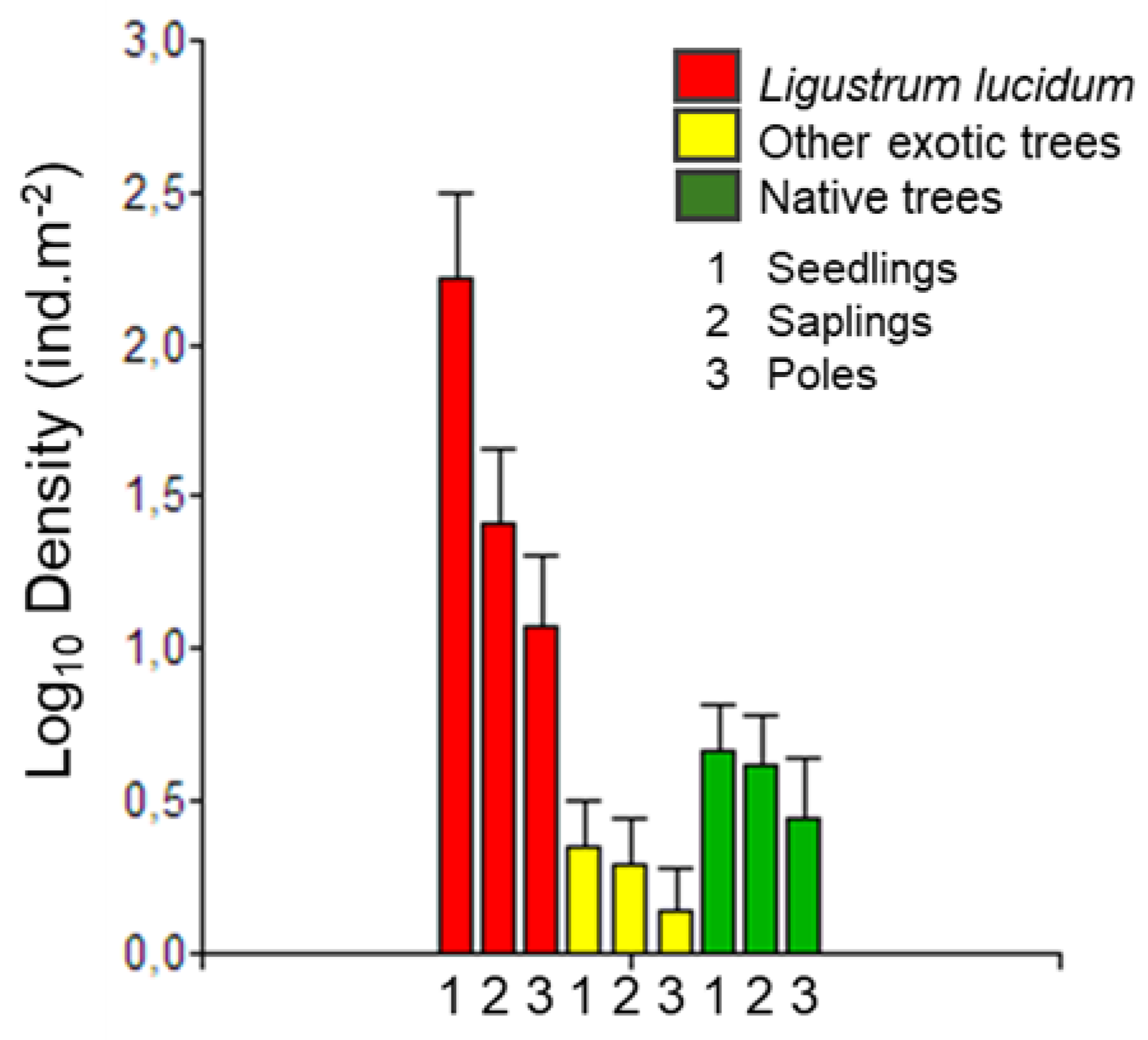
Figure 2. Regeneration density of L. lucidum, other exotics and native tree species in Melilla´s forest. Overall mean values (log10 scale) of seedlings, saplings and poles. Bars indicate IC95%.
Preprints 146748 g002
Figure 3. General dispersal pattern of L. lucidum in Melilla´s forest. Seedling, sapling and poles densities (log10 scale) variation in relation to distance to closer mother trees. Data from all plots (n=48), including the four stand types studied (Jodina, Ligustrum, Scutia, Control) were included in the analysis. The best fitted models are presented.
Preprints 146748 g003
Figure 4. Effects of distance to mother trees and stand type (J: Jodina, L: Ligustrum, S: Scutia) on the densities of Ligustrum lucidum seedlings, saplings and poles in Melilla´s forest. Predictors of the best GLM models fitted are given (see Table 2). (a) Combined effects of distance and stand type. (b) Global effect of stand type represented in box plots.
Preprints 146748 g004
Figure 5. Effects of stand type, individual heigh and time, on the survival of Ligustrum lucidum poles in Melilla´s forest. Predictions of the best model (logit GLM) fitted are given (see Table 3).
Preprints 146748 g005
Figure 6. Physiognomic characterization of the forest stands analyzed. Mean values ​​and confidence intervals (95%) are presented for the main measured descriptors: (a) canopy cover, (b) light transmittance, (c) herb cover, (d) canopy height, (e) tree regeneration cover and (f) litter cover. Different letters indicate significant differences (p<0.05) according to ANOVA and post hoc tests.
Preprints 146748 g006
Figure 7. Effects of control activities on the densities of Ligustrum lucidum seedlings, saplings and poles in Melilla´s forest. Predictors of the best GLM models fitted are given (see Table S1).
Preprints 146748 g007
Table 1. List of regenerating trees in Melilla´s forest. Mean density and standard deviation (SD) of seedlings, saplings and poles are given. Exotic and native species are indicated.
Density (ind.m-2) (SD)
Seedlings Saplings Poles
Exotic species
Ligustrum lucidum W.T.Aiton 253.7 (621.4) 15.5 (30.3) 5.6 (10.2)
Ligustrum sinense Lour. 0.2 (0.3) 0.05 (0.16) 0.03 (0.10)
Laurus nobilis L. 0.03 (0.1) 0.23(0.5) 0.06(0.2)
Cotoneaster sp. 0 0.01 (0.1) 0.02 (0.1)
Pyracantha coccinea M.Roem 0 0.01(0.0) 0.01(0.0)
Phoenix canariensis H.Wildpret 0 0.01(0.0) 0
Morus alba P. 0 0 0.01(0.0)
Pittosporum undulatum Vent. 0 0.06(0.4) 0.01(0.0)
Native species
Blepharocalyx salicifolius (Kunth) O.Berg 1.07(1.47) 1.52(2.10) 0.44(1.62)
Myrsine laetevirens Mez 0.08(0.36) 0.02(0.08) 0.01(0.04)
Jodina rhombifolia (Hook. & Arn.) Reissek 0.07(0.26) 0.02(0.08) 0.01(0.05)
Scutia buxifolia Reissek 0.04(0.09) 0.01(0.05) 0.04(0.15)
Celtis tala Gillies ex Planch. 0.04(0.15) 0.01(0.04) 0.01(0.05)
Acca sellowiana (O. Berg) Burret 0 0.03(0.18) 0.01(0.04)
Eugenia uniflora L. 0 0.01(0.04) 0.01(0.04)
Schinus longifolia (Lindl.) Speg. 0 0.01(0.05) 0
Table 2. Best GLM models of density of L. lucidum seedlings, saplings and poles. The coefficient estimates for stand types were assessed with respect to Jodina stands. Significance codes: ‘***’ 0.001, ‘**’ 0.01, ‘*’ 0.05, ‘. 0.1, ‘ ’ 1.
Estimate Std. Error z value Pr(>|z|)
Seedlings
(Intercept) 4.21835 0.11929 35.36 <2e-16 ***
Distance -0.04003 0.02262 -1.77 0.0768 .
Stand-L 3.89434 0.11970 32.53 <2e-16 ***
Stand-S 5.56176 0.12813 43.41 <2e-16 ***
Distance-Stand-L -0.55919 0.02410 -23.21 <2e-16 ***
Distance-Stand-S -0.91487 0.02656 -34.45 <2e-16 ***
Saplings
(Intercept) 2.7507 0.222 12.381 <2e-16 ***
Distance -0.3899 0.0242 -16.109 <2e-16 ***
Stand-L 2.5125 0.2140 11.738 <2e-16 ***
Stand-S 1.7401 0.2122 8.199 2.43e-16 ***
Poles
(Intercept) 0.518 0.3923 1.307 0.1912
Distance -0.1314 0.0372 -3.532 0.0004 ***
Stand-L 1.9012 0.3836 4.957 7.17e-7 ***
Stand-S 1.9071 0.3717 5.131 2.89e-7 ***
Table 3. Best model (logit GLM) of survival of L. lucidum poles. The coefficient estimates for stand types were assessed with respect to Jodina stands. Significance codes: ‘***’ 0.001, ‘**’ 0.01, ‘*’ 0.05, ‘. 0.1, ‘ ’ 1.
Estimate Std. Error z value Pr(>|z|)
(Intercept) 0.9009358 0.4556859 1.977 0.04803 *
Stand-L 3.1828581 0.4531533 7.024 2.16e-12 ***
Stand-S 1.0696586 0.2555241 4.186 2.84e-05 ***
Height 0.0047637 0.0017515 2.720 0.00653 **
Time -0.0004883 0.0004007 -1.219 0.22299
Disclaimer/Publisher’s Note: The statements, opinions and data contained in all publications are solely those of the individual author(s) and contributor(s) and not of MDPI and/or the editor(s). MDPI and/or the editor(s) disclaim responsibility for any injury to people or property resulting from any ideas, methods, instructions or products referred to in the content.
Copyright: This open access article is published under a Creative Commons CC BY 4.0 license, which permit the free download, distribution, and reuse, provided that the author and preprint are cited in any reuse.
Prerpints.org logo

Preprints.org is a free preprint server supported by MDPI in Basel, Switzerland.

Subscribe

Disclaimer

Terms of Use

Privacy Policy

Privacy Settings

© 2025 MDPI (Basel, Switzerland) unless otherwise stated