

Submitted:
21 January 2025
Posted:
21 January 2025
You are already at the latest version
Abstract
Intimate partner violence (IPV) continues to be a serious public health issue, particularly in Ghana. It is crucial to create evidence-based, preventative measures to stop this practice. The study empirically investigated the factors related to married women's perceptions of wife-beating or IPV. The United Nations Sustainable Development Goals (SDGs) (Goal 5.2) advocate for its elimination by governments, hence the study to monitor the progress being made. The study employed cross-sectional secondary data from Ghana Multiple Indicator Cluster Surveys (MICS) conducted in 2018 with a sample of 14237 women aged 15-49. Data were analyzed using descriptive statistics and bivariate and multivariate logistic regressions, and results were presented in odds ratios (OR) with a confidence interval (CI) of 95%. Women's justification for IPV was correlated with socio-demographic factors such as education level, marital status, age of the woman, area of residence (rural), ethnic background, and economic disadvantage (wealth status). Higher educated women (OR 0.248 [95% CI 0.185-0.332, p 0.001]) were less likely to justify IPV than women with no/less formal education. Women who were in the richest quintile (OR 0.766 [95% CI 0.634-0.926, p = 0.006]) were less likely than those in the poorest/lowest quintile to rationalize/justify intimate partner violence. In terms of ethnicity of the household head, the Ga/Dangme (OR 0.86 [95% CI 0.714-1.036, p= 0.112]) had lower odds of justifying IPV compared to the Akan. The government, through the Ministry of Gender and Child Protection and women’s advocacy groups, should devise strategies, programs, and policies to empower women through formal education and economically through job training and employment support for women and victims to help them achieve financial independence and reduce negative attitudes and prevalence.
Keywords:
justification
; acceptance
; intimate partner violence
; multiple indicators cluster surveys
; Ghana
; wife beating
; violent attitude
; women’s empowerment
1. Introduction
The issue of domestic violence against women has a long history [1]. Women have traditionally been seen as weak, susceptible, and a resource to be taken advantage of [2,3]. In addition, patriarchal structures and practices have facilitated IPV in many societies and communities. For a long time, violence against women has been either accepted or ignored [2]. The Ecological Model, which explains the intimate relationship between people and their environment, can be used to study violence against women committed by their intimate partners. Intimate partner violence (IPV) has been dubbed a pandemic that affects more than 30% of women in intimate relationships worldwide [4,5,6]. The issue of women who believe that IPV is warranted in specific situations is one worrying facet of the phenomenon. Many factors, such as gender roles, socialization, cultural standards, economic dependence, and past experiences of abuse or trauma, might contribute to this notion (Alam & Sultana, 2022; Biswas, Rahman, Kabir, & Raihan, 2017). Various theories have been proposed to elucidate the variables that contribute to the ubiquity of violence, such as social learning, patriarchy, social ecology, and resources. According to the social learning hypothesis, for example, witnessing or being a victim of domestic violence at some point in one's upbringing increases the likelihood of IPV later since such behaviours or attitudes are either accepted or practiced [4]. The patriarchal perspective holds that men's utilization of societal structures and behaviours to establish their dominance over women is the reason behind women's subjugation in a patriarchal society. Recent studies reveal that women are more likely than men to approve of using violence, according to a new study on how gender affects attitudes toward acceptance of IPV [4]. However, little empirical research has been done on how women come to accept violence [4].
It should be mentioned that important presumptions supporting women's attitudes toward violence are also provided by social-ecological and resource theories [7]. The social-ecological model, for example, recognizes that exposure to violence is influenced by human characteristics (biological and personal history), but it also emphasizes the interaction between community and structural factors, particularly concerning the acceptability of violence. The degree to which violence is accepted in environments where social interactions are deeply ingrained is referred to as a community-level component [4]. Heise [8] indicated that social determinants include things like the unequal power dynamics between men and women as well as cultural and societal standards that influence gender roles. Thus, it is hypothesized that IPV is more common in communities where men dominate the economy and make decisions for the household, where women have a harder time getting a divorce, and where adults frequently use violence to settle disputes. Heise [8] claims that inflexible gender norms, acceptance of physical reprimands, acceptance of interpersonal violence, and masculinity as dominance and aggression are examples of structural issues. In some societies, women may have been raised to feel that they should put up with abuse or that they must do whatever it takes to keep the family intact in societies where gender roles are strictly established. These cultural beliefs and social norms have been rationalized to perpetuate violence against women [9,10]. Because of these norms, some women may absorb and accept IPV as a typical component of intimate relationships, reinforcing patriarchal views and ideas of male supremacy [11,12]. Cultural and religious beliefs play an influential role in women’s justification of IPV. Because of perceived societal or familial obligations, women may choose to remain in violent relationships because cultural or religious beliefs oppose divorce or separation. The existence of gender roles and power dynamics plays an important role in the context of women’s justification of IPV. Women who think it is acceptable for a husband to beat his wife typically feel that a husband must discipline his wife, even if it involves using violence. These women also tend to be less self-assured and knowledgeable about their rights. Conversely, research indicates that women who think wife-beating is unacceptable are typically more empowered, more aware of their rights, and hold more positive opinions [11]. Therefore, refusing to condone physical abuse of women, including beatings by their husbands, is a sign of empowerment [11]. Economic dependence makes women accept IPV. Women who are financially dependent on their abusive husbands may find it difficult to leave, particularly if they do not have access to resources or an independent source of income [9]. Women in these circumstances could justify the violence as a means of ensuring their own and their children's survival or financial stability.
According to data from the World Health Organization, the percentage of women who had ever been the victim of either physical or sexual abuse, or both, by an intimate partner varied from 15% to 71%, with the majority falling between 29% and 62% [1,4]. According to the National Family Health Survey-III of India, which was conducted in 29 states between 2005 and 2006, a significant number of married women reported having experienced physical or sexual abuse at the hands of their spouses at some point in their lives. According to the survey findings, 37.2% of women nationwide "experienced violence" following marriage [1]. Figure 1 below shows the regional prevalence of IPV globally.
Particularly high lifetime IPV prevalence is found in sub-Saharan African nations and is estimated to be around 65% compared to as low as 20% in East Asia [6]. Figure 2 below depicts the country-by-country level of IPV prevalence or acceptance in the world.
In contrast, it is estimated that one-third of Ghanaian women have been physically abused by a present or past spouse [5]. A study conducted by [13] discovered that 39% of Ghanaian males supported domestic abuse of any form directed at their wives. Also, a study undertaken by Anaba, et al. [14] in Ghana indicated that 32% of young women believed that men beating their wives was acceptable. The prevalence of violence against women in Ghana can be partly attributed to certain historical, political, and socioeconomic factors that have interacted to create a complex web of antiquated cultural customs and ongoing intra-household family disputes [15]. The low rate of female literacy also contributes to this phenomenon. Further, women's socioeconomic level influences how they justify IPV [16,17]. Studies also reported the significance of sociodemographic variables such as participant's neighbourhood, age, household income, occupation, religious affiliation, and educational attainment. Younger couples, those from lower socioeconomic backgrounds, and residents in underprivileged neighbourhoods have been found to have a higher prevalence of IPV [16,17,18,19]. A prior Ghanaian study found that when working women questioned an intimate partner's financial mismanagement, they were subjected to physical assault. It has been demonstrated that a women's education level and wealth quintile significantly influence their acceptance or rejection of IPV. Prior research from Turkey and Georgia revealed that women from low-income households, those with just a primary education, and those without any formal education were more likely to defend the use of physical violence against themselves [17]. According to a study conducted in Zimbabwe, a woman's age is not the only factor contributing to the justification of IPV. Other factors include her rural residential status, lower income, unemployment, and less education than secondary school [15].
Empirical research conducted in low- and middle-income nations continues to be centered on analyzing the frequency and factors that contribute to IPV against women [15]; however, there is a paucity of literature and research exploring the ethnic attitudes towards the justification of IPV against women. It is against this backdrop that the current study attempts to empirically investigate the socioeconomic and demographic factors associated with IPV justification among women in ethnic groups in Ghana who were currently married between the age of 15-49 years. This study tries to fill the research gap related to IPV justification in the Ghanaian context based on a national, ethnic group representative sample of the MICS 2017/18. Thus, in the fight against IPV, it is critical to comprehend young women's attitudes among ethnic groups on IPV justification. This will substantially influence the development of successful programs and initiatives by stakeholders.
2. Materials and Methods
2.1. Source of Data
For the empirical study, data from the Multiple Indicator Cluster Survey Six (MICS 6) (UNICEF) conducted in 2017/18 by the Ghana Statistical Service with the assistance of the Ministry of Health and Ministry of Education were used. UNICEF provided technical assistance with government funding and financial support from the United Nations Children’s Fund (UNICEF) and other international organizations. The MICS Survey Program is a global multipurpose household survey designed to assist nations in gathering data on a variety of indicators related to men’s, women's and children's conditions that are similar across borders [20]. The MICS survey employed the 2010 Ghana Population and Housing Census (PHC) list of census units as the sampling frame and utilized a probability proportional to size sampling technique. In selecting households for the survey, a two-stage stratified cluster sampling approach was adopted: households having and not having women aged 20-24 years [20]. To provide estimates for a wide range of indicators on the state of women and children nationwide, in urban and rural areas, and the ten administrative regions—Western, Central, Greater Accra, Volta, Eastern, Ashanti, Brong Ahafo, Northern, Upper East, and Upper West—the sample for the Ghana MICS 2017/18 was created. The primary sampling strata in each region were determined to be the urban and rural areas, and households were chosen using a two-stage sample design [20]. An oversampling approach was used to increase the number of households with women in this age group and raise the accuracy of the indicator on the prevalence of early marriage. Using systematic random selection, a distinct sample of 20 sample homes was chosen from each sampled enumeration area (EA) based on the strata containing and excluding women aged 20 to 24. A survey containing six questionnaires was used to collect data on a household’s basic demographic information, and an individual women’s questionnaire was administered to all women aged 15-49. Modifications were made regarding wording and translation after pre-testing the questionnaires. Computer-Assisted Personal Interviewing (CAPI) was used in MICS surveys to collect data. The Census and Survey Processing System (CSPro) software, Version 6.3, which included a data management platform specifically designed for MICS, served as the foundation for the data-gathering application. Data collection started from October 2017 to January 2018.
2.2. Design and Sample Size
The MICS survey employed the lists of census units from the 2010 Ghana PHC as the sampling frame and utilized a probability proportional sampling technique. A two-stage stratified cluster sampling approach was adopted in selecting households for the survey: households having and not having women aged 20-24 [20]. MICS 2017/18 of Ghana had a sample size of 13,202 households with a response rate of 99%; women aged 15-49 were 14 609 with a 98% response rate; men aged 15-49 had a sample size of 5,476 with a response rate of 97%; children under 5 years were 8903 with 100% response rate whereas the eligible children aged 5-17 were 8965 with 100% response rate. This study's sample comprised 14239 women who had either experienced IPV or not during the survey. The data set of women included 14239 samples between the ages of 15 and 49.
2.3. Study Variables and Measurement
2.3.1. Outcome Variable
The dependent variable of the study is the justification of intimate partner violence (IPV), which is dichotomous. This came from the women’s module - a question with five items to which participants responded: “Sometimes a husband is annoyed or angered by things that his wife does. In your opinion, is a husband justified in hitting or beating his wife in the following situations?” (i) she goes out without telling the husband; (ii) she neglects the children; (iii) she argues with the husband; (iv) she refuses to have sex with the husband and (v) she burns the food.” The responses of participants to the questions were coded “yes,” (1), “no” (0), and “do not know” (8). In this study, all the variables were put together or combined to form a dummy variable, coded (Yes= 1) if a woman justifies the wife beating and (No = 0) if not justifies the wife beating. Women were classified as justifying IPV if they responded ‘yes’ to at least one of the circumstances in which a husband is deemed justified hitting or beating his wife. In contrast, those who responded ‘no’ to all five circumstances were categorized as not justifying (or accepting) IPV [17,18,19]. For example, women who responded ‘yes’ to three or more of the circumstances were identified as accepting IPV, while those who consistently answered ‘no’ to all five circumstances were considered to reject IPV entirely.
2.3.2. Explanatory Variables or Covariates
Many studies in this area in Ghana and outside have conceptualized and theorized socio-economic and socio-demographic factors as having a significant relationship with IPV acceptance [17,18,19]. In this study, the independent variables or explanatory variables employed included the age of participants in years which has seven categories (15–19; 20–24; 25–29; 30–34; 35–39; 40–44; 45–49); place of residence has two categories (rural; urban) and coded 0 for rural and 1 for urban; highest educational level having four categories (no education; primary; secondary; higher); exposure to television (no; yes); exposure to the radio (no; yes); exposure to newspapers/magazines (no; yes); wealth quintile has five levels (poorest, poorer, middle, richer, richest); residence regarding region has ten categories (Western, Central, Greater Accra, Eastern, Volta, Ashanti, Brong Ahafo, Northern, Upper East, and Upper West), and ethnicity which has 8 categories (Akan, Ga/Dangme, Ewe, Guan, Gruma, Mole Dagbani, Grusi, and Mande).
2.4. Statistical Analysis
The data were analyzed using the Statistical Package for Social Sciences (SPSS) version 28. Descriptive statistics such as frequencies and percentages, and inferential statistics including chi-square and binary logistic regression were computed to describe participants' demographic and other sample characteristics. Specifically, IPV justification was computed using socio-demographic variables. The Pearson’s Chi test was conducted to ascertain the differences in IPV justification and social demographic characteristics for inferential statistics. Binary logistic regression models were performed. Logistic regression analysis studies the association between a categorical dependent variable and a set of independent (explanatory) variables [12]. The dependent variable in each dimension, the wife going out without telling him, neglecting the children, arguing with him, refusing to have sex with him, and burning the food, is categorical with two categories: yes or no. When the dependent variable is categorical and has two values, the suitable estimation technique is logistic regression. Multilevel logistic regressions were used to compute adjusted odds ratios, which revealed the net relationships between independent variables and acceptance of IPV. Results are presented with a 95% confidence interval (95% CI), odds ratio (OR), and statistical significance was defined as a p-value of less than 0.05. Sample weight was used with the survey command to account for the intricate sampling strategy.
3. Results
3.1. Prevalence of Ghanaian Women's Attitude Towards Intimate Partner Violence
Table 1 shows the sample characteristics of respondents on the prevalence of IPV justification. In the area of residence, the results showed that 40.2% of women in rural areas justified IPV compared to 25% of those in urban areas. It was revealed that IPV justification was higher in the Northern region (66.9%) compared to the lowest in the Eastern region (18.8%). Regarding age, women between the ages of 15-19 had higher justification for IPV (38 %) compared to those between the ages of 45-49 (31.1%). In terms of level of education, the results revealed that IPV justification was higher among women with pre-primary education, or no education (49.2%) compared to those with higher education (8.5%). Concerning marital status/union, women who were married or in a union (34.5%) were higher in justifying IPV compared to their counterparts who were never married or not in a union (29.5%). Regarding wealth status, specifically, the results showed that women in the poorest wealth quintile (47.4%) had higher justification for IPV compared to those in the richest quintile (15.9%). In terms of the ethnicity of the household, it was observed that Gruma women (54.5%) were higher in accepting IPV compared to the women of Ga/Dangme (18.9%). Exposure to the mass media, it was revealed that women who had access to newspapers/magazines (9.3%), access to the radio (28.2%), and exposure to TV (26.4%) had lower justification for IPV.
3.2. Predictors of Intimate Partner Violence Justification Among Women in Ghana
Table 2 presents the empirical results of the logistic regression models of the study. In the current study, five circumstances are defined and approximated; all the five dimensions of justification of IPV: wife going out without telling him, neglecting the children, arguing with him, refusing to have sex with him, and burning the food were combined and categorized into two-yes and no. Acceptance of IPV was categorized as (Yes = 1) if at least one of the five circumstances was affirmed with a yes response and as (No = 0) if one of the situations was not accepted. The acceptance of IPV and 95% confidence intervals (CI) with an odds ratio (OR), together with their corresponding significance level (p-values), were calculated as reported in Table 2. From the table, regarding the area of residence, women in rural areas were significantly more likely to justify IPV in all five situations (OR 1.238 [95% CI 1.122-1.367, p< .001]) than their counterparts in urban areas in Ghana. In comparison with women in the Western region (ref), women in the Northern region (OR 2.411 [95% CI 1.955-2.973, p< .001]) had higher odds of justifying IPV than those in the Volta region (OR 0.373 [95% CI 0.291-0.471, p< 0.001]). In terms of age, compared to women aged 15-19, women aged 20-24 (OR 0.709 [95% CI 0.596-0.842, p< 0.001]) had a greater odd of justifying IPV than those aged 45-49 (OR 0.467 [95% CI 0.376-0.581, p< 0.001]). The study found that women who were formally married or in a union (OR 1.065 [95% CI 0.932-1.216, p= 0.357]) had higher odds of justifying IPV than their counterparts who had never married or were not in a union (OR 0.726 [95% CI 0.634-0.831, p < 0.001]). If women experienced any functional difficulties (disabilities), then women with no functional difficulties (OR 0.997 [95% CI 0.866-1.148, p= 0.966]) were less likely to accept wife beating. In terms of the level of education, when compared to women with pre-primary or no formal education, women with a higher level of education (OR 0.248 [95% CI 0.185-0.332, p < 0.001]) were significantly less likely to justify IPV than their counterparts with less formal education. Concerning wealth status, compared with women in the poorest quintile, women in the richest quintile (OR 0.766 [95% CI 0.634-0.926, p = 0.006]) were less likely to accept IPV than their counterparts. For the ethnicity of the household head, the Ga/Dangme (OR 0.86 [95% CI 0.714-1.036, p= 0.112]) had lower odds of justifying IPV compared to the Akan. In terms of women’s exposure to the media, the frequency of reading newspapers or magazines almost every day (OR 0.795 [95% CI 0.455-1.389, p= 0.421], the frequency of listening to the radio every day (OR 0.92 [95% CI 0.825-1.025, p= 0.131], and the frequency of watching TV almost every day (OR 0.78 [95% CI 0.692-0.88, p < 0.001] were less likely to justify IPV than their counterparts who were not exposed to the media.
From the map, the Western region served as the reference point. When the Western region was compared with the Volta region, women in the Volta region (OR 0.373 [95% CI 0.291-0.477, p < 0.001]) and the Eastern region (OR 0.494 [95% CI 0.41 – 0.596, p < 0.001]) had the lowest odds of justifying IPV when compared to the Western region. The women in the Northern region (OR 2.411 [95% CI 1.955-2.973, p < .001]) and the Central region (OR 1.312 [95% CI 1.101 – 1.564, p < 0.002]) were more likely to justify IPV than their counterparts in other regions.
4. Discussion
The focus of this study was to investigate the factors underlying women’s attitudes toward the justification of IPV in Ghana. The prevalence of IPV justification among women in Ghana was 40% compared to previous studies that had used the Ghana Demographic and Health Survey (2014-2015). For instance, Adu [17] reported 28.2% of IPV justification in Ghana. Doku and Asante [21] reported 39% of IPV justification, and Anaba, et al. [14] revealing 32% of IPV justification. Similar studies outside Ghana have reported higher justification. For example, Abbas and Salman [15] reported 55% of IPV justification in Pakistan; Aboagye, et al. [22] a study in Sub-Saharan Africa reported 45.8% justification of IPV; 68.9% of IPV justification was reported in Papua New Guinea (Adu, et al. [18]; and Chemhaka, et al. [4] a study using the Eswatini MICS conducted in 2010 and 2014 showed a 29.0% vs. 19.8% justification of IPV (or prevalence rate). Hence, the findings of this study corroborate previous studies. Also, the study found that women between the ages of 45 and 49 were less likely to justify IPV compared to young women between the ages of 15-19. It could be observed that as women get older, their perceptions and attitudes change toward IPV justification. Previous studies in Ghana Doku and Asante [21], Aboagye, et al. [22] Sub-Saharan Africa, and Abbas and Salman [15] Pakistan have established these findings as older women were less likely to justify IPV. Probably, these women could be a result of developing “self—esteem, self-reliance, and self-confidence” to fight “oppression and abuse” in their marriage ([18]. Abbas and Salman [15] posited that older women enjoy respect in their union by husbands and, therefore, do not suffer violence compared to their younger counterparts. Younger women could also develop “self-confidence, self-reliance, and self-confidence” through counselling by older women to counter IPV justification [18]. Again, the results of the study revealed that the education level of women was a significant predictor of non-justification of IPV among women in Ghana. The odds reduce regarding IPV justification with the level of education. When women's education level is higher, they are less likely to justify IPV compared to those with a low level of education or no formal education. This development is consistent with previous research [15,18,22]. Women with low levels of education are more likely to accept violent ideas, indicating that higher levels of education have the potential to reduce violent tendencies [17]. Highly educated women are more informed about the consequences of negative attitudes and behaviours that affect the family and society. In contrast, women with no or less formal education are less informed of such negative attitudes and behaviours [17]. Education is a major socio-economic tool to improve and empower women to uplift their status in a male-dominated society like Ghana to end the perpetration of violence against women [6,15]. This form of education should be transformative [6,15]. This research highlights the critical role that education plays in the emancipation of women and the necessity for Ghana's government to keep funding education and encouraging women to pursue post-secondary education to alter women's perceptions of intimate partner abuse [4].
In addition, the study found an association between wealth status and the justification of IPV among women, as established in the literature [4,14,15,17,18,22]. Young women from poor economic backgrounds were more likely to accept and justify IPV compared to those from wealthy families. These findings are consistent with earlier studies in low-income and middle-income economies [14,18,22]. Economic reliance can have a major impact on women's willingness to tolerate partner violence. The norms, beliefs, and behaviours that are upheld by the systems that oppress women in the legal, social, and political spheres may have an impact on women's attitudes toward intimate partner abuse [4]. Gender inequality, poor opportunities for women, and insufficient civil rights for women are significant risk factors for justifying intimate partner violence in patriarchal societies like Ghana. Thus, it is necessary to execute a variety of political, social, and legal measures to preserve the economic empowerment of women, including the provision of formal and informal employment per the SDGs [4].
Previous research supports the findings about the association between attitudes against wife-beating and information access. This suggests that young women are more likely to be exposed to information about preventing intimate partner abuse if they read newspapers, listen to the radio, and watch television [14,15,18,22,23]. Furthermore, the study found that women residing in rural areas were more likely to justify IPV than their counterparts in urban areas. This is consistent with a study conducted by Aboagye, et al. [22] indicating that women living in rural areas stand a higher risk of justifying IPV. Also, studies in Kenya by Odero, et al. [24] and Ogland, et al. [25] showed similar findings. However, this contradicts studies by Adu, et al. [18] undertaken in Papua New Guinea, which found that women in urban centers were more likely to accept wife beating. Similarly, Abbas and Salman [15] study in Pakistan found that the region of residence, specifically urban as a reference category, did not show any significant relationship with the approval of IPV, thereby contrasting earlier studies. Again, research by Chemhaka, et al. [4] in Eswatini revealed no relationship between the area of residence and justification of IPV in the 2010 data. However, an association was found in the 2014 data. Moreover, in the study, ethnicity served as a predictor for the approval of IPV among women in Ghana. Gruma women had higher odds of justifying IPV than other ethnic groups. This finding corroborates Dickson, et al. [23] study in Ghana. Also, in Pakistan, Abbas and Salman [15] it was found that ethnicity predicted wife-beating approval. A significant association was found between women across the various ethnic groups and IPV justification in Ghana. It could, therefore, be inferred that Gruma women may have a low level of education, poor wealth status, poor exposure to mass media, strong socio-cultural practices, etc., leading to higher IPV justification.
5. Conclusions
The study revealed that socio-demographic factors such as area of residence-rural and urban, region, age, ethnicity, exposure to the mass media- frequency of reading newspapers and magazines, frequency of listening to the radio, and frequency of watching television, level of education and wealth status were significantly associated with the approval of IPV among Ghanaian women. Women's educational attainment is a significant factor in their decision to reject IPV because higher levels of education are linked to higher odds of doing so. Also, the level of income is a significant element in rejecting wife-beating. A higher likelihood of rejecting IPV is correlated with an increase in wealth status—ranging from the poorest to richest in society. Another significant factor in the woman's decision to reject the IPV norm is her exposure to the media. The education of women should be prioritized because well-educated women will be well informed about the consequences of behaviours that are inimical to the development of the family and society. This can help change their attitudes, especially those without formal education about IPV justification. Mondal [26] highlights:
Education helps women become aware of their rights, dignity, and opportunities. It gives them the chance to make a more meaningful decision regarding political engagement and decision-making choices about life. Thus, education can benefit from building self-confidence, self-efficiency, and decision-making power and increasing gender parity in an organization or institution (p. 639).
The government of Ghana, through the Ministry of Gender, Children and Social Protection, the National Council for Civic Education, and women’s advocacy groups, should devise effective strategies and intervention programs that will educate and empower women to reduce behaviours towards domestic violence and IPV justification. The public should be educated through the media about the signs and the effects of IPV on individuals and communities. Educational programs can be implemented in schools to teach young men and women about developing healthy relationships and peaceful resolution of conflicts.
6. Strengths and Limitations
The study's reliance on a large sample size may improve the accuracy and generalizability of the results on comparatively large data sets drawn from nationally representative samples of women across the country. Hence, the conclusions can be extended to all Ghanaian women of reproductive age. Notwithstanding this strength, it is important to recognize that the are some flaws in the study. The cross-sectional study methodology makes it impossible to infer a cause-and-effect relationship from the data. Also, the study relied on self-reported data subject to memory or social desirability bias. It is difficult to be validated independently. Again, the study's data set was restricted to females exclusively, which is in line with the widespread perception that women are more frequently the victims of intimate relationship violence.
Author Contributions
Conceptualization, G.A., P.N. and T.S.; methodology, G.A. and T.S.; software, G.A. and T.S.; validation, G.A, P.N. and T.S.; formal analysis, G.A.; investigation, G.A. and T.S.; resources, P.N.; data curation, G.A. and T.S.; writing—original draft preparation, G.A; writing—review and editing, T.S. and P.N.; visualization, G.A. and T.S.; supervision, P.N. and T.S. All authors have read and agreed to the published version of the manuscript.
Funding
This research received no external funding.
Institutional Review Board Statement
Not Applicable. The data for this manuscript were retrieved from UNICEF surveys open data source that fulfilled the requirements of ethical approval and informed consent. Please refer to the following approval statement in Ghana Survey Findings Report MICS 2017/18, Section 2. Survey Methodology, Sub-Section 2.3. Ethical Consideration: “Verbal consent was obtained for each respondent participating, and children aged 15-17 years were individually interviewed after adult consent had been obtained in advance from their parents or caretakers. All respondents were informed of the voluntary nature of participation, including confidentiality and anonymity of information. Additionally, respondents were informed of their right to refuse to answer all or question(s), as well as to stop the interview at any time.”
Informed Consent Statement
Not applicable
Data Availability Statement
Data are available via the MICS UNICEF website.
Acknowledgments
We gratefully acknowledge the invaluable support received during this research. Our deepest thanks go to UNICEF and the Government of Ghana for providing access to critical data through the Multiple Indicator Cluster Survey (MICS), which formed the foundation of our study. We would also like to thank the University of Saskatchewan for its generous financial assistance in the form of a student scholarship, which enabled the successful completion of this research. Also, we are indebted to the Canadian Hub for Applied and Social Research (CHASR) for their expert geospatial research support, which significantly enriched our spatial analyses. Additionally, we are grateful to our colleague students who assisted in diverse ways to make this research see the light of day.
Conflicts of Interest
The authors declare no conflicts of interest.
References
- Kaur, R.; Garg, S. , Addressing domestic violence against women: an unfinished agenda. Indian journal of community medicine : official publication of Indian Association of Preventive & Social Medicine 2008, 33, 73–6. [Google Scholar]
- Casique, L. C.; Furegato, A. R. , Violence against women: theoretical reflections. Revista latino-americana de enfermagem 2006, 14, 950–6. [Google Scholar] [CrossRef]
- Kaur, R.; Garg, S. , Addressing Domestic Violence Against Women: An Unfinished Agenda. Indian Journal of Community Medicine 2008, 33, 73–76. [Google Scholar] [CrossRef]
- Chemhaka, G. B.; Moyo, S.; Simelane, M. S.; Odimegwu, C. , Women's socioeconomic status and attitudes toward intimate partner violence in Eswatini: A multilevel analysis. PloS one 2023, 18, e0294160. [Google Scholar] [CrossRef]
- Rohn, E.; Tenkorang, E. Y. , Structural and Institutional Barriers to Help-Seeking among Female Victims of Intimate Partner Violence in Ghana. Journal of Family Violence 2023, 38, 815–827. [Google Scholar] [CrossRef]
- Chatterjee, S.; Poddar, P. , Women’s Empowerment and Intimate Partner Violence: Evidence from a Multidimensional Policy in India. Economic Development and Cultural Change 2024, 72, 801–832. [Google Scholar] [CrossRef]
- Chemhaka, G. B.; Moyo, S.; Simelane, M. S.; Odimegwu, C. , Women’s socioeconomic status and attitudes toward intimate partner violence in Eswatini: A multilevel analysis. PLOS ONE 2023, 18, e0294160. [Google Scholar] [CrossRef]
- Heise, L. L. , Violence Against Women:An Integrated, Ecological Framework. Violence Against Women 1998, 4, 262–290. [Google Scholar] [CrossRef]
- Biswas, R. K.; Rahman, N.; Kabir, E.; Raihan, F. , Women’s opinion on the justification of physical spousal violence: A quantitative approach to model the most vulnerable households in Bangladesh. PLOS ONE 2017, 12, e0187884. [Google Scholar] [CrossRef]
- Alam, M. I.; Sultana, N. , Attitudes of Women Toward Domestic Violence: What Matters the Most? Violence and Gender 2022, 9, 87–95. [Google Scholar] [CrossRef]
- Zegeye, B.; Olorunsaiye, C. Z.; Ahinkorah, B. O.; Ameyaw, E. K.; Budu, E.; Seidu, A.-A.; Yaya, S. , Understanding the factors associated with married women’s attitudes towards wife-beating in sub-Saharan Africa. BMC Women's Health 2022, 22, 242. [Google Scholar] [CrossRef]
- Nadeem, M.; Malik, M. I. , The Role of Social Norm in Acceptability Attitude of Women Toward Intimate Partner Violence in Punjab, Pakistan. Journal of Interpersonal Violence 2021, 36, (21–22). [Google Scholar] [CrossRef] [PubMed]
- Doku, D. T.; Asante, K. O. , Women's approval of domestic physical violence against wives: analysis of the Ghana demographic and health survey. BMC Womens Health 2015, 15, 120. [Google Scholar] [CrossRef]
- Anaba, E. A.; Manu, A.; Ogum-Alangea, D.; Modey, E. J.; Addo-Lartey, A.; Torpey, K. , Young people's attitudes towards wife-beating: Analysis of the Ghana demographic and health survey 2014. PloS one 2021, 16, e0245881. [Google Scholar] [CrossRef]
- Abbas, F.; Salman, V. , Women’s Attitudes Toward Intimate Partner Violence in Sindh, Pakistan: An Analysis of Multiple Indicators Cluster Survey. Journal of Family Issues 2023, 0192513X231201977. [Google Scholar] [CrossRef]
- Zaleski, M.; Pinsky, I.; Laranjeira, R.; Ramisetty-Mikler, S.; Caetano, R. , Intimate partner violence and contribution of drinking and sociodemographics: the Brazilian National Alcohol Survey. Journal of interpersonal violence 2010, 25, 648–65. [Google Scholar] [CrossRef]
- Adu, C. , Socio-economic inequalities in intimate partner violence justification among women in Ghana: analysis of the 2014 Ghana Demographic and Health Survey data. International Health 2023, 15, 182–188. [Google Scholar] [CrossRef] [PubMed]
- Adu, C.; Asare, B. Y.-A.; Agyemang-Duah, W.; Adomako, E. B.; Agyekum, A. K.; Peprah, P. , Impact of socio-demographic and economic factors on intimate partner violence justification among women in union in Papua New Guinea. Archives of Public Health 2022, 80, 136. [Google Scholar] [CrossRef] [PubMed]
- Paintsil, J. A.; Adde, K. S.; Ameyaw, E. K.; Dickson, K. S.; Yaya, S. , Gender differences in the acceptance of wife-beating: evidence from 30 countries in Sub-Saharan Africa. BMC Women's Health 2023, 23, 451. [Google Scholar] [CrossRef]
- Ghana Statistical Service Multiple Indicator Cluster Survey (MICS2017/18), Survey Findings Report; Ghana Statistical Service: Accra, Ghana, 2018.
- Doku, D. T.; Asante, K. O. , Women’s approval of domestic physical violence against wives: analysis of the Ghana demographic and health survey. BMC Women's Health 2015, 15, 120. [Google Scholar] [CrossRef]
- Aboagye, R. G.; Seidu, A.-A.; Asare, B. Y.-A.; Peprah, P.; Addo, I. Y.; Ahinkorah, B. O. , Exposure to interparental violence and justification of intimate partner violence among women in sexual unions in sub-Saharan Africa. Archives of Public Health 2021, 79, 1–11. [Google Scholar] [CrossRef] [PubMed]
- Dickson, K. S.; Ameyaw, E. K.; Darteh, E. K. M. , Understanding the endorsement of wife beating in Ghana: evidence of the 2014 Ghana demographic and health survey. BMC Women's Health 2020, 20, 25. [Google Scholar] [CrossRef] [PubMed]
- Odero, M.; Hatcher, A. M.; Bryant, C.; Onono, M.; Romito, P.; Bukusi, E. A.; Turan, J. M. , Responses to and resources for intimate partner violence: qualitative findings from women, men, and service providers in rural Kenya. J Interpers Violence 2014, 29, 783–805. [Google Scholar] [CrossRef]
- Ogland, E. G.; Xu, X.; Bartkowski, J. P.; Ogland, C. P. , Intimate Partner Violence Against Married Women in Uganda. Journal of Family Violence 2014, 29, 869–879. [Google Scholar] [CrossRef]
- Mondal, H. A. R. , Role of Education in the Empowerment of Women in India. Edunity Kajian Ilmu Sosial dan Pendidikan 2023, 2, 639–644. [Google Scholar] [CrossRef]
Figure 1.
IPV acceptance / Prevalence rate (%) – Regional level.
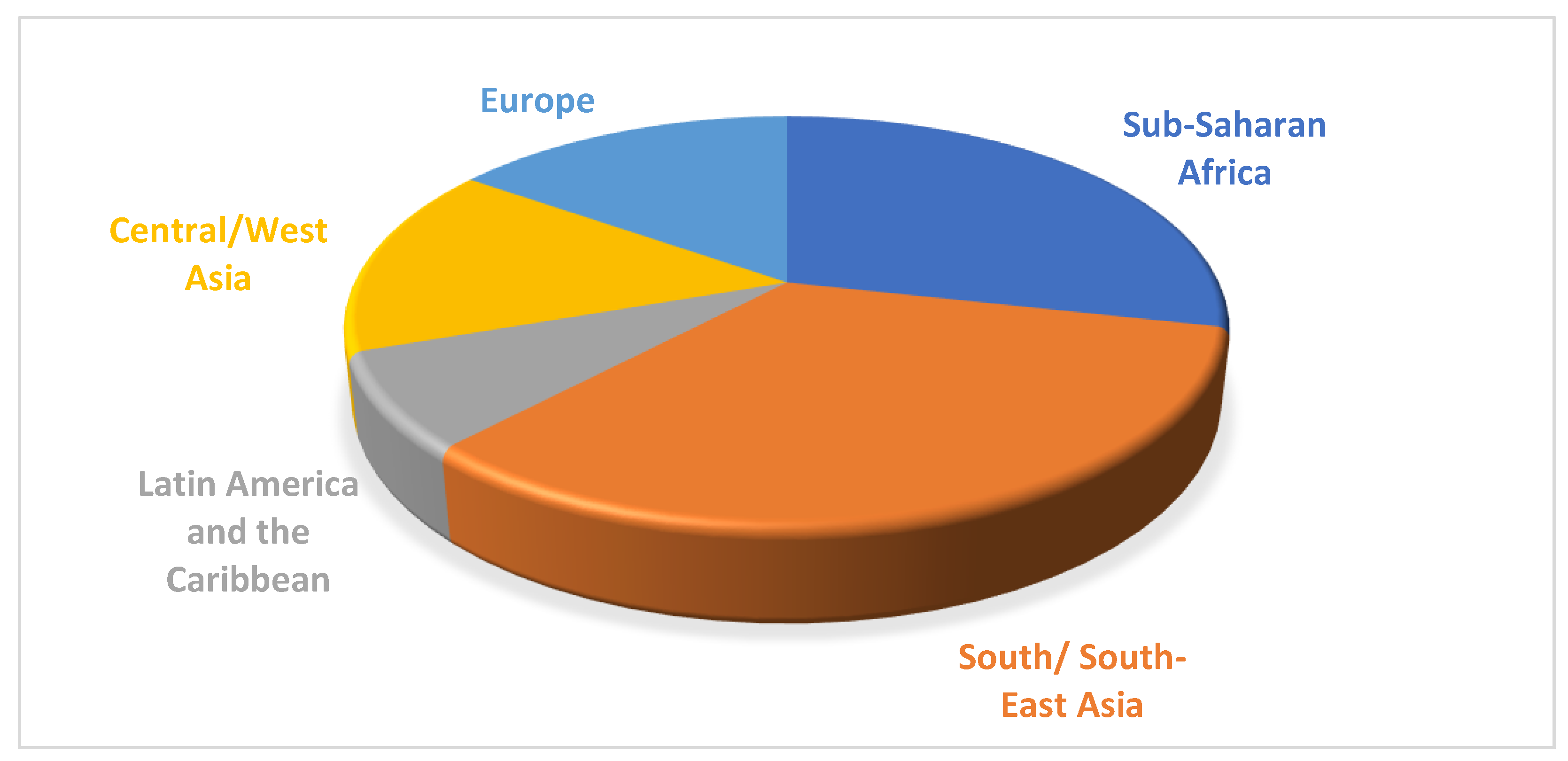
Figure 2.
IPV acceptance / Prevalence rate (%) by Country level.
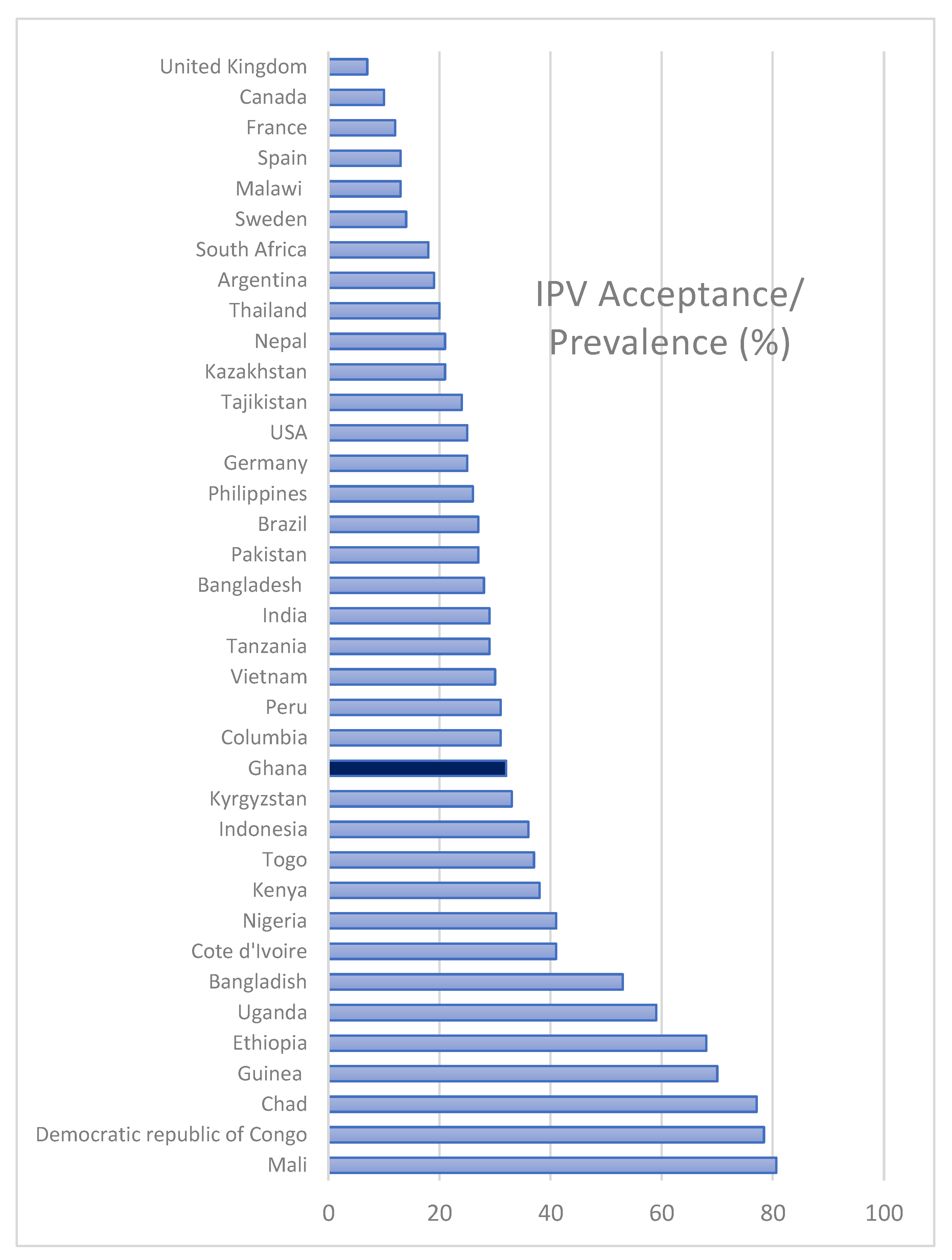
Figure 3.
A map of Ghana regions presenting an odd ratio where the western region shows the reference point of IPV justification.
Figure 3.
A map of Ghana regions presenting an odd ratio where the western region shows the reference point of IPV justification.
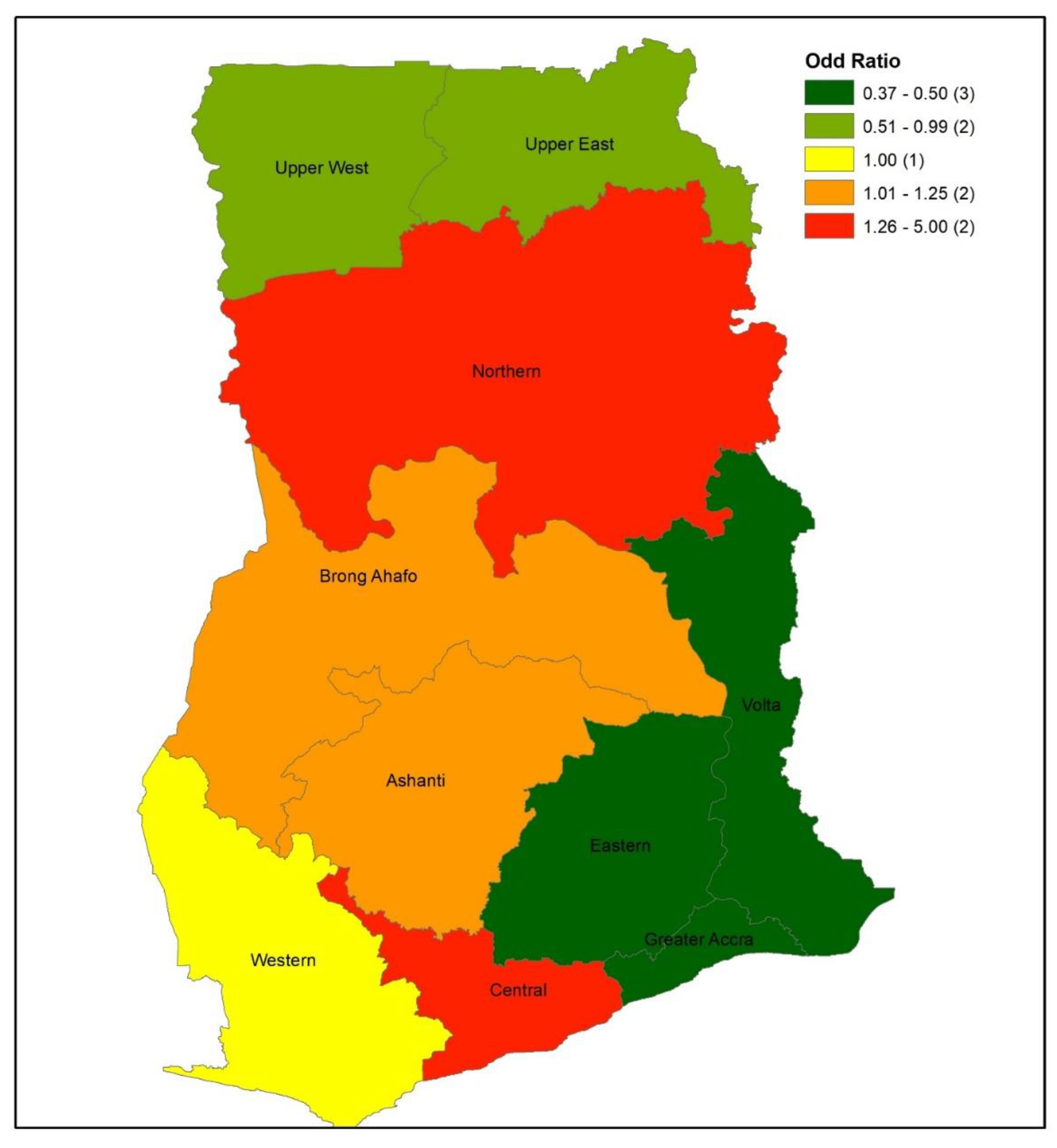

Table 1.
Percentage distribution of IPV justification and socio-demographic characteristics among women between 15-49 years in Ghana (N = 14,237).
Table 1.
Percentage distribution of IPV justification and socio-demographic characteristics among women between 15-49 years in Ghana (N = 14,237).
| Variable (Categories) | Non justification of IPV (%) | IPV Justification (%) |
|---|---|---|
| Area (p-value of Chi square <0.001) | ||
| Urban | 5383 (74.5%) | 1843 (25.5%) |
| Rural | 4195 (59.8%) | 2816 (40.2%) |
| Region (p<0.001) | ||
| Western | 940 (66.8%) | 468 (33.2%) |
| Central | 839 (60.5%) | 547 (39.5%) |
| Greater Accra | 1635 (87.1%) | 242 (12.9%) |
| Volta | 878 (79.7%) | 223 (20.3%) |
| Eastern | 1392 (81.2%) | 322 (18.8%) |
| Ashanti | 2215 (65.1%) | 1185 (34.9%) |
| Brong Ahafo | 824 (62.9%) | 487 (37.1%) |
| Northern | 429 (33.1%) | 866 (66.9%) |
| Upper East | 250 (59.4%) | 171 (40.6%) |
| Upper West | 177 (54.5%) | 148 (45.5%) |
| Age (p< 0.001) | ||
| 15-19 | 1772 (62%) | 1085 (38%) |
| 20-24 | 1491 (68.7%) | 679 (31.3%) |
| 25-29 | 1505 (70.3%) | 637 (29.7%) |
| 30-34 | 1462 (68.5%) | 671 (31.5%) |
| 35-39 | 1322 (68.5%) | 607 (31.5%) |
| 40-44 | 1120 (66.2%) | 571 (33.8%) |
| 45-49 | 906 (68.9%) | 408 (31.1%) |
| Woman' Education (p< 0.001) | ||
| Pre-primary or none | 1362 (50.8%) | 1318 (49.2%) |
| Primary | 1555 (63%) | 913 (37%) |
| JSS/JHS/Middle | 3877 (68%) | 1826 (32%) |
| SSS/SHS/ Secondary | 2023 (79.2%) | 531 (20.8%) |
| Higher | 760 (91.5%) | 71 (8.5%) |
| DK/Missing | 2 (100%) | 0 (0%) |
| Marital status/Union (p< 0.001) | ||
| Currently married/in union | 5340 (65.5%) | 2817 (34.5%) |
| Formerly married/in union | 913 (66.9%) | 452 (33.1%) |
| Never married/in union | 3325 (70.5%) | 1391 (29.5%) |
| Functional difficulties (age 18-49 years) | ||
| Has functional difficulty | 774 (66.8%) | 385 (33.2%) |
| Has no functional difficulty | 7682 (68.3%) | 3570 (31.7%) |
| Wealth index quintile (p˂ 0.001) | ||
| Poorest | 1251 (52.6%) | 1128 (47.4%) |
| Second | 1515 (57.7%) | 1112 (42.3%) |
| Middle | 1902 (65.9%) | 986 (34.1%) |
| Fourth | 2109 (70%) | 904 (30%) |
| Richest | 2802 (84.1%) | 528 (15.9%) |
| Ethnicity of household (p˂ 0.001) | ||
| Akan | 4822 (71%) | 1972 (29%) |
| Ga/Dangme | 1036 (81.1%) | 241 (18.9%) |
| Ewe | 1252 (79.7%) | 319 (20.3%) |
| Guan | 359 (65.5%) | 189 (34.5%) |
| Gruma | 240 (45.5%) | 287 (54.5%) |
| Mole Dagbani | 943 (46.7%) | 1076 (53.3%) |
| Grusi | 177 (55.8%) | 140 (44.2%) |
| Mande | 71 (73.2%) | 26 (26.8%) |
| Other | 677 (62.5%) | 406 (37.5%) |
| Missing | 2 (50%) | 2 (50%) |
| Frequency of reading newspaper/magazine (p˂ 0.001) | ||
| Not at all | 8231 (65.3%) | 4381 (34.7%) |
| Less than once a week | 671 (79.9%) | 169 (20.1%) |
| At Least once a week | 511 (84.7%) | 92 (15.3%) |
| Almost every week | 166 (90.7%) | 17 (9.3%) |
| Frequency of listening to radio (p˂ 0.001) | ||
| Not at all | 2733 (60.6%) | 1775 (39.4%) |
| Less than once a week | 1629 (67.3%) | 792 (32.7%) |
| At least once a week | 2104 (70.7%) | 872 (29.3%) |
| Almost every week | 3113 (71.8%) | 1221 (28.2%) |
| Frequency of watching TV (p˂ 0.001) | ||
| Not at all | 2116 (56.7%) | 1619 (43.3%) |
| Less than once a week | 1077 (64%) | 606 (36%) |
| At Least once a week | 1652 (69.3%) | 733 (30.7%) |
| Almost every week | 4733 (73.6%) | 1701 (26.4%) |
Table 2.
Summary of Logistic regression of IPV justification (N=14,239).
| Variables (with reference) | Odd ratio (OR) | 95% C.I. for OR | Sig. | |
|---|---|---|---|---|
| Lower | Upper | |||
| Area (ref: Urban) | ||||
| Rural | 1.238 | 1.122 | 1.367 | <.001 |
| Region (Ref: Western region) | ||||
| Central | 1.312 | 1.101 | 1.564 | 0.002 |
| Greater Accra | 0.443 | 0.359 | 0.547 | <.001 |
| Volta | 0.373 | 0.291 | 0.477 | <.001 |
| Eastern | 0.494 | 0.41 | 0.596 | <.001 |
| Ashanti | 1.155 | 0.993 | 1.343 | 0.061 |
| Brong Ahafo | 1.062 | 0.886 | 1.274 | 0.514 |
| Northern | 2.411 | 1.955 | 2.973 | <.001 |
| Upper East | 0.751 | 0.567 | 0.994 | 0.045 |
| Upper West | 0.941 | 0.698 | 1.27 | 0.692 |
| Age group (Ref: 15-19 years old) | ||||
| 20-24 | 0.709 | 0.596 | 0.842 | <.001 |
| 25-29 | 0.544 | 0.45 | 0.658 | <.001 |
| 30-34 | 0.542 | 0.445 | 0.659 | <.001 |
| 35-39 | 0.481 | 0.394 | 0.587 | <.001 |
| 40-44 | 0.542 | 0.442 | 0.665 | <.001 |
| 45-49 | 0.467 | 0.376 | 0.581 | <.001 |
| Woman's Education (Ref: Pre-primary or none) | ||||
| Primary | 0.849 | 0.744 | 0.969 | 0.015 |
| JSS/JHS/Middle | 0.756 | 0.665 | 0.859 | <.001 |
| SSS/SHS/ Secondary | 0.512 | 0.432 | 0.606 | <.001 |
| Higher | 0.248 | 0.185 | 0.332 | <.001 |
| DK/Missing | 0 | 0 | 0.999 | |
| Marital/Union status of woman (Ref: Currently married/Union) | ||||
| Formerly married/in union | 1.065 | 0.932 | 1.216 | 0.357 |
| Never married/in union | 0.726 | 0.634 | 0.831 | <.001 |
| Functional difficulties (age 18-49 years) (Ref: Has functional difficulty) | ||||
| Has no functional difficulty | 0.997 | 0.866 | 1.148 | 0.966 |
| Wealth index quintile (Ref: Poorest) | ||||
| Second | 1.199 | 1.043 | 1.379 | 0.011 |
| Middle | 1.168 | 1.004 | 1.359 | 0.044 |
| Fourth | 1.106 | 0.935 | 1.307 | 0.24 |
| Richest | 0.766 | 0.634 | 0.926 | 0.006 |
| Ethnicity of household head (Ref: Akan) | ||||
| GA/Damgme | 0.86 | 0.714 | 1.036 | 0.112 |
| Ewe | 1.06 | 0.884 | 1.271 | 0.529 |
| Guan | 1.332 | 1.052 | 1.685 | 0.017 |
| Gruma | 1.434 | 1.128 | 1.823 | 0.003 |
| Mole Dagbani | 1.61 | 1.378 | 1.88 | <.001 |
| Grusi | 1.598 | 1.217 | 2.097 | <.001 |
| Mande | 0.749 | 0.435 | 1.291 | 0.299 |
| Other | 1.393 | 1.182 | 1.641 | <.001 |
| Missing | 2.495 | 0.329 | 18.94 | 0.377 |
| Frequency of reading newspaper or magazine (Ref: not at all) | ||||
| Less than once a week | 1.017 | 0.816 | 1.268 | 0.878 |
| At least once a week | 0.646 | 0.483 | 0.866 | 0.003 |
| Almost every day | 0.795 | 0.455 | 1.389 | 0.421 |
| Frequency of listening to the radio (Ref: Not at all) | ||||
| Less than once a week | 0.862 | 0.76 | 0.977 | 0.02 |
| At least once a week | 0.908 | 0.804 | 1.025 | 0.119 |
| Almost every day | 0.92 | 0.825 | 1.025 | 0.131 |
| Frequency of watching TV (Ref: Not at all) | ||||
| Less than once a week | 0.824 | 0.712 | 0.954 | 0.01 |
| At least once a week | 0.817 | 0.71 | 0.94 | 0.005 |
| Almost every day | 0.78 | 0.692 | 0.88 | <.001 |
| Constant | 1.222 | 0.194 | ||
Disclaimer/Publisher’s Note: The statements, opinions and data contained in all publications are solely those of the individual author(s) and contributor(s) and not of MDPI and/or the editor(s). MDPI and/or the editor(s) disclaim responsibility for any injury to people or property resulting from any ideas, methods, instructions or products referred to in the content. |
© 2025 by the authors. Licensee MDPI, Basel, Switzerland. This article is an open access article distributed under the terms and conditions of the Creative Commons Attribution (CC BY) license (http://creativecommons.org/licenses/by/4.0/).
Copyright: This open access article is published under a Creative Commons CC BY 4.0 license, which permit the free download, distribution, and reuse, provided that the author and preprint are cited in any reuse.


