

Submitted:
20 January 2025
Posted:
21 January 2025
You are already at the latest version
Abstract
The manufacturing sector in ASEAN plays a critical role in economic development but poses significant environmental challenges, including rising carbon emissions, waste generation, and resource depletion. This study investigates how environmental policies are implemented by leading manufacturing firms in Indonesia, Malaysia, and Thailand, focusing on their alignment with ASEAN’s regional guidelines. Using document analysis, sustainability reports, annual reports, and corporate policy statements were examined to identify patterns and gaps in environmental strategies. The findings reveal that Sime Darby (Malaysia) and PTT Global Chemical (Thailand) demonstrate stronger alignment with ASEAN guidelines, particularly in renewable energy adoption and biodiversity conservation. In contrast, PT Astra International (Indonesia) focuses more on emissions reduction and waste management, with limited biodiversity initiatives. These variations underscore the influence of national policies and institutional frameworks on corporate environmental strategies and highlight gaps that hinder regional harmonization. This research provides valuable insights into corporate environmental practices within ASEAN, offering practical recommendations for standardizing Key Performance Indicators, fostering regional collaboration, and encouraging green innovation. The study concludes by emphasizing the need for integrated policy frameworks to advance environmental sustainability in the ASEAN manufacturing sector.
Keywords:
environmental policy
; ASEAN
; document analysis
; manufacturing sector
; best practices
1. Introduction
The manufacturing sector in ASEAN plays a crucial role in the regional economy, contributing over 35% of the Gross Domestic Product (GDP) in several member states, including Indonesia, Malaysia, and Thailand [1,2,3]. However, the growth of this industry is often accompanied by significant environmental challenges, such as rising carbon emissions, industrial waste, and resource depletion. The ASEAN State of Environment Report 2023 highlights that greenhouse gas emissions in the region have increased by 4.6% annually since 2015, with the manufacturing sector identified as one of the primary contributors [1]. This trend underscores the urgent need for integrated and effective environmental policies within the manufacturing sector to support regional sustainability goals.
Although ASEAN has developed frameworks such as the ASEAN Guidelines for Sustainable Industry 2025, the implementation of environmental policies at the national and corporate levels remains inconsistent. For instance, in Indonesia, environmental management policies in manufacturing, as outlined in the National Industrial Development Master Plan (RIPIN), focus on waste management and energy efficiency [4]. Meanwhile, Malaysia emphasizes low-carbon strategies through its National Energy Transition Roadmap (NETR), aiming to achieve net zero greenhouse gas emissions by 2050 [5]. Thailand adopts a Green Industry approach that prioritizes resource efficiency and technological innovation, with the Ministry of Industry introducing new guidelines to help achieve carbon neutrality by 2050 and net zero emissions by 2065 [6]. These divergent approaches pose challenges to the harmonization of environmental policies across the region.
Major corporations in ASEAN, such as PT Astra International in Indonesia and Sime Darby in Malaysia, have demonstrated significant commitments to sustainability through various environmental initiatives. For example, PT Astra International reported a 13.96% reduction in greenhouse gas emissions in 2023 compared to 2019, as outlined in their Sustainability Report 2023 [7]. Similarly, Sime Darby has established a Board Sustainability Committee to steer sustainability initiatives, reflecting their dedication to environmental stewardship [8].
Previous studies indicate that the implementation of environmental policies in the manufacturing sector is significantly influenced by both internal and external factors, including government support, stakeholder pressure, and organizational capacity [9]. In the context of ASEAN, there is an urgent need to identify best practices that can be adopted regionally to enhance the effectiveness of environmental policies. Document analysis, particularly of sustainability and annual reports, offers a valuable opportunity to systematically evaluate strategies and environmental achievements [10]
This research has three primary objectives. First, it seeks to analyze how environmental policies are implemented in leading manufacturing firms in the three countries. Second, it aims to compare corporate environmental performance with ASEAN guidelines to identify existing gaps. Third, it endeavors to identify best practices that can serve as a foundation for improving the harmonization of environmental policies at the regional level. The findings of this study are expected to make a significant contribution to the literature on industrial sustainability, particularly in developing regions, and provide practical recommendations for policymakers and industry players in ASEAN.
Theoretically, this study contributes to the body of knowledge on Green Human Resource Management (GHRM) and organizational sustainability, which have become increasingly relevant in modern human resource management literature. The successful implementation of environmental policies in the manufacturing sector is strongly influenced by human resource engagement, including comprehensive employee training, strategic change management initiatives, and clear internal communication channels [11]. Furthermore, the cross-national approach of this study allows for the exploration of cultural and regulatory differences that influence the adoption of environmental policies, as discussed [12]
This study employs document analysis to evaluate environmental policies reflected in sustainability reports and other relevant documents from PT Astra International, Sime Darby, and PTT Global Chemical. This approach enables the mapping of key themes, analysis of environmental KPIs, and comprehensive cross-case comparisons. By combining thematic analysis, content analysis, and cross-case analysis, this research provides a holistic approach to evaluating the implementation of environmental policies in ASEAN’s manufacturing sector.
Practically, the findings of this research are expected to serve as a reference for ASEAN policymakers in strengthening regional sustainability frameworks. Moreover, manufacturing companies can utilize the insights from this study to develop more effective strategies for achieving their environmental targets. Thus, this study not only contributes to the literature on industrial sustainability but also supports the achievement of sustainable development goals in the ASEAN region.
2. Literature Review
2.1. Environmental Policy in Manufacturing
Environmental policy in manufacturing has emerged as a vital framework for addressing the environmental challenges posed by industrial activities, particularly in mitigating greenhouse gas emissions and promoting resource efficiency. Globally, initiatives like the European Union’s Green Deal have demonstrated the effectiveness of policies emphasizing renewable energy, circular economy, and green innovation in transforming the industrial landscape. The European Green Deal aims to make Europe the first climate-neutral continent by 2050, focusing on clean technologies and sustainable industry practices [13,14]. In the United States, the Department of Energy released the “U.S. National Blueprint for a Clean and Competitive Industry” in 2023, outlining strategies to decarbonize the industrial sector, which accounts for approximately 20% of the nation’s greenhouse gas emissions [13]. These policies underscore the critical role of comprehensive environmental strategies in reshaping manufacturing practices towards sustainability.
Developing economies within ASEAN face significant barriers to implementing environmental policies, including limited financial resources, insufficient technological capacity, and institutional inefficiencies. For instance, Lestari et al. (2024) conducted a comparative study of environmental law policies in Indonesia, Malaysia, and Thailand, highlighting challenges such as inadequate funding and technological constraints that impede effective policy implementation [15]. Similarly, Elder and Ellis (2022) analyzed ASEAN countries’ environmental policies for the Sustainable Development Goals (SDGs), revealing that while numerous policies exist, their implementation is often hindered by institutional inefficiencies and resource limitations [16]. Furthermore, Piyathanavong et al. (2019) identified ten barriers related to the implementation of green manufacturing in Thai manufacturing strategies, emphasizing the role of institutional inefficiencies and limited technological capacity [17]. These studies underscore the complex interplay of financial, technological, and institutional factors that affect the implementation of environmental policies in ASEAN’s developing economies.
In ASEAN, manufacturing contributes significantly to regional economic output but also exacerbates environmental vulnerabilities such as carbon emissions and resource depletion. Regional initiatives, such as the ASEAN Guidelines for Sustainable Industry 2025 and the ASEAN Strategic Plan on Environment, aim to harmonize environmental standards and foster green manufacturing practices among member states [1]. However, inconsistencies in technological adoption and regulatory enforcement persist across ASEAN countries. For instance, Thailand has made substantial progress in adopting digital compliance systems, as evidenced by initiatives like the National Digital Trade Platform (NDTP), which serves as a centralized point for communication and electronic document delivery between trading partners [18]. In contrast, Indonesia continues to face challenges in integrating advanced monitoring technologies into its industrial sectors, partly due to limited digital infrastructure and regulatory frameworks [19].
The theoretical foundations of environmental policy in manufacturing are deeply rooted in the Resource-Based View (RBV) and stakeholder theory. The RBV posits that firms possessing superior technological and managerial capabilities are better positioned to adopt sustainable practices, thereby gaining competitive advantages. For instance, Memon and Ooi (2023) discuss how responsible innovation, aligned with RBV, enables firms to develop distinctive competencies that enhance sustainability performance [20]. Stakeholder theory emphasizes the role of external pressures, such as consumer expectations and regulatory demands, in driving environmental compliance. For instance, Baah et al. (2021) found that firms’ desires to achieve green legitimacy and meet regulatory stakeholder demands motivate the adoption and implementation of environmental and social responsibilities [21]. These findings underscore the significant influence of external stakeholder pressures on corporate environmental practices.
Empirical evidence suggests that green innovation significantly enhances firms’ compliance with environmental policies while improving operational efficiency and market competitiveness. For instance, a study by Rubashkina et al. (2015) analyzed the impact of environmental regulation on innovation and productivity in European manufacturing sectors, providing insights into the relationship between environmental policies and firm performance [22]. Similarly, Rexhäuser and Rammer (2014) examined the effects of environmental innovations on firm profitability, finding that certain types of green innovations can lead to positive economic outcomes [23]. This study builds upon these theoretical perspectives to analyze the implementation of environmental policies in ASEAN’s manufacturing sector, focusing on identifying best practices and addressing policy gaps.
2.2. Document Analysis in Policy Research
Document analysis has emerged as a critical method for evaluating corporate policies, offering valuable insights into the strategies and practices organizations adopt to address complex issues such as environmental sustainability. This approach involves systematically examining publicly available documents, such as sustainability reports, annual reports, and policy statements, to uncover patterns, themes, and key performance indicators. For instance, a study by Kassier (2024) utilized content analysis of sustainability reports from multinational companies to identify transitions in corporate sustainability reporting [24]. Similarly, a systematic literature review by Silva et al. (2023) highlighted the importance of document analysis in understanding corporate sustainability practices [25]. These studies underscore the effectiveness of document analysis in providing structured insights into corporate sustainability strategies.
Several studies have successfully employed document analysis to evaluate corporate policies, particularly in the domain of environmental sustainability. For example, a study by Tamasiga et al. (2024) systematically reviewed the impact of environmental, social, and governance (ESG) disclosures on firm value and profitability across various industries, highlighting the role of transparency in enhancing compliance with global environmental standards [26]. Similarly, Silva et al. (2023) conducted a systematic literature review on corporate sustainability, identifying best practices and emphasizing the influence of external pressures, such as consumer expectations and regulatory requirements, on corporate sustainability strategies [25]. These findings underscore the utility of document analysis in bridging the gap between policy formulation and implementation, especially in regions like ASEAN, where disparities in regulatory enforcement and technological adoption persist.
The effectiveness of document analysis lies in its ability to provide both qualitative and quantitative insights into policy implementation. By mapping thematic content, frequency of key terms, and performance metrics, researchers can construct a comprehensive picture of corporate governance and policy adherence. Bowen (2009) emphasized the role of triangulation in document analysis, suggesting that integrating multiple data sources enhances the credibility and reliability of findings [27]. Building on this approach, the present study leverages document analysis to evaluate environmental policy implementation in the manufacturing sector across Indonesia, Malaysia, and Thailand, focusing on identifying best practices, gaps, and opportunities for harmonizing regional guidelines.
2.3. ASEAN Context in Environmental Sustainability
ASEAN plays a pivotal role in driving industrial sustainability across its member states, recognizing the critical need to balance economic growth with environmental protection [28]. As one of the fastest-growing regions globally, ASEAN faces mounting pressures to address environmental degradation resulting from rapid industrialization [29]. The manufacturing sector, a major contributor to the region’s GDP, is also a significant source of carbon emissions and resource exploitation. To address these challenges, ASEAN has adopted proactive measures through regional frameworks aimed at harmonizing environmental policies, promoting green manufacturing practices, and encouraging member states to adopt sustainable technologies. For instance, the ASEAN Economic Community (AEC) Blueprint 2025 emphasizes sustainable economic development, focusing on environmental protection to ensure that natural resources can be renewed to continuously support economic growth. Additionally, the ASEAN Climate Change Strategic Action Plan (ACCSAP) 2025-2030 serves as a roadmap for addressing climate change in ASEAN up to 2030, integrating and coordinating sector-specific and cross-sectoral plans related to climate change. These comprehensive strategies underscore ASEAN’s commitment to fostering a sustainable industrial sector that aligns with global environmental standards.
ASEAN’s sustainability agenda emphasizes fostering collaboration among member states to bridge disparities in environmental governance and technological adoption. While Malaysia and Thailand have made significant strides in implementing advanced environmental monitoring systems, Indonesia continues to face challenges in achieving similar progress due to financial and institutional constraints [30]. The ASEAN Plan of Action for Energy Cooperation (APAEC) further reinforces the region’s commitment to sustainability by setting targets for renewable energy adoption, energy efficiency, and reduced carbon emissions [25,30].
Despite these efforts, ASEAN’s progress in industrial sustainability remains uneven, largely due to differences in economic priorities and regulatory capacities across its member states [31,32]. Studies indicate that regional harmonization of environmental policies is hindered by inconsistent implementation and a lack of shared technological infrastructure [33]. To address these gaps, ASEAN has initiated capacity-building programs and technical support for less-developed member states, focusing on enhancing institutional capabilities and encouraging private-sector engagement [34]. By fostering a collaborative approach, ASEAN seeks to establish a unified sustainability framework that can serve as a model for other regional blocs [35] This study builds upon these regional initiatives by analyzing the implementation of environmental policies in the manufacturing sectors of Indonesia, Malaysia, and Thailand, providing insights into best practices and areas for improvement [34]
3. Methodology
3.1. Research Design
This study adopts a qualitative research design, utilizing document analysis as the primary methodological approach to examine environmental policy implementation in the manufacturing sector. Document analysis is particularly well-suited for this research as it enables the systematic evaluation of publicly available corporate reports, such as sustainability reports, annual reports, and environmental policy statements. These documents serve as critical sources of data, providing insights into organizational strategies, performance metrics, and compliance with environmental regulations [36,37]
The focus of this study is on three major manufacturing companies in ASEAN: PT Astra International (Indonesia), Sime Darby (Malaysia), and PTT Global Chemical (Thailand). The selection of these companies is based on their industry leadership and public commitment to sustainability, as evidenced by their regular publication of comprehensive environmental reports. The analysis will identify recurring themes, track progress on environmental targets, and compare company policies against the ASEAN Guidelines for Sustainable Industry 2025. This approach aligns with best practices in qualitative research, emphasizing context-specific insights and an in-depth understanding of policy implementation [38]
The research process involves coding and categorizing data to identify patterns and themes within the documents. Key performance indicators (KPIs), frequency of sustainability-related terms, and alignment with regional guidelines are analyzed to evaluate the effectiveness of corporate environmental policies. Triangulation of data from multiple sources enhances the reliability and validity of the findings [37]. By focusing on document analysis, this study contributes to the growing body of research on environmental governance in emerging economies, providing actionable insights for both policymakers and industry practitioners.
3.2. Data Sources
The data for this study were drawn from publicly available documents of three prominent manufacturing companies in ASEAN—PT Astra International (Indonesia), Sime Darby (Malaysia), and PTT Global Chemical (Thailand)—along with regional guidelines provided by ASEAN. These sources were selected to ensure comprehensive coverage of environmental policy implementation at both the corporate and regional levels. By focusing on these companies and regional frameworks, this study captures a nuanced understanding of sustainability practices across varying national and organizational contexts.
For Indonesia, PT Astra International’s Sustainability Report 2023 and Annual Report 2022 serve as primary data sources. These documents detail the company’s environmental strategies, including initiatives to reduce carbon emissions and improve waste management. Astra’s focus on renewable energy and green innovation aligns with Indonesia’s broader environmental objectives under Law No. 32/2009 on Environmental Protection and Management.
In Malaysia, data were extracted from Sime Darby’s Sustainability Report 2022–2023 and its Carbon Reduction Roadmap 2025. These documents highlight the company’s efforts to achieve low-carbon operations through renewable energy adoption and enhanced energy efficiency. Sime Darby’s policies reflect Malaysia’s commitment to a low-carbon economy, as outlined in national strategies and supported by government-industry collaboration.
Thailand’s PTT Global Chemical provided two key documents: the Integrated Sustainability Report 2023 and the Green Manufacturing Guidelines. These reports showcase Thailand’s advanced approach to green manufacturing, emphasizing resource efficiency, eco-design, and carbon neutrality. The company’s initiatives align with Thailand’s 20-Year National Strategy on sustainability, demonstrating leadership in adopting eco-friendly industrial practices.
At the regional level, this study incorporates the ASEAN Guidelines for Sustainable Industry 2025 and the ASEAN Plan of Action for Energy Cooperation (APAEC). These frameworks provide a unified vision for environmental sustainability across member states, focusing on harmonizing policies, promoting energy efficiency, and encouraging the adoption of renewable energy. By comparing corporate-level practices with these regional guidelines, the study evaluates the alignment and gaps in achieving ASEAN’s sustainability objectives.
3.3. Analytical Techniques
To evaluate the implementation of environmental policies across Indonesia, Malaysia, and Thailand, this study employs a multi-method qualitative approach, comprising thematic analysis, content analysis, and cross-case analysis. These complementary techniques provide a robust framework for extracting insights from corporate sustainability reports, annual reports, and regional guidelines.
Thematic Analysis. Thematic analysis was utilized to identify recurring themes and patterns within the sustainability reports of PT Astra International, Sime Darby, and PTT Global Chemical. This approach involves coding textual data to uncover dominant themes related to environmental strategies, such as carbon reduction, resource efficiency, and waste management [39,40,41]. Themes were categorized to align with the ASEAN Guidelines for Sustainable Industry 2025, enabling a structured comparison of company-level initiatives with regional objectives.
Content Analysis. Content analysis was applied to quantify the frequency of sustainability-related keywords and assess the use of Key Performance Indicators (KPIs) in corporate reports. Keywords such as “carbon neutrality,” “renewable energy,” and “waste management” were systematically tracked to evaluate the emphasis placed on different environmental priorities by each company [42,43]. Additionally, KPIs were compared across the three organizations to assess variations in environmental performance and alignment with ASEAN’s sustainability goals.
Cross-case Analysis. Cross-case analysis was conducted to compare the implementation of environmental policies among the three countries. This technique involved evaluating similarities and differences in corporate strategies, regulatory compliance, and technological adoption. By juxtaposing the practices of PT Astra International, Sime Darby, and PTT Global Chemical, the study identifies best practices and gaps that can inform policy harmonization within ASEAN. This method also facilitated an assessment of how each country’s unique regulatory and economic context shapes corporate sustainability initiatives [44]
These analytical techniques, when used in combination, ensure a comprehensive understanding of environmental policy implementation across the ASEAN manufacturing sector. The triangulation of thematic, content, and cross-case analyses enhances the reliability and validity of the findings, offering actionable insights for both policymakers and practitioners.
3.4. Limitations
This study is subject to several limitations that should be acknowledged to contextualize the findings. First, the analysis is confined to the period between 2020 and 2025. While this timeframe captures recent developments and provides contemporary insights into environmental policy implementation, it may overlook historical trends or long-term policy impacts. Future research could benefit from a broader temporal scope to examine the evolution of sustainability practices over time.
Second, the study focuses exclusively on environmental policies within the manufacturing sector in ASEAN, specifically in Indonesia, Malaysia, and Thailand. While this focus allows for an in-depth analysis of a critical economic sector, it limits the generalizability of findings to other industries or regions. The manufacturing sector was chosen due to its significant contribution to greenhouse gas emissions and resource consumption, but additional research is needed to explore the applicability of these findings to sectors such as agriculture, energy, or services.
Finally, the reliance on publicly available documents, such as sustainability reports and annual reports, poses a potential limitation. These documents may reflect a degree of bias, as companies often highlight achievements while downplaying shortcomings. To mitigate this, triangulation was employed by incorporating regional guidelines, such as the ASEAN Guidelines for Sustainable Industry 2025 and the ASEAN Plan of Action for Energy Cooperation (APAEC). However, the lack of access to internal company data or interviews with stakeholders may limit the depth of analysis. Future studies could adopt a mixed-methods approach, integrating quantitative metrics and qualitative insights from industry practitioners to provide a more comprehensive understanding.
4. Result and Discussion
4.1. Thematic Analysis of Environmental Policies
The thematic analysis of sustainability reports from PT Astra International, Sime Darby, and PTT Global Chemical revealed four dominant themes in their environmental strategies: carbon reduction, renewable energy adoption, waste management, and biodiversity conservation. These themes reflect both global trends in sustainability and the specific priorities of the ASEAN manufacturing sector. PT Astra International, for example, emphasized carbon neutrality as a strategic goal, achieving an 18% reduction in emissions between 2020 and 2023, aligned with Indonesia’s national environmental objectives [7]Sime Darby demonstrated leadership in renewable energy integration, reporting a 12% decrease in its carbon footprint by adopting solar energy and enhancing process efficiency [8]. Similarly, PTT Global Chemical set ambitious targets, including net-zero emissions by 2050, supported by a 20% reduction in energy intensity by 2025, in alignment with Thailand’s Green Industry Project [45]
The environmental initiatives of these companies highlight varying degrees of alignment with regional guidelines, particularly the ASEAN Guidelines for Sustainable Industry 2025. For example, all three companies actively pursued waste management initiatives, such as recycling programs and hazardous waste reduction, aligning with ASEAN’s advocacy for circular economy practices [1] However, biodiversity conservation emerged as a less prioritized theme, with only Sime Darby and PTT Global Chemical including significant efforts in this area. Sime Darby highlighted reforestation programs as part of its sustainability strategy, while PTT Global Chemical committed to protecting ecosystems in its operational regions. PT Astra International, in contrast, focused primarily on operational efficiency and emissions reduction, reflecting a localized approach driven by Indonesia’s regulatory framework.
As summarized in Table 1, the recurring environmental themes vary across the three companies, demonstrating shared priorities in emissions reduction, renewable energy adoption, and waste management but diverging in biodiversity conservation efforts.
While these initiatives demonstrate significant progress in environmental management, the analysis also revealed gaps in harmonizing corporate strategies with ASEAN’s regional sustainability objectives. For example, Sime Darby and PTT Global Chemical showed greater alignment with renewable energy and biodiversity targets, whereas PT Astra International exhibited a more localized focus on emissions reduction. These findings underscore the need for greater regional collaboration and policy harmonization to ensure cohesive progress toward ASEAN’s sustainability goals.
4.2. Content Analysis of Environmental KPIs
The content analysis of sustainability reports from PT Astra International, Sime Darby, and PTT Global Chemical revealed significant differences in the reporting and emphasis of environmental Key Performance Indicators (KPIs). Key terms such as “carbon neutrality,” “renewable energy,” “waste management,” and “biodiversity” were analyzed to understand the companies’ environmental priorities. As illustrated in Figure 1, Sime Darby demonstrated a stronger emphasis on renewable energy and biodiversity, while PT Astra International focused more on waste management and carbon reduction. This variation reflects the influence of national policies, operational strategies, and organizational priorities on sustainability reporting [46,47,48].
The comparative analysis of KPIs is summarized in Table 2, showcasing the metrics reported by each company. Sime Darby excels in comprehensive reporting, addressing carbon intensity, renewable energy usage, and biodiversity restoration efforts. PTT Global Chemical follows closely, with robust targets for energy intensity and waste-to-energy conversion, aligning with Thailand’s Green Industry Project. Conversely, PT Astra International’s KPIs are relatively limited, with a focus on emissions reduction and waste management, while biodiversity-related metrics remain minimal [7,8,45,49,50,51]
These findings highlight significant gaps in achieving environmental targets. Sime Darby and PTT Global Chemical demonstrate stronger alignment with renewable energy and biodiversity goals, while PT Astra International focuses more on localized operational efficiency. This divergence underscores the need for greater standardization of KPIs across ASEAN to align with the ASEAN Guidelines for Sustainable Industry 2025 [1]. Moreover, PT Astra International’s limited emphasis on biodiversity presents a critical opportunity for improvement, addressing broader regional sustainability challenges [52].
Aligning KPIs with regional and global benchmarks enables ASEAN member states and corporations to enhance transparency, comparability, and accountability in sustainability reporting. Empirical evidence from prior studies highlights the critical role of standardized metrics in driving corporate sustainability and improving compliance with regional environmental policies [53,54] This study underscores the necessity of further harmonizing environmental KPIs to foster cohesive progress across ASEAN’s manufacturing sector
4.3. Cross-case Analysis of Policy Implementation
The cross-case analysis reveals significant variations in the implementation of environmental policies among PT Astra International (Indonesia), Sime Darby (Malaysia), and PTT Global Chemical (Thailand). While all three companies demonstrate alignment with national sustainability objectives, their approaches differ based on the regulatory frameworks, economic priorities, and operational capacities within their respective countries. Sime Darby, for instance, excels in renewable energy adoption and biodiversity initiatives, reflecting Malaysia’s robust policy support through its Carbon Reduction Roadmap 2025. In contrast, PT Astra International focuses on waste management and emissions reduction, aligning with Indonesia’s emphasis on operational efficiency and pollution control [7,8,55] PTT Global Chemical showcases leadership in resource efficiency and ecosystem restoration, driven by Thailand’s Green Industry Project [45,55,56]
Table 3 summarizes the similarities and differences in environmental strategies and achievements across the three companies. Sime Darby and PTT Global Chemical demonstrate stronger alignment with ASEAN guidelines, particularly in renewable energy and biodiversity conservation. However, PT Astra International exhibits gaps in biodiversity initiatives, reflecting a divergence from ASEAN’s broader environmental objectives.
The analysis also highlights overlapping and unique initiatives among the companies, as illustrated in Figure 2. Sime Darby and PTT Global Chemical share common strengths in renewable energy adoption and biodiversity conservation, while PT Astra International focuses predominantly on emissions reduction and waste management. The segmented bar chart in Figure 2 clearly demonstrates these differences, emphasizing the absence of biodiversity initiatives in PT Astra International compared to the comprehensive strategies adopted by Sime Darby and PTT Global Chemical. This divergence underscores the need for a more harmonized approach to ensure alignment with the ASEAN Guidelines for Sustainable Industry 2025 [1]
The practical implications of this analysis suggest that regional collaboration can effectively address gaps in biodiversity conservation and facilitate the standardization of key performance indicators (KPIs) across ASEAN. Strengthening the alignment between corporate strategies and regional guidelines is crucial for fostering cohesive progress toward sustainability goals. Empirical studies affirm that harmonized environmental governance improves regulatory compliance and operational efficiency. For example, studies have highlighted the integration of environmental policies into ASEAN countries’ Voluntary National Reviews (VNRs), emphasizing the importance of standardized reporting frameworks to support regional sustainability objectives [57] Corporate social responsibility (CSR) has also been identified as a pathway toward achieving sustainability in Asia, addressing both challenges and opportunities faced by companies [58]. Furthermore, improved environmental, social, and governance (ESG) disclosure has been shown to reduce the cost of capital in emerging markets, underlining the significance of harmonized governance practices across the region [59]
4.4. Discuccion
The findings of this study provide critical insights into how environmental policies are implemented in leading manufacturing firms across Indonesia, Malaysia, and Thailand, as well as their alignment with the ASEAN Guidelines for Sustainable Industry 2025. Sime Darby and PTT Global Chemical demonstrate comprehensive approaches to renewable energy adoption and biodiversity conservation, showcasing best practices that align closely with regional sustainability goals. In contrast, PT Astra International focuses predominantly on carbon reduction and waste management, with limited emphasis on biodiversity initiatives. This gap reflects the varying degrees of regulatory enforcement and institutional support across the three countries [1,60]
These results are consistent with previous studies, which emphasize the importance of robust national policies and organizational capabilities in driving sustainability [57,61]. For instance, Malaysia’s Carbon Reduction Roadmap 2025 and Thailand’s Green Industry Project provide strong policy frameworks that encourage proactive environmental strategies among corporations. In contrast, Indonesia’s focus on emissions reduction and waste management, while significant, lacks the broader ecosystem-based initiatives observed in its regional counterparts. This disparity highlights the need for ASEAN to harmonize sustainability metrics and targets to ensure cohesive progress across member states.
The implications for ASEAN’s environmental policy are substantial. Harmonizing biodiversity conservation goals and renewable energy benchmarks at the regional level could address existing gaps and foster collaboration among member states. Establishing standardized Key Performance Indicators (KPIs) would enhance transparency, allowing for more effective monitoring of corporate and national compliance with sustainability objectives. Additionally, incentivizing green innovation through funding mechanisms and cross-border knowledge-sharing programs could accelerate progress toward regional sustainability goals. Empirical evidence suggests that harmonized policies improve regulatory compliance, operational efficiency, and environmental outcomes [62,63].
This study contributes to the literature on industrial sustainability by emphasizing the critical role of corporate strategies in shaping environmental outcomes within developing regions. It also offers actionable recommendations for policymakers and industry leaders, particularly highlighting the significance of regional collaboration in achieving long-term sustainability objectives. Future research could build on this work by incorporating a broader range of industries or utilizing longitudinal data to examine the progression of environmental strategies over time.
5. Conclusions and Recommendations
5.1. Conclusion
This study provides valuable insights into the implementation of environmental policies in the manufacturing sectors of Indonesia, Malaysia, and Thailand, highlighting both achievements and gaps in alignment with ASEAN sustainability objectives. Sime Darby and PTT Global Chemical demonstrated strong alignment with regional guidelines, showcasing leadership in renewable energy adoption and biodiversity conservation. PT Astra International, while making significant progress in emissions reduction and waste management, showed limited focus on biodiversity initiatives, revealing a critical gap in its sustainability strategy. These variations reflect the influence of national regulatory frameworks and institutional capacities on corporate environmental priorities.
The findings revealed recurring themes such as carbon neutrality, renewable energy adoption, and waste management across the three companies. However, differences in the scope and emphasis of biodiversity conservation highlight a need for a more harmonized regional approach to environmental policy implementation. Addressing these gaps is essential for achieving cohesive progress toward ASEAN’s sustainability goals.
This research advances the understanding of industrial sustainability practices within the ASEAN context. By examining corporate-level implementation of environmental policies, it bridges the gap between regional guidelines and organizational practices. The findings also provide actionable insights for policymakers to standardize environmental Key Performance Indicators and promote regional collaboration, thereby improving the harmonization of environmental policies and fostering sustainable development in the region.
5.2. Recommendations
Recommendations for Manufacturing Companies. Manufacturing companies in ASEAN should prioritize aligning their environmental policies with both national regulations and regional guidelines. This includes adopting standardized Key Performance Indicators (KPIs) that address critical areas such as carbon emissions, renewable energy usage, waste management, and biodiversity conservation. Companies with limited focus on biodiversity initiatives, such as PT Astra International, should expand their strategies to include ecosystem restoration and conservation programs. Additionally, investing in green technologies and fostering innovation in waste-to-energy solutions can enhance operational efficiency while contributing to sustainability goals. Strengthening stakeholder engagement, including partnerships with local communities and environmental organizations, is also essential for achieving long-term sustainability.
Recommendations for ASEAN Policy Harmonization. ASEAN should take a more proactive role in harmonizing environmental policies across member states. This can be achieved by establishing clear regional benchmarks for biodiversity conservation, renewable energy adoption, and waste management. Developing a unified framework for environmental KPIs will enhance transparency and comparability among companies and countries, enabling more effective monitoring of progress. To address disparities in technological adoption and institutional capacity, ASEAN could facilitate cross-border knowledge sharing and provide financial incentives for green innovation. Collaborative initiatives, such as regional training programs and joint research projects, can strengthen the capabilities of less-developed member states, ensuring cohesive progress toward sustainability. Finally, integrating private sector contributions into regional strategies will help accelerate the adoption of advanced environmental practices and foster a stronger commitment to sustainability across the manufacturing sector.
5.3. Future Research Directions
This study provides a foundation for future research on environmental policy implementation in ASEAN, highlighting several potential directions for further exploration. One promising avenue is the use of quantitative approaches to evaluate the impact of specific environmental policies on corporate performance. Employing large-scale surveys or econometric analyses could provide deeper insights into the causal relationships between policy implementation and outcomes such as emissions reduction, resource efficiency, and financial performance.
Expanding the geographic scope of research to include additional ASEAN member states, such as Vietnam, the Philippines, or Cambodia, would offer a more comprehensive understanding of regional environmental policy implementation. These countries present unique contexts with varying levels of industrial development and regulatory capacity, which could enrich the comparative analysis of sustainability practices across ASEAN.
Future studies could also explore the role of emerging technologies, such as artificial intelligence and blockchain, in enhancing corporate compliance with environmental regulations. These technologies have the potential to improve data accuracy, streamline reporting, and foster transparency, making them valuable tools for advancing industrial sustainability. Additionally, longitudinal research tracking policy impacts over time would provide a clearer picture of the long-term effectiveness of environmental initiatives, enabling more informed policymaking and corporate decision-making.
By addressing these research opportunities, future studies can contribute to the growing body of knowledge on industrial sustainability and provide actionable insights for both academia and practice.
Author Contributions
Conceptualization, O.S. and S.P.; methodology, S.P.; software, A.H.; validation, O.S., S.P. and A.H.; formal analysis, O.S.; investigation, S.P.; resources, A.H.; data curation, A.H.; writing—original draft preparation, O.S.; writing—review and editing, S.P.; visualization, A.H.; supervision, O.S.; project administration, S.P.; funding acquisition, O.S. All authors have read and agreed to the published version of the manuscript.
Abbreviations
The following abbreviations are used in this manuscript:
| ASEAN | Association of Southeast Asian Nations |
| CSR | Corporate Social Responsibility |
| ESG | Environmental, Social, and Governance |
| KPI | Key Performance Indicator |
References
- ASEAN Secretariat., “ASEAN Guidelines for Sustainable Industry 2025,” 2023.
- Reuters, “Thai economy faces upheaval due to factory closures and cheap Chinese imports,” https://www.reuters.com/markets/asia/thai-economy-faces-upheaval-due-factory-closures-cheap-chinese-imports-2024-07-14/?utm_source=chatgpt.com.
- World Bank, “Manufacturing value added (% of GDP),” https://databank.worldbank.org/embed/gdp-composition/id/fced70c.
- Kementerian Perindustrian RI, “RENCANA INDUK PEMBANGUNAN INDUSTRI NASIONAL 2015 - 2035,” https://policy.asiapacificenergy.org/sites/default/files/National%20Industry%20Development%20Master%20Plan%20%28RIPIN%29%202015-2035%20%28BH%29.pdf?utm_source=chatgpt.com.
- Allen & Gledhill, “Meanwhile, Malaysia emphasizes low-carbon strategies through its Carbon Reduction Roadmap 2025, and Thailand adopts a Green Manufacturing Guidelinesapproach that prioritizes resource efficiency and technological innovation. These divergent approaches pose challenges to the harmonization of environmental policies across the region (UNEP, 2023).,” https://www.allenandgledhill.com/perspectives/news/mykh_malaysia-introduces-national-energy-transition-roadmap/?utm_source=chatgpt.com.
- The Nation, “New guidelines for so-called ‘green industry’ introduced,” https://www.nationthailand.com/sustaination/40040561?utm_source=chatgpt.com.
- Astra, “Sustainability Report,” https://r2.astra.co.id/SR2023.pdf?utm_source=chatgpt.com.
- Sustainability Report, “Sime Darby Property Berhad 2023 Sustainability Report,” https://sustainabilityreports.com/reports/sime-darby-property-berhad-2023-sustainability-report-pdf/?utm_source=chatgpt.com.
- N. Hayat and H. D. Lohano, “Factors Influencing a Manufacturing Firm to Adopt ISO 14001 Standard,” Journal of the Knowledge Economy, Jun. 2024. [CrossRef]
- García-Sánchez, N. Hussain, J. Martínez-Ferrero, and E. Ruiz-Barbadillo, “Impact of disclosure and assurance quality of corporate sustainability reports on access to finance,” Corp Soc Responsib Environ Manag, vol. 26, no. 4, pp. 832–848, Jul. 2019. [CrossRef]
- S. Graham, T. Cadden, and R. Treacy, “Examining the influence of employee engagement in supporting the implementation of green supply chain management practices: A green human resource management perspective,” Bus Strategy Environ, vol. 32, no. 7, pp. 4750–4766, Nov. 2023. [CrossRef]
- W. Xiaoyu and Y. Bingqing, “Greening the economy: how culture values shape environmental policies in America and Europe,” Environmental Science and Pollution Research, vol. 31, no. 3, pp. 3853–3871, Dec. 2023. [CrossRef]
- European Commission, “The European Green Deal A growth strategy that protects the climate,” https://ec.europa.eu/stories/european-green-deal/?utm_source=chatgpt.com.
- R. Veugelers, S. Tagliapietra, and C. Trasi, “Green Industrial Policy in Europe: Past, Present, and Prospects,” Journal of Industry, Competition and Trade, vol. 24, no. 1, p. 4, Dec. 2024. [CrossRef]
- S. D. Lestari, F. M. Leon, S. Riyadi, Q. Qodariah, and A. H. P. K. Putra, “Comparison and Implementation of Environmental Law Policies in Handling Climate Change in ASEAN Countries: A Comparative Study of Indonesia, Malaysia, and Thailand,” International Journal of Energy Economics and Policy, vol. 14, no. 2, pp. 687–700, Mar. 2024. [CrossRef]
- M. Elder and G. Ellis, “ASEAN countries’ environmental policies for the Sustainable Development Goals (SDGs),” Environ Dev Sustain, vol. 25, no. 10, pp. 10975–10993, Oct. 2023. [CrossRef]
- D. Kushwaha and F. Talib, “Ranking of Barriers to Green Manufacturing Implementation in SMEs Using Best-Worst Method,” IOP Conf Ser Mater Sci Eng, vol. 748, no. 1, p. 012017, Feb. 2020. [CrossRef]
- Iseas, “2023/58 ‘Governing the Digital Economy in Thailand: Domestic Regulations and International Agreements’ by Antonio Postigo,” https://www.iseas.edu.sg/articles-commentaries/iseas-perspective/2023-58-governing-the-digital-economy-in-thailand-domestic-regulations-and-international-agreements-by-antonio-postigo/?utm_source=chatgpt.com.
- H. Ha and C. K. P. Chuah, “Digital economy in Southeast Asia: challenges, opportunities and future development,” Southeast Asia: A Multidisciplinary Journal, vol. 23, no. 1, pp. 19–35, Jul. 2023. [CrossRef]
- K. R. Memon and S. K. Ooi, “Responsible innovation and resource-based theory: advancing an antecedent-outcome model for large manufacturing firms through structured literature review,” Asian Journal of Business Ethics, vol. 12, no. 2, pp. 441–467, Dec. 2023. [CrossRef]
- C. Baah, Y. Agyabeng-Mensah, E. Afum, and M. S. Mncwango, “Do green legitimacy and regulatory stakeholder demands stimulate corporate social and environmental responsibilities, environmental and financial performance? Evidence from an emerging economy,” Management of Environmental Quality: An International Journal, vol. 32, no. 4, pp. 787–803, Jun. 2021. [CrossRef]
- Y. Rubashkina, M. Galeotti, and E. Verdolini, “Environmental regulation and competitiveness: Empirical evidence on the Porter Hypothesis from European manufacturing sectors,” Energy Policy, vol. 83, pp. 288–300, Aug. 2015. [CrossRef]
- S. Rexhäuser and C. Rammer, “Environmental Innovations and Firm Profitability: Unmasking the Porter Hypothesis,” Environ Resour Econ (Dordr), vol. 57, no. 1, pp. 145–167, Jan. 2014. [CrossRef]
- L. Kassier, “Identifying transitions in corporate sustainability reporting: a content analysis of JSE/FTSE multinational sustainability reports from 2016 to 2021,” International Journal of Corporate Social Responsibility, vol. 9, no. 1, p. 12, Dec. 2024. [CrossRef]
- U. R. de Oliveira, R. P. Menezes, and V. A. Fernandes, “A systematic literature review on corporate sustainability: contributions, barriers, innovations and future possibilities,” Environ Dev Sustain, vol. 26, no. 2, pp. 3045–3079, Jan. 2023. [CrossRef]
- P. Tamasiga, H. Onyeaka, M. Bakwena, and E. houssin Ouassou, “Beyond compliance: evaluating the role of environmental, social and governance disclosures in enhancing firm value and performance,” SN Business & Economics, vol. 4, no. 10, p. 118, Sep. 2024. [CrossRef]
- G. A. Bowen, “Document Analysis as a Qualitative Research Method,” Qualitative Research Journal, vol. 9, no. 2, pp. 27–40, Aug. 2009. [CrossRef]
- Asean Policy Brief, “ASEAN Transition Towards Circular Economy,” https://asean.org/wp-content/uploads/2022/12/ASEAN-Policy-Brief-5_Dec2022.pdf.
- Global Megatrends, “ASEAN Approaches to Environmental Protection and Sustainable Development: Cooperating across Borders, Sectors, and Pillars of Regional CommuniTy.”.
- M. Elder and G. Ellis, “ASEAN countries’ environmental policies for the Sustainable Development Goals (SDGs),” Environ Dev Sustain, vol. 25, no. 10, pp. 10975–10993, Oct. 2023. [CrossRef]
- Nurkaidah, A. Anas, and T. Baharuddin, “Implementation of environmental policies on the development of a new capital city in Indonesia,” Cogent Soc Sci, vol. 10, no. 1, Dec. 2024. [CrossRef]
- N. Emami et al., “Measuring progress toward a circular economy of the ASEAN Community,” J Ind Ecol, Nov. 2024. [CrossRef]
- M. Elder and G. Ellis, “ASEAN countries’ environmental policies for the Sustainable Development Goals (SDGs),” Environ Dev Sustain, vol. 25, no. 10, pp. 10975–10993, Oct. 2023. [CrossRef]
- Asean Secretariat, “ASEAN PLUS THREE COOPERATION WORK PLAN 2023 – 2027,” https://asean.org/wp-content/uploads/2022/08/APT-Cooperation-Work-Plan-2023-2027.pdf.
- Asean Environment Division, “ASEAN SCP FRAMEWORK,” https://environment.asean.org/public/uploads/repositories/20230717-asean_scp_framework_summary_final.pdf.
- M., & K. D. Alvesson, Qualitative research and theory development: Mystery as method. 2011.
- G. A. Bowen, “Document Analysis as a Qualitative Research Method,” Qualitative Research Journal, vol. 9, no. 2, pp. 27–40, Aug. 2009. [CrossRef]
- B. Smit, “Can qualitative research inform policy implementation? Evidence and arguments from a developing country context. In Forum Qualitative Sozialforschung/Forum:,” Qualitative Social Research, vol. 4, no. 3, Sep. 2003.
- V. Braun and V. Clarke, “Using thematic analysis in psychology,” Qual Res Psychol, vol. 3, no. 2, pp. 77–101, Jan. 2006. [CrossRef]
- Asean CSR Network, “SUSTAINABILITY REPORTING IN ASEAN,” https://www.asean-csr-network.org/c/images/ReportonSustainabilityReportinginASEAN2015.pdf?utm_source=chatgpt.com.
- M. I. Qureshi, N. Khan, S. Qayyum, S. Malik, S. S. Hishan, and T. Ramayah, “Classifications of Sustainable Manufacturing Practices in ASEAN Region: A Systematic Review and Bibliometric Analysis of the Past Decade of Research,” Sustainability, vol. 12, no. 21, p. 8950, Oct. 2020. [CrossRef]
- M., N. C., L. B., P. A., & S. J. Bronzini, “Glitter or gold? Deriving structured insights from sustainability reports via large language models.,” EPJ Data Sci, vol. 13, no. 1, p. 41, 2024.
- K. Krippendorff, Content analysis: An introduction to its methodology. Sage publications., 2018.
- K. Robert, Case study research and applications: Design and methods. Sage publications., 2013.
- PTT GC Group, “Annual Registrations Statements: Annual Report 2023,” https://www.pttgcgroup.com/en/document/viewer/flipbook/1358/corporate-governance-report-2023.
- M. Khan, J. Lockhart, and R. Bathurst, “A multi-level institutional perspective of corporate social responsibility reporting: A mixed-method study,” J Clean Prod, vol. 265, p. 121739, Aug. 2020. [CrossRef]
- Jamil, N. A. Mohd Ghazali, and S. Puat Nelson, “The influence of corporate governance structure on sustainability reporting in Malaysia,” Social Responsibility Journal, vol. 17, no. 8, pp. 1251–1278, Nov. 2021. [CrossRef]
- N. Thanetsunthorn, “The impact of national culture on corporate social responsibility: evidence from cross-regional comparison,” Asian Journal of Business Ethics, vol. 4, no. 1, pp. 35–56, Sep. 2015. [CrossRef]
- M. A. Camilleri, Corporate sustainability, social responsibility and environmental management. Cham, Switzerland: Springer International Publishing., 2017.
- G. Michelon and A. Parbonetti, “The effect of corporate governance on sustainability disclosure,” Journal of Management & Governance, vol. 16, no. 3, pp. 477–509, Aug. 2012. [CrossRef]
- S. A. Saputro and E. L. M. Sitinjak, “The Impact of Environment, Social, Governance and Foreign Ownership on Value of the Firm in Case Indonesia,” 2024, pp. 19–29. [CrossRef]
- M. Nawaz et al., “A review of plants strategies to resist biotic and abiotic environmental stressors,” Science of The Total Environment, vol. 900, p. 165832, Nov. 2023. [CrossRef]
- M.-L. Tseng, R. R. Tan, A. S. F. Chiu, C.-F. Chien, and T. C. Kuo, “Circular economy meets industry 4.0: Can big data drive industrial symbiosis?,” Resour Conserv Recycl, vol. 131, pp. 146–147, Apr. 2018. [CrossRef]
- M. Khan, G. Serafeim, and A. Yoon, “Corporate Sustainability: First Evidence on Materiality,” The Accounting Review, vol. 91, no. 6, pp. 1697–1724, Nov. 2016. [CrossRef]
- M. Azam and A. Q. Khan, “Growth-corruption-health triaca and environmental degradation: empirical evidence from Indonesia, Malaysia, and Thailand,” Environmental Science and Pollution Research, vol. 24, no. 19, pp. 16407–16417, Jul. 2017. [CrossRef]
- E. Andriesse and G. van Westen, “Unsustainable varieties of capitalism along the Thailand–Malaysia border? The role of institutional complementarities in regional development,” Asia Pacific Journal of Management, vol. 26, no. 3, pp. 459–479, Sep. 2009. [CrossRef]
- M. Elder and G. Ellis, “ASEAN countries’ environmental policies for the Sustainable Development Goals (SDGs),” Environ Dev Sustain, vol. 25, no. 10, pp. 10975–10993, Oct. 2023. [CrossRef]
- K. Zhang and X. Hao, “Corporate social responsibility as the pathway towards sustainability: a state-of-the-art review in Asia economics,” Discover Sustainability, vol. 5, no. 1, p. 348, Oct. 2024. [CrossRef]
- W. M. W. Mohammad, M. Osman, and M. S. A. Rani, “Corporate governance and environmental, social, and governance (ESG) disclosure and its effect on the cost of capital in emerging market,” Asian Journal of Business Ethics, vol. 12, no. 2, pp. 175–191, Dec. 2023. [CrossRef]
- Khan, M. B. Muttakin, and J. Siddiqui, “Corporate Governance and Corporate Social Responsibility Disclosures: Evidence from an Emerging Economy,” Journal of Business Ethics, vol. 114, no. 2, pp. 207–223, May 2013. [CrossRef]
- S. H. Idris, L. W. Chang, I. Prihandono, and S. A. Rasidi, “Green financing and climate change: challenges and regulatory mechanisms in Malaysia and Indonesia,” Clean Technol Environ Policy, vol. 26, no. 12, pp. 4471–4482, Dec. 2024. [CrossRef]
- P. Tamasiga, H. Onyeaka, M. Bakwena, and E. houssin Ouassou, “Beyond compliance: evaluating the role of environmental, social and governance disclosures in enhancing firm value and performance,” SN Business & Economics, vol. 4, no. 10, p. 118, Sep. 2024. [CrossRef]
- R. Nepal, Y. Liu, K. Dong, and T. Jamasb, “Green Financing, Energy Transformation, and the Moderating Effect of Digital Economy in Developing Countries,” Environ Resour Econ (Dordr), vol. 87, no. 12, pp. 3357–3386, Dec. 2024. [CrossRef]
Figure 1.
Frequency of Key Environmental Terms Across Companies. Source: Adapted from PT Astra International (2023), Sime Darby (2023), and PTT Global Chemical (2023).
Figure 1.
Frequency of Key Environmental Terms Across Companies. Source: Adapted from PT Astra International (2023), Sime Darby (2023), and PTT Global Chemical (2023).
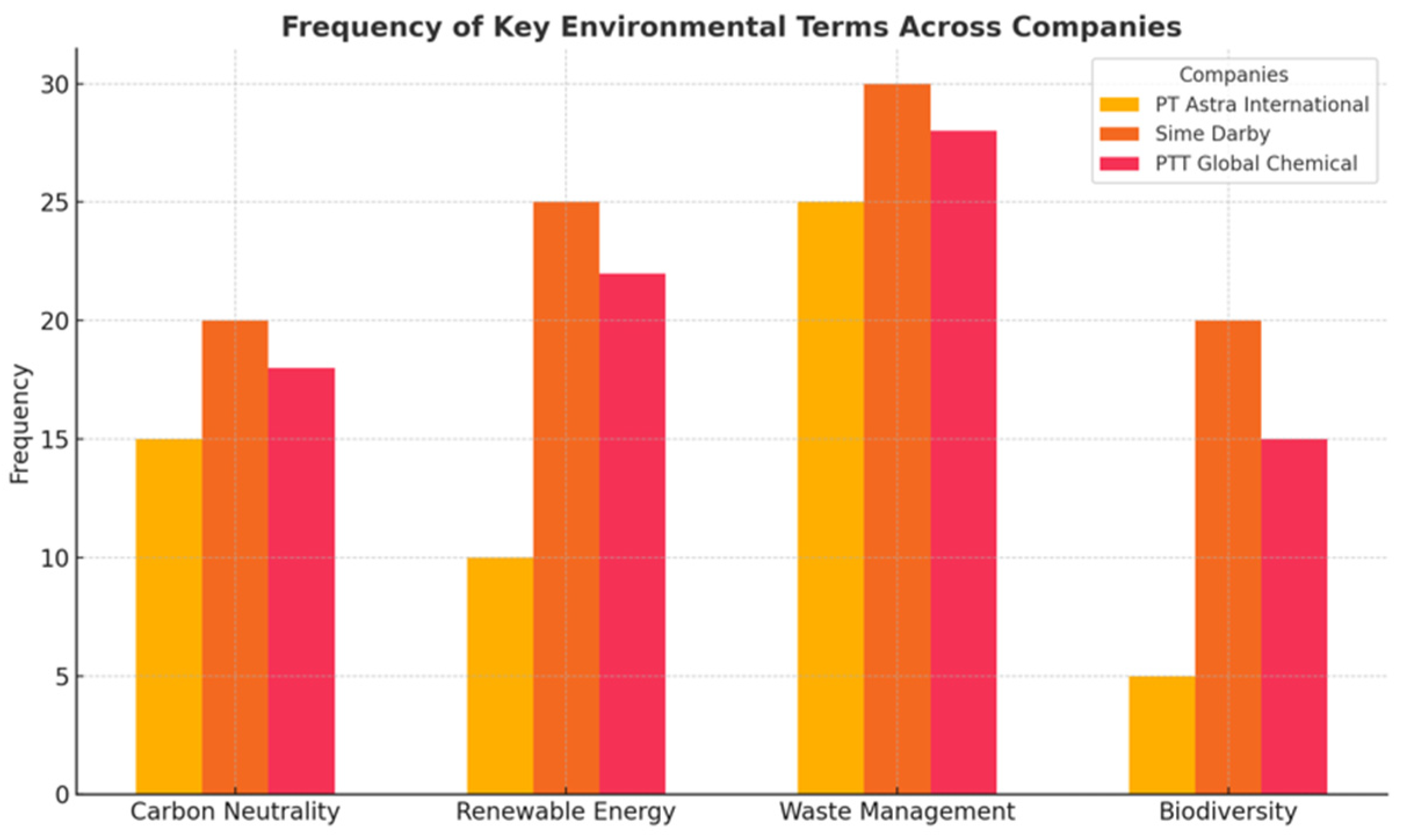
Figure 2.
Distribution of Environmental Initiatives Across Companies. Source: Adapted from PT Astra International (2023), Sime Darby (2023), and PTT Global Chemical (2023).
Figure 2.
Distribution of Environmental Initiatives Across Companies. Source: Adapted from PT Astra International (2023), Sime Darby (2023), and PTT Global Chemical (2023).
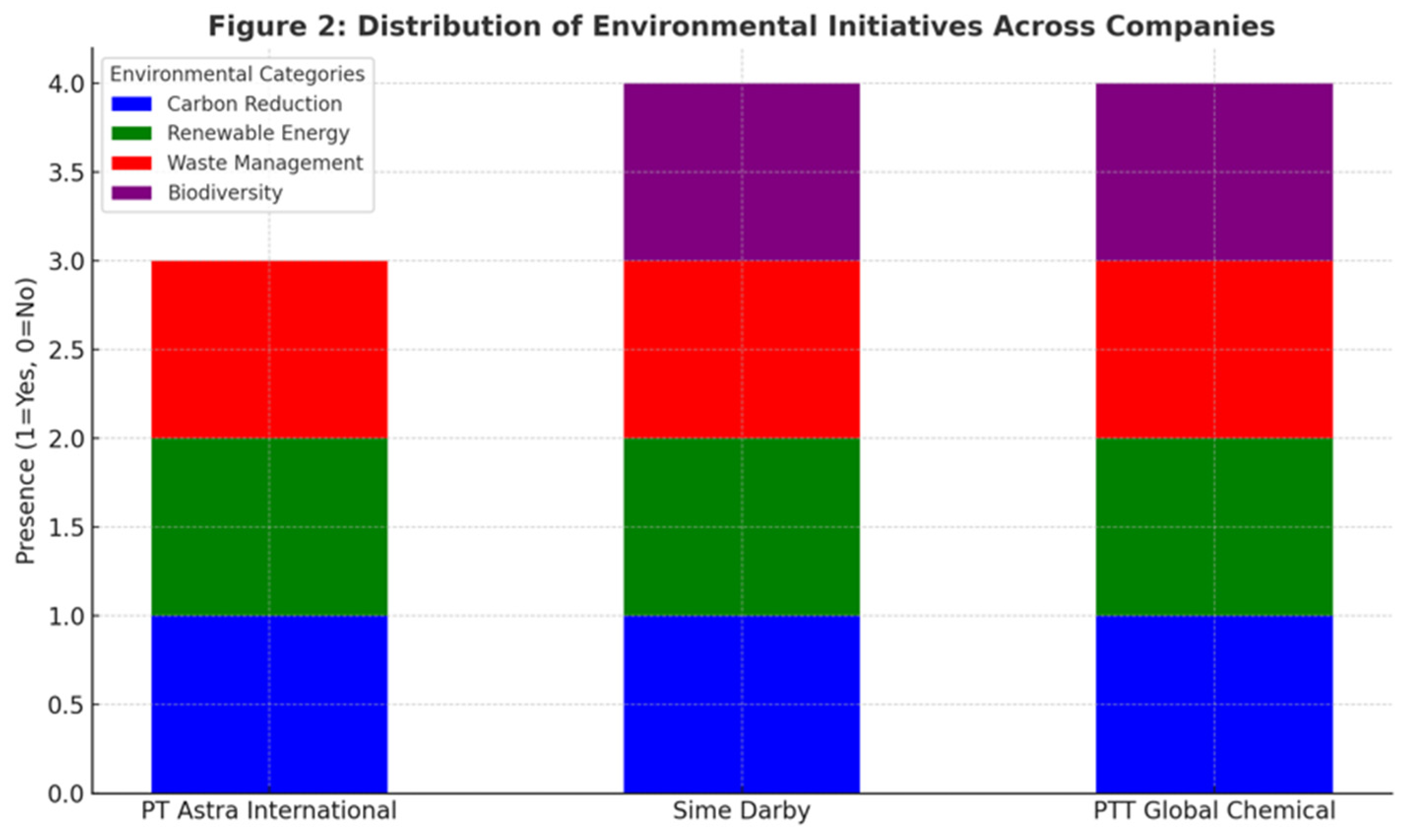

Table 1.
Summary of Recurring Environmental Themes in Sustainability Reports.
| Company | Carbon Reduction | Renewable Energy | Waste Management | Biodiversity Conservation |
|---|---|---|---|---|
| PT Astra International | ✔ | ✔ | ✔ | ✖ |
| Sime Darby | ✔ | ✔ | ✔ | ✔ |
| PTT Global Chemical | ✔ | ✔ | ✔ | ✔ |
Source: Adapted from PT Astra International (2023), Sime Darby (2023), PTT Global Chemical (2023), and ASEAN Secretariat (2023).
Table 2.
Comparison of Environmental KPIs in Sustainability Reports.
| KPI Category | PT Astra International | Sime Darby | PTT Global Chemical |
|---|---|---|---|
| Carbon Emissions (tCO2e) | 18% reduction (2020–2023) | 12% reduction (2020–2023) | 20% reduction target (2025) |
| Renewable Energy Usage | 10% increase | 25% increase | 30% increase target |
| Waste Management | 35% hazardous waste reduction | 40% total waste recycling | 50% waste-to-energy conversion |
| Biodiversity Initiatives | Minimal reporting | Reforestation programs | Ecosystem restoration efforts |
Source: Adapted from PT Astra International (2023), Sime Darby (2023), PTT Global Chemical (2023).
Table 3.
Cross-case Comparison of Environmental Policies.
| Dimension | PT Astra International (Indonesia) | Sime Darby (Malaysia) | PTT Global Chemical (Thailand) |
|---|---|---|---|
| Carbon Reduction | 18% reduction (2020–2023) | 12% reduction | 20% target (2025) |
| Renewable Energy | Moderate adoption (10% increase) | High adoption (25% increase) | High adoption (30% increase) |
| Waste Management | 35% hazardous waste reduction | 40% total waste recycling | 50% waste-to-energy conversion |
| Biodiversity Conservation | Limited focus | Reforestation programs | Ecosystem restoration initiatives |
Source: Adapted from PT Astra International (2023), Sime Darby (2023), and PTT Global Chemical (2023).
Disclaimer/Publisher’s Note: The statements, opinions and data contained in all publications are solely those of the individual author(s) and contributor(s) and not of MDPI and/or the editor(s). MDPI and/or the editor(s) disclaim responsibility for any injury to people or property resulting from any ideas, methods, instructions or products referred to in the content. |
© 2025 by the authors. Licensee MDPI, Basel, Switzerland. This article is an open access article distributed under the terms and conditions of the Creative Commons Attribution (CC BY) license (http://creativecommons.org/licenses/by/4.0/).
Copyright: This open access article is published under a Creative Commons CC BY 4.0 license, which permit the free download, distribution, and reuse, provided that the author and preprint are cited in any reuse.


