

Submitted:
20 January 2025
Posted:
20 January 2025
You are already at the latest version
Abstract
Background: Burnout is an important psychological condition which affects work performance of nurses. This condition occurs under long-term psychological or emotional stress associated with the work of a nurse. As a result, such symptoms as emotional exhaustion (EE), depersonalization (DP) and personal accomplishment (PA) may be suffered. Methods: A cross-sectional study was conducted among hospital nurses in the Republic of Kazakhstan. 284 respondents participated in the online survey. Maslach Burnout Inventory for Medical Personnel (MBI-HSS-MP) was used for collecting data. Results: The results demonstrated that burnout occurs among 66.20% of hospital nurses in the Republic of Kazakhstan. The formed EE was identified among 29.23% of respondents, DP in 60.92% of respondents, PA in 38.73%. The formation stage according to these indicators occurs in 25.7% (EE), 19.37% (DP) and 12.68% (PA). The level of burnout was higher among young nursing specialists and more frequent in the southern region of the Republic of Kazakhstan. Conclusions: This study showed a high level of burnout among hospital nurses in the Republic of Kazakhstan. These findings have implications for further research into the impact of burnout factors on nurses' work and for developing interventions to reduce potential risks to nursing staff health and improve the quality of nursing care.
Keywords:
burnout
; nurse
; MBI‐HSS‐MP
; emotional exhaustion
; depersonalization
; Personal accomplishment
1. Introduction
The nurse profession involves constant contact with people therefore emotional state during such interaction is critical for provision of quality care [1,2].
Burnout is a psychological condition which is created during long-term emotional stress at workplace resulting in the following symptoms: emotional exhaustion, depersonalization and personal accomplishments [3]. Such factors as working conditions and functional responsibilities of nurses can influence development of this condition. The specialty of nurse’s job is also important [4]. Work associated with the increased level of communication [1], as well as in departments specialized in providing care for incurable patients and accompanied by constant emotional stress, gradually exhausts the nurse [4,5]. These factors reduce resistance to stress and ultimately lead to emotional exhaustion and further formation of poor health and reluctance to work [5].
Thus, formation of burnout leads to nurses leaving their employment. In the USA, based on the results of study conducted in 2018, it was determined that 31.5% (n = 418 769) of nurses identified burnout as the reason for leaving their last position [6]. Therefore, identifying burnout among nurses is an important task for providing quality medical care. The purpose of this study is to determine the syndrome of “burnout” by three subscales: emotional exhaustion (EE), depersonalization (DP) and personal accomplishment (PA) among hospital nurses in the Republic of Kazakhstan.
2. Materials and Methods
A cross-sectional study was conducted at the end of 2023 to identify the level of burnout among hospital nurses the Republic of Kazakhstan.
Inclusion criteria: at least 3 years of work experience in the specialty and currently working in a hospital.
Nurses were asked to complete an online survey. The questionnaire structure consisted of three main sections designed to collect information about demographic data of the respondent, the organizational structure of hospitals and identification of level of burnout among nurses. The questionnaire determining level of burnout of medical personnel MBI-HSS-MP, development of which was based on the three-phase model of C.Maslach и S.E.Jackson [7] and adapted by N. Vodopyanova, Е. Starchenkova [8], consists of 22 statements aimed at identification of emotional exhaustion, depersonalization and professional success. The respondents were offered 22 statements about feelings and experiences related with their work. It is required to read each statement and choose corresponding occurrence frequency of each statement on a 7-point scale from 0 to 6. If never experienced—0 should be selected, if daily—6 [9]. The results are evaluated based on the summation of the points received in accordance with the methodology of conducting this survey (Table 1).
Thus, three subscales are calculated for each respondent: the score is recorded for each subscale and distributed among levels in accordance with Table 2. High score for EE and DP indicates high level of burnout, while high scores in PA indicate lower level of burnout.
The low level of the three subscales shows lack of severity of the analyzed indicator of the burnout syndrome. The moderate level shows the stage of formation of certain indicator of the burnout syndrome. High level confirms the fact that indicator of the burnout syndrome has already formed.
This self-assessment was completed by 284 hospital nurses in the Republic of Kazakhstan. This study complied with all principles of the Helsinki Declaration [10]. Ethical approval was obtained from the Local Commission on Bioethics of the West Kazakhstan Medical University named after M. Ospanov (Aktobe, Kazakhstan). The participants were informed about the purpose of the study and voluntarily took part in it. The participation was completely anonymous. The reliability (Cronbach’s alpha) of the burnout questionnaire for medical workers (22 questions) was 0.910, and for the entire questionnaire it was 0.840 (33 questionnaire questions). The data was described using methods of descriptive and analytical statistics. The statistical package SPSS 23.0 (IBM SPSS Statistics, USA) was used to process the data. Significance criteria were calculated at p<0.05.
3. Results
The average age of respondents (Table 3) was 39.3 years (SD=10.3), the average work experience was 16 years (SD=10.37). 33.8% (n=96) of respondents had diploma of technical and professional education, 33.8% (n=96) had graduated an applied bachelor’s degree, 31.0% (n=88) have a higher education degree, and 1.5% (n=4) were master’s degree graduates.
At the same time 77.8% (n=221) of respondents occupied position of hospital nurse, 6.3% (n=18)—advanced practice nurse, 15.9% (n=45)—nursing service manager, including senior nurse position—14.8% (n=42). Third of the respondents worked in their position for 6–10 years. It was noted that work experience has an impact on the occupied position (Table 4), the correlation coefficient was 0.364 (p=0.01).
Analysis determined significant correlation (Table 5) between the age and work experience of the respondents: 0.772 (p = 0.01). This indicated strong direct relation—the older was the respondent, the longer was his work experience.
The average values of the three burnout subscales were as follows: emotional exhaustion—18,79 (SD=11,71), depersonalization—12,90 (SD=7,57), personal accomplishment—31,30 (SD=15,29), which corresponded to the average level of formation of these indicators among nurses (n=284) working in hospitals of the Republic of Kazakhstan. Moreover, 66.20% (EE⩾27 and/or DP⩾10) of nurses has burnout out of the total number of observations. The distribution of respondents’ answers to questions regarding burnout is presented in Figure 1. The most outstanding results are the following: 43% of respondents daily provide more attention and care to others comparing to gratitude that they receive from them in return. 21.1% communicate with patients formally and without unnecessary emotions. 46.5% of respondents can achieve a lot in their lives. 41.2% manage to do a lot in a day. 46.5% easily communicate with patients and their relatives, regardless of their social status. 44.7% can create an atmosphere of friendliness and ease every day. 42.3% work with pleasure and have plans for their professional career. 36.6% noted that they can have positive influence on patients’ mood on a daily basis. 42.3% are able to find the right solutions in difficult situations with patients and colleagues. 36.3% feel energetic and inspired at work. 46.1% understand the feelings of their patients well and use it to successfully work with them. 45.1% never feel emotionally empty. 40.5% noted that they are never in bad mood in the morning at the beginning of the working day. 37.7% never seek solitude. 50.4% did not experience any disappointments in life. 46.5% have never experienced loss of interest to their professional duties.
However, there are differences in burnout levels among different age groups of nurses (Figure 2). Thus, high level of EE is more common among nurses aged 41-50 years (13.74%). Signs of DP are present among 20.78% of nurses in the same age group, as well as among 16.20% of young professionals and 15.85% in the age category of 21-30 years. PA is common among 13.03% of nurses aged 41-50 years and 10.91% in the age group of 21-30 years.
Burnout is 72.46% among nursing specialists aged 21-30 years. The average values for the three burnout subscales are: EE—21.52 (SD=13.096), DP—14.74 (SD=7.93), PA—31.01 (SD=15.01). In the age group of 31-40 years old, burnout is 62.5%: EE—14.60 (SD=9.86), DP—11.46 (SD=7.29), PA—30.89 (SD=14.83). Among specialists aged 41-50 years, burnout is 67.71%: EE—21.55 (SD=11.53), DP—13.16 (SD=7.61), PA—31.32 (SD=15. 83). And in the age category of 51-60 years, burnout is 59.57%: EE—15.57 (SD=10.00), de-DP—11.91 (SD=6.95), PA—32.32 (SD=15.70).
As a result of the study, it was determined that the highest level of EE occurs in Northern and Southern Kazakhstan (7.75%), as well as in Central Kazakhstan—7.39% (Table 6). At the same time, high levels of DP are observed among nurses in Southern Kazakhstan (23.24%). PA of high level is found in Central Kazakhstan (13.03%).
It was noted that nursing specialists with work experience below 10 years have higher level of EE (13.38%), DP (23.94%) and PA (15.49%). Similar prevalence is observed at the stage of formation of EE (Figure 3).
Analysis of burnout among nurses occupying various positions determined that the highest level of EE (22.54%), DP (50.00%) and PA (29.93%) is observed among ordinary nurses (Figure 4).
Thus, our study demonstrated that level of burnout among hospital nurses in the Republic of Kazakhstan is at a fairly high level and occurs among 66.20% of respondents. Formed EE is present in almost third of respondents (29.23%), DP—in 60.92% of respondents, PA– in 38.73%. The formation stage according to these subscales occurs in 25.7% (EE), 19.37% (DP) and 13.03% (PA). Signs of burnout are more common in the southern regions of the Republic of Kazakhstan. Young nursing specialists are more susceptible to burnout than specialists possessing greater work experience.
4. Discussion
Burnout is an important psychological condition that affects nurses’ ability to work [3] and is characterized by emotional exhaustion, depersonalization and personal accomplishment [11]. EE is the main indicator of burnout. This is a feeling of fatigue and exhaustion from work. DP refers to negative attitudes toward patients and mistreatment of people at workplace. PA is a decrease in professional competence and achievements, which is caused by a decrease in the ability to fulfill one’s duties [12]. In conditions of constant communication with patients, their relatives and colleagues, nurses work in a stressful environment [13].
Our study, conducted at the end of 2023, showed that 66.20% of nursing professionals suffer from signs of burnout. These data confirm the high occurrence of burnout among nurses. Thus, the results of the study conducted in July 2023 in China showed that 75.38% of nurses experienced symptoms of burnout [14]. Similar study conducted in Greece in 2021 determined that 71.6% of participants at the time of the survey had signs of burnout [15]. At this, nurses aged 30-40 years are more likely to experience symptoms of burnout than others. These data somewhat differ from our research results. In this age category, burnout occurs in 62.5%, and at the age of 41-50 years—67.71%. The highest level of burnout is observed among young nursing professionals aged 21-30 years and amounts to 72.46%.
Thus, our study showed that among nursing specialists of young (21-30 years old) and middle age (41-50 years old) signs of burnout are more common. In the work of Kedair [13] among 250 nurses working in the King Abdulaziz Medical City of National Guard Health Affairs (KAMC-JD) in Jeddah, no connection was found between burnout and the age of respondents. It was noted that symptoms of burnout are more frequent particularly among hospital nurses (49%). Thus, in the USA it was noted that work in hospitals is associated with greater likelihood of developing burnout and resulting in turnover of nursing staff, regardless of the performed functional duties. In 2018, 31.5% of nurses in the USA left their employment due to burnout. And 43.4% of nurses who were considering to quit their job identified burnout as one of the reasons contributing to their resignation [6].
Our study initially studied sample of nurses working in hospitals in the Republic of Kazakhstan and showed that level of DP of respondents was 60.92%. In a study performed by Shaikhin [16], high level of DP was found in 38% of nurses, high level of burnout was found in 39%.
Mangush’s study revealed the severity predominance of signs of reduction in PA. According to the results of study in hospitals, high-level EE occurs among 20% of nurses, and moderate level—among 50%. DP occurs in 20% of cases, and PA—70%. These data can be explained by poor self-assessment and underestimation of their professional achievements. As a result, symptoms of burnout cause development of deformation of relationships in the team [5].
The study conducted in Ethiopia in 2020 determined high levels of burnout among 207 nurses (56.5%). At the same time, EE is represented by the following data: 56.8%—high, 22.8%—moderate, 20.4%—low. DP has the following frequency of occurrence: 56.3%—high, 25.5%—moderate and 18.2%—low. PA presented as follows: 21,5%—high, 22,3%—moderate and 56,3%—low [17].
Systematic review of 113 studies from 49 countries conducted in 2020 found a pooled rate of 11.23% for nurse burnout symptoms worldwide. Certainly there are differences in the burnout prevalence depending on geographic location. Thus, the lowest prevalence of burnout is noted in Central Asia and Europe, and the highest is found in sub-Saharan Africa [18]. However, tenth of nurses suffer from high levels of burnout, which requires intervention from the healthcare system. WHO has identified burnout as an “occupational phenomenon” in the International Classification of Diseases (ICD-11). It is not a disease, but a syndrome that occurs under long-term stress at workplace [19]. Therefore, further study of burnout among nurses and the factors leading to it is important.
The results of Jean’s study [20] showed that environment and personal resources are the precursors of burnout within nurses. Thus, nurses who work by vocation experience less stress at workplace and, as a result, are less susceptible to the symptoms of burnout. Therefore, it is important to maintain career aspirations among nurses by introducing effective strategies, reducing workload in busy departments, paying attention to the restoration of emotional well-being at workplace, developing and maintaining nurse autonomy.
5. Conclusions
During the study among hospital nurses in the Republic of Kazakhstan, high level of burnout (66.20%) was revealed within such indicators as emotional exhaustion (29.23%), depersonalization (60.92%) and personal accomplishment (38.73%). The level of burnout is higher among young nursing professionals and is more common in the southern regions of the Republic of Kazakhstan. It is important to conduct a more detailed study of burnout among hospital nurses in the Republic of Kazakhstan to reduce potential risks to health of nursing staff and improve quality of nursing care.
Author Contributions
Conceptualization, D.O. and M.M.; methodology, D.O. and A.S.; software, G.S. and M.M.; validation, G.V., K.T. and L.A.; formal analysis, G.S. and L.A.; investigation, M.M.; resources, L.A. and D.O.; data curation, M.M.; writing—original draft preparation, M.M., K.T. and G.S.; writing—review and editing, M.M., D.O. and A.S.; visualization, G.V.; supervision, A.S.; project administration, A.S. and D.O.; funding acquisition, none. All authors have read and agreed to the published version of the manuscript.”
Funding
This research received no external funding.
Institutional Review Board Statement
The study was conducted in accordance with the Declaration of Helsinki, and approved by the Local Committee on Bioethics of the M.Ospanov West Kazakhstan Medical University (Aktobe, Republic of Kazakhstan), protocol code 1, assigned number 1.6 and date of approval—January 26, 2023.
Informed Consent Statement
Informed consent was obtained from all subjects involved in the study.
Data Availability Statement
Data is contained within the article. The link for data used in the article: https://drive.google.com/drive/folders/1a1KxSqYTUpVrfH7jXZOSeP7aLKs9b9Dn?usp=sharing
Acknowledgments
We express our gratitude to ZKMU for technical support, as well as to the administration of higher medical colleges for their help in recruiting respondents.
Conflicts of Interest
The authors declare no conflicts of interest.
Public Involvement Statement
No public involvement in any aspect of this research.
Guidelines and Standards Statement
“This manuscript was drafted against the STROBE (The Strengthening the Reporting of Observational Studies in Epidemiology (STROBE) Statement: guidelines for reporting observational studies) for cross-sectional research”.
Use of Artificial Intelligence
AI or AI-assisted tools were not used in drafting any aspect of this manuscript. AI or AI-assisted tools were used in language editing and grammar.
References
- Kwame, A.; Petrucka, P.M. Communication in nurse-patient interaction in healthcare settings in sub-Saharan Africa: A scoping review. International Journal of Africa Nursing Sciences 2020, 12. [Google Scholar] [CrossRef]
- Jiménez-Herrera, M.F.; Llauradó-Serra, M.; Acebedo-Urdiales, S.; et al. Emotions and feelings in critical and emergency caring situations: a qualitative study. BMC Nurs 2020, 19. [Google Scholar] [CrossRef] [PubMed]
- LaBelle, S. Burnout in the Nursing Profession: Extant Knowledge and Future Directions for Research and Practice. Nursing Communication 2021, 1. Available online: https://repository.usfca.edu/nursingcommunication/vol1/iss1/7/.
- Akshulakova, S.R. Emotional Burnout in Palliative Care Nurses. West Kazakhstan Medical Journal 2022, 63, 182–189. [Google Scholar] [CrossRef]
- Mongush, Ch.N.; Dospan-ool, S.S. Professional burnout of medical nurses. Vestnik of Tuvan State University 2021, 4. [Google Scholar] [CrossRef]
- Shah, M.K.; Gandrakota, N.; Cimiotti, J.P.; Ghose, N. Moore, M.; Ali, M.K. Prevalence of and Factors Associated With Nurse Burnout in the US. JAMA Netw Open 2021, 4, e2036469. [Google Scholar] [CrossRef] [PubMed]
- Maslach, C.; Jackson, S.E.; Leiter, M.P. Maslach Burnout Inventory. Manual 4th Edition. Mind Garden. 2016.
- Tests for diagnosing burnout syndrome. Available online: https://insight-nsk.ru/info/testy/testy-po-professionalnoy-deyatelnosti/testy-dlya-diagnostiki-sindroma-professionalnogo-vygoraniya/ (accessed on 25 December 2024).
- Schaufeli, W.B.; Leiter, M.P.; Maslach, C. Burnout: 35 years of research and practice. Career Development International 2009, 14, 204–220. [Google Scholar] [CrossRef]
- WMA Declaration of Helsinki—Ethical Principles for Medical Research Involving Human Participants. Available online: https://www.wma.net/policies-post/wma-declaration-of-helsinki/ (accessed on 23 December 2024).
- Paul, D.P.III; Bakhamis, L.; Smith, H.; Coustasse, A. Burnout syndrome in hospital nurses. An Am Epidemic 2017, 186, 1801–1835. Available online: http://mds.marshall.edu/mgmt_faculty?utm_source=mds.marshall.edu%2Fmgmt_faculty%2F186&utm_medium=PDF&utm_campaign=PDFCoverPage.
- Adeba, H.L. Prevalence of nurses burnout its determinant factors in public hospitals, Addis Ababa. Degree of Master of Science in Adult Health Nursing, School of Graduate Studies of Addis Ababa University, Ethiopia, June 2015. [Google Scholar]
- Qedair, J.T.; Balubaid, R.; Almadani, R.; Ezza, S.; Qumosani, T.; Zahid, R.; Alfayeva, T. Prevalence and factors associated with burnout among nurses in Jeddah: a single-institution cross-sectional study. BMC Nurs 2022, 21. [Google Scholar] [CrossRef]
- Wang, S.; Luo, G.; Ding, X.; Ma, X.; Yang, F.; Zhang, M.; Sun, G.; Wang, F.; Zhu, L.; Wang, S.; Li, Z. Factors associated with burnout among frontline nurses in the post-COVID-19 epidemic era: a multicenter cross-sectional study. BMC Public Health 2024, 24. [Google Scholar] [CrossRef] [PubMed]
- Mavrovounis, G.; Mavrovouni, D.; Mermiri, M.; Papadaki, P.; Chalkias, A.; Zarogiannis, S.; Christodoulou, N.; Gourgoulianis, K.; Pantazopoulos, I. Watch Out for Burnout in COVID-19: A Greek Health Care Personnel Study. INQUIRY: The Journal of Health Care Organization, Provision, and Financing 2022, 59. [Google Scholar] [CrossRef] [PubMed]
- Shahin, M.A.; Al-Dubai, S.A.R.; Abdoh, D.S.; Alahmadi, A.S.; Ali, A.K.; Hifnawy, T. Burnout among nurses working in the primary health care centers in Saudi Arabia, a multicenter study. AIMS Public Health 2020, 7, 844–853. [Google Scholar] [CrossRef] [PubMed]
- Feleke, D.G.; Chanie, E.S.; Hagos, M.G.; Derseh, B.T.; Tassew, S.F. Levels of Burnout and Its Determinant Factors Among Nurses in Private Hospitals of Addis Ababa, Ethiopia, Ethiopia, 2020. A Multi Central Institutional Based Cross Sectional Study. Front Public Health 2020, 10, 766461. [Google Scholar] [CrossRef] [PubMed]
- Woo, T.; Ho, R.; Tang, A.; Tam, W. Global prevalence of burnout symptoms among nurses: A systematic review and meta-analysis. Journal of Psychiatric Research 2020, 123, 9–20. [Google Scholar] [CrossRef] [PubMed]
- Burn-out an “occupational phenomenon”: International Classification of Diseases. Available online: https://www.who.int/news/item/28-05-2019-burn-out-an-occupational-phenomenon-international-classification-of-diseases (accessed on 27 December 2024).
- Jin, T.; Zhou, Y.; Zhang, L. Job stressors and burnout among clinical nurses: a moderated mediation model of need for recovery and career calling. BMC Nurs 2023, 22. [Google Scholar] [CrossRef]
Figure 1.
Summary data on determining the level of burnout among hospital nurses in the Republic of Kazakhstan (n=284).
Figure 1.
Summary data on determining the level of burnout among hospital nurses in the Republic of Kazakhstan (n=284).
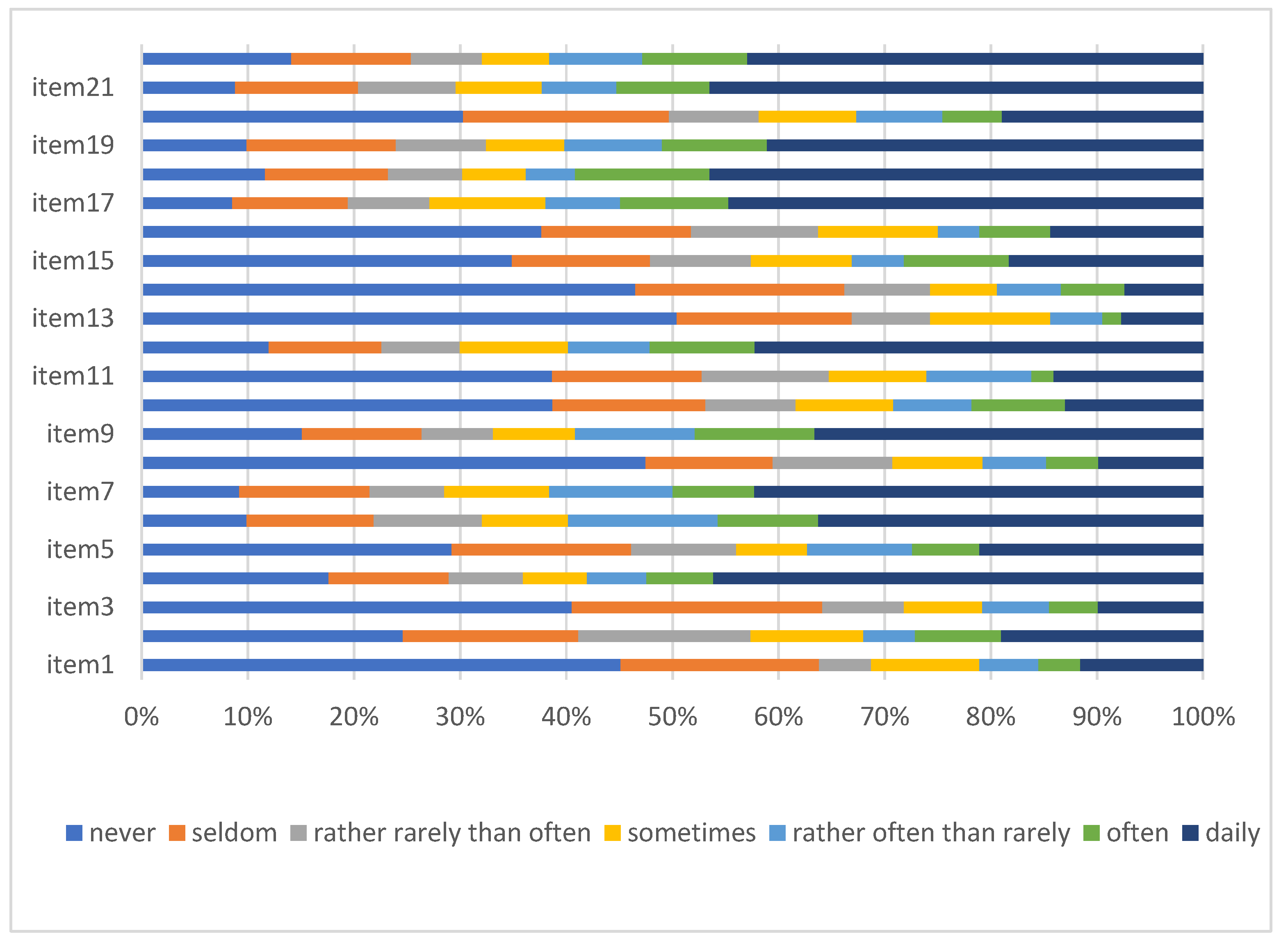
Figure 2.
The burnout syndrome among age categories of respondents (n=284).
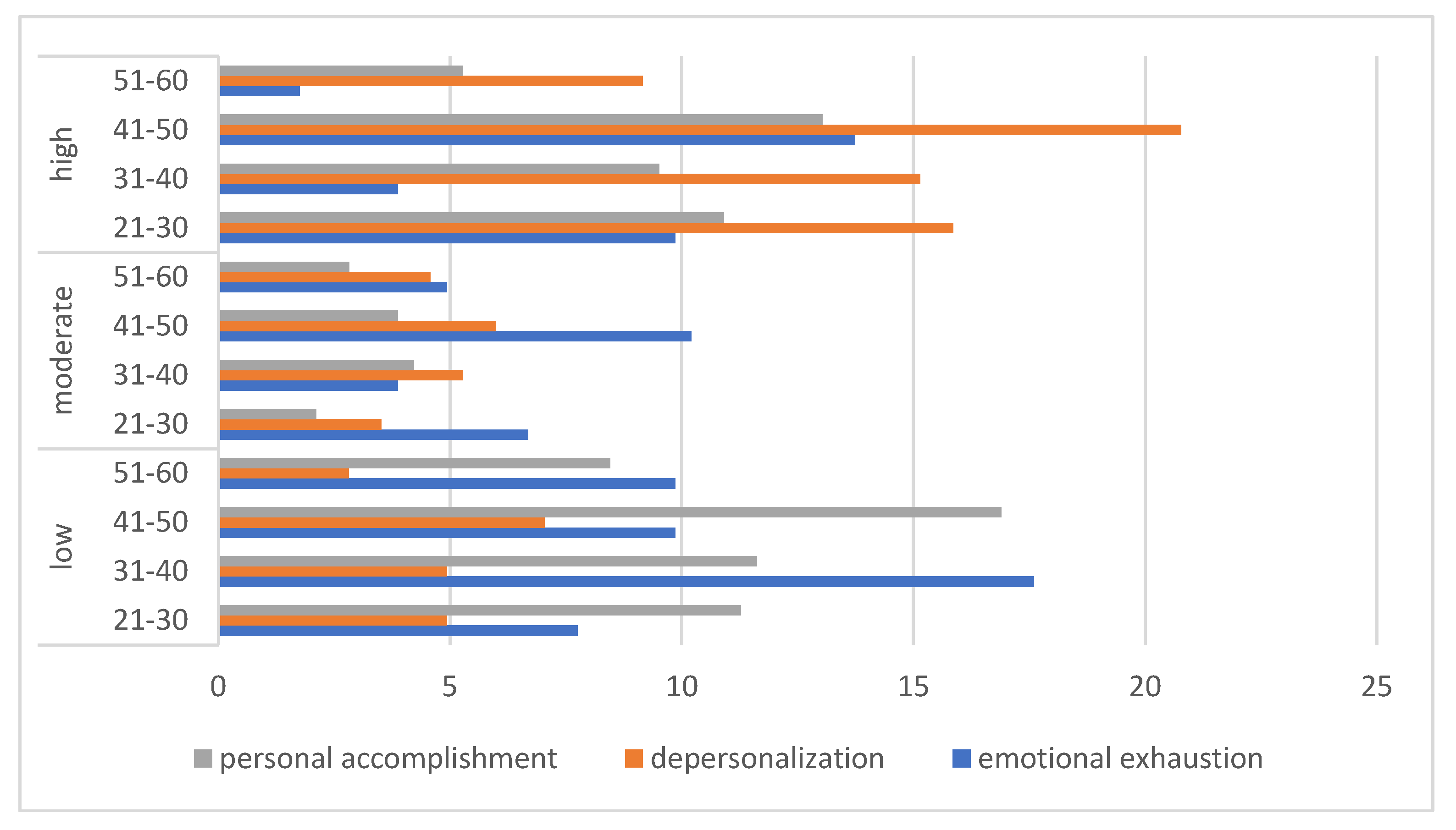
Figure 3.
The burnout syndrome depending on the work experience of respondents (n=284).
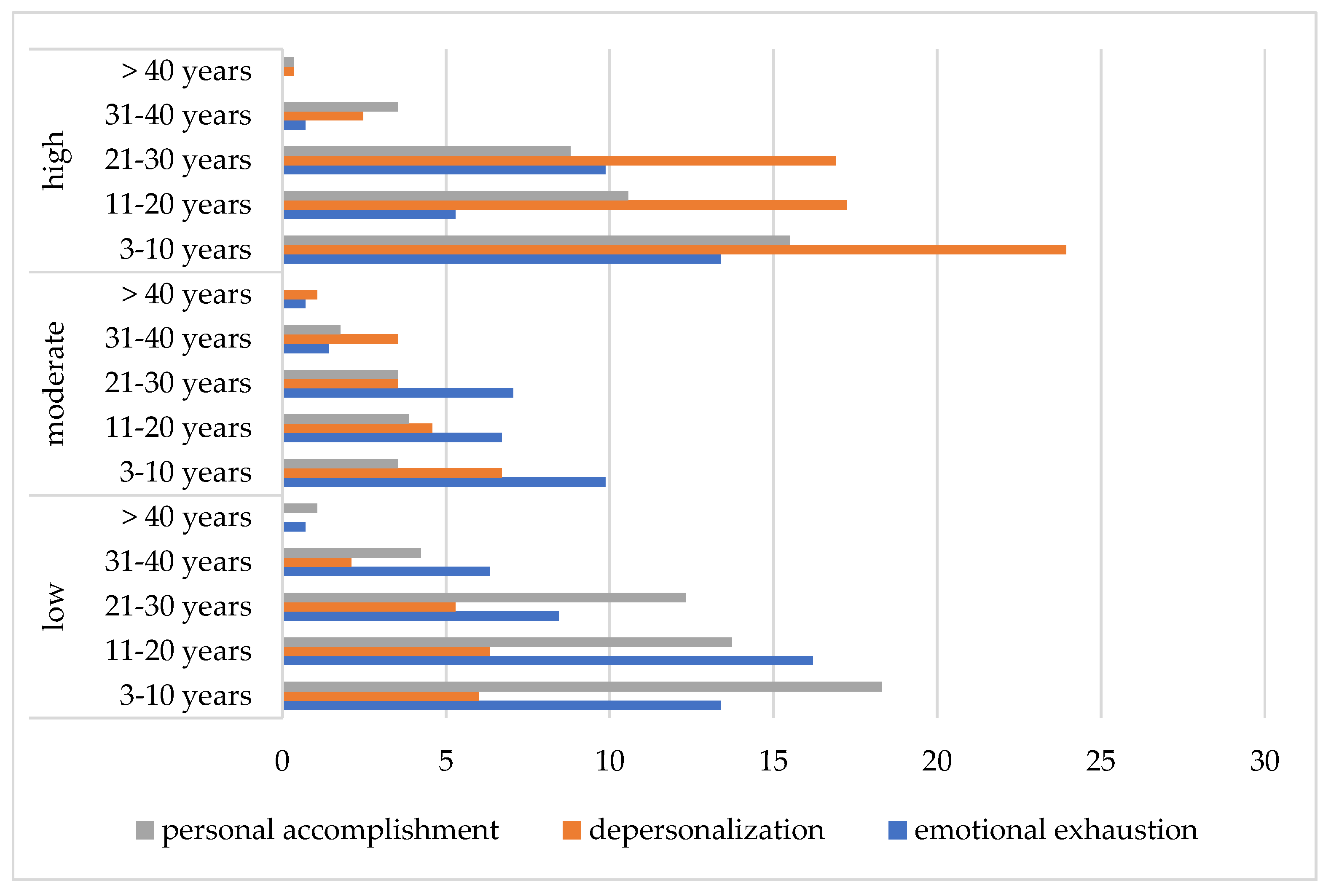
Figure 4.
The burnout syndrome depending on position (n=284).
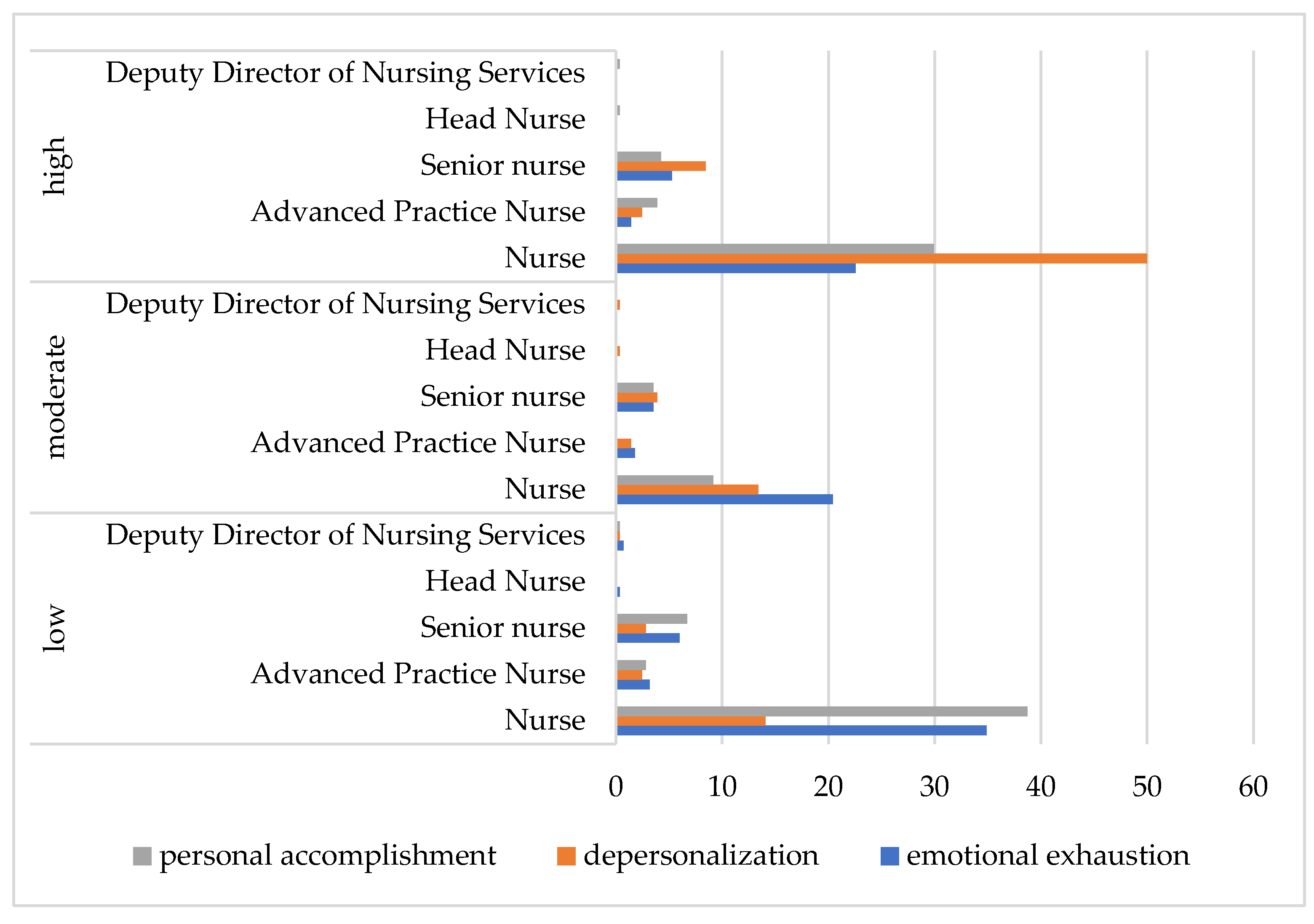

Table 1.
Measuring scale of the burnout questionnaire among medical workers.
| Subscale | Questions | Score |
|---|---|---|
| Emotional exhaustion | 1, 2, 3, 6, 8, 13, 14, 16, 20 | 54 |
| Depersonalization | 5, 10, 11, 15, 22 | 30 |
| Personal accomplishment | 4, 7, 9, 12, 17, 18, 19, 21 | 48 |
Table 2.
Burnout syndrome according to the burnout questionnaire, developed based on the model of C. Maslach and S. E. Jackson.
Table 2.
Burnout syndrome according to the burnout questionnaire, developed based on the model of C. Maslach and S. E. Jackson.
| Subscale | Low | Moderate | High |
|---|---|---|---|
| Emotional exhaustion | 0-15 | 16-24 | ⩾25 |
| Depersonalization | 0-5 | 6-10 | ⩾11 |
| Personal accomplishment | ⩾37 | 36-31 | ≤30 |
Table 3.
Demographic data of the respondents (n=284).
| Index | Variables | Frequency | Percentage |
|---|---|---|---|
| age | 21-30 | 69 | 24.3 |
| 31-40 | 72 | 25.4 | |
| 41-50 | 96 | 33.8 | |
| 51-60 | 47 | 16.5 | |
| work experince | 0-10 years | 104 | 36.6 |
| 11-20 years | 80 | 28.2 | |
| 21-30 years | 72 | 25.4 | |
| 31-40 years | 24 | 8.5 | |
| ≥ 40 years | 4 | 1.4 | |
| years in position | 0-5 years | 61 | 21.5 |
| 6-10 years | 86 | 30.3 | |
| 11-15 years | 51 | 18.0 | |
| 16-20 years | 29 | 10.2 | |
| 21-25 years | 29 | 10.2 | |
| 26-30 years | 13 | 4.6 | |
| 31-35 years | 10 | 3.5 | |
| ≥ 35 years | 5 | 1.8 |
Table 4.
Correlation between respondents’ position and work experience (n=284).
| Position | work Experience | ||
|---|---|---|---|
| position | Pearson correlation | 1 | ,364** |
| significance (bilateral) | ,000 | ||
| N | 284 | 284 | |
| work experience | Pearson correlation | ,364** | 1 |
| significance (bilateral) | ,000 | ||
| N | 284 | 284 | |
| ** The correlation is significant at the 0.01 level (two-tailed). | |||
Table 5.
Correlation between age and nursing work experience (n=284).
| Work Experience | Age | ||
|---|---|---|---|
| work experience | Pearson correlation | 1 | ,772** |
| significance (bilateral) | ,000 | ||
| N | 284 | 284 | |
| age | Pearson correlation | ,772** | 1 |
| significance (bilateral) | ,000 | ||
| N | 284 | 284 | |
| ** The correlation is significant at the 0.01 level (two-tailed). | |||
Table 6.
The burnout syndrome in various regions of Kazakhstan (n=284).
| level | Region of Kazakhstan | Emotional Exhaustion | Personal Accomplishment | Personal Accomplishment |
|---|---|---|---|---|
| low | Western Kazakhstan | 11 (3.87) | 9 (3.17) | 14 (4.93) |
| Northern Kazakhstan | 25 (8.80) | 11 (3.87) | 33 (11.62) | |
| Central Kazakhstan | 27 (9.51) | 15 (5.28) | 24 (8.45) | |
| Southern Kazakhstan | 65 (22.89) | 21 (7.39) | 66 (23.24) | |
| Total | 128 (45.07) | 56 (19.72) | 137 (48.24) | |
| medium | Western Kazakhstan | 2 (0.70) | 0 (0.0) | 7 (2.46) |
| Northern Kazakhstan | 19 (6.69) | 17 (5.99) | 6 (2.11) | |
| Central Kazakhstan | 26 (9.15) | 12 (4.23) | 13 (4.58) | |
| Southern Kazakhstan | 26 (9.15) | 26 (9.15) | 11 (3.87) | |
| Total | 73 (25.70) | 55 (19.37) | 37 (13.03) | |
| hogh | Western Kazakhstan | 18 (6.34) | 22 (7.75) | 10 (3.52) |
| Northern Kazakhstan | 22 (7.75) | 38 (13.38) | 27 (9.51) | |
| Central Kazakhstan | 21 (7.39) | 47 (16.55) | 37 (13.03) | |
| Southern Kazakhstan | 22 (7.75) | 66 (23.24) | 36 (12.68) | |
| Total | 83 (29.23) | 173 (60.92) | 110 (38.73) | |
Disclaimer/Publisher’s Note: The statements, opinions and data contained in all publications are solely those of the individual author(s) and contributor(s) and not of MDPI and/or the editor(s). MDPI and/or the editor(s) disclaim responsibility for any injury to people or property resulting from any ideas, methods, instructions or products referred to in the content. |
© 2025 by the authors. Licensee MDPI, Basel, Switzerland. This article is an open access article distributed under the terms and conditions of the Creative Commons Attribution (CC BY) license (http://creativecommons.org/licenses/by/4.0/).
Copyright: This open access article is published under a Creative Commons CC BY 4.0 license, which permit the free download, distribution, and reuse, provided that the author and preprint are cited in any reuse.


