Preprint
Article

This version is not peer-reviewed.

Aging of Red Wine (cv. Negroamaro) in Mediterranean Areas: Impact of Different Barrels and Apulian Traditional Amphorae on Phenolic Indices, Volatile Composition and Sensory Analysis

A peer-reviewed article of this preprint also exists.

Submitted:

10 January 2025

Posted:

14 January 2025

You are already at the latest version

Abstract

This study investigated on the impact of different aging containers on the volatile composition and quality of Negroamaro wine, a key variety from Apulia, Italy. Seven vessel types were evaluated: traditional Apulian amphorae (ozza), five types of oak barrels (American oak, French oak, European oak, a French + European oak, and a multi-wood mix), galls bottles as control. The impact of the vessels was evaluated after 6 months aging through characterization of phenolic, volatile and sensory profiles. Amphorae allowed a specific evolution of the wine’s primary aromas, including as fruity and floral notes, while enhancing volatile compounds like furaneol, which contributes to caramel and red fruit nuances and also 3-methyl-2,4-nonanedione, a key compound related to anise, plum and premature aging, depending on its concetration. This container also demonstrated effectiveness in stabilizing anthocyanin-tannin complexes, supporting color stabilization. Oak barrels allowed to obtain different outcomes in terms of color stabilization, volatile profile, aroma and astringency. French oak exhibited the highest phenolic and tannin levels, enhancing anthocyanin stabilization and color intensity. European oak followed closely, while American oak excelled in color stabilization with tannins less reactive to polymers. Mixed wood barrels showed lower phenolic extraction and the best astringency evolution.

Keywords: 
;  ;  ;  ;  ;  ;  ;  

1. Introduction

Aging is a winemaking step that strongly influences wine evolution, involving a series of chemical and physical reactions, that significantly modify wine composition and affect its stability [1,2,3]. It is possible to choose among several aging materials that have a different impact both on chemical and sensory wines characteristics [3,4]. The choice depends mostly on costs, varietal characteristics and oenological goals [3,5].
Stainless steel is an inert material that release negligible amounts of substances in wine. It is diffused and appreciated, especially on large scale production, as it can process high volumes and ensure high levels of sanitization, pressure resistance, temperature control, easy cleaning and maintenance and the resulting product can be therefore standardized [6,7].
Wood is widely diffused in winemaking as consumers appreciate spicy, toasted and smoked notes that it confers to the wine [1]. Its interaction with wine is related to porosity degree and oxygen transmission rate (OTR) of the barrel staves, that allow micro-oxygenation: introducing controlled amounts of oxygen into the wine, wood promotes color stabilization and improves aroma and texture [8]. It allows an extensive exchange of substances, hydrolysable tannins and volatile compounds [9,10], in different amounts based on species, geographical origin, toasting level, age of the barrel, time of contact, etc. [3]. However, barrels have some drawbacks such as a short shelf life, high time and cost of production, difficult sanitization [1].
Finding new aging materials is important to preserve wine quality, differentiate production and give winemaking a higher sustainability. Therefore, increasing attention is being paid to earthenware. It is a material with varying degrees of porosity, mainly based on the raw materials and production technique, that, with a suitable coating, provide several advantages: it enables temperature control and can impart micro-oxygenation benefits, without conferring exogenous volatile and phenolic compounds that may cover wine varietal characteristics [11,12,13].
The employment of earthenware to produce aging containers such as amphorae or Georgian qvevri has also an historical relevance as it was the first material used to produce wine containers [14].Therefore, its revival is nowadays increasingly attracting the wine world [14]. Also in Apulia, a southern Italian region, earthenware vessels were traditionally produced and called ‘’capasoni’’ or ‘’ozze’’ and they are still used in some area as to produce, stock and transport wine and other foods [11,15,16,17,18].
Negroamaro is a variety of Vitis vinifera cultivated in Salento (southern area of Apulia), whose wines have become important for the Italian wine market [19,20]. Negroamaro is a non-aromatic variety, therefore, it is important to preserve its nature, enhance the stability of its aroma and color as well as improve its sensorial complexity. In particular, the preservation of primary volatile compounds can be a relevant goal as they are at risk of disappearing in grapes and consequently in wines due to global warming [21]. Also tuning the sensory impact of wine tannins has become a primary goal in a climate change scenario, since phenolic maturity of grapes, and particularly of grape seeds, is decoupling with technological maturity and the resulting wines can be characterized by undesirable astringency subqualities and/or bitterness [22,23]. Finally, colour appears as another critical issue for red wines produced in warm climate, due to reduced anthocyanin accumulation, extraction and stability [24].
In this view, the effect of five different types of barrels and a traditional Apulian amphora (called ozza) was evaluated on a Negroamaro wine. Colour and phenolic indices, volatile profile and sensory characteristics were analysed and compared after 6 months of aging.

2. Materials and Methods

2.1. Aging Experiment

The Negroamaro wine used for the trial (vintage 2021) was provided by the winery Vecchia Torre (Leverano, Italy). The wine had 14.1% ethanol, pH 3.6, total acidity 6.7 gL-1 tartaric acid, total SO2 126 mg L-1. Wine was distributed into five types of 225 L barrels (American oak, French oak, European oak, Mix, French+European oak) as described in Table 1, provided by Toneleria Nacional Italy s.r.l. (Prato, Italy) and traditional Apulian amphorae (ozze) having a capacity of 150-200 L (Figure S1). Amphorae were internally glazed according to the traditional manufacturing process, closed with ceramic dishes and sealed with lime [17]. Three barrels per each type and two amphorae were used for the experiment. Dark glass 0.75 L bottles were used as control. Aging was carried out for six months.

2.2. Chemical Analysis

Chemical analyses of samples were conducted using FTIR Winescan FT 120 (Foss, Hillerød, Danmark) analyzer. Color parameters were determined with the modified Somers method [25]. Total phenols were analysed by Folin-Ciocâlteu assay [26], free and total anthocyanins using Di Stefano and Cravero method [27], total tannins with Ribereau-Gayon and Stonestreet method [28], tannins-anthocyanins complex with Glories method [29]. Astringency was evaluated with methylcellulose precipitation assay (MCPT) [25].

2.3. Analysis of Volatile Compounds

Volatile compounds were analysed and quantified by solid phase microextraction-gas chromatography/mass spectrometry (SPME-GC/MS) according to Lukić and Horvat (2017). Odour activity values (OAV) were determined for volatile compounds as the ratios between the measured concentration and the odour threshold reported in literature [20,31,32,33,34,35,36,37,38,39,40,41,42,43,44,45,46,47,48,49,50,51,52,53,54,55,56,57] (Table S1).

2.4. Sensory Analysis

Free choice profiling was carried out to characterize the wines [26]: judges freely assessed and described the characteristics of each wine using a free vocabulary of sensory descriptors, with the only request being to avoid the use of hedonic descriptors [58,59]. A panel composed of 8 judges (5 males, 3 females; age 23-48), winemakers and professionals with experience in wine tasting and knowledge of Apulian cultivars, participated at wine evaluation sessions. One training session was carried out to familiarize with the sensory methodology and further training was not required as the method was based on free description [26,59,60]. The experimental replicates were independently analysed. Samples were coded and presented in random order in glasses complying with the requirements of the ISO 3591 (2) standard [61], at serving temperature (17 ± 2 °C). Panellists individually evaluated each wine in an open-plan sensory facility with a forced 1-min break between each wine, with water and plain crackers available to cleans the palate. Two sensorial sessions were carried out. In each session two batches of 4 or 5 samples were analysed, with an interval between batches for rinsing and de-fatiguing mouth [62].
The textual data were pre-processed according to [26], removing mistakes, eliminating connectors and auxiliary terms, lemmatizing, regrouping synonyms, management of ambiguous words (polysemy and homographs). The frequency of occurrence of sensory descriptors was acquired and submitted to statistical analysis.

2.5. Statistical Analysis

One way and Two-way Analysis of Variance (ANOVA), Tukey’s post hoc test, heatmap with cluster analysis, Fisher’s LSD test and Principal Components Analysis (PCA) were carried out with Origin Pro 2022 (OriginLab, Northampton, MA, USA). Correspondence analysis (minimum term frequency = 3) and Co-occurrence network (minimum term frequency = 3, filter edges = Jaccard, top 40 edges) were out on the results of sensory analysis using the KH coder software (http://khcoder.net/en/) [63].
Principal components analysis (PCA), partial least squares discriminant analysis (PLS-DA, with 5-fold cross-validation) and heatmap clustering with Euclidean distance (Ward method), were carried out using the MetaboAnalyst6.0 platform (www.metaboanalyst.ca).

3. Results

3.1. Phenols

Table 2 shows the phenolic indices, MCPT assay and color parameters of samples at initial time (T-0) and after 6 months of aging in different vessels. The phenolic and color indices evidenced different interactions between the aging materials and the wine. As expected, the contact with wood led to a release of phenolic compounds, mostly ellagitannins [64], as shown by the higher levels of total phenols and total tannins compared to the others. Among woods, French oak held the highest values of total phenols (86.30 a.u.), followed by European oak, French+European oak and finally American oak. A greater concentration of total phenols in French oak barrels, compared to American oak ones, was also reported by [65,66]. As a consequence, an increase in tannin value occurred during aging, reaching a maximum in American and French oak. The Mix barrels determined lower total phenols concentration compared to other woods, maybe due to a lower release of ellagitannins, also confirmed by a low total tannin value (3.27 gL-1), that could also explain the low astringent perception reported during sensorial analysis for this sample [67].
As expected, wine in bottles showed the lowest level of total phenols and total tannins as in the starting wine. On the other hand, amphora had a concentration in total phenols significantly higher compared to glass bottles. This could imply a good protection against degradation of anthocyanins, as shown below. The MCPT assay is related to condensed tannins and the tannin-polymer interaction [25]. Its values were not affected by different aging materials according to the Tukey’s HSD test, due to a certain variability of data among replicates. However, the Fisher’s LSD test indicated that the MCPT assay values of French oak were higher than those found in bottles, amphora and Mix barrels (data not shown). MCPT assay and total tannins showed a linear relation (adjusted R2 = 0.578, p-value = 0.029, see supplementary materials). The linearity consistently increased excluding the data from American oak (adjusted R2 = 0.887, p-value = 0.003, see Figure 1), presenting unexpectedly lower MCPT assay value, compared to the observed total tannins content. Therefore, American oak could have released tannins with lower reactivity towards polymers.
Free anthocyanins diminished after aging in all theses, as a result of condensation as well as degradation phenomena [68,69]. The decrease was less intense in European oak, French and European oak and secondly in amphorae. Also [70] found a higher concentration of anthocyanins in wine aged in unglazed pottery vessels compared to wines aged in other vessels, emphasizing a good behavior of amphorae in protecting anthocyanins. Concurrently with the decrease in anthocyanins, an increase of anthocyanins-tannins complexes was observed in all theses. French oak and American oak showed the highest condensation activity. Consequently, the ratio between free and complexed anthocyanins diminished, with American oak holding the lowest value. Therefore, American oak appeared to release tannins with a marked attitude towards color stabilization rather than interaction with macromolecules. These results, together with high value of color density and low hue, confirmed a good attitude of American oak in stabilizing color as demonstrated by Hernández et al. (2007). Interestingly, anthocyanin-tannins complexes concentration increased also in amphora, still emphasizing a good capacity of earthenware vessels to stabilize color [72]. This attitude was also confirmed by the color indices [25]; the high value of color density and the low value of hue, indicated an improvement of chromatic characteristics of wine [73]. This behaviour is possibly due to the micro-oxidation phenomena that occurs throughout earthenware vessel walls, even in glazed terracotta, that promote the formation of anthocyanins-tannins complexes [70,74,75,76].
Free anthocyanins diminished after aging in all theses, as a result of condensation as well as degradation phenomena [68,69]. The decrease was less intense in European oak, French and European oak and secondly in amphorae. Also Wang et al., (2022) found a higher concentration of anthocyanins in wine aged in unglazed pottery vessels compared to wines aged in other vessels, emphasizing a good behavior of amphorae in protecting anthocyanins. Concurrently with the decrease in anthocyanins, an increase of anthocyanins-tannins complexes was observed in all theses. French oak and American oak showed the highest condensation activity. Consequently, the ratio between free and complexed anthocyanins diminished, with American oak holding the lowest value. Therefore, American oak appeared to release tannins with a marked attitude towards color stabilization rather than interaction with macromolecules. These results, together with high value of color density and low hue, confirmed a good attitude of American oak in stabilizing color as demonstrated by Hernández et al. (2007). Interestingly, anthocyanin-tannins complexes concentration increased also in amphora, still emphasizing a good capacity of earthenware vessels to stabilize color [72]. This attitude was also confirmed by the color indices [25]; the high value of color density and the low value of hue, indicated an improvement of chromatic characteristics of wine [73]. This behaviour is possibly due to the micro-oxidation phenomena that occurs throughout earthenware vessel walls, even in glazed terracotta, that promote the formation of anthocyanins-tannins complexes [70,74,75,76].

3.2. Volatile Compounds

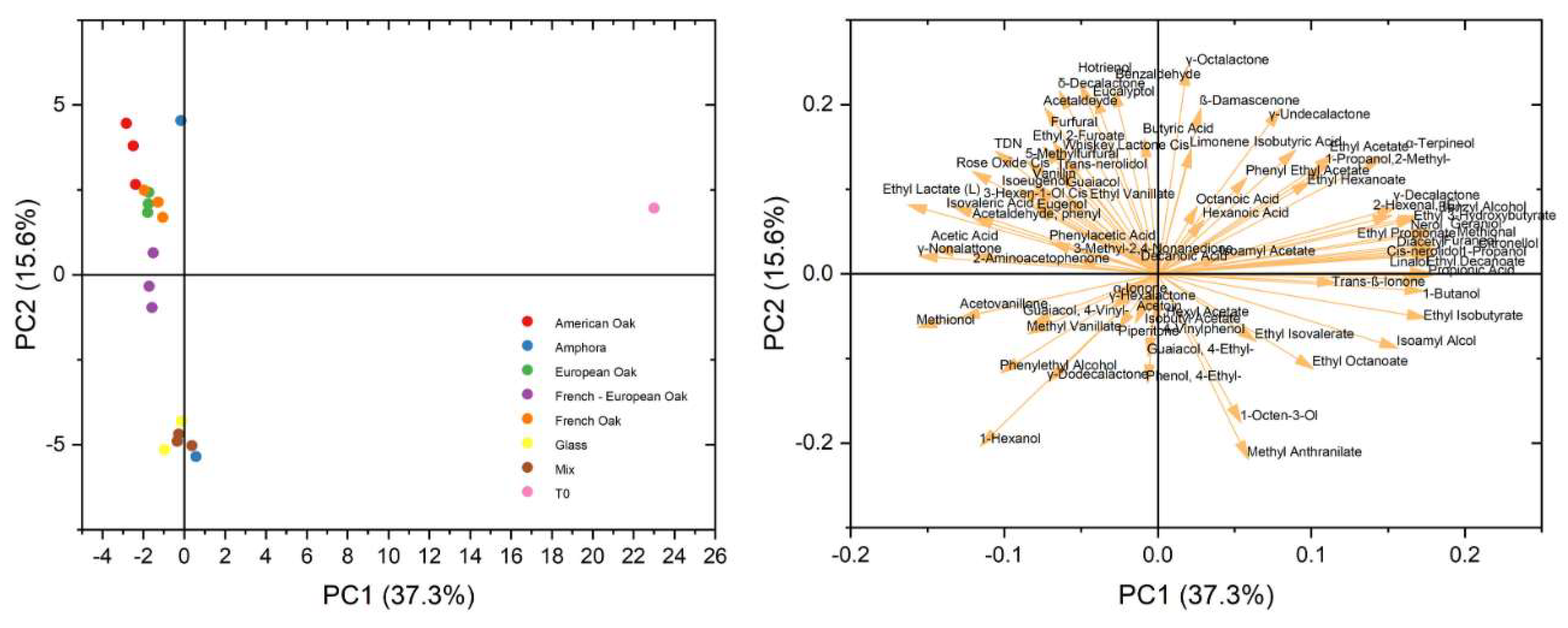
The evolution of the volatile pattern after aging has been analysed by the PCA reported in Figure 2. PC1 explained 37.3% of the variability between samples. Along this dimension, differences were mainly due to the aging time, as T-0 was clearly separated from the other samples. As expected, T-0 was characterized by primary aromas, es. several terpenes (geraniol, nerol, linalool, cis-nerolidol), together with fermentation products, such as ethyl esters and acetate esters. At time 0 wine was also characterized by higher alcohols and lactones, such as δ-undecalactone, γ-octalactone and γ-decalactone that may confer coconut, fruity-sweet aroma [77,78,79]. Acids, that generally represent 10% of Negroamaro volatile fraction (Capone et al., 2013; Tufariello et al., 2012), were also abundant. Among acids, most representative were short chain fatty acid such as propionic and isobutyric acids, followed by medium chain fatty acids (hexanoic acid and octanoic acids). After aging, wines volatile profile significantly changed, as a result both of wine oxidative evolution (e.g., acetaldehyde, benzaldehyde) [80,81] and esterification phenomena (e.g., ethyl lactate), together with the emergence of woody aromas released from the barrels staves, such as vanillin, eugenol, isoeugenol, furanic compounds etc. [82,83]. Along PC2 (15,6% of variability), samples are distinguished according to the aging vessels. Interestingly, wines aged in Mix barrels were grouped together with wines in glass bottles, while the other were grouped together, even though they spread along the axis. Amphorae, which behaved differently along this principal component, were grouped each to a different group. This highlights the expected heterogeneity of handmade amphorae [74]. The PC2, therefore, highlighted a slight shift (15,6% of data variability) in the volatile pattern towards the lower-left quadrant, with decreasing impact of wood and oxidation volatiles and a relative increase of the role of esters, alcohols, volatile phenols. This trend characterized glass and one of the amphorae, as expected, and wines aged in French oak barrels, that seemed to provide better modulation of oxidative evolution of the volatile pattern.

3.2.1. Discrimination Among Woods

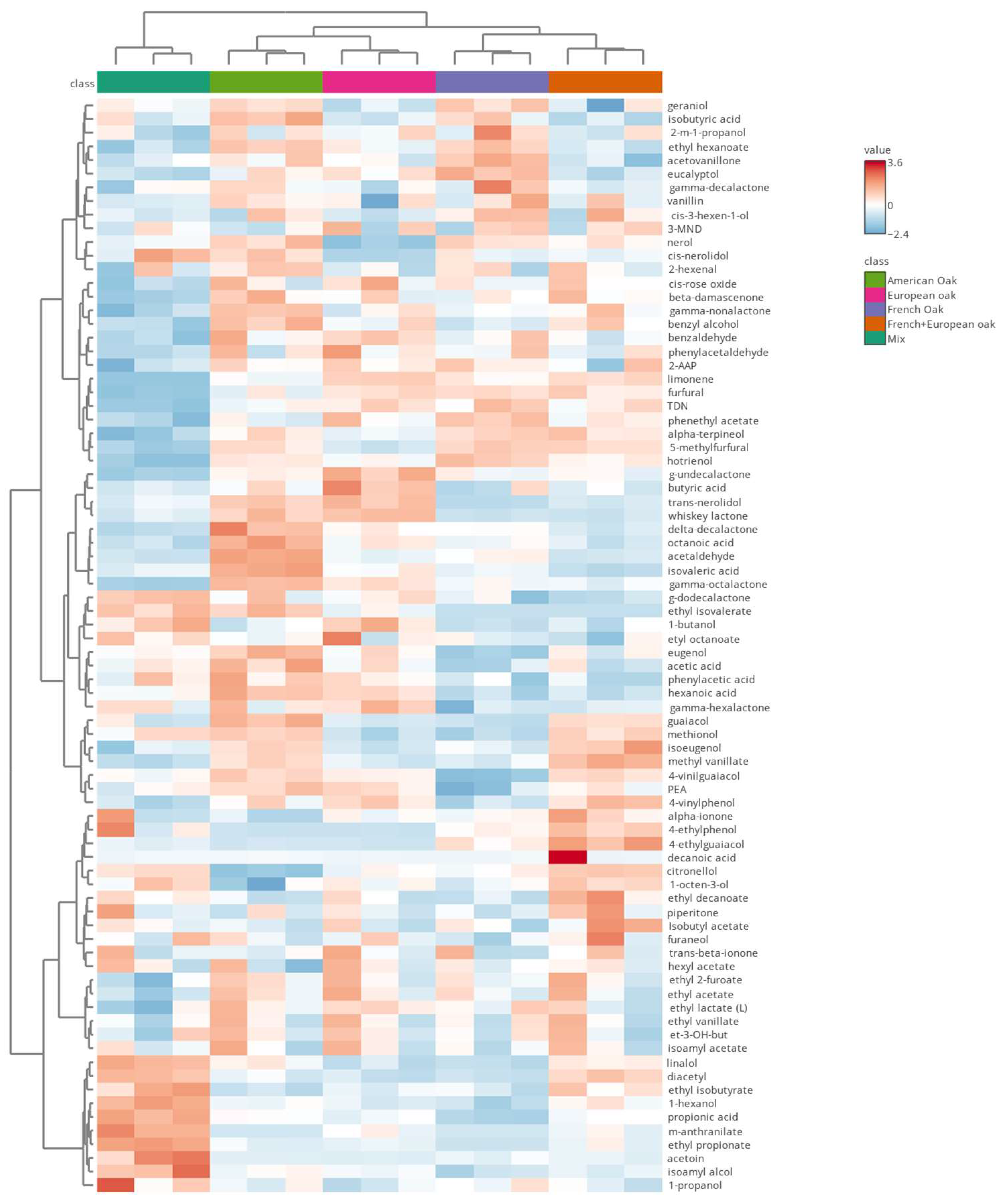
After six months of aging, differences among the volatile aroma profiles of samples aged in different barrels emerged, according to [84] that demonstrated during the first months of aging, extraction of aromas from wood to wine reach a maximum. In order to underline these differences, a further elaboration of volatile data found in wood aged Negroamaro was carried out. Figure 3 reports the heatmap with clusterization of wines and volatiles. The heatmap that was based on 80 volatile compounds found throughout gas-chromatography, clusterized samples into 5 different groups corresponding to the different types of barrels. This confirms the consistency and repeatability of the impact of the type of barrel on the volatile profile of the Negroamaro wine [1,84,85].
Wine aged in Mix barrels resulted with a volatile profile quite different respect to the othe types of barrel. Mix was characterized from a cluster of volatiles that, in addition to fermentation products (alcohols, acids and some esters), includes higher levels of methyl-anthranilate, typical of foxy character, linalool, with flowery notes and previously reported in Negroamaro wines [20] as well as acetoin and diacetyl, maybe resulting from lactic acid bacteria activities [86]. Also γ-dodecalactone, a lactone typically found in grapes and generally associated to pleasant odours [78] and esters such as ethyl isovalerate and ethyl octanoate resulted as characteristic compounds for wine aged in Mix barrels. American oak was characterized by cluster of grapes lactones including γ-octalactone, δ-decalactone and whiskey lactone which derives from wood and is involved in modifying the perception of fruity aromas, with sweet, peach and coconut notes [42], decreasing red fruits notes and increasing blackberry fruits and spicy scents [77]. In literature, a higher concentration of oak lactones in American oak, compared to European oak, was reported [84]. Several volatile phenols were associated to American oak. They may be the result of lignin degradation [87]. Between them, isoeugenol and guaiacol may be related to a positive influence on aroma profile (spicy, vanilla, woody notes), while, 4-vinylguaiacol, if present in high concentration, may confers unpleasant notes [88] although, in this sample, it was present with very low OAV (0.00128) (data shown in supplementary table). Figure 3 highlighted more intense oxidation processes occurring with American oak, as it was characterized by acetaldehyde, the major oxidation by-product of the Fenton oxidation [89], phenyl-acetaldehyde whose correlation with aged and oxidated wines was confirmed by several studies [90,91,92] and lastly acetic acid. Samples aged in European oak were clusterized as the most similar to American oak, though with less intense signals for lactone and wood-derived compounds compared to American oak. Nevertheless, in the heatmap also whisky-lactone was attributed to this sample, underlining the impact of the oak, with a maximum OAV (7.76) in European oak similar to American oak. European oak was marked by compounds such as limonene, trans-nerolidol are highly characterizing, together with eucalyptol. The Negroamaro wine aged in French oak barrels showed, instead, low levels of volatile phenols and lactones compared to the other types of barrels. French oak profile in the heatmap includes two main cluster. The first one comprises two terpenes (α-terpineol and hotrienol), TDN, phenyl ethyl acetate, furfural, 5-methylfurfural. Furfuryl aldehydes are important compounds in oak-aged wines [93]; they impart almonds and toasted almond notes and their presence are found in higher concentration in French oak compared to American oak [94]. The other cluster includes, beside fermentation products, also terpenes (geraniol, eucalyptol), a ketone (acetovanillone), an aldehyde (vanillin) and a lactone (γ-decalactone). Vanillin and its derivatives are wood compounds that confer notes of vanilla, typically reported into wood aged wines aged [94], also confirmed in the present study by sensorial analysis. Finally, French+European oak increased the relative levels of volatile phenols and guaiacols. French+European oak was characterized from a group of aromas comprising piperitone, furaneol, citronellol, β-ionone, α-ionone, 4-ethyl phenol and 4-ethyl guaiacol. Some of them are primary aromas associated to positive notes such as piperitone, a terpene reminiscent of mint [50] that may explain the balsamic notes found in this sample during sensory analysis. Furaneol and β-ionone, both associated to red fruits aromas [32,95]. 4-ethyl phenol and 4-ethyl guaiacol can have a negative influence on wine aroma and may imply contamination by Brettanomyces/Dekkera yeasts [87]. Lastly, 1-octen 3-ol resulted as a distinctive compound in French-European oak, that may derive from vine or grape metabolism and associated to mushroom off-flavour in wine [96]. In spite of this, mushroom defect was not reported in this sample during sensory analysis.
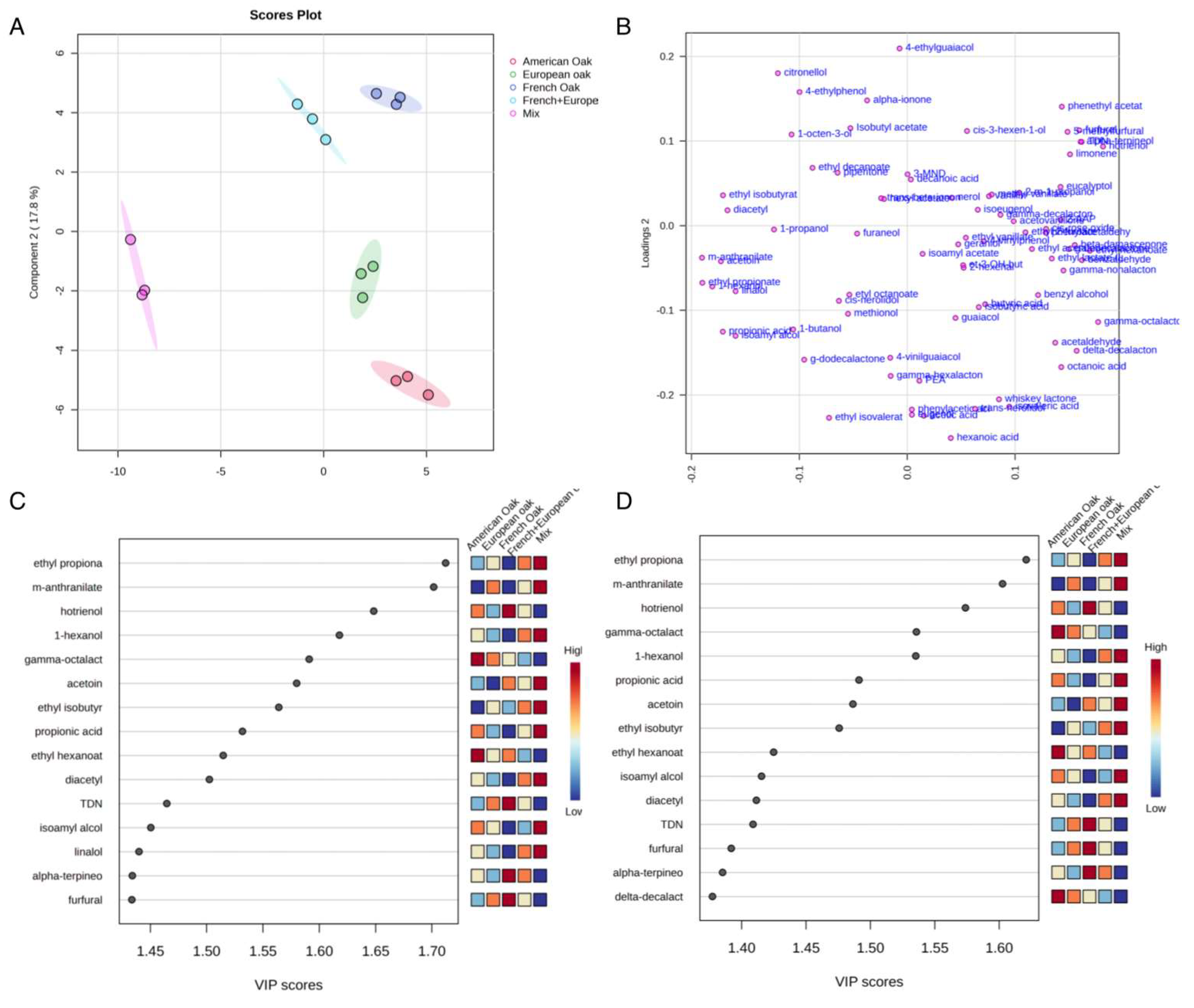
Figure 4 reports the results of PLS-DA analysis, including the loading plot of the first two components of the model (Figure 4A), the scores plot of the first two principal components with the 95 % confidence ellipses (Figure 4B) and the plot of the most important variables in the model according to the weighted sum of absolute regression coefficients (Figure 4C). Samples were clearly discriminated on the plane of the first two components (48 % of cumulative variability, Figure 4B), with no overlap of the confidence ellipses.
In PLS-DA French oak and French+European oak were close but still separated. Similarities are probably due to the presence, in both samples, of French wood. Wine aged in Mix barrels resulted as the most clearly discriminated. Interestingly, the most important variables involved in the discrimination of wines (Figure 4 C and D) are only in minor extent related to wood-derived compounds. The majority of variables with the highest VIP score, in fact, are esters and variateal aromas, including terpenes (linalool, hotrienol, α-terpineol), norisoprenoids (TDN) and varietal esters (methyl-anthranilate). Therefore, the most relevant difference among the types of barrels on Negroamaro wine aging was observed in the modulation of varietal and fermentative volatiles, more than on the release of wood-derived volatiles.

3.2.2. Focus on Some Grape-Derived Compounds

The present section focuses on the fate of some relevant grape-derived compounds after aging of the Negroamaro wine in vessels of different materials.

3.2.2.1. 3-methyl-2,4-nonanedione

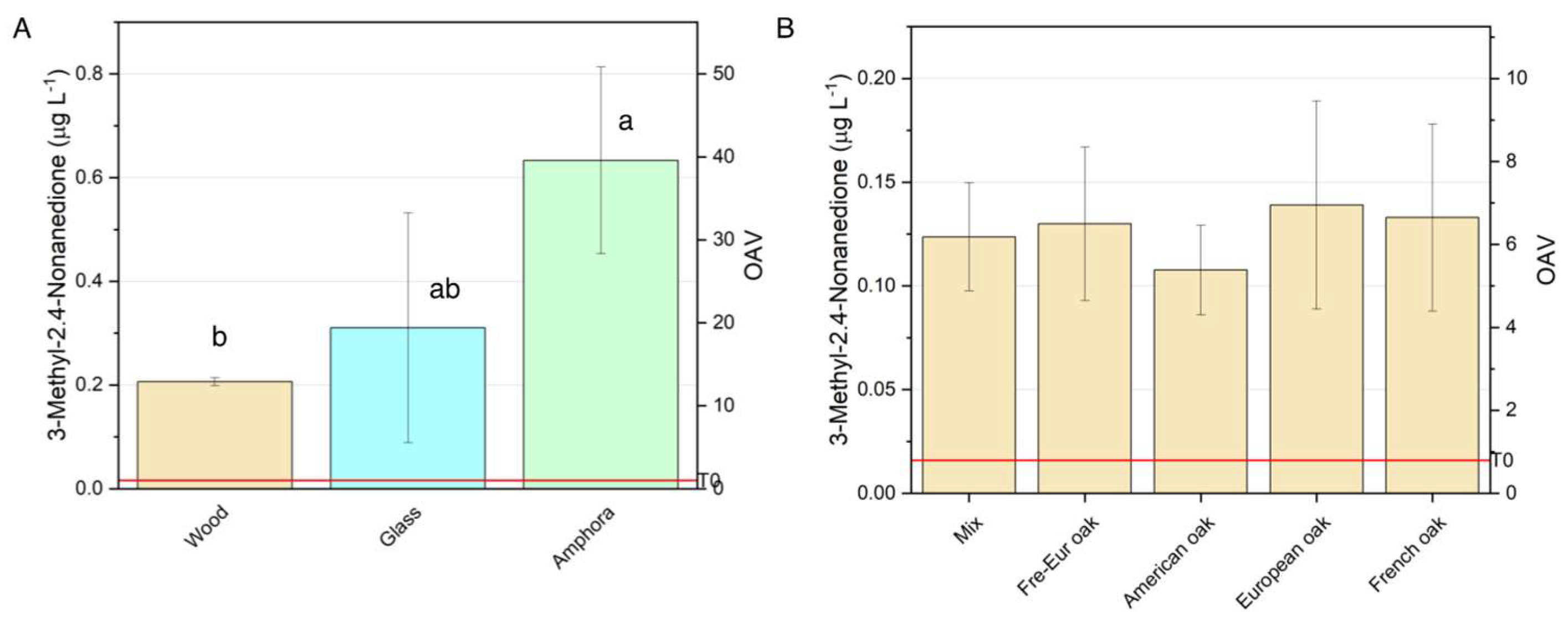
In Negroamaro wines tested in this study 3-methyl-2,4-nonanedione was present in concentration higher than its odour threshold (0.016 µg L-1). Pons et al. (2013) found that its aromatic characteristics depends on its concentrations; a range of 0,09-0,17 µg L-1 is related to hints of mint and anise, in the range of 0,17-0,25 µg L-1 plum, 0,25 µg L-1 determine fig nuances, finally, over 0,33 µg L-1 determine rancid odor. At time 0, 3-methyl-2,4-Nonanedione concentration in Negroamaro wine was 0.016 µg L-1 while, after six months increased in each sample (Figure 5). This behaviour was expected since 3-methyl-2,4-nonanedione is a β-diketone originated from ketols oxidation during aging, implying the early aging, with the loss of fresh, fruity and varietal character and the development of dried fruit flavours and cooked fruit nuances [98,99].
Figure 5 discriminates aged samples in different materials, in terms of 3-methyl-2,4-nonanedione. Panel A reports the mean values found in wines aged in different materials, and the highest average concentration was observed in aged wines in amphora. High values reported in amphora samples were probably due to the oxidative character explained by one of the two amphorae used, which presented a different coating that might induce an higher permeability to gases [74]. Also in glass samples concentrations were higher than those found in barrels as the oxygen in the gaseous headspace of the bottle, could have been rapidly consumed by oxygen reactive species [100]. Although higher than those of T0, 3-methyl-2,4-nonanedione concentrations in all aged wine samples were in the range related to plum notes and not to unpleasant odours, as exception of the amphora with a more oxidative character whose concentration (0,467 µg L-1, data shown in supplementary table) can related to oxidative odor, according to Peterson et al., 2020. No significant difference was found comparing the types of barrels (Figure 5 B), even though quite higher levels were found in all cases compared to T-0 wine. This suggests that formation of 3-MND from precursors could occur during aging [98], and that wood could have led to further reaction or adsorption of this compound.
However, the levels of 3-MND found in the Negroamaro wine evaluated in this study were quite high compared to the range reported in literature [97]. This finding suggests to carry out further research on the occurrence and fate of this compound in Negroamaro wines, due to its role in premature aging of red wines [97].

3.2.2.2. Furaneol

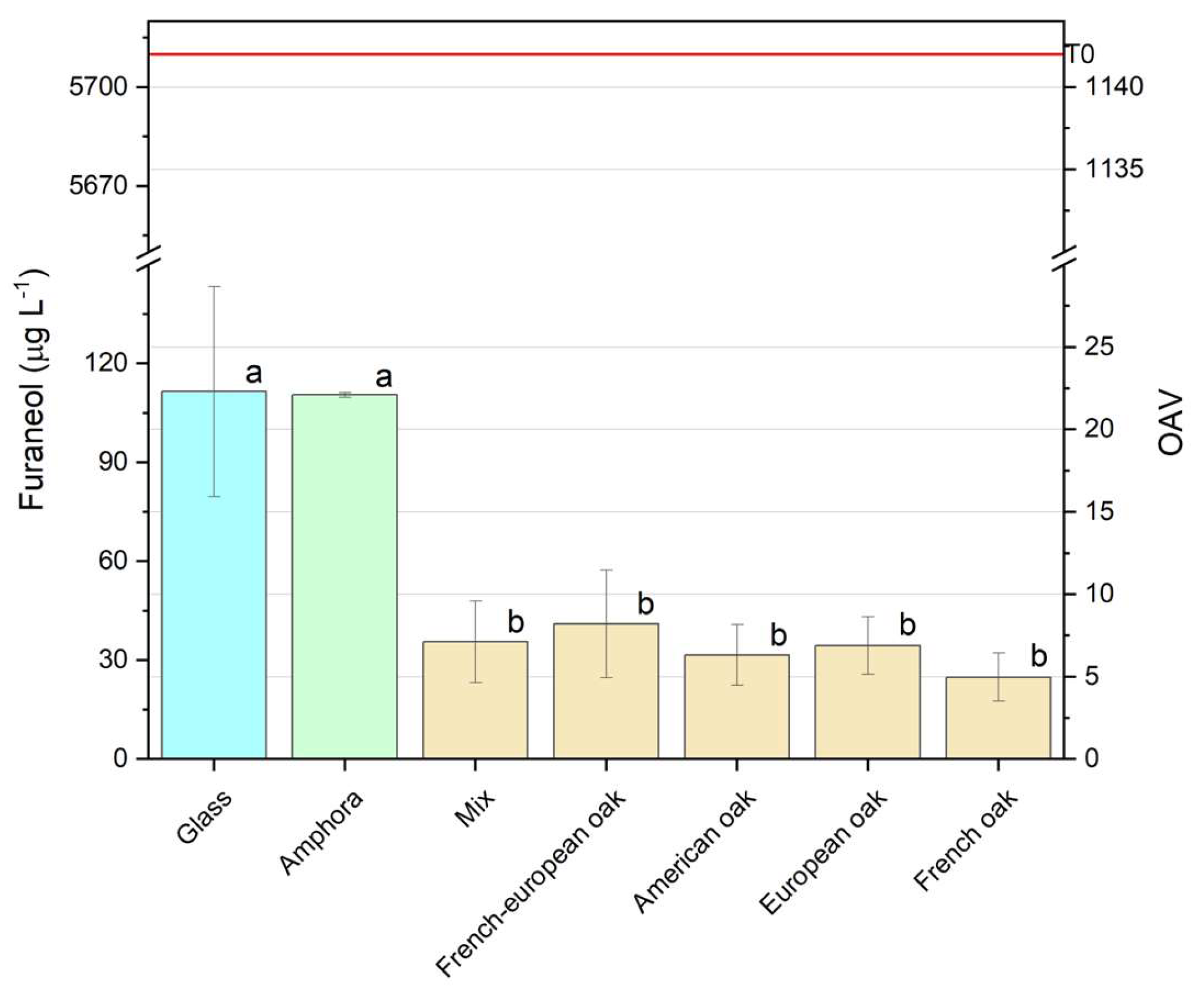
In this study, significant concentrations of furaneol, all widely above its perception threshold (5 μg L-1), were found in all samples. Higher concentrations are reached in amphora and glass, amounting to 110.5 and 111.5 respectively, while barrels accounted similar values ranging from 24.90 to 41.07 µg L-1 (Figure 6). Furaneol is the major furan found in strawberry, generated from sugar degradation with a temperature-dependent process [88]. In some cases, the origin of this molecule in wine has been attributed to wood [101], anyway, in this case, due to the presence of high concentration even in absence of wood aging (glass and amphorae), the first hypothesis can be discarded. This compound has therefore a varietal origin and is found in several Italian red grape varieties; It can enhance fruity notes of some wines, giving aromas that vary from red fruits (e.g.,: strawberry) to cooked fruit and intense caramel, depending on its concentration [95,102]. Aging in amphora could, therefore, considered as a tool to preserve such varietal compounds in aged wine.

3.2.2.3. β-Damascenone

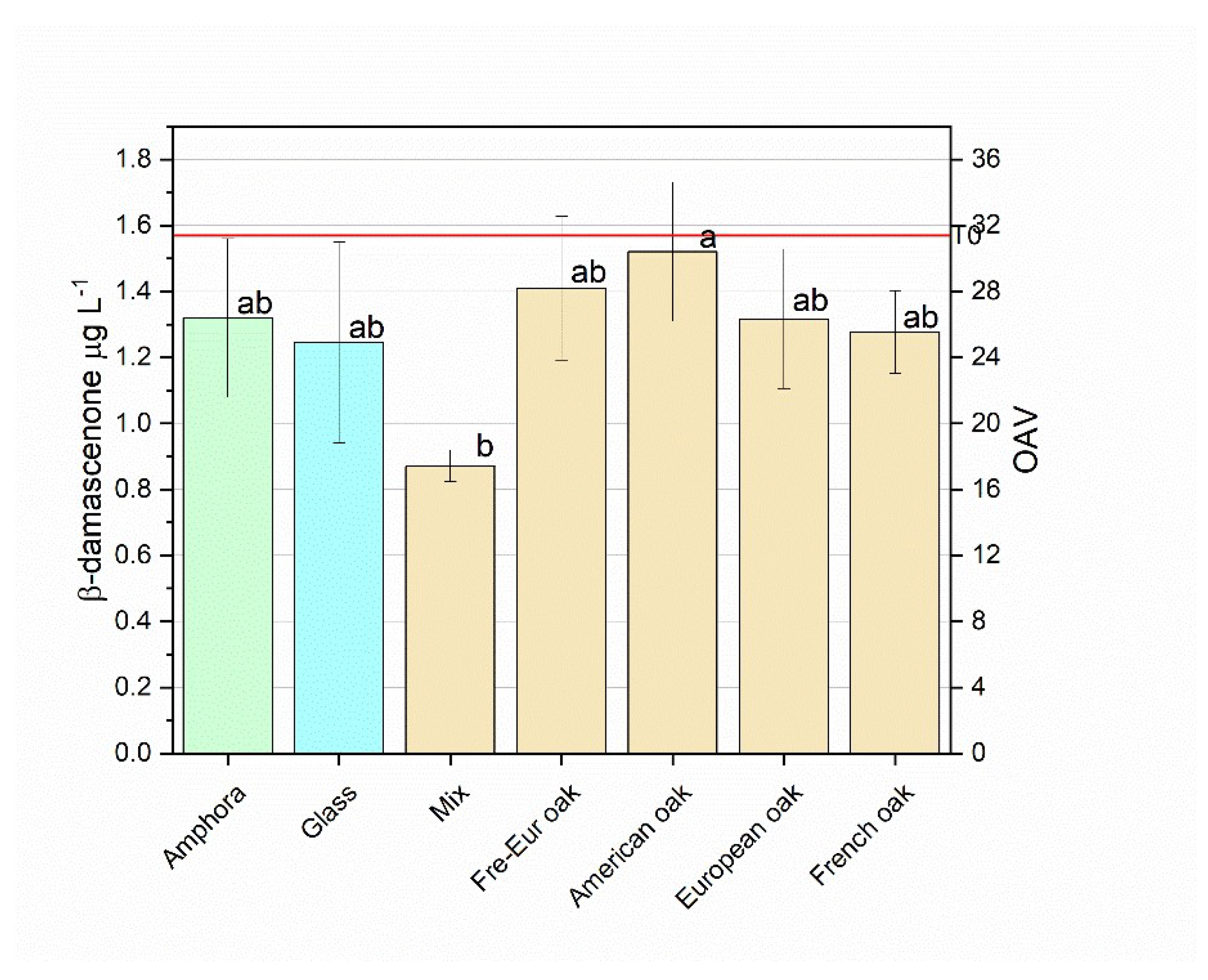
β-damascenone is a C-13 norisoprenoid, carotenoid-derived aroma compound. This ketone can be associated to honey-like, flowery aromas and is considered to enhance fruity aromas [103]. Its presence is due to degradation of neoxanthine carotenoid compound or to glycosylated precursors by acid-catalyzed conversion of megastigma-6,7-diene-3,5,9-triol and megastigma-5-ene-7-yne-3,9-diol, derived-compound of lutein [104,105]. Concentrations of β-damascenone in red wines range between 0.5 – 4 µg L-1 with a threshold of 0.05 µg L-1 in model wines [106,107]. Different studies showed some characteristics of β-damascenone and observed in red wines an enhancing of some fruity aromas, hiding herbaceous aroma of isobutyl methoxypyrazine, which could suggested an indirect sensorial impact rather than a direct effect on red wines sensorial bouquet [40]; in young white wines it showed scarce effect on aroma [105]. Figure 7 reports β-damascenone concentrations in the Negroamaro wine before and after aging in different types of vessels. In all cases, 6-months aging reduced its concentrations in wines. This trend is confirmed in literature [106,108], where a decrease was observed at the end of the aging (both models and real wines). This could be due to the diverse precursors of grape varieties and to the acid-catalyzed reaction degrading the C13-norisoprenoid itself. Specifically, the amount of β-damascenone is decreased with the greatest reduction by 44% in Mix wood barrel samples, while, in opposite, American oak sample was pretty similar to control, with a reduction of 3%. Glass and Amphora showed similar amount, with a 21% and 16% of decrease respectively. One way-ANOVA showed significant differences between American oak and Mix wood barrel samples (p < 0.05).

3.2.2.4. TDN

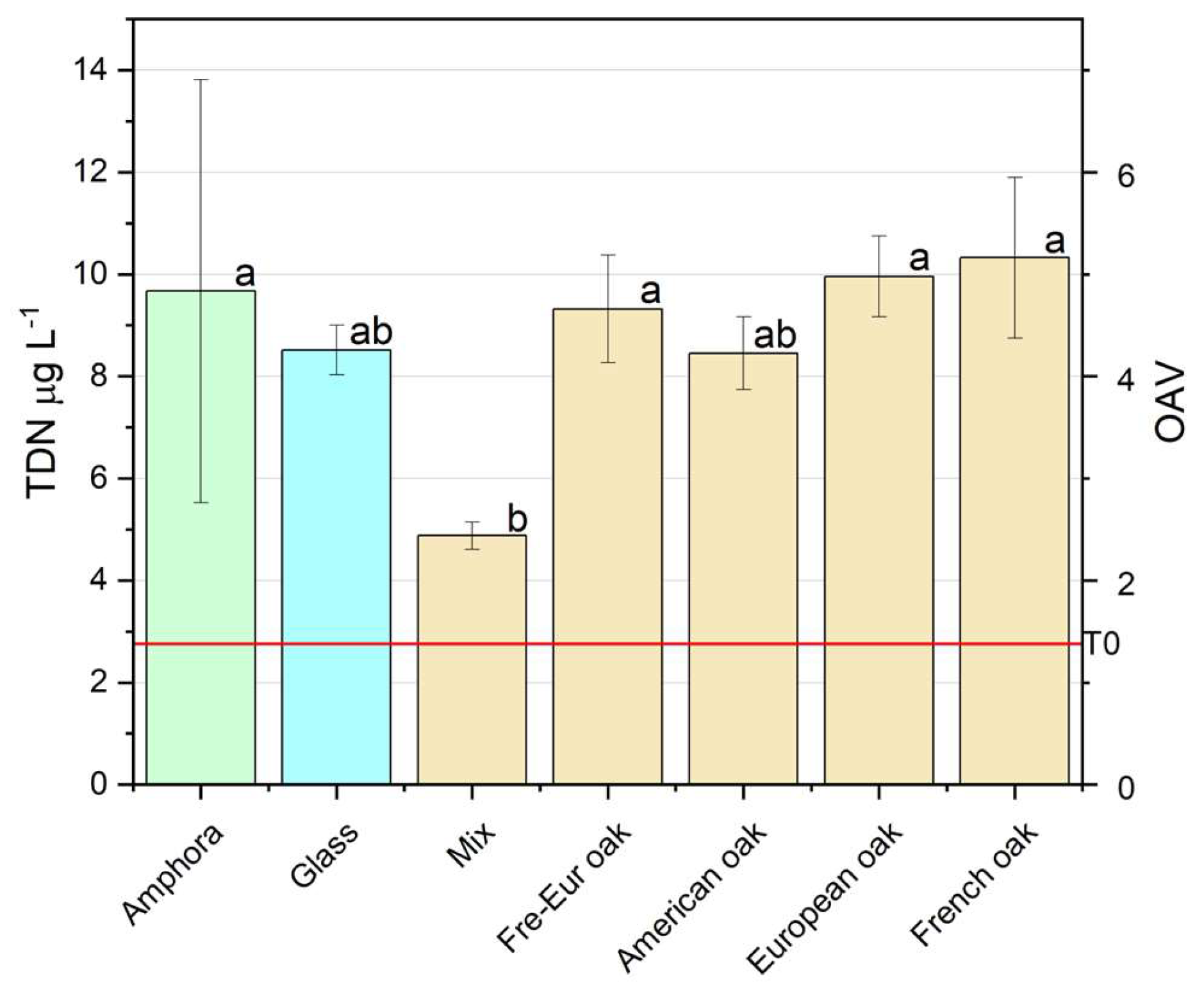
TDN (1,1,5-trimethyl-1,2-dihydronaphthalene) is a C13-Norisopenoid compound which typically characterize aged wines (particularly aged Riesling wines) [53,109]. If present in high amount, it typically confers kerosene or petrol-like aromas, masking other sensorial compounds, which it not suits for consumers [110,111]. The most common concentration in European wines ranges between 5 and 50 μg L-1 but it’s not unusual to find 250 μg L-1 in Australian wines [109]. TDN is found at low levels in grapes and young wines, while its levels increase during wine aging, as the result of the progressive hydrolysis of glycosidic odorless precursors [110]. However increasing levels have been reported in the last decades and have been related to climate change [110]. Its content in grapes is generally low, although, different viticulture techniques, such as defoliation (direct effect) or water irrigation (undirect effect), can affect the formation of TDN in wines [112,113]. The perception threshold is constantly under studies due to differences in sensory impact; it is currently reported at 2 µg L-1 [53,114]. Figure 8 reports the amount of TDN after aging in different vessels, compared with the level found before aging. In all cases TDN increased in all theses with the high peak in French oak, increasing by 274%, and low peak in Mix, increasing by 77%. All other theses are similar, with an increase concentration in the range of 206 - 261%. This trend confirms previous mentioned works where wine aging affects increasing of concentration of TDN. The comparison between 6-months aged wines showed no differences among French oak, European oak, Fre-European wood barrel samples and Amphora sample, while Mix sample showed significant differences as compared to all other theses. Others sample, such as Glass and American oak wood barrel showed central values.

3.3. Sensory Analysis

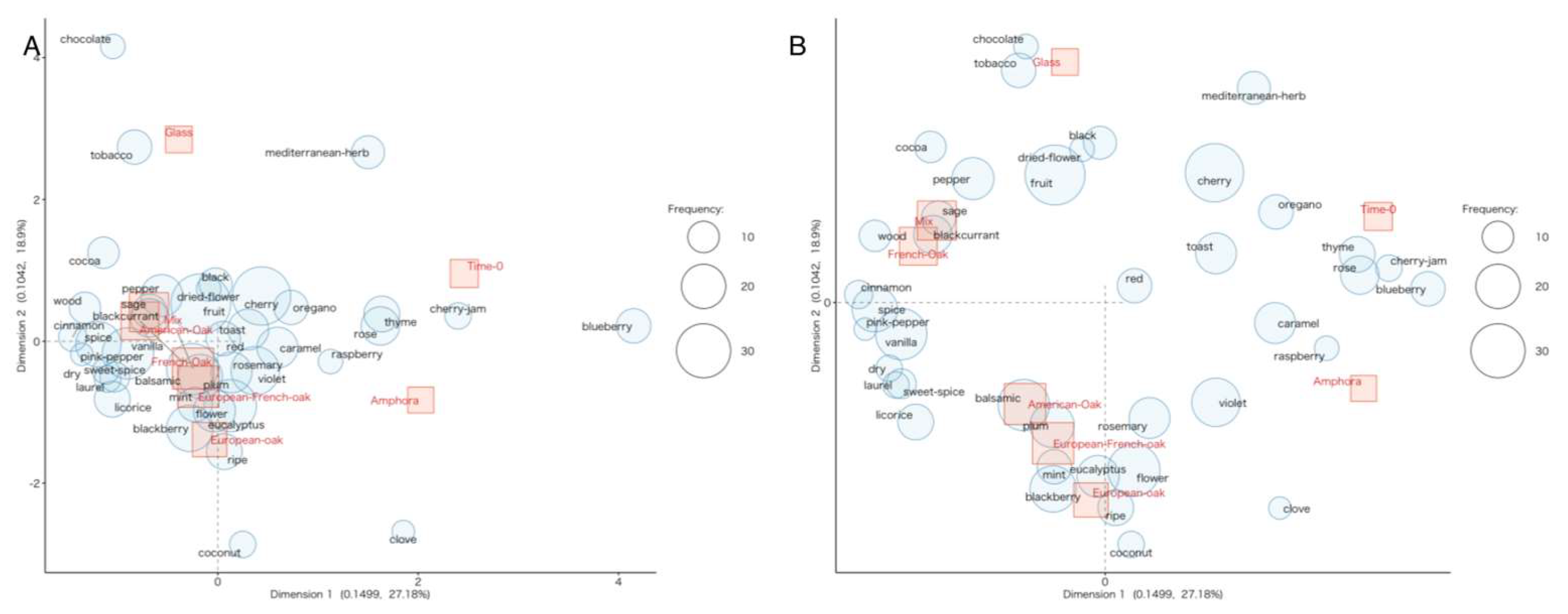
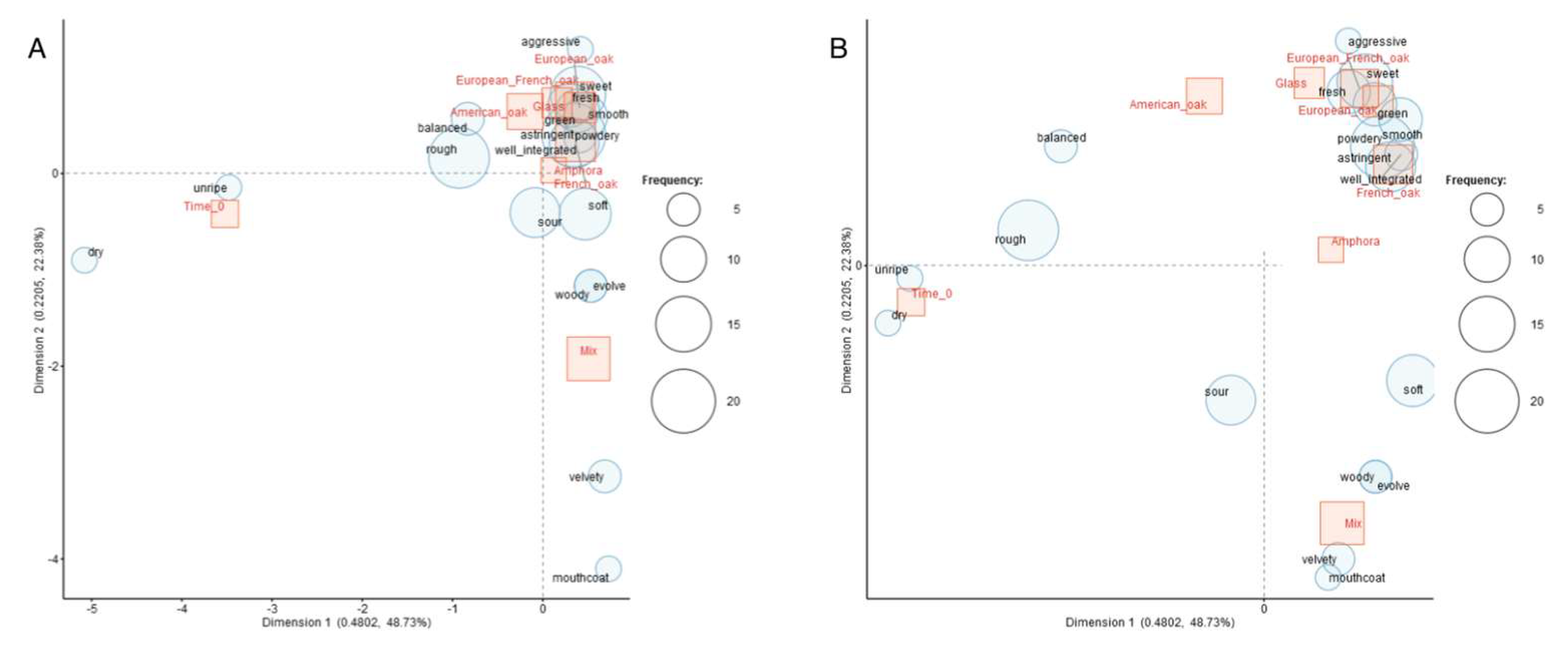
Figure 9 reports the sensory space of samples deriving from the results of the correspondence analysis carried out on the frequency of occurrence of free-choice olfactory descriptors of wines at time 0 and after aging in different containers. Samples were grouped considering the frequency of attribution of aroma descriptors to the samples. The panel on the right side highlights the differences among aged wines by applying the function of magnification of the area near origin included in the analysis software. A clear distinction emerged among samples: time 0 was different from all aged wines, with notes of mediterranean herbs, oregano and thyme that are typically reported in Negroamaro wines [115,116], as well as some floral (rose) fruity notes (cherry, blueberry, cherry jam). After six months of aging, wines aroma was enriched and samples were distinguished according to the container used with wood origin determining a differentiation as highlighted in Figure 9B. In particular, aging in amphora imparted distinct olfactive characters, with a slight evolution of the fruity and floral notes, associated to raspberry and violet, and descriptors including caramel and clove. Hence, amphorae determined a varietal aroma evolution without cover it with woody notes, in agreement with previous reports [3].This profile was quite different from that deriving from bottle aging, characterized by increased tobacco and chocolate notes. A slight differentiation in olfactory profiles could be observed among different woods. Barrels containing European and American oak imparted notes ranging from balsamic (together with mint, eucalyptus, rosemary), coconut, plum. This coulkd be probably related to higher levels of lactones [42]. On the other hand, French oak and Mix barrels kept fruity notes (as black fruits and blackcurrant) and imparted spicy characteristics.
Figure 10 reports the sensory space of samples deriving from the results of the correspondence analysis carried out on the frequency of occurrence of free-choice taste descriptors of wines at time 0 and after aging in different containers. The map clearly shows the effect of aging on the Negroamaro astringency. At time 0, the wine was described as unripe, dry and rough, that is related to negative hedonic properties [117], while six-months aging determined an evolution mouthfeel as wine acquired a more complex profile, though panelists still found some aggressive traits in the wine astringency after six-months aging. Only wine aged in the Mix barrels clearly showed an interesting evolution of the astringency, with velvety, mouthcoat and evolved taste. This kind of barrel provided, therefore, the best performances in a six-month aging period on Negroamaro wine.

4. Conclusions

This study pointed out several differences determined by different aging materials on Negroamaro wine, obtaining wines with unique chemical and sensory characteristics. Wood barrels, particularly French and American oak, significantly increased total phenolic compounds and stabilized anthocyanin-tannin complexes, enhancing color intensity and complexity. Amphorae effectively preserved phenolic content and color stability. A clear differentiation could be observed on the evolution of the volatile profile, with regard to volatiles released as well as to the pattern of varietal aromas. As a consequence, the sensory profile of the Negroamaro wine could be led to different outcomes. Amphorae kept primary fruity and floral aromas with a specific aging evolution. Wooden barrels contributed distinct aromatic profiles based on wood type. The findings reveal significant differences in the influence of aging containers and highlight the promising potential of traditional Apulian amphorae as a sustainable and versatile aging container in winemaking. Future research should focus on optimizing amphora size and coatings to ensure consistency and explore their long-term impact on wine quality. The revival of these traditional vessels could contribute to sustainable winemaking practices and the valorization of regional heritage, offering a unique identity to wines from Apulia.

Supplementary Materials

The following supporting information can be downloaded at the website of this paper posted on Preprints.org.

Author Contributions

Conceptualization, V.M.P.; methodology, V.M.P. and I.P.; validation, V.M.P. and I.P.; formal analysis, I.P. and G.F.; investigation, I.P., G.F., G.C. and C.D.; resources, V.M.P.; data curation, I.P., G.C. and C.D.; writing—original draft preparation, I.P. and V.M.P.; writing—review and editing, G.F., G.C. and C.D.; visualization, I.P. and V.M.P.; supervision, V.M.P.; project administration, V.M.P.; funding acquisition, V.M.P. All authors have read and agreed to the published version of the manuscript.

Data Availability Statement

The raw data supporting the conclusions of this article will be made available by the authors on request.

Acknowledgments

Authors are grateful to Vecchia Torre (Leverano, Italy) and Dr. Ennio Cagnazzo for supplying the wine, hosting the experiments and providing full technical, administrative and human support. Authors are grateful to Dr. Consiglia Sabetta for the unvaluable collaboration. Authors are also grateful to Toneleria Nacional Italy S.r.l. for the administrative and technical support.

Conflicts of Interest

The authors declare no conflicts of interest.

References

  1. Carpena, M.; Pereira, A.G.; Prieto, M.A.; Simal-Gandara, J. Wine Aging Technology: Fundamental Role of Wood Barrels. Foods 2020, 9, 1160. [CrossRef]
  2. Gómez-Plaza, E.; Bautista-Ortín, A.B. Chapter 10 - Emerging Technologies for Aging Wines: Use of Chips and Micro-Oxygenation. In Red Wine Technology; Morata, A., Ed.; Academic Press, 2019; pp. 149–162 ISBN 978-0-12-814399-5.
  3. Maioli, F.; Picchi, M.; Guerrini, L.; Parenti, A.; Domizio, P.; Andrenelli, L.; Zanoni, B.; Canuti, V. Monitoring of Sangiovese Red Wine Chemical and Sensory Parameters along One-Year Aging in Different Tank Materials and Glass Bottle. ACS Food Sci. Technol. 2022, 2, 221–239. [CrossRef]
  4. Nevares, I.; Alamo-Sanza, M. New Materials for the Aging of Wines and Beverages: Evaluation and Comparison. In; 2017 ISBN 978-0-12-811516-9.
  5. Diaz, C.; Laurie, V.F.; Molina, A.M.; Bucking, M.; Fischer, R. Characterization of Selected Organic and Mineral Components of Qvevri Wines. American Journal of Enology and Viticulture 2013, 64, 532–537. [CrossRef]
  6. Butzke, C.E. Winemaking Problems Solved; Elsevier, 2010; ISBN 978-0-85709-018-8.
  7. Morata, A.; González, C.; Tesfaye, W.; Loira, I.; Suárez-Lepe, J.A. Chapter 3 - Maceration and Fermentation: New Technologies to Increase Extraction. In Red Wine Technology; Morata, A., Ed.; Academic Press, 2019; pp. 35–49 ISBN 978-0-12-814399-5.
  8. Gómez-Plaza, E.; Cano-López, M. A Review on Micro-Oxygenation of Red Wines: Claims, Benefits and the Underlying Chemistry. Food Chemistry 2011, 125, 1131–1140. [CrossRef]
  9. Egaña-Juricic, M.E.; Gutiérrez-Gamboa, G.; Moreno-Simunovic, Y. Making Wine in Pañul’s Craft Pottery Vessels: A First Approach in the Study of the Dynamic of Alcoholic Fermentation and Wine Volatile Composition. Ciência Téc. Vitiv. 2022, 37, 29–38. [CrossRef]
  10. Nevares, I.; del Alamo-Sanza, M. Characterization of the Oxygen Transmission Rate of New-Ancient Natural Materials for Wine Maturation Containers. Foods 2021, 10, 140. [CrossRef]
  11. Arobba, D.; Bulgarelli, F.; Camin, F.; Caramiello, R.; Larcher, R.; Martinelli, L. Palaeobotanical, Chemical and Physical Investigation of the Content of an Ancient Wine Amphora from the Northern Tyrrhenian Sea in Italy. Journal of Archaeological Science 2014, 45, 226–233. [CrossRef]
  12. Karlsson, B. Wine Producers Have Started Making Wine in Amphora. Again. | BKWine Magazine | Available online: https://www.bkwine.com/features/winemaking-viticulture/making-wine-in-amphora/ (accessed on 6 September 2023).
  13. White, W.; Catarino, S. How Does Maturation Vessel Influence Wine Quality? A Critical Literature Review. Ciência Téc. Vitiv. 2023, 38, 128–151. [CrossRef]
  14. Harutyunyan, M.; Malfeito-Ferreira, M. Historical and Heritage Sustainability for the Revival of Ancient Wine-Making Techniques and Wine Styles. Beverages 2022, 8, 10. [CrossRef]
  15. Caillaud, C. Il fenomeno del vino in anfora nell’Italia di oggi. territoiresduvin 2014. [CrossRef]
  16. Colonna, V. L’acqua nella tradizione popolare salentina 2018.
  17. Frassante, G.; Masciullo, M.S. Il lessico dei figuli di Cutrofiano. Storia e lingua dei demiurghi dell’argilla. Lingue e linguaggi 2022, 51, 289–303. [CrossRef]
  18. Manacorda, D. Il vino del Salento e le sue anfore. In Proceedings of the El Vi a l’antiguitat . Economia, producció i comerç al Mediterrani occidental: II Col·loqui Internacional d’Arqueologia Romana, actes (Barcelona 6-9 de maig de 1998), 1999, ISBN 84-88758-02-2, págs. 319-331; Museu de Badalona, 1999; pp. 319–331.
  19. Toci, A.T.; Crupi, P.; Gambacorta, G.; Dipalmo, T.; Antonacci, D.; Coletta, A. Free and Bound Aroma Compounds Characterization by GC-MS of Negroamaro Wine as Affected by Soil Management: GC-MS Aromatic Characterization of Negroamaro Wine. J. Mass. Spectrom. 2012, 47, 1104–1112. [CrossRef]
  20. Tufariello, M.; Capone, S.; Siciliano, P. Volatile Components of Negroamaro Red Wines Produced in Apulian Salento Area. Food Chemistry 2012, 132, 2155–2164. [CrossRef]
  21. Drappier, J.; Thibon, C.; Rabot, A.; Geny-Denis, L. Relationship between Wine Composition and Temperature: Impact on Bordeaux Wine Typicity in the Context of Global Warming—Review. Critical Reviews in Food Science and Nutrition 2019, 59, 14–30. [CrossRef]
  22. Kennedy, J.A.; Matthews, M.A.; Waterhouse, A.L. Changes in Grape Seed Polyphenols during Fruit Ripening. Phytochemistry 2000, 55, 77–85. [CrossRef]
  23. Rustioni, L.; Cola, G.; VanderWeide, J.; Murad, P.; Failla, O.; Sabbatini, P. Utilization of a Freeze-Thaw Treatment to Enhance Phenolic Ripening and Tannin Oxidation of Grape Seeds in Red (Vitis Vinifera L.) Cultivars. Food Chemistry 2018, 259, 139–146. [CrossRef]
  24. Kliewer, W.M.; Torres, R.E. Effect of Controlled Day and Night Temperatures on Grape Coloration. Am J Enol Vitic. 1972, 23, 71–77. [CrossRef]
  25. Mercurio, M.D.; Dambergs, R.G.; Herderich, M.J.; Smith, P.A. High Throughput Analysis of Red Wine and Grape PhenolicsAdaptation and Validation of Methyl Cellulose Precipitable Tannin Assay and Modified Somers Color Assay to a Rapid 96 Well Plate Format. J. Agric. Food Chem. 2007, 55, 4651–4657. [CrossRef]
  26. Prezioso, I.; Fioschi, G.; Rustioni, L.; Mascellani, M.; Natrella, G.; Venerito, P.; Gambacorta, G.; Paradiso, V.M. Influence of Prolonged Maceration on Phenolic Compounds, Volatile Profile and Sensory Properties of Wines from Minutolo and Verdeca, Two Apulian White Grape Varieties. LWT 2024, 192, 115698. [CrossRef]
  27. Di Stefano, R.; Cravero, M.; Gentilini, N. Metodi per Lo Studio Dei Polifenoli. L’Enotecnico 1989, XXV, 83–89.
  28. Ribereau-Gayon, P.; Stonestreet, E. Dosage Des Tanins Du Vin Rouge et Determination de Leur Structure. Chimique Analytique 1966, 48, 188–196.
  29. Glories, Y. La Couleur Des Vins Rouges. 2e Partie : Mesure, Origine et Interprétation. OENO One 1984. [CrossRef]
  30. Lukić, I.; Horvat, I. Differentiation of Commercial PDO Wines Produced in Istria (Croatia) According to Variety and Harvest Year Based on HS-SPME-GC/MS Volatile Aroma Compounds Profiling. Food Technol. Biotechnol. 2017, 55. [CrossRef]
  31. Berger, R.G. Flavours and Fragrances: Chemistry, Bioprocessing and Sustainability; 2007; p. 648; ISBN 978-3-540-49338-9.
  32. Black, C. a.; Parker, M.; Siebert, T. e.; Capone, D. l.; Francis, I. l. Terpenoids and Their Role in Wine Flavour: Recent Advances. Australian Journal of Grape and Wine Research 2015, 21, 582–600. [CrossRef]
  33. Capone, S.; Tufariello, M.; Francioso, L.; Montagna, G.; Casino, F.; Leone, A.; Siciliano, P. Aroma Analysis by GC/MS and Electronic Nose Dedicated to Negroamaro and Primitivo Typical Italian Apulian Wines. Sensors and Actuators B: Chemical 2013, 179, 259–269. [CrossRef]
  34. Diez-Ozaeta, I.; Lavilla, M.; Amárita, F. Wine Aroma Profile Modification by Oenococcus Oeni Strains from Rioja Alavesa Region: Selection of Potential Malolactic Starters. Int J Food Microbiol 2021, 356, 109324. [CrossRef]
  35. Ferreira, V.; López, R.; Cacho, J.F. Quantitative Determination of the Odorants of Young Red Wines from Different Grape Varieties. J. Sci. Food Agric. 2000, 80, 1659–1667. [CrossRef]
  36. Francis, I.L.; Newton, J.L. Determining Wine Aroma from Compositional Data. Aust J Grape Wine Res 2005, 11, 114–126. [CrossRef]
  37. Ferreira, V.; Ortín, N.; Escudero, A.; López, R.; Cacho, J. Chemical Characterization of the Aroma of Grenache Rosé Wines: Aroma Extract Dilution Analysis, Quantitative Determination, and Sensory Reconstitution Studies. J Agric Food Chem 2002, 50, 4048–4054. [CrossRef]
  38. Guth, H. Quantitation and Sensory Studies of Character Impact Odorants of Different White Wine Varieties. J. Agric. Food Chem. 1997, 45, 3027–3032. [CrossRef]
  39. Kritzinger-Stadler, E.; Bauer, F.; du Toit, W. Role of Glutathione in Winemaking: A Review. Journal of agricultural and food chemistry 2012, 61. [CrossRef]
  40. Langen, J.; Wegmann-Herr, P.; Schmarr, H.-G. Quantitative Determination of α-Ionone, β-Ionone, and β-Damascenone and Enantiodifferentiation of α-Ionone in Wine for Authenticity Control Using Multidimensional Gas Chromatography with Tandem Mass Spectrometric Detection. Anal Bioanal Chem 2016, 408, 6483–6496. [CrossRef]
  41. Meng, J.-F.; Xu, T.-F.; Song, C.-Z.; Yu, Y.; Hu, F.; Zhang, L.; Zhang, Z.-W.; Xi, Z.-M. Melatonin Treatment of Pre-Veraison Grape Berries to Increase Size and Synchronicity of Berries and Modify Wine Aroma Components. Food Chem 2015, 185, 127–134. [CrossRef]
  42. Miller, G.C.; Pilkington, L.I.; Barker, D.; Deed, R.C. Saturated Linear Aliphatic γ- and δ-Lactones in Wine: A Review. J Agric Food Chem 2022, 70, 15325–15346. [CrossRef]
  43. Moreno, J.A.; Zea, L.; Moyano, L.; Medina, M. Aroma Compounds as Markers of the Changes in Sherry Wines Subjected to Biological Ageing. Food Control 2004, 16, 333–338. [CrossRef]
  44. Niu, Y.; Wang, P.; Xiao, Z.; Zhu, J.; Sun, X.; Wang, R. Evaluation of the Perceptual Interaction among Ester Aroma Compounds in Cherry Wines by GC–MS, GC–O, Odor Threshold and Sensory Analysis: An Insight at the Molecular Level. Food Chemistry 2019, 275, 143–153. [CrossRef]
  45. Noguerol-Pato, R.; González-Barreiro, C.; Cancho-Grande, B.; Simal-Gándara, J. Quantitative Determination and Characterisation of the Main Odourants of Mencía Monovarietal Red Wines. Food Chemistry 2009, 117, 473–484. [CrossRef]
  46. Peinado, R.A.; Moreno, J.; Bueno, J.E.; Moreno, J.A.; Mauricio, J.C. Comparative Study of Aromatic Compounds in Two Young White Wines Subjected to Pre-Fermentative Cryomaceration. Food Chemistry 2004, 84, 585–590. [CrossRef]
  47. Perestrelo, R.; Silva, C.; Câmara, J.S. Madeira Wine Volatile Profile. A Platform to Establish Madeira Wine Aroma Descriptors. Molecules 2019, 24, 3028. [CrossRef]
  48. Pinto, J.; Oliveira, A.S.; Azevedo, J.; De Freitas, V.; Lopes, P.; Roseira, I.; Cabral, M.; Guedes de Pinho, P. Assessment of Oxidation Compounds in Oaked Chardonnay Wines: A GC–MS and 1H NMR Metabolomics Approach. Food Chemistry 2018, 257, 120–127. [CrossRef]
  49. Pons, A.; Lavigne, V.; Landais, Y.; Darriet, P.; Dubourdieu, D. Distribution and Organoleptic Impact of Sotolon Enantiomers in Dry White Wines. J Agric Food Chem 2008, 56, 1606–1610. [CrossRef]
  50. Pons, A.; Lavigne, V.; Darriet, P.; Dubourdieu, D. Identification and Analysis of Piperitone in Red Wines. Food Chemistry 2016, 206, 191–196. [CrossRef]
  51. Qian, X.; Lan, Y.; Han, S.; Liang, N.; Zhu, B.; Shi, Y.; Duan, C. Comprehensive Investigation of Lactones and Furanones in Icewines and Dry Wines Using Gas Chromatography-Triple Quadrupole Mass Spectrometry. Food Research International 2020, 137, 109650. [CrossRef]
  52. Rodríguez-Bencomo, J.J.; Ortega-Heras, M.; Pérez-MAGARIÑO, S.; González-Huerta, C.; Rodríguez-Bencomo, J.J.; Ortega-Heras, M.; Pérez-MAGARIÑO, S.; González-Huerta, C. Volatile Compounds of Red Wines Macerated with Spanish, American, and French Oak Chips. Journal of Agricultural and Food Chemistry 2009, 57, 6383–6391. [CrossRef]
  53. Sacks, G.L.; Gates, M.J.; Ferry, F.X.; Lavin, E.H.; Kurtz, A.J.; Acree, T.E. Sensory Threshold of 1,1,6-Trimethyl-1,2-Dihydronaphthalene (TDN) and Concentrations in Young Riesling and Non-Riesling Wines. J. Agric. Food Chem. 2012, 60, 2998–3004. [CrossRef]
  54. Vilanova de la Torre, M. del M.; Genisheva, Z.; Masa Vázquez, A.; Oliveira, J.M. Correlation between Volatile Composition and Sensory Properties in Spanish Albariño Wines. 2010. [CrossRef]
  55. Wu, Y.; Duan, S.; Zhao, L.; Gao, Z.; Luo, M.; Song, S.; Xu, W.; Zhang, C.; Ma, C.; Wang, S. Aroma Characterization Based on Aromatic Series Analysis in Table Grapes. Scientific Reports 2016, 6, 31116. [CrossRef]
  56. Yue, T.-X.; Chi, M.; Song, C.-Z.; Liu, M.-Y.; Meng, J.-F.; Zhang, Z.-W.; Li, M.-H. Aroma Characterization of Cabernet Sauvignon Wine from the Plateau of Yunnan (China) with Different Altitudes Using SPME-GC/MS. International Journal of Food Properties 2015, 18, 1584–1596. [CrossRef]
  57. Zhang, L.; Tao, Y.S.; Wen, Y.; Wang, H. Aroma Evaluation of Young Chinese Merlot Wines with Denomination of Origin. SAJEV 2016, 34. [CrossRef]
  58. Barbe, J.-C.; Garbay, J.; Tempère, S. The Sensory Space of Wines: From Concept to Evaluation and Description. A Review. Foods 2021, 10, 1424. [CrossRef]
  59. Souza Gonzaga, L.; Capone, D.L.; Bastian, S.E.P.; Jeffery, D.W. Defining Wine Typicity: Sensory Characterisation and Consumer Perspectives. Australian Journal of Grape and Wine Research 2021, 27, 246–256. [CrossRef]
  60. Souza Gonzaga, L.; Capone, D.L.; Bastian, S.E.P.; Danner, L.; Jeffery, D.W. Using Content Analysis to Characterise the Sensory Typicity and Quality Judgements of Australian Cabernet Sauvignon Wines. Foods 2019, 8, 691. [CrossRef]
  61. ISO Sensory Analysis - Apparatus - Wine-Tasting Glass; 3591 (2); 1977.
  62. Jackson, R.S. Wine Tasting: A Professional Handbook; Third edition.; Elsevier/Academic Press is an imprint of Elservier: Amsterdam, 2017; ISBN 978-0-12-801813-2.
  63. Paradiso, V.M.; Sanarica, L.; Zara, I.; Pisarra, C.; Gambacorta, G.; Natrella, G.; Cardinale, M. Cultivar-Dependent Effects of Non-Saccharomyces Yeast Starter on the Oenological Properties of Wines Produced from Two Autochthonous Grape Cultivars in Southern Italy. Foods 2022, 11, 3373. [CrossRef]
  64. Zamora, F. Barrel Aging; Types of Wood. In Red Wine Technology; Elsevier, 2019; pp. 125–147 ISBN 978-0-12-814399-5.
  65. García, M.P.; González-Mendoza, L.A. Changes in Composition and Sensory Quality of Red Wine Aged in American and French Oak Barrels. OENO One 2001, 35, 41–48. [CrossRef]
  66. Navarro, M.; Kontoudakis, N.; Gómez-Alonso, S.; García-Romero, E.; Canals, J.M.; Hermosín-Gutíerrez, I.; Zamora, F. Influence of the Botanical Origin and Toasting Level on the Ellagitannin Content of Wines Aged in New and Used Oak Barrels. Food Research International 2016, 87, 197–203. [CrossRef]
  67. Huang, R.; Xu, C. An Overview of the Perception and Mitigation of Astringency Associated with Phenolic Compounds. Comprehensive Reviews in Food Science and Food Safety 2021, 20, 1036–1074. [CrossRef]
  68. del Álamo Sanza, M.; Nevares Domínguez, I.; García Merino, S. Influence of Different Aging Systems and Oak Woods on Aged Wine Color and Anthocyanin Composition. Eur Food Res Technol 2004, 219, 124–132. [CrossRef]
  69. He, F.; Liang, N.N.; Mu, L.; Pan, Q.H.; Wang, J.; Reeves, M.J.; Duan, C.Q. Anthocyanins and Their Variation in Red Wines II. Anthocyanin Derived Pigments and Their Color Evolution. Molecules 2012, 17, 1483–1519. [CrossRef]
  70. Wang, C.; Wang, C.; Tang, K.; Rao, Z.; Chen, J. Effects of Different Aging Methods on the Phenolic Compounds and Antioxidant Activity of Red Wine. Fermentation 2022, 8, 592. [CrossRef]
  71. Hernández, T.; Estrella, I.; Dueñas, M.; Fernández de Simón, B.; Cadahía, E. Influence of Wood Origin in the Polyphenolic Composition of a Spanish Red Wine Aging in Bottle, after Storage in Barrels of Spanish, French and American Oak Wood. Eur Food Res Technol 2007, 224, 695–705. [CrossRef]
  72. Maioli, F.; Picchi, M.; Guerrini, L.; Parenti, A.; Domizio, P.; Andrenelli, L.; Zanoni, B.; Canuti, V. Monitoring of Sangiovese Red Wine Chemical and Sensory Parameters along One-Year Aging in Different Tank Materials and Glass Bottle. ACS Food Sci. Technol. 2022, 2, 221–239. [CrossRef]
  73. Picariello, L.; Gambuti, A.; Petracca, F.; Rinaldi, A.; Moio, L. Enological Tannins Affect Acetaldehyde Evolution, Colour Stability and Tannin Reactivity during Forced Oxidation of Red Wine. Int J Food Sci Technol 2018, 53, 228–236. [CrossRef]
  74. Baiano, A.; Varva, G.; De Gianni, A.; Viggiani, I.; Terracone, C.; Del Nobile, M.A. Influence of Type of Amphora on Physico-Chemical Properties and Antioxidant Capacity of ‘Falanghina’ White Wines. Food Chemistry 2014, 146, 226–233. [CrossRef]
  75. Baiano, A.; Mentana, A.; Quinto, M.; Centonze, D.; Longobardi, F.; Ventrella, A.; Agostiano, A.; Varva, G.; De Gianni, A.; Terracone, C.; et al. The Effect of In-Amphorae Aging on Oenological Parameters, Phenolic Profile and Volatile Composition of Minutolo White Wine. Food Research International 2015, 74, 294–305. [CrossRef]
  76. Baiano, A.; Varva, G. Evolution of Physico-Chemical and Sensory Characteristics of Minutolo White Wines during Aging in Amphorae: A Comparison with Stainless Steel Tanks. Lwt 2019, 103, 78–87. [CrossRef]
  77. Cameleyre, M.; Madrelle, V.; Lytra, G.; Barbe, J.-C. Impact of Whisky Lactone Diastereoisomers on Red Wine Fruity Aromatic Expression in Model Solution. J. Agric. Food Chem. 2020, 68, 10808–10814. [CrossRef]
  78. Cooke, R.C.; Capone, D.L.; van Leeuwen, K.A.; Elsey, G.M.; Sefton, M.A. Quantification of Several 4-Alkyl Substituted γ-Lactones in Australian Wines. J. Agric. Food Chem. 2009, 57, 348–352. [CrossRef]
  79. Waterhouse, A.L.; Sacks, G.L.; Jeffery, D.W. Understanding Wine Chemistry; 1st ed.; Wiley, 2016; ISBN 978-1-118-62780-8.
  80. du Toit, W.J.; Marais, J.; Pretorius, I.S.; du Toit, M. Oxygen in Must and Wine: A Review. SAJEV 2017, 27. [CrossRef]
  81. Ferreira, V.; Escudero, A.; Fernández, P.; Cacho, J.F. Changes in the Profile of Volatile Compounds in Wines Stored under Oxygen and Their Relationship with the Browning Process. Zeitschrift für Lebensmitteluntersuchung und -Forschung A 1997, 205, 392–396. [CrossRef]
  82. Wine Chemistry and Biochemistry; Moreno-Arribas, M.V., Polo, M.C., Eds.; Springer New York: New York, NY, 2009; ISBN 978-0-387-74116-1.
  83. Noviello, M.; Paradiso, V.M.; Natrella, G.; Gambacorta, G.; Faccia, M.; Caponio, F. Application of Toasted Vine-Shoot Chips and Ultrasound Treatment in the Ageing of Primitivo Wine. Ultrasonics Sonochemistry 2024, 104, 106826. [CrossRef]
  84. Pérez-Coello, M.S.; Díaz-Maroto, M.C. Volatile Compounds and Wine Aging. In Wine Chemistry and Biochemistry; Moreno-Arribas, M.V., Polo, M.C., Eds.; Springer: New York, NY, 2009; pp. 295–311 ISBN 978-0-387-74118-5.
  85. Cerdán, T.G.; Rodrı́guez Mozaz, S.; Ancı́n Azpilicueta, C. Volatile Composition of Aged Wine in Used Barrels of French Oak and of American Oak. Food Research International 2002, 35, 603–610. [CrossRef]
  86. Bacterial Fermentation Products. In Understanding Wine Chemistry; John Wiley & Sons, Ltd., 2016; pp. 230–238 ISBN 978-1-118-73072-0.
  87. Garde-Cerdán, T.; Ancín-Azpilicueta, C. Review of Quality Factors on Wine Ageing in Oak Barrels. Trends in Food Science & Technology 2006, 17, 438–447. [CrossRef]
  88. Pittari, E.; Moio, L.; Piombino, P. Interactions between Polyphenols and Volatile Compounds in Wine: A Literature Review on Physicochemical and Sensory Insights. Applied Sciences 2021, 11, 1157. [CrossRef]
  89. Bueno, M.; Marrufo-Curtido, A.; Carrascón, V.; Fernández-Zurbano, P.; Escudero, A.; Ferreira, V. Formation and Accumulation of Acetaldehyde and Strecker Aldehydes during Red Wine Oxidation. Front. Chem. 2018, 6, 20. [CrossRef]
  90. Balboa-Lagunero, T.; Arroyo, T.; Cabellos, J.M.; Aznar, M. Sensory and Olfactometric Profiles of Red Wines after Natural and Forced Oxidation Processes. Am. J. Enol. Vitic. 2011, 62, 527–535. [CrossRef]
  91. Culleré, Laura; Cacho, J.; Ferreira, V. An Assessment of the Role Played by Some Oxidation-Related Aldehydes in Wine Aroma. J. Agric. Food Chem. 2007, 55, 876–881. [CrossRef]
  92. Mislata, A.M.; Puxeu, M.; Tomás, E.; Nart, E.; Ferrer-Gallego, R. Influence of the Oxidation in the Aromatic Composition and Sensory Profile of Rioja Red Aged Wines. Eur Food Res Technol 2020, 246, 1167–1181. [CrossRef]
  93. Pérez-Prieto, L.J.; López-Roca, J.M.; Martínez-Cutillas, A.; Pardo-Mínguez, F.; Gómez-Plaza, E. Extraction and Formation Dynamic of Oak-Related Volatile Compounds from Different Volume Barrels to Wine and Their Behavior during Bottle Storage. J. Agric. Food Chem. 2003, 51, 5444–5449. [CrossRef]
  94. Dumitriu, G.-D.; Teodosiu, C.; Gabur, I.; Cotea, V.V.; Peinado, R.A.; López de Lerma, N. Evaluation of Aroma Compounds in the Process of Wine Ageing with Oak Chips. Foods 2019, 8, 662. [CrossRef]
  95. Genovese, A.; Piombino, P.; Lisanti, M.T.; Moio, L. Occurrence of Furaneol (4-Hydroxy-2,5-Dimethyl-3(2H)-Furanone) in Some Wines from Italian Native Grapes. Annali di Chimica 2005, 95, 415–419. [CrossRef]
  96. Delcros, L.; Collas, S.; Hervé, M.; Blondin, B.; Roland, A. Evolution of Markers Involved in the Fresh Mushroom Off-Flavor in Wine During Alcoholic Fermentation. J. Agric. Food Chem. 2023, 71, 14687–14696. [CrossRef]
  97. Pons, A.; Lavigne, V.; Darriet, P.; Dubourdieu, D. Role of 3-Methyl-2,4-Nonanedione in the Flavor of Aged Red Wines. J. Agric. Food Chem. 2013, 61, 7373–7380. [CrossRef]
  98. Peterson, A.; Cholet, C.; Geny, L.; Darriet, P.; Landais, Y.; Pons, A. Identification and Analysis of New α- and β-Hydroxy Ketones Related to the Formation of 3-Methyl-2,4-Nonanedione in Musts and Red Wines. Food Chemistry 2020, 305, 125486. [CrossRef]
  99. Pons, A.; Lavigne, V.; Eric, F.; Darriet, P.; Dubourdieu, D. Identification of Volatile Compounds Responsible for Prune Aroma in Prematurely Aged Red Wines. J. Agric. Food Chem. 2008, 56, 5285–5290. [CrossRef]
  100. Ugliano, M. Oxygen Contribution to Wine Aroma Evolution during Bottle Aging. J. Agric. Food Chem. 2013, 61, 6125–6136. [CrossRef]
  101. Ferreira, V.; Aznar, M.; López, R.; Cacho, J. Quantitative Gas Chromatography−Olfactometry Carried out at Different Dilutions of an Extract. Key Differences in the Odor Profiles of Four High-Quality Spanish Aged Red Wines. J. Agric. Food Chem. 2001, 49, 4818–4824. [CrossRef]
  102. Sasaki, K.; Takase, H.; Tanzawa, F.; Kobayashi, H.; Saito, H.; Matsuo, H.; Takata, R. Identification of Furaneol Glucopyranoside, the Precursor of Strawberry-like Aroma, Furaneol, in Muscat Bailey A. Am. J. Enol. Vitic. 2015, 66, 91–94. [CrossRef]
  103. Kotseridis, Y.; Baumes, R.L.; Skouroumounis, G.K. Quantitative Determination of Free and Hydrolytically Liberated β-Damascenone in Red Grapes and Wines Using a Stable Isotope Dilution Assay. Journal of Chromatography A 1999, 849, 245–254. [CrossRef]
  104. Daniel, M.A.; Elsey, G.M.; Capone, D.L.; Perkins, M.V.; Sefton, M.A. Fate of Damascenone in Wine:  The Role of SO2. J. Agric. Food Chem. 2004, 52, 8127–8131. [CrossRef]
  105. Sefton, M.A.; Skouroumounis, G.K.; Elsey, G.M.; Taylor, D.K. Occurrence, Sensory Impact, Formation, and Fate of Damascenone in Grapes, Wines, and Other Foods and Beverages. J. Agric. Food Chem. 2011, 59, 9717–9746. [CrossRef]
  106. Loscos, N.; Hernández-Orte, P.; Cacho, J.; Ferreira, V. Evolution of the Aroma Composition of Wines Supplemented with Grape Flavour Precursors from Different Varietals during Accelerated Wine Ageing. Food Chemistry 2010, 120, 205–216. [CrossRef]
  107. Mendes-Pinto, M.M. Carotenoid Breakdown Products the—Norisoprenoids—in Wine Aroma. Archives of Biochemistry and Biophysics 2009, 483, 236–245. [CrossRef]
  108. Slaghenaufi, D.; Ugliano, M. Norisoprenoids, Sesquiterpenes and Terpenoids Content of Valpolicella Wines During Aging: Investigating Aroma Potential in Relationship to Evolution of Tobacco and Balsamic Aroma in Aged Wine. Frontiers in Chemistry 2018, 6, 66. [CrossRef]
  109. Tarasov, A.; Giuliani, N.; Dobrydnev, A.; Müller, N.; Volovenko, Y.; Rauhut, D.; Jung, R. Absorption of 1,1,6-Trimethyl-1,2-Dihydronaphthalene (TDN) from Wine by Bottle Closures. Eur Food Res Technol 2019, 245, 2343–2351. [CrossRef]
  110. Antal, E.; Varga, Z.; Kállay, M.; Steckl, S.; Bodor-Pesti, P.; Fazekas, I.; Sólyom-Leskó, A.; Kovács, B.Z.; Nagy, B.; Szövényi, Á.P.; et al. 1,1,6-Trimethyl-1,2-Dihydronaphthalene Content of Riesling Wines in Hungary. ACS Omega 2023, 8, 36677–36685. [CrossRef]
  111. Winterhalter, P.; Gök, R. TDN and β-Damascenone: Two Important Carotenoid Metabolites in Wine. In Carotenoid Cleavage Products; ACS Symposium Series; American Chemical Society, 2013; Vol. 1134, pp. 125–137 ISBN 978-0-8412-2778-1.
  112. Lee, S.-H.; Seo, M.-J.; Riu, M.; Cotta, J.; Block, D.; Dokoozlian, N.; Ebeler, S. Vine Microclimate and Norisoprenoid Concentration in Cabernet Sauvignon Grapes and Wines. American Journal of Enology and Viticulture 2007, 58. [CrossRef]
  113. Marais, J.; Wyk, C. Carotenoid Levels in Maturing Grapes as Affected by Climatic Regions, Sunlight and Shade. South African Journal for Enology and Viticulture 1991, 12, 64–69. [CrossRef]
  114. Ziegler, M.; Wegmann-Herr, P.; Schmarr, H.-G.; Gök, R.; Winterhalter, P.; Fischer, U. Impact of Rootstock, Clonal Selection, and Berry Size of Vitis Vinifera Sp. Riesling on the Formation of TDN, Vitispiranes, and Other Volatile Compounds. J. Agric. Food Chem. 2020, 68, 3834–3849. [CrossRef]
  115. Capone, S.; Tufariello, M.; Siciliano, P. Analytical Characterisation of Negroamaro Red Wines by ”Aroma Wheels”. Food Chemistry 2013, 141, 2906–2915. [CrossRef]
  116. Coletta, A.; Toci, A.T.; Pati, S.; Ferrara, G.; Grieco, F.; Tufariello, M.; Crupi, P. Effect of Soil Management and Training System on Negroamaro Wine Aroma. Foods 2021, 10, 454. [CrossRef]
  117. Ferrero-del-Teso, S. New approaches for understanding the formation of mouthfeel properties in wines and grapes. Nuevas estrategias para comprender la formación de las sensaciones táctiles en boca de vinos y uvas 2022. [CrossRef]
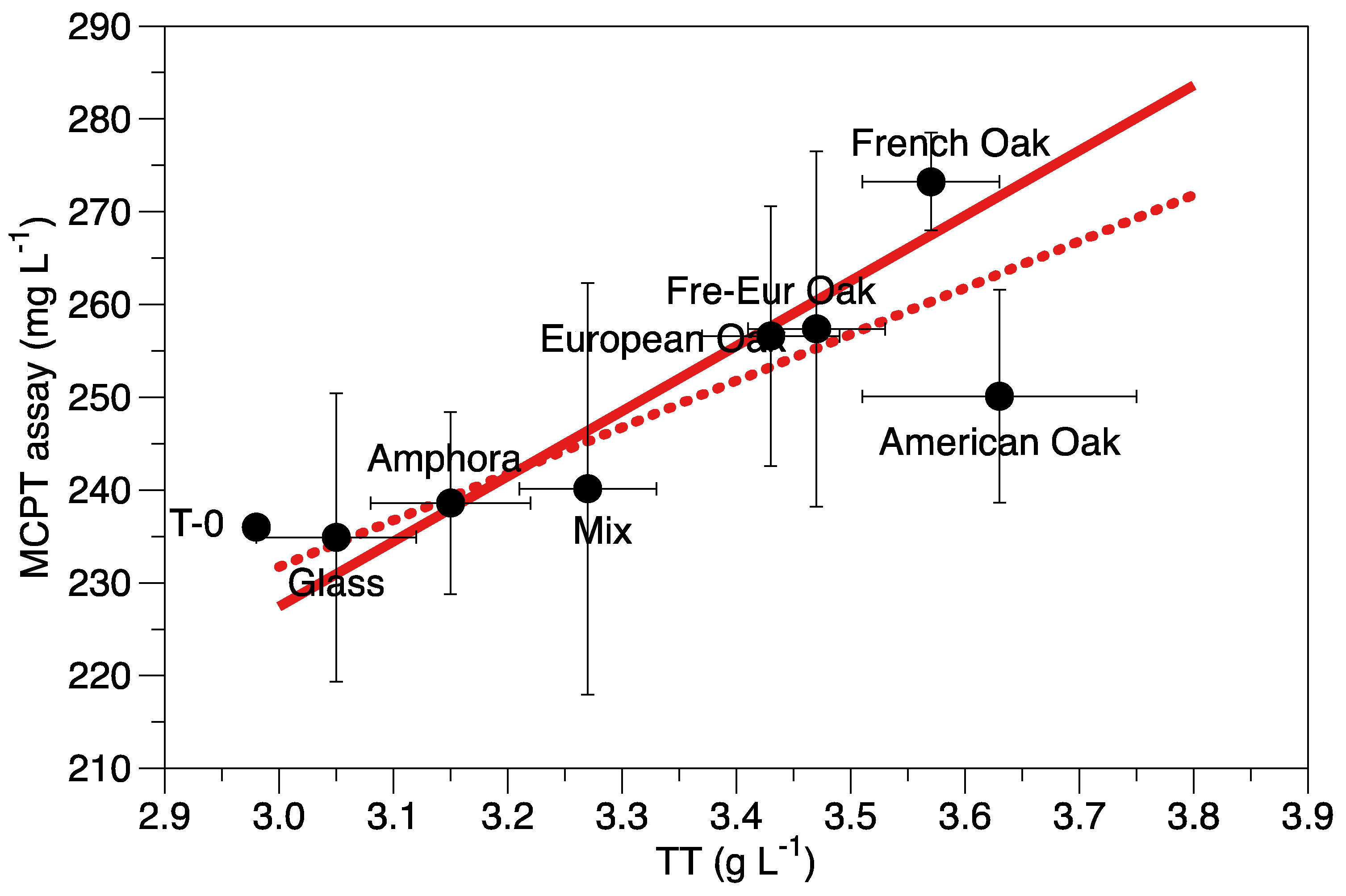
Figure 1. Linear regressions of TT (Total Tannins) concentration (g L-1) and MCPT assay’s results (mg L-1).
Preprints 145799 g001
Figure 2. Principal component analysis based on OAV of volatile compounds find in Negroamaro wines, before aging (T-0) and after aging in different materials (Glass, Amphora, Mix, French, European oak, American oak, European oak, French oak).
Preprints 145799 g002
Figure 3. Heatmap with clusterization of the volatile compounds in Negroamaro wine aged in different wooden barrels. (B) Selected volatile compounds with key markers. (C) Partial Least Squares Discriminant Analysis (PLS-DA) highlighting the differences among samples.Abbreviations for volatile names: 2-m-1-propanol (2-methyl-1-propanol); PEA (phenylethyl alcohol); 3-MND (3-methyl-2,4-nonanedione); 2-AAP (2-aminoacetophenone); ethyl 3-hydroxybutyrate (et-3-OH-but); m-anthranilate (methyl anthranilate); TDN (1,1,5-trimethyl-1,2-dihydronaphthalene).
Preprints 145799 g003
Figure 4. Partial Least Squares Discriminant Analysis (PLS-DA) of the volatile compounds in Negroamaro wine aged in different wooden barrels. (A), Scores plot with 95 % confidence regions; (B), Loading plot of the variables; (C), Most important variables in the model according to VIP score for component 1; (D), Most important variables in the model according to VIP score for component 2 (the colored boxes on the right indicate the relative concentrations of the corresponding metabolite in each group under study). Abbreviations for volatile names: 2-m-1-propanol (2-methyl-1-propanol); PEA (phenylethyl alcohol); 3-MND (3-methyl-2,4-nonanedione); 2-AAP (2-aminoacetophenone); ethyl 3-hydroxybutyrate (et-3-OH-but); m-anthranilate (methyl anthranilate); TDN (1,1,5-trimethyl-1,2-dihydronaphthalene).
Preprints 145799 g004
Figure 5. 3-methyl-nonanedione concentration in samples aged in wood, glass and amphora (A); 3-methyl-nonanedione concentration in samples aged in different types of barrels (B). Different letters mean significant differences at p < 0.05. The red line indicates the concentration of the compound before aging (T0).
Preprints 145799 g005
Figure 6. Furaneol concentrations (mean ± S.D.) in Negroamaro wine aged in different containers. Different letters mean significant differences at p < 0.05. The red line indicates the concentration of the compound before aging (T0).
Preprints 145799 g006
Figure 7. β-damascenone concentrations (mean ± S.D.) in Negroamaro wine aged in different containers. Different letters mean significant differences at p < 0.05. The red line indicates the concentration of the compound before aging (T0).
Preprints 145799 g007
Figure 8. TDN (1,1,5-trimethyl-1,2-dihydronaphthalene) concentrations (mean ± S.D.) in Negroamaro wine aged in different containers. Different letters mean significant differences at p < 0.05. The red line indicates the concentration of the compound before aging (T0).
Preprints 145799 g008
Figure 9. Correspondence analysis of the aroma attributes of the Negroamaro wine before aging (T-0) and after aging in different materials (Glass, Amphora, Mix, French, European oak, American oak, European oak, French oak). A, original scale map; B, map with the enlarge the area near origin function (3x). Red squares correspond to wines, blue bubbles correspond to taste attributes. Size of bubbles represents term frequency.
Preprints 145799 g009
Figure 10. Correspondence analysis of the taste attributes of the Negroamaro wine before aging (T-0) and after aging in different materials (Glass, Amphora, Mix, French, European oak, American oak, European oak, French oak). A, original scale map; B, map with the enlarge the area near origin function (3 x). Red squares correspond to wines, blue bubbles correspond to odor attributes. Size of bubbles represents term frequency.
Preprints 145799 g010
Table 1. Characteristics of different types of barrels used for the aging (TN Coopers, 2021-2022).
Name of the barrel Characteristics
Mix Blend of French oak (Q. petraea (Matt.) Liebl.), American oak (Q. alba L.), European oak (Q. petraea (Matt.) Liebl.), acacia (Robinia pseudoacacia L.), lenga (Nothofagus pumilio (Poepp. & Endl.) Krasser) Dried up to 48 months. Fine/extra fine grane
America oak Q. alba L. Air dried up to 48 months; fine grane; mature woods over 90 years old
French oak Q. petraea (Matt.) Liebl. PEFC certification; dried up to 36 months; fine grane; mature woods over 180 years old, cultivated with the Haute Futaie technique (tall trunk)
European oak Q. petraea (Matt.) Liebl. PEFC certification; fine grane; Air dried up to 48 months
French-European oak Blend of French oak (Q. petraea (Matt.) Liebl.), European oak (Q. petraea Q. petraea (Matt.) Liebl.). Dried up to 48 months; fine/extra fine grane.
Table 2. Phenolic composition and color indices of the wine at time 0 (T-0) and of the wines obtained using different aging materials. Results of multiple comparisons among aged wines after one-way ANOVA are reported*.
T-0 p Glass Amphora Mix Fre-Eur oak American oak European oak French oak
TP (U.A.) 79.77 0.00 79.25±0.21e 81.3±0.28cd 80.83±0.60d 84.3±0.46b 82.13±0.06c 84.7±0.20b 86.3±0.00a
TA (U.A.) 20.1 0.00 16.3±0.00d 18.35±0.07b 17.53±0.06c 18.4±0.17b 16.03±0.15d 18.9±0.10a 17.67±0.15c
TT (g*L-1) 2.98 0.00 3.05±0.07c 3.15±0.07c 3.27±0.06bc 3.43±0.06ab 3.63±0.12a 3.47±0.06ab 3.57±0.06a
FA (U) 13.5 0.00 9.2±0.00ab 9.65±1.20ab 9.1±0.1b 10.13±0.06a 5.43±0.06c 10.23±0.12a 8.67±0.06b
A-T (U) 3.8 0.03 4.1±0.00c 5.1±0.71b 4.87±0.06b 4.87±0.06b 6.33±0.06a 4.93±0.06b 5.33±0.06b
free/cond A 3.6 0.00 2.24±0.00a 1.93±0.50ab 1.87±0.04ab 2.08±0.04a 0.86±0.00c 2.07±0.02a 1.63±0.02b
MCPT (mg L-1) 236 0.04 234.91±15.54a 238.60±9.81a 240.14±22.18a 256.59±a 250.11±11.46a 257.37±19.14a 273.24±5.28a
CD 11.12 0.01 10.91±0.19b 13.00±1.62a 12.91±0.22a 12.86±0.31ab 13.82±0.42a 12.67±0.37a 12.89±0.41a
Hue 0.84 0.00 0.86±0.01a 0.80±0.04b 0.80±0.00b 0.79±0.01b 0.76±0.03b 0.80±0.00b 0.79±0.01b
*, Tukey’s HSD test for multiple comparisons. Different letters indicate significantly different means (p < 0.05).
Disclaimer/Publisher’s Note: The statements, opinions and data contained in all publications are solely those of the individual author(s) and contributor(s) and not of MDPI and/or the editor(s). MDPI and/or the editor(s) disclaim responsibility for any injury to people or property resulting from any ideas, methods, instructions or products referred to in the content.
Copyright: This open access article is published under a Creative Commons CC BY 4.0 license, which permit the free download, distribution, and reuse, provided that the author and preprint are cited in any reuse.
Prerpints.org logo

Preprints.org is a free preprint server supported by MDPI in Basel, Switzerland.

Subscribe

Disclaimer

Terms of Use

Privacy Policy

Privacy Settings

© 2025 MDPI (Basel, Switzerland) unless otherwise stated