Preprint
Article

This version is not peer-reviewed.

Thermoformability Study Of CaCO3 Filled Polypropylene

Submitted:

08 January 2025

Posted:

09 January 2025

You are already at the latest version

Abstract

This work deals with the thermoformability of calcium carbonate CaCO3 filled polypropylene PP sheet intended for packaging applications. The effect of calcium carbonate was investigated. Formulations of virgin polypropylene (PP) and 10, 20, 30 and 40 wt % of calcium carbonate were prepared and melt compounded in a single screw extruder, then compression molded to get an about 1 mm thick sheets. Vacuum forming on a constructed laboratory scale machine seems to be an adequate way to select the appropriate thermoforming conditions (temperatures and draw ratios) for CaCO3 filled polypropylene. Rheological, thermal as well as mechanical tests were performed in terms of filler effect in order to optimize properties while improving processability. The MFI slightly increased, the HDT increased, the tensile properties decreased but the impact strength increased. 30% by weight of CaCO3 filler can be incorporated into polypropylene with relatively minor effects on vacuum forming properties. The presence of CaCO3 leads to 50% reduction the thermoforming cycle time.

Keywords: 
;  ;  

1. Introduction

Polypropylene is an excellent polymer for packaging applications because of its exceptional combination of properties. Such properties include stiffness, chemical and moisture resistance, impact strength, recycleability, microwaveability, low tast, Lack of odor and cost.
Thermoforming is a low-pressure process with relatively low capital costs. Thermoforming moulds are quick and easy to fabricate and are relatively inexpensive allowing the production of parts in shorter turn around time. This is an important competitive advantage in introducing new products to the market place.
Polypropylene can be thermoformed in the solid phase using equipment designed specifically for this purpose. Solid phase thermoforming of polypropylene is done to overcome the excessive sheet sag and narrow thermoforming windows associated with conventional melt phase thermoforming. The excessive sheet sag is due to the polymer slow melt strength. Whereas the narrow thermoforming window is due to the fact polypropylene melts rapidly on reaching its melting point ie, it quickly changes from solid state, which is too stiff to be thermoformed, to melt state with melt strength too low to be thermoformed successfully. The polypropylene melt strength can be increased by either increasing molecular weight or by modification of polypropylene molecular weight distribution. Other approaches include incorporation of acrylic or mineral filler to polypropylene; in this case, a some what wider thermoforming window can be yield.
Despite the importance of the thermoforming process of polypropylene in the packaging field it is still not known in Algeria. The most successful and widely used plastics material is the High impact polystyrene (HIPS). However this is more expensive than polypropylene and has limited application in the packaging field due to its fair chemical resistance. For this reason, in recent year much effort has gone into modifying the rheology of thermoforming behaviour of mineral filled polypropylene, which is cheaper than HIPS, in order to improve its melt strength [1].
The presence of mineral filler CaCO3 profoundly affects cycle time for thermoforming by increasing heating and cooling rates. The cycle time will faster with CaCO3 filled polypropylene.
Cycle time for thermoforming sheet is controlled by heating and cooling rates. These rates can be controlled by the following factors: temperature of heating and cooling; effective heat transfer coefficient, sheet thickness and thermal properties.
Te main objective of this work is to study the thermoformability of filled polypropylene with treated CaCO3 as replacement for HIPS used in the packaging industry.

2. Leterature Review

Nurdina et al. [11] the filler characteristics and they investigate the effects of three types of mineral fillers (CaCO3, silica, and mica) and filler loadings (10–40 wt %) on the properties of polypropylene (PP) composites. Studies showed that the addition of mica to silica-PP composites enhanced their tensile strength and modulus.
Mustafa Abu Ghalia et al. [12] studied Mechanical and Thermal Properties of Calcium Carbonate-Filled PP/LLDPE Composite. They observed that there is a development in the mechanical properties of the produced blends, and balance properties of thermal properties. Buasri et al. [13] showed that sodium stearate attached to the surface of CaCO3 nanoparticles with the chemical bond. They found that CaCO3 significantly affected the crystallization temperature and crystallization degree of PP. The results showed that the modified CaCO3 could effectively improve the mechanical properties of PP. In comparison with PP, the impact strength of PP/CaCO3 nanocomposites increased by about 65% and the hardness increased by about 5%. Samson et al. [14] examines some physical and mechanical characteristics of polypropylene (PP) and calcium trioxocarbonate IV (CaCO3) composites prepared by melt blending. They concluded that 20%-CaCO3 addition improved the ultimate tensile stress by 58%, and the UTS is 84% better when 25%-CaCO3 addition was made while the impact resistance decline by 8 and 12% respectively at these two compositions. In addition, the density only differ from that of pure PP at 25% CaCO3 addition by 18% increment, how-ever, water absorption increased by 400% at 10%-CaCO3 addition. Danbee Lee [15] studied the effect of Nano-CaCO3 and Talc on Property and Weathering performance of PP Composites. The composites prepared by adding UV stabilizer to the PP matrix together with NCC and talc exhibited high mechanical properties and improved weathering resistance, and, thus, the combination of NCC, talc, and UV stabilizer in the PP matrix is applicable for shell layer to be used in be used in coextruded WPCs.
Saitarly et al. [16] showed the rheological and mechanical properties of filled with calcite concentrate polypropylene blends. They were established that the increasing of the amount of the filler up to 50% w/w in the PP based composition led to decrease of its melt viscosity by 40% comparing with initial polymer melt and the increasing the calcite concentrate content up to 10% w/w increases the impact strength by 10% compared with the initial polypropylene. Budiyantoro et al. [17] defined the effect of CaCO3 filler component on mechanical properties of polypropylene. The results obtained showed that the mixture of 5% (w/w) CaCO3 achieved highest tensile strain and elastic modulus but had the lowest tensile strength and that of 15% (w/w) CaCO3 attained the highest values of strength. Shuaibu et al. [18] studied the mechanical properties of ficus polita seeds powder and calcium carbonate filled polypropylene, polystyrene and polyvinylacetate blends. In this case the blends with and without filler were prepared by compression molding technique. Mechanical properties such as tensile strength, Young’s modulus and percentage elongation at break, Hardness behavior and Impact strength increased with increasing of filler loading (10-20g). B2/CaCO3 and B2/FPSP blends filled with 20 g of both fillers had the highest tensile strength, compared with the other blends of different composition. Pierre Marcel et al. [19] were investigate the relative variations of the constants of the thermal properties and the degree of crystallinity of the mixtures (PP/EPR)/Calcium carbonates elaborated with the Micro Bivis. They showed that at a low loading rate of calcium carbonate, there is a decrease in the enthalpies of crystallization during the second exothermic cycle, with values that can reach 5.53 J/gPP for the basic copolymer PP/EPR. In addition, during the second endothermic cycle, there is an overall increase in isotactic polypropylene melting temperature values for all the blends as well as for the basic copolymer PP/EPR. Samira Kherici et al. [20] prepared and the characterized of high density polyethylene /calcium carbonate (HDPE/CaCO3) composites. The composite viscosity increased with filler content, suggesting the formation of filler agglomerates. Thermal analysis shows that addition of 30% CaCO3 increased the thermal stability of HDPE around 32°C, decreasing the processing temperature of composites in 15°C. Regarding to the mechanical tests, the ring stiffness of the composites decreased with the addition of CaCO3 above 35 wt. %. Nawar et al. [21] studied the effect of different temperatures (60 °C and 5 °C) between winter and summer in Iraq on the properties of PP that was filled with CaCO3 particles. Both Differential Scanning Calorimetry (DSC) and Fourier transform infrared (FTIR) were used to evaluate thermal behavior and the presence of interactions. The Results presented in this work were:
The mechanical properties (tensile strength, elastic modulus, elongation at break) were decreased with the increase of CaCO3 content,
The reduction in these properties was much higher as the temperature increased from 5 °C to 60 °C due to the poor interaction between PP and CaCO3.
The impact strength improved only at 8% of CaCO3 due to the good homogeneity and distribution of CaCO3.
Rheological results showed that the melt flow rate MFR was increased at both test temperatures, 190 °C and 230 °C, and had its highest value at 16 wt. % of CaCO3.

3. Experemental Work

3.1. Equipement Used

3.1.1. Injection Molding Machine

The injection-molding machine is a Negri Bossi type from Italy, to be used at laboratory scale in order to produce a specimen for testing. The barrel zone temperatures were set at 170°C, 180°C, and 200°C for zone 1, 2, 3, and nozzle respectively. The first and second injection pressures were set at 1500 and 1000 psi respectively and the screw Rpm was set to 205.

3.1.2. Melt Compounding

The formulations were melt compounded in a single screw extruder “TANIFUJ- L MARINE” type NT-VSK30 from TOKUO-JAPAN with = 24. The barrel zone D temperatures were set at 180, 200, 200, 200, 210°c for zone 1, 2, 3, and the zone of manifold die respectively, the screw Rpm was set to 70.

3.1.3. Compression Molding

The extruded parts were compression molded in a “MORITA” machine from JAPAN, Two metal plates and a square frame were used for producing a sheet of about 1mm thick. The platen parts were compressed for 3 min and allowed 3 min for cooling 130 kg/cm².

3.1.4. Vacuum Forming

The sheets obtained from compression molding were used to produce vacuum formable sheets (comparable in physical performance to the hot tensile test specimens) [2]. A laboratory vacuum forming set up [3] was used. These sheets were vacuum formed into cylindrical cups over a selected temperatures range with the help of INSTRON from French oven in which the temperatures were set monitored with a LFE microprocessor controller to ±2.

3.2. Used Materials Characteristics

3.2.1. Resin

The polymer used in this study was a homopolymer polypropylene imported from Saudi Arabia and produced by Inmaa society in pellet form with a melt flow index of approximately 10.6 g/10 min which has been determined experimentally.
Because of the non-availability of its specifications sheet, no more information can be given.

3.2.2. Filler

Treated Calcium Carbonate from french
Trade name: OMYLENE G200.
Density: 2.15 g/cm³.
Humidity (method K.Fischer) = 0.2%max.
Apparent density: 1.1
Granule: cylindrical form
Width=3 mm.
Diameter =3 mm.
Mean particule size (µm): 0.1
It is a master batch (85%wt of CaCO3) in pellets form
Ready for all types of processing with thermoplastics resins.

3.2.3. Formulations

Formule F00 F10 F20 F30 F40
CaCO3 0 10 20 30 40

3.3. Testing Procedure

3.3.1. Rheological Properties

3.3.1.1. MFI

This test was done in accordance to ASTM D1238-73 test method, using procedure A. The barrel temperature was set at 190°c and a piston of 2160 g was used. The outputs were recorded for each minute: MFI= output weight (g/min) x100.

3.3.2. Thermal Properties

3.3.2.1. Heat Deflection Under Load (HDT)

The test was performed according to ASTM D648-72 using CEAST machine. This method involves the determination of the temperature at which a material, normally rigid at room temperature, deforms under load.
A flat specimen of the material to be tested is subjected to a load according to the simple beam scheme (supported at the ends, load applied to center) so as to give 1820kpa is placed in immersion bath of heat transfer liquid. Temperature is increased by 2°c±0.2.s
When flexure measured at the center of the specimen reaches 0.25 mm, the measured temperature of the heat transfer media, closed tone a rest the specimen is the result data.
The specimen tested were injected molded. They were 3.1 mm thick, 12.4 mm wide, and 124 mm in long.
The load which provides maximum fibber stress of 1820 kpa in the center was 5.783N= 589.52 g according to this equation: loading (kg) = 5bd2 / 150L
S= 1820kpa. b= thickness. d= width. L= length

3.3.3. Mechanical Properties

3.3.3.1. Impact Strength

The impact strength tester (Zwick machine) is used for measuring the energy needed to break a specimen by performing high speed fractures. This equipement uses different hammers with the corresponding reading scales depending on the material used.
The impact strength of the formulations was measured by the charpy impact strength described into (ASTM D256 method b). The impact strength test measures the energy to break a specimen. The charpy type of test employs a standard notched specimen held as a horizontal cantilever beam which will broken by a single swing of the pendulum and measures the failure. Method B of this test employs a standard specimen of nominal dimensions: 124 mm in length, 12.4 mm in width, and a 3.1 thickness. A standard notch, serving to concentrate the stress is cut at the middle 2mm deep, with a 45% angle and a radius of curvature of 0.25mm using CEAST notching machine, the energy of hammer used is 5.4J.

3.3.3.2. Tensile Test

The samples obtained from the injection molding were tested using an instron universal testing instrument (Model 1185) for tensile properties measurement. The tests were performed according to the (ASTM D638-84) standard test method, at a cross head speed of 50mm/min, shart speed was selected at 100 mm/min to get clear curves and a load of 2000N.
The dimensions of the test specimens were in accordance with those shown in the ASTM D638-84 type I.
W: width of narrow section =13mm
L: length // =57mm
W0: width over all = 19mm
L0: length // =164mm
G: gauge length =50mm
D: distance between grips =115mm
R: radius of fillet =76mm
r: thickness =3.2mm
Five specimen were tested for each formulation

3.3.3.3. Tear Resistance Test

The tear resistance of the sheets was tested using the Elmendorf pendulum method according to (ASTM D 1922-67).
Tear resistance is the force required to propagate tearing across a thin sheet having a percent slit of specified length. The Elmendorf pendulum device employed was equipped with a controlled means for tearing specimens at strain rates approximating some of those found in the actual packaging applications.
The thickness of the sheets was reduced using compression molding to about 0.14mm. The specimens were 80mm x 50mm; a20 mm longitunal cut was performed on the specimens using a knife resulting in a tearing length of 43 mm. The tearing resistance of each specimen R in grams is calculated as follows
R = (SxC)/n
Where S=scale reading multiplied by 0.01 C: machine capacity in grams (1600g for the model used). n: number of the sheets torn in each test.

3.3.3.4. Hardness Test

The hardness was tested using the ZWICK machine according to the (ASTM D2240-68) using short D.
Hardness measure the resistance of a material to indentation by an indenter with load applied. Hardness reading taken from an arbitrary scale after 30 sec of placing the presser hand in contact with the specimen.

4. Results & Discussions

4.1. Rheological Properties

4.1.1. Melt Flow Index (M.F.I)

Figure 1 represents the variation of MFI versus filler content. It is noticed that the MFI is not greatly affected by the filler presence. Although it increases only slightly up to 30 wt % of CaCO3, prior to decreasing. The increase is probably due to the fact that the filler has undergone treatement. The coupling agent used may act as a lubricant at high temperature. The decrease in MFI (increase in viscosity) observed at 30 wt% might be related to the fact that a higher filler loading is used.
CaCO3 is known to have an irregular shape. Shearing of the fluid by the flow process results in shearing diagonally across of this irregular shape of the filler which acts as couples producing rotation. This absorbs energy instead being used to induce flow is consumed for rotation causing thus an increase in viscosity [6].

4.2. Thermal Properties

4.2.1. Heat Deflection Temperature (HDT)

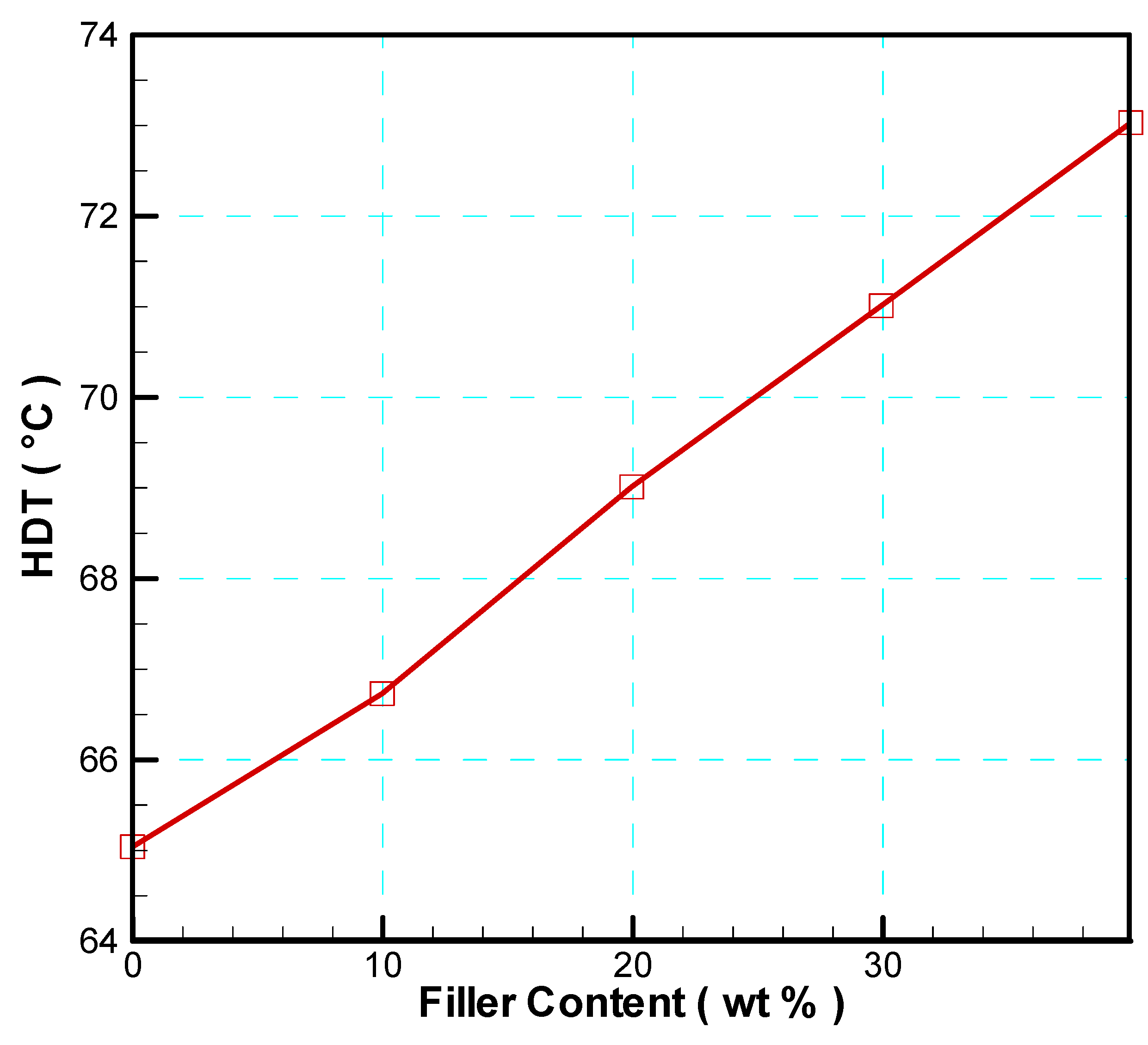
The variation of HDT versus filler content is shown in (Figure 2). For neat polypropylene (PP), the HDT is 65°C then it increase almost linearly with filler content, reaching 70°C and 73 °C at 30 wt% and 40 wt% CaCO3 respectively. Fillers are known to act as nucleating agents. As they are also known to cause an increase in the HDT [6]. This might be due to the fact that HDT is close to the crystallisation temperature (Tc) which corresponds to the maximum in crystallisation rate. An increase in the degree of crystallinity, changes the crystallite morphology or relieves built in stress in the amorphous phase causing an increase in the HDT.
The importance of HDT arises during the cooling operations of vacuum forming as it is essential that the formed packages be cooled at the HDT before ejection from the mold. Formulations having higher HDT could be cooled faster than those with a lower one. Therefore, the cycle time is shorter.

4.3. Mechanical Properties

4.3.1. Impact Strength (Charpy)

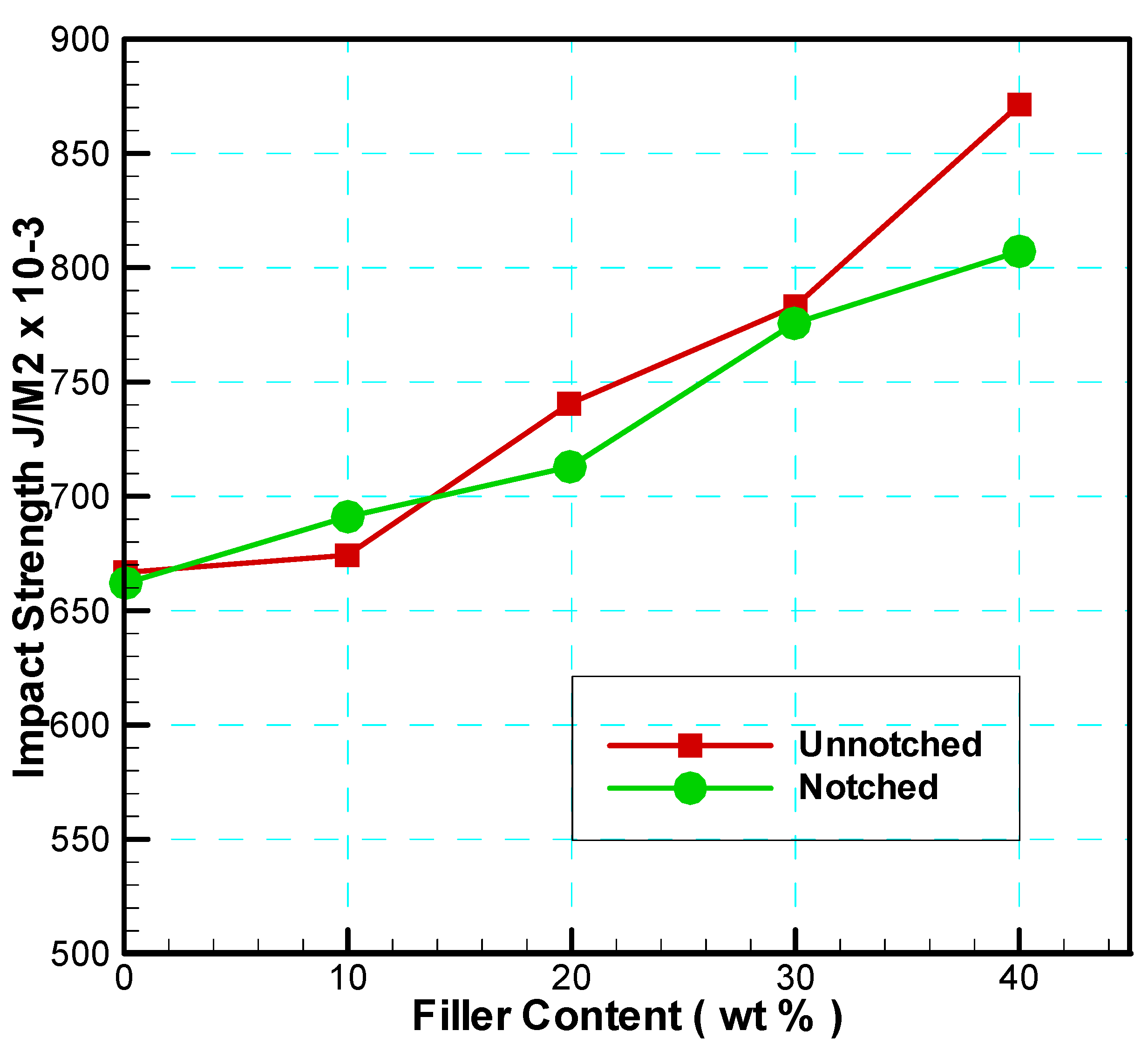
Both notched and unnotched charpy impact strength versus filler content are shown on Figure 3. A slight increase in impact strength is observed. This can be attributed to the fact that the filler used has been surface treated and as a consequence, specific interactions between the filler and the matrix might have taken place leading to a better adhesion between the filler and the matrix resulting in improved impact strength [6].
The impact results seem to contradict those of the tensile test. This difference could be attributed to the nature of tests. The former one is done at high speed loading while the latter is done at relatively lower speed and the behavior of the material during each test is different. The particle size (fine) of the filler might be behind this improvement in impact.

4.3.2. Tensile Properties

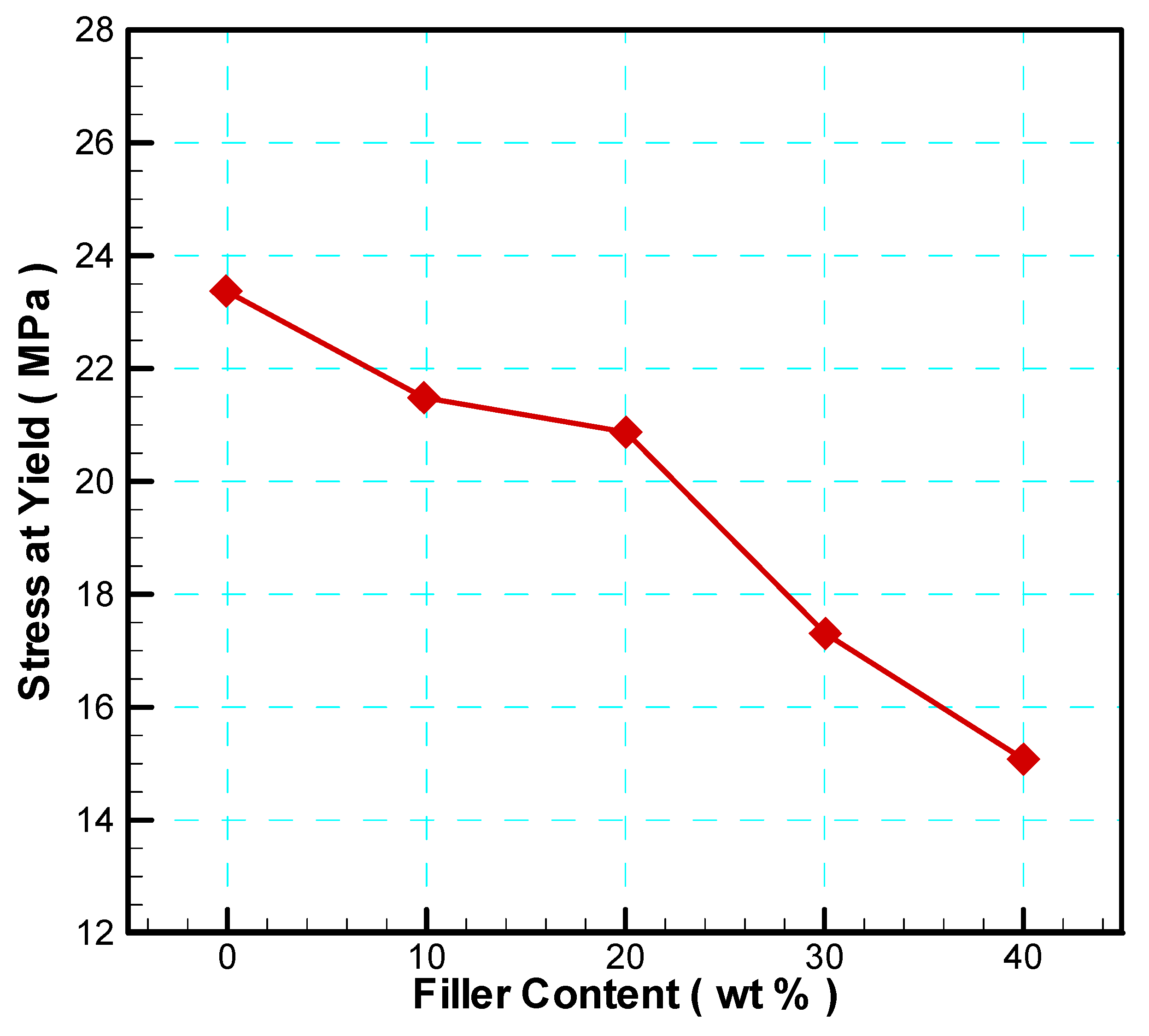
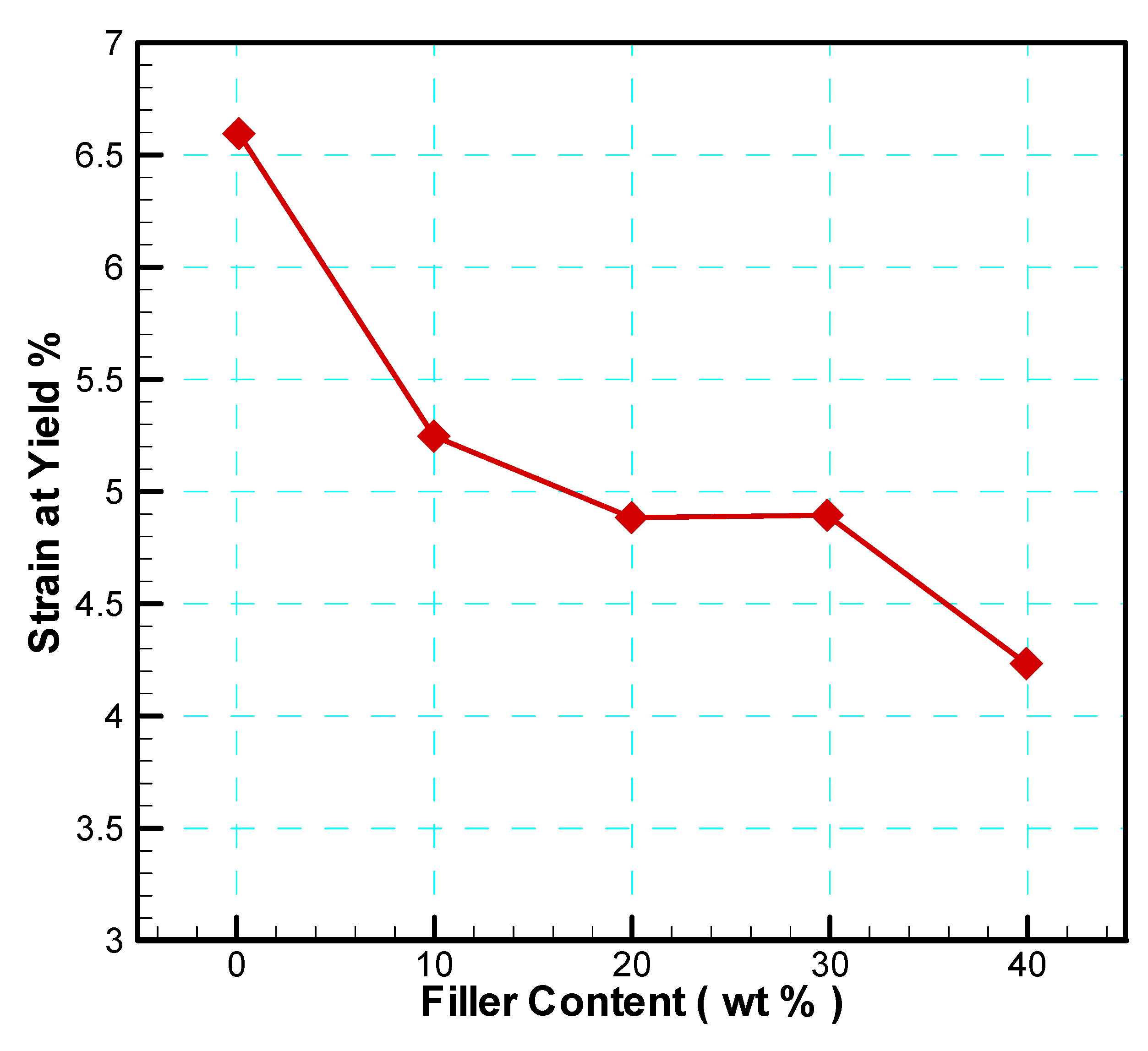
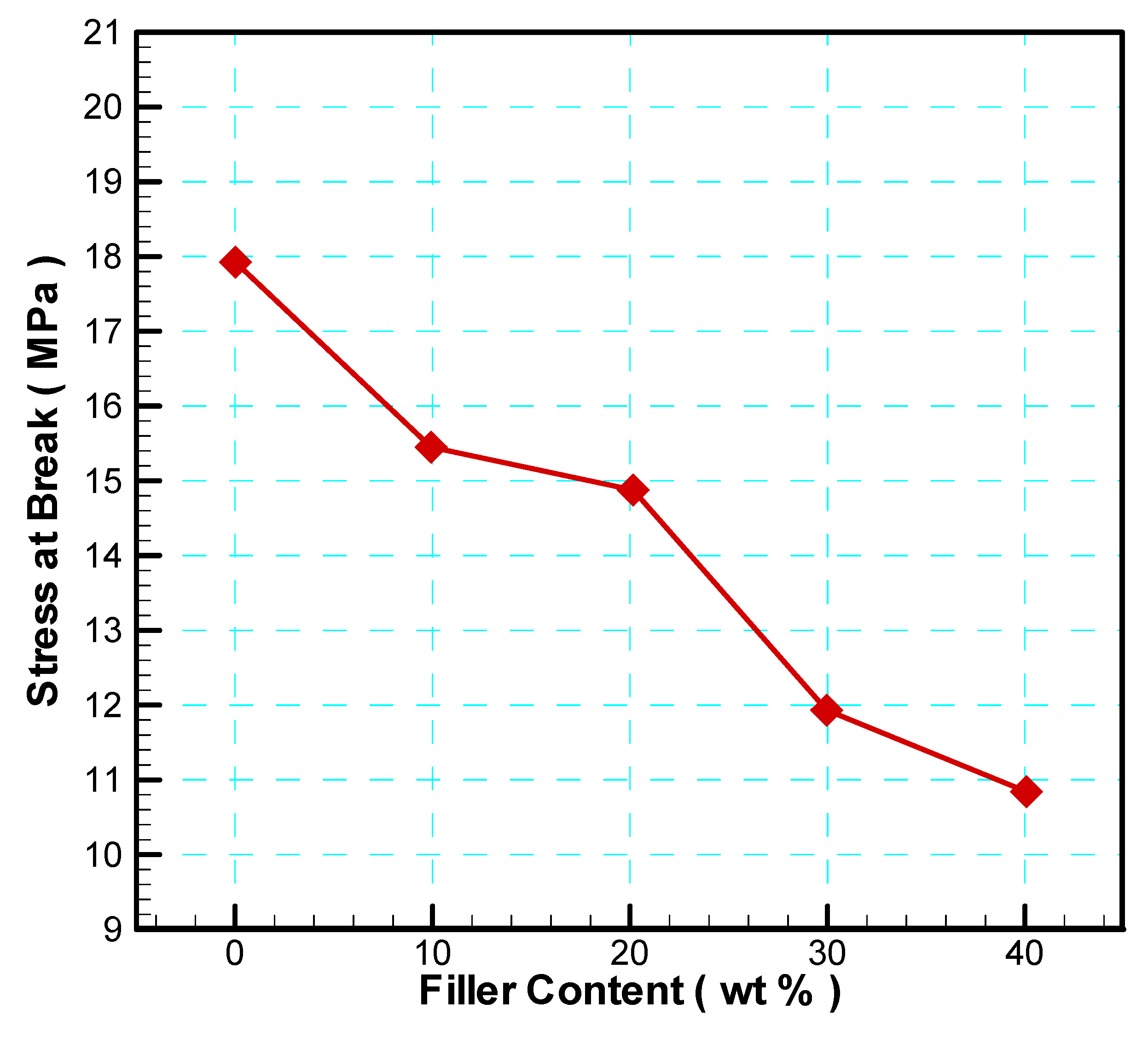
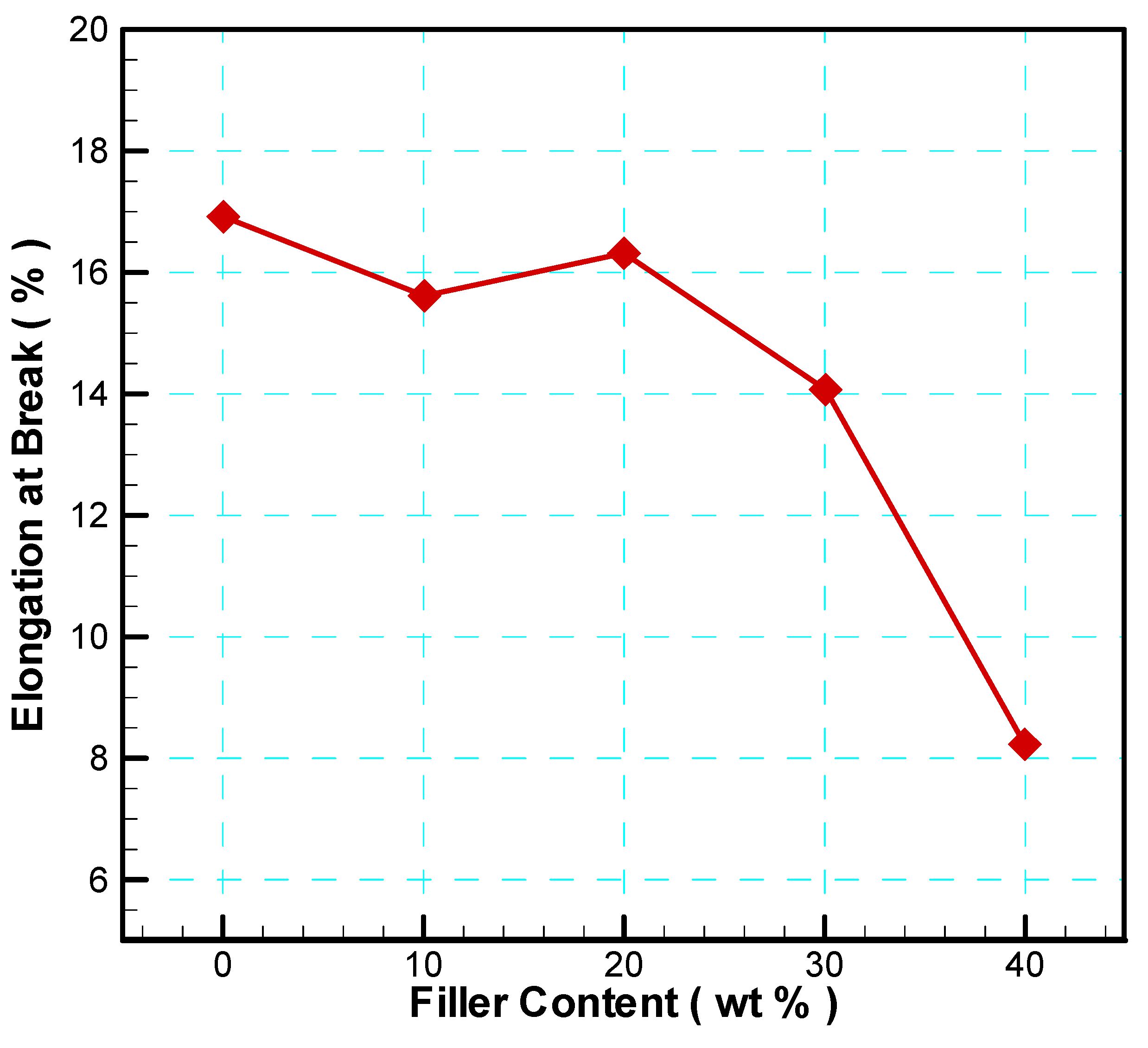
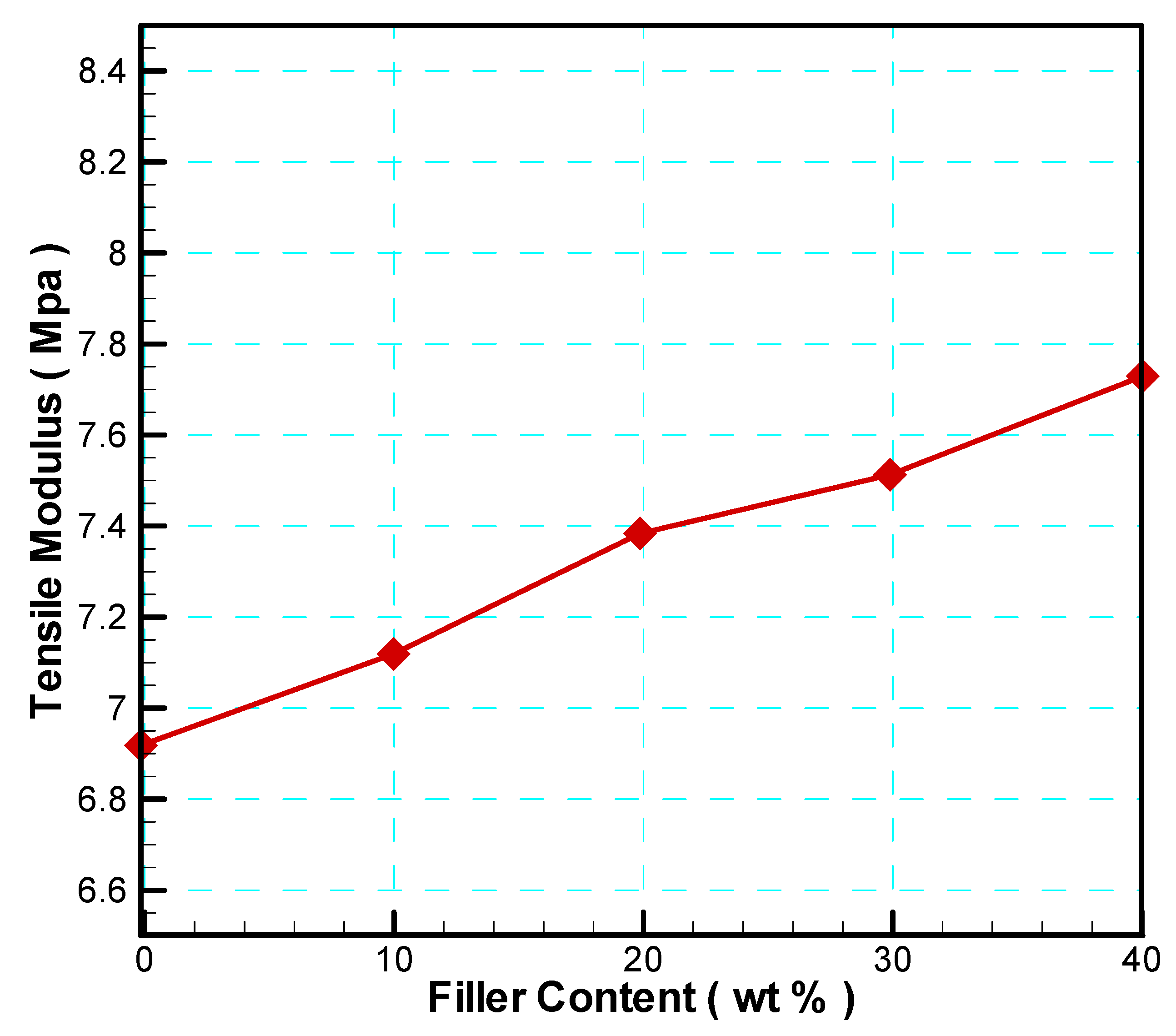
Results relating or concerning stress and elongation at yield and at break versus filler content are shown on Figure 4, Figure 5, Figure 6 and Figure 7. It is well known that the presence of filler tends to cause a decrease in most tensile properties [6].
It is noticed that both elongation at yield and break decrease with increasing filler concentration Figure 5 and Figure 7 respectively. This may be due to the fact that the matrix is restricted in its ability to provide strength between packed particles, and the particles which do not wet and bond to the matrix cause cavitation [6].
Similar observations hold true for the stress at yield and break as shown on Figure 4 and Figure 6.
In the case of the modulus, a slight increase with an increase in the filler content is observed. As filler content increases, agglomeration of powders tends to increase with a corresponding decrease in max packing volume. This effect lead to an increase in modulus [7].
According to Meddad et al. [8], the behavior of filled polypropylene could be attributed to the fact that the stress corresponding to the onset of debonding consists of two principal contributions. The first one is due to the adhesion at filler-matrix interface. In practice this adhesion stress is varied by the use of coupling agents. The other is the thermal compression stress which results from higher thermal expansion coefficient of the matrix compared to that of the filler. This causes the matrix to shrink around the filler particles as the material is being cooled from the melt temperature to the service temperature. This thermal stress has to be overcome when the filler polymer is subjected to an externally applied stress. Obviously, the magnitude of the thermal stress depends among other parameters on the thermal expansion coefficient differential between the filler and the surrounding material. With a higher filler content this differential is smaller (because the << surrounding material >> consists of the filler and the matrix). Therefore, the thermal stress should decrease with the increasing filler concentration, and with other things being equal, the debonding starts at a lower applied stress in more highly filled materials.
Fillers often induce yield points in the stress strain curves. The yielding phenomena according to Nielson [7] is really due to a crazing effect or to a dewetting effect in which the adhesion between the filler and matrix phases is destroyed, therefore, voids are created and specimens undergo dilatation (yielding or dewetting behaviour should depend upon the surface area of the filler in the polymer).
Dewetting or breaking of aggregates becomes more evident as the concentration of filler increases. The stress-strain behaviour of many filled polymer can be changed by adhesion promotors which change the filler/polymer interface.

4.3.3. Tear Test

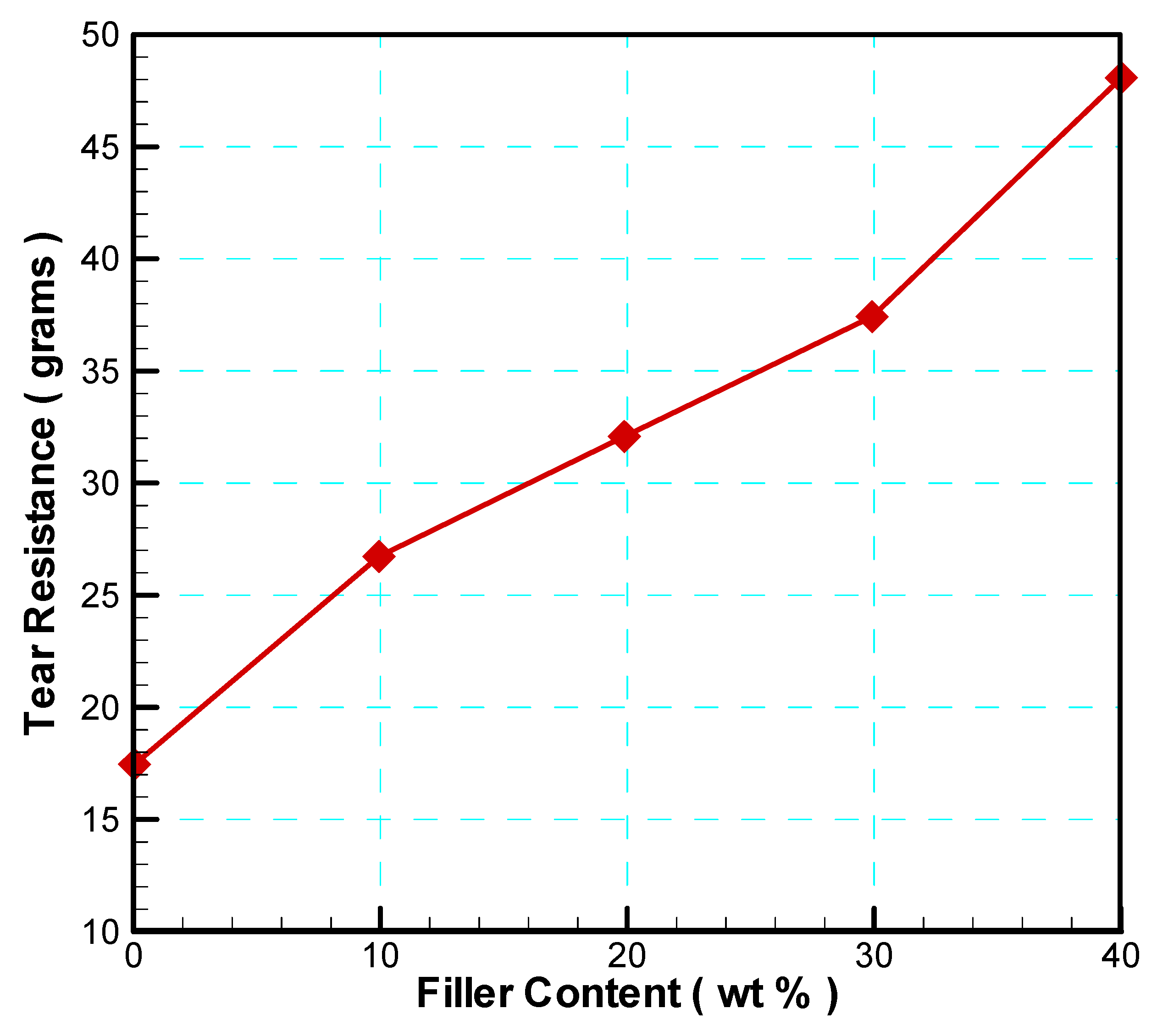
Figure 9 shows the effect of filler content on tear resistance. An almost linear increase with filler content is observed. This is an indication that the presence of the filler led to a three fold increase in tear resistance. This is probably be due to the filler particle size or to surface treatement (coupling agent) of the filler leading to a better interface and improved adhesion between the filler and the matrix [7,9].

4.3.4. Hardness

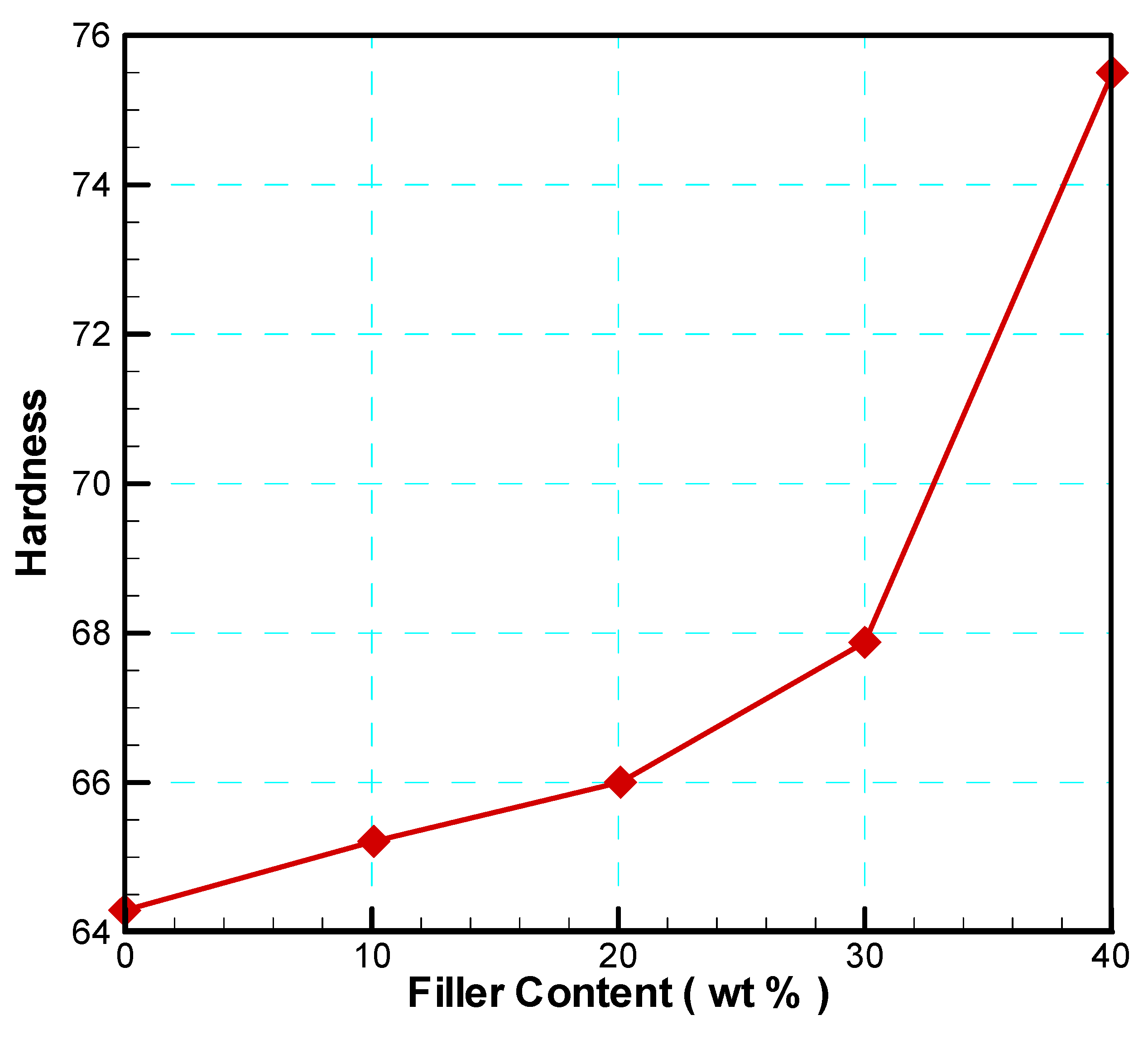
Figure 10 shows the effect of filler content on the hardness. It is noticed that the hardness increases with increasing filler content. In fact a, filler which increases the moduli of the composite generally increases the hardness value of the thermoplastic. Increase in hardness depends on the type of filler and upon the nature of the interface and the strength of the adhesion between the phases [7.9].

4.4. Vacuum Forming

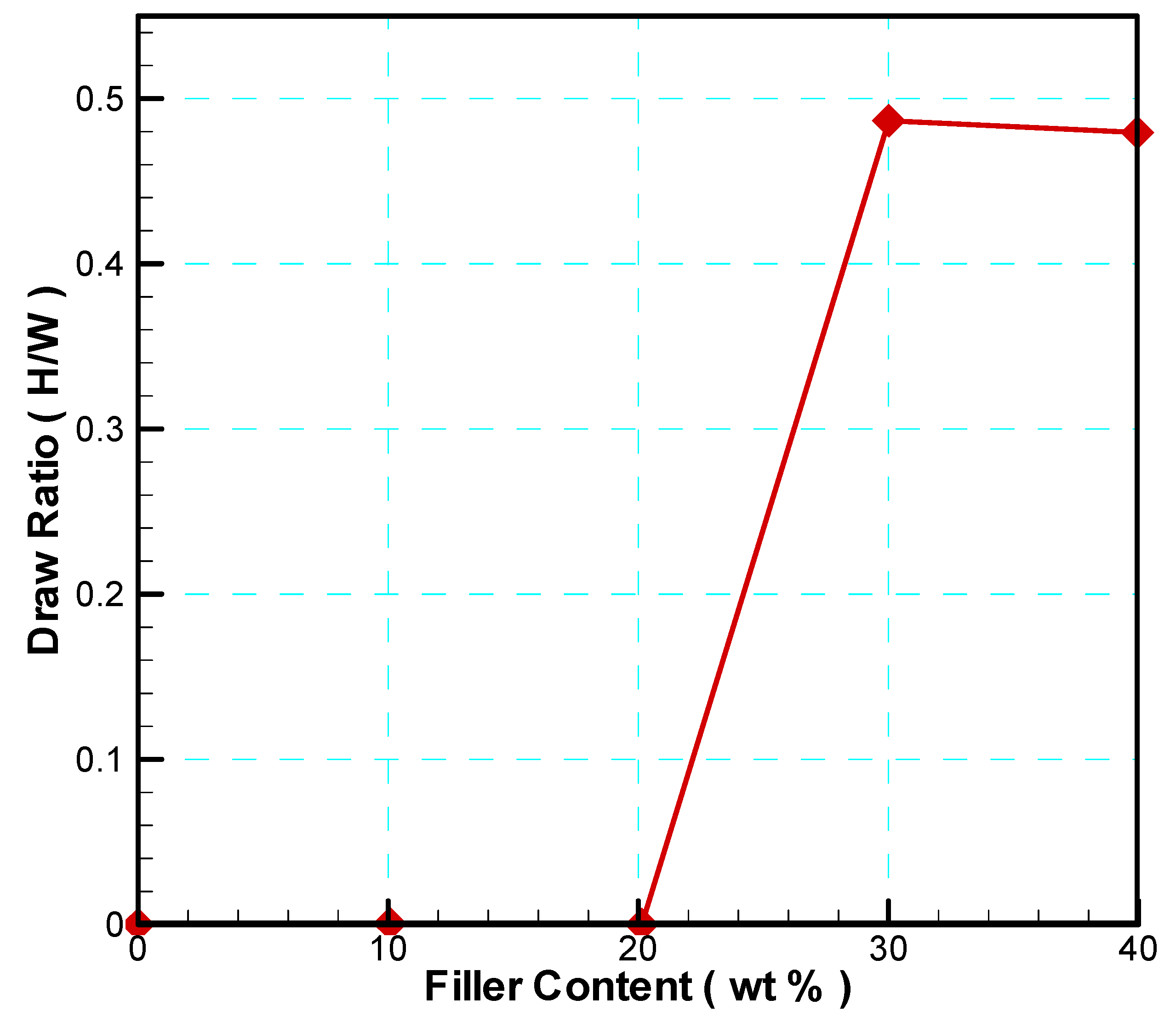
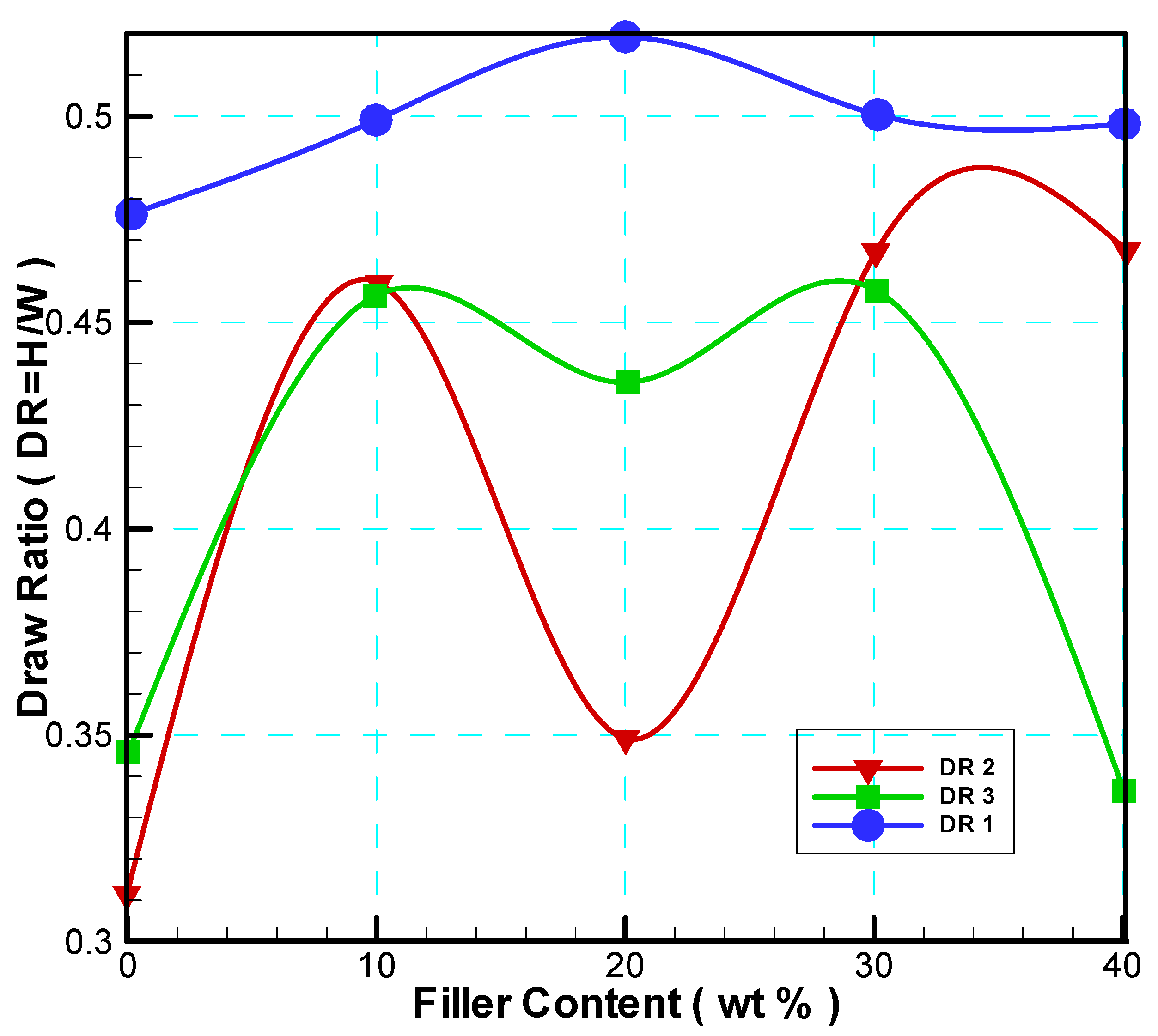
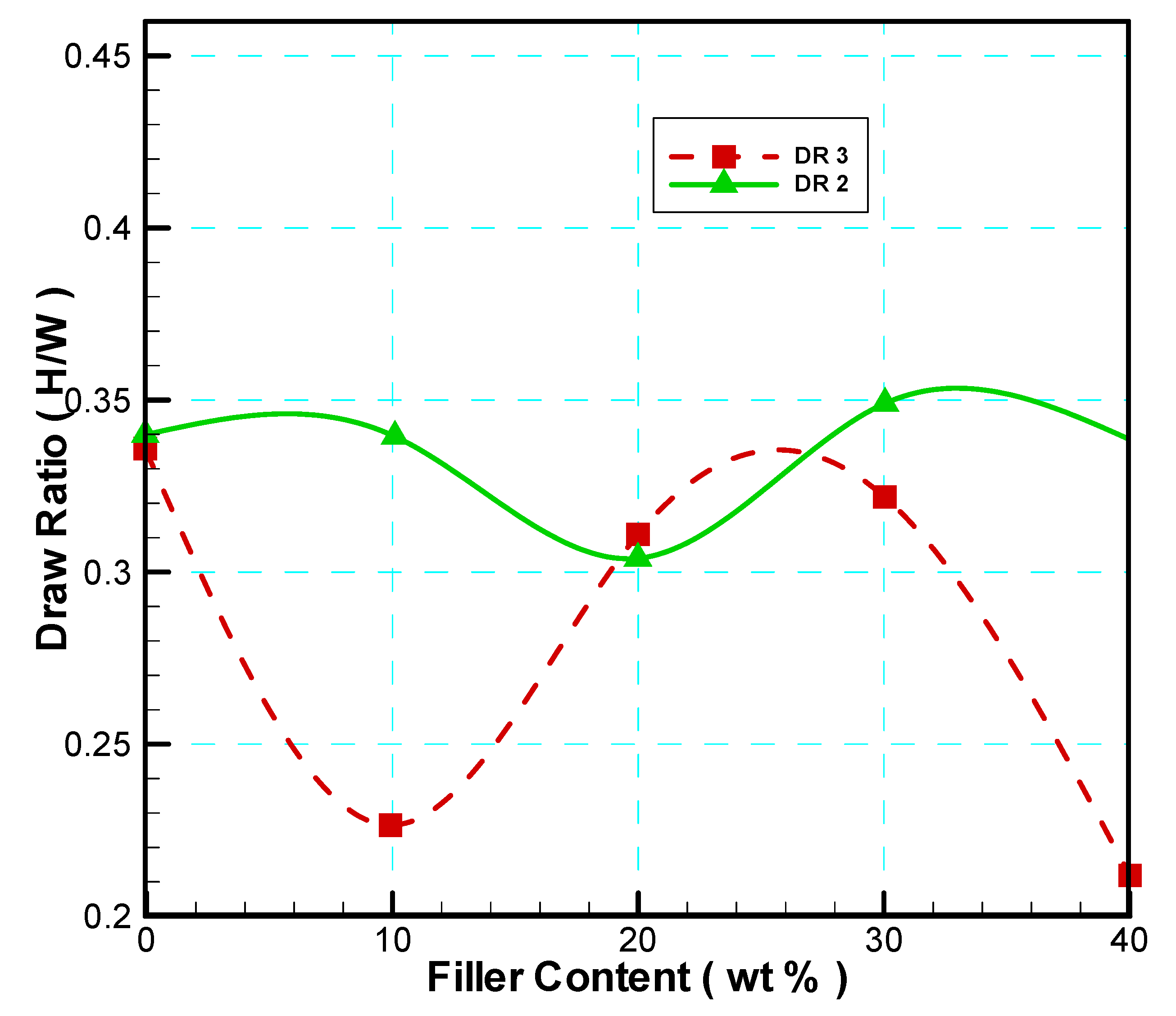
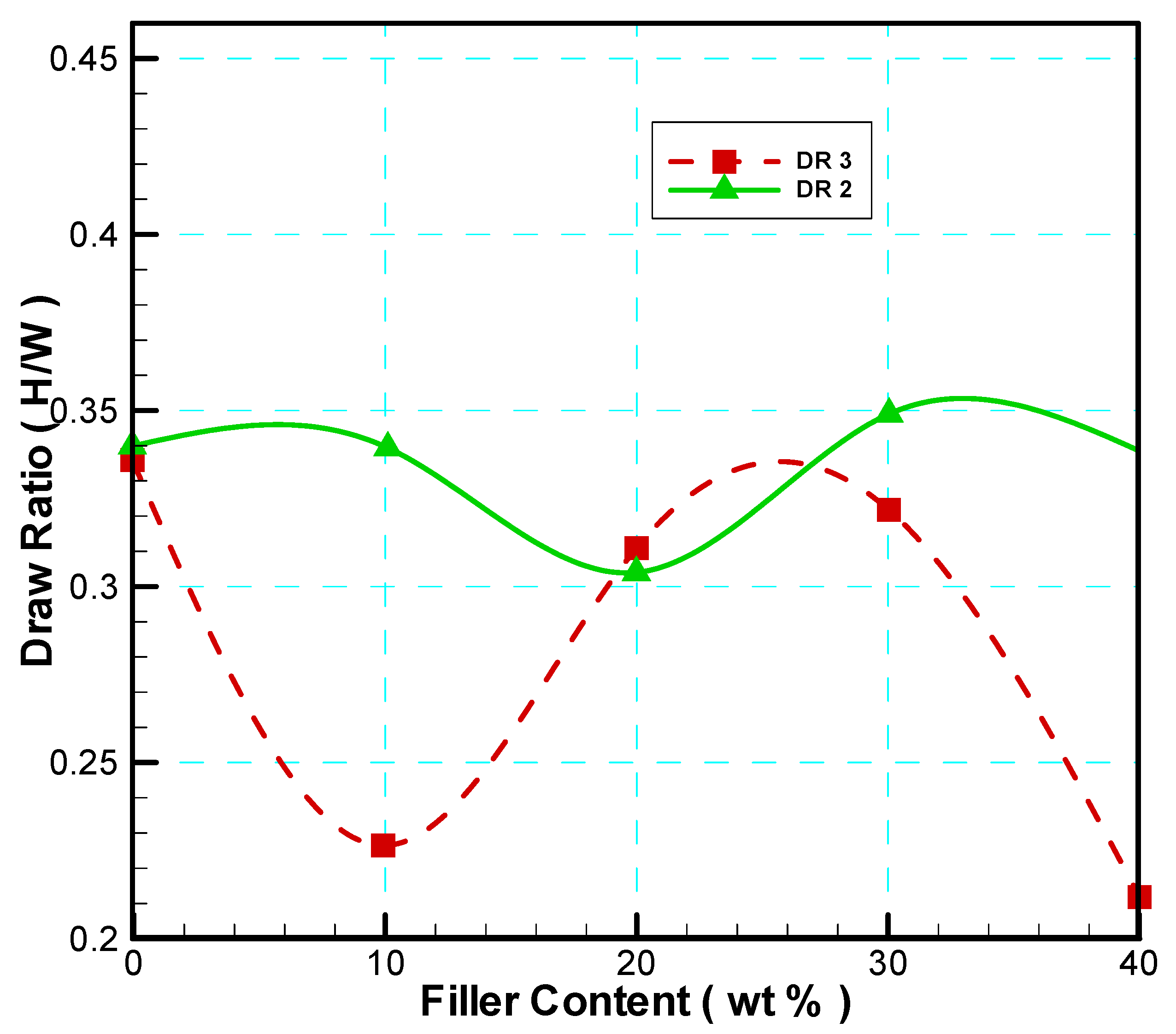
Figure 11, Figure 12 and Figure 13 compare the relative thermoforming performance at various draw ratios (H/W: 1, 2, 3) versus filler content at 150, 160 and 170 °C respectively. These findings confirm that filled PP is capable of being formed at different draw ratios.
In Figure 11, none of the virgin not even the 10 and 20 wt% filled PP could be thermoformed. Only F30 and F40 were formed at this temperature i.e 150 °C. This is probably attributed to the presence of the filler which due to its metallic nature (higher thermal conductivity) causes a rapid heating of the composite therefore easier thermoforming.
While, insufficient heat is noticed for F0, F10 and F20 which require a much longer time. The effect of filler on heating is clearly observed, the highly filled formulation heats more rapidly than the less filled one.
Figure 12, at a higher forming temperature (160 °C) than the preceding one (150 °C) and for the lowest draw ratio (1), all formulations were vacuum formed. It has to be mentioned that the formulation yielding the best product in terms of mold conformity is the one containing 30 wt% CaCO3, since the same draw ratio is obtained from the mold and the formed product dimensions (0.5). At higher draw ratios (2 and 3) once more formulations F10 and F30 were formed adequately, but with poor mold conformity for the formulation F10. The best results were obtained with formulation F30. A slightly lower draw ratio (0.47) compared to that of the mold (0.5) has been obtained. Malpass et al. [2] attributed this behavior to deformation in the highly elastic state followed by some shrinkage upon cooling leading to a reduction in size compared to the mold dimensions.
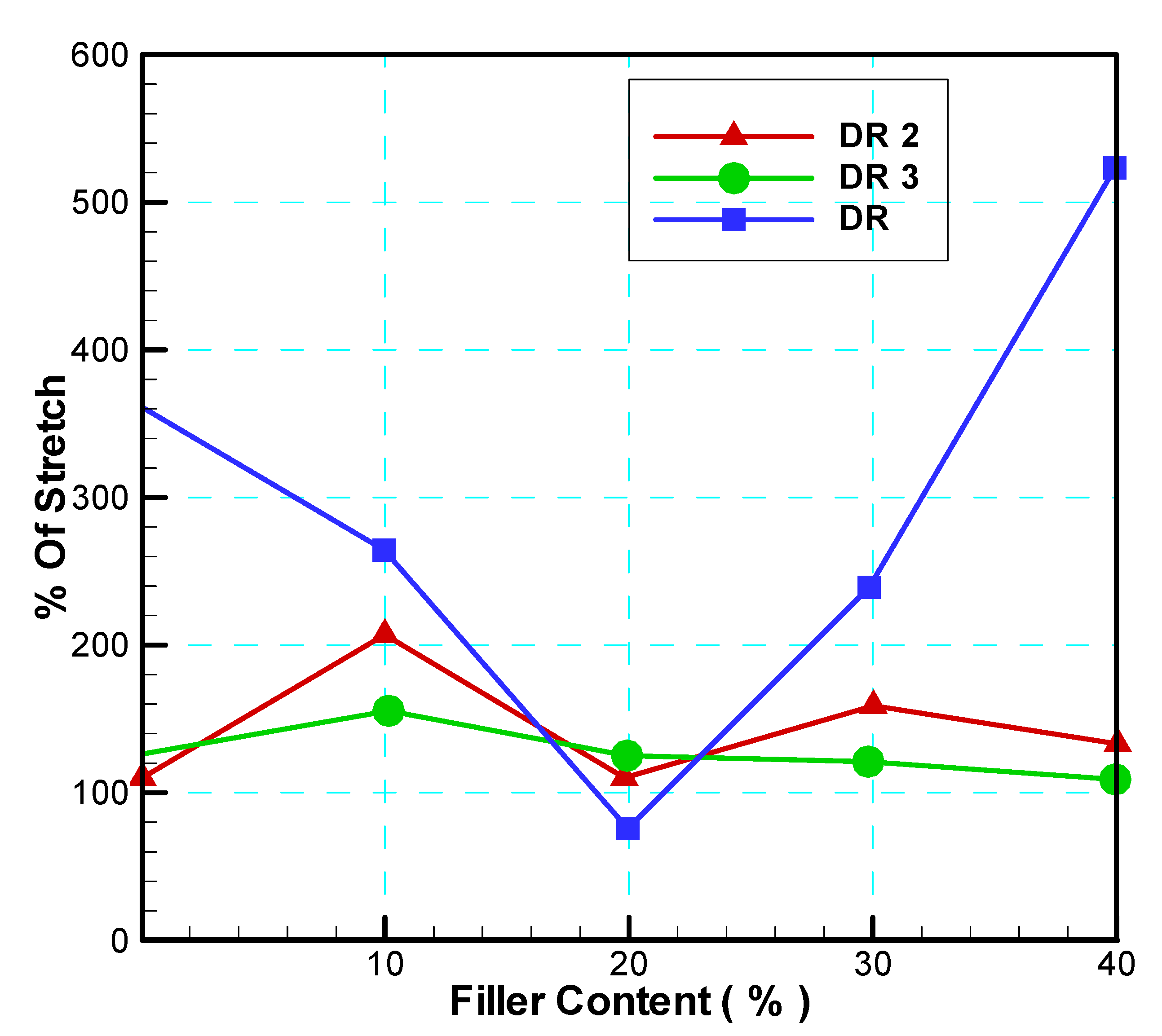
Figure 13 represents the variation of draw ratio versus filler content at 170 °C for only larger mold (2 and 3). The quality of the obtained product was very poor (torn). All formulations were not adequately formed in addition to poor mold conformity. A draw ratio based on the product dimensions below 0.35 is obtained compared to the original one (0.47). This might be due to excessive heat as a result of the high temperature used (170°C) as well as to the presence of the mineral filler which favors heat conduction. Based on the above results, and since at 150 °C and at 170 °C the forming was not acceptable i.e no forming in the first case and excessive tearing for the second one) therefore 160 °C was selected as the forming temperature. For this special case and after forming, the percent stretch was calculated for each formed cup according to the following relationship assuming uniform stretching [2]:
% stretch= (√ti/tf) x 100
Where ti is the thickness of the sheet prior to forming and tf is the thickness of the bottom cup after forming.
Results in Figure 14 demonstrate that at 160°C, F30 undergoes less stretching than F10 for the same mold dimensions. An ideal vacuum forming material exhibits maximum stretching and maintains uniform thickness over the entire formed part [2].
It has been reported in the literature [10] that the highest elongation achieved was at 160 °C (near peak crystalline melting point). This appears to be an optimum forming temperature. The results of the present work seem to support this finding.
The presence of mineral filler profoundly affects cycle time for thermoforming by increasing heating and cooling rates. With thickness used in packaging materials, conduction of heat through the sheet is a major controlling factor. The presence of mineral filler aids this process in two ways. First, heat capacity value is decreased; this means that less heat is necessary to reach a desired temperature. Second, thermal conductivity is increased.
The major effect of incorporating CaCO3 filler into PP homopolymer is improved resistance to sheet sag prior to thermoforming, law draw ratio with good mould conformance and dimensional stability at low temperature, intermediate to high draw ratio to higher temperature with good formed part dimensional stability. Thermoforming cycle time will, therefore; be faster for mineral filled PP for a given sheet thickness.

4.5. Effect of CaCO3 on Thermal Propertis of PP

4.5.1. Thermal Conductivity

Nielson [9] had developed a method for predicting thermal conductivity of composite as follows:
A = K e 1
K 1 K 2 = 1 + A B V m 1 B Ψ V m
B = K 2 K 1 1 K 2 K 1 + A
Ψ = 1 + 1 P f P f 2 V f
K e is the Einstein coefficient
Ψ is the reduced concentration factor
B is a constant to account for the relative conductivities of the two components.
From [9]: K e = 2.50 , P=0.64
K1, K2, K thermal conductivity of matrix, filler and composite.
K1 =5x10⁻⁴ gcal/cm3 sec (°C/cm)
K2=5.6x10⁻³ gcal/cm3 sec (°C/cm)
Density ρpp=0.9 g/cm3, ρCaCO3=2.65 g/cm3, A=1.5, B=0.803
Filler volume fraction = Vf
20% CaCO3 Vf=0.078 Ψ=1.086 K=5.870x10⁻⁴ gcal/cm3 sec (°C/cm)
30% CaCO3 Vf=0.127 Ψ=1.140 K=6.520x10⁻⁴ gcal/cm3 sec (°C/cm)
40% CaCO3 Vf=0.184 Ψ=1.204 K=7.420x10⁻⁴ gcal/cm3 sec (°C/cm)
Based on the above calculation, it is clearly seen that the thermal conductivity of the composite (filled PP) increases with filler content.

4.5.2. Specific Heat

In the thermoforming process in which a sheet is heated from one side, the thermal conductivity and specific heat may be combined to determine the heating rate of the sheet [9].
CpPP=0.53 cal/g°Cx0.9 g/cm3=0.477 cal/°C/cm3
CpCaCO3=0.21 cal/g°Cx2.65 g/cm3=0.555 cal/°C/cm3
For the filler sheet, the rule of mixture applies:
Cp filler by volume x Vf +Cpp by volume x Vm = cal /°C/cm3
20% CaCO3: 0.477x0.921+0.555x0.078 = 0.482 cal /°C/cm3
30% CaCO3: 0.477x0.872+0.555x0.127 = 0.485 cal /°C/cm3
40% CaCO3: 0.477x0.815+0.555x0.184 = 0.490 cal /°C/cm3
The above calculations indicate that the specific heat increases with filler content.
For the sheet produced at TP3G (ENPC Alger) having the following dimensions:
Thickness h=0.1 cm
Area a = 47.5x25= 1187.5 cm2
Volume V=a x h = 118.75 cm3
The total calories required to heat sheet from ambient temperature (25°C) to (160°C) is:
For virgin PP sheet 118.75 x 0.477x (160-25) = 7.64 x 10³ cal
For 20% CaCO3 filled sheet 118.75 x 0.482 x (160-25) = 7.72 x 10³ cal
For 30% CaCO3 filled sheet 118.75 x 0.485 x (160-25) = 7.77 x 10³ cal
For 20% CaCO3 filled sheet 118.75 x 0.490 x (160-25) = 7.85 x 10³ cal
Since the sheet is assumed to be heated from only one side, the thickness is h/2 = 0.02 cm , the temperature of the heat source is 300 °C , thus the heating time ( t ) can be estimated as follows :
H = K a t T h 2 [ 9 ]
H= amount of calories required to heat the sheet.
a= 118 cm2
T = (300-160) °C
For virgin PP sheet t=7.11 sec
For 20% filled sheet t=4.02 sec
For 30% filled sheet t=3.16 sec
For 40% filled sheet t=2.55 sec
The data obtained above are summarized here in (Table 1). The presence of the filler causes a drastic reduction in the heating time. For the 30 % wt filled PP a 55% decrease in heating cycle has been observed. Therefore, although the filled sheet has higher caloric requirement, its superior thermal conductivity allows the sheet to reach average thermoforming temperature in shorter time. Similar conclusions can be drawn for cooling cycle.
The major consequence of incorporating CaCO3 filler into PP are improved mould conformance, part dimensional stability at lower forming temperature, lower forming temperature , reduced draw ratio capability at 160 )C; little effect on vacuum forming propertires at 160 °C, and reduced thermoforming cycle.

5. Conclusions

  • Vacuum forming on a constructed laboratory scale machine seems to be an adequate way to select the appropriate thermoforming conditions for CaCO3 filled polypropylene.
  • The major conclusion of this work is that 30% by weight of CaCO3 filler can be incorporated into polypropylene with relatively minor effects on vacuum forming properties.
  • The above formulation seems to be very comparable to the conventional material used for such applications i.e HIPS and therefore is a potential candidate to be used as a replacement for it.
  • The most important effect of mineral fillers is the significantly shorter thermoforming cycle time (faster heating and cooling).
  • As a consequence, the cycle time of production is reduced by about 50%.
  • A reduction of 30% in the income cost is obtained using 30 wt % of CaCO3 filled polypropylene (PP) as replacement of high impact polystyrene (HIPS).

References

  1. P. Jacoloy., W.J Kissel. A new PP resin with enhanced thermoformability. Antec 1994.
  2. V.E. Malpass., C.H. V.E. Malpass., C.H. White.: laboratory comparison of thermoforming properties of two ABS-R.F.W. Caird (Thermoforming HDPE). From “Basic principles of thermoforming”; Gordan&breach publishers; New York; 1973.
  3. Djaidja. PVC thermoforming sheet for packaging application. Fifth year project, IAP, 1995.
  4. Theodore, O.J. Kresser.: Polyolefin plastic. Platsic applied series, New York,1969.
  5. Joel Frados. Plastic engineering handbook. Society of plastic industry, New York, 1976.
  6. Robert, A. Shanks., Longku. Fillers, PP. Polymeric material encyclopedia (CD- ROM), 1996.
  7. Lawrence, E. Neilson. Mechanical properties of polymers and composites. vol II, Marecel Dekker, New York, 1974.
  8. Abderhmane meddad. Analyse de l’andommagement des materiaux multiphases à matrix viscoelastique. PH.D Thèse, universite de montréal, 1996.
  9. Katz., H.S. Katz., H.S.Milewski. Handbook of fillers and reinforcements. Van nostrand reinhold,; New York, 1978.
  10. Vivan, E. Malpass., Anthony F.Dean. Estimating thermoforming behaviour of mineral filled polypropylene. Plastics engineering journal,1989.
  11. A.K. Nurdina., M. A.K. Nurdina., M. Mariatti., P. Samayamutthirian. :Effect Of Single-Mineral Filler And Hybrid-Mineral Filler Additives On The Properties Of Polypropylene Composites, Journal Of Vinyl & Additive Technology,2009,Doi 10.1002/Vnl.20173.
  12. Mustafa Abu Ghalia., Azman Hassan., Abdirahman Yussuf. Mechanical and Thermal properties of Calcium Carbonate-Filled PP/LLDPE Composite, Journal of Applied Polymer Science. 2011; 121, 2413–2421. [CrossRef]
  13. Buasri.N., Chaiyut.K., Borvornchettanuwat.N., Chantanachai.K.. Khongor. Thermal and Mechanical Properties of Modified CaCO /PP Nanocomposites, International Journal of Materials and Metallurgical Engineering, vol 6 N° 8.2012.
  14. Samson Oluropo Adeosun. , Mohammed Awwalu Usman., Wasiu Ajibola Ayoola. Muyideen Adebayo Bodude. Physico-Mechanical Responses of Polypropylene-CaCO3 Composite, Journal of Minerals and Materials Characterization and Engineering, 2013, 1, 145–152; [CrossRef]
  15. Danbee Lee., Seungkyun Kim., Birm-June Kim., Sang-Jin Chun., Sun-Young Lee., qinglin Wu. Effect of Nano-CaCO3 and Talc on Property and Weathering Performance of PP Composites. International Journal of Polymer Science. 2017; 2017, 4512378. [CrossRef]
  16. Saitarly.S., Rezanova.N., Plavan.V., Beleška.K.: Rheological and mechanical properties of filled with calcite concentrate polypropylene blends. International Conference Baltic Polymer Symposium 2018, IOP Conf. Series, Materials Science and Engineering. 2019; 500, 012034. [CrossRef]
  17. Budiyantoro.C., Sosiati.H., Kamiel.B., Fikri.K. The effect of CaCO3 filler component on mechanical properties of polypropylene. The 1st Materials Research Society Indonesia Conference and Congress, IOP Conf. Series, Materials Science and Engineering. 2018; 432, 012043. [CrossRef]
  18. Shuaibu.A., Mamza.P, Hamza.,A. Isa.,T : Mechanical Properties Of Ficus Polita Seeds Powder And Calcium Carbonate Filled Polypropylene. Polystyrene And Polyvinyl acetate Blends, Nigerian Research Journal of Chemical Sciences (ISSN: 2682-6054) Volume 8, Issue 2, 2020, http://www.unn.edu.ng/nigerian-research-journal-of-chemical-sciences.
  19. Pierre Marcel Anicet Noah. , Fabien Betene Ebanda., Louis-Max Ayina Ohandja., Ateba Atangana. Study of the Relative Variations of the Thermal Properties and Crystallinity of Blends (PP/EPR)/Calcium Carbonate. Modeling and Numerical Simulation of Material Science 2021, 11, 19–33; https://wwwscirporg/journal/mnsms.
  20. Samira Kherici., Djillali Benouali., Chekhar Nouredine: The Effects of Calcium Carbonate Filler on HDPE Pipe; Advances in Science and Technology Research Journal. 2022; 16, 213–218. [CrossRef]
  21. Nawar. S., Bakly., Nabeel. H., Al-Mutairi., Ali.A., Layla., Mohammed Hamzah Almaamori. Investigate the Effect of Temperature Change on the Properties of the PP/CaCO3 Composites. A Comparative Study, Al-Mustaqbal Journal of Sustainability in Engineering Sciences. 2023. [CrossRef]
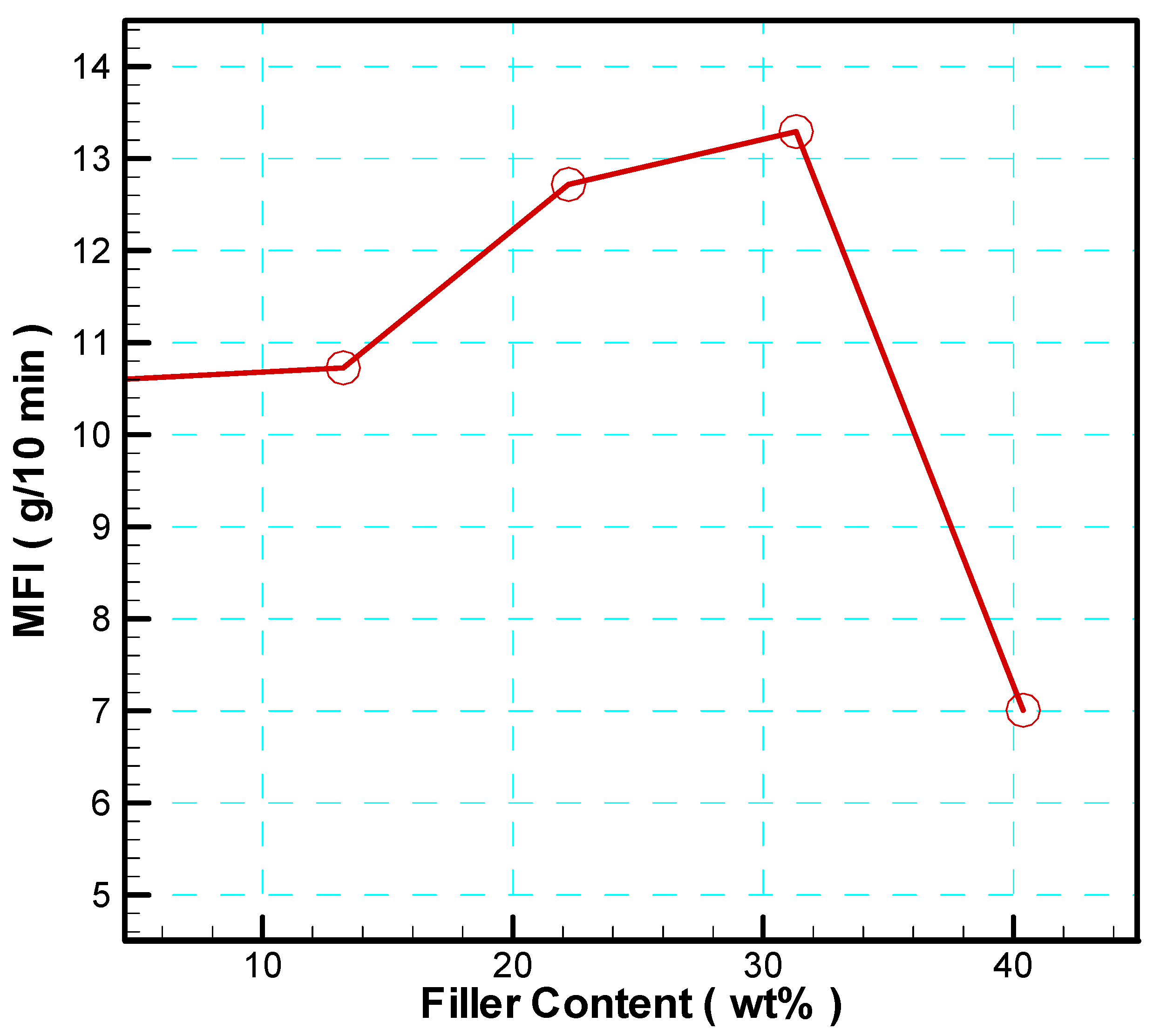
Figure 1. Effect of filler content on MFI.
Preprints 145644 g001
Figure 2. The effect of filler content on HDT.
Preprints 145644 g002
Figure 3. Effect of filler content on charpy impact strength.
Preprints 145644 g003
Figure 4. Effect of filler content on stress at yield.
Preprints 145644 g004
Figure 5. Effect of filler content on strain at yield.
Preprints 145644 g005
Figure 6. Effect of filler content on stress at break.
Preprints 145644 g006
Figure 7. The effect of filler on elongation.
Preprints 145644 g007
Figure 8. Effect of filler content on tensile modulus.
Preprints 145644 g008
Figure 9. Effect of filler content on tear resistance.
Preprints 145644 g009
Figure 10. The effect of filler content on the hardness.
Preprints 145644 g010
Figure 11. Draw Ratio vs Filler content at 150 °C.
Preprints 145644 g011
Figure 12. Draw Ratio vs Filler content at 160 °C.
Preprints 145644 g012
Figure 13. Draw Ratio vs Filler content at 170 °C.
Preprints 145644 g013aPreprints 145644 g013b
Figure 14. Effect of Filler Content on Stretch %.
Preprints 145644 g014
Table 1. Thermal properties.
Compound Thermel properties x 104(gcal/sec cm2 (°C/cm) Heat input, calories x 10-3 Time to heat/coll (sec)
HIPS 4.850 7.23 7.19
F00 5 4.64 7.11
F10 5.526 7.69 5.65
F20 5.870 7.72 4.02
F30 6.52 7.77 3.16
F40 7.42 7.85 2.55
Disclaimer/Publisher’s Note: The statements, opinions and data contained in all publications are solely those of the individual author(s) and contributor(s) and not of MDPI and/or the editor(s). MDPI and/or the editor(s) disclaim responsibility for any injury to people or property resulting from any ideas, methods, instructions or products referred to in the content.
Copyright: This open access article is published under a Creative Commons CC BY 4.0 license, which permit the free download, distribution, and reuse, provided that the author and preprint are cited in any reuse.
Prerpints.org logo

Preprints.org is a free preprint server supported by MDPI in Basel, Switzerland.

Subscribe

Disclaimer

Terms of Use

Privacy Policy

Privacy Settings

© 2026 MDPI (Basel, Switzerland) unless otherwise stated