

Submitted:
06 January 2025
Posted:
07 January 2025
You are already at the latest version
Abstract
This pilot study offers an integrative interdisciplinary approach to the exploration of complex relationships between happiness and sustainability through the lenses of environmental ethics. A significant body of multi-disciplinary scholarly literature suggests that people are happier when they enjoy access to nature and a sustainable environment. It is unclear, however, if human happiness contributes to positive attitudes towards environmental sustainability. Using a mixed-methods approach, we investigate how self-reported happiness might be linked to access to nature, environmental concerns, and ethical values. Primary data collection involved in-person surveys of park visitors and in-depth semi-structured interviews with environmental and well-being professionals. The majority of the participants involved in the study reported feeling happier while being in nature and/or actively engaged in sustainable practices. Participants expressed their deep concerns and sadness about the global state of the environment, but also joy from the opportunities to engage in climate action and education. This pilot study offers preliminary insights into methodological approaches to research on the nexus of human happiness, environmental sustainability, and ethics. Methods proposed in this paper can be replicated, adopted cross-culturally, and deployed in other future case studies.
Keywords:
happiness
; sustainability
; environment
; ethics
; community
; well-being
1. Introduction
The biggest challenge facing humanity today is building a future that is sustainable both for people and the rest of nature [1]. Sustainable human development requires balance, cooperation, and harmony with other species [2], [3]. As the world faces cascading global crises, both the United Nations 2030 Agenda for Sustainable Development [4] and the Paris Agreement to the United Nations Framework on Climate Change [5] appear to be increasingly out of reach [6].
The relationship between human happiness and environmental sustainability has been debated in the literature since the 19th century [7], [8]. A significant body of multidisciplinary scholarly literature suggests that human happiness and environmental sustainability positively correlate [9], [10], [11]. The idea of an existing consonance between the two also permeates the UN Sustainable Development Goals [4] and many related international strategies, such as Agenda 2030 [12]. Consequently, it is integrated into numerous National Sustainable Development Strategies (NSDS) and other policy documents at the national and subnational levels [13].
However, an equally ample interdisciplinary body of research points to the growing dissonance between human happiness and global environmental sustainability caused by the transgression of biocapacity of the Earth [14], [15], along with a glaring inequality gap between the Global North and Global South and within individual nations [16] [17]. The richest 10% of the world's population receives more than half of global income, while the poorest 50% receive just 8% [18]. The growing injustice trends cause direct negative impacts on global sustainability and human well-being [19]. Therefore, the mechanisms of sustainability-happiness dichotomy are highly complex and contradicting at times. Community-scale studies conducted in Western countries adopt anthropocentric, individualistic, and utilitarian views of nature, often equating well-being with consumption of natural resources at the expense of other humans and many non-human beings [20], [21], [22], [23], [19].
Cultural and economic factors have a major impact on how human happiness interacts with environmental sustainability [24]. Various happiness and well-being determinants have been proposed, contributing to the understanding of good quality of life in various cultural and socio-economic contexts [25], [26]. For example, in East-Asian and Sub-Saharan African cultures happiness has been traditionally seen as a state of harmony with one’s community and nature, while Euro-American cultures equate it with positive emotions and pleasurable experiences [21], [26], [27]. Furthermore, Indigenous cultures worldwide expand the notion of “community” to include not only humans but also other beings, where humans are integral parts of the natural world, with a deep responsibility to care for it as a living entity [28], [29]. There are deep affinities between Indigenous worldviews and environmental sustainability [30] that assume kinship with nature as a centerpiece of worldviews in many non-Western cultures [21], [31]. American naturalist Aldo Leopold [7] called this broader community, including animals, plants, soils, rocks, and waters, “the land”, arguing that it has its own intrinsic value, regardless of its services to humans. At its core, the idea of “land ethic” is the recognition that human society is a part of the environment. A model of sustainability based on land ethic and kinship with nature is urgently needed today to overcome the climate crisis and escape from the global overshoot. As the leading expert on sustainability, R. Constanza points out, “We can break our addiction to fossil fuels, overconsumption, and the current development model, and create a more sustainable and desirable future. It will not be easy, it will require a new vision, new measures, and new institutions. But it is not a sacrifice of quality of life to break this addiction. Quite the contrary, it is a sacrifice not to” [32]. The notion of land ethic, however, appears to be the missing link in the conceptualization of the dichotomy of happiness and sustainability. The goal of the study is to develop a conceptual and methodological framework helping to explore this gap. A mixed-method interdisciplinary approach is proposed to observe and examine the happiness-sustainability-ethics relationships at a local scale through surveys and interviews.
This article includes five sections, including the introduction, theoretical foundations, methodology, results and discussion, and conclusions, followed by the acknowledgements, references and two appendices.
2. Theoretical Foundations
Happiness studies are still emerging as a new academic field [33], [34] [35], [36]. This young interdisciplinary area of inquiry overlaps with psychology, sociology, economics, philosophy, geography, social work, and other disciplines and areas of study. The concept of happiness has been defined in the scholarly literature in multiple ways, including its affective and cognitive dimensions. Affective happiness can be best understood as an answer to the question “How happy are you feeling right now?” It is different from evaluative or cognitive happiness, which is defined as an answer to the question “How happy are you with your life overall?” [37]. The former question can be answered on the spot, while the latter requires people to step back and evaluate their lives.
On a different axis, happiness has hedonic and eudemonic dimensions. Hedonic enjoyment involves an immediate joy and satisfaction that individuals derive from their pleasurable experiences, while eudaimonia consists of individuals experiencing self-expressiveness through meaningful activities. Such experiences might offer self-actualization, pursuit of life purpose, and realization of one’s potential [38], [39], [40]. Both affective and evaluative forms of happiness could be an expression of hedonic and eudaimonic components. This study adopts the definition of happiness as “the experience of joy, contentment, or positive well-being, combined with a sense that life is good, meaningful, and worthwhile” by Sonya Lyubomirsky [41] because it is inclusive of all these dimensions.
Conceptually, happiness is closely related to a much broader and more objective concept of well-being but is not a synonym of it [42], even though these terms are occasionally used interchangeably [43]; [33]; [44]. According to the World Health Organization, the optimal state of well-being comprises several facets: physical and emotional health, daily functions, financial status, and social interactions with the immediate and broader community [45]. Evaluative happiness is sometimes equated with subjective well-being in the literature due to a significant overlap of these two concepts [46], [33]; [44].
Several quantitative indices have been developed in order to measure, rank, monitor, and compare happiness and well-being at various spatial scales, from local to global. The Kingdom of Bhutan was the first country in the World to adopt the Gross National Happiness Index (GNHI) in 2008 as a measurement tool for policy making and monitoring its progress. Its philosophy, rooted in the Buddhist concept of “The Middle Path” [47] goes back to the 17th century emphasizing the importance of balance of human needs. The term “Gross National Happiness” was first introduced by his Majesty King Jigme Singye Wangchuck, the 4th King of Bhutan, who stated, “Gross National Happiness is more important than Gross Domestic Product”, implying that sustainable development should take a holistic approach and give equal importance to non-economic aspects of well-being and happiness [48]. The GNHI framework contains four pillars (preservation of culture, conservation of environment, economic development, and good governance) and nine constituent domains (psychological wellbeing, health, time use and balance, education, cultural diversity and resilience, good governance, community vitality, ecological diversity and resilience, and living standard) [48]. These domains are expressed by 33 indicators measured by 124 variables that emphasize various aspects of human well-being and ways of meeting underlying human needs [48]; [49]; [50]; [51]. The Center for Bhutan and GNH Studies revised and released an updated GNHI in May 2023 [49]. This new version of the index seeks to measure the nation’s well-being directly by starting with each person’s individual achievements in each indicator based on the national surveys. Based on the 2023 GNHI assessment this approach classifies all Bhutanese citizens into four groups: deeply happy, extensively happy, narrowly happy, and unhappy [49].
To inspire all nations to apply the GNHI philosophy, Bhutan sponsored the UN General Assembly Resolution 65/309 in 2011, calling for a holistic approach to development that promotes sustainable happiness and well-being [52]. The small Himalayan country led the UN High Level Meeting on Happiness and Well-being in April 2012, which issued the UN Secretary-General note on “Happiness: Towards a Holistic Approach to Development” (A/67/697), released in 2013 [53]. The UN Resolution on Happiness inspired many nations, communities, and organizations worldwide. For example, the Malaysia Happiness Index (MHI) was developed by the Federal Department of Town and Country Planning of Malaysia to enhance the understanding of a sustainable city through the concept of happiness. The MHI consists of thirteen questions related to stress, health, family, job, income, religion, neighborhood, community, safety, facilities, services provided by the local authorities, political representation, and the living environment [54]. The first World Happiness Report (WHR) was published by the Earth Institute in the United States in April 2012, in support of the UN High Level Meeting on Happiness and Well-being [55]. Published annually since 2012, the WHR tracks changes in global happiness over time [56]. Its national ranking is based on self-evaluation of well-being on the Cantril scale by Gallop Poll, further examined in the context of six factors (social support, income, health, freedom, generosity, and absence of corruption) [27]. A different global Happiness Index was developed by the Happiness Alliance (Musikanski, et al., 2017), a U.S.-based happiness think tank, was also inspired by the Bhutanese GNHI, to be used by individuals and communities worldwide (Cloutier & Pfeiffer, 2015). The Happiness Alliance produces its annual Global Happiness Report Card (Happiness Alliance, 2024). It is unrelated to the World Happiness Report although the similarity of names could be confusing. The Global Happiness Report Card is based on surveys that have been conducted online since 2011 in 23 languages [57].
Theoretical and applied research on human well-being and life satisfaction has evolved as a parallel realm, closely intertwined with happiness studies [46], [45]. It has also led to development of monitoring and measurement tools, such as the OECD Better Life Index [58], and numerous national and subnational well-being indices, such as, for example, Australian Unity Well-being Index developed by Deakin University, the Australian Centre on Quality of Life, and Australian Unity [59] and Life in the UK Index that measures well-being of people living in the United Kingdom [60]. It is obvious that indicators of happiness and well-being have become important measures of social progress, as the world is searching for more meaningful alternatives than pursuit of economic growth as measured by Gross Domestic Product (GDP).
Research on the relationships between happiness and sustainability has been addressed from a wide range of disciplinary angles and is young and full of contradictions. While there is a strong consensus, supported by robust multi-disciplinary literature, that environmental sustainability is essential for human happiness and well-being in both traditional and industrialized societies [61], [62], [63]; [36], studies disagree on the impacts of human happiness on sustainability [9], [10], [64]; [65]; [66]. This might be partially due to significant ambiguities of both concepts. Terms such as “sustainability” and “sustainable development” are used sometimes interchangeably, although the former typically refers to a state, while the latter to the process for achieving it [67]. Just as happiness and well-being, both concepts are multidimensional and subject to different interpretations. The report “Our Common Future” published by the World Commission on Environment and Development in 1987, defined sustainable development as “…development that meets the needs of the present without compromising the ability of future generations to meet their own needs…” [68]. This definition still permeates both scholarly and non-academic documents today, including the UN Sustainable Development Goals [4]. However, the term sustainable development is highly controversial on its own because it is impossible to sustain infinite economic growth on a limited planet [69], [70], [1]. The concept of sustainability is also polarized between the strong and weak sustainability models (Ruggerio, 2021), including a broad range of views on environmental, social, and economic priorities. The strong sustainability philosophy emphasizes the primary importance of environmental sustainability as a foundation for social well-being and economic development [71], [72]. On the other hand, the weak sustainability model assumes interchangeable equilibrium of profit, social responsibility, and stewardship of the environment. Popular conceptual frameworks, such as Triple Bottom Line, are questionable in their attempt to equate environmental, social, and economic priorities [73] and relegating nature to the role of provider of resources and services to humans. The recent growth of the global economy has occurred at the cost of rampant environmental degradation [2] and global climate crisis [74], thus consequently increasing inequalities, disruption of livelihoods, and decline of well-being for the majority of the global population [16]. Although the idea that happiness and environmental sustainability go hand-in-hand is present in many sustainability-centered policy-making tools, including the UN SDGs [4], this notion raises the question “What kind of happiness?” There is mounting evidence that happiness based on consumerism for some comes at a huge social and environmental cost for others [23], [19], [75]. We agree with Petrovič & Murgaš [75] that in the current consumer society, there is a pursuit of hedonistic happiness that is highly unsustainable. Such unsustainable pursuit of happiness is also deeply unethical because it occurs at the cost of immense suffering of the majority of people and extinction of numerous animal and plant species [22], [76]. At a global scale, high-income countries with higher levels of economic well-being have been depleting the planetary health much faster than low- and middle-income countries. For example, the Nordic nations, such as Finland, Denmark, and Iceland are top-ranked globally based on their happiness, according to the WHR [56] every year and are studied as examples of Nordic exceptionalism offering inspiration to other nations [77]. Denmark and other Scandinavian countries are also ranked highly based on the Environmental Performance Index [78] and might be considered as an excellent model for other countries to follow. Yet, the average ecological overshoot of Nordic nations is between 300 and 400%, according to the Global Footprint Network data [79]. All Scandinavian countries have already transgressed at least six biophysical planetary boundaries [17], which is absolutely unsustainable [66] (this issue). Based on the Earth’s biocapacity, if everyone lived at the same living standards as people in Denmark, we would need approximately four planets to sustain our current population [79].
The Happy Planet Index (HPI) [80] is quite helpful in unveiling how human well-being is related to environmental sustainability at the national and global scales. It is calculated by multiplying the national mean life expectancy by the mean well-being (self-reported on a scale from 1 to 10 in Gallop Poll) and dividing the result by the Ecological Footprint per Capita [81]. Costa Rica has been consistently ranked as the top country in the World based on the HPI due to its high life expectancy, relatively high human well-being, and relatively low ecological footprint. It is the first country in the world to fulfill the “Goldemberg Corner criteria” of one ton of carbon emissions per capita and a life expectancy of over 70 years [82]. To put this into perspective using Global Footprint Network data [79], if everyone lived like people in Costa Rica, we would need approximately one and a half Earths to sustain the current global population.
The complex relationships between human happiness and environmental sustainability might be best understood through the lenses of environmental ethics. “A global moral code is needed that acknowledges the interconnectedness between humans and nature, emphasizing the principle of reciprocity, where we have a responsibility to care for the natural world just as it sustains us, signifying a moral obligation to protect and restore ecosystems for the benefit of present and future generations” [3]. Overcoming global crisis requires a deep reevaluation of existing ethical norms and their expansion beyond human society [83], [84]. This idea is not new. As Aldo Leopold wrote in “The Land Ethic” essay published in 1949, “The land ethic simply enlarges the boundaries of the community to include soils, waters, plants, and animals, or collectively: the land…A land ethic changes the role of Homo sapiens from conqueror of the land to plain member and citizen of it.” [7]. The “land ethic” perspective offers a fundamental shift in the criteria of moral consideration, with the direct result of an extension of the boundaries of the moral community. Yet, principles of interconnectedness, kinship, and reciprocity with nature, are still debated and often criticized in Western cultures. They are, however, a centerpiece of all Indigenous societies and are also a foundation of the “strong sustainability” philosophical model. Survey instruments, such as the Ecocentric and Anthropocentric Attitudes scale [85] and the New Environmental Paradigm scale (NEP) [86], provide useful ways to collect information about the role of land ethics in happiness-sustainability dichotomy. The anthropocentric paradigm, which is currently the prevailing philosophy of sustainable development, privileging human welfare views the environment as a resource with no intrinsic value. The ecocentric perspective, on the other hand, is inclusive as it recognizes the intrinsic value of nature and congruity between human and environmental interests. As there is no reason to limit certain rights to some groups of humans, no part of humanity is ‘exempt’ from responsibility to nonhumans [87]. The studies of environmental values also suggest that more ecocentric individuals are more prone to practice more sustainable lifestyles and engage in environmental action movements [87]. One attempt to reframe human-environmental interactions as more reciprocal relationships is the new concept of “Nature’s Contributions to People” (NCP) proposed by S. Diaz and colleagues [88] and adopted by the Intergovernmental Science-Policy Platform on Biodiversity and Ecosystem Services (IPBES) [2]. As a step forward from the older conceptual framework of “ecosystem services” [89], the NCP terminology attempts to provide a more reciprocal and inclusive discourse and to address some ethical issues of human-environmental interactions [88]; [22], [76]. Our acknowledgment of the crucial importance of environmental ethics in the examination of happiness-sustainability dichotomy has informed the proposed research methodology for this pilot case study.
3. Methodology
3.1. Data Collection
This research adopts a mixed-methods approach combining quantitative primary data collection and analysis of survey data and qualitative thematic analysis of interviews with environmental sustainability and well-being professionals. Prior review of research protocols for administering, storing, and processing surveys and interviews were completed by the GVSU Institutional Review Board in May – June 2023 to ensure that research involving human subjects would meet ethical standards and comply with federal regulations. This study received an exempt review and has been determined to qualify for Exempt Category 2, GVSU IRB Policy 911, “Exemption determinations and research ethics standards”.
3.1.1. Surveys
Primary data collection involved in-person surveys of suburban park visitors in Western Michigan. This approach was based on our assumption that people who spend time in parks derive psychological and physiological benefits from nature immersion [90], [91] and are likely to care about environmental sustainability [92]. The surveys were conducted on August 14, August 21, October 7, October 9, and October 10, 2023, among hikers at Grand Ravines Park in Ottawa County, State of Michigan in the United States. During the survey days, weather conditions were pleasant ranging from sunny to partly cloudy and did not seem to have an impact on the survey participation recruitment. Grand Ravines Park is a 202-acre (82 hectare) park, managed by Ottawa County Parks and Recreation Department. The park is located in Georgetown Township, only half a mile from the Grand Valley State University (GVSU) main campus, making it a convenient easily accessible location for the study. The park landscapes include an extensive system of deep glacial ravines, which is one of the most significant natural features in Western Michigan. The park features diverse ecosystems and unique plant communities, including a variety of ferns and trees uncommon to the area, such as Kentucky coffee-trees, paw paws, and towering tulip trees. It is also home to a bald eagle family and many other wild animals. Over the past few years, Grand Ravines Park has been expanded and improved with numerous amenities, such as bottle-refilling stations, benches, and lodges with modern bathrooms. While the entire park is very inviting, its 2.8-mile paved loop trail crossing over an 84-meter-long suspension bridge with dramatic views of the ravine and the adjacent dog park and dog-walking trails are especially popular with visitors. Over five days we approached forty-eight park visitors walking alone, in small groups, or with dogs attempting to recruit them as survey subjects. The number of successful recruitments ranged from two to five on each survey date usually lasting about an hour per day. We observed that couples or people walking in small groups, and people walking with dogs were more eager to engage than people walking alone. Twenty-six people accepted to participate in the survey. Out of these twenty-six survey attempts, twenty-three were successfully completed, while three entries appeared to be incomplete and excluded from further analysis. All survey subjects were informed that their engagement was voluntary, uncompensated, and had no benefits for them. They were provided with an informed consent sheet before taking the survey and invited to ask questions about the study before accepting or declining to participate. The survey was administered on Qualtrics XM platform [93] under GVSU Qualtrics educational license. A QR access code was generated for anonymous online access with mobile electronic devices. Participants were provided with an option to take the survey either on their own smart phones or on a physical paper copy depending on their preference. Ultimately, nobody chose the paper option, and all subjects took the survey online on their cell phones using the QR-code access method. This was another interesting observation that all survey participants walked in the park with their phones. All subjects who accepted to participate in the survey were generally very enthusiastic about their participation, asked questions about the study, and were vocally supportive of the project concept.
Initially, the same surveys were also planned at Aman Park, located four miles east from GVSU campus and six miles west of the City of Grand Rapids. This 331-acre (134-hectare) park is owned by the City of Grand Rapids and contains several unpaved trails through maturing second-growth forests. The choice of both parks as survey sites was based on their proximity to GVSU campus, large size, and diversity of their landscapes with numerous unique natural features. Unfortunately, Aman Park appeared to be less popular with visitors compared to Grand Ravines. Our first and only attempt to conduct the survey at Aman Park was on August 27, 2023, but there were very few visitors in the park. We were only able to approach five people hiking or jogging in Aman Park and all of them declined participating in the study. Each visitor we encountered in Aman Park was there alone and possibly felt unsafe speaking with us with no other people in sight.
All survey participants were asked to participate in a questionnaire composed of four following subsections: 1 – Affective happiness, 2 - Satisfaction with opportunities to enjoy nature, 3 - Ecocentric and anthropocentric attitudes, and 4 - Ethical values. Answers were provided by rating each statement on a 5-point Likert scale with 1 being the lowest and 5 the highest value (Appendix A). The first subsection included one question asking participants to record their state of happiness at the time of participation on a scale from 1 to 5, with 1 being “extremely unhappy” and 5 “extremely happy”. The second section of the questionnaire included nine evaluative questions about participant’s satisfaction with access to nature and environmental quality in their communities, with answer options ranging from 1 to 5 being “very dissatisfied”, “dissatisfied”, “neither satisfied nor satisfied”, “satisfied”, and “very satisfied”. Questions in this subsection were designed to evaluate the level of satisfaction with opportunities to enjoy nature, air quality, water quality, local food sources, outdoors safety, impacts of tourism, access to green infrastructure, and walking and/or biking options. Some of them were adopted with modifications from the Happiness Alliance Index questionnaire [11].
The third subsection included twelve statements about the state of the environment, e.g. loss of biodiversity, animal rights, urban sprawl, climate change, and other issues, and their balance with human needs, such as medicine, food, land, and water. Several questions in these sections were adopted with modifications from the Ecocentric and Anthropocentric Attitudes Toward the Sustainable Development Scale [85]. Some examples of the statements included “The most important reason to keep lakes and rivers clean is so that people have drinking water”, “Nature is valuable for maintaining a healthy ecosystem”, and “Animal testing should be prohibited even if this would slow the development of new medicines for humans”. Finally, the fourth section was adopted with modifications from the widely accepted New Environmental Paradigm (NEP) instrument [94], [86], designed to classify the responses as indicators of “biospheric”, “altruistic”, or “egotistic” ethical values. Because the NEP questionnaire is quite old, we modified some statements and updated some environmental concerns to make sure that they can strongly resonate with the public today. For example, we have added new language on climate change and the loss of biodiversity. We reduced the number of questions from the original fifteen to twelve and reorganized their sequence to ensure that there was an equal number of options indicative of biospheric, altruistic, and egotistic values. Although the NEP scale is different from the EAASTD scale, adopted in the previous subsection of the survey, biospheric values appear to be ecocentric, while egotistic values are anthropocentric; altruistic values can be both anthropocentric and ecocentric. Statements in sections three and four required answer options “strongly disagree”, “disagree”, “neutral”, “agree”, or “strongly agree”. Some examples of the statements included “We are approaching the limit of the number of people the Earth can support” (biospheric), “Despite our special cognitive abilities, humans are still subject to the laws of nature” (altruistic), and “Humans were meant to rule over the rest of nature” (egotistic). No personal information was collected through the surveys and all participants remained anonymous.
3.1.2. Interviews
Fourteen in-depth semi-structured interviews with environmental sustainability and human well-being experts were conducted to gain deeper insights into their opinions about happiness, well-being, environmental sustainability, and views of nature globally and locally. Interview participants were recruited from the CCESN (Climate Change Education Solutions Network)1 and UPSCALE (Understanding Positive Feedback Between Happiness and Sustainability Across Cultures and SCALes2) project collaborators. The CCESN is a self-organized grassroots network, founded in 2018 at Grand Valley State University and dedicated to collaboration among faculty, students, scientists, teachers, and community partners on issues related to climate change education [95]. Many CCESN members are based in Michigan and across the United States, and a few internationally. One recruitment invitation was sent in a blast email to all network members on July 31, 2023, with a brief description of the project and interview objectives. Eleven members volunteered to partake in the interviews remotely. These interviews were conducted and recorded on Zoom between August 5 and August 24, 2023, with dates of interviews scheduled individually with participants, one interview per day. Three more interviews were conducted in-person between August 27 and September 2, 2024. Each interview lasted between 50 and 75 minutes and consisted of twenty-five open ended questions (Appendix B). The fourteen experts, who participated in the interview process included four university professors from three different universities with academic backgrounds in sustainability, physical, and life sciences; two graduate students from two different universities pursuing terminal degrees in environmental policy and climate change adaptation; one holistic medicine professional, one nurse, one environmental engineer, one social scientist, one high-school science teacher, one artist/art educator, and two retired professionals with science and engineering backgrounds. All participants either had advanced graduate degrees or were working on their completion. Geographically, this group included four participants from Michigan, two from California, two from Colorado, and one each from Illinois, Kentucky, Oregon, Denmark, and France, and one sharing residency between Canada and Norway. All participants received an informed consent sheet with information about the research project to review before the interview. Interview questions had not been shared in advance to ensure spontaneity of their answers. Participants names, institutional affiliations, and all other personal data were removed from the data set with participants being coded by numbers (e.g. Participants 1, 2, etc.). No personal or confidential information was collected through the interviews. Interviews were recorded directly on the researcher's computer, transcribed automatically, anonymized, and uploaded to MAXQDA 2022 for further analysis. All video and audio files were permanently deleted to avoid personal identification of interviewees and potential biases in the data interpretation due to name recognition.
These semi-structured interviews were guided by twenty-five questions grouped into two sections: “Individual Human Happiness” (IHH) and “Global Environmental Sustainability” (GES). The IHH questionnaire was composed of fifteen questions aiming to examine how evaluative happiness and well-being of the subjects related to their access to nature and outdoor activities. Some examples of questions included: “Do you enjoy spending time outdoors in nature recreationally? if so, name specific activities?”, “What kind of green space is available in your area?” What are some ways that you utilize green spaces?”. The IHH set also included open-ended questions, such as “What does environment mean to you?”, “What does sustainability mean to you?” and “What does happiness mean to you?” These questions were serving as an important context for the main target question “Do you consider yourself a generally happy person?” mixed among all other questions.
The GES set was designed to learn about the subjects’ knowledge and opinions about the global state of the environment, collective human well-being, their ethical values, opinions on the role of technology in solving environmental problems, and social and cultural factors that had shaped their sustainability values and lifestyle practices. The GES questionnaire was composed of ten open-ended questions. For example, “Sometimes human interests and the needs of the environment come into conflict. When these situations arise, which do you think should have priority?”, “As technology and communication improve, do the people in your region/state/country think that environmental and sustainability practices are changing? If so, elaborate and discuss why they have this viewpoint and what influences it.” (Appendix B).
3.2. Data Analysis
All survey data were entered by the participants directly onto the Qualtrics XM [93] online platform accessed via personal smart phones. All entries were checked for errors to remove empty and incomplete data entries. The survey dataset was processed in Qualtrics XM to generate preliminary statistical reports and visualization charts. The dataset was exported into Microsoft 365 Excel for further analysis, computing, and visualization of survey responses.
The interview transcripts were uploaded into MAXQDA 2022 [96] software system for storing, organizing, and analyzing qualitative data. All transcripts were reviewed and cleaned to make sure that they are clear, understandable, and have correct spelling. Inductive thematic analysis was applied to derive prevalent themes from the transcripts. The goal was to explore information from the participants narratives “bottom-up” with no pre-existing codes or assumptions. To uncover insights from the interviews, theme codes were developed as they emerged organically from the analysis and interpretation of the transcripts. Inductive coding process was used for organizing information into broad dominant themes. For example, impacts of nature on well-being, emotional and spiritual connection to nature, environmental advocacy and concerns, ethical choices, sustainable living practices and lifestyle, environmental activism, environmental education, and others. Within these broad themes, more specific subthemes emerged hierarchically. For example, concerns about climate change, plastic pollution, wildfires, solastalgia, and related emotions, such as anger, fear, disappointment, and others.
4. Results and Discussion
4.1. Happiness and Access to Nature
The results of park visitors’ surveys in the Grand Ravines County Park revealed that the majority (almost 83%) of all participants reported being “extremely happy” or “somewhat happy” at the time of their participation. 13% of all participants indicated that they were “unhappy” or “extremely unhappy” and only 4% were neutral (Figure 1a). It is possible that such high level of self-reported happiness among the survey participants could be caused by a well-established positive correlation between happiness and extraversion, skewing the participants pool towards extraverts. Psychology studies suggest that people who score higher on extraversion tend to report greater levels of happiness, primarily because extraverts often derive satisfaction from social interaction and engagement in social activities, which are key aspects of their personality trait [97]. This study has no ability to control for the level of extraversion vs. introversion among the subjects but it seems to be logical to assume that more extraverted people, open to chat with strangers, could be more likely to accept the invitation to fill out this survey on the spot. It is also very likely, although not certain, that people who were willing to spend 15-20 minutes to partake in a spontaneously offered survey during their walk in the park, were neither stressed nor in a hurry. We must keep this in mind while interpreting their responses about satisfaction with opportunities to enjoy nature – even though the recruitment was random, the acceptance to participate might reflect a more positive outlook on life in general. The distribution of answers to the questions about satisfaction with opportunities to enjoy nature almost exactly mirrored the distribution of happiness levels. For example, 82% of all participants were either “satisfied” or “very satisfied” with opportunities to enjoy nature (Figure 1b). High levels of satisfaction were reported with regard to proximity to green spaces (83% “satisfied” or “very satisfied”), social interaction (69%), local impacts of tourism (65%), local food sources local food sources (61%), and air quality (57%). Surprisingly, only 49% of respondents were “satisfied” or “very satisfied” with the water quality despite the excellent quality of water resources in the study area and proximity of Grand River, Lake Michigan, and numerous inner lakes around. However, only 13% were “dissatisfied” with water quality (nobody was “very dissatisfied”), and the majority (37%) of respondents reported being “neutral” about it (Figure 1c). Considering that Michigan is surrounded by the Great Lakes that contain 21% of all freshwater resources of the planet and very good quality and affordability of drinking water in Ottawa County, the high number of neutral and negative answers regarding water quality, compared to all other factors, is hard to explain. It is possible that this survey question was too vague allowing various interpretations, such as drinking water quality, water quality in Grand River flowing through the park, water quality in Lake Michigan, or water quality statewide. It would be useful to redefine this question in the future before attempting another survey. Another possible explanation for so many “neutral” answers about water quality could be that people in Western Michigan might be taking their abundant water resources for granted, not being fully aware of how exceptional they are compared to other regions, even compared to some other parts of the same state.
Such overall positive association between happiness and satisfaction with access to nature, reported by the survey participants in Grand Ravines, was echoed by the similar sentiment expressed in the interviews. All participants took time to discuss at length how they typically felt happier while being in nature. They described various activities that contributed to their physical and emotional well-being outdoors (for example, hiking, biking, gardening, meditating outdoors, etc.). The positive impacts of the natural environment on both physical and mental well-being enhancing overall quality of life and happiness emerged as the most frequently reoccurring theme. For example, one participant stated “I feel relaxed. I feel calm. I feel like I don't have to worry about anything. I just focus on myself and the present.” Another respondent described it as “I'm most happy when I'm in the green space. Oceans are also my favorite”. The third participant said “biophilia and eco-literacy are my two biggest goals (for my students) and obviously integral part of my well-being”, and “I spend time outside very intentionally. My identity and spiritual work are very connected to the soul of the world”.
The connection between well-being and spiritual connection to the environments and the sacredness of the latter was another recurrent theme. For example, one participant described the importance of such spiritual connection to nature as following: “Every place is a chapel, every place is a manifestation of the divine”, while the other said “Nature humbles me with it's a magnanimity and its presence and the happiness that I derive from it.” The participants’ recognition that they were a part of the environment frequently echoed their reflections on well-being and connection to nature. For instance, one person stated, “We are the environment… we're made of everything that the Earth is made of, and it can guide us”. Another respondent echoed “When I'm surrounded by mountains, I am so humbled. I am humbled by nature; we are such a small part of it… and “I need to be in harmony with nature.” Some participants mentioned that going outside was a great way for them to increase social cohesion and described how they enjoyed walking with friends or gardening with neighbors at the community garden. For example, one person voiced “We feel closer when we are in nature in green space and then we talk. What we feel like is that it's a place where we can share more easily.” However, responses about nature and social interactions differed and many respondents also stated that outdoor activities had no impact on their social interactions and that they were happier to be alone in nature (Table 1).
The observed pattern of affirmations that happiness and well-being are positively impacted by access to nature well agrees with numerous studies that demonstrate benefits of exposure to nature for physiological and emotional well-being [98], [99]. However, as the next section indicates, this relationship appears to be more nuanced and complex when examined along with environmental concerns and ethical values.
4.2. Happiness and Environmental Concerns
It is apparent from the survey reports, that the majority of the park survey participants were seriously concerned about the state of the environment. To start, all of the park survey participants strongly agreed (73%) or agreed (27%) with the statement “Nature is valuable for maintaining healthy ecosystems” (Figure 2). Nobody was neutral or disagreed with this. The responses also show that they were very aware of the seriousness of environmental issues. For example, 65% of participants disagreed or strongly disagreed with the statement “I don’t think that the problem of depletion of natural resources and climate change is as bad as many people make it out to be”. Most environmental concerns reflected in the survey answers, however, primarily reflected the participants’ anthropocentric perspective. This section of the survey revealed that the majority of participants valued the natural environment primarily as a resource for humans rather than for its own intrinsic value. For example, even though the respondents were divided on the ethics of animal testing, 78% of them disagreed or strongly disagreed that “animal testing should be prohibited even if it would slow the development of the new medicine for humans”. Anthropocentric perspective was also apparent from the statement “The worst thing about the loss of the rainforest is that it will result in a loss of biodiversity along with restricted access to new medicine, food, and water”, supported by 87% of the survey participants. Statements like "The most important reason to keep lakes and rivers clean is so that people have drinking water" and "One of the most important reasons to conserve is to ensure a continued high standard of living for humans” that reflect the anthropocentric view of nature also received high levels of agreement (65% and 56% respectively). Nevertheless, some ecocentric statements also received high counts of endorsements. For example, 88% of participants agreed or strongly agreed with the statement “What concerns me most about deforestation is that many species may be endangered”. Perhaps the most telling was the almost unanimous agreement with the statement “It makes me sad to see natural lands being replaced by suburban development” by 96% of the participants. Nobody disagreed with this statement and only one respondent was neutral about it. One statement, “Continued land development is a good idea as far as ecosystems are protected” left 51% of all participants feeling neutral, with the rest of them almost equally split, with 30% agreeing and 19% disagreeing, signaling a mix of anthropocentric and ecocentric views with a slight prevalence of the former. While the answers signaled a predominantly anthropocentric perspective some answers supported ecocentric values. More importantly, all survey participants were united by their genuine concern for the environment and sadness about loss of natural lands (Figure 2). While the survey sample and study area are too small to build a valid theory from this pilot study, the methodological approach offers a useful tool for larger-scale studies investigating the role of ethics in environmental concerns and happiness. Other scholarly studies suggest that despite the dominance of anthropocentric views in western cultures most people are neither entirely anthropocentric nor ecocentric [85] and post-humanist ethics could be the most realistic way of bridging the anthropocentric concerns for human welfare with ecocentric environmental justice [100].
The predominant themes of concern for the environment and sadness about the loss of nature also clearly emerged from the interviews. All participants voiced their deep concerns and sadness about the present state of the environment, especially at the global scale. Global environmental issues, such as climate change, loss of biodiversity, plastic pollution of the oceans, water quality, and animal abuse in industrial agriculture were the predominant subthemes, with climate change concerns being by far the most frequent and most important subtheme, brought into the conversations 147 times by the participants. These subthemes were articulated by the participants themselves, without being named by researchers in the interview questions. The word combination “climate change” appeared in each of all 14 interviews as the most important and the most frequently articulated environmental concern. The code frequency varied from 2 to 31 for individual interview transcripts. Many participants expressed strong negative emotions, such as uncertainty about the survival of human race, anxiety, anger, disappointment, dismay about the lack of action, and sadness about ongoing and future suffering caused by climate change to so many communities worldwide. Several interviewees spoke about harmful impacts on respiratory health caused by air pollution and wildfires and their connection to climate change.
The term “solastalgia” was introduced by one participant, who defined it as “the distress caused by the changes of familiar places due to climate change and other factors, such as land-use”. Solastalgia is a form of distress caused by the transformation and degradation of one’s home environment, similar to homesickness [101]. This is a relatively new concept with particular relevance to the relationships between happiness and sustainability. The solastalgia phenomenon, although usually not named as such, was discussed by many participants, saying that they felt sad, distressed, and homesick to see natural and agricultural landscapes of their past being gone due to development and climate change.
It was exciting, however, to observe that many participants identified climate action and growing public awareness about climate change as their source of happiness and joy. Despite their deep concerns about the global state of climate and environment, they were hopeful and even optimistic about climate action efforts and sustainability achievements in their local communities. Almost all interviewees were engaged in some form of environmental community activism, either in their professional work (education, research, artistic expression) or community volunteering, or both. Meaningful engagement in community climate action clearly emerged as the top factor contributing to happiness of almost all interviewees. For example, one participant discussed the reasons they were involved in climate action groups and stated “… psychologically it (climate action) is always a mood lifter. It just allows a more spacious mind. I can kind of let some things move through rather than just sitting there.” Several participants spoke about their environmental concerns as the primary motivators for their career choices, higher education degrees, attendance of environmental conferences, and engagement in environmental projects.
Along with environmental activism, education for sustainability was frequently discussed as a positive agent of societal transformation and also as a source of positive emotions. For example, one interviewee discussed how introducing children to nature would make them more likely to want to protect it. Several other participants spoke fondly about their joy of teaching sustainable practices counterbalancing negative emotions caused by environmental concerns (Table 1, Row 2).
4.3. Happiness and Ethics
The results of the survey section exploring distribution of biospheric, altruistic, and egotistic views informed by NEP questionnaire [86] offers additional insights on possible impacts of ethical values on happiness (Figure 3).
This final section of the survey revealed that the shares of biospheric (43%) and altruistic (42%) ethical values among the participants were almost equal, and both strongly outnumbered those associated with egotistic (15%) values. 83% of the participants agreed or strongly agreed with the statements “Humans are seriously harming the environment” and “Despite our special cognitive abilities, humans are still subject to the laws of nature”. The majority of survey responses also supported the statements, such as “The balance of nature is very delicate, so when humans interfere with nature, it often produces harmful consequences” and “If things continue on their present course, we will soon experience a major environmental catastrophe”. On the other hand, none of the egotistic value statements has received significant support. The most highly supported egotistic statement was “Humans were meant to rule over the rest of nature”, with which 39% of the participants agreed.
The purpose of this survey is not to build a theory but to pilot methods for future studies. However, we can cautiously speculate that the predominance of biospheric and altruistic ethical beliefs among the survey participants might be related to their appreciation of nature and concerns for the environment, uncovered in the previous section of the survey. This finding resonates with other studies suggesting that emotions induced by nature motivate engagement in ecological restoration [102] and that happiness correlates with pro-ecological and altruistic actions that, in-turn, promote subjective well-being [103]. Further research is needed to examine these relationships using multiple locations and broader, more diverse participant demographics along with significantly larger samples.
Although we had no means to evaluate ethical values of the interview participants in the same way as the survey group, many open-ended interview questions provided information about their environmental ethical values. For example, the question “Sometimes human interests and the needs of the environment come into conflict. When these situations arise, which do you think should have priority? Could you discuss an example of such situation” was designed to not only generate the participants’ opinions but also collect examples of real-life ethical dilemmas they face. The most frequent subthemes that emerged around the participants’ personal ethical dilemmas were airplane travel, food and diet, and consumption of material resources. They were all closely associated with participants’ concerns about global climate change and personal carbon footprints. For example, one interviewee stated that although she was able to cut her carbon footprint by eating primarily locally sourced plant-based food, biking to work, and thrifting most items, she could not foresee sacrificing frequent airplane travel to visit her family in another country. Another participant shared that he felt bad thinking of the amount of carbon emission produced by long-distance flights but at the same time thought that educational benefits of eco-tourism and field research outwaited environmental harm because learning about other countries and cultures helped him to develop new ideas about how to protect the environment and teach others. Several participants indicated that they would like to eat more local unprocessed plant-based food but also discussed challenges of following through either out of habit or due to time constraints. Concerns about unreasonable and overgrowing material consumerism were voiced by almost all interviewees. “Too many people are accumulating things that they really don’t need, and this is a moral and spiritual problem”. Overall, the idea that humanity must learn how to thread lighter and live well without destroying the environment and livelihoods was expressed by many. One participant summed up many of these dilemmas by stating that people need to learn to recognize the difference between “need to have” and “nice to have” and refrain from unnecessary consumption. “An ice-cream on a warm summer day might be a need-to-have but a new model iPhone each year is certainly not”. Several participants voiced ethical concerns about environmental injustices and disproportional burden of climate change on poorer nations and communities, both in the context of North-South international responsibilities and within their countries and regions (Table 1, Row 3). Overall, all these themes and subthemes clearly signaled strong altruistic and biospheric values prevailing in the transcripts of all interviews.
4.4. Limitations and Future Research
This research has many limitations and is not intended to produce any theoretical conclusions at this time. Further refinement of survey and interview questionnaires will continue so they could be deployed in more diverse settings and translated into other languages. At this early stage, the project design has benefited from its simplicity.
First, the survey sample was small because it was a pilot study. Pilot studies are not intended for testing hypotheses or extrapolation of the results beyond their sample. Social science and clinical research literature typically recommends a minimum of 12 participants as a starting point for pilot studies [104], [105] and this threshold was achieved and surpassed. Therefore, the sample size of 23 survey participants and 14 interview participants was sufficient at this stage but would need to be significantly expanded to allow statistical analysis for a theory validation in future.
Geographically, the survey was limited to one large well-managed and ecologically diverse county park in Western Michigan. Therefore, this sample was likely to be demographically and socio-economically homogenous, being collected in a suburban area next to a major university campus in the United States. Although no demographic or socio-economic data was collected it is likely that the majority of the survey participants lived not far from the park and were a part of predominantly middle-class and upper-middle class nearby neighborhoods. The sample was intentionally biased, focusing on park visitors. This provided a needed degree of control for the pilot since it was assumed that all participants had access physiological and emotional benefits of nature. The survey was conducted in August under pleasant summer weather conditions on an easy, paved, beautiful trail with majestic nature views, next to a popular off-leash dog park. Such site selection facilitated the recruitment process but also possibly positively influenced happiness, satisfaction with access to nature, environmental concerns, and biospheric ethical values of the park visitors compared to the average population. This was expected and useful for testing the survey questionnaire in a relatively uncomplicated and homogenous setting. However, to develop a theory or test hypothesis about relationships between happiness and access to nature, a much broader study would be necessary involving subjects from various geographic areas and socio-economic groups, including people who have limited or no access to parks and green infrastructure. The survey questionnaire and methods can be easily replicated in other settings and demographic groups, but the results of this particular survey should not be used for theoretical validation at this time.
Similarly, the deliberate choice to recruit interview participants from the Climate Change Education Solutions Network provided a level of control in this pilot study group, also causing an expected bias. It was known a priori that all network members cared and were concerned about climate change and environmental sustainability. They were also highly educated and had professional expertise related to this topic. Such environmentally biased pool was helpful to generate information for future sets of interview codes and themes driven by the interviewee’s expertise. This pool of interviewees, however, was not intended to be representative of the general population and should not be used for any theoretical assumptions.
Another unintentional but expected bias was introduced by the fact that all survey and interview participants were from advanced economies in the Global North, predominately the United States but also from west-European countries, such as Denmark, Norway, and France. All survey participants and half of the interview participants were from Western Michigan. It is almost certain that had this study been conducted in a different geographic area, the results would be very different.
Although our intention was to recruit completely separate groups of participants for interviews and surveys, there could be potentially an overlap between the two since Grand Ravines is a popular hiking place for GVSU faculty and students, located within a walking distance from the university campus. Some GVSU faculty, students, and staff members are also involved in the CCESN and might also walk or jog in the Grand Ravines Park. Just as surveys, the interview process was piloted to test the clarity and suitability of the questions, test the recording and processing methods, and derive more ideas and insights for future research. Because the interview participants were purposefully recruited from the CCESN, it was given that their environmental concerns would be acute and that they would be more knowledgeable about the state of the environment than the average population. However, because our goal was to test the questionnaire and tap into the interviewees’ expertise rather than to build any theoretical extrapolations from the interviews, these known biases were acceptable and beneficial for the pilot study.
Conclusions
The primary purpose of this research was to pilot a mixed-methods conceptual and methodological framework for future research on the nexus of happiness, sustainability, and ethics. The study was successful in testing feasibility of surveys and interviews and building a novel analytical framework for their interpretation. It also revealed what survey and interview questions should be further refined to improve their understanding by participants. Interview themes derived through this preliminary deductive analysis have led to generation of codes that could inform development of a theory and inductive thematic analysis in future. The latter approach could be relevant for analyzing data collected from broader population groups with more diverse demographics and to test specific hypotheses.
This pilot study makes a valuable contribution to the emerging body of knowledge and methods for studying the complex and contradictory relationship between human happiness, environmental sustainability, and ethical values. For example, the proposed framework could be deployed for comparative analysis of relationships between happiness, environmental attitudes and ethics across different countries and/or population groups based on demographic characteristics, zip codes, income groups, political orientation, education, and many other spatial variables. Information gathered through such studies could provide important insights to inform and improve education, conservation, planning, and many other areas of community policies and local decision making. Methods of data collection and analysis developed and tested in this pilot study can be easily replicated and adopted by other researchers across much broader socio-economic and demographic groups, cultures, spatial scales, and geographical areas.
Acknowledgements
We would like to express our deepest gratitude to our research collaborator Bushra Mohamed-Elmabruk Rashrash for her significant contributions to the design of Qualtrics surveys, scheduling and conducting interviews, and the early stages of interview transcripts processing and analysis. Bushra’s dedication, knowledge, and passion were instrumental for this study. We are also thankful to all Grand Ravines Park visitors and environmental professionals who accepted to engage in our surveys and interviews. Funding for this research was provided by the URA Summer grant from the GVSU Office of Undergraduate Research and Scholarship in 2023 and the Center for Scholarly and Creative Excellence Catalyst grant in 2024.
Appendix A. Survey Questions
On a scale from 1 - 5, evaluate the following question.
- How happy are you now?
-
On a scale from 1 - 5, evaluate your satisfaction with the following statements.(1 = very dissatisfied, 2 = dissatisfied, 3 = neither satisfied not satisfied, 4 = satisfied, and 5 = very satisfied.)
- 2.1.
- How satisfied are you with the opportunities that you have to enjoy nature?
- 2.2.
- How satisfied are you with the air quality in your environment?
- 2.3.
- How satisfied are you with the water quality in your environment?
- 2.4.
- How satisfied are you with your local food sources?
- 2.5.
- How satisfied are you with safety in your neighborhood?
- 2.6.
- How satisfied are you with the level of social interaction in your community?
- 2.7.
- How satisfied are you with the impacts of tourism in West Michigan?
- 2.8.
- How satisfied are you with access and proximity to green spaces where you live?
- 2.9.
- How satisfied are you with the opportunities to walk or bike in your neighborhood?
- 3
- On a scale from 1 (strongly disagree) to 5 (strongly agree), rate your agreement with the following statements: (1 = strongly disagree, 2 = disagree, 3 = neutral, 4 = agree, and 5 = strongly agree).
- 3.1.
- The worst thing about the loss of the rainforest is that it will result in a loss of biodiversity along with restricted access to new medicine, food, and water.
- 3.2.
- It makes me sad to see natural lands being replaced by suburban development.
- 3.3.
- It seems to me that most environmentalists are pessimistic and somewhat paranoid.
- 3.4.
- I do not think the problem of depletion of natural resources and climate change is as bad as many people make it out to be.
- 3.5.
- What concerns me most about deforestation is that many species may be endangered.
- 3.6.
- The most important reason to keep lakes and rivers clean is so that people have drinking water.
- 3.7.
- The best thing about recycling is that it reduces waste.
- 3.8.
- Nature is valuable for maintaining a healthy ecosystem.
- 3.9.
- One of the most important reasons to conserve is to ensure a continued high standard of living for humans.
- 3.10.
- One of the most important reasons to conserve the natural environment is to preserve wild areas for plants and animals.
- 3.11.
- Continued land development is a good idea as long as the ecosystem is preserved.
- 3.12.
- Animal testing should be prohibited even if this would slow the development of new medicines for humans.
- 4
- On a scale from 1 (strongly disagree) to 5 (strongly agree), rate your agreement with the following statements: (1 = strongly disagree, 2 = disagree, 3 = neutral, 4 = agree, and 5 = strongly agree).
Biospheric values
- 4.1.
- We are approaching the limit of the number of people the Earth can support.
- 4.2.
- Humans are seriously harming the environment.
- 4.3.
- The Earth is like a spaceship with very limited room and resources.
- 4.4.
- If things continue on their present course, we will soon experience a major environmental catastrophe.
Altruistic values
- 4.5.
- The balance of nature is very delicate, so when humans interfere with nature, it often produces harmful consequences.
- 4.6.
- Plants and animals have the right to exist as much as humans do.
- 4.7.
- Despite our special cognitive abilities, humans are still subject to the laws of nature.
- 4.8.
- With limitations, human ingenuity and technology can ensure that we do not make the Earth unlivable.
Egoistic values
- 4.9.
- Humans have the moral right to modify the natural environment to suit their needs.
- 4.10.
- The so-called environmental threats facing humankind have been greatly exaggerated.
- 4.11.
- Humans were meant to rule over the rest of nature.
- 4.12.
- Humans will eventually learn enough about how nature works to be able to control it.
Appendix B. Interview Questions
- 1
- Individual Human Happiness
- 1.1.
- Briefly tell me about yourself. Can you share an overview of your background and culture?
- 1.2.
- Does your professional work require you to spend time outdoors? If so, are you environmentally conscious?
- 1.3.
- How many hours per week do you spend outside?
- 1.4.
- Do you enjoy spending time outdoors in nature? If so, what specific activities?
- 1.5.
- What kind of green space is available in your area? What are some ways that you utilize the green space?
- 1.6.
- How does the environment impact your health and well-being? Discuss
- 1.7.
- Do you harvest any resources from nature? If so, tell us more.
- 1.8.
- Do you own or have access to a garden? How do you utilize the space?
- 1.9.
- Where do you get your food from? Locally?
- 1.10.
- The word environment is different for different people. Tell me what the word environment means to you.
- 1.11.
- What does sustainability mean to you? Would you consider yourself to be sustainable?
- 1.12.
- What does happiness mean to you? Do you consider yourself a generally happy person?
- 1.13.
- Does spending time in nature have any spiritual value for you? Are there places around that are sacred to you?
- 1.14.
- Is being in nature important for your social life? Tell us more.
- 1.15.
- How does living in a sustainable environment contribute to your personal happiness and well-being?
- 2
- Global Environmental Sustainability
- 2.1.
- At present, some people think there are environmental issues that threaten the Earth. Tell me what your environmental concerns are here in your community and globally.
- 2.2.
- What are the primary sources that you or your community utilize to provide you with information about the environment?
- 2.3.
- Sometimes human interests and the needs of the environment come into conflict. When these situations arise, which do you think should have priority?
- 2.4.
- This region/state/country is a major destination for tourists. What are the positive and negative impacts of tourism on your life and community?
- 2.5.
- Have you noticed any changes in the environment or ecosystems of your communities? Elaborate on these changes and if they have impacted the happiness of your community.
- 2.6.
- As technology and communication improve, do the people in your region/state/country think that environmental and sustainability practices are changing? If so, elaborate and discuss why they have this viewpoint and what influences it.
- 2.7.
- What actions do you and other people in this region/state/country take to reduce the impact of humans on the environment?
- 2.8.
- In what ways does your region/state/country do a good job of protecting the environment?
- 2.9.
- In what ways does your region/state/country NOT do a good job of protecting the environment, and how can these problems be addressed effectively?
- 2.10.
- People view different aspects of the world differently. Some aspects of a person’s world are very important and influence their view. What aspects of your community and culture have influenced your perception of the environment and sustainability?
References
- P. A. Victor, Escape from Overshoot, Gabriola Island: New Society Publishers, 2023.
- IPBES, "Summary for policymakers of the global assessment report on biodiversity and ecosystem services of the Intergovernmental Science-Policy Platform on Biodiversity and Ecosystem Services," IPBES secretariat, Bonn, Germany, 2019.
- International Science Council, "Sustainable human development means living in harmony with nature," 2024. [Online]. Available: https://council.science/current/blog/sustainable-human-development-means-living-in-harmony-with-nature/. [Accessed 14 03 2024].
- UN SDG, "The Sustainable Development Goals Report," United Nations, 2022.
- UNFCCC, "Paris Agreement to the United Nations Framework Convention on Climate Change," UN, 2015.
- P. M. Foster, C. J. Smith, T. Walsh, W. Lamb and R. Lamboll, "Indicators of Global Climate Change 2022: annual update of large-scale indicators of the state of the climate system and human influence," Earth Systems Science Data, vol. 15, no. 6, p. 2295–2327, 2022. [CrossRef]
- A. Leopold, A Sand County Almanac and Sketches Here and There., New York: Oxford University Press, 1949.
- H. D. Thoreau and W. Harding, Walden, Boston: Houghton Mifflin, 1995.
- C. O'Brien, "Happiness and Sustainability Together at Last! Sustainable Happiness," Canadian Journal of Education, vol. 36, no. 4, pp. 228-256, 2013.
- S. Cloutier and D. Pfeiffer, "Sustainability Through Happiness: A Framework For Sustainable Development," Sustainable Development, vol. 23, no. 5, pp. 317-327, 2015. [CrossRef]
- L. Musikanski, S. Cloutier, D. Briggs, J. Colbert, G. Stasser and S. Russell, "Happiness Index Methodology," Journal of Social Change, vol. 9, no. 1, pp. 4-31, 2017. [CrossRef]
- United Nations Department of Economic and Social Affairs, "Transforming our world: the 2030 Agenda for Sustainable Development," United Nations, 2015.
- C. George and F. Colin, "Assessing national sustainable development strategies: Strengthening the links to operational policy," atural Resoures Forum, 2006.
- D. H. Meadows, D.. L. Meadows, J. Randers and W. Behrens III, The Limits of Growth: A Report for the Club of Rome's Project on the Predicament of Mankind, New York: Universe Books, 1972.
- D. W. O'Neil, A. L. Fanning and W. F. Lamb, "A good life for all within planetary boundaries," Nature Sustainability, vol. 1, pp. 88-95, 2018. [CrossRef]
- N. Ahmed, A. Marriott, N. Dabi and M. Lowthers, "Inequality Kills," Oxfam GB for Oxfam International, Oxford, UK, 2022.
- A. L. Fanning, D. W. O'Neil, J. Hickel and N. Roux, "The Social Shortfall and Ecological Overshoot of Nations," Nature Sustainability, vol. 5, pp. 26-36, 2022.
- Z. Qureshi, "Rising inequality: a major issue of our time," 16 05 2023. [Online]. Available: https://www.brookings.edu/articles/rising-inequality-a-major-issue-of-our-time/#:~:text=High%20and%20rising%20inequality,Russia%2C%20among%20major%20emerging%20economies.. [Accessed 04 10 2024].
- G. Brulé, Le coût environnemental du bonheur, Lauzanne: Épistémé, 2024, p. 176 p.
- R. Constanza, L. Daly and L. Fioramonti, "Modelling and measuring sustainable wellbeing in connection with the UN Sustainable Development Goals," Ecological Economics, vol. 130, pp. 350-355, 2016. [CrossRef]
- D. M. Opoku, "Cultural Variations in the Ideas of Wellbeing for Sustainable Development: A Comparative Review on the Traditional Akan and the Western Euro-American," Journal of Culture, Society and Development, vol. 26, pp. 10-19, 2016.
- R. Muradian and E. Gomez-Baggethun, "Beyond ecosystem services and nature’s contributions: Is it time to leave utilitarian environmentalism behind?," Ecological Economics, vol. 185, p. 107038, 2021. [CrossRef]
- L. Carlsen, "There Is No Such Thing as a Free Lunch! Who is paying for our happiness," in Measuring and Understanding Complex Phenomena, Springer Nature, 2021, pp. 205-218.
- R. Veenhoven, "Cross-national differences in happiness: Cultural measurement bias or effect of culture?," International Journal of Wellbeing, vol. 2, no. 4, pp. 333-353, 2012. [CrossRef]
- G. Gardiner, D. Lee, E. Baranski and D. Funder, "Happiness around the world: A combined etic-emic approach across 63 countries," PLoS ONE, vol. 15, no. 20, 2020. [CrossRef]
- S. Tanaka and K. Tokimatsu, "Social Capital, Subjective Well-Being, and Happiness: Evidence from a Survey in Various European and Asian Countries to Address the Stiglitz Report," Modern Economy, vol. 11, pp. 322-348, 2020. [CrossRef]
- J. F. Helliwell, R. Layard, J. D. Sachs, J.-E. De Neve, L. B. Aknin and S. Wang, "World Happiness Report," New York: Sustainable Development Solutions Network powered by the Gallup World Poll data, New York, 2022.
- D. Jamail and S. Rushworth, We Are The Middle Of Forever, New York, London: The New Press, 2022.
- D. McGregor, "Coming Full Circle: Indigenous Knowledge, Environment, and Our Future," American Indian Quarterly, vol. 28, no. 3/4, pp. 385-410, 2004.
- J. Luetz, "Can Indigenous ecotheology save the world? Affinities between traditional worldviews and environmental sustainability," Climate and Development, vol. 16, no. 8, pp. 730-738, 2024. [CrossRef]
- W. Topa (Four Arrows) and D. Narvaez, Restoring the Kinship Worldview, Huichin, unceded Ohlone Land, aka Berkley, CA: Borth Atlantic Books, 2022.
- R. Consanza, "A New Development Model for a ‘Full’ World," Development, vol. 52, no. 3, pp. 369-376, 2009.
- C. Kullenberg and G. Nelhans, "The happiness turn? Mapping the emergence of “happiness studies” using cited references," Scientometrics, vol. 103, pp. 615-630, 2015.
- D. Buettner, The Blue Zones of Happiness, Washington, DC: National Geographic, 2017.
- T. D. Ben-Shahar, Happiness Studies: An Introduction, Palgrave Macmillian, 2021.
- G. W. Fry and H. Chun, Happiness Education. Holistic Learning for Sustainable Development, New York and London: Routledge, 2024, pp. 1-294.
- M. Wiking, The Little Book of Lykke. Secrets of the World's Happiest People., London: Penguin Random House, 2017, pp. 1-286.
- A. Waterman, "Two conceptions of happiness: Contrasts of personal expressiveness (eudaimonia) and hedonic enjoyment.," Journal of personality and social psychology, vol. 64, no. 4, pp. 678-691, 1993.
- R. M. Ryan and L. M. Deci, "On happiness and human potentials: a review of research on hedonic and eudaimonic well-being.," Annual Review of Psychology, vol. 52, pp. 141-166, 2001.
- S. Park and D. Ahn, "Seeking Pleasure or Meaning? The Different Impacts of Hedonic and Eudaimonic Tourism Happiness on Tourists' Life Satisfaction," International Journal of Environmental Rsearch and Public Health, vol. 19, no. 3, p. 1162, 2022. [CrossRef]
- S. Lyubomirsky, The How of Happiness: a New Approach to Getting the Life You Want., Penguin Books, 2008.
- J. Raibley, "Happiness is not Well-Being," Journal of Happiness Studies, vol. 13, pp. 1105-1129, 2012.
- I. N. Medvedev and E. C. Landhuis, "Exploring constructs of well-being, happiness and quality of life.," PeerJ, p. 6:e4903, 2018.
- K. Ludwigs, L. Henning and L. R. Arends, "Measuring Happiness - A Practical Review," in Perspectives on Community Well-Being, R. Phillips, Ed., Springer, 2019, pp. 1-35.
- U. Halbreich, "Well-being: Diversified perspectives in search of operational definitions.," International Journal of Social Psychiatry, vol. 68, no. 4, pp. 705-707, 2022. [CrossRef]
- E. Diener, R. E. Lucas and S. Oishi, Subjective Well-Being: The Science of Happiness and Life Satisfaction, New York: Oxford University Press, 2005.
- M. Givel, "Mahayana Buddhism and Gross National Happiness in Bhutan," International Journal of Wellbeing, vol. 5, no. 2, pp. 14-27, 2015. [CrossRef]
- K. Ura, S. Alkire, T. Zangmo and K. Wangdi, An Extensive Analysis of GHI Index, 1st ed., Thimphu: Centre for Bhutan Studies, 2012, pp. 1-217.
- S. Alkire and T. Zangmo, "Beyond GDP: Bhutan’s GNH Index Unveiling the Path to Human Flourishing," Dimensions, p. online, 26 10 2023.
- J. Y. Thinley and J. Hartz-Karp, "National progress, sustainability and higher goals: the case of Bhutan’s Gross National Happiness.," Sustainable Earth, pp. 2-11, 2019.
- D. Yangka, P. Newman and V. Rauland, "Sustainability in an Emerging Nation: The Bhutan Case Study," Sustainability, vol. 10, no. 5, p. 1622, 2018. [CrossRef]
- UN General Assembly, "Happiness : towards a holistic approach to development : resolution / adopted by the General Assembly 65th session," New York, 2011.
- UN General Assembly, "Happiness: towards a holistic approach to development," United Nations General Assembly, 2013.
- S.-W. Choon, C.-C. Yong and S.-K. Tan, "A proposed integrated happiness framework to achieve sustainable development," Heliyon, vol. 8, p. e10813, 2022. [CrossRef]
- J. F. Helliwell, R. Layard and J. Sachs, "World Happiness Report," UN Sustainable Development Solutions Network, New York, 2012.
- J. F. Helliwell, Richard Layard, and Jeffrey D., R. Layard, J. D. Sachs, J.-E. Aknin, L. B. and S. Wang, "World Happiness Report," Wellbeing Research Centre at the University of Oxford, Oxford, UK, 2024.
- HappyCount.org, "Welcome to the Happiness Index," 2024. [Online]. Available: https://survey.happycounts.org/survey/directToSurvey. [Accessed 22 10 2024].
- M. Durand, "The OECD Better Life Initiative: How's Life? and the Measurement of Well-Being," The Review of Income and Wealth, vol. 61, no. 1, pp. 4-17, 2015.
- G. Frykberg, G., T. Capic, T., C. Greenwood and S. Khor, "Australian Unity Wellbeing Index 2024 Full Report:Australians’ Subjective Wellbeing and the Housing and Financial Divide from ‘Boomers’ to 'Zoomers.," Australian Centre on Quality of Life, School of Psychology, Deakin University, Geelong, 2024.
- Office of National Statistics, "People, Population, and Community," 2024. [Online]. Available: https://www.ons.gov.uk/peoplepopulationandcommunity/wellbeing/articles/ukmeasuresofnationalwellbeing/latest.
- M. Agarwala, G. Atkinson, B. Palmer Fry and K. Homewood, "Assessing the relationship between well-being and ecosystem services: a review of frameworks," Conservation and Society, vol. 12, no. 4, pp. 437-449, 2014. [CrossRef]
- F. Lu and M. T. Sohail, "Exploring the Effects of Natural Capital Depletion and Natural Disasters on Happiness and Human Wellbeing: A Study in China," Frontiers in Psychology, vol. 13, pp. 1-7, 2022. [CrossRef]
- K. Sangha, I. J. Gordon and R. Constanza, "Ecosystem Services and Human Wellbeing-Based Approaches Can Help Transform Our Economies," Frintiers in Ecology and Evolution, vol. 13, pp. 1-11, 2022. [CrossRef]
- G. Brule, "Evaluation of Existing Indexes of Sustainable Well-Being and and Propositions for Improvement," Sustainability, vol. 14, 2022. [CrossRef]
- L. Carlsen, "Happiness as a sustainability factor. The world happiness index: a posetic-based data analysis," Sustainability Science, vol. 13, pp. 549-571, 2018. [CrossRef]
- L. Carlsen, "Sustainability: An Ethical Challenge: The Overexploitation of the Planet as an Exemplary Case," Sustainability, vol. 16, no. 8, p. 3390, 2024. [CrossRef]
- E. Giovannoni and G. Fabietti, "What Is Sustainability? A Review of the Concept and Its Applications," in Integrated Reporting. Concepts and Cases that Redefine Corporate Accountability, Springer Cham, 2013, pp. 21-40.
- G. H. Brundtland, "Our Common Future. Report of the World Commission on Environment and Development.," Scientific Research Publishing, Geneva, 1987.
- R. Costanza, L. J. Graumlich and W. Steffe, Sustainability or Collapse? An Integrated History and Future of People on Earth, MIT Press, 2011.
- C. A. Ruggerio, "Sustainability and sustainable development: A review of principles and definitions," Science of The Total Environment, vol. 786, p. 147481, 2021. [CrossRef]
- K. Ott, B. Muraca and C. Baatz, "Strong Sustainability as a Frame for Sustainability Communication," in Sustainability Communication: Interdisciplinary Perspectives and Theoretical Foundations, Springer, 2011, pp. 13-25.
- G. de Oliveira Neto, L. Rodrigues Pint, M. Castro Amorim, B. Giannetti and C. Villas Boas de Almeida, "A framework of actions for strong sustainability," Journal of Cleaner Production, vol. 196, pp. 1629-1643, 2018. [CrossRef]
- A. Skouloudis, K. Evangelinos and F. Kourmousis, "Development of an Evaluation Methodology for Triple Bottom Line Reports Using International Standards on Reporting," Environmental Management, vol. 44, pp. 298-311, 2009. [CrossRef]
- IPCC, "Climate Change 2021: The Physical Science Basis. Contribution of Working Group I to the Sixth Assessment Report of the Intergovernmental Panel on Climate Change," Cambridge University Press,, Cambridge, United Kingdom and New York, NY, USA, 2021.
- F. Petrovič and F. Murgaš, "Linking sustainability and happiness. What kind of happiness?," Geoscae, vol. 14, no. 1, pp. 70-79, 2020.
- J. Piccolo, B. Taylor, H. Washington, H. Kopnina and J. Gray, "“Nature's contributions to people” and peoples' moral obligations to nature," Biological Conservation, vol. 270, p. 109572, 2022.
- F. Martela, B. Greve and B. Rothstein, "TChapter 7. The Nordic Exceptionalism.," in World Happiness Report 2020, J. e. a. Helliwell, Ed., New York, Sustainable Development Solutions Network., 2020, pp. 128-145.
- M. Wolf, J. Emerson and D. Esty, "2022 Environmental Performance Index," Yale Center for Environmental Law & Policy, New Haven, CT, 2022.
- GFN, "Earth Overshoot Day," Global Footprint Network, 2023. [Online]. Available: https://www.overshootday.org/. [Accessed 10 03 2023].
- S. Abdallah, S. Thompson and J. Michaelson, "The Happy Planet Index 2.0: Why good lives don't have to cost the Earth," University of East London Institutional Repository, 2009.
- Hot or Cool Institute, "The 2024 Happy Planet Index Methodology Paper," Hot or Cool, Berlin, 2024.
- W. Lamb, "Which countries avoid carbon-intensive development?," Journal of Cleaner Production, vol. 131, pp. 523-533, 2016. [CrossRef]
- D. W. Orr, Earth in Mind. On Education, Environment, and the Human Prospect., Washington, Covelo, London: Island Press, 2004.
- K. Rogers, Thinking Green. Ethics for a Small Planet., Lexington, KY, 2010.
- H. Kopnina, "Evaluating education for sustainable development (ESD): using Ecocentric and Anthropocentric Attitudes toward the Sustainable Development (EAATSD) scale," Environment, Development, and Sustainability, vol. 15, no. 3, pp. 607-623, 2013. [CrossRef]
- R. Dunlap, "The new environmental paradigm scale: From marginality to worldwide use," Journal of Environmental Education., vol. 40, no. 1, pp. 3-18, 2008. [CrossRef]
- H. Kopnina, H. Washington, B. Taylor and J. Piccolo, "Anthropocentrism: More than Just a Misunderstood Problem," Journal of Agricultural and Environmental Ethics, vol. 31, pp. 109-127, 2018. [CrossRef]
- S. Diaz, U. Pasqual, M. Stenseke, B. Martin-Lopez, R. T. Watson, Z. Molnar, C. M. Kai and I. Baste, "Assessing nature's contributions to people," Science, vol. 359, no. 6373, pp. 270-272, 2018.
- A. La Notte, D. D'Amato, H. Mäkinen, M.. L. Paracchini, C. Liquete, B. Egoh, D. Geneletti and N. D. Crossman, "Ecosystem services classification: A systems ecology perspective of the cascade framework," Ecological Indicators, vol. 74, pp. 392-402, 2017. [CrossRef]
- M. M. Hansen, R. Jones and K. Tocchini, "Shinrin-Yoku (Forest Bathing) and Nature Therapy: A State-of-the-Art Review," International Journal of Environmental Research and Public Health, vol. 14, no. 8, p. 851, 2017. [CrossRef]
- G. Olafsdottir, P. Cloke and C. Vögele, "Health Benefits of Walking in Nature: A Randomized Controlled Study Under Conditions of Real-Life Stress," Environment and Behavior, vol. 52, no. 3, pp. 223-339, 2018. [CrossRef]
- G. Waitt, N. Gill and L. Head, "Walking practice and suburban nature-talk," Social and Cultural Geography, vol. 10, no. 1, pp. 41-60, 2008. [CrossRef]
- Qualtrics, Qualtrics, Provo, Utah: Qualtrics, 2024.
- R. E. Dunlap, K. D. Van Liere, A. G. Mertig and R. E. Jones, "Measuring endorsement of the new ecological paradigm: A revised NEP scale.," Journal of Social Issues, vol. 56, no. 3, pp., 425–442, 2000.
- Grand Valley State University, 2024. [Online]. Available: gvsu.edu/cces.
- VERBI Software, "MAXQDA 2022," 2022. [Online]. Available: maxqda.com.
- R. Cabello and P. Gernandez-Berrocal, "Under which conditions can introverts achieve happiness? Mediation and moderation effects of the quality of social relationships and emotion regulation ability on happiness," PeerJ: Life and Environment, p. 3:e1300, 2015.
- R. M. Ryan, N. Weinstein, J. Bernstein and K. Warren, "Vitalizing effects of being outdoors and in nature.," Journal of Environmental Psychology, vol. 30, pp. 159-168, 2010. [CrossRef]
- J. W. Zhang, J.W., R. T. Howell and R. Iyer, "Engagement with natural beauty moderates the positive relation between connectedness with nature and psychological well-being," Journal of Environmental Psychology, vol. 38, pp. 55-63, 2014. [CrossRef]
- H. Kopnina, "Anthropocentrism and Post-Humanism," 2019. [Online].
- L. Galway, T. Beery, K. Jones-Kasey and K. Tasala, "Mapping the Solastalgia Literature: A Scoping Review Study," International Journal of Environmental Research and Public Health, vol. 16, no. 15, p. 2662, 2019.
- C. M. DiEnno and J. L. Thompson, "For the love of the land: How emotions motivate volunteerism in ecological restoration," Emotion, Space and Society, vol. 6, pp. 63-72, 2013. [CrossRef]
- V. Coral-Verdugo, J. Mireles-Acosta, C. Tapia-Fonllem and B. Fraijo-Sing, "Happiness as Correlate of Sustainable Behavior:A Study of Pro-Ecological, Frugal, Equitable and Altruistic Actions That Promote Subjective Wellbeing," Human Ecology Review, vol. 18, no. 2, pp. 95-104, 2011.
- S. Julious and S. D. Patterson, "Sample sizes for estimation in clinical research," Pharmaceutical Statistics, vol. 3, pp. 213-215, 2004. [CrossRef]
- A. R. Kunselman, "A brief overview of pilot studies and their sample size justification," Fertility and Sterility, vol. 121, no. 6, pp. 899-901, 2024. [CrossRef]
- M. Foster, R. Williams, T. Thaler and G. Griffith, "Forest and Water Climate Adaptation: A Plan for Taos County, New Mexico," Model Forest Policy Program, Sagle, ID, 2010.
- C. Hewitt, S. Mason and D. Walland, "The Global Framework for Climate Services," Nature Climate Change, vol. 2, pp. 831-832, 2012. [CrossRef]
- H. Keller, The Open Door, Doubleday, 1957.
- J. Diamond, How societies choose to fail or suceed, Penguin Books, 2011.
- D. O. Yawson, M. O. Adu, F. A. Armah and J. Kusi, "A needs-based approach for exploring vulnerability and response," Australasian Journal of Disaster and Trauma Studies, vol. 19, pp. 27-36, 2015.
- Happiness Alliance, "Happiness Report Card 2024," Happiness Alliance, 2024.
- A. Kothari, F. Domaria and A. Acosta, "Buen Vivir, Degrowth and Ecological Swaraj: Alternatives to sustainable development and the Green Economy," Development, vol. 57, p. 362–375, 2014. [CrossRef]
- K. Raworth, Doughnut Economics: Seven Ways to Think Like a 21st-Century Economist, White River Junction, VT: Chelsea Green Publishing, 2017, p. 309.
- J. Hickel, "The sustainable development index: Measuring the ecological efficiency of human development in the anthroocene," Ecological Economics, vol. 167, p. 106331, 2020.
- Earth.org, "Global Sustainability," 2024. [Online]. Available: https://earth.org/global-sustainability/.
- T. F. Homer-Dixon, "Environmental Scarcities and Violent Conflict: Evidence from Cases," International Security, vol. 19, no. 1, pp. 5-40, 1994. [CrossRef]
- G. Thompson and M. Barton, "Ecocentric and anthropocentric attitudes toward the environment," Journal of Environmental Psychology, vol. 14, pp. 149-157, 1994.
- G. Kallis, Degrowth: A Vicabulary for the New Era, Agenda Publishing, 2018.
Figure 1.
Choice count of self-reported happiness (a) and level of satisfaction with access to nature (b) and various aspects of environmental quality (c) among the Grand Ravines Park survey participants.
Figure 1.
Choice count of self-reported happiness (a) and level of satisfaction with access to nature (b) and various aspects of environmental quality (c) among the Grand Ravines Park survey participants.
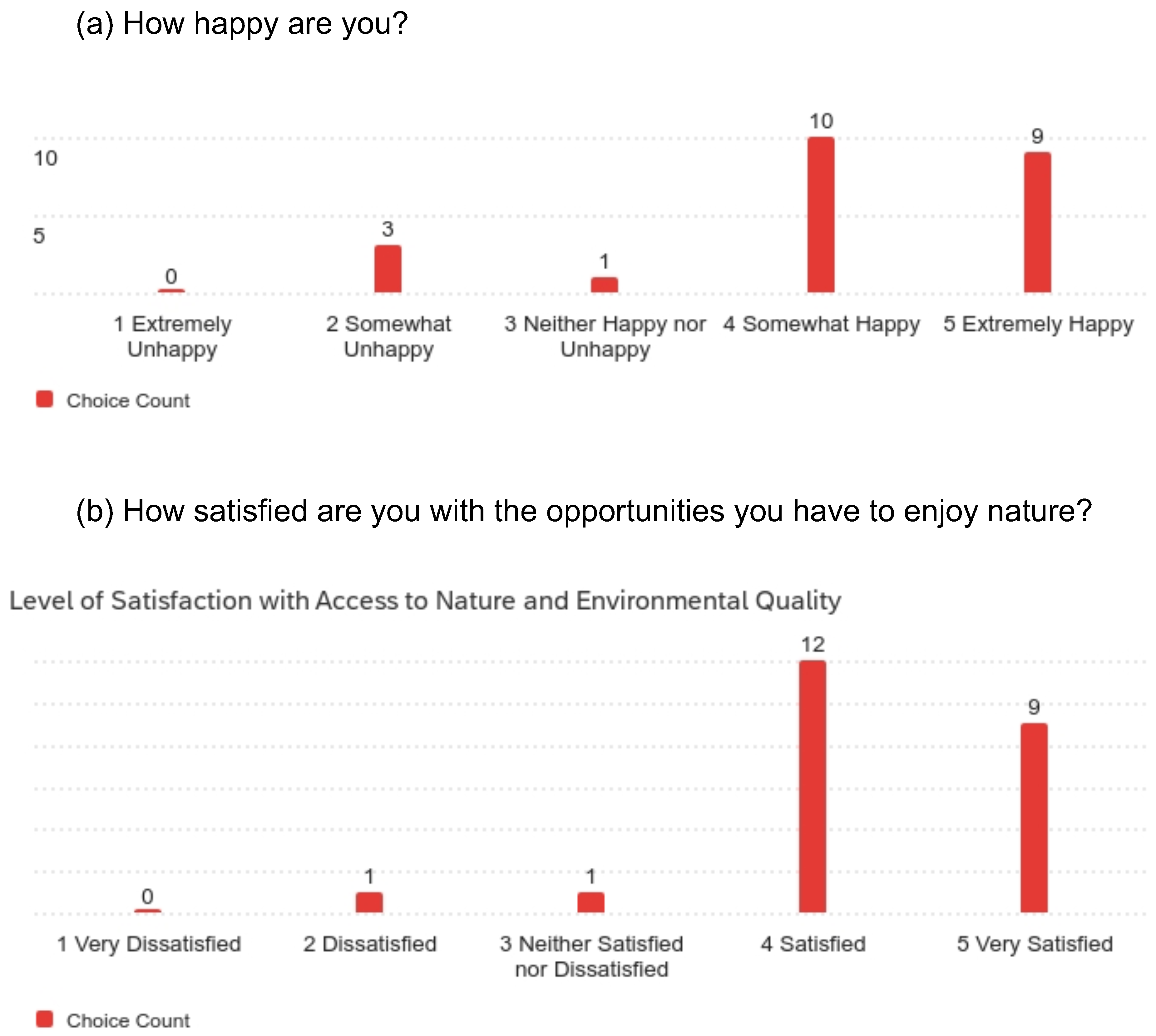
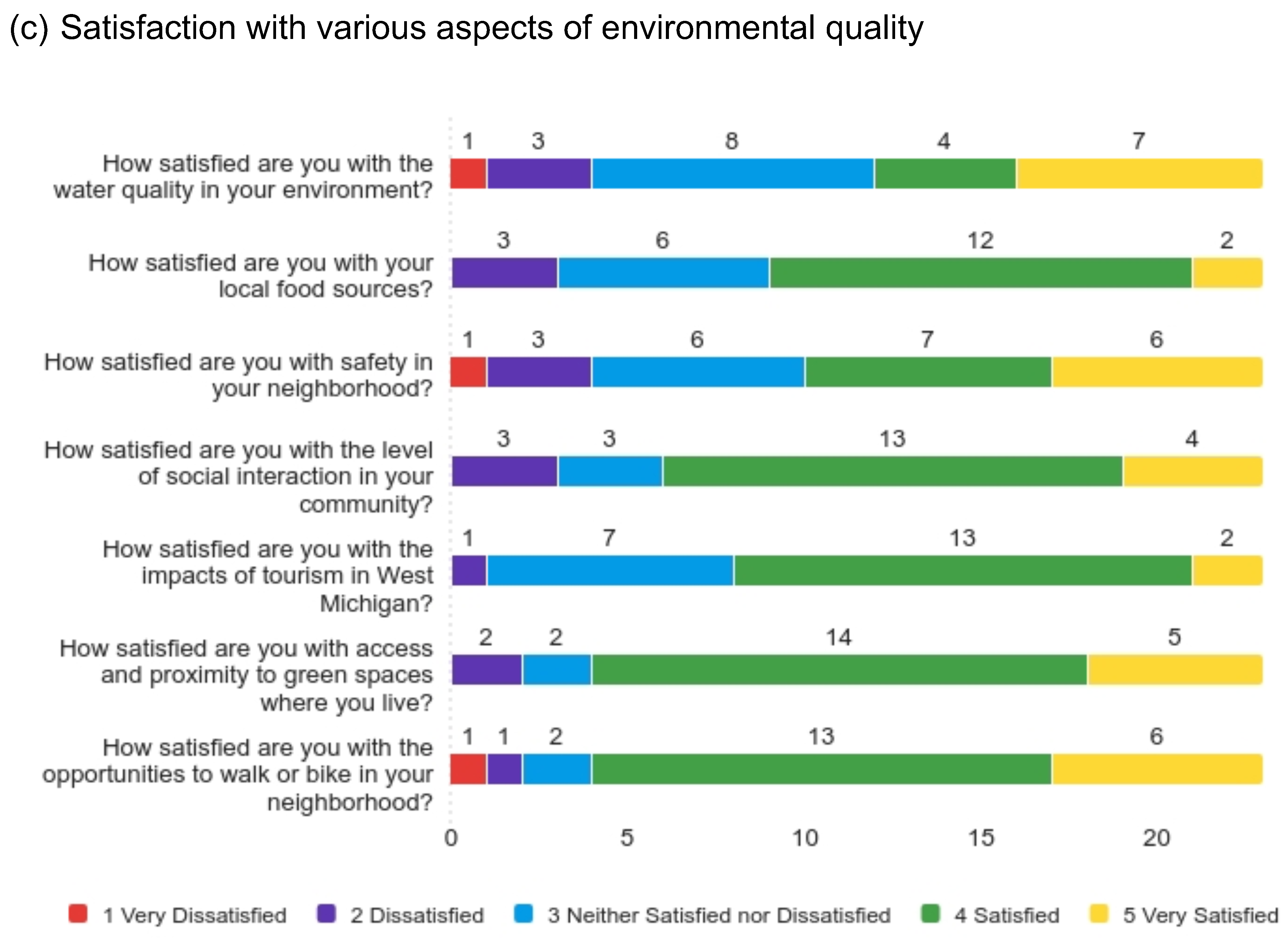
Figure 2.
Anthropocentric and ecocentric attitudes of the park survey participants.
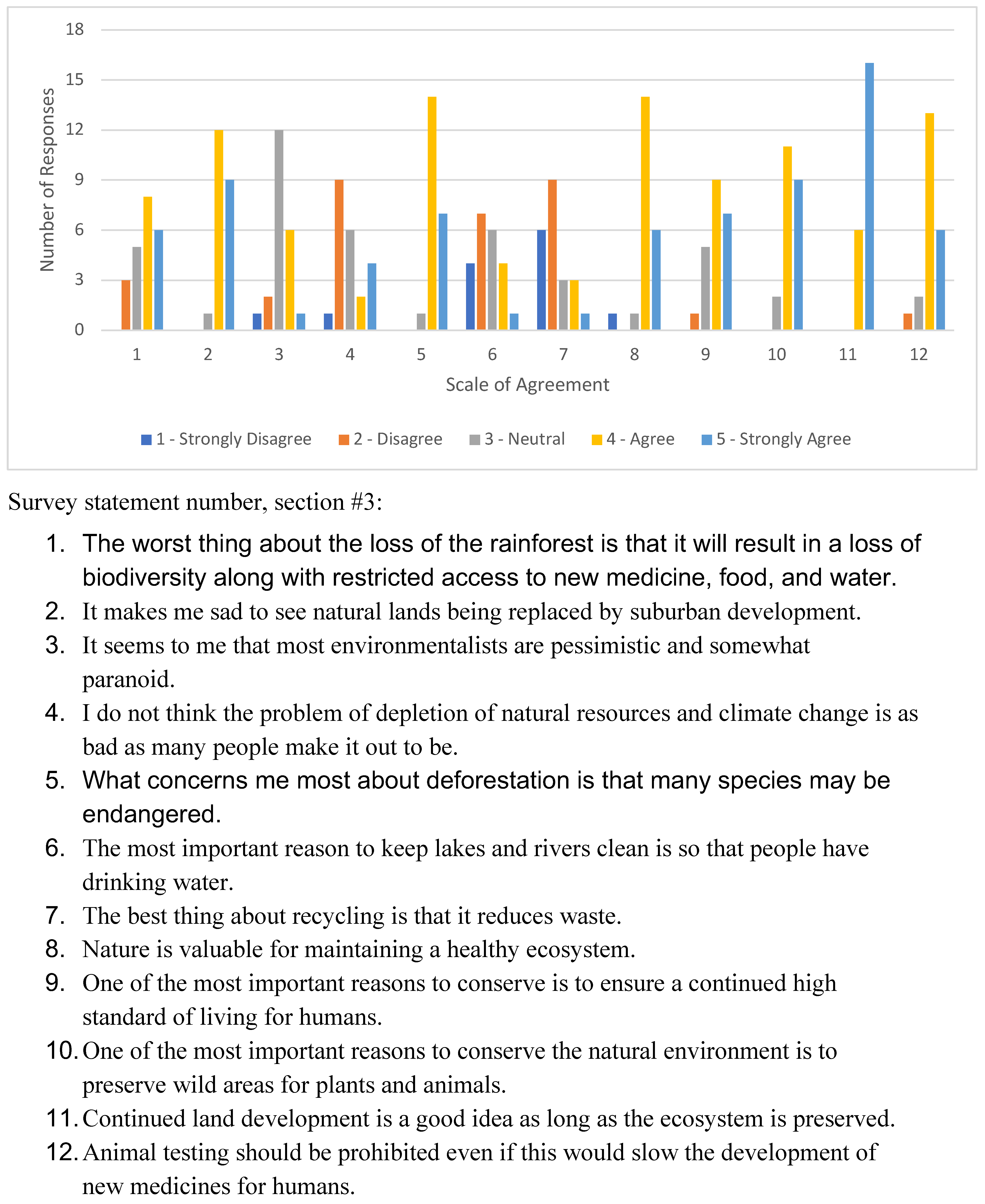
Figure 3.
The percentage of biospheric, altruistic, and egotistic values in the responses of Grand Ravine Park survey participants.
Figure 3.
The percentage of biospheric, altruistic, and egotistic values in the responses of Grand Ravine Park survey participants.
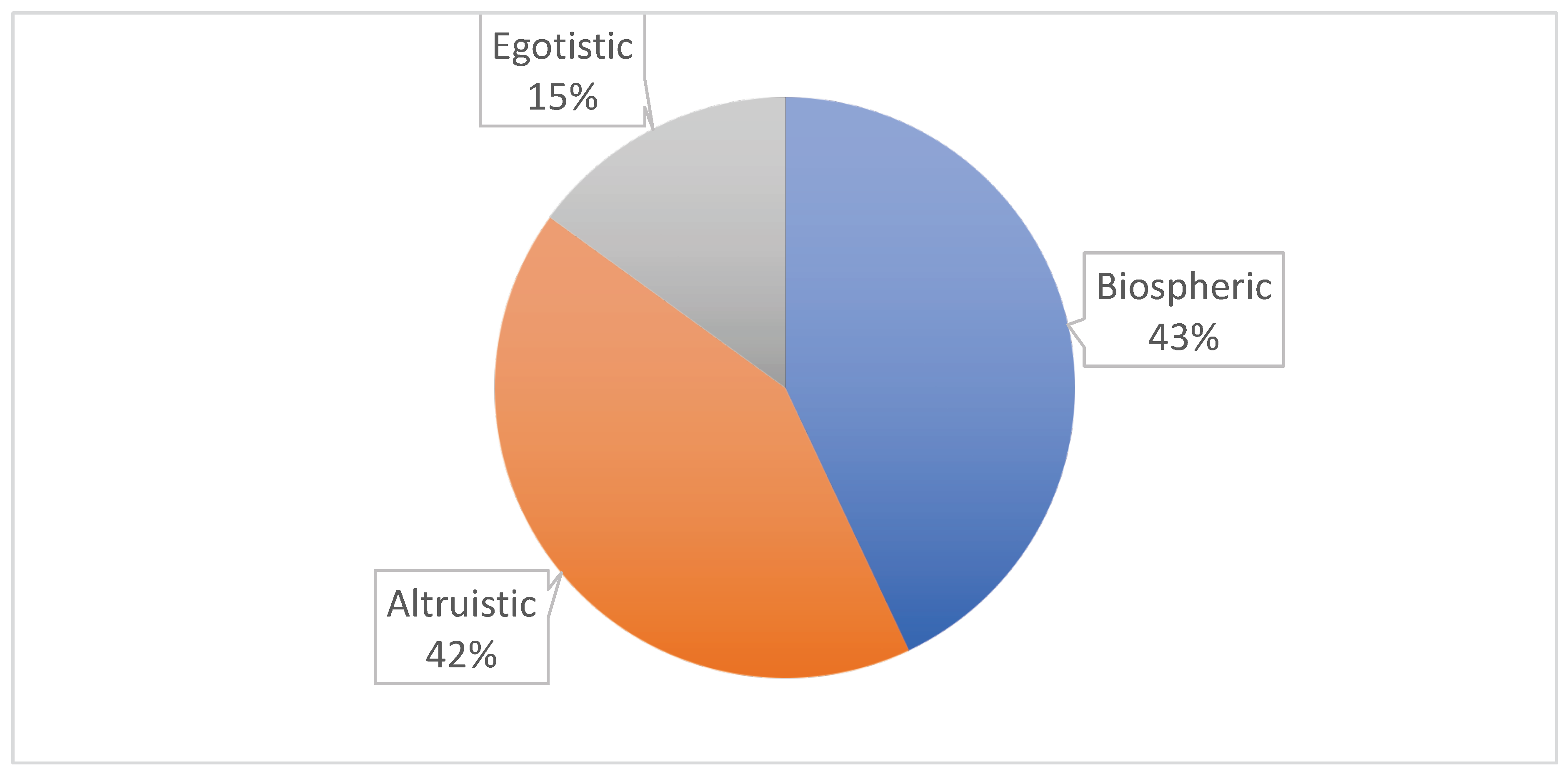

Table 1.
Key themes and subthemes derived from the interviews.
| Dimension | Themes | Subthemes | |
| Happiness and Access to Nature | Impact of the environment on well-being Emotional and spiritual connection with nature Social interaction outdoors |
Walking, biking, gardening, hiking, being outside Improved learning, source of inspiration Mediation, prayer, reflection, oneness with nature Spending time with others, spending time alone |
|
| Happiness and Environmental Concerns | Environmental Problems and emotions |
Climate change Plastic pollution Loss of biodiversity Environmental injustices Air pollution Industrial agriculture Animal abuse |
Fear, anger, dismay, outrage, solastalgia, sadness, sense of loss, disappointment, hopelessness |
| Environmental activism Sustainable living practices Environmental and outdoor education Feelings about environmental and climate solutions |
Energy conservation, switching to renewables, public transportation, walking/biking, limiting usage of chemicals, eating local, recycling, planting trees, planting gardens, supporting native plants, recycling, thrifting, decreasing use of plastic, electric vehicles, reducing consumption |
Joy, inspiration, hope, optimism, awareness, political action, educating self and others, supporting local organizations, empathy, solidarity, community |
|
| Happiness and Ethics | Travel Food and diet Material consumption Environmental justice Positive and negative role of technology |
Personal ethical dilemmas related to flying for work and leisure, tourism, eating meat, overfishing, eating food produced faraway, EVs and human rights issues related to lithium mining, fast fashion, “nice to have vs. need to have”, human vulnerability, Global North-South relations, climate migrants, climate change mitigation, Earth overshoot. |
|
| 1 | Climate Change Education Solutions Network https://www.gvsu.edu/cces/, accessed 12/23/2024. |
| 2 | Understanding Positive Feedback Between Happiness and Sustainability Across Cultures and SCALes, GVSU CSCE Catalyst Grant (funded) and National Geographic Explorer Proposal 2023 (not selected for funding). |
Disclaimer/Publisher’s Note: The statements, opinions and data contained in all publications are solely those of the individual author(s) and contributor(s) and not of MDPI and/or the editor(s). MDPI and/or the editor(s) disclaim responsibility for any injury to people or property resulting from any ideas, methods, instructions or products referred to in the content. |
© 2025 by the authors. Licensee MDPI, Basel, Switzerland. This article is an open access article distributed under the terms and conditions of the Creative Commons Attribution (CC BY) license (http://creativecommons.org/licenses/by/4.0/).
Copyright: This open access article is published under a Creative Commons CC BY 4.0 license, which permit the free download, distribution, and reuse, provided that the author and preprint are cited in any reuse.


