

Submitted:
03 January 2025
Posted:
03 January 2025
You are already at the latest version
Abstract
In response to the growing diverse needs of the ceramic industry, this paper creatively employs the ErgoLAB Human-Machine Environment Synchronization Platform to collect eye movement, gaze trajectory, dwell time, and various modalities of data including electroencephalographic and skin conductance data, thereby identifying the core parameters for parametric design. On this basis, a parametric design process for ceramic shapes based on Python programming language has been developed, covering key stages such as parameter selection, shape generation, and model visualization, and a model library containing multiple classic ceramic shapes has been rapidly constructed. By introducing physiological human-machine testing and ergonomics experiments, the intrinsic mechanisms of ceramic shape parametric design have been thoroughly investigated. To optimize the design, a fuzzy comprehensive evaluation was used to conduct qualitative analysis of the parametric models, generating a series of aesthceramic modelingetically pleasing new shapes. Combined with ceramic 3D printing technology, a complete closed loop from design to manufacturing has been achieved, verifying the manufacturability of the designs and demonstrating the significant potential of parametric design in advancing the ceramic manufacturing industry towards intelligence, personalization, and diversification. This study not only deepens the understanding of ceramic shape parametric design but also provides strong support for the diverse development of the ceramic industry, while offering valuable references for parametric design in other industrial design fields.
Keywords:
Parametric design
; ceramic modeling
; ergonomics
; multi-modal data analysis
; fuzzy comprehensive evaluation
; 3D printing ceramic
1. Introduction
With the rapid development of computer-aided design technology, parametric design has become a research focus in the industrial manufacturing field due to its efficiency and flexibility[1,2].For example, the newly registered "Xidian Component Surface Heat Sink Parametric Design Software V1.0" in China demonstrates the application of parametric design in power equipment design, optimizing the design process through intelligent means to improve design efficiency and product quality. This paper is based on Python-based ceramic parametric design research, addressing the growing diversity development needs of the traditional ceramic industry. By integrating physiological human-machine testing and ergonomics experimental analysis, it deeply explores the role mechanism of ceramic shape parametric design in human-computer interaction, aiming to achieve more efficient and personalized design processes. As a time-honored intangible cultural heritage in China, ceramic culture is widely loved by the masses and enjoys a prestigious reputation both domestically and internationally. Its unique artistic characteristics and exquisite ceramic-making techniques make Chinese ceramics a treasure of world civilization[3]. With the increasing demand for personalized customization, computer-aided design that can quickly generate designs based on the preferences of the customizers is gradually entering the consumer market[4]. To optimize design solutions and enhance user experience, this study innovatively introduces the ErgoLAB human-computer environment synchronization platform for collecting ceramic product shape dataThe study involves multimodal data related to the user, including electroencephalography (EEG) for recording the users mental activities, eye-tracking technology to display the distribution of visual focus, and electrocardiogram (ECG) and skin conductance response (GSR) to show the users emotional state and stress response, comprehensively and deeply assessing the users cognitive load[5], operational efficiency, and comfort perception in the parametric design process, providing a scientific basis for design optimization. Subsequently, combining ceramic 3D printing layer-by-layer technology[6,7], this study achieves a complete closed loop from design to manufacturing of parametric ceramic models, not only successfully verifying the manufacturability of the design but also fully demonstrating the great potential and broad prospects of parametric design in promoting the intelligent, personalized, and diversified development of ceramic manufacturing. This study not only deepens the understanding of parametric design for ceramic modeling but also provides strong support for the diverse development of the ceramic industry, while offering valuable references for parametric design in other industrial design fields. Its foresight, practicality, and academic value are significant, playing a crucial role in promoting the integration and innovation of industrial design and manufacturing technologies.
2. Theoretical Basis and Technical Framework of Parametric Design
2.1. Theoretical Basis of Parametric Design
Parametric design, also known as parametric modeling, is a design method based on parameters and algorithms. It decomposes the design object into a series of variable parameters and fixed geometric relationships, utilizing computer algorithms to automatically generate design models[8]. The main characteristics of parametric design include: the repeatability of the design process, the diversity and personalization of design, and a significant improvement in design efficiency. Ceramic products have complex and varied shapes with high requirements for detail and precision. Parametric design, with its flexibility and immediate visibility of results, can effectively meet the complex and varied shaping needs of ceramic products, allowing for the rapid generation of diverse design variants by simply adjusting parameters, thus greatly enriching the design choices and innovation space for ceramic designers. At the same time, combined with 3D printing technology[9], parametric design further achieves customized rapid production of ceramic products, accurately meeting consumers urgent demand for personalized products[4].
2.2. Technical Route
The technical approach of this study mainly consists of three parts: the Parametric Design System, the Python programming language, and Rhino software along with its Grasshopper plugins. The Parametric Design System is the core of the entire research, responsible for achieving parametric generation and optimization of ceramic product shapes; the Python programming language is responsible for writing the core algorithms and logic of parametric design, while Rhino software and its Grasshopper plugins play a crucial role in the design platform, collectively providing excellent geometric modeling and parametric design capabilities. Therefore, this paper integrates the use of Python programming language (Python, known for its concise and readable syntax, rich libraries, and powerful data processing capabilities, has become the preferred programming language for parametric design), Rhino software[10,11] (Rhino is a powerful 3D modeling software that supports various geometric modeling methods and provides extensive plugin interfaces for easy functional expansion), and Grasshopper plugins (Grasshopper is a parametric design plugin for Rhino, allowing users to easily create complex parametric models through a visual programming interface). This approach achieves parametric design of ceramic product shapes and realizes rapid generation of ceramic works through 3D printing.
2.3. Parametric Study of Ceramic Shape
Ceramic modeling parametric design is a highly systematic and meticulous design process that achieves flexible and precise implementation through three closely interconnected core layers: the parameter layer, the code layer, and the application layer[12]. The parameter layer serves as the foundation of the entire research, constructed based on established script logic. Its primary task is to extract editable logical abstraction parameters and allow designers to make flexible modifications and adjustments to these parameters. This process ensures that the parameter layer can precisely control the design of ceramic modeling according to the predetermined plan, thereby enhancing the flexibility and accuracy of the design. The code layer utilizes the Python programming language to construct the ceramic modeling model. At this level, the system delves into the deep relationships between parameters and parameters, as well as parameters and logic, establishing the ceramic modeling model based on Python language. The work of the code layer includes data sources and preprocessing, parameter extraction, surface generation, and other stages. Leveraging the powerful capabilities of the Python programming language, the code layer can efficiently process large amounts of data and accurately generate ceramic modeling surfaces that meet design requirements. The application layer is a user-facing plugin that provides various ceramic modeling options and five core functions based on parametric design. Additionally, the application layer has also established an efficient indexing program allowing users to select different ceramic shapes for editing or generation while enjoying the convenience brought by a simplified user interface.It can quickly respond to user operations and query requests.The model visualization function enables users to intuitively view and adjust the generated ceramic shape models,while the continuously expanding model library provides users with more styling options and inspiration.
Figure 1.
Roadmap of ceramic modeling parametric technology.
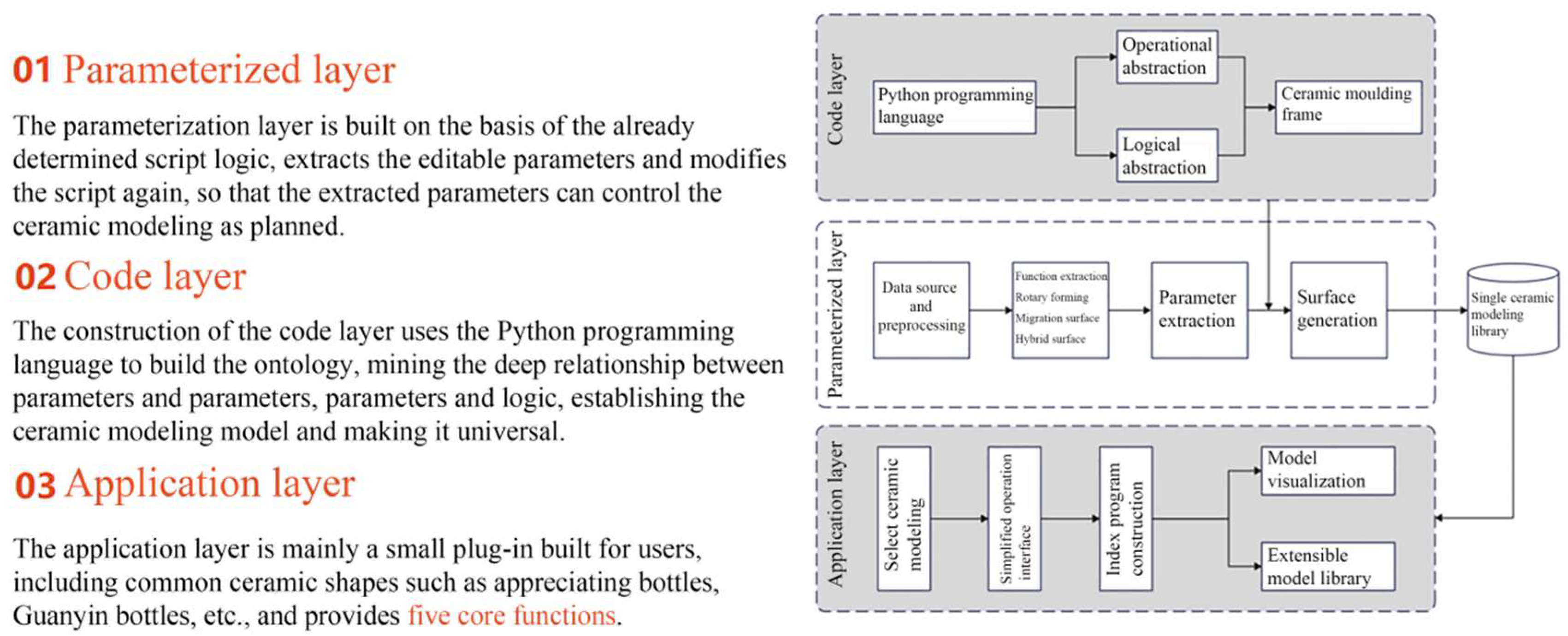
The parametric design of ceramic shapes, through the deep integration of parametric layers, code layers, and application layers, has successfully achieved flexible and efficient parametric design of ceramic shapes. This layered design not only enhances the flexibility and scalability of the system but also significantly improves user experience. Through this architecture, designers can more efficiently create high-quality ceramic shapes that meet personal or market demands.
3. Parametric Design Practice
3.1. Determination of Parametric Design Factors
With the continuous improvement of peoples living standards and aesthetic requirements, ceramic products are no longer limited to traditional practical functions; their artistic value and personalized characteristics are increasingly valued. The artistic value of ceramic artworks is mainly reflected in the profound artistic cultivation and unique artistic style presentation. Moreover, the strong plasticity of ceramic crafts allows artists to transform them into various unique forms through creativity and imagination, making them more visually appealing and artistic. In the design process of ceramic products, the selection and combination of modeling elements are directly related to the overall effect and user experience of the product. Therefore, how to scientifically and reasonably determine the modeling elements of ceramic products and optimize design based on user needs has become an important topic in ceramic product innovation design. In the design process of ceramic products, the selection and optimization of modeling elements hold a pivotal position. This is because modeling directly affects the visual appeal of the product and profoundly influences the user experience. To systematically and thoroughly study how ceramic product modeling elements specifically impact user experience, this research adopts principles of human factors engineering and utilizes the ErgoLAB Human-Machine Environment Synchronization Platform V3.0, carefully planning experiments and comprehensively collecting data, aiming to rigorously conduct human factors engineering experiments.This paper analyzes the role of ceramic product shaping elements on user experience, focusing on the core elements such as the shape, volume, material, mouthpiece, handle and bottom design of ceramic products[13].Advanced measurement technology and data analysis methods are used to summarize the shaping elements of ceramic products, and then carry out parameterization design on this basis
This paper adopted the ErgoLAB Human-Machine Environment Synchronization Platform V3.0 for experimental design and data collection. The platform can synchronously collect multi-modal data from participants, including physiological signals (such as electroencephalography, electrocardiography, heart rate variability, etc.), eye movement data, etc., providing strong support for a comprehensive analysis of participants behaviors and reactions when observing and using ceramic products. To ensure the reliability and representativeness of the experimental results, we carefully recruited fifty representative participants to ensure the diversity of the sample source and took measures to balance the distribution of the sample to avoid the impact of data skewness and outliers. The participants covered different age, gender, occupational, and educational backgrounds to ensure that the experimental results can fully reflect the needs and preferences of different user groups. During the experiment, we showed the participants samples of ceramic products with various design elements and set observation times, employing a series of advanced physiological measurement techniques, such as electroencephalography (EEG) technology to capture users cognitive processing, eye movement tracking technology to reveal patterns of visual attention distribution, and electrocardiography (ECG) and galvanic skin response (GSR) technology to reflect users emotional changes and stress responses (see Figure 2, which shows a photo of an actual experimental scene). To accurately capture the behavior of the participants. In the paradigm of solicitation and response, we designed a variety of task scenarios including product browsing, preference selection, and use simulation. In addition, we adjusted the experimental parameters such as lighting conditions and observation angles to study the variability of participants responses under different conditions
During the human experiment, based on the obtained thermographic information, it was found that when the subject viewed the ceramic product from below, their visual attention was mainly focused on the cup rim shape; while at an oblique viewing angle, the changes in the outer contour curves corresponding to the axis of the ceramic product became the focal point of attention (see Figure 3 and Figure 4).
Based on the results of eye movement hotspots, gaze trajectory, gaze duration and brain wave analysis of ErgoLAB platform, several key factors in ceramic product shape design are established:(1)Final radius and starting radius; (2)Number of segments; (3)Starting Angle and Ending Angle and (4)End height and start height.
Among them, about the (1)Final radius and starting radius,these two parameters in geometry respectively define the curvature characteristics of the terminal and initial points of a shaping curve or contour. The final radius, as a key indicator of the products top shape, is directly related to the width and smoothness of the cup rim or top opening, significantly impacting the overall proportion and visual focus of the product. The starting radius, on the other hand, lays the foundation for the products form, closely associated with the stability of the product and the design of the bottom support structure, while also visually establishing the "foundation" of the product. By precisely controlling these two radius values, designers can create various forms that transition smoothly from soft to sharp edges or maintain uniform curvature, thus meeting different aesthetic preferences and functional requirements.
And (2)number of segments, the number of segments plays a crucial role in parametric design, determining the degree of subdivision of shapes or surfaces, which in turn affects the fineness and complexity of the forms presentation. Increasing the number of segments means introducing more control points on the curve or surface, allowing designers to more accurately manipulate local changes in form, such as subtle indentations, ripples, or transitions, thereby enriching the visual hierarchy and tactile experience of the product, enhancing its overall refinement and artistry.
And (3)starting angle and ending angle, these two parameters define the starting and ending directions of the shaping curve or outline, which are crucial elements for creating the dynamism, symmetry, and stability of a product. The selection of the starting angle determines the position and direction of the forms beginning, while the ending angle dictates the manner in which the form concludes. By skillfully adjusting these two key angles, designers can create a myriad of forms, from smooth transitions to sharp turns, all accurately guiding the users visual flow, thereby significantly enhancing the products visual impact and spatial hierarchy.
The last key factor (4)end height and start height, the height parameter defines the vertical dimension and spatial positioning of a product in three-dimensional space. The endpoint height, which is the highest point on the top of the product, not only determines the overall height of the product but also influences the visual focus and spatial proportion relationship. The starting point height is closely related to the bottom or support surface of the product, serving as the foundation for ensuring stable placement and visual balance. A reasonable height design must comprehensively consider the actual application scenarios of the product, the scientific principles of ergonomics, and the aesthetic requirements of visual aesthetics, aiming to achieve a harmonious unity between functionality and aesthetics.
Based on the above data analysis results, we carry out parametric design and optimization of the shaping elements of ceramic products (see Figure 5).
3.2. Parametrically Adjusted Battery Pack
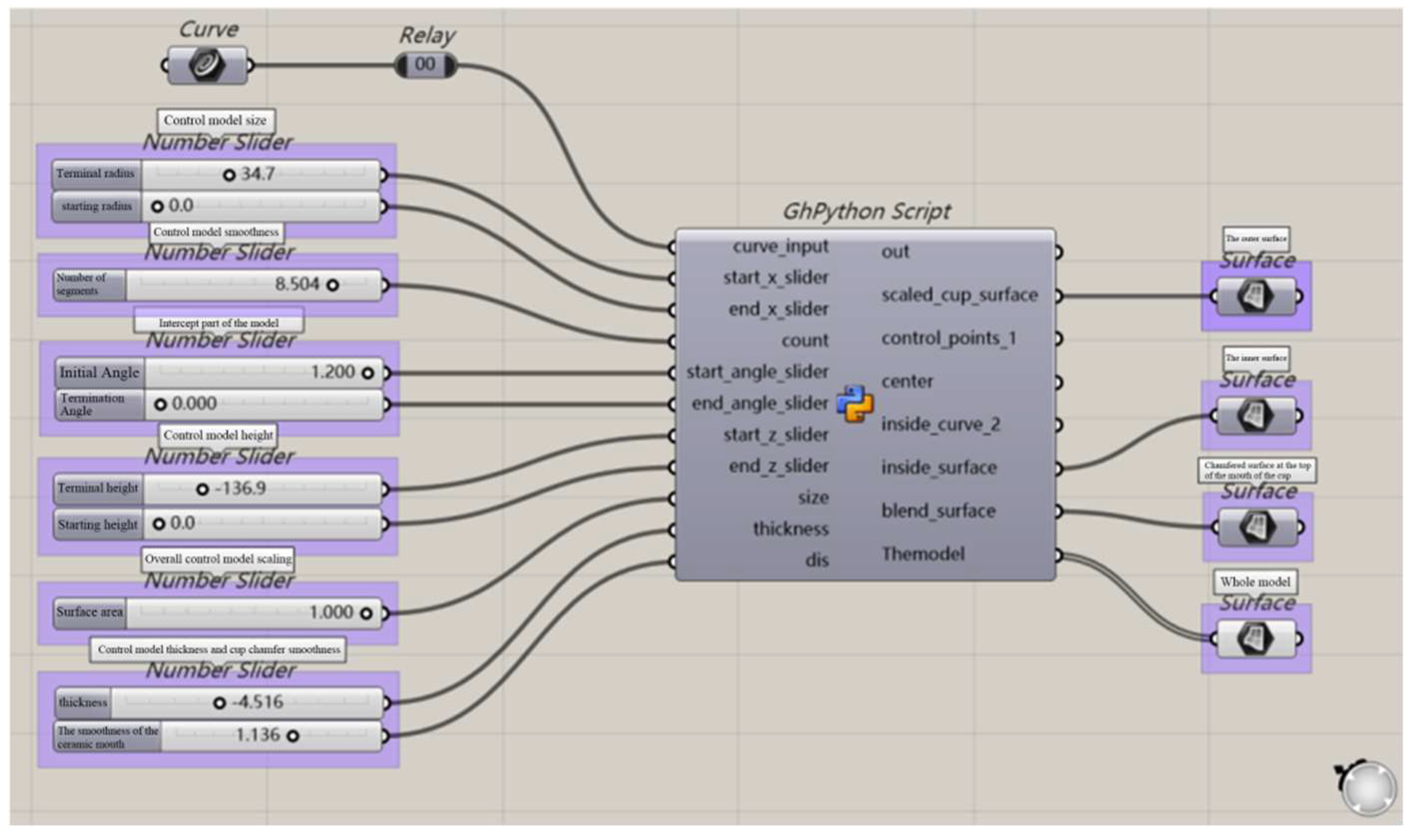
Within the complex framework of parametric design, parametrically adjustable battery packs play a crucial role, serving not only as a bridge between designers and computer algorithms but also as the key to seamlessly integrating creative precision with technical implementation. Leveraging Grasshopper, an excellent parametric design platform, we have developed a highly integrated, flexible, and real-time feedback parametric adjustable battery pack, aiming to drive the infinite possibilities of ceramic product shaping through precise parameter control.
According to the logical flow of parametric design, the battery pack is divided into multiple levels, including the basic parameter input layer, computational processing layer, shape generation layer, and feedback optimization layer. Each level bears specific functions, progressively deepening to form a closed design cycle process. Within the battery pack, we have established logical chains between parameters to ensure that any adjustment is accurately transmitted to every stage of shape generation. Through advanced programming techniques such as conditional judgment and iterative loops, we have achieved mutual dependence and constraints between parameters, enhancing the flexibility and controllability of the design. For key parameters (such as curve radius, angle, height, number of segments), we have specifically designed input components that support various input methods, including numerical input, slider drag, and preset value selection, aiming to meet diverse design requirements. Leveraging Grasshoppers instant update mechanism, we have achieved real-time dynamic parameter adjustments. Whenever a parameter changes, the battery pack immediately recalculates and updates the shape, ensuring designers can see the adjustment effects in real-time, thus achieving more precise personalized choices.
This article integrates Rhinos 3D view function to display the parametrically generated ceramic product shapes in real-time for designers. This intuitive visual feedback significantly improves design efficiency, enabling designers to rapidly iterate and optimize their design solutions. In addition to real-time visual previews, we have introduced a performance evaluation module to assess the structural strength, material consumption, and other aspects of the generated shapes, providing designers with intuitive feedback on the evaluation results. This data-driven feedback mechanism helps designers find the optimal balance between creativity and practicality. We have optimized the battery pack algorithm, effectively reducing redundant calculations and thus enhancing overall operational efficiency. At the same time, we have modularized the battery pack for easier maintenance and upgrades in the future. To meet the future expansion needs of parametric design, we have meticulously designed multiple expansion interfaces for the battery pack. This means that designers can easily add new parameters, computational components, or shape generation methods according to actual needs, continuously expanding the boundaries of parametric design.
In summary, the parametric adjustment battery pack we built not only realizes the fine control and dynamic adjustment of ceramic product shape, but also provides designers with an efficient, flexible and easy to iterate parametric design environment through real-time preview and feedback mechanism, performance optimization and scalability considerations and other design details.
Figure 6.
Battery pack display.
3.3. Python Code Control Manufacturing Generation
In the field of parametric design and manufacturing, Python code serves as a powerful programming tool whose role in the ceramic modeling generation process is indispensable, especially in the two core aspects of curve rotation and forming, as well as the creation of wall thickness and blended surfaces. Adopting Python code plays a crucial controlling role in these two key steps, facilitating subsequent 3D model generation.
The primary task of the Python code is to receive the rotation parameters transmitted by the Grasshopper plugin, including the direction vector of the rotation axis, starting and ending angles, and the coordinates of the two-dimensional contour control points, among other core information. Subsequently, the code needs to preprocess these input parameters, such as verifying the legality of the parameters, converting angles to radians (if necessary), and calculating the rotation matrix, etc. Based on the user-defined rotation axis and angle, the Python code employs linear algebra theory of rotation matrices to accurately construct a three-dimensional matrix describing the curves rotation. This matrix will be used to spatially rotate each control point of the two-dimensional contour curve. Using the rotation matrix, the Python code performs spatial coordinate transformations on each control point to achieve three-dimensional rotation of the curve. Subsequently, using these rotated control points, combined with Rhinos API functions (such as AddRevSrf or AddNurbsSurface), an accurate three-dimensional surface model is constructed. During this process, to ensure the smoothness and continuity of the surface, the code also needs to appropriately adjust and refine the control points to meet design requirements.
Thereafter, the Python code receives the wall thickness value set by the user, which directly determines the spatial distance between the inner and outer surfaces of the ceramic shape. The code must ensure that this parameter is within a reasonable range and perform necessary verification and conversion. Based on the outer surface (i.e., the curved surface generated by rotation) and wall thickness parameters, the Python code uses offset algorithms (such as OffsetSurface) to generate the inner surface. This process requires precise calculation of the offset amount for each curved surface point and ensuring that the geometric properties of the inner surface are consistent with those of the outer surface. Subsequently, the code must also perform necessary optimization processing on the inner surface, such as adjusting control points and increasing the number of subdivision segments to improve smoothness, to meet design requirements.
Python codes utilize complex geometric algorithms and mathematical theories (such as interpolation, approximation, surface subdivision, etc.) to calculate the blended surfaces ensuring the integrity and aesthetics of ceramic modeling. This process requires ensuring that the connections between the blended surfaces and internal and external surfaces are smooth and seamless, meeting specific geometric continuity requirements. The codes also need to make necessary adjustments and optimizations to the blended surfaces to achieve the best design outcomes.
Finally, the Python code is responsible for correctly closing the inner and outer surfaces as well as the blended surfaces to form a complete ceramic shape. This includes handling the matching of surface boundaries, adjusting normal vectors, and verifying the overall geometric characteristics. The code must comprehensively verify and inspect the generated ceramic shape to ensure it meets design requirements while also being feasible for actual production, covering multiple aspects such as surface continuity, smoothness, wall thickness uniformity, and overall shape accuracy.
In summary, Python code plays a core controlling role in the process of parametric ceramic shape generation. Through precise calculation of rotation matrices, construction of three-dimensional surfaces, generation of inner surfaces and blended surfaces, and overall verification, Python code ensures that ceramic shape generation is both rapid and accurate, laying a solid technical foundation for subsequent manufacturing and production. For example, NURBS-based modeling methods demonstrate their advantages in constructing vivid ceramic shapes[14], while Python, as an advanced programming language, is widely used for rapid development and prototyping due to its concise syntax and rich libraries, which have been widely applied in the architectural field; however, it has not yet seen reasonable application in traditional ceramics industries. This paper presents the first use of Python programming to achieve simple to moderately complex ceramic shape designs. Its powerful computational capabilities and flexible programming features make parametric design possible, significantly improving the efficiency and quality of ceramic shape design.
3.4. Application of Parametric Design
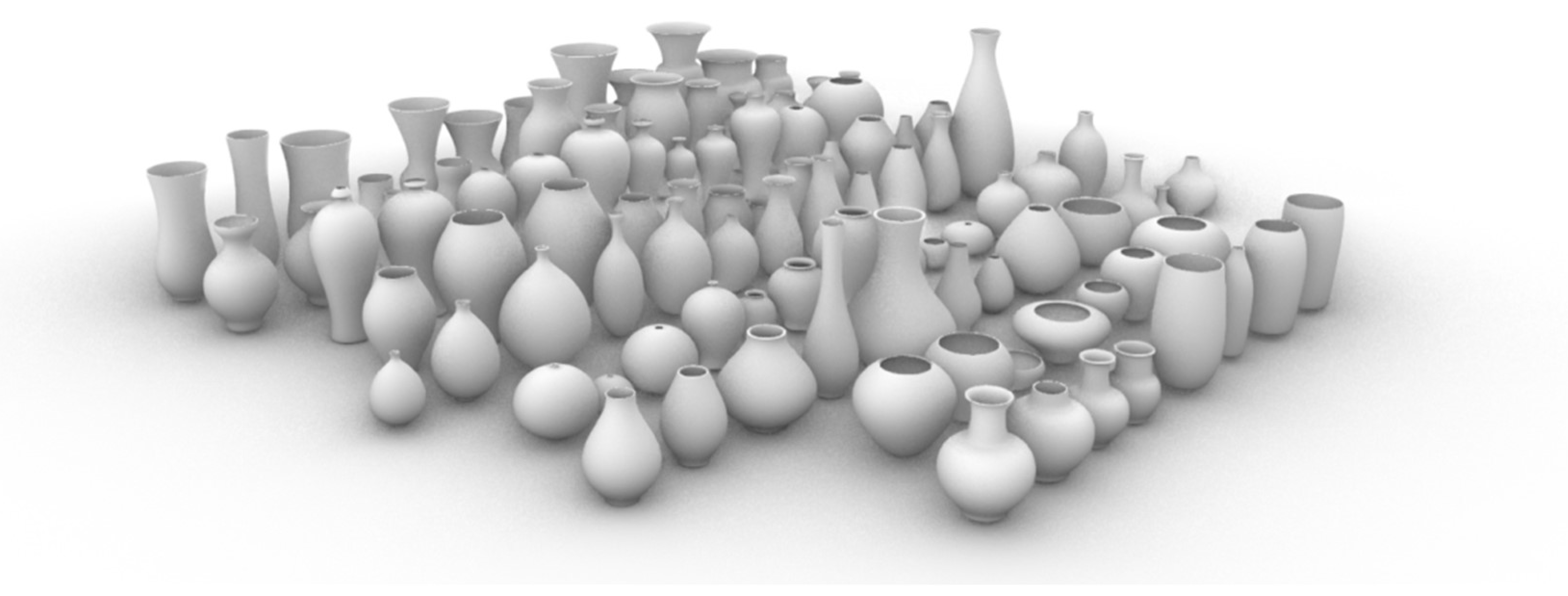
Figure 7.
Parametric batch production of ceramic shapes.
To verify and demonstrate the practical application effects and advantages of the Python-based ceramic shape parametric design system, this section particularly selects the traditional Chinese bottle named by Yuhuchun as a representative case for in-depth discussion. The Yuhuchun bottle, as a typical form in Chinese porcelain design, evolved from the water purification bottles found in Tang Dynasty temples, featuring a basic shape of flared mouth, slender neck, hanging abdomen, and ring foot, along with aesthetically pleasing lines formed by symmetrical "S" -shaped curves on both sides. Throughout the Song, Yuan, Ming, Qing dynasties, the Republic of China era, and up to modern times, the Yuhuchun bottle has not only been widely used in practical applications but has also been highly esteemed in artistic appreciation. As a masterpiece of traditional Chinese ceramic art, the Yuhuchun bottle is renowned for its unique shape, elegant lines, and rich cultural heritage, demanding extremely high standards for design precision and detail processing, making it an ideal subject for testing the performance of parametric design systems[15].
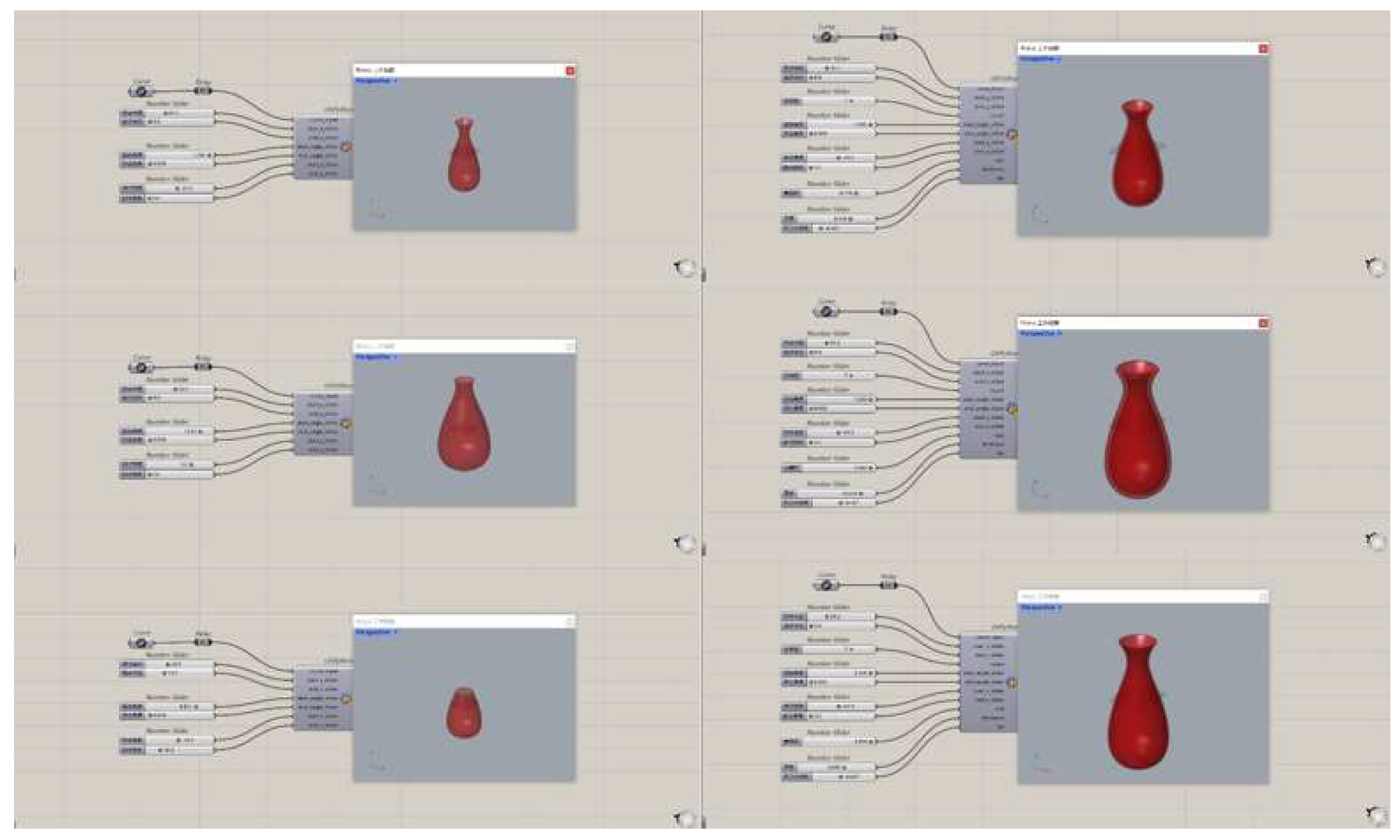
In the parametric design process of the Yuhuchun bottle, we strictly adhered to the parametric design procedures and technical details previously outlined. Firstly, through an in-depth analysis of the Yuhuchun bottles shape, we identified and defined the key parameters that influence its form, such as the bottles radius, the length and angle of the neck, and the diameter of the base. Subsequently, using Python programming language in conjunction with Rhino and Grasshopper plugins, we constructed a parametric model (see figure 8)[16]. Through Python code, we precisely controlled key parameters such as curve rotation, surface generation, and wall thickness adjustments. By adjusting these core parameters, we rapidly generated and optimized the shape of the Yuhuchun bottle, ensuring the accuracy and aesthetics of the final design.
Figure 8.
Parametric generation and display of Yuhu Chun bottle shape.
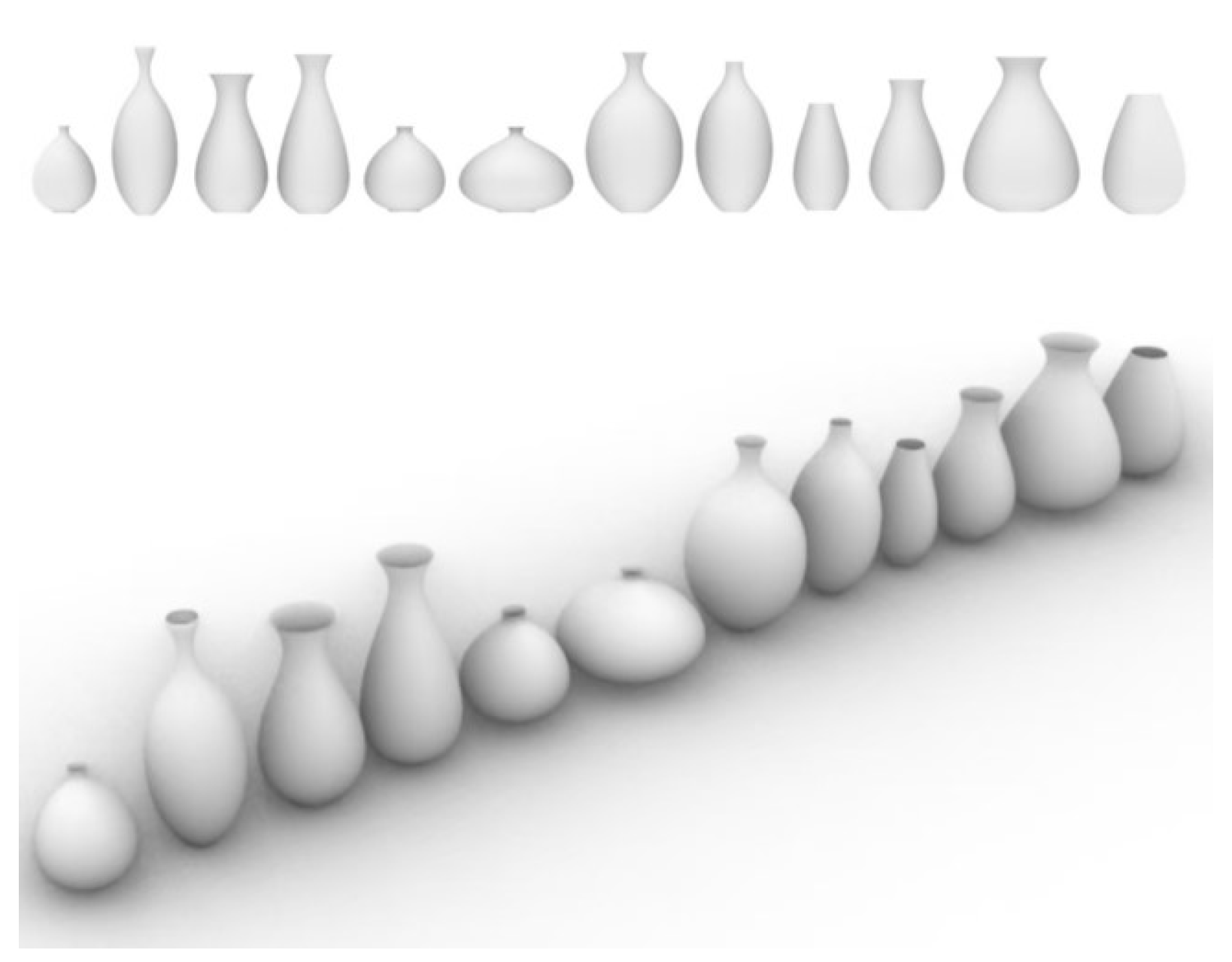
Figure 9.
Python code parameterization generation display.
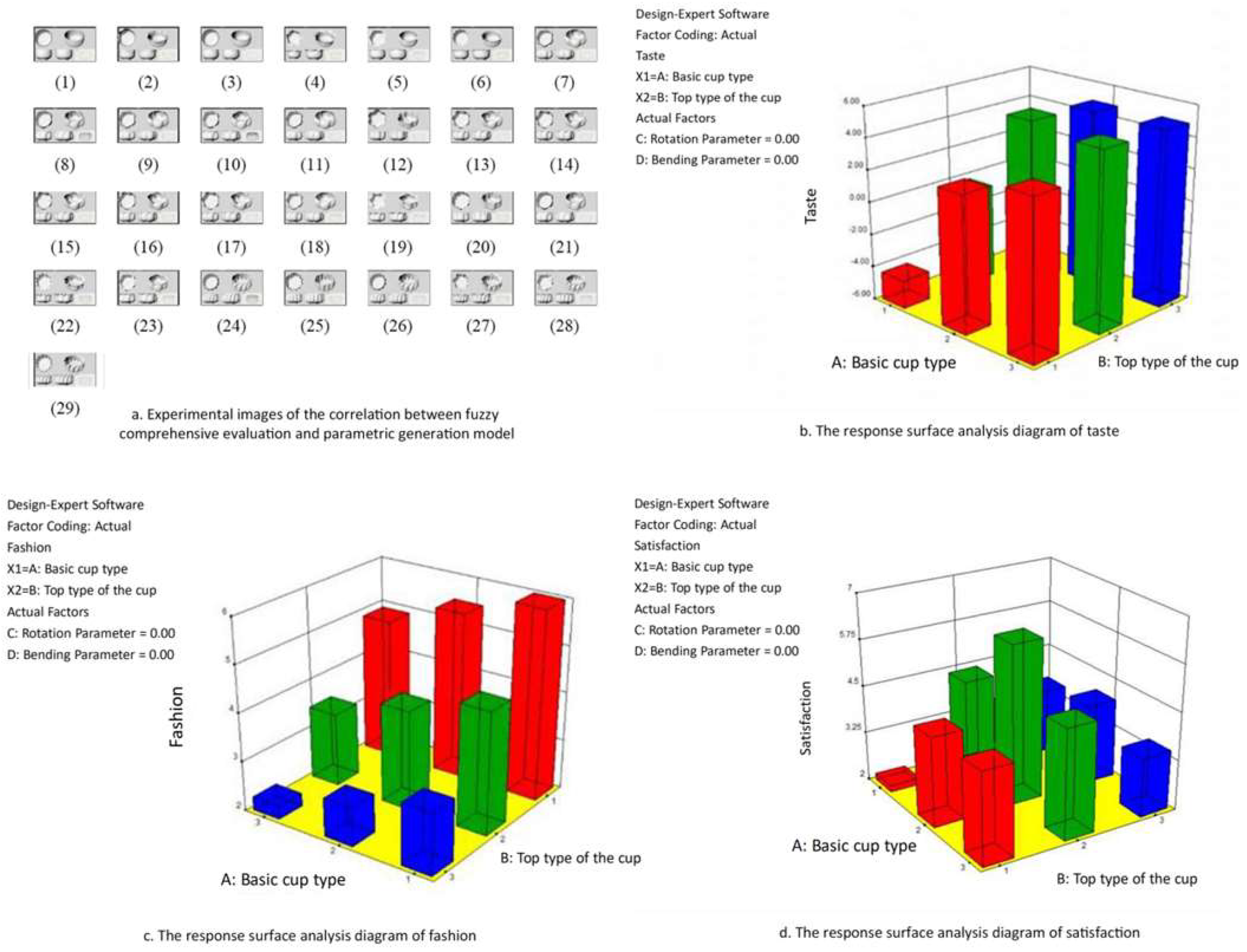
Through the aforementioned parametric design system, we successfully generated multiple jade pot spring vase designs in different styles and converted them into physical models using 3D printing technology (see Figure 10). Compared with traditional manual design, parametric design combined with 3D printing takes about 1 hour to print a model approximately 25 cm tall, which not only meets the personalized rapid customization needs of the cultural tourism industry at tourist attractions but also significantly improves design efficiency, allowing designers to easily explore more diverse design solutions[17]. Meanwhile, we analyzed the generated models using fuzzy comprehensive evaluation[18], and the results showed that parametric design has significant advantages in enhancing the aesthetic characteristics of product shapes (see Figure 11).
In summary, through the parametric design practice of the classic Yuhuchun vase shape, we have fully verified the practicality and effectiveness of the ceramic shape parametric design system based on the Python platform. This system not only provides ceramic designers with powerful design tools but also offers strong support for the diversified and personalized development of the ceramic industry. In the future, we will continue to deepen our research and application of parametric design, promoting the deep integration of ceramic art and modern technology.
4. Conclusions and Future Outlook
This study, for the first time, establishes the design parameters of ceramic shapes based on scientific experimental research grounded in ergonomics, achieving exploratory results in the field of Python ceramic shape parameterization design and application. It explores the human-computer interaction mechanism of ceramic shape parameterization design, adopting a parametric design method to conveniently and quickly construct a model library containing various classic ceramic shapes, and achieves a complete closed loop from design to manufacturing through 3D printing technology, verifying the manufacturability of the design. These research findings not only deepen our understanding of ceramic shape parameterization design but also inject strong momentum into the diversified development of the ceramic industry. However, we also recognize that current research faces challenges such as high technical barriers and the need to improve software compatibility and stability. Looking ahead, we plan to adopt parametric design methods, such as the reconstruction technology of Yagizhi peony patterns, to further enhance the aesthetic appeal and texture of ceramic products. At the same time, we will strive to reduce technical barriers by developing more intuitive and user-friendly design tools and interfaces, enabling more designers and even ordinary consumers to easily master parametric design technology, thereby promoting the popularization and deep innovation of ceramic design, enhancing the inclusiveness and originality of design, and contributing to the inheritance and prosperity of ceramic art.
Acknowledgments
This research is supported by the "Scientific Research Support Program" project provided by Kingfar International Inc.. Thanks to the scientific research personnel of your company's project team for providing technical support and the use support of related ErgoLAB scientific research equipment.
References
- Wang, Z. (2023). Influence of Computer Aided Design Technology on Artistic Design Innovation. 2023 IEEE International Conference on Integrated Circuits and Communication Systems, ICICACS 2023. [CrossRef]
- Zhao Shidong,Peng Yongkang.PARAMETRIC DESIGN OF CERAMIC PRODUCT MODELINGBASED ON TOPOLOGICAL CONSTRAINTS OF SKETCH[J].Computer Applications and Software,2021,38(12):223-228+273.
- L. Zhang, Discussion about the Decoration of Ceramic Art and Chinese Traditional Culture. Agro Food Industry Hi-Tech 28, 817-821 (2017).
- Li, Y. (2024). Analysis of the application of computer-aided design in industrial product design based on. Applied Mathematics and Nonlinear Sciences, 9(1). [CrossRef]
- F. Krieglstein et al., A Systematic Meta-analysis of the Reliability and Validity of Subjective Cognitive Load Questionnaires in Experimental Multimedia Learning Research. Educational Psychology Review 34, 2485-2541 (2022). [CrossRef]
- J. W. Cai, B. C. Zhang, M. H. Zhang, Y. J. Wen, X. H. Qu, Indirect 3D printed ceramic: A literature review. Journal of Central South University 28, 983-1002 (2021). [CrossRef]
- A. A. Kachaev, M. L. Vaganova, Y. E. Lebedeva, M. V. Turchenko, Use of Additive Technologies for Making Silicon Carbide Ceramic Materials: A Review. Glass and Ceramics 79, 462-465 (2023). [CrossRef]
- Oxman R .Thinking difference: Theories and models of parametric design thinking[J].Design Studies,2017,524-39.
- Karandikar, P., Watkins, M., McCormick, A., Givens, B., & Aghajanian, M. (2018). Additive manufacturing (3D printing) of ceramics: Microstructure, properties, and product examples. Ceramic Engineering and Science Proceedings, 38(3), 175–190. [CrossRef]
- J. H. Zhang, Application of Rhino Modeling Software in Product Fading Surface Modeling Design from the Perspective of Computer. Mobile Information Systems 2022, (2022). [CrossRef]
- H. Y. Tang, Y. Lu, Rhino application in ceramic packaging design teaching. Applied Mathematics and Nonlinear Sciences, (2023). [CrossRef]
- Y. H. Lee, Y. T. Chen, in 26th International Conference on Human-Computer Interaction (HCII). (Washington, DC, 2024), vol. 14736, pp. 381-394.
- LIU Yong-hong, LIU Lei.odeling Design of Ceramic Liquor Bottle Based on Kansei Engineering[J].PACKAGING ENGINEERING,2021,42(20):330-340.DOI:10.19554/j.cnki.1001-3563.2021.20.039.
- Bingol, O. R., & Krishnamurthy, A. (2019). NURBS-Python: An open-source object-oriented NURBS modeling framework in Python. SoftwareX, 9, 85–94. [CrossRef]
- MA Shijing.The Enlightenment of Porcelain Aesthetics of the Song Dynasty to Modern Jewelry Design: Take "YuhuChun Bottle" as an Example[J].CHINA GEMS & JADES,2022,(03):48-57.
- Tian, Y., Miao, Y., Yu, Y., & Zhang, Z. (2019). Parametric Design Method Based on Grasshopper and Shoe Last Bottom Pattern Moulding Characteristics. IOP Conference Series: Materials Science and Engineering, 520(1). [CrossRef]
- LONG Zhou.Application of the Form-qi-spirit Craft Theory in Comparison between Crafts and Design Products: Ceramic Crafts and 3D Printing Ceramic Products[J].Journal of Ceramics ,2020,41(02):282-286.DOI:10.13957/j.cnki.tcxb.2020.02.022.
- Liu, H., Chen, L., Cheng, T., Shi, H., & Li, X. (2024). The specific application of the fuzzy comprehensive evaluation method with subjective and objective weighting. Proceedings of SPIE - The International Society for Optical Engineering, 13219. [CrossRef]
Figure 2.
ErgoLAB human-machine environment synchronization platform V3.0 experiment.
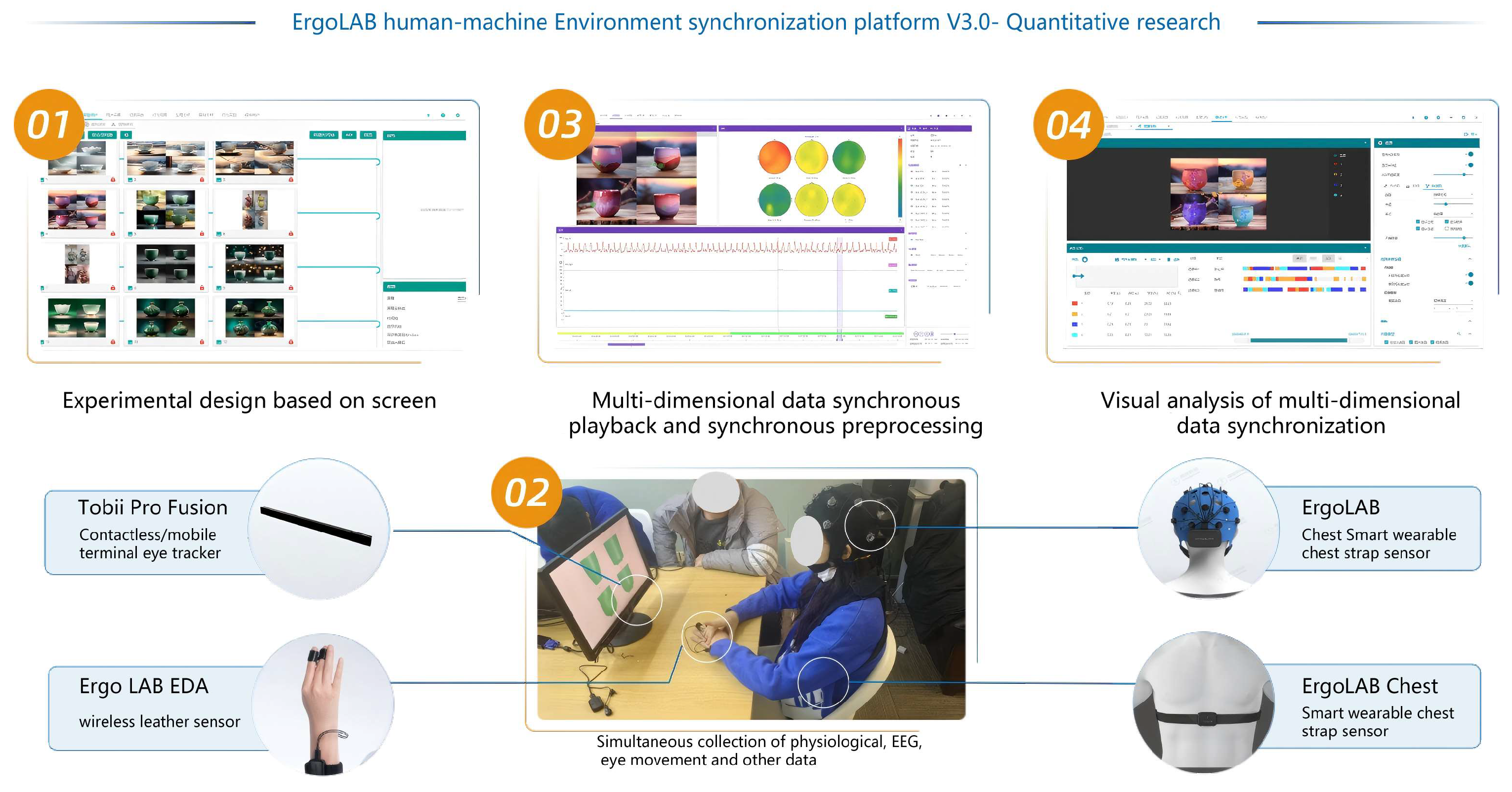
Figure 3.
Top shape human-machine.
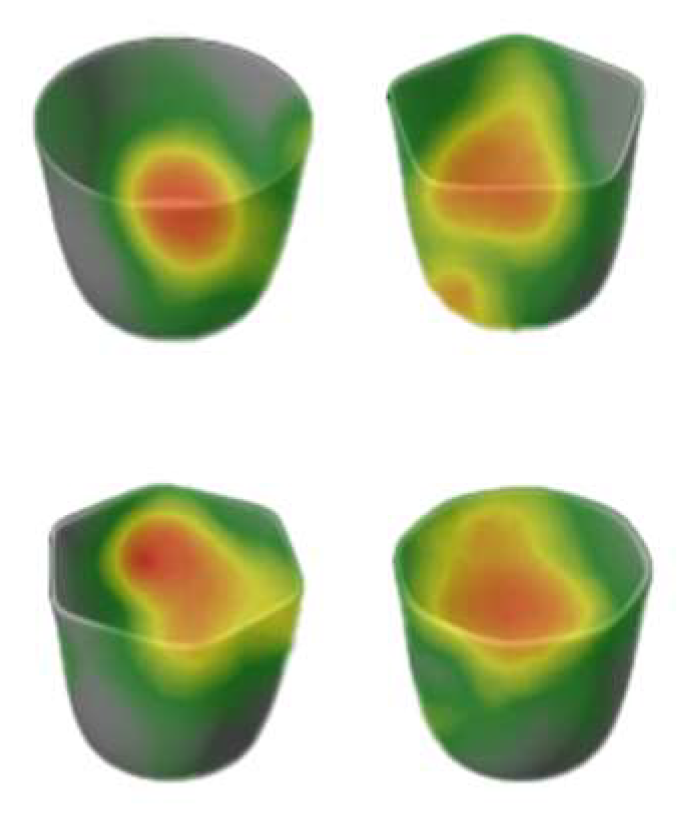
Figure 4.
Human-machine experiment hotspot map of experiment hotspot map. the shape outline curve.
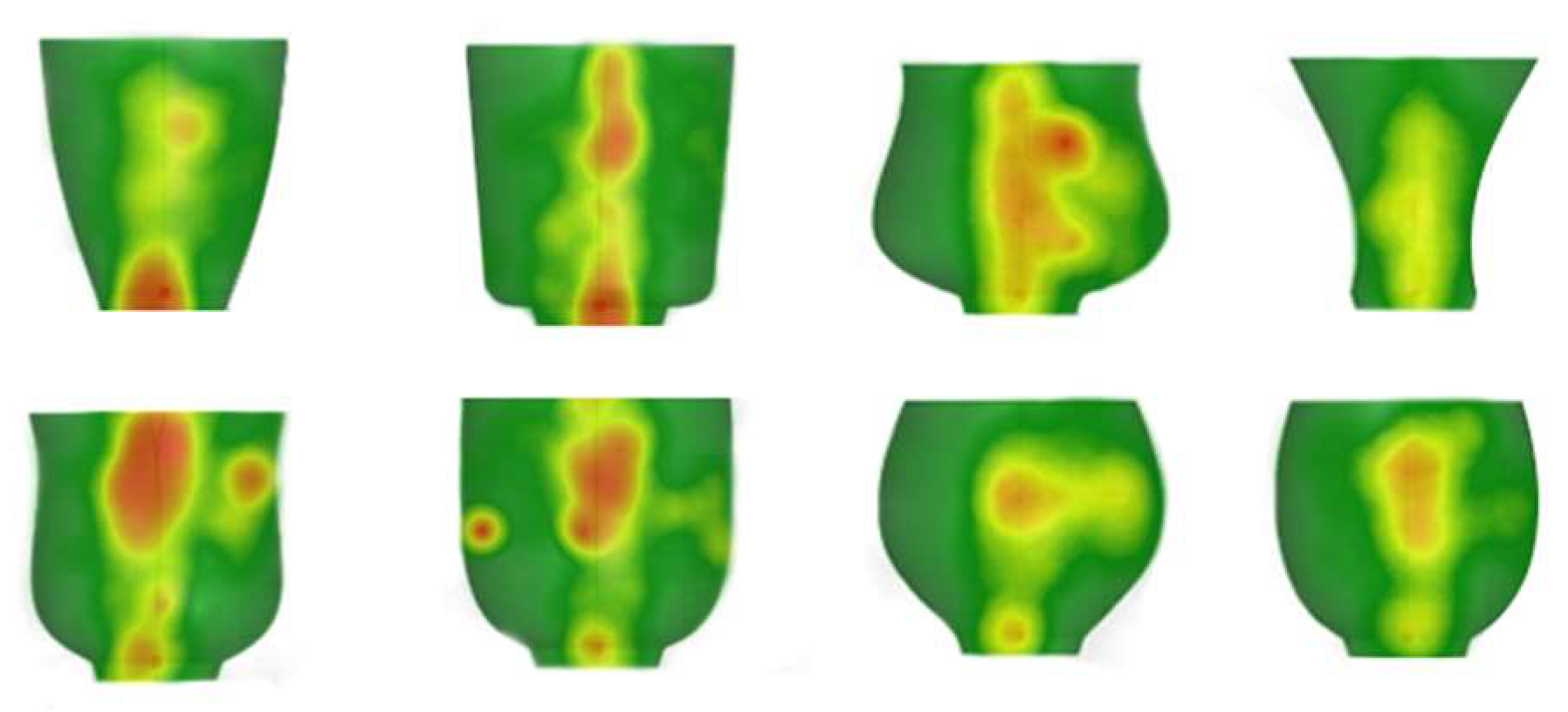
Figure 5.
Optimization and display of sketch modeling of different types of ceramics.
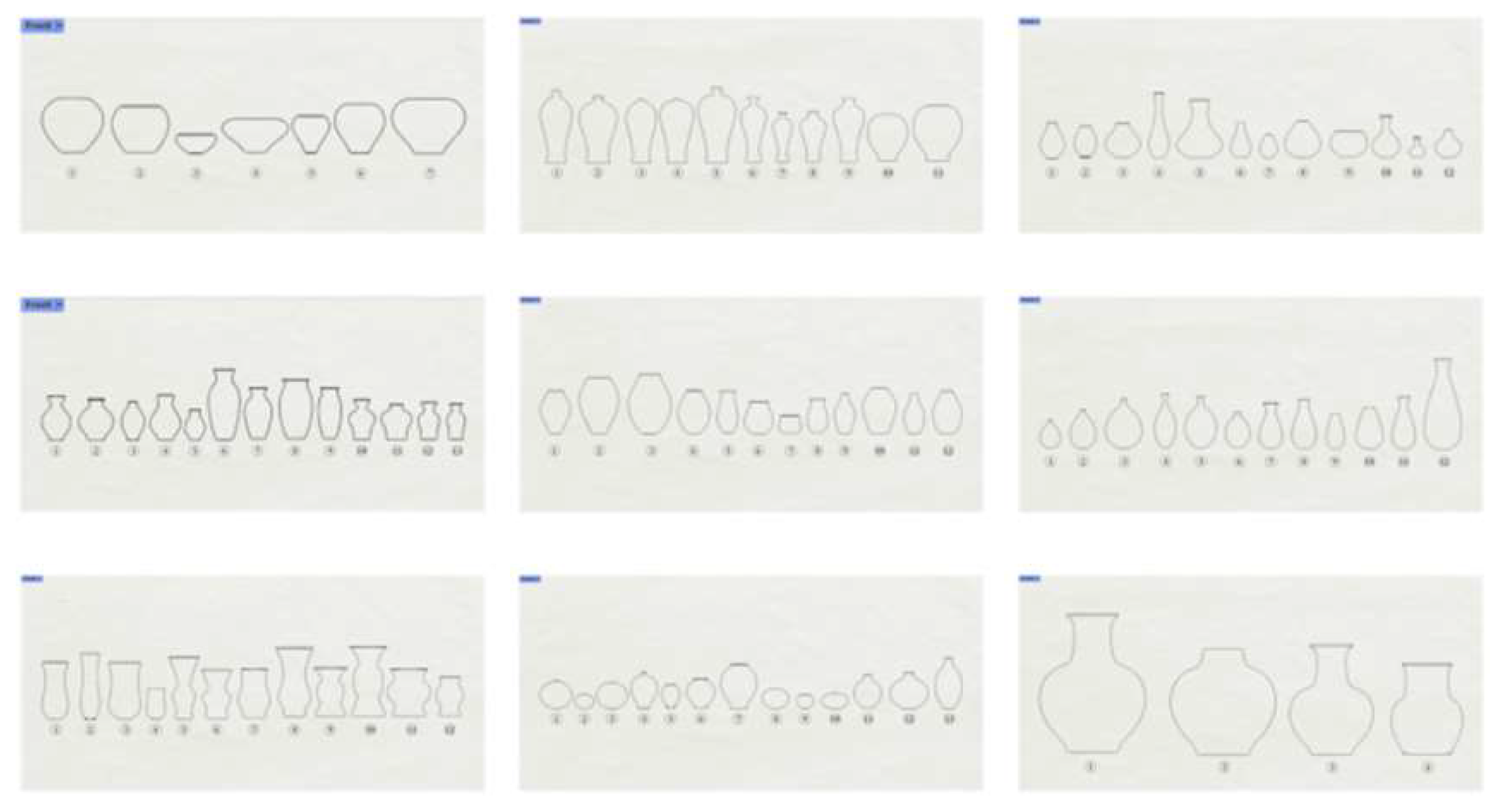
Figure 10.
Parametric model of 3D printing.
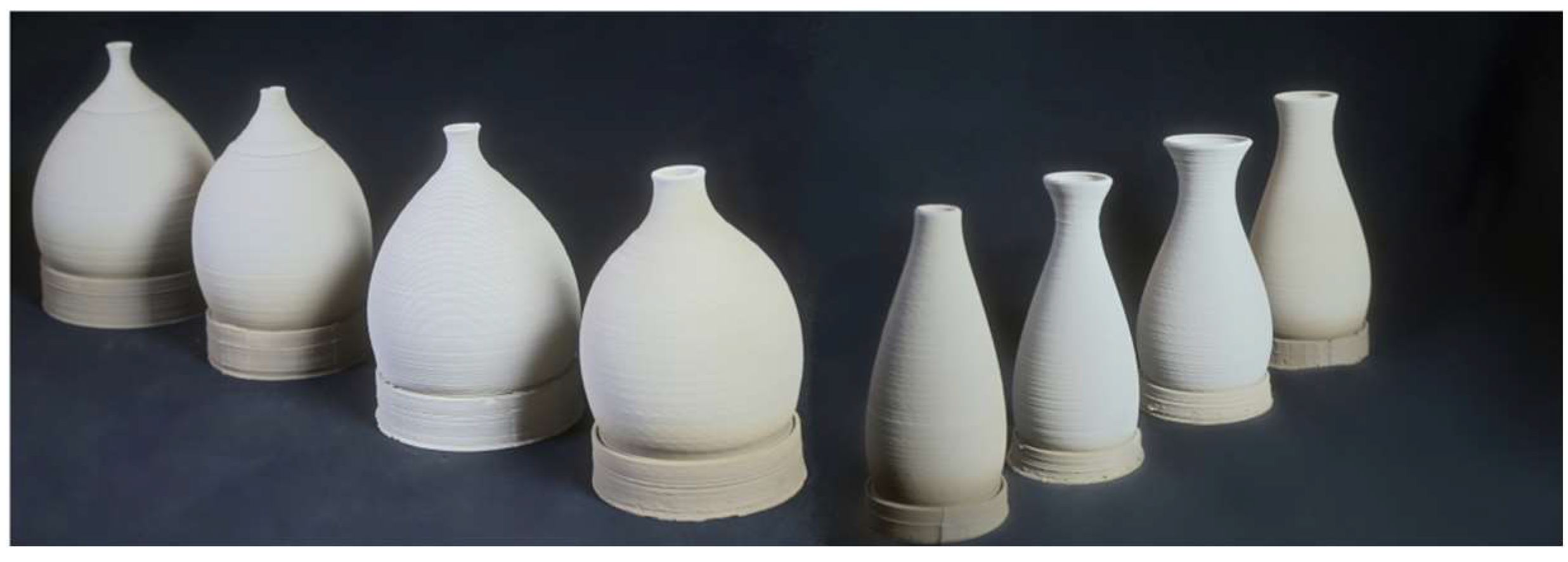
Figure 11.
Fuzzy comprehensive evaluation results.
Disclaimer/Publisher’s Note: The statements, opinions and data contained in all publications are solely those of the individual author(s) and contributor(s) and not of MDPI and/or the editor(s). MDPI and/or the editor(s) disclaim responsibility for any injury to people or property resulting from any ideas, methods, instructions or products referred to in the content. |
© 2025 by the authors. Licensee MDPI, Basel, Switzerland. This article is an open access article distributed under the terms and conditions of the Creative Commons Attribution (CC BY) license (http://creativecommons.org/licenses/by/4.0/).
Copyright: This open access article is published under a Creative Commons CC BY 4.0 license, which permit the free download, distribution, and reuse, provided that the author and preprint are cited in any reuse.


