
Submitted:
30 December 2024
Posted:
31 December 2024
You are already at the latest version
Abstract
While electromagnetic metamaterials completely revolutionized optics and radio frequency engineering, recent progress in the development of conceptually related electronic metamaterials was more slow. Similar to electromagnetic metamaterials, which engineer material response to the electromagnetic field of a photon, the purpose of electronic metamaterials is to affect electron propagation and its wave function by changing material response to its electric field. This makes electronic metamaterials an ideal tool for engineering light-matter interaction in semiconductors and superconductors. Here we propose to use Fermi’s quantum refraction, which was previously observed in the terahertz spectroscopy of Rydberg atoms and two-dimensional surface electronic states, as a novel tool in quantum electronic metamaterial design. In particular, we demonstrate several potential applications of this concept in two-dimensional metamaterial superconductors and “universal quantum dots” designed for operation in the terahertz frequency range.
Keywords:
metamaterials
; quantum dot
; quantum refraction
; superconductivity
1. Introduction: Electromagnetic and Electronic Metamaterials: A Brief Comparison
Electromagnetic metamaterials [1], which engineer material response to the electromagnetic field of photons, revolutionized the fields of optics and radio frequency design. It was no surprise that conceptually similar approaches could be implemented in such diverse fields as acoustics [2], thermal engineering [3], and many others. In particular, it was only natural to expect that somewhat similar approaches will help engineer electron wave function and its propagation through material media via engineering material response to electron’s electric field. The resulting concept of quantum electronic metamaterials enabled engineering of ballistic electron propagation through semiconductors [4], and tuning the properties of Cooper pairs in metamaterial superconductors [5]. For example, negative refraction effects were shown to exist in ballistic electron propagation through semiconductors exhibiting negative effective electron mass, leading to very interesting properties of nanoscale positive-negative electron mass multilayers [4], that look quite similar to the behaviour of similarly structured electromagnetic metamaterials in the visible frequency range [6]. In another recent example, it was suggested that electron transport properties and electron-electron interaction may be widely tuned in van der Waals heterostructures, thus forming quantum electronic metamaterials [7]. Such metamaterials would be an ideal tool for engineering light-matter interaction on the nanoscale.
However as was noted in [7], compared to the electromagnetic metamaterials, the progress of electronic metamaterials was somewhat slower, due to much smaller electron’s de Broglie wavelength compared to the typical wavelengths of light. For example, while tuning the dielectric response of aluminium-based metamaterial superconductors on sub-micrometre scale was spectacularly successful, leading to tripling of superconducting critical temperature Tc of aluminium [8], the metamaterial structuring was relatively easy to implement in that case because of the relatively large, micrometre scale size of Cooper pairs in aluminium. Since the coherent length in higher Tc superconductors is typically much shorter, and it typically falls into a several nanometres scale [5], development of new electronic metamaterial design tools capable of nanometre scale operation becomes critically important for this and many other applications of quantum electronic metamaterials. In this paper we will introduce Fermi’s quantum refraction effect [9] as such a novel and promising design tool. In particular, we will demonstrate several potential applications of this concept in two-dimensional metamaterial superconductors and “universal quantum dots” designed for operation in the terahertz frequency range.
2. Materials and Methods: Fermi’s Quantum Refraction as an Efficient Tool of Nanometre-Scale Electronic Metamaterial Engineering
Initially introduced by Enrico Fermi to describe neutron scattering, the quantum refraction effect [9] also manifests itself in numerous spectroscopic experiments, such as far infrared spectroscopy of Rydberg atoms [10] (see Figure 1) and terahertz spectroscopy of two dimensional surface states in cryodielectrics [11]. In both situations, low energy coherent electron scattering by atomic and molecular species may be described by Fermi’s pseudopotential
where b is the electron scattering length (equal to the real part of the s-scattering amplitude taken with a minus sign), δ(r) is the Dirac delta function, and r is the scatterer position. If we assume that the fields of neighbouring scatterers do not overlap, and the mean distance N-1/3 between the scatterers falls within the range
where λ is the de Broglie wavelength of the electron, coherent interaction between the electron and the gas of scatterers having coordinate dependent concentration N(r) may be described in terms of “quantum refraction”, so that the resulting interaction potential is given by
where a0=0.0529 nm is the Bohr radius. This effect is easily observed in Rydberg atoms immersed in a rarified gaseous atmosphere (see Figure 1), when a frequency of electron transition from the ground state into a highly excited Rydberg state is measured [10]. While there are virtually no gas molecules inside the ground state, the highly excited Rydberg state contains many molecular scatterers, so that a spectrocopic shift Δν=V/h is observed in agreement with Eq.(3). A conceptually similar effect was also observed in THz range spectroscopic experiments on two-dimensional electronic states above the surfaces of such cryodielectrics as liquid and solid hydrogen, deuterium and neon [11]. Depending on the atomic or molecular species, the electron scattering length may be either positive or negative. For example, the scattering lengths of helium (b=+1.2a0) and neon (b= +0.25a0) are positive [12], while the scattering lengths of argon (b=-1.4a0), krypton (b=-3.1a0) [13], and molecular hydrogen (b=-2.6a0) [11] are negative. Moreover, as experimentally observed in [11], the quantum refraction effect appears to be additive: simultaneous addition of hydrogen and helium into the system resulted in counteracting opposite spectroscopic shifts.
These experimental observations suggests that Fermi’s quantum refraction may act as an ideal tool of nanometre-scale quantum electronic metamaterial design. For example, in a semiconductor setting a spatially engineered n(r) profile of various dopant species may be used to engineer and tune the effective potential V(r) experienced by a Rydberg exciton state. In principle, almost any desired V(r) shape may potentially be engineered this way. Compared to such widely used metamaterial engineering technique as metal-dielectric mixing [8], the quantum refraction engineering would have much higher spatial resolution, which may easily reach a few nanometres scale.
3. Results
3.1. Engineering a Universal Quantum Dot Using Fermi’s Quantum Refraction
Let us consider an example of exciton Rydberg state engineering in more detail. This consideration will illustrate the power and usefulness of the proposed new metamaterial design tool in the terahertz frequency range.
Exciton Rydberg states in semiconductors is a well-known and currently very active field of research – see for example a very recent work by He et al. [14]. These states are useful (e.g. in quantum computing) because of their very long lifetimes at low temperatures. At large radial quantum numbers n, the Rydberg states spectrum follows the hydrogen atom-like behaviour:
where Ry* is the effective Rydberg constant (which depends on the average dielectric surroundings), and dl is the small quantum correction or “defect”, which typically depends on the angular number l. As described above, such Rydberg systems appear to be ideal for Fermi’s quantum refraction observations and spectroscopic tuning of energy levels. As illustrated in Figure 1, such a Rydberg state may be imagined as a negatively charged electron orbiting a distant positively charged hole. The velocity of such orbital motion in the large n limit may be obtained classically as
where ε describes the dielectric background, resulting in
The presence of dielectric background in the latter equations indicates that, in principle, the energy levels of Rydberg states may be tuned by metamaterial means, and such tuning would indeed be very useful. However, the spatial scale of such metamaterial engineering would need to fall into the nanometre range, and this should be done at low frequencies, if the conventional electromagnetic metamaterial approach would be used. Such a task is not practically possible at present.
On the other hand, this task appears to be quite feasible using the Fermi’s quantum refraction approach. Let us take our ques from Nature and engineer the “electron rotation curve” (given by Eq.(6)) to emulate the flattened rotation curves of distant stars in typical spiral galaxies [15], thus emulating the modified Newtonian dynamics (MOND) [16] in an atomic/exitonic setting. The benefits of such choice will be clear from discussion that follows. Continuing the simplified classical consideration in Eqs.(5,6), it is clear that “flattening” (v≈const) of the electron rotation curve would require engineering the centripetal force falling of as 1/r, resulting in the logarithmic potential energy V(r) at large distances from the hole:
where β and r0 are the constants setting the energy and distance scale. Since at large distances this logarithmic potential will dominate the original Coulomb contribution, the quantum refraction prescription for necessary N(r) results from combining Eqs. (3) and (7):
If (similar to galaxies) the flattened rotation curve regime would set in at large orbital distances, the energy scale β will be low enough for N-1/3 to satisfy the Eq.(2) condition. An example of the logarithmic quantum refraction potential and the corresponding radial distribution of scatterer concentration in the case of helium atoms is presented in Figure 2. In this particular case the parameter values of r0=3 nm and β=0.01 eV have been assumed. This numerical example indicates that Eq.(2) inequality may indeed be satisfied with the reasonable choice of metamaterial design parameters. Thus, the only challenge to this approach is engineering of controlled N(r), which is definitely possible in thin semiconductor samples. For example, it may be achieved by such well-developed techniques as spatially controlled ion implantation.
As far as potential benefits of such engineered logarithmic V(r) profiles are concerned, let us recall the basic properties of the logarithmic potential well. Solutions of Schrodinger’s equation for such a potential well are extensively discussed in the literature (see for example ref [17]). For the large radial nr and angular nθ quantum numbers, the energy levels of the logarithmic quantum well may be approximated as
respectively. These levels are indicated in Figure 2a by red lines. An important advantage of such energy level spectra compared to the Rydberg-like spectrum given by Eq.(4), is that such an engineered “universal” quantum dot would resonate at pretty much any terahertz range frequency withing a very broad logarithmic band. Thus, universal terahertz quantum dots may be created, which would be extremely useful in many light emitting and sensing applications [18]. The only potential complication is that the scattering length values of various atoms and molecules obtained in free space may not necessarily match the values to be observed in semiconductors, and these values may need to be determined again in the corresponding relevant environments.
In addition, such an analogue MOND system may enable interesting toy models of non-trivial astrophysical effects. For example, if the quantum state of gas molecules in Figure 1 is periodically modulated with external light, such non-trivial effects as dynamical and gravitational instability of an oscillating-field dark matter [19] and oscillating cosmological force acting on a distant star gravitationally bound to a spiral galaxy [20] may be emulated, thus expanding the recently introduced metamaterial multiverse [21] concept.
3.2. Application of Quantum Refraction to Metamaterial Superconductors
Engineering metamaterial superconductors is another potentially very important application of Fermi’s quantum refraction effect. The connection between the fields of metamaterial research and superconductivity stems from the fact that superconducting properties of a material, such as electron-electron pairing interaction, the superconducting critical temperature Tc, the superconducting energy gap Δ which typically falls into the THz range, etc. are defined by the effective dielectric response function εeff(q,ω) of the material [22]. Indeed, the electron-electron interaction in a superconductor may be expressed in the form of an effective Coulomb potential
where VC is the Fourier-transformed Coulomb potential in vacuum, and εeff(q,ω) is the linear dielectric response function of the superconductor treated as an effective medium. Therefore, considerable enhancement of attractive electron-electron interaction may be expected in such actively studied metamaterial scenarios as epsilon near zero (ENZ) [23] and hyperbolic metamaterials [24] since in both cases εeff(q,ω) may become small and negative in substantial portions or the four-momentum (q,ω) space. Such an effective dielectric response-based macroscopic electrodynamics description is valid if the metamaterial may be considered as a homogeneous medium on the spatial scales below the superconducting coherence length.
Unfortunately, the latter requirement places quite stringent limitations on the Tc increase which may result from metamaterial engineering. While tuning the dielectric response of aluminium-based metamaterial superconductors on sub-micrometre scale was spectacularly successful in both ENZ [8] and hyperbolic metamaterial [25] scenarios, leading to tripling of the superconducting critical temperature Tc of aluminium, the metamaterial structuring was relatively easy to implement in that case because of the very large, micrometre scale size of Cooper pairs in aluminium. For example, the ENZ scenario was implemented by simple mixing of nanometre-scale metallic and dielectric constituents of the metamaterial [8]. Unfortunately, such a simple recipe cannot be applied to higher Tc superconductors, in which the coherence length ξ (the size of the Cooper pair) typically equals only several nanometres. Based on discussion in Section 2 and Section 3.1 above, the Fermi’s quantum refraction effect may salvage the metamaterial superconductor approach in higher Tc superconductors.
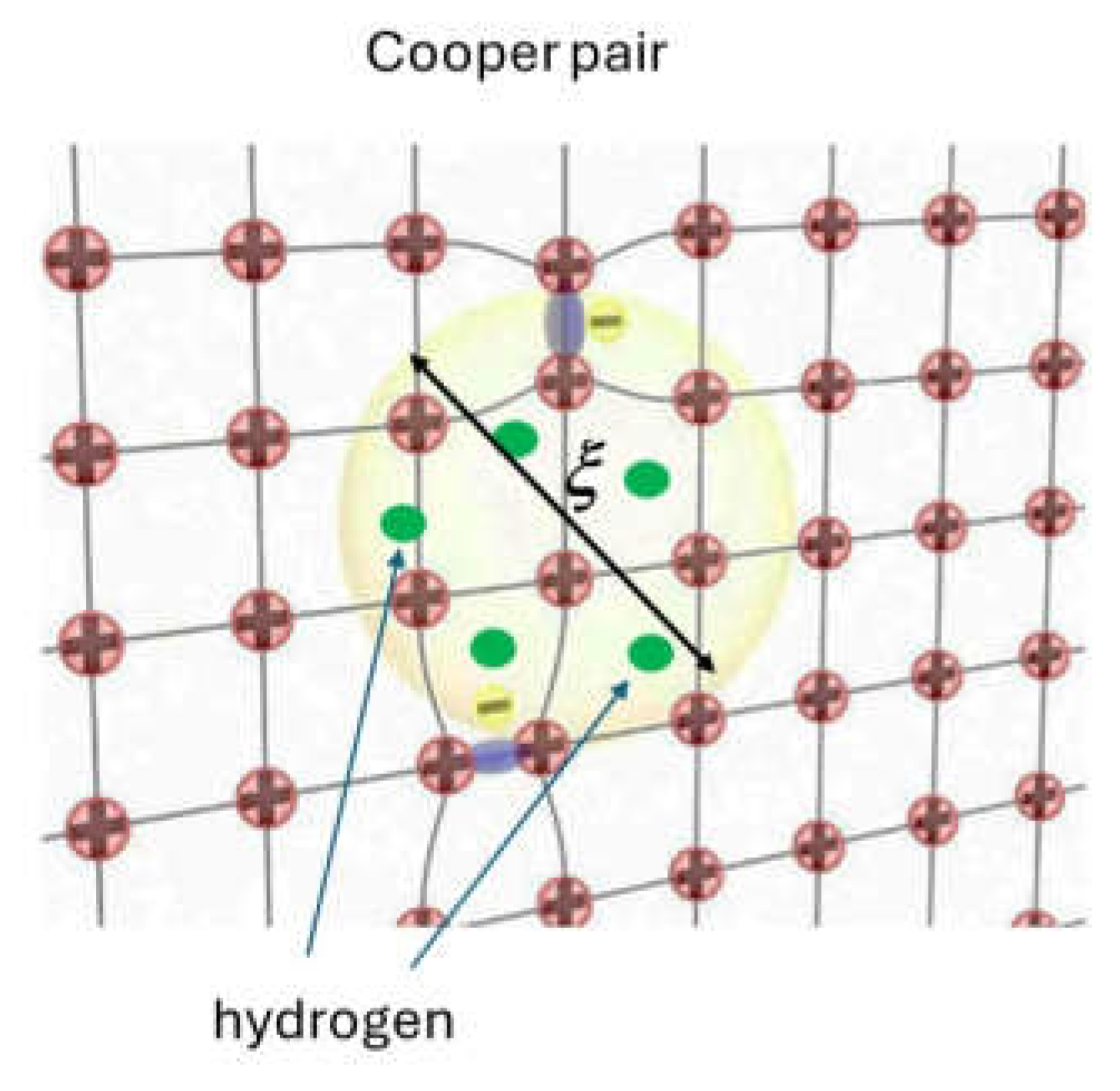
Let us assume that the volume of superconductor is implanted with an atomic or molecular species (say hydrogen) which has a negative scattering length β, as illustrated in Figure 3. If the Cooper pair size ξ satisfies Eq.(2):
where N-1/3 is the mean distance between the implanted atoms, the Fermi’s quantum refraction approximation (see Eq.(3)) should remain valid, and the Cooper pair will acquire energy shift
leading to increased coupling of electrons in the pair, and hence increased Tc. While conceptually similar to such popular metamaterial technique as positive-negative ε mixing, the described metamaterial engineering technique based on Fermi’s quantum refraction should be capable of reaching much higher spatial resolution, all the way down to atomic scale. In fact, it may be also productive to re-examine if Fermi’s quantum refraction may play some role in known high Tc superconductors.
We should also remark that implementation of quantum refraction effects should be especially straightforward in the case of two-dimensional superconductivity, which is observed on the surfaces of AuSn4 [26] and BiIn2 [27] semimetals. In this case the desired atomic or molecular species may be deposited directly onto the superconducting surface.
4. Discussion and Conclusions
To summarize, in this paper we have proposed to use Fermi’s quantum refraction effect, which was previously observed in the spectroscopy of Rydberg atoms and two-dimensional surface electronic states, as a novel tool in quantum electronic metamaterial design and engineering. In particular, we demonstrated several potential applications of this concept in metamaterial superconductors and “universal quantum dots” designed for operation in the mid and long infrared ranges. Because of experimentally observed additive properties of quantum refraction [11], this effect appears to be an ideal tool to engineer any desired spatial shape of a potential well on the single nanometre scale. This makes electronic metamaterials an ideal tool for engineering light-matter interaction in semiconductors and superconductors in the terahertz frequency range. In particular, in the case of two-dimensional surface superconductivity, engineering of a superconducting gap (which falls into the THz frequency range) would look very similar to the effects of quantum refraction observed in the previous THz spectroscopic experiments [11].
Author Contributions
Conceptualization, I.S. and V.S.; investigation, I.S. and V.S.; writing, I.S. and V.S. All authors have read and agreed to the published version of the manuscript.
Funding
This research received no external funding.
Data Availability Statement
The original contributions presented in this study are included in the article. Further inquiries can be directed to the corresponding author.
Acknowledgments
The Authors acknowledge helpful conversations with Mike Osofsky.
Conflicts of Interest
The authors declare no conflicts of interest.
Abbreviations
The following abbreviations are used in this manuscript:
| ENZ | Epsilon near zero |
| MOND | Modified Newtonian dynamics |
| Tc | Critical temperature (of a superconductor) |
References
- Pendry, J.B.; Schurig, D.; Smith, D.R. Controlling electromagnetic fields. Science 2006, 312, 1780. [Google Scholar] [CrossRef] [PubMed]
- Cummer, S.A.; Christensen, J.; Alù, A. Controlling sound with acoustic metamaterials. Nature Reviews Materials 2016, 1, 16001. [Google Scholar] [CrossRef]
- Li, Y.; Li, W.; Han, T.; Zheng, X.; Li, J.; Li, B.; Fan, S.; Qiu, C.-W. Transforming heat transfer with thermal metamaterials and devices. Nature Reviews Materials 2021, 6, 488. [Google Scholar] [CrossRef]
- Dragoman, D.; Dragoman, M. Metamaterials for ballistic electrons. J. Appl. Phys. 2007, 101, 104316. [Google Scholar] [CrossRef]
- Smolyaninov, I.I.; Smolyaninova, V.N. Metamaterial superconductors. Phys. Rev. B 2015, 91, 094501. [Google Scholar] [CrossRef]
- Smolyaninov, I.I.; Hung, Y.J.; Davis, C.C. Magnifying superlens in the visible frequency range. Science 2007, 315, 1699. [Google Scholar] [CrossRef] [PubMed]
- Song, J.C.W.; Gabor, N.M. Electron quantum metamaterials in van der Waals heterostructures. Nature Nanotechnology 2018, 13, 986. [Google Scholar] [CrossRef]
- Smolyaninova, V.N.; Zander, K.; Gresock, T.; Jensen, C.; Prestigiacomo, J.C.; Osofsky, M.S.; Smolyaninov, I.I. Enhanced superconductivity in aluminum-based hyperbolic metamaterials. Scientific Reports 2015, 5, 15777. [Google Scholar] [CrossRef] [PubMed]
- Fermi, E. On the theory of collisions between atoms and electrically charged particles. Nuovo Cim. 1925, 2, 143–158. [Google Scholar] [CrossRef]
- Bashkin, E.P. The energy spectrum and other properties of localized electron states in condensed media. Sov. Phys. JETP 1982, 55, 1076. [Google Scholar]
- Zavyalov, V.V.; Smolyaninov, I.I. Quantum refraction in gaseous H2, D2, Ne, and He for electrons levitating above the surface of crystalline hydrogen, deuterium, and neon. Sov. Phys. JETP 1988, 67, 171. [Google Scholar]
- Crompton, R.W.; Morrison, M.A. Comment of the possibility of Ramsauer-Townsend minima in e-H2 and e-N2 scattering. Phys. Rev. A 1982, 26, 3695. [Google Scholar] [CrossRef]
- Syty, P.; Pilat, M.P.; Sienkiewicz, J.E. Calculation of electron scattering lengths on Ar, Kr, Xe, Rn and Og atoms. J. Phys. B: At. Mol. Opt. Phys. 2024, 57, 175202. [Google Scholar] [CrossRef]
- He, M.; Cai, J.; Zheng, H.; Seewald, E.; Taniguchi, T.; Watanabe, K.; Yan, J.; Yankowitz, M.; Pasupathy, A.; Yao, W.; Xu, X. Dynamically tunable moiré exciton Rydberg states in a monolayer semiconductor on twisted bilayer graphene. Nature Materials 2024, 23, 224. [Google Scholar] [CrossRef] [PubMed]
- Sofue, Y.; Rubin, V. Rotation curves of spiral galaxies. Annual Review of Astronomy and Astrophysics 2001, 39, 137. [Google Scholar] [CrossRef]
- Milgrom, M. A modification of Newtonian dynamics as a possible alternative to the hidden mass hypothesis. The Astophysical Journal 1983, 270, 365. [Google Scholar] [CrossRef]
- Mann, N.; Matli, J.; Pham, T. Old quantization, angular momentum, and nonanalytic problems. 2020, arXiv:2009.01014. [quant-ph]. [Google Scholar]
- Zhou, L.; Zhu, A.; Lou, X.; Song, D.; Yang, R.; Shi, H.; Long, F. Universal quantum dot-based sandwich-like immunoassay strategy for rapid and ultrasensitive detection of small molecules using portable and reusable optofluidic nano-biosensing platform. Analytica Chimica Acta 2016, 905, 140. [Google Scholar] [CrossRef]
- Johnson, M.C.; Kamionkowski, M. Dynamical and gravitational instability of oscillating-field dark energy and dark matter. Phys. Rev. D 2008, 78, 063010. [Google Scholar] [CrossRef]
- Smolyaninov, I.I. Oscillating cosmological force modifies Newtonian dynamics. Galaxies 2020, 8, 45. [Google Scholar] [CrossRef]
- Smolyaninov, I.I. Metamaterial multiverse. Journal of Optics 2011, 13, 024004. [Google Scholar] [CrossRef]
- Kirzhnits, D.A.; Maksimov, E.G.; Khomskii, D.I. The description of superconductivity in terms of dielectric response function. J. Low Temp. Phys. 1973, 10, 79. [Google Scholar] [CrossRef]
- Engheta, N. Pursuing near-zero response. Science 2013, 340, 286. [Google Scholar] [CrossRef] [PubMed]
- Smolyaninov, I.I.; Smolyaninova, V.N. Hyperbolic metamaterials. Solid State Electronics 2017, 136, 102. [Google Scholar] [CrossRef]
- Smolyaninova, V.N.; Jensen, C.; Zimmerman, W.; Prestigiacomo, J.C.; Osofsky, M.S.; Kim, H.; Bassim, N.; Xing, Z.; Qazilbash, M.M.; Smolyaninov, I.I. Enhanced superconductivity in aluminum-based hyperbolic metamaterials. Scientific Reports 2016, 6, 34140. [Google Scholar] [CrossRef] [PubMed]
- Shen, D.; Kuo, C.N.; Yang, T.W.; Chen, I.N.; Lue, C.S.; Wang, L.M. Two-dimensional superconductivity and magnetotransport from topological surface states in AuSn4 semimetal. Communications Materials 2020, 1, 56. [Google Scholar] [CrossRef]
- Lei, Z.; Deng, Z.Y.; Chen, I.N.; Lin, C. W.; Wu, C.H.; Liu, E.P.; Chen, W.T.; Wang, L.M. Two-dimensional superconductivity with exotic magnetotransports in conventional superconductor BiIn2. Materials Today Physics 2024, 46, 101505. [Google Scholar] [CrossRef]
Figure 1.
Schematic geometry of quantum refraction effect in Rydberg atoms.
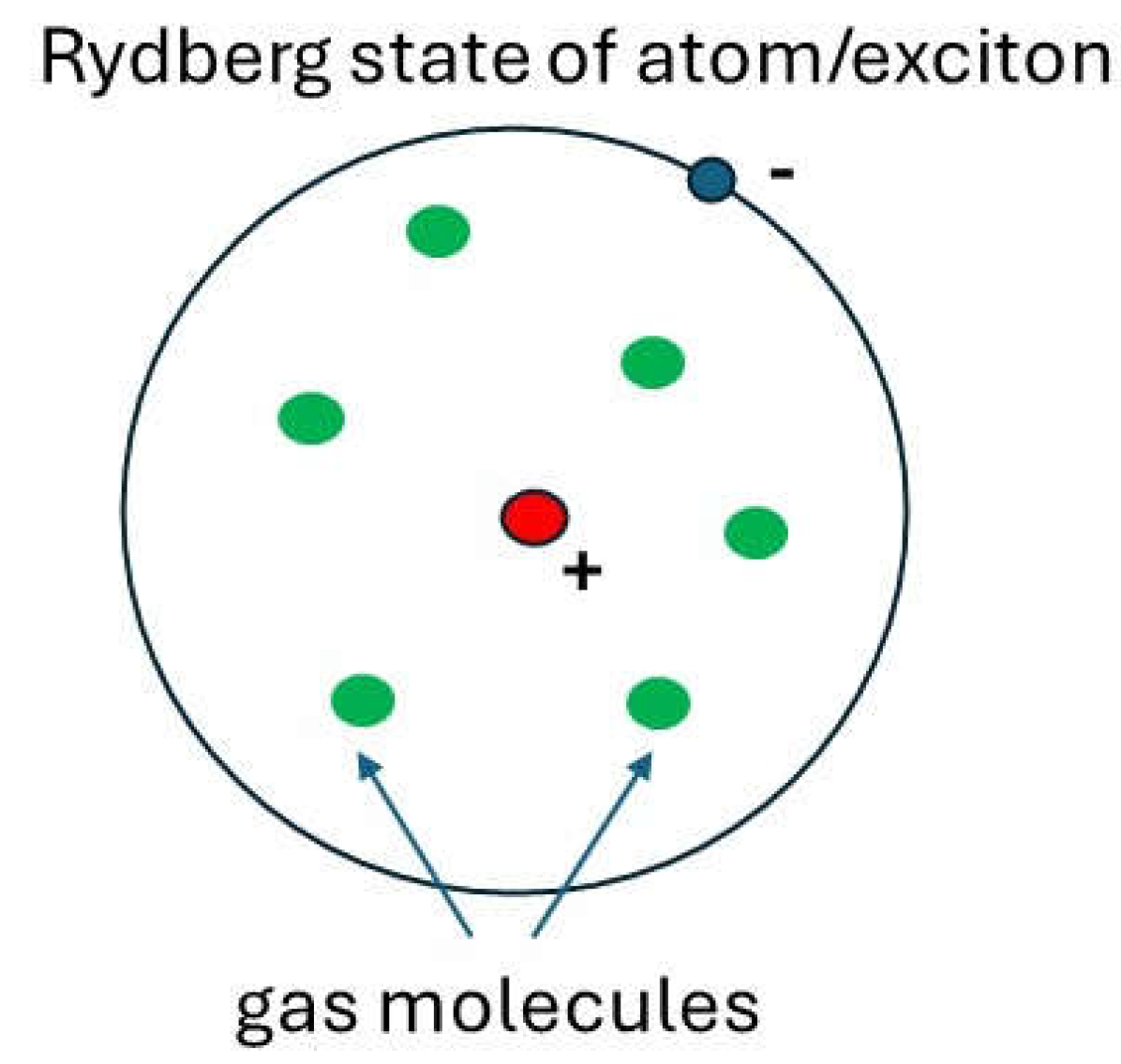
Figure 2.
An example of logarithmic quantum refraction potential (a) and the corresponding radial distribution of scatterer (atomic helium) concentration (b) calculated in the case of r0=3 nm and β=0.01 eV. The logarithmic band energy levels are indicated by red lines.
Figure 2.
An example of logarithmic quantum refraction potential (a) and the corresponding radial distribution of scatterer (atomic helium) concentration (b) calculated in the case of r0=3 nm and β=0.01 eV. The logarithmic band energy levels are indicated by red lines.
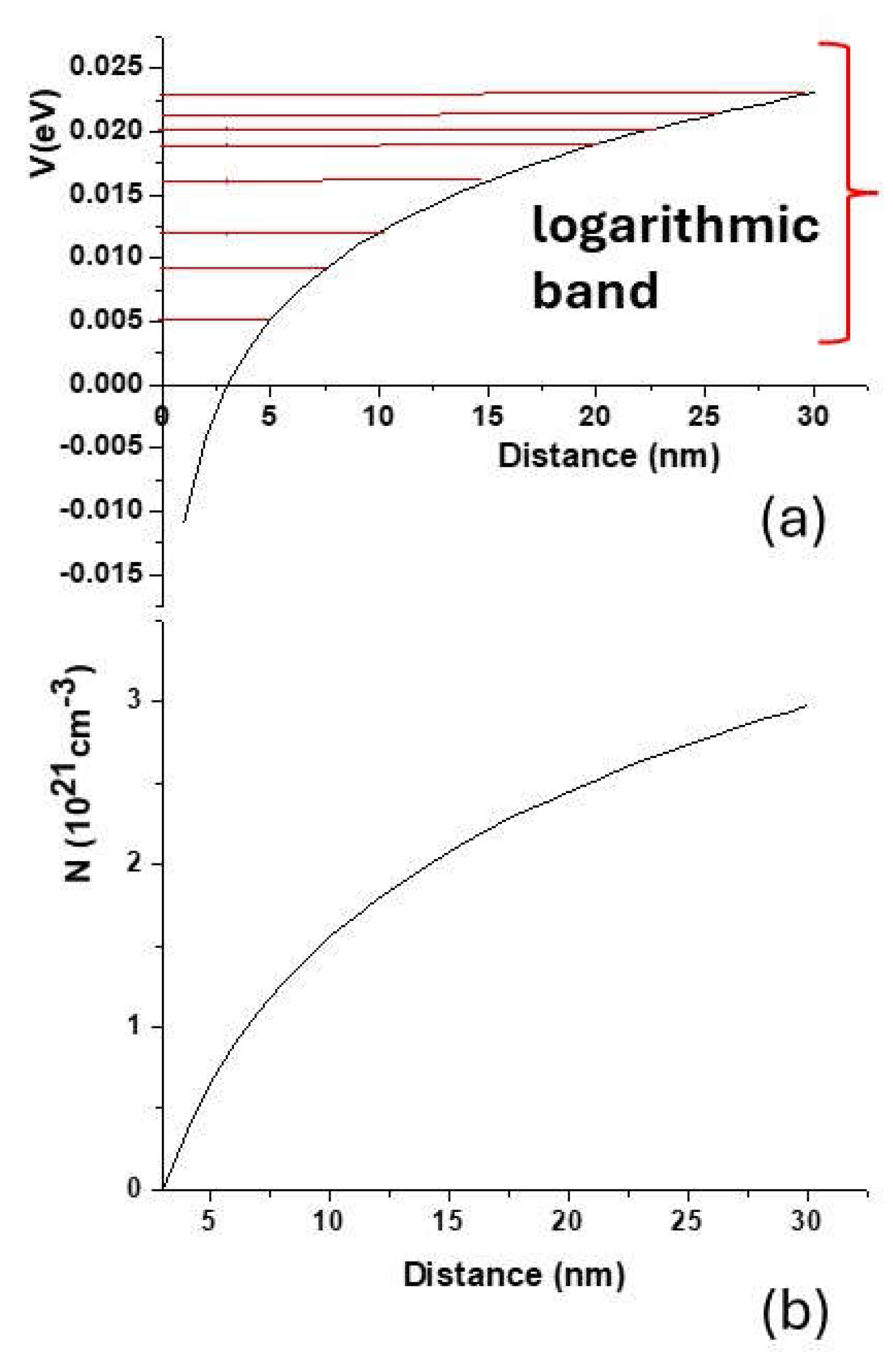
Figure 3.
Schematic diagram of a superconducting Cooper pair affected by hydrogen inclusions via quantum refraction (the superconducting coherence length ξ is indicated by the yellow circle).
Figure 3.
Schematic diagram of a superconducting Cooper pair affected by hydrogen inclusions via quantum refraction (the superconducting coherence length ξ is indicated by the yellow circle).
Disclaimer/Publisher’s Note: The statements, opinions and data contained in all publications are solely those of the individual author(s) and contributor(s) and not of MDPI and/or the editor(s). MDPI and/or the editor(s) disclaim responsibility for any injury to people or property resulting from any ideas, methods, instructions or products referred to in the content. |
© 2024 by the authors. Licensee MDPI, Basel, Switzerland. This article is an open access article distributed under the terms and conditions of the Creative Commons Attribution (CC BY) license (http://creativecommons.org/licenses/by/4.0/).
Copyright: This open access article is published under a Creative Commons CC BY 4.0 license, which permit the free download, distribution, and reuse, provided that the author and preprint are cited in any reuse.


