Preprint
Review

This version is not peer-reviewed.

Impact of Prophylactic HPV Vaccination on the Prevention of HPV-Driven Oral Cancers in India: Current Progress and Future Perspectives

Submitted:

31 December 2024

Posted:

31 December 2024

You are already at the latest version

Abstract

Human Papillomavirus (HPV) is the most prevalent sexually transmitted infection (STI) globally and contributor to a significant proportion of infection-related cancers, including oral squamous cell carcinomas (OSCCs). Persistent infection with oncogenic HPV strains is increasingly recognized as a critical cause of oral cancers, particularly in India. While HPV infections are often asymptomatic and transient, those that persist for year or more can lead to malignancies following integration into host cell genome and disrupting tumor-suppressor genes. HPV vaccination, including vaccines such as Cervarix, Gardasil or Gardasil-9, and the more recently introduced CERVAVAC in India, has significantly reduced the incidence of cervical and other HPV-related anogenital cancers. However, the potential of these vaccines in preventing HPV-linked OSCCs remains underexplored, especially in the Indian context, where the incidence of these cancers, particularly among younger populations, is on the rise. This review critically examines the role of HPV vaccination in preventing HPV-associated OSCCs. It explores the biological mechanisms by which HPV contributes to oral carcinogenesis, focusing on the most common HPV strains linked to these cancers. The review also assesses the effectiveness of existing HPV vaccines in preventing oral-HPV infections, drawing on the latest epidemiological and clinical studies. Despite promising evidence supporting the efficacy of HPV vaccines, challenges such as low vaccine uptake, limited public awareness, and socio-economic barriers hinder their widespread adoption in low-income countries including India. This review also discusses the early outcomes of vaccination programs on OSCC incidence and discusses strategies to enhance vaccine coverage, including targeted public health initiatives and policy interventions. By addressing these gaps, this review aims to provide a comprehensive understanding of the potential impact of HPV vaccination in reducing the burden of HPV-associated oral cancers in India and offering insights for future research and public health strategies.

Keywords: 
;  ;  ;  
  • Significance:
  • HPV vaccine; the world’s first cancer vaccine developed by the University of Queensland in Australia by Professors Ian Frazer and Jian Zhou.
  • HPV vaccination provides the greatest protection against HPV-derived cervical and oral cancer.
  • HPV prophylactic vaccines are highly immunogenic, safe, and produce specific antibodies against the virus subtypes.
  • ProphylacticHPV vaccination provide effective protection against most common oncogenic HPV infection and associated diseases in both men and women.
  • Challenges in scaling-up HPV immunisation along-with screening and early detection particularly in developing countries may make the world cervical cancer-free in next one decade or two.
  • Availability of therapeutic vaccine for treatment of already HPV infected diseases is essential.

1. Background

Human papillomavirus (HPV) is a well-established etiological agent for various cancers, including cervical, oral, and other head and neck and anogenital malignancies. It is one of the most common sexually transmitted infections (STIs) globally and affects both men and women, playing a significant role in the development of cervical and head and neck cancers (HNCs) [1]. In recent years, the global incidence of HPV-driven oral cancers, particularly oropharyngeal carcinomas (OPC), has risen considerably, making it a significant public health concern. Persistent infection with high-risk HPV (HR-HPV) types specifically HPV types 16 and 18 is increasingly recognized as a critical cause of oral cancers, particularly in India, where oral squamous cell carcinomas (OSCCs) are highly prevalent [2].
Globally, OSCCs including oropharyngeal cancers, are the most common cancers, with more than 389,485 new cases annually and contributing significantly to cancer-related deaths[2,3]. India bears the highest burden of OSCC, accounting for nearly one-third of global oral cancer cases, making it the second most common cancer in the country [4]. OSCC represents a heterogeneous group of malignancies that may involve the lip, tongue, buccal mucosa, floor of the mouth, sinuses, palate, and the base of the tongue [5]. The incidence and mortality rates of OSCC are highest in Southeast Asia, and delayed diagnosis contributes significantly to the high mortality rate [6].
The major risk factors for OSCC include tobacco use, excessive alcohol consumption, poor oral hygiene and HPV infection. However, a concerning increase in OSCC cases, particularly OPC, though its prevalence is not very in India (Kumar et al; unpublished) has been observed in younger individuals, which is associated with persistent infection with HR-HPV [5,7,8]. HPV-positive OSCCs are characterized by better response to therapy and improved prognosis, particularly among non-smoking patients while a very low prevalence of HPV and worst prognosis has been observed among tobacco users [7,9]. The identification of HPV as a causative agent of oral cancers has paved the way for potential prevention through vaccination. While HPV vaccination has shown remarkable success in reducing the incidence of cervical cancer, its potential impact on HPV-driven oral cancers is now gaining attention [5]. This is particularly important in India, where oral cancer is one of the most prevalent malignancies, and HPV-related cancers remain a significant burden.
Currently, several preventive HPV vaccines, such as Gardasil (quadrivalent against HPV types 6, 11, 16, 18), Cervarix (bivalent against HPV types 16 & 18), and Gardasil-9 (nonavalent against HPV types 6, 11, 16, 18, 31, 33, 45, 52, 58), have been approved by the U.S. Food and Drug Administration (FDA) in 2006, 2009, and 2014, respectively [10,11]. Cecolin® and CERVAVAC®, recently licensed for use in both girls and boys, can be administered through either a single-dose or two-dose schedule, providing flexibility in immunization strategies [12]. These vaccines demonstrate high immunogenicity and offer nearly 100% effective protection against persistent infection with targeted HPV strains when administered prior to exposure, highlighting their critical role in HPV-related cancer prevention [13,14,15].
Despite the availability of these effective vaccines, the incidence of HPV-related cancers continues to rise, especially in low- and middle-income countries (LMICs) like India [10]. This has prompted the World Health Organization (WHO) to set a goal of global cervical cancer elimination as a public health problem by 2030, emphasizing vaccination, screening, and treatment as the primary pillars for disease management [16,17]. Cervical cancer remains the leading cause of cancer-related mortality among Indian women, with nearly 90% of deaths occurring in LMICs [18,19]. Vaccination coverage, however, remains inadequate in LMICs, including India, due to a range of factors such as limited access, high costs, lack of awareness, cultural and religious resistance, and the absence of consistent screening programs [17,20,21]. There is also a lack of centralized national HPV screening and immunization programs, poor acceptability of screening, and limited access to effective treatment for premalignant conditions. These challenges reflect significant obstacles, including (i) production, distribution, cost, awareness, and societal stigma against vaccines; (ii) insufficient national screening infrastructure for HPV and scaling-up of effective pre-malignant treatment; and (iii) underdeveloped cancer treatment services, including palliative care for those with advanced cancer, and the need for effective financing of both vaccination and screening initiatives. Although prophylactic HPV vaccines are highly effective when administered before exposure, they do not eliminate existing infections, underscoring the importance of developing therapeutic vaccines or drugs. While there has been substantial progress in the development of therapeutic vaccines, no candidate has yet received approval. Such vaccines aim to boost cell-mediated immunity to treat existing infections and prevent disease recurrence, which would significantly improve treatment outcomes.
In this article, we discuss the epidemiology of HPV-related oral cancers, the role of HPV oncoproteins in disease progression, the current landscape of prophylactic HPV vaccines, and the status of vaccination programs in India and globally. This review aims to highlight the potential impact of prophylactic HPV vaccination on oral cancer prevention in India and the future perspectives for controlling HPV-driven oral malignancies.

2. Epidemiology of Oral Cancer Prevalence in India

Oral cancer remains a significant global health burden, ranking as the 16th most common malignancy worldwide, with an estimated 389,846 new cases and 188,438 deaths in 2022 [2]. The incidence of oral cancer varies widely by geographic region, with the highest rates reported in South and Southeast Asia, particularly India, Sri Lanka, and Bangladesh. Of the several types of oral cancers, squamous cell carcinoma (SCC) is the most predominant form (90%) of malignancy and is a significant public health challenge, particularly in India, which bears one of the highest global burdens [22,23]. OSCC often manifests as a small, unexplained lesion within the oral cavity, affecting the lips, tongue, palate, cheeks and the oropharynx. While oral cancer ranks 16th worldwide in both incidence and mortality, India accounts for approximately one-third of all global OSCC cases. This disproportionate burden makes India the epicentre of oral cancer, especially in southern and central regions where the incidence is highest [4].
India faces a critical situation, with oral cancer being the second most prevalent malignancy overall and the most prevalent cancer among men. Recent data suggest that India has the largest incidence and mortality rates of oral cancer accounting 143,759 (55.6%) new cases and 79,979 (56.5%) deaths attributed to the disease in 2022 [19]. Projections indicate that these numbers could double by 2040 due to demographic changes and rising risk factor prevalence. Unlike the global average, where oral cancer constitutes only 2-4% of all cancers, it accounts for more than 30% of cancer cases in India. The late-stage diagnosis of OSCC remains a key challenge, with nearly 70% of cases in India detected only in advanced stages, which severely limits treatment options and reduces survival rates. The 5-year survival rate remains at around ~50%, substantially lower than in many developed nations [5].
The etiology of oral cancer in India is deeply intertwined with cultural and social practices, notably tobacco use, both in smoked and smokeless forms, commonly consumed in forms like betel quid, gutka, Bidi, Supari and khaini, are implicated in over half of oral cancer cases [24,25,26,27]. The synergistic effects of tobacco and alcohol further amplify the risk of this disease [28,29]. In addition to these traditional risk factors, infections with high-risk (HR) strains of human papillomavirus (HPV), particularly HPV-16, is now recognized as significant contributors to the rising incidence of oral cancer, especially among younger, non-smoking populations [7,8,9,10,30]. This shift underscores the need for widespread HPV vaccination programs to curb the growing burden of HPV-related oral cancers.
Despite advancements in treatment modalities, including the transition from radical surgery to organ-sparing techniques and radiotherapy, the mortality rate for oral cancer in India remains high, primarily due to delayed diagnosis. Effective prevention strategies are crucial and encompass comprehensive tobacco control programs, widespread HPV vaccination, public health campaigns, and early screening initiatives. As the epidemiology of oral cancer in India evolves, public health efforts must intensify focus on awareness, preventive vaccination, and early intervention to mitigate the increasing incidence of oral cancers.

3. Prevalence of HPV in Various Anatomical Subsites of Oral Cavity

The oral cavity is anatomically complex, comprises various subsites which serve as potential initiation points for malignancies. Among these, the lower lip, lateral border, and ventral surface of the tongue are commonly affected by oral cancer, along with the floor of the mouth, buccal mucosa, gingiva, hard palate, and retromolar trigone [31]. The prevalence of HPV-associated oral cancers varies significantly across these regions, highlighting distinct susceptibilities. The base of the tongue exhibits the highest prevalence of HPV-associated cancers at 50%, followed by the hard and soft palate (42%), the floor of the mouth (40%), and the gingiva (40%). Moderate prevalence is observed in the buccal mucosa (28.6%), often linked to betel quid chewing, while lower rates are noted in the alveolar ridge and retromolar trigone (5.6%) [32,33] (see Figure 1). HPV presence is 0-5% in the other sites of oral-tongue and 0-1% in lips which is very low compared to the oropharyngeal region [34]. These variations are influenced by differences in epithelial structure, immune microenvironment, and exposure to risk factors. The high prevalence of HPV at the base of the tongue and oropharynx underscores the growing burden of HPV-driven oropharyngeal cancers. This calls for targeted HPV vaccination and robust public health strategies to mitigate the impact of HPV-related oral and oropharyngeal malignancies.

4. HPV Genomics: Structure and Function

Human papillomaviruses (HPVs), belonging to the Papillomaviridae family, exclusively infect humans and have a circular double-stranded DNA (cdsDNA) genome of approximately 8kb, encased in an icosahedral capsid [35,36]. To date, over 231 HPV genotypes have been identified, broadly categorized into low-risk (LR) and high-risk (HR) types based on their oncogenic potential [37,38]. Oncogenic HPVs primarily infect epithelial cells and are mainly transmitted through sexual contact, leading to various malignancies such as cervical, genital, anal, and oral cancers (www.cdc.gov/hpv/parents/about-hpv.html) [39,40]. LR-HPVs, such as HPV-6 and HPV-11, are generally associated with benign warts or papillomas, whereas HR-HPVs, including HPV-16, HPV-18, and HPV-35, can cause oncogenic lesions if the infection persists [41,42,43]. HPV-16 and HPV-18 are responsible for over 70% of cervical cancer cases, while other HR types, such as HPV-31, -33, -35, -45, -52, and -58, account for an additional 20% [42,44,45]
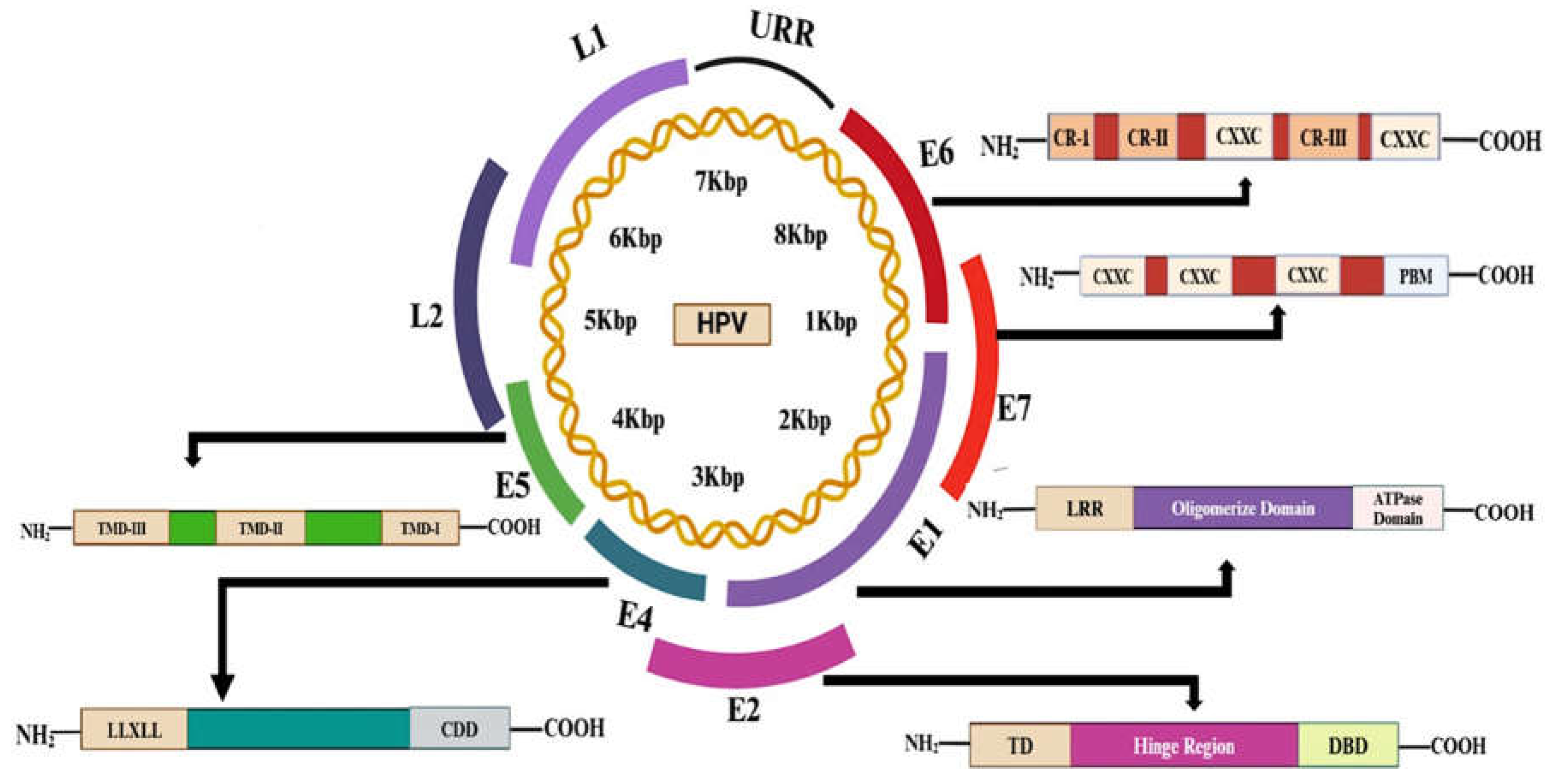
The HPV genome is densely packed with eight overlapping protein-coding open reading frames (ORFs), organized into three main regions: the early region (E), the late region (L), and the upstream regulatory region (URR) [46]. The early region encodes six ORFs (E1, E2, E4, E5, E6, and E7) that are crucial for viral replication, transcriptional regulation, and oncogenesis. E1 plays a central role in viral DNA replication and contains a DNA-binding domain (DBD), an oligomerization domain, and an ATPase domain [47,48]. It recognizes the viral replication origin within the long control region (LCR), facilitating replication [49,50]. E2 is a homodimeric protein with a DBD at its C-terminus and a transactivation domain (TAD) at its N-terminus. These domains are connected by a flexible hinge region, enabling effective transcriptional regulation and viral replication [51,52]. E4 overlaps with the E2 ORF and is primarily involved in viral release and the disruption of the cytoskeleton. It features a leucine-rich motif (LLXLL) at its N-terminus, a proline-rich central region, and a cytoskeletal disruption domain at the C-terminus [53,54]. E5 is a small hydrophobic protein embedded in the membrane with three transmembrane domains (TMD-I, TMD-II, TMD-III). It promotes immune evasion and cellular transformation by interacting with the epidermal growth factor receptor (EGFR) and other host proteins [55,56].
The E6 protein is a well-established oncoprotein that plays a critical role in HPV-induced carcinogenesis. It contains two zinc-binding sites with four CXXC motifs and a PDZ-binding motif at its C-terminus, enabling interactions with cellular PDZ proteins such as Dlg and ZO-1, which are involved in maintaining cell polarity (Figure 2). By targeting the tumor suppressor p53 for degradation, E6 prevents apoptosis and promotes uncontrolled cell proliferation [9,57,58]. E6 can be transcribed into several splice variants, including E6I, E6II, and E6*III, which modulate its interactions with host cellular pathways [55,57]. The E7 protein is another major oncogenic driver, composed of approximately 100 amino acids divided into three conserved regions: CR1, CR2, and CR3. CR2 contains the LXCXE motif that binds to the retinoblastoma protein (pRb), disrupting its tumor-suppressive function and releasing E2F transcription factors, which promote cell cycle progression [59]. CR3, located at the C-terminus, includes a zinc-binding motif (CXXC), which is essential for the stability and function of E7 [60]. The upstream regulatory region (URR), which accounts for approximately 10% of the HPV genome, is a non-coding region that plays a crucial role in regulating viral transcription and replication (see Figure 2). It contains the origin of replication and multiple transcription factor binding sites, which control the timing and levels of viral gene expression [11,61,62]. The late region of the HPV genome encodes two structural proteins, L1 and L2, which form the viral capsid. L1, the major capsid protein, self-assembles into pentameric units that make up 72 capsomeres, stabilized by interlocking arms and disulfide bridges [63,64]. L1 plays a key role in viral attachment to host cells by binding to heparan sulfate proteoglycans and laminin-332 on the extracellular matrix, which are crucial for the initial stages of viral infection [65]. L2, the minor capsid protein, aids in genome encapsidation and facilitates viral entry into host cells. L2 also interacts with L1 during the assembly of virus-like particles (VLPs), which are instrumental in vaccine development [63,66]. This structural organization of the HPV genome is essential for understanding its role in oncogenesis and provides valuable insights for the development of targeted therapies, vaccines, and diagnostic tools aimed at preventing and treating HPV-associated cancers.

5. HPV-Induced Genomic Instability and Mechanism of Carcinogenesis

HPV is an epitheliotropic virus that primarily infects the basal layer of stratified squamocolumnar epithelial tissues in the genital, head, and neck regions, typically through micro-abrasions caused by physical contact. Although the majority of HPV infections (~80-90%) are transient and asymptomatic, cleared spontaneously within 1-2 years, approximately 10% of HR-HPV infections persist, leading to cellular changes that can progress to pre-cancerous lesions and, ultimately, invasive cancer [9,67]. Persistence of HR-HPV infection for more than one year is a critical factor for the aberrant expression of viral oncogenes and is a keystone for the genesis of invasive cancer [68,69].
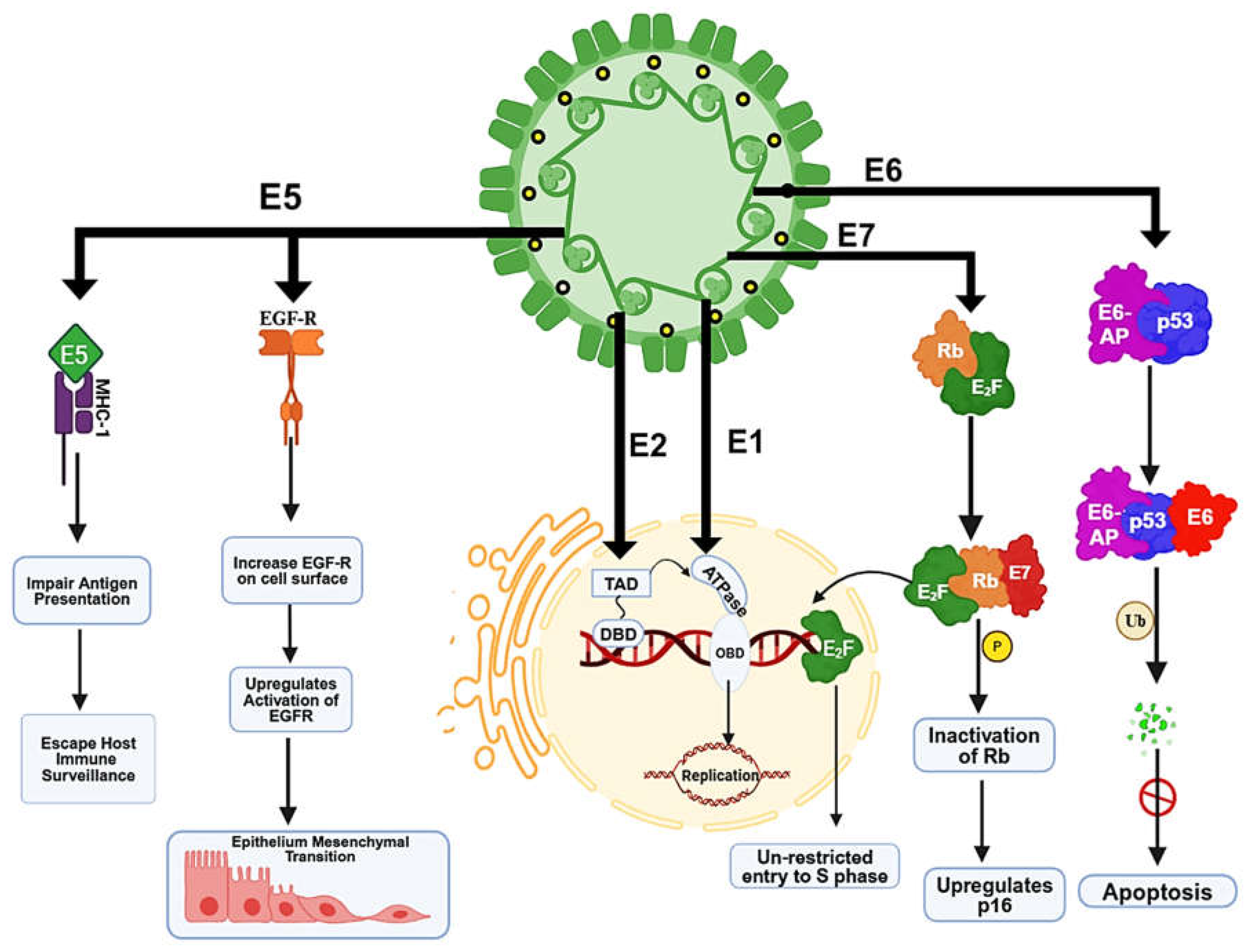
During a productive HPV infection, the viral genome remains in an episomal state (extrachromosomal), replicating alongside the host genome in basal epithelial cells. However, persistent infection often triggers viral DNA integration into the host genome, a critical event in HPV-induced carcinogenesis [70]. Integration disrupts normal cellular processes and facilitates the transition from premalignant to malignant lesions. This integration is thought to occur at any stage of the episomal viral lifecycle, and the simultaneous presence of episomal and integrated viral DNA in the same cells further destabilizes genomic integrity [68,69,70]. HPV-induced tumorigenesis is a multistage process driven by genomic instability, a hallmark of cancer. Several key viral oncoproteins contribute to this instability, with the E5, E6, and E7 proteins playing pivotal roles. E5 enhances the epidermal growth factor receptor (EGFR) signalling pathways, promoting epithelial-mesenchymal transition (EMT) and increasing cell migration, invasion, and resistance to apoptosis (see Figure 3) [71,72]. However, during the later stages of malignancy, E5 is often deleted due to viral integration into the host genome, suggesting its role is primarily important in early oncogenesis [73].
E6 and E7, the key drivers of HPV-mediated carcinogenesis, play central roles in maintaining genomic instability and promoting malignant transformation. E6 mediates the degradation of the tumor suppressor protein p53 by forming a complex with the E6-associated protein (E6-AP), leading to p53 degradation via ubiquitination (Figure 3). This results in the inhibition of p53-induced apoptosis and facilitates uncontrolled cell proliferation [57]. E6 is also transcribed into multiple splice variants (e.g., E6I, E6II, E6*III), which modulate its interactions with host cellular pathways [55]. E7 targets the retinoblastoma protein (pRb), a critical regulator of cell cycle progression. By binding to and degrading phosphorylated pRb, E7 releases E2F transcription factors, which drive the overexpression of genes necessary for the G1-to-S phase transition [74]. In addition to disrupting the pRb pathway, E7 also induces the degradation of p21 and p27, key inhibitors of cyclin-dependent kinases (CDKs), further promoting unchecked cell cycle progression [59]. Together, E6 and E7 proteins act to maintain cell cycle activity in infected cells, even as they move from the basal to suprabasal layers, circumventing the normal process of cell cycle exit and differentiation [74,75,76].
Moreover, E6 and E7 activate several important signalling pathways, including the phosphatidylinositol 3-kinase (PI3K)/Akt/mTOR pathway, which is critical for regulating cell growth, proliferation, and survival [73]. These pathways are instrumental in driving the oncogenic process, and their activation by E6 and E7 disrupts normal cell regulatory mechanisms, contributing to HPV-induced malignancy. In addition to their roles in cell cycle dysregulation and apoptosis inhibition, HR-HPV E6 and E7 proteins also suppress the immune response. By interfering with type I interferon signalling and modulating immune-related pathways such as NF-κB and STAT, these oncoproteins create an immune-suppressive environment that allows persistent viral infection and promotes tumor development [77,78]. Both E6 and E7 oncoproteins facilitate polyploidy, chromosomal instability, and the evasion of apoptosis, which are key contributors to malignant transformation. This genomic instability, combined with the disruption of critical tumor suppressor pathways, leads to the accumulation of further genetic aberrations necessary for tumor progression [79,80]. Thus, understanding these mechanisms provides critical insights into the role of HPV in cancer development and is essential for designing targeted therapeutic strategies, improving vaccination programs, and developing diagnostic tools for HPV-associated malignancies.

6. HPV-Induced Carcinogenesis in the Oral and Oropharyngeal Lesions

Oral HPV infection is the significant cause of HPV-positive oral cavity cancers, whose incidence is rising globally [39,40]. Transmission predominantly occurs through sexual activity, with significantly higher prevalence among individuals with multiple oral sexual partners, non-smokers, and immunocompromised populations, such as those with HIV. While most oral HPV infections (~80-90%) are transient and resolve within 1-2 years, persistent infections can lead to malignancy, although the absence of a well-defined precancerous state complicates early detection [5,81].
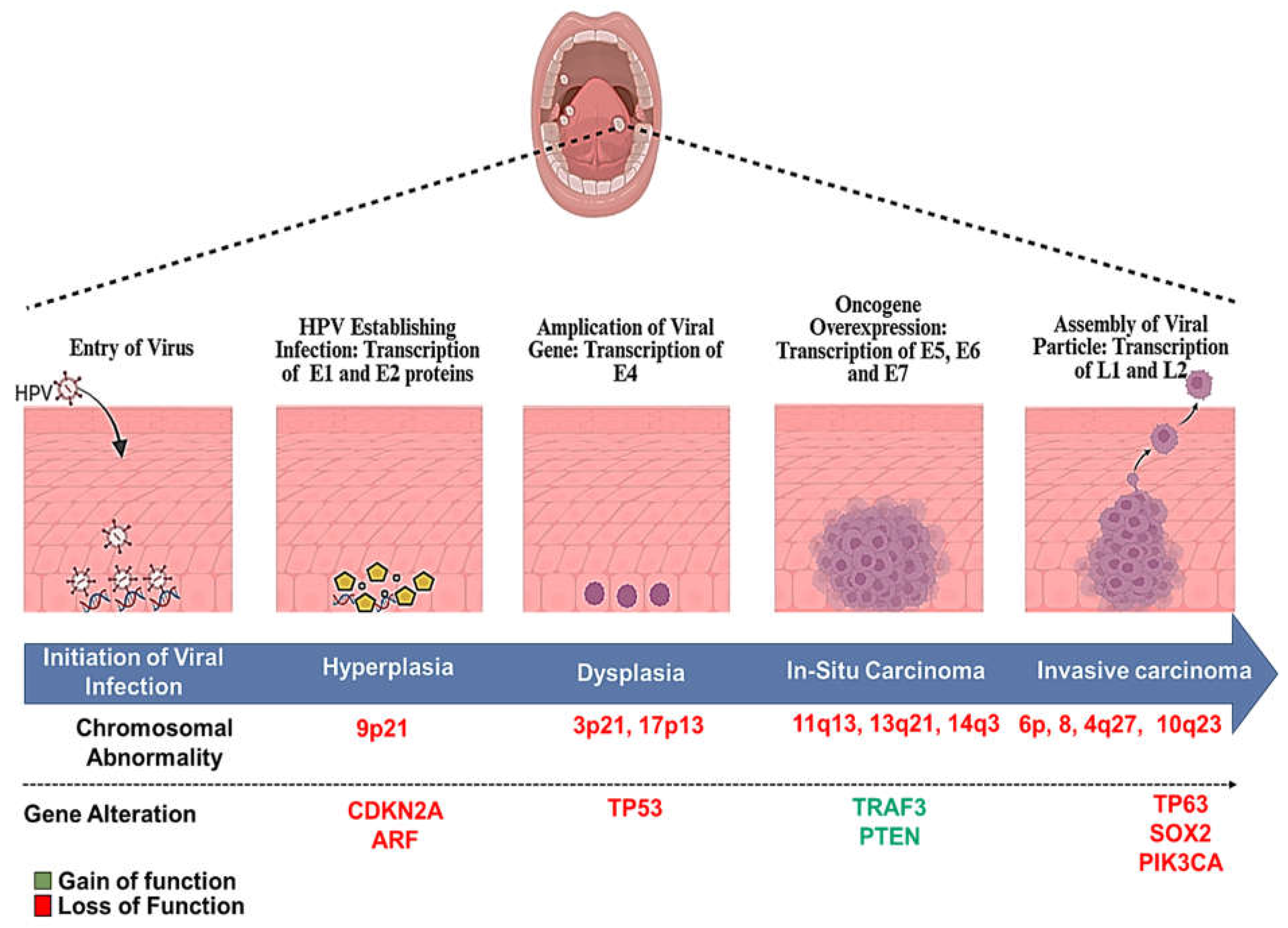
The progression of HPV-OSCC begins with viral entry into basal epithelial cells through micro-abrasions, leading to integration of the viral genome and transcription of early genes (E1 and E2), which establishes persistent infection. Amplification of viral genes such as E4 initiates dysplasia, often accompanied by loss-of-function mutations in TP53 and CDKN2A (p16/ARF) (see Figure 4) [36]. Oncogene expression (E5, E6, E7) further drives uncontrolled proliferation by inactivating tumor suppressors like p53 and Rb, transitioning the disease into in-situ carcinoma. Additional genetic alterations, including gains in TRAF3 and losses in PTEN, destabilize cellular homeostasis [58,82]. Invasive carcinoma develops with transcription of late genes, facilitating viral particle assembly. This stage is marked by genomic instability, including oncogenic gains (PIK3CA, SOX2) and loss-of-function mutations (TP63) (Figure 4). The absence of long-term natural history studies and an intermediate disease state complicates screening and early detection strategies for HPV+ve OSCC, underscoring the need for further research to clarify disease latency and progression dynamics [83]. These insights highlight critical molecular targets for early detection and therapeutic intervention in HPV- HPV-associated oral malignancies.

7. The Basis of Prophylactic HPV Vaccines

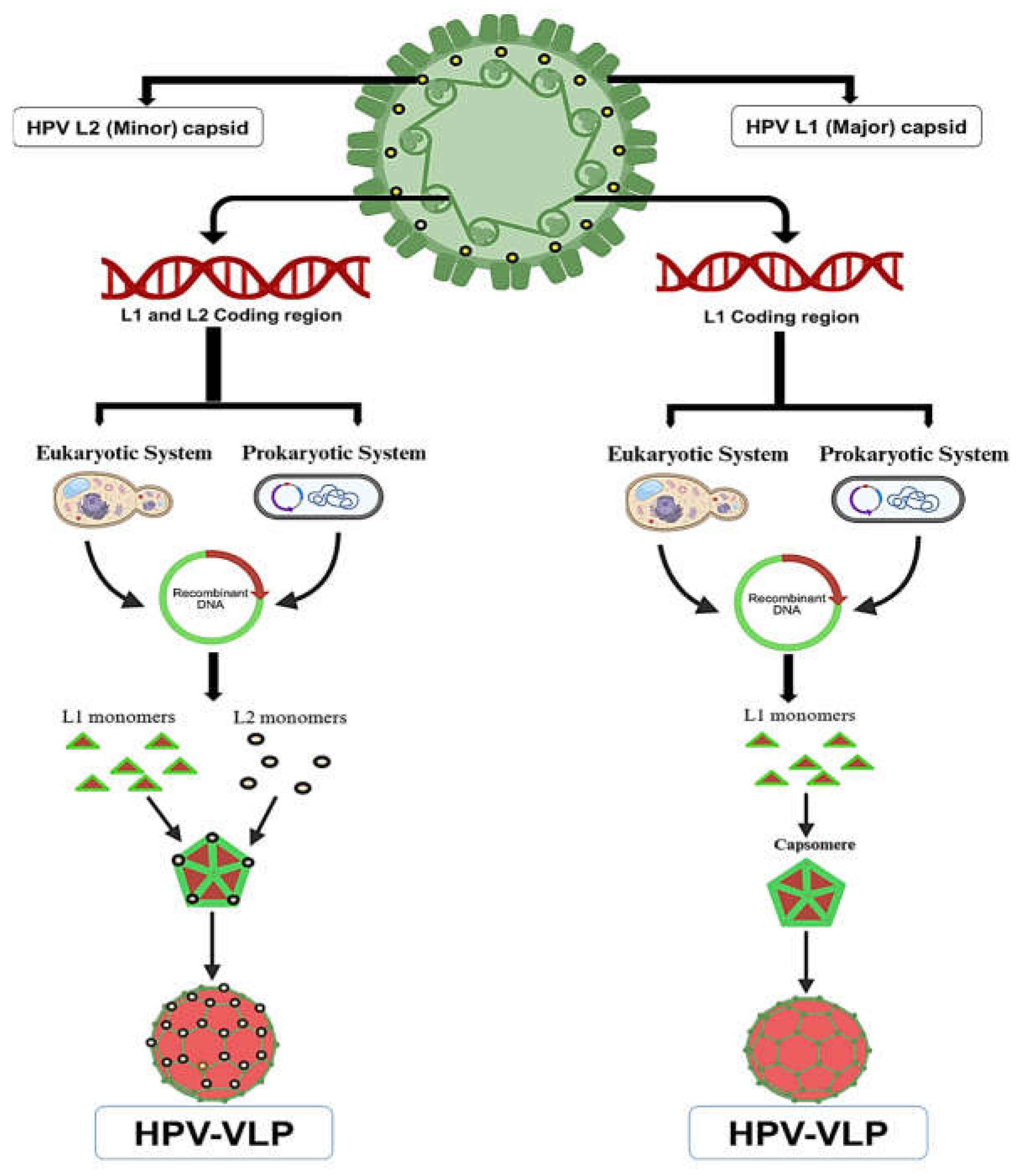
Virus-like particles (VLPs) are a groundbreaking invention in vaccine development, offering a non-infectious yet highly immunogenic platform for combating HPV. HPV, a dsDNA virus, is encapsulated within a protein shell comprising the L1 major and the L2 minor capsid proteins (Figure 5). These structural proteins play a crucial role in VLP assembly, which mimics the native virus but lacks genetic material, ensuring safety while retaining immunogenicity [84,85].
VLPs are produced using recombinant DNA technology, with L1 proteins (and occasionally L2) expressed in eukaryotic or prokaryotic systems. While eukaryotic systems enhance post-translational modifications for improved immunogenicity, prokaryotic systems offer cost-effective scalability [84,86]. L1 monomers self-assemble into pentameric capsomeres, which further aggregate into VLPs that closely resemble the natural HPV capsid [87]. This structural mimicry elicits a robust immune response by inducing the production of neutralizing antibodies. These VLP-based vaccines, such as Gardasil and Cervarix, have shown remarkable success in preventing HPV-associated cancers. Their ability to induce a strong, long-lasting immune response stem from their biomimetic design, which triggers antigen-presenting cells to process and present VLP-derived antigens to T cells, initiating antibody production. These antibodies neutralize the virus at the infection site, effectively preventing HPV-induced carcinogenesis (Figure 5). Additionally, advancements in vaccine technology have led to the development of L2-based vaccines, which offer broader protection against multiple HPV strains compared to L1 VLP vaccines, which target a limited number of high-risk HPV types [84,88,89]. The combination of structural mimicry, cost-efficient production, and broad-spectrum immune activation positions HPV VLPs as a paradigm in modern prophylactic vaccine development.

8. Historical Milestones of HPV Vaccination

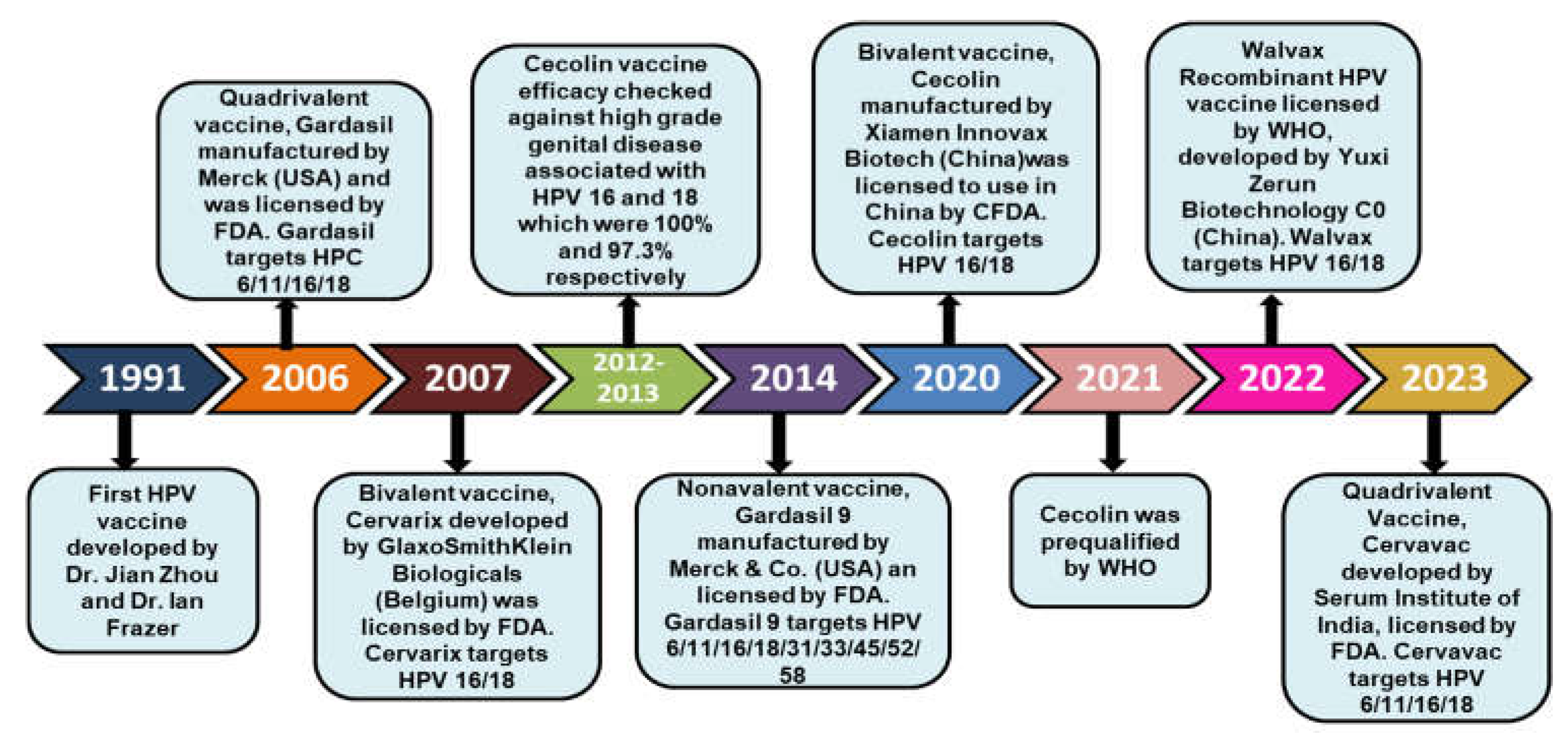
The development of HPV vaccines marks a pivotal advancement in the prevention of HPV-related cancers. This journey began in 1991, when Dr. Jian Zhou and Dr. Ian Frazer developed the first HPV vaccine, laying the groundwork for future innovations targeting HPV strains responsible for cervical and other HPV-related cancers. In 2006, Merck & Co. introduced Gardasil, the first quadrivalent HPV vaccine licensed by the FDA, which targets HPV types 6, 11, 16, and 18, preventing cervical cancer and genital warts. Following this, in 2007, Cervarix, developed by GlaxoSmithKline, was licensed by the FDA. This bivalent vaccine targets HPV types 16 and 18, focusing on the strains most commonly associated with cervical cancer. Between 2012 and 2013, Cecolin, another bivalent vaccine developed by Xiamen Innovax Biotech, demonstrated high efficacy rates of 100% and 97.3% against HPV types 16 and 18 respectively and was licensed in 2014 for use in China by the Chinese Food and Drug Administration (CFDA). During this period, broader vaccines continued to emerge. In 2020, Gardasil 9, a nonavalent vaccine targeting nine HPV types (6, 11, 16, 18, 31, 33, 45, 52, 58), was launched, providing even greater protection against HPV-related cancers. In 2021, Cecolin was prequalified by the World Health Organization (WHO), enabling global distribution, particularly in regions with limited healthcare resources. The progress continued in 2022 with the development of Walvax, a recombinant HPV vaccine created by Yuxi Zerun Biotechnology, licensed by WHO to target HPV types 16 and 18 (WHO vaccine position papers. Geneva: World Health Organization, www.who.int/teams/immunization-vaccines-and-biologicals/policies/position-papers). In 2024, the Serum Institute of India is expected to release Cervavac, a quadrivalent HPV vaccine targeting types 6, 11, 16, and 18, offering an affordable option in regions like India, where cervical cancer remains a significant burden. These timelines reflect the sustained global efforts to prevent HPV-related cancers (Figure 6). Since the breakthrough in 1991, HPV vaccines have evolved to cover more strains, offering broader protection and accessibility, becoming a cornerstone in reducing the global burden of HPV-related diseases.
Current prophylactic HPV vaccines: Prophylactic HPV vaccines are designed to prevent infections caused by various strains of HPV including most common high-risk and low-risk HPV types [86,90]. These vaccines play a crucial role in preventing viral manifestations associated with HPV, including cervical cancer, oral cancer, and other HPV-driven diseases [86,90,91]. These vaccines are based on virus-like particles (VLPs) that are composed primarily of the L1 protein, the major component responsible for forming the viral capsid [92]. These VLPs mimic the structure of the native virus but lack genomic material, rendering them non-infectious. Upon administration, these VLPs stimulate the immune system by mimicking the outer shell of the virus, thereby eliciting a robust immune response without causing an actual infection [93,94]. VLPs lack the viral genome, rendering them non-infectious, but they effectively stimulate the immune system to produce antibodies, providing protection against HPV infections [95]. Clinical trial data revealed that the immune response generated by these vaccines is both robust and long-lasting, offering significant protection against HPV. These vaccines are highly immunogenic, safe, well tolerated and showed preventive effects against the majority of people infected by HR- and LR-HPV strains from various regions, different age ranges and races [84]. These vaccines give ~100% extensive and effective protection against HPV infection with vaccine targeted HPV strains and related premalignant lesions if administered before sexual debut [13,14]. Clinical trials found that all three vaccines are ≥90% effective in preventing most common HR-HPV type 16 and 18 infection when given to girls prior to sexual debut, or to women without prior HR-HPV infection [96,97]. All three vaccines significantly increase antibody response after administration compared to untreated HPV infections. National vaccination programmes with simply 50% coverage of two or three dosage regimens have shown to significant decreased in HPV infection rate at the population level [98,99]. In the fight against HPV-induced cancers, vaccination has been found a game-changer in many developed countries. There are currently six prophylactic vaccines available for HPV prevention.
A. Cervarix™-bivalent HPV vaccine: Cervarix, a bivalent prophylactic HPV vaccine developed by GlaxoSmithKline (GSK) Biologicals (Belgium). The European Medicines Agency (EMA) and the FDA both granted their approval to CervarixTM , is a 2-valent HPV (2vHPV) in September 2007 and October 2009, respectively and provides protection against HPV types 16 and 18, which are responsible for the majority of HPV-associated cervical and head & neck cancers [100,101]. The vaccine contains L1 proteins from HPV types 16 and 18, and uses the AS04 adjuvant system, which includes 500 μg of aluminum hydroxide combined with a Toll-like receptor 4 (TLR4) ligand and 50 μg of 3-O-desacyl-4'-monophosphoryl lipid A (MPL) (see Table 1). This adjuvant system enhances the immune response following vaccination [102,103]. Cervarix is administered intramuscularly, with a two-dose regimen recommended for individuals aged 9 to 14 years, and a three-dose regimen for those aged 15 years and older [104]. Clinical trials have demonstrated high efficacy in preventing HPV 16/18 infections and associated cervical and oropharyngeal cancers in vaccinated individuals compared to non-vaccinated controls [97,105,106]. Additionally, Cervarix has shown partial cross-protection against other high-risk HPV types, such as HPV 31 and 45, as observed in Phase II trials [107]. Cervarix also provides significant protection against anal infections caused by HPV 16 and 18, with an 84% reduction in infection rates in young women [108]. Long-term studies have demonstrated 100% efficacy of Cervarix in preventing HPV 16/18-associated CIN2+ lesions in women aged 18 to 25 years [107,109]. Furthermore, the vaccine has been shown to reduce vulvar infections related to HPV 16/18 by 50% [110]. In younger populations, such as girls aged 12 to 13, Cervarix has demonstrated nearly 100% reduction in high-grade cervical lesions caused by HPV 16/18, underscoring its critical role in preventing cervical cancer [111].
B. Gadasil®-quadrivalent HPV vaccine: Merck & Co (United States) developed the world’s first cancer vaccine; Gardasil®-4 also known as Silgard for the protection and prevention against certain strains (HPV types 6, 11, 16, 18) of HPV [112]. Where HPV 16 is known to be the causative agent of 85-96% of HPV associated oral cancers and HPV 6 & 11 are responsible for 90 % of all genital wart cases [83,113]. This vaccine contains 120μg of antigen/dose (HPV-16 L1- 40 μg, HPV-18 L1-20 μg, HPV-6 L1-20 μg, HPV-11 L1-40 μg), and it is adjuvanted with amorphous aluminum hydroxyphosphate sulfate (225μg). It is expressed in Saccharomyces Cerisiae and recommended intramuscularly in three schedules with 0.5 ml/dose (see Table 1). Non-infectious VLPs, which are included into the Gardasil®-4, are created by the self-assembly of purified recombinant L1 viral structural proteins. Gardasil®-4 provides maximum protection for young adolescent girls/boys (9-13 years), women aged between 15-45 and between 16-26 years aged men. Administration of Gardasil-4 have shown to develop antibodies in blood serum against HPV 16 and 18 which was corelated with oral cancer [114]. The quadrivalent vaccine has been found highly effective against advanced-grade of cervical lesions, vaginal, vulvar and premalignant lesions or warts of genital area [13]. Additionally, prevalence of oral HPV in young adult males indicated lower prevalence of HPV 6, 11, 16 and 18 in vaccinated men as compared to non-vaccinated [115].
C. Gardasil®9-valent HPV vaccine: Gardasil®9 (MSD) is a nonavalent HPV vaccine manufactured by Merck & Co in United States and was approved in 2014 by FDA for the additional protection against HPV 31, 33, 45, 53 and 58 as compared to its quadrivalent predecessor. Gardasil®9 is also contains 500 μg of amorphous aluminium hydroxyphosphate sulfate as an adjuvant along with L1 VLPs of HPV 6, 11, 16, 18, 31, 33, 45, 52 and 58 and expressed in the S. cerevisiae system (Table 1) [1,116]. Both Gardasil®9 and Gardasil®4 are approved for use in both female and male adolescents and young adults (9–26 years old children). Gardasil, making it capable of providing protection against 90% of cervical cancers [95,117]. Vaccination trials indicated the reduction and prevention of HR-HPV cases, targeted by Gardasil-9 implementing its efficacy and advantages in being used as a prophylactic measure against HPV-associated diseases [116,118,119]. Clinical studies revealed that Gardasil®9 was highly protective (97.4%) against advanced grades of cervical, vaginal, vulvar, and anal lesions in females aged between 16-26 [120]. More than, 126 countries have incorporated the HPV vaccination into their national immunisation programmes, but only approximately 28 of them have introduced the 9-valent vaccine, with the vast majority being high or upper middle-income countries (https://view-hub.org/vaccine/hpv; 2023) [121].
D. Cecolin: Cecolin, a bivalent HPV vaccine developed by Xiamen Innovax Biotech (China), is the first domestically produced HPV vaccine in China to receive approval from the Chinese Food and Drug Administration (CFDA). This vaccine, produced using an E. coli expression system, is designed to protect against HPV types 16 and 18, which are responsible for the majority of HPV-associated cancers (Table 1). Cecolin has demonstrated a strong safety profile and high efficacy in preventing HPV infections and associated precancerous lesions [122,123,124]. Cecolin received prequalification from the WHO in 2021 and was approved for a two-dose schedule by the CFDA on December 31, 2019. By March 2023, it had been licensed in several countries, including Bangladesh, Morocco, Nepal, Thailand, the Democratic Republic of the Congo, and Cambodia (https://www.path.org/media-center/new-hpv-vaccine-innovax-receives-who). The vaccine contains VLPs derived from the L1 proteins of HPV 16 and 18, adjuvanted with 208 μg of aluminum hydroxide to enhance the immune response (https://extranet.who.int/pqweb/content/cecolin%C2%AE). The E. coli-based production system used for Cecolin is robust, cost-effective, and scalable, making it an excellent option for mass production, especially in regions with limited healthcare resources. This method offers high growth rates and yields, which are critical for meeting global demand for HPV vaccines. Cecolin vaccine is recommended for girls aged 9-14 in a two-dose regimen and for individuals above 14 years in a three-dose regimen. Clinical studies have shown that Cecolin elicits excellent immunogenicity and safety in phase II and III clinical trials, demonstrating strong protection against HPV 16/18 infections and associated high-grade genital lesions [123,125,126,127]. A comparative study also demonstrated the non-inferiority of Cecolin to Gardasil, highlighting its efficacy in preventing HPV-associated diseases [122]. Its affordability, combined with its scalable production system, has the potential to address global supply constraints and make HPV vaccination more accessible in low- and middle-income countries [127].
E. Cecolin 9: A new generation HPV vaccine: Cecolin-9, also developed by Xiamen Innovax, is a second-generation 9-valent HPV vaccine targeting HPV types 6, 11, 16, 18, 31, 33, 45, 52, and 58 (Table 1). Preclinical studies have demonstrated that Cecolin-9 exhibits similar immunogenicity to Gardasil 9 in both mice and non-human primates [128]. Early data from the phase 1 clinical trial have revealed its safety and immunogenicity in healthy adults. A multicentre, randomized, double-blind, controlled phase 3 trial is currently being conducted in China to further evaluate the its efficacy, immunogenicity, and safety in women aged 18-45 years [129].
F. CERVAVAC: A quadrivalent India-made HPV vaccine: CERVAVAC, developed by the Serum Institute of India, is the first indigenously produced quadrivalent, gender-neutral HPV vaccine, representing a significant step forward in the fight against HPV-related cancers in India. Targeting HPV types 6, 11, 16, and 18, CERVAVAC provides protection against both low-risk strains, which cause genital warts, and high-risk strains linked to cervical, vaginal, vulvar, penile, anal and oral cancers, as well as precancerous lesions [95]. This vaccine is particularly significant for India, where cervical cancer remains a leading cause of mortality from HPV-induced cancers [10]. One of the key advantages of CERVAVAC is its affordability, priced between ₹200-400 per dose, enhances its accessibility, making it suitable for low- and middle-income populations that bear the highest burden of HPV-related diseases [130]. Clinical trials conducted in across 12 hospitals in India demonstrated a robust immune response, high efficacy, and a favourable safety profile, particularly in the 9-14-year age group, positioning it as a promising candidate for large-scale immunization programs. Integrating CERVAVAC into India’s national vaccination framework could significantly reduce HPV-related disease incidence, including oral cancers, and contribute to global HPV prevention efforts [130].
In the 2024 budget, India’s Finance Minister prioritized HPV vaccination, announcing a phased rollout targeting girls aged 9 years and a broader cohort of 10–14-year-olds [130]. The initiative will primarily be school-based, focusing on girls in in the 5th-10th standards. Once fully implemented, approximately 68 million girls aged 9–14 years will require vaccination in the initial phase, followed by annual vaccination of about 11 million 9-year-olds. (https://pib.gov.in/PressReleasePage.aspx?PRID=1885597). With India contributing nearly one-fifth of the global cervical cancer cases, the inclusion of HPV vaccines in the national immunization program (NIP) is a critical step towards global cervical cancer elimination [10].
A landmark study in India provided pivotal evidence supporting the WHO recommendation for a single-dose HPV vaccination schedule. In this study, girls aged 10–18 years received one, two, or three doses of Gardasil, with 15 years of follow-up. Vaccine efficacy against persistent HPV 16/18 infections was comparable across all groups: 95.4% for single-dose recipients, 93.1% for two-dose recipients, and 93.3% for three-dose recipients [131]. Furthermore, 96% and 97% of single-dose recipients retained detectable antibodies against HPV 16 and 18, respectively, 10 years post-vaccination [132]. These findings, corroborated by a randomized trial conducted in Kenya, reinforce the cost-effectiveness of a single-dose regimen [133]. Modelling studies indicate that a single-dose HPV vaccination program in India could prevent nearly 1 million cervical cancer cases over the lifetime of 120 million girls currently aged 10 years and younger, aligning with WHO’s elimination targets.
Following phase II/III randomized trials demonstrating immunological equivalence to Gardasil in individuals aged 9-26 years, CERVAVAC was approved for use in India. The Serum Institute has committed to ensuring an adequate supply of the vaccine at an affordable price for the NIP. The Indian National Technical Advisory Group on Immunization (NTAGI) approved CERVAVAC for a two-dose regimen, with plans for further data collection on long-term immunogenicity to support approval of a single-dose schedule [130].
Given economic and logistical challenges, a single-dose regimen offers substantial benefits, simplifying the vaccination process by eliminating the need for follow-up doses and conserving resources that could be redirected towards vaccinating boys. Gender-neutral vaccination offers faster virus elimination through robust herd immunity, protects boys against anal and oropharyngeal cancers, and reduces the stigma associated with girls-only vaccination programs. Expediting the approval of a single-dose schedule for CERVAVAC based on demonstrated immune equivalence with Gardasil should be a priority for Indian regulators and NTAGI.
G. WalrinVax: WalrinVax, developed by Yuxi Zerun Biotechnology, is a bivalent HPV vaccine targeting HPV types 16 and 18, the high-risk strains responsible for a significant majority of HPV-related cancers, including cervical and oropharyngeal cancers [95]. Approved by the Chinese Food and Drug Administration (CFDA), WalrinVax represents a significant step forward in expanding global HPV prevention efforts, especially in regions with limited vaccine access. WalrinVax utilizes an aluminum phosphate (225 μg) adjuvant to enhance immune response and has demonstrated strong efficacy and safety profiles in clinical studies (Table 1). A phase III clinical trial conducted across multiple sites assessed the its safety, immunogenicity, and effectiveness in women aged 9-26 years. A study on determining the safety and effectiveness of 2 dose regiment of WalrinVax to women of age group 9-14 and 18-24 yrs old suggested no inferiority as compared to 3 dose regiment [134]. In addition, the two-dose regimen for girls aged 9-14 years exhibited non-inferiority to the three-dose regimen, emphasizing the vaccine's flexibility and suitability for varied immunization schedules.
Table 1. Comparative profiles of prophylactic HPV vaccines for prevention of HPV-linked cancers.
Vaccine name Type of vaccine Approval Manufacturer Type of target strain Shelf Life Formulation Route of administration & Dose Adjuvant HPV targets References
Cervarix Prophylactic FDA GlaxoSmithKline Biologicals (Belgium)
2007
Bivalent 60 months Liquid Intramuscular; 2 or 3 doses,
 depending on age at initiation
Aluminium hydroxide (500 μg);
 3-O-desacyl-4’ monophosphoryl
 lipid A (AS04) (50 μg)
HPV
 16/18
[150]
Gardasil Prophylactic FDA Merck (USA);
 2006
Quadrivalent 36 months Liquid Intramuscular; 2 or 3 doses,
 depending on age at initiation
Amorphous aluminium
 hydroxyphosphate sulfate (225 μg)
HPV 6/11/16/18 [151]
Garadasil-9 Prophylactic FDA Merck & Co (USA);
 2014
Nonvalent 36 months Liquid Intramuscular; 2 or 3 doses,
 depending on age at initiation
Amorphous aluminium
 hydroxyphosphate sulfate (500 μg)
HPV 6/11/16/18/31/33/45/52/58 [152]
Cervavac Prophylactic FDA Serum Institute of India (SII); 2022 Quadrivalent 36 months Liquid Intramuscular; 2 or 3 doses,
 depending on age at initiation
Al+++ (1.25 mg) HPV
 6/11/16/18
[153]
Cecolin Prophylactic CFDA Xiamen Innovax Biotech (China);
 2020
Bivalent
 
36 months Liquid Intramuscular; 2 or 3 doses,
 depending on age at initiation
Aluminium hydroxide (208 μg) HPV
 16/18
[154]
WalrinVax Prophylactic CFDA Yuxi Zerun Biotechnology Co (China);
 
Bivalent 24 months Liquid
 
Intramuscular; 2 or 3 doses, depending on age at initiation Aluminium phosphate (225 μg) HPV
 16/18
[155]

9. Global Impact of HPV Vaccination on the Prevention of Oral Cancers

HPV, particularly the HR-HPV-16 strain, is a significant causative agent of both cervical cancer and oral malignancies, including oropharyngeal carcinoma. While HPV vaccines were initially developed to prevent cervical HPV infections, emerging evidence demonstrates their efficacy in reducing oral HPV prevalence and the risk of HPV-associated oral cancers. Multi-dose vaccination regimens, specifically two or three doses, have been shown to provide superior protection against oral HPV infections compared to single-dose schedules, emphasizing the need for complete adherence to vaccination protocols [135,136].
A study by Chaturvedi et al. in the U.S. highlighted HPV vaccination as an effective strategy for preventing HPV-positive oral and oropharyngeal cancers, particularly in men, although low vaccination rates limited its population-level impact [137]. Similarly, Katz et al. reported that unvaccinated individuals had a 19-fold higher risk of developing oropharyngeal cancer compared to vaccinated individuals, based on a study of over 1.3 million participants, including 4,380 OPC cases [138]. A study by Castillo et al demonstrated a 72% reduction in oral HPV-16 prevalence among high school students in Colombia who received two doses of the HPV vaccine compared to unvaccinated individuals [139].
In Costa Rica, a randomized trial involving 7,466 women aged 18-25 years found that HPV vaccination achieved a remarkable efficacy of 93.3% against oral HPV-16/18 infections after four years, significantly surpassing the 72% efficacy observed for cervical infections in the same cohort. Hirth et al. further validated these findings by showing a lower prevalence of oral HPV-16 among vaccinated individuals aged 18-30 compared to unvaccinated participants [140]. Similarly, Mehanna et al. in the UK demonstrated a significantly reduced prevalence of oropharyngeal HPV-16 among vaccinated females aged 12–24 years (0.5% vs. 5.6%, P = 0.04) compared to their unvaccinated counterparts [106].
Systematic review by Nielsen, K. J. et al further supports the vaccine’s efficacy and analyzed nine studies involving 48,777 participants and reported a relative prevention percentage (RPP) of 83.9% for oral HPV positivity following vaccination [141]. They found significant reductions in vaccine-type oral and oropharyngeal HPV infections, with IgG antibodies detected in the oral cavity post-vaccination, confirming immune activation and protection [141]. These findings collectively highlight the profound impact of HPV vaccination in reducing oral and oropharyngeal HPV infections. Despite the proven efficacy of HPV vaccines in preventing oral and oropharyngeal cancers, uptake remains low due to limited awareness of the link between HPV and oral cancer, cultural stigmas surrounding sexually transmitted infections, and the lack of targeted vaccination campaigns emphasizing oral cancer prevention. Additionally, high costs and logistical challenges in implementing vaccination programs further hinder widespread adoption, particularly in low- and middle-income countries. Expanding vaccination programs to include oral cancer prevention offers a promising opportunity to address the global burden of HPV-associated malignancies and underscores the critical role of vaccines in comprehensive cancer prevention strategies.
Uptake of HPV vaccination for oral cancer prevention in India: Oral cancer remains one of the most prevalent cancers in India, with HPV-16 being the primary strain associated with HPV-positive oral cancers. Although HPV vaccines have significantly reduced cervical cancer globally, their potential in preventing oral cancers is only beginning to gain recognition. In India, however, awareness of the role of HPV in oral cancers remains limited, and vaccination campaigns have largely focused on cervical cancer prevention among women, with little emphasis on oral cancer prevention [142]. This narrow focus neglects growing evidence linking high-risk HPV strains, particularly HPV-16, to oral cancers, leaving a critical gap in public health strategies. Recent initiatives in India offer a promising opportunity to address this gap. State-led programs in Delhi, Sikkim and Punjab have successfully integrated HPV vaccines into the National Immunization Schedule (NIS) [143,144]. Furthermore, a nationwide campaign targeting girls aged 9-14 years is set to launch in February 2024 under the "Women-Shakti" initiative and the vision for a "Developed India-2047", aiming to expand vaccine coverage and reduce the burden of both cervical and oral cancers. However, the uptake of HPV vaccination for oral cancer prevention remains limited due to high costs, misinformation about vaccine safety, and cultural stigmas surrounding vaccination [143], https://www.gavi.org/vaccineswork/india-resolves-reduce-cervical-cancer-vaccinating-girls?). Currently, HPV vaccines are primarily available through private practitioners, restricting accessibility for lower-income populations [145]. The introduction of India’s first indigenous HPV vaccine, Cervavac, in September 2022, marks a significant step toward enhancing affordability and accessibility [131], Serum Institute's HPV vaccine, India's 1st indigenous shot against cervical cancer) (https://www.rgcirc.org/blog/hpv-vaccination-in-india-new-progress-and-the-way-forward). However, poor awareness of the link between HPV and oral cancers, coupled with the absence of targeted public health initiatives, continues to impede vaccine uptake. Addressing this challenge requires integrating HPV vaccination into the national immunization schedule, prioritizing public education, and broadening research efforts to highlight the dual benefits of vaccination for cervical and oral cancer prevention. These measures are essential to effectively reduce the burden of HPV-associated oral cancers in India.

10. Challenges in Implementing HPV Vaccination in India

HPV vaccination is a critical intervention in preventing cervical cancer, the third most common cancer among women in India, and oral cancers, particularly affecting males [5,10]. Despite the recognition by the WHO of HPV vaccination as a public health priority, particularly in low- and middle-income countries, India faces numerous challenges that hinder widespread implementation [146].
A major challenge is the lack of awareness about HPV and its association with cancer, both among the general population and healthcare professionals. Misconceptions about vaccine safety, limited knowledge among healthcare professionals, and cultural stigmas surrounding sexually transmitted infections discourage open discussions and acceptance of HPV vaccination, particularly for adolescents [143]. In conservative communities, fear that HPV immunization might promote early sexual activity further exacerbate resistance, despite evidence disproving such claims [10,147]. Logistical challenges also impede vaccine delivery. India’s vast geography and predominantly rural population complicate equitable access to vaccination. Inadequate healthcare infrastructure, particularly in remote areas, and unreliable cold-chain systems compromise vaccine efficacy and distribution [145]. Additionally, the high cost of vaccines, despite the introduction of affordable options like CERVAVAC, remains prohibitive for low-income families unless subsidized or included in national immunization programs [10].
Gender-neutral” or “universal HPV vaccination programs, which primarily target girls to prevent cervical cancer, overlooks the rising incidence of HPV-related oral and oropharyngeal cancers in men. Studies highlight the vulnerability of men, especially those with high-risk behaviors like tobacco and alcohol use, emphasizing the need for gender-neutral vaccination strategies to achieve herd immunity [10,148,149]. Furthermore, fragmented policies and the absence of a unified national vaccination strategy contribute to uneven vaccine coverage across the country [17].
Despite these challenges, there have been recent positive developments in India. The Indian government’s 2024-budget includes provisions for a national HPV vaccination campaign targeting 9-14 age group girls, and the introduction of the low-cost CERVAVAC® vaccine represents a step toward making HPV vaccination more accessible to a broader segment of the population. However, these initiatives must be supported by comprehensive public health campaigns that aim to raise awareness, dispel myths, and educate both parents and healthcare providers on the importance of HPV vaccination in preventing cancers.

11. Concluding Remarks and Future Perspectives

HPV vaccination represents a transformative strategy for reducing HPV-associated cancer burdens, including oral and oropharyngeal cancers. While global success in reducing cervical cancer incidence is well-documented, the potential for preventing HPV-driven oral cancers remains underexplored, especially in high-burden regions like India. Indigenous vaccines such as CERVAVAC and the WHO’s endorsement of single-dose regimens provide an opportunity to expand vaccination coverage, particularly in resource-limited settings.
Emerging evidence highlights the efficacy of HPV vaccines in reducing oral HPV infections, particularly those linked to high-risk strains like HPV-16 which is almost exclusively associated with oral and oropharyngeal cancers. Cross-protection against non-vaccine strains and reductions in oral HPV prevalence among vaccinated populations underscore their broader prophylactic potential. Gender-neutral vaccination, combined with targeted public health initiatives, is critical to addressing the growing incidence of HPV-associated oral cancers in men. Moving forward, overcoming vaccine hesitancy through culturally tailored public health campaigns and engaging community leaders and political bill will be critical. Addressing logistical barriers, such as cold chain infrastructure and equitable distribution in rural areas, must be prioritized. Integration of HPV vaccination into India’s national immunization program, coupled with robust surveillance systems to monitor vaccine impact, can significantly accelerate progress toward eliminating HPV-related cancers.
Future research should evaluate the long-term efficacy of HPV vaccines in reducing oral and head and neck cancer burdens and explore therapeutic vaccines for treating established HPV infections. Robust surveillance systems are essential to monitor vaccine impact and inform policy adjustments. With sustained commitment from policymakers, healthcare providers, and researchers, HPV vaccination has the potential to become a cornerstone in the fight against HPV-associated cancers, paving the way for significant reductions in their global burden over the coming decades.

Author Contributions

P.K. conceptualized this article’s topic and wrote the first draft of this review. A.D. participated in collecting relevant data, made figures and wrote significant parts of this manuscript. M.C. and R.L participated in collecting relevant data and wrote some parts of this manuscript. S.G. conceptualized, designed, supervised and critically reviewed and finalized this manuscript. S.A. supervised and communicated this manuscript. B.C.D. critically reviewed manuscript. All authors have read and agreed to the published version of the manuscript.

Funding

The authors gratefully acknowledge the financial support of DHR-Young Scientist Fellowships from the Department of Health and Research (ICMR), Government of India, to Prabhat Kumar (12014/10/2022-HR) and Shilpi Gupta (12014/51/2021-HR).

Institutional Review Board Statement

Not applicable.

Data Availability Statement

Not applicable.

Conflicts of Interest

The authors declare no conflicts of interest.

References

  1. Harper DM, DeMars LR. HPV vaccines–a review of the first decade. Gynecologic oncology. 2017;146(1):196-204.
  2. Bray, F.; Laversanne, M.; Sung, H.; Ferlay, J.; Siegel, R.L.; Soerjomataram, I.; Jemal, A. Global cancer statistics 2022: GLOBOCAN estimates of incidence and mortality worldwide for 36 cancers in 185 countries. CA: A Cancer J. Clin. 2024, 74, 229–263. [CrossRef]
  3. Tranby, E.P.; Heaton, L.J.; Tomar, S.L.; Kelly, A.L.; Fager, G.L.; Backley, M.; Frantsve-Hawley, J. Oral Cancer Prevalence, Mortality, and Costs in Medicaid and Commercial Insurance Claims Data. Cancer Epidemiology Biomarkers Prev. 2022, 31, 1849–1857. [CrossRef]
  4. Ray CS, Gupta PC. Oral cancer in India. Oral Diseases. 2024.
  5. Kumar, P.; Gupta, S.; Das, B.C. Saliva as a potential non-invasive liquid biopsy for early and easy diagnosis/prognosis of head and neck cancer. Transl. Oncol. 2023, 40, 101827. [CrossRef]
  6. Gupta, B.; Kumar, N. Worldwide incidence, mortality and time trends for cancer of the oesophagus. Eur. J. Cancer Prev. 2017, 26, 107–118. [CrossRef]
  7. Mishra, A.; Bharti, A.C.; Varghese, P.; Saluja, D.; Das, B.C. Differential expression and activation of NF-κB family proteins during oral carcinogenesis: Role of high risk human papillomavirus infection. Int. J. Cancer 2006, 119, 2840–2850. [CrossRef]
  8. Gupta S, Kumar P, kour H, Sharma N, Saluja D, Bharti A, et al. Selective participation of c-Jun with Fra-2/c-Fos promotes aggressive tumor phenotypes and poor prognosis in tongue cancer. Sci. Rep. 2015;5:16811. .
  9. Gupta, S.; Kumar, P.; Das, B.C. HPV: Molecular pathways and targets. Curr. Probl. Cancer 2018, 42, 161–174. [CrossRef]
  10. Gupta S, Kumar P, Das BC. Challenges and opportunities to making Indian women cervical cancer free. Indian Journal of Medical Research 2023;158(5&6):470-5.
  11. Das, B.C.; Hussain, S.; Nasare, V.; Bharadwaj, M. Prospects and prejudices of human papillomavirus vaccines in India. Vaccine 2008, 26, 2669–2679. [CrossRef]
  12. Anderer, S. WHO Approves Another HPV Vaccine for Single-Dose Use. JAMA 2024, 332, 1780. [CrossRef]
  13. Garland, S.M.; Hernandez-Avila, M.; Wheeler, C.M.; Perez, G.; Harper, D.M.; Leodolter, S.; Tang, G.W.; Ferris, D.G.; Steben, M.; Bryan, J.; et al. Quadrivalent Vaccine against Human Papillomavirus to Prevent Anogenital Diseases. New Engl. J. Med. 2007, 356, 1928–1943. [CrossRef]
  14. Hildesheim A, Wacholder S, Catteau G, Struyf F, Dubin G, Herrero R, et al. Efficacy of the HPV-16/18 vaccine: final according to protocol results from the blinded phase of the randomized Costa Rica HPV-16/18 vaccine trial. Vaccine. 2014;32(39):5087-97.
  15. Williamson, A.-L. Recent Developments in Human Papillomavirus (HPV) Vaccinology. Viruses 2023, 15, 1440. [CrossRef]
  16. Gultekin, M.; Ramirez, P.T.; Broutet, N.; Hutubessy, R. World Health Organization call for action to eliminate cervical cancer globally. Int. J. Gynecol. Cancer 2020, 30, 426–427. [CrossRef]
  17. Kumar, P.; Gupta, S.; Das, A.M.; Das, B.C. Towards global elimination of cervical cancer in all groups of women. Lancet Oncol. 2019, 20, e237–E237. [CrossRef]
  18. Parkin, D.M.; Hämmerl, L.; Ferlay, J.; Kantelhardt, E.J. Cancer in Africa 2018: The role of infections. Int. J. Cancer 2019, 146, 2089–2103. [CrossRef]
  19. Sung, H.; Ferlay, J.; Siegel, R.L.; Laversanne, M.; Soerjomataram, I.; Jemal, A.; Bray, F. Global Cancer Statistics 2020: GLOBOCAN Estimates of Incidence and Mortality Worldwide for 36 Cancers in 185 Countries. CA: A Cancer J. Clin. 2021, 71, 209–249. [CrossRef]
  20. Srivastava, A.N.; Misra, J.S.; Srivastava, S.; Das, B.C.; Gupta, S. Cervical cancer screening in rural India: Status & current concepts. Indian J. Med Res. 2018, 148, 687–696. [CrossRef]
  21. Gupta S, Kumar P, Tyagi A, Sharma K, Kaur H, Das BC. Modern Approaches to Prevention and Control of Cancer of the Uterine Cervix in Women. Journal of the Indian Institute of Science. 2012;92(3):353-564.
  22. Bagan, J.; Sarrion, G.; Jimenez, Y. Oral cancer: Clinical features. Oral Oncol. 2010, 46, 414–417. [CrossRef]
  23. Warin, K.; Suebnukarn, S. Deep learning in oral cancer- a systematic review. BMC Oral Heal. 2024, 24, 1–21. [CrossRef]
  24. Asthana, S.; Patil, R.S.; Labani, S. Tobacco-related cancers in India: A review of incidence reported from population-based cancer registries. Indian J. Med Paediatr. Oncol. 2016, 37, 152–157. [CrossRef]
  25. Borse, V.; Konwar, A.N.; Buragohain, P. Oral cancer diagnosis and perspectives in India. Sensors International 2020, 1, 100046–100046. [CrossRef]
  26. Gangane, N.; Chawla, S.; Anshu; Subodh, A.; Gupta, S.S.; Sharma, S.M. Reassessment of risk factors for oral cancer. Asian Pacific Journal of Cancer Prevention 2007, 8, 243–8.
  27. Madani, A.H.; Dikshit, M.; Bhaduri, D. Risk for oral cancer associated to smoking, smokeless and oral dip products. Indian J. Public Health 2012, 56, 57–60. [CrossRef]
  28. Hashibe, M.; Sankaranarayanan, R.; Thomas, G.; Kuruvilla, B.; Mathew, B.; Somanathan, T.; Parkin, D.M.; Zhang, Z. Body mass index, tobacco chewing, alcohol drinking and the risk of oral submucous fibrosis in Kerala, India. Cancer Causes Control. 2002, 13, 55–64. [CrossRef]
  29. Sturgis, E.M.; Wei, Q.; Spitz, M.R. Descriptive epidemiology and risk factors for head and neck cancer. Semin. Oncol. 2004, 31, 726–733. [CrossRef]
  30. Jalouli, J.; Ibrahim, S.O.; Mehrotra, R.; Jalouli, M.M.; Sapkota, D.; Larsson, P.-A.; Hirsch, J.-M. Prevalence of viral (HPV, EBV, HSV) infections in oral submucous fibrosis and oral cancer from India. Acta Oto-Laryngologica 2010, 130, 1306–1311. [CrossRef]
  31. Wong T, Wiesenfeld D. Oral cancer. Australian dental journal. 2018;63:S91-S9.
  32. Katirachi, S.K.; Grønlund, M.P.; Jakobsen, K.K.; Grønhøj, C.; von Buchwald, C. The Prevalence of HPV in Oral Cavity Squamous Cell Carcinoma. Viruses 2023, 15, 451. [CrossRef]
  33. Näsman A, Du J, Dalianis T. A global epidemic increase of an HPV-induced tonsil and tongue base cancer–potential benefit from a pan-gender use of HPV vaccine. Journal of internal medicine. 2020;287(2):134-52.
  34. Yete, S.; D’Souza, W.; Saranath, D. High-Risk Human Papillomavirus in Oral Cancer: Clinical Implications. Oncology 2018, 94, 133–141. [CrossRef]
  35. de Villiers, E.-M.; Fauquet, C.; Broker, T.R.; Bernard, H.-U.; zur Hausen, H. Classification of papillomaviruses. Virology 2004, 324, 17–27. [CrossRef]
  36. Münger, K.; Baldwin, A.; Edwards, K.M.; Hayakawa, H.; Nguyen, C.L.; Owens, M.; Grace, M.; Huh, K. Mechanisms of Human Papillomavirus-Induced Oncogenesis. J. Virol. 2004, 78, 11451–11460. [CrossRef]
  37. Egawa, N.; Egawa, K.; Griffin, H.; Doorbar, J. Human Papillomaviruses; Epithelial Tropisms, and the Development of Neoplasia. Viruses 2015, 7, 3863–3890. [CrossRef]
  38. Pisani, T.; Cenci, M. Prevalence of Multiple High Risk Human Papilloma Virus (HR-HPV) Infections in Cervical Cancer Screening in Lazio Region, Italy. Cancer Diagn. Progn. 2024, 4, 42–45. [CrossRef]
  39. Galati, L.; Chiocca, S.; Duca, D.; Tagliabue, M.; Simoens, C.; Gheit, T.; Arbyn, M.; Tommasino, M. HPV and head and neck cancers: Towards early diagnosis and prevention. Tumour Virus Res. 2022, 14, 200245. [CrossRef]
  40. Sun, Y.; Wang, Z.; Qiu, S.; Wang, R. Therapeutic strategies of different HPV status in Head and Neck Squamous Cell Carcinoma. Int. J. Biol. Sci. 2021, 17, 1104–1118. [CrossRef]
  41. Bzhalava, D.; Eklund, C.; Dillner, J. International standardization and classification of human papillomavirus types. Virology 2015, 476, 341–344. [CrossRef]
  42. de Villiers E-M. Cross-roads in the classification of papillomaviruses. Virology. 2013;445(1-2):2-10.
  43. Walboomers JM, Jacobs MV, Manos MM, Bosch FX, Kummer JA, Shah KV, et al. Human papillomavirus is a necessary cause of invasive cervical cancer worldwide. The Journal of pathology. 1999;189(1):12-9.
  44. Moscicki, A.-B.; Shi, B.; Huang, H.; Barnard, E.; Li, H. Cervical-Vaginal Microbiome and Associated Cytokine Profiles in a Prospective Study of HPV 16 Acquisition, Persistence, and Clearance. Front. Cell. Infect. Microbiol. 2020, 10. [CrossRef]
  45. Wei, F.; Georges, D.; Man, I.; Baussano, I.; Clifford, G.M. Causal attribution of human papillomavirus genotypes to invasive cervical cancer worldwide: a systematic analysis of the global literature. Lancet 2024, 404, 435–444. [CrossRef]
  46. Franceschi, S. The IARC commitment to cancer prevention: the example of papillomavirus and cervical cancer. Tumor Prev. Genet. III 2005, 277–297. [CrossRef]
  47. Castro-Muñoz, L.J.; Manzo-Merino, J.; Muñoz-Bello, J.O.; Olmedo-Nieva, L.; Cedro-Tanda, A.; Alfaro-Ruiz, L.A.; Hidalgo-Miranda, A.; Madrid-Marina, V.; Lizano, M. The Human Papillomavirus (HPV) E1 protein regulates the expression of cellular genes involved in immune response. Sci. Rep. 2019, 9, 1–13. [CrossRef]
  48. Enemark, E.J.; Joshua-Tor, L. Mechanism of DNA translocation in a replicative hexameric helicase. Nature 2006, 442, 270–275. [CrossRef]
  49. Baedyananda F, Sasivimolrattana T, Chaiwongkot A, Varadarajan S, Bhattarakosol P. Role of HPV16 E1 in cervical carcinogenesis. Frontiers in Cellular and Infection Microbiology. 2022;12:955847.
  50. Sakakibara, N.; Chen, D.; McBride, A.A. Papillomaviruses Use Recombination-Dependent Replication to Vegetatively Amplify Their Genomes in Differentiated Cells. PLOS Pathog. 2013, 9, e1003321. [CrossRef]
  51. Graham, S.V. The human papillomavirus replication cycle, and its links to cancer progression: a comprehensive review. Clin. Sci. 2017, 131, 2201–2221. [CrossRef]
  52. Yilmaz, G.; Biswas-Fiss, E.E.; Biswas, S.B. Sequence-Dependent Interaction of the Human Papillomavirus E2 Protein with the DNA Elements on Its DNA Replication Origin. Int. J. Mol. Sci. 2023, 24, 6555. [CrossRef]
  53. Bhattacharjee, R.; Das, S.S.; Biswal, S.S.; Nath, A.; Das, D.; Basu, A.; Malik, S.; Kumar, L.; Kar, S.; Singh, S.K.; et al. Mechanistic role of HPV-associated early proteins in cervical cancer: Molecular pathways and targeted therapeutic strategies. Crit. Rev. Oncol. 2022, 174, 103675. [CrossRef]
  54. Kajitani, N.; Satsuka, A.; Yoshida, S.; Sakai, H. HPV18 E1^E4 is assembled into aggresome-like compartment and involved in sequestration of viral oncoproteins. Front. Microbiol. 2013, 4, 62921. [CrossRef]
  55. Basukala, O.; Banks, L. The Not-So-Good, the Bad and the Ugly: HPV E5, E6 and E7 Oncoproteins in the Orchestration of Carcinogenesis. Viruses 2021, 13, 1892. [CrossRef]
  56. Venuti, A.; Paolini, F. HPV Detection Methods in Head and Neck Cancer. Head Neck Pathol. 2012, 6, 63–74. [CrossRef]
  57. Araujo-Arcos, L.E.; Montaño, S.; Bello-Rios, C.; Garibay-Cerdenares, O.L.; Leyva-Vázquez, M.A.; Illades-Aguiar, B. Molecular insights into the interaction of HPV-16 E6 variants against MAGI-1 PDZ1 domain. Sci. Rep. 2022, 12, 1–14. [CrossRef]
  58. Elrefaey, S.; Massaro, M.; Chiocca, S.; Chiesa, F.; Ansarin, M. HPV in oropharyngeal cancer: the basics to know in clinical practice. Acta Otorhinolaryngologica Italica. 2014, 34, 299–309.
  59. Roman A, Munger K. The papillomavirus E7 proteins. Virology. 2013;445(1-2):138-68.
  60. Bello-Rios, C.; Montaño, S.; Garibay-Cerdenares, O.L.; Araujo-Arcos, L.E.; Leyva-Vázquez, M.A.; Illades-Aguiar, B. Modeling and Molecular Dynamics of the 3D Structure of the HPV16 E7 Protein and Its Variants. Int. J. Mol. Sci. 2021, 22, 1400. [CrossRef]
  61. Graham, S.V. Human Papillomavirus: Gene Expression, Regulation and Prospects For Novel Diagnostic Methods and Antiviral Therapies. Futur. Microbiol. 2010, 5, 1493–1506. [CrossRef]
  62. Bharti, A.C.; Shukla, S.; Mahata, S.; Hedau, S.; Das, B.C. Human papillomavirus and control of cervical cancer in India. Expert Rev. Obstet. Gynecol. 2010, 5, 329–346. [CrossRef]
  63. Buck, C.B.; Day, P.M.; Trus, B.L. The papillomavirus major capsid protein L1. Virology 2013, 445, 169–174. [CrossRef]
  64. Nelson, C.W.; Mirabello, L. Human papillomavirus genomics: Understanding carcinogenicity. Tumour Virus Res. 2023, 15, 200258. [CrossRef]
  65. Raff, A.B.; Woodham, A.W.; Raff, L.M.; Skeate, J.G.; Yan, L.; Da Silva, D.M.; Schelhaas, M.; Kast, W.M. The Evolving Field of Human Papillomavirus Receptor Research: a Review of Binding and Entry. J. Virol. 2013, 87, 6062–6072. [CrossRef]
  66. Wang, J.W.; Roden, R.B. Virus-like particles for the prevention of human papillomavirus-associated malignancies. Expert Rev. Vaccines 2013, 12, 129–141. [CrossRef]
  67. de Sanjose, S.; Quint, W.G.V.; Alemany, L.; Geraets, D.T.; Klaustermeier, J.E.; Lloveras, B.; Tous, S.; Felix, A.; Bravo, L.E.; Shin, H.-R.; et al. Human papillomavirus genotype attribution in invasive cervical cancer: a retrospective cross-sectional worldwide study. Lancet Oncol. 2010, 11, 1048–1056. [CrossRef]
  68. Pett M, Coleman N. Integration of high-risk human papillomavirus: a key event in cervical carcinogenesis? The Journal of Pathology: A Journal of the Pathological Society of Great Britain and Ireland. 2007;212(4):356-67.
  69. Zhang, L.; Yang, B.; Zhang, A.; Zhou, A.; Yuan, J.; Wang, Y.; Sun, L.; Cao, H.; Wang, J.; Zheng, W. Association between human papillomavirus type 16 E6 and E7 variants with subsequent persistent infection and recurrence of cervical high-grade squamous intraepithelial lesion after conization. J. Med Virol. 2016, 88, 1982–1988. [CrossRef]
  70. Warburton, A.; Redmond, C.J.; Dooley, K.E.; Fu, H.; Gillison, M.L.; Akagi, K.; Symer, D.E.; Aladjem, M.I.; McBride, A.A. HPV integration hijacks and multimerizes a cellular enhancer to generate a viral-cellular super-enhancer that drives high viral oncogene expression. PLOS Genet. 2018, 14, e1007179. [CrossRef]
  71. Ren, S.; Gaykalova, D.A.; Guo, T.; Favorov, A.V.; Fertig, E.J.; Tamayo, P.; Callejas-Valera, J.L.; Allevato, M.; Gilardi, M.; Santos, J.; et al. HPV E2, E4, E5 drive alternative carcinogenic pathways in HPV positive cancers. Oncogene 2020, 39, 6327–6339. [CrossRef]
  72. Schinke, H.; Shi, E.; Lin, Z.; Quadt, T.; Kranz, G.; Zhou, J.; Wang, H.; Hess, J.; Heuer, S.; Belka, C.; et al. A transcriptomic map of EGFR-induced epithelial-to-mesenchymal transition identifies prognostic and therapeutic targets for head and neck cancer. Mol. Cancer 2022, 21, 1–25. [CrossRef]
  73. Rampias, T.; Sasaki, C.; Psyrri, A. Molecular mechanisms of HPV induced carcinogenesis in head and neck. Oral Oncol. 2014, 50, 356–363. [CrossRef]
  74. Kobayashi, K.; Hisamatsu, K.; Suzui, N.; Hara, A.; Tomita, H.; Miyazaki, T. A Review of HPV-Related Head and Neck Cancer. J. Clin. Med. 2018, 7, 241. [CrossRef]
  75. Wang, C.; Dickie, J.; Sutavani, R.V.; Pointer, C.; Thomas, G.J.; Savelyeva, N. Targeting Head and Neck Cancer by Vaccination. Front. Immunol. 2018, 9, 830. [CrossRef]
  76. Longworth, M.S.; Laimins, L.A. Pathogenesis of Human Papillomaviruses in Differentiating Epithelia. Microbiol. Mol. Biol. Rev. 2004, 68, 362–372. [CrossRef]
  77. Thomas, M.; Banks, L. Human papillomavirus (HPV) E6 interactions with Bak are conserved amongst E6 proteins from high and low risk HPV types. J. Gen. Virol. 1999, 80, 1513–1517. [CrossRef]
  78. A Thompson, D.; Belinsky, G.; Chang, T.H.-T.; Jones, D.L.; Schlegel, R.; Münger, K. The human papillomavirus-16 E6 oncoprotein decreases the vigilance of mitotic checkpoints. Oncogene 1997, 15, 3025–3035. [CrossRef]
  79. Duensing, S.; Münger, K. The human papillomavirus type 16 E6 and E7 oncoproteins independently induce numerical and structural chromosome instability. Cancer research 2002, 62, 7075–82.
  80. Incassati, A.; Patel, D.; McCance, D.J. Induction of tetraploidy through loss of p53 and upregulation of Plk1 by human papillomavirus type-16 E6. Oncogene 2005, 25, 2444–2451. [CrossRef]
  81. D’souza, G.; Clemens, G.; Strickler, H.D.; Wiley, D.J.; Troy, T.; Struijk, L.; Gillison, M.; Fakhry, C. Long-term Persistence of Oral HPV Over 7 Years of Follow-up. JNCI Cancer Spectr. 2020, 4, pkaa047. [CrossRef]
  82. Tokuzen, N.; Nakashiro, K.-I.; Tojo, S.; Goda, H.; Kuribayashi, N.; Uchida, D. Human papillomavirus-16 infection and p16 expression in oral squamous cell carcinoma. Oncol. Lett. 2021, 22, 1–6. [CrossRef]
  83. Lechner, M.; Liu, J.; Masterson, L.; Fenton, T.R. HPV-associated oropharyngeal cancer: epidemiology, molecular biology and clinical management. Nat. Rev. Clin. Oncol. 2022, 19, 306–327. [CrossRef]
  84. Mo, Y.; Ma, J.; Zhang, H.; Shen, J.; Chen, J.; Hong, J.; Xu, Y.; Qian, C. Prophylactic and Therapeutic HPV Vaccines: Current Scenario and Perspectives. Front. Cell. Infect. Microbiol. 2022, 12, 909223. [CrossRef]
  85. Stanley M, Wheeler C. HPV VLP vaccines–alternative dosage schedules and immunization in immunosuppressed subjects. Primary End-points for Prophylactic HPV Vaccine Trials: International Agency for Research on Cancer; 2014.
  86. Ashique, S.; Hussain, A.; Fatima, N.; Altamimi, M.A. HPV pathogenesis, various types of vaccines, safety concern, prophylactic and therapeutic applications to control cervical cancer, and future perspective. VirusDisease 2023, 34, 172–190. [CrossRef]
  87. Yousefi, Z.; Aria, H.; Ghaedrahmati, F.; Bakhtiari, T.; Azizi, M.; Bastan, R.; Hosseini, R.; Eskandari, N. An Update on Human Papilloma Virus Vaccines: History, Types, Protection, and Efficacy. Front. Immunol. 2022, 12, 805695. [CrossRef]
  88. Schiller, J.T.; Müller, M. Next generation prophylactic human papillomavirus vaccines. Lancet Oncol. 2015, 16, e217–e225. [CrossRef]
  89. Yadav R, Zhai L, Tumban E. Virus-like particle-based L2 vaccines against HPVs: where are we today? Viruses. 2019;12(1):18.
  90. Garbuglia, A.R.; Lapa, D.; Sias, C.; Capobianchi, M.R.; Del Porto, P. The Use of Both Therapeutic and Prophylactic Vaccines in the Therapy of Papillomavirus Disease. Front. Immunol. 2020, 11, 188. [CrossRef]
  91. Sankaranarayanan, R.; Prabhu, P.R.; Pawlita, M.; Gheit, T.; Bhatla, N.; Muwonge, R.; Nene, B.M.; Esmy, P.O.; Joshi, S.; Poli, U.R.R.; et al. Immunogenicity and HPV infection after one, two, and three doses of quadrivalent HPV vaccine in girls in India: a multicentre prospective cohort study. The lancet oncology 2015, 17, 67–77. [CrossRef]
  92. McNeil C. Who invented the VLP cervical cancer vaccines? Journal of the National Cancer Institute. 2006;98(7):433-.
  93. Akhatova, A.; Chan, C.K.; Azizan, A.; Aimagambetova, G. The Efficacy of Therapeutic DNA Vaccines Expressing the Human Papillomavirus E6 and E7 Oncoproteins for Treatment of Cervical Cancer: Systematic Review. Vaccines 2021, 10, 53. [CrossRef]
  94. Wang, M.; Gong, Y.; Kang, W.; Liu, X.; Liang, X. The Role and Development of Peptide Vaccines in Cervical Cancer Treatment. Int. J. Pept. Res. Ther. 2024, 30, 1–15. [CrossRef]
  95. Wang, R.; Huang, H.; Yu, C.; Li, X.; Wang, Y.; Xie, L. Current status and future directions for the development of human papillomavirus vaccines. Front. Immunol. 2024, 15, 1362770. [CrossRef]
  96. Ault, K.A. Human papillomavirus vaccines and the potential for cross-protection between related HPV types. Gynecol. Oncol. 2007, 107, S31–S33. [CrossRef]
  97. Paavonen J, Naud P, Salmerón J, Wheeler CM, Chow S-N, Apter D, et al. Efficacy of human papillomavirus (HPV)-16/18 AS04-adjuvanted vaccine against cervical infection and precancer caused by oncogenic HPV types (PATRICIA): final analysis of a double-blind, randomised study in young women. The Lancet. 2009;374(9686):301-14.
  98. Drolet, M.; Bénard, .; Boily, M.-C.; Ali, H.; Baandrup, L.; Bauer, H.; Beddows, S.; Brisson, J.; Brotherton, J.M.L.; Cummings, T.; et al. Population-level impact and herd effects following human papillomavirus vaccination programmes: a systematic review and meta-analysis. The Lancet infectious diseases 2015, 15, 565–580. [CrossRef]
  99. Drolet, M.; Bénard, É.; Pérez, N.; Brisson, M.; HPV Vaccination Impact Study Group. Population-level impact and herd effects following the introduction of human papillomavirus vaccination programmes: updated systematic review and meta-analysis. Lancet 2019, 394, 497–509. [CrossRef]
  100. Ndon, S.; Singh, A.; Ha, P.K.; Aswani, J.; Chan, J.Y.-K.; Xu, M.J. Human Papillomavirus-Associated Oropharyngeal Cancer: Global Epidemiology and Public Policy Implications. Cancers 2023, 15, 4080. [CrossRef]
  101. Wang, X.; Huang, X.; Zhang, Y. Involvement of Human Papillomaviruses in Cervical Cancer. Front. Microbiol. 2018, 9, 2896. [CrossRef]
  102. Didierlaurent, A.M.; Morel, S.; Lockman, L.; Giannini, S.L.; Bisteau, M.; Carlsen, H.; Kielland, A.; Vosters, O.; Vanderheyde, N.; Schiavetti, F.; et al. AS04, an Aluminum Salt- and TLR4 Agonist-Based Adjuvant System, Induces a Transient Localized Innate Immune Response Leading to Enhanced Adaptive Immunity. J. Immunol. 2009, 183, 6186–6197. [CrossRef]
  103. McKeage K, Romanowski B. AS04-adjuvanted human papillomavirus (HPV) types 16 and 18 vaccine (cervarix®) a review of its use in the prevention of premalignant cervical lesions and cervical cancer causally related to certain oncogenic HPV types. Drugs. 2011;71:465-88.
  104. Monie A, Hung C-F, Roden R, Wu TC. Cervarix™: a vaccine for the prevention of HPV 16, 18-associated cervical cancer. Biologics: Targets and Therapy. 2008;2(1):107-13.
  105. Herrero R, Wacholder S, Rodríguez AC, Solomon D, González P, Kreimer AR, et al. Prevention of persistent human papillomavirus infection by an HPV16/18 vaccine: a community-based randomized clinical trial in Guanacaste, Costa Rica. Cancer discovery. 2011;1(5):408-19.
  106. Mehanna, H.; Bryant, T.S.; Babrah, J.; Louie, K.; Bryant, J.L.; Spruce, R.J.; Batis, N.; Olaleye, O.; Jones, J.; Struijk, L.; et al. Human Papillomavirus (HPV) Vaccine Effectiveness and Potential Herd Immunity for Reducing Oncogenic Oropharyngeal HPV-16 Prevalence in the United Kingdom: A Cross-sectional Study. Clin. Infect. Dis. 2018, 69, 1296–1302. [CrossRef]
  107. Harper, D.M.; Franco, E.L.; Wheeler, C.M.; Moscicki, A.-B.; Romanowski, B.; Roteli-Martins, C.M.; Jenkins, D.; Schuind, A.; Clemens, S.A.C.; Dubin, G. Sustained efficacy up to 4·5 years of a bivalent L1 virus-like particle vaccine against human papillomavirus types 16 and 18: follow-up from a randomised control trial. Lancet 2006, 367, 1247–1255. [CrossRef]
  108. Kreimer AR, González P, Katki HA, Porras C, Schiffman M, Rodriguez AC, et al. Efficacy of a bivalent HPV 16/18 vaccine against anal HPV 16/18 infection among young women: a nested analysis within the Costa Rica Vaccine Trial. The lancet oncology. 2011;12(9):862-70.
  109. Porras C, Tsang SH, Herrero R, Guillén D, Darragh TM, Stoler MH, et al. Efficacy of the bivalent HPV vaccine against HPV 16/18-associated precancer: long-term follow-up results from the Costa Rica Vaccine Trial. The Lancet Oncology. 2020;21(12):1643-52.
  110. Lang Kuhs KA, Gonzalez P, Rodriguez AC, van Doorn L-J, Schiffman M, Struijk L, et al. Reduced prevalence of vulvar HPV16/18 infection among women who received the HPV16/18 bivalent vaccine: a nested analysis within the Costa Rica Vaccine Trial. The Journal of infectious diseases. 2014;210(12):1890-9.
  111. Cuschieri, K.; Palmer, T.; Graham, C.; Cameron, R.; Roy, K. The changing nature of HPV associated with high grade cervical lesions in vaccinated populations, a retrospective study of over 1700 cases in Scotland. Br. J. Cancer 2023, 129, 1134–1141. [CrossRef]
  112. Markowitz LE. HPv vaccines—prophylactic, not therapeutic. Jama. 2007;298(7):805-6.
  113. McCormack PL. Quadrivalent human papillomavirus (types 6, 11, 16, 18) recombinant vaccine (Gardasil®): a review of its use in the prevention of premalignant anogenital lesions, cervical and anal cancers, and genital warts. Drugs. 2014;74(11):1253-83.
  114. Pinto, L.A.; Kemp, T.J.; Torres, B.N.; Isaacs-Soriano, K.; Ingles, D.; Abrahamsen, M.; Pan, Y.; Lazcano-Ponce, E.; Salmeron, J.; Giuliano, A.R. Quadrivalent Human Papillomavirus (HPV) Vaccine Induces HPV-Specific Antibodies in the Oral Cavity: Results From the Mid-Adult Male Vaccine Trial. J. Infect. Dis. 2016, 214, 1276–1283. [CrossRef]
  115. Hirth, J.M.; Chang, M.; Resto, V.A.; Guo, F.; Berenson, A.B. Prevalence of oral human papillomavirus by vaccination status among young adults (18–30 years old). Vaccine 2017, 35, 3446–3451. [CrossRef]
  116. Joura, E.A.; Giuliano, A.R.; Iversen, O.-E.; Bouchard, C.; Mao, C.; Mehlsen, J.; Moreira, E.D.; Ngan, Y.; Petersen, L.K.; Lazcano-Ponce, E.; et al. A 9-Valent HPV Vaccine against Infection and Intraepithelial Neoplasia in Women. N. Engl. J. Med. 2015, 372, 711–723. [CrossRef]
  117. Cheng, L.; Wang, Y.; Du, J. Human Papillomavirus Vaccines: An Updated Review. Vaccines 2020, 8, 391. [CrossRef]
  118. Giuliano, A.R.; Joura, E.A.; Garland, S.M.; Huh, W.K.; Iversen, O.-E.; Kjaer, S.K.; Ferenczy, A.; Kurman, R.J.; Ronnett, B.M.; Stoler, M.H.; et al. Nine-valent HPV vaccine efficacy against related diseases and definitive therapy: comparison with historic placebo population. Gynecologic oncology 2019, 154, 110–117. [CrossRef]
  119. Zhai, L.; Tumban, E. Gardasil-9: A global survey of projected efficacy. Antivir. Res. 2016, 130, 101–109. [CrossRef]
  120. Huh WK, Joura EA, Giuliano AR, Iversen O-E, de Andrade RP, Ault KA, et al. Final efficacy, immunogenicity, and safety analyses of a nine-valent human papillomavirus vaccine in women aged 16–26 years: a randomised, double-blind trial. The Lancet. 2017;390(10108):2143-59.
  121. Song, D.; Liu, P.; Wu, D.; Zhao, F.; Wang, Y.; Zhang, Y. Knowledge and Attitudes towards Human Papillomavirus Vaccination (HPV) among Healthcare Providers Involved in the Governmental Free HPV Vaccination Program in Shenzhen, Southern China. Vaccines 2023, 11, 997. [CrossRef]
  122. Zhao, F.-H.; Wu, T.; Hu, Y.-M.; Wei, L.-H.; Li, M.-Q.; Huang, W.-J.; Chen, W.; Huang, S.-J.; Pan, Q.-J.; Zhang, X.; et al. Efficacy, safety, and immunogenicity of an Escherichia coli-produced Human Papillomavirus (16 and 18) L1 virus-like-particle vaccine: end-of-study analysis of a phase 3, double-blind, randomised, controlled trial. The Lancet Infectious Diseases 2022, 22, 1756–1768. [CrossRef]
  123. Ye, Z.-H.; Liu, Z.-Z.; Cui, S.-T.; Chu, Z.-X.; Jiang, Y.-J.; Xu, J.-J.; Hu, Q.-H.; Shang, H. High Human Papillomavirus Vaccine Acceptability and Cost-Effectiveness of the Chinese 2-Valent Vaccine Among Men Who Have Sex With Men: A Cross-Sectional Study in Shenyang, China. Front. Med. 2021, 8. [CrossRef]
  124. Zhou, X.; Sun, L.; Yao, X.; Li, G.; Wang, Y.; Lin, Y. Progress in Vaccination of Prophylactic Human Papillomavirus Vaccine. Front. Immunol. 2020, 11, 1434. [CrossRef]
  125. Hu Y-M, Bi Z-F, Zheng Y, Zhang L, Zheng F-Z, Chu K, et al. Immunogenicity and safety of an Escherichia coli-produced human papillomavirus (types 6/11/16/18/31/33/45/52/58) L1 virus-like-particle vaccine: a phase 2 double-blind, randomized, controlled trial. Science Bulletin. 2023;68(20):2448-55.
  126. Qiao, Y.-L.; Wu, T.; Li, R.-C.; Hu, Y.-M.; Wei, L.-H.; Li, C.-G.; Chen, W.; Huang, S.-J.; Zhao, F.-H.; Li, M.-Q.; et al. Efficacy, Safety, and Immunogenicity of an Escherichia coli-Produced Bivalent Human Papillomavirus Vaccine: An Interim Analysis of a Randomized Clinical Trial. JNCI J. Natl. Cancer Inst. 2019, 112, 145–153. [CrossRef]
  127. Zaman, K.; E Schuind, A.; Adjei, S.; Antony, K.; Aponte, J.J.; Buabeng, P.B.; Qadri, F.; Kemp, T.J.; Hossain, L.; A Pinto, L.; et al. Safety and immunogenicity of Innovax bivalent human papillomavirus vaccine in girls 9–14 years of age: Interim analysis from a phase 3 clinical trial. Vaccine 2024, 42, 2290–2298. [CrossRef]
  128. Zhong, G.-H.; Huang, W.-J.; Chu, K.; Zhang, L.; Bi, Z.-F.; Zhu, K.-X.; Chen, Q.; Zheng, T.-Q.; Zhang, M.-L.; Liu, S.; et al. Head-to-head immunogenicity comparison of an Escherichia coli-produced 9-valent human papillomavirus vaccine and Gardasil 9 in women aged 18–26 years in China: a randomised blinded clinical trial. Lancet Infect. Dis. 2023, 23, 1313–1322. [CrossRef]
  129. Chu K, Bi Z-F, Huang W-J, Li Y-F, Zhang L, Yang C-L, et al. Safety and immunogenicity of an Escherichia coli-produced 9-valent human papillomavirus L1 virus-like particle vaccine (types 6/11/16/18/31/33/45/52/58) in healthy adults: an open-label, dose-escalation phase 1 clinical trial. The Lancet Regional Health–Western Pacific. 2023;34.
  130. Sharma H, Parekh S, Pujari P, Shewale S, Desai S, Bhatla N, et al. Immunogenicity and safety of a new quadrivalent HPV vaccine in girls and boys aged 9–14 years versus an established quadrivalent HPV vaccine in women aged 15–26 years in India: a randomised, active-controlled, multicentre, phase 2/3 trial. The Lancet Oncology. 2023;24(12):1321-33.
  131. Basu P, Malvi SG, Joshi S, Bhatla N, Muwonge R, Lucas E, et al. Vaccine efficacy against persistent human papillomavirus (HPV) 16/18 infection at 10 years after one, two, and three doses of quadrivalent HPV vaccine in girls in India: a multicentre, prospective, cohort study. The Lancet Oncology. 2021;22(11):1518-29.
  132. Joshi, S.; Anantharaman, D.; Muwonge, R.; Bhatla, N.; Panicker, G.; Butt, J.; Poli, U.R.R.; Malvi, S.G.; Esmy, P.O.; Lucas, E.; et al. Evaluation of immune response to single dose of quadrivalent HPV vaccine at 10-year post-vaccination. Vaccine 2022, 41, 236–245. [CrossRef]
  133. Barnabas, R.V.; Brown, E.R.; Onono, M.A.; Bukusi, E.A.; Njoroge, B.; Winer, R.L.; Galloway, D.A.; Pinder, L.F.; Donnell, D.; Wakhungu, I.; et al. Efficacy of Single-Dose Human Papillomavirus Vaccination among Young African Women. NEJM Évid. 2022, 1. [CrossRef]
  134. Li J, Shi L-W, Li K, Huang L-R, Li J-B, Dong Y-L, et al. Comparison of the safety and persistence of immunogenicity of bivalent HPV16/18 vaccine in healthy 9–14-year-old and 18–26-year-old Chinese females: A randomized, double-blind, non-inferiority clinical trial. Vaccine. 2023;41(48):7212-9.
  135. Morand GB, Cardona I, Cruz SBSC, Mlynarek AM, Hier MP, Alaoui-Jamali MA, et al. Therapeutic vaccines for HPV-associated oropharyngeal and cervical cancer: the next de-intensification strategy? International Journal of Molecular Sciences. 2022;23(15):8395.
  136. Gheit, T. Mucosal and Cutaneous Human Papillomavirus Infections and Cancer Biology. Front. Oncol. 2019, 9, 355. [CrossRef]
  137. Chaturvedi, A.K.; Graubard, B.I.; Broutian, T.; Pickard, R.K.L.; Tong, Z.-Y.; Xiao, W.; Kahle, L.; Gillison, M.L. Effect of Prophylactic Human Papillomavirus (HPV) Vaccination on Oral HPV Infections Among Young Adults in the United States. J. Clin. Oncol. 2018, 36, 262–267. [CrossRef]
  138. Katz, J. The impact of HPV vaccination on the prevalence of oropharyngeal cancer (OPC) in a hospital-based population: A cross-sectional study of patient’s registry. J. Oral Pathol. Med. 2020, 50, 47–51. [CrossRef]
  139. Castillo, A.; Osorio, J.C.; Fernández, A.; Méndez, F.; Alarcón, L.; Arturo, G.; Herrero, R.; Bravo, L.E. Effect of vaccination against oral HPV-16 infection in high school students in the city of Cali, Colombia. Papillomavirus Res. 2019, 7, 112–117. [CrossRef]
  140. Herrero, R.; Quint, W.; Hildesheim, A.; Gonzalez, P.; Struijk, L.; Katki, H.A.; Porras, C.; Schiffman, M.; Rodriguez, A.C.; Solomon, D.; et al. Reduced Prevalence of Oral Human Papillomavirus (HPV) 4 Years after Bivalent HPV Vaccination in a Randomized Clinical Trial in Costa Rica. PLOS ONE 2013, 8, e68329. [CrossRef]
  141. Nielsen, K.J.; Jakobsen, K.K.; Jensen, J.S.; Grønhøj, C.; Von Buchwald, C. The Effect of Prophylactic HPV Vaccines on Oral and Oropharyngeal HPV Infection—A Systematic Review. Viruses 2021, 13, 1339. [CrossRef]
  142. Bhatla, N.; Muwonge, R.; Malvi, S.G.; Joshi, S.; Poli, U.R.R.; Lucas, E.; Esmy, P.O.; Verma, Y.; Shah, A.; Zomawia, E.; et al. Impact of age at vaccination and cervical HPV infection status on binding and neutralizing antibody titers at 10 years after receiving single or higher doses of quadrivalent HPV vaccine. Hum. Vaccines Immunother. 2023, 19, 2289242. [CrossRef]
  143. Krokidi, E.; Rao, A.P.; Ambrosino, E.; Thomas, P.P.M. The impact of health education interventions on HPV vaccination uptake, awareness, and acceptance among people under 30 years old in India: a literature review with systematic search. Front. Reprod. Heal. 2023, 5, 1151179. [CrossRef]
  144. Sankaranarayanan R, Basu P, Kaur P, Bhaskar R, Singh GB, Denzongpa P, et al. Current status of human papillomavirus vaccination in India's cervical cancer prevention efforts. The Lancet Oncology. 2019;20(11):e637-e44.
  145. Mehrotra, R.; Yadav, K. Cervical Cancer: Formulation and Implementation of Govt of India Guidelines for Screening and Management. Indian J. Gynecol. Oncol. 2021, 20, 1–8. [CrossRef]
  146. E Graham, J.; Mishra, A. Global challenges of implementing human papillomavirus vaccines. Int. J. Equity Heal. 2011, 10, 27–27. [CrossRef]
  147. Aggarwal, S.; Agarwal, P.; Gupta, N. A comprehensive narrative review of challenges and facilitators in the implementation of various HPV vaccination program worldwide. Cancer Med. 2024, 13. [CrossRef]
  148. Kaur, K.N.; Niazi, F.; Nandi, D.; Taneja, N. Gender-Neutral HPV Vaccine in India; Requisite for a Healthy Community: A Review. Cancer Control. 2024, 31. [CrossRef]
  149. Zhuang, R.-Y.; Goyal, H.; Xu, H.-G. Gender-neutral HPV vaccination in Africa. Lancet Glob. Heal. 2019, 7, e563–E563. [CrossRef]
  150. https://www.fda.gov/vaccines-blood-biologics/vaccines/cervarix.
  151. https://www.fda.gov/vaccines-blood-biologics/vaccines/gardasil.
  152. https://www.fda.gov/vaccines-blood-biologics/vaccines/gardasil-9.
  153. https://cervavac.com/.
  154. https://extranet.who.int/prequal/vaccines/p/cecolinr.
  155. https://extranet.who.int/prequal/vaccines/p/walrinvaxr.
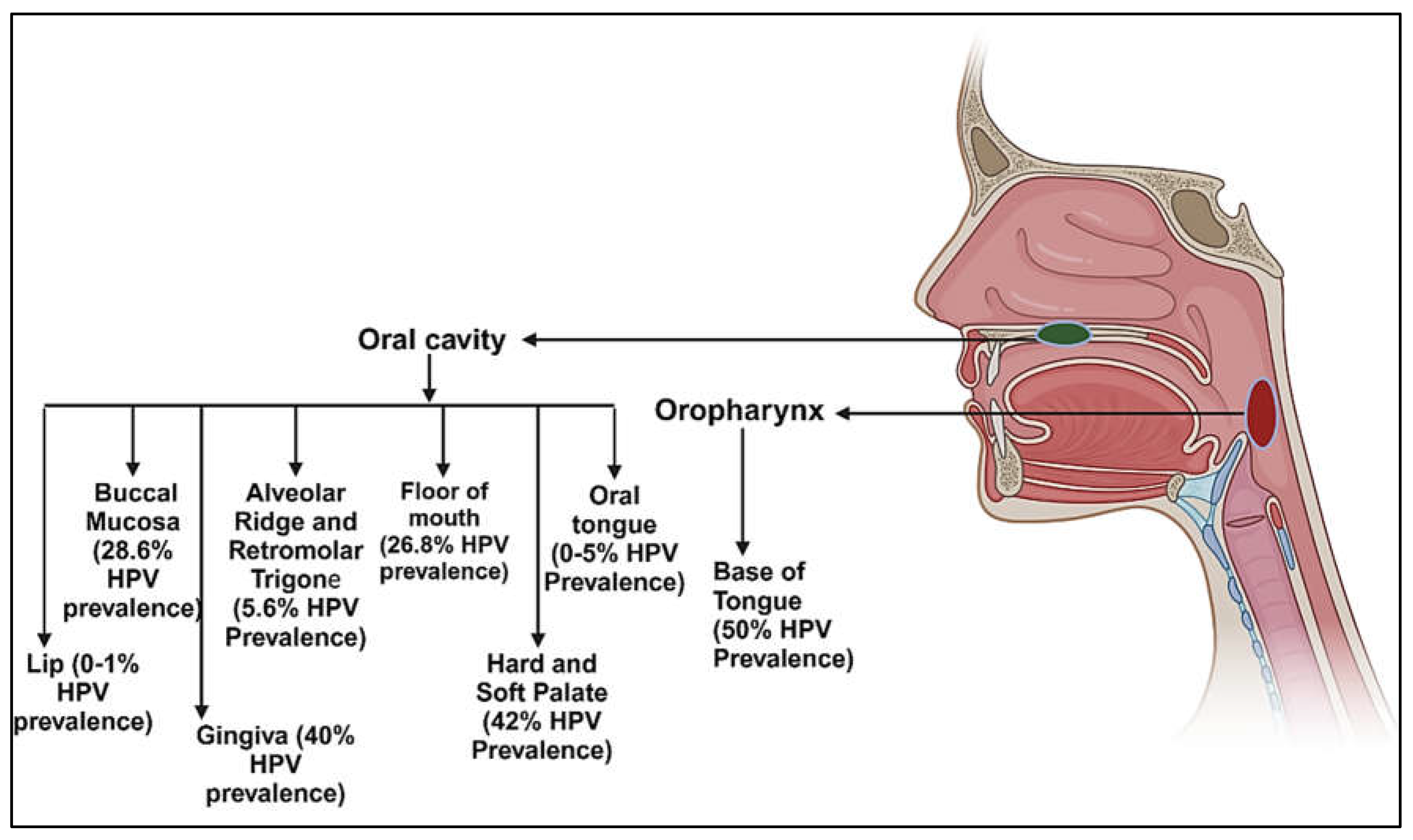
Figure 1. Anatomical regions of the oral cavity and oropharynx, with HPV prevalence percentages highlighted across various subsites.
Preprints 144665 g001
Figure 2. Schematic representation of the HPV-16 genome illustrating its circular double-stranded DNA structure and protein-coding regions. The early region encodes the proteins E1, E2, E4, E5, E6, and E7, which are crucial for viral replication, transcriptional regulation, and oncogenesis. The late region encodes the structural proteins L1 and L2, which form the viral capsid. Key functional domains include zinc-binding CXXC motifs and PDZ-binding motifs in E6, the LXCXE motif in E7, and ATPase and DNA-binding domains in E1. E5 is characterized by three transmembrane domains (TMD), and E4 contains a leucine-rich motif (LLXLL). L1 and L2 are essential for viral particle assembly, with L1 mediating host cell attachment. The upstream regulatory region (URR) regulates viral transcription and replication.
Preprints 144665 g002
Figure 3. The molecular mechanisms through which HPV oncoproteins contribute to carcinogenesis. E5 impairs immune surveillance and promotes epithelial mesenchymal transition (EMT). E6 targets p53 for degradation, evading apoptosis, while E7 inactivates Rb, leading to unrestricted cellular proliferation. The interplay between E1, E2, and the viral genome facilitates viral replication, further promoting oncogenic transformation. These pathways highlight the role of HPV in disrupting cell-cycle regulation and immune response.
Preprints 144665 g003
Figure 4. The progression of HPV-induced carcinogenesis is depicted, beginning with viral entry, followed by stages of hyperplasia, dysplasia, carcinoma in situ, and culminating in invasive carcinoma.
Preprints 144665 g004
Figure 5. The schematic represents the structure of the HPV capsid comprising L1 and L2 proteins. It outlines the recombinant DNA technology used in prokaryotic and eukaryotic systems to produce VLPs, with L1 and L2 monomers assembling into capsomeres, forming VLPs for vaccine development.
Preprints 144665 g005
Figure 6. Historical timeline presents key milestones in the development and approval of various HPV vaccines from 1991 to 2023.
Preprints 144665 g006
Disclaimer/Publisher’s Note: The statements, opinions and data contained in all publications are solely those of the individual author(s) and contributor(s) and not of MDPI and/or the editor(s). MDPI and/or the editor(s) disclaim responsibility for any injury to people or property resulting from any ideas, methods, instructions or products referred to in the content.
Copyright: This open access article is published under a Creative Commons CC BY 4.0 license, which permit the free download, distribution, and reuse, provided that the author and preprint are cited in any reuse.
Prerpints.org logo

Preprints.org is a free preprint server supported by MDPI in Basel, Switzerland.

Subscribe

Disclaimer

Terms of Use

Privacy Policy

Privacy Settings

© 2025 MDPI (Basel, Switzerland) unless otherwise stated