

Submitted:
30 December 2024
Posted:
31 December 2024
You are already at the latest version
Abstract
Teak (Tectona grandis), a globally valued hardwood, is transforming sustainable forestry and carbon credit markets. This study examines drivers of Teak plantation adoption in Ghana's Forest-Savannah Transition Landscape, focusing on reforestation and carbon credit generation. Using the Theory of Planned Behaviour and Partial Least Squares Path Modelling, we analyse economic, social, and practical factors influencing farmer decisions. Findings reveal that Teak's promise of stable income and profitability is a key motivator, making positive economic perceptions critical. Social influences, including government incentives and community pressures, also encourage adoption but are tempered by cultural barriers that hinder implementation. Limited perceived behavioural control, caused by resource constraints and inadequate support, negatively impacts intentions, emphasizing the need to address practical challenges. The interplay between attitudes, subjective norms, and perceived behavioural control shapes Teak's acceptance as a carbon credit source. Closing resource gaps, strengthening community engagement, and framing Teak as both profitable and climate-friendly is essential for overcoming barriers and unlocking its potential. This study calls for innovative policies, targeted incentives, and grassroots engagement to position Teak plantations as a cornerstone of economic resilience and environmental restoration. With these insights, Ghana can take charge of aligning local practices with global climate ambitions.
Keywords:
Tectona grandis
; Carbon credit
; Landscape restoration
; Theory of Planned Behavior
; Partial Least Square
1. Introduction
Teak (Tectona grandis), a high-value hardwood species, has rapidly expanded across over 70 tropical countries in Asia, Africa, Latin America, and Oceania, establishing itself as a cornerstone of sustainable forestry [1]. Its ability to produce high-quality timber and a wide range of economic products, including wood fuel, non-timber forest products, and pulp, underscores its global importance [2,3]. Currently, teak plantation forests span 4.35–6.89 million hectares globally, making it the predominant plantation species in over 20 nations [4].
Despite the declining supply from natural teak forests, plantation-grown Teak holds immense economic and environmental sustainability potential, with demand expected to rise significantly [5]. However, in Ghana, the prevalent practice of short-rotation plantations (less than 20 years) has significant climate implications [6], as it contributes to deforestation [7] and also results in smaller logs that lack the technical attributes of natural Teak and fail to command premium prices [8]. This practice threatens the competitiveness of Ghanaian Teak in international markets, especially for luxury goods that require high-grade timber [9].
Several studies suggest that compensating farmers through carbon credit schemes can incentivize more extended rotation periods, enhancing Teak's value and sustainability [9,10,11,12]. However, knowledge of carbon credits as an alternative income stream remains limited among Ghanaian farmers, particularly in the Forest-Savannah Transition Landscape [13]. Given Ghana's ambition to lead global teak production and champion climate action, understanding the perspectives of rural communities, who mainly depend on forests for their livelihood, regarding Teak as a tool for reforestation and carbon credit generation is essential [14].
This study explores factors influencing farmers' intentions to adopt Teak as a carbon credit source for landscape restoration, leveraging insights from the Theory of Planned Behaviour to examine the interplay of economic, social, and practical factors shaping their adoption decisions. The findings aim to support policies that align environmental restoration with economic sustainability, advancing Ghana's aspirations for sustainable forestry and global climate leadership.
Theoretical background
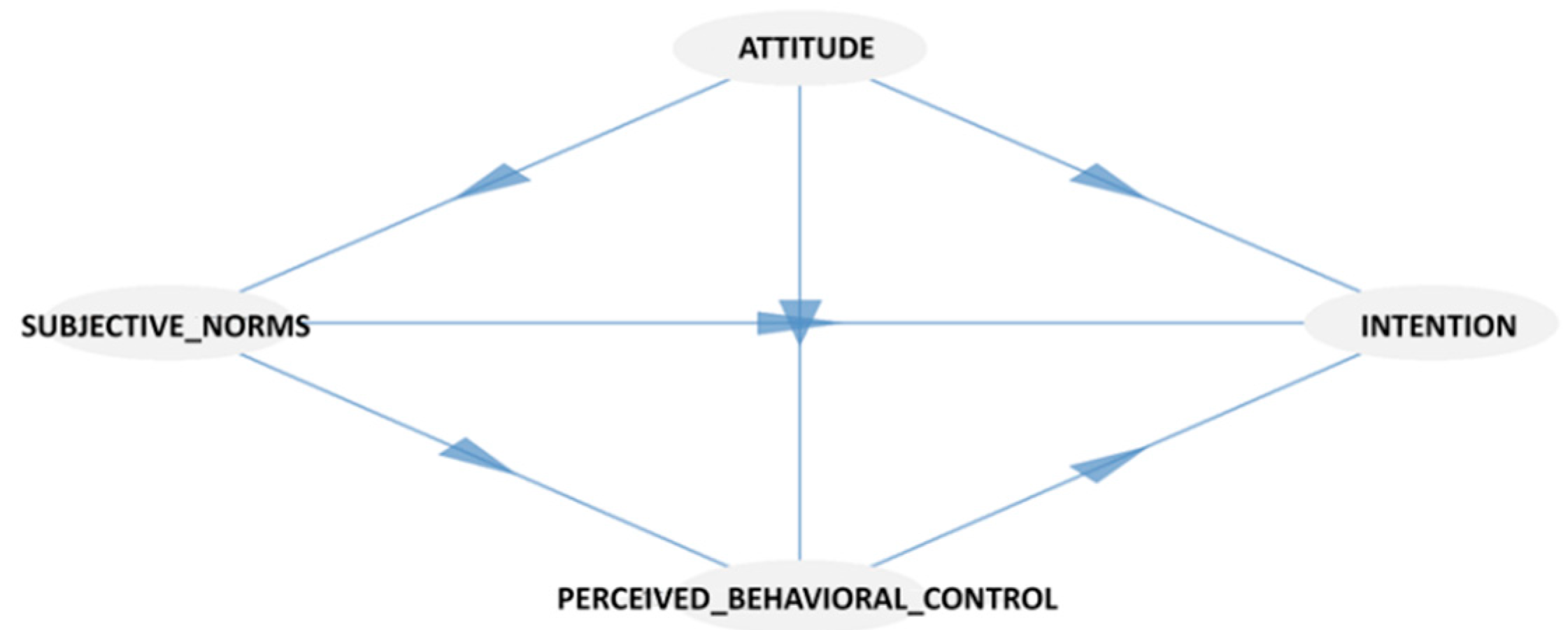
The Theory of Planned Behaviour (TPB) provides a robust framework for examining the factors that shape individuals' behaviours concerning the acceptance of Teak as a carbon credit source and landscape restoration tool. According to [15], behavioural intentions are influenced by attitudes, subjective norms (social pressures), and perceived behavioural control over executing tasks.
TPB has been widely used in environmental sciences to identify the psychological drivers behind various behaviours. For instance, [16] utilized TPB to study farmers' intentions to adopt improved natural grassland. [17] applied it to understand consumer intentions and behaviours towards e-waste recycling. [18] focused on energy conservation, and [19] explored low carbon consumption. More recently, [20] investigated tree-planting behaviour. These studies confirm that TPB is an effective model for predicting behavioural intentions.
In this study, Attitude represents how individuals evaluate their behaviour positively or negatively [21]. Subjective norm is the perceived social pressure to perform or not perform the behaviour, while perceived behavioural control reflects an individual's belief in their capability to execute the behaviour successfully [16]. Our research uses TPB to understand farmers' decision-making process regarding integrating Teak as a carbon credit source on their farms. This approach is appropriate because farmers' decisions about tree integration are likely to be influenced by their attitudes, the opinions and behaviours of those around them, and their perceived ability to implement the practice.
We tested three hypotheses based on the conceptual model:
H1: Attitude positively influences farmers' intention to integrate Teak as a carbon credit source on their farms.
H2: Subjective norm (social pressure) positively influences farmers' intention to integrate Teak on their farms as a carbon credit source.
H3: Perceived behavioural control positively influences farmers' intention to integrate Teak as a carbon credit source on their farms.
Figure 1.
Theory of Planned Behaviour (Adopted from [15]).
Figure 1.
Theory of Planned Behaviour (Adopted from [15]).
2. Materials and Methods
Study Area
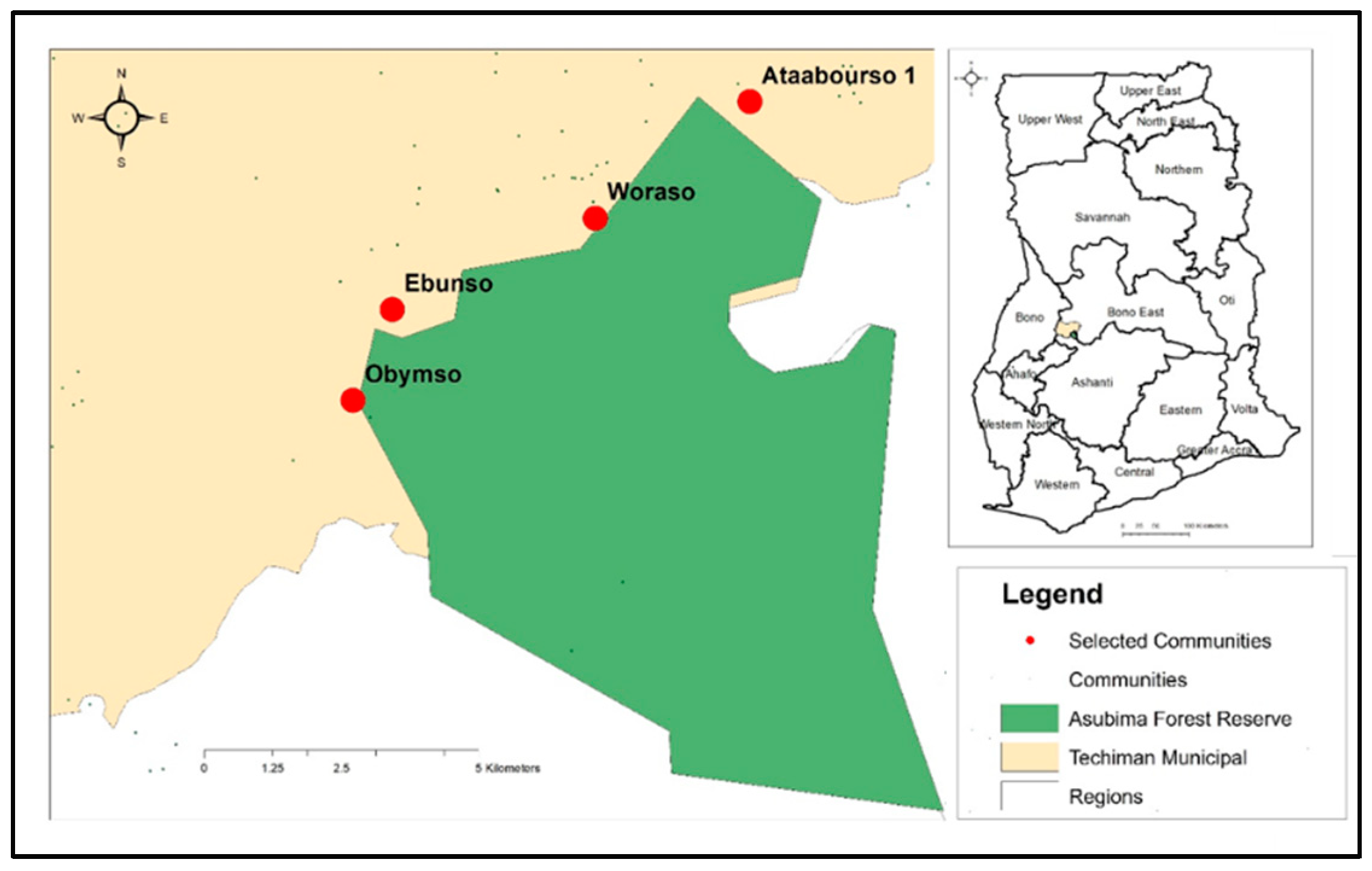
This study was conducted in the Techiman Municipality, located within the Forest-Savannah Transition Landscape of Ghana, as part of the Landscapes and Environmental Agility Across the Nation (LEAN) project. The municipality lies between latitudes 8º 00' N and 7º 35' S and longitudes 1º 49' E and 2º 30' W. It is the second most urbanized area in the Brong-Ahafo region, characterized by a predominantly agricultural economy employing approximately 57% of the labour force [22]. According to the 2021 Population Census of Ghana, the Techiman Municipality has a total population of 243,335, representing 6.4% of the Brong-Ahafo region's population, and spans an area of 669.7 square kilometres [22]. The municipality experiences a semi-equatorial climate, with annual rainfall from 1260 mm to 1600 mm, peaking between April and July. Vegetation within the area consists of semi-deciduous forest in the south, guinea-savanna woodland in the northwest, and a transitional zone covering the south-eastern, western, and northern regions.
Figure 2.
Map of the study area (Author's construct).
Study Design and Data Collection
The study employed a cross-sectional design, gathering primary data through structured questionnaires, and surveys conducted among tree growers and relevant stakeholders. The questionnaire was pre-tested and refined to improve its effectiveness. Respondents provided insights into their perceptions, attitudes, and acceptance of Teak plantations as carbon credit sources and their traditional knowledge and practices associated with teak cultivation.
Study Population and Sampling Techniques
A multi-stage sampling method was adopted. In the first stage, Techiman Municipality was purposively selected due to the predominance of tree-growing activities. Four communities—Ataabourso1, Ebunso, Obymso, and Woraso—were chosen for their proximity to the Asubima Forest Reserve and long-standing interactions with the reserve.
In the second stage, a simple random sampling technique was used to select respondents, including members of the Forest Commission, private plantation farmers, household heads, and other individuals aged 18 or older engaged in farming or deriving benefits from the forest. The sample size was initially calculated using the [23] formula:
where z corresponds to a 95% confidence level (1.96), p is the estimated population proportion (0.5), and e is the margin of error (5%). The computed sample size was 384.16. However, due to practical constraints, including the intensive nature of the questionnaire and varying levels of participant willingness, only 90 respondents participated. Despite the reduced sample size, the data provided diverse and meaningful insights into the target population.
Data Analysis
Quantitative and qualitative methods were used to analyse the data. Primary data were supplemented with secondary sources, including scholarly articles and other relevant literature. Factor analysis was conducted to identify the key variables influencing farmers' intention to adopt Teak as a carbon credit source. Variables were grouped based on eigenvalues greater than one, revealing underlying relationships among complex concepts. This analysis assumed a linear relationship between variables and factors, the absence of multicollinearity, and significant correlations among variables.
Model Specification
The study employed the Partial Least Squares Path Model (PLS-PM) to assess the interrelationships among factors influencing farmers' behavioural intentions. This model utilized constructs from the Theory of Planned Behaviour (TPB)—Attitude, Subjective Norms, and Perceived Behavioural Control—to evaluate psychological motivations for accepting teak plantations as a carbon credit source in landscape restoration efforts. PLS-PM modelling was conducted using R software, providing insights into the socio-economic and demographic factors influencing farmers' decisions.
This mixed-method approach ensured a comprehensive understanding of the dynamics within the Forest-Savannah Transition Landscape, offering a foundation for further research and policy recommendations.
Use of the PLS-PM approach for data analysis
PLP-PM is a model that describes the relationships between latent variables (structural or inner model) and the relationships between the latent variables and their manifest variables (measurement or outer model) with two sets of linear equations [24]. PLS-PM is a combination of both the inner and outer models. Figure 3. reviews the PLS-PM of factors influencing farmers' intention to accept Teak in Landscape restoration initiatives. The complete model is crucial in identifying the key variables, which are the factors influencing farmers' intention to accept Teak in Landscape restoration initiatives. In the model example below (Figure 3), there are four (Attitude, Subjective Norms, Perceived Behavioural Control, and Intention) latent variables (LVs) ξ1, …, ξ4 and their related manifest variables. In the diagram (Figure 3), there is only one exogenous LV (Independent), which is an attitude, and the rest are the endogenous LV (dependent).
A Latent variable (LV) ξ is an unobservable variable (or construct) that is described indirectly by a block of observable variables Xn, often known as Manifest Variables (MVs) or indicators. Manifest variables (MVs) can be directly measured or observed, which is the opposite of the latent variables. Researchers use MVs to analyse and categorise different scientific models. Table 1. provides detailed descriptions of the acronyms used in the measurement instruments based on the Theory of Planned Behaviour.
3. Results
This section provides a detailed analysis of the factors shaping farmers' intentions to adopt Teak as a carbon credit source for landscape restoration. Starting with a detailed factor analysis, it identifies critical determinants and explores latent variables' direct and indirect effects, uncovering complex interrelationships. The unidimensionality of indicators is checked to ensure effective measurement, and the complete model of influencing factors is presented for a comprehensive view. Outer model results highlight the strength and significance of relationships, while structural models are assessed for data representation and critical predictors. The goodness of fit is examined to confirm the model's accuracy, and the inner model's summary encapsulates the core findings and their implications for understanding farmers' intentions.
3.1. Factor analysis of the variables influencing farmers' intention to accept Teak as a carbon credit source
Figure 4 presents a bar chart illustrating the loadings of the variables, indicating the 0.7 acceptable thresholds. According to [25], loadings greater than 0.7 are acceptable. Within the block for ATTITUDE, only two of the eight variables met the acceptable threshold for the model. These variables included: More_stable_income (In your opinion, do you agree that Teak plantations generate more stable income from carbon credits compared to other agricultural activities?), and Economically_advantageous (Compared to different types of plantations, do you find teak plantations economically advantageous for generating income through carbon credits?). In the SUBJECTIVE NORMS block, only three of the eleven variables met the required threshold for the model. These variables were Government_incentives (To what extent do you agree that government incentives make Teak plantations a more attractive option?), Pressure_comm. Leaders (There is pressure from community leaders for you to establish Teak plantations), and Pressure_family (Pressure from family members to develop Teak plantations). For the block PERCEIVED BEHAVIORAL CONTROL, four out of the eight manifest variables met the acceptable threshold, successfully explaining the block. These variables included Support_systems_acces (The support systems are accessible to help me establish and manage a teak plantation) and Local_authority.supp (Local authorities are ready to support you in establishing a Teak plantation), Control_factors (How much control do you feel you have over the factors that influence the success of a Teak plantation?), and Perceive_high_control (To what extent do you agree that if you perceived high control over resources and support, you would establish a Teak plantation?). Lastly, in the INTENTION block, only one of the two manifest variables met the acceptable threshold to explain the latent variable. This variable was Strong_intention_start (How likely will you plant Teak for carbon credit on your farm?). The selected factors that met the acceptable threshold after the factor analysis are presented in Figure 5 with their loading values. All the variables had loadings greater than 0.7, exemplified by ATTITUDE (ATT): More_stable_income (0.778) and Economically_advantageous (0.8177). SUBJECTIVE NORMS (SBN): Government incentives (0.8269), Pressure_comm.leaders (0.9345), and Pressure_family (0.9539). PERCEIVED BEHAVIORAL CONTROL (PBC): Support_systems_acces (0.8943), Local_authority.supp (0.9273), Control_factors (0.8266), and Perceive_high_control (0.7178). INTENTION: Strong_intention_start with a loading of 1. These results are crucial in understanding the key factors influencing farmers' intention to accept Teak in landscape restoration initiatives.
3.2. Direct and Indirect Effects of latent Variables Influencing Farmers' intention to accept Teak as a carbon credit source in landscape restoration initiatives
Table 2 presents the direct and indirect effects of various factors influencing farmers' intention to accept Teak in landscape restoration initiatives. The total effects indicate that Attitude and Subjective Norms had positive direct effects (0.6780346 and 0.3261947, respectively) on farmers' intentions. However, they also exhibited adverse indirect effects (-0.14795690 and -0.16904337, respectively) on farmers intentions.
Conversely, Perceived Behavioural Control demonstrated a negative direct effect (-0.3963715) on farmers' intentions. Additionally, Attitude positively influenced both Subjective Norms and Perceived Behavioural Control directly (0.1895707 and 0.4484383, respectively) and had a positive indirect effect (0.08084755) on Perceived Behavioural Control.
Furthermore, Subjective Norms exhibited a positive direct effect (0.4264771) on Perceived Behavioural Control.
3.3. Validation: Test for Unidimensionality of Indicators
Unidimensionality ensures that the indicators associated with each construct measure the same underlying latent variable, which is critical for model reliability and validity.
Cronbach's alpha (C.alpha) estimation was used to examine the relationships between the variables. Cronbach's alpha is a coefficient that assesses how well a block of indicators measures their corresponding latent construct. A block is acceptable if Cronbach's alpha exceeds 0.7 [26], indicating that the block indicators effectively measure their corresponding latent construct (Table 3).
As shown in Table 3, all the variables met the Cronbach's alpha threshold, with values exceeding 0.7, except for Attitude, which had a Cronbach's alpha of 0.4308324. This suggests that most blocks measure their corresponding manifest variables effectively. Although Attitude did not meet the required Cronbach’s alpha threshold, it met the higher validation test of Dillon-Goldstein’s rho.
The Dillon-Goldstein's rho (DG.rho) is viewed as a better index for assessing model conformity to unidimensionality. A block is deemed unidimensional if the DG.rho is more significant than 0.7. Table 3 indicates that all indicators are acceptable for unidimensionality, as the DG.rho values exceed the 0.7 threshold. This assessment confirms that the latent variables explain the indicators within their blocks well, signifying a robust unidimensional direction.
Furthermore, the eigenvalue metric, which is based on the significance of the first eigenvalue, supports this interpretation. If the first eigenvalue is more significant than one and the second eigenvalue is less than 1, it implies that the block indicator is unidimensional [27,28]. Based on this criterion, all manifest variables are unidimensional (Table 3). Consequently, it is evident that the constructs effectively explain their block indicators (Table 3).
3.4. The complete Model of factors Influencing Farmers' Intention to accept Teak as a carbon credit source in the Landscape Restoration Initiative
As depicted in Figure 6, the complete model comprises inner and outer models, illustrating the associations between the constructs, the latent variables, and their block indicators. Contrary to our hypothesis, Figure 6 reveals that Perceived Behavioral Control exhibited an inverse relationship (-0.3964) with the factors influencing farmers' intention to adopt Teak in landscape restoration initiatives. On the other hand, both Attitude and Subjective Norms demonstrated direct relationships with the factors influencing farmers' intentions, as initially hypothesized.
3.5. Outer model results
The outer model illustrates the relationships between each latent variable and its corresponding indicators. Communalities explain the proportion of variability in an indicator that is accounted for by a latent variable. Specifically, commonalities provide insight into the shared variance between an indicator and its latent variable. A commonality value of 0.5 indicates that the latent construct captures 50% of the variability in the indicator.
The detailed commonalities and loadings are shown in Table 4, illustrating how each manifest variable (Name) explains the latent variable (Block). This comprehensive analysis confirms that the outer model is robust, and the indicators effectively capture the variability in their associated latent constructs.
3.6. Assessment of structural models
The inner model assessing farmers' intention to accept Teak in landscape restoration initiatives reveals that Attitude, Subjective Norms, and Perceived Behavioral Control are significant predictors (Table 7). Structural models derived from the analysis are presented in the following results, with constructs considered vital if they have a p-value of less than 0.05. Table 5. illustrates the relationship between Subjective Norms and Attitude. The findings indicate that Subjective Norms are insignificant in predicting Attitude, as evidenced by a p-value of 0.07352615.
Furthermore, Table 6. demonstrates that Perceived Behavioral Control significantly predicts both Attitude and Subjective Norms, with p-values of 2.848459e-07 and 8.904880e-07, respectively. These results underscore the critical role of Perceived Behavioral Control in influencing both Attitude and Subjective Norms, which in turn impact farmers' intention to accept Teak in landscape restoration initiatives.

Table 5.
Inner model of Subjective norms.
| Estimate | Std. Error | t value | ||
|---|---|---|---|---|
| Intercept | -2.957859e-16 | 0.1046674 | -2.825961e-15 | 1.00000000 |
| Attitude | 1.895707e-01 | 0.1046674 | 1.811172e+00 | 0.07352615 |
Table 6.
Inner model of Perceived behavioural control.
| Estimate | Std. Error | t value | ||
|---|---|---|---|---|
| Intercept | 1.220332e-16 | 0.07911217 | 1.542534e-15 | 1.000000e+00 |
| Attitude | 4.484383e-01 | 0.08057320 | 5.565602e+00 | 2.848459e-07 |
| Subjective norms | 4.264771e-01 | 0.08057320 | 5.293039e+00 | 8.904880e-07 |
Table 7.
Inner Model of Intention.
| Estimate | Std. Error | t value | ||
|---|---|---|---|---|
| Intercept | -2.639805e-17 | 0.08419665 | -3.135285e-16 | 1.000000e+00 |
| Attitude | 6.780346e-01 | 0.09985715 | 6.790045e+00 | 1.371475e-09 |
| Subjective norms | 3.261947e-01 | 0.09859664 | 3.308375e+00 | 1.371535e-03 |
| Perceived behavioural control | -3.963715e-01 | 0.11410163 | -3.473846e+00 | 8.057682e-04 |
The model for factors influencing farmers' intention to accept Teak in landscape restoration initiative is given by:
ATT is Attitude, SBN is Subjective norms, and PBC is Perceived behavioural control.
3.7. Goodness of Fit for the Model
The Goodness of Fit (GoF) value is an essential metric for evaluating the performance of a Partial Least Squares (PLS) model. In assessing the factors influencing farmers' intention to accept Teak in landscape restoration initiatives, the GoF value obtained is 0.4642312. This value indicates a moderate to strong fit, suggesting that the model sufficiently captures the underlying patterns and relationships within the data. A GoF value closer to 1 would indicate a perfect fit, while a value closer to 0 would suggest a poor fit. Therefore, a GoF of 0.4642312 implies that the model is reasonably practical in explaining 46% of the variance in the data. This makes it a reliable tool for understanding the factors influencing farmers' intention to adopt Teak in landscape restoration initiatives.
3.8. Summary of the Inner Model
The summary of the inner model is presented in Table 4.12. All variables have their block communality and Average Variance Extracted (AVE) within the accepted range of more than 0.5, as stipulated by the rule. This indicates that the constructs are adequately measured, thus validating the model.
The validity of the structural model is assessed using the value, which measures the percentage of variance in the endogenous constructs explained by the structural model. Table 4.12 shows that all endogenous constructs have a variance of more than 26%, indicating that the variables exert a significant effect on the Model (Table 8), except Subjective Norms, which have a medium impact of 3.59%, falling within the 2%-12% range. This classification is based on [29] guidelines, which state that in social and behavioural sciences, an 0%-2% is considered a small effect, 2%-12% a medium effect, and 26% and above a significant effect.
4. Discussion
Understanding the variables influencing farmers' intentions to adopt Teak (Tectona grandis) as a source of carbon credits in landscape restoration initiatives is crucial for advancing sustainable forestry practices. The Theory of Planned Behaviour (TPB) framework provides a valuable lens for analysing these motivations, where the constructs of Attitude, Subjective Norms, and Perceived Behavioural Control collectively reveal the factors that shape adoption intentions. After a factor analysis, specific variables emerged as fitting each construct, offering insights into the motivational structure guiding farmers' decisions.
For Attitude, the analysis identified two variables that best aligned with this construct: (1) the belief that Teak plantations generate more stable income from carbon credits compared to other agricultural activities, and (2) the perception that Teak plantations are economically advantageous for generating income through carbon credits. These findings indicate that farmers in Techiman Municipality of Ghana perceive clear financial benefits in adopting Teak plantations. This is particularly important in Ghana, where many rural communities depend on agriculture for their livelihood. This aligns with previous studies, such as [30] and [31], which demonstrate that economic stability provided by carbon credits can significantly enhance farmers’ income, supporting Ghana’s economic development goals. And therefore, the findings suggest that, positive attitudes toward Teak's economic potential could be reinforced through policies that emphasize its profitability in carbon markets, potentially motivating wider adoption.
Regarding Subjective Norms, three variables were found to represent this construct best: (1) government incentives that make Teak plantations a more attractive option, (2) pressure from community leaders to establish Teak plantations, and (3) pressure from family members to adopt Teak plantations. These findings indicate that social influences, including institutional incentives and community expectations, play a substantial role in shaping farmers' intentions. In Ghana, where social structures and community dynamics are critical in decision-making, government incentives can provide formal encouragement, while community and family pressures can amplify adoption tendencies. This highlights the importance of engaging local leaders and communities in promoting Teak plantations. Recognizing these dynamics, effective interventions can benefit from community-based support, making Teak adoption a socially endorsed practice. This reflects insights from [32], who observed that social pressures and community norms are vital determinants in the uptake of sustainable agricultural practices.
For Perceived Behavioural Control, four variables were identified as central to this construct: (1) the accessibility of support systems to help establish and manage Teak plantations, (2) the readiness of local authorities to support plantation efforts, (3) farmers' perceived control over the factors influencing plantation success, and (4) the belief that high control over resources and support would facilitate establishing a Teak plantation. The availability of resources and support systems is crucial for farmers in Ghana, where infrastructure can be a limiting factor. Enhancing these support structures can boost farmers' confidence and willingness to engage in Teak-based carbon credit initiatives. This aligns with Ghana's need to build robust agricultural support systems for the success of sustainable practices. These results suggest that farmers' perceptions of available support and their sense of control over resources significantly impact their decision to pursue Teak plantations. This is consistent with [33], who found that supportive infrastructure and resource availability are critical for successful agricultural adoption. Ensuring active involvement from local authorities and increasing support structures could empower farmers, boosting their confidence and willingness to engage in Teak-based carbon credit initiatives.
Therefore, the constructs of Attitude, Subjective Norms, and Perceived Behavioural Control each reveal different but interrelated motivations for Teak adoption. The findings highlight the critical role of financial incentives, social influence, and accessible support systems in shaping farmers' intentions to adopt Teak as a sustainable and profitable carbon credit source in landscape restoration. Emphasising these factors in policy interventions can create an environment conducive to broader adoption, advancing economic and ecological sustainability.
The study examined various latent variables' direct and indirect effects on farmers' intentions to accept Teak (Tectona grandis) as a carbon credit source in landscape restoration initiatives. These findings are instrumental in understanding the dynamics of farmers' decision-making processes and aligning them with the study's hypotheses. The direct effect of Attitude on farmers' intentions was significantly positive (0.6780346), supporting hypothesis 1. This finding aligns with the Theory of Planned Behaviour [34], which posits that a favourable attitude toward a behaviour enhances the intention to engage. Farmers who perceive Teak plantations as economically beneficial and a source of stable income are more inclined to adopt this practice. The positive relationship reinforces the hypothesis that attitudes towards Teak plantations directly influence the intention to integrate them on farms. However, the negative indirect effect (-0.14795690) suggests that while the overall perception is favourable, underlying challenges might hinder the full realization of this intention. These could include practical difficulties or unanticipated barriers that must be addressed to maximize the positive impact of favourable attitudes.
The direct positive effect of Subjective Norms (0.3261947) on farmers' intentions substantiates hypothesis 2. This indicates that social pressures and community expectations significantly impact farmers' decisions. Farmers who face pressure from community leaders' family members and benefit from government incentives are likelier to consider teak plantations. This is consistent with findings from [35], which emphasise the role of social norms in agricultural decision-making.
Interestingly, the negative indirect effect of Subjective Norms (-0.16904337) indicates potential social or cultural barriers that may impede the adoption of Teak despite positive social influences. These barriers might include scepticism or resistance to change within the community, suggesting that simply having positive social pressure is not enough; addressing underlying cultural perceptions is also crucial. In Ghana, traditional practices and community norms play a significant role in decision-making. Overcoming these cultural barriers requires targeted interventions that consider the local context and actively engage community leaders to shift perceptions.
Perceived Behavioural Control showed a negative direct effect (-0.3963715) on farmers' intentions, contradicting hypothesis 3. This suggests that farmers perceive significant constraints in successfully establishing and managing Teak plantations, such as limited access to resources, support systems, or regulatory hurdles. This finding is crucial for Ghana, as it highlights that, despite recognizing the benefits, farmers cannot execute these practices effectively due to infrastructural and regulatory challenges. Enhancing perceived behavioural control by providing better support and resources, such as access to financing, technical assistance, and streamlined regulatory processes, is essential to mitigate these constraints and facilitate adoption.
The positive indirect effect of Attitude on Perceived Behavioural Control (0.08084755) implies that while farmers realize the potential benefits of Teak plantations, their perceived lack of control over necessary resources and support hinders their intention. This further emphasizes the need for robust support systems in Ghana to empower farmers. Ensuring that farmers have access to the necessary resources will not only improve their perceptions of control but also increase their likelihood of adopting Teak plantations.
The analysis also revealed that Attitude directly influences both Subjective Norms (0.1895707) and Perceived Behavioural Control (0.4484383), indicating that favourable attitudes can enhance social approval and increase perceived control over adoption. Furthermore, Subjective Norms demonstrated a positive direct effect (0.4264771) on Perceived Behavioural Control, highlighting the interconnectedness of these variables. These findings suggest that interventions should focus on improving attitudes, leveraging social dynamics, and enhancing perceived control to foster broader adoption of Teak plantations. In Ghana, this means developing policies that reinforce the economic advantages of Teak plantations, engaging community leaders to support adoption, and enhancing infrastructure and resources to support farmers. These findings suggest that interventions should focus on improving attitudes, leveraging social dynamics, and enhancing perceived control to foster broader adoption of Teak plantations.
The findings validate the first two hypotheses, showing that positive attitudes and social norms significantly influence farmers' intentions to adopt Teak as a carbon credit source. However, the third hypothesis is not supported, as perceived behavioural control negatively impacts intentions. This highlights the complexity of adoption behaviours and the need for a multifaceted approach that includes improving attitudes, leveraging social influences, and addressing perceived control barriers. Policymakers and stakeholders should design comprehensive strategies that address these variables holistically to promote sustainable forestry practices and enhance economic and environmental resilience.
5. Conclusions
Farmers' perceptions of Teak plantations are predominantly driven by economic considerations, with positive attitudes towards Teak's economic benefits influencing their intentions to adopt it. While economic perceptions are crucial, social dynamics—such as community expectations, leader influence, and government incentives—also significantly impact decisions to adopt Teak for landscape restoration. However, cultural barriers and scepticism could induce significant challenges to adoption, even when social pressures are favourable. Farmers often face limited perceived behavioural control due to resource constraints and lack of support, highlighting the need for robust support systems to address practical challenges and strengthen farmers' capacity to implement teak plantations effectively. The interconnectedness of attitudes, subjective norms, and perceived control further suggests that fostering positive perceptions of Teak can enhance social approval and confidence in adoption practices. Overall, the study emphasises the necessity for multifaceted approaches combining economic incentives, resource support, and targeted educational initiatives to successfully integrate Teak as a carbon credit source. By addressing individual perceptions and community-level barriers, policymakers and stakeholders can better align local farming practices with global climate goals, making Teak an effective tool for carbon credits and sustainable landscape restoration in Ghana.
Author Contributions
Conceptualization, Emmanuel Sackey, Paul Kwakwa and Mercy Derkyi; Data curation, Emmanuel Sackey; Formal analysis, Emmanuel Sackey; Funding acquisition, Mercy Ansah; Investigation, Emmanuel Sackey; Methodology, Emmanuel Sackey and Paul Kwakwa; Project administration, Mercy Derkyi; Resources, Mercy Ansah; Software, Emmanuel Sackey; Supervision, Paul Kwakwa and Mercy Derkyi; Validation, Emmanuel Sackey, Paul Kwakwa and Mercy Derkyi; Visualization, Emmanuel Sackey; Writing – original draft, Emmanuel Sackey; Writing – review & editing, Paul Kwakwa and Mercy Derkyi. All authors have read and agreed to the published version of the manuscript.
Funding
This research was funded by Tropenbos Ghana and Ecocare Ghana.
Conflicts of Interest
The authors declare no conflicts of interest. The funders played a minor role in the study's design and results publishing. They also assisted in organizing presentations for the critical review of the results but had no role in the collection, analysis, or interpretation of data or the writing of the manuscript.
References
- Prasetyo, E.; Widiyatno, I. S.; Na’iem, M.; Matsui, T.; Matsuo, A.; Tsumura, Y. Genetic Diversity and the Origin of Commercial Plantation of Indonesian Teak on Java Island. Tree Genet. Genomes 2020, 16, 34. [Google Scholar] [CrossRef]
- Kollert, W.; Kleine, M. The Global Teak Study. Analysis, Evaluation, and Future Potential of Teak Resources. 2017, 99-pp.
- Food and Agriculture Organization (FAO) of the United Nations. The State of the World's Forest Genetic Resources; FAO: Rome, 2014. [Google Scholar]
- Kasetsart University (KU); International Tropical Timber Organization (ITTO); TEAKNET. Teak in the Mekong for a Sustainable Future; KU: Bangkok, Thailand, ITTO: Yokohama, Japan, Eds.; TEAKNET: Kerala, India, 2022; 359 p. [Google Scholar]
- Dadzie, P. K.; Appiah-Kubi, E. Nexus of Short Rotation Plantation Tree Acceptance, Investor Attraction, and Environmental Sustainability: The Case of Physical and Mechanical Properties of Plantation Teak for Structural Application. Int. J. Innov. Dev. 2024, 1. Retrieved from https://ijid.kstu.edu.gh/index.php/ijid/article/view/29.
- Schulze, K.; Malek, Ž.; Schepaschenko, D.; Lesiv, M.; Fritz, S.; Verburg, P. H. Pantropical Distribution of Short-Rotation Woody Plantations: Spatial Probabilities under Current and Future Climate. Mitig. Adapt. Strateg. Glob. Change 2023, 28, 28. [Google Scholar] [CrossRef]
- Hillsdon, M. The Controversial Plan to Pay for Restoring Brazil's Degraded Lands with Eucalyptus Earnings. Reuters, December 20, 2024. [Online] Available: https://www.reuters.com/sustainability/land-use-biodiversity/controversial-plan-pay-restoring-brazils-degraded-lands-with-eucalyptus-earnings-2024-12-20/. Accessed Dec 21, 2024.
- Navarro, G. A.; Vieto Morales, R. International Prices for Teak: Historical and Current, and Price Forecasts. CATIE: Turrialba, Costa Rica, 2010; 44 p.
- Kumeh, E. M.; Kyereh, B.; Asante, J.; Ohene-Gyan, G.; Nassah, V. F.; Asare, A.; Nketiah, S. K. Retooling Incentive Mechanisms for Influential Smallholder Tree Growers' Contributions to Global Landscape Restoration. Dev. Pract. 2023, 33, 94–109. [Google Scholar] [CrossRef]
- Hermudananto, H.; Permadi, D. B.; Septiana, R. M.; Riyanto, S.; Pratama, A. A. Adoption of Agroforestry-Pouring Model for Land Utilization under Teak Stands. J. Pengabdi. Kpd. May 2019, 5, 416–436. [Google Scholar]
- Newby, J.; Cramb, R.; Sakanphet, S. Forest Transitions, and Rural Livelihoods: Multiple Pathways of Smallholder Teak Expansion in Northern Laos. Land 2014, 3, 482–503. [Google Scholar] [CrossRef]
- Srinivasan, S. Economic Valuation and Option-Based Payments for Ecosystem Services. Mitig. Adapt. Strateg. Glob. Change 2015, 20, 1055–1077. [Google Scholar] [CrossRef]
- Narh, J. Progress, Challenges and Prospects of the Modified Taungya System in Ghana. Agrofor. Syst. 2024, 1–16. [Google Scholar] [CrossRef]
- Ghana Is Anticipating Becoming the Optimum Producer of Teak in the World. 2022, September 7. Retrieved June 13, 2024, from https://agrictoday.com.gh.
- Buyinza, J.; Nuberg, I. K.; Muthuri, C. W.; Denton, M. D. Psychological Factors Influencing Farmers' Intention to Adopt Agroforestry: A Structural Equation Modeling Approach. J. Sustainable For. 2020, 39, 854–865. [Google Scholar] [CrossRef]
- Borges, J. A. R.; Lansink, A. G. O. Identifying Psychological Factors That Determine Cattle Farmers' Intention to Use Improved Natural Grassland. J. Environ. Psychol. 2016, 45, 89–96. [Google Scholar] [CrossRef]
- Echegaray, F.; Hansstein, F. V. Assessing the Intention-Behavior Gap in Electronic Waste Recycling: The Case of Brazil. J. Clean. Prod. 2017, 142, 180–190. [Google Scholar] [CrossRef]
- Allen, S.; Marquart-Pyatt, S. T. Workplace Energy Conservation at Michigan State University. Int. J. Sustain. High. Educ. 2018, 19, 114–129. [Google Scholar] [CrossRef]
- Jiang, X.; Ding, Z.; Liu, R. Can Chinese Residential Low-Carbon Consumption Behavior Intention Be Better Explained? The Role of Cultural Values. Nat. Hazards 2019, 95, 155–171. [Google Scholar] [CrossRef]
- Ibrahim, F. M.; Aderounmu, A. F.; Akintola, O.O. Examining the Socio-Psychological Predictors of Tree-Planting Behaviour Using the Theory of Planned Behaviour: A Study of a Cohort of Nigerian Urban Workers. Urban For. Urban Green. 2022, 69, 127509. [Google Scholar] [CrossRef]
- Bosnjak, M.; Ajzen, I.; Schmidt, P. The Theory of Planned Behavior: Selected Recent Advances and Applications. Eur. J. Psychol. 2020, 16, 352. [Google Scholar] [CrossRef] [PubMed]
- Ghana Statistical Service. Population and Housing Census 2021 (PHC 2021), Version 1.0 of the public use dataset (December 2011), provided by the Ghana Statistical Service. www.statsghana.gov.gh, 2021.
- Flight, L.; Julius, S. A. Practical Guide to Sample Size Calculations: Non-Inferiority and Equivalence Trials. Pharm. Stat. 2016, 15, 80–89. [Google Scholar] [CrossRef] [PubMed]
- Lauro, N. C.; Grassia, M. G.; Cataldo, R. Model Based Composite Indicators: New Developments in Partial Least Squares-Path Modeling for the Building of Different Types of Composite Indicators. Soc. Indic. Res. 2018, 135, 421–455. [Google Scholar] [CrossRef]
- Sanchez, G. PLS Path Modeling with R; Trowchez Editions: 2013.
- Henseler, J.; Hubona, G.; Ray, P. A. Partial Least Squares Path Modeling: Updated Guidelines. In Partial Least Squares Path Modeling: Basic Concepts, Methodological Issues and Applications; Latan, H., Noonan, R., Eds.; 2017.
- Tenenhaus, M.; Vinzi, V. E.; Chatelin, Y. M.; Lauro, C. PLS Path Modeling. Comput. Stat. Data Anal. 2005, 48, 159–205. [Google Scholar] [CrossRef]
- Sahmer, K.; Hanafi, M.; El Qannari, M. Assessing Unidimensionality within PLS Path Modeling Framework. In From Data and Information Analysis to Knowledge Engineering: Proceedings of the 29th Annual Conference of the Gesellschaft für Klassifikation eV, University of Magdeburg, March 9–11, 2005; Springer Berlin Heidelberg: Berlin, Heidelberg, 2006; pp. 222–229. [Google Scholar]
- Cohen, J. Set Correlation and Contingency Tables. Appl. Psychol. Meas. 1988, 12, 425–434. [Google Scholar] [CrossRef]
- Agbelusi, J.; Arowosegbe, O. B.; Alomaja, O. A.; Odunfa, O. A.; Ballali, C. Strategies for Minimizing Carbon Footprint in the Agricultural Supply Chain: Leveraging Sustainable Practices and Emerging Technologies. World J. Adv. Res. Rev. 2024, 23, 2625–2646. [Google Scholar] [CrossRef]
- Rizzo, G.; Migliore, G.; Schifani, G.; Vecchio, R. Key Factors Influencing Farmers' Adoption of Sustainable Innovations: A Systematic Literature Review and Research Agenda. Org. Agric. 2024, 14, 57–84. [Google Scholar] [CrossRef]
- Gemtou, M.; Kakkavou, K.; Anastasiou, E.; Fountas, S.; Pedersen, S. M.; Isakhanyan, G.; Pazos-Vidal, S. Farmers' Transition to Climate-Smart Agriculture: A Systematic Review of the Decision-Making Factors Affecting Adoption. Sustainability 2024, 16, 2828. [Google Scholar] [CrossRef]
- Bahari, M.; Arpaci, I.; Der, O.; Akkoyun, F.; Ercetin, A. Driving Agricultural Transformation: Unraveling Key Factors Shaping IoT Adoption in Smart Farming with Empirical Insights. Sustainability 2024, 16, 2129. [Google Scholar] [CrossRef]
- Ajzen, I. The Theory of Planned Behavior: Frequently Asked Questions. Hum. Behav. Emerg. Technol. 2020, 2, 314–324. [Google Scholar] [CrossRef]
- Rose, D. C.; Keating, C.; Morris, C. Understanding How to Influence Farmers' Decision-Making Behaviour: A Social Science Literature Review. 2018.
Figure 3.
Hypothesis of factors influencing farmers' acceptance of Teak.
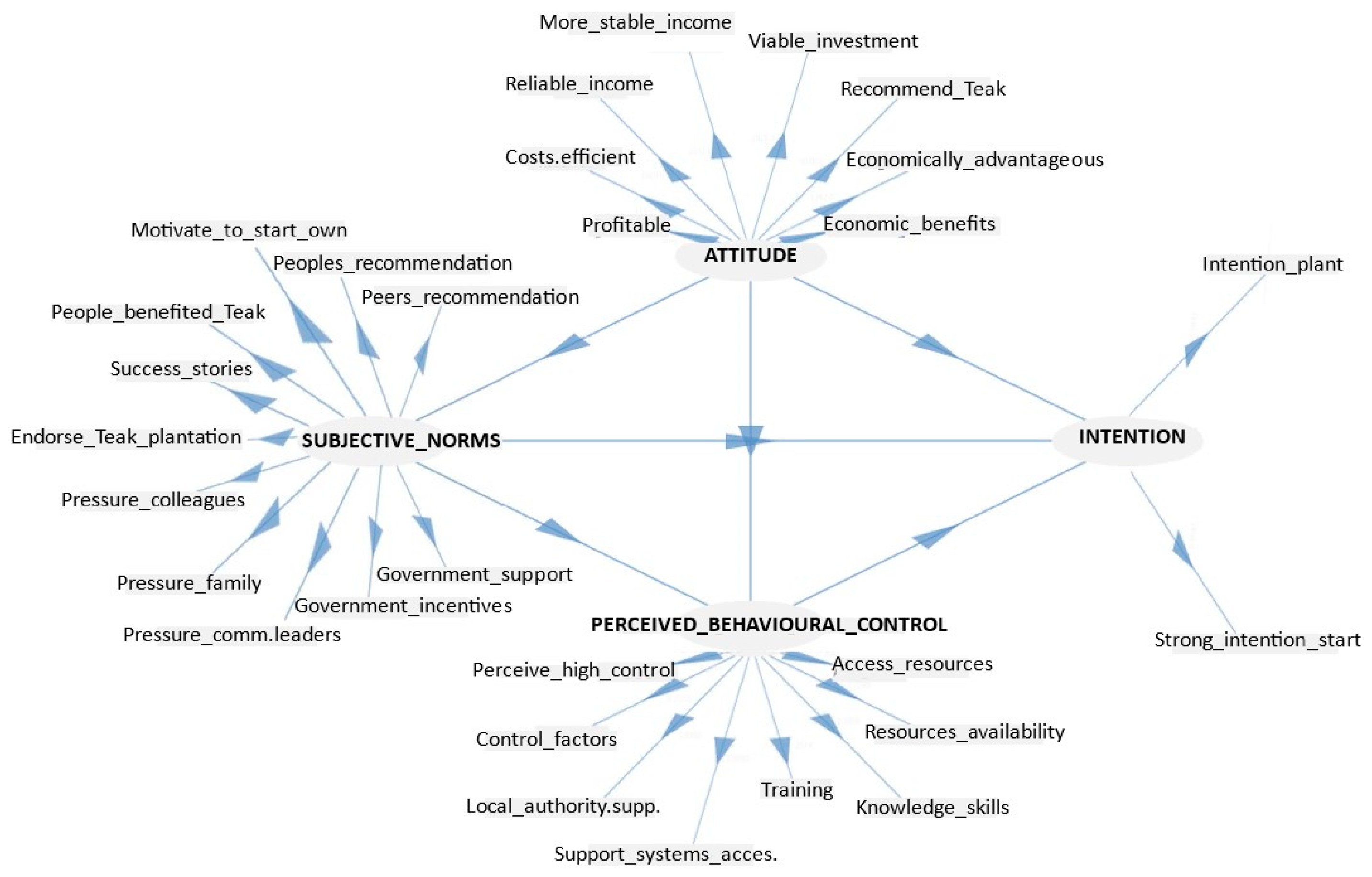
Figure 4.
Barchart of factor analysis indicating the 0.7 threshold.
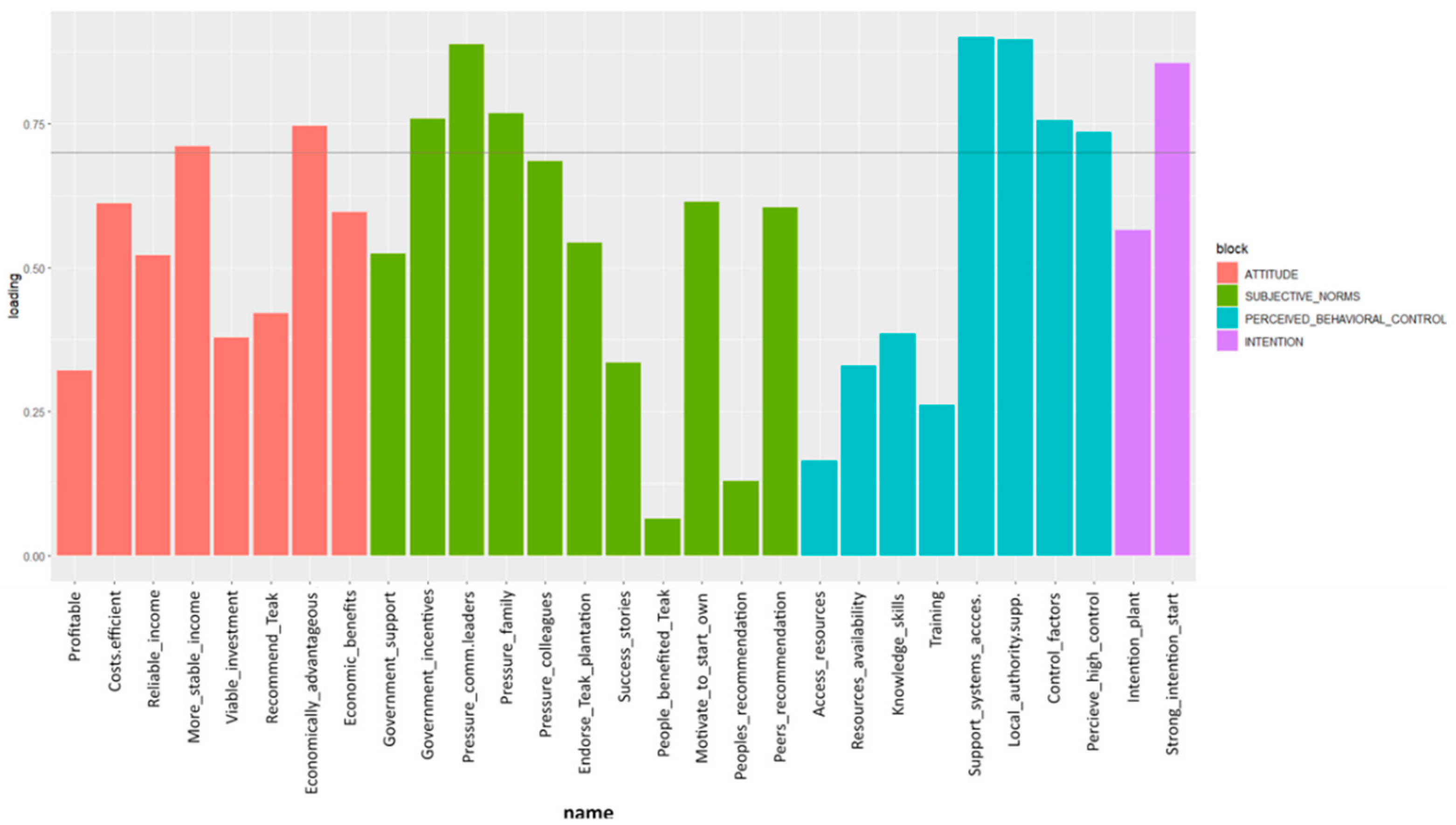
Figure 5.
Loading analysis of the selected variables that have passed the acceptable threshold.
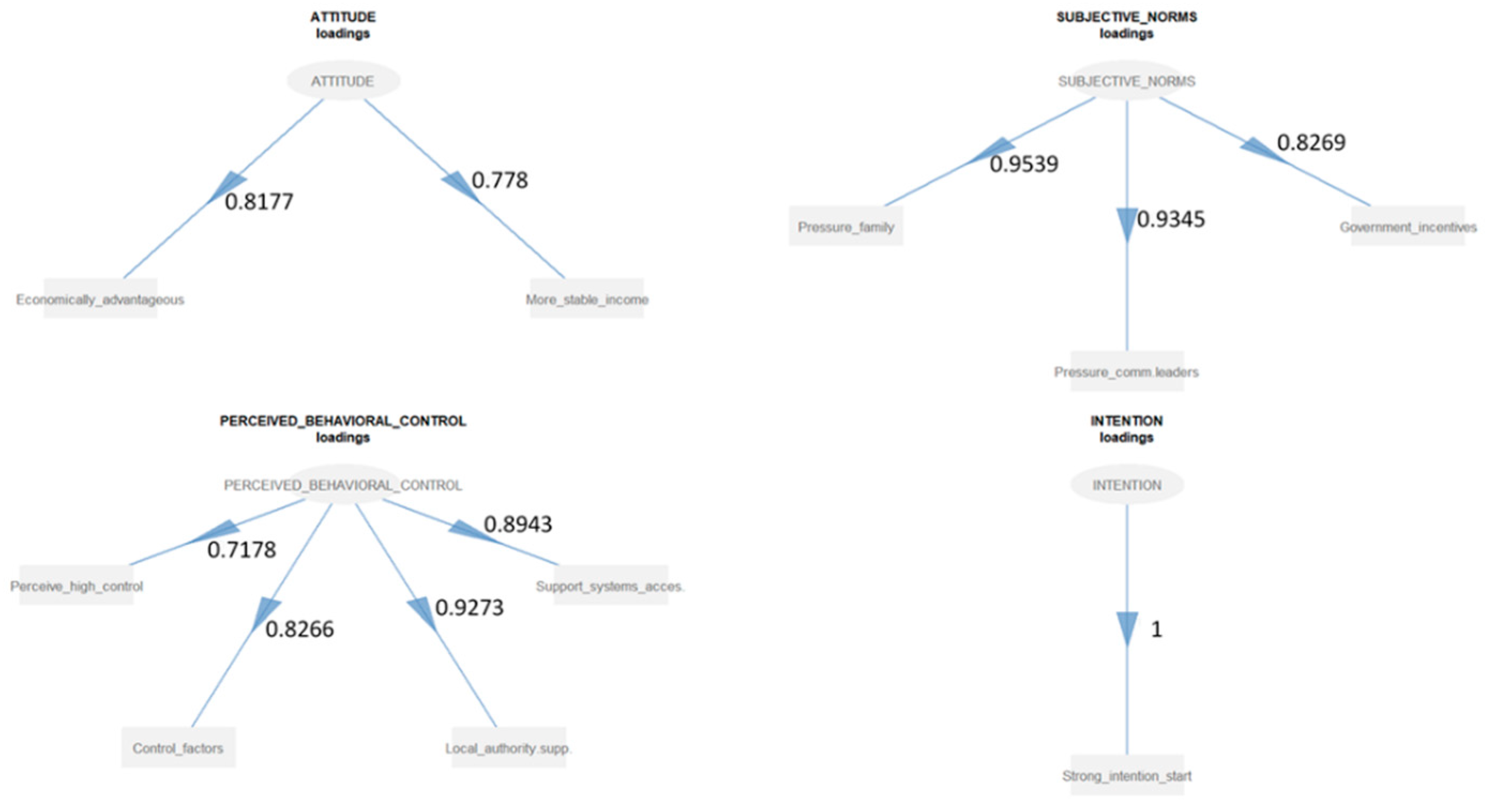
Figure 6.
Complete model depicting the factors influencing farmers' intention to accept Teak in landscape restoration initiatives.
Figure 6.
Complete model depicting the factors influencing farmers' intention to accept Teak in landscape restoration initiatives.
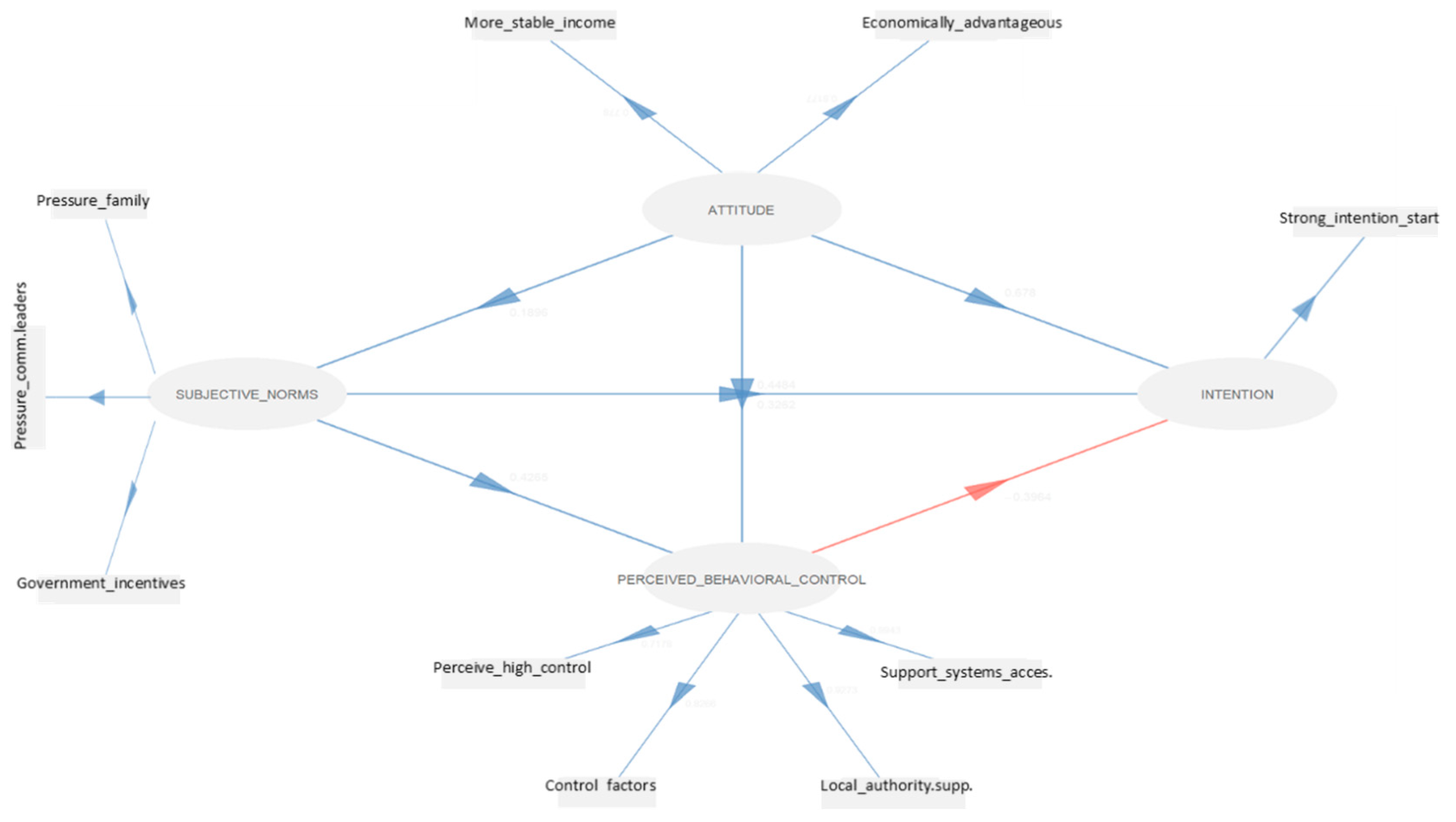
Table 1.
Measurement Instruments using the Theory of Planned Behaviour.
| Latent variables | Abbreviations | Manifest variables |
|---|---|---|
| Attitude | Profitable | Establishing Teak plantations as a carbon credit source is profitable |
| Costs. efficient | Profits from Teak plantations outweigh the costs involved in their establishment and maintenance. | |
| Reliable_income | Teak plantations provide a reliable source of income through carbon credits. | |
| More_stable_income | Teak plantations generate more stable income from carbon credits than other agricultural activities. | |
| Viable_investment | Teak plantations are a viable economic investment for farmers. | |
| Recommend_Teak | I recommend Teak plantations to other farmers as a source of income through carbon credits. | |
| Economically_advantageous | Teak plantations are economically advantageous for generating income through carbon credits compared to other plantations. | |
| Economic_benefits | Economic benefits of Teak plantations justify the initial investment. | |
| Subjective norms | Government_support | Government support for the Teak plantation |
| Government_incentives | Government incentives make Teak plantations a more attractive option. | |
| Pressure_comm.leaders | There is pressure from community leaders for Teak plantation establishment. | |
| Pressure_family | There is pressure from family members for Teak plantation establishment. | |
| Pressure_colleagues | There is pressure from colleagues to do a Teak plantation. | |
| Endorse_Teak_plantation | If community leaders endorse teak plantations, more farmers will be encouraged to adopt teak plantation practices. | |
| Success_stories | Some people have successfully done Teak plantation. | |
| People_benefited_Teak | Some people have benefited from Teak plantations. | |
| Motive_to_start_own | Seeing other farmers successfully managing teak plantations would motivate me to start my own. | |
| Peoples_recommendation | I will likely follow the advice of other farmers who have established Teak plantations. | |
| Peers_recommendation | Success stories of peers with Teak plantations influence decision-making regarding establishing Teak plantations. | |
| Perceived behavioural control | Access_resources | Easy access to necessary resources (e.g., land, seedlings, equipment) to establish a teak plantation. |
| Resources_availability | Resource availability would significantly influence my ability to establish a Teak plantation. | |
| Knowledge_skills | I am confident in my knowledge and skills to manage a Teak plantation effectively. | |
| Training | I have acquired enough training to do a Teak plantation. | |
| Support_systems_acces. | I can access support systems (e.g., government assistance and agricultural extension services) to help me establish and manage a teak plantation. | |
| Local_authority.supp. | Local authorities are ready to support me in planting a teak plantation. | |
| Control_factors | I have control over the factors that influence the success of a Teak plantation. | |
| Perceive_high_control | If I perceive high control over resources and support, I will establish a Teak plantation. | |
| Intention | Intention_plant | I intend to plant Teak on my farm as a Carbon Credit source |
| Strong_intention_start | I will plant Teak for Carbon Credit on my farm. |
Table 2.
Direct and Indirect Effects of the Latent Variables.
| Effect | Direct | Indirect | Total |
|---|---|---|---|
| Attitude → Subjective norms | 0.1895707 | 0.0000000 | 0.1895707 |
| Attitude → Perceived Behavioral Control | 0.4484383 | 0.08084755 | 0.5292859 |
| Attitude → Intention | 0.6780346 | -0.14795690 | 0.5300777 |
| Subjective norms → Perceived Behavioral Control | 0.4264771 | 0.0000000 | 0.4264771 |
| Subjective norms → Intention | 0.3261947 | -0.16904337 | 0.1571513 |
| Perceived Behavioral Control → Intention | -0.3963715 | 0.0000000 | -0.3963715 |
Table 3.
Unidimensionality metric for every set of indicators.
| Indicator | Mode | MV's | C.alpha | DG.rho | eig.1st | eig.2nd |
|---|---|---|---|---|---|---|
| Attitude | A | 2 | 0.4308324 | 0.7784622 | 1.274561 | 0.7254389 |
| Subjective norms | A | 3 | 0.8912774 | 0.9330874 | 2.470135 | 0.4181654 |
| Perceived behavioural control | A | 4 | 0.8661255 | 0.9096446 | 2.867051 | 0.5787160 |
| Intention | A | 1 | 1.0000000 | 1.0000000 | 1.0000000 | 0.0000000 |
Table 4.
Outer model results.
| Name | Block | Weight | Loading | Communality | Redundancy |
|---|---|---|---|---|---|
| More_stable_income | Attitude | 0.5986 | 0.7780 | 0.6053 | 0.0000 |
| Economically_advantageous | Attitude | 0.6534 | 0.8177 | 0.6687 | 0.0000 |
| Government_incentives | Subjective norms | 0.3144 | 0.8269 | 0.6837 | 0.0246 |
| Pressure_comm.leaders | Subjective norms | 0.3195 | 0.9345 | 0.8732 | 0.0314 |
| Pressure_family | Subjective norms | 0.4628 | 0.9539 | 0.9100 | 0.0327 |
| Support_systems_acces. | Perceived behavioural control | 0.3412 | 0.8943 | 0.7998 | 0.3643 |
| Local_authority.supp. | Perceived behavioural control | 0.3768 | 0.9273 | 0.8599 | 0.3917 |
| Control_factors | Perceived behavioural control | 0.2458 | 0.8266 | 0.6832 | 0.3112 |
| Perceive_high_control | Perceived behavioural control | 0.1983 | 0.7178 | 0.5153 | 0.2347 |
| Strong_intention_start | Intention | 1.0000 | 1.0000 | 1.0000 | 0.3903 |
Table 8.
Summary of the Inner Model.
| Variable | Type | Block_Communality | Mean_Redundancy | AVE | |
|---|---|---|---|---|---|
| Attitude | Exogenous | 0.0000 | 0.6370 | 0.0000 | 0.6370 |
| Subjective norms | Endogenous | 0.0360 | 0.8223 | 0.0296 | 0.8223 |
| Perceived behavioural control | Endogenous | 0.4555 | 0.7145 | 0.3255 | 0.7146 |
| Intention | Endogenous | 0.3903 | 1.0000 | 0.3903 | 1.0000 |
Disclaimer/Publisher’s Note: The statements, opinions and data contained in all publications are solely those of the individual author(s) and contributor(s) and not of MDPI and/or the editor(s). MDPI and/or the editor(s) disclaim responsibility for any injury to people or property resulting from any ideas, methods, instructions or products referred to in the content. |
© 2024 by the authors. Licensee MDPI, Basel, Switzerland. This article is an open access article distributed under the terms and conditions of the Creative Commons Attribution (CC BY) license (http://creativecommons.org/licenses/by/4.0/).
Copyright: This open access article is published under a Creative Commons CC BY 4.0 license, which permit the free download, distribution, and reuse, provided that the author and preprint are cited in any reuse.


