Preprint
Communication

This version is not peer-reviewed.

Green Hydrogen Initiatives for Sustainable Economic Development in Sri Lanka: A View from Global Policy Communication

Submitted:

26 December 2024

Posted:

26 December 2024

You are already at the latest version

Abstract

Sri Lanka is exploring sustainable energy solutions to meet increasing energy demands through mitigating the impact of climate change. The present heavy reliance on imported fossil fuels by the country makes it vulnerable to global price fluctuations and supply disruptions in global geopolitical changes. As a pre-merging economy, Sri Lanka stands to benefit significantly from adopting the regulatory frameworks, including the sound policies focused on green hydrogen, despite it being in the initial stage of basic research in the country but having the potential to climb to the R&D economic contribution on a long-term basis. Promoting a hydrogen economy within a robust policy framework and incentives can enable job creation, attract direct foreign investment, and thereby foster innovation in clean energy technologies. Transitioning to green hydrogen has a strong promise to position Sri Lanka as a proactive player in the global shift towards sustainability in the economies. The implications of sound policies to harness the green hydrogen spillovers and spinoffs are not only a strategic imperative but also a pathway to ensuring a resilient and prosperous future for the nation.

Keywords: 
;  ;  ;  ;  ;  ;  ;  
Subject: 
Social Sciences  -   Other

Introduction

Sustainable economic development plays a crucial role in meeting human demand in the competitive world while practicing the balance between environmental and social considerations. The shift in environmental, economic, societal, and geopolitical perspectives towards sustainability is pressing the global energy need for clean energy. As the world struggles with the growing consequences of climate change, resource depletion, and environmental degradation, switching to clean energy has become crucial to sustainable development. Clean energy, derived from renewable, zero-emission sources like solar, wind, and hydropower, is highly considered for creating a sustainable future by mitigating climate change while ensuring global energy security and economic stability (Silva et al., 2024).
Hydrogen energy is emerging as a center of interest in the sector of global clean energy generation over other sources for its prominent properties of vast storage capacity, effectiveness, renewability, cleanliness, wide distribution, high conversion, absence of pollutants, and versatility, to name a few. Its role in decarbonizing carbon-emitted sectors, enhancing energy security, and promoting economic growth is crucial as countries navigate the transition to a low-carbon economy in response to climate challenges (Sharma et al., 2023).
The hydrogen gas produced by several industrial methods, in particular the green hydrogen that is produced via renewable-powered electrolysis of water, is crucial for a sustainable, low-carbon future and clean burning properties. Green hydrogen is used globally in diverse sectors, including in powering fuel cell vehicles for zero-emission transport, decarbonizing industrial processes such as steel and ammonia production, stabilizing grids, storing renewable energy, and providing clean heating for residential and commercial buildings (HydrogenCouncil, 2017; Nnabuife et al., 2024) (Figure 1).
Figure 1. Global Hydrogen Demand projection; Credit - (HydrogenCouncil, 2017).
In the Global North, Germany, Japan, and the United States are increasingly turning to green hydrogen as a central strategy to reduce carbon emissions and advance sustainable energy solutions (Panchenko et al., 2023). This shift is evident across diverse sectors: in transportation, they lead in hydrogen fuel cell vehicles, supported by ventures such as H2 Mobility for extensive refueling networks in Germany (Trencher & Edianto, 2021). Industries like steel and chemicals globally integrate green hydrogen to cut emissions, boosting competitiveness and sustainability. In the United Kingdom, it stabilizes grids and improves heating with hydrogen boilers(Ameli et al., 2024). Japan aims for a hydrogen society directed towards enhancing technology and security. The United States drives hydrogen advancements through initiatives like the Hydrogen Program of the Department of Energy (Bade & Tomomewo, 2024; Islam et al., 2024). All these efforts are directed at boosting economic prosperity, and making a significant contribution to environmental sustainability by leading towards clean energy.
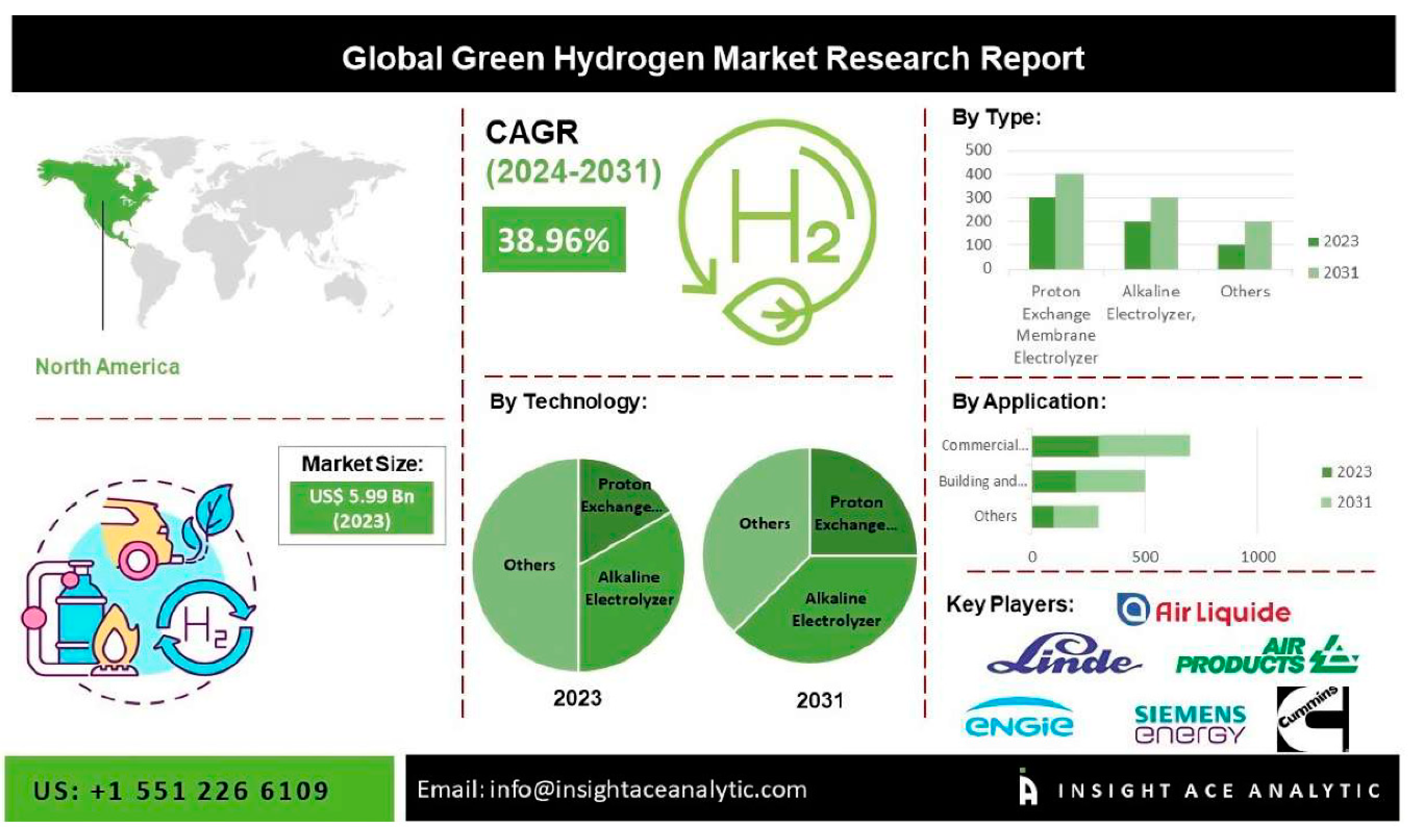
Figure 2. Global Green Hydrogen Market ; Figure Credit: (IsightAce, 2024).
Preprints 144189 g001
Indeed, green hydrogen offers the Global South a sustainable path to energy independence, economic growth, and climate resilience. Countries such as Brazil, India, Egypt, and Chile are using green hydrogen in transportation, industry, and power generation, capitalizing on their abundant renewable resources (Barra Novoa, 2024; Nadaleti et al., 2022; Singh, 2024). Further, the United Arab Emirates and Saudi Arabia invest their capital in large-scale projects to attract foreign investment while encouraging regional cooperation (Sadiq et al., 2023). By integrating hydrogen into their energy strategies, countries such as Bangladesh and Ethiopia have advanced climate goals and sustainable development, positioning themselves as leaders in the regional energy transition (Nnachi et al., 2024). India is also investigating green hydrogen to notably cut carbon emissions in its steel production, which represents a hydrogen economy that has had a crucial impact on economic and sustainable development not only in the South but also spillovers in the North (Panchenko et al., 2023).

Green Hydrogen in Sri Lanka

As a developing nation, Sri Lanka is exploring sustainable energy solutions to meet increasing energy demands and address climate change. Currently, the heavy reliance of Sri Lanka on imported fossil fuels makes it vulnerable to global price fluctuations and supply disruptions. In this regard, the government aims to attain net-zero carbon emissions by 2050 and 70% power generation from renewable energy sources by 2030. Accordingly, the power sector projects that 24.7% of energy will come from solar, 15.5% from wind, 24.6% from hydro, 4.7% from biomass, 10.6% from natural gas, and 20% from coal by 2030. The country needs a total of 5766 MW of renewable energy capacity to reach its target by 2030, and it is estimated that US$11 billion will need to be invested during the period of 2023–2030 for it, in particular the renewable energy generation capacity, storage options, and related transmission infrastructure (CEB, 2021) .
Sri Lanka is currently in the early stages of exploring the potential of green hydrogen as an alternative energy source. In 2023, Sri Lanka embarked on the National Hydrogen Roadmap as a bold step towards a greener future. This roadmap was developed by the Petroleum Development Authority of Sri Lanka (PDASL) in collaboration with a subsidiary of the Norwegian firm specializing in renewable hydrogen production in India, which is supposed to advance the hydrogen economy of the country. As per the Sri Lankan Hydrogen targets by 2030, Sri Lanka aims to establish itself as a regional key contributor in green hydrogen production for energy integration. The targets include producing SLR. 500 million (1.65 US $ in 2023) in export revenue from the manufacturing of green energy value chain components, and integrating hydrogen into key sectors such as transportation, power generation, and industry. This initiative is expected to create 4,000 jobs and attract significant foreign investment, contributing to the sustainable economic growth and energy security of Sri Lanka (GoSL, 2023).
Moreover, the Ninth Biennial Conference on Science and Technology ((BICOST IX-2023), a national biennial forum that provides a platform to address the pertaining socio-economic issues in the country at the interface of science and policy, has proposed a number of policy recommendations aimed at advancing green hydrogen adoption. These recommendations focus on capitalizing on the renewable energy potential of Sri Lanka, particularly through hydro, wind, and solar power, and producing green hydrogen sustainably (NASTEC, 2023). It further advocates for policy frameworks that incentivize investment in hydrogen infrastructure and technology, which promotes research and development undertakings to strengthen the capabilities of the country in the sector of green hydrogen (Silva et al., 2024).
As a developing country, Sri Lanka stands to benefit significantly from the implications of a robust regulatory framework, including sound policies on green hydrogen, for several compelling reasons. Firstly, adopting green hydrogen diversifies energy sources, reduces dependence on imported fossil fuels, and enhances energy security and stability, mitigating global energy price and supply risks. Secondly, green hydrogen significantly lowers carbon emissions, aligning with Sri Lankan climate change commitments under the Paris Agreement. Implementing supportive policies showcases the proactive environmental stewardship and commitment to the international climate goals of Sri Lanka (Rathnasiri et al., 2024; Ratnasingam & Manajemen, 2023).
Sustaining a hydrogen economy can stimulate economic growth by creating new jobs in research, development, and manufacturing related to hydrogen technologies. By establishing a clear regulatory framework, offering incentives for investment in green hydrogen infrastructure and projects, and importantly the human capital development in the sector, Sri Lanka can attract both domestic and foreign investments, promoting innovation and technological advancement in the energy sector (Perez Cuso et al., 2024). Overall, implementing sound policies with a robust regulatory framework to support the green hydrogen initiative is essential for Sri Lanka to achieve the SDGs targets, improve energy resilience, and strengthen its position in the global transition towards clean and renewable energy sources. As a result, the country could develop a cohesive environment for supportive policies that drives the growth of the hydrogen ecosystem.
Green hydrogen has a high potential to contribute to the achievement of several United Nations’ Sustainable Development Goals (SDGs) targets in Sri Lanka : SDG 3 - by promoting good health through improved energy access , SDG 7 - by reducing reliance on fossil fuels and aiding the transition to clean energy, SDG 8- job creation in hydrogen industries and attracting foreign investment, SDG 9 - by driving new infrastructure and technology development and enhancing sustainable industries, SDG 11 - by improving living standards in sustainable cities, and SDG 13- by reducing greenhouse gas emissions, enhancing climate resilience, and lowering the carbon footprint to combat climate change (UN, 2015).
From a policy perspective, globally, countries are adopting regulatory frameworks, including sound energy policies, to promote green hydrogen as part of their energy transition strategies. The Hydrogen Strategy of the European Union, the National Hydrogen Strategy of Germany, the National Hydrogen Strategy of Australia, and the Basic Hydrogen Strategy of Japan are, to name a few from the Global North. In the South, the National Green Hydrogen Strategy of Chile, the HySA Initiative of South Africa, the generation and use of green hydrogen in Cuba, and the National Hydrogen Mission of India focus on leveraging renewable resources for hydrogen production and export (Stamm et al., 2023). These initiatives collectively aim to meet climate targets, enhance energy security, and drive sustainable economic growth.
Sri Lanka can draw valuable lessons from the global context in regard to the advancement of green hydrogen, particularly in analyzing the strength and support of policy frameworks. From the experiences of Germany and the European Union, Sri Lanka can adopt national strategies for funding to develop capacity in infrastructure and research linked to green hydrogen. Exploring Australia’s approach on exploiting abundant renewable energy resources for hydrogen production and export, Sri Lanka could optimize the functional output of hydro, wind, and solar power locally. This emphasizes the importance of Sri Lanka developing a robust national hydrogen strategic framework supported by clear policies, financial incentives, and international collaborations to harness its renewable energy potential while ensuring sustainable energy security.
As a consequence, Sri Lanka decided to introduce its Hydrogen Safety Standards in 2023 (HSS2023), which will include a strong framework for monitoring and evaluation along with regular updates to stay up to date with global advancements. Despite the fact that HSS 2023 has not yet been released, a roadmap known as Implementation Plan 1 of HSS 2023 permits policy, regulatory, incentive, market, and investment-oriented interventions for the progress of the sector. Among them in the policy domain are formulating and introducing a green hydrogen mission and policy, along with a set of regulations on green hydrogen (GoSL, 2023).
The discussion in this paper emphasizes the urgent need for Sri Lanka to implement sound policies focused on green hydrogen since they are crucial for optimizing renewable energy generation, efficient utilization, and uplifting the economy through the universal call on SDG commitments and climate change. By promoting a hydrogen economy through supportive regulations and incentives, Sri Lanka can create jobs, attract foreign investment, and foster an innovation and technology culture in the clean energy sector. Ultimately, the transition to green hydrogen has a strong promise to enhance energy security, mitigate climate change impacts, and enable Sri Lanka to position itself as a proactive player in the global shift towards sustainable development. The implementation of sound policies to promote green hydrogen is not only a strategic move but also a pathway to ensuring a resilient and prosperous future for Sri Lanka.
A national science brokering system in place to ensure the effective communication between the silos of scientists, technology experts, bureaucrats, and policymakers in the system is the need of the hour, which is lacking in the STI ecosystem in Sri Lanka, even though the National Science and Technology Commission of Sri Lanka is mandated to establish it (Shahmy et al., 2022; Shahmy et al., 2021).

Conclusion

The demand for clean energy is crucial for sustainable development, with green hydrogen playing a central role in the global shift to sustainability. Countries around the world, including Sri Lanka, are recognizing the potential of green hydrogen to reduce carbon emissions, enhance energy security, and drive economic growth. By implementing policies and regulations to support green hydrogen, Sri Lanka can diversify its energy sources, reduce dependence on fossil fuels, create new jobs, and contribute to achieving the United Nations' Sustainable Development Goals. This strategic move will not only position Sri Lanka as one of the lead regional contributors to the green hydrogen economy but also ensure a resilient and prosperous future for the country.

Acknowledgments

The authors are thankful to research officers of NASTEC, Ms. Denisha Piyumali, Ms. Sajni Dickmadugoda, and Ms. Koshila Maduwatnthi, for their support given in assisting them on data collection, preparing the tables and images of the manuscript.

References

  1. Ameli, H., G. Strbac, D. Pudjianto, and M. T. J. E. Ameli. 2024. A Review of the Role of Hydrogen in the Heat Decarbonization of Future Energy Systems: Insights and Perspectives. 17, 7: 1688. [Google Scholar] [CrossRef]
  2. Bade, S. O., and O. S. Tomomewo. 2024. J. I. J. o. H. E A review of governance strategies, policy measures, and regulatory framework for hydrogen energy in the United States. 78: 1363–1381. [Google Scholar] [CrossRef]
  3. Barra Novoa, R. 2024. Green Hydrogen in Chile: A Comprehensive Analysis of its Role in the Energy Transition and Sustainable Development. SSRN 4961937.
  4. CEB. 2021. LONG TERM GENERATION EXPANSION PLAN 2022-2041. Retrieved from Transmission and Generation Planning,5th Floor, Head Office Bldg. Ceylon Electricity Board, Sir Chittampalam A. Gardinar Mw, Colombo 02. Available online: https://policy.asiapacificenergy.org/sites/default/files/Ceylon%20Electricity%20Board%20%28CEB%29%20Long%20Term%20Generation%20Expansion%20Plan%202022-2041.pdf.
  5. GoSL, *!!! REPLACE !!!*. 2023. SRI LANKA NATIONAL HYDROGEN ROADMAP. Retrieved from US AID: https://api.greenstat.no/uploads/Sri_Lanka_Roadmap_Final_5b7d4aff51.pdf?updated_at=2023-08-02T14:11:03.276Z.
  6. HydrogenCouncil, *!!! REPLACE !!!*. 2017. Hydrogen scaling up: a sustainable pathway for the global energy transition. Available online: https://www.precedenceresearch.com/green-hydrogen-market.
  7. IsightAce, *!!! REPLACE !!!*. 2024. Green Hydrogen Market Size, Share and Trend Analysis Report 2024-2031. Retrieved from USA. Available online: https://www.insightaceanalytic.com/report/green-hydrogen-market/1541.
  8. Islam, A. I, T. am, H. Mahmud, O. Raihan I, M. S. am, H. M. Marwani, J. I. J. o. H. E. Hasan, and N. M. 2024. Accelerating the green hydrogen revolution: A comprehensive analysis of technological advancements and policy interventions. 67: 458–486. [Google Scholar] [CrossRef]
  9. Nadaleti, W. C., E. G. de Souza, and V. A. Lourenço. 2022. J. I. J. o. H. E Green hydrogen-based pathways and alternatives: towards the renewable energy transition in South America's regions–Part B. 47, 1: 1–15. [Google Scholar] [CrossRef]
  10. NASTEC. BICOST IX Technical Report on Renewable energy, Energy storage and Green hydrogen, (ISBN 978-955-8630-31-0,). Retrieved from Biennial Conference on Science and Technology 2023 (BICOST-IX), 2023: https://www.nastec.gov.lk/files/bicost_reports/BICOST_IX/renewable_energy_energy_storage_green_hydrogen_technical_report.pdf.
  11. Nnabuife, S. G., A. K. Hamzat, J. Whidborne, B. Kuang, and K. W. Jenkins. 2024. J. I. J. o. H. E Integration of renewable energy sources in tandem with electrolysis: A technology review for green hydrogen production.
  12. Nnachi, G. U., C. G. Richards, and Y. Hamam. 2024. A Comprehensive State-of-the-Art Survey on Green Hydrogen Economy in Sub-Saharan Africa.
  13. Panchenko, V., Y. V. Daus, A. Kovalev, I. Yudaev, and Y. Litti. 2023. V. J. I. J. o. H. E Prospects for the production of green hydrogen: Review of countries with high potential. 48, 12: 4551–4571. [Google Scholar]
  14. Perez Cuso, M., Y. Zhao, A. Bakeer-Markar, S. Peiris, and V. Rajapakse. 2024. Strategy to promote inclusive and sustainable businesses to achieve the Sustainable Development Goals in Sri Lanka: Background note.
  15. Rathnasiri, M. S. H., N. J. Dewasiri, and A. A. Kumar. 2024. Policy Framework and Implementation Strategies for Sri Lanka’s Transition to a Net-Zero Economy. In Net Zero Economy, Corporate Social Responsibility and Sustainable Value Creation: Exploring Strategies, Drivers, and Challenges. Springer: pp. 43–60. [Google Scholar]
  16. Ratnasingam, G. J. J. J. R. B., and Manajemen. 2023. Application of alternative energy sources as a sustainable strategy in Sri Lanka: cases review. 13, 2: 217–236. [Google Scholar] [CrossRef]
  17. Sadiq, M., A. Mayyas, T. Mezher, and M. J. El Fadel. 2023. I. J. o. H. E Policy and economic challenges towards scalable green-H2 transition in the middle east and north Africa region. 48, 85: 32995–33016. [Google Scholar] [CrossRef]
  18. Shahmy, S., T. Munagamage, W. Perera, and S. Fernando. 2022. A proposed National Science Advice System to the Government of an Emerging Economy in South Asia.
  19. Shahmy, S., W. R. T. S. Perera, T. Munagamage, and S. Fernando. 2021. New horizon for data-driven Science for Policy-A proposed system to generate robust scientific evidence. Paper presented at the 4th International Conference-INGSA 2021, Canada; Available online: https://www.researchgate.net/publication/361791859_New_horizon_for_data-driven_Science_for_Policy_-A_proposed_system_to_generate_robust_scientific_evidence.
  20. Sharma, G. D., M. Verma, B. Taheri, R. Chopra, Parihar, J. S. J. T. F., and S. Change. 2023. Socio-economic aspects of hydrogen energy: An integrative review. 192: 122574. [Google Scholar] [CrossRef]
  21. Silva, S., K. Piyumali, R. T. S. Perera, K. Kaluarachchi, T. Munagamage, R. Ahammed, and V. J. C. E. Karunaratne. 2024. Assessing the biennial conference on science and technology (BICOST IX) 2023 technical output on renewable energy, energy storage, and green hydrogen in line with UN SDG commitments, vol. 8, pp. 85–88. [Google Scholar]
  22. Singh, A. P. 2024. Assessment of India's Green Hydrogen Mission and environmental impact. Renewable Sustainable Energy Reviews 203, 114758. [Google Scholar] [CrossRef]
  23. Stamm, A., T. Altenburg, R. Strohmaier, E. Oyan, and K. Thoms. 2023. Green hydrogen: Implications for international cooperation. With special reference to South Africa: IDOS Discussion Paper.
  24. Trencher, G., and A. J. E. Edianto. 2021. Drivers and barriers to the adoption of fuel cell passenger vehicles and buses in Germany. 14, 4: 833. [Google Scholar] [CrossRef]
  25. UN. 2015. Transforming our world: The 2030 agenda for sustainable development. Available online: https://www.unfpa.org/resources/transforming-our-world-2030-agenda-sustainable-development#:~:text=%22We%20resolve%2C%20between%20now%20and,protection%20of%20the%20planet%20and:2015.
Disclaimer/Publisher’s Note: The statements, opinions and data contained in all publications are solely those of the individual author(s) and contributor(s) and not of MDPI and/or the editor(s). MDPI and/or the editor(s) disclaim responsibility for any injury to people or property resulting from any ideas, methods, instructions or products referred to in the content.
Copyright: This open access article is published under a Creative Commons CC BY 4.0 license, which permit the free download, distribution, and reuse, provided that the author and preprint are cited in any reuse.
Prerpints.org logo

Preprints.org is a free preprint server supported by MDPI in Basel, Switzerland.

Subscribe

Disclaimer

Terms of Use

Privacy Policy

Privacy Settings

© 2025 MDPI (Basel, Switzerland) unless otherwise stated