

Submitted:
23 December 2024
Posted:
24 December 2024
You are already at the latest version
Abstract
Eco-design is an innovative design methodology that focuses on minimizing the environmental foot-print of industries, including aviation, right from the conceptual and development stages. However, rising industrial demand calls for a more comprehensive strategy where, beyond environmental con-siderations, competitiveness becomes a critical factor, supported by additional pillars of sustainabil-ity such as economic viability, circularity, and social impact. By incorporating sustainability as a primary design driver at the initial design stages, this study suggests a shift from eco-driven to sus-tainability-driven design approaches for aircraft components. This expanded strategy considers per-formance and safety goals, environmental impact, costs, social factors, and circular economy consid-erations. To provide the most sustainable design that balances all objectives, these aspects are rigor-ously quantified and optimized during the design process. To efficiently prioritize different variables, methods such as multi-criteria decision-making (MCDM) are employed, and a Sustainability Index is developed in this framework to assess the overall sustainability of each design alternative. The most sustainable design configurations are then identified through an optimization process. A typical air-craft component, namely a hat-stiffened panel, is selected to demonstrate the proposed approach. The study highlights how effectively sustainability considerations can be integrated from the early stages of the design process by exploring diverse material combinations and geometric configurations. This innovative approach enhances the overall sustainability of aircraft components, emphasizing the importance and benefits of incorporating a broader range of sustainability factors at the conceptual and initial design phases.
Keywords:
1. Introduction
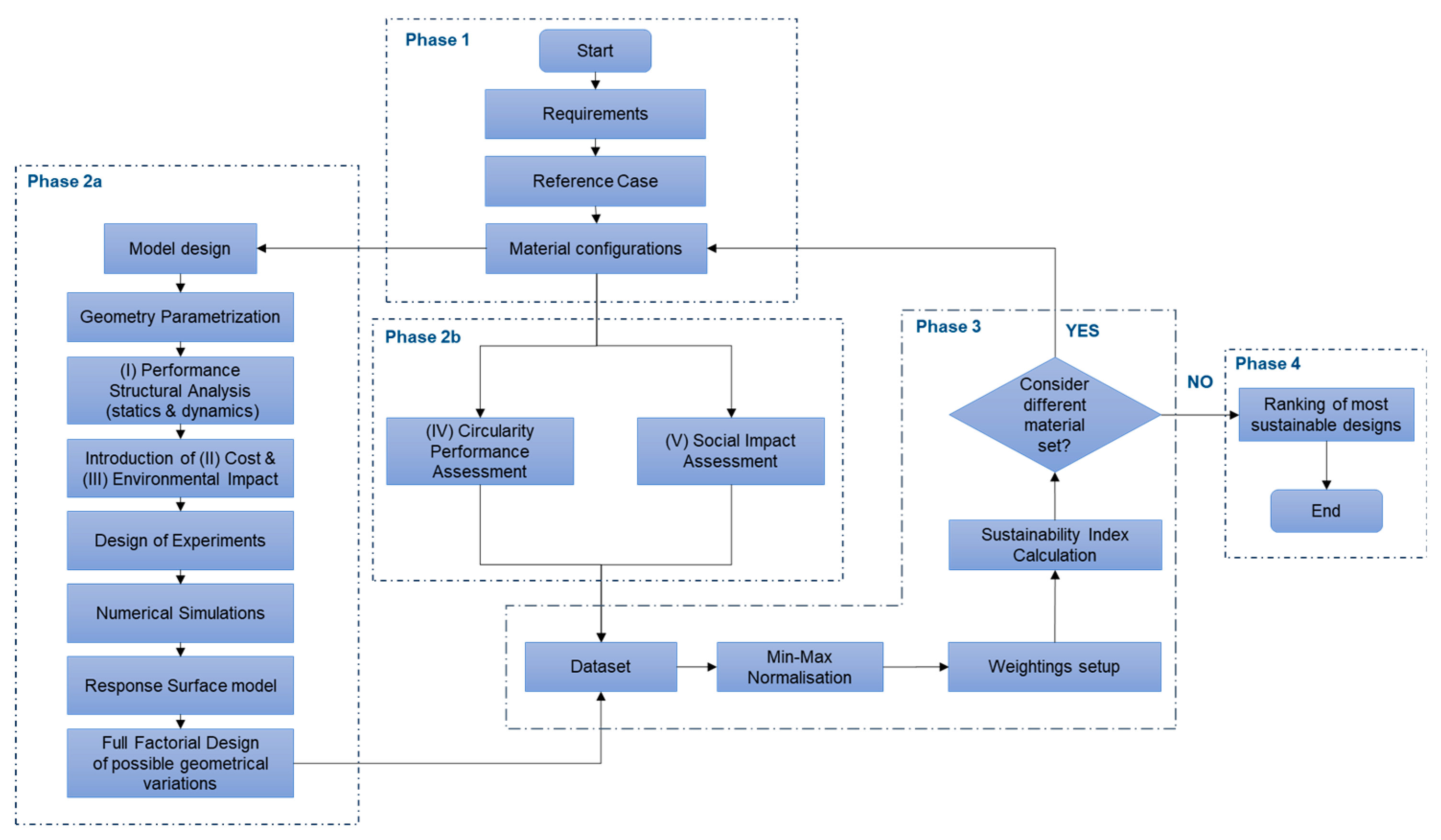
2. A Sustainability-Driven Design Methodology
2.1. Phase 1- Selection of Reference Case, Parameters and Design of Concepts
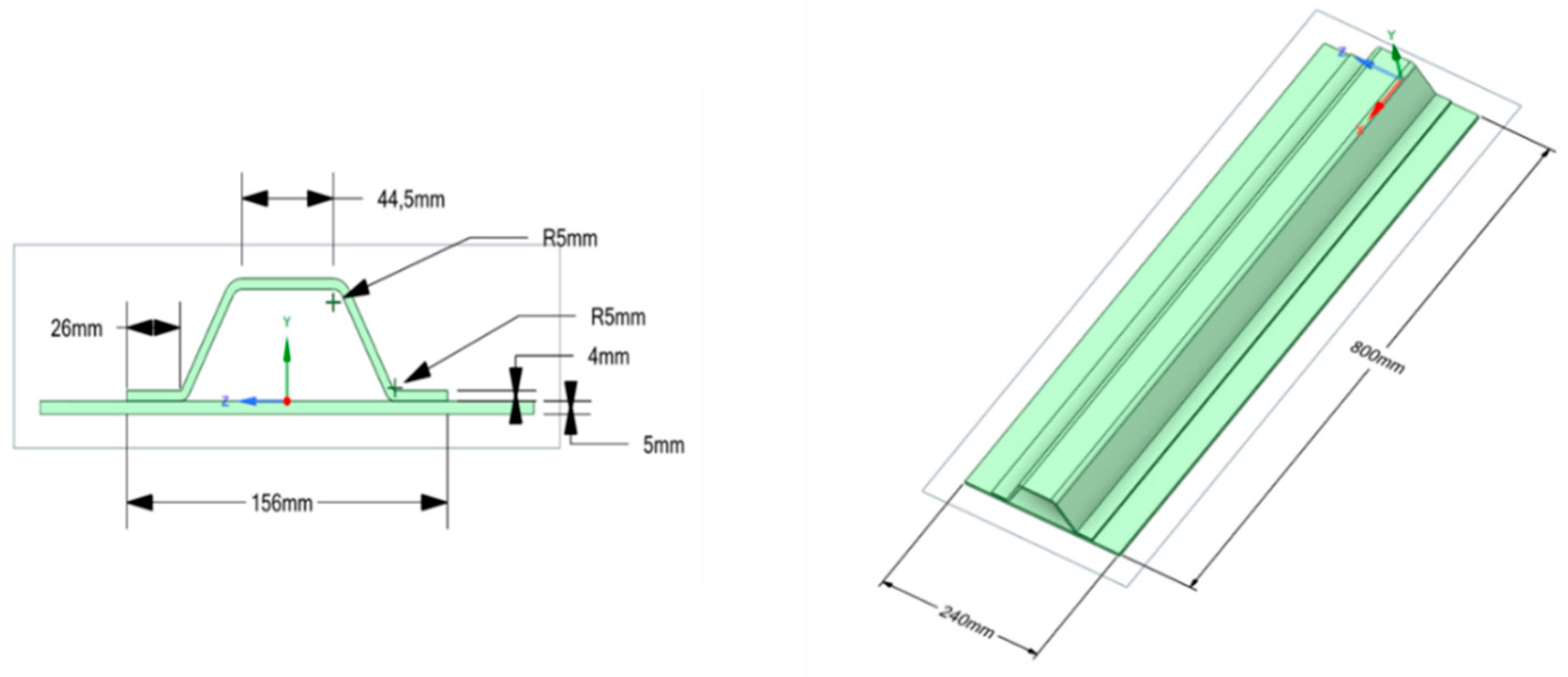
2.1.1. Design Domain Investigation
2.2. Phase 2 – Definition of Sustainability Pillars
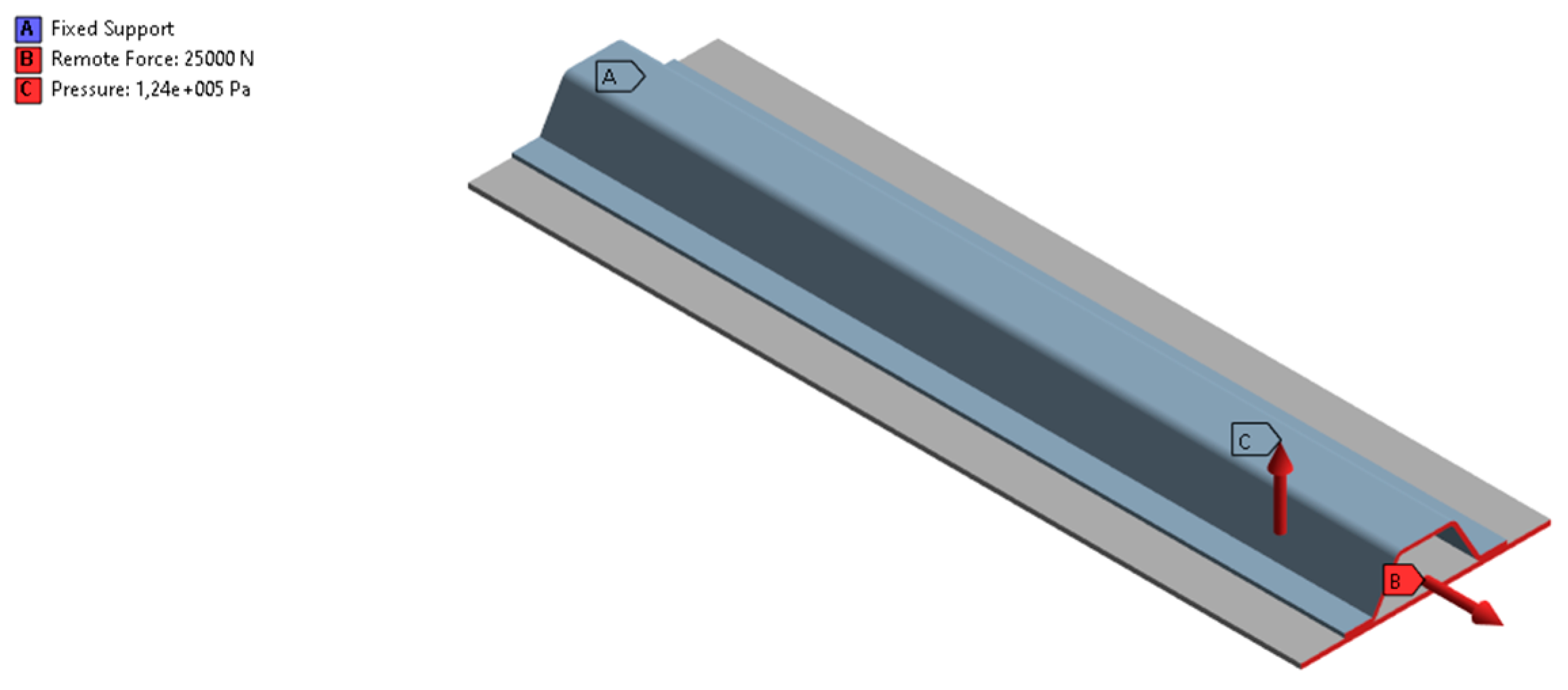
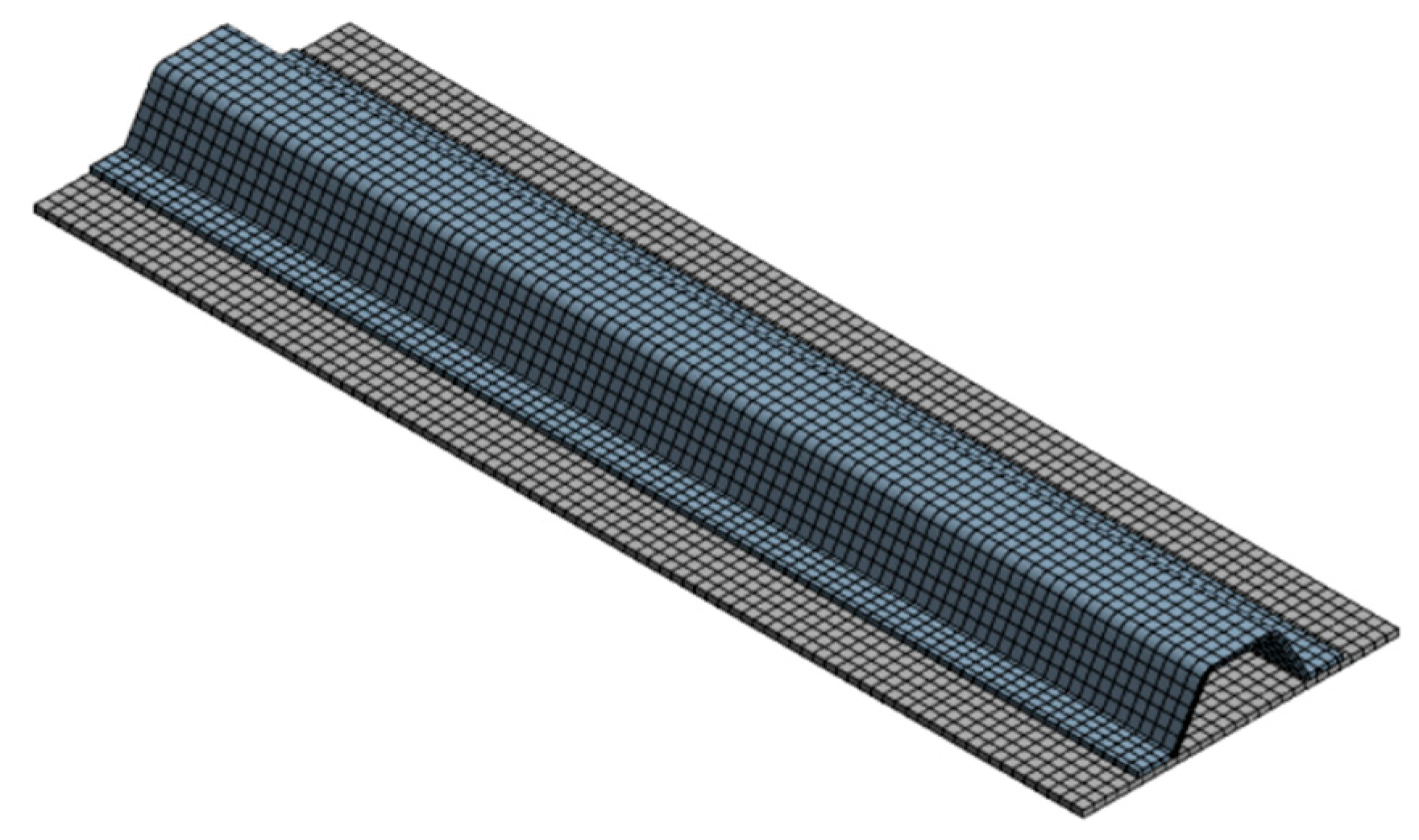
2.2.1. Mechanical Performance Assessment
2.2.2. Costs Assessment
2.2.3. Environmental Impact Assessment
2.2.4. Circularity Performance Assessment
2.2.5. Social Impact Assessment
2.3. Phase 3 - Integration of Holistic Sustainability in the Design Process
3. Phase 4 – Ranking of Sustainable Design Concepts
3.1. Equal Weights Scenario
3.2. Priority on Cost Pillar Scenario
3.3. Priority on Environmental Impact Scenario
4. Conclusions
Conflicts of Interest
References
- S. Ahmad, K. Y. Wong, M. L. Tseng, and W. P. Wong, “Sustainable product design and development: A review of tools, applications and research prospects,” Resour Conserv Recycl, vol. 132, pp. 49–61, 2018. https://doi.org/10.1016/j.resconrec.2018.01.020. [CrossRef]
- F. Ceschin and İ. Gaziulusoy, “Evolution of design for sustainability: From product design to design for system innovations and transitions,” Des Stud, vol. 47, Sep. 2016. https://doi.org/10.1016/j.destud.2016.09.002. [CrossRef]
- T. ; Achtelik and Tiwari, “Ecological lightweight design for sustainable composites: Need for application of frugal engineering principles Standard-Nutzungsbedingungen”. https://doi.org/10.15480/882.4772. [CrossRef]
- G. Parolin, A. T. Borges, L. C. C. Santos, and A. V Borille, “A tool for aircraft eco-design based on streamlined Life Cycle Assessment and Uncertainty Analysis,” Procedia CIRP, vol. 98, pp. 565–570, 2021. https://doi.org/10.1016/j.procir.2021.01.152. [CrossRef]
- S. Lazăr, D. Dobrotă, R.-E. Breaz, and S.-G. Racz, “Eco-Design of Polymer Matrix Composite Parts: A Review,” Polymers (Basel), vol. 15, no. 17, 2023. https://doi.org/10.3390/polym15173634. [CrossRef]
- K. Salah, “Environmental impact reduction of commercial aircraft around airports. Less noise and less fuel consumption,” European Transport Research Review, vol. 6, no. 1, pp. 71–84, 2014. https://doi.org/10.1007/s12544-013-0106-0. [CrossRef]
- N. Antoine and I. Kroo, “Aircraft Optimization for Minimal Environmental Impact,” J Aircr, vol. 41, Jul. 2004. https://doi.org/10.2514/1.71. [CrossRef]
- Fraunhofer ICT, “ Clean Sky.” Accessed: Nov. 20, 2024. Online.. Available: “https://www.ict.fraunhofer.de/en/projects/CleanSky.html#Clean-Sky-2-Eco-Design.
- Clean Aviation, “Eco-Design TA.” Accessed: Nov. 20, 2024. Online.. Available: https://www.clean-aviation.eu/.
- W. Wellbrock, D. Ludin, L. Röhrle, and W. Gerstlberger, “Sustainability in the automotive industry, importance of and impact on automobile interior – insights from an empirical survey,” International Journal of Corporate Social Responsibility, vol. 5, no. 1, p. 10, 2020. https://doi.org/10.1186/s40991-020-00057-z. [CrossRef]
- C. Llatas, B. Soust-Verdaguer, and A. Passer, “Implementing Life Cycle Sustainability Assessment during design stages in Building Information Modelling: From systematic literature review to a methodological approach,” Build Environ, vol. 182, p. 107164, 2020. https://doi.org/10.1016/j.buildenv.2020.107164. [CrossRef]
- Y. Wang, H. Yin, S. Zhang, and X. Yu, “Multi-objective optimization of aircraft design for emission and cost reductions,” Chinese Journal of Aeronautics, vol. 27, no. 1, pp. 52–58, 2014. https://doi.org/10.1016/j.cja.2013.12.008. [CrossRef]
- X. Chai, X. Yu, and Y. Wang, “Tradeoff Study between Cost and Environmental Impact of Aircraft Using Simultaneous Optimization of Airframe and Engine Cycle,” International Journal of Aerospace Engineering, vol. 2017, no. 1, p. 2468535, Jan. 2017. https://doi.org/10.1155/2017/2468535. [CrossRef]
- T. Mu and L. Tao, “Civil Aircraft Multi-Objective Design Optimization for Cost and Emission Reduction,” in Journal of Physics: Conference Series, Institute of Physics, 2023. https://doi.org/10.1088/1742-6596/2541/1/012034. [CrossRef]
- R. Vitali, O. Park, R. T. Haftka, B. V Sankar, and C. A. Rose, “Structural Optimization of a Hat-Stiffened Panel Using Response Surfaces,” J Aircr, vol. 39, no. 1, pp. 158–166, Jan. 2002. https://doi.org/10.2514/2.2910. [CrossRef]
- D. Munk and J. Miller, “Topology Optimization of Aircraft Components for Increased Sustainability,” AIAA Journal, pp. 1–16, Aug. 2021. https://doi.org/10.2514/1.J060259. [CrossRef]
- T. L. Htet, “Structural analysis and topology design optimization of load bearing elements of aircraft fuselage structure,” IOP Conf Ser Mater Sci Eng, vol. 709, no. 4, p. 044113, 2020. https://doi.org/10.1088/1757-899X/709/4/044113. [CrossRef]
- L. U. Hansen and P. Horst, “Multilevel optimization in aircraft structural design evaluation,” Comput Struct, vol. 86, no. 1, pp. 104–118, 2008. https://doi.org/10.1016/j.compstruc.2007.05.021. [CrossRef]
- J. Wong, L. Ryan, and I. Y. Kim, “Design optimization of aircraft landing gear assembly under dynamic loading,” Structural and Multidisciplinary Optimization, vol. 57, no. 3, pp. 1357–1375, 2018. https://doi.org/10.1007/s00158-017-1817-y. [CrossRef]
- E. A. Calado, M. Leite, and A. Silva, “Selecting composite materials considering cost and environmental impact in the early phases of aircraft structure design,” J Clean Prod, vol. 186, pp. 113–122, 2018. https://doi.org/10.1016/j.jclepro.2018.02.048. [CrossRef]
- E. A. Calado, M. Leite, and A. Silva, “Integrating life cycle assessment (LCA) and life cycle costing (LCC) in the early phases of aircraft structural design: an elevator case study,” Int J Life Cycle Assess, vol. 24, no. 12, pp. 2091–2110, 2019. https://doi.org/10.1007/s11367-019-01632-8. [CrossRef]
- Barke, C. Thies, S. P. Melo, F. Cerdas, C. Herrmann, and T. S. Spengler, “Socio-economic life cycle assessment of future aircraft systems,” Procedia CIRP, vol. 90, pp. 262–267, 2020. https://doi.org/10.1016/j.procir.2020.01.096. [CrossRef]
- S. Hoffenson, A. Forslund, and R. Söderberg, Sustainability-Driven Tolerancing and Design Optimization of an Aircraft Engine Component, vol. 12. 2013. https://doi.org/10.1115/IMECE2013-63520. [CrossRef]
- F. Di Maio and P. C. Rem, “A Robust Indicator for Promoting Circular Economy through Recycling,” J Environ Prot (Irvine, Calif), vol. 06, no. 10, pp. 1095–1104, 2015. https://doi.org/10.4236/jep.2015.610096. [CrossRef]
- D. N. Markatos and S. G. Pantelakis, “Assessment of the Impact of Material Selection on Aviation Sustainability, from a Circular Economy Perspective,” Aerospace, vol. 9, no. 2, 2022. https://doi.org/10.3390/aerospace9020052. [CrossRef]
- Filippatos et al., “Sustainability-Driven Design of Aircraft Composite Components,” Aerospace, vol. 11, no. 1, 2024. https://doi.org/10.3390/aerospace11010086. [CrossRef]
- Markatos Dionysios N., Katsiropoulos Christos V., Tserpes Konstantinos I., and Pantelakis Spiros G., “A holistic End-of-Life (EoL) Index for the quantitative impact assessment of CFRP waste recycling techniques,” Manufacturing Rev., vol. 8, p. 18, 2021. https://doi.org/10.1051/mfreview/2021016. [CrossRef]
- 3852; Filippatos, A. Theochari, S. Malefaki, D. N. Markatos, T. Kalampoukas, and S. G. Pantelakis, “A PROPOSAL TOWARDS A STEP CHANGE FROM ECO-DRIVEN TO SUSTAINABILITY-DRIVEN DESIGN OF AIRCRAFT COMPONENTS.” Online.. Available: https://www.researchgate.net/publication/385272877.
- E. Barkanov, “Optimal weight design of laminated composite panelswith different stiffeners under buckling loads,” in 27TH INTERNATIONAL CONGRESS OF THE AERONAUTICAL SCIENCES , 2010.
- R. Boyer, “Aircraft Materials,” Encyclopedia of Materials: Science and Technology, pp. 66–73, 2001.
- “Ansys® Workbench,” 2024, ANSYS, Inc: R2.
- B. Q. Trung, L. M. Duc, and B. T. M. Anh, “A Hybrid Approach Based on Genetic Algorithm with Ranking Aggregation for Feature Selection,” in Advances and Trends in Artificial Intelligence. Theory and Practices in Artificial Intelligence, H. Fujita, P. Fournier-Viger, M. Ali, and Y. Wang, Eds., Cham: Springer International Publishing, 2022, pp. 226–239.
- R. E. and C. G. B. Berger Paul D. and Maurer, “Introduction to Response-Surface Methodology,” in Experimental Design: With Application in Management, Engineering, and the Sciences., Cham: Springer International Publishing, 2018, pp. 533–584. https://doi.org/10.1007/978-3-319-64583-4_16. [CrossRef]
- S. Documentation, “Simulation and Model-Based Design,” 2023, MathWorks. Accessed: Nov. 20, 2024. Online.. Available: https://www.mathworks.com/products/simulink.html.
- The MathWorks Inc., “MATLAB version: 23.2 (R2023b),” 2023, Natick, Massachusetts, United States. Accessed: Nov. 20, 2024. Online.. Available: https://www.mathworks.com.
- P. D. Barsanescu and A. M. Comanici, “von Mises hypothesis revised,” Acta Mech, vol. 228, no. 2, pp. 433–446, 2017. https://doi.org/10.1007/s00707-016-1706-2. [CrossRef]
- J. Labuz and A. Zang, “Mohr–Coulomb Failure Criterion,” Rock Mech Rock Eng, vol. 45, Nov. 2012. https://doi.org/10.1007/s00603-012-0281-7. [CrossRef]
- M. Rezasefat, A. Gonzalez-Jimenez, M. Giglio, and A. Manes, “An evaluation of Cuntze and Puck inter fibre failure criteria in simulation of thin CFRP plates subjected to low velocity impact,” Compos Struct, vol. 278, p. 114654, 2021. https://doi.org/10.1016/j.compstruct.2021.114654. [CrossRef]
- “Electricity prices for household consumers - bi-annual data (from 2007 onwards),” 2024. Accessed: Nov. 20, 2024. Online.. Available: https://ec.europa.eu/eurostat/databrowser/explore/all/envir?lang=en&subtheme=nrg.nrg_price.nrg_pc&display=list&sort=category&extractionId=nrg_pc_204.
- “Ansys® Granta,” 2024, ANSYS, Inc: R2.
- Simple Flying Staff & Dr. Omar Memon, .“What’s The Minimum Distance For A Flight To Be Deemed A Long-Haul Service?” Accessed: Nov. 20, 2024. Online.. Available: https://simpleflying.com/long-haul-flight-minimum-distance-guide/#:~:text=UK%E2%80%99s%20law%20splits%20flights%20into%20three%20categories%3A%201,3%2C000%20kilometers%20%28for%20example%2C%20London%20to%20New%20York%29.
- “How Long Does a Commercial Aircraft Last?,” aviationfile. Accessed: Nov. 20, 2024. Online.. Available: https://www.aviationfile.com/how-long-does-a-commercial-aircraft-last/.
- Y. Bicer and I. Dincer, “Life cycle evaluation of hydrogen and other potential fuels for aircrafts,” Int J Hydrogen Energy, vol. 42, no. 16, pp. 10722–10738, 2017. https://doi.org/10.1016/j.ijhydene.2016.12.119. [CrossRef]
- “Ansys® Granta,” 2024, ANSYS, Inc: R2.
- “What are the sources of carbon dioxide in the atmosphere?” Accessed: Nov. 20, 2024. Online.. Available: https://www.csiro.au/en/research/environmental-impacts/climate-change/Climate-change-QA/Sources-of-CO2.
- C. Spreafico, “Prospective life cycle assessment of titanium powder atomization,” J Clean Prod, vol. 468, p. 143104, 2024. https://doi.org/10.1016/j.jclepro.2024.143104. [CrossRef]
- G. Olabi et al., “Green hydrogen: Pathways, roadmap, and role in achieving sustainable development goals,” Process Safety and Environmental Protection, vol. 177, pp. 664–687, 2023. https://doi.org/10.1016/j.psep.2023.06.069. [CrossRef]
- J. A. S. . Green, Aluminum recycling and processing for energy conservation and sustainability. ASM International, 2007.
- F. Di Maio and P. C. Rem, “A Robust Indicator for Promoting Circular Economy through Recycling,” J Environ Prot (Irvine, Calif), vol. 06, no. 10, pp. 1095–1104, 2015. https://doi.org/10.4236/jep.2015.610096. [CrossRef]
- De Pascale, R. Arbolino, K. Szopik-Depczyńska, M. Limosani, and G. Ioppolo, “A systematic review for measuring circular economy: The 61 indicators,” J Clean Prod, vol. 281, p. 124942, 2021. https://doi.org/10.1016/j.jclepro.2020.124942. [CrossRef]
- L. Giorgini et al., “Recovery of carbon fibers from cured and uncured carbon fiber reinforced composites wastes and their use as feedstock for a new composite production,” Polym Compos, vol. 36, no. 6, pp. 1084–1095, Jun. 2015. https://doi.org/10.1002/pc.23440. [CrossRef]
- M. Ateeq, “A state of art review on recycling and remanufacturing of the carbon fiber from carbon fiber polymer composite,” Composites Part C: Open Access, vol. 12, p. 100412, 2023. https://doi.org/10.1016/j.jcomc.2023.100412. [CrossRef]
- L. Giorgini et al., “Recovery of carbon fibers from cured and uncured carbon fiber reinforced composites wastes and their use as feedstock for a new composite production,” Polym Compos, vol. 36, no. 6, pp. 1084–1095, Jun. 2015. https://doi.org/10.1002/pc.23440. [CrossRef]
- L. E. Nielsen, Mechanical properties of polymer and composites, vol. 2. New York: Marcel Dekker, 1974.
- Y. Lu, A. C. Loos, M. W. Hyer, and R. C. Batra, “Mechanical Properties of Random Discontinuous Fiber Composites Manufactured from Wetlay Process,” 2002.
- “Guidelines for SOCIAL LIFE CYCLE ASSESSMENT OF PRODUCTS AND ORGANIZATIONS 2020.”.
- The United Nations, “The 17 Sustainable Development Goals,” Paris, 2015.
- Ansys®, “sLCA tool,” Oct. 2024, Ansys Inc.
- Filippatos et al., “Sustainability-Driven Design of Aircraft Composite Components,” Aerospace, vol. 11, no. 1, Jan. 2024. https://doi.org/10.3390/aerospace11010086. [CrossRef]
- “What is Normalization in Machine Learning? A Comprehensive Guide to Data Rescaling.” Accessed: Nov. 20, 2024. Online.. Available: https://www.datacamp.com/tutorial/normalization-in-machine-learning?dc_referrer=https%3A%2F%2Fwww.bing.com%2F.
- T. L. Saaty, “The analytic hierarchy process (AHP),” J Oper Res Soc, vol. 41, no. 11, pp. 1073–1076, 1980.

| Component Configurations | ||
|---|---|---|
| No. | Skin | Stringer |
| 1 | Aluminium 2024 T3 | Aluminium 2024 T3 |
| 2 | Carbon Fiber Reinforced Composite (thermoset) | Aluminium 2024 T3 |
| 3 | Aluminium 2024 T3 | Carbon Fiber Reinforced Plastic (thermoset) |
| 4 | Carbon Fiber Reinforced Plastic (thermoset) | Carbon Fiber Reinforced Plastic (thermoset) |
| 5 | Ti-6Al-4V | Carbon Fiber Reinforced Plastic (thermoset) |
| 6 | Carbon Fiber Reinforced Thermoplastic Polymer (PEEK) |
Carbon Fiber Reinforced Thermoplastic Polymer (PEEK) |
| Requirements | Parametric design | |||
|---|---|---|---|---|
| Structural | Sustainability | Constraints | Variables | Parameters |
| The safety factor should be between 1.15 and 1.5 No damage should occur Minimization of total deformation Maximization of mode 1 eigenfrequency |
• Minimization of the environ mental footprint • Minimization of cost • Minimization of social impact • Maximization of circularity |
Safety factor: between 1.15 and 1.5 |
Thickness of skin: 3-8 mm Thickness of stringer: 3-8 mm Crown width: 35-55 mm |
Total deformation Mode 1 eigenfrequency Mass of skin Mass of stringer |
| Material | Primary Process | Disposal |
|---|---|---|
| AL | Hot metal extrusion | Closed-loop recycling - smelting |
| Ti | Powder extrusion | Closed-loop recycling – electrode induction gas atomization scrap |
| CFRP | Autoclave | Downcycling – Pyrolysis (chopped recycled carbon fibers, disposal of resin matrix) |
| CF/PEEK | Autoclave | Downcycling – Pyrolysis (chopped recycled carbon fibers, recycling of PEEK matrix) |
| Material | Quality Reduction |
| Al | <1% |
| Ti | <1% |
| CFRP | 18,38% |
| CF/PEEK | 27,78% |
| AL-AL | Social Impact Categories | Social count | |||||
| Phases | Countries | Workers | Consumers | Society | Local community | Value Chain | |
| Primary Process | AUS | 0 | 1 | 3 | 0 | 0 | 4 |
| Manufacturing | GER | 0 | 1 | 3 | 0 | 0 | 4 |
| Disposal | TPE | 1 | 0 | 1 | 0 | 0 | 2 |
| Total score | 10 | ||||||
| AL-AL | Social Impact Categories | Social count | |||||
| Phases | Countries | Workers | Consumers | Society | Local community | Value Chain | |
| Primary Process | BRA | 3 | 3 | 4 | 2 | 2 | 14 |
| Manufacturing | ARG | 2 | 2 | 4 | 1 | 2 | 11 |
| Disposal | IND | 6 | 2 | 6 | 4 | 2 | 20 |
| Total score | 45 | ||||||
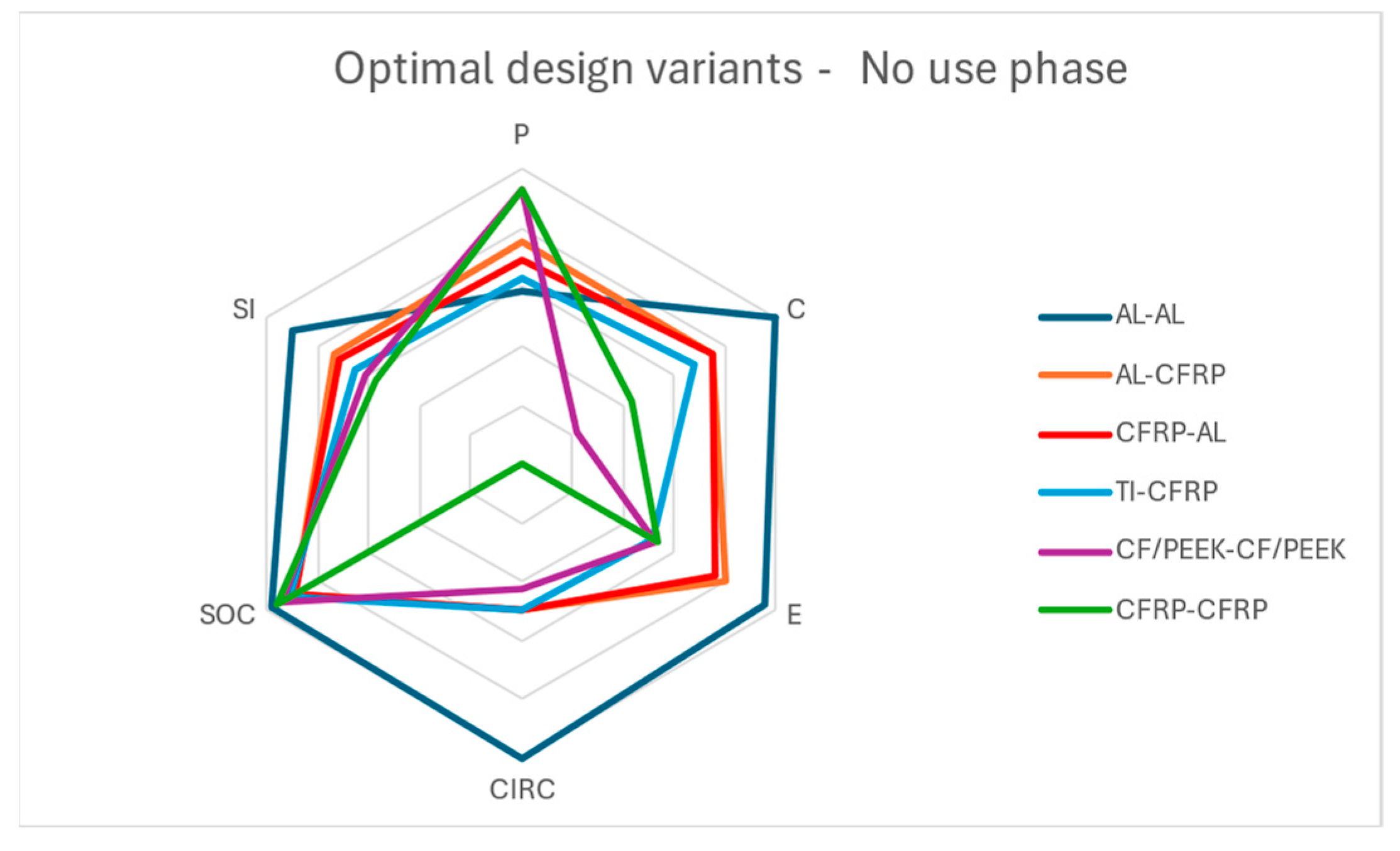
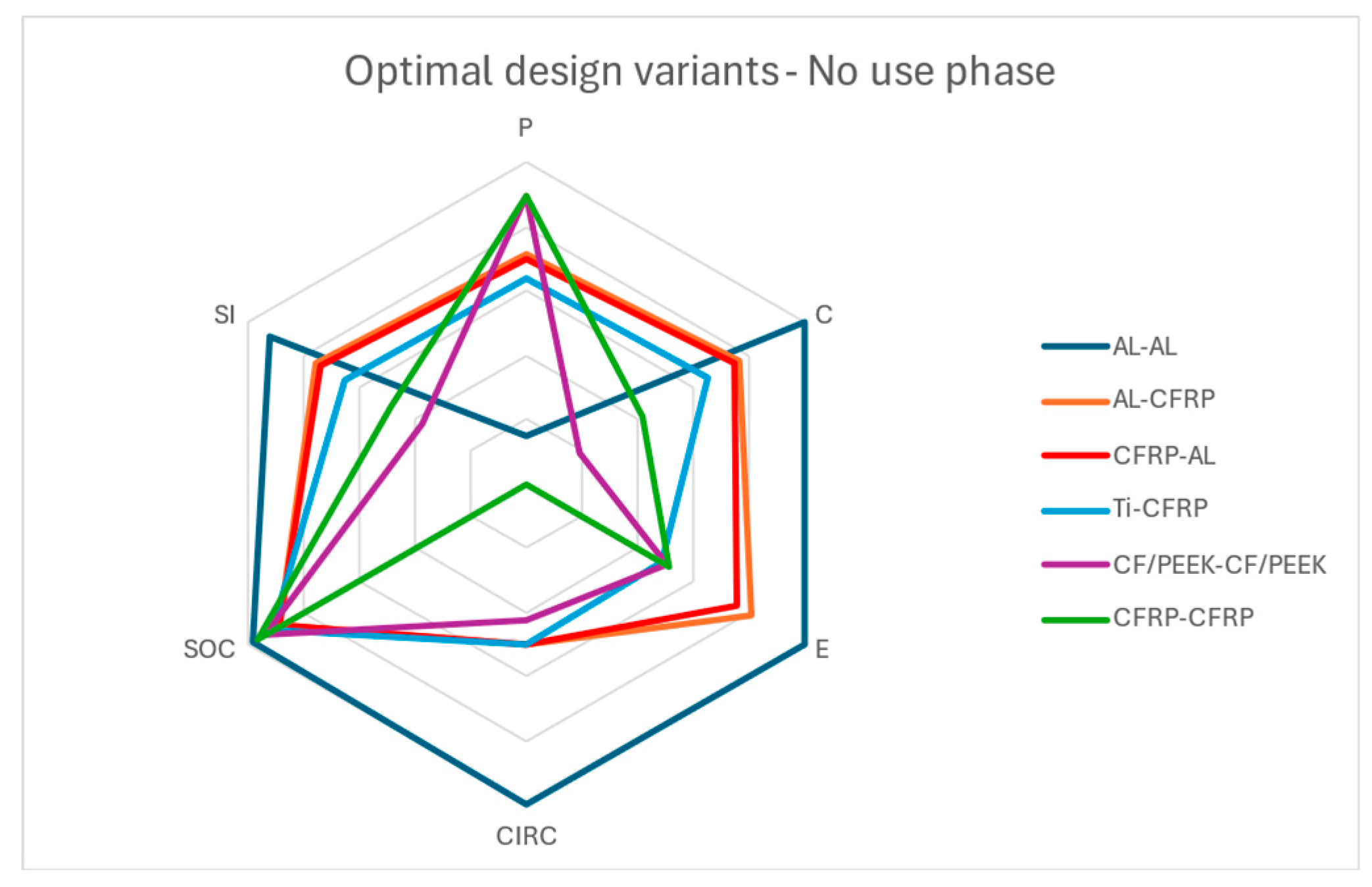
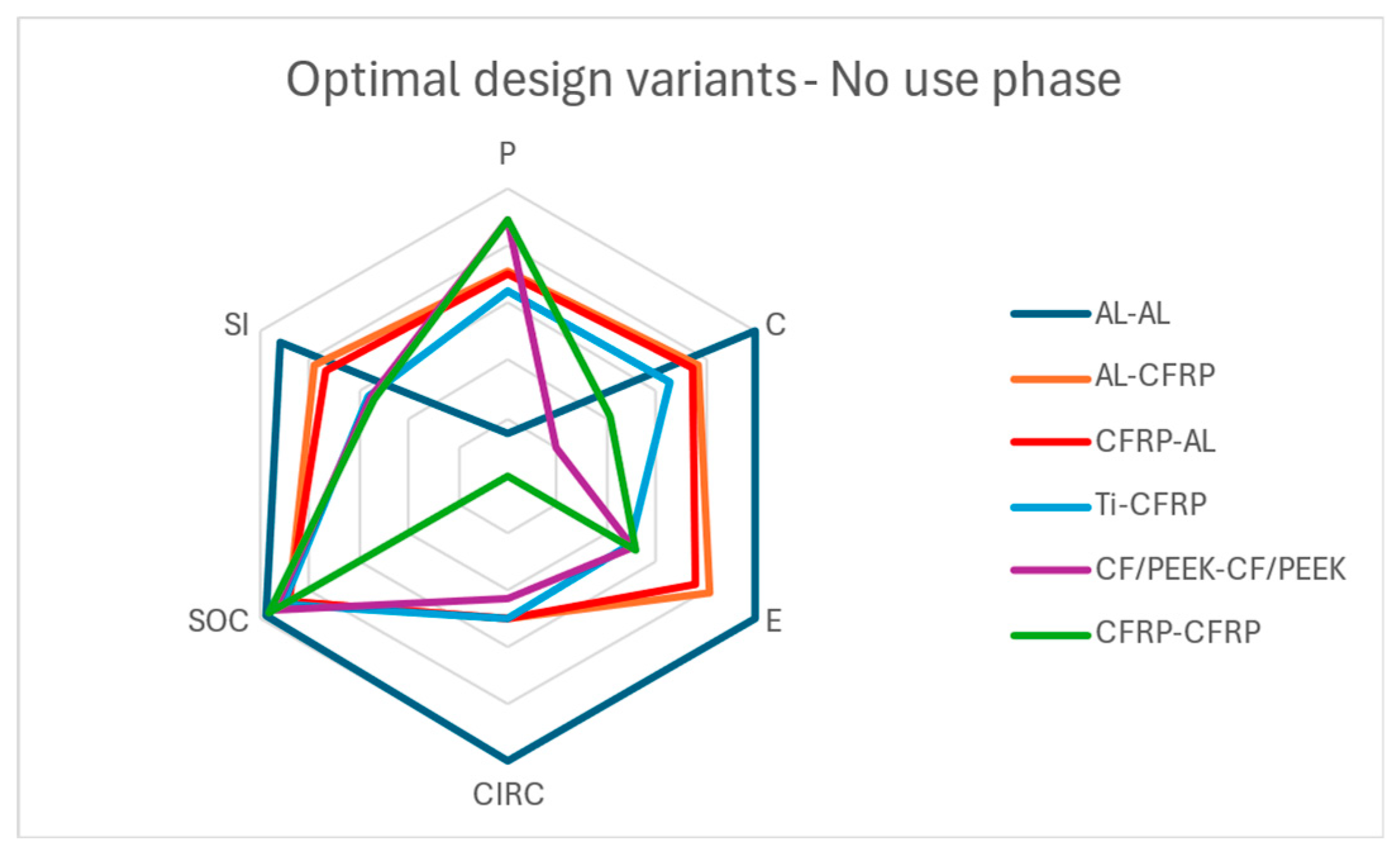
| SUSTAINABILITY RANKING – EQUAL WEIGHTS – NO USE PHASE | ||||
| Thickness skin (mm) | Mass of skin (kg) |
Thickness stringer (mm) | Mass of stringer (kg) |
Crown width (mm) |
| No.1: AL - AL , SI = 0.862 ± 0.019 | ||||
| 4.49 ± 0.94 | 2.39 ± 0.51 | 4.38 ± 0.36 | 1.96 ± 0.15 | 44.98 ± 3.18 |
| No.2: AL - CFRP , SI = 0.709 ± 0.009 | ||||
| 4.60 ± 0.93 | 2.44 ± 0.49 | 6.02 ± 0.52 | 1.45 ± 0.12 | 44.61 ± 3.11 |
| No.3: CFRP - AL , SI = 0.680 ± 0.014 | ||||
| 6.00 ± 0.56 | 1.72 ± 0.16 | 5.53 ± 0.40 | 2.49 ± 0.17 | 43.96 ± 2.89 |
| No.4: Ti - CFRP , SI = 0.556 ± 0.035 | ||||
| 4.52 ± 0.93 | 3.85 ± 0.79 | 5.90 ± 0.55 | 1.42 ± 0.13 | 44.89 ± 3.09 |
| No. 5: CF/PEEK - CF/PEEK , SI = 0.553 ± 0.026 | ||||
| 6.47 ± 0.40 | 1.82 ± 0.13 | 6.38 ± 0.46 | 1.57 ± 0.09 | 42.76 ± 2.33 |
| No.6: CFRP - CFRP , SI = 0.536 ± 0.021 | ||||
| 6.47 ± 0.40 | 1.82 ± 0.13 | 6.38 ± 0.46 | 1.57 ± 0.09 | 42.75 ± 2.31 |
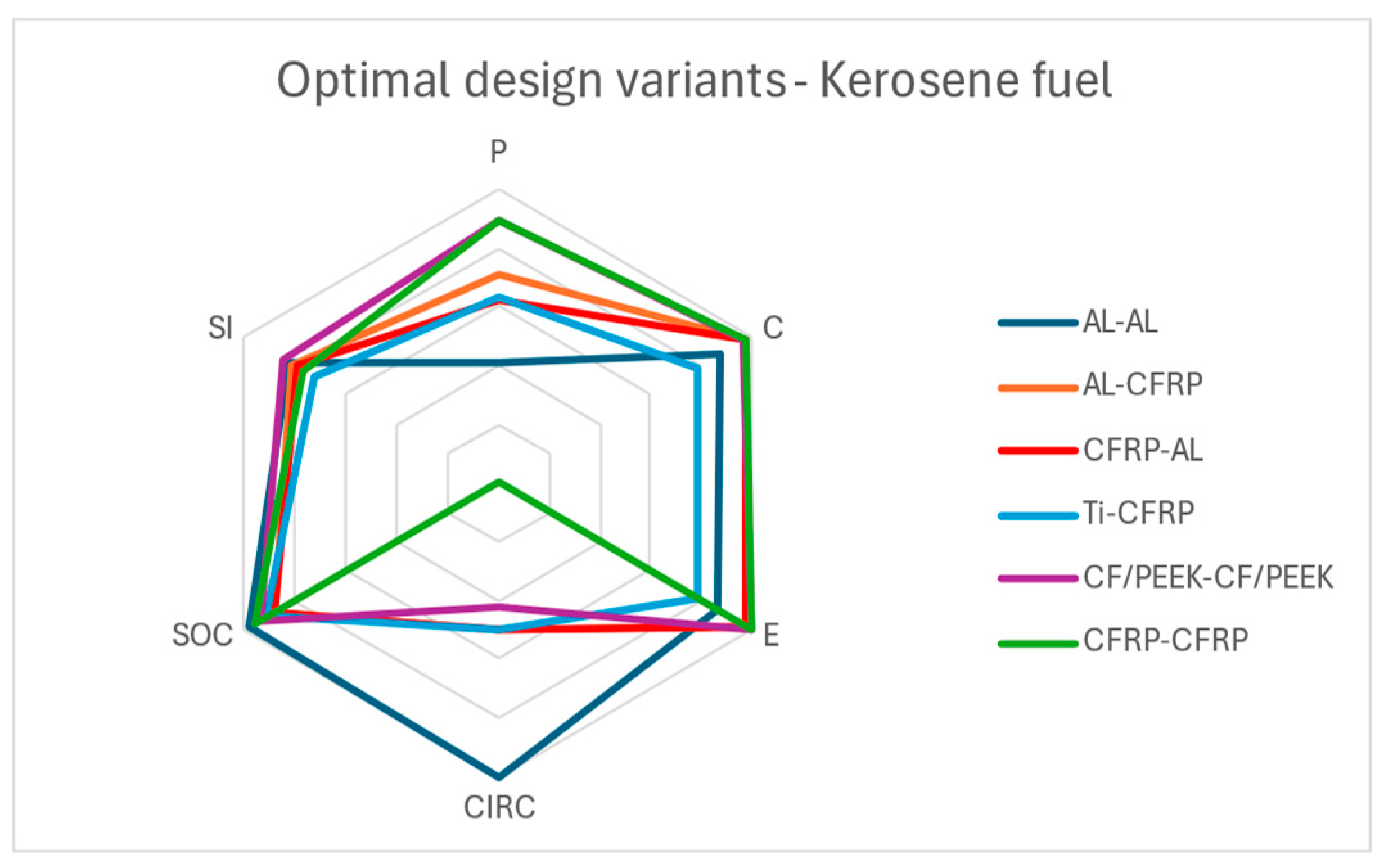
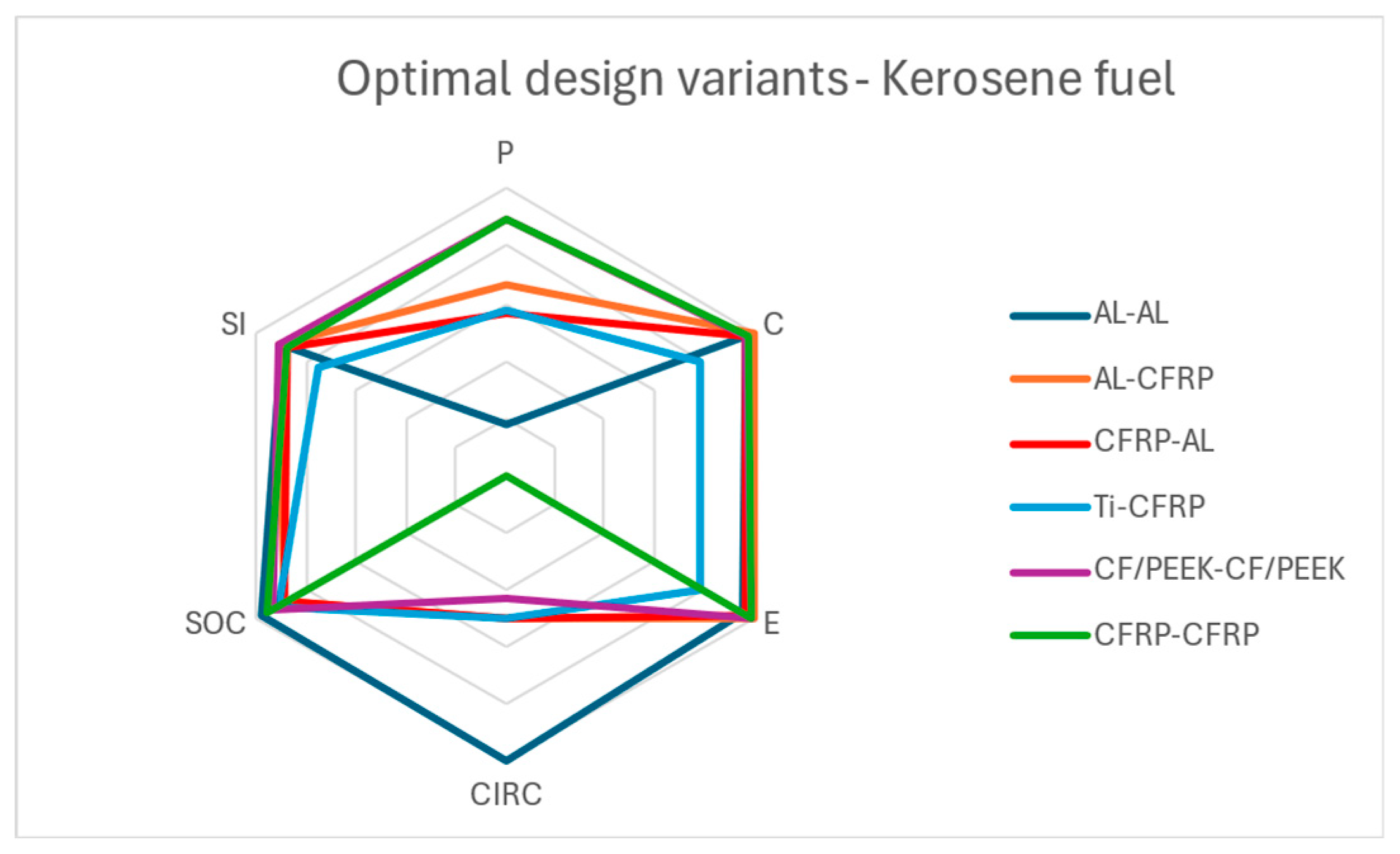
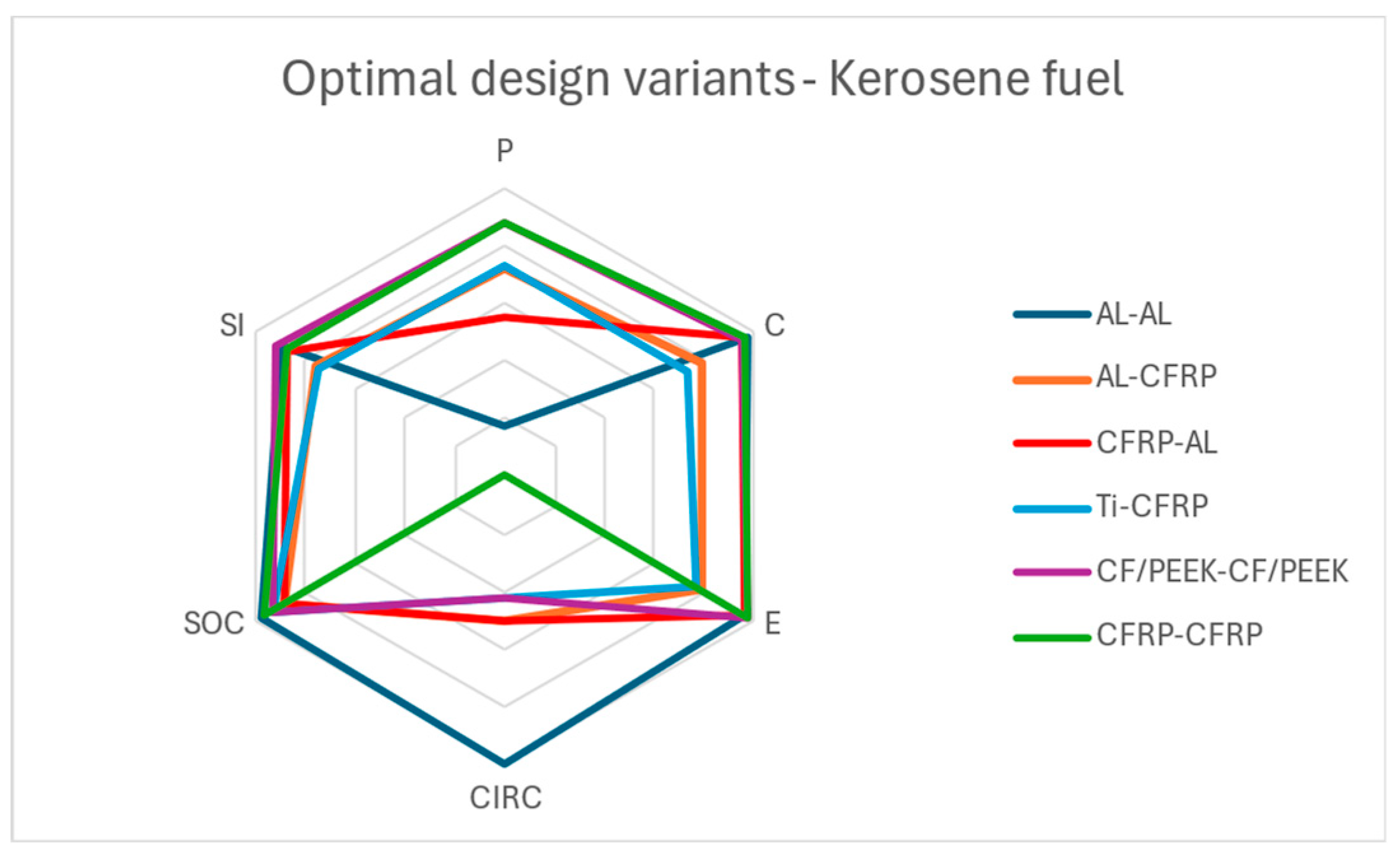
| Sustainability Ranking Equal Weights Kerosene |
Material Configuration | Sustainability Index |
|---|---|---|
| 1 | CF/PEEK-CF/PEEK | 0.764 ± 0.029 |
| 2 | AL-CFRP | 0.727 ± 0.040 |
| 3 | AL-AL | 0.711 ± 0.050 |
| 4 | CFRP-CFRP | 0.696 ± 0.034 |
| 5 | CFRP-AL | 0.638 ± 0.021 |
| 6 | Ti-CFRP | 0.616 ± 0.086 |
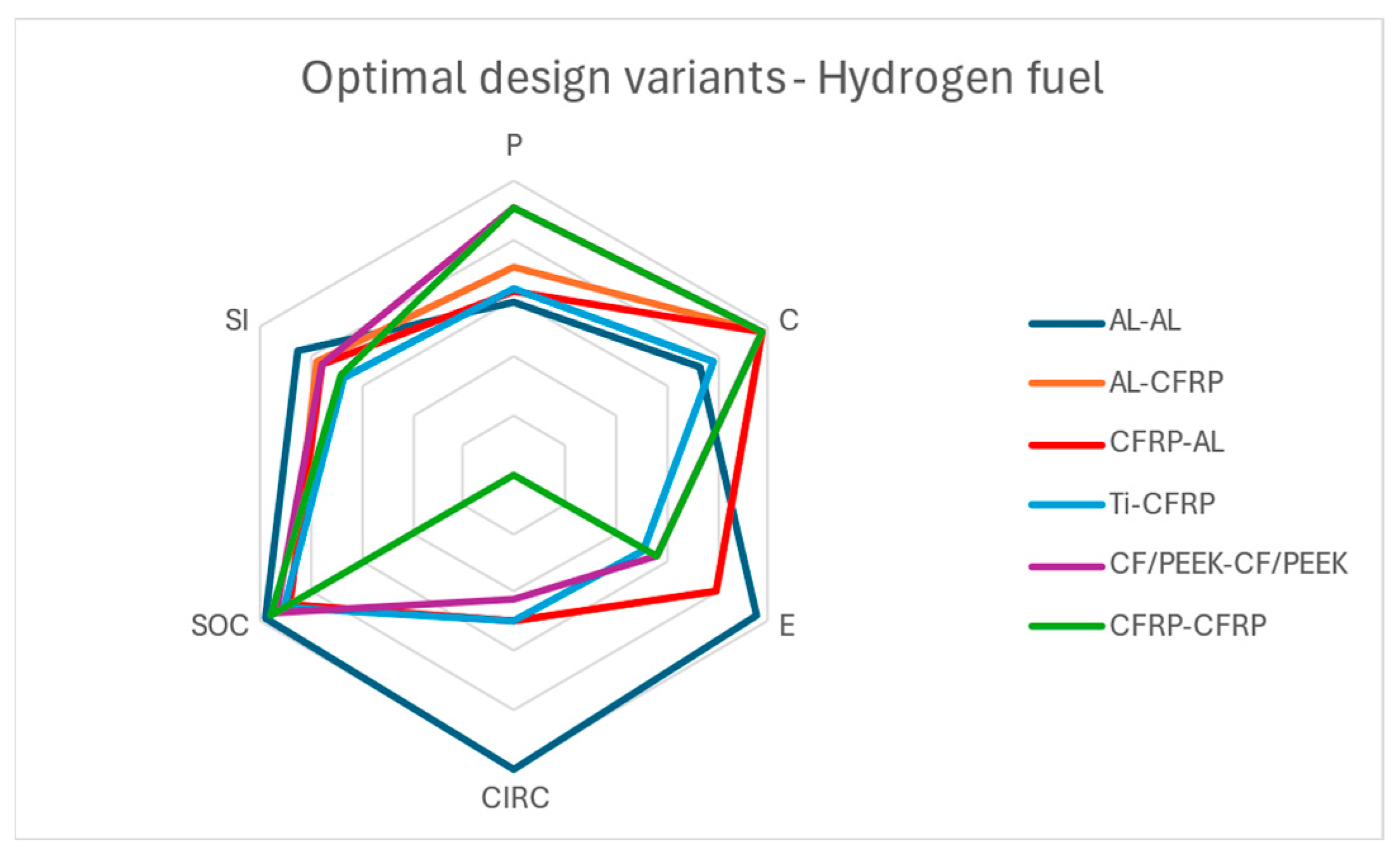
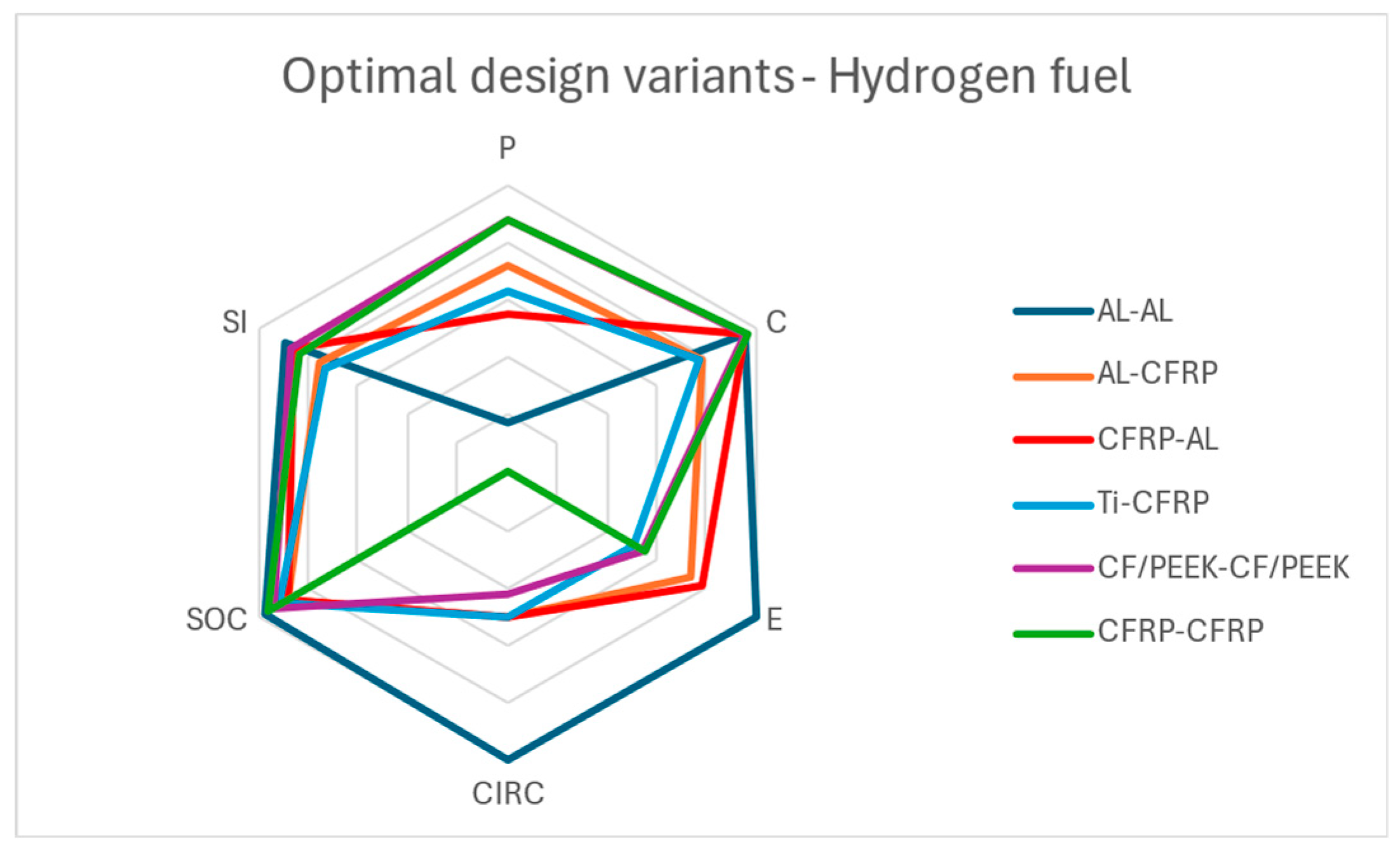
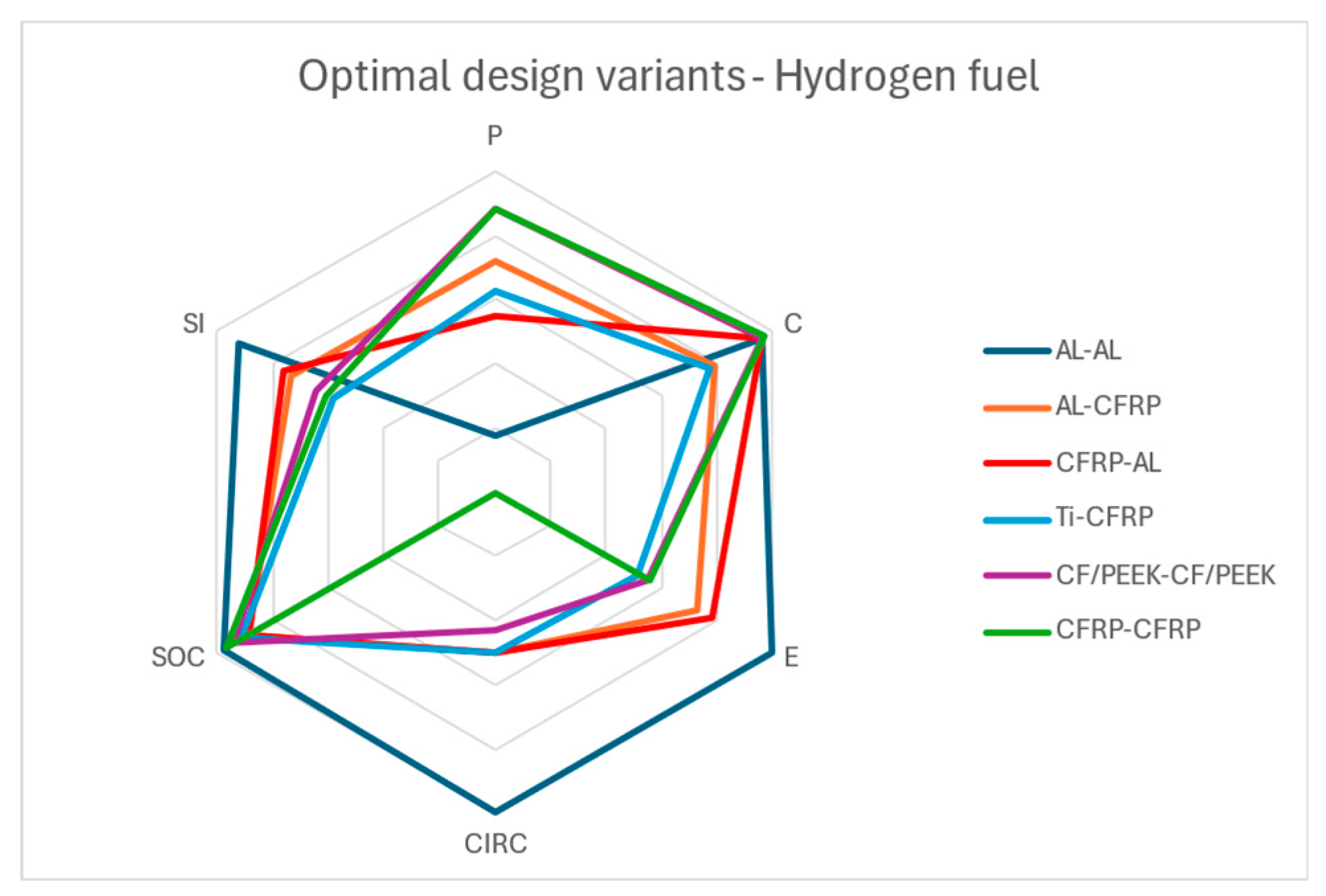
| Sustainability Ranking Equal Weights Hydrogen |
Material Configuration | Sustainability Index |
|---|---|---|
| 1 | AL-AL | 0.738 ± 0.021 |
| 2 | AL-CFRP | 0.719 ± 0.018 |
| 3 | CF/PEEK-CF/PEEK | 0.689 ± 0.029 |
| 4 | CFRP-AL | 0.658 ± 0.022 |
| 5 | CFRP-CFRP | 0.637 ± 0.031 |
| 6 | Ti-CFRP | 0.572 ± 0.078 |
| Sustainability Ranking – Priority on Cost No Use Phase |
Material Configuration | Sustainability Index |
|---|---|---|
| 1 | AL-AL | 0.933 ± 0.016 |
| 2 | AL-CFRP | 0.716 ± 0.017 |
| 3 | CFRP-AL | 0.701 ± 0.019 |
| 4 | Ti-CFRP | 0.562 ± 0.038 |
| 5 | CFRP-CFRP | 0.519 ± 0.109 |
| 6 | CF/PEEK-CF/PEEK | 0.409 ± 0.131 |
| Sustainability Ranking – Priority on Cost Use Phase: Kerosene |
Material Configuration | Sustainability Index |
|---|---|---|
| 1 | CF/PEEK-CF/PEEK | 0.813 ± 0.036 |
| 2 | CFRP-CFRP | 0.786 ± 0.035 |
| 3 | AL-CFRP | 0.720 ± 0.089 |
| 4 | AL-AL | 0.688 ± 0.095 |
| 5 | CFRP-AL | 0.677 ± 0.058 |
| 6 | Ti-CFRP | 0.467 ± 0.145 |
| Sustainability Ranking – Priority on Cost Use Phase: Hydrogen |
Material Configuration | Sustainability Index |
|---|---|---|
| 1 | CF/PEEK-CF/PEEK | 0.783 ± 0.034 |
| 2 | CFRP-CFRP | 0.753 ± 0.034 |
| 3 | AL-CFRP | 0.721 ± 0.080 |
| 4 | AL-AL | 0.706 ± 0.085 |
| 5 | CFRP-AL | 0.676 ± 0.054 |
| 6 | Ti-CFRP | 0.453 ± 0.138 |
| Sustainability Ranking – Priority on Environmental Impact No Use Phase |
Material Configuration | Sustainability Index |
|---|---|---|
| 1 | AL-AL | 0.905 ± 0.017 |
| 2 | AL-CFRP | 0.723 ± 0.022 |
| 3 | CFRP-AL | 0.706 ± 0.022 |
| 4 | CFRP-CFRP | 0.554 ± 0.087 |
| 5 | CF/PEEK-CF/PEEK | 0.472 ± 0.061 |
| 6 | Ti-CFRP | 0.387 ± 0.084 |
| Sustainability Ranking – Priority on Environmental Impact Use Phase: Kerosene |
Material Configuration | Sustainability Index |
|---|---|---|
| 1 | CF/PEEK-CF/PEEK | 0.831 ± 0.035 |
| 2 | CFRP-CFRP | 0.796 ± 0.034 |
| 3 | AL-CFRP | 0.720 ± 0.089 |
| 4 | AL-AL | 0.682 ± 0.096 |
| 5 | CFRP-AL | 0.675 ± 0.058 |
| 6 | Ti-CFRP | 0.466 ± 0.145 |
| Sustainability Ranking – Priority on Environmental Impact Use Phase: Hydrogen |
Material Configuration | Sustainability Index |
|---|---|---|
| 1 | AL-AL | 0.873 ± 0.025 |
| 2 | AL-CFRP | 0.718 ± 0.029 |
| 3 | CFRP-AL | 0.685 ± 0.028 |
| 4 | CF/PEEK-CF/PEEK | 0.568 ± 0.029 |
| 5 | CFRP-CFRP | 0.539 ± 0.029 |
| 6 | Ti-CFRP | 0.379 ± 0.098 |
Disclaimer/Publisher’s Note: The statements, opinions and data contained in all publications are solely those of the individual author(s) and contributor(s) and not of MDPI and/or the editor(s). MDPI and/or the editor(s) disclaim responsibility for any injury to people or property resulting from any ideas, methods, instructions or products referred to in the content. |
© 2024 by the authors. Licensee MDPI, Basel, Switzerland. This article is an open access article distributed under the terms and conditions of the Creative Commons Attribution (CC BY) license (http://creativecommons.org/licenses/by/4.0/).


