

Submitted:
18 December 2024
Posted:
20 December 2024
You are already at the latest version
Abstract
Background: Digital technologies are increasingly used to promote effective health interventions in the older adult population. This study aimed to develop and validate instant messages with educational content related to glycemic control through applications for use as a type 2 DM control strategy in older adults. Methods: This is a methodological study that had as a product instant messages containing text and images. The validation process was conducted by a panel of experts composed of nursing, nutrition, and physical education professionals. SPSS version 25.0 was used for statistical analysis. The CVI of the items greater than or equal to 0.75 was adopted to measure the experts' agreement regarding the validity of the content of the educational messages. The exact test of statistically significant binomial distribution with p>0.05 and a proportion of 0.95 of agreement was used to estimate the statistical reliability of the CVI. Results: Sixty-one text messages were prepared with support from illustrations divided into three themes. The educational messages were validated with an average CVI above 0.80 in all indicators. Conclusions: These messages were considered relevant and clear for older adults to be included in the digital environment and to the objective of helping to manage type 2 DM.
Keywords:
aging
; type 2 diabetes mellitus
; glycemic control
; nursing
; nutrition
; social media
; public health
1. Introduction
In Brazil, population aging is a reality. In 2022, 15.6% of the Brazilian population were elderly (1). With the increase in life expectancy and the process of globalization, which encouraged a sedentary lifestyle and poor eating habits, individuals have become more likely to develop chronic non-communicable diseases (NCDs), including diabetes mellitus (DM)(2,3).
DM is reaching epidemic proportions. Worldwide, in 2021, in the age group of 20 to 79 years, 537 million adults and older adults were diagnosed with DM, and approximately 6.7 million people died from the disease and its complications. In the ranking of countries with the highest number of people diagnosed with DM, in the same age group, Brazil is in 6th place, generating an expenditure of 966 billion dollars, in 2021, with DM (4).
DM treatment aims to prevent and delay micro and macrovascular complications and optimize the individual’s quality of life (5). To this end, treatment is based on glycemic control (6), which can be achieved by promoting a healthy lifestyle, maintaining an ideal body weight, eating an adequate diet, and exercising regularly (7).
Health education in DM is the primary strategy to ensure self-care, placing the individual at the center of care, encouraging them to change their lifestyle and raising awareness of the risks of the disease if glycemic control is not achieved (8). Educational actions should awaken in DM patients an interest in understanding how the disease works so that this knowledge can help them in self-care, promoting health and well-being (9).
Because of the COVID-19 pandemic in 2020, healthcare activities were affected, and it was necessary to strengthen the use of technologies to meet healthcare demands, reformulate strategies, and make them possible to be executed online. The use of digital technologies became even more representative (10). The period of social isolation during the covid-19 pandemic drove older adults to the digital environment (11). Therefore, the World Health Organization (WHO) proposed the Global Health Strategy 2020-2025, encouraging the use of information and communication technologies to develop digital health. This strategy aims to strengthen the healthcare systems to guarantee the health and well-being of the population (12).
Digital and educational technologies are used to promote effective interventions in the health of older adults (13,14). Several types of educational technologies have been used to achieve better glycemic control in people diagnosed with DM (15–19). However, most of these educational messages convey the content in text format, without the use of images that improve understanding.
For technology to be well accepted by the older population, it must be adapted to their daily needs, be easy to use through simple and intuitive navigation, have appropriate language, an attractive design and be rich in images that are part of everyday life (20). Among the telecommunication modalities, the use of social networks stands out, and among social networks, instant messaging applications are well accepted by older adults (21).
WhatsApp is a widely used instant messaging application that allows real-time interactivity, connectivity, portability and multifunctionality (22), features that help meet communication demands, overcome time and space barriers, and maintain contact between health professionals and patients (23). It is part of the Brazilian lifestyle used by 147 million Brazilians, of which 86% use the application daily to exchange text messages and images (24). Older adults also use the tool to clarify doubts about health care (25).
The use of WhatsApp in health education actions and monitoring of DM treatment has been described in studies as an important tool for understanding the disease (26) improving self-efficacy and self-management of DM (27); glycemic control (28); encouraging medication adherence (29); and reducing acute complications of DM (30). In this sense, this study aimed to develop and validate instant messages with educational content related to glycemic control through applications for use as a type 2 DM control strategy in Brazilian older adults.
2. Materials and Methods
2.1. Study Design and Ethical Approval
This methodological study resulted in an educational technology, in the form of instant messages containing text and images to be sent via the instant messaging application (WhatsApp). This study constituted the initial stage of a randomized clinical trial to evaluate the effectiveness of educational messages in the glycemic control of elderly individuals diagnosed with type 2 DM. The project was approved by the Research Ethics Committee of the Ceilândia Faculty of the University of Brasília – CEP/FCE/UNB (4.876.336 CAAE 45733521.0.0000.8093) and by the Research Ethics Committee of the Foundation for Teaching and Research in Health Sciences of the Health Department of the Federal District – CEP/FEPECS/SESDF (4.980.237 CAAE 45733521.0.3001.5553). The ethical requirements for human research followed the Declaration of Helsinki.
2.2. Preparation of Educational Messages
The content of the educational messages involved knowledge about the disease, encouragement of self-care and interventions necessary for glycemic control, such as physical exercise and healthy eating. The leading national content of the Brazilian Association for the Study of Obesity and Metabolic Syndrome (31), the Brazilian Ministry of Health (33–37), and the Brazilian Diabetes Society (8,37,38) were used as references.
The educational messages were created by members of the Health, Care and Aging Research Group (GPeSEn), made up of professors, postgraduate and undergraduate students from nursing, nutrition and physical education courses at the University of Brasília (UnB).
After selecting the content, a character named Dora (a nurse) was created to present the messages and support the content of the messages. To strengthen the relationship between the health professional, a dialogue resource between the nurse Dora and an older adult was used. The name was chosen in reference to the nurse Dorothea Elizabeth Orem, who developed the Self-Care Theory (39).
In preparing educational messages, aspects related to language, images, illustrations and layout are currently considered. Simple language was used, appropriate to the socioeconomic and cultural context, suitable for the target audience and consistent with the messages to be transmitted. Since the target audience is older adults, the vocabulary used was easy to understand, with short sentences to facilitate understanding at home and encourage self-care (40,41).
When selecting the illustrations, racial and ethnic aspects were considered to show people from a wide range of groups and ethnicities. The illustrations were always placed close to the text to which they referred (41) and most of then were created by a graphic design professional. The messages and illustrations were prepared in the Canva application, with Open Sans font, sizes 20 and 22 for text. The messages were created and validated in Portuguese and after validation was translation for English in free translation.
2.3. Content Validation by Experts
The validation of the content of the educational messages occurred in December 2023, with a group of experts selected using different strategies through research on the Lattes Platform of the National Council for Scientific and Technological Development (CNPq), on the websites of the leading Brazilian universities and indication of other experts by de experts who alredy participated.
The inclusion criteria adopted were: being a physical education, nursing, or nutrition professionals; voluntarily accepting to participate in the research; answering all the research forms and achieving a score > 5 points in the Fehring criteria (42). The points were distributed as follows: master’s degree (4 points); master’s degree with dissertation in the area of interest (1 point); research in the area of interest (2 points); published article in the area of interest (2 points); doctorate with thesis in the area of interest (2 points); professional experience in the area of interest (2 points); specialization in the area of interest (2 points).
The invitation letter was emailed with the research objectives and a Google Drive link that allowed access to: the Free and Informed Consent Form (FICF); the educational messages; and the validation instrument. The experts signed the FICF electronically and received a copy signed by the researchers via email.
The message evaluation instrument was structured in three parts: a) characterization of the experts; b) validation questionnaire divided into three blocks: objectives; structure and presentation; relevance; c) final evaluation of the messages. The validation instrument was adapted from other studies that validated educational technologies in the health area (43–45). A period of 30 days was granted to complete the validation instrument, and if it was not completed, a new message was sent every 7 days to reinforce the invitation.
A 5-point Likert Scale was used to measure the level of agreement and disagreement in the experts’ responses. The responses were divided into: 1 - I completely disagree; 2 - I disagree; 3 - I neither agree nor disagree; 4 - I agree; 5 - I completely agree. If the experts marked answers 1 and 2, they were asked to make a comment or suggestion, which was reviewed until a consensus was reached. After the experts’ evaluation, the comments were organized in a table and analyzed by the research group regarding the coherence of the requested changes. All recommendations relevant to the methodology and purpose of the study were accepted. Minimal changes were made on the messages and no new content was added.
The responses were tabulated in Excel and exported to the Statistical Package for Social Sciences (SPSS) version 25.0. The Content Validity Index (CVI) was adopted to measure the experts’ agreement regarding the content validity of the educational messages. To determine the level of agreement among the experts, the CVI was calculated by the number of experts who answered 4 or 5 divided by the total number of experts who evaluated the item. The average of the CVI of all the messages (S-CVI/Ave) and the content validity of the individual items (I-CVI) were calculated. The I-CVI of the items was considered to be greater than or equal to 0.75 (46,47). The exact binomial distribution test indicated for small samples was used, statistically significant with p>0.05 and a proportion of 0.95 of agreement to estimate the statistical reliability of the CVI.
3. Results
3.1. Preparation of Educational Messages
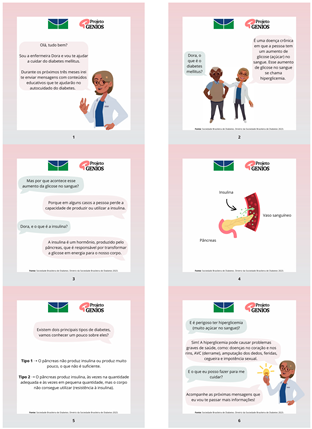
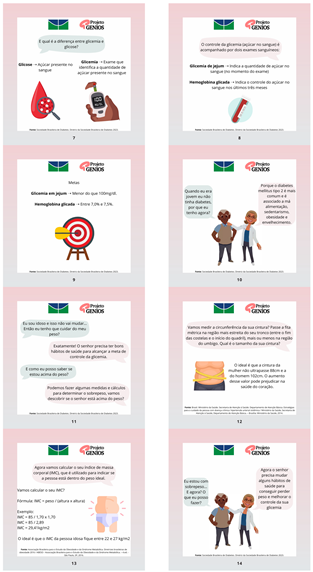
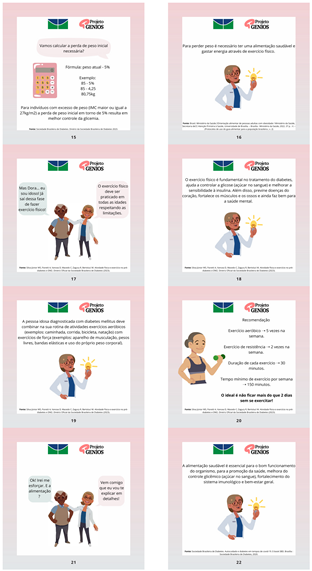
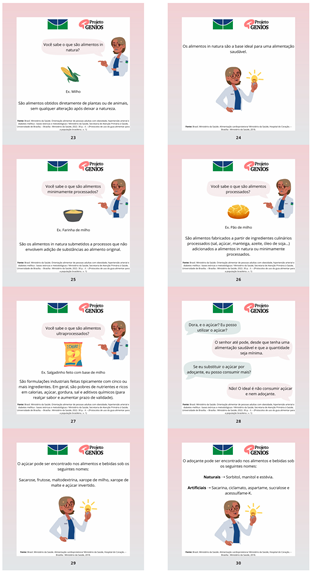
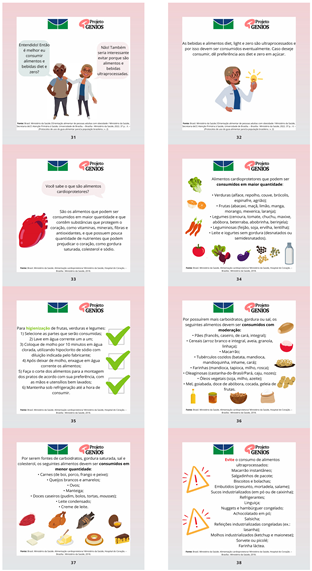
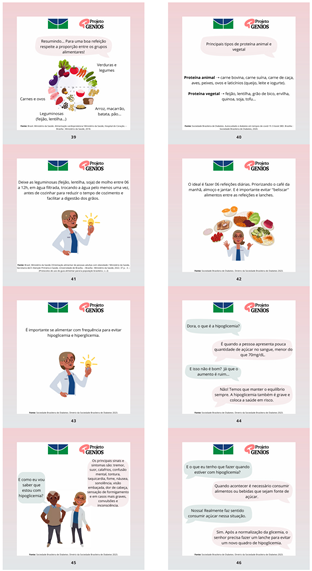
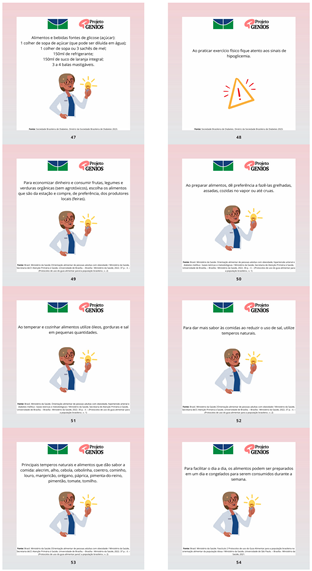
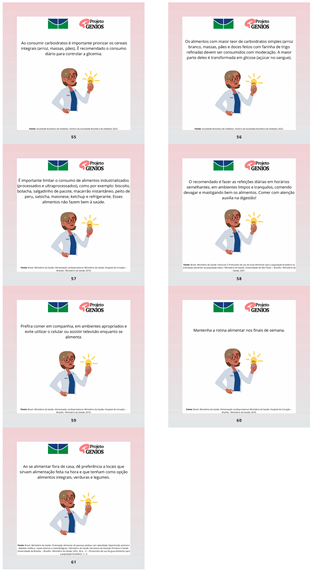
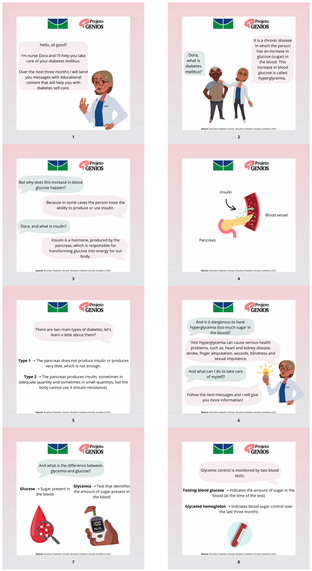
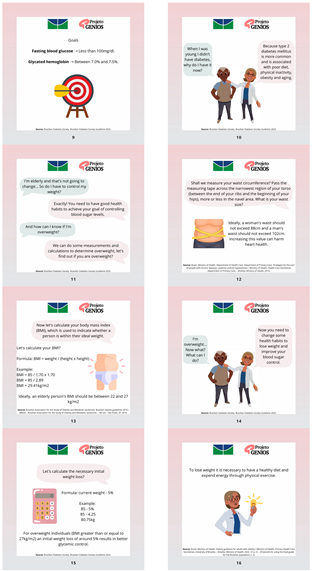
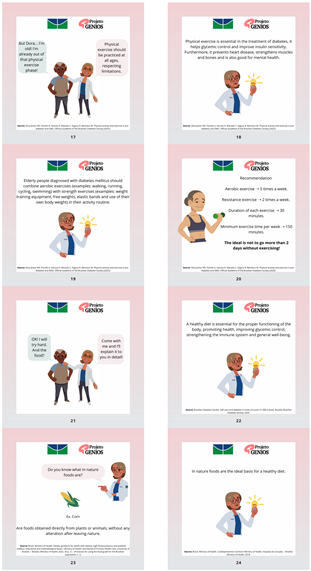
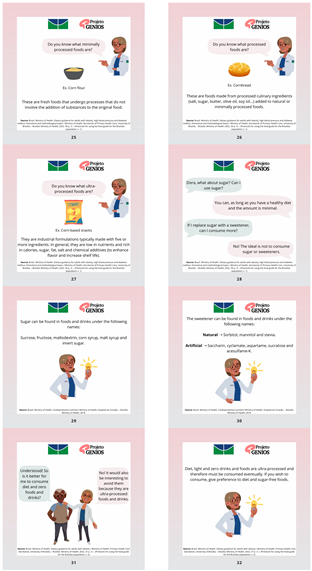
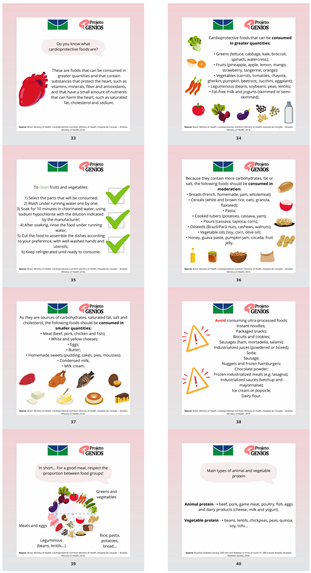
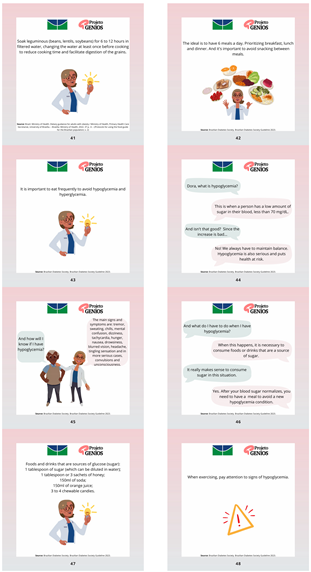
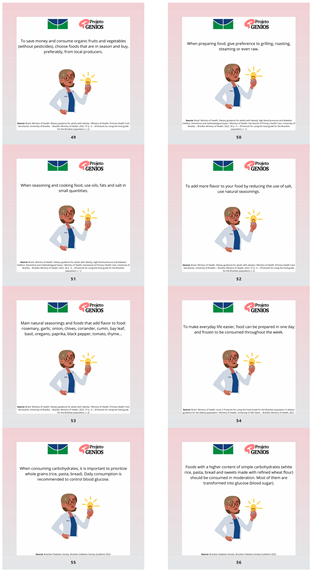
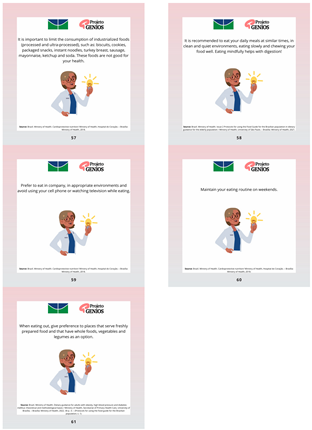
A total of 61 text messages were created with illustrations, divided into three themes: 1) presentation of the proposal and basic information about DM (n= 16); 2) physical exercise (n= 5) and 3) healthy eating (n= 40) (Table 1) (Appendix A).

Table 1.
Theme, content and quantity of educational messages.
| Theme | Content of educational messages | Amount |
| 1 | Presentation of the proposal and basic information on type 2 DM | 9 |
| Information on body weight control and anthropometry | 7 | |
| 2 | Guidance on physical exercise | 4 |
| 3 | Importance of healthy eating, natural, minimally processed, processed and ultra-processed | 7 |
| Information on the consumption of sugar, sweeteners, diet, light, and zero foods and drinks | 5 | |
| Information on cardioprotective nutrition and hygiene of fruits and vegetable | 3 | |
| Information about foods that should be consumed in moderation, in smaller quantities, and avoided | 4 | |
| Information on food proportions and number of meals per day | 4 | |
| Information about hypoglycemia and its treatment | 5 | |
| General tips related to meal preparation | 10 | |
| General tips for making the most of your meals | 3 |
3.2. Content Validation by Experts
A total of 623 experts were invited to participate in the validation process by email, with weekly reminders. From them, 37 experts agreed to participate and completed the questionnaire.
Regarding the expert’s profile, 81% were female (n= 30), with an average age of 45 years, 43% were nurses (n= 16), 35% were nutritionists (n= 13) and 22% were physical education professionals (n= 8). Regarding their qualifications, 82% (n= 32) were Ph.D. and 24% (n= 5) had master’s degrees, with an average of 20 years of professional experience in teaching, research and assistance. About 62% (n= 23) of the experts had published articles in the area of interest.
Despite obtaining CVI above 0.80 (S-CVI/Ave) for all messages regarding objective, content and language (Table 1), the experts suggested some changes. The main changes, after input from experts, were: a review of the rules of the Portuguese language; rewriting of some sentences; addition, replacement or removal of words and/or images that could confuse or improve the understanding of the content by older adults; and highlighting of certain words in bold.
Table 1.
Validation questionnaire for educational messages by expert experts.
| Variables | I-IVC* | |
| 1 | Objective | 0.84 |
| 1.1 | The contents meet the needs of people with DM2. | 0.86 |
| 1.2 | The contents are useful for improving self-care for people with DM2 | 0.89 |
| 1.3 | These contents can influence changes in ideas, behavior and attitude. | 0.81 |
| 1.4 | It is suitable for sharing in the scientific community of the area. | 0.78 |
| 1.5 | It meets the objectives of healthcare professionals working with people with T2DM. | 0.86 |
| 2 | Content | 0.85 |
| 2.1 | The information is presented clearly and objectively. | 0.81 |
| 2.2 | The information is scientifically correct. | 0.81 |
| 2.3 | There is a logical sequence in the proposed topics. | 0.95 |
| 2.4 | The information is written according to the rules of the Portuguese language. | 0.92 |
| 2.5 | The writing is appropriate for the proposed target audience. | 0.84 |
| 2.6 | The font size is adequate. | 0.81 |
| 2.7 | The illustrations are clear and sufficient. | 0.86 |
| 2.8 | The number of messages is adequate to be used in twelve weeks. | 0.78 |
| 3 | Language | 0.86 |
| 3.1 | The topics cover the key aspects that need to be emphasized. | 0.84 |
| 3.2 | The messages encourage the construction of knowledge for self-care. | 0.81 |
| 3.3 | The messages include the topics necessary to build people’s knowledge about DM2. | 0.89 |
| 3.4 | The messages are appropriate for use by any healthcare professional. | 0.89 |
| Total IVC | 0.85 | |
Source: Authors’ data, 2024. Legend: I- CVI: content validity of individual items; DM2: type 2 diabetes mellitus; *Statistical significance by Binomial test > 0.05.
4. Discussion
The instant messages, with educational content related to glycemic control, were prepared by nursing, nutrition and physical education professionals, based on the main validated and published content of the Brazilian Association for the Study of Obesity and Metabolic Syndrome, Brazilian Diabetes Society and the Brazilian Ministry of Health related to type 2 diabetes mellitus and healthy eating (8,32–39), aiming to facilitate the access to the information from these materials by older adults. The educational messages were produced according to the preferences of older adults concerning the authors’ training level content, text, illustrations and access (48). The proposed content aimed to promote adequate nutrition and healthy lifestyle habits.
The instant educational messages were written in a simple, objective and easy-to-understand language, appropriate to the educational and cultural level of most Brazilian older adults to ensure that the information is transmitted in a clear and accessible manner, including among those with low levels of education. Adapting the language to the specific needs of this group is essential to ensure that the guidelines are not only understood, but also applied in everyday life. The texts were arranged in short sentences, with an easy-to-read font and size (48). Illustrations were used to facilitate understanding of the texts. The illustrations support population diversity in relation to race, sex, and body composition. Furthermore, using illustrations can attract older adults (49).
Instant messaging will be made available online due to the ease of storing information and the possibility of easy access to content when needed (48). For example, the PronutriSenior Project, carried out in Portugal, showed that information about nutrition and health is essential to empower older adults living in the community about their food choices, with a preference for receiving audiovisual material with images (50).
Older adults are adapting to the digital age and are interested in online health-related information, especially after the COVID-19 pandemic. The challenge is to gather reliable information for the elderly population (51). To ensure greater accuracy in the validation of educational messages, experts with experience in the subject were selected. This process was essential to ensure that the evaluation was carried out by professionals with knowledge. Even though the messages were evaluated as adequate, the qualitative analysis was carried out through the subjective recommendations of the experts, as they received comments that were accepted and changes were made to make them more didactic and inviting.
Health education is essential to empower people, making them protagonists in managing their own condition. However, information provided through traditional, in-person lectures may not be appropriate for older adults who face physical or geographic challenges, such as mobility limitations or transportation difficulties. This can make it difficult to participate in events that require travel, especially for those who live in remote or hard-to-reach areas, a reality observed in some Brazilian regions. In this context, seeking alternatives considering these limitations, such as digital technologies, is important. In Australia, participants over 55 y/o stated that they felt comfortable using smartphones and sought reliable, up-to-date health information specific to the older population and allowing for easy sharing with others (52).
Technologies play a crucial role in strengthening the guidance of health professionals and enabling the acquisition of knowledge, skills, and responsibility to effect attitude changes and increase decision-making power. This integrated approach can promote more effective health management and encourage self-care, essential for successful glycemic control, as it can help patients avoid risky behaviors (53,54).
Health professionals who care for older adults, especially those with chronic diseases, should be familiar with health technologies that allow patients to take better care of themselves, be active in their health care, and improve their quality of life. This study considered that messages are an artifact that mediates the relationship between health professionals and the target audience and is part of health education, which should be a dialogical practice, with efficient communication to stimulate autonomy and generate changes in risk behaviors; not prescriptive, imposing, or verticalized. Thus, messages allow for co-responsibility for care, as they value the role of the subject in the health and disease process (55,56).
5. Conclusions
Sixty-one text messages supported by illustrations were developed to be sent via instant messaging applications to help older adults manage type 2 DM. In validation by experts, these messages were considered relevant and clear for older adults to be included in the digital environment and to the objective of helping to manage type 2 DM.
The messages have the potential to prove that educational actions through digital media can improve people’s glycemic control, promoting changes in eating patterns and healthy lifestyle habits without the need to travel frequently for in-person appointments with healthcare professionals.
Author Contributions
Conceptualization, MVGdC, and MMS; methodology, MVGdC, and MMS; software, MMS; validation, RPZ, and VCG; formal analysis, MMS; investigation, MVGdC; resources, RPZ, and VCG; data curation, MMS; writing—original draft preparation, MVGdC, SSF, and MMS; writing—review and editing, RPZ, and VCG; visualization, TCMSBR, and LRL; supervision, MMS; project administration, TCMSBR, and LRL; funding acquisition, SSF. All authors have read and agreed to the published version of the manuscript.
Funding
This research was supported by the Federal District Research Support Foundation (FAPDF).
Institutional Review Board Statement
This study was conducted following the Declaration of Helsinki and approved by the Research Ethics Committees of the Faculty of Ceilândia of the University of Brasília—CEP/FCE (4.876.336 CAAE 45733521.0.0000.8093) and the Foundation for Teaching and Research in Health Sciences—CEP/FEPECS (4.980.237 CAAE 45733521.0.3001.5553) 16 September 2021.
Informed Consent Statement
Informed consent was obtained from all subjects involved in the study.
Data Availability Statement
The raw data supporting the conclusions of this article will be made available by the authors on request.
Acknowledgments
PPGCTS/UnB, PPGNH/UnB, FAPDF, CAPES, CNPq, and UnB (DPI/DPG/BCE) for their scientific support.
Conflicts of Interest
The authors declare no conflicts of interest.
Appendix A
Instant messages in Portuguese.
Instant messages in English.
References
- Gomes I, Britto V. Censo 2022: número de pessoas com 65 anos ou mais de idade cresceu 57,4% em 12 anos [Internet]. 2023. Available from: https://agenciadenoticias.ibge.gov.br/agencia-noticias/2012-agencia-de-noticias/noticias/38186-censo-2022-numero-de-pessoas-com-65-anos-ou-mais-de-idade-cresceu-57-4-em-12-anos.
- Hambleton IR, Caixeta R, Jeyaseelan SM, Luciani S, Hennis AJM. The rising burden of non-communicable diseases in the Americas and the impact of population aging: a secondary analysis of available data. The Lancet Regional Health - Americas [Internet]. 2023 May [cited 2024 Dec 14];21:100483. Available from: https://linkinghub.elsevier.com/retrieve/pii/S2667193X23000571.
- Beaglehole R, Yach D. Globalisation and the prevention and control of non-communicable disease: the neglected chronic diseases of adults. The Lancet [Internet]. 2003 Sep;362(9387):903–8. Available from: https://linkinghub.elsevier.com/retrieve/pii/S0140673603143358.
- Sun H, Saeedi P, Karuranga S, Pinkepank M, Ogurtsova K, Duncan BB, et al. IDF Diabetes Atlas: Global, regional and country-level diabetes prevalence estimates for 2021 and projections for 2045. Diabetes Res Clin Pract [Internet]. 2022 Jan;183:109119. Available from: https://linkinghub.elsevier.com/retrieve/pii/S0168822721004782.
- American Diabetes Association. 4. Comprehensive Medical Evaluation and Assessment of Comorbidities: Standards of Medical Care in Diabetes—2020. Diabetes Care [Internet]. 2020 Jan 1;43(Supplement_1):S37–47. Available from: https://diabetesjournals.org/care/article/43/Supplement_1/S37/30855/4-Comprehensive-Medical-Evaluation-and-Assessment.
- ElSayed NA, Aleppo G, Bannuru RR, Bruemmer D, Collins BS, Ekhlaspour L, et al. 6. Glycemic Goals and Hypoglycemia: Standards of Care in Diabetes—2024. Diabetes Care [Internet]. 2024 Jan 1;47(Supplement_1):S111–25. Available from: https://diabetesjournals.org/care/article/47/Supplement_1/S111/153951/6-Glycemic-Goals-and-Hypoglycemia-Standards-of.
- ElSayed NA, Aleppo G, Bannuru RR, Beverly EA, Bruemmer D, Collins BS, et al. 5. Facilitating Positive Health Behaviors and Well-being to Improve Health Outcomes: Standards of Care in Diabetes—2024. Diabetes Care [Internet]. 2024 Jan 1;47(Supplement_1):S77–110. Available from: https://diabetesjournals.org/care/article/47/Supplement_1/S77/153949/5-Facilitating-Positive-Health-Behaviors-and-Well.
- Bertoluci MC, Forti AC, Pititto B de A, Vancea D, Valente F, Silva Junior JC da, et al. Diretriz da Sociedade Brasileira de Diabetes [Internet]. Conectando Pessoas; 2024. Available from: https://diretriz.diabetes.org.br.
- Sociedade Brasileira de Diabetes. Diretrizes da Sociedade Brasileira de Diabetes 2019-2020 [Internet]. Vol. 1, Clannad Editora Científica. 2019. 489 p. Available from: https://edisciplinas.usp.br/pluginfile.php/5730478/mod_resource/content/0/Diretrizes-SBD-2019-2020.pdf.
- Celuppi IC, Lima G dos S, Rossi E, Wazlawick RS, Dalmarco EM. Uma análise sobre o desenvolvimento de tecnologias digitais em saúde para o enfrentamento da COVID-19 no Brasil e no mundo. Cad Saude Publica [Internet]. 2021;37(3):e00243220. Available from: http://www.scielo.br/scielo.php?script=sci_arttext&pid=S0102-311X2021000303001&tlng=pt.
- Lima JC, Félis KC, Moraes Filho IM de. A tecnologia digital como mecanismo auxiliador no envelhecimento ativo no século XXI. Nursing (São Paulo) [Internet]. 2023 Dec 12;26(306):10013–7. Available from: https://revistanursing.com.br/index.php/revistanursing/article/view/3158.
- World Health Organization. Global strategy on digital health 2020-2025 [Internet]. 2021. 0–60 p. Available from: https://iris.who.int/bitstream/handle/10665/344249/9789240020924-eng.pdf?isAllowed=y&sequence=1.
- Sá GG de M, Silva FL, Santos AMR dos, Nolêto J dos S, Gouveia MT de O, Nogueira LT. Tecnologias desenvolvidas para a educação em saúde de idosos na comunidade: revisão integrativa da literatura. Rev Lat Am Enfermagem [Internet]. 2019;27:e3186. Available from: http://www.scielo.br/scielo.php?script=sci_arttext&pid=S0104-11692019000100607&tlng=pt.
- De Santis KK, Mergenthal L, Christianson L, Zeeb H. Digital Technologies for Health Promotion and Disease Prevention in Older People: Protocol for a Scoping Review. JMIR Res Protoc [Internet]. 2022 Jul 21;11(7):e37729. Available from: https://www.researchprotocols.org/2022/7/e37729.
- Anderson A, O’Connell SS, Thomas C, Chimmanamada R. Telehealth Interventions to Improve Diabetes Management Among Black and Hispanic Patients: a Systematic Review and Meta-Analysis. J Racial Ethn Health Disparities [Internet]. 2022 Dec 9;9(6):2375–86. Available from: https://link.springer.com/10.1007/s40615-021-01174-6.
- Gershkowitz BD, Hillert CJ, Crotty BH. Digital Coaching Strategies to Facilitate Behavioral Change in Type 2 Diabetes: A Systematic Review. J Clin Endocrinol Metab [Internet]. 2021 Mar 25;106(4):e1513–20. Available from: https://academic.oup.com/jcem/article/106/4/e1513/5989488.
- Dening J, Islam SMS, George E, Maddison R. Web-Based Interventions for Dietary Behavior in Adults With Type 2 Diabetes: Systematic Review of Randomized Controlled Trials. J Med Internet Res [Internet]. 2020 Aug 28;22(8):e16437. Available from: http://www.jmir.org/2020/8/e16437/.
- Sahin C, Courtney KL, Naylor P, E Rhodes R. Tailored mobile text messaging interventions targeting type 2 diabetes self-management: A systematic review and a meta-analysis. Digit Health [Internet]. 2019 Jan 22;5:2055207619845279. Available from: https://journals.sagepub.com/doi/10.1177/2055207619845279.
- Kundury KK, Hathur B. Intervention through Short Messaging System (SMS) and phone call alerts reduced HbA1C levels in ~47% type-2 diabetics–results of a pilot study. Palazón-Bru A, editor. PLoS One [Internet]. 2020 Nov 17;15(11):e0241830. Available from: https://dx.plos.org/10.1371/journal.pone.0241830.
- Iancu I, Iancu B. Designing mobile technology for elderly. A theoretical overview. Technol Forecast Soc Change [Internet]. 2020 Jun;155:119977. Available from: https://linkinghub.elsevier.com/retrieve/pii/S0040162519302069.
- Dusi R, Trombini RR de SL, Pereira ALM, Funghetto SS, Ginani VC, Stival MM, et al. Construction and Content Validation of Mobile Devices’ Application Messages about Food and Nutrition for DM2 Older Adults. Nutrients [Internet]. 2024 Jul 18;16(14):2306. Available from: https://www.mdpi.com/2072-6643/16/14/2306.
- Meirelles F, Teixeira VMF, França T. Uso do WhatsApp para suporte das ações de educação na saúde. Saúde em Debate [Internet]. 2022 Apr;46(133):432–46. Available from: http://www.scielo.br/scielo.php?script=sci_arttext&pid=S0103-11042022000200432&tlng=pt.
- dos Santos JC, Nunes LB, Reis IA, de Carvalho Torres H. O uso do aplicativo móvel Whatsapp na saúde: revisão integrativa. REME-Revista Mineira de Enfermagem. 2021;25(1).
- Tiago Bianchi. https://www.statista.com/topics/7731/whatsapp-in-brazil/#editorsPicks. 2024. WhatsApp in Brazil - Statistics & Facts.
- Diniz JL, Moreira ACA, Teixeira IX, Azevedo SGV, Freitas CASL, Maranguape IC. Inclusão digital e o uso da internet pela pessoa idosa no Brasil: estudo transversal. Rev Bras Enferm. 2020;73:e20200241.
- Alanzi T, Bah S, Alzahrani S, Alshammari S, Almunsef F. Evaluation of a mobile social networking application for improving diabetes Type 2 knowledge: an intervention study using WhatsApp. J Comp Eff Res [Internet]. 2018 Sep;7(9):891–9. Available from: https://becarispublishing.com/doi/10.2217/cer-2018-0028.
- Yaagoob E, Lee R, Stubbs M, Shuaib F, Johar R, Chan S. WhatsApp-based intervention for people with type 2 diabetes: A randomized controlled trial. Nurs Health Sci [Internet]. 2024 Jun 2;26(2):e13117. Available from: https://onlinelibrary.wiley.com/doi/10.1111/nhs.13117.
- Al Omar M, Hasan S, Palaian S, Mahameed S. The impact of a self-management educational program coordinated through WhatsApp on diabetes control. Pharm Pract (Granada) [Internet]. 2020 May 3;18(2):1841. Available from: https://www.pharmacypractice.org/index.php/pp/article/view/1841.
- Sartori AC, Rodrigues Lucena TF, Lopes CT, Picinin Bernuci M, Yamaguchi MU. Educational Intervention Using WhatsApp on Medication Adherence in Hypertension and Diabetes Patients: A Randomized Clinical Trial. Telemedicine and e-Health [Internet]. 2020 Dec 1;26(12):1526–32. Available from: https://www.liebertpub.com/doi/10.1089/tmj.2019.0305.
- Sap S, Kondo E, Sobngwi E, Mbono R, Tatah S, Dehayem M, et al. Effect of patient education through a social network in young patients with type 1 diabetes in a Sub-Saharan context. Pediatr Diabetes [Internet]. 2019 May 7;20(3):361–5. Available from: https://onlinelibrary.wiley.com/doi/10.1111/pedi.12835.
- Associação Brasileira para o Estudo da Obesidade e da Síndrome Metabólica A. Diretrizes Brasileiras de Obesidade [Internet]. 4th ed. São Paulo; 2016. 188 p. Available from: https://portaldeboaspraticas.iff.fiocruz.br/biblioteca/diretrizes-brasileiras-de-obesidade-2016-abeso/.
- Brasil. Fascículo 2 - Protocolos de uso do Guia Alimentar para a população brasileira na orientação alimentar da população idosa [Internet]. 2021. 0–18 p. Available from: https://bvsms.saude.gov.br/bvs/publicacoes/protocolos_guia_alimentar_fasciculo2.pdf.
- Brasil. Alimentação cardioprotetora [Internet]. 2018. 0–16 p. Available from: https://bvsms.saude.gov.br/bvs/publicacoes/alimentacao_cardioprotetora.pdf.
- Brasil. Orientação alimentar de pessoas adultas com obesidade, hipertensão arterial e diabetes mellitus : bases teóricas e metodológicas [Internet]. Vol. 1. 2022. 0–30 p. Available from: https://bvsms.saude.gov.br/bvs/publicacoes/fasciculo1_protocolos_alimentar_adultas_obesidade.pdf.
- Brasil. Orientação alimentar de pessoas adultas com obesidade [Internet]. Vol. 2. Brasília; 2022. 0–37 p. Available from: https://bvsms.saude.gov.br/bvs/publicacoes/volume2_protocolos_alimentar_adultas_obesidade.pdf.
- Brasil. Estratégias para o cuidado da pessoa com doença crônica: Hipertensão arterial sistêmica [Internet]. 2014. 128 p. Available from: https://bvsms.saude.gov.br/bvs/publicacoes/hipertensao_arterial_sistemica_cab37.pdf.
- Sociedade Brasileira de Diabetes. Autocuidado e Diabetes em Tempos de COVID-19 [Internet]. 2020. Available from: https://diabetes.org.br/covid-19/e-book-sbd-autocuidado-e-diabetes-em-tempos-de-covid-19/#:~:text=O%20site%20Diabetes%20na%20ERA,19%20em%20pessoas%20com%20diabetes.
- Silva Junior WS da, Fioretti AMB, Vancea DMM, Macedo CLD, Zagury R, Bertoluci M. Atividade física e exercício no pré-diabetes e DM2. In: Diretriz Oficial da Sociedade Brasileira de Diabetes [Internet]. Conectando Pessoas; 2022. Available from: https://diretriz.diabetes.org.br/atividade-fisica-e-exercicio-no-pre-diabetes-e-dm2/.
- Orem DE, Taylor SG, Renpenning KM. Nursing concepts of practice. 1995.
- Torres HC, Candido NA, Alexandre LR, Pereira FL. O processo de elaboração de cartilhas para orientação do autocuidado no programa educativo em Diabetes. Rev Bras Enferm [Internet]. 2009 Apr;62(2):312–6. Available from: http://www.scielo.br/scielo.php?script=sci_arttext&pid=S0034-71672009000200023&lng=pt&tlng=pt.
- Moreira M de F, Nóbrega MML da, Silva MIT da. Comunicação escrita: contribuição para a elaboração de material educativo em saúde. Rev Bras Enferm [Internet]. 2003 Apr;56(2):184–8. Available from: http://www.scielo.br/scielo.php?script=sci_arttext&pid=S0034-71672003000200015&lng=pt&tlng=pt.
- Fehring RJ, Carroll-Johson P. Classification of nursing diagnoses: proceedings of the tenth conference of North American Nursing Diagnosis Association. JB Lippincott Philadelphia; 1994.
- Maniva SJC de F. Elaboração E Validação De Tecnologia Educativa Sobre Acidente Vascular Cerebral Para Prevenção Da Recorrência. 2016; Available from: http://www.repositorio.ufc.br/bitstream/riufc/21580/1/2016_tese_sjcfmaniva.pdf.
- Rocha G dos S, Oliveira APP de, Teixeira E, Nemer CRB. Validação de manual de cuidados de idosos após cirurgia cerebral. Revista de Enfermagem UFPE on line [Internet]. 2019;13. Available from: https://pesquisa.bvsalud.org/portal/resource/pt/biblio-1051558.
- Silva MM, Penha JC da, Barbosa ICFJ, Carneiro CT, Borges JWP, Bezerra MAR. Construção e validação de tecnologia educacional para promoção do aleitamento materno no período neonatal. Escola Anna Nery [Internet]. 2020;25. Available from: https://www.scielo.br/j/ean/a/TFGcfdKCqk4FZNqBjpymdJB/?lang=pt.
- Polit DF, Beck CT, Owen S V. Is the CVI an acceptable indicator of content validity? Appraisal and recommendations. Res Nurs Health [Internet]. 2007;30(4):459–67. Available from: https://pubmed.ncbi.nlm.nih.gov/17654487/.
- Souza ACC de, Moreira TMM, Borges JWP. Development of an appearance validity instrument for educational technology in health. Rev Bras Enferm [Internet]. 2020;73. Available from: https://www.scielo.br/j/reben/a/j4nNFSCVRjLFkTfXYBkLWgk/?lang=en.
- Goodman C, Lambert K. Scoping review of the preferences of older adults for patient education materials. Patient Educ Couns [Internet]. 2023 Mar;108:107591. Available from: https://linkinghub.elsevier.com/retrieve/pii/S0738399122008758.
- Bol N, van Weert JCM, de Haes HCJM, Loos EF, de Heer S, Sikkel D, et al. Using Cognitive and Affective Illustrations to Enhance Older Adults’ Website Satisfaction and Recall of Online Cancer-Related Information. Health Commun [Internet]. 2014 Aug 9;29(7):678–88. Available from: http://www.tandfonline.com/doi/abs/10.1080/10410236.2013.771560.
- Oliveira L, Poínhos R, Afonso C, Vaz Almeida MD. Information Sources on Healthy Eating Among Community Living Older Adults. Int Q Community Health Educ [Internet]. 2021 Jan 4;41(2):153–8. Available from: https://journals.sagepub.com/doi/10.1177/0272684X20915362.
- Battineni G, Baldoni S, Chintalapudi N, Sagaro GG, Pallotta G, Nittari G, et al. Factors affecting the quality and reliability of online health information. Digit Health [Internet]. 2020 Jan 30;6:205520762094899. Available from: https://journals.sagepub.com/doi/10.1177/2055207620948996.
- Turner A, Flood VM, LaMonica HM. Older adults’ needs and preferences for a nutrition education digital health solution: A participatory design study. Health Expectations [Internet]. 2024 Feb 28;27(1). Available from: https://onlinelibrary.wiley.com/doi/10.1111/hex.13923.
- Ribeiro SA, Moreira AD, Reis JS, Soares AN, Géa-Horta T. Elaboration and validation of a booklet on diabetes for Community Health Workers. Rev Bras Enferm [Internet]. 2020;73(4). Available from: http://www.scielo.br/scielo.php?script=sci_arttext&pid=S0034-71672020000400179&tlng=en.
- Marques ADB, Moreira TMM, Carvalho REFL de, Chaves EMC, Oliveira SKP de, Felipe GF, et al. PEDCARE: validation of a mobile application on diabetic foot self-care. Rev Bras Enferm [Internet]. 2021;74(suppl 5). Available from: http://www.scielo.br/scielo.php?script=sci_arttext&pid=S0034-71672021001200214&tlng=en.
- Ribeiro CCFS, Tonon MM, Oliveira JY de, Guedes MRJ, Tacla MTGM, Baldissera VDA, et al. Dialogic educational practices in the context of child intoxication: an approach based on Paulo Freire. Rev Bras Enferm [Internet]. 2021;74(5). Available from: http://www.scielo.br/scielo.php?script=sci_arttext&pid=S0034-71672021000500157&tlng=en.
- Sands DZ. Beyond the EHR: How Digital Health Tools Foster Participatory Health and Self-Care for Patients with Diabetes. American Journal of Medicine Open [Internet]. 2023 Dec;10:100043. Available from: https://linkinghub.elsevier.com/retrieve/pii/S2667036423000134.
Disclaimer/Publisher’s Note: The statements, opinions and data contained in all publications are solely those of the individual author(s) and contributor(s) and not of MDPI and/or the editor(s). MDPI and/or the editor(s) disclaim responsibility for any injury to people or property resulting from any ideas, methods, instructions or products referred to in the content. |
© 2024 by the authors. Licensee MDPI, Basel, Switzerland. This article is an open access article distributed under the terms and conditions of the Creative Commons Attribution (CC BY) license (http://creativecommons.org/licenses/by/4.0/).
Copyright: This open access article is published under a Creative Commons CC BY 4.0 license, which permit the free download, distribution, and reuse, provided that the author and preprint are cited in any reuse.


