Preprint
Article

This version is not peer-reviewed.

Association of SLC45A2 (rs11568737, rs28777); TYR (rs1042602, rs1126809); HERC2 (rs1129038) and SLC24A (rs1426654) Single Nucleotide Polymorphisms with Melasma in African Women – A Pilot Study

A peer-reviewed article of this preprint also exists.

Submitted:

18 December 2024

Posted:

19 December 2024

You are already at the latest version

Abstract

Melasma is a chronic skin disorder characterized by hypermelanosis, predominantly affecting women of African descent. This study explores the association between genetic variants of the genes SLC45A2, TYR, HERC2, and SLC24A and the severity of melasma in women of reproductive age with darker skin types. Forty participants were divided into two groups: 20 with facial melasma and 20 without. DNA was extracted from blood samples and genotyped using TaqMan assays to determine allele frequencies and genotype distributions. Statistical analyses, including Hardy-Weinberg equilibrium tests and odds ratios, were conducted to evaluate the associations between SNPs and melasma severity. The results showed significant differences in allelic frequencies of rs1042602 SNP (TYR gene) for codominant alleles [AA vs CC; (OR=21.00; 95% Cl (1.799–284.1); adjusted p=0.0320*); AC vs CC (OR= 56.00; 95%Cl (6.496–618.4); adjusted p<0.0001****)]; recessive alleles [(AA+AC vs CC; adjusted p<00001****)] and over dominant alleles [(AA+CC vs AC: adjusted p=0.0449)] between the melasma and control groups. There was significant differences in distribution frequencies for genotypes CC vs CT [(OR= 46.75; 95% Cl (5.786–270.8); adjusted p<0.0001****)]; and dominant alleles [(CC vs CT+TT; adjusted p=0.0022**)], recessive alleles [(CC+CT vs TT: adjusted p=0.0436*)] and over dominant alleles [(CC+TT vs TC: adjusted p <0.0001****)] between the two groups for the rs1129038 SNP (HERC2 gene). Additionally, there was significant association of codominant alleles AA vs GG [(OR=0.03571; 95% Cl (0.005866–0.3303); adjusted p=0.0010**] and AA vs AG [(OR= 0.05714; 95% Cl (0.01078 –0.3499); adjusted p=0.0022**)] and for recessive alleles AA+AG vs GG (adjusted p=0.0002***) in the rs1426654 SNP (SLC24A gene) in both groups. These findings form this study underscores the necessity for tailored treatment approaches that take genetic variations into account.

Keywords: 
;  ;  ;  

1. Introduction

Melasma is an acquired, chronic, hypermelanosis facial disorder that affects women with darker skin types in their reproductive age. Women of African, Asian, and Latin American descent classified under Fitzpatrick skin types IV to VI are predominantly affected [1,2]. It is characterized by hyperpigmented macules and patches occurring on sun-exposed areas of the face, such as the cheeks, forehead and upper lip [1,2]. Globally, the prevalence of melasma ranges from 1% in the general population to 9–50% in high-risk populations [3]. Of note, melasma has a a negative impact on an individuals' psychological and emotional well-being because of its visible, disfiguring presentation which often reduces their quality of life [2].
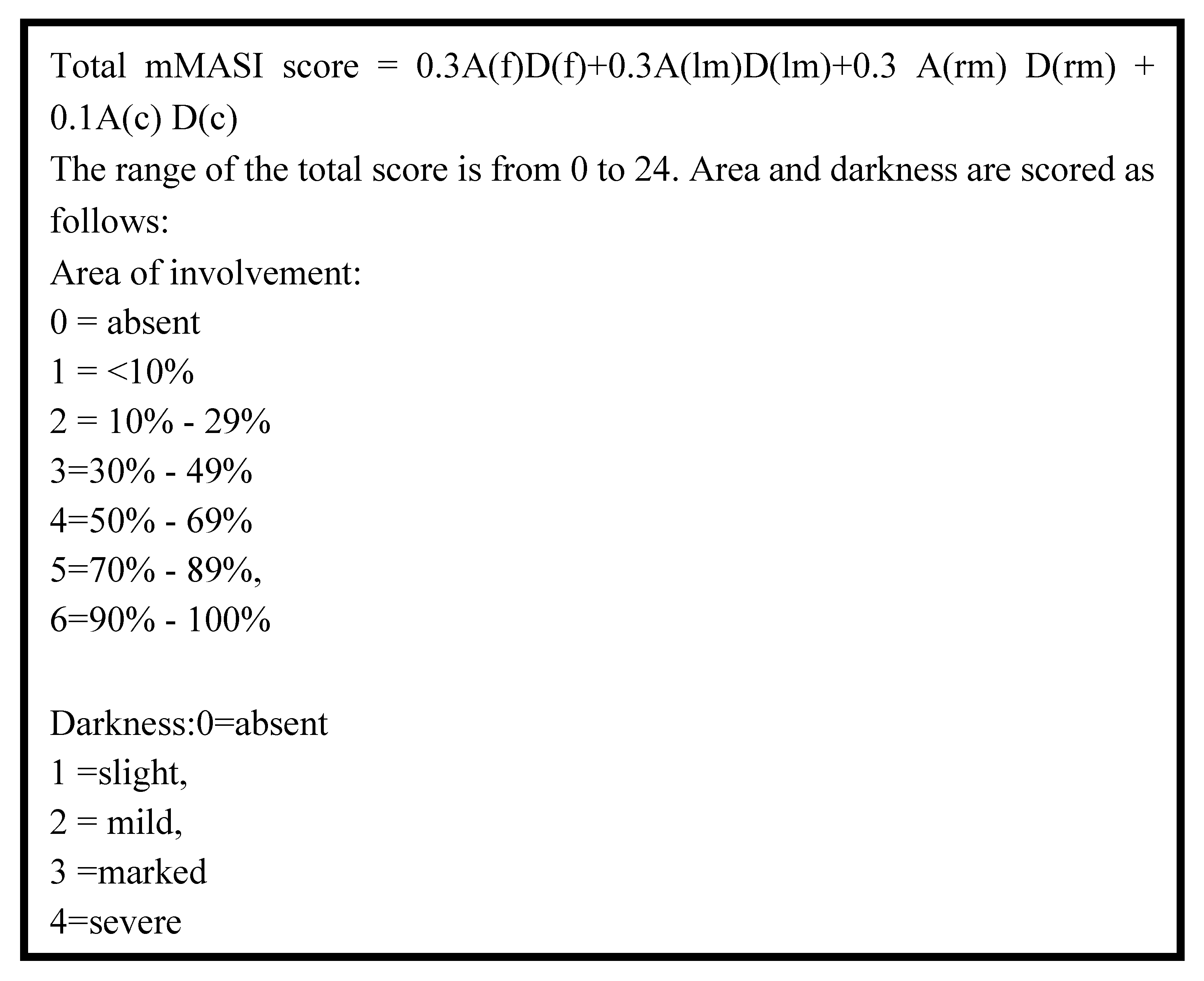
The aetiology of melasma is not completely understood [2,4]; however, several factors have been implicated in its pathogenesis that exacerbate the condition. These include ultraviolet (UV) radiation exposure, use of hormonal contraception, hormone replacement therapy, application of certain cosmetics, intake of photosensitizing medications, pregnancy and psychological stress [4,5]. Additionally, genetic predisposition, thyroid disorders, and certain systemic diseases exacerbate the condition [4,6]. The modified Melasma Area and Severity Index (mMASI is used to assess melasma severity. The mMASI score is the sum of the darkness score (D); area score (A); and separate fixed coefficients for the forehead, right malar, left malar, and chin regions (Box 1) [7].
Box 1. The mMASI score [6].
Preprints 143340 g003

Clinical Features

Clinical melasma patients have symmetrical ill-defined hyperpigmented macules on the photo-exposed areas, especially the face (Figure 1), and rarely the upper chest and extremities [8,9]. According to the distribution of these macules, melasma has been classified into three clinical patterns. The centrofacial pattern affects the central face, forehead, nose, cheeks, upper lip, and chin. The malar pattern is characterized by the involvement of the cheeks and nose. The mandibular pattern involves the mandibular dermatome predominantly. The most common clinical pattern is the centrofacial type, followed by maxillary melasma and then mandibular melasma [8]. True mandibular melasma, i.e., restricted to the ramus of mandible only, is rare and associated with older individuals and often associated with severe sun exposure [7,8].
Extra-facial melasma is a new, less typical pattern [3]. It occurs on non-facial body parts, including the neck, sternum, and forearms. Melasma affecting the upper limbs has been observed mainly among post-menopausal women, especially women on hormone replacement therapy. This type of melasma resembles facial melasma both clinically and histopathologically [11]. Notably, the Wood’s lamp examination helps in the differentiation between epidermal and dermal types [12]. The pigmentation is accentuated in the epidermal type and not increased in the dermal type [13]. Dermoscopy has also proven to be beneficial in such melasma categorization where regular brownish appearance, irregular bluish-gray, and a combination of both are observed in epidermal, dermal, and mixed types respectively [3].

Key Molecular Pathways in Melasma

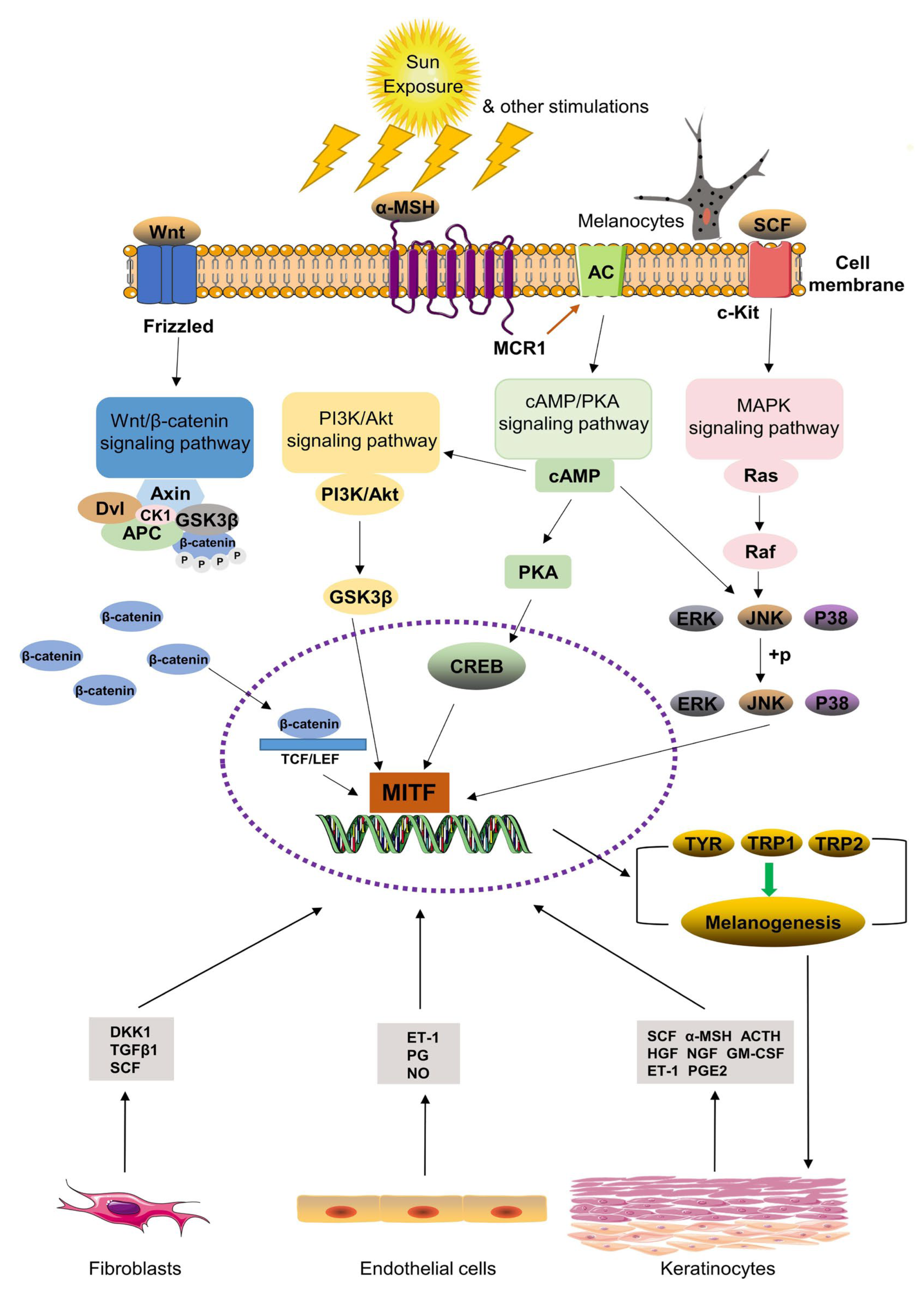
Recent studies have highlighted the role of genetic variations, particularly single nucleotide polymorphisms (SNPs), in the melasma pigmentation pathway, suggesting a potential link between specific genotype and alleles and the severity of melasma [1]. At the molecular level, several pathways are involved in the pathogenesis of melasma such as the melanocyte-stimulating hormone (MSH)/cyclic adenosine monophosphate (cAMP), the KIT pathway, and the Wnt/β-catenin signaling pathways [14,15]. These pathways play a role in the upregulation of tyrosinase and microphthalmia-associated transcription factor (Figure 2). This upregulation leads to the stimulation of melanogenesis and contributes to the development of melasma [16]. In women of reproductive age, Ultra Violet (UV) radiation and hormonal changes activate the microphthalmia associated transcription factor (MITF) leading to increased melanin synthesis [4,9].
Abbreviations: α-MSH, α-melanocyte-stimulating hormone; MCR1, melanocortin 1 receptor; AC, adenylate cyclase; cAMP, cyclic adenosine monophosphate; PKA, protein kinase A; CREB, cAMP response element-binding protein; PI3K, phosphatidylinositol-3-kinase; GSK3β, glycogen synthase kinase-3β; SCF, stem cell factor; c-Kit, receptor tyrosine kinase; ERK, extracellular signal-regulated kinases; JNK, c-Jun N-terminal kinase; Axin, axis inhibition; Dvl, Dishevelled; CK1, casein kinase 1; APC, adenomatous polyposis coli tumor suppressor protein; TCF/LEF, T cell factor/lymphocyte enhancer factor-1; MITF, microphthalmia-associated transcription factor; TYR, tyrosinase; TRP1, tyrosinase-related proteins-1; TRP2, tyrosinase-related proteins-2; SCF, stem cell factor; ACTH, adrenocorticotropic hormone; HFG, hepatocyte growth factor; NGF, hepatocyte growth factor; GM-CSF, granulocyte-macrophage colony-stimulating factor; ET-1, endothelin 1; PGE2, prostaglandin E2; DKK1, dickkopf-related protein 1; TGF-β1, transforming growth factor-β1; PG, prostaglandin; NO, nitrogen monoxide [17].
Hormonal fluctuations in estrogen and progesterone during pregnancy or with contraceptive use, significantly influence melasma development. Estrogen can stimulate melanocyte activity, leading to increased melanin production through pathways involving the melanocortin type 1 receptor (MC1R) and microphthalmia-associated transcription factor (MITF) [4].
Ultra Violet (UV)) radiation triggers oxidative stress, activating the MITF signalling pathway, which regulates genes involved in pigmentation such as tyrosinase (TYR) and tyrosinase-related proteins (TYRP1, MLANA) [4,18]. The MITF also plays a role in cellular redox balance by regulating genes that manage oxidative stress, thereby impacting melanocyte function and survival [18]. Mitogen-Activated Protein Kinase (MAPK) pathway is intricately linked with MITF phosphorylation, which can lead to its degradation or stabilization depending on the context of the signaling [19]. This pathway also regulates various downstream targets involved in pigmentation and cell proliferation.
Some components of the Wnt/β-catenin pathway have been implicated in melasma as they affect MITF expression and activity, influencing melanocyte differentiation and melanin production [4]. Inflammatory cytokines such as TNF-α can modulate MITF expression and activity, contributing to the pathogenesis of melasma. These cytokines can either promote or inhibit melanocyte function based on their concentration and context [19,20]. Phosphoinositide 3-Kinase (PI3K) pathway plays a role in cell survival and growth. It can interact with MITF to promote melanocyte proliferation and survival under stress conditions, further contributing to melasma [19].
The Wnt/β-catenin signaling pathway is also integral to melanogenesis. Activation of this pathway promotes melanin production, while its inhibition has been shown to reduce melanocyte activity and melanin synthesis [5]. Additionally, the mitogen-activated protein kinase (MAPK) and phosphatidylinositol-3-kinase/Akt (PI3K/Akt) pathways are implicated in melanin regulation. Agents targeting these pathways, including tyrosinase inhibitors such as arbutin and kojic acid, and depigmenting agents like azelaic acid, have shown efficacy in managing melasma [4,14,15] Personalizing treatment based on the patient’s genetic profile may enhance therapeutic outcomes.
The SLC45A2, TYR, HERC2, and SLC24A5 genes all play important roles in melanin production, which is essential for pigmentation and melasma development, pathways influenced by these genes are depicted in Table 1 . SLC45A2 encodes a transporter protein that regulates melanosome pH and influences melanin synthesis, and its SNPs (rs11568737, rs16891982, rs28777, and rs183671) have been linked to pigmentation differences [21]. It is also involved in melanosome maturation, and the rs1426654 variant is strongly associated with variations in skin pigmentation. Since TYR encodes tyrosinase, the enzyme responsible for the rate-limiting steps in melanin production, and the SNPs rs1042602, rs1393350, and rs1126809 can affect its activity, resulting in altered pigmentation [18]. HERC2 regulates OCA2, another pigmentation gene, and the rs1129038 polymorphism alters OCA2 expression, which influences skin colour [22]. Together, these polymorphisms contribute to melasma by altering melanin production and distribution.
SNPs are the most common form of genetic variation among individuals and can be found throughout the genome [23,24]. SNPs are an essential tool in genetics research, providing valuable information for understanding human genetic variation, disease risk, individual traits, and population dynamics [25]. However, there remains a gap in understanding how these polymorphisms correlate with melasma severity, particularly among populations of African ancestry. Given the unique genetic landscape of the South African (Durban) female population, which predominantly consists of individuals with darker skin types, this pilot study explored the correlation between pigment gene polymorphisms of genes SLC45A2 (rs11568737 and rs28777); TYR (rs1042602 and rs1126809); HERC2 (rs1129038) and SLC24A (rs1426654) with the severity of melasma clinical manifestations.

2. Results

Forty participants were enrolled in the study and assigned to two groups: Group A (women with melasma, n=20) and Group B [women without melasma (control group, n=20). The age of participants ranged between 35–58 years (46.80 ± 7.52) in the control group and 38–60 years (47.25 ± 7.99) in the melasma group (Table 1). Among the women with melasma 16 (84.21%) had a history of successful pregnancy while 3 (15.79%) did not. In Group A, 2 (10%) had malar melasma, 9 (45%) had centro-facial melasma and 9 (45%) had mandibular melasma. In this group, only 12 (60%) had a familial history (first degree relative) with melasma while 8 (40%) did not. The duration of melasma affliction was less than 10 years. Clinical characteristics of the study population are shown in Table 2.

Melasma vs Control Groups

Genetic variation of the genes SLC45A2 (rs11568737 and rs28777); TYR (rs1042602 and rs1126809); HERC2 (rs1426654) and SLC24A (rs1426654) were assessed. Allelic and genotypic frequency comparisons were conducted, and four genetic models were tested for their association with melasma (Table 3): co-dominant (equal effect of both alleles in a gene pair), dominant (alleles express the same phenotype), recessive (phenotype is expressed only when both alleles are identical) and over-dominant (where the heterozygote has a greater effect than the homozygote). Each of these models was also evaluated for associations with melasma across the six variants studied (Table 3).
The rs11568737 (G>T) genotype frequencies were GG- 1 (5%), GT 8- (40%) and TT- 11 (55%) were observed in melasma and GG 2 (10%), GT 2 (10%) and TT 16 (80%) in the control group (Table 3). The allele frequencies were G- 10 (25%) and T- 30 (75%) were observed the melasma versus G- 6 (15%) and T- 36 (90%) in the control group (Table 3).
The genotypic frequency association of gene polymorphism co-dominant GG vs TT showed no significant association in the melasma and the control groups [OR=0.7273; 95% Cl (0.0464–6.922); adjusted p>0.9999]; GG vs GT [OR= 0.1250; 95% Cl (0.007879 –1.793); adjusted p=0.2028] and GT vs TT [OR=5.818; 95% Cl (1.197– 29.87); adjusted p=0.2028] (Table 4). Dominant alleles (GG vs GT+TT; adjusted p>0.9999); recessive alleles (GG+GT vs TT: adjusted p=0.0956) and over dominant alleles (GG+TT vs GT: adjusted p=0.0648) also showed no significant difference between the melasma and the control groups. Additionally, the allelic frequency association G vs T was non-significantly different between the melasma and the control group (adjusted p=0.4066) (Table 4).
The rs28777 (A>C) genotype frequencies of AA- 2 (10%), AC- 15 (75%) and CC- 3 (15%) were observed in the melasma group in contrast to AA- 6 (30%), AC- 12 (60%) and CC- 2 (10%) genotype frequencies in the control group. The allele frequencies of A- 19 (47.5%) and C- 21(52.5%) were noted in the melasma group compared to A- 24 (60%) and C- 16 (40%) in the control group (Table 3).
The genotypic frequency association of gene polymorphism co-dominant AA vs CC [OR=0.2222; 95% Cl (0.02725–1.978); adjusted; p=0.2929]; AA vs AC [OR= 0.2667; 95% Cl (0.04972–1.485); adjusted p=0.2285] and AC vs CC [OR= 0.9444; 95% Cl (0.1501–5.220); adjusted p>0.9999] showed no significant association in both the melasma and control groups (Table 4). Dominant alleles (AA vs AC+CC; adjusted p=0.2351) and over-dominant alleles (AA+CC vs AC; adjusted p=0.3200) also showed no significant difference between the two groups. However, recessive alleles (AA+AC vs CC: adjusted p=0.0033) was significantly different between the two groups. The allelic frequency association of A vs C was non-significantly different between the melasma and control groups [OR= 0.6667;95% Cl (0.2834–1.697); adjusted p=0.4949] (Table 3).
The rs1042602 genotype frequencies of AA- 3 (15%), AC- 16 (80%) and CC- 1 (5%) were observed in the control group compared to AA- 2 (10%), AC- 4 (20%) and CC- 16 (70%) in the melasma group (Table 2). The allele frequencies of A- 22 (55%) and C- 18 (45%) in the melasma group was different to A- 8 (20%) and C- 32 (80%) in the control group.
The genotypic frequency association of gene polymorphism co-dominant AA vs CC [OR=21.00; 95% Cl (1.799–284.1); adjusted p=0.0320] and AC vs CC [OR= 56.00; 95%Cl (6.496–618.4); adjusted p<0.0001] was significantly associated in both the melasma and control groups. However, the genotypic frequency of AA vs AC [OR= 0.3750; 95% Cl (0.06110–2.784); adjusted p=0.5623] showed no significant difference between the two groups. Dominant alleles showed no significant association between the melasma and control groups (AA vs AC+CC; adjusted p>0.9999). However, recessive alleles (AA+AC vs CC; adjusted p<00001) and over- dominant alleles (AA+CC vs AC: adjusted p=0.0449) showed a significant difference between the two groups. The allelic frequency association A vs C showed a significant difference between the melasma and control groups [OR=4.889; 95% Cl (1.882–13.78); adjusted p=0.0024] (Table 4).
The rs1126806 genotype frequencies of GG 15 (75%), GA 2 (10%) and AA 3 (15%) were observed in the melasma group and GG 14 (70%), GA 4 (20%) and AA 2 (10%) in the control group (Table 3). The allele frequencies G 33 (82.5%) and A 17 (17.5%) were observed in the melasma group and G 30 (75%) and A 10 (25%) in the control group.
The genotypic frequency association of gene polymorphism co-dominant GG vs AA [OR=2.143; 95% Cl (0.4153 –2.37); adjusted p=0.6581]; GG vs GA [OR= 0.3571; 95% Cl (0.02590–2.718); adjusted p=0.6074]; and GA vs AA [OR=0.7500; 95% Cl (0.03569–11.03); adjusted p>0.9999] showed no significant difference between the two groups. Dominant alleles (GG vs GA+AA; adjusted p=0.7013); recessive alleles (GG+GA vs AA: adjusted p=0.6614) and over-dominant alleles (GG+AA vs GA: adjusted p>0.9999) also showed no significant difference between the two groups. Allelic frequency association G vs A showed no significant difference between the melasma and control groups [OR= 1.473; 95% Cl (0.5158–4.004); adjusted p=0.5892] (Table 3).
The rs1129038 genotype frequencies of CC- 11 (55%), CT- 2 (10%) and TT- 7 (35%) were observed in melasma group compared to CC- 2 (10%), CT- 17 (85%) and TT- 1 (5%) in the control group. The genotypic frequency association of gene polymorphism co-dominant CC vs TT [OR=0.6111; 95% Cl (0.03839–6.044); adjusted; p>0.9999] and CT vs TT [OR=0.2857; 95% Cl (0.01344–7.970); adjusted p=0.4909] showed no significant association in the melasma and control groups. However, the genotypic frequency of CC vs CT [OR= 46.75; 95% Cl (5.786–270.8); adjusted p<0.0001] was significantly different between the two groups. Dominant alleles (CC vs CT+TT; adjusted p=0.0022), recessive alleles (CC+CT vs TT: adjusted p=0.0436) and over-dominant alleles (CC+TT vs TC: adjusted p <0.0001) was significantly different between the two groups. Allelic frequency association C vs T showed no significant difference between the two groups [OR=1.357; 95% Cl (0.5434–3.117); adjusted p=0.6525] (Table 4).
The rs1426654 (A>G) genotype frequencies of AA- 2 (10%), AG- 10 (50%) and GG- 8 (40) were observed in the melasma group compared to AA- 16 (80%), AG- 4 (20%) and GG- 0 (0%) in the control group. The allele frequencies A- 14 (35%) and G- 26 (65%) in the melasma group was different to A- 32 (80%) and G- 8 (20%) in the control group (Table 3).
The genotypic frequency association of gene polymorphism co-dominant AA vs GG [OR=0.03571; 95% Cl (0.005866–0.3303); adjusted p=0.0010] and AA vs AG [OR= 0.05714; 95% Cl (0.01078 –0.3499); adjusted p=0.0022] showed a significant association in the melasma and control groups (Table 3). However, the genotypic frequency of AG vs GG [OR=0.6250; 95% Cl (0.1010–3.827); adjusted p>0.9999] showed no significant difference between the two groups. Dominant alleles (AA vs AG +GG adjusted p=0.0648) and over-dominant alleles (AA+GG vs AG: adjusted p=0.0958) showed no significant association between the two groups. However, recessive alleles (AA+AG vs GG; adjusted p=0.0002) showed a significant difference between the two groups. Allelic frequency association A vs G showed no significant difference between the two groups (adjusted p<0.0001) (Table 3).

3. Discussion

This novel study reports an absence of single nucleotide polymorphisms of the different genotypes (GG vs TT, GG vs GT, and GT vs TT) for rs11568737 of the SLC45A2 gene in the melasma compared to the control group. The SLC45A2 gene is involved in melanin production hence affects pigmentation and is highly expressed in melanoma cell lines [26,27]. It is located at 5p13.2 and is composed of seven exons that encode the membrane associated transporter protein (MATP) [27,28,29]. To our knowledge, this is the first study to demonstrate an absence of association of rs11568737 with melasma in women of African ancestry. Of note the weak trend may reflect our small study population. Previous reports of genetic variants of rs11568737 has been demonstrated in people with Albinism [27]. Nonetheless, this lack of significant findings in the dominant (GG vs GT + TT) and recessive (GG + GT vs TT) alleles supports the absence of any genetic association between the rs11568737 polymorphism of the SLC45A2 gene with melasma in women of African ancestry.
Our results are in contrast with previous studies which have reported that the SLC45A2 protein is expressed in melanocyte cell lines and plays a role in melanin synthesis by facilitating tyrosinase trafficking and proton transport to melanosomes [30,31]. Moreover, it controls pH and ionic homeostasis within melanosomes [27,28]. Wang [11] reported that mutations in the SLC45A2 gene may lead to oculocutaneous albinism type IV (OCA4), whilst polymorphisms may be linked to darker pigmentation of the skin, hair, and eyes. Also, Abe et al (2013) reported that SNPs of rs11568737 of the SLC45A2 gene was significantly associated with melanin index in the Japanese female population [32]. Thus, there remains a paucity of data in the African population, necessitating elucidation of the complex interplay of genetic and environmental factors in these women with melasma.
We also report no significant difference in the co-dominant, dominant, and over-dominant allele models for rs28777 of the SLC45A2 gene. However, we report a significant association (p=0.0033) in the recessive allele model (AA+AC vs CC), suggesting that the CC genotype may be a risk factor for melasma development in women of African descent. Single nucleotide polymorphism of rs28777 (A>C) of the SLC45A2 gene has been reported to influence skin pigmentation [15]. Alterations in this gene leads to changes in the activity of the SLC45A2 protein, affecting melanin production [16]. Nonetheless it must be noted that studies on the rs28777 polymorphism in melasma are limited. Also, the complex interactions between multiple genes and environmental factors in melasma confounds a possible link.
Nonetheless, our findings suggest that individuals carrying the CC genotype have an increased susceptibility to melasma development, potentially due to the impact of the C allele on gene function or expression. However, the absence of a significant association in the other allelic genotypic models indicate that the rs28777 polymorphism alone may not be a strong independent predictor of melasma risk.
We also report a significant association in the co-dominant allele models for rs1042602 of the TYR gene, particularly in CC genotype, between the melasma vs control groups. Notably, the comparison of AA vs CC genotypes (OR=21.00; 95% CI: 1.799–284.1; p=0.0320) and AC vs CC (OR=56.00; 95% CI: 6.496–618.4; p<0.0001) demonstrate strong associations, indicating that the CC genotype significantly increases the risk of developing melasma. The significant association in the recessive allele model (AA+AC vs CC, p<0.0001) further supports the fact that CC genotype affects melasma susceptibility. Additionally, the over-dominant allele model (AA+CC vs AC) also showed a significant difference (p=0.0449), suggesting that the AC genotype may have a protective effect against melasma development. The allelic frequency comparison (A vs C) highlights the fact that the C allele was more prevalent in the melasma group (OR=4.889; 95% CI: 1.882 –13.78; p=0.0024). The rs1042602 is found in TYR gene which encodes the tyrosinase enzyme and is crucial for melanin production and linked to skin pigmentation [33,34]. The absence of tyrosinase exerts an epistatic effect on downstream pigment-related genes, effectively stopping melanin production [35,36].
The significant association of the C allele with melasma observed in our study suggests a potential genetic marker for identifying susceptible women of African descent whilst also demonstrating a pathogenic link between the rs1042602 genetic variant and skin pigmentation. The SNP rs1042602 is a C to A transversion within the coding region of the TYR gene leading to a S192Y mutation which is associated with eye, hair and skin pigmentation in several populations [37,38]. It has been reported to be associated with pigmentation in general and with eye and hair pigmentation in European populations [35]. Similarly, the rs1042602 A/192Tyr allele was shown to be strongly associated with lighter skin colour eye colour and absence of freckles in a population of South Asian ancestry in Europe, [35,39,40]. The rs1042602 in TYR has also been reported to be significantly associated with skin colour in Brazilian populations [37].
Findings from this study did not reveal any significant differences between the two study groups, suggesting that the rs1126809 of the TYR gene does not play a major role in melasma susceptibility. The analysis of the genotypic associations also showed no significant differences in any of the allele models tested. For instance, the co-dominant model comparisons of GG vs AA genotypes (OR=2.143; 95% CI: 0.4153–12.37; p=0.6581), GG vs GA (OR=0.3571; 95% CI: 0.02590–2.718; p=0.6074), and GA vs AA genotypes (OR=0.7500; 95% CI: 0.03569–11.03; p>0.9999) all indicated no significant associations. Similarly, the dominant, recessive, and over-dominant allele frequency models showed no significant associations between melasma and the control group. The rs1126809 (G>A) polymorphism is located in the TYR gene which plays a critical role in melanin production [41]. The G>A transition results in an amino acid substitution from Arg402Gln in the tyrosinase protein [41,42]. Arg402Gln has been described to be associated with eye colour and skin type [41].
The significant associations observed in this study suggest that SNPs of rs1129038 of HERC2 gene may influence the expression of other pigment-related genes, thereby contributing to the risk of melasma development. In the melasma group, the genotype frequencies demonstrate a significant association between the CC and CT genotypes (OR=46.75; 95% CI: 5.786–270.8; p<0.0001), indicating that the CC genotype is more prevalent in melasma group compared to the CT genotype of the control group. Furthermore, the dominant allele model (CC vs CT+TT) also showed a significant association with melasma development (p=0.0022). Similarly, for the recessive (CC+CT vs TT, p=0.0436) and over-dominant (CC + TT vs CT, p<0.0001) allele models. The rs1129038 polymorphism is located near the HERC2 gene, which regulates the expression of the OCA2 gene, a critical player in melanin production [43,44]. Variants in this region have been implicated in various pigmentation traits, including eye and colour, and susceptibility to hyperpigmentation disorders [44]. Our findings suggest that the CC genotype may increase the risk of melasma development, whilst the CT genotype may have a protective effect. However, the allelic frequency association between the C and T alleles showed no significant difference between the melasma and control groups (OR=1.357; 95% CI: 0.5434–3.117; p=0.6525), indicating that the overall allele distribution may not be a strong predictor of melasma susceptibility.
Our findings show a significant association between the AA genotype and the GG genotype for rs1426654 of the SLC24A5 gene with melasma (OR=0.03571; 95% CI: 0.005866–0.3303; p=0.0010), suggesting that the GG genotype may confer a higher risk for melasma development in women of African ancestry. Similarly, the AA vs AG genotype comparison also demonstrated a significant association (OR=0.05714; 95% CI: 0.01078–0.3499; p=0.0022). However, the AG vs GG genotype comparison did not show a significant difference (OR=0.6250; 95% CI: 0.1010–3.827; p>0.9999), indicating that the AG genotype may not significantly influence melasma risk when compared to the GG genotype. The recessive allele model (AA + AG vs GG) did show a significant association (p=0.0002), further supporting the potential role of the GG genotype in increasing susceptibility to melasma. However, the dominant allele model (AA vs AG + GG; p=0.0648) and over-dominant allele model (AA + GG vs AG; p=0.0958) was non-significantly associated. The analysis of allelic frequency showed a significant difference between the melasma and control groups, with the G allele being more prevalent in the melasma group (p<0.0001).
The rs1426654 polymorphism of the SLC24A5 gene, has been extensively studied in skin pigmentation [45]. The SNP rs1426654 in the SLC24A5 gene involves a guanine-to-adenine substitution in exon three (G>A), leading to an amino acid change from alanine (Ala) to threonine (Thr) at position 111 of the protein (Ala111Thr) [45,46]. This alteration results in a protein with diminished ion transport efficiency, which in turn affects pheomelanin production [47,48]. Previous research identified the rs1426654 variant as a major determinant of skin pigmentation differences. This rs1426654 gene variant has been reported to be found almost ubiquitously in Western European populations but rarely in dark-skinned non-European populations [45]. Additionally, it has been reported to have a significant association with skin pigmentation within those of West Maharashtra (Indian) descent where it is thought to play a major role in shaping pigmentation variation [49].
According to previously reported studies, the SLC24A5 gene plays a significant role in pigmentation [50,51]. In African and East Asian populations, the ancestral genotype G of rs1426654 is highly conserved, with frequencies ranging from 93–100%, contributing to darker skin [51]. In contrast, the variant rs1426654/A is predominant in Europeans, with frequencies ranging from 98–100%, leading to fairer phenotypes [47,48,51]. Our results correlate with findings that report the A allele frequency (associated with light skin) is low (0.444) among the Warl tribe of India compared to those of darkest skin pigmentation [49]. While the exact mechanism by which the rs1426654 variant contributes to melasma remains unclear, it is possible that this polymorphism alters melanin synthesis, leading to an increased susceptibility to hyperpigmentation under certain environmental conditions, such as sun exposure. It has been previously reported that the homozygous AA genotype (rs1426654/A) is strongly associated with fairer skin phenotypes, with this association being particularly pronounced in individuals with white skin (OR 47.8; CI 14.1–161.6; p< 0.0001) compared to those who self-identify as black-skinned [48]. The heterozygous genotype GA of rs1426654 also exhibit a significant association with European Americans compared to African Americans with frequencies of 8.6% and 1.4 % respectively [47,48]. This difference suggests a potential racial disparity in the genetic predisposition to certain conditions, for example melasma.

Limitations and Significance of the Study

The small sample size of this study limits the statistical power and generalizability of our findings. Additionally, the study may not fully account for environmental factors influencing melasma. Furthermore, we focused on only a few SNPs in the development of melasma. Since this is a pilot study, our findings require validation in larger, more diverse populations. However, despite these limitations, this pilot novel study demonstrates valuable insights into melasma development in women of African descent by exploring the genetic role of specific SNPs (SLC45A2, TYR, HERC2, and SLC24A5) in this under-represented population. The interdisciplinary approach of our study and focus on pigmentation-related genes could result in the development of personalized treatment for African women plagued with melasma.
Authors should discuss the results and how they can be interpreted from the perspective of previous studies and of the working hypotheses. The findings and their implications should be discussed in the broadest context possible. Future research directions may also be highlighted.

4. Materials and Methods

Ethics Statement

The study was carried out according to the 1964 Declaration of Helsinki recommendations and its respective amendments and recommendations on 2015 ICH E6 (R1) Good Clinical Practice. This study received institutional ethics approval (BREC/00002721/2021). All study participants provided written informed consent from four private dermatology clinics in eThekwini, KwaZulu-Natal, South Africa during the period March-December 2023.

Study Participants and Clinical Examination

The study population consisted of a total of 40 unrelated women of African descent. The groups were divided into those with facial melasma (Group A, n=20) and those without facial melasma (Group B, n=20). Controls (Group B) were paired with cases according to age group (±5 years). Melasma was classified from mild to severe using the modified Melasma Area Severity Index (mMASI) score. All participants in both groups used contraceptives or hormone therapy.

DNA Extraction and Genotyping

Whole blood samples were obtained using the EDTA containing vacutainer tubes (n=40). DNA was extracted from 200 µl of whole blood samples using the QIA®amp DNA Blood Mini Kit, as per the manufacturer’s instructions (QIAGEN, Valencia, CA). Following extraction, DNA was eluded with nuclease-free water and stored at − 80°C until analysis. Purified DNA samples were amplified using a TaqMan master mix (Applied Biosystems by ThermoFisher Scientific) in accordance with the manufacturer's protocol. The genotyping was performed on a QuantStudio 7 Flex Real-Time PCR System. The reaction master mix comprised of 0.25 µl of a 20X working stock of TaqMan SNP genotyping assay, 2.5 µl of 2X TaqMan Universal Master Mix, and 3 µl of DNA, resulting in a total volume of 5.75 µl per well.
The TaqMan genotyping assay used two fluorescently labelled primers to discriminate between the two alleles of each SNP. One primer was labelled with VIC® dye (a green fluorophore) for the wild-type allele, while the other was labelled with 6-carboxyfluorescein (6-FAM™) dye (a blue fluorophore) for the mutant allele. Additionally, the primers contained a minor groove binder and a non-fluorescent quencher on the 3' ends. Following PCR amplification, genotype and allelic discrimination results were analysed using QuantStudio™ Design and Analysis Software version 1.5.2. An Excel database was subsequently created to compare the SNP genotypes in Group A versus Group B.

Statistical Analysis

The Hardy-Weinberg equilibrium (HWE) test was utilized to assess the conformity of observed genotype frequencies. The presence of genotypes was described using frequency and percentage metrics. The strength of associations was expressed as odds ratios (OR) along with 95% confidence intervals (CI) for categorical data, while the Wilcoxon rank-sum test was applied for numerical data. A p-value of less than 0.05 was deemed statistically significant. For the demographic analysis, a one-way ANOVA test was conducted using GraphPad Prism 5 software.

5. Conclusions

The rs1042602 polymorphism of the TYR gene was strongly associated with melasma development, particularly the CC genotype, indicating its potential role in the development hyperpigmentation disorders. In contrast the rs1126809 of the TYR gene did not exhibit significant associations with melasma. Polymorphisms rs1129038 of the HERC2 gene and rs1426654 (A>G) of the SLC24A5 gene also showed significant associations with melasma, particularly for the CC and GG genotypes, respectively, suggesting their involvement in melasma risk. The current study showed no significant association between rs11568737 polymorphism of the SLC45A2 gene with melasma development, while the rs28777 (A>C) polymorphism of the same gene revealed a significant link in the recessive allele model, suggesting increased risk for individuals with the CC genotype. These findings form this study underscores the necessity for tailored treatment approaches that take genetic variations into account. Further research with larger sample sizes and a focus on gene-gene and gene-environment interactions is warranted to fully elucidate the genetic underpinnings of melasma.

Author Contributions

Conceptualization, NM; methodology, NM, MUM; software, ZPM. and formal analysis, NM, ZPM; investigation, NM, ZPM; resources, TN; writing—original draft preparation, NM and ZPM; writing—review and editing, NM, ZPM, MUM, TN, NCDN.; supervision, AN, NCD; funding acquisition, NM. All authors have read and agreed to the published version of the manuscript.

Funding

This work is based on research supported by the University Capacity Development Programme (UCDP), Phase 5, DHET, 2024.

Institutional Review Board Statement

This study received institutional ethics approval (BREC/00002721/2021). All study participants provided written informed consent from four private dermatology clinics in eThekwini, KwaZulu-Natal, South Africa during the period March-December 2023.

Informed Consent Statement

Informed, written consent was obtained from all subjects involved in the study

Data Availability Statement

All data is provided in the manuscript.

Acknowledgments

We wish to extend our sincere gratitude to the colleagues at CAPRISA as well HPP Microbiology laboratory at UKZN Nelson R Mandela School of Medicine, for their technical support. We are indebted to all our participants.

Conflicts of Interest

The authors declare no conflicts of interest

References

  1. D’Elia, M.P.B. , et al. , African ancestry is associated with facial melasma in women: a cross-sectional study. BMC medical genetics 2017, 18, 1–7. [Google Scholar]
  2. Mpofana, N.; Chibi, B.; Visser, T.; Paulse, M.; Finlayson, A.J.; Ghuman, S.; Gqaleni, N.; Hussein, A.A.; Dlova, N.C. Treatment of Melasma on Darker Skin Types: A Scoping Review. Cosmetics 2023, 10, 25. [Google Scholar] [CrossRef]
  3. Majid, I. and S. Journal of Skin and Stem Cell 2021, 8. [Google Scholar]
  4. Espósito, A.C.C. , et al. , Update on melasma—Part I: pathogenesis. Dermatology and Therapy 2022, 12, 1967–1988. [Google Scholar]
  5. Hernando, B.; Ibarrola-Villava, M.; Fernandez, L.P.; Peña-Chilet, M.; Llorca-Cardeñosa, M.; Oltra, S.S.; Alonso, S.; Boyano, M.D.; Martinez-Cadenas, C.; Ribas, G. Sex-specific genetic effects associated with pigmentation, sensitivity to sunlight, and melanoma in a population of Spanish origin. Biol. Sex Differ. 2016, 7, 17–17. [Google Scholar] [CrossRef]
  6. Mpofana, N.; Abrahamse, H. The Management of Melasma on Skin Types V and VI Using Light Emitting Diode Treatment. Photomed. Laser Surg. 2018, 36, 522–529. [Google Scholar] [CrossRef]
  7. Pandya, A.G.; Hynan, L.S.; Bhore, R.; Riley, F.C.; Guevara, I.L.; Grimes, P.; Nordlund, J.J.; Rendon, M.; Taylor, S.; Gottschalk, R.W.; et al. Reliability assessment and validation of the Melasma Area and Severity Index (MASI) and a new modified MASI scoring method. J. Am. Acad. Dermatol. 2011, 64, 78–83.e2. [Google Scholar] [CrossRef]
  8. Tamega, A.; Miot, L.; Bonfietti, C.; Gige, T.; Marques, M.; Miot, H. Clinical patterns and epidemiological characteristics of facial melasma in Brazilian women. J. Eur. Acad. Dermatol. Venereol. 2012, 27, 151–156. [Google Scholar] [CrossRef]
  9. Kang, H.Y.; Bahadoran, P.; Suzuki, I.; Zugaj, D.; Khemis, A.; Passeron, T.; Andres, P.; Ortonne, J. In vivo reflectance confocal microscopy detects pigmentary changes in melasma at a cellular level resolution. Exp. Dermatol. 2010, 19, e228–e233. [Google Scholar] [CrossRef]
  10. Mpofana, N. , Effectiveness of Light Emitting Diode Treatment for Melasma on Skin Types V-VI. 2017: University of Johannesburg (South Africa).
  11. Hexsel, D. , et al. , Epidemiology of melasma in B razilian patients: a multicenter study. International journal of dermatology 2014, 53, 440–444. [Google Scholar]
  12. Amatya, B. Evaluation of Dermoscopic Features in Facial Melanosis with Wood Lamp Examination. Dermatol. Pr. Concept. 2022, 12, e2022030–e2022030. [Google Scholar] [CrossRef] [PubMed]
  13. Rathi, S.K.; Achar, A. Melasma: A clinico-epidemiological study of 312 cases. Indian J. Dermatol. 2011, 56, 380–2. [Google Scholar] [CrossRef] [PubMed]
  14. Maddaleno, A.S.; Camargo, J.; Mitjans, M.; Vinardell, M.P. Melanogenesis and Melasma Treatment. Cosmetics 2021, 8, 82. [Google Scholar] [CrossRef]
  15. D’Mello, S.A. , et al. , Signaling pathways in melanogenesis. International journal of molecular sciences 2016, 17, 1144. [Google Scholar] [CrossRef]
  16. Passeron, T. and M. Picardo, Melasma, a photoaging disorder. Pigment cell & melanoma research 2018, 31, 461–465. [Google Scholar]
  17. Liu, W., Q. Chen, and Y. Xia, New mechanistic insights of melasma. Clinical, cosmetic and investigational dermatology 2023, 429–442.
  18. Roider, E.; Lakatos, A.I.T.; McConnell, A.M.; Wang, P.; Mueller, A.; Kawakami, A.; Tsoi, J.; Szabolcs, B.L.; Ascsillán, A.A.; Suita, Y.; et al. MITF regulates IDH1, NNT, and a transcriptional program protecting melanoma from reactive oxygen species. Sci. Rep. 2024, 14, 1–13. [Google Scholar] [CrossRef]
  19. Hsiao, J.J.; Fisher, D.E. The roles of microphthalmia-associated transcription factor and pigmentation in melanoma. Arch. Biochem. Biophys. 2014, 563, 28–34. [Google Scholar] [CrossRef]
  20. Kawakami, A.; Fisher, D.E. The master role of microphthalmia-associated transcription factor in melanocyte and melanoma biology. Lab. Investig. 2017, 97, 649–656. [Google Scholar] [CrossRef]
  21. Wiriyasermkul, P.; Moriyama, S.; Nagamori, S. Membrane transport proteins in melanosomes: Regulation of ions for pigmentation. 1862, 1833; 18. [Google Scholar] [CrossRef]
  22. Visser, M.; Kayser, M.; Palstra, R.-J. HERC2 rs12913832 modulates human pigmentation by attenuating chromatin-loop formation between a long-range enhancer and the OCA2 promoter. Genome Res. 2012, 22, 446–455. [Google Scholar] [CrossRef]
  23. Al-Koofee, D.A. and S.M. Mubarak, Genetic polymorphisms. The Recent Topics in Genetic Polymorphisms, 2019, 1-10.
  24. Sherry, S.T.; Ward, M.; Sirotkin, K. dbSNP—Database for Single Nucleotide Polymorphisms and Other Classes of Minor Genetic Variation. Genome Res. 1999, 9, 677–679. [Google Scholar] [CrossRef]
  25. Alam, O., N. Khan, and A. Ullah, Unlocking Rare Diseases Genetics: Insights from Genome-Wide Association Studies and Single Nucleotide Polymorphisms. International Journal of Molecular Microbiology 2024, 7, 1–28. [Google Scholar]
  26. Bin, B.-H.; Bhin, J.; Yang, S.H.; Shin, M.; Nam, Y.-J.; Choi, D.-H.; Shin, D.W.; Lee, A.-Y.; Hwang, D.; Cho, E.-G.; et al. Membrane-Associated Transporter Protein (MATP) Regulates Melanosomal pH and Influences Tyrosinase Activity. PLOS ONE 2015, 10, e0129273. [Google Scholar] [CrossRef] [PubMed]
  27. Wang, Y. Association of pigmentation related-genes polymorphisms and geographic environmental variables in the Chinese population. Hereditas 2021, 158, 1–8. [Google Scholar] [CrossRef] [PubMed]
  28. Fracasso, N.C.d.A.; de Andrade, E.S.; Wiezel, C.E.V.; Andrade, C.C.F.; Zanão, L.R.; da Silva, M.S.; Marano, L.A.; Donadi, E.A.; Castelli, E.C.; Simões, A.L.; et al. Haplotypes from the SLC45A2 gene are associated with the presence of freckles and eye, hair and skin pigmentation in Brazil. Leg. Med. 2017, 25, 43–51. [Google Scholar] [CrossRef]
  29. Dorgaleleh, S.; Naghipoor, K.; Barahouie, A.; Dastaviz, F.; Oladnabi, M. Molecular and biochemical mechanisms of human iris color: A comprehensive review. J. Cell. Physiol. 2020, 235, 8972–8982. [Google Scholar] [CrossRef]
  30. Le, L.; Escobar, I.E.; Ho, T.; Lefkovith, A.J.; Latteri, E.; Haltaufderhyde, K.D.; Dennis, M.K.; Plowright, L.; Sviderskaya, E.V.; Bennett, D.C.; et al. SLC45A2 protein stability and regulation of melanosome pH determine melanocyte pigmentation. Mol. Biol. Cell 2020, 31, 2687–2702. [Google Scholar] [CrossRef]
  31. Cook, A.L. , et al. , Analysis of cultured human melanocytes based on polymorphisms within the SLC45A2/MATP, SLC24A5/NCKX5, and OCA2/P loci. Journal of Investigative Dermatology 2009, 129, 392–405. [Google Scholar]
  32. Abe, Y.; Tamiya, G.; Nakamura, T.; Hozumi, Y.; Suzuki, T. Association of melanogenesis genes with skin color variation among Japanese females. J. Dermatol. Sci. 2012, 69, 167–172. [Google Scholar] [CrossRef]
  33. Hudjashov, G.; Villems, R.; Kivisild, T. Global Patterns of Diversity and Selection in Human Tyrosinase Gene. PLOS ONE 2013, 8, e74307. [Google Scholar] [CrossRef]
  34. Liu, J.; Bitsue, H.K.; Yang, Z. Skin colour: A window into human phenotypic evolution and environmental adaptation. Mol. Ecol. 2024, 33, e17369. [Google Scholar] [CrossRef]
  35. Wilde, S. , et al. , Direct evidence for positive selection of skin, hair, and eye pigmentation in Europeans during the last 5,000 y. Proceedings of the National Academy of Sciences 2014, 111, 4832–4837. [Google Scholar]
  36. GENE, Z.G. , Oral Presentations (OP001–OP129). Cell. Biol 2003, 23, 5245–5255. [Google Scholar]
  37. Durso, D.F.; Bydlowski, S.P.; Hutz, M.H.; Suarez-Kurtz, G.; Magalhães, T.R.; Pena, S.D.J. Association of Genetic Variants with Self-Assessed Color Categories in Brazilians. PLOS ONE 2014, 9, e83926. [Google Scholar] [CrossRef] [PubMed]
  38. Ainger, S.A.; Jagirdar, K.; Lee, K.J.; Soyer, H.P.; Sturm, R.A. Skin Pigmentation Genetics for the Clinic. Dermatology 2017, 233, 1–15. [Google Scholar] [CrossRef] [PubMed]
  39. Stokowski, R.P.; Pant, P.K.; Dadd, T.; Fereday, A.; Hinds, D.A.; Jarman, C.; Filsell, W.; Ginger, R.S.; Green, M.R.; van der Ouderaa, F.J.; et al. A Genomewide Association Study of Skin Pigmentation in a South Asian Population. Am. J. Hum. Genet. 2007, 81, 1119–1132. [Google Scholar] [CrossRef]
  40. A Sturm, R.; Duffy, D.L. Human pigmentation genes under environmental selection. Genome Biol. 2012, 13, 1–15. [Google Scholar] [CrossRef]
  41. Ibarrola-Villava, M.; Hu, H.-H.; Guedj, M.; Fernandez, L.P.; Descamps, V.; Basset-Seguin, N.; Bagot, M.; Benssussan, A.; Saiag, P.; Fargnoli, M.C.; et al. MC1R, SLC45A2 and TYR genetic variants involved in melanoma susceptibility in Southern European populations: Results from a Meta-analysis. Eur. J. Cancer 2012, 48, 2183–2191. [Google Scholar] [CrossRef]
  42. Nan, H.; Kraft, P.; Hunter, D.J.; Han, J. Genetic variants in pigmentation genes, pigmentary phenotypes, and risk of skin cancer in Caucasians. Int. J. Cancer 2009, 125, 909–917. [Google Scholar] [CrossRef]
  43. Aponte, J.L.; Chiano, M.N.; Yerges-Armstrong, L.M.; A Hinds, D.; Tian, C.; Gupta, A.; Guo, C.; Fraser, D.J.; Freudenberg, J.M.; Rajpal, D.K.; et al. Assessment of rosacea symptom severity by genome-wide association study and expression analysis highlights immuno-inflammatory and skin pigmentation genes. Hum. Mol. Genet. 2018, 27, 2762–2772. [Google Scholar] [CrossRef]
  44. Muralidharan, C. , Elucidating the mechanisms or interactions involved in differing hair color follicles. 2016, Purdue University.
  45. Dimisianos, G.; Stefanaki, I.; Nicolaou, V.; Sypsa, V.; Antoniou, C.; Poulou, M.; Papadopoulos, O.; Gogas, H.; Kanavakis, E.; Nicolaidou, E.; et al. A study of a single variant allele (rs1426654) of the pigmentation-related gene SLC24A5 in Greek subjects. Exp. Dermatol. 2009, 18, 175–177. [Google Scholar] [CrossRef]
  46. Jonnalagadda, M.; Faizan, M.A.; Ozarkar, S.; Ashma, R.; Kulkarni, S.; Norton, H.L.; Parra, E. A Genome-Wide Association Study of Skin and Iris Pigmentation among Individuals of South Asian Ancestry. Genome Biol. Evol. 2019, 11, 1066–1076. [Google Scholar] [CrossRef] [PubMed]
  47. Lima, F.d.A.; Gonçalves, F.d.T.; Fridman, C. SLC24A5 and ASIP as phenotypic predictors in Brazilian population for forensic purposes. Leg. Med. 2015, 17, 261–266. [Google Scholar] [CrossRef] [PubMed]
  48. Valenzuela, R. , et al. , Prediction model validation: normal human pigmentation variation. J Forensic Res 2011, 2, 2. [Google Scholar]
  49. Jonnalagadda, M.; Norton, H.; Ozarkar, S.; Kulkarni, S.; Ashma, R. Association of genetic variants with skin pigmentation phenotype among populations of west Maharashtra, India. Am. J. Hum. Biol. 2016, 28, 610–618. [Google Scholar] [CrossRef]
  50. Ganesh, C. , et al. Skin Pigmentation. Nova Science Publishers 2013, 89–119. [Google Scholar]
  51. Lamason, R.L.; Mohideen, M.-A.P.; Mest, J.R.; Wong, A.C.; Norton, H.L.; Aros, M.C.; Jurynec, M.J.; Mao, X.; Humphreville, V.R.; Humbert, J.E.; et al. SLC24A5, a Putative Cation Exchanger, Affects Pigmentation in Zebrafish and Humans. Science 2005, 310, 1782–1786. [Google Scholar] [CrossRef]
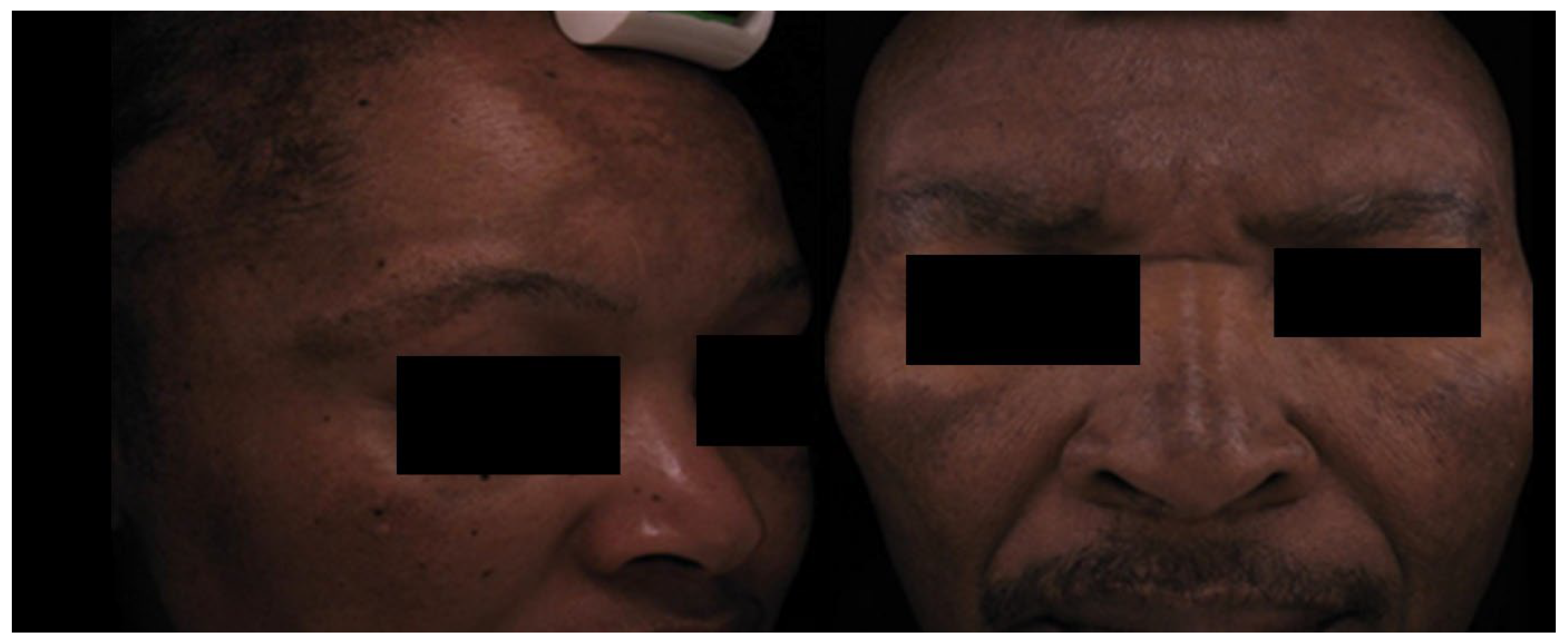
Figure 1. Clinical features of facial Melasma. Female full-face involvement (left) and male pattern melasma (right) [10].
Preprints 143340 g001
Figure 2. Common signal pathways involved in melanogenesis [17].
Preprints 143340 g002
Table 1. Genes, pathways and their role in melanogenesis.
Gene Pathway Influence Role in Melanogenesis Reference
SLC45A2 Melanin synthesis and transport Maintains melanosome pH; essential for tyrosinase activity; mutations lead to reduced pigmentation (OCA4) 21
TYR Melanin biosynthesis Encodes tyrosinase, the key enzyme for melanin biosynthesis; mutations affect pigmentation levels 18
HERC2 Regulates OCA2 expression Regulates OCA2 expression; The interaction between HERC2 and OCA2 influences melanosome function (affects melanosomal pH) function and pigmentation traits (overall melanin production) 22
SLC24A5 Melanosome maturation Involved in ion transport for melanosome maturation and sensitivity to UV exposure 21
Table 2. Participants Characteristics.
Characteristics Melasma group
(n=20)
Control group
(n=20)
Age (years); (mean± standard deviation) 36–63; (47.25 ± 7.99) 35–58; (46.80 ± 7.52)
History of pregnacy and number of children Children (%)
Yes
No
16 (84.21%)
3 (15.79%)
12
8
Use of Contracptives/hormone therapy (n; %)
Yes
No
20 (100%)
0 (0%)
20 (100%)
0 (%)
Malar 2 (10%) -
Cetrofacial 9 (45%) -
Manibular 9 (45%) -
Duration of melasma (%)
2 years
5 years
10 years
More than 10 years

5 (25%)
7 (35%)
4 (20%)
4 (20%)
-
Family history (first degree relative)
Yes
No
12 (60%)
8 (40%)
-
mMASI Score category -
Mild 5 (25%) -
Modertae 7 (35%) -
Severe 8 (40%) -
Table 3. Genotype and allele frequency distribution (%) gene polymorphisms.
SNP ID Patient
Melasma group Control group
rs11568737
G>T
Codominant GG 1 (5%) 2 (10%)
GT 8 (40%) 2 (10%)
TT 11 (55%) 16 (80%)
Allele G Major 10 (25%) 6 (15%)
T Minor 30 (75%) 36 (90%)
rs28777
A>C
Codominant AA 2 (10%) 6 (30%)
AC 15 (75%) 12 (60%)
CC 3 (15%) 2 (10%)
Allele A Major 19 (48%) 24 (60%)
C Minor 21 (53%) 16 (40%)
rs1042602
A>C
Codominant AA 3 (15%) 2 (10%)
AC 16 (80%) 4 (20%)
CC 1 (5%) 14 (70%)
Allele A Major 22 (55%) 8 (20%)
C Minor 18 (45%) 32 (80%)
rs1126809
G>A
Codominant GG 15 (75%) 14 (70%)
GA 2 (10%) 4 (20%)
AA 3 (15%) 2 (10%)
Allele G Major 33 (83%) 30 (75%)
A Minor 7 (18%) 10 (25%)
rs1129038
C>T
Codominant CC 11 (55%) 2 (10%)
CT 2 (10%) 17 (85%)
TT 7 (35%) 1 (5%)
Allele C Major 24 (60%) 21 (53%)
T Minor 16 (40%) 19 (48 %)
rs1426654
A>G
Codominant AA 2 (10%) 14 (70%)
AG 10 (50%) 4 (20%)
GG 8 (40%) 2 (10%)
Allele A Major 14 (35% 32 (80%)
G Minor 26 (65%) 8 (20%)
Allele G Major 10 (25%) 6 (15%)
T Minor 30 (75%) 36 (90%)
Table 4. Genotypic and allelic associations of gene polymorphisms.
SNP Melasma vs control
OR (95% CI), p–value
rs11568737
G>T Genotype
Codominant AA vs TT 0.7273
(0.04641–6.922)
p>0.9999
GG vs GT 0.1250
(0.007879–1.793)
p=0.2028
GT vs TT 5.818
(1.197–29.87)
p=0.0625
Dominant GG vs GT+TT 0.5263
(0.03471–4.882)
p>0.9999
Recessive GG+ GT vs TT 3.682
(0.9184–12.49)
p=0.0956
Over dominant AA+CC vs AC 0.1667
(0.03278–0.8302)
p=0.0648
Allele
(Major vs minor)
G vs T 1.771
(0.5885–5.690)
p=0.4066
rs28777
A>C
Genotype
Codominant AA vs CC 0.2222
(0.02725–1.978)
p=0.2929
AA vs AC 0.2667
(0.04972–1.485)
p=0.2285
AC vs CC 0.9444
(0.1501–5.220)
p>0.9999
Dominant AA vs AC+CC 0.2593
(0.04908–1.366)
p=0.2351
Recessive AA+ AC vs CC 0.1111
(0.02356–0.4805)
p=0.0033**
Over dominant AA+CC vs AC 0.4412
(0.1185–1.707)
p=0.3200
Allele
(Major vs minor)
A vs C 0.6667
(0.2834–1.697)
p=0.4949
rs1042602
A>C
Genotype
Codominant AA vs CC 21.00
(1.799–284.1)
p=0.0320*
AA vs AC 0.3750
(0.06110–2.784)
p=0.5623
AC vs CC 56.00
(6.496–618.4)
p<0.0001****
Dominant AA vs AC+CC 1.412
(0.2581–8.679)
p>0.9999
Recessive AA+AC vs CC 44.33
(4.824–487.8)
p<0.0001****
Over dominant AA+CC vs AC 0.1667
(0.03149–0.9046)
p=0.0449*
Allele
(Major vs minor)
A vs C 4.889
(1.882–13.78)
p=0.0024**
rs1126809
G>A
Genotype
Codominant GG vs AA 2.143
(0.4153–12.37)
p=0.6581
GG vs GA 0.3571
(0.02590–2.718)
p=0.6074
GA vs AA 0.7500
(0.03569–11.03)
p>0.9999
Dominant GG vs GA+AA 0.6429
(0.1501–3.368)
p=0.7013
Recessive GG+GA vs AA 2.250
(0.4530–12.80)
p=0.6614
Over dominant GG+AA vs GA 0.6296
(0.1032–3.432)
p>0.9999
Allele
(Major vs minor)
G vs A 1.473
(0.5158–4.004)
p=0.5892
rs1129038
C>T
Genotype
Codominant CC vs TT 0.6111
(0.03839–6.044)
p>0.9999
CC vs CT 46.75
(5.786 –270.8)
p<0.0001****
CT vs TT 0.2857
(0.01344–7.970)
p=0.4909
Dominant CC vs CT +TT 12.38
(2.162–61.41)
p=0.0022**
Recessive CC+CT vs TT 0.09774
(0.008320–0.7323)
p=0.0436*
Over dominant CC+TT vs CT 51.00
(6.786–262.2)
p<0.0001****
Allele
(Major vs minor)
C vs T 1.357
(0.5434–3.117)
p=0.6525
rs1426654
A>G
Genotype
Codominant AA vs GG 0.03571
(0.005866–0.3303)
p=0.0010**
AA vs AG 0.05714
(0.01078–0.3499)
p=0.0022**
AG vs GG 0.6250
(0.1010–3.827)
p>0.9999
Dominant AA vs AG+GG 0.1667
(0.03278–0.8302)
p=0.0648
Recessive AA+ AG vs GG 0.04762
(0.009685–0.2782)
p=0.0002***
Over dominant AA+GG vs AG 0.2500
(0.07356–1.000)
p=0.0958
Allele
(Major vs minor)
A vs G 0.1346
(0.05049–0.3585)
p<0.0001****
OR: Odds ratio; CI: Confidence Intervals; Asterisks (*) denote significance: ∗p<0.05 and ∗∗p<0.01
Disclaimer/Publisher’s Note: The statements, opinions and data contained in all publications are solely those of the individual author(s) and contributor(s) and not of MDPI and/or the editor(s). MDPI and/or the editor(s) disclaim responsibility for any injury to people or property resulting from any ideas, methods, instructions or products referred to in the content.
Copyright: This open access article is published under a Creative Commons CC BY 4.0 license, which permit the free download, distribution, and reuse, provided that the author and preprint are cited in any reuse.
Prerpints.org logo

Preprints.org is a free preprint server supported by MDPI in Basel, Switzerland.

Subscribe

Disclaimer

Terms of Use

Privacy Policy

Privacy Settings

© 2025 MDPI (Basel, Switzerland) unless otherwise stated