Preprint
Review

This version is not peer-reviewed.

Genetic Contributions to Autism Spectrum Disorder: A Review of Recent Advances

A peer-reviewed article of this preprint also exists.

Submitted:

17 December 2024

Posted:

19 December 2024

You are already at the latest version

Abstract

Autism Spectrum Disorder (ASD) is a neurodevelopmental condition with a multifactorial origin and significant genetic contribution. It is characterized by difficulties in social interaction, communication, and the presence of repetitive behaviors, often associated with comorbidities such as intellectual disability and Attention Deficit Hyperactivity Disorder (ADHD). This integrative review analyzed articles published in the last five years to explore relevant genes related to ASD and neurodevelopment. Genes such as MYT1L, ZNF292, AUTS2, and regulatory genes involved in the production of microRNAs were highlighted, demonstrating their relationship with critical processes such as neurogenesis and synaptogenesis. Genes such as FGFR2 and KMT5B have been strongly associated with neurodevelopmental disorders, including autism and ADHD, underscoring their importance in understanding the genetic basis of these conditions. Additionally, the identification of specific variants, such as PTEN p.Ile135Leu, and their relationship with changes in neurogenesis, neural maturation, and synaptic function highlights the need for more in-depth studies on the molecular pathways regulating these genes expression. The findings reinforce the genetic heterogeneity of ASD and suggest potential targets for personalized therapies within the context of precision medicine. However, the importance of incorporating epigenetic and environmental factors into analyses is emphasized to achieve a more comprehensive understanding of gene-environment interactions and their clinical implications.
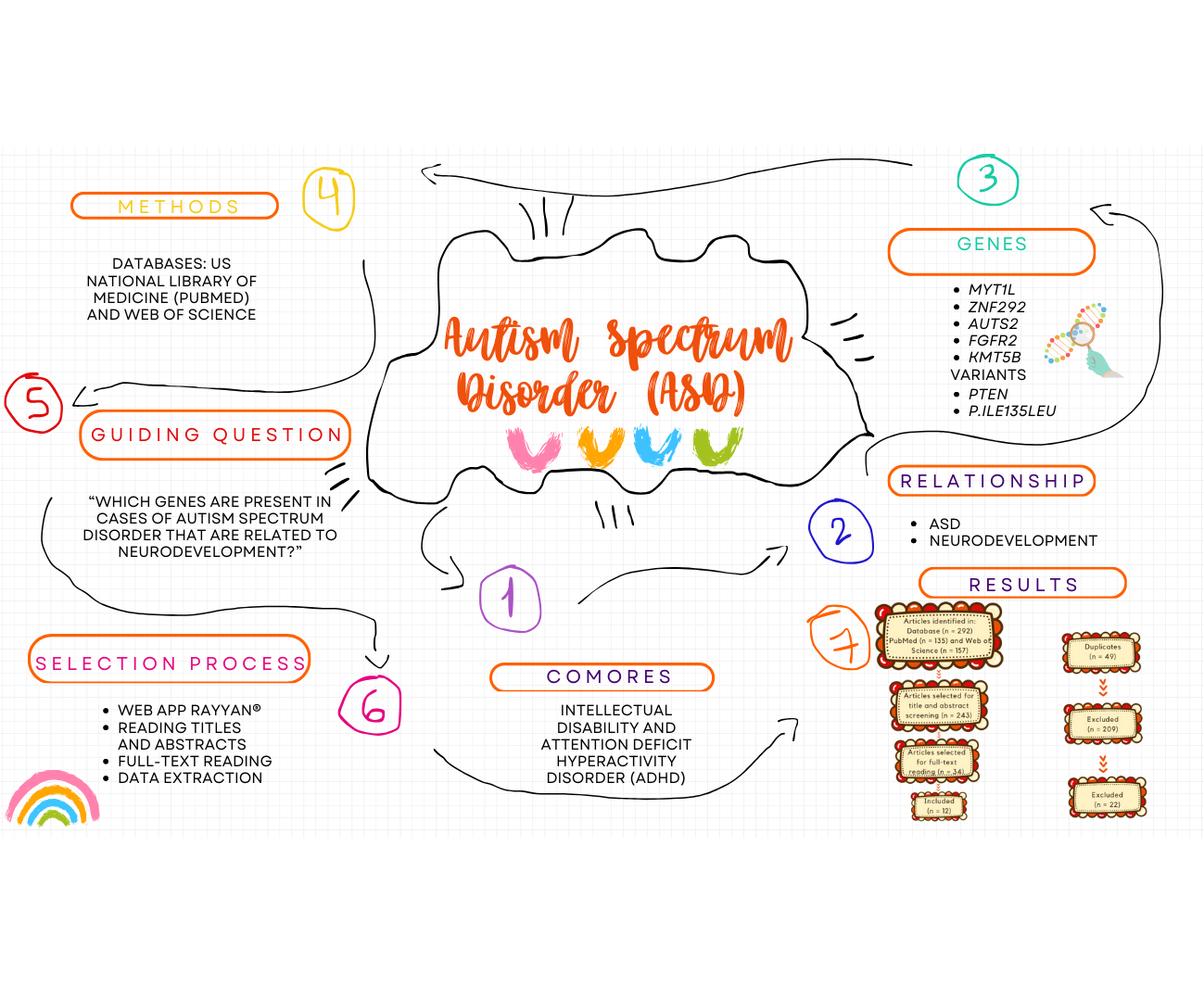
Keywords: 
;  ;  ;  ;  ;  

1. Introduction

Autism Spectrum Disorder (ASD) is a neurodevelopmental disorder characterized by deficits in social interaction, communication, and restricted and repetitive behavioral patterns [1]. Its global prevalence has been increasing, reaching 2.3% in children in the United States in 2018 [2]. Comorbidities such as neurodevelopmental delay (NDD), intellectual disability (ID), and attention-deficit hyperactivity disorder (ADHD) are widely documented among individuals with ASD, illustrating its clinical heterogeneity [3].
Although the origin of ASD involves both environmental and genetic factors, mutations in specific genes, such as those involved in the regulation of brain development and synaptic function, are associated with distinct manifestations of the disorder [4]. These mutations influence the severity of behavioral traits and the presence of comorbidities, such as epilepsy and mood disorders [2].
Advances in genetic sequencing techniques, such as genome-wide association studies (GWAS) and exome sequencing, have enabled the identification of genetic variants that help map the complexity of the clinical spectrum of ASD [5]. These discoveries reveal a multifaceted network of genes associated with neurodevelopment, neuronal communication, and synaptic plasticity, indicating that ASD is a genetically heterogeneous disorder with a direct impact on the observed clinical manifestations [6].
This integrative review aims to explore the main genes associated with ASD and their relationships with neurodevelopment, highlighting how these factors contribute to the varied clinical manifestations of the disorder, based on recent literature.

2. Materials and Methods

The data were obtained through a search conducted in two electronic databases: US National Library of Medicine (PubMed) and Web of Science. The search terms used were combined as follows: “Autism” OR "Autism Spectrum Disorder" OR “ASD” AND “genes” OR "genetic mutation" OR "gene variant" OR "gene expression" AND “neurodevelopment” OR "brain development" OR "neural development." The descriptors were defined by the guiding research question: “Which genes present in Autism Spectrum Disorder cases are related to neurodevelopment?”. Studies published between January 2020 and April 2024, in Portuguese and English, were included. Duplicated articles, narrative and integrative reviews, as well as studies unrelated to the topic, were excluded. (Figure 1).
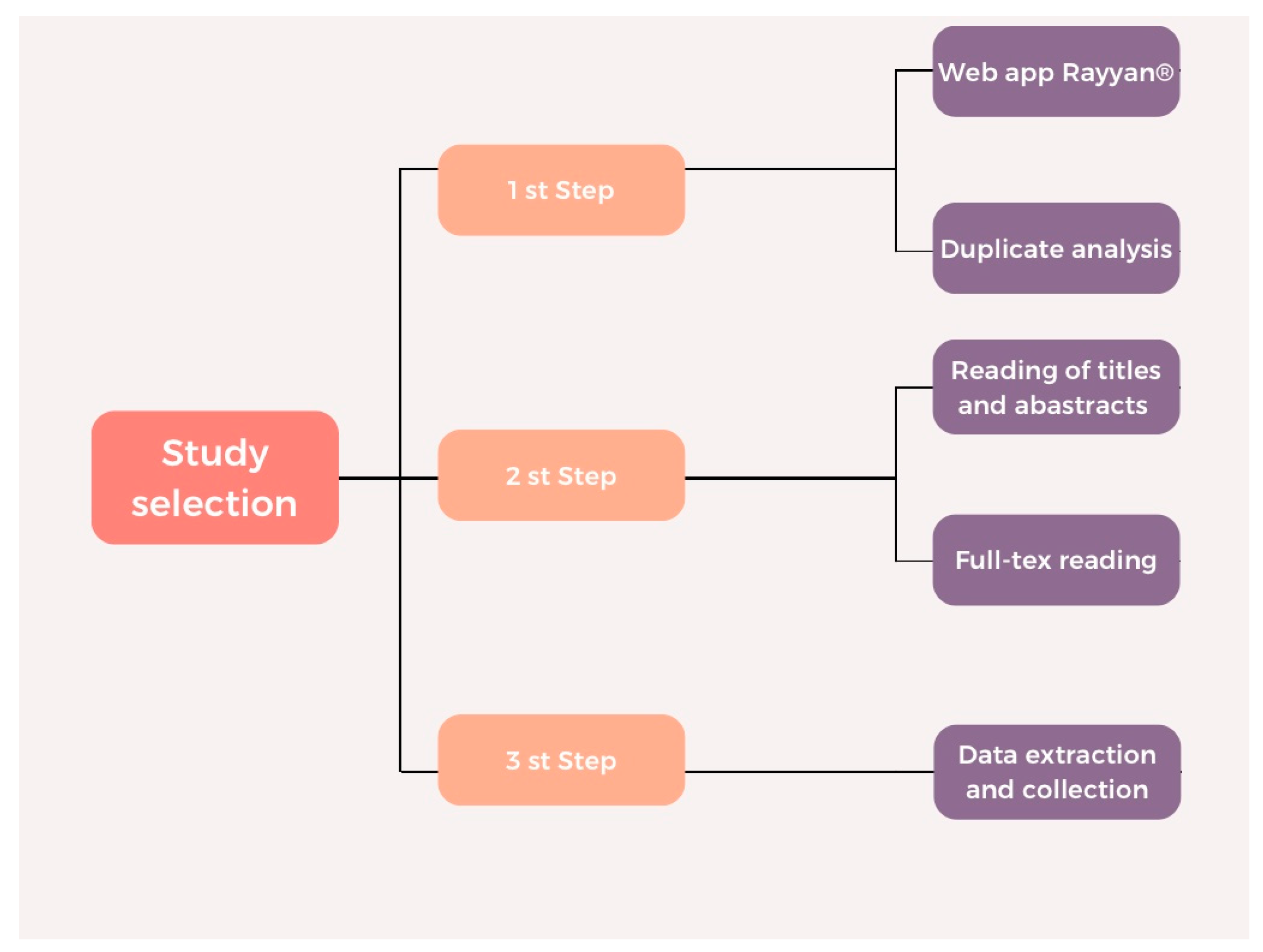
The study selection process was carried out in three stages. In the first stage, the studies found were submitted to the Web app Rayyan®, where they underwent a duplicate check. In the second stage, the titles and abstracts of the articles were read to identify potentially relevant studies. In the third and final stage, the articles that passed the initial screening were read in full to confirm their relevance and inclusion in the review. Data extraction was performed after reading the selected articles, identifying genes associated with autism spectrum disorder and neurodevelopment (Figure 2).

3. Results

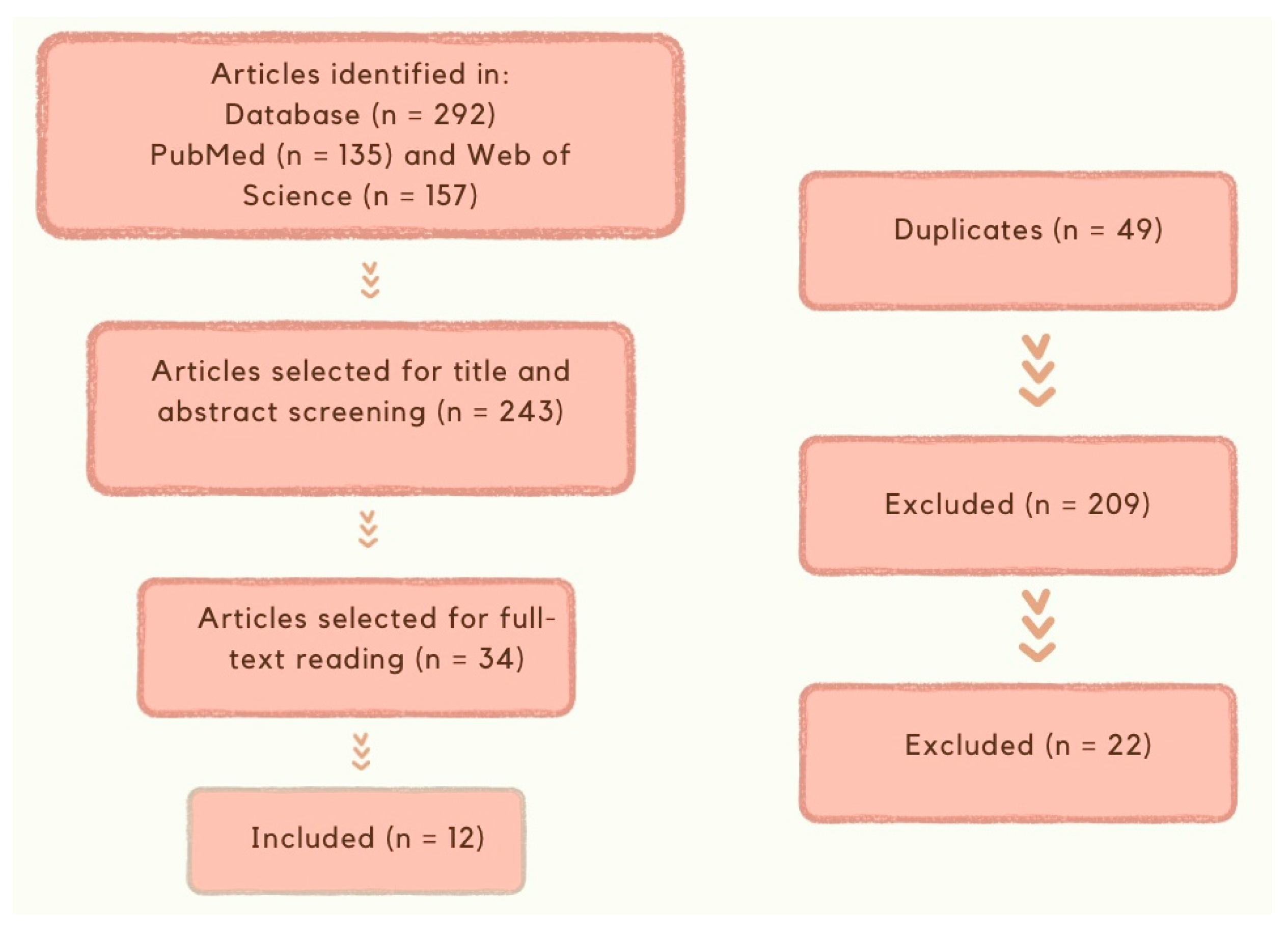
A total of 292 articles were obtained, distributed as follows: 157 articles from the Web of Science database and 135 articles from the PubMed database. Forty-nine duplicated articles were excluded. After reading the titles and abstracts, 209 articles were excluded, and 34 remained for the next phase. After the full reading of the selected studies, 12 articles proceeded to the data extraction phase (Figure 3).
The results reveal significant findings on the proposed topic. In a clinical case analysis, a deleterious variant in the MYT1L gene was identified, associated with autism and intellectual disability (ID), highlighting the importance of genomic analysis through WGS and the rigorous collection of phenotypic data [7]. Additionally, de novo and inherited variants in the ZNF292 gene were associated with a spectrum of neurodevelopmental characteristics, including ID, ASD, and ADHD [4].
The investigation of genes associated with autism, combined with differential brain expression data, revealed GABRA5, GABRG3, NTM, SNRPN, OTX1, FOXG1, TSHZ3, CDH18, GABRB3, GATM, HTR2A, DHCR7, and NLRP2. All of these genes have associations with the neural system and are linked to autism [8]. (Table 1)
Additionally, genes associated with the production of microRNAs (miRNAs), a class of small non-coding RNAs that play a regulatory role in post-transcriptional gene expression, have been identified. These miRNAs influence various molecular pathways, including those related to neurodevelopment and neuromodulation [9]. Among the key genes highlighted are TUB, SCP2, ONECUT2, OSBP, RBM24, and UGCG, with implications for ASD (Autism Spectrum Disorder) and neurodevelopmental processes. (Table 2)

4. Discussion

The findings of this review reinforce the central role of genetics in understanding Autism Spectrum Disorder (ASD). Genes such as FGFR2 and KMT5B, highlighted by Nicotera et al. [6] and Odak et al. [10], are strongly associated with neurodevelopmental disorders like ASD and ADHD, underscoring their relevance for understanding the genetic basis of these disorders. The association of specific variants, such as the PTEN p.Ile135Leu variant, with alterations in neurogenesis, neural maturation, and synaptic function, as reported by Fu et al. [11] and Park et al. [12], points to the importance of detailed mechanistic studies. These findings suggest that the dysregulation of essential processes such as neurogenesis and gliogenesis may significantly contribute to the clinical variability observed in ASD.
Furthermore, the identification of mutations in the AUTS2 locus and genes like ITSN1 and KDM2B reinforces the complexity of the molecular mechanisms of ASD, linking them not only to neurodevelopment but also to other conditions such as schizophrenia and ADHD [13,14,15,16].The identification of new candidate genes for ASD, especially those related to post-transcriptional regulation, such as microRNAs (TUB, SCP2, UGCG, among others), enhances our understanding of the molecular networks involved. These non-coding RNAs play critical roles in modulating neural differentiation, apoptosis, and neuronal signaling, emerging as potential therapeutic targets [9].
The use of specialized databases was essential for consolidating the findings of this review. OMIM (Online Mendelian Inheritance in Man) is a comprehensive database that gathers information about genes and their relationships to genetic conditions, serving as an indispensable tool for identifying genes associated with ASD. ClinVar, in turn, provides detailed information about the clinical significance of genetic variants, facilitating the correlation between mutations and their clinical impacts. NCBI (National Center for Biotechnology Information) was widely used for genomic sequence consultation and locus analysis, while Decipher proved to be fundamental in investigating rare variants and their associations with specific phenotypes. These resources not only centralize critical information but also enable integrative analyses, contributing to the robustness of the conclusions drawn.
The data presented highlight that specific genetic variants play a central role in the development of ASD, with implications extending beyond diagnosis, offering insights for new therapeutic approaches. The integration of genomic information with emerging technologies, such as cortical organoids and gene-editing studies, may represent a significant advance in the field. The relevance of genes related to neurodevelopment, as well as pathways regulated by miRNAs, emphasizes the need for further exploration of the molecular mechanisms of ASD, focusing on targeted interventions.

5. Conclusions

The presented review demonstrates the genetic complexity of Autism Spectrum Disorder, revealing important genes such as MYT1L, ZNF292, AUTS2, PTEN, and genes related to regulation by microRNAs, all linked to key neurodevelopmental processes such as neurogenesis, synaptogenesis, and neuronal regulation.
The selection of relevant studies, highlighting the diversity of molecular mechanisms contributing to ASD, from specific deleterious variants to dysregulation in gene expression, has expanded the knowledge of genetic factors associated with neurodevelopment. However, the analysis could benefit from greater integration with epigenetic and environmental factors, enhancing the understanding of gene-environment interactions. Despite this, the findings provide a solid foundation for the development of new therapeutic approaches, pointing to genes and molecular pathways as potential targets for personalized clinical strategies, reflecting the relevance of genomics in advancing precision medicine in the field of neurodevelopment.

Funding

Not applicable.

Institutional Review Board Statement

Not applicable.

Informed Consent Statement

Not applicable.

Conflicts of Interest

The authors declare no conflicts of interest.

References

  1. Pavinato, L.; Vedove, A.D.; Carli, D.; Ferrero, M.; Carestiato, S.; Howe, J.L.; Agolini, E.; Coviello, D.A.; Laar, I.V.D.; Au, P.Y.B.; et al. CAPRIN1 Haploinsufficiency Causes a Neurodevelopmental Disorder with Language Impairment, ADHD and ASD. Brain : A journal of neurology 2023, 146, 534–548. [Google Scholar] [CrossRef]
  2. Li, H.; Zhang, Q.; Wan, R.; Zhou, L.; Xu, X.; Xu, C.; Yu, Y.; Xu, Y.; Xiang, Y.; Tang, S. PLPPR4 Haploinsufficiency Causes Neurodevelopmental Disorders by Disrupting Synaptic Plasticity via mTOR Signalling. Journal of cellular and molecular medicine 2023, 27, 3286–3295. [Google Scholar] [CrossRef] [PubMed]
  3. Takahashi, N.; Harada, T.; Nishimura, T.; Okumura, A.; Choi, D.; Iwabuchi, T.; Kuwabara, H.; Takagai, S.; Nomura, Y.; Takei, N.; et al. Association of Genetic Risks With Autism Spectrum Disorder and Early Neurodevelopmental Delays Among Children Without Intellectual Disability. JAMA network open 2020, 3. [Google Scholar] [CrossRef]
  4. Mirzaa, G.M.; Chong, J.X.; Piton, A.; Popp, B.; Foss, K.; Guo, H.; Harripaul, R.; Xia, K.; Scheck, J.; Aldinger, K.A.; et al. De Novo and Inherited Variants in ZNF292 Underlie a Neurodevelopmental Disorder with Features of Autism Spectrum Disorder. Genetics in Medicine : Official Journal of the American College of Medical Genetics 2019, 22, 538–546. [Google Scholar] [CrossRef] [PubMed]
  5. Deng, J.; Wang, Y.; Hu, M.; Lin, J.; Li, Q.; Liu, C.; Xu, X. Deleterious Variation in BR Serine/Threonine Kinase 2 Classified a Subtype of Autism. Frontiers in Molecular Neuroscience 2022, 15, 904935. [Google Scholar] [CrossRef]
  6. Nicotera, A.G.; Amore, G.; Saia, M.C.; Vinci, M.; Musumeci, A.; Chiavetta, V.; Federico, C.; Spoto, G.; Saccone, S.; Rosa, G.D.; et al. Fibroblast Growth Factor Receptor 2 (FGFR2), a New Gene Involved in the Genesis of Autism Spectrum Disorder. Neuromolecular medicine 2023, 25, 650–656. [Google Scholar] [CrossRef] [PubMed]
  7. Yip, S.; Calli, K.; Qiao, Y.; Trost, B.; Scherer, S.W.; Lewis, M.E.S. Complex Autism Spectrum Disorder in a Patient with a Novel De Novo Heterozygous MYT1L Variant. Genes 2023, 14. [Google Scholar] [CrossRef] [PubMed]
  8. Li, J.; Lin, X.; Wang, M.; Hu, Y.; Xue, K.; Gu, S.; Lv, L.; Huang, S.; Xie, W. Potential Role of Genomic Imprinted Genes and Brain Developmental Related Genes in Autism. BMC Medical Genomics 2020, 13, 1–13. [Google Scholar] [CrossRef] [PubMed]
  9. Wong, A.; Zhou, A.; Cao, X.; Mahaganapathy, V.; Azaro, M.; Gwin, C.; Wilson, S.; Buyske, S.; Bartlett, C.W.; Flax, J.F.; et al. MicroRNA and MicroRNA-Target Variants Associated with Autism Spectrum Disorder and Related Disorders. Genes 2022, 13. [Google Scholar] [CrossRef]
  10. Odak, L.; Vulin, K.; Meašić, A.M.; Šamadan, L.; Batoš, A.T. Neurodevelopmental Disorder Caused by an Inherited Novel KMT5B Variant: Case Report. Croatian Medical Journal 2023, 64, 334. [Google Scholar] [CrossRef] [PubMed]
  11. Fu, S.; Bury, L.A.D.; Eum, J.; Wynshaw-Boris, A. Autism-Specific PTEN p.Ile135Leu Variant and an Autism Genetic Background Combine to Dysregulate Cortical Neurogenesis. American journal of human genetics 2023, 110, 826–845. [Google Scholar] [CrossRef] [PubMed]
  12. Park, H.R.; Azzara, D.; Cohen, E.D.; Boomhower, S.R.; Diwadkar, A.R.; Himes, B.E.; O’Reilly, M.A.; Lu, Q. Identification of Novel NRF2-Dependent Genes as Regulators of Lead and Arsenic Toxicity in Neural Progenitor Cells. Journal of hazardous materials 2024, 463. [Google Scholar] [CrossRef] [PubMed]
  13. Hori, K.; Shimaoka, K.; Hoshino, M. AUTS2 Gene: Keys to Understanding the Pathogenesis of Neurodevelopmental Disorders. Cells 2021, 11, 11. [Google Scholar] [CrossRef] [PubMed]
  14. Bruel, A.L.; Vitobello, A.; Thiffault, I.; Manwaring, L.; Willing, M.; Agrawal, P.B.; Bayat, A.; Kitzler, T.M.; Brownstein, C.A.; Genetti, C.A.; et al. ITSN1: A Novel Candidate Gene Involved in Autosomal Dominant Neurodevelopmental Disorder Spectrum. European journal of human genetics: EJHG 2022, 30, 111–116. [Google Scholar] [CrossRef] [PubMed]
  15. Jaarsveld, R.H. van; Reilly, J.; Cornips, M.C.; Hadders, M.A.; Agolini, E.; Ahimaz, P.; Anyane-Yeboa, K.; Bellanger, S.A.; Binsbergen, E. van; Boogaard, M.J. van den; et al. Delineation of a KDM2B-Related Neurodevelopmental Disorder and Its Associated DNA Methylation Signature. Genetics in medicine : Official journal of the American College of Medical Genetics 2023, 25, 49–62. [Google Scholar] [CrossRef]
  16. Geng, Z.; Tai, Y.T.; Wang, Q.; Gao, Z. AUTS2 Disruption Causes Neuronal Differentiation Defects in Human Cerebral Organoids through Hyperactivation of the WNT/β-Catenin Pathway. Scientific Reports 2024, 14, 1–13. [Google Scholar] [CrossRef] [PubMed]
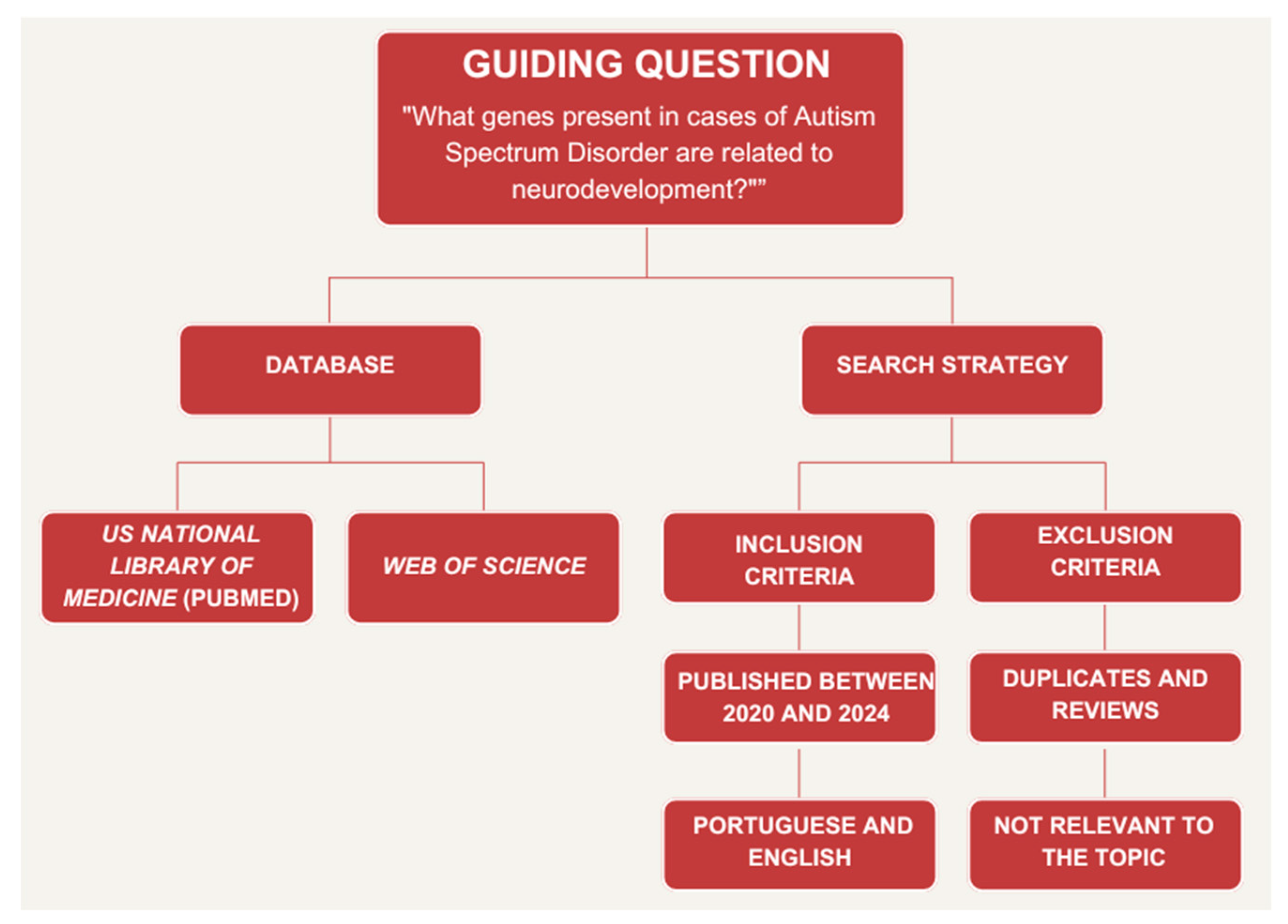
Figure 1. Flowchart outlining the guiding question and search strategy, including the selected databases, inclusion, and exclusion criteria.
Preprints 143287 g001
Figure 2. Flowchart of the study selection process, including duplicate check, title and abstract screening, and full-text reading for inclusion confirmation.
Preprints 143287 g002
Figure 3. Flowchart of the article selection process, showing the distribution of 292 articles between Web of Science and PubMed, with 49 duplicates and 209 articles excluded after screening, resulting in 12 articles for data extraction.
Preprints 143287 g003
Table 1. Genes with described associations with neurodevelopmental alterations.
Gene OMIM Code Genomic Coordinates Clinical Information
MYT1L 613084 2:1,789,113-2,331,275 DI (Developmental Delay)
ZNF292 616213 6:87,155,565-87,265,943 DI (Developmental Delay)
GABRG5 137190 15:26,994,573-27,074,973 Epilepsy
GABRG3 137192 15:26,971,181-27,541,984 Epilepsy
NTM 607938 11:131,370,615-132,336,822 Congenital Malformations
SNRPN 182279 15:25,799,840-25,807,303 Prader-Willi Syndrome
OTX1 600372 2:63,049,735-63,057,831 Microcephaly
FOXG1 164874 14:28,766,787-28,770,277 Microcephaly
TSHZ3 614427 19:31,149,876-31,350,877 Anxiety
CDH18 603019 5:19,471,296-20,575,713 ADNPM (Developmental Disorder)
GABRB3 137192 15:26,514,275-26,986,768 Epilepsy
GATM 602360 15:45,361,124-45,402,227 Neuro-muscular Disorder
HTR2A 182135 13:46,831,546-46,898,082 Schizophrenia, Depression, OCD
DHCR7 602858 11:71,427,287-71,449,043 Smith-Lemli-Opitz Syndrome
NLRP2 609364 19:54,965,284-55,001,138 Neuroinflammation
Table 2. Regulatory genes associated with neurodevelopmental disorders. WLI (Written Language Impairment), ADHD (Attention Deficit Hyperactivity Disorder), SRI (Social Response Impairment), OLI (Oral Language Impairment).
Gene Location Neurodevelopmental Consequences Inheritance
TUB 11p15.4 WLI Dominant
SCP2 1p32.3 WLI, ADHD Dominant
ONECUT2 18q21.31 SRI Dominant
OSBP 11q12.1 WLI Dominant
RBM24 6q22.3 ADHD, OLI De novo
UGCG 9q31.3 WLI, OLI Dominant
Disclaimer/Publisher’s Note: The statements, opinions and data contained in all publications are solely those of the individual author(s) and contributor(s) and not of MDPI and/or the editor(s). MDPI and/or the editor(s) disclaim responsibility for any injury to people or property resulting from any ideas, methods, instructions or products referred to in the content.
Copyright: This open access article is published under a Creative Commons CC BY 4.0 license, which permit the free download, distribution, and reuse, provided that the author and preprint are cited in any reuse.
Prerpints.org logo

Preprints.org is a free preprint server supported by MDPI in Basel, Switzerland.

Subscribe

Disclaimer

Terms of Use

Privacy Policy

Privacy Settings

© 2025 MDPI (Basel, Switzerland) unless otherwise stated