

Submitted:
17 December 2024
Posted:
18 December 2024
You are already at the latest version
Abstract
The increasing demand for personalized healthcare, particularly among individuals requiring continuous health monitoring, has driven significant advancements in sensor technology. Wearable, non-continuous monitoring, and non-contact sensors are leading this innovation, providing novel methods for monitoring vital signs and physiological data in both clinical and home settings. However, there is a lack of comprehensive comparative studies assessing the overall functionality of these technologies. This paper aims to address this gap by presenting a detailed comparative analysis of selected wearable, non-continuous monitoring, and non-contact sensors used for health monitoring. To achieve this, we conducted a comprehensive evaluation of various sensors available on the market, utilizing key indicators such as sensor performance, usability, associated platforms functionality, data management, battery efficiency, and costs-effectiveness. Our findings highlight the strengths and limitations of each sensor type, thus offering valuable insights for the selection of the most appropriate technology based on specific healthcare needs. This study has the potential to serve as a valuable resource for researchers, healthcare providers, and policymakers, contributing to a deeper understanding of existing user-centered health monitoring solutions.
Keywords:
Information and Communication Technologies
; Internet of Things
; Sensors
; Personalized Healthcare
; Health Monitoring
1. Introduction
1.1. Research Context
In recent years, sensor technologies have revolutionized the landscape of healthcare, becoming essential tools for the acquisition and analysis of physiological and behavioral data with remarkable precision [1,2]. These innovations have not only deepened our understanding of individual health patterns but also opened the way for significant progress in personalized healthcare, enabling interventions that are specifically designed to address the unique needs of each individual [3]. This approach has profound implications for the way healthcare is delivered, particularly in the context of remote monitoring. The ability to collect health data in real-time has become increasingly valuable as healthcare systems operate to address the growing demand for long-term, home-based care, particularly as chronic diseases become more prevalent and populations age. In this context, remote monitoring technologies allow individuals to receive continuous care without needing to remain in traditional healthcare settings, such as hospitals or nursing homes, thereby enhancing the quality and accessibility of care while simultaneously reducing the overall burden on healthcare infrastructures [4,5].
One of the most transformative aspects of remote monitoring is its capacity to shift healthcare from a reactive to a proactive model [6]. In traditional healthcare settings, medical interventions typically occur after symptoms manifest or a condition has significantly deteriorated. In contrast, remote monitoring allows for the continuous collection of data, providing healthcare professionals with up-to-date information about a person’s health status. This constant flow of data facilitates early detection of potential health issues, allowing for timely interventions that can prevent complications before they arise. This proactive approach not only improves health outcomes but also empowers individuals to manage their health more effectively and make informed decisions about their well-being. Furthermore, the widespread adoption of remote health monitoring technologies has far-reaching benefits, not only for individuals but also for the healthcare system as a whole. By reducing the need for frequent in-person visits, remote monitoring optimizes the use of healthcare resources, helping to lower overall costs while improving individual satisfaction with care [7].
Leveraging innovations in sensor design and functionality, technologies such as wearable, non-continuous monitoring, and non-contact sensors are at the forefront of this evolution, offering distinct capabilities for tracking critical health metrics and providing a cost-effective and efficient alternative to traditional on-site clinical monitoring [1,2]. The adaptability of these technologies enables healthcare systems to customize care delivery to specific needs, offering a more personalized and adaptable approach than conventional methods. As adoption continues to rise, these technologies have the potential to not only reduce healthcare costs and improve access to care but also to significantly enhance the overall quality of life of individuals worldwide. However, the diversity in sensor types and the specific contexts in which they excel underscore the importance of understanding their unique characteristics.
1.2. State of the Art and Current Trends in Sensor-Based Health Monitoring
Wearable sensor-based health monitoring systems represent a significant advancement in continuous health tracking. By incorporating flexible sensors positioned on various body areas, these systems are capable of capturing real-time physiological and motion data while users are engaged in daily activities. They measure a broad range of vital health signals, including heart rate (HR), blood oxygen saturation (SpO2), blood pressure (BP), respiratory rate (RR), body temperature, and electrodermal activity (EDA). Furthermore, motion sensors such as accelerometers, gyroscopes, and magnetometers are extensively employed to capture activity-related signals [8,9]. Heterogeneous wearable devices, which integrate multiple sensors to measure a variety of signals, are generally preferred over single or dual-sensor modules for effective health monitoring. Their multi-sensor design enables a more comprehensive approach to address diverse healthcare challenges, enhancing their versatility and utility in different clinical and everyday scenarios [6].
Wearable devices are available in various forms and can be seamlessly integrated into textiles, clothing, accessories, or directly attached to the skin. These devices are broadly categorized based on their placement into three main groups: head, limb, and torso [10]. Head-worn devices include items such as glasses, helmets, headbands, and hearing aids [11]. Limb-based devices are worn on arms, legs, or feet and include smartwatches, bracelets, rings, insoles, and socks [12,13,14]. Wearable devices designed for the torso include options such as biometric shirts, belts, and specialized underwear [15,16]. Furthermore, recent advancements have focused on non-invasive or minimally invasive technologies, leading to innovations such as on-skin patches and electronic tattoos, which offer improved user comfort and seamless integration with daily clothing and activities [17,18].
The integration of low-power electronics, compact sensors, and advanced communication technologies has significantly enhanced the accessibility of wearable systems, facilitating their adoption across various healthcare applications. These include chronic disease management, recovery of motor functions, mental health monitoring, and preventive care [6,8]. By capturing continuous data streams, wearable sensors provide relevant insights into long-term health trends such as cardiovascular health, metabolic activity, and stress levels [8]. In addition, the use of digital biomarkers to develop machine learning algorithms for predicting critical health events, such as cardiac events or falls, marks a particularly promising advancement in wearable technology, enabling early interventions and preventive measures [19]. Recent studies have also highlighted the potential of wearable sensors as digital diagnostic tools, with physiological parameters captured by these devices being effectively used to diagnose a variety of conditions, including cardiovascular diseases [20] and neurological disorders [21,22].
Beside wearable sensors, another type of devices used for health monitoring is represented by non-continuous monitoring sensors. Although these devices require user interaction, unlike wearable sensors that provide continuous tracking, they are designed to monitor vital signs over shorter time intervals. Non-continuous monitoring sensors are particularly useful for episodic assessments, such as capturing detailed cardiac metrics through an electrocardiogram (ECG) during specific times of the day. Many companies, including Linktop [23], A&D Medical [24], and others, provide this type of sensor technology, which is primarily deployed in controlled or clinical settings. Although non-continuous monitoring sensors may not offer the convenience of continuous monitoring, they prioritize data accuracy and reliability, which are essential to make informed clinical decisions. These devices are generally used in more specialized contexts, but their practicality and ease of use also make them suitable for independent use by individuals.
Finally, non-contact sensors constitute a growing frontier in healthcare technology, offering innovative non-invasive solutions that minimize physical interaction with individuals while maintaining effective monitoring [1]. Various non-contact vital sign sensors are available on the market [25]. An example is the mat-type air pressure sensor, which can be integrated into surfaces such as mattresses to continuously detect user movements, pressure distribution, or heartbeats while lying down [26]. Similarly, microbend fiber-optic sensors are a versatile alternative, easily embedded into household items such as cushions, chairs, and beds, providing non-intrusive methods for collecting vital signs [27,28]. Another widely used approach involves camera-based systems, which utilize imaging technologies such as RGB, IR, and thermal cameras to measure HR and RR without physical contact [25]. Additionally, radar-based systems have gained popularity for non-contact vital sign monitoring [29]. Impulse radio ultra-wideband (IR-UWB) radars have been used for complex scenarios such as through-wall HR and RR estimation [30], body movement detection [31], and monitoring multiple targets [32]. A key advantage of IR-UWB radars is their ability to penetrate clothing or blankets and operate effectively in dark environments or at night, as their signals are unaffected by ambient lighting or skin color [33,34,35].
Non-contact technologies are particularly valuable in environments that require strict hygiene or no disturbance to individuals, such as neonatal intensive care units [34], in-home monitoring for elderly individuals [36], and infectious disease facilities [37]. These features make non-contact sensors indispensable in scenarios prioritizing comfort and safety.
1.3. Motivation and Problem Statement
Despite the rapid adoption and ongoing advancements in health monitoring sensors technologies, significant gaps remain in evaluating and selecting appropriate sensors for specific healthcare needs [6]. Existing studies aiming to compare these technologies often focus on individual sensor types or specific use cases [38,39,40]. While other research provides broader overviews on various monitoring sensors, such comparative analysis is often insufficiently detailed, leaving healthcare providers and researchers with fragmented insights [8,41,42]. This lack of a comprehensive comparative framework complicates the process of determining which sensors are best suited for specific monitoring tasks, particularly when considering factors such as cost, usability, and integration with other healthcare systems.
Furthermore, the diverse functionalities and inherent limitations of these devices add complexity to the decision-making process. For instance, wearable sensors, while ideal for continuous monitoring, may face issues related to user compliance or data fidelity due to motion artifacts or improper wear [6]. Non-continuous monitoring sensors, although highly accurate, may miss critical real-time health events due to their periodic nature. Non-contact devices, while advantageous for non-invasive monitoring, may struggle with environmental interferences that affect data accuracy [43]. Given the significant potential of these monitoring sensors for human health and the growing interest in this field, addressing the associated challenges and understanding the trade-offs of each sensor type are essential to maximize their effectiveness in healthcare.
Therefore, addressing these issues requires a more holistic evaluation that would better guide stakeholders in identifying technologies that align with specific healthcare needs and support their effective integration into healthcare systems.
1.4. Our Contribution
This paper aims to address the aforementioned challenges by conducting a detailed comparative analysis of three types of health-monitoring sensors: wearable, non-continuous monitoring, and non-contact sensors. The objective is to provide healthcare stakeholders with a structured framework to guide the selection of the most suitable monitoring technologies, considering their specific characteristics, performance metrics, and the contexts in which they will be used.
The contributions of this paper include:
- An in-depth analysis of selected wearable, non-continuous monitoring, and non-contact technologies, highlighting their strengths, weaknesses, and potential uses in healthcare.
- Practical insights into key factors such as usability, data management, and affordability, to assist healthcare providers in evaluating these devices and making informed choices.
- Suggestions for selecting the most appropriate sensor technology, aimed at enhancing health outcomes through tailored monitoring solutions.
By offering a comprehensive evaluation of these devices, this paper aims to empower stakeholders with the knowledge necessary to effectively integrate user-centered sensor technologies into health practices, driving better cares and more efficient resource utilization. Motivations behind the selection of the devices are discussed at the beginning of Section 5.
2. Methodology
2.1. Criteria for Selecting Sensors
To compare different sensor types for human health monitoring, we conducted an extensive analysis of the sensors available on the market. This subsection outlines the methodology used to identify and select specific sensors based on key criteria, chosen for their relevance and impact on health monitoring applications. Key considerations included:
- Sensor Classification: The primary criterion was ensuring the technologies fell clearly within the categories of wearable, non-continuous monitoring, or non-contact sensors, in line with the focus of this analysis.
- Sensor Availability: Another key consideration was the availability of sensors on the market and their ease of procurement. By selecting widely available sensors, we ensure the relevance of this analysis to a broad audience and facilitate practical applications in real-world settings.
- Relevance to Health Monitoring: Sensors were selected for their ability to provide accurate and consistent measurements of critical health data, such as vital signs.
- Usability: Usability was considered to assess how easily the sensors could be integrated into daily life, as user comfort and compliance are crucial for successful health monitoring.
- Data Accessibility: Another key factor was the ease of accessing and exporting data from the device. Additionally, the ability to offer real-time or near real-time tracking is essential for enabling timely interventions and ensuring continuous monitoring.
- Developer Tools for Customization: The availability of Software Development Kits (SDKs) or Application Programming Interfaces (APIs) was a critical factor. These tools allow for the integration with custom software, enhancing interoperability with existing platforms and enabling efficient data analysis.
- Cost-Effectiveness: Cost was another crucial criterion, evaluated in relation to the sensor’s functionality. Affordability was essential to promote widespread adoption, especially in resource-constrained settings.
- Findings from Earlier Research: The selection process also considered findings from previous studies assessing the sensor’s performance in health monitoring contexts.
By prioritizing these factors, we aimed to select sensors that meet both technical requirements and the practical needs of individuals and healthcare providers, ensuring a comprehensive approach to human health monitoring.
2.2. Categories of Indicators for Sensor Comparative Analysis
All sensors selected from the market were analyzed based on specific indicators. This subsection details the methodology used to systematically evaluate each device. These indicators will guide the comparative analysis presented in Section 4. The following categories of indicators were applied to assess and compare the sensors:
2.2.1. Measured Parameters and Sensor Functionality
This category includes several indicators that assess the overall functionality and operational features of each sensor, with a particular emphasis on the types of parameters measured and the data recording capabilities. The indicators considered in this category are as follows:
- Measured Parameters: An overview of the health data tracked by each sensor.
- Recording Modes: Evaluation of the sensors’ recording modes, including automatic or manual initiation, continuous recording or by specific measurements. This also considers whether users can customize sampling frequencies, select specific sensor channels, or set a predefined recording duration.
- Memory and Data Storage Capacity: Assessment of the onboard memory capacity, including the sensor’s ability to store data locally for offline use.
- Calibration and Initialization Requirements: Evaluation of the need for initial or periodic calibration to maintain measurement accuracy, as well as the complexity of the calibration process. Consideration is also given to whether the sensors require a warm-up period for accurate functionality.
- Sensor Sensitivity: Evaluation of the factors affecting sensor’s accuracy, such as user movement, body position, fit, vibrations, indirect reflections, and the properties of surrounding materials.
- Environmental Suitability: Review of the sensors’ ability to function in both indoor and outdoor environments, including their resistance to environmental elements.
2.2.2. Sensor Comfort, Design, and Usability
This category evaluates the physical characteristics of the sensors, focusing on comfort, design, and overall usability. These indicators are essential to ensure that sensors are suitable for a diverse range of users and environments, whether worn on the body or integrated into the surroundings. The following indicators are assessed:
- Wearability, Placement and Comfort: For wearable sensors, this includes an analysis of where the sensors are worn, their invasiveness, ease of application and removal (particularly for individuals with limited mobility), and comfort during extended use. For non-continuous monitoring sensors, while they are assessed for their body placement for measurements, they are not evaluated for prolonged use. For non-contact sensors, considerations include the device’s placement in the environment.
- Dimensions, Portability, and Aesthetics: Sensors are evaluated for their size, weight, and portability. For wearable and non-contact sensors, emphasis is also given to their ability to integrate well with everyday clothing or living spaces.
- Physical Constraints: Wearable and non-continuous monitoring sensors are assessed for their compatibility with different body sizes and the availability of adjustable straps or sizes to ensure a comfortable fit.
- Reusability and Cleaning: This considers the ease of cleaning the sensors and their reusability across different settings and users.
2.2.3. Sensor Platforms and Support Resources
This category evaluates the overall functionality, user-friendliness, and support provided for the sensor’s associated platforms, which can include its proprietary software and mobile applications. Specific indicators in this category are as follows:
- Platforms Compatibility and Functionality: Evaluation of the proprietary software and mobile app required to operate the sensor, focusing on compatibility with major operating systems, ease of installation, and the features offered. Additional considerations include the ability to manage multiple profiles or devices simultaneously.
- Usability and Accessibility of Platforms Interfaces: Assessment of the intuitiveness and ease of use of the software and mobile app interfaces, particularly for users with limited technical expertise. Key aspects considered include the clarity of data visualization, ease of settings configuration, simplicity of monitoring, and the availability of language options to ensure broader accessibility.
- Operational Indicators and Alerts: Review of operational status indicators (e.g., LEDs, vibrations, auditory alerts) that support individuals with the use of the device.
- Support and Documentation Quality: Evaluation of the quality of user manuals, online documentation, and technical support provided with the device. This also includes the availability of additional resources for data analysis, as well as the languages in which these materials are offered.
- Availability of Developer Tools: Assessment of the availability of SDKs and APIs that allow developers to integrate the sensor with other systems or customize its features.
2.2.4. Data Transfer, Accessibility and Export Features
This category evaluates the various methods and features related to the transfer, accessibility, and export of data from the sensor. The following indicators are considered:
- Data Transfer: Analysis of the methods used to transfer data from the sensor to its associated platforms, focusing on the ease and efficiency of this process.
- Data Accessibility: Evaluation of how easily users can access the data, in real-time or post-recording, as well as the ability to access the data independently of the device’s operational status.
- Raw Data Export: Assessment of whether raw data can be exported, the ease of the export process, and the supported file formats.
- Reporting Features: Evaluation of the sensor’s platform ability to generate automated reports, including graphs and summaries.
2.2.5. Battery Performance and Power Management
This category evaluates the sensor’s battery efficiency and power management features, highlighting their critical role in ensuring effective long-term monitoring. The following indicators are considered:
- Battery Life: Assessment of the sensor’s battery life, focusing on its duration before a recharge is needed.
- Charging Method: Evaluation of charging methods and how practical and convenient they are for users.
- Recharge Time: Assessment of the time required for the sensor’s battery to fully recharge.
- Power-Saving Features: Analysis of the sensors’ energy-saving modes designed to extend battery life.
2.2.6. Cost Considerations
This category examines the financial aspects associated with each sensor, focusing on the following key factors:
- Initial Price: The purchase price of the sensor, which represents the upfront investment required for its use.
- Subscription Requirements: Analysis of any recurring costs for accessing the sensor’s software, services, or data, which could impact long-term affordability.
- Additional Costs: Assessment of any supplementary costs such as battery or sensor replacements, software updates, or maintenance.
3. Overview of Selected Sensors
A targeted selection of five sensors was chosen from the market based on their relevance to health monitoring applications. These devices belong to three distinct types: wearable sensors, non-continuous monitoring sensors, and non-contact sensors. The selection process emphasized a diversity of functionality and design to ensure a thorough comparative analysis.
3.1. Wearable Sensors Selected for This Study
Wearable sensors included in this study were EmotiBit, OpenGo Sensor Insoles, and NexRing.
3.1.1. EmotiBit
EmotiBit (EmotiBit, Reno, Nevada, United States) is a wearable sensor designed to capture high-quality emotional, physiological, and movement data (Figure 1). The EmotiBit sensor set includes a 3-wavelength photoplethysmography (PPG: red, infrared, and green), an EDA sensor, a temperature sensor, and a 9-axis inertial measurement unit (IMU: 6-axis accelerometer, gyroscope, and 3-axis magnetometer). It is open-source, Arduino compatible, and offers wireless data streaming to any platform, empowering users to explore their own health and wellness [44].
A pioneering validation study conducted by Montgomery and colleagues compared EmotiBit with a gold-standard physiological sensing device, the Brain Products system, demonstrating that EmotiBit provided comparable signals for HR, EDA, and accelerometer data [45]. In the context of emotional and physiological research, EmotiBit has been employed in various studies. Loboscopo used EmotiBit to assess the effects of dancing with a partner on emotional and biophysical states [46], while Morris and collaborators employed it to collect PPG and EDA data to better investigate the cognitive load and explicit awareness of wearable devices, critical factors for long-term adoption of such technologies [47]. EmotiBit was also used to detect physiological data in specific populations, such as autistic employees working in a virtual environment [48] and adults with mild cognitive impairment engaged in activity programs complemented by virtual reality [49]. Other studies have used the motion data derived from EmotiBit to explore an alternative method for screening spine diseases, such as scoliosis and sagittal imbalance [50], or to obtain real-time movement analysis during physical activity interventions supported by augmented reality for bedridden patients [51]. Beyond human use, EmotiBit has also been applied to monitor physiological data from animals, as demonstrated by Olivaz et al. [52]. These diverse applications demonstrate EmotiBit’s versatility and potential in various research fields.
3.1.2. OpenGo Sensor Insoles
OpenGo Sensor Insoles (Moticon, Munich, Germany) represent an advanced, fully integrated tool for capturing and analyzing human foot dynamics (Figure 2). Each insole is equipped with 16 capacitive pressure sensors (range: 0-50 N/cm²; resolution: 0.25 N/cm²), a three-axis accelerometer (range: ±16 g; resolution: 0.488 mg/LSB, 16-bit), and a three-axis gyroscope (range: ±2000 dps; resolution: 70 mdps/LSB, 16-bit) [53]. These features provide precise measurements of plantar pressure distributions, foot acceleration, and rotational dynamics in three axes, making them suitable for a range of applications in movement research and sports science [54,55,56,57,58,59]. The insoles are highly flexible, time-synchronized, and intended for use inside a shoe, ensuring accurate data collection during natural movements. They incorporate a standalone system, requiring no external devices or cables for data acquisition.
OpenGo Sensor Insoles have proven to be a reliable tool for gait analysis, offering accuracy comparable to a force plate system. For instance, a 2015 study [60] confirmed their validity in healthy individuals, supporting their use in research trials requiring detailed step-by-step and long-term gait analysis. The insoles have also been effective in detecting pathological gait patterns [56] and in distinguishing between groups with different gait characteristics [57,58].
Although OpenGo Sensor Insoles have revealed some discrepancies compared to force plates in dynamic activities such as running and jumping, they demonstrated strong agreement with force plate data for cycle characteristics and temporal parameters during gait and jumping tasks [55]. In balance tasks, discrepancies in medio-lateral stability measurements have been noted [55], but accuracy was found to improve with higher vertical forces and the engagement of more pressure cells [59].
The versatility of OpenGo Sensor Insoles extends to various applications. They have been used to measure ground-to-foot forces during basic activities before and after total knee arthroplasty [54], monitor lower-limb loads during daily activities [61], and estimate continuous body weight changes through machine learning algorithms, offering potential in health conditions involving weight fluctuations such as edema [62]. In occupational health, the insoles have been used to assess fall risks in construction workers [63], and their ability to track gait responses in older adults under challenging environmental conditions highlights their suitability for real-life scenarios [64].
3.1.3. NexRing
NexRing (Linktop Technology Co., Ltd., Xiamen City, China) is an advanced digital smart ring designed for continuous health monitoring (Figure 3). Although there is currently no scientific literature specifically focused on this product, its selection for long-term health monitoring is based on various practical considerations. The device is capable of tracking several key vital metrics, along with activity levels. Designed for 24/7 wearability, it ensures comfort throughout the day, enabling uninterrupted monitoring of vital indicators [65].
Unlike wrist-based alternatives, NexRing offers superior comfort and enhanced data accuracy by utilizing the finger’s pulse signal, which is stronger and more reliable than wrist-based measurements [66,67,68]. The functionalities of NexRing are similar to those of other health-tracking rings, such as the Oura Ring, which have been shown to be effective in monitoring various health parameters [69,70]. However, unlike the Oura Ring, which requires a recurring monthly payment for access to its app, NexRing provides an affordable solution by offering full access to its features without ongoing fees, presenting a cost-effective option for prolonged use.
3.2. Non-Continuous Monitoring Sensor Selected for This Study
The device selected for this category of sensor is the 6-in-1 Remote Health Monitor (model HC-03, Linktop Technology Co., Ltd, Xiamen City, China), a portable health tracking device designed to measure various critical health parameters (Figure 4). The device is CE-certified as a Class 2A medical device, ensuring that its measurement data complies with medical-grade accuracy standards [71]. It is equipped with advanced sensors, providing precise measurements: BP measurements range from 60-230 mmHg for systolic and 40-130 mmHg for diastolic pressure, with a tolerance of ±3 mmHg; HR measurements are within the range of 40-180 bpm, with a tolerance of ±5%; SpO2 is measured between 90-99%, with a tolerance of ±2%; body temperature ranges from 28-42°C, with a tolerance of ±0.2% for temperatures between 35-42°C and ±0.3% outside this range; the ECG function offers single-lead measurements with a tolerance of ±4.5 mV and a sampling rate of 512 Hz, delivering valuable cardiac data.
The device is primarily intended for use by medical professionals, even if it is also suitable for use by independent individuals, offering an intuitive interface that makes it accessible for non-professional users. Although no literature is provided, the device has been selected due to its all-in-one design with accurate and reliable measurements.
3.3. Non-Contact Sensor Selected for This Study
For the category of non-contact monitoring, the device selected was the XeThru X4M200 respiration sensor, an industrial-grade, non-contact radar device from NOVELDA (Oslo, Norway) (Figure 5). Powered by the XeThru X4 system-on-chip, it is specifically designed for precise monitoring of respiration and movement [72]. The XeThru X4 is a complete IR-UWB radar system that uses pulse-Doppler signal processing to transmit and receive coherent pulses via built-in antennas. The system emits pulses at a configurable pulse repetition frequency of 15.875 MHz, with a 27 MHz oscillator controlling the transmission. The time between pulses determines the radar’s range, and reflected signals are analyzed to detect movement and estimate velocity using the Doppler Effect. Operating in the frequency range of 6.0 - 10.2 GHz (6.0 - 8.5 GHz for low frequency bands, 7.25 - 10.2 GHz for high frequency bands), the X4M200 sensor provides highly accurate respiratory measurements up to 5 meters, even through solid barriers. Its programmable detection range and four selectable respiration profiles, tailored to different subjects (adults, children, and infants), make it suitable for various applications during both daytime and nighttime monitoring. Compact, cost-effective, and easy to install, the X4M200 sensor combines advanced technology with practical versatility for applications requiring precise contactless sensing.
The XeThru X4M200 respiration sensor plays a key role in various research projects related to non-contact vital sign monitoring. Saeed and colleagues used the sensor to track breathing patterns in real time, with future applications intended for patients with respiratory illnesses [73]. Qiao demonstrated its accuracy in measuring cardiac motion in home healthcare [74], while Xu developed a signal processing method to improve detection accuracy in complex conditions [75]. Hossain addressed the challenge of obtaining accurate breathing signals from non-stationary subjects, such as during sleep [76], and Sjöman utilized the radar in an interactive environment where the breathing pattern of the individual was synchronized with a dynamically modifiable space, promoting relaxation and mindfulness [77]. Additionally, the radar has been applied in daily activity recognition and fall detection, offering promising results for senior assistance and health monitoring in smart homes [78,79,80]. In outdoor environments, Jing explored its use while mounted on a drone for detecting respiration in injured subjects [81].
4. Comparative Analysis of Selected Wearable, Non-Continuous Monitoring, and Non-Contact Sensors
The five sensors selected for this study were compared based on the key indicators discussed above. This comparative analysis led to important findings, which are presented in this section, along with summary tables highlighting the results.
4.1. Comparison of Measured Parameters and Sensor Functionality
The comparison of sensors across their ability to measure key health parameters reveals significant differences (Table 1). EmotiBit stands out for its comprehensive measurement capabilities, tracking a wide array of physiological metrics. The PPG sensor allows for the extraction of several vital parameters, including interbeat interval (IBI), HR, heart rate variability (HRV), SpO2, RR, and fluctuations in BP. These metrics provide valuable insights into autonomic function, cardiovascular health, and respiratory patterns [82,83]. The EDA sensor can measure galvanic skin responses, reflecting sympathetic nervous system activity associated with emotional and cognitive arousal [68,84]. Furthermore, EmotiBit is equipped with a temperature sensor that monitors perspiration, body temperature, and overall physiological activation, providing further insights into the body’s responses to environmental and emotional stimuli. The device also includes a 9-axis IMU that allows the detection of a wide range of movement-related metrics, offering detailed information on activity patterns [85]. Moreover, the combination of accelerometer and PPG signals can be used to estimate sleep stages [86,87].
In contrast, OpenGo Sensor Insoles are specifically designed to assess parameters such as pressure values, acceleration and angular rate along the x, y, and z axes, total force, and center of pressure (COP) values. These parameters are particularly useful for evaluating gait and balance [56,58,63,64].
NexRing is a comprehensive health monitoring device that monitors a range of vital signs, including HR (with updates every five minutes), HRV, HR dip, RR, SpO2, and finger temperature, along with activity-related metrics such as steps, distance and calories burned. It also offers detailed sleep tracking, including sleep stages, and personalized scores for readiness and sleep quality, although vital sign measurements, except for HR, are only available during sleep.
The 6-in-1 Remote Health Monitor measures systolic and diastolic BP using oscillometric technology, and employs pulse oximetry to provide SpO2 and HR measurements. Body temperature is assessed using infrared technology, while a 30-second ECG recording offers additional parameters, including average HR, HRV, RR, and maximum and minimum IBI.
Finally, the XeThru X4M200 respiration sensor focuses on measuring respiratory and movement data, including RR, breathing patterns, distance to the target, and movement history. Breathing data is detected only when the individual is stationary, typically while lying down or sitting. Additionally, the X4 module can be used to derive health metrics such as HR, HRV, and sleep stages [88].
The devices exhibit differences also in terms of recording modes and functionality (Table 2). All devices, with the exception of the 6-in-1 Remote Health Monitor, are designed for continuous monitoring, while the 6-in-1 Remote Health Monitor supports non-continuous monitoring, allowing users to track specific health metrics through specific measurements. Additionally, all devices, except for NexRing, require manual initiation for data recording. In contrast, NexRing automatically records data when worn and synced with its companion app. The only device that offers the option to select the sampling frequency is the OpenGo Sensor Insoles, while EmotiBit allows for an increased PPG frequency (100 Hz) through a specific firmware variant, making it suitable for applications requiring higher-resolution data, such as HRV analysis.
When using OpenGo Sensor Insoles, users can configure the sample rate and select channels for data recording. Channel selection can be made using predefined setups or by manually choosing specific channels. Additionally, the insoles offer three operational modes tailored to different use cases: (i) Live Capture Mode, which enables direct data transmission from the insoles to the OpenGo software using the mobile app as a hub, ideal for indoor lab environments as it does not store data on the onboard memory; (ii) Record Mode, which stores data directly on the insoles’ onboard memory, suitable for field use; and (iii) Smart Recording Mode, which activates recording only during user activity and making it ideal for long-term monitoring. Finally, a timer function for recording is available only for OpenGo Sensor Insoles. NexRing also offers predefined recording times, but only during app-guided workouts and mindfulness sessions. A predefined recording duration could useful when monitoring specific events, such as the effect of a medication or sessions of physical activity, eliminating the need for the user to manually stop the recording. Sessions with a predefined duration would also optimize battery life and memory management.
The XeThru X4M200 allows data recording based on four distinct respiratory profiles, tailored for specific use cases. Each profile corresponds to a defined RR range (e.g., 8 - 30 breaths per minute for adults, 15 - 65 breaths per minute for infants and children) and a duration of the Slow and Fast Pulse-Doppler algorithms (6 and 20 seconds, respectively, for adults; 6 and 15 seconds, respectively, for infants and children). The profiles also feature a specific detection zone, configurable from a minimum of 0.40 meters to a maximum of 5 meters, with an adjustable resolution of 1 cm and a step size of 5.14 cm. The device also allows users to adjust sensitivity, and it features noise map control with three modes: default noise map, stored noise map, and an adaptive noise map that dynamically adjusts to environmental changes. Furthermore, users can configure the radar’s frequency band (low: 6.0 - 8.5 GHz, or high: 7.25 - 10.2 GHz). Finally, the X4M200 radar can detect presence and vital signs through lightweight materials, such as blankets or clothing, adding versatility for applications such as sleep monitoring.
In terms of memory capacity, the devices with the largest storage appear to be EmotiBit and NexRing. Regarding calibration and initialization requirements, it should be noted that Montgomery [45] recommends a 5-minute period before starting data collection with EmotiBit, allowing the sensors to settle for accurate readings. Before recording with OpenGo Sensor Insoles, it is required to warm up the insoles for few minutes and take some steps to facilitate the automated zeroing process, which eliminates pressure signal drifts caused by temperature variations or wear. Additionally, an initial user-specific weight calibration is required to enhance the accuracy of total force readings of the insoles. This process involves a 1.5-minute routine of specific movements (e.g., walking, standing still, and shifting body weight), slowly performed and step-by-step guided.
The accuracy of each sensor can be influenced by specific factors. For example, proper attachment of the EmotiBit to the body is critical to minimize motion artifacts, particularly since the PPG signal is highly susceptible to disturbances. However, the device should not be worn too tightly, as this could constrict underlying vascular systems, potentially affecting blood flow and distorting the signal [82,89]. Additionally, the sensor’s accuracy may be influenced by the wearer’s body position [76,82]. Regarding OpenGo Sensor Insoles and NexRing, data accuracy may be impacted by improper sizing (e.g., incorrect fit), and, for the 6-in-1 Remote Health Monitor, measurement accuracy may be affected by an incorrect device placement, subject’s conditions (e.g., sweat or creams on the forehead can affect body temperature readings, while wet fingers can influence ECG accuracy), movement, or improper posture (e.g., not aligning the BP cuff with heart level). The performance of the XeThru X4M200 can be influenced by vibrations, indirect reflections, surrounding surface material properties, and nearby metallic objects.
Finally, most devices appear suitable for both indoor and outdoor use. The 6-in-1 Remote Health Monitor is specifically designed for indoor environments, particularly in healthcare settings or homes, where measurements should be taken in stable conditions. For added durability, users can attach a protective case to the EmotiBit for safer use.
4.2. Assessment of Sensor Comfort, Design, and Usability
Selected sensors feature significant differences in terms of comfort, design, and usability, as described in Table 3. EmotiBit offers great flexibility in placement and orientation due to its adjustable straps, allowing it to be used on various body parts, from a child’s wrist to an adult’s head. Placement examples for EmotiBit include the middle finger [45], the ankle [51], and the upper arm [47]. On the other hand, OpenGo Sensor Insoles and NexRing are intended for use on specific body parts. For optimal use, NexRing is recommended to be worn on the index finger of the non-dominant hand, with the sensors facing the palm, while avoiding pairing it with other rings to prevent discomfort or damage. NexRing is durable, waterproof, and suitable for daily activities such as showering or hand washing, although it is best avoided during activities involving friction or when handling heavy metal, ceramic, or stone objects to prevent scratches. OpenGo Sensor Insoles are easy to put on and provide a natural fit with minimal interference with natural movement. Some users may experience mild initial discomfort when wearing the insoles, particularly in the elevated medial midfoot area of the insoles, which houses the electronics and power supply. Both insoles and the ring seamlessly integrate into daily clothing, while EmotiBit, although its stretchable design makes it easy to attach, is less discreet and may not blend smoothly with everyday attire, appearing more as an additional accessory. However, to enhance integration and reduce visibility of EmotiBit, users can customize a strap-and-go case to hold the device.
The 6-in-1 Remote Health Monitor can measure multiple vital parameters from specific body locations with minimal invasiveness. Body temperature is taken from the center of the forehead, maintaining a distance of 1-2 cm, while BP is measured with the cuff positioned 1-2 cm above the left elbow joint. To facilitate proper use, the BP cuff is equipped with clear indicators for correct placement. SpO2 and ECG readings are obtained by interacting directly with the device. For SpO2, the left middle finger should rest on the sensor with the fingertip touching the probe, while for ECG measurements, the device is held in the left hand, with the thumb placed on the oxygen sensor and the other fingers touching the metallic label on the back. The right hand is then placed on the body temperature sensor, with the two hands not touching each other [90]. While practical for most measurements, the ECG function requires the use of both hands, which may pose difficulties for individuals with limited hand mobility or those without assistance.
The XeThru X4M200 respiration sensor is entirely non-contact, and can be positioned on surfaces including desks, walls, or ceilings, and even placed behind obstacles such as walls or ceilings, depending on material properties. A potential constraint to consider when positioning the device is the stability of the surface on which it is placed. Additionally, its small size and unobtrusive design make it ideal for integration into home environments.
All selected devices are compact and portable, and, except for the radar, offer adaptable solutions for users with different body sizes. OpenGo Sensor Insoles, although available in a wide range of sizes (EU 32/33 to 48/49; US 1/2 to 12½/13½) and covering 98% of adult sizes [91], are not suitable for users with custom orthotics or with a body weight exceeding 120 kg. Additionally, the product guidelines caution against use with open wounds, unhealthy foot skin, or severe gait impairments. The insoles must be worn with socks to avoid direct skin contact and are not suitable for wet conditions (e.g., rain or excessive foot sweat) or activities that may excessively bend or twist the insole, such as driving or climbing ladders. Regarding reusability and cleaning, all devices are designed for reuse by different users or in various settings, although cleaning methods vary.
4.3. Analysis of Sensor Platforms and Support Resources
Table 4 compares selected devices across various categories related to sensor platforms and support resources. Devices such as EmotiBit and XeThru X4M200 respiration sensor offer software-based solutions: the EmotiBit Oscilloscope and DataParser for EmotiBit, and the XeThru Explorer for the XeThru X4M200. The EmotiBit Oscilloscope is designed for real-time visualization of signals, including PPG, HR, EDA, accelerometer, gyroscope, and magnetometer data, as well as temperature and frequency of skin conductance responses. It also allows users to record data onto the onboard SD card, manage power modes to conserve battery, annotate data for further analysis, and stream data. The DataParser complements this by processing recorded data offline, allowing to convert raw files into parsed data files for detailed analysis. XeThru Explorer enables the visualization and management of sensor data, offering advanced real-time metrics such as RR, breathing patterns, movement history, and radar data (e.g., pulse-Doppler data and baseband signals). It also allows users to select suitable respiration profiles, adjust settings, and record or replay measurements.
In contrast, NexRing and the 6-in-1 Remote Health Monitor operate exclusively via dedicated mobile apps. The NexRing App allows users to track daily activity, sleep patterns, and health metrics over time, presenting data through graphs and enabling customization with tags. The Linktop Health Monitor App for the 6-in-1 device records health data and provides real-time visualization of measurements such as SpO2, HR, and ECG waveforms, along with parameters of HRV and RRI. It also features historical data visualization and data export capabilities.
OpenGo Sensor Insoles provide the most comprehensive platform, offering both a desktop software (OpenGo Software) and a mobile app (OpenGo Mobile App) [92]. The mobile app manages insole configuration, initiates and stops measurements, previews live data, and calibrates force readings, while the desktop software provides data analysis, customizable dashboards, and data export options. Furthermore, for OpenGo Sensor Insoles, as well as for NexRing, the 6-in-1 Remote Health Monitor, and XeThru X4M200, only one device can be managed at a time. Whit EmotiBit, instead, it is possible to connect multiple devices individually by using separate Oscilloscope instances.
Regarding usability and accessibility, platforms of OpenGo Sensor Insoles, NexRing, and the 6-in-1 Remote Health Monitor feature intuitive and user-friendly interfaces. OpenGo Software supports customizable dashboards, while the Linktop Health Monitor App provides clear measurement blocks, with seconds left until completion of ECG recordings and physiological reference values for some health parameters. NexRing offers effortless tracking of health trends via detailed graphs. In contrast, EmotiBit and XeThru X4M200 may require technical expertise for data interpretation as both devices focus on signal trends rather than easily interpretable parameters, which may be challenging for non-expert users. Additionally, while platforms’ installation procedures are relatively straightforward and includes step-by-step guidance for most devices, installing EmotiBit’s software and firmware, as well as assembling the device and waking it from the Sleep Mode - despite being thoroughly detailed in the provided documentation [93] - may present challenges for users with limited technological proficiency or reduced manual dexterity.
All devices are equipped with operational indicators and alerts to assist users. OpenGo Sensor Insoles excel in this area, offering various features such as readiness indicators for zeroing (displaying different colors to indicate whether the process is successful), pre-measurement pop-ups for assigning measurement labels, and biofeedback alerts via beeps or flashes to facilitate synchronization with other systems. However, it is worth noting that associated platforms do not provide users with comprehensive guidance regarding proper positioning during measurements. Such guidance could be particularly beneficial for complex procedures, such as for the ECG reading with the 6-in-1 Remote Health Monitor, that requires precise hands placement on the device. In this case, the only on-screen instruction advises users to ensure contact with the lead films on the back of the device, with also displaying the signal quality. The user manual for the 6-in-1 Remote Health Monitor suggests that an inverted waveform during ECG readings may indicate improper hand positioning, but these observations rely on the user’s ability to recognize errors and make necessary adjustments, which may demand professional knowledge. Similarly, the device notifies if a BP measurement is initiated without the device being inserted into the cuff, but it does not confirm whether the cuff is correctly positioned.
The devices are accompanied by documentation and user instructions; however, only EmotiBit and OpenGo Sensor Insoles provide dedicated libraries for advanced data processing. Language support also differs; resources of EmotiBit and XeThru X4M200 are available exclusively in english, while NexRing and the 6-in-1 app support multiple languages. OpenGo offers multiple languages only for its software, as the mobile app and documentation are available exclusively in english. Finally, devices provide developer tools to support custom solutions. While EmotiBit offers open-source software, the other devices provide SDKs or APIs for integration and advanced customization.
4.4. Evaluation of Data Transfer, Accessibility and Export Features
All devices support automatic data transfer to their respective platforms, though with different methods (Table 5). EmotiBit uses Wi-Fi, NexRing and the 6-in-1 Remote Health Monitor rely on Bluetooth, while the XeThru X4M200 requires a micro USB connection. EmotiBit offers additional flexibility by supporting OSC, UDP, and LSL protocols for transmitting data from the software to user-defined output channels.
Data transfer from OpenGo Sensor Insoles to mobile app is via Bluetooth, while that from mobile app to desktop software is supported by Wi-Fi, with transfer time ranging from seconds to minutes depending on the amount of data and recording mode. This transfer can occur automatically or by manual initiation, depending on user settings for recording data.
Data accessibility is robust across all devices, with data recordings remaining accessible after disconnection. However, for OpenGo Sensor Insoles, this applies only if data has been transferred to the software, and for NexRing, data can only be viewed through the mobile app.
Regarding raw data export, significant differences exist among the devices. EmotiBit and OpenGo Sensor Insoles allow raw data export in .csv and .txt formats, respectively. EmotiBit’s data is fully user-owned and stored on the onboard SD card. The simplest method to access the data is by connecting the SD card to a computer. Raw data is saved as a single file per session, along with an information file (.json) detailing recording settings. Parsed data files (.csv) specific to individual sensors of EmotiBit can also be generated using the DataParser tool. OpenGo Sensor Insoles’ raw data can be exported via its software, and, in total, each raw data file provides one timestamp channel and the following sensor channels for each insole: 16 pressure channels, 3 acceleration channels, 3 angular rate channels, 1 total force channel (computed onboard), and 2 COP channels in X and Y directions (computed onboard). Also X4M200 sensor allows for raw data export. Such data, in .dat format, is automatically stored in a user-defined directory after recording. The desktop software allows users to configure file storage preferences and data segmentation by time or file size. By default, the Xethru module generates 17 baseband data frames per second, offering raw I/Q (In-Phase and Quadrature) or Amplitude/Phase data for customized analyses. Additional data types include Pulse Doppler (Float and Byte), Noise Map (Float and Byte), and Generic Data (Float, Byte, and String), along with application-specific outputs such as respiration, sleep, and presence data, all in .csv format. In contrast, NexRing and the 6-in-1 Remote Health Monitor do not support raw data export.
Reporting capabilities also vary significantly. Only OpenGo Sensor Insoles and the 6-in-1 Remote Health Monitor generate automated reports. OpenGo offers extensive reporting options, including .pdf and .xlsx reports tailored to different analyses, such as gait and balance assessments. These reports include both graphical and numerical representations and allow for the comparison of multiple measurements [94]. The 6-in-1 Remote Health Monitor generates basic reports for individual health parameters. Reports for metrics such as BP, HR, and SpO2 include only numerical values and encompass all recorded sessions. The ECG report, instead, combines numerical data with waveform graphs, but only supports one measurement per report.
4.5. Examination of Battery Performance and Power Management
Table 6 provides an overview of how battery-related features vary across selected devices. Wearable devices demonstrate significant differences in battery life, with NexRing emerging as the most durable, followed by OpenGo Sensor Insoles and EmotiBit. The battery life of OpenGo Sensor Insoles is influenced by factors such as operation mode, sampling frequency, and the number of active sensor channels. For data stored on the onboard memory of OpenGo Sensor Insoles, battery life is generally not the limiting factor; instead, the available memory determines the recording duration. The 6-in-1 Remote Health Monitor features a 400 mAh rechargeable lithium battery designed for up to 500 charge cycles under optimal conditions, while the XeThru X4M200 respiration sensor does not feature an internal battery and relies entirely on external power sources. It can be powered either through a micro USB cable or via pins 1 and 2 on the 16-pin interface connector. If both power sources are connected simultaneously, the USB connection takes precedence.
In terms of charging methods, EmotiBit and the 6-in-1 Remote Health Monitor rely on a simple micro USB connection to a computer or a compatible power source, offering a practical and portable solution for daily recharging. NexRing also requires a USB charging connected to a wireless charging dock where the ring is placed. For NexRing, it is recommended to maintain the battery level above 30% before bedtime for an uninterrupted sleep tracking. Similarly, OpenGo Sensor Insoles use a charging dock; however, recharging requires removing the coin cell batteries from the insoles and placing them in the dedicated charging slot, which connects via USB to the power source.
Recharge time also highlights key differences between the devices. NexRing is the fastest to recharge, followed by EmotiBit and OpenGo Sensor Insoles, with the 6-in-1 Remote Health Monitor taking the longest. Most devices incorporate power-saving features to enhance energy efficiency. EmotiBit offers multiple options, including a Low Power Mode, for data recording without real-time transmission; a Wi-Fi Off Mode, which disables the onboard Wi-Fi shield for extended recording sessions; a Sleep Mode, where the device stops all tasks and enters a low-power state ideal for short inactivity; and a Hibernate switch for maximum power conservation during prolonged inactivity. For OpenGo Sensor Insoles, Sleep Mode is recommended during extended periods of inactivity, and optimizing sensor setups further conserves battery life and maximizes storage efficiency. NexRing also features a Power Saving Mode to preserve battery capacity and prevent deterioration during non-use. Similarly, the 6-in-1 Remote Health Monitor includes a low-performance mode designed specifically for ECG measurements, optimizing power consumption during operation. These variations in battery life, charging methods, and power management reflect the distinct design priorities and intended use cases for each device.
4.6. Comparison of Costs and Economic Considerations
Table 7 presents a comparison of the financial aspects associated to each sensor, focusing on initial price, subscription requirements, and additional costs. All sensors do not require subscriptions, making them cost-effective in terms of ongoing expenses. OpenGo Sensor Insoles have the highest initial cost and may necessitate significant additional expenses for SDKs. NexRing, the 6-in-1 Remote Health Monitor, and XeThru X4M200 sensor offer moderate initial prices with no clear additional costs. Firmware updates for NexRing are provided for free through the mobile app, while firmware upgrades for XeThru X4M200 are available through new versions of the software. EmotiBit offers a similarly affordable and cost-effective option, available as a complete bundle.
5. Discussion
5.1. Interpretation of Findings
This paper aimed to conduct a comprehensive comparative analysis of five health monitoring sensors available on the market, with the objective of providing healthcare stakeholders with a structured framework for selecting the most suitable technologies for specific health monitoring needs. The sensors were chosen for their potential to effectively monitor the health status of individuals, particularly those who are vulnerable or require tailored, personalized care solutions.
EmotiBit was selected for its ability to capture high-quality emotional, physiological, and movement data while ensuring that data ownership remains with the user. This feature makes it particularly well-suited for personalized health monitoring scenarios. The inclusion of OpenGo Sensor Insoles addressed the critical need to monitor mobility-related health risks, such as falls and gait disorders, providing precise insights into balance and locomotion. Devices such as NexRing and the 6-in-1 Remote Health Monitor were chosen for their ability to track vital signs while maintaining user-friendliness, ensuring accessibility and ease of use for a wide range of individuals in everyday life. Finally, to meet specific monitoring needs that prioritize minimal disturbance to individuals, particularly in complex care scenarios, the XeThru X4M200 respiration sensor, a non-contact device, was included. By selecting sensors with diverse functionalities and designs, ranging from wearable devices to non-continuous and non-contact monitoring systems, this study tried to comprehensively address the real-world monitoring requirements of vulnerable populations.
The comparative analysis highlighted the diverse capabilities and applications of each device for health monitoring. EmotiBit emerged as a highly versatile tool, capable of providing comprehensive physiological data across multiple body locations. However, its setup and operation may require technical expertise, posing challenges for users with minimal experience in technology or programming. Similarly, the XeThru X4M200 respiration sensor offers different respiratory profiles to better adapt to specific use cases and supports non-contact respiratory monitoring through obstacles. Despite these innovative features, its signals can be difficult to interpret for users without a technical background, and its sensitivity to environmental factors, such as vibrations, along with the need for the person to remain still during breathing data capture, reduces its practicality in dynamic settings.
OpenGo Sensor Insoles and NexRing represent valuable wearable options for health monitoring, each with unique strengths. OpenGo Sensor Insoles offer multiple data recording modes, enabling monitoring tailored to specific needs. However, their functionality is limited to motion and activity-related metrics, requiring integration with other devices for a more comprehensive assessment of human health. NexRing, on the other hand, features user-friendly interfaces and supports continuous tracking of vital signs and activity, making it suitable for daily health monitoring and sleep analysis. Its long battery life is a significant advantage, though its periodic updates (e.g., HR data every five minutes) limit its use in critical scenarios that demand real-time monitoring. The 6-in-1 Remote Health Monitor is able to track multiple vital parameters with minimal invasiveness and provides intuitive interfaces to manage recordings and view health data. However, its non-continuous nature and dependence on user interaction limit its effectiveness for ongoing monitoring.
Among the wearable devices analyzed, OpenGo Sensor Insoles and NexRing stand out for their discreet designs, allowing easy integration with clothing while minimizing interference with users’ daily routines. In contrast, EmotiBit features a less discreet design, making it less compatible with everyday attire. However, EmotiBit offers significant flexibility as it can be worn in various locations on the body, unlike the insoles or the ring, which are limited to fixed positions. However, although EmotiBit’s versatility in placement can address specific monitoring needs, it does not necessarily enhance its usability in everyday contexts. Optimal sensor placements, such as the fingertip or forehead for capturing high-quality PPG and EDA signals [76,82], are ideal for research or clinical settings but are often impractical for daily use. To promote adoption of the device in everyday life, more conventional positioning options (e.g. the wrist [76]) should be considered. In such cases, signal processing techniques to filter out noise from suboptimal positioning become crucial to ensuring accurate measurements.
Another critical consideration arising from the comparison is the diverse availability of raw data. Not all devices provide direct access to unprocessed data, which is essential for advanced signal processing and the calculation of specific parameters. Many commercial devices instead offer pre-processed data, such as averages or trends, presented in simplified reports for immediate use. While these reports enhance usability and ease interpretation, they limit the device’s utility in scientific research or applications requiring detailed health monitoring. Based on this distinction, the analyzed sensors can be divided into two main categories. Consumer-grade devices, such as NexRing and the 6-in-1 Remote Health Monitor, prioritize user-friendliness by offering data already processed. This approach minimizes the risk of misinterpretation by non-expert users but restricts access to raw data, reducing the potential for advanced analysis. On the other hand, research-grade devices, including EmotiBit, OpenGo Sensor Insoles, and XeThru X4M200, provide direct access to raw data, offering higher levels of detail and supporting customized analysis methodologies, making them ideal for research and specialized monitoring needs. All this information is essential for making informed decisions about which sensor would deliver optimal performance and reliability across diverse healthcare contexts.
5.2. Suggestions for Sensor Selection
The selection of the most suitable sensor depends heavily on the intended healthcare application. Consumer-grade devices may be appropriate for autonomous or continuous monitoring in scenarios where device interaction needs to be simple, and real-time monitoring is not strictly critical. For instance, such devices could be suitable for managing chronic conditions in self-sufficient individuals who do not require intensive medical oversight. Subjects with hypertension could benefit from the use of a consumer-grade device such as the 6-in-1 Remote Health Monitor for BP tracking, in order to gather insights into their cardiovascular health and share data with healthcare professionals during periodic check-ups [95]. Another use case for consumer-grade devices could be the general fitness monitoring of older adults who are generally healthy but aim to maintain an active lifestyle [96]. Elderly individuals using NexRing could monitor their daily physical activity by tracking steps, calories burned, and HR, to ensure consistent levels of activity while avoiding overexertion.
However, consumer-grade devices might not be adequate in situations requiring advanced health monitoring or in cases of complex pathologies, especially in non-autonomous individuals or those with comorbidities prone to rapid progression or frequent relapses. In such cases, the need for more precise data and personalized analysis becomes crucial, and research-grade devices that offer direct access to raw data and greater control over measurements can be highly beneficial. For example, non-autonomous individuals with multiple chronic conditions, such as diabetes, hypertension, and chronic obstructive pulmonary disease, could benefit from advanced monitoring with devices such as EmotiBit. This tool could provide detailed data on HR, RR, and skin temperature, offering a comprehensive view of the health status and enabling caregivers to identify early signs of complications. Additionally, devices such as OpenGo Sensor Insoles could provide an in-depth analysis of gait dysfunctions in stroke survivors, helping to prevent falls, assess progresses during physical activity interventions, and enhance the recovery of motor functions [97]. Similarly, the XeThru X4M200 respiration sensor could be particularly useful for a detailed monitoring of sleep patterns and respiratory disturbances in people with Alzheimer’s disease, facilitating better management of related issues [98,99]. In some cases, a combination of consumer-grade and research-grade devices may be advantageous. A person could use a research-grade device during critical post-surgery weeks and transition to a consumer-grade wearable for long-term monitoring. Alternatively, a hybrid approach could involve both types of devices, ensuring continuous user engagement while providing intermittent, high-precision health insights. Therefore, the choice of the appropriate device for health monitoring primarily depends on the specific monitoring context and individual’s needs.
The selection of the device should also take into account other crucial factors that could influence its adoption and effective use in daily life. Beyond the monitoring context and the person’s specific health condition, it is essential to consider the sensor’s battery life and the user’s inclination to engage with the device. Some individuals might feel discomfort or embarrassment if the device does not integrate discreetly with their clothing or lifestyle. Others, particularly those with cognitive impairments, may unintentionally remove the device, potentially disrupting monitoring and putting their health at risk. Additionally, the user’s level of technological literacy is a key consideration. Individuals unfamiliar with technology might face challenges in using the device or its associated platforms, leading to frustration or abandonment. To address this concern, comprehensive training and support programs should be implemented, with the aim to not only teach users how to operate the devices but also emphasize the benefits they provide for daily health management. A specific focus should also be given to explaining the meaning of the measurements collected by each device, in order to ensure people understand their relevance and avoid unnecessary concern.
5.3. Limitations of the Study
Some limitations may arise from this analysis. First, the selection of devices was not exhaustive, as only five sensors were chosen. These sensors may not represent the full range of options available on the market, and there could be other devices with comparable or superior capabilities. However, our selection aimed to be as comprehensive as possible, including sensors of various types, with different levels of usability, and economically accessible, in order to ensure the findings are applicable to a wider audience.
Second, the lack of direct testing among selected devices limits our findings in real-world performance. The goal of this analysis was to provide an initial comparison of existing sensors, which could potentially guide the selection of the most suitable technology for specific healthcare scenarios. Future research should focus on studies that evaluate sensor performance in real-world settings, including diverse user populations and various environmental conditions. The impact of factors such as user compliance, device wearability, and data interpretation should also be assessed in these studies.
6. Conclusions
This comparative analysis underscores the significant potential of wearable, non-continuous monitoring, and non-contact sensors in transforming health monitoring practices. Each sensor type presents unique strengths and limitations, making it essential for healthcare stakeholders to carefully consider the specific health conditions and monitoring requirements of individuals when selecting appropriate technologies.
The findings indicate that while these devices can facilitate proactive healthcare by enabling ongoing data collection and real-time monitoring, their successful integration into everyday life hinges on several critical factors. These include user comfort, ease of use, technological proficiency, and the ability to adapt the technology to meet individual health needs. Moreover, the economic accessibility of these devices plays a crucial role in their adoption, particularly in resource-limited settings.
Despite the promising capabilities of the selected sensors, the study acknowledges certain limitations, such as the non-exhaustive nature of the device selection and the lack of direct performance testing in real-world scenarios. Future research should evaluate these technologies across diverse users and environments to clarify their practical implications. It should also investigate the influence of user compliance and data interpretation methods on health outcomes.
In conclusion, the integration of user-centered sensor technologies into healthcare systems has the potential to significantly improve quality of care and promote better health. By fostering a deeper understanding of the strengths and weaknesses of different sensor types, this analysis serves as a valuable resource for researchers, healthcare providers, and policymakers, ultimately contributing to the advancement of personalized healthcare solutions.
Author Contributions
The authors contributed equally to this work based on their background. Conceptualization, L.M. and S.G.; methodology, S.J. and S.G.; software, S.G. and S.C.; validation, L.M., S.G. and S.J.; formal analysis, S.G. and S.J.; data curation, S.G.; writing—original draft preparation, S.G.; writing—review and editing, L.M. and S.J.; visualization, S.G.; supervision, L.M., S.J. and S.C. All authors have read and agreed to the published version of the manuscript.
Funding
This work was supported by the European Telecommunication Standard Institute (ETSI), Smart Body Area Networks (SmartBAN) Technical Committee, by the European Union’s Horizon 2020 programme under grants No. 872752 and No. 101017331, and by the Fondazione Cassa di Risparmio di Firenze (SmartHUB project on Medical & Social ICT for Territorial Assistance).
Institutional Review Board Statement
Not applicable.
Informed Consent Statement
Not applicable.
Data Availability Statement
The original contributions presented in the study are included in the article/ supplementary material, further inquiries can be directed to the corresponding author/s.
Conflicts of Interest
The authors declare no conflict of interest.
References
- Choo, Y.; Lee, G.; Moon, J.; Chang, M. Noncontact Sensors for Vital Signs Measurement: A Narrative Review. Med Sci Monit 2024, 30, e944913. [Google Scholar] [CrossRef] [PubMed]
- Kazanskiy, N.; Khonina, S.; Butt, M. A review on flexible wearables – Recent developments in non-invasive continuous health monitoring. Sensors and Actuators A: Physical 2024, 366, 114993. [Google Scholar] [CrossRef]
- Goetz, L.; Schork, N. Personalized medicine: motivation, challenges, and progress. Fertil Steril 2018, 109, 952–963. [Google Scholar] [CrossRef] [PubMed]
- Information and communications technologies for ubiquitous-healthcare, 2011. [CrossRef]
- Frontoni, E.; Pollini, R.; Russo, P.; Zingaretti, P.; Cerri, G. HDOMO: Smart Sensor Integration for an Active and Independent Longevity of the Elderly. Sensors (Basel) 2017, 17, 2610. [Google Scholar] [CrossRef] [PubMed]
- Anikwe, C.; Nweke, H.; Ikegwu, A.; Egwuonwu, C.; Onu, F.; Alo, U.; Teh, Y. Mobile and wearable sensors for data-driven health monitoring system: State-of-the-art and future prospect. Expert Systems with Applications 2022, 202, 117362. [Google Scholar] [CrossRef]
- Tan, S.; Sumner, J.; Wang, Y.; Wenjun Yip, A. A systematic review of the impacts of remote patient monitoring (RPM) interventions on safety, adherence, quality-of-life and cost-related outcomes. NPJ Digit Med 2024, 7, 192. [Google Scholar] [CrossRef]
- Majumder, S.; Mondal, T.; Deen, M. Wearable Sensors for Remote Health Monitoring. Sensors (Basel) 2017, 17, 130. [Google Scholar] [CrossRef] [PubMed]
- Roos, L.; Slavich, G. Wearable technologies for health research: Opportunities, limitations, and practical and conceptual considerations. Brain Behav Immun 2023, 113, 444–452. [Google Scholar] [CrossRef] [PubMed]
- Koydemir, H.; Ozcan, A. Wearable and Implantable Sensors for Biomedical Applications. Annu Rev Anal Chem (Palo Alto Calif) 2018, 11, 127–146. [Google Scholar] [CrossRef] [PubMed]
- Loncar-Turukalo, T.; Zdravevski, E.; Machado da Silva, J.; Chouvarda, I.; Trajkovik, V. Literature on Wearable Technology for Connected Health: Scoping Review of Research Trends, Advances, and Barriers. J Med Internet Res 2019, 21, e14017. [Google Scholar] [CrossRef]
- Wang, Q.; Markopoulos, P.; Yu, B.; Chen, W.; Timmermans, A. Interactive wearable systems for upper body rehabilitation: a systematic review. J Neuroeng Rehabil 2017, 14, 20. [Google Scholar] [CrossRef] [PubMed]
- Walmsley, C.; Williams, S.; Grisbrook, T.; Elliott, C.; Imms, C.; Campbell, A. Measurement of Upper Limb Range of Motion Using Wearable Sensors: A Systematic Review. Sports Med Open 2018, 4, 53. [Google Scholar] [CrossRef]
- Subramaniam, S.; Majumder, S.; Faisal, A.; Deen, M.J. Insole-Based Systems for Health Monitoring: Current Solutions and Research Challenges. Sensors (Basel) 2022, 22, 438. [Google Scholar] [CrossRef] [PubMed]
- Altini, M.; Casale, P.; Penders, J.; Amft, O. Cardiorespiratory fitness estimation in free-living using wearable sensors. Artif Intell Med 2016, 68, 37–46. [Google Scholar] [CrossRef] [PubMed]
- Xu, J.; Bao, T.; Lee, U.; Kinnaird, C.; Carender, W.; Huang, Y.; Sienko, K.; Shull, P. Configurable, wearable sensing and vibrotactile feedback system for real-time postural balance and gait training: proof-of-concept. J Neuroeng Rehabil 2017, 14, 102. [Google Scholar] [CrossRef]
- Butt, M.; Kazanskiy, N.; Khonina, S. Revolution in flexible wearable electronics for temperature and pressure monitoring—a review. Electronics 2022, 11, 716. [Google Scholar] [CrossRef]
- Hu, C.; Wang, F.; Cui, X.; Zhu, Y. Recent progress in textile-based triboelectric force sensors for wearable electronics. Adv Compos Hybrid Mater 2023, 6. [Google Scholar] [CrossRef]
- Dunn, J.; Runge, R.; Snyder, M. Wearables and the medical revolution. Per Med 2018, 15, 429–448. [Google Scholar] [CrossRef]
- Wang, Y.; Xu, X.; Hajra, A.; Apple, S.; Kharawala, A.; Duarte, G.; Liaqat, W.; Fu, Y.; Li, W.; Chen, Y.; et al. Current Advancement in Diagnosing Atrial Fibrillation by Utilizing Wearable Devices and Artificial Intelligence: A Review Study. Diagnostics (Basel) 2022, 12, 689. [Google Scholar] [CrossRef]
- Tang, J.; El Atrache, R.; Yu, S.; Asif, U.; Jackson, M.; Roy, S.; Mirmomeni, M.; Cantley, S.; Sheehan, T.; Schubach, S.; et al. Seizure detection using wearable sensors and machine learning: Setting a benchmark. Epilepsia 2021, 62, 1807–1819. [Google Scholar] [CrossRef]
- Ancona, S.; Faraci, F.; Khatab, E.; Fiorillo, L.; Gnarra, O.; Nef, T.; Bassetti, C.; Bargiotas, P. Wearables in the home-based assessment of abnormal movements in Parkinson’s disease: a systematic review of the literature. J Neurol 2022, 269, 100–110. [Google Scholar] [CrossRef]
- Linktop Website. Available online: https://linktop.com/ (accessed on 9 December 2024).
- A&D Medical Website. 9 December. Available online: https://medical.andonline.com/ (accessed on 9 December 2024).
- Hall, T.; Lie, D.; Nguyen, T.; Mayeda, J.; Lie, P.; Lopez, J.; Banister, R. Non-Contact Sensor for Long-Term Continuous Vital Signs Monitoring: A Review on Intelligent Phased-Array Doppler Sensor Design. Sensors (Basel) 2017, 17, 2632. [Google Scholar] [CrossRef]
- Shuku, T.; Sakano, N.; Morita, M.; Kasahara, S. Change detection in vital signs associated with impending death for homecare patients using a pressure-sensing mat. European Journal for Biomedical Informatics 2018, 14, 52–57. [Google Scholar] [CrossRef]
- Sadek, I.; Heng, T.; Seet, E.; Abdulrazak, B. A new approach for detecting sleep apnea using a contactless bed sensor: Comparison study. J Med Internet Res 2020, 22, e18297. [Google Scholar] [CrossRef] [PubMed]
- He, R.; Shen, L.; Wang, Z.; Wang, G.; Qu, H.; Hu, X.; Min, R. Optical fiber sensors for heart rate monitoring: A review of mechanisms and applications. Results in Optics 2023, 11, 100386. [Google Scholar] [CrossRef]
- Liang, Z.; Xiong, M.; Jin, Y.; Chen, J.; Zhao, D.; Yang, D.; Liang, B.; Mo, J. Non-Contact Human Vital Signs Extraction Algorithms Using IR-UWB Radar: A Review. Electronics 2023, 12, 1301. [Google Scholar] [CrossRef]
- Li, Z.; Jin, T.; Dai, Y.; Song, Y. Through-Wall Multi-Subject Localization and Vital Signs Monitoring Using UWB MIMO Imaging Radar. Remote Sens 2021, 13, 2905. [Google Scholar] [CrossRef]
- Zhang, X.; Yang, X.; Ding, Y.; Wang, Y.; Zhou, J.; Zhang, L. Contactless Simultaneous Breathing and Heart Rate Detections in Physical Activity Using IR-UWB Radars. Sensors (Basel) 2021, 21, 5503. [Google Scholar] [CrossRef] [PubMed]
- Low Cost IR-UWB Radar for Multisubject Non-Contact Vital Sign Detection, 2021. [CrossRef]
- Leem, S.; Khan, F.; Cho, S. Vital sign monitoring and mobile phone usage detection using IR-UWB radar for intended use in car crash prevention. Sensors (Basel) 2017, 17, 1240. [Google Scholar] [CrossRef]
- Kim, J.; Lee, W.; Lee, Y.; Lee, H.; Cha, T.; Kim, S.; Song, K.; Lim, Y.; Cho, S.; Cho, S.; et al. Non-contact respiration monitoring using impulse radio ultrawideband radar in neonates. R Soc Open Sci 2019, 6, 190149. [Google Scholar] [CrossRef] [PubMed]
- Han, T.; Kang, W.; Choi, G. IR-UWB Sensor Based Fall Detection Method Using CNN Algorithm. Sensors (Basel) 2020, 20, 5948. [Google Scholar] [CrossRef]
- Hämäläinen, M.; Mucchi, L.; Caputo, S.; Biotti, L.; Ciani, L.; Marabissi, D.; Patrizi, G. Ultra-Wideband Radar-Based Indoor Activity Monitoring for Elderly Care. Sensors (Basel) 2021, 21, 3158. [Google Scholar] [CrossRef] [PubMed]
- Tsai, C.; Chang, N.; Fang, H.; Chen, Y.; Lee, S. A Novel Non-contact Self-Injection-Locked Radar for Vital Sign Sensing and Body Movement Monitoring in COVID-19 Isolation Ward. J Med Syst 2020, 44, 177. [Google Scholar] [CrossRef]
- A Comparative Study on Wearable Sensors for Signal Processing on the North Indian Tabla, 2007. [CrossRef]
- Ermer, S.; Brewer, L.; Orr, J.; Egan, T.; Johnson, K. Comparison of 7 Different Sensors for Detecting Low Respiratory Rates Using a Single Breath Detection Algorithm in Nonintubated, Sedated Volunteers. Anesth Analg 2019, 129, 399–408. [Google Scholar] [CrossRef]
- Bailey, E.; Fuhrmann, C.; Runkle, J.; Stevens, S.; Brown, M.; Sugg, M. Wearable sensors for personal temperature exposure assessments: A comparative study. Environ Res 2020, 180, 108858. [Google Scholar] [CrossRef] [PubMed]
- Mamdiwar, S.; Shakruwala, Z.; Chadha, U.; Srinivasan, K.; Chang, C. Recent advances on IoT-assisted wearable sensor systems for healthcare monitoring. Biosensors 2021, 11, 372. [Google Scholar] [CrossRef] [PubMed]
- Olmedo-Aguirre, J.; Reyes-Campos, J.; Alor-Hernández, G.; Machorro-Cano, I.; Rodríguez-Mazahua, L.; Sánchez-Cervantes, J. Remote Healthcare for Elderly People Using Wearables: A Review. Biosensors (Basel) 2022, 12, 73. [Google Scholar] [CrossRef]
- Duan, Z.; Liang, J. Non-Contact Detection of Vital Signs Using a UWB Radar Sensor. IEEE Access 2019, 7, 36888–36895. [Google Scholar] [CrossRef]
- EmotiBit Website. EmotiBit. Available online: https://www.emotibit.com/ (accessed on 23 November 2024).
- Montgomery, S.; Nair, N.; Chen, P.; Dikker, S. Validating EmotiBit, an open-source multi-modal sensor for capturing research-grade physiological signals from anywhere on the body. Measurement: Sensors 2024, 32, 101075. [Google Scholar] [CrossRef]
- Lobosco, E. The Biophysical and Emotional Effects of Dancing with a Partner. UF Journal of Undergraduate Research 2023, 25. [Google Scholar] [CrossRef]
- Morris, C.; Danry, V.; Maes, P. Wearable systems without experiential disruptions: exploring the impact of device feedback changes on explicit awareness, physiological synchrony, sense of agency, and device-body ownership. Front. Comput. Sci. 2023, 5, 1289869. [Google Scholar] [CrossRef]
- Reyes-Consuelo, M.; Michaud, D.; Proulx-Guimond, J.; Kiss, J.; Vincent, C.; Edwards, G.; Hutson, J.; Ruel, J.; Letscher, S.; Psyche, V.; et al. Virtual Reality at Workplace for Autistic Employees: Preliminary Results of Physiological-Based Well-Being Experience. Faculty Scholarship 2023, 516. [Google Scholar]
- Ghosh, R.; Khan, N.; Migovich, M.; Wilson, D.; Latshaw, E.; Tate, J.; Mion, L.; Sarkar, N. Iterative User Centered Design of Robot-Mediated Paired Activities for Older Adults with Mild Cognitive Impairment (MCI). 2022. In: Gao, Q., Zhou, J. (eds) Human Aspects of IT for the Aged Population. Technology in Everyday Living. HCII 2022. Lecture Notes in Computer Science, vol 13331. Springer, Cham. [CrossRef]
- Pelc, M.; Vilimkova Kahankova, R.; Blaszczyszyn, M.; Mikolajewski, D.; Konieczny, M.; Khoma, V.; Bara, G.; Zygarlicki, J.; Martinek, R.; Gupta, M.; et al. Initial study on an expert system for spine diseases screening using inertial measurement unit. Sci Rep 2023, 13, 10440. [Google Scholar] [CrossRef] [PubMed]
- Rizzi, J.; D’Antona, A.; Proto, A.; Piva, G.; Lamberti, N.; Bonfè, M.; Farsoni, S. A Framework Integrating Augmented Reality and Wearable Sensors for the Autonomous Execution of Rehabilitation Exercises. Electronics 2023, 12, 4958. [Google Scholar] [CrossRef]
- Olivaz, D.; Kulgod, A. A Human-Canine Interface From Sensors, Haptics, and AI. TechRxiv 2023. [Google Scholar] [CrossRef]
- Moticon OpenGo. Sensor Insole Specification. Available online: https://moticon.com/opengo/resources (accessed on 20 November 2024).
- Chu, L.; Walker, P.; Iorio, R.; Zuckerman, J.; Slover, J.; Lajam, C.; Schwarzkopf, R. Investigation of Foot Sensor Insoles for Measuring Functional Outcome After Total Knee Replacement. Bull Hosp Jt Dis 2013, 79, 115–123. [Google Scholar]
- Stöggl, T.; Martiner, A. Validation of Moticon’s OpenGo sensor insoles during gait, jumps, balance and cross-country skiing specific imitation movements. J Sports Sci 2017, 35, 196–206. [Google Scholar] [CrossRef] [PubMed]
- Braun, B.; Pelz, P.; Veith, N.; Rollmann, M.; Klein, M.; Herath, S.; Holstein, J.; Pohlemann, T. Long-term pathological gait pattern changes after talus fractures - dynamic measurements with a new insole. Int Orthop 2018, 45, 1075–1082. [Google Scholar] [CrossRef]
- Chatzaki, C.; Skaramagkas, V.; Tachos, N.; Christodoulakis, G.; Maniadi, E.; Kefalopoulou, Z.; Fotiadis, D.; Tsiknakis, M. The Smart-Insole Dataset: Gait Analysis Using Wearable Sensors with a Focus on Elderly and Parkinson’s Patients. Sensors (Basel) 2021, 21, 2821. [Google Scholar] [CrossRef]
- Chatzaki, C.; Skaramagkas, V.; Kefalopoulou, Z.; Tachos, N.; Kostikis, N.; Kanellos, F.; Triantafyllou, E.; Chroni, E.; Fotiadis, D.; Tsiknakis, M. Can Gait Features Help in Differentiating Parkinson’s Disease Medication States and Severity Levels? A Machine Learning Approach. Sensors (Basel) 2022, 22, 9937. [Google Scholar] [CrossRef]
- Morin, P.; Muller, A.; Pontonnier, C.; Dumont, G. Evaluation of the Foot Center of Pressure Estimation from Pressure Insoles during Sidestep Cuts, Runs and Walks. Sensors (Basel) 2022, 22, 5628. [Google Scholar] [CrossRef] [PubMed]
- Braun, B.; Veith, N.; Hell, R.; Döbele, S.; Roland, M.; Rollmann, M.; Holstein, J.; Pohlemann, T. Validation and reliability testing of a new, fully integrated gait analysis insole. J Foot Ankle Res 2015, 8, 54. [Google Scholar] [CrossRef] [PubMed]
- Häckel, S.; Kämpf, T.; Baur, H.; von Aesch, A.; Kressig, R.; Stuck, A.; Bastian, J. Assessing lower extremity loading during activities of daily living using continuous-scale physical functional performance 10 and wireless sensor insoles: a comparative study between younger and older adults. Eur J Trauma Emerg Surg 2023, 49, 2521–2529. [Google Scholar] [CrossRef]
- Sanghavi, F.; Jinadu, O.; Oludare, V.; Panetta, K.; Kezebou, L.; Roberts, S. An Individualized Machine Learning Approach for Human Body Weight Estimation Using Smart Shoe Insoles. Sensors (Basel) 2023, 23, 7418. [Google Scholar] [CrossRef] [PubMed]
- Antwi-Afari, M.; Li, H. Fall risk assessment of construction workers based on biomechanical gait stability parameters using wearable insole pressure system. Advanced Engineering Informatics 2018, 38, 683–694. [Google Scholar] [CrossRef]
- Torku, A.; Chan, A.; Yung, E.; Seo, J.; Antwi-Afari, M. Wearable Sensing and Mining of the Informativeness of Older Adults’ Physiological, Behavioral, and Cognitive Responses to Detect Demanding Environmental Conditions. Environment and Behavior 2022, 54, 1005–1057. [Google Scholar] [CrossRef]
- Linktop Website. NexRing – Digital Smart Ring. Available online: https://linktop.com/product/sleep-tracking-smart-ring/ (accessed on 21 November 2024).
- Castaneda, D.; Esparza, A.; Ghamari, M.; Soltanpur, C.; Nazeran, H. A review on wearable photoplethysmography sensors and their potential future applications in health care. Int J Biosens Bioelectron 2018, 4, 195–202. [Google Scholar] [CrossRef] [PubMed]
- Biswas, D.; Simões-Capela, N.; Van Hoof, C.; Van Helleputte, N. Heart Rate Estimation From Wrist-Worn Photoplethysmography: A Review. IEEE Sensors Journal 2019, 19, 6560–6570. [Google Scholar] [CrossRef]
- Kasos, K.; Kekecs, Z.; Csirmaz, L.; Zimonyi, S.; Vikor, F.; Kasos, E.; Veres, A.; Kotyuk, E.; Szekely, A. Bilateral comparison of traditional and alternate electrodermal measurement sites. Psychophysiology 2020, 57, e13645. [Google Scholar] [CrossRef] [PubMed]
- Cao, R.; Azimi, I.; Sarhaddi, F.; Niela-Vilen, H.; Axelin, A.; Liljeberg, P.; Rahmani, A. Accuracy Assessment of Oura Ring Nocturnal Heart Rate and Heart Rate Variability in Comparison With Electrocardiography in Time and Frequency Domains: Comprehensive Analysis. J Med Internet Res 2022, 24, e27487. [Google Scholar] [CrossRef] [PubMed]
- Kristiansson, E.; Fridolfsson, J.; Arvidsson, D.; Holmäng, A.; Börjesson, M.; Andersson-Hall, U. Validation of Oura ring energy expenditure and steps in laboratory and free-living. BMC Med Res Methodol 2023, 23, 50. [Google Scholar] [CrossRef]
- Linktop Website. 6-in-1 Remote Health Monitor. Available online: https://linktop.com/product/6-in-1-remote-health-monitor/. (accessed on 22 November 2024).
- Novelda. Xethru X4M200 Datasheet. Available online: https://github.com/novelda/Legacy-Documentation (accessed on 30 November 2024).
- Saeed, U.; Shah, S.; Alotaibi, A.; Althobaiti, T.; Ramzan, N.; Abbasi, Q.; Shah, S. Portable UWB RADAR Sensing System for Transforming Subtle Chest Movement Into Actionable Micro-Doppler Signatures to Extract Respiratory Rate Exploiting ResNet Algorithm. IEEE Sensors Journal 2021, 21, 23518–23526. [Google Scholar] [CrossRef]
- Qiao, J.; Qi, F.; Liang, F.; Ma, J.; Lv, H.; Yu, X.; Xue, H.; An, Q.; Yan, K.; Shi, D.; et al. Contactless multiscale measurement of cardiac motion using biomedical radar sensor. Front Cardiovasc Med 2022, 13, 1057195. [Google Scholar] [CrossRef]
- Xu, H.; Ebrahim, M.; Hasan, K.; Heydari, F.; Howley, P.; Yuce, M. Accurate Heart Rate and Respiration Rate Detection Based on a Higher-Order Harmonics Peak Selection Method Using Radar Non-Contact Sensors. Sensors (Basel) 2021, 22, 83. [Google Scholar] [CrossRef]
- Hossain, M.; Kong, Y.; Posada-Quintero, H.; Chon, K. Comparison of Electrodermal Activity from Multiple Body Locations Based on Standard EDA Indices’ Quality and Robustness against Motion Artifact. Sensors (Basel) 2022, 22, 3177. [Google Scholar] [CrossRef]
- Sjöman, H.; Soares, N.; Suijkerbuijk, M.; Blindheim, J.; Steinert, M.; Wisland, D. The Breathing Room: Breathing Interval and Heart Rate Capturing through Ultra Low Power Radar. In Proceedings of the Extended Abstracts of the 2018 CHI Conference on Human Factors in Computing Systems; 2018. [Google Scholar]
- Bouchard, K.; Maitre, J.; Bertuglia, C.; Gaboury, S. Activity Recognition in Smart Homes using UWB Radars. Procedia Computer Science 2020, 170, 10–17. [Google Scholar] [CrossRef]
- Maitre, J.; Bouchard, K.; Bertuglia, C.; Gaboury, S. Recognizing activities of daily living from UWB radars and deep learning. Expert Systems with Applications 2021, 164, 113994. [Google Scholar] [CrossRef]
- Maitre, J.; Bouchard, K.; Gaboury, S. Fall Detection With UWB Radars and CNN-LSTM Architecture. IEEE Journal of Biomedical and Health Informatics 2021, 25, 1273–1283. [Google Scholar] [CrossRef] [PubMed]
- Jing, Y.; Qi, F.; Yang, F.; Cao, Y.; Zhu, M.; Li, Z.; Lei, T.; Xia, J.; Wang, J.; Lu, G. Respiration Detection of Ground Injured Human Target Using UWB Radar Mounted on a Hovering UAV. Drones 2022, 6, 235. [Google Scholar] [CrossRef]
- Fine, J.; Branan, K.; Rodriguez, A.; Boonya-Ananta, T.; Ajmal; Ramella-Roman, J.; McShane, M.; Coté, G. Sources of Inaccuracy in Photoplethysmography for Continuous Cardiovascular Monitoring. Biosensors (Basel) 2021, 11, 126. [Google Scholar] [CrossRef]
- Park, J.; Seok, H.; Kim, S.; Shin, H. Photoplethysmogram Analysis and Applications: An Integrative Review. Front Physiol 2022, 12, 808451. [Google Scholar] [CrossRef] [PubMed]
- Posada-Quintero, H.; Chon, K. Innovations in Electrodermal Activity Data Collection and Signal Processing: A Systematic Review. Sensors (Basel) 2020, 20, 479. [Google Scholar] [CrossRef]
- Bo, F.; Yerebakan, M.; Dai, Y.; Wang, W.; Li, J.; Hu, B.; Gao, S. IMU-Based Monitoring for Assistive Diagnosis and Management of IoHT: A Review. Healthcare (Basel) 2022, 10, 1210. [Google Scholar] [CrossRef]
- Beattie, Z.; Oyang, Y.; Statan, A.; Ghoreyshi, A.; Pantelopoulos, A.; Russell, A.; Heneghan, C. Estimation of sleep stages in a healthy adult population from optical plethysmography and accelerometer signals. Physiol Meas 2017, 38, 1968–1979. [Google Scholar] [CrossRef] [PubMed]
- Birrer, V.; Elgendi, M.; Lambercy, O.; Menon, C. Evaluating reliability in wearable devices for sleep staging. Digital Medicine 2024, 7, 74. [Google Scholar] [CrossRef] [PubMed]
- Kwon, H.; Choi, S.; Lee, D.; Son, D.; Yoon, H.; Lee, M.; Lee, Y.; Park, K. Attention-Based LSTM for Non-Contact Sleep Stage Classification Using IR-UWB Radar. IEEE J Biomed Health Inform 2021, 25, 3844–3853. [Google Scholar] [CrossRef] [PubMed]
- Bent, B.; Goldstein, B.; Kibbe, W.; Dunn, J. Investigating sources of inaccuracy in wearable optical heart rate sensors. NPJ Digit Med 2020, 3. [Google Scholar] [CrossRef]
- Linktop Website. Multifunctional Health Monitor User Manual. Available online: https://linktop.com/product/6-in-1-remote-health-monitor/ (accessed on 22 November 2024).
- Moticon OpenGo. Instruction Manual. Available online: https://moticon.com/opengo/resources (accessed on 20 November 2024).
- Moticon OpenGo. Software Documentation. Available online: https://account.moticon.com/doc-opengo-software-documentation-overview (accessed on 20 November 2024).
- EmotiBit. EmotiBit Documentation. Available online: https://github.com/EmotiBit/EmotiBit_Docs (accessed on 24 November 2024).
- Moticon OpenGo. Reporting Parameters. Available online: https://moticon.com/opengo/resources (accessed on 21 November 2024).
- Kario, K. Management of Hypertension in the Digital Era: Small Wearable Monitoring Devices for Remote Blood Pressure Monitoring. Hypertension 2020, 76, 640–650. [Google Scholar] [CrossRef]
- Vargemidis, D.; Gerling, K.; Spiel, K.; Abeele, V.; Geurts, L. Wearable Physical Activity Tracking Systems for Older Adults—A Systematic Review. ACM Transactions on Computing for Healthcare 2020, 1, 1–37. [Google Scholar] [CrossRef]
- David, V.; Forjan, M.; Martinek, J.; Kotzian, S.; Jagos, H.; Rafolt, D. Evaluating wearable multimodal sensor insoles for motion-pattern measurements in stroke rehabilitation - A pilot study. IEEE Int Conf Rehabil Robot 2017, 1543–1548. [Google Scholar] [CrossRef]
- Zhang, Y.; Ren, R.; Yang, L.; Zhang, H.; Shi, Y.; Okhravi, H.; Vitiello, M.; Sanford, L.; Tang, X. Sleep in Alzheimer’s disease: a systematic review and meta-analysis of polysomnographic findings. Transl Psychiatry 2022, 12, 136. [Google Scholar] [CrossRef]
- Wrzesień, A.; Andrzejewski, K.; Jampolska, M.; Kaczyńska, K. Respiratory Dysfunction in Alzheimer’s Disease-Consequence or Underlying Cause? Applying Animal Models to the Study of Respiratory Malfunctions. Int J Mol Sci 2024, 25, 2327. [Google Scholar] [CrossRef] [PubMed]
Figure 1.
EmotiBit components and assembly. (A) The complete EmotiBit bundle, including the EmotiBit MD board, Adafruit Huzzah32 Feather, 400mAh lithium ion battery, high-speed microSD card, microSD card reader, electrode kit, Emoti-genic covers, micro USB cable, and Emoti-stretch straps of varying lengths. (B) The fully assembled EmotiBit.
Figure 1.
EmotiBit components and assembly. (A) The complete EmotiBit bundle, including the EmotiBit MD board, Adafruit Huzzah32 Feather, 400mAh lithium ion battery, high-speed microSD card, microSD card reader, electrode kit, Emoti-genic covers, micro USB cable, and Emoti-stretch straps of varying lengths. (B) The fully assembled EmotiBit.
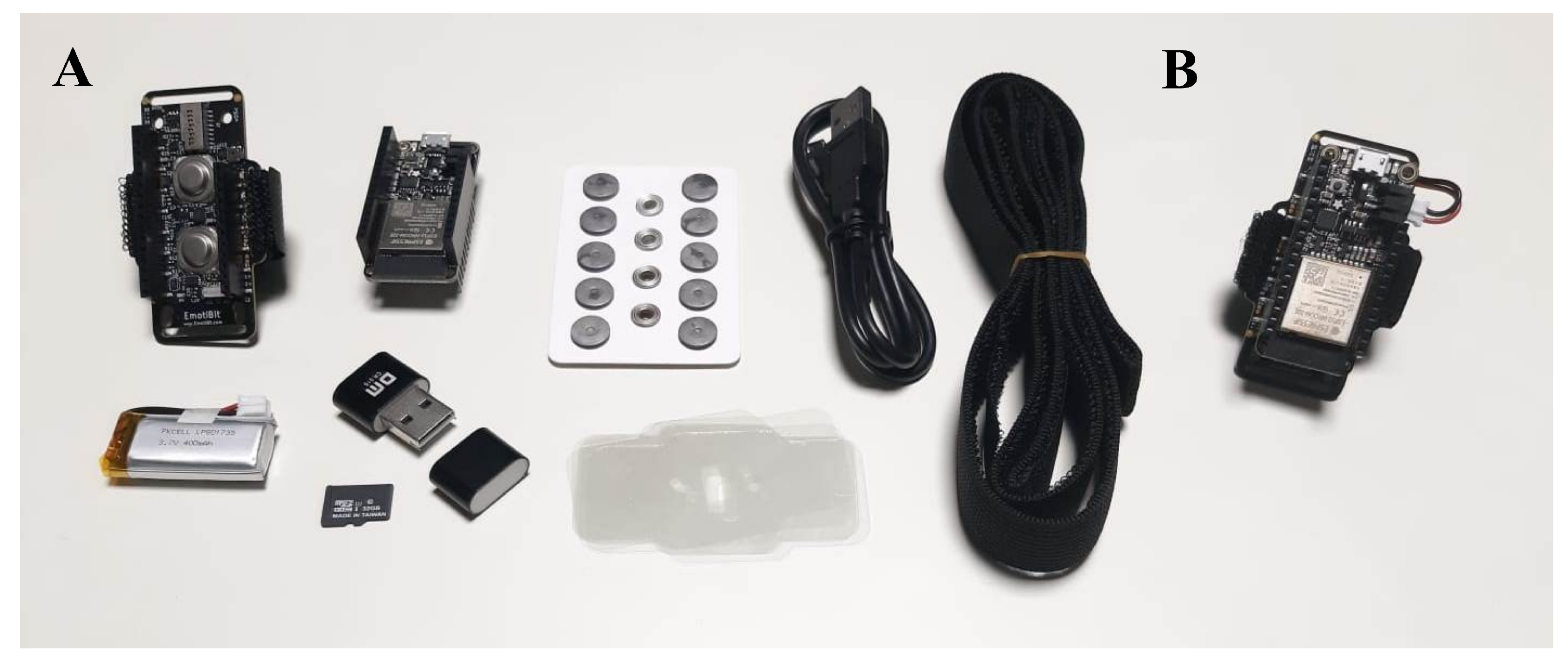
Figure 2.
OpenGo Sensor Insoles. The figure presents a pair of OpenGo Sensor Insoles, showing both top and bottom views, with the battery lid and coin cell battery removed, along with the charging dock featuring an inserted battery for recharging.
Figure 2.
OpenGo Sensor Insoles. The figure presents a pair of OpenGo Sensor Insoles, showing both top and bottom views, with the battery lid and coin cell battery removed, along with the charging dock featuring an inserted battery for recharging.
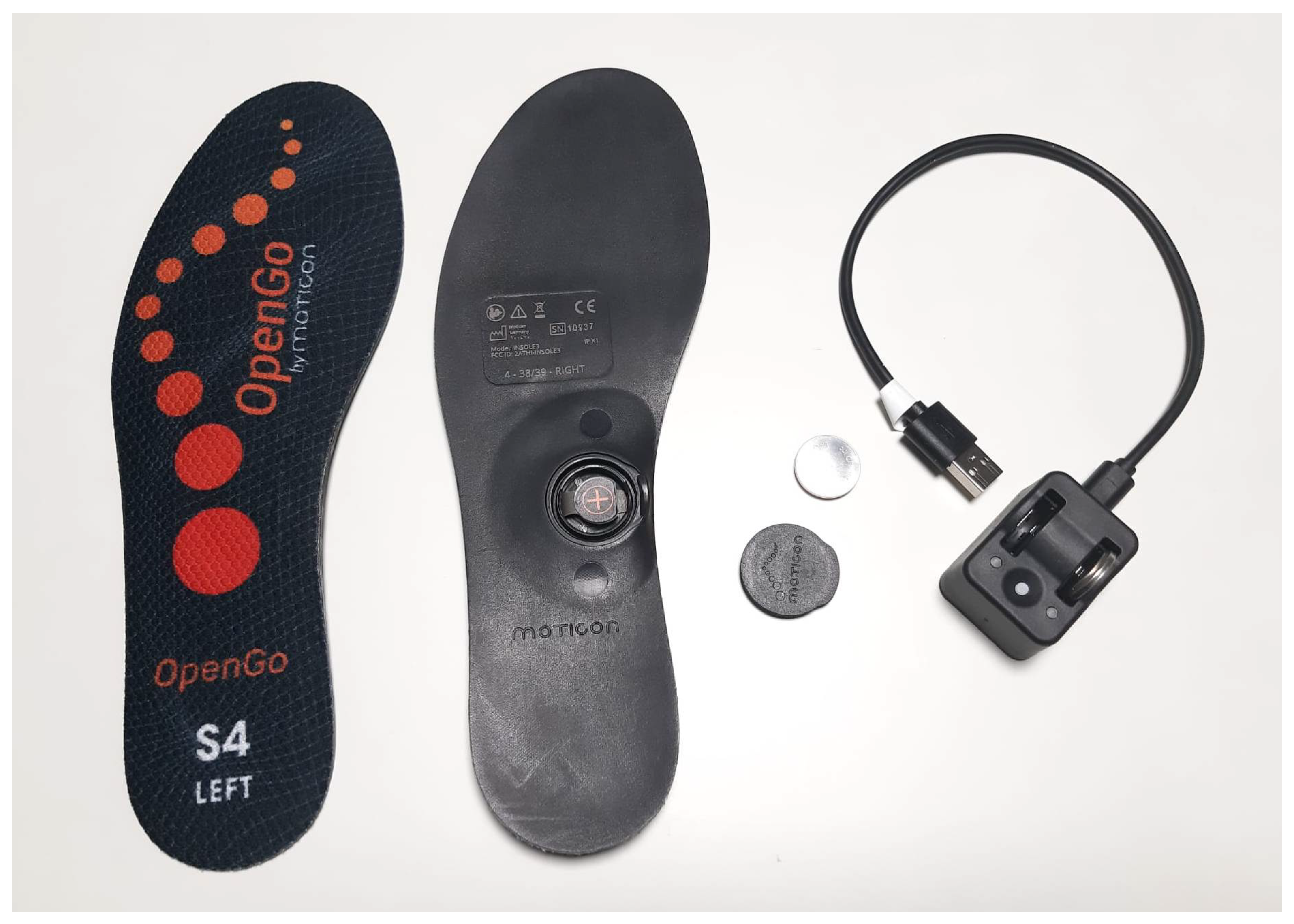
Figure 3.
NexRing. The figure illustrates NexRing with its wireless charging dock.
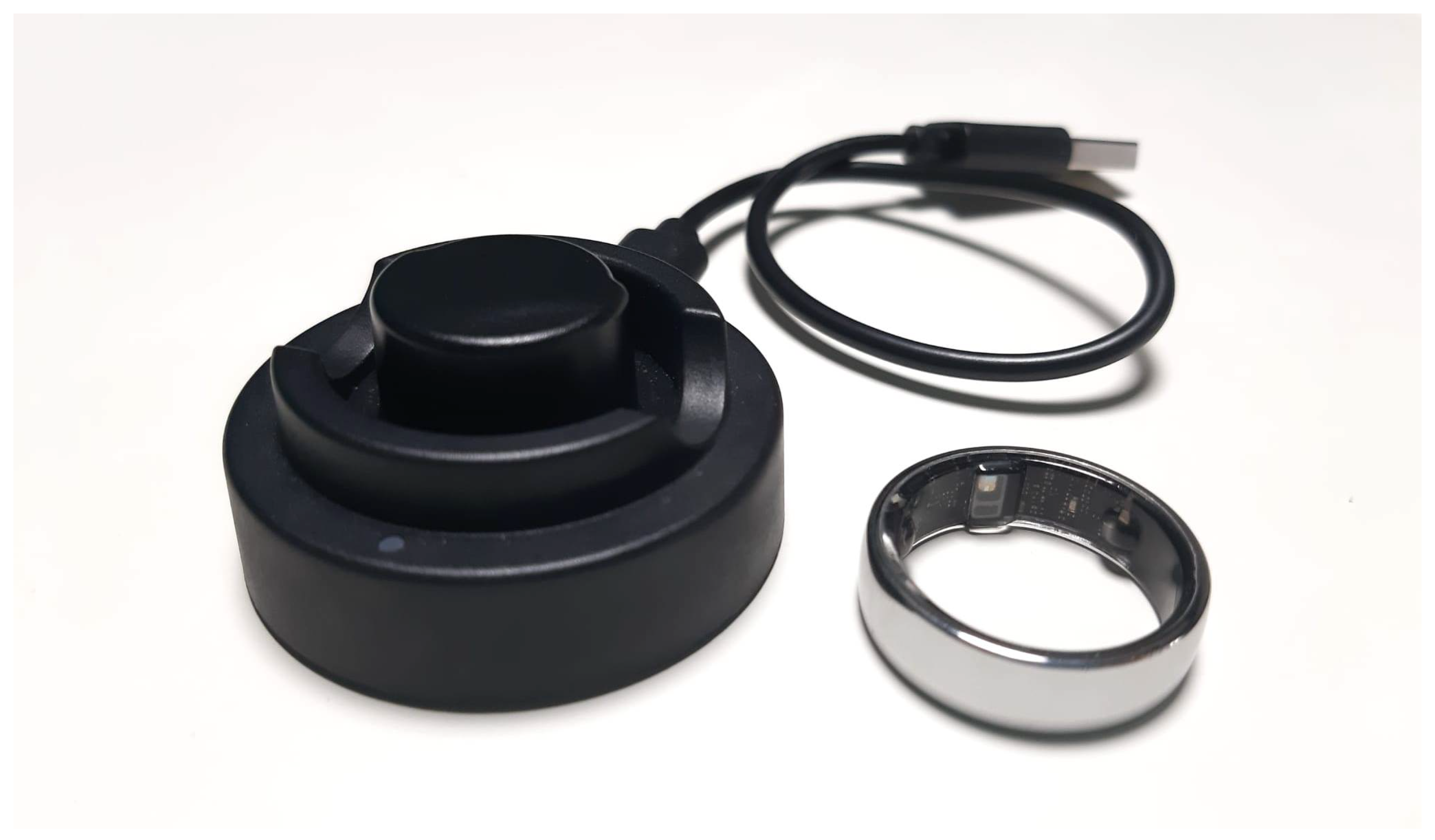
Figure 4.
6-in-1 Remote Health Monitor. The figure presents the 6-in-1 Remote Health Monitor with its cuff for blood pressure measurements and a charging cable.
Figure 4.
6-in-1 Remote Health Monitor. The figure presents the 6-in-1 Remote Health Monitor with its cuff for blood pressure measurements and a charging cable.
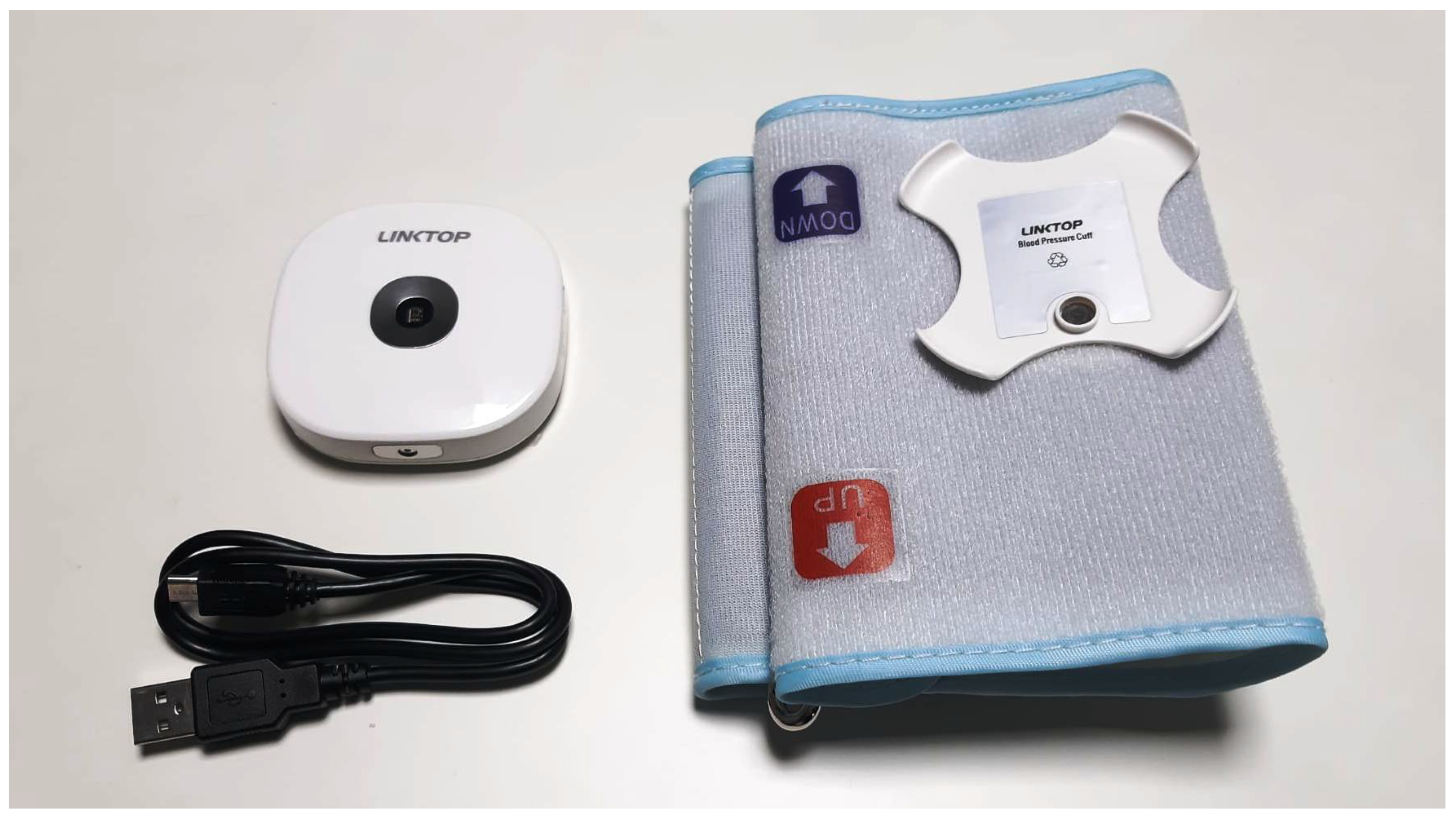
Figure 5.
XeThru X4M200 respiration sensor. The figure illustrates the XeThru X4M200 respiration sensor, along with a micro USB cable for powering the device.
Figure 5.
XeThru X4M200 respiration sensor. The figure illustrates the XeThru X4M200 respiration sensor, along with a micro USB cable for powering the device.
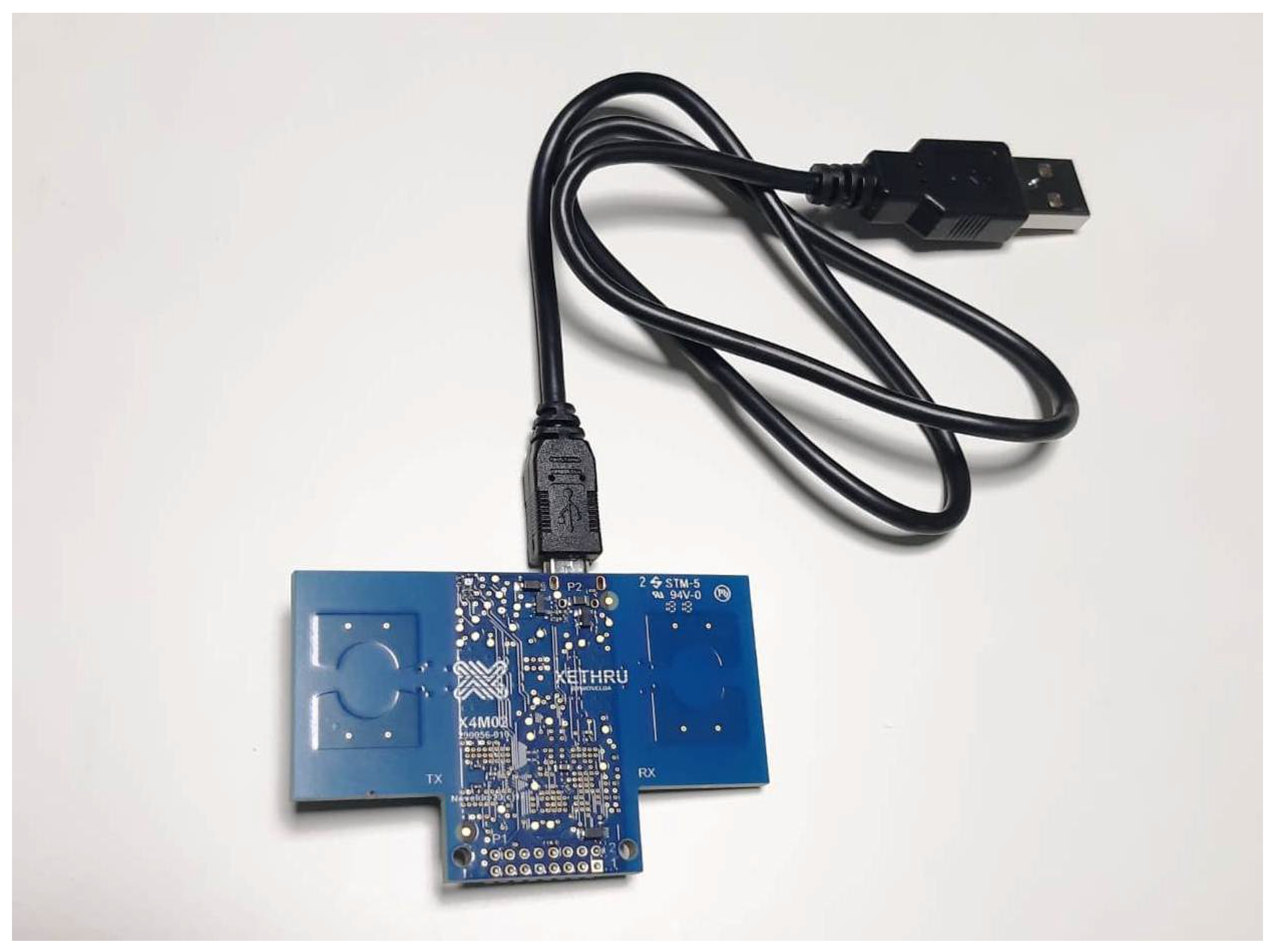

Table 1.
Comparison of selected sensors in measuring essential health parameters.
| Category | EmotiBit | OpenGo Sensor Insoles | NexRing | 6-in-1 Remote Health Monitor | XeThru X4M200 Respiration Sensor |
|---|---|---|---|---|---|
| HR | |||||
| HRV | * | ||||
| RR | * | ||||
| SpO2 | * | ||||
| BP | |||||
| Body Temperature | * | ||||
| Sleep | |||||
| Activity |
*Measured only during sleep. HR: heart rate; HRV: heart rate variability; RR: respiratory rate; SpO2: blood oxygen saturation; BP: blood pressure.
Table 2.
Comparison of selected sensors based on recording modes and sensor functionality.
| Category | EmotiBit | OpenGo Sensor Insoles | NexRing | 6-in-1 Remote Health Monitor | XeThru X4M200 Respiration Sensor |
|---|---|---|---|---|---|
| Recording Modes and Sampling Frequency | Continuous recording, manual initiation; sampling frequencies: 25 or 100 Hz (PPG), 15 Hz (EDA), 7.5 Hz (temperature), 25 Hz (IMU) | Continuous recording, manual initiation; configurable sampling frequencies (10 Hz, 25 Hz, 50 Hz, 100 Hz) and sensor channel; preset recording durations | Continuous recording, automatic initiation; workout and mindfulness sessions with predefined durations | Non-continuous recording, manual initiation | Continuous recording, manual initiation; sampling rate: 23.328 GS/s |
| Memory and Data Storage Capacity | High-speed microSD card, 32 GB | 32 MB onboard memory, up to 32 hours of recording | 1-week data storage | N/A (data stored in app) | N/A (internal buffer) |
| Calibration and Initialization Requirements | Factory-calibrated, 5-minute warm-up recommended | Factory-calibrated; initial weight calibration, warm-up required | Factory-calibrated | Calibration recommended every 2 years | Factory-calibrated |
| Sensor Sensitivity | Affected by body movement, fit, and body position | Affected by fit and external interference (Wi-Fi, Bluetooth) | Affected by fit | Affected by incorrect positioning, movement, and subject’s conditions | Affected by vibrations, indirect reflections, material properties |
| Environmental Suitability | Indoor/outdoor; heat/light resistant, non-waterproof | Indoor/outdoor; temperature range: -10°C to +50°C, humidity: 5% to 95% | Indoor/outdoor; durable for extreme conditions (hot tubs, saunas, cryotherapy) | Mainly indoor use; sensitive to environmental factors; temperature range: 5°C to 40°C, humidity: 15% to 93% | Indoor/outdoor; operates in extreme temperatures (-40°C to +85°C), sensitive to moisture |
Table 3.
Comparison of selected sensors based on comfort, design, and usability.
| Category | EmotiBit | OpenGo Sensor Insoles | NexRing | 6-in-1 Remote Health Monitor | XeThru X4M200 Respiration Sensor |
|---|---|---|---|---|---|
| Wearability, Placement, and Comfort | Worn in any orientation and almost anywhere on the body with stretchable straps; less discreet, more intrusive | Worn inside closed shoes; slim and flexible; minimal invasiveness; initial mild discomfort for some users | Worn on the index finger; minimal invasiveness; comfortable for prolonged used | Requires specific positioning based on measurements; minimal invasiveness | Non-contact; positioned on desks, walls, or ceilings; requires stable surfaces for optimal recording |
| Dimensions, Portability, and Aesthetics | Portable; length: 6.1 cm; width: 2.7 cm; thickness: 2.0 cm; weight: 20-25 g; may not blend seamlessly with clothing | Portable; length: 21.5-31.8 cm; width: 8.0-11.0 cm; thickness: 1.1 cm; weight: 63-102 g; compatible with most footwear | Portable; diameter: 1.8-2.3 cm; circumference: 0.6-7.1 cm; width: 0.8 cm; thickness: 0.3 cm; weight: 4-6 g; in four colors; compatible with everyday clothing | Portable; length: 7.0 cm; width: 7.0 cm; thickness: 1.8 cm; weight: 70 g; compact and easy to carry in a bag for use anywhere | Portable: length: 5.8 cm; width: 3.7 cm; integrates well into home environments |
| Physical Constraints | Compatible with various body sizes; adjustable straps | Nine double sizes; not suitable for custom orthotics or users over 120 kg | Seven sizes for different finger dimensions | Circumference of arm cuff: 22-35 cm; some difficulty for users with limited mobility | No physical constraints |
| Reusability and Cleaning | Reusable; cleanable with alcohol wipes; removable and cleanable electrodes; hygiene covers | Reusable; cleaned with disinfectants and a damp soft wipe | Reusable after cleaning and app data reset. Cleaned weekly with soft cloth or mild soap and water | Reusable; clean with ethanol or neutral agents. Not waterproof | Reusable; minimal cleaning required due to non-contact nature |
Table 4.
Comparison of selected sensors based on sensor platforms and support resources.
| Category | EmotiBit | OpenGo Sensor Insoles | NexRing | 6-in-1 Remote Health Monitor | XeThru X4M200 Respiration Sensor |
|---|---|---|---|---|---|
| Platform Compatibility and Functionality | Open-source software for signal visualization, recording, streaming, and parsing; compatible with Windows (10+), macOS, and Linux | Mobile app for data recording and transfer; compatible with Android 9 (Pie) and Bluetooth Low Energy 5.0. Software for receiving, analyzing, and exporting data; compatible with Windows (10+) | Mobile app for real-time tracking and trend monitoring; compatible with Android (6+), iOS (13+), and Bluetooth Low Energy 5.1 | Mobile app for data recording and historical trends; compatible with Android (5+), iOS (11+), and Bluetooth 4.0 | Software for configuring, visualizing, and managing data output; compatible with Windows (7/10), Ubuntu, and OSX |
| Usability and Accessibility of Platforms Interfaces | Moderate usability; intuitive interfaces for experts; requires technical expertise for assembly and operation | Intuitive interfaces for app and software; software with customizable dashboards | Intuitive and detailed app interfaces | Intuitive and simple app interfaces | Moderate usability; intuitive interfaces for experts |
| Operational Indicators and Alerts | LEDs for status (e.g., Wi-Fi connection, low battery, recording); battery level displayed in the software | Charging LEDs, app indicators, zeroing status, pre-measurement pop-ups, sensor warnings, biofeedback alerts | App notifications for low battery and connectivity; charging dock LED indicator | LEDs and vibration for power/charging; limited app prompts for incorrect setup | LEDs for status; real-time color cues in software for activity detection |
| Support and Documentation Quality | Detailed documentation, FAQs, Python and MATLAB libraries, community forum | Extensive resources (manuals, videos, FAQs); python library and programmer’s guide | Comprehensive in-app instructions, brief user manual, online video tutorials | Detailed user manual, online video tutorials, FAQs, basic troubleshooting guidance for errors | Comprehensive online documentation and user guide |
| Developer Tools Availability | Customizable firmware; integration with external platforms | Python library and SDKs for endpoint, insole, and mobile app development | iOS/Android SDK for custom endpoint solutions | SDK for integration with external platforms | Development kit and API with MATLAB, Python, and C++ support for extensive customization |
Table 5.
Comparison of selected sensors based on data transfer, accessibility and export features.
| Category | EmotiBit | OpenGo Sensor Insoles | NexRing | 6-in-1 Remote Health Monitor | XeThru X4M200 Respiration Sensor |
|---|---|---|---|---|---|
| Data Transfer | Wi-Fi to software; automatic transfer | Automatic transfer via Bluetooth to mobile app; automatic or manual transfer via Wi-Fi to desktop software | Bluetooth to app; automatic transfer | Bluetooth to app; automatic transfer | Micro USB cable to PC; automatic transfer |
| Data Accessibility | Data accessible after recording, even if disconnected | Data accessible after recording, even if disconnected | Data viewed exclusively via the mobile app, even if disconnected | Data accessible after recording, even if disconnected | Data accessible after recording, even if disconnected |
| Raw Data Export | .csv for raw data stored on the onboard SD card; .csv for parsed files | .txt for raw data; easily exported from the software | Not supported | Not supported | .dat for raw data, automatically stored in a user-specified directory |
| Reporting Features | Not supported | Different types of automated reports, in .pdf and .xlsx formats | Not supported | PDF reports for single measures; limited graphical content | Not supported |
Table 6.
Comparison of selected sensors based on battery performance and power management.
| Category | EmotiBit | OpenGo Sensor Insoles | NexRing | 6-in-1 Remote Health Monitor | XeThru X4M200 Respiration Sensor |
|---|---|---|---|---|---|
| Battery Life | 2.5-4 hours (live streaming), 8-9 hours (recording with Wi-Fi off) | 8-15 hours (continuous recording) | 4-7 days | 500 charge cycles (not designed for continuous monitoring) | N/A (requires external power) |
| Charging Method | Micro USB charging | Coin cell (PD2032), charging slot with micro USB cable | Wireless charging (USB charging dock) | Micro USB charging | Micro USB or 16-pin connector |
| Recharge Time | 2 hours | 2.5 hours | 10 minutes-1.5 hour | 3-4 hours | N/A (requires external power) |
| Power-Saving Features | Low Power Mode, Wi-Fi Off Mode, Sleep Mode, Hibernate switch | Sleep Mode, optimized sensor setup for battery conservation | Power Saving Mode | Low-performance mode for ECG measurements | N/A (requires external power) |
Table 7.
Comparison of selected sensors based on costs and economic considerations.
| Category | EmotiBit | OpenGo Sensor Insoles | NexRing | 6-in-1 Remote Health Monitor | XeThru X4M200 Respiration Sensor |
|---|---|---|---|---|---|
| Initial Price | €462.95 (Bundle) | €1,895 (Sensor Insoles) + €995 (Base Module) | $249.00 | $249.00 | Approximately $400 |
| Subscription Requirements | No subscription required | No subscription required | No subscription required | No subscription required | No subscription required |
| Additional Costs | Battery/sensor replacements | SDK packages, customer support, software updates, sensor replacement, charging accessories | N/D | N/D | N/D |
Disclaimer/Publisher’s Note: The statements, opinions and data contained in all publications are solely those of the individual author(s) and contributor(s) and not of MDPI and/or the editor(s). MDPI and/or the editor(s) disclaim responsibility for any injury to people or property resulting from any ideas, methods, instructions or products referred to in the content. |
© 2024 by the authors. Licensee MDPI, Basel, Switzerland. This article is an open access article distributed under the terms and conditions of the Creative Commons Attribution (CC BY) license (http://creativecommons.org/licenses/by/4.0/).
Copyright: This open access article is published under a Creative Commons CC BY 4.0 license, which permit the free download, distribution, and reuse, provided that the author and preprint are cited in any reuse.


