

Submitted:
17 December 2024
Posted:
18 December 2024
You are already at the latest version
Abstract
Slurry filling technology has gradually been adopted in coal mines in the northwest region. However, due to the complexity of slurry transport pipelines, blockages remain a frequent issue. Pipeline blockages can adversely impact production, reducing operational efficiency, with different blockage types causing varying degrees of harm. Despite the significance of this issue, there is limited in-depth analysis in the literature, especially regarding the role of pressure in pipeline blockages. This study utilizes FLUENT software for computational fluid dynamics (CFD) simulations of slurry pipeline blockages, focusing on the impact of blockage morphology, location, and extent on slurry transport pressure distribution. The results indicate that the greater the blockage extent, the more pronounced the pressure loss along the pipeline. Furthermore, blockage morphology also has a varying effect on pressure drop. At lower blockage levels, the pressure drop variation across the three blockage types is relatively minor. However, when the blockage exceeds 50%, sedimentation-type blockages cause the most significant harm. The study analyzes the reasons behind this and offers recommendations to mitigate sedimentation-type blockages. Within 1 meter downstream of the blockage, the flow velocity rapidly decreases to near zero, creating a stagnant zone that accelerates the deposition of gangue particles, thereby worsening the blockage. After an instantaneous blockage occurs, the location of the blockage has little effect on the pipeline's pressure drop. Among the three blockage types, the impact on slurry pressure in the pipeline is ranked as follows: sedimentation-type blockage > composite blockage > attachment-type blockage.
Keywords:
1. Introduction
2. Long-Distance Gangue Slurry Ring Tube Experiment
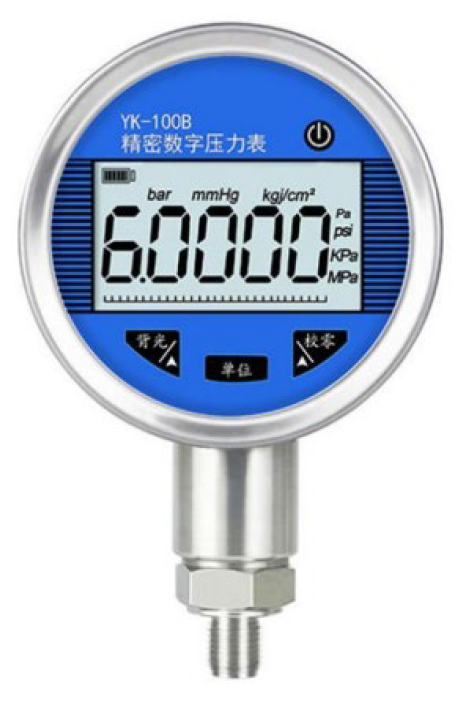
2.1. Test System
2.2. Introduction to Distribution
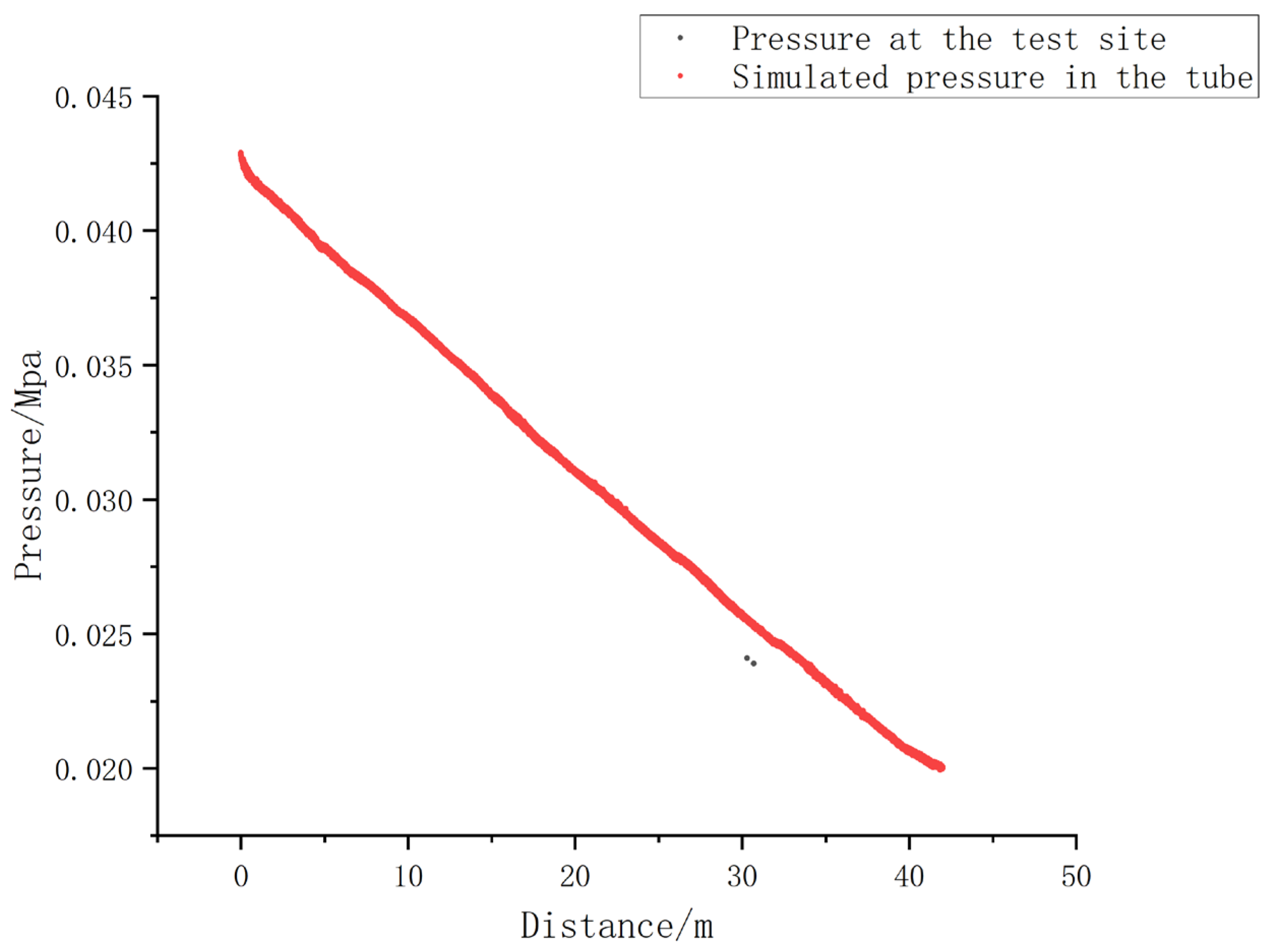
2.3. Comparative Analysis of Simulations and Experiments
3. Establishment of a Grouting Pipeline Blockage Model
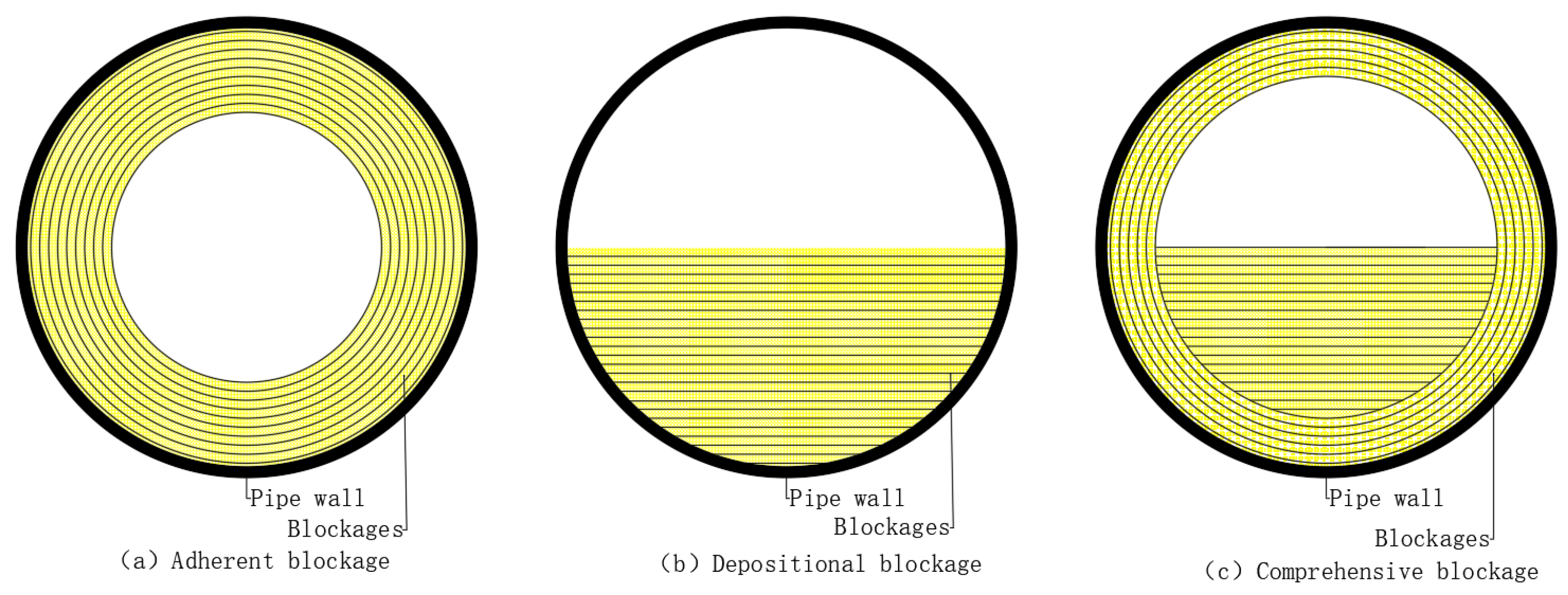
3.1. Establishment of Gangue Pipeline Blockage Form
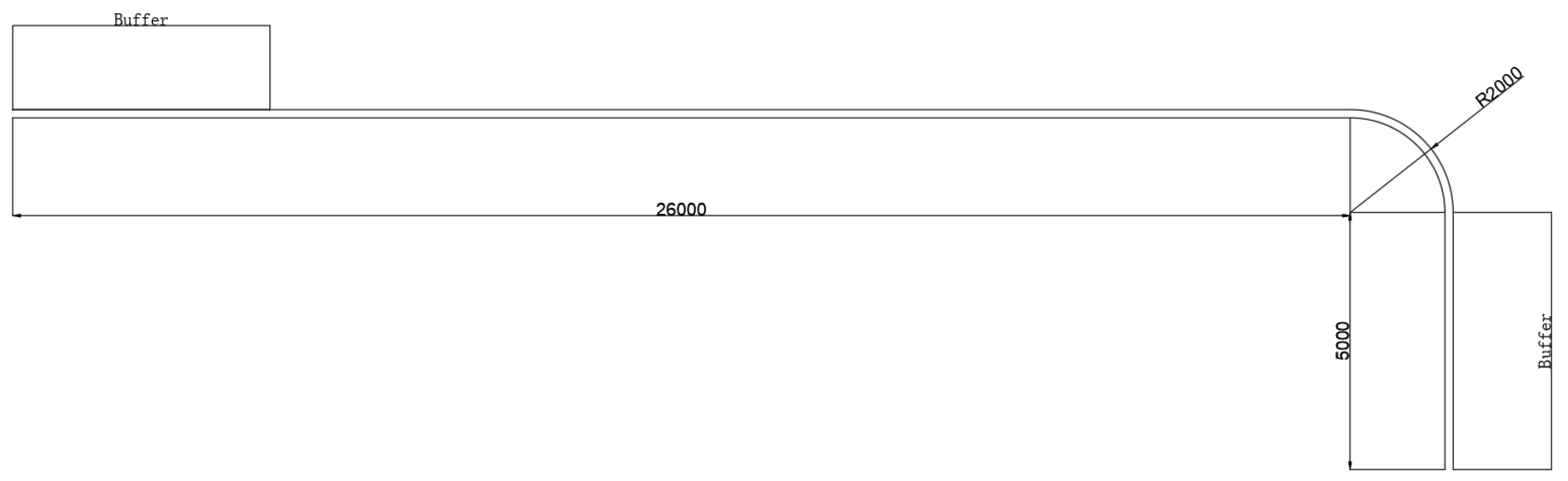
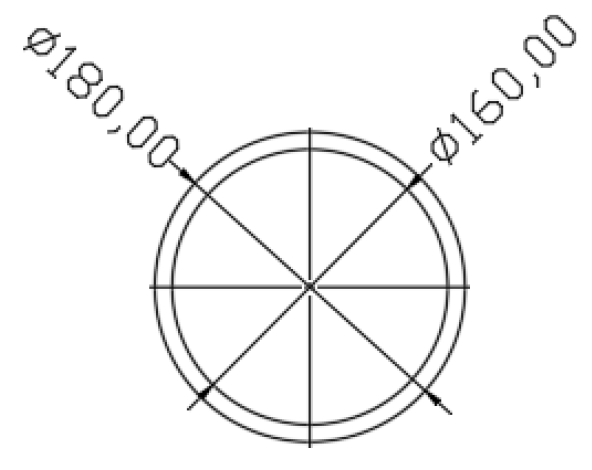
3.2. Establishment of Computational Models
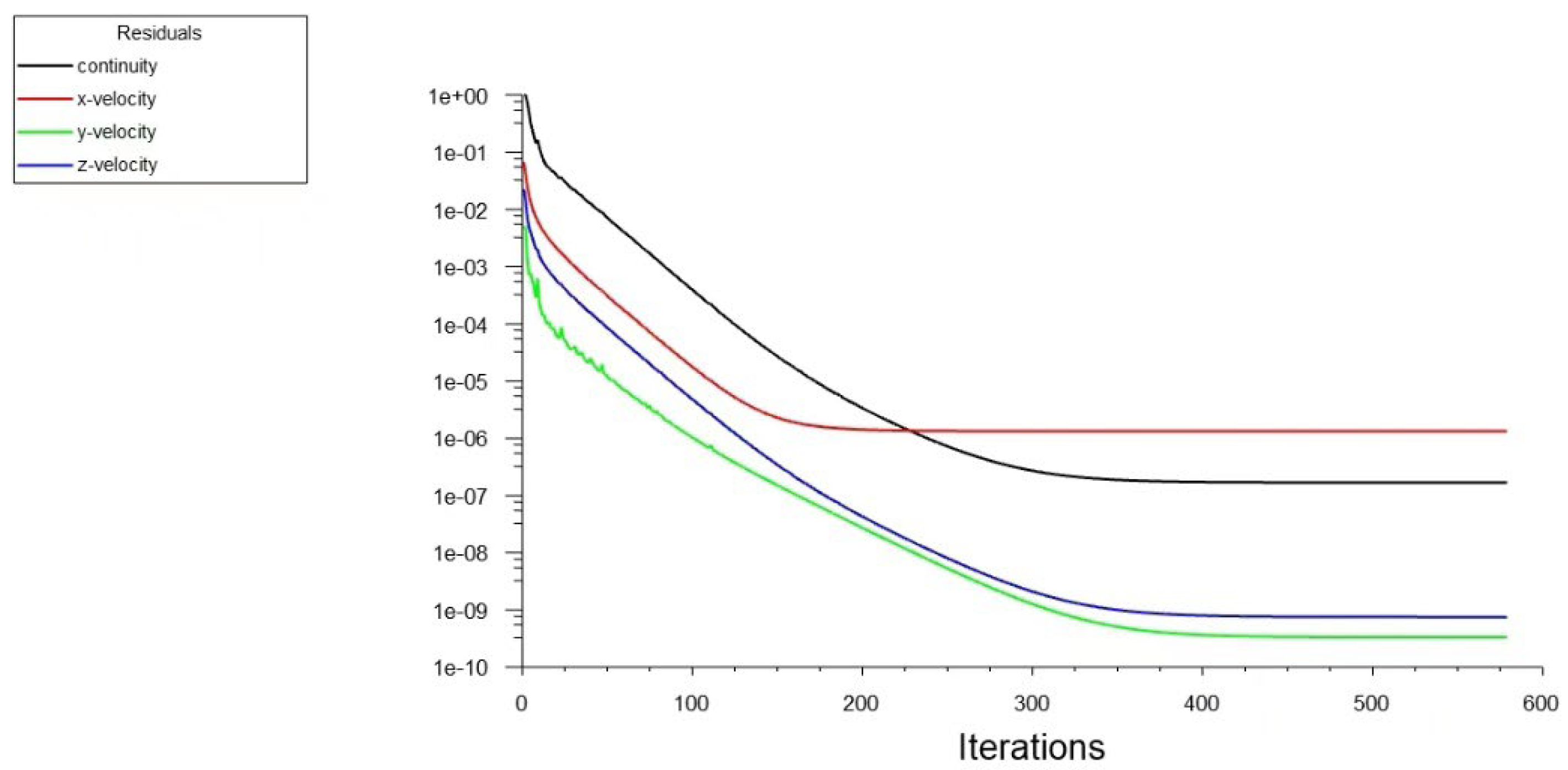
3.3. FLUENT Software Settings
3.4. Simulated Condition Settings
4. Analysis of CFD Simulation Results
4.1. Analysis of Simulation Results of Non-Clogging Conditions
4.2. Analysis of Simulation Results of Blockage Conditions
4.2.1. The Influence of the Degree of Blockage on the Distribution of Pipeline Characteristics
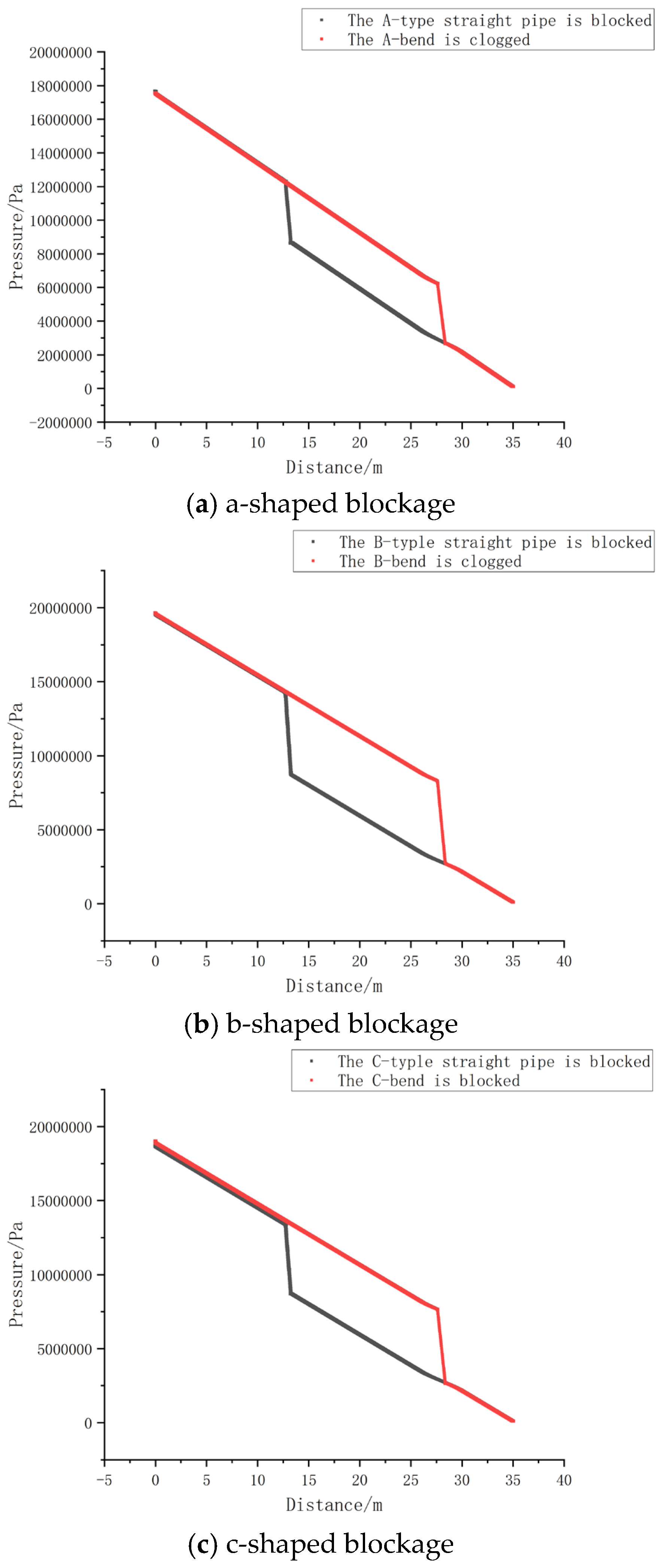
4.2.2. The Influence of Blockage Pattern on the Distribution of Pipeline Characteristics
4.2.3. The Influence of the Blockage Location on the Distribution of Pipeline Characteristics
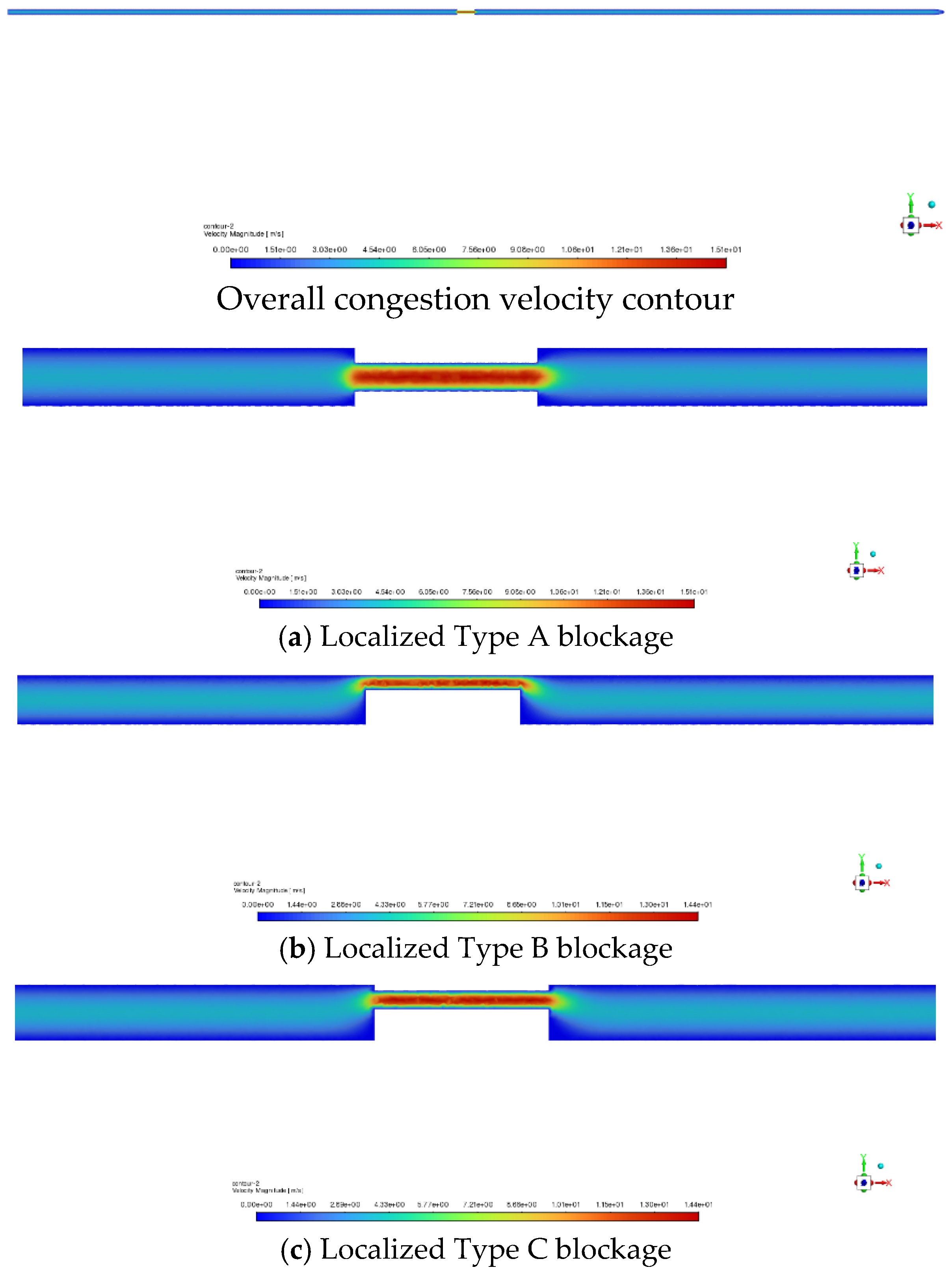
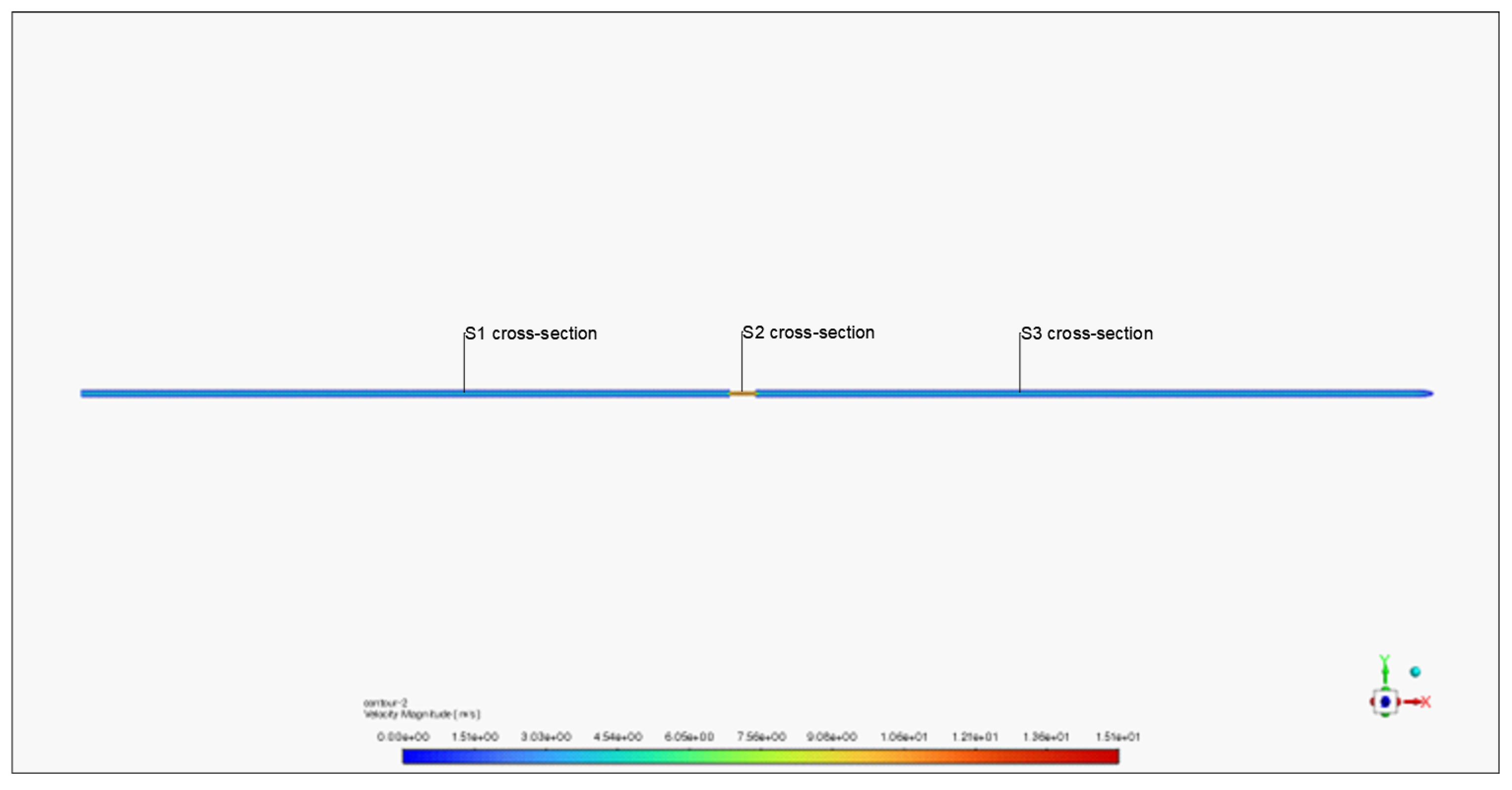
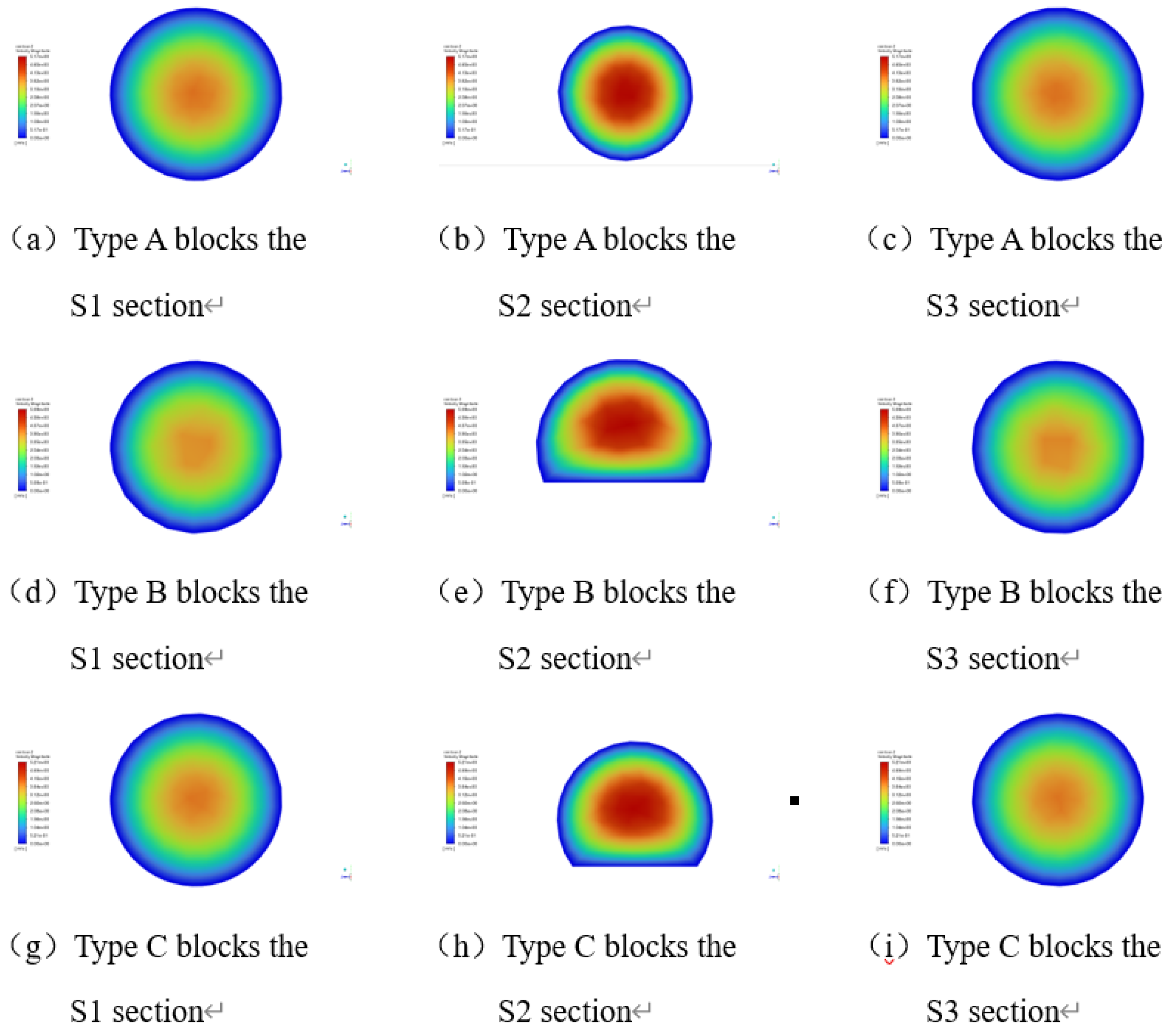
4.2.4. Analysis of the Influence of Flow Velocity Under Blockage Conditions
5. Conclusions
Author Contributions
Funding
Institutional Review Board Statement
Informed Consent Statement
Data Availability Statement
Acknowledgments
Conflicts of Interest
References
- Zhu, L.; Gu, W.Z.; Yuan, C.F.; et al. Application and Prospect of Coal Gangue Slurry Filling Technology. Coal Sci. Technol. 2024, 52, 93–104. [Google Scholar]
- Zhu, L.; Song, T.Q.; Gu, W.Z. Research and Application of Coal-Based Solid Waste Slurry Pipeline Filling Technology. Coal Technol. 2021, 40, 47–51. [Google Scholar]
- Lile, N.L.T.; Jaafar, M.H.M.; Roslan, M.R.; et al. Blockage Detection in Circular Pipe Using Vibration Analysis. Adv. Sci. Eng. Inf. Technol. 2012, 2, 54–57. [Google Scholar] [CrossRef]
- Kim, Y.; Simpson, A.R.; Lambert, M.F. The Effect of Orifices and Blockages on Unsteady Pipe Flows. World Environ. Water Resour. Congr. 2007, 157, 1–10. [Google Scholar]
- Adewumi, M.A.; Eltohami, E.; Solaja, A. Possible Detection of Multiple Blockages Using Transients. J. Energy Resour. Technol. 2003, 125, 154–158. [Google Scholar] [CrossRef]
- Zhao, L.A.; Xu, Z.L. Cause Analysis and Prevention Measures of Pipeline Blockage in Slurry Transportation. J. Liaoning Tech. Univ. Nat. Sci. Ed. 2009, 28, 10–12. [Google Scholar]
- Zhang, Q.L.; Wu, L.H.; Bian, J.W. Fault Tree Analysis of Filling Pipeline Blockage. Metall. Min. 2015, 44, 145–148. [Google Scholar]
- Han, X.J.; Li, X.S.; Dai, S.P.; et al. Cause Analysis of Pipeline Blockage Caused by Instantaneous High Flow Velocity of Filling Slurry. Nonferrous Metals (Mining Sect.) 2016, 68, 19–22. [Google Scholar]
- Liu, F.M. Numerical Simulation of Flow Characteristics in Long-Distance Slurry Pipelines. Coal Mine Mach. 2018, 39, 129–131. [Google Scholar]
- Wang, C.C.; Xu, J.L.; Xuan, D.Y. Research on the Blockage Mechanism of Ground Slurry Transport Pipeline Isolated by Overburden Grouting. Coal Sci. Technol. 2018, 43, 2703–2708. [Google Scholar]
- Song, B.K. Study on Pipeline Blockage Detection Method Based on Pressure Wave. Ph.D. Thesis, Yangtze University, Wuhan, China, 2019. [Google Scholar]
- Wang, J.L.; Xiong, Y.H.; Zhang, Y.Q.; et al. CFD Simulation of Drainage Pipeline Blockage. Sci. Technol. Eng. 2023, 23, 6607–6613. [Google Scholar]
- Han, G.J. Fundamentals and Applications of Fluid Mechanics; Mechanical Industry Press: Beijing, China, 2012. [Google Scholar]
- Gan, D.Q.; Gao, F.; Chen, C.; Liu, A.X.; Zhang, Y.P. Numerical Simulation of High-Concentration Tailings Slurry Pipeline Transportation. Metall. Min. 2014, 10, 138–141. [Google Scholar]
- Shi, H.W.; Huang, J.R.; Qiao, D.P.; Teng, G.L.; Wang, B. ANSYS Fluent-Based Simulation Study on Ultra-Deep Well Long-Distance Paste Filling Pipeline. Nonferrous Metals (Mining Sect.) 2020, 72, 5–12. [Google Scholar]
- Wang, X.M.; Ding, D.Q.; Wu, Y.B.; Zhang, Q.L.; Lu, Y.Z. Numerical Simulation and Analysis of Paste Filling Pipeline Transportation. China Min. 2006, 57–59, 66. [Google Scholar]
- Chen, X.N. CFD-Based Flow Pattern Analysis and Resistance Loss Model Study for Solid-Liquid Two-Phase Flow. Ph.D. Thesis, Kunming University of Science and Technology, Kunming, China, 2017. [Google Scholar]
- Qiu, Y.Q. Analysis of Two Resistance Loss Calculation Methods in Slurry Pipeline Transportation. J. Guizhou Univ. Ind. Sci. Technol. 1999, 5, 457–459. [Google Scholar]
- Lu, H.; Yin, J.; Yuan, Y.X.; et al. Resistance Mechanism and Drag Reduction Technology for Slurry Pipeline Transportation. J. Qingdao Univ. Technol. 2016, 32, 90–95. [Google Scholar]
- Fei, X.J. Hydraulics of Slurry and Granular Material Transport; Tsinghua University Press: Beijing, China, 1994; pp. 390–392. [Google Scholar]
- Li, T. Research on Hydraulic Transport Power Characteristics of Slurry Pipeline. Ph.D. Thesis, Wuhan University of Technology, Wuhan, China, 2013. [Google Scholar]
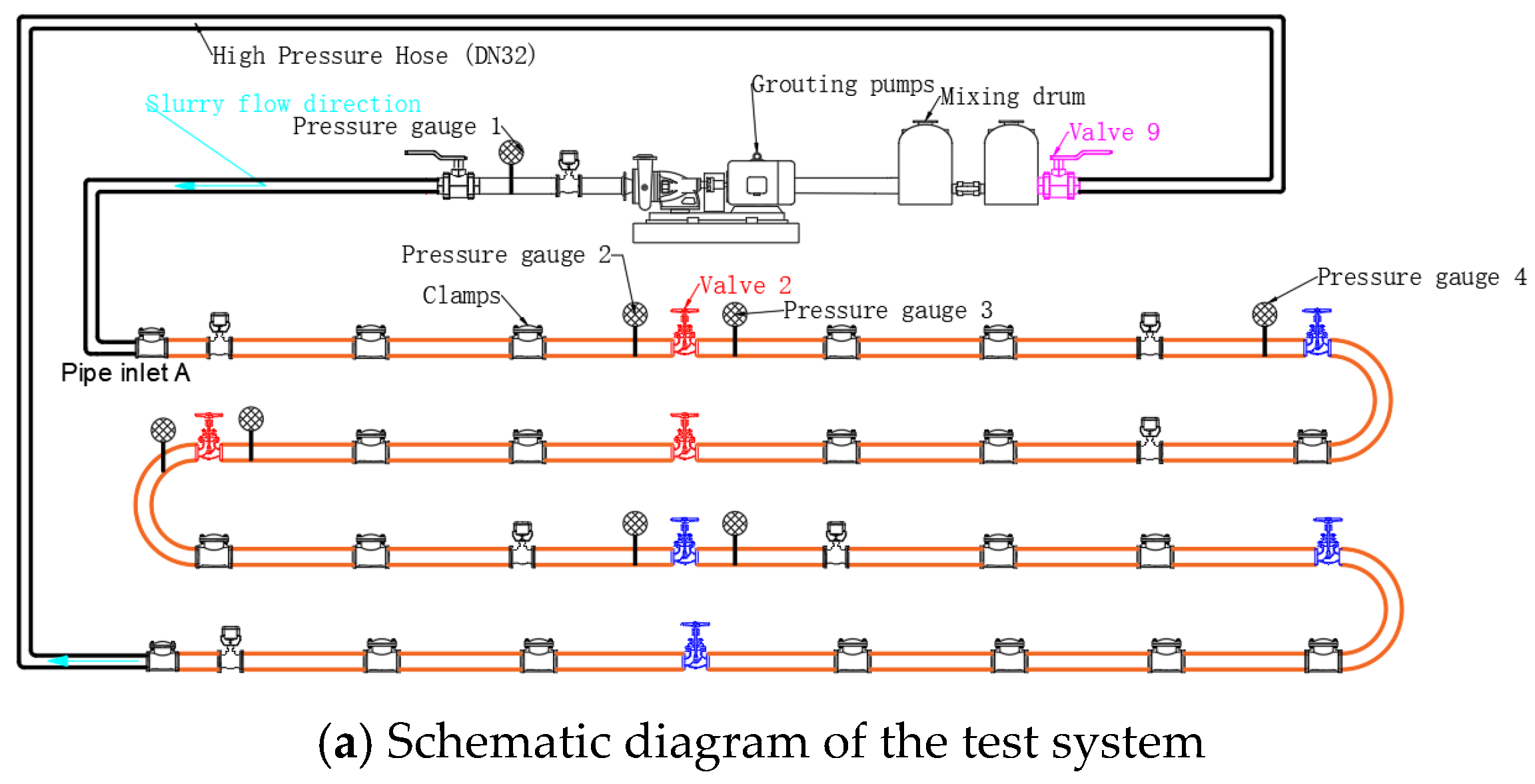
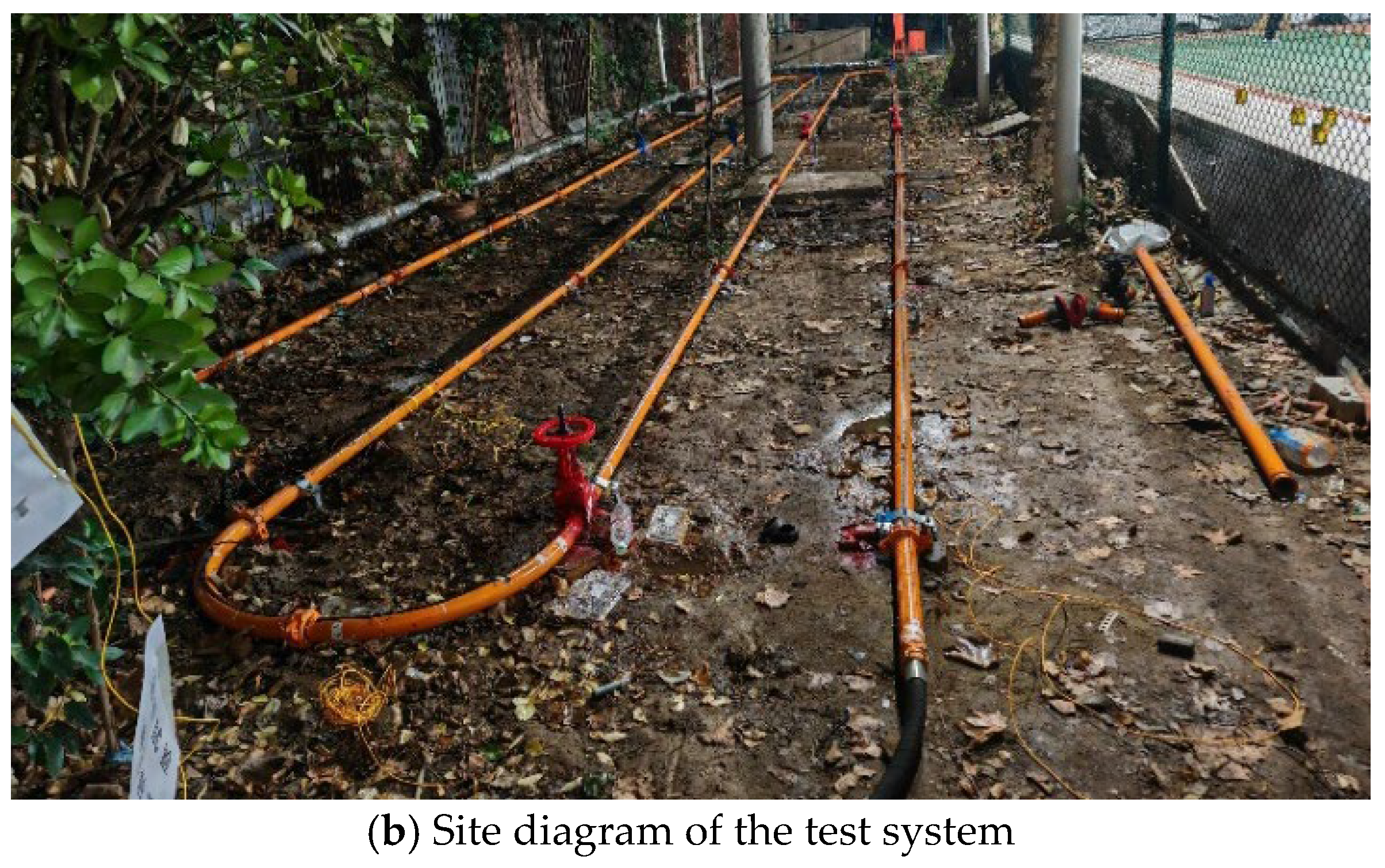


| Case number | The degree of blockage | Blockage pattern | Blockage location/m |
| 1 | 0% | not | 0 |
| 2-7 | 25% | Adherent blockage, Sedimentary blockage, and Combined blockage | 13.0 The center of the elbow |
| 8-13 | 50% | Adherent blockage, Sedimentary blockage, and Combined blockage | 13.0 The center of the elbow |
| 14-19 | 75% | Adherent blockage, Sedimentary blockage, and Combined blockage | 13.0、 The center of the elbow |
Disclaimer/Publisher’s Note: The statements, opinions and data contained in all publications are solely those of the individual author(s) and contributor(s) and not of MDPI and/or the editor(s). MDPI and/or the editor(s) disclaim responsibility for any injury to people or property resulting from any ideas, methods, instructions or products referred to in the content. |
© 2024 by the authors. Licensee MDPI, Basel, Switzerland. This article is an open access article distributed under the terms and conditions of the Creative Commons Attribution (CC BY) license (http://creativecommons.org/licenses/by/4.0/).


