

Submitted:
17 December 2024
Posted:
18 December 2024
You are already at the latest version
Abstract
The demand for plant-based milk alternatives (PMAs) has grown rapidly in recent years, driven by health-conscious choices, environmental sustainability, ethical considerations, and environmental concerns. Among these, "barista-quality" PMAs play a critical role in coffee applications. However, achieving the desired sensory attributes (flavour and mouthfeel) and physicochemical properties (texture, foam formation, and stability) of dairy milk in coffee remains a significant challenge. This review provides a comprehensive analysis of the sensory and physicochemical characteristics of PMAs, with a particular focus on their performance in hot coffee beverages such as cappuccinos and lattes. It examines the fundamental issues and factors influencing the compatibility of PMAs in hot coffee, including flavour, texture, foam formation and stability, and consumer acceptance. Furthermore, the review explores potential strategies to address these sensory and physicochemical challenges, offering valuable insights into opportunities for innovation and product development. The aim is to guide the optimization of next-generation "barista-quality" PMAs with improved sensory and functional properties.
Keywords:
Barista
; plant-based milk alternatives
; dairy
; coffee
; sensory
; physicochemical
; AI
1. Introduction
Plant-based milk alternatives (PMAs) are non-dairy substitutes derived from a wide variety of plant sources, including grains (e.g., rice, quinoa, oats), legumes (e.g., soy, peas), nuts (e.g., cashew, almond, macadamia), and seeds (e.g., hemp, flax, sesame) (Figure 1). Among the available PMAs, soy, almond, oat, and coconut milks are the most extensively produced and consumed globally [1,2]. The global market for PMAs, valued at USD 12.1 billion, is projected to grow to approximately USD 29.5 billion by 2031, reflecting a compound annual growth rate (CAGR) of 9.5%. There are several new types of PMAs are coming in the market including blends, however, almond and soy milk dominate the market, each holding approximately 40%, while other PMAs (including rice, oat, coconut, and pea) account for the remaining share [1,3].
The increasing adoption of PMAs has disrupted the dairy industry, driven largely by shifting consumer preferences toward more health-conscious diets which includes lactose intolerance, dairy allergies, concerns over hormones and antibiotics present in dairy milk (specifically refers to milk derived from mammals such as goats, sheep, buffalo, but most commonly from cows, which is primarily focused in this review) [4,5]. Moreover, the rise of veganism and growing ethical concerns regarding large-scale animal agriculture have significantly contributed to the heightened interest in PMAs. For example, the prevalence of veganism in the UK has surged by 360% over the past decade, reflecting heightened awareness of animal welfare and environmental sustainability concerns and directly boosting demand for PMAs [6] and this trend is slowly growing in the rest part of the world. Simultaneously, PMAs resonate with modern dietary trends that emphasize plant-based and flexitarian eating, marked by a decreased reliance on animal products and a commitment to sustainable consumption. Environmental concerns further amplify the appeal of PMAs. They represent a more sustainable option, contributing to reduced greenhouse gas emissions, lower resource usage, and minimized environmental impacts and resonate deeply with environmentally conscious consumers [7]. PMAs, by contrast, offer a lower environmental footprint, contributing to their popularity among consumers seeking sustainable dietary choices. These trends underscore the intersection of health, environmental, and ethical considerations fuelling the shift toward PMAs.
PMA's versatility extends far beyond simple milk replacements and garnered considerable attention for their application across a wide array of food products. Their applications span a wide range of food and beverage products, impacting various sectors including beverages, cheese, desserts analogues, ice-creams, fermented products and infant nutrition [8-11]. A notable example is the integration of PMAs into the increasingly popular hot coffee culture, where consumers actively seek non-dairy options for lattes, cappuccinos, and other specialty coffee beverages [12]. As coffee culture continues to expand globally, the integration of PMAs—such as almond, soy, oat, and coconut—into coffee beverages has become increasingly prevalent [12].
While precise data on the proportion of PMAs used in coffee are limited, several studies have quantified their prevalence and acceptance among consumers. For example, Gorman, et al. [13] recruited 116 coffee drinkers, half of whom regularly added dairy milk and the other half regularly used PMAs. This balanced sample suggests the existence of a notable consumer segment already accustomed to PMAs. Furthermore, Zakidou, et al. [14] reported that 92% of their panellists expressed willingness to consume cappuccinos prepared with PMAs, indicating strong openness to these products. Additional insights come from a broader international survey by Halabi, Hristova and Vlaev [12], which included 200 participants across 19 countries. Although this study examined a range of beverages rather than coffee exclusively, it revealed that taste remains the primary driver of coffee choice, with a prevailing preference for cow’s milk. Nonetheless, the growing acceptance of PMAs was evident, particularly among younger consumers (Gen Z and Millennials), who were willing to pay a premium for these products. This willingness despite added cost signifies a potentially expanding market segment. Similarly, Chung, et al. [15] identified a group of "plant-based milk coffee lovers" who value experimentation with diverse flavours and textures. This research also highlighted the critical role of sensory attributes—such as flavour and mouthfeel—in influencing consumer acceptance of PMAs. Introducing these alternatives into coffee can reshape the overall sensory experience, which in turn offers opportunities for product innovation and development within both the plant-based and coffee industries.
Building on this growing interest and acceptance of PMAs in coffee, the concept of "barista-quality" PMAs (BPMAs) has emerged, emphasizing the importance of PMAs that can closely replicate the functional and sensory attributes of dairy milk in coffee applications. Key attributes include suitable viscosity, stable foam formation, and desirable flavour and mouthfeel that meet both the aesthetic and sensory expectations of coffee drinkers [15-17]. Achieving these properties requires strategic formulation and processing, with particular attention to protein content, fat composition, and the interplay of physicochemical factors that influence foam stability and sensory acceptance [18,19]. The application of PMAs in coffee has led to innovations in product formulation, as manufacturers strive to replicate the sensory attributes of dairy milk. This includes optimizing the protein content, fat composition, and viscosity of PMAs to enhance their foaming properties. The ability to create stable, long-lasting foam is crucial for the visual appeal and texture of coffee beverages, particularly in the context of latte art.
Despite ongoing advancements, replicating the ideal texture, flavour, and mouthfeel of dairy milk in coffee remains challenging. PMAs generally contain lower levels of protein and fat compared to dairy milk (Table 1), which hinders foam formation and retention [5]. Furthermore, the absence of lactose and other solids results in a less creamy mouthfeel and affects the sweetness profile of PMAs [18]. These challenges can negatively impact consumer acceptance, as foam quality is crucial for the visual and sensory appeal of coffee beverages. Hence, understanding these physicochemical and sensory complexities is essential not only for meeting consumer expectations but also for guiding product innovation and market competitiveness. The development of BPMAs that both satisfy flavour and mouthfeel expectations and are compatible with coffee’s chemical matrix represents a key frontier in the beverage industry.
Therefore, this review focuses on the sensory and physicochemical characteristics of PMAs, within the context of hot coffee beverages especially cappacinnos or lattes, with particular emphasis on their performance as "barista-quality" alternatives. It explores the fundamental issues and factors influencing PMAs compatibility in hot coffee, including flavour, texture, foam formation and stability, and consumer acceptance. Additionally, the review presents possible strategies to address these limitations, ultimately offering insights into opportunities for innovation, product development and optimizing BPMAs for enhanced performance, improved consumer satisfaction, and greater market potential in the rapidly evolving coffee sector.
2. Barista-Quality Plant-based Milk (BPMAs)
With the rise of specialty coffee culture, there has been an increase in demand for ingredients that either add to and/or amplify espresso-based beverages. In this context, the importance of “barista-quality” milk —both dairy and plant-based focused—has taken the stage as it delivers the consistent micro foam, texture and flavours desire from coffee from cafes [20]. Historically the motivation to produce barista-quality milk solutions was closely related to the increasing level of sophistication around coffee brewing methods and presentations, notably latte art [20]. As baristas and consumers have become increasingly discerning, the industry has been quick to respond, focusing on milk formulations and processing techniques that enable better foaming performance and help meet increased expectations for both performance and taste.
Barista-quality milk is different from what you find at the supermarket. It’s not governed by a set standard, but rather by functional characteristics: specifically, the quality of micro foam it can produce, the smoothness of its texture, and its mouthfeel. Developed processing methods (e.g., ultrafiltration, and specific heat treatments (e.g., ~72 °C) help in maintaing the protein level and ensure the reproducible creation of stable foam [12,21,22]. These methods also help with sensory attributes as they reduce the inherent bitterness of espresso and improve the overall mouthfeel. The resulting products help in creating complex latte art and a consistent drinking experience, helping to set barista-quality milks, both dairy and plant-based, apart from normal milk .
3. BPMAs and Latte Art: Trends, Market and Consumer Acceptance
Dietary and sustainability shifts in the consumer landscape have pushed PMAs into mainstream café culture. With growing consumer interest in products who support health, environmentally-friendly and taste-associated values, the quick uptake of BPMAs, capable of consistently producing micro foam and subtle flavour nuances, have rapidly increased traction [23,24]. These formulations, meant to compete with or surpass dairy-based analogues for foam stability and taste, have become quite accepted among coffee professionals and consumers alike, especially in appearance and mouthfeel- like lattes and cappuccinos. Recent market indicators highlight this change. In the US, sales of oat milk in the American coffee space exceeded USD 100 million in 2022, and sales of almond milk in US cafés increased by 60% [25-28]. While there is cocnsitent market share for soy milk -with approx 20% preffered it in their coffee [25]. In the UK, around 30 per cent of milk sold per capita in cafés is BPMAs, with oat and coconut one of the top-sellers [26]. These developments shows a wider diversification and indicate that professional baristas – approx 65% of whom add PMAs, seem to acknowledge and trust their functional and sensory properties [26]. While direct market share comparisons are still limited, the pronounced growth amongst these alternatives suggests that there is a significant resetting of what consumers want.
Latte art helps further acceptance and desire for BPMAs. Research shows that how latte art will affect consumers perception of taste, where attractive latte art often lead to higher sweetness and acidity ratings [29]. This effect aligns with the concept of “art infusion,” where aesthetic embellishment enhances expectations and perceived value [30,31]. As a result, consumers are more likely to pay premium prices, maintain loyalty to certain cafés or their brands, and social sharing of such experiences [32]. These intertwined elements—heightened availability, enhanced functionality, asthethic appearance, and changing consumer values—combinedly support the growing profile of BPMAs within the global coffee market. As the industry progresses, additional comparative studies across dairy and PMAs will provide additional clarity on market dynamics and guide innovation and consumer education going forward.
4. Overview of Barista-quality Plant-based Milk vs Dairy Milk
BPMAs constitute a fast-growing segment of the worldwide food and beverage market. Of these, almond, oat and soy milks are being considered as the most established in todays time, providing different nutritional profiles, sensory properties and barista performance in coffee-based applications. Additionally, newer variants including coconut, hemp, sesame, pea, and rice milks are expanding the landscape of BPMAs, though more investigations are required to completley understand their optimum formulation, sensory and physicochemical aspect in coffee applications.
Almond milk, typically produced from ground almonds or partially de-oiled almond powder with a stabilizing hydrocolloid in water, followed by grinding and clarification through centrifugation, yields a product with a light texture and a subtly sweet, nutty flavour [5,15]. Its low calorie and fat content (Table 1) appeals to health-conscious consumers, and it delivers essential minerals such as calcium, copper, magnesium, phosphorus, potassium, selenium, and zinc [17]. However, almond milk’s relatively low protein content, the frequent necessity of stabilizers to prevent separation, particularly when used in coffee. Although some formulations froth adequately, others may fail to produce the desired creamy, stable micro foam for coffee applications [13,15,33,34].
Oat milk has emerged as a leading choice among both consumers and baristas, reflecting its balanced amino acid profile and valuable bioactive components, such as β-glucan and creamy mouthfeel [35-39]. Its nutritional composition includes significant quantities of dietary fiber (2.3-8.5%), lipids (5-9%), protein (11-15%), calcium (0.54%), and starch (60%) [40]. While these attributes confer health benefits and a creamy mouthfeel conducive to coffee-based beverages, the high starch content can complicate emulsion stability and heat processing [41,42].
Soy milk, obtained from soybeans by soaking, grinding, heating and filtering, is a classicwell known PMA with a relatively high protein content and natural creaminess [5,15,43]. Its well-balanced composition, usually about 2% carbohydrates, 2% lipids, and 3–4% protein, makes it appropriate for diverse applications in cooking and drinksbeverages, mainly in coffee [5,44]. However, the unique sensory profile of soy milk can restrict consumer acceptance [5,13]. Some formulations froth and foam nicely and apt for latte art, however, this varies widely among brands [13,15].
Coconut milk, made from coconut flesh, adds a tropical flavour and thick, creamy mouthfeel. The higher fat content enhance sensory quality, but it might affect the formation of a stable foam for coffee beverages as oat or soy milk [15,45]. However, research study has shown that coconut milk [and probably other similar coconut products that are processed liquid] can be blended successfully with soy milk, producing acceptable sensory profiles in coffee that exceeded soy or oat milks alone [14].
In the marketplace outside these major PMAs, newer options also kept cutting away. Hemp milk, for example, has a nutty flavour and is also a good source of omega-3 fatty acids, while the slightly savoury, nutty flavour profile of sesame milk represents a more novel and under-represented group [46,47]. Pea milk, with high protein and relatively neutral flavour, is becoming a popular choice, rice milk’s mild taste and hypoallergenic characteristics make it an appealing choice for sensitive consumers [46,48,49]. However, many of these newer PMAs remain to be scrutinised systematically in coffee applications beyond a small number of sensory evaluation with almond, coconut, coconut-soy blends and pea protein milk [13-15].
Table 1 provides a detailed comparison of almond, oat, soy and cow milk differentiating nutritional and physicochemical properties. Of the options, cow milk was the highest in calories (66.7 kcal/100 ml), protein (3.3 g/100 ml), and fat (3.9 g/100 ml) making it the most calorie-dense of the options. Almond milk is lower in calories (23.9 kcal/100 ml) and protein (0.5 g/100 ml) and is thus attractive to consumers looking for a lighter option, in addition to this it also sets almond milk apart from cow milk which is lower in calcium content (119 mg/L) and positions it as an ideal dairy-free substitute for bone health.. The oat milk provides a better carbohydrate profile (7.82 g/100 ml) and could serve as quick energy alternative, although the it may need stabilizer for its starch content. Soy milk which is high in potassium (364.29 mg/L) aids in muscle and nerve function. In context of physical properties, almond milk’s high viscosity (4.60 mPa∙s at 20°C) contributes to its creamy texture, while cow milk’s high whiteness index (81.9) leads to a visually lighter appearance. This comparative framework emphasizes differences in macronutrient profiles, micronutrient concentrations, protein quality, viscosity, particle size and separation rate. These types of insights can help professionals in the coffee and dairy sectors, researchers and health practitioners as they strive to optimize product functionality, sensory properties and nutritional components to plan to accommodate dynamic consumer behaviors and market trends.

Table 1.
Comparison of dairy milk and major plant-based milk alternatives.
| Components | Almond Milk | Oat Milk | Soy Milk | Cow Milk | References |
|---|---|---|---|---|---|
| Energy (kcal/100 ml) | 23.90 | 52.70 | 38.10 | 66.70 | [5,33,36,50,51] |
| Carbohydrate (g/100 ml) | 3.00 | 7.82 | 2.80 | 4.60 | |
| Protein (g/100ml) | 0.50 | 2.16 | 2.90 | 3.30 | |
| Fat (g/100 ml) | 1.10 | 1.42 | 1.70 | 3.90 | |
| Fiber (g/100 ml) | 1.40 | 1.30 | 1.20 | - | |
| Minerals (mg/L) | |||||
| Calcium | 325.29 | 12.25 | 205.86 | 119.0 | |
| Zinc | 0.56 | 0.13 | 0.075 | 0.38 | |
| Iron | 0.18 | 0.76 | 0.84 | 0.05 | |
| Magnesium | 21.00 | 42.0 | 0.49 | 13.00 | |
| Potassium | 65.00 | 0.01 | 364.29 | 151.00 | |
| Phosphorus | 48.00 | 0.01 | 108.00 | 93.00 | |
| Vitamins (mg/L) | |||||
| Vitamin C | - | - | - | - | |
| Thiamine | - | - | 0.08 | 0.04 | |
| Riboflavin | 0.02 | - | 0.24 | 0.16 | |
| Niacin | - | - | 0.28 | 0.08 | |
| Vitamin B6 | - | - | 0.10 | 0.04 | |
| Vitamin E | - | - | 4.00 | - | |
| Physicochemical |
[5,6,36,52,53] |
||||
| Conductivity (mS) | 1.22 | 1.83 | 1.95 | 3.27 | |
| Density (kg/L) at 20°C | 1.009 | 1.023 | 1.021 | 1.029 | |
| Titratable acidity (%) | 0.39 | 0.45 | 0.17 | 0.16 | |
| pH | 5.7-6.9 | 7.16 | 6.9-7.4 | 6.64 | |
| Viscosity (mPa∙s) at 20°C | 4.60 | 3.50 | 3.49 | 3.15 | |
| Flow index | 0.82 | 0.89 | 0.90 | 1.00 | |
| Whiteness index | 68.40 | 60.20 | 70.30 | 81.90 | |
| Mean particle size (µm) | 2.40 | 1.70 | 0.94 | 0.36 | |
| Separation rate (%hr) | 33.93 | 40.10 | 13.95 | 3.90 | |
From sustainability perspective, PMAs present a significantly smaller ecological footprint compared to dairy milk. For instance, the carbon footprint of dairy milk is estimated at approximately 3.2 kg CO₂ equivalent per liter, whereas soy, oat, and almond milks emit around 1.0, 0.9, and 0.8 kg CO₂ equivalent per liter, respectively [7,36]. The production of PMAs results in considerably lower greenhouse gas emissions, thereby contributing to climate change mitigation efforts. Moreover, PMAs require fewer natural resources, with almond milk requiring around 380 liters of water per liter, compared to dairy milk's 620 liters [54]. Similarly, the land use associated with PMAs is substantially lower than that of dairy milk, reducing deforestation and habitat destruction linked to cattle farming. Consequently, PMAs represent a more sustainable option, contributing to reduced greenhouse gas emissions, lower resource usage, and minimized environmental impacts (Table 2).
5. Challenges of Barista-quality PMAs in Coffee Application
The selection of milk for coffee applications such as cappuccinos and lattes have a profound impact on the overall quality of the final beverage, influencing sensory properties like taste, texture, aroma, mouthfeel and appearance, which ultimately influence the consumer preferences [12,55]. Dairy milk has traditionally been the gold standard for coffee application, especially full fat, is common but this also varies among consumer segments [55].
5.1. Sensory Challenges
The sensory appeal of dairy milk lies in its colour, flavour, aroma, and mouthfeel, making it a favorite among consumers. For example, cow's milk is known for its white colour, creamy texture, and rich aroma, largely due to the presence of fat globules [56], which enhance fluid flow, provide lubrication on the tongue, and impart a buttery taste from specific non-polar flavour compounds dissolved in the fat globules [52,56]. The interaction of fat and protein contributes to a rich texture that complements the bitterness of coffee, resulting in a well-rounded sensory experience. The micro foam produced is smooth and stable, enhancing the overall tactile experience [57]. As a result, consumers tend to expect similar sensory attributes in PMAs and in coffee made from PMAs. Additionally, sensory evaluation of cow milk in coffee indicates a high degree of consumer preference as many individuals have consumed dairy milk since childhood, making them accustomed to its mild flavour and smooth texture [58]. However, PMA consumers were able to distinguish between the almond and soy milk when they were added to coffee, while the dairy consumers were unable to distinguish between them. These results indicate that consumers are seeking for PMAs for use in coffee that have similar sensory properties to their dairy-based counterparts. Therefore, to be a viable alternative to dairy milk, PMAs must meet consumer sensory expectations [13,59].
PMAs vary in colour, with hemp- and coconut-based milks appearing white, almond and lentil-based milks light pink, and black sesame milk light grey [59]. However, when added to coffee, their colour is masked by the coffee and does not affect consumers' sensory perception but their taste is frequently viewed as less desirable and vary greatly [22]. For example, common flavour descriptors include coconut, fruity, beany, and savory, with textures ranging from thick (lentil-based) to runny (hemp-based). PMAs made from seeds, for example, include unique fats and small molecules like n-hexanal and n-hexanol, produced from plant lipid oxidation, which lend nutty flavours and aromas that can lead to negative consumer reactions, particularly in commercial almond milk [36,60]. Legume-based milk alternatives, such as soy, often evoke “beany” and “earthy” notes, which some consumers find unappealing. Soy milk, despite high scores for appearance, texture, and overall body, has typically scored only “slightly/moderately liked” for taste due to these flavours. Moreover, PMAs can carry acidic, astringent, or bitter flavours linked to various plant compounds such as flavonoids, glycosylates, phenols, and terpenes [5,33,39]. Oat milk is often described as sweet and creamy; almond milk as nutty, and coconut milk as sweet and coconutty [22]. These differences, along with the addition of coffee, alter the sensory experience [11,61]. Soy milk imparts a distinct beany flavour or paint-like tastes, which can overshadow the coffee's natural flavour and reduce consumer acceptance [13,19] which may be undesirable to some consumers even when combined with coffee. Similary, Chung, Kuo, Liou, Chen, Tseng, Huang and Tsai [15] highlight that plant-based milks often exhibit undesirable off-flavors, such as beany or grassy notes, which can dominate the coffee flavor profile. These off-flavors stem from the raw materials used, such as soybeans, and are exacerbated during processing or when heated. Nutty flavour of almond milk either complement or clash with the coffee profile, depending on consumer preference [22,62]. Oat milk is often regarded as the most neutral among plant-based options and described as sweet with a creamy texture that resembles cow milk, while coconut milk is described as sweet and coconutty flavour [13,22]. However, irrespective of the plant source, Gorman, Knowles, Falkeisen, Barker, Moss and McSweeney [13] noted that the acidic nature of coffee can interact poorly with plant-based milk, leading to bitterness or sour aftertastes, which are not present in dairy-based coffee beverages. Consumer studies indicate a general preference or higher acceptability for oat milk in coffee applications compared to soy, almond or other plant source, owing to its smooth texture and lack of overpowering flavours [50,57], except coconut or blend of coconut milk with soy milk [14,15]. However, due to market familiarity, soy and almond PMAs were still more preferred in market than newer options like oat milk.
Mouthfeel, including texture, viscosity, and creaminess, is another key sensory factor for PMAs. Cow's milk provides a creamy mouthfeel [56], attributed to its fat content [55,56]. However, PBAs vary in mouthfeel, as these contains soluble fibers, sometimes causing an undesirable gritty, chalky and rough texture due to insoluble particles [52]. For example, oat and almond-rice blends are smooth, while coconut and peanut milks are gritty [19,50]. This lead to grittiness or sedimentation in the coffee, further reducing sensory acceptance [63]. Although foaming properties are distinct from the sensory attributes, the foam produced in beverages like cappuccinos and lattes significantly contributes to mouthfeel and thus influences the sensory acceptance of barista-quality milk. However, plant-based alternatives often struggle to achieve stable, creamy foam. Zakidou, Varka and Paraskevopoulou [14] reported that soy milk, for example, produces inconsistent and short-lived foam compared to dairy. This lack of stable, velvety foam diminishes sensory appeal, reducing perceived quality and consumer acceptance.
The viscosity of PMAs depends on factors like fat droplets, oil bodies, thickeners, and colloidal particles [52]. When plant starches undergo heating, they gelatinize, creating a thick consistency in PMAs [5,64], with oat milk often thicker than almond or soy milk [13,22]. However, consumers may feel them less creamy than cow's milk [65]. PMAs have a thinner consistency compared to dairy milk, which diminishes the richness and body of the coffee [15]. Therefore, Zakidou, Varka and Paraskevopoulou [14] suggested to add gums or thickeners to improve the mouthfeel and viscosity in PBAs. However, sometimes added thickeners can also negatively affect viscosity and mouthfeel [22,61], therefore careful selection of thickener and their concentration is important.
In addition, PMAs may develop undesirable flavours and aromas due to unsaturated fatty acids and lipoxygenase activity over the storage, presenting an inherent challenge [36]. The crystallization behaviour of triglycerides affects oral tribology and perceived creaminess [66]. Understanding lipid self-assembly during digestion [67] and lipidomic profiles [68] is crucial for characterizing sensory properties and long-term stability. Added ingredients can also impact taste and aroma [61]. Further, sweetness plays a crucial role in overall liking of PMAs [13,15]. However, added sweeteners can introduce undesirable flavours [55]. The perceived sweetness of coffee with PMA is linked to overall liking [13,15], while the flavours like greasy, beany, earthy, rancid decreased the overall acceptability and liking of these milks in coffee application highlighting the need for flavour, ingredient and process optimization [18,50,59].
Studies indicate that most current PMA formulations fall short of consumer sensory standards, suggesting a need for new formulations that better align with consumer preferences. In addition to this, different consumer segments exhibit varying preferences [13-15,55], necessitating tailored product development. However, all these adds to production costs. This makes PMAs more expensive than dairy (cow’s milk) and, consequently, less accessible for some consumers. Table 3 provides an overview of the sensory aspects and issues of BPMAs in coffee. To address these sensory challenges, blended "barista" PMAs have been developed, combining properties from multiple PMAs to enhance texture and mouthfeel, particularly for foamed beverages like cappuccinos. These blends often include texturing agents to replicate dairy milk’s creamy mouthfeel [14]. Additionally, non-dairy creamers have shown potential for enhancing the sensory profile of soymilk cappuccinos and resembles like cow milk cappuccinos, achieving a creamy taste at high concentrations; however, such formulations also increase fat content, making non- dairy creamers more appealing to some consumers [69]. Hence, PMAs present a broad sensory spectrum in coffee applications, from smoothness to flavour variety, but face ongoing challenges in fully replicating the sensory experience of dairy milk. While blending and formulation adjustments continue to enhance PMAs, they remain less consistent in sensory qualities compared to cow's milk, impacting their acceptance among traditional coffee drinkers.
5.2. Physcicohemical Challenges
PMAs exhibit varied behaviours at different temperatures, which significantly influence their foaming properties and suitability for coffee applications [14,61,71]. Numerous studies have consistently shown that at lower temperatures (4°C), cow's milk exhibits superior foam expansion and stability compared to PMAs [14,45,71]. This difference is largely attributed to the superior performance of cow's milk proteins at the air-water interface at these lower temperatures [14]. However, at higher temperatures (e.g., 65°C; apt for coffee application), this disparity diminishes [14,61,71]. This observation suggest that heat treatment can enhances the foaming capacity of PMAs by inducing protein denaturation and promoting their adsorption at the air-liquid interface [14]. The type of thermal pre-treatment applied to PMAs ingredients also significantly impacts foaming properties and play a critical role in determining their foaming performance. For example, Zakidou and Paraskevopoulou [71] found that roasting sesame seeds before extraction significantly improves the foaming ability of the resulting extracts compared to blanching. This improvement is attributed to structural modifications in proteins that enhance foam formation. In addition to the effect of temperature at foaming properties, it also affects the phase behaviour and curdling of PMAs in coffee application. In addition, the separation process accelerates with the soymilk particles undergoing sedimentation and collapse at temperatures above 40°C [72]. This phenomenon, coupled with the nucleation mechanism observed during early separation stages, underscores the inherent challenges of stabilizing soymilk in coffee.
Another critical challenge of PMAs in coffee application is its tendency to curdle or phase separate when mixed with coffee, an issue that adversely affects product appeal and consumer acceptance [72]. Soymilk curdling in coffee occurs primarily due to its protein and colloidal composition, which is sensitive to temperature, pH, and concentration variations. Brown, Laitano, Williams, Gibson, Haw, Sefcik and Johnston [72] investigated the phase behaviour of soymilk in coffee and identified a coexistence curve separating single-phase (homogeneous) and two-phase (curdled) regions. They found that at high temperatures (above 60 °C), soymilk tends to phase separate into two distinct layers, which is reversible by either cooling the mixture or increasing the soymilk concentration. These findings highlight the complexity of protein interactions under varying physicochemical conditions in soymilk-coffee systems. The study further revealed that intermediate soymilk concentrations (5-10% w/w) are particularly prone to phase separation at lower temperatures (below 50°C) compared to higher or lower concentrations. This behaviour is attributed to the sensitivity of the mixture near phase coexistence boundaries, where the system is less stable.
Additionally, pH plays a role, as two-phase mixtures typically exhibit slightly lower pH (4.5-5.0) levels than single-phase mixtures (5.0 to 5.5), although the differences are minor. The pH of PMAs differs significantly (almond: 5.7-6.9, oat: 7.16, soy: 6.9-7.4, cow: 6.64) from that of cow's milk (refer Table 1), influencing protein interactions and foaming properties [14,45]. The addition of coffee further lowers the pH (for soy milk it changed from 7 to 4.5), potentially destabilizing proteins and altering the behaviour of other components in the beverage [61]. Particle size distribution also plays a pivotal role, with smaller particle sizes (0.30-0.40 µm) generally associated with improved foam stability [61], but the studies demonstrate that PMAs have larger particle size (0.80-3.00 µm) in comparison to cow milk (0.34 µm) irrespective of their raw material source (Table 1) [14,45,61]. Processing aids, particularly high-pressure homogenization, have been shown to improve the particle size distribution in plant-based milks, leading to a more uniform and stable product. However, despite these advancements, the particle sizes of plant-based milks often remain larger than those of cow milk (Table 1) [35]. This difference in particle size is crucial, as smaller particles (0.34 µm)in cow milk facilitate better emulsification and stability, and posses a challenge for PMAs in coffee application [5,14,45].
Cow's milk exhibits a unique combination of properties that contribute to its superior foaming ability, including a high protein content (Table 1)—dominated by casein and whey proteins—and a well-defined distribution of fat globules. The interplay of these components at the air-water interface is critical for foam formation and stability [14]. In contrast, PMAs display significant heterogeneity in composition, influenced by the source material (e.g., soy, oat, coconut, almond) and processing techniques [14,45]. A key limitation of PMAs is their generally lower protein content (0.50-2.90g/100ml) compared to cow's milk (3.30g/100ml) [14,45]. Since proteins act as primary surfactants responsible for stabilizing air bubbles in foam, this lower protein content directly reduces the foaming potential of PMAs [14]. Plant proteins often exhibit lower solubility, reduced molecular flexibility, and less favourable techno-functional properties compared to dairy proteins. These structural limitations negatively impact their ability to form and stabilize foams. Fat content adds another layer of complexity; while higher fat content can enhance foam stability, the type of fat and its interaction with other components are critical factors in determining this effect [14].
Stabilizers like gums, widely used to enhance texture and stability, significantly affect the foaming behavior and colloidal stability of PMAs in coffee. Xanthan gum, for example, improves foam stability and expansion in sesame seed extracts, while other gums like guar gum and iota-carrageenan have weaker effects [71]. The impact varies with gum type and foaming conditions, underscoring the complexity of optimizing PMAs for coffee applications. However, Brown, Laitano, Williams, Gibson, Haw, Sefcik and Johnston [72] emphasized the role of gellan gum, in mitigating curdling by reducing protein aggregation and improving its compatibility with coffee. This finding has important implications for the development of PMAs tailored for coffee applications.
Understanding these variables is crucial for tailoring PMAs to meet consumer preferences in coffee-based beverages, where foaming properties and curdling significantly impact the sensory experience. Achieving optimal foaming characteristics for PMAs in coffee applications requires careful consideration of protein content and quality, fat composition, pH, particle size, and the effects of additives. A systematic approach to formulating PMAs can help bridge the gap in performance compared to cow's milk, meeting consumer expectations for high-quality coffee-based beverages. Table 4 provide insights into research studies focused on understanding the foaming and physicochemical properties of PMAs for coffee application. These studies explore factors influencing foaming behavior, stability, and physicochemical interactions to enhance the sensory qualities and functionality of PMAs in coffee beverages and provide a foundation for future advancements in this area.
5.3. Foaming Challenges
Foam quality is a critical attribute in coffee-based beverages, where the cream in espresso and the smooth, stable microfoam in lattes serve as key indicators of product excellence [73]. Such foam characteristics strongly influence texture, mouthfeel, and the overall sensory experience. Table 4 outlines studies on the foaming properties of various plant-based milk alternatives (PMAs) intended for barista applications. Developing a thorough scientific understanding of foam formation and stability in both cow’s milk and plant-based counterparts is essential for optimizing PMA formulations and improving consumer satisfaction. Foam formation depends primarily on milk composition, especially protein and fat content. In cow’s milk, both casein and whey proteins promote effective foam formation by adsorbing at the air-water interface to stabilize air bubbles and reduce surface tension [57,74]. Research indicates that increasing protein content and adjusting the protein-to-fat ratio can significantly enhance foam height and stability [57,75,76]. In contrast, the foaming properties of PMAs such as almond, soy, and oat milks are more variable due to differing protein types, concentrations, and structures. For example, soy protein globulins can produce relatively stable foams, though not typically as tall as those from cow’s milk [8,77]. Oat milk has gained popularity for its creamy texture and stable foams, particularly in coffee, where it can closely mimic dairy mouthfeel [78]. Nonetheless, most PMAs show lower overall foaming capacity, partly due to the absence of key dairy proteins essential for foam stabilization [8,79].
The foaming method also affects final foam quality. Steam injection, a common technique in coffee shops, both heats and aerates milk. Studies indicate that managing temperature during foaming is critical, as higher temperatures (around 65-70°C) can denature proteins, increase surface activity, and improve foam stability [74,80,81]. Key parameters for evaluating foam quality include foam height, stability, and expansion. Cow’s milk generally produces higher, more stable foams than most PMAs [57,82]. Kopf-Bolanz, Villareal Cruz, Walther, Denkel and Guggisberg [45] found that PMA foam heights at room temperature ranged from 41.5-173 mm, which was generally less than or comparable to cow’s milk (134.8 mm) (Table 4). Processing conditions, like homogenization pressure, can improve foaming properties; for instance, increasing homogenization pressure in lupin-based milks reduces particle size and enhances foamability [83].
Foam stability—the resistance to collapse—depends on bubble size and distribution. PMAs often differ substantially from cow’s milk in mean bubble size, which can affect foam longevity [45]. The lower protein content and differing protein structures in PMAs likely contribute to reduced interfacial tension reduction and less stable foams compared to dairy milk [62,77]. Even within dairy, skim milk foams can be more stable than those from whole milk due to lower lipid content [57,84]. Adjusting homogenization pressure can also increase foam stability by reducing particle size, as observed in lupin-based alternatives [83]. Protein source influences stability; white lupin milk alternatives, for example, outperform blue lupin in this regard [83]. Foam expansion, the increase in foam volume upon aeration, is influenced by protein concentration, processing conditions, and additives. Higher foam heights usually indicate greater expansion [45]. Factors such as temperature, homogenization pressure, and protein choice affect foam expansion differently in cow’s milk versus PMAs [45,83,85,86]. Stabilizers like xanthan gum can enhance PMA foamability by increasing viscosity and preventing bubble coalescence, though excessive stabilizer use can hinder foam expansion [86-88].
The choice of milk or PMA influences sensory attributes, including mouthfeel and flavour [74,89]. While dairy milk commonly provides a stable, creamy foam that many consumers prefer, certain PMAs (e.g., oat, soy) offer reasonably acceptable alternatives. The interaction between coffee and milk can also impact foam stability, as coffee’s acidity and ionic strength may disrupt milk foam structures [90,91]. Foaming behaviour arises from complex interactions among protein composition, processing conditions, additives, pH, and temperature. Protein composition and conformation are fundamental determinants of foaming capacity. In cow’s milk, β-lactoglobulin in whey proteins is essential for foam formation, while caseins contribute to body and texture [92,93]. PMAs vary widely in protein profiles; for instance, brewer’s spent grain protein isolate (EverPro) can outperform pea and soy protein isolates in promoting foam stability [94].
Processing, including heat treatment and homogenization, can modify protein structure and thus foamability [83,95]. Adjusting steam pressure or nozzle design can further refine foam characteristics [80]. Additives influence foaming properties as well; for example, phytic acid content may correlate with foam height at higher temperatures [45] and combining hyaluronic acid with kappa-carrageenan can improve skim milk foam stability [96]. In addition, environmental factors also matter. Changes in pH affect protein charge and conformation, influencing foam formation [97]. Temperature shifts can either enhance or reduce foaming capacity, depending on the protein source [45]. These interrelated variables highlight the complexity of controlling foam characteristics in both dairy and plant-based systems.
6. Strategies to Overcome Challenges of PMAs in Coffee Application
Plant-based milk alternatives face several challenges when used in coffee, including issues with curdling, texture instability, undesirable flavors, and higher production costs. To address these limitations and enhance the appeal of PMA coffee beverages, several strategies can be implemented. These strategies aim to stabilize the sensory and physicochemical properties of PMAs, improve consumer satisfaction, and support the broader adoption of plant-based options.
6.1. Optimizing Preparation Parameters
6.1.1. Addressing Curdling, Phase Separation, and Sedimentation
Curdling and phase separation are common challenges for PMAs, especially soymilk, when added to coffee. These issues stem from the interaction between plant proteins and coffee's acidity, which, along with high temperatures, causes protein denaturation and visible curdling. Brown, Laitano, Williams, Gibson, Haw, Sefcik and Johnston [72] found that lower soymilk concentrations are more prone to these effects, while higher concentrations improve stability. To minimize curdling, cooling the coffee slightly before mixing and using higher soymilk concentrations can stabilize the texture and maintain consistency.
6.1.2. Standardization of Preparation Guidelines
To ensure consistent, high-quality results when using PMAs in coffee, manufacturers should establish and share standardized preparation guidelines. These guidelines should detail optimal temperature ranges, the recommended concentration of PMAs, and appropriate heating and cooling times. For example, specifying a temperature limit of 60°C when heating soymilk can help prevent curdling, while concentration instructions can improve protein stability. Including troubleshooting tips, such as cooling the coffee or PMA before mixing, adjusting the PMA ratio, or stirring gently, can further assist consumers in achieving a stable blend. This approach can enhance the overall user experience by minimizing issues and promoting consistent texture, taste, and appearance in plant-based coffee drinks.
6.2. Customizing PMAs for Coffee Applications
Another effective strategy for overcoming the challenges of using PMAs in coffee is to customize these milks specifically for coffee applications. PMAs such as oat milk, soy milk, and almond milk exhibit distinct textural and stability issues when mixed with coffee, such as curdling, separation, or excessive viscosity. Customizing PMAs using pre-processing techniques can address these challenges, ensuring a more consistent and enjoyable coffee experience for consumers.
6.2.1. Hydrolysis of Starch to Manage Viscosity in Oat Milk
Oat milk is particularly prone to becoming overly viscous when heated, a result of its high starch content, which can lead to a gel-like consistency upon exposure to high temperatures [5]. This can affect the smoothness and pourability of oat milk, making it less desirable for coffee applications, especially in beverages that require a smooth texture. A solution to this issue is the hydrolysis of starch during production, a process in which enzymes break down complex starch molecules into simpler sugars. This enzymatic treatment reduces viscosity, making the oat milk thinner and more fluid, which is ideal for mixing with hot coffee [5]. By applying this technique, manufacturers can produce oat milk that retains its creamy mouthfeel without the undesirable thickening, thereby improving its suitability for coffee beverages.
6.2.2. Enzyme Treatments and Ingredient Adjustments for Protein Stability and improve foaming properties
Enzymatic modification, in particular, deamidation with protein-glutaminase, presents a promising method. This enzyme modifies the structure of the protein, making it more soluble, and even more emulsifying [98]. Better dispersion of protein is achieved in the milk due to the increased solubility, which results in finer and more stable foams. These enhanced emulsifying characteristics create smaller, more stable air bubbles which helps to result in a denser and longer lasting foam [98]. Moreover, the changed protein topology can influence protein interactions with other constituents within the PMAs, making foam creation and stability even more optimal [99]. The precise choice of the protein source itself is also vital; for example, legume proteins are known for their innate superior foaming characteristics [100], while the optimal approach to their extraction can significantly improve their foaming potential. For these reasons, the influence of protein modification and protein selection – used synergistically – can produce plant-based milks capable of foaming like a dairy alternative.
In addition to improve foamability, enzyme treatments can also be employed to improve the stability of proteins in PMAs. When exposed to the high acidity and temperature of coffee, the proteins in many plant milks, such as those in soy and almond milk, can destabilize and form curds, resulting in separation or an unappealing texture. Protease enzymes can be used to break down these proteins into smaller peptides, which are more stable and less likely to precipitate when combined with coffee [101]. This enhances the texture of PMAs and helps them maintain a smooth, uniform consistency in coffee.
6.2.3. Fermentation
Fermentation of PMAs can enhance their flavor, nutritional value, and functional properties. This process promotes the growth of probiotics, which benefit gut health, and decreases anti-nutritional components like phytic acid, improving nutrient bioavailability. Additionally, the metabolic activities of microorganisms during fermentation create appealing flavors and aromas. This method not only improves taste and texture but also contributes to greater product stability and longer shelf-life [18]. Further studies by Tangyu, et al. [102] revealed that fermentation with food-grade lactic acid bacteria (LAB) significantly enhanced the volatile aroma profiles of various plant-based milks, boosting their sensory appeal. Unfermented versions had distinct volatile compounds, such as oat milk’s complex blend of alcohols, aldehydes, and ketones, pea and faba milks' aldehyde dominance, and sunflower seed milk's unique terpinene-based alkenes. LAB fermentation reduced off-flavors and enhanced desirable ones, making the milks more enjoyable and market-friendly. These findings indicate that LAB fermentation is an effective method for developing innovative, flavor-rich dairy alternatives.
Beyond enymatic treatment, fermentation processes also have a pronounced impact on the foaming properties of BPMAs. The fermentation process, relying on specific strains of bacteria, yeast or fungus, can improve the texture and sensory properties of PMAs, which directly correlates to their foaming characteristics [99]. Choice of raw materials and extraction processes matters. The first bit of processing of the plant material can have a major impact on the resulting foams’ stability and quality [99]. Milder extraction methods that maintain the native protein structure, for example, may result in improved foaming properties relative to more severe extraction methods that denature the proteins.
6.3. Flavour Masking and Sweeteners
One major challenge of using plant-based milk alternatives (PMAs) in coffee is the presence of off-flavours, such as beany, grassy, or chalky notes, which can disrupt the sensory experience and reduce enjoyment. These flavours often stem from the source ingredients, like soy, oat, or almond milk, which may not always harmonize with coffee’s complex flavours. To mitigate this, flavour-masking strategies such as adding sweeteners or flavour extracts like vanilla or caramel can help neutralize undesirable notes and make PMAs more palatable. According to Tzifi, et al. [103], these additives can also standardize flavours across different production batches, addressing natural variability in plant-based ingredients and meeting consumer expectations for a consistent coffee experience.
6.4. Creating Synergies with Blended PMAs
Blending different PMAs can combine the strengths of each type, resulting in a beverage that offers a well-rounded flavor and mouthfeel. For instance, combining almond and coconut milks may produce a balanced taste that compensates for the individual weaknesses of each. Jaeger, de Matos, Oduro and Hort [19] found that blending PMAs allows for improved sensory profiles, such as richer flavors and creamier textures, which are highly valued by coffee drinkers. For optimal results, PMA blends often require professional expertise, especially when blending for complex coffee beverages. While some consumers may experiment with PMA blends at home, high-quality, consistent blends are more commonly available in coffee shops, where baristas can create premium PMA coffee beverages tailored to consumer tastes [104]. This strategy avoids the need for additional flavoring agents, making PMAs more affordable and accessible to consumers.
6.5. Next Genegeration Holistic Approach Augmented with Artificial Intelligence (AI)
A study by Patra, et al. [105] examines key physical stability issues in plant-based drinks, including phase separation, sedimentation, and creaming, primarily linked to their colloidal and emulsified structure. For example, almond milk may face sedimentation due to poor particle suspension, while soy milk often experiences creaming due to oil body destabilization. Addressing these challenges requires a holistic approach that integrates multiple analytical techniques and theoretical frameworks. The study emphasizes the value of particle size distribution analysis, zeta potential measurements, and rheological testing to assess and improve stability. Laser diffraction, for instance, has been essential in refining oat milk formulations to ensure even starch distribution. Additionally, the use of advanced methods such as NMR, FTIR, and UV-VIS spectroscopy provides insights into molecular interactions and stability mechanisms, allowing for a deeper understanding of product behavior [105]. Similarly, the use of emerging techniques like pulsed electric field, cold atmospheric plasma, ultrasound, ultra-high-pressure homogenization, ultraviolet C irradiation, and ozone treatment can enhance the physicochemical properties, stability, and shelf life of PMAs while reducing food additives and improving nutritional and sensory qualities [106]. Pointke, et al. [107] highlighted that key nutrients, such as vitamins B12, B2, and calcium, were frequently lacking in PMAs, raising potential concerns for individuals who depend on these products for their diet. Sensory analyses showed that no PMA fully replicated the taste and texture of cow's milk, suggesting that while PMAs can be suitable dairy substitutes, there is a need for ongoing improvements to better meet consumer expectations and nutritional needs.
A recent study by Abou Ayana, et al. [108] leveraged artificial intelligence, specifically artificial neural networks (ANNs), to refine sesame milk production and integrate milk permeate, boosting nutritional and sensory properties. The ANN-based optimization enhanced the extraction process, improving total solids recovery. This AI-driven method also fostered increased probiotic viability and sensory appeal, offering a sustainable approach for developing plant-based beverages. By employing AI, the research demonstrated an innovative way to enhance dairy-free milk alternatives, promoting healthier and more desirable products. Research on Quantitative Descriptive Analysis (QDA) of plant-based milk alternatives, especially Barista-style milk, remains limited. Integrating Artificial Intelligence (AI) offers a comprehensive approach to overcoming the challenges these products face in coffee applications. This strategy combines sensory analysis, gas chromatography (GC), and physicochemical testing to enhance product development and evaluation. Sensory methods like QDA deliver valuable insights into consumer preferences, helping identify and address off-flavors and textural issues, ultimately improving the quality and appeal of plant-based milk alternatives in coffee. Figure 2 provides a brief overview of the strategies for developing the next generation of Barista-quality plant-based milk tailored for coffee applications.
7. Conclusions
Consumer demand for plant-based milk alternatives (PMAs) continues to rise, driven by increased awareness of health, sustainability, and ethical issues. Yet, for PMAs to effectively meet the sensory expectations of coffee drinkers, several key challenges in texture, stability, foaming, and taste must be overcome. An ray of factors influences the foaming properties of both cow’s milk and PMAs, including protein composition, processing conditions, additives, and environmental variables. Although cow’s milk currently offers superior foam performance, plant-based alternatives—especially oat milk—are emerging as viable options in coffee applications. Future research focused on optimizing foam-related parameters in PMAs may enable them to more closely match the sensory experience of dairy-based coffee beverages. PMAs generally fall short of dairy milk in these areas, often requiring additives to achieve desirable sensory and physicochemical properties, which complicates formulation. Addressing these limitations involves innovative approaches, such as optimizing preparation parameters (e.g., temperature control, concentration adjustments) and creating standardized preparation guidelines to minimize curdling and separation. Customization techniques, like starch hydrolysis, enzyme treatments, and the development of "barista" versions of PMAs, further enhance their compatibility with coffee. Flavor adjustments—such as natural sweeteners and flavor masking besides appropriate fermentation—help align the sensory experience of PMAs with consumer expectations. Blending different PMAs also offers a practical method to achieve balanced flavors and textures. Together, these advancements enhance the functionality, appeal, and accessibility of PMAs in coffee, ultimately increasing consumer acceptance and broadening the spectrum of high-quality plant-based coffee products.
Author Contributions
“Conceptualization, R.K., D.G.L., S.R.J. and S.G.; writing—original draft preparation, A.G.; writing—review and editing, A.G., R.K., D.G.L., S.R.J., D.K.M. and S.G.; supervision, R.K., D.G.L., S.R.J. and S.G. All authors have read and agreed to the published version of the manuscript.
Funding
This review received no external funding.
Data Availability Statement
N.A.
Acknowledgments
All the authors are thankful to the university for support and co-operation.
Conflicts of Interest
The authors declare no conflicts of interest.
References
- Siddiqui, S.A.; Mehany, T.; Schulte, H.; Pandiselvam, R.; Nagdalian, A.A.; Golik, A.B.; Asif Shah, M.; Muhammad Shahbaz, H.; Maqsood, S. Plant-based Milk–thoughts of researchers and industries on what should be called as milk. Food Rev. Int. 2024, 40, 1703-1730.
- Welna, M.; Szymczycha-Madeja, A.; Lesniewicz, A.; Pohl, P. The Nutritional Value of Plant Drink against Bovine Milk—Analysis of the Total Concentrations and the Bio-Accessible Fraction of Elements in Cow Milk and Plant-Based Beverages. Processes. 2024, 12, 231. [CrossRef]
- Haas, R.; Schnepps, A.; Pichler, A.; Meixner, O. Cow milk versus plant-based milk substitutes: A comparison of product image and motivational structure of consumption. Sustainability. 2019, 11, 5046. [CrossRef]
- Craig, W.J.; Messina, V.; Rowland, I.; Frankowska, A.; Bradbury, J.; Smetana, S.; Medici, E. Plant-based dairy alternatives contribute to a healthy and sustainable diet. Nutrients. 2023, 15, 3393. [CrossRef]
- Sethi, S.; Tyagi, S.K.; Anurag, R.K. Plant-based milk alternatives an emerging segment of functional beverages: a review. J. Food Sci. Technol. 2016, 53, 3408-3423. [CrossRef]
- Aydar, E.F.; Tutuncu, S.; Ozcelik, B. Plant-based milk substitutes: Bioactive compounds, conventional and novel processes, bioavailability studies, and health effects. J. Funct. Foods. 2020, 70, 103975. [CrossRef]
- Poore, J.; Nemecek, T. Reducing food’s environmental impacts through producers and consumers. Science. 2018, 360, 987-992. [CrossRef]
- Moss, R.; LeBlanc, J.; Gorman, M.; Ritchie, C.; Duizer, L.; McSweeney, M.B. A prospective review of the sensory properties of plant-based dairy and meat alternatives with a focus on texture. Foods. 2023, 12, 1709. [CrossRef]
- Xie, A.; Dong, Y.; Liu, Z.; Li, Z.; Shao, J.; Li, M.; Yue, X. A review of plant-based drinks addressing nutrients, flavor, and processing technologies. Foods. 2023, 12, 3952. [CrossRef]
- Karimidastjerd, A.; Gulsunoglu-Konuskan, Z.; Olum, E.; Toker, O.S. Evaluation of rheological, textural, and sensory characteristics of optimized vegan rice puddings prepared by various plant-based milks. Food Sci. Nutr. 2024, 12, 1779-1791.
- Plamada, D.; Teleky, B.-E.; Nemes, S.A.; Mitrea, L.; Szabo, K.; Călinoiu, L.-F.; Pascuta, M.S.; Varvara, R.-A.; Ciont, C.; Martău, G.A. Plant-based dairy alternatives—A future direction to the milky way. Foods 2023, 12, 1883. [CrossRef]
- Halabi, N.; Hristova, V.; Vlaev, I. Milking the Alternatives: Understanding Coffee Consumers’ Preferences for Non-Dairy Milk. Behav. Sci. 2024, 14, 569. [CrossRef]
- Gorman, M.; Knowles, S.; Falkeisen, A.; Barker, S.; Moss, R.; McSweeney, M.B. Consumer perception of milk and plant-based alternatives added to coffee. Beverages. 2021, 7, 80. [CrossRef]
- Zakidou, P.; Varka, E.-M.; Paraskevopoulou, A. Foaming properties and sensory acceptance of plant-based beverages as alternatives in the preparation of cappuccino style beverages. Int. J. Gastron. Food Sci. 2022, 30, 100623. [CrossRef]
- Chung, Y.L.; Kuo, W.Y.; Liou, B.K.; Chen, P.C.; Tseng, Y.C.; Huang, R.Y.; Tsai, M.C. Identifying sensory drivers of liking for plant-based milk coffees: Implications for product development and application. J. Food Sci. 2022, 87, 5418-5429. [CrossRef]
- Velangi, M.; Savla, M. Role of Plant Based Milk Alternatives as a Functional Beverage: A Review. Int. J. Health Sci. Res. 2022, 12, 273-281. [CrossRef]
- Craig, W.J.; Fresán, U. International analysis of the nutritional content and a review of health benefits of non-dairy plant-based beverages. Nutrients. 2021, 13, 842. [CrossRef]
- Tangyu, M.; Muller, J.; Bolten, C.J.; Wittmann, C. Fermentation of plant-based milk alternatives for improved flavour and nutritional value. Appl. Microbiol. Biotechnol. 2019, 103, 9263-9275. [CrossRef]
- Jaeger, S.R.; de Matos, A.D.; Oduro, A.F.; Hort, J. Sensory characteristics of plant-based milk alternatives: Product characterisation by consumers and drivers of liking. Food Res. Int. 2024, 180, 114093. [CrossRef]
- Sheridan, C. Barista milk: climate-friendly and still dairy. Nat. Biotechnol. 2021, 39, 534.
- Christin Brettschneider, K.; Zettel, V.; Sadeghi Vasafi, P.; Hummel, D.; Hinrichs, J.; Hitzmann, B. Spectroscopic-Based Prediction of Milk Foam Properties for Barista Applications. Food Bioprocess. Technol. 2022, 15, 1748-1757. [CrossRef]
- Hassan, L.; Reynoso, M.; Xu, C.; Al Zahabi, K.; Maldonado, R.; Nicholson, R.A.; Boehm, M.W.; Baier, S.K.; Sharma, V. The bubbly life and death of animal and plant milk foams. Soft Matter 2024, 20, 8215-8229. [CrossRef]
- Samoggia, A.; Riedel, B. Coffee consumption and purchasing behavior review: Insights for further research. Appetite. 2018, 129, 70-81. [CrossRef]
- Samoggia, A.; Busi, R. Sustainable coffee capsule consumption: Understanding Italian consumers' purchasing drivers. Front. Sustain. Food Syst. 2023, 7, 1088877. [CrossRef]
- Clay, N.; Sexton, A.E.; Garnett, T.; Lorimer, J. Palatable disruption: the politics of plant milk. In Social Innovation and Sustainability Transition; Springer: 2022; pp. 11-28.
- Hassoun, A.; Marvin, H.J.P.; Bouzembrak, Y.; Barba, F.J.; Castagnini, J.M.; Pallarés, N.; Rabail, R.; Aadil, R.M.; Bangar, S.P.; Bhat, R. Digital transformation in the agri-food industry: recent applications and the role of the COVID-19 pandemic. Front. Sustain. Food Syst. 2023, 7, 1217813. [CrossRef]
- Krampe, C.; Fridman, A. Oatly, a serious ‘problem’for the dairy industry? A case study. Int. Food Agribus. Manag. Rev. 2022, 25, 157-171.
- Popova, A.; Mihaylova, D.; Lante, A. Insights and perspectives on plant-based beverages. Plants. 2023, 12, 3345. [CrossRef]
- Hsu, L.; Chen, Y.-J. Does coffee taste better with latte art? A neuroscientific perspective. Brit. Food J. 2021, 123, 1931-1946. [CrossRef]
- Van Doorn, G.; Colonna-Dashwood, M.; Hudd-Baillie, R.; Spence, C.J.J.o.s.s. Latté art influences both the expected and rated value of milk-based coffee drinks. J. Sens. Stud. 2015, 30, 305-315.
- Gupta, M.; Joshi, R.M. Art infusion phenomenon: A systematic literature review. J. Prod. Brand Manag. 2023, 32, 235-256. [CrossRef]
- Jervis, S.M.; Lopetcharat, K.; Drake, M.A. Application of ethnography and conjoint analysis to determine key consumer attributes for latte-style coffee beverages. J. Sens. Stud. 2012, 27, 48-58. [CrossRef]
- McClements, D.J.; Newman, E.; McClements, I.F. Plant-based milks: A review of the science underpinning their design, fabrication, and performance. Compr. Rev. Food Sci. Food Saf. 2019, 18, 2047-2067.
- Paul, A.A.; Kumar, S.; Kumar, V.; Sharma, R. Milk Analog: Plant based alternatives to conventional milk, production, potential and health concerns. Crit. Rev. Food Sci. Nutr. 2020, 60, 3005-3023. [CrossRef]
- He, A.; Xu, B. High-pressure homogenisation improves food quality of plant-based milk alternatives. Int. J. Food Sci. Technol. 2024, 59, 399-407.
- Reyes-Jurado, F.; Soto-Reyes, N.; Dávila-Rodríguez, M.; Lorenzo-Leal, A.; Jiménez-Munguía, M.T.; Mani-López, E.; López-Malo, A. Plant-based milk alternatives: Types, processes, benefits, and characteristics. Food Rev. Int. 2023, 39, 2320-2351. [CrossRef]
- Silva, A.R.A.; Silva, M.M.N.; Ribeiro, B.D. Health issues and technological aspects of plant-based alternative milk. Food Res. Int. 2020, 131, 108972. [CrossRef]
- Silva, B.Q.; Smetana, S. Review on milk substitutes from an environmental and nutritional point of view. Appl. Food Res. 2022, 2, 100105. [CrossRef]
- Stanley, N.; Villarino, C.B.; Nyambayo, I. Overcoming barriers to sustainable, healthy diets. Food Sci. Technol. 2022, 36, 40-45.
- Rasane, P.; Jha, A.; Sabikhi, L.; Kumar, A.; Unnikrishnan, V.S. Nutritional advantages of oats and opportunities for its processing as value added foods-a review. J. Food Sci. Technol. 2015, 52, 662-675. [CrossRef]
- Deswal, A.; Deora, N.S.; Mishra, H.N. Optimization of enzymatic production process of oat milk using response surface methodology. Food Bioprocess. Technol. 2014, 7, 610-618. [CrossRef]
- Zhang, H.; Önning, G.; Triantafyllou, A.Ö.; Öste, R. Nutritional properties of oat-based beverages as affected by processing and storage. J. Sci. Food Agric. 2007, 87, 2294-2301. [CrossRef]
- Giri, S.; Mangaraj, S. Processing influences on composition and quality attributes of soymilk and its powder. Food Eng. Rev. 2012, 4, 149-164. [CrossRef]
- Cruz, N.; Capellas, M.; Hernández, M.; Trujillo, A.J.; Guamis, B.; Ferragut, V. Ultra high pressure homogenization of soymilk: Microbiological, physicochemical and microstructural characteristics. Food Res. Int. 2007, 40, 725-732. [CrossRef]
- Kopf-Bolanz, K.A.; Villareal Cruz, M.C.; Walther, B.; Denkel, C.; Guggisberg, D. Comparison of physicochemical properties of commercial UHT-treated plant-based beverages and cow's milk. Agrar. Schweiz. 2023, 14, 43-56.
- Sevillano Pires, V.; Zuklic, J.; Hryshko, J.; Hansen, P.; Boyer, M.; Wan, J.; Jackson, L.S.; Sandhu, A.K.; Redan, B.W. Market basket survey of the micronutrients vitamin A, vitamin D, calcium, and potassium in eight types of commercial plant-based milk alternatives from United States markets. ACS Food Sci. Technol. 2022, 3, 100-112. [CrossRef]
- Suryamiharja, A.; Gong, X.; Zhou, H. Towards more sustainable, nutritious, and affordable plant-based milk alternatives: A critical review. Sust. Food Prot. 2024, 2, 250–267.
- Grainger, E.M.; Jiang, K.; Webb, M.Z.; Kennedy, A.J.; Chitchumroonchokchai, C.; Riedl, K.M.; Manubolu, M.; Clinton, S.K.J.J.o.A.; Chemistry, F. Bioactive (Poly) phenol Concentrations in Plant-Based Milk Alternatives in the US Market. J. Agric. Food Chem. 2024, 72, 18638-18648. [CrossRef]
- Xiong, X.; Wang, W.; Bi, S.; Liu, Y.J.C.R.i.F.S.; Nutrition. Application of legumes in plant-based milk alternatives: a review of limitations and solutions. Crit. Rev. Food Sci. Nutr. 2024. [CrossRef]
- Mäkinen, O.E.; Wanhalinna, V.; Zannini, E.; Arendt, E.K. Foods for special dietary needs: Non-dairy plant-based milk substitutes and fermented dairy-type products. Crit. Rev. Food Sci. Nutr. 2016, 56, 339-349. [CrossRef]
- Vanga, S.K.; Raghavan, V. How well do plant based alternatives fare nutritionally compared to cow’s milk? J. Food Sci. Technol. 2018, 55, 10-20.
- McClements, D.J. Development of next-generation nutritionally fortified plant-based milk substitutes: Structural design principles. Foods. 2020, 9, 421. [CrossRef]
- Jeske, S.; Zannini, E.; Arendt, E.K. Evaluation of physicochemical and glycaemic properties of commercial plant-based milk substitutes. Plant Foods Hum. Nutr. 2017, 72, 26-33. [CrossRef]
- Grant, C.A.; Hicks, A.L. Comparative life cycle assessment of milk and plant-based alternatives. Environ. Eng. Sci. 2018, 35, 1235-1247. [CrossRef]
- Cardello, A.V.; Llobell, F.; Giacalone, D.; Roigard, C.M.; Jaeger, S.R. Plant-based alternatives vs dairy milk: Consumer segments and their sensory, emotional, cognitive and situational use responses to tasted products. Food Qual. Prefer. 2022, 100, 104599. [CrossRef]
- Schiano, A.N.; Harwood, W.S.; Drake, M.A. A 100-year review: Sensory analysis of milk. J. Dairy Sci. 2017, 100, 9966-9986. [CrossRef]
- Huppertz, T. Foaming properties of milk: A review of the influence of composition and processing. Int. J. Dairy Technol. 2010, 63, 477-488. [CrossRef]
- McCarthy, K.S.; Lopetcharat, K.; Drake, M.A. Milk fat threshold determination and the effect of milk fat content on consumer preference for fluid milk. J. Dairy Sci. 2017, 100, 1702-1711. [CrossRef]
- Jeske, S.; Zannini, E.; Arendt, E.K. Past, present and future: The strength of plant-based dairy substitutes based on gluten-free raw materials. Food Res. Int. 2018, 110, 42-51. [CrossRef]
- Maghsoudlou, Y.; Alami, M.; Mashkour, M.; Shahraki, M.H. Optimization of ultrasound-assisted stabilization and formulation of almond milk. J. Food Process. Preserv. 2016, 40, 828-839. [CrossRef]
- Francisquini, J.d.A.; Altivo, R.; Diaz, C.C.M.; Da Costa, J.d.C.; Kharfan, D.; Stephani, R.; Perrone, I.T. Physicochemical analysis of thermally treated commercial plant-based beverages coffee added. Eur. Food Res. Technol. 2023, 249, 3191-3199. [CrossRef]
- Moss, R.; Barker, S.; Falkeisen, A.; Gorman, M.; Knowles, S.; McSweeney, M.B. An investigation into consumer perception and attitudes towards plant-based alternatives to milk. Food Res. Int. 2022, 159, 111648. [CrossRef]
- Nindita, S.; Nahdlah, Z. Formulations of Milk Cappuccino from Soy Milk with Evaluation Sensorys and Benefit of Health. In Proceedings of the International Conference on Tourism, Gastronomy, and Tourist Destination (ICTGTD 2016), 2016; pp. 78-82.
- Li, C. Recent progress in understanding starch gelatinization-An important property determining food quality. Carbohydr. Polym. 2022, 293, 119735. [CrossRef]
- Daszkiewicz, T.; Michalak, M.; Śmiecińska, K. A comparison of the quality of plain yogurt and its analog made from coconut flesh extract. J. Dairy Sci. 2024, 107, 3389-3399. [CrossRef]
- Schochat, P.R.; Lepp, L.; Karbstein, H.P.; Leister, N. Changing the Oral Tribology of Emulsions Through Crystallization of the Dispersed Triglyceride Phase. J. Texture Stud. 2024, 55, e12871. [CrossRef]
- Meiland, P.; Aljabbari, A.; Kihara, S.; Bērziņš, K.; Andersen, U.; Kirkensgaard, J.J.K.; Boyd, B.J. Comparing the lipid self-assembly behaviour and fatty acid composition of plant-based drinks to bovine milk during digestion. Food Chem. 2024, 465, 142031. [CrossRef]
- Blasi, F.; Ianni, F.; Cossignani, L. Phenolic profiling for geographical and varietal authentication of extra virgin olive oil. Trends Food Sci. Technol. 2024, 147, 104444. [CrossRef]
- Fibrianto, K.; Maharani, Y. The effect of different non-dairy creamer on ready-to-drink milk coffee. In Proceedings of the IOP conference series: Earth and environmental science, 2021; p. 032083.
- Ohlau, M.; Risius, A. Integrating a Real-Life Experience with Consumer Evaluation: Sensory Acceptance and Willingness to Pay for Coffee Drinks in a Real Café. J. Int. Food Agribus. Mark. 2022, 34, 123-143. [CrossRef]
- Zakidou, P.; Paraskevopoulou, A. Aqueous sesame seed extracts: Study of their foaming potential for the preparation of cappuccino-type coffee beverages. LWT 2021, 135, 110258. [CrossRef]
- Brown, M.; Laitano, F.; Williams, C.; Gibson, B.; Haw, M.; Sefcik, J.; Johnston, K. “Curdling” of soymilk in coffee: A study of the phase behaviour of soymilk coffee mixtures. Food Hydrocoll. 2019, 95, 462-467.
- Illy, E.; Navarini, L. Neglected food bubbles: The espresso coffee foam. Food Biophys. 2011, 6, 335-348. [CrossRef]
- Ho, T.M.; Bhandari, B.R.; Bansal, N. Effect of shearing-induced lipolysis on foaming properties of milk. J. Sci. Food Agric. 2023, 103, 5312-5321. [CrossRef]
- Ho, T.M.; Xiong, X.; Bhandari, B.R.; Bansal, N. Foaming Properties and Foam Structure of Milk Determined by Its Protein Content and Protein to Fat Ratio. Food Bioprocess Technol. 2024, 17, 4665–4678 . [CrossRef]
- Ho, T.M.; Lu, Y.J.; Xiong, X.; Bhandari, B.R.; Bansal, N. Ability to re-foam frothed milk at different solid concentrations and their foam structure. Int. J. Dairy Technol. 2024, 77, 874-883. [CrossRef]
- Dias, F.F.G.; Yang, J.S.; Pham, T.T.K.; Barile, D.; LN de Moura Bell, J.M. Unveiling the contribution of Osborne protein fractions to the physicochemical and functional properties of alkaline and enzymatically extracted green lentil proteins. Sustain. Food Proteins. 2024. [CrossRef]
- Yu, Y.; Li, X.; Zhang, J.; Li, X.; Wang, J.; Sun, B. Oat milk analogue versus traditional milk: Comprehensive evaluation of scientific evidence for processing techniques and health effects. Food Chem: X 2023, 19, 100859. [CrossRef]
- Lima Nascimento, L.G.; Odelli, D.; Fernandes de Carvalho, A.; Martins, E.; Delaplace, G.; Peres de sá Peixoto Júnior, P.; Nogueira Silva, N.F.; Casanova, F. Combination of milk and plant proteins to develop novel food systems: what are the limits? Foods. 2023, 12, 2385. [CrossRef]
- Jimenez-Junca, C.; Sher, A.; Gumy, J.-C.; Niranjan, K. Production of milk foams by steam injection: The effects of steam pressure and nozzle design. J. Food Eng. 2015, 166, 247-254. [CrossRef]
- Kamath, S.; Webb, R.E.; Deeth, H.C. The composition of interfacial material from skim milk foams. J. Dairy Sci. 2011, 94, 2707-2718. [CrossRef]
- Wu, J.; Li, H.; A'yun, Q.; Doost, A.S.; De Meulenaer, B.; Van der Meeren, P. Conjugation of milk proteins and reducing sugars and its potential application in the improvement of the heat stability of (recombined) evaporated milk. Trends Food Sci. Technol. 2021, 108, 287-296. [CrossRef]
- Vogelsang-O'Dwyer, M.; Sahin, A.W.; Zannini, E.; Arendt, E.K. Physicochemical and nutritional properties of high protein emulsion-type lupin-based model milk alternatives: effect of protein source and homogenization pressure. J. Sci. Food Agric. 2022, 102, 5086-5097. [CrossRef]
- Ho, T.M.; Le, T.H.A.; Yan, A.; Bhandari, B.R.; Bansal, N. Foaming properties and foam structure of milk during storage. Food Res. Int. 2019, 116, 379-386. [CrossRef]
- Santos, N.C.; Almeida, R.L.J.; de Medeiros, M.d.F.D.; Hoskin, R.T.; da Silva Pedrini, M.R. Foaming characteristics and impact of ethanol pretreatment in drying behavior and physical characteristics for avocado pulp powder obtained by foam mat drying. J. Food Sci. 2022, 87, 1780-1795. [CrossRef]
- Shameena Beegum, P.P.; Manikantan, M.R.; Anju, K.B.; Vinija, V.; Pandiselvam, R.; Jayashekhar, S.; Hebbar, K.B. Foam mat drying technique in coconut milk: Effect of additives on foaming and powder properties and its economic analysis. J. Food Process. Preserv. 2022, 46, e17122. [CrossRef]
- Akesowan, A. Influence of konjac flour on foaming properties of milk protein concentrate and quality characteristics of gluten-free cookie. Int. J. Food Sci. Technol. 2016, 51, 1560-1569. [CrossRef]
- Martínez-Padilla, L.P.; García-Rivera, J.L.; Romero-Arreola, V.; Casas-Alencáster, N.B. Effects of xanthan gum rheology on the foaming properties of whey protein concentrate. J. Food Eng. 2015, 156, 22-30. [CrossRef]
- Jimenez-Junca, C.A.; Gumy, J.C.; Sher, A.; Niranjan, K. Rheology of milk foams produced by steam injection. J. Food Sci. 2011, 76, E569-E575. [CrossRef]
- Buccioni, A.; Minieri, S.; Rapaccini, S. Effect of Total Proteosepeptone Content on the Variability of Bovine Milk Foaming Property. Ital. J. Anim. Sci. 2013, 12, e12. [CrossRef]
- Ibrahim, F.S.; Ateteallah, H.A.J.J.o.F.; Sciences, D. Assessment some Function Properties of Acid Casein in Different Types of Milk. J. Food Dairy Sci. 2019, 10, 171-173. [CrossRef]
- Tan, S.H.; Mailer, R.J.; Blanchard, C.L.; Agboola, S.O. Canola proteins for human consumption: extraction, profile, and functional properties. J. Food Sci. 2011, 76, R16-R28. [CrossRef]
- Shimizu, M.; Saito, M.; Yamauchi, K. Emulsifying and structural properties of β-lactoglobulin at different pHs. Agric. Biol. Chem. 1985, 49, 189-194. [CrossRef]
- Jaeger, A.; Sahin, A.W.; Nyhan, L.; Zannini, E.; Arendt, E.K. Functional properties of brewer’s spent grain protein isolate: the missing piece in the plant protein portfolio. Foods. 2023, 12, 798. [CrossRef]
- Ma, K.K.; Greis, M.; Lu, J.; Nolden, A.A.; McClements, D.J.; Kinchla, A.J. Functional performance of plant proteins. Foods. 2022, 11, 594. [CrossRef]
- Sutariya, S.G.; Salunke, P. Effect of hyaluronic acid and kappa-carrageenan on milk properties: Rheology, protein stability, foaming, water-holding, and emulsification properties. Foods. 2023, 12, 913. [CrossRef]
- Lazidis, A.; Hancocks, R.D.; Spyropoulos, F.; Kreuß, M.; Berrocal, R.; Norton, I.T. Whey protein fluid gels for the stabilisation of foams. Food Hydrocoll. 2016, 53, 209-217. [CrossRef]
- Liu, X.; Wang, C.; Zhang, X.; Zhang, G.; Zhou, J.; Chen, J. Application prospect of protein-glutaminase in the development of plant-based protein foods. Foods. 2022, 11, 440. [CrossRef]
- Pua, A.; Tang, V.C.Y.; Goh, R.M.V.; Sun, J.; Lassabliere, B.; Liu, S.Q. Ingredients, processing, and fermentation: addressing the organoleptic boundaries of plant-based dairy analogues. Foods. 2022, 11, 875. [CrossRef]
- Zhang, X.; Zhang, Z.; Shen, A.; Zhang, T.; Jiang, L.; El-Seedi, H.; Zhang, G.; Sui, X. Legumes as an alternative protein source in plant-based foods: Applications, challenges, and strategies. Curr. Res. Food Sci. 2024, 9, 100876. [CrossRef]
- Kumar, M.; Selvasekaran, P.; Chidambaram, R.; Zhang, B.; Hasan, M.; Gupta, O.P.; Rais, N.; Sharma, K.; Sharma, A.; Lorenzo, J.M. Tea (Camellia sinensis (L.) Kuntze) as an emerging source of protein and bioactive peptides: A narrative review. Food Chem. 2023, 428, 136783. [CrossRef]
- Tangyu, M.; Fritz, M.; Tan, J.P.; Ye, L.; Bolten, C.J.; Bogicevic, B.; Wittmann, C. Flavour by design: food-grade lactic acid bacteria improve the volatile aroma spectrum of oat milk, sunflower seed milk, pea milk, and faba milk towards improved flavour and sensory perception. Microb. Cell Fact. 2023, 22, 133. [CrossRef]
- Tzifi, F.; Grammeniatis, V.; Papadopoulos, M. Soy-and rice-based formula and infant allergic to cow's milk. Endocr. Metab. Immune Disord. Drug Targets. 2014, 14, 38-46.
- Vaikma, H.; Kaleda, A.; Rosend, J.; Rosenvald, S. Market mapping of plant-based milk alternatives by using sensory (RATA) and GC analysis. Future Foods 2021, 4, 100049. [CrossRef]
- Patra, T.; Rinnan, Å.; Olsen, K. The physical stability of plant-based drinks and the analysis methods thereof. Food Hydrocoll. 2021, 118, 106770. [CrossRef]
- Mehany, T.; Siddiqui, S.A.; Olawoye, B.; Olabisi Popoola, O.; Hassoun, A.; Manzoor, M.F.; Punia Bangar, S. Recent innovations and emerging technological advances used to improve quality and process of plant-based milk analogs. Crit. Rev. Food Sci. Nutr. 2024, 64, 7237-7267. [CrossRef]
- Pointke, M.; Albrecht, E.H.; Geburt, K.; Gerken, M.; Traulsen, I.; Pawelzik, E. A comparative analysis of plant-based milk alternatives part 1: composition, sensory, and nutritional value. Sustainability. 2022, 14, 7996. [CrossRef]
- Abou Ayana, I.A.A.; Elgarhy, M.R.; Al-Otibi, F.O.; Omar, M.M.; El-Abbassy, M.Z.; Khalifa, S.A.; Helmy, Y.A.; Saber, W.I.A. Artificial Intelligence-Powered Optimization and Milk Permeate Upcycling for Innovative Sesame Milk with Enhanced Probiotic Viability and Sensory Appeal. ACS Omega. 2024, 9, 25189−25202. [CrossRef]
Figure 1.
General classification of plant-based milks alternatives by their derived sources.
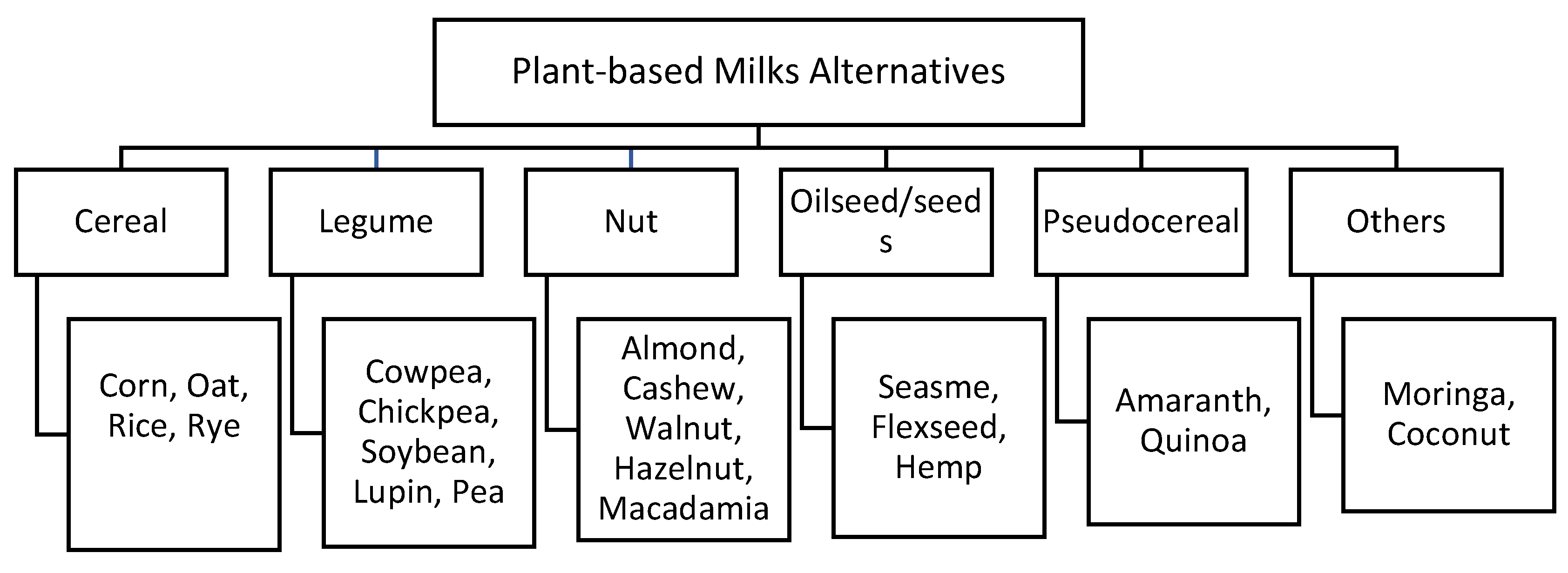
Figure 2.
Overview of strategies for creating the next generation barista-quality plant-based milk alternatives for coffee application.
Figure 2.
Overview of strategies for creating the next generation barista-quality plant-based milk alternatives for coffee application.
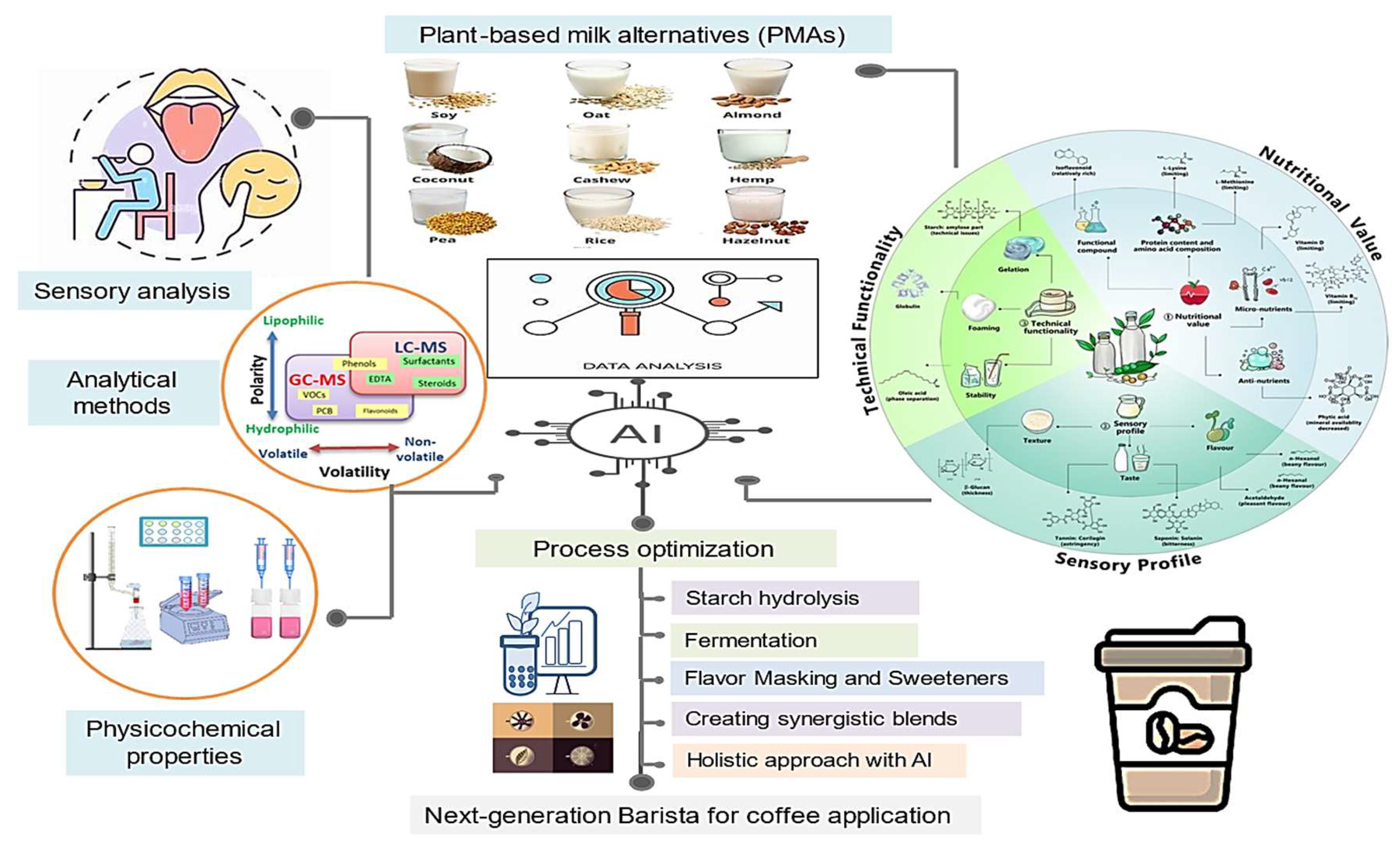
| Parameter | Cow Milk | Soy Milk | Oat Milk | Almond Milk |
|---|---|---|---|---|
| Water use (L) | 620 | 40 | 60 | 380 |
| Greenhouse gas emissions (kg CO₂ eq/L) | 3.2 | 1 | 0.9 | 0.8 |
| Land use (m²/L) | 9 | ≤1 | ≤1 | ≤1 |
| Eutrophication (g PO₄³⁻ eq/L) | 11 | 1 | 1.9 | 1.8 |
| Fossil fuel depletion (MJ/L) | 2.92 | 1.04 | N/A | 1.53 |
| Ecotoxicity (CTUe/L) | 133 | 9.64 | N/A | 31.3 |
Table 3.
Overview of sensory studies of Barista-quality plant-based milk alternatives in coffee.
| Product format0 | Type of Milk used# | Additive supplementation | Sample size | Sensory method^ | Panellist | Findings | Issues reported | Reference |
|---|---|---|---|---|---|---|---|---|
| Cappuccino | C, COSO, O, S | - | 5 | H (7- point) | 50 untrained | Overall liking C>COSO>O>S | S scored low in taste due to off flavours, while O scored lowest for colour, gloss, texture, and aroma due to its low protein content. | [14] |
| Espresso + Milk (N.D) | Barista style A, C, CO, O, S |
- | 12 | H (9-point), CATA, QDA |
80 Untrained, 9 Trained |
Sensory attributes “Smooth, milky, thick textures” drive liking; while “rancid, greasy, and astringent notes negatively impact sensory acceptance. | Astringency, off-flavors (especially in S), inconsistent sweetness, and lack of creaminess/mild flavors created barriers in acceptance. | [15] |
| Espresso + Milk (N.D) | A, D, O, S | - | 4 | H (9-Point), CATA | 116 (n=58; dairy consumers), (n=58; plant consumers) |
Sweetness drives liking; beany, grassy and earthy notes reduced it. |
Beany, vegetative, and grassy notes in S & A were major barriers for acceptance. | [13] |
| Cappuccino | O, P | - | 2 | H (9-point) | 144 untrained (n=72; for O), (n= 72; for P) |
Overall liking O>P |
Both O & P lack mouthfeel and had off-flavours | [70] |
| Cappuccino | C, S* | Non-dairy creamer (0%, 5% & 10%) |
4 | H (4- Point), QDA | 10 untrained | S with 5% non- dairy creamer matched cow's milk cappuccino; while S alone was least liked. | Despite the addition of non-dairy creamer, S milk have beany flavor, less creamy mouthfeel, and lacks richness compared to C. | [63] |
#A = Almond, C = Cow milk, CO = Coconut milk, COSO = Coconut + Soy blend, D = Dairy, O = Oat, P = Pea protein milk, S = Soy. *The study prepared soy milk in the lab, whereas all other studies used commercial products. ^CATA= Check All That Apply, H= Hedonic, QDA= Quantitative Descriptive Analysis. -Included studies focus on plant-based milk in hot coffee applications. Ready-to-drink or cold formats are excluded, as milk behaves differently in each system. 0Coffee-to-milk ratio, type of coffee, and coffee strength vary across studies. N.D = Not defined.
Table 4.
Investigative analysis of foaming and physicochemical properties of BPMAs for coffee application.
Table 4.
Investigative analysis of foaming and physicochemical properties of BPMAs for coffee application.
| Product format0 / Treatment | Sample used | Method of Evaluation | Key findings | Reference | ||
|---|---|---|---|---|---|---|
| Physical | Chemical | Foaming | ||||
| Cappuccino (65 °C) | C, COSO, O, S | Particle size [surface-weighted mean diameter (d3,2) and volume-weighted mean diameter (d4,3)], |
Fat, protein, pH (at 25°C) | Foam expansion (%), Foam stability (%), Foam overrun (%), Foam strength (g) | S can replace C with satisfactory foaming properties but need modification for stability. | [14] |
| Cappuccino (60 °C) | A, C, CA, CO, H, O, R, S, SP | Viscosity color, particle size distribution (volume-weighted particle diameters). |
Fat, protein, carbohydrate, sugar, fiber, salt content, Phytic Acid, pH (at 25°C) | Initial foam height and foam height instability, initial bubble size and bubble size instability | S & O exhibited better foaming among PMAs, while C milk remained best. Phytic acid in S, positively influenced foam height at 60°C and above. |
[45] |
|
T0: Room temperature (25°C ± 1.5°C). T1: Heated at 85°C/5 min. T2: Heated at 85°C/5 min, with 1 g soluble coffee added. |
A, CN, CO O, S | Heat coagulation time (HCT), Particle size distribution optical microscopy |
pH (at 25°C) |
- | Coffee addition reduced pH (6.4–7.9) and decreased thermal stability but had no effect on particle size or morphology. | [61] |
| Cappuccino (65 °C) | C, S, SSE*(roasted or blanched with or without gums) | Particle size distribution | pH, moisture, fat, protein, lipid, fatty acid profile, volatile compounds (GC-MS) | Foam expansion (%), Foam stability (%), Foam overrun (%), Foam strength (g) | Modified SSE (rosting with xanthan gum) showed potential as PMA coffee foam. | [71] |
| 25 °C to 60°C with Coffee/water ratio (0.0125 to 0.075) |
S (2% to 25% w/w) | Phase behaviour, kinetics of separation | pH | Soymilk-coffee mixtures separate into two phases at high temperatures, reversible by cooling or increasing soymilk concentration. stabilizers (e.g., gellan gum) can reduce curdling |
[72] |
|
#A = Almond, C = Cow milk, CA= Cashew, CN= Chestnut, CO = Coconut milk, COSO = Coconut + Soy blend, D = Dairy, H= Hemp, O = Oat, P = Pea protein milk, R= Rice, S = Soy, SP= Spelt, SSE= Sesame seed extract. *The study prepared Sesame seed extract in the lab, whereas all other studies used commercial products. -Included studies focus on plant-based milk in hot coffee applications. Ready-to-drink or cold formats are excluded, as milk behaves differently in each system. 0Coffee-to-milk ratio, type of coffee, and coffee strength vary across studies.
Disclaimer/Publisher’s Note: The statements, opinions and data contained in all publications are solely those of the individual author(s) and contributor(s) and not of MDPI and/or the editor(s). MDPI and/or the editor(s) disclaim responsibility for any injury to people or property resulting from any ideas, methods, instructions or products referred to in the content. |
© 2024 by the authors. Licensee MDPI, Basel, Switzerland. This article is an open access article distributed under the terms and conditions of the Creative Commons Attribution (CC BY) license (http://creativecommons.org/licenses/by/4.0/).
Copyright: This open access article is published under a Creative Commons CC BY 4.0 license, which permit the free download, distribution, and reuse, provided that the author and preprint are cited in any reuse.


