Preprint
Article

This version is not peer-reviewed.

Case Study on the Cradle-to-Gate Life Cycle Assessment of Hardwood Lumber Production in New Brunswick, Canada

A peer-reviewed article of this preprint also exists.

Submitted:

16 December 2024

Posted:

18 December 2024

You are already at the latest version

Abstract

Increasing wood usage from sustainably managed forests is vital for reducing environmental footprints and combating climate change. This study conducted a cradle-to-gate life cycle assessment (LCA) for hardwood lumber in New Brunswick, Canada, evaluating environmental impacts from raw material extraction to the point where lumber exited the mill as rough green, the primary input for manufacturing secondary hardwood products. Data on annual production, material flow, and energy use for hardwood harvesting and sawmills in 2022 were gathered through survey questionnaires and on-site visits to one forestry company and two hardwood plants. A mass allocation approach was used for the product (lumber) and by-products. The life cycle inventory (LCI) was developed in SimaPro software, and the life cycle impact assessment (LCIA) was conducted using the North American TRACI method to quantify impact categories, including Global Warming Potentials. The Cumulative Energy Demand (CED) method analyzed total energy consumption. The study found rough green hardwood lumber production emitted approximately 41 kgCO2eq/m³ (excluding biogenic carbon storage), with manufacturing accounting for 42% of total emissions. Manufacturing consumed nearly twice the energy of harvesting. The carbon stored in lumber was 975 CO2 eq/m³, 24 times greater than its cradle-to-gate emissions, highlighting its significant environmental benefit.

Keywords: 
;  ;  ;  ;  ;  

1. Introduction

Wood, being a natural, renewable, reusable, and recyclable resource, plays a crucial role in reducing environmental impacts [1]. It sequesters carbon during growth, and this carbon remains stored in wood products throughout their active service lives until their disposal or combustion, making wood from sustainable forests "carbon neutral" [2,3]. The Government of New Brunswick has set regulations and policies to reduce greenhouse gas (GHG) emissions, which are projected to increase global temperatures by approximately 3.5 °C by the end of the century [4]. These regulations support the goal of carbon neutrality by 2050 set by the Government of Canada as well as commitment to achieving the United Nations' Sustainable Development Goals (SDGs) [5]. This study was, therefore, aimed at conducting a cradle-to-gate life cycle assessment (LCA) of hardwood lumber products, in an effort to understand how well the manufacture of these products aligns with New Brunswick's action plans set out in 2016. Action Plan 21 integrates wood products with favorable lifecycle evaluations, while Action Plan 61 promotes wood as a renewable construction material through building codes and standards [6]. Forest landowners and wood product manufacturers must adapt to strict environmental regulations and enhance their market competitiveness. By prioritizing sustainable practices and using renewable materials like wood from managed forests, industry can reduce the environmental footprint and increase opportunities for green marketing [7]. However, the environmental benefits of wood-based products must be appropriately quantified using relevant tools [8]. LCA is an internationally accepted, science-based method that assesses the environmental impact of a product or service by identifying and quantifying energy and materials used and emissions released to the environment at various stages during the life cycle of the product or service [9,10]. The LCA process involves four major steps: defining the goal and scope, developing a life-cycle inventory (LCI), performing a life-cycle impact assessment (LCIA), and interpreting the results [10]. LCA studies can either evaluate the entire product life cycle, commonly known as "cradle-to-grave," or focus on specific stages such as "cradle-to-gate" or "gate-to-gate [11]. The cradle-to-gate LCA methodology in this study measured the environmental impact from the extraction of raw materials through the production of rough green hardwood lumber in New Brunswick, Canada. Hardwood lumber is the raw material used in producing hardwood flooring, moulding, cabinets and other millwork which are considered building materials [12]. Therefore, the findings of this study could provide a foundational base for conducting cradle-to-grave LCAs for secondary hardwood products.

2. Materials and Methods

2.1. Goal and Scope of LCA

The goal of this study was to develop a LCI for hardwood lumber product harvested from and manufactured in New Brunswick, Canada to assess the cradle-to-gate environmental impacts of this hardwood lumber product in the region. The scope of this study is given as follows:

2.1.1. Functional Unit

To assess a product’s total life cycle environmental impact, the functional (reference) unit of the product must be first defined to assemble the inputs and outputs for different environmental impacts. Given that the analysis focused on the primary hardwood lumber product, one cubic meter of rough green hardwood lumber (1 m3) was defined as the functional unit in this LCA study.

2.1.2. System Boundary

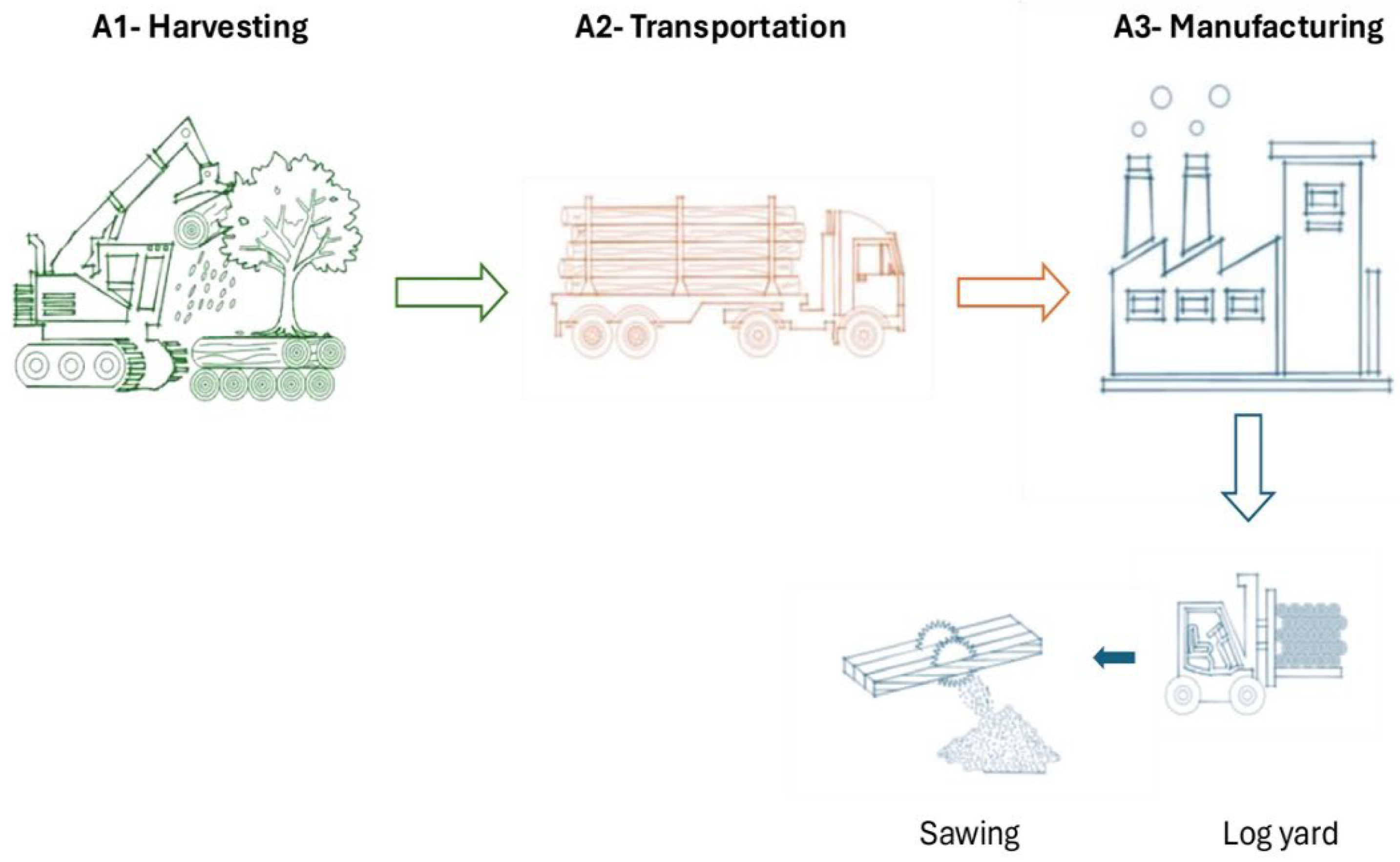
The system boundary of this study is Cradle-to-Gate, encompassing the extraction of resources (i.e. tree harvesting), transportation of harvested trees to the sawmill plants, and the production of hardwood lumber, focusing on debarking and sawing processes only (Figure 1). Drying and planing unit processes were excluded from this study as the rough green hardwood lumber was the primary input used in the LCA for manufacturing secondary hardwood items like pallets, ties, cabinets, flooring, and furniture [13].
Forest management activities such as fertilization, thinning, planting seedlings, and nursery operations were not included. Only the final harvesting phase provided first-hand (data) information as resource extraction.
Major fuels like diesel, gasoline use, and the primary fuels to generate electricity were collected for modeling the LCA within the system boundary. Additionally, important ancillary materials such as hydraulic fluids, motor oils, greases, and plastic strapping were considered within the system boundary.
Figure 1. Diagram of the Lumber Manufacturing Process for Producing Hardwood Lumber in New Brunswick, Canada.
Preprints 143105 g001

2.2. Life Cycle Inventory (Data Collection and Calculations)

In this study, data on material and energy inputs were collected via survey questionnaires for log harvesting and site visits for sawmill manufacturing. The samples included one logging company and two types of hardwood sawmills in a facility in New Brunswick: one mill focused on producing pulp chips in addition to rough green lumber from low-quality logs, and the other primarily producing lumber from high-quality logs.
The year 2022 was chosen as the representative year for this analysis. Material and energy consumption values for hardwood lumber production were determined by surveying one hardwood logging company and two types of hardwood mills, including Hardwood Sawlogs (High Grade) and Hardwood Pulpwood/Pallet, in New Brunswick, Canada. Detailed questionnaires, follow-up emails, and site visits were conducted to gather the data. Data from the mill questionnaire were weighted-averaged using:
P ¯ W e i g h t e d = i = 1 n P i x i i = 1 n x i
Where, P is the weighted average of the values reported by the mills, Pi is the reported mill value, and xi is the fraction of the mill’s value to total production for that specific value.
Secondary data of life cycle emissions from use of diesel, gasoline, propane, grid energy mix, auxiliary materials, and transport were given by the DATASMART LCI database [14], built for North American SimaPro users. This dataset, originally based on US LCI v.1.60 and Ecoinvent v.2.2, is designed to represent U.S. geographic and technological specifics. It has since expanded to include more regions and industries, incorporating data developed by LTS as well as contributions from companies and researchers.

2.2.1. Resource Extraction

Total production of harvested logs in 2022 was 305,000 m3 from the one harvesting company that participated in the survey. Overall, four hardwood species, yellow birch (Betula alleghaniensis), white birch (Betula papyrifera), sugar maple (Acer saccharum) and red maple (Acer rubrum), represented 70% of the species mix harvested. 20% was aspen (Populus tremuloides) and a small amount of softwood is also harvested from mixed forest stands. As reported, hardwood trees on average returned 10% high-grade sawlogs, 30% pallet-grade logs, and 60% pulp-wood grade logs. Fully mechanized systems were used for harvesting. Diesel and gasoline served as the process's primary energy inputs, with the utilization of ancillary materials such as motor oil, grease, hydraulic fluid, lubricating fluid, and antifreeze. The equipment used included feller buncher, forwarder, single grip processor, grapple skidder, delimber and slasher. Moreover, 18 trucks were used for to transport logs in the woods, 13 self-loader trucks and 5 quads with a loader. The main product of this process was logs destined for lumber mills. The co-product, non-merchantable slash, was generally recovered or left on the ground. However, the survey respondents assumed in this study the residues left to decay during harvesting to be about 0.165 m3 per m3 of roundwood. The energy and ancillary material inputs used per cubic meter of roundwood by the logging company that participated in the survey is shown in Table 1.

2.2.2. Transport of Raw Materials from the Extraction Site to the Sawmill

Logs were transported by diesel trucks to the mills, with an average one-way distance of 118 km. This transportation was modeled as a stand-alone unit process rather than an input to the log yard process (Table 2). The calculation of 104 tkm (tonne-kilometers) was based on the average green density of logs at 883 kg/m3 and the distance in kilometers.

2.2.3. Product Manufacturing Process

This study considered lumber manufacturing with log yard and sawing unit processes. Consequently, it focused on "green" lumber, which was not dried yet, as it was the primary input used in the LCA for manufacturing secondary hardwood items like pallets, ties, cabinets, flooring, and furniture [13]. Additionally, hardwood lumber was dried to varying degrees depending on its grade. Lower-grade lumber often undergoes air drying, while higher-grade lumber, used for furniture or flooring, typically requires kiln drying for dimensional stability.
In 2022, the surveyed sample mills produced approximately 56,864 thousand board feet (MFBM) (161,493 m3) of rough green lumber. Annual lumber product output (rough green) was reported by the mill in MBFM. A conversion factor from MBFM to cubic meters for rough green lumber was assumed to be 2.84 m3/MBF [15]. It was assumed that 100% of the production was sold either as lumber to an external client or transferred (sold) to another mill for further transformation.

2.2.4. Species, Moisture Content, and Specific Gravity of the Woods Examined

Birches, aspens, and maples were included among the types of wood species used to produce hardwood lumber in both mills, as reported by the sawmill manufacturing.
Samples from different parts of the tree logs, including full-length logs and tree-top logs, were taken from the hardwood sawmills to determine the moisture content (MC) and specific gravity (SG) of the lumber. The samples were then sent to the University of New Brunswick's Wood Science and Technology Center (WSTC) in Fredericton, Canada, for measuring the volume and weight of the samples and physical properties such as MC and SG following ASTM D143 standard [16]. These two attributes were crucial for data calculation and conversion in the following LCA analysis, ensuring an accurate mass balance.
Table 3 shows that the average MC was 67%, and the average green SG was 0.502 for the lumber examined. These values were calculated based on the weighted average of species distribution percentages, MC, and SG for each species. Data on both green and oven-dry weights were used to calculate MC, while green volume and oven-dry weight were used to calculate SG for samples from each mill.
In order to calculate the oven-dry (OD) weight of the chips, sawdust and bark, the weighted average MC of these by-products was determined using the sample measurement method. Samples were cut to include both heartwood and sapwood. The sapwood MC was assumed to be the same as the MC of the bark and sawdust, while the MC of chips was considered a mix of sapwood and heartwood MC [17]. Consequently, the reported co-products included green chips with a MC of 67%, and sawdust and bark with a MC of 71%.

2.2.5. Lumber Manufacturing Mass Balance and Conversion Efficiencies

Mass balance involves accounting of all material inputs and outputs within a defined system boundary, including all the processes. In this study, mass balance was performed based on the oven dry mass of roundwood inputs and process outputs (i.e., rough green lumber and co-products), using the properties found in sample measurements and provided by the surveyed sawmills. 1461 OD kg of incoming hardwood logs including bark with a density of 883 kg/m3 produced 1.0 m3 (532 OD kg) rough green lumber, for roughly 64% reduction in mass. For the co-products, the OD weight of the total value reported by mills was calculated per m3 of rough green hardwood lumber. Table 4 provides a mass balance for New Brunswick hardwood lumber manufacturing.
Cubic Lumber Recovery (CLR) was calculated by determining the cubic meters of lumber produced per cubic meter of log input. In this study, the breakdown of logs into rough green lumber during sawing resulted in a weighted average CLR of 0.36 m3 of rough green lumber per cubic meter of logs. This means that, on average, 2.75 m3 of logs are sawn to produce 1.0 m3 of rough green lumber. Therefore, the total volume conversion from incoming logs to lumber product is 36.4%.

2.2.6. Gate-to-Gate Energy and Material Input/Output

Lumber manufacturing process to produce the rough green lumber was divided into two unit processes, log yard and sawing. The weighted average material flows, energy use in the lumber manufacturing process were normalized to 1.0 m3 volume of each unit process: i.e. per cubic meter of log in the log yard and per cubic meter of rough-green lumber in the sawmill.

2.2.7. Log yard

The log yard process included unloading log trucks, scaling logs (reporting logs for volume in m3), sorting logs on decks, and moving logs to the sawmill. Diesel was the most often used fuel for equipment, such as loaders, forklifts, and other on-site transportation to move logs around the log yard, with gasoline being used to a lesser extent. There was also grease, antifreeze, hydraulic oil, and lubricant utilized. In the log yard, a small quantity of electricity was used. Outputs include logs with bark at the log yard (Table 5).

2.2.8. Sawing (Production of Rough Green Lumber)

The sawing unit process involved several stages, including debarking logs, transforming logs into rough-green lumber, sorting rough-green lumber by size, and stacking the lumber for drying. Key inputs included logs with bark, diesel and gasoline as fuels, and ancillary materials such as lubricant oil, hydraulic oil, grease, and antifreeze. Electricity was the primary energy input in the sawing process. The mills also burned their own wood wastes in an industrial boiler for heating the facility. However, the data of their consumption was not reported. The process generated outputs including green lumber at 36%, green chips at 47%, green sawdust at 8%, and bark at 9%. Allocation of products and coproducts was based on oven-dry mass. Chips were either sold to external clients (Paper Mills) or used by the Pellet plant. Sawdust was similarly used in the Pellet plant for making pellets. Bark was either sold or used in the boilers for heating and drying purposes.
Table 6 summarizes the products and co-products outputs, as well as inputs required for the sawing process, which yields 1 m3 of rough sawn green lumber in the New Brunswick hardwood sawmills.

2.2.9. Secondary Data Sources

Table 7 lists the secondary LCI data sources used in this LCA study for raw material inputs, ancillary materials and packaging, transportation, fuels and energy for manufacturing.

3. Life Cycle Impact Assessment (LCIA)

Linking the LCI to potential impacts on the environment is the goal of the LCIA phase. SimaPro v9.6.0.1 [18] was used to generate LCIA results of this cradle-to-gate hardwood lumber product system. All inputs and outputs for each unit process were carefully modeled within SimaPro to ensure accurate representation of the processes involved. The midpoint impact categories for acidification, eutrophication, global warming, smog, and ozone depletion were determined using the TRACI method [19]. Although the TRACI method addresses fossil fuel depletion on a global scale, it does not report primary energy use as an impact category. Therefore, the Cumulative Energy Demand (CED) method [20] was also employed. CED calculates the total energy derived from all sources directly extracted from the earth, including natural gas, oil, coal, biomass, nuclear, and hydropower. This total primary energy is further categorized into non-renewable fossil, nuclear, and renewable energies.
Cradle-to-gate environmental performance outputs for the reported indicators are listed in Table 8 for one cubic meter of hardwood rough green lumber produced in the New Brunswick region. It separates the impact values from A1 stage (resource extraction), A2 stage (transportation), and A3 stage (hardwood rough green lumber production). About 42% of the CO2 eq or the GWP came from producing lumber (17 kg CO2 eq). 34% is from harvesting operations with 13.8 kg CO2 eq. Transportation, which is primarily the transport of logs to the sawmill, was 9.8 kg CO2 eq or 24% of the cradle-to-gate GWP impact. The total cradle-to-gate GWP impact to produce one cubic meter (1 m3) of rough green hardwood lumber is 40.7 kg CO2 eq.
Table 8 also provides the values for the energy resources. The total energy consumption was 736 MJ/m3, with 54% of that being for the manufacturing stage. Followed by that was harvesting and transportation with 28% and 18%, respectively. In this study, 98% of the total energy consumption was non-renewable, mainly from fossil sources used for machinery and transportation, amounting to 583.6 MJ/m3. Due to the exclusion of drying processes and also the lack of on-site electricity generation, which typically involve biomass energy combustion, the total renewable energy consumption was significantly low, at just 11 MJ/m3, making up only 2% of the total energy consumption. Moreover, electricity in New Brunswick does not mainly rely on renewable sources, with about 30% coming from fossil sources such as hard coal and natural gas. Harvesting, on the other hand, was a fossil energy-intensive process that relied on diesel use for heavy machinery and gasoline for crew transport.
Table 8. Cradle-to-gate environmental performance of 1 m3 rough green hardwood lumber based on mass allocation for New Brunswick, Canada.
Environmental Indicator Unit Total A1 A2 A3
Impact Category Global Warming kg CO2 eq 40.67 13.82 9.84 17.01
Acidification kg SO2 eq 0.40 0.18 0.054 0.17
Eutrophication kg N eq 0.045 0.014 0.005 0.026
Smog kg O3 eq 12.07 5.74 1.57 4.76
Ozone Depletion kg CFC-11 eq 9.88E-07 6.42E-08 1.64E-08 9.08E-07
Fossil Fuel Depletion MJ surplus 73.71 27.28 17.43 29.00
Energy Consumption Total primary energy MJ 736.08 207.75 132.69 395.64
Non-renewable fossil MJ 583.66 204.74 130.79 248.13
Non-renewable nuclear MJ 141.32 2.82 1.78 136.71
Renewable biomass MJ 5.09 0.074 0.045 4.98
Renewables (solar, wind, hydro, geothermal, and biomass) MJ 6.00 0.11 0.063 5.83
Figure 2 shows the contributions of the resource extraction, transportation, and manufacturing stage (A3) in the six midpoint environmental impacts for the cradle-to-gate LCA of hardwood lumber production. Compared with all stages, lumber production (A3) represented the highest impacts for ozone depletion, global warming, eutrophication, and fossil fuel depletion environmental impact categories with 92%, 42%, 58% and 39%, respectively. However, resource extraction (A1) had the largest effects on the smog and acidification impact category, differing from lumber production (A3) by a very little margin.

4. Biogenic Carbon

Hardwood lumber in service stores carbon. The production of 1 m3 of rough green hardwood lumber in New Brunswick emitted 41 kg CO2 eq. However, the carbon stored in the same 1 m3 of lumber was assumed to be 50% by mass of OD wood [21]. Therefore, the carbon stored in 1 m3 (532 OD kg) of rough green hardwood lumber amounts to 266 kg of carbon. Multiplying the 44/12 molecular weight ratio, this equates to 975 kg of CO2 stored, which is approximately 24 times higher than the carbon emitted during the cradle-to-gate LCA study.
Carbon   stored = 0.50 × 532 kg = 266   kg   C
CO   stored = 266 kg ×   44 / 12 = 975 kg   CO eq

5. Variation and Sensitivity Analysis

Sensitivity analysis was used with the aim to assess the reliability of the model outputs by evaluating the effects in model predicted results when making changes in input parameters. In this study, due to variations among different data of two hardwood sawmills, some uncertainty existed in the results. Table 9 shows various statistics for the most significant modeling parameters in hardwood lumber production, such as CLR and electricity used in sawing. The standard deviation for each parameter, calculated from the sample data, was used to conduct a sensitivity analysis.
With this purpose, significant inventory parameters were altered to investigate their effect on the LCIA results. The proportion of their alternation was calculated based on the standard deviation and baseline value of each parameter. For instance, the baseline value for CLR was 0.36, with a standard deviation of 0.21, representing 58% of the baseline value. As lumber recovery increased, a larger share of the impact was allocated to the main product. Table 10 shows that altering the CLR baseline by 58% and the electricity baseline by 54% resulted in an 11% and approximately 8% increase in total GWP, respectively. Additionally, both parameters significantly affected indicators, including ozone depletion potential and primary energy use (non-renewable nuclear and renewable energy).

6. Discussion

Hardwood lumber production processes included in the manufacturing stage are log-yard operations and primary log breakdown (sawing). To compare this with a cradle-to-gate LCA study of softwood lumber produced in New Brunswick, Canada [22], the same system boundary up to the sawing stage was considered. Therefore, the drying and planing unit processes in the softwood LCA study were not included to ensure comparability.
The LCI for softwood lumber production showed less electrical consumption in the sawing unit process, at 47 KWh per m3 of rough green lumber, compared to hardwood, which was 61 KWh per m3. This difference could be attributed to the fact that hardwoods are generally denser than softwoods, and since hardwood lumber is typically sawn to thinner dimensions, more electrical energy is consumed in the sawing process [12]. Table 11 summarized the differences in data between softwood and hardwood sawmills, focusing on resource extraction, transportation and sawing stages, including inputs and outputs. However, as mentioned in detail in section 5, the value represented the weighted average of two types of hardwood sawmills (sawlogs or high grade and hardwood pulpwood/pallet), which might have caused significant differences between the LCI values for each hardwood mill. This was evidenced by the finding that the electricity consumption for hardwood logs converted to high-grade lumber was almost half that of pallet lumber production. Additionally, the CLR was twice as high in high-grade sawlog production compared to the pallet lumber plant.
Table 12 compares the results of the previous study (rough green softwood lumber) and this study (rough green hardwood lumber). The total GWP in the current study increased by 54% compared to the softwood production LCA report, primarily due to a 69% higher GWP impact during the manufacturing stage (log yard and sawing). This increase is primarily due to lower hardwood lumber yields and higher diesel and electricity consumption in its production. Other significant differences in the impacts included smog, acidification, and eutrophication, with increases of 68%, 63%, and 40%, respectively. While the higher diesel consumption in manufacturing and harvesting for hardwood lumber production significantly influenced these impact categories, the higher green density of hardwood lumber and the longer transportation distance found in this study compared to the softwood one, and its associated impacts, were probably the primary causes of the increased eutrophication, acidification, and smog effects. This was found to be correct according to a study by Gu et al. (2022), which was aimed at understanding the environmental impacts of transporting mass timber products (MTPs) for a mid-rise institutional building in New Brunswick, Canada. The research compared the environmental performance of a steel frame building with an alternative mass timber design using a cradle-to-gate LCA. Using SimaPro software and the TRACI impact assessment method, that study found that the mass timber had lower global warming and ozone depletion impacts compared to a steel frame design. However, it also showed higher impacts in smog formation, acidification, and eutrophication due to the longer transportation distance of mass timber components to New Brunswick and the increased diesel fuel consumption during transportation [23].
Moreover, there was a 41% increase in total primary energy use in the production of hardwood lumber in this study (736 MJ/m3) compared with the softwood study (520 MJ/m3), which was mainly due to the higher use of non-renewable fossil energy with an almost 55% increase in the current study. However, the non-renewable nuclear, renewable biomass, and other renewable sources of energy consumption did not change significantly as the sources of raw materials were the same and both studies were done in New Brunswick considering the same regional source of energy.
Table 12. LCIA comparison between cradle-to-gate LCA of softwood lumber production (up to the sawing stage) and that of hardwood lumber production (this study) in New Brunswick, Canada.
Impact Category Unit Rough green Hardwood Lumber, NB Rough green Softwood Lumber, NB Percent change
Global warming potential kg CO2 eq 40.67 26.48 54%
Acidification kg SO2 eq 0.40 0.24 63%
Eutrophication potential kg N eq 0.04 0.03 40%
Smog potential kg O3 eq 12.07 7.16 68%
Ozone depletion potential kg CFC11e 9.88E-07 8.99E-07 10%
Total primary energy MJ 736.07 520.38 41%
Non-renewable fossil MJ 583.66 376.17 55%
Non-renewable nuclear MJ 141.31 133.67 6%
Renewable biomass MJ 5.09 4.75 5%
Renewables (solar, wind, hydro, geothermal, and biomass) MJ 6.00 5.70 5%

7. Conclusions

A cradle-to-gate LCA of New Brunswick's rough green hardwood lumber production was conducted, integrating impact assessments and LCI data on forest resource extraction, transportation, and manufacturing processes, using both primary and secondary data sources. The following conclusions were drawn from the study:
  • The manufacturing stage accounted for 54% of total primary energy consumption and had the highest GWP impact at 42%, with most electricity at mill sites sourced off-site, relying 98% on non-renewable energy and only 2% on renewable sources.
  • Harvesting and transportation contributed approximately 28% and 18%, respectively, to the overall energy consumption.
  • The higher manufacturing energy consumption and GWP in hardwood production compared to softwood were primarily attributed to the greater electrical energy required for sawing hardwood and its lower lumber yield.
  • Rough green hardwood lumber stored 24 times more carbon than its cradle-to-gate CO2 eq emissions released.
On-site energy generation using wood residues has the potential to reduce dependence on non-renewable fossil fuels while significantly lowering emissions, particularly in electricity generation processes.

Data Availability Statement

The data that support the findings of this study are available within the paper, and additional data are available upon request.

Acknowledgments

The authors are grateful for the financial assistance from the Government of New Brunswick under its Environmental Trust Fund and the New Brunswick Innovation Foundation under its Research Assistantship Initiative Program. The authors are also grateful for the contributions from the hardwood facilities in New Brunswick, Canada, and its employees who participated in the surveys for obtaining the data through the production line of lumber. Any opinions, findings, conclusions, or recommendations expressed in this article are those of the authors and do not necessarily reflect the views of the contributing entities.

Conflicts of Interest

The authors declare no conflicts of interest.

References

  1. Gong, M. (Ed.) Engineered Wood Products for Construction. IntechOpen, 2022. [Google Scholar] [CrossRef]
  2. Hubbard, S.; Bergman, R.; Sahoo, K. A Life Cycle Assessment of Hardwood Lumber Production in the Northeast and Northcentral United States. 2020. [Google Scholar] [CrossRef]
  3. Gu, H.; Nepal, P.; Arvanitis, M.; Alderman, D. Carbon Impacts of Engineered Wood Products in Construction. IntechOpen, 2022. [Google Scholar] [CrossRef]
  4. Government of New Brunswick. Climate Change Act. 2018. https://laws.gnb.ca/en/pdf/as/2018,%20C.11.pdf.
  5. United Nations. Take Urgent Action to Combat Climate Change and Its Impacts. 2023. https://sdgs.un.org/goals/goal13#progress_and_info.
  6. Government of New Brunswick. Transitioning to a Low-Carbon Economy: New Brunswick’s Climate Change Action Plan. Government of New Brunswick, 2016. https://www2.gnb.ca/content/dam/gnb/Departments/env/pdf/Climate-Climatiques/TransitioningToALowCarbonEconomy.pdf.
  7. Puettmann, M.; Bergman, R.; Hubbard, S.; Johnson, L.; Lippke, B.; Oneil, E.; Wagner, F. Cradle-to-Gate Life-Cycle Inventory of US Wood Products Production: CORRIM Phase I and Phase II Products. Wood and Fiber Science 2010, 42. [Google Scholar]
  8. Kutnar, A.; Hill, C. Life Cycle Assessment—Opportunities for Forest Products Sector. BioProducts Business 2017, 2, 52–64. [Google Scholar]
  9. ISO 14040; Environmental Management - Life Cycle Assessment - Principles and Framework. International Organization for Standardization: Geneva, Switzerland, 2006.
  10. ISO 14044; Environmental Management - Life Cycle Assessment - Requirements and Guidelines. International Organization for Standardization: Geneva, Switzerland, 2006.
  11. Puettmann, M.; Pierobon, F.; Ganguly, I.; Gu, H.; Chen, C.; Liang, S.; Jones, S.; Maples, I.; Wishnie, M. Comparative LCAs of Conventional and Mass Timber Buildings in Regions with Potential for Mass Timber Penetration. Sustainability 2021, 13, 13987. [Google Scholar] [CrossRef]
  12. Bergman, R.D.; Bowe, S.A. Environmental Impact of Producing Hardwood Lumber Using Life-Cycle Inventory. Wood and Fiber Science 2008, 40, 448–458. [Google Scholar]
  13. Mahalle, L. A Cradle-to-Gate Life Cycle Assessment of Canadian Hardwood Lumber. FPInnovations. 2010. [Google Scholar]
  14. LTS. DATASMART Life Cycle Inventory. 2023. https://longtrailsustainability.com/software/datasmart-life-cycle-inventory/(accessed on 2023).
  15. Fonseca, M.A. The Measurement of Roundwood: Methodologies and Conversion Ratios. 2005. [Google Scholar]
  16. ASTM D143-22; Standard Test Methods for Small Clear Specimens of Timber. ASTM International: West Conshohocken, PA, 2023. https://www.astm.org/standards/d143/.
  17. Athena Sustainable Materials Institute. A Cradle-to-Gate Life Cycle Assessment of Eastern Canadian Surfaced Dry Softwood Lumber. 2018. https://www.athenasmi.org/wp-content/uploads/2018/07/CtG-LCA-of-Eastern-Canadian-Surfaced-Dry-Softwood-Lumber.pdf.
  18. PRé Sustainability B.V. SimaPro (Version 9.6) [Computer software]; PRé Sustainability, 2024. https://simapro.com.
  19. Bare, J.C. TRACI 2.0: The Tool for the Reduction and Assessment of Chemical and Other Environmental Impacts 2.0. Clean Technologies and Environmental Policy, 2011.
  20. Frischknecht, R.; Jungbluth, N.; Althaus, H.J.; Doka, G.; Dones, R.; Hischier, R.; Hellweg, S.; Humbert, S.; Margni, M.; Nemecek, T.; Spielmann, M. Implementation of Life Cycle Impact Assessment Methods: Data v2.0. ecoinvent Report No. 3. Swiss Centre for Life Cycle Inventories: Dübendorf, Switzerland, 2007. [Google Scholar]
  21. Bergman, R.; Puettmann, M.; Taylor, A.; Skog, K.E. The Carbon Impacts of Wood Products. Forest Products Journal 2014, 64, 220–231. [Google Scholar] [CrossRef]
  22. Zahabi, N.; Gong, M.; Gu, H.; Blackadar, J. Case Study on the Cradle-to-Gate Life Cycle Assessment of Softwood Lumber Production in New Brunswick, Canada. Journal of Sustainable Forestry. under review.
  23. Gu, C.; Gu, H.; Gong, M.; Blackadar, J. A Case Study on the Impact of Transportation of Mass Timber Products on the Cradle-to-Gate LCA Results for an Institutional Building. Recent Progress in Materials 2022, 4, 1. [Google Scholar] [CrossRef]
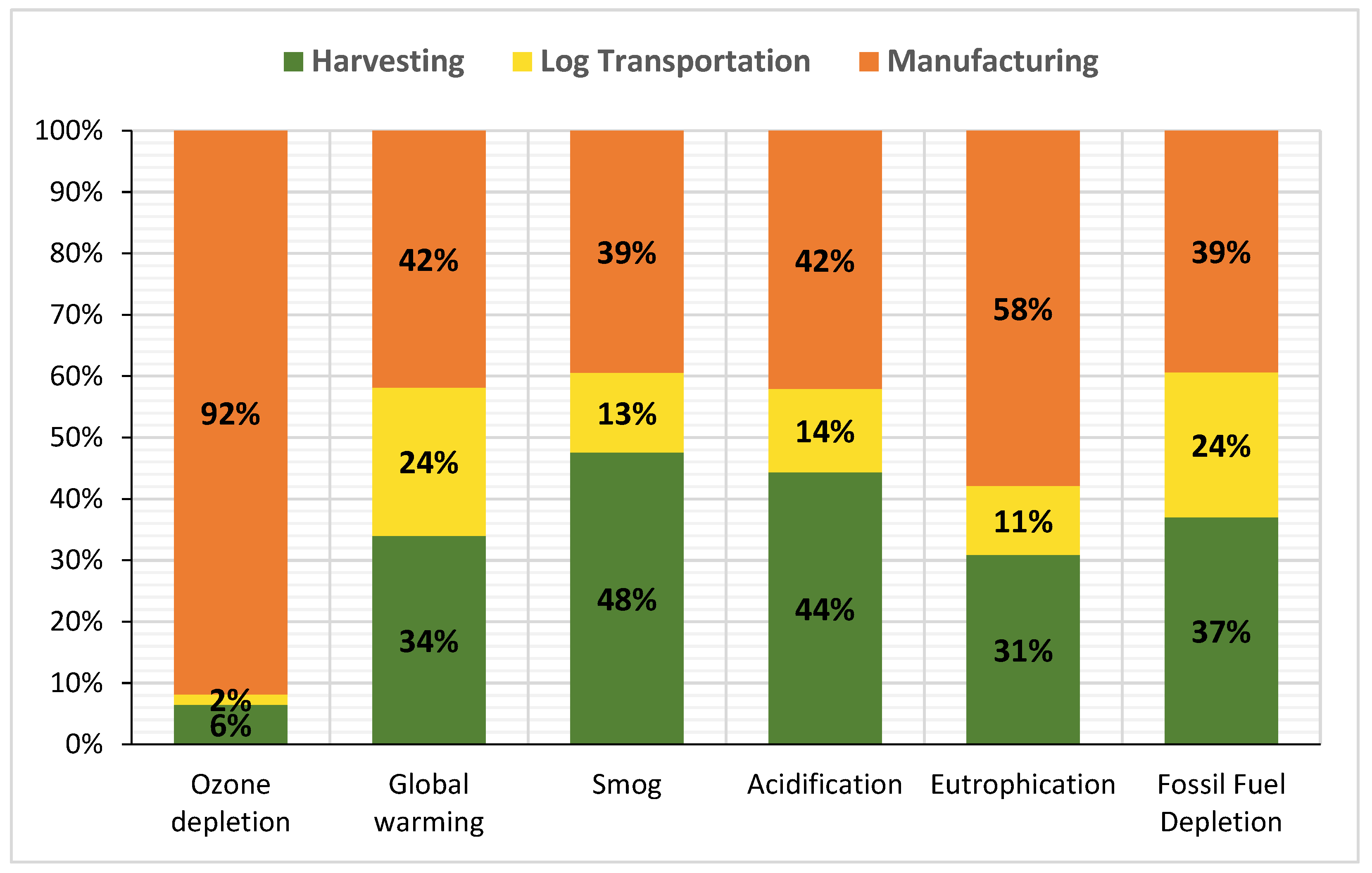
Figure 2. Contribution of stages in environmental impacts for the cradle-to-gate life-cycle stages of 1 m3 rough green hardwood lumber produced in New Brunswick, Canada.
Preprints 143105 g002
Table 1. Inventory data of Resource Extraction.
Resource Inputs Unit Amount per m3 of roundwood
Energy Diesel fuel Litre 3.69
Gasoline Litre 0.70
Propane Litre 0.01
Ancillary Materials Hydraulic fluid Litre 0.054
Motor oil Litre 0.02
Greases Kg 0.0017
Antifreeze Litre 0.0014
Table 2. Inventory for Transportation to the Sawmills.
Amount Unit Allocation
Output Log at mill (including bark) 1 m3 100%
Input Log at forest road (including bark) 1 m3 -
Transport, combination truck 104 tkm -
Table 3. Average physical properties of the log species sawn into lumber.
Species Contribution MC Green SG
Birch 50% 65% 0.530
Maple 32% 58% 0.594
Aspen 17% 89% 0.421
Weight average 67% 0.532
Table 4. Wood mass balance for 1 m3 of rough green lumber (values in oven dry kg).
Material type Sawing process
Input (kg) Output (kg)
Logs 1336.4
Green chips 692.5
Sawdust 111.9
Bark 124.7 124.7
Rough green lumber 532
Total OD Mass 1461.1 1461.1
Table 5. Unit process inputs/outputs for log yard activities to produce 1 m3 of green logs.
Amount Unit Allocation
Output Log at log yard (Including Bark) 1 m3 100%
Input Log at mill (Including Bark) 1 m3
Gasoline 0.02 L
Diesel 3.03 L
Hydraulic fluid 0.04 L
Motor oils 0.0074 L
Grease 0.00077 kg
Antifreeze 0.00094 L
Electricity 0.143 Kwh
Table 6. Unit process inputs/outputs for sawing to produce 1 m3 of rough green hardwood lumber.
Amount Unit Allocation
Output Rough green lumber 1 m3 36%
Green Chips 692.50 kg 47%
Sawdust 111.9 kg 8%
Bark 124.67 kg 9%
Input Roundwood 2.75 m3
Gasoline 0.00513 L
Diesel 0.814 L
Hydraulic fluid 0.0373 L
Grease 0.00372 kg
Electricity 61.44 Kwh
Lubricant fluid 0.437 L
Plastic strapping 0.116 kg
Table 7. Secondary data sources [14] and data quality assessment.
Data LCI Data Source Geography Year
Diesel US EI 2.2 (Datasmart2023): Diesel, combusted in Industrial equipment NREL/US U North America 2018
Gasoline US EI 2.2 (Datasmart2023): gasoline, combusted in industrial equipment/US North America 2018
Propane US EI 2.2 (Datasmart2023): Liquefied petroleum gas, combusted in industrial boiler/US North America 2018
Electricity Electricity mix, New Brunswick/CA U Canada 2018
Hydraulic fluid, Lubricant oil US EI 2.2 (Datasmart2023):Lubricating oil, at plant/US - US-EI U North America 2018
Motor oil, Greases US EI 2.2 (Datasmart2023): Diesel, at refinery/l NREL /US North America 2018
Antifreeze US EI 2.2 (Datasmart2023): ethylene glycol, at plant/US - US-EI U North America 2018
Plastic strap US EI 2.2 (Datasmart2023): Polyethylene, HDPE, granulate, at plant/ US- US-EI U North America 2018
Trucking US EI 2.2 (Datasmart2023): Transport, combination truck, Diesel powered NREL/US U North America 2018
Table 9. Data Statistics Analysis for Selected Parameters.
Inventory Parameter Units Weighted Average Std. deviation Min Max Mean
Electricity (A3 input) kWh 61.44 33.03 39.61 86.32 62.96
CLR (A3 input) m3 rough green lumber/m3 log 0.36 0.21 0.26 0.56 0.41
Table 10. Sensitivity analysis.
Impact Category Unit Baseline results Electricity CLR
-54% +54% -58% +58%
Global warming potential kg CO2 eq 40.67 -9% 8% -11% 11%
Acidification kg SO2 eq 0.40 -4% 4% -7% 7%
Eutrophication potential kg N eq 0.045 -18% 18% -21% 21%
Smog potential kg O3 eq 12.07 -1% 1% -4% 4%
Ozone depletion potential kg CFC11e 9.88E-07 -40% 40% -49% 49%
Total primary energy MJ 736.08 -17% 16% -19% 19%
Non-renewable fossil MJ 583.66 -8% 7% -11% 11%
Non-renewable nuclear MJ 141.32 -51% 51% -52% 52%
Renewable biomass MJ 5.09 -19% 19% -53% 53%
Renewables (solar, wind, hydro, geothermal, and biomass) MJ 6.00 -51% 51% -53% 53%
Table 11. Differences in data between softwood and hardwood sawmills, focusing on resource extraction, transportation and sawing stages.
Resource Extraction Stage Per m3 of lumber Softwood Hardwood
Ancillary materials (Hydraulic fluid, motor oil, Grease) Almost the same Almost the same
Energy
Diesel fuel (L) 2.94 3.69
Gasoline (L) 0.14 0.70
Propane (L) 0.02 0.01
Transportation 67 tkm 104 tkm
Log yard and Sawing Stage Sawing yield (log/m3 lumber) 1.97 2.75
Energy
Gasoline (L) 0.013 0.025
Diesel (L) 1.72 3.84
Electricity (Kwh) 47.25 61.58
Ancillary materials
Hydraulic fluid, Lubricant oil (L) 0.23 0.51
Grease (Kg) 0.0014 0.0045
Motor Oil (L) 0.0063 0.0074
Antifreeze (L) 0.00033 0.00094
Disclaimer/Publisher’s Note: The statements, opinions and data contained in all publications are solely those of the individual author(s) and contributor(s) and not of MDPI and/or the editor(s). MDPI and/or the editor(s) disclaim responsibility for any injury to people or property resulting from any ideas, methods, instructions or products referred to in the content.
Copyright: This open access article is published under a Creative Commons CC BY 4.0 license, which permit the free download, distribution, and reuse, provided that the author and preprint are cited in any reuse.
Prerpints.org logo

Preprints.org is a free preprint server supported by MDPI in Basel, Switzerland.

Subscribe

Disclaimer

Terms of Use

Privacy Policy

Privacy Settings

© 2025 MDPI (Basel, Switzerland) unless otherwise stated