

Submitted:
17 December 2024
Posted:
18 December 2024
You are already at the latest version
Abstract
This article focuses on analyzing the priorities and motives of private forest owners in the voluntary protection of biodiversity and ecosystems. The Delphi sociological method was applied to determine these priorities and motives in Lithuania. Twenty-nine experts answered questions about the attitudes of Lithuanian private forest owners towards voluntary private forest protection models and types of protection contracts, possible environmental protection instruments, the need for compensation for losses due to forest management restrictions in protected areas, the share of protected forests, factors determining the intention to protect forests, motives for voluntary forest protection, the "crowd-out” effect, sources of compensation for losses, the effectiveness of biodiversity and ecosystem protection mechanisms in forests applied in Lithuania and factors that reduce them. According to the experts, Lithuanian private forest owners have chosen fixed-term and permanent protection contracts with compensation. The main motive for forest protection is monetary compensation for losses due to restrictions on forest activities.
Keywords:
priorities
; motives
; private forest owners
; voluntary protection
; biodiversity and ecosystems
1. Introduction
Protected areas (further - PAs) are often established to protect biodiversity and ecosystems. The concept of voluntary forest protection has attracted significant interest since the early 2000s in Finland, Sweden, Norway [1], and other European countries [2]. In Lithuania, legal prerequisites have been created for the conclusion of Protection agreements between the state and private forest owners. This creates the conditions for more voluntary protection of biodiversity and ecosystems in the country's private forests. Consequently, the first step in designing effective voluntary protection mechanisms is to analyze the priorities and motivations of private forest owners to engage in biodiversity and ecosystem protection voluntarily. These priorities and motives are revealed through surveys or implementing forest protection programs. A survey of private forest owners has been conducted in European countries regarding the priority and motive of voluntary forest protection. Table 1 presents the list of articles about these surveys.
The study [3] explores the attitudes and preferences of Finnish non-industrial private forest owners for voluntary temporary forest conservation (the terms „conservation“ and „protection“ are used according to literature sources). According to the survey data, forest owners are willing to conserve simultaneously biodiversity and forest carbon. They prefer non-profit organizations as an implementer of programs, suggesting an alternative to the current implementation of forest conservation by authorities. Forest owners’ interest in forest conservation programs increases with shorter contracts and higher payments. Forest owners differ in terms of the perceived importance of ecological, economic, and social aspects of sustainability of forestry. Heterogeneity in attitudes and preferences stems from the size of forest land, gender, free time home located on the forest site, and place of residence. The [4] indicates preferences of Norway's private forest owners on the different models of forest protection.
1. Protection process controlled by the authorities where the ownership rights completely go to the state for all future with full financial compensation - 3% of respondents.
2. Voluntary protection process when part of the right of use, for example, the right to cut down forests granted to the state for all future with full compensation - 7%.
3. Agreement where parts of the right of use such as the right to harvest, are granted to the state a limited period, a maximum 50 years, witch compensation for lost income during the future period -12%.
4. An agreement in which parts of the right of use, such as the right to harvest forest, are granted to the state for a limited period, a maximum of 15 years, with compensation considerably lower than the lost income during the period -3%.
5. Agreement where the state financially compensates forest owner for environmentally friendly management by a silviculture plan - 69%.
6. Voluntary protection of forest without compensation - 6%.
The [5] aimed to explore factors driving private forest owners' attitudes towards biodiversity conservation on their land. The results suggested that financial dependence on income from forest harvest was the main factor decisive of the negative attitude of landowners towards biodiversity conservation measures for private land in Latvia. This factor was significantly correlated with forest owners' education, occupation, and size of forest land. However, general conservation values also influenced landowner willingness to accept conservation measures on private forest land. A survey of forest owners regarding forest biodiversity protection measures in Finland [6] revealed that most respondents (27%) expressed interest in fixed-term protection contracts. Additionally, 18% favoured permanent protection contracts, 17% were inclined to sell their forests to the state for protection, while only 8% supported fixed-term contracts without compensation, and 7% preferred permanent protection without compensation. Notably, 35% of respondents indicated no interest in protection contracts. A study [7] on forest owners' preferences for the contract-based protection of natural values also found a heterogeneity of views among forest owners. It was concluded that most forest owners would like to participate in projects promoting biodiversity and other non-market ecosystem services. 74% of respondents chose at least one of the offered protection options. However, they ask for a sufficiently high compensation for contract-based forest management. A segment of forest owners would agree to enter into contracts for lower compensations. Therefore, promoting new forest management strategies and participation in contractual compensation schemes requires additional information and education. Forest owners prefer shorter-term protection contracts. Forest owners perceive contracts longer than 10 years as an unwanted limitation of their freedom to manage their forests. The [8] concluded relatively few Swedish family forest owners think more biodiversity protection is needed. Almost three-quarters of respondents thought the current amount of protected forest is sufficient (52.8%) or is already more than necessary (20.6%), and only about one in ten thought that is necessary for owners to protect more forest. One-third of respondents are not necessarily against the increasing government regulation in Swedish environmental policy, even if it may restrict some of their decision-making possibilities. Approximately 1 out of 10 (9%) respondents expressed an interest in voluntarily entering into a contract for permanent or time-limited forest conservation with the state, making additional voluntary forest set-asides, or increasing the quality of the retention trees left during felling. There are three times as many owners who are generally supportive of environmental regulations compared to owners willing to take additional voluntary measures. This suggests that the potential for relying exclusively on additional volunteerism within the current Swedish Forest Model may yield a marginal benefit. The [9] hypothesized that the purely monetary nature of the incentives could cause a “crowding-out“ effect, i.e., forest owners may reduce their voluntary contribution to biodiversity protection that is driven by pro-social motivations (altruism, self-image, etc.). Institutional factors are significant for forest owners’ commitments to biodiversity protection in their forests. A key question concerning the design of voluntary protection schemes involves carefully choosing the scheme authority. Organizations that forest owners trust and have local knowledge of their forests facilitate forest owners’ commitment and will consequently increase the cost-effectiveness of the scheme. Social motivation (reputation) is important for commitment as about one-half of the forest owners are more likely to commit when it is public, particularly if they know are the first to commit in their neighborhood. Intrinsic motivation is also an important determinant. The majority of the owners have a moral obligation to protect biodiversity. Besides the importance of the choice of institutions, the main lesson is that voluntary biodiversity protection schemes need to account for the different types of forest owners, namely owners who are intrinsically motivated and would participate without demand for compensation, owners who can be influenced through nudges, e. g., making commitments public, and owners for whom non-participation is a matter of principle. Policymakers must recognize the diversity of forest owners and adapt policies to this reality, e.g., by applying more than one incentive type. The [10] investigated the motives of private forest owners for participating in seven of the Biodiversity-related Protection Programs. Economic motives have a clear positive effect on the probability of adopting programs. Social motivation significantly impacts the adoption of three programs, while intrinsic motivation has a clear positive effect only on one program. The [11] suggested that landowners' positive expectations about additional income opportunities, over and beyond the compensation payment, provided by conservation program participation, increase the owner’s likelihood to participate in programs. In addition, the owner’s positive environmental attitude increases the probability of participation. Owners perceive regulations are too strict and having more mature forests in their stands is less likely to participate. The [12] concluded: that participation in implementing a voluntary policy instrument for land use management implies motivational requirements of the targeted landowner. Increasing knowledge of the potential economic, managerial, and attitudinal factors helps design incentives in accordance and facilitates effective performance. Participation rates for different schemes aimed at enhancing the provision of ecosystem services were contrasted with a range of landowners’ socioeconomic, forest management variables, and the instrument design characteristics. Results show larger participation trends in mechanisms that promote a forest ecosystem service while simultaneously augmenting benefits enjoyed by the landowner. Being involved in a forestry association increases the likelihood of engaging in the policy mechanism, especially for small and medium-sized landowners. The [13] concluded that the protection of the lands of non-industrial private forest owners sometimes leads to conflicts. According to the survey of southern Sweden conflict was reported by 22.5% of respondents, while 14% reported good relations with authorities. The respondents reported conflicts over logging rules and compensation.
Moreover, the priorities and motives of private forest owners are well revealed when they participate in voluntary forest protection programs. The ten-year agreements are most popular in the Forest Biodiversity Programme for Southern Finland (METSO) implemented in 2008. In 2023, almost 10,000 hectares of forest habitats were protected under this Programme. The ten-year environmental aid agreements concluded by Finnish forest owners covered more than 5,100 (51%) hectares of forest and about 4,300 (43%) hectares were protected permanently (Private nature reserves and selling the land to the State for conservation purposes). Forest owners value the voluntary approach, the independence in decision-making, and the chance to retain their property rights. Forest owners get full financial compensation equivalent to the value of timber at the protected site. If the forest owner chooses to sell the property to the state for permanent protection, the value of the land will also be compensated. With permanent protection, the private forest owner’s compensation is tax-free. The nature management projects come at no cost to the forest owner. Protected and managed sites can also be used for nature-based tourism and recreation. Forest owners are assisted in drawing up environmental forestry subsidy applications [5,14,15,16,17,18,19,20,21,22]. In Sweden, voluntary nature conservation agreements have been in place since 1993, based on civil law agreements between landowners and the Swedish Forest Agency. These agreements typically last 50 years and outline the purpose, appropriate maintenance measures, and regulations regarding usage restrictions. The Swedish Environmental Protection and Forest Agency jointly proposed a complementary approach to landowners to initiate Voluntary Agreements in 2008. This method was first tested in the pilot project "KOMET" in 2010, which increased the available forest protection funding under Voluntary Agreements. After the trial period, this approach was implemented nationally. According to the Swedish experience, voluntarism within the current Swedish forest policy system is effective when it aligns with market interests in timber production [23,24,25]. Norway’s experience indicates that, since 2003, forest protection processes have become predominantly voluntary. Before 2004 - PAs was established by the Government (many conflicts, court cases, and expensive and slow procedures. After 2004 - Voluntary protection, forest owners submit their forests for protection (reduced conflicts, no more court cases, more efficient methods, more funds for protection. As around 75% of Norway’s forests are privately owned, the participation of private forest owners is essential for achieving biodiversity protection targets. However, the primary obstacle in this transition is the limited government budget for nature protection efforts [26].
The attitudes of Lithuanian private forest owners towards voluntary forest protection were not studied. Therefore, this study aimed to find out Lithuanian private owners' priorities and motives for the voluntary protection of biological diversity and ecosystems.
2. Materials and Methods
The Delphi sociological method was applied to determine the priorities and motivations of private forest owners for the voluntary protection of biodiversity and ecosystems. This method involved a questionnaire, expert groups, a survey, and an evaluation of results [27,28].
Compilation of the Questionnaire. The experts were surveyed using a questionnaire, designed to gather their opinions on the priorities and motivations of Lithuanian private forest owners in voluntarily protecting biodiversity and ecosystems. The questionnaire (Appendix A) was developed after reviewing literature sources [1,2,3,4,5,6,7,8,9,10,11,12,13,14,15,16,17,18,19,20,21,22,23,24,25,26]. These sources included scientific research and analyses on the priorities and motivations for the voluntary preservation of biodiversity and ecosystems in private forests, as well as methods for compensating losses and the effectiveness of various compensation models. The questionnaire consists of 16 closed-ended questions, grouped into three thematic areas: priorities, motivations, and the effectiveness of implemented measures. The first group (Priorities) included questions 1-4, the second (Motives) - questions 5-14, and the third group (Effectiveness) - questions 15-16.
Selection of experts. A fundamental criterion of expert group formation: experts must know the problem under investigation. According to Dalkey [27,28], the optimal number of respondents for an expert survey is between 25 and 30. For this study, 30 experts were selected and divided into two equal groups, each comprising individuals with expertise in forestry, environmental protection, or substantial experience as private forest owners.
The first group consisted of 15 expert specialists representing various sectors within forest-based activities, including forestry science, business, management, and public organizations. These experts were selected based on their advanced competence and detailed knowledge pertinent to the research. The selection criteria for participation were as follows: 1) a minimum of a university degree; 2) at least five years of professional experience in forestry, ecology, or environmental protection; 3) preference was given to individuals holding managerial positions. Other characteristics, such as gender or age, were not deemed critical for expert selection. Most experts held master's or doctoral degrees, while others had higher university qualifications.
The second group comprised expert practitioners, with 15 active and experienced private forest owners. The selection criterion for this group was straightforward: participants were required to be actively engaged in forest management and to have considerable experience as private forest owners. Additionally, they needed to be involved in public organizational activities related to forestry or environmental protection.
Both groups of experts were presented with the same set of questions. The response rate to the questionnaire was 96.7%, with one incomplete submission excluded from the data analysis. To ensure respondent confidentiality and encourage candid responses, as required by research ethics [29], the questionnaires were coded, ensuring that all responses remained anonymous.
Assessment of the compatibility of expert opinions. The results of the expert assessment will be reliable if there is consistency between the experts, measured by the Cronbach alpha coefficient. Cronbach's alpha coefficient is derived from the correlations between individual items within a questionnaire. It evaluates whether all items on the scale adequately reflect the dimension under investigation and aids in determining the optimal number of items for the scale. Cronbach's alpha coefficient is interpreted as the correlation between the given scale and all other possible scales, comprising the same number of items, that could be used to assess the characteristic of interest. Cronbach's alpha ranges from 0 to 1. For research purposes, a value of 0.60 is considered acceptable; however, 0.70 or higher is generally desired for the scale or set of items to be deemed consistent [27,28,29].
3. Results
A total of 30 experts participated in the survey; however, one questionnaire was incomplete and subsequently excluded from the final analysis. The results section presents data and analysis based on the 29 completed questionnaires. IBM SPSS Statistic version 25 was used for data analysis. The evaluation of the questionnaire's consistency, as measured by Cronbach's alpha coefficient, demonstrates that all three sections are adequately constructed. The Cronbach's alpha value exceeds 0.6 and approaches 0.7, indicating an acceptable level of internal consistency (Table 2).
The responses to Question 1 “Which of the following biodiversity and ecosystem protection models would be most appropriate for implementation in Lithuanian private forests?" are summarised in Figure 1. Two models were identified as potentially applicable in Lithuania. The first model involves the state designating PAs for biodiversity and ecosystem protection in private forests, accompanied by compensation, supported by 82.2% of experts. The second model allows private forest owners to voluntarily propose PAs, also with compensation, similarly endorsed by 82.2% of experts. Both expert groups agreed that models where PAs are either designated by the state or voluntarily proposed by private forest owners without compensation are not considered viable in Lithuania.
The responses to Question 2 "In your opinion, which of the following biodiversity and ecosystem protection models are most likely to be accepted by private forest owners in Lithuania?" are presented in Figure 2. The majority of private forest owners would support or partially support forest protection measures if compensation is provided. However, private forest owners are likely to disagree or partially disagree with the model in which the state designates protected areas (PAs) in private forests without offering compensation, as indicated by 96.6% of experts. Similarly, 72.4% of experts suppose that private forest owners would not support or would partially oppose a model where PAs are voluntarily offered by private forest owners without compensation.
The responses to Question 3, “What types of protection agreements (contracts) should be established with private forest owners in Lithuania?”, are presented in Figure 3. A majority of experts (82.8%) indicated that protection agreements (contracts) without compensation should not be implemented in Lithuania. Permanent protection with compensation, while retaining forest ownership, was identified as the most appropriate type of protection agreement (72.4%). Additionally, selling forests to the state was deemed appropriate by 55.2% of experts.
Additionally, more than 48% of experts suppose that fixed-term contracts of 10 or 20 years, with compensation and without restrictions following the contract's conclusion, could be feasible in Lithuania. Notably, approximately 21% of experts had no opinion on the protection models involving the sale of forests to the state, suggesting that information regarding protection models and their types is insufficient. Enhancing information dissemination could influence the voluntary protection of private forests.
The responses to Question 4 "What proportion of private forest owners would be willing to enter into different types of Protection agreements (contracts)?" are presented in Figure 4. Nearly 70% of experts suppose that private forest owners are unlikely to be interested in signing fixed 20-year or permanent Protection agreements (contracts) without compensation. Furthermore, approximately 55% of experts suppose that private forest owners are unlikely to engage in fixed 10-year agreements (contracts) without compensation.
The responses to Question 5 "What are the most important environmental policy instruments for forests?" are presented in Table 3. Among the three instruments evaluated—land acquisition, Protection agreements, and information—experts rated information as the most important, with a mean score of 4.31 (st. dev. - 1.317). Protection agreements were also highly rated, with a mean score of 4.17 (st. dev. - 1.104). The lowest score was assigned to the instrument "land acquisition", which received a mean score of 3.34 (st. dev. - 1.105).
The responses to Question 6 "What values should be compensated for private forest owners?" are presented in Figure 5. All experts agreed that private forest owners should receive compensation for losses incurred due to restrictions on economic activities. Nearly 70% of experts indicated that forest owners should be compensated for lost income and additional expenses. However, over 60% of experts stated that public values should not be subject to compensation.
The responses to Question 8 "Which factors most determine the intention of private forest owners to protect biodiversity and ecosystems?" are presented in Table 4. The most determining factors were identified as the amount of compensation (mean score: 4.69), clarity in defining compensation (mean score: 4.52), restrictions on forest management (use) (mean score: 4.52), and the form of compensation (mean score: 4.31). In contrast, the factors considered least determining included the impact on the local labor market (mean score: 3.07), the significance of the Protection agreement (contract) at the national level (mean score: 3.11), and the initiator of the Protection agreement (contract) (mean score: 3.31).
The responses to Question 9 "What are the most important motives for the voluntary protection of biodiversity and ecosystems by Lithuanian private forest owners?" are presented in Figure 6. The questionnaire categorised motives into three groups:
- Internal motives: these include the desire to improve environmental quality, enhance community well-being, preserve inheritance values, foster an emotional connection to the forest, engage in forest activities, and express or realise personal ideas in forest management.
- Social motives: these encompass factors such as reputation, image, moral satisfaction, and the desire to belong to or distinguish oneself from a group.
- External motives: primarily financial compensation.
According to the experts, external motives, particularly financial compensation amounting to 100–125% of incurred losses, were identified as the most significant drivers for voluntary protection (mean score: 4.72). Internal motives were also rated as important (mean score: 4.17).
If compensation were less than 60% of the incurred losses, it would not sufficiently motivate private forest owners to voluntarily protect biodiversity and ecosystems. Therefore, when developing compensation schemes, it is important to ensure adequate coverage of losses, and low-intensity compensation schemes should be avoided.
The responses to Question 10 "Should biodiversity and ecosystem protection be a moral obligation for private forest owners?" are presented in Figure 7. The experts expressed divided opinions on this issue. Nearly half (44.8%) of the experts indicated that biodiversity and ecosystem protection should not be considered a moral obligation for private forest owners. Additionally, approximately 14% of the experts stated that they had no opinion on the matter.
The responses to Question 11 "Would there be a 'crowd-out' effect in Lithuania, whereby private forest owners with internal and social motivations might, if possible, opt for a Protection agreement (contract) with compensation?" are presented in Figure 8. Nearly 38% of experts indicated that the "crowd-out" effect would not occur in Lithuania, while 31% expressed no opinion on the matter. These findings highlight the need for further research, particularly through direct surveys of private forest owners, to gain deeper insights into this issue.
The responses to Question 12 “Do private forest owners incur losses in protecting biodiversity and ecosystems?” indicate that nearly 90% of experts suppose private forest owners incur losses when engaging in biodiversity and ecosystem protection. This underscores the need for a balanced and incentivising compensation scheme in Lithuania, which would encourage voluntary participation by private forest owners in such protection efforts.
The responses to Question 13 "Should losses incurred by private forest owners be compensated for biodiversity and ecosystem protection?" are presented in Figure 9. Nearly 97% of experts agreed that losses incurred by private forest owners should be compensated, with only one out of 30 experts opposing this view, arguing that compensation is unnecessary.
The responses to Question 14 "What could be the sources of compensation for losses due to biodiversity and ecosystem protection?" are presented in Figure 10. Approximately 80% of experts identified the following potential sources of compensation: 1) EU funds allocated for the implementation of nature conservation programmes (86.2%); 2) Environmental Protection Support Program (79.3%); 3) Environmental Protection Support Special Program (SAARSP) (79.3%). Additionally, more than 50% of experts suggested the following sources could also be utilised: 1) State budget funding (72.4%); 2) Foundations of private natural or legal entities declaring the implementation of environmental protection measures and the preservation of nature (65.5%); and 3) Funds allocated for the optimisation and redistribution of PAs (51.7%).
The responses to Question 15 “Are the currently applied measures for promoting biodiversity and ecosystem protection in private forests effective?” are presented in Figure 11. Among the three measures presented, experts identified the programme Support for Natura 2000 Forests as the most effective; however, its effectiveness was rated at a relatively low mean score of 2.9. The measure receiving the lowest efficiency score was Compensation for Activity Restrictions Imposed on Protected Areas Allocated Before the Restoration of Ownership Rights, with a mean score of 2.38. Based on these evaluations, it can be concluded that none of the currently applied measures are considered effective.
The responses to Question 16, "If you suppose the current measures to promote biodiversity and ecosystem protection in private forests are ineffective, why?” are presented in Figure 12. The experts identified the following key factors contributing to the ineffectiveness of these measures: 1) Payments (compensations) unreasonable and excessively low (mean score = 4.28), 2) Payments (compensations) are insignificant in relation to the income of the forest owners (mean score = 4.24), 3) Lack of information for private forest owners (mean score = 4.03), and 4) Complex bureaucratic procedures for applying for compensations (mean score = 4.00).
4. Discussion and Conclusions
In this section, the priorities and motives of Lithuanian private forest owners regarding voluntary forest protection are analysed from two perspectives: 1) in comparison with the results of similar studies conducted in other European countries, and 2) in relation to the private forest protection programmes implemented in Lithuania. According to surveys, the attitudes of private forest owners in Lithuania and other European countries regarding the voluntary protection of their forests are largely similar. The current share of PAs is considered optimal by 44.8% of Lithuanian experts and 47% of Norwegian experts [4]. However, 17.2% of Lithuanian experts suppose there is too little protection, compared to 3% in Norway, while 55.2% of Lithuanian experts and 20% of Norwegian experts think there is too much protection. Few Swedish family forest owners think more biodiversity protection is required [8]. Nearly three-quarters of respondents (52.8%) considered the current amount of protected forest to be sufficient, while 20.6% thought it was already excessive, and only around 10% believed that owners should protect more forest.
Lithuanian private forest owners are mostly motivated by financial compensation of 100-125% of losses. They do not support forest protection models without compensation (96.6% of experts). In Norway, also only 3% of private forest owners support non-compensation models [4]. The owner losses fully compensate Finland's METSO program, which is achieved with a good forest protection result [14]. Lithuanian experts would be more in favor of the model of permanent protection with compensations while maintaining ownership (72.4%) than contracts for a fixed period of 10-20 years (48.3%), Meanwhile, Finnish private forest owners prefer shorter-term contracts [3,6]. According to the Lithuanian experts, two protection models were deemed most appropriate: 1) permanent protection with compensation, while retaining forest ownership (72.4%), and 2) selling forests to the state (55.2%). In Finland [6] most respondents (27%) expressed interest in fixed-term protection contracts. Additionally, 18% favored permanent protection contracts, and 17% were inclined to sell their forests to the state for protection. In Lithuania, the sale of forests suitable for protection to the state is more tolerated. 55.2% of experts foresee such a model possibility. Only 2% of private forest owners in Norway see the model as the best [4], and in Finland - 17% [6]. When evaluating the "crowding-out" effect, it is indicated by studying the motives of French forest owners to protect their forests [10], the opinions of Lithuanian experts are divided: I have no opinion- 31%. No, "crowding-out" would not occur in Lithuania-38%, and Yes, the "crowding-out" effect would occur in Lithuania - 31%. Lithuanian experts indicate that one of the most important sources of funding for forest protection would be EU funds for nature conservation programs (86.2%). EU nature conservation funds are widely used in other EU countries as well. Heterogeneity of priorities and motives was identified. Lithuanian experts' opinions were the same only regarding the necessity of compensation. Also, the opinion heterogeneity of private forest owners was determined in foreign countries [3]. This is the reason for the diversity of forest owners and their forests.
Lithuanian experts often have a negative view of the current protection regime for private forests. The experts evaluated the efficiency of the applied programs using a five-score system, where a score of 1 means the measure is completely ineffective, and a score of 5 is very effective. The most effective was Rural Development Programme measure "Support for Natura 2000 forests", but the effectiveness of this measure was also rated at only 2.9. The measure with the lowest efficiency score is the Rural Development Programme measure ”Compensation for management restrictions imposed on PAs designated prior to the restoration of ownership rights” was also underrated (mean score 2.38). Lithuanian experts point out the most important factors and reasons for such inefficiency: a large part of losses due to restrictions in PA are not compensated at all, compensation is insignificant concerning the income of the forest owners, compensation is unreasonable and excessively low, insufficient information to private forest owners, complex bureaucratic procedures associated with applying for support. Studies [31] and the media [32,33] have found that compensation does not match actual losses.
The forest protection priorities of Lithuanian private forest owners regarding the development of PA in private forests, protection models, and protection promotion motives often coincide with the priorities and motives established in other European countries. Heterogeneity of priorities and motives identified. Almost three-quarters of experts thought the current amount of protected forest in Lithuania is sufficient or is already more than necessary, and only about one in ten thought that is necessary for owners to protect more forest. Lithuanian private forest owners are mostly motivated by full financial compensation for losses. They do not support forest protection models without compensation. It would be appropriate to apply both permanent and fixed-term Protection agreements (contracts) with compensations, as well as the option of selling forests to the state. The amount of compensation is the most significant factor influencing private forest owners' willingness to protect biodiversity and ecosystems. The primary reasons for the ineffective private forest protection measures in Lithuania include inadequate and unjustified compensations, compensations too insignificant for forest owners' income, lack of information, and complex bureaucratic procedures.
Author Contributions
Conceptualization, D.L. and S.M.; methodology, D.L.; data analysis, D.L.; writing—original draft preparation, D.L.; writing—review and editing, S.M. All authors have read and agreed to the published version of the manuscript.
Funding
This research was funded by Ministry of Environment of Republic of Lithuania, Agreement number VPS-2022-5-SBMŪRP.
Conflicts of Interest
The authors declare no conflicts of interest. The funders had no role in the design of the study; in the collection, analyses, or interpretation of data; in the writing of the manuscript; or in the decision to publish the results.
Appendix A
Questionnaire of expert survey on voluntary conservation of biodiversity and forest ecosystems priorities and motives in private forests of Lithuania
Question 1. Which of the following biodiversity and ecosystem protection models would be most appropriate for implementation in Lithuanian private forests? Please indicate your response to each option by selecting: Yes, No, or No opinion. Options for protection models: The state designates PAs in private forests - without compensation; The state designates PAs in private forests - with compensations; PAs are offered voluntarily by private forest owners, without compensation; PAs are offered voluntarily by the owners of private forests - with compensation; Alternative model (please specify).
Question 2: In your opinion, which of the following biodiversity and ecosystem protection models are most likely to be accepted by private forest owners in Lithuania? Please rate each model using a Likert scale: 1 – Disagree; 2 – Partly disagree; 3 – Neither agree nor disagree; 4 – Partly agree; 5 – Agree. Protection model options: The state designates PAs in private forests without providing compensation; The state designates PAs in private forests with compensation; PAs are offered voluntarily by private forest owners without compensation; PAs are offered voluntarily by private forest owners with compensation; Alternative model (please specify).
Question 3. What types of Protection agreements (contracts) should be established with private forest owners in Lithuania? Please indicate your response to each option by selecting: Yes, No, or No opinion. Options for types of Protection agreements (contracts): Permanent protection by maintaining forest ownership - without compensation; Permanent protection by maintaining forest ownership with compensation; Fixed-term (10-year) contracts without compensation, with no restrictions following the end of the contract; Fixed-term (10-year) contracts with compensation, with no restrictions following the end of the contract; Fixed-term (20-year) contracts without compensation, with no restrictions following the end of the contract; Fixed-term (20-year) contracts with compensation, with no restrictions following the end of the contract; Sale of forests to the state.
Question 4. What proportion of private forest owners would be willing to enter into different types of protection agreements? Please indicate your response to each option by selecting: uninterested; <10%; 10-30%, 31-50%, 51-70%, >70%. Options for types of Protection agreements (contracts): Permanent protection without compensation, with ownership of the forest retained by the owner.; Permanent protection, with forest ownership retained by the owner, with compensation; Fixed-term (10-year) contracts with compensation, with no restrictions following the end of the contract; Fixed-term (20-year) contracts without compensation, with no restrictions following the end of the contract; Fixed-term (20-year) contracts with compensation, with no restrictions following the end of the contract; Sale of forests to the state; Your proposed type of Protection agreement (please specify).
Question 5. What are the most important environmental policy instruments for forests? Please rate each option using a Likert scale: 1 – Not important; 2 – Slightly important; 3 – Moderately important; 4 – Very important; 5 – Extremely important. Options of environmental policy instruments: Land acquisition; Protection agreement; Information.
Question 6. What values should be compensated for private forest owners? Please indicate your response to each option by selecting: Yes or No. Options of values: Social value; Lost income + expenses; Lost income; Expenses; No value is compensated.
Question 7. What proportion of private forests should be protected? Please indicate your response to each option by selecting: Yes, No, or No opinion. Options: Current 24%; There are too many PAs in private forests; There are too few PAs in private forests.
Question 8. Which factors most determine the intention of private forest owners to protect biodiversity and ecosystems? Please rate each factor using a Likert scale: 1 – Not determining; 2 – Slightly determining; 3 – Moderately determining; 4 – Highly determining; 5 – Extremely determining. Options of factors: Property rights and freedom of decision-making; Amount of compensation; Clear definition of compensation; Cancellation policy for obligation; Compensation form; Duration of the Protection agreement; Restrictions on forest management (use); Continuity of the Protection agreement; Distribution of compensations in the payment period specified in the Protection agreement; Initiator of the Protection agreement project; Achieving biodiversity and ecosystem protection goals; Impact on the local labor market; The significance of the Protection agreement at the national level; Another important factor in your opinion (please specify).
Question 9. What are the most important motives for the voluntary protection of biodiversity and ecosystems by Lithuanian private forest owners? Please rate each option using a Likert scale: 1 – Not important; 2 – Slightly important; 3 – Moderately important; 4 – Very important; 5 – Extremely important. Options: Internal motives (intrinsic motivations: the desire to improve environmental quality, community well-being, inheritance values, emotional connection to the forest, activities in the forest, and expression and realization of personal ideas in forest management); Social motives (reputation, image, moral satisfaction, desire to belong to a group or separate from it); External motives (monetary compensation % of incurred losses - 100-125%, 80-100%, 60-80%, <60%); No motive.
Question 10. Should biodiversity and ecosystem protection be a moral obligation for private forest owners? Please select one of the options: Yes, it should be a moral obligation; No, it should not be considered a moral obligation; I have no opinion.
Question 11. Would there be a 'crowd-out' effect in Lithuania, whereby private forest owners with internal and social motivations might, if possible, opt for a Protection agreement (contract) with compensation? Please select one of the options: Yes, the "crowd-out” effect would occur in Lithuania; No, the "crowd-out“ effect would not occur in Lithuania; I have no opinion.
Question 12. Do private forest owners incur losses in protecting biodiversity and ecosystems? Please select one of the options: Yes, incurring losses; No, there is no loss; I have no opinion.
Question 13. Should losses incurred by private forest owners be compensated for biodiversity and ecosystem protection? Please select one of the options: Yes, occurred losses must be compensated; No, occurred losses should not be compensated; No opinion.
Question 14. What could be the sources of compensation for losses due to biodiversity and ecosystem protection. Please indicate your response to each option by selecting: Yes, No, or No opinion. Options of the funding sources: State budget funding; Programme for Funding General Forestry Needs; Environmental Protection Support Special Program (SAARSP); Environmental Protection Support Program (AARP); 5% deductions to the state budget from revenue generated by the sale of raw timber; EU funds allocated for the implementation of nature conservation programmes; Funds allocated for the optimisation and redistribution of PAs; Foundations established by private individuals or legal entities committed to implementing environmental protection measures and promoting nature conservation; Other possible sources (please specify).
Question 15. Are the currently applied measures for promoting biodiversity and ecosystem protection in private forests effective? Please rate each option using a Likert scale: 1 – Very ineffective; 2 – Ineffective; 3 – Neutral; 4 – Effective; 5 – Very effective. Options of measures: Compensation for management restrictions imposed on PAs designated prior to the restoration of ownership rights; Rural Development Programme measure "Investments that increase the resilience and environmental value of forest ecosystems"; Rural Development Programme measure "Support for Natura 2000 forests".
Question 16. If you think that the current measures to promote biodiversity and ecosystem protection in private forests are ineffective, then why? Please rate each option using a Likert scale: 1 – Not important; 2 – Slightly important; 3 – Moderately important; 4 – Very important; 5 – Extremely important. Options of factors: Lack of information for private forest owners; Lack of consultation of private forest owners; Complex bureaucratic procedures for applying for compensations; Coordination problem of institutions involved in projects management (Ministry of Agriculture, National Payment Agency and others); Frequent changes in the rules for the administration of projects; Part owners' passivity and unwillingness to use existing opportunities for support; "Unavailability" of measures, non-applicability to the forest owner; Payments (compensations) unreasonable and excessively low; Payments (compensations) are insignificant in relation to the income of the forest owners; Reluctance to make commitments and be controlled; Other factors and reasons (please specify).
References
- Civic, K. Voluntary protection of forests in Finland, Sweden and Norway. European Land Conservation Network. 2018. Available online: https://elcn.eu/index.php/news/voluntary-protection-forests-finland-sweden-and-norway.
- Frank, G.; Muller, F. Voluntary approaches in the protection of forests in Austria. Environ. Sci. Policy. 2006, 6, 261–269. [Google Scholar] [CrossRef]
- Kosenius, A. K. Forest Owner Attitudes and Preferences for Voluntary Temporary Forest Conservation. Small-scale For. 2024, 23, 493–513. [Google Scholar] [CrossRef]
- Gundersen, V.; Vistad, O. I.; Skjeggedal, T. Forest owners’ perspectives on forest protection in Norway. Scand. J. Forest Res. 2022, 37, 276–286. [Google Scholar] [CrossRef]
- Baranovskis, G.; Nikodemus, O.; Brūmelis, G.; Elferts, D. Biodiversity conservation in private forests: Factors driving landowners attitude. Biol. Conserv. 2022, 266, 109441. [Google Scholar] [CrossRef]
- Koskela, T.; Karppinen, H. Forest Owners Willingness to Implement Measures to Safeguard Biodiversity: Values, Attitudes. Ecological Worldview and Forest Ownership Objectives. Small-scale For. 2021, 20, 11–37. [Google Scholar] [CrossRef]
- Juutinen, A.; Kurttila, M.; Pohjanmies, T.; Tolvanen, A.; Kuhlmey, K.; Skudnik, M.; Triplat, M.; Westin, K.; Makipaa, R. Forest owner's preferences for contract-based management to enhance environmental values versus timber production. Forest Policy Econ. 2021, 132, 102587. [Google Scholar] [CrossRef]
- Danley, B.; Bjärstig, T.; Sandström, C. At the limit of volunteerism? Swedish family forest owners and two policy strategies to increase forest biodiversity. Land Use. 2021, 105, 105–403. [Google Scholar] [CrossRef]
- Abildtrup, J.; Stenger, A.; de Morogues, F.; Polome, P.; Blondet, M.; Michel, C. Biodiversity Protection in Private Forests: PES Schemes, Institutions and Prosocial Behavior. Forests. 2021, 12, 1241. [Google Scholar] [CrossRef]
- Polome, P. Private forest owners' motivation for adopting biodiversity-related protection programs. J. Environ. Manage. 2016, 183, 212–219. [Google Scholar] [CrossRef] [PubMed]
- Mitani, Y.; Lindhjem, H. Forest Owners’ Participation in Voluntary Biodiversity Conservation: What Does it Take to Forgo Forestry for Eternity? Land Econ. 2015, 91, 235–251. [Google Scholar] [CrossRef]
- Górriz, E.; Mäntymaa, E.; Petucco, C.; Schubert, F.; Vedel, S. E.; Mantau, U.; Prokofieva, I. Explaining participation of private forest owners in economic incentives. Case studies in Europe. Scandinavian Forest Economics. Proceedings of the Biennial Meeting of the Scandinavian Society of Forest Economics. 2014, 45, 1–10. [Google Scholar]
- Götmark, F. Conflicts in conservation: Woodland key habitats, authorities and private forest owners in Sweden. Scand. J. Forest Res. 2009, 24, 504–514. [Google Scholar] [CrossRef]
- METSO. Voluntary forest protection popular among forest owners – record numbers of environmental aid agreements and nature management measures under METSO Programme. METSO news, 2024-02-14. Available online: https://valtioneuvosto.fi/en/-/1410903/voluntary-forest-protection-popular-among-forest-owners-record-numbers-of-environmental-aid-agreements-and-nature-management-measures-under-metso-programme.
- METSO. Almost 90 percent of the protection target set in the METSO Programme has already been reached – more funding is needed for environmental subsidies and nature management. METSO news, 2022-07-17. Available online: https://metsonpolku.fi/en/-/almost-90-per-cent-of-protection-target-set-in-metso-programme-already-reached-more-funding-needed-for-environmental-subsidies-and-nature-management.
- Syrjänen, K.; Apala, K.; Anttila, S.; and, S. Kuusela, S. Success and challenges of voluntary forest conservation in Finland. 5th European Congress of Conservation Biology. 2018. [CrossRef]
- METSO – The Forest Biodiversity Programme for Southern Finland. 19-06-2023. Available online: https://www.ymparisto.fi/en/nature-waters-and-seas/natural-diversity/conservation-and-research-programmes/metso-forest-biodiversity-programme-southern-finland.
- Borg, R.; Paloniemi, R. Deliberation in cooperative networks for forest conservation. J. Integr. Environ. Sci. 2012, 9, 151–166. [Google Scholar] [CrossRef]
- Mäntymaa, E.; Juutinen, A.; Mönkkönen, M.; Svento, R. . 2009. Participation and compensation claims in voluntary forest conservation: A case of privately owned forests in Finland. Forest Policy Econ. 2009, 11, 498–507. [Google Scholar] [CrossRef]
- METSO. Government resolution on the Forest Biodiversity Programme for Southern Finland 2008–2016 (METSO-Programme). 27 March 2008.
- Hiedanpää, J. The edges of conflict and consensus: a case for creativity in regional forest policy in Southwest Finland. Ecol. Econ. 2005, 55, 485–498. [Google Scholar] [CrossRef]
- Horne, P.; Ovaskainen, V.; Koskela, T. Economic and social implications of incentive-based policy mechanisms in biodiversity conservation. Working Papers of Finnish Forest Research Institute. 2004. Available online: chrome-extension://efaidnbmnnnibpcajpcglclefindmkaj/https://jukuri.luke.fi/bitstream/handle/10024/535918/mwp001.pdf?sequence=1.
- Thomasson, T. Payments for Ecosystem Services: What role for a green economy? Swedish Forest Agency. 2011. Available online: https://unece.org/fileadmin/DAM/timber/meetings/20110704/2-KOMET_Sweden_Tove_Thomasson_Geneva_5_July_2011.pdf.
- Kometprogrammet 2010-2014. Naturvardsverket raport. 2014, 6621. Stockholm, 2014, 57 p. Available online: https://naturvardsverket.diva-portal.org/smash/get/diva2:1389402/FULLTEXT01.
- Widman, U. Exploring the Role of Public-Private Partnership in Forest Protection. Sustainability. 2016, 8(5), 496. [Google Scholar] [CrossRef]
- Aaro, I. Voluntary protection of forests in Norway. CEPF Blank page. 2022. Available online: https://www.facebook.com/photo?fbid=6405969259418430&set=a.207454412603310.
- Dalkey, N. The Delphi method: An experimental study of group opinion. Santa Monica, USA, 1969, 90 p. Available online: https://www.rand.org/content/dam/rand/pubs/research_memoranda/2005/RM5888.
- Dalkey, N. An experimental study of group opinion. Futures. 1969, 1, 408–426. [Google Scholar] [CrossRef]
- Colton, D.; Covert, R. W. Designing and constructing instruments for social research and evaluation. Published by Jossey-Bass, San Francisco, 2007, 394 p. ttps://www.wiley.com/en-in/Designing+and+Constructing+Instruments+for+Social+Research+and+Evaluation-p-9780787987848#download-product-flyer.
- Aiken, L. Attitudes and related psychosocial constructs: Theories, assessments, and research. Sage Publications, USA. 2002, 328 p. https://sk.sagepub.com/book/mono/attitudes-and-related-psychosocial-constructs/toc.
- Brukas, V.; Stanislovaitis, A.; Kavaliauskas, M.; Gaižutis., A. Protecting or destructing? Local perceptions of environmental consideration in Lithuanian forestry. Land use policy. 2018, 79, 1014–1023. [Google Scholar] [CrossRef]
- Tavorienė,V. ES svarbos buveinės. Tikėjosi grąžos, bet gavo šnipštą. 2022. https://www.forest.lt/Naujienos/es-svarbos-buveines-tikejosi-grazos-bet-gavo-snipsta/.
- Kaip valstybei pavyks susitarti su savininkais dėl ST plėtros? Mano ūkis, 2021-02-25. https://www.manoukis.lt/naujienos/aplinka-miskai/kaip-valstybei-pavyks-susitarti-su-savininkais-del-saugomu-teritoriju-pletros.
Figure 1.
Priorities for the biodiversity and ecosystem protection models in Lithuanian private forests.
Figure 1.
Priorities for the biodiversity and ecosystem protection models in Lithuanian private forests.
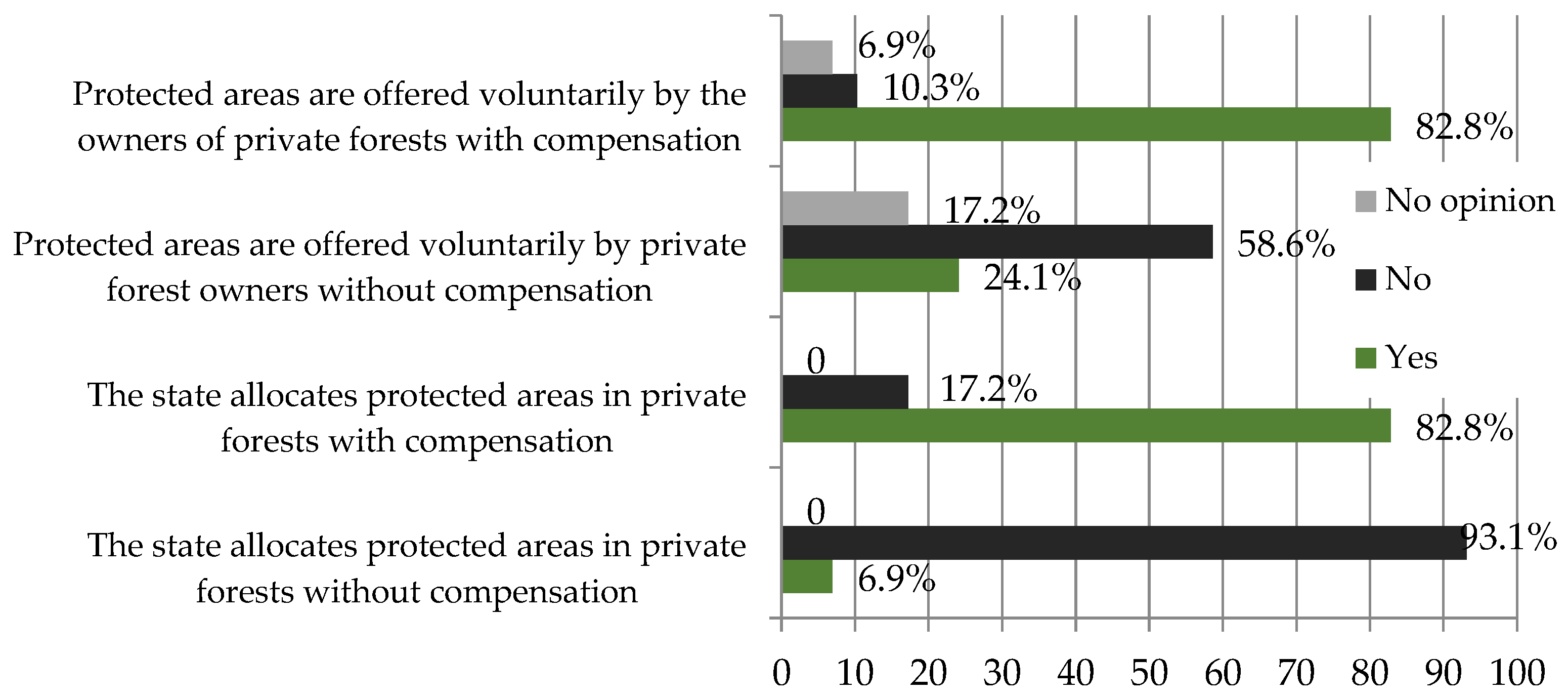
Figure 2.
Priorities for the application of biodiversity and ecosystem protection models in Lithuanian private forests.
Figure 2.
Priorities for the application of biodiversity and ecosystem protection models in Lithuanian private forests.
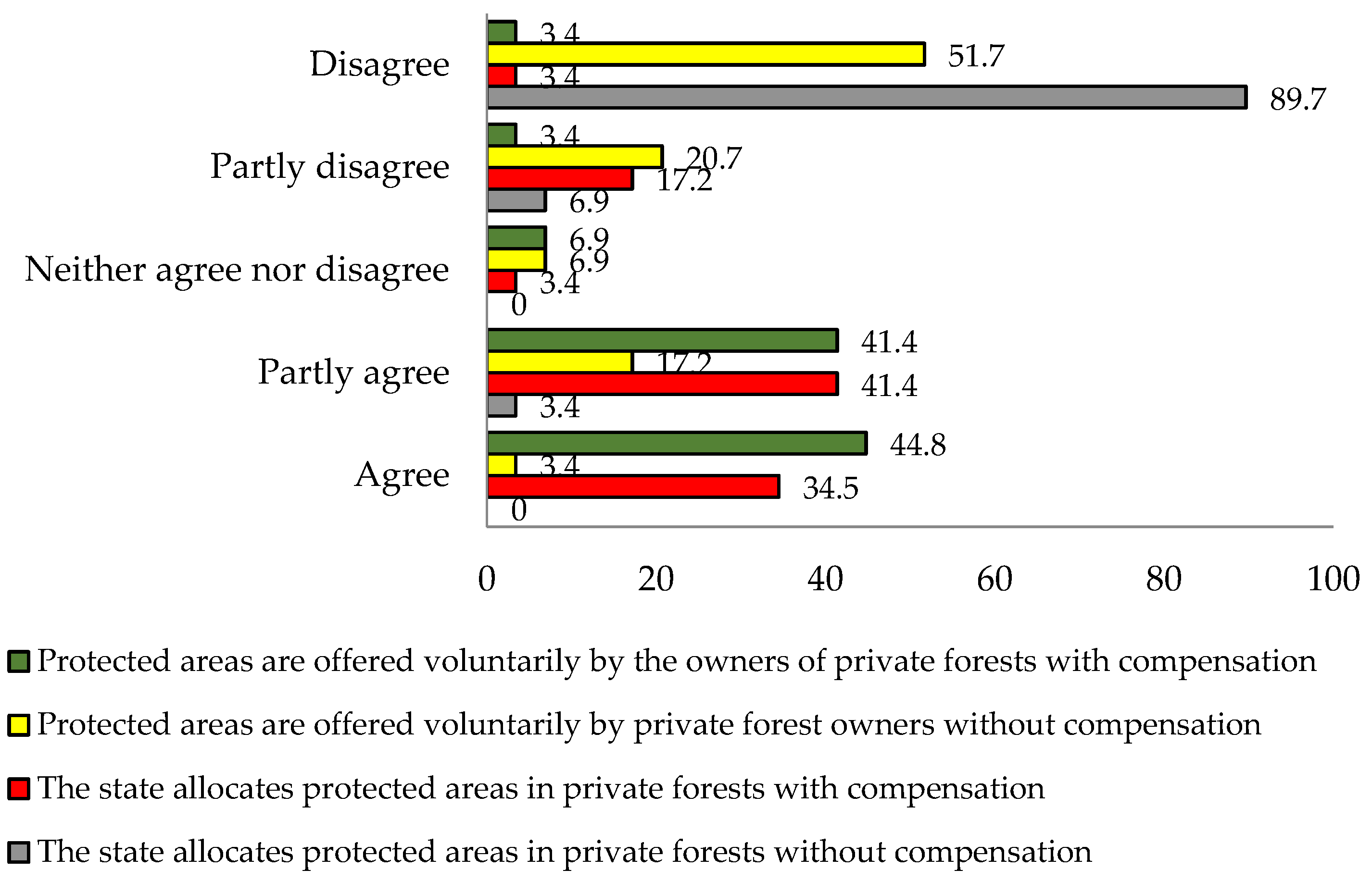
Figure 3.
Experts’ opinions on the types of Protection agreements (contracts) that could be established with private forest owners in Lithuania.
Figure 3.
Experts’ opinions on the types of Protection agreements (contracts) that could be established with private forest owners in Lithuania.
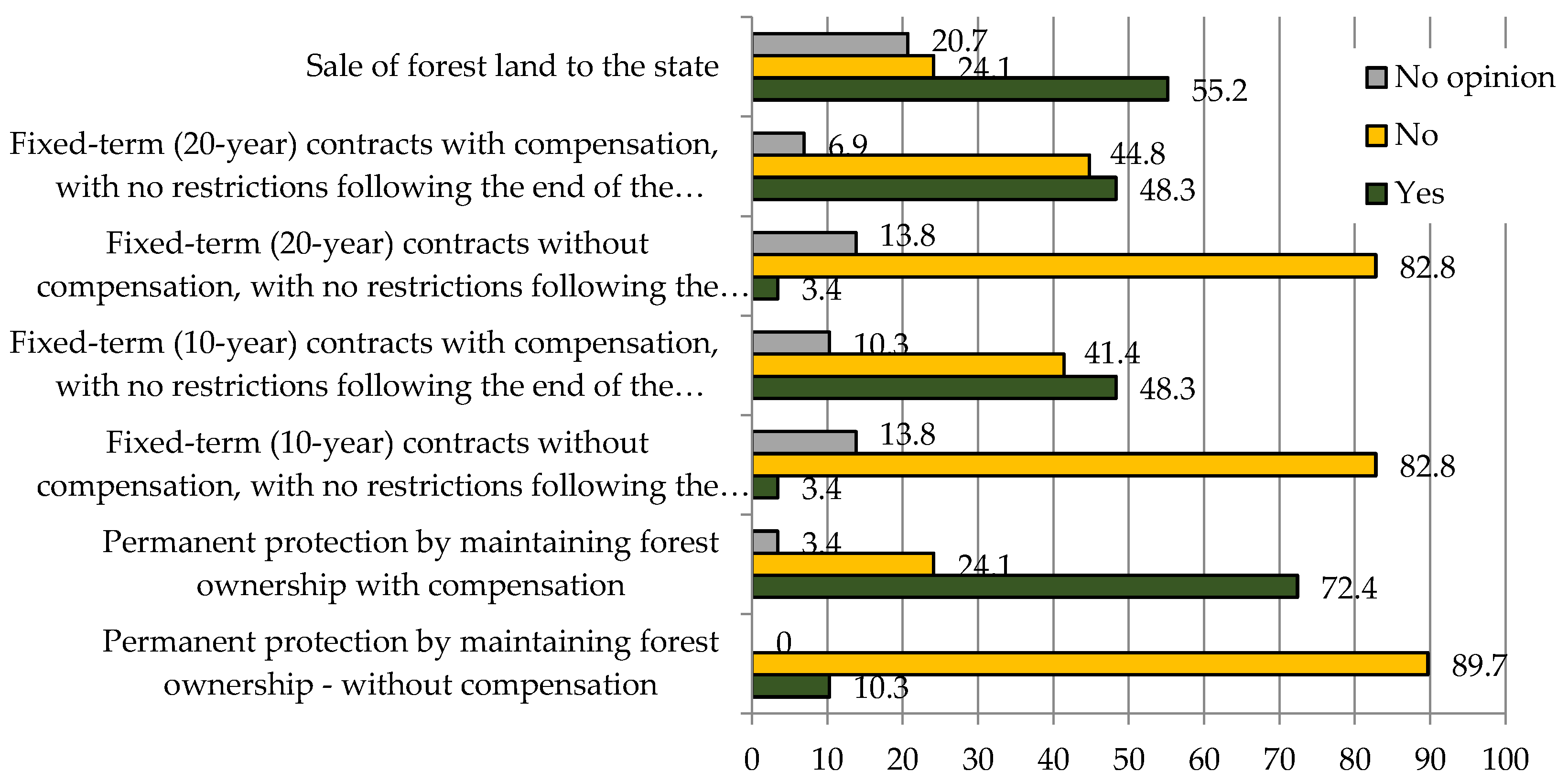
Figure 4.
Expert opinions on the popularity of Protection agreements (contracts) among private forest owners in Lithuania.
Figure 4.
Expert opinions on the popularity of Protection agreements (contracts) among private forest owners in Lithuania.
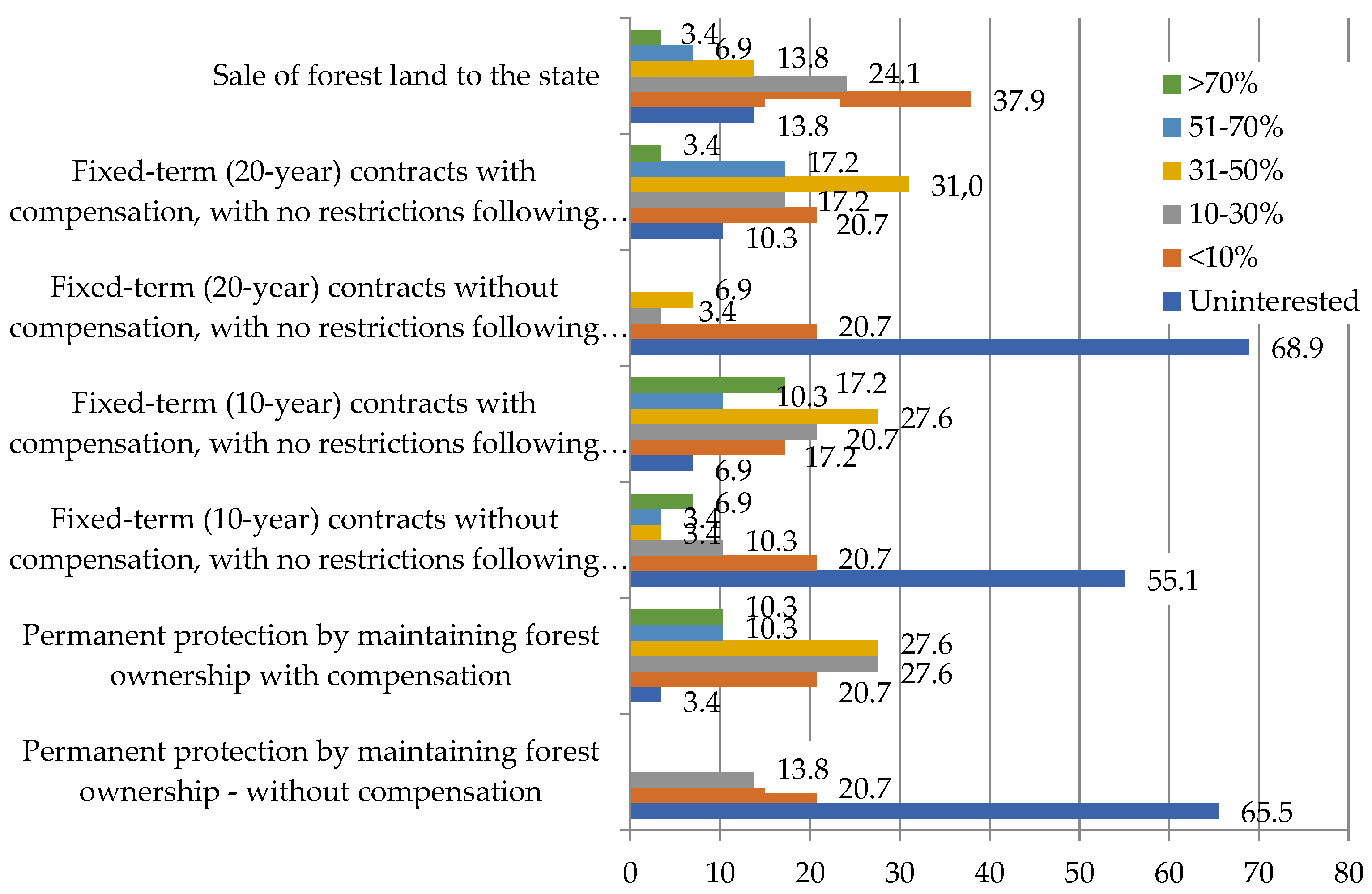
Figure 5.
Expert opinions on the values that should be compensated to private forest owners.
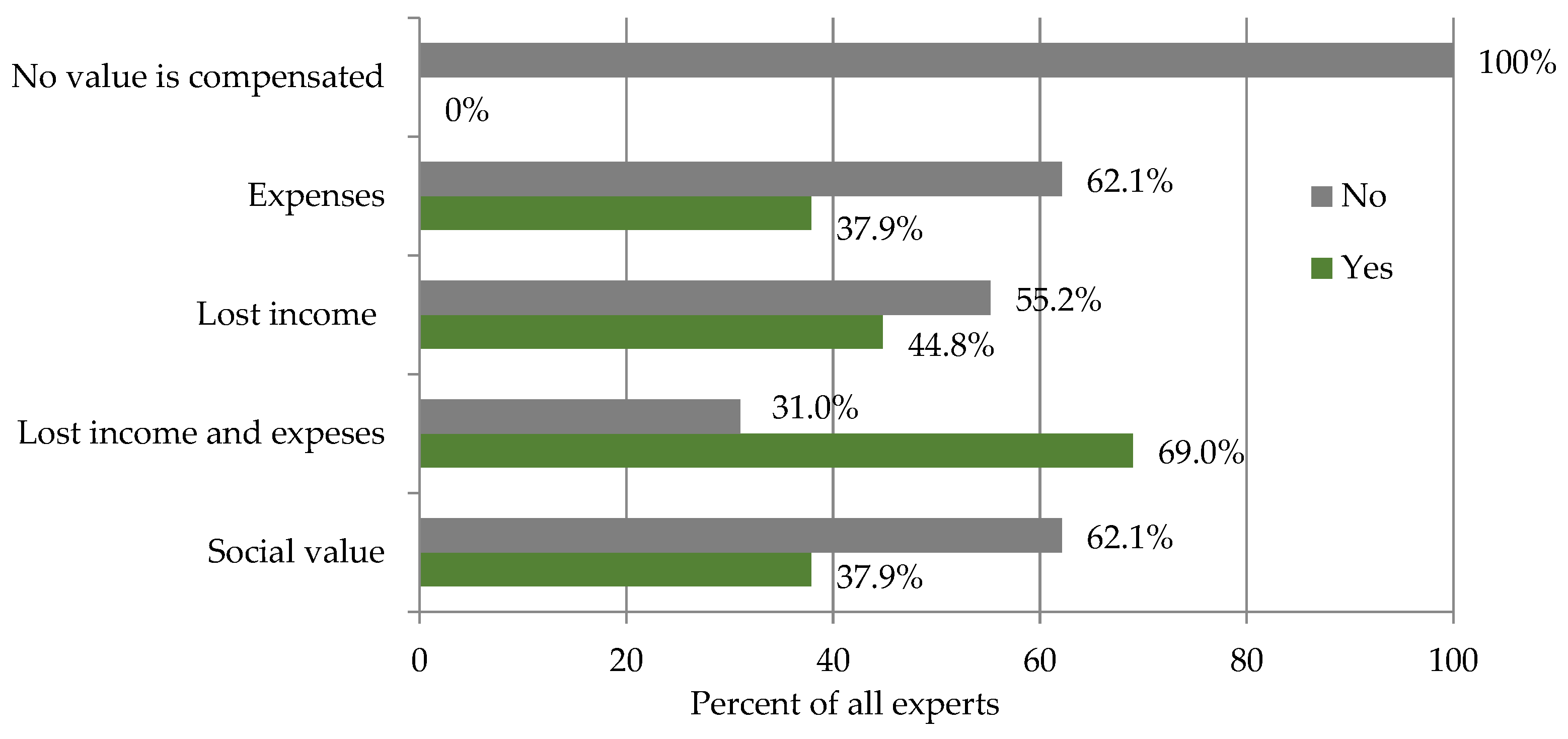
Figure 6.
The motives for the voluntary protection of biodiversity and ecosystems by Lithuanian private forest owners. * External motive: monetary compensation % of incurred losses - 100-125%, 80-100%, 60-80%, <60%.
Figure 6.
The motives for the voluntary protection of biodiversity and ecosystems by Lithuanian private forest owners. * External motive: monetary compensation % of incurred losses - 100-125%, 80-100%, 60-80%, <60%.
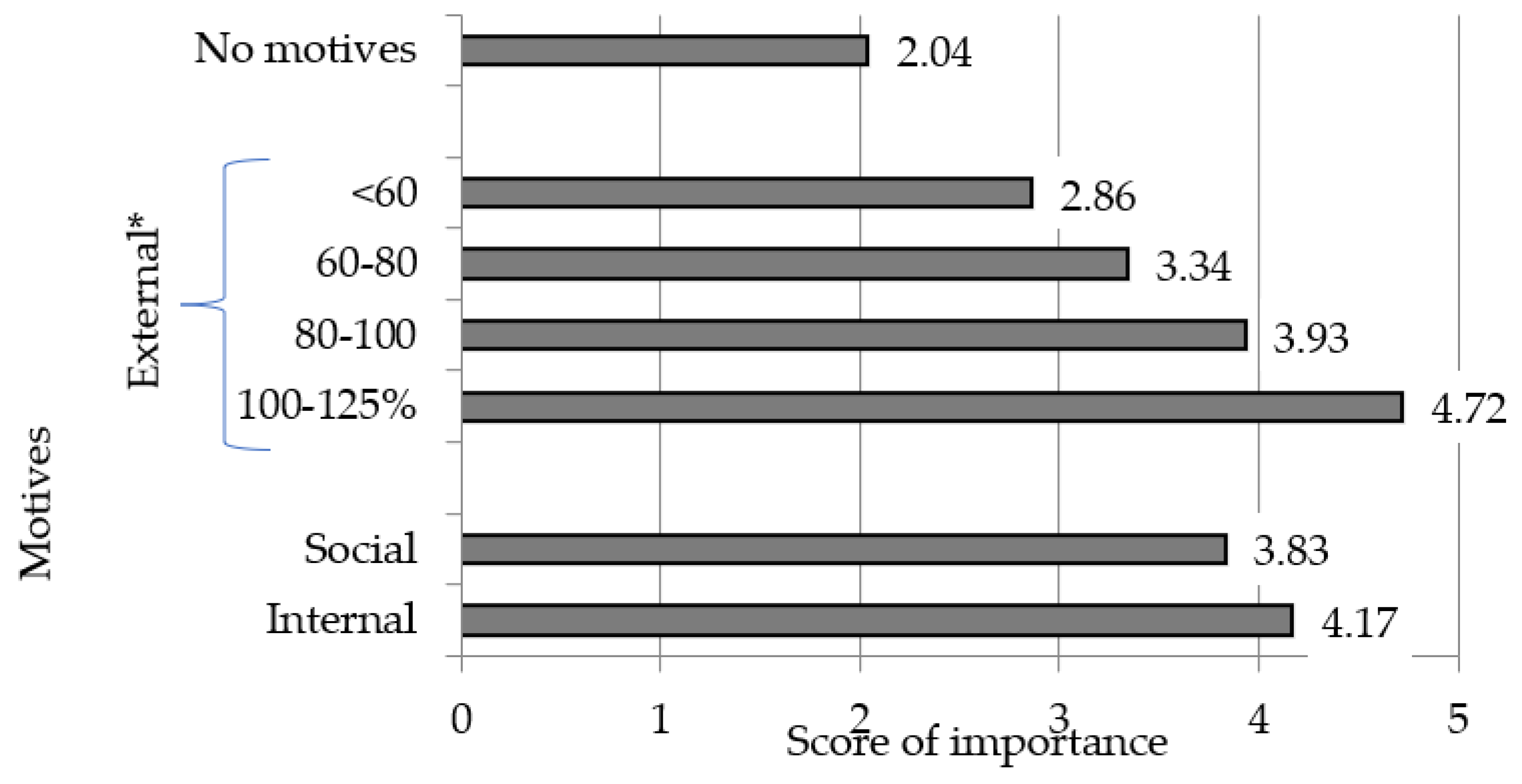
Figure 7.
Expert’s opinion on the moral obligation of private forest owners to protect biodiversity and ecosystems.
Figure 7.
Expert’s opinion on the moral obligation of private forest owners to protect biodiversity and ecosystems.
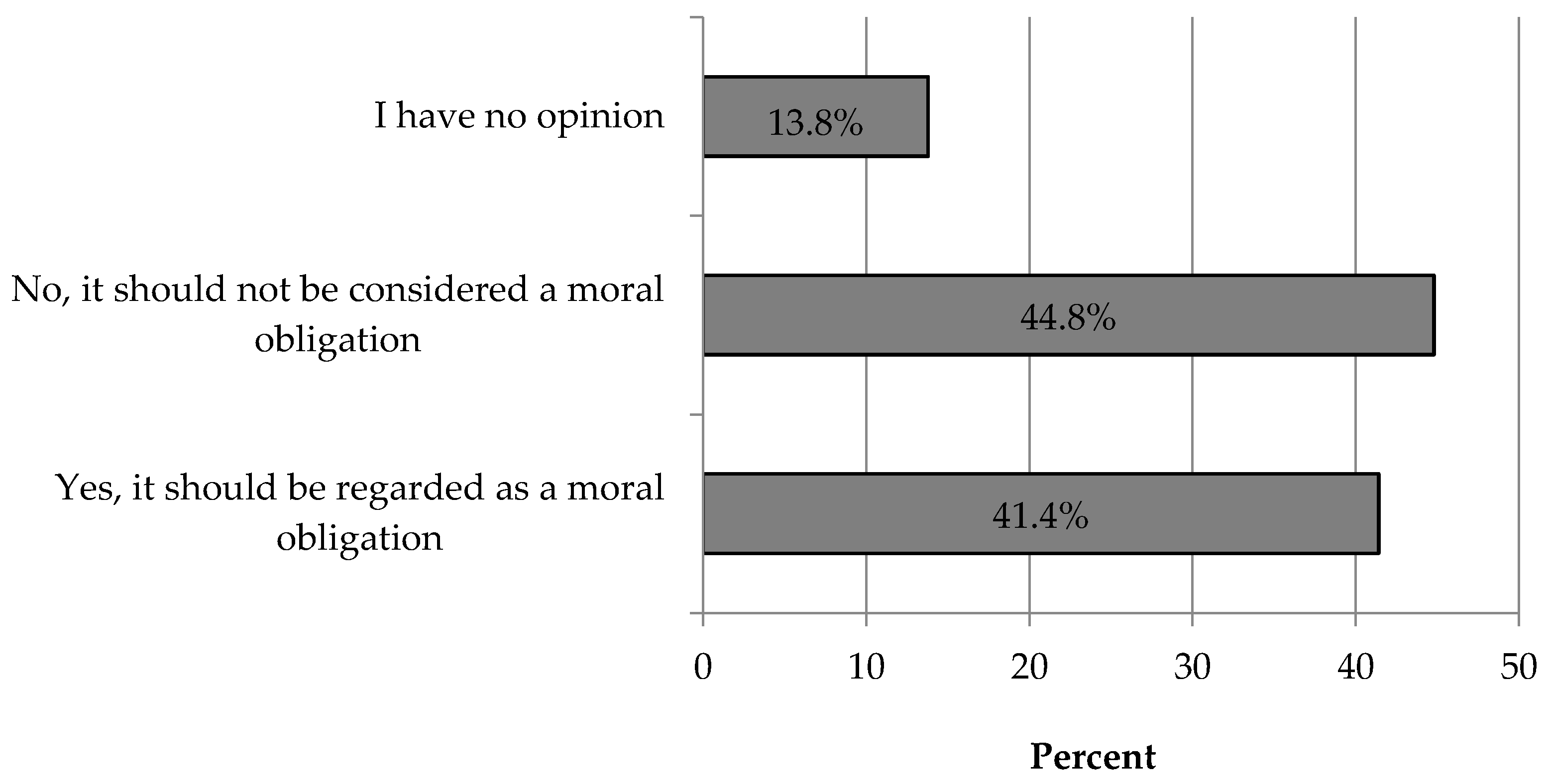
Figure 8.
Expert’s opinion on the manifestation of the "crowd-out“ effect in Lithuania.
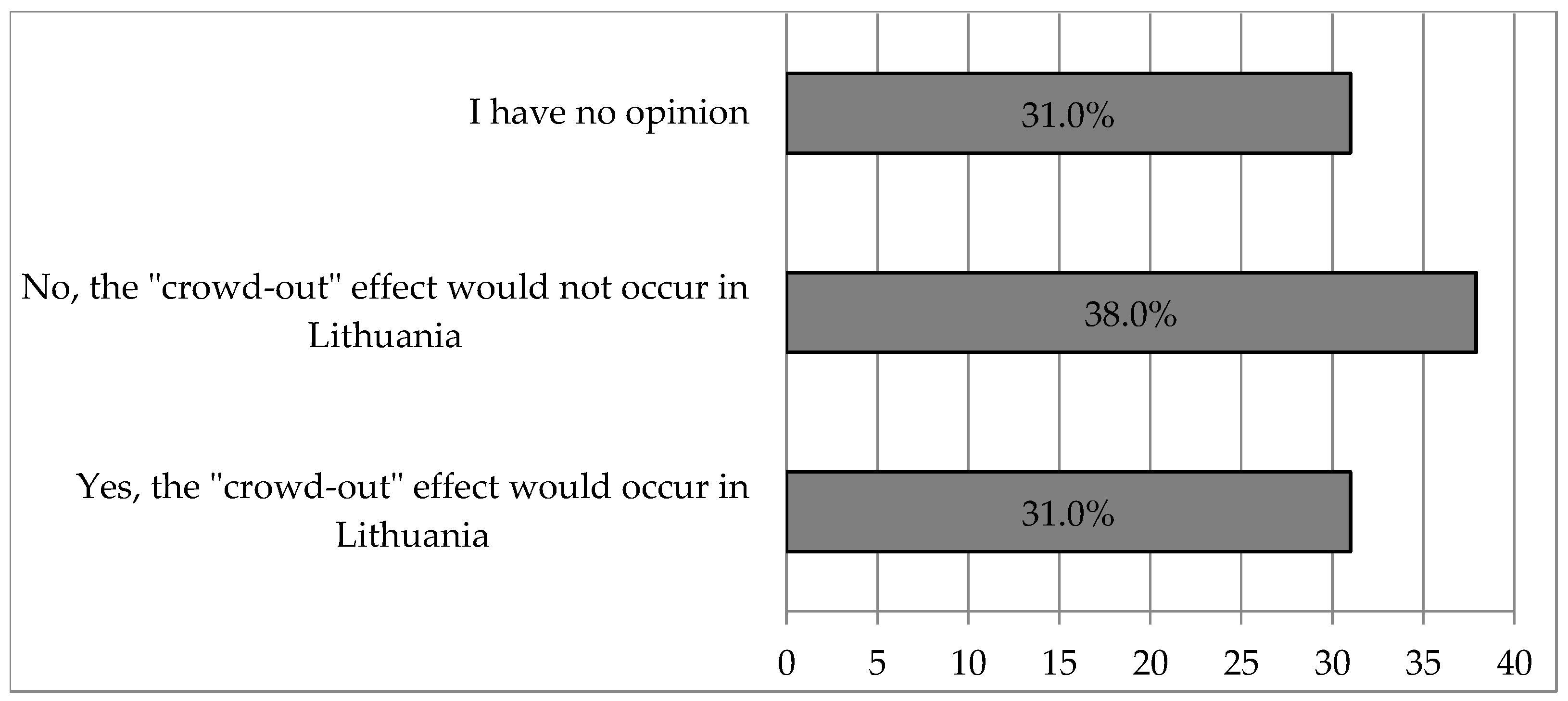
Figure 9.
Expert opinion on the obligation to compensate private forest owners for losses incurred from biodiversity and ecosystem protection.
Figure 9.
Expert opinion on the obligation to compensate private forest owners for losses incurred from biodiversity and ecosystem protection.
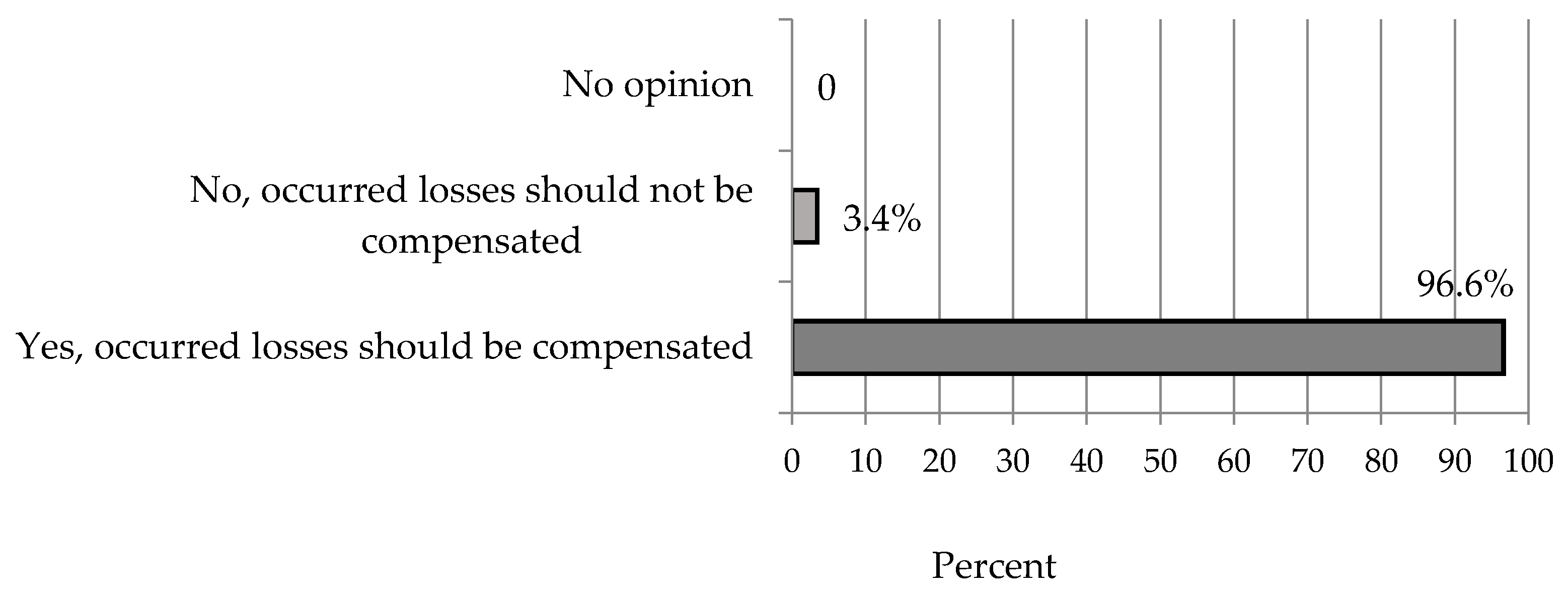
Figure 10.
Potential sources of compensation for losses incurred in biodiversity and ecosystem protection.
Figure 10.
Potential sources of compensation for losses incurred in biodiversity and ecosystem protection.
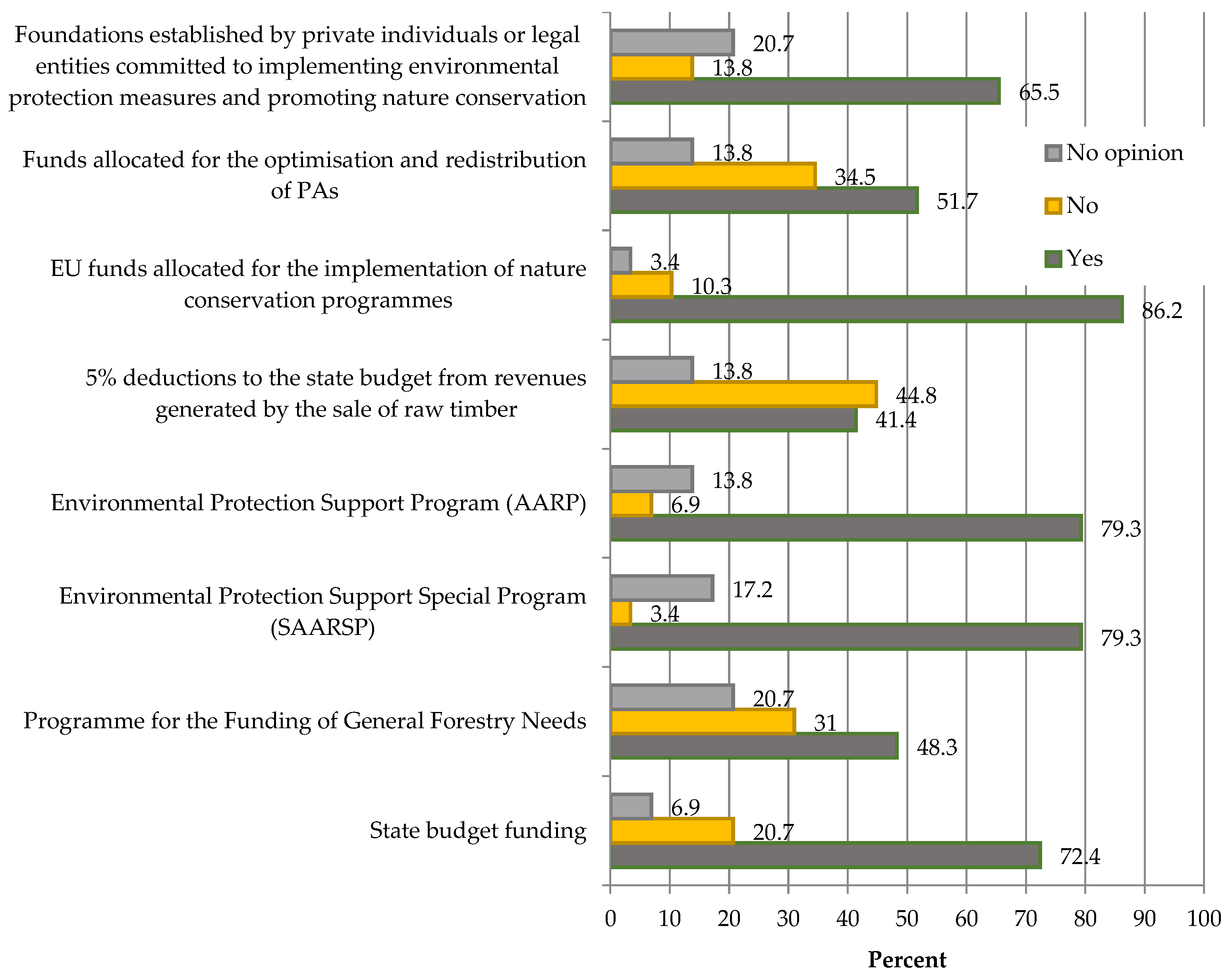
Figure 11.
Assessment of the effectiveness of measures currently applied in Lithuania to promote biodiversity and ecosystem protection in private forests.
Figure 11.
Assessment of the effectiveness of measures currently applied in Lithuania to promote biodiversity and ecosystem protection in private forests.
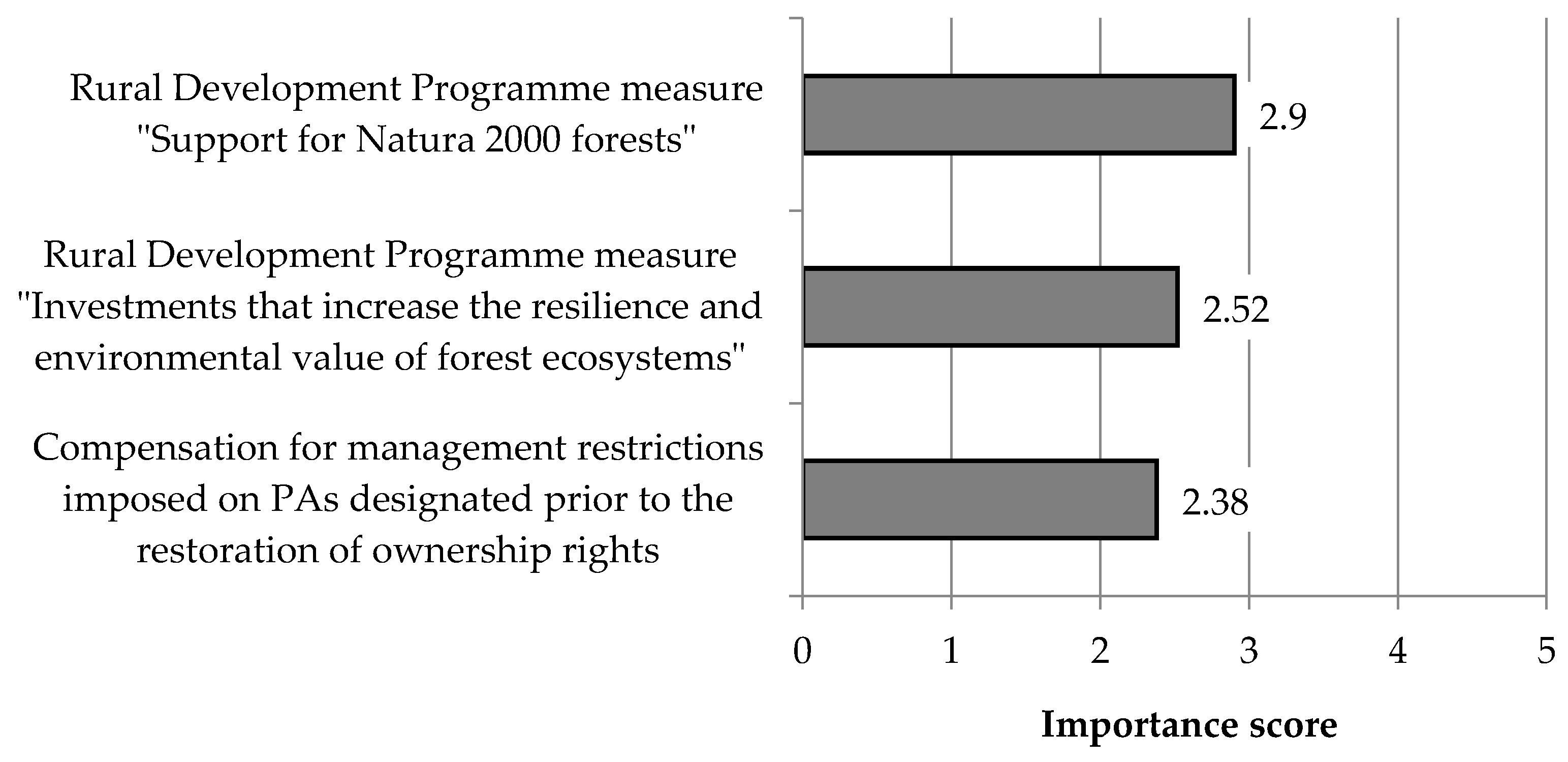
Figure 12.
Factors and reasons contributing to the inefficiency of measures promoting biodiversity and ecosystem protection in private forests in Lithuania. *Value of score: 1 - not important; 2 – slightly important; 3 – moderately important; 4 - very important; 5 – extremely important.
Figure 12.
Factors and reasons contributing to the inefficiency of measures promoting biodiversity and ecosystem protection in private forests in Lithuania. *Value of score: 1 - not important; 2 – slightly important; 3 – moderately important; 4 - very important; 5 – extremely important.
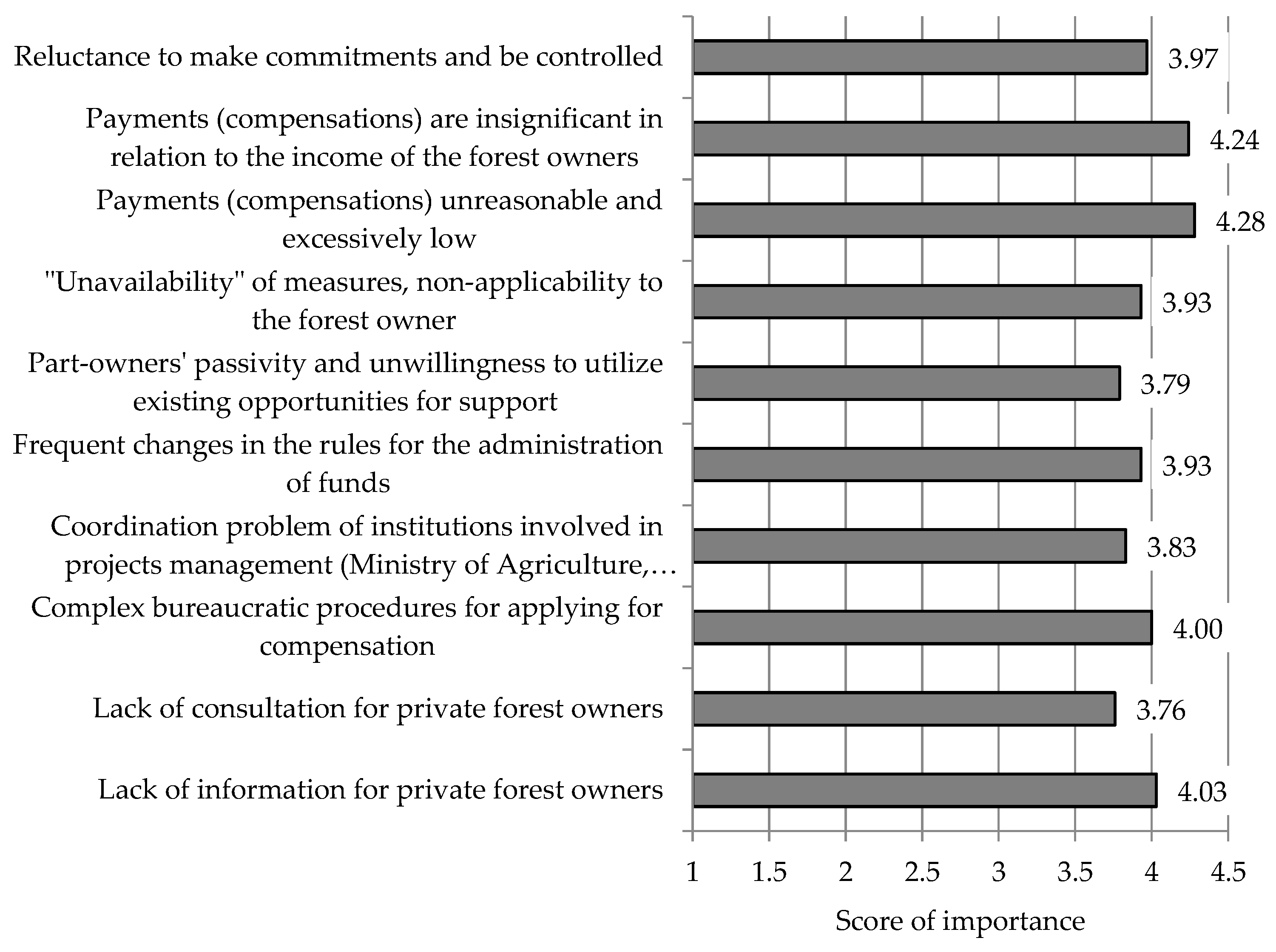

Table 1.
List of articles about private forest owner's priorities and motives for voluntary forest protection in Europe.
Table 1.
List of articles about private forest owner's priorities and motives for voluntary forest protection in Europe.
| Article | Country |
|---|---|
| Kosenius, (2024),[3] | Finland |
| Gundersen et al.,(2022),[4] | Norway |
| Baranovskis et al.,(2022),[5] | Latvia |
| Koskela and Karppinen,(2021),[6] | Finland |
| Juutinen et al.,(2021),[7] | Finland |
| Danley et al.,(2021),[8] | Sweden |
| Abildtrup et al.,(2021),[9] | France |
| Palome, (2016),[10] | France |
| Mitani and Lindjeni,(2015),[11] | Norway |
| Goritz et al.,(2014),[12] | Finland, Denmark, France, Germany |
| Gotmark, ( 2009), [13] | Sweden |
Table 2.
Results of the questionnaire's consistency evaluation.
| Thematic parts of questionnaire | Cronbach's Alpha |
|---|---|
| Priorities | 0.691 |
| Motives | 0.695 |
| Effectiveness | 0.693 |
Table 3.
Evaluation of environmental policy instruments for forests.
| Instrument | Score of Likert scale* Number of experts/% |
Mean score | St. dev. | ||||
|---|---|---|---|---|---|---|---|
| 1 | 2 | 3 | 4 | 5 | |||
| Land acquisition | 3/10.3 | 5/17.2 | 7/24.1 | 7/24.1 | 7/24.1 | 3.34 | 1.317 |
| Protection agreements | 1/3.4 | 2/6.9 | 3/10.3 | 8/27.6 | 15/51.7 | 4.17 | 1.104 |
| Information | 1/3.4 | 2/6.9 | 2/6.9 | 6/20.7 | 18/62.1 | 4.31 | 1.105 |
*Value of score:1 - not important; 2 – slightly important; 3 – moderately important; 4 - very important; 5 – extremely important.
Table 4.
Factors determining the intentions of private forest owners to protect biodiversity and ecosystems.
Table 4.
Factors determining the intentions of private forest owners to protect biodiversity and ecosystems.
| Factors | Score of Likert scale* Number of experts/% |
Mean score | St. deviation | ||||
|---|---|---|---|---|---|---|---|
| 1 | 2 | 3 | 4 | 5 | |||
| Property rights and freedom of decision-making | - | - | 6/20.7 | 11/37.9 | 12/41.4 | 4.21 | 0.774 |
| Amount of compensation | - | - | 1/3.4 | 7/24.1 | 21/72.4 | 4.69 | 0.541 |
| Clear definition of compensation | - | - | 1/3.4 | 12/41.4 | 16/55.2 | 4.52 | 0.574 |
| Cancelation policy for obligations | 1/3.4 | - | 6/20.7 | 10/34.5 | 12/41.4 | 4.10 | 0.976 |
| Compensation form | - | - | 4/13.8 | 12/41.4 | 13/44.8 | 4.31 | 0.712 |
| Duration of the Protection agreement (contract) | - | 2/6.9 | 2/6.9 | 17/58.6 | 8/27.6 | 4.07 | 0.799 |
| Restrictions on forest management (use) | - | - | 3/10.3 | 8/27.6 | 18/62.1 | 4.52 | 0.688 |
| Continuity of the Protection agreement (contract) | - | 1/3.4 | 8/27.6 | 11/37.9 | 9/31.0 | 3.97 | 0.865 |
| Distribution of compensation within the payment period specified in the Protection agreement (contract) | - | 1/3.4 | 7/24.1 | 14/48.3 | 7/24.1 | 3.93 | 0.799 |
| Initiator of the Protection agreements project (contract) | 2/6.9 | 3/10.3 | 10/34.5 | 12/41.4 | 2/6.9 | 3.31 | 1.004 |
| Achieving biodiversity and ecosystem protection goals | - | 4/13.8 | 11/37.9 | 9/31.0 | 5/17.2 | 3.52 | 0.949 |
| Impact on the local labor market | 3/10.3 | 6/20.7 | 10/34.5 | 6/20.7 | 4/13.8 | 3.07 | 1.193 |
| The significance of the Protection agreement (contract) at the national level | 1/3.4 | 8/27.6 | 9/31.0 | 7/24.1 | 3/10.3 | 3.11 | 1.066 |
*Value of score:1 – not determining; 2 – slightly determining; 3 – moderately determining; 4 – highly determining; 5 – extremely determining.
Disclaimer/Publisher’s Note: The statements, opinions and data contained in all publications are solely those of the individual author(s) and contributor(s) and not of MDPI and/or the editor(s). MDPI and/or the editor(s) disclaim responsibility for any injury to people or property resulting from any ideas, methods, instructions or products referred to in the content. |
© 2024 by the authors. Licensee MDPI, Basel, Switzerland. This article is an open access article distributed under the terms and conditions of the Creative Commons Attribution (CC BY) license (http://creativecommons.org/licenses/by/4.0/).
Copyright: This open access article is published under a Creative Commons CC BY 4.0 license, which permit the free download, distribution, and reuse, provided that the author and preprint are cited in any reuse.


