Preprint
Article

This version is not peer-reviewed.

First Report of Antibiotic Resistant Coagulase-Negative Staphylococcus Strains Isolated from Technical Snow on Ski Slopes in Mountain Areas

A peer-reviewed article of this preprint also exists.

Submitted:

16 December 2024

Posted:

17 December 2024

You are already at the latest version

Abstract

Coagulase-negative staphylococci form a heterogeneous group, defined solely by the lack of coagulase. Initially considered non-pathogenic, now known opportunistic pathogens of increasing importance. This study was conducted to examine the prevalence of Staphylococcus spp., their taxonomic diversity, antibiotic resistance patterns and genetic determinants of antibiotic resistance in the water resources within the technical snow production process. The types of samples included 1) river water at intakes where water is drawn for snowmaking; 2) water stored in technical reservoirs, from which it is pumped into the snowmaking systems; 3) technical snow-melt water. The study was conducted in catchments of five rivers: Białka, Biały Dunajec, Raba and Wisła in Poland, and Studený Potok in Slovakia. Staphylococcus spp. was detected in all types of samples: in 17% of river water, 25% of reservoir-stored water and in 60% of technical snow-melt water. All staphylococci were coagulase-negative (CoNS) and belonged to 10 species, with S. epidermidis being the most prevalent in river water, S. warneri and S. pasteuri in reservoir-stored water, and S. haemolyticus in snowmelt water. The highest resistance rates to erythromycin and macrolide/lincosamid.streptogramin b (MLSb) types of resistance were detected in all types of samples, accompanied by erythromycin efflux pump-determining msrA gene as the most frequent genetic determinant of antimicrobial resistance. This study is the first report of the presence of antibiotic resistant, including multidrug resistant CoNS, carrying more than one gene determining antimicrobial resistance in technical snow, in mountain areas of the central European countries.

Keywords: 
;  ;  ;  ;  ;  

1. Introduction

Coagulase-negative staphylococci (CoNS) form a large group of Gram-positive cocci commonly characterized by the lack of one of S. aureus-associated virulence factors, i.e., coagulase [1]. They represent a very heterogeneous group within the genus Staphylococcus, defined only by the diagnostic procedure-based classification for delimitation from coagulase-positive staphylococci [2]. Initially, they were considered non-pathogenic, but still can produce their own, species or strain-dependent virulence factors that allow many of them to act as opportunistic pathogens. Importantly, CoNS-associated opportunistic infections are most frequently regarded as of environmental origin, but the distribution and antibiotic resistance patterns of coagulase-negative staphylococci in the environment are still poorly characterized [3].
Water is one of the most important vehicles of bacterial spread and dissemination. Microbial populations inhabiting aquatic ecosystems that are in connection with the water circulation in the environment, play an important role in the dissemination of human-associated microorganisms and pathogens, antibiotic resistant bacteria as well as antibiotic resistance genes. Human activities have established a type of water cycle within which wastewater treatment and discharge, water uptake, treatment and distribution represent key stages [3]. If antibiotic resistant bacteria enter or occur within this cycle, it is possible that they may never be eliminated. The presence of antibiotic-resistant opportunistic pathogens, but also non-pathogenic species in the environment can contribute to interspecies exchange of genetic determinants of antimicrobial resistance, which is already a very severe global problem [4]. Also, the major challenge in the treatment of CoNS-associated infections is the difficulty in therapy, due to their escalating antibiotic resistance rates, thus becoming a factor of increasing morbidity and mortality, as well as the evolution of new pathogens [5].
Even though Staphylococci are ubiquitous bacteria, and their presence in a variety of aquatic environments has been reported, no studies to date have been conducted on their presence in the technical snow production processes. Technical snowmaking has become an indispensable requirement for snow-based winter tourism, which faces drastic problems due to climate variability and warming [6]. To provide appropriate amounts of snow on the slopes during the ski season, large amounts of water are required. The formation of a snow cover of approx.. 30 cm on a one-hectare slope requires approx.. 1000 m3 of water. Vanham et al. [7] estimated a water demand of 2.3 million m3 for snowmaking in one of the Austrian regions, which exceeded 50% of municipal water consumption needs during the winter season. The important issue of the water management in mountain areas and its consumption due to snowmaking, is the fact that the aquatic environment in many mountain regions of the world is significantly contaminated by the discharge of insufficiently treated wastewater [8]. This is due to the fact that these highly tourism-burdened places are also characterized by large fluctuations of wastewater production, as a result of seasonally-variable numbers of visitors, resulting in local treatment plants being overwhelmed and unable to treat the incoming wastewater [9,10]. For this reason, as wastewater is one of the most important pathways of pathogen and resistance distribution, wastewater-contaminated water resources can further act as vectors of these pollutants.
With the above in mind, the question that we tried to answer within this research was whether the water resources used for the technical snow production and the technical snow itself can become the source of bacteria that may pose a threat to human health and to the environment? To answer this question, we conducted the study in order to assess the prevalence of Staphylococcus spp., their taxonomic diversity, antibiotic resistance patterns and genetic determinants of antibiotic resistance in the water resources that take part within the technical snow production. The types of samples included 1) river water at intakes where water is drawn for the snowmaking systems; 2) water stored in technical reservoirs, from which it is then pumped into the snowmaking systems; 3) technical snow-melt water..

2. Materials and Methods

2.1. Sample Collection and Analysis

The samples were collected in 15 ski stations, located in the vicinity of five watercourses: Białka, Biały Dunajec, Raba and Wisła in Poland and Studený Potok in Slovakia (Western Tatras). The samples included three stages of technical snow production: 1) river water at intakes where water is drawn for the snowmaking systems; 2) water stored in technical reservoirs, from which it is then pumped into the snowmaking systems; 3) melt water from freshly produced technical snow, collected directly from underneath of snow cannons. The precise location of the examined ski stations cannot be disclosed due to the confidentiality agreement with the ski station companies. The sampling campaigns were conducted during two winter seasons, when the technical snow production takes place, i.e., from late November to late January. In total, 63 samples were examined: river water at intakes for technical snow production (n=25), water stored in technical reservoirs (n=8) and freshly produced technical snow (n=30).
In all cases, the samples were collected in three instantaneous replications that formed the final mixed sample. Water was collected into sets of 1000 ml sterile polypropylene bottles, while snow was collected by first scratching the superficial layer, followed by the collection of snow with a snow corer (a 1.0 m-long, 10 cm-wide tube) and transferring the snow into sterile plastic string bags, where it melted. Then, snowmelt water was transferred into sets of 1000 ml sterile polypropylene bottles and further analyzed.

2.2. Isolation and Identification of Staphylococci

The enumeration and isolation of staphylococci in river water, reservoir water and snowmelt water was carried out by the membrane filtration method. A volume of 100 ml of was transferred through a nitrocellulose membrane filters (0.22 µm pore size, 47 mm ø, Sarstedt, Germany) and transferred on a Petri dish with Baird-Parker agar (Biomaxima, Lublin, Poland), followed by incubation for 48 hours at 36±1 °C. After incubation, typical grey to black colonies were counted and the bacterial counts were expressed as the number of colony forming units per 100 ml of water (CFU/100 ml). The typical colonies were then subcultured on Baird-Parker agar and subjected to preliminary identification based on microscopic observations of Gram-stained preparations. The species identification of colonies that were initially identified as Staphylococcus spp. was conducted using the Bruker MALDI Biotyper (Bruker, USA) by matrix-assisted laser desorption/ionization mass spectrometry (MALDI-TOF MS) [11].

2.3. Culture-Based Antibiotic Resistance Determination

A total of 75 staphylococcal isolates, identified as various species, were subjected to antimicrobial resistance testing using the Kirby-Bauer [12] disc diffusion method, following the recommendation of The European Committee on Antimicrobial Susceptibility Testing (EUCAST) [13]. Antimicrobial disc cartridges were obtained from Oxoid (Great Britain). Suspensions of bacterial isolates with a density of 0.5 MacFarland were streaked onto Mueller-Hinton II agar (Biomaxima, Lublin, Poland). Eight antimicrobial agents, of seven classes, were tested: cefoxitin (FOX 30 µg; β-lactam, cephalosporin), ciprofloxacin (CIP 5 µg; fluoroquinolones), erythromycin (E 15 µg, macrolids), gentamycin (CN 10 µg; aminoglycosides), clindamycin (DA 2 µg; lincosamids), tetracycline (TE 30 µg; tetracyclins), tobramycin (TOB 10 µg; aminoglycosids) and trimethoprim/sulfamethoxazole (SXT 1.25/23.75 µg; sulphonamide with dihydrofolate reductase inhibitor). The growth inhibition zone diameters were measured after incubation for 18–24 h at 36±1 °C, and the results were compared with the breakpoint values provided by the European Committee on Antimicrobial Susceptibility Testing [13]. Isolates that were non-susceptible to at least one agent in minimum three antibiotic classes were considered multidrug resistant (MDR) [14]. The type of resistance to macrolides, lincosamids and streptogramins b (MLSb) was assessed according to Fiebelkorn [15]. Methicillin resistance assessment of staphylococci was based on their resistance to cefoxitin (FOX 30 µg), following the results’ interpretation according to [13]. Methicillin-resistant, mecA-positive S. aureus NCTC 12493 was used as a positive control for methicillin resistance testing, while all-susceptible S. aureus ATCC 29213 was used as a negative control.

2.4. Detection of Antibiotic Resistance Genes

For DNA extraction, loopfuls of fresh colonies were suspended in 100 µl of Tris, then DNA extraction procedure was conducted using Genomic Mini DNA extraction kit (A&A Biotechnology, Gdańsk, Poland), following the manufacturer’s instructions.
The genes mecA, msrA, ereA, mphA, lnuA and vga were screened using primer pairs and PCR reaction conditions as described in Table 1. The PCR reaction mixtures were prepared in volumes of 25 µl, containing ~50 ng of DNA template, 12.5 pM of each primer, 2.0 mM of dNTP, 1 × PCR buffer and 2.4 U Taq DNA polymerase (PCR Mix Plus Green, A&A Biotechnology, Gdańsk, Poland). The reactions were performed in a T100 thermal cycler (BioRad, USA), under the following temperature profile: 3 min at 94°C and 34 cycles of amplification consisting of 30 s at 94°C, annealing temperature suitable for each primer (Table 1), and 1 min at 72°C with 10 min at 72°C for the final extension. The PCR products were visualized and examined in 1% agarose gels (in 1 × TBE buffer), stained with SimplySafe (EurX, Gdańsk, Poland), with DNA 3 size marker (A&A Biotechnology, Gdańsk, Poland) allowing to assess the product length. S. aureus ATCC 29213 was used as a negative control and S. aureus NCTC 12493 was used as a positive control for mecA testing.

2.5. Statistical Analysis

The statistical significance of differences in the numbers of bacteria, prevalence of CoNS strains resistant to the examined antimicrobials, the prevalence of genetic determinants of antibiotic resistance in different types of water samples, as well as between the catchment areas was assessed using simple ANOVA, followed by post-hoc tests (e.g., least significant differences between each site; LSD). Pearson’s correlation coefficient was used to assess the correlation between all parameters examined in this study. In all tests, p-values less than 0.05 were considered statistically significant. The statistical analyses were conducted using Statistica v. 13 software (TIBCO Software, Palo Alto, USA).

3. Results and Discussion

Out of the total number of 63 samples, collected from 15 ski stations, 38 scored positive for the presence of Staphylococcus spp., including 17% (n=18) of river water, 25% (n=2) of water stored in technical reservoirs and 60% (n=18) of technical snow-melt water. The staphylococcal counts on Baird-Parker agar ranged from 1 CFU/100 ml (two sites: technical snow, Białka river catchment and river water, Biały Dunajec catchment) to as many as 50,000 CFU/100 ml (technical snow, Western Tatras, Slovakia; Figure 1A,B; statistically significant differences between types of samples: F=4.45; p=0.015; statistically significant differences between river catchments: F=6.66, p=0.00013). In some cases (i.e., Western Tatras, Slovakia or in one of the ski stations situated in the Biały Dunajec catchment), the staphylococcal counts in the technical snow-melt water exceeded these detected in the river water or reservoir-stored water (Figure 1B). One of possible explanations of such situation might be the differences between the ski stations in the frequency of cleaning and exchange of the snow cannon filters (unpublished data, information provided verbally by the ski station owners). This – in the case of too infrequent maintenance procedures – might result in the biofilm formation by the staphylococci-containing water microbiota, followed by its detachment [3,16].
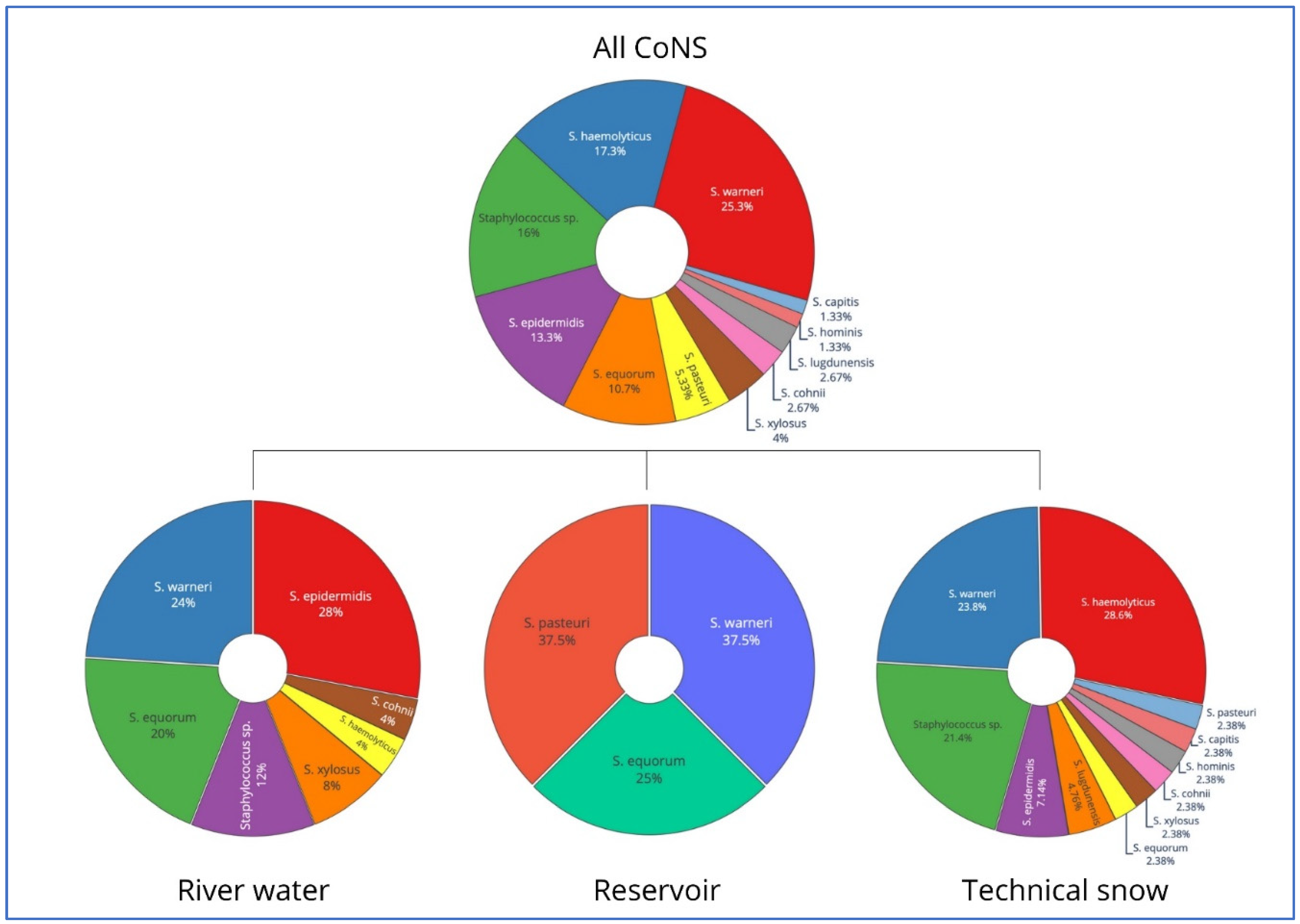
A total of 75 isolates, including 25 from river water, 8 from technical reservoirs and 42 from technical snow-melt water were obtained in the first stage of research, and then were subjected to MALDI-TOF analysis for the species identification. All 75 Staphylococcus spp. isolates were coagulase-negative and belonged to ten species (Figure 2). The most prevalent species varied between different types of samples. When considering all samples in total, S. warneri, S. haemolyticus and S. equorum were the three most prevalent; the three most frequently detected in river water were S. epidermidis, S. warneri and S. equorum; S. pasteuri, S. warneri and S. equorum were the only three species identified in the reservoir-stored water and finally S. haemolyticus, S. warneri and the group of unidentified to the species level (grouped as Staphylococcus spp.) were the three most prevalent in technical snow (Figure 2). Importantly, two strains of S. lugdunensis have been isolated from the technical snow. This species has already been recognized as a CoNS “intermediate” between S. aureus and S. epidermidis groups and is characterized by some clinical features mutual with S. aureus [2,17]. It is also known that CoNS are responsible for laryngological infections and S. lugdunensis has been reported as an etiological agent of necrotizing sinusitis in hospitalized patients [18]. This species has been isolated from maxillary sinuses of laryngological patients and several virulence factors carried by strains of this species have been demonstrated [18]. According to [17], six CoNS species are of higher clinical significance, i.e.,: S. epidermidis, S. saprophyticus, S. haemolyticus, S. capitis, S. hominis and S. lugdunensis, and five of them were identified in our study (all of them in technical snow). Staphylococcus warneri, which was the most numerous species isolated in our study (and the second most numerous in technical snow), has been recently recognized as a new emerging pathogen, leading to severe invasive infections in immunocompromised patients and a variety of other types of infections even in healthy individuals [19].
Among the most significant problems, associated with the prevalence of CoNS, is their increasing resistance to antimicrobial agents. Firstly, because of increasing rates of resistant and multi-resistant infections, caused by CoNS, which limits therapeutic options and aggravate treatment strategies [2,17,20]. Secondly, CoNS have been regarded as important reservoirs of resistance genes, which are often located on mobile genetic elements, therefore they could easily be transferred (via horizontal gene transfer) to other species, including more pathogenic ones, such as S. aureus [5,20,21]. Faria et al. [3] suggests that CoNS may represent a relevant antibiotic resistance reservoir particularly in habitats with restrictive conditions, and technical snow can be treated as such. Out of the 75 CoNS isolates examined in this study, 25 (33.33%) were susceptible to all tested antimicrobial agents, while none were resistant to all antimicrobials. Three isolates were multidrug resistant (i.e., non-susceptible to at least one agent in minimum three antibiotic classes) [14] and these included two technical snow-derived isolates (S. lugdunensis, Biały Dunajec catchment and S. haemolyticus, Raba river catchment) and one river water-derived isolate (S. haemolyticus, Raba river catchment). Four isolates were MRS-positive (the same three as MDR ones and one snow-derived Staphylococcus spp., Białka river catchment; Table 2). As many as 41 (54.67%) showed one of the macrolide/lincosamid/streptogramin b (MLSb) resistance types. Within these, 27 (36%) presented MSb resistance, 11 (14.67%) inducible MLSb and 3 (4%) constitutive MLSb types of resistance (Table 2).:
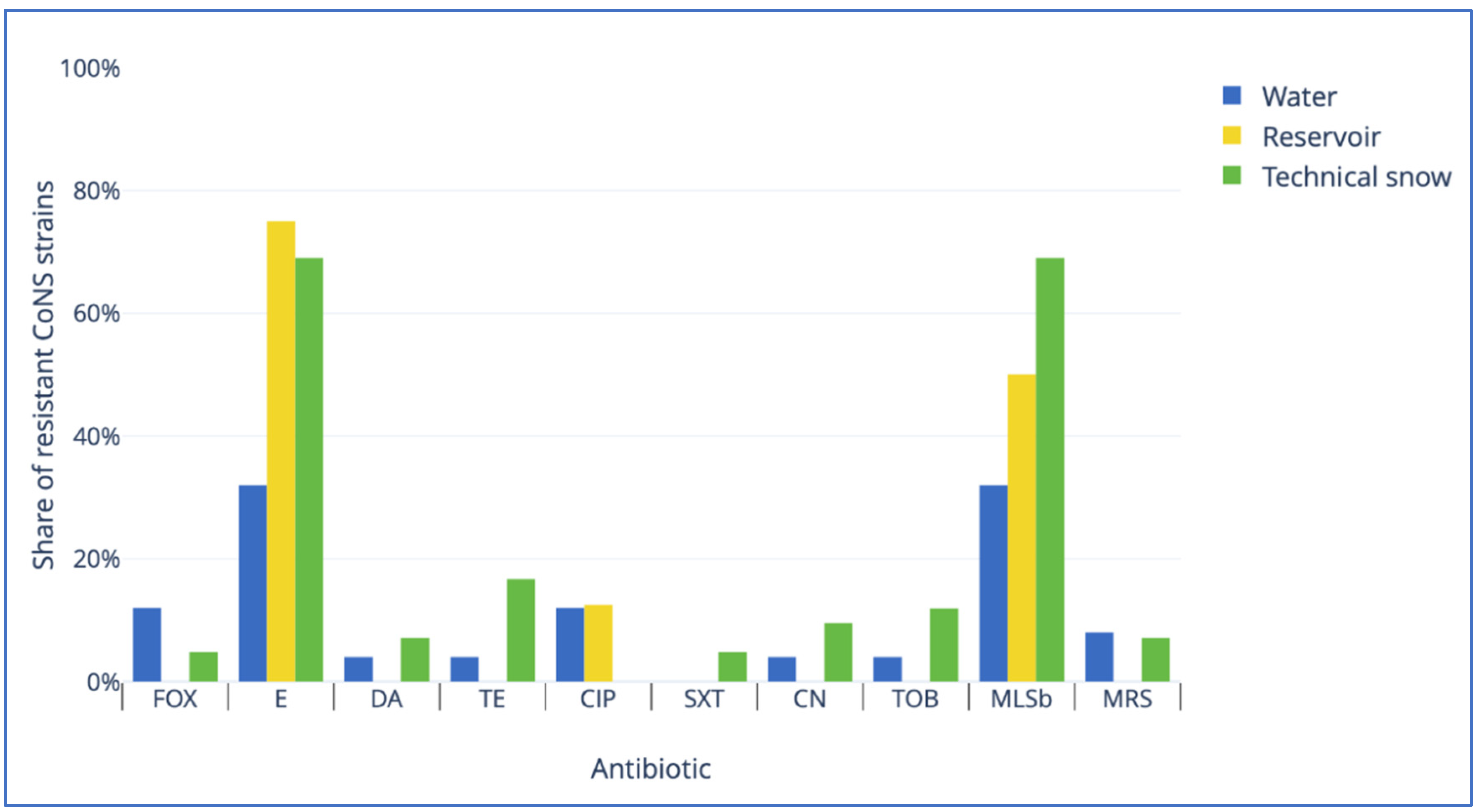
Figure 3 presents the resistance rates of CoNS isolates to all antibiotics tested along with their MLSb and MRS profiles, and compares them between the examined types of samples. The resistance to erythromycin (macrolide) was most frequently detected and was the only one observed in all types of samples. Out of the specific types of resistance, MLSb was similarly very frequent. Very high or the highest rates of resistance to erythromycin have been reported in many studies, worldwide (Faria et al. 2009; Nahaei et al. 2015; Lenart-Boroń et al. 2017). Such high rate of erythromycin resistance, as observed in this and other studies, may be due to the fact that erythromycin is the first-discovered 14-membered macrolide and has been widely used since its clinical introduction in 1952 (Nor Amdan et al. 2024). This fact might influence the co-occurrence, as observed in our study, of the frequent MLSb type of resistance (i.e., 32% in river water, 50% in reservoir-stored water and 69% in snowmelt water).
Given the high prevalence of erythromycin resistance along with the MLSb phenotype among the isolated CoNS, we examined the genes determining the resistance to macrolides (msrA encoding efflux protein (Lina et al. 1999), ereA encoding macrolide lactone ring esterase, and mphA encoding macrolide-active phosphotransferase (Sutcliffe et al. 1996)), lincosamids (lnuA encoding lincosamide nucleotidyltransferase (Lina et al. 1999)) and streptogramins b (vga encoding ATP-binding cassette protein (Lina et al. 1999). Due to the fact that CoNS may act as reservoirs of genes determining the resistance to e.g., S. aureus, we also screened the isolates for the presence of mecA gene, encoding the alternative penicillin-binding protein, PBP 2a (Geha et al. 1994). Out of the three macrolide resistance determining genes, msrA was most frequently detected (i.e., in 44 isolates, 58.67%). Among all examined genes, vga was the second most frequent (in 10 isolates, 13.33%), followed by mecA gene (in 9 isolates, 12%). In eight out of the nine mecA-positive isolates, this gene co-occurred with msrA (and msrA only). Two isolates (S. haemolyticus, technical snow-derived, Białka river catchment and S. lugdunensis, technical snow-derived, Biały Dunajec catchment) were characterized by the presence of three out of the examined genes, i.e., msrA, lnuA and vga (thus a set encoding the resistance to macrolides, lincosamids and streptogramins b) (Table 2).
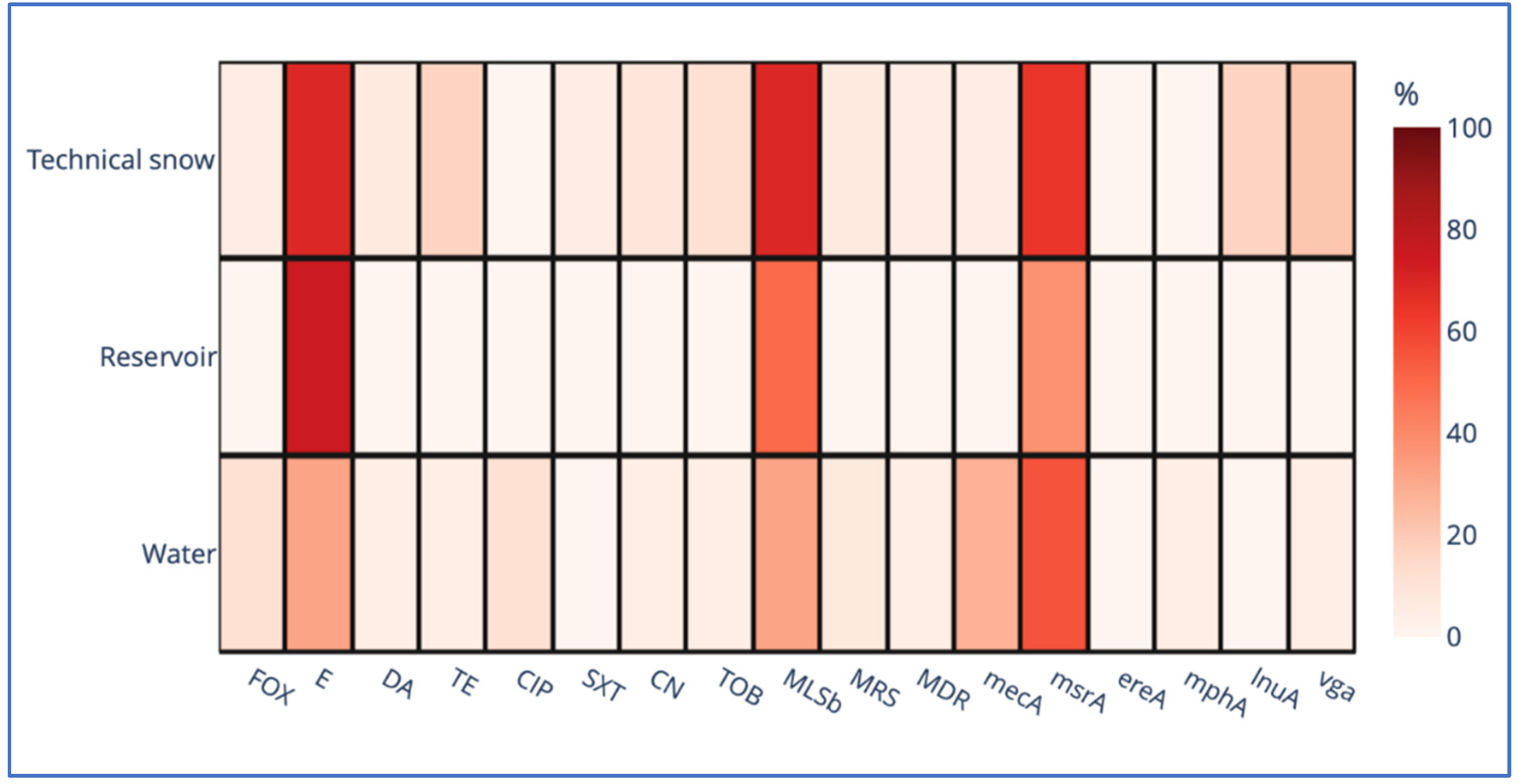
To further examine the spread of resistance throughout the cycle of technical snow production, we created a heatmap (Figure 4) presenting the percentage share of resistance phenotypes, MRS and MLSb types of resistance along with their genetic determinants. It shows a clear relationship between the highest prevalence of erythromycin resistance, combined with the MLSb type of resistance and the genetic determinant thereof, i.e., msrA gene. Worryingly, the technical snow was characterized by the highest percentage of MLSb-positive and mphA-positive isolates (Figure 2 and Figure 4). There may be two reasons for such situation. First would be – similarly as in the case of higher staphylococcal counts in technical snow than in water used for its production – the ability to form biofilms on biotic and abiotic surfaces, which allows these bacteria to resist and survive environmental stresses allowing their further spread [20]. The second reason might be the co-occurrence of antibiotic-resistance and cold stress resistance in certain strains of CoNS, but verification of this hypothesis requires further studies.
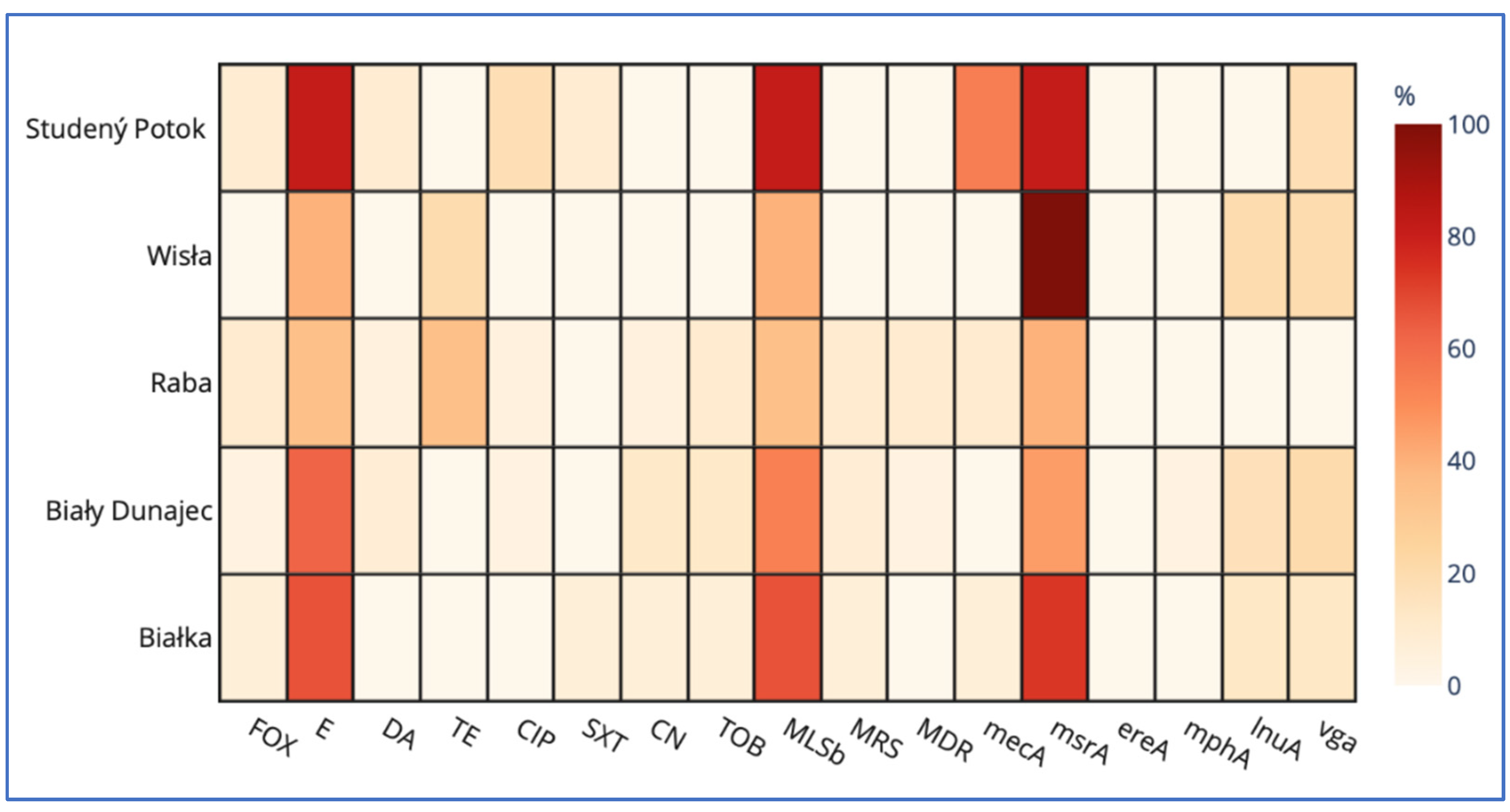
Similar relationship (i.e., co-occurrence of erythromycin resistance phenotype with MLSb type of resistance and/ msrA gene) was observed when various river catchments were examined (Figure 5). The highest or nearly the highest resistance phenotypes and gene prevalence were observed in Studený Potok in Slovakia (e.g., the highest percentage of mecA-positive isolates). Yeamans et al. [22] mentions irrational use of antibiotics as the most common cause of antibiotic resistance, at the same time exploring the prevalence of self-medication in populations of different European countries. Poland and Slovakia are both characterized by high self-medication rates, i.e., 51% in Slovakia and 46% in Poland. European Centre for Disease Prevention and Control (ECDC) raises the alarm on continuously increasing threat of antimicrobial resistance, estimating that over 35,000 people die every year due to antibiotic resistant infections across the EU/EEA countries [23] and lists the overall antibiotic consumption as the major AMR contributor. The ECDC reports on antibiotic consumption by countries list Poland and Slovakia high (23.2 and 20.1 DDD/1000 inhabitants/day in Poland and Slovakia, respectively) in the consumption of antibacterials for systemic use [24]. Also, the MRSA detection rate is the same in Poland and Slovakia (i.e., 15.2% according to the report by [25]). However, what needs to be mentioned here, is the fact that the phenotypic resistance and genetic determinant detection rates observed locally can vary significantly by regions (as seen in e.g., Figure 5 – part referring to Polish watercourses).
The Pearson’s correlation coefficient between the antibiotic presence, concentration (Stankiewicz et al., unpubl.), the resistance phenotypes and their genetic determinants (Supplementary Table S1) shows no correlation between the concentrations or the presence of various antimicrobial agents and the corresponding resistances or the genetic determinants thereof. This is very likely, as the major sources of antibiotic resistant bacteria and resistance genes in the environment include wastewater treatment plants, surface runoff from agriculture and animal industry [26]. Thus, most probably the source of the AMR CoNS observed in the examined samples was located upstream of the water intakes for technical snow production.
However, what needs to be stressed here, is the fact that the frequency of isolation, as well as identification of numerous opportunistic pathogens in technical snow, with which skiers (especially beginners) have particularly frequent contact, is worth further examination. One of unexplored so far aspects of technical snow production, is the fact that during the technical snow production there are forced transport mechanisms where water – after filtration or without it – is aerosolized by snow cannons, thus contributing to bioaerosol formation. The only study to date explores the microbial and non-microbial ice nucleation particles, their distribution and impact on the ice nucleation of water [27]. For this reason, future experiments could be focused on the detection and microbial composition of bioaerosols formed during the technical snowmaking processes.

5. Conclusions

Our study is one of the pioneering investigations on the artificial snowmaking in ski resorts, that not only contributes to the understanding of the environmental impact of technical snow production from water of varying quality, but also to the identification of potential health risks to the workers and tourists associated with bacteriologically contaminated technical snow. Only when such risks are identified and understood, will it be possible to implement the preventive measures.
And so, in this study we demonstrated that:
- technical snow produced from microbiologically contaminated water may frequently contain coagulase-negative staphylococci (CoNS), since as many as 60% of technical snow-melt water samples proved positive for the presence of Staphylococcus spp.;
- the CoNS counts in technical snowm-melt water reached high values, in some cases exceeding these observed in water used for the production of technical snow. If maintenance and cleaning of snowmaking devices is conducted too rarely, staphylococi-containing water microbiota may form biofilm within the devices, resulting in increased concentrations of these microorganisms in the technical snow;
- ten CoNS species were identified in the study, including opportunistic pathogens such as S. haemolyticus, S. warneri and S. lugdunensis. Among them, S. lugdunensis shares some clinical features with S. aureus, with several virulence factors already demonstrated, while S. warneri has been recently recognized as a new emerging pathogen, being responsible for severe invasive infections;
- the resistance to macrolide antibiotic - erythromycin was most frequent in all three types of samples, the same as the MLSb type of resistance, probably due to the fact that erythromycin is one of the “oldest” antibiotics used in medicine. This was coupled with the most frequent detection of msrA gene, encoding erythromycin efflux pump.
Further studies are needed to examine the unexplored so far aspects of the technical snow production, which has recently become inevitable for winter sports to continue in lower altitudes, due to the global climate warming. One of such aspects and future directions of research may be the exploration of bioaerosol formation during the technical snowmaking procedures.

Supplementary Materials

The following supporting information can be downloaded at the website of this paper posted on Preprints.org; Table S1: correlation between resistance phenotypes and genes.

Author Contributions

Conceptualization, K.S. and A.L-B.; methodology, A.L-B.; software, K.S. abd A.L-B.; validation, K.S. and A.L-B.; formal analysis, K.S.; investigation, K.S.; resources, A.L-B.; data curation, A.L-B.; writing—original draft preparation, A.L-B.; writing—review and editing, K.S.; visualization, K.S.; supervision, A.L-B.; project administration, A.L-B.; funding acquisition, A.L-B. All authors have read and agreed to the published version of the manuscript.

Funding

This research was funded by the statutory measures of the University of Agriculture in Kraków.

Data Availability Statement

data available on request from the corresponding author.

Acknowledgments

the Authors would like to thank PhD Justyna Prajsnar for her support in the analyses of antimicrobials’ content in water and snow samples.

Conflicts of Interest

The authors declare no conflicts of interest.

References

  1. Becker, K.; Both, A.; Weißelberg, S.; Heilmann, C.; Rohde, H. Emergence of Coagulase-Negative Staphylococci. Expert Review of Anti-infective Therapy 2020, 18, 349–366. [Google Scholar] [CrossRef] [PubMed]
  2. Becker, K.; Heilmann, C.; Peters, G. Coagulase-Negative Staphylococci. Clinical microbiology reviews 2014, 27, 870–926. [Google Scholar] [CrossRef] [PubMed]
  3. Faria, C.; Vaz-Moreira, I.; Serapicos, E.; Nunes, O.C.; Manaia, C.M. Antibiotic Resistance in Coagulase Negative Staphylococci Isolated from Wastewater and Drinking Water. Science of the Total Environment 2009, 407, 3876–3882. [Google Scholar] [CrossRef] [PubMed]
  4. Santos, G.A.C.; Dropa, M.; Martone-Rocha, S.; Peternella, F.A.S.; Veiga, D.P.B.; Razzolini, M.T.P. Microbiological Monitoring of Coagulase-Negative Staphylococcus in Public Drinking Water Fountains: Pathogenicity Factors, Antimicrobial Resistance and Potential Health Risks. Journal of Water and Health 2023, 21, 361–371. [Google Scholar] [CrossRef] [PubMed]
  5. Fowoyo, P.T.; Ogunbanwo, S.T. Antimicrobial Resistance in Coagulase-Negative Staphylococci from Nigerian Traditional Fermented Foods. Annals of Clinical Microbiology and Antimicrobials 2017, 16, 4. [Google Scholar] [CrossRef]
  6. Grünewald, T.; Wolfsperger, F. Water Losses During Technical Snow Production: Results From Field Experiments. Frontiers in Earth Science 2019, 7. [Google Scholar] [CrossRef]
  7. Vanham, D.; Fleischhacker, E.; Rauch, W. Technical Note: Seasonality in Alpine Water Resources Management - A Regional Assessment. Hydrology and Earth System Sciences 2008, 12, 91–100. [Google Scholar] [CrossRef]
  8. Kulik, K.; Lenart-Boroń, A.; Wyrzykowska, K. Impact of Antibiotic Pollution on the Bacterial Population within Surface Water with Special Focus on Mountain Rivers. Water 2023, 15. [Google Scholar] [CrossRef]
  9. Stankiewicz, K.; Boroń, P.; Prajsnar, J.; Żelazny, M.; Heliasz, M.; Hunter, W.; Lenart-Boroń, A. Second Life of Water and Wastewater in the Context of Circular Economy - Do the Membrane Bioreactor Technology and Storage Reservoirs Make the Recycled Water Safe for Further Use? The Science of the total environment 2024, 921, 170995. [Google Scholar] [CrossRef]
  10. Lenart-Boroń, A.; Wolanin, A.A.; Jelonkiewicz, Ł.; Żelazny, M. Factors and Mechanisms Affecting Seasonal Changes in the Prevalence of Microbiological Indicators of Water Quality and Nutrient Concentrations in Waters of the Białka River Catchment, Southern Poland. Water, Air, and Soil Pollution 2016, 227. [Google Scholar] [CrossRef]
  11. Hijazin, M.; Hassan, A.A.; Alber, J.; Lämmler, C.; Timke, M.; Kostrzewa, M.; Prenger-Berninghoff, E.; Zschöck, M. Evaluation of Matrix-Assisted Laser Desorption Ionization-Time of Flight Mass Spectrometry (MALDI-TOF MS) for Species Identification of Bacteria of Genera Arcanobacterium and Trueperella. Veterinary Microbiology 2012, 157, 243–245. [Google Scholar] [CrossRef] [PubMed]
  12. Bauer, A.W.; Kirby, W.M.; Sherris, J.C.; Turck, M. Antibiotic Susceptibility Testing by a Standardized Single Disk Method. American journal of clinical pathology 1966, 45, 493–496. [Google Scholar] [CrossRef] [PubMed]
  13. EUCAST European Committee on Antimicrobial Susceptibility Testing Breakpoint Tables for Interpretation of MICs and Zone Diameters European Committee on Antimicrobial Susceptibility Testing Breakpoint Tables for Interpretation of MICs and Zone Diameters. http://www.eucast.org/fileadmin/src/media/PDFs/EUCAST_files/Breakpoint_tables/v_5.0_Breakpoint_Table_01.pdf 2023, 0–77.
  14. Magiorakos, A.-P.; Srinivasan, A.; Carey, R.B.; Carmeli, Y.; Falagas, M.E.; Giske, C.G.; Harbarth, S.; Hindler, J.F.; Kahlmeter, G.; Olsson-Liljequist, B.; et al. Multidrug-Resistant, Extensively Drug-Resistant and Pandrug-Resistant Bacteria: An International Expert Proposal for Interim Standard Definitions for Acquired Resistance. Clinical Microbiology and Infection 2012, 18, 268–281. [Google Scholar] [CrossRef] [PubMed]
  15. Fiebelkorn, K.R.; Crawford, S.A.; McElmeel, M.L.; Jorgensen, J.H. Practical Disk Diffusion Method for Detection of Inducible Clindamycin Resistance in Staphylococcus Aureus and Coagulase-Negative Staphylococci. Journal of clinical microbiology 2003, 41, 4740–4744. [Google Scholar] [CrossRef]
  16. Williams, M.M.; Domingo, J.W.S.; Meckes, M.C.; Kelty, C.A.; Rochon, H.S. Phylogenetic Diversity of Drinking Water Bacteria in a Distribution System Simulator. Journal of applied microbiology 2004, 96, 954–964. [Google Scholar] [CrossRef] [PubMed]
  17. Michels, R.; Last, K.; Becker, S.L.; Papan, C. Update on Coagulase-Negative Staphylococci—What the Clinician Should Know. Microorganisms 2021, 9. [Google Scholar] [CrossRef] [PubMed]
  18. Kosecka-Strojek, M.; Wolska-Gębarzewska, M.; Podbielska-Kubera, A.; Samet, A.; Krawczyk, B.; Międzobrodzki, J.; Michalik, M. May Staphylococcus Lugdunensis Be an Etiological Factor of Chronic Maxillary Sinuses Infection? International journal of molecular sciences 2022, 23. [Google Scholar] [CrossRef] [PubMed]
  19. Ravaioli, S.; De Donno, A.; Bottau, G.; Campoccia, D.; Maso, A.; Dolzani, P.; Balaji, P.; Pegreffi, F.; Daglia, M.; Arciola, C.R. The Opportunistic Pathogen Staphylococcus Warneri: Virulence and Antibiotic Resistance, Clinical Features, Association with Orthopedic Implants and Other Medical Devices, and a Glance at Industrial Applications. Antibiotics 2024, 13. [Google Scholar] [CrossRef]
  20. Lu, Y.; Lu, Q.; Cheng, Y.; Wen, G.; Luo, Q.; Shao, H.; Zhang, T. High Concentration of Coagulase-Negative Staphylococci Carriage among Bioaerosols of Henhouses in Central China. BMC Microbiology 2020, 20, 21. [Google Scholar] [CrossRef]
  21. Ruiz-Ripa, L.; Gómez, P.; Alonso, C.A.; Camacho, M.C.; Ramiro, Y.; de la Puente, J.; Fernández-Fernández, R.; Quevedo, M.Á.; Blanco, J.M.; Báguena, G.; et al. Frequency and Characterization of Antimicrobial Resistance and Virulence Genes of Coagulase-Negative Staphylococci from Wild Birds in Spain. Detection of Tst-Carrying S. Sciuri Isolates. Microorganisms 2020, 8.
  22. Yeamans, S.; Gil-de-Miguel, Á.; Hernández-Barrera, V.; Carrasco-Garrido, P. Self-Medication among General Population in the European Union: Prevalence and Associated Factors. European Journal of Epidemiology 2024, 39, 977–990. [Google Scholar] [CrossRef] [PubMed]
  23. OECD Fighting Antimicrobial Resistance in EU and EEA Countries. 2023.
  24. European Centre for Disease Prevention and Control Antimicrobial Consumption in the EU/EEA (ESAC-Net) - Annual Epidemiological Report for 2022. European Centre for Disease Prevention and Control 2023, 1–27.
  25. ECDC Country Summaries - Antimicrobial Resistance in the EU/EEA 2022. Stockholm: European Centre for Disease Prevention and Control; 2023. 2023.
  26. Nava, A.R.; Daneshian, L.; Sarma, H. Antibiotic Resistant Genes in the Environment-Exploring Surveillance Methods and Sustainable Remediation Strategies of Antibiotics and ARGs. Environmental Research 2022, 215, 114212. [Google Scholar] [CrossRef] [PubMed]
  27. Baloh, P.; Els, N.; David, R.O.; Larose, C.; Whitmore, K.; Sattler, B.; Grothe, H. Assessment of Artificial and Natural Transport Mechanisms of Ice Nucleating Particles in an Alpine Ski Resort in Obergurgl, Austria. Frontiers in microbiology 2019, 10, 2278. [Google Scholar] [CrossRef] [PubMed]
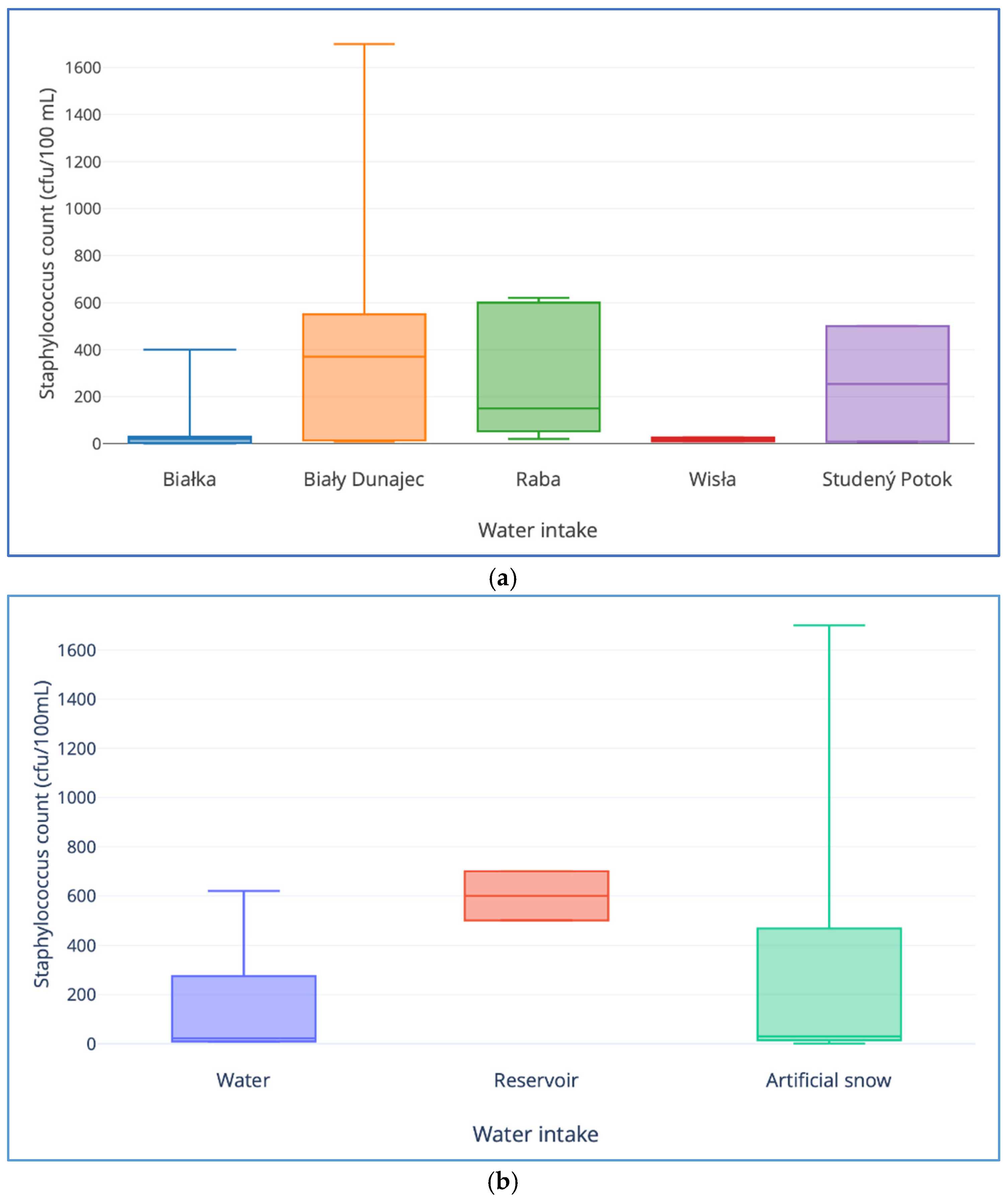
Figure 1. Boxplots showing total staphylococcal counts (CFU/100 ml), showing the differences between: a) river catchments; b) types of water samples.
Preprints 143045 g001
Figure 2. Species distribution of coagulase-negative staphylococci (CoNS) identified in the study.
Preprints 143045 g002
Figure 3. Resistance rates of CoNS strains divided by the types of samples examined in the study. FOX – cefoxitin, E – erythromycin, DA – clindamycin, TE – tetracycline, CIP – ciprofloxacin, SXT – trimethoprim/sulfamethoxazole, CN – gentamycin, TOB – tobramycin; MLSb – macrolide/lincosamid/streptogramin b type of resistance, MRS – methicillin resistance.
Preprints 143045 g003
Figure 4. Heatmap showing the antibiotic resistance phenotypes, MLSb and MRS types of resistance and genetic determinants of antimicrobial resistance in river water used for the technical snow production (Water), water stored in reservoirs prior to technical snow production (Reservoir) and in technical snow-melt water (Technical snow). FOX – cefoxitin, E – erythromycin, DA – clindamycin, TE – tetracycline, CIP – ciprofloxacin, SXT – trimethoprim/sulfamethoxazole, CN – gentamycin, TOB – tobramycin; MLSb – macrolide/lincosamid/streptogramin b type of resistance, MRS – methicillin resistance. The differences in the resistance to erythromycin and ciprofloxacin, and in the detection rates of mecA and lnuA were statistically significant (F=5.50, 5.23, 5.06 and 3.17, respectively; p=0.006, 0.008, 0.009 and 0.048, respectively).
Preprints 143045 g004
Figure 5. Heatmap showing the antibiotic resistance phenotypes, MLSb and MRS types of resistance and genetic determinants of antimicrobial resistance in catchments of five rivers: Białka, Biały Dunajec, Raba and Wisła in Poland and Studený Potok in Slovakia. FOX – cefoxitin, E – erythromycin, DA – clindamycin, TE – tetracycline, CIP – ciprofloxacin, SXT – trimethoprim/sulfamethoxazole, CN – gentamycin, TOB – tobramycin; MLSb – macrolide/lincosamid/streptogramin b type of resistance, MRS – methicillin resistance. The differences in tetracycline resistance as well as mecA and msrA detection rates were statistically significant (F= 5.88, 7.89 and 3.26, respectively; p=0.0004, 0.00003 and 0.016, respectively).
Preprints 143045 g005
Table 1. PCR primers used in the study and antibiotic resistance gene characterization.
Gene Mode of action Primer sequence (5′-3′) Amplicon size (bp) Annealing temperature (°C) Reference
mecA alternative penicillin-binding protein, PBP 2a F: GTAGAAAATGACTGAACGTCCGATAA
R: CCAATTCCACATTGTTTCGGTCTAA
310 55 (Geha et al. 1994)
msrA macrolide efflux protein F: GGCACAATAAGAGTGTTTAAAGG
R: AAGTTATATCATGAATAGATTGTCCTGTT
940 50 (Lina et al. 1999)
ereA macrolide lactone esterase F: AACACCCTGAACCCAAGGGACG
R: CTTCACATCCGGATTCGCTCGA
420 57 (Sutcliffe et al. 1996)
mphA macrolide-active phosphotransferase F: AACTGTACGCACTTGC
R: GGTACTCTTCGTTACC
837 50 (Sutcliffe et al. 1996)
lnuA lincosamide nucleotidyltransferase F: GGTGGCTGGGGGGTAGATGTATTAACTGG
R: GCTTCTTTTGAAATACATGGTATTTTTCGATC
323 57 (Lina et al. 1999)
vga ABC-F subfamily protein conferring resistance to streptogramin A F: CCAGAACTGCTATTAGCAGATGAA
R: AAGTTCGTTTCTCTTTTCGACG
470 54 (Lina et al. 1999)
Table 2. Summary of antimicrobial resistance and the resistance-determining genes in the coagulase-negative staphylococci analyzed in this study.
No. Species River catchment* Type of sample** Antibiotic resistance phenotype*** Antibiotic resistance genes
1 S. epidermidis
n=10
B=4, BD=0
R=0, W=0
S=6
W=7
R=0
S=3
FOX (1), E (8), DA (0), TE (0), CIP (2), SXT (1), CN (0), TOB (0), MSB (8), cMLSB (0), iMLSB (0), MDR (0) mecA (7), msrA (8), ereA (0), mphA (0), lnuA (0), vga (0)
2 S. haemolyticus
n=13
B=1, BD=3
R=8, W=1
S=0
W=1
R=0
S=12
FOX (2), E (11), DA (1), TE (7), CIP (1), SXT (0), CN (4), TOB (3), MSB (1), cMLSB (1), iMLSB (9), MDR (2) mecA (1), msrA (6), ereA (0), mphA (0), lnuA (5), vga (3)
3 S. lugdunensis
n=2
B=0, BD=1
R=1, W=0
S=0
W=0
R=0
S=2
FOX (0), E (1), DA (1), TE (0), CIP (0), SXT (0), CN (1), TOB (1), MSB (0), cMLSB (1), iMLSB (0), MDR (1) mecA (0), msrA (1), ereA (0), mphA (0), lnuA (1), vga (1)
4 S. warneri
n=19
B=2, BD=6
R=7, W=0
S=4
W=6
R=3
S=10
FOX (0), E (9), DA (1), TE (0), CIP (1), SXT (1), CN (0), TOB (1), MSB (7), cMLSB (0), iMLSB (0), MDR (0) mecA (0), msrA (12), ereA (0), mphA (0), lnuA (0), vga (2)
5 S. pasteuri
n=4
B=0, BD=3
R=0, W=1
S=0
W=0
R=3
S=1
FOX (0), E (3), DA (0), TE (1), CIP (0), SXT (0), CN (0), TOB (0), MSB (3), cMLSB (0), iMLSB (0), MDR (0) mecA (0), msrA (1), ereA (0), mphA (0), lnuA (0), vga (0)
6 S. equorum
n= 8
B=0, BD=7
R=1, W=0
S=0
W=5
R=2
S=1
FOX (1), E (1), DA (0), TE (0), CIP (0), SXT (0), CN (0), TOB (0), MSB (1), cMLSB (0), iMLSB (0), MDR (0) mecA (0), msrA (3), ereA (0), mphA (1), lnuA (0), vga (0)
7 S. xylosus
n=3
B=0, BD=2
R=1, W=0
S=0
W=2
R=0
S=1
FOX (0), E (1), DA (0), TE (0), CIP (0), SXT (0), CN (0), TOB (0), MSB (0), cMLSB (0), iMLSB (1), MDR (0) mecA (0), msrA (0), ereA (0), mphA (0), lnuA (0), vga (0)
8 S. hominis
n=1
B=0, BD=1
R=0, W=0
S=0
W=0
R=0
S=1
FOX (0), E (1), DA (0), TE (0), CIP (0), SXT (0), CN (0), TOB (0), MSB (0), cMLSB (0), iMLSB (1), MDR (0) mecA (0), msrA (0), ereA (0), mphA (0), lnuA (0), vga (0)
9 S. cohnii
n=2
B=0, BD=0
R=1, W=0
S=1
W=1
R=0
S=1
FOX (0), E (1), DA (1), TE (0), CIP (0), SXT (0), CN (0), TOB (0), MSB (0), cMLSB (1), iMLSB (0), MDR (0) mecA (1), msrA (2), ereA (0), mphA (0), lnuA (0), vga (1)
10 S. capitis
n=1
B=0, BD=0
R=0, W=1
S=0
W=0
R=0
S=1
FOX (0), E (1), DA (0), TE (0), CIP (0), SXT (0), CN (0), TOB (0), MSB (1), cMLSB (0), iMLSB (0), MDR (0) mecA (0), msrA (1), ereA (0), mphA (0), lnuA (0), vga (0)
11 Staphylococcus sp.
n=12
B=8, BD=1
R=1, W=2
S=0
W=3
R=0
S=9
FOX (1), E (6), DA (0), TE (0), CIP (0), SXT (0), CN (0), TOB (1), MSB (6), cMLSB (0), iMLSB (0), MDR (0) mecA (0), msrA (10), ereA (0), mphA (0), lnuA (1), vga (3)
*River catchment: B-Białka, BD- Biały Dunajec, R – Raba, W – Wisła, S - Studený Potok; **Type of sample: W – river water, R – reservoir, S – technical snow; ***Antibiotic resistance: FOX – cefoxitin, E – erythromycin, DA – clindamycin, TE – tetracycline, CIP – ciprofloxacin, SXT - trimethoprim/sulfamethoxazole, CN – gentamicin, TOB – tobramycin, MSB - resistance to macrolide and streptogramin B, cMLSB - constitutive resistance to macrolide, lincosamide and streptogramin B, iMLSB – inducible resistance to macrolide, lincosamide and streptogramin B, MDR – multidrug resistance.
Disclaimer/Publisher’s Note: The statements, opinions and data contained in all publications are solely those of the individual author(s) and contributor(s) and not of MDPI and/or the editor(s). MDPI and/or the editor(s) disclaim responsibility for any injury to people or property resulting from any ideas, methods, instructions or products referred to in the content.
Copyright: This open access article is published under a Creative Commons CC BY 4.0 license, which permit the free download, distribution, and reuse, provided that the author and preprint are cited in any reuse.
Prerpints.org logo

Preprints.org is a free preprint server supported by MDPI in Basel, Switzerland.

Subscribe

Disclaimer

Terms of Use

Privacy Policy

Privacy Settings

© 2025 MDPI (Basel, Switzerland) unless otherwise stated