

Submitted:
14 December 2024
Posted:
16 December 2024
You are already at the latest version
Abstract
This study examines the role of mutualized engineering in fostering social innovation, focusing on the SAFIR project at the University of Bejaia, Algeria. As part of a European initiative co-financed by the European Union, the project supported 45 impactful ideas, integrating academic, governmental, and entrepreneurial networks to address pressing socio-economic challenges. Using qualitative methods, including semi-structured interviews with project leaders and European experts, this research highlights the critical role of collaboration and inter-territoriality in innovation. Findings demonstrate that effective social innovation depends on robust cooperation among universities, businesses, governments, and incubators, supported by applied research and tailored incubation practices. The study introduces six operational scaling models that align with specific objectives, offering a framework for increasing social impact and ensuring organizational sustainability. By advancing our understanding of scaling strategies, this research provides actionable insights for policymakers, practitioners, and academics aiming to promote sustainable development through social innovation.
Keywords:
Social Innovation
; mutualized engineering
; University incubator
; Scaling Strategies
; SAFIR project
Abstract. This study examines the role of mutualized engineering in fostering social innovation, focusing on the SAFIR project at the University of Bejaia, Algeria. As part of a European initiative co-financed by the European Union, the project supported 45 impactful ideas, integrating academic, governmental, and entrepreneurial networks to address pressing socio-economic challenges. Using qualitative methods, including semi-structured interviews with project leaders and European experts, this research highlights the critical role of collaboration and inter-territoriality in innovation. Findings demonstrate that effective social innovation depends on robust cooperation among universities, businesses, governments, and incubators, supported by applied research and tailored incubation practices. The study introduces six operational scaling models that align with specific objectives, offering a framework for increasing social impact and ensuring organizational sustainability. By advancing our understanding of scaling strategies, this research provides actionable insights for policymakers, practitioners, and academics aiming to promote sustainable development through social innovation.
Introduction
The transition from a market-driven economy to a knowledge-driven economy is increasingly amplifying the pressure of globalization. This is because dynamics can be expected to transform at the global level. The "Triple Helix" model argues that universities play an increased role in innovation in societies that are increasingly knowledge-based. This model is different from the approach of national innovation systems (NIS) (Nelson, 1993), which considers the enterprise as having the primary role in innovation, and from the "Triangle" model of Sábato (1975), in which the government is privileged (see Etzkowitz, 2000). The "Triple Helix" model is analogous to the approach proposed by (Etzkowitz & Leydesdorff, 2000; Leydesdorff & Etzkowitz, 2001), which analyzes the relationships that universities, businesses, and governments establish among themselves to create synergy to stimulate innovation.
While the Triple Helix model underscores the importance of university-industry-government collaboration, its application in North Africa requires contextual adaptation. Factors such as cultural norms, political structures, and economic disparities significantly influence the effectiveness of these collaborations (Carayannis & Campbell, 2010). For instance, in Algeria, the alignment of academic and governmental priorities has been critical in addressing socio-economic challenges through innovation. Tailoring the Triple Helix framework to local conditions ensures that partnerships remain effective and relevant.
The national framework for priority research axes for the year 2022 in Algeria advocates innovation, both as a multidisciplinary pivot and as the third mission of the University through technology transfer for the valorization of scientific research. This is in the sense of solving socio-economic and environmental problems on a large scale.
To do that, the "Triple Helix" approach prioritizes communication between each helix - university, business, and government. Each helix is immersed in a unique environment; an autonomous ecosystem with its own codes, where at the intersection of these three institutions - university, business, and government - new arrangements and hybrid institutions such as incubators (in African or European countries) and technology parks (in Asian countries, for example) would be revealed (Ivanova & Leydesdorff, 2014).
Capacity building projects or co-funded Euro-Mediterranean projects by the European Union in Algeria are stakeholders not to be overlooked in strengthening entrepreneurship and the activation of territorial resources by higher education and scientific research institutions. To this end, since October 2020, in Algeria, the social incubator ACSE, the universities of Bejaia and Mostaganem (accepted applications in the first call), and the University of Guelma (accepted application from the second call) have been selected by the regional program "Safir" and have obtained a grant of €80,000 to develop an incubation and acceleration device for young people. "Safir" is a program co-financed by the European Union and led by the French Institute in a consortium with Lab'ess (The Social and Solidarity Economy Laboratory based in Tunis, Tunisia), Pitchworthy (Lebanese incubator), AUF (University Agency of Francophonie), CFI (French Agency for Media Development), and ANND (Arab NGO Network for Development) aimed at supporting over 1000 young people with social, cultural, and environmental impact projects and structuring a regional ecosystem in 9 countries in North Africa and the Middle East (Algeria, Egypt, Jordan, Lebanon, Libya, Morocco, Palestine, Syria, Tunisia) aimed at increasing dialogue between youth and public authorities.
In this article, we focus on the overlap of communication flows that are reshaping institutional agreements between universities, industries, and governments through capacity-building projects. Taking the SAFIR project as an example of analysis in favor of social entrepreneurship in the face of sustainable development challenges, we will try to answer the following question: Could social innovation be a development model in response to the socio-economic challenges of the territories of North Africa? Potentially, in Algeria?
Literature review
The FING (New Generation Internet Foundation) published the "New Generation Innovation" framework in 2015, which includes social innovation and defines it according to the Higher Council of the Social and Solidarity Economy (2011, p.11) as “social innovation consists of developing new responses to new or poorly satisfied social needs in the current conditions of the market and social policies, involving the participation and cooperation of stakeholders, particularly users and beneficiaries. These innovations concern not only the product or service but also the mode of organization, distribution, in areas such as aging, early childhood, housing, health, poverty reduction, exclusion, discrimination, and so on. They go through a process in several steps: emergence, experimentation, diffusion, evaluation”.
Building on the definition of social innovation, recent studies emphasize the role of collaborative ecosystems in fostering innovation. The emergence of living labs and co-creation spaces has demonstrated how multi-stakeholder engagement can generate sustainable solutions to social challenges (Ayala-Orozco et al., 2018). These models extend beyond traditional frameworks by integrating beneficiaries as active participants in the innovation process. This participatory approach aligns with the SAFIR project’s objectives, which prioritize local community engagement and capacity building to drive systemic change. In other words, social innovation could be a product innovation, a commercial innovation, an organizational innovation, or a process innovation; the social dimension should respond to a need arising from a socio-economic context.
Nowadays, we talk about innovative social projects with an impact. This impact refers to a response to the 17 sustainable development goals (Ghobakhloo, 2019; Li & Found, 2017). We think here of the desire to increase the social impact of a project by benefiting more people, in more territories (Benkhider & Kherbachi, 2021). In the North African context, scaling social innovation is uniquely influenced by socio-economic and institutional factors. For instance, limited access to funding and administrative complexities often constrain the growth of innovative ventures (Sampaio and Sebastaio, 2024). However, regional initiatives, such as the SAFIR project, highlight the potential for scaling through cross-border cooperation and knowledge exchange. These initiatives leverage shared cultural and economic challenges to develop scalable solutions, underscoring the need for localized strategies that align with regional priorities.
If additional motivations may then be specific to project leaders (internal or external growth for the development of their structure, for example) (Keddari, Kherbachi, & Benkhider, 2021), others are also specific to public actors (inclusion of people with reduced mobility in job accessibility, for example) (Mergel, Gong, & Bertot, 2018). Here are some, broadening the focus from micro to macro:
- − To make a social utility project viable if it is not sustainable by staying in a small perimeter (geographical, target audience (persons));
- − To improve the project's quality, to which the redistribution of turnover would benefit civil society (waste management in the region, ...);
- − To consolidate the organizations that carry these initiatives, whose growth allows public actors to have solid operators to work with to implement public policies (attract funders on a larger geographical scale or increase the percentage of participation of other organizations that are/will be potential stakeholders);
- − To respond to a local need that is not or poorly satisfied: this is probably the main reason, the change of scale having primarily a practical purpose, that of bringing proven solutions elsewhere rather than wanting to reinvent everything (we note, for example, an application to streamline urban transport where traffic is naturally dense;
- − To save public money in several ways: by pooling effective and often cost-effective solutions for the sites that implement them; by avoiding redundancies in means devoted locally to the search for these solutions; by simplifying the work of sharing experiences through common tools... These tracks would surely need to be deepened in the current context of public finances, particularly in Algeria.
The first motivations to change scale are, a priori, common to project leaders who would like to spread their initiative. Ultimately, "increasing the social impact of the project" is broken down into three objectives (Moore, Riddell, & Vocisano, 2015):
- − Increase the impact on each beneficiary;
- − Increase the number of beneficiaries per territory;
- − Increase the number of territories, to reach new beneficiaries.
The emergence of investment funds dedicated to structures that put social and environmental issues at the heart of their concerns (Gracia & Casaló Ariño, 2015). A signal that is all the stronger since many of these impact structures are profitable, but achieving their social objective (solutions to limit climate change, fight against poverty, access to education, social inclusion, etc.) sometimes limits their profitability. And to support, structure but above all to make these structures emerge, Algeria can rely on the will of its youth, on financial actors who are concerned (public and private banks), on an economic fabric that is beginning to structure itself but also on an important territorial network of incubators. These academic, public or private incubators have the mission of accompanying entrepreneurs in reflecting on their purpose and the impact of their project ideas. Finding the best way to combine economic development and impact development is a major challenge for social entrepreneurs.
Incubators play a pivotal role in enabling startups to scale by providing essential resources, including mentorship, funding access, and market connections (Li et al., 2020). In particular, academic incubators foster innovation by bridging the gap between research and commercialization. This dual role—supporting ideation and scaling—positions incubators as key drivers of economic and social impact. The SAFIR project’s focus on university incubators reflects this potential, illustrating how higher education institutions can contribute to sustainable development through targeted support for entrepreneurial initiatives.
In Algeria, as well as in neighboring countries, there is a lack of training on SSE (Social and Solidarity Economy), particularly in universities and business schools. We should also note the lack of training on entrepreneurship in cultural and creative sectors, which is necessary to ensure a pool of young professionals capable of integrating support structures with adequate tools.
Methodology
Exposed to the injunction of permanent social innovation, European projects in support of youth in North Africa or the Middle East offer methodological designs for engineering entrepreneurial conduct devices. In this sense, through university incubation in Algeria, which has been in effect since 2021, entrepreneurship receives favorable advocacy for the benefit of student-entrepreneurs. The object of study is potentially innovative project holders participating in the call for applications (or challenge) expressed by the university incubator of Bejaia in March 2022.
In total, 48 applications were submitted, all aimed at providing an innovative solution (or innovator for some), and only 44 project holders were preselected based on the feasibility of their project idea. These are 44 responsible citizen students who aspire to a solution at the regional, national, or international level. Figure 1 shows the number of project holders selected according to their affiliation with a training cycle, specifically 11 in the Bachelor's cycle (Licence), 24 in the Master's cycle, and 10 enrolled in a doctoral thesis.
As stated in the introduction section, the priority research areas for 2022 were defined as the areas in which the project holder should contribute with their idea as an innovative solution. To this end, the following areas have been defined (as indicated in Figure 2).
Interviews were put online with the registration form to address secondary questions related to the main question:
Is the project innovative or potentially innovative? Where is it in the innovation process? What is its level of adoption by stakeholders and users? How and with what is innovation created? What should be done to advance this process? How to position the role of SAFIR project experts in supporting the process?
These questions led us to establish a shared engineering methodology with European experts on the question of "how to define an innovative project?". Indeed, all the experiences of the University in national or international challenges or marathons were not the initiative of the university itself. And, now that it is initiating a challenge for the best innovative idea through its academic incubator structure, a skills diagnosis of its members has pointed out the gaps they need to address. The FANAKA group was designated by AUF as a European expert to diagnose the incubation process and provide turnkey training to its members to address it. This diagnostic step could only be relevant if a preliminary diagnosis of the University's skills in social entrepreneurship was established.
A multidisciplinary working team with international experts and researchers from the Bejaia University around a common goal: better support and finance social innovation, to accelerate its development. Indeed, to convince innovation stakeholders to support social innovation, it is still necessary to define, concretely, what a "socially innovative" project is. A grid of criteria, resulting from this work, has been developed to facilitate the identification, selection, diagnosis, and support of socially innovative projects. This tool includes 8 core criteria that constitute the heart of the characterization of social innovation, and 12 complementary criteria. It provides a common basis for all social innovation stakeholders, while adapting to the diversity of their needs: an entrepreneur wishing to diagnose his project to identify improvement opportunities, an organization looking to select innovative projects for funding, an incubator proposing to support projects in their development, etc. Beyond the characterization work, the academic incubator aims to develop the culture and practices of innovation within social enterprises, to put in place specific tools to support and finance social innovation and also to open up traditional innovation assistance. The work carried out by this group of stakeholders notably led, in May 2021, to the launch of a social innovation toolbox aimed, primarily, at entrepreneurs and innovation support actors from the business formations concerning them.
The diagnostic phase at the level of the three North African countries (Algeria, Morocco, and Tunisia) presents them as middle-income economies. This characteristic is an indicator of social problems in these societies. Indeed, one need only observe the high rate of unemployment among young graduates since 2019 (27.8% in Algeria compared to 20.4% for Morocco and 30.1% for Tunisia). This indicator shows that the professional integration of young graduates presents a socio-economic challenge for these regions, which can be explained by a limited labor market, heavy and complex administrative procedures, a lack of entrepreneurial culture, and difficulty accessing financing. However, it should be noted that the policies of these three countries are observing the progression of private initiatives and insertion through self-employment. Thanks to the support of incubators, notably through social innovation, which play a role in promoting SSE as a development model for these territories.
The interaction incubators capabilities (using the example of the academic incubator at the Bejaia University) and the extent of their social role depend on elements related to their governance and mission, such as functions, internal hierarchy level, external relations, knowledge capitalization, and production of social and technological innovations. The configuration of the triple helix in each type of incubator appears as a consequence of university and regional conditions (Etzkowitz & Leydesdorff, 2000) and inter-institutional links, cultural environment, and public policies.
Results and Discussion
To address the major social and environmental challenges of today, it is iportant for project leaders and those who support them to manage, effectively, the scaling process. However, how can this shared ambition be turned into reality? This change represents a real opportunity to consolidate startups and develop what they have most significantly: their ability to be useful not only economically but especially socially.
This article is intended for project leaders and support actors to clarify the notion of scaling and support shared understanding. It is important to revisit a proposed synthesis of models designed for project leaders and those who support them in their scaling process. Let us start with the purposes and objectives pursued, as identified in the expertises of the FANAKA Group. These should be considered as "ideal types," with several objectives possibly being combined in the reality of a single project. It is therefore essential for startups to identify the fundamental objective in terms of social impact that they seek to achieve through their scaling process. These objectives are closely related to their economic needs. Depending on their situation, they may seek to consolidate their social impact in the event of a threat; optimize it if they are seeking performance; improve it qualitatively; increase it quantitatively; and multiply it, i.e., reproduce it in other territories.
To achieve these objectives, project leaders are called upon to identify a clear strategy to follow to succeed in their scaling process. To do so, they are faced with five fundamental strategies where they can adopt one or more of the five. These different strategies are listed as follows: Diversification, which involves creating a new activity to enhance one's model; Duplication, which involves reproducing one's model in other territories; Fertilization, which involves social innovation startups in disseminating their know-how on a larger scale; Cooperation, which involves getting closer to other structures to do more and, above all, better; and finally, the project leader can opt for Fusion, which involves combining their assets with another startup. Figure 3 illustrates these five strategies.
The scaling strategy is a vital component for startups during their expansion phase, offering a distinct approach compared to the fast-growth strategies typically employed in earlier or mature phases of development. While business growth, including fast-growth strategies, has been a long-standing focus of research (Coad, Daunfeldt, Holzl, Johansson, & Nightingale, 2014; Demir, Wennberg, & McKelvie, 2017), there remains a notable gap in both empirical and theoretical knowledge about scaling strategies. To address this, we have adopted an alternative perspective to previous studies that often centered on growth rates (e.g., McKelvie & Wiklund, 2010; Achtenhagen, Brunninge, & Melin, 2017). Instead, we assert that activities such as innovation, financing, digitization, and acquisitions are critical drivers of scaling.
Our approach, grounded in engineering methods, identified six operational scaling models, as outlined in the table. These models are derived from two principal objectives: (1) increasing the social impact of the project, and (2) ensuring the survival or economic growth of the organization. Each objective is further broken down into specific sub-objectives, such as deepening impact on beneficiaries, expanding reach within or across territories, sustaining the economic model, and improving efficiency. These objectives correspond to distinct scaling strategies, including Scale Deep, Scale Out, Scale Up, Scale Across, Scale Together, and Scale by Mixing as presetned in Table 1. The presence or absence of a cross in the relevant columns of the table indicates which scaling models are applicable.
The strategies reflect the multifaceted nature of scaling, addressing both depth and breadth of impact and the sustainability of the organization. For instance, Scale Deep focuses on enhancing the quality of impact on each beneficiary, while Scale Out and Scale Up emphasize geographic and demographic expansion. On the other hand, Scale Together and Scale by Mixing concentrate on cooperative or consolidated approaches to bolster organizational efficiency.
By aligning these strategies with specific objectives, the table highlights the operational flexibility required for scaling. While some strategies may directly address unique challenges—such as geographic deployment to increase regional beneficiaries—others, like mergers or cooperative models, aim to fortify organizational resilience. This structured mapping not only bridges the gap in understanding scaling strategies but also provides actionable insights for startups navigating their expansion phase. It emphasizes the interplay between innovation, resource optimization, and adaptability as critical elements of sustainable scaling.
Scaling up is a complex and difficult challenge where many attractive scaling attempts do not experience significant growth and may ultimately fail to achieve sustained profitability. To address the insufficient managerial knowledge of growth-oriented project leaders, our results on the different operational models of scaling and their different objectives shed light on the different configurations of strategies that foster growth. Although each social innovation startup configures its resources and activities uniquely, our results may be useful to project leaders and support structures in prioritizing certain growth-favoring activities over others and making optimal decisions about necessary arrangements. For social entrepreneurship, the results of this study offer a basis for reflection on support measures that may be necessary for growing social innovation startups, distinct from startups or established companies. In line with the need to focus on capacity-building measures (Autio, 2016), these same results reveal that the importance of growth-favoring objectives varies depending on the operational scaling model. This can contribute to better targeting of support measures by support structures towards the most relevant strategies given the startup's scaling model.
Conclusion
Through this article, we have attempted to show that collaborative networks between actors (namely businesses, universities, and the market represented by national and international organizations) play an important role in driving innovative processes through social interactions. These interactive processes possess a systemic character, where it is impossible to isolate a determining variable that ensures virtuous cooperation. It is truly about inter-territoriality in the management of the innovation process.
The empirical investigation, conducted through participant observation, shows three cases in which the concept and use of social innovation are quite different. The analysis of the biases of these three cases gives us the direction for innovative territorial development through action and support by experts. It also shows that innovation capital with regard to international inter-territorial expertise is equally relevant for turning a business project into a startup.
Referring particularly to the characterization of engineering methods and upstream innovation management tools arising from multiple exchanges with international experts and academic researchers from the University of Bejaia, a proposal emerges for a method to assist in evaluating promising startup ideas.
As with any empirical study, this study is not without limitations. Although the empirical analyses carried out have indicated that social innovation startups with fewer resources tend to cluster together, it is possible that with a larger sample, more nuanced operational models for scaling up can be discovered among such startups. With such data, future research could explore how choices made by startups at an early stage of their scaling up affect their future growth, whether there is a correlation with the path taken, and if so, whether there are specific paths that startups tend to choose over time.
However, while many startups are connected to social innovation through their raison d'être, we must remain vigilant about the actual impact that results from it. This is why we must continue to support initiatives that allow us to measure, optimize, and improve this aspect of the economy and society.
Acknowledgment
The SAFIR project is coordinated by Dr. Sonia KHERBACHI at the University of Bejaia. The project is co-financed by the European Union. The results of this paper are part of the dissemination phase according to the chronogram of the project. Link to the project website: https://www.safir-eu.com/.
References
- Achtenhagen, L., Brunninge, O., & Melin, L. (2017). Patterns of Dynamic Growth in Medium-Sized Companies: Beyond the Dichotomy of Organic Versus Acquired Growth. Long Range Planning, 50(4), 457–471. [CrossRef]
- Autio, E. (2016). Entrepreneurship Support in Europe: Trends and Challenges for EU Policy. London: EU DG GROWTH.
- Ayala-Orozco, B., Rosell, J.A., Merçon, J., Bueno, I., Alatorre-Frenk, G., Langle-Flores, A., & Lobato, A. (2018). Challenges and Strategies in Place-Based Multi-Stakeholder Collaboration for Sustainability: Learning from Experiences in the Global South. Sustainability, 10 (9), 3217. [CrossRef]
- Benkhider, N., & Kherbachi, S. (2021). Towards Sustainable Development Goals: Lessons Learned From The Interplay Between Organizational Capacity And Capabilities. Revue algérienne d'économie et gestion, 15(1), 980-998.
- Carayannis, E. G., & Campbell, D. F. J. (2010). Triple Helix, Quadruple Helix and Quintuple Helix and How Do Knowledge, Innovation and the Environment Relate To Each Other? : A Proposed Framework for a Trans-disciplinary Analysis of Sustainable Development. International Journal of Social Ecology and Sustainable Development, 1(1), 41-69.
- Coad, A., Daunfeldt, S., Holzl, W., Johansson, D., & Nightingale, P. (2014). High-growth firms: introduction to the special section. Industrial and Corporate Change, 23(1), 91–112. [CrossRef]
- Conseil Supérieur de l’Economie Sociale et Solidaire. (2011). Rapport de synthèse du Groupe de travail Innovation Sociale - Projet d’avis. Paris.
- Demir, R., Wennberg, K., & McKelvie, A. (2017). The Strategic Management of High-Growth Firms: A Review and Theoretical Conceptualization. Long Range Planning, 50(4), 431-456. [CrossRef]
- Etzkowitz, H., & Leydesdorff, L. (2000). The dynamics of innovation: from National Systems and ‘‘Mode 2’’ to a Triple Helix of university–industry–government relations. Research Policy, 29, 109–123.
- Ghobakhloo, M. (2019). Industry 4.0, Digitization, and Opportunities for Sustainability. Journal of Cleaner Production, 1-40.
- Gracia, B., & Casaló Ariño, L. V. (2015). Rebuilding public trust in government administrations through e-government actions. Revista Española de Investigación de Marketing ESIC, 19(1), 1-11.
- Ivanova, I. A., & Leydesdorff, L. (2014). Rotational symmetry and the transformation of innovation systems in a Triple Helix of university–industry–government relations. Technological Forecasting and Social Change, 86, 143-156. [CrossRef]
- Keddari, N., Kherbachi, S., & Benkhider, N. (2021). Supporting Sustainable Manufacturing Practices Implementation using Design Structure Matrix in the Algerian Economy. Dans H. (. Stowe, T. R. Browning, S. D. Eppinger, & J. Trauer (Éd.), 23rd International DSM Conference (DSM 2021), (pp. 96-105). Montréal.
- Leydesdorff, L., & Etzkowitz, H. (2001). The transformation of university-industry-government relations. Electronic Journal of Sociology, 5(4), 1-31.
- Li, A. Q., & Found, P. (2017). Towards Sustainability: PSS, Digital Technology and Value Co-creation. Procedia CIRP, 64, 79-84.
- Li, C., Ahmed, N., Qalati, S. A., Khan, A., & Naz, S. (2020). Role of Business Incubators as a Tool for Entrepreneurship Development: The Mediating and Moderating Role of Business Start-Up and Government Regulations. Sustainability, 12(5), 1822. [CrossRef]
- McKelvie, A., & Wiklund, J. (2010). Advancing Firm Growth Research: A Focus on Growth Mode Instead of Growth Rate. Entrepreneurship Theory and Practice, 34(2), 261-288. [CrossRef]
- Mergel, I., Gong, Y., & Bertot, J. (2018). Agile government: Systematic literature review and future research. Government Information Quarterly, 35(2), 291-298. [CrossRef]
- Moore, M.-L., Riddell, D., & Vocisano, D. (2015). The Journal of Corporate Citizenship Issue 58 June 2015 © Greenleaf Publishing 2015 67Scaling Out, Scaling Up, Scaling DeepStrategies of Non-profits in Advancing Systemic Social Innovation. The Journal of Corporate Citizenship (58), 69-84.
- Nelson, R. R. (1993). National Innovation Systems: A Comparative Analysis (éd. 1). (R. R. Nelson, Éd.) Oxford, Walton Street: Oxford University Press.
- Sampaio, C., & Sebastião, J. R. (2024). Social Innovation and Social Entrepreneurship: Uncovering Themes, Trends, and Discourse. Administrative Sciences, 14(3), 53. [CrossRef]
Figure 1.
Project holders’ Profiles. Source: Illustrated by authors.
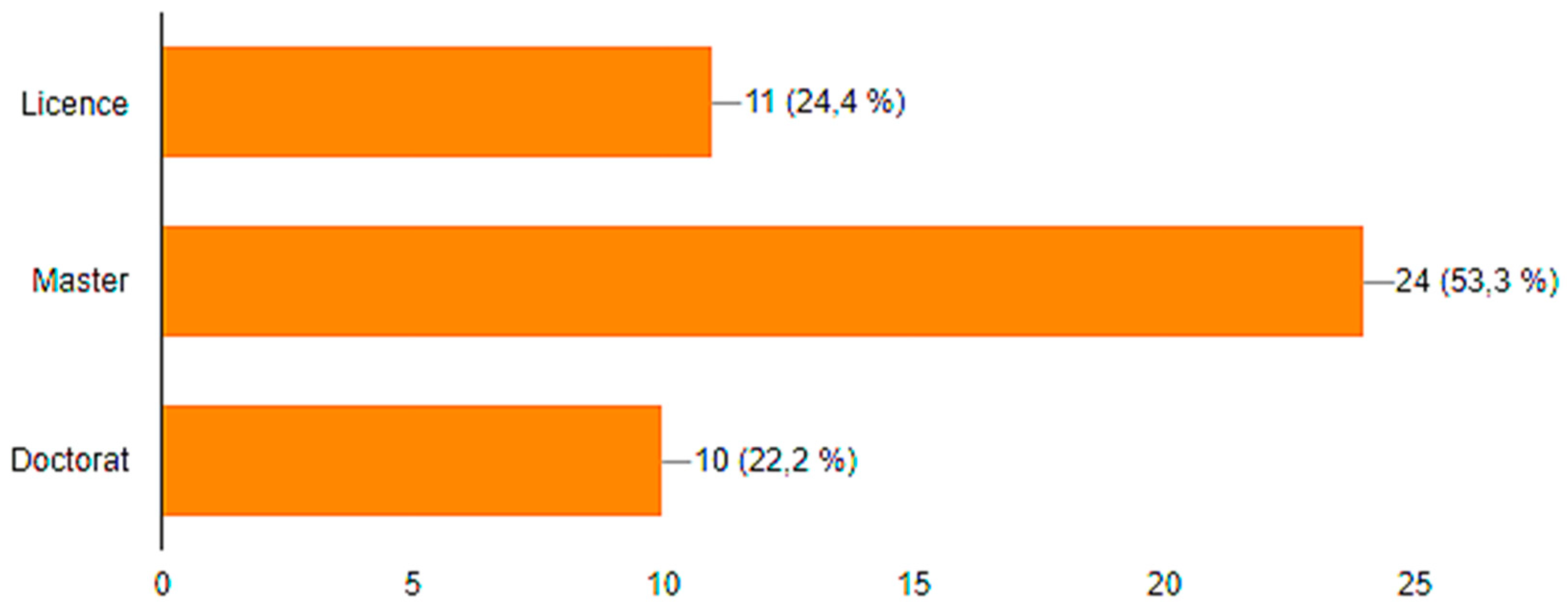
Figure 2.
Selected axes according to project ideas. Source: Illustrated by authors.
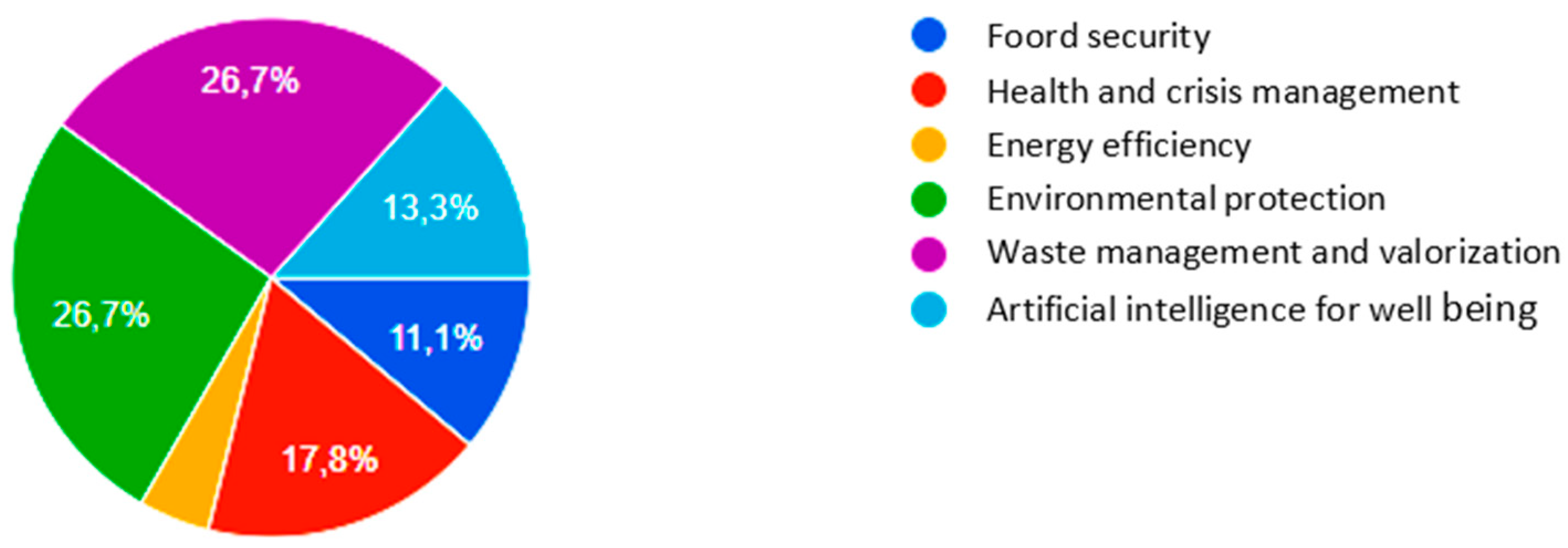
Figure 3.
Five strategies for scaling change. Source: Superior Council for Social and Solidarity Economy (2011).
Figure 3.
Five strategies for scaling change. Source: Superior Council for Social and Solidarity Economy (2011).
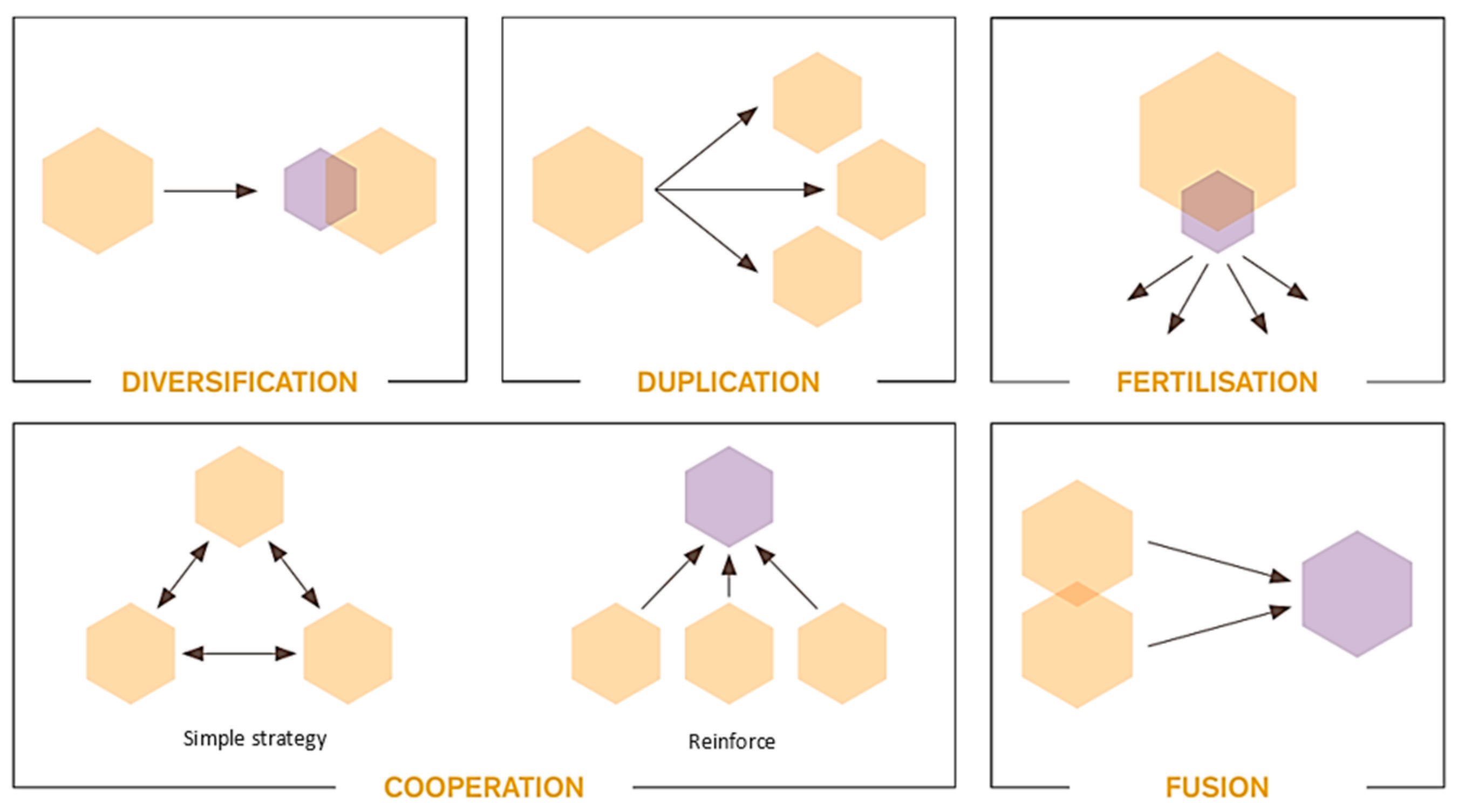

Table 1.
Between increasing social impact and ensuring the economic growth of the selected projects: scaling models matrix.
Table 1.
Between increasing social impact and ensuring the economic growth of the selected projects: scaling models matrix.
| Scale of change | |||||||
|---|---|---|---|---|---|---|---|
| Purpose | Objective | Deepening (Scale Deep) | Diversification (Scale Out) | Duplication or Geographic Deployment (Scale Up) | Availability or Fertilization (Scale Across) | Cooperation (Scale Together) | Merger (Scale by Mixing) |
| Increase the social impact of the project | Increase the impact on each beneficiary | X | X | X | |||
| Increase the number of beneficiaries per territory | X | X | |||||
| Increase the number of territories | X | X | |||||
| Ensure the survival or economic growth of the organization | Sustain the economic model | X | X | ||||
| Enhance economic efficiency (economies of scale, productivity gains) | X | X | |||||
Source: Performed by authors.
Disclaimer/Publisher’s Note: The statements, opinions and data contained in all publications are solely those of the individual author(s) and contributor(s) and not of MDPI and/or the editor(s). MDPI and/or the editor(s) disclaim responsibility for any injury to people or property resulting from any ideas, methods, instructions or products referred to in the content. |
© 2024 by the authors. Licensee MDPI, Basel, Switzerland. This article is an open access article distributed under the terms and conditions of the Creative Commons Attribution (CC BY) license (http://creativecommons.org/licenses/by/4.0/).
Copyright: This open access article is published under a Creative Commons CC BY 4.0 license, which permit the free download, distribution, and reuse, provided that the author and preprint are cited in any reuse.


