Preprint
Article

This version is not peer-reviewed.

Digitalization of Mining Enterprises in Kazakhstan: Current State and Prospects

Submitted:

16 December 2024

Posted:

16 December 2024

You are already at the latest version

Abstract

The study critically analyzes the innovation challenges faced by mining enterprises in Kazakhstan, focusing on key issues and potential opportunities related to the adoption of Industry 4.0 technologies. The research highlights that the strategic goal of Kazakhstan's mining sector is its integration into the global economy through digitalization, which aims to address the sector’s limited production of high-value goods. Despite the potential of digital transformation, the current level of digitalization across enterprises remains insufficient, requiring more structured implementation of engineering and economic processes. A statistical analysis using PESTEL, regression, and factor analysis, alongside a questionnaire survey, revealed low capital productivity as a major issue. The findings suggest that the complexity of mining operations necessitates improved innovation strategies tailored to specific resource extraction conditions. Furthermore, the digitalization focus is gradually shifting from production to areas like geology, ecology, and industrial safety. The study offers a framework for evaluating mining enterprises against international standards and serves as a valuable reference for both domestic and international investors interested in the evolving IT landscape of Kazakhstan's mining sector.

Keywords: 
;  ;  ;  ;  ;  

1. Introduction

The current structure of Kazakhstan’s economy, which is among the countries with the highest energy intensity, and the technological backwardness of the conservative mining sector are the main reasons that the economy has a pronounced raw material orientation.
The decline in the quality of extracted ores and the complication of mining and geological conditions require the advanced development of new stages in the mining sector, which is under the strong influence of state ownership and becomes a driver for the import of new technologies into the country [1]. The lack of sufficient processing in the industry and the depletion of local raw material reserves are constraints for the integration of innovations into the production process and transfer of digital technologies.
Despite lagging behind world leaders in technological advancements, Kazakhstan’s mining sector plays a crucial role in the global economy as a major exporter and borrower of capital. The domestic market, while prioritizing local value chains, still faces significant challenges in increasing intellectual assets and driving innovation. These difficulties are evident in the country’s investment attractiveness, which has been hampered by slow progress toward low-carbon development and the adoption of international standards such as the Committee for Mineral Reserves International Reporting Standards (CRIRSCO) and the Global Reporting Initiative (GRI). Additionally, the sector must align with environmental, social, and governance (ESG) trends to remain competitive [2,3,4,5,6,7,8].
For Kazakhstan, a developing economy, it is particularly important to understand the barriers to the introduction of digital technologies that are common in both developed and developing countries. Research shows that digital production is a key driver of productivity, and the development of new technologies is essential for catching up with global leaders [9,10,11,12].
This study critically examines the innovation challenges faced by Kazakhstan’s mining enterprises, with a specific focus on the opportunities that Industry 4.0 technologies present. By addressing these key challenges, the research emphasizes how digitalization can enhance Kazakhstan’s competitiveness in the global market while promoting sustainable development. The insights gathered from this study are intended to benefit both domestic and international stakeholders who seek to invest in or collaborate with Kazakhstan’s mining sector.
Historically, innovation has not been a priority for Kazakhstan’s mining sector due to a strong presence of state ownership, limited competition, and chronic underinvestment. However, these challenges have become more pressing with fluctuating demand for natural resources and the necessity for companies to adapt to market conditions while reducing costs and managing value chain priorities. This issue is compounded by geopolitical tensions and the complexity of integrating both software and hardware solutions into mining management. Key concerns include replenishing the mineral resource base, increasing the value of in-country production, and improving raw material processing, all of which require advancements in engineering technology.
As digital transformation accelerates, integrating digital solutions within Kazakhstan’s resource-based economy becomes essential for diversification and maintaining global competitiveness. The study offers recommendations to support government initiatives aimed at sustainable development and enhancing the country’s investment appeal, particularly for those targeting rare and precious metals, which are critical to the global transition to green energy. Additionally, achieving technological independence in this transformation will necessitate collaboration between domestic and foreign players, especially in geological exploration.
By contributing to the international dialogue on digital transformation in resource-rich economies, the authors hope that Kazakhstan’s experience will offer valuable insights to other nations facing similar challenges and further strengthen the competitive positioning of its mining sector.
The global demand for digital tools in enterprise operations confirms the relevance of addressing current industry challenges in the context of technological advancements. Many studies discuss and debate these issues [13]. Authors have explored the impact of new technologies on the energy sector’s value chain [14], assessed the role of advanced technologies in achieving industrial sustainability [15], and examined the influence of conceptual innovations on the competitive standing of mining industries within lean production frameworks [16]. The effects of adopting video analytics and computer vision for automated safety data collection are also investigated in several studies [17,18,19].
The increasing role of innovation in the value chains of emerging economies is of growing scholarly interest [20]. Enterprises are aiming to build their own ecosystems focused on production processes and direct connections with end consumers. The importance of new technical solutions and technological innovations, especially in enhancing labor productivity and aligning with global trends, is emphasized in various studies [21]. To succeed, enterprises must adopt technologies that boost strategic business value and improve access to corporate governance information [22,23,24].
For Kazakhstan, the digitalization of the mining sector is particularly relevant in the context of import substitution, which requires collaborative action among market participants, software developers, and government agencies to address the identified challenges.Approaches to comparing the rate of change in the value of extracted natural capital with the rate of change in other resources are discussed [38,39]. There is a growing realisation that inefficient mining is a factor in environmental pollution [40].
In recent years, Kazakhstan has become the main transport and logistics hub of Central Asia, the country aims to become the leading technological and IT hub on the Eurasian continent, aims at large-scale cooperation in areas such as R&D projects, startups, education to create new complex IT projects, especially in the field of artificial intelligence. Therefore, the accumulated global experience demonstrating information exchange within the ecosystem of digital technologies, creation of digital platforms, including extraction, processing, logistics and marketing, is important for Kazakhstan, especially taking into account the growth of cyberattacks [41]. Emphasis should be placed on ensuring both uniform standards in operations and speeding up production processes, as well as privacy and security [42,43,44,45]. Interesting studies where the authors [46] focus on risk situations accompanying the introduction of innovative technologies.
The above allows us to conclude that in the future, the mining sector of Kazakhstan should prioritize the improvement of innovative solutions and should be aimed at covering all assets and processes of the enterprise through the development of a digital transformation strategy and a unified cloud platform [47]. This will make it possible to model intraproduction processes, improve customer relations, and achieve a new level of integration of digital, physical and social areas [48,49,50].
This approach will require accelerated mastering of international standards, co-operation with leading IT industry players to build up the competencies of employees of enterprises in the IT sphere, to form a holistic perception of innovations [51,52,53,54,55,56]. Digital integration in the form of interaction between science, suppliers, manufacturers of digital solutions and their consumers is considered to be key vector of industry development in the future [57,58,59,60].
As demand for essential minerals, including rare earths, a critical resource, grows, new opportunities are opening up for Kazakhstan. Efficient handling of previously undeveloped mineral resources requires a turn towards sustainable development ideology and practice, combined with socio-political and organizational-economic approaches. The authors conclude that interest in various innovative aspects of the industry is growing and requires in-depth study. Despite the peculiarities of country’s innovative development, there are common methodological techniques that Kazakhstan can borrow to develop its own approach to the digitalization of the mining sector

2. Materials and Methods

This study utilizes a structured methodology to explore the digitalization challenges in Kazakhstan’s mining sector. A combination of retrospective and prospective analysis methods was applied, including logical-theoretical comparison and the examination of publicly available statistical data. This framework was designed to identify key trends and barriers in the sector’s digital transformation.
The primary sources of data were obtained from official databases, including the Bureau of National Statistics of the Agency for Strategic Planning and Reforms of the Republic of Kazakhstan and the Kazakhstan Center for Industry and Export “Qazindustry” [61]. Additionally, the Taldau Information and Analytical System and data from the Autonomous Cluster Fund “Park of Innovative Technologies” were utilized to provide detailed information on industry performance from 2005 to 2023 [61,62].
During the post-Soviet period, enterprises created a diversified portfolio of assets, became strategic partners for investors, and strengthened their competitive advantage in the field of data due to their platform component. Using customised innovative solutions, digital models were designed with a focus on ESG principles and the increasing of efficiency of management processes.
Despite the fact that in Kazakhstan the transfer of mineral reserves to international standards was hampered by organizational fragmentation, low capacity and narrow focus of geological structures, the country was the first in the post-Soviet space since 2016 to master the standards CRIRSCO, developed a national standard (KAZRC), adopted into the CRIRSCO family [63,64]. The currently relevant standards are united for the assessment of enterprises in the context of international requirements (Figure 1).
Two major mining complexes were selected for the study: Kazakhmys Corporation LLP and QARMET JSC. These enterprises were chosen due to their significant role in the national mining industry and their advancements in integrating digital technologies [65]. Both companies are involved in large-scale digital initiatives aimed at improving operational efficiency, including the adoption of SAP ERP and other digital platforms [65,66,67,68].
The empirical base of the study is represented by official data from the Bureau of National Statistics of the Agency for Strategic Planning and Reforms of the Republic of Kazakhstan, the Kazakhstan Center for Industry and Export “Quazindustry”, information and analytical system “Taldau”, autonomous cluster fund “Park of Innovative Technologies”, long-term author’s research.
Regression and factor analysis methods were used to quantify the impact of technological and economic factors on mining enterprise performance. A three-factor regression model was developed to assess how material inputs, labor compensation, and fixed capital influence output, with adjustments made to ensure comparability of statistical indicators [64]. PESTEL analysis was applied to examine external factors such as political, economic, and technological influences on the sector’s digitalization [70,71].
Currently, each field in Kazakhstan has created its own database, including archival data (mainly paper version) and information collected during the acquisition of subsoil use rights. Since the potential of Kazakhstan’s subsoil is huge (99 out of 105 elements of the Mendeleev table have been discovered, 70 have been explored, 60 are being extracted), it will be necessary to digitize paper carriers, identify documents and systematize them into a single database. The state plans to increase the area of geological and geophysical exploration from the current 1.5 million to at least 2.2 million square kilometers by 2026, and to create a national repository based on the experience of Western Australia.
In addition to quantitative analysis, expert interviews were conducted with industry professionals from Kazakhmys Corporation LLP and QARMET JSC to gather qualitative insights into the digitalization process. These interviews focused on understanding technological challenges, workforce readiness, and integration with international standards [61].
The analysis was supported by the use of several digital tools. Software such as Statistica and MS Excel was utilized to process the collected data, while SAP ERP systems were employed for modeling business processes within Kazakhmys Corporation LLP and QARMET JSC [61,70]. Additionally, the MINEFRAME system facilitated geological modeling and resource estimation at the Verkhnee Espe deposit [67].
The study encountered several limitations that affected the ability to fully substantiate conclusions and recommendations. First, the reporting provided by Kazakhstan under the international Extractive Industries Transparency Initiative (EITI) is fragmented and inconsistent. Second, there is a lack of reliable statistical data on innovation expenditures for the post-Soviet period, which is a result of Kazakhstan’s industrial development history. Additionally, some of the necessary information is confidential, and the process of digitizing data from the Soviet era presents extra challenges. This data requires systematization and reinterpretation using modern geological concepts, such as stratigraphic and geodynamic frameworks, to confirm the potential of the deposits. These issues contribute to market opacity and limit the availability of information for potential investors [69]. As a result, these factors created unavoidable methodological inconsistencies in the study.
One significant limitation of this study was the incomplete nature of historical data, particularly regarding innovation expenditures. Furthermore, some corporate data remained confidential, restricting the scope of certain analyses. Nevertheless, these challenges were mitigated through a comprehensive literature review and expert interviews, ensuring robust conclusions based on available data [70,71].

3. Results

The conducted research allowed us to conclude that, in general, the level of implementation of digital technologies in medium and small enterprises is low: most entities are provided with primary digital infrastructure, but this infrastructure is mainly involved in solving managerial tasks. To develop digital platforms, enterprises use a set of frameworks that allow them to select certain components taking into account a given IT landscape. Only 21% of fields are equipped with modern equipment and developed data transmission networks, 56% of fields have no networks, 23% require complete replacement of equipment.
A three-factor regression model describing the impact of resources (material inputs X1, labor compensation X2 and fixed capital X3) on output showed a very high degree of correlation. A two-factor regression model including such factors of reproduction as labor remuneration and fixed capital also showed a very high degree of correlation between these factors and the final results. However, the degree of significance of the totality of these factors is lower than in the three-factor model (Table 1).
The assessment of the degree of influence of each of the factors confirmed the predominant influence of material costs. They practically suppress other influences, tend to maintain and sometimes increase in importance. The weight of the fixed capital factor has the smallest indicator among those considered factors, which indicates a low return on fixed capital. Enterprises are losing competitive positions not only because of the depletion of high-quality reserves, high levels of carbon dioxide emissions and difficulties in field exploration, but also because of the existing technical level.
However, despite the initially low level of automation, enterprises are striving to create sustainable and infrastructure for archiving and storing raw data, developing mining and geological charts of deposits for qualitative economic evaluation. During 2020-2023, there was an increase in enterprises’ expenditures on servers, data storage systems and IT network infrastructure. The introduction of new technologies and increased spending on cloud services were fueled by high prices for metals and hydrocarbons. In the medium term, non-cloud spending may be reduced, and as physical IT infrastructure becomes obsolete, enterprises will consider migrating to cloud infrastructure.
At the same time, in many cases, the level of development of data analysis subsystems is low, there is no integration of subsystems among themselves, the emphasis is on traditional business processes, mainly office programs, CRM systems, BPMS systems, ISM are used.
Difficulties in the field of predictive analytics have been identified: automated analytical systems do not allow to anticipate a problem in advance and make the required management decision in advance. One of the main problems is related to the lack of domestic digital equipment: the market is represented by developments that do not cover the entire range of tasks, from geological and economic modeling to operational production planning and supply management. Australian and North American software products endowed with the specified functionality are not used by enterprises due to the high price, lack of a Russian-language interface and examples of positive adaptation in post-Soviet countries.
The most significant factors affecting the technological improvement of geological research and the build-up of scientific support for the exploration process are summarized in Table 2 and Table 3.
With regard to new technologies, experts focused on the state of the external business environment, the need for a systematic approach to digital technologies, and the transition from process management to data-based management. The World Bank draws attention to the fact that Kazakhstan consistently allocates less funds for R&D than other comparable countries in terms of economic situation. It is important for enterprises to increase business transparency, productivity and operational efficiency, and reduce production costs.
Particular attention is paid to the formation of a unified digital ecosystem, achieving vertical integration of business partners’ processes across the value chain, from mining and processing of minerals to manufacturing of the final product. For example, in order to develop metal processing and create clusters, it is more appropriate to incentivise companies to process natural resources domestically. For this purpose, at higher conversion rates, the state could reduce mineral extraction tax rates. The situation improved when subsoil users began to allocate 1% of their own extraction costs for R&D and independently choose scientific and educational organizations for their financing [70].
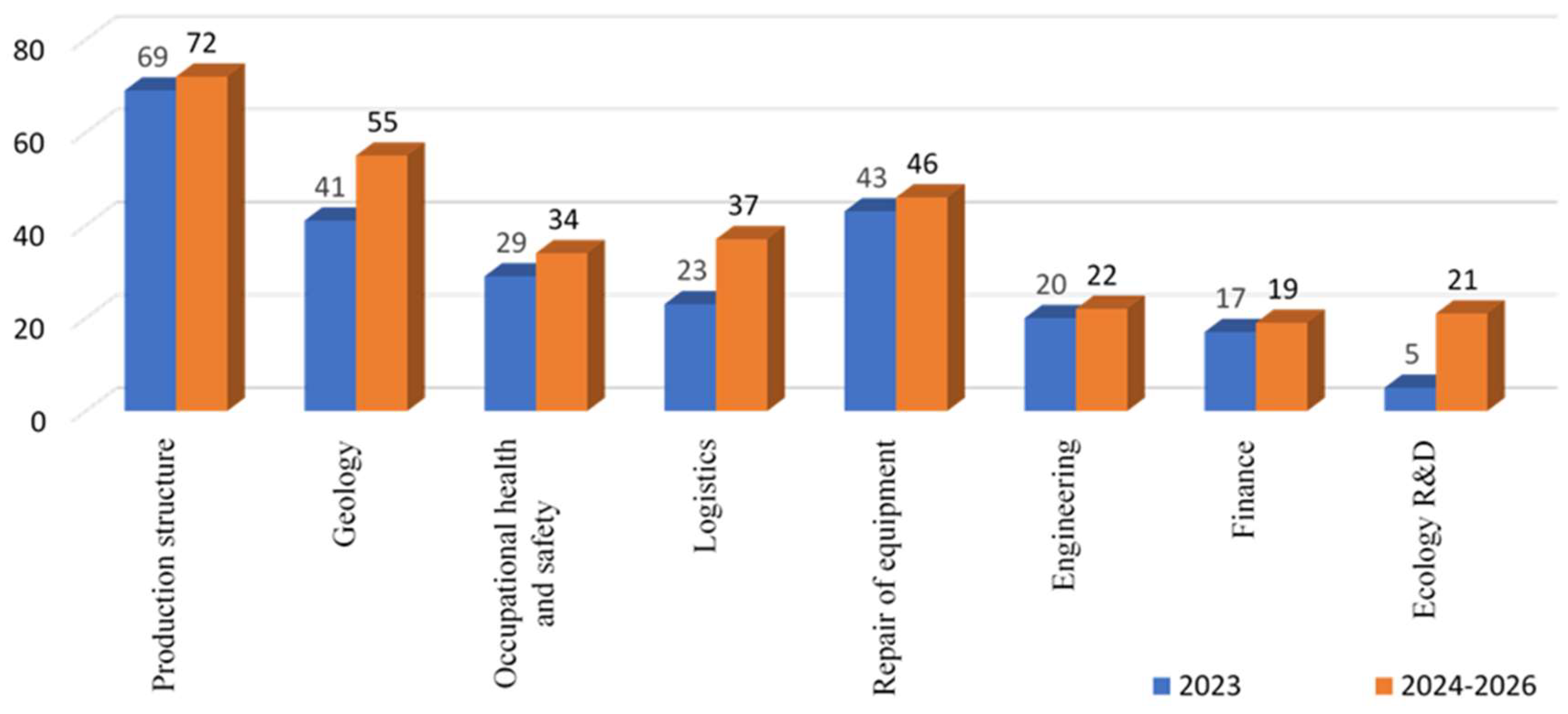
In the medium term, the priority remains the digitalization of production, where technologies with a long payback period are expected to be introduced, but the range of digital solutions will expand, with a consistent shift in focus to geology, environment and industrial safety (Figure 2).
Developed by the authors using [1,64,70,71]; used the results of the authors’ research based on the results of interviews with industry top managers and surveys of respondents of enterprises of the mining sector of Kazakhstan.
One of the most popular software products in recent years is a full-featured mining and geological information system for integrated automation of geological, surveying and technological tasks in a single digital enterprise space (GGIS) MINEFRAME.
The object of our research is the Verkhnee Espe deposit, one of the promising sites for the development of rare earth metal extraction in Central Kazakhstan. Verkhnee Espe is associated with carbonatite massifs and magmatic processes, which create a rich mineralogical composition. It contains both light rare earth elements (cerium, lanthanum, neodymium) and heavy rare earth elements (samarium, dysprosium), making it valuable for high-tech industries.
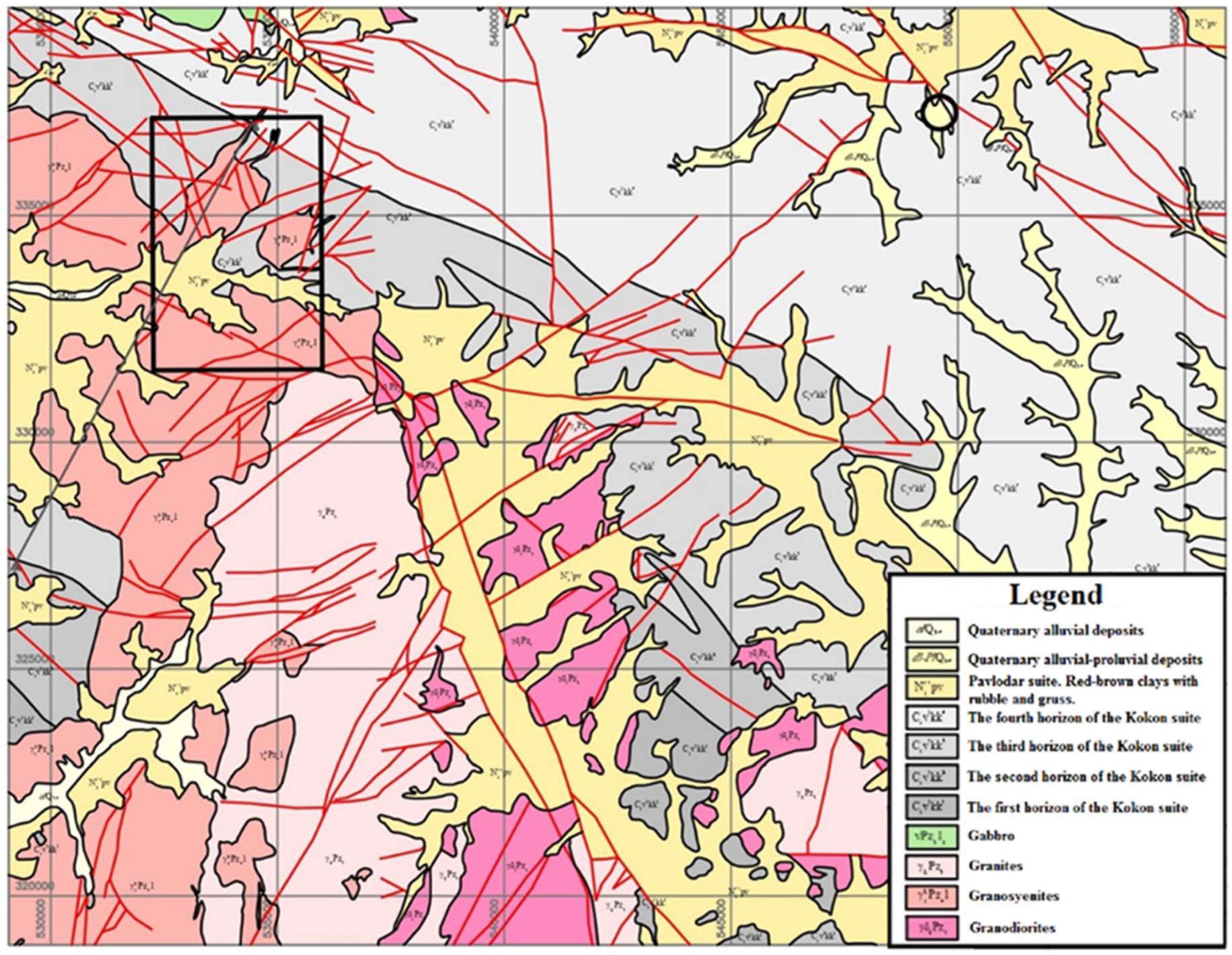
Figure 3 presents the geological map of the Verkhnee Espe deposit, showing the main tectonic structures and the distribution of carbonatite intrusions, which are the primary sources of rare earth elements.
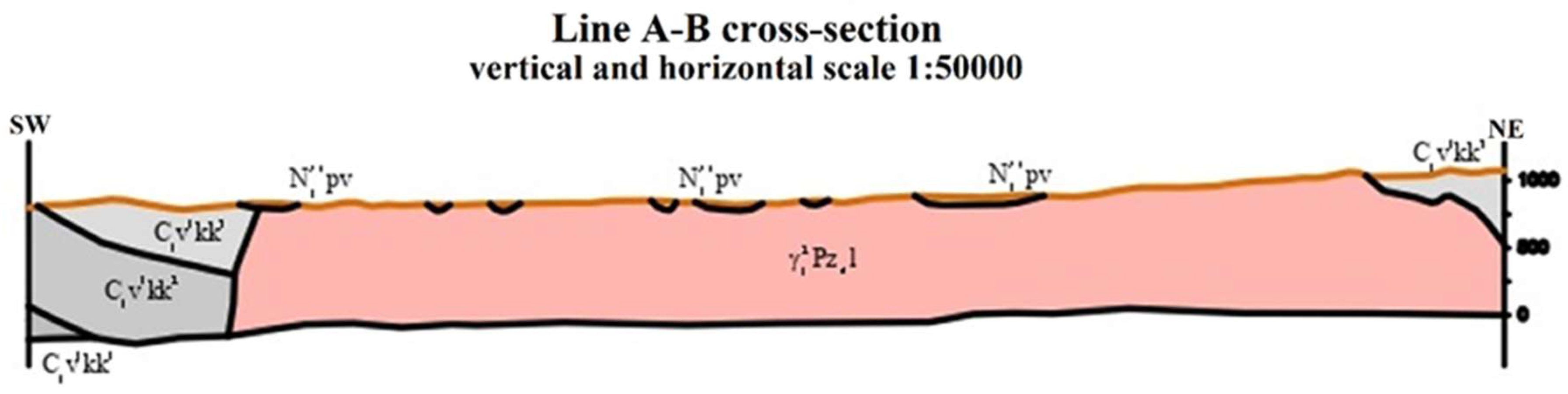
The geological section (Figure 4) illustrates the stratigraphic structure and the position of the main ore-bearing horizons, providing a clear representation of the internal structure of the deposit.
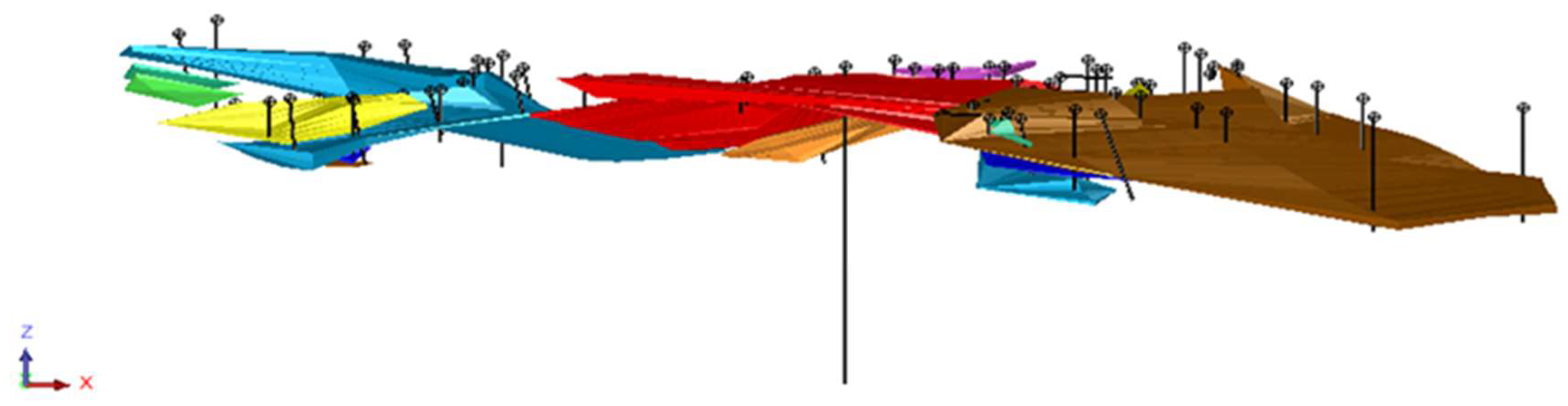
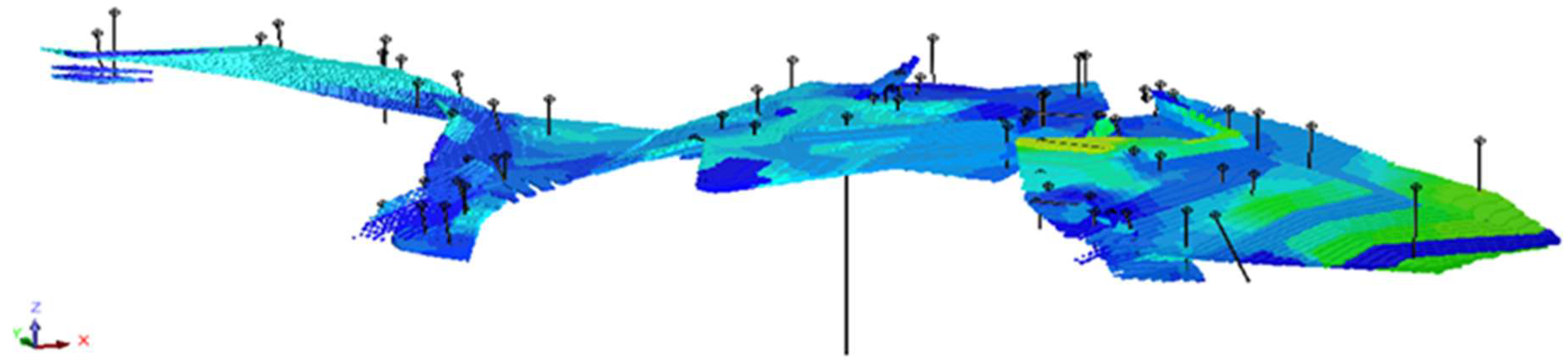
Based on geological data, a framework model is created to visualize the shape and size of the ore bodies. This model takes into account the spatial distribution of minerals and the structure of the deposit, which is crucial for subsequent stages of modeling (Figure 5).
After the framework modeling, a block model of the deposit is created (figure), followed by the estimation of reserves (table). The main goal is to determine the volumes of ore and valuable elements that can be extracted from the deposit, taking into account technical and economic constraints. The reserve estimation considers data on the content of rare earth elements in the ore (Figure 6).
Table 4. Results of the Reserve and Resource Estimation of the Verkhnee Espe Deposit by GKZ Categories, and the Average Content of Rare Earth Elements.
Category/Ore Body № Ore, thousand tons Nb₂O₅ Ta₂O₅ REE ZrO₂
C2/1 21 520 0.0481 0.0062 0.0915 0.1994
C2/2 45 626 0.0512 0.0088 0.0634 0.1059
C2/3 21 178 0.0271 0.0032 0.0440 0.0748
C2/4 11 725 0.0370 0.0053 0.0724 0.0641
C2/zh 1 633 0.0727 0.0146 0.0251 0.1178
Total for Category C2 101 682 0.0472 0.0076 0.0593 0.1124
Р1/1 20 478 0.0432 0.0055 0.0867 0.2156
Р1/2 10 832 0.0368 0.0053 0.0885 0.0378
P1/3 35 524 0.0222 0.0070 0.0693 0.0549
P1/4 22 983 0.0276 0.0046 0.1109 0.0117
Total Forecast Resources 89 817 0.0325 0.0056 0.0889 0.0800
The MINEFRAME system has improved the reliability of information regarding the boundaries of ore bodies, their thickness, depth of occurrence, and the content of primary and accompanying components. It has also facilitated the identification of new ore bodies and simplified the construction of the block model of the deposit (in CSV, DWG/DXF formats), utilizing open file formats such as DXF/DWG, SHP, CSV, XML, and the OMF format, adhering to open exchange standards (CSV, DXF) [7].
As a result, the conceptual scheme of geo- economic assessment, complemented by the integration of analytical data formats into the current infrastructure, taking into account the complexity of business processes, loosely structured data and technological operations, improves control over the individual stages of work with innovation and usefulness of the ecosystem, allows to keep the IT landscape of the enterprise as a whole.
We can distinguish the main directions of innovative development: basic automation, which allows improving processes, preparing data arrays (Big Data), ensuring the readiness of production and supporting functions for digital transformation (Digital Ready) and digital transformation (development of expert systems, dispatching centers, digital enterprise technologies).
According to research, big data and artificial intelligence technologies are being adopted by enterprises with a high level of digital maturity. MES and ERP business applications are most in demand, especially new MES systems based on the creation of digital twin of the production process. In priority is the introduction of ERP - SAP S/4 HANA - a single integrated information system linking business processes, production and personnel management based on cloud technologies.
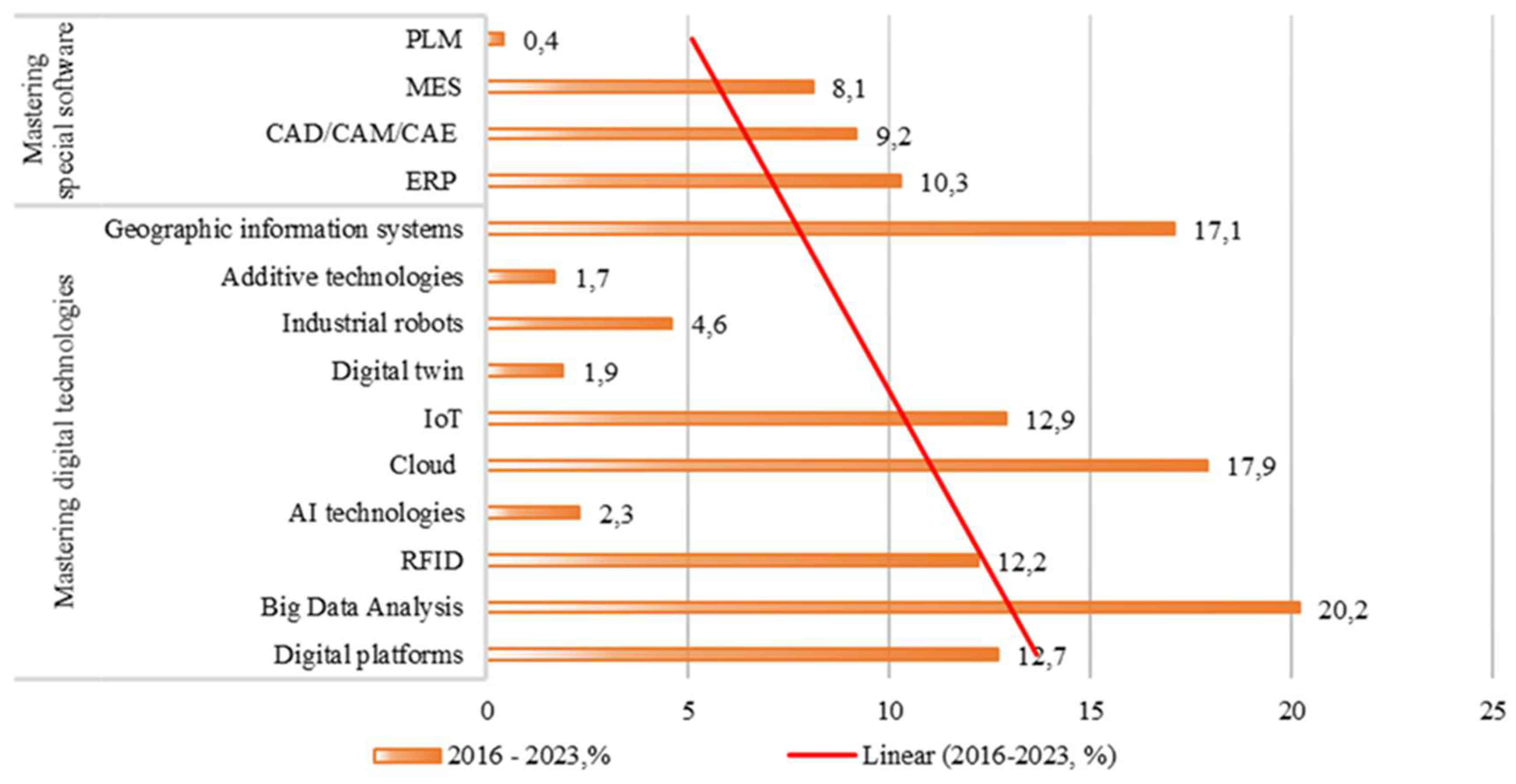
The analysis showed that, on average, investments in digital twin or robot technologies pay off in 1.5-2 years, in software development and implementation in 6-8 months [67]. The most in-demand technologies were technologies for collecting, processing and analyzing big data, followed by cloud services, geoinformation systems, digital platforms and IoT (Figure 7).
By mastering systems analysis and Systems Analysis and Program Development (SAP) software, the enterprises improved their responsiveness to customer requirements regarding the characteristics of finished products, which had a positive impact on business transparency and flexibility, and intensified the development of their own import-independent solutions.
In general, the adoption of digital technologies has had an effect at all stages of value creation: production growth of 15-20% and procurement productivity of up to 40-50%, stabilization of the ore flow quality, and improvement of forecast estimates of accident risk.
With government support for corporate innovation and increased access to technological knowledge, the mining sector could become a driver for the importing the latest technologies into Kazakhstan.
We have identified factors that are constraining digitalization: difficulties in extracting value and economic benefits from digital decisions; low level of basic process automation; weak evidence base and problems with availability of raw data; insufficient staff competence in working with specialized software and lack of experience in implementing innovative solutions; lag in the transition from research to the implementation of viable solutions in the real production environment and subsequent scaling up in order to.
Since the main challenge is to extract practical benefits from the huge amount of data generated, the key barrier to obtaining economic results from total automation turned out to be the lack of competencies for systematically analyzing the information.
The lack of comprehensive approach to creating a “digital factory”, lack of experience in agile practices, and difficulties in implementing cloud and platform technologies played a negative role.
The analysis showed that despite the existence of successful import substitution cases, a significant share of the digital infrastructure in the mining sector is still represented by foreign developments. These include, for example, ERP systems from major Western vendors (SAP, Oracle database management systems), which are not related to the digitalization of production processes, but which ensure the performance of the enterprise, interaction between departments ¬and an analytics system for management decision-making and reporting. Also, software products of Autodesk for computer-aided design, building information modeling, drawing (AutoCAD, Autodesk BIM, Autodesk Revit), software for design, construction and operation of infrastructure from Bentley Systems, CAD/CAM/CAE systems from Siemens. Kazakhstan developers need to pay attention first of all to the search for analogues of such software products as they are the most demanded, suspension of their service may lead to risks of informational and technological nature.
Historically, mining companies have used unlicensed software. Largely due to government co-operation with major software vendors and the efforts of rights holders themselves, the use of unlicensed software is declining. As much of today’s software is cloud-based services, the move to licensed software will accelerate the adoption of cloud-based software.
The main factors complicating the transition to domestic software that is inextricably linked with production equipment, which also restrains the import substitution of software, have been identified. This is the incompatibility of Kazakhstani software products with foreign analogues and the need for one-time replacement of a number of software products with subsequent integration with enterprise systems. In addition, the supply of domestic industrial and engineering software is limited, remains dependent on foreign vendors and does not fully meet the needs of enterprises in terms of functionality.
The main barriers are a decentralized approach to managing innovation projects, the lack of a structured communication and staff motivation system, and the difficulties in integrating disparate in-house solutions and tools for a consistent transition to a digital strategy into the digitalization program.
The specificity of mining production is conditioned by the fact that information and analytical support of mining and mineral processing is based on the application of models with subsequent development of business processes. Automated methods of obtaining geological and economic information should be applied at all stages of geological exploration work, taking into account industry priorities, since information resources as a result of geological study of subsurface resources are represented by arrays of initial data for each industry direction.
Today, enterprises are striving to form a digital ecosystem by implementing a corporate information system that allows them to move to qualitatively new management principles. In order to reduce medium- and long-term risks of losing business stability, it is advisable for enterprises to create automated process control systems (APCS) based on an open architecture, when open data exchange protocols and common standards of interaction between various components of information systems are used. Open APCS will allow to apply of artificial intelligence in the form of microservices, including for the purposes of technological modeling, tracking the technical condition of equipment, planning maintenance and repair schedules, which provides flexibility in making technical and commercial decisions.
The introduction of information-analytical systems, which are formed as a conglomerate of various software tools, fully or partially covering various processes, has mainly affected the detailing of costs (Table 5).
The choice of the path of sequential digitalization, when several information systems with overlapping functions are used within one enterprise, is explained by the difficulties with Kazakhstani digital solutions. Comparative analysis of enterprise software has shown that the most important factor determining the choice of a particular IT solution was the ability to solve a certain range of tasks characteristic of different types of mineral deposits and the applied methods of their mining. Therefore, the enterprises face the task of developing their own digital product that integrates the main areas of their activities into a unified information and analytical system. In this case, it is possible to achieve productivity growth due to distributed access to information in accordance with corporate regulations, improve the quality of management information and speed of its processing.
The mastering of digital technologies becomes relevant from the position of increasing the investment attractiveness of the industry and increasing the business value of the enterprise through the competent use of mineral data and objective geological and economic assessment of mineral deposits according to international standards [75,76].
The integration of automated systems and business applications is necessary to ensure the continuous nature of the information used for such an assessment. Processes automation, objective assessment and data interpretation will enable the formation of a unified planning system, increased management flexibility and responsiveness for unforeseen changes. Subsequently, thanks to an integrated approach to the creation of in-process digital competencies, enterprises can focus on organizational and technological transformation, including changing the organizational structure and business model transformation.
Mining MES plays an important role in the search for solutions that link all processes of a company’s management into a single system, which accelerates the company’s adoption of intelligent planning, traceability, geometallurgy, and metal balance scenarios that require the organization of transparent, end-to-end processes across all processing steps. This is where the additional effects of digitalization are hidden.
For this purpose, enterprises need to create an object-oriented platform as a tool for engineering and economic support of the entire technological cycle. This will be a unified database of data, system and application tools for solving the tasks of automated design of surface and underground mining operations; ensuring their geomechanically safety, acceleration production processes and achieving financial and economic sustainability of the enterprise. The platform should become a tool for digital transformation of the enterprise, accelerating the transition from descriptive to prescriptive analytics, creating effective mechanisms for regulating production and technological processes on the bases of raw data. The mobility of the platform will provide external developers with the opportunity to integrate their software solutions into the formed information space of the enterprise.
To expand the range of competencies in the field of work organization, it is important to develop a taxonomy of skills for IT education, to strengthen in-house competencies when all personnel are proficient in data-driven approach and self-service analytics tools. When developing an enterprise platform, strategic benchmarks (technological leadership, international positions) should be taken into account, determining business impact on data quality on an enterprise-wide scale rather than a separate functional area.

4. Discussion

The findings of this study illuminate the current state of digitalization within Kazakhstan’s mining enterprises and underscore the significant challenges and opportunities that lie ahead. Our results indicate that while there is a foundational level of digital infrastructure in place, the full potential of Industry 4.0 technologies remains largely untapped. This is consistent with previous research, which has shown that digital transformation can drive productivity improvements and operational efficiencies in various sectors, including mining.
The low levels of digital maturity identified among medium and small enterprises highlight a critical barrier to achieving the strategic goals set forth by the government for the mining sector. Our regression analysis confirms that material costs are a predominant factor influencing production output, suggesting that without adequate investment in digital technologies, enterprises will struggle to improve their competitive positioning. This aligns with global trends where companies that invest in digital solutions experience enhanced operational efficiency and reduced costs.
Moreover, our research illustrates a shifting focus from traditional production metrics to broader considerations encompassing environmental, social, and governance (ESG) factors. The gradual integration of digital technologies into areas such as geology and industrial safety reflects a growing awareness of the importance of sustainability in mining operations. This transition is crucial as the industry faces increasing scrutiny regarding its environmental impact.
Looking ahead, several future research directions emerge from our findings. First, there is a pressing need for in-depth studies on the effectiveness of different digital solutions tailored to the specific challenges faced by Kazakhstan’s mining enterprises. The complexities of integrating innovative technologies with existing operational frameworks warrant further exploration, particularly regarding the development of a cohesive digital ecosystem that facilitates data sharing and collaboration among industry players.

5. Conclusions

This study highlights the critical role of digitalization in enhancing the operational efficiency and competitiveness of Kazakhstan’s mining enterprises. The research reveals that, despite the foundational digital infrastructure, the sector faces significant challenges in fully leveraging Industry 4.0 technologies. Key findings indicate that material costs remain a substantial barrier to productivity, underscoring the need for targeted investments in digital solutions to improve production outcomes.
Furthermore, the transition towards integrating digital technologies into various aspects of mining operations, including geology, industrial safety, and environmental management, marks a significant shift in the industry. This reflects an increasing recognition of sustainability as a key driver of future success within the sector.
The implications of this study are twofold: Firstly, it emphasizes the necessity for mining enterprises to adopt a comprehensive digital transformation strategy that aligns with international standards and best practices. Secondly, it calls for collaboration among stakeholders, including government agencies, industry players, and technology providers, to foster an ecosystem conducive to innovation and sustainable growth.
In conclusion, while the current state of digitalization in Kazakhstan’s mining sector presents substantial challenges, it also offers significant opportunities for advancement. Continued research and strategic investment in digital technologies will be essential for the sector to achieve its potential and remain competitive in the global marketplace.

Author Contributions

Conceptualization, F.I. and G.A.; methodology, F.I.; software, R.M.; validation, A.M.; formal analysis, F.I., G.A., and W.F.; investigation, L.T.; resources, F.I.; N.T., data curation, V.K.; writing—original draft preparation, F.I. and G.A.; writing—review and editing, A.D.; K.N., W.F., and N.T.; visualization, F.I.; W.F. and N.T; supervision, F.I and G.M.; project administration, F.I.; funding acquisition, F.I. All authors have read and agreed to the published version of the manuscript.

Funding

This research was funded by the Science Committee of the Ministry of Science and Higher Education of the Republic of Kazakhstan within the framework of the grant No. AP14872003, 2022.

Institutional Review Board Statement

Not Applicable

Informed Consent Statement

Not Applicable

Data Availability Statement

Date are contained within the article.

Conflicts of Interest

The authors declare no conflicts of interest.

References

  1. Top 10 business risks and opportunities for mining and metals in 2023. EYGM Limited, 2022. https://assets.ey.com/content/dam/ey-sites/ey-com/en_gl/topics/mining-metals/ ey-top-10-business-risks-and-opportunities-for-mining-and-metals-in-2023.pdf.
  2. Sekerin, V., Dudin, M., Gorokhova, A., Bank, S., & Bank, O. (2019). Mineral resources and national economic security: current features. Mining of mineral deposits. 13(1), 72-79. [CrossRef]
  3. Beauchamp, E., da Silva Bernardo, C., & Bueno, M. (2021). Progressing the Global Goal on Adaptation - key issues. London: International Institute for Environment and Development. pubs.iied.org. Retrieved from https://pubs.iied.org/17773iied .
  4. Garschagen, M., Doshi, D., Moure, M., James, H. & Shekhar H. (2021). The consideration of future risk trends in national adaptation planning: Conceptual gaps and empirical lessons. Climate Risk Management, 34, 100357. [CrossRef]
  5. Jia, F., Li, G., Lu, X. & Xie, S. (2021). CEO given names and corporate green investment. Emerging Markets Review, 48(2):100808. [CrossRef]
  6. Goudy, S. A. (2022). Made in America” Supply Chain for Critical Minerals. Environmental, Mining & Natural Resources, Rulemaking & Policy Development. March 7, Available: https://www.freshlawblog.com/2022/03/07/a-made-in-america-supply-chain-for-critical-minerals/.
  7. Issatayeva, F.M.; Aubakirova, G.M.; Maussymbayeva, AD; Togaibayeva, LI; Biryukov, V.V.; Vechkinzova, E. Fuel and Energy Complex of Kazakhstan: Geological and Economic Assessment of Enterprises in the Context of Digital Transformation. Energies 2023, 16, 6002. [CrossRef]
  8. Kesselring M, Wagner F, Kirsch M, Ajjabou L, Gloaguen R. Development of Sustainable Test Sites for Mineral Exploration and Knowledge Spillover for Industry. Sustainability. 2020; 12(5):2016. [CrossRef]
  9. Raj, A., Dwivedi, G., Sharma, A., Lopes de Sousa Jabbour, A. B. L. & Rajak, S. (2020). Barriers to the adoption of industry 4.0 technologies in the manufacturing sector: an inter-country comparative perspective. International Journal of Production Economics, 224(C). 107546. [CrossRef]
  10. Hinings, B., Gegenhuber, T. & Greenwood, R. (2018) Digital innovation and transformation: an institutional perspective. Information and Organization, 28(1):52-61. [CrossRef]
  11. Delera, M., Pietrobelli, C., Calza, E., Lavopa, A. (2022). Does value chain participation facilitate the adoption of Industry 4.0 technologies in developing countries? World Development,152, 10578. [CrossRef]
  12. Abramovitz, M. (1986). Catching up, forging ahead, and falling behind. The Journal of Economic History 46: 385-406 https://www.jstor.org/stable/2122171.
  13. Young, A., & Rogers, P. (2019). A Review of Digital Transformation in Mining. Mining, Metallurgy & Exploration, 36, 683-699. [CrossRef]
  14. Menzel, T., & Teubner, T. (2021). Green Energy Platform Economics - Understanding Platformisation and Sustainabiliz ation in the Energy Sector. International Journal of Energy Sector Management, 15(3), 456-475. [CrossRef]
  15. Zhironkin S., & Cehlár M. (2021). Coal Mining Sustainable Development: Economics and Technological Outlook. Energies, 14(16): 5029. [CrossRef]
  16. Klippel, A. F., Petter, C., & Antunes, J. (2008). Management Innovation, a way for mining companies to survive in a globalized world. Utilities Policy, 16(4), 332-333. [CrossRef]
  17. Kouhizadeh, M., Zhu, Q. & Sarkis, J. (2020). Blockchain and the circular economy: Potential tensions and critical reflections from practice. Production Planning & Control, 31, 950-966. [CrossRef]
  18. Cagno, E., Neri, A., Negri, M., Bassani, C. A. & Lampertico. T. (2021). The Role of Digital Technologies in Operationalizing the Circular Economy Transition: A Systematic Literature Review. Applied Sciences. 11(8):3328. [CrossRef]
  19. Arjune, V., Singh, R., Desai, P. N. & Tripathi, K. (2021). A Scientometric Analysis of the Evolution and Changing Structure in Systems of Innovation Approaches. Journal of Scientometric Research, 10,2, 212-224. [CrossRef]
  20. Pietrobelli, C., Marin, A., & Olivari, J. (2018). Innovation in mining value chains: new evidence from Latin America. Resources Policy, 58, 1-10. [CrossRef]
  21. Aydin, H., & Tilton, J. E. (2000). Mineral endowment, labor productivity, and comparative advantage in mining. Resource and Energy Economics, 22(4), 281–293. [CrossRef]
  22. Dai J., Vasarhelyi MA (2017) Toward blockchain-based accounting and assurance. Journal Information Systems, 31(3), 5–21. [CrossRef]
  23. Benlian A., Kettinger WJ, Sunyaev A., Winkler TJ (2018) Introduction to Special Section: The Transformative Value of Cloud Computing – A Decoupling, Platformization, and Recombination Theoretical Framework. Journal of Management Information Systems, 35(3), 719–739. [CrossRef]
  24. Fahlevia M., Vional V., Pramesti R. M. (2022). Blockchain technology in corporate governance and future potential solution for agency problems in Indonesia. International Journal of Data and Network Science, 6, 721–726. [CrossRef]
  25. Lufin, M., & Soto-Díaz J. (2022). Technology, geography, and diversification in a small mineral economy. The Extractive Industries and Society. 11, September, 10108. [CrossRef]
  26. Di Vaio, A., Palladino, R., Pezzi, A. & Kalisz, D. E. (2021). The role of digital innovation in knowledge management systems: A systematic literature review. Journal of Business Research, 123, 220–231. [CrossRef]
  27. Howells, J., James, A. D., & Malik, K. (2004). Sourcing external technological knowledge: A decision support framework for firms. International Journal of Technology Management, 27(2/3), 143. [CrossRef]
  28. Shashi, S., Centobelli, P., Cerchione, R. & Ertz, M. (2020). Agile supply chain management: Where did it come from and where will it go in the era of digital transformation? Industrial Marketing Management, 90, 324–345. [CrossRef]
  29. Zaheer, H., Breyer, Y., & Dumay, J. (2019). Digital entrepreneurship: An interdisciplinary structured literature review and research agenda. Technological Forecasting and Social Change, 148, 119735. [CrossRef]
  30. Vial, G. (2019). Understanding digital transformation: a review and a research agenda. The Journal of Strategic Information Systems, 28(2), 118-144. [CrossRef]
  31. Elsamani Y., Mejia C., Kajikawa Y. (2023). Employee well-being and innovativeness: A multi-level conceptual framework based on citation network analysis and data mining techniques. PLoS ONE 18(1): e0280005. [CrossRef]
  32. Batterham, R. J. (2017). The mine of the future - Even more sustainable. Minerals Engineering, 107, 2-7. [CrossRef]
  33. Asr, E. T., Kakaie, R., Ataei, M. & Tavakoli Mohammadi, M. R. (2019). A review of studies on sustainable development in mining life cycle. Journal of Cleaner Production, 229, 213- 231. [CrossRef]
  34. Cioacă, S.I., Cristache, S.E., Vuță, M., Marin, E. & Vuță, M. (2020). Assessing the Impact of the ICT Sector on Sustainable Development in the European Union: An Empirical Analysis Using Panel Data. Sustainability, 12(2):592. [CrossRef]
  35. Al Rawashdeh, R., & Campbell, G. (2022). Mineral policy in the Gulf Cooperation Council (GCC) countries: The case of Saudi Arabia. The Extractive Industries and Society, 9, March, 10104. [CrossRef]
  36. Cong Y., Du H., Vasarhelyi MA Cloud Computing Start-ups and Emerging Technologies: From Private Investors’ Perspectives. Journal of Information Systems (2021) 35(1): 47-64. [CrossRef]
  37. He, Y., Liao, N., Rao, J., Fu, F., & Chen, Z. (2019). The optimization of investment strategy for resource utilization and energy conservation in iron mines based on Monte Carlo and intelligent computation. Journal of Cleaner Production, 232, 672-691. [CrossRef]
  38. Inklaar, R., Timmer, M. P. (2009). Productivity convergence across industries and countries: The importance of theory-based measurement. Macroeconomic Dynamics, 13(S2), 218-240. [CrossRef]
  39. Brandt N., Schreyer P., Zipperer V. (2017). Productivity Measurement with Natural Capital // Review of Income and Wealth. 63(s1), S7–S21. [CrossRef]
  40. Menzel, T. & Teubner, T. (2021). How Regional Trust Cues Could Drive Decentralization in the Energy Sector-An Exploratory Approach. Sustainability. 13(6):3010. [CrossRef]
  41. Rakic, S., Pero, M., Sianesi, A., & Marjanovic, U. (2022). Digital Servitization and Firm Performance: Technology Intensity Approach. Inzinerine Ekonomika-Engineering Economics, 2022, 33(4), 398-413. [CrossRef]
  42. Moore, J. F. (1993) Predators and Prey: A New Ecology of Competition. Harvard Business Review, 71, 75-86.
  43. Cusumano M. A., Gawer A., Yoffie D. B. The Business of Platforms: Strategy in the Age of Digital Competition, Innovation, and Power. Harper Business, 2019. RUR 320.
  44. Nambisan, S., Wright, M., & Feldman, M. (2019). The digital transformation of innovation and entrepreneurship: Progress, challenges and key themes. Research Policy, 48(8), 103773. [CrossRef]
  45. Nambisan, S., Zahra, S. A. & Luo, Y. (2019). Global platforms and ecosystems: Implications for international business theories. Journal of International Business Studies, 50(9), 1464-1486. [CrossRef]
  46. Setiawan, A. D., Singh, R., & Romijn, H. A. (2019). Responsible innovation: moving towards a culturally sensitive approach. Studies in Asian Social Science, 6(2), 46-65. [CrossRef]
  47. Chanias, S., Myers, M. D., & Hess, T. (2019). Digital transformation strategy making in pre-digital organizations: The case of a financial services provider. The Journal of Strategic Information Systems, 28(1), 17-33. [CrossRef]
  48. Bolton, R., McColl-Kennedy, J. R., Cheung, L., Gallan, A., Orsingher, C., Witell, L., & Zaki, M. (2018). Customer experience challenges: bringing together digital, physical and social realms. Journal of Service Management, 29(5), 776-808. [CrossRef]
  49. Skog DA, Wimelius H, Sandberg J (2018) Digital Disruption. Business & Information Systems Engineering, 60(5), 431–437. [CrossRef]
  50. Zaki M. (2019) Digital transformation: Harnessing digital technologies for the next generation of services. Journal of Services Marketing, vol. 33, iss. 4, pp. 429–435. [CrossRef]
  51. Carayannis, E., Giudice, M. D. & Peruta, M. R. D. (2014). Managing the intellectual capital within government-university-industry R&D partnerships: a framework for the engineering research centers. Journal of Intellectual Capital, 15(4), 611- 630. [CrossRef]
  52. Abbate, T., Codini, A., Aquilani, B. & Vrontis, D. (2022). From knowledge ecosystems to capabilities ecosystems: When open innovation digital platforms lead to value cocreation. Journal of the Knowledge Economy, 13(1), 290–304. [CrossRef]
  53. Abbate, T., Codini, A.P. & Aquilani, B. (2019), Knowledge co-creation in Open Innovation Digital Platforms: processes, tools and services, Journal of Business & Industrial Marketing, Vol. 34 No. 7, pp. 1434-1447. [CrossRef]
  54. Young, A., & Rogers, P. (2019). A Review of Digital Transformation in Mining. Mining, Metallurgy & Exploration, 36, 683–699. [CrossRef]
  55. Sanguankaew, P., & Vathanophas Ractham, V. (2019). Bibliometric review of research on knowledge management and sustainability, 1994–2018. Sustainability, 11(16), 4388. [CrossRef]
  56. Banson, A. (2020). The Effect of Mechanization on Safety and Productivity of a Gold Mine. Journal of Environments, 6(1), 14–20. [CrossRef]
  57. Boulter, A. & Hall, R. (2015). Wireless network requirements for the successful implementation of automation and other innovative technologies in open-pit mining. International Journal of Mining, Reclamation and Environment. 29(5), 368-379. [CrossRef]
  58. Gellweiler, C. & Krishnamurthi, L. (2020). How Digital Innovators Achieve Customer Value. Journal of theoretical and applied electronic commerce research, 15 (1). Talca Jan. [CrossRef]
  59. Pozzi, R., Rossi, T. & Secchi, R. (2021). Industry 4.0 technologies: critical success factors for implementation and improvements in manufacturing companies. Production Planning & Control, Published online: 08 Mar. [CrossRef]
  60. Xie, C., Nguyen, H., Bui, X.-N., Choi, Y., Zhou, J., Nguyen-Trang, T. Predicting rock size distribution in mine blasting using various novel soft computing models based on meta-heuristics and machine learning algorithms. Geoscience Frontiers. 2021. Vol. 12(3). 101108. [CrossRef]
  61. Official website of the Kazakhmys Corporation LLP http://www.kazakhmys.kz (accessed 01/12/2023).
  62. Official website of the “ArcelorMittal Temirtau” JSC https://www.arcelormittal.kz/company/(accessed 13/12/2023).
  63. Aubakirova, G. M. & Isatayeva, F. M. (2021). New Approaches to the Construction of a Diversified Economy: the Experience of Kazakhstan. Studies on Russian Economic Development. 32(6), 712-718. [CrossRef]
  64. Diagnostics of the mining sector - Kazakhstan. World Bank Report 2023. -123p. https://documents1.worldbank.org/curated/en/099081823001511076/pdf/P176745032752e020ab830aca3807b2afc.pdf.
  65. Hilkevics, S., Semakina, V. (2019). The classification and comparison of business ratios analysis methods, Insights into Regional Development 1(1): 48-57. [CrossRef]
  66. Sanchis, R., Duran-Heras, A., Poler, R. (2020). Optimizing the Preparedness Capacity of Enterprise Resilience Using Mathematical Programming. Mathematics, 8(9), 1596. [CrossRef]
  67. Aubakirova, G., Rudko, G. & Isataeva, F. (2021). Assessment of metallurgical enterprises activities in Kazakhstan in the context of international trends. Economic Annals-XXI, 187(1-2), 121-130. [CrossRef]
  68. Habib, S. M., Hussain, H., Al-Faryan, M. A. S., Hussain, R. Y., & Mcmillan, D. (Ed.) (2022). Impact of firm characteristics and ownership structure on firm efficiency: evidence from non-financial firms of Pakistan. Cogent Economics & Finance, 10:1, 2106628. [CrossRef]
  69. Code of the Republic of Kazakhstan dated December 27, 2017 125-VI “On subsoil and subsoil use” (as amended and supplemented as of 01/12/2023). https://online.zakon.kz/Document/?doc_id=31764592 (date of access: 01/12/2023).
  70. Statistics of education, science and innovation: time series. https://stat.gov.kz/ru/ industries/social-statistics/stat-edu-science-inno/dynamic-tables/ (access date: 01/27/2024).
  71. Recommendations for solving problems using digital projects (solutions) and increasing the efficiency of enterprises. JSC Kazakhstan Center for Industry and Export “Qazindustry”, Nur-Sultan, 2020. URL: https://qazindustry.gov.kz/docs/otchety/1597038508.pdf (access date 12/13/2021).
  72. Official website of the Taldau Information and Analytical System https://taldau.stat.gov.kz/kk/Search/SearchByKeyWord (accessed November 10, 2023).
  73. Official website of the Autonomous Cluster Fund “Park of Innovative Technologies”. https://techgarden.kz/about_fund (access date 11/17/2023).
  74. Anderson, R. A. (2015). A model for data-driven knowledge creation and improved accountability in jamaican public schools through ICTs. The International Journal of Educational Organization and Leadership, 21(2), 1–7. [CrossRef]
  75. Rawashdeh, R. A. & Campbell, G. (2022). Mineral policy in the Gulf Cooperation Council (GCC) countries: The case of Saudi Arabia. The Extractive Industries and Society, 9, March, 10104. [CrossRef]
  76. Ansong, E., & Boateng, R. (2019). Surviving in the digital era – business models of digital enterprises in a developing economy. Digital Policy, Regulation and Governance, 21, 2, 164-178. [CrossRef]
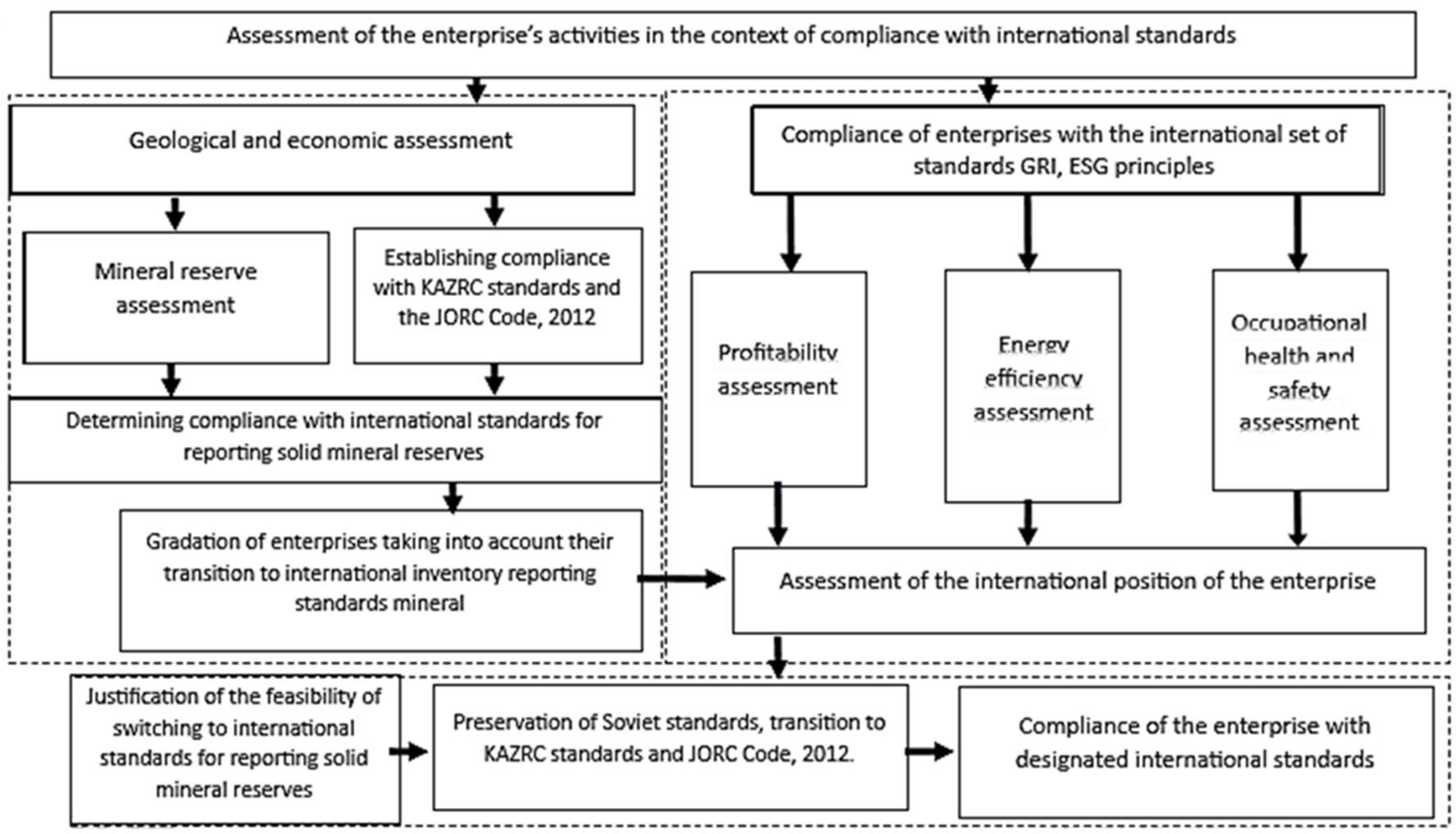
Figure 1. Assessment of mining enterprises considering international standards.
Preprints 143037 g001
Figure 2. Priorities of mining companies in the spectrum of digital decisions by areas of activity, %.
Preprints 143037 g002
Figure 3. Geological map of the Verkhnee Espe deposit, scale 1:5000.
Preprints 143037 g003
Figure 4. Geological section of the Verkhnee Espe deposit along the A-B line, scale 1:50,000.
Preprints 143037 g004
Figure 5. Framework model of the ore bodies of the Verkhnee Espe deposit in Surpac software, clearly showing the distribution of ores in 3D space.
Preprints 143037 g005
Figure 6. Block model of the ore bodies of the Verkhnee Espe deposit in Surpac software, showing the distribution of rare earth element content in the ore bodies, ranging from blue to yellow.
Preprints 143037 g006
Figure 7. Adoption of digital technologies and specialized software by enterprises in 2016 - 2023, %. Source: developed by the authors on the basis of [70,71,72].
Preprints 143037 g007
Table 1. Assessment of the degree of influence of factors on production output.
Model of the influence of production resources Coefficient of determination Coefficient significance F F- critical
2005 2010 2015 2023 2005 2010 2015 2023 2005 2010 2015 2023
Energy plant JSC “ QARMET”
3-factor by production resources Y =0.3817* X1 2 +0.1936* X2 -1.0282* X3 0.8915 0.8703 0.8612 0.8740 413 407 409 411 213 215 193 197
2-factor for factors of reproduction of labor and capital Y =0.0013* X2 2 +0.2045* X3 0.8113 0.7814 0.7217 0.7746 62 57 64 63 205 211 216 210
1-factor: material costs Y =0.0025* X1 2 +0.2838 0.8003 0.7915 0.7993 0.8052 383 375 377 381 217 215 209 213
Plant KLMZ JSC “ QARMET”
3-factor by production resources Y =0.0721* X1 2 +1.1283* X2-0.0391* X3 0.9003 0.9314 0.9015 0.9117 427 431 435 429 227 239 237 249
2-factor for factors of reproduction of labor and capital Y =0.1036* X2 2 +0.0313* X3 0.9115 0.8815 0.8798 0.9003 413 411 404 421 85 117 94 125
1-factor: material costs Y =0.0384* X1 2 +0.0481 0.7815 0.8303 0.8172 0.7918 285 291 288 296 233 215 227 216
Balkhash Mining and Metallurgical Plant Kazakhmys Corporation LLP
3-factor by production resources Y =0.9252* X1 2 +0.02816* X2-0.9184* X3 0.1785 0.8405 0.8611 0.8810 371 344 358 305 197 201 195 198
2-factor for factors of reproduction of labor and capital Y =0.0141* X2 2 +0.5036* X3 0.7915 0.7785 0.7845 0.7703 43 59 61 57 196 199 213 207
1-factor: material costs Y =0.0259* X1 2 +0.0305 0.8505 0.8747 0.8605 0.8503 211 241 238 229 173 184 178 182
“Maker “ Kazakhmys Corporation LLP
3-factor by production resources Y =0.0813* X1 2 +0.0581* X2-0.0692* X3 0.8451 0.8003 0.7914 0.8351 382 361 357 375 221 205 200 213
2-factor for factors of reproduction of labor and capital Y =0.0395* X2 2 +0.0293* X3 0.7845 0.7313 0.7003 0.7499 261 314 322 294 103 127 110 125
1-factor: material costs Y =0.0134* X1 2 +0.0492 0.8113 0.8051 0.7915 0.7803 200 211 235 215 195 189 197 199
Table 2. PESTEL analysis of mining enterprises.
Political Economic
– international positioning, degree of globalization and openness of Kazakhstan;
- diversification of energy supplies to world markets, search for alternative routes and new markets;
– stimulating private investment and developing public-private partnerships to attract global geological exploration and mining companies to cooperation on the basis of state geological exploration of subsurface resources;
– establishment of the National geological survey to declassify and provide investors with open access to geological data.
– Kazakhstan’s commitment to combat climate change;
- difficulties in creating conditions for new investment in exploration and production, including by foreign junior exploration companies;
- dependence on foreign equipment suppliers;
- tax policy (tariffs and incentives);
- completion of the transition to the CRIRSCO international system of certification of mineral reserves and introduction of KAZRC;
–-– - depletion and non - recovery of some high-quality reserves, low operating efficiency;
- legacy unprofitable fields and obsolete facilities;
- high concentration of large state-affiliated enterprises in the industry;
- few new geological discoveries;
- shortage of experienced professionals.data
Social Technological
- development of model agreements on social support for persons affected by the Ministry of Mineral Resources;
– preparation of rules for resettlement of persons affected by mining enterprise;
– compensation and redress for damage to private lands caused by exploration activities.
– technological changes in the industry, taking into account the availability and transfer of exploration, extraction and processing technologies; inter-industry co-operation; collaborations with scientific and educational institutions;
– degree of use, implementation and transfer of geological survey technologies and expansion of the mineral resource base;
R&D expenditure;
- production capacity and readiness of enterprises to integrate external digital solutions;
- dependence on foreign software against the background of lack of effective Kazakhstani developments comparable to Western technologies, difficulties in adapting standard software solutions to the needs of the enterprise;
- lack of unified standards of work with mining and geological-economic information for detailed exploration and commercial exploitation of deposits,
- lack of a unified information and analytical industry platform.
Environmental Legal
- complexity of the procedure for obtaining environmental permits for exploration;
- transition to environmentally friendly alternative energy sources;
- the environmental situation in the regions where the mining company operates;
- implementation of the decarbonization strategy;
- development of ESG standards for the mining industry.
- transition to the principles of the best available technologies (Best Available Techniques, BAT).
- legislative regulation of research and development (R&D) of practical orientation (BAT) [70];
- Regulatory and legal regulation of information disclosure in the mining sector.
Table 3. Influence of technological factors of PESTEL analysis.
Factor Expert judgment with weight adjustment
Technological sectoral changes, taking into account the availability and transfer of exploration, extraction and processing technologies; inter-industry co-operation; collaboration with scientific and educational institutions; 0.093
Extent of use, implementation and transfer of geological survey technologies and expansion of the mineral resource base 0.071
Research and development expenses (R&D) 0.062
Production capacity and readiness of enterprises to integrate external digital solutions 0.053
Dependence on foreign software and difficulties in adapting standard software solutions to the needs of the enterprise 0.046
Lack of unified standards work with mining and geological-economic information for detailed exploration and commercial exploitation of deposits 0.034
Lack of a unified information and analytical industry platform 0.026
Developed by the authors using [1,64,70,71].
Table 5. Efficiency of using management information systems, %.
Index Change
Reducing the cost of the final product 10-40
Energy optimization 25-65
Reducing waste 8-20
Reduce inventory and warehouse losses 7-15
Reduced maintenance and support costs 20-65
Reduced diagnostic time 25-50
Improving specification accuracy 30-70
Increased supply chain agility 20-60
Reduced space 15-40
Capacity utilization 15-50
Accelerate time to market 10-75
Increased sales 15-50
Increased profitability 25-50
Increased profitability 20-50
Improving planning 10-70
Pricing accuracy 30-65
Source: developed by the authors based on [71,72,73].
Disclaimer/Publisher’s Note: The statements, opinions and data contained in all publications are solely those of the individual author(s) and contributor(s) and not of MDPI and/or the editor(s). MDPI and/or the editor(s) disclaim responsibility for any injury to people or property resulting from any ideas, methods, instructions or products referred to in the content.
Copyright: This open access article is published under a Creative Commons CC BY 4.0 license, which permit the free download, distribution, and reuse, provided that the author and preprint are cited in any reuse.
Prerpints.org logo

Preprints.org is a free preprint server supported by MDPI in Basel, Switzerland.

Subscribe

Disclaimer

Terms of Use

Privacy Policy

Privacy Settings

© 2025 MDPI (Basel, Switzerland) unless otherwise stated