Preprint
Article

This version is not peer-reviewed.

Analysis of Maternity Rights Perception: Impact of Maternal Care in Diverse Socio-Health Contexts

A peer-reviewed article of this preprint also exists.

Submitted:

14 December 2024

Posted:

16 December 2024

You are already at the latest version

Abstract

Maternity rights are perceived and fulfilled differently according to women’s psychosocial characteristics, leading to varying maternal experiences and outcomes. It is necessary to know the impact of cultural context, emotional well-being, and resource availability on the maternal woman's clinical care experience. The aim is to identify if these factors contribute to disparities in the perception of maternity rights fulfillment in Spain and Colombia. This was a retrospective observational study focus on women who received healthcare during maternity in Spain or Colombia. A total of 185 women were selected (Spanish=53; Colombian=132). It was recorded social and obstetric history, and resilience, positive and negative affect, derailment, and maternity beliefs. It also evaluated the women's knowledge of healthcare rights (MatCODE), the perception of resource scarcity (MatER), and the fulfillment of maternity rights (FMR). The C-section was significantly more prevalent in Colombia and had higher score in maternity beliefs as a sense of life and as a social duty than Spanish women. The FMR was higher in Spanish context. Women in Colombia perceived lower social support and participation in medical treatment. The FMR was correlated with positive affect, MatCODE, and MatER. The FMR models detected negative factors such as giving birth in Colombia (β=-0.30 [-0.58; -0.03]), previous miscarriages (β=-0.32 [-0.54; -0.09]), exposure to a C-section in the last labor (β=-0.46 [-0.54; -0.0]) and the MatER, and positive factors such as gestational age, women age and previous C-section (β=0.39 [0.11; 0.66]). The perception of the fulfillment of maternity rights depends on socio-healthcare contexts, women age, obstetric history, and resources. It is suggested to apply culturally sensitive strategies focused on women's needs in terms of information, emotional and social support, privacy and autonomy to manage a positive experience.

Keywords: 
;  ;  ;  ;  ;  ;  

1. Introduction

Maternity rights encompass a broad spectrum of legal, social, and healthcare provisions aimed at ensuring the well-being of women and families during pregnancy, childbirth, and the postpartum period. These human rights are perceived for the woman depending on its sociocultural and psychosocial factors, leading to disparities in maternal experiences and outcomes. According to the Centers for Disease Control and Prevention (CDC; USA), 20% of women reported mistreatment during maternity care. Hispanic (29%) and multiracial (27%) women experienced higher rates of verbal and physical mistreatment. Additionally, 29% reported discrimination, primarily based on age and income [1]. In the Spanish context, the 38.3% of the women has experienced obstetrical mistreatment during maternity care [2]. In Colombia, the data rise close to 70% [3].
There is evidence supporting the need for a shift in the model of maternity care, prioritizing nursing and women-centered [4,5,6]. The new model should empower women, providing information to make decisions (if life of the women or fetus is not in danger), and focus on the social support. It has been proposed a theoretical model to determine the relationship between women and health institutions [7]. Later, the model was completed with maternal healthcare obstacles and facilitators in social contexts [8]. However, this approach should extend beyond the birth process, adhering to a biopsychosocial model [9], analyzing the social determinants [10] and mental health of women [11,12]. A mixed-method study proposes that women’s perception related to childbirth experience influenced mistreatment during maternity care [13]. Additionally, the emotional well-being and social support during pregnancy and postpartum plays a crucial role in health and the fulfillment of the maternity rights [14]. Research has shown that resilience, identity and affect, can influence on how women perceive the adequacy of the maternity care [15,16]. A scoping review revelated differences in how women from different cultural backgrounds perceive and experience maternity rights [17]. In cross-cultural analyses, it has been observed that women from different cultural backgrounds often report varying levels of satisfaction with maternity care, which can be attributed to differences in healthcare systems, social support structures, and cultural expectations. Women in low resource healthcare settings are more likely to report non-fulfillment of maternity rights, linked to a lack of adequate information, support, and respect during childbirth [18]. Therefore, the fulfillment of maternity rights is closely associated with the level of resources available, the quality of care provided, and the cultural competence of healthcare providers [19].
The current study builds upon this background of research by examining the social, obstetrical, and emotional factors that influence on the perception of the fulfillment of maternity rights among women who had healthcare during their maternity in two different socio-health contexts, Spain and Colombia. Understanding the factors that influence the perception of maternity rights can help inform policies and practices that better support women across diverse cultural settings, ultimately leading to improved maternal health outcomes globally. The present study aims to identify key determinants that contribute to the perception of maternity rights fulfillment, with a focus on the role of obstetrical history, emotional well-being, and resource availability.

2. Materials and Methods

2.1. Ethical Statement

This study was approved by the Research Ethics Committees (CEI-112-2199, 22 January 2021) and of FOSCAL Hospital from Colombia (Santander, Colombia; FOSCAL-06939/2022, 23 September 2022). All women willing to participate were given an online information sheet, describing the aim of the study, and the informed consent form was signed in each case. Data collection was anonymous, and databases were blinded. In addition, this study follows the guidelines of the Strengthening the reporting of observational studies in epidemiology (STROBE) [20] for cohort cross-sectional studies.

2.2. Setting Social-Health Context

This study was carried out in two settings with different socio-health contexts, Spain and Colombia. These settings were identified between the distribution of respectful maternity care research, organized by the country income category as determined by the World Bank [21]. According to the review related to the geographical locations of respectful maternity care research [17], Spain belongs to a high-income country and Colombia belongs to upper-middle-income country. The main differences between settings related to care would be that in Spain, the obstetric healthcare system is primarily public, funded by the Spanish government. Spain offers universal health coverage, meaning that women have access to maternal health services regardless of their socioeconomic status. However, it can also choose to have private health insurance. In contrast, Colombia has a mixed healthcare system, composed of both public and private sectors. Access to obstetric care can vary depending on the region and the woman’s socioeconomic level [22]. Economic and regional disparities can influence the experience and perception of maternity rights. In Spain, midwives play a significant role in the care of pregnancies. In Colombia, this role is not institutionalized. Spain has health policies related to maternity rights (i.e., the Patient Autonomy Law) [23], and the strategy for assistance at normal childbirth in the Spanish health system [24]. Although Colombia progress in these rights [25], challenge remains in the implementation of these policies, especially in less developed areas. Women in low-resource settings may face barriers to accessing adequate information and respectful care during childbirth.

2.3. Participants of the Study

Women were selected by non-probabilistic sampling at the discretion of the research team. The women were contacted by social media, an adequate technique for recruitment [26]. The inclusion criteria of the cohort were women ≥18 years; to have been pregnant in the last 3 years; to receive healthcare for the last pregnancy, labor, or postpartum in a tertiary healthcare center from Spain or Colombia; and a good Spanish language understanding. The exclusion criteria were an inability to read/write in Spanish, home birth and no-internet access and to be pregnant in the moment of the study.
During recruitment, 405 women were contacted but 278 were finally eligibles. Then, the inclusion and exclusion criteria were applied. Finally, 185 women met these criteria (Figure 1), being 29.3 years the age at pregnancy. Data was collected from September 2021 to November 2023. The 70% of the recruited Spanish women had public healthcare for the entire pregnancy, childbirth and postpartum, being the 30% private assistance by co-payments. Similar proportions were detected in Colombian women, the 70% was health covers by Health Insurance Provider (EPS, Spanish acronym), while 30% was self-pay of its maternal assistance.

2.4. Study Design and Procedure

This study represents a retrospective observational non-interventionist design with cross-cultural and women-centered analysis strategy. A self-administered online tool was prepared by Qualtrics (https://www.qualtrics.com/es/ accessed on 15 July 2021). Firstly, it obtained social and obstetrical variables. Secondly, it collected psychological and perception scales.
The social and obstetric history variables were age (years), education level, working situation, civil status, type of family (mono- vs biparental), number of pregnancy (gravida), number of labor (parity), number of the previous history of miscarriage, number of previous C-section. Related to the last pregnancy: use of the assisted reproduction techniques (ART; yes/no), presence of multiple pregnancies (yes/no), type of labor (vaginal/C-section), gestational age (completed weeks), preterm birth (labor <37 weeks; yes/no) and adverse outcomes (yes/no) during pregnancy (i.e., preeclampsia or gestational diabetes), labor (i.e., premature rupture of the membrane or intrapartum hemorrhage), early postpartum (i.e., mastitis or sepsis), fetal (i.e., intrauterine growth restriction) or neonatal (i.e., ventricular hemorrhage or chronic lung disease).

2.4.1. Psychological Instruments to Explore Emotional Variables

Women responded to the four self-report Spanish-validated psychosocial tools, including:
Resilience scale. This scale measures the ability of the women to recover from stressful circumstances, considered as a positive personality characteristic that allows the women to adapt to adverse situations [27]. The resilience scale was based on the original scale proposed by Wagnild and Young [28] but in its short 14-items version with Likert response from 1=“Strongly disagree” to 7=“Strongly agree”. The higher the score, the greater the woman’s ability to cope with the problems of life. Other studies reported a reliability between 0.79 to 0.91 [29,30].
The Positive and Negative Affect Schedule (PANAS). The PANAS is a measure that is made up of two mood scales, one measuring positive affect and the other measuring negative affect [31]. This scale has 20 items (10 items for positive affect and 10 items for negative affect), which are scored based on 5-point Likert scale ranging from 1=“Very slightly or not at all” to 5=“Extremely”. For the positive score, a higher score indicates more positive emotions. For the negative score, a lower score indicates fewer negative emotions [32]. Previous application of the PANAS obtained a reliability between 0.87 to 0.91 [33].
Derailment Scale. The degree to which women perceive change over time in self and direction constitutes an important individual difference [34]. Therefore, this instrument assesses the women feel temporally discrepant and off sense, calling derailment [35,36]. Derailment was indexed with the 10 items with 5-point Likert scale response from 1=“Strongly disagree” to 5=“Strongly agree”. The higher the score on the scale, the greater the woman's feeling of being derailed. The previous reliability of the derailment scale was between 0.75 to 0.90 [34,37].
The Maternity Beliefs Scale (MBS). Beliefs about motherhood could determine women’s perceptions of childbirth and the process of adaptation to maternity [38]. The MSB scale identifies beliefs that women have about motherhood, clustered in maternity as a sense of life (MBS-life, 8 items) and maternity as a social duty (MBS-social, 5 items). The higher the score, the higher the woman’s belief in the domain. The previous reliability of the MBS scale was between 0.83 to 0.93 [39].

2.4.2. Perception Scales to Explore Maternity Rights and Resources

Subsequent, the women completed three additional questionnaires related to the knowledge and the self-perception focus on her last pregnancy, childbirth and early postpartum. These tools were validated by the research group, and they are focused on:
The knowledge of obstetric healthcare rights (MatCODE). This questionnaire was designed to assess the knowledge that women have of their healthcare rights during pregnancy, labor or postpartum [40]. The MatCODE is a 11-item scale scored in a Likert format from 1=“Strongly disagree” to 5=“Strongly agree”. Higher scores in MatCODE would indicate a greater awareness of their healthcare rights. The previous reliability of the MatCODE was 0.94 [40].
The perception of resource scarcity (MatER). The MatER was designed to assess the woman's perception of pregnancy, labor, or early postpartum resources [40]. The MatER is a 9-item scale scored in a Likert format from 0=“Never” to 4=“Always”. Higher score in MatER would indicate a lower perception of resources of the woman. The previous reliability of the MatCODE was 0.78 [40].
The fulfillment perception of maternity rights (FMR). Based on the recommendations of the World Health Organization [41], the FMR assesses the fulfillment perception of women's rights to adequate healthcare during maternity. In addition, the FMR has 5 dimensions that cover the perception of the women related to receive adequate healthcare information (Information, 9 items), related to privacy and confidentiality of health information (Privacy, 6 items), refers to consent for the medical procedures (Consent, 4 items), refers to social support during maternity (Support, 3 items), and to participation and active listening in medical treatment (Participation, 7 items). The items cover the last pregnancy, childbirth, and the postpartum. The scale was ranged from 1 to 4 in a Likert response, in which 0=“Never” and 4=“Always”, being the higher FMR score, the higher perception of the right’s fulfillment. The previous reliability of the FMR was between 0.91 to 0.94 [42].

2.5. Statistical Analysis

Following the theory of the central limit (n>100), the data were described by mean and the standard error of the mean (SEM) in the quantitative variables. In the qualitative variables, the data are summarized as the relative frequency (%) and sample size (n). In the univariate analysis was applied by unpaired Student´s T test in quantitative variables and Chi-squared test in the proportion comparison. The correlation to test the different pattern between socio-health context in FMR and psychological variables were tested by Pearson´s coefficient (ρ) at 95% of confidence interval (95% [CI]).
The multivariate analysis was tested by linear regression models to explain the association between the perception of FMR and the social characteristics, obstetrical health history, emotional and perceptional psychological variables of the women. The adjusted variables were introduced if were associated with error probability (P)<0.1 in the univariate analysis. From the models were extracted the standardized coefficient (β) with 95% CI. In all the analysis was considered a p-Value (P)<0.05 as a statistically significant.
The descriptive and inferential analyses were performed using R software within the RStudio interface (version 2022.07.1+554, 2022, R Core Team, Vienna, Austria) by rio, dplyr, compareGroups, devtools, psych and lavaan packages.

3. Results

3.1. Social and Obstetrical Characteristics

The women age showed a trend to be higher in Spanish cohort than Colombian, without differences in other social variables (Table 1). Overall, the women passed 1.17±1.2 year since the last pregnancy, being more postpartum time elapsed until enter in the study in Spanish than Colombian.
Related to the obstetrical history, the miscarriage was significantly higher in Spanish than Colombian context, inversely of previous C-section that was more prevalent in Colombian than Spanish. Additionally, it was more prevalent that the last labor was by C-section in Colombian than Spanish. The 87.3% of the women determined that the last pregnancy was intentioned, being by ART in the 4.9%, the 1.6% was multiple pregnancy and the 7.6% was preterm birth. Although the prematurity was similar between both contexts, the Colombian had significantly lower gestational age than Spanish context. No differences were detected between cohorts in the adverse obstetrical, fetal or neonatal outcomes (Table 2).

3.2. Emotional Variables During the Last Pregnancy and Postpartum

During the last pregnancy and postpartum, resilience and affect scales were similar between cohort. However, women in the Colombian context trend to had higher derailment, and they scored significantly high in maternity as a sense of life and as a social duty compared to the Spanish context (Table 3).

3.3. Perception of Maternity Rights and Resources During the Last Pregnancy, Childbirth and Postpartum

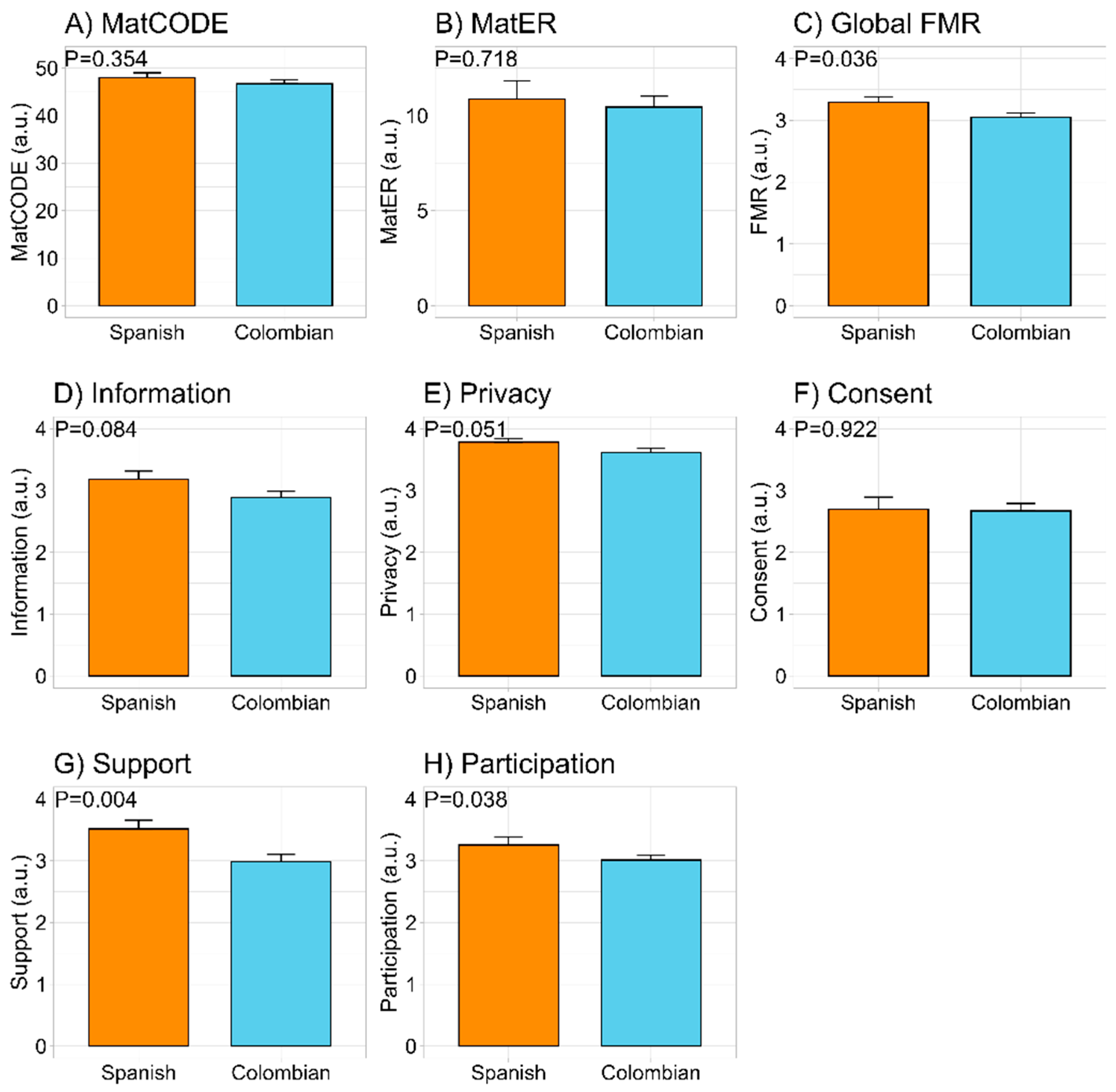
The women´s knowledge of healthcare rights and their perception of resources were similar between cohort (Figure 2A,B). However, the self-perception for the fulfillment of maternity rights was significantly lower in women who gave birth in Colombia than women who gave birth in Spain (Figure 2C). In addition, although the perception of fulfillment with rights related to receive adequate healthcare information (Figure 2D) and to consent for the medical procedures (Figure 2F) were similar, the rights of social support during maternity (Figure 2G), and to participation in medical treatment (Figure 2H) were significantly lower in Colombian than Spanish context. Also, the rights related to privacy and confidentiality of health information was close to be lower in Colombian cohort (Figure 2E).

3.4. Correlations Between Perception of Maternity Rights and Emotional Variables

The resilience did not correlate with the perception of fulfillment of maternity rights in any case. At the global population, the positive emotions correlated significantly and positively with the perception of fulfillment of these rights. Furthermore, women who had a birth in Spain had a significant and negative correlation of the negative emotions with the perception of fulfillment of maternity rights. In addition, women in Colombian context had a significant and positive correlation with the positive emotions and the perception of fulfillment of maternity rights. Furthermore, in Spanish context had a negative and significant correlation between the fulfillment of maternity rights and derailment and almost significant between the fulfillment of maternity rights and maternity as a social duty (Table 4).
Generally, the knowledge of rights was significantly and positively correlated with the fulfillment of maternity rights. However, this perception seems to be associated with women who gave birth in Spain. Furthermore, perceiving scarcity of resources was significantly and negatively correlated with the perception of these rights. This pattern was observed in both socio-health contexts (Table 4).
Due to it showing correlation in the global cohort, positive emotions, the knowledge of maternity rights and scarcity of resources were introduced into the associative models.

3.5. Women-Centered Model to Explain Their Perception of Fulfillment of Maternity Rights

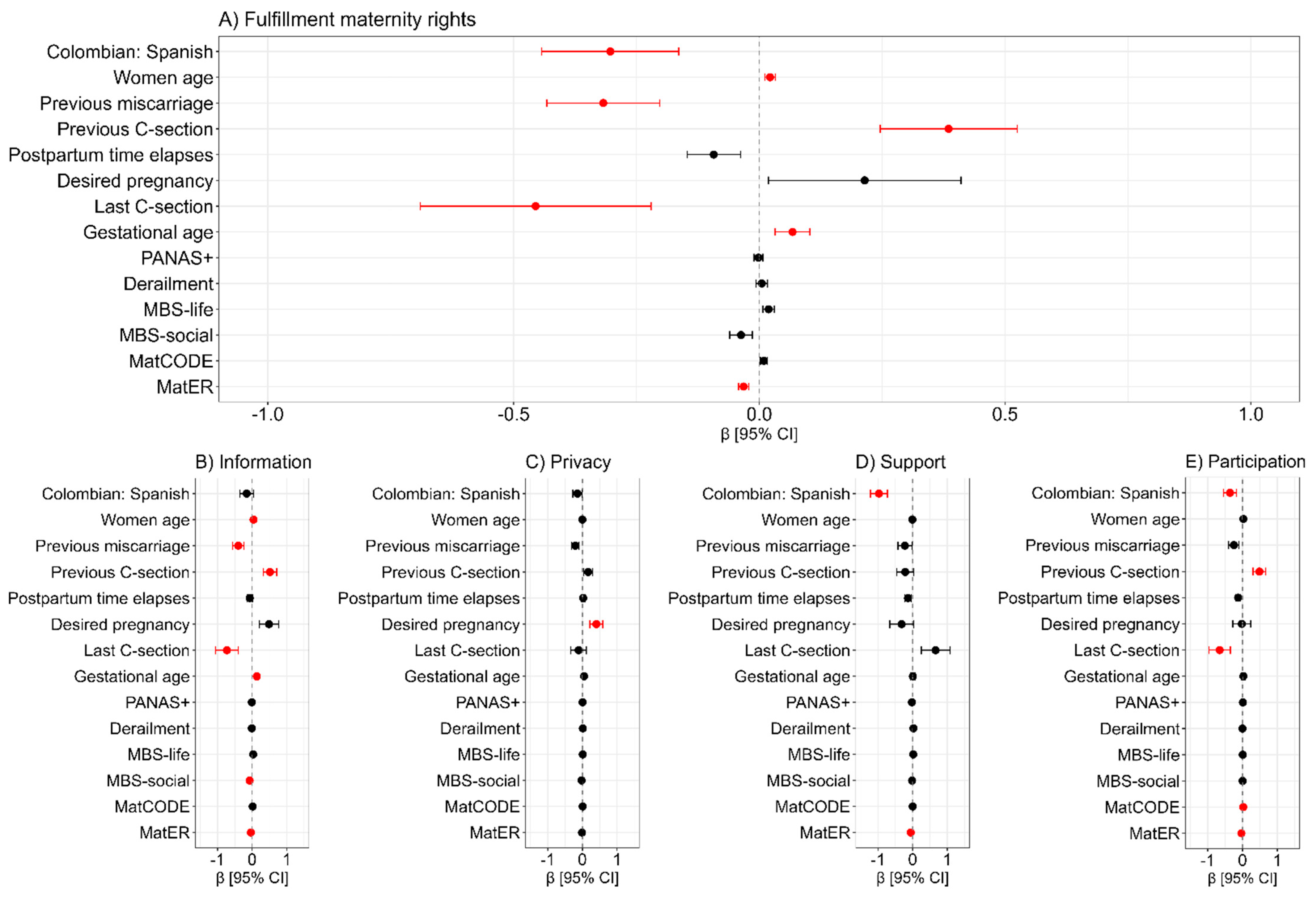
Overall, Colombia social-health context (β= –0.30 [–0.58; –0.03]), previous miscarriage (β= –0.32 [–0.54; –0.09]), exposure to C-section in the last labor (β= –0.46 [–0.92; –0.0]), and perceiving scarcity of resources (β= –0.03 [–0.05; –0.01]) were negative factors associated with fulfillment of maternity rights. Conversely, positive factors were women age (β= 0.02 [0.0; 0.04]), previously exposition to C-section (β= 0.39 [0.11; 0.66]) and increased of gestational age (β= 0.07 [0.0; 0.14]; Figure 3A).
Specifically, negative factors to perceive inadequate healthcare information included previous miscarriages, having a C-section in the last labor, beliefs in maternity as a social duty, and a high perception of resource scarcity. On the other hand, factors that increased the perception of fulfillment of this right were older maternal age, increased gestational age, and previous C-section (Figure 3B). Regarding the fulfillment of rights related to privacy and confidentiality, desired for pregnancy was a protective factor (Figure 3C). The perception of fulfillment of rights related to social support decreased when in Colombia context and the women perceived a scarcity of resources (Figure 3D). Lastly, the fulfillment of rights related to participation and active listening in medical treatment decreased in Colombian context, last labor by C-section, and the perception of resource scarcity, but increased with previous C-sections and the woman’s knowledge of healthcare rights (Figure 3E).

4. Discussion

To the best of our knowledge, this is the first data that focuses on women's perception of compliance with their maternity rights, exploring risk and protective factors in two very different socio-health contexts. The social determinants explored defend differences in healthcare experiences based on biological, psychosocial, and cultural conditions, which may comprise risk and protective factors. Our data indicates that the perception of maternity rights is significantly influenced by women's previous experiences and biopsychosocial factors. Globally, the socio-health context of childbirth impact on this perception, particularly women who give birth in Colombian context can perceive low respectful of her rights, emotional support and participation during motherhood compared to Spanish context. In addition, obstetrical history and resource availability would be key determinants. The previous experiences related to motherhood (miscarriage and C-section) can be an ambivalent condition in the women´s perception of fulfillment rights. Age, gestational age, and knowledge of rights can be protective factors. However, the scarcity of resources (personal and practical) were risk determinants for perception of vulnerability of rights (Table 5).
The difference perception and women´s experience related to socio-health contexts could be explained by care-technology accessibility and funding of hospitals [43]. Health policies may limit the fulfillment of rights due to a lack of investment in resources, and non-renovation of humanized care protocols [3,44]. Rural areas show lower odds of timely maternity care than urban locations, that increasing the healthcare providers can improve adequate maternity care for Hispanics [45]. Additionally, in low-income populations access to quality services decreases, increasing the perception of obstetric violence [46]. This must be considered, as the woman's economic situation and co-payments, typically associated with urban areas and greater economic resources, can influence its experience of rights. In both contexts, the women had maternal care in urban hospitals, more than 41% were unemployed and the 30% of the women were attended under self-payments conditions.
Adaptation to motherhood involves changes that require internal and external resources [47]. Resources can act as a barrier or facilitator in the fulfillment of motherhood rights, not only material/economic resources, but also emotional/affective resources (family, friends, partners, or even work-life balance policies). Our results show that the perception of lack of resources is a barrier in motherhood adaptation. Similarly, in Mexican women living in the USA who received less emotional support from families were less likely to seek prenatal care, adopted healthy behaviors (such as avoiding smoking) or felt enthusiastic about their newborns [48]. Women’s emotions are regulated through social support, which may reduce the fear of childbirth or having a child born with illness [49], postpartum depression, as well as protect breastfeeding, and increase self-efficacy during motherhood [50,51]. Furthermore, material resources are important to be a comfortable and resourceful birth environment associated with positive experiences and improve birth outcomes [52].
A valuable resource is information, which involves gathering holistic information during medical care, understanding women's experiences, providing advice, positive feedback, or information about the pregnancy process and health conditions. Among pregnant women, informational support can lead stressful situations [53] or decrease stress and anxiety. Women with satisfactory information during maternity have effectively coped with motherhood changes and have adhered to breastfeeding [54,55]. Other research highlights cultural barriers to accessing resources, such as difficulties understanding, and misalignment between cultural customs and biomedical care [56,57]. Thus, our data reveal that empowering women during motherhood with resources emphasizes their perceived fulfillment of rights to information, and participation.
Aged women tend to have more experience with healthcare systems. With age, many women develop greater security and self-esteem [58], better informed, empowered in decisions and assertive demanding the fulfillment of rights [46]. Similarly, gestational age facilitated the feeling of fulfillment of rights. As the pregnancy progresses, women could receive more medical visits and follow-up and information [59]. Both women's age and gestational age are factors that may be associated with greater awareness of the experience of motherhood to demand adequate information.
Women think that their privacy and expectations are harmed being subjected to more technical healthcare [60]. According to our models, undergoing a C-section in the last birth results in less fulfillment´s rights, but, optimistically, the C-section experience can change the women´s mental schemas and prepare her for future pregnancies, since previous C-sections can positively influence this perception. It is necessary to consider that the C-section is an invasive technique, with long recovery periods that could be complicated and in which greater socio-health care would be necessary. In Canadian women, the main predictor of a negative birth experience was the C-section [61]. In Swedish women, emergency, but not elective, C-section was associated with a negative experience of labor [62]. Previous experiences can influence how to process and remember information. According to social cognition theories, experiences contribute to the development of mental schemas that organize information about the world [63]. If a woman has experienced a previous C-section in a health context where maternity rights were respected, would be more likely to develop a positive schema regarding these rights. Women with previous C-sections may adjust it expectations, giving control over the consequences of subsequence labor. Women who experience cognitive dissonance when experiences and beliefs about rights are in conflict, may also adjust her perception of the rights to align closely with expectations and provide adaptation. According to our data, previous C-section experience and knowledge of maternity rights were positive predictors for perceived maternity rights fulfillment, particularly important for the adequate information and participation in healthcare decisions. Moreover, the perception of rights is not affected by the feeling of derailment, confirming the cognitive state of adjustment.
According to the ecological model, previous affective events for woman (such as miscarriage), can influence its behavior and development [64]. Miscarriages are associated with mental health consequences depending on the cultural and individual characteristics [65], and they are frequently associated with high levels of distress, anxiety and depression [66]. A prospective study showed the need for psychiatric treatment within 6 months of the labor of their first live birth in women with a history of miscarriage [67]. According to our data, previous experience of miscarriage was a negative factor to reduce the women´s perception of rights, especially information. Although, findings from USA indicated no association between experiences of miscarriage and maternity feelings [68], other data with Europe women reported that abortion was a risk of negative feeling related to the maternity process [62], post-traumatic stress, anxiety and depression [69]. Therefore, identifying women at risk, and designing psychosocial interventions can reduce adverse effects not only in the months after the miscarriage but also during future pregnancies. Globally, these data show that previous experiences in the woman's obstetric history are key to addressing patient satisfaction and confidence during motherhood.
Finally, it is necessary to highlight the influence of sociocultural beliefs and practices on maternal healthcare outcomes. There are described barriers related to beliefs, particularly by men partner, and the society within women lives [70]. In many western societies, the maternity is a central life goal of women, linked to “intensive mothering roles” to be the responsible for procreation and take care of the children, putting the children’s needs before her own [71,72]. It has shown that societies can cause greater indecision in women's feelings of maternity [73]. Other authors shown that women’s feelings to be a “perfect” mother are related to increased maternal guilt, lower self-efficacy, and higher stress levels [74]. The present data added that the maternity is conceived as a duty for the society in which women are integrated can be harmful. The results suggest that seeking appropriate maternity care with respect for women’s autonomy from their social roles, promotes conscious choices, and full support of partners and resources are rights-based issues.

4.1. Strengths and Limitations

Previous research has focused on analyzing variables in health professionals and institutions that influence the vulnerating of women's rights during maternity care. In turn, this study reports factors that should be integrated into the comprehensive assessment and intervention processes during maternal healthcare, during pregnancy, childbirth and postpartum period.
Although we did not find major differences in the sociodemographic variables between the both socio-health contexts, these data do not accurately determine the income level of the family unit. Knowing the discrepancies between health policies in both contexts, it would be interesting to be able to explore these differences by salary level. On the other hand, since health strategies can be very discrepant and following the country income category by the World Bank [17], it would be interesting to explore the fulfillment of rights in a context classified as low-income countries and its relationship with other measures such as autonomy, childbirth experience questionnaire [75], and the respectful maternity care [76]. Another research gap would be focused on populations with vulnerable variables. Previous data showed health disparities in maternity care in these women who are at risk for pregnancy-related mortality [77]. Specifically, racialized women, younger, not married, with low educational level, and who receiving governmental benefit plans [78] are candidates for delaying their healthcare.

5. Conclusions

Socio-healthcare contexts play a crucial role in shaping women’s perceptions of maternity rights. In this study, Colombian women reported feeling less respected and supported in maternity care compared to their Spanish counterparts. Factors such as age, gestational stage, and previous obstetrical experiences influence these perceptions. Empowering women through improved access to information, emotional support, and resources is essential to enhance their sense of rights fulfillment during maternity. Additionally, healthcare providers should address past negative experiences related to motherhood and prioritize psychological support during pregnancy and postpartum. This approach can help meet women’s expectations, reduce anxiety, depression, and frustration, and support better adaptation to motherhood. Policymakers should prioritize culturally sensitive healthcare practices, allocate resources effectively, and create maternity care environments that uphold women’s rights and encourage active participation, especially for vulnerable populations.

Author Contributions

Conceptualization, E.G. and D.R.-C.; methodology, C.S.S.-F.; software, C.S.S.-F. and D.R.-C.; validation, P.A.C., M.d.l.C. and D.R.-C.; formal analysis, C.S.S.-F. and D.R.-C.; investigation, C.S.S.-F.; resources, C.S.S.-F.; data curation, C.S.S.-F.; writing—original draft preparation, C.S.S.-F. and P.A.C.; writing—review and editing, S.M.A., E.G. and D.R.-C.; visualization, D.R.-C.; supervision, E.G. and D.R.-C.; funding acquisition, D.R.-C. All authors have read and agreed to the published version of the manuscript.

Funding

This research received no external funding. The APC was funded by D.R.-C.

Institutional Review Board Statement

The study was conducted in accordance with the Declaration of Helsinki, and approved by the Research Ethics Committee of Universidad Autónoma de Madrid (Spain; protocol code CEI-112-2199 on 22 January 2021) and FOSCAL Hospital (Colombia; FOSCAL-06939/2022 on 23 September 2022).

Informed Consent Statement

Informed consent was obtained from all subjects involved in the study.

Data Availability Statement

The original contributions presented in the study are included in the article, further inquiries can be directed to the corresponding author.

Acknowledgments

The authors express their thank to all the women who selflessly answered the applications.

Conflicts of Interest

The authors declare no conflicts of interest.

References

  1. Centers for Disease Control and Prevention (CDC) One in 5 Women Reported Mistreatment While Receiving Maternity Care. Available online: https://www.cdc.gov/media/releases/2023/s0822-vs-maternity-mistreatment.html#print (accessed on 21 October 2024).
  2. Mena-Tudela, D.; Iglesias-Casás, S.; González-Chordá, V.M.; Cervera-Gasch, Á.; Andreu-Pejó, L.; Valero-Chilleron, M.J. Obstetric Violence in Spain (Part I): Women’s Perception and Interterritorial Differences. Int. J. Environ. Res. Public Health 2020, 17, 7726. [Google Scholar] [CrossRef] [PubMed]
  3. Jojoa-Tobar, E.; Cuchumbe-Sánchez, Y.D.; Ledesma-Rengifo, J.B.; Muñoz-Mosquera, M.C.; Suarez-Bravo, J.P. Violencia Obstétrica: Haciendo Visible Lo Invisible. Rev. Univ. Ind. Santander Salud 2019, 51, 136–147. [Google Scholar] [CrossRef]
  4. Sandall, J.; Soltani, H.; Gates, S.; Shennan, A.; Devane, D. Midwife-Led Continuity Models versus Other Models of Care for Childbearing Women. In Cochrane Database of Systematic Reviews; Sandall, J., Ed.; John Wiley & Sons, Ltd: Chichester, UK, 2015. [Google Scholar]
  5. Martin-Arribas, A.; Escuriet, R.; Borràs-Santos, A.; Vila-Candel, R.; González-Blázquez, C. A Comparison between Midwifery and Obstetric Care at Birth in Spain: Across-Sectional Study of Perinatal Outcomes. Int. J. Nurs. Stud. 2022, 126, 104129. [Google Scholar] [CrossRef]
  6. Sudhinaraset, M.; Giessler, K.; Nakphong, M.K.; Roy, K.P.; Sahu, A.B.; Sharma, K.; Montagu, D.; Green, C. Can Changes to Improve Person-Centred Maternity Care Be Spread across Public Health Facilities in Uttar Pradesh, India? Sex. Reprod. Health Matters 2021, 29, 394–408. [Google Scholar] [CrossRef]
  7. Levesque, J.-F.; Harris, M.F.; Russell, G. Patient-Centred Access to Health Care: Conceptualising Access at the Interface of Health Systems and Populations. Int. J. Equity Health 2013, 12, 18. [Google Scholar] [CrossRef] [PubMed]
  8. Grand-Guillaume-Perrenoud, J.A.; Origlia, P.; Cignacco, E. Barriers and Facilitators of Maternal Healthcare Utilisation in the Perinatal Period among Women with Social Disadvantage: A Theory-Guided Systematic Review. Midwifery 2022, 105, 103237. [Google Scholar] [CrossRef] [PubMed]
  9. Blount, A.J.; Adams, C.R.; Anderson-Berry, A.L.; Hanson, C.; Schneider, K.; Pendyala, G. Biopsychosocial Factors during the Perinatal Period: Risks, Preventative Factors, and Implications for Healthcare Professionals. Int. J. Environ. Res. Public Health 2021, 18, 8206. [Google Scholar] [CrossRef] [PubMed]
  10. Tumas, N.; Godoy, A.C.; Peresini, V.; Peisino, M.E.; Boldrini, G.; Vaggione, G.; Acevedo, G.E. El Cuidado Prenatal y Los Determinantes Sociales: Estudio Ecológico En Argentina. Poblac. Salud Mesoam. 2022, 19. [Google Scholar] [CrossRef]
  11. World Health Organization (WHO) Guide for Integration of Perinatal Mental Health in Maternal and Child Health Services. Available online: https://www.who.int/publications/i/item/9789240057142 (accessed on 21 October 2024).
  12. Contreras-Carreto, N.A.; Moreno-Sánchez, P.; Márquez-Sánchez, E.; Vázquez-Solares, V.; Pichardo-Cuevas, M.; Ramírez-Montiel, M.L.; Segovia-Nova, S.; González-Yóguez, T.A.; Mancilla-Ramírez, J. Salud Mental Perinatal y Recomendaciones Para Su Atención Integral En Hospitales Ginecoobstétricos. Cir. Cir. 2022, 90. [Google Scholar] [CrossRef] [PubMed]
  13. Meyer, S.; Cignacco, E.; Monteverde, S.; Trachsel, M.; Raio, L.; Oelhafen, S. ‘We Felt like Part of a Production System’: A Qualitative Study on Women’s Experiences of Mistreatment during Childbirth in Switzerland. PLoS ONE 2022, 17, e0264119. [Google Scholar] [CrossRef] [PubMed]
  14. Silva-Fernandez, C.S.; de la Calle, M.; Arribas, S.M.; Garrosa, E.; Ramiro-Cortijo, D. Factors Associated with Obstetric Violence Implicated in the Development of Postpartum Depression and Post-Traumatic Stress Disorder: A Systematic Review. Nurs. Rep. 2023, 13, 1553–1576. [Google Scholar] [CrossRef] [PubMed]
  15. Silva, I.A.; Silva, C.M.; Costa, E.M.; Ferreira, M. de J.; Abuchaim, E. de S.V. Continued Breastfeeding and Work: Scenario of Maternal Persistence and Resilience. Rev. Bras. Enferm. 2023, 76. [Google Scholar] [CrossRef]
  16. Paricio del Castillo, R.; Polo Usaola, C. Maternity and Maternal Identity: Therapeutic Deconstruction of Narratives. Rev. Asoc. Esp. Neuropsiq. 2020, 40, 33–34. [Google Scholar] [CrossRef]
  17. Shuman, H.L.; Grupp, A.M.; Robb, L.A.; Akers, K.G.; Bedi, G.; Shah, M.A.; Janis, A.; Caldart, C.G.; Gupta, U.; Vaghasia, J.K.; et al. Approaches and Geographical Locations of Respectful Maternity Care Research: A Scoping Review. PLoS ONE 2023, 18, e0290434. [Google Scholar] [CrossRef]
  18. Shakibazadeh, E.; Namadian, M.; Bohren, M.; Vogel, J.; Rashidian, A.; Nogueira Pileggi, V.; Madeira, S.; Leathersich, S.; Tunçalp, Ӧ.; Oladapo, O.; et al. Respectful Care during Childbirth in Health Facilities Globally: A Qualitative Evidence Synthesis. BJOG 2018, 125, 932–942. [Google Scholar] [CrossRef] [PubMed]
  19. Jones, E.; Lattof, S.R.; Coast, E. Interventions to Provide Culturally-Appropriate Maternity Care Services: Factors Affecting Implementation. BMC Pregnancy Childbirth 2017, 17, 267. [Google Scholar] [CrossRef]
  20. Elm, E. von; Altman, D.G.; Egger, M.; Pocock, S.J.; Gøtzsche, P.C.; Vandenbroucke, J.P. Strengthening the Reporting of Observational Studies in Epidemiology (STROBE) Statement: Guidelines for Reporting Observational Studies. BMJ 2007, 335, 806–808. [Google Scholar] [CrossRef] [PubMed]
  21. The World Bank (IBRD-IDA) How Does the World Bank Classify Countries? Available online: https://datahelpdesk.worldbank.org/knowledgebase/articles/378834-how-does-the-world-bank-classify-countries (accessed on 22 October 2024).
  22. Guerrero, R.; Gallego, A.I.; Becerril-Montekio, V.; Vásquez, J. The Health System of Colombia. Salud Publica Mex. 2011, 53, SI144–SI155. [Google Scholar]
  23. oletín Oficial del Estado (BOE) Ley 41/2002, de 14 de Noviembre, Básica Reguladora de La Autonomía Del Paciente y de Derechos y Obligaciones En Materia de Información y Documentación Clínica.; Gobierno de España. 2003.
  24. Ministry of Health and Consumers´ Affaires Strategy for Assistance at Normal Childbirth in the National Health System; 1st ed. ; Ministerio de Sanidad y Consumo, Gobierno de España: Madrid, 2007.
  25. Administración de la Fundación Pública Ley 2244 de 2022 Por Medio de La Cual Se Reconocen Los Derechos de La Mujer En Embarazo, Trabajo Departo, Parto y Posparto y Se Dictan Otras Disposiciones o “Ley de Parto Digno, Respetado y Humanizado. Available online: https://www.funcionpublica.gov.co/eva/gestornormativo/norma.php?i=189347: Colombia, 2022; 1893.
  26. Gila-Díaz, A.; Carrillo, G.H.; López de Pablo, Á.L.; Arribas, S.M.; Ramiro-Cortijo, D. Association between Maternal Postpartum Depression, Stress, Optimism, and Breastfeeding Pattern in the First Six Months. Int. J. Environ. Res. Public Health 2020, 17, 7153. [Google Scholar] [CrossRef]
  27. Sánchez-Teruel, D.; Robles-Bello, M.A. 14-Item Resilience Scale (RS-14): Psychometric Properties of the Spanish Version. Rev. Iberoam. Diagnóstico Evaluación – Avaliação Psicológica 2015, 2, 103–113. [Google Scholar]
  28. Wagnild, G.M.; Young, H.M. Development and Psychometric Evaluation of the Resilience Scale. J. Nurs. Meas. 1993, 1, 165–178. [Google Scholar] [PubMed]
  29. Surzykiewicz, J.; Konaszewski, K.; Wagnild, G. Polish Version of the Resilience Scale (RS-14): A Validity and Reliability Study in Three Samples. Front. Psychol. 2019, 9. [Google Scholar] [CrossRef] [PubMed]
  30. Heilemann, M. V.; Lee, K.; Kury, F.S. Psychometric Properties of the Spanish Version of the Resilience Scale. J. Nurs. Meas. 2003, 11, 61–72. [Google Scholar] [CrossRef] [PubMed]
  31. Watson, D.; Clark, L.A.; Tellegen, A. Development and Validation of Brief Measures of Positive and Negative Affect: The PANAS Scales. J. Pers. Soc. Psychol. 1988, 54, 1063–1070. [Google Scholar] [CrossRef] [PubMed]
  32. López-Gómez, I.; Hervás, G.; Vázquez, C. Adaptación de Las “Escalas de Afecto Positivo y Negativo” (PANAS) En Una Muestra General Española. Behav. Psychol. 2015, 23, 529–548. [Google Scholar]
  33. Díaz-García, A.; González-Robles, A.; Mor, S.; Mira, A.; Quero, S.; García-Palacios, A.; Baños, R.M.; Botella, C. Positive and Negative Affect Schedule (PANAS): Psychometric Properties of the Online Spanish Version in a Clinical Sample with Emotional Disorders. BMC Psychiatry 2020, 20, 56. [Google Scholar] [CrossRef] [PubMed]
  34. Ratner, K.; Burrow, A.L.; Thoemmes, F.; Mendle, J. Invariance of the Derailment Scale-6: Testing the Measurement and Correlates of Derailment across Adulthood. Psychol. Assess. 2022, 34, 320–331. [Google Scholar] [CrossRef]
  35. Chishima, Y.; Nagamine, M. Unpredictable Changes: Different Effects of Derailment on Well-Being Between North American and East Asian Samples. J. Happiness Stud. 2021, 22, 3457–3478. [Google Scholar] [CrossRef] [PubMed]
  36. Burrow, A.L.; Hill, P.L.; Ratner, K.; Fuller-Rowell, T.E. Derailment: Conceptualization, Measurement, and Adjustment Correlates of Perceived Change in Self and Direction. J. Pers. Soc. Psychol. 2020, 118, 584–601. [Google Scholar] [CrossRef] [PubMed]
  37. Ratner, K.; Zhu, G.; Li, Q.; Rice, M.; Estevez, M.; Burrow, A.L. Derailment in Adolescence: Factor Analytic Structure and Correlates. J. Res. Adolesc. 2024, 34, 1099–1106. [Google Scholar] [CrossRef] [PubMed]
  38. Preis, H.; Benyamini, Y. The Birth Beliefs Scale – a New Measure to Assess Basic Beliefs about Birth. J. Psychosom. Obstet. Gynecol. 2017, 38, 73–80. [Google Scholar] [CrossRef] [PubMed]
  39. González, C.; Calleja, N.; Bravo, C.; Meléndez, J. Escala de Creencias Sobre La Maternidad: Construcción y Validación En Mujeres Mexicanas. Rev. Iberoam. De Diagnóstico Y Evaluación – E Avaliação Psicológica 2019, 50. [Google Scholar] [CrossRef]
  40. Silva-Fernández, C.S.; de la Calle, M.; Suta, M.A.; Arribas, S.M.; Garrosa, E.; Ramiro-Cortijo, D. Psychometric Evaluation of Women’s Knowledge of Healthcare Rights and Perception of Resource Scarcity during Maternity. Healthcare 2024, 12, 2045. [Google Scholar] [CrossRef] [PubMed]
  41. World Health Organization (WHO); WHO Recommendations: Intrapartum Care for a Positive Childbirth Experience. 1st ed. World Health Organization: Genova, 2018; ISBN 978-92-4-155021-5.
  42. Silva-Fernández, C.S.; de la Calle, M.; Camacho, P.A.; Arribas, S.M.; Garrosa, E.; Ramiro-Cortijo, D. Psychometric Reliability to Assess the Perception of Women’s Fulfillment of Maternity Rights. Eur. J. Investig. Health Psychol. Educ. 2024, 14, 2248–2261. [Google Scholar] [CrossRef] [PubMed]
  43. van Roosmalen, J.; van den Akker, T. Continuous and Caring Support Right Now. BJOG 2016, 123, 675–675. [Google Scholar] [CrossRef]
  44. Jardim, D.M.B.; Modena, C.M. Obstetric Violence in the Daily Routine of Care and Its Characteristics. Rev. Lat. Am. Enferm. 2018, 26. [Google Scholar] [CrossRef]
  45. Adams, E.K.; Gavin, N.I.; Benedict, M.B. Access for Pregnant Women on Medicaid: Variation by Race and Ethnicity. J. Health Care Poor Underserved 2005, 16, 74–95. [Google Scholar] [CrossRef] [PubMed]
  46. Vedam, S.; Stoll, K.; Taiwo, T.K.; Rubashkin, N.; Cheyney, M.; Strauss, N.; McLemore, M.; Cadena, M.; Nethery, E.; Rushton, E.; et al. The Giving Voice to Mothers Study: Inequity and Mistreatment during Pregnancy and Childbirth in the United States. Reprod. Health 2019, 16, 77. [Google Scholar] [CrossRef] [PubMed]
  47. Berlanga Fernández, S.; Vizcaya-Moreno, M.F.; Pérez-Cañaveras, R.M. Percepción de La Transición a La Maternidad: Estudio Fenomenológico En La Provincia de Barcelona. Aten. Primaria 2013, 45, 409–417. [Google Scholar] [CrossRef]
  48. Fernández, L.E.; Newby, A. Family Support and Pregnancy Behavior among Women in Two Border Mexican Cities. Front. Norte 2010, 22, 7–34. [Google Scholar]
  49. Pluut, H.; Ilies, R.; Curşeu, P.L.; Liu, Y. Social Support at Work and at Home: Dual-Buffering Effects in the Work-Family Conflict Process. Organ. Behav. Hum. Decis. Process 2018, 146, 1–13. [Google Scholar] [CrossRef]
  50. García Fernández, R.; Rodríguez Llagüerri, S.; Presado, M.E.; Lavareda Baixinho, C.; Martín Vázquez, C.; Liébana Presa, C. Autoeficacia En La Lactancia y Apoyo Social: Un Estudio de Revisión Sistemática. New Trends Qual. Res. 2023, 18, e875. [Google Scholar] [CrossRef]
  51. Brazeau, N.; Reisz, S.; Jacobvitz, D.; George, C. Understanding the Connection between Attachment Trauma and Maternal Self-Efficacy in Depressed Mothers. Infant. Ment. Health J. 2018, 39, 30–43. [Google Scholar] [CrossRef]
  52. Chen, L.; Pan, W.; Mu, P.; Gau, M. Birth Environment Interventions and Outcomes: A Scoping Review. Birth 2023, 50, 735–748. [Google Scholar] [CrossRef]
  53. Gist-Mackey, A.N.; Wiley, M.L.; Erba, J. “You’re Doing Great. Keep Doing What You’re Doing”: Socially Supportive Communication during First-Generation College Students’ Socialization. Commun. Educ. 2018, 67, 52–72. [Google Scholar] [CrossRef]
  54. Molinero Rubio, P.J.; Morales Eliche, J.; Vega Cabezudo, L.; Montoro Martínez, J.; Linares Abad, M.; Álvarez Nieto, C. Actitud y Adaptación Maternal En El Embarazo. Cult. Cuid. Rev. Enfermería Y Humanidades 2007, 28–32. [Google Scholar] [CrossRef]
  55. Restrepo-Nieto, N.; Herrera-Medina, R.; Fuertes-Bucheli, J.F.; Osorio-Murillo, O.; Castro-Valencia, C. Mejoramiento de La Lactancia Materna Exclusiva a Través de Una Estrategia de Información y Comunicación Prenatal y Posnatal, Cali (Colombia): 2014-2017. Univ. Salud 2023, 26, E1–E8. [Google Scholar] [CrossRef]
  56. Higginbottom, G.M.; Morgan, M.; Alexandre, M.; Chiu, Y.; Forgeron, J.; Kocay, D.; Barolia, R. Immigrant Women’s Experiences of Maternity-Care Services in Canada: A Systematic Review Using a Narrative Synthesis. Syst. Rev. 2015, 4, 13. [Google Scholar] [CrossRef]
  57. Brigidi, S.; Busquets-Gallego, M. Interseccionalidades de Género y Violencias Obstétricas. MUSAS 2019, 4. [Google Scholar] [CrossRef]
  58. Orth, U.; Erol, R.Y.; Luciano, E.C. Development of Self-Esteem from Age 4 to 94 Years: A Meta-Analysis of Longitudinal Studies. Psychol. Bull. 2018, 144, 1045–1080. [Google Scholar] [CrossRef]
  59. Tunçalp, Ӧ.; Pena-Rosas, J.; Lawrie, T.; Bucagu, M.; Oladapo, O.; Portela, A.; Metin Gülmezoglu, A. WHO Recommendations on Antenatal Care for a Positive Pregnancy Experience—Going beyond Survival. BJOG 2017, 124, 860–862. [Google Scholar] [CrossRef]
  60. Iglesias, S.; Conde, M.; González, S.; Parada, M.E. ¿Violencia Obstétrica En España, Realidad o Mito? 17.000 Mujeres Opinan. Musas 2019, 4, 77–97. [Google Scholar] [CrossRef]
  61. Smarandache, A.; Kim, T.H.M.; Bohr, Y.; Tamim, H. Predictors of a Negative Labour and Birth Experience Based on a National Survey of Canadian Women. BMC Pregnancy Childbirth 2016, 16, 114. [Google Scholar] [CrossRef] [PubMed]
  62. Waldenström, U.; Hildingsson, I.; Rubertsson, C.; Rådestad, I. A Negative Birth Experience: Prevalence and Risk Factors in a National Sample. Birth 2004, 31, 17–27. [Google Scholar] [CrossRef] [PubMed]
  63. Ghosh, V.E.; Gilboa, A. What Is a Memory Schema? A Historical Perspective on Current Neuroscience Literature. Neuropsychologia 2014, 53, 104–114. [Google Scholar] [CrossRef]
  64. Monreal-Gimeno, M. del C.; Povedano-Díaz, A.; Martínez-Ferrer, B. Ecological Model of Factors Associated with Dating Violence. J. Educ. Teach. Train. 2014, 5, 105–114. [Google Scholar]
  65. Cuenca, D. Pregnancy Loss: Consequences for Mental Health. Front. Glob. Womens Health 2023, 3. [Google Scholar] [CrossRef] [PubMed]
  66. deMontigny, F.; Verdon, C.; Meunier, S.; Gervais, C.; Coté, I. Protective and Risk Factors for Women’s Mental Health after a Spontaneous Abortion. Rev. Lat. Am. Enferm. 2020, 28. [Google Scholar] [CrossRef]
  67. Reardon, D.C.; Craver, C. Effects of Pregnancy Loss on Subsequent Postpartum Mental Health: A Prospective Longitudinal Cohort Study. Int. J. Environ. Res. Public Health 2021, 18, 2179. [Google Scholar] [CrossRef] [PubMed]
  68. Kinsey, C.B.; Baptiste-Roberts, K.; Zhu, J.; Kjerulff, K.H. Effect of Previous Miscarriage on the Maternal Birth Experience in the First Baby Study. J. Obstet. Gynecol. Neonatal Nurs. 2013, 42, 442–450. [Google Scholar] [CrossRef] [PubMed]
  69. Hutti, M.H.; Armstrong, D.S.; Myers, J.A.; Hall, L.A. Grief Intensity, Psychological Well-Being, and the Intimate Partner Relationship in the Subsequent Pregnancy after a Perinatal Loss. J. Obstet. Gynecol. Neonatal Nurs. 2015, 44, 42–50. [Google Scholar] [CrossRef] [PubMed]
  70. Sumankuuro, J.; Crockett, J.; Wang, S. Sociocultural Barriers to Maternity Services Delivery: A Qualitative Meta-Synthesis of the Literature. Public Health 2018, 157, 77–85. [Google Scholar] [CrossRef] [PubMed]
  71. Liss, M.; Schiffrin, H.H.; Mackintosh, V.H.; Miles-McLean, H.; Erchull, M.J. Development and Validation of a Quantitative Measure of Intensive Parenting Attitudes. J. Child. Fam. Stud. 2013, 22, 621–636. [Google Scholar] [CrossRef]
  72. Newman, H.D.; Henderson, A.C. The Modern Mystique: Institutional Mediation of Hegemonic Motherhood. Sociol. Inq. 2014, 84, 472–491. [Google Scholar] [CrossRef]
  73. Donath, O.; Berkovitch, N.; Segal-Engelchin, D. “I Kind of Want to Want”: Women Who Are Undecided About Becoming Mothers. Front. Psychol. 2022, 13. [Google Scholar] [CrossRef]
  74. Meeussen, L.; Van Laar, C. Feeling Pressure to Be a Perfect Mother Relates to Parental Burnout and Career Ambitions. Front. Psychol. 2018, 9, 2113. [Google Scholar] [CrossRef] [PubMed]
  75. Peters, L.L.; van der Pijl, M.S.G.; Vedam, S.; Barkema, W.S.; van Lohuizen, M.T.; Jansen, D.E.M.C.; Feijen-de Jong, E.I. Assessing Dutch Women’s Experiences of Labour and Birth: Adaptations and Psychometric Evaluations of the Measures Mothers on Autonomy in Decision Making Scale, Mothers on Respect Index, and Childbirth Experience Questionnaire 2.0. BMC Pregnancy Childbirth 2022, 22, 134. [Google Scholar] [CrossRef] [PubMed]
  76. Hajizadeh, K.; Asghari Jafarabadi, M.; Vaezi, M.; Meedya, S.; Mohammad-Alizadeh-Charandabi, S.; Mirghafourvand, M. The Psychometric Properties of the Respectful Maternity Care (RMC) for an Iranian Population. BMC Health Serv. Res. 2020, 20, 894. [Google Scholar] [CrossRef] [PubMed]
  77. Creanga, A.A.; Syverson, C.; Seed, K.; Callaghan, W.M. Pregnancy-Related Mortality in the United States, 2011–2013. Obstetrics & Gynecology 2017, 130, 366–373. [Google Scholar] [CrossRef]
  78. Krukowski, R.A.; Jacobson, L.T.; John, J.; Kinser, P.; Campbell, K.; Ledoux, T.; Gavin, K.L.; Chiu, C.-Y.; Wang, J.; Kruper, A. Correlates of Early Prenatal Care Access among U.S. Women: Data from the Pregnancy Risk Assessment Monitoring System (PRAMS). Matern. Child. Health J. 2022, 26, 328–341. [Google Scholar] [CrossRef] [PubMed]
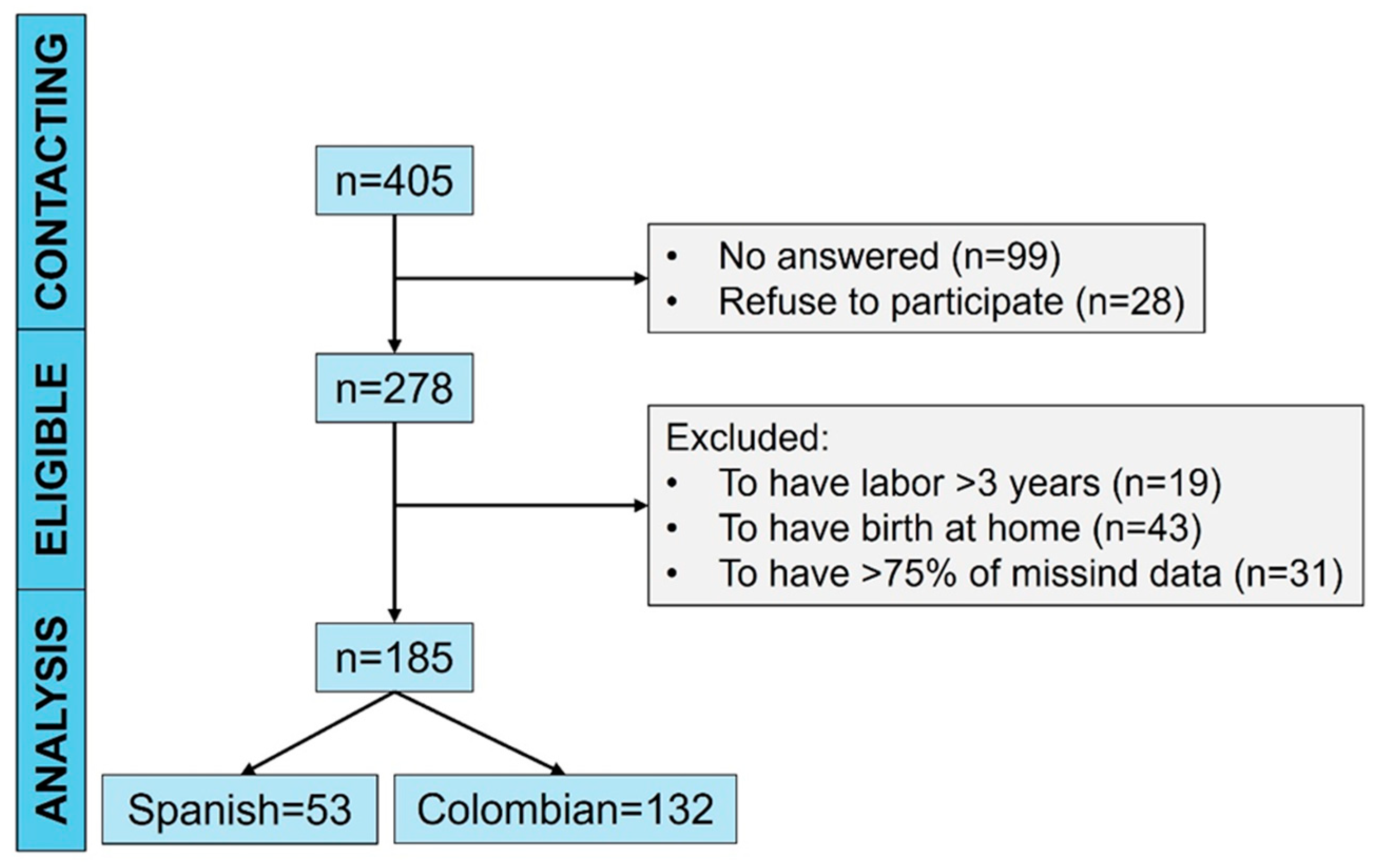
Figure 1. Flow diagram of woman participants in the study. The analysis stage was women who give birth in Spanish or Colombian socio-health context. Sample size (n). Adapted of STROBE guidelines [20].
Preprints 142915 g001
Figure 2. Perception of maternity rights and resources during the last pregnancy, childbirth and postpartum between countries of labor. Data show mean±Standard error of mean (SEM). The p-value (P) was extracted from unpaired Student´s T test. The women´s knowledge of healthcare rights (MatCODE); the perception of resources scarcity (MatER); the fulfillment in maternity rights (FMR), and its dimensions (information, privacy, consent, support and participation).
Preprints 142915 g002
Figure 3. The models of perception of fulfillment maternity rights. Data shows the adjusted and standardized coefficients (β) with the 95% of confidence intervals [CI] obtained from a linear regression model. The red dot means significant association (P<0.005). The global fulfillment in maternity rights (A), and its significant dimensions related to rights (Colombian vs Spanish; B: information, C: privacy, D: support and E: participation). The Positive Affect Schedule (PANAS+); The Maternity Beliefs Scale, clustered in maternity as a sense of life (MBS-life) and maternity as a social duty (MBS-social); The women´s knowledge of healthcare rights (MatCODE); the perception of resources scarcity (MatER).
Preprints 142915 g003
Table 1. Social variables compared to the country of labor.
Total
(n=185)
Spanish
(n=53)
Colombian
(n=132)
P
Women age (years) 29.3±6.3 30.6±5.8 28.8±6.5 0.054
Educational level
Primary school 4.9% (9) 1.9% (1) 6.1% (8) 0.625
Secondary school 50.8% (94) 52.8% (28) 50.0% (66)
University 44.3% (82) 45.3% (24) 43.9% (58)
Working situation
Employed 58.9% (109) 52.8% (28) 61.4% (81) 0.367
Unemployed 41.1% (76) 47.2% (25) 38.6% (51)
Civil status
Single 18.9% (35) 18.9% (10) 18.9% (25) >0.999
Married 81.1% (150) 81.1% (43) 81.1% (107)
Biparental family 84.3% (156) 90.6% (48) 81.8% (108) 0.209
Data show mean±Standard error of mean (SEM) in quantitative variables and relative frequency (%) and sample size (n) in qualitative variables. The p-value (P) was extracted from unpaired Student´s T test or Chi-squared test according to type of variable.
Table 2. Obstetrical characteristics during the last pregnancy and postpartum compared to the country of labor.
Total
(n=185)
Spanish
(n=53)
Colombia
(n=132)
P
Gravida 1.7±1.0 1.7±0.8 1.8±1.1 0.441
Parity 1.4±0.9 1.4±0.6 1.5±1.0 0.312
Previous miscarriage 0.2±0.5 0.4±0.7 0.1±0.4 0.020
Previous labor by C-section 0.7±0.8 0.3±0.6 0.8±0.9 <0.001
Postpartum time elapses (years) 1.17±1.20 1.57±1.25 1.01±1.14 0.006
Assisted reproduction techniques 4.9% (9) 9.4% (5) 3.0% (4) 0.122
Multiple pregnancy in the last gestation 1.6% (3) 3.8% (2) 0.8% (1) 0.198
Desired last pregnancy 87.3% (144) 100% (53) 81.2% (91) 0.002
Last labor by C-section 46.5% (86) 22.6% (12) 56.1% (74) <0.001
Gestational age (completed weeks) 38.7±1.7 39.1±2.0 38.5±1.6 0.034
Preterm birth 7.6% (14) 11.3% (6) 6.1% (8) 0.230
Obstetrical complications 31.4% (58) 88.7% (47) 93.9% (124) 0.968
Fetal complications 17.8% (33) 20.8% (11) 16.7% (22) 0.657
Labor complications 20.5% (38) 28.3% (15) 17.4% (23) 0.146
Postpartum complications 17.8% (33) 17.0% (9) 18.2% (24) >0.999
Neonatal complications during labor 13.5% (25) 17.0% (9) 12.1% (16) 0.525
Neonatal complications during postpartum 10.3% (19) 9.4% (5) 10.6% (14) >0.999
Data show mean±Standard error of mean (SEM) in quantitative variables and relative frequency (%) and sample size (n) in qualitative variables. The p-value (P) was extracted from unpaired Student´s T test or Chi-squared test according to type of variable.
Table 3. Emotional variables during the last pregnancy and postpartum compared to the country of labor.
Total
(n=185)
Spanish
(n=53)
Colombia
(n=132)
P
Resilience 82.1±13.2 83.0±9.4 81.7±14.5 0.469
PANAS positive 36.7±7.6 37.7±7.1 36.2±7.8 0.252
PANAS negative 23.8±8.7 23.3±9.2 24.0±8.5 0.644
Derailment 20.4±5.4 19.4±5.2 20.9±5.5 0.055
MBS-life 17.3±7.4 14.8±6.4 18.4±7.6 0.003
MBS-social 8.0±3.7 6.7±2.6 8.5±3.9 0.001
Data show mean±Standard error of mean (SEM). The p-value (P) was extracted from unpaired Student´s T test. The Positive and Negative Affect Schedule (PANAS); The Maternity Beliefs Scale, clustered in maternity as a sense of life (MBS-life) and maternity as a social duty (MBS-social).
Table 4. Correlations between the perception of women related to the fulfillment of maternity rights and significant emotional variables between country of labor.
Total Spanish Colombian
Resilience 0.11 [-0.06; 0.27] P=0.220 0.17 [-0.11; 0.43] P=0.235 0.09 [-0.13; 0.30] P=0.433
PANAS positive 0.17 [0.00; 0.33] P=0.047 0.17 [-0.11; 0.43] P=0.231 0.23 [0.04; 0.40] P=0.016
PANAS negative -0.10 [-0.26; 0.07] P=0.260 -0.40 [-0.61; -0.14] P=0.004 0.04 [-0.17; 0.25] P=0.699
Derailment -0.09 [-0.25; 0.08] P=0.304 -0.32 [-0.55; -0.04] P=0.023 0.02 [-0.20; 0.23] P=0.883
MBS-life 0.02 [-0.15; 0.19] P=0.808 -0.10 [-0.37; 0.18] P=0.493 0.12 [-0.10; 0.32] P=0.289
MBS-social -0.08 [-0.24; 0.09] P=0.372 -0.24 [-0.49; 0.04] P=0.089 0.01 [-0.21; 0.22] P=0.937
MatCODE 0.19 [0.03; 0.35] P=0.027 0.24 [-0.04; 0.48] P=0.095 0.16 [-0.06; 0.36] P=0.146
MatER -0.31 [-0.46; -0.16] P<0.001 -0.42 [-0.62; -0.15] P=0.003 -0.29 [-0.48; -0.08] P=0.007
Data show correlation coefficient and 95% confidence interval [CI]. The p-value (P) was extracted from Pearson´s correlation. The Positive and Negative Affect Schedule (PANAS); The Maternity Beliefs Scale, clustered in maternity as a sense of life (MBS-life) and maternity as a social duty (MBS-social); The women´s knowledge of healthcare rights (MatCODE); the perception of resources scarcity (MatER).
Table 5. Main result related to the socio-health context of childbirth impact on fulfillment maternity rights (FMR).
Global
FMR
FMR
Information
FMR
Support
FMR
Participation
Colombian socio-health context
Women age + +
Previous miscarriage
Previous C-section + + +
Desired pregnancy +
Last C-section
Gestational age + +
Maternity beliefs as a social duty
Knowledge of maternity rights +
Scarcity of resources
Risk factor due to decreased FMR (−); Protective factor due to increase FMR (+), being adjusted by the postpartum time elapse to response the questionaries, positive affect, derailment and maternity beliefs as a sense of life.
Disclaimer/Publisher’s Note: The statements, opinions and data contained in all publications are solely those of the individual author(s) and contributor(s) and not of MDPI and/or the editor(s). MDPI and/or the editor(s) disclaim responsibility for any injury to people or property resulting from any ideas, methods, instructions or products referred to in the content.
Copyright: This open access article is published under a Creative Commons CC BY 4.0 license, which permit the free download, distribution, and reuse, provided that the author and preprint are cited in any reuse.
Prerpints.org logo

Preprints.org is a free preprint server supported by MDPI in Basel, Switzerland.

Subscribe

Disclaimer

Terms of Use

Privacy Policy

Privacy Settings

© 2025 MDPI (Basel, Switzerland) unless otherwise stated