
Submitted:
12 December 2024
Posted:
13 December 2024
You are already at the latest version
Abstract
Renovation costs for heritage buildings seem uncertain compared to those for new construction. Different approaches and processes need to be adopted to handle conservation heritage projects. Many have reported that conservation projects frequently fail to meet the delivery goals of time, quality, and budget, which leads to contractual disputes during the renovation stage.
Keywords:
conservation uncertainty
; cost
; historic buildings
; Zanzibar stone town
1. Introduction
The nature of historic buildings renders their renovation challenging compared to non-historic structures. These challenges come from the environment surrounding historic districts and the deterioration of their building fabrics, which are left to crumble due to a lack of long-term repairs. The absence of such repairs is a common phenomenon among buildings in these districts, and often, repairs are conducted for compelling reasons rather than on a regular, planned basis. Several reasons contribute to the phenomenon, but finance, a significant hurdle, tops the list.
While specific interest groups drive a few historic revitalisations, most renovations are spurred by commercial interests, with tourism playing a significant role in maintaining historic buildings. A prime example is the historic Stone Town of Zanzibar (STZ), where many renovations have led to the conversion of buildings into hotel facilities. The rapid increase in the number of hotels threatens to overshadow residential structures in the future, leading to the undesirable gentrification of the local population and an imbalance in the conservation of cultural heritage.
As a historic building deteriorates, the renovation process becomes increasingly complex and can even result in the loss of the heritage building. The challenges of renovating a highly deteriorating building are manifold, with one of the critical difficulties being the accurate prediction of the extent of renovation work required to maintain the building’s health. This is due to many of the renovation needs being hidden within the building’s structures and fabric, with the true scope of the work only becoming apparent as the renovation progresses. As a result, Smith [9] characterises preparing a realistic renovation budget for historic buildings as a complex and challenging endeavour, often leading to significant variations.
According to the author’s experience from renovations of buildings in the STZ, the extent of the revealing works is sometimes so considerable that the scope could be double that estimated at the start of a project. Although it is customary for construction cost estimators to add up a contingency amount of 5% to 20% to cover unforeseen works, such an increase in scope is far more significant to be covered by a standard provision of the contingency sum. Thus, the concept of contingency sum is less applicable to historic renovations.
Smooth renovation of the buildings is, therefore, hard to predict. Consequently, the inherent uncertainty of these renovations made people perceive the upkeep of historic buildings as a burden and an expensive affair. Therefore, financiers and general building contractors tend to stay away from these works. As a shortcut, they like to propose the demolition of heritage buildings for new and modern structures. They keep their prices incredibly high when involved in tendering to avert the cost risks. An inflated tender figure should be expected from these works.
Regardless, heritage buildings are essential legacies of “all mankind” [10], and we must sustain them. Sustenance could mean, in one way or another, dealing with impediments to their preservation. Renovation uncertainties are one of the impediments. Therefore, it is essential to understand the nature of these uncertainties to assist in effectively renovating and managing our historic resources. In that regard, this article embarks on a journey through some prominent renovation projects in the World Heritage STZ to document some uncertain events related to renovation projects. Understanding these events helps set up proper conservation plans, particularly in accurately preparing renovation budgets.
Literature Review
Any renovation project requires time, financial muscle, or costly equipment to inspect a structure’s existing conditions. When unexpected existing conditions are not adequately examined, unforeseen costs and schedule impacts can adversely affect the successful completion of a renovation project [4].
Heritage clients and users increasingly need to know their likely financial commitment before work commences. If integrated into Conservation Management Plans, this early-stage cost advice can establish realistic budgets for decision-making [9].
In order to establish the recovery and maintenance costs, it is necessary to complement the database for individual construction elements costs and the length of recovery and maintenance cycles.
To determine maintenance and renewal costs for individual structural elements of a historical building, it is necessary to obtain the broadest possible database on the bid stage and the realised construction work prices [2]
Risks in conservation projects are believed to differ from risks in new building projects. Some different methods and processes need to be adopted in order to handle a conservation heritage project. Heritage projects form a valuable inheritance with sentimental values that tell a specific history, culture or tradition that must be preserved. Nevertheless, many have reported that conservation projects frequently fail to meet the delivery goals of time, quality, and budget, which lead to contractual disputes during the post-contract stages of a conservation project. Conservation work is riskier due to the inclusion of many activities such as preservation, restoration, and refurbishment. [5]
A construction project can be considered successful or not through the project management triangle: time, cost and quality. Roy and Kalidindi [7] have unfortunately reported that the performance in terms of time, quality, and cost is far from satisfactory for conservation projects. [1]
One of the factors for the failure to reach the budget for the conservation projects is limited research on the cost aspect of the conservation projects [3].
This is to say that the lack of complete costing information for conservation projects causes consultants to face difficulty in preparing cost budgets for conservation projects. As conservation works differ from new construction projects’ scope, nature, and working principles, they are assumed to be more risky than new building projects. Conservation work requires a non-standard scope of work, different approaches, and exceptional project experience in terms of material, skills, and artistry to meet the realistic budget.
2. Materials and Methods
A case study approach was used to solicit information. Distinct renovation projects were visited. Multiple case studies are applauded for their ability to explore detailed research information that can be generalised and applied to similar situations [8]. Stone Town Conservation and Development Authority (STCDA), a custodian responsible for monitoring the old town, was consulted for a potential list of renovation projects. The STCDA oversees the management of the historic town. It approves and administers all renovation projects in the town, especially those with significant alterations and structural repairs. To obtain a variety of projects that could feature several uncertainties, criteria such as project size, location, and building type were considered desirable when selecting the cases. However, upon thoughtful discussion with STCDA, several other cases were recommended for inclusion in addition to the criteria. This made it easier to quickly locate cases with merit, which the said criteria might have overlooked.
To obtain rich information, projects carried out by both formal and informal contractors were considered. Informal contractors are individuals or knowledgeable builders who carry out conservation projects out of formal contracts. Private clients often engage them. These people have oral records of works and events. The key questions asked were: What was unforeseen during project preparation? How did the unforeseen issues contribute to the cost of the renovations? For this study, conservation uncertainties and their cost implications for four (4) cases are presented.
3. Results
3.1. Case Study No. 1: Renovation of House No. 13
The house is located at Vuga Street behind the High Court building (Figure 1). It is a two (2) storey structure occupying 160 square meters. Its age is about 100 years. It had significant repairs in 1920 by Sinclair, a Marine Engineer who designed and constructed several Stone Town monuments. The original construction of this house employed traditional materials, such as rubble stone walls and mangrove poles supporting floor decks, typical of the STZ buildings. The original owner could not be found, but several others occupied the building. It was used as a German Consulate, and quite recently, before substantial renovation works, it hosted the Egyptian Consulate. An insurance company now owns it. The 1920 renovation introduce dramatic change to the building. Lime and pebbles concrete with wire mesh replaced the stone and mangrove construction. It also introduced I-beams to provide larger spans. Hardwood timber was used to enclose the I-beams but was now found decayed.
At the outset, a survey was conducted to unveil the extent of renovations, and a consultant prepared a renovation plan. Nonetheless, as is the case of most renovations, it is evident that his proposal falls short of an accurate depiction of the actual situation. The building had deteriorated significantly from the inside than the survey indicated, although it looked pretty fine from the outside. Based on the plan, the renovations were estimated to cost some 372 million Tanzania shillings (USD 143,076.0) to cater for structural, wall, and roof repairs.
Structural repairs take up a significant part of conservation projects and are perhaps the most difficult, uncertain and leading cost-escalating item. Conservation projects often start with structural stabilisation. Some structural defects may be detected from vivid cracks in walls, beams or columns. However, several are found after pealing the old plaster or as the work progresses, a situation which goes unnoticed during superficial surveys. Some may be created as a result of disturbing other elements. Therefore, efforts need to concentrate on stabilisation issues wherever found. Thus, financial allocation depends on the situation rather than the conventional stage valuation, as reflected in Bills of Quantity (BoQ).
As the Contractor embarked on the works, the Consultant’s proposals seemed impractical. He underestimated the structural stability of the building. Something unusual occurred during the renovation, which caused a tag of war between the Contractor, Consultant, and Client. It also shaped the course that this project had to follow. The floor slabs had deteriorated, so no one noticed the decay of the structural mangrove and wire mesh installed therein. The slab could, therefore, not hold the imposed load in some areas unnoticeable. As a result, the owner’s staff walked on it, and his foot suddenly punched through the slab up to the head. He had to be pulled out.
The event above prompted the rethink of the renovation plan and used it as proof of deterioration. Although the plan proposed minor repairs to the floor, the unveiling situation demanded structural replacement of the entire building floors (Figure 2). A teamwork approach was used to share experience on how to redesign the floors based on conservation rules, buildability issues, meeting safety standards, and yet affordable to the Client. The team must usually provide new solutions to suit the situation. A consensus was reached; however, although the most effective option was chosen, the solution contributed significantly to the overall project cost, which went from 372 million to some 950 million Tanzania shillings,(USD 365,384.0) an additional 61% to the initial budgeted cost.
The walls of the historic buildings are made up of rubble stones bonded with lime mortar. Due to its acidic nature, the lime causes deterioration of steel members with time. House no. 13 employed I-beam sections taken from the remains of the uprooted Bububu Railway to provide longer free spans of over 3 meters than the mangrove poles would do. The beams rest on and are anchored into the rubble walls. Opened beam ends revealed unprecedented rust threatening its anchorage and further complicated the structural repairs. Regardless, it is worth noting that what the Consultant condemned was less severe by the Contractor, particularly the labourers, than what he ignored.
Lessons from the Renovation of House No. 13
- (i)
- Construction technology varies within STZ historic buildings. It is never the same for all the buildings. Some buildings are entirely traditional, and others combine traditional and modern materials. Understanding which material is used for a particular building is crucial before proposing any renovations.
- (ii)
- Building surveys are just bases for renovations but can not be relied on as accurate depictions of a deteriorating situation, no matter how exhaustive they were performed. Surveys are unable to depict internal deterioration. In most cases, they are superficial. Therefore, surveys establish initial demands that may change during rehabilitation works. This necessitates the revision of building quantities as the renovation progresses. Variations are almost inevitable in conservation works.
- (iii)
- Structural stabilisation/repairs are one of the major cost items in conservation projects.
- (iv)
- Generally, the older the Building, the more complex the renovations. However, this also depends on past building usage, construction methods, materials employed, and how often renovations have been performed. Understanding the age is essential to predict the complexity and uncertainties of renovation.
- (v)
- The sequence of works differs from that of standard construction. Stabilisation is often done first. Works may also go forth and back. A work program may become invalid and challenging to follow. Financial projection plans may not be applicable.
- (vi)
- Required approach: Costing as you build vs. the standard construction of Design and costing. The clerk of work must actively participate. This makes us rethink the type of contract. Maybe cost + %age fee contracts can distribute the risks fairly to the Client and Contractor.
- (vii)
- From Ditto: The provision of a contingency amount does not work for these projects.
- (viii)
- Quantity surveyors (QS) must have adequate knowledge of construction materials, methods, and possible uncertainties to estimate renovation costs and budgets.
- (ix)
- Construction methods for conservation projects are situation-dependent. The situation determines how the building should be supported, the extent of temporary works, which materials to use, etc. In this scenario, an accurate cost estimate is hard to determine at the project’s outset.
- (x)
- Conservation projects are prone to conflicts because of cost uncertainty. They may also suffer from substantial cost overruns.
- (xi)
- A teamwork approach best suits renovation projects, even if it includes masons and labourers, rather than the conventional consultant dominance approach.
3.2. Case Study No. 2: Renovation of House of Wonders (Beit-el-Ajaib)
Constructed along the sea promenade overlooking Forodhani Gardens in 1883 (139 years ago) by Sultan Baragash bin Said, the House of Wonders (Figure 3) is the most imposing structure in the STZ. It is so named because of its grand size and the fact that it is the first building in sub-Saharan Africa. It was installed with electricity, tap water, and an elevator by the time it was installed. The building consists of a wide verandah surrounding the inner core. The ground floor is 7 meters high, while the first and second floors are 6.8 and 6.5 meters, respectively. The House of Wonders was a ceremonial palace during the Sultan’s reign.
The construction technology used is unique. A combination of modern and traditional materials uniquely characterises its construction. Massive lime mortar masonry walls from 1 to 1.5 meters wide provide adequate recesses for doors and windows. The wall size decreases in the upper floors, reaching a thickness of 1.2 meters on the second floor. The structure is supported by cast iron hollow columns of ionic architectural style imported from Europe. These columns hold the floor decks of varying materials. Astonishingly, it is not clear why Sinclair, the Marine Engineer and the Architect of this building, opted to showcase a slab of non-uniform materials, which is uncommon in STZ. Again, this testifies to the point made above that the construction technology of the buildings in the STZ is never the same. During the 2021 partial collapse of the building, its anatomy was revealed. The first-floor slab, for example, was divided into bays with varying layers of structural and finishing materials. See Figure 4. Some bays used:
I-section + Timber plants + Mud deck + Marble finish
I-section + Timber planks + Corrugated iron sheet + Concrete + Marble finish
I-section + Timber planks + Corrugated iron sheet + Concrete + Floor screed finish
I-section + Wire mesh + Concrete
I-section + bottom re-bar + Concrete
Interestingly, all were skillfully blended and finished at the same floor level. The complex tic, wooden, spacious spiral staircases that span between floors are marvels of high-tech timber construction. The doors are also astonishing as they were curved with utmost skill and highly decorated with intricate flora patterns and golden Quranic inscriptions. It appears that the art of door carving reached its zenith in Zanzibar House of Wonders and is to be found nowhere else on the earth. Zanzibar doors are admired worldwide, and almost a third of all visitors to STZ fall in love with the doors [6].
Unfortunately, the House of Wonders was left without repair for a long time. Its back side partly collapsed in 2012, followed by its western wing in 2015. These warning collapses were signs of a more emanating severe fall that in 2021, the more significant front portion and inner core, including its splendid observatory tower, went down in a surprise (Figure 5). Sadly, its most enormous front door (Figure 6), astonishing every visitor was destroyed. The supporting columns were overwhelmed by the heavy rubble masses that they were also broken into pieces.
This excellent heritage asset served as a museum before it collapsed and used to receive an average of 300 visitors a day. Each visitor pays a US$ 10 entrance fee. Therefore, at least US$ 3,000 was collected daily. This adds up to US$ 90,000 (Tz Shillings 207,000,000/-) per month. Indeed, it is a significant loss to the government! Therefore, historic assets can generate income to suffice their upkeep if well managed.
Before the recent collapse, the Ministry of Heritage in the Sultanate of Oman showed interest in the renovation of the building and allocated some US$ 6,000 (1.38 billion Tz shillings) for repairs. A management consultant was selected to facilitate the conservation of the building and coordinate the project with the Zanzibar Government. The consultant employed a conservation consultant a foreign company, to undertake building surveys and initiate a conservation plan. A cost consultant from a foreign firm was then called upon to prepare the renovation budget.
It was unfortunate that the renovation budget was prepared without visiting the site. It is based mainly on the conservation plan and site photographs, which, in reality, do not solicit all cost-related demands. Tender documents were prepared from the plans, including BoQ (Bills of Quantities). Five (5) contractors were invited on a selective basis, of which only two (2) returned the bids. Their tender figures were US$ 15,000 and US$ 5,000. The consultant cost estimate could not be obtained for comparison. However, when asked, the highest bidder, who seemed more experienced with historic renovations, notified that after visiting the building, he found many uncertain issues, and the renovation plan did not accurately capture the existing disrepair. Therefore, he opted to maximise the risks by providing a higher bid.
The Consultant intended to award the lowest bidder US$5,000, probably because it is close to the Client’s budget of US$6,000. During negotiation, the bidder demanded a waiver of several aspects of the contract, such as the advance payment guarantee and performance bond, but the STCDA, as an implementing partner, refused.
An examination of the BoQ found that the bidder front-loaded many items. Regrettably, the consultant mainly provided lump sum items rather than rated items, variations of which will be difficult to monitor during implementation. Such works are more prone to changes, and the rates are highly usable. It can be inferred from these acts that the cost consultant might have been less competent or at least irresponsible in the conservation works and took the works relatively lightly.
The fact that the Contractor never stayed premaritally at the site and did not exercise his duties diligently made the STCDA and the Consultant concerned. One reason could be the unattractive profit vis-a-vis work complexity. After taking over the site and starting temporary support works, the Contractor stayed longer without progress. This induced structural instability and led to the collapse of the front part and section of the inner core (See Figure 5). There is a tendency for historic buildings to stay longer without renovation. However, once intervention is made, it has to be progressive and monitored. Anything arising from intervention has to be addressed promptly; otherwise, it may have irreversible consequences.
The overwhelming pressure from the collapse made the Contractor quit without notice. Nonetheless, the collapse exposed helpful information about the previous plan and budget. First, the construction technology of the building was not adequately understood. For example, there is a hardwood wall plate throughout the wall. This plate supports steel beams that bear the floor deck. Portions of the plate decayed. Thus, it is impossible to stabilise the structure without knowing such a plate. Replacing the wall plate needs special care and proper methods. Hence adding up significantly to the budget. Second, the window lintel is also made from hardwood, though it looks like concrete the way they are finished. Decay of some lintels was observed at wall joints. Again, the replacement of the lintel needs care with adequate temporary support.
Temporary support is a significant cost item after structural stabilisation. This is attested by the cost of such support gathered from three buildings in the town. For example, temporary support to the Palace Museum, which is also in poor condition and is in fear of collapse, along the seafront at Forodhani costs US$ 120,000 (Tz Shillings. 276,000,000). Another seafront Grand Building was supported by US$ 300,000 (Tz Shillings. 690,000,000). Supported the House of Wonders itself. Tz Shillings 500,000,000/- as an immediate measure to stop progressive collapses. The support materials vary from timber to steel. See Figure 7 below.
Further, soil investigation revealed that the water table at the building is high, and the water salinity is high because of the surrounding sea environment. Therefore, a new item of chemical soil stabilisation around the foundation should be introduced in the BoQ. Due to the building perimeter, the item is significant. The work has to be subcontracted to a Specialist Contractor, possibly from abroad. Again, it is a cost-escalating item.
Significant revisions to the BoQ were inevitable for the conservation to proceed successfully after the 2021 collapses, which now include reconstructing the collapsed part. The reconstruction would need the fabrication of cast iron columns that are no longer in the market, to mention a few. Therefore, it is to be treated as a particular order. Original marble floor tiles are more expensive than before. A more elaborate and detailed BoQ was then prepared.
Lessons from the previous contract made the STCDA and the Consultant rethink their approach to soliciting a new Contractor. At the outset, local Zanzibar contractors were approached but refused from technical and financial grounds. Later on, four (4) contractors were approached in Mainland Tanzania, but one of them refused. The remaining three (3) had their QS stayed at the site for three months while preparing their bids. One bidder hired a conservation expert from India to assist in detailed cost preparation. The bidders’ prices were US$ 61 million, US$ 43, and US$ 37. This time, the lowest price is sevenfold that of the previous unsuccessful contract. It is, therefore, clear that the previous contract would not have achieved the conservation objectives of the building.
An exciting aspect of tendering in this project is that the Omani Ministry of Heritage financier opted not to prepare Consultant cost estimates for fear of collusion. The collusion might have consequences not in the aspect of coming closer to the budget, but the financier wanted an accurate depiction of the cost from the Contractors’ practical perspective. After that, the Contractor will be selected not on the cost merit but on experience and sound judgement of his methodology, which is essential for this kind of project. If this is the case, perhaps a better approach is to think about other types of contracts, as previously suggested in Case No. 1 above. It will reduce the contractor’s renovation costs and project completion risk while achieving the best value for money by realising actual construction costs. In this standard, the peculiarity of conservation projects demands a break away from the traditional forms of construction contracts.
A quick cost-estimating approach based on experience in historic renovations may be derived to guide the computation of preliminary cost plans. Based on the nature, age and past renovations, an estimate may be produced in two (2) ways. For example, for plaster works:
- (i)
- Pessimistic Estimate: Repair all the plaster (100% repair).
- (ii)
- Optimistic Estimate: Remove and apply 60% new plaster (in case undesirable cement plaster was used in past renovations or the plaster has severely deteriorated) and 40% repair of existing plaster.
The same approach could be adopted for replacing mangrove poles, structural stabilisation, timber decks, etc.
Reconstruction of the masonry walls of this building thickness requires ample time. First, the wall will be built in stages that do not exceed 2.5 meters high. Before any load is applied, the wall has to stay for two weeks to dry and gain the desired strength. That is to say, conservation projects generally demand more time compared to standard construction. The time demand comes from the quality requirements and unfolding conditions, which sometimes require research and discussion among project members before deciding. The more time is spent, the higher the labours and other overhead costs. Preparation of the construction schedule should foresee such events, and contingency plans must frequently be implemented to meet the schedule.
Lessons from Renovation of House of Wonders
- (i)
- Renovation expenses increase with a lack of repairs, as the Swahili saying goes, “Usipoziba ufa utajenga ukuta,” and this is what happened to the House of Wonders.
- (ii)
- Local companies (Consultants and contractors) are minimally involved in serious conservation works. This is a potential area for investment.
- (iii)
- To obtain a realistic conservation budget, the QS should visit the site and stay and interact with it adequately. Building history and discussions with occupants or local builders reveal many potential cost-related issues. Vast information has to be collected in addition to the conservation drawings to aid this exercise. Sometimes, building parts are to be opened to reveal suspected decays.
- (iv)
- Due to higher risks in renovation projects, it is not surprising to receive excessively high bid prices compared to that of conventional construction.
- (v)
- Unexperienced QS should not estimate renovation projects because the risk of producing unrealistic cost estimates is too high.
- (vi)
- Conservation works must be taken more seriously, and even minor issues must be followed up on because they can significantly impact the project.
- (vii)
- Heritages have many stakeholders, including society, government, organisations, etc. The pressure of mis performance is excellent. Loss of reputation and dismissal by the public are probable.
- (viii)
- One of the significant items in the conservation works is providing temporary support. It is not only major but also the first to be done. Almost all works have to be supported before repair is performed. The cost becomes even higher for buildings with high floor-to-ceiling heights like the House of Wonders.
- (ix)
- Creativity is required in establishing quantities and cost estimates.
3.3. Case No. 3: Renovation of House No. 351 at Gizenga Street
This is a two-storey (G+2) residential building in traditional construction. It was built by a wealthy elite family from Zanzibar’s prosperous times but left the country during the 1964 revolution. The building was deserted and left unattended for a long time except for the shop fronts that open to Gizenga Street, one of the narrow, winding, but famous streets behind the Old Fort. Most of the shops along this street are lucrative. Therefore, they are renovated and rented to tourist curio business. With the exception of the shops and rooms above them, the rest of the building largely deteriorated.
The building Client engaged a personal Consultant to survey and prepare a renovation plan of Tz Shillings estimated the initial cost estimate for the renovations. 175 million. However, as is the case of several projects of this kind in the STZ, the estimate overruns by almost 33%. The actual final value of the works was Tz Shillings. 263 million.
One of the major structural repairs performed on this building was replacing the rotten wooden lintel. The threat posed by this exercise was a settlement of the walls, so the walls were heavily supported. No efforts were spared for the support since any unstable movement would have severe consequences, including reconstruction of part or the whole structure.
Walls deteriorated from within, a condition invisible before intervention. When opened, they were found bulging and swelling. A proper renovation for walls of this nature was to hack the entire plaster until the structural stones were exposed. However, extra care is required so as not to damage wall stability. So, the process has to be slow and careful. The mortar covering the stone is applied in three (3) coats (Figure 8). The first coat is a mortar binding the stones together to form a composite wall. The second coat is a layer applied as plaster, which varies in thickness depending on the roughness of the stone. The thickness can not be determined with certainty before the construction. It varies between 75 and 100 millimeters thick and is traditionally known as momo, which is basically a treatment of small pebbles on the layers. The QS needs to explain them in greater detail. After application, this layer completely covers the rubble stones. The third and final coat is the finishing layer with controllable thickness, typically 10 millimetres. It is, therefore, difficult to accurately determine the volume of mortar required to fill the stone gaps and provide a level surface for the finishing layer.
Despite the difficulty ascertaining the exact amount of the mortar, renovations are measured in square meters, considering the pricing complexity. In this project, the Contractor charged 65,000/- per square meter to repair the plaster. The rate includes knocking on existing plaster and applying the binder and the other two coats. The time required for the lime to develop strength is worth noting regarding the traditional lime plaster. The mortar has to stay for two weeks before it is applied. This is a quality requirement that is to be specified by the QS.
Renovations result in a bulk of waste materials. Therefore, tons of old mortar are produced as the plaster is knocked down. Disposal of waste materials constitutes another significant part of renovation projects. The cost of the part is exacerbated by the fact that the streets of the STZ are narrow and winding to allow lorries to pass through. The town constitutes mainly pedestrian alleys. Hence, disposal has to use carts (Rikwama), which must be carried out in two stages, first from the building to temporary heaps along the main road. Then, they loaded into lorries from the main road to a final disposal point. This double handling of waste materials is a cost concern. Nonetheless, the cost concern in double handling is for the waste and any material supplied to the site. Thus, the QS must consider the additional supply and removal costs. The disposal cost from House No. 351 was 10% of the project value. This is probably higher than that of standard construction works.
Lessons from Renovation of House No. 351 at Gazing Street.
- (i)
- Despite the higher cost of renovations, Clients continue to renovate because of the lucrative tourism business. Tourism is a major driving force for renovation in historic areas.
- (ii)
- Temporary support works depend on the case in question. Their magnitude cannot be accurately estimated initially because they are challenging to design. They have to be carried out to the satisfaction of the Contractor that the building is now stable and intervention will not harm it.
- (iii)
- Care must be exercised, which demands much time.
- (iv)
- Renovation is a risky undertaking. It is recommended that building insurance be provided. Nonetheless, the cover is rarely provided.
- (v)
- Most sense is required when pricing some items that cannot be ascertained accurately. Rates can be increased a bit to address this aspect.
- (vi)
- Double handling of materials is the norm, which increases the cost of material supply and disposal.
3.4. Case No. 4: Renovation of Bharmal Building at Creek Road
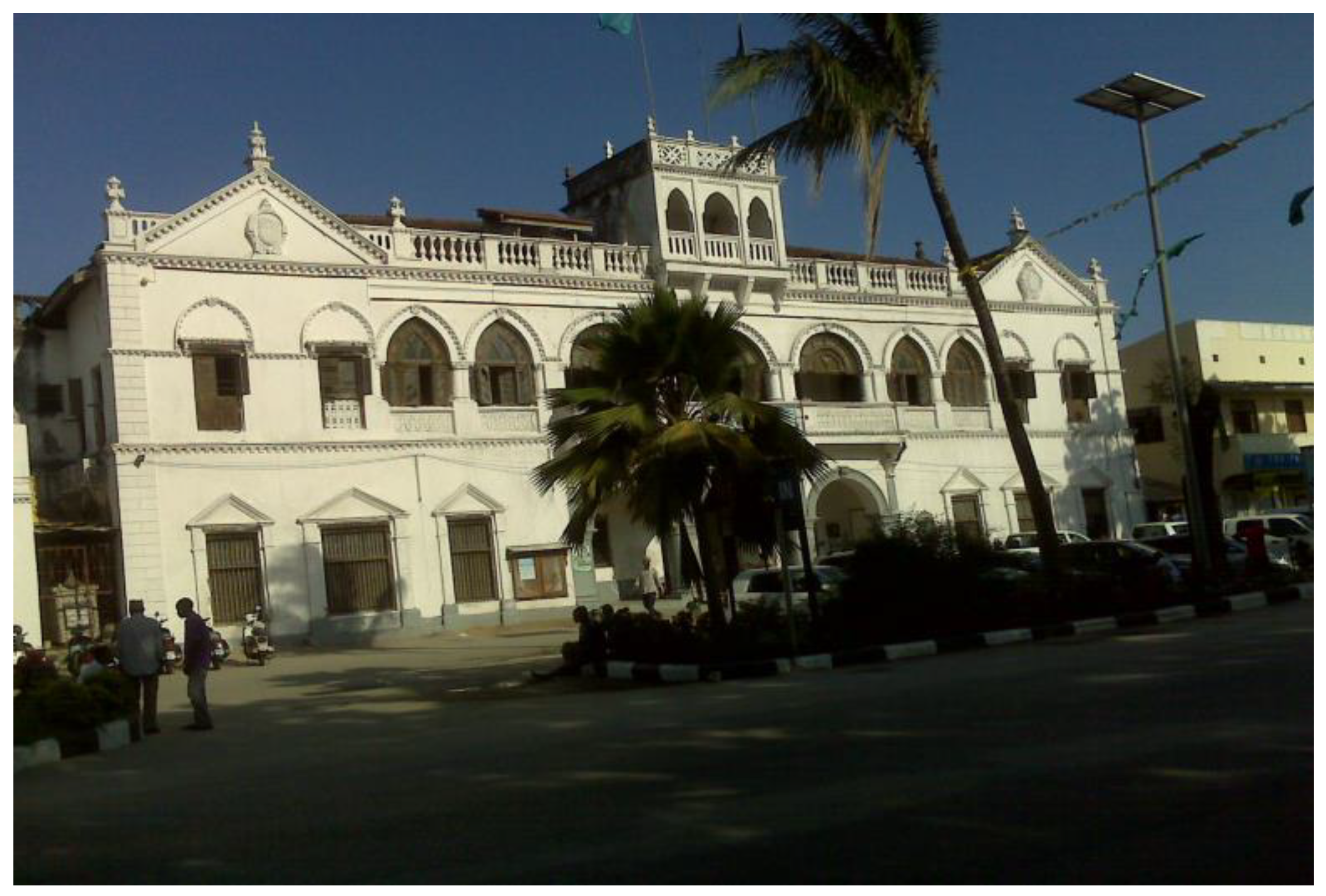
The Bharmal building is an architectural masterpiece of the first half of the 20th century in Zanzibar. Built-in 1922 and completed in 1923 at Malindi quarter, the building stands on the edge of the creek that divided the historic Stone Town from its other side, famous as Ng’ambo. The building was separated from the creek by a narrow path and a bank protecting it from high tides. The creek was gradually reclaimed between 1915 and 1960 to form what is today known as the Creek Road (Figure 9).
The charming building was commissioned by a wealthy Indian merchant named after Mohamedbhai Sheikh Hoosenbhai, who belongs to a Bohora family. The grand Bharmal building, now ZMC (Zanzibar et al.) headquarters (Figure 10), was initially designed as a residential structure. However, it primarily served public functions. The building functioned as a dwelling and a ‘godown’ in 1936. Massive rubble stone walls constructed bharmal building. It is among the few buildings in the town initially roofed with clay tiles. This can be attributed to the owner’s wealth and the technology of the time at which the building was erected. Most structures in the town were covered by corrugated iron sheets that often rust and leak due to the surrounding salty atmosphere from the nearby sea.
It has two (2) floors (G+1). The ground floor has six (6) rooms and a toilet, while the first floor has ten (10) rooms and a kitchen. The ground floor covers an area of 654 m2. The height of the first and second floors is 4.5 m and 4.2 m, respectively. Bharmal building features amalgam architecture of Indian taste with flavours of Arabic and European styles. This oriental design borrowed many features of Romanesque architecture and was composed in a dramatic style. It is the work of Zanzibar’s famous architect of the 19th – 20th century, J.H. Sinclair.
The Bharmal building has undergone several renovations. The renovation seems limited to patching the plasterwork and floor finish, replacing rotten elements, painting, and decorating. According to existing archival rent records in the building, a major structural overhaul may not have been conducted over its nearly 90 years of age. Renovations were also ad-hoc rather than planned. Perhaps the most comprehensive renovation of all is that carried out by a project financed by UN-Habitat between 1989 and 1993. At that time, no contractors specialised in the works; therefore, a team of expert architects and craftsmen from the Stone Town Authority, now The Stone Town Conservation & Development of Authority (STCDA), participated in the renovations.
2012, the World Bank financed another building renovation as part of the Zanzibar Urban Services Project. This was to create better office space for the ZMC occupying the building. A consultant prepared a conditional survey report in August 2012. However, after procurement procedures, the actual renovations started in March 2014. It took two (2) years from the survey to construction. The building condition might have changed during the more extended procurement period. Moreover, this was observed from the variation of what the survey stipulated and what was found. For example, the survey identified some 60 mangroves that need replacement; removing old plaster exposed an additional 340 mangrove poles, which must be removed, an increase of 85%. According to project BoQ, the replacement rate of mangrove poles is Tz Shillings.34,000/-. Therefore, mangrove poles alone contributed to a variation of Tz Shillings11.6 million shillings. At that time, it was not a meagre amount.
While the municipal offices were evacuated and carpet floor covers removed, a huge crack running across the center of symmetry was discovered. Such a crack went unnoticed during the survey as access to the building was restricted by the present use. The work had to stop for a while to pursue the effect of the crack and have a way forward because it was a threatening structural aspect. It took at least five months to resolve this issue. The World Bank demanded an explanation of why the crack was not detected, the consequences if this is not rectified, and the financial and time implications.
Fortunately, the Contractor monitored cracks during renovations. It was observed that they keep expanding while repairs continue. As the building intervened, the settlement was likely because one of the wings was pulling out. The same happened to the recent renovation of Haile Selassie School along Creek Road. Settlement is a major threat. The effect of settlement was again observed from The Peace Memorial Museum building along the road. Bharmal building was probably not spared especially because it is located at the beginning of the reclaimed creek. It is very much affected by high tide. Based on the observation, the building age, vibrations from vehicles on Creek Road and other factors, the World Bank was convinced to undertake structural stabilisation before the cosmetic repairs; otherwise, the whole cost of renovation would be meaningless.
Stabilisation works include tightening strings, waterproofing, supporting steel I-columns, underpinning the foundation, constructing a vibration stop wall, and repairing an old public sewer to avert the effect of seawater—the additional cost for stabilising the structure amounts to Tz Shillings. 435 million.
Another proceeding forced a major change in building materials. The building’s original roofing covering was Mangalore clay tiles imported from India. The conservation plan had the tiles carefully removed, cleaned and returned. This was to satisfy conservation regulations and keep the original authentic material. However, upon removal, most tiles had their delicate buttons decayed. Therefore, they cannot hold on to the purlins. The absolute replacement was required. Based on the conservation rule of “treating with the like”, clay tiles should be used. Nonetheless, clay tiles are heavy. Therefore, experts recommended using lighter tiles to relieve the ageing building from roof load. Eventually, Fortiza tiles were selected. The contractor’s quotation for cleaning and repairing Mangalore tiles was 13.6 million Tz Shillings, while the new proposal for Fortiza tiles was Tz Shillings.67 million. This is an increase of 78% in cost.
Out of physical renovations, the QS may need to rethink the elements of the BoQ. While the items and bill elements currently used in renovation contract documents resemble regular new constructions, there is a need for conservation-specific items. For example, an item for monitoring ongoing renovations requires continuous checks to finish work. Also, items for scientific experimentation of materials for compatibility with existing materials. Another item is preserving cultural heritage materials, such as documents found in historic buildings. Heritage conservation involves keeping buildings and their associated cultural heritage. This is so proposed because valuable documents are lost or destroyed during renovations. We need to pay specific attention to them. These three are examples of items under an element of conservation.
Lessons from Renovation of Bharmal Building
- (i)
- Termly renovations must follow soon after the survey because decays advance quickly with time. Otherwise, the building’s condition could worsen, and the envisaged renovation budget will be insufficient.
- (ii)
- Work items and BoQ elements specific to renovation projects must be established. The measurement principles of these items should be considered in SMM (Standard Method of Measurement) for building works. Therefore, research is required to solicit conservation-specific items and classify them into bill elements.
- (iii)
- Renovation should not only consider the building alone but also the effect of the surrounding environment.
- (iv)
- Locational factors experienced in other projects can act as a guide to establish the renovation demands of a nearby project.
- (v)
- Unveiling renovation demands guides on which material is appropriate and what method needs to be employed. This necessitates revising a budget along the project continuum.
- (vi)
- Research is required to solicit conservation-specific items and classify them into bill elements.
4. Conclusions
Conservation of historic buildings is a fascinating yet challenging work. The challenges come from uncertainties concealed in the structures that cannot be accurately known when surveys are conducted. For a Quantity Surveyor, this inaccurate understanding of renovation information poses a risk of producing unrealistic conservation cost estimates.
The unforeseen aspects are actual structural conditions, the amount of temporary work required to support the decaying structure, and the extent of repair work. All contribute significantly to the project budget. It is also difficult to ascertain the work sequence, which affects financial projections. The provision of a percentage for contingency may not work for these projects because massive cost overruns characterise them. It takes more time when renovations have to wait for appropriate decisions on suitable methods and materials. Thus, projects often extend their schedule. Time extension has implications for the Contractor’s overheads.
Cost estimators involved in renovation and conservation projects need intensive knowledge of the buildings in addition to work experience. They also have to be creative in establishing estimating methods for the situations they encounter, which differ between projects. Estimators also have to understand work items specific to these projects.
Because of the above issues, conservation projects are prone to contractual conflicts. The applied building contracts must be well thought out to avoid these conflicts. In these cases, it was revealed that a cost + fee contract may work better in the projects than the traditional rated BoQ contracts.
Author Contributions
Conceptualization and Methodology; Khalfan Amour, Data Collection, Analysis and Proofreading ; Faki Salim. All authors have read and agreed to the publish version of the manuscript.
Funding
This research received no external funding.
Data Availability Statement
The study did not report any data, however, in case of a need, data can be available by contacting the corresponding author.
Conflicts of Interest
The authors declare no conflict of interest.
Abréviations
BoQ Bills of Quantitiy
SMM Standard Method of Measurement
STZ Stone Town of Zanzibar
STCDA Stone Town Conservation and Development Authority
Tz Tanzania
QS Quantity Surveyor
ZMC Zanzibar Municipal Council
References
- Bowen, P. A., Cattel, K. S., Hall, K. A., Edwards, P. J., & Pearl, R. G. (2002). Perceptions of time, cost and quality management on building projects. Construction Economics and Building, 2(2), 48-56. [CrossRef]
- D Macek et al. (2019) .Cost Optimization for Renovation and Maintenance of Cultural Heritage Objects IOP Conf. Ser.: Earth Environ. Sci. 290 012155. [CrossRef]
- Hisham, N. A. A., & Hassan, H. (2015). Problems in heritage building conservation. Advances in Environmental Biology, 63-67.
- Joseph, J et al. (2020)Cost Impacts of Change Orders due to Unforeseen Existing Conditions in Building Renovation Projects Journal of Construction Engineering and Management Volume 146, Issue 8. [CrossRef]
- Nurul Hadirah et al. (2020), Risk cost analysis in Malay heritage conservation project, Journal of the Malaysian Institute of Planners. Volume 18 Issue 2 (2020), Pages 59 – 72. [CrossRef]
- Mwalimu, Mwalimu, A. (ed.), Doors of Zanzibar, 1st ed., HSP Publications, England.
- Roy, D., & Kalidindi, S. N. (2017). Critical challenges in the management of heritage conservation projects in India. Journal of Cultural Heritage Management and Sustainable Development,7(3), 290-307. [CrossRef]
- Simons, H., (2009), Case Study Research in Practice, SAGE Publications Ltd.
- Smith, J., (2005), Cost Budgeting in Conservation Management Plans for Heritage Buildings, Structural Survey, Vol. 23, Issue 2, pp. 101-110. [CrossRef]
- Smith, J. (2005), “Cost budgeting in conservation management plans for heritage buildings”, Structural Survey, Vol. 23 No. 2, pp. 101-110. [CrossRef]
- UNESCO (1972), Convention Concerning the Protection of the World Cultural and Natural Heritage, Paris.
Figure 1.
House No. 13 before recent renovations (Source: Courtesy of Abuu Shani 2023).

Figure 2.
Replacement of structural floor slab during renovations (Source: Courtesy of Abuu Shani 2023).
Figure 2.
Replacement of structural floor slab during renovations (Source: Courtesy of Abuu Shani 2023).
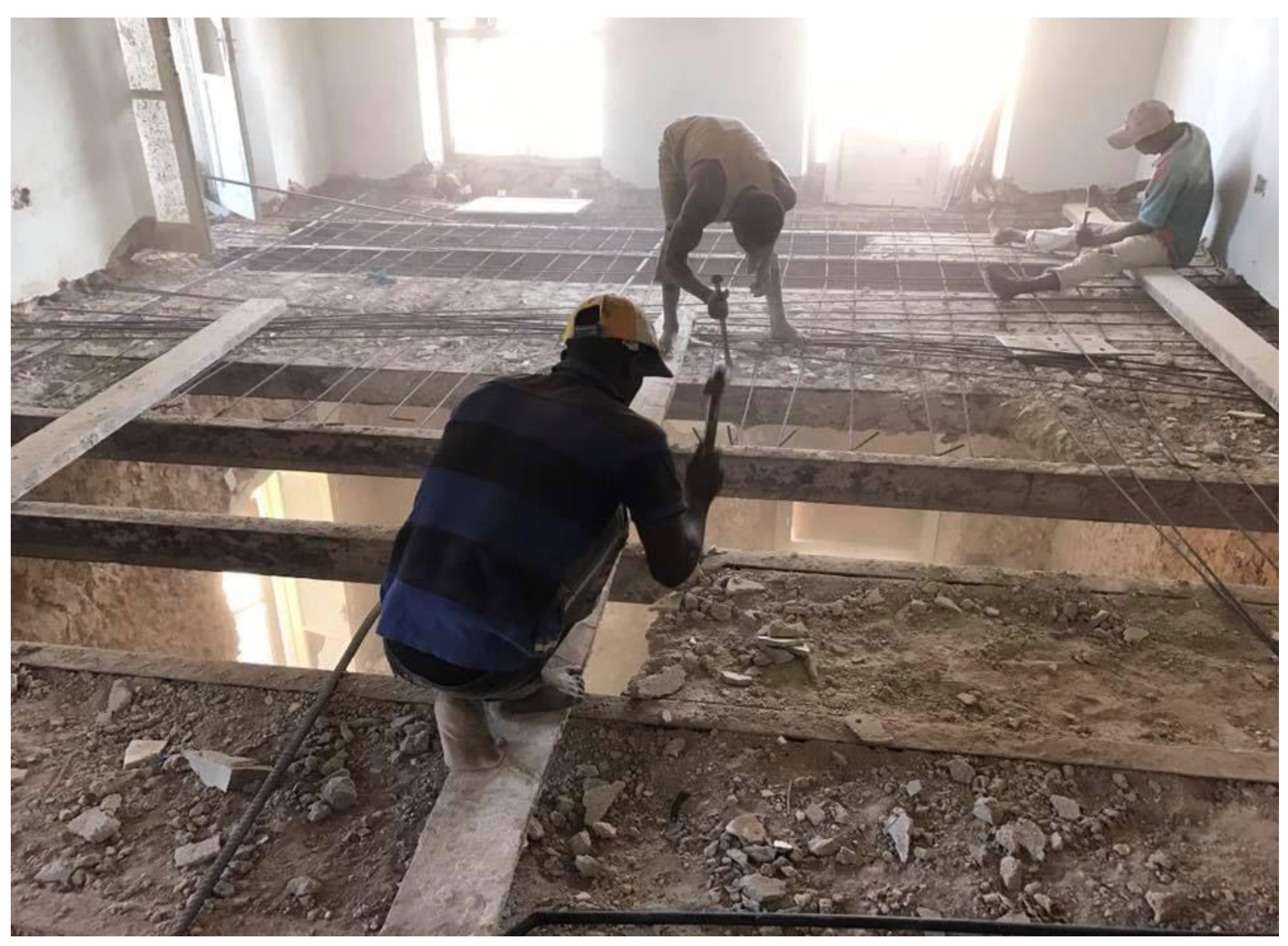
Figure 3.
House of Wonders before collapse (Source: Courtesy of Rao Jodha).
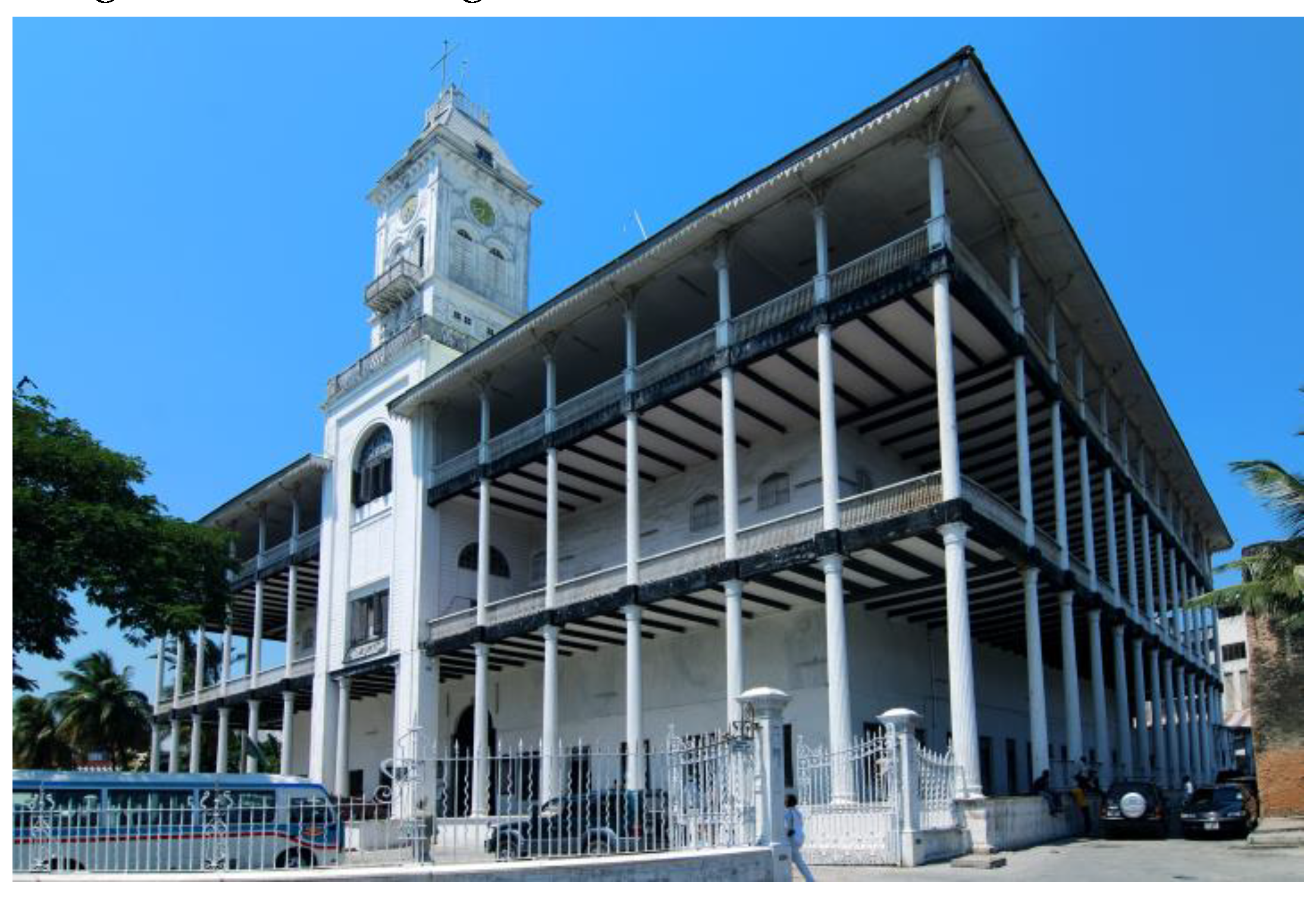
Figure 4.
The deteriorated walkway slab in the House of Wonders exposes only its bottom reinforcements (source: author 2023).
Figure 4.
The deteriorated walkway slab in the House of Wonders exposes only its bottom reinforcements (source: author 2023).
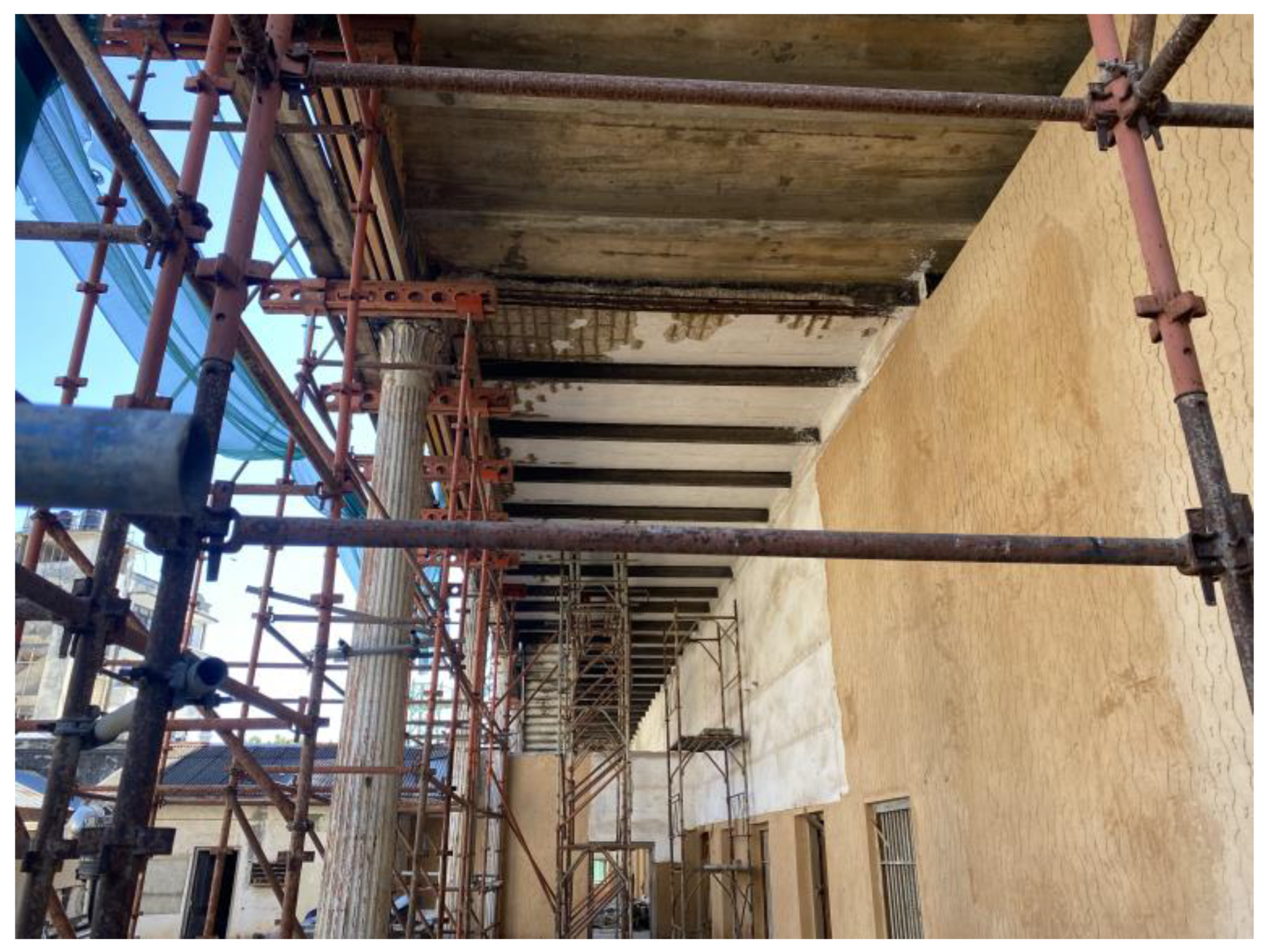
Figure 5.
The House of Wonders after 2021 collapses (courtesy of Abuu Shani).
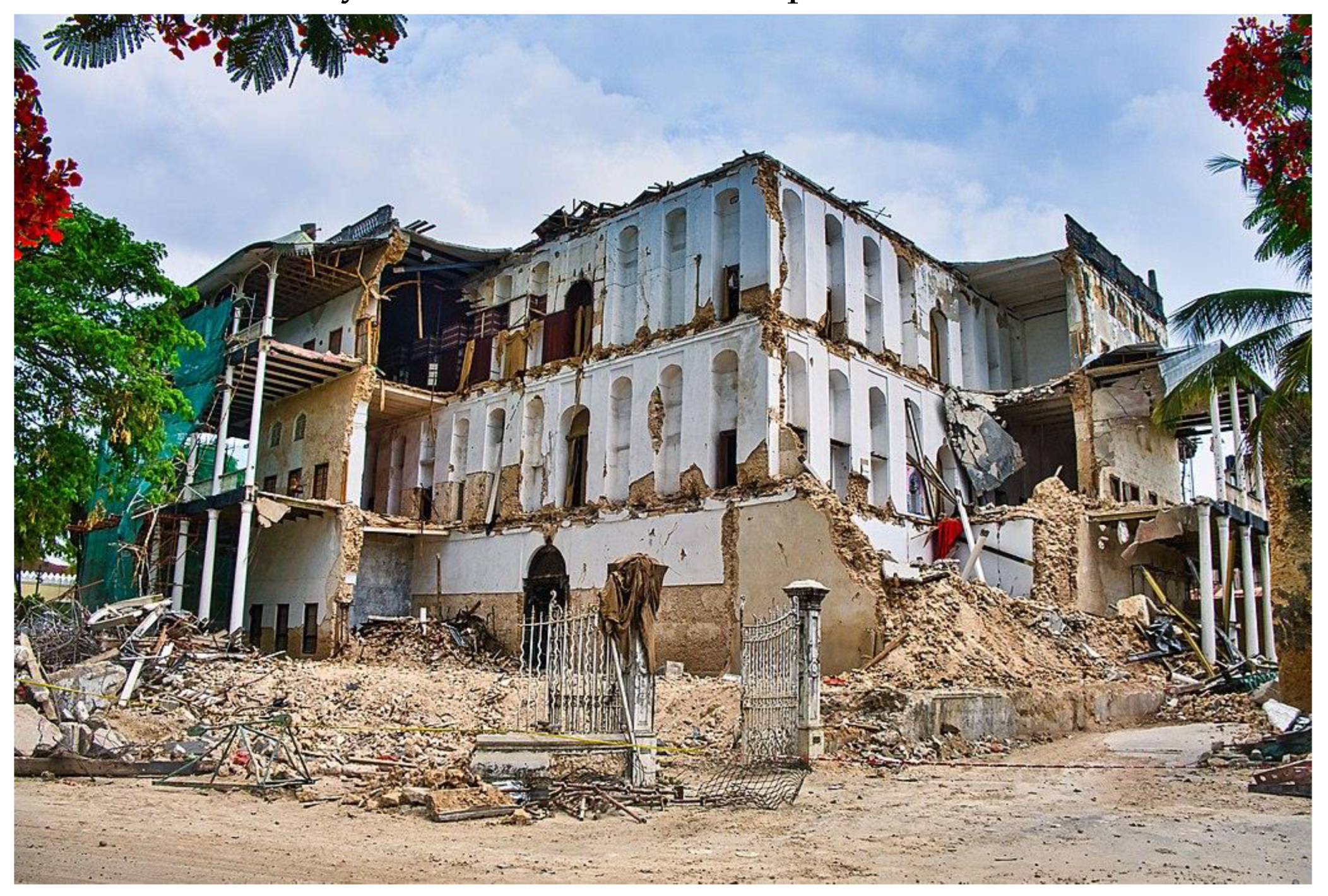
Figure 6.
The lost entrance door of the House of Wonders (source: www.dreamstime.com).
Figure 6.
The lost entrance door of the House of Wonders (source: www.dreamstime.com).
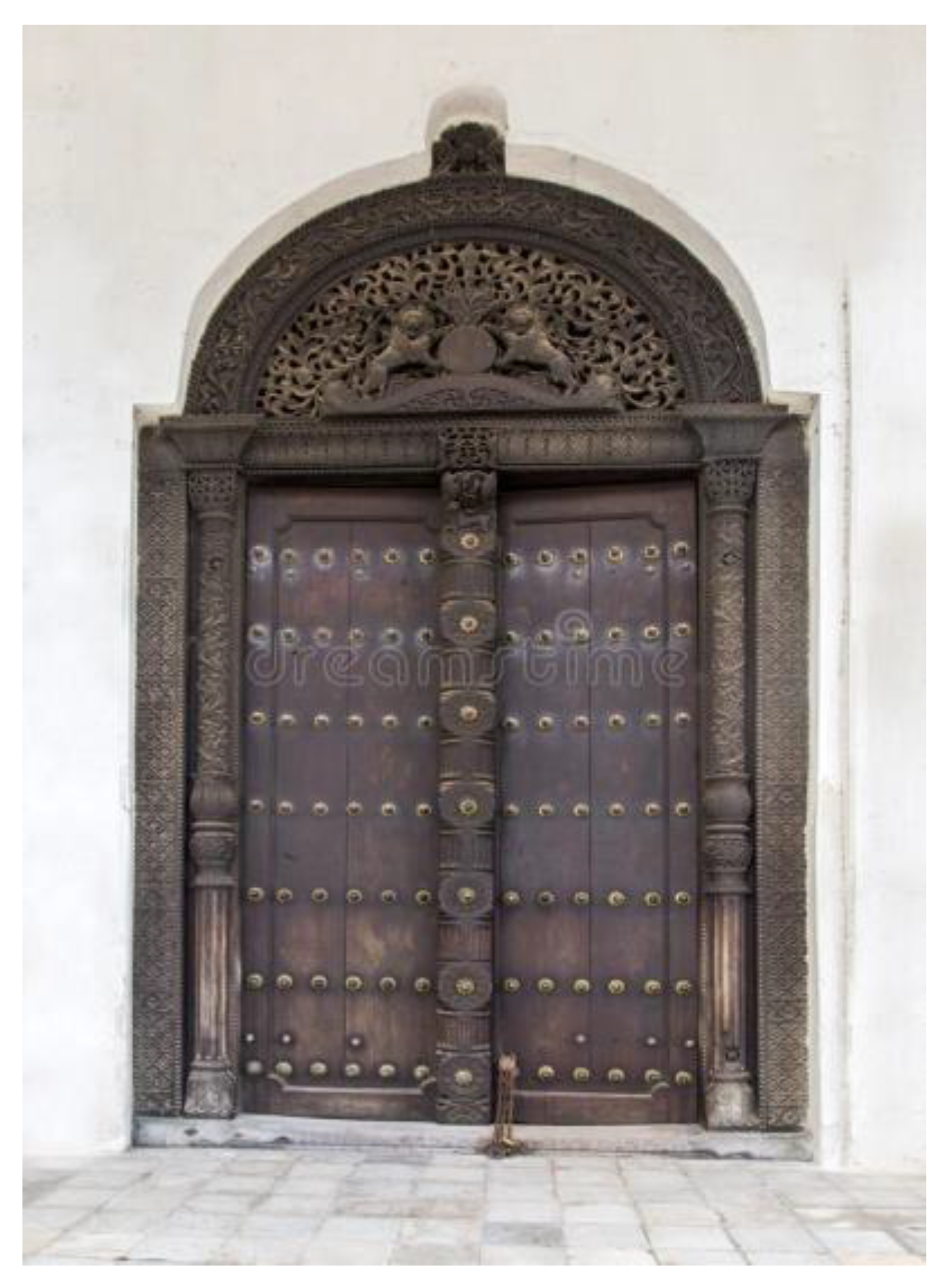
Figure 7.
Heavy temporary timber support from Palace Museum (left) and steel support in House of Wonders (right) (source: author 2023).
Figure 7.
Heavy temporary timber support from Palace Museum (left) and steel support in House of Wonders (right) (source: author 2023).
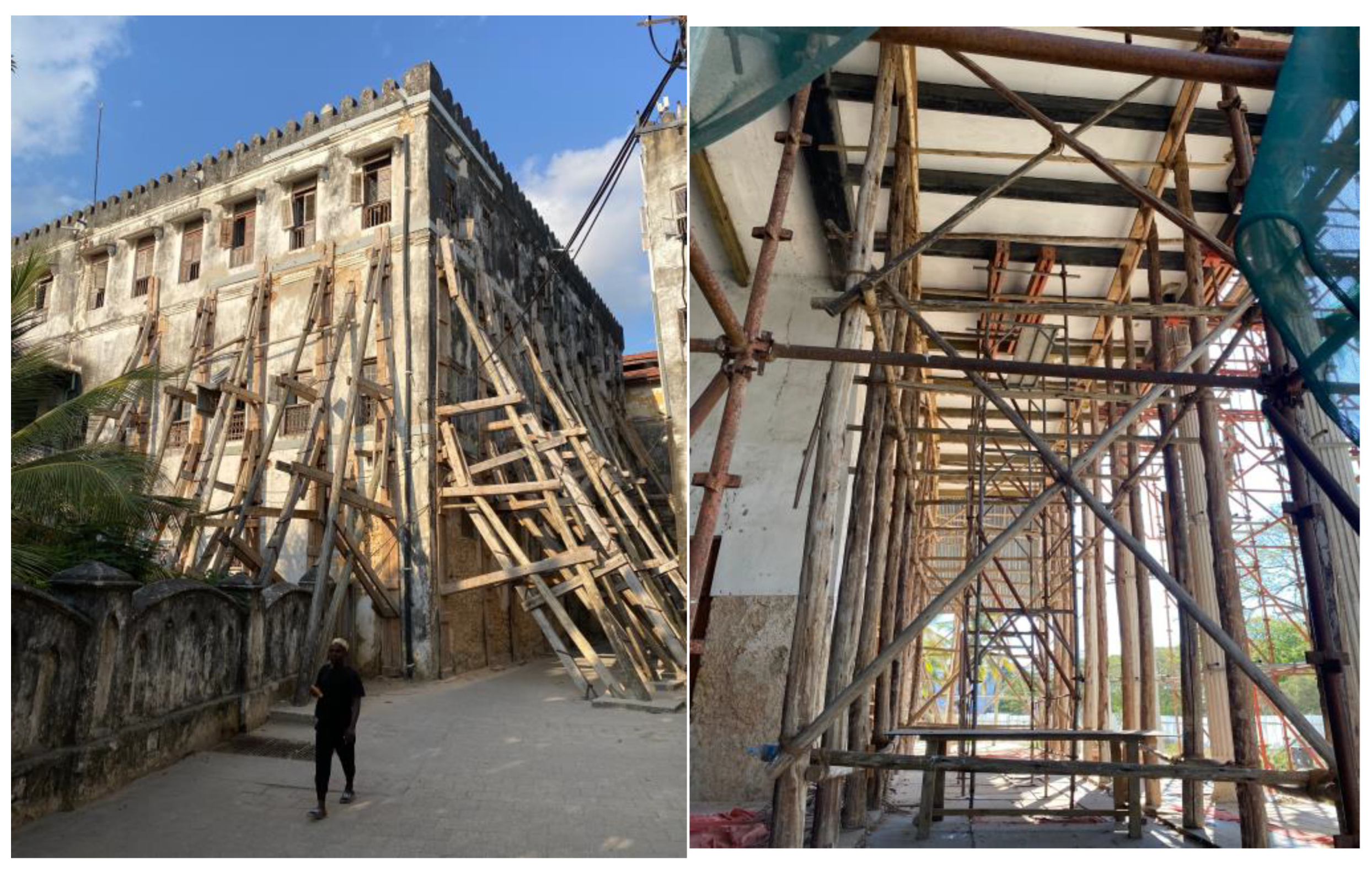
Figure 8.
Layers of plasterwork in traditional stone construction (Source: author 2023).
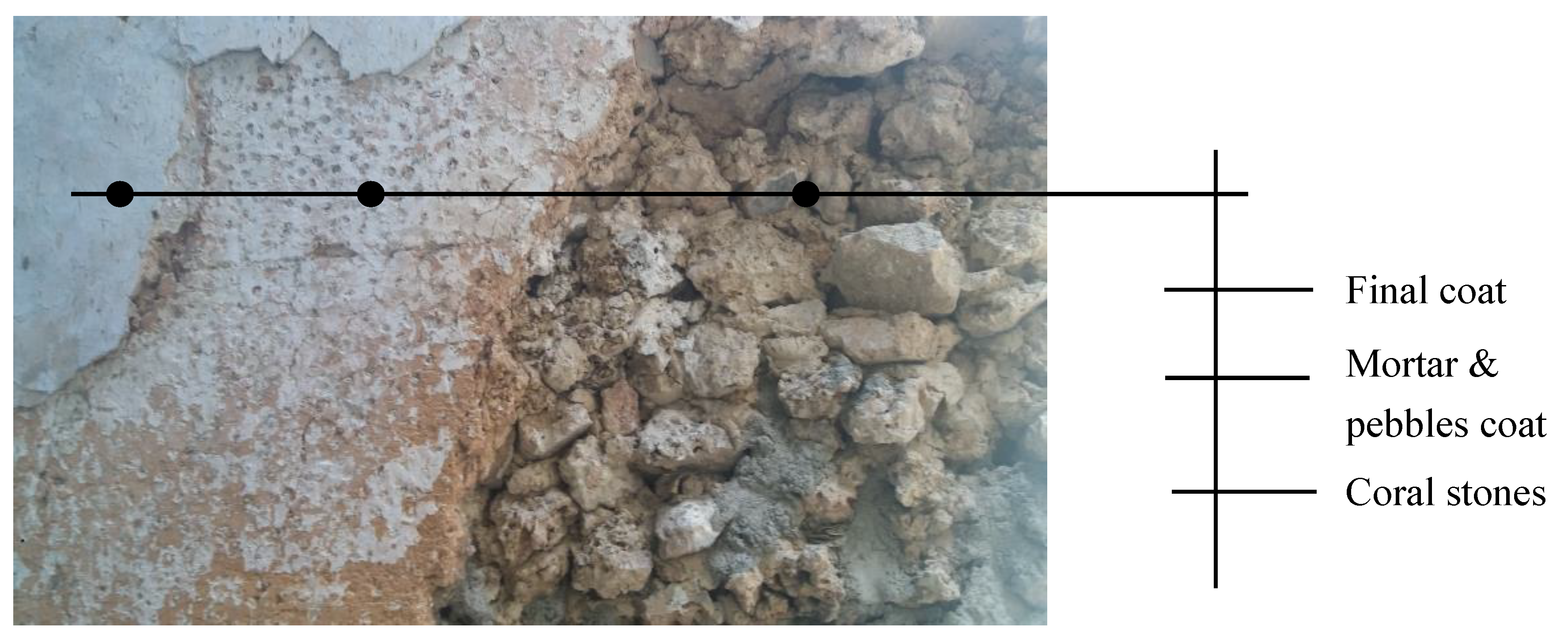
Figure 9.
The thermal building appears as a white-washed landmark on the far right side of this photo taken in the middle of the 1950s before complete reclamation of the creek was achieved. (Source: Zanzibar National Archives: AB 26/9).
Figure 9.
The thermal building appears as a white-washed landmark on the far right side of this photo taken in the middle of the 1950s before complete reclamation of the creek was achieved. (Source: Zanzibar National Archives: AB 26/9).
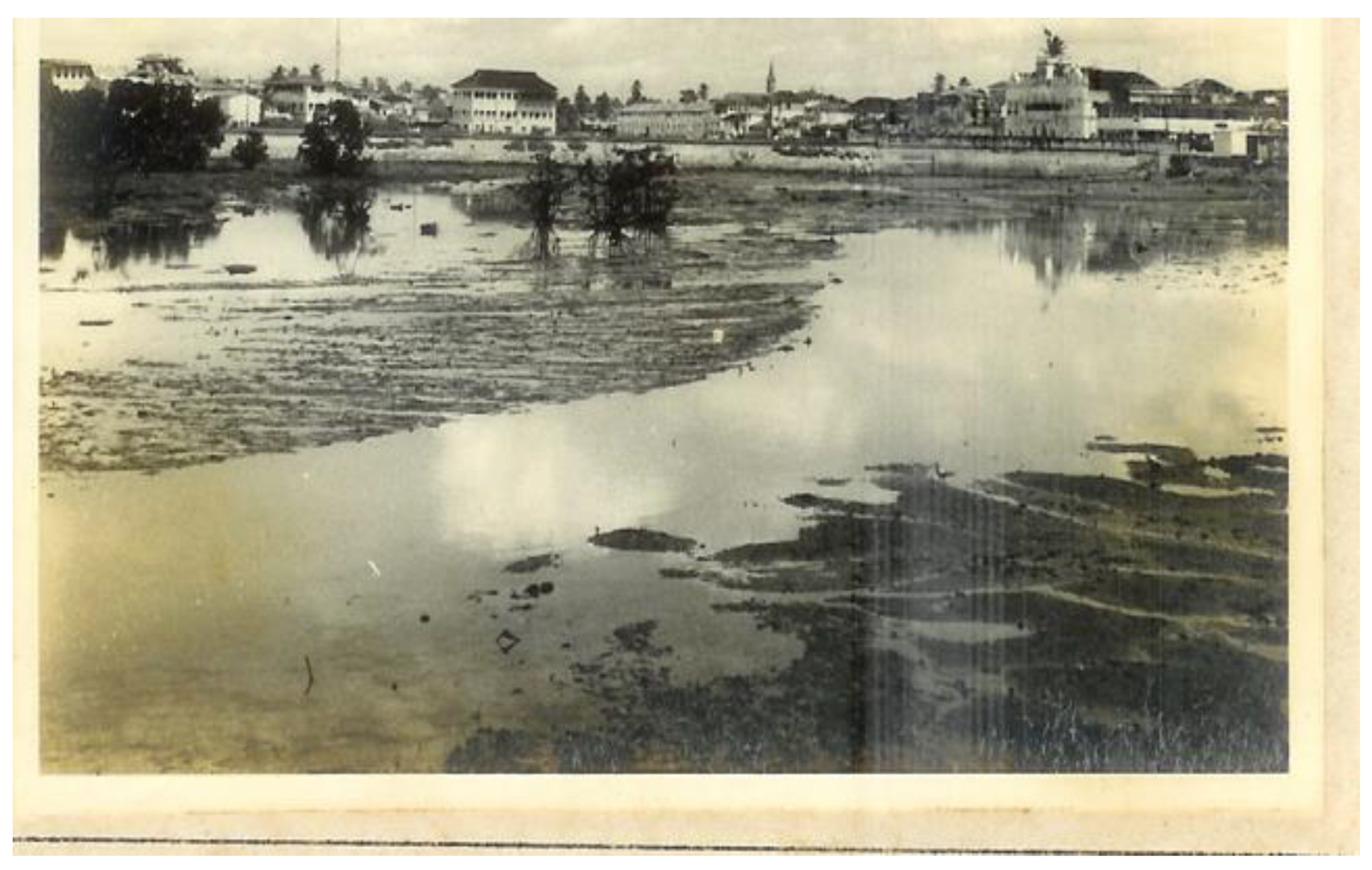
Figure 10.
Front View of Bharmal building (Source: author 2015).
Disclaimer/Publisher’s Note: The statements, opinions and data contained in all publications are solely those of the individual author(s) and contributor(s) and not of MDPI and/or the editor(s). MDPI and/or the editor(s) disclaim responsibility for any injury to people or property resulting from any ideas, methods, instructions or products referred to in the content. |
© 2024 by the authors. Licensee MDPI, Basel, Switzerland. This article is an open access article distributed under the terms and conditions of the Creative Commons Attribution (CC BY) license (http://creativecommons.org/licenses/by/4.0/).
Copyright: This open access article is published under a Creative Commons CC BY 4.0 license, which permit the free download, distribution, and reuse, provided that the author and preprint are cited in any reuse.


