

Submitted:
06 December 2024
Posted:
09 December 2024
You are already at the latest version
Abstract
Pineapple is highly susceptible to "Wilt disease," caused by the biotrophic insect Dysmicoccus brevipes, which also transmits for several wilt-associated viruses (PMWaVs). Conventional farms manage mealybugs and wilt disease. However, many of these chemicals have been banned in Europe due to safety concerns, leading to researches on pesticide-free control methods. Plants have developed natural defences, such as systemic acquired resistance (SAR), against pathogens and pests. In this study, salicylic acid (10⁻³ M) was applied to MD2 and Queen Victoria pineapple plants, followed by mealybug infestation. This treatment enhanced defences, assessed through mealybug multiplication rates, and biochemical and molecular responses of tissue-cultured plantlets under controlled conditions. Phenylalanine ammonia-lyase activity (PAL) was measured as a potential SAR signalling enzymatic marker. Additionally, four gene expressions were analyzed: AcPAL and AcICS2) both linked to salicylic acid synthesis; AcMYB-like, a transcription factor regulating salicylic acid biosynthesis; and AcCAT involved in H2O2 level control in plants. SA elicitation reduced the mealybug multiplication rate by 70% on pineapples. Under our conditions, the biochemical marker (PAL) and three molecular markers (AcPAL, AcICS2, AcCAT) showed significant differences between primed and unprimed plants, indicating SAR induction and its role in the pineapple-mealybug interaction. SAR priming offers a promising, eco-friendly strategy for managing mealybug populations and reducing Wilt disease in pesticide-free pineapple cropping systems.
Keywords:
pineapple wilt
; Dysmicoccus spp
; biocontrol
; SAR
; integrated management of mealybugs
; ecological control
1. Introduction
Pineapples are mainly grown under intensive monoculture worldwide. Pineapple plants are susceptible to ‘Wilt’, a destructive disease. Wilt triggered by a parasitic complex which includes the mealybug Dysmicoccus brevipes (Cockerell), a phloem feeder, and pineapple mealybug wilt associated viruses, PMWaV1, V2 and V3 [[1,2]], as well as potentially other virus families. D. brevipes, a biotrophic agent, is the most widely found mealybug on pineapple in Reunion Island where the development of Wilt symptoms requires, according to a recent survey [[3]], the simultaneous presence of mealybugs and PMWaV2. Wilt is commonly controlled by using conventional contact or systemic insecticides targeting mealybugs, but under pressure from consumers the use of these chemicals is now banned in European territories requiring the development of new control methods with no pesticides.
For pineapple, one approach involves using cover crops, such as Crotalaria species, to reduce the initial global parasitic stress caused by soil-borne pathogens (e.g., nematodes and symphylans) before planting, along with the use of disease-free planting material [4]. It has been suggested that reducing environmental stresses on plants may favor the induction of efficient systemic resistances [5]. Based on this hypothesis, we developed a cropping system aimed at reducing biotic stresses and enhancing the induction of pineapple’s natural defenses., known as systemic resistances [6,7].
Plants detect pathogens using membrane receptors that recognize specific pathogen-associated molecular patterns (PAMPs) [8,9]. These patterns are referred to as MAMPs (microbe-associated), HAMPs (herbivore-associated), or DAMPs (damage-associated) [10-12]. Detection of these signals activates pattern-triggered immunity (PTI) as a first line of defence [13]. In addition, plants have developed systemic signaling pathways that rely on hormones such as jasmonate (JA), ethylene (ET), and salicylate (SA), along with specific transcription factors and other signaling molecules [8]. The jasmonate pathway, associated with induced systemic resistance (ISR), responds to necrotrophic pathogens, non-pathogenic microorganisms (e.g., bacteria or mycorrhizal fungi), and abiotic stresses. In contrast, the salicylate pathway, associated with systemic acquired resistance (SAR), primarily targets biotrophic pathogens and pests. Following a primary infection or external elicitation, these long-distance signaling pathways activate immune responses in uninfected plant tissues, a mechanism known as “priming” [14,15], which is described as an adaptive and low-cost defensive strategy. This is because in primed plants, defence responses are either not activated or only mildly, and temporarily triggered by the priming stimulus. Under biotic or abiotic stress, the primed plants activate their defense responses more quickly, intensely, and persistently when they detect a subsequent challenging signal. This new challenge effectively initiates their full defense mechanisms, including the activation of defence-related genes and enzymatic activities linked to oxidative burst and other defences [16-19]. Plants further enhance their defences by secreting antimicrobial pathogenesis-related (PR) proteins, such as chitinases and β1,3-glucosidases, during pathogen interactions [14,20,21]. Other potential molecular markers of SAR include transcription factors, such as MYBs, which regulate NPR1, a key element in balancing SAR and ISR pathways. This balance reflects the antagonistic crosstalk between these two signaling pathways [22-26]. SAR has been found effective against many plant pathogens, including viruses [27], bacteria [27], fungi [28], and other biotrophic pathogens and pests such as phloem-feeding aphids [29]. The MD2 pineapple variety, like the Queen Victoria variety, has already been shown to respond to ISR and SAR stimulation for the control of the nematode R. reniformis under controlled conditions and in experimental field plots [5,30].
D. brevipes, a phloem-feeding mealybug, is a biotrophic insect [31] that is hypothesized to be more susceptible to SAR than to ISR . Salicylic acid (SA) and several of its derivatives are considered as SAR elicitor on different plants [32], and methyl-jasmonate (MeJA) was used as an ISR elicitor in different experiments on fruit crops as pineapple[33], vegetables, or cut flowers [34].
In this study, we first compared the elicitation of defences against mealybugs in MD2 and Queen Victoria pineapple plants using salicylic acid (SA) and methyl jasmonate (MeJA). Next, we hypothesize that SAR priming against pineapple mealybugs can be induced and characterized through its biological, biochemical, and molecular effects [35]—corresponding to reduced mealybug multiplication, enhanced enzymatic defenses, and the up or down-regulation of defense-related genes. The biological effect was assessed by measuring mealybug multiplication. The biochemical effect was evaluated through phenylalanine ammonia-lyase (PAL) activity, a key enzyme in SA biosynthesis and the systemic acquired resistance (SAR) signaling pathway. Finally, the molecular effect was investigated using four potential molecular markers: AcPAL and AcICS2, both involved in SA biosynthesis, and AcCAT, which plays a dual role in plant defence. Increased catalase (CAT) activity detoxifies H₂O₂ during oxidative bursts triggered by pathogen interactions, whereas with reduced CAT activity increases H₂O₂ level, creating a hostile and toxic environment for pathogens. Moreover, H₂O₂ acts as a secondary messenger in SAR, crossing membranes and activating defense-related genes throughout the plant [13]. Finally, we suggest that SAR induction could be integrated into integrated pest management (IPM) strategies to control mealybugs and mitigate the impact of Wilt disease in pineapple production.
2. Materials and Methods
2.1. Plant Material and Growth Conditions
MD2 pineapple tissue-culture plants were grown at 28°C ±1°C with a 12-hour photoperiod under 60W Tarentula® diodes, simulating natural daylight spectrum. After a 6-month acclimation period, the tissue culture plants developed an aerial mass of approximately 56.5 ±17.5g and 40 ±16.5g, for MD2 and Queen Victoria, respectively. The D leaf, used as a reference for growth and mineral analysis, grows at a 45° angle to the plant’s vertical axis and had just completed its length growth [36].
2.2. Mealybugs
Mealybugs (D. brevipes) were collected from contaminated tissue-cultured pineapple plants grown in a homemade rearing system. To eliminate gravid adult females that could release larvae immediately after inoculation (as these larvae may have developed during the rearing period), the mealybugs were kept in a sampling vial with wet filter paper for 24 hours. Only 2nd to 3rd instar mealybugs that were actively feeding on plants were selected for inoculation in the different experiments. Unstimulated plants without mealybug inoculation were used as external contamination controls in each experiment.
2.3. Biological Effect: Comparing ISR and SAR Efficiency and Application Methods
Five treatments were tested, each with nine replicates (9 plants per treatment), including a control (water), two elicitors - methyl-jasmonate (MeJA, 0.1 mM) or salicylic acid (SA, 1 mM) - and two application methods (15 ml applied either on soil surface or to the plant core). Each plant received three applications of 15 ml of the elicitor solutions or water at 4-day interval. Three days after the final elicitor application, four mealybugs were inoculated per plant. Mealybug populations were counted 45 days post-inoculation, representing one full multiplication cycle under the experimental conditions established in a preliminary experiment. Results were expressed as the reduction in multiplication by the treatment compared to the control. Counting of dead mealybugs were made to assess the mortality of new larvae during the 45 days of this first experiment.
The first experiment was partially repeated (biological effect only) on both varieties one year later under similar experimental conditions, except that only salicylic acid was used as the defence elicitor. The salicylic acid solution (SA, 1 mM) was divided between the plant (5 ml) and the soil (10 ml).
2.4. Biochemical Effect: Phenylalanine Ammonia-Lyase (PAL) Activity
Two treatments—SA (1 mM) and water (control)—were applied three times to the soil surface at a rate of 15 ml per plant at 4-day intervals, with five replicates (plants) per treatment. Three days after the final application, MD2 and Queen Victoria plants were inoculated with 20 and 40 mealybugs, respectively. To assess the effect of SA stimulation alone, additional plants received SA but no mealybug inoculation. Twenty days post-inoculation, phenylalanine ammonia-lyase (PAL) activity was measured on a crude extract as a biochemical marker of SAR signaling pathway and phenolic compound biosynthesis.
2.5. Molecular Effect: Candidate Genes as Molecular Markers to Characterize SAR Priming
Among genes commonly use to characterize SAR, four genes have been selected to compare their expression in primed and unprimed plants after mealybugs inoculation, under our experimental conditions: AcPAL, AcMYBlike, AcICS2 and AcCAT) using AcActin from leaves as housekeeping gene (Table 1).
2.6. Protocols for Enzymatic and Gene Expression Measurements
- -
- Sample Preparation: The samples were rapidly washed under a stream of water, with the roots and the upper parts of the leaves removed. The remaining portions were then rinsed quickly twice—first with 70% ethanol and then with distilled water. For the analyses, the white part of the leaves and an equivalent-sized green portion contiguous to it were frozen in dry ice, ground into powder, freeze-dried, and finally stored in a freezer at -80 °C until protein or RNA extraction.
- -
- Protein extraction: Crude extracts (ce) were obtained from 50 mg of freeze-dried powder in cold 0.1 M phosphate buffer (pH 6.8), containing 40 mM PMSF as protease inhibitor (Sigma), and 62.5 mg.ml-[1] polyvinyl-polypyrrolidone under gentle stirring on ice for one hour. The ‘ce’ were then filtered first on Pall A/E glass-fiber filters (1µ), then on Whatman mini filters (0.45µ PS) to obtain a clear filtrate.
- -
- Enzymatic measurement (biochemical effect): The following procedures for enzymatic measurements were adapted from the protocols developed by the authors cited for microanalysis with reaction volumes of 300µL, each repeated twice. Absorbance was measured on 96-well quartz plates with a Powerwave HT (Biotek).. PAL: Cinnamic acid produced from L phenylalanine with 25µL of ce was measured at 290 nm [[37]]. The blank was modified using D Phenylalanine (ε = 9000 M-1 cm-1), PAL expressed in nKat.100µL-1 ‘ce’.
- -
- Expression of defence genes (molecular effect): RNA was extracted on 25mg of lyophilized material using the RNeasy Plant mini kit (Qiagen), and the cDNA was obtained using the Reverse Transcription kit (Qiagen). RTqPCR with Fast SYBR Green Master Kit (Thermofisher) on Stepone Plus (Applied Biosystem) was done with 20 µL reaction volumes, and RTqPCR according to the recommendations included in the Kit. AcActine genes were used as reference genes. Primers were designed for Ananas comosus and differences in gene expressions between stimulated and unstimulated plants were evaluated for AcPAL, AcCAT, AcMYBlike, AcICS2. The optimal lag time after inoculation for evaluating these differences under our conditions was determined using AcPAL gene in MD2. The RNAs were extracted 5 h, 24 h, 36 h and 48 h after inoculation with mealybugs. Results are expressed as relative quantification by normalization against negative controls (Ctrl<0) that were neither stimulated nor inoculated, using AcActin-leaves as the housekeeping gene.
- -
- Data analyses: The biological effect data were analyzed using Kruskal and Wallis and Dunn tests. Data on biochemical effects, and data on molecular effects were analyzed by comparison of means with standard deviations (all stats performed with XLStat software).
3. Results
3.1. Biological Effect: Comparison of Stimulation with Salicylic Acid or Methyl Jasmonate
Only SAR stimulation significantly reduced mealybug multiplication during the 45-day experiment, which corresponds to one mealybug development cycle under these conditions (Figure 1). SAR stimulation was effective in both pineapple varieties, MD2 and Queen Victoria. Additionally, salicylic acid (1 mM) was equally effective when applied to the plant or the soil before inoculation.
In MD2, mealybug populations were significantly reduced in stimulated plants compared to positive controls, with reductions of –94% and –91% for plant and soil applications of SA, respectively. Similarly, in Queen Victoria, reductions of –88% and –93.3% were observed for plant and soil applications of SA, respectively. The differences between unstimulated controls and stimulated plants were highly significant (p < 0.0001) for both pineapple varieties, regardless of whether the stimulation was applied to the leaves or the soil.
The experiment repeated one year later showed a significant reduction in mealybug multiplication in both varieties (Figure 2), though the biological effect was slightly lower but still significant (p0.05 were 0.045 and 0.005 for MD2 and Queen Victoria respectively).
The number of young mealybugs born during the experiment and that died during the 45-day experiment was significantly higher on stimulated Victoria (Queen) (+142.0%, p0.05 = 0.004), and only tended to increase on stimulated MD2 (+48.6%, p0.05 = 0.078) although not significantly.
3.2. Biochemical Effects: Enzymatic Markers of SAR Defence
As the results on biological effect showed that only salicylic acid was efficient as elicitor treatment to reduce strongly mealybug multiplication on both pineapple varieties, we evaluated PAL activity for production of salicylic acid by the plants in the context of strong stress produced by inoculation of many mealybugs on plants (20 and 40 individuals on MD2 and Queen Victoria, respectively), (Figure 3).
3.3. Molecular Effects
3.3.1. Timing Between Mealybug Inoculation and AcPAL Gene Expression in Stimulated vs. Unstimulated MD2 Plants
The optimal lag time for RNA extraction after mealybug inoculation was arbitrarily chosen to maximize AcPAL expression in stimulated plants while ensuring the maximum delay in response between stimulated and unstimulated plants (Ctrl > 0). The results indicated that, to compare gene expression between stimulated and unstimulated plants, RNA extractions should be performed 24 hours after mealybug inoculation, as this time point captures the plants responses showing maximum expression in stimulated plants as well as the delayed response in Ctrl>0 (Figure 4).
3.3.2. Molecular Markers of SAR Defence in MD2 and Queen Victoria
In MD2, the expression of four molecular markers (AcPAL, AcICS2, AcCAT and AcMYBlike) significantly increased after mealybugs inoculation in stimulated plants compared to unstimulated positive controls (Figure 5A – MD2). In Queen Victoria, three molecular markers (AcPAL, AcICS, and AcCAT) showed increased expression, while AcMYBlike did not, revealing significant differences in behaviour in gene expression between pineapple varieties. (Figure 5B - QV). The largest increases in gene expression, 6-fold and 8-fold increases, were observed for PAL in MD2 and Queen Victoria respectively. In this experiment Queen Victoria showed lower gene expressions than MD2 particularly for AcICS2, AcCAT and AcMYBlike.
4. Discussion
Our present findings on the biological, biochemical, and molecular effects support the hypothesis that salicylic acid (SA, 1 mM) induces systemic acquired resistance (SAR) against the mealybug associated with Wilt disease in both pineapple varieties, MD2 and Queen Victoria. However, our previous results revealed a strong differential response favouring the MD2 variety compared to Smooth Cayenne when SAR and ISR were induced with SA or MeJA, respectively, against the nematode R. reniformis [33].
4.1. Biological Effect: Reducing Mealybug Multiplication
Unlike stimulation with methyl-jasmonate (MeJA), treatment with salicylic acid (SA) proved more effective inducing efficient defences against mealybug multiplication. In the first experiment, it reduced newly born larvae by -90% in both varieties. In the repeat experiment conducted a year later larval reduction was -70% for MD2 variety and -65% for the Queen Victoria variety. Our results confirmed that the biotrophic insect Dysmicoccus brevipes (Cockerell) is more susceptible to systemic acquired resistance (SAR) than to induced systemic resistance (ISR), similar to other biotrophic pathogens and pests [38]. SAR induced by SA elicitation in MD2 was previously found to be efficient against another pathogen, the nematode R. reniformis [33].
Soil (root) and leaf treatments with salicylic acid (SA) were equally effective against mealybug multiplication, supporting the hypothesis that the SA-induced defences were systemic. In addition, the reduction in mealybug multiplication was likely not due to the direct toxicity of SA but instead suggests the activation of SAR defences against mealybugs. In fact, the non-toxicity of SA at low concentration (1mM) for mealybugs was previously demonstrated through direct contact experiments using sample tubes [6].
The number of young mealybugs born during the 45-day experiment and subsequently died, was significantly higher on stimulated Queen Victoria plants (+142.0%, p0.05 = 0.004) and tended to increase on stimulated MD2 plants (+48.6%, p0.05 = 0.078), although not significantly but with a very low number of live mealybugs. This suggests a potential mechanism that inhibited the development of these young instars. Primed plants with SAR elicitors produced higher levels of toxic phenolic compounds and cystatin, which disrupted the digestive processes of the pathogens [39,40]. Cystatin, a natural inhibitor of the protease bromelain in pineapple[41], has been shown to alter nematode feeding and to reduce their populations by disrupting the activity of digestive enzymes in tomatoes [42]. In a former experiment, the gene AcCystatin showed an increased expression in MD2 pineapple fruit under abiotic stress (low temperature), as in other crops tolerant to cold or to drought stress [43]. In Genetically engineered pineapples with enhanced cystatin production were studied for their potential in nematode control by introducing cystatin genes from a wild rice variety, showing promising initial results. However, at the field level, the results were insufficient to achieve efficient control of nematodes [44]. It is hypothesized that cystatins block the digestive proteases of nematodes in tomato and pineapple. A similar mechanism could also affect mealybugs after SAR induction in pineapple, particularly young instars which are highly active feeders. Additionally, Queen Victoria and MD2 naturally produce also a high level of phenolic compounds as coumaroyl-isocitric acid and hydroxybenzoic acids, two phenolic compounds that play a role in fungal disease resistance in pineapple [45].
Our results on the biological effects support the hypothesis that SAR priming is effective against mealybugs. To further validate this, enzymatic and molecular effects were assessed by measuring markers of SAR defenses.
4.2. Biochemical and Molecular Effect of Salicylic Acid (SA) Treatment
The expression of the AcPAL gene, as well as PAL enzymatic activity, two markers of the SA signaling pathway, increased significantly in SA-treated plants compared to untreated plants in response to the stress induced by mealybug inoculation. This increase likely led to the biosynthesis of endogenous SA, initially for the SAR signaling pathway, and later for additional synthesis of toxic compounds. The increase in PAL activity and SA biosynthesis represents one of the early biochemical events in the production of phenolic compounds, including toxic compounds required for defense but also structural components like lignin and callose which reinforce cell walls as part of the SAR defense response. The AcICS2 gene, although contributing to SA synthesis to a lesser extent, showed a significant increase in expression in both varieties, suggesting its potential as a reliable marker for SAR. The transcription factor AcMYBlike, involved in the regulation of SA synthesis showed an increased expression in MD2 variety but not in Queen Victoria being less reliable as a general pineapple molecular marker in this case.
It is well known that ROS ignite redox signaling, but when in excess, they cause oxidative stress, leading to damage of cellular components [46]. These authors emphazised also the redox regulation of several SAR signaling components. A burst of reactive oxygen species (ROS) at the infection site is one of the earliest cellular responses following pathogen infection. AcCAT expression showed an interesting increase between SA-treated plants and untreated plants in both varieties, suggesting it is also potentially a reliable marker for SAR. As mentioned earlier CAT has a dual role in this context of defence. When CAT activity is reduced, H₂O₂ toxicity creates a hostile environment for pathogens. H₂O₂ acts also as a secondary messenger in SAR by crossing membranes and activating defence genes throughout the plant [13,46]. On the contrary, an increased CAT activity contributes to detoxify plant cell environment due to the stress oxidative burst and production of ROS.
Our results on enzymatic and molecular effects confirm that SAR induction of by salicylic acid treatment and the establishment of SAR defences.
5. Conclusions
This study demonstrated that treatment with 1 mM salicylic acid effectively induced systemic acquired resistance (SAR) against the mealybug Dysmicoccus brevipes in two pineapple varieties, MD2 and Queen Victoria, under controlled conditions. SAR induction was characterized by three key effects: (1) a biological effect significantly reducing mealybug multiplication, (2) a biochemical effect marked by increased PAL activity linked to salicylic acid biosynthesis and phenolic compound pathways, and (3) a molecular effect involving the upregulation of genes associated with SAR signaling and oxidative burst. This protocol offers a potential framework for identifying pineapple varieties with inducible natural defences. Developing new SAR or ISR-inducing elicitors against pineapple pathogens may contribute to the development of more ecological integrated pest management strategies for controlling Wilt disease as well as other pathogens and pests in pineapple production.
Author Contributions
For research articles with several authors, a short paragraph specifying their individual contributions must be provided. Conceptualization, Alain Soler; methodology Alain Soler; formal analyses, Corentin Pochat, Marie Perrin, Jessica Mendoza, Flora Latchimy; writing—original draft preparation, X.X.; writing—review and editing, Alain Soler;; supervision, Alain Soler; project administration, Alain Soler; funding acquisition, Alain Soler. All authors have read and agreed to the published version of the manuscript.
Funding
This research was carried out as part of the DPP SADUR (C19978—activities 2018–2024) agronomical research programs funded by the European Community (ERDF fund) and the Conseil Régional de la Réunion.
Conflicts of Interest
The authors declare no conflicts of interest.
References
- Hu, J.S.; Sether, D.M.; Metzer, M.J.; Pérez, E.; Gonsalves, A.; Karasev, A.V.; Nagai, C. Pineapple mealybug wilt associated virus and mealybug wilt of pineapple. Acta Hort. (ISHS) 2005, 666, 209–212. [Google Scholar] [CrossRef]
- Hernandez-Rodriguez, L.; Ramos-Gonzalez, P.L.; Garcia-Garcia, G.; Zamora, V.; Peralta-Martin, A.M.; Pena, I.; Perez, J.M.; Ferriol, X. Geographic distribution of mealybug wilt disease of pineapple and genetic diversity of viruses infecting pineapple in Cuba. Crop Prot 2014, 43–50. [Google Scholar] [CrossRef]
- Massé, D.; Cassam, N.; Darnaudéry, M.; Dorey, E.; Hostachy, B.; Tullus, G.; Soler, A. Reunion Island: general survey of pineapple parasites with a focus on wilt disease and associated viruses; International Society for Horticultural Science (ISHS), Leuven, Belgium: 2024; pp. 67-74.
- Nurbel, T.; Soler, A.; Thuries, L.; Dorey, E.; Chabanne, A.; Tisserand, G.; Hoarau, I.; Darnaudery, M. Concevoir des systèmes de production d’ananas en agriculture biologique. Innovations Agronomiques 2021, 82, 1–24. [Google Scholar]
- Soler, A.; Marie-Alphonsine, P.A.; Corbion, C.; Fernandes, P.; Portal Gonzalez, N.; Gonzalez, R.; Repellin, A.; Declerck, S.; Quénéhervé, P. A strategy towards bioprotection of tropical crops : Experiences and perspectives with ISR on pineapple and banana in Martinique. In Congrès: 6th meeting of IOBC-WPRS Working Group "Induced resistance in plants against insects and diseases": Induced resistance in plants against insects and diseases: leaping from success in the lab to success in the field, IOBC, Ed. Avignon, France, 2013.
- N’Guessan, L.; Chillet, M.; Chiroleu, F.; Soler, A. Ecologically Based Management of Pineapple Mealybug Wilt: Controlling Dysmicoccus brevipes Mealybug Populations with Salicylic Acid Analogs and Plant Extracts. Horticulturae 2024, 10, 227. [Google Scholar] [CrossRef]
- Marie-Alphonsine, P.-A.; Soler, A.; Gaude, J.-M.; Bérimée, M.; Qénéhervé, P. In Effects of cover crops on Rotylenchulus reniformis and Hanseniella sp. populations. IX International Pineapple Symposium, Havana, Cuba, 2019; D. P. Bartholomew, D. H. R., F. V. Duarte Souza, Ed. ISHS: Havana, Cuba, 2019; pp. 185-193.
- Pai Li; Lu, Y.-J.; Chen, H.; Day, B. The Lifecycle of the Plant Immune System. Crit. Rev. Plant Sci. 2020, 1–29.
- Boller, T.; Felix, G. A Renaissance of Elicitors: Perception of Microbe-Associated Molecular Patterns and Danger Signals by Pattern-Recognition Receptors. Annu. Rev. Plant Biol. 2009, 60, 379–406. [Google Scholar] [CrossRef] [PubMed]
- Freeman, B.C.; Beattie, G.A. An overview of plant defenses against pathogens and herbivores. The Plant Health Instructor 2008. [Google Scholar] [CrossRef]
- Mithöfer, A.; Boland, W. Recognition of herbivory-associated molecular patterns. Plant Physiol. 2008, 146, 825–831. [Google Scholar] [CrossRef] [PubMed]
- Zipfel, C. Plant pattern-recognition receptors. Trends Immunol 2014, 35, 345–351. [Google Scholar] [CrossRef] [PubMed]
- Klessig, D.F.; Choi, H.W.; Dempsey, D.M.A. Systemic acquired resistance and salicylic acid: past, present, and future. Mol. Plant-Microbe Interact. 2018, 31, 871–888. [Google Scholar] [CrossRef] [PubMed]
- Holmes, E.; Chen, Y.C.; Sattely, E.; Mudgett, M.B. Conservation of N-hydroxy-pipecolic acid-mediated systemic acquired resistance in crop plants. bioRxiv, 2019. [Google Scholar] [CrossRef]
- Villena, J.; Kitazawa, H.; Van Wees, S.C.M.; Pieterse, C.M.J.; Takahashi, H. Receptors and Signaling Pathways for Recognition of Bacteria in Livestock and Crops: Prospects for Beneficial Microbes in Healthy Growth Strategies. Front. Immunol. 2018, 9, 2223–2223. [Google Scholar] [CrossRef] [PubMed]
- Martinez-Medina, A.; Flors, V.; Heil, M.; Mauch-Mani, B.; Pieterse, C.M.J.; Pozo, M.J.; Ton, J.; van Dam, N.M.; Conrath, U. Recognizing Plant Defense Priming. Trends Plant Sci. 2016, 21, 818–822. [Google Scholar] [CrossRef] [PubMed]
- Conrath, U. Molecular aspects of defense priming. Trends Plant Sci. 2011, 16, 524–531. [Google Scholar] [CrossRef] [PubMed]
- Conrath, U.; Beckers, G.J.; Langenbach, C.J.; Jaskiewicz, M.R. Priming for enhanced defense. Annu. Rev. Phytopathol. 2015, 53, 97–119. [Google Scholar] [CrossRef] [PubMed]
- Mehari, Z.H.; Elad, Y.; Rav-David, D.; Graber, E.R.; Harel, Y.M. Induced systemic resistance in tomato (Solanum lycopersicum) against Botrytis cinerea by biochar amendment involves jasmonic acid signaling. Plant Soil 2015, 395, 31–44. [Google Scholar] [CrossRef]
- Ganguly, P.; Ganguly, N.; Chakraborty, B.; Adhya, T.K. Pathogenesis related proteins: milestones in five decades of research. Indian Phytopathology, 2024. [Google Scholar] [CrossRef]
- Breen, S.; Williams, S.J.; Outram, M.; Kobe, B.; Solomon, P.S. Emerging Insights into the Functions of Pathogenesis-Related Protein 1. Trends Plant Sci. 2017, 22, 871–879. [Google Scholar] [CrossRef] [PubMed]
- Durrant, W.; Dong, X. Systemic acquired resistance. Annu Rev Phytopathol 2004, 42, 185–209. [Google Scholar] [CrossRef]
- Mou, Z.; Fan, W.; Dong, X. Inducers of plant systemic acquired resistance regulate NPR1 function through redox changes. Cell 2003, 113, 935–944. [Google Scholar] [CrossRef] [PubMed]
- Spoel, S.H.; Koornneef, A.; Claessens, S.M.C.; Korzelius, J.P.; Van Pelt, J.A.; Mueller, M.J.; Buchala, A.J.; Métraux, J.-P.; Brown, R.; Kazan, K.; et al. NPR1 Modulates Cross-Talk between Salicylate- and Jasmonate-Dependent Defense Pathways through a Novel Function in the Cytosol. The Plant Cell Online 2003, 15, 760–770. [Google Scholar] [CrossRef]
- Withers, J.; Dong, X. Posttranslational modifications of NPR1: a single protein playing multiple roles in plant immunity and physiology. PLoS Path. 2016, 12, e1005707. [Google Scholar] [CrossRef] [PubMed]
- Younus Wani, M.; Mehraj, S.; Rathe, R.A.; Rani, S.; Hajam, O.A.; A, G.N.; Mir, M.R.; Baqual, M.F.; S, K.A. SAR:A novel strategy for plant protection with reference to mulberry. Int. J. Chem. Stud. 2018, 6, 1184–1192. [Google Scholar]
- Monci, F.; García-Andrés, S.; Sánchez-Campos, S.; Fernández-Muñoz, R.; Díaz-Pendón, J.A.; Moriones, E. Use of Systemic Acquired Resistance and Whitefly Optical Barriers to Reduce Tomato Yellow Leaf Curl Disease Damage to Tomato Crops. Plant disease 2019, 103, 1181–1188. [Google Scholar] [CrossRef] [PubMed]
- Saravanakumar, K.; Dou, K.; Lu, Z.; Wang, X.; Li, Y.; Chen, J. Enhanced biocontrol activity of cellulase from Trichoderma harzianum against Fusarium graminearum through activation of defense-related genes in maize. Physiol. Mol. Plant Pathol. 2018, 103, 130–136. [Google Scholar] [CrossRef]
- Hodge, S.; Thompson, G.A.; Powell, G. Application of DL-[beta]-aminobutyric acid (BABA) as a root drench to legumes inhibits the growth and reproduction of the pea aphid Acyrthosiphon pisum (Hemiptera: Aphididae). Bull. Entomol. Res. 2005, 95, 449. [Google Scholar] [CrossRef]
- Soler, A.; Marie-Alphonsine, P.A.; Quénéhervé, P.; Prin, Y.; Sanguin, H.; Tisseyre, P.; Daumur, R.; Pochat, C.; Dorey, E.; Gonzalez Rodriguez, R.; et al. Field management of Rotylenchulus reniformis on pineapple combining crop rotation, chemical-mediated induced resistance and endophytic bacterial inoculation. Crop Protection 2021, 141, 8p. [Google Scholar] [CrossRef]
- Joy, P.; Anjana, R.; Soumya, K. Insect Pests of pineapple and management. In Insect Pests Management of FRUIT CROPS Ajay Kumar Pandey, P.M., Ed. BIOTECH BOOKS: India, 2016; pp. 471-492.
- Tripathi, D.; Raikhy, G.; Kumar, D. Chemical elicitors of systemic acquired resistance—Salicylic acid and its functional analogs. Current Plant Biology 2019, 17, 48–59. [Google Scholar] [CrossRef]
- Soler, A.; Marie-Alphonsine, P.-A.; Corbion, C.; Quénéhervé, P. Differential response of two pineapple cultivars ( Ananas comosus (L.) Merr.) to SAR and ISR inducers against the nematode Rotylenchulus reniformis. Crop protection 2013, 54, 48–54. [Google Scholar] [CrossRef]
- Terry, L.A.; Joyce, D.C. Elicitors of induced disease resistance in postharvest horticultural crops: a brief review. Postharvest Biol. Technol. 2004, 32, 1–13. [Google Scholar] [CrossRef]
- Elicitra. Guide méthodologique d'évaluation de l'efficacité des Stimulateurs des Defenses des Plantes. Elicitra (Colloque Elicitra 13-14 juin): Avignon 2013; p p35.
- Py, C.; Lacoeuilhe, J.J.; Teisson, C. The pineapple: Cultivation and uses; Editions G.-P. Maisonneuve: Paris, 1987; p. 568. [Google Scholar]
- Zhou, Y.; Dahler, J.; Underhill, S.; Wills, R. Enzymes associated with blackheart development in pineapple fruit. Food Chem. 2003, 80, 565–572. [Google Scholar] [CrossRef]
- Rodriguez, P.A.; Rothballer, M.; Chowdhury, S.P.; Nussbaumer, T.; Gutjahr, C.; Falter-Braun, P. Systems biology of plant microbiome interactions. Mol. Plant 2019, 12, 804–821. [Google Scholar] [CrossRef] [PubMed]
- Wang, M.-L.; Paull, R.E. Genetic Transformation of Pineapple. In Genetics and Genomics of Pineapple, Springer: 2018; pp. 69-86.
- Tanpure, R.S.; Kondhare, K.R.; Venkatesh, V.; Gupta, V.S.; Joshi, R.S.; Giri, A.P. Non-host Armor Against Insect: Characterization and Application of Capsicum annuum Protease Inhibitors in Developing Insect Tolerant Plants. In Genetically Modified Crops: Current Status, Prospects and Challenges Volume 2, Kavi Kishor, P.B., Rajam, M.V., Pullaiah, T., Eds. Springer Singapore: Singapore, 2021; 10.1007/978-981-15-5932-7_4pp. 85-110.
- Raimbault, A.-K.; Zuily-Fodil, Y.; Soler, A.; Mora, P.; Cruz de Carvalho, M.H. The expression patterns of bromelain and AcCYS1 correlate with blackheart resistance in pineapple fruits submitted to postharvest chilling stress. Journal of Plant Physiology 2013, 170, 1442–1446. [Google Scholar] [CrossRef] [PubMed]
- Atkinson J, N.; Urwin P, E.; Clarke M, C.; McPherson, M., J. Image Analysis of the Growth of Globodera pallida and Meloidogyne incognita on Transgenic Tomato Roots Expressing Cystatins. Journal of Nematology 1996, 28, 209–215. [Google Scholar]
- Raimbault, A.K.; Zuily-Fodil, Y.; Soler, A.; Mora, P.; Cruz de Carvalho, M.H. Postharvest chilling treatment induces distinct expression in fruit bromelain and cystatin in two pineapple (Ananas comosus (L) Merr.) varieties differing in their susceptibility to blackheart physiopathy, PhD. Paris EST, 2012.
- Soneji, J.R.; Nageswara Rao, M. Genetic engineering of pineapple. Transgenic Plant Journal 2009, 3, 47–56. [Google Scholar]
- Barral, B.; Chillet, M.; Léchaudel, M.; Lugan, R.; Schorr-Galindo, S. Coumaroyl-isocitric and caffeoyl-isocitric acids as markers of pineapple fruitlet core rot disease. Fruits 2019, 74, 11–17. [Google Scholar] [CrossRef]
- Liu, C.; Liu, Q.; Mou, Z. Redox signaling and oxidative stress in systemic acquired resistance. J Exp Bot, 2024. [Google Scholar] [CrossRef]
Figure 1.
Comparison of the impacts of ISR and SAR on mealybug multiplication. ISR elicitor = methyl jasmonate (MeJA 0.1mM), SAR elicitor = salicylic acid (SA 1mM), 15mL of solution either on plant or on soil. Each plant was inoculated with four mealybugs. Dai = days after inoculation with the mealybugs.
Figure 1.
Comparison of the impacts of ISR and SAR on mealybug multiplication. ISR elicitor = methyl jasmonate (MeJA 0.1mM), SAR elicitor = salicylic acid (SA 1mM), 15mL of solution either on plant or on soil. Each plant was inoculated with four mealybugs. Dai = days after inoculation with the mealybugs.
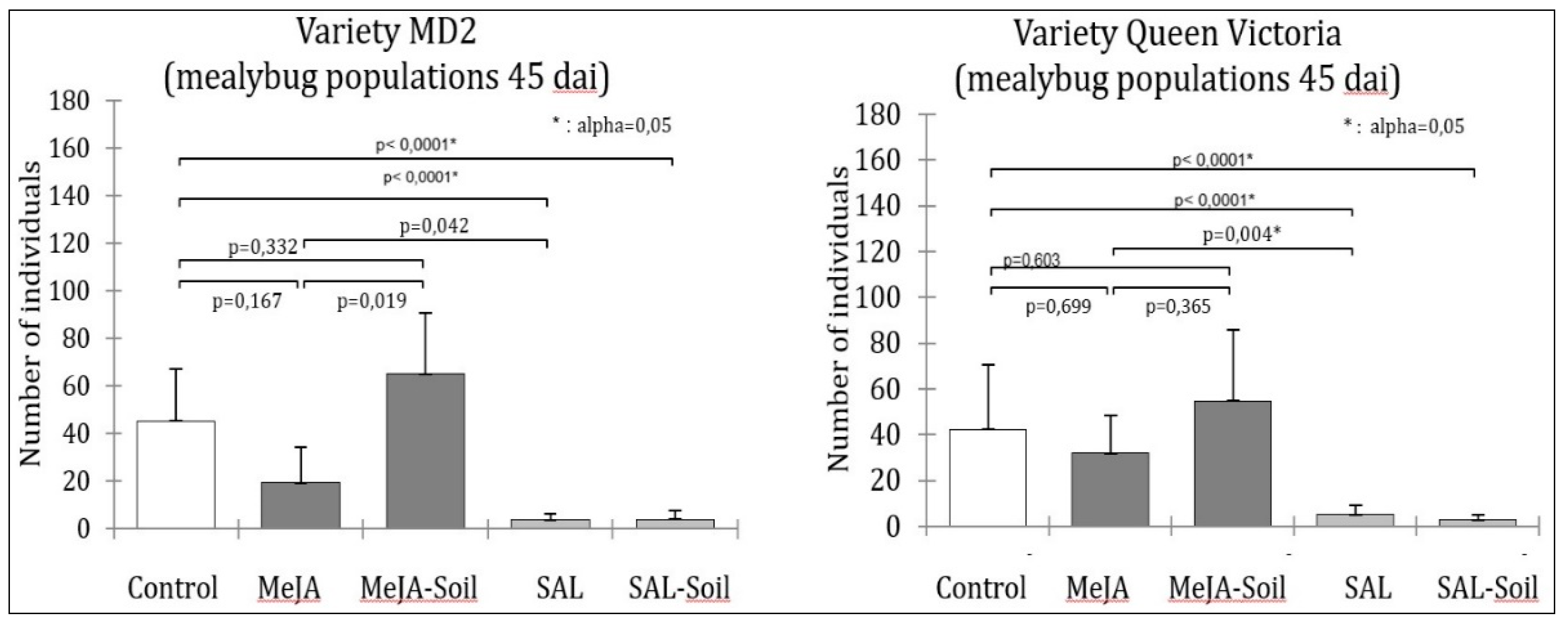
Figure 2.
Impact of SAR on mealybug multiplication on MD2 and Queen Victoria varieties. SAR elicitor = salicylic acid (SA, 1mM), The elicitor solution was divided between the plant (5 ml) and the soil (10 ml). Four individuals were inoculated per plant; dai = days after inoculation with the mealybugs. (p0.05 = 0.045 and 0.005 for MD2 and Queen Victoria respectively).
Figure 2.
Impact of SAR on mealybug multiplication on MD2 and Queen Victoria varieties. SAR elicitor = salicylic acid (SA, 1mM), The elicitor solution was divided between the plant (5 ml) and the soil (10 ml). Four individuals were inoculated per plant; dai = days after inoculation with the mealybugs. (p0.05 = 0.045 and 0.005 for MD2 and Queen Victoria respectively).
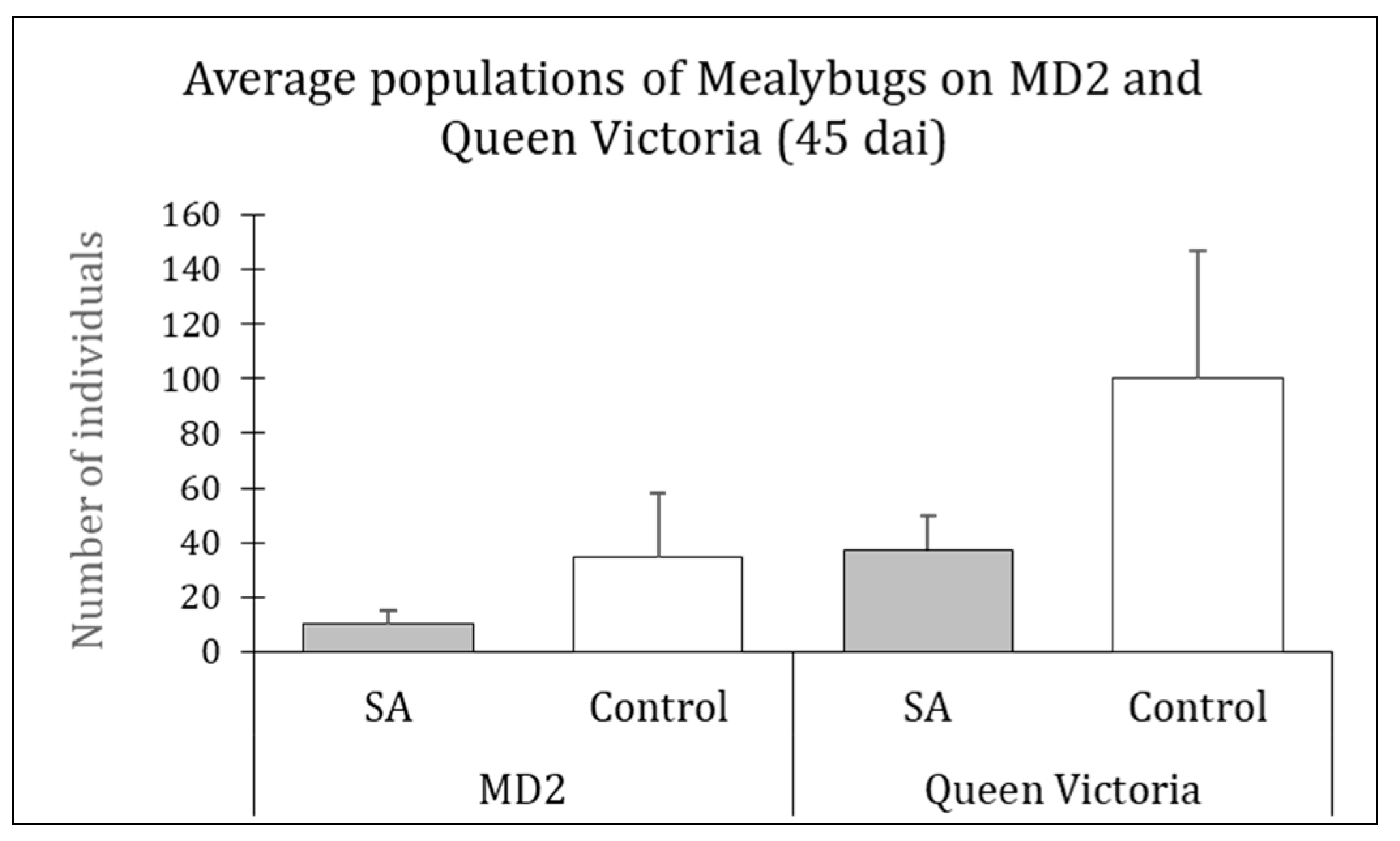
Figure 3.
Quantification of PAL activity in unstimulated - inoculated (NSI = Ctrl>0) and stimulated- inoculated (SI) plants of MD2 and Queen Victoria inoculated with 20 and 40 mealybugs, respectively. Different letters (a and b) on the graphs indicate significantly different activity levels between NSI and SI. The SAR elicitor used was salicylic acid (1 mM), applied as 15 mL of solution. PAL activity was measured 20 days after inoculation (dai).
Figure 3.
Quantification of PAL activity in unstimulated - inoculated (NSI = Ctrl>0) and stimulated- inoculated (SI) plants of MD2 and Queen Victoria inoculated with 20 and 40 mealybugs, respectively. Different letters (a and b) on the graphs indicate significantly different activity levels between NSI and SI. The SAR elicitor used was salicylic acid (1 mM), applied as 15 mL of solution. PAL activity was measured 20 days after inoculation (dai).
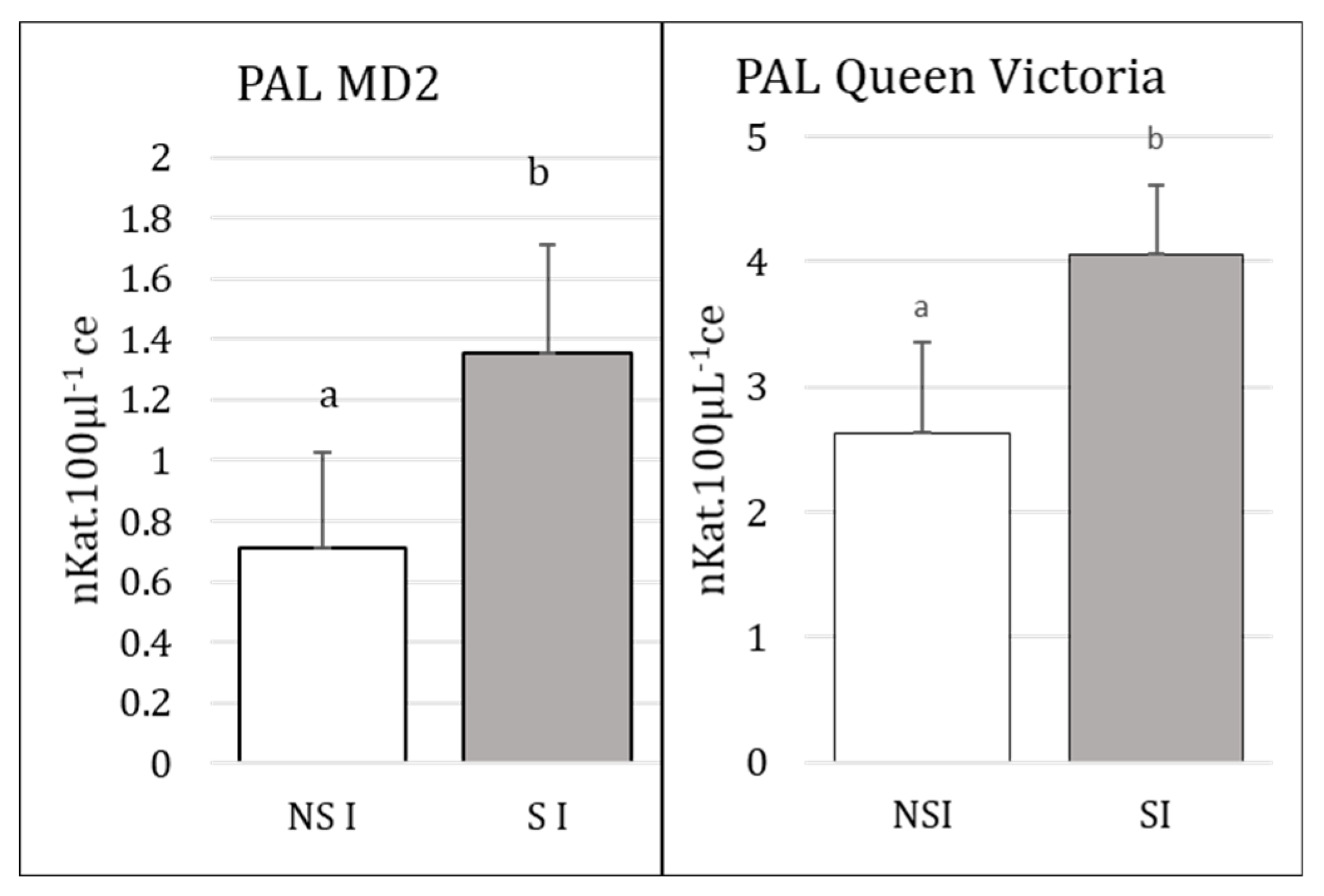
Figure 4.
Relative quantification of AcPAL gene expression in unstimulated (NSI) and stimulated MD2 plants (SI) inoculated with 20 mealybugs. SAR elicitor = salicylic acid (1mM), 15mL of solution. RNA was extracted 5 h, 24 h, 36 h and 48 h after inoculation.
Figure 4.
Relative quantification of AcPAL gene expression in unstimulated (NSI) and stimulated MD2 plants (SI) inoculated with 20 mealybugs. SAR elicitor = salicylic acid (1mM), 15mL of solution. RNA was extracted 5 h, 24 h, 36 h and 48 h after inoculation.
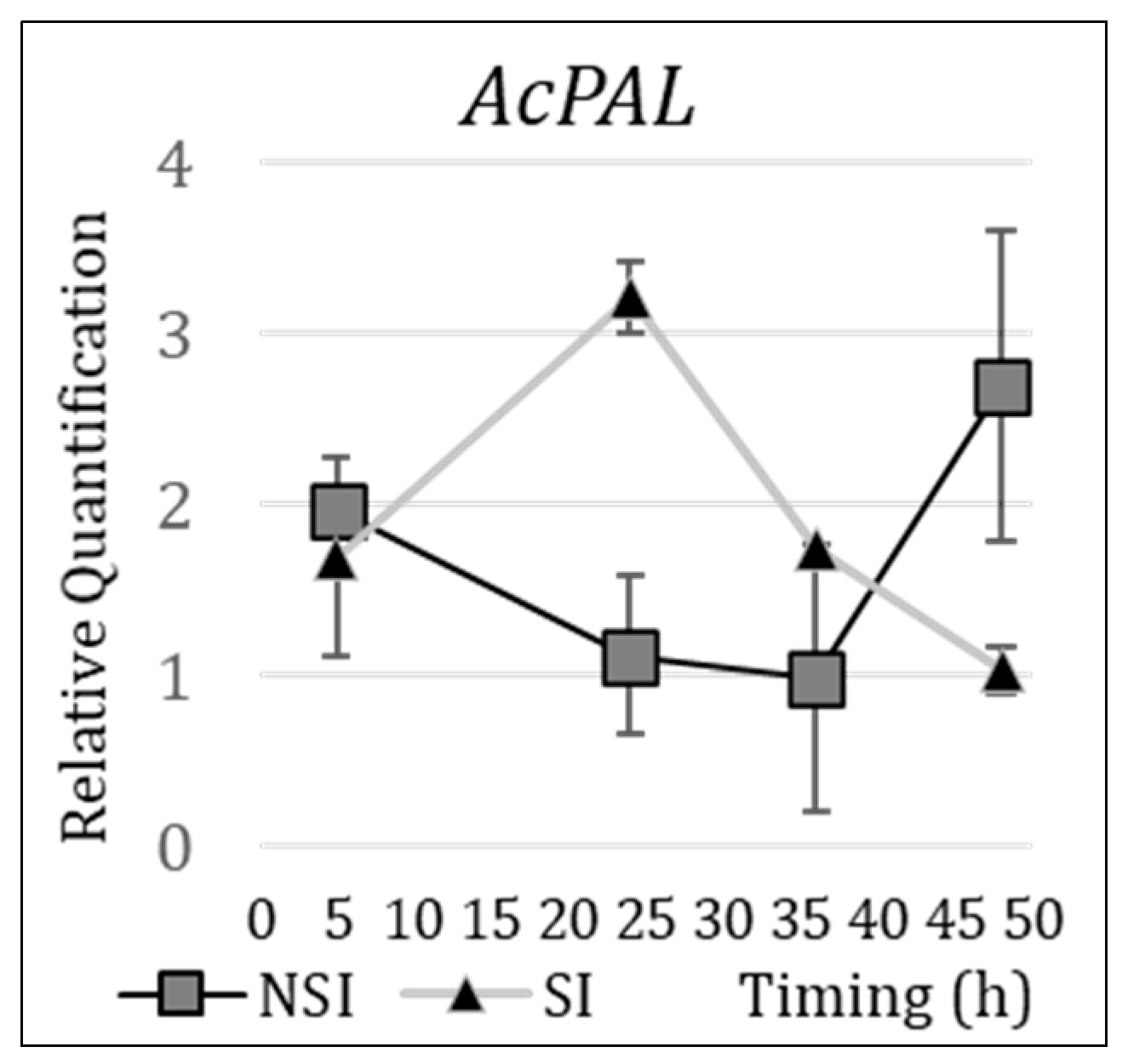
Figure 5.
Relative quantification of 4 potential molecular markers of SAR, 1 hour after biotic stress was applied on MD2 (A – MD2) and Queen Victoria (B - QV). Different letters (a & b) mean gene expression differed significantly between NSI and SI; SAR elicitor was salicylic acid (SA, 1mM), 15mL of solution per plant. Reference gene was AcActin. Gene expressions were normalized against NS-NI (Ctrl<0).
Figure 5.
Relative quantification of 4 potential molecular markers of SAR, 1 hour after biotic stress was applied on MD2 (A – MD2) and Queen Victoria (B - QV). Different letters (a & b) mean gene expression differed significantly between NSI and SI; SAR elicitor was salicylic acid (SA, 1mM), 15mL of solution per plant. Reference gene was AcActin. Gene expressions were normalized against NS-NI (Ctrl<0).
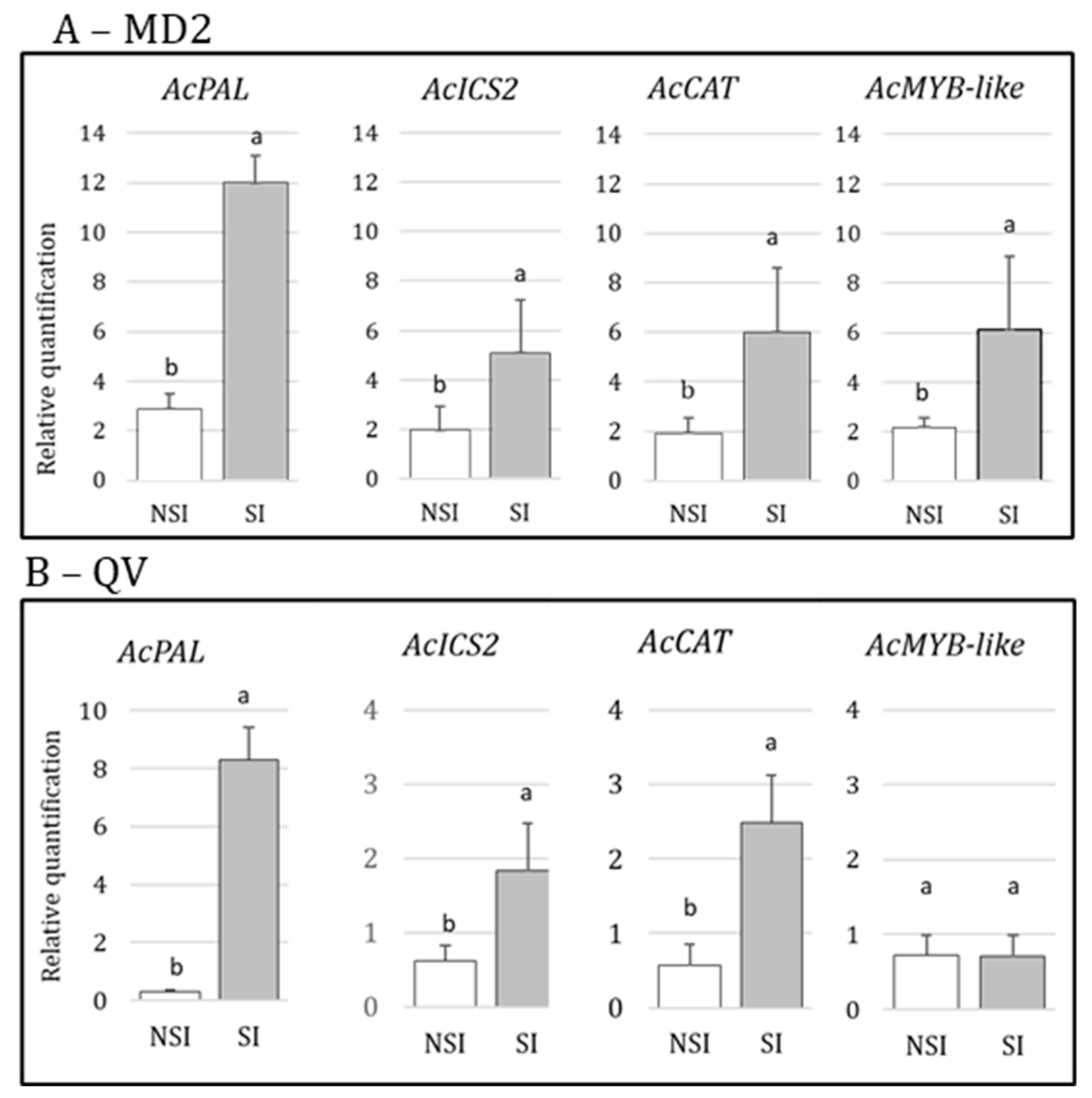

Table 1.
Primers and accession numbers.
| Genes. | Accession n° | Front (F) and reverse (R) primers |
|
AcPAL |
Aco010091.1 (Phytozomev3) |
F-AGGTGTTTGACGCCATTTG R-CACCGTTCCAGTCCTTCAA |
|
AcMYB like |
Aco011681.1 (Phytozomev3) |
F-GTTCAAGCAAGTCAAGAACC R-GAGTCCATTGATTCGCATTG |
|
AcICS2 |
XM_020232036 (NCBI) |
F-AGTGAATTTGCTGTCGGTAT R-GCAATCTTGTGAACTGGGA |
| AcCAT | XM_020259660.1 (NCBI) |
F-CAGCTATTGTGGTGCCTGGA R- CTTCCAGAGAGAACGAGGG |
| House keeping Gene | ||
|
AcActin like-fe Housekeeping gene |
XM_020238587.1 (NCBI) |
F-CCTACGTTGCCCTCGACTAC R-GGAAGAGCACTTCAGGACACA |
Disclaimer/Publisher’s Note: The statements, opinions and data contained in all publications are solely those of the individual author(s) and contributor(s) and not of MDPI and/or the editor(s). MDPI and/or the editor(s) disclaim responsibility for any injury to people or property resulting from any ideas, methods, instructions or products referred to in the content. |
© 2024 by the authors. Licensee MDPI, Basel, Switzerland. This article is an open access article distributed under the terms and conditions of the Creative Commons Attribution (CC BY) license (http://creativecommons.org/licenses/by/4.0/).
Copyright: This open access article is published under a Creative Commons CC BY 4.0 license, which permit the free download, distribution, and reuse, provided that the author and preprint are cited in any reuse.


