Preprint
Article

This version is not peer-reviewed.

Acute Respiratory Failure as the First Sign of Non-Fibrotic Hypersensitivity Pneumonitis – Diagnostic and Therapeutic Challenges

Submitted:

09 December 2024

Posted:

10 December 2024

You are already at the latest version

Abstract

Background. Hypersensitivity pneumonitis (HP) is an increasingly recognized interstitial lung disease, developing as a result of exposition to inhaled, mostly organic, antigens. Two types of the disease are presently distinguished based on HRCT pattern and/or lung biopsy: fibrotic and non-fibrotic (non-fHP). Complete antigen avoidance is the principle of non-fHP treatment. The indications for steroids use in non-fHP depend on the clinical course of the disease. Case presentations. We present three patients in whom acute respiratory failure was diagnosed as the first sign of non-fHP. Intravenous prednisolone, followed by oral therapy with prednisone in diminishing doses, resulted in marked clinical improvement. Respiratory failure subsided within a few days, but regression of lung opacities lasted from 3 to 7 months. In one patient, the discrete reticular opacities, suggestive of the early phase of lung fibrosis, were present on HRCT, but complete regression of lung disease was achieved in the course of treatment. The patients were instructed to avoid antigens exposure; nevertheless, in one of them, a relapse of the disease, requiring a temporal increase of prednisone dose, was observed. Conclusions. Non-fHP may present as sudden-onset hypoxemic respiratory failure. In such patients, the diagnosis is based on medical history concerning the exposition to inciting antigens and characteristic HRCT pattern. Intravenous therapy with prednisolone results in quick resolution of respiratory failure, and BAL performed with a few days of delay may still be of diagnostic value. Ground glass opacities and air trapping may persist for months from exposure.

Keywords: 
;  ;  ;  ;  ;  ;  

1. Introduction

Hypersensitivity pneumonitis (HP) is presently one of the three most frequently recognized interstitial lung diseases (ILD) [1], with an estimated incidence rate of 0.1-1.94 cases per 100 000 and a prevalence rate of 0.45-2.7 per 100 000 [2,3,4,5]. According to US epidemiological data, HP prevalence is higher in women and in persons above 65 years of age [4]. ATS/JRS/ALAT guidelines, published in 2020, distinguish two forms of HP: non-fibrotic (non-fHP) and fibrotic (fHP) [6]. Progressive lung fibrosis is observed in 58% of fHP patients, and it is combined with a significant worsening of life expectancy [7,8]. The emerging role of anti-fibrotic treatment in fHP has been addressed by many authors recently [9,10,11].
On the contrary, non-fHP is recognized as a more benign form of the disease [12]. Eradication of inciting antigen from the environment is recommended as the main type of intervention [12,13]. Nevertheless, rarely, patients diagnosed with non-fHP may present with acute onset of the disease and extensive pulmonary involvement, requiring prompt immunosuppressive therapy due to profound respiratory insufficiency. The diagnostic and therapeutic problems of such clinical presentations are discussed below.

2. Case presentations

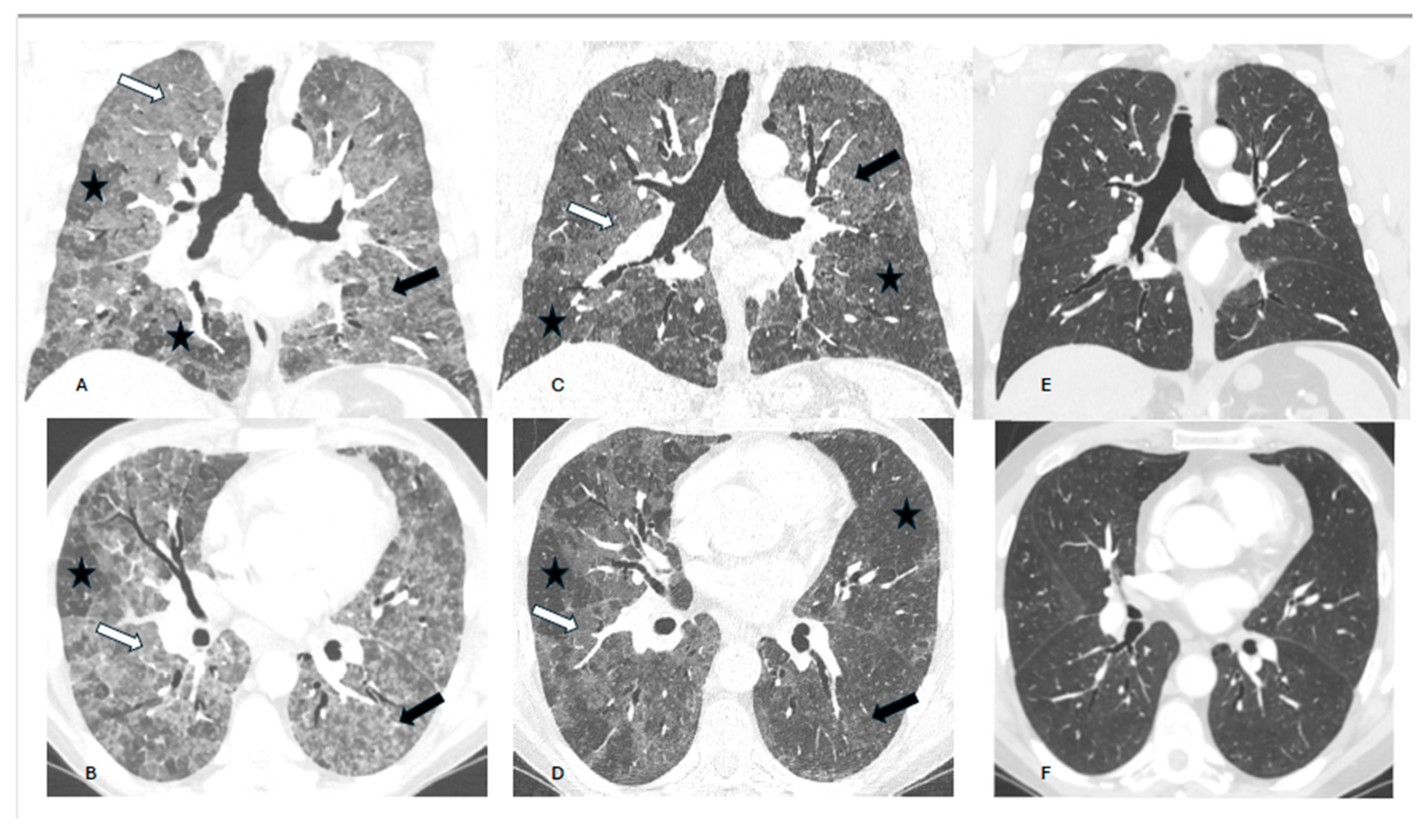
Case 1. A 43-year-old obese non-smoking female with type 2 diabetes, arterial hypertension, and nodular goitre in euthyroid stage was admitted to the Ist Pulmonary Department of the National Research Institute of Tuberculosis and Lung Diseases in April 2023 due to acute hypoxemic respiratory failure. In March 2021, she was diagnosed with a mild SARS CoV- 2 infection. Since the beginning of 2023, she has complained of a tiring, non-productive cough, increasing limitation of exercise capacity, and occasional episodes of low-grade fever. She lived in her own house, heated with wood. She owned the cat and rabbit pets; occasionally, she took care of the parrot belonging to her daughter. On admission, she presented with resting dyspnoea, oxygen saturation (SpO2) of 80%, and bilateral respiratory crackles over the lung bases. Chest radiogram revealed bilateral reticular lung infiltrates in the medial and lower parts of the lungs. Computed tomography (CT) scan of the chest showed diffuse, bilateral centrilobular nodules and ground-glass opacities, with mosaic lung attenuation pattern, suggestive of air-trapping (Figure 1A,B).
Laboratory tests’ results are included in Table 1 (case 1). Respiratory infections were excluded (i.e. nasopharyngeal smears for SARS CoV-2 PCR, sputum culture, sputum Pneumocystis jiroveci PCR, and the urine antigen test for Legionella pneumophila).
Oxygen therapy with increasing flow up to 6 L/min through an intranasal catheter was applied, which resulted in an increase of SpO2 to 95%. Acute, non-fibrotic HP was diagnosed based on a positive history of exposure to the organic antigens and a typical HRCT pattern. Subsequently, intravenous methylprednisolone 0.5 mg/kg/day (40 mg/day) was started. Oxygen flow was diminished from 6L/min to 1 L/min within ten days of therapy. Pulmonary function tests performed at that time revealed normal total lung capacity (TLC) , decreased forced vital capacity (FVC), increased residual volume to TLC ratio (RV/TLC ), and severely decreased lung transfer factor for carbon monoxide – the results are presented in Table 2 (Case 1). During the 6-minute walk test (6MWT), using oxygen 1 L/min, the patient covered 480 m with desaturation from 95% to 92%. Fibreoptic bronchoscopy (FOB) revealed diffuse inflammatory lesions in the bronchial mucosa. Cultures of respiratory specimens for bacteria were negative. Broncho-alveolar lavage (BAL) results were as follows: total BAL cells count – 27x106 (N:<10x106), lymphocytes 51% (N:<15%), neutrophils 8% (N:<3%), eosinophils 0.2% (N:<0.5%). Steroid therapy was continued with prednisone 30 mg/day, gradually decreased to 20 mg/day. After four months, the control HRCT revealed a nearly complete regression of lung infiltrates (Figure 1 C,D).
Presently, the patient is treated with prednisone at a maintenance dose of 15 mg/day. She has no contact with animals and parrots. Nevertheless, she still lives in the same house. No exacerbations of the disease were noted.
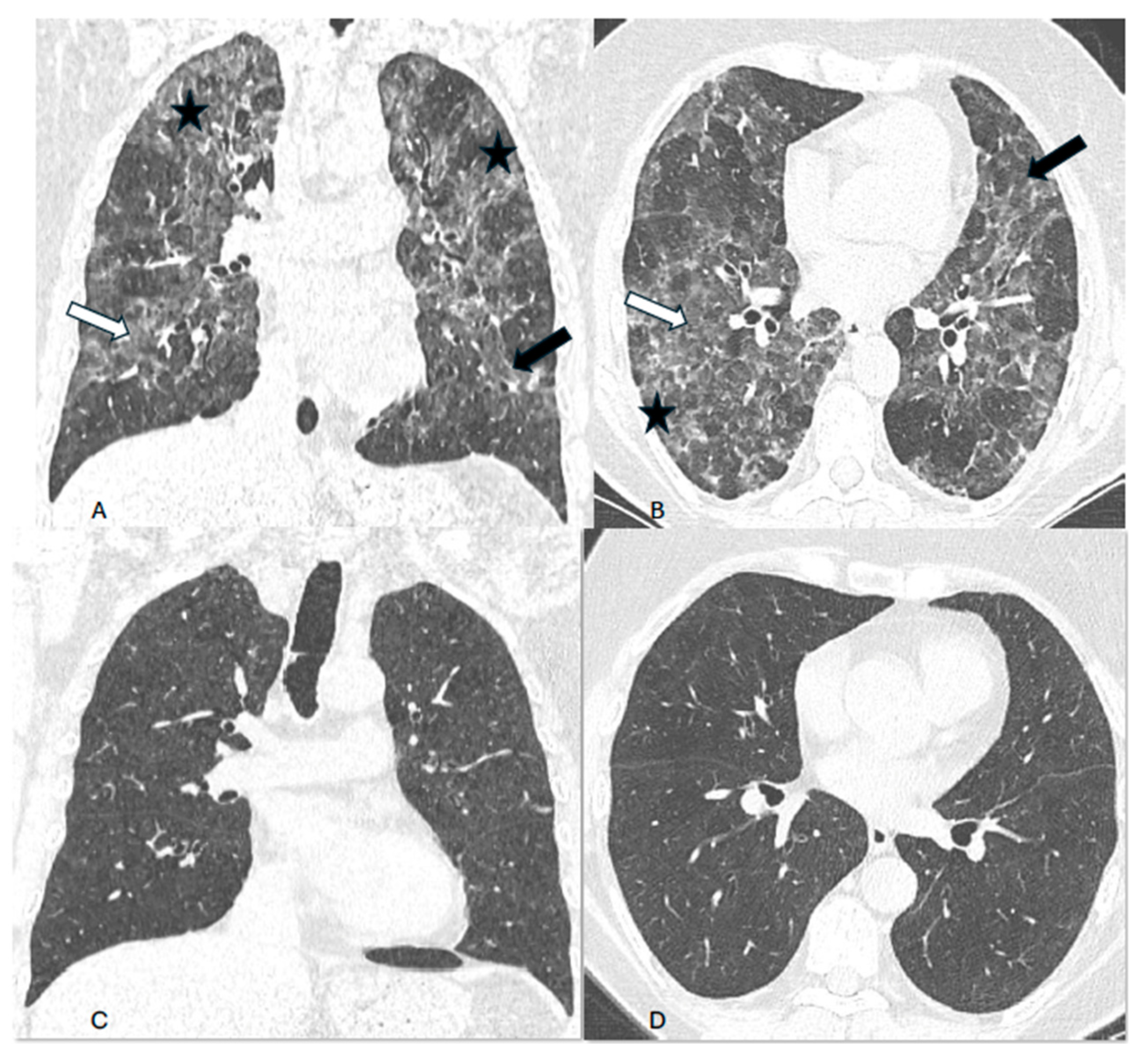
Case 2. A 48-year-old male smoker (15 pack-years) was admitted to the Ist Pulmonary Department of the National Research Institute of Tuberculosis and Lung Diseases in July 2021 due to acute interstitial lung disease (ILD) with respiratory insufficiency. He was the cattle breeder, feeding the cattle with silage. Since April 2021, he reported increasing dyspnoea, cough with non-purulent expectoration, and episodes of low-grade fever, especially after the working day in the cowshed. Before admission to our clinic, he spent two weeks in a local hospital, treated with broad-spectrum antibiotics and oxygen, with no clinical improvement. On admission, he presented with resting dyspnoea, SpO2 of 83%, and bilateral inspiratory crackles over the whole lungs. Laboratory test results are presented in Table 1 (Case 2). Chest radiogram revealed bilateral lung infiltrates localized in the medial and lower parts of the lungs. Chest CT scan revealed multiple, bilateral, ill-defined centrilobular nodules, partly confluent, areas of ground-glass attenuation, and marked lung inhomogeneity suggestive of air trapping (Figure 2A, B).
He required increasing oxygen support, finally 7L/min, administered through the face-mask with reservoir. Blood and sputum microbiologic cultures were negative, nasopharyngeal smears for SARS- CoV-2 PCR – negative, HIV screening test – negative, sputum Pneumocystis jiroveci PCR – negative, cytomegalovirus PCR – negative, Epstein-Barr Virus antibodies (IgM and IgG) – negative. Diagnosis of acute, non-fibrotic hypersensitivity pneumonitis was made based on exposures data, clinical presentation, and typical radiological features, and methylprednisolone 1 mg/kg/day (80 mg/day) was started. On the third day of therapy, body temperature normalized, and oxygen requirements diminished to 5 L/min. Five days later oxygen therapy was stopped. Nevertheless, during 6MWT performed without oxygen, he covered 640 meters with desaturation from 97 to 87%. Pulmonary function tests revealed normal lung volumes and a mild decrease in TLco (data presented in Table 2 – Case 2). The therapy was continued with prednisone 60 mg/day, doses were slowly reduced to 30 mg/day. Three months later, he was in good performance status, not requiring oxygen. HRCT revealed marked, partial regression of lung attenuations (Figure 2 C,D).
He still had contact with his cattle. Nevertheless, he was using the face-mask with a filter while working in the cowshed. It was decided to lower gradually the prednisone dose to 10 mg/day. In 2024, chest CT revealed nearly complete resolution of lung opacities (Figure 2 E,F).
Case 3. A 70-year-old female, ex-smoker (20 pack-years) with Hashimoto disease treated with supplemental therapy, was referred to our clinic from the University Hospital in January 2019 due to suspicion of HP. She lived in her own house heated with wood, owned 2 cats, and used a feather duvet. Since September 2018, she has complained of a non-productive cough, low-grade fever, and loss of weight (12 kg). On admission, she presented with resting dyspnoea, SpO2 of 90%, and bilateral respiratory crackles over the lung basis. Laboratory tests results are shown in Table 1 (Case 3). Chest CT revealed bilateral, diffuse nodular consolidations and ground glass opacities, with the reticulation pattern suggestive of lung fibrosis (Figure 3 A,B).
Body plethysmography revealed normal lung volumes and severely impaired TLco – detailed results are presented in Table 2 (Case 3). Echocardiography showed signs of pulmonary hypertension (systolic pulmonary artery pressure (SPAP) – 55 mmHg, acceleration time (AcT) 80 ms, left ventricular ejection fraction (LVEF) – 50%). BAL performed in the previous hospital revealed 54% of lymphocytes. Sputum cultures and Legionella pneumophila antigen in urine were negative. Early phase of fibrotic hypersensitivity pneumonitis was diagnosed. Oxygen, 4L/min, through the intranasal catheter, and prednisone 30 mg/day were administered. After 7 days of treatment, the oxygen therapy was stopped. Prednisone was gradually tapered to 20 mg/day, lung CT scan revealed nearly complete regression of pulmonary infiltrates and no signs of lung fibrosis (Figure 3 C,D ).
TLco increased to 58% pred. Further prednisone tapering was planned, but in March 2022, at a dose of 5 mg/day, she experienced clinical, radiological, and functional progression of the disease. She denied contact with animals and stopped using feather duvets but still lived in the same house. Therefore, the steroid dose was temporally increased (prednisolone 16 mg/day) with subsequent tapering to 8 mg/day. No further relapses were observed.

4. Discussion

Hypersensitivity pneumonitis is a granulomatous inflammatory lung disease developing as a result of a pathologic immunological reaction to the inciting antigen [14]. The majority of patients report an inhaled route of exposition to organic substances. In our patients, various expositions have been reported: to hay straw (case 2), avian antigens (cases 1 and 3), and home-related factors (cases 1 and 3). In the literature concerning this subject, exposition to avian proteins is most frequently described, not only in breeders but also in their neighbours or in persons using feather duvets [12,15,16,17]. An important cause of acute, non-fibrotic HP called summer-type HP is Trichosporon asahii [18]. Such exposition was described in Japanese patients living in wooden houses during moist summer [18]. Summer-type HP is an acute disease presenting with fever and malaise, HRCT pattern of non-fHP, and marked lymphocytic predominance in BAL [19]. The two of our patients (cases 1 and 3) lived in village houses heated with wood and might have been exposed to similar microorganisms. A growing number of HP due to bacterial or mould contamination of air-conditioning devices or humidifiers has also been noted [15,16,20,21]. Moulds are also present in 30-50% of energy-efficient buildings due to insufficient indoor air change rates [22]. Moreover, the exposition to mould antigens in foam pillows and mattresses has also been reported [23].
The pathologic inflammatory lesions in HP patients encompass small bronchi and lung alveoli, causing marked alterations in gas exchange. Therefore, significant lowering of TL,co and marked exertional desaturation on 6MWT are often noted in HP patients [24]. Acute respiratory failure is observed rarely, but it may be a life-threatening condition. Such clinical course, requiring urgent medical interventions, has been documented in all of the presented patients.
Differential diagnosis of non-fHP with acute symptoms, such as fever and diffuse ground glass opacities in HRCT, must include infective causes of lung disease. In the era of the COVID-19 epidemic, SARS-CoV-2 pneumonia was considered as the primary diagnosis, especially in patients requiring high-flow oxygen therapy. In the two of our patients diagnosed at that time, SARS-CoV-2 infection was excluded based on negative PCR in nasopharyngeal smears. Infection with Legionella pneumophila was also excluded based on the negative results of urine antigen test. The patients had no history of immunosuppression; nevertheless Pneumocystis jirovecii pneumonia was excluded based on negative PCR from sputum (cases 1 and 2) and bronchial washings (case 1).
The diagnosis of non-fHP is based on characteristic HRCT patterns of changes, such as ill-defined centrilobular nodules, ground-glass opacities, and mosaic lung attenuation in a patient exposed to the inciting antigen [6,25]. A typical non-fHP pattern is diagnosed if at least one sign of small airways disease (centrilobular nodules or air trapping) and one sign of interstitial lung disease (ground-glass opacities or mosaic lung attenuation), disseminated in axial and cranio-caudal projections are described [6]. Such radiologic appearance was found in all our patients. According to the recent ACCP recommendations, HP may be recognized without performing BAL in a patient with symptomatic lung disease developing as a result of exposition to certain antigens and typical HP pattern in HRCT [25]. Nevertheless, according to ATS guidelines, BAL lymphocytosis exceeding 30% is mandatory, in addition to positive exposition and typical HRCT pattern, to diagnose HP with high probability [6]. Severe hypoxemia present in all of our patients, was a contradiction to FOB with BAL. Nevertheless, in one of the patients (case 3), BAL was performed before admission to our department, and in the other one (case 1), BAL was performed after 10 days of treatment. In both cases lymphocytosis was documented, 54% and 51% respectively. In treatment-naïve non-fHP patients, BAL lymphocytosis may reach 40-70% [26], and it is higher than observed in ILD due to collagen vascular diseases and in sarcoidosis [27]. Thus, it is reasonable, in our opinion, to perform BAL, even in patients who received a short course of steroid therapy, as the results may still be of diagnostic value.
Therapy of non-fHP should be based on the elimination of causative antigens from the patient’s environment. Such policy requires comprehensive anamnesis, taking into consideration all possible sources of antigens. Nevertheless, in published articles, up to 50% of HP patients lacked the recognition of inciting antigen [15,16,28]. To increase the probability of exposure detection, the use of questionnaires was recommended [6,25,29]. Despite many questionnaires used, none was validated [15,20]. In our patients, the exposure data were assessed using the Vasakova et al. questionnaire [20]. All patients have been exposed to organic antigens; nevertheless, only in case 2 the coincidence was noted between the exposition and new symptoms of the disease. As the exposition to organic antigens is common, it is crucial to inquire if the disease worsening is present after the exposure and if the symptoms improve after antigen avoidance. According to Iijima et al., such an approach prevents the over-diagnosis of HP based on positive results of the exposure assessment form [30].
The decision to start immunosuppressive therapy in non-fHP patients should be made on an individual basis, taking into account the severity of clinical signs and extension of lung involvement in HRCT. All of our patients presented with severe respiratory insufficiency and extensive lung involvement in HRCT; thus, the decision concerning treatment was indisputable. An intravenous methylprednisolone in the dose 0.5-1 mg/kg/day was used. The optimal steroid dose was not addressed by the experts, but based on the published data and recent Japanese recommendations, the initial dose equivalent to prednisone 0.5-1.0 mg/per kilogram of body weight for 4-6 weeks, with subsequent tapering was advised [13]. Pulse therapy with steroids (methylprednisolone 0.5-1g/day for three days) may be applied in patients with severe hypoxemia [13]. In our patients, clinical response to therapy was immediate, with the resolution of respiratory failure within a few days. Nevertheless, lung involvement in HRCT has been observed for a much longer time and lasted even up to 7 months (case 2). Therefore, in our opinion, prolonged oral therapy with steroids is sometimes needed in non-fHP patients with extensive pulmonary involvement, to achieve maximal respiratory improvement.
In one of our patients (case 3), a relapse of HP was recognized based on new respiratory symptoms, shortened 6MWT distance, lowering of TLco, and progression of ILD on HRCT. The relapses due to repeated antigen exposure in HP patients are frequent [31]. It is not clear if repeated exposure is a sufficient risk factor to develop fibrotic HP. Possibly, the combination of genetic predisposition, type of exposure, and other environmental factors (e.g., inorganic dust) increase the risk of lung fibrosis in HP patients [14,32]. Patients who completely eliminated contact with the antigen had much better prognosis that the others [33]. Nevertheless, if the inciting antigen is not completely eliminated, or if it is unknown, the therapy with the lowest effective steroid dose (e.g., prednisone <10 mg/day) has to be taken into account to prevent disease relapses and to maintain respiratory function. On such occasions, it is important to discuss with the patient more strict methods of antigen avoidance.
In case 3, extensive ground glass opacities and centrilobular nodules on HRCT coexisted with discrete reticulation. Such HRCT pattern is difficult to classify as non-fHP or fHP. The discussion concerning the radiologic definition of fHP is ongoing. According to ACCP guidelines, reticulation as a single HRCT sign is not sufficient to diagnose fHP, unless other signs of lung distortion are described, such as bronchiectasis or decreased lung volume [25]. On the other hand, in some patients with extensive ground glass opacities, the presence of reticulation may be underestimated. As a complete radiologic response to treatment has been achieved in case 3, the disease was finally classified as non-fHP.

5. Conclusions

Non-fibrotic HP may rarely present as febrile lung disease, with extensive lung involvement causing acute respiratory failure. In such patients, it is important to rule out respiratory infection, especially in the era of the SARS-CoV-2 epidemic. The presence of ill-defined pulmonary nodules and ground glass opacities, with mosaic lung attenuation pattern on HRCT is highly suggestive of non-fHP. On such occasion, it is important to inquire the patient about all possible exposures: environmental, home-related, and those combined with working conditions. In patients with severe hypoxemia, the diagnosis of non-fHP may be based on positive exposure data and typical HRCT pattern only. Nevertheless, BAL performed after a few days of therapy may be still of diagnostic value. Resolution of respiratory insufficiency is observed within days of treatment with intravenous prednisolone 0.5-1 mg/kg, but lung attenuations may persist for several months. Thus, prolonging steroid therapy in such a population is reasonable to prevent lung fibrosis. In case of unknown or not eliminated exposure, long-term therapy with the lowest possible effective dose of steroids must be considered.

Author Contributions

Conceptualization, M.Szturmowicz, K.B.L.; data curation, K.B.L., I.B., M.E.J., P.R.-R., K.D; writing—original draft preparation, M. Szturmowicz, K.B.L.; writing—review and editing, M. Sobiecka, W.T.; images preparation and description, L.O., L.J.; BAL performing, P.R.-R., BAL preparation, A.R. All authors have read and agreed to the published version of the manuscript.

Funding

This research received no external funding.

Institutional Review Board Statement

The study was conducted in accordance with the Declaration of Helsinki, and approved by the Institutional Ethics Committee of the National Research Institute of Tuberculosis and Lung Diseases (Approval No KB-19/2019, date of approval 27 February 2019).

Informed Consent Statement

All patients provided written informed consent to publish their case history description and test results after de-identification.

Acknowledgments

We acknowledge all patients who consented to use their data in this publication.

Conflicts of Interest

The authors declare no conflicts of interest

References

  1. Pedraza-Serrano F, Jimenez-Garcia R, Lopez-de-Andres A et al. Characteristics and outcomes of patients hospitalized with interstitial lung diseases in Spain, 2014 to 2015. Medicine 2019; 98:21 (e15779).
  2. Selman M, Pardo A, King TE Jr. Hypersensitivity pneumonitis: Insights in diagnosis and pathobiology. Am J Respir Crit Care Med. 2012; 186: 314-324.
  3. Karakatsani A, Papacsta D, Rapti A et al. Epidemiology of interstitial lung diseases in Greece. Respiratory Medicine 2009; 103: 1122-1129. [CrossRef]
  4. Fernandez-Perez ER, Kong AM, Raimundo K et al. Epidemiology of hypersensitivity pneumonitis among an insured population in United States: a claims-based cohort analysis. Ann Am Thorac Soc. 2018; 15: 460-469. [CrossRef]
  5. Rittig AH, Hilberg O, Ibsen R, Lokke A. Incidence, comorbidity and survival rate of hypersensitivity pneumonitis: a national population-based study. ERJ Open Res. 2019; 5: 00259-2018. [CrossRef]
  6. Raghu G, Remy-Jardin M, Ryerson CJ et al. Diagnosis of hypersensitivity pneumonitis in adults. An Official ATS/JRS/ALAT Clinical Practice Guideline. Am J Respir Crit Care Med. 2020; 202: e36-e69.
  7. Hambly N, Farooqi MM, Dvorkin-Gheva A et al. Prevalence and characteristics of progressive fibrosing interstitial lung disease in a prospective registry. Eur Respir J 2022; 60: 2102571. [CrossRef]
  8. Cano-Jimenez E, Villar Gomez A, Velez Segovia E et al. Prognostic factors of progressive fibrotic hypersensitivity pneumonitis: a large, retrospective, multicentre, observational cohort study. ERJ Open Res. 2024; 10: 00405-2023. [CrossRef]
  9. Flaherty KR, Wells AU, Cottin V et al. Nintedanib in progressive fibrosing interstitial lung diseases. N Engl J Med. 2019; 381: 1718-1727.
  10. Dixon G, Hague S, Mulholland S et al. Real-world experience of nintedanib for progressive fibrosing interstitial lung disease in the UK. ERJ Open Res. 2024; 10: 00529-2023. [CrossRef]
  11. Fernandez Perez ER, Crooks JL, Lynch DA et al. Pirfenidone in fibrotic hypersensitivity pneumonitis: a double-blind, randomised clinical trial of efficacy and safety. Thorax 2023; 78: 1097-1104.
  12. De Sadeleer LJ, Hermans F, De Dycker E et al. Effect of corticosteroid treatment and antigen avoidance in a large hypersensitivity pneumonitis cohort: a single-centre cohort study. J Clin Med. 2019; 8: 14.
  13. Tomioka H, Miyazaki Y, Inoue Y et al. Japanese clinical practice guide for hypersensitivity pneumonitis. Respir Invest. 2024; 62: 16-43.
  14. Vasakova M, Selman M, Morell F et al. Hypersensitivity pneumonitis: current concepts of pathogenesis and potential targets for treatment. Am J Respir Crit Care Med. 2019; 200: 301-308.
  15. Petnak T, Moua T. Exposure assessment in hypersensitivity pneumonitis: a comprehensive review and proposed screening questionnaire. ERJ Open Res 2020; 6: 00230-2020.
  16. Mullin ML, Fernandez G, Marinescu D-C et al. Impact of antigen exposure on outcomes and treatment response in fibrotic hypersensitivity pneumonitis. Chest 2024; 165: 1435-1443. [CrossRef]
  17. Walters GI, Mokhlis JM, Moore VC et al. Characteristics of hypersensitivity pneumonitis diagnosed by interstitial and occupational lung disease multi-disciplinary team consensus. Respir Med. 2019; 155: 19-25. [CrossRef]
  18. Onishi Y, Kawamura T, Higashino T et al. Clinical features of chronic summer-type hypersensitivity pneumonitis and proposition of diagnostic criteria. Respir Invest. 2020; 58: 59-67.
  19. Sakamoto S, masuoka M, Usui Y et al. ATS/JRS/ALAT Hypersensitivity pneumonits guidelines for diagnosis of humidifier lung and summer-type hypersensitivity pneumonitis. Respir Invest. 2023; 61: 660-667.
  20. Vasakova M, Morell F, Walsh S et al. Hypersensitivity pneumonitis: perspectives in diagnosis and management. Am J Respir Crit Care Med. 2017; 196: 680-689.
  21. Ryu K, Fukutomi Y, Sekiya K et al. Identification of fungi causing humidifier lung: 2 rare cases and a review of the literature. Asia Pac Allergy 2022; 12: e43. [CrossRef]
  22. Brambilla A, Sangiorgio A. Mould growth in energy efficient buildings: causes, health implications and strategies to mitigate the risk. Renewable and Sustainable Energy Reviews 2020; 132: 110093.
  23. Moran-Mendoza O, Aldhaheri S, Connor JA et al. Mold in foam pillows and mattresses. A novel cause of hypersensitivity pneumonitis. Chest 2021; 160: e259-e263.
  24. Morisset J, Johannson KA, Jones KD et al. Identification of diagnostic criteria for chronic hypersensitivity pneumonitis. Am J Respir Crit care Med. 2018; 197: 1036-1044.
  25. Fernandez Perez ER, Travis WD, Lynch DA et al. Executive summary. Diagnosis and evaluation of hypersensitivity pneumonitis: CHEST Guideline and Expert Panel Report. Chest 2021; 160: 595-615. [CrossRef]
  26. Szturmowicz M, Barańska I, Jędrych ME, Demkow U. Correlation of bronchoalveolar lavage lymphocyte count with the extent of lung fibrosis and with plethysmographic lung volumes in patients with newly recognized hypersensitivity pneumonitis. Cent Eur J Immunol 2020; 45: 276-282. [CrossRef]
  27. Aderley N, Humphreys CJ, Barnes H et al. Bronchoalveolar lavage fluid lymphocytosis in chronic hypersensitivity pneumonitis: a systematic review and meta-analysis. Eur Respir J. 2020; 56: 2000206.
  28. Fernandez Perez ER, Swigris JJ, Forssen AV, Tourin O. Identifying an inciting antigen is associated with improved survival in patients with chronic hypersensitivity pneumonitis. Chest 2013; 144: 1644-1651. [CrossRef]
  29. Jenkins AR, Chua A, Chami H et al. uestionnaires or serum immunoglobulin G testing in the diagnosis of hypersensitivity pneumonitis among patients with interstitial lung disease. Ann Am Thorac Soc. 2021; 18: 130-147.
  30. Iijima Y, Ejima M, Yamana T et al. Assessment of clinical relevance of antigen improves diagnostic accuracy of hypersensitivity pneumonitis. BMC Pulm Med. 2024; 24: 84.
  31. Calaras D, David A, Vasarmidi E, Antoniou K, Corlateanu A. Hypersensitivity pneumonitis: challenges of a complex disease. Canadian Respir J. 2024 doi:10.1155/2024/4919951.
  32. Rea G, Bocchino M, Lieto R et al. The unveiled triad: clinical, radiological and pathological insights into hypersensitivity pneumonitis. J Clin Med. 2024; 13: 797. [CrossRef]
  33. Nishida T, Kawate E, Ishiguro T et al. Antigen avoidance and outcome of nonfibrotic and fibrotic hypersensitivity pneumonitis. ERJ Open Res 2022; 8: 00474-2021. [CrossRef]
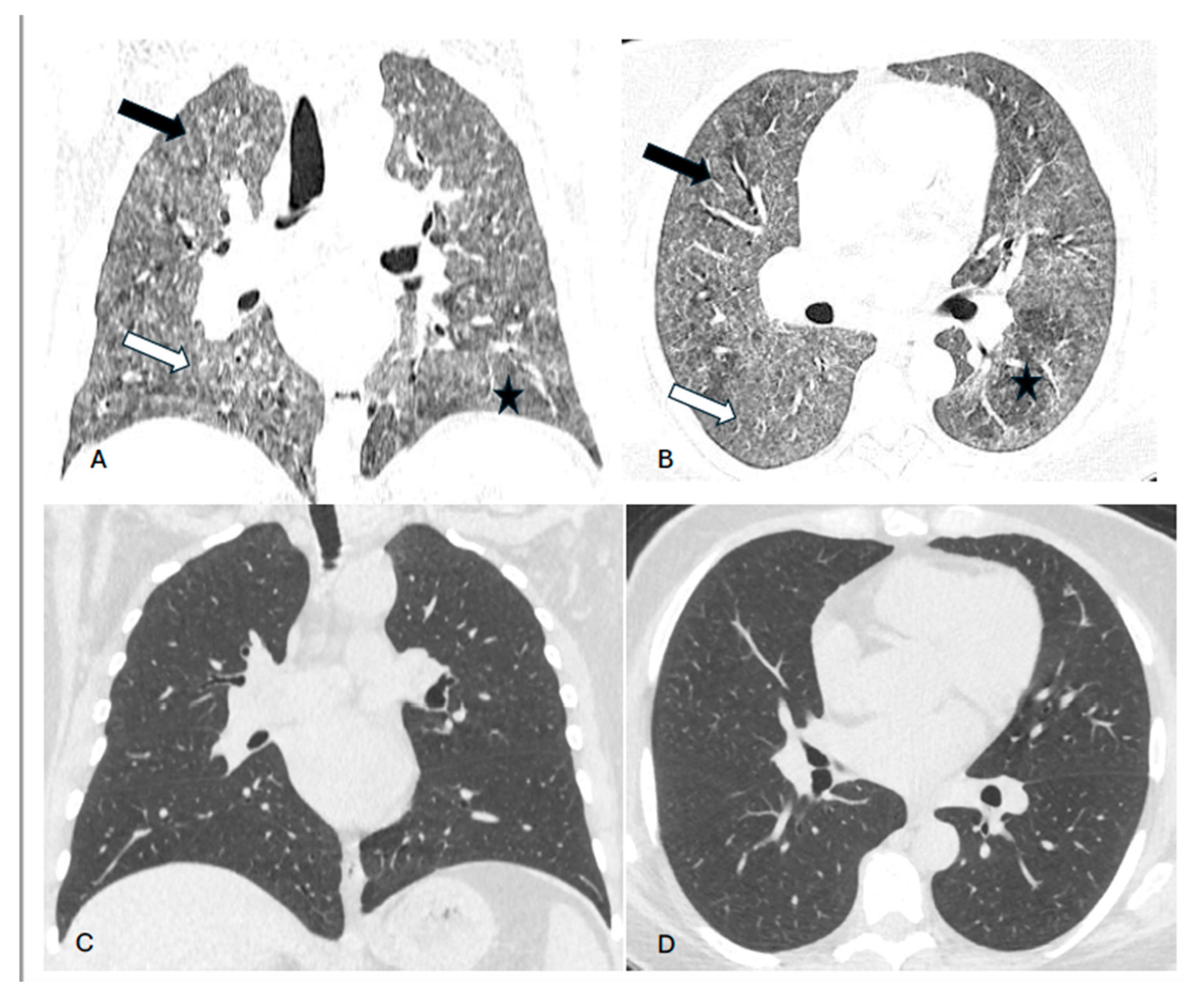
Figure 1. Patient 1 - High-resolution computed tomography (HRCT) scans, coronal and axial planes. A, B – baseline scans, C, D – follow-up scanes. A, B: Bilateral diffuse ill-defined centrilobular nodules (black arrows), an increase in lung density with visibility of vessels and bronchial walls - ground glass opacities (white arrows) and air trapping indicating non-fibrous HP (asterisks); C, D: nearly complete regression of ground glass opacities.
Preprints 142292 g001
Figure 2. Patient 2 - HRCT scans coronal and axial planes. A, B – baseline scans, C, D – follow-up after three months, E, F – follow-up after a year. A, B: Lobular areas with poorly defined small centrilobular nodules (black arrows), ground glass opacities (white arrows) and with lobules of normal appearance suggestive of air trapping (asterisks). C, D: Partial regression of the interstitial lesions; E, F: Further (nearly complete) regression of lung opacities.
Preprints 142292 g002
Figure 3. Patient 3 - HRCT scan coronal and axial planes. A, B – baseline scans: In the whole lungs bilaterally diffuse nodular consolidations (black arrows) and ground glass opacities (white arrows), with the reticulation pattern in peripheral lung regions with signs of lung fibrosis (asterisk). C, D – follow-up scanes: Complete regression of pulmonary infiltrates and no signs of lung fibrosis.
Preprints 142292 g003
Table 1. On-admission laboratory tests results of the three presented cases.
WBC (x109/L)
N: 4.00-8.00
Neutrophils (%)
N: 34 - 71
TSH (mIU/mL)
N: 0.27 – 4.2
IgE (IU/mL)
N: <100
NT-proBNP (pg/mL)
N: <125
ANA (screen) CRP (mg/l) N:<5
Case 1 4.5 11 67 0.41 10 154 negative
Case 2 130 14 77 0.42 - 683 -
Case 3 44 11 75 0.45 - 383 negative
CRP – C-reactive protein, WBC – white blood cells, TSH – thyroid stimulating hormon, IgE – immunoglobulin E, Nt-proBNP – N-terminal pro-B-type Natriuretic Peptide, ANA – antinuclear antibodies.
Table 2. Pulmonary function tests (PFTs) results of the three presented cases.
FVC (%pred) TLC (%pred) RV/TLC (%pred) TL,co (%pred) 6MWD (m) 6MWT SpO2-1 6MWT SpO2-2
Case 1 60 83 140 44 480 95 (+O2) 92 (+O2)
Case 2 80 92 116 60 640 97 (-O2) 87 (-O2)
Case 3 74 87 113 28 388 95(+O2) 94(+O2)
FVC – forced vital capacity, TLC – total lung capacity, RV – residual volume, TL,co – transfer factor of the lungs for carbon monoxide, 6MWD – 6-minute-walk distance, 6MWT– 6-minute-walk test, SpO2-1 – oxygen saturation at start of the 6MWT, SpO2-2 – oxygen saturation at the end of 6MWT.
Disclaimer/Publisher’s Note: The statements, opinions and data contained in all publications are solely those of the individual author(s) and contributor(s) and not of MDPI and/or the editor(s). MDPI and/or the editor(s) disclaim responsibility for any injury to people or property resulting from any ideas, methods, instructions or products referred to in the content.
Copyright: This open access article is published under a Creative Commons CC BY 4.0 license, which permit the free download, distribution, and reuse, provided that the author and preprint are cited in any reuse.
Prerpints.org logo

Preprints.org is a free preprint server supported by MDPI in Basel, Switzerland.

Subscribe

Disclaimer

Terms of Use

Privacy Policy

Privacy Settings

© 2025 MDPI (Basel, Switzerland) unless otherwise stated