

Submitted:
06 December 2024
Posted:
09 December 2024
You are already at the latest version
Abstract
This paper presents a scoping review that explores the potential of Serious Games combined with Virtual Reality (VR) to enhance social interactions in adolescents with autism spectrum disorder (ASD). The existing literature is mapped to identify how these technologies can facilitate communication, collaboration, and the development of social skills in youth with ASD. The findings will provide an overview of current applications, benefits, challenges, and research gaps in this emerging field.
The review found that VR-based Serious Games show promise in enhancing social skills for adolescents with ASD, offering structured, immersive environments for practising communication and collaboration. Key challenges include accessibility, customization needs, and limited long-term impact studies. Further research could strengthen VR's role in ASD social skills training.
Keywords:
Autism spectrum disorder
; Serious games
; Virtual reality
; Social interactions
I. Introduction
Autism spectrum disorder (ASD) is a neurodevelopmental condition that negatively impacts how individuals communicate, interact socially, and behave. For adolescents with ASD, these challenges can make participating in everyday social settings - like school or group activities - particularly difficult. This limitation can reduce their opportunities for social interactions during a key period when social skills are typically developing, potentially affecting their confidence and relationships[1].
Recognizing these unique challenges, researchers and clinicians are increasingly exploring tech-driven methods to help adolescents with ASD build essential social skills. One promising approach involves using Serious Games (SGs) and Virtual Reality (VR). SGs are not just for entertainment; they’re designed with specific educational or therapeutic goals in mind. When paired with VR, SGs create an engaging, immersive space where adolescents with ASD can practise social skills [2].
VR offers realistic simulations of social situations, allowing users to explore and learn without the pressures of real-life interactions. This can be especially beneficial because VR environments are adaptable to each person’s learning pace and style, offering support in ways traditional therapies may not. By combining SGs with VR, adolescents with ASD may have new opportunities to develop confidence and practice skills in a safe, flexible environment tailored to their needs [3].
SGs are more than regular games; they’re structured to teach real-world skills, letting players practise scenarios they might encounter in daily life. When SGs are combined with VR, they become an even more powerful tool. VR brings these scenarios to life, creating fully immersive social situations that might otherwise feel intimidating. For adolescents with ASD, this pairing offers a judgement-free space to practise interactions. They can try out these exercises at their own speed, receiving personalised support that matches their learning needs. This approach can make social learning both more accessible and effective, building skills and confidence they can bring into the real world [4].
Research on ASD has long indicated that individuals with ASD face challenges in social interaction and communication, which are crucial for daily life and relationship building. Traditional interventions - such as behavioural therapy, social stories, and role-playing exercises - have proven beneficial in supporting social skill development, yet they often lack the immersive, interactive qualities that can boost engagement, especially among adolescents [5].
SGs and VR have emerged as promising tools to enhance social skills training for adolescents with ASD. SGs incorporate repetitive, goal-oriented tasks which align well with the structured learning style that benefits many individuals with ASD. Studies show that SGs can create safe, controlled environments where users can practise social interactions, offering scenarios that are customizable and adaptable to individual needs. When combined with VR technology, SGs have shown even greater potential by leveraging the immersive, sensory-rich qualities of VR to simulate real-world interactions [6,7]. VR allows adolescents with ASD to engage in complex social situations in a low-risk environment, which can reduce social anxiety and facilitate learning through practice. Initial studies reveal that VR-based SGs can foster essential social skills, such as turn-taking, empathy, and non-verbal communication, by providing multisensory cues and realistic feedback that help reinforce learned behaviours.
This paper contributes to the existing literature by conducting a comprehensive review of SGs and VR interventions focused on enhancing social interactions among adolescents with ASD. It maps current applications, evaluates their effectiveness, identifies challenges, and highlights research gaps - specifically the need for more longitudinal studies and increased accessibility of VR technology [8].
This work provides a foundation for future research and practical recommendations for integrating VR-based SGs into social skills training programs for adolescents with ASD. This scoping review explores how combining SGs, and VR may support social skill development in adolescents with ASD. By systematically analysing current research, this paper aims to understand how these technologies can enhance communication, social interaction, and collaboration. It also examines both the benefits and limitations of these tools, as well as identifying gaps in the research. Ultimately, this overview aims to show how SGs and VR can be better utilised to support adolescents with ASD. With a clearer understanding of what works and what doesn’t, this article hopes to make social skill-building tools more accessible and impactful for young people with ASD. The insights from this review could guide even more effective interventions in the future [9].
II. Autism Spectrum Disorder: Exploring Causes, Prevalence, and Challenges in Diagnosis
The exact origins of ASD remain a complex and evolving field of study, with research indicating that a combination of genetic, neurological, and environmental factors may contribute to the development of the condition. Certain genetic markers and neurological differences have been identified in individuals with ASD, though the precise mechanisms that lead to the behaviours and cognitive patterns typical of ASD are not yet fully understood. Environmental influences, such as prenatal exposure to toxins or complications during birth, are also believed to play a role, although these factors are still being explored. Therefore, understanding ASD necessitates a multidisciplinary approach, incorporating genetics, neuroscience, and environmental science [10].Diagnosing ASD is particularly challenging due to the absence of standard medical tests, such as blood tests or imaging, to detect the disorder. Instead, the process relies on behavioural assessments and clinical judgment. In most cases, general practitioners (GPs) initially assess a child for signs of ASD, which often include difficulties in communication, social interactions, and behavioural patterns. If ASD is suspected, the child is referred to a specialist, such as a psychologist or psychiatrist, for a more detailed evaluation. Early intervention is crucial, as research shows that the brain’s heightened plasticity in children and adolescents allows for significant developmental progress when identified early [11].
Screenings for ASD can begin as early as 18 months, but a formal diagnosis may take years. This delay is partly due to the need for comprehensive developmental assessments across various domains, including behaviour, communication, self-care, and social skills. Diagnostic tools such as the Autism Diagnostic Observation Schedule (ADOS) and the Autism Diagnostic Interview-Revised (ADIR) are commonly used to assess children and adolescents’ responses to structured activities and interview questions [12]. However, since the diagnostic process is based on clinical judgment, it can be subjective and may vary depending on the evaluator’s expertise and the child’s ability to engage during the assessment.The importance of early diagnosis cannot be overstated. Research shows that early identification of ASD allows for timely and effective interventions, leveraging the neuroplasticity of children and adolescents’ brains to promote skill acquisition and development. Early intervention programs have been shown to significantly improve outcomes in areas such as communication, social skills, and independent living. This period of heightened brain plasticity presents a critical window for therapeutic interventions to reshape neural pathways and foster positive developmental changes [13].
SGs and VR technologies provide immersive, interactive experiences that can engage children and adolescents in ways that traditional therapeutic methods cannot, making therapy more enjoyable and effective. Through VR, children and adolescents can practice real-life scenarios in a safe, controlled environment, such as navigating social situations or learning essential life skills like crossing the street. This immersive aspect of VR allows children and adolescents to experience challenges in a manageable way, building their confidence and tolerance [14].
SGs combine entertainment with skill-building exercises, creating an engaging environment where children and adolescents can practice and reinforce skills in a fun and non-intimidating way. SGs can be tailored to address specific developmental needs, whether it’s improving cognitive abilities, social skills, or behavioural responses [15]. Moreover, these games can be adapted to individual learning styles, allowing for more personalized therapeutic approaches [16].
Importantly, SGs and VR are not only beneficial forchildren and adolescents with ASD but also offer significant support for caregivers. The emotional and psychological strain that caregivers experience is often overlooked in discussions of ASD, but it plays a critical role in the overall well-being of families. Parents of children and adolescents with ASD often report higher levels of stress, depression, and lower quality of life. VR and SGs can provide caregivers with valuable tools to manage their own mental health, learn coping strategies, and connect with other families. These technologies can also serve as platforms for caregiver education, providing a supportive space for parents to access resources and share experiences with others in similar situations. This dual-purpose approach - supporting both children, adolescents and caregivers - holds great promise for enhancing family well-being and providing a more holistic solution to managing the challenges of ASD [17].
This paper aims to provide an in-depth review of recent empirical studies that explore the role of SGs and VR in ASD therapy. By evaluating the strengths and weaknesses of these interventions, the paper will assess their potential to improve outcomes for children and adolescents with ASD and their caregivers. Additionally, it will explore the broader implications of using these technologies in therapeutic settings, including their accessibility, scalability, and real-world applicability. While SGs and VR hold great promise, further research is necessary to evaluate their long-term effectiveness, explore their capacity to address a wider range of sensory and behavioural challenges, and ensure their accessibility to families across different socioeconomic backgrounds. As these technologies continue to evolve, they offer exciting prospects for improving the quality of life for individuals with ASD and supporting the families who care for them.
III. Method
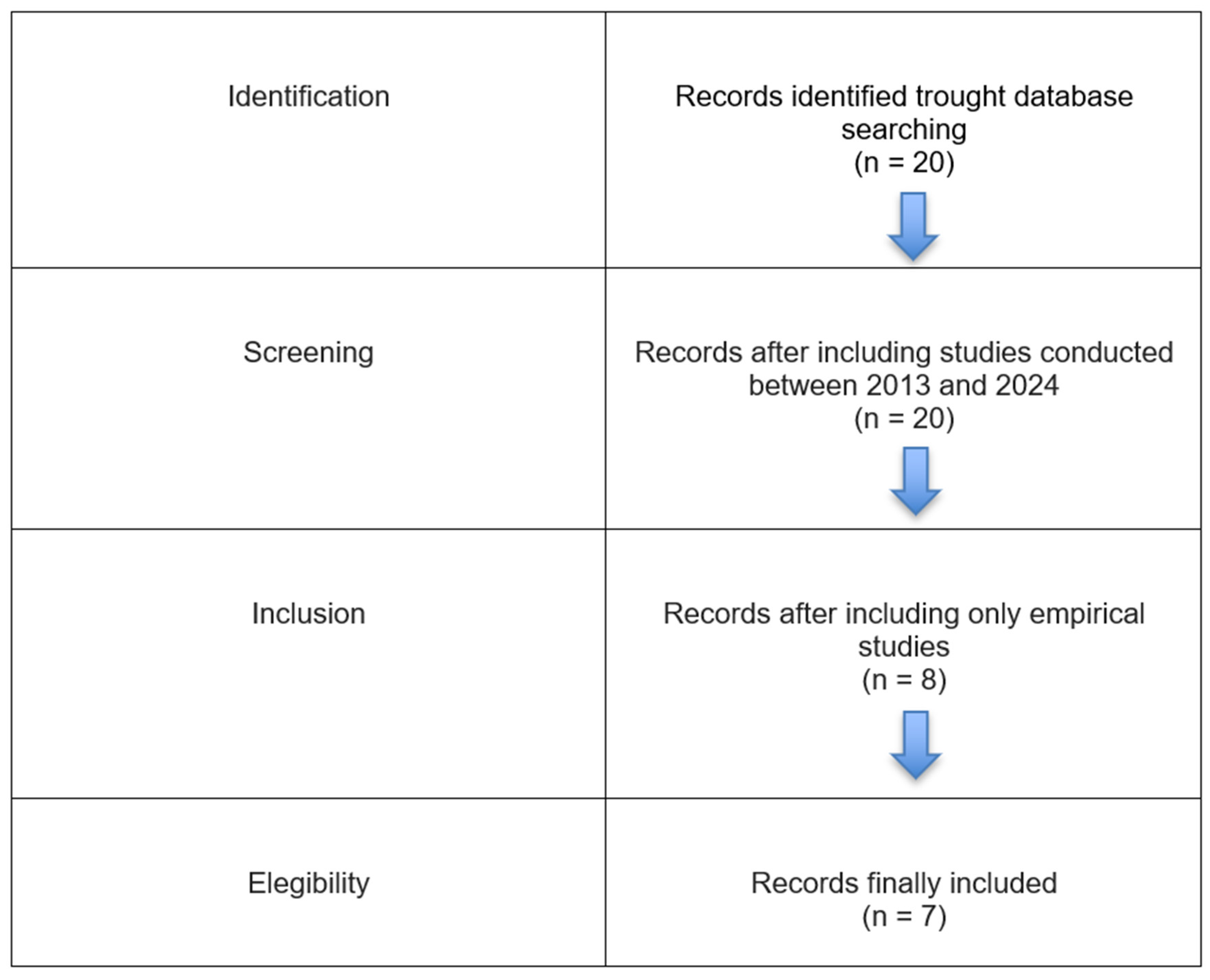
To analyse the fundamental characteristics of SGs combined with VR programs for the promotion of social skills in children and young adolescents with ASD, a search for empirical studies on the topic was conducted on Scopus. The standard guidelines adopted in this review were in line with PRISMA statement [18] as also demonstrated in Figure 1. The inclusion criteria were:
Keywords: “autism spectrum disorders”, “serious games”, “virtual reality”, “social interactions”;
Studies published from 2013 to 2024;
Empirical studies;
Language: English;
Pertinence to the research question (SGs combined with VR programs for the promotion of social skills in children and adolescents with ASD);
Participants: children and adolescents (aged between 5 and 18 years).
The exclusion criteria were: conference paper; book chapter; conference review; review.
An initial search was conducted on Scopus, entering the search keywords “autism spectrum disorders”, “serious games”, “virtual reality”, “social interactions”; the search produced twenty results. Including all studies conducted between 2013 and 2024, 8 documents were identified. The search led to eight documents. Of these studies, reviews were excluded, and only empirical studies were considered, for a total of seven studies. The inclusion criteria adopted is relevance to the topic of the use of SGs and VR- based programs for the promotion of social skills in children and adolescents with ASD. The research therefore led to seven results.
IV. Literature Overview
An overview was conducted to identify existing research on ASD, SGs applications in healthcare, and rehabilitation strategies as also shown in Table 1. Documents published between 2013 and 2024 were considered to ensure the inclusion of the most recent and relevant studies.
Ghanouni et al. [19] developed an interactive motion gaming program to teach socio-emotional skills, specifically focusing on perspective-taking, for children and youth with high-functioning ASD. Collected in-depth feedback from stakeholders, leading to significant improvements in the program’s usability and user-friendliness prior to its broader release. This project stands as one of the first to actively incorporate feedback from both children/youth with ASD and their parents in the development of a motion-based gaming program for socio-emotional learning. By integrating the voices of those directly impacted - children, youth, and parents - into the development process, authors aim to ensure that assistive technologies for ASD are not only effective but also empathetic to the unique needs and perspectives of their users.
Cadieux et al. [20] explored how video games, specifically Minecraft, can be harnessed as a supportive environment for building essential social skills in children, particularly those diagnosed with ASD. Minecraft has become a favourite among young players with ASD, partly due to its flexible, open-ended gameplay and the structured yet creative interactions it allows. Support communities have already started using Minecraft as a social tool, creating spaces where children with ASD can interact with each other, while parents also find community and advice. However, research is limited on whether the social skills children develop in-game can effectively transfer to real-world interactions. To address this initiative, Social Craft, aims to create a structured framework that leverages Minecraft as a training ground for real-world social communication skills. By designing activities that mimic real-life social scenarios, authors hope children can practise critical interactions - such as turn-taking, cooperation, and understanding others’ perspectives - within the game, with the eventual goal of easing these behaviours into real-world contexts. Their approach emphasises a solid understanding of behavioural principles and a robust methodology for tracking social skill development across both digital and physical environments [21].

Table 1.
Synoptic table of the reviewed studies.
| Authors | Objectives | Participants | Results |
|---|---|---|---|
| Ghanouni et al. [19] | This study aimed to collect stakeholders’ ideas by involving 20 participants, including children and youth with high functioning ASD, and their parents, during usability testing of an interactive motion gaming programme that focuses on perspective taking |
Involving 20 participants, including children and youth with high functioning ASD, and their parents, during usability testing of an interactive motion gaming programme that focuses on perspective taking | This study is one of the first projects that incorporated both children/youth with ASD and their parents’ comments during the development of a novel motion gaming programme to address perspective taking |
| Cadieux et al. [20] | This study outline opportunities within the video game environment for building skills applicable to real-world issues faced by some children |
Some children (age not specified) | Social Craft seeks to establish mechanisms for collecting data in both the virtual world and the real world related to the generalization of social communication skills between worlds |
| Gabrielli et al. [22] | This study aimed to present the inclusive design process that we had followed to develop the Zentastic VR adventure game to foster social skills training in adolescents with ASD and to investigate its feasibility as a training environment for adolescents | Thirty-one children with ASD - were adolescents aged 13 to 18 years with level 1 ASD severity. Participants included 25 (81%) adolescent boys and 6 (19%) adolescent girls; their average age was 13.2 (SD 3.41) years, their average Autism Diagnostic Observation Schedule score was 6.3 (SD 1), and their mean IQ was 96.6 (SD 20). All 31 participants performed at least 1 session of the VR game; 27 (87%) participants performed 2 sessions; 19 (61%) participants were involved in 3 sessions; and 3 (10%) participants performed 4 sessions | The feasibility study demonstrated good acceptability of the VR game by adolescents and an enhancement of their social skills from baseline to post training |
| Simões et al. [23] | The aim of this study was to develop a serious game that defines a “safe environment” where the players became familiar with the process of taking a bus and to validate if it could be used effectively to teach bus-taking routines and adaptive procedures to individuals with ASD |
Participants with ASD (n=10) underwent between One to three training sessions. Participants with typical development (n=10) were also included in this study for comparison purposes and received 1 control session | They found a statistically significant increase in the measures of knowledge of the process of riding a bus, a reduction in the electrodermal activity (a metric of anxiety) measured inside the bus environments, and a high success rate of their application within the game (93.8%) |
| Johnston et al. [24] | This paper presents SoundFields, an interactive virtual reality game designed to address this area by integrating exposure-based therapy techniques into game mechanics and delivering target auditory stimuli to the player rendered via binaural based spatial audio |
A pilot study was conducted with six participants diagnosed with ASD who displayed hypersensitivity to specific sounds to evaluate the use of SoundFields as a tool to reduce levels of anxiety associated with identified problematic sounds | The study results suggest that SoundFields could be an effective tool for helping individuals with autism manage auditory hypersensitivity |
| Johnston et al. [25] | This investigation evaluates the use of binaural based spatial audio as a rendering technique for delivering realistic simulations of averse stimuli within a VR exposure-based computer game intervention for auditory hypersensitivity in autism |
Twenty-two children and adolescents (18 male and 4 females, mean age = 12.23, SD = 1.56, range of 8–15 years). Out of the 22 participants recruited a total 20 completed the experimental period (Group 1: n = 10, Group 2: n = 10), with two not being able to complete all four experimental sessions. A total of 14 participants successfully completed the control period (Group 1: n = 10, Group 2: n = 4) | Measurements of self-reported emotions displayed significant reductions in associated negative emotional reactions to target stimuli for all participants. Moreover, tracked voluntary interactions with exposure-based game-mechanics increased as the study progressed. |
| Tan et al. [26] | The objective of this research is to explore the metaverse applications in special needs education fields, to train road crossing skills, as a part of living skills for children with special needs such as ASD. |
A small group with five students ranging from 5 to 12 years old participating from other schools were engaged individually at different times in the preliminary experiments | In this research, they develop a VR serious game to train children with ASD one of the basic living skills for road crossing safely. The VR serious game operates on multiple types of platforms, with various user interaction inputs including the Microsoft Kinect sensor, keyboard, mouse, and touch screen. |
Gabrielli et al. [22]showedthat VR adventure games present a promising avenue for training social skills in adolescents with ASD. By leveraging the technology’s ability to support multisensory experiences and multiplayer interactions, VR can help reduce barriers to access and enhance motivation among users. Despite this potential, the design of VR environments specifically for social skills training remains underexplored, highlighting the need for an inclusive design approach to ensure that these tools are well-received by target users. Their primary goal was to outline the inclusive design process utilised to develop the Zentastic VR adventure game aimed at enhancing social skills training for adolescents with ASD. We also sought to investigate the feasibility of this immersive training environment. Zentastic VR facilitates multiplayer training sessions, allowing small groups of adolescents to interact with each other and their therapists, who guide the sessions. Adolescents with ASD and their therapists actively contributed to the design of the game. We conducted an explorative acceptability study of an initial prototype, followed by a feasibility evaluation involving multiple sessions of the final game release. The feasibility study revealed strong acceptability of the Zentastic VR game among adolescents. Participants demonstrated a notable enhancement in their social skills from baseline to post-training assessments, indicating the game’s effectiveness as a training tool.
These findings offer preliminary evidence that VR-based games can significantly benefit social skills training for adolescents with ASD and potentially other neurodevelopmental disorders. Our work emphasises the importance of inclusive design in creating effective and engaging therapeutic tools.
Simões et al. [23] showed a project involved designing and evaluating a VR-based bus training game, created to help individuals with ASD familiarise themselves with public transportation routines. Their work demonstrated their commitment to leveraging innovative technology to improve adaptive skills and reduce anxiety in challenging everyday situations.
In developing this VR-based bus-training game, we aimed to provide a practical, supportive way for individuals with ASD to learn and practise bus-riding routines in a safe, controlled environment. Simões M. et al. [23] created an immersive, 3D bus-riding simulation that allowed players to navigate specific tasks involved in taking a bus, from locating the bus stop to selecting the correct route and managing in-transit activities. This setup offered a structured learning experience, where players could rehearse each step of the process without the real-world pressures. To evaluate the game, Simões M. et al. [23] conducted training sessions with two groups: 10 participants with ASD, who experienced the training for 1 to 3 sessions, and a control group of 10 neurotypical individuals, who completed a single session. By including both groups, they gained insights into how individuals with ASD engage with and benefit from this type of simulation. During gameplay, they tracked participants’ anxiety levels using electrodermal activity (EDA) measurements. This method helped them objectively assess whether the VR environment effectively reduced anxiety within the bus scenario. They observed a high success rate (93.8%) in task completion among participants with ASD, indicating their strong engagement and understanding of the bus-riding steps. Participants with ASD showed significant gains in their knowledge of bus-riding routines. There was a measurable reduction in participants’ anxiety levels within the game environment, as evidenced by lower EDA readings. Their findings suggest that SGs especially VR-based ones, can be highly effective in helping individuals with ASD build crucial real-world skills, such as taking public transportation. By providing a hands-on, immersive learning environment that reduces anxiety, this approach opens up new possibilities for using VR as an assistive technology in skill-building programs.
Johnstonet al [24] was dedicated to using technology to create safe, engaging, and therapeutic experiences for individuals with ASD, particularly those facing sensory sensitivities. Recently led the development and testing of SoundFields, a VR-based therapeutic game designed to help individuals with ASD manage auditory hypersensitivity through gradual, game-integrated exposure to specific sounds. This work focuses on combining VR and exposure therapy to create accessible, effective tools for sensory-based anxiety reduction. Developed SoundFields, a VR game designed to reduce anxiety in individuals with ASD who experience hypersensitivity to everyday sounds. By incorporating exposure therapy within game mechanics and utilizing binaural spatial audio, the game aimed to ease players’ sensory anxiety in a controlled, interactive way. Integrated exposure-based therapeutic techniques into gameplay, gradually introducing specific sounds that often trigger hypersensitivity, with sound sources rendered through binaural spatial audio for an immersive effect. Conducted a pilot study with six ASD participants known to experience sound sensitivities, who played SoundFields weekly over a four-week period. Observed active engagement and positive feedback on game enjoyment. Collected pre and post-study measurements to assess changes in anxiety related to target sounds, providing quantitative data on the therapeutic impact. All participants showed a significant decrease in anxiety levels related to specific sounds following the four-week study. High engagement and enjoyment reported, demonstrating that VR-based exposure therapy could be a promising tool for addressing sensory processing challenges in ASD. This project demonstrates the potential of VR in sensory therapy for individuals with ASD, using an engaging and non-threatening approach to exposure therapy that has shown promising results in reducing sensory anxiety.
Johnston et al. [25] found that individuals with ASD typically experience difficulties in social-emotional interactions and communication, often alongside repetitive behaviours and interests. Additionally, many individuals with ASD face challenges in processing sensory information, with auditory sensitivity being particularly common. Everyday environmental sounds can trigger intense reactions in these individuals, often causing self-regulatory responses, such as withdrawing or displaying signs of fear. Rather than a physical reaction to pain, research suggests that these sensitivities are linked to irrational fear responses. This study explores the use of binaural spatial audio to simulate realistic, controlled exposure to unsettling sounds within a VR-based intervention aimed at helping individuals with ASD manage auditory hypersensitivity. During several experimental sessions, 20 autistic participants with sound sensitivity were exposed to either spatial audio or traditional stereo audio of specific target sounds within the VR game. Self-reported emotional measures indicated a significant reduction in negative reactions to these sounds for all participants, with those exposed to spatial audio showing particularly strong improvements. Additionally, participants increasingly engaged with the exposure-based game elements over time, suggesting that they developed greater tolerance for challenging auditory stimuli as the sessions progressed.
Tan et al.[26] highlighted that ASD is a developmental disability that can impact communication, social skills, daily living abilities, and learning capacity. Since children with ASD often learn differently than their peers, mainstream and special needs schools typically use distinct teaching methods tailored to their unique learning processes. Beyond traditional classroom settings, educators are exploring alternative tools and technologies for special needs education, including VR-based training. VR has shown promising results in helping children with ASD develop various skills, with several studies demonstrating its effectiveness, though outcomes vary. Many children with ASD, for example, find it challenging to learn certain independent living skills, placing a heavy caregiving responsibility on parents and guardians. Developing these skills through VR can offer a valuable opportunity for greater independence. In this study, we created a VR-based serious game designed specifically to teach children with ASD a critical life skill - how to safely cross the road. The VR game runs on multiple platforms and allows for various types of user interaction, including Microsoft Kinect, keyboard, mouse, and touchscreen options. In this paper, we detail the game’s design and methodology. Experiments evaluating the game’s effectiveness showed highly positive outcomes, with participants scoring well on quizzes and reporting a good learning experience in follow-up surveys after playing the game.
V. Discussion
The reviewed studies consistently highlight the importance of fostering self-determination and independence among individuals with ASD through SGs and VR interventions. Self-determination refers to the ability to make choices and take control of one’s own life, a fundamental aspect of personal autonomy. By actively involving participants in the development and co-creation of these interventions, researchers ensure that the tools are closely aligned with their unique needs and preferences. For instance, Ghanouni et al. [19] emphasize how engaging users in the design and usability testing phases enhances their sense of ownership and motivation. This participatory approach not only promotes engagement but also reduces the risk of rejection or non-adoption of these technologies.
Simões et al. [23] provide a concrete example by demonstrating how training individuals to navigate public transportation fosters practical independence. This skill empowers individuals to travel independently, broadening their access to educational and social opportunities. Similarly, Tan [26] highlights how VR-based road safety simulations teach critical decision-making skills. By replicating real-world scenarios, these interventions allow participants to practice and master essential tasks in a safe, controlled environment, enhancing their confidence and ability to act independently in daily life.
Engaging individuals with ASD in the co-design process is crucial for creating interventions that accurately reflect their real-world challenges and preferences. This active involvement not only ensures that the tools are relevant but also fosters a sense of agency and ownership among participants. When individuals see their input valued and incorporated, they are more likely to engage constructively, leading to more meaningful and sustainable outcomes. Co-design also allows developers to address nuanced needs that may be overlooked in traditional top-down approaches, enhancing both usability and effectiveness.
Designing games and virtual experiences that closely mirror real-life situations is essential for facilitating skill transfer. When participants encounter scenarios in the game that resemble those they face in everyday life - such as navigating public transportation or engaging in social interactions - they are better equipped to apply what they’ve learned in practical contexts. This connection between virtual practice and real-world application reinforces independence and confidence, enabling individuals to navigate their environments more effectively.
Prioritizing the development of self-regulation, problem-solving, and decision-making skills is key to promoting long-term autonomy. Rather than focusing solely on behaviour compliance, interventions should aim to empower participants to take control of their actions and make informed decisions. By fostering these critical skills, SGs and VR tools encourage individuals to become active agents in their own lives, capable of adapting to new challenges and environments. This empowerment-based approach aligns with neurodiverse principles, emphasizing strength-building and resilience over corrective measures.Improving communication and social skills is a central objective of many SGs and VR interventions for individuals with ASD. These tools offer structured, immersive environments where users can practice social interactions without the immediate pressures or unpredictability of real-life situations. Cadieux et al. [20] introduce Social Craft, a framework leveraging Minecraft to simulate social scenarios. By creating parallels between in-game and real-world interactions, Social Craft encourages participants to apply learned communication strategies beyond the virtual environment. The framework’s use of natural reinforcement within the game helps to guide and reward positive social behaviours, aligning with behavioural principles [27].
Gabrielli et al. [22] further illustrate how VR tasks, suchas Coin Hunt, fosterteamwork and collaboration. These activities promote both verbal and non-verbal communication, encouraging spontaneous social interactions. Over time, participants demonstrate increased comfort and intrinsic motivation to engage socially, a critical step toward building meaningful relationships. This method respects neurodiverse perspectives by focusing on individual strengths and preferences, rather than attempting to modify inherent characteristics[28].
Designing SGs that replicate everyday social scenarios is essential for fostering skill transfer to real-life situations. By immersing individuals in familiar contexts, such as virtual interactions in a school or workplace setting, players can practice and refine their social skills in a safe, controlled environment. This real-world simulation ensures that the skills learned are applicable and transferable to daily life.
Incorporating positive reinforcement through in-game rewards is another effective strategy for motivating users. By consistently rewarding desired social behaviours, SGs provide immediate, constructive feedback, which reinforces learning and encourages continued engagement. This system helps individuals recognize and replicate appropriate social behaviours in real-world contexts[29].
Including therapists or caregivers in the gameplay process offers additional support through real-time feedback and guidance. This involvement ensures that social skill development is continuous, with therapists able to assess progress and provide tailored interventions that enhance the overall learning experience.
Enhancing the quality of life for individuals with ASD is a multifaceted goal, encompassing social, emotional, and practical dimensions. Ghanouni et al. [19] demonstrate that SGs and VR interventions improve quality of life by fostering social connections, self-determination, and independence. These improvements contribute to reduced stress levels within families, creating a more supportive home environment. Gabrielli et al. [22] highlight the emotional benefits of VR, such as increased engagement and reduced frustration. As participants become more familiar with virtual environments, their comfort and confidence grow, leading to a more positive overall experience.
Johnston et al. [24,25] address the specific issue of auditory hypersensitivity—a common challenge for individuals with ASD. Their research shows that VR-based exposure therapy significantly reduces anxiety related to specific sounds. By managing sensory sensitivities, these interventions contribute to a calmer and more comfortable daily life, enhancing overall well-being.
When evaluating interventions for individuals with ASD, it is crucial to assess their holistic impact, considering not only improvements in targeted skills but also their broader effects on emotional well-being, social integration, and daily functioning. This comprehensive approach ensures that the intervention addresses the full spectrum of an individual’s needs and supports long-term development [30].
Participant-centric design is essential for fostering sustained engagement and achieving meaningful outcomes. By tailoring interventions to align with the preferences, strengths, and specific challenges of individuals with ASD, these tools become more relevant and effective, increasing the likelihood of sustained participation and progress [31].
Longitudinal evaluation plays a vital role in understanding the lasting effects of interventions. Conducting long-term studies allows researchers to assess whether improvements are temporary or contribute to sustained changes in quality of life. By tracking participants over extended periods, the true impact of interventions can be measured, ensuring that positive outcomes are not only immediate but enduring.
SGs and VR interventions also play a critical role in reducing the burden on caregivers and families. By promoting greater independence and social competence in individuals with ASD, these tools help alleviate the stress associated with constant supervision and support[32]. Ghanouni et al. [19] note that improved social and communication skills lead to more harmonious family dynamics, reducing the emotional strain on caregivers. Simões et al. [23] show that practical skill acquisition, such as navigating public transportation, minimizes the need for constant assistance, allowing caregivers more time and flexibility.
Johnston et al. [24,25] emphasize the importance of managing sensory challenges. Reducing auditory hypersensitivity not only benefits individuals with ASD but also lessens the need for intervention during challenging situations, such as public outings. This, in turn, decreases caregiver anxiety and enhances family experiences.
Summarizing, the integration of new technologies such as SGs and VR may significantly enhance participants’ active role and constructive engagement. Social interactions with peers are additionally fostered. Their quality of life was improved accordingly. Both caregivers’ and families’ burden were relevantly reduced. Whenever available, external observers endorsed such technology-aided interventions supporting the clinical validity of the proposed programs [33,34,35,36,37,38,39]
Thus, theevidence clearly demonstrates that SGs and VR interventions for individuals with ASD offer significant benefits across multiple dimensions. By adopting user-centred, empowerment-focused approaches, and highly customized solutions, these tools create sustainable, meaningful improvements that extend well beyond the virtual environment, positively impacting the daily lives of individuals with ASD and their families[40].
VI. Conclusion
The findings of this scoping review emphasize the transformative potential of integrating SGs and VR into therapeutic interventions aimed at enhancing social interactions in adolescents with ASD. These emerging technologies provide immersive, engaging, and adaptive platforms that uniquely enable individuals with ASD to practice and develop essential social skills within safe and controlled environments [41].
The reviewed studies reveal that VR and SGs offer unparalleled opportunities to simulate real-life social scenarios, allowing adolescents to navigate complex interactions without the anxiety often associated with real-world settings. By leveraging VR’s capacity for realistic simulations and SGs’ goal-oriented and interactive designs, these tools foster the development of critical competencies, including turn-taking, empathy, non-verbal communication, and collaborative problem-solving. Such skills, essential for meaningful social engagement, are often difficult to acquire through traditional methods [42].
A key strength of these technologies lies in their adaptability and personalization. VR and SG platforms can be tailored to address the unique needs and learning preferences of each user, ensuring inclusivity across a spectrum of abilities and challenges. This adaptability is particularly valuable in accommodating the diverse manifestations of ASD, allowing interventions to cater to a broad range of individuals. Moreover, the engaging and interactive nature of these tools enhances motivation and encourages sustained participation, factors that are crucial for achieving long-term therapeutic outcomes [43].
Importantly, the structured nature of VR and SG-based interventions provides an alternative to real-world interactions, which are often unpredictable and anxiety-provoking for individuals with ASD. This controlled environment reduces the risk of negative experiences, creating a supportive space where users can gradually build confidence and mastery over social situations.Despite these advantages, the implementation of VR and SG interventions is not without challenges. High costs associated with VR equipment and software development, coupled with technical and logistical barriers, significantly limit accessibility, particularly in low-resource settings. Furthermore, the current research landscape is characterized by small sample sizes, short study durations, and a lack of diversity in participant populations, which limit the generalizability of findings. The absence of longitudinal studies further leaves unanswered questions about the long-term effectiveness and real-world applicability of the skills learned through these interventions [44].
Nevertheless, the integration of SGs and VR into therapeutic programs represents a promising frontier in ASD intervention. By complementing traditional therapies with innovative, technology-driven solutions, these tools can address existing gaps and meet the growing demand for individualized, effective approaches to social skills training. To fully realize this potential, future efforts must focus on advancing the design of VR and SG platforms, conducting rigorous longitudinal studies, and addressing technological and financial barriers to ensure broad accessibility. These steps are essential for maximizing the impact of these transformative interventions on the lives of adolescents with ASD, enabling them to thrive in social and interpersonal domains [45].
VII. Limitations and Future Research Perspectives
Despite the promising outcomes reported in the reviewed studies, several critical limitations must be addressed to unlock the full potential of SGs and VR as therapeutic tools for adolescents with ASD. A prominent issue lies in the small sample sizes of many studies, which reduce statistical power and reliability. This makes it difficult to draw generalizable conclusions about the efficacy of these interventions, limiting their applicability across diverse populations. Additionally, the short duration of most studies hinders the assessment of long-term impacts, leaving unanswered questions about the sustainability of the social skills gained and their transferability to real-world interactions. The high costs and technological complexity of VR systems also pose significant barriers to widespread adoption. These challenges are particularly pronounced in resource-constrained settings, where limited funding and infrastructure prevent many families and institutions from accessing these cutting-edge interventions. The inequities in access underscore the importance of addressing scalability and ensuring that these innovations do not exacerbate existing disparities in ASD care [46].
Another key limitation is the narrow focus of many studies, which often target high-functioning individuals within the ASD spectrum. While this subgroup may show more immediate benefits, the exclusion of individuals with more severe or diverse manifestations of ASD limits the inclusivity and relevance of these findings. To maximize the impact of these technologies, future research must account for the wide range of cognitive, sensory, and behavioural profiles seen in the ASD population. To address these gaps, future studies should prioritize longitudinal research designs to evaluate the durability and real-world applicability of skills acquired through SGs and VR. Long-term studies would provide critical insights into whether these interventions foster lasting improvements in social interaction and how they influence quality of life over time. Additionally, research must strive for greater diversity in participant demographics, encompassing individuals across the full spectrum of ASD severity, as well as considering differences in age, gender, cultural backgrounds, and comorbidities [47].
Accessibility is another area that requires significant innovation. Developing cost-effective and scalable solutions, such as leveraging mobile or augmented reality technologies, could dramatically expand the reach of these interventions. Partnerships with technology developers, non-profit organizations, and educational institutions may also facilitate the creation of affordable platforms without compromising therapeutic efficacy. Additionally, incorporating flexible and adaptive program designs that address the sensory and cognitive variability within the ASD population will ensure these interventions are not only effective but also inclusive [48].Future research should focus on longitudinal studies to evaluate the long-term effectiveness and real-world applicability of skills learned through these technologies. Including diverse participants across the ASD spectrum is essential for generalizability, addressing variations in severity, age, and background.
By addressing these limitations, the field can advance toward creating robust, equitable, and adaptable therapeutic tools that significantly enhance support for adolescents with ASD. Such advancements have the potential to improve social skills, foster independence, and promote broader societal inclusion, ultimately contributing to a higher quality of life for individuals with ASD and their families.
Finally, such technologies might be further integrated with artificial intelligence-based systems such as deep learning and reinforcement learning in a hierarchical-like multistep process in which one can first evaluate the individual to assess whether he/she may be at risk of neurodevelopmental disorders or autism and subsequently design a rigorously tailored intervention built on reinforcement learning principles [49,50,51,52].
Authors Contributions
FS: Supervised the manuscript. EC conceived and drafted the manuscript. AP, MDG, and AZ edited the manuscript. EM revised the manuscript. All the authors approved the final version of the manuscript.
Ethical Standards
The authors received no funding for the preparation of the manuscript. The authors do not have any conflict of interests.
References
- Carter, E. W.; Common, E. A.; Sreckovic, M. A.; Huber, H. B.; Bottema-Beutel, K.; Gustafson, J. R.; Dykstra, J.; Hume, K. Promoting Social Competence and Peer Relationships for Adolescents With Autism Spectrum Disorders. Remedial Spec. Educ. 2014, 35, 91–101. [Google Scholar] [CrossRef]
- Ke, F.; Moon, J.; Sokolikj, Z. Virtual Reality–Based Social Skills Training for Children With Autism Spectrum Disorder. J. Spec. Educ. Technol. 2022, 37, 49–62. [Google Scholar] [CrossRef]
- Almurashi, H.; Bouaziz, R.; Alharthi, W.; Al-Sarem, M.; Hadwan, M.; Kammoun, S. Augmented Reality, Serious Games and Picture Exchange Communication System for People with ASD: Systematic Literature Review and Future Directions. Sensors 2022, 22, 1250. [Google Scholar] [CrossRef] [PubMed]
- Vallefuoco, E.; Bravaccio, C.; Gison, G.; Pecchia, L.; Pepino, A. Personalized Training via Serious Game to Improve Daily Living Skills in Pediatric Patients With Autism Spectrum Disorder. IEEE J. Biomed. Health Inform. 2022, 26, 3312–3322. [Google Scholar] [CrossRef]
- Reichow, B.; Steiner, A. M.; Volkmar, F. Social Skills Groups for People Aged 6 to 21 with Autism Spectrum Disorders (ASD). Cochrane Database Syst. Rev. 2012. [Google Scholar] [CrossRef]
- Choque Olsson, N.; Flygare, O.; Coco, C.; Görling, A.; Råde, A.; Chen, Q.; Lindstedt, K.; Berggren, S.; Serlachius, E.; Jonsson, U.; Tammimies, K.; Kjellin, L.; Bölte, S. Social Skills Training for Children and Adolescents With Autism Spectrum Disorder: A Randomized Controlled Trial. J. Am. Acad. Child Adolesc. Psychiatry 2017, 56, 585–592. [Google Scholar] [CrossRef]
- Nijman, S. A.; Pijnenborg, G. H. M.; Vermeer, R. R.; Zandee, C. E. R.; Zandstra, D. C.; Van Der Vorm, D.; De Wit - De Visser, A. C.; Meins, I. A.; Geraets, C. N. W.; Veling, W. Dynamic Interactive Social Cognition Training in Virtual Reality (DiSCoVR) versus Virtual Reality Relaxation (VRelax) for People With a Psychotic Disorder: A Single-Blind Multicenter Randomized Controlled Trial. Schizophr. Bull. 2023, 49, 518–530. [Google Scholar] [CrossRef]
- Mesa-Gresa, P.; Gil-Gómez, H.; Lozano-Quilis, J.-A.; Gil-Gómez, J.-A. Effectiveness of Virtual Reality for Children and Adolescents with Autism Spectrum Disorder: An Evidence-Based Systematic Review. Sensors 2018, 18, 2486. [Google Scholar] [CrossRef]
- Didehbani, N.; Allen, T.; Kandalaft, M.; Krawczyk, D.; Chapman, S. Virtual Reality Social Cognition Training for Children with High Functioning Autism. Comput. Hum. Behav. 2016, 62, 703–711. [Google Scholar] [CrossRef]
- EmbertiGialloreti, L.; Mazzone, L.; Benvenuto, A.; Fasano, A.; Garcia Alcon, A.; Kraneveld, A.; Moavero, R.; Raz, R.; Riccio, M. P.; Siracusano, M.; Zachor, D. A.; Marini, M.; Curatolo, P. Risk and Protective Environmental Factors Associated with Autism Spectrum Disorder: Evidence-Based Principles and Recommendations. J. Clin. Med. 2019, 8, 217. [Google Scholar] [CrossRef]
- Schulte-Rüther, M.; Kulvicius, T.; Stroth, S.; Wolff, N.; Roessner, V.; Marschik, P. B.; Kamp-Becker, I.; Poustka, L. Using Machine Learning to Improve Diagnostic Assessment of ASD in the Light of Specific Differential and Co-occurring Diagnoses. J. Child Psychol. Psychiatry 2023, 64, 16–26. [Google Scholar] [CrossRef] [PubMed]
- McConachie, H.; Parr, J. R.; Glod, M.; Hanratty, J.; Livingstone, N.; Oono, I. P.; Robalino, S.; Baird, G.; Beresford, B.; Charman, T.; Garland, D.; Green, J.; Gringras, P.; Jones, G.; Law, J.; Le Couteur, A. S.; Macdonald, G.; McColl, E. M.; Morris, C.; Rodgers, J.; Simonoff, E.; Terwee, C. B.; Williams, K. Systematic Review of Tools to Measure Outcomes for Young Children with Autism Spectrum Disorder. Health Technol. Assess. 2015, 19, 1–506. [Google Scholar] [CrossRef] [PubMed]
- French, L.; Kennedy, E. M. M. Annual Research Review: Early Intervention for Infants and Young Children with, or At-risk of, Autism Spectrum Disorder: A Systematic Review. J. Child Psychol. Psychiatry 2018, 59, 444–456. [Google Scholar] [CrossRef] [PubMed]
- Li, C.; Belter, M.; Liu, J.; Lukosch, H. Immersive Virtual Reality Enabled Interventions for Autism Spectrum Disorder: A Systematic Review and Meta-Analysis. Electronics 2023, 12, 2497. [Google Scholar] [CrossRef]
- Carneiro, T.; Carvalho, A.; Frota, S.; Filipe, M. G. Serious Games for Developing Social Skills in Children and Adolescents with Autism Spectrum Disorder: A Systematic Review. Healthcare 2024, 12, 508. [Google Scholar] [CrossRef]
- Grossard, C.; Grynspan, O.; Serret, S.; Jouen, A.-L.; Bailly, K.; Cohen, D. Serious Games to Teach Social Interactions and Emotions to Individuals with Autism Spectrum Disorders (ASD). Comput. Educ. 2017, 113, 195–211. [Google Scholar] [CrossRef]
- Zhang, M.; Ding, H.; Naumceska, M.; Zhang, Y. Virtual Reality Technology as an Educational and Intervention Tool for Children with Autism Spectrum Disorder: Current Perspectives and Future Directions. Behav. Sci. 2022, 12, 138. [Google Scholar] [CrossRef]
- Moher, D.; Liberati, A.; Tetzlaff, J.; Altman, D. G.; The PRISMA Group. Preferred Reporting Items for Systematic Reviews and Meta-Analyses: The PRISMA Statement. PLoS Med. 2009, 6, e1000097. [Google Scholar] [CrossRef]
- Ghanouni, P.; Jarus, T.; Zwicker, J. G.; Lucyshyn, J. An Interactive Serious Game to Target Perspective Taking Skills among Children with ASD: A Usability Testing. Behav. Inf. Technol. 2021, 40, 1716–1726. [Google Scholar] [CrossRef]
- Cadieux, L.; Keenan, M. Can Social Communication Skills for Children Diagnosed With Autism Spectrum Disorder Rehearsed Inside the Video Game Environment of Minecraft Generalize to the Real World? JMIR Serious Games 2020, 8, e14369. [Google Scholar] [CrossRef]
- Ren, X.; Wu, Q.; Cui, N.; Zhao, J.; Bi, H.-Y. Effectiveness of Digital Game-Based Trainings in Children with Neurodevelopmental Disorders: A Meta-Analysis. Res. Dev. Disabil. 2023, 133, 104418. [Google Scholar] [CrossRef] [PubMed]
- Gabrielli, S.; Cristofolini, M.; Dianti, M.; Alvari, G.; Vallefuoco, E.; Bentenuto, A.; Venuti, P.; Mayora Ibarra, O.; Salvadori, E. Co-Design of a Virtual Reality Multiplayer Adventure Game for Adolescents With Autism Spectrum Disorder: Mixed Methods Study. JMIR Serious Games 2023, 11, e51719. [Google Scholar] [CrossRef] [PubMed]
- Simões, M.; Bernardes, M.; Barros, F.; Castelo-Branco, M. Virtual Travel Training for Autism Spectrum Disorder: Proof-of-Concept Interventional Study. JMIR Serious Games 2018, 6, e5. [Google Scholar] [CrossRef] [PubMed]
- Johnston, D.; Egermann, H.; Kearney, G. SoundFields: A Virtual Reality Game Designed to Address Auditory Hypersensitivity in Individuals with Autism Spectrum Disorder. Appl. Sci. 2020, 10, 2996. [Google Scholar] [CrossRef]
- Johnston, D.; Egermann, H.; Kearney, G. The Use of Binaural Based Spatial Audio in the Reduction of Auditory Hypersensitivity in Autistic Young People. Int. J. Environ. Res. Public. Health 2022, 19, 12474. [Google Scholar] [CrossRef]
- Tan, Q. P.; Huang, L.; Xu, D.; Cen, Y.; Cao, Q. Serious Game for VR Road Crossing in Special Needs Education. Electronics 2022, 11, 2568. [Google Scholar] [CrossRef]
- Babb, S.; Raulston, T. J.; McNaughton, D.; Lee, J.-Y.; Weintraub, R. The Effects of Social Skill Interventions for Adolescents With Autism: A Meta-Analysis. Remedial Spec. Educ. 2021, 42, 343–357. [Google Scholar] [CrossRef]
- Martinez, J. R.; Waters, C. L.; Conroy, M. A.; Reichow, B. Peer-Mediated Interventions to Address Social Competence Needs of Young Children With ASD: Systematic Review of Single-Case Research Design Studies. Top. Early Child. Spec. Educ. 2021, 40, 217–228. [Google Scholar] [CrossRef]
- Lindner, P.; Miloff, A.; Fagernäs, S.; Andersen, J.; Sigeman, M.; Andersson, G.; Furmark, T.; Carlbring, P. Therapist-Led and Self-Led One-Session Virtual Reality Exposure Therapy for Public Speaking Anxiety with Consumer Hardware and Software: A Randomized Controlled Trial. J. Anxiety Disord. 2019, 61, 45–54. [Google Scholar] [CrossRef]
- Kim, B.; Jeong, D.; Kim, J. G.; Hong, H.; Han, K. V-DAT (Virtual Reality Data Analysis Tool): Supporting Self-Awareness for Autistic People from Multimodal VR Sensor Data. In Proceedings of the 36th Annual ACM Symposium on User Interface Software and Technology; ACM: San Francisco CA USA, 2023; p. p 1. [Google Scholar] [CrossRef]
- Ke, F.; Lee, S. Virtual Reality Based Collaborative Design by Children with High-Functioning Autism: Design-Based Flexibility, Identity, and Norm Construction. Interact. Learn. Environ. 2016, 24, 1511–1533. [Google Scholar] [CrossRef]
- Valencia, K.; Rusu, C.; Quiñones, D.; Jamet, E. The Impact of Technology on People with Autism Spectrum Disorder: A Systematic Literature Review. Sensors 2019, 19, 4485. [Google Scholar] [CrossRef] [PubMed]
- Stasolla, F.; Lopez, A.; Akbar, K.; Vinci, L. A.; Cusano, M. Matching Assistive Technology, Telerehabilitation, and Virtual Reality to Promote Cognitive Rehabilitation and Communication Skills in Neurological Populations: A Perspective Proposal. Technologies 2023, 11, 43. [Google Scholar] [CrossRef]
- Stasolla, F.; Damiani, R.; Caffò, A. O. Promoting Constructive Engagement by Two Boys with Autism Spectrum Disorders and High Functioning through Behavioral Interventions. Res. Autism Spectr. Disord. 2014, 8, 376–380. [Google Scholar] [CrossRef]
- Stasolla, F.; Perilli, V.; Damiani, R.; Caffò, A. O.; Di Leone, A.; Albano, V.; Stella, A.; Damato, C. A Microswitch-Cluster Program to Enhance Object Manipulation and to Reduce Hand Mouthing by Three Boys with Autism Spectrum Disorders and Intellectual Disabilities. Res. Autism Spectr. Disord. 2014, 8, 1071–1078. [Google Scholar] [CrossRef]
- Lancioni, G. E.; Belardinelli, M. O.; Stasolla, F.; Singh, N. N.; O’Reilly, M. F.; Sigafoos, J.; Angelillo, M. T. Promoting Engagement, Requests and Choice by a Man with Post-Coma Pervasive Motor Impairment and Minimally Conscious State through a Technology-Based Program. J. Dev. Phys. Disabil. 2008, 20, 379–388. [Google Scholar] [CrossRef]
- Lancioni, G. E.; Belardinelli, M. O.; Chiapparino, C.; Angelillo, M. T.; Stasolla, F.; Singh, N. N.; O’Reilly, M. F.; Sigafoos, J.; Oliva, D. Learning in Post-Coma Persons with Profound Multiple Disabilities: Two Case Evaluations. J. Dev. Phys. Disabil. 2008, 20, 209–216. [Google Scholar] [CrossRef]
- Lancioni, G. E.; Singh, N. N.; O’Reilly, M. F.; Sigafoos, J.; Chiapparino, C.; Stasolla, F.; Oliva, D. Using an Optic Sensor and a Scanning Keyboard Emulator to Facilitate Writing by Persons with Pervasive Motor Disabilities. J. Dev. Phys. Disabil. 2007, 19, 593–603. [Google Scholar] [CrossRef]
- Lancioni, G. E.; O’Reilly, M. F.; Singh, N. N.; Stasolla, F.; Manfredi, F.; Oliva, D. Adapting a Grid into a Microswitch to Suit Simple Hand Movements of a Child with Profound Multiple Disabilities. Percept. Mot. Skills 2004, 99, 724–728. [Google Scholar] [CrossRef]
- Lee, I.-J. Kinect-for-Windows with Augmented Reality in an Interactive Roleplay System for Children with an Autism Spectrum Disorder. Interact. Learn. Environ. 2021, 29, 688–704. [Google Scholar] [CrossRef]
- Zhao, H.; Swanson, A. R.; Weitlauf, A. S.; Warren, Z. E.; Sarkar, N. Hand-in-Hand: A Communication-Enhancement Collaborative Virtual Reality System for Promoting Social Interaction in Children With Autism Spectrum Disorders. IEEE Trans. Hum.-Mach. Syst. 2018, 48, 136–148. [Google Scholar] [CrossRef]
- Martinez, K.; Menéndez-Menéndez, M. I.; Bustillo, A. Awareness, Prevention, Detection, and Therapy Applications for Depression and Anxiety in Serious Games for Children and Adolescents: Systematic Review. JMIR Serious Games 2021, 9, e30482. [Google Scholar] [CrossRef] [PubMed]
- Khowaja, K.; Banire, B.; Al-Thani, D.; Sqalli, M. T.; Aqle, A.; Shah, A.; Salim, S. S. Augmented Reality for Learning of Children and Adolescents With Autism Spectrum Disorder (ASD): A Systematic Review. IEEE Access 2020, 8, 78779–78807. [Google Scholar] [CrossRef]
- Caruso, F.; Peretti, S.; Barletta, V. S.; Pino, M. C.; Mascio, T. D. Recommendations for Developing Immersive Virtual Reality Serious Game for Autism: Insights From a Systematic Literature Review. IEEE Access 2023, 11, 74898–74913. [Google Scholar] [CrossRef]
- Bozgeyikli, L.; Raij, A.; Katkoori, S.; Alqasemi, R. A Survey on Virtual Reality for Individuals with Autism Spectrum Disorder: Design Considerations. IEEE Trans. Learn. Technol. 2018, 11, 133–151. [Google Scholar] [CrossRef]
- Malihi, M.; Nguyen, J.; Cardy, R. E.; Eldon, S.; Petta, C.; Kushki, A. Data-Driven Discovery of Predictors of Virtual Reality Safety and Sense of Presence for Children With Autism Spectrum Disorder: A Pilot Study. Front. Psychiatry 2020, 11, 669. [Google Scholar] [CrossRef]
- Valori, I.; McKenna-Plumley, P. E.; Bayramova, R.; Farroni, T. Perception and Motion in Real and Virtual Environments: A Narrative Review of Autism Spectrum Disorders. Front. Psychol. 2021, 12, 708229. [Google Scholar] [CrossRef]
- Pino, M. C.; Vagnetti, R.; Tiberti, S.; Valenti, M.; Mazza, M. Involving Autism Stakeholders in Identifying Priorities for Interventions Based on Augmented Reality. Disabil. Rehabil. Assist. Technol. 2024, 19, 712–720. [Google Scholar] [CrossRef]
- Swinckels, L.; Bennis, F. C.; Ziesemer, K. A.; Scheerman, J. F. M.; Bijwaard, H.; De Keijzer, A.; Bruers, J. J. The Use of Deep Learning and Machine Learning on Longitudinal Electronic Health Records for the Early Detection and Prevention of Diseases: Scoping Review. J. Med. Internet Res. 2024, 26, e48320. [Google Scholar] [CrossRef]
- Zini, F.; Le Piane, F.; Gaspari, M. Adaptive Cognitive Training with Reinforcement Learning. ACM Trans. Interact. Intell. Syst. 2022, 12, 1–29. [Google Scholar] [CrossRef]
- Stasolla, F.; Passaro, A.; Di Gioia, M.; Curcio, E.; Zullo, A. Combined Extended Reality and Reinforcement Learning to Promote Healthcare and Reduce Social Anxiety in Fragile X Syndrome: A New Assessment Tool and a Rehabilitative Strategy. Front. Psychol. 2023, 14, 1273117. [Google Scholar] [CrossRef]
- Stasolla, F.; Curcio, E.; Zullo, A.; Passaro, A.; Gioia, M. D. Integrating Artificial Intelligence-Based Programs into Autism Therapy: Innovations for Personalized Rehabilitation; 2024; pp 169–176. [CrossRef]
Figure 1.
Flowchart of the selection process.
Disclaimer/Publisher’s Note: The statements, opinions and data contained in all publications are solely those of the individual author(s) and contributor(s) and not of MDPI and/or the editor(s). MDPI and/or the editor(s) disclaim responsibility for any injury to people or property resulting from any ideas, methods, instructions or products referred to in the content. |
© 2024 by the authors. Licensee MDPI, Basel, Switzerland. This article is an open access article distributed under the terms and conditions of the Creative Commons Attribution (CC BY) license (http://creativecommons.org/licenses/by/4.0/).
Copyright: This open access article is published under a Creative Commons CC BY 4.0 license, which permit the free download, distribution, and reuse, provided that the author and preprint are cited in any reuse.


