
Submitted:
06 December 2024
Posted:
10 December 2024
You are already at the latest version
Abstract
Resveratrol, a valuable compound found in grapevines, is found in significant amounts in grapes and wine, but also in other parts of the plant (leaves, roots, shoots) and derived products (juice, raisins, powders, grape pomace). Synthesis factors considerably influence the resveratrol content, and research aims to optimise these factors to maximise yield, with applications in agriculture, food, cosmetics, and medicine. This literature survey aims to review and synthesise existing knowledge on aspects of resveratrol chemical structure and isomers, biological properties and factors influencing resveratrol synthesis and content in grapevine, sources of resveratrol in grapevine components, products, and by-products. Current research is focusing on methods to stabilise resveratrol to in-crease the functionality of food products and the bioavailability of the compound in the colon, thereby contributing to human health, which reflects the interdisciplinary interest in the use of resveratrol as an ingredient with nutraceutical properties.
Keywords:
resveratrol
; isomers
; identification
; synthesis
; grapevine components
; products
; by-products
1. Introduction
More and more studies are focusing on biologically active compounds of plant origin. Of these, resveratrol (3,5,4′-trihydroxystilbene), a natural polyphenol of the stilbene group, is found in various parts of plant species (72 plants according to studies by [1] including Vitis vinifera L., Rubus fruticosus L., Vaccinium myrtillus L., Ribes nigrum L., Fragaria L., Corylus avellana L., Raspberries L., Pistacia vera L. etc. (Figure 1) and plant products. Resveratrol was first isolated in the roots of Veratrum grandiflorum [2]. It was later detected in the medicinal plant Polygonum Capsidatum roots, used as an essential traditional medicine in China [3]. Over time, resveratrol has been detected in several species, with grapevine being the representative (Figure 1). As for grapevine among the species used for fruit production, the most widespread worldwide is Vitis vinifera L. ssp. Sativa. Over 10,000 grape varieties belong to this species; over 90% of the world's grapes are Vitis vinifera [4]. A different amount of resveratrol characterises each component of the grapevine; its presence depends on several factors: grape variety, growing environment (climate, soil type, exposure), winemaking technology, etc. Thus, studies have been carried out evaluating the effects of some parameters (temperature, humidity, maceration/fermentation time) during the grapevine process on the variation of resveratrol levels in the skin and seeds of grape berries [5], whole grapes [6,7], annual and multiannual grape bunches [8] and wine [9,10]. [11] mentions that stilbenes accumulate with dehydration of grapes on the stalk or during the post-harvest period under controlled conditions (temperature, relative humidity (RH), and airflow).
[12] mentions that after 16 months of red wine storage, under established storage conditions, the concentration of free trans-resveratrol in wine is expected to increase with storage due to piceid hydrolysis (a bound form of resveratrol). The content of phenolic compounds is one of the main factors in the quality of black grapes; their amount and structure significantly affect the oenological potential and sensory quality of red wine, influencing the colour, astringency, stability, and ageing ability of wines [13]. Having complex physicochemical properties, the qualitative analysis of this compound is complex, and various analytical methods have been reported relying on the use of High-Performance Liquid Chromatography (HPLC), capillary electrophoresis (CE), and gas chromatography (GC) [14,15]. Resveratrol can also be regarded as a functional, novel, essential, non-toxic, and pharmacologically active prebiotic nutraceutical compound with effective properties for human health [16]. Its introduction in different composites (zinc fructoborate - ZnFB, boron recently proven to be essential for the symbiosis of the healthy microbiome) and utilisation of the nutraceutical composite (RSV - ZnFB) as an essential prebiotic will ensure healthy nutrition of the microbiome, thus positively influencing the immunity and health of the organism [17,18]. In the last decade, the technological development of analytical tools has greatly improved and expanded the knowledge about this compound, resulting in the emergence of products in the medical, nutritional, and food spheres that present resveratrol as a biologically active compound with a functional role that supports nutrition leading to increased quality of life. This literature survey aims to review and synthesise existing knowledge on aspects of resveratrol chemical structure and isomers, biological properties and factors influencing resveratrol synthesis and content in grapevine, sources of resveratrol in grapevine components, products, and by-products.
2. Resveratrol: Structure, Biological Properties, and Synthetic Factors
2.1. Chemical Structure and Isomers
Structurally, resveratrol is a lipophilic polyphenol stilbene synthesised from tyrosine following the action of tyrosine ammonia lyase (deamination), stilbene synthase (condensation with three malonyl-CoA molecules) and 4-hydroxycycinnamoyl-CoA ligase [19]. The structure of stilbene consists of a 14-carbon backbone and two benzene rings joined by an ethylene segment [20], being a simple structure with a molecular weight of 228.247 g/mol [21]. There are two isomeric forms of 1,2-diphenylethylene: (E)-stilbene (trans-stilbene), which is stable, and (Z)-stilbene (cis-stilbene), which is less stable due to steric interactions between the aromatic rings [22]. Stilbenes are represented in grapes by cis- and trans-resveratrol (3,5,4′-trihydroxystilbene) and their glucosides (cis- and trans-piceides) - Figure 2, piceatanol (3,4,3,5-tetrahydroxy-trans-stilbene) and resveratrol dimers (viniferins) [23]. The trans isomer form of resveratrol is synthesised in grapes (Vitis vinifera) in the immunological response to injury, infection or abiotic stress [24,25].
The resveratrol derivatives are of additional interest for their biological properties, especially the trans isomers, which exhibit more potent bioactivity than cis-isomers [26]. The two isomer forms act differently to environmental factors: cis-resveratrol accumulates under UV light and high pH, and trans-resveratrol is synthesised at high temperature, visible light and low pH [27]. The cis and trans configurations can be converted to each other under specific conditions due to the presence of a C-C double bond [3] (Figure 3).
Stilbene derivatives, including monomers, glucoside derivatives, dimers (viniferins), trimers and tetramers, were qualitatively and quantitatively identified in grapes by MS [28]. A scheme of resveratrol oligomer formation in grapes is shown in Figure 4 [29].
Due to oligomerisation, monomeric and polymeric stilbene are present. Over 300 resveratrol oligomers have been characterised in grapes by oligomerising resveratrol monomers [30]. Resveratrol dimers and oligomers are synthesised in grapes as an active defence against exogenous attack or are produced by extracellular enzymes released by pathogens to remove unwanted toxic compounds [31].
2.2. Factors Influencing Resveratrol Synthesis and Content in Grapevine
Factors influencing the synthesis and content of resveratrol in grapevine include genetic elements, environmental conditions, and processing techniques. Resveratrol synthesis factors have been divided into biotic and abiotic factors. Biotic factors lead to resveratrol synthesis in response to pathogens (Botrytis cinerea, Plasmopara viticola, Trichoderma viride, Erysiphe necator, Rhizopus stolonifer, Bacillus spp., Aspergillus carbonarius, Aspergillus japonicus) [32]. Abiotic factors, such as ultrasound (US) treatment, LED illumination, UV irradiation, macronutrient and fungicide application, variety, climatic conditions in the growing areas, vineyard health, vineyard practices, compound-protective winemaking techniques (such as UV-C irradiation), wine ageing method, terroir effect and harvest time, cause significant variations in resveratrol content in grapevine components, products and by-products worldwide. These factors contribute to synthesising, stimulating, and accumulating resveratrol in grapevine tissues (Table 1).

Table 1.
Abiotic factors on which the resveratrol content in grapevine depends
| Abiotic factors | References |
|---|---|
| Variety | [33,34,35] |
| Climatic conditions in the growing areas | [25,36,37,38,39,40] |
| Grapevine health | [41] |
| Vineyard management | [42,43] |
| Winemaking techniques | [37,44,45,46] |
| Wine ageing method | [12,45,47,48] |
| Terroir effect | [49,50,51,52,53] |
| Harvest time | [11,54] |
| Treatment with ultrasound (US), light emitting diode (LED), ultraviolet (UV) irradiation or macronutrients and fungicides | [55,56,57,58] |
| Storage conditions | [8,59] |
The study by [40] demonstrates that water stress regulates resveratrol synthesis through the enzyme activities and gene expression of PAL (phenylalanine ammonia-lyase-lyase) and STS (stilbene synthase) [60] shows that genotype could have a profound impact on the antioxidant properties of wine and phenolic composition. The study by [61] examined the influence of abiotic factors on resveratrol accumulation. It indicated that the levels of this compound may vary depending on the growing season, variety, and growing region.
The terroir effect is stronger than the variety of resveratrol-inducing capacity after ultraviolet-C (UV-C) treatment [49]. Studies show that V. vinifera varieties contain higher amounts of trans-resveratrol than V. labrusca hybrids, and wine grapes have higher concentrations than table grapes [6]. Winemaking technologies in the pre-fermentation, fermentation, and post-fermentation stages may influence the concentration of resveratrol [45]. However, the analysis of [47] revealed that the type and size of oak barrels, including barrels, did not significantly affect the trans-resveratrol content in wine. Concerning the grapevine ropes, it has been observed that during long-term storage, the ropes accumulate bioactive compounds under the influence of temperature [8] or UV-B and UV-C radiation [52]. Thus, the cords resulting from viticultural activities can be a valuable source of phenolic compounds (especially trans-resveratrol), minerals, carbohydrates, and proteins. [6] developed a molecular network for post-harvest UV-C treated grapes showing accumulation of resveratrol, with applicability for fruit storage. [62] reported an increase in trans-resveratrol in UV-exposed grapes ranging from 1.5 to 200 compared to untreated samples. Grapevine strings may thus be an accessible source of antioxidants and dietary supplements [59,63]. Detail the effects of environmental and storage conditions (temperature, light) on polyphenolic compounds in strings, showing that at 40 °C in the dark, 70% of these compounds are degraded, with trans-resveratrol decreasing by 23% after three months. Resveratrol is also found in various grapevine products and by-products, such as wine, grape juice, and lees resulting from the winemaking process. Different processing and storage conditions significantly influence the concentration of resveratrol and other bioactive compounds. In this context, innovative methods, such as the ozonisation of grapes, have increased endogenous resveratrol content in wine products and grape juice [64]. Wine lees, a microbial biomass, contains ethanol, organic acids (such as tartaric acid), phenolic compounds (29.8 mg/g dry weight), and anthocyanins (6-11.7 mg/g), along with inorganic materials [65]. It plays an essential role in interacting with polyphenols in wine and influencing its sensory characteristics. Grapevine components, products, and by-products vary in resveratrol content depending on various factors, with essential applications in industry and therapy recognised for its cardioprotective, anticarcinogenic, and antioxidant effects [40].
2.3. Biological Properties
With technological advances, there is interest in replacing non-steroidal anti-inflammatory drugs and corticosteroids with natural, less toxic alternatives with high therapeutic potential; one product with potential in this regard is resveratrol. Numerous clinical studies (in vitro, in vivo) suggest that resveratrol may induce anti-ageing health benefits, including anticarcinogenic, antidiabetic, anti-inflammatory, antioxidant, phytoestrogen, and cardioprotective, antiviral, and neuroprotective properties [66]. For example, administration of resveratrol appears to improve the metabolic profile in obese and insulin-resistant patients [67]. A study conducted by [68] on 25 obese patients (BMI ≥ 30 kg/m2, age range 30-60 years) divided into a placebo group and a resveratrol-treated group (250 mg/day) showed that after 3 months, both groups showed a decrease in BMI and waist circumference. However, only the resveratrol group showed increased HDL, reduced total cholesterol, urea, creatinine, albumin, and low-density lipoprotein (VLDL). Also, [69] demonstrated the protective effect of low-dose trans-resveratrol on retinal ganglion cell degeneration in diabetic mice, reducing retinal damage and inhibiting cell apoptosis. [70] explains the positive effects of resveratrol in type 2 diabetes and on long bone strength in Wistar rats. [71] shows that a resveratrol-enriched bread diet reduced polydipsia and weight loss in rats with type II diabetes. In humans, resveratrol is promising as a prophylactic and therapeutic supplement to inhibit tumorigenesis and treatment resistance in breast cancer. It also has a role in bone tissue regeneration [72]. Studies conducted by [73,74] also suggest the potential of resveratrol as a phytoestrogen and its beneficial impact on reproductive health and pregnancy complications, paving the way for future research. Resveratrol intervenes in key inflammatory pathways, such as nuclear factor-kappa B (NF-κB) and mitogen-activated protein kinase kinases (MAPK), inhibiting the production of inflammatory cytokines and chemokines. In addition, it has been found to influence some cellular processes (cell cycle progression and immunological responses) [75]. Resveratrol is a strong candidate for developing functional products and pharmaceuticals to prevent and treat certain chronic diseases [76]. Clinical trials are currently focused on increasing resveratrol's bioavailability and maintaining resveratrol for a more extended period in the metabolic system.
3. Sources of Resveratrol from the Grapevine
Grapevine is among the most essential sources of polyphenolic compounds. More than 60 stilbenoids can be found in this species as monomers, such as trans-resveratrol or piceatannol, and oligomers, usually in their trans configuration [77]. Resveratrol, a phytoalexin with a significant active character [78], is present in smaller or larger amounts in all constituent parts of the grapevine: grapes (skin, pulp, seeds, stem), shoots, leaves, roots, products obtained from the valorisation of grapes (wine, raisins, powders, juice) as well as in by-products (grape pomace, wine lees, ropes), hence the importance of the numerous types of research that have appeared (Figure 5).
3.1. Sources of Resveratrol in Grapes and Other Grapevine Components
The grape is one of the most researched grapevine constituents regarding resveratrol content. Research has investigated the presence of resveratrol both in the whole grape and in its components (skin, seeds, pulp, and raisins) (Table 2).
Large-scale targeted metabolomic analysis showed that 82 phenolic compounds, including resveratrol, were differentially accumulated in grape seeds from melatonin-treated berries [30]. The concentration of resveratrol in grapes can occur by using purification procedures that lead to an increase in (E)-resveratrol purity from 29% to 78% (34% recovery shown [95]. Ten main compounds were identified in grape skin extracts, which contained many polyphenols, including trans-resveratrol [87]. Resveratrol was detected in both pulp and seeds, with seeds being richer in phenolic substances than pulp [82]; [100]. The highest amount of resveratrol is located in the skin of grapes, where the compound acts as a natural defence mechanism against stress factors such as UV radiation or fungal infections. In addition to skins, seeds, and raisins, although essential sources of other polyphenols contain lower amounts of resveratrol. However, they play a vital role in research on the full utilisation of grapes and by-products of winemaking (Table 2). Wines, especially red wines, also contain varying amounts of stilbenes, which are influenced by multiple factors: grape type, climatic conditions, and winemaking technology [14]. It has recently been shown that the applicability of resveratrol from plant extracts (such as those from grapevine leaves) in nutraceuticals can be increased by converting it into nanofibers. Furthermore, the use of resveratrol lacks in vivo efficacy due to its low solubility and stability, which limits its bioavailability. [101] investigates this issue and shows that improved bioaccessibility was achieved using nanofibers with resveratrol in encapsulated form; the controlled release profile of resveratrol under simulated in vitro gastrointestinal conditions increased up to 67.6% whereas native resveratrol was only about 48.1%. Recent studies also attest to the presence of resveratrol in grapevine roots (Table 2).
Each grapevine component contributes differently to the total content of resveratrol and other bioactive compounds, but with different concentrations depending on the variety, cultivation methods, and environmental conditions.
3.2. Sources of Resveratrol in Products and By-Products
Resveratrol accumulation in grape skins, juice, and wine is induced by external stimuli: microbial infection, ultrasound (US) treatment, light-emitting diode (LED), ultraviolet (UV) irradiation, elicitors or signalling compounds, macronutrients and fungicides [55]. Research on grape products has focused mainly on wine, one of the most essential and studied products in the wine industry. Wine, especially red wine, is recognised not only for its cultural and economic value but also for its impact on health due to its content of bioactive compounds, including resveratrol. Although the concentration of resveratrol in wine is much lower than that of other polyphenols, it has received much attention for its biological properties and potential therapeutic effects [102], followed by grape skin powder (Table 3). Grape skin powder is rich in phytochemicals, including anthocyanins, flavonols, and hydroxycinnamic acids. The phytochemical analysis of grape skinskin powder suggests that it contains several catechins, anthocyanins, polyphenols, and flavonols and may, therefore, represent a natural combination of resveratrol with other valuable phytonutrients. Drinks derived from grapes, such as red grape juice, have a complex array of phenolic compounds, including resveratrol and quercetin, anthocyanins, known for their antioxidant effect, prevention of oxidative reactions, and free radical formation, anti-inflammatory and antiproliferative effects [103]. Studies on raisins conducted by [104] show the presence of polyphenols, phenolic acids (caftaric acid and coumaric acid), and tannins (flavonols, quercetin, and kaempferol) with implications for consumer health (may reduce postprandial insulin response, reduce sugar absorption (glycemic index), affect specific oxidative biomarkers and promote satiety via leptin and ghrelin. Raisins introduced into the regular diet may improve heart disease. In this regard, a study undertaken by [105] shows their protective role (biochemical and histopathologic) on cardiac muscle in rats fed a high-cholesterol diet (HCD). Administration of raisins and CDH significantly reduced cholesterol, triglycerides, low-density lipoprotein, blood glucose, and insulin while increasing high-density lipoprotein levels compared to rats fed CDH alone. Results on glycemia and cardiovascular risk factors by adding raisin snacks to the diet compared to conventional snacks are also found in the study conducted by [106] on human subjects (females and males) over 12 weeks, resulting in a significant decrease in glycated haemoglobin levels as well as a reduction in systolic blood pressure (SBP). By-products of the wine industry serve as a potential economic interest, as they are sources of significant natural bioactive compounds that may exhibit biological properties related to health improvement and maintenance [41]. Thus, scientific interest is shown in the presence of resveratrol in grape pomace, annual and multiannual cords, and wine lees (Table 3). The total amount of grape pomace from winemaking generated worldwide is millions of tons per year, which may make it difficult to manage the waste from an environmental and economic point of view [107]. However, grape pomace, which is made up of seeds and skin and stalk residues left after pressing, representing 20-25% of the weight of the grapes [108], has a high polyphenol content, increasing the interest in research on these by-products for the food or pharmaceutical industry.
In addition to polyphenols, grape pomace has other essential substances such as simple sugars, alcohols, tannins, pigments, high levels of alcohol and tartaric acid, and other economically significant compounds. Grape pomace is among the industrial by-products with potential bioactive and antibacterial properties [127] that are being investigated to identify simple and affordable solutions/alternatives that can be used in the food industry. It has been found that the annual and multiannual grapevine prunings obtained from the yearly and multiannual grapevine prunings contain appreciable quantities of several substances such as phenolic compounds, carbohydrates, minerals, pigments (chlorophyll and carotenoids), etc. Studies have been carried out in this respect with the aim of sustainable utilisation of vineyard waste by applying various extraction, purification, and determination methods (Table 3). Another by-product of compositional importance for the wine industry is the wine lees obtained as a by-product of the vinification process. The wine lees obtained after primary fermentation contain proteins, lipids, anthocyanins, and beta-glucans and can be used in the food industry due to the presence of wine lees of the genus Saccharomyces cerevisiae [128]. In the food industry context, polyphenolic compounds in wine by-products can achieve lipid oxidative protection or act as antimicrobial agents against spoilage bacteria [81].
4. Conclusions
Resveratrol is found in all grapevine parts, products, and by-products in different concentrations depending on biotic and abiotic factors, increasing the importance of cultivating certain varieties of Vitis vinifera L.
The current climate change is impacting the wine-growing sector; further research into the identification and synthesis of resveratrol remains topical, relying on innovative, quality-oriented research techniques that can allow better selection of grapes with superior phenolic characteristics necessary to determine the direction of use.
Resveratrol in some grapevine components, products, and by-products is successfully used in various industrial applications (pharmaceuticals or cosmetics). In the future, it could be part of elements used to increase the functionality of some food products, such as nutraceuticals in medicine, soil, and plant bio-fertilizers, animal feed, bio-energy or biofuel. So, some of the ideas and practices developed and implemented in current research can contribute to industrial development and, at the same time, to quality of life.
References
- Valletta, A.; Iozia, L.M.; Leonelli, F. Impact of environmental factors on stilbene biosynthesis. Plants 2021, 10, 90. [Google Scholar] [CrossRef]
- Takaoka, M. Resveratrol, a new phenolic compound from Veratrum grandiflorum. J Chem Soc Jpn 1939, 60, 1090–1100. [Google Scholar]
- Tian, B.; Liu, J. Resveratrol: A review of plant sources, synthesis, stability, modification and food application. J. Sci. Food Agric. 2020, 100, 1392–1404. [Google Scholar] [CrossRef] [PubMed]
- Kupe, M.; Karatas, N.; Unal, M.S.; Ercisli, S.; Baron, M.; Sochor, J. Nutraceutical and Functional Properties of Peel, Pulp, and Seed Extracts of Six ‘Köhnü’ Grape Clones. Horticulturae 2021, 7, 346. [Google Scholar] [CrossRef]
- Balanov, P.E.; Smotraeva, I.V.; Abdullaeva, M.S.; Volkova, D.A.; Ivanchenko, O.B. Study on resveratrol content in grapes and wine products. E3S Web Conf. EDP Sci. 2021, 247, 01063. [Google Scholar] [CrossRef]
- Zhang, K.; Li, W.; Ju, Y.; Wang, X.; Sun, X.; Fang, Y.; Chen, K. Transcriptomic and metabolomic basis of short-and long-term post-harvest UV-C application in regulating grape berry quality development. Foods 2021, 10, 625. [Google Scholar] [CrossRef]
- Eshghi, S.; Karimi, R.; Shiri, A.; Karami, M.; Moradi, M. Effects of polysaccharide-based coatings on postharvest storage life of grape: Measuring the changes in nutritional, antioxidant and phenolic compounds. J. Food Meas. Charact. 2022, 16, 1159–1170. [Google Scholar] [CrossRef]
- Houillé, B.; Besseau, S.; Courdavault, V.; Oudin, A.; Glévarec, G.; Delanoue, G.; Guérin, L.; Simkin, A.J.; Papon, N.; Clastre, M.; Giglioli-Guivarc’h, N.; Lanoue, A. Biosynthetic origin of E-resveratrol accumulation in grape canes during postharvest storage. J. Agric. Food Chem. 2015, 63, 1631–1638. [Google Scholar] [CrossRef] [PubMed]
- Concenco, F.I.G.R.; Brotto, G.F.; Nora, L. Grape wine and juice: Comparison on resveratrol levels. Int. J. Adv. Res. Sci. Eng. Technol. 2019, 6, 368–386. [Google Scholar] [CrossRef]
- Crăciun, A.L.; Gutt, G. Study on kinetics of trans-resveratrol, total phenolic content, and antioxidant activity increase in vine waste during post-pruning storage. Appl. Sci. 2022, 12, 1450. [Google Scholar] [CrossRef]
- Brillante, L.; De Rosso, M.; Dalla Vedova, A.; Maoz, I.; Flamini, R.; Tomasi, D. Insights on the stilbenes in Raboso Piave grape (Vitis vinifera L.) as a consequence of postharvest vs on-vine dehydration. J. Sci. Food Agric. 2018, 98, 1961–1967. [Google Scholar] [CrossRef] [PubMed]
- Naiker, M.; Anderson, S.; Johnson, J.B.; Mani, J.S.; Wakeling, L.; Bowry, V. Loss of trans-resveratrol during storage and ageing of red wines. Aust. J. Grape Wine Res. 2020, 26, 385–387. [Google Scholar] [CrossRef]
- Jordão, A.M.; Correia, A.C.; DelCampo, R.; González SanJosé, M.L. Antioxidant capacity, scavenger activity, and ellagitannins content from commercial oak pieces used in winemaking. Eur. Food Res. Technol. 2012, 235, 817–825. [Google Scholar] [CrossRef]
- Fabjanowicz, M.; Płotka-Wasylka, J.; Namieśnik, J. Detection, identification and determination of resveratrol in wine. Problems and challenges. Trends Analyt Chem 2018, 103, 21–33. [Google Scholar] [CrossRef]
- Stoenescu, A.M.; Trandafir, I.; Cosmulescu, S. Determination of phenolic compounds using HPLC-UV method in wild fruit species. Horticulturae 2022, 8, 84. [Google Scholar] [CrossRef]
- Biţă, C.E.; Scorei, I.R.; Vreju, A.F.; Muşetescu, A.E.; Mogoşanu, G.D.; Biţă, A.; Dinescu, V.C.; Dinescu, Ş.C.; Criveanu, C.; Bărbulescu, A.L.; Florescu, A.; Ciurea, P.L. Microbiota-Accessible Boron-Containing Compounds in Complex Regional Pain Syndrome. Medicina 2023, 59, 1965. [Google Scholar] [CrossRef] [PubMed]
- Biţă, A.; Scorei, I.R.; Bălşeanu, T.A.; Ciocîlteu, M.V.; Bejenaru, C.; Radu, A.; Bejenaru, L.E.; Rău, G.; Mogoşanu, G.D.; Neamţu, J.; Benner, S.A. New Insights into Boron Essentiality in Humans and Animals. Int. J. Mol. Sci. 2022, 23, 9147. [Google Scholar] [CrossRef] [PubMed]
- Ciocîlteu, M.V.; Scorei, I.R.; Rău, G.; Niculescu, C.; Biţă, A.; Ene, V.L.; Simionescu, A.; Turcu-Ştiolică, A.; Dinescu, V.C.; Neamţu, J.; Mogoantă, L.; Mogoşanu, G.D. Zinc–Boron–PLGA biocomposite material: preparation, structural characterization, and in vitro assessment. Rom. J. Morphol. Embryol. 2023, 64, 567–577. [Google Scholar] [CrossRef]
- Salla, M.; Karaki, N.; El Kaderi, B.; Ayoub, A.J.; Younes, S.; Abou Chahla, M.N.; Baksh, S.; El Khatib, S. Enhancing the Bioavailability of Resveratrol: Combine It, Derivatize It, or Encapsulate It? Pharmaceutics 2024, 16, 569. [Google Scholar] [CrossRef]
- Moreno, J.; Peinado, R. Composition of Grape Must. In Enological Chemistry; Academic Press: Cambridge, MA, USA, 2012; pp. 13–22. [Google Scholar] [CrossRef]
- Nawaz, W.; Zhou, Z.; Deng, S.; Ma, X.; Li, C.; Shu, X. Therapeutic Versatility of Resveratrol Derivatives. Nutrients 2017, 9, 1188. [Google Scholar] [CrossRef]
- Akinwumi, B.C.; Bordun, K.A.M.; Anderson, H.D. Biological activities of stilbenoids. Int. J. Mol. Sci. 2018, 19, 792. [Google Scholar] [CrossRef]
- Vitrac, X.; Bornet, A.; Vanderlinde, R.; Valls, J.; Tristan, R.; Delaunay, J.C.; Mérillon, J.M.; Teissédre, P.L. Determination of Stilbenes (delta-viniferin, trans-astringin, trans-piceid, cis- and trans-resveratrol, E-viniferin) in Brazilian Wines. J. Agric. Food Chem. 2005, 53, 5664–5669. [Google Scholar] [CrossRef]
- Lekli, I.; Ray, D.; Das, D.K. Longevity nutrients resveratrol, wines and grapes. Genes Nutr. 2010, 5, 55–60. [Google Scholar] [CrossRef]
- Căpruciu, R.; Cichi, D.D.; Mărăcineanu, L.C.; Costea, D.C. The resveratrol content in black grapes skins at different development stages. Sci Papers Ser B Hortic 2022, LXVI, 245–252. [Google Scholar]
- Mikulski, D.; Molski, M. Quantitative structure–antioxidant activity relationship of trans-resveratrol oligomers, trans-4,4′-dihydroxystilbene dimer, trans-resveratrol-3-O-glucuronide, glucosides: Trans-piceid, cis-piceid, trans-astringin and trans-resveratrol-4′-O-β-D-glucopyranoside. Eur J Med Chem 2010, 45, 2366–2380. [Google Scholar] [CrossRef] [PubMed]
- Shakibaei, M.; Harikumar, K.B.; Aggarwal, B.B. Resveratrol addiction: To die or not to die. Mol. Nutr. Food Res. 2009, 53, 115–128. [Google Scholar] [CrossRef] [PubMed]
- Flamini, R.; Mattivi, F.; De Rosso, M.; Arapitsas, P.; Bavaresco, L. Advanced knowledge of three important classes of grape phenolics: anthocyanins, stilbenes and flavonols. Int. J. Mol. Sci. 2013, 14, 19651–19669. [Google Scholar] [CrossRef]
- Flamini, R.; Zanzotto, A.; de Rosso, M.; Lucchetta, G.; Dalla Vedova, A.; Bavaresco, L. Stilbene oligomer phytoalexins in grape as a response to Aspergillus carbonarius infection. Physiol. Mol. Plant. Pathol. 2016, 93, 112–118. [Google Scholar] [CrossRef]
- Gao, S.; Wei, D.; Pan, D.; Wang, F.; Kang, H.; Yao, Y. Melatonin Promotes Accumulation of Resveratrol and Its Derivatives through Upregulation of PAL, 4CL, C4H, and STS in Grape Seeds. Horticulturae 2024, 10, 65. [Google Scholar] [CrossRef]
- Latruffe, N.; Vervandier-Fasseur, D. Strategic syntheses of vine and wine resveratrol derivatives to explore their effects on cell functions and dysfunctions. Diseases 2018, 6, 110. [Google Scholar] [CrossRef]
- Šušnjar, A.; Šunjka, D.; Boškovic, D.; Lazic, S.; Vukovic, S. Resveratrol in grapes-benefits and potential use. Agrofor Int. J. 2022, 7, 110–122. [Google Scholar]
- Pajović, R.; Raičević, D.; Popović, T.; Sivilotti, P.; Lisjak, K.; Vanzo, A. Polyphenolic characterisation of Vranac, Kratosija and Cabernet Sauvignon (Vitis vinifera L. cv.) grapes and wines from different vineyard locations in Montenegro. S. Afr. J. Enol. Vitic 2014, 35, 134–143. [Google Scholar] [CrossRef]
- Tzanova, M.; Atanasov, V.; Yaneva, Z.; Ivanova, D.; Dinev, T. Selectivity of current extraction techniques for flavonoids from plant materials. Processes 2020, 8, 1222. [Google Scholar] [CrossRef]
- Ochoa-Hueso, R.; Cantos-Villar, E.; Puertas, B.; Aguiar del Rio, J.F.; Belda, I.; Delgado-Baquerizo, M.; Fernández, V.; Gallardo, A.; García-Morales, J.L.; Garde-Cerdán, T.; Gonzaga-Santesteban, L.; Lazcano, C.; Liberal, I.M.; Serrano-Grijalva, L.; Casimiro-Soriguer, R. Nature-based strategies to regenerate the functioning and biodiversity of vineyards. J. Sustainable Agric. Environ 2024, 3, e12088. [Google Scholar] [CrossRef]
- Geana, E.I.; Dinca, O.R.; Ionete, R.E.; Artem, V.; Niculescu, V.C. Monitoring trans-resveratrol in grape berry skins during ripening and in corresponding wines by HPLC. Food Technol. Biotechnol. 2015, 53, 73–80. [Google Scholar] [CrossRef]
- Raičević, D.; Božinović, Z.; Petkov, M.; Ivanova, V.; Kodžulović, V.; Mugoša, M.; Sanja, S.; Maraš, V. Polyphenolic content and sensory profile of Montenegrin Vranac wines produced with different oenological products and maceration. Maced. J. Chem. Chem. Eng. 2017, 36, 229–238. [Google Scholar] [CrossRef]
- Rocchetti, G.; Ferrari, F.; Trevisan, M.; Bavaresco, L. Impact of climatic conditions on the resveratrol concentration in blend of Vitis vinifera L. cvs. Barbera and Croatina grape wines. Molecules 2021, 26, 401. [Google Scholar] [CrossRef] [PubMed]
- Cichi, D.D.; Căpruciu, R.; Gheorghiu, N.; Stoica, F. Agrobiological and technological characteristics of table grapes varieties, grown in the temperatecontinental climate from southwestern Romania. Sci. Papers. Ser. B Hortic. 2023, LXVII, 302–308. [Google Scholar]
- Sun, Y.; Xi, B.; Dai, H. Effects of Water Stress on Resveratrol Accumulation and Synthesis in ‘Cabernet Sauvignon’Grape Berries. Agronomy 2023, 13, 633. [Google Scholar] [CrossRef]
- Constantin, O.E.; Stoica, F.; Rațu, R.N.; Stănciuc, N.; Bahrim, G.E.; Râpeanu, G. Bioactive Components, Applications, Extractions, and Health Benefits of Winery By-Products from a Circular Bioeconomy Perspective: A Review. Antioxidants 2024, 13, 100. [Google Scholar] [CrossRef] [PubMed]
- Bešlić, Z.; Pantelić, M.; Dabić, D.; Todić, S.; Natić, M.; Tešić, Ž. Effect of vineyard floor management on water regime, growth response, yield and fruit quality in Cabernet Sauvignon. Sci. Hortic. 2015, 197, 650–656. [Google Scholar] [CrossRef]
- Ingrà, C.; Del Frari, G.; Favole, M.; Tumminelli, E.; Rossi, D.; Collina, S.; Prati, M.; Ferreira, R.B.; Ferrandino, A. Effects of Growing Areas, Pruning Wound Protection Products, and Phenological Stage on the Stilbene Composition of Grapevine (Vitis vinifera L.) Canes. J. Agric. Food Chem. 2024, 72, 11465–11479. [Google Scholar] [CrossRef]
- Wang, J.; Yang, Y.; Yan, Y. Bioproduction of Resveratrol. In Biotechnology of Natural Products; Schwab, W., Lange, B., Wüst, M., Eds.; Springer: Cham, 2018; pp. 61–79. [Google Scholar] [CrossRef]
- Tıraş, Z.Ş.E.; Okur, H.H.; Günay, Z.; Yıldırım, H.K. Different approaches to enhance resveratrol content in wine. Cienc. Tec. Vitivinic. 2022, 37, 13–28. [Google Scholar] [CrossRef]
- Ispiryan, A.; Kraujutiene, I.; Viskelis, J. Retaining Resveratrol Content in Berries and Berry Products with Agricultural and Processing Techniques. Processes 2024, 12, 1216. [Google Scholar] [CrossRef]
- Guld, Z.S.; Rácz, A.; Tima, H.; Kállay, M.; Sárdy, D.N. Effects of aging in oak barrels on the trans-resveratrol and anthocyanin concentration of red wines from Hungary. Acta Aliment. 2019, 48, 349–357. [Google Scholar] [CrossRef]
- Uysal, R.S.; Issa-Issa, H.; Sendra, E.; Carbonell-Barrachina, Á.A. Changes in anthocyanin pigments, trans-resveratrol, and colorimetric characteristics of Fondillón wine and other “Monastrell” wines during the aging period. Eur. Food Res. Technol. 2023, 249, 1821–1831. [Google Scholar] [CrossRef]
- Fernández-Marín, M.I.; Guerrero, R.F.; García-Parrilla, M.C.; Puertas, B.; Ramírez, P.; Cantos-Villar, E. Terroir and variety: Two key factors for obtaining stilbene-enriched grapes. J. Food Compost. Anal. 2013, 31, 191–198. [Google Scholar] [CrossRef]
- Cavallini, G.; Straniero, S.; Donati, A.; Bergamini, E. Resveratrol Requires Red Wine Polyphenols for Optimum Antioxidant Activity. J. Nutr. Health Aging. 2016, 20, 540–545. [Google Scholar] [CrossRef] [PubMed]
- Lubin, B.C.R.; Inbar, N.; Pinkus, A.; Stanevsky, M.; Cohen, J.; Rahimi, O.; Anker, Y.; Shoseyov, O.; Drori, E. Ecogeographic conditions dramatically affect trans-resveratrol and other major phenolics’ levels in wine at a semi-arid area. Plants 2022, 11, 629. [Google Scholar] [CrossRef]
- Noviello, M.; Caputi, A.F.; Squeo, G.; Paradiso, V.M.; Gambacorta, G.; Caponio, F. Vine shoots as a source of trans-resveratrol and ε-Viniferin: A Study of 23 Italian varieties. Foods 2022, 11, 553. [Google Scholar] [CrossRef]
- Paramithiotis, S.; Patra, J.K.; Kotseridis, Y.; Dimopoulou, M. Fermented beverages revisited: From terroir to customized functional products. Fermentation 2024, 10, 74. [Google Scholar] [CrossRef]
- Mucalo, A.; Maletić, E.; Zdunić, G. Positive Impact of Late Harvest Date on Polyphenolic Composition of Plavac Mali (Vitis vinifera L.) Wine Depends on Location. Foods 2024, 13, 2695. [Google Scholar] [CrossRef]
- Hasan, M.M.; Bae, H. An overview of stress-induced resveratrol synthesis in grapes: perspectives for resveratrol-enriched grape products. Molecules 2017, 22, 294. [Google Scholar] [CrossRef]
- Erte, E.; Vural, N.; Mehmetoğlu, Ü.; Güvenç, A. Optimization of an abiotic elicitor (ultrasound) treatment conditions on trans-resveratrol production from Kalecik Karası (Vitis vinifera L.) grape skin. J. Food Sci. Tehnol. 2021, 58, 2121–2132. [Google Scholar] [CrossRef]
- Candar, S. How abiotic stress induced by artificial wounding changes maturity levels and berry composition of Merlot (Vitis vinifera L.). Eur. Food Res. Technol. 2023, 249, 2611–2623. [Google Scholar] [CrossRef]
- Aleynova, O.A.; Ogneva, Z.V.; Suprun, A.R.; Ananev, A.A.; Nityagovsky, N.N.; Beresh, A.A.; Dubrovina, A.S.; Kiselev, K.V. The Effect of External Treatment of Arabidopsis thaliana with Plant-Derived Stilbene Compounds on Plant Resistance to Abiotic Stresses. Plants 2024, 13, 184. [Google Scholar] [CrossRef]
- Ferreyra, S.; Bottini, R.; Fontana, A. Temperature and light conditions affect stability of phenolic compounds of stored grape cane extracts. Food Chem. 2023, 405, 134718. [Google Scholar] [CrossRef] [PubMed]
- Van Leeuw, R.; Kevers, C.; Pincemail, J.; Defraigne, J.O.; Dommes, J. Antioxidant capacity and phenolic composition of red wines from various grape varieties: Specificity of Pinot Noir. J. Food Compos. Anal. 2014, 36, 40–50. [Google Scholar] [CrossRef]
- Yaman, Ü.R.; Adıgüzel, B.Ç.; Yücel, U.; Çetinkaya, N. Effect of vegetation time and climatic conditions on trans-resveratrol concentrations in Cabernet Sauvignon and Merlot wines from different regions in Turkey. S. Afr. J. Enol. Vitic. 2016, 37, 85–92. [Google Scholar] [CrossRef]
- Tříska, J.; Houška, M. Physical methods of resveratrol induction in grapes and grape products-a review. Czech J. Food Sci. 2012, 30, 489–502. [Google Scholar] [CrossRef]
- Filimon, R.V.; Bunea, C.I.; Bora, F.D.; Filimon, R.M.; Dunca, S.I.; Rózsa, S.; Ciurlă, L.; Patraș, A. Physico-Chemical Characterization, Phenolic Compound Extraction and Biological Activity of Grapevine (Vitis vinifera L.) Canes. Horticulturae 2023, 9, 1164. [Google Scholar] [CrossRef]
- Singh, C.K.; Liu, X.; Ahmad, N. Resveratrol, in its natural combination in whole grape, for health promotion and disease management. Ann. N. Y. Acad. Sci. 2015, 1348, 150–160. [Google Scholar] [CrossRef] [PubMed]
- Alañón, M.E.; Alarcón, M.; Marchante, L.; Díaz-Maroto, M.C.; Pérez-Coello, M.S. Extraction of Natural Flavorings with Antioxidant Capacity from Cooperage By-Products by Green Extraction Procedure with Subcritical Fluids. Ind. Crop. Prod. 2017, 103, 222–232. [Google Scholar] [CrossRef]
- Venkat, R.; Verma, E.; Daimary, U.D.; Kumar, A.; Girisa, S.; Dutta, U.; Ahn, K.S.; Kunnumakkara, A.B. The Journey of Resveratrol from Vineyards to Clinics. Cancer Invest. 2022, 41, 183–220. [Google Scholar] [CrossRef] [PubMed]
- Mongioi, L.M.; La Vignera, S.; Cannarella, R.; Cimino, L.; Compagnone, M.; Condorelli, R.A.; Calogero, A.E. The role of resveratrol administration in human obesity. Int J Mol Sci 2021, 22, 4362. [Google Scholar] [CrossRef] [PubMed]
- Batista-Jorge, G.C.; Barala-Jorge, A.S.; Silveira, M.F.; Lelis, D.F.; Andrade, J.M.O.; de Paula, A.M.B.; Guimarães, A.L.S.; Santos, S.H.S. Oral resveratrol supplementation improves metabolic syndrome features in obese patients submitted to a lifestyle-changing program. Life Sci. 2020, 256, 117962. [Google Scholar] [CrossRef] [PubMed]
- Xiao, Y.; Wang, Y.; Gu, H.; Xu, Z.; Tang, Y.; He, H.; Peng, L.; Xiang, L. Adherence to the Paleolithic diet and Paleolithic-like lifestyle reduce the risk of colorectal cancer in the United States: a prospective cohort study. J. Transl. Med. 2023, 21, 482. [Google Scholar] [CrossRef] [PubMed]
- Wajima, C.S.; Pitol-Palin, L.; de Souza Batista, F.R.; Dos Santos, P.H.; Matsushita, D.H.; Okamoto, R. Morphological and biomechanical characterization of long bones and peri-implant bone repair in type 2 diabetic rats treated with resveratrol. Sci Rep 2024, 14, 2860. [Google Scholar] [CrossRef] [PubMed]
- Silva, A.F.; Silva-Reis, R.; Ferreira, R.; Oliveira, P.A.; Faustino-Rocha, A.I.; Pinto, M.D.L.; Coimbra, A.M.; Silva, A.M.S.; Cardoso, S.M. The impact of resveratrol-enriched bread on cardiac remodeling in a preclinical model of diabetes. Antioxidants 2023, 12, 1066. [Google Scholar] [CrossRef]
- Meyer, C.; Brockmueller, A.; Buhrmann, C.; Shakibaei, M. Prevention and Co-management of breast cancer-related osteoporosis using resveratrol. Nutrients 2024, 16, 708. [Google Scholar] [CrossRef]
- Darby, J.R.T.; Saini, B.V.; Soo, J.Y.; Lock, M.C.; Holman, S.; Bradshaw, E.L.; McInnes, S.J.P.; Voelcker, N.H.; Macgowan, C.K.; Seed, M.; Wiese, M.D.; Morrison, J.L. Subcutaneous maternal resveratrol treatment increases uterine artery blood flow in the pregnant ewe and increases fetal but not cardiac growth. J. Physiol. 2019, 597, 5063–5077. [Google Scholar] [CrossRef]
- Novakovic, R.; Rajkovic, J.; Gostimirovic, M.; Gojkovic-Bukarica, L.; Radunovic, N. Resveratrol and Reproductive Health. Life 2022, 12, 294. [Google Scholar] [CrossRef] [PubMed]
- Gumus, R.; Ercan, N.; Özbilgin, A.; Moğulkoç, M.N.; İmik, H. The effect of dietary supplementation with natural antioxidants on growth performance, antioxidant capacity and intestinal microbial counts of broiler. J. Hellenic Vet. Med. Soc. 2024, 75, 7441–7450. [Google Scholar] [CrossRef]
- Meng, X.; Zhou, J.; Zhao, C.N.; Gan, R.Y.; Li, H.B. Health benefits and molecular mechanisms of resveratrol: a narrative review. Foods 2020, 9, 340. [Google Scholar] [CrossRef] [PubMed]
- Rivière, C.; Pawlus, A.D.; Mérillon, J.M. Natural stilbenoids: Distribution in the plant kingdom and chemotaxonomic interest in Vitaceae. Nat. Prod. Rep. 2012, 29, 1317–1333. [Google Scholar] [CrossRef] [PubMed]
- Olivati, C.; de Oliveira Nishiyama, Y.P.; Teodoro de Souza, R.N.; Janzantti, S.; Mauro, M.A.; Gomes, E.; Hermosín-Gutiérrez, I.; da Silva, R.; Lago-Vanzela, E.S. Effect of the pre-treatment and the drying process on the phenolic composition of raisins produced with a seedless Brazilian grape cultivar. Food Res. Int. 2019, 116, 190–199. [Google Scholar] [CrossRef]
- Šuković, D.; Knežević, B.; Gašić, U.; Sredojević, M.; Ćirić, I.; Todić, S.; Mutić, J.; Tešić, Ž. Phenolic Profiles of Leaves, Grapes and Wine of Grapevine Variety Vranac (Vitis vinifera L.) from Montenegro. Foods 2020, 9, 138. [Google Scholar] [CrossRef]
- de Peredo, A.V.G.; Vázquez-Espinosa, M.; Piñeiro, Z.; Espada-Bellido, E.; Ferreiro-González, M.; Barbero, G.F.; Palma, M. Development of a rapid and accurate UHPLC-PDA-FL method for the quantification of phenolic compounds in grapes. Food Chem. 2021, 334, 127569. [Google Scholar] [CrossRef]
- Milinčić, D.D.; Stanisavljević, N.S.; Kostić, A.Ž.; Soković Bajić, S.; Kojić, M.O.; Gašić, U.M.; Barać, M.B.; Stanojević, S.P.; Lj Tešić, Ž.; Pešić, M.B. Phenolic compounds and biopotential of grape pomace extracts from Prokupac red grape variety. LWT 2021, 138, 110739. [Google Scholar] [CrossRef]
- Kavgacı, M.; Yukunc, G.O.; Keskin, M.; Can, Z.; Kolaylı, S. Comparison of Phenolic Profile and Antioxidant Properties of Pulp and Seeds of Two Different Grapes Types (Vitis vinifera L. and Vitis labrusca L.) Grown in Anatolia: The Amount of Resveratrol of Grape Samples. Chem. Afr. 2023, 6, 2463–2469. [Google Scholar] [CrossRef]
- Li, X.; Wu, B.; Wang, L.; Li, S. Extractable amounts of trans-resveratrol in seed and berry skin in Vitis evaluated at the germplasm level. J. Agric. Food Chem. 2006, 54, 8804–8811. [Google Scholar] [CrossRef] [PubMed]
- Casas, L.; Mantell, C.; Rodríguez, M.; de la Ossa, E.J.; Roldán, M.; De Ory, A.I.; Caro, I.; Blandino, A. Extraction of resveratrol from the pomace of Palomino fino grapes by supercritical carbon dioxide. J. Food Eng. 2010, 96, 304–308. [Google Scholar] [CrossRef]
- Barcia, M.T.; Pertuzatti, P.B.; Gómez-Alonso, S.; Godoy, H.T.; Hermosín-Gutiérrez, I. Phenolic composition of grape and winemaking by-products of Brazilian hybrid cultivars BRS Violeta and BRS Lorena. Food Chem. 2014, 159, 95–105. [Google Scholar] [CrossRef]
- Hua, L.H.; Stephen Inbaraj, B.; Chen, B.H. An improved analytical method for determination of trans-resveratrol and related stilbenes in grape skin by QuEChERS coupled with HPLC-PDA-MS. Int. J. Food Sci. Technol. 2021, 56, 6376–6387. [Google Scholar] [CrossRef]
- Takács, K.; Pregi, E.; Vági, E.; Renkecz, T.; Tátraaljai, D.; Pukánszky, B. Processing Stabilization of Polyethylene with Grape Peel Extract: Effect of Extraction Technology and Composition. Molecules 2023, 28, 1011. [Google Scholar] [CrossRef] [PubMed]
- Singh, J.; Kaur, H.; Kaur, R.; Garg, R.; Prasad, R.; Assouguem, A.; Kara, M.; Bahhou, J. A Review on the Nutritional Value and Health Benefits of Different Parts of Grape (Vitis vinifera L.). Trop. J. Nat. Prod. Res. 2023, 7, 3874–3880. [Google Scholar] [CrossRef]
- Fataliyev, H.; Lazgiyev, Y.; İmamguliyeva, M.; Haydarov, E.; Fataliyeva, S.; Huseynova, S.; Agayeva, S.; İsganderova, S.; Askarova, A.; Askarova, İ. Comparative evaluation and studing of some indigenous and introduced red grape varieties. Food Sci. Tehnol. 2023, 17, 2073–8684. [Google Scholar] [CrossRef]
- Inbaraj, B.S.; Hua, L.H.; Chen, B.H. Comparative study on inhibition of pancreatic cancer cells by resveratrol gold nanoparticles and a resveratrol nanoemulsion prepared from grape skin. Pharmaceutics 2021, 13, 1871. [Google Scholar] [CrossRef] [PubMed]
- Rockenbach, I.I.; Gonzaga, L.V.; Rizelio, V.M.; Gonçalves, A.E.D.S.S.; Genovese, M.I.; Fett, R. Phenolic compounds and antioxidant activity of seed and skin extracts of red grape (Vitis vinifera and Vitis labrusca) pomace from Brazilian winemaking. Food Res. Int. 2011, 44, 897–901. [Google Scholar] [CrossRef]
- Mohammadparast, B.; Rasouli, M.; Eyni, M. Resveratrol Contents of 27 Grape Cultivars. Appl. Fruit Sci. 2024, 66, 1053–1060. [Google Scholar] [CrossRef]
- Anastasiadi, M.; Pratsinis, H.; Kletsas, D.; Skaltsounis, A.L.; Haroutounian, S.A. Grape stem extracts: Polyphenolic content and assessment of their in vitro antioxidant properties. LWT-Food Sci. Technol. 2012, 48, 316–322. [Google Scholar] [CrossRef]
- Jiménez-Moreno, N.; Volpe, F.; Moler, J.A.; Esparza, I.; Ancín-Azpilicueta, C. Impact of extraction conditions on the phenolic composition and antioxidant capacity of grape stem extracts. Antioxidants 2019, 8, 597. [Google Scholar] [CrossRef] [PubMed]
- Bzainia, A.; Dias, R.C.S.; Costa, M.R.P.F.N. A simple process to purify (E)-resveratrol from grape stems with a photo-molecularly imprinted sorbent. Food Bioprod. Process. 2023, 142, 1–16. [Google Scholar] [CrossRef]
- Timperio, A.M.; d’Alessandro, A.; Fagioni, M.; Magro, P.; Zolla, L. Production of the phytoalexins trans-resveratrol and delta-viniferin in two economy-relevant grape cultivars upon infection with Botrytis cinerea in field conditions. Plant Physiol. Biochem. 2012, 50, 65–71. [Google Scholar] [CrossRef]
- Paczkowska-Walendowska, M.; Miklaszewski, A.; Michniak-Kohn, B.; Cielecka-Piontek, J. The antioxidant potential of resveratrol from red vine leaves delivered in an electrospun nanofiber system. Antioxidants 2023, 12, 1777. [Google Scholar] [CrossRef] [PubMed]
- Contreras, M.D.M.; Feriani, A.; Gómez-Cruz, I.; Hfaiedh, N.; Harrath, A.H.; Romero, I.; Castro, E.; Tlili, N. Grapevine shoot extract rich in trans-resveratrol and trans-εagronomy-viniferin: evaluation of their potential use for cardiac health. Foods 2023, 12, 4351. [Google Scholar] [CrossRef]
- Hoseinpanahi, B.; Bahramnejad, B.; Majdi, M.; Dastan, D.; Ashengroph, M. The Effect of Different Elicitors on Hairy Root Biomass and Resveratrol Production in Wild Vitis vinifera. J. Appl. Biotechnol. Rep. 2020, 7, 25–31. [Google Scholar] [CrossRef]
- Zhou, D.D.; Li, J.; Xiong, R.G.; Saimaiti, A.; Huang, S.Y.; Wu, S.X.; Yang, Z.J.; Shang, A.; Zhao, C.N.; Gan, R.Y.; Li, H.B. Bioactive compounds, health benefits and food applications of grape. Foods 2022, 11, 2755. [Google Scholar] [CrossRef] [PubMed]
- Leena, M.M.; Yoha, K.S.; Moses, J.A.; Anandharamakrishnan, C.J.F.B. Edible coating with resveratrol loaded electrospun zein nanofibers with enhanced bioaccessibility. Food Biosci. 2020, 36, 100669. [Google Scholar] [CrossRef]
- Visioli, F.; Panaite, S.A.; Tomé-Carneiro, J. Wine’s Phenolic Compounds and Health: A Pythagorean View. Molecules 2020, 25, 4105. [Google Scholar] [CrossRef] [PubMed]
- Bede, T.P.; Jesuz, V.A.; Souza, V.R.; Elias, M.B.; Oliveira, F.L.; Dias, J.F.; Teodoro, A.J.; Azeredo, V.B. Effects of grape juice, red wine and resveratrol on liver parameters of rat submitted high-fat diet. An. Acad. Bras. Cienc. 2020, 92, e20191230. [Google Scholar] [CrossRef] [PubMed]
- Williamson, G.; Carughi, A. Polyphenol content and health benefits of raisins. Nutrition Research 2010, 30, 511–519. [Google Scholar] [CrossRef]
- Abdel-Hamid, G.A.; Ayuob, N.N. Can raisins ameliorate the hypercholesterolaemia-induced cardiac affection? Folia Morphol. 2015, 74, 106–117. [Google Scholar] [CrossRef] [PubMed]
- Anderson, J.W.; Weiter, K.M.; Christian, A.L.; Ritchey, M.B.; Bays, H.E. Raisins compared with other snack effects on glycemia and blood pressure: a randomized, controlled trial. Postgrad Med 2014, 126, 37–43. [Google Scholar] [CrossRef] [PubMed]
- Muhlack, R.A.; Potumarthi, R.; Jeffery, D.W. Sustainable wineries through waste valorisation: A review of grape marc utilisation for value-added products. Waste Management 2018, 72, 99–118. [Google Scholar] [CrossRef]
- Ghendov-Mosanu, A.; Cojocari, D.; Balan, G.; Patras, A.; Lung, I.; Soran, M.L.; Opriş, O.; Cristea, E.; Sturza, R. Chemometric Optimization of Biologically Active Compounds Extraction from Grape Marc: Composition and Antimicrobial Activity. Molecules 2022, 27, 1610. [Google Scholar] [CrossRef] [PubMed]
- Farhan, M.; Asim, R. The Pharmacological Properties of Red Grape Polyphenol Resveratrol: Clinical Trials and Obstacles in Drug Development. Nutrients 2023, 15, 4486. [Google Scholar] [CrossRef]
- Guler, A. Effects of different maceration techniques on the colour, polyphenols and antioxidant capacity of grape juice. Food Chem 2023, 404, 134603. [Google Scholar] [CrossRef] [PubMed]
- Rai, R.; Merrell, C.; Yokoyama, W.; Nitin, N. Infusion of trans-resveratrol in micron-scale grape skin powder for enhanced stability and bioaccessibility. Food Chem 2021, 340, 127894. [Google Scholar] [CrossRef]
- Liu, F.; Lei, J.; Shao, X.; Fan, Y.; Huang, W.; Lian, W.; Wang, C. Effect of Pretreatment and Drying on the Nutritional and Functional Quality of Raisins Produced with Seedless Purple Grapes. Foods 2024, 13, 1138. [Google Scholar] [CrossRef]
- Kosović, E.; Topiař, M.; Cuřínová, P.; Sajfrtová, M. Stability testing of resveratrol and viniferin obtained from Vitis vinifera L. by various extraction methods considering the industrial viewpoint. Scientific Reports 2020, 10, 5564. [Google Scholar] [CrossRef]
- Negro, C.; Aprile, A.; Luvisi, A.; De Bellis, L.; Miceli, A. Antioxidant activity and polyphenols characterization of four monovarietal grape pomaces from Salento (Apulia, Italy). Antioxidants 2021, 10, 1406. [Google Scholar] [CrossRef] [PubMed]
- Sinrod, A.J.; Shah, I.M.; Surek, E.; Balanovarile, D. Uncovering the promising role of grape pomace as a modulator of the gut microbiome: An in-depth review. Heliyon 2023, 9, e20499. [Google Scholar] [CrossRef] [PubMed]
- Ferreira-Santos, P.; Nobre, C.; Rodrigues, R.M.; Genisheva, Z.; Botelho, C.; Teixeira, J.A. Extraction of phenolic compounds from grape pomace using ohmic heating: Chemical composition, bioactivity and bioaccessibility. Food Chem. 2024, 436, 137780. [Google Scholar] [CrossRef] [PubMed]
- Zemni, H.; Khiari, R.; Lamine, M.; Houimli, Y.; Chenenaoui, S.; Ben Salem, A. Grape Marc Skin Valorization: From Waste to Valuable Polyphenol Source. Chem. Afr. 2024, 7, 765–776. [Google Scholar] [CrossRef]
- Qsaib, S.; Mateus, N.; Ikbal, F.E.; Rifai, L.A.; De Freitas, V.; Koussa, T. Direct identification and characterization of phenolic compounds from crude extracts of buds and internodes of grapevine (Vitis vinifera cv Merlot). Nat Prod Commun 2014, 9, 1569–1572. [Google Scholar] [CrossRef]
- Zwingelstein, M.; Draye, M.; Besombes, J.L.; Piot, C.; Chatel, C. trans-Resveratrol and trans-ε-Viniferin in Grape Canes and Stocks Originating from Savoie Mont Blanc Vineyard Region: Pre-extraction Parameters for Improved Recovery. ACS Sustainable Chem. Eng. 2019, 7, 8310–8316. [Google Scholar] [CrossRef]
- Kiene, M.; Zaremba, M.; Fellensiek, H.; Januschewski, E.; Juadjur, A.; Jerz, G.; Winterhalter, P. In Silico-Assisted Isolation of trans-Resveratrol and trans-ε-Viniferin from Grapevine Canes and Their Sustainable Extraction Using Natural Deep Eutectic Solvents (NADES). Foods 2023, 12, 4184. [Google Scholar] [CrossRef] [PubMed]
- Noronha, H.; Silva, A.; Garcia, V.; Billet, K.; Dias, A.C.; Lanoue, A.; Gallusci, P.; Gerós, H. Grapevine woody tissues accumulate stilbenoids following bud burst. Planta 2023, 258, 118. [Google Scholar] [CrossRef]
- Besrukow, P.; Orbach, A.; Schweiggert, R. Modulating the Photostability of (E)-Resveratrol in Grape Cane Extract Formulations. ACS Food Sci. Technol. 2024, 4, 625–632. [Google Scholar] [CrossRef]
- Duarte, H.; Aliaño-González, M.J.; Cantos-Villar, E.; Faleiro, L.; Romano, A.; Medronho, B. Sustainable extraction of polyphenols from vine shoots using deep eutectic solvents: influence of the solvent, Vitis sp., and extraction technique. Talanta 2024, 267, 125135. [Google Scholar] [CrossRef] [PubMed]
- Fernández-Bedmar, Z.; Anter, J.; Alonso-Moraga, A.; Delgado de la Torre, P.; Luque de Castro, M.D.; Millán-Ruiz, Y.; Sánchez-Frías, M.; Guil-Luna, S. Red and White Wine Lees Show Inhibitory Effects on Liver Carcinogenesis. Mol. Nutr. Food Res. 2019, 63, 1800864. [Google Scholar] [CrossRef]
- Dujmić, F.; Kovačević Ganić, K.; Ćurić, D.; Karlović, S.; Bosiljkov, T.; Ježek, D.; Vidrih, R.; Hribar, J.; Zlatić, E.; Prusina, T.; Khubber, S.; Barba, F.J.; Brnčić, M. Non-thermal ultrasonic extraction of polyphenolic compounds from red wine lees. Foods 2020, 9, 472. [Google Scholar] [CrossRef] [PubMed]
- López-Fernández-Sobrino, R.; Margalef, M.; Torres-Fuentes, C.; Ávila-Román, J.; Aragonès, G.; Muguerza, B.; Bravo, F.I. Enzyme-assisted extraction to obtain phenolic-enriched wine lees with enhanced bioactivity in hypertensive rats. Antioxidants 2021, 10, 517. [Google Scholar] [CrossRef]
- Hassan, Y.I.; Kosir, V.; Yin, X.; Ross, K.; Diarra, M.S. Grape pomace as a promising antimicrobial alternative in feed: A critical review. J. Agric. Food Chem. 2019, 67, 9705–9718. [Google Scholar] [CrossRef] [PubMed]
- Chioru, A.; Chiselita, N.; Suhodol, N.; Boiştean, A.; Paladi, D.; Capcanari, T.; Chirsanova, A. physico-chemical and microbiological profile of wine lees of red wines from local grapes varieties. Food Nutr Sci 2023, 14, 1133–1148. [Google Scholar] [CrossRef]
Figure 1.
Natural sources of resveratrol
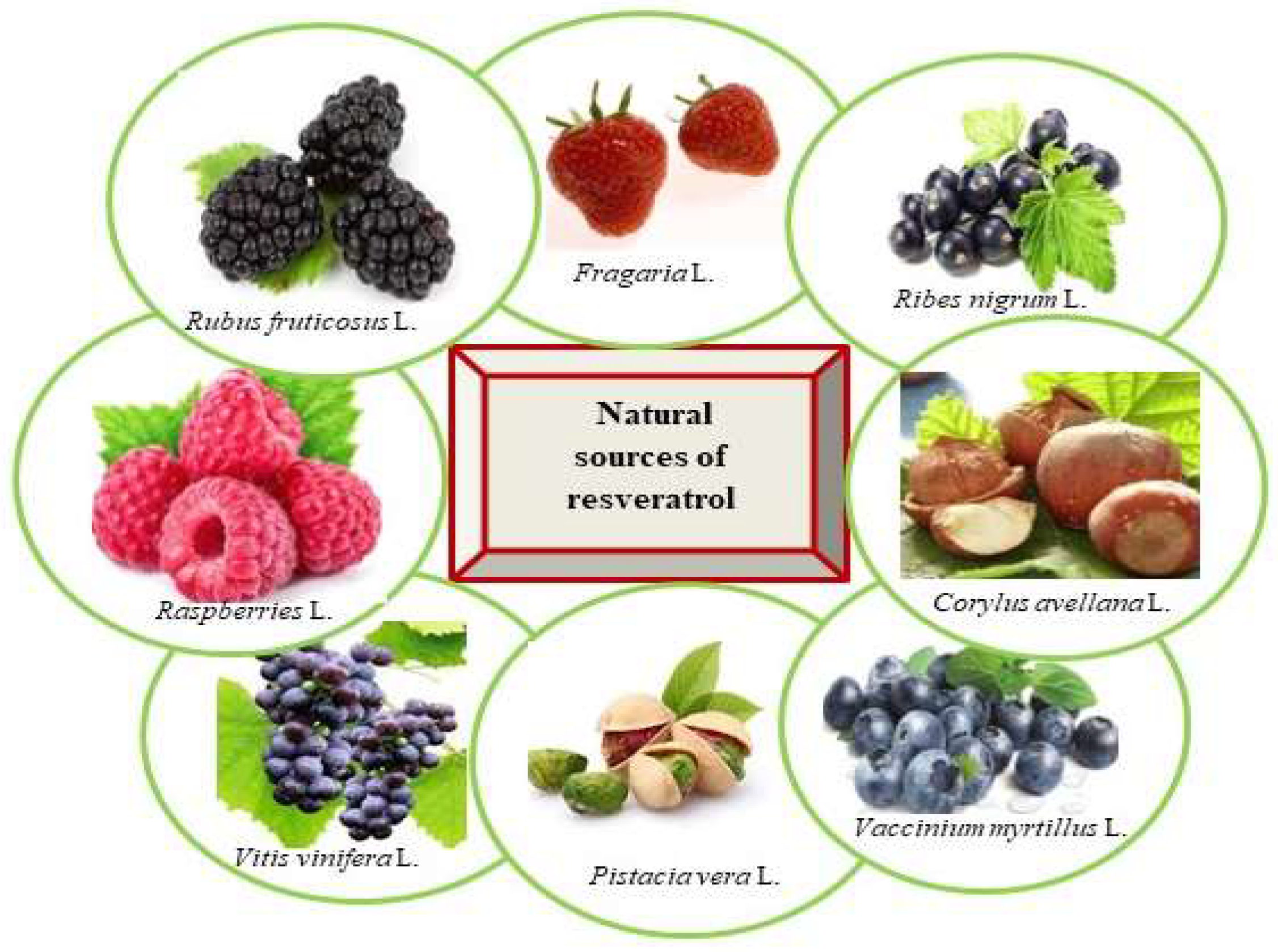
Figure 2.
Main grape stilbene and its glucosides
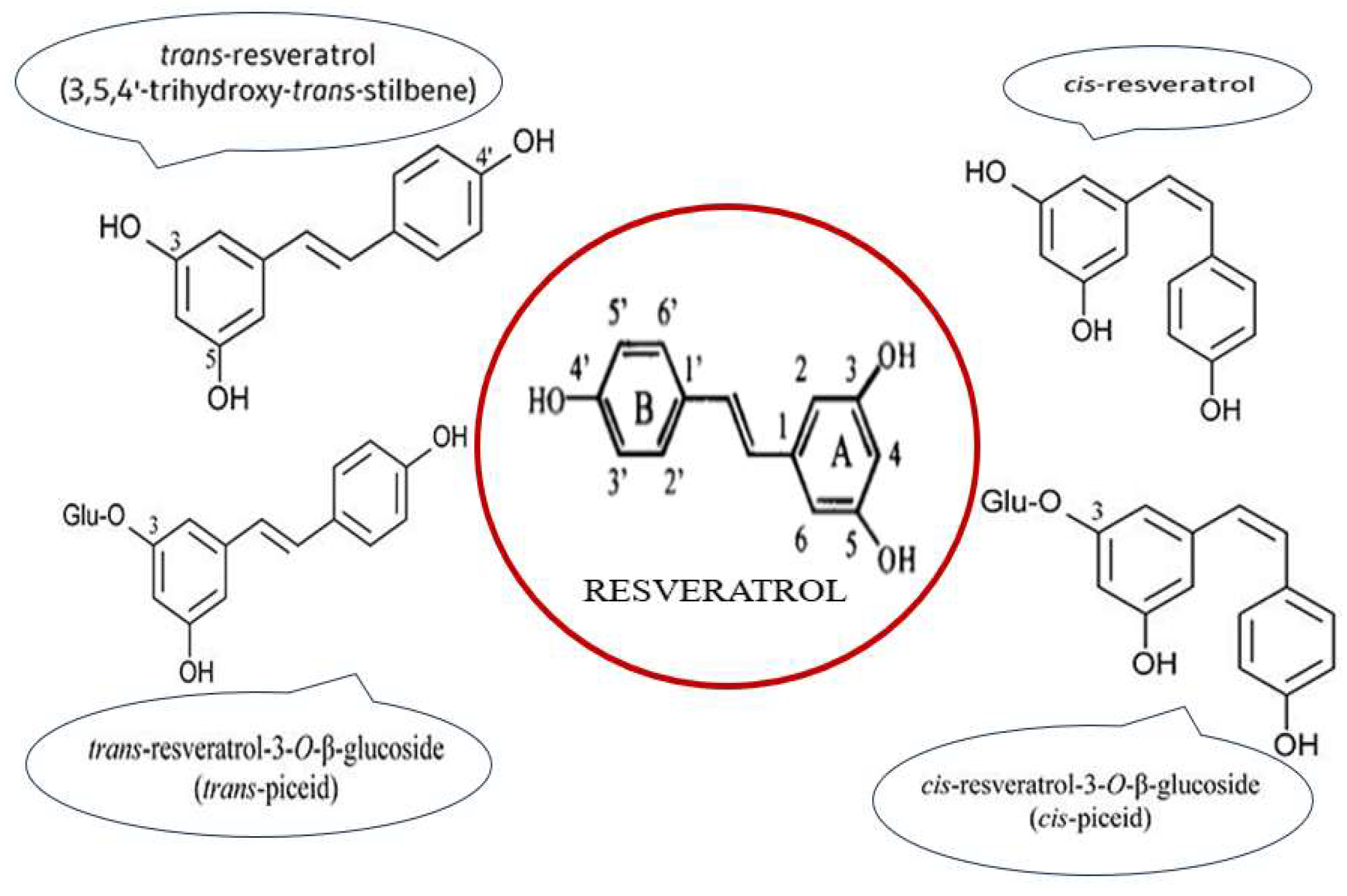
Figure 3.
Influence of light on resveratrol isomers
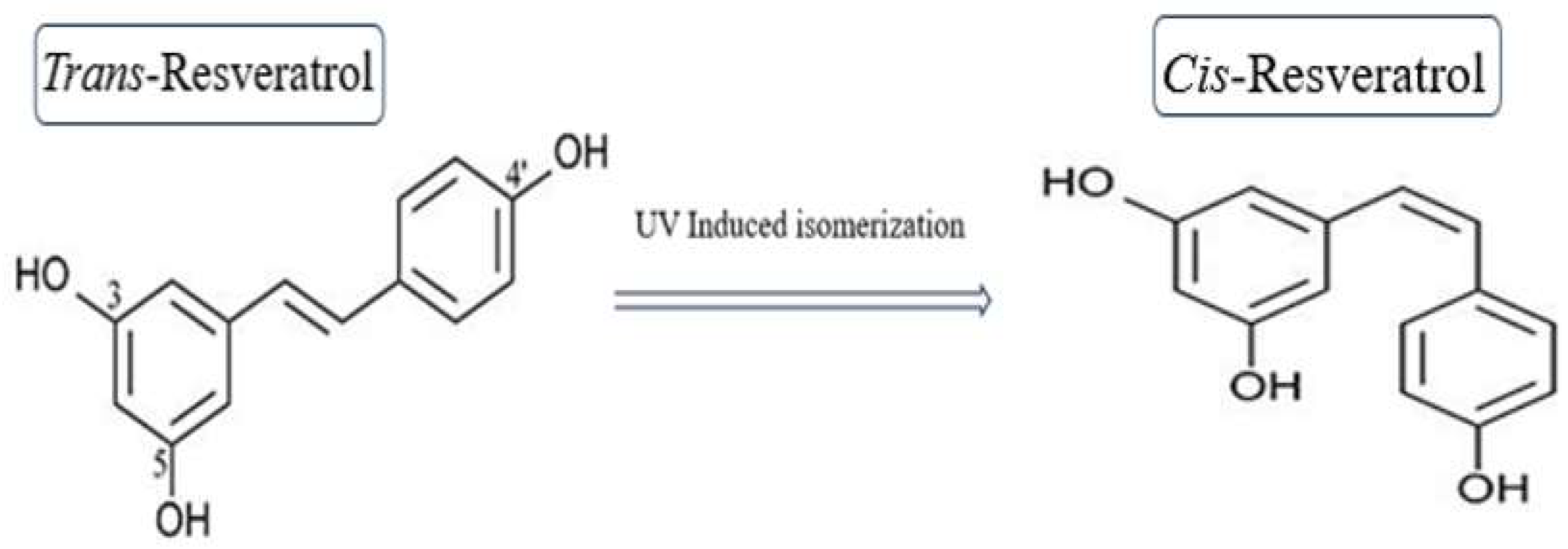
Figure 4.
Scheme of the formation of viniferins and resveratrol oligomers in grapes: (1) trans-resveratrol; (2) (E and Z) ε-viniferol/ω-viniferol; (3) pallidol; (4) caraphenol B; (5) 5-viniferol (E and Z); (6) a-viniferol; (7) a-viniferol; (7) isohopeaphenol; (8) E-myyabenol C; (9) Z-myabenol C; (10) isomer C vaticanol; and (11) ampelopsin H [29]
Figure 4.
Scheme of the formation of viniferins and resveratrol oligomers in grapes: (1) trans-resveratrol; (2) (E and Z) ε-viniferol/ω-viniferol; (3) pallidol; (4) caraphenol B; (5) 5-viniferol (E and Z); (6) a-viniferol; (7) a-viniferol; (7) isohopeaphenol; (8) E-myyabenol C; (9) Z-myabenol C; (10) isomer C vaticanol; and (11) ampelopsin H [29]
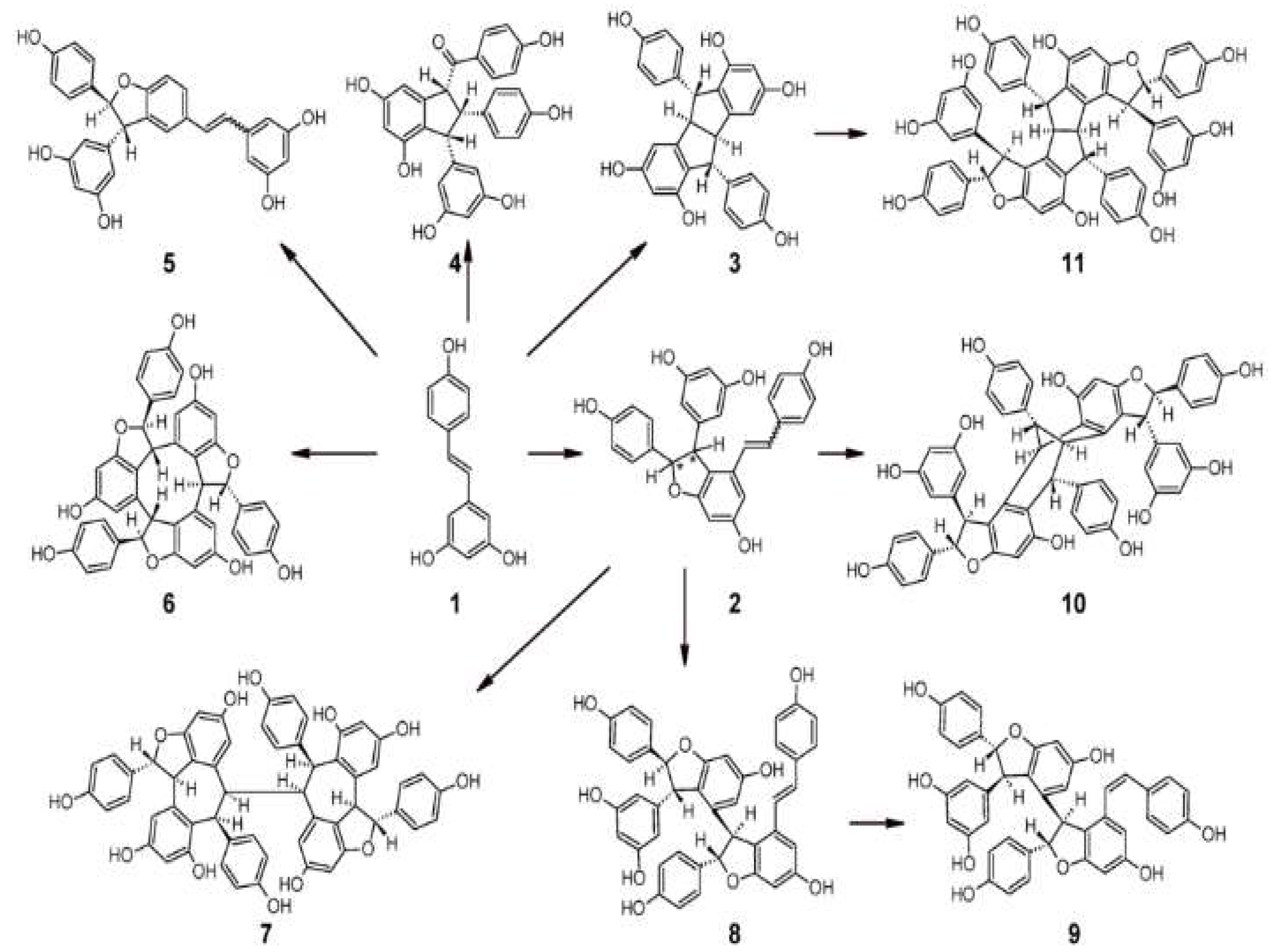
Figure 5.
Grapevine components, products, and by-products
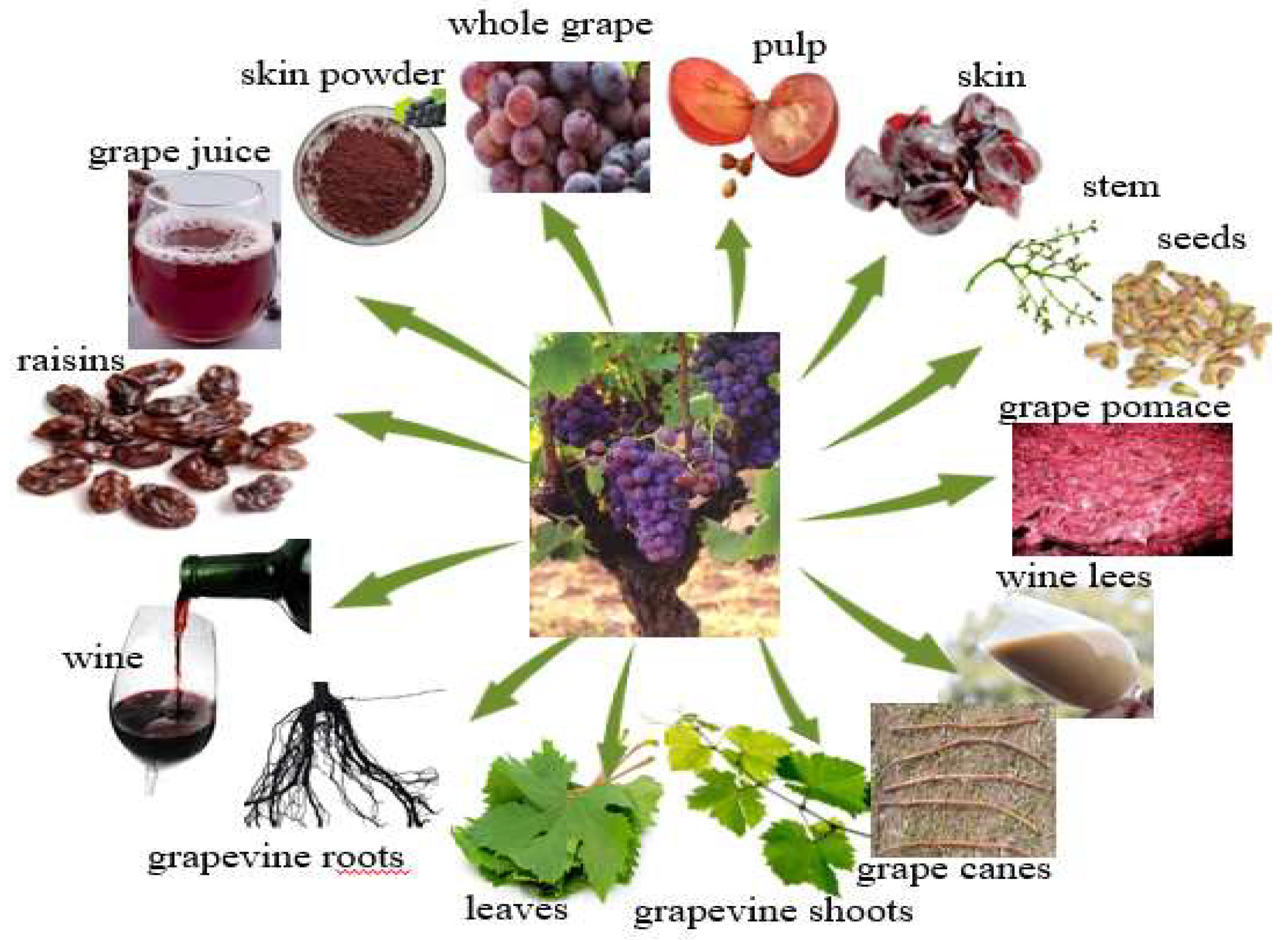
Table 2.
Sources of resveratrol in grapes and other grapevine components
| Fractions | Content in resveratrol | Method of analysis | References |
|---|---|---|---|
| whole grape | 3.2 ppm | HPLC-MS | [55] |
| 3.06 a ± 0.51 mg/kg | HPLC-ESI-MS/MS | [78] | |
| 4.86 ppm-resveratrol hexoxide; 3.66 ppm-RSV; 4.96-ppm RSV tetramer; 4.57-resveratrol dimer; 4.77-ppm RSV trimer | UHPLC-LTQ-MS | [79] | |
| 0.2–9.1 mg/L (PDA) 0.04–9.1 mg/L (FL) |
UPLC-PDA-FL | [80] | |
| 111.0 mg/kg DM | UHPLC-MS/MS | [81] | |
| 11.9 μg g−1 FW | HPLC | [7] | |
| de la 11.86 mg/100 g up to 101.89 mg/100 g depending on varieties | HPLC-UV | [82] | |
| skin | 50–100 μg/g | HPLC | [83] |
| 49.1 mgRSV/gDS | HPLC | [84] | |
| 48.99 ± 2.69 mg/kg | HPLC-DAD-ESI-MSn | [85] | |
| 0.967 μg mL−1 (t-RSV) 0.183 μg mL−1 (t-RSV) |
by QuEChERS method coupled with an HPLC-PDA-MS | [86] | |
| 57.7 mg/kg DM | UHPLC/MS | [81] | |
| 9,152 mg/L to 11,083 mg/L (trans-resveratrol depending on variety and period); from 7,119 mg/L to 8,071 mg/L (cis-resveratrol depending on variety and period) | HPLC | [25] | |
| 21.7 μg/mL | HPLC | [87] | |
| 1.17 to 12.96 μg g−1 | HPLC | [88] | |
| 0.75–8.25 mg/kg | HPLC | [89] | |
| 11.02 μg/mL | HPLC-MS | [90] | |
| seed | 8.3 mgRSV/gDS | HPLC | [84] |
| 3.75 ± 0.08 a mg/100 g dw (Isabel Variety) 1.11 ± 0.02 c mg/100 g dw (Sangiovese Variety) 1.42 ± 0.07 b mg/100 g dw (Negro Amaro Variety) |
HPLC | [91] | |
| 2.8 mg/kg DM | UHPLC-orbitrap MS4 | [81] | |
| 0.31–5.7 mg/kg | HPLC | [89] | |
| from 3.60 mg/100 g to 37.50 mg/100 g, depending on the variety | HPLC-UV | [82] | |
| 92,312.43 ± 2404.19 (Con3) | HPLC | [30] | |
| 4.97 mg Kg−1 FW | HPLC | [92] | |
| pulp | 4,50 mg/100 g | HPLC-UV | [82] |
| stem | 0.9 mgRSV/gDS | HPLC | [84] |
| 5–0.078 mg/L | HPLC/LC-MS-MS | [93] | |
| 122 ± 16 μg/g DM | HPLC-DAD | [94] | |
| 3700 mg/kg of dry weight | HPLC | [95] | |
| leaf | 180 pg/µl | HPLC-MS | [96] |
| 0.306 ± 0.009 µg/mg | HPLC | [97] | |
| 0.01–0.25 mg/kg | HPLC | [89] | |
| grapevine shoots | 27.4 ± 0.3 mg/g | HPLC–quadrupole time-of-flight (QTOF)–mass spectrometry (MS) | [98] |
| 90,74 μg g−1 DW | TLC and HPLC | [99] |
DS—dry sample; DM—dry matter; DW—dry weight; PDA—Photodiode array detector; FL—Fluorescence; FW—fresh weight; RSV—resveratrol; HPLC—High-Performance Liquid Chromatography; HPLC-DAD—High-Performance Liquid Chromatography-diode array detection; HPLC-MS—HPLC-mass spectrometry; HPLC-ESI-MS/MS—High-Performance Liquid Chromatography-Electrospray Ionization Mass Spectrometry/Mass Spectrometry; HPLC/LC-MS-MS—High-Performance Liquid Chromatography/Liquid Chromatography-Mass Spectrometry-Mass Spectrometry; HPLC-UV—High-Performance Liquid Chromatography-Ultraviolet; UPLC—Ultra-Performance Liquid Chromatography; UHPLC-orbitrap MS4—Ultra-Hight-Performance Liquid Chromatography-orbitrap-Mass Spectrometry4; UPLC-PDA-FL—Ultra-Performance Liquid Chromatography-Photodiode array detector-Fluorescence; UHPLC-LTQ-MS—ultra-high performance liquid chromatography-Orbitrap XL-mass spectrometry; TLC—thin-layer chromatography.
Table 3.
Sources of resveratrol from grapevine products and by-products.
| Fractions | Content in resveratrol | Method of identification / determination | References | |
|---|---|---|---|---|
| Grapes product | wine | 6,9 to 12,6 mg/dm3 | HPLC | [5] |
| 64 μg/mL | HPLC | [109] | ||
| juice | De la 4,4 la 7,0 mg in grape juice / dm3; from 12,4 la 21,3 mg / dm3 in concentrated juice | HPLC | [5] | |
| 0,09 la 0,23 mg/100 g | HPLC | [110] | ||
| grape skin powder | 17.87 µg/mL | HPLC-MS | [90] | |
| 0.25 and 0.05 mg/g on a wet basis which | HPLC | [111] | ||
| 0.0313 wt% (Stir) 0.0044 wt% (Sox) 0.0178 wt% (LC-MS/MS) |
LC-MS/MS | [87] | ||
| raisins | 0.40 c ± 0.04 mg/kg | HPLC-ESI-MS/MS | [78] | |
| 8993 ± 391 b 16,544 ± 440 a 8798 ± 137 b |
UPLC-VION-IMS-QTOF-the physical pretreatment using a motorised rotating drum (PT) -the drying agent treatment group (DT) -In the control group (CK), the grape samples received no pretreatment |
[112] | ||
| By-products | grape pomace | 16.1 mgRSV / gDS | HPLC | [84] |
| 0.042–0.653 mg/L | HPLC-DAD/MS | [113] | ||
| 0.09 ± 0.04 a mg/g DW | HPLC/MS | [114] | ||
| 0.7–21.7 mg/kg DM | UHPLC-MS/MS | [81] | ||
| 26.3 ± 0.5 µg/g DW | HPLC | [115] | ||
| 2.38 ± 0.2 mg/L | HPLC | [116] | ||
| 0.80 mg/kg DM | UPLC | [117] | ||
| grape canes | 470 MV (resveratrol dimer) | LC-MS | [118] | |
| 3450 mg·kg−1 dw (Pinot Noir) 5361 mg·kg−1 dw (Gewurztraminer) |
HPLC-UV | [119] | ||
| 5298.1 mg kg−1 DW | HPLC | [52] | ||
| 419.01–425.60 a μg/g d.w. (Pinot Gris) 282.19 ± 4.14 b μg/g d.w. (Sauvignon Blanc) 425.60 ± 5.98 a (Cabernet Sauvignon) |
HPLC | [63] | ||
| 0.55–3.96 mg/g DW | UPLC (HPLC-ESI-MS) | [120] | ||
| 69.1 to 436.5 µg g DW−1 | HPLC-DAD | [121] | ||
| 3.7 ± 0.2 g/100 g | HPLC-DAD | [122] | ||
| 9.50 mg·L−1 | HPLC | [123] | ||
| wine lees | 104 ppm (Red wine lees) 30 ppm (White wine lees) |
HPLC-DAD | [124] | |
| 0.04 ± 0.00 mg/g d.m. (Merlot) 0.11 ± 0.01 mg/g d.m. (Vranac) |
HPLC-MS/MS | [125] | ||
| 2.95 ± 0.01 µg/g (RSV) 4.60 ± 0.02 (t-RSV) |
UHPLC | [126] | ||
DS—dry sample; DM—dry matter; DW—dry weight; PDA—Photodiode array detector; FL—Fluorescence; RSV—resveratrol; t-RSV—trans-resveratrol; HPLC—High Performance Liquid Chromatography; HPLC-DAD—High-Performance Liquid Chromatography-diode array detection; HPLC-MS—High-Performance Liquid Chromatography-mass spectrometry; HPLC-ESI-MS/MS—High-Performance Liquid Chromatography-Electrospray Ionization Mass Spectrometry/Mass Spectrometry; HPLC-UV—High-Performance Liquid Chromatography-Ultraviolet; LC-DAD-FLD—Liquid Chromatography-diode array-forming limit diagram; UPLC—Ultra-Performance Liquid Chromatography; UPLC-VION-IMS-QTOF—ultra-performance liquid chromatography–quadrupole-time of flight-mass spectrometry; TLC—thin-layer chromatography.
Disclaimer/Publisher’s Note: The statements, opinions and data contained in all publications are solely those of the individual author(s) and contributor(s) and not of MDPI and/or the editor(s). MDPI and/or the editor(s) disclaim responsibility for any injury to people or property resulting from any ideas, methods, instructions or products referred to in the content. |
© 2024 by the authors. Licensee MDPI, Basel, Switzerland. This article is an open access article distributed under the terms and conditions of the Creative Commons Attribution (CC BY) license (http://creativecommons.org/licenses/by/4.0/).
Copyright: This open access article is published under a Creative Commons CC BY 4.0 license, which permit the free download, distribution, and reuse, provided that the author and preprint are cited in any reuse.


