

Submitted:
04 December 2024
Posted:
05 December 2024
You are already at the latest version
Abstract
Background: Precise segmental spinal analysis during gait has various implications for clinical use and basic research. Here, we report the use of Surface Topography (ST), utilizing DIERS for-metric III 4D™, DICAM v3.7Beta, to analyze three-dimensional spinal segment movements, in combination with foot pressure measuring, to describe individual vertebral bodies’ motion rel-ative to specific phases of gait. All tools and visualizations used in this study have been made freely available in repositories to enable the replication and validation of our findings.
Methods: Using a Statistical Analysis System (SAS) script, single files exported by DICAM can be merged to create a complete raw data table. Further SAS script then generates a Standardized Gait Cycle (SGC) for each measurement, including all measured gait cycles for each individual patient, with a spline function to obtain smooth curve progressions. Graph templates from Sta-tistical Package for the Social Sciences software (SPSS v23) then provides us to create detailed visualizations of the SGCs. We tested the further developed system and our data processing tools on measurements obtained from 201 healthy asymptomatic participants (132 females, 69 males).
Results: An impressive inter-individual variability as well as intra-individual consistency of spinal motion is shown. Rotation patterns are usually characterized by sinusoidal curve pro-gressions with individually characterizing features. The direction of movement of the pelvis is usually opposite to that of the thoracic spine exhibiting all kinds of phase shifts in their rotation courses. The transformation into a SGC facilitates intra- and inter-individual comparisons.
Conclusions: Our concept enables a precise and continuous description of spinal motion in direct relation to gait for qualitative and quantitative analyses. Before standardized data can be used to distinguish between physiologic and pathologic spinal motion, single cases must be scrutinized to identify movement parameters and resulting characteristic patterns. Artificial Intelligence based analysis can facilitate this process.
Keywords:
Spine Biomechanics
; Graph based representation
; motion analysis
; Surface Topography
; Rasterstereography
1. Introduction
Precise segmental spinal analysis during gait would have various implications for clinical use and basic research. Exemplarily, the frequency of low back pain (LBP) in the German population has a point prevalence of 25-40%, a 12-month prevalence of 60-70% [1], and a lifetime prevalence in the American population of up to 85% [2] in adults. According to the German Medical Association [3], LBP is currently ranked the most frequent musculoskeletal disorder with an annual cost of 3.6 billion Euros. As many as 90% of LBP complaints have no anatomic structure abnormalities that can be identified as the source of patient´s pathologies [4]. Most of these occur in motion [5]. Hence, static and structure orientated diagnostic approaches like X-rays or MRI cannot detect the etiology of pathology in the majority of LBP patients, meanwhile incurring unnecessary costs. Therefore, systems for multidimensional motion analysis are becoming instrumental in the diagnosis of unspecific musculoskeletal problems, as they are able to provide additional dynamic and functional information for individualized diagnoses [6].
Even though this three-dimensional approach is popular for musculoskeletal problems of the pelvic-leg region, the spine and trunk are often neglected due to metrological limitations [7,8]. For example, the assessment of each functional spinal unit requires the application of three non-collinear markers per segment [8]. Due to the close anatomical vicinity of adjacent vertebrae, unintended marker contact can cause significant measuring artifact. Furthermore, due to the variety of spinal segments a complex preparation is required, which is immensely prone to palpation bias and can result in measurement error [7]. Truncal measurements in instrumented gait analysis, mostly regards it as a rigid body [9], usually called the “passenger unit,” which is transported by the “locomotor,” with no relevant contribution to ambulation [10]. Based on the described limitations, there is little literature regarding three-dimensional segment related spinal movement during gait. Additionally, results of the few existing reports are not comparable because of methodological differences, ranging from three-dimensional motion analyses of isolated spinal segments, up to invasive measurement procedures [11,12,13,14,15,16,17,18,19,20,21].
The most valid method [17] uses markers to capture three-dimensional motion by inserting bone pins under local anesthesia into the spinal processes of each lumbar vertebra under control of an image converter. This procedure can theoretically be considered as a gold standard [22]. However, due to the surgical invasiveness and the resulting radiation exposure, this approach is inappropriate for use as a routine assessment in clinical as well as in scientific practice. Furthermore, only very low amplitudes of spinal motion have been observed, which may be either influenced by pain induced inhibition of habitual movement or from residual effects of local anesthesia.
The ability to measure spinal motion of each single segment during gait without extensive preparation or the usage of invasive or radiation based measurement approaches, however, is a valuable tool for clinical practice as well as basic research. It can expand on our knowledge of the spine’s role in maintaining balance and upright posture during gait as well as provide further understanding of the underlying biomechanical mechanisms behind unspecific musculoskeletal conditions, such as LBP [22]. Rasterstereography (RS), or more recently called Surface Topography (ST) [23], is a non-invasive valid and reliable [24] alternative high precision technique to analyze the shapes of surfaces [25], even in 360° [26]. Resting upon back shape data and orientated on visible anatomical landmarks, the Turner-Smith model [27] combined with other models [28,29,30,31] can be used for the estimation of the segmental spine posture. Originally, it was used for static or quasi-dynamic measurements during stance [23], specifically within the context of scoliosis [32,33,34,35]. Although, it’s use in the setting of degenerative disk disease has been questioned [36]. More recently, dynamic measurements have been introduced [37]. Using DIERS formetric’s standard software during gait analysis, its reliability to detect certain measuring points (e.g. max of T4) at some point during the gait cycle has been demonstrated (Gipsman et al., 2014). What former ST approaches lacked were the precise determination of spinal movement in direct relation to phases of gait during the gait cycle, and subsequent standardization of data from various gait cycles to make data intra- and inter- individually comparable, regardless of aspects confounded by walking speed or stride length. As already demonstrated [38,39], we successfully further developed this method in this direction.
In our approach, we utilized DIERS formetric as a means for gathering ST measurements. The system generates 3D-images of the surface, calculates corresponding 3D movements of the spine for each individual segment starting at vertebra prominens [28] ending at the pelvis [29] and features a treadmill with an embedded foot pressure measuring plate to analyze ground reaction forces. This can be used to identify certain moments in gait, as gait follows certain identifiable determinants [40]. According to common model [10] a gait cycle can be divided in two periods (60% stance and 40% swing), and consists of eight total phases. The most relevant phases pertaining to this study are Initial Contact (IC), since it divides gait cycles, and Initial Swing (IS), for it departs the stance from the swing phase.
In this analysis, we aim to fully visualize and describe spinal movement in direct relation to gait phases thereby concentrating on spinal rotation. First, we describe the use of foot pressure measuring data to encode for the step and swing phases as well as for complete gait cycles. Secondly, there had to be a modification of the system’s export functions in order to timely synchronize spinal motion data with foot pressure measuring data and combining them into the same raw data export. Since all exports are separate for each measurement, the third task was to merge single export files to create a complete raw data table. Finally, we were able to then standardize the combined raw data set of three or more gait cycles by interpolating splines to make spinal motion analysis relative to gait cycles intra- and inter-individually comparable. Together, this enables us to create oscillographs of spinal movement for and across each gait cycle resulting in interpretable depths and precision for analyses. This analysis will address the described methods separately and provide the developed solutions for all spinal movement oscillographs of individual gait patterns as well as their standardized counter parts in several repositories [41,42,43,44,45,46,47].
2. Materials and Methods
The DIERS formetric III 4D™, DICAM v3.7Beta analyzing system was used to collect ST data from 201 asymptomatic participants. It projects structured light onto the textile free back of the individual person. A camera unit in defined positions records the movement with a frequency of 60Hz. Software analyzes all three dimensions of each individual measuring point (up to 150.000, depending on body size) and generates a 3D image of the surface. The system then calculates [29] the corresponding 3D movements for each spinal segment starting at spinous process of C7 and ending at the pelvis. Due to less correlation accuracy between surface structure and spinal position in the lower back area, L5 is not measured. Additionally, it is supplemented by one rear axis and two lateral cameras that record a video signal enabling a subsequent visual inspection for multiple purposes. An integrated Zebris™ foot pressure measuring plate (5376 sensors, scanning frequency 120 Hz, sensitivity 1 N/cm2, accuracy 5% FS) enables the analysis of ground reaction forces. When beginning analysis, all measuring devices start simultaneously, but due to the different measuring frequencies this results in an unequal amount of observation times. This first needs to be reconciled in order to enable analysis of spinal motion directly related to gait. Here, we provide detailed descriptions of the four central processes. Data was obtained from a framework project used to establish a normative referent data pool [38]. The study was approved by the responsible ethics committee of the medical chamber Rhineland-Palatinate (837.194.16) and is registered with WHO (INT: DRKS00010834). All participants gave informed consent.
2.1. Encoding of Step and Swing Phases and Complete Gait Cycles into the Spinal Model
In our approach we started to measure a gait cycle with the first full IC of the right foot, which is also the start of encoding for the stance phase right. Hence, the start of the next gait cycle is the next IC of the right foot and so forth. Both legs swing phases are also marked in the data export. Along their assigned time stamp the respective gait phases were encoded timely synchronized into the raw data of the spinal model. We introduced the notion to the manufacturer DIERS. They implemented the concept in the software (DICAM v3.7Beta). We validated the updated software by taking a random sample of 20 participant’s video recordings of the back and lateral axis cameras in which single frames were checked for face valid results compared to the automated detection. In all recordings the visually identified moment in time of IC was in the range of ±3 Frames / 3/60 Hz compared to frame number in the exported raw data. For a detailed explanation of the notion compare the related repository [43]. Since all observed video recordings revealed valid results, the next data step could be addressed.
2.2. Assembly of Individual Measurement Export Files and Creation of Rotation Graphs
DICAM evaluates over one hundred parameters to be exported as raw data in .CSV format. The exported data is separate for each measurement. A Statistical Analysis System (SAS v9.4) syntax script [42] was used to assemble all single exports. The resulting complete raw data table can also be imported by Statistical Package for the Social Sciences (SPSS v23). We used this to check data for plausibility, potential outlying values, and to generate oscillation graphs based on individual movement data with direct relation to the phases of gait. A graph template as well as the respective SPSS script for execution is openly provided [46].
2.3. Standardization Combining Raw Data of Three or More Gait Cycles for Interpolating Splines and Creation of Rotational Graphs
We used an openly available SAS (v9.4) syntax script [41] to generate a standardized gait cycle (SGC) for each measurement. By computing a standardized gait cycle, on a scale of 0-100%, measurements all differing in the number of observations are thus made comparable. One SGC per measurement was generated out of three (all available) gait cycles by using a spline function as part of the syntax. The resulting raw data table was analyzed using SPSS for to create rotational graphs of the spine now within a SGC. Therefore, another graph template and the respective executing SPSS script were created and made openly available [45].
3. Results
Initially, we analyzed average walking speeds of approximately 82-84 meters per minute / 5 km/h [10] as this speed provides data for most habitual movement patterns. In addition, we limited visualizations of rotational curves in the transverse plane as a first approach to make spinal motion visible. All single graphs and an all-encompassing visualization are openly available [47].
3.1. Raw Data Visualizations of Rotational Curves Directly Related to Phases Gait
The pelvis and the lumbar segments show an opposite progression in comparison to the thoracic segments. Rotational direction changes gradually through each of the segments. As expected, periodic near sinusoidal oscillations are seen revealing a phase shift between the pelvis and the upper thoracic segments with its maxima facing each other, meaning a direct equalization of the pelvic rotation by the thoracic spine (Figure 1). At IC right, the pelvis and L4 are maximally rotated to the left, reaching the zero point in the middle of the stance phase. L4 constantly follows the rotation of the pelvis. T12 has fairly small amplitude, being close to the zero point where the intersection of movement directions takes place. Maximum antagonistic rotation is displayed by T7 and T8. The movement direction then changes again, with T4 also rotating in the opposite direction of the pelvis but to a lesser extent. Along the gait cycles, the amplitude and the period are intra-individually constant. Even though we see expected movement patterns, there are also broad variations with specific manifestations for each individual (Figure 2, Figure 3 and Figure 4).
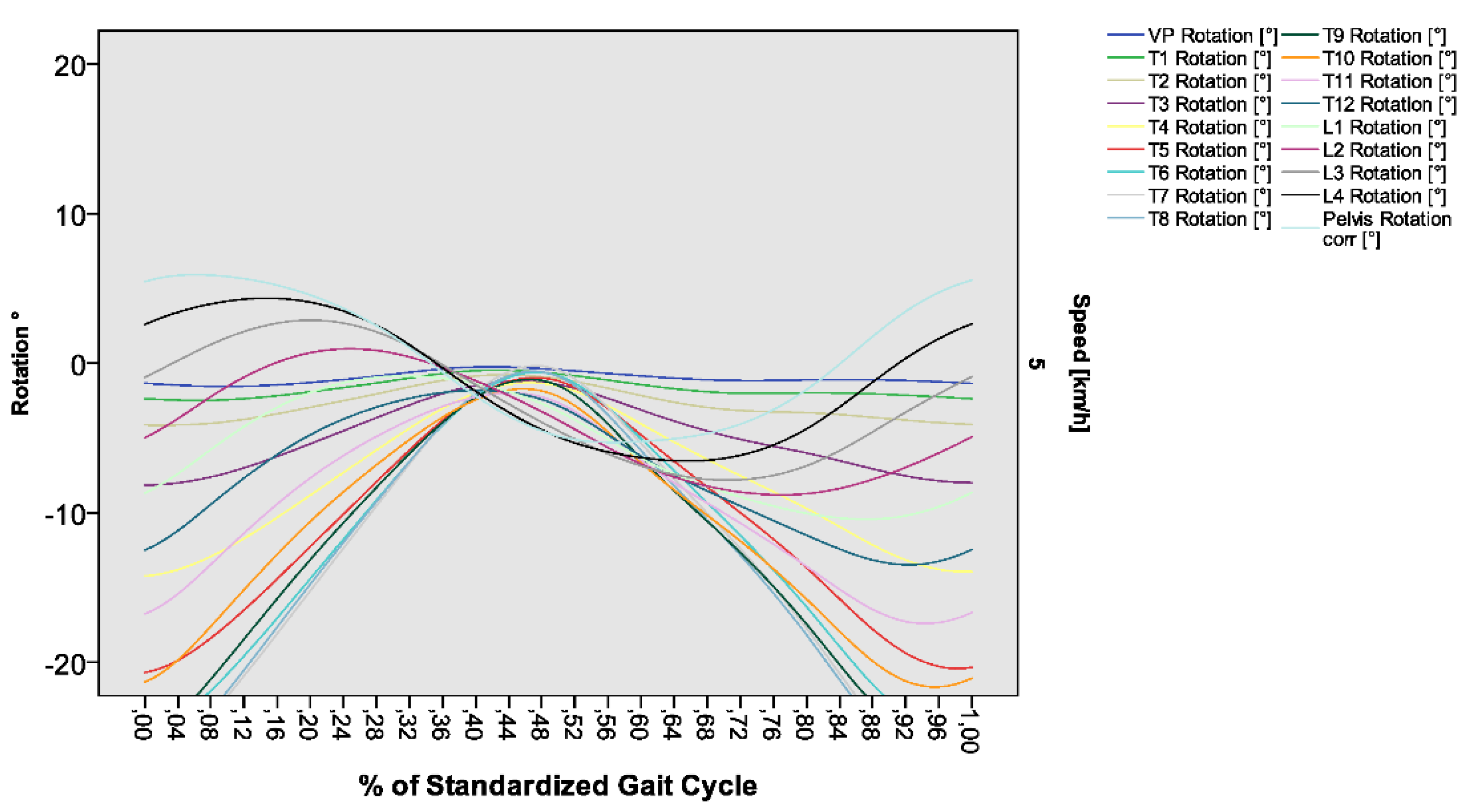
After visual analysis of all individual cases, we made the following observations: Graphs of rotation patterns are usually characterized by sinusoidal curve progressions (Figure 1). Rhythmic movements can superimpose these typical curves (Figure 2). They can be assumed as individually characterizing features and not attributed to measuring artifact as they appear consistently throughout the whole spine and across all gait cycles. In particular cases, potentially non-sinusoidal but still periodic curves, mostly with steep rises occur (Figure 2). Rarely, for instance in the pelvis (Figure 2), very little movement (< 5°) or even no systematic curve course could be detected. The measured values of individual segments oscillate around a ‘stable level,’ but not necessarily around the zero point. Frequently, this “symmetry line” (SL) of oscillation is shifted several degrees into one of the two directions of movement (Figure 4); this “level shift” (LS) might depend on the alignment during stance. During gait cycles, the amplitude and the period are intra-individually constant (Figure 1, Figure 2, Figure 3 and Figure 4) and behave relative to the stance phase for all participants but in different ways varying for each individual. The direction of movement of the pelvis and the lower lumbar spine is usually opposite to that of the upper lumbar and thoracic spine. However, in some cases the pelvis and the majority of all segments rotate in the same phase (Figure 3). Usually, the graphs of neighboring vertebral bodies rotate nearly in phase, but with differently prominent maximum and minimum segmental motion. Maximum antagonistic rotation to the pelvis is mostly displayed by T8 (Figure 1). The movement excursions of these two regions can be equally large, or they can differ significantly. The “point of intersection” (PoI), the height of the segment where the two directions of movement exchange, varies depending on the subject and can be between the middle lumbar and lower thoracic spine. For the resulting phase shifts between these ‘counterparts’ we found multiple patterns reaching from exact antagonistic 100% (180°, sine-to-sine), over 50% (90°, sine-to-cosine) to 0% (0°, oscillating in phase). Relative to the stance phase of the right leg, the rotational maximum of the pelvis to the left predominately occurs between IC and Mid Stance.
In order to make the described spinal motion analysis intra- and inter-individually comparable, we had to standardize combined raw data of all gait cycles for interpolating splines.
3.2. Standardization of Combining Raw Data of Three or More Gait Cycles for Interpolating Splines and Creation of Rotational Graphs
After standardization, graphs combining raw data of all gait cycles can be created. In order to demonstrate the effects of standardization and interpolation, subsequent figures take up its counterparts from the previous section. Comparing Figure 1 and Figure 5, vertebral bodies of the middle and lower thoracic spine during the first and third gait cycle previously presenting an asymmetrical curve progression, especially towards the left (Figure 1), now show a symmetrical curve progression leading to a much more precise identification of maxima (Figure 5). In given contexts, where rhythmic movements superimpose curve progressions thereby constituting individually characterizing features (Figure 2), the standardization, nevertheless, preserves them meanwhile improving maxima identification (Figure 6). The standardization not only enables comparability but can also clarify individual features. At first Figure 3 reveals that the pelvis, lumbar spine, and all thoracic segments are rotating nearly in phase, but after transformation in SGC we see that this must be subdivided so that the lumbar and middle thoracic spine rotate nearly in phase while the upper thoracic spine displays hardly any movement (Figure 7). A similar clarification of an individual feature occurs when comparing the LS to the right of the SL before (Figure 4) and after standardization (Figure 8), when the isolated LS of the thoracic spine and T12, being the PoI, is much easier to recognize. All single graphs within a SGC and an all-encompassing video are openly available [44].
4. Discussion
With the described methodologic advancements, ST can be used to visualize spinal motion as it directly relates to phases of gait and after standardization, to compare these results intra- and inter-individually. As demonstrated, interpolating spline functions work for average walking speed measurements, leading to a more precise determination of relevant and characteristic points (e.g. maxima, phase shifts, lumbar and thoracic movement behavior), thereby aiding in the clarification of individual features. Additionally, this constitutes the basis to calculate phase shifts between different vertebral bodies as a future parameter to describe patterns of spinal motion in gait.
Using this method, we observed high intra-individual consistency of movement patterns, constituting a spinal fingerprint [48], as well as extensive inter-individual variation, similarly to previous work describing the minimal rotational movement in the thoracolumbar transition [15,17]. Although, our results detected regions (T6-T8) of many volunteers where they actually contained the largest movement excursions [39], contradicting former findings. Especially in regards to phase shift patterns of spinal segments, we detected subjects where the majority of all segments rotated in the same phase. One would expect this phenomenon while walking in amble. In this unusual pattern for humans the ipsilateral instead of the contralateral arm is advanced by the leg. This type of ambulation is normally restricted to quadruped mammals, such as the elephant, but can also be examined by primate species [49], although this finding requires further examination. Taken together, our approach can directly relate segmental data to specific phases of gait and moments in time for a SGC.
Regarding the interpretation of normative reference data of asymptomatic healthy controls [39], the inter-individual variation due to differences in gait types, the alignment during stance [38,50], and other confounding factors must be determined. It is still unclear to which extend this would help to discern between physiological and pathological movement patterns. Thus, a relevant goal of future research will be to identify movement parameters and resulting characteristic patterns that can be used to describe gait in which Artificial Intelligence based analysis could be very helpful [51].
Limitations arise from the methodology, as reliability, reproducibility and intra-individual consistency for the use in dynamic gait analysis has been shown [48,52], though validity only for dynamic stance measures [53]. Although the transfer from validated stance measurements to dynamic gait analysis is feasible, there is no alternative gold-standard to validate this assumption. Therefore, we were only able to apply internal validity measures to our results; e.g. the slightly displaced but still parallel course of the pelvis and L4. Furthermore, we only measured three gait cycles and need to investigate whether the inclusion of more than three gait cycles would alter the reported results. Alternatively, local Fourier transformations could also serve the same purpose in a superior way. Further research is needed to identify the most appropriate method of gait analysis necessary for adequate assessments of slower speeds, in the setting of patients with back pain or hip/knee arthrosis where pathology inhibits walking (reducing speed).
Comprehension of these relationships will facilitate future research to understand the nature of pathologies, for example back pain, arthrosis, scoliosis, and the effect of orthopedic surgery on spinal motion for comparison between physiological and pathological variations.
5. Conclusions
Despite certain limitations, our concept enables a precise description of spinal motion in direct relation to gait without extensive preparation procedures, significant radiation exposure, or other forms of invasive strategies. The transformation into a SGC facilitates intra- and inter-individual comparisons while preserving individually characteristic features. Hence, we conclude that this novel form of gait related spinal motion analysis appears to have several advantages over existing methodology and holds much promise for future research in this field.
Author Contributions
Conceptualization, J.K., M.C., L.L. and U.B.; methodology, I.S., R.W., M.C. and J.K.; software, I.S., R.W., J.K. and C.W.; validation, J.K., U.B. and J.H.; formal analysis, J.K., U.B., J.H. C.W.; investigation, J.H.; resources, U.B. and P.D.; data curation, J.K., U.B., J.H. and C.W.; writing—original draft preparation, J.K. and M.C.; writing—review and editing, J.K., U.B., J.H., C.W., I.S., R.W., M.C. L.L. and P.D.; visualization, J.K. and C.W.; supervision, U.B., L.L. and P.D.; project administration, J.K., U.B. and P.D. All authors have read and agreed to the published version of the manuscript.
Funding
This research received no external funding.
Institutional Review Board Statement
This study was conducted according to the guidelines of the Declaration of Helsinki, was approved by the responsible ethics committee of the State Chamber of Physicians of Rhineland-Palatinate (Nr.: 837.194.16), and is registered with WHO (INT: DRKS00026822).
Informed Consent Statement
Informed consent was obtained from all subjects involved in the study.
Data Availability Statement
To enable own studies and for the replication of our findings all developed tools are provided in several publicly available repositories that can be found in the references [41,42,43,44,45,46,47]. This includes the aggregated data for the oscillographs. The underlying participant data could not be provided since the original informed consent only enables sharing to one research partner. Furthermore, a public accessibility is not covered by the given ethics vote.
Acknowledgments
We would like to thank all the participants of this study. The colleagues of the Institute for Physical Therapy, Prevention and Rehabilitation, University Medical Center of the Johannes Gutenberg University Mainz, Germany, are acknowledged for their support in the recruitment of participants. We express our gratitude to DIERS Company, in particular to Kjell Heitmann and Amira Basic, for statistical and technological support during the implementation of our notion into the Formetric III 4D™ analyzing system. Finally, special thanks to Theresa Dersch for visual inspection and corrections of the captured data.
Conflicts of Interest
The authors declare no conflict of interest.
References
- Schmidt, C. O.; Raspe, H.; Pfingsten, M.; Hasenbring, M.; Basler, H. D.; Eich, W.; Kohlmann, T. Back pain in the German adult population: prevalence, severity, and sociodemographic correlates in a multiregional survey. Spine 2007, 32, 2005–11. [Google Scholar] [CrossRef] [PubMed]
- Urits, I.; Burshtein, A.; Sharma, M.; Testa, L.; Gold, P. A.; Orhurhu, V.; Viswanath, O.; Jones, M. R.; Sidransky, M. A.; Spektor, B.; Kaye, A. D. Low Back Pain, a Comprehensive Review: Pathophysiology, Diagnosis, and Treatment. Current pain and headache reports 2019, 23, 23. [Google Scholar] [CrossRef]
- Bundesärztekammer (BÄK); Kassenärztliche Bundesvereinigung (KBV); (AWMF), A. d. W. M. F., Nationale VersorgungsLeitlinie. Nicht-spezifischer Kreuzschmerz – Langfassung. In 2017; Vol. 2.
- Koes, B. W.; van Tulder, M. W.; Thomas, S. Diagnosis and treatment of low back pain. BMJ 2006, 332, 1430–4. [Google Scholar] [CrossRef] [PubMed]
- Jöllenbeck, T. Bewegungsanalyse – Wesentliches Element moderner sportmedizinischer Diagnostik. Deutsche Zeitschrift für Sportmedizin 2012, 63, 2. [Google Scholar]
- Horst, F.; Mildner, M.; Schollhorn, W. I. One-year persistence of individual gait patterns identified in a follow-up study - A call for individualised diagnose and therapy. Gait Posture 2017, 58, 476–480. [Google Scholar] [CrossRef]
- Chockalingam, N.; Dangerfield, P. H.; Giakas, G.; Cochrane, T. Study of marker placements in the back for opto-electronic motion analysis. Studies in health technology and informatics 2002, 88, 105–9. [Google Scholar] [PubMed]
- Konz, R. J.; Fatone, S.; Stine, R. L.; Ganju, A.; Gard, S. A.; Ondra, S. L. A kinematic model to assess spinal motion during walking. Spine 2006, 31, E898–E906. [Google Scholar] [CrossRef]
- Yang, Y. T.; Yoshida, Y.; Hortobagyi, T.; Suzuki, S. Interaction between thorax, lumbar, and pelvis movements in the transverse plane during gait at three velocities. Journal of applied biomechanics 2013, 29, 261–9. [Google Scholar] [CrossRef]
- Perry, J.; Burnfield, J. M., Gait Analysis: Normal and Pathological Function. SLACK Incorporated: Thorofare, New Jersey, 1992.
- Bruijn, S. M.; Meijer, O. G.; van Dieen, J. H.; Kingma, I.; Lamoth, C. J. Coordination of leg swing, thorax rotations, and pelvis rotations during gait: the organisation of total body angular momentum. Gait Posture 2008, 27, 455–62. [Google Scholar] [CrossRef] [PubMed]
- Ceccato, J. C.; de Seze, M.; Azevedo, C.; Cazalets, J. R. Comparison of trunk activity during gait initiation and walking in humans. PLoS One 2009, 4, e8193. [Google Scholar] [CrossRef] [PubMed]
- Crosbie, J.; de Faria Negrao Filho, R.; Nascimento, D. P.; Ferreira, P. Coordination of spinal motion in the transverse and frontal planes during walking in people with and without recurrent low back pain. Spine 2013, 38, E286–E292. [Google Scholar] [CrossRef] [PubMed]
- Feipel, V.; De Mesmaeker, T.; Klein, P.; Rooze, M. Three-dimensional kinematics of the lumbar spine during treadmill walking at different speeds. Eur Spine J 2001, 10, 16–22. [Google Scholar] [CrossRef] [PubMed]
- Gregersen, G. G.; Lucas, D. B. An in vivo study of the axial rotation of the human thoracolumbar spine. J Bone Joint Surg Am 1967, 49, 247–62. [Google Scholar] [CrossRef] [PubMed]
- Leardini, A.; Berti, L.; Begon, M.; Allard, P. Effect of trunk sagittal attitude on shoulder, thorax and pelvis three-dimensional kinematics in able-bodied subjects during gait. PLoS One 2013, 8, e77168. [Google Scholar] [CrossRef]
- MacWilliams, B. A.; Rozumalski, A.; Swanson, A. N.; Wervey, R. A.; Dykes, D. C.; Novacheck, T. F.; Schwartz, M. H. Assessment of three-dimensional lumbar spine vertebral motion during gait with use of indwelling bone pins. J Bone Joint Surg Am 2013, 95, e1841–e1848. [Google Scholar] [CrossRef]
- Needham, R.; Naemi, R.; Healy, A.; Chockalingam, N. Multi-segment kinematic model to assess three-dimensional movement of the spine and back during gait. Prosthetics and orthotics international 2016, 40, 624–35. [Google Scholar] [CrossRef] [PubMed]
- Schmid, S.; Bruhin, B.; Ignasiak, D.; Romkes, J.; Taylor, W. R.; Ferguson, S. J.; Brunner, R.; Lorenzetti, S. Spinal kinematics during gait in healthy individuals across different age groups. Human movement science 2017, 54, 73–81. [Google Scholar] [CrossRef]
- Stokes, V. P.; Andersson, C.; Forssberg, H. Rotational and translational movement features of the pelvis and thorax during adult human locomotion. J Biomech 1989, 22, 43–50. [Google Scholar] [CrossRef] [PubMed]
- Thurston, A. J.; Harris, J. D. Normal kinematics of the lumbar spine and pelvis. Spine 1983, 8, 199–205. [Google Scholar] [CrossRef]
- Needham, R.; Stebbins, J.; Chockalingam, N. Three-dimensional kinematics of the lumbar spine during gait using marker-based systems: a systematic review. Journal of medical engineering & technology 2016, 40, 172–85. [Google Scholar]
- Betsch, M.; Wild, M.; Johnstone, B.; Jungbluth, P.; Hakimi, M.; Kuhlmann, B.; Rapp, W. Evaluation of a novel spine and surface topography system for dynamic spinal curvature analysis during gait. PLoS One 2013, 8, e70581. [Google Scholar] [CrossRef] [PubMed]
- Betsch, M.; Wild, M.; Jungbluth, P.; Hakimi, M.; Windolf, J.; Haex, B.; Horstmann, T.; Rapp, W. Reliability and validity of 4D rasterstereography under dynamic conditions. Comput Biol Med 2011, 41, 308–12. [Google Scholar] [CrossRef]
- Knott, P.; Sturm, P.; Lonner, B.; Cahill, P.; Betsch, M.; McCarthy, R.; Kelly, M.; Lenke, L.; Betz, R. Multicenter Comparison of 3D Spinal Measurements Using Surface Topography With Those From Conventional Radiography. Spine deformity 2016, 4, 98–103. [Google Scholar] [CrossRef] [PubMed]
- Michalik, R.; Siebers, H.; Eschweiler, J.; Quack, V.; Gatz, M.; Dirrichs, T.; Betsch, M. Development of a new 360-degree surface topography application. Gait Posture 2019, 73, 39–44. [Google Scholar] [CrossRef] [PubMed]
- Turner-Smith, A. R. A television/computer three-dimensional surface shape measurement system. J Biomech 1988, 21, 515–29. [Google Scholar] [CrossRef] [PubMed]
- Drerup, B.; Hierholzer, E. Objective determination of anatomical landmarks on the body surface: measurement of the vertebra prominens from surface curvature. J Biomech 1985, 18, 467–74. [Google Scholar] [CrossRef]
- Drerup, B.; Hierholzer, E. Automatic localization of anatomical landmarks on the back surface and construction of a body-fixed coordinate system. J Biomech 1987, 20, 961–70. [Google Scholar] [CrossRef]
- Frobin, W.; Hierholzer, E. Automatic measurement of body surfaces using rasterstereography. Part I: Image scan and control point measurement. Photogrammetric Engineering and Remote Sensing 1983, 49, 377–384. [Google Scholar]
- Frobin, W.; Hierholzer, E. Automatic measurement of body surfaces using rasterstereography. Part II: Analysis of the rasterstereographic line pattern and three-dimensional surface reconstruction. Photogrammetric engineering and remote sensing 1983, 49, 1443–1452. [Google Scholar]
- Drerup, B.; Ellger, B.; Meyer zu Bentrup, F. M.; Hierholzer, E. [Functional rasterstereographic images. A new method for biomechanical analysis of skeletal geometry]. Orthopade 2001, 30, 242–50. [Google Scholar] [CrossRef]
- Hackenberg, L.; Hierholzer, E. 3-D back surface analysis of severe idiopathic scoliosis by rasterstereography: comparison of rasterstereographic and digitized radiometric data. Studies in health technology and informatics 2002, 88, 86–9. [Google Scholar]
- Liljenqvist, U.; Halm, H.; Hierholzer, E.; Drerup, B.; Weiland, M. Three-dimensional surface measurement of spinal deformities using video rasterstereography. Zeitschrift Fur Orthopadie Und Ihre Grenzgebiete 1998, 136, 57–64. [Google Scholar] [CrossRef] [PubMed]
- Tabard-Fougere, A.; Bonnefoy-Mazure, A.; Dhouib, A.; Valaikaite, R.; Armand, S.; Dayer, R. Radiation-free measurement tools to evaluate sagittal parameters in AIS patients: a reliability and validity study. Eur Spine J 2019, 28, 536–543. [Google Scholar] [CrossRef]
- Wanke-Jellinek, L.; Heese, O.; Krenauer, A.; Wurtinger, C.; Siepe, C. J.; Wiechert, K.; Mehren, C. Is there any use? Validity of 4D rasterstereography compared to EOS 3D X-ray imaging in patients with degenerative disk disease. Eur Spine J 2019, 28, 2162–2168. [Google Scholar] [CrossRef] [PubMed]
- Michalik, R.; Hamm, J.; Quack, V.; Eschweiler, J.; Gatz, M.; Betsch, M. Dynamic spinal posture and pelvic position analysis using a rasterstereographic device. J Orthop Surg Res 2020, 15, 389. [Google Scholar] [CrossRef] [PubMed]
- Huthwelker, J.; Konradi, J.; Wolf, C.; Westphal, R.; Schmidtmann, I.; Drees, P.; Betz, U. Reference Values for 3D Spinal Posture Based on Videorasterstereographic Analyses of Healthy Adults. Bioengineering 2022, 9, 809. [Google Scholar] [CrossRef]
- Huthwelker, J.; Konradi, J.; Wolf, C.; Westphal, R.; Schmidtmann, I.; Schubert, P.; Drees, P.; Betz, U. Reference values and functional descriptions of transverse plane spinal dynamics during gait based on surface topography. Human movement science 2023, 88, 103054. [Google Scholar] [CrossRef]
- Saunders, J. B. d. M.; Inman, V. T.; Eberhart, H. D., THE MAJOR DETERMINANTS IN NORMAL AND PATHOLOGICAL GAIT. JBJS 1953, 35, (3).
- Westphal, R.; Konradi, J., SAS syntax script for creation of a Standardized Gait Cycle. In Mendeley Data: 2022; Vol. V1.
- Schmidtmann, I.; Konradi, J., SAS syntax script for merging export files. In Mendeley Data: 2022; Vol. V1.
- Konradi, J.; Betz, U., Validation of automatic detection of gait phases. In Mendeley Data: 2022; Vol. V1.
- Konradi, J., Visualizations of rotational curves within a Standardized Gait Cycle. In Mendeley Data: 2022; Vol. V1.
- Konradi, J., SPSS syntax script to create graphs of spinal motion for a Standardized Gait Cycle. In Mendeley Data: 2022; Vol. V1.
- Konradi, J., SPSS syntax script to create graphs of spinal motion relative to phases of gait. In Mendeley Data: 2022; Vol. V1.
- Konradi, J., Visualizations of rotational curves directly related to gait phases. In Mendeley Data: 2022; Vol. V1.
- Dindorf, C.; Konradi, J.; Wolf, C.; Taetz, B.; Bleser, G.; Huthwelker, J.; Werthmann, F.; Drees, P.; Fröhlich, M.; Betz, U. Machine learning techniques demonstrating individual movement patterns of the vertebral column: the fingerprint of spinal motion. Computer Methods in Biomechanics and Biomedical Engineering 2021, 1–11. [Google Scholar] [CrossRef] [PubMed]
- Schmitt, D.; Cartmill, M.; Griffin, T. M.; Hanna, J. B.; Lemelin, P. Adaptive value of ambling gaits in primates and other mammals. The Journal of experimental biology 2006, 209 (Pt 11), 2042–9. [Google Scholar] [CrossRef]
- Wolf, C.; Betz, U.; Huthwelker, J.; Konradi, J.; Westphal, R.; Cerpa, M.; Lenke, L.; Drees, P., Evaluation of 3D Vertebral and Pelvic Position by Surface Topography in Asymptomatic Females: Presentation of Normative Reference Data. In Research Square: 2021.
- Horst, F.; Lapuschkin, S.; Samek, W.; Muller, K. R.; Schollhorn, W. I. Explaining the unique nature of individual gait patterns with deep learning. Sci Rep 2019, 9, 2391. [Google Scholar] [CrossRef]
- Gipsman, A.; Rauschert, L.; Daneshvar, M.; Knott, P. Evaluating the Reproducibility of Motion Analysis Scanning of the Spine during Walking. Adv Med 2014, 2014, 721829. [Google Scholar] [CrossRef]
- Mohokum, M.; Schülein, S.; Skwara, A. The validity of rasterstereography: a systematic review. Orthopedic Reviews 2015, 7, 68–73. [Google Scholar]
Figure 1.
Visual representation for all segments of graph Nr.641 [47]. Positive values show rotation to the left, negative values show rotation to the right. Observation number is displayed on the abscissa, always starting with Initial Contact of the right foot. Durations of right stance phases are delineated with a vertical white line.
Figure 1.
Visual representation for all segments of graph Nr.641 [47]. Positive values show rotation to the left, negative values show rotation to the right. Observation number is displayed on the abscissa, always starting with Initial Contact of the right foot. Durations of right stance phases are delineated with a vertical white line.
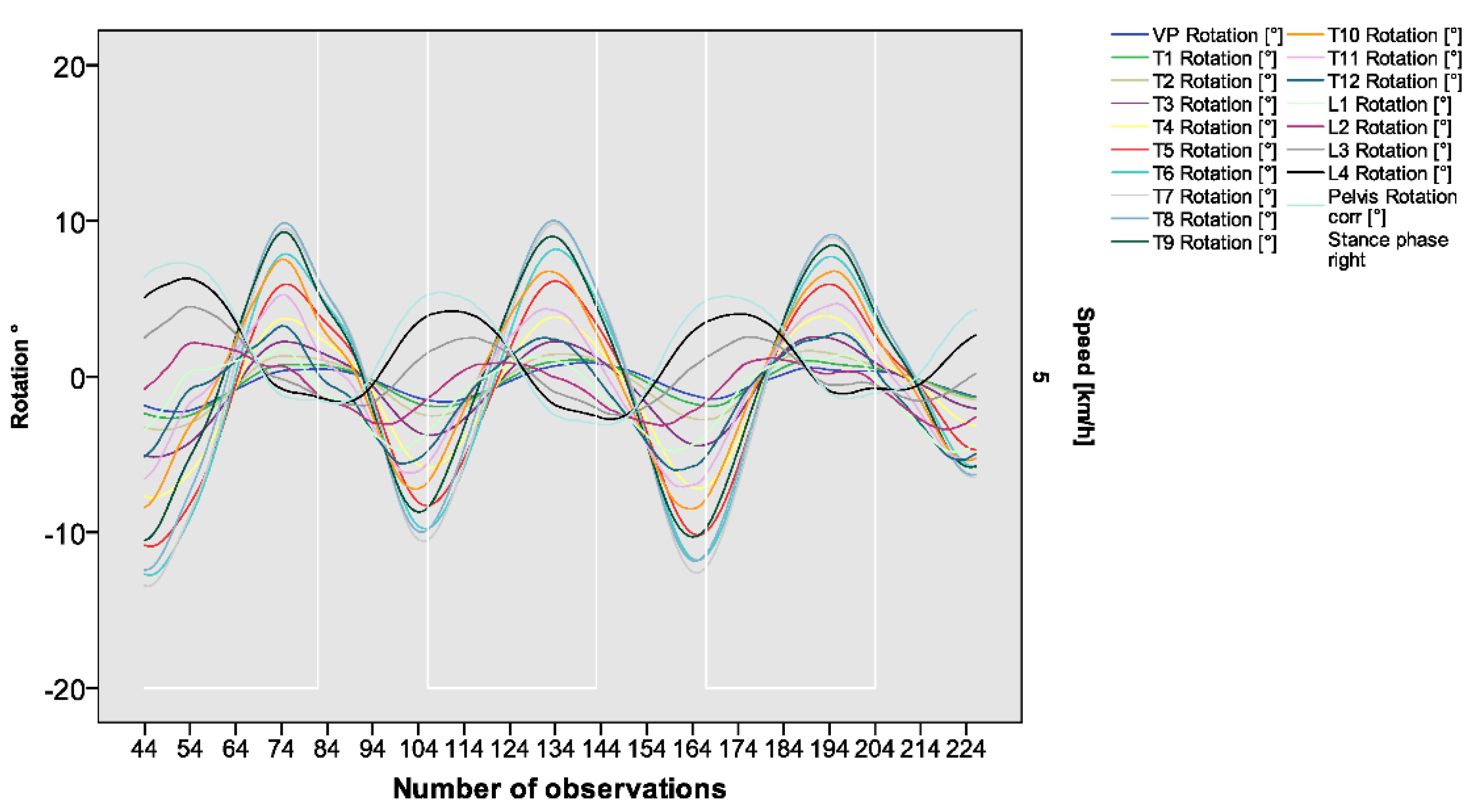
Figure 2.
Illustration of all segments of graph Nr.622 [47]. Beginning at the pelvis, rhythmic movements superimpose the curve progressions of all vertebral bodies upwards.
Figure 2.
Illustration of all segments of graph Nr.622 [47]. Beginning at the pelvis, rhythmic movements superimpose the curve progressions of all vertebral bodies upwards.
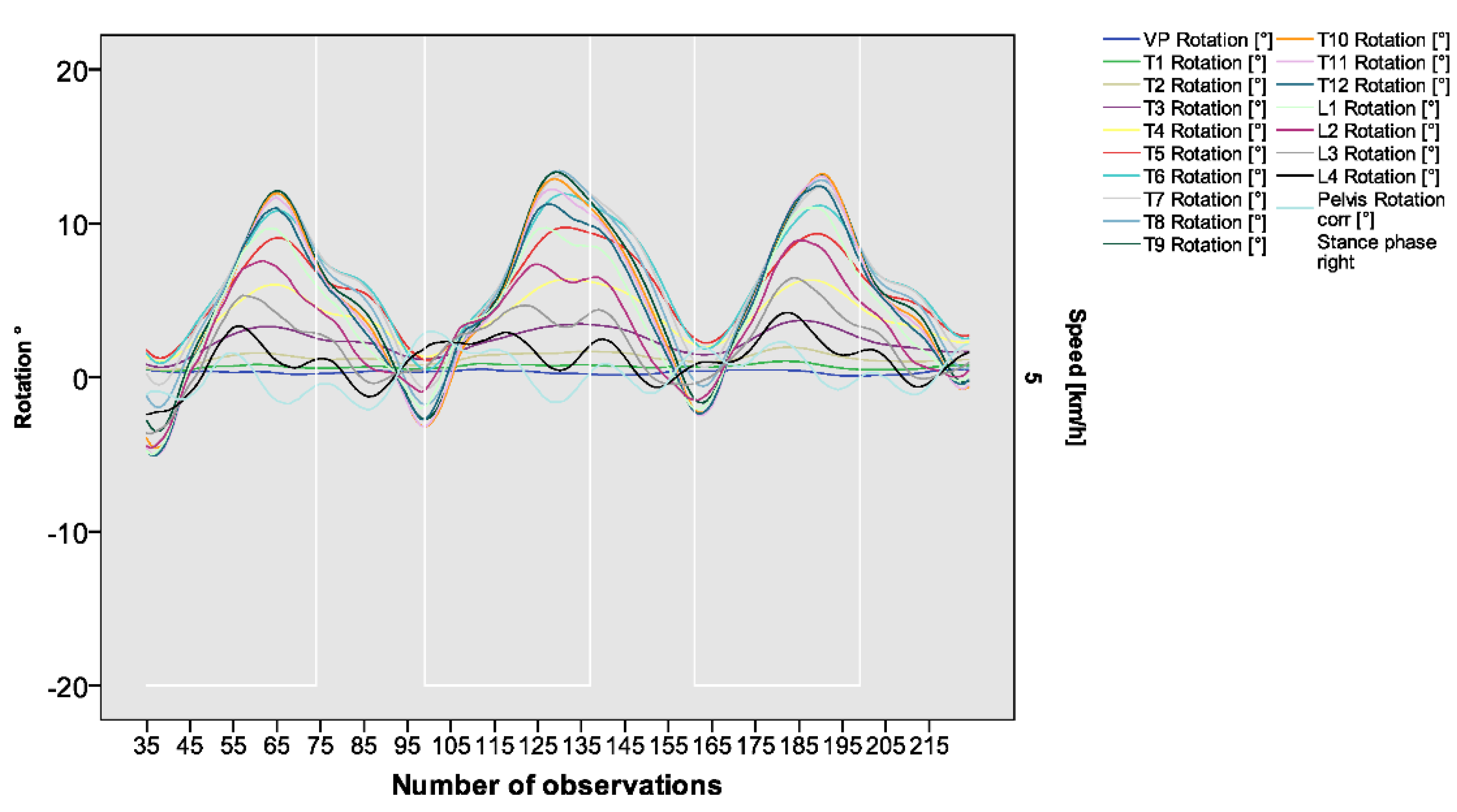
Figure 3.
Visual representation of graph Nr.615 [47] depicting a rarely seen reverse pattern. Most parts of the spine are rotating nearly in phase.
Figure 3.
Visual representation of graph Nr.615 [47] depicting a rarely seen reverse pattern. Most parts of the spine are rotating nearly in phase.
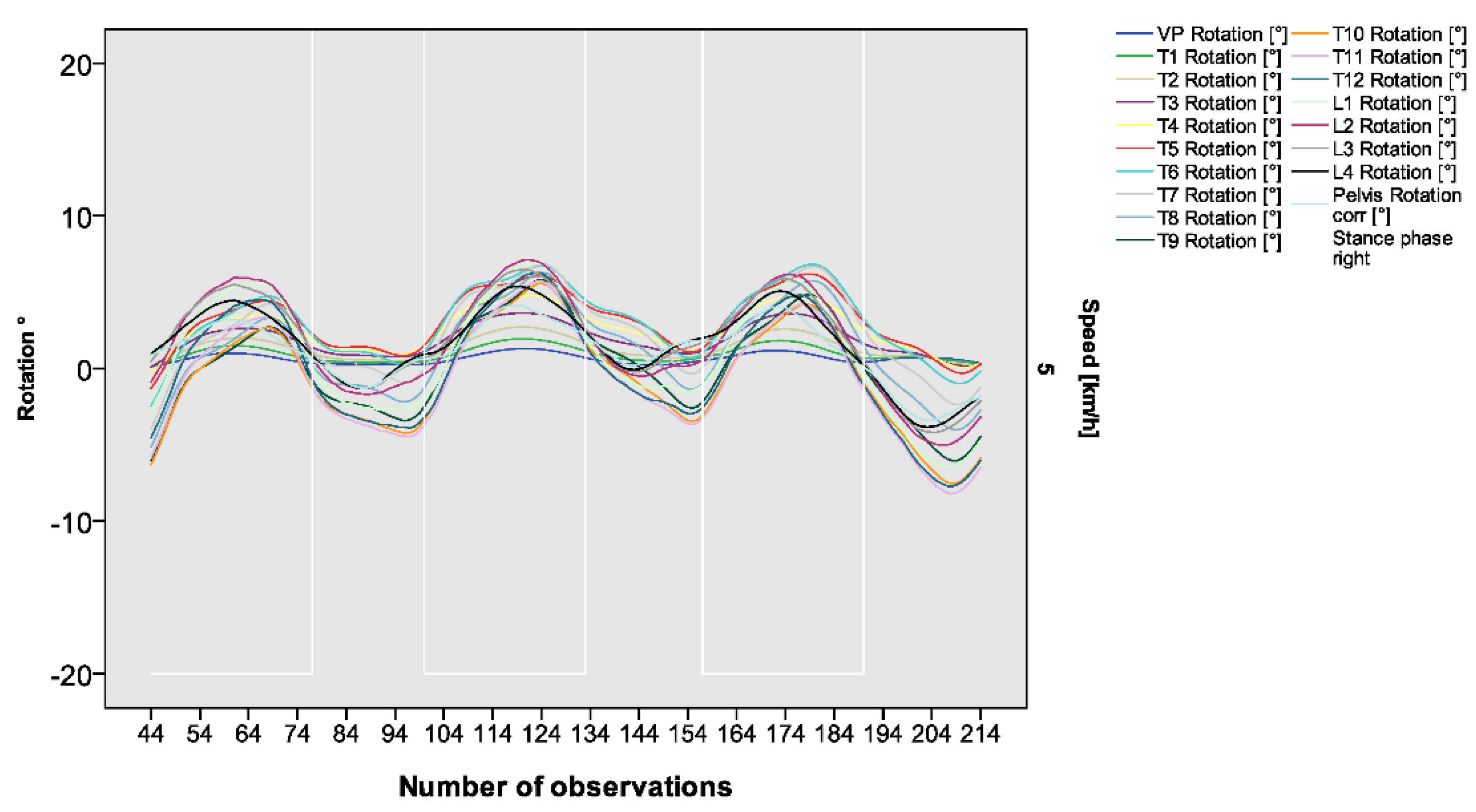
Figure 4.
Visual representation of graph Nr.608 [47] depicting a shift of rotation to the right for the entire thoracic spine.
Figure 4.
Visual representation of graph Nr.608 [47] depicting a shift of rotation to the right for the entire thoracic spine.
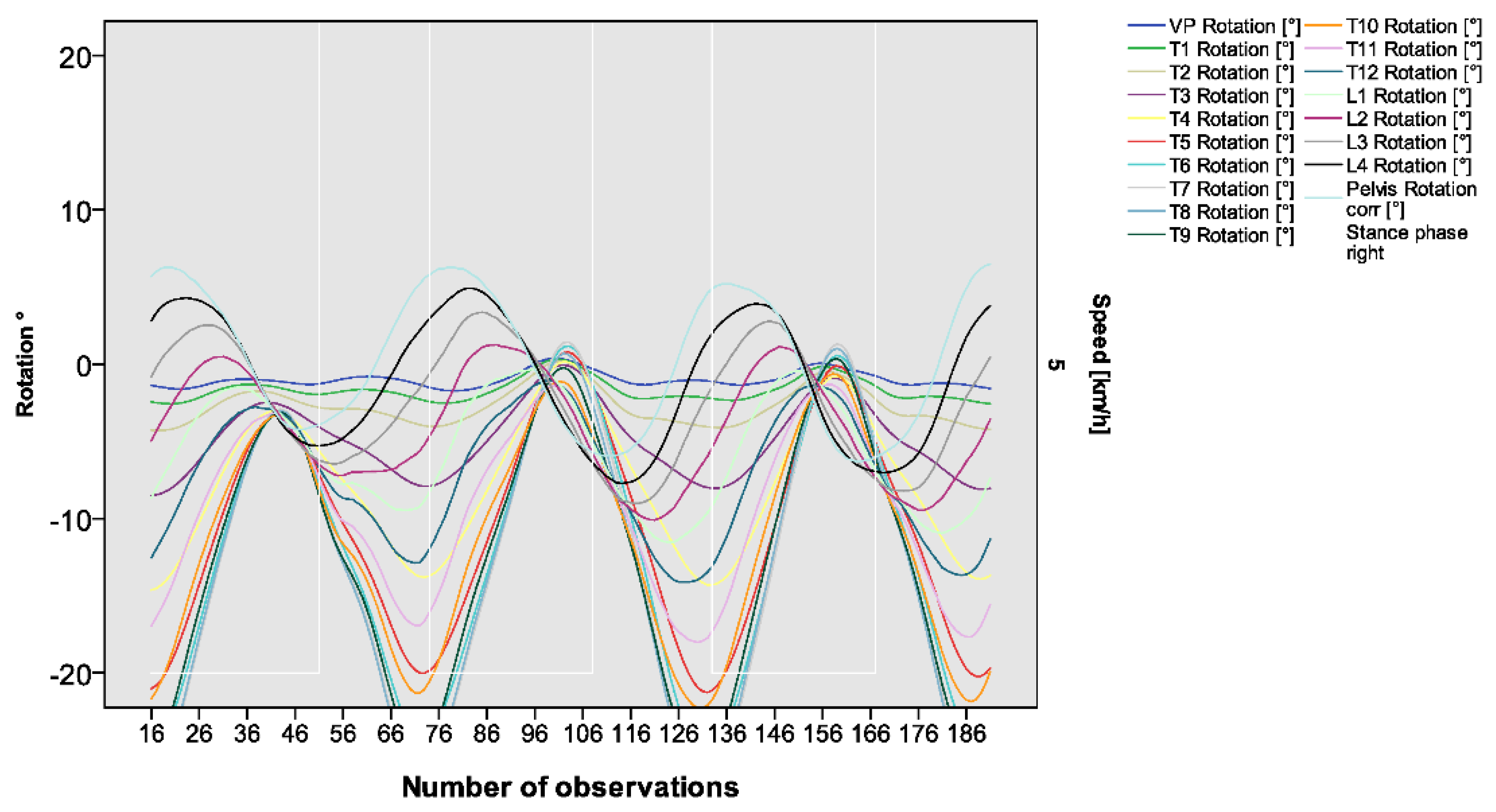
Figure 5.
Illustration of all segments of graph Nr.641 SGC [44]. Near sinusoidal wave form, a further specified identification of maxima (rotation to left) for all vertebral bodies occurred.
Figure 5.
Illustration of all segments of graph Nr.641 SGC [44]. Near sinusoidal wave form, a further specified identification of maxima (rotation to left) for all vertebral bodies occurred.
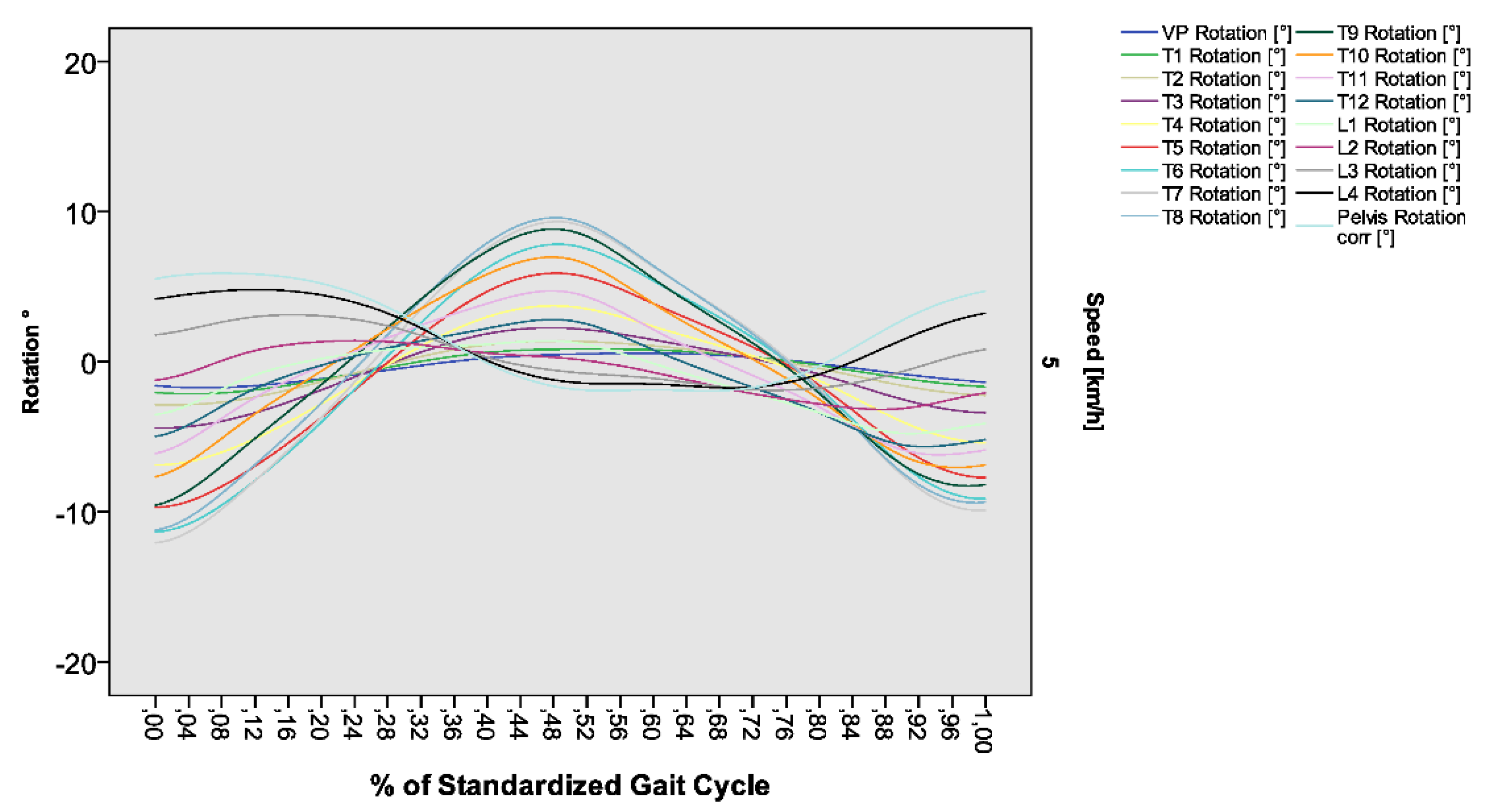
Figure 6.
Illustration of all segments of graph Nr.622 SGC [44]. Superimposed oscillation as an individually characteristic feature is still visible, maxima identification nevertheless much more precise.
Figure 6.
Illustration of all segments of graph Nr.622 SGC [44]. Superimposed oscillation as an individually characteristic feature is still visible, maxima identification nevertheless much more precise.
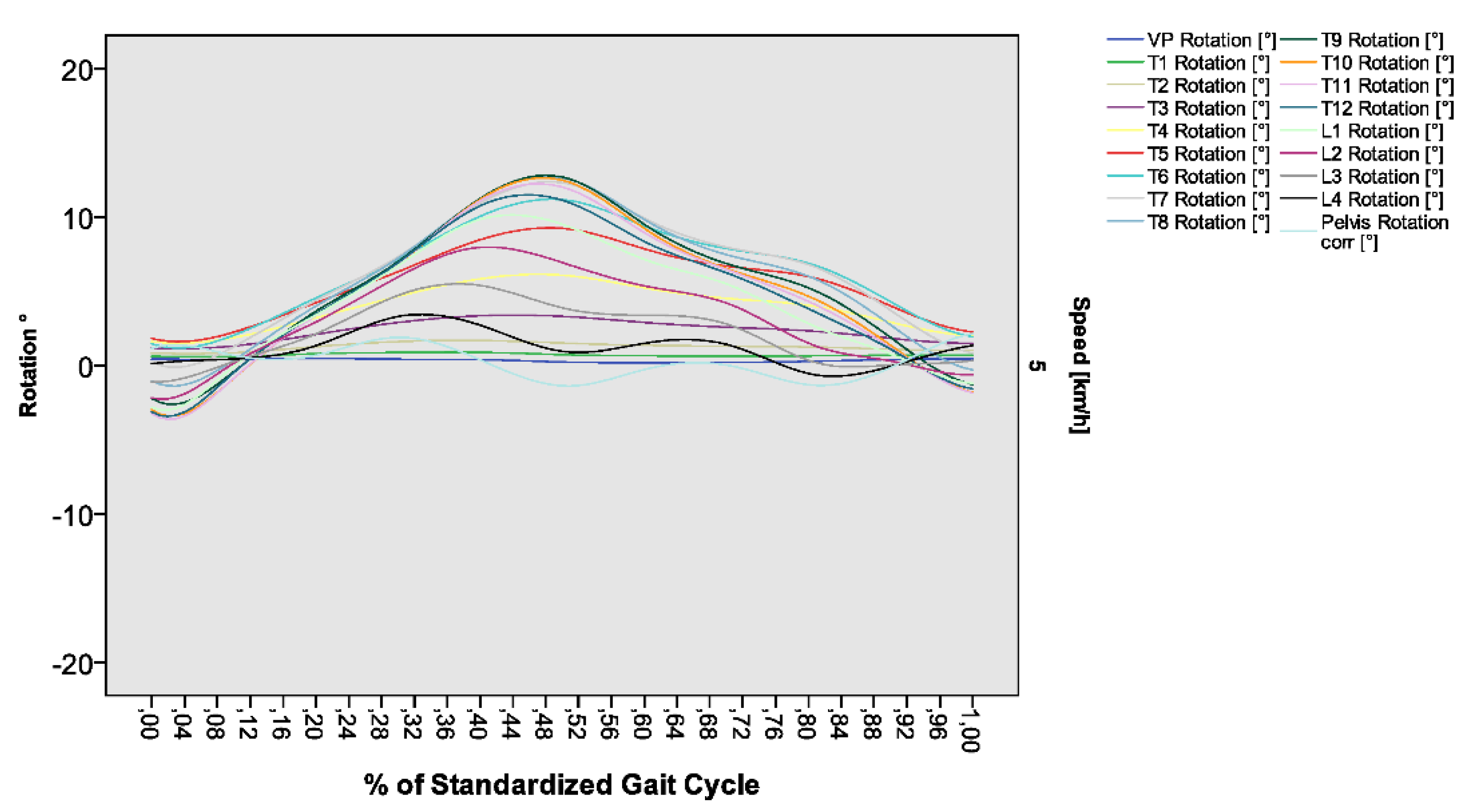
Figure 7.
Illustration of all segments of graph Nr.613 SGC [44]. Isolated rotation in phase of the lumbar and middle thoracic spine, as the individual feature become more apparent after transformation in SGC.
Figure 7.
Illustration of all segments of graph Nr.613 SGC [44]. Isolated rotation in phase of the lumbar and middle thoracic spine, as the individual feature become more apparent after transformation in SGC.
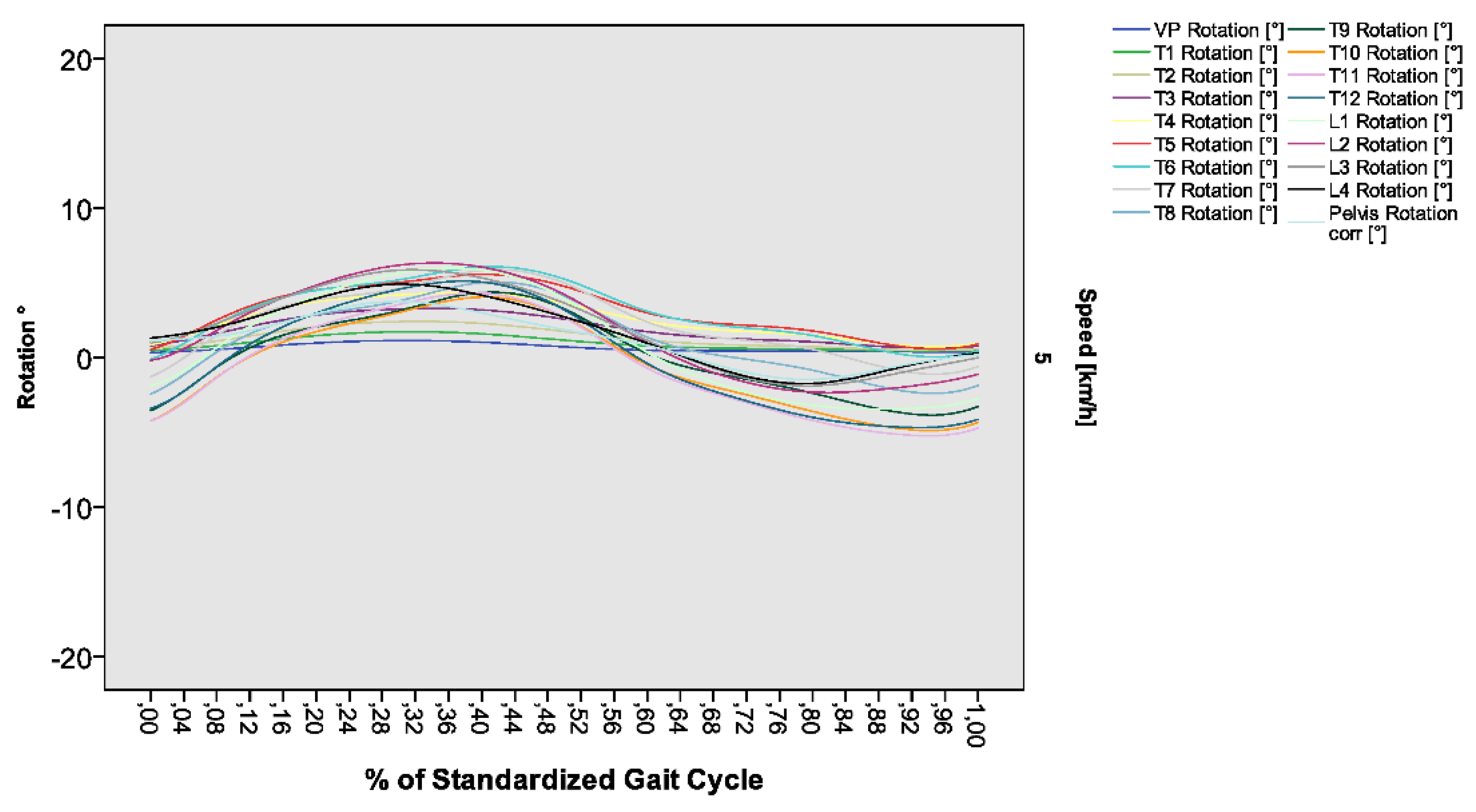
Figure 8.
Illustration of all segments of graph Nr.608 SGC [44]. The isolated thoracic rotation shift to the right, with T12 being the point of intersection, is now easier to recognize.
Figure 8.
Illustration of all segments of graph Nr.608 SGC [44]. The isolated thoracic rotation shift to the right, with T12 being the point of intersection, is now easier to recognize.
Disclaimer/Publisher’s Note: The statements, opinions and data contained in all publications are solely those of the individual author(s) and contributor(s) and not of MDPI and/or the editor(s). MDPI and/or the editor(s) disclaim responsibility for any injury to people or property resulting from any ideas, methods, instructions or products referred to in the content. |
© 2024 by the authors. Licensee MDPI, Basel, Switzerland. This article is an open access article distributed under the terms and conditions of the Creative Commons Attribution (CC BY) license (http://creativecommons.org/licenses/by/4.0/).
Copyright: This open access article is published under a Creative Commons CC BY 4.0 license, which permit the free download, distribution, and reuse, provided that the author and preprint are cited in any reuse.


