Preprint
Article

This version is not peer-reviewed.

Prescribed Burns Reduce Early-Stage Shrub Encroachment in a Semiarid Grassland

A peer-reviewed article of this preprint also exists.

Submitted:

09 December 2024

Posted:

10 December 2024

You are already at the latest version

Abstract

Wildfire is a key factor in regulating ecological processes in grassland ecosystems; however, changes in land use/cover have modified the intensity and frequency of fires as they occurred naturally. Different factors have caused a rise in woody vegetation in these ecosystems, leading to changes in species composition, diversity, and biogeochemical cycles. The prescribed burns are a tool for controlling and eradicating shrubs; however, their effectiveness depends on vegetation composition, biomass availability, and the objectives of restoration. We evaluate the effectiveness of fire as a shrub controller in a semiarid grassland ecosystem. We measured several shrub dasometric parameters and the percentage of damage in ten 2000 m² plots three months after a prescribed burning was performed. Both crown height and width and total height were the main variables that explained the percentage of shrub damage by fire. Individuals with a height greater than 1.6 m and wide crowns did not suffer damage. Moreover, even though 97% of the total shrubs presented some fire damage, 86% recovered after the rain period. Our results show that fire could be an effective strategy to control early-growing shrubs, but on overgrazed arid lands it would be difficult to have enough biomass for implementing burning programs.

Keywords: 
;  ;  ;  

1. Introduction

Semi-arid natural grasslands are distributed from central Mexico to the southern United States of America, in the Chihuahuan desert region [1]. The grasslands are mainly covered by various species of grasses and some shrubs in low density [2]. In recent years, grasslands have faced multiple threats, such as the alteration of natural fire cycles, the increase in CO2, conversion to agriculture, overuse by extensive livestock, the introduction of exotic grasses, and the increase in herbaceous and less desirable shrubs [3]. The presence of shrubs in the pastures is a normal state; however, these factors have triggered colonization processes of the native shrub and semi-shrub species, causing the displacement of grass species and the consequent changes in species diversity, availability of forage for cattle, alteration in the cycle of nutrients, etc. [4].
The woody species increasing in density in the Mexican central highlands are those of the genera Vachellia, Prosopis, Opuntia, Larrea, Brickellia and Isocoma. The increase of shrub species has been shown to reduce the availability of soil water for the other plant species [5]. In addition, these species have a high capacity for adaptation to degraded areas, accelerating their dominance on disturbed lands [6]. It has been reported that the reduction of herbivores may be a driver of the increase of shrubs [7] and that excessive grazing may have the same adverse effects, mainly due to the reduction in the amount of biomass (fuel) available to propitiate a natural fire with sufficient intensity to affect shrub species [8]. Therefore, the balance of herbaceous-woody species must be analyzed in the context of interactions of cattle grazing with other factors such as climate, topography, fire frequency, nurse plants, soil type, and others [9].
Reversing shrub colonization is a challenging process. The decrease in the intensity of grazing does not necessarily reduce or even reverse the colonization of shrubs, but it is necessary to invest in different techniques like the application of mechanical, chemical, pyric, and sometimes also biological treatments [10]. On the other hand, fire, which naturally limited the growth and colonization of shrubs species centuries ago [11], has decreased in frequency and, in many cases, has been completely eradicated due to the reduction of above-ground biomass or fuel in grassland ecosystems. Historically, grasslands have been subjected to periods of fire, leading to adaptations that make them fire-resistant and fire-dependent, with meristems located close to the ground surface, where are less susceptible to fire damage [12]. When the natural fire frequency was modified, the shrub species increased their abundance, becoming an ecological and economic issue in the region and replacing key species in the pastures [13]. In this sense, reintroduction of fire by prescribed burning programs, is a technique recently applied in grassland ecosystems in order to eliminate shrub species and to recover ecosystem productivity. However, some studies report that fire frequency every 3 to 4 years does not guarantee the control of the expansion of woody plants [14], since the intensity of frequent prescribed fires is less than natural fires in non-fragmented landscapes. By increasing fire intensity and frequency, short- and long-term post-fire soil responses could be improved, favoring a prompt restoration of natural pastures [15].
Shrub colonization in grassland ecosystems occurs gradually at first, but eventually reaches a point where woody species spread rapidly [16]. Once woody species reach considerable size and density, the resilience of grasslands deteriorates, resulting in a rapid increase in the abundance of woody plants [17]. Considering that fire can be used as a tool to reverse the colonization and prevent the recruitment of new shrub seedlings, the objective of this study was to evaluate the effectiveness of prescribed burnings in controlling shrub species at different growth stages in the Llanos de Ojuelos, Jalisco. Additionally, the study aimed to identify the key dasometric variables, such as shrub height, crown width, and crown height, that influence the degree of damage caused by fire. We hypothesize that shrubs lower in size and stature, i.e., young shrubs, will be more susceptible to fire damage.

2. Materials and Methods

2.1. Study Area
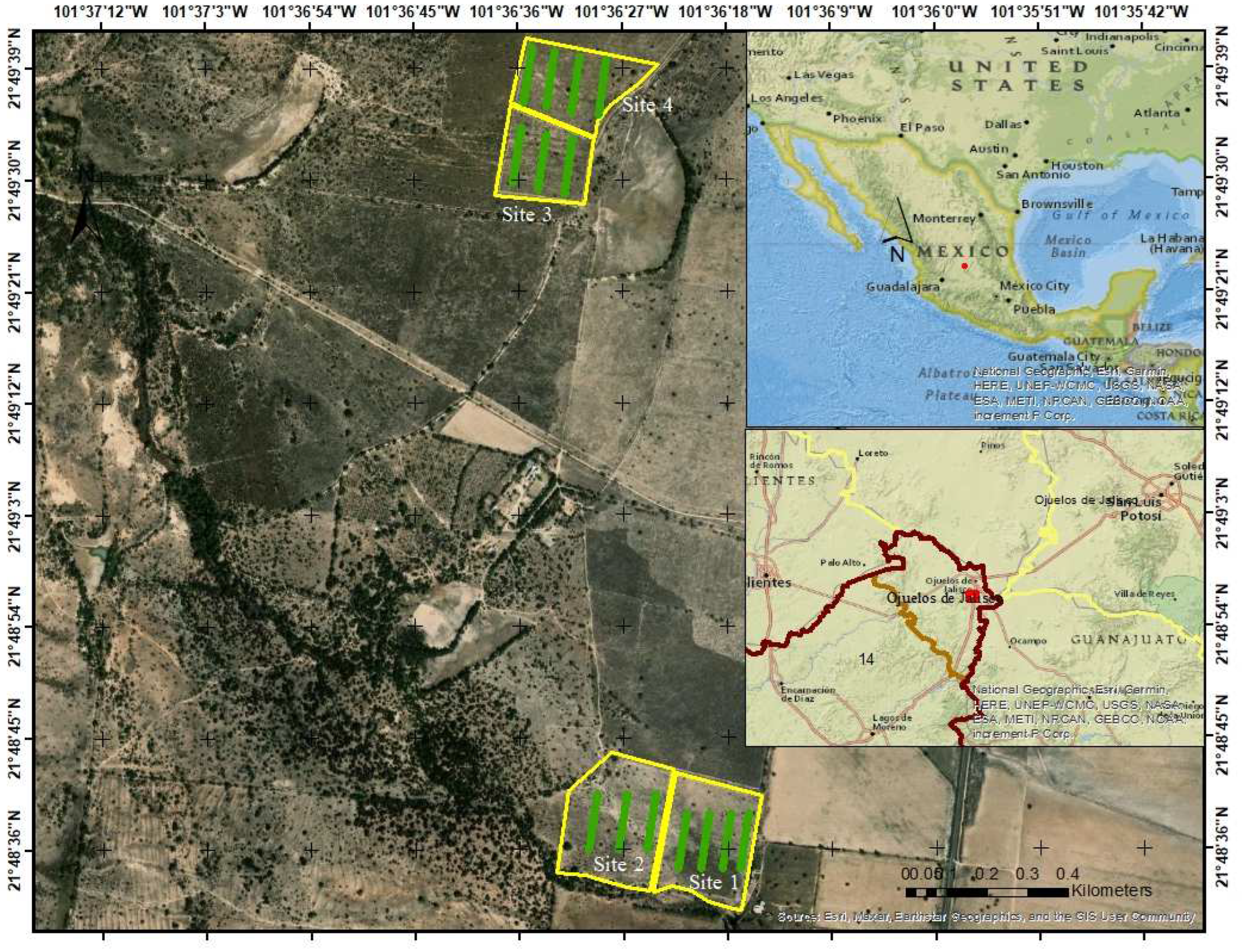
The study area is located in the arid and semi-arid region of the Central Plateau of Mexico, at the south of the Chihuahuan desert, in Santo Domingo ranch. Is an area dedicated to livestock production for 36 years. The production system is cattle, with grazing intensities ranging between 3 and 7 ha per animal unit and a forage consumption of less than 40% of the available aerial biomass. The study area is managed in a rotational grazing system with 8 paddocks of 60 ha.
Figure 1. Location map of the study area in the Llanos de Ojuelos, Jalisco, Mexico. The study site is marked in yellow, while the sampling plots are shown in green.
Preprints 142375 g001

2.2. Vegetation Cover

The predominant vegetation type in the Llanos de Ojuelos consists of scrub and grasslands. The grasslands are mainly composed of blue grama grass (Bouteloua gracilis), wolfstail (Lycurus phleoides), scorpion grama (Bouteloua scorpioides), three-bearded grass (Aristida divaricata), buffalo grass (Bouteloua dactyloides), silvery strawweed (Bothriochloa barbinodis), zacatón (Muhlenbergia rigida), and hairy grama (Bouteloua hirsuta). These grasslands are interspersed with shrubs such as huizache (Vachellia schaffneri), cat’s claw (Mimosa biuncifera), and mesquite (Prosopis leaviagata), which, while native to scrublands, are considered invasive. The herbaceous vegetation includes species like foxtail (Brickellia spinulosa), sawtooth candyleaf (Stevia serrata), toad grass (Eryngium carlinae F. Delaroche), and trompillo (Solanum elaeagnifolium), among others.

2.3. Climate

The climate of the study area is characterized as dry and semi-dry, with precipitation levels consistently lower than potential evapotranspiration. Rainfall is highly variable, ranging between 300 and 500 mm annually, with a mean annual precipitation of 424 mm. Precipitation typically occurs from June to September. The average annual temperature varies between 16 and 18 °C. The soil is shallow, with minimal organic matter and a cemented layer (caliche, tepetate) at 50 cm deep. Dominant soil types include durisols and phaeozem [18,19].

2.4. History and Grazing Management

The study site is a paddock planted with weeping lovegrass (Eragrostis curvula). Rainfed agriculture was practiced here until the early 1980s, after which the land was abandoned. Weeping lovegrass was sown 15 years prior to burning, and was primarily used for producing weeping lovegrass seed, with minimal cattle grazing.

2.5. Experimental Design

To evaluate the effect of fire on grasslands invaded by Vachellia schaffneri and Mimosa biuncifera, four different sites were selected as study areas. At each site, systematic plots measuring 20 x 100 meters (2000 m2) each were established, with a 100-meter separation between plots to cover the total area of the site. The plots were oriented from north to south. The number of plots at each site depended on the size of the area. At Sites 1 and 4, four plots were established, while at Sites 2 and 3, three plots of the same dimensions were delineated. Prescribed burns were conducted in these plots to generate the conditions needed to study fire’s impact on the shrubs.
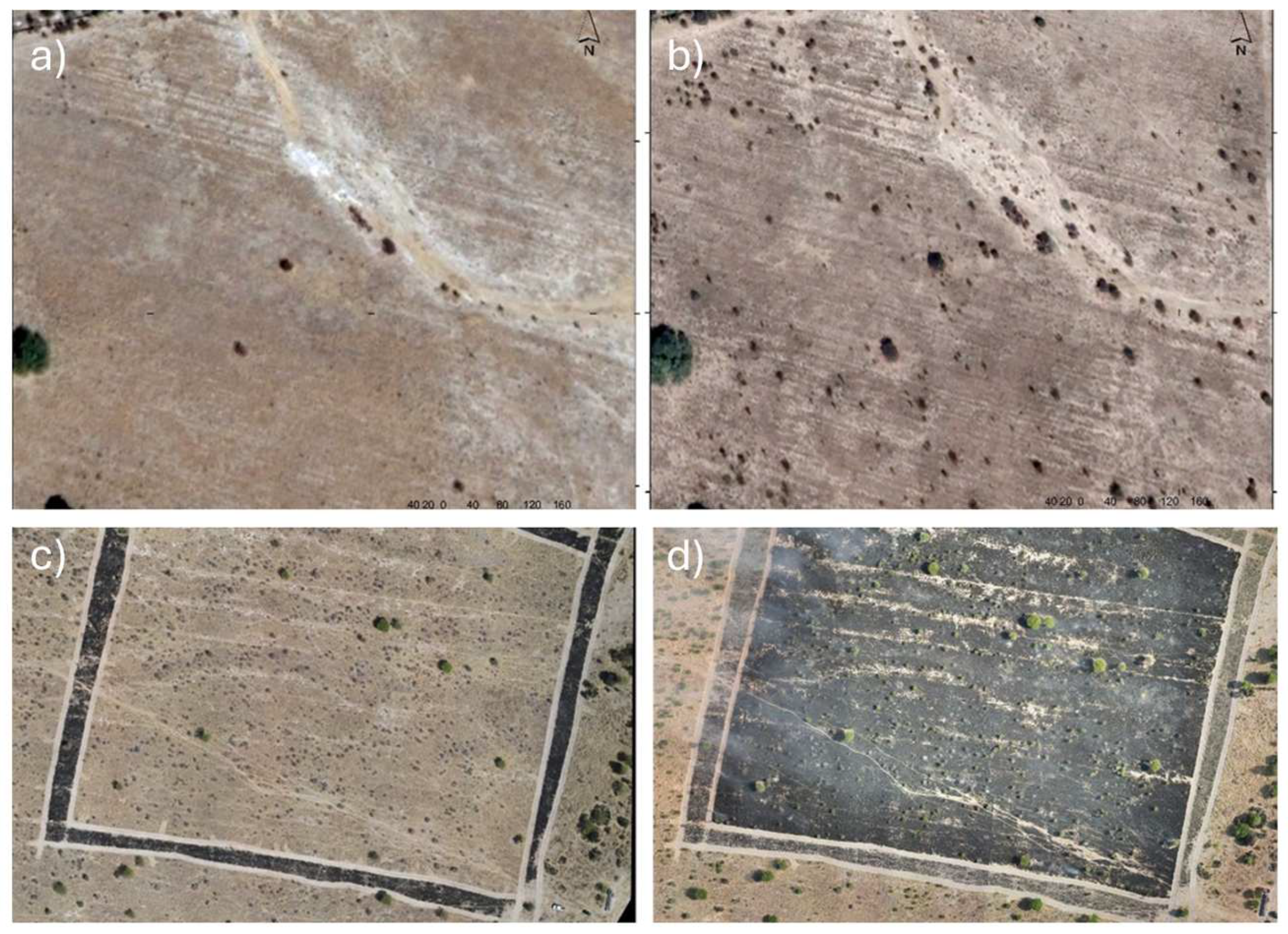
To prevent the spread of fire to neighboring areas, the plots were delimited with mineral lines and black lines. All plots had approximately 20% shrub cover with varying heights. Measurements of all shrubs within the plots were taken before the burn and three months afterward. Data collected included diameter at 30 cm above ground (base diameter), total height, crown height, crown diameter, number of branches, and the shrub’s condition (alive or dead). Additionally, the presence of regrowth and the percentage of damage caused by the fire—such as black burn marks on dead stems or the absence of aerial biomass—were recorded. Each individual shrub was marked with a metal plate containing the plot number and the shrub number. It was assumed that individuals not located, or whose identification plates were missing, were consumed by the fire after the prescribed burn.

2.6. Vegetation Sampling

Aboveground biomass and species diversity were assessed using 1 m2 plots, with a total of 20 plots sampled. To measure aboveground biomass, herbaceous vegetation was clipped, dried, and then weighed. The biomass was separated into two categories: living biomass, representing current year growth, and dead biomass, consisting of residual plant material from the previous year. Additionally, the percentage of grasses and herbaceous plants present in the plots was identified and quantified, providing a detailed assessment of plant composition.

2.7. Application of Prescribed Burns

The prescribed burns were conducted on different dates to effectively control and manage the fire, minimizing risks and ensuring that the most favorable weather conditions were selected. In site 1, the prescribed burn was conducted on March 29, 2021, over an area of 6 hectares with a slope of less than 3%. A head-fire burn was applied with a fuel load of 11,160 t/ha, relative humidity exceeding 30%, and wind speeds below 10 km/h from the south-southeast.
In site 2, the prescribed burn was performed on April 26, 2021, in another 7-hectare area. This burn had a fuel load of 12,220 t/ha, with relative humidity again exceeding 30% and wind speeds under 7 km/h from the south. The higher fuel load resulted in flame heights reaching approximately 10 meters.
In site 3, the prescribed burn was executed on April 19, 2022, over an area of 5 hectares. This site had grass cover and biomass accumulation similar to the previous sites. The recorded environmental conditions included a relative humidity of 69%, wind speeds of 3.7 km/h, and a temperature of 54 °F (12 °C).
In site 4, the prescribed burn was conducted on April 22, 2022, over an area of 6 hectares with measurements showing a relative humidity of 47%, a temperature of 60 °F (16 °C), and wind speeds of 9 km/h.
Biomass amount and environmental conditions were similar among sites and at the time of the prescribed burns, this allowed us to consider each site as a replicate.
Figure 2. Changes in shrub abundance into the experimental site. Images correspond to the years 2011 (a) and 2022 (b; Google, s.f.). Aereal view of one of the four sites before (c) and after (d) the burning treatment. The black contour in the left image is the protection line which was made one week before the prescribed burning.
Preprints 142375 g002

2.8. Environmental Variables

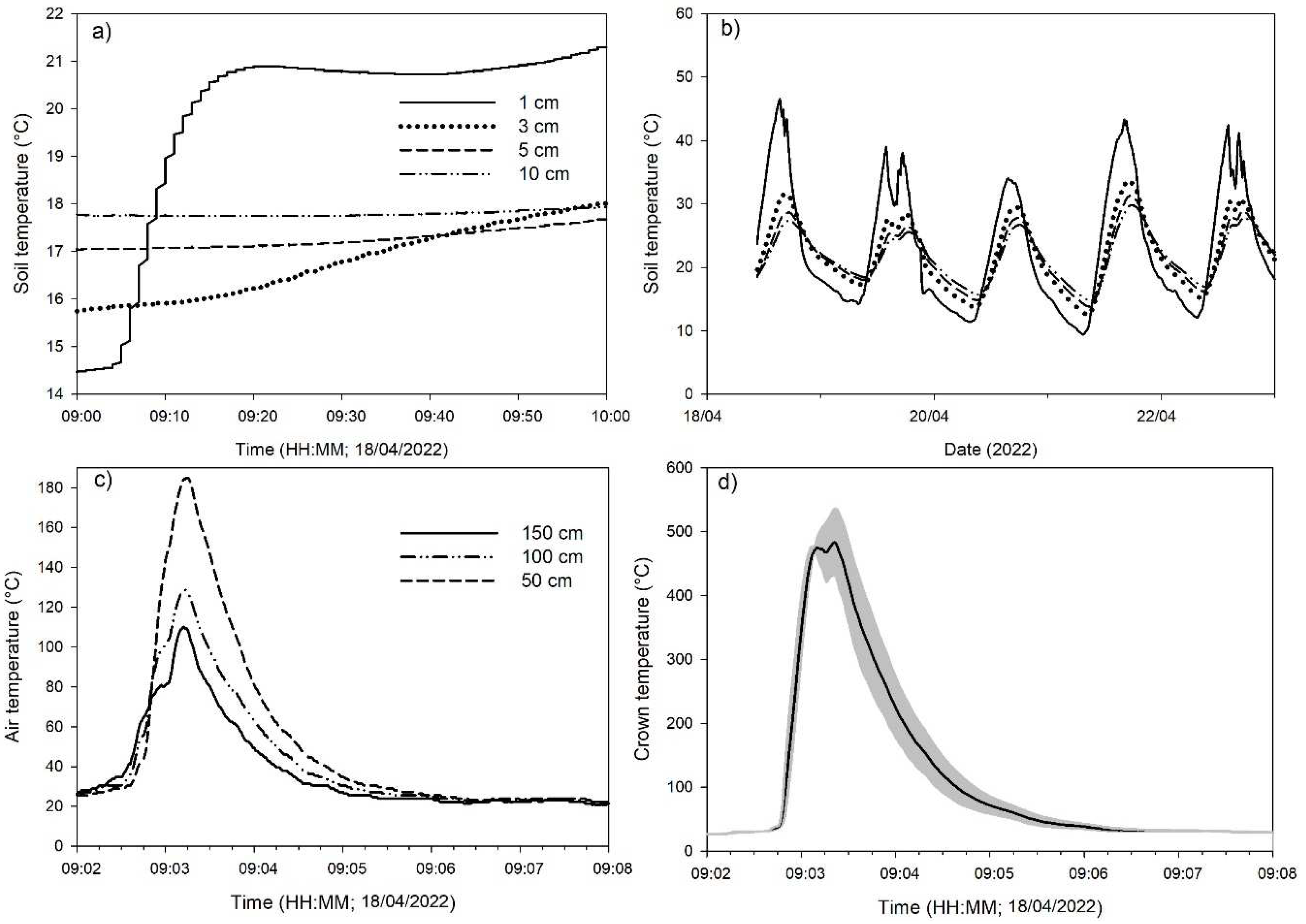
Environmental variables were recorded to characterize aboveground and soil temperatures during the prescribed burn at site 3. This site had grass cover and biomass accumulation similar to the other sites. Soil temperature was measured every second using four temperature sensors (TMC20-HD, Onset, Bourne, MA) connected to a data logger (U12-006, Onset, Bourne, MA). The sensors were placed at depths of 1, 3, 5, and 10 cm into the soil. Air temperature was monitored using three type K thermocouples positioned at heights of 50, 100, and 150 cm above the ground, while three thermocouples were placed directly over tussocks to monitor air temperature at the crown level.

2.9. Analysis of Data

Species composition was evaluated by measuring the proportion of dry biomass of each species within the cutting plots. For shrub composition, we quantified the number of individual shrubs per species in the fire plots to assess changes in species abundance due to the burns.
To determine the variables that most significantly affected shrub species and to identify the thresholds for vegetation response to fire, we employed boosted regression trees (BRTs). This analytical method helps uncover complex relationships between environmental variables and vegetation responses. The “GBM” (Generalized Boosted Regression Models) library in R software [20] was used for this analysis. This analysis provided us insights into how different factors, such as fire dasometric variables, influence fire damage and shrub recovery and survival.
By using BRTs, we aimed to capture the most influential factors affecting shrub species and to identify critical thresholds for vegetation resilience to fire. This approach allows for a more nuanced understanding of fire’s impacts on different shrub species. The response variables used in the analysis were the percentage of damage and the number of resprouts. Because most Mimosa biuncifera individuals experienced 100% damage, this variable (percentage of damage) was not usable. Therefore, only the number of resprouts is reported in the BRTs.

3. Results

3.1. Species Composition

The herbaceous stratum at the study site consisted of 13 herbaceous species, including 8 native grasses and 1 introduced species, Eragrostis curvula (Table 1). Grasses contributed most to the biomass productivity, comprising 75% of the total (1.9 t ha-1). The shrub layer was predominantly composed of Vachellia schaffneri, and Mimosa biuncifera, with 97% of individuals identified as V. schaffneri. Shrub heights ranged from 30 cm to 3.5 m, with an average crown width of 3 m. Mimosa biuncifera was absent from biomass samples because this species forms isolated, dense groups that the small quadrants used for vegetation sampling missed.

3.2. Temperatures in Prescribed Burnings

Soil temperature did not show significant changes due to the fire effect (Figure 3a); however, larger variations were observed at a depth of 1 cm due to darkened soil surface by deposition of charcoal residues that remained on soil several days after the burning (Figure 3b; Figure 2). In contrast, tussocks experienced crown temperatures as high as 500 °C during the burn, although this peak temperature lasted for less than a minute (Figure 3c). Air temperatures decreased with height, from 180 °C at 50 cm to 100 °C at 150 cm aboveground (Figure 3d).

3.3. Fire Effects on Shrubs

Ninety-seven percent of the total shrubs exhibited some level of damage, while the remaining shrubs were unaffected by fire. Of the damaged shrubs, 86% showed regrowth after the rainy season, even when the damage was complete (100%).
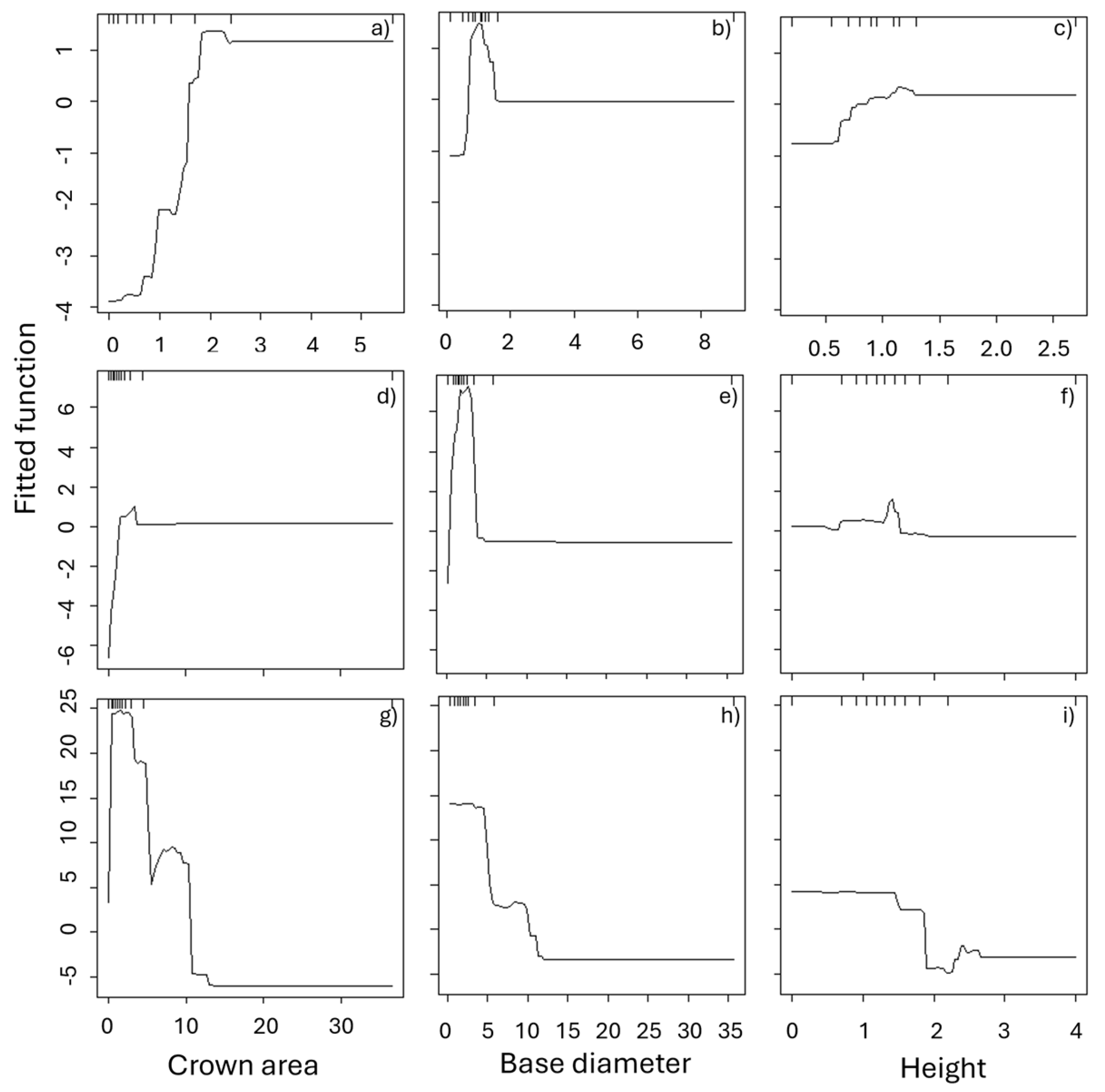
For Vachelia shrubs, 84% of individuals suffered 100% of damage, and 13% of them did not show resprouts; we assumed these shrubs were dead. The number of resprouts increased with the base diameter and with the crown area (Figure 4d,e). Larger (in size and crown area) shrubs showed a lower number of resprouts because they were less affected by fire. The most influential variable on fire damage was crown area, contributing 53% to the relative influence, followed by diameter and total height (24% and 22%, respectively; Table 2; Figure 4g-i). Crown and stem shape did not significantly affect damage levels and were therefore excluded from the final regression trees.
Shrubs with the highest percentage of damage were those with crown areas lower than 5 square meters, lower than 5 cm of base diameter, and heights between 0 and 2 meters (Figure 3). This suggests that the fire caused total damage to younger Vachelia shrubs with smaller crowns. As shrub height and crown width increased, the fire inflicted little or no damage.
For Mimosa shrubs, the crown diameter was the variable that most explained the number of resprouts after fire treatment (60%); it was followed by base diameter (30%) and plant height (10%). Since all individuals of Mimosa shrubs were damaged at 100%, this variable was not used for the boosted regression tree analysis (Table 2). Recovery of shrubs increased with the crown diameter, i.e., shrubs with smaller crowns produced a lower number of sprouts than the bigger ones. This same pattern was observed with the height of shrubs; taller plants produced more resprouts after the fire. The fire completely consumed 99% of Mimosa shrubs, leaving only 18% without any resprouts.
Figure 3. Soil temperature at 1, 3, 5, and 10 cm depth during the burning treatments (a), and soil temperature at three depths five days after fire treatment. The air temperature at three different heights over soil (b), and the temperature over the grass tussocks during the fire treatment (d).
Preprints 142375 g003
For both Vachellia and Mimosa, lower in stature and in crown area plants were more susceptible to fire (Figure 4). These variables were related to the number of resprouts after fire, which could be interpreted as resistance or the capacity of shrubs to recover from disturbances. Base diameter is related to the age of shrubs or vigor and is correlated with plant height. This suggests that smaller and younger shrubs were more susceptible to fire damage, while larger, more established individuals demonstrated higher resilience.
Table 2. Relative importance of variables for explaining fire damage and number of resprouts after fire treatment in two shrub species.
Species Explanatory variable Relative importance (%)
Fire damage Number of resprouts
Vachellia schafneri
Crown diameter 53.1 28.7
Base diameter 24.7 65.2
Height 22.2 6.0
Mimosa biuncifera
Crown diameter 60.0
Base diameter 30.1
Height 9.8
Figure 4. Fitted functions (normalized units) of relationships between fire response and dasometric variables (crown area, base diameter (diameter at 30 cm), and total height). Number of resprouts for Mimosa biuncifera (a-c) and for Vachelia schafneri (d-f), and the percentage of fire damage for V. schafneri (g-i).
Preprints 142375 g004

4. Discussion

Our results showed that the burning affected 97% (Vachellia) and 100% (Mimosa) of the shrubs; however, on average, 86% of the affected shrubs recovered after the first rains. The taller individuals with larger base diameters and with wide crowns did not suffer any effects from the burning. This indicates that as height and crown width increase, fire causes little or no damage to the shrubs. We confirmed our hypothesis that young shrubs, or lower in size and crown areas would be more susceptible to fire. This quick recovery and low fire damage of large shrubs is likely explained by thicker bark at the base of the shrubs, lower grass biomass (fuel) at the base, and taller growth structures that lessen the effect of fire on adult plants. It also suggests that shrubs become less vulnerable to fire damage as they grow [21]. A larger crown area reduces grass cover due to shading just below the shrub crown, which lowers fire intensity by decreasing the availability of fuel. On the other hand, greater height allows the growth structures to escape from the fire [22,23]. This indicates that fire causes total damage to low-growing shrubs with small crowns.
Available biomass is a factor to consider during burning. In our plots, there was an average biomass of 12 tons per hectare, and although the fire reached flame heights of around 10 meters, its duration in certain areas was only a few seconds due to the speed of the fire’s movement (Figure 3). Our results showed that a single burn reduces shrub cover by 15%, primarily affecting young plants while having minimal impact on other herbaceous species that are senescent or found in the soil seed bank. One year after the burning, net primary productivity recovered at 1.9 t ha-1, which is over the average of natural semiarid grasslands into the Chihuahuan Desert region. Some studies in semi-arid grasslands suggest that full biomass recovery after burning takes about 3-5 years [24,25]. Our study site is not the typical grassland in Mexico; overgrazing by cattle maintains very low standing biomass levels (<1 t ha-1), which prevents severe wildfires, but that could not represent a threat for shrub survival.
In the early stage of shrub colonization, grasses can suppress shrub dominance through competition for near-surface soil resources, slowing shrub growth. However, when grasses are inactive, shrubs use these resources to accelerate growth [26]. In the later stages of the transition from grassland to shrubland, shrub-shrub competition does not slow the expansion rate of shrubs [27]. An adult-stage shrub can reach heights of 3 to 4 meters and develop better roots, allowing for greater nutrient reserves [28], which could translate into greater fire resistance and the ability to regrow even after 100% damage. Woody plants benefit from disturbance regimes as they are capable of resprouting, though these sprouts tend to produce fewer seeds than older branches [28,29]. This has implications for management and conservation programs that use fire to control shrubs.
Our results reveal that the diameter at 30 cm is an important factor for lowering fire damage and for favoring resprouting (Table 2, Figure 4). This finding can be explained by several ecological and morphological factors. First, the diameter at 30 cm from the ground serves as an indicator of the shrub’s age and vigor. Shrubs with a larger diameter, which are typically older and more vigorous, have a greater capacity to generate biomass and support a more extensive branching structure [29]. This is because a larger diameter provides a more robust base capable of supporting a greater number of branches. On the other hand, the crown area is closely related to the shrub’s photosynthetic capacity, which influences branch formation. A shrub with a larger crown can capture more sunlight and produce more energy, facilitating the development of a greater number of branches [30]. In contrast, total height is not necessarily linked to branching, as some species can grow in height without proportionally increasing the number of branches [31]. Vachellia and Mimosa showed similar responses; even though Mimosa are lower in stature than Vachellia, burned plants resprouted, and only a minimum percentage of plants died. Fire and grazing have modeled plant communities for millennia, and environmental conditions have selected species with morphological characteristics for deep water exploration and root reserves. This suggests that shrub morphology and branching capacity have been determined by environmental conditions and disturbances, with high capacity of resistance and survival [32]. The post-fire resilience of shrubs may be associated with their branching capacity; shrubs with a larger diameter and bigger crown have more resources to recover after a disturbance such as fire [33]. Base diameter and crown area are indicative of recovery capacity, as more robust shrubs with a larger crown seem better equipped to withstand damage and regenerate branches more easily [34].
As shrub encroachment increases, grasses and other flammable fuels decrease, so reintroducing fire after prolonged suppression may not necessarily be beneficial [35]. It is critical to determine the frequency of fire needed to prevent shrubs from reaching a crown height or width at which fire is no longer an effective control tool. Other factors, such as fire frequency and intensity’s effects on biodiversity, also need consideration [36].
Interestingly, the relationship between the percentage of damage and crown diameter and height is not linear (Figure 4), indicating that prolonged periods without fire pressure or more favorable climatic events for shrub growth (e.g., winter rains; [37]) could lead to “no return” colonization stages that are not controllable with fire. The woody species that resprout are the most difficult to control with fire alone and require additional management strategies to reduce their abundance and eventually remove them from the ecosystem. In agreement with some studies, combining prescribed burns with the browsing of ruminant species can reduce shrub density by up to 90% and promote grass cover by improving the light environment for herbaceous species [38,39,40]. Although controlled grazing can be a valuable supplementary technique, it cannot replace fire for controlling shrubs in these systems [23,40]. Properly timed prescribed burns can be a key ally in controlling shrubs before they become a serious problem.
Our study shows some weaknesses and limitations, such as the lack of spatial and temporal variability, which limits its general applicability. On the other hand, the observed recovery in 86% of the shrubs after the first rains suggests that the post-fire climatic conditions, such as the amount and frequency of rainfall, were favorable for regeneration. In scenarios with lower water availability or more extreme climatic conditions, the results could be different. Although primary productivity recovery is mentioned within a year, longer-term effects, such as changes in species composition or ecosystem dynamics, are not fully explored. These effects could have more significant implications for long-term management.

5. Conclusions

Fire primarily affects young and small shrubs. When shrubs exceed large crown areas, base diameter, or height, the fire causes minimal or no damage. Vachellia and Mimosa showed some differences in their degree of fire damage, and the main variable explaining the damage and number of resprouts. However, both species showed a high capacity for resprouting, even after being almost completely burned. Based on our results, it is beneficial to apply fire treatments to control these species during their early growth stages, when their characteristics make them more susceptible to fire. Continuous prescribed burning could potentially improve shrub control [41]. However, in overgrazed arid lands, it may be challenging to maintain sufficient biomass for a continuous two-year burning program.

Author Contributions

Conceptualization, T.A.R.; Methodology, T.A.R., J.C.D., M.L.L., J.D.B.; Formal analysis, T.A.R., J.D.B.; Investigation, T.A.R., J.D.B, C.A.A.G., M.L.L., J.C.D.; Data curation, T.A.R., J.C.D.; Writing—original draft, T.A.R., J.D.B., C.A.A.G., D.F.R., J.D.B.; Writing—review & editing; T.A.R., C.A.A.G., M.L.L., D.F.R., J.D.B.; Funding acquisition, J.D.B.

Funding

This research was funded by CONAHCYT with project reference CF 320641.

Institutional Review Board Statement

Not applicable.

Informed Consent Statement

Not applicable.

Data Availability Statement

Data will be available from authors under reasonable request.

Acknowledgments

Authors thank National Confederation of Livestock Organizations (CNOG), and to Miguel Luna-Luna, the manager of Santo Domingo Ranch, for the facilities to carry out this study.

Conflicts of Interest

The authors declare no conflicts of interest. The funders had no role in the design of the study; in the collection, analyses, or interpretation of data; in the writing of the manuscript; or in the decision to publish the results.

References

  1. Huenneke, L.F.; Clason, D.; Muldavin, E. Spatial heterogeneity in Chihuahuan Desert vegetation: implications for sampling methods in semi-arid ecosystems. J. Arid. Environ. 2001, 47, 257–270. [Google Scholar] [CrossRef]
  2. Rzedowski, J. 2021 Flora of the Valley of Mexico, 2nd ed.; Institute of Ecology: Mexico.
  3. Barger, N.N.; Archer, S.R.; Campbell, J.L.; Huang, C.-Y.; Morton, J.A.; Knapp, A.K. Woody plant proliferation in North American drylands: A synthesis of impacts on ecosystem carbon balance. J. Geophys. Res. 2011, 116. [Google Scholar] [CrossRef]
  4. Van Auken, O.W. Shrub Invasions of North American Semiarid Grasslands. Annu. Rev. Ecol. Syst. 2000, 31, 197–215. [Google Scholar] [CrossRef]
  5. Caldeira, M.C.; Lecomte, X.; David, T.S.; Pinto, J.G.; Bugalho, M.N.; Werner, C. Synergy of extreme drought and shrub invasion reduce ecosystem functioning and resilience in water-limited climates. Sci. Rep. 2015, 5, 15110–15110. [Google Scholar] [CrossRef] [PubMed]
  6. Kidron, G.J.; Gutschick, V.P. Soil moisture correlates with shrub–grass association in the Chihuahuan Desert. CATENA 2013, 107, 71–79. [Google Scholar] [CrossRef]
  7. Mata-González, R.; Figueroa-Sandoval, B.; Clemente, F.; Manzano, M. Vegetation changes after livestock grazing exclusion and shrub control in the southern Chihuahuan Desert. West. North Am. Nat. 2007, 67, 63–70. [Google Scholar] [CrossRef]
  8. Munson, S.M.; Muldavin, E.H.; Belnap, J.; Peters, D.P.C.; Anderson, J.P.; Reiser, M.H.; Gallo, K.; Melgoza-Castillo, A.; Herrick, J.E.; Christiansen, T.A. Regional signatures of plant response to drought and elevated temperature across a desert ecosystem. Ecology 2013, 94, 2030–2041. [Google Scholar] [CrossRef] [PubMed]
  9. Sepp, S.; Davison, J.; Moora, M.; Neuenkamp, L.; Oja, J.; Roslin, T.; Vasar, M.; Öpik, M.; Zobel, M. Woody encroachment in grassland elicits complex changes in the functional structure of above- and belowground biota. Ecosphere 2021, 12, e03512. [Google Scholar] [CrossRef]
  10. Ibarra Flores, F.A.; Martín Rivera, S.; Moreno Medina, M.; Denogean Ballesteros, F.G.; Martinez Duran, A.B.; Retes López, R.; De La Toba García, V.M.; Aguilar Valdes, A. Beneficios económicos asociados con el control de invasiones de uña de gato en el pastizal mediano abierto de Cananea, Sonora, México. Revista Mexicana de Agronegocios 2014, 34. [Google Scholar] [CrossRef]
  11. Osborn, S.; Wright, V. Understanding and managing invasive plants in wilderness and other natural areas: An annotated reading list. US Department of Agriculture, Forest Service, Rocky Mountain Research Station, 2002; Volume 4. [Google Scholar]
  12. Rego, F.C.; Rigolot, E.; Alexandrian, D.; Fernandes, P. EU project FIRE PARADOX: Moving towards integrated Fire Management.
  13. Wright, H.A.; Bailey, A.W. Fire Ecology. John Wiley & Sons, Inc.: United States and Southern Canada, 1982. [Google Scholar]
  14. Nippert, J.B.; Telleria, L.; Blackmore, P.; Taylor, J.H.; O'Connor, R.C. Is a Prescribed Fire Sufficient to Slow the Spread of Woody Plants in an Infrequently Burned Grassland? A Case Study in Tallgrass Prairie. Rangel. Ecol. Manag. 2021, 78, 79–89. [Google Scholar] [CrossRef]
  15. Hahn, G.E.; Coates, T.A.; Aust, W.M. Soil Chemistry following Single-Entry, Dormant Season Prescribed Fires in the Ridge and Valley Province of Virginia, USA. Commun. Soil Sci. Plant Anal. 2021, 52, 2065–2073. [Google Scholar] [CrossRef]
  16. Ratajczak, Z.; Nippert, J.B.; Ocheltree, T.W. Abrupt transition of mesic grassland to shrubland: evidence for thresholds, alternative attractors, and regime shifts. Ecology 2014, 95, 2633–2645. [Google Scholar] [CrossRef]
  17. Ratajczak, Z.; D'Odorico, P.; Nippert, J.B.; Collins, S.L.; Brunsell, N.A.; Ravi, S. Changes in spatial variance during a grassland to shrubland state transition. J. Ecol. 2016, 105, 750–760. [Google Scholar] [CrossRef]
  18. INEGI. Conjunto de datos vectorial edafológico Escala 1:250000. Serie II. Continuo Nacional; Instituto Nacional de Estadística y Geografía: Aguascalientes, México, 2007. [Google Scholar]
  19. WRB. World Reference Base for Soil Resources 2015. International soil classification system for naming soils and creating legends for soil maps, 106. FAO: Rome, Italy, 203 pp.
  20. R Core Team. R: A Language and Environment for Statistical Computing; R Foundation for Statistical Computing: Vienna, Austria, 2023; Available online: https://www.R-project.org/ (accessed on 11 December 2023).
  21. Rangeland Systems; Springer Nature: Dordrecht, GX, Netherlands, 2017.
  22. Ludwig, F.; de Kroon, H.; Prins, H.H.; Berendse, F. Effects of nutrients and shade on tree-grass interactions in an East African savanna. J. Veg. Sci. 2001, 12, 579–588. [Google Scholar] [CrossRef]
  23. Harrington, J.A.; Kathol, E. Responses of Shrub Midstory and Herbaceous Layers to Managed Grazing and Fire in a North American Savanna (Oak Woodland) and Prairie Landscape. Restor. Ecol. 2009, 17, 234–244. [Google Scholar] [CrossRef]
  24. Bennett, L.; Judd, T.; Adams, M. Growth and nutrient content of perennial grasslands following burning in semi-arid, sub-tropical Australia. Plant Ecol. 2003, 164, 185–199. [Google Scholar] [CrossRef]
  25. Wells, A.G.; Munson, S.M.; Sesnie, S.E.; Villarreal, M.L. Remotely Sensed Fine-Fuel Changes from Wildfire and Prescribed Fire in a Semi-Arid Grassland. Fire 2021, 4, 84. [Google Scholar] [CrossRef]
  26. Holdo, R.M.; Brocato, E.R. Tree–grass competition varies across select savanna tree species: a potential role for rooting depth. Plant Ecol. 2015, 216, 577–588. [Google Scholar] [CrossRef]
  27. Pierce, N.A.; Archer, S.R.; Bestelmeyer, B.T. Competition suppresses shrubs during early, but not late, stages of arid grassland–shrubland state transition. Funct. Ecol. 2019, 33, 1480–1490. [Google Scholar] [CrossRef]
  28. Bond, W.J.; Midgley, J.J. The Evolutionary Ecology of Sprouting in Woody Plants. Int. J. Plant Sci. 2003, 164, S103–S114. [Google Scholar] [CrossRef]
  29. Li, J.; Ravi, S.; Wang, G.; Van Pelt, R.S.; Gill, T.E.; Sankey, J.B. Woody plant encroachment of grassland and the reversibility of shrub dominance: Erosion, fire, and feedback processes. Ecosphere 2022, 13. [Google Scholar] [CrossRef]
  30. Weber-Grullon, L.; Gherardi, L.; Rutherford, W.A.; Archer, S.R.; Sala, O.E. Woody-plant encroachment: Precipitation, herbivory, and grass-competition interact to affect shrub recruitment. Ecol. Appl. 2022, 32, e2536. [Google Scholar] [CrossRef] [PubMed]
  31. Yang, J.; Will, R.; Zhai, L.; Zou, C. Future Climate Change Shifts the Ranges of Major Encroaching Woody Plant Species in the Southern Great Plains, USA. Earth's Futur. 2024, 12. [Google Scholar] [CrossRef]
  32. Scholtz, R.; Smit, I.P.J.; Coetsee, C.; Kiker, G.A.; Venter, F.J. Legacy effects of top-down disturbances on woody plant species composition in semi-arid systems. Austral Ecol. 2016, 42, 72–83. [Google Scholar] [CrossRef]
  33. Capozzelli, J.F.; Miller, J.R.; Debinski, D.M.; Schacht, W.H. Restoring the fire–grazing interaction promotes tree–grass coexistence by controlling woody encroachment. Ecosphere 2020, 11, e02993. [Google Scholar] [CrossRef]
  34. Jordan, S. The Interactive Effects of Precipitation and Disturbance on the Functioning of Dryland Ecosystems as Modulated by Mean Annual Precipitation. Arizona State University, 2024. [Google Scholar]
  35. Wright, H.A. Range burning. Rangeland Ecology & Management. Journal of Range Management Archives 1974, 27, 1–11. [Google Scholar]
  36. Jones, G.M.; Tingley, M.W. Pyrodiversity and biodiversity: A history, synthesis, and outlook. Divers. Distrib. 2021, 28, 386–403. [Google Scholar] [CrossRef]
  37. Biederman, J.A.; Scott, R.L.; Iii, J.A.A.; Jasoni, R.L.; Litvak, M.E.; Moreo, M.T.; Papuga, S.A.; Ponce-Campos, G.E.; Schreiner-McGraw, A.P.; Vivoni, E.R. Shrubland carbon sink depends upon winter water availability in the warm deserts of North America. Agric. For. Meteorol. 2018, 249, 407–419. [Google Scholar] [CrossRef]
  38. Ascoli, D.; Lonati, M.; Marzano, R.; Bovio, G.; Cavallero, A.; Lombardi, G. Prescribed burning and browsing to control tree encroachment in southern European heathlands. For. Ecol. Manag. 2013, 289, 69–77. [Google Scholar] [CrossRef]
  39. Pausas, J.G.; Pratt, R.B.; Keeley, J.E.; Jacobsen, A.L.; Ramirez, A.R.; Vilagrosa, A.; Paula, S.; Kaneakua-Pia, I.N.; Davis, S.D. Towards understanding resprouting at the global scale. New Phytol. 2015, 209, 945–954. [Google Scholar] [CrossRef]
  40. O’connor, R.C.; Taylor, J.H.; Nippert, J.B. Browsing and fire decreases dominance of a resprouting shrub in woody encroached grassland. Ecology 2019, 101, e02935. [Google Scholar] [CrossRef]
  41. Taylor, C. Fire ecology in the central Texas and Edwards Plateau regions of Texas. 32-41. Symposium for Land Managers: Kerrville, TX, 2005. [Google Scholar]
Table 1. Plant species composition and biomass contribution (%) in the study site.
Species Biomass contribution (%)
Living grass standing biomass 63.305
Dalea Bicolor 14.961
Bidens sp. 6.936
Dead grass standing biomass 6.545
No ID 3.837
Plantago lanceolata 2.695
Stevia serrata 1.075
Euphorbia 0.243
Paspalum sp. 0.190
Zornia reticulata 0.079
Phaseolus sp. 0.057
Dichondra sp. 0.041
Tagetes sp. 0.013
Cyperus sp. 0.012
Sida sp. 0.010
Vachellia schaffneri 0.002
Disclaimer/Publisher’s Note: The statements, opinions and data contained in all publications are solely those of the individual author(s) and contributor(s) and not of MDPI and/or the editor(s). MDPI and/or the editor(s) disclaim responsibility for any injury to people or property resulting from any ideas, methods, instructions or products referred to in the content.
Copyright: This open access article is published under a Creative Commons CC BY 4.0 license, which permit the free download, distribution, and reuse, provided that the author and preprint are cited in any reuse.
Prerpints.org logo

Preprints.org is a free preprint server supported by MDPI in Basel, Switzerland.

Subscribe

Disclaimer

Terms of Use

Privacy Policy

Privacy Settings

© 2025 MDPI (Basel, Switzerland) unless otherwise stated