

Submitted:
02 December 2024
Posted:
04 December 2024
You are already at the latest version
Abstract
A new vitamin has been discovered 80 years after the last identification of a vitamin - vitamin A5. What criteria are generally used to identify a substance as a vitamin? How does vitamin A5 fit into the partly misinterpreted and misleading definition of vitamin A? In this review, we summarise all the important findings to provide an open assessment of the current situation. It also identifies the missing details of this new vitamin concept. These details - what is present and what is missing - are evaluated in the historical and current context.
Keywords:
mental health
; neurodegenerative diseases
; healthy diet
; leafy vegetables
; longevity
- Towards a new vitamin under new conditions: many new regulations compared to the last century and unclear guidelines
- “To take a new step, to utter a new word, is what people fear most.” – Fyodor Dostoyevsky
When something new is introduced, no matter what the field, the first and biggest hurdle is usually general rejection. Legislators and public institutions, often in the name of the consumer, tend to be conservative and restrict innovation.
From the point of view of established nutrition experts, possible conflicts of interest due to the involvement of a spin-off / start-up company in the joint presentation, the development of scientific principles and the discussion of possible misinterpretations of existing regulations hinder the establishment of new concepts (Bohn, Rohn, Böhm, & Rühl, 2024). Individual nutrition experts claim a rather exclusive view of the scientific evidence, based on their independent position, which is funded by the politically motivated public sector and tends to focus on providing information or nutrition education (Agriculture, 2024).
These nutritional education measures are correct and important, but for a variety of reasons, only a very small proportion of the population is aware of them and, above all, follows them (Bohn, Rohn, et al., 2024). As a result, a significant proportion of the population is partially dependent on food fortification and supplements to achieve the recommended daily allowance of certain micronutrients. According to some organisations, such as the European Food Information Centre (EUFIC), this is as high as 70% of people in Europe, again largely for socio-environmental reasons (EUFIC, 2024). Unfortunately, this large segment of the population does not receive enough attention from official nutrition institutions.
At present, national and international nutritional societies have made maximum and unfounded demands to categorise vitamin A5 as a micronutrient and thus to call it a vitamin, i.e. a complete set of data is required. However, categorisation as a vitamin already seems to meet the requirements based on the criteria for a vitamin (Bohn, Rohn, et al., 2024) and what constitutes and describes a vitamin.
Conducting additional clinical trials and overcoming the associated ethical hurdles is simply not possible compared to the establishment of other micronutrients 50 or even 100 years ago. This current attitude is generally not conducive to the step-by-step advancement of nutritional innovation.
In order to ensure a scientifically independent and transparent view that is relevant to the entire population, national and international experts in the field of vitamin A / carotenoids have summarised the current data on vitamin A / A5 in this article in order to enable an independent presentation of the legal and scientific basis. These are the difficult and given conditions for establishing a new vitamin which, after 20 years of intensive research, appears to be relevant to the health of billions of people.
- On the scientific facts:
The evidence for the endogenous occurrence of 9-cis-13,14-dihydroretinoic acid (9CDHRA) and its retinoid X receptor (RXR) activation potential and function as a new lipid hormone formed the basis for the postulation of the vitamin A5 concept in 2018 (Rühl, Krezel, & de Lera, 2018). This postulate was also made taking into account the unclear and fragile status of the "9CRA - endogenous RXR ligand" hypothesis and an embedding in the current vitamin A concept (Bohn, Rohn, et al., 2024). These aspects were also embedded as scientific consensus in the current vitamin A concept in review papers of the a) EU COST action "EUROCAROTEN", through a review article with 21 internationally experienced carotenoid experts as co-authors (Bohn et al., 2021) and another position paper of the EU COST action "POSITIVE" (Bohn et al., 2019).
Work on the identification and action of 9CDHRA has identified an important new component that can, for the first time, conclusively explain an important physiological mechanism of action of vitamin A, the RXR signalling pathway. A "food to ligand to vitamin A - RXR-mediated effect" by 9CDHRA and the postulated vitamin A5 concept was the first complete representation to logically explain food-related RXR activation and use it as a "food to action" concept.
The basis for this was the identification of 9CDHRA as an active RXR ligand and hormone-like substance, which also occurs in physiologically and nutritionally relevant concentrations in the mammalian model (Rühl et al., 2015) and also in humans (Lucas, Szklenar, Mihaly, Szegedi, Torocsik, & Rühl, 2022). These studies with 9CDHRA also included evidence for binding data of 9CDHRA to RXR and a resulting RXR-mediated effect.
- The Vitamin A5 Concept: From the Postulate of the Vitamin to the Confirmation of the Concept
To confirm the food-induced RXR-mediated mechanism, the following experiments were performed:
a) An animal model in which the memory functions of animals have been demonstrated in a maze (Rühl et al., 2015). This model is used to selectively detect RXR-mediated effects as opposed to RAR- and / or co-RAR-mediated effects (Krezel et al., 2021; Rühl et al., 2015). This activation of selective RXR-mediated effects by 9CDHRA was already confirmed by initial studies (Rühl et al., 2015). The activation and initiation of RXR-mediated effects by administration of vitamin A5 alcohol / 9-cis-13,14-dihydroretinol (9CDHROL) to mice was also confirmed (Figure 3F, (Krezel et al., 2021)). 9CDHROL is the dietary precursor of 9CDHRA, confirming the vitamin A5 concept. It was clearly shown that 9CDHROL is the direct dietary precursor for the endogenous ligand 9CDHRA, which initiates this selective vitamin A-specific RXR signalling.
b) Further animal and cell culture experiments were carried out to find other dietary precursors of 9CDHRA. It was found that the substances 9-cis-13,14-dihydro-beta-carotene (9CDHBC) and 9-cis-beta-carotene (9CBC) are also dietary precursors of 9CDHRA and therefore have a vitamin A5 function and belong to the vitamin A5 family (Krezel et al., 2021).
c) The substances 9CDHROL, 9CDHBC and 9CBC used in these publications (Krezel et al., 2021) (Rühl et al., 2015) have also been detected in humans and in the human food chain.
d) It has also been shown that in mice, vitamin A1 in the form of retinol (all-trans-) and provitamin A1 in the form of all-trans-beta-carotene CANNOT be converted into vitamin A5 / provitamin A5 or the active ligand of vitamin A5 (9CDHRA). However, in a biological sense, it is correct to say that very little conversion takes place, but this is not considered to be physiologically or nutritionally relevant (Krezel et al, 2021). Furthermore, on the basis of many scientific studies in the field of carotenoids / vitamin A, it can be assumed that this situation in mice is similar to that in humans and only corresponds to the conversion of one essential micronutrient, vitamin A1, into another essential micronutrient, vitamin A5.
e) At the end of this study, a figure was created (Figure 1; Figure 5 in this publication (Krezel et al., 2021)) that confirmed the metabolic concept of vitamin A5 from "food to vitamin to active ligand to selective vitamin A-specific RXR-mediated signalling".
f) The creation of a "Food via Mechanism to Action" concept to scientifically describe the protective effect of a healthy diet containing sufficient vitamin A5. In this case, vegetables, especially leafy vegetables, have been described as a protective factor against certain diseases of Western civilisation, such as a variety of neurological diseases.
Summary: Currently, there is evidence that vitamin A5 is the nutritionally relevant substance to generate selective "vitamin A - RXR specific - RXR signalling". There is currently no alternative and proven "food to ligand to RXR signalling" concept other than this vitamin A5 concept.
Furthermore, the RXR-specific effect of vitamin A5 has been confirmed with relevance to the brain (Figure 3F, (Krezel et al., 2021)). Further studies confirm important functions of vitamin A5 in cognition, anxiety and depression, i.e. important functions directly mediated in the brain (Krzyzosiak et al., 2021).
Based on the World Health Organization (WHO) requirements for vitamin declaration (Bohn, Rohn, et al., 2024): a vitamin must be a) a micronutrient, b) a dietary component, c) perform a physiologically important function, and d) be vital / essential (according to EFSA, "i.e. not produced in the body and must be obtained from food"). These necessary elements are all in place for this new vitamin to be listed and presented by nutritional organisations and their distribution channels for the benefit of the consumer (Figure 2).
Figure 1.
The new updated vitamin A concept with the embedding of vitamin A5 (Krezel et al., 2021). Abbreviations: Retinoid X receptor (RXR), retinoic acid receptor (RAR), all-trans-retinoic acid (ATRA), all-trans-retinol (ATROL), all-trans-retinyl ester (ATROL-ES), all-trans-retinal (ATRAL), 9-cis-β-carotene (9CBC), 9-cis-13,14-dihydro-β-carotene (9CDHBC), 9-cis-13,14-dihydroretinol (9CROL), 9-cis-13,14-dihydroretinyl ester (9CDHROL-ES), 9-cis-13,14-dihydroretinoic acid (9CDHRA).
Figure 1.
The new updated vitamin A concept with the embedding of vitamin A5 (Krezel et al., 2021). Abbreviations: Retinoid X receptor (RXR), retinoic acid receptor (RAR), all-trans-retinoic acid (ATRA), all-trans-retinol (ATROL), all-trans-retinyl ester (ATROL-ES), all-trans-retinal (ATRAL), 9-cis-β-carotene (9CBC), 9-cis-13,14-dihydro-β-carotene (9CDHBC), 9-cis-13,14-dihydroretinol (9CROL), 9-cis-13,14-dihydroretinyl ester (9CDHROL-ES), 9-cis-13,14-dihydroretinoic acid (9CDHRA).
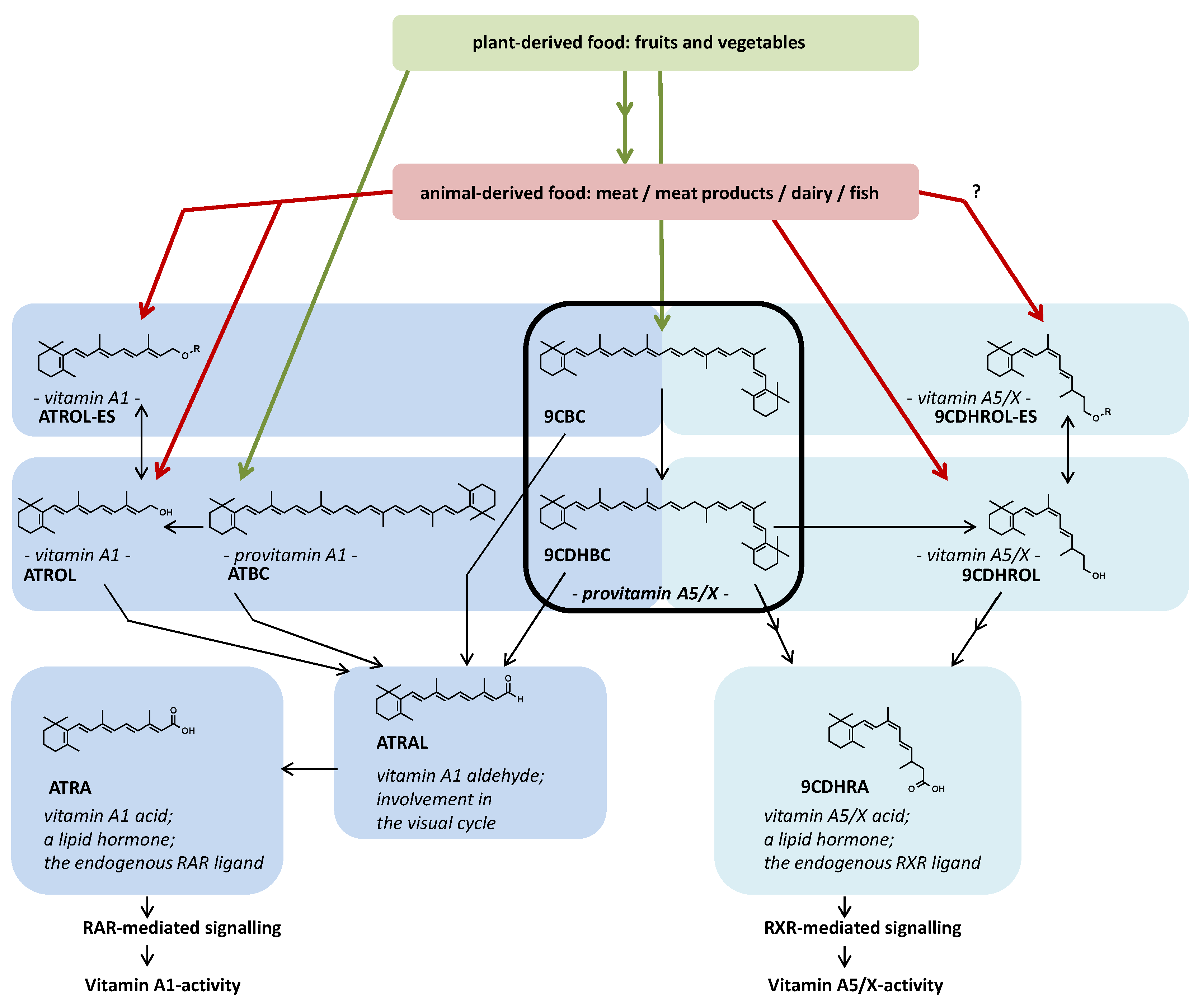
- The definition and embedding of vitamin A5 in the present context of vitamin A
- This "vitamin A - RXR-specific - RXR-mediated signalling" by vitamin A5 is an essential, nutritionally relevant, micronutrient-mediated and physiologically necessary effect of vitamin A, and thus meets all the necessary criteria established by the WHO (Institute of Medicine, 2001; World Health, Food, & Agriculture Organization of the United Nations, 1967), so that vitamin A5 can be clearly classified as a vitamin and also as a new vitamin with specific effects not only mediated by vitamin A1 pathways (Bohn, Rohn, et al., 2024).
Figure 2.
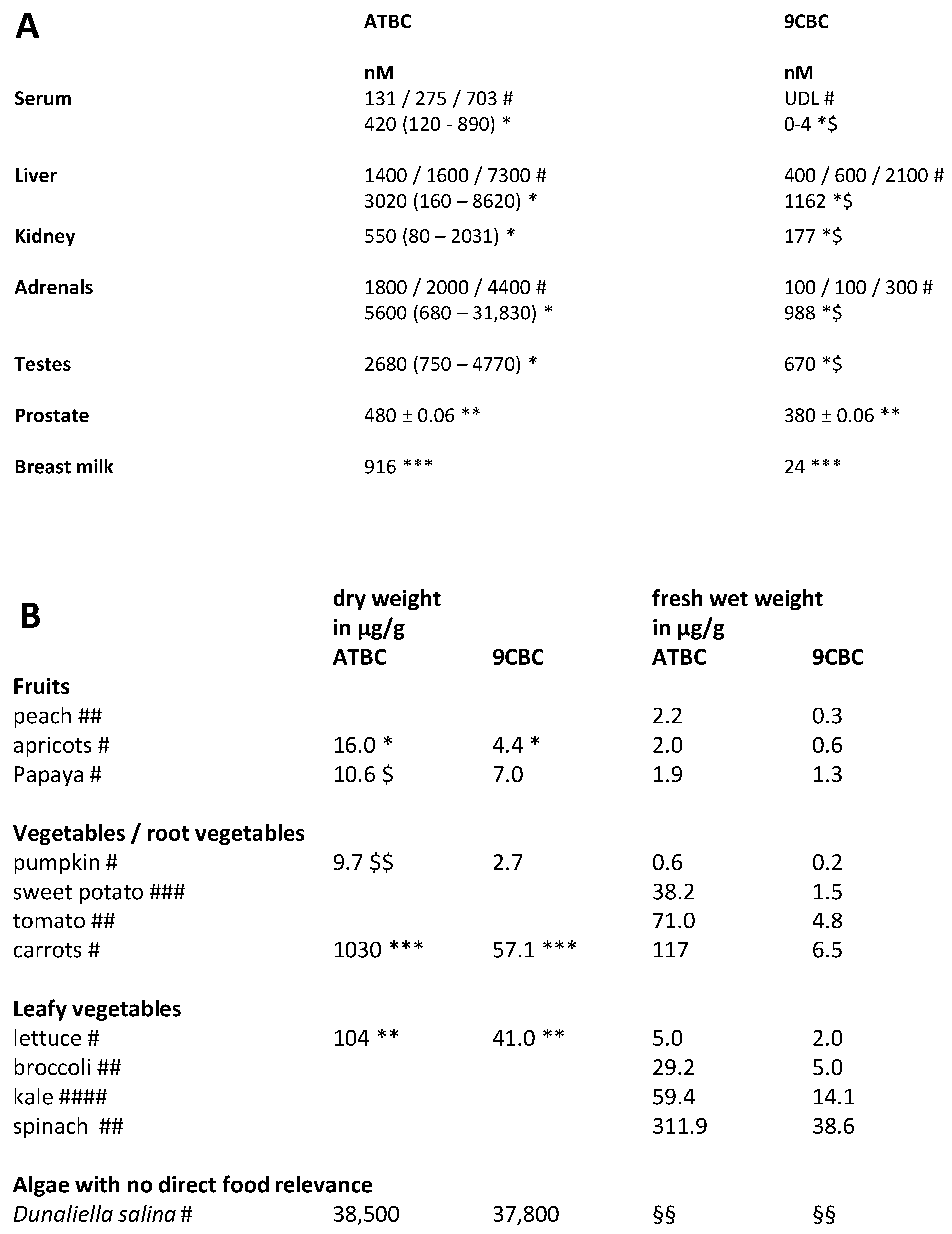
A. Slightly modified Table 2a from the reference (Bohn et al., 2023), containing the concentrations of 9CBC / provitamin A5 (in nM) in different compartments in humans. Abbreviations: all-trans-β-carotene (ATBC) and 9-cis-β-carotene (9CBC). UDL - below the detection limit. The additional details added (#, $, *, **, ***) are from the table in the original article and refer to cited studies and procedures performed (Bohn, de Lera, et al., 2022). B. Occurrence of vitamin A5 in the form of provitamin A5 in the human food chain, modified from (Table 2b in (Bohn et al., 2023) ). Abbreviations: all-trans-β-carotene (ATBC) and 9-cis-β-carotene (9CBC). The additional details added (*, **, ***, $$, §§, #, ##, ###)) are taken from the original article and refer to cited studies and procedures performed (Bohn, de Lera, et al., 2022).
Figure 2.
A. Slightly modified Table 2a from the reference (Bohn et al., 2023), containing the concentrations of 9CBC / provitamin A5 (in nM) in different compartments in humans. Abbreviations: all-trans-β-carotene (ATBC) and 9-cis-β-carotene (9CBC). UDL - below the detection limit. The additional details added (#, $, *, **, ***) are from the table in the original article and refer to cited studies and procedures performed (Bohn, de Lera, et al., 2022). B. Occurrence of vitamin A5 in the form of provitamin A5 in the human food chain, modified from (Table 2b in (Bohn et al., 2023) ). Abbreviations: all-trans-β-carotene (ATBC) and 9-cis-β-carotene (9CBC). The additional details added (*, **, ***, $$, §§, #, ##, ###)) are taken from the original article and refer to cited studies and procedures performed (Bohn, de Lera, et al., 2022).
Since vitamin A5 is structurally similar to vitamin A1, it should logically be assigned to vitamin A as a subclass, preferably as an independent subclass, as we proposed.
The problem is that the term "vitamin A1" is, and has often been, mistakenly equated with the term "vitamin A", and a sub-classification of the concept of vitamin A5 should only apply to the correct term "vitamin A" and not to the term "vitamin A1", which is mistakenly equated with vitamin A. This can lead to confusion with the current definition of vitamin A. Therefore, the definition of vitamin A should first be optimised, i.e. made more specific. This could be achieved by national and international professional bodies and authorities, such as the European Food Safety Authority (EFSA) and the WHO.
- The occurrence of vitamin A5 in the human organism
Vitamin A5 alcohol, i.e. 9CDHROL, has only been detected at very low concentrations in human serum, at 0.9 ng/mL (for comparison, all-trans-retinol is present at concentrations around 500 - 1000 ng/mL (Bohn, de Lera, Landrier, & Rühl, 2022)). It is planned to investigate 9CDHROL and 9CDHROL esters in human sera and organs in the near future using a newly established HPLC method. 9CDHRA has already been detected in humans in three studies, with concentrations in human serum of 4.8 ng/mL (Krezel et al., 2021), 4.2 / 4.8 ng/mL (Lucas et al., 2022) and 3.9 ng/g in human adipose tissue in the EU NUTRITECH cohorts. These data have not yet been published but are publicly available via the EU NUTRITECH databases (NuGO, NMC, & NBIC, 2024). For comparison, all-trans-retinoic acid / vitamin A1 acid is present in the human organism at concentrations of 0.8 - 2.8 ng/mL (Bohn, de Lera, et al., 2022).
The detection of provitamin A5 / 9CBC in the human organism has been carried out in several studies and these data have been summarised in a review (Figure 2A; Table 2 from (Bohn, Hellman-Regen, de Lera, Böhm, & Rühl, 2023) ).
- Occurrence of vitamin A5 in the human food chain
9CDHROL has only been detected at very low levels in human food, for example in beef liver at 8 ng/g. A further initiative and screening of fresh and processed foods will take place at the beginning of the year (2025).
Many fresh and processed foods have been analysed for provitamin A5 (Figure 2B) (Bohn et al., 2023). In summary, provitamin A5, in the form of 9CBC, is mainly found in vegetables, with a focus on leafy and root vegetables (Bohn et al., 2023).
- A first proposed list of dietary guidelines for vitamin A5 with special consideration of provitamin A5
An assessment of actual dietary intakes and dietary guidelines for vitamin A5 alcohol and its esters cannot be made due to the very limited data available. It is currently assumed that these forms of vitamin A5 have little or no relevance for the overall intake of vitamin A5.
For provitamin A5, two different approaches were used to calculate possible dietary guidelines:
a) Calculation of 9CBC based on its percentage contribution to the total intake of beta-carotene (BC) from natural BC-containing sources and from food sources to which BC has been added as food additives (E160a I-IV).
These BC intakes are available in many databases and have been published in reviews (Böhm et al, 2021). These data can then be converted and adjusted relatively easily. This results in a calculated daily intake of 1.1 (range: 0.5 - 1.8) mg 9CBC / day (Bohn et al., 2023), with an intake of 4.8 (range: 3-10) mg / day of total beta-carotene (Böhm et al., 2021). In addition, intakes of foods with medium or high levels of 9CBC were calculated, resulting in estimated daily intakes of, for example, 1800 g of peaches or 30 g of raw spinach to achieve this 1.1 mg of 9CBC / provitamin A5 per day.
b) A further calculation of the 9CBC intake was based on a healthy and recommended "5 A DAY" diet in humans, and on the assumption that sufficient bioactive compounds, including micronutrients, are provided by fruit / vegetables. Cohort studies have confirmed that long-term health, low mortality and logevity are associated with this recommended diet (Wang et al, 2021). The 9CBC intake was calculated on the basis of 5 portions of 80 g of fruit and vegetables / day, using the respective 9CBC concentrations in fruit and vegetables and taking into account the respective 9CBC concentrations in these food components and the average intake of fruit and vegetables in different European countries.
The calculated amount for people following the recommended "5 A DAY" diet is an average calculated intake of 1.1 mg / day, confirming our previous calculations, so that the value of 1.1 mg 9CBC / provitamin A5 per day could be calculated consistently using two different calculation methods (Bohn, Despotovic, Vahid, & Rühl, 2024).
It should also be noted that large parts of the population, i.e. ~2/3 and also the population average, are below the optimal calculated intake of 1.1 mg provitamin A5 / day (Bohn, Despotovic, et al., 2024). This is mainly due to the low consumption of fruit and vegetables, especially leafy vegetables, in many northern and central European countries (Agudo et al., 2002) and especially the young population. In southern and eastern European countries, where vegetable consumption is higher, the daily intake of 9CBC is sufficiently high (Bohn, Despotovic, et al., 2024).
In summary, the following recommended intake of 1.1 mg 9CBC / provitamin A5 per day, estimated by two independent methods, was found. Based on the low acceptance rates of a recommended "5 A DAY" diet of only 10-30% in the Western population, we calculate, with relevance for European countries and based on the EPIC databases of 66,544 people, that > 2/3 of the European population have a possible vitamin A5 deficiency, with potential negative consequences for health, especially mental health.
- What is a vitamin A5 deficiency? Is vitamin A5 essential?
Vitamin A5 deficiency is part of a general vitamin A deficiency that shows congruence with vitamin A1 deficiency based on reduced / prevented RAR-RXR-mediated signaling. It should be noted that the RXR functions as the master switch to allow multiple signalling with other nuclear hormone receptors (NHR), such as the vitamin D receptor (VDR), the lipid mediator receptor (peroxisome proliferator-activated receptor / PPAR), the cholesterol derivative receptor (liver X receptor / LXR), thyroid hormone receptor (TR), retinoic acid receptor (RAR) and NR4A2. All of these processes are therefore dependent on the endogenous RXR ligand and therefore on vitamin A5, which must be obtained from the diet.
We hereby exclude the vitamin A-mediated effect on vision in vitamin A5 deficiency that is mediated by a non-NHR-mediated pathway and focus only on the effects mediated by NHR-dependent pathways.
A common vitamin A5 deficiency corresponds to two possible types of vitamin deficiency: First, a dysfunction of vitamin A1 - RAR - RXR-mediated effects and is therefore fully consistent with a vitamin A1 deficiency. Second, a dysfunction of vitamin A5 – RXR – alternative NHR-mediated signalling may occur, corresponding to a specific vitamin A5-dependent deficiency.
RXR is an NHR that is required as a heterodimer binding partner to interact with a variety of other nuclear receptors and to control genetic transcription and the synthesis of specific proteins. This RXR requires activation by a ligand. This RXR as a partner receptor must not only interact with another receptor and then bind to the DNA, but the activation of the RXR is absolutely necessary (Mascrez, Mark, Dierich, Ghyselinck, Kastner, & Chambon, 1998) in order to initiate RXR action mediation. To date, there is no plausible alternative to activation by the endogenous vitamin A5 acid (9CDHRA) and its dietary precursor, vitamin A5, to enable this RXR-specific signaling in the human organism.
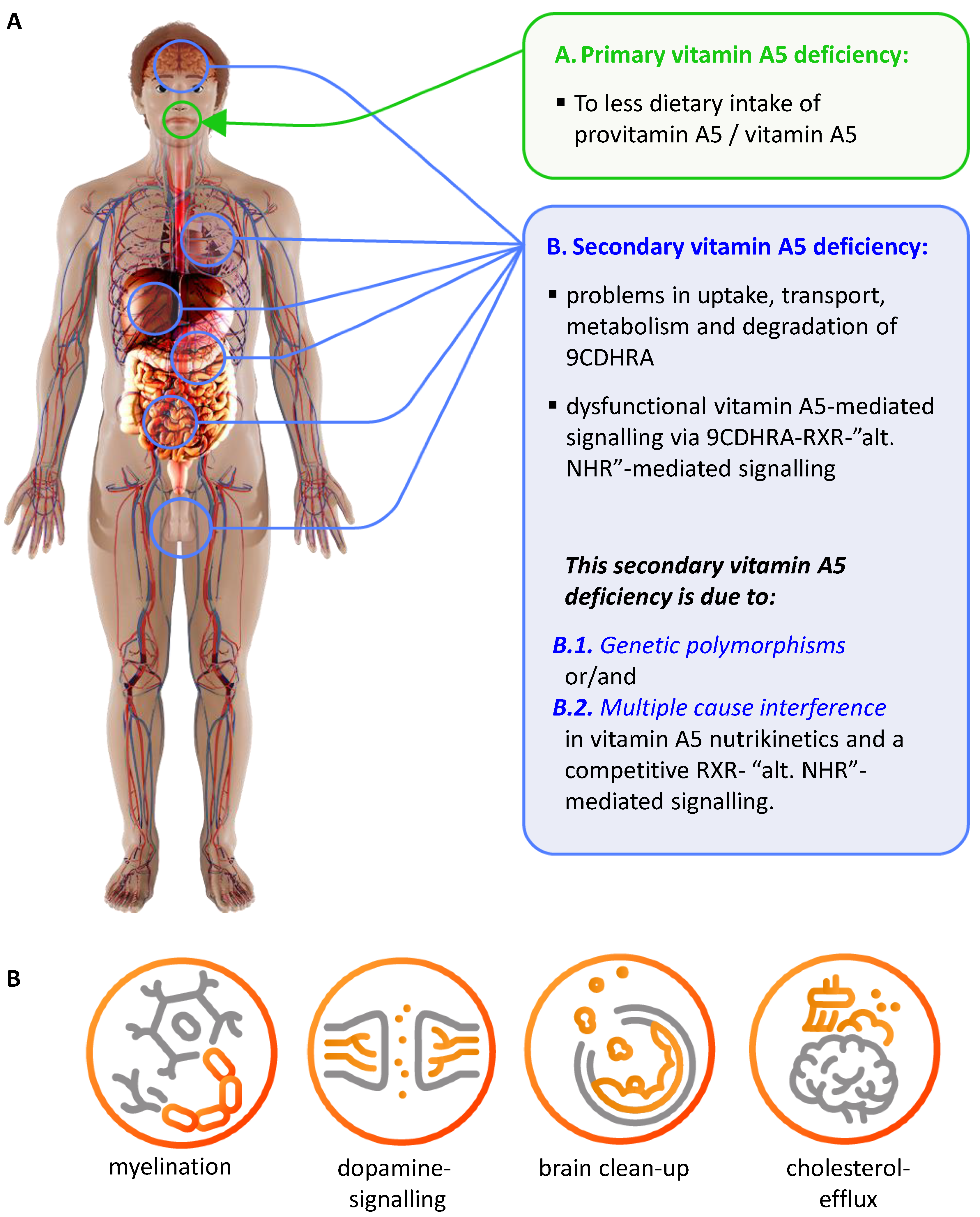
We have summarised a logical compilation of vitamin A5 - RXR mediated signalling in relation to human health with a focus on mental health (Banati et al., 2024). In this article, we have listed a number of non-optimal mental states and also neurological diseases that correspond to a possible vitamin A5 deficiency (Figure 3). All of these mental states and neurological diseases involve a problem in RXR-mediated signalling (Banati et al., 2024; Evans, 2005; Evans & Mangelsdorf, 2014; Mangelsdorf & Evans, 1995) and are based on a primary (low dietary vitamin A5 intake) or secondary (impaired RXR - vitamin A5 signalling) vitamin A5 deficiency (Figure 4A). The following listed physiological mechanisms (Figure 4B) have been defined here as key mechanisms of vitamin A5 - RXR signalling with relevance for nerves and brain, summarised in Banati et al. (Banati et al., 2024) (Figure 4B). A specific vitamin A5 deficiency is not present in RXR-RAR mediated effects, but in "LXR / PPAR / VDR / NR4A2" - RXR mediated effects (Banati et al., 2024).
Summary: Evidence that vitamin A5 mediates important a function in the brain and nerves is based on:
a) Animal experiments in which this RXR signaling can be activated by vitamin A5 but not by vitamin A1.
b) Animal models in which the RXR has been rendered non-functional or in which heterodimer binding partners of the RXR, such as the vitamin D receptor (VDR), the cholesterol derivative receptor (LXR), the lipid mediator receptor (PPAR) and NR4A2, have been rendered non-functional and severe damage to functions in the brain and nervous system has been demonstrated, corresponding to the mechanisms of the diseases mentioned in Figure 3.
c) Polymorphisms of proteins that are important for RXR signalling and are therefore risk factors for direct and indirect physiological effects on the mechanisms leading to the diseases shown in Figure 3.
d) A direct association between low intake of foods high in 9CBC / provitamin A5 and high prevalence of the diseases and indicators of suboptimal mental health listed in Figure 3.
There is therefore clear evidence of a direct influence of vitamin A5 on important functions in the brain and nerves (Bánáti et al., 2024). However, a direct link between vitamin A5 and a healthy brain and physiologically important brain functions in humans still needs to be experimentally confirmed in complex clinical trials in humans.
Direct evidence for the influence of vitamin A5 / provitamin A5 on RXR signalling in general is currently available in humans (see references in (Banati et al., 2024; Bohn et al., 2023)), as listed below. Unfortunately, direct specific evidence for important functions of vitamin A5 on the brain and nervous system in humans is still lacking.
Figure 3.
Summary of the possible effects of vitamin A5 deficiency (Banati et al., 2024).
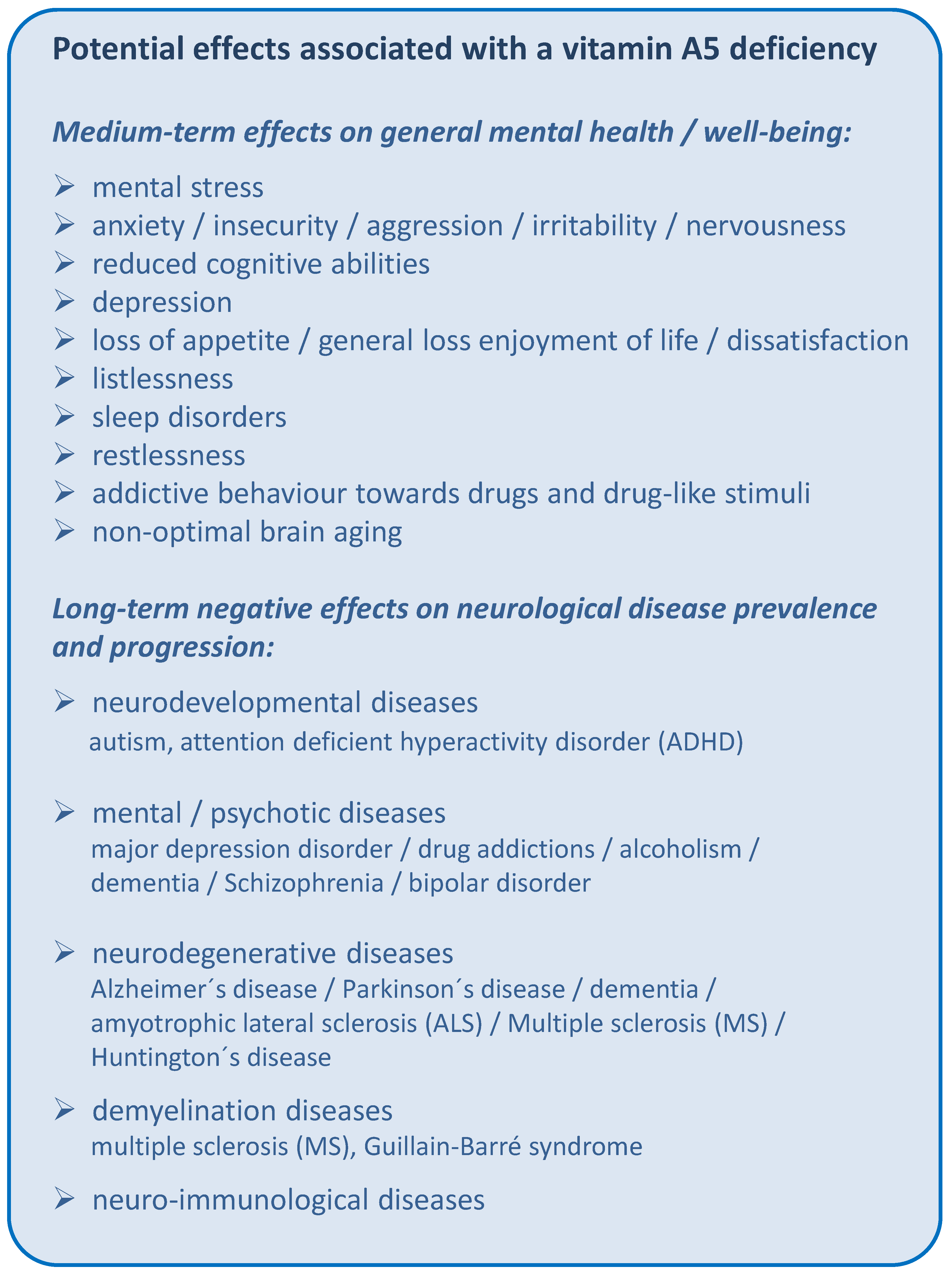
Figure 4.
A) Relevant mechanisms for vitamin A5-mediated effects in the brain and nerves and B) Mechanisms of primary and secondary vitamin A5 deficiency (Banati et al., 2024).
Figure 4.
A) Relevant mechanisms for vitamin A5-mediated effects in the brain and nerves and B) Mechanisms of primary and secondary vitamin A5 deficiency (Banati et al., 2024).
- Clinical trials with provitamin A5 and synthetic RXR ligands: Vitamin A5, RXR and the human relevance
Interventions with provitamin A5-enriched extracts: Several supplementation trials with provitamin A5- / 9CBC-enriched extracts have been carried out and are summarised in Table 3 (Bohn et al., 2023). Of note is a study of provitamin A5 supplementation by Shaish et al. (Shaish et al., 2006), which showed a significant increase in the direct RXR-LXR dependent factor, HDL cholesterol, after provitamin A5 supplementation. This shows that provitamin A5 supplementation can induce an RXR-mediated change in the human organism. This confirms the human nutritional relevance of our vitamin A5 - RXR signalling concept through provitamin A5 / vitamin A5 supplementation.
Synthetic RXR ligand interventions: To date, a large number of interventions with synthetic RXR ligands (LGD-1069 / Targretin / Bexarotene) have been used in multiple sclerosis (Brown et al., 2021; Brown et al., 2022) and other neurological diseases such as Alzheimer's disease (Balducci et al., 2015), with broad clinical potential. Unfortunately, there is also a moderate side effect, hypertriglyceridemia, induced by this synthetic RXR ligand (Brown et al., 2021). These side effects therefore prevent the clinical use of synthetic RXR ligands in the treatment of a variety of neurological diseases.
However, these effects can easily be explained by RAR - RXR mediated effects, which represent a feedback with negative consequences for the human organism in response to high doses of an RXR ligand (Lee et al., 2012; Mihály et al., 2012). Clinical interventions with provitamin A5, and as expected also with vitamin A5 directly, have not caused any of these toxic effects due to their pro-"drug" mode of action.
In summary, an RXR ligand can have desirable effects on brain and nerve function in humans. Toxic effects such as those seen with selective and potent synthetic RXR ligands administered at high doses are not expected when natural precursors such as vitamin A5 / provitamin A5 are administered to humans.
- Vitamin A5 and the overall concept of nutrition
Many pieces of the puzzle are still missing to explain the health benefits of a balanced and healthy diet rich in fruit and vegetables. Today, such a balanced diet appears to be essential to provide the human body with all the micronutrients, including those that may still be unknown.
Many diseases associated with the Western lifestyle, such as disorders of lipid, glucose and insulin homeostasis and of adipocyte metabolism, with implications for diabesity (the term diabesity describes the global epidemic characterised by the simultaneous occurrence of obesity and type 2 diabetes) and arteriosclerosis, differentiation, proliferation and apoptosis with relevance to cancer, regulation of the immune response with relevance to allergies, viral and bacterial infections, the mechanisms already listed in Figure 4B with relevance to a variety of neurological diseases / mental disorders (Bánáti et al. , 2024) are subject to this control of vitamin A5-RXR mediated and controlled signalling and are thus partly or wholly caused by a suboptimal vitamin A5 rich diet (Bohn, Rohn, et al., 2024).
Vitamin A5 is a new vitamin and the precursor of the endogenous ligand for the RXR, the "master switch" that enables this multitude of NHR-mediated effects to be activated and modulated by targeted dietary intake.
Dietary recommendations that focus exclusively on a healthy and varied diet are well-intentioned, but unfortunately the willingness of the entire population to follow these recommendations is lacking (Bohn, Despotovic, et al., 2024; Domosławska-Żylińska, Łopatek, Krysińska-Pisarek, & Sugay, 2023). Furthermore, it should not be forgotten that in Western societies, food fortification and food supplements with a variety of specific micronutrients are also important components of the diet to ensure an adequate supply of these specific micronutrients for the entire population (Kuriacose & Olive, 2014; Mensink, Burger, Beitz, Henschel, & Hintzpeter, 2002), with iodine being the most prominent example (Santos et al, 2019) and, of course, vitamin A1 / provitamin A1 (Bohn, Hellmann-Regen, de Lera Á, Böhm, & Rühl, 2022).
The use of additional dietary supplements has not yet been shown to provide any overall additional health benefits (National Institutes of Health, 2024). This may be because one or more pieces of the puzzle are still missing to replace and specifically induce these desired effects of a varied and healthy diet.
Conclusion: We hope that the identification of vitamin A5 is an important, if not the most important, component of fruit and vegetables to explain and communicate the health-promoting and health-maintaining effects of a healthy and varied diet.
1. According to the WHO definition of micronutrients, and vitamins in particular, vitamin A5 is a vitamin, as part of the vitamin A family, as an independent subcategory of vitamin A, with its own specific non-vitamin A / A1-mediated mode of action, which corresponds to an important, if not the most important, subset of vitamin A-mediated actions: the mediation of vitamin A-specific RXR signalling.
2. Areas still lacking are valid reference values for vitamin A5 derivatives in the human organism and recommended intake levels of vitamin A5. These values are in fact already available in sufficient quantities for provitamin A5 and could be disseminated by the professional societies in suggested reference amounts and intake amounts for vitamin A5.
3. Clinical relevance in humans is also lacking. In these experiments, a specific marker of vitamin A5 deficiency / risk / undersupply (e.g. a functional transcriptomic marker or myelination) should lead to a reversible improvement with vitamin A5 supplementation. However, such biomarkers are currently lacking for many other vitamins, such as vitamin A1 and vitamin D.
Items 2 and 3 listed are independent of item 1 to declare a vitamin. However, points 2 and 3 are necessary to declare a food as either a) common food, b) a food ingredient / food enriched with a food ingredient or c) a food supplement in a legally sound and binding manner with specific reference values for vitamin A5 and vitamin A5-specific "health claims".
Figure 5.
Summary of whether vitamin A5 can already be categorized as a micronutrient and thus as a vitamin.
Figure 5.
Summary of whether vitamin A5 can already be categorized as a micronutrient and thus as a vitamin.
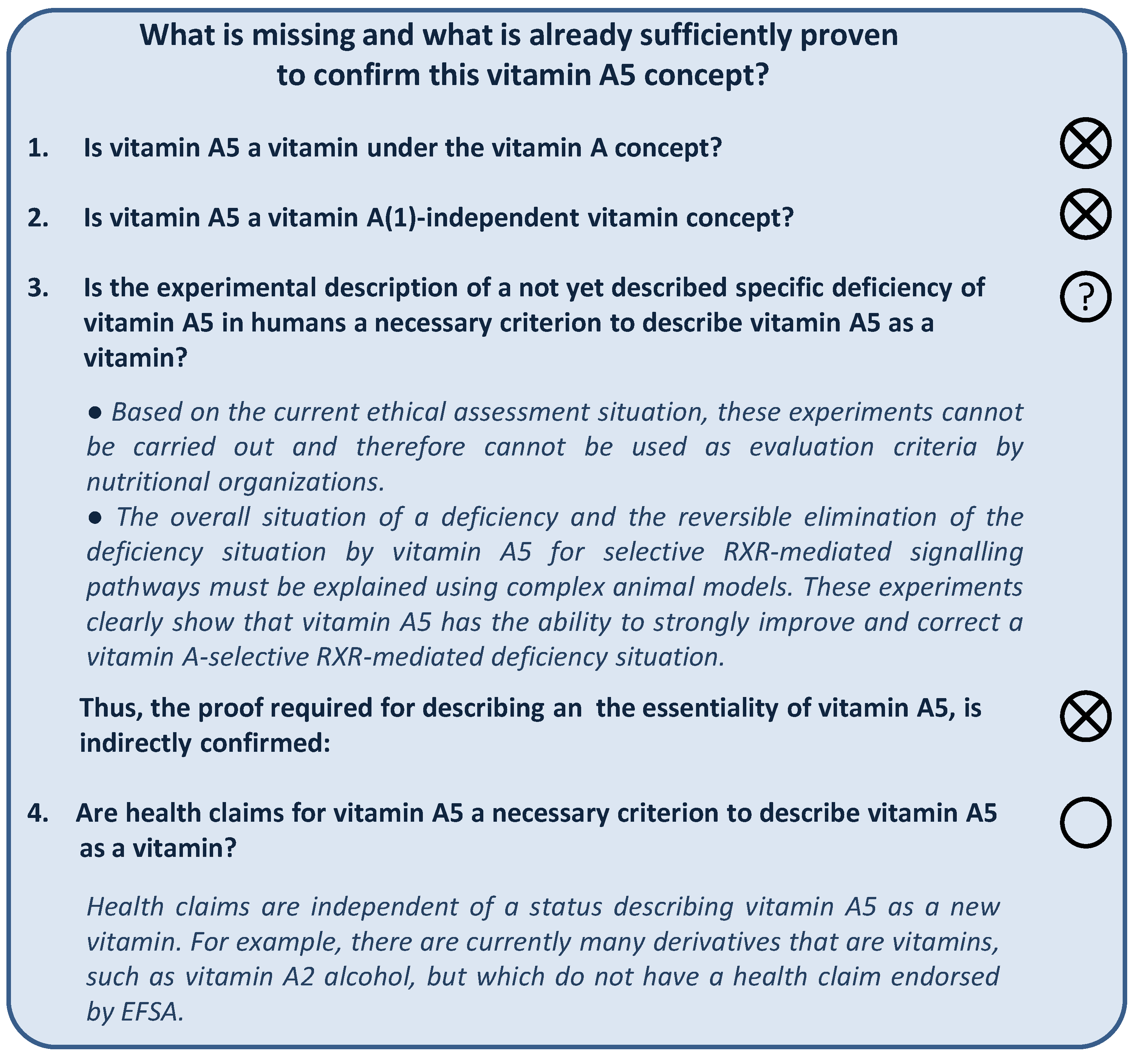
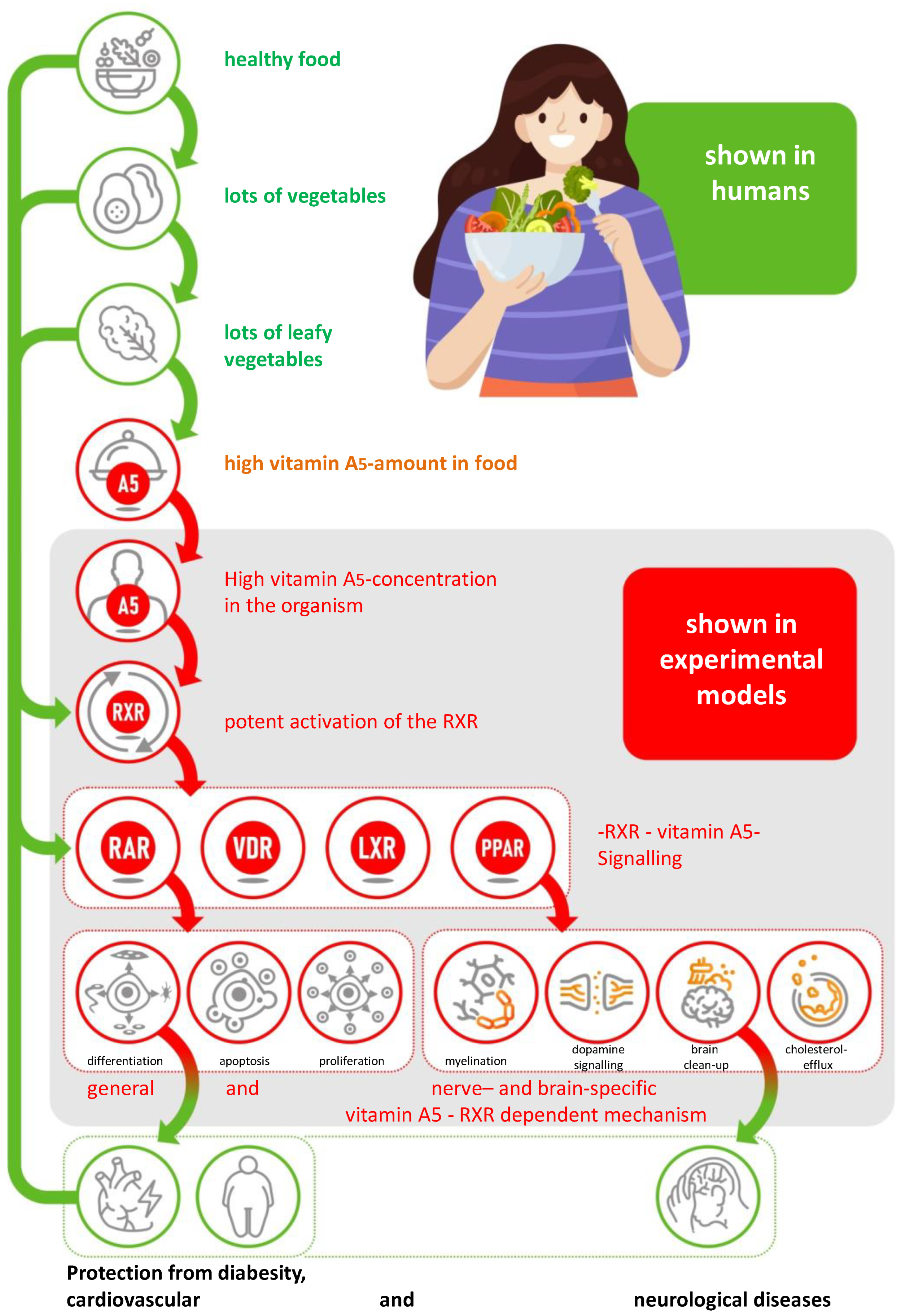
Figure 6.
Summary of the effects of vitamin A5 from intake to nutri-kinetics, the mechanism of action to preventive effects on health based on a “step by step” confirmed cascade.
Figure 6.
Summary of the effects of vitamin A5 from intake to nutri-kinetics, the mechanism of action to preventive effects on health based on a “step by step” confirmed cascade.
- The Future of Vitamin A and Vitamin A5
First, there should be an international revision of the terms "vitamin A1" and "vitamin A" that are scientifically inaccurate, inconsistent or misleading (Bohn, Rohn, et al., 2024). This will allow vitamin A5 to be correctly incorporated into the definition of vitamin A to which it belongs.
Establishing a new vitamin concept is a long and difficult process with the legal means available today. The majority will have to be convinced of such a concept by a small, manageable group of scientists. One could add that science in general is not a democracy where the majority alone decides, but that the majority must accept the correct scientific principles.
More data are needed to prove and establish a deficiency situation in humans or to describe it accurately in animal models. Further studies on the occurrence of vitamin A5 in multiple forms and active metabolites in human food and in the human organism should also be expanded experimentally. Correlations between vitamin A5 concentrations and biomarkers of general health can be analysed in existing cohort studies. Furthermore, associations between intake amounts and disease incidence may provide indirect evidence for the new vitamin A5 concept.
- Summary for a healthy and varied diet relevant for vitamin A5 (see Figure 6):
1) A sufficient daily intake of vitamin A5 can be obtained from a varied and healthy diet, but also from food additives and food supplements to prevent vitamin A5 insufficiency or even a vitamin A5 deficiency.
This strategy of additional supplementation with specific micronutrients in the case of an unbalanced diet with deficiencies in these specific micronutrients has recently been clearly recommended by national nutritional organisations (Klug et al., 2024) and is therefore also relevant for vitamin A5.
2) Vitamin A5 is the dietary precursor for the activation of the RXR - the optional "major switch" for multiple NHR signalling - thus enabling and controlling a variety of physiologically necessary mechanisms.
3) Vitamin A5 is a newly identified micronutrient that plays an important role in the prevention of diet-related diseases such as diabetes, arteriosclerosis, allergies, viral and bacterial infections, neurological diseases and mental disorders relevant to the western lifestyle.
4) Vitamin A5 is an important micronutrient that provides a plausible, mechanistic explanation for why a Western lifestyle diet leads to a high prevalence of Western lifestyle diseases, particularly neurological diseases and poor mental health, which can currently only be explained in a fragmentary, mechanistic way - but is actually observable.
References
- Agudo, A., Slimani, N., Ocké, MC, Naska, A., Miller, AB, Kroke, A.,... Riboli, E. (2002). Consumption of vegetables, fruit and other plant foods in the European Prospective Investigation into Cancer and Nutrition (EPIC) cohorts from 10 European countries. Public Health Nutr, 5 (6b), 1179-1196. [CrossRef]
- Balducci, C., Paladini, A., Micotti, E., Tolomeo, D., La Vitola, P., Grigoli, E.,... Forloni, G. (2015). The Continuing Failure of Bexarotene in Alzheimer's Disease Mice. Journal of Alzheimer's Disease, 46(2), 471-482. [CrossRef]
- Banati, Hellmann-Regen, J., Mack, I., Young, H. A., Benton, D., Eggersdorfer, M.,... Rühl, R. (2024). Defining a vitamin A5/X specific deficiency - vitamin A5/X as a critical dietary factor for mental health. Int J Vitam Nutr Res, 94(5-6), 443-475. [CrossRef]
- Böhm, V., Borel, P., Corte-Real, J., de Lera, A., Desmarchelier, C., Dulinska-Litewka, J.,... Bohn, T. (2021). From carotenoid intake to carotenoid blood and tissue concentrations – implications for dietary intake recommendations. Nutr Rev, 79, 544–573. [CrossRef]
- Bohn, T., Bonet, M. L., Borel, P., Keijer, J., Landrier, J. F., Milisav, I.,... Dulińska-Litewka, J. (2021). Mechanistic aspects of carotenoid health benefits - where are we now? Nutr Res Rev, 1-27. [CrossRef]
- Bohn, T., de Lera, A. R., Landrier, J. F., & Rühl, R. (2022). Carotenoid metabolites, their tissue and blood concentrations in humans and further bioactivity via retinoid receptor-mediated signalling. Nutr Res Rev, 1-14. [CrossRef]
- Bohn, T., Desmarchelier, C., El, S. N., Keijer, J., van Schothorst, E. M., Rühl, R., & Borel, P. (2019). B-Carotene in the Human body - Metabolic acitivation pathways - from Digestion to Tissue Distribution. Proc Nutr Soc, 78, 68-87. [CrossRef]
- Bohn, T., Despotovic, Vahid, F., & Rühl, R. (2024). Estimated dietary intakes of vitamin A5. Food and Function, in press.
- Bohn, T., Hellman-Regen, J., de Lera, AR, Böhm, V., & Rühl, R. (2023). Human nutritional relevance and suggested nutritional guidelines for Vitamin A5/X and Provitamin A5/X. Nutr. Met, 20 (34). [CrossRef]
- Bohn, T., Rohn, S., Böhm, V., & Rühl, R. (2024). Chapter 1: “What are vitamins, how are they established? – Example vitamin A. submitted for publication .
- Brown, J. W. L., Cunniffe, N. G., Prados, F., Kanber, B., Jones, J. L., Needham, E.,... Coles, A. J. (2021). Safety and efficacy of bexarotene in patients with relapsing-remitting multiple sclerosis (CCMR One): a randomised, double-blind, placebo-controlled, parallel-group, phase 2a study. Lancet Neurology, 20(9), 709-720. [CrossRef]
- Brown, J. W. L., Prados, F., Altmann, D. R., Kanber, B., Stutters, J., Cunniffe, N. G.,... Chard, D. (2022). Remyelination varies between and within lesions in multiple sclerosis following bexarotene. Ann Clin Transl Neurol, 9(10), 1626-1642. [CrossRef]
- Domosławska-Żylińska, K., Łopatek, M., Krysińska-Pisarek, M., & Sugay, L. (2023). Barriers to Adherence to Healthy Diet and Recommended Physical Activity Perceived by the Polish Population. J Clin Med, 13(1). [CrossRef]
- EUFIC. (2024). Zero Hidden Hunger EU: Tackling micronutrient malnutrition and hidden hunger to improve health in the EU. https://www.eufic.org/en/european-projects/project/zero-hidden-hunger-eu-tackling-micronutrient-malnutrition-and-hidden-hunger-to-improve-health-in-the-eu#, accessed 01.09.2024.
- Evans, R. M. (2005). The nuclear receptor superfamily: a rosetta stone for physiology. Mol Endocrinol, 19(6), 1429-1438. http://www.ncbi.nlm.nih.gov/entrez/query.fcgi?cmd=Retrieve&db=PubMed&dopt=Citation&list_uids=15914712. [CrossRef]
- Evans, R. M., & Mangelsdorf, D. J. (2014). Nuclear receptors, RXR, and the big bang. Cell, 157(1), 255-266. [CrossRef]
- Institute of Medicine. (2001). Dietary Reference Intakes for Vitamin A, Vitamin K, Arsenic, Boron, Chromium, Copper, Iodine, Iron, Manganese, Molybdenum, Nickel, Silicon, Vanadium, and Zinc. Washington, D.C.: Institute of Medicine..
- Klug, A., Barbaresko, J., Alexy, U., Kühn, T., Kroke, A., Lotze-Campen, H.,... Watzl, B. (2024). Reassessment of the DGE position on vegan nutrition. Nutritional Review, 7 .
- Krezel, W., Rivas, A., Szklenar, M., Ciancia, M., Alvarez, R., de Lera, AR, & Ruhl, R. (2021). Vitamin A5/X, a New Food to Lipid Hormone Concept for a Nutritional Ligand to Control RXR-Mediated Signaling. Nutrients, 13 (3). http://www.ncbi.nlm.nih.gov/entrez/query.fcgi?cmd=Retrieve&db=PubMed&dopt=Citation&list_uids=33809241. [CrossRef]
- Krzyzosiak, A., Podlesny-Drabiniok, A., Vaz, B., Alvarez, R., Ruhl, R., de Lera, AR, & Krezel, W. (2021). Vitamin A5/X controls stress-adaptation and prevents depressive-like behaviors in a mouse model of chronic stress. Neurobiol Stress, 15 , 100375. http://www.ncbi.nlm.nih.gov/entrez/query.fcgi?cmd=Retrieve&db=PubMed&dopt=Citation&list_uids=34401411. [CrossRef]
- Kuriacose, R., & Olive, K.E. (2014). Vitamin D insufficiency/deficiency management. South Med J, 107 (2), 66-70. [CrossRef]
- Agriculture, B. f. E. u. (2024). Good food for Germany . Berlin: Federal Ministry of Food and Agriculture.
- Lee, L. M., Leung, C. Y., Tang, W. W., Choi, H. L., Leung, Y. C., McCaffery, P. J.,... Shum, A. S. (2012). A paradoxical teratogenic mechanism for retinoic acid. Proceedings of the National Academy of Sciences of the United States of America, 109(34), 13668-13673. [CrossRef]
- Lucas, R., Szklenar, M., Mihaly, J., Szegedi, A., Torocsik, D., & Rühl, R. (2022). Plasma Levels of Bioactive Vitamin D and A5 Ligands Positively Correlate with Clinical Atopic Dermatitis Markers. Dermatology, 238(6), 1076-1083. http://www.ncbi.nlm.nih.gov/entrez/query.fcgi?cmd=Retrieve&db=PubMed&dopt=Citation&list_uids=35609515. [CrossRef]
- Mangelsdorf, DJ, & Evans, RM (1995). The RXR heterodimers and orphan receptors. Cell, 83 (6), 841-850. http://www.ncbi.nlm.nih.gov/entrez/query.fcgi?cmd=Retrieve&db=PubMed&dopt=Citation&list_uids=8521508. [CrossRef]
- Mascrez, B., Mark, M., Dierich, A., Ghyselinck, NB, Kastner, P., & Chambon, P. (1998). The RXRalpha ligand-dependent activation function 2 (AF-2) is important for mouse development. Development, 125 (23), 4691-4707. [CrossRef]
- Mensink, G., Burger, M., Beitz, R., Henschel, Y., & Hintzpeter, B. (2002). What are we eating today? : Robert Koch Institute.
- Mihály, J., Gericke, J., Aydemir, G., Weiss, K., Carlsen, H., Blomhoff, R.,... Rühl, R. (2012). Reduced retinoid signaling in the skin after systemic retinoid-X receptor ligand treatment in mice with potential relevance for skin disorders. Dermatology, 225(4), 304-311. [CrossRef]
- National Institutes of Health. (2024). Multivitamin/mineral Supplements. https://ods.od.nih.gov/factsheets/MVMS-HealthProfessional/, accessed 28.09.2024.
- NuGO, NMC, & NBIC. (2024). Phenotype database. https://dashin.eu/interventionstudies/study/show/12569838,, accessed 31.10.2024.
- Rühl, R., Krezel, W., & de Lera, A. R. (2018). 9-Cis-13,14-dihydroretinoic acid, a new endogenous mammalian ligand of retinoid X receptor and the active ligand of a potential new vitamin A category: vitamin A5. Nutr Rev, 76(12), 929-941. http://www.ncbi.nlm.nih.gov/entrez/query.fcgi?cmd=Retrieve&db=PubMed&dopt=Citation&list_uids=30358857. [CrossRef]
- Rühl, R., Krzyzosiak, A., Niewiadomska-Cimicka, A., Rochel, N., Szeles, L., Vaz, B.,... Krezel, W. (2015). 9-cis-13,14-dihydroretinoic acid is an endogenous retinoid acting as RXR ligand in mice. PLoS Genet, 11(6), e1005213. [CrossRef]
- Santos, J. A. R., Christoforou, A., Trieu, K., McKenzie, B. L., Downs, S., Billot, L.,... Li, M. (2019). Iodine fortification of foods and condiments, other than salt, for preventing iodine deficiency disorders. Cochrane Database Syst Rev, 2(2), Cd010734. [CrossRef]
- Shaish, A., Harari, A., Hananshvili, L., Cohen, H., Bitzur, R., Luvish, T.,... Harats, D. (2006). 9-cis beta-carotene-rich powder of the alga Dunaliella bardawil increases plasma HDL-cholesterol in fibrate-treated patients. Atherosclerosis, 189(1), 215-221. [CrossRef]
- Wang, D. D., Li, Y., Bhupathiraju, S. N., Rosner, B. A., Sun, Q., Giovannucci, E. L.,... Hu, F. B. (2021). Fruit and Vegetable Intake and Mortality: Results From 2 Prospective Cohort Studies of US Men and Women and a Meta-Analysis of 26 Cohort Studies. Circulation, 143(17), 1642-1654. [CrossRef]
- World Health, O., Food, & Agriculture Organization of the United, N. (1967). Requirements of vitamin A, thiamine, riboflavine and niacin : report of a joint FAO/WHO expert group, Rome, Italy, 6-17 September 1965. Geneva: World Health Organization.
Disclaimer/Publisher’s Note: The statements, opinions and data contained in all publications are solely those of the individual author(s) and contributor(s) and not of MDPI and/or the editor(s). MDPI and/or the editor(s) disclaim responsibility for any injury to people or property resulting from any ideas, methods, instructions or products referred to in the content. |
© 2024 by the authors. Licensee MDPI, Basel, Switzerland. This article is an open access article distributed under the terms and conditions of the Creative Commons Attribution (CC BY) license (http://creativecommons.org/licenses/by/4.0/).
Copyright: This open access article is published under a Creative Commons CC BY 4.0 license, which permit the free download, distribution, and reuse, provided that the author and preprint are cited in any reuse.


