

Submitted:
03 December 2024
Posted:
06 December 2024
You are already at the latest version
Abstract
Environmental monitoring systems integrated with IoT networks have rapidly evolved, enabling the collection of vast amounts of data accessible to facility managers and authorized users via smartphone apps. This paper presents a system developed to monitor environmental parameters across multiple buildings at the University of Pisa, with a focus on its potential for improving energy efficiency. Efficient energy management has become increasingly important, especially following the COVID-19 pandemic, which introduced legal requirements for mechanical ventilation. These measures have significantly increased energy consumption during both winter and summer seasons. Our system, built using low-cost components and a secure IoT network, demonstrates how CO2 monitoring and smart controls can reduce energy waste in buildings. In a case study conducted on selected buildings, the system achieved up to 40% energy savings. The paper highlights both the benefits and the limitations of current technology in this context, emphasizing the role of IoT in enhancing sustainability while ensuring safety and security within academic institutions.
Keywords:
Efficiency
; Environmental monitoring
; Energy management
; CO2 monitoring
; Internet of Things (IoT)
; Cybersecurity
1. Introduction
There is increasing attention on energy use in buildings, a topic of global concern, but particularly in Europe, where 40% of energy consumption is attributed to buildings, over a third of the EU’s energy-related greenhouse gas emissions come from buildings, and approximately 80% of the energy used in EU homes is for heating, cooling, and hot water, [1]. (Nearly-)Zero Energy Buildings (N-)ZEBs may be seen as a pioneering attempt towards energy-efficient buildings [2], and more recently the discussion has involved the concepts of (nearly-)zero emission buildings, or energy-positive neighborhoods and districts [3]. The idea is that the little energy (or emissions) caused by the buildings can be outweighed by locally generated energy produced from renewable sources. In addition to new construction solutions, a critical role in improving current energy consumption is played by a massive utilization of Internet-of-Things (IoT) enabling technologies. These include the possibility to monitor energy consumption, and guarantee that, roughly speaking, only the energy really needed is produced. For this purpose, the energy actuation side, most notably, heating, ventilation, and air conditioning (HVAC) and lighting devices, needs to access the IoT data to function only when strictly required. Home/Building Automation Control Systems (BACS) are thus becoming an essential element in the energy management system, and a Smart Readiness Indicator (SRI) has been introduced to measure the “smartness” of a buildings. Accordingly, the SRI is supposed to measure the ability of a buildings to “sense, interpret, communicate and actively respond in an efficient manner to changing conditions in relation to the operation of technical buildings systems, the external environment (including energy grids) and the demands from building occupants”, [4].
1.1. State of the Art
Energy efficiency in buildings is a well-studied topic, reflecting its importance. Mechanical systems, such as HVAC devices, responsible for maintaining indoor air quality and thermal comfort, account for 25-50% of building energy consumption, especially in public shared facilities [5]. Effective management of these systems in public buildings is crucial for achieving energy savings, benefiting both sustainability and costs [6].
University buildings, characterized by their large size, fluctuating user flows, and varied spaces (classrooms, offices, labs), are particularly energy intensive [7]. Their efficient management is vital for improving public building energy performance. Research highlights various control methods, classified into user-defined and automated programs. Automated systems, which rely on occupancy monitoring via sensors, outperform manual controls in optimizing energy use [8,9,10]. Since energy consumption strongly correlates with room occupancy and user behavior, integrating occupancy data into HVAC management has shown potential savings of 30-40%, and even up to 80% in some cases [11,12]. However, practical applications remain scarce due to the complexity of managing multiple buildings and structures. This has spurred growing interest in environmental monitoring and leveraging such data for energy-efficient solutions [13,14].
After COVID-19 pandemic, the increased use of mechanical ventilation in public spaces has become critical, significantly raising energy consumption during extreme weather seasons [15]. In the case of university structures, the operating margins for obtaining energy savings appear to be much more significant than in other public structures, because in general the occupants are young and in good health and the regulations for controlling environmental quality are certainly less stringent than those observed in other types of public structures, such as hospitals. A key aspect that underpins the efficient management of these diverse structures is the ability to accurately measure occupancy in real time. The recent approach to energy management in public buildings focuses on optimizing energy efficiency by regulating system usage according to temperature, humidity, and CO2 levels—activating energy systems only when needed and minimizing their use during non-essential periods. For this purpose, the relevance of IoT technologies and their connection with smart monitoring for achieving various objectives cannot be understated [16], and further examples can be found in [17,18] as well. An often-overlooked aspect concerns sensors used to evaluate room occupancy. While video camera data raise privacy concerns, environmental parameters like pollution data offer a privacy-friendly alternative [19]. Motion or CO₂ sensor data can effectively estimate occupancy while adhering to privacy regulations [20]. This marks a shift from their traditional role in monitoring indoor air quality, a topic still underexplored in literature. Indoor air quality monitoring remains valuable for microclimatic control, health and safety compliance, and optimizing HVAC system performance, particularly in spaces with fluctuating occupancy, such as commercial buildings [21].
1.2. Original Contribution
Addressing energy savings in complex structures like universities is a challenging task. In recent works, we have explored a range of approaches to environmental monitoring and energy efficiency, applying advanced techniques across different contexts, such as monitoring systems based on commercial sensors [22]; introducing machine learning models for the analysis of the acquired data for forecasting purposes and preliminary discussing the integration of IoT networks with environmental monitoring [22,23]. These publications illustrate the potential of combining monitoring technologies with predictive models to enhance the management and sustainability of public buildings.
This paper is organized as follows: in the next section we overview the issue of energy consumption and its various uses within university facilities, with specific reference to the Italian context, highlighting the potential of self-constructed smart environmental sensors connected to an IoT network across the university. Such a network can be utilized in a secure environment to optimize the operation of technical systems (such as lighting systems and HVAC devices) with the objective of controlling the environmental parameters and optimizing energy use. In addition to the energy-related aspects, the article also examines cybersecurity concerns and the safe sharing of data within the network. This topic is crucial, as a true IoT network must be globally accessible, potentially introducing cybersecurity challenges. While local monitoring networks avoid such risks, their data access is restricted to the vicinity of the building. The issue becomes particularly significant in university centers, which often span large areas and multiple buildings, making a shared protocol for centralized data collection via a web server more practical. However, these centers also manage sensitive information, requiring careful attention to security measures (Figure 1).
In the final section of the paper, we show an example of typical energy saving being available with smart monitoring connected with IoT network that can be obtained with optimal management of HVAC system using the data of a typical didactic structure of the University. The examples illustrate how a real-time monitoring system that captures and manages data can be useful for different objectives, aiming to demonstrate the versatility and efficacy of IoT technologies, [24]. Through real-time data acquisition and management, IoT can contribute to significant improvements in both energy efficiency and operational effectiveness, tailored to the specific needs of each structure.
2. Challenges in Building Energy Management: the Case of the University Sector
The importance of energy use is clear, but its fragmentation often shifts focus to general issues, overlooking key local and systemic details. It is well known that significant energy uses in countries are linked to civil/residential sectors, where mainly electricity and natural gas are used. In this context the contribution of the services sector cannot be underestimated. In Europe, in 2022 this consumption amounted to approximately 13.4% of the total, corresponding to about 1400 TWh [25], as shown in Table 1. Energy consumption connected to “Services” can be further explored and broken-down into approximately 20 different sectors. Indeed, the “Services” sector encompasses a wide range of activities, including machinery repair, water and waste management, trade (wholesale, retail, and motor vehicles), transportation, postal services, accommodation, food services, information and communication, financial services, real estate, professional and technical services, administrative support, public administration, education, healthcare, and arts and entertainment. Table 2 summarizes a possible break-down of energy use in different sub-sectors in services.
Approximately 6% of this energy is used in the “Educational” sectors, which include schools and universities. While this value may not appear to be particularly relevant, the weight of the energy term in the balance sheets of the systems is starting to be increasingly significant. In fact, in recent years the energy certification of residential buildings, particularly in Europe and Italy, has gained more attention. This process, often referred to as the “energy performance certificate” (or APE), aims to classify buildings based on their energy consumption, considering various factors such as their geographic location, building type, wall insulation, and heating or cooling systems. The focus on these elements, especially in residential settings, has led to some progress in understanding and optimizing energy use in these types of buildings [9,26]. When we look at the service sector, the situation appears to be quite different. The same attention given to residential buildings is not as prevalent, and a one-size-fits-all approach simply does not work. In this sector, we need to adopt specific measures tailored to each case, as the energy consumption in service buildings varies greatly depending on the behavior and presence of occupants, as well as the building’s usage patterns [27]. While residential buildings may have predictable energy consumption patterns, service buildings require a much more dynamic approach to energy management. Real energy consumption of any building often differs from what was calculated during the design phase, particularly because the presence and actions of occupants are often overlooked in traditional energy performance assessments.
Only recently has there been a growing awareness of how crucial occupant behavior is to the actual energy consumption of buildings. In fact, the efficiency of any energy system is deeply connected to the habits and behaviors of those who use it, and this is something we need to factor into our approach, especially in the service sector.
The focus of the present study is on specific structure: the University Buildings. Due to their large size and different use, university buildings are highly energy intensive. Proper management of these buildings is essential for energy efficiency in the public sector. It is challenging to energetically characterize university structures due to varying availability of facilities and energy uses. Constructing aggregate indicators is difficult too; however, based on the author’s analysis, a potential aggregate metric could be the total energy use per student or per community member including faculty and technical staff). By analyzing the available data from various reports and attempting to aggregate the information as effectively as possible, it is possible to derive an average value of the energy used within the Italian university system from [28,29].
These data compare universities of very different sizes and characteristics, in climatic conditions that vary significantly from northern to southern Italy. The range of values observed spans from around 570 kWh per student to over 2,500 kWh per student. Although energy use is significant, from an economic standpoint, energy expenses represent only a small portion of a university’s overall budget (1-7,6%).
This also explains the challenges in raising awareness on this issue. However, considering that staff costs typically account for 80 to 90% of a university’s current budget, it becomes clear that among the remaining budget items, energy bills are, in many cases, quite significant. Focusing on this metric reveals for the Italian Universities a wide range between 600 and 2500 kWh per person, significantly influenced by the university’s size, geographical location, and structure type (campus or distributed). Table 3 provides some data about Italian system. Considering the specific case of the University of Pisa (Figure 2 and Table 4 provides some didactic structures), this is a community of more than 50000 people, considering students, teachers and personnel. There are more than 50 with 70000 m2 of used surface in which about 400 classrooms are available with 25000 seats. [30]
The annual energy use (Table 5) corresponds to about 45000 MWh, 25500 MWh of electricity and 19500 MWh of natural gas. For this reason, the annual energy use is about 900 kWh per person. This is good value, if compared with the general use of energy in the University sector, according to a recent report [29], the University of Pisa, which is classified as one of the ‘Mega Universities’ according to ISTAT’s indexing, does not rank poorly in the standings. However, significant potential for energy savings can still be identified.
The topic of energy saving is indeed very appealing, but it is often surrounded by excessive enthusiasm, leading to large-scale initiatives without a clear understanding of their potential impact. Unfortunately, achieving meaningful energy savings in complex structures is quite difficult.
3. Universities and Energy Saving
The effort to reduce the energy impact of university facilities follows two key principles. On the one hand, it is essential to promote the implementation of renewable energy sources, and this is already being pursued to a significant extent pursuing an increase of self-production. Several renewable energy plants, as Photovoltaic (PV) have been built and activated in university buildings. However, another cornerstone is achieving substantial energy savings. As we have discussed in Section 2, despite the structural differences between universities and the varying climatic conditions, there are considerable disparities in the energy consumption per student. At the very least, efforts could be made to align with these more efficient benchmarks, as there is significant potential for improvement. Energy consumption at universities primarily consists of the use of electricity and natural gas, which are employed for climate control and the operational functioning of the facilities. The energy used in buildings such as universities is primarily tied to gas and electricity consumption. While other forms of energy consumption exist, such as vehicle usage, these are more difficult to quantify and reduce.
3.1. Structure of Energy Use in University and Potential for Energy Savings
Energy saving is challenging due to complex structures and procedures. Simple measures are not so effective. Structural measures are often costly and difficult to implement in existing buildings (for different reasons!). From a general perspective, there are many ways to achieve significant energy savings, but many of these are more theoretical than practical, and their actual impact may be quite limited, [31]. It is also important to consider both the economic and practical implications of the various measures. One commonly considered approach is improving building infrastructure, but this is often impractical in many cases. Therefore, we will focus on analyzing methods that can be realistically implemented and are not too invasive. First and foremost, organizational measures play a key role. By implementing effective energy management strategies, we can streamline energy usage, set consumption goals, and monitor progress, ensuring a more efficient overall operation. Engaging all levels of our organization, from administration to maintenance, is essential in driving these efforts forward. Equally important is the awareness and education of our end users—the students, staff, and faculty. Promoting responsible energy use behavior through training, workshops, and campaigns will create a culture of sustainability. Simple actions like turning off lights, managing heating or cooling settings, and minimizing equipment standby time can collectively lead to significant energy savings. However, we know well that although appreciable, the impact of such measures is often limited, also because the people who use the structures have a reduced capacity and possibility of interacting with the energy systems, [32,33].
When it comes to infrastructure, we need to focus on upgrading thermal power plants and refrigeration units. By modernizing these systems, we can significantly improve their efficiency, reducing energy waste and lowering operational costs. This is crucial for a university campus or University buildings that demand large amounts of heating and cooling throughout the year. But even in this case it is a measure that allows for a small reduction in overall consumption, unless it involves the replacement of systems that are broken and operate at very low efficiency or not-usual situations, like during the lockdown phase [34].
Replacing windows and doors represents surely another important measure. Improved insulation through high-efficiency window systems will help reduce heat loss in the winter and minimize heat gain in the summer. This alone can make a substantial difference in our energy consumption for heating and cooling. Additionally, we can enhance the thermal insulation of building roofs. Better insulation prevents energy leakage, contributing to more stable indoor temperatures and less reliance on heating or air conditioning systems. These changes will not only benefit the environment but also improve the comfort of our learning spaces. However, these are measures that have a significant economic impact and that determine significant effects only in extreme climatic conditions, much less so in the case of mild climates. Lighting is another area ripe for improvement. Replacing old lighting systems with energy-efficient LED luminaires will reduce electricity consumption while providing better-quality light for our classrooms, offices, and common areas. Obviously, all the replacements and innovation have a possible beneficial effect on reducing energy use and help to ensure that energy is used more effectively, reducing unnecessary energy waste.
As anyone who deals with complex structures and plant management knows, real savings can be achieved especially when plants are not used. This means that significant savings can be found by operating them when they are needed. Optimizing the management of thermal systems is also essential. Table 4 provides a highly qualitative summary of the potential measures that can be applied, along with their potential impact in terms of achievable savings and economic cost. The impact of these measures cannot be easily quantified. Active solutions (e.g., PV plants) are well implemented but not always so relevant. Reducing operation times of HVAC plants is a simple method but not always well-received by teachers and students. As previously stated, the primary energy consumption in buildings like teaching centers is associated with the operation of heating, air conditioning, and ventilation (HVAC) systems. If we carefully analyze the consumption related to the functioning of these systems, this is certainly a significant part of the overall energy balance and can be reduced with actions that, as we will see, can be easily implemented.
The data in Table 6 are derived from several analyses assessing the potential impact of various interventions. The overall energy savings potential is estimated to be around 15% of current consumption when combining all possible measures. Among the most significant and cost-effective solutions is the optimized management of system operations. Concerning the specific case of the University of Pisa, implementing all energy-saving initiatives could result in savings of 6000-7000 MWh, though some measures come with significant costs. However, even those with more limited impact (2-3%) might still be of interest due to their lower implementation costs.
3.2. Climate Control, Ventilation and the Energy Use Connected to HVAC.
HVAC systems control air movement for ventilation, heating, cooling, and humidity regulation. The main types are water, all-air, and mixed systems, with the latter being the most common due to their flexibility. This work focuses on mixed systems, particularly air treatment units (AHUs) using water as the heat transfer fluid. These systems consist of components like air dampers, filters, heat exchangers, and supply/return fans to maintain a slight overpressure in rooms. After COVID-19, in many they use 100% external air, with no recirculation, and energy recovery is limited to heat exchange. While these systems ensure high indoor air quality, they also result in increased energy consumption, as higher airflow rates directly raise ventilation power and energy use.
During the intermediate seasons, energy consumption is purely associated with mechanical ventilation, driven solely by the fan’s power. During the seasons when the heating or cooling systems are active, this is supplemented by the thermal energy required for climate control, leading to a more substantial increase in overall energy consumption. In general, the power required for the fan is given by:
Total pressure losses in the distribution system are divided into two types: distributed losses, caused by viscous effects along duct walls and influenced by duct size and air velocity, and concentrated losses, occurring at localized disruptions like bends, valves, and expansions. Summarizing it is:
The fan flow rate is controlled by an inverter, with a range from 40% to 100%. The power required for the ventilation can be calculated considering the ventilation efficiency. In particular, two types of efficiency are considered: inverter efficiency, related to flow rate variation, and electrical efficiency, accounting for energy loss due to the Joule effect. The absorbed power can be estimated using the following equation:
During the heating (winter) and cooling (summer) periods, the energy consumption for mechanical ventilation is supplemented by the thermal load required to manage both sensible and latent heat. This is necessary because the temperature of the outdoor air often deviates significantly from the set-point conditions of the system. In particular, the sensible heat component arises from the temperature difference between the outdoor air and the indoor set-point, requiring energy to either heat or cool the incoming air to match the desired indoor conditions:
The latent heat component, on the other hand, is associated with the moisture content of the air. In winter, this typically involves adding humidity to the dry outdoor air, while in summer, it requires dehumidification to maintain indoor comfort levels. So, these terms involve additional power that can be expressed as:
Increasing the ventilation air flow rate leads to higher energy consumption. Therefore, the air replacement rate should be limited to the minimum required to ensure adequate indoor air quality, as any unnecessary increase in air exchange will directly raise energy usage due to the operation of the HVAC system. A good energy manager understands that one of the most inefficient practices is leaving an HVAC system running to cool or heat an unoccupied space, and even worse, when doors and windows are left open. Unfortunately, this situation occurs more frequently than one might expect.
Just to get an idea of the orders of magnitude of energy use in a university facility, the following table provides some reference values, which can be obtained based on typical climatic conditions observed in Pisa and considering what is the common operation of air conditioning systems. In the case of on-off operation, three climatic situations can be distinguished (winter season, summer season and intermediate season) and three occupancy conditions (low occupancy, medium occupancy, and high occupancy). As regards the air conditioning system, in the winter season the heating system is active, in the summer season the system works in cooling mode and in the intermediate season the system only performs ventilation. As regards ventilation, there are three distinct levels of operation, which correspond to three different exchanged volumes in connection with conditions of low occupancy, medium occupancy, and high occupancy. Table 7 presents an estimate of energy use divided between ventilation (electrical energy) and air conditioning (thermal energy). Nine different operating conditions can be identified. The results presented in Table 7 refer to a scenario where the ventilation control is not linked to the number of occupants. The most significant energy waste occurs in summer, when high occupancy is expected but not realized, or when climatic conditions require reduced system operation. In classrooms with low or reduced occupancy but high air exchange, significant energy is wasted cooling unnecessary air. Introducing five levels of occupancy could lead to substantial hourly savings (Table 8). This suggests that controlling operation based on both temperature and occupancy can result in significant energy savings.
4. Occupancy Control in Public Buildings and Potential for HVAC Energy Saving
As highlighted in the introduction, scientific literature offers numerous studies on methods for managing system controls to prevent energy waste. These control methods can be divided into two primary categories: user-defined programs and automated systems that adjust based on occupancy data gathered from various sensors and meters [35]. Table 9 and Table 10 summarize the key concepts. Fixed programs, such as static or scheduled controls, often fail to meet the building’s actual needs. This misalignment between energy generation and demand can lead to energy inefficiency, such as unnecessary air conditioning when rooms are unoccupied and excessive ventilation during partial occupancy, resulting in significant energy waste. While manual or programmed thermostats can regulate small hydronic systems in individual rooms, they are not effective for large buildings. In these cases, they typically provide minimal energy savings or may even increase energy consumption. Occupancy-based control methods, on the other hand, adjust settings in real-time based on monitored occupancy data. While these methods generally offer the best performance, their effectiveness depends on the accuracy of the data or models used. Reactive control methods, however, can cause discomfort due to delays in adjusting set-points in response to occupant presence, as HVAC systems are often slow to adapt. The lag time associated with HVAC systems is one of the primary limitations of these approaches. Predictive control strategies, which use occupancy forecasts based on historical data, aim to proactively manage the system. By anticipating future occupancy, these strategies allow for preconditioning of the environment, ensuring optimal comfort and energy efficiency.
The success of predictive control strategies largely depends on the precision of the model in use. Sophisticated systems rely on data gathering, highlighting the importance of analyzing building usage patterns throughout a 24-hour cycle. Accurate occupancy monitoring is essential for both reactive and proactive control. Common methods include GPS detectors, Wi-Fi connection sensors, PIRs (infrared motion sensors), and CO₂ meters. While widely discussed in literature, these methods have seen limited use in public buildings. The COVID-19 pandemic has highlighted the importance of maintaining good air quality in public spaces, especially in high-occupancy buildings like schools and universities [35]. Ventilation plays a key role in reducing viral loads, and its regulation must balance energy efficiency with maintaining a healthy environment—two often conflicting goals. While conceptually it’s straightforward to understand how to optimize the operation of systems, in practice it’s much more complex. University systems, such as those at large institutions like the University of Pisa, are highly intricate. They involve diverse buildings with varying energy needs, different occupancy patterns, and a wide range of technical systems, making the implementation of optimization strategies challenging. An effective method to achieve both objectives, discussed in several papers by the authors [8,12,22,23], is the monitoring of carbon dioxide (CO₂) concentration. This parameter is directly linked to the number of occupants and serves as a good indicator of air quality, minimally affected by external weather conditions. While CO₂ concentration is reliable in small spaces, it becomes less effective in larger buildings, such as university campuses, where predicting air quality using physical models is impractical due to numerous variables and unpredictable factors. For example, factors like door openings, class schedule changes, or unnoticed window malfunctions can significantly alter CO₂ levels.
The trend in CO2 concentration can certainly be correlated to the presence of people inside the room, as diffusely discussed by two of the authors of the present paper in [36]. Considering a closed volume and a certain number of people inside the room, the CO2 concentration rate is a function of the volume (V), of the rate of CO2 production (r), on the number of occupants and on the ventilation rate, m ̇ ̇ (natural or mechanical or both):
Figure 4 shows the theoretical evolution of CO2 concentration in a classroom with a volume of approximately 430 cubic meters during the first 4 hours of lectures, assuming the room remains mostly closed. In the subsequent hours, the occupancy is significantly reduced, and the space remains open to the outside. It can be observed that, in the absence of mechanical ventilation, the CO2 concentration rises to unacceptable levels, and there is a clear correlation between the number of people in the room and the CO2 concentration.
If the classrooms are used and if they are at full capacity, maintaining suitable environmental comfort conditions and in this case maintaining a controlled level of CO2 requires the operation of the ventilation system, but in real conditions the classrooms are only used for a few hours at full capacity and in many cases natural ventilation can intervene. If we observe what is reported in Figure 5 and it is relative to real experimental conditions, a high level of CO2 concentration is not always obtained. As can be clearly seen from the analysis of the data reported in Figure 5, obtained in the absence of mechanical ventilation, the level of CO2 concentration that would require the use of mechanical ventilation would be necessary only at specific times during the week. It is therefore clear that a continuously operating system leads to unjustified energy waste, which if in the mid-season period, such as the one to which the data refers, determines a waste of mechanical energy related to the operation of the ventilation system, in summer and winter situations would also lead to a waste of thermal energy and energy for cooling.
While from a conceptual point of view the methodology for connecting the operation of the systems to the detection of CO2 concentration is quite clear, from an applicative point of view there are, however, several practical problems that cannot be underestimated. The first problem is certainly that the sensors have a significant cost, and the implementation of systematic monitoring is quite expensive from an economic point of view. In fact, there are many different types of sensors, each of which has potential and limits. In the next section we will discuss some types of sensors that we have tested in recent years. Another problem is related to the use of the data that the sensors send in real time.
Especially in the case of decentralized structures it is not easy to make them available to energy managers and above all the presence of sensors. This could technically be done in a fairly simple way, but it should be done in the safest way possible. Then there is the problem of corrective actions: how is it possible to implement corrective actions towards peripheral structures by acting remotely? In the next two sections we will try to show what the authors thought by analyzing the different problems.
The use of IoT sensors and the availability of vast historical data are key enablers for developing Occupant-Centric Control (OCC) HVAC systems, [37]. These systems optimize energy consumption by adjusting it to the specific health and comfort needs of occupants, avoiding wasteful practices like over-ventilation. One straightforward application is ventilation strategies based on actual occupancy, which, as discussed in this work, balances indoor air quality (IAQ) with minimal energy use. A proposed strategy involves monitoring CO2 concentration and its rate of change over time (derivative), using an on/off control system. This “relay-based” system switches the ventilation on or off based on predefined CO2 thresholds and their derivatives. This approach ensures energy efficiency by only activating ventilation when necessary and turning it off once IAQ is restored. Thresholds are set considering factors such as room occupancy, volume, and activity type. A similar strategy could also be applied to demand-controlled ventilation (DCV) systems, where airflow is adjusted based on occupancy and CO2 trends. This method helps control indoor air quality and health while reducing energy waste from overuse of mechanical ventilation. Under certain conditions, natural ventilation can supplement mechanical one. Defining strategies for optimal HVAC control, based on real occupancy data, is essential to maintain healthy conditions and minimize energy waste.
5. Smart Monitoring for Energy Savings: Environmental Sensors and IoT Integration
Environmental monitoring is essential for building management, and this also holds for educational institutions. The process of environmental monitoring may be depicted as in Figure 6: first sensors collect relevant data; data are then aggregated, shared, and elaborated to provide high-level information, before it is accessed by energy managers and/or users. In this regard, the next section is dedicated to available sensors.
5.1. Sensors
Various sensors can be used for environmental monitoring, each with its own advantages and limitations. Analog sensors, like the one represented in Figure 7(a) are highly accurate in their measurements, but they provide only localized information and may not be accessible for remote real-time monitoring. Other sensors, often derived from smart home applications, like the one represented in Figure 7(b) offer a good balance between data accuracy and the ability to exchange information over a network. However, they require the presence of a gateway in each building for data exchange, and they may be subject to cyber-security issues due to wireless communications. Some authors of the paper have discussed the qualities of these sensors highlighting their strengths and weaknesses [22].
A popular alternative to the previous solutions is to use low-cost sensors, where a micro-controller platform can be equipped with specific sensors that can be selected based on the specific application of interest. For instance, Figure 8 illustrates the selected solution for our case study: an Arduino ESP32 Nano IoT microcontroller used to acquire and transmit environmental data through the MQTT protocol (Client/Publisher MQTT). This setup features Grove environmental sensors that measure key air quality parameters, including VOCs, particulate matter (PM1.0, PM2.5, PM4.0, PM10.0), temperature, relative humidity, ambient noise, lighting, and CO2 levels (ppm). This solution, in addition to being low-cost, has the advantage that it can be tailored in the application of interest, as different sensors may be selected on purpose. In addition, communication protocols may be designed considering cyber-security aspects. There are however also some disadvantages: in addition to the required skills to make the solution work – which is more sophisticated than simple plug&play commercial sensors – such low-cost sensors usually have a lower accuracy, and long calibrating procedures may be required [22].
These sensors, for instance the CO2 sensor depicted in Figure 8(b), are not metrologically as accurate as commercial sensors, but usually provide a correct qualitative interpretation of the increase/decrease of CO2 emissions. Thus, such a qualitative ability could be conveniently embedded in a control algorithm where not only the absolute value of CO2 is relevant, but also its qualitative behavior (i.e., how much it is increasing or decreasing), as for instance the rule-based control strategy depicted in Figure 9.
5.2. IoT Technologies and the Possible role of Energy Saving
The role of an IoT network is fundamental to share the measured values to appropriate energy managers, and possibly to buildings’ occupants, to make them aware of the indoor air quality and to evaluate whether to switch on/off energy devices, [38,39].
Indeed, IoT has been a key enabling technology for real-time indoor monitoring, and its evolution has been the result of the convergence and concomitant progress of a specific set of technologies. Wireless communication is now becoming the most convenient option for the realization of the IoT network, thanks to its flexibility that allows sensors to be installed without required cabling solutions, and to be seamlessly shifted from one room to another one at any time. Nowadays wireless connectivity is fast and stable enough to allow sending and receiving enormous volumes of data and support the exponential growth of IoT. It is supported by technologies (Wi-Fi, Bluetooth, Zigbee, Z-Wave, NB-IoT, LoRaWan and 5G) and communication protocols, such as MQTT (Message Queuing Telemetry Transport) and CoAP (Constrained Application Protocol), which are essential to guarantee effective communications, [24]. Besides, as wireless networks are intrinsically less secure than cabled ones, cyber-security has become a priority in most applications. As the demand for IoT sensor innovation continues to rise, the market has shifted from a few expensive niche suppliers to highly globalized, competitively priced industrial sensor production. IoT devices can capture the data available from monitoring systems. Data can then be collected and analyzed to inform future actions or decisions, or to automate them. The process unfolds in four key steps as summarized in Table 11.
6. Case Study: Design of an ad-hoc IoT Network at the University of Pisa
As highlighted in previous sections, there is strong interest in optimizing energy management for large, extensive structures. The University of Pisa, one of Italy’s eight largest universities with over 45,000 students, exemplifies such a case. It has around 400 classrooms across various teaching centers, providing approximately 25,000 seats. As previously shown in Table 3, energy management in educational centers is complex due to the large number of sensors needed and the challenges of managing the data remotely. The following sections detail the methodology developed at the University of Pisa to connect low-cost sensors in a secure IoT network, using an MQTT-based architecture to link Arduino ESP32 Nano microcontrollers with various monitoring sensors (Figure 8).
6.1. IoT Network
The architecture of the IoT network is built around three main components, along with the Arduino ESP32 Nano IoT sensors and microcontrollers. These sensors are responsible for acquiring environmental monitoring data, which is then transmitted using the MQTT protocol (MQTT Client/Publisher). The first component is a hidden local Wi-Fi network, which serves as the actual IoT network, allowing the sensors to send the data they measure. The second component is the server, or MQTT Broker, which receives, stores, and manages the collected data. Finally, a personal computer or remote device is used to connect the user to the central server via VPN, enabling them to view and perform operations on the data. The server runs a software suite that manages the reception, processing, and storage of MQTT messages, as well as data analysis. This suite consists of an MQTT broker to handle message reception and routing, Node-RED for processing the data from the broker, and InfluxDB for storing the data locally and supporting real-time visualization. The complete system architecture is illustrated in Figure 10. Figure 11 provides the back end of the IoT network. The system is modular, designed to meet various needs, and features distributed monitoring through wireless sensors. It also integrates with a state-of-the-art platform for intelligent, automatic, or semi-automatic monitoring and control of existing systems, even remotely. From a management perspective, the architecture is relatively simple, yet it ensures strong IT security. This is because the network is internal to the building, accessible only to authorized users with proper credentials. Additionally, the system offers the clear advantage of low-cost sensors, made from affordable components, and the ability to monitor data from multiple university buildings in real time. A more complete description of the IoT network, which is further developed in this paper, and a preliminary application can be found in [40].
6.2. The problem of Cybersecurity
A relevant problem connected to the considered wireless system, as already mentioned, lies in the cybersecurity of the system, which implies protecting devices and networks from threats, identifying and monitoring risks, and eliminating vulnerabilities in devices to prevent security breaches. Each sensor may become a potential point of access. IoT devices often lack built-in security features, making them vulnerable within multi-device systems. These devices typically cannot have security software installed on them, and they may come with pre-installed malware, which is not always updated during the operation of the IoT network, posing risks to connected networks. Unfortunately, traditional perimeter-based cybersecurity, which aimed to protect systems from external intrusions, is becoming ineffective due to the complexity and interconnectedness of IoT environments. The introduction of perimeter defenses has led to new attack methods that exploit authorized communication flows and internal vulnerabilities. Once attackers breach the perimeter, lateral movement within the network becomes unimpeded. There is a growing need for a new security model beyond perimeter-based strategies. The Zero Trust Architecture (ZTA), as highlighted by the NIST’s draft 800-207, emphasizes security measures based on the trustworthiness of entities connecting to the network, rather than relying on secure perimeters.
In our case study, we improved the security of the system, by opening the access to the hidden IoT network only to authenticated sensors’ communications. Likewise, VPN access to the Server is only allowed for a limited set of authenticated users (i.e., energy managers in charge of air quality monitoring). Overall, the conceived system has the undoubted advantage of the reduced cost of the adopted sensors, obtained by assembling low-cost sensors, which have been fully programmed to mitigate cyber-security risks.
7. Case study: Assessment of Potential Energy Savings
The availability of occupancy data from motion and CO2 sensors in public buildings is crucial for optimizing energy consumption, ensuring energy is used only when needed. These systems are typically designed based on high-demand conditions, making operational optimization challenging. This section explores the potential of a data-driven savings strategy supported by the IoT network. We focus on a specific structure at the University of Pisa to highlight the practical benefits of this approach.
The results indicate that informed decisions can lead to significant cost reductions over time. The low-cost sensors developed provide valuable data that can be accessed remotely, enabling real-time monitoring and control of systems. For example, monitoring HVAC systems based on occupancy can lead to substantial energy savings in heating, cooling, and ventilation. CO2 concentration levels can also be used to regulate fan operation, either by adjusting frequency or through ON-OFF control. The structure under analysis is shown in Figure 12. The characteristics of the structure are provided in Table 12. The HVAC system consists of two groups that serve two different areas of the building (Table 13), complicating the regulation problem. For this reason, the developed sensors and methodology could be very useful, increasing the number of measurement points and trying to define optimal control logics.
The occupancy profile of the building, as shown in Figure 13, highlights its operational schedule. The structure remains open the whole year-round, every day of the week, including Saturdays and Sundays, except for a couple of weeks in August and two weeks in the period from the end of December to beginning of January. During open days, the building operates from 8 a.m. to midnight, for a total of approximately 16 hours, resulting in over 5000 operational hours annually. As seen in Figure 13, full occupancy occurs only during specific periods, while during many other hours, the building functions primarily as a study hall and remains open with a reduced number of students.
A type of management such as that of the structure taken into consideration is typical of many educational structures. In fact, it can be considered that they are active with a significant number of students for a total period of 24 weeks and therefore 120 days for approximately 10 hours a day and therefore 1200 hours. During the other opening hours, the load is generally reduced, and it is precisely in these hours that the greatest energy waste is concentrated. To assess the potential savings in HVAC operation, two control strategies based on monitoring data have been developed. The first strategy modulates the flow rate according to demand, while the second follows an on-off logic, activating the fan only when CO2 concentration reaches a threshold of 1000 ppm.
To evaluate the system’s response and potential energy savings, three scenarios were analyzed over three weeks, reflecting different occupancy levels and climatic conditions during the heating season:
- -
- Week 1: Late March, mild winter, high occupancy during lessons;
- -
- Week 2: Mid-February, moderate winter, low occupancy during exams;
- -
- Week 3: Late November, harsh winter, high occupancy during lessons.
Environmental data, including temperatures, humidity, and energy consumption, were retrieved from the teaching complex’s management system. Table 14 shows the results for the three weeks. The findings indicate that the ON-OFF regulation mode, with a 1000 ppm CO2 threshold for activation, is the most energy-efficient method in all scenarios. Only when occupancy is low modulation logic outperforms intermittent operation in terms of energy consumption.
In Table 15, it is highlighted how careful monitoring of the presence of students and hypothetical direct feedback on the functioning of the systems could produce significant savings both with respect to the volume of air to be exchanged (consider that based on the legislation the volume to be exchanged should be 6 Vol/h) both with respect to energy uses for ventilation and heating. The advantages could be even more relevant in summer.
The analyses presented in the above-mentioned tables highlight the significant energy savings that could be achieved through a ventilation control procedure linked to environmental monitoring, particularly during the heating period, which in Italy generally runs from early November to the end of March. The data collected during representative winter weeks highlight the significant reduction in energy consumption achieved through the implementation of an ON-OFF regulation system for ventilation connected to CO2 monitoring. Energy consumption for heating showed a progressive increase across these typical weeks, with values of 2.00 MWh in the first type of week, 6.62 MWh in the second, and 11.42 MWh in the third. The estimated energy consumption extended to the total winter period is about 146.51 MWh.
The energy savings from the ON-OFF ventilation regulation system proved to be effective, with reductions in ventilation load ranging from 38.0% to 75.1%, and an average reduction of 57.5% across these typical weeks. This resulted in net energy savings (energy effectively not consumed) of 0.51 MWh in the first week, 2.27 MWh in the second, and 1.98 MWh in the third, amounting to a total of 38.41 MWh. In percentage terms, the savings relative to actual consumption are particularly notable, ranging from 17% to 34%, with an average of 26%. These results demonstrate that even a relatively straightforward regulation approach, such as the ON-OFF system applied to ventilation, can deliver considerable energy savings, contributing to a more efficient management of HVAC systems during peak demand in the winter season. Even greater savings could potentially be realized during the summer months. However, in this case, the usage of the facilities tends to be more irregular, making it more challenging to cluster and predict operational conditions. Although the overall impact of the measures presented is limited, they demonstrate a pathway that, if applied systematically, can still lead to notable energy savings. Even though the total impact may be modest, the potential for improvement is clear. Additionally, it is important to highlight that the IoT network could be further developed to provide building users with data that could enhance awareness and promote more energy-conscious behaviors among end users.
8. Conclusions
The aim of this work was to focus on energy use in university buildings and explore the potential of IoT technologies in achieving energy savings. The study demonstrates an application within a university facility, where IoT infrastructures are being developed for different purposes. A key emphasis was placed on the role of monitoring and the deployment of low-cost sensors. The study showed the implementation of an IoT network designed to monitor environmental parameters, with a particular focus on occupancy detection in university rooms. This data can then be integrated into energy management systems to optimize the optimal management of heating, ventilation, and air conditioning (HVAC) systems. IoT networks enable real-time monitoring, forming the foundation for more responsive and dynamic control systems.
Although the specific technique developed does not offer significant cost savings, it effectively demonstrates how an intelligent management approach, based on the careful application of IoT techniques, can still yield interesting margins for improvement.
The results of the case study discussed in section 7 underscore that even a straightforward approach, such as the ON-OFF regulation applied to ventilation systems, can lead to substantial energy savings, with reductions in heating energy consumption across representative winter weeks averaging 25% and reaching 34%, while respecting all the environmental constraints. Moreover, this approach opens perspectives for increasing user engagement, particularly among students, fostering greater awareness around energy issues. The development of dedicated applications, enabling users to view real-time operational data and key environmental metrics, could contribute significantly to energy consciousness. Additionally, while numerous studies in the literature focus on building energy efficiency, many often underestimate key aspects related to cybersecurity. In this work, we have addressed cybersecurity challenges inherent to IoT-based monitoring systems, underscoring the need for robust measures to ensure data integrity, privacy, and the secure operation of connected systems. This focus highlights the importance of adopting IoT solutions for efficiency and sustainability but also ensuring their resilience against cybersecurity threats, which is essential for a reliable and safe IoT environment.
Author Contributions
“Conceptualization, A.F. and E.C.; methodology, A.F., E.C., F.L., A.M. S.S.; software, A.F., E.C, A.M., S.S; validation, A.F, E.C.,; formal analysis, A.F., E.C., F.L.; investigation, A.F., E.C., A.M.; resources, A.F., E.C, F.L., A.M, S.S.; data curation, A.F., E.C.; writing—original draft preparation, A.F.; writing—review and editing, A.F., E.C., F.L, A.M, S.S.; supervision, A.F., E.C; project administration, A.F.; funding acquisition, A.F. All authors have read and agreed to the published version of the manuscript.”
Funding
The authors gratefully acknowledge the financial support of the University of Pisa (UNIPI), in the framework of the Research Project PRA 2022_31: MetOdi per riDurre gli usi di EneRgiA Termica ed Elettrica in ambito civile e industriale (MODERATE).
Institutional Review Board Statement
Not applicable
Informed Consent Statement
Not applicable.
Data Availability Statement
Some relevant data presented in the study are included in the article, further inquiries about additional data can be directly directed to the corresponding authors.
Conflicts of Interest
“The authors declare no conflicts of interest.”
Nomenclature
| C | Concentration rate, ppm |
| cp | Specific heat at constant pressure, J kg-1 K-1 |
| H | Specific enthalpy, J kg-1 |
| Mass flow rate, kg s-1 ̇ | |
| nocc | Number of occupants |
| P | Pressure, Pa |
| P | Power, W |
| CO2 metabolic production rate, ppm s-1 | |
| T | time, s |
| T | temperature, °C |
| V | volume, m3 |
| Δp | pressure losses, bar |
| ρ | density, kg m-3 |
| Subscripts, superscripts, acronyms and abbreviations | |
| air | of the air |
| AHU | Air Handling Unit |
| C02 | of carbon dioxide |
| CoAP | Constrained Application Protocol |
| con | Concentrated |
| dehum | Dehumidification |
| dis | Distributed |
| el | Electrical |
| ext | External conditions |
| hum | Humidification |
| HVAC | Heating Ventilation and Air Conditioning |
| IAQ | indoor air quality |
| inv | of inverter |
| loc | Local |
| MQTT | Message Queuing Telemetry Transport |
| OCC | Occupant Centric Coltrol |
| set point | Set point value |
| th | Thermal |
| vent | Ventilation |
| VOC | Volatile Organic Compounds |
| VPN | Virtual Private Network |
| ZTA | Zero Trust Architecture |
References
- European Commission, Energy, Climate change, Environment, Energy Performance of Buildings Directive, available at https://energy.ec.europa.
- Satola, D.; Wiberg, A.H.; Singh, M.; Babu, S.; James, B.; Dixit, M.; Sharston, R.; Grynberg, Y.; Gustavsen, A. Comparative review of international approaches to net-zero buildings: Knowledge-sharing initiative to develop design strategies for greenhouse gas emissions reduction. Energy for Sustainable Development 2022, 71, 291–306. [Google Scholar] [CrossRef]
- Brozovsky, J.; Gustavsen, A.; Gaitani, N. Zero emission neighbourhoods and positive energy districts–A state-of-the-art review. Sustainable Cities and Society 2021, 72, 103013. [Google Scholar] [CrossRef]
- European Commission, Energy, Climate change, Environment, Smart readiness indicator, available at: https://energy.ec.europa.eu/topics/energy-efficiency/energy-efficient-buildings/smart-readiness-indicator_en.
- Li, W.; Koo, C.; Hong, T.; Oh, J.; Cha, S.H.; Wang, S. A novel operation approach for the energy efficiency improvement of the HVAC system in office spaces through real-time big data analytics. Renewable and Sustainable Energy Reviews 2020, 127, 109885. [Google Scholar] [CrossRef]
- Papadakis, N.; Katsaprakakis, D.A. A review of energy efficiency interventions in public buildings. Energies 2023, 16, 6329. [Google Scholar] [CrossRef]
- Gul, M.S.; Patidar, S. Understanding the energy consumption and occupancy of a multi-purpose academic building. Energy and Buildings 2015, 87, 155–165. [Google Scholar] [CrossRef]
- Franco, A.; Miserocchi, L.; Testi, D. Energy efficiency in shared buildings: Quantification of the potential at multiple scales. Energy Reports 2023, 9, 84–95. [Google Scholar] [CrossRef]
- Hafez, F.S.; Sa’di, B.; Safa-Gamal, M.; Taufiq-Yap, Y.H.; Alrifaey, M.; Seyedmahmoudian, M.; Mekhilef, S. Energy efficiency in sustainable buildings: a systematic review with taxonomy, challenges, motivations, methodological aspects, recommendations, and pathways for future research. Energy Strategy Reviews 2023, 45, 101013. [Google Scholar] [CrossRef]
- Esrafilian-Najafabadi, M.; Haghighat, F. Occupancy-based HVAC control systems in buildings: A state-of-the-art review. Building and Environment 2021, 197, 107810. [Google Scholar] [CrossRef]
- Anand, P.; Cheong, D.; Sekhar, C. A review of occupancy-based building energy IEQ controls its future, p. o.s.t.-C.O.V.I.D. Science of the Total Environment 2022, 804, 150249. [Google Scholar] [CrossRef]
- Franco, A.; Schito, E. Definition of optimal ventilation rates for balancing comfort and energy use in indoor spaces using CO2 concentration data. Buildings 2020, 10, 135. [Google Scholar] [CrossRef]
- Marinakis, V. Big data for energy management and energy-efficient buildings. Energies 2020, 13, 1555. [Google Scholar] [CrossRef]
- Mofidi, F.; Akbari, H. Intelligent buildings: An overview. Energy and Buildings 2020, 223, 110192. [Google Scholar] [CrossRef]
- Alsafery, W.; Rana, O.; Perera, C. Sensing within smart buildings: A survey. ACM Computing Surveys 2023, 55(13s), 1–35. [Google Scholar] [CrossRef]
- Sun, K.; Zhao, Q.; Zou, J. A review of building occupancy measurement systems. Energy and Buildings 2020, 216, 109965. [Google Scholar] [CrossRef]
- Ren, C.; Zhu, H.C.; Wang, J.; Feng, Z.; Chen, G.; Haghighat, F.; Cao, S.J. Intelligent operation, maintenance, and control system for public building: towards infection risk mitigation and energy efficiency. Sustainable Cities and Society 2023, 93, 104533. [Google Scholar] [CrossRef] [PubMed]
- García-Monge, M.; Zalba, B.; Casas, R.; Cano, E.; Guillén-Lambea, S.; López-Mesa, B.; Martínez, I. Is IoT monitoring key to improve building energy efficiency? Case study of a smart campus in Spain. Energy and Buildings 2023, 285, 112882. [Google Scholar]
- Tomazzoli, C.; Scannapieco, S.; Cristani, M. Internet of things and artificial intelligence enable energy efficiency. Journal of Ambient Intelligence and Humanized Computing 2023, 14, 4933–4954. [Google Scholar] [CrossRef]
- Kouyoumdjieva, S.T.; Danielis, P.; Karlsson, G. Survey of non-image-based approaches for counting people. IEEE Communications Surveys & Tutorials 2019, 22, 1305–1336. [Google Scholar]
- Tognon, G.; Marigo, M.; De Carli, M.; Zarrella, A. Mechanical, natural and hybrid ventilation systems in different building types: Energy and indoor air quality analysis. Journal of Building Engineering 2023, 76, 107060. [Google Scholar] [CrossRef]
- Franco, A.; Crisostomi, E.; Hammoud, M. Advanced Monitoring Techniques for Optimal Control of Building Management Systems for Reducing Energy Use in Public Buildings. International Journal of Sustainable Development & Planning 2023, 18.
- Dudkina, E.; Crisostomi, E.; Franco, A. Prediction of CO2 in Public Buildings. Energies 2023, 16, 7582. [Google Scholar] [CrossRef]
- Gunjal, P.R.; Jondhale, S.R.; Mauri, J.L.; Agrawal, K. Internet of things: Theory to practice. CRC Press.
- Eurostat (2024) Energy statistics - an overview available at https://ec.europa.eu/eurostat/statistics-explained/index.php?title=Energy_statistics_-_an_overview.
- Olasolo-Alonso 2024, P. , López-Ochoa, L. M., Las-Heras-Casas, J., & López-González, L. M. Energy performance of buildings directive implementation in southern European countries: a review. Energy and Buildings 2023, 281, 112751. [Google Scholar]
- Tzeiranaki, S.T.; Bertoldi, P.; Economidou, M.; Clementi, E.L.; Gonzalez-Torres, M. Determinants of energy consumption in the tertiary sector: Evidence at European level. Energy Reports 2023, 9, 5125–5143. [Google Scholar] [CrossRef]
- RUS - Rete delle Università per lo Sviluppo Sostenibile (2023) Report Tavolo tecnico per lo studio di proposte in tema di risparmio energetico destinate alle Istituzioni della Formazione superiore e agli Enti di Ricerca (in italian) available at https://reterus.it/public/files/Documenti/altri_documenti_NON_RUS/Risultati_tavolo_tecnico_energia_MUR_Executive_Summary.
- Comitato di Coordinamento, R. U. S. (2024). Rapporto 2023 Capacity building e best practice nelle università italiane, available at https://reterus.it/public/files/TdL/Capacity_Bulding/RUS_-_Rapporto_CBBP_2023_-_30_gennaio_2024.pdf.
- The University of Pisa: A short presentation. Available at https://www.unipi.it/index. 28 April 2024.
- Aghamolaei, R.; Fallahpour, M. Strategies towards reducing carbon emission in university campuses: A comprehensive review of both global and local scales. Journal of Building Engineering 2023, 107183. [Google Scholar] [CrossRef]
- Berner, A.; Bruns, S.; Moneta, A.; Stern, D.I. Do energy efficiency improvements reduce energy use? Empirical evidence on the economy-wide rebound effect in Europe and the United States. Energy Economics 2022, 110, 105939. [Google Scholar]
- Sorrell, S.; Gatersleben, B.; Druckman, A. The limits of energy sufficiency: A review of the evidence for rebound effects and negative spillovers from behavioural change. Energy Research & Social Science 2020, 64, 101439. [Google Scholar]
- Nasir SN, S.; Ludin, N.A.; Radzi AA, S.M.; Junedi, M.M.; Ramli, N.; Marsan, A.; Taip, Z.A. Lockdown impact on energy consumption in university building. Environment 2023, 25, 12051–12070. [Google Scholar] [CrossRef] [PubMed]
- Liu, Z.; Zhang, X.; Sun, Y.; Zhou, Y. Advanced controls on energy reliability, flexibility, resilience, and occupant-centric control for smart and energy-efficient buildings—a state-of-the-art review. Energy and Buildings 2023, 113436. [Google Scholar] [CrossRef]
- Franco, A.; Leccese, F. Measurement of CO2 concentration for occupancy estimation in educational buildings with energy efficiency purposes. Journal of Building Engineering 2020, 32, 101714. [Google Scholar] [CrossRef]
- Zhuang, D.; Gan, V.J.; Tekler, Z.D.; Chong, A.; Tian, S.; Shi, X. Data-driven predictive control for smart HVAC system in IoT-integrated buildings with time-series forecasting and reinforcement learning. Applied Energy 2023, 338, 120936. [Google Scholar] [CrossRef]
- Moura, P.; Moreno, J.I.; López López, G.; Alvarez-Campana, M. IoT platform for energy sustainability in university campuses. Sensors 2021, 21, 357. [Google Scholar] [CrossRef] [PubMed]
- Lee, I.; Lee, K. The Internet of Things (IoT): Applications, investments, and challenges for enterprises. Business horizons 2015, 58, 431–440. [Google Scholar] [CrossRef]
- Franco, A.; Crisostomi, E.; Sodini, A.; Tili, M.; Mugnani, A. Integrating Energy Efficiency and Occupancy Control in Shared Public Buildings: A Data-Driven Approach. Mathematical Modelling of Engineering Problems 2024, 11. [Google Scholar] [CrossRef]
Figure 1.
Example of IoT Ecosystem for real-time data acquisition and feedback integration.
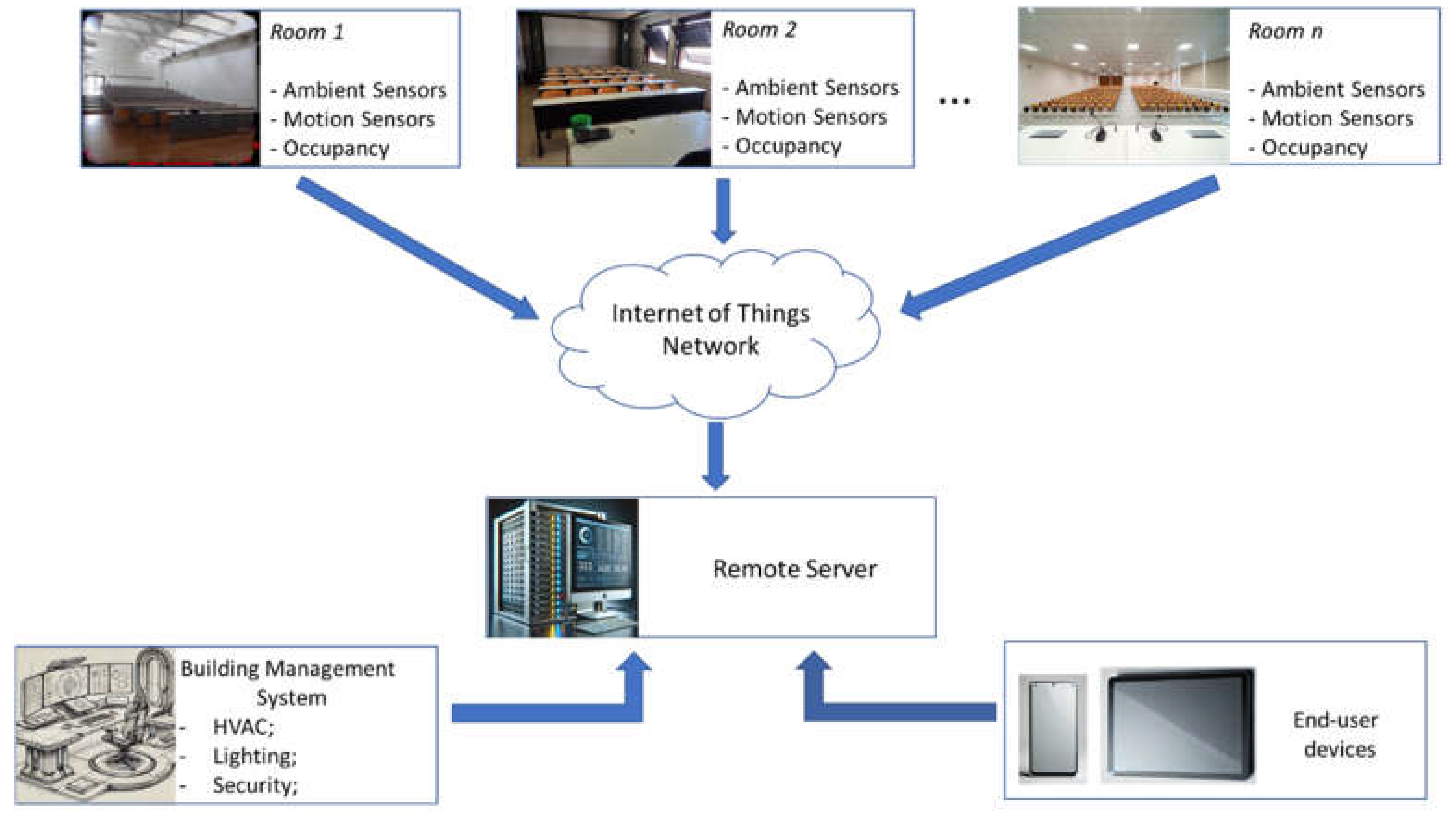
Figure 2.
Examples of didactic structures and classrooms of the University of Pisa.
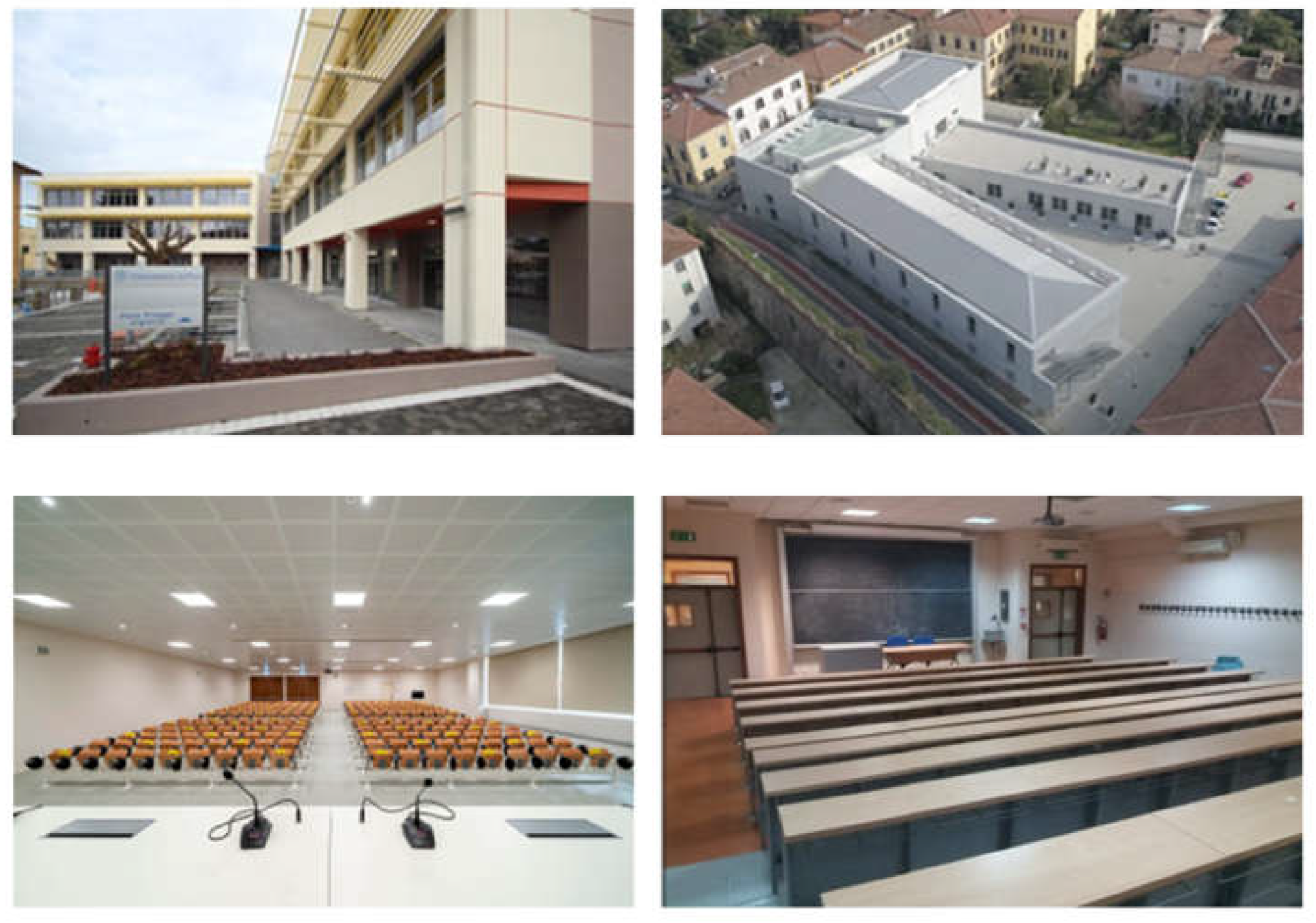
Figure 3.
A schematic picture of a full-air HVAC system, showing the supply and return air ducts and the regenerative heat exchanger.
Figure 3.
A schematic picture of a full-air HVAC system, showing the supply and return air ducts and the regenerative heat exchanger.
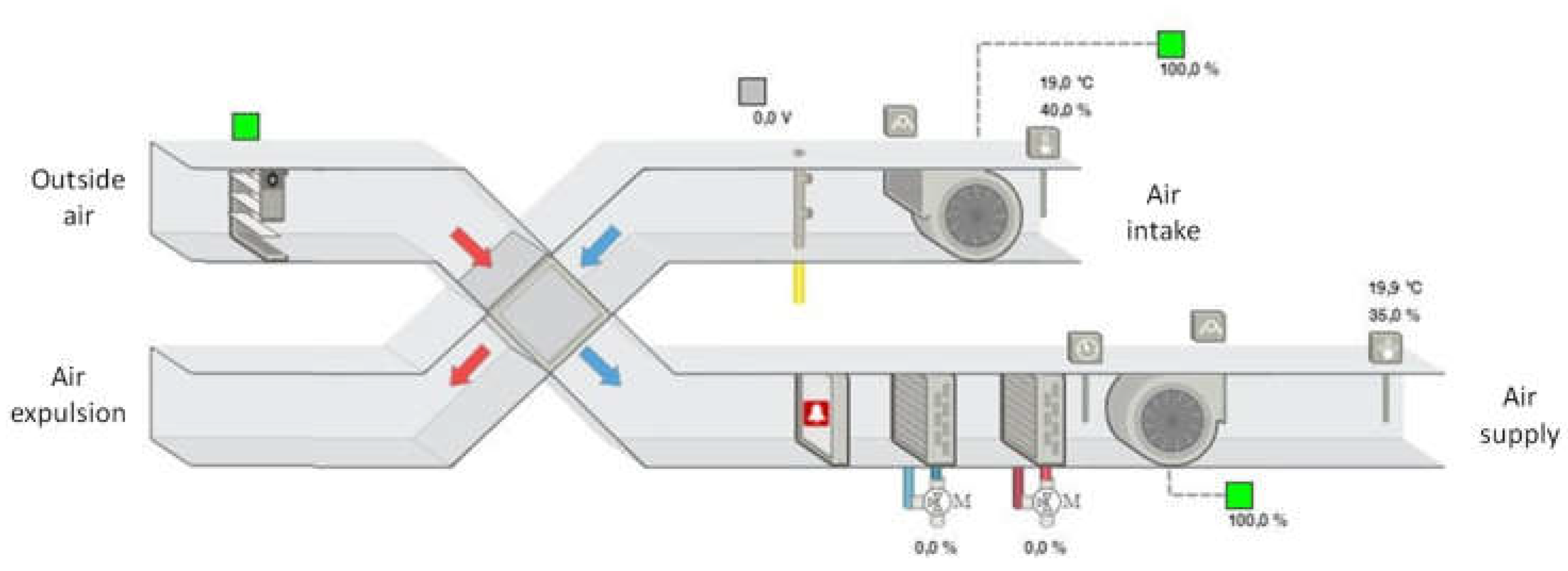
Figure 4.
CO2 in a classroom and connection with occupancy (based on Eqs. 8 and 9).
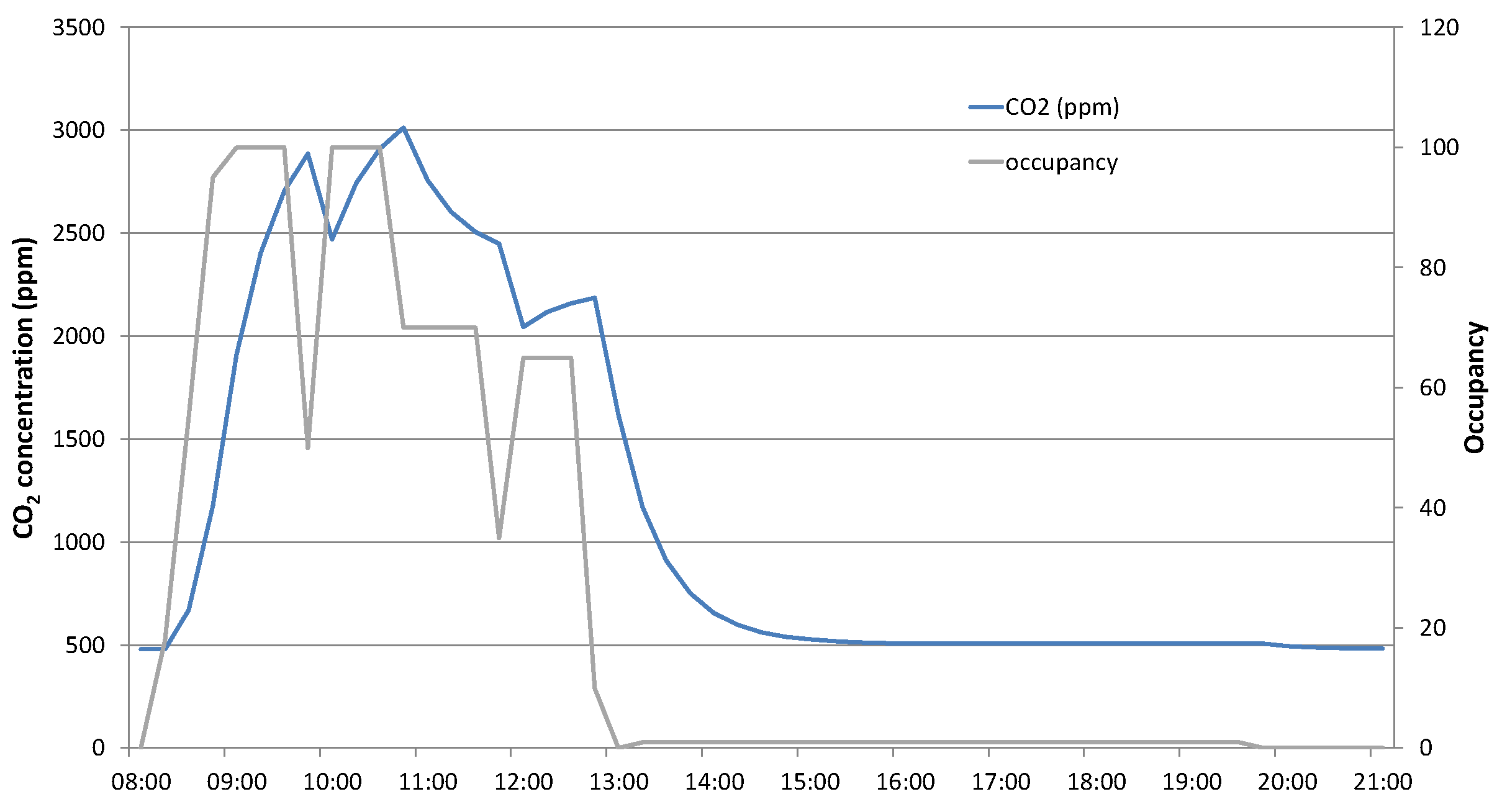
Figure 5.
CO2 concentration in two different points of a room in an experiment.
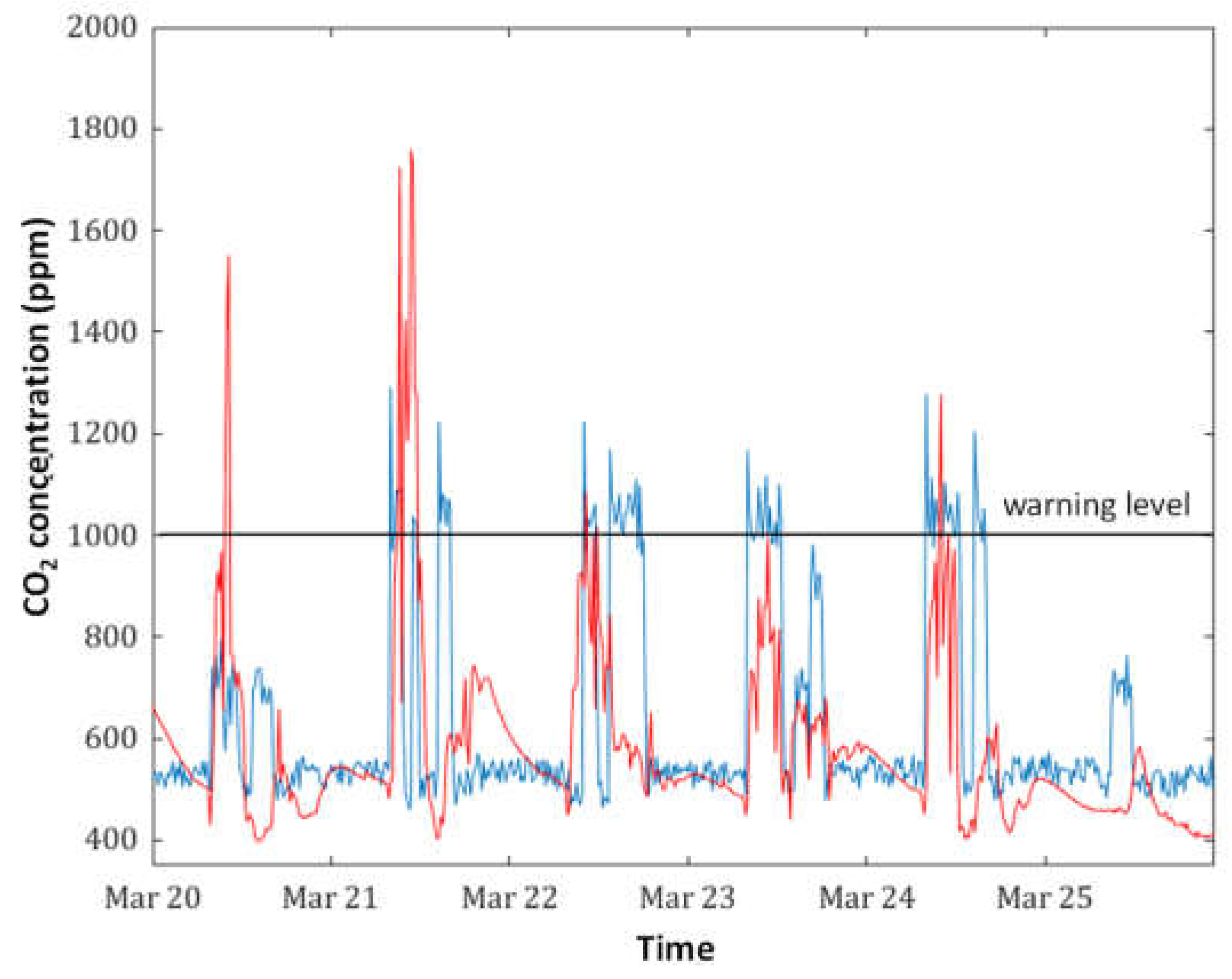
Figure 6.
Environmental monitoring process: data collection, processing, and access.
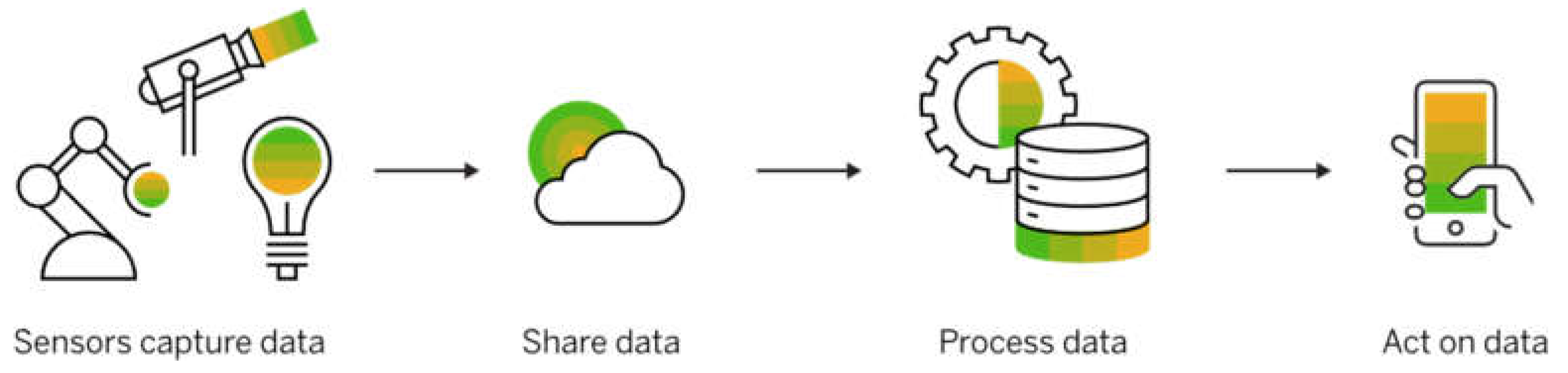
Figure 7.
Sensors conventionally used for monitoring: (a) Analogic Sensors (3 in 1) and (b) Smart D-Home Domotic Sensor 9 in 1 (https://www.smartdhome.com).
Figure 7.
Sensors conventionally used for monitoring: (a) Analogic Sensors (3 in 1) and (b) Smart D-Home Domotic Sensor 9 in 1 (https://www.smartdhome.com).
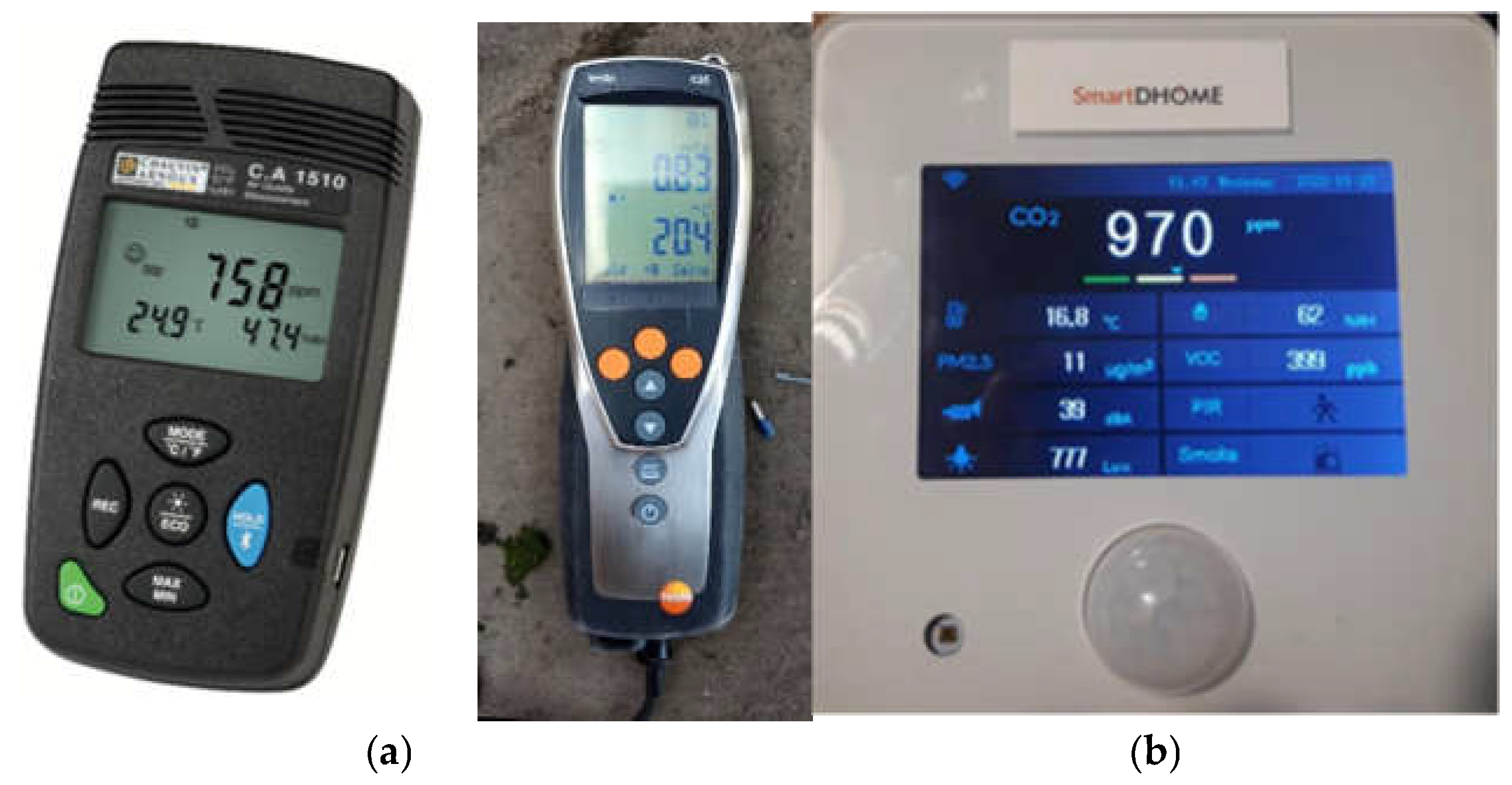
Figure 8.
Complete architecture of the multi-sensor platform, including all components and the specific sensor used for VOC and CO2 concentration measurement.
Figure 8.
Complete architecture of the multi-sensor platform, including all components and the specific sensor used for VOC and CO2 concentration measurement.
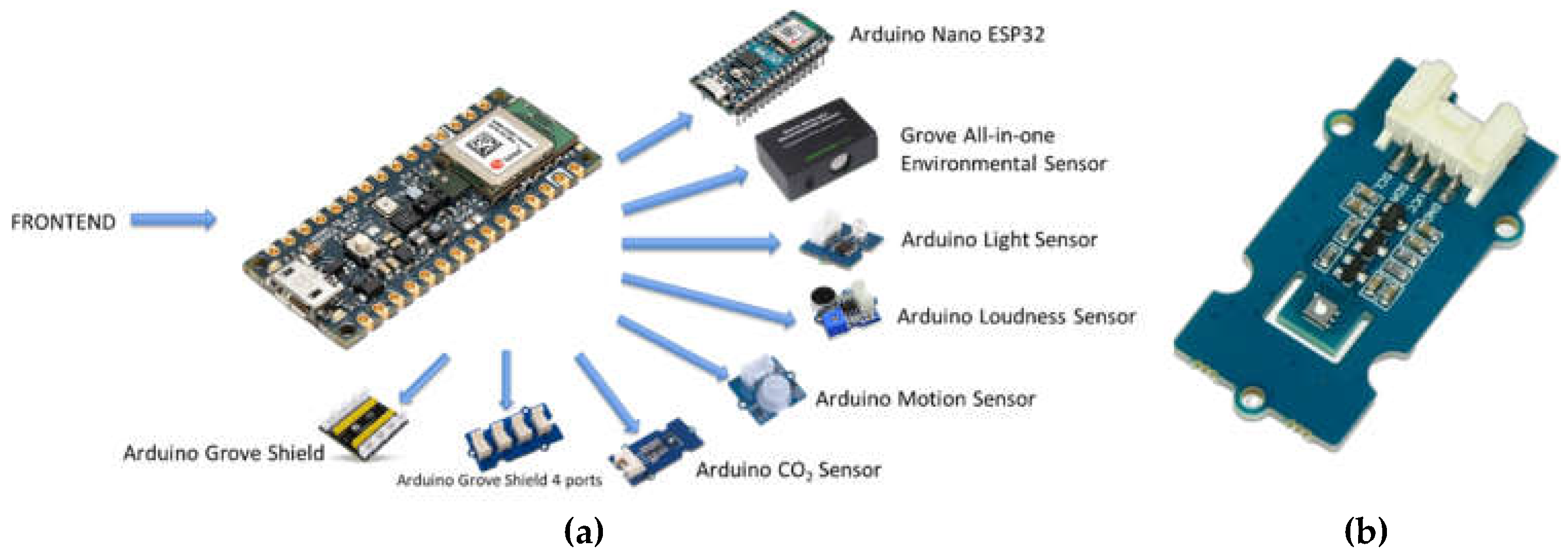
Figure 9.
Framework of a possible multi-objective ventilation strategy based on CO2 monitoring.
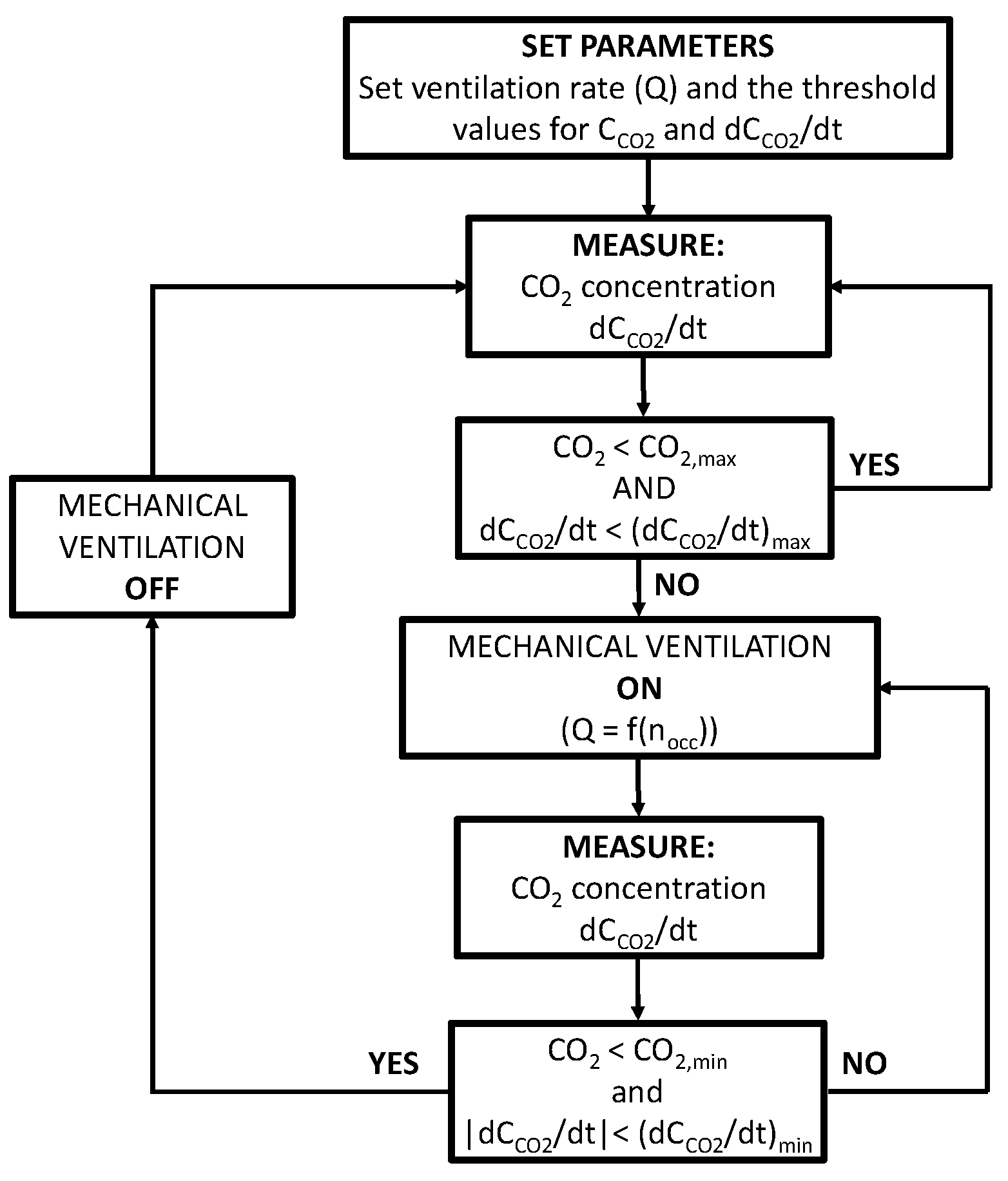
Figure 10.
Architecture of the IoT network.
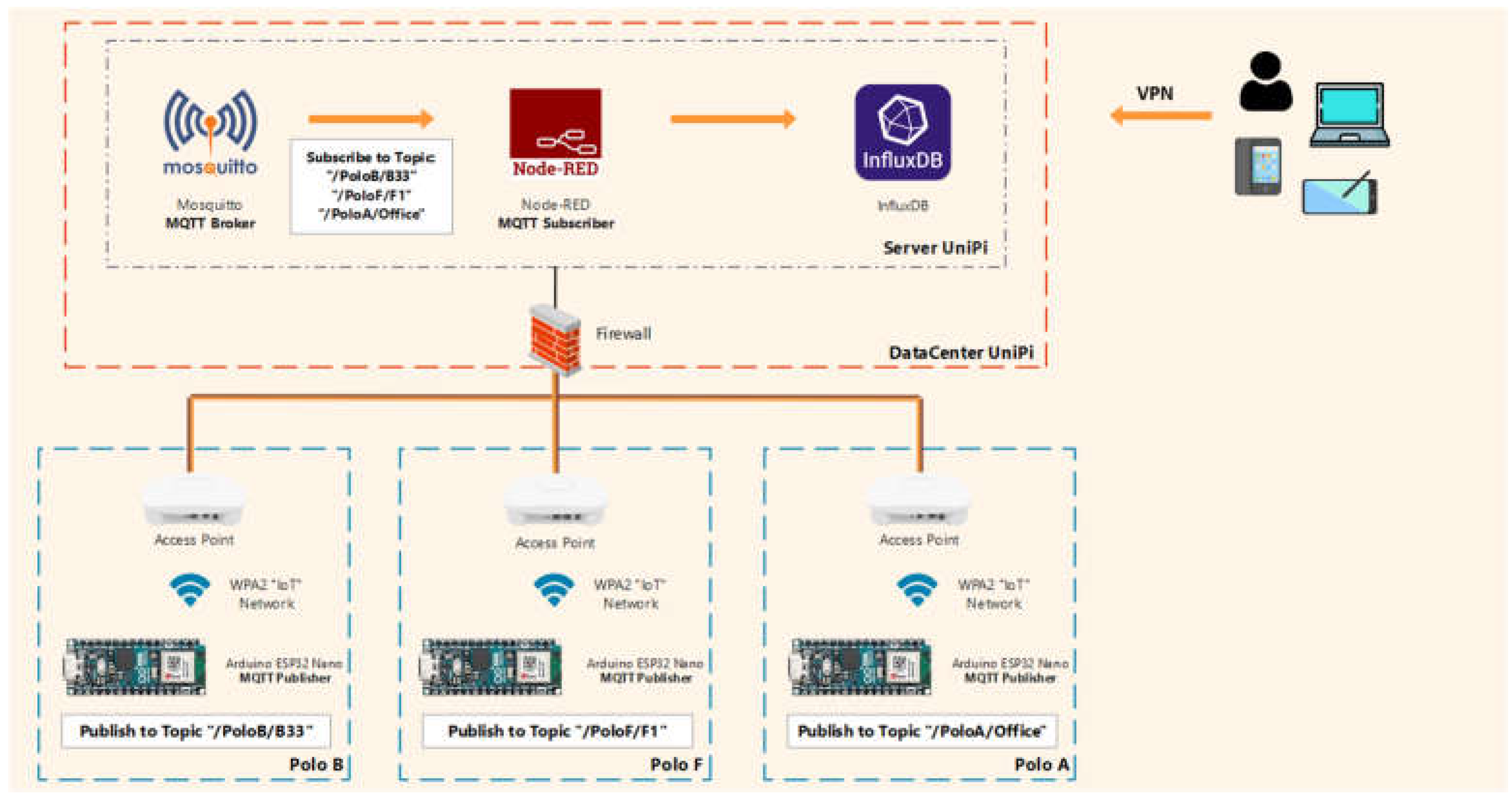
Figure 12.
Back end of the IoT network.

Figure 12.
Aerial view of the didactic structure tested (Table 12).
Figure 12.
Aerial view of the didactic structure tested (Table 12).
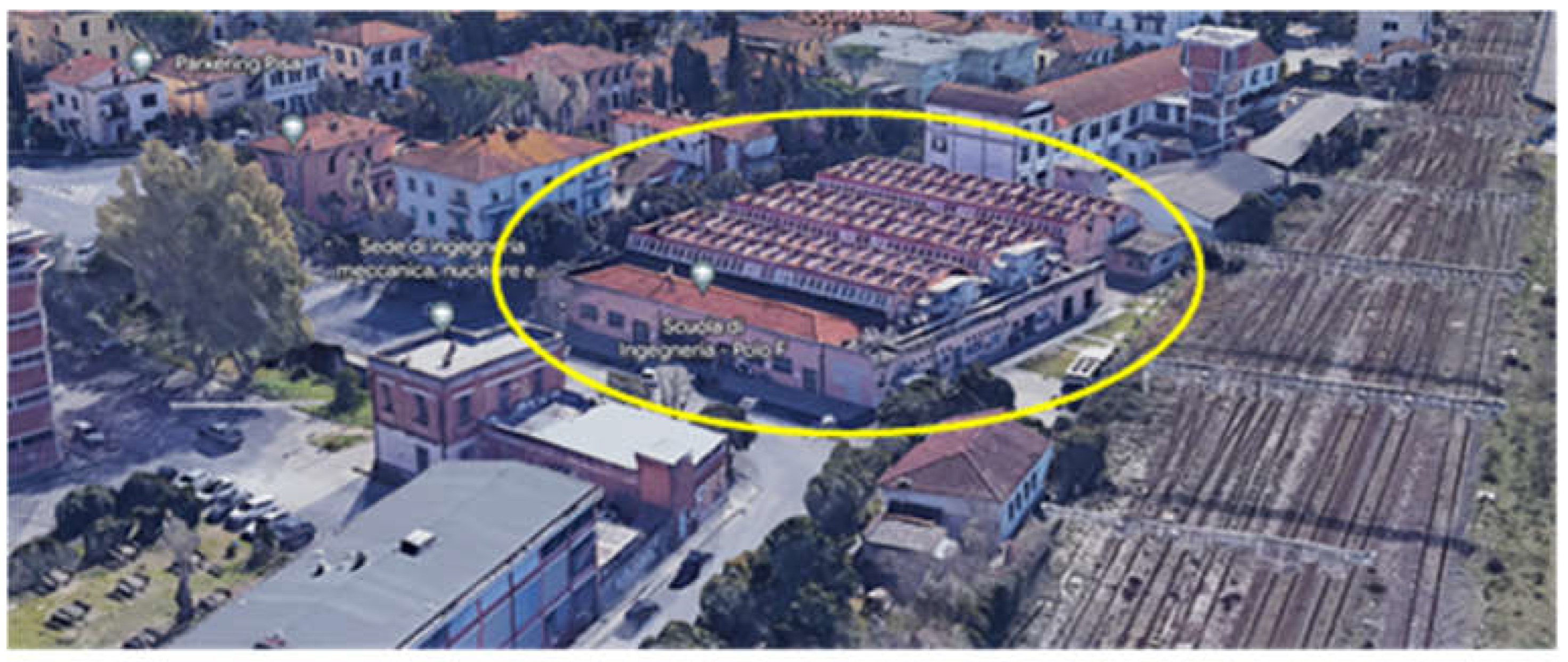
Figure 13.
Occupation profile of the structure during an academic year.
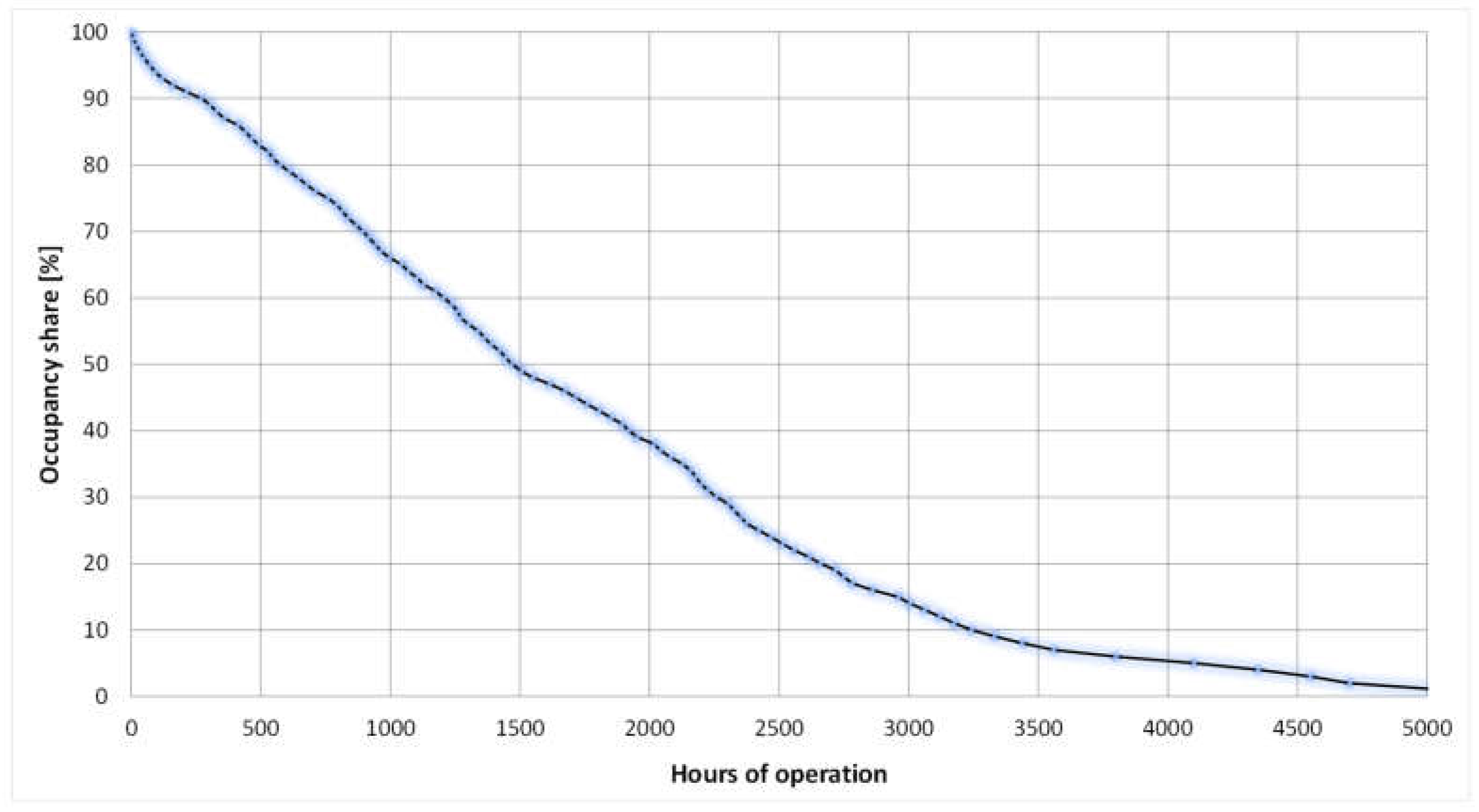

Table 1.
Final energy uses in Europe 27 in the main sectors of use - data extracted from [25].
Table 1.
Final energy uses in Europe 27 in the main sectors of use - data extracted from [25].
| Quantity (TJ) | Quantity (TWh) | % | |
| Final energy consumption | 37.771.279 | 10.492 | 100,0% |
| Transport | 11.718.844 | 3.255 | 31,0% |
| Households | 10.152.762 | 2.820 | 26,9% |
| Industry | 9.472.834 | 2.631 | 25,1% |
| Services | 5.079.759 | 1.411 | 13,4% |
| Other* | 1.347.080 | 374 | 3,6% |
Table 2.
Break-down of energy use in Europe in the service sector (data rearranged from [25]).
Table 2.
Break-down of energy use in Europe in the service sector (data rearranged from [25]).
| Quantity. (TWh) | % | |
| Services (EU-22) * | 1178,7 | 100,0% |
| Repair and installation of machinery and equipment | 8,20 | 0,7% |
| Water, beverage, and waste management services | 64,8 | 5,5% |
| Wholesale and retail trade; motor vehicle and motorcycle repair | 248,8 | 21,1% |
| Wholesale trade (different from automotive sector) | 72,4 | 6,1% |
| Retail trade (different from automotive sector) | 161,6 | 13,7% |
| Warehousing and support activities for transportation | 48,1 | 4,1% |
| Postal and courier activities | 7,5 | 0,6% |
| Hospitality and food services | 128,6 | 10,9% |
| Accommodation | 72,3 | 6,1% |
| Food and beverage services activities | 56,3 | 4,8% |
| Information and communication | 77,9 | 6,6% |
| Financial and insurance activities; real estate activities | 93,5 | 7,9% |
| Professional, scientific and technical activities; other services | 132,1 | 11,2% |
| Administrative and support services activities | 41,8 | 3,6% |
| Public administration, defense, and social security | 98,0 | 8,3% |
| Education | 71,3 | 6,0% |
| Healthcare and social work | 124,4 | 10,6% |
| (Hospital activities) | 71,0 | (6,0%) |
| Arts, entertainment and recreation | 32,8 | 2,8% |
| (Sports activities, amusement and recreation activities) | 18,8 | (1,6%) |
*Includes data from EU 27 except Greece, Spain, Cyprus, Romania, Finland and Belgium.
Table 3.
The University system in Italy and its impact.
| Indicator | Value or range |
|---|---|
| Number of Public Universities | 69 |
| Number private Universities | 30 |
| Public Research institution | 13 |
| Average number of students for Public Universities | 23011 |
| Average number of students for Private Universities | 9346 |
| Total number of students in public Universities | 1587760 |
| Specific surface consumption of public Universities | 158-325 kWh/m2 |
| Specific volumetric consumption of public Universities | 35-82,5 kWh/m3 |
| Specific consumption value for student (range) | 570-2500 kWh/year |
| Average consumption for student (for 1 year) | 1200 kWh |
| Estimated Total Consumption of Public Universities | 1,9 TWh |
| Impact of cost of energy on the total | 1,0-7,6 % |
Table 4.
Characteristic data from the University of Pisa concerning didactic structures.
| Characteristics | Data |
|---|---|
| Number of students (all categories are included) | 51000 |
| Total seating capacity of the classrooms | 25000 |
| Number of distributed educational facilities | 35 |
| Number of total active classrooms | 395 |
| Available surfaces | 70000 m2 |
Table 5.
Energy used in the University of Pisa (first four lines of the table) and comparison with other Italian universities (lines 5 and 6).
Table 5.
Energy used in the University of Pisa (first four lines of the table) and comparison with other Italian universities (lines 5 and 6).
| Datum | Value |
|---|---|
| Natural gas use (average value in the last 7 years) | 19500 MWh |
| Electricity use (average value in the last 7 years) | 25500 MWh |
| Total energy use for the structures | 45000 MWh |
| Total indicative annual energy for student | 900 kWh |
| Minimum energy for student in Italian University | 570 kWh |
| Maximum energy for student in Italian University | 2530 kWh |
Table 6.
Energy saving actions and qualitative potential economic effects and impact.
| Method | Economic impact |
Energy Savings |
|---|---|---|
| Organizational Measures | Low | Moderate (0,5-1%) |
| End-user Awareness | Low | Significant (2-3%) |
| Heating and Refrigeration Plant Upgrades | High | Significant (5-7%) |
| Window Replacement | Medium | Low (0,2-0,5%) |
| Roof Insulation | Medium | Low (0.1-0.2%) |
| Lighting Devices Replacement | Medium | Low (0,2-0,5%) |
| Uninterruptible Power Supply (UPS) Replace | Medium | Moderate (0,5-1%) |
| Optimization of HVAC System Management | Low | Significant (2-3%) |
| Data Center Optimization | Medium | Low (0,3-0,5%) |
| Potential energy saving (all the measures) | 11 – 17 % |
Table 7.
Typical value of energy consumption for HVAC operation in a structure of 10000 m3.
| Hourly electrical consumption [kWh] | Hourly thermal consumption [kWh] | |||||
|---|---|---|---|---|---|---|
| Occupancy | High | Medium | Low | High | Medium | Low |
| High T | 14,13 | 3,03 | 0,62 | 448,83 | 269,30 | 98,71 |
| Medium T | 14,71 | 3,16 | 0,64 | 0,00 | 0,00 | 0,00 |
| Low T | 15,45 | 3,31 | 0,68 | 148,34 | 89,01 | 32,63 |
Table 8.
Typical value of energy consumption for HVAC operation in a structure of 10000 m3.
| Hourly electrical consumption [kWh] | Hourly thermal consumption [kWh] | ||||||||||
|---|---|---|---|---|---|---|---|---|---|---|---|
| Occupancy | 100-80% | 80-60% | 60-40% | 40-20% | 20-0% | 100-80% | 80-60% | 60-40% | 40-20% | 20-0% | |
| High T | 10,16 | 4,77 | 1,78 | 0,62 | 0,23 | 403,91 | 314,17 | 224,43 | 134,61 | 44,87 | |
| Medium T | 10,57 | 4,96 | 1,86 | 0,64 | 0,24 | 0,00 | 0,00 | 0 | 0 | 0 | |
| Low T | 11,10 | 5,21 | 1,96 | 0,68 | 0,26 | 133,48 | 103,83 | 74,174 | 44,522 | 14,87 | |
Table 9.
Conventional programs defined by user or system manager.
| Control method | Problem/Limit |
|---|---|
| Scheduled control | Excessive air conditioning and ventilation during off-peak hours, causing energy waste |
| Manual or programmed thermostats | Only useful for regulating hydronic terminals in small rooms |
Table 10.
Advanced programs for energy saving.
| Control method | Problems |
|---|---|
| Reactive control | Set-point adaptation delay due to system inertia |
| Predictive control (rule-based control) | Depend on type and accuracy of prediction model used |
| Predictive control (optimal control) | Depend on type and accuracy of prediction model used |
Table 11.
Connection of data acquisition and control method: the various steps of the process.
| Action | Application |
|---|---|
| Data Acquisition | IoT devices collect environmental data through sensors, ranging from basic temperature readings to complex real-time video streams |
| Data Sharing | Devices transmit this data via existing networks to a cloud (public or private), another device for edge processing |
| Data Processing | Software is programmed to perform tasks based on the data, such as activating a fan. |
| Data-Driven Actions | Data collected from IoT devices is analyzed and converted into actionable insights to support informed decisions |
Table 12.
Characteristics of the buildings under consideration.
| Rooms | Surface [m2] | Net Volume [m3] | Maximum Occupancy |
Yearly operating hours |
|---|---|---|---|---|
| 15 | 2134 | 10296 | 1590 | 5040 |
Table 13.
Characteristics of the plant.
| Change rate [m3/h] |
Heating mode (power) [kW] |
Power of the fan [kW] |
|
|---|---|---|---|
| AHU 1 | 20600 | 154,93 | 11 |
| AHU 2 | 13500 | 101,53 | 7,5 |
Table 14.
Air volume saved and ripartition of energy saved in the two cases.
| Week | Type of regulation | Modular | ON-OFF |
|---|---|---|---|
| 1 | Air volume saved [m3] | 457900 (20,8%) | 905600 (41,1%) |
| Thermal energy savings vs. design conditions [kWh] | 240,9 (41,1%) | 325,7 (55,5%) | |
| Electricity savings vs. design conditions [kWh] | 698,2 (34,5%) | 836,6 (41,3%) | |
| 2 | Air volume saved [m3] | 1166670 (53,0%) | 1739300 (79,0%) |
| Thermal energy savings vs. design conditions [kWh] | 2765,9 (66,2%) | 3137,4 (75,1%) | |
| Electricity savings vs. design conditions [kWh] | 1811,6 (89,5%) | 1600,3 (79,0%) | |
| 3 | Air volume saved [m3] | 457900 (20,8%) | 905600 (41,1%) |
| Thermal energy savings vs. design conditions [kWh] | 1268,7 (25,6%) | 1880,5 (38,0%) | |
| Electricity savings vs. design conditions [kWh] | 704,8 (34,8%) | 850,4 (42,0%) |
Table 15.
Energy saving connected to monitoring.
| Week 1 | Week 2 | Week 3 | Winter period (estimated) |
|
|---|---|---|---|---|
| Total heat consumption [MWh] | 2,00 | 6,62 | 11,42 | 146,51 |
| Ventilation weight [%] | 46% | 46% | 46% | 46% |
| Heat consumption due to ventilation load [MWh] | 0,91 | 3,02 | 5,21 | 66,81 |
| Heat consumption referred to thermal load | 1,09 | 3,60 | 6,21 | 79,70 |
| Ventilation load savings with ON-OFF regulation [%] | 55,5% | 75,1% | 38,0% | 57,5% |
| Net energy saved [MWh] | 0,51 | 2,27 | 1,98 | 38,41 |
| Energy savings compared to actual consumption [%] | 25% | 34% | 17% | 26% |
Disclaimer/Publisher’s Note: The statements, opinions and data contained in all publications are solely those of the individual author(s) and contributor(s) and not of MDPI and/or the editor(s). MDPI and/or the editor(s) disclaim responsibility for any injury to people or property resulting from any ideas, methods, instructions or products referred to in the content. |
© 2024 by the authors. Licensee MDPI, Basel, Switzerland. This article is an open access article distributed under the terms and conditions of the Creative Commons Attribution (CC BY) license (http://creativecommons.org/licenses/by/4.0/).
Copyright: This open access article is published under a Creative Commons CC BY 4.0 license, which permit the free download, distribution, and reuse, provided that the author and preprint are cited in any reuse.


