

Submitted:
03 December 2024
Posted:
04 December 2024
You are already at the latest version
Abstract
This review explores the evolving role of the tea green leafhopper, Empoasca onukii, in the tea industry, transitioning from a recognized pest to a significant enhancer of tea quality. Recent research highlights how its feeding behavior stimulates the production of desirable secondary metabolites, thereby improving the flavor profiles and market value of premium teas, particularly varieties like Taiwan's "Oriental Beauty." As consumer demand for unique and artisanal teas rises, the economic benefits associated with E. onukii are becoming increasingly evident, prompting farmers to adopt sustainable agricultural practices that often involve reduced pesticide use. Furthermore, the dynamic interplay between climatic factors, E. onukii population dynamics, and tea cultivation practices necessitates integrated pest management strategies that balance the beneficial and detrimental impacts of this leafhopper. Understanding these complexities not only fosters sustainable production methods but also opens niche markets, benefiting local economies. Ultimately, this shift in perspective positions Empoasca onukii as a vital asset in the cultivation of high-quality tea, promoting both economic viability and environmental sustainability in the tea industry.
Keywords:
1. Introduction
2. What is Empoasca Onukii?
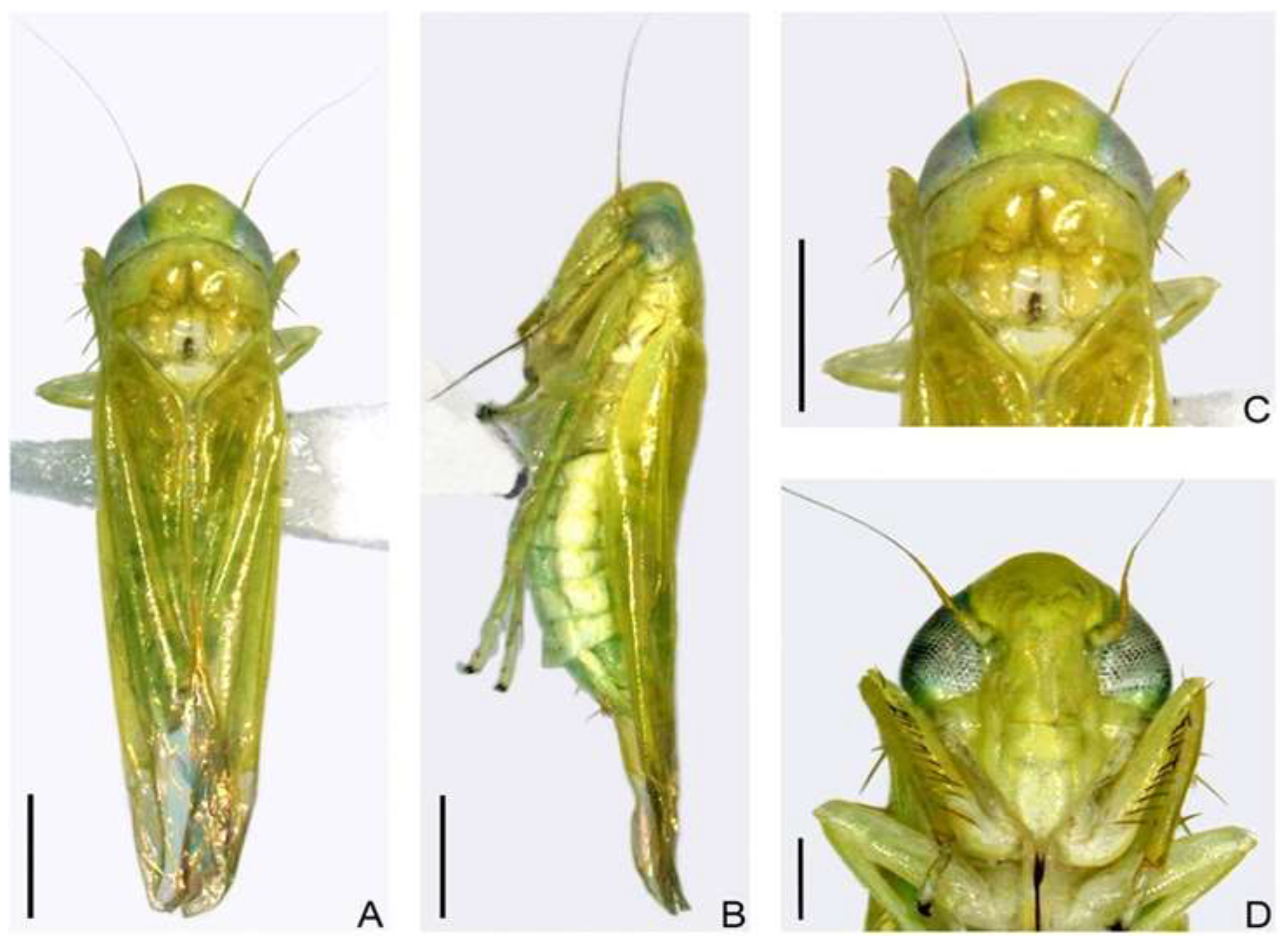
3. Taxonomic, Phylogenetic Groups and Distribution
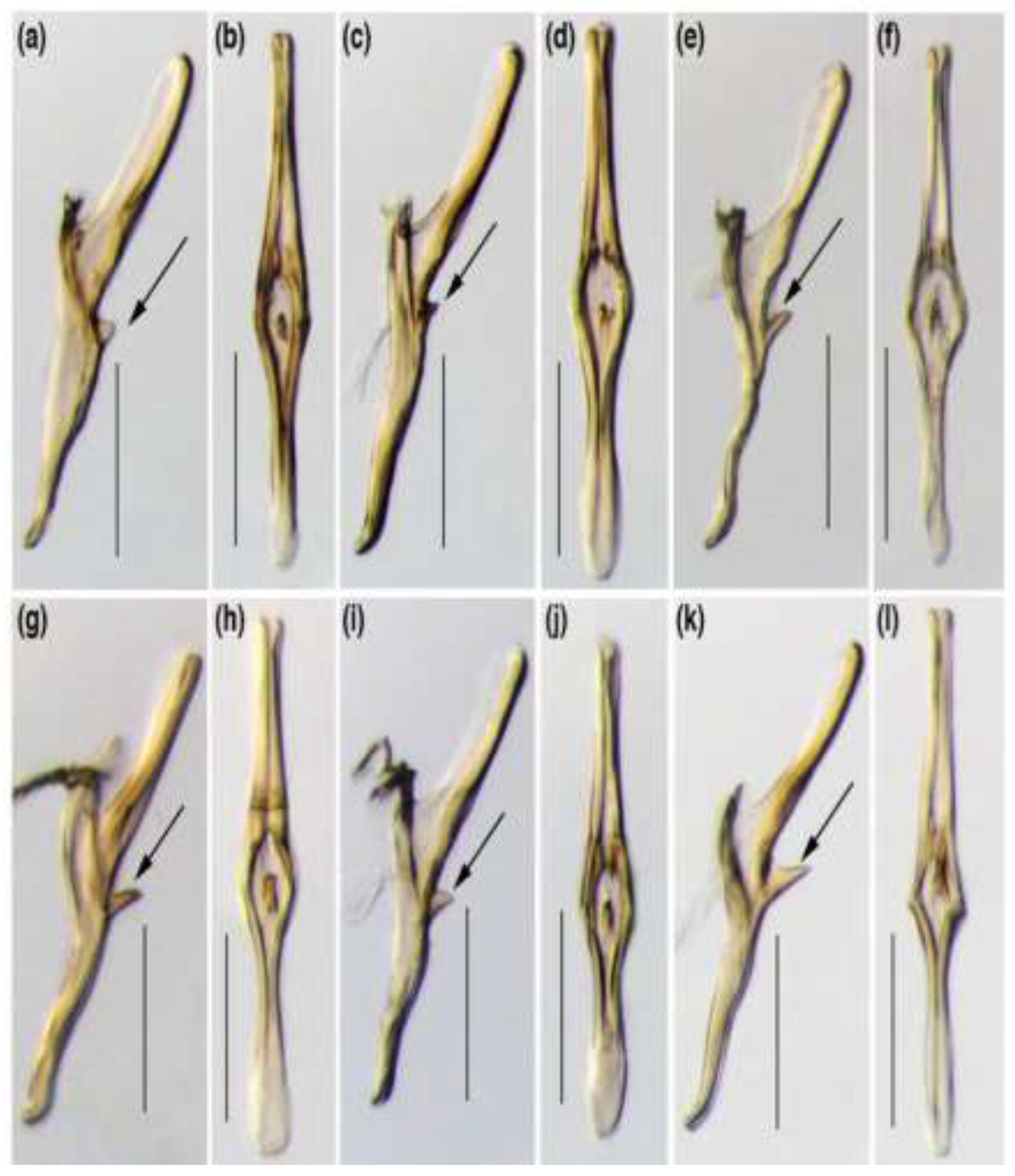
3. Biology of Empoasca Onukii
4. Environmental Influence to Empoasca Onukii
4.1. Rainfall and Heatwaves
4.2. Humid Conditions
4.3. Illuminance Conditions
4.4. Cultivation Management
5. Host Plants Preference of Empoasca onukii
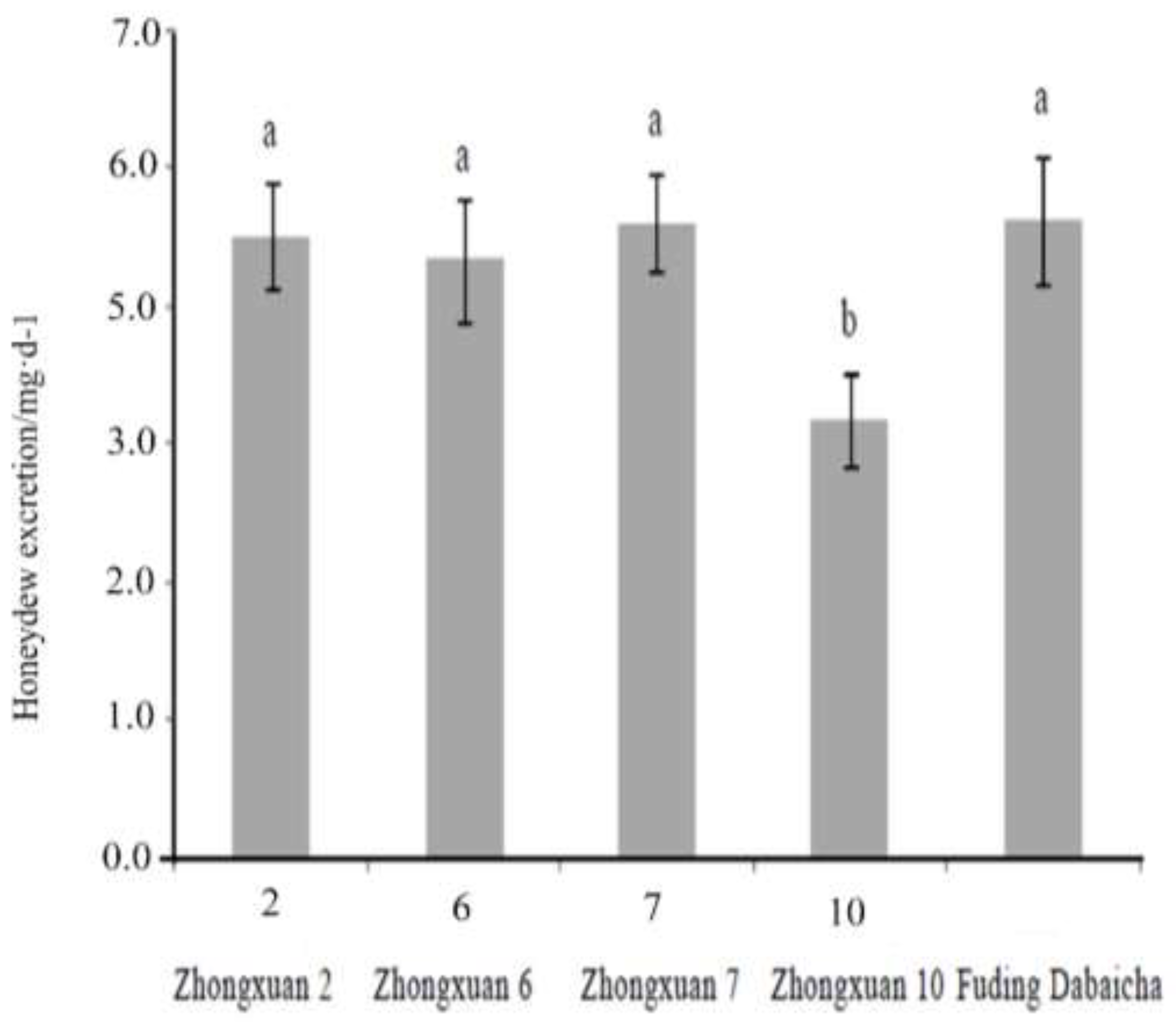
Management Considerations and Implications
6. Feeding Behavior of E. onukii
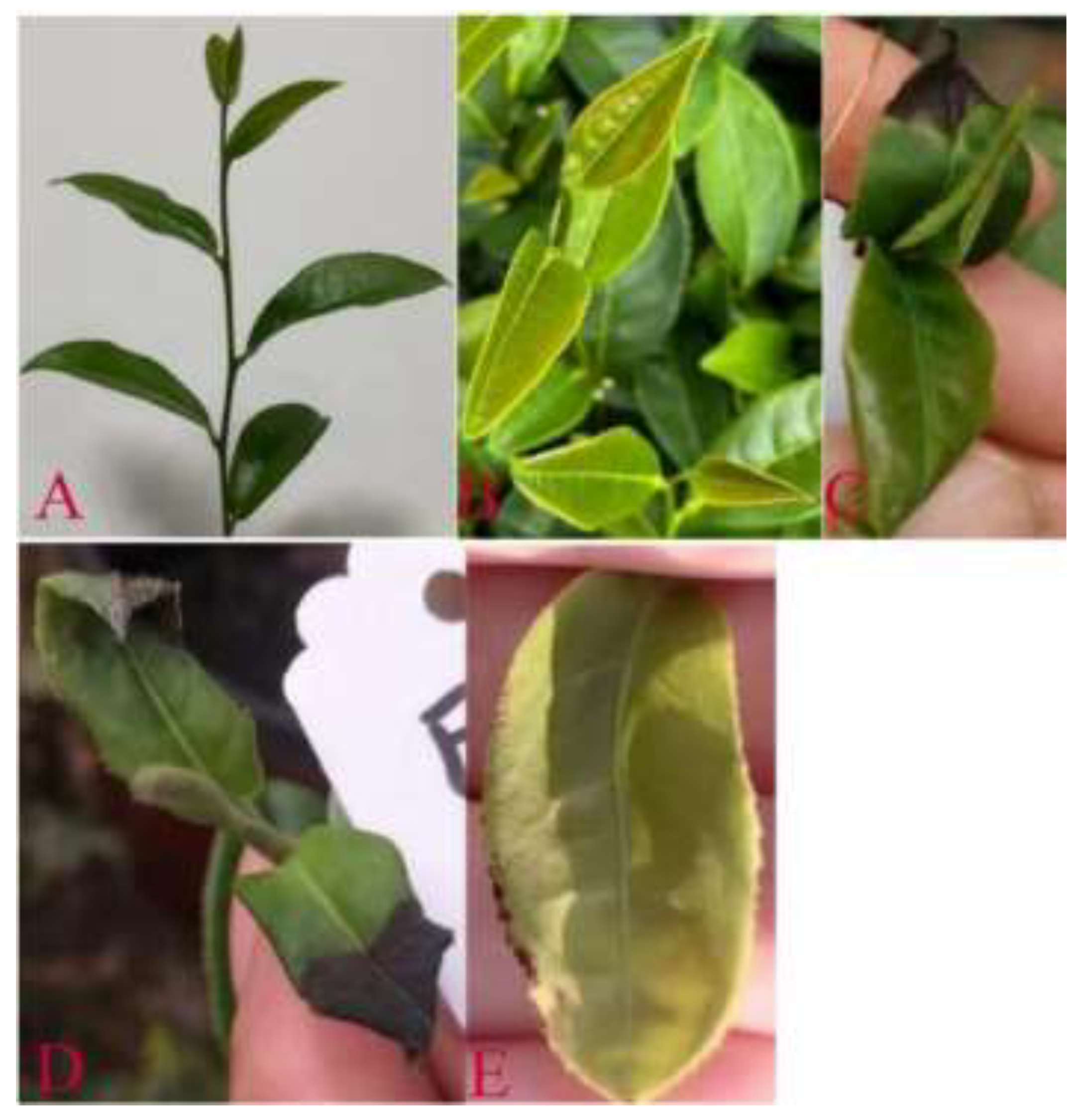
7. Economic Impact of Empoasca onukii on the Tea Industry and Farmers
8. Conclusions
9. Future Prospects of mass rearing Empoasca onukii
9.1. Development of Premium and Specialty Teas
9.2. Support for Organic and Sustainable Farming Practices
9.3. Incentives and Support from Government
9.4. Stimulation of Research and Innovation in Pest Management
9.5. Improved Ecosystem Services and Long-Term Agricultural Sustainability
9.6. Economic Diversification through Value-Added Products
9.7. Cost Savings from Reduced Pest Outbreaks
Author Contributions
Conflicts of Interest
Acknowledgments
References
- Aartsma, Y.; Bianchi, F.J.J.A.; van der Werf, W.; Poelman, E.H.; Dicke, M. Herbivore-induced plant volatiles and tritrophic interactions across spatial scales. New Phytologist 2017, 216, 1054–1063. [Google Scholar] [CrossRef]
- Ahmed, S.; Stepp, J.R.; Orians, C.; Griffin, T.; Matyas, C.; Robbat, A.; Cash, S.; Xue, D.; Long, C.; Unachukwu, U.; Buckley, S.; Small, D.; Kennelly, E. Effects of Extreme Climate Events on Tea ( Camellia sinensis ) Functional Quality Validate Indigenous Farmer Knowledge and Sensory Preferences in Tropical China. 2014, 9. [CrossRef]
- Bian, L.; Cai, X.; Luo, Z.; Li, Z.; Xin, Z.; Chen, Z. Ecology and Behavior Design of an Attractant for Empoasca onukii ( Hemiptera : Cicadellidae ) Based on the Volatile Components of Fresh Tea Leaves. 2018, 111, 629–636. [CrossRef]
- Bian, L.; Qun, Z.; Long, L.; Xiao, M.; Cai, M.; Xiu, Z.; Zong, L.; Chen, M. Identification of the genes in tea leafhopper, Empoasca onukii ( Hemiptera : Cicadellidae ), that encode odorant - binding proteins and chemosensory proteins using transcriptome analyses of insect heads. Appl. Entomol. Zool. 2018, 53, 93–105. [Google Scholar] [CrossRef]
- Böll, S.; Herrmann, J.V. A long-term study on the population dynamics of the grape leafhopper (Empoasca vitis) and antagonistic mymarid species. J. Pest Sci. 2004, 77, 33–42. [Google Scholar] [CrossRef]
- Cai, X.; Luo, Z.; Meng, Z.; Liu, Y.; Chu, B.; Bian, L.; Li, Z.; Xin, Z.; Chen, Z. (2019). Primary screening and application of repellent plant volatiles to control tea leafhopper, Empoasca onukii Matsuda. [CrossRef]
- Cai, X.; Sun, X.; Dong, W.; Wang, G.; Chen, Z. (2017). Variability and stability of tea weevil-induced volatile emissions from tea plants with different weevil densities, photoperiod and infestation duration. December. [CrossRef]
- Chen, L.L.; Pozsgai, G.; Li, X.Y.; Li, L.; Reddy GV, P.; You, M.S. Effects of cover crops on beetle assemblages in tea plantations. Crop Prot. 2021, 149, 105783. [Google Scholar] [CrossRef]
- Chen, Z.; et al. "Integrated pest management strategies for Empoasca onukii in tea plantations. " Agric. Entomol. 2019, 34, 123–136. [Google Scholar]
- Dave Goulson, Elizabeth Nicholls, Cristina Botías, E. L. R. Bee declines driven by combined stress from parasites, pesticides, and lack of flowers. 2015, 347, 1255957. [CrossRef]
- Dong, X.C.; XS, W.; Chen, G.W.Z. (2014). Herbivore species, infestation time, and herbivore density affect induced volatiles in tea plants. 1–14. [CrossRef]
- Fu, J; Han, B.; Xiao, Q. (2014). Mitochondrial COI and 16sRNA Evidence for a Single Species Hypothesis of E. vitis. 1–15. [CrossRef]
- Gong, P.; Li, X.; Gao, H.; Wang, C.; Li, M.; Zhang, Y.; Li, X.; Liu, E.; Zhu, X. (2020). Field evolved resistance to pyrethroids,neonicotinoids, organophosphates and macrolides in Rhopalosiphum padi (Linnaeus) and Sitobion avenae (Fabricius) from China. In ECSN. Elsevier Ltd. [CrossRef]
- Jahan, I.; Shopan, J.; Rahman, M.; Sarkar, A.; Baset, A.; Zhang, Z.; Li, X.; Ahammed, G.J.; Hasan, K. (2022). Long-Term Traditional Fertilization Alters Tea Garden Soil Properties and Tea Leaf Quality in Bangladesh.
- Jiménez-Brenes, F.M.; López-Granados, F.; Castro AI de Torres-Sánchez, J.; Serrano, N. ; Peña; JM. (2017). Quantifying pruning impacts on olive tree architecture and annual canopy growth by using UAV - based 3D modelling. 1–15. [CrossRef]
- Jin, S.; Ren, Q.; Lian, L.; Cai, X.; Bian, L.; Luo, Z.; Li, Z.; Ye, N.; Enbiao, E.B.; Ontology GO, G. Comparative transcriptomic analysis of resistant and susceptible tea cultivars in response to Empoasca onukii ( Matsuda ) damage. Planta 2020, 1–15. [Google Scholar] [CrossRef]
- Li Hui-ling LIUFeng-jing WANGDing-feng ZHANGWen-jin WUGuang-yuan, L. N. Effects of Shading on Population Dynamics of Small Green Leafhopper. Fujian J. Agric. Sci. 2013, 28, 1281–1284. [Google Scholar] [CrossRef]
- Liu, H.; Li, S.; Xiao, G.; Wang, Q. Formation of volatiles in response to tea green leafhopper (Empoasca onukii Matsuda) herbivory in tea plants: a multi-omics study. Plant Cell Rep. 2021, 40, 753–766. [Google Scholar] [CrossRef] [PubMed]
- Liu, J.H.; Sun, C.Y.; Long, J.; Guo, J.J. Complete mitogenome of tea green leafhopper, Empoasca onukii (Hemiptera: Cicadellidae) from Anshun, Guizhou Province in China. Mitochondrial DNA Part B Resour. 2017, 2, 808–809. [Google Scholar] [CrossRef] [PubMed]
- Lun, X.; Xu, X.; Zhang, X. Identification and expression profiles of candidate chemoreceptor genes in the tea leafhopper, Empoasca onukii Matsuda ( Hemiptera : Cicadellidae ). Phytoparasitica 2023, 51, 1077–1089. [Google Scholar] [CrossRef]
- Liu, B.; et al. "Effect of temperature and humidity on the reproduction and development of Empoasca onukii in tea gardens. " Environ. Entomol. 2014, 43, 555–562. [Google Scholar]
- Liu, X.; et al. "Biological control of tea pests: The role of natural enemies in managing Empoasca onukii. " Biol. Control. 2016, 98, 12–20. [Google Scholar]
- Mei, X.; Liu, X.; Zhou, Y.; Wang, X.; Zeng, L.; Fu, X.; Li, J.; Tang, J.; Dong, F.; Yang, Z. (2017). Affiliation : Guangdong Provincial Key Laboratory of Applied Botany & Key Laboratory of South China Key Laboratory of Tea Plant Resources Innovation and Utilization, Dafeng Road 6, Tianhe Guangdong Food and Drug Vocational College, Longdongbei Road 321. Food Chem. [CrossRef]
- Miao, J.; Han, B.; Zhang, Q. (2014). Probing Behavior of Empoasca vitis ( Homoptera : Cicadellidae ) on Resistant and Susceptible Cultivars of Tea Plants 2–7. [CrossRef]
- Mu, D.; Pan, C.; Qi, Z.; Qin, H.; Li, Q.; Liang, K.; Rao, Y.; Sun, T. Multivariate analysis of volatile profiles in tea plant infested by tea green leafhopper Empoasca onukii Matsuda. Plant Growth Regulation 2021, 95, 111–120. [Google Scholar] [CrossRef]
- Pęksa, M. C. & Ł. (2018). Impact of climate on the population dynamics of an alpine ungulate : a long-term study of the Tatra chamois Rupicapra rupicapra tatrica. 2173–2182.
- Qi Yao, H. Z. , Long Jiao, Xiaoming Cai, M. W., & Chen, and Z. (2020). Identifying the Biological Characteristics Associated with Oviposition Behavior of Tea Leafhopper.
- Qiao, L.; Wu, J.X.; Qin, D.Z.; Liu, X.C.; Lu, Z.C.; Lv, L.Z.; Pan, Z.L.; Chen, H.; Li, G.W. (2015). Gene Expression Profiles of Heat Shock Proteins 70 and 90 From Empoasca onukii ( Hemiptera : Cicadellidae ) in Response to Temperature Stress. 1–12. [CrossRef]
- Qin, D.; Zhang, L.; Xiao, Q.; Dietrich, C.; Matsumura, M.; Zhu, C.D. Clarification of the identity of the tea green leafhopper based on morphological comparison between Chinese and Japanese specimens. PLoS ONE 2015, 10, 1–13. [Google Scholar] [CrossRef] [PubMed]
- Qin, W.; Zhang, J.; Li, M. Yield losses in tea plantations due to infestations of Empoasca onukii. Agricultural and Forest Entomology 2015, 17, 290–298. [Google Scholar]
- Qin, D.; et al. "Life cycle and reproductive biology of Empoasca onukii. " J. Econ. Entomol. 2015, 108, 2511–2519. [Google Scholar]
- Ravichandran, M.; Samiappan, S.C.; Pandiyan, R.; Velu, R.K. Journal of Experimental Biology and Agricultural Sciences Improvement of crop and soil management practices through mulching for enhancement of soil fertility and environmental sustainability: A review. 2022, 10, 697–712.
- Redl, M.; Sitavanc, L.; Hanousek, F.; Steinkellner, S. A single out-of-season fungicide application reduces the grape powdery mildew inoculum. Crop Prot. 2021, 149, 105760. [Google Scholar] [CrossRef]
- Ruirui Zhang, Xiaoyue Lun, Yu Zhang, Yunhe Zhao, Xiuxiu Xu, and Z. Z. (2023). Characterization of Ionotropic Receptor Gene EonuIR25a in the.
- Scott, E.R.; Li, X.; Wei, J.; Kfoury, N.; Morimoto, J.; Guo, M.; Agyei, A. , Jr; A. R.; Ahmed, S.; Cash, S.B.; Griffin, T.S.; Stepp, J.R.; Han, W.; Orians, C.M.; Scott, E.R. Changes in Tea Plant Secondary Metabolite Profiles as a Function of Leafhopper Density and Damage. 2020, 11, 1–15. [Google Scholar] [CrossRef]
- Shi, L.; He, H.; Yang, G.; Huang, H.; Vasseur, L.; You, M. Are yellow sticky cards and light traps effective on tea green leafhoppers and their predators in chinese tea plantations? Insects 2021, 12, 1–15. [Google Scholar] [CrossRef]
- Shi, L.; Vasseur, L.; Huang, H.; Zeng, Z.; Hu, G.; Liu, X.; You, M. Adult tea green leafhoppers, Empoasca onukii (Matsuda), change behaviors under varying light conditions. PLoS ONE 2017, 12, 1–17. [Google Scholar] [CrossRef] [PubMed]
- Shi, L.; Zeng, Z.; Huang, H.; Zhou, Y. (2015). Identification of Empoasca onukii ( Hemiptera : Cicadellidae ) and Monitoring of its Populations in the Tea Plantations of South. [CrossRef]
- Stephen Miles. (2003). THE 1999 Benhs Presidential Address — Part 2 A Conservation Agenda For Entomologists For The Next 100 Years — An Amateur Viewpoint ?
- Shen, Z.; et al. "Hopperburn damage caused by Empoasca onukii and its impact on tea production. " Crop Prot. 2010, 29, 882–888. [Google Scholar]
- Wei, Q.I.; Yu, H.; Niu, C.; Yao, R.; Wu, S.; Chen, Z. Comparison of Insecticide Susceptibilities of Empoasca vitis ( Hemiptera : Cicadellidae ) from Three Main Tea-Growing Regions in China Comparison of Insecticide Susceptibilities of Empoasca vitis ( Hemiptera : Cicadellidae ) from Three Main Tea-Growing Re April. [CrossRef]
- Xuegui, Y. (2018). Review of Leafhopper (Empoasca flavescens): A Major Pest in Castor (Ricinus communis). Genet. Genom. Sci. 2015, 3, 1–7. [Google Scholar] [CrossRef]
- Yao, Q.; Wang, M.; Chen, Z. Ecology and Behavior The Relative Preference of Empoasca onukii ( Hemiptera : Cicadellidae ) for Oviposition on Twenty-Four Tea Cultivars. 2022, 115, 1521–1530.
- Zhang, Dongsheng. Hu, P., & Liu, Taigang. Wang, Jian. Jiang, Shouwen. Xu, Qianghua. Chen, L. GC bias lead to increased small amino acids and random coils of proteins in cold-water fishes. BMC Genom. 2018, 19, 1–10. [Google Scholar] [CrossRef]
- Zhang, L.; Dietrich, C.H.; Qin, D. Microsatellite markers from tea green leafhopper Empoasca (Matsumurasca) onukii: A powerful tool for studying genetic structure in tea plantations. BMC Genet. 2016, 17, 1–9. [Google Scholar] [CrossRef]
- Zhang, L.; Wang, F.; Qiao, L.; Dietrich, C.H.; Matsumura, M. Population structure and genetic differentiation of tea green leafhopper, Empoasca ( Matsumurasca ) onukii, in China based on microsatellite markers. June 2018 2019, 1–10. [Google Scholar] [CrossRef] [PubMed]
- Zhang, L.; Zhao, M.; Aikeremu, F. Involvement of three chemosensory proteins in perception of host plant volatiles in the tea green leafhopper, Empoasca onukii. 2023, 1–11. [CrossRef]
- Zhao, Q.; Shi, L.; He, W.; Li, J.; You, S.; Chen, S.; Lin, J.; Wang, Y.; Zhang, L.; Yang, G.; Vasseur, L.; You, M. Genomic Variations in the Tea Leafhopper Reveal the Basis of Its Adaptive Evolution. Genom. Proteom. Bioinform. 2022, 20, 1092–1105. [Google Scholar] [CrossRef]
- Zhao, X.; Chen, S.; Wang, S.; Shan, W.; Wang, X.; Lin, Y.; Su, F.; Yang, Z.; Yu, X. Defensive Responses of Tea Plants ( Camellia sinensis ) Against Tea Green Leafhopper Attack: A Multi-Omics Study. 2020, 10, 1–17. [CrossRef]
- Zhao, Y.; Song, Q.; Song, Y. The role of insect intestinal microbes in controlling of Empoasca onukii Matsuda (Hemiptera: Cicadellidae) pest infestations in the production of tea garden: a review. Arch. Microbiol. 2023, 205, 1–13. [Google Scholar] [CrossRef] [PubMed]
- Zhou, J.; Xiang, J.; Zhang, S.; Duan, C. Structural and Functional Analysis of the Amphioxus IGFBP Gene Uncovers Ancient Origin of IGF-Independent Functions. 2013, 154, 3753–3763. [CrossRef]
- Wang, X.; et al. "The role of Empoasca onukii in flavor development of Oriental Beauty tea. " Food Chem. 2020, 330, 127294. [Google Scholar]
- Wu, Y.; et al. "Impact of Empoasca onukii on the market value of specialty teas. " Tea Res. 2018, 39, 89–98. [Google Scholar]
- Zhang, L.; et al. "Multiple generations and population dynamics of Empoasca onukii* in East Asian tea gardens. " J. Insect Sci. 2016, 16, 55–62. [Google Scholar]
- Zhou, N.; et al. "Floral and honeyed aromas: Biochemical responses of tea plants to Empoasca onukii feeding. " Phytochem. Rev. 2019, 18, 957–972. [Google Scholar]
- Wang, X.; Zhang, W.; Jiang, Y. Impact of Empoasca onukii feeding on chlorophyll content and photosynthesis in tea plants. J. Tea Sci. 2014, 34, 110–117. [Google Scholar]
- Zhang, H.; Chen, R.; Liu, Z. Role of Empoasca onukii in the spread of fungal pathogens in tea gardens. Plant Pathol. J. 2016, 32, 402–410. [Google Scholar]
- Li, Y.; Wu, C.; Deng, J. Seasonal dynamics of Empoasca onukii populations and their impact on tea production. Environ. Entomol. 2017, 46, 947–955. [Google Scholar]
- Chen, Q.; Liu, P.; Wang, Y. Defensive responses of tea cultivars to feeding by Empoasca onukii. J. Plant Interact. 2018, 13, 34–41. [Google Scholar]
- Wang, Y.; Chen, Q.; Liu, P. Exploiting Empoasca onukii in the production of high-value teas: A double-edged sword. J. Econ. Entomol. 2020, 113, 533–540. [Google Scholar]
- Liu, H.; Zhang, W.; Li, J. Market differentiation of leafhopper-affected teas in East Asia. J. Tea Sci. 2017, 39, 210–220. [Google Scholar]
- Chen, R.; Li, Y.; Deng, J. Economic benefits of producing high-value, leafhopper-affected teas. Agric. Econ. 2019, 45, 567–576. [Google Scholar]
- Li, M.; Wang, X.; Zhang, T. Sustainable tea farming: Reducing pesticide use through integrated pest management. Environ. Manag. 2018, 52, 1248–1258. [Google Scholar]
- Zhang, H.; Chen, R.; Liu, Z. Tea tourism as an economic driver in leafhopper-affected tea regions. J. Rural. Studies 2020, 62, 145–156. [Google Scholar]
- Kakoki, S.; Kamimuro, T.; Tsuda, K.; et al. Effect of partial pesticide spraying on the number of major pests and damage to new shoots of tea plants. J. Asia-Pac. Entomol. 2019, 22, 826−837.
- Saha D, Roy S, Mukhopadhyay A Seasonal incidence and enzyme-based susceptibility to synthetic insecticides in two upcoming sucking insect pests of tea. Phytoparasitica, 2012; 40, 105–115.
- Ghauri M S, K. A new species of Empoasca Walsh (Homoptera; Cicadelloidea) attacking tea in Argentina. Ann. Mag. Nat. Hist. 1964; 7, 189–192. [Google Scholar]
- Ogura, M.; Terada, I.; Shirai, F.; et al. (2005). Tracing aroma characteristics changes during processing of the famous Formosa oolong tea “Oriental Beauty” [C]//Proceedings of 2004 International Conference on O-Cha (tea) Culture and Science, Shizuoka, Japan. 240-242.
- Chen, Z.M. The composition and succession of diseases and insect pests in tea plantation. China Tea, 1979; 1, 6–8. [Google Scholar]
- Chun, Y.; Zehong, M.; Shuai, L.; Sihui, L.; Dahe, Q.; Zhengwu, C. Resistance of 12 tea cultivars to Dendrothrips minowai Priesner and Empoasca Onukii Matsuda and a preliminary identification of resistant components Acta Agric. Zhejiangensis 2022, 34, 1713–1724. [Google Scholar] [CrossRef]
- Lin, L.; et al. (2022). Economic Impacts of Specialty Tea Markets in Humid Regions. Agricultural Systems.
- Fengjing, L.; Wei, R.; Xiwang, L.; Suqin, W.; Xiaoling, S. The Comparison of Leaf Structures and Empoasca Onukii Matsuda Honeydew Excretion among Five Tea Cultivars (Strains). J. Tea Sci. 2020; 40, 625–631, http://cykk.cbpt.cnki.net. [Google Scholar]
- Ge, Z.L.; Zhang, H.G. Study on the species of tea leafhopper in China. J. Tea Bus. 1988; 1, 15–18, (in Chinese). [Google Scholar]
- Zhao, D.X.; Chen, Z.M.; Cheng, J.A. Belongingness of tea leafhopper dominant species. J. Tea Sci. 2000; 20, 101–104, (in Chinese). [Google Scholar]
- Fu, J.Y.; Han, B.Y. A molecular analysis on genetic relationships among individuals of tea leafhopper. Bull. Sci. Technol. 2015; 21, 549–552,556. (in Chinese) [Google Scholar]
- Fu, J.Y.; Han, B.Y. Studies on genetic relationships among populations of Empoasca vitis (Göthe) from tea gardens in seven provinces based on RAPD analysis. Acta Agric. Zhejiangensis.
- Li, L.; Fu, J.Y.; Xiao, Q. Sequence analysis of the mtDNA gene and genetic differentiation in geographic populations of Empoasca vitis. Chin. J. Appl. Entomol.
- Fu, J.Y.; Li, L.; Yuan, Z.J.; et al. Molecular phylogenetic analysis of tea green leafhopper (Empoasca vitis) based on mtDNA COI sequences. J. Tea Sci. 2014; 34, 601–608. (in Chinese) [Google Scholar]
- Zhou, N.N. (2014). Study on genetic variation of geographic population of Empoasca vitis (Göthe) in tea plantation based on the mitochondrial COI and COII genes [D]. Hangzhou: China Jiliang University.
- Fu, J.Y.; Han, B.Y.; Xiao, Q. Mitochondrial COI and 16sRNA evidence for a single species hypothesis of E. Vitis, J. Formosana and E. onukii in East Asia. PLoS ONE, 2014; 9, e115259. [Google Scholar]
- Qin D, Zhang L, Xiao Q; et al. Clarification of the identity of the tea green leafhopper based on morphological comparison between Chinese and Japanese specimens. PLoS ONE 2015, 10, e0139202. [Google Scholar]
- Qin D Z, Xiao Q, Wang Y C; et al. Revision of green leafhopper species damaging tea shrub in Shaanxi and reconsideration of the species in China. J. Northwest AF Univ. (Nat. Sci. Ed. ) 2014, 42, 124−134,140 (in Chinese). [Google Scholar]
- Shi L, Q. (2016). Identification of the tea green leafhopper in Fujian, China, and its behavioral responses to varying light contidtions [D]. Fuzhou: Fujian Agriculture and Forestry University, (in Chinese.
- Tsai, C.; et al. (2019). The Role of Empoasca onukii in Enhancing the Flavor of Oriental Beauty Tea. Tea Research International.
- Yu, X.F.; Meng, Z.H.; Yang, M.F.; et al. Investigation and taxonomic revision of green tea leafhopper species of Guizhou and other provinces in South China. Chin. J. Appl. Entomol. 2015, 52, 1277–1287. (in Chinese). [Google Scholar]
- Meng, Z.N.; Bian, L.; Luo, Z.X.; et al. Taxonomic revision and analysis of the green tea leafhopper species in China's main tea production area. Chin. J. Appl. Entomol. 2018, 55, 514–526. (in Chinese). [Google Scholar]
- Xu, J.; Chen, L.; Zhao, H. Influence of shade management on Empoasca onukii populations in tea plantations. Journal of Insect Science 2020, 20, 21. [Google Scholar]
- Sun, Y.; et al. Temperature-Dependent Development and Survival of Empoasca onukii. Bulletin of Entomological Research 2019, 109, 292–301. [Google Scholar]
- Zhou, M.; et al. Varietal Susceptibility of Tea Cultivars to Empoasca onukii. J. Pest Sci. 2020, 93, 725–735. [Google Scholar]
- Zhou, M.; et al. Cultivation Practices and Their Impact on Empoasca onukii Populations. Crop Prot. 2021, 143, 105554. [Google Scholar]
- Zhao, J.; Cheng, L.; Yu, H. Developmental and Reproductive Characteristics of Empoasca onukii at Different Temperatures. Environ. Entomol. 2016, 45, 676–683. [Google Scholar]
- Xiao, C.; Zhang, X.; Lin, F. The Effects of Temperature on the Development and Reproduction of Empoasca onukii. Insect Sci. 2018, 25, 556–563. [Google Scholar]
- Zhang, Y.; Liu, Q.; Zhao, L. Effects of Temperature on the Development of Empoasca onukii and the Impact on Rice Production. Field Crops Res. 2020, 245, 107564. [Google Scholar]
- Li, H.; Zhang, Y.; Yu, Y. Life Table and Developmental Parameters of Empoasca onukii at Different Temperatures. J. Econ. Entomol. 2019, 112, 500–507. [Google Scholar]

| Temperature (oC) | Fecundity (eggs/female) | Adult longevity (days) | Intrinsic Rate of Increase (r) | Population Doubling Time (days) | Reference |
| 15 | 30-40 | 25-30 | 0.080 | 8.66 | Zheng et al. (2015) |
| 20 | 50-60 | 20-25 | 0.150 | 4.62 | Zhao et al. (2016) |
| 25 | 70-80 | 15-20 | 0.200 | 3.46 | Xiao et al. (2018) |
| 30 | 90-100 | 10-15 | 0.240 | 2.88 | Zhang et al. (2020) |
| 35 | 40-50 | 5-10 | 0.100 | 6.93 | Li et al. (2019) |
| Tea Cultivars | First Time | Second Time | Third Time | Fourth Time |
| Changxing Zisun (CX) | 6.50±2.02CDE | 8.75±1.89F | 9.50±3.07EF | 16.25±3.86CD |
| Juyan (JY) | 3.50±0.87E | 18.75±2.81DEF | 10.75±2.25DEF | 8.75±3.28D |
| Jiande (JD) | 5.00±1.47DE | 5.25±1.70F | 4.25±2.02F | 18.50±4.69CD |
| Deqing (DQ) | 7.00±1.58CDE | 23.75±4.09DEF | 18.25±3.64CDE | 20.75±3.57CD |
| Tiantai (TT) | 5.50±1.19DE | 27.50±4.48DEF | 14.00±3.08CDEF | 20.25±2.56CD |
| Rizhu (RZ) | 6.50±1.94CDE | 21.75±4.53DEF | 22.75±2.81CD | 25.75±2.39CD |
| Huiming (HM) | 4.00±1.47E | 34.00±6.69DE | 26.75±3.64BC | 26.00±4.14CD |
| Shenlongjia No. 8 (SL) | 4.00±1.58E | 16.00±2.68EF | 19.25±3.64CDE | 22.25±4.90CD |
| Enbiao (EB) | 37.75±7.25A | 39.25±5.84CD | 40.50±5.74A | 32.50±4.66C |
| Lantian (LT) | 14.75±3.14BCD | 105.50±14.24A | 35.25±3.68AB | 74.00±9.56AB |
| Zhushan No. 1 (ZS) | 15.75±3.75BC | 59.00±10.78BC | 35.75±6.28AB | 58.50±8.03B |
| Banzhuyuan (BZY) | 17.25±4.27B | 70.50±10.23B | 44.25±5.85A | 85.75±10.96A |
Disclaimer/Publisher’s Note: The statements, opinions and data contained in all publications are solely those of the individual author(s) and contributor(s) and not of MDPI and/or the editor(s). MDPI and/or the editor(s) disclaim responsibility for any injury to people or property resulting from any ideas, methods, instructions or products referred to in the content. |
© 2024 by the authors. Licensee MDPI, Basel, Switzerland. This article is an open access article distributed under the terms and conditions of the Creative Commons Attribution (CC BY) license (http://creativecommons.org/licenses/by/4.0/).


